EP3995077B1 - Sleep-wakefulness determination device and program - Google Patents
Sleep-wakefulness determination device and program Download PDFInfo
- Publication number
- EP3995077B1 EP3995077B1 EP20836514.8A EP20836514A EP3995077B1 EP 3995077 B1 EP3995077 B1 EP 3995077B1 EP 20836514 A EP20836514 A EP 20836514A EP 3995077 B1 EP3995077 B1 EP 3995077B1
- Authority
- EP
- European Patent Office
- Prior art keywords
- sleep
- wakefulness
- feature value
- user
- epoch
- Prior art date
- Legal status (The legal status is an assumption and is not a legal conclusion. Google has not performed a legal analysis and makes no representation as to the accuracy of the status listed.)
- Active
Links
Images



Classifications
-
- A—HUMAN NECESSITIES
- A61—MEDICAL OR VETERINARY SCIENCE; HYGIENE
- A61B—DIAGNOSIS; SURGERY; IDENTIFICATION
- A61B5/00—Measuring for diagnostic purposes; Identification of persons
- A61B5/103—Measuring devices for testing the shape, pattern, colour, size or movement of the body or parts thereof, for diagnostic purposes
- A61B5/11—Measuring movement of the entire body or parts thereof, e.g. head or hand tremor or mobility of a limb
-
- A—HUMAN NECESSITIES
- A61—MEDICAL OR VETERINARY SCIENCE; HYGIENE
- A61B—DIAGNOSIS; SURGERY; IDENTIFICATION
- A61B5/00—Measuring for diagnostic purposes; Identification of persons
- A61B5/103—Measuring devices for testing the shape, pattern, colour, size or movement of the body or parts thereof, for diagnostic purposes
- A61B5/11—Measuring movement of the entire body or parts thereof, e.g. head or hand tremor or mobility of a limb
- A61B5/1113—Local tracking of patients, e.g. in a hospital or private home
- A61B5/1114—Tracking parts of the body
-
- A—HUMAN NECESSITIES
- A61—MEDICAL OR VETERINARY SCIENCE; HYGIENE
- A61B—DIAGNOSIS; SURGERY; IDENTIFICATION
- A61B5/00—Measuring for diagnostic purposes; Identification of persons
- A61B5/48—Other medical applications
- A61B5/4806—Sleep evaluation
- A61B5/4809—Sleep detection, i.e. determining whether a subject is asleep or not
-
- A—HUMAN NECESSITIES
- A61—MEDICAL OR VETERINARY SCIENCE; HYGIENE
- A61B—DIAGNOSIS; SURGERY; IDENTIFICATION
- A61B5/00—Measuring for diagnostic purposes; Identification of persons
- A61B5/48—Other medical applications
- A61B5/4806—Sleep evaluation
- A61B5/4812—Detecting sleep stages or cycles
-
- A—HUMAN NECESSITIES
- A61—MEDICAL OR VETERINARY SCIENCE; HYGIENE
- A61B—DIAGNOSIS; SURGERY; IDENTIFICATION
- A61B5/00—Measuring for diagnostic purposes; Identification of persons
- A61B5/68—Arrangements of detecting, measuring or recording means, e.g. sensors, in relation to patient
- A61B5/6801—Arrangements of detecting, measuring or recording means, e.g. sensors, in relation to patient specially adapted to be attached to or worn on the body surface
- A61B5/6802—Sensor mounted on worn items
-
- A—HUMAN NECESSITIES
- A61—MEDICAL OR VETERINARY SCIENCE; HYGIENE
- A61B—DIAGNOSIS; SURGERY; IDENTIFICATION
- A61B5/00—Measuring for diagnostic purposes; Identification of persons
- A61B5/68—Arrangements of detecting, measuring or recording means, e.g. sensors, in relation to patient
- A61B5/6801—Arrangements of detecting, measuring or recording means, e.g. sensors, in relation to patient specially adapted to be attached to or worn on the body surface
- A61B5/6802—Sensor mounted on worn items
- A61B5/681—Wristwatch-type devices
-
- A—HUMAN NECESSITIES
- A61—MEDICAL OR VETERINARY SCIENCE; HYGIENE
- A61B—DIAGNOSIS; SURGERY; IDENTIFICATION
- A61B5/00—Measuring for diagnostic purposes; Identification of persons
- A61B5/72—Signal processing specially adapted for physiological signals or for diagnostic purposes
- A61B5/7235—Details of waveform analysis
- A61B5/7239—Details of waveform analysis using differentiation including higher order derivatives
-
- A—HUMAN NECESSITIES
- A61—MEDICAL OR VETERINARY SCIENCE; HYGIENE
- A61B—DIAGNOSIS; SURGERY; IDENTIFICATION
- A61B5/00—Measuring for diagnostic purposes; Identification of persons
- A61B5/72—Signal processing specially adapted for physiological signals or for diagnostic purposes
- A61B5/7235—Details of waveform analysis
- A61B5/7246—Details of waveform analysis using correlation, e.g. template matching or determination of similarity
-
- A—HUMAN NECESSITIES
- A61—MEDICAL OR VETERINARY SCIENCE; HYGIENE
- A61B—DIAGNOSIS; SURGERY; IDENTIFICATION
- A61B5/00—Measuring for diagnostic purposes; Identification of persons
- A61B5/72—Signal processing specially adapted for physiological signals or for diagnostic purposes
- A61B5/7235—Details of waveform analysis
- A61B5/7264—Classification of physiological signals or data, e.g. using neural networks, statistical classifiers, expert systems or fuzzy systems
-
- A—HUMAN NECESSITIES
- A61—MEDICAL OR VETERINARY SCIENCE; HYGIENE
- A61B—DIAGNOSIS; SURGERY; IDENTIFICATION
- A61B5/00—Measuring for diagnostic purposes; Identification of persons
- A61B5/72—Signal processing specially adapted for physiological signals or for diagnostic purposes
- A61B5/7235—Details of waveform analysis
- A61B5/7264—Classification of physiological signals or data, e.g. using neural networks, statistical classifiers, expert systems or fuzzy systems
- A61B5/7267—Classification of physiological signals or data, e.g. using neural networks, statistical classifiers, expert systems or fuzzy systems involving training the classification device
-
- A—HUMAN NECESSITIES
- A61—MEDICAL OR VETERINARY SCIENCE; HYGIENE
- A61B—DIAGNOSIS; SURGERY; IDENTIFICATION
- A61B2562/00—Details of sensors; Constructional details of sensor housings or probes; Accessories for sensors
- A61B2562/02—Details of sensors specially adapted for in-vivo measurements
- A61B2562/0219—Inertial sensors, e.g. accelerometers, gyroscopes, tilt switches
Definitions
- the present invention relates to a sleep-wakefulness determination apparatus configured to determine the sleep and wakefulness of a user, and a program.
- insomnia sleep-disordered breathing
- hypersomnia hypersomnia
- PSG polysomnography
- a large number of electrodes and sensors are attached to the body of a subject, and each electrode and sensor is connected to a special measurement device to measure basic data such as electroencephalogram, electrocardiogram, electromyogram, and respiratory status, and then the state of sleep and wakefulness is examined based on the basic data.
- a device is introduced that recognizes the sleep state of a subject based on the respiratory motion state and the body motion state of the subject, which are determined through a set of time-series measurements performed with a wearable sensor.
- Patent Document 3 a machine-learning aided method is introduced to measure the quality of sleep of a subject through sleep staging, which is achieved through the measurement and processing of at least a physiological signal (e.g. an electrocardiogram) obtained with a wireless sensor.
- a system and method to determine the sleep state of a subject is provided. The determination is performed by processing the data obtained by an accelerometer embedded in a device worn by the user.
- a sleep test using PSG such as that described in Patent Document 1
- wearing a lot of electrodes and sensors on the body in an environment different from home causes stress and makes it difficult to sleep. As a result, it is difficult to test the normal sleep state correctly.
- the present invention provides a sleep-wakefulness determination apparatus and program, which determine sleep-wakefulness with a sufficiently high level of accuracy using a small number of wearing devices.
- a sleep-wakefulness determination apparatus configured to determine sleep and wakefulness of a user.
- the present sleep-wakefulness determination apparatus comprises a scalar value calculation unit, a feature value calculation unit, and a sleep-wakefulness determination unit.
- the scalar calculation unit is configured to calculate scalar value based on each component of the acceleration vector in a part of a body of the user.
- the feature value calculation unit is configured to calculate feature value for each epoch defined by a predetermined time based on the scalar value.
- the sleep-wakefulness determination unit is configured to determine the sleep and wakefulness of the user based on the feature value of a desired epoch and the feature value of peripheral epochs included in a plurality of epochs before and after the desired epoch in a time series.
- the apparatus is characterized in that the scalar value is an L2 norm based on each component of a time difference vector that is a difference vector of two of the acceleration vectors in a time series, the feature value is a histogram generated by dividing the L2 norm or logarithm thereof into classes with a plurality of threshold values, and the predetermined time is set to be equal or less than 5 minutes.
- the sleep-wakefulness determination apparatus it is possible to determine sleep and wakefulness by the subject to be examined wearing only a bio-acceleration measuring device.
- a program for realizing a software in the present embodiment may be provided as a non-transitory computer readable medium that can be read by a computer, or may be provided for download from an external server, or may be provided so that the program can be activated on an external computer to realize functions thereof on a client terminal (so-called cloud computing).
- the "unit” may include, for instance, a combination of hardware resources implemented by circuits in a broad sense and information processing of software that can be concretely realized by these hardware resources. Further, although various information is adopted in the present embodiment, this information can be represented, for example, by physical signal values representing voltage and current, by high and low signal values as a bit set of binary numbers composed of 0 or 1, or by quantum superposition (so-called quantum bit). In this way, communication/operation can be executed on a circuit in a broad sense.
- the circuit in a broad sense is a circuit realized by combining at least an appropriate number of a circuit, a circuitry, a processor, a memory, and the like.
- a circuit includes Application Specific Integrated Circuit (ASIC), Programmable Logic Apparatus (e.g., Simple Programmable Logic Apparatus (SPLD), Complex Programmable Logic Apparatus (CPLD), and Field Programmable Gate Array (FPGA)), and the like.
- ASIC Application Specific Integrated Circuit
- SPLD Simple Programmable Logic Apparatus
- CPLD Complex Programmable Logic Apparatus
- FPGA Field Programmable Gate Array
- FIG. 1 shows an overview of a configuration of the sleep-wakefulness determination system 1.
- the sleep-wakefulness determination system 1 is a system comprising a wearable device 2 and a sleep-wakefulness determination apparatus 3, which can exchange information through electrical communication means.
- FIG. 2A shows the hardware configuration of the sleep-wakefulness determination system 1 shown in FIG. 1
- FIG. 2B shows the functional block diagram of a controller 33 in the sleep-wakefulness determination apparatus 3.
- FIG. 3 shows an example of the wearable device 2.
- the components of the sleep-wakefulness determination system 1 will be further explained with reference to these figures.
- the wearable device 2 is a small device that can be worn on the arm of a user U, for example.
- the wearable device 2 comprises a communication unit 21, a storage unit 22, and an acceleration sensor 23. These components are electrically connected via a communication bus 20 inside the wearable device 2. Each of the components will be described further below.
- the communication unit 21 may include wireless LAN network communication, mobile communication such as 3G/LTE/5G, Bluetooth (registered trademark) communication or the like as necessary.
- the communication section 21 is preferably configured to write information including time-series three-dimensional (3-D) acceleration vectors v(x, y, z) measured by the acceleration sensor 23 described below to external storage media M.
- the type and form of the storage media M are not particularly limited, and for example, flash memory, card-type memory, optical disk, etc. may be employed as appropriate.
- the storage unit 22 stores various information defined by the aforementioned description.
- the storage unit 22 can be implemented, for instance, as a storage device such as a solid state drive (SSD), or as a memory such as a random access memory (RAM) that stores temporarily necessary information (argument, array, or the like) regarding program operation, or any combination thereof.
- the storage unit 22 can store information including time-series 3-D acceleration vectors v(x, y, z) measured by the acceleration sensor 23 described below. It may be implemented to store the information directly in the aforementioned storage media M without going through the storage unit 22.
- the acceleration sensor 23 is configured to measure the acceleration of a part of a body (e.g., an arm) of the user U as 3-D vector information.
- information including time-series 3-D acceleration vectors v(x, y, z) can be acquired from the user U.
- the sleep-wakefulness determination apparatus 3 comprises a communication unit 31, a storage unit 32, and a controller 33, and these components are electrically connected via a communication bus 30 inside the sleep-wakefulness determination apparatus 3.
- a communication unit 31 As shown in FIG. 2A , the sleep-wakefulness determination apparatus 3 comprises a communication unit 31, a storage unit 32, and a controller 33, and these components are electrically connected via a communication bus 30 inside the sleep-wakefulness determination apparatus 3.
- a communication unit 31 As shown in FIG. 2A , the sleep-wakefulness determination apparatus 3.
- the communication unit 21 may include wireless LAN network communication, mobile communication such as 3G/LTE/5G, Bluetooth (registered trademark) communication or the like as necessary.
- the communication unit 31 it is preferable to implement the communication unit 31 as a storage media reading unit configured to read information stored in external storage media M.
- the storage media M stores information including time-series 3-D acceleration vectors v(x, y, z) acquired from the user U by the wearable device 2.
- the communication unit 31, which is a storage media reading unit can read the 3-D acceleration vector v(x, y, z) stored in the storage media M.
- the storage unit 32 stores various information defined by the aforementioned description.
- the storage unit 32 can be implemented, for instance, as a storage device such as a solid state drive (SSD), or as a memory such as a random access memory (RAM) that stores temporarily necessary information (argument, array, or the like) regarding program operation, or any combination thereof.
- SSD solid state drive
- RAM random access memory
- the storage unit 32 stores a scalar value calculation program for calculating a scalar value a based on each component (x, y, z) of the 3-D acceleration vector v(x, y, z) at a part of the body of the user U.
- the storage unit 32 also stores a feature value calculation program for calculating a feature value f(N) for each epoch defined by a predetermined time based on the scalar value a.
- the storage unit 32 stores a sleep-wakefulness determination program for determining the sleep and wakefulness of the user U based on the feature value f(N) of the desired epoch and the feature value f(N ⁇ ) of peripheral epochs included in the plurality of epochs before and after the desired epoch in a time series. Further, the storage unit 32 stores various programs with respect to the sleep-wakefulness determination apparatus 3 executed by the controller 33, etc. in addition to the above.
- the storage unit 32 stores a machine learning model allowed to learn correlation of the feature value f(N) of the desired epoch, the feature value f(N ⁇ ) of the peripheral epoch and the sleep and wakefulness of the user U.
- a machine learning model allowed to learn correlation of the feature value f(N) of the desired epoch, the feature value f(N ⁇ ) of the peripheral epoch and the sleep and wakefulness of the user U.
- conventional algorithms can be employed for the algorithm for such machine learning as appropriate. For example, logistic regression, random forest, XGBoost, multilayer perceptron (MLP), or the like can be adopted.
- MLP multilayer perceptron
- each time the sleep-wakefulness determination apparatus 3 is used machine learning using the results thereof as training data can be further performed to update such machine learning model.
- the controller 33 processes and controls overall operation regarding the sleep-wakefulness determination apparatus 3.
- the controller 33 is implemented as, for instance, an unshown central processing unit (CPU).
- CPU central processing unit
- the controller 33 realizes various functions with respect to the sleep-wakefulness determination apparatus 3 by reading out a predetermined program stored in the storage unit 32.
- the scalar value calculation function for calculating a scalar value a based on each component (x, y, z) of the 3-D acceleration vector v(x, y, z) in a part of the body of the user U, the feature value calculation function for calculating the feature value f(N) for each epoch defined by a predetermined time based on the scalar value a, the sleep and wakefulness determination function for determining the sleep and wakefulness of the user U based on the feature value f(N) of the desired epoch and the feature value f(N ⁇ ) of peripheral epochs included in the plurality of epochs before and after the desired epoch in a time series, in such epochs or the like are included.
- the information processing by software is specifically realized by hardware (controller 33), in such a manner that the controller 33 may be executed as a scalar value calculation unit 331, a feature value calculation unit 332, and a sleep-wakefulness determination unit 333 as shown in FIG. 2B .
- the controller 33 may be executed as a scalar value calculation unit 331, a feature value calculation unit 332, and a sleep-wakefulness determination unit 333 as shown in FIG. 2B .
- FIGs. 2A and 2B although it is described as a single controller 33, it is not limited thereto, and may be implemented with a plurality of controllers 33 for each function. Further, combination thereof may also be implemented.
- the scalar value calculation unit 331, the feature value calculation unit 332, and the sleep-wakefulness determination unit 33 will be further described in detail.
- the scalar value calculation unit 331 is configured to execute the information processing by software (stored in the storage unit 32) specifically realized by hardware (controller 33).
- the scalar value calculation unit 331 calculates a scalar value a based on each component (x, y, z) of the 3-D acceleration vector v(x, y, z) at a part of the body of the user U.
- the scalar value a is the L2 norm (so-called magnitude) of v(x, y, z).
- the scalar value a can also be the L1 norm.
- the scalar value calculation unit 331 calculates the scalar value a (the L2 norm) based on each component of the time difference vector ⁇ v(x, y, z) acquired from the 3-D acceleration vector v(x, y, z).
- the time difference vector ⁇ v(x, y, z) is a difference vector between two 3-D acceleration vectors v_1(x, y, z) and v_2 (x, y, z) in a time series.
- the two 3D acceleration vectors v(x, y, z) at adjacent times are more preferably employed. Due to this process, the effect of gravitational acceleration can be suppressed compared to the case in which the 3-D acceleration vector v(x, y, z) is used directly.
- the scalar value calculation unit 331 calculates the scalar value a (the L2 norm) based on each component of the n-th-order time derivative vector v ⁇ n(x, y, z) acquired from the 3-D acceleration vector v(x, y, z).
- the n-th-order time derivative vector v ⁇ n(x, y, z) is the n-th-order time derivative of the 3-D acceleration vector where n is a natural number (n ⁇ 1). Due to this process, the effect of gravitational acceleration can be suppressed compared to the case in which the 3-D acceleration vector v(x, y, z) is used directly.
- n are, for example, 1, 2, 3, 4, 5, 6, 7, 8, 9, 10, 11, 12, 13, 14, 15, 16, 17, 18, 19, 20, 21, 22, 23, 24, 25, 26, 27, 28, 29, 30, 31, 32, 33, 34, 35, 36, 37, 38, 39, 40, 41, 42, 43, 44, 45, 46, 47, 48, 49, 50, and may be in the range between any two of the numbers indicated above.
- the feature value calculation unit 332 is configured to execute the information processing by software (stored in the storage unit 32) specifically realized by hardware (controller 33).
- the feature value calculation unit 332 calculates the feature value f(N) for each epoch specified by the predetermined time based on the scalar value a calculated by the scalar value calculation unit 331. These will be described in detail in Section 2.
- the sleep-wakefulness determination unit 333 is configured to execute the information processing by software (stored in the storage unit 32) specifically realized by hardware (controller 33).
- the sleep-wakefulness determination unit 333 determines the sleep and wakefulness of the user U based on the feature value f(N) of the desired epoch and the feature value f(N ⁇ ) of the peripheral epochs included in the plurality of epochs before and after the desired epoch in a time series, in the epochs. At this time, the sleep-wakefulness determination unit 333 can determine such sleep and wakefulness based on the above-described machine learning model stored in the storage unit 32.
- FIG. 4 shows how the desired epoch and multiple peripheral epochs are applied to the machine learning model.
- the n-th epoch is the desired epoch, and ⁇ 3th epochs before and after the desired epoch are selected as peripheral epochs.
- the sleep-wakefulness determination unit 333 determines the sleep and wakefulness of the user U based on the aforementioned machine learning model stored in the storage unit 32.
- the number of epochs is, of course, only an example and is not limited thereto.
- the number of epochs can be, for example, 1, 2, 3, 4, 5, 6, 7, 8, 9, 10, 11, 12, 13, 14, 15, 16, 17, 18, 19, 20, 21, 21, 22, 23, 24, 25, 26, 27, 28, 29, 30, 31, 32, 33, 34, 35, 36, 37, 38, 39, 40, 41, 42, 43, 44, 45, 46, 47, 48, 49, 50, and may be in the range between any two of the numbers indicated above.
- the determination result conversion unit 334 is configured to execute the information processing by software (stored in the storage unit 32) specifically realized by hardware (controller 33). It is preferable that the controller 33 further comprises the determination result conversion unit 334.
- the determination result conversion unit 334 converts the results determined by the sleep-wakefulness determination unit 333. These will be described in detail in Section 4.
- Section 2 describes the details of the sleep-wakefulness determination system 1 with reference to the experimental data.
- the predetermined time to define the epoch was set to 30 seconds, but it should be noted that this is not the limit of the experiment.
- FIG. 5a shows the L2 norm of the 3D acceleration vector v(x, y, z) per epoch.
- FIG. 5b shows the L2 norm of the time difference vector ⁇ v(x, y, z) for each epoch.
- FIG. 5C is a hypnogram showing actual sleep. It is confirmed that the user U is awake at the timing when the numerical value of the L2 norm of the 3-D acceleration vector v(x, y, z) or the time difference vector ⁇ v(x, y, z) is large. In other words, the correlation between the acceleration at a part of the body of user U acquired by the wearable device 2 and the sleep and wakefulness of the user U was confirmed. This is the basic principle of the sleep-wakefulness determination system 1 of the present embodiment.
- the present sleep-wakefulness determination system 1 extracts the feature value f(N) from the 3-D acceleration vector v (x, y, z) etc. from the L2 norm, and uses the feature value f(N) to determine sleep and wakefulness.
- the feature value f(N) is a histogram generated by dividing the scalar value a or the logarithm thereof into classes with multiple thresholds, or a power spectrum based on the product of the scalar value a multiplied by a window function.
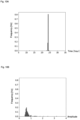
- FIG. 6a shows the logarithmic power spectrum of the time difference vector ⁇ v(x, y, z).
- the hypnogram correlating to the logarithmic power spectrum is also shown in FIG. 6B .
- the sleep-wakefulness determination unit 333 determines the sleep and wakefulness of the user U based on the feature value f(N) of the desired epoch and the feature value f(N ⁇ ) of the peripheral epochs included in the plurality of epochs before and after the desired epoch in a time series, in the epochs.
- the number of epochs (the sum of one desired epoch and the peripheral epochs) should be selected appropriately. For reference, a comparison between a case where the number of epochs is 1 and a case where the number of epochs is 9 is shown in FIG. 7 . In both the histogram and the power spectrum, it is confirmed that the correct answer percentage and the F-value (ratio of standard deviation) in the case of 9 are increased compared to the case of 1.
- Section 3 a method of determining the sleep-wakefulness using the sleep-wakefulness determination system 1 is described according to a flowchart shown in FIG. 8 .
- information including the time-series 3D acceleration vector v(x, y, z) at a part of the body of the user U is acquired.
- the information acquired thereby is read into the sleep-wakefulness determination apparatus 3 via the storage media M.
- the scalar value calculation unit 331 in the sleep-wakefulness determination apparatus 3 calculates the scalar value a based on each component (x, y, z) of the 3-D acceleration vector v(x, y, z) at a part of the body of the user U.
- the feature value calculation unit 332 in the sleep-wakefulness determination apparatus 3 calculates the feature value f(N) for each epoch defined by a predetermined time based on the scalar value a calculated by the scalar value calculation unit 331.
- the sleep-wakefulness determination unit 333 in the sleep-wakefulness determination device 3 determines the sleep and wakefulness of the user U by employing the feature value f(N) of the desired epoch and the feature value f(N ⁇ ) of the peripheral epochs included in a plurality of epochs before and after the desired epoch in a time series, in the epochs, as inputs to the machine learning model stored in the storage unit 32
- the sleep and wakefulness with a sufficiently high degree of accuracy using only a few devices can be determined.
- Section 4 a method of converting the results of sleep-wakefulness determination using the sleep-wakefulness determination system 1 is explained according to flowcharts shown in FIG. 11A and 11B .
- the result determined by the sleep-wakefulness determination unit 333 is set to 0 or 1 (sleep or wakefulness) every 30 seconds.
- the determination results are averaged every 10 minutes, and the data is converted smoothly into data having a value between 0 and 1 with 0.05 increments.
- the specified time (10 minutes) for averaging the determination results and the increment width (0.05) of the averaged results are both examples and can be changed as necessary.
- the period of the sleep-wakefulness is calculated using the Chi-square periodogram method.
- the coefficient of variation (standard deviation divided by the mean) is calculated to determine the amplitude of sleep-wakefulness.
- the sleep and wakefulness of the user U can be examined from various perspectives.
- the communication unit 21 in the wearable device 2 may transmit information including a time-series 3-D acceleration vector v(x, y, z) in a part of the body of the user U to the communication unit 31 in the sleep-wakefulness determination apparatus 31, via wireless communication.
- the communication unit 31 is configured to communicate with the wearable device 2 (including the acceleration sensor 23) worn by the user U on a part of the body thereof so as to receive the 3-D acceleration vector v(x, y, z) measured by the acceleration sensor 23.
- the wearable device 2 and the sleep-wakefulness determination apparatus 3 may be configured as a single unit.
- the sleep-wakefulness determination apparatus 3 may be a wearable device 2 to be worn by the user U on a part of the body, and may further comprise an acceleration sensor 23.
- the acceleration sensor 23 may be configured to measure a 3-D acceleration vector v(x, y, z).
- the present embodiment makes it possible to implement a sleep-wakefulness determination apparatus 3 configured to determine sleep and wakefulness with a sufficiently high degree of accuracy using a small number of wearing devices.
- a sleep-wakefulness determination apparatus configured to determine sleep and wakefulness of a user, comprising a scalar calculation unit configured to calculate a scalar value based on each component of an acceleration vector in a part of a body of the user; a feature value calculation unit configured to calculate a feature value for each epoch defined by a predetermined time based on the scalar value; and a sleep-wakefulness determination unit configured to determine the sleep and wakefulness of the user based on the feature value of a desired epoch and the feature value of peripheral epochs included in a plurality of epochs before and after the desired epoch in a time series, in the epoch.
- Software for implementing the sleep-wakefulness determination apparatus 3 as hardware so as to determine the sleep and wakefulness with sufficiently high accuracy using a small number of wearing devices can also be implemented as a program.
- a program may be provided as a non-transitory computer readable medium that can be read by a computer, or may be provided for download from an external server, or may be provided so that the program can be activated on an external computer to realize functions thereof on a client terminal (so-called cloud computing).
- a program which allows a computer to function as a sleep-wakefulness determination apparatus configured to determine sleep and wakefulness of a user, the apparatus comprising: a scalar calculation unit configured to calculate a scalar value based on each component of an acceleration vector in a part of a body of the user; a feature value calculation unit configured to calculate a feature value for each epoch defined by a predetermined time based on the scalar value; and a sleep-wakefulness determination unit configured to determine the sleep and wakefulness of the user based on the feature value of a desired epoch and the feature value of peripheral epochs included in a plurality of epochs before and after the desired epoch in a time series.
Landscapes
- Health & Medical Sciences (AREA)
- Life Sciences & Earth Sciences (AREA)
- Engineering & Computer Science (AREA)
- Physics & Mathematics (AREA)
- General Health & Medical Sciences (AREA)
- Pathology (AREA)
- Biomedical Technology (AREA)
- Heart & Thoracic Surgery (AREA)
- Medical Informatics (AREA)
- Molecular Biology (AREA)
- Surgery (AREA)
- Animal Behavior & Ethology (AREA)
- Biophysics (AREA)
- Public Health (AREA)
- Veterinary Medicine (AREA)
- Artificial Intelligence (AREA)
- Physiology (AREA)
- Computer Vision & Pattern Recognition (AREA)
- Psychiatry (AREA)
- Signal Processing (AREA)
- Evolutionary Computation (AREA)
- Fuzzy Systems (AREA)
- Mathematical Physics (AREA)
- Anesthesiology (AREA)
- Dentistry (AREA)
- Oral & Maxillofacial Surgery (AREA)
- Measurement Of The Respiration, Hearing Ability, Form, And Blood Characteristics Of Living Organisms (AREA)
Applications Claiming Priority (2)
| Application Number | Priority Date | Filing Date | Title |
|---|---|---|---|
| JP2019125950 | 2019-07-05 | ||
| PCT/JP2020/026345 WO2021006235A1 (ja) | 2019-07-05 | 2020-07-06 | 睡眠覚醒判定装置及びプログラム |
Publications (3)
| Publication Number | Publication Date |
|---|---|
| EP3995077A1 EP3995077A1 (en) | 2022-05-11 |
| EP3995077A4 EP3995077A4 (en) | 2023-01-11 |
| EP3995077B1 true EP3995077B1 (en) | 2024-09-04 |
Family
ID=74114211
Family Applications (1)
| Application Number | Title | Priority Date | Filing Date |
|---|---|---|---|
| EP20836514.8A Active EP3995077B1 (en) | 2019-07-05 | 2020-07-06 | Sleep-wakefulness determination device and program |
Country Status (5)
| Country | Link |
|---|---|
| US (1) | US20220361808A1 (https=) |
| EP (1) | EP3995077B1 (https=) |
| JP (1) | JPWO2021006235A1 (https=) |
| CN (1) | CN114040703A (https=) |
| WO (1) | WO2021006235A1 (https=) |
Families Citing this family (2)
| Publication number | Priority date | Publication date | Assignee | Title |
|---|---|---|---|---|
| CN115251939B (zh) * | 2022-06-21 | 2025-03-14 | 西南交通大学 | 微觉醒检测方法、装置、设备及可读存储介质 |
| CN115105029A (zh) * | 2022-07-19 | 2022-09-27 | 广东百年医疗健康科技发展有限公司 | 基于穿戴式设备的睡眠状态识别方法、装置、终端及介质 |
Family Cites Families (18)
| Publication number | Priority date | Publication date | Assignee | Title |
|---|---|---|---|---|
| JP2582957B2 (ja) * | 1991-06-14 | 1997-02-19 | 松下電工株式会社 | 生体活性度モニターシステム |
| JP4469747B2 (ja) * | 2005-03-30 | 2010-05-26 | 株式会社東芝 | 目覚まし装置、目覚まし方法および目覚ましプログラム |
| RU2630596C2 (ru) * | 2011-03-30 | 2017-09-12 | Конинклейке Филипс Н.В. | Бесконтактная система скрининга нарушений сна |
| JP5430034B2 (ja) | 2011-10-14 | 2014-02-26 | 株式会社タニタ | 睡眠評価処理システム及び睡眠評価装置 |
| CN105431196B (zh) * | 2013-04-15 | 2019-02-01 | Gsk消费者健康有限公司 | 具有用户睡眠—觉醒状态的自动检测的经皮电神经刺激器 |
| US20140364770A1 (en) * | 2013-06-06 | 2014-12-11 | Motorola Mobility Llc | Accelerometer-based sleep analysis |
| US9999744B2 (en) * | 2013-06-21 | 2018-06-19 | Fitbit, Inc. | Monitoring device and cognitive behavior therapy |
| CN104706318B (zh) * | 2013-12-16 | 2018-02-23 | 中国移动通信集团公司 | 一种睡眠分析方法及装置 |
| US9655559B2 (en) * | 2014-01-03 | 2017-05-23 | Vital Connect, Inc. | Automated sleep staging using wearable sensors |
| EP3229661B1 (en) * | 2014-12-11 | 2022-11-30 | Koninklijke Philips N.V. | System and method for determining spectral boundaries for sleep stage classification |
| CN107106028B (zh) * | 2014-12-18 | 2020-07-21 | 皇家飞利浦有限公司 | 用于心肺睡眠阶段分类的系统和方法 |
| US20160255422A1 (en) * | 2015-02-26 | 2016-09-01 | Kabushiki Kaisha Toshiba | Electronic device and method |
| EP4424238A3 (en) * | 2015-05-13 | 2024-10-30 | ResMed Pty Ltd | Systems and methods for screening, diagnosis, and monitoring of sleep-disordered breathing |
| WO2017040331A1 (en) * | 2015-08-28 | 2017-03-09 | Awarables, Inc. | Determining sleep stages and sleep events using sensor data |
| JP6439729B2 (ja) * | 2016-03-24 | 2018-12-19 | トヨタ自動車株式会社 | 睡眠状態推定装置 |
| SG10201608507PA (en) * | 2016-10-11 | 2018-05-30 | Nat Univ Singapore | Determining Sleep Stages |
| JP6879083B2 (ja) * | 2017-06-29 | 2021-06-02 | 富士通株式会社 | 睡眠分析プログラム、睡眠分析方法、および睡眠分析装置 |
| JP6754728B2 (ja) * | 2017-06-30 | 2020-09-16 | ユニ・チャーム株式会社 | プログラム、育児支援方法 |
-
2020
- 2020-07-06 CN CN202080047868.0A patent/CN114040703A/zh active Pending
- 2020-07-06 EP EP20836514.8A patent/EP3995077B1/en active Active
- 2020-07-06 US US17/623,952 patent/US20220361808A1/en active Pending
- 2020-07-06 JP JP2021530684A patent/JPWO2021006235A1/ja active Pending
- 2020-07-06 WO PCT/JP2020/026345 patent/WO2021006235A1/ja not_active Ceased
Also Published As
| Publication number | Publication date |
|---|---|
| EP3995077A1 (en) | 2022-05-11 |
| JPWO2021006235A1 (https=) | 2021-01-14 |
| WO2021006235A1 (ja) | 2021-01-14 |
| EP3995077A4 (en) | 2023-01-11 |
| CN114040703A (zh) | 2022-02-11 |
| US20220361808A1 (en) | 2022-11-17 |
Similar Documents
| Publication | Publication Date | Title |
|---|---|---|
| US10918312B2 (en) | Wearable and connected gait analytics system | |
| EP3876191B1 (en) | Estimator generation device, monitoring device, estimator generation method, estimator generation program | |
| US10575829B2 (en) | Menstrual state monitoring | |
| JP7070255B2 (ja) | 異常判別プログラム、異常判別方法および異常判別装置 | |
| CN110945597A (zh) | 用于预测癫痫发作的方法和系统 | |
| CN106886675B (zh) | 用于监视连续的生物医学信号的方法和系统 | |
| JP7502192B2 (ja) | うつ状態を推定する装置、方法及びそのためのプログラム | |
| EP3995077B1 (en) | Sleep-wakefulness determination device and program | |
| Khokhlov et al. | Design of activity recognition systems with wearable sensors | |
| Roy et al. | A fingertip force prediction model for grasp patterns characterised from the chaotic behaviour of EEG | |
| Yang et al. | Implementation of a wearerable real-time system for physical activity recognition based on Naive Bayes classifier | |
| Hung | Detection of central sleep apnea based on a single-lead ECG | |
| Ouyang et al. | Electroencephelograph based brain machine interface for controlling a robotic arm | |
| Papavasileiou et al. | Real-time data-driven gait phase detection using ground contact force measurements: Algorithms, platform design and performance | |
| Nouriani et al. | System-identification-based activity recognition algorithms with inertial sensors | |
| JP7521609B2 (ja) | 情報処理装置、特徴量選択方法、教師データ生成方法、推定モデル生成方法、ストレス度の推定方法、およびプログラム | |
| HK40066841A (zh) | 睡眠觉醒判定装置以及程序 | |
| Mallick et al. | Resource-constrained device characterization for detecting sleep apnea using machine learning | |
| EP4356834A1 (en) | Sleep/waking determination system, sleep/waking determination method, and program | |
| US20230012526A1 (en) | System and a method for predicting time of ovulation | |
| CN112998717A (zh) | 一种量化人体生理状态的分析方法和设备 | |
| Singh et al. | A Novel Machine Learning Approach for Detection of Coronary Artery Disease Using Reduced Non-linear and Chaos Features. | |
| JP7245463B2 (ja) | 認知機能判定システム、作動方法、及び、プログラム | |
| US20240081707A1 (en) | Stress level estimation method, training data generation method, and storage medium | |
| WO2021230223A1 (ja) | 睡眠覚醒判定システム、睡眠覚醒判定装置、およびプログラム |
Legal Events
| Date | Code | Title | Description |
|---|---|---|---|
| STAA | Information on the status of an ep patent application or granted ep patent |
Free format text: STATUS: THE INTERNATIONAL PUBLICATION HAS BEEN MADE |
|
| PUAI | Public reference made under article 153(3) epc to a published international application that has entered the european phase |
Free format text: ORIGINAL CODE: 0009012 |
|
| STAA | Information on the status of an ep patent application or granted ep patent |
Free format text: STATUS: REQUEST FOR EXAMINATION WAS MADE |
|
| 17P | Request for examination filed |
Effective date: 20220203 |
|
| AK | Designated contracting states |
Kind code of ref document: A1 Designated state(s): AL AT BE BG CH CY CZ DE DK EE ES FI FR GB GR HR HU IE IS IT LI LT LU LV MC MK MT NL NO PL PT RO RS SE SI SK SM TR |
|
| DAV | Request for validation of the european patent (deleted) | ||
| DAX | Request for extension of the european patent (deleted) | ||
| A4 | Supplementary search report drawn up and despatched |
Effective date: 20221209 |
|
| RIC1 | Information provided on ipc code assigned before grant |
Ipc: A61B 5/11 20060101ALI20221205BHEP Ipc: A61B 5/16 20060101AFI20221205BHEP |
|
| GRAP | Despatch of communication of intention to grant a patent |
Free format text: ORIGINAL CODE: EPIDOSNIGR1 |
|
| STAA | Information on the status of an ep patent application or granted ep patent |
Free format text: STATUS: GRANT OF PATENT IS INTENDED |
|
| INTG | Intention to grant announced |
Effective date: 20240405 |
|
| P01 | Opt-out of the competence of the unified patent court (upc) registered |
Free format text: CASE NUMBER: APP_33576/2024 Effective date: 20240605 |
|
| GRAS | Grant fee paid |
Free format text: ORIGINAL CODE: EPIDOSNIGR3 |
|
| GRAA | (expected) grant |
Free format text: ORIGINAL CODE: 0009210 |
|
| STAA | Information on the status of an ep patent application or granted ep patent |
Free format text: STATUS: THE PATENT HAS BEEN GRANTED |
|
| AK | Designated contracting states |
Kind code of ref document: B1 Designated state(s): AL AT BE BG CH CY CZ DE DK EE ES FI FR GB GR HR HU IE IS IT LI LT LU LV MC MK MT NL NO PL PT RO RS SE SI SK SM TR |
|
| REG | Reference to a national code |
Ref country code: GB Ref legal event code: FG4D |
|
| REG | Reference to a national code |
Ref country code: CH Ref legal event code: EP |
|
| REG | Reference to a national code |
Ref country code: IE Ref legal event code: FG4D |
|
| REG | Reference to a national code |
Ref country code: DE Ref legal event code: R096 Ref document number: 602020037243 Country of ref document: DE |
|
| REG | Reference to a national code |
Ref country code: LT Ref legal event code: MG9D |
|
| REG | Reference to a national code |
Ref country code: NL Ref legal event code: MP Effective date: 20240904 |
|
| PG25 | Lapsed in a contracting state [announced via postgrant information from national office to epo] |
Ref country code: NO Free format text: LAPSE BECAUSE OF FAILURE TO SUBMIT A TRANSLATION OF THE DESCRIPTION OR TO PAY THE FEE WITHIN THE PRESCRIBED TIME-LIMIT Effective date: 20241204 |
|
| PG25 | Lapsed in a contracting state [announced via postgrant information from national office to epo] |
Ref country code: FI Free format text: LAPSE BECAUSE OF FAILURE TO SUBMIT A TRANSLATION OF THE DESCRIPTION OR TO PAY THE FEE WITHIN THE PRESCRIBED TIME-LIMIT Effective date: 20240904 Ref country code: PL Free format text: LAPSE BECAUSE OF FAILURE TO SUBMIT A TRANSLATION OF THE DESCRIPTION OR TO PAY THE FEE WITHIN THE PRESCRIBED TIME-LIMIT Effective date: 20240904 Ref country code: GR Free format text: LAPSE BECAUSE OF FAILURE TO SUBMIT A TRANSLATION OF THE DESCRIPTION OR TO PAY THE FEE WITHIN THE PRESCRIBED TIME-LIMIT Effective date: 20241205 |
|
| PG25 | Lapsed in a contracting state [announced via postgrant information from national office to epo] |
Ref country code: BG Free format text: LAPSE BECAUSE OF FAILURE TO SUBMIT A TRANSLATION OF THE DESCRIPTION OR TO PAY THE FEE WITHIN THE PRESCRIBED TIME-LIMIT Effective date: 20240904 |
|
| PG25 | Lapsed in a contracting state [announced via postgrant information from national office to epo] |
Ref country code: LV Free format text: LAPSE BECAUSE OF FAILURE TO SUBMIT A TRANSLATION OF THE DESCRIPTION OR TO PAY THE FEE WITHIN THE PRESCRIBED TIME-LIMIT Effective date: 20240904 |
|
| PG25 | Lapsed in a contracting state [announced via postgrant information from national office to epo] |
Ref country code: HR Free format text: LAPSE BECAUSE OF FAILURE TO SUBMIT A TRANSLATION OF THE DESCRIPTION OR TO PAY THE FEE WITHIN THE PRESCRIBED TIME-LIMIT Effective date: 20240904 |
|
| PG25 | Lapsed in a contracting state [announced via postgrant information from national office to epo] |
Ref country code: RS Free format text: LAPSE BECAUSE OF FAILURE TO SUBMIT A TRANSLATION OF THE DESCRIPTION OR TO PAY THE FEE WITHIN THE PRESCRIBED TIME-LIMIT Effective date: 20241204 Ref country code: ES Free format text: LAPSE BECAUSE OF FAILURE TO SUBMIT A TRANSLATION OF THE DESCRIPTION OR TO PAY THE FEE WITHIN THE PRESCRIBED TIME-LIMIT Effective date: 20240904 |
|
| PG25 | Lapsed in a contracting state [announced via postgrant information from national office to epo] |
Ref country code: RS Free format text: LAPSE BECAUSE OF FAILURE TO SUBMIT A TRANSLATION OF THE DESCRIPTION OR TO PAY THE FEE WITHIN THE PRESCRIBED TIME-LIMIT Effective date: 20241204 Ref country code: PL Free format text: LAPSE BECAUSE OF FAILURE TO SUBMIT A TRANSLATION OF THE DESCRIPTION OR TO PAY THE FEE WITHIN THE PRESCRIBED TIME-LIMIT Effective date: 20240904 Ref country code: NO Free format text: LAPSE BECAUSE OF FAILURE TO SUBMIT A TRANSLATION OF THE DESCRIPTION OR TO PAY THE FEE WITHIN THE PRESCRIBED TIME-LIMIT Effective date: 20241204 Ref country code: LV Free format text: LAPSE BECAUSE OF FAILURE TO SUBMIT A TRANSLATION OF THE DESCRIPTION OR TO PAY THE FEE WITHIN THE PRESCRIBED TIME-LIMIT Effective date: 20240904 Ref country code: HR Free format text: LAPSE BECAUSE OF FAILURE TO SUBMIT A TRANSLATION OF THE DESCRIPTION OR TO PAY THE FEE WITHIN THE PRESCRIBED TIME-LIMIT Effective date: 20240904 Ref country code: GR Free format text: LAPSE BECAUSE OF FAILURE TO SUBMIT A TRANSLATION OF THE DESCRIPTION OR TO PAY THE FEE WITHIN THE PRESCRIBED TIME-LIMIT Effective date: 20241205 Ref country code: FI Free format text: LAPSE BECAUSE OF FAILURE TO SUBMIT A TRANSLATION OF THE DESCRIPTION OR TO PAY THE FEE WITHIN THE PRESCRIBED TIME-LIMIT Effective date: 20240904 Ref country code: ES Free format text: LAPSE BECAUSE OF FAILURE TO SUBMIT A TRANSLATION OF THE DESCRIPTION OR TO PAY THE FEE WITHIN THE PRESCRIBED TIME-LIMIT Effective date: 20240904 Ref country code: BG Free format text: LAPSE BECAUSE OF FAILURE TO SUBMIT A TRANSLATION OF THE DESCRIPTION OR TO PAY THE FEE WITHIN THE PRESCRIBED TIME-LIMIT Effective date: 20240904 |
|
| REG | Reference to a national code |
Ref country code: AT Ref legal event code: MK05 Ref document number: 1719518 Country of ref document: AT Kind code of ref document: T Effective date: 20240904 |
|
| PG25 | Lapsed in a contracting state [announced via postgrant information from national office to epo] |
Ref country code: NL Free format text: LAPSE BECAUSE OF FAILURE TO SUBMIT A TRANSLATION OF THE DESCRIPTION OR TO PAY THE FEE WITHIN THE PRESCRIBED TIME-LIMIT Effective date: 20240904 |
|
| PG25 | Lapsed in a contracting state [announced via postgrant information from national office to epo] |
Ref country code: PT Free format text: LAPSE BECAUSE OF FAILURE TO SUBMIT A TRANSLATION OF THE DESCRIPTION OR TO PAY THE FEE WITHIN THE PRESCRIBED TIME-LIMIT Effective date: 20250106 Ref country code: IS Free format text: LAPSE BECAUSE OF FAILURE TO SUBMIT A TRANSLATION OF THE DESCRIPTION OR TO PAY THE FEE WITHIN THE PRESCRIBED TIME-LIMIT Effective date: 20250104 |
|
| PG25 | Lapsed in a contracting state [announced via postgrant information from national office to epo] |
Ref country code: SM Free format text: LAPSE BECAUSE OF FAILURE TO SUBMIT A TRANSLATION OF THE DESCRIPTION OR TO PAY THE FEE WITHIN THE PRESCRIBED TIME-LIMIT Effective date: 20240904 Ref country code: RO Free format text: LAPSE BECAUSE OF FAILURE TO SUBMIT A TRANSLATION OF THE DESCRIPTION OR TO PAY THE FEE WITHIN THE PRESCRIBED TIME-LIMIT Effective date: 20240904 |
|
| PG25 | Lapsed in a contracting state [announced via postgrant information from national office to epo] |
Ref country code: AT Free format text: LAPSE BECAUSE OF FAILURE TO SUBMIT A TRANSLATION OF THE DESCRIPTION OR TO PAY THE FEE WITHIN THE PRESCRIBED TIME-LIMIT Effective date: 20240904 Ref country code: EE Free format text: LAPSE BECAUSE OF FAILURE TO SUBMIT A TRANSLATION OF THE DESCRIPTION OR TO PAY THE FEE WITHIN THE PRESCRIBED TIME-LIMIT Effective date: 20240904 |
|
| PG25 | Lapsed in a contracting state [announced via postgrant information from national office to epo] |
Ref country code: CZ Free format text: LAPSE BECAUSE OF FAILURE TO SUBMIT A TRANSLATION OF THE DESCRIPTION OR TO PAY THE FEE WITHIN THE PRESCRIBED TIME-LIMIT Effective date: 20240904 |
|
| PG25 | Lapsed in a contracting state [announced via postgrant information from national office to epo] |
Ref country code: SK Free format text: LAPSE BECAUSE OF FAILURE TO SUBMIT A TRANSLATION OF THE DESCRIPTION OR TO PAY THE FEE WITHIN THE PRESCRIBED TIME-LIMIT Effective date: 20240904 Ref country code: IT Free format text: LAPSE BECAUSE OF FAILURE TO SUBMIT A TRANSLATION OF THE DESCRIPTION OR TO PAY THE FEE WITHIN THE PRESCRIBED TIME-LIMIT Effective date: 20240904 |
|
| REG | Reference to a national code |
Ref country code: DE Ref legal event code: R097 Ref document number: 602020037243 Country of ref document: DE |
|
| PG25 | Lapsed in a contracting state [announced via postgrant information from national office to epo] |
Ref country code: DK Free format text: LAPSE BECAUSE OF FAILURE TO SUBMIT A TRANSLATION OF THE DESCRIPTION OR TO PAY THE FEE WITHIN THE PRESCRIBED TIME-LIMIT Effective date: 20240904 |
|
| PLBE | No opposition filed within time limit |
Free format text: ORIGINAL CODE: 0009261 |
|
| STAA | Information on the status of an ep patent application or granted ep patent |
Free format text: STATUS: NO OPPOSITION FILED WITHIN TIME LIMIT |
|
| 26N | No opposition filed |
Effective date: 20250605 |
|
| PG25 | Lapsed in a contracting state [announced via postgrant information from national office to epo] |
Ref country code: SE Free format text: LAPSE BECAUSE OF FAILURE TO SUBMIT A TRANSLATION OF THE DESCRIPTION OR TO PAY THE FEE WITHIN THE PRESCRIBED TIME-LIMIT Effective date: 20240904 |
|
| PGFP | Annual fee paid to national office [announced via postgrant information from national office to epo] |
Ref country code: DE Payment date: 20250731 Year of fee payment: 6 |
|
| PGFP | Annual fee paid to national office [announced via postgrant information from national office to epo] |
Ref country code: GB Payment date: 20250722 Year of fee payment: 6 |
|
| REG | Reference to a national code |
Ref country code: CH Ref legal event code: H13 Free format text: ST27 STATUS EVENT CODE: U-0-0-H10-H13 (AS PROVIDED BY THE NATIONAL OFFICE) Effective date: 20260224 |
|
| PG25 | Lapsed in a contracting state [announced via postgrant information from national office to epo] |
Ref country code: LU Free format text: LAPSE BECAUSE OF NON-PAYMENT OF DUE FEES Effective date: 20250706 |
|
| REG | Reference to a national code |
Ref country code: BE Ref legal event code: MM Effective date: 20250731 |
|
| PG25 | Lapsed in a contracting state [announced via postgrant information from national office to epo] |
Ref country code: BE Free format text: LAPSE BECAUSE OF NON-PAYMENT OF DUE FEES Effective date: 20250731 |
|
| PG25 | Lapsed in a contracting state [announced via postgrant information from national office to epo] |
Ref country code: FR Free format text: LAPSE BECAUSE OF NON-PAYMENT OF DUE FEES Effective date: 20250731 |
|
| PG25 | Lapsed in a contracting state [announced via postgrant information from national office to epo] |
Ref country code: CH Free format text: LAPSE BECAUSE OF NON-PAYMENT OF DUE FEES Effective date: 20250731 |