EP3993293B1 - Datenübertragungsverfahren und -vorrichtung - Google Patents
Datenübertragungsverfahren und -vorrichtung Download PDFInfo
- Publication number
- EP3993293B1 EP3993293B1 EP20846611.0A EP20846611A EP3993293B1 EP 3993293 B1 EP3993293 B1 EP 3993293B1 EP 20846611 A EP20846611 A EP 20846611A EP 3993293 B1 EP3993293 B1 EP 3993293B1
- Authority
- EP
- European Patent Office
- Prior art keywords
- frame
- data frame
- data
- type
- preemptable
- Prior art date
- Legal status (The legal status is an assumption and is not a legal conclusion. Google has not performed a legal analysis and makes no representation as to the accuracy of the status listed.)
- Active
Links
Images



Classifications
-
- H—ELECTRICITY
- H04—ELECTRIC COMMUNICATION TECHNIQUE
- H04L—TRANSMISSION OF DIGITAL INFORMATION, e.g. TELEGRAPHIC COMMUNICATION
- H04L47/00—Traffic control in data switching networks
- H04L47/10—Flow control; Congestion control
- H04L47/24—Traffic characterised by specific attributes, e.g. priority or QoS
- H04L47/245—Traffic characterised by specific attributes, e.g. priority or QoS using preemption
-
- H—ELECTRICITY
- H04—ELECTRIC COMMUNICATION TECHNIQUE
- H04L—TRANSMISSION OF DIGITAL INFORMATION, e.g. TELEGRAPHIC COMMUNICATION
- H04L1/00—Arrangements for detecting or preventing errors in the information received
- H04L1/0001—Systems modifying transmission characteristics according to link quality, e.g. power backoff
- H04L1/0006—Systems modifying transmission characteristics according to link quality, e.g. power backoff by adapting the transmission format
-
- H—ELECTRICITY
- H04—ELECTRIC COMMUNICATION TECHNIQUE
- H04L—TRANSMISSION OF DIGITAL INFORMATION, e.g. TELEGRAPHIC COMMUNICATION
- H04L47/00—Traffic control in data switching networks
- H04L47/10—Flow control; Congestion control
- H04L47/24—Traffic characterised by specific attributes, e.g. priority or QoS
-
- H—ELECTRICITY
- H04—ELECTRIC COMMUNICATION TECHNIQUE
- H04L—TRANSMISSION OF DIGITAL INFORMATION, e.g. TELEGRAPHIC COMMUNICATION
- H04L67/00—Network arrangements or protocols for supporting network services or applications
- H04L67/50—Network services
- H04L67/60—Scheduling or organising the servicing of application requests, e.g. requests for application data transmissions using the analysis and optimisation of the required network resources
- H04L67/61—Scheduling or organising the servicing of application requests, e.g. requests for application data transmissions using the analysis and optimisation of the required network resources taking into account QoS or priority requirements
-
- H—ELECTRICITY
- H04—ELECTRIC COMMUNICATION TECHNIQUE
- H04L—TRANSMISSION OF DIGITAL INFORMATION, e.g. TELEGRAPHIC COMMUNICATION
- H04L69/00—Network arrangements, protocols or services independent of the application payload and not provided for in the other groups of this subclass
- H04L69/06—Notations for structuring of protocol data, e.g. abstract syntax notation one [ASN.1]
-
- H—ELECTRICITY
- H04—ELECTRIC COMMUNICATION TECHNIQUE
- H04L—TRANSMISSION OF DIGITAL INFORMATION, e.g. TELEGRAPHIC COMMUNICATION
- H04L69/00—Network arrangements, protocols or services independent of the application payload and not provided for in the other groups of this subclass
- H04L69/22—Parsing or analysis of headers
-
- H—ELECTRICITY
- H04—ELECTRIC COMMUNICATION TECHNIQUE
- H04L—TRANSMISSION OF DIGITAL INFORMATION, e.g. TELEGRAPHIC COMMUNICATION
- H04L47/00—Traffic control in data switching networks
- H04L47/10—Flow control; Congestion control
- H04L47/24—Traffic characterised by specific attributes, e.g. priority or QoS
- H04L47/2416—Real-time traffic
-
- H—ELECTRICITY
- H04—ELECTRIC COMMUNICATION TECHNIQUE
- H04L—TRANSMISSION OF DIGITAL INFORMATION, e.g. TELEGRAPHIC COMMUNICATION
- H04L47/00—Traffic control in data switching networks
- H04L47/50—Queue scheduling
- H04L47/62—Queue scheduling characterised by scheduling criteria
- H04L47/6215—Individual queue per QOS, rate or priority
Definitions
- This disclsoure relates to the field of network technologies, and the invention in particular relates to a data transmission method and apparatus.
- a data frame is forwarded between a transmit end and a receive end by using a network device, to implement communication.
- the data frame may also be referred to as a media access control (media access control, MAC) frame.
- the network device usually forwards a data frame by using a "best effort (best effort)" forwarding policy.
- the forwarding policy the network device forwards data frames in a sequence of the received data frames.
- data frames of different priorities exist in an actual network.
- a low-priority data frame occupies a channel, and consequently a high-priority data frame cannot be transmitted in time, causing a relatively large transmission latency of the high-priority data frame.
- a frame preemption (preemption) mechanism is introduced in time-sensitive networking (time-sensitive networking, TSN).
- TSN time-sensitive networking
- frame preemption mechanisms defined in Institute of Electrical and Electronics Engineers (Institute of Electrical and Electronic Engineers, IEEE) 802.3br and IEEE 802.1Qbu frame types of data frames are classified into two types: an express (express) frame and a preemptable (preemptable) frame.
- a transmission priority of the express frame is higher than a transmission priority of the preemptable frame.
- data frames are classified into two types: an express frame and a preemptable frame, and only the "express frame” is allowed to preempt the "preemptable frame” for preferential transmission. If a network device has data frames of more than two priorities, for example, includes data frames of a total of eight priorities: 0 to 7, preferential transmission of a high-priority data frame cannot be truly ensured.
- US 2019/0199641 relates to a method for managing traffic in a network based upon Ethernet switches, which are compliant with the IEEE 802. IQ and TSN communication standards, including the steps of dividing frames received into queues; scheduling transmission of the frames contained in the queues on the basis of the respective priorities of the traffic classes; and, if frames are present belonging to a traffic class in the plurality of traffic classes that has a higher priority than frames belonging to the event-triggered traffic class and when at least one protected time window occurs, transmitting the frames that belong to the traffic class with higher priority and blocking transmission of the frames that belong to the remaining traffic classes; and if the queue dedicated to the event-triggered traffic class is empty, transmitting a frame belonging to one of the remaining traffic classes that have frames with a priority lower than the frames belonging to the event-triggered traffic class.
- US 2018/0041432 A1 describes a method for data transmission in a communications network, data frames containing metadata and payloads are transmitted via point-to-point connections between a respective transmitter and a receiver according to a communications protocol. For each point-to-point connection, a transmission list of the data frames to be transmitted from the transmitter to the receiver is kept. In addition, a priority set of at least three interrupt priorities of pairs with differing significance is provided, and the communications protocol permits each data frame of a transmission list to be assigned an interrupt priority and to interrupt a current transmission of a data frame of the transmission list in order to transfer a data frame that is contained in the transmission list and that has been assigned a higher interrupt priority than the currently transferred data frame.
- the object of the present invention is to provide a data transmission method and apparatus, to resolve a problem that preferential transmission of a high-priority data frame cannot be truly ensured in a conventional frame preemption mechanism.
- a data transmission method includes: if a to-be-transmitted second data frame exists in a process of transmitting a first data frame, and a priority of the second data frame is higher than a priority of the first data frame, a network device determines a frame type of the second data frame as an express frame; the network device adjusts a frame type of the first data frame to a preemptable frame if the frame type of the first data frame is an express frame; and the network device stops transmitting the first data frame, and starts to transmit the second data frame.
- the network device dynamically adjusts a frame type of a currently transmitted data frame, so that in the network device, a frame type of a high-priority data frame is an express frame, and a frame type of a low-priority data frame is a preemptable frame.
- a frame type of a data frame can be more flexibly determined, so that a high-priority data frame flexibly preempts a low-priority data frame, thereby improving data transmission flexibility.
- the adjusting a frame type of the first data frame to a preemptable frame if the frame type of the first data frame is an express frame includes: if the frame type of the first data frame is an express frame, a third data frame preempted by the first data frame for transmission exists, and a frame type mark of the third data frame is a first preemptable frame mark, the network device adjusts a frame type mark of the first data frame to a second preemptable frame mark, where the second preemptable frame mark is different from the first preemptable frame mark.
- a preemptable frame mark may be extended to distinguish between different data frames whose frame types are all preemptable frames, or an indication field may be added to a frame structure of a data fragment to distinguish between different data frames whose frame types are all preemptable frames.
- the adjusting a frame type of the first data frame to a preemptable frame if the frame type of the first data frame is an express frame includes: if the frame type of the first data frame is an express frame and a third data frame preempted by the first data frame for transmission does not exist, the network device adjusts the frame type of the first data frame to a preemptable frame.
- This implementation may be compatible with an existing transmission manner, to ensure that only one preemptable frame in the network device is preempted for transmission.
- the network device continues to transmit the first data frame after the transmission of the second data frame ends.
- that the network device continues to transmit the first data frame includes: after the transmission of the second data frame ends, if a to-be-transmitted fourth data frame exists and a priority of the fourth data frame is higher than the priority of the first data frame, the network device determines a frame type of the fourth data frame as an express frame, and transmits the fourth data frame; and the network device continues to transmit the first data frame after the transmission of the fourth data frame ends.
- a high-priority data frame is always preferentially transmitted compared with a low-priority data frame.
- another data transmission method includes: if a network device detects that a to-be-transmitted second data frame exists in a process of transmitting a first data frame, a frame type of the first data frame is the same as a frame type of the second data frame, and a priority of the second data frame is higher than a priority of the first data frame, the network device determines the frame type of the first data frame as a preemptable frame and the frame type of the second data frame as an express frame; and the network device stops transmitting the first data frame, and starts to transmit the second data frame.
- a frame type of a currently transmitted data frame or a data frame in an egress port queue is dynamically adjusted, so that in the network device, a frame type of a high-priority data frame is an express frame, and a frame type of a low-priority data frame is a preemptable frame. Therefore, in data frames of a same frame type, a high-priority data frame flexibly preempts a low-priority data frame, thereby improving data transmission flexibility.
- the determining the frame type of the first data frame as a preemptable frame and the frame type of the second data frame as an express frame includes: adjusting the frame type of the first data frame to a preemptable frame if the frame type of the first data frame and the frame type of the second data frame are both express frames; or adjusting the frame type of the second data frame to an express frame if the frame type of the first data frame and the frame type of the second data frame are both preemptable frames.
- the adjusting the frame type of the first data frame to a preemptable frame if the frame type of the first data frame and the frame type of the second data frame are both express frames includes: if the frame type of the first data frame and the frame type of the second data frame are both express frames, a third data frame preempted by the first data frame for transmission exists, and a frame type mark of the third data frame is a first preemptable frame mark, adjusting a frame type mark of the first data frame to a second preemptable frame mark, where the second preemptable frame mark is different from the first preemptable frame mark.
- the adjusting the frame type of the first data frame to a preemptable frame if the frame type of the first data frame and the frame type of the second data frame are both express frames includes: if the frame type of the first data frame and the frame type of the second data frame are both express frames and a third data frame preempted by the first data frame for transmission does not exist, adjusting the frame type of the first data frame to a preemptable frame.
- the network device continues to transmit the first data frame after the transmission of the second data frame ends.
- the continuing to transmit the first data frame after the transmission of the second data frame ends includes: after the transmission of the second data frame ends, if a to-be-transmitted fourth data frame exists and a priority of the fourth data frame is higher than the priority of the first data frame, the network device transmits the fourth data frame; and the network device continues to transmit the first data frame after the transmission of the fourth data frame ends.
- a data transmission apparatus includes a plurality of functional modules, and the plurality of functional modules interact to implement the method in the first aspect and the implementations of the first aspect.
- the plurality of functional modules may be implemented based on software, hardware, or a combination of software and hardware, and the plurality of functional modules may be randomly combined or divided based on a specific implementation.
- the apparatus includes a plurality of functional modules, and the plurality of functional modules interact to implement the method in the second aspect and the implementations of the second aspect.
- the plurality of functional modules may be implemented based on software, hardware, or a combination of software and hardware, and the plurality of functional modules may be randomly combined or divided based on a specific implementation.
- a processing chip includes a programmable logic circuit and/or program instructions, and the processing chip runs the programmable logic circuit and/or the program instructions to implement the data transmission method according to either the first aspect or the second aspect.
- the processing chip includes a processing unit and a scheduling unit;
- the scheduling unit includes data egress scheduling logic and media access control MAC encapsulation logic;
- the processing chip further includes a memory.
- the memory is configured to buffer the to-be-transmitted data frame.
- the memory includes storage space allocated to the egress port queue.
- the processing unit includes at least one of a network processor and a central processing unit, and the scheduling unit includes at least one of an application-specific integrated circuit and a programmable logic device.
- the memory is further configured to store computer program instructions, and the processing unit invokes the computer program instructions stored in the memory, to perform one or more steps of the data transmission method according to the first aspect or the second aspect.
- a data transmission apparatus including a communications interface and the processing chip according to the fifth aspect.
- the communications interface may be connected to the processing chip by using a communications bus.
- the data transmission apparatus further includes a memory, the memory stores a computer program, and the computer program includes program instructions.
- the processing chip invokes the computer program stored in the memory, to perform one or more steps of the data transmission method according to the first aspect or the second aspect.
- a computer storage medium stores instructions. When the instructions are executed by a processor, the data transmission method according to any one of the first aspect and the implementations thereof is implemented, or the data transmission method according to any one of the second aspect and the implementations thereof is implemented.
- a frame type of a currently transmitted data frame and/or a frame type of a to be-transmitted data frame are/is dynamically adjusted, so that in the currently transmitted data frame and the to-be-transmitted data frame, a frame type of a higher-priority data frame is an express frame, and a frame type of a lower-priority data frame is a preemptable frame. Therefore, a high-priority data frame flexibly preempts a low-priority data frame, thereby improving data transmission flexibility.
- a data transmission method provided in the embodiments of this application may be applied to a network device in a communications network.
- the communications network may be an industrial network, an in-vehicle network, a data center network (data center network, DCN), a metropolitan area network, a wide area network, a campus network, or the like.
- An application scenario of the data transmission method is not limited in the embodiments of this application.
- the network device may be a router, a switch, a server, or the like. The network device buffers all to-be-sent data frames in egress port queues, and then transmits the data frames in the egress port queues by using corresponding ports.
- the network device may classify data frames into data frames of a plurality of priorities, for example, eight priorities or 16 priorities. This is not limited in this embodiment of this application.
- the following embodiments of this application provide descriptions by using an example in which a network device classifies data frames into data frames of eight priorities, including priorities 0 to 7. A larger priority value indicates a higher priority.
- the network device may include eight egress port queues, and each egress port queue is used to buffer a data frame of one priority.
- the egress port queue may also be referred to as a class of service queue (class of service queue, COSQ) or a priority queue.
- COSQ class of service queue
- there are a plurality of mapping relationships between the egress port queue and the priority queue there is a one-to-one correspondence between a priority of an egress port queue and a priority of a data frame buffered in the egress port queue.
- a frame type of a data frame stored in an egress port queue is set to a frame type set for the egress port queue.
- the frame type of the data frame may be marked by using a value of a specific field in the data frame.
- the data frame includes a start MAC-merge-packet delimiter (start MAC-merge-packet delimiter, SMD) field, and the frame type of the data frame may be represented by using a value of the SMD field.
- a frame type of a data frame is preset to a fixed type. For example, frame types of data frames of priorities 0 to 3 are all set to preemptable frames, and frame types of data frames of priorities 4 to 7 are all set to express frames. Therefore, a high-priority data frame of a same frame type cannot interrupt a low-priority data frame for preemptive transmission, causing relatively low data transmission flexibility in a conventional implementation.
- a frame type of a data frame is dynamically adjusted, so that in a currently transmitted data frame and a to-be-transmitted data frame, a frame type of a higher-priority data frame is an express frame, and a frame type of a lower-priority data frame is a preemptable frame.
- a frame type of a data frame can be flexibly determined, so that a high-priority data frame flexibly preempts a low-priority data frame. Therefore, data frame multi-level preemptive-transmission can be implemented, thereby improving data transmission flexibility.
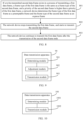
- FIG. 1 is a flowchart of a data transmission method according to an embodiment of this application. As shown in FIG. 1 , the method includes the following steps.
- Step 101 If a to-be-transmitted second data frame exists in a process of transmitting a first data frame, a network device determines a frame type of the second data frame as an express frame, where a priority of the second data frame is higher than a priority of the first data frame.
- the network device transmits data frames in descending order of priorities
- a data frame whose priority is lower than or equal to the priority of the first data frame in the network device does not preempt the first data frame for transmission, that is, does not affect the transmission of the first data frame. Therefore, in the process of transmitting the first data frame, the network device only needs to determine whether the second data frame whose priority is higher than the priority of the first data frame exists in the network device.
- the network device may determine the frame type of the second data frame as an express frame.
- the to-be-transmitted second data frame in the network device may be received from another device (for example, a transmit end), or may be generated by the network device.
- the network device before transmitting the first data frame, the network device further buffers the first data frame in a corresponding egress port queue, for example, a first egress port queue, based on the priority of the first data frame.
- the network device before step 101, the network device further buffers the second data frame in a corresponding egress port queue, for example, a second egress port queue, based on the priority of the to-be-transmitted second data frame.
- Step 102 The network device adjusts a frame type of the first data frame to a preemptable frame if the frame type of the first data frame is an express frame.
- the network device may determine the frame type of the first data frame based on a value of an SMD field in the first data frame.
- the network device adjusts the frame type of the first data frame to a preemptable frame if the frame type of the first data frame is an express frame, so that the second data frame of the higher priority can preempt the first data frame of the lower priority for transmission, thereby ensuring low-latency transmission of a high-priority data frame. If the frame type of the first data frame is a preemptable frame, the network device may directly perform subsequent step 103 without performing step 102.
- Step 103 The network device stops transmitting the first data frame, and starts to transmit the second data frame.
- the second data frame can preempt the first data frame for transmission, that is, the network device can stop transmitting the first data frame, and preferentially transmit the second data frame.
- Step 104 The network device continues to transmit the first data frame after the transmission of the second data frame ends.
- a frame type of the first data frame transmitted by the network device after the network device is powered on is an express frame.
- the network device determines whether a priority of the first to-be-transmitted data frame is a lowest priority supported by the network device; and if the priority of the first data frame is not the lowest priority supported by the network device, determines a frame type of the first data frame as an express frame; or if the priority of the first data frame is the lowest priority supported by the network device, determines a frame type of the first data frame as a preemptable frame.
- the network device can determine frame types of all data frames of the lowest priority as preemptable frames.
- the first data frame may be the first data frame transmitted by the network device after the network device is powered on, or may be a subsequently transmitted data frame. This is not limited in this embodiment of this application.
- the network device determines the frame type of the second data frame as an express frame. For example, when a to-be-transmitted data frame of a priority 1 exists in a process of transmitting a data frame of a priority 0, the network device may determine a frame type of the data frame of the priority 1 as an express frame. For another example, when a to-be-transmitted data frame of a priority 7 exists in a process of transmitting a data frame of a priority 6, the network device may determine a frame type of the data frame of the priority 7 as an express frame. In comparison with the current frame type classification mechanism, flexibility of determining a frame type of a data frame is improved.
- a first possible implementation of step 102 includes: if the frame type of the first data frame is an express frame, a third data frame preempted by the first data frame for transmission exists in the network device, and a frame type mark of the third data frame is a first preemptable frame mark, the network device adjusts a frame type mark of the first data frame to a second preemptable frame mark, where the second preemptable frame mark is different from the first preemptable frame mark.
- the network device has eight egress port queues (priority queues), respectively corresponding to priorities 0 to 7, at most seven data frames in the network device are preempted for transmission in a data frame transmission process. For example, if a to-be-transmitted data frame of the priority 1 exists in the network device in a process of transmitting a data frame of the priority 0, the data frame of the priority 1 preempts the data frame of the priority 0 for transmission; and if a to-be-transmitted data frame of the priority 2 exists in the network device in a process of transmitting the data frame of the priority 1, the data frame of the priority 2 preempts the data frame of the priority 1 for transmission.
- a high-priority data frame sequentially preempts low-priority data frames for transmission, and therefore at most seven data frames in the network device are preempted for transmission.
- different preemptable frame marks for example, a preemptable frame mark 1, a preemptable frame mark 2, ..., and a preemptable frame mark 7, may be used to distinguish between different data frames whose frame types are preemptable frames.
- FIG. 2 is a schematic diagram of a frame structure of a data frame defined in IEEE 802.3br. As shown in FIG. 2 , the data frame includes a preamble (preamble), an SMD field, a load field, and a cyclic redundancy check (cyclic redundancy check, CRC) field. In the data frame shown in FIG. 2 , the data frame includes a preamble (preamble), an SMD field, a load field, and a cyclic redundancy check (cyclic redundancy check, CRC) field.
- preamble preamble
- SMD field a cyclic redundancy check
- load field cyclic redundancy check
- CRC cyclic redundancy check
- a length of the preamble is 7 octets (7 octets)
- a length of an SMD field is 1 octet (1 octet)
- a length of the load field is greater than or equal to 60 octets (60 octets)
- a length of the CRC field is 4 octets (4 octets).
- FIG. 3 is a schematic diagram of a frame structure of another data frame defined in IEEE 802.3br. As shown in FIG. 3 , the data frame includes a preamble, an SMD field, a FRAG _COUNT (FRAG COUNT) field, a load field, and a CRC field. In the data frame shown in FIG. 3 , the data frame includes a preamble, an SMD field, a FRAG _COUNT (FRAG COUNT) field, a load field, and a CRC field.
- FRAG _COUNT FRAG COUNT
- a length of the preamble is 6 octets (6 octets)
- a length of the FRAG_COUNT field is 1 octet (1 octet)
- a length of an SMD field is 1 octet (1 octet)
- a length of the load field is greater than or equal to 60 octets (60 octets)
- a length of the CRC field is 4 octets (4 octets).
- a frame structure of the first data fragment (referred to as a "preemptable frame first-fragment" below) of an express frame, a complete preemptable frame, or a preemptable frame preempted for transmission is shown in FIG. 2 ; and a frame structure of a data fragment (referred to as a "preemptable frame subsequent-fragment” below) other than the first data fragment in the preemptable frame preempted for transmission is shown in FIG. 3 , and a FRAG_COUNT field is used to indicate that the data fragment belongs to a same data frame as a previous data fragment.
- Each data fragment of the data frame preempted for transmission may be considered as one data subframe.
- a receive end determines a frame type of a data frame as an express frame or a preemptable frame based on a value of an SMD field in the data frame, and determines, based on whether a FRAG_COUNT field exists in the data frame, whether the data frame belong to a same data frame as a previously transmitted data frame.
- an express frame mark is SMD-E
- a preemptable frame mark (referred to as a "subsequent preemptable frame mark” below) other than that of the first data fragment of the preemptable frame includes SMD-C0, SMD-C1, SMD-C2, and SMD-C3.
- the frame type marks SMD-E, SMD-S0 to SMD-S3, and SMD-C0 to SMD-C3 are separately identified by using different values.
- a value corresponding to the frame type mark SMD-E is 0xD5.
- values of the other frame type marks refer to the standard. The values are not listed one by one herein.
- a frame structure of the express frame is still the frame structure that is defined in IEEE 802.3br and that is shown in FIG. 2 .
- an express frame mark needs to be extended, and a total quantity of express frame marks obtained after the extension is the same as a quantity of priority queues in the network device.
- the network device includes eight priority queues (egress port queues). Based on the frame preemption mechanism provided in this embodiment of this application, at most seven data frames in the network device are preempted for transmission in a data frame transmission process, that is, frame types of seven data frames in the network device may be adjusted from express frames to preemptable frames in the data frame transmission process.
- the express frame mark is extended based on the express frame mark SMD-E defined in the IEEE 802.3br standard, and the defined express frame mark SMD-E is used as SMD-E0, and new express frame marks SMD-E1 to SMD-E7 are obtained after the extension, so that express frame marks obtained after the extension include a total of eight express frame marks: SMD-E0 to SMD-E7.
- an express frame mark of the data frame may be determined based on a priority of the data frame, so that the priority is in a one-to-one correspondence with the express frame mark.
- an express frame mark of the data frame of the priority 7 is SMD-E7; if a frame type of a data frame of a priority 6 is an express frame, an express frame mark of the data frame of the priority 6 is SMD-E6; and so on.
- the express frame mark of the data frame of the priority 7 is SMD-E0; the express frame mark of the data frame of the priority 6 is SMD-E1; and so on.
- this embodiment of this application provides two manners of distinguishing a data frame to which a preemptable frame subsequent-fragment belongs.
- Manner 1 A frame structure of the preemptable frame subsequent-fragment is still the frame structure that is defined in IEEE 802.3br and that is shown in FIG. 3 , and a subsequent preemptable frame mark is extended. A total quantity of subsequent preemptable frame marks obtained after the extension is four times the quantity of priority queues in the network device.
- a FRAG-COUNT field in the preemptable frame subsequent-fragment still follows a definition in the IEEE 802.3br, and may not be extended. The FRAG-COUNT field is cyclically used by using four subsequent fragments as one cycle.
- a FRAG-COUNT field of the first preemptable frame subsequent-fragment of a data frame is FRAG-COUNT0, whose value is 0xE6;
- a FRAG-COUNT field of the second preemptable frame subsequent-fragment of the data frame is FRAG-COUNT1, whose value is 0x4C;
- a FRAG-COUNT field of the third preemptable frame subsequent-fragment of the data frame is FRAG-COUNT2, whose value is 0x7F;
- a FRAG-COUNT field of the fourth preemptable frame subsequent-fragment of the data frame is FRAG-COUNT3, whose value is 0xB3;
- a FRAG-COUNT field of the fifth preemptable frame subsequent-fragment of the data frame is FRAG-COUNT0, whose value is 0xE6; ....
- the network device includes eight priority queues.
- the subsequent preemptable frame marks SMD-C0 to SMD-C3 defined in IEEE 802.3br may be extended to SMD-C0 to SMD-C31, and values of the subsequent preemptable frame marks SMD-C0 to SMD-C31 are different from each other.
- Each four subsequent preemptable frame marks are one group.
- SMD-C0 to SMD-C3 are one group
- SMD-C4 to SMD-C7 are one group
- SMD-C24 to SMD-C27 are one group.
- Each group of subsequent preemptable frame marks corresponds to one express frame mark.
- SMD-E0 corresponds to SMD-C0 to SMDC3
- SMD-E1 corresponds to SMD-C4 to SMDC7
- ... corresponds to SMD-E7
- SMD-C28 corresponds to SMD-C31.
- SMD-C0 to SMD-C31 may be grouped in another manner. This is not limited in this application.
- frame type marks of preemptable frame subsequent-fragments of the data frame may be subsequent preemptable frame marks SMD-C0 to SMD-C3, and corresponding FRAG-COUNT fields still follow the definition in IEEE 802.3br and include FRAG-COUNT0 (whose value is 0xE6) to FRAG-COUNT3 (whose value is 0xB3);
- FRAG-COUNT0 whose value is 0xE6
- FRAG-COUNT3 whose value is 0xB3
- frame type marks of preemptable frame subsequent-fragments of the data frame may be subsequent preemptable frame marks SMD-C4 to SMD-C7, and corresponding FRAG-COUNT fields still follow the definition in IEEE 802.3br and are also FRAG-COUNT0 (whose value is 0xE6) to FRAG-COUNT3 (whose value is 0xB3); ...; if
- frame type marks of preemptable frame subsequent-fragments of the data frame may be subsequent preemptable frame marks SMD-C0 to SMD-C3, and corresponding FRAG-COUNT fields still follow the definition in IEEE 802.3br and are also FRAG-COUNT0 (whose value is 0xE6) to FRAG-COUNT3 (whose value is 0xB3); if a data frame whose frame type mark is an express frame mark SMD-E6 is adjusted to a preemptable frame, frame type marks of preemptable frame subsequent-fragments of the data frame may be subsequent preemptable frame marks SMD-C4 to SMD-C7; ...; and if a data frame whose frame type mark is an express frame mark SMD-E0 is adjusted to a preemptable frame, frame type marks of preemptable frame subsequent-fragments of the data frame may be subsequent preemptable frame marks
- the receive end may determine, based on a frame structure, whether the data frame is a data fragment of a data frame preempted for transmission. If the data frame is a data fragment of a data frame preempted for transmission, the receive end may determine, based on a value of an SMD field in the data frame, a preciously received data fragment that belongs to or preciously received data fragments that belong to the same data frame as the data fragment.
- a new frame structure of the preemptable frame subsequent-fragment for example, a frame structure shown in FIG. 4 , is defined.
- an indication field is added based on the frame structure of the preemptable frame subsequent-fragment defined in IEEE 802.3br.
- the indication field is used to indicate a preciously transmitted data fragment that belongs to or preciously transmitted data fragments that belong to a same data frame as the data fragment.
- the preemptable frame subsequent-fragment includes a preamble, an SMD field, a FRAG COUNT field, the indication field, a load field, and a CRC field.
- a value of the indication field may be the same as a value of an SMD field in a target data fragment, and the target data fragment is the first data fragment that belongs to the same data frame as the preemptable frame subsequent-fragment. For example, if a value of an SMD field in the first data fragment of a first data frame preempted for transmission is 0xD5, values of indication fields in the second data fragment and a subsequent data fragment of the first data frame are both 0xD5.
- SMD-C0 to SMD-C3 defined in IEEE 802.3br Details are not described in this embodiment of this application.
- a second possible implementation of step 102 includes: if the frame type of the first data frame is an express frame and a third data frame preempted by the first data frame for transmission does not exist in the network device, the network device adjusts the frame type of the first data frame to a preemptable frame.
- the network device does not adjust the frame type of the first data frame. That the frame type of the first data frame is not adjusted means that the first data frame continues being transmitted, and the second data frame cannot preempt the first data frame for transmission.
- This implementation may be compatible with an existing transmission manner, to ensure that only one preemptable frame in the network device is preempted for transmission.
- the frame structure and the frame type marks that are defined in the IEEE 802.3br may be still used without extension. That is, a frame structure of a preemptable frame first-fragment is shown in FIG. 2 , and a frame structure of a preemptable frame subsequent-fragment is shown in FIG. 3 .
- the network device may determine, by detecting a frame structure of a to-be-transmitted data frame in the network device, whether the third data frame preempted by the first data frame for transmission exists in the network device.
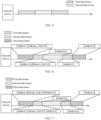
- FIG. 5 is a schematic diagram of data frame preemptive-transmission according to an embodiment of this application.
- the network device obtains, in a process of transmitting a first data frame, a second data frame whose priority is higher than a priority of the first data frame, the network device stops transmitting the first data frame, and starts to transmit the second data frame; and the network device continues to transmit the first data frame after the transmission of the second data frame ends.
- a data frame preemptive-transmission manner includes two possible implementations.
- FIG. 6 and FIG. 7 are schematic diagrams in which preemptive transmission is performed by using the first possible implementation of step 102.
- the network device obtains, in a process of transmitting a third data frame, a first data frame whose priority is higher than a priority of the third data frame, the network device stops transmitting the third data frame, and starts to transmit the first data frame; if the network device further obtains, in a process of transmitting the first data frame, a second data frame whose priority is higher than the priority of the first data frame, the network device stops transmitting the first data frame, and starts to transmit the second data frame; the network device continues to transmit the first data frame after the transmission of the second data frame ends; and the network device continues to transmit the third data frame after the transmission of the first data frame ends.
- FIG. 6 shows data frame preemptive-transmission in the manner 1.
- FIG. 7 shows data frame preemptive-transmission in the manner 2. Arrow directions in FIG. 5 to FIG. 7 all indicate data frame transmission directions.
- FIG. 6 and FIG. 7 frame structures of the first data fragment of the first data frame, the second data frame, and the first data fragment of the third data frame are all shown in FIG. 2 .
- FIG. 6 and FIG. 7 For ease of illustration, only a partial frame structure of each data frame is shown in FIG. 6 and FIG. 7 .
- the priority of the third data frame is 3, the priority of the first data frame is 5, the priority of the second data frame is 6, and an initial frame type of the third data frame is an express frame.
- a value of an SMD field in the first data fragment of the third data frame is a value (represented by SMD-E3) corresponding to SMD-E3
- a value of an SMD field in the first data fragment of the first data frame is a value corresponding to SMD-E5
- a value of an SMD field in the second data frame is a value corresponding to SMD-E6.
- a subsequent preemptable frame mark is extended to distinguish a data frame to which a preemptable frame subsequent-fragment belongs.
- Frame structures of the second data fragment of the first data frame and the second data fragment of the third data frame in FIG. 6 are both shown in FIG. 3 .
- a value of an SMD field in the second data fragment of the first data frame is a value corresponding to SMD-C20
- a value of an SMD field in the second data fragment of the third data frame is a value corresponding to SMD-C12.
- a value of a FRAG_COUNT field is set in a setting manner in the standard defined in IEEE 802.3br. Details are not described in this embodiment of this application.
- the subsequent preemptable frame mark SMD-C20 corresponds to the express frame mark SMD-E5
- the subsequent preemptable frame mark SMD-C12 corresponds to the express frame mark SMD-E3. Therefore, a data frame to which a preemptable frame subsequent-fragment belongs can be known based on a subsequent preemptable frame mark.
- the receive end combines the data fragment whose value of the SMD field is SMD-E5 and the data fragment whose value of the SMD field is SMD-C20 (there may be further SMD-C21 and the like), to obtain the first data frame.
- the receive end combines the data fragment whose value of the SMD field is SMD-E3 and the data fragment whose value of the SMD field is SMD-C12 (there may be further SMD-C13 and the like), to obtain the third data frame.
- FIG. 7 an indication field is added to a frame structure of a preemptable frame subsequent-fragment to distinguish a data frame to which the preemptable frame subsequent-fragment belongs.
- Frame structures of the second data fragment of the first data frame and the second data fragment of the third data frame in FIG. 7 are both shown in FIG. 4 . Referring to FIG.
- a value of an SMD field is a value corresponding to SMD-C0, and a value of an indication field is the value corresponding to SMD-E5 (same as the value of the SMD field in the first data fragment of the first data frame); and in the second data fragment of the third data frame, a value of an SMD field is the value corresponding to SMD-C0, and a value of an indication field is the value corresponding to SMD-E3 (same as the value of the SMD field in the first data fragment of the third data frame).
- a value of a FRAG_COUNT field is set in a setting manner in the standard defined in IEEE 802.3br. Details are not described in this embodiment of this application.
- a data frame to which a preemptable frame subsequent-fragment belongs may be directly known based on a value of an indication field.
- the receive end combines the data fragment whose value of the SMD field is SMD-E5 and all data fragments whose values of indication fields are SMD-E5, to obtain the first data frame.
- the receive end combines the data fragment whose value of the SMD field is SMD-E3 and all data fragments whose values of indication fields are SMD-E3, to obtain the third data frame.
- step 102 if the network device obtains, in a process of transmitting a third data frame, a first data frame whose priority is higher than a priority of the third data frame, the network device stops transmitting the third data frame, and starts to transmit the first data frame; if the network device further obtains, in a process of transmitting the first data frame, a second data frame whose priority is higher than the priority of the first data frame, the network device continues transmitting the first data frame because the first data frame cannot be preempted for transmission because the third data frame preempted by the first data frame for transmission exists in the network device; the network device transmits the second data frame after the transmission of the first data frame ends; and the network device continues to transmit the third data frame after the transmission of the second data frame ends.
- the network device determines a frame type of the fourth data frame as an express frame, and transmits the fourth data frame; and the network device continues to transmit the first data frame after the transmission of the fourth data frame ends.
- the priority of the fourth data frame is lower than or equal to the priority of the second data frame.
- the network device determines the frame type of the second data frame as an express frame, and the network device adjusts the frame type of the first data frame to a preemptable frame if the frame type of the first data frame is an express frame.
- a frame type of a currently transmitted data frame is dynamically adjusted, so that in the network device, a frame type of a high-priority data frame is an express frame, and a frame type of a low-priority data frame is a preemptable frame.
- a frame type of a data frame can be flexibly determined, to implement multi-level preemption, so that a high-priority data frame flexibly preempts a low-priority data frame, thereby improving data transmission flexibility.
- FIG. 8 is a flowchart of another data transmission method according to an embodiment of this application. As shown in FIG. 8 , the method includes the following steps.
- Step 801 If a to-be-transmitted second data frame exists in a process of transmitting a first data frame, a frame type of the first data frame is the same as a frame type of the second data frame, and a priority of the second data frame is higher than a priority of the first data frame, a network device determines the frame type of the first data frame as a preemptable frame and the frame type of the second data frame as an express frame.
- a queue identifier may be set for an egress port queue in this embodiment of this application, the queue identifier is used to indicate a queue type of the egress port queue, and the queue type includes an express queue or a preemptable queue.
- queue identifiers of egress port queues of priorities 0 to 3 are preemptable identifiers, which indicates that the egress port queues of the priorities 0 to 3 are preemptable queues; and queue identifiers of egress port queues of priorities 4 to 7 are express identifiers, which indicates that the egress port queues of the priorities 4 to 7 are express queues.
- a frame type of a data frame in the express queue is an express frame
- a frame type of a data frame in the preemptable queue is a preemptable frame.
- the preemptable identifier and the express identifier may be numbers, characters, or the like.
- the preemptable identifier is 1, and the express identifier is 0.
- the preemptable identifier is P
- the express identifier is E.
- the network device Before transmitting a data frame, the network device buffers the to-be-transmitted data frame in a corresponding egress port queue based on a priority of the data frame. Because a frame type of a data frame in each egress port queue is determined, in the process in which the network device transmits the first data frame, a module or a chip that controls data frame transmission can actively detect whether the to-be-transmitted second data frame exists in an egress port queue whose priority is higher than the priority of the first data frame and that has a same queue identifier as an egress port queue to which the first data frame belongs.
- the network device detects whether the to-be-transmitted second data frame exists in an express queue of a priority 7. For another example, if the frame type of the first data frame is a preemptable frame and the priority of the first data frame is 1, in the process of transmitting the first data frame, the network device detects whether the to-be-transmitted second data frame exists in preemptable queues of a priority 2 and a priority 3.
- an egress port queue may send an indication to the module or the chip that controls data frame transmission in the network device, where the indication includes a frame type and a priority of the egress port queue, to notify the module or the chip that controls data frame transmission that a to-be-transmitted second data frame exists, where a frame type of the second data frame is the same as the frame type of the transmitted first data frame, and a priority of the second data frame is higher than the priority of the first data frame.
- That the network device determines the frame type of the first data frame as a preemptable frame and the frame type of the second data frame as an express frame includes: if the frame type of the first data frame and the frame type of the second data frame are both express frames, the network device adjusts the frame type of the first data frame to a preemptable frame, without performing any operation on the frame type of the second data frame.
- the network device adjusts the frame type of the first data frame to a preemptable frame includes: if the frame type of the first data frame is an express frame, a third data frame preempted by the first data frame for transmission exists in the network device, and a frame type mark of the third data frame is a first preemptable frame mark, the network device adjusts a frame type mark of the first data frame to a second preemptable frame mark, where the second preemptable frame mark is different from the first preemptable frame mark.
- the network device adjusts a frame type mark of the first data frame to a second preemptable frame mark, where the second preemptable frame mark is different from the first preemptable frame mark.
- the network device adjusts the frame type of the first data frame to a preemptable frame includes: if the frame type of the first data frame is an express frame, and a third data frame preempted by the first data frame for transmission does not exist in the network device, the network device adjusts the frame type of the first data frame to a preemptable frame. If the frame type of the first data frame is an express frame, and a third data frame preempted by the first data frame for transmission exists in the network device, the network device does not adjust the frame type of the first data frame.
- That the network device determines the frame type of the first data frame as a preemptable frame and the frame type of the second data frame as an express frame alternatively includes: if the frame type of the first data frame and the frame type of the second data frame are both preemptable frames, the network device adjusts the frame type of the second data frame to an express frame, without performing any operation on the frame type of the first data frame.
- Step 802 The network device stops transmitting the first data frame, and starts to transmit the second data frame.
- Step 803 The network device continues to transmit the first data frame after the transmission of the second data frame ends.
- the network device determines the frame type of the first data frame as a preemptable frame and the frame type of the second data frame as an express frame.
- a frame type of a currently transmitted data frame or a frame type of a data frame in an egress port queue is dynamically adjusted, so that in the network device, a frame type of a high-priority data frame is an express frame, and a frame type of a low-priority data frame is a preemptable frame. Therefore, in data frames of a same frame type, a high-priority data frame flexibly preempts a low-priority data frame, thereby improving data transmission flexibility.
- FIG. 9 is a schematic diagram of a structure of a data transmission apparatus according to an embodiment of this application. As shown in FIG. 9 , the apparatus 90 includes:
- the adjustment module is configured to: if the frame type of the first data frame is an express frame, a third data frame preempted by the first data frame for transmission exists, and a frame type mark of the third data frame is a first preemptable frame mark, adjust a frame type mark of the first data frame to a second preemptable frame mark, where the second preemptable frame mark is different from the first preemptable frame mark.
- the adjustment module is configured to: if the frame type of the first data frame is an express frame and a third data frame preempted by the first data frame for transmission does not exist, adjust the frame type of the first data frame to a preemptable frame.
- the transmission module is further configured to continue to transmit the first data frame after the transmission of the second data frame ends.
- the transmission module is specifically configured to: after the transmission of the second data frame ends, if a to-be-transmitted fourth data frame exists and a priority of the fourth data frame is higher than the priority of the first data frame, determine a frame type of the fourth data frame as an express frame, and transmits the fourth data frame; and continue to transmit the first data frame after the transmission of the fourth data frame ends.
- the apparatus 90 further includes a buffer module, configured to: before transmitting the first data frame, buffer the first data frame in a corresponding egress port queue, for example, a first egress port queue, based on the priority of the first data frame; and further configured to buffer the second data frame in a corresponding egress port queue, for example, a second egress port queue, based on the priority of the to-be-transmitted second data frame.
- a buffer module configured to: before transmitting the first data frame, buffer the first data frame in a corresponding egress port queue, for example, a first egress port queue, based on the priority of the first data frame; and further configured to buffer the second data frame in a corresponding egress port queue, for example, a second egress port queue, based on the priority of the to-be-transmitted second data frame.
- the apparatus 90 further includes an enable/a disable control module, configured to control whether the apparatus 90 enables the data transmission method provided in the embodiments of this application.
- an enable/a disable control module configured to control whether the apparatus 90 enables the data transmission method provided in the embodiments of this application.
- the apparatus 90 performs the data transmission method shown in FIG. 1 .
- the apparatus 90 disables the data transmission method provided in the embodiments of this application, the apparatus 90 executes a conventional frame preemption mechanism.
- a network device determines the frame type of the second data frame as an express frame, and the network device adjusts, by using the adjustment module, the frame type of the first data frame to a preemptable frame if the frame type of the first data frame is an express frame.
- a frame type of a currently transmitted data frame is dynamically adjusted, so that in the network device, a frame type of a high-priority data frame is an express frame, and a frame type of a low-priority data frame is a preemptable frame.
- a frame type of a data frame can be flexibly determined, to implement multi-level preemption, so that a high-priority data frame flexibly preempts a low-priority data frame, thereby improving data transmission flexibility.
- FIG. 10 is a schematic diagram of a structure of another data transmission apparatus according to an embodiment of this application. As shown in FIG. 10 , the apparatus 100 includes:
- the determining module is configured to: adjust the frame type of the first data frame to a preemptable frame if the frame type of the first data frame and the frame type of the second data frame are both express frames; or adjust the frame type of the second data frame to an express frame if the frame type of the first data frame and the frame type of the second data frame are both preemptable frames.
- the determining module is configured to: if the frame type of the first data frame and the frame type of the second data frame are both express frames, a third data frame preempted by the first data frame for transmission exists, and a frame type mark of the third data frame is a first preemptable frame mark, adjust a frame type mark of the first data frame to a second preemptable frame mark, where the second preemptable frame mark is different from the first preemptable frame mark.
- the preemptable frame mark refer to the detailed descriptions in the data transmission method shown in FIG. 1 . Details are not described herein again.
- the determining module is configured to: if the frame type of the first data frame and the frame type of the second data frame are both express frames and a third data frame preempted by the first data frame for transmission does not exist, adjust the frame type of the first data frame to a preemptable frame.
- the transmission module is further configured to continue to transmit the first data frame after the transmission of the second data frame ends.
- the transmission module is specifically configured to: after the transmission of the second data frame ends, if a to-be-transmitted fourth data frame exists and a priority of the fourth data frame is higher than the priority of the first data frame, transmit the fourth data frame; and continue to transmit the first data frame after the transmission of the fourth data frame ends.
- the apparatus 100 further includes a buffer module, configured to: before transmitting the first data frame, buffer the first data frame in a corresponding egress port queue, for example, a first egress port queue, based on the priority of the first data frame; and further configured to buffer the second data frame in a corresponding egress port queue, for example, a second egress port queue, based on the priority of the to-be-transmitted second data frame.
- a buffer module configured to: before transmitting the first data frame, buffer the first data frame in a corresponding egress port queue, for example, a first egress port queue, based on the priority of the first data frame; and further configured to buffer the second data frame in a corresponding egress port queue, for example, a second egress port queue, based on the priority of the to-be-transmitted second data frame.
- the apparatus 100 further includes an enable/a disable control module, configured to control whether the apparatus 100 enables the data transmission method provided in the embodiments of this application.
- an enable/a disable control module configured to control whether the apparatus 100 enables the data transmission method provided in the embodiments of this application.
- the apparatus 100 performs the data transmission method shown in FIG. 8 .
- the apparatus 100 disables the data transmission method provided in the embodiments of this application, the apparatus 100 executes a conventional frame preemption mechanism.
- the network device determines, by using the determining module, the frame type of the first data frame as a preemptable frame and the frame type of the second data frame as an express frame.
- a frame type of a currently transmitted data frame or a frame type of a data frame in an egress port queue is dynamically adjusted, so that in the network device, a frame type of a high-priority data frame is an express frame, and a frame type of a low-priority data frame is a preemptable frame. Therefore, a high-priority data frame flexibly preempts a low-priority data frame, thereby improving data transmission flexibility.
- FIG. 11 is a block diagram of a data transmission apparatus according to an embodiment of this application.
- the data transmission apparatus may be a network device, such as a switch or a router.
- the apparatus 110 includes a processing chip 1101.
- the apparatus 110 may further include a memory 1102, a communications bus 1103, and a communications interface 1104.
- the processing chip 1101, the memory 1102, and the communications interface 1104 are connected to each other by using the communications bus 1103.
- the processing chip 1101 includes a programmable logic circuit and/or program instructions. When running the programmable logic circuit and/or the program instructions, the processing chip 1101 implements the data transmission method shown in FIG. 1 or FIG. 8 .
- FIG. 12 is a schematic diagram of a structure of the processing chip 1101 according to an embodiment of this application. As shown in FIG. 12 , the processing chip 1101 includes a processing unit 1101A and a scheduling unit 1101B.
- the processing unit 1101A may be a central processing unit (central processing unit, CPU), a network processor (network processor, NP), or a combination of a CPU and an NP.
- CPU central processing unit
- NP network processor
- the memory 1102 is configured to store a computer program, and the computer program includes program instructions.
- the processing unit 1101A invokes the computer program stored in the memory 1102, and runs the program instructions in the computer program to buffer a to-be-transmitted data frame in a corresponding egress port queue based on a priority of the to-be-transmitted data frame.
- the to-be-transmitted data frame in the egress port queue may be understood as a packet on which MAC encapsulation is not performed.
- the scheduling unit 1101B may be an application-specific integrated circuit (Application Specific Integrated Circuits, ASIC), a programmable logic device (programmable logic device, PLD), or a combination thereof.
- the PLD may be a complex programmable logic device (complex programmable logic device, CPLD), a field programmable gate array (field-programmable gate array, FPGA), generic array logic (generic array logic, GAL), or any combination thereof.
- the scheduling unit 1101B runs the programmable logic circuit in the processing chip to schedule the to-be-transmitted data frame in the egress port queue, to implement the data transmission method in FIG. 1 or FIG. 8 .
- the scheduling unit is configured to: according to the method in which a high-priority data frame preempts a low-priority data frame for transmission in FIG. 1 or FIG. 8 , schedule the data frame in the egress port queue, and adjust or determine a frame type of the data frame. Then, a value corresponding to the frame type is set in an SMD field during MAC encapsulation. Finally, the data frame that carries the frame type (the value of the SMD field) reaches the communications interface 1104 after passing through a physical layer (PHY), and is transmitted from the communications interface 1104 to a receive end. The receive end can determine, based on the value of the SMD field in the data frame, whether the received data frame is an express frame or a preemptable frame preempted for transmission.
- PHY physical layer
- the processing chip 1101 further includes a storage unit 1101C, and the storage unit 1101C includes storage space that is set for an egress port queue, to buffer a to-be-transmitted data frame.
- the storage unit 1101C may be configured to store computer program instructions.
- the processing unit 1101A invokes the computer program instructions stored in the storage unit 1101C, to buffer a to-be-transmitted data frame in a corresponding egress port queue based on a priority of the to-be-transmitted data frame.
- the memory 1102 may be configured to buffer a tobe-transmitted data frame.
- the communications interface 1104 includes a wired communications interface.
- the wired communications interface includes an Ethernet interface.
- the Ethernet interface may be an optical interface, an electrical interface, or a combination thereof.
- FIG. 13 is a schematic diagram of a structure of the scheduling unit 1101B according to an embodiment of this application.
- the scheduling unit 1101B includes data egress scheduling logic 1101B-1 and MAC encapsulation logic 1101B-2.
- the data egress scheduling logic 1101B-1 is configured to schedule the to-be-transmitted data frame in the egress port queue, and provide the MAC encapsulation logic with a frame type indication corresponding to the to-be-transmitted data frame, where the frame type indication is used to indicate the frame type of the to-be-transmitted data frame.
- the MAC encapsulation logic 1101B-2 is configured to perform MAC encapsulation on the to-be-transmitted data frame based on the to-be-transmitted data frame provided by the data egress scheduling logic 1101B-1 and the frame type indication corresponding to the to-be-transmitted data frame.
- the data egress scheduling logic 1101B-1 when providing the MAC encapsulation logic 1101B-2 with the to-be-transmitted data frame, the data egress scheduling logic 1101B-1 provides the MAC encapsulation logic 1101B-2 with the frame type indication corresponding to the data frame.
- the frame type indication includes a start of packet (start of packet, SOP), an end of packet (end of packet, EOP), a start of MAC-merge (start of MAC-merge, SOM), and an end of MAC-merge (end of MAC-merge, EOM). That the SOP is 1 indicates a packet header, that the EOP is 1 indicates a packet trailer, and that the SOP and the EOP are both 0 indicates a packet intermediate fragment.
- the SOM is 1 indicates the first preemptable frame subsequent-fragment
- that the EOM is 1 indicates the last preemptable frame subsequent-fragment
- that the SOM and the EOM are both 0 indicates an intermediate preemptable frame subsequent-fragment.
- the data egress scheduling logic 1101B-1 sends an indication that an SOP value is 1 and an EOP is 0, next sends an indication that the SOP value is 0 and the EOP is 0, and then sends an indication that the SOP value is 0 and the EOP value is 1 to the MAC encapsulation logic 1101B-2.
- the first data frame is transmitted at one time without being preempted for transmission, and an SMD value encapsulated by the MAC encapsulation logic 1101B-2 for the first data frame is SMD-E0.
- the data egress scheduling logic 1101B-1 when providing the MAC encapsulation logic 1101B-2 with a first data frame whose frame type is a preemptable frame, the data egress scheduling logic 1101B-1 sends an indication that an SOP value is 1 and an EOP is 0 to the MAC encapsulation logic 1101B-2, and an SMD value encapsulated by the MAC encapsulation logic 1101B-2 for the first data frame is SMD-S0.
- the data egress scheduling logic 1101B-1 schedules a second data frame to preempt the first data frame for transmission. Therefore, when providing the MAC encapsulation logic 1101B-2 with the second data frame, the data egress scheduling logic 1101B-1 sends an indication that an SOP value is 1 and an EOP is 0 to the MAC encapsulation logic 1101B-2, and an SMD value encapsulated by the MAC encapsulation logic 1101B-2 for the second data frame is SMD-E1. Then, the data egress scheduling logic 1101B-1 schedules a third data frame to preempt the second data frame for transmission.
- the data egress scheduling logic 1101B-1 when providing the MAC encapsulation logic 1101B-2 with the third data frame, sends an indication that an SOP value is 1 and an EOP is 0 to the MAC encapsulation logic 1101B-2, and an SMD value encapsulated by the MAC encapsulation logic 1101B-2 for the third data frame is SMD-E2.
- the data egress scheduling logic 1101B-1 continues to transmit the third data frame, sends an indication that the SOP value is 0 and the EOP is 0, and then sends an indication that the SOP value is 0 and the EOP value is 1, and the MAC encapsulation logic 1101B-2 encapsulates SMD-E2 for all subsequent fragments of the third data frame.
- the data egress scheduling logic 1101B-1 continues to transmit the second data frame, and sends an indication that the SOP value is 0, the EOP is 0, an SOM is 1, and an EOM is 0, and the MAC encapsulation logic 1101B-2 encapsulates SMD-C4 for a preemptable frame subsequent-fragment of the second data frame. Then, the data egress scheduling logic 1101B-1 sends an indication that the SOP value is 0, the EOP is 0, the SOM is 0, and the EOM is 0, and the MAC encapsulation logic 1101B-2 encapsulates SMD-C5 for a preemptable frame subsequent-fragment of the second data frame.
- the data egress scheduling logic 1101B-1 sends an indication that the SOP value is 0, the EOP is 1, the SOM is 0, and the EOM is 1, and the MAC encapsulation logic 1101B-2 encapsulates SMD-C6 for a preemptable frame subsequent-fragment of the second data frame.
- the data egress scheduling logic 1101B-1 continues to transmit the first data frame, and sends an indication that the SOP value is 0, the EOP is 0, an SOM is 1, and an EOM is 0, and the MAC encapsulation logic 1101B-2 encapsulates SMD-C0 for a preemptable frame subsequent-fragment of the first data frame.
- the data egress scheduling logic 1101B-1 sends an indication that the SOP value is 0, the EOP is 0, the SOM is 0, and the EOM is 0, and the MAC encapsulation logic 1101B-2 encapsulates SMD-C1 for a preemptable frame subsequent-fragment of the first data frame.
- the data egress scheduling logic 1101B-1 sends an indication that the SOP value is 0, the EOP is 1, the SOM is 0, and the EOM is 1, and the MAC encapsulation logic 1101B-2 encapsulates SMD-C2 for a preemptable frame subsequent-fragment of the first data frame.
- the MAC encapsulation logic 1101B-2 If finding that after receiving a previous indication that an SOP value is 1, the MAC encapsulation logic 1101B-2 receives no indication that an EOP value is 1, but further receives an indication that an SOP value is 1, the MAC encapsulation logic 1101B-2 can know that preemptive transmission has occurred. In addition, each time the MAC encapsulation logic 1101B-2 receives a data frame whose SOP value is 1, the MAC encapsulation logic 1101B-2 selects one of SMD-S0 or SMD-E0, SMD-E1, SMD-E2, ..., and SMD-E7 in sequence and encapsulates the mark for the data frame. When receiving the first data frame whose SOP value is 1, the MAC encapsulation logic 1101B-2 encapsulates SMD-S0 or SMD-E0 for the data frame based on a frame type of the data frame.
- a data frame provided by the data egress scheduling logic 1101B-1 with the MAC encapsulation logic 1101B-2 carries a frame type indication.
- a frame type indication of an express frame includes an SOP and an EOP. Similarly, that the SOP is 1 indicates a packet header, that the EOP is 1 indicates a packet trailer, and that the SOP and the EOP are both 0 indicates a packet intermediate fragment.
- a frame type indication of a preemptable frame includes an SOP, an EOP, an SOM, and an EOM.
- the frame type indication may further include priority information, so that the MAC encapsulation logic 1101B-2 can distinguish between intermediate subsequent-fragments.
- the MAC encapsulation logic 1101B-2 may set a value of an SMD field in a MAC encapsulation header based on the frame type indication carried in the data frame, to obtain the data frame of a corresponding frame type.
- the communications interface 1104 is configured to communicate with another device.
- the communications interface 1104 may be configured to receive a data frame and/or send a data frame.
- the processing chip 1101 further includes a register, and the register includes an enable/a disable flag bit.
- the enable/disable flag bit is set to a first value (for example, 1), it indicates that the apparatus 110 enables the data transmission method provided in the embodiments of this application.
- the enable/disable flag bit is set to a second value (for example, 0), it indicates that the apparatus 110 disables the data transmission method provided in the embodiments of this application. In this case, the apparatus 110 executes a conventional frame preemption mechanism.
- the processing chip 1101 When the enable/disable flag bit is set in the apparatus 110, the processing chip 1101 includes a programmable logic circuit and/or program instructions for implementing the data transmission method shown in FIG. 1 or FIG. 8 , and further includes a programmable logic circuit and/or program instructions for implementing the conventional frame preemption mechanism.
- the communications interface 1104 may alternatively include a wireless communications interface.
- the wireless communications interface may be a wireless local area network (wireless local area network, WLAN) interface, a cellular network communications interface, a combination thereof, or the like.
- the apparatus 110 may further include a processor 1105, configured to implement a service or function other than the data transmission method provided in this application.
- the processor may have a single core or a plurality of cores.
- An embodiment of this application further provides a computer storage medium.
- the computer storage medium stores instructions. When the instructions are executed by a processor, the data transmission method shown in FIG. 1 or FIG. 8 is implemented.
- the program may be stored in a computer-readable storage medium.
- the storage medium may be a read-only memory, a magnetic disk, an optical disc, or the like.
- the terms “first”, “second”, and “third” are merely used for a purpose of description, and shall not be understood as an indication or implication of relative importance. Unless otherwise explicitly limited, the term “at least one” refers to one or more, and the term “a plurality of” refers to two or more.
Landscapes
- Engineering & Computer Science (AREA)
- Computer Networks & Wireless Communication (AREA)
- Signal Processing (AREA)
- Quality & Reliability (AREA)
- Computer Security & Cryptography (AREA)
- Data Exchanges In Wide-Area Networks (AREA)
- Communication Control (AREA)
- Time-Division Multiplex Systems (AREA)
Claims (15)
- Datenübertragungsverfahren, wobei das Verfahren umfasst:falls ein zu übertragender zweiter Datenrahmen in einem Vorgang zum Übertragen eines ersten Datenrahmens existiert, Bestimmen (101) eines Rahmentyps des zweiten Datenrahmens als einen Express-Rahmen, wobei eine Priorität des zweiten Datenrahmens höher als eine Priorität des ersten Datenrahmens ist;Anpassen (102) eines Rahmentyps des ersten Datenrahmens in einer Rahmentypfeld-SMD des Datenrahmens auf einen unterbrechbaren Rahmen, falls der Rahmentyp des ersten Datenrahmens ein Express-Rahmen ist; undStoppen (103) des Übertragens des ersten Datenrahmens und Starten des Übertragens des zweiten Datenrahmens.
- Verfahren nach Anspruch 1, wobei das Anpassen eines Rahmentyps des ersten Datenrahmens auf einen unterbrechbaren Rahmen, falls der Rahmentyp des ersten Datenrahmens ein Express-Rahmen ist, umfasst:
falls der Rahmentyp des ersten Datenrahmens ein Express-Rahmen ist, ein dritter Datenrahmen, der durch den ersten Datenrahmen für eine Übertragung unterbrochen wird, existiert und eine Rahmentypmarkierung des dritten Datenrahmens eine erste unterbrechbare Rahmenmarkierung ist, Anpassen einer Rahmentypmarkierung des ersten Datenrahmens auf eine zweite unterbrechbare Rahmenmarkierung, wobei sich die zweite unterbrechbare Rahmenmarkierung von der ersten unterbrechbaren Rahmenmarkierung unterscheidet. - Verfahren nach Anspruch 1, wobei das Anpassen eines Rahmentyps des ersten Datenrahmens auf einen unterbrechbaren Rahmen, falls der Rahmentyp des ersten Datenrahmens ein Express-Rahmen ist, umfasst:
falls der Rahmentyp des ersten Datenrahmens ein Express-Rahmen ist und ein dritter Datenrahmen, der durch den ersten Datenrahmen für die Übertragung unterbrochen wird, nicht existiert, Anpassen des Rahmentyps des ersten Datenrahmens auf einen unterbrechbaren Rahmen. - Verfahren nach einem der Ansprüche 1 bis 3, wobei das Verfahren ferner umfasst: Fortsetzen (104) des Übertragens des ersten Datenrahmens, nachdem die Übertragung des zweiten Datenrahmens beendet ist.
- Verfahren nach Anspruch 4, wobei das Fortsetzen des Übertragens des ersten Datenrahmens, nachdem die Übertragung des zweiten Datenrahmens beendet ist, umfasst:nachdem die Übertragung des zweiten Datenrahmens beendet ist, falls ein zu übertragender vierter Datenrahmen existiert und eine Priorität des vierten Datenrahmens höher als die Priorität des ersten Datenrahmens ist, Bestimmen eines Rahmentyps des vierten Datenrahmens als einen Express-Rahmen und Übertragen des vierten Datenrahmens; undFortsetzen des Übertragens des ersten Datenrahmens, nachdem die Übertragung des vierten Datenrahmens beendet ist.
- Datenübertragungsverfahren, wobei das Verfahren umfasst:falls ein zu übertragender zweiter Datenrahmen in einem Vorgang zum Übertragen eines ersten Datenrahmens existiert, ein Rahmentyp des ersten Datenrahmens in einer Rahmentypfeld-SMD des Datenrahmens der gleiche wie ein Rahmentyp in einer Rahmentypfeld-SMD des zweiten Datenrahmens ist und eine Priorität des zweiten Datenrahmens höher als eine Priorität des ersten Datenrahmens ist, Bestimmen (801) des Rahmentyps des ersten Datenrahmens als einen unterbrechbaren Rahmen und des Rahmentyps des zweiten Datenrahmens als einen Express-Rahmen; undStoppen (802) des Übertragens des ersten Datenrahmens und Starten des Übertragens des zweiten Datenrahmens.
- Verfahren nach Anspruch 6, wobei das Bestimmen des Rahmentyps des ersten Datenrahmens als einen unterbrechbaren Rahmen und des Rahmentyps des zweiten Datenrahmens als einen Express-Rahmen umfasst:Anpassen des Rahmentyps des ersten Datenrahmens auf einen unterbrechbaren Rahmen, falls der Rahmentyp des ersten Datenrahmens und der Rahmentyp des zweiten Datenrahmens beide Express-Rahmen sind; oderAnpassen des Rahmentyps des zweiten Datenrahmens auf einen Express-Rahmen, falls der Rahmentyp des ersten Datenrahmens und der Rahmentyp des zweiten Datenrahmens beide unterbrechbare Rahmen sind.
- Verfahren nach Anspruch 7, wobei das Anpassen des Rahmentyps des ersten Datenrahmens auf einen unterbrechbaren Rahmen, falls der Rahmentyp des ersten Datenrahmens und der Rahmentyp des zweiten Datenrahmens beide Express-Rahmen sind, umfasst:
falls der Rahmentyp des ersten Datenrahmens und der Rahmentyp des zweiten Datenrahmens beide Express-Rahmen sind, ein dritter Datenrahmen, der durch den ersten Datenrahmen für die Übertragung unterbrochen wird, existiert und eine Rahmentypmarkierung des dritten Datenrahmens eine erste unterbrechbare Rahmenmarkierung ist, Anpassen einer Rahmentypmarkierung des ersten Datenrahmens auf eine zweite unterbrechbare Rahmenmarkierung, wobei sich die zweite unterbrechbare Rahmenmarkierung von der ersten unterbrechbaren Rahmenmarkierung unterscheidet. - Verfahren nach Anspruch 7, wobei das Anpassen des Rahmentyps des ersten Datenrahmens auf einen unterbrechbaren Rahmen, falls der Rahmentyp des ersten Datenrahmens und der Rahmentyp des zweiten Datenrahmens beide Express-Rahmen sind, umfasst:
falls der Rahmentyp des ersten Datenrahmens und der Rahmentyp des zweiten Datenrahmens beide Express-Rahmen sind und ein dritter Datenrahmen, der durch den ersten Datenrahmen für die Übertragung unterbrochen wird, nicht existiert, Anpassen des Rahmentyps des ersten Datenrahmens auf einen unterbrechbaren Rahmen. - Verfahren nach einem der Ansprüche 6 bis 9, wobei das Verfahren ferner umfasst: Fortsetzen (803) des Übertragens des ersten Datenrahmens, nachdem die Übertragung des zweiten Datenrahmens beendet ist.
- Verfahren nach Anspruch 10, wobei das Fortsetzen des Übertragens des ersten Datenrahmens, nachdem die Übertragung des zweiten Datenrahmens beendet ist, umfasst:nachdem die Übertragung des zweiten Datenrahmens beendet ist, falls ein zu übertragender vierter Datenrahmen existiert und eine Priorität des vierten Datenrahmens höher als die Priorität des ersten Datenrahmens ist, Übertragen des vierten Datenrahmens; undFortsetzen des Übertragens des ersten Datenrahmens, nachdem die Übertragung des vierten Datenrahmens beendet ist.
- Datenübertragungseinrichtung (90), wobei die Einrichtung umfasst:ein Bestimmungsmodul (901), das konfiguriert ist zum: falls ein zu übertragender zweiter Datenrahmen in einem Vorgang zum Übertragen eines ersten Datenrahmens existiert, Bestimmen eines Rahmentyps des zweiten Datenrahmens als einen Express-Rahmen, wobei eine Priorität des zweiten Datenrahmens höher als eine Priorität des ersten Datenrahmens ist;ein Anpassungsmodul (902), das konfiguriert ist, um einen Rahmentyp des ersten Datenrahmens in einer Rahmentypfeld-SMD des Datenrahmens auf einen unterbrechbaren Rahmen anzupassen, falls der Rahmentyp des ersten Datenrahmens ein Express-Rahmen ist; undein Übertragungsmodul (903), das konfiguriert ist zum: Stoppen des Übertragens des ersten Datenrahmens und Starten des Übertragens des zweiten Datenrahmens.
- Einrichtung nach Anspruch 12, wobei das Anpassungsmodul konfiguriert ist zum: falls der Rahmentyp des ersten Datenrahmens ein Express-Rahmen ist, ein dritter Datenrahmen, der durch den ersten Datenrahmen für die Übertragung unterbrochen wird, existiert und eine Rahmentypmarkierung des dritten Datenrahmens eine erste unterbrechbare Rahmenmarkierung ist, Anpassen einer Rahmentypmarkierung des ersten Datenrahmens auf eine zweite unterbrechbare Rahmenmarkierung, wobei sich die zweite unterbrechbare Rahmenmarkierung von der ersten unterbrechbaren Rahmenmarkierung unterscheidet.
- Datenübertragungseinrichtung (100), wobei die Einrichtung umfasst:ein Bestimmungsmodul (1001), das konfiguriert ist zum: falls ein zu übertragender zweiter Datenrahmen in einem Vorgang zum Übertragen eines ersten Datenrahmens existiert, ein Rahmentyp des ersten Datenrahmens in einer Rahmentypfeld-SMD des Datenrahmens der gleiche wie ein Rahmentyp in einer Rahmentypfeld-SMD des zweiten Datenrahmens ist und eine Priorität des zweiten Datenrahmens höher als eine Priorität des ersten Datenrahmens ist, Bestimmen des Rahmentyps des ersten Datenrahmens als einen unterbrechbaren Rahmen und des Rahmentyps des zweiten Datenrahmens als einen Express-Rahmen; undein Übertragungsmodul (1002), das konfiguriert ist zum: Stoppen des Übertragens des ersten Datenrahmens und Starten des Übertragens des zweiten Datenrahmens.
- Einrichtung nach Anspruch 14, wobei das Bestimmungsmodul konfiguriert ist zum:Anpassen des Rahmentyps des ersten Datenrahmens auf einen unterbrechbaren Rahmen, falls der Rahmentyp des ersten Datenrahmens und der Rahmentyp des zweiten Datenrahmens beide Express-Rahmen sind; oderAnpassen des Rahmentyps des zweiten Datenrahmens auf einen Express-Rahmen, falls der Rahmentyp des ersten Datenrahmens und der Rahmentyp des zweiten Datenrahmens beide unterbrechbare Rahmen sind.
Applications Claiming Priority (2)
| Application Number | Priority Date | Filing Date | Title |
|---|---|---|---|
| CN201910680722.9A CN112311496B (zh) | 2019-07-26 | 2019-07-26 | 数据传输方法及装置 |
| PCT/CN2020/104811 WO2021018087A1 (zh) | 2019-07-26 | 2020-07-27 | 数据传输方法及装置 |
Publications (3)
| Publication Number | Publication Date |
|---|---|
| EP3993293A1 EP3993293A1 (de) | 2022-05-04 |
| EP3993293A4 EP3993293A4 (de) | 2022-08-03 |
| EP3993293B1 true EP3993293B1 (de) | 2024-09-11 |
Family
ID=74229357
Family Applications (1)
| Application Number | Title | Priority Date | Filing Date |
|---|---|---|---|
| EP20846611.0A Active EP3993293B1 (de) | 2019-07-26 | 2020-07-27 | Datenübertragungsverfahren und -vorrichtung |
Country Status (5)
| Country | Link |
|---|---|
| US (1) | US12003319B2 (de) |
| EP (1) | EP3993293B1 (de) |
| JP (1) | JP7394960B2 (de) |
| CN (1) | CN112311496B (de) |
| WO (1) | WO2021018087A1 (de) |
Families Citing this family (14)
| Publication number | Priority date | Publication date | Assignee | Title |
|---|---|---|---|---|
| CN112311496B (zh) * | 2019-07-26 | 2025-01-07 | 华为技术有限公司 | 数据传输方法及装置 |
| WO2022170561A1 (zh) * | 2021-02-10 | 2022-08-18 | 华为技术有限公司 | 一种信息传输方法及装置 |
| KR102649136B1 (ko) * | 2021-03-18 | 2024-03-19 | 한국전자통신연구원 | 프레임 프리엠션 제공 방법 및 장치 |
| EP4113952B1 (de) * | 2021-06-28 | 2025-10-08 | Abb Schweiz Ag | Verbesserte überlastungshandhabung in zeitempfindlichen netzwerken durch koordination zwischen netzwerksegmenten |
| EP4113950B1 (de) * | 2021-06-28 | 2025-10-08 | Abb Schweiz Ag | Variable vorbelegung in zeitsensitiven netzwerken mit prioritätsregenerierung |
| US12568157B2 (en) * | 2021-12-22 | 2026-03-03 | Intel Corporation | Packet format adjustment technologies |
| CN114500692A (zh) * | 2022-02-11 | 2022-05-13 | 重庆邮电大学 | 一种时间敏感网络帧抢占优化方法 |
| CN114448574A (zh) * | 2022-03-03 | 2022-05-06 | 湖南军安信达科技有限公司 | 一种mac帧数据传输处理设备及其数据传输处理方法 |
| CN114465961B (zh) * | 2022-04-13 | 2022-08-09 | 之江实验室 | 一种兼容性网络高实时数据传输装置及方法 |
| CN115499380B (zh) * | 2022-08-16 | 2024-03-29 | 悠跑科技(合肥)有限公司 | 车载以太网的tsn混合调度方法、设备及存储介质 |
| CN115378874B (zh) * | 2022-10-20 | 2023-01-24 | 北京智芯微电子科技有限公司 | 数据发送、接收方法、装置、电子设备、芯片及存储介质 |
| CN116346678A (zh) * | 2022-11-30 | 2023-06-27 | 北京东土科技股份有限公司 | 帧抢占功能的测试装置 |
| CN120389835B (zh) * | 2025-06-27 | 2025-11-25 | 北京智芯微电子科技有限公司 | 用于时间敏感网络中的发送节点和接收节点的帧抢占方法、发送设备和接收设备 |
| CN121070842A (zh) * | 2025-11-06 | 2025-12-05 | 成都九洲迪飞科技有限责任公司 | 基于抢占帧的多串口数据传输方法 |
Family Cites Families (18)
| Publication number | Priority date | Publication date | Assignee | Title |
|---|---|---|---|---|
| JP3169511B2 (ja) * | 1994-03-10 | 2001-05-28 | 三菱電機株式会社 | メモリ装置及びメモリ管理方法 |
| FI20050561A0 (fi) * | 2005-05-26 | 2005-05-26 | Nokia Corp | Pakettidatan käsittely viestintäjärjestelmässä |
| US8391354B2 (en) | 2007-05-14 | 2013-03-05 | Broadcom Corporation | Method and system for transforming uncompressed video traffic to network-aware ethernet traffic with A/V bridging capabilities and A/V bridging extensions |
| US8977737B2 (en) | 2007-12-24 | 2015-03-10 | Alcatel Lucent | Detecting legacy bridges in an audio video bridging network |
| KR101188210B1 (ko) * | 2010-08-03 | 2012-10-05 | 인하대학교 산학협력단 | 선점형 우선순위 기반의 이더넷 데이타 스케줄링 방법 및 이를 이용한 시스템 |
| US10225196B2 (en) | 2013-02-15 | 2019-03-05 | Nxp Usa, Inc. | Apparatus, system and method for controlling packet data flow |
| WO2015162734A1 (ja) * | 2014-04-23 | 2015-10-29 | 三菱電機株式会社 | 中継装置およびデータ転送方法 |
| JP2016103700A (ja) * | 2014-11-27 | 2016-06-02 | 三菱電機株式会社 | スイッチ装置 |
| WO2016132402A1 (ja) * | 2015-02-20 | 2016-08-25 | 三菱電機株式会社 | 通信フレーム転送装置および通信システム |
| WO2016134774A1 (de) * | 2015-02-26 | 2016-09-01 | Siemens Aktiengesellschaft | Datenübertragung in einem kommunikationsnetzwerk |
| US10218602B2 (en) | 2015-04-15 | 2019-02-26 | Cisco Technology, Inc. | Establishing deterministic multicast paths in a network |
| JP2018055284A (ja) * | 2016-09-27 | 2018-04-05 | 富士通株式会社 | 通信装置、及び通信装置の送信方法 |
| US10681128B2 (en) * | 2016-10-12 | 2020-06-09 | Cisco Technology, Inc. | Deterministic stream synchronization |
| EP3503485B1 (de) * | 2017-12-22 | 2023-01-25 | Marelli Europe S.p.A. | Verfahren zur verwaltung von netzwerkverkehr in einem auf ethernet switchen basierende netzwerk, fahrzeug, kommunikationsschnittstelle und computerprogrammprodukt |
| CN108650312B (zh) * | 2018-05-03 | 2020-12-08 | 西安电子科技大学 | 支持实时数据抢占的mac ip核装置及数据传输方法 |
| CN109120591A (zh) * | 2018-07-05 | 2019-01-01 | 湖南铁路科技职业技术学院 | 列车以太网数据处理方法及系统 |
| US10728134B2 (en) * | 2018-11-14 | 2020-07-28 | Keysight Technologies, Inc. | Methods, systems, and computer readable media for measuring delivery latency in a frame-preemption-capable network |
| CN112311496B (zh) * | 2019-07-26 | 2025-01-07 | 华为技术有限公司 | 数据传输方法及装置 |
-
2019
- 2019-07-26 CN CN201910680722.9A patent/CN112311496B/zh active Active
-
2020
- 2020-07-27 JP JP2022505259A patent/JP7394960B2/ja active Active
- 2020-07-27 WO PCT/CN2020/104811 patent/WO2021018087A1/zh not_active Ceased
- 2020-07-27 EP EP20846611.0A patent/EP3993293B1/de active Active
-
2022
- 2022-01-25 US US17/583,685 patent/US12003319B2/en active Active
Also Published As
| Publication number | Publication date |
|---|---|
| JP7394960B2 (ja) | 2023-12-08 |
| JP2022543206A (ja) | 2022-10-11 |
| CN112311496A (zh) | 2021-02-02 |
| CN112311496B (zh) | 2025-01-07 |
| US12003319B2 (en) | 2024-06-04 |
| EP3993293A1 (de) | 2022-05-04 |
| WO2021018087A1 (zh) | 2021-02-04 |
| EP3993293A4 (de) | 2022-08-03 |
| US20220149979A1 (en) | 2022-05-12 |
Similar Documents
| Publication | Publication Date | Title |
|---|---|---|
| US12003319B2 (en) | Data transmission method and apparatus | |
| EP3573297B1 (de) | Paketverarbeitungsverfahren und -vorrichtung | |
| US9166917B2 (en) | Link layer preemption | |
| US10999099B2 (en) | Physical layer device and method for operating a physical layer device | |
| KR100735408B1 (ko) | 이더넷 기반의 네트워크에서 서비스 클래스별 트래픽의스위칭 제어 방법 및 그 스위칭 장치 | |
| US20220095377A1 (en) | Emulating collisions in wired local area networks and related systems, methods, and devices | |
| US11563521B2 (en) | Method and apparatus for port channelization at physical layer | |
| US10554545B2 (en) | Data transmission in a communications network | |
| US12537717B2 (en) | Time-sensitive transmission of ethernet traffic between endpoint network nodes | |
| US7602809B2 (en) | Reducing transmission time for data packets controlled by a link layer protocol comprising a fragmenting/defragmenting capability | |
| US12526238B2 (en) | Transmission of packets over a TSN aware network | |
| CN115378874B (zh) | 数据发送、接收方法、装置、电子设备、芯片及存储介质 | |
| CN112313911A (zh) | 用于发送数据包的方法和计算机程序、用于接收数据包的方法和计算机程序、通信单元和具有通信单元的机动车 | |
| US20050270977A1 (en) | Combined queue WME quality of service management | |
| US20240250915A1 (en) | Method and apparatus for transmitting ethernet frame, and storage medium storing instructions to perform method for transmitting ethernet frame | |
| US11785635B2 (en) | Communication system enabled to minimize negative communication effects | |
| US20050232155A1 (en) | Communication apparatus for transmitting frames and priority control method for transmitting frames | |
| GB2462060A (en) | Emulated LAN (ELAN) including specifying ports of a service member set and flooding a packet to the permitted members of the set. | |
| EP2472982B1 (de) | Verfahren, vorrichtung und system zur dienstplanung einer mikrowellenverknüpfung | |
| CN108964823B (zh) | 以太网双引擎数据处理方法及系统 | |
| CN115529285A (zh) | 一种报文传输方法和装置 | |
| CN117014384A (zh) | 一种报文传输方法以及报文转发设备 | |
| Hotta et al. | Experimental study of a low-delay ethernet switch for real time networks | |
| EP1758306B1 (de) | Verfahren und vorrichtung zur übertragung eines steuersignals einer resilient-packet-ring-medienzugriffssteuerung | |
| US11985541B2 (en) | Symbol-level fragmentation and pre-emption in industrial wireless communications |
Legal Events
| Date | Code | Title | Description |
|---|---|---|---|
| STAA | Information on the status of an ep patent application or granted ep patent |
Free format text: STATUS: THE INTERNATIONAL PUBLICATION HAS BEEN MADE |
|
| PUAI | Public reference made under article 153(3) epc to a published international application that has entered the european phase |
Free format text: ORIGINAL CODE: 0009012 |
|
| STAA | Information on the status of an ep patent application or granted ep patent |
Free format text: STATUS: REQUEST FOR EXAMINATION WAS MADE |
|
| 17P | Request for examination filed |
Effective date: 20220126 |
|
| AK | Designated contracting states |
Kind code of ref document: A1 Designated state(s): AL AT BE BG CH CY CZ DE DK EE ES FI FR GB GR HR HU IE IS IT LI LT LU LV MC MK MT NL NO PL PT RO RS SE SI SK SM TR |
|
| A4 | Supplementary search report drawn up and despatched |
Effective date: 20220630 |
|
| RIC1 | Information provided on ipc code assigned before grant |
Ipc: H04L 47/62 20220101ALN20220624BHEP Ipc: H04L 47/2416 20220101ALN20220624BHEP Ipc: H04L 47/24 20220101AFI20220624BHEP |
|
| DAV | Request for validation of the european patent (deleted) | ||
| DAX | Request for extension of the european patent (deleted) | ||
| REG | Reference to a national code |
Ref country code: DE Ref legal event code: R079 Free format text: PREVIOUS MAIN CLASS: H04L0001000000 Ref country code: DE Ref legal event code: R079 Ref document number: 602020037702 Country of ref document: DE Free format text: PREVIOUS MAIN CLASS: H04L0001000000 Ipc: H04L0047240000 |
|
| GRAP | Despatch of communication of intention to grant a patent |
Free format text: ORIGINAL CODE: EPIDOSNIGR1 |
|
| STAA | Information on the status of an ep patent application or granted ep patent |
Free format text: STATUS: GRANT OF PATENT IS INTENDED |
|
| RIC1 | Information provided on ipc code assigned before grant |
Ipc: H04L 47/62 20220101ALN20240403BHEP Ipc: H04L 47/2416 20220101ALN20240403BHEP Ipc: H04L 67/61 20220101ALI20240403BHEP Ipc: H04L 47/24 20220101AFI20240403BHEP |
|
| INTG | Intention to grant announced |
Effective date: 20240424 |
|
| GRAS | Grant fee paid |
Free format text: ORIGINAL CODE: EPIDOSNIGR3 |
|
| GRAA | (expected) grant |
Free format text: ORIGINAL CODE: 0009210 |
|
| STAA | Information on the status of an ep patent application or granted ep patent |
Free format text: STATUS: THE PATENT HAS BEEN GRANTED |
|
| AK | Designated contracting states |
Kind code of ref document: B1 Designated state(s): AL AT BE BG CH CY CZ DE DK EE ES FI FR GB GR HR HU IE IS IT LI LT LU LV MC MK MT NL NO PL PT RO RS SE SI SK SM TR |
|
| REG | Reference to a national code |
Ref country code: GB Ref legal event code: FG4D |
|
| REG | Reference to a national code |
Ref country code: CH Ref legal event code: EP |
|
| REG | Reference to a national code |
Ref country code: DE Ref legal event code: R096 Ref document number: 602020037702 Country of ref document: DE |
|
| REG | Reference to a national code |
Ref country code: IE Ref legal event code: FG4D |
|
| REG | Reference to a national code |
Ref country code: LT Ref legal event code: MG9D |
|
| PG25 | Lapsed in a contracting state [announced via postgrant information from national office to epo] |
Ref country code: NO Free format text: LAPSE BECAUSE OF FAILURE TO SUBMIT A TRANSLATION OF THE DESCRIPTION OR TO PAY THE FEE WITHIN THE PRESCRIBED TIME-LIMIT Effective date: 20241211 |
|
| REG | Reference to a national code |
Ref country code: NL Ref legal event code: MP Effective date: 20240911 |
|
| PG25 | Lapsed in a contracting state [announced via postgrant information from national office to epo] |
Ref country code: GR Free format text: LAPSE BECAUSE OF FAILURE TO SUBMIT A TRANSLATION OF THE DESCRIPTION OR TO PAY THE FEE WITHIN THE PRESCRIBED TIME-LIMIT Effective date: 20241212 Ref country code: FI Free format text: LAPSE BECAUSE OF FAILURE TO SUBMIT A TRANSLATION OF THE DESCRIPTION OR TO PAY THE FEE WITHIN THE PRESCRIBED TIME-LIMIT Effective date: 20240911 |
|
| PG25 | Lapsed in a contracting state [announced via postgrant information from national office to epo] |
Ref country code: BG Free format text: LAPSE BECAUSE OF FAILURE TO SUBMIT A TRANSLATION OF THE DESCRIPTION OR TO PAY THE FEE WITHIN THE PRESCRIBED TIME-LIMIT Effective date: 20240911 |
|
| PG25 | Lapsed in a contracting state [announced via postgrant information from national office to epo] |
Ref country code: LV Free format text: LAPSE BECAUSE OF FAILURE TO SUBMIT A TRANSLATION OF THE DESCRIPTION OR TO PAY THE FEE WITHIN THE PRESCRIBED TIME-LIMIT Effective date: 20240911 |
|
| PG25 | Lapsed in a contracting state [announced via postgrant information from national office to epo] |
Ref country code: HR Free format text: LAPSE BECAUSE OF FAILURE TO SUBMIT A TRANSLATION OF THE DESCRIPTION OR TO PAY THE FEE WITHIN THE PRESCRIBED TIME-LIMIT Effective date: 20240911 |
|
| PG25 | Lapsed in a contracting state [announced via postgrant information from national office to epo] |
Ref country code: RS Free format text: LAPSE BECAUSE OF FAILURE TO SUBMIT A TRANSLATION OF THE DESCRIPTION OR TO PAY THE FEE WITHIN THE PRESCRIBED TIME-LIMIT Effective date: 20241211 Ref country code: ES Free format text: LAPSE BECAUSE OF FAILURE TO SUBMIT A TRANSLATION OF THE DESCRIPTION OR TO PAY THE FEE WITHIN THE PRESCRIBED TIME-LIMIT Effective date: 20240911 |
|
| PG25 | Lapsed in a contracting state [announced via postgrant information from national office to epo] |
Ref country code: RS Free format text: LAPSE BECAUSE OF FAILURE TO SUBMIT A TRANSLATION OF THE DESCRIPTION OR TO PAY THE FEE WITHIN THE PRESCRIBED TIME-LIMIT Effective date: 20241211 Ref country code: NO Free format text: LAPSE BECAUSE OF FAILURE TO SUBMIT A TRANSLATION OF THE DESCRIPTION OR TO PAY THE FEE WITHIN THE PRESCRIBED TIME-LIMIT Effective date: 20241211 Ref country code: LV Free format text: LAPSE BECAUSE OF FAILURE TO SUBMIT A TRANSLATION OF THE DESCRIPTION OR TO PAY THE FEE WITHIN THE PRESCRIBED TIME-LIMIT Effective date: 20240911 Ref country code: HR Free format text: LAPSE BECAUSE OF FAILURE TO SUBMIT A TRANSLATION OF THE DESCRIPTION OR TO PAY THE FEE WITHIN THE PRESCRIBED TIME-LIMIT Effective date: 20240911 Ref country code: GR Free format text: LAPSE BECAUSE OF FAILURE TO SUBMIT A TRANSLATION OF THE DESCRIPTION OR TO PAY THE FEE WITHIN THE PRESCRIBED TIME-LIMIT Effective date: 20241212 Ref country code: FI Free format text: LAPSE BECAUSE OF FAILURE TO SUBMIT A TRANSLATION OF THE DESCRIPTION OR TO PAY THE FEE WITHIN THE PRESCRIBED TIME-LIMIT Effective date: 20240911 Ref country code: ES Free format text: LAPSE BECAUSE OF FAILURE TO SUBMIT A TRANSLATION OF THE DESCRIPTION OR TO PAY THE FEE WITHIN THE PRESCRIBED TIME-LIMIT Effective date: 20240911 Ref country code: BG Free format text: LAPSE BECAUSE OF FAILURE TO SUBMIT A TRANSLATION OF THE DESCRIPTION OR TO PAY THE FEE WITHIN THE PRESCRIBED TIME-LIMIT Effective date: 20240911 |
|
| REG | Reference to a national code |
Ref country code: AT Ref legal event code: MK05 Ref document number: 1723675 Country of ref document: AT Kind code of ref document: T Effective date: 20240911 |
|
| PG25 | Lapsed in a contracting state [announced via postgrant information from national office to epo] |
Ref country code: NL Free format text: LAPSE BECAUSE OF FAILURE TO SUBMIT A TRANSLATION OF THE DESCRIPTION OR TO PAY THE FEE WITHIN THE PRESCRIBED TIME-LIMIT Effective date: 20240911 |
|
| PG25 | Lapsed in a contracting state [announced via postgrant information from national office to epo] |
Ref country code: IS Free format text: LAPSE BECAUSE OF FAILURE TO SUBMIT A TRANSLATION OF THE DESCRIPTION OR TO PAY THE FEE WITHIN THE PRESCRIBED TIME-LIMIT Effective date: 20250111 Ref country code: PT Free format text: LAPSE BECAUSE OF FAILURE TO SUBMIT A TRANSLATION OF THE DESCRIPTION OR TO PAY THE FEE WITHIN THE PRESCRIBED TIME-LIMIT Effective date: 20250113 |
|
| PG25 | Lapsed in a contracting state [announced via postgrant information from national office to epo] |
Ref country code: RO Free format text: LAPSE BECAUSE OF FAILURE TO SUBMIT A TRANSLATION OF THE DESCRIPTION OR TO PAY THE FEE WITHIN THE PRESCRIBED TIME-LIMIT Effective date: 20240911 Ref country code: SM Free format text: LAPSE BECAUSE OF FAILURE TO SUBMIT A TRANSLATION OF THE DESCRIPTION OR TO PAY THE FEE WITHIN THE PRESCRIBED TIME-LIMIT Effective date: 20240911 |
|
| PG25 | Lapsed in a contracting state [announced via postgrant information from national office to epo] |
Ref country code: EE Free format text: LAPSE BECAUSE OF FAILURE TO SUBMIT A TRANSLATION OF THE DESCRIPTION OR TO PAY THE FEE WITHIN THE PRESCRIBED TIME-LIMIT Effective date: 20240911 Ref country code: AT Free format text: LAPSE BECAUSE OF FAILURE TO SUBMIT A TRANSLATION OF THE DESCRIPTION OR TO PAY THE FEE WITHIN THE PRESCRIBED TIME-LIMIT Effective date: 20240911 |
|
| PG25 | Lapsed in a contracting state [announced via postgrant information from national office to epo] |
Ref country code: PL Free format text: LAPSE BECAUSE OF FAILURE TO SUBMIT A TRANSLATION OF THE DESCRIPTION OR TO PAY THE FEE WITHIN THE PRESCRIBED TIME-LIMIT Effective date: 20240911 Ref country code: CZ Free format text: LAPSE BECAUSE OF FAILURE TO SUBMIT A TRANSLATION OF THE DESCRIPTION OR TO PAY THE FEE WITHIN THE PRESCRIBED TIME-LIMIT Effective date: 20240911 |
|
| PG25 | Lapsed in a contracting state [announced via postgrant information from national office to epo] |
Ref country code: IT Free format text: LAPSE BECAUSE OF FAILURE TO SUBMIT A TRANSLATION OF THE DESCRIPTION OR TO PAY THE FEE WITHIN THE PRESCRIBED TIME-LIMIT Effective date: 20240911 Ref country code: SK Free format text: LAPSE BECAUSE OF FAILURE TO SUBMIT A TRANSLATION OF THE DESCRIPTION OR TO PAY THE FEE WITHIN THE PRESCRIBED TIME-LIMIT Effective date: 20240911 |
|
| REG | Reference to a national code |
Ref country code: DE Ref legal event code: R097 Ref document number: 602020037702 Country of ref document: DE |
|
| PG25 | Lapsed in a contracting state [announced via postgrant information from national office to epo] |
Ref country code: DK Free format text: LAPSE BECAUSE OF FAILURE TO SUBMIT A TRANSLATION OF THE DESCRIPTION OR TO PAY THE FEE WITHIN THE PRESCRIBED TIME-LIMIT Effective date: 20240911 |
|
| PLBE | No opposition filed within time limit |
Free format text: ORIGINAL CODE: 0009261 |
|
| STAA | Information on the status of an ep patent application or granted ep patent |
Free format text: STATUS: NO OPPOSITION FILED WITHIN TIME LIMIT |
|
| 26N | No opposition filed |
Effective date: 20250612 |
|
| PG25 | Lapsed in a contracting state [announced via postgrant information from national office to epo] |
Ref country code: SE Free format text: LAPSE BECAUSE OF FAILURE TO SUBMIT A TRANSLATION OF THE DESCRIPTION OR TO PAY THE FEE WITHIN THE PRESCRIBED TIME-LIMIT Effective date: 20240911 |
|
| PGFP | Annual fee paid to national office [announced via postgrant information from national office to epo] |
Ref country code: DE Payment date: 20250604 Year of fee payment: 6 |
|
| REG | Reference to a national code |
Ref country code: CH Ref legal event code: H13 Free format text: ST27 STATUS EVENT CODE: U-0-0-H10-H13 (AS PROVIDED BY THE NATIONAL OFFICE) Effective date: 20260224 |
|
| PG25 | Lapsed in a contracting state [announced via postgrant information from national office to epo] |
Ref country code: LU Free format text: LAPSE BECAUSE OF NON-PAYMENT OF DUE FEES Effective date: 20250727 |
|
| GBPC | Gb: european patent ceased through non-payment of renewal fee |
Effective date: 20250727 |
|
| REG | Reference to a national code |
Ref country code: BE Ref legal event code: MM Effective date: 20250731 |
|
| PG25 | Lapsed in a contracting state [announced via postgrant information from national office to epo] |
Ref country code: GB Free format text: LAPSE BECAUSE OF NON-PAYMENT OF DUE FEES Effective date: 20250727 |
|
| PG25 | Lapsed in a contracting state [announced via postgrant information from national office to epo] |
Ref country code: BE Free format text: LAPSE BECAUSE OF NON-PAYMENT OF DUE FEES Effective date: 20250731 |
|
| PG25 | Lapsed in a contracting state [announced via postgrant information from national office to epo] |
Ref country code: FR Free format text: LAPSE BECAUSE OF NON-PAYMENT OF DUE FEES Effective date: 20250731 |
|
| PG25 | Lapsed in a contracting state [announced via postgrant information from national office to epo] |
Ref country code: CH Free format text: LAPSE BECAUSE OF NON-PAYMENT OF DUE FEES Effective date: 20250731 |