EP3992490B1 - Bracket - Google Patents
Bracket Download PDFInfo
- Publication number
- EP3992490B1 EP3992490B1 EP20832338.6A EP20832338A EP3992490B1 EP 3992490 B1 EP3992490 B1 EP 3992490B1 EP 20832338 A EP20832338 A EP 20832338A EP 3992490 B1 EP3992490 B1 EP 3992490B1
- Authority
- EP
- European Patent Office
- Prior art keywords
- bracket
- column
- peripheral side
- reinforcement
- opening
- Prior art date
- Legal status (The legal status is an assumption and is not a legal conclusion. Google has not performed a legal analysis and makes no representation as to the accuracy of the status listed.)
- Active
Links
Images


Classifications
-
- F—MECHANICAL ENGINEERING; LIGHTING; HEATING; WEAPONS; BLASTING
- F16—ENGINEERING ELEMENTS AND UNITS; GENERAL MEASURES FOR PRODUCING AND MAINTAINING EFFECTIVE FUNCTIONING OF MACHINES OR INSTALLATIONS; THERMAL INSULATION IN GENERAL
- F16F—SPRINGS; SHOCK-ABSORBERS; MEANS FOR DAMPING VIBRATION
- F16F1/00—Springs
- F16F1/36—Springs made of rubber or other material having high internal friction, e.g. thermoplastic elastomers
- F16F1/38—Springs made of rubber or other material having high internal friction, e.g. thermoplastic elastomers with a sleeve of elastic material between a rigid outer sleeve and a rigid inner sleeve or pin, i.e. bushing-type
- F16F1/3842—Method of assembly, production or treatment; Mounting thereof
- F16F1/3849—Mounting brackets therefor, e.g. stamped steel brackets; Restraining links
-
- F—MECHANICAL ENGINEERING; LIGHTING; HEATING; WEAPONS; BLASTING
- F16—ENGINEERING ELEMENTS AND UNITS; GENERAL MEASURES FOR PRODUCING AND MAINTAINING EFFECTIVE FUNCTIONING OF MACHINES OR INSTALLATIONS; THERMAL INSULATION IN GENERAL
- F16F—SPRINGS; SHOCK-ABSORBERS; MEANS FOR DAMPING VIBRATION
- F16F15/00—Suppression of vibrations in systems; Means or arrangements for avoiding or reducing out-of-balance forces, e.g. due to motion
- F16F15/02—Suppression of vibrations of non-rotating, e.g. reciprocating systems; Suppression of vibrations of rotating systems by use of members not moving with the rotating systems
- F16F15/04—Suppression of vibrations of non-rotating, e.g. reciprocating systems; Suppression of vibrations of rotating systems by use of members not moving with the rotating systems using elastic means
- F16F15/08—Suppression of vibrations of non-rotating, e.g. reciprocating systems; Suppression of vibrations of rotating systems by use of members not moving with the rotating systems using elastic means with rubber springs ; with springs made of rubber and metal
-
- B—PERFORMING OPERATIONS; TRANSPORTING
- B60—VEHICLES IN GENERAL
- B60K—ARRANGEMENT OR MOUNTING OF PROPULSION UNITS OR OF TRANSMISSIONS IN VEHICLES; ARRANGEMENT OR MOUNTING OF PLURAL DIVERSE PRIME-MOVERS IN VEHICLES; AUXILIARY DRIVES FOR VEHICLES; INSTRUMENTATION OR DASHBOARDS FOR VEHICLES; ARRANGEMENTS IN CONNECTION WITH COOLING, AIR INTAKE, GAS EXHAUST OR FUEL SUPPLY OF PROPULSION UNITS IN VEHICLES
- B60K5/00—Arrangement or mounting of internal-combustion or jet-propulsion units
- B60K5/12—Arrangement of engine supports
- B60K5/1208—Resilient supports
-
- F—MECHANICAL ENGINEERING; LIGHTING; HEATING; WEAPONS; BLASTING
- F16—ENGINEERING ELEMENTS AND UNITS; GENERAL MEASURES FOR PRODUCING AND MAINTAINING EFFECTIVE FUNCTIONING OF MACHINES OR INSTALLATIONS; THERMAL INSULATION IN GENERAL
- F16F—SPRINGS; SHOCK-ABSORBERS; MEANS FOR DAMPING VIBRATION
- F16F1/00—Springs
- F16F1/36—Springs made of rubber or other material having high internal friction, e.g. thermoplastic elastomers
Definitions
- Some known brackets include a reinforcement member made from glass fiber fabric bonded to a synthetic resin material that serves as the main body of the bracket, and a plurality of reinforcement ribs on the outer periphery of the bracket, extending along the outer periphery. See, for example, Patent Literature (PTL) 1.
- PTL Patent Literature 1
- the inclusion of the reinforcement ribs in addition to the reinforcement member can increases the reinforcing effect on the bracket.
- Document JP 2019- 078380 A which is considered to be the closest prior art, discloses a bracket according to the pre-amble of claim 1.
- An aim of the present disclosure is to provide a bracket that has an excellent reinforcing effect.
- a bracket according to the present disclosure is a bracket that has an opening for mounting an anti-vibration member connected to one of a vibration generating side and a vibration receiving side, and that can be connected to the other of the vibration generating side and the vibration receiving side, the bracket including a bracket body and a reinforcement portion, wherein the bracket body is made of resin, the bracket body includes a pair of column portions that are spaced apart and a pair of connecting portions arranged between the pair of column portions and connecting the pair of column portions, the bracket body further includes at least one plate portion, on at least one column portion in the pair of column portions, extending in an extending direction of the column portion and protruding in an extending direction of the connecting portions more than the column portion, and a rib extending from a side of the opening to a bracket outer peripheral side and protruding in a penetration direction of the opening is provided on the plate portion, the reinforcement portion includes a bracket outer peripheral side reinforcement portion, the bracket outer peripheral side reinforcement portion forms an outer peripheral face of the bracket, and the bracket outer peripheral side reinforcement
- the reinforcement portion preferably includes a bracket inner peripheral side reinforcement portion, and the bracket inner peripheral side reinforcement portion preferably forms an inner peripheral face of the bracket. In this case, the bracket has an even better reinforcing effect.
- the bracket inner peripheral side reinforcement portion is preferably a band-shaped reinforcement member and is formed in an annular shape by joining two longitudinal ends of the reinforcement member, and a joint formed by joining the two longitudinal ends is preferably inclined relative to the penetration direction of the opening.
- the reinforcing effect against a force along the peripheral direction of the inner peripheral face of the bracket and a force perpendicular to or inclined relative to the inner peripheral face of the bracket, that is, a force to bend the inner peripheral face of the bracket can be improved.
- the joint can intersect a weld line formed in the bracket body.
- the weld line present in the bracket body can be reinforced.
- the joint is preferably formed at a position that does not intersect the weld line. In this case, the entire weld line can reliably be reinforced.
- the bracket outer peripheral side reinforcement portion preferably includes a tapered portion that is tapered from one of the connecting portions towards the plate portion when viewed in the extending direction of the column portion. This further improves the durability of the bracket.
- the bracket 1 has an opening A for mounting an anti-vibration member (not illustrated) connected to one of a vibration generating side and a vibration receiving side, and can be connected to the other of the vibration generating side and the vibration receiving side.
- the bracket 1 according to the present embodiment is a bracket for an engine mount.
- the vibration generating side and the vibration receiving side include an engine and a vehicle body.
- the vibration generating side or the vibration receiving side can be the engine.
- the anti-vibration member include an anti-vibration member in which an inner cylinder and an outer cylinder are connected by an elastic body (such as rubber).
- the outer cylinder is mounted to the bracket 1 while the inner cylinder is mounted to the engine.
- the anti-vibration member is omitted in FIG. 1 .
- the other one of the vibration generating side and the vibration receiving side can be the car body. In this case, the bracket 1 can be fixed to the car body as described below.
- the bridging portion 12 forms an upper wall of the bracket 1 together with the reinforcement portion 20. In the present embodiment, the bridging portion 12 is located upward when the bracket 1 is fixed to the vehicle body. Also in the present embodiment, the base portion 13 forms a lower wall of the bracket 1 together with the reinforcement portion 20. In the present embodiment, the base portion 13 is located downward when the bracket 1 is fixed to the vehicle body.
- the bracket inner peripheral side reinforcement portion 22 is a band-shaped reinforcement member and is formed in an annular shape by joining the two longitudinal ends of the reinforcement member.
- a joint L22 formed by joining the two longitudinal ends 220e is preferably inclined relative to the opening penetration direction.
- the bracket inner peripheral side reinforcement portion 22 is a band-shaped reinforcement member.
- FIG. 6A illustrates a band-shaped reinforcement member 220 as an example of a reinforcement member forming the bracket inner peripheral side reinforcement portion 22.
- the reinforcement member 220 is a parallelogram in plan view.
- the two longitudinal ends 220e of the reinforcement member 220 are inclined ends that are inclined in parallel in the same direction in plan view, as illustrated in FIG. 6A .
- the reinforcement member 220 can be bent so that the two longitudinal ends 220e of the reinforcement member 220 are oriented in the same direction.
- FIG. 6B illustrates the state in which the reinforcement member 220 is bent.
- the reinforcement member 220 can be bent into an annular shape by joining the two longitudinal ends 220e of the reinforcement member 220.
- the joint L22 formed by joining the two longitudinal ends 220e is inclined relative to the opening penetration direction (the central axis O1 of the opening A).
- An anti-vibration device is generally provided with a bracket for mounting the anti-vibration member.
- the amount of movement of a connecting portion of the anti-vibration member (for example, an inner cylinder part connected to the bracket via rubber) attached to the opening of the bracket is limited by contact with the bracket when a large load is applied to the connecting portion.
- the load may be applied to the bracket from the inside of a hole (opening) formed in the bracket to the outside, and this is often the case.
- the reinforcement portion 20 is provided on both the inner peripheral side and the outer peripheral side of the bracket body 10.
- the reinforcing effect against a force along the peripheral direction of the inner peripheral face f2 of the bracket 1 and a force perpendicular to or inclined relative to the inner peripheral face f2 of the bracket 1, that is, a force to bend the inner peripheral face f2 of the bracket 1, can be improved.
- the joint L22 of the reinforcement member 220 can also be configured to intersect a weld line Lw formed in the bracket body 10.
- a weld line Lw extending along the central axis O1 of the opening A may be formed on the inner peripheral surface of the bracket body 10, as illustrated by the dashed line in FIG. 1 .
- the weld line Lw may become an area with room for improvement in the strength against a force along the peripheral direction of the inner peripheral surface of the bracket body 10. Therefore, as illustrated in FIG.
- the joint L22 of the reinforcement member 220 is preferably formed at a position that does not intersect the weld line Lw.
- the joint L22 of the reinforcement member 220 is therefore shifted from the weld line Lw, which has low strength, to be arranged at a position not intersecting the weld line Lw.
- the joint L22 of the reinforcement member 220 does not overlap with the weld line Lw, the entire weld line Lw can be reliably reinforced by the bracket inner peripheral side reinforcement portion 22.
- the bracket outer peripheral side reinforcement portion 21 preferably has a tapered portion 21a that is tapered from the bridging portion 12 towards the plate portion 15 when viewed in the column portion extending direction. This further improves the durability of the bracket.
- two opening penetration direction ends 21ea of the bracket outer peripheral side reinforcement portion 21, which form the tapered portion 21a of the bracket outer peripheral side reinforcement portion 21, are respectively formed by opening penetration direction side contour lines L3 and L4 when viewed in the column portion extending direction.
- the two opening penetration direction side contour lines L3 and L4 are respectively inclined by an angle ⁇ with respect to the bracket widthwise center line LO when viewed in the column portion extending direction, as illustrated in FIG. 2 .
- the angle ⁇ is, as illustrated in FIG. 2 , an acute angle inclined towards the bracket widthwise center line LO from the column portion 11 towards to the bridging portion 12 when viewed in the column portion extending direction.
- the angle ⁇ is preferably 60° or less, more preferably 10° or more and 45° or less, and even more preferably 10° or more and 40° or less.
- the angle ⁇ can be set appropriately according to the shape, material, and application of the bracket 1.
- the bracket 1 can be injection molded using a reinforcement member made of a fiber reinforced plastic, such as prepreg, as an insert, as described above.
- the tapered portion 21a that is tapered from the bridging portion 12 towards the plate portion 15 when viewed in the column portion extending direction is formed in the bracket outer peripheral side reinforcement portion 21, so that mainly the two opening penetration direction ends 21ea of the tapered portion 21a of the bracket outer peripheral side reinforcement portion 21 (opening penetration direction side contour lines L3 and L4) are inclined relative to the tensile stress generation direction (in the present embodiment, the extending direction of the bridging portion 12).
- the width W1 in the opening penetration direction of the bridging portion 12 decreases smoothly along the second opening penetration direction side contour line L2, thereby suppressing an increase in weight while suppressing a concentration of stress that may occur on the second opening penetration direction side contour line L2.
- a depth D1 in the opening penetration direction of the concavity of the first opening penetration direction side contour line L1 of the bridging portion 12 is preferably different from a depth D2 in the opening penetration direction of the concavity of the second opening penetration direction side contour line L2 when viewed in the column portion extending direction.
- the weld line Lw can occur in the bracket body 10, as described above.
- the weld line Lw can be a starting point for peeling of the bracket body 10 when an excessive load is applied to the bracket 1.
- the weld line Lw is preferably formed by envisioning the use conditions of the bracket 1 and avoiding the position where a large load will be applied.
- the position of the weld line Lw may be unambiguously determined. It is difficult to control the weld line Lw to avoid the concentration of stress in this case due to the limitations on changing the injection gate position.
- the weld line Lw can be formed to be closer to whichever of the opening penetration direction side contour lines L1 and L2 has the shallower one of the depths D1 and D2 in the opening penetration direction.
- the position of the weld line WL can be controlled by adjusting the two depths D1 and D2 in the opening penetration direction. Therefore, by adjusting the depths D1 and D2 in the opening penetration direction as appropriate, the weld line Lw can be shifted away from the position where a large load is applied to the bracket 1.
- the external force applied to the bridging portion 12 of the bracket body 10 generally acts along the bracket widthwise center line LO when the opening penetration direction depths D1 and D2 are the same.
- the bracket widthwise center line LO is a straight line parallel to the connecting portion extending direction and passing through the center of the opening penetration direction width of the bridging portion 12.
- the maximum value D1max of the depth D1 in the opening penetration direction is shallower than the maximum value D2max of the depth D2 in the opening penetration direction.
- the weld line Lw tends to be formed by the shallower depth D1 in the opening penetration direction. That is, according to the present embodiment, the weld line Lw is formed closer to the first opening penetration direction side contour line L1 with the shallow depth D1 in the opening penetration direction depth, as illustrated in FIG. 7 .
- the bracket has even better durability.
- the base portion 13 is further provided with a flange 14 protruding from the column portion 11 along an extension of the connecting portion extending direction.
- the flange 14 and the plate portion 15 are connected. This further improves the durability of the bracket 1.
- the bracket body 10 includes two flanges 14 to correspond to the two plate portions 15. This further improves the durability of the bracket.
- the reinforcement portion 20 is not limited to including a fiber reinforced plastic such as prepreg.
- the reinforcement portion 20 can also be injection molded together with the bracket body 10 using a fiber reinforced thermoplastic (FRTP) in which the aforementioned fibrous element is mixed with a thermoplastic resin.
- FRTP fiber reinforced thermoplastic
- the shapes of the reinforcement members 210 and 220 can be modified to suit the shapes of the outer peripheral face f1 and the inner peripheral face f2 of the bracket 1.
- the opening A of the bracket 1 according to the present embodiment has a rectangular shape when viewed in the opening penetration direction but can have an elliptical or circular shape.
Landscapes
- Engineering & Computer Science (AREA)
- General Engineering & Computer Science (AREA)
- Mechanical Engineering (AREA)
- Combustion & Propulsion (AREA)
- Chemical & Material Sciences (AREA)
- Transportation (AREA)
- Physics & Mathematics (AREA)
- Acoustics & Sound (AREA)
- Aviation & Aerospace Engineering (AREA)
- Manufacturing & Machinery (AREA)
- Body Structure For Vehicles (AREA)
- Springs (AREA)
- Vibration Prevention Devices (AREA)
- Media Introduction/Drainage Providing Device (AREA)
Description
- The present disclosure relates to a bracket that has an opening for mounting an anti-vibration member connected to one of a vibration generating side and a vibration receiving side, and that can be connected to the other of the vibration generating side and the vibration receiving side.
- Some known brackets include a reinforcement member made from glass fiber fabric bonded to a synthetic resin material that serves as the main body of the bracket, and a plurality of reinforcement ribs on the outer periphery of the bracket, extending along the outer periphery. See, for example, Patent Literature (PTL) 1. According to the bracket disclosed in
PTL 1, the inclusion of the reinforcement ribs in addition to the reinforcement member can increases the reinforcing effect on the bracket. DocumentJP 2019- 078380 A claim 1. - PTL 1:
JP 2013-167264 A - However, the above-described known bracket still has room for improvement in the reinforcing effect on the bracket.
- An aim of the present disclosure is to provide a bracket that has an excellent reinforcing effect.
- A bracket according to the present disclosure is a bracket that has an opening for mounting an anti-vibration member connected to one of a vibration generating side and a vibration receiving side, and that can be connected to the other of the vibration generating side and the vibration receiving side, the bracket including a bracket body and a reinforcement portion, wherein the bracket body is made of resin, the bracket body includes a pair of column portions that are spaced apart and a pair of connecting portions arranged between the pair of column portions and connecting the pair of column portions, the bracket body further includes at least one plate portion, on at least one column portion in the pair of column portions, extending in an extending direction of the column portion and protruding in an extending direction of the connecting portions more than the column portion, and a rib extending from a side of the opening to a bracket outer peripheral side and protruding in a penetration direction of the opening is provided on the plate portion, the reinforcement portion includes a bracket outer peripheral side reinforcement portion, the bracket outer peripheral side reinforcement portion forms an outer peripheral face of the bracket, and the bracket outer peripheral side reinforcement portion is arranged so as to overlap the rib when viewed in the penetration direction of the opening. The bracket according to the present disclosure has an excellent reinforcing effect.
- In the bracket according to the present disclosure, the reinforcement portion preferably includes a bracket inner peripheral side reinforcement portion, and the bracket inner peripheral side reinforcement portion preferably forms an inner peripheral face of the bracket. In this case, the bracket has an even better reinforcing effect.
- In the bracket according to the present disclosure, the bracket inner peripheral side reinforcement portion is preferably a band-shaped reinforcement member and is formed in an annular shape by joining two longitudinal ends of the reinforcement member, and a joint formed by joining the two longitudinal ends is preferably inclined relative to the penetration direction of the opening. In this case, at the bracket inner peripheral side reinforcement portion, the reinforcing effect against a force along the peripheral direction of the inner peripheral face of the bracket and a force perpendicular to or inclined relative to the inner peripheral face of the bracket, that is, a force to bend the inner peripheral face of the bracket, can be improved.
- In the bracket according to the present disclosure, the joint can intersect a weld line formed in the bracket body. In this case, the weld line present in the bracket body can be reinforced.
- In the bracket according to the present disclosure, the joint is preferably formed at a position that does not intersect the weld line. In this case, the entire weld line can reliably be reinforced.
- In the bracket according to the present disclosure, the bracket outer peripheral side reinforcement portion preferably includes a tapered portion that is tapered from one of the connecting portions towards the plate portion when viewed in the extending direction of the column portion. This further improves the durability of the bracket.
- In the bracket according to the present disclosure, the at least one plate portion preferably includes two plate portions spaced apart in the penetration direction of the opening, and the bracket outer peripheral side reinforcement portion preferably further extends from the connecting portion between the two plate portions in the extending direction of the column portion. This further improves the durability of the bracket.
- According to the present disclosure, a bracket that has an excellent reinforcing effect can be provided.
- In the accompanying drawings:
-
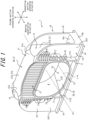
FIG. 1 is a perspective view schematically illustrating a bracket according to a first embodiment of the present disclosure; -
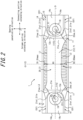
FIG. 2 is a plan view of the bracket ofFIG. 1 ; -
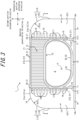
FIG. 3 is a front view of the bracket ofFIG. 1 ; -
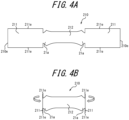
FIG. 4A is a plan view illustrating an example of a reinforcement member configuring a bracket outer peripheral side reinforcement portion; -
FIG. 4B is a plan view illustrating the reinforcement member ofFIG. 4A in a bent state; -
FIG. 5 is a side view of the bracket ofFIG. 1 ; -
FIG. 6A is a plan view illustrating an example of a reinforcement member configuring a bracket inner peripheral side reinforcement portion; -
FIG. 6B is a plan view illustrating the reinforcement member ofFIG. 6A in a bent state; and -
FIG. 7 is a cross-sectional view along line A-A ofFIG. 3 . - Brackets according to some embodiments of the present disclosure are described below with reference to the drawings.
-
FIG. 1 is a perspective view schematically illustrating abracket 1 according to a first embodiment of the present disclosure. - The
bracket 1 has an opening A for mounting an anti-vibration member (not illustrated) connected to one of a vibration generating side and a vibration receiving side, and can be connected to the other of the vibration generating side and the vibration receiving side. Thebracket 1 according to the present embodiment is a bracket for an engine mount. Examples of the vibration generating side and the vibration receiving side include an engine and a vehicle body. Specifically, the vibration generating side or the vibration receiving side can be the engine. Examples of the anti-vibration member include an anti-vibration member in which an inner cylinder and an outer cylinder are connected by an elastic body (such as rubber). In the case of the anti-vibration member, the outer cylinder is mounted to thebracket 1 while the inner cylinder is mounted to the engine. The anti-vibration member is omitted inFIG. 1 . On the other hand, the other one of the vibration generating side and the vibration receiving side can be the car body. In this case, thebracket 1 can be fixed to the car body as described below. - The
bracket 1 includes abracket body 10 and a reinforcement portion 20. In the present embodiment, the reinforcement portion 20 is a compound material with improved strength by inclusion of a synthetic resin in a fibrous element, i.e. a fiber reinforced plastic (FRP). Examples of the fiber reinforced plastic include prepreg. Examples of the fibrous elements include glass fiber fabrics, carbon fiber fabrics, metal fiber fabrics, organic fibers, fiber fabrics having a higher flexural strength than thebracket body 10, fabrics thereof, and the like. A glass fiber fabric is preferably used as the fibrous element. Further examples of the fiber reinforced plastic include a Uni Direction (UD) material in which a synthetic resin is included in a fibrous element having a directional property, and a woven material in which a synthetic resin is included in a woven fibrous element. In the present embodiment, thebracket 1 can, for example, be integrally formed by injection molding with the reinforcement portion 20 as an insert. - The
bracket body 10 is made of resin. Examples of the resin include a thermoplastic synthetic resin and a thermosetting synthetic resin. A thermoplastic synthetic resin is preferably used as the synthetic resin. Examples of such a thermoplastic synthetic resin include 6-6 nylon, 6 nylon, polypropylene, and the like. - The
bracket body 10 has a pair ofcolumn portions 11 that are spaced apart and a pair of connectingportions column portions 11 and connecting the pair ofcolumn portions 11. In the present embodiment, the twocolumn portions 11 of thebracket body 10 are formed as plate portions extending parallel to each other. In the present embodiment, thecolumn portions 11, together with the reinforcement portion 20, form the side walls of thebracket 1. In the present embodiment, thecolumn portions 11 of thebracket body 10 extend in the up-down direction when thebracket 1 is fixed to the vehicle body. On the other hand, in the present embodiment, the connectingportions bracket body 10 respectively configure a bridging portion of the bracket body 10 (bridging portion 12) and a base portion of the bracket body 10 (base portion 13). In the present embodiment, the bridgingportion 12 forms an upper wall of thebracket 1 together with the reinforcement portion 20. In the present embodiment, the bridgingportion 12 is located upward when thebracket 1 is fixed to the vehicle body. Also in the present embodiment, thebase portion 13 forms a lower wall of thebracket 1 together with the reinforcement portion 20. In the present embodiment, thebase portion 13 is located downward when thebracket 1 is fixed to the vehicle body. - Here, the penetration direction of the opening (opening penetration direction) is the direction in which the opening A penetrates. In the present embodiment, the opening penetration direction is a direction extending parallel to a central axis O1 of the opening A. The column portion extending direction is the direction in which the
column portions 11 extend. In the present embodiment, the twocolumn portions 11 extend parallel to each other. Furthermore, the connecting portion extending direction is the direction in which the connectingportions portion 12 and thebase portion 13, extend. In the present embodiment, the bridgingportion 12 and thebase portion 13 extend parallel to each other. - Furthermore, the
bracket body 10 includes aplate portion 15, on at least onecolumn portion 11 in the pair ofcolumn portions 11, extending in the extending direction of thecolumn portion 11 and protruding in the extending direction of the connectingportions column portion 11. In the present embodiment, theplate portion 15 forms a part of thebracket body 10 by protruding from thecolumn portion 11. Specifically, in the present embodiment, theplate portion 15 protrudes from a bracket outer peripheral side face 11f1 of thecolumn portion 11. In the present embodiment, theplate portion 15 extends over the entire extending direction of thecolumn portion 11. Furthermore, in the present embodiment, thebracket body 10 includesplate portions 15 on each of the twocolumn portions 11. In the present embodiment, when thebracket 1 is fixed to the vehicle body, the extending direction of thecolumn portions 11 is the vehicle up-down direction. That is, in the present embodiment, when thebracket 1 is fixed to the vehicle body, theplate portions 15 are configured to extend over the entire vehicle up-down direction of thecolumn portion 11. In addition, in the present embodiment, when thebracket 1 is fixed to the vehicle body, the extending direction of the bridgingportion 12 and the base portion 13 (connecting portion extending direction) is the horizontal direction. Specifically, the connecting portion extending direction can be the vehicle front-rear direction and/or the vehicle left-right direction (vehicle width direction). In the present embodiment, the connecting portion extending direction is the vehicle front-rear direction. That is, in the present embodiment, when thebracket 1 is fixed to the vehicle body, the twoplate portions 15 of one of the twocolumn portions 11 are configured to protrude in the vehicle front direction more than thecolumn portion 11. In the present embodiment, the twoplate portions 15 of the other one of thecolumn portions 11 are configured to protrude in the vehicle rear direction more than thecolumn portions 11. - Furthermore, in the present embodiment, the
base portion 13 is further provided with aflange 14 that protrudes more than thecolumn portion 11 along an extension of the connecting portion extending direction. Theplate portion 15 is connected to theflange 14. As illustrated inFIG. 2 , theflange 14 has a fixingportion 19 for fixing thebracket 1 to the car body. The fixingportion 19 is a seat having an opening through which a fastening element, such as a bolt, can penetrate. In the present embodiment, as illustrated inFIG. 2 , the twoplate portions 15 of onecolumn portion 11 extend in the connecting portion extending direction, when viewed in the column portion extending direction, so as to cover the fixingportion 19 in the opening penetration direction. In other words, in the present embodiment, theplate portions 15 extend in the connecting portion extending direction to a position beyond the fixingportion 19 when viewed in the column portion extending direction, as illustrated inFIG. 2 . In particular, as illustrated inFIG. 3 , in the present embodiment, a bracket outer peripheral side ridge L15 of theplate portion 15 extends to a position coinciding with a bracket outerperipheral side edge 14e of theflange 14. Furthermore, in the present embodiment, the bracket outer peripheral side ridge L15 is formed, as illustrated inFIG. 3 , by a first contour line L151 and a second contour line L152 connected to the first contour line L151 when viewed in the opening penetration direction. In the present embodiment, the first contour line L151 is a curve connected to the bridgingportion 12 with a radius of curvature R15. The second contour line L152 is a straight line extending in the column portion extending direction. In the present embodiment, theplate portion 15 is connected to theflange 14 together with thecolumn portion 11, thereby forming a portion of thebracket body 10. In the present embodiment, theflange 14 is provided on both sides in the extending direction of thebase portion 13. That is, in the present embodiment, thebracket body 10 has twoflanges 14. - The
plate portion 15 is provided withribs ribs 16 to 18 extend in the connecting portion extending direction, i.e., in the extending direction of the bridgingportion 12 and thebase portion 13. With reference toFIG. 3 , theribs 16 are provided in a region of theplate portion 15 adjacent to the bridging portion 12 (bridging portion side adjacent region). In the present embodiment, a plurality ofribs 16 is disposed in the bridging portion side adjacent region at intervals in the column portion extending direction. Theribs 17 are provided in a region of theplate portion 15 that is adjacent to the bridging portion side adjacent region in the column portion extending direction and adjacent to the opening A (opening side adjacent region). In the present embodiment, a plurality ofribs 17 is disposed in the opening side adjacent region at intervals in the column portion extending direction. Furthermore, theribs 18 are also provided in a region of theplate portion 15 that is adjacent to the opening side adjacent region in the column portion extending direction and adjacent to the base portion 13 (base portion side adjacent region). In the present embodiment, a plurality ofribs 18 is disposed in the base portion side adjacent region at intervals in the column portion extending direction. In the present embodiment, theribs 16 are long ribs having the longest length among the threeribs 16 to 18. In the present embodiment, theribs 17 are intermediate ribs having a shorter length than theribs 16. Furthermore, in the present embodiment, therib 18 is a short rib having a shorter length than therib 17 and the shortest length among the threeribs 16 to 18. In the present embodiment, theribs 18 are further configured as a plurality of ribs that have decreasing length with increased distance from the opening side adjacent region. As illustrated inFIG. 1 , in the present embodiment, theribs column portion 11 and theplate portion 15. Specifically, theribs column portion 11 and protrude in the opening penetration direction from an outer face 15f1 of theplate portion 15. - The reinforcement portion 20 includes a bracket outer peripheral side reinforcement portion 21. As illustrated in
FIG. 1 , the bracket outer peripheral side reinforcement portion 21 forms the outer peripheral face f1 of thebracket 1. In the present embodiment, the bracket outer peripheral side reinforcement portion 21, together with the bridgingportion 12 and the twocolumn portions 11 of thebracket body 10, forms the outer peripheral face f1 of thebracket 1. In the present embodiment, the bracket outer peripheral side reinforcement portion 21 is configured by a band-shaped reinforcement member.FIG. 4A illustrates a band-shapedreinforcement member 210 as an example of a reinforcement member forming the bracket outer peripheral side reinforcement portion 21. Thereinforcement member 210 has a bridgingside portion 212 corresponding to the bridgingportion 12 and twocolumn side portions 211 corresponding to thecolumn portions 11. Thereinforcement member 210 can be bent so that the twolongitudinal ends 210e of thereinforcement member 210 are oriented in the same direction.FIG. 4B illustrates the state in which thereinforcement member 210 is bent. As illustrated inFIG. 4B , thereinforcement member 210 can be bent into a U-shape with the bridgingside portion 212 as a base and the twocolumn side portions 211 extending in the same direction. Consequently, if thebracket body 10 is injection-molded with thereinforcement member 210 as an insert, then as illustrated inFIG. 1 , thereinforcement member 210 forms the outer peripheral faces f1 of thebracket 1 together with the bridgingportion 12 and the twocolumn portions 11 of thebracket body 10. -
FIG. 5 is a side view of thebracket 1. In the present embodiment, astep 14s provided in theflange 14 is arranged between the twoplate portions 15 of onecolumn portion 11. Thestep 14s is raised from theflange 14 in the column portion extending direction and is integrally formed with thecolumn portion 11 and the twoplate portions 15. Thebracket 1 has a symmetrical shape in the connecting portion extending direction. That is, in the present embodiment, the left and right side views of thebracket 1 are the same as the left side view of thebracket 1. In the present embodiment, thelongitudinal end 210e of thereinforcement member 210 does not extend to thestep 14s, but thelongitudinal end 210e of thereinforcement member 210 can extend to thestep 14s. Accordingly, thelongitudinal end 210e of thereinforcement member 210, i.e., the column portion extending direction end 21e2 of the bracket outer peripheral side reinforcement portion 21, can be extended up to thestep 14s. - Furthermore, as illustrated in
FIG. 3 , the bracket outer peripheral side reinforcement portion 21 is arranged to overlap theribs 16 to 18 when viewed in the opening penetration direction. In detail, as illustrated inFIG. 3 , the opening penetration direction ends 21e1 of the bracket outer peripheral side reinforcement portion 21 are arranged so that the bracket outer peripheral side reinforcement portion 21 overlaps theribs 16 to 18 when viewed in the opening penetration direction. Referring toFIGS. 4A and 4B , in the present embodiment, the opening penetration direction ends 21e1 of the bracket outer peripheral side reinforcement portion 21 are the widthwise ends 211e of thecolumn side portions 211 of thereinforcement member 210. Referring toFIG. 2 , the opening penetration direction ends 21e1 of the bracket outer peripheral side reinforcement portion 21 extend to theplate portions 15 when viewed in the column portion extending direction. - Referring to
FIG. 3 , according to thebracket 1 of the present disclosure, thebracket body 10 includes aplate portion 15 on at least one of the twocolumn portions 11, and furthermore, theplate portion 15 includesribs 16 to 18 extending from the side of the opening A of thebracket 1 towards the outer periphery of the bracket. As a result, thebracket 1 according to the present disclosure has a higher reinforcing effect on thebracket body 10 than a known bracket. Also, according to thebracket 1 of the present disclosure, the bracket outer peripheral side reinforcement portion 21 is provided on the twocolumn portions 11 and the bridgingportion 12 of thebracket body 10, and furthermore, the bracket outer peripheral side reinforcement portion 21 is arranged so that the bracket outer peripheral side reinforcement portion 21 overlaps theribs 16 to 18 when viewed in the opening penetration direction. This further enhances the reinforcing effect on thebracket body 10. Therefore, thebracket 1 according to the present disclosure has an excellent reinforcing effect. - To explain this effect in detail, when the
bracket 1 is mounted on a vehicle, the bridgingportion 12 of thebracket body 10 is subjected to a large load in the vehicle up-down direction from the anti-vibration member. In contrast, in the present embodiment, the bridgingside portion 212 of the bracket outer peripheral side reinforcement portion 21 reinforces the bridgingportion 12 of thebracket body 10. As a result, an excellent reinforcing effect is achieved in the present embodiment against a load applied in the vehicle up-down direction, in particular, against a load applied in the vehicle upward direction. In addition, when thebracket 1 is mounted on a vehicle, thecolumn portions 11 of thebracket body 10 are subjected to a large load in the vehicle front or vehicle rear direction from the anti-vibration member. In contrast, in the present embodiment, thecolumn side portions 211 of the bracket outer peripheral side reinforcement portion 21 reinforce thecolumn portions 11 of thebracket body 10. As a result, an excellent reinforcing effect is achieved in the present embodiment against a load applied in the vehicle front direction or the vehicle rear direction. In particular, in the present embodiment, theplate portions 15 are provided on each of the twocolumn portions 11. As a result, an excellent reinforcing effect is achieved in the present embodiment against a load applied in the vehicle front-rear direction. Also, in the present embodiment, theplate portions 15 are connected to theflanges 14 together with thecolumn portions 11. As a result, the reinforcing effect on thebracket body 10 is further enhanced in the present embodiment. In addition, in the present embodiment, theplate portion 15 includesribs 16 to 18 integrally formed with thecolumn portion 11. As a result, an excellent reinforcing effect is achieved against loads applied in the vehicle up-down direction, the vehicle front-rear direction, and also the vehicle left-right direction (opening penetration direction). Furthermore, as illustrated inFIG. 3 , in the present embodiment, the bracket outer peripheral side reinforcement portion 21 is arranged to overlap theribs 16 to 18 when viewed in the opening penetration direction. In the present embodiment, thecolumn side portions 211 of the bracket outer peripheral side reinforcement portion 21 reinforce thecolumn portions 11 of thebracket body 10 together with theplate portions 15. This further enhances the reinforcing effect against loads applied in the vehicle up-down direction, the vehicle front-rear direction, and the vehicle left-right direction. Therefore, thebracket 1 according to the present embodiment achieves an excellent reinforcing effect. - According to the present disclosure, the bracket outer peripheral side reinforcement portion 21 can overlap and cover the
entire rib 16, which is a long rib, as viewed in the opening penetration direction. However, in the present embodiment, as illustrated inFIG. 3 , thecolumn side portion 211 of the bracket outer peripheral side reinforcement portion 21 is not actively arranged up to the region overlapping with therib 16 within the region of theplate portion 15 of thebracket body 10. In this case, the reinforcing effect for thebracket body 10 can be improved while suppressing an increase in the weight of thebracket 1 that may be caused by the provision of the bracket outer peripheral side reinforcement portion 21. - According to the present disclosure, the reinforcement portion 20 includes a bracket inner peripheral
side reinforcement portion 22. The bracket inner peripheralside reinforcement portion 22 forms an inner peripheral face f2 of thebracket 1. In the present embodiment, the bracket inner peripheralside reinforcement portion 22 is provided on the inner peripheral surface of thebracket body 10. In the present embodiment, the inner peripheral surface of thebracket body 10 is formed by the pair ofcolumn portions 11 and the pair of connectingportions bracket 1 includes the bracket inner peripheralside reinforcement portion 22 together with the bracket outer peripheral side reinforcement portion 21. As a result, thebracket 1 according to the present disclosure has a higher reinforcing effect on thebracket body 10 than a known bracket provided with only one reinforcement portion. In this case, thebracket 1 has an even better reinforcing effect. - Furthermore, according to the present disclosure, the bracket inner peripheral
side reinforcement portion 22 is a band-shaped reinforcement member and is formed in an annular shape by joining the two longitudinal ends of the reinforcement member. A joint L22 formed by joining the twolongitudinal ends 220e is preferably inclined relative to the opening penetration direction. In the present embodiment, the bracket inner peripheralside reinforcement portion 22 is a band-shaped reinforcement member.FIG. 6A illustrates a band-shapedreinforcement member 220 as an example of a reinforcement member forming the bracket inner peripheralside reinforcement portion 22. As illustrated inFIG. 6A , thereinforcement member 220 is a parallelogram in plan view. The twolongitudinal ends 220e of thereinforcement member 220 are inclined ends that are inclined in parallel in the same direction in plan view, as illustrated inFIG. 6A . Thereinforcement member 220 can be bent so that the twolongitudinal ends 220e of thereinforcement member 220 are oriented in the same direction.FIG. 6B illustrates the state in which thereinforcement member 220 is bent. As illustrated inFIG. 6B , thereinforcement member 220 can be bent into an annular shape by joining the twolongitudinal ends 220e of thereinforcement member 220. Furthermore, as illustrated inFIG. 6B , the joint L22 formed by joining the twolongitudinal ends 220e is inclined relative to the opening penetration direction (the central axis O1 of the opening A). - An anti-vibration device is generally provided with a bracket for mounting the anti-vibration member. The amount of movement of a connecting portion of the anti-vibration member (for example, an inner cylinder part connected to the bracket via rubber) attached to the opening of the bracket is limited by contact with the bracket when a large load is applied to the connecting portion. Topologically, the load may be applied to the bracket from the inside of a hole (opening) formed in the bracket to the outside, and this is often the case. For this reason, in the present embodiment, the reinforcement portion 20 is provided on both the inner peripheral side and the outer peripheral side of the
bracket body 10. - On the other hand, depending on the conditions under which the load is applied, a reinforcement portion may be provided over the entire inner peripheral surface of the bracket body. In this case, if a band-shaped reinforcement member is used as the reinforcement portion and the two longitudinal ends of the band-shaped reinforcement member are joined by a butt-joint, the bracket inner peripheral side reinforcement portion can be formed in an annular (tubular) shape along the inner peripheral surface of the bracket body. However, in this case, if the joint of the reinforcement member extends in parallel to the opening penetration direction, for example, no reinforcing effect is achieved for the joint against a force along the peripheral direction of the inner peripheral surface of the bracket body.
- To address this, in the present embodiment, as illustrated in
FIG. 1 , the joint L22 of thereinforcement member 220 is inclined relative to the opening penetration direction (the central axis O1 of the opening A). In this case, in the bracket inner peripheralside reinforcement portion 22, a point where there is no reinforcing effect against a force along the peripheral direction of the inner peripheral face f2 of thebracket 1 can be eliminated. In the present embodiment, as illustrated inFIG. 6A , the twolongitudinal ends 220e of the band-shapedreinforcement member 220 are cut diagonally, and the twolongitudinal ends 220e are joined, as illustrated inFIG. 6B . In this case, at the bracket inner peripheralside reinforcement portion 22, the reinforcing effect against a force along the peripheral direction of the inner peripheral face f2 of thebracket 1 and a force perpendicular to or inclined relative to the inner peripheral face f2 of thebracket 1, that is, a force to bend the inner peripheral face f2 of thebracket 1, can be improved. - In the
bracket 1 of the present disclosure, the joint L22 of thereinforcement member 220 can also be configured to intersect a weld line Lw formed in thebracket body 10. - For example, when the
bracket body 10 is formed by injection molding or the like, a weld line Lw extending along the central axis O1 of the opening A may be formed on the inner peripheral surface of thebracket body 10, as illustrated by the dashed line inFIG. 1 . For example, when the weld line Lw extends parallel to the opening penetration direction, the weld line Lw may become an area with room for improvement in the strength against a force along the peripheral direction of the inner peripheral surface of thebracket body 10. Therefore, as illustrated inFIG. 6B , if the bracket inner peripheralside reinforcement portion 22 is configured so that the joint L22 of thereinforcement member 220 overlaps the weld line Lw to intersect the weld line Lw, then in the peripheral direction of the inner peripheral surface of thebracket body 10, a force occurring at the weld line Lw in a direction orthogonal to the weld line Lw can be received by the joint L22 (the twolongitudinal ends 220e) of thereinforcement member 220. In this case, the weld line Lw present in thebracket body 10 can be reinforced. - On the contrary, in the
bracket 1 of the present disclosure, the joint L22 of thereinforcement member 220 is preferably formed at a position that does not intersect the weld line Lw. - As described above, no reinforcing effect is achieved at the joint L22 of the
reinforcement member 220 against a force generated in a direction orthogonal to the joint L22. Hence, even when the bracket inner peripheralside reinforcement portion 22 is formed by the band-shapedreinforcement member 220, the reinforcing effect for the weld line Lw is thought to decrease at the joint L22 of thereinforcement member 220. As illustrated inFIG. 1 , in the present embodiment, the joint L22 of thereinforcement member 220 is therefore shifted from the weld line Lw, which has low strength, to be arranged at a position not intersecting the weld line Lw. In this case, since the joint L22 of thereinforcement member 220 does not overlap with the weld line Lw, the entire weld line Lw can be reliably reinforced by the bracket inner peripheralside reinforcement portion 22. - As illustrated in
FIG. 2 , according to the present disclosure, the bracket outer peripheral side reinforcement portion 21 preferably has a taperedportion 21a that is tapered from the bridgingportion 12 towards theplate portion 15 when viewed in the column portion extending direction. This further improves the durability of the bracket. - In detail, as illustrated in
FIG. 2 , two opening penetration direction ends 21ea of the bracket outer peripheral side reinforcement portion 21, which form the taperedportion 21a of the bracket outer peripheral side reinforcement portion 21, are respectively formed by opening penetration direction side contour lines L3 and L4 when viewed in the column portion extending direction. The two opening penetration direction side contour lines L3 and L4 are respectively inclined by an angle α with respect to the bracket widthwise center line LO when viewed in the column portion extending direction, as illustrated inFIG. 2 . The angle α is, as illustrated inFIG. 2 , an acute angle inclined towards the bracket widthwise center line LO from thecolumn portion 11 towards to the bridgingportion 12 when viewed in the column portion extending direction. The angle α is preferably 60° or less, more preferably 10° or more and 45° or less, and even more preferably 10° or more and 40° or less. The angle α can be set appropriately according to the shape, material, and application of thebracket 1. - The
bracket 1 can be injection molded using a reinforcement member made of a fiber reinforced plastic, such as prepreg, as an insert, as described above. - Reinforcement members made of fiber reinforced plastic are, however, generally more rigid than the base resin forming the
bracket body 10. For this reason, when a large load is input to thebracket 1 after insert molding, stress is concentrated on the base material resin in the vicinity of the edges of the reinforcement portion 20 (the boundary lines between the base material resin forming thebracket body 10 and the fiber member forming the reinforcement portion 20), and an efficient reinforcing effect might not be obtained. - In contrast, in the present embodiment, as illustrated in
FIG. 2 , the taperedportion 21a that is tapered from the bridgingportion 12 towards theplate portion 15 when viewed in the column portion extending direction is formed in the bracket outer peripheral side reinforcement portion 21, so that mainly the two opening penetration direction ends 21ea of the taperedportion 21a of the bracket outer peripheral side reinforcement portion 21 (opening penetration direction side contour lines L3 and L4) are inclined relative to the tensile stress generation direction (in the present embodiment, the extending direction of the bridging portion 12). In this case, the length in the extending direction of the opening penetration direction end of the bracket outer peripheral side reinforcement portion 21 is stretched (inclined) in the extending direction of the bridgingportion 12 at the opening penetration direction ends 21ea of the taperedportion 21a to disperse the locations at which stress is generated by the difference in rigidity between the base resin (bracket body 10) and the reinforcement portion 20. This prevents stress from concentrating on thebracket body 10 at the boundary line between the bracket outer peripheral side reinforcement portion 21 and thebracket body 10, thereby achieving an efficient reinforcing effect. In the case in which a plurality ofplate portions 15 spaced apart in the opening penetration direction are arranged as theplate portion 15, as in the present embodiment, the opening penetration direction end 21ea of the taperedportion 21a is preferably provided at both opening penetration direction ends of the bracket outer peripheral side reinforcement portion 21. However, in accordance with the present disclosure, the opening penetration direction end 21ea of the taperedportion 21a can also be just one of the two opening penetration direction side contour lines L3 and L4. - In the
bracket 1 according to the present disclosure, theplate portion 15 preferably includes twoplate portions 15 spaced apart in the opening penetration direction, and the bracket outer peripheral side reinforcement portion 21 preferably further extends from the bridgingportion 12 between the twoplate portions 15 in the column portion extending direction. This further improves the durability of the bracket. - In the present embodiment, as illustrated in
FIG. 1 , thecolumn side portion 211 of the bracket outer peripheral side reinforcement portion 21 extends from the taperedportion 21a between the twoplate portions 15 in the column portion extending direction. In the present embodiment, thecolumn side portion 211 is an extension connecting to the taperedportion 21a of the bracket outer peripheral side reinforcement portion 21. This further improves the durability of the bracket. - As illustrated in
FIG. 2 , in the present embodiment, the width W1 in the opening penetration direction of the bridgingportion 12 is greatest at an extending direction end 12e of the bridgingportion 12 when viewed in the column portion extending direction. In the present embodiment, the extending direction end 12e of the bridgingportion 12 coincides with the bracket inner peripheral side face 11f2 of thecolumn portion 11 in the connecting portion extending direction. - Specifically, in the present embodiment, the width W1 in the opening penetration direction of the bridging
portion 12 narrows from the extending direction end 12e of the bridgingportion 12 towards the extending direction center C of the bridgingportion 12 when viewed in the column portion extending direction, as illustrated inFIG. 2 . In this case, an increase in weight can be suppressed by narrowing the center C in the extending direction of the bridgingportion 12 while securing the strength of the connecting portion of thecolumn portion 11 and the bridgingportion 12 in thebracket body 10, at which stress tends to concentrate when a load is input to thebracket 1. - In detail, in the present embodiment, a first one of the opening penetration direction side contour lines L1 and L2 forming the opening penetration direction side contour of the bridging
portion 12 is preferably a concave curve that approaches a second one of the opening penetration direction side contour lines L1 and L2 from the extending direction end 12e of the bridgingportion 12 toward the extending direction center C of the bridgingportion 12 when viewed in the column portion extending direction, as illustrated inFIG. 2 . In the present embodiment, the first opening penetration direction side contour line L1 is a concave curve that approaches the second opening penetration direction side contour line L2 from the extending direction end 12e of the bridgingportion 12 toward the extending direction center C of the bridgingportion 12. In this case, the width W1 in the opening penetration direction of the bridgingportion 12 decreases smoothly along the first opening penetration direction side contour line L1, thereby suppressing an increase in weight while suppressing a concentration of stress that may occur on the first opening penetration direction side contour line L1. - In detail, in the present embodiment, the second one of the opening penetration direction side contour lines L1 and L2 forming the opening penetration direction side contour of the bridging
portion 12 is preferably also a concave curve that approaches the first one of the opening penetration direction side contour lines L1 and L2 from the extending direction end 12e of the bridgingportion 12 toward the extending direction center C of the bridgingportion 12 when viewed in the column portion extending direction, as illustrated inFIG. 2 . In the present embodiment, the second opening penetration direction side contour line L2 is a concave curve that approaches the first opening penetration direction side contour line L1 from the extending direction end 12e of the bridgingportion 12 toward the extending direction center C of the bridgingportion 12. In this case, the width W1 in the opening penetration direction of the bridgingportion 12 decreases smoothly along the second opening penetration direction side contour line L2, thereby suppressing an increase in weight while suppressing a concentration of stress that may occur on the second opening penetration direction side contour line L2. - In the present embodiment, a depth D1 in the opening penetration direction of the concavity of the first opening penetration direction side contour line L1 of the bridging
portion 12 is preferably different from a depth D2 in the opening penetration direction of the concavity of the second opening penetration direction side contour line L2 when viewed in the column portion extending direction. - When the
bracket body 10 is injection molded with thereinforcement members bracket body 10, as described above. The weld line Lw can be a starting point for peeling of thebracket body 10 when an excessive load is applied to thebracket 1. For this reason, the weld line Lw is preferably formed by envisioning the use conditions of thebracket 1 and avoiding the position where a large load will be applied. However, if there are restrictions on the injection gate position in terms of design or structure, the position of the weld line Lw may be unambiguously determined. It is difficult to control the weld line Lw to avoid the concentration of stress in this case due to the limitations on changing the injection gate position. - For example, as illustrated in
FIG. 7 , if the weld line Lw extends along the connecting portion extending direction when viewed in the column portion extending direction, and the depth D1 in the opening penetration direction of the first opening penetration direction side contour line L1 and the depth D2 in the opening penetration direction of the second opening penetration direction side contour line L2 are different as illustrated inFIG. 2 , then the weld line Lw can be formed to be closer to whichever of the opening penetration direction side contour lines L1 and L2 has the shallower one of the depths D1 and D2 in the opening penetration direction. In other words, the position of the weld line WL can be controlled by adjusting the two depths D1 and D2 in the opening penetration direction. Therefore, by adjusting the depths D1 and D2 in the opening penetration direction as appropriate, the weld line Lw can be shifted away from the position where a large load is applied to thebracket 1. - On the other hand, referring to
FIG. 7 , in a bracket such as that of the present embodiment, the external force applied to the bridgingportion 12 of thebracket body 10 generally acts along the bracket widthwise center line LO when the opening penetration direction depths D1 and D2 are the same. Here, the bracket widthwise center line LO is a straight line parallel to the connecting portion extending direction and passing through the center of the opening penetration direction width of the bridgingportion 12. - In contrast, in the present embodiment, the maximum value D1max of the depth D1 in the opening penetration direction is shallower than the maximum value D2max of the depth D2 in the opening penetration direction. In this case, as illustrated in
FIG. 7 , the weld line Lw tends to be formed by the shallower depth D1 in the opening penetration direction. That is, according to the present embodiment, the weld line Lw is formed closer to the first opening penetration direction side contour line L1 with the shallow depth D1 in the opening penetration direction depth, as illustrated inFIG. 7 . In this case, for example, even if a load that is input to thebracket 1 causes a concentration of stress along the bracket widthwise center line LO, the concentration of stress that may occur along the weld line Lw is suppressed by virtue of the weld line Lw being shifted from the bracket widthwise center line LO in the opening penetration direction. Therefore, according to the present embodiment, the bracket has even better durability. - As illustrated in
FIG. 3 , in the present embodiment, thebase portion 13 is further provided with aflange 14 protruding from thecolumn portion 11 along an extension of the connecting portion extending direction. As described above, in the present embodiment, theflange 14 and theplate portion 15 are connected. This further improves the durability of thebracket 1. In the present embodiment, thebracket body 10 includes twoflanges 14 to correspond to the twoplate portions 15. This further improves the durability of the bracket. - The foregoing is merely a description of an embodiment of the present disclosure, and a variety of changes may be made within the scope of the patent claims. For example, the reinforcement portion 20 is not limited to including a fiber reinforced plastic such as prepreg. According to the present disclosure, the reinforcement portion 20 can also be injection molded together with the
bracket body 10 using a fiber reinforced thermoplastic (FRTP) in which the aforementioned fibrous element is mixed with a thermoplastic resin. Furthermore, the shapes of thereinforcement members bracket 1. Additionally, the opening A of thebracket 1 according to the present embodiment has a rectangular shape when viewed in the opening penetration direction but can have an elliptical or circular shape. -
- 1 Bracket
- 10 Bracket body
- 11 Column portion
- 11f1 Bracket outer peripheral side face of column portion
- 12 Bridging portion (connecting portion)
- 13 Base portion (connecting portion)
- 14 Flange
- 15 Plate portion
- 15f1 Outer face of plate portion
- 16 Rib (long rib)
- 17 Rib (intermediate rib)
- 18 Rib (short rib)
- 20 Reinforcement portion
- 21 Bracket outer peripheral side reinforcement portion
- 21a Tapered portion of bracket outer peripheral side reinforcement portion
- 21e1 Opening penetration direction end of bracket outer peripheral side reinforcement portion
- 21e2 Column portion extending direction end of bracket outer peripheral side reinforcement portion
- 210 Reinforcement member
- 211 Column side portion of reinforcement member
- 211e Widthwise end of column side portion of reinforcement member
- 212 Bridging side portion of reinforcement member
- 22 Bracket inner peripheral side reinforcement portion
- 220 Reinforcement member
- 220e Longitudinal end of reinforcement member
- f1 Outer peripheral face of bracket
- f2 Inner peripheral face of bracket
- L22 Joint
- Lw Weld line
Claims (7)
- A bracket (1) that has an opening (A) for mounting an anti-vibration member connected to one of a vibration generating side and a vibration receiving side, and that can be connected to the other of the vibration generating side and the vibration receiving side, the bracket comprising:a bracket body (10) and a reinforcement portion (20), whereinthe bracket body is made of resin,the bracket body includes a pair of column portions (11) that are spaced apart and a pair of connecting portions (12, 13) arranged between the pair of column portions and connecting the pair of column portions,the bracket body further includes at least one plate portion (15), on at least one column portion in the pair of column portions, extending in an extending direction of the column portion and protruding in an extending direction of the connecting portions more than the column portion, characterised in that a rib (16, 17, 18) extending from a side of the opening to a bracket outer peripheral side and protruding in a penetration direction of the opening is provided on the plate portion,the reinforcement portion includes a bracket outer peripheral side reinforcement portion (21),the bracket outer peripheral side reinforcement portion forms an outer peripheral face (f1) of the bracket, andthe bracket outer peripheral side reinforcement portion is arranged so as to overlap the rib when viewed in the penetration direction of the opening.
- The bracket of claim 1, whereinthe reinforcement portion includes a bracket inner peripheral side reinforcement portion (22), andthe bracket inner peripheral side reinforcement portion forms an inner peripheral face (f2) of the bracket.
- The bracket of claim 2, whereinthe bracket inner peripheral side reinforcement portion is a band-shaped reinforcement member (220)and is formed in an annular shape by joining two longitudinal ends of the reinforcement member, anda joint (L22) formed by joining the two longitudinal ends (220e) is inclined relative to the penetration direction of the opening.
- The bracket of claim 3, wherein the joint intersects a weld line (Lw) formed in the bracket body.
- The bracket of claim 3, wherein the joint is formed at a position that does not intersect a weld line formed in the bracket body.
- The bracket of any one of claims 1 to 4, wherein the bracket outer peripheral side reinforcement portion includes a tapered portion (21a) that is tapered from one of the connecting portions towards the plate portion when viewed in the extending direction of the column portion.
- The bracket of any one of claims 1 to 6, whereinthe at least one plate portion comprises two plate portions spaced apart in the penetration direction of the opening, andthe bracket outer peripheral side reinforcement portion further extends from the connecting portion between the two plate portions in the extending direction of the column portion.
Applications Claiming Priority (2)
| Application Number | Priority Date | Filing Date | Title |
|---|---|---|---|
| JP2019121730A JP7187391B2 (en) | 2019-06-28 | 2019-06-28 | bracket |
| PCT/JP2020/002976 WO2020261627A1 (en) | 2019-06-28 | 2020-01-28 | Bracket |
Publications (3)
| Publication Number | Publication Date |
|---|---|
| EP3992490A1 EP3992490A1 (en) | 2022-05-04 |
| EP3992490A4 EP3992490A4 (en) | 2023-07-05 |
| EP3992490B1 true EP3992490B1 (en) | 2025-03-05 |
Family
ID=74059959
Family Applications (1)
| Application Number | Title | Priority Date | Filing Date |
|---|---|---|---|
| EP20832338.6A Active EP3992490B1 (en) | 2019-06-28 | 2020-01-28 | Bracket |
Country Status (5)
| Country | Link |
|---|---|
| US (1) | US11885389B2 (en) |
| EP (1) | EP3992490B1 (en) |
| JP (1) | JP7187391B2 (en) |
| CN (1) | CN113906235B (en) |
| WO (1) | WO2020261627A1 (en) |
Families Citing this family (1)
| Publication number | Priority date | Publication date | Assignee | Title |
|---|---|---|---|---|
| JP7444758B2 (en) * | 2020-10-28 | 2024-03-06 | 株式会社プロスパイラ | Bracket for vibration isolator |
Family Cites Families (23)
| Publication number | Priority date | Publication date | Assignee | Title |
|---|---|---|---|---|
| JPH1163106A (en) * | 1997-08-19 | 1999-03-05 | Tokai Rubber Ind Ltd | Anti-vibration support |
| JP3675119B2 (en) | 1997-08-20 | 2005-07-27 | 東海ゴム工業株式会社 | Anti-vibration support |
| JP2006161973A (en) * | 2004-12-08 | 2006-06-22 | Tokai Rubber Ind Ltd | Engine mount |
| FR2896842B1 (en) * | 2006-02-01 | 2010-04-09 | Hutchinson | HYDRAULIC ANTIVIBRATORY SUPPORT AND METHOD FOR MANUFACTURING THE SAME |
| JP2007321921A (en) | 2006-06-02 | 2007-12-13 | Nok Corp | Engine mount |
| FR2916503B1 (en) * | 2007-05-24 | 2010-09-10 | Hutchinson | ANTI-VIBRATION DEVICE |
| JP4959462B2 (en) * | 2007-08-01 | 2012-06-20 | 東海ゴム工業株式会社 | Anti-vibration device manufacturing method |
| WO2010149756A1 (en) * | 2009-06-25 | 2010-12-29 | Basf Se | Mounting device for a bearing of an axle stabilizer |
| DE102009029067A1 (en) | 2009-09-01 | 2011-03-03 | Robert Bosch Gmbh | Holder for mounting an aggregate |
| DE102010024903A1 (en) * | 2010-06-24 | 2011-12-29 | Anvis Deutschland Gmbh | Apparatus for resiliently supporting an engine and method of making the same |
| JP5653698B2 (en) * | 2010-09-24 | 2015-01-14 | 株式会社ブリヂストン | Vibration isolator and vibration isolator bracket |
| JP5473884B2 (en) | 2010-12-09 | 2014-04-16 | 東洋ゴム工業株式会社 | Vibration isolator |
| JP5641524B2 (en) | 2011-03-23 | 2014-12-17 | 住友理工株式会社 | Engine mount |
| JP2013072534A (en) * | 2011-09-29 | 2013-04-22 | Tokai Rubber Ind Ltd | Vibration isolating device |
| JP5836781B2 (en) | 2011-12-06 | 2015-12-24 | 株式会社ブリヂストン | Vibration isolator |
| JP5851874B2 (en) | 2012-02-13 | 2016-02-03 | 株式会社ブリヂストン | Bracket for vibration isolator |
| JP5909108B2 (en) * | 2012-02-14 | 2016-04-26 | 株式会社ブリヂストン | Manufacturing method of vibration isolator bracket |
| GB2540993B (en) * | 2015-08-04 | 2018-05-23 | Ford Global Tech Llc | A powertrain mount assembly |
| JP6595371B2 (en) * | 2016-02-29 | 2019-10-23 | 住友理工株式会社 | Vibration isolator |
| JP6762121B2 (en) * | 2016-03-31 | 2020-09-30 | 山下ゴム株式会社 | Anti-vibration device |
| JP6924118B2 (en) * | 2017-10-26 | 2021-08-25 | 株式会社ブリヂストン | Manufacturing method of anti-vibration device bracket and anti-vibration device bracket |
| JP6902456B2 (en) | 2017-11-21 | 2021-07-14 | 住友理工株式会社 | Anti-vibration device with bracket |
| CN108146218A (en) * | 2017-12-29 | 2018-06-12 | 东风商用车有限公司 | Rear suspension cushion assembly of engine |
-
2019
- 2019-06-28 JP JP2019121730A patent/JP7187391B2/en active Active
-
2020
- 2020-01-28 EP EP20832338.6A patent/EP3992490B1/en active Active
- 2020-01-28 CN CN202080040198.XA patent/CN113906235B/en active Active
- 2020-01-28 WO PCT/JP2020/002976 patent/WO2020261627A1/en not_active Ceased
- 2020-01-28 US US17/596,124 patent/US11885389B2/en active Active
Also Published As
| Publication number | Publication date |
|---|---|
| EP3992490A1 (en) | 2022-05-04 |
| WO2020261627A1 (en) | 2020-12-30 |
| JP7187391B2 (en) | 2022-12-12 |
| US20220316551A1 (en) | 2022-10-06 |
| CN113906235A (en) | 2022-01-07 |
| EP3992490A4 (en) | 2023-07-05 |
| CN113906235B (en) | 2023-05-12 |
| US11885389B2 (en) | 2024-01-30 |
| JP2021008894A (en) | 2021-01-28 |
Similar Documents
| Publication | Publication Date | Title |
|---|---|---|
| CN105644325B (en) | Vehicle back door structure | |
| JP2009101726A (en) | Bumper mounting retainer and bumper mounting structure | |
| US9828030B2 (en) | Integral longitudinal member for motor vehicles | |
| EP3992490B1 (en) | Bracket | |
| CN115698541B (en) | Vibration isolation bracket | |
| US9272734B2 (en) | Cowl top cover | |
| US11466743B2 (en) | Bracket for anti-vibration device and method for manufacturing bracket for anti-vibration device | |
| US11920651B2 (en) | Bracket | |
| US10718400B2 (en) | Anti-vibratory support for a motor vehicle and motor vehicle equipped with same | |
| KR20160105593A (en) | Front bumper integrated stiffner | |
| CN116507826B (en) | Vibration isolation device bracket | |
| KR102009809B1 (en) | Rear bumper integrated back beam | |
| KR20170018157A (en) | Beam for bumper | |
| JP7849278B2 (en) | Vehicle exterior components | |
| KR20180088013A (en) | Hanger for automobile exhaust with bent fastening protrusion | |
| EP2982575B1 (en) | Vehicle hood structure | |
| JP6761877B2 (en) | Mounting structure of exterior resin parts | |
| US20240326572A1 (en) | Mounting rubber member | |
| KR102294000B1 (en) | bumper of vehicles | |
| JP7390777B2 (en) | Reinforcement structure | |
| KR101517701B1 (en) | exhaust hanger for automobile | |
| CN114379489A (en) | Bumper for vehicle | |
| JP2014108737A (en) | Vehicle cover |
Legal Events
| Date | Code | Title | Description |
|---|---|---|---|
| STAA | Information on the status of an ep patent application or granted ep patent |
Free format text: STATUS: THE INTERNATIONAL PUBLICATION HAS BEEN MADE |
|
| PUAI | Public reference made under article 153(3) epc to a published international application that has entered the european phase |
Free format text: ORIGINAL CODE: 0009012 |
|
| STAA | Information on the status of an ep patent application or granted ep patent |
Free format text: STATUS: REQUEST FOR EXAMINATION WAS MADE |
|
| 17P | Request for examination filed |
Effective date: 20211130 |
|
| AK | Designated contracting states |
Kind code of ref document: A1 Designated state(s): AL AT BE BG CH CY CZ DE DK EE ES FI FR GB GR HR HU IE IS IT LI LT LU LV MC MK MT NL NO PL PT RO RS SE SI SK SM TR |
|
| RAP1 | Party data changed (applicant data changed or rights of an application transferred) |
Owner name: PROSPIRA CORPORATION |
|
| DAV | Request for validation of the european patent (deleted) | ||
| DAX | Request for extension of the european patent (deleted) | ||
| A4 | Supplementary search report drawn up and despatched |
Effective date: 20230606 |
|
| RIC1 | Information provided on ipc code assigned before grant |
Ipc: F16F 1/38 20060101ALI20230531BHEP Ipc: F16F 15/08 20060101ALI20230531BHEP Ipc: F16F 1/36 20060101AFI20230531BHEP |
|
| RIC1 | Information provided on ipc code assigned before grant |
Ipc: F16F 1/38 20060101ALI20240313BHEP Ipc: F16F 15/08 20060101ALI20240313BHEP Ipc: F16F 1/36 20060101AFI20240313BHEP |
|
| GRAP | Despatch of communication of intention to grant a patent |
Free format text: ORIGINAL CODE: EPIDOSNIGR1 |
|
| STAA | Information on the status of an ep patent application or granted ep patent |
Free format text: STATUS: GRANT OF PATENT IS INTENDED |
|
| INTG | Intention to grant announced |
Effective date: 20240826 |
|
| P01 | Opt-out of the competence of the unified patent court (upc) registered |
Free format text: CASE NUMBER: APP_51220/2024 Effective date: 20240910 |
|
| GRAS | Grant fee paid |
Free format text: ORIGINAL CODE: EPIDOSNIGR3 |
|
| GRAA | (expected) grant |
Free format text: ORIGINAL CODE: 0009210 |
|
| STAA | Information on the status of an ep patent application or granted ep patent |
Free format text: STATUS: THE PATENT HAS BEEN GRANTED |
|
| AK | Designated contracting states |
Kind code of ref document: B1 Designated state(s): AL AT BE BG CH CY CZ DE DK EE ES FI FR GB GR HR HU IE IS IT LI LT LU LV MC MK MT NL NO PL PT RO RS SE SI SK SM TR |
|
| REG | Reference to a national code |
Ref country code: GB Ref legal event code: FG4D |
|
| REG | Reference to a national code |
Ref country code: CH Ref legal event code: EP |
|
| REG | Reference to a national code |
Ref country code: IE Ref legal event code: FG4D |
|
| REG | Reference to a national code |
Ref country code: DE Ref legal event code: R096 Ref document number: 602020047339 Country of ref document: DE |
|
| PG25 | Lapsed in a contracting state [announced via postgrant information from national office to epo] |
Ref country code: RS Free format text: LAPSE BECAUSE OF FAILURE TO SUBMIT A TRANSLATION OF THE DESCRIPTION OR TO PAY THE FEE WITHIN THE PRESCRIBED TIME-LIMIT Effective date: 20250605 |
|
| PG25 | Lapsed in a contracting state [announced via postgrant information from national office to epo] |
Ref country code: FI Free format text: LAPSE BECAUSE OF FAILURE TO SUBMIT A TRANSLATION OF THE DESCRIPTION OR TO PAY THE FEE WITHIN THE PRESCRIBED TIME-LIMIT Effective date: 20250305 |
|
| REG | Reference to a national code |
Ref country code: NL Ref legal event code: MP Effective date: 20250305 |
|
| PG25 | Lapsed in a contracting state [announced via postgrant information from national office to epo] |
Ref country code: ES Free format text: LAPSE BECAUSE OF FAILURE TO SUBMIT A TRANSLATION OF THE DESCRIPTION OR TO PAY THE FEE WITHIN THE PRESCRIBED TIME-LIMIT Effective date: 20250305 |
|
| REG | Reference to a national code |
Ref country code: LT Ref legal event code: MG9D |
|
| PG25 | Lapsed in a contracting state [announced via postgrant information from national office to epo] |
Ref country code: NO Free format text: LAPSE BECAUSE OF FAILURE TO SUBMIT A TRANSLATION OF THE DESCRIPTION OR TO PAY THE FEE WITHIN THE PRESCRIBED TIME-LIMIT Effective date: 20250605 |
|
| PG25 | Lapsed in a contracting state [announced via postgrant information from national office to epo] |
Ref country code: HR Free format text: LAPSE BECAUSE OF FAILURE TO SUBMIT A TRANSLATION OF THE DESCRIPTION OR TO PAY THE FEE WITHIN THE PRESCRIBED TIME-LIMIT Effective date: 20250305 |
|
| PG25 | Lapsed in a contracting state [announced via postgrant information from national office to epo] |
Ref country code: LV Free format text: LAPSE BECAUSE OF FAILURE TO SUBMIT A TRANSLATION OF THE DESCRIPTION OR TO PAY THE FEE WITHIN THE PRESCRIBED TIME-LIMIT Effective date: 20250305 |
|
| PG25 | Lapsed in a contracting state [announced via postgrant information from national office to epo] |
Ref country code: GR Free format text: LAPSE BECAUSE OF FAILURE TO SUBMIT A TRANSLATION OF THE DESCRIPTION OR TO PAY THE FEE WITHIN THE PRESCRIBED TIME-LIMIT Effective date: 20250606 Ref country code: BG Free format text: LAPSE BECAUSE OF FAILURE TO SUBMIT A TRANSLATION OF THE DESCRIPTION OR TO PAY THE FEE WITHIN THE PRESCRIBED TIME-LIMIT Effective date: 20250305 |
|
| REG | Reference to a national code |
Ref country code: AT Ref legal event code: MK05 Ref document number: 1773173 Country of ref document: AT Kind code of ref document: T Effective date: 20250305 |
|
| PG25 | Lapsed in a contracting state [announced via postgrant information from national office to epo] |
Ref country code: NL Free format text: LAPSE BECAUSE OF FAILURE TO SUBMIT A TRANSLATION OF THE DESCRIPTION OR TO PAY THE FEE WITHIN THE PRESCRIBED TIME-LIMIT Effective date: 20250305 |
|
| PG25 | Lapsed in a contracting state [announced via postgrant information from national office to epo] |
Ref country code: SE Free format text: LAPSE BECAUSE OF FAILURE TO SUBMIT A TRANSLATION OF THE DESCRIPTION OR TO PAY THE FEE WITHIN THE PRESCRIBED TIME-LIMIT Effective date: 20250305 |
|
| PG25 | Lapsed in a contracting state [announced via postgrant information from national office to epo] |
Ref country code: SM Free format text: LAPSE BECAUSE OF FAILURE TO SUBMIT A TRANSLATION OF THE DESCRIPTION OR TO PAY THE FEE WITHIN THE PRESCRIBED TIME-LIMIT Effective date: 20250305 |
|
| PG25 | Lapsed in a contracting state [announced via postgrant information from national office to epo] |
Ref country code: PT Free format text: LAPSE BECAUSE OF FAILURE TO SUBMIT A TRANSLATION OF THE DESCRIPTION OR TO PAY THE FEE WITHIN THE PRESCRIBED TIME-LIMIT Effective date: 20250707 |
|
| PG25 | Lapsed in a contracting state [announced via postgrant information from national office to epo] |
Ref country code: IT Free format text: LAPSE BECAUSE OF FAILURE TO SUBMIT A TRANSLATION OF THE DESCRIPTION OR TO PAY THE FEE WITHIN THE PRESCRIBED TIME-LIMIT Effective date: 20250305 Ref country code: PL Free format text: LAPSE BECAUSE OF FAILURE TO SUBMIT A TRANSLATION OF THE DESCRIPTION OR TO PAY THE FEE WITHIN THE PRESCRIBED TIME-LIMIT Effective date: 20250305 |
|
| PG25 | Lapsed in a contracting state [announced via postgrant information from national office to epo] |
Ref country code: AT Free format text: LAPSE BECAUSE OF FAILURE TO SUBMIT A TRANSLATION OF THE DESCRIPTION OR TO PAY THE FEE WITHIN THE PRESCRIBED TIME-LIMIT Effective date: 20250305 |
|
| PG25 | Lapsed in a contracting state [announced via postgrant information from national office to epo] |
Ref country code: EE Free format text: LAPSE BECAUSE OF FAILURE TO SUBMIT A TRANSLATION OF THE DESCRIPTION OR TO PAY THE FEE WITHIN THE PRESCRIBED TIME-LIMIT Effective date: 20250305 Ref country code: CZ Free format text: LAPSE BECAUSE OF FAILURE TO SUBMIT A TRANSLATION OF THE DESCRIPTION OR TO PAY THE FEE WITHIN THE PRESCRIBED TIME-LIMIT Effective date: 20250305 |
|
| PG25 | Lapsed in a contracting state [announced via postgrant information from national office to epo] |
Ref country code: RO Free format text: LAPSE BECAUSE OF FAILURE TO SUBMIT A TRANSLATION OF THE DESCRIPTION OR TO PAY THE FEE WITHIN THE PRESCRIBED TIME-LIMIT Effective date: 20250305 |
|
| PG25 | Lapsed in a contracting state [announced via postgrant information from national office to epo] |
Ref country code: SK Free format text: LAPSE BECAUSE OF FAILURE TO SUBMIT A TRANSLATION OF THE DESCRIPTION OR TO PAY THE FEE WITHIN THE PRESCRIBED TIME-LIMIT Effective date: 20250305 |
|
| PG25 | Lapsed in a contracting state [announced via postgrant information from national office to epo] |
Ref country code: IS Free format text: LAPSE BECAUSE OF FAILURE TO SUBMIT A TRANSLATION OF THE DESCRIPTION OR TO PAY THE FEE WITHIN THE PRESCRIBED TIME-LIMIT Effective date: 20250705 |
|
| REG | Reference to a national code |
Ref country code: DE Ref legal event code: R097 Ref document number: 602020047339 Country of ref document: DE |
|
| PLBE | No opposition filed within time limit |
Free format text: ORIGINAL CODE: 0009261 |
|
| STAA | Information on the status of an ep patent application or granted ep patent |
Free format text: STATUS: NO OPPOSITION FILED WITHIN TIME LIMIT |
|
| PG25 | Lapsed in a contracting state [announced via postgrant information from national office to epo] |
Ref country code: DK Free format text: LAPSE BECAUSE OF FAILURE TO SUBMIT A TRANSLATION OF THE DESCRIPTION OR TO PAY THE FEE WITHIN THE PRESCRIBED TIME-LIMIT Effective date: 20250305 |
|
| REG | Reference to a national code |
Ref country code: CH Ref legal event code: L10 Free format text: ST27 STATUS EVENT CODE: U-0-0-L10-L00 (AS PROVIDED BY THE NATIONAL OFFICE) Effective date: 20260114 |
|
| 26N | No opposition filed |
Effective date: 20251208 |
|
| PGFP | Annual fee paid to national office [announced via postgrant information from national office to epo] |
Ref country code: DE Payment date: 20260121 Year of fee payment: 7 |
|
| PGFP | Annual fee paid to national office [announced via postgrant information from national office to epo] |
Ref country code: FR Payment date: 20260123 Year of fee payment: 7 |