EP3992244A1 - Thermoplastic polyolefin-based slush powder compositions - Google Patents
Thermoplastic polyolefin-based slush powder compositions Download PDFInfo
- Publication number
- EP3992244A1 EP3992244A1 EP21204246.9A EP21204246A EP3992244A1 EP 3992244 A1 EP3992244 A1 EP 3992244A1 EP 21204246 A EP21204246 A EP 21204246A EP 3992244 A1 EP3992244 A1 EP 3992244A1
- Authority
- EP
- European Patent Office
- Prior art keywords
- equal
- tpo
- less
- concentration
- powder
- Prior art date
- Legal status (The legal status is an assumption and is not a legal conclusion. Google has not performed a legal analysis and makes no representation as to the accuracy of the status listed.)
- Granted
Links
Images



Classifications
-
- C—CHEMISTRY; METALLURGY
- C08—ORGANIC MACROMOLECULAR COMPOUNDS; THEIR PREPARATION OR CHEMICAL WORKING-UP; COMPOSITIONS BASED THEREON
- C08L—COMPOSITIONS OF MACROMOLECULAR COMPOUNDS
- C08L53/00—Compositions of block copolymers containing at least one sequence of a polymer obtained by reactions only involving carbon-to-carbon unsaturated bonds; Compositions of derivatives of such polymers
-
- C—CHEMISTRY; METALLURGY
- C08—ORGANIC MACROMOLECULAR COMPOUNDS; THEIR PREPARATION OR CHEMICAL WORKING-UP; COMPOSITIONS BASED THEREON
- C08K—Use of inorganic or non-macromolecular organic substances as compounding ingredients
- C08K3/00—Use of inorganic substances as compounding ingredients
- C08K3/18—Oxygen-containing compounds, e.g. metal carbonyls
- C08K3/20—Oxides; Hydroxides
- C08K3/22—Oxides; Hydroxides of metals
- C08K2003/2248—Oxides; Hydroxides of metals of copper
-
- C—CHEMISTRY; METALLURGY
- C08—ORGANIC MACROMOLECULAR COMPOUNDS; THEIR PREPARATION OR CHEMICAL WORKING-UP; COMPOSITIONS BASED THEREON
- C08K—Use of inorganic or non-macromolecular organic substances as compounding ingredients
- C08K3/00—Use of inorganic substances as compounding ingredients
- C08K3/18—Oxygen-containing compounds, e.g. metal carbonyls
- C08K3/20—Oxides; Hydroxides
- C08K3/22—Oxides; Hydroxides of metals
- C08K2003/2296—Oxides; Hydroxides of metals of zinc
-
- C—CHEMISTRY; METALLURGY
- C08—ORGANIC MACROMOLECULAR COMPOUNDS; THEIR PREPARATION OR CHEMICAL WORKING-UP; COMPOSITIONS BASED THEREON
- C08L—COMPOSITIONS OF MACROMOLECULAR COMPOUNDS
- C08L2205/00—Polymer mixtures characterised by other features
- C08L2205/02—Polymer mixtures characterised by other features containing two or more polymers of the same C08L -group
- C08L2205/025—Polymer mixtures characterised by other features containing two or more polymers of the same C08L -group containing two or more polymers of the same hierarchy C08L, and differing only in parameters such as density, comonomer content, molecular weight, structure
-
- C—CHEMISTRY; METALLURGY
- C08—ORGANIC MACROMOLECULAR COMPOUNDS; THEIR PREPARATION OR CHEMICAL WORKING-UP; COMPOSITIONS BASED THEREON
- C08L—COMPOSITIONS OF MACROMOLECULAR COMPOUNDS
- C08L2205/00—Polymer mixtures characterised by other features
- C08L2205/03—Polymer mixtures characterised by other features containing three or more polymers in a blend
Definitions
- the present disclosure relates generally to polyolefin-based compositions for slush-molding shells, such as for automotive interior skins, that adhere to polyurethane-based foams during foam-in-place processes.
- a slush-molding process is a process through which, for example, polyurethane foam is injected and/or formed between a skin and a hard substrate, resulting in desired haptics or a desired sense of touch and feel.
- Slush molding involves heating a mold (typically a 3-4 mm thick nickel mold), pouring a polymeric powder or resin into the heated mold, and rotating the mold. While the mold is rotating, at least a portion of the powder melts and forms to an interior surface of the mold having a desired shape. After cooling and removal from the mold, a skin having the desired shape is formed. During this process, it is important that the powder or resin flows smoothly within the mold.
- Polyvinyl chloride (PVC) resin for example, has an amorphous nature that exhibits good flowability for slush molding.
- traditional thermoplastic olefin formulations have hooks and tails resulting from pulverization techniques that lead to an unacceptably poor flowability for slush molding, which in turn leads to higher scrap rates and inferior products.
- Foam-in-place processing is used for automotive interiors to achieve desired haptics.
- Foam-in-place processing involves injecting an isocyanate and a polyol between an outer skin (e.g., made by slush molding) and a rigid support (e.g. , a plastic support for an instrument panel) to form a polyurethane foam that bonds the skin and the rigid support together.
- the resulting product has very soft haptics, due at least in part to the polyurethane foam.
- thermoplastic polyurethane makes them excellent skin candidates for achieving a desired adhesion between the skin and the polyurethane foam
- non-polar thermoplastic polyolefin TPO
- TPO non-polar thermoplastic polyolefin
- the effectiveness of surface treatments, such as flame treatment and plasma treatment are limited by the design of the component being fabricated. Therefore, PVC and TPU are widely used in the automotive industry for slush-molded parts and soft skins, and TPO is not.
- PVC polyvinyl styrene
- TPU can overcome these issues, but is cost prohibitive for many automotive applications.
- Another common issue with PVC and TPU is that they both release volatile organic compounds (VOCs), which are regulated in many countries through legislation.
- thermoplastic elastomer (TPE) composition for slush molding.
- the TPE composition is a polypropylene-hydrogenated block copolymer having (a) at least one polymer block A with a primary component that is a vinyl aromatic hydrocarbon monomer unit and (b) at least one polymer block B with a primary component that is a hydrogenated butadiene monomer unit.
- U.S. Patent Publication No. 2012/0070665 describes a thermofusible TPE composition for slush molding.
- the formulation includes 40-70 wt.% of a selectively-hydrogenated styrenic block copolymer (HSBC), and 1-30 wt.% of a butylene homopolymer, a butylene copolymer, or a combination thereof.
- HSBC selectively-hydrogenated styrenic block copolymer
- This formulation is cryogenically milled to obtain slush powder.
- U.S. Patent No. 8,674,027 describes a TPO elastomer composition in powder form, including an olefin-block copolymer (OBC), a linear ethylene polymer, and/or a linear ethylene polymer, and a propylene polymer blend for slush molding of skins, such as for interior applications, including instrument panels.
- OBC olefin-block copolymer
- linear ethylene polymer linear ethylene polymer
- a propylene polymer blend for slush molding of skins, such as for interior applications, including instrument panels.
- PVC and TPU continue to be used in many commercial applications in the automotive industry.
- Reasons for this continued use of PVC and TPU include (i) uneven flow behavior of TPE/TPO powders resulting from cryogenic or room temperature grinding, which yields slush molding products with uneven thicknesses and high scrap rates; (ii) poor adhesion of TPE/TPO with polyurethane foams with and without surface treatments, such as flame treatments, corona treatments, and plasma treatments; (iii) many TPE/TPO products do not meet aging requirements at 120 °C; (iv) scratch resistance is lost over time with TPE/TPO products; and (v) difficulty of airbag deployment through TPE/TPO panels without having large breaks (unacceptable failure mode).
- TPO Slush-molding grade TPO powder with excellent polyurethane adhesion, scuff and mar, low fog, UV resistance, subzero temperature performance, and acceptable airbag deployment is desired.
- TPO is considered for this purpose because of its low VOC output, lack of plasticizer content, and recyclability.
- a TPO composition is provided as TPO pellets or as a TPO powder (formed from the TPO pellets).
- the TPO pellets are configured to be processed into artificial leather skins or rolled films.
- the TPO powder is configured to be slush molded into a shaped TPO material having the benefits of PVC and TPU, but also having a low VOC output, good adhesion, long-term high heat performance, and reliable air bag deployment (for instrument panel applications).
- the TPO composition includes an OBC, polypropylene copolymer, and a maleic anhydride-grafted OBC.
- the OBC is ethylene-1-octene copolymer and the maleic anhydride-grafted OBC is ethylene-1-octene copolymer grafted with maleic anhydride.
- the TPO material also includes an antimicrobial agent, such as graphene and optionally a metal oxide.
- the TPO powder has an angle of repose of greater than or equal to about 26° to less than or equal to about 34° and a bulk density of greater than or equal to about 18 lb/ft 3 to less than or equal to about 21 lb/ft 3 .
- the TPO powder has spherical particles and is suitable for slush-molding processes for making a TPO material, such as, for example, automotive interior skins for doors and instrument panels having a thickness of greater than or equal to about 0.8 mm to less than or equal to about 1.4 mm.
- the TPO material directly bonds to open cell foams with an adhesion peel strength of greater than or equal to about 3 N/in without being subjected to secondary processing, such as flame treatments. Therefore, the TPO material is disposable over an open cell foam disposed on a rigid substrate so that a resulting article includes the open cell foam disposed between the TPO material and the rigid substrate, wherein the TPO bonds directly to the open cell foam.
- a method of making the TPO powder includes combining an OBC, polypropylene, and an adhesion promoter to form a mixture; melt extruding the mixture to form an extruded material; pelletizing the extruded material to form TPO pellets; and grinding the TPO pellets to form the TPO powder.
- the TPO powder is slush-molding grade.
- a method of fabricating an article includes introducing the TPO powder to an interior of a mold, wherein the mold has an interior surface having a predetermined shape; heating the mold to at least partially melt the TPO powder; during the heating, rotating the mold to coat the interior surface with the at least partially melted TPO powder; and cooling the mold to form a molded article having the predetermined shape.
- the article is an automotive vehicle component, such as an instrument panel, an A-pillar, a B-pillar, a C-pillar, a steering wheel skin, an airbag cover, a door trim panel, a door handle, a pillar handle, a roof handle, a center console, a knee bolster, a seat mechanism cover, or a sun visor.
- the TPO composition of the current technology is configured to prepare articles by slush molding, film casting, and thermoforming, such that the articles comprise a TPO material derived from the TPO composition.
- the TPO composition can be in the form of pellets or a powder.
- the articles are, for example, interior components of an automotive vehicle, such as an instrument panel, an A-pillar, a B-pillar, a C-pillar, a steering wheel skin, an airbag cover, a door trim panel, a door handle, a pillar handle, a roof handle, a center console, a knee bolster, a seat mechanism cover, a sun visor, and the like.
- FIG. 1 and 2 An interior trim panel for a wheeled automotive land vehicle is shown in Figures 1 and 2 .
- the interior trim panel is preferably an instrument panel 10, but may alternately include a center console 12, a separate airbag cover, a door trim panel, a knee bolster, a seat mechanism cover, a pillar cover, or the like.
- a steering wheel 29 is also shown in Figure 1 .
- the instrument panel 10 includes an outer skin 14, a middle pliable foam layer 16, and an inner rigid substrate 18.
- the steering wheel 29 may have the same general architecture as the instrument panel 10.
- a section of the outer skin 14 acts as an integral airbag door 20, behind which is an airbag assembly 22 including a chute 24.
- the integral airbag door 20 hinges or pivots about upper and lower flexure lines adjacent generally horizontally elongated substrate edges 26 when an expanding airbag bursts tear seams 28 in the outer skin 14.
- the tear seams 28 are frangible.
- a "seamless" or hidden style of the outer skin 14 is preferred, whereby the frangible tear seams 28 are on the backside surface thereof and are not visible to the vehicle occupant or user.
- the tear seams 28 preferably have an H-shape, although other configurations such as U-shapes and X-shapes can be employed.
- the tear seams 28 can be created, for example, using a gantry-driven laser or an articulated robotically-driven knife, which horizontally slides along the backside surface of the outer skin 14 after it is formed in order to partially sever or score the outer skin 14. After scoring, the tear seam 28 material remaining is greater than or equal to about 0.3 mm to less than or equal to about 0.66 mm, with an average of about 0.50 mm. Although a thinner tear seam is available, the score line will read through to the surface of the part if it is less than about 0.457 mm. Therefore, a depth of the scoring is more than half but less than all of the skin thickness. When exposed to heat at about 120° C for about 1000 hours, the score line on the skin does not exhibit any heal back or rejoining.
- the TPO material of the current technology does not exhibit self-healing of the frangible tear seams 28 and helps to maintain the score line in a partially severed and separated wall fashion.
- the integral airbag door 20 having the frangible tear seams 28 comprises the TPO material, no skin fragmentation occurs from an airbag deployment at temperatures of about -30 °C, about 23 °C, about 80 °C, or at about 120 °C. Notwithstanding, all of the components described with reference to Figures 1 and 2 can be casted, thermoformed, or slush molded from the TPO composition.
- the TPO composition whether TPO pellets or particles of a TPO powder, includes an OBC at a concentration of greater than or equal to about 50 wt.% to less than or equal to about 70 wt.% and polypropylene copolymer at a concentration of greater than or equal to about 10 wt.% to less than or equal to about 50 wt.% or greater than or equal to about 10 wt.% to less than or equal to about 20 wt.%, wherein the wt.% is based on the total weight of the particles.
- the "TPO composition” can be either the TPO pellets or TPO powder particles.
- the OBC includes ethylene-1-octene copolymer having greater than or equal to about 50 wt.% to less than or equal to about 70 wt.% ethylene based on the total weight of the ethylene-1-octene copolymer.
- the ethylene-1-octene copolymer has a density of greater than or equal to about 0.887 g/cm 3 to less than or equal to about 0.95 g/cm 3 and a melt flow rate, as measured according to ASTM D-1238 (at 180 °C and 2.18 kg), of greater than or equal to about 5 g/10 min to less than or equal to about 20 g/10 min.
- the polypropylene copolymer is highly crystalline with a low impact strength of greater than or equal to about 30 J/m to less than or equal to about 40 J/m, e.g., 35 J/m, and a high melt flow rate, as measured according to ASTM D-1238 (at 230 °C and 2.16 kg), of greater than or equal to about 75 g/10 min to less than or equal to about 125 g/10 min, such as an exemplary melt flow rate of about 100 g/10 min.
- the TPO composition can also include an adhesion promoter, which may also be referred to as a compatibilizer, at a concentration of greater than or equal to about 1 wt.% to less than or equal to about 10 wt.%.
- the adhesion promoter is a maleic anhydride-grafted OBC, wherein the OBC can be the same OBC as what is combined with the polypropylene copolymer, as discussed above.
- the powder can include ethylene-1-octene copolymer as the OBC and maleic anhydride-grafted ethylene-1-octene copolymer as the adhesion promoter.
- the adhesion promoter includes the maleic anhydride-grafted ethylene-1-octene copolymer at a concentration of greater than or equal to about 95 wt.% to less than or equal to about 98 wt.%, maleic anhydride at a concentration of greater than or equal to about 1 wt.% to less than or equal to about 3 wt.%, and N-ethylethylenediamine at a concentration of greater than or equal to about 1 wt.% to less than or equal to about 2 wt.%, wherein the wt.% is based on the total weight of the adhesion promoter.
- the TPO composition can also include a stabilizer additive at a concentration of greater than or equal to about 0.1 wt.% to less than or equal to about 0.8 wt.%.
- the stabilizer additive can include sulfur or it can be substantially free or free of sulfur. By “substantially free of sulfur,” it is meant that sulfur is not intentionally included in the stabilizer additive, but may be present as an impurity at a concentration of less than or equal to about 5 wt.% based on the total weight of the stabilizer additive.
- Non-limiting examples of the stabilizer additive include 2,2,6,6-tetramethylpiperidin-4-yl-hexadecanoate, 2,2,6,6-tetramethylpiperidin-4-yl-octadecanoate, and a combination thereof.
- An adjunct composition component can also be included in the TPO composition at a concentration of greater than or equal to about 2 wt.% to less than or equal to about 6 wt.%.
- the adjunct composition includes at least a light stabilizer, at least one color pigment, or a combination thereof.
- the light stabilizer can be a visible light stabilizer and/or an ultraviolet (UV) light stabilizer and may be a non-migratory hindered amine light stabilizer (HALS).
- the light stabilizer and the at least one color pigment are provided in the adjunct composition at a concentration of greater than or equal to about 0.3 wt.% to less than or equal to about 3 wt.%.
- the TPO composition can yet further include a density modifier at a concentration of greater than or equal to about 3 wt.% to less than or equal to about 10 wt.%.
- the density modifier can be a hydrous magnesium silicate mineral, such as talc, as a non-limiting example.
- the density modifier increases, and thus improves, the bulk density of the TPO powder.
- the bulk density of the TPO powder is greater than or equal to about 18 lb/ft 3 to less than or equal to about 21 lb/ft 3 .
- the TPO composition can additionally include a scuff and mar resistance additive.
- the scuff and mar resistance additive improves the TPO composition's ability to resist scuffing, marring, and scratching.
- Scuff and mar resistance additives include amides, lubricants (including silicon oils), organic-modified siloxanes, and grafted polymers, as non-limiting examples.
- An exemplary and non-limiting scuff and mar resistance additive is NOF ® -ALLOY KA832 scratch improver (NOF Corporation).
- the particles of the TPO powder have substantially uniform shapes (e.g., substantially spherical) and sizes, the size of the particles being greater than or equal to about 50 ⁇ m to less than or equal to about 500 ⁇ m or greater or than or equal to about 100 ⁇ m to less than or equal to about 200 ⁇ m. Moreover, the particles have a narrow size distribution, in that greater than or equal to about 75%, greater than or equal to about 80% or greater than or equal to about 90% of the particles have a +/- size deviation of less than or equal to about 30 ⁇ m, less than or equal to about 20 ⁇ m, less than or equal to about 15 ⁇ m, or less than or equal to about 10 ⁇ m.
- the TPO powder is also characterized by an angle of repose of greater than or equal to about 26° to less than or equal to about 34°.
- the TPO composition is configured to be slush molded (i.e., slush and rotary molded from the TPO powder), film casted, or thermoformed into an article 42, as discussed above.
- the article 42 comprises a TPO material 44 having a TPO matrix.
- a "TPO matrix" is a bulk TPO polymer-based composition formed from the TPO composition.
- the TPO material 44 can be flexible and soft, such as a synthetic leather or other flexible soft skin, or relatively rigid. The hardness, rigidness, and flexibility of the TPO material 44 is provided by the TPO matrix.
- the article 42 comprising the TPO material 44 comprises the components of the TPO, i.e., the OBC, the polypropylene copolymer, and the optional adhesion promoter, stabilizer additive, adjunct composition, and/or density modifier.
- the article 42 comprising the TPO material 44 is a flexible soft skin.
- the flexible soft skin can be disposed over and about an open cell foam 46, such as a polyurethane foam, which is disposed between a rigid substrate 48 and the TPO material 44.
- an adhesive can be applied between the open cell foam 46 and the flexible soft skin, the TPO material 44 directly bonds to the open cell foam 46 with an adhesion peel strength of greater than or equal to about 3 N/in.
- no adhesive is present to adhere the flexible soft skin to the open cell foam 46.
- the flexible soft skin When the flexible soft skin is subjected to heat aging at about 120 °C for about 500 hours, the flexible soft skin exhibits an elongation that does not change by more than about 30%, a tensile strength that does not change by more than about 30%, and, when the flexible skin has a frangible tear seam, a tear strength that does not change by more than about 30%.
- the TPO composition can additionally include an antimicrobial agent, such that a TPO material formed from the TPO composition is an antimicrobial TPO material.
- an antimicrobial agent such that a TPO material formed from the TPO composition is an antimicrobial TPO material.
- the term "antimicrobial” provides that the antimicrobial TPO composition has antiviral properties, such that an antimicrobial TPO material formed from the antimicrobial TPO composition is an antiviral material, and in some aspects, also has antibacterial properties, i.e., the antimicrobial TPO material can be an antiviral and antibacterial TPO material, and/or antifungal properties, i.e., the antimicrobial TPO material can be an antiviral and antibacterial and/or antifungal TPO material.
- the virus when a virus contacts the antimicrobial TPO material, the virus is disabled, inactivated, destroyed, or "killed,” such that the virus is no longer capable of infecting a subject.
- the antimicrobial TPO material has antibacterial properties, when a bacterium contacts the antimicrobial TPO material, the bacterium is killed.
- the term "antiviral” provides that the antiviral material disables, inactivates, destroys, or “kills" at least SARS-CoV-2, and in some aspects, also kills other viruses, including other coronaviruses.
- the antimicrobial TPO material has antiviral activity due to its ability, for example, to disrupt virus host cell recognition by denaturing protein structures on viral surfaces, leading to the inactivation of viruses irrespective of the presence of a viral envelope.
- the antimicrobial TPO material disables, inactivates, destroys, or "kills" greater than or equal to about 90%, greater than or equal to about 95%, greater than or equal to about 98%, or greater than or equal to about 99%, such as about 90%, about 91%, about 92%, about 93%, about 94%, about 95%, about 96%, about 97%, about 98%, about 99%, or about 99.9%, of SARS-CoV-2 viral particles or plaque forming units (PFUs) in less than or equal to about 4 hours, less than or equal to about 3 hours, less than or equal to about 2 hours, less than or equal to about 1 hours, less than or equal to about 45 minutes, less than or equal to about 30 minutes, or less than or equal to about 15 minutes.
- PFUs plaque forming
- the current technology provides an antimicrobial TPO material 50 formed from the antimicrobial TPO composition.
- the antimicrobial TPO material 50 is the same as the TPO material 44 of Figure 3 , but further includes an antimicrobial agent.
- the antimicrobial TPO material 50 includes a TPO matrix 52 and graphene particles 54 disposed and/or embedded in the TPO matrix 52, including at an exposed surface 55.
- the TPO matrix 52 comprises a cured TPO polymer that embeds antimicrobial particles, such as the graphene particles 54.
- the antimicrobial TPO material 50 can be flexible and soft or relatively rigid. The hardness, rigidness, and flexibility of the antimicrobial TPO material 50 is provided by the TPO matrix 52.
- the graphene particles 54 are antimicrobial particles or flakes including graphene or a graphene derivative, such as graphene oxide, as a non-limiting example, that provide at least the antiviral activity.
- the graphene particles 54 have greater than or equal to 1 to less than or equal to 10 layers or greater than or equal to 6 to less than or equal to 10 layers, wherein each layer includes carbon atoms arranged in a two-dimensional honeycomb-shaped lattice.
- the graphene particles 54 have 1, 2, 3, 4, 5, 6, 7, 8, 9, or 10 of the layers.
- the graphene particles 54 have a diameter of greater than or equal to about 750 nm to less than or equal to about 250 ⁇ m, greater than or equal to about 1 ⁇ m to less than or equal to about 100 ⁇ m, or greater than or equal to about 1 ⁇ m to less than or equal to about 50 ⁇ m.
- graphene and graphene-derivatives may be attributed to the movement of their electrons towards microbes. This migration causes cytoplasmic efflux, decreases metabolism, affects lipid membrane, induces oxidative stress, produces reactive oxygen species (ROS), leads to loss of glutathione, and causes microbial death.
- graphene can be used to kill different coronaviruses, including SARS-CoV strains.
- the antimicrobial TPO material 50 includes an additional antimicrobial agent.
- Figures 5 and 6 show antimicrobial TPO materials 50a, 50b including the TPO matrix 52 and the graphene particles 54.
- the antimicrobial TPO materials 50a, 50b of Figures 5 and 6 further include metal oxide particles 56, wherein the metal oxide particles 56 also provide at least antiviral activity, as defined above in regard to the graphene particles 54.
- the metal oxide particles 56 include cuprous oxide (Cu 2 O) particles, zinc oxide (ZnO) particles, silver oxide (Ag 2 O), or combinations thereof. These metal oxide particles 56 release antimicrobial ions, such as Cu 1+ , Ag 1+ , and/or Zn 2+ , and are used to prepare antimicrobial surfaces.
- the metal oxide particles 56 have a diameter of greater than or equal to about 100 nm to less than or equal to about 100 ⁇ m, greater than or equal to about 200 nm to less than or equal to about 10 ⁇ m, greater than or equal to about 250 nm to less than or equal to about 5 ⁇ m, or greater than or equal to about 250 nm to less than or equal to about 1.8 ⁇ m.
- the graphene particles 54 and the metal oxide particles 56 are individually uniformly dispersed throughout the TPO matrix 52 in the antimicrobial TPO material 50a.
- “individually uniformly dispersed” it is meant that the graphene particles 54 and the metal oxide particles 56 are blended within the TPO matrix 52 without respect to each other. Inasmuch as some of the graphene particles 54 and the metal oxide particles 56 may be in contact with each other, the contact is random and an artifact of a mixing step of a method of fabricating the antimicrobial TPO material 50a, as discussed below. Therefore, contact between a portion of the graphene particles 54 and a portion of the metal oxide particles 56 is not intended, but may be present.
- the graphene particles 54 and the metal oxide particles 56 are present as graphene-metal oxide particle complexes 54, 56 that are uniformly dispersed throughout the TPO matrix 52 in the antimicrobial TPO material 50b.
- the graphene particles 54 carry the metal oxide particles 56 in the graphene-metal oxide particle complexes 54, 56. Nonetheless, it is understood that there may be some, i.e., a minority portion, of the graphene particles 54 and/or the metal oxide particles 56 that are present in the TPO matrix 52 individually, and not in a graphene-metal oxide particle complex 54, 56.
- the graphene-metal oxide particle complexes 54, 56 are formed prior to blending with the polymer that defines the TPO matrix 52 during a fabrication process.
- the antimicrobial TPO material 50 can alternatively be either the antimicrobial TPO material 50a of Figure 5 or the antimicrobial TPO material 50b of Figure 6 , unless otherwise stated.
- the antimicrobial TPO material 50 of Figure 4 includes the TPO matrix 52 having polymeric components, i.e., the OBC, the polypropylene copolymer, and the adhesion promoter (when present), at a concentration of greater than or equal to about 50 wt.% to less than or equal to about 99 wt.%.
- the graphene particles 54 have a concentration in the antimicrobial TPO material 50 of greater than or equal to about 0.05 wt.% to less than or equal to about 10 wt.%, greater than or equal to about 0.1 wt.% to less than or equal to about 5 wt.%, or greater than or equal to about 0.25 wt.% to less than or equal to about 1 wt.%, including at concentrations of about 0.05 wt.%, about 0.1 wt.%, about 0.15 wt.%, about 0.2 wt.%, about 0.25 wt.%, about 0.3 wt.%, about 0.35 wt.%, about 0.4 wt.%, about 0.45 wt.%, about 0.5 wt.%, about 0.55 wt.%, about 0.6 wt.%, about 0.65 wt.%, about 0.7 wt.%, about 0.75 wt.%, about 0.8 wt.%, about 0.85
- the antimicrobial TPO materials 50a, 50b of Figures 5 and 6 have the same composition as the antimicrobial TPO material 50, but further comprise greater than 0 wt.% to less than or equal to about 20 wt.% of the metal oxide particles 56.
- the metal oxide particles 56 include more than one type of metal oxide, such as at least one of Cu 2 O or ZnO, the Cu 2 O or ZnO are present at concentrations of greater than or equal to 0 wt.% to less than or equal to about 20 wt.% of the metal oxide particles 56, individually, with the proviso that at least one of the Cu 2 O particles or the ZnO particles are present in the antimicrobial TPO materials 50a, 50b.
- the antimicrobial TPO materials 50a, 50b include greater than 0 wt.% to less than or equal to about 20 wt.% of at least one of the Cu 2 O particles or the ZnO particles.
- the wt.% is based on the total weight of the antimicrobial TPO materials 50a, 50b.
- the antimicrobial TPO material 50 is disposed over, about, and directly on a first sublayer or substrate 58.
- the first sublayer or substrate 58 can be a compressible foam, especially when the antimicrobial TPO material 50 is soft and flexible, or a rigid substrate, especially when the antimicrobial TPO material 50 is rigid.
- the first sublayer or substrate 58 can be disposed on a second sublayer or substrate 60.
- the antimicrobial TPO material 50 is a soft flexible material, such as a synthetic leather, that is disposed over a compressible foam first sublayer or substrate 58, which itself is disposed on a rigid second sublayer or substrate 60.
- the antimicrobial TPO materials 50, 50a, 50b described herein may include at least the components described herein. However, it is understood that the antimicrobial TPO materials 50, 50a, 50b may alternatively be limited to the components described herein or to a portion of the components described herein.
- the antimicrobial TPO material 50 can include an antimicrobial agent comprising, consisting essentially of, or consisting of graphene. By “consisting essentially of,” it is meant that the antimicrobial TPO material 50 only intentionally includes graphene as the antimicrobial agent and is substantially free of any other antimicrobial agents.
- the antimicrobial TPO materials 50a, 50b can include antimicrobial agents comprising, consisting essentially of, or consisting of graphene and at least one of Cu 2 O, ZnO, or Ag 2 O.
- the current technology also provides a method 100 of making the TPO composition, including TPO pellets and TPO powder, the TPO powder being slush-molding grade.
- the TPO pellets have a diameter of greater than or equal to about 1 mm to less than or equal to about 10 mm or greater than or equal to about 1 mm to less than or equal to about 6 mm.
- the method 100 includes combining and mixing together the OBC, polypropylene, and optional adhesion promoter, stabilizer additive, adjunct composition, density modifier, and/or antimicrobial agent to form a mixture.
- the method 100 includes melt compounding and extruding the mixture to form an extruded material.
- the melt compounding and extruding is performed, for example, with a twin-screw extruder.
- the extruded material can be a solid, unitary thread or it can have a hollow interior, such as a cylinder or pipe.
- Optional components can be added to the mixture during the melt compounding and extruding.
- the optional components include the density modifier (for modifying and improving the resulting TPO composition's bulk density), the stabilizer, the pigment (or colorant), the scuff and mar resistance additive (e.g., 20 g/10 min of NOF ® -ALLOY KA832 scratch improver), or combinations thereof.
- the stabilizer and pigment can be provided in a single adjunct composition, as discussed above.
- the method 100 includes pelletizing the extruded material to form TPO pellets.
- the pelletizing is performed by cutting or grinding the extruded material into the TPO pellets.
- the method 100 includes processing the TPO pellets to form artificial leather or rolled films.
- the processing includes cast film processing or calendaring.
- the TPO pellets can be fed into a calendaring/cast film extruder to obtain rolled films.
- the artificial leather or rolled films are processable by cutting and sewing and/or by thermoforming.
- the method includes grinding the TPO pellets to form the TPO powder.
- the grinding can include, for example, hydrogrinding, i.e., pulverizing underwater, to achieve a desired particle shape and size distribution, such that the particles pass through a sieve having openings that are less than or equal to about 500 ⁇ m.
- a density modifier can be added to the TPO powder to modify and improve the TPO powder's bulk density.
- the current technology also provides a method 110 of fabricating an article from the TPO powder.
- the method 110 includes introducing the TPO powder to an interior of a mold, wherein the mold has an interior surface having a predetermined shape.
- the method 110 includes heating the mold to at least partially melt the TPO powder.
- the method 110 includes, during the heating, rotating the mold to coat the interior surface with the at least partially melted TPO powder.
- the method 110 then includes cooling the mold to form the molded article having the predetermined shape.
- the present invention is directed to the following items:
Landscapes
- Chemical & Material Sciences (AREA)
- Health & Medical Sciences (AREA)
- Chemical Kinetics & Catalysis (AREA)
- Medicinal Chemistry (AREA)
- Polymers & Plastics (AREA)
- Organic Chemistry (AREA)
- Compositions Of Macromolecular Compounds (AREA)
- Laminated Bodies (AREA)
- Processes Of Treating Macromolecular Substances (AREA)
- Vehicle Interior And Exterior Ornaments, Soundproofing, And Insulation (AREA)
Abstract
Description
- The present disclosure relates generally to polyolefin-based compositions for slush-molding shells, such as for automotive interior skins, that adhere to polyurethane-based foams during foam-in-place processes.
- Traditionally, soft skins used in automotive interiors, such as for instrument panels, door uppers, consoles, and the like, are made using a slush-molding process. Many skins are back-foamed by a foam-in-place process, which is a process through which, for example, polyurethane foam is injected and/or formed between a skin and a hard substrate, resulting in desired haptics or a desired sense of touch and feel.
- Slush molding involves heating a mold (typically a 3-4 mm thick nickel mold), pouring a polymeric powder or resin into the heated mold, and rotating the mold. While the mold is rotating, at least a portion of the powder melts and forms to an interior surface of the mold having a desired shape. After cooling and removal from the mold, a skin having the desired shape is formed. During this process, it is important that the powder or resin flows smoothly within the mold. Polyvinyl chloride (PVC) resin, for example, has an amorphous nature that exhibits good flowability for slush molding. In contrast, traditional thermoplastic olefin formulations have hooks and tails resulting from pulverization techniques that lead to an unacceptably poor flowability for slush molding, which in turn leads to higher scrap rates and inferior products.
- Foam-in-place processing is used for automotive interiors to achieve desired haptics. Foam-in-place processing involves injecting an isocyanate and a polyol between an outer skin (e.g., made by slush molding) and a rigid support (e.g., a plastic support for an instrument panel) to form a polyurethane foam that bonds the skin and the rigid support together. The resulting product has very soft haptics, due at least in part to the polyurethane foam. The polar nature of PVC and thermoplastic polyurethane (TPU) makes them excellent skin candidates for achieving a desired adhesion between the skin and the polyurethane foam, whereas non-polar thermoplastic polyolefin (TPO) has poor adhesion and requires an additional surface treatment in order to adequately adhere to polyurethane foam. However, the effectiveness of surface treatments, such as flame treatment and plasma treatment, are limited by the design of the component being fabricated. Therefore, PVC and TPU are widely used in the automotive industry for slush-molded parts and soft skins, and TPO is not.
- PVC is an excellent candidate for slush molding due to cost benefits and the reasons provided above. However, its performance depends on a plasticizer, which can deteriorate over time and at various temperatures, and develops a less than desired pliability at temperatures below about -30 °C. TPU can overcome these issues, but is cost prohibitive for many automotive applications. Another common issue with PVC and TPU is that they both release volatile organic compounds (VOCs), which are regulated in many countries through legislation.
-
U.S. Patent No. 6,812,285 describes a thermoplastic elastomer (TPE) composition for slush molding. The TPE composition is a polypropylene-hydrogenated block copolymer having (a) at least one polymer block A with a primary component that is a vinyl aromatic hydrocarbon monomer unit and (b) at least one polymer block B with a primary component that is a hydrogenated butadiene monomer unit. -
U.S. Patent Publication No. 2012/0070665 describes a thermofusible TPE composition for slush molding. The formulation includes 40-70 wt.% of a selectively-hydrogenated styrenic block copolymer (HSBC), and 1-30 wt.% of a butylene homopolymer, a butylene copolymer, or a combination thereof. This formulation is cryogenically milled to obtain slush powder. -
U.S. Patent No. 8,674,027 describes a TPO elastomer composition in powder form, including an olefin-block copolymer (OBC), a linear ethylene polymer, and/or a linear ethylene polymer, and a propylene polymer blend for slush molding of skins, such as for interior applications, including instrument panels. - Despite references describing TPE or TPO for slush molding products, PVC and TPU continue to be used in many commercial applications in the automotive industry. Reasons for this continued use of PVC and TPU include (i) uneven flow behavior of TPE/TPO powders resulting from cryogenic or room temperature grinding, which yields slush molding products with uneven thicknesses and high scrap rates; (ii) poor adhesion of TPE/TPO with polyurethane foams with and without surface treatments, such as flame treatments, corona treatments, and plasma treatments; (iii) many TPE/TPO products do not meet aging requirements at 120 °C; (iv) scratch resistance is lost over time with TPE/TPO products; and (v) difficulty of airbag deployment through TPE/TPO panels without having large breaks (unacceptable failure mode).
- Slush-molding grade TPO powder with excellent polyurethane adhesion, scuff and mar, low fog, UV resistance, subzero temperature performance, and acceptable airbag deployment is desired. TPO is considered for this purpose because of its low VOC output, lack of plasticizer content, and recyclability.
- In various aspects of the current technology, a TPO composition is provided as TPO pellets or as a TPO powder (formed from the TPO pellets). The TPO pellets are configured to be processed into artificial leather skins or rolled films. The TPO powder is configured to be slush molded into a shaped TPO material having the benefits of PVC and TPU, but also having a low VOC output, good adhesion, long-term high heat performance, and reliable air bag deployment (for instrument panel applications).
- The TPO composition includes an OBC, polypropylene copolymer, and a maleic anhydride-grafted OBC. In certain aspects, the OBC is ethylene-1-octene copolymer and the maleic anhydride-grafted OBC is ethylene-1-octene copolymer grafted with maleic anhydride. In some aspects, the TPO material also includes an antimicrobial agent, such as graphene and optionally a metal oxide.
- The TPO powder has an angle of repose of greater than or equal to about 26° to less than or equal to about 34° and a bulk density of greater than or equal to about 18 lb/ft3 to less than or equal to about 21 lb/ft3. The TPO powder has spherical particles and is suitable for slush-molding processes for making a TPO material, such as, for example, automotive interior skins for doors and instrument panels having a thickness of greater than or equal to about 0.8 mm to less than or equal to about 1.4 mm. The TPO material directly bonds to open cell foams with an adhesion peel strength of greater than or equal to about 3 N/in without being subjected to secondary processing, such as flame treatments. Therefore, the TPO material is disposable over an open cell foam disposed on a rigid substrate so that a resulting article includes the open cell foam disposed between the TPO material and the rigid substrate, wherein the TPO bonds directly to the open cell foam.
- In various other aspects of the current technology, a method of making the TPO powder includes combining an OBC, polypropylene, and an adhesion promoter to form a mixture; melt extruding the mixture to form an extruded material; pelletizing the extruded material to form TPO pellets; and grinding the TPO pellets to form the TPO powder. The TPO powder is slush-molding grade.
- In various other aspects of the current technology, a method of fabricating an article includes introducing the TPO powder to an interior of a mold, wherein the mold has an interior surface having a predetermined shape; heating the mold to at least partially melt the TPO powder; during the heating, rotating the mold to coat the interior surface with the at least partially melted TPO powder; and cooling the mold to form a molded article having the predetermined shape. In some aspects, the article is an automotive vehicle component, such as an instrument panel, an A-pillar, a B-pillar, a C-pillar, a steering wheel skin, an airbag cover, a door trim panel, a door handle, a pillar handle, a roof handle, a center console, a knee bolster, a seat mechanism cover, or a sun visor.
- Additional features and advantages can be ascertained from the following description and appended claims taken in conjunction with the accompanying drawings.
-
-
Figure 1 is a perspective view showing an interior trim panel including a TPO material in accordance with various aspects of the current technology. -
Figure 2 is a cross-sectional view, taken along line 2 - 2 ofFigure 1 , showing the interior trim panel. -
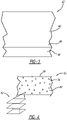
Figure 3 is a perspective view showing an article including a TPO material in accordance with various aspects of the current technology. -
Figure 4 is a perspective view showing a first antimicrobial TPO material in accordance with various aspects of the current technology. -
Figure 5 is a perspective view showing a second antimicrobial TPO material in accordance with various aspects of the current technology. -
Figure 6 is a perspective view showing a third antimicrobial TPO material in accordance with various aspects of the current technology. -
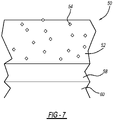
Figure 7 is a perspective view showing an antimicrobial TPO material disposed on at least one sublayer in accordance with various aspects of the current technology. -
Figure 8 is a diagrammatic flow chart showing a method for making a TPO powder in accordance with various aspects of the current technology. -
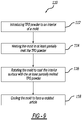
Figure 9 is a diagrammatic flow chart showing a method for fabricating an article composed of a TPO material in accordance with various aspects of the current technology. - The TPO composition of the current technology is configured to prepare articles by slush molding, film casting, and thermoforming, such that the articles comprise a TPO material derived from the TPO composition. The TPO composition can be in the form of pellets or a powder. The articles are, for example, interior components of an automotive vehicle, such as an instrument panel, an A-pillar, a B-pillar, a C-pillar, a steering wheel skin, an airbag cover, a door trim panel, a door handle, a pillar handle, a roof handle, a center console, a knee bolster, a seat mechanism cover, a sun visor, and the like.
- An interior trim panel for a wheeled automotive land vehicle is shown in
Figures 1 and 2 . The interior trim panel is preferably aninstrument panel 10, but may alternately include acenter console 12, a separate airbag cover, a door trim panel, a knee bolster, a seat mechanism cover, a pillar cover, or the like. Asteering wheel 29 is also shown inFigure 1 . Theinstrument panel 10 includes anouter skin 14, a middlepliable foam layer 16, and an innerrigid substrate 18. Thesteering wheel 29 may have the same general architecture as theinstrument panel 10. - A section of the
outer skin 14 acts as anintegral airbag door 20, behind which is anairbag assembly 22 including achute 24. Theintegral airbag door 20 hinges or pivots about upper and lower flexure lines adjacent generally horizontallyelongated substrate edges 26 when an expanding airbagbursts tear seams 28 in theouter skin 14. As such, the tear seams 28 are frangible. A "seamless" or hidden style of theouter skin 14 is preferred, whereby the frangible tear seams 28 are on the backside surface thereof and are not visible to the vehicle occupant or user. The tear seams 28 preferably have an H-shape, although other configurations such as U-shapes and X-shapes can be employed. - The tear seams 28 can be created, for example, using a gantry-driven laser or an articulated robotically-driven knife, which horizontally slides along the backside surface of the
outer skin 14 after it is formed in order to partially sever or score theouter skin 14. After scoring, thetear seam 28 material remaining is greater than or equal to about 0.3 mm to less than or equal to about 0.66 mm, with an average of about 0.50 mm. Although a thinner tear seam is available, the score line will read through to the surface of the part if it is less than about 0.457 mm. Therefore, a depth of the scoring is more than half but less than all of the skin thickness. When exposed to heat at about 120° C for about 1000 hours, the score line on the skin does not exhibit any heal back or rejoining. In other words, the TPO material of the current technology does not exhibit self-healing of the frangible tear seams 28 and helps to maintain the score line in a partially severed and separated wall fashion. Moreover, because theintegral airbag door 20 having the frangible tear seams 28 comprises the TPO material, no skin fragmentation occurs from an airbag deployment at temperatures of about -30 °C, about 23 °C, about 80 °C, or at about 120 °C. Notwithstanding, all of the components described with reference toFigures 1 and 2 can be casted, thermoformed, or slush molded from the TPO composition. - The TPO composition, whether TPO pellets or particles of a TPO powder, includes an OBC at a concentration of greater than or equal to about 50 wt.% to less than or equal to about 70 wt.% and polypropylene copolymer at a concentration of greater than or equal to about 10 wt.% to less than or equal to about 50 wt.% or greater than or equal to about 10 wt.% to less than or equal to about 20 wt.%, wherein the wt.% is based on the total weight of the particles. Unless described otherwise, it is understood that the "TPO composition" can be either the TPO pellets or TPO powder particles.
- The OBC includes ethylene-1-octene copolymer having greater than or equal to about 50 wt.% to less than or equal to about 70 wt.% ethylene based on the total weight of the ethylene-1-octene copolymer. The ethylene-1-octene copolymer has a density of greater than or equal to about 0.887 g/cm3 to less than or equal to about 0.95 g/cm3 and a melt flow rate, as measured according to ASTM D-1238 (at 180 °C and 2.18 kg), of greater than or equal to about 5 g/10 min to less than or equal to about 20 g/10 min.
- The polypropylene copolymer is highly crystalline with a low impact strength of greater than or equal to about 30 J/m to less than or equal to about 40 J/m, e.g., 35 J/m, and a high melt flow rate, as measured according to ASTM D-1238 (at 230 °C and 2.16 kg), of greater than or equal to about 75 g/10 min to less than or equal to about 125 g/10 min, such as an exemplary melt flow rate of about 100 g/10 min.
- The TPO composition can also include an adhesion promoter, which may also be referred to as a compatibilizer, at a concentration of greater than or equal to about 1 wt.% to less than or equal to about 10 wt.%. The adhesion promoter is a maleic anhydride-grafted OBC, wherein the OBC can be the same OBC as what is combined with the polypropylene copolymer, as discussed above. For example, the powder can include ethylene-1-octene copolymer as the OBC and maleic anhydride-grafted ethylene-1-octene copolymer as the adhesion promoter. In some aspects, the adhesion promoter includes the maleic anhydride-grafted ethylene-1-octene copolymer at a concentration of greater than or equal to about 95 wt.% to less than or equal to about 98 wt.%, maleic anhydride at a concentration of greater than or equal to about 1 wt.% to less than or equal to about 3 wt.%, and N-ethylethylenediamine at a concentration of greater than or equal to about 1 wt.% to less than or equal to about 2 wt.%, wherein the wt.% is based on the total weight of the adhesion promoter.
- The TPO composition can also include a stabilizer additive at a concentration of greater than or equal to about 0.1 wt.% to less than or equal to about 0.8 wt.%. The stabilizer additive can include sulfur or it can be substantially free or free of sulfur. By "substantially free of sulfur," it is meant that sulfur is not intentionally included in the stabilizer additive, but may be present as an impurity at a concentration of less than or equal to about 5 wt.% based on the total weight of the stabilizer additive. Non-limiting examples of the stabilizer additive include 2,2,6,6-tetramethylpiperidin-4-yl-hexadecanoate, 2,2,6,6-tetramethylpiperidin-4-yl-octadecanoate, and a combination thereof.
- An adjunct composition component can also be included in the TPO composition at a concentration of greater than or equal to about 2 wt.% to less than or equal to about 6 wt.%. The adjunct composition includes at least a light stabilizer, at least one color pigment, or a combination thereof. The light stabilizer can be a visible light stabilizer and/or an ultraviolet (UV) light stabilizer and may be a non-migratory hindered amine light stabilizer (HALS). The light stabilizer and the at least one color pigment are provided in the adjunct composition at a concentration of greater than or equal to about 0.3 wt.% to less than or equal to about 3 wt.%.
- The TPO composition can yet further include a density modifier at a concentration of greater than or equal to about 3 wt.% to less than or equal to about 10 wt.%. The density modifier can be a hydrous magnesium silicate mineral, such as talc, as a non-limiting example. The density modifier increases, and thus improves, the bulk density of the TPO powder. In certain aspects, the bulk density of the TPO powder is greater than or equal to about 18 lb/ft3 to less than or equal to about 21 lb/ft3.
- The TPO composition can additionally include a scuff and mar resistance additive. The scuff and mar resistance additive improves the TPO composition's ability to resist scuffing, marring, and scratching. Scuff and mar resistance additives include amides, lubricants (including silicon oils), organic-modified siloxanes, and grafted polymers, as non-limiting examples. An exemplary and non-limiting scuff and mar resistance additive is NOF®-ALLOY KA832 scratch improver (NOF Corporation).
- The particles of the TPO powder have substantially uniform shapes (e.g., substantially spherical) and sizes, the size of the particles being greater than or equal to about 50 µm to less than or equal to about 500 µm or greater or than or equal to about 100 µm to less than or equal to about 200 µm. Moreover, the particles have a narrow size distribution, in that greater than or equal to about 75%, greater than or equal to about 80% or greater than or equal to about 90% of the particles have a +/- size deviation of less than or equal to about 30 µm, less than or equal to about 20 µm, less than or equal to about 15 µm, or less than or equal to about 10 µm. The TPO powder is also characterized by an angle of repose of greater than or equal to about 26° to less than or equal to about 34°.
- With reference to
Figure 3 , the TPO composition is configured to be slush molded (i.e., slush and rotary molded from the TPO powder), film casted, or thermoformed into anarticle 42, as discussed above. Thus, thearticle 42 comprises aTPO material 44 having a TPO matrix. As used herein, a "TPO matrix" is a bulk TPO polymer-based composition formed from the TPO composition. Depending on a predetermined application, theTPO material 44 can be flexible and soft, such as a synthetic leather or other flexible soft skin, or relatively rigid. The hardness, rigidness, and flexibility of theTPO material 44 is provided by the TPO matrix. Accordingly, thearticle 42 comprising theTPO material 44 comprises the components of the TPO, i.e., the OBC, the polypropylene copolymer, and the optional adhesion promoter, stabilizer additive, adjunct composition, and/or density modifier. - In some aspects, and as shown in
Figure 3 , thearticle 42 comprising theTPO material 44 is a flexible soft skin. The flexible soft skin can be disposed over and about anopen cell foam 46, such as a polyurethane foam, which is disposed between arigid substrate 48 and theTPO material 44. Although an adhesive can be applied between theopen cell foam 46 and the flexible soft skin, theTPO material 44 directly bonds to theopen cell foam 46 with an adhesion peel strength of greater than or equal to about 3 N/in. As such, in some additional aspects, no adhesive is present to adhere the flexible soft skin to theopen cell foam 46. When the flexible soft skin is subjected to heat aging at about 120 °C for about 500 hours, the flexible soft skin exhibits an elongation that does not change by more than about 30%, a tensile strength that does not change by more than about 30%, and, when the flexible skin has a frangible tear seam, a tear strength that does not change by more than about 30%. - In certain aspects, the TPO composition can additionally include an antimicrobial agent, such that a TPO material formed from the TPO composition is an antimicrobial TPO material. As used herein, the term "antimicrobial" provides that the antimicrobial TPO composition has antiviral properties, such that an antimicrobial TPO material formed from the antimicrobial TPO composition is an antiviral material, and in some aspects, also has antibacterial properties, i.e., the antimicrobial TPO material can be an antiviral and antibacterial TPO material, and/or antifungal properties, i.e., the antimicrobial TPO material can be an antiviral and antibacterial and/or antifungal TPO material. As such, when a virus contacts the antimicrobial TPO material, the virus is disabled, inactivated, destroyed, or "killed," such that the virus is no longer capable of infecting a subject. Similarly, when the antimicrobial TPO material has antibacterial properties, when a bacterium contacts the antimicrobial TPO material, the bacterium is killed. The term "antiviral" provides that the antiviral material disables, inactivates, destroys, or "kills" at least SARS-CoV-2, and in some aspects, also kills other viruses, including other coronaviruses. The antimicrobial TPO material has antiviral activity due to its ability, for example, to disrupt virus host cell recognition by denaturing protein structures on viral surfaces, leading to the inactivation of viruses irrespective of the presence of a viral envelope. The antimicrobial TPO material disables, inactivates, destroys, or "kills" greater than or equal to about 90%, greater than or equal to about 95%, greater than or equal to about 98%, or greater than or equal to about 99%, such as about 90%, about 91%, about 92%, about 93%, about 94%, about 95%, about 96%, about 97%, about 98%, about 99%, or about 99.9%, of SARS-CoV-2 viral particles or plaque forming units (PFUs) in less than or equal to about 4 hours, less than or equal to about 3 hours, less than or equal to about 2 hours, less than or equal to about 1 hours, less than or equal to about 45 minutes, less than or equal to about 30 minutes, or less than or equal to about 15 minutes.
- Accordingly, with reference to
Figure 4 , the current technology provides anantimicrobial TPO material 50 formed from the antimicrobial TPO composition. Theantimicrobial TPO material 50 is the same as theTPO material 44 ofFigure 3 , but further includes an antimicrobial agent. Theantimicrobial TPO material 50 includes aTPO matrix 52 andgraphene particles 54 disposed and/or embedded in theTPO matrix 52, including at an exposedsurface 55. Accordingly, theTPO matrix 52 comprises a cured TPO polymer that embeds antimicrobial particles, such as thegraphene particles 54. Depending on a predetermined application, theantimicrobial TPO material 50 can be flexible and soft or relatively rigid. The hardness, rigidness, and flexibility of theantimicrobial TPO material 50 is provided by theTPO matrix 52. - The
graphene particles 54 are antimicrobial particles or flakes including graphene or a graphene derivative, such as graphene oxide, as a non-limiting example, that provide at least the antiviral activity. Thegraphene particles 54 have greater than or equal to 1 to less than or equal to 10 layers or greater than or equal to 6 to less than or equal to 10 layers, wherein each layer includes carbon atoms arranged in a two-dimensional honeycomb-shaped lattice. In various aspects, thegraphene particles 54 have 1, 2, 3, 4, 5, 6, 7, 8, 9, or 10 of the layers. Thegraphene particles 54 have a diameter of greater than or equal to about 750 nm to less than or equal to about 250 µm, greater than or equal to about 1 µm to less than or equal to about 100 µm, or greater than or equal to about 1 µm to less than or equal to about 50 µm. - Without being bound by theory, the antimicrobial properties of graphene and graphene-derivatives (e.g., graphene oxide) may be attributed to the movement of their electrons towards microbes. This migration causes cytoplasmic efflux, decreases metabolism, affects lipid membrane, induces oxidative stress, produces reactive oxygen species (ROS), leads to loss of glutathione, and causes microbial death. As non-limiting examples, graphene can be used to kill different coronaviruses, including SARS-CoV strains.
- In some aspects, the
antimicrobial TPO material 50 includes an additional antimicrobial agent.Figures 5 and 6 showantimicrobial TPO materials TPO matrix 52 and thegraphene particles 54. Theantimicrobial TPO materials Figures 5 and 6 further includemetal oxide particles 56, wherein themetal oxide particles 56 also provide at least antiviral activity, as defined above in regard to thegraphene particles 54. Themetal oxide particles 56 include cuprous oxide (Cu2O) particles, zinc oxide (ZnO) particles, silver oxide (Ag2O), or combinations thereof. Thesemetal oxide particles 56 release antimicrobial ions, such as Cu1+, Ag1+, and/or Zn2+, and are used to prepare antimicrobial surfaces. Graphene and/or graphene oxide can promote antimicrobial activities of these ions further and improve the effectiveness. Themetal oxide particles 56 have a diameter of greater than or equal to about 100 nm to less than or equal to about 100 µm, greater than or equal to about 200 nm to less than or equal to about 10 µm, greater than or equal to about 250 nm to less than or equal to about 5 µm, or greater than or equal to about 250 nm to less than or equal to about 1.8 µm. - As shown in
Figure 5 , thegraphene particles 54 and themetal oxide particles 56 are individually uniformly dispersed throughout theTPO matrix 52 in theantimicrobial TPO material 50a. By "individually uniformly dispersed," it is meant that thegraphene particles 54 and themetal oxide particles 56 are blended within theTPO matrix 52 without respect to each other. Inasmuch as some of thegraphene particles 54 and themetal oxide particles 56 may be in contact with each other, the contact is random and an artifact of a mixing step of a method of fabricating theantimicrobial TPO material 50a, as discussed below. Therefore, contact between a portion of thegraphene particles 54 and a portion of themetal oxide particles 56 is not intended, but may be present. - As shown in
Figure 6 , thegraphene particles 54 and themetal oxide particles 56 are present as graphene-metaloxide particle complexes TPO matrix 52 in theantimicrobial TPO material 50b. As such, thegraphene particles 54 carry themetal oxide particles 56 in the graphene-metaloxide particle complexes graphene particles 54 and/or themetal oxide particles 56 that are present in theTPO matrix 52 individually, and not in a graphene-metaloxide particle complex oxide particle complexes TPO matrix 52 during a fabrication process. - In all of the descriptions of the current technology provided herein, the
antimicrobial TPO material 50 can alternatively be either theantimicrobial TPO material 50a ofFigure 5 or theantimicrobial TPO material 50b ofFigure 6 , unless otherwise stated. - The
antimicrobial TPO material 50 ofFigure 4 includes theTPO matrix 52 having polymeric components, i.e., the OBC, the polypropylene copolymer, and the adhesion promoter (when present), at a concentration of greater than or equal to about 50 wt.% to less than or equal to about 99 wt.%. The graphene particles 54 have a concentration in the antimicrobial TPO material 50 of greater than or equal to about 0.05 wt.% to less than or equal to about 10 wt.%, greater than or equal to about 0.1 wt.% to less than or equal to about 5 wt.%, or greater than or equal to about 0.25 wt.% to less than or equal to about 1 wt.%, including at concentrations of about 0.05 wt.%, about 0.1 wt.%, about 0.15 wt.%, about 0.2 wt.%, about 0.25 wt.%, about 0.3 wt.%, about 0.35 wt.%, about 0.4 wt.%, about 0.45 wt.%, about 0.5 wt.%, about 0.55 wt.%, about 0.6 wt.%, about 0.65 wt.%, about 0.7 wt.%, about 0.75 wt.%, about 0.8 wt.%, about 0.85 wt.%, about 0.9 wt.%, about 0.95 wt.%, about 1 wt.%, about 1.5 wt.%, about 2 wt.%, about 2.5 wt.%, about 3 wt.%, about 3.5 wt.%, about 4 wt.%, about 4.5 wt.%, about 5 wt.%, about 5.5 wt.%, about 6 wt.%, about 6.5 wt.%, about 7 wt.%, about 7.5 wt.%, about 8 wt.%, about 8.5 wt.%, about 9 wt.%, about 9.5 wt.%, or about 10 wt.%. TheTPO matrix 52 also includes the stabilizer additive, adjunct composition, and/or density modifier when present with the TPO composition. - The
antimicrobial TPO materials Figures 5 and 6 have the same composition as theantimicrobial TPO material 50, but further comprise greater than 0 wt.% to less than or equal to about 20 wt.% of themetal oxide particles 56. When themetal oxide particles 56 include more than one type of metal oxide, such as at least one of Cu2O or ZnO, the Cu2O or ZnO are present at concentrations of greater than or equal to 0 wt.% to less than or equal to about 20 wt.% of themetal oxide particles 56, individually, with the proviso that at least one of the Cu2O particles or the ZnO particles are present in theantimicrobial TPO materials antimicrobial TPO materials antimicrobial TPO materials - With reference to
Figure 7 , in some aspects theantimicrobial TPO material 50 is disposed over, about, and directly on a first sublayer orsubstrate 58. The first sublayer orsubstrate 58 can be a compressible foam, especially when theantimicrobial TPO material 50 is soft and flexible, or a rigid substrate, especially when theantimicrobial TPO material 50 is rigid. Moreover, the first sublayer orsubstrate 58 can be disposed on a second sublayer or substrate 60. For example, in various aspects, theantimicrobial TPO material 50 is a soft flexible material, such as a synthetic leather, that is disposed over a compressible foam first sublayer orsubstrate 58, which itself is disposed on a rigid second sublayer or substrate 60. - The
antimicrobial TPO materials antimicrobial TPO materials antimicrobial TPO material 50 can include an antimicrobial agent comprising, consisting essentially of, or consisting of graphene. By "consisting essentially of," it is meant that theantimicrobial TPO material 50 only intentionally includes graphene as the antimicrobial agent and is substantially free of any other antimicrobial agents. By "substantially free," it is meant that additional antimicrobial agents may be included in trace amounts, i.e., less than or equal to about 5 wt.% or less than or equal to about 1 wt.%, as impurities, wherein the trace amounts do not affect the antimicrobial activity provided by the graphene. Similarly, theantimicrobial TPO materials - With reference to
Figure 8 , the current technology also provides amethod 100 of making the TPO composition, including TPO pellets and TPO powder, the TPO powder being slush-molding grade. The TPO pellets have a diameter of greater than or equal to about 1 mm to less than or equal to about 10 mm or greater than or equal to about 1 mm to less than or equal to about 6 mm. Atblock 102, themethod 100 includes combining and mixing together the OBC, polypropylene, and optional adhesion promoter, stabilizer additive, adjunct composition, density modifier, and/or antimicrobial agent to form a mixture. Then, inblock 104, themethod 100 includes melt compounding and extruding the mixture to form an extruded material. The melt compounding and extruding is performed, for example, with a twin-screw extruder. The extruded material can be a solid, unitary thread or it can have a hollow interior, such as a cylinder or pipe. Optional components can be added to the mixture during the melt compounding and extruding. The optional components include the density modifier (for modifying and improving the resulting TPO composition's bulk density), the stabilizer, the pigment (or colorant), the scuff and mar resistance additive (e.g., 20 g/10 min of NOF®-ALLOY KA832 scratch improver), or combinations thereof. The stabilizer and pigment can be provided in a single adjunct composition, as discussed above. - Next, in
block 106, themethod 100 includes pelletizing the extruded material to form TPO pellets. The pelletizing is performed by cutting or grinding the extruded material into the TPO pellets. - As shown in
block 107, themethod 100 includes processing the TPO pellets to form artificial leather or rolled films. The processing includes cast film processing or calendaring. For example, the TPO pellets can be fed into a calendaring/cast film extruder to obtain rolled films. The artificial leather or rolled films are processable by cutting and sewing and/or by thermoforming. - In
block 108, the method includes grinding the TPO pellets to form the TPO powder. The grinding can include, for example, hydrogrinding, i.e., pulverizing underwater, to achieve a desired particle shape and size distribution, such that the particles pass through a sieve having openings that are less than or equal to about 500 µm. A density modifier can be added to the TPO powder to modify and improve the TPO powder's bulk density. - With reference to
Figure 9 , the current technology also provides amethod 110 of fabricating an article from the TPO powder. Atblock 112, themethod 110 includes introducing the TPO powder to an interior of a mold, wherein the mold has an interior surface having a predetermined shape. Next, inblock 114, themethod 110 includes heating the mold to at least partially melt the TPO powder. Inblock 116, themethod 110 includes, during the heating, rotating the mold to coat the interior surface with the at least partially melted TPO powder. As shown inblock 118, themethod 110 then includes cooling the mold to form the molded article having the predetermined shape. - The foregoing description of the embodiments has been provided for purposes of illustration and description. It is not intended to be exhaustive or to limit the disclosure. Individual elements or features of a particular embodiment are generally not limited to that particular embodiment, but, where applicable, are interchangeable and can be used in a selected embodiment, even if not specifically shown or described. The same may also be varied in many ways. Such variations are not to be regarded as a departure from the disclosure, and all such modifications are intended to be included within the scope of the disclosure.
- The present invention is directed to the following items:
- 1. A thermoplastic polyolefin (TPO) composition comprising:
- an olefin-block copolymer (OBC) at a concentration of greater than or equal to about 50 wt.% to less than or equal to about 70 wt.%;
- polypropylene copolymer at a concentration of greater than or equal to about 10 wt.% to less than or equal to about 20 wt.%;
- an adhesion promoter at a concentration of greater than or equal to about 1 wt.% to less than or equal to about 10 wt.%;
- a sulfur-free stabilizer additive at a concentration of greater than or equal to about 0.1 wt.% to less than or equal to about 0.8 wt.%;
- a composition comprising non-migratory hindered amine light stabilizers (HALS) and a color pigment at a concentration of greater than or equal to about 2 wt.% to less than or equal to about 6 wt.%; and
- talc at a concentration of greater than or equal to about 3 wt.% to less than or equal to about 10 wt.%.
- 2. The TPO composition according to item 1, wherein the OBC comprises ethylene-1-octene copolymer comprising greater than or equal to about 50 wt.% to less than or equal to about 70 wt.% ethylene based on the total weight of the ethylene-1-octene copolymer and having a density of greater than or equal to about 0.887 g/cm3 to less than or equal to about 0.95 g/cm3.
- 3. The TPO composition according to item 2, wherein the ethylene-1-octene copolymer has a melt flow rate of greater than or equal to about 5 g/10 min to less than or equal to about 20 g/10 min as measured according to ASTM D-1238 using 2.18 kg of the ethylene-1-octene copolymer and a temperature of about 180 °C.
- 4. The TPO composition according to any one of items 1 to 3, wherein the polypropylene copolymer is crystalline, has a low impact strength of greater than or equal to about 30 J/m to less than or equal to about 40 J/m, and has a melt flow rate of about 100 g/10 min as measured according to ASTM D-1238 using 2.16 kg of the polypropylene copolymer and a temperature of about 230 °C.
- 5. The TPO composition according to any one of items 1 to 4, wherein the adhesion promoter comprises a maleic anhydride-grafted OBC.
- 6. The TPO composition according to any one of items 1 to 5, wherein the adhesion promoter comprises:
- maleic anhydride-grafted ethylene-1-octene copolymer at a concentration of greater than or equal to about 95 wt.% to less than or equal to about 98 wt.%;
- maleic anhydride at a concentration of greater than or equal to about 1 wt.% to less than or equal to about 3 wt.%; and
- N-ethylethylenediamine at a concentration of greater than or equal to about 1 wt.% to less than or equal to about 2 wt.%,
- wherein the wt.% is based on the total weight of the adhesion promoter.
- 7. The TPO composition according to any one of items 1 to 6, wherein the sulfur-free stabilizer additive comprises 2,2,6,6-tetramethylpiperidin-4-yl-hexadecanoate and 2,2,6,6-tetramethylpiperidin-4-yloctadecanoate.
- 8. The TPO composition according to any one of items 1 to 7, wherein the TPO composition is in the form of a TPO powder comprising particles having a particle size of greater than or equal to about 100 µm to less than or equal to about 200 µm.
- 9. The TPO composition according to item 8, wherein the TPO powder has an angle of repose of greater than or equal to about 26° to less than or equal to about 34°.
- 10. The TPO composition according to item 8, wherein the TPO powder has a bulk density of greater than or equal to about 18 Ib/ft3 to less than or equal to about 21 lb/ft3.
- 11. The TPO composition according to any one of items 1 to 10, wherein the TPO composition is in the form of TPO pellets.
- 12. The TPO composition according to any one of items 1 to 11, further comprising graphene at a concentration of greater than or equal to about 0.05 wt.% to less than or equal to about 10 wt.% based on the total weight of the TPO composition.
- 13. The TPO composition according to
item 12, further comprising a metal oxide, the metal oxide comprising at least one of cuprous oxide (Cu2O) or zinc oxide (ZnO) at a concentration of greater than 0 wt.% to less than or equal to about 20 wt.% based on the total weight of the particles. - 14. The TPO composition according to any one of items 1 to 13, wherein the TPO composition is part of a slush and rotary-molded article.
- 15. The TPO composition according to
item 14, wherein the slush and rotary-molded article is an interior component of an automotive vehicle. - 16. The TPO composition according to
item 14, wherein the slush and rotary-molded article is an automotive vehicle component, the automotive vehicle component being at least one of an instrument panel, an A-pillar, a B-pillar, a C-pillar, a steering wheel skin, an airbag cover, a door trim panel, a door handle, a pillar handle, a roof handle, a center console, a knee bolster, a seat mechanism cover, or a sun visor. - 17. An article comprising a thermoplastic polyolefin (TPO) material, the TPO material comprising:
- an olefin-block copolymer (OBC) at a concentration of greater than or equal to about 50 wt.% to less than or equal to about 70 wt.%; and
- polypropylene copolymer at a concentration of greater than or equal to about 10 wt.% to less than or equal to about 20 wt.%,
- wherein the wt.% is based on the total weight of the TPO material.
- 18. The article according to item 17, wherein the TPO material further comprises:
- an adhesion promoter at a concentration of greater than or equal to about 1 wt.% to less than or equal to about 10 wt.%;
- a sulfur-free stabilizer additive at a concentration of greater than or equal to about 0.1 wt.% to less than or equal to about 0.8 wt.%;
- a composition comprising non-migratory hindered amine light stabilizers (HALS) and a color pigment at a concentration of greater than or equal to about 2 wt.% to less than or equal to about 6 wt.%; and
- talc at a concentration of greater than or equal to about 3 wt.% to less than or equal to about 10 wt.%,
- wherein the wt.% is based on the total weight of the TPO material.
- 19. The article according to
item 17 or 18, wherein the TPO material further comprises graphene at a concentration of greater than or equal to about 0.05 wt.% to less than or equal to about 10 wt.% based on the total weight of the TPO material. - 20. The article according to item 19, wherein the TPO material further comprises a metal oxide, the metal oxide comprising at least one of cuprous oxide (Cu2O) or zinc oxide (ZnO) at a concentration of greater than 0 wt.% to less than or equal to about 20 wt.% based on the total weight of the TPO material.
- 21. The article according to any one of items 17 to 20, wherein the TPO material is a flexible soft skin.
- 22. The article according to item 21, wherein the article further comprises a rigid substrate and an open cell foam disposed between the rigid substrate and the TPO material.
- 23. The article according to
item 22, wherein the TPO material directly bonds to the open cell foam with an adhesion peel strength of greater than or equal to about 3 N/in. - 24. The article according to item 23, wherein the open cell foam comprises a polyurethane.
- 25. The article according to any one of items 21 to 24, wherein the article is an airbag door comprising a frangible tear seam, and wherein no skin fragmentation occurs from an airbag deployment at -30° C, 23 °C, 80 °C, or 120 °C.
- 26. The article according to item 25, wherein the frangible tear seam is partially severed on a back surface of the flexible soft skin and the flexible soft skin does not exhibit self-healing of the partially-severed frangible tear seam.
- 27. The article according to any one of items 21 to 24, wherein after heat aging at about 120 °C for about 500 hours, the flexible soft skin exhibits:
- an elongation that does not change by more than about 30%,
- a tensile strength that does not change by more than about 30%, and
- when the flexible soft skin has a frangible tear seam, a tear strength that does not change by more than about 30%.
- 28. The article according to any one of items 21 to 27, wherein the article is an interior trim panel of an automotive vehicle.
- 29. The article according to
item 28, wherein the interior trim panel is an instrument panel, a pillar, a console, an armrest, a door panel, a steering wheel, a knee bolster, a seat, or a sun visor. - 30. A method of making a thermoplastic polyolefin (TPO) composition, the method comprising:
- mixing together an olefin-block copolymer (OBC), polypropylene, and an adhesion promoter to form a mixture;
- melt extruding the mixture to form an extruded material; and
- pelletizing the extruded material to form TPO pellets.
- 31. The method according to item 30, wherein the adhesion promoter comprises a maleic anhydride-grafted OBC.
- 32. The method according to item 31, wherein the adhesion promoter comprises maleic anhydride-grafted ethylene-1-octene copolymer.
- 33. The method according to any one of items 30 to 32, wherein the OBC comprises ethylene-1-octene copolymer.
- 34. The method according to any one of items 30 to 33, further comprising:
adding a density modifier to the powder for improving the powder's bulk density. - 35. The method according to any one of items 30 to 34, further comprising:
adding at least one of a stabilizer, a colorant, a scuff and mar resistance additive, or a density modifier to the mixture during the melt extruding. - 36. The method according to any one of items 30 to 35, further comprising:
grinding the TPO pellets to form a TPO powder. - 37. The method according to item 36, wherein the grinding is performed in water.
- 38. The method according to item 36, wherein the TPO powder is slush-molding grade.
Claims (15)
- A thermoplastic polyolefin (TPO) composition comprising:an olefin-block copolymer (OBC) at a concentration of greater than or equal to about 50 wt.% to less than or equal to about 70 wt.%;polypropylene copolymer at a concentration of greater than or equal to about 10 wt.% to less than or equal to about 20 wt.%;an adhesion promoter at a concentration of greater than or equal to about 1 wt.% to less than or equal to about 10 wt.%;a sulfur-free stabilizer additive at a concentration of greater than or equal to about 0.1 wt.% to less than or equal to about 0.8 wt.%;a composition comprising non-migratory hindered amine light stabilizers (HALS) and a color pigment at a concentration of greater than or equal to about 2 wt.% to less than or equal to about 6 wt.%; andtalc at a concentration of greater than or equal to about 3 wt.% to less than or equal to about 10 wt.%.
- The TPO composition according to Claim 1, wherein the OBC comprises ethylene-1-octene copolymer comprising greater than or equal to about 50 wt.% to less than or equal to about 70 wt.% ethylene based on the total weight of the ethylene-1-octene copolymer and having a density of greater than or equal to about 0.887 g/cm3 to less than or equal to about 0.95 g/cm3.
- The TPO composition according to Claim 2, wherein the ethylene-1-octene copolymer has a melt flow rate of greater than or equal to about 5 g/10 min to less than or equal to about 20 g/10 min as measured according to ASTM D-1238 using 2.18 kg of the ethylene-1-octene copolymer and a temperature of about 180 °C.
- The TPO composition according to any one of claims 1 to 3, wherein the polypropylene copolymer is crystalline, has a low impact strength of greater than or equal to about 30 J/m to less than or equal to about 40 J/m, and has a melt flow rate of about 100 g/10 min as measured according to ASTM D-1238 using 2.16 kg of the polypropylene copolymer and a temperature of about 230 °C.
- The TPO composition according to any one of claims 1 to 4, wherein the adhesion promoter comprises a maleic anhydride-grafted OBC.
- The TPO composition according to any one of claims 1 to 5, wherein the adhesion promoter comprises:maleic anhydride-grafted ethylene-1-octene copolymer at a concentration of greater than or equal to about 95 wt.% to less than or equal to about 98 wt.%;maleic anhydride at a concentration of greater than or equal to about 1 wt.% to less than or equal to about 3 wt.%; andN-ethylethylenediamine at a concentration of greater than or equal to about 1 wt.% to less than or equal to about 2 wt.%,wherein the wt.% is based on the total weight of the adhesion promoter.
- The TPO composition according to any one of claims 1 to 6, wherein the sulfur-free stabilizer additive comprises 2,2,6,6-tetramethylpiperidin-4-yl-hexadecanoate and 2,2,6,6-tetramethylpiperidin-4-yloctadecanoate.
- The TPO composition according to any one of claims 1 to 7, wherein the TPO composition is in the form of a TPO powder comprising particles having a particle size of greater than or equal to about 100 µm to less than or equal to about 200 µm.
- The TPO composition according to Claim 8, wherein the TPO powder has an angle of repose of greater than or equal to about 26° to less than or equal to about 34°.
- The TPO composition according to Claim 8, wherein the TPO powder has a bulk density of greater than or equal to about 18 lb/ft3 to less than or equal to about 21 lb/ft3.
- The TPO composition according to any one of claims 1 to 10, further comprising graphene at a concentration of greater than or equal to about 0.05 wt.% to less than or equal to about 10 wt.% based on the total weight of the TPO composition.
- The TPO composition according to any one of claims 1 to 12, wherein the TPO composition is part of a slush and rotary-molded article, the slush and rotary-molded article being preferably an interior component of an automotive vehicle.
- A method of making a thermoplastic polyolefin (TPO) composition, the method comprising:mixing together an olefin-block copolymer (OBC), polypropylene, and an adhesion promoter to form a mixture;melt extruding the mixture to form an extruded material; andpelletizing the extruded material to form TPO pellets.
- The method according to Claim 13, wherein the adhesion promoter comprises a maleic anhydride-grafted OBC, preferably maleic anhydride-grafted ethylene-1-octene copolymer.
- The method according to Claim 13 or 14, further comprising:
grinding the TPO pellets to form a TPO powder, wherein the TPO powder is preferably slush-molding grade.
Applications Claiming Priority (1)
| Application Number | Priority Date | Filing Date | Title |
|---|---|---|---|
| US17/082,706 US11807753B2 (en) | 2020-10-28 | 2020-10-28 | Thermoplastic polyolefin-based slush powder compositions |
Publications (3)
| Publication Number | Publication Date |
|---|---|
| EP3992244A1 true EP3992244A1 (en) | 2022-05-04 |
| EP3992244B1 EP3992244B1 (en) | 2026-01-28 |
| EP3992244C0 EP3992244C0 (en) | 2026-01-28 |
Family
ID=78592441
Family Applications (1)
| Application Number | Title | Priority Date | Filing Date |
|---|---|---|---|
| EP21204246.9A Active EP3992244B1 (en) | 2020-10-28 | 2021-10-22 | Thermoplastic polyolefin-based slush powder compositions |
Country Status (5)
| Country | Link |
|---|---|
| US (2) | US11807753B2 (en) |
| EP (1) | EP3992244B1 (en) |
| JP (1) | JP2022071858A (en) |
| CN (1) | CN114479336B (en) |
| CA (1) | CA3134265C (en) |
Cited By (3)
| Publication number | Priority date | Publication date | Assignee | Title |
|---|---|---|---|---|
| EP4431258A1 (en) * | 2023-03-16 | 2024-09-18 | CpK Interior Products Inc. | Resin-based compositions for slush molding and composite parts manufactured therefrom |
| EP4617035A1 (en) * | 2024-03-15 | 2025-09-17 | CpK Interior Products Inc. | Dual cast slush mold system, methods, and apparatuses |
| US12544959B2 (en) | 2023-01-09 | 2026-02-10 | Cpk Interior Products | Dual cast slush mold system, methods, and apparatuses |
Families Citing this family (1)
| Publication number | Priority date | Publication date | Assignee | Title |
|---|---|---|---|---|
| US11807753B2 (en) | 2020-10-28 | 2023-11-07 | Cpk Interior Products Inc. | Thermoplastic polyolefin-based slush powder compositions |
Citations (7)
| Publication number | Priority date | Publication date | Assignee | Title |
|---|---|---|---|---|
| JPH0952990A (en) * | 1995-08-10 | 1997-02-25 | Mitsuboshi Belting Ltd | Powdery resin composition used for powder molding |
| JP2001226542A (en) * | 2000-02-10 | 2001-08-21 | Mitsuboshi Belting Ltd | Thermoplastic elastomer composition for slash molding and composite skin using the same |
| US6812285B2 (en) | 2000-10-31 | 2004-11-02 | Mitsuboshi Belting Ltd. | Thermoplastic elastomer composition for a powder for slush molding and skin formed therefrom |
| US20120070665A1 (en) | 2010-01-29 | 2012-03-22 | So.F.Ter.Spa | Thermofusible Composition For Slush Moulding |
| US8674027B2 (en) | 2009-09-18 | 2014-03-18 | Dow Global Technologies Llc | Powdered thermoplastic polyolefin elastomer composition for slush molding processes |
| CN105623090A (en) * | 2016-02-02 | 2016-06-01 | 广东吉邦士新材料股份有限公司 | Heat-resistant polypropylene blended particles and preparation method thereof |
| US9752024B2 (en) * | 2013-10-15 | 2017-09-05 | Dow Global Technologies Llc | Compatibilized polyolefin blends |
Family Cites Families (30)
| Publication number | Priority date | Publication date | Assignee | Title |
|---|---|---|---|---|
| JPH01191454A (en) | 1988-01-26 | 1989-08-01 | Sharp Corp | Method of sealing photodetector |
| US5948850A (en) * | 1996-06-06 | 1999-09-07 | Mitsuboshi Belting Ltd. | Thermoplastic elastomer composition for powder slush molding and process for preparation of said composition |
| US6207754B1 (en) * | 1997-05-29 | 2001-03-27 | Exxon Chemical Patents, Inc. | Low modulus thermoplastic olefin compositions |
| JP3495277B2 (en) * | 1999-01-18 | 2004-02-09 | 三ツ星ベルト株式会社 | Thermoplastic elastomer composition for powder slush molding and powder slush molding material |
| JP2000301623A (en) | 1999-04-22 | 2000-10-31 | Kuraray Co Ltd | Antibacterial resin molded product |
| JP2001226842A (en) * | 2000-02-10 | 2001-08-21 | Toray Ind Inc | Polyester different shrinkage mixed fiber yarn |
| US6451887B1 (en) * | 2000-08-03 | 2002-09-17 | Ciba Specialty Chemicals Corporation | Benzotriazoles containing α-cumyl groups substituted by heteroatoms and compositions stabilized therewith |
| JP3952740B2 (en) * | 2000-12-25 | 2007-08-01 | 住友化学株式会社 | Thermoplastic elastomer composition |
| JP5308165B2 (en) * | 2006-02-01 | 2013-10-09 | チバ ホールディング インコーポレーテッド | Stabilizer composition for polymers |
| WO2008079784A2 (en) * | 2006-12-21 | 2008-07-03 | Dow Global Technologies Inc. | Functionalized olefin polymers, compositions and articles prepared therefrom, and methods for making the same |
| US8852689B2 (en) | 2007-05-29 | 2014-10-07 | Innova Dynamics, Inc. | Surfaces having particles and related methods |
| US20080315566A1 (en) * | 2007-06-20 | 2008-12-25 | Andrasik Iii Joseph | Instrument panel with integral hidden door cover and method of manufacture thereof |
| CN101889053B (en) | 2007-12-07 | 2013-06-12 | 松下电器产业株式会社 | Stain-resistant polypropylene resin composition, and home electric appliance housing and toilet seat each comprising the composition |
| EP2763872A4 (en) * | 2011-09-28 | 2015-06-17 | Inteva Products Llc | Method for providing illuminated components and components formed from the method |
| CN103030880B (en) | 2012-04-16 | 2015-03-11 | 上海韬鸿化工科技有限公司 | Coupling agent modified calcium carbonate filled polypropylene plastic and preparation method thereof |
| CN103030884B (en) * | 2012-12-10 | 2015-07-01 | 上海普利特复合材料股份有限公司 | Polypropylene composition for automobile enamel-plastic instrument panel frameworks and preparation method thereof |
| US9505868B2 (en) * | 2013-02-28 | 2016-11-29 | Dow Global Technologies Llc | Powdered thermoplastic polyolefin elastomer composition for slush molding |
| KR101558703B1 (en) * | 2013-12-20 | 2015-10-07 | 현대자동차주식회사 | Polypropylene resin composition |
| JP6248700B2 (en) | 2014-02-27 | 2017-12-20 | 大日本印刷株式会社 | Solar cell encapsulant, solar cell module produced using the same, and method for separating the module |
| CN104328523B (en) | 2014-11-20 | 2016-01-20 | 济南圣泉集团股份有限公司 | Viscose comprising Graphene and preparation method thereof |
| CN104558845A (en) | 2014-12-26 | 2015-04-29 | 上海金发科技发展有限公司 | Flame-treatment-free polypropylene composite for instrument board and preparation method for polypropylene composite |
| JP6838440B2 (en) | 2017-03-16 | 2021-03-03 | Mcppイノベーション合同会社 | Propylene resin composition for multilayer stretched film |
| JP7117117B2 (en) | 2018-03-14 | 2022-08-12 | オルガノ株式会社 | Water treatment agent, method for producing water treatment agent, and water treatment method |
| CN110812518B (en) | 2018-08-08 | 2021-03-12 | 韶关学院 | Low-temperature sterilization method and device for liquid substances such as plant extract liquid based on graphene nano material |
| CN110643117A (en) * | 2019-10-14 | 2020-01-03 | 中国科学院长春应用化学研究所 | A kind of low processing viscosity matte TPO skin material, its preparation method and application |
| CN111334922B (en) | 2020-04-13 | 2022-01-11 | 葫芦岛斯达威体育用品有限公司 | Antibacterial modal composite fabric and preparation method thereof |
| CN111501368A (en) | 2020-04-14 | 2020-08-07 | 昆山阿基里斯新材料科技有限公司 | Antibacterial and antiviral polyvinyl chloride artificial leather and preparation method thereof |
| CN111636147A (en) | 2020-06-01 | 2020-09-08 | 青岛领军新材料科技创新园发展有限公司 | Preparation method and application of graphene antibacterial melt-blown fabric |
| US11807753B2 (en) | 2020-10-28 | 2023-11-07 | Cpk Interior Products Inc. | Thermoplastic polyolefin-based slush powder compositions |
| US20240032543A1 (en) | 2020-12-10 | 2024-02-01 | Claros Technologies Inc. | Antimicrobial and antiviral nanocomposites sheets |
-
2020
- 2020-10-28 US US17/082,706 patent/US11807753B2/en active Active
-
2021
- 2021-10-13 CA CA3134265A patent/CA3134265C/en active Active
- 2021-10-22 EP EP21204246.9A patent/EP3992244B1/en active Active
- 2021-10-27 JP JP2021175462A patent/JP2022071858A/en active Pending
- 2021-10-28 CN CN202111266294.9A patent/CN114479336B/en active Active
-
2023
- 2023-09-22 US US18/371,638 patent/US12240974B2/en active Active
Patent Citations (7)
| Publication number | Priority date | Publication date | Assignee | Title |
|---|---|---|---|---|
| JPH0952990A (en) * | 1995-08-10 | 1997-02-25 | Mitsuboshi Belting Ltd | Powdery resin composition used for powder molding |
| JP2001226542A (en) * | 2000-02-10 | 2001-08-21 | Mitsuboshi Belting Ltd | Thermoplastic elastomer composition for slash molding and composite skin using the same |
| US6812285B2 (en) | 2000-10-31 | 2004-11-02 | Mitsuboshi Belting Ltd. | Thermoplastic elastomer composition for a powder for slush molding and skin formed therefrom |
| US8674027B2 (en) | 2009-09-18 | 2014-03-18 | Dow Global Technologies Llc | Powdered thermoplastic polyolefin elastomer composition for slush molding processes |
| US20120070665A1 (en) | 2010-01-29 | 2012-03-22 | So.F.Ter.Spa | Thermofusible Composition For Slush Moulding |
| US9752024B2 (en) * | 2013-10-15 | 2017-09-05 | Dow Global Technologies Llc | Compatibilized polyolefin blends |
| CN105623090A (en) * | 2016-02-02 | 2016-06-01 | 广东吉邦士新材料股份有限公司 | Heat-resistant polypropylene blended particles and preparation method thereof |
Cited By (3)
| Publication number | Priority date | Publication date | Assignee | Title |
|---|---|---|---|---|
| US12544959B2 (en) | 2023-01-09 | 2026-02-10 | Cpk Interior Products | Dual cast slush mold system, methods, and apparatuses |
| EP4431258A1 (en) * | 2023-03-16 | 2024-09-18 | CpK Interior Products Inc. | Resin-based compositions for slush molding and composite parts manufactured therefrom |
| EP4617035A1 (en) * | 2024-03-15 | 2025-09-17 | CpK Interior Products Inc. | Dual cast slush mold system, methods, and apparatuses |
Also Published As
| Publication number | Publication date |
|---|---|
| CN114479336B (en) | 2024-08-23 |
| US11807753B2 (en) | 2023-11-07 |
| US20240010830A1 (en) | 2024-01-11 |
| EP3992244B1 (en) | 2026-01-28 |
| CN114479336A (en) | 2022-05-13 |
| US12240974B2 (en) | 2025-03-04 |
| CA3134265C (en) | 2025-09-09 |
| US20220127447A1 (en) | 2022-04-28 |
| CA3134265A1 (en) | 2022-04-28 |
| EP3992244C0 (en) | 2026-01-28 |
| JP2022071858A (en) | 2022-05-16 |
Similar Documents
| Publication | Publication Date | Title |
|---|---|---|
| US12240974B2 (en) | Method of making thermoplastic polyolefin | |
| CN104589748B (en) | Enhanced TPO (thermoplastic polyolefin) automobile instrument skin material and manufacturing method thereof | |
| JP7280904B2 (en) | Urethane and graphene interior trim panels | |
| EP3428224B1 (en) | Foamed resin molded article and method for manufacturing same | |
| EP1838779A1 (en) | Polyolefin composition intended for producing a cover for housing a motor vehicle safety airbag | |
| DE102016206340A1 (en) | Foil laminate and interior trim part for motor vehicles | |
| EP3105288B1 (en) | Blends of thermoplastic elastomers based on styrene (s-tpe) and polyolefins | |
| EP4126533A1 (en) | Coextruded, crosslinked multilayer polyolefin foam structures with crosslinked, polyolefin cap layers and methods of making the same | |
| DE19757398A1 (en) | Thermoplastic elastomer materials used for making interior panels or trims for motor vehicles | |
| EP3362278A1 (en) | Film laminate and interior trim part for motor vehicles | |
| CA3175872A1 (en) | Coating of vehicular interior trim apparatus | |
| JP2002166417A (en) | Method for producing thermoplastic elastomer composition powder | |
| JP2003147116A (en) | Expanded beads, in-mold foam molded article, method for producing in-mold foam molded article, and multilayer molded article | |
| Dufton | Thermoplastic Elastomers | |
| JP2002361768A (en) | Multilayer molded body | |
| JP3490108B2 (en) | Method for producing foam | |
| JP2002166418A (en) | Method for producing thermoplastic elastomer composition powder | |
| JP3217175B2 (en) | Manufacturing method of sheet for coating | |
| JP2004231818A (en) | Resin composition for powder molding | |
| JP2001049051A (en) | Thermoplastic elastomer composition and molded article thereof | |
| JP2016083979A (en) | Synthetic resin foam used in automobile interior parts and method for producing the same | |
| JPH06170871A (en) | Composite skin material and manufacture thereof | |
| JP2003226785A (en) | Thermoplastic elastomer composition, powder comprising the composition, and molded product obtained by powder-forming the composition powder | |
| JPH11222541A (en) | Flame retardant resin composition for powder slush molding | |
| JP2001301046A (en) | Laminated body manufacturing method and laminated body |
Legal Events
| Date | Code | Title | Description |
|---|---|---|---|
| PUAI | Public reference made under article 153(3) epc to a published international application that has entered the european phase |
Free format text: ORIGINAL CODE: 0009012 |
|
| STAA | Information on the status of an ep patent application or granted ep patent |
Free format text: STATUS: REQUEST FOR EXAMINATION WAS MADE |
|
| 17P | Request for examination filed |
Effective date: 20211022 |
|
| AK | Designated contracting states |
Kind code of ref document: A1 Designated state(s): AL AT BE BG CH CY CZ DE DK EE ES FI FR GB GR HR HU IE IS IT LI LT LU LV MC MK MT NL NO PL PT RO RS SE SI SK SM TR |
|
| RBV | Designated contracting states (corrected) |
Designated state(s): AL AT BE BG CH CY CZ DE DK EE ES FI FR GB GR HR HU IE IS IT LI LT LU LV MC MK MT NL NO PL PT RO RS SE SI SK SM TR |
|
| STAA | Information on the status of an ep patent application or granted ep patent |
Free format text: STATUS: EXAMINATION IS IN PROGRESS |
|
| 17Q | First examination report despatched |
Effective date: 20241029 |
|
| GRAP | Despatch of communication of intention to grant a patent |
Free format text: ORIGINAL CODE: EPIDOSNIGR1 |
|
| STAA | Information on the status of an ep patent application or granted ep patent |
Free format text: STATUS: GRANT OF PATENT IS INTENDED |
|
| INTG | Intention to grant announced |
Effective date: 20250827 |
|
| GRAS | Grant fee paid |
Free format text: ORIGINAL CODE: EPIDOSNIGR3 |
|
| GRAA | (expected) grant |
Free format text: ORIGINAL CODE: 0009210 |
|
| STAA | Information on the status of an ep patent application or granted ep patent |
Free format text: STATUS: THE PATENT HAS BEEN GRANTED |
|
| AK | Designated contracting states |
Kind code of ref document: B1 Designated state(s): AL AT BE BG CH CY CZ DE DK EE ES FI FR GB GR HR HU IE IS IT LI LT LU LV MC MK MT NL NO PL PT RO RS SE SI SK SM TR |
|
| REG | Reference to a national code |
Ref country code: CH Ref legal event code: F10 Free format text: ST27 STATUS EVENT CODE: U-0-0-F10-F00 (AS PROVIDED BY THE NATIONAL OFFICE) Effective date: 20260128 Ref country code: GB Ref legal event code: FG4D |
|
| REG | Reference to a national code |
Ref country code: DE Ref legal event code: R096 Ref document number: 602021046692 Country of ref document: DE |
|
| REG | Reference to a national code |
Ref country code: IE Ref legal event code: FG4D |
|
| U01 | Request for unitary effect filed |
Effective date: 20260209 |
|
| U07 | Unitary effect registered |
Designated state(s): AT BE BG DE DK EE FI FR IT LT LU LV MT NL PT RO SE SI Effective date: 20260217 |