EP3991835A1 - Triglyceride analysis method, oil and fat sorting method, and triglyceride production method - Google Patents
Triglyceride analysis method, oil and fat sorting method, and triglyceride production method Download PDFInfo
- Publication number
- EP3991835A1 EP3991835A1 EP19935432.5A EP19935432A EP3991835A1 EP 3991835 A1 EP3991835 A1 EP 3991835A1 EP 19935432 A EP19935432 A EP 19935432A EP 3991835 A1 EP3991835 A1 EP 3991835A1
- Authority
- EP
- European Patent Office
- Prior art keywords
- triglyceride
- supercritical fluid
- chiral selector
- substituent
- fluid chromatography
- Prior art date
- Legal status (The legal status is an assumption and is not a legal conclusion. Google has not performed a legal analysis and makes no representation as to the accuracy of the status listed.)
- Withdrawn
Links
- UFTFJSFQGQCHQW-UHFFFAOYSA-N triformin Chemical compound O=COCC(OC=O)COC=O UFTFJSFQGQCHQW-UHFFFAOYSA-N 0.000 title claims abstract description 77
- 238000000034 method Methods 0.000 title claims abstract description 29
- 238000004519 manufacturing process Methods 0.000 title claims abstract description 8
- 238000004458 analytical method Methods 0.000 title claims description 23
- 238000004808 supercritical fluid chromatography Methods 0.000 claims abstract description 38
- OKKJLVBELUTLKV-UHFFFAOYSA-N Methanol Chemical compound OC OKKJLVBELUTLKV-UHFFFAOYSA-N 0.000 claims abstract description 36
- 125000001424 substituent group Chemical group 0.000 claims abstract description 27
- 235000014593 oils and fats Nutrition 0.000 claims abstract description 26
- CURLTUGMZLYLDI-UHFFFAOYSA-N Carbon dioxide Chemical compound O=C=O CURLTUGMZLYLDI-UHFFFAOYSA-N 0.000 claims abstract description 24
- 235000017168 chlorine Nutrition 0.000 claims abstract description 22
- 150000004676 glycans Chemical group 0.000 claims abstract description 18
- 229920001282 polysaccharide Polymers 0.000 claims abstract description 18
- 239000005017 polysaccharide Substances 0.000 claims abstract description 18
- 230000005526 G1 to G0 transition Effects 0.000 claims abstract description 15
- 229910002092 carbon dioxide Inorganic materials 0.000 claims abstract description 14
- ZAMOUSCENKQFHK-UHFFFAOYSA-N Chlorine atom Chemical compound [Cl] ZAMOUSCENKQFHK-UHFFFAOYSA-N 0.000 claims abstract description 11
- 239000000460 chlorine Substances 0.000 claims abstract description 11
- 229910052801 chlorine Inorganic materials 0.000 claims abstract description 11
- 125000001309 chloro group Chemical group Cl* 0.000 claims abstract description 11
- 125000002496 methyl group Chemical group [H]C([H])([H])* 0.000 claims abstract description 11
- 239000001569 carbon dioxide Substances 0.000 claims abstract description 10
- 235000014113 dietary fatty acids Nutrition 0.000 claims description 31
- 239000000194 fatty acid Substances 0.000 claims description 31
- 229930195729 fatty acid Natural products 0.000 claims description 31
- 150000004665 fatty acids Chemical class 0.000 claims description 31
- OKTJSMMVPCPJKN-UHFFFAOYSA-N Carbon Chemical compound [C] OKTJSMMVPCPJKN-UHFFFAOYSA-N 0.000 claims description 16
- 229910052799 carbon Inorganic materials 0.000 claims description 16
- 239000000470 constituent Substances 0.000 claims description 14
- 229920000856 Amylose Polymers 0.000 claims description 10
- 239000007983 Tris buffer Substances 0.000 claims description 8
- PJTGFNAHESRDIO-UHFFFAOYSA-N (3-chloro-4-methylphenyl)carbamic acid Chemical compound CC1=CC=C(NC(O)=O)C=C1Cl PJTGFNAHESRDIO-UHFFFAOYSA-N 0.000 claims description 5
- KBRZBBOTZJFKFH-UHFFFAOYSA-N (3,5-dichlorophenyl) carbamate Chemical compound NC(=O)OC1=CC(Cl)=CC(Cl)=C1 KBRZBBOTZJFKFH-UHFFFAOYSA-N 0.000 claims description 3
- PWXJULSLLONQHY-UHFFFAOYSA-N phenylcarbamic acid Chemical class OC(=O)NC1=CC=CC=C1 PWXJULSLLONQHY-UHFFFAOYSA-N 0.000 claims description 3
- 150000002500 ions Chemical class 0.000 description 18
- 239000012071 phase Substances 0.000 description 12
- 239000002904 solvent Substances 0.000 description 11
- PEDCQBHIVMGVHV-UHFFFAOYSA-N Glycerine Chemical compound OCC(O)CO PEDCQBHIVMGVHV-UHFFFAOYSA-N 0.000 description 10
- 230000000052 comparative effect Effects 0.000 description 8
- 239000000203 mixture Substances 0.000 description 8
- 238000000926 separation method Methods 0.000 description 8
- WEVYAHXRMPXWCK-UHFFFAOYSA-N Acetonitrile Chemical compound CC#N WEVYAHXRMPXWCK-UHFFFAOYSA-N 0.000 description 6
- YMWUJEATGCHHMB-UHFFFAOYSA-N Dichloromethane Chemical compound ClCCl YMWUJEATGCHHMB-UHFFFAOYSA-N 0.000 description 6
- GHVNFZFCNZKVNT-UHFFFAOYSA-N decanoic acid Chemical compound CCCCCCCCCC(O)=O GHVNFZFCNZKVNT-UHFFFAOYSA-N 0.000 description 6
- UKMSUNONTOPOIO-UHFFFAOYSA-N docosanoic acid Chemical compound CCCCCCCCCCCCCCCCCCCCCC(O)=O UKMSUNONTOPOIO-UHFFFAOYSA-N 0.000 description 6
- POULHZVOKOAJMA-UHFFFAOYSA-N dodecanoic acid Chemical compound CCCCCCCCCCCC(O)=O POULHZVOKOAJMA-UHFFFAOYSA-N 0.000 description 6
- 239000012530 fluid Substances 0.000 description 6
- IPCSVZSSVZVIGE-UHFFFAOYSA-N hexadecanoic acid Chemical compound CCCCCCCCCCCCCCCC(O)=O IPCSVZSSVZVIGE-UHFFFAOYSA-N 0.000 description 6
- WWZKQHOCKIZLMA-UHFFFAOYSA-N octanoic acid Chemical compound CCCCCCCC(O)=O WWZKQHOCKIZLMA-UHFFFAOYSA-N 0.000 description 6
- 230000003287 optical effect Effects 0.000 description 6
- 239000003960 organic solvent Substances 0.000 description 6
- 235000015112 vegetable and seed oil Nutrition 0.000 description 6
- 239000008158 vegetable oil Substances 0.000 description 6
- LFQSCWFLJHTTHZ-UHFFFAOYSA-N Ethanol Chemical compound CCO LFQSCWFLJHTTHZ-UHFFFAOYSA-N 0.000 description 5
- 235000011187 glycerol Nutrition 0.000 description 5
- 239000003607 modifier Substances 0.000 description 5
- 239000003921 oil Substances 0.000 description 5
- 235000019198 oils Nutrition 0.000 description 5
- 150000003626 triacylglycerols Chemical class 0.000 description 5
- RTZKZFJDLAIYFH-UHFFFAOYSA-N Diethyl ether Chemical compound CCOCC RTZKZFJDLAIYFH-UHFFFAOYSA-N 0.000 description 4
- KFZMGEQAYNKOFK-UHFFFAOYSA-N Isopropanol Chemical compound CC(C)O KFZMGEQAYNKOFK-UHFFFAOYSA-N 0.000 description 4
- 235000021355 Stearic acid Nutrition 0.000 description 4
- 239000010775 animal oil Substances 0.000 description 4
- YZXBAPSDXZZRGB-DOFZRALJSA-N arachidonic acid Chemical compound CCCCC\C=C/C\C=C/C\C=C/C\C=C/CCCC(O)=O YZXBAPSDXZZRGB-DOFZRALJSA-N 0.000 description 4
- 125000004432 carbon atom Chemical group C* 0.000 description 4
- 238000000605 extraction Methods 0.000 description 4
- FUZZWVXGSFPDMH-UHFFFAOYSA-N hexanoic acid Chemical compound CCCCCC(O)=O FUZZWVXGSFPDMH-UHFFFAOYSA-N 0.000 description 4
- 238000002552 multiple reaction monitoring Methods 0.000 description 4
- QIQXTHQIDYTFRH-UHFFFAOYSA-N octadecanoic acid Chemical compound CCCCCCCCCCCCCCCCCC(O)=O QIQXTHQIDYTFRH-UHFFFAOYSA-N 0.000 description 4
- OQCDKBAXFALNLD-UHFFFAOYSA-N octadecanoic acid Natural products CCCCCCCC(C)CCCCCCCCC(O)=O OQCDKBAXFALNLD-UHFFFAOYSA-N 0.000 description 4
- SECPZKHBENQXJG-FPLPWBNLSA-N palmitoleic acid Chemical compound CCCCCC\C=C/CCCCCCCC(O)=O SECPZKHBENQXJG-FPLPWBNLSA-N 0.000 description 4
- 239000008117 stearic acid Substances 0.000 description 4
- 125000005457 triglyceride group Chemical group 0.000 description 4
- 235000021357 Behenic acid Nutrition 0.000 description 3
- UHOVQNZJYSORNB-UHFFFAOYSA-N Benzene Chemical compound C1=CC=CC=C1 UHOVQNZJYSORNB-UHFFFAOYSA-N 0.000 description 3
- 239000005632 Capric acid (CAS 334-48-5) Substances 0.000 description 3
- 239000005635 Caprylic acid (CAS 124-07-2) Substances 0.000 description 3
- 239000005639 Lauric acid Substances 0.000 description 3
- 235000021314 Palmitic acid Nutrition 0.000 description 3
- VYPSYNLAJGMNEJ-UHFFFAOYSA-N Silicium dioxide Chemical compound O=[Si]=O VYPSYNLAJGMNEJ-UHFFFAOYSA-N 0.000 description 3
- NSQZMMPMMBEIIA-UHFFFAOYSA-N TG(16:0/14:0/16:0) Chemical compound CCCCCCCCCCCCCCCC(=O)OCC(OC(=O)CCCCCCCCCCCCC)COC(=O)CCCCCCCCCCCCCCC NSQZMMPMMBEIIA-UHFFFAOYSA-N 0.000 description 3
- YXFVVABEGXRONW-UHFFFAOYSA-N Toluene Chemical compound CC1=CC=CC=C1 YXFVVABEGXRONW-UHFFFAOYSA-N 0.000 description 3
- YQLXPOXDXQWEKE-DXQCBLCSSA-N [(2S)-2,3-di(tetradecanoyloxy)propyl] octadecanoate Chemical compound CCCCCCCCCCCCCCCCCC(=O)OC[C@H](COC(=O)CCCCCCCCCCCCC)OC(=O)CCCCCCCCCCCCC YQLXPOXDXQWEKE-DXQCBLCSSA-N 0.000 description 3
- 229940116226 behenic acid Drugs 0.000 description 3
- 239000003925 fat Substances 0.000 description 3
- 238000004128 high performance liquid chromatography Methods 0.000 description 3
- 238000004811 liquid chromatography Methods 0.000 description 3
- VLKZOEOYAKHREP-UHFFFAOYSA-N n-Hexane Chemical compound CCCCCC VLKZOEOYAKHREP-UHFFFAOYSA-N 0.000 description 3
- WQEPLUUGTLDZJY-UHFFFAOYSA-N n-Pentadecanoic acid Natural products CCCCCCCCCCCCCCC(O)=O WQEPLUUGTLDZJY-UHFFFAOYSA-N 0.000 description 3
- 229960002446 octanoic acid Drugs 0.000 description 3
- 239000002245 particle Substances 0.000 description 3
- 150000004671 saturated fatty acids Chemical class 0.000 description 3
- 239000000741 silica gel Substances 0.000 description 3
- 229910002027 silica gel Inorganic materials 0.000 description 3
- 239000000243 solution Substances 0.000 description 3
- 239000000126 substance Substances 0.000 description 3
- TUNFSRHWOTWDNC-HKGQFRNVSA-N tetradecanoic acid Chemical compound CCCCCCCCCCCCC[14C](O)=O TUNFSRHWOTWDNC-HKGQFRNVSA-N 0.000 description 3
- 235000019871 vegetable fat Nutrition 0.000 description 3
- XLYOFNOQVPJJNP-UHFFFAOYSA-N water Substances O XLYOFNOQVPJJNP-UHFFFAOYSA-N 0.000 description 3
- OYHQOLUKZRVURQ-NTGFUMLPSA-N (9Z,12Z)-9,10,12,13-tetratritiooctadeca-9,12-dienoic acid Chemical compound C(CCCCCCC\C(=C(/C\C(=C(/CCCCC)\[3H])\[3H])\[3H])\[3H])(=O)O OYHQOLUKZRVURQ-NTGFUMLPSA-N 0.000 description 2
- DPUOLQHDNGRHBS-UHFFFAOYSA-N Brassidinsaeure Natural products CCCCCCCCC=CCCCCCCCCCCCC(O)=O DPUOLQHDNGRHBS-UHFFFAOYSA-N 0.000 description 2
- HEDRZPFGACZZDS-UHFFFAOYSA-N Chloroform Chemical compound ClC(Cl)Cl HEDRZPFGACZZDS-UHFFFAOYSA-N 0.000 description 2
- SBJKKFFYIZUCET-JLAZNSOCSA-N Dehydro-L-ascorbic acid Chemical compound OC[C@H](O)[C@H]1OC(=O)C(=O)C1=O SBJKKFFYIZUCET-JLAZNSOCSA-N 0.000 description 2
- URXZXNYJPAJJOQ-UHFFFAOYSA-N Erucic acid Natural products CCCCCCC=CCCCCCCCCCCCC(O)=O URXZXNYJPAJJOQ-UHFFFAOYSA-N 0.000 description 2
- IMNFDUFMRHMDMM-UHFFFAOYSA-N N-Heptane Chemical compound CCCCCCC IMNFDUFMRHMDMM-UHFFFAOYSA-N 0.000 description 2
- 235000021319 Palmitoleic acid Nutrition 0.000 description 2
- YQLXPOXDXQWEKE-YACUFSJGSA-N [(2R)-2,3-di(tetradecanoyloxy)propyl] octadecanoate Chemical group CCCCCCCCCCCCCCCCCC(=O)OC[C@H](OC(=O)CCCCCCCCCCCCC)COC(=O)CCCCCCCCCCCCC YQLXPOXDXQWEKE-YACUFSJGSA-N 0.000 description 2
- 239000002253 acid Substances 0.000 description 2
- 150000007513 acids Chemical class 0.000 description 2
- DTOSIQBPPRVQHS-PDBXOOCHSA-N alpha-linolenic acid Chemical compound CC\C=C/C\C=C/C\C=C/CCCCCCCC(O)=O DTOSIQBPPRVQHS-PDBXOOCHSA-N 0.000 description 2
- 235000020661 alpha-linolenic acid Nutrition 0.000 description 2
- 235000021342 arachidonic acid Nutrition 0.000 description 2
- 229940114079 arachidonic acid Drugs 0.000 description 2
- SECPZKHBENQXJG-UHFFFAOYSA-N cis-palmitoleic acid Natural products CCCCCCC=CCCCCCCCC(O)=O SECPZKHBENQXJG-UHFFFAOYSA-N 0.000 description 2
- MBMBGCFOFBJSGT-KUBAVDMBSA-N docosahexaenoic acid Natural products CC\C=C/C\C=C/C\C=C/C\C=C/C\C=C/C\C=C/CCC(O)=O MBMBGCFOFBJSGT-KUBAVDMBSA-N 0.000 description 2
- 238000000132 electrospray ionisation Methods 0.000 description 2
- DPUOLQHDNGRHBS-KTKRTIGZSA-N erucic acid Chemical compound CCCCCCCC\C=C/CCCCCCCCCCCC(O)=O DPUOLQHDNGRHBS-KTKRTIGZSA-N 0.000 description 2
- 238000004817 gas chromatography Methods 0.000 description 2
- 229960004488 linolenic acid Drugs 0.000 description 2
- KQQKGWQCNNTQJW-UHFFFAOYSA-N linolenic acid Natural products CC=CCCC=CCC=CCCCCCCCC(O)=O KQQKGWQCNNTQJW-UHFFFAOYSA-N 0.000 description 2
- 239000007788 liquid Substances 0.000 description 2
- 238000000746 purification Methods 0.000 description 2
- 229920006395 saturated elastomer Polymers 0.000 description 2
- 230000035945 sensitivity Effects 0.000 description 2
- 150000005691 triesters Chemical class 0.000 description 2
- 235000021122 unsaturated fatty acids Nutrition 0.000 description 2
- 150000004670 unsaturated fatty acids Chemical class 0.000 description 2
- XZUOXUFYWGGHLX-UHFFFAOYSA-N (2,3-dichlorophenyl)carbamic acid Chemical group OC(=O)NC1=CC=CC(Cl)=C1Cl XZUOXUFYWGGHLX-UHFFFAOYSA-N 0.000 description 1
- OMJLGCDQPXRIHT-UHFFFAOYSA-N (3,5-dichlorophenyl)carbamic acid Chemical group OC(=O)NC1=CC(Cl)=CC(Cl)=C1 OMJLGCDQPXRIHT-UHFFFAOYSA-N 0.000 description 1
- SHXGGYLLZCCNAX-UHFFFAOYSA-N (3-chlorophenyl) carbamate Chemical compound NC(=O)OC1=CC=CC(Cl)=C1 SHXGGYLLZCCNAX-UHFFFAOYSA-N 0.000 description 1
- WRIDQFICGBMAFQ-UHFFFAOYSA-N (E)-8-Octadecenoic acid Natural products CCCCCCCCCC=CCCCCCCC(O)=O WRIDQFICGBMAFQ-UHFFFAOYSA-N 0.000 description 1
- WPBDIWDEAHHPIF-UHFFFAOYSA-N 1,3-bis(tetradecanoyloxy)propan-2-yl octadecanoate Chemical compound CCCCCCCCCCCCCCCCCC(=O)OC(COC(=O)CCCCCCCCCCCCC)COC(=O)CCCCCCCCCCCCC WPBDIWDEAHHPIF-UHFFFAOYSA-N 0.000 description 1
- LQJBNNIYVWPHFW-UHFFFAOYSA-N 20:1omega9c fatty acid Natural products CCCCCCCCCCC=CCCCCCCCC(O)=O LQJBNNIYVWPHFW-UHFFFAOYSA-N 0.000 description 1
- HBAQYPYDRFILMT-UHFFFAOYSA-N 8-[3-(1-cyclopropylpyrazol-4-yl)-1H-pyrazolo[4,3-d]pyrimidin-5-yl]-3-methyl-3,8-diazabicyclo[3.2.1]octan-2-one Chemical class C1(CC1)N1N=CC(=C1)C1=NNC2=C1N=C(N=C2)N1C2C(N(CC1CC2)C)=O HBAQYPYDRFILMT-UHFFFAOYSA-N 0.000 description 1
- QSBYPNXLFMSGKH-UHFFFAOYSA-N 9-Heptadecensaeure Natural products CCCCCCCC=CCCCCCCCC(O)=O QSBYPNXLFMSGKH-UHFFFAOYSA-N 0.000 description 1
- UXVMQQNJUSDDNG-UHFFFAOYSA-L Calcium chloride Chemical compound [Cl-].[Cl-].[Ca+2] UXVMQQNJUSDDNG-UHFFFAOYSA-L 0.000 description 1
- 235000021360 Myristic acid Nutrition 0.000 description 1
- CTQNGGLPUBDAKN-UHFFFAOYSA-N O-Xylene Chemical compound CC1=CC=CC=C1C CTQNGGLPUBDAKN-UHFFFAOYSA-N 0.000 description 1
- 239000005642 Oleic acid Substances 0.000 description 1
- ZQPPMHVWECSIRJ-UHFFFAOYSA-N Oleic acid Natural products CCCCCCCCC=CCCCCCCCC(O)=O ZQPPMHVWECSIRJ-UHFFFAOYSA-N 0.000 description 1
- 235000019482 Palm oil Nutrition 0.000 description 1
- PMZURENOXWZQFD-UHFFFAOYSA-L Sodium Sulfate Chemical compound [Na+].[Na+].[O-]S([O-])(=O)=O PMZURENOXWZQFD-UHFFFAOYSA-L 0.000 description 1
- JIRBMLCMMCZCKE-YACUFSJGSA-N [(2R)-3-decanoyloxy-2-octadecanoyloxypropyl] octadecanoate Chemical compound CCCCCCCCCCCCCCCCCC(=O)OC[C@@H](COC(=O)CCCCCCCCC)OC(=O)CCCCCCCCCCCCCCCCC JIRBMLCMMCZCKE-YACUFSJGSA-N 0.000 description 1
- JIRBMLCMMCZCKE-DXQCBLCSSA-N [(2S)-3-decanoyloxy-2-octadecanoyloxypropyl] octadecanoate Chemical compound CCCCCCCCCCCCCCCCCC(=O)OC[C@H](COC(=O)CCCCCCCCC)OC(=O)CCCCCCCCCCCCCCCCC JIRBMLCMMCZCKE-DXQCBLCSSA-N 0.000 description 1
- 238000002835 absorbance Methods 0.000 description 1
- VZTDIZULWFCMLS-UHFFFAOYSA-N ammonium formate Chemical compound [NH4+].[O-]C=O VZTDIZULWFCMLS-UHFFFAOYSA-N 0.000 description 1
- 238000009835 boiling Methods 0.000 description 1
- 239000001110 calcium chloride Substances 0.000 description 1
- 229910001628 calcium chloride Inorganic materials 0.000 description 1
- 238000004364 calculation method Methods 0.000 description 1
- 238000011088 calibration curve Methods 0.000 description 1
- 239000000828 canola oil Substances 0.000 description 1
- 235000019519 canola oil Nutrition 0.000 description 1
- 239000001913 cellulose Substances 0.000 description 1
- 229920002678 cellulose Polymers 0.000 description 1
- AMMMVMRKMRKHAQ-UHFFFAOYSA-N chloromethyl n-phenylcarbamate Chemical group ClCOC(=O)NC1=CC=CC=C1 AMMMVMRKMRKHAQ-UHFFFAOYSA-N 0.000 description 1
- 238000002983 circular dichroism Methods 0.000 description 1
- 238000004440 column chromatography Methods 0.000 description 1
- 238000012790 confirmation Methods 0.000 description 1
- 238000013480 data collection Methods 0.000 description 1
- 239000002274 desiccant Substances 0.000 description 1
- 238000004807 desolvation Methods 0.000 description 1
- 238000001514 detection method Methods 0.000 description 1
- 239000008157 edible vegetable oil Substances 0.000 description 1
- 230000000694 effects Effects 0.000 description 1
- 238000011156 evaluation Methods 0.000 description 1
- 125000005456 glyceride group Chemical group 0.000 description 1
- 238000010438 heat treatment Methods 0.000 description 1
- 238000002347 injection Methods 0.000 description 1
- 239000007924 injection Substances 0.000 description 1
- QXJSBBXBKPUZAA-UHFFFAOYSA-N isooleic acid Natural products CCCCCCCC=CCCCCCCCCC(O)=O QXJSBBXBKPUZAA-UHFFFAOYSA-N 0.000 description 1
- 238000004949 mass spectrometry Methods 0.000 description 1
- 239000002808 molecular sieve Substances 0.000 description 1
- 239000006199 nebulizer Substances 0.000 description 1
- 235000016709 nutrition Nutrition 0.000 description 1
- 230000035764 nutrition Effects 0.000 description 1
- TVMXDCGIABBOFY-UHFFFAOYSA-N octane Chemical compound CCCCCCCC TVMXDCGIABBOFY-UHFFFAOYSA-N 0.000 description 1
- ZQPPMHVWECSIRJ-KTKRTIGZSA-N oleic acid Chemical compound CCCCCCCC\C=C/CCCCCCCC(O)=O ZQPPMHVWECSIRJ-KTKRTIGZSA-N 0.000 description 1
- 235000021313 oleic acid Nutrition 0.000 description 1
- 239000012074 organic phase Substances 0.000 description 1
- 238000012856 packing Methods 0.000 description 1
- 239000002540 palm oil Substances 0.000 description 1
- 239000003208 petroleum Substances 0.000 description 1
- 230000000704 physical effect Effects 0.000 description 1
- 229920000728 polyester Polymers 0.000 description 1
- 229920005862 polyol Polymers 0.000 description 1
- 150000003077 polyols Chemical class 0.000 description 1
- 239000002243 precursor Substances 0.000 description 1
- 238000002360 preparation method Methods 0.000 description 1
- 238000012545 processing Methods 0.000 description 1
- 238000004445 quantitative analysis Methods 0.000 description 1
- 235000003441 saturated fatty acids Nutrition 0.000 description 1
- URGAHOPLAPQHLN-UHFFFAOYSA-N sodium aluminosilicate Chemical compound [Na+].[Al+3].[O-][Si]([O-])=O.[O-][Si]([O-])=O URGAHOPLAPQHLN-UHFFFAOYSA-N 0.000 description 1
- 229960004274 stearic acid Drugs 0.000 description 1
- 125000004079 stearyl group Chemical group [H]C([*])([H])C([H])([H])C([H])([H])C([H])([H])C([H])([H])C([H])([H])C([H])([H])C([H])([H])C([H])([H])C([H])([H])C([H])([H])C([H])([H])C([H])([H])C([H])([H])C([H])([H])C([H])([H])C([H])([H])C([H])([H])[H] 0.000 description 1
- 239000000758 substrate Substances 0.000 description 1
- TUNFSRHWOTWDNC-UHFFFAOYSA-N tetradecanoic acid Chemical class CCCCCCCCCCCCCC(O)=O TUNFSRHWOTWDNC-UHFFFAOYSA-N 0.000 description 1
- 238000005809 transesterification reaction Methods 0.000 description 1
- 238000005406 washing Methods 0.000 description 1
- 239000008096 xylene Substances 0.000 description 1
Images

Classifications
-
- C—CHEMISTRY; METALLURGY
- C11—ANIMAL OR VEGETABLE OILS, FATS, FATTY SUBSTANCES OR WAXES; FATTY ACIDS THEREFROM; DETERGENTS; CANDLES
- C11B—PRODUCING, e.g. BY PRESSING RAW MATERIALS OR BY EXTRACTION FROM WASTE MATERIALS, REFINING OR PRESERVING FATS, FATTY SUBSTANCES, e.g. LANOLIN, FATTY OILS OR WAXES; ESSENTIAL OILS; PERFUMES
- C11B3/00—Refining fats or fatty oils
- C11B3/006—Refining fats or fatty oils by extraction
-
- B—PERFORMING OPERATIONS; TRANSPORTING
- B01—PHYSICAL OR CHEMICAL PROCESSES OR APPARATUS IN GENERAL
- B01D—SEPARATION
- B01D15/00—Separating processes involving the treatment of liquids with solid sorbents; Apparatus therefor
- B01D15/08—Selective adsorption, e.g. chromatography
- B01D15/26—Selective adsorption, e.g. chromatography characterised by the separation mechanism
- B01D15/38—Selective adsorption, e.g. chromatography characterised by the separation mechanism involving specific interaction not covered by one or more of groups B01D15/265 and B01D15/30 - B01D15/36, e.g. affinity, ligand exchange or chiral chromatography
- B01D15/3833—Chiral chromatography
-
- B—PERFORMING OPERATIONS; TRANSPORTING
- B01—PHYSICAL OR CHEMICAL PROCESSES OR APPARATUS IN GENERAL
- B01D—SEPARATION
- B01D15/00—Separating processes involving the treatment of liquids with solid sorbents; Apparatus therefor
- B01D15/08—Selective adsorption, e.g. chromatography
- B01D15/26—Selective adsorption, e.g. chromatography characterised by the separation mechanism
- B01D15/40—Selective adsorption, e.g. chromatography characterised by the separation mechanism using supercritical fluid as mobile phase or eluent
-
- B—PERFORMING OPERATIONS; TRANSPORTING
- B01—PHYSICAL OR CHEMICAL PROCESSES OR APPARATUS IN GENERAL
- B01J—CHEMICAL OR PHYSICAL PROCESSES, e.g. CATALYSIS OR COLLOID CHEMISTRY; THEIR RELEVANT APPARATUS
- B01J20/00—Solid sorbent compositions or filter aid compositions; Sorbents for chromatography; Processes for preparing, regenerating or reactivating thereof
- B01J20/281—Sorbents specially adapted for preparative, analytical or investigative chromatography
- B01J20/282—Porous sorbents
- B01J20/285—Porous sorbents based on polymers
-
- B—PERFORMING OPERATIONS; TRANSPORTING
- B01—PHYSICAL OR CHEMICAL PROCESSES OR APPARATUS IN GENERAL
- B01J—CHEMICAL OR PHYSICAL PROCESSES, e.g. CATALYSIS OR COLLOID CHEMISTRY; THEIR RELEVANT APPARATUS
- B01J20/00—Solid sorbent compositions or filter aid compositions; Sorbents for chromatography; Processes for preparing, regenerating or reactivating thereof
- B01J20/281—Sorbents specially adapted for preparative, analytical or investigative chromatography
- B01J20/29—Chiral phases
-
- C—CHEMISTRY; METALLURGY
- C11—ANIMAL OR VEGETABLE OILS, FATS, FATTY SUBSTANCES OR WAXES; FATTY ACIDS THEREFROM; DETERGENTS; CANDLES
- C11C—FATTY ACIDS FROM FATS, OILS OR WAXES; CANDLES; FATS, OILS OR FATTY ACIDS BY CHEMICAL MODIFICATION OF FATS, OILS, OR FATTY ACIDS OBTAINED THEREFROM
- C11C3/00—Fats, oils, or fatty acids by chemical modification of fats, oils, or fatty acids obtained therefrom
- C11C3/003—Fats, oils, or fatty acids by chemical modification of fats, oils, or fatty acids obtained therefrom by esterification of fatty acids with alcohols
Definitions
- the present invention relates to a method for analyzing triglyceride, a method for sorting oils and fats, and a method for producing triglyceride.
- Triglyceride which is a constituent of oils and fats, is tri-ester of glycerin and fatty acid.
- the composition of triglyceride is considered to affect physical properties or nutrition. Therefore, the composition of triglyceride is necessary to be controlled in a process of producing and selling oils and fats.
- the composition of triglyceride has been analyzed using gas chromatography or liquid chromatography.
- traditional gas chromatography or liquid chromatography methods are time-consuming, and have had difficulty in separating even triglyceride having different constituent fatty acids and an identical total carbon number.
- Patent Literature 1 JP-T-6-500783
- the present invention has been made in view of the above circumstances, and an object of the present invention is to provide a method for analyzing triglyceride using supercritical fluid chromatography. Another object of the present invention is to provide a method including quantifying triglyceride by supercritical fluid chromatography and sorting oils and fats based on triglyceride components. Still another object of the present invention is to provide a method for producing triglyceride in which triglyceride can be fractionated.
- the present inventors have found that triglyceride having an identical total carbon number can be analyzed rapidly with high accuracy by analyzing triglyceride by supercritical fluid chromatography under specific conditions. Further, the present inventors have found that an optical isomer can also be analyzed. From these findings, the present inventors have completed the present invention.
- the present invention relates to the followings.
- triglyceride having different constituent fatty acids and an identical total carbon number, a positional isomer of triglyceride, and an optical isomer of triglyceride can be rapidly separated, so that the triglyceride, the positional isomer of triglyceride, and the optical isomer of triglyceride can be measured and fractionated. Further, oils and fats can be sorted by using the method of the present invention.
- triglyceride is a tri-ester of glycerin and fatty acid.
- the fatty acid may be a linear or branched fatty acid having 6 to 24 carbon atoms. Further, the fatty acid may be either a saturated fatty acid or an unsaturated fatty acid. Preferably, the fatty acid is a linear saturated fatty acid and/or a linear unsaturated fatty acid, having 8 to 22 carbon atoms.
- fatty acids are not particularly limited, and usable examples thereof include caprylic acid, capric acid, lauric acid, myristic acid, palmitic acid, stearic acid, behenic acid, palmitoleic acid, oleic acid, linoleic acid, linolenic acid, erucic acid, arachidonic acid, DHA, and EPA.
- triglyceride and/or an isomer of triglyceride having different constituent fatty acids and an identical total carbon number
- the triglyceride having different constituent fatty acids and an identical total carbon number is triglyceride in which three fatty acids constituting the triglyceride differ, and the total carbon numbers of the three fatty acids are identical.
- separation is difficult by a method known to the inventors. However, good separation is achieved by the present invention, which is preferable.
- the isomer of triglyceride is a positional isomer of triglyceride in which the fatty acids at positions 1 and 2 are reversed, and/or a racemic body in which the carbon at position 2 is the optical center.
- MMS 1,2-dimyristoyl-3-stearoyl- sn -glycerol
- SMM 1-stearoyl-2,3-dimyristoyl- sn -glycerol
- MSM 1,3-dimyristoyl-2-stearoyl-glycerol
- 1,3-dipalmitoyl-2-myristoyl-glycerol (hereinafter, abbreviated as "PMP") or the like is present as triglyceride having different constituent fatty acids and an identical total carbon number.
- PMP 1,3-dipalmitoyl-2-myristoyl-glycerol
- these triglycerides can be separated and analyzed.
- oils and fats are not particularly limited, and examples of oils and fats include vegetable oils and fats and animal oils and fats, and vegetable oils and fats are preferable.
- Examples of vegetable oils and fats include canola oil, palm oil, and a transesterified oil thereof, and a transesterified oil is preferable.
- oils and fats edible oils and fats are preferable.
- the present embodiment is not particularly limited, and glyceride of a naturally-derived animal or vegetable oil or a synthetic oil can be used for analysis.
- the method for analyzing triglyceride in the present embodiment includes analyzing an isomer of triglyceride by supercritical fluid chromatography.
- the "supercritical fluid chromatography” is a type of column chromatography also called SFC, and refers to one that uses a supercritical fluid as the mobile phase.
- SFC column chromatography
- the resolution and detectability can be improved as compared with those in liquid chromatography (HPLC) that uses a liquid as the mobile phase.
- the “mobile phase” of supercritical fluid chromatography for example, carbon dioxide in a liquefied state, a subcritical state, or a supercritical state is used, and in addition to this, it is preferable to use an organic solvent (modifier) in combination.
- the modifier it is necessary to contain methanol.
- the volume ratio of carbon dioxide : methanol is in a range of 1 : 1.3 to 1 : 1.
- the volume ratio of carbon dioxide: methanol is more preferably in a range of 1 : 1.4 to 5.5 : 4.5, and still more preferably in a range of 85 : 15 to 7 : 3.
- Other solvents may be contained as long as the content of other solvents is in a range of 10 vol% of the mobile phase.
- the content of other solvents is in a range of 5 vol% or less of the mobile phase.
- the other solvents are not particularly limited, and an organic solvent such as ethanol, isopropanol, acetonitrile, or dichloromethane can be used.
- a chiral selector in which a substituent having one chlorine and one methyl group is bound to a polysaccharide and/or a chiral selector in which a substituent having two or more chlorines is bound to a polysaccharide is used.
- a stationary phase in which an amylose derivative or cellulose derivative as a chiral selector is immobilized or coated on silica gel as a substrate can be used.
- a substituent having one chlorine and one methyl group and/or a substituent having two chlorines is preferably a substituent of a phenylcarbamate derivative.
- substituents examples include a chloromethylphenylcarbamate group and a dichlorophenylcarbamate group.
- a 3-chloro-4-methylphenylcarbamate group or a 3,5-dichlorophenylcarbamate group is preferable.
- the polysaccharide is preferably amylose.
- the chiral selector is more preferably amylose tris(3-chloro-4-methylphenylcarbamate) and/or amylose tris(3,5-dichlorophenylcarbamate).
- the stationary phase can be used by packing a single column or separate columns with the stationary phase.
- a column packed with a single stationary phase is commercially available. Accordingly, the column packed with the stationary phase can be used alone, or the columns can be connected in series or in parallel for use.
- a stationary phase and a column other than those described above may be additionally used.
- a stationary phase and a column other than those described above is connected in series with the column of the stationary phase having a chiral selector in which a substituent having one chlorine and one methyl group is bound to a polysaccharide and/or a chiral selector in which a substituent having two or more chlorines is bound to a polysaccharide.
- the "detector" of the supercritical fluid chromatography is not particularly limited, and, for example, an ultraviolet-visible absorbance detector, a diode array detector, a mass spectrometer, a circular dichroism detector, or the like can be used. Particularly, a mass spectrometer that can perform analysis under MRM conditions is preferable in terms of detecting various triglycerides.
- the extraction is not particularly limited to this, and the use of an organic solvent that is hardly soluble in water (e.g., ether, hexane, heptane, octane, petroleum ether, benzene, toluene, xylene, or dichloromethane) allows for extraction of a component soluble in an organic solvent. Thereafter, it is preferable to use an organic solvent having a boiling point of 100°C or less so that the extracted component can be concentrated.
- an organic solvent that is hardly soluble in water e.g., ether, hexane, heptane, octane, petroleum ether, benzene, toluene, xylene, or dichloromethane
- an organic solvent having a boiling point of 100°C or less so that the extracted component can be concentrated.
- water washing may be performed in order to remove such alkalis/acids.
- the extract can be concentrated as appropriate.
- the concentration method is not particularly limited, and examples of the concentration method include a method in which the extract is dried with a desiccant such as anhydrous sodium sulfate, calcium chloride, or a molecular sieve, and then the organic solvent is distilled.
- a desiccant such as anhydrous sodium sulfate, calcium chloride, or a molecular sieve
- various types of triglycerides contained in oils and fats can be analyzed.
- the analysis allows for confirmation of the presence or absence of triglyceride and/or an isomer of triglyceride having different constituent fatty acids and an identical total carbon number in a sample.
- the isomer of triglyceride include an optical isomer of triglyceride and a positional isomer of triglyceride.
- triglyceride examples include triglyceride that has a fatty acid having 6 to 24 carbon atoms as the constituent fatty acid of triglyceride.
- a saturated and/or unsaturated linear fatty acid is preferable, and caproic acid, caprylic acid, capric acid, lauric acid, myristic acid, palmitic acid, palmitoleic acid, stearic acid, linoleic acid, linolenic acid, behenic acid, arachidonic acid, erucic acid, DHA, EPA, or the like is more preferable.
- a saturated linear fatty acid is still more preferable.
- Triglyceride having fatty acids selected from caproic acid, caprylic acid, capric acid, lauric acid, myristic acid, palmitic acid, stearic acid, and behenic acid as constituent fatty acids are most preferable.
- the method for sorting oils and fats of the present invention includes quantifying oils and fats in accordance with ⁇ Method for Analyzing Triglyceride> described above, in which the oils and fats are sorted based on quantified triglyceride components.
- the quantifying is not particularly limited.
- the quantifying may be performed after transesterification, and may be performed before the purification or in the course of the purification.
- oils and fats in addition to animal and vegetable oils, a transesterified oil obtained by regioselectively transesterifying the animal and vegetable oil can be used.
- the method for producing triglyceride of the present embodiment includes fractionating an isomer of triglyceride by supercritical fluid chromatography.
- the stationary phase has a chiral selector in which a substituent having one chlorine and one methyl group is bound to a polysaccharide and/or a different chiral selector in which a substituent having two or more chlorines is bonded to a polysaccharide.
- Triglyceride is fractionated by supercritical fluid chromatography in fraction having a peak of each triglyceride. The fractionated fraction is washed with water and dried, if necessary. In a case where a solvent is used, the solvent is distilled off.
- the conditions and the like of the supercritical fluid chromatography are as described in detail in the above ⁇ Method for Analyzing Triglyceride>.
- Standard substance 100 ppm by mass of a mixture of 1,2-dimyristoyl-3-stearoyl- sn -glycerol (MMS) and 1-stearoyl-2,3-dimyristoyl- sn -glycerol (SMM) ( rac- MMS: trade name "1,2-Myristin-3-Stearin", manufactured by Larodan), 100 ppm by mass of 1,3-dipalmitoyl-2-myristoyl-glycerol (PMP: trade name "1,3-Palmitin-2-Myristin", manufactured by Larodan), and 100 ppm by mass of a mixture of 1,2-distearoyl-3-decanoyl- sn -glycerol (SSCa) and 1-decanoyl-2,3-distearoyl- sn -glycerol (CaSS) ( rac -SSCa: trade name "1,2-Stearin-3-Decanoin", manufactured by Larodan
- the three kinds of solutions were mixed in equal amounts (mass), and the mixture was diluted with isopropanol so that rac -MMS, PMP, and rac -SSCa were each 10 ppm by mass, and an analysis sample A was obtained.
- the analysis sample A was supplied to a supercritical fluid chromatography device under the following conditions.
- As the column any one of Column (1), Column (2), and Column (3) was used, and as the mobile phase, a modifier was injected into a supercritical fluid CO 2 .
- the modifier was injected under Condition A or Condition B.
- the chromatograms (charts) of the product ions at m / z 551.50, 523.45, 495.45, and 607.50 were compared by a mass spectrometer, and whether or not the product ions were separable was compared. Note that evaluation symbols mean as follows:
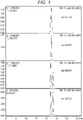
- Fig. 1 shows the analysis result of Example 1 (chromatogram (chart) for each product ion), and Fig. 2 shows the analysis result of Comparative Example 5 (chromatogram (chart) for each product ion).
- Supercritical fluid chromatography device Nexera UC (manufactured by Shimadzu Corporation)
- peaks of product ions derived from PMP, MMS, and SMM can be detected at m / z 551.5
- a peak of a product ion derived from PMP can be detected at m / z 523.45
- peaks of product ions derived from MMS, SMM, SSCa, and CaSS can be detected at m / z 495.45
- peaks of product ions derived from SSCa and CaSS can be detected at m / z 607.50.
- a peak of a product ion derived from PMP and product ions derived from MMS and SMM can be detected as peaks at m / z 551.5, and the total content of PMP, MMS, and SMM can be measured. Since only a peak of a product ion derived from PMP can be detected at m / z 523.45, the MMS amount can be measured more accurately by combining with m / z 551.5.
- Peaks of product ions derived from MMS and SMM, a peak of a product ion derived from SSCa, and a peak of a product ion derived from CaSS are detected at m / z 495.45, and the total of MMS and SMM and the contents of SSCa and CaSS can be measured.
- a peak of a product ion derived from SSCa and a peak of a product ion derived from CaSS are detected at m / z 607.50, and the contents of SSCa and CaSS can be measured.
- the content can be calculated by preparing a calibration curve using the standard substance used in this example as an external standard.
- each triglyceride was separable.
- the present invention can be utilized in the field of oils and fats.
Landscapes
- Chemical & Material Sciences (AREA)
- Analytical Chemistry (AREA)
- Chemical Kinetics & Catalysis (AREA)
- Organic Chemistry (AREA)
- Life Sciences & Earth Sciences (AREA)
- Engineering & Computer Science (AREA)
- Oil, Petroleum & Natural Gas (AREA)
- Wood Science & Technology (AREA)
- Microbiology (AREA)
- General Chemical & Material Sciences (AREA)
- Fats And Perfumes (AREA)
- Other Investigation Or Analysis Of Materials By Electrical Means (AREA)
Abstract
Description
- The present invention relates to a method for analyzing triglyceride, a method for sorting oils and fats, and a method for producing triglyceride.
- Triglyceride, which is a constituent of oils and fats, is tri-ester of glycerin and fatty acid. The composition of triglyceride is considered to affect physical properties or nutrition. Therefore, the composition of triglyceride is necessary to be controlled in a process of producing and selling oils and fats. Generally, the composition of triglyceride has been analyzed using gas chromatography or liquid chromatography. However, traditional gas chromatography or liquid chromatography methods are time-consuming, and have had difficulty in separating even triglyceride having different constituent fatty acids and an identical total carbon number.
- Meanwhile, although supercritical fluid chromatography is performed in the same system as high performance liquid chromatography, it has been considered that the ability of separation (clearly distinguished from peaks of other substances) and detection (high sensitivity is obtained by a sharp peak) is better than that of high performance liquid chromatography known to the inventors due to the feature that the supercritical fluid has low viscosity and high diffusibility. Thus, supercritical fluid chromatography has been used for analysis of partial polyol polyesters (Patent Literature 1).
- Patent Literature 1:
JP-T-6-500783 - However, although supercritical fluid chromatography has a short processing time and improved accuracy, there is still no suitable method for separating triglyceride and/or an isomer of triglyceride, having an identical total carbon number and different constituent fatty acids.
- The present invention has been made in view of the above circumstances, and an object of the present invention is to provide a method for analyzing triglyceride using supercritical fluid chromatography. Another object of the present invention is to provide a method including quantifying triglyceride by supercritical fluid chromatography and sorting oils and fats based on triglyceride components. Still another object of the present invention is to provide a method for producing triglyceride in which triglyceride can be fractionated.
- As a result of intensive studies to solve the above problems, the present inventors have found that triglyceride having an identical total carbon number can be analyzed rapidly with high accuracy by analyzing triglyceride by supercritical fluid chromatography under specific conditions. Further, the present inventors have found that an optical isomer can also be analyzed. From these findings, the present inventors have completed the present invention.
- That is, the present invention relates to the followings.
- [1] A method for analyzing triglyceride by supercritical fluid chromatography, in which a stationary phase having a chiral selector and a mobile phase containing carbon dioxide and methanol are used in the supercritical fluid chromatography, the chiral selector is a chiral selector in which a substituent having one chlorine and one methyl group is bound to a polysaccharide and/or a chiral selector in which a substituent having two or more chlorines is bound to a polysaccharide.
- [2] The analysis method according to [1], in which the substituent having one chlorine and one methyl group and/or the substituent having two or more chlorines is a substituent of a phenylcarbamate derivative.
- [3] The analysis method according to [1] or [2], in which a mass spectrometer is used as a detector in the supercritical fluid chromatography.
- [4] The analysis method according to any one of [1] to [3], in which the mobile phase contains 60 to 95 vol% of carbon dioxide and 40 to 5 vol% of methanol in the mobile phase.
- [5] The analysis method according to any one of [1] to [4], in which the chiral selector is amylose tris(3-chloro-4-methylphenylcarbamate) and/or amylose tris(3,5-dichlorophenylcarbamate).
- [6] The analysis method according to any one of [1] to [5], in which triglyceride and/or an isomer of triglyceride having different constituent fatty acids and an identical total carbon number is analyzed.
- [7] A method for sorting oils and fats, including quantifying oils and fats in accordance with the method according to any one of [1] to [6], in which the oils and fats are sorted based on quantified triglyceride components.
- [8] A method for producing triglyceride, including fractionating triglyceride by supercritical fluid chromatography, in which a stationary phase having a chiral selector and a mobile phase containing carbon dioxide and methanol are used in the supercritical fluid chromatography, and the chiral selector is a chiral selector in which a substituent having one chlorine and one methyl group is bound to a polysaccharide and/or a chiral selector in which a substituent having two or more chlorines is bound to a polysaccharide.
- As shown in Examples to be described later, according to the present invention, triglyceride having different constituent fatty acids and an identical total carbon number, a positional isomer of triglyceride, and an optical isomer of triglyceride can be rapidly separated, so that the triglyceride, the positional isomer of triglyceride, and the optical isomer of triglyceride can be measured and fractionated. Further, oils and fats can be sorted by using the method of the present invention.
-
-
Fig. 1 is a chromatogram (chart) of Example 1. -
Fig. 2 is a chromatogram (chart) of Comparative Example 5. - The term "triglyceride" is a tri-ester of glycerin and fatty acid. The fatty acid may be a linear or branched fatty acid having 6 to 24 carbon atoms. Further, the fatty acid may be either a saturated fatty acid or an unsaturated fatty acid. Preferably, the fatty acid is a linear saturated fatty acid and/or a linear unsaturated fatty acid, having 8 to 22 carbon atoms. These fatty acids are not particularly limited, and usable examples thereof include caprylic acid, capric acid, lauric acid, myristic acid, palmitic acid, stearic acid, behenic acid, palmitoleic acid, oleic acid, linoleic acid, linolenic acid, erucic acid, arachidonic acid, DHA, and EPA.
- In the present invention, triglyceride and/or an isomer of triglyceride, having different constituent fatty acids and an identical total carbon number, can be analyzed or fractionated by supercritical fluid chromatography. The triglyceride having different constituent fatty acids and an identical total carbon number is triglyceride in which three fatty acids constituting the triglyceride differ, and the total carbon numbers of the three fatty acids are identical. In the case of separation between triglycerides in which three fatty acids constituting the triglyceride are saturated fatty acids and the total carbon numbers are identical, separation is difficult by a method known to the inventors. However, good separation is achieved by the present invention, which is preferable. Further, the isomer of triglyceride is a positional isomer of triglyceride in which the fatty acids at
positions 1 and 2 are reversed, and/or a racemic body in which the carbon at position 2 is the optical center. Hence, in the present invention, it is possible to separate an isomer of triglyceride in which different fatty acids are ester-bonded to three carbons of glycerin, respectively and an isomer of triglyceride in which two different fatty acids are ester-bonded to three carbons of glycerin. For example, in a case where two myristic acids and one stearic acid are bound to glycerin, 1,2-dimyristoyl-3-stearoyl-sn-glycerol (hereinafter, abbreviated as "MMS") and 1-stearoyl-2,3-dimyristoyl-sn-glycerol (hereinafter, abbreviated as "SMM") are present as enantiomers, and 1,3-dimyristoyl-2-stearoyl-glycerol (hereinafter, abbreviated as "MSM") is present as a positional isomer. The total carbon number of triglycerides of MMS, SMM, and MSM is 49. Further, for example, 1,3-dipalmitoyl-2-myristoyl-glycerol (hereinafter, abbreviated as "PMP") or the like is present as triglyceride having different constituent fatty acids and an identical total carbon number. In the present invention, these triglycerides can be separated and analyzed. - The "oils and fats" are not particularly limited, and examples of oils and fats include vegetable oils and fats and animal oils and fats, and vegetable oils and fats are preferable.
- Examples of vegetable oils and fats include canola oil, palm oil, and a transesterified oil thereof, and a transesterified oil is preferable.
- As the oils and fats, edible oils and fats are preferable.
- The present embodiment is not particularly limited, and glyceride of a naturally-derived animal or vegetable oil or a synthetic oil can be used for analysis.
- The method for analyzing triglyceride in the present embodiment includes analyzing an isomer of triglyceride by supercritical fluid chromatography.
- Here, the "supercritical fluid chromatography" is a type of column chromatography also called SFC, and refers to one that uses a supercritical fluid as the mobile phase. In the supercritical fluid chromatography, with the use of a subcritical fluid or supercritical fluid that has characteristics of low viscosity and high diffusibility as the mobile phase, the resolution and detectability can be improved as compared with those in liquid chromatography (HPLC) that uses a liquid as the mobile phase.
- As the "mobile phase" of supercritical fluid chromatography, for example, carbon dioxide in a liquefied state, a subcritical state, or a supercritical state is used, and in addition to this, it is preferable to use an organic solvent (modifier) in combination. As the modifier, it is necessary to contain methanol. Preferably, the volume ratio of carbon dioxide : methanol is in a range of 1 : 1.3 to 1 : 1. The volume ratio of carbon dioxide: methanol is more preferably in a range of 1 : 1.4 to 5.5 : 4.5, and still more preferably in a range of 85 : 15 to 7 : 3. Other solvents may be contained as long as the content of other solvents is in a range of 10 vol% of the mobile phase. More preferably, the content of other solvents is in a range of 5 vol% or less of the mobile phase. The other solvents are not particularly limited, and an organic solvent such as ethanol, isopropanol, acetonitrile, or dichloromethane can be used.
- As the "stationary phase" of the supercritical fluid chromatography, a chiral selector in which a substituent having one chlorine and one methyl group is bound to a polysaccharide and/or a chiral selector in which a substituent having two or more chlorines is bound to a polysaccharide is used. For example, a stationary phase in which an amylose derivative or cellulose derivative as a chiral selector is immobilized or coated on silica gel as a substrate can be used. Further, as for the chiral selector, a substituent having one chlorine and one methyl group and/or a substituent having two chlorines is preferably a substituent of a phenylcarbamate derivative. Examples of these substituents include a chloromethylphenylcarbamate group and a dichlorophenylcarbamate group. A 3-chloro-4-methylphenylcarbamate group or a 3,5-dichlorophenylcarbamate group is preferable. Further, it is preferable that three of these substituents are bound to the sugar unit of the polysaccharide. The polysaccharide is preferably amylose. The chiral selector is more preferably amylose tris(3-chloro-4-methylphenylcarbamate) and/or amylose tris(3,5-dichlorophenylcarbamate).
- In the present embodiment, the stationary phase can be used by packing a single column or separate columns with the stationary phase. Usually, a column packed with a single stationary phase is commercially available. Accordingly, the column packed with the stationary phase can be used alone, or the columns can be connected in series or in parallel for use.
- In the present embodiment, a stationary phase and a column other than those described above may be additionally used. In that case, it is preferable that a stationary phase and a column other than those described above is connected in series with the column of the stationary phase having a chiral selector in which a substituent having one chlorine and one methyl group is bound to a polysaccharide and/or a chiral selector in which a substituent having two or more chlorines is bound to a polysaccharide.
- The "detector" of the supercritical fluid chromatography is not particularly limited, and, for example, an ultraviolet-visible absorbance detector, a diode array detector, a mass spectrometer, a circular dichroism detector, or the like can be used. Particularly, a mass spectrometer that can perform analysis under MRM conditions is preferable in terms of detecting various triglycerides.
- As the conditions of the supercritical fluid chromatography, conditions used for the analysis of oils and fats can be adopted without any particular limitation.
- In the case of a composition containing a component other than oils and fats, prior to the supercritical fluid chromatography, it is preferable to perform pretreatment such as extraction.
- For example, the extraction is not particularly limited to this, and the use of an organic solvent that is hardly soluble in water (e.g., ether, hexane, heptane, octane, petroleum ether, benzene, toluene, xylene, or dichloromethane) allows for extraction of a component soluble in an organic solvent. Thereafter, it is preferable to use an organic solvent having a boiling point of 100°C or less so that the extracted component can be concentrated.
- Further, in a case where there are alkalis/acids in the organic phase after the extraction, water washing may be performed in order to remove such alkalis/acids.
- The extract can be concentrated as appropriate. The concentration method is not particularly limited, and examples of the concentration method include a method in which the extract is dried with a desiccant such as anhydrous sodium sulfate, calcium chloride, or a molecular sieve, and then the organic solvent is distilled.
- In the present embodiment, various types of triglycerides contained in oils and fats can be analyzed. The analysis allows for confirmation of the presence or absence of triglyceride and/or an isomer of triglyceride having different constituent fatty acids and an identical total carbon number in a sample. Examples of the isomer of triglyceride include an optical isomer of triglyceride and a positional isomer of triglyceride. Further, it is possible to usually quantify triglyceride and/or an isomer of triglyceride, having different constituent fatty acids and an identical total carbon number, in a sample by a method using an external standard or internal standard, which is performed in quantitative analysis.
- Examples of the triglyceride include triglyceride that has a fatty acid having 6 to 24 carbon atoms as the constituent fatty acid of triglyceride. As the fatty acid having 6 to 24 carbon atoms, a saturated and/or unsaturated linear fatty acid is preferable, and caproic acid, caprylic acid, capric acid, lauric acid, myristic acid, palmitic acid, palmitoleic acid, stearic acid, linoleic acid, linolenic acid, behenic acid, arachidonic acid, erucic acid, DHA, EPA, or the like is more preferable. A saturated linear fatty acid is still more preferable. Triglyceride having fatty acids selected from caproic acid, caprylic acid, capric acid, lauric acid, myristic acid, palmitic acid, stearic acid, and behenic acid as constituent fatty acids are most preferable.
- The method for sorting oils and fats of the present invention includes quantifying oils and fats in accordance with <Method for Analyzing Triglyceride> described above, in which the oils and fats are sorted based on quantified triglyceride components.
- In the present invention, the quantifying is not particularly limited. In the case of a transesterified oil, the quantifying may be performed after transesterification, and may be performed before the purification or in the course of the purification.
- As the oils and fats, in addition to animal and vegetable oils, a transesterified oil obtained by regioselectively transesterifying the animal and vegetable oil can be used.
- The method for producing triglyceride of the present embodiment includes fractionating an isomer of triglyceride by supercritical fluid chromatography. In the supercritical fluid chromatography, the stationary phase has a chiral selector in which a substituent having one chlorine and one methyl group is bound to a polysaccharide and/or a different chiral selector in which a substituent having two or more chlorines is bonded to a polysaccharide. Triglyceride is fractionated by supercritical fluid chromatography in fraction having a peak of each triglyceride. The fractionated fraction is washed with water and dried, if necessary. In a case where a solvent is used, the solvent is distilled off. The conditions and the like of the supercritical fluid chromatography are as described in detail in the above <Method for Analyzing Triglyceride>.
- Hereinafter, the present invention will be described in more detail with reference to Examples, but the present invention is not limited thereto.
- Standard substance: 100 ppm by mass of a mixture of 1,2-dimyristoyl-3-stearoyl-sn-glycerol (MMS) and 1-stearoyl-2,3-dimyristoyl-sn-glycerol (SMM) (rac-MMS: trade name "1,2-Myristin-3-Stearin", manufactured by Larodan), 100 ppm by mass of 1,3-dipalmitoyl-2-myristoyl-glycerol (PMP: trade name "1,3-Palmitin-2-Myristin", manufactured by Larodan), and 100 ppm by mass of a mixture of 1,2-distearoyl-3-decanoyl-sn-glycerol (SSCa) and 1-decanoyl-2,3-distearoyl-sn-glycerol (CaSS) (rac-SSCa: trade name "1,2-Stearin-3-Decanoin", manufactured by Larodan) were used as chloroform solutions. The three kinds of solutions were mixed in equal amounts (mass), and the mixture was diluted with isopropanol so that rac-MMS, PMP, and rac-SSCa were each 10 ppm by mass, and an analysis sample A was obtained.
- The analysis sample A was supplied to a supercritical fluid chromatography device under the following conditions. As the column, any one of Column (1), Column (2), and Column (3) was used, and as the mobile phase, a modifier was injected into a supercritical fluid CO2. The modifier was injected under Condition A or Condition B. The chromatograms (charts) of the product ions at m/z 551.50, 523.45, 495.45, and 607.50 were compared by a mass spectrometer, and whether or not the product ions were separable was compared. Note that evaluation symbols mean as follows:
- Excellent: Separation was achieved;
- Good: Sensitivity was poor, but separation was achieved; and
- Poor: Separation was not achieved, or any peak was not detected.
- Analysis conditions and results are shown in Table 3.
Fig. 1 shows the analysis result of Example 1 (chromatogram (chart) for each product ion), andFig. 2 shows the analysis result of Comparative Example 5 (chromatogram (chart) for each product ion). -
- Column (1): CHIRALPAK IF-3, length 250 mm × inner diameter 4.6 mm, and particle diameter 3 µm (Amylose tris(3-chloro-4-methylphenylcarbamate) immobilized to silica gel), manufactured by Daicel Corporation
- Column (2): Shim-pack UC-GISII, length 150 mm × inner diameter 2.1 mm, and particle diameter 3 µm, (octadecyl group), manufactured by Shimadzu Corporation
- Column (3): CHIRALPAK ID-3, length 250 mm × inner diameter 4.6 mm, and particle diameter 3 µm (Amylose tris(3-chlorophenylcarbamate) immobilized to silica gel), manufactured by Daicel Corporation
- Mobile phase: supercritical fluid CO2 (flow rate: 1.1 mL/min)
- Modifier: solvents of Table 1 (flow rate: 0.055 mL/min to 0.44 mL/min) and methanol containing 0.1% ammonium formate (flow rate: 0.1 mL/min)
- ∗Condition A: CO2: solvents in Table 1 (volume ratio = 85 : 15)
- ∗Condition B: CO2: gradient of solvents in Table 1 (volume ratio = 95 : 5 to 60 : 40)
- Detector: tandem quadrupole MS
- Injection volume: 1 µL
-
- Mass spectrometer: liquid chromatograph mass spectrometer LCMS-8050 (manufactured by Shimadzu Corporation)
- Ionization mode: ESI (electrospray ionization)
- Interface temperature: 300°C
- Heating gas flow rate: 10 L/min
- Nebulizer gas flow rate: 3 L/min
- Desolvation gas temperature: 250°C
- Heat block temperature: 400°C
- Dry in gas flow rate: 10 L/min
- Data collection mode: MRM (multiple reaction monitoring) conditions in Table 2
- Note that peaks of product ions derived from PMP, MMS, and SMM can be detected at m/z 551.5, a peak of a product ion derived from PMP can be detected at m/z 523.45, peaks of product ions derived from MMS, SMM, SSCa, and CaSS can be detected at m/z 495.45, and peaks of product ions derived from SSCa and CaSS can be detected at m/z 607.50.
[Table 3] Example 1 Example 2 Example 3 Comparative Example 1 Comparative Example 2 Comparative Example 3 Comparative Example 4 Comparative Example 5 Comparative Example 6 Column Column (1) Column (1) Column (1) Column (1) Column (1) Column (1) Column (1) Column (2) Column (3) Solvents in Table 2 1 2 3 4 5 6 1 Analysis conditions A B Separation Excellent Excellent Good Poor Poor Poor Poor Poor Poor - As shown in Example 1 (
Fig. 1 ), a peak of a product ion derived from PMP and product ions derived from MMS and SMM can be detected as peaks at m/z 551.5, and the total content of PMP, MMS, and SMM can be measured. Since only a peak of a product ion derived from PMP can be detected at m/z 523.45, the MMS amount can be measured more accurately by combining with m/z 551.5. Peaks of product ions derived from MMS and SMM, a peak of a product ion derived from SSCa, and a peak of a product ion derived from CaSS are detected at m/z 495.45, and the total of MMS and SMM and the contents of SSCa and CaSS can be measured. A peak of a product ion derived from SSCa and a peak of a product ion derived from CaSS are detected at m/z 607.50, and the contents of SSCa and CaSS can be measured. In the calculation for the content, the content can be calculated by preparing a calibration curve using the standard substance used in this example as an external standard. From the above, it is found that, according to the present invention, it is possible to rapidly separate triglyceride, a positional isomer of triglyceride, and an optical isomer of triglyceride, having an identical total carbon number and different constituent fatty acids. - Similarly, in Examples 2 and 3, each triglyceride was separable.
- The present invention can be utilized in the field of oils and fats.
| Solvent type | Composition ratio (%) | |||||
| 1 | 2 | 3 | 4 | 5 | 6 | |
| Methanol | 100 | 20 | 50 | |||
| Acetonitrile | 80 | 100 | ||||
| IPA | 100 | |||||
| Ethanol | 100 | 50 | ||||
| MRM conditions | Precursor ion [M + NH4]+ | Product ion |
| 1 | m/z 796.75 | m/z 551.50 |
| 2 | m/z 796.75 | m/z 523.45 |
| 3 | m/z 796.75 | m/z 495.45 |
| 4 | m/z 796.75 | m/z 607.50 |
Claims (8)
- A method for analyzing triglyceride by supercritical fluid chromatography, whereina stationary phase having a chiral selector and a mobile phase containing carbon dioxide and methanol are used in the supercritical fluid chromatography, andthe chiral selector is a chiral selector in which a substituent having one chlorine and one methyl group is bound to a polysaccharide and/or a chiral selector in which a substituent having two or more chlorines is bound to a polysaccharide.
- The analysis method according to claim 1, wherein
the substituent having one chlorine and one methyl group and/or the substituent having two or more chlorines is a substituent of a phenylcarbamate derivative. - The analysis method according to claim 1 or 2, wherein
a mass spectrometer is used as a detector in the supercritical fluid chromatography. - The analysis method according to any one of claims 1 to 3, wherein
the mobile phase contains 60 to 95 vol% of carbon dioxide and 40 to 5 vol% of methanol in the mobile phase. - The analysis method according to any one of claims 1 to 4, wherein
the chiral selector is amylose tris(3-chloro-4-methylphenylcarbamate) and/or amylose tris(3,5-dichlorophenylcarbamate). - The analysis method according to any one of claims 1 to 5, wherein triglyceride and/or an isomer of triglyceride, having different constituent fatty acids and an identical total carbon number, is analyzed.
- A method for sorting oils and fats, comprisingquantifying oils and fats in accordance with the method according to any one of claims 1 to 6, whereinthe oils and fats are sorted based on quantified triglyceride components.
- A method for producing triglyceride, comprisingfractionating triglyceride by supercritical fluid chromatography, whereina stationary phase having a chiral selector and a mobile phase containing carbon dioxide and methanol are used in the supercritical fluid chromatography, andthe chiral selector is a chiral selector in which a substituent having one chlorine and one methyl group is bound to a polysaccharide and/or a chiral selector in which a substituent having two or more chlorines is bound to a polysaccharide.
Applications Claiming Priority (1)
| Application Number | Priority Date | Filing Date | Title |
|---|---|---|---|
| PCT/JP2019/025698 WO2020261505A1 (en) | 2019-06-27 | 2019-06-27 | Triglyceride analysis method, oil and fat sorting method, and triglyceride production method |
Publications (2)
| Publication Number | Publication Date |
|---|---|
| EP3991835A1 true EP3991835A1 (en) | 2022-05-04 |
| EP3991835A4 EP3991835A4 (en) | 2022-07-27 |
Family
ID=74060053
Family Applications (1)
| Application Number | Title | Priority Date | Filing Date |
|---|---|---|---|
| EP19935432.5A Withdrawn EP3991835A4 (en) | 2019-06-27 | 2019-06-27 | Triglyceride analysis method, oil and fat sorting method, and triglyceride production method |
Country Status (2)
| Country | Link |
|---|---|
| EP (1) | EP3991835A4 (en) |
| WO (1) | WO2020261505A1 (en) |
Family Cites Families (5)
| Publication number | Priority date | Publication date | Assignee | Title |
|---|---|---|---|---|
| EP0550526B2 (en) | 1990-09-11 | 2004-01-28 | The Procter & Gamble Company | Polyol polyester synthesis |
| US20130277304A1 (en) * | 2012-04-20 | 2013-10-24 | Orochem Technologies, Inc. | Sub-2 micron chiral stationary phase separation agents for use with supercritical fluid chromatography |
| JP6469958B2 (en) * | 2014-03-17 | 2019-02-13 | 株式会社島津製作所 | Method for separating triacylglycerol |
| JP6991021B2 (en) * | 2017-09-08 | 2022-01-12 | 月島食品工業株式会社 | Methods for Producing Positional and / or Enantiomers of Triacylglycerol |
| EP3783358B1 (en) * | 2018-04-03 | 2023-03-15 | The Nisshin Oillio Group, Ltd. | Method for analyzing triglyceride, method for separating oil and fat, and method for manufacturing triglyceride |
-
2019
- 2019-06-27 EP EP19935432.5A patent/EP3991835A4/en not_active Withdrawn
- 2019-06-27 WO PCT/JP2019/025698 patent/WO2020261505A1/en not_active Ceased
Also Published As
| Publication number | Publication date |
|---|---|
| EP3991835A4 (en) | 2022-07-27 |
| WO2020261505A1 (en) | 2020-12-30 |
Similar Documents
| Publication | Publication Date | Title |
|---|---|---|
| Saito et al. | Determination of ochratoxins in nuts and grain samples by in-tube solid-phase microextraction coupled with liquid chromatography–mass spectrometry | |
| Mottram et al. | Elucidation of the composition of bovine milk fat triacylglycerols using high-performance liquid chromatography–atmospheric pressure chemical ionisation mass spectrometry | |
| Yang et al. | Determination of additives in cosmetics by supercritical fluid extraction on-line headspace solid-phase microextraction combined with gas chromatography–mass spectrometry | |
| Ma et al. | Rapid determination of trans-resveratrol in vegetable oils using magnetic hydrophilic multi-walled carbon nanotubes as adsorbents followed by liquid chromatography–tandem mass spectrometry | |
| Gordillo | Supercritical fluid chromatography hyphenated to mass spectrometry for metabolomics applications | |
| Mattarozzi et al. | Reversed-phase and weak anion-exchange mixed-mode stationary phase for fast separation of medium-, long-and very long chain free fatty acids by ultra-high-performance liquid chromatography-high resolution mass spectrometry | |
| CN108181395B (en) | A method for on-line detection of triglyceride components in fish oil by high performance liquid chromatography | |
| US20180209945A1 (en) | Pre-analysis treatment method for sample containing plurality of components with greatly different concentrations | |
| Sandra et al. | Evaluation of micro-pillar array columns (µPAC) combined with high resolution mass spectrometry for lipidomics | |
| Huang et al. | Simultaneous determination of four bioactive flavonoids from Polygonum orientale L. in dog plasma by UPLC–ESI-MS/MS and application of the technique to pharmacokinetic studies | |
| Tuzimski et al. | A QuEChERS-based sample preparation method for the analysis of 5-nitroimidazoles in bovine milk by HPLC–DAD | |
| Bustamante et al. | Evaluation of microextraction by packed sorbent, liquid–liquid microextraction and derivatization pretreatment of diet‐derived phenolic acids in plasma by gas chromatography with triple quadrupole mass spectrometry | |
| JP2019196948A (en) | Method for analyzing triglyceride, sorting methods of fats and oils, and method for producing triglyceride | |
| JP5936957B2 (en) | Method for measuring milk fat content | |
| EP3783358B1 (en) | Method for analyzing triglyceride, method for separating oil and fat, and method for manufacturing triglyceride | |
| Ben Arfa et al. | UHPLC-APCI-MS profiling of triacylglycerols in vegetable oils—application to the analysis of four North African sesame seed varieties | |
| Donato et al. | Advances in LC–MS for food analysis | |
| Segall et al. | Ouricuri (Syagrus coronata) triacylglycerol analysis using HPLC and positive ion electrospray tandem MS | |
| Vázquez-Martínez et al. | Molecule Analysis: A Practical Guide | |
| Neu et al. | Quantification of phorbol esters in Jatropha curcas by HPLC‐UV and HPLC‐ToF‐MS with standard addition method | |
| CN110895270A (en) | Method for simultaneously detecting six important triglyceride position isomers in breast milk and infant formula milk powder | |
| CN109187784B (en) | A kind of headspace solid-phase microextraction-GC-MS detection and analysis method of volatile oil components of sea buckthorn | |
| Janssen et al. | The role of comprehensive chromatography in the characterization of edible oils and fats | |
| Abdel-Rehim | Current advances in microextraction by packed sorbent (MEPS) for bioanalysis applications | |
| WO2020261505A1 (en) | Triglyceride analysis method, oil and fat sorting method, and triglyceride production method |
Legal Events
| Date | Code | Title | Description |
|---|---|---|---|
| STAA | Information on the status of an ep patent application or granted ep patent |
Free format text: STATUS: THE INTERNATIONAL PUBLICATION HAS BEEN MADE |
|
| PUAI | Public reference made under article 153(3) epc to a published international application that has entered the european phase |
Free format text: ORIGINAL CODE: 0009012 |
|
| STAA | Information on the status of an ep patent application or granted ep patent |
Free format text: STATUS: REQUEST FOR EXAMINATION WAS MADE |
|
| 17P | Request for examination filed |
Effective date: 20211220 |
|
| AK | Designated contracting states |
Kind code of ref document: A1 Designated state(s): AL AT BE BG CH CY CZ DE DK EE ES FI FR GB GR HR HU IE IS IT LI LT LU LV MC MK MT NL NO PL PT RO RS SE SI SK SM TR |
|
| STAA | Information on the status of an ep patent application or granted ep patent |
Free format text: STATUS: EXAMINATION IS IN PROGRESS |
|
| A4 | Supplementary search report drawn up and despatched |
Effective date: 20220627 |
|
| RIC1 | Information provided on ipc code assigned before grant |
Ipc: C11B 3/10 20060101ALI20220621BHEP Ipc: C11B 3/00 20060101ALI20220621BHEP Ipc: G01N 30/88 20060101ALI20220621BHEP Ipc: G01N 30/72 20060101ALI20220621BHEP Ipc: G01N 30/26 20060101ALI20220621BHEP Ipc: G01N 30/02 20060101ALI20220621BHEP Ipc: C11C 3/00 20060101ALI20220621BHEP Ipc: B01J 20/285 20060101ALI20220621BHEP Ipc: B01D 15/40 20060101ALI20220621BHEP Ipc: B01D 15/38 20060101ALI20220621BHEP Ipc: B01J 20/29 20060101AFI20220621BHEP |
|
| 17Q | First examination report despatched |
Effective date: 20220701 |
|
| DAV | Request for validation of the european patent (deleted) | ||
| DAX | Request for extension of the european patent (deleted) | ||
| STAA | Information on the status of an ep patent application or granted ep patent |
Free format text: STATUS: THE APPLICATION HAS BEEN WITHDRAWN |
|
| 18W | Application withdrawn |
Effective date: 20221020 |