EP3989031B1 - Systeme und verfahren zur fusion von strassenreibungdaten zur verbesserung des manövrierens von fahrzeugen - Google Patents
Systeme und verfahren zur fusion von strassenreibungdaten zur verbesserung des manövrierens von fahrzeugen Download PDFInfo
- Publication number
- EP3989031B1 EP3989031B1 EP21202092.9A EP21202092A EP3989031B1 EP 3989031 B1 EP3989031 B1 EP 3989031B1 EP 21202092 A EP21202092 A EP 21202092A EP 3989031 B1 EP3989031 B1 EP 3989031B1
- Authority
- EP
- European Patent Office
- Prior art keywords
- vehicle
- regions surrounding
- road friction
- map
- predicted trajectory
- Prior art date
- Legal status (The legal status is an assumption and is not a legal conclusion. Google has not performed a legal analysis and makes no representation as to the accuracy of the status listed.)
- Active
Links
Images



Classifications
-
- B—PERFORMING OPERATIONS; TRANSPORTING
- B60—VEHICLES IN GENERAL
- B60W—CONJOINT CONTROL OF VEHICLE SUB-UNITS OF DIFFERENT TYPE OR DIFFERENT FUNCTION; CONTROL SYSTEMS SPECIALLY ADAPTED FOR HYBRID VEHICLES; ROAD VEHICLE DRIVE CONTROL SYSTEMS FOR PURPOSES NOT RELATED TO THE CONTROL OF A PARTICULAR SUB-UNIT
- B60W40/00—Estimation or calculation of non-directly measurable driving parameters for road vehicle drive control systems not related to the control of a particular sub unit, e.g. by using mathematical models
- B60W40/02—Estimation or calculation of non-directly measurable driving parameters for road vehicle drive control systems not related to the control of a particular sub unit, e.g. by using mathematical models related to ambient conditions
- B60W40/06—Road conditions
- B60W40/068—Road friction coefficient
-
- G—PHYSICS
- G05—CONTROLLING; REGULATING
- G05D—SYSTEMS FOR CONTROLLING OR REGULATING NON-ELECTRIC VARIABLES
- G05D1/00—Control of position, course, altitude or attitude of land, water, air or space vehicles, e.g. using automatic pilots
- G05D1/02—Control of position or course in two dimensions
- G05D1/021—Control of position or course in two dimensions specially adapted to land vehicles
- G05D1/0212—Control of position or course in two dimensions specially adapted to land vehicles with means for defining a desired trajectory
- G05D1/0214—Control of position or course in two dimensions specially adapted to land vehicles with means for defining a desired trajectory in accordance with safety or protection criteria, e.g. avoiding hazardous areas
-
- B—PERFORMING OPERATIONS; TRANSPORTING
- B60—VEHICLES IN GENERAL
- B60W—CONJOINT CONTROL OF VEHICLE SUB-UNITS OF DIFFERENT TYPE OR DIFFERENT FUNCTION; CONTROL SYSTEMS SPECIALLY ADAPTED FOR HYBRID VEHICLES; ROAD VEHICLE DRIVE CONTROL SYSTEMS FOR PURPOSES NOT RELATED TO THE CONTROL OF A PARTICULAR SUB-UNIT
- B60W30/00—Purposes of road vehicle drive control systems not related to the control of a particular sub-unit, e.g. of systems using conjoint control of vehicle sub-units
- B60W30/08—Active safety systems predicting or avoiding probable or impending collision or attempting to minimise its consequences
- B60W30/09—Taking automatic action to avoid collision, e.g. braking and steering
-
- B—PERFORMING OPERATIONS; TRANSPORTING
- B60—VEHICLES IN GENERAL
- B60W—CONJOINT CONTROL OF VEHICLE SUB-UNITS OF DIFFERENT TYPE OR DIFFERENT FUNCTION; CONTROL SYSTEMS SPECIALLY ADAPTED FOR HYBRID VEHICLES; ROAD VEHICLE DRIVE CONTROL SYSTEMS FOR PURPOSES NOT RELATED TO THE CONTROL OF A PARTICULAR SUB-UNIT
- B60W30/00—Purposes of road vehicle drive control systems not related to the control of a particular sub-unit, e.g. of systems using conjoint control of vehicle sub-units
- B60W30/08—Active safety systems predicting or avoiding probable or impending collision or attempting to minimise its consequences
- B60W30/095—Predicting travel path or likelihood of collision
- B60W30/0956—Predicting travel path or likelihood of collision the prediction being responsive to traffic or environmental parameters
-
- B—PERFORMING OPERATIONS; TRANSPORTING
- B60—VEHICLES IN GENERAL
- B60W—CONJOINT CONTROL OF VEHICLE SUB-UNITS OF DIFFERENT TYPE OR DIFFERENT FUNCTION; CONTROL SYSTEMS SPECIALLY ADAPTED FOR HYBRID VEHICLES; ROAD VEHICLE DRIVE CONTROL SYSTEMS FOR PURPOSES NOT RELATED TO THE CONTROL OF A PARTICULAR SUB-UNIT
- B60W60/00—Drive control systems specially adapted for autonomous road vehicles
- B60W60/001—Planning or execution of driving tasks
- B60W60/0027—Planning or execution of driving tasks using trajectory prediction for other traffic participants
- B60W60/00274—Planning or execution of driving tasks using trajectory prediction for other traffic participants considering possible movement changes
-
- G—PHYSICS
- G05—CONTROLLING; REGULATING
- G05D—SYSTEMS FOR CONTROLLING OR REGULATING NON-ELECTRIC VARIABLES
- G05D1/00—Control of position, course, altitude or attitude of land, water, air or space vehicles, e.g. using automatic pilots
- G05D1/02—Control of position or course in two dimensions
- G05D1/021—Control of position or course in two dimensions specially adapted to land vehicles
- G05D1/0268—Control of position or course in two dimensions specially adapted to land vehicles using internal positioning means
- G05D1/0274—Control of position or course in two dimensions specially adapted to land vehicles using internal positioning means using mapping information stored in a memory device
-
- G—PHYSICS
- G06—COMPUTING OR CALCULATING; COUNTING
- G06N—COMPUTING ARRANGEMENTS BASED ON SPECIFIC COMPUTATIONAL MODELS
- G06N20/00—Machine learning
-
- G—PHYSICS
- G06—COMPUTING OR CALCULATING; COUNTING
- G06V—IMAGE OR VIDEO RECOGNITION OR UNDERSTANDING
- G06V20/00—Scenes; Scene-specific elements
- G06V20/50—Context or environment of the image
- G06V20/56—Context or environment of the image exterior to a vehicle by using sensors mounted on the vehicle
- G06V20/58—Recognition of moving objects or obstacles, e.g. vehicles or pedestrians; Recognition of traffic objects, e.g. traffic signs, traffic lights or roads
-
- G—PHYSICS
- G08—SIGNALLING
- G08G—TRAFFIC CONTROL SYSTEMS
- G08G1/00—Traffic control systems for road vehicles
- G08G1/09—Arrangements for giving variable traffic instructions
- G08G1/0962—Arrangements for giving variable traffic instructions having an indicator mounted inside the vehicle, e.g. giving voice messages
- G08G1/09626—Arrangements for giving variable traffic instructions having an indicator mounted inside the vehicle, e.g. giving voice messages where the origin of the information is within the own vehicle, e.g. a local storage device, digital map
-
- G—PHYSICS
- G08—SIGNALLING
- G08G—TRAFFIC CONTROL SYSTEMS
- G08G1/00—Traffic control systems for road vehicles
- G08G1/16—Anti-collision systems
- G08G1/166—Anti-collision systems for active traffic, e.g. moving vehicles, pedestrians, bikes
-
- B—PERFORMING OPERATIONS; TRANSPORTING
- B60—VEHICLES IN GENERAL
- B60W—CONJOINT CONTROL OF VEHICLE SUB-UNITS OF DIFFERENT TYPE OR DIFFERENT FUNCTION; CONTROL SYSTEMS SPECIALLY ADAPTED FOR HYBRID VEHICLES; ROAD VEHICLE DRIVE CONTROL SYSTEMS FOR PURPOSES NOT RELATED TO THE CONTROL OF A PARTICULAR SUB-UNIT
- B60W2420/00—Indexing codes relating to the type of sensors based on the principle of their operation
- B60W2420/40—Photo, light or radio wave sensitive means, e.g. infrared sensors
- B60W2420/403—Image sensing, e.g. optical camera
-
- B—PERFORMING OPERATIONS; TRANSPORTING
- B60—VEHICLES IN GENERAL
- B60W—CONJOINT CONTROL OF VEHICLE SUB-UNITS OF DIFFERENT TYPE OR DIFFERENT FUNCTION; CONTROL SYSTEMS SPECIALLY ADAPTED FOR HYBRID VEHICLES; ROAD VEHICLE DRIVE CONTROL SYSTEMS FOR PURPOSES NOT RELATED TO THE CONTROL OF A PARTICULAR SUB-UNIT
- B60W2520/00—Input parameters relating to overall vehicle dynamics
- B60W2520/26—Wheel slip
-
- B—PERFORMING OPERATIONS; TRANSPORTING
- B60—VEHICLES IN GENERAL
- B60W—CONJOINT CONTROL OF VEHICLE SUB-UNITS OF DIFFERENT TYPE OR DIFFERENT FUNCTION; CONTROL SYSTEMS SPECIALLY ADAPTED FOR HYBRID VEHICLES; ROAD VEHICLE DRIVE CONTROL SYSTEMS FOR PURPOSES NOT RELATED TO THE CONTROL OF A PARTICULAR SUB-UNIT
- B60W2552/00—Input parameters relating to infrastructure
- B60W2552/40—Coefficient of friction
-
- B—PERFORMING OPERATIONS; TRANSPORTING
- B60—VEHICLES IN GENERAL
- B60W—CONJOINT CONTROL OF VEHICLE SUB-UNITS OF DIFFERENT TYPE OR DIFFERENT FUNCTION; CONTROL SYSTEMS SPECIALLY ADAPTED FOR HYBRID VEHICLES; ROAD VEHICLE DRIVE CONTROL SYSTEMS FOR PURPOSES NOT RELATED TO THE CONTROL OF A PARTICULAR SUB-UNIT
- B60W2554/00—Input parameters relating to objects
-
- B—PERFORMING OPERATIONS; TRANSPORTING
- B60—VEHICLES IN GENERAL
- B60W—CONJOINT CONTROL OF VEHICLE SUB-UNITS OF DIFFERENT TYPE OR DIFFERENT FUNCTION; CONTROL SYSTEMS SPECIALLY ADAPTED FOR HYBRID VEHICLES; ROAD VEHICLE DRIVE CONTROL SYSTEMS FOR PURPOSES NOT RELATED TO THE CONTROL OF A PARTICULAR SUB-UNIT
- B60W2554/00—Input parameters relating to objects
- B60W2554/40—Dynamic objects, e.g. animals, windblown objects
- B60W2554/404—Characteristics
Definitions
- the present disclosure relates generally to the automotive field. More particularly, the present disclosure relates to systems and method for fusing road friction information with road user intentions for enhanced vehicle maneuvering.
- RFE road friction estimation
- ML machine learning
- AD autonomous driving
- ego vehicle refers to a vehicle itself, as opposed to surrounding vehicles.
- DA and AD systems plan and execute such ego vehicle maneuvers based on how the expected road condition will affect the response to the ego vehicle.
- the ego vehicle maneuvers are often responsive to the presence or actions of another road user, such as another vehicle, a cyclist, a pedestrian, etc., but do not currently take the intentions of such other road user into account as it relates to RFE.
- US 2018/222462 A1 describes generating a roadway friction map in a host vehicle by detecting a velocity change of a target vehicle; calculating friction data based on the velocity change and storing the friction data.
- US 2019/111932 A1 describes a computing device in a vehicle generating a map including potential obstacles.
- An estimated coefficient of friction between the vehicle wheels and a roadway surrounding a stuck vehicle can be generated based on sensor data.
- a path can be determined based on the map, and the stuck vehicle can be operated based on the path and a determined slip ratio based on the vehicle wheels to unstick the stuck vehicle.
- the present invention relates to a method, a non-transitory computer-readable medium, and a system in accordance with the appended claims.
- the present disclosure fuses road friction information with other road user intentions to enhance safety constraint calculations and ego vehicle control and maneuvers, as implemented by DA and AD systems, thereby providing more adaptive, safer, and smoother ego vehicle control and maneuvers, in terms of steering, braking, and acceleration.
- the input to the methods and system of the present disclosure include predictive local road friction information, such as a RFE "map", and predictive motion trajectories of other road users, based on perception (e.g., vision) sensor-based methodologies related to object speed, trajectory, travel time, motion probabilities, slippage probabilities, etc.
- the output from the methods and system is a vehicle maneuver control signal with enhanced safety constraints.
- the present disclosure provides an ego vehicle control method, including: receiving road friction information indicating road friction estimates for a plurality of regions surrounding the ego vehicle; detecting and determining a predicted trajectory for an object within the plurality of regions surrounding the ego vehicle; wherein the predicted trajectory for the object is determined based in part on the road friction estimates for the plurality of regions surrounding the ego vehicle; and modifying operation of the ego vehicle based on the predicted trajectory for the object.
- Receiving the road friction information includes using the road friction estimates for the plurality of regions surrounding the ego vehicle to generate a road friction map of the plurality of regions surrounding the ego vehicle.
- Determining the predicted trajectory for an object within the plurality of regions surrounding the ego vehicle includes fusing the road friction map with an object map of the plurality of regions surrounding the ego vehicle to form a risk map of the plurality of regions surrounding the ego vehicle.
- the predicted trajectory for the object is determined based in part on the risk map for the plurality of regions surrounding the ego vehicle.
- the present disclosure provides a non-transitory computer-readable medium including ego vehicle control instructions stored in a memory and executed by a processor to carry out the steps including: receiving road friction information indicating road friction estimates for a plurality of regions surrounding the ego vehicle; detecting and determining a predicted trajectory for an object within the plurality of regions surrounding the ego vehicle; wherein the predicted trajectory for the object is determined based in part on the road friction estimates for the plurality of regions surrounding the ego vehicle; and modifying operation of the ego vehicle based on the predicted trajectory for the object.
- Receiving the road friction information includes using the road friction estimates for the plurality of regions surrounding the ego vehicle to generate a road friction map of the plurality of regions surrounding the ego vehicle.
- Determining the predicted trajectory for an object within the plurality of regions surrounding the ego vehicle includes fusing the road friction map with an object map of the plurality of regions surrounding the ego vehicle to form a risk map of the plurality of regions surrounding the ego vehicle.
- the predicted trajectory for the object is determined based in part on the risk map for the plurality of regions surrounding the ego vehicle.
- the present disclosure provides an ego vehicle control system, including: a friction estimation/prediction module operable for receiving road friction information indicating road friction estimates for a plurality of regions surrounding the ego vehicle; an object detection and tracking module operable for detecting and determining a predicted trajectory for an object within the plurality of regions surrounding the ego vehicle; wherein the predicted trajectory for the object is determined based in part on the road friction estimates for the plurality of regions surrounding the ego vehicle using a motion estimation and intention prediction module; and a decision-making module operable for modifying operation of the ego vehicle based on the predicted trajectory for the object.
- a friction estimation/prediction module operable for receiving road friction information indicating road friction estimates for a plurality of regions surrounding the ego vehicle
- an object detection and tracking module operable for detecting and determining a predicted trajectory for an object within the plurality of regions surrounding the ego vehicle; wherein the predicted trajectory for the object is determined based in part on the road friction estimates for the plurality of regions surrounding the ego vehicle using a motion estimation and intention prediction
- Receiving the road friction information includes using the road friction estimates for the plurality of regions surrounding the ego vehicle to generate a road friction map of the plurality of regions surrounding the ego vehicle.
- Determining the predicted trajectory for an object within the plurality of regions surrounding the ego vehicle includes fusing the road friction map with an object map of the plurality of regions surrounding the ego vehicle to form a risk map of the plurality of regions surrounding the ego vehicle.
- the predicted trajectory for the object is determined based in part on the risk map for the plurality of regions surrounding the ego vehicle.
- the present disclosure fuses road friction information with other road user intentions to enhance safety constraint calculations and ego vehicle control and maneuvers, as implemented by DA and AD systems, thereby providing more adaptive, safer, and smoother ego vehicle control and maneuvers, in terms of steering, braking, and acceleration.
- the input to the methods and system of the present disclosure include predictive local road friction information, such as a RFE "map", and predictive motion trajectories of other road users, based on perception (e.g., vision) sensor-based methodologies related to object speed, trajectory, travel time, motion probabilities, slippage probabilities, etc.
- the output from the methods and system is a vehicle maneuver control signal with enhanced safety constraints.
- any number of RFE techniques may be exploited.
- one such RFE technique generates and utilizes a RFE indicating the expected friction level between a road surface and the tires of a vehicle based on forward looking camera images and signal processing.
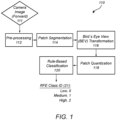
- a forward-looking camera image is pre-processed, patch segmented (both laterally and longitudinally, as defined by wheel tracks or the like), transformed into a BEV image to provide easy-to-process patches of the drivable surface ahead of the vehicle, patch quantized, and finally classified for RFE.
- the resulting RFE may otherwise be used to provide driver information, automatically control the ego vehicle's motion, and/or inform a cloud-based alert service to enhance global driver safety.
- This RFE inherently includes a temporal component that alerts a driver and/or causes a vehicular response to hazardous driving conditions prior to such conditions being encountered by the vehicle and driver. This provides predictive leverage.
- the methods and systems of the present disclosure may be integrated with the operation of other conventional on-vehicle sensors and systems, such as those providing braking/acceleration, lateral/longitudinal movement, and/or torque control.
- the methods and systems have improved accuracy, increased availability (even when pronounced tire forces are not present), and enhanced predictive ability, while operating efficiently with relatively low computational complexities as compared to other image-based road surface condition (RSC) classification models.
- RSS road surface condition
- the illustrative RFE generation method 110 includes the following steps, each of which is executed by a processor, such as an on-vehicle electronic control unit (ECU) or the like: pre-processing 112, patch segmentation 114, BEV transformation 116, patch quantization 118, and classification 120. These steps each operate on an image 111 that is preferably obtained from an on-vehicle forward looking camera or the like that has visibility for a given distance in front of a vehicle, for example 50 meters.
- a processor such as an on-vehicle electronic control unit (ECU) or the like: pre-processing 112, patch segmentation 114, BEV transformation 116, patch quantization 118, and classification 120.
- the image 111 is first pre-processed.
- the image 111 is broadly classified into a dry/wet/snow/slush/etc.
- RSC classification may be performed using any novel or conventional methodology known to those of ordinary skill in the art.
- the image 111 may be classified into a given RSC using a MI,/deep learning (DL) or neural network (NN) methodology that analyzes color/texture differences between a road surface, the sky, and the surrounding environment. This helps to remove selected images from further RFE processing. For example, if the image 111 can be immediately classified as "dry,” then further patch segmentation, quantization, and classification is not required as all patches are homogeneous and represent a high RFE. An image 111 that is not immediately classifiable as "dry" with a predetermined degree of confidence, for example, advances to further RFE processing.
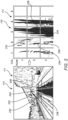
- the pre-processed image 111 is next patch segmented, as illustrated in FIG. 2 .
- the image 111 and specifically the road surface depicted in the image 111, is divided into discrete regions via lateral (i.e., horizontal) lines 230 and longitudinal (i.e., vertical) lines 232, forming an m x n patch matrix 234 over the road surface.
- lateral lines 230 are substantially parallel, while the longitudinal lines 232 generally converge with distance from the camera.
- a 5 x 3 patch matrix 234 is illustrated and used, although it will be readily apparent to those of ordinary skill in the art that other numbers of patches 236 (columns and rows) may be used equally.
- columns 2 and 4 are configured to substantially correspond to and encompass the wheel tracks 238 depicted, while column 3 is configured to be substantially between the wheel tracks 238 depicted.
- column 1 is adjacent to the oncoming traffic lanes and column 5 is adjacent to the shoulder. It is important, although not absolutely required, that enough rows are utilized to provide a temporal dimension to the generated RFE, with the image 111 depicting and sufficiently analyzing enough road surface that the vehicle has yet to encounter.
- each patch 236 covering 1-2 m laterally and 10-15 m longitudinally, for example - providing adequate and variable road surface coverage and the aforementioned temporal dimension.
- Different camera fields-of-view, resolutions, and calibrations could dictate/allow for other dimensions to be utilized equally.
- the 5 x 3 patch matrix 234 provides 30-50 m of RFE distance.
- the image 111 may be a stitched image obtained from multiple cameras without substantially altering the processing steps described herein.
- the pre-processed, patch segmented image 111 is next perspective transformed, as again illustrated in FIG. 2 .
- this perspective transformation step 116 the image 111, and specifically the road surface depicted in the image 111, already divided into discrete regions via lateral (i.e., horizontal) lines 230 and longitudinal (i.e., vertical) lines 232, forming an m x n patch matrix 234 over the road surface, is converted into an overhead, BEV image 111.
- the image 111 is originally obtained from a forward-looking camera, it is a perspective image 111 with a vanishing point. Accordingly, the lateral lines 230 are substantially parallel, while the longitudinal lines 232 generally converge with distance from the camera.
- both the lateral lines 230 and the longitudinal lines 232 are substantially parallel, and perpendicular to one another. This promotes processing efficiency and equalizes pixel contributions.
- a 5 x 3 patch matrix 234 is illustrated and used, although it will be readily apparent to those of ordinary skill in the art that other numbers of patches 236 (columns and rows) may be used equally.
- each patch 236 covering 1-2 m laterally and 10-15 m longitudinally, for example - providing adequate and variable road surface coverage and the aforementioned temporal dimension. Different camera fields-of-view, resolutions, and calibrations could dictate/allow for other dimensions to be utilized equally.
- the 5 x 3 patch matrix 234 provides 30-50 m of RFE distance.
- the BEV transformed image 111 may be a stitched image obtained from multiple cameras without substantially altering the processing steps described herein.
- the above patch segmentation 114 may be applied before or after the BEV transformation 116, provided the same image hallmarks (e.g., the wheel tracks 238) are used.
- the pre-processed, patch segmented, BEV transformed image 111 is next patch quantized.
- a probability score is determined for each patch 236 and then each probability score is assigned one of a predetermined number of corresponding levels.
- the probability score is determined for each patch 236 by extracting a plurality (e.g., 26) color and textural features from that patch 236.
- Exemplary color and textural features include, but are not limited to, the mean and standard deviation of pixel intensities in the [R,G,B,H,S,V] planes with and without contrast enhancement and the mean and standard deviation of the histogram or oriented gradients (HOG) features extracted using a [16x16] block size, for example.
- This probability score determination outputs a probability score (p_i) corresponding to the per-patch composition.
- a low probability score indicates a "dry" patch 236, while a high probability score indicates a "snowy" patch 236.
- Many methodologies could be used to generate these probability scores, such as a ML methodology, a logistic regression methodology, a NN methodology, etc.
- the probability scores are each assigned one of a predetermined number of corresponding levels (e.g., 4) based on thresholds ⁇ 0,th1,th2,th3,1 ⁇ that can be empirically or experimentally determined.
- a lower probability score means a less snowy and drier patch in this construct.
- These patch quantization thresholds are empirically determined to maximize patch classification accuracy. Averages may also be computed for groups of patches, such as each column. A weighted average, mean, median, or the like could also be used to provide temporal distribution information, enabled by the use of multiple rows. It will be readily apparent to those of ordinary skill in the art that other classification schemes may be used equally.
- a classification step 120 ( FIG. 1 ), such as a rule-based classification step, for example, is utilized in which a uniform friction value, the RFE, is formulated for the entire road surface depicted in the pre-processed, patch segmented, BEV transformed, patch quantized image 111.
- a uniform friction value the RFE
- RFEi, 0 (i.e., low MLTE) otherwise.
- This road friction information is used in the form of a "map" along with other road user behavior predictions to effectively plan ego vehicle maneuvers.
- Several things must be taken into consideration.
- First, other vehicles are likely to adapt to the ego vehicle trajectory by following wheel tracks on a wet or snowy road.
- Second, other raid users that do not have access to the road friction information may engage in less-controlled maneuvers. For example, another vehicle in the vicinity of the ego vehicle may slip, a pedestrian may cross a slippery road more slowly and/or slip, etc. The ego vehicle must plan its maneuvers accordingly.
- Road friction and intention in a future time frame may thus be used as inputs for vehicle maneuver decision-making in terms of time to collision and safety distance.
- Fifth, a limiting condition may arise when vision sensors and/or RFE and/or intention prediction fail due to adverse weather conditions, etc., and manual driving interventions are warranted.
- the algorithm of the present disclosure includes four primary steps: (1) friction map generation; (2) object detection and tracking; (3) friction map-enhanced object motion estimation and intention prediction; and (4) DA/AD decision-making and control.
- the enhancement step is physics-based, in that it considers kinematics and dynamics, maneuver-based, in that it includes object maneuver intention prediction enhanced by friction information, and interaction awareness-based, in that interdependencies between road users and the ego vehicle are considered again enhanced by friction information.
- RFEs and road user intentions are fused, providing detours with time-to-travel changes.
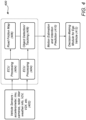
- the road friction information-road user intention fusion method 300 of the present disclosure includes leveraging the various vehicle sensor systems 302, such as accelerometers, inertial measurement units (IMUs), cameras, radar, lidar, aggregated weather data (AWD), vehicle-to-vehicle (V2V) data, vehicle-to-infrastructure (V2X) data, and the like, all of which communicate with the ego vehicle ECU processing systems 304.
- vehicle sensor systems 302 such as accelerometers, inertial measurement units (IMUs), cameras, radar, lidar, aggregated weather data (AWD), vehicle-to-vehicle (V2V) data, vehicle-to-infrastructure (V2X) data, and the like, all of which communicate with the ego vehicle ECU processing systems 304.
- the various vehicle sensor data may be processed by a friction estimation/prediction module 306 to generate the friction map, fr.map(x,y), that highlights potentially slippery areas surrounding the ego vehicle at time t, via a variety of conventional and novel methodologies.
- the various vehicle sensor data may be processed by a real time object tracker 308 to determine both an object intention at time t, int_i(x,y,t), and an object trajectory at time t, traj_i(x,y,t), via a variety of conventional and novel methodologies.
- This friction map and these object intentions and trajectories feed an intention prediction module 310, that determines a predicted object intention at later time t', int_i'(x',y',t'), and a predicted object trajectory at later time t', traj_i'(x',y',t'), based on a risk, P, and a confidence metric.
- the friction map is also used to enhance motion planning for the ego vehicle at time t.
- the friction map informs both ego vehicle maneuver control and ego vehicle maneuver planning with respect to other road users, which are also affected by the friction map. All of this into a decision-making module 312 for the ego vehicle, which receives flags corresponding to vehicle sensor fidelity, etc.
- the decision-making module 312 ultimately informs operation of the various vehicle control systems 314 at time t+ ⁇ t ⁇ t', such as steering systems 316, braking systems 318, and acceleration systems 320, in any of a manual mode, a DA mode, or an AD mode.
- the object intention reflects the predicted intention of other road users at the applicable time, whereas the object trajectory reflects the predicted trajectory of other road users at the applicable time.
- the risk, P reflects the probability that another road user is "safe” versus "risky,” indicating an expected propensity to engage in significant behavior that must be accounted for.
- the confidence reflects a general certainty associated with the data utilized. For example, if the friction map is available to all parties, such that slippery conditions are known to all, then confidence is increased. If the friction map is available only to the ego vehicle, then confidence is decreased and other road users may be expected to act more erratically.
- the friction map, fr.map(x,y) may be translated to a general riskiness grid, r(x,y), allowing risk for slippage and other erratic behavior to be accounted for, taking into account non-RFE risks as well as RFE risks (e.g., stationary potholes, debris in a road, and the like).
- Confidence in r(x,y) generally degrades with distance from the ego vehicle. For each object, r(x,y) + int_i(x,y,t) and traj_i(x,y,t) gives int_i'(x',y',t') and traj_i'(x',y',t').
- traj_i'(x',y',t') constrains x'y' detours associated with the risky region.
- the time-to-travel is predicted, t' in the traj_i'(x',y',t') change.
- the road friction information-road user intention fusion system 400 of the present disclosure includes the various vehicle sensor systems 402, such as accelerometers, IMUs, cameras, radar, lidar, AWD, V2V data, V2X data, and the like, all of which communicate with the ego vehicle ECU processing systems 404.
- the various vehicle sensor data may be processed by a friction estimation/prediction module 406 to generate the friction map, fr.map(x,y), that highlights potentially slippery areas surrounding the ego vehicle at time t, via a variety of conventional and novel methodologies.
- the various vehicle sensor data may be processed by a real time object tracker 408 to determine both an object intention at time t, int_i(x,y,t), and an object trajectory at time t, traj_i(x,y,t), via a variety of conventional and novel methodologies.
- This friction map and these object intentions and trajectories feed an intention prediction module 410, that determines a predicted object intention at later time t', int_i'(x',y',t'), and a predicted object trajectory at later time t', traj_i'(x',y',t'), based on a risk, P, and a confidence metric.
- the friction map is also used to enhance motion planning for the ego vehicle at time t.
- the friction map informs both ego vehicle maneuver control and ego vehicle maneuver planning with respect to other road users, which are also affected by the friction map. All of this into a decision-making module 412 for the ego vehicle, which receives flags corresponding to vehicle sensor fidelity, etc.
- the decision-making module 412 ultimately informs operation of the various vehicle control systems 414 at time t+ ⁇ t ⁇ t' in any of a manual mode, a DA mode, or an AD mode.
- the object intention reflects the predicted intention of other road users at the applicable time
- the object trajectory reflects the predicted trajectory of other road users at the applicable time.
- the risk, P reflects the probability that another road user is "safe” versus "risky,” indicating an expected propensity to engage in significant behavior that must be accounted for.
- the confidence reflects a general certainty associated with the data utilized. For example, if the friction map is available to all parties, such that slippery conditions are known to all, then confidence is increased. If the friction map is available only to the ego vehicle, then confidence is decreased and other road users may be expected to act more erratically.
- the friction map, fr.map(x,y) may be translated to a general riskiness grid, r(x,y), allowing risk for slippage and other erratic behavior to be accounted for, taking into account non-RFE risks as well as RFE risks (e.g., stationary potholes, debris in a road, and the like).
- Confidence in r(x,y) generally degrades with distance from the ego vehicle. For each object, r(x,y) + int_i(x,y,t) and traj_i(x,y,t) gives int_i'(x',y',t') and traj_i'(x',y',t').
- traj_i'(x',y',t') constrains x'y' detours associated with the risky region.
- the time-to-travel is predicted, t' in the traj_i'(x',y',t') change.
- FIG. 5 is a network diagram of a cloud-based system 500 for implementing various cloud-based services of the present disclosure.
- the cloud-based system 500 includes one or more cloud nodes (CNs) 502 communicatively coupled to the Internet 504 or the like.
- the cloud nodes 502 may be implemented as a server 600 (as illustrated in FIG. 6 ) or the like and can be geographically diverse from one another, such as located at various data centers around the country or globe.
- the cloud-based system 500 can include one or more central authority (CA) nodes 506, which similarly can be implemented as the server 600 and be connected to the CNs 502.
- CA central authority
- the cloud-based system 500 can connect to a regional office 510, headquarters 520, various employee's homes 530, laptops/desktops 540, and mobile devices 550, each of which can be communicatively coupled to one of the CNs 502. These locations 510, 520, and 530, and devices 540 and 550 are shown for illustrative purposes, and those skilled in the art will recognize there are various access scenarios to the cloud-based system 500, all of which are contemplated herein.
- the devices 540 and 550 can be so-called road warriors, i.e., users off-site, on-the-road, etc.
- the cloud-based system 500 can be a private cloud, a public cloud, a combination of a private cloud and a public cloud (hybrid cloud), or the like.
- the cloud-based system 500 can provide any functionality through services, such as software-as-a-service (SaaS), platform-as-a-service, infrastructure-as-a-service, securityas-a-service, Virtual Network Functions (VNFs) in a Network Functions Virtualization (NFV) Infrastructure (NFVI), etc. to the locations 510, 520, and 530 and devices 540 and 550.
- SaaS software-as-a-service
- platform-as-a-service infrastructure-as-a-service
- securityas-a-service Virtual Network Functions (VNFs) in a Network Functions Virtualization (NFVI), etc.
- VNFs Virtual Network Functions Virtualization
- NFVI Network Functions Virtualization
- the Information Technology (IT) deployment model included enterprise resources and applications stored within an enterprise network (i.e., physical devices), behind a firewall, accessible by employees on site or remote via Virtual Private Networks (VPNs), etc.
- the cloud-based system 500 is replacing the conventional deployment model
- Cloud computing systems and methods abstract away physical servers, storage, networking, etc., and instead offer these as on-demand and elastic resources.
- the National Institute of Standards and Technology (NIST) provides a concise and specific definition which states cloud computing is a model for enabling convenient, on-demand network access to a shared pool of configurable computing resources (e.g., networks, servers, storage, applications, and services) that can be rapidly provisioned and released with minimal management effort or service provider interaction.
- Cloud computing differs from the classic client-server model by providing applications from a server that are executed and managed by a client's web browser or the like, with no installed client version of an application required.
- the cloud-based system 500 is illustrated herein as one example embodiment of a cloud-based system, and those of ordinary skill in the art will recognize the systems and methods described herein are not necessarily limited thereby.
- FIG. 6 is a block diagram of a server 600, which may be used in the cloud-based system 500 ( FIG. 5 ), in other systems, or stand-alone.
- the CNs 502 ( FIG. 5 ) and the central authority nodes 506 ( FIG. 5 ) may be formed as one or more of the servers 600.
- the server 600 may be a digital computer that, in terms of hardware architecture, generally includes a processor 602, input/output (I/O) interfaces 604, a network interface 606, a data store 608, and memory 610. It should be appreciated by those of ordinary skill in the art that FIG.
- the server 600 depicts the server 600 in an oversimplified manner, and a practical embodiment may include additional components and suitably configured processing logic to support known or conventional operating features that are not described in detail herein.
- the components (602, 604, 606, 608, and 610) are communicatively coupled via a local interface 612.
- the local interface 612 may be, for example, but is not limited to, one or more buses or other wired or wireless connections, as is known in the art.
- the local interface 612 may have additional elements, which are omitted for simplicity, such as controllers, buffers (caches), drivers, repeaters, and receivers, among many others, to enable communications. Further, the local interface 612 may include address, control, and/or data connections to enable appropriate communications among the aforementioned components.
- the processor 602 is a hardware device for executing software instructions.
- the processor 602 may be any custom made or commercially available processor, a central processing unit (CPU), an auxiliary processor among several processors associated with the server 600, a semiconductor-based microprocessor (in the form of a microchip or chipset), or generally any device for executing software instructions.
- the processor 602 is configured to execute software stored within the memory 610, to communicate data to and from the memory 610, and to generally control operations of the server 600 pursuant to the software instructions.
- the I/O interfaces 604 may be used to receive user input from and/or for providing system output to one or more devices or components.
- the network interface 606 may be used to enable the server 600 to communicate on a network, such as the Internet 504 ( FIG. 5 ).
- the network interface 606 may include, for example, an Ethernet card or adapter (e.g., 10BaseT, Fast Ethernet, Gigabit Ethernet, or 10GbE) or a Wireless Local Area Network (WLAN) card or adapter (e.g., 802.11a/b/g/n/ac).
- the network interface 606 may include address, control, and/or data connections to enable appropriate communications on the network.
- a data store 608 may be used to store data.
- the data store 608 may include any of volatile memory elements (e.g., random access memory (RAM, such as DRAM, SRAM, SDRAM, and the like)), nonvolatile memory elements (e.g., ROM, hard drive, tape, CDROM, and the like), and combinations thereof. Moreover, the data store 608 may incorporate electronic, magnetic, optical, and/or other types of storage media. In one example, the data store 608 may be located internal to the server 600, such as, for example, an internal hard drive connected to the local interface 612 in the server 600. Additionally, in another embodiment, the data store 608 may be located external to the server 600 such as, for example, an external hard drive connected to the I/O interfaces 604 (e.g., a SCSI or USB connection). In a further embodiment, the data store 608 may be connected to the server 600 through a network, such as, for example, a network-attached file server.
- RAM random access memory
- SRAM static random access memory
- SDRAM Secure Digital RAM
- the memory 610 may include any of volatile memory elements (e.g., random access memory (RAM, such as DRAM, SRAM, SDRAM, etc.)), nonvolatile memory elements (e.g., ROM, hard drive, tape, CDROM, etc.), and combinations thereof. Moreover, the memory 610 may incorporate electronic, magnetic, optical, and/or other types of storage media. Note that the memory 610 may have a distributed architecture, where various components are situated remotely from one another but can be accessed by the processor 602.
- the software in memory 610 may include one or more software programs, each of which includes an ordered listing of executable instructions for implementing logical functions.
- the software in the memory 610 includes a suitable operating system (O/S) 614 and one or more programs 616.
- O/S operating system
- the operating system 614 essentially controls the execution of other computer programs, such as the one or more programs 616, and provides scheduling, input-output control, file and data management, memory management, and communication control and related services.
- the one or more programs 616 may be configured to implement the various processes, algorithms, methods, techniques, etc. described herein.
- processors such as microprocessors; central processing units (CPUs); digital signal processors (DSPs); customized processors such as network processors (NPs) or network processing units (NPUs), graphics processing units (GPUs), or the like; field programmable gate arrays (FPGAs); and the like along with unique stored program instructions (including both software and firmware) for control thereof to implement, in conjunction with certain non-processor circuits, some, most, or all of the functions of the methods and/or systems described herein.
- processors such as microprocessors; central processing units (CPUs); digital signal processors (DSPs); customized processors such as network processors (NPs) or network processing units (NPUs), graphics processing units (GPUs), or the like; field programmable gate arrays (FPGAs); and the like along with unique stored program instructions (including both software and firmware) for control thereof to implement, in conjunction with certain non-processor circuits, some, most, or all of the functions of the methods and/or systems described herein.
- processors
- circuitry configured or adapted to
- logic configured or adapted to
- some embodiments may include a non-transitory computer-readable storage medium having computer-readable code stored thereon for programming a computer, server, appliance, device, processor, circuit, etc. each of which may include a processor to perform functions as described and claimed herein.
- Examples of such computer-readable storage mediums include, but are not limited to, a hard disk, an optical storage device, a magnetic storage device, a Read-Only Memory (ROM), a Programmable Read-Only Memory (PROM), an Erasable Programmable Read-Only Memory (EPROM), an Electrically Erasable Programmable Read-Only Memory (EEPROM), flash memory, and the like.
- software can include instructions executable by a processor or device (e.g., any type of programmable circuitry or logic) that, in response to such execution, cause a processor or the device to perform a set of operations, steps, methods, processes, algorithms, functions, techniques, etc. as described herein for the various embodiments.
- a processor or device e.g., any type of programmable circuitry or logic
- FIG. 7 is a block diagram of a user device 700, which may be used in the cloud-based system 500 ( FIG. 5 ), as part of a network, or stand-alone.
- the user device 700 can be a vehicle, a smartphone, a tablet, a smartwatch, an Internet of Things (IoT) device, a laptop, a virtual reality (VR) headset, etc.
- the user device 700 can be a digital device that, in terms of hardware architecture, generally includes a processor 702, I/O interfaces 704, a radio 706, a data store 708, and memory 710. It should be appreciated by those of ordinary skill in the art that FIG.
- the local interface 712 can be, for example, but is not limited to, one or more buses or other wired or wireless connections, as is known in the art.
- the local interface 712 can have additional elements, which are omitted for simplicity, such as controllers, buffers (caches), drivers, repeaters, and receivers, among many others, to enable communications. Further, the local interface 712 may include address, control, and/or data connections to enable appropriate communications among the aforementioned components.
- the processor 702 is a hardware device for executing software instructions.
- the processor 702 can be any custom made or commercially available processor, a CPU, an auxiliary processor among several processors associated with the user device 700, a semiconductor-based microprocessor (in the form of a microchip or chipset), or generally any device for executing software instructions.
- the processor 702 is configured to execute software stored within the memory 710, to communicate data to and from the memory 710, and to generally control operations of the user device 700 pursuant to the software instructions.
- the processor 702 may include a mobile optimized processor such as optimized for power consumption and mobile applications.
- the I/O interfaces 704 can be used to receive user input from and/or for providing system output.
- System output can be provided via a display device such as a liquid crystal display (LCD), touch screen, and the like.
- LCD liquid crystal display
- the radio 706 enables wireless communication to an external access device or network. Any number of suitable wireless data communication protocols, techniques, or methodologies can be supported by the radio 706, including any protocols for wireless communication.
- the data store 708 may be used to store data.
- the data store 708 may include any of volatile memory elements (e.g., random access memory (RAM, such as DRAM, SRAM, SDRAM, and the like)), nonvolatile memory elements (e.g., ROM, hard drive, tape, CDROM, and the like), and combinations thereof.
- RAM random access memory
- nonvolatile memory elements e.g., ROM, hard drive, tape, CDROM, and the like
- the data store 708 may incorporate electronic, magnetic, optical, and/or other types of storage media.
- the memory 710 may include any of volatile memory elements (e.g., random access memory (RAM, such as DRAM, SRAM, SDRAM, etc.)), nonvolatile memory elements (e.g., ROM, hard drive, etc.), and combinations thereof. Moreover, the memory 710 may incorporate electronic, magnetic, optical, and/or other types of storage media. Note that the memory 710 may have a distributed architecture, where various components are situated remotely from one another, but can be accessed by the processor 702.
- the software in memory 710 can include one or more software programs, each of which includes an ordered listing of executable instructions for implementing logical functions. In the example of FIG. 7 , the software in the memory 710 includes a suitable operating system 714 and programs 716.
- the operating system 714 essentially controls the execution of other computer programs and provides scheduling, input-output control, file and data management, memory management, and communication control and related services.
- the programs 716 may include various applications, add-ons, etc. configured to provide end user functionality with the user device 700.
- example programs 716 may include, but not limited to, a web browser, social networking applications, streaming media applications, games, mapping and location applications, electronic mail applications, financial applications, and the like.
- the end-user typically uses one or more of the programs 716 along with a network, such as the cloud-based system 500 ( FIG. 5 ).
- the present disclosure fuses road friction information with other road user intentions to enhance safety constraint calculations and ego vehicle control and maneuvers, as implemented by DA and AD systems, thereby providing more adaptive, safer, and smoother ego vehicle control and maneuvers, in terms of steering, braking, and acceleration.
- the input to the methods and system of the present disclosure include predictive local road friction information, such as a RFE "map", and predictive motion trajectories of other road users, based on perception (e.g., vision) sensor-based methodologies related to object speed, trajectory, travel time, motion probabilities, slippage probabilities, etc.
- the output from the methods and system is a vehicle maneuver control signal with enhanced safety constraints.
- FIG. 8 is a schematic diagram of an illustrative friction map 800 and risk map 802 generated by the fusion systems and methods of the present disclosure, highlighting an associated vehicle trajectory modification function.
- the friction map 800 generated by any conventional or novel RFE methodology, shows the ego vehicle 810 and the surrounding slippery (or risky) regions 812 and dry (or non-risky) regions 814 around the vehicle.
- This friction map 800 may be fused with other friction maps and/or shared with other vehicles and/or road users, increasing the confidence in all decisions made.
- the friction map 800 is fused with objects around the ego vehicle 810 that are being tracked.
- a pedestrian 820 is seen crossing the road in front of the ego vehicle 810.
- the trajectory of the pedestrian 820 is predicted, taking into account the friction map 810, which affects both the handling of the ego vehicle 810 and the behavior of the pedestrian 820.
- the resulting overlay creates the risk map 802 which shows areas of high and low risk encountered by the vehicle based on the trajectories of the detected objects and the known road friction conditions.
- This risk map 802 is predictive and shows high-risk regions 822 and low-risk regions 824.
- FIG. 8 shows that the pedestrian 820, normally walking a straight route through the crosswalk at a brisk pace, is predicted to encounter a slippery (i.e., low friction) portion 812 of the friction map 800, corresponding to a risky portion 822 of the risk map 802.
- the stopped ego vehicle 810 in an AD mode, will wait for a longer time-to-travel before beginning to accelerate and turning the corner.
- steering and braking could also be modified, as well as general route planning. All adjustments are made to modify ego vehicle path and time.
Landscapes
- Engineering & Computer Science (AREA)
- Physics & Mathematics (AREA)
- Automation & Control Theory (AREA)
- General Physics & Mathematics (AREA)
- Transportation (AREA)
- Mechanical Engineering (AREA)
- Theoretical Computer Science (AREA)
- Software Systems (AREA)
- Mathematical Physics (AREA)
- Radar, Positioning & Navigation (AREA)
- Remote Sensing (AREA)
- Aviation & Aerospace Engineering (AREA)
- Medical Informatics (AREA)
- Evolutionary Computation (AREA)
- Data Mining & Analysis (AREA)
- Computing Systems (AREA)
- General Engineering & Computer Science (AREA)
- Computer Vision & Pattern Recognition (AREA)
- Artificial Intelligence (AREA)
- Multimedia (AREA)
- Human Computer Interaction (AREA)
- Traffic Control Systems (AREA)
Claims (14)
- Verfahren, umfassend:Empfangen von Straßenreibungsinformationen, die Straßenreibungsschätzungen für eine Mehrzahl von Regionen, die ein Fahrzeug umgeben, angeben (810);Bestimmen einer vorhergesagten Bewegungsbahn für ein Objekt (820) innerhalb der Mehrzahl von Regionen, die das Fahrzeug umgeben; undModifizieren des Betriebs des Fahrzeugs basierend auf der vorhergesagten Bewegungsbahn für das Objekt;dadurch gekennzeichnet, dassdie vorhergesagte Bewegungsbahn für das Objekt teilweise basierend auf den Straßenreibungsschätzungen für die Mehrzahl der das Fahrzeug umgebenden Regionen, der Verfügbarkeit der Straßenreibungsschätzungen für das Objekt und einer Wahrscheinlichkeit, dass das Objekt ein sicheres oder riskantes Verhalten an den Tag legt, bestimmt wird.
- Verfahren nach Anspruch 1, wobei das Empfangen der Straßenreibungsinformationen das Verwenden der Straßenreibungsschätzungen für die Mehrzahl der das Fahrzeug umgebenden Regionen umfasst, um eine Straßenreibungskarte der Mehrzahl der das Fahrzeug umgebenden Regionen zu erzeugen.
- Verfahren nach Anspruch 1, wobei das Bestimmen der vorhergesagten Bewegungsbahn für das Objekt innerhalb der Mehrzahl der das Fahrzeug umgebenden Regionen das Erkennen des Objekts mit einem Wahrnehmungssensor (402) des Fahrzeugs und das Bestimmen der vorhergesagten Bewegungsbahn für das Objekt innerhalb der Mehrzahl der das Fahrzeug umgebenden Regionen unter Verwendung eines maschinellen Lernalgorithmus umfasst.
- Verfahren nach Anspruch 2, wobei das Bestimmen der vorhergesagten Bewegungsbahn für ein Objekt innerhalb der Mehrzahl von das Fahrzeug umgebenden Regionen das Verschmelzen der Straßenreibungskarte mit einer Objektkarte der Mehrzahl von das Fahrzeug umgebenden Regionen umfasst, um eine Risikokarte der Mehrzahl von das Fahrzeug umgebenden Regionen zu bilden.
- Verfahren nach Anspruch 4, wobei die vorhergesagte Bewegungsbahn für das Objekt zum Teil basierend auf der Risikokarte für die Mehrzahl der das Fahrzeug umgebenden Regionen bestimmt wird.
- Verfahren nach Anspruch 1, wobei das Modifizieren des Betriebs des Fahrzeugs basierend auf der vorhergesagten Bewegungsbahn für das Objekt das Modifizieren einer oder mehrerer der Funktionen Lenken, Bremsen, Beschleunigen und Fahrzeit des Fahrzeugs umfasst.
- Nichtflüchtiges computerlesbares Medium, das Anweisungen zur Fahrzeugsteuerung umfasst, die in einem Speicher gespeichert sind und von einem Prozessor ausgeführt werden, um die Schritte durchzuführen, die umfassen:Empfangen von Straßenreibungsinformationen, die Straßenreibungsschätzungen für eine Mehrzahl von Regionen, die ein Fahrzeug umgeben, angeben (810);Bestimmen einer vorhergesagten Bewegungsbahn für ein Objekt (820) innerhalb der Mehrzahl von Regionen, die das Fahrzeug umgeben; undModifizieren des Betriebs des Fahrzeugs basierend auf der vorhergesagten Bewegungsbahn für das Objekt;dadurch gekennzeichnet, dassdie vorhergesagte Bewegungsbahn für das Objekt teilweise basierend auf den Straßenreibungsschätzungen für die Mehrzahl der das Fahrzeug umgebenden Regionen, der Verfügbarkeit der Straßenreibungsschätzungen für das Objekt und einer Wahrscheinlichkeit, dass das Objekt ein sicheres oder riskantes Verhalten an den Tag legt, bestimmt wird.
- Nichtflüchtiges, computerlesbares Medium nach Anspruch 7, wobei das Empfangen der Straßenreibungsinformationen das Verwenden der Straßenreibungsschätzungen für die Mehrzahl der das Fahrzeug umgebenden Regionen umfasst, um eine Straßenreibungskarte der Mehrzahl der das Fahrzeug umgebenden Regionen zu erzeugen.
- Nichtflüchtiges, computerlesbares Medium nach Anspruch 7, wobei das Bestimmen der vorhergesagten Bewegungsbahn für ein Objekt innerhalb der Mehrzahl von das Fahrzeug umgebenden Regionen das Verschmelzen der Straßenreibungskarte mit einer Objektkarte der Mehrzahl von das Fahrzeug umgebenden Regionen umfasst, um eine Risikokarte der Mehrzahl von das Fahrzeug umgebenden Regionen zu bilden.
- Nichtflüchtiges, computerlesbares Medium nach Anspruch 9, wobei die vorhergesagte Bewegungsbahn für das Objekt zum Teil basierend auf der Risikokarte für die Mehrzahl der das Fahrzeug umgebenden Regionen bestimmt wird.
- System, umfassend:ein Reibungsschätzungs-/Vorhersagemodul (306, 406), das betreibbar ist, um Straßenreibungsinformationen zu empfangen, die Straßenreibungsschätzungen für eine Mehrzahl von ein Fahrzeug (810) umgebenden Regionen angeben;ein Objekterkennungs- und -verfolgungsmodul, das betreibbar ist, um eine vorhergesagte Bewegungsbahn für ein Objekt (820) innerhalb der Mehrzahl von das Fahrzeug umgebenden Regionen zu bestimmen; undein Entscheidungsfindungsmodul (312, 412), das zum Modifizieren des Betriebs des Fahrzeugs basierend auf der vorhergesagten Trajektorie für das Objekt betreibbar ist;dadurch gekennzeichnet, dassdie vorhergesagte Bewegungsbahn für das Objekt teilweise basierend auf den Straßenreibungsschätzungen für die Mehrzahl der das Fahrzeug umgebenden Regionen unter Verwendung eines Moduls zur Bewegungsschätzung undAbsichtsvorhersage, der Verfügbarkeit der Straßenreibungsschätzungen für das Objekt und einer Wahrscheinlichkeit, dass das Objekt ein sicheres oder riskantes Verhalten an den Tag legt, bestimmt wird.
- System nach Anspruch 11, wobei das Empfangen der Straßenreibungsinformationen das Verwenden der Straßenreibungsschätzungen für die Mehrzahl der das Fahrzeug umgebenden Regionen umfasst, um eine Straßenreibungskarte der Mehrzahl der das Fahrzeug umgebenden Regionen zu erzeugen.
- System nach Anspruch 11, wobei das Bestimmen der vorhergesagten Bewegungsbahn für das Objekt innerhalb der Mehrzahl der das Fahrzeug umgebenden Regionen das Erkennen des Objekts mit einem Wahrnehmungssensor des Fahrzeugs und das Bestimmen der vorhergesagten Bewegungsbahn für das Objekt innerhalb der Mehrzahl der das Fahrzeug umgebenden Regionen unter Verwendung eines maschinellen Lernalgorithmus umfasst.
- System nach Anspruch 12, wobei das Bestimmen der vorhergesagten Bewegungsbahn für ein Objekt innerhalb der Mehrzahl von das Fahrzeug umgebenden Regionen das Verschmelzen der Straßenreibungskarte mit einer Objektkarte der Mehrzahl von das Fahrzeug umgebenden Regionen umfasst, um eine Risikokarte der Mehrzahl von das Fahrzeug umgebenden Regionen zu bilden.
Applications Claiming Priority (1)
| Application Number | Priority Date | Filing Date | Title |
|---|---|---|---|
| US17/079,892 US11866051B2 (en) | 2020-10-26 | 2020-10-26 | Systems and methods for fusing road friction to enhance vehicle maneuvering |
Publications (2)
| Publication Number | Publication Date |
|---|---|
| EP3989031A1 EP3989031A1 (de) | 2022-04-27 |
| EP3989031B1 true EP3989031B1 (de) | 2023-07-05 |
Family
ID=78463366
Family Applications (1)
| Application Number | Title | Priority Date | Filing Date |
|---|---|---|---|
| EP21202092.9A Active EP3989031B1 (de) | 2020-10-26 | 2021-10-12 | Systeme und verfahren zur fusion von strassenreibungdaten zur verbesserung des manövrierens von fahrzeugen |
Country Status (2)
| Country | Link |
|---|---|
| US (1) | US11866051B2 (de) |
| EP (1) | EP3989031B1 (de) |
Families Citing this family (5)
| Publication number | Priority date | Publication date | Assignee | Title |
|---|---|---|---|---|
| US12467765B2 (en) | 2023-05-16 | 2025-11-11 | GM Global Technology Operations LLC | System for fusing two or more versions of map data |
| DE102023114168A1 (de) | 2023-05-30 | 2024-12-05 | Bayerische Motoren Werke Aktiengesellschaft | Verfahren zum Ermitteln einer eine Reibung zwischen einem Fahrzeugrad und einem Untergrund charakterisierenden Größe sowie Fahrzeug |
| US12447997B2 (en) * | 2023-08-03 | 2025-10-21 | GM Global Technology Operations LLC | Merging lane line maps for a vehicle |
| CN117726883B (zh) * | 2024-02-07 | 2024-05-24 | 深圳前海中电慧安科技有限公司 | 一种区域人口分析方法、装置、设备和存储介质 |
| DE102024125948A1 (de) | 2024-09-10 | 2026-03-12 | Audi Aktiengesellschaft | Verfahren zum Betreiben einer Fahrerassistenzeinrichtung für ein Kraftfahrzeug, entsprechende Fahrerassistenzeinrichtung für ein Kraftfahrzeug sowie Computerprogrammprodukt |
Family Cites Families (13)
| Publication number | Priority date | Publication date | Assignee | Title |
|---|---|---|---|---|
| JP3319984B2 (ja) | 1997-07-09 | 2002-09-03 | 本田技研工業株式会社 | 車両の衝突回避装置 |
| DE102008005305B4 (de) | 2008-01-21 | 2025-04-30 | Bayerische Motoren Werke Aktiengesellschaft | Verfahren zur Beeinflussung der Bewegung eines Fahrzeugs |
| DE102009047333A1 (de) | 2009-12-01 | 2011-06-09 | Robert Bosch Gmbh | Verfahren zur Bestimmung einer Trajektorie eines Fahrzeugs |
| US9514647B2 (en) | 2010-10-20 | 2016-12-06 | GM Global Technology Operations LLC | Optimal acceleration profile for enhanced collision avoidance |
| US9475500B2 (en) * | 2014-11-12 | 2016-10-25 | GM Global Technology Operations LLC | Use of participative sensing systems to enable enhanced road friction estimation |
| US10752225B2 (en) | 2017-02-08 | 2020-08-25 | Ford Global Technologies, Llc | Determining friction data of a target vehicle |
| DE102017209258A1 (de) * | 2017-06-01 | 2018-12-06 | Robert Bosch Gmbh | Verfahren und Vorrichtung zum Überwachen einer Fahrstabilität eines Fahrzeugs auf einer vorausliegenden Fahrroute |
| US10759433B2 (en) | 2017-10-16 | 2020-09-01 | Ford Global Technologies, Llc | Vehicle escape |
| DE102018217791B4 (de) | 2018-10-17 | 2025-07-17 | Zf Friedrichshafen Ag | Vorrichtung und Verfahren zum Anpassen eines Abstands zwischen einem Ego-Fahrzeug und einem vorausfahrenden Fahrzeug |
| DK180407B1 (en) * | 2019-01-28 | 2021-04-21 | Motional Ad Llc | Detecting road anomalies |
| US11254315B2 (en) * | 2019-03-12 | 2022-02-22 | Mitsubishi Electric Research Laboratories, Inc. | Friction adaptive vehicle control |
| EP4022591A4 (de) * | 2019-08-29 | 2022-10-19 | Derq Inc. | Verbesserte bordanlage |
| US11334797B2 (en) * | 2019-10-28 | 2022-05-17 | Denso International America, Inc. | System and method for predicting and interpreting driving behavior |
-
2020
- 2020-10-26 US US17/079,892 patent/US11866051B2/en active Active
-
2021
- 2021-10-12 EP EP21202092.9A patent/EP3989031B1/de active Active
Also Published As
| Publication number | Publication date |
|---|---|
| US20220126833A1 (en) | 2022-04-28 |
| EP3989031A1 (de) | 2022-04-27 |
| US11866051B2 (en) | 2024-01-09 |
Similar Documents
| Publication | Publication Date | Title |
|---|---|---|
| EP3989031B1 (de) | Systeme und verfahren zur fusion von strassenreibungdaten zur verbesserung des manövrierens von fahrzeugen | |
| US10769456B2 (en) | Systems and methods for near-crash determination | |
| Gruyer et al. | Perception, information processing and modeling: Critical stages for autonomous driving applications | |
| CN108388834B (zh) | 利用循环神经网络和级联特征映射的对象检测 | |
| EP4152204A1 (de) | Fahrspurliniendetektionsverfahren und zugehörige vorrichtung | |
| US20230005169A1 (en) | Lidar point selection using image segmentation | |
| JP2023533507A (ja) | 人間の運転振る舞いに基づいて軌跡プランナを最適化するシステム及び方法 | |
| US20260022942A1 (en) | Systems and methods for deriving path-prior data using collected trajectories | |
| EP4388509B1 (de) | Erkannte objektpfadvorhersage für sichtbasierte systeme | |
| EP4081937A1 (de) | Detektion und behebung von sensordefekten | |
| CN114072841A (zh) | 根据图像使深度精准化 | |
| AU2019251362A1 (en) | Techniques for considering uncertainty in use of artificial intelligence models | |
| WO2019099498A1 (en) | Autonomous vehicle routing using annotated maps | |
| US20230020040A1 (en) | Batch control for autonomous vehicles | |
| US12448004B2 (en) | Vehicle of interest detection by autonomous vehicles based on amber alerts | |
| JP7143269B2 (ja) | 車両挙動予測のための圧縮環境特徴の表示 | |
| US12417644B1 (en) | Traffic light identification and/or classification for use in controlling an autonomous vehicle | |
| US12019449B2 (en) | Rare event simulation in autonomous vehicle motion planning | |
| CN116263688A (zh) | 在自主系统和应用程序中使用特征描述符绘图进行单个和跨传感器对象追踪 | |
| US12017683B2 (en) | Method and device for operating a self-driving car | |
| US20240262350A1 (en) | Safety filter with preview data to improve the safety of steer commands | |
| CN112710316A (zh) | 专注于构造和本地化技术领域的动态地图生成 | |
| CN113734191A (zh) | 人工地虚造传感器数据以发起用于自动驾驶车辆的安全动作 | |
| CN119283897B (zh) | 用于车辆的轨迹规划方法及装置、设备和自动驾驶车辆 | |
| CN120171541A (zh) | 用于确定用于驾驶交通工具的控制参数的方法 |
Legal Events
| Date | Code | Title | Description |
|---|---|---|---|
| PUAI | Public reference made under article 153(3) epc to a published international application that has entered the european phase |
Free format text: ORIGINAL CODE: 0009012 |
|
| STAA | Information on the status of an ep patent application or granted ep patent |
Free format text: STATUS: THE APPLICATION HAS BEEN PUBLISHED |
|
| AK | Designated contracting states |
Kind code of ref document: A1 Designated state(s): AL AT BE BG CH CY CZ DE DK EE ES FI FR GB GR HR HU IE IS IT LI LT LU LV MC MK MT NL NO PL PT RO RS SE SI SK SM TR |
|
| STAA | Information on the status of an ep patent application or granted ep patent |
Free format text: STATUS: REQUEST FOR EXAMINATION WAS MADE |
|
| 17P | Request for examination filed |
Effective date: 20221027 |
|
| RBV | Designated contracting states (corrected) |
Designated state(s): AL AT BE BG CH CY CZ DE DK EE ES FI FR GB GR HR HU IE IS IT LI LT LU LV MC MK MT NL NO PL PT RO RS SE SI SK SM TR |
|
| GRAP | Despatch of communication of intention to grant a patent |
Free format text: ORIGINAL CODE: EPIDOSNIGR1 |
|
| STAA | Information on the status of an ep patent application or granted ep patent |
Free format text: STATUS: GRANT OF PATENT IS INTENDED |
|
| RIC1 | Information provided on ipc code assigned before grant |
Ipc: G08G 1/0962 20060101ALI20230120BHEP Ipc: G06V 20/58 20220101ALI20230120BHEP Ipc: B60W 60/00 20200101ALI20230120BHEP Ipc: G08G 1/16 20060101ALI20230120BHEP Ipc: B60W 40/068 20120101ALI20230120BHEP Ipc: G05D 1/02 20060101AFI20230120BHEP |
|
| INTG | Intention to grant announced |
Effective date: 20230224 |
|
| GRAS | Grant fee paid |
Free format text: ORIGINAL CODE: EPIDOSNIGR3 |
|
| GRAA | (expected) grant |
Free format text: ORIGINAL CODE: 0009210 |
|
| STAA | Information on the status of an ep patent application or granted ep patent |
Free format text: STATUS: THE PATENT HAS BEEN GRANTED |
|
| AK | Designated contracting states |
Kind code of ref document: B1 Designated state(s): AL AT BE BG CH CY CZ DE DK EE ES FI FR GB GR HR HU IE IS IT LI LT LU LV MC MK MT NL NO PL PT RO RS SE SI SK SM TR |
|
| REG | Reference to a national code |
Ref country code: CH Ref legal event code: EP |
|
| REG | Reference to a national code |
Ref country code: AT Ref legal event code: REF Ref document number: 1585431 Country of ref document: AT Kind code of ref document: T Effective date: 20230715 |
|
| REG | Reference to a national code |
Ref country code: DE Ref legal event code: R096 Ref document number: 602021003268 Country of ref document: DE |
|
| REG | Reference to a national code |
Ref country code: IE Ref legal event code: FG4D |
|
| P01 | Opt-out of the competence of the unified patent court (upc) registered |
Effective date: 20230828 |
|
| REG | Reference to a national code |
Ref country code: LT Ref legal event code: MG9D |
|
| REG | Reference to a national code |
Ref country code: NL Ref legal event code: MP Effective date: 20230705 |
|
| REG | Reference to a national code |
Ref country code: DE Ref legal event code: R079 Ref document number: 602021003268 Country of ref document: DE Free format text: PREVIOUS MAIN CLASS: G05D0001020000 Ipc: G05D0001430000 |
|
| REG | Reference to a national code |
Ref country code: AT Ref legal event code: MK05 Ref document number: 1585431 Country of ref document: AT Kind code of ref document: T Effective date: 20230705 |
|
| PG25 | Lapsed in a contracting state [announced via postgrant information from national office to epo] |
Ref country code: NL Free format text: LAPSE BECAUSE OF FAILURE TO SUBMIT A TRANSLATION OF THE DESCRIPTION OR TO PAY THE FEE WITHIN THE PRESCRIBED TIME-LIMIT Effective date: 20230705 |
|
| PG25 | Lapsed in a contracting state [announced via postgrant information from national office to epo] |
Ref country code: GR Free format text: LAPSE BECAUSE OF FAILURE TO SUBMIT A TRANSLATION OF THE DESCRIPTION OR TO PAY THE FEE WITHIN THE PRESCRIBED TIME-LIMIT Effective date: 20231006 |
|
| PG25 | Lapsed in a contracting state [announced via postgrant information from national office to epo] |
Ref country code: ES Free format text: LAPSE BECAUSE OF FAILURE TO SUBMIT A TRANSLATION OF THE DESCRIPTION OR TO PAY THE FEE WITHIN THE PRESCRIBED TIME-LIMIT Effective date: 20230705 |
|
| PG25 | Lapsed in a contracting state [announced via postgrant information from national office to epo] |
Ref country code: IS Free format text: LAPSE BECAUSE OF FAILURE TO SUBMIT A TRANSLATION OF THE DESCRIPTION OR TO PAY THE FEE WITHIN THE PRESCRIBED TIME-LIMIT Effective date: 20231105 |
|
| PG25 | Lapsed in a contracting state [announced via postgrant information from national office to epo] |
Ref country code: SE Free format text: LAPSE BECAUSE OF FAILURE TO SUBMIT A TRANSLATION OF THE DESCRIPTION OR TO PAY THE FEE WITHIN THE PRESCRIBED TIME-LIMIT Effective date: 20230705 Ref country code: RS Free format text: LAPSE BECAUSE OF FAILURE TO SUBMIT A TRANSLATION OF THE DESCRIPTION OR TO PAY THE FEE WITHIN THE PRESCRIBED TIME-LIMIT Effective date: 20230705 Ref country code: PT Free format text: LAPSE BECAUSE OF FAILURE TO SUBMIT A TRANSLATION OF THE DESCRIPTION OR TO PAY THE FEE WITHIN THE PRESCRIBED TIME-LIMIT Effective date: 20231106 Ref country code: NO Free format text: LAPSE BECAUSE OF FAILURE TO SUBMIT A TRANSLATION OF THE DESCRIPTION OR TO PAY THE FEE WITHIN THE PRESCRIBED TIME-LIMIT Effective date: 20231005 Ref country code: LV Free format text: LAPSE BECAUSE OF FAILURE TO SUBMIT A TRANSLATION OF THE DESCRIPTION OR TO PAY THE FEE WITHIN THE PRESCRIBED TIME-LIMIT Effective date: 20230705 Ref country code: LT Free format text: LAPSE BECAUSE OF FAILURE TO SUBMIT A TRANSLATION OF THE DESCRIPTION OR TO PAY THE FEE WITHIN THE PRESCRIBED TIME-LIMIT Effective date: 20230705 Ref country code: IS Free format text: LAPSE BECAUSE OF FAILURE TO SUBMIT A TRANSLATION OF THE DESCRIPTION OR TO PAY THE FEE WITHIN THE PRESCRIBED TIME-LIMIT Effective date: 20231105 Ref country code: HR Free format text: LAPSE BECAUSE OF FAILURE TO SUBMIT A TRANSLATION OF THE DESCRIPTION OR TO PAY THE FEE WITHIN THE PRESCRIBED TIME-LIMIT Effective date: 20230705 Ref country code: GR Free format text: LAPSE BECAUSE OF FAILURE TO SUBMIT A TRANSLATION OF THE DESCRIPTION OR TO PAY THE FEE WITHIN THE PRESCRIBED TIME-LIMIT Effective date: 20231006 Ref country code: FI Free format text: LAPSE BECAUSE OF FAILURE TO SUBMIT A TRANSLATION OF THE DESCRIPTION OR TO PAY THE FEE WITHIN THE PRESCRIBED TIME-LIMIT Effective date: 20230705 Ref country code: ES Free format text: LAPSE BECAUSE OF FAILURE TO SUBMIT A TRANSLATION OF THE DESCRIPTION OR TO PAY THE FEE WITHIN THE PRESCRIBED TIME-LIMIT Effective date: 20230705 Ref country code: AT Free format text: LAPSE BECAUSE OF FAILURE TO SUBMIT A TRANSLATION OF THE DESCRIPTION OR TO PAY THE FEE WITHIN THE PRESCRIBED TIME-LIMIT Effective date: 20230705 |
|
| PG25 | Lapsed in a contracting state [announced via postgrant information from national office to epo] |
Ref country code: PL Free format text: LAPSE BECAUSE OF FAILURE TO SUBMIT A TRANSLATION OF THE DESCRIPTION OR TO PAY THE FEE WITHIN THE PRESCRIBED TIME-LIMIT Effective date: 20230705 |
|
| REG | Reference to a national code |
Ref country code: DE Ref legal event code: R097 Ref document number: 602021003268 Country of ref document: DE |
|
| PG25 | Lapsed in a contracting state [announced via postgrant information from national office to epo] |
Ref country code: SM Free format text: LAPSE BECAUSE OF FAILURE TO SUBMIT A TRANSLATION OF THE DESCRIPTION OR TO PAY THE FEE WITHIN THE PRESCRIBED TIME-LIMIT Effective date: 20230705 Ref country code: RO Free format text: LAPSE BECAUSE OF FAILURE TO SUBMIT A TRANSLATION OF THE DESCRIPTION OR TO PAY THE FEE WITHIN THE PRESCRIBED TIME-LIMIT Effective date: 20230705 Ref country code: EE Free format text: LAPSE BECAUSE OF FAILURE TO SUBMIT A TRANSLATION OF THE DESCRIPTION OR TO PAY THE FEE WITHIN THE PRESCRIBED TIME-LIMIT Effective date: 20230705 Ref country code: DK Free format text: LAPSE BECAUSE OF FAILURE TO SUBMIT A TRANSLATION OF THE DESCRIPTION OR TO PAY THE FEE WITHIN THE PRESCRIBED TIME-LIMIT Effective date: 20230705 Ref country code: CZ Free format text: LAPSE BECAUSE OF FAILURE TO SUBMIT A TRANSLATION OF THE DESCRIPTION OR TO PAY THE FEE WITHIN THE PRESCRIBED TIME-LIMIT Effective date: 20230705 Ref country code: SK Free format text: LAPSE BECAUSE OF FAILURE TO SUBMIT A TRANSLATION OF THE DESCRIPTION OR TO PAY THE FEE WITHIN THE PRESCRIBED TIME-LIMIT Effective date: 20230705 |
|
| PLBE | No opposition filed within time limit |
Free format text: ORIGINAL CODE: 0009261 |
|
| STAA | Information on the status of an ep patent application or granted ep patent |
Free format text: STATUS: NO OPPOSITION FILED WITHIN TIME LIMIT |
|
| PG25 | Lapsed in a contracting state [announced via postgrant information from national office to epo] |
Ref country code: IT Free format text: LAPSE BECAUSE OF FAILURE TO SUBMIT A TRANSLATION OF THE DESCRIPTION OR TO PAY THE FEE WITHIN THE PRESCRIBED TIME-LIMIT Effective date: 20230705 Ref country code: MC Free format text: LAPSE BECAUSE OF FAILURE TO SUBMIT A TRANSLATION OF THE DESCRIPTION OR TO PAY THE FEE WITHIN THE PRESCRIBED TIME-LIMIT Effective date: 20230705 |
|
| 26N | No opposition filed |
Effective date: 20240408 |
|
| REG | Reference to a national code |
Ref country code: BE Ref legal event code: MM Effective date: 20231031 |
|
| PG25 | Lapsed in a contracting state [announced via postgrant information from national office to epo] |
Ref country code: LU Free format text: LAPSE BECAUSE OF NON-PAYMENT OF DUE FEES Effective date: 20231012 |
|
| PG25 | Lapsed in a contracting state [announced via postgrant information from national office to epo] |
Ref country code: LU Free format text: LAPSE BECAUSE OF NON-PAYMENT OF DUE FEES Effective date: 20231012 |
|
| PG25 | Lapsed in a contracting state [announced via postgrant information from national office to epo] |
Ref country code: SI Free format text: LAPSE BECAUSE OF FAILURE TO SUBMIT A TRANSLATION OF THE DESCRIPTION OR TO PAY THE FEE WITHIN THE PRESCRIBED TIME-LIMIT Effective date: 20230705 |
|
| PG25 | Lapsed in a contracting state [announced via postgrant information from national office to epo] |
Ref country code: BE Free format text: LAPSE BECAUSE OF NON-PAYMENT OF DUE FEES Effective date: 20231031 |
|
| PG25 | Lapsed in a contracting state [announced via postgrant information from national office to epo] |
Ref country code: IE Free format text: LAPSE BECAUSE OF NON-PAYMENT OF DUE FEES Effective date: 20231012 |
|
| PG25 | Lapsed in a contracting state [announced via postgrant information from national office to epo] |
Ref country code: IE Free format text: LAPSE BECAUSE OF NON-PAYMENT OF DUE FEES Effective date: 20231012 |
|
| PG25 | Lapsed in a contracting state [announced via postgrant information from national office to epo] |
Ref country code: BG Free format text: LAPSE BECAUSE OF FAILURE TO SUBMIT A TRANSLATION OF THE DESCRIPTION OR TO PAY THE FEE WITHIN THE PRESCRIBED TIME-LIMIT Effective date: 20230705 |
|
| PG25 | Lapsed in a contracting state [announced via postgrant information from national office to epo] |
Ref country code: BG Free format text: LAPSE BECAUSE OF FAILURE TO SUBMIT A TRANSLATION OF THE DESCRIPTION OR TO PAY THE FEE WITHIN THE PRESCRIBED TIME-LIMIT Effective date: 20230705 |
|
| REG | Reference to a national code |
Ref country code: CH Ref legal event code: PL |
|
| PG25 | Lapsed in a contracting state [announced via postgrant information from national office to epo] |
Ref country code: CH Free format text: LAPSE BECAUSE OF NON-PAYMENT OF DUE FEES Effective date: 20241031 |
|
| PG25 | Lapsed in a contracting state [announced via postgrant information from national office to epo] |
Ref country code: CY Free format text: LAPSE BECAUSE OF FAILURE TO SUBMIT A TRANSLATION OF THE DESCRIPTION OR TO PAY THE FEE WITHIN THE PRESCRIBED TIME-LIMIT; INVALID AB INITIO Effective date: 20211012 |
|
| PGFP | Annual fee paid to national office [announced via postgrant information from national office to epo] |
Ref country code: GB Payment date: 20250923 Year of fee payment: 5 |
|
| PGFP | Annual fee paid to national office [announced via postgrant information from national office to epo] |
Ref country code: FR Payment date: 20250924 Year of fee payment: 5 |
|
| PG25 | Lapsed in a contracting state [announced via postgrant information from national office to epo] |
Ref country code: TR Free format text: LAPSE BECAUSE OF FAILURE TO SUBMIT A TRANSLATION OF THE DESCRIPTION OR TO PAY THE FEE WITHIN THE PRESCRIBED TIME-LIMIT Effective date: 20230705 |
|
| PGFP | Annual fee paid to national office [announced via postgrant information from national office to epo] |
Ref country code: DE Payment date: 20250923 Year of fee payment: 5 |
|
| PG25 | Lapsed in a contracting state [announced via postgrant information from national office to epo] |
Ref country code: HU Free format text: LAPSE BECAUSE OF FAILURE TO SUBMIT A TRANSLATION OF THE DESCRIPTION OR TO PAY THE FEE WITHIN THE PRESCRIBED TIME-LIMIT; INVALID AB INITIO Effective date: 20211012 |