EP3988674B1 - Biomarqueurs de micro-arn sériques circulants et procédés de détermination de la vitesse d'évolution de la maladie de parkinson - Google Patents
Biomarqueurs de micro-arn sériques circulants et procédés de détermination de la vitesse d'évolution de la maladie de parkinson Download PDFInfo
- Publication number
- EP3988674B1 EP3988674B1 EP21194995.3A EP21194995A EP3988674B1 EP 3988674 B1 EP3988674 B1 EP 3988674B1 EP 21194995 A EP21194995 A EP 21194995A EP 3988674 B1 EP3988674 B1 EP 3988674B1
- Authority
- EP
- European Patent Office
- Prior art keywords
- mir
- hsa
- seq
- mirnas
- determined
- Prior art date
- Legal status (The legal status is an assumption and is not a legal conclusion. Google has not performed a legal analysis and makes no representation as to the accuracy of the status listed.)
- Active
Links
Images
Classifications
-
- C—CHEMISTRY; METALLURGY
- C12—BIOCHEMISTRY; BEER; SPIRITS; WINE; VINEGAR; MICROBIOLOGY; ENZYMOLOGY; MUTATION OR GENETIC ENGINEERING
- C12Q—MEASURING OR TESTING PROCESSES INVOLVING ENZYMES, NUCLEIC ACIDS OR MICROORGANISMS; COMPOSITIONS OR TEST PAPERS THEREFOR; PROCESSES OF PREPARING SUCH COMPOSITIONS; CONDITION-RESPONSIVE CONTROL IN MICROBIOLOGICAL OR ENZYMOLOGICAL PROCESSES
- C12Q1/00—Measuring or testing processes involving enzymes, nucleic acids or microorganisms; Compositions therefor; Processes of preparing such compositions
- C12Q1/68—Measuring or testing processes involving enzymes, nucleic acids or microorganisms; Compositions therefor; Processes of preparing such compositions involving nucleic acids
- C12Q1/6876—Nucleic acid products used in the analysis of nucleic acids, e.g. primers or probes
- C12Q1/6883—Nucleic acid products used in the analysis of nucleic acids, e.g. primers or probes for diseases caused by alterations of genetic material
-
- C—CHEMISTRY; METALLURGY
- C12—BIOCHEMISTRY; BEER; SPIRITS; WINE; VINEGAR; MICROBIOLOGY; ENZYMOLOGY; MUTATION OR GENETIC ENGINEERING
- C12Q—MEASURING OR TESTING PROCESSES INVOLVING ENZYMES, NUCLEIC ACIDS OR MICROORGANISMS; COMPOSITIONS OR TEST PAPERS THEREFOR; PROCESSES OF PREPARING SUCH COMPOSITIONS; CONDITION-RESPONSIVE CONTROL IN MICROBIOLOGICAL OR ENZYMOLOGICAL PROCESSES
- C12Q2600/00—Oligonucleotides characterized by their use
- C12Q2600/112—Disease subtyping, staging or classification
-
- C—CHEMISTRY; METALLURGY
- C12—BIOCHEMISTRY; BEER; SPIRITS; WINE; VINEGAR; MICROBIOLOGY; ENZYMOLOGY; MUTATION OR GENETIC ENGINEERING
- C12Q—MEASURING OR TESTING PROCESSES INVOLVING ENZYMES, NUCLEIC ACIDS OR MICROORGANISMS; COMPOSITIONS OR TEST PAPERS THEREFOR; PROCESSES OF PREPARING SUCH COMPOSITIONS; CONDITION-RESPONSIVE CONTROL IN MICROBIOLOGICAL OR ENZYMOLOGICAL PROCESSES
- C12Q2600/00—Oligonucleotides characterized by their use
- C12Q2600/118—Prognosis of disease development
-
- C—CHEMISTRY; METALLURGY
- C12—BIOCHEMISTRY; BEER; SPIRITS; WINE; VINEGAR; MICROBIOLOGY; ENZYMOLOGY; MUTATION OR GENETIC ENGINEERING
- C12Q—MEASURING OR TESTING PROCESSES INVOLVING ENZYMES, NUCLEIC ACIDS OR MICROORGANISMS; COMPOSITIONS OR TEST PAPERS THEREFOR; PROCESSES OF PREPARING SUCH COMPOSITIONS; CONDITION-RESPONSIVE CONTROL IN MICROBIOLOGICAL OR ENZYMOLOGICAL PROCESSES
- C12Q2600/00—Oligonucleotides characterized by their use
- C12Q2600/158—Expression markers
-
- C—CHEMISTRY; METALLURGY
- C12—BIOCHEMISTRY; BEER; SPIRITS; WINE; VINEGAR; MICROBIOLOGY; ENZYMOLOGY; MUTATION OR GENETIC ENGINEERING
- C12Q—MEASURING OR TESTING PROCESSES INVOLVING ENZYMES, NUCLEIC ACIDS OR MICROORGANISMS; COMPOSITIONS OR TEST PAPERS THEREFOR; PROCESSES OF PREPARING SUCH COMPOSITIONS; CONDITION-RESPONSIVE CONTROL IN MICROBIOLOGICAL OR ENZYMOLOGICAL PROCESSES
- C12Q2600/00—Oligonucleotides characterized by their use
- C12Q2600/178—Oligonucleotides characterized by their use miRNA, siRNA or ncRNA
Definitions
- the present invention generally relates to serum-based microRNAs and methods for differentiating patients suffering from Parkinson's disease based on the rate of disease progression, as well as assisting clinicians to determine treatment protocols for such patients.
- Parkinson's Disease is a highly specific degeneration of dopamine-containing cells of the substantia nigra of the midbrain, causing a dopamine deficiency in the striatum.
- PD currently affects about 10 million people worldwide.
- Effective management of a patient with PD is possible in the first 5-7 years of treatment, after which time a series of often debilitating complications, together referred to as Late Motor Fluctuations (LMF) occur.
- LMF Late Motor Fluctuations
- LMF Late Motor Fluctuations
- LMF Late Motor Fluctuations
- Levodopa increases dopamine concentration in the striatum, especially when its peripheral metabolism is inhibited by a peripheral decarboxylase inhibitor (PDI).
- Levodopa/PDI therapy is widely used for symptomatic therapy for Parkinson's disease, such as combinations with levodopa, with carbidopa ((-)-L- ⁇ -hydrazino- ⁇ -methyl-beta-(3,4-dihydroxybenzene) propanoic acid monohydrate), levodopa and controlled release carbidopa, levodopa and benserazide, levodopa plus controlled release benserazide (2-Amino-3-hydroxy-propionic acid N'-(2,3,4-trihydroxy-benzyl)-hydrazide).
- Catechol-O-methyltransferase (COMT) inhibitors enhance levodopa treatment as they inhibit levodopa's metabolism, enhancing its bioavailability and thereby making more of the drug available in the synaptic cleft for a longer period of time.
- COMT inhibitors include tolcapone (3,4-dihydroxy-4'-methyl-5-nitrobenzophenone) and entacapone ((E)-2-cyano-3-(3,4-dihydroxy-5-nitrophenyl)-N,N-diethyl-2-propenamide).
- Dopamine agonists provide symptomatic benefit by directly stimulating post-synaptic striatal dopamine receptors.
- Examples include bromocriptine ((5 ⁇ )-2-Bromo-12'-hydroxy-2'-(1-methylethyl)-5'-(2-methylpropyl)erg- otaman-3',6',18-trione), pergolide (8B-[(Methylthio)methyl]-6-propylergoline), ropinirole (4-[2-(Dipropylamino)ethyl]-1,3-dihydro-2H-indol-2-one), pramipexole ((S)-4,5,6,7-Tetrahydro-N 6 -propyl-2,6-benzothiazolediamine), lisuride (N'-[(8 ⁇ )-9,10-didehydro-6-methylergolin-8-yl]-N,N-diethyl- urea), cabergoline
- Dopamine agonists are effective as monotherapy early in the course of Parkinson's disease and as an adjunct to levodopa in more advanced stages. Unlike levodopa, dopamine agonists directly stimulate post-synaptic dopamine receptors. They do not undergo oxidative metabolism and are not thought to accelerate the disease process.
- Amantidine (1-Aminotricyclo (3,3,1,1 3,7 ) decane) is an antiviral agent that was discovered by chance to have anti-Parkinsonian activity. Its mechanism of action in PD has not been established, but is believed to work by increasing dopamine release. Patients who receive amantidine either as monotherapy or in combination with levodopa show improvement in akinesia, rigidity and tremor.
- MAO-B inhibitors Other medications used in the treatment of Parkinson's disease include MAO-B inhibitors. Inhibition of L-dopa metabolism through inactivation of the monoamino oxidase type B (MAO-B) is an effective means of enhancing the efficacy of both endogenous residual dopamine and that exogenously derived from its precursor, L-dopa.
- Selegiline methyl-(1-methyl-2-phenyl-ethyl)-prop-2-ynyl-amine
- treatment with selegiline may slow down disease progression in PD by blocking formation of free radicals derived from the oxidative metabolism of dopamine.
- MAO B inhibitors include lazabemide (N-(2-Aminoethyl)-5-chloro-2-pyridinecarboxamide), rasagiline (N-propargyl-1-(R)aminoindan and caroxazone (2-oxo-2H-1,3-benzoxazine-3(4H)-acetamide).
- miRNAs are a class of non-coding RNAs that play key roles in the regulation of gene expression. miRNAs act at the post-transcriptional level and fine-tune the expression of as much as 30% of all mammalian protein-encoding genes. Mature miRNAs are short, single-stranded RNA molecules approximately 22 nucleotides in length. miRNAs may be encoded by multiple loci, and may be organized in tandemly co-transcribed clusters.
- miRNA genes are transcribed by RNA polymerase II as large primary transcripts (pri-microRNA) that are processed by a protein complex containing the RNase III enzyme Drosha, DGCR8 and other cofactors, to form an approximately 70 nucleotide precursor microRNA (pre-miRNA).
- pri-microRNA large primary transcripts
- pre-miRNA protein complex containing the RNase III enzyme Drosha, DGCR8 and other cofactors
- Pre-miRNA is transported to the cytoplasm by Exportin-5 where it is processed by DICER, a second RNase III enzyme, together with TRBP, PACT and Ago2 in the RNA Induced Silencing Complex resulting in miRNA duplexes ( Kim VN, Nat Rev Mol Cel Biol, 2009 ; Gregory RI, Nature 2004 ; MAcRae IJ, PNAS, 2008 ).
- the guide strands of miRNA duplexes separate and associate with Ago 2 for incorporation into a ribonuclear particle to form the RNA-induced silencing complex RISC that mediates gene silencing.
- the mechanisms of miRNA range from direct degradation or silencing of mRNA and repression of translation to post-transcriptional upregulations. ( MacRae IJ, PNAS, 2008 .)
- miRNAs have been reported in body fluids including blood, cerebrospinal fluid (CSF), plasma, serum and saliva at detectable levels.
- CSF cerebrospinal fluid
- the tissue-specificity of miRNAs suggests their vital and integral role in various physiological processes.
- the tissue-enrichment promises a new but less explored role as diagnostic biomarker and potential therapeutic target.
- Circulating miRNAs are understood to originate from passive leakage from damaged tissue as a result of cell lysis or apoptosis, active transport from cells via microvesicles, such as exosomes, or bound within RISC protein complexes (Etheridge et al, 2011).
- Khoo, S.K. discloses (2012) that the miRNA miR-626 shows higher expression at baseline in fast progressors as compared to slow progressors and confirms (2014) two miRNAs that can differentiate PD patients with slow vs. fast progression and one miRNA that can differentiate baseline from endpoint.
- Also disclosed but not part of the invention are methods for determining treatment option based on the rate of progression of the disease for patients suffering from Parkinson's disease.
- the present invention provides miRNA biomarkers that may be used singly, in pairs or in combination to determine patients suffering from Parkinson's disease.
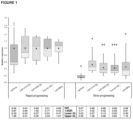
- Figure 1 shows the mean fold change of five PrognomiRNAs between rapid and slow progressing PD patients.
- the median values for relative expression of let7b-3p, miR-3613-3p, miR-6865-3p, pre-mir-532 and miR663a are plotted as lines with each box displaying inner quartiles as a measure of distribution with whiskers. Results shown are derived qRT-PCR verification performed in initial 8 rapid and 8 slow progressing PD patients. Separate colored bars are drawn for let7b-3p (blue), miR-3613-3p (orange), miR-6865-3p (green), pre-mir-532 (purple) and miR663a (turquoise). Means for each group are denoted as triangles on the plot. Significance is denoted as *, p ⁇ 0.05, **, p ⁇ 0.01; ***, p ⁇ 0.001.
- the Norwegian ParkWest project is an ongoing prospective population-based longitudinal cohort study investigating the incidence, neurobiology and prognosis of PD.
- the Norwegian ParkWest study is a prospective longitudinal multicenter cohort study of patients with incident Parkinson's disease (PD) from Western and Southern Norway. Between November 1 st 2004 and 31st of August 2006 it was endeavored to recruit all new cases of Parkinson Disease within the study area. Since the start of the study 212 of 265 (80 %) of these patients and their age- /sex-matched control group have been followed. Further information about the study can be found at http://www.parkvest.no http://www.parkvest.no.
- Serum samples were collected at the same day as the clinical examinations and then stored frozen at -70 degrees Celsius until transported to the facilities in New York on dry ice.
- Example 1 Analyses of differentially expressed human miRNA by qPCR
- RNA isolation was performed using miRCURY RNA Isolation Kit - Biofluids (Exiqon, MA).
- the lysis buffer was spiked with 0.267fmol/ul of spike-in control cel-miR-39-3p (Qiagen, CA).
- the remaining part of the RNA isolation was performed following manufacturer's protocol and the isolated RNA was quantified on a Nanodrop 2000 (Thermo Scientific, MA).
- the RNA was used for running Affymetrix v4 microRNA microarray chips and for subsequent cDNA synthesis and qPCR.
- RNA from 180 serum samples was isolated as described above, they were not quantified by Nanodrop, but the qPCR data resulting from these samples were normalized by a reference small RNA scaRNA17.
- RNA from twenty-four patient serum samples were quantified and subjected to Affymetrix GeneChip ® miRNA 4.0 Array by the Yale Center for Genome Analysis (http://medicine.yale.edu/keck/ycga/index.aspx).
- the normalized .CEL files obtained from Affymetrix Expression Console software were imported into Partek Genomics Suite version 6.6 Copyright ⁇ 2012 (Partek, MO) for analysis.
- the 'microRNA Expression Workflow' was employed to detect differentially expressed miRNAs employing ANOVA resulting in lists of miRNAs significantly (p ⁇ 0.05) expressed between rapid and slow PD cohorts. The miRNAs detected were used for further qPCR verification.
- cDNA for miRNA specific qPCR was synthesized using qScript TM microRNA cDNA Synthesis kit (Quanta Biosciences, MD) following manufacturer's protocol and subsequent qPCRs were performed using miRNA specific forward primers (Table#) and PerfeCTa ® Universal PCR primer (Quanta Biosciences, MD).
- scaRNA17 and U6 were used reference small RNAs for normalizing qPCR Cq values whereas cel-miR-39-3p was used as spike-in control.
- hsa-miR-6865-3p hsa-miR-663a, hsa-miR-92b-3p, hsa-miR-455-3p, hsa-miR-937-5p, hsa-let-7b-3p, hsa-miR-6730-3p, hsa-miR-5010-3p, hsa-miR-1825, hsa-mir-4487, hsa-miR-4783-5p, hsa-miR-2117, hsa-mir-5090, hsa-mir-4484, hsa-miR-5094, hsa-mir-611, hsa-miR-4738-3p, hsa-miR-6894-5p, hsa-mir-8072, hsa-mir-762, hsa-let-7e, hsa-miR-6768-5
- Example 2 Verification of human mature miRNAs by qPCR in sample cohort of 8 rapid and 8 slow progressing patients
- Measurement of levels of a combination of two or more miRNAs in serum from patients can assist in distinctly differentiating between a potential rapid as opposed to slow progressing PD patient.
- a serum sample is obtained from blood withdrawn from patients suspected of PD. The serum is used for total microRNA isolation and enrichment. This RNA would then be tested using qPCR to measure the levels of any two or more of the 52 miRNAs mentioned in Example 1, or any one of five miRNAs mentioned in Example 2. Detectable levels of one or more of the aforementioned 52 miRNAs with >1.2 fold change, or any one or more of these five miRNAs confirms the rate of progression for patients with PD.
- sample fluids may be utilized, including plasma, venous or arterial blood, or CSF samples withdrawn by lumbar puncture.
- plasma, blood or CSF samples are processed as discussed above regarding serum, e.g., so as to provide a sample for processing and evaluation outside the human or animal body. It will be understood that measurement of more than two miRNAs in combination or a set of combinations used in a test matrix may desirably increase the accuracy of predicting PD progression. Following diagnosis, the result is then communicated to the patient.
- detecting the aforementioned miRNAs with >1.2 fold change may be used to differentiate potential rapid progressing PD from potential slow progressing PD in afflicted patients.
- other thresholds may be suitably employed as desired with possible concomitant variation in accuracy, including >1.0, 1.1, 1.3, 1.4, 1.5, 1.6, 1.7, 1.8, 1.9, and 2.0 fold changes.
- these varying fold change thresholds may be more suitably used with particular miRNAs without affecting accuracy.
- Suitable antibodies are preferentially selective, referring to a binding reaction between two molecules that is typically more than 10 to 100 times background molecular associations under measurement conditions. Thus, under designated immunoassay conditions, the specified antibodies bind to a particular miRNA sequence, thereby identifying its presence. Specific binding to an antibody under such conditions requires an antibody that is selected for its specificity for a particular miRNA. For example, antibodies raised against a particular miRNA can be selected by subtracting out antibodies that cross-react with other molecules.
- immunoassay formats may be used to select antibodies specifically immunoreactive with a particular miRNA including solid-phase ELISA immunoassays (see, e.g., Harlow & Lane, Antibodies, A Laboratory Manual (1988 ) for a description of immunoassay formats and conditions that can be used to determine specific immunoreactivity).
- solid-phase ELISA immunoassays see, e.g., Harlow & Lane, Antibodies, A Laboratory Manual (1988 ) for a description of immunoassay formats and conditions that can be used to determine specific immunoreactivity.
- Methods for determining whether two molecules specifically interact are disclosed therein, and methods of determining binding affinity and specificity are well known in the art (see, for example, Harlow and Lane, Antibodies: A laboratory manual (Cold Spring Harbor Laboratory Press, 1988 ); Friefelder, "Physical Biochemistry: Applications to biochemistry and molecular biology” (W.H. Freeman and Co. 1976 )).
- antibody encompasses naturally occurring antibodies as well as non-naturally occurring antibodies, including, for example, single chain antibodies, chimeric, bifunctional and humanized antibodies, as well as antigen-binding fragments thereof, (e.g., Fab', F(ab')2, Fab, Fv and rIgG). See also , Pierce Catalog and Handbook, 1994-1995 (Pierce Chemical Co., Rockford, IL ). See also , e.g., Kuby, J., Immunology, 3rd Ed., W.H. Freeman & Co., New York (1998 ).
- Such non-naturally occurring antibodies can be constructed using solid phase peptide synthesis, can be produced recombinantly or can be obtained, for example, by screening combinatorial libraries consisting of variable heavy chains and variable light chains as described by Huse et al., Science, Vol. 246 (1989) 1275-81 .
- These and other methods of making, for example, chimeric, humanized, CDR-grafted, single chain, and bifunctional antibodies are well known to those skilled in the art ( Winter and Harris, Immunol. Today, Vol. 14 (1993) 243-46 ; Ward et al., Nature, Vol.
- a method to diagnose/prognoses other neurodegenerative diseases like Dementia with Lewy body (DLB), Amyotrophic lateral sclerosis (ALS), Alzheimer's disease (AD), Multiple system atrophy (MSA), CorticoBasal Degeneration (CBD), Progressive Supranuclear Palsy (PSP) can also be developed using similar miRNA measurements of candidates mentioned above.
- Disease specific kits can be developed similar to one mentioned in [0024] with various combinations of miRNAs listed in [0018].
- the miRNAs detected in one or more combinations can regulate several proteins in the cells. Novel protein targets for PD can be discovered using these microRNAs and their combinations. The involvement of these proteins in PD etiology can be further established to target them for therapy.
- Small nucleic acid molecules derived from miRNAs mentioned in [0018] will be designed to therapeutically intervene by specifically targeting genes in PD brains to achieve complete or partial remedy.
Landscapes
- Chemical & Material Sciences (AREA)
- Life Sciences & Earth Sciences (AREA)
- Organic Chemistry (AREA)
- Health & Medical Sciences (AREA)
- Proteomics, Peptides & Aminoacids (AREA)
- Zoology (AREA)
- Wood Science & Technology (AREA)
- Engineering & Computer Science (AREA)
- Genetics & Genomics (AREA)
- Analytical Chemistry (AREA)
- Microbiology (AREA)
- Biochemistry (AREA)
- Biotechnology (AREA)
- Molecular Biology (AREA)
- Biophysics (AREA)
- Physics & Mathematics (AREA)
- General Health & Medical Sciences (AREA)
- Immunology (AREA)
- Bioinformatics & Cheminformatics (AREA)
- General Engineering & Computer Science (AREA)
- Pathology (AREA)
- Measuring Or Testing Involving Enzymes Or Micro-Organisms (AREA)
- Investigating Or Analysing Biological Materials (AREA)
- Chemical Kinetics & Catalysis (AREA)
- Apparatus Associated With Microorganisms And Enzymes (AREA)
Claims (14)
- Procédé de détermination de la vitesse d'évolution de la maladie de Parkinson chez un patient humain, comprenant les étapes consistant à :dans un échantillon qui a été obtenu à partir dudit patient humain, déterminer le niveau d'expression d'un miARN selon SEQ ID NO : 45 au dans ledit échantillon, dans lequel ledit échantillon est du sérum, du plasma, du sang total ou du LCR ; etcorréler le niveau d'expression du miARN déterminé pour déterminer la vitesse d'évolution de la maladie de Parkinson chez le patient.
- Procédé selon la revendication 1, dans lequel le niveau d'expression dudit miARN est déterminé par qRT-PCR.
- Procédé selon la revendication 1, dans lequel le niveau d'expression dudit miARN est déterminé en utilisant des séquences nucléotidiques antisens marquées.
- Procédé selon la revendication 1, dans lequel le niveau d'expression dudit miARN est déterminé en utilisant des anticorps marqués.
- Procédé selon la revendication 4, dans lequel les anticorps marqués sont monoclonaux.
- Procédé selon la revendication 1, dans lequel l'expression relative desdits miARN est déterminée en utilisant un profilage par microréseau.
- Procédé selon la revendication 1, dans lequel l'expression relative desdits miARN est déterminée en utilisant un séquençage NGS à haut débit.
- Procédé selon la revendication 1, dans lequel l'expression relative de miARN selon au moins les SEQ ID NO : 12 et 45 est déterminée.
- Procédé selon la revendication 1, dans lequel l'expression relative de miARN selon au moins les SEQ ID NO : 33 et 45 est déterminée.
- Procédé selon la revendication 1, dans lequel l'expression relative de miARN selon au moins les SEQ ID NO : 42 et 45 est déterminée.
- Procédé selon la revendication 1, dans lequel l'expression relative de miARN selon au moins les SEQ ID NO : 12, 33 et 45 est déterminée.
- Procédé selon la revendication 1, dans lequel l'expression relative de miARN selon au moins les SEQ ID NO : 12, 42 et 45 est déterminée.
- Procédé selon la revendication 1, dans lequel l'expression relative de miARN selon au moins les SEQ ID NO : 33, 42 et 45 est déterminée.
- Procédé selon la revendication 1, dans lequel l'expression relative de miARN selon au moins les SEQ ID NO : 12, 33, 42 et 45 est déterminée.
Priority Applications (1)
| Application Number | Priority Date | Filing Date | Title |
|---|---|---|---|
| EP24180872.4A EP4410998A3 (fr) | 2017-06-19 | 2018-06-07 | Biomarqueurs de micro-arn sériques circulants et procédés de détermination du taux de progression de la maladie de parkinson |
Applications Claiming Priority (3)
| Application Number | Priority Date | Filing Date | Title |
|---|---|---|---|
| US201762521797P | 2017-06-19 | 2017-06-19 | |
| PCT/US2018/036380 WO2018236590A1 (fr) | 2017-06-19 | 2018-06-07 | Biomarqueurs de micro-arn sériques circulants et procédés de détermination de la vitesse d'évolution de la maladie de parkinson |
| EP18737451.7A EP3642365B1 (fr) | 2017-06-19 | 2018-06-07 | Biomarqueurs de micro-arn sériques circulants et procédés de détermination de la vitesse d'évolution de la maladie de parkinson |
Related Parent Applications (1)
| Application Number | Title | Priority Date | Filing Date |
|---|---|---|---|
| EP18737451.7A Division EP3642365B1 (fr) | 2017-06-19 | 2018-06-07 | Biomarqueurs de micro-arn sériques circulants et procédés de détermination de la vitesse d'évolution de la maladie de parkinson |
Related Child Applications (2)
| Application Number | Title | Priority Date | Filing Date |
|---|---|---|---|
| EP24180872.4A Division-Into EP4410998A3 (fr) | 2017-06-19 | 2018-06-07 | Biomarqueurs de micro-arn sériques circulants et procédés de détermination du taux de progression de la maladie de parkinson |
| EP24180872.4A Division EP4410998A3 (fr) | 2017-06-19 | 2018-06-07 | Biomarqueurs de micro-arn sériques circulants et procédés de détermination du taux de progression de la maladie de parkinson |
Publications (3)
| Publication Number | Publication Date |
|---|---|
| EP3988674A1 EP3988674A1 (fr) | 2022-04-27 |
| EP3988674B1 true EP3988674B1 (fr) | 2024-07-17 |
| EP3988674C0 EP3988674C0 (fr) | 2024-07-17 |
Family
ID=62817067
Family Applications (3)
| Application Number | Title | Priority Date | Filing Date |
|---|---|---|---|
| EP18737451.7A Active EP3642365B1 (fr) | 2017-06-19 | 2018-06-07 | Biomarqueurs de micro-arn sériques circulants et procédés de détermination de la vitesse d'évolution de la maladie de parkinson |
| EP21194995.3A Active EP3988674B1 (fr) | 2017-06-19 | 2018-06-07 | Biomarqueurs de micro-arn sériques circulants et procédés de détermination de la vitesse d'évolution de la maladie de parkinson |
| EP24180872.4A Pending EP4410998A3 (fr) | 2017-06-19 | 2018-06-07 | Biomarqueurs de micro-arn sériques circulants et procédés de détermination du taux de progression de la maladie de parkinson |
Family Applications Before (1)
| Application Number | Title | Priority Date | Filing Date |
|---|---|---|---|
| EP18737451.7A Active EP3642365B1 (fr) | 2017-06-19 | 2018-06-07 | Biomarqueurs de micro-arn sériques circulants et procédés de détermination de la vitesse d'évolution de la maladie de parkinson |
Family Applications After (1)
| Application Number | Title | Priority Date | Filing Date |
|---|---|---|---|
| EP24180872.4A Pending EP4410998A3 (fr) | 2017-06-19 | 2018-06-07 | Biomarqueurs de micro-arn sériques circulants et procédés de détermination du taux de progression de la maladie de parkinson |
Country Status (6)
| Country | Link |
|---|---|
| US (2) | US11739384B2 (fr) |
| EP (3) | EP3642365B1 (fr) |
| JP (3) | JP2020523998A (fr) |
| DK (1) | DK3642365T3 (fr) |
| ES (2) | ES2890949T3 (fr) |
| WO (1) | WO2018236590A1 (fr) |
Families Citing this family (2)
| Publication number | Priority date | Publication date | Assignee | Title |
|---|---|---|---|---|
| WO2020113271A1 (fr) * | 2018-12-04 | 2020-06-11 | La Trobe University | Méthodes diagnostiques d'un état pathologique |
| WO2021132725A1 (fr) * | 2019-12-27 | 2021-07-01 | 国立大学法人弘前大学 | Biomarqueur pour troubles cognitifs et agent de détection associé, un procédé pour tester des troubles cognitifs d'un sujet, un procédé pour présenter un moyen de traitement ou d'amélioration pour des troubles cognitifs à un sujet, et un procédé de criblage pour traiter ou améliorer une substance pour traiter des troubles cognitifs |
Family Cites Families (11)
| Publication number | Priority date | Publication date | Assignee | Title |
|---|---|---|---|---|
| HUE040281T2 (hu) | 2009-09-14 | 2019-03-28 | Banyan Biomarkers Inc | Autoantitest markerek traumás agysérülés diagnózisára |
| MX2014004516A (es) * | 2011-10-11 | 2015-01-16 | Brigham & Womens Hospital | Micro-arns en trastornos neurodegenerativos. |
| US20130102485A1 (en) * | 2011-10-19 | 2013-04-25 | Inhan Lee | Method of Determining a Diseased State in a Subject |
| US9540692B2 (en) | 2012-07-25 | 2017-01-10 | Rush University Medical Center | MiRNAs as novel therapeutic targets and diagnostic biomarkers for parkinsons disease |
| CN104903468B (zh) | 2012-11-16 | 2019-04-23 | 萨尔大学 | 用于帕金森氏病的新诊断MiRNA标志物 |
| CA2907377A1 (fr) * | 2013-03-15 | 2014-09-18 | Baylor Research Institute | Biomarqueurs de miarn a base de tissu et de sang pour le diagnostic, le pronostic et le potentiel predictif de metastases dans le cancer colorectal |
| WO2015073972A1 (fr) * | 2013-11-18 | 2015-05-21 | Diamir, Llc | Procédés d'utilisation de micro-arn provenant de liquides corporels permettant de détecter et de surveiller la maladie de parkinson |
| WO2015091892A1 (fr) * | 2013-12-19 | 2015-06-25 | Comprehensive Biomarker Center Gmbh | Miarn utilisés comme biomarqueurs non invasifs de la maladie de parkinson |
| US10011875B2 (en) * | 2014-01-13 | 2018-07-03 | Trustees Of Boston University | Methods and assays relating to Huntingtons disease and Parkinson's disease |
| US20150197809A1 (en) * | 2014-01-13 | 2015-07-16 | Trustees Of Boston University | Methods and assays relating to huntingtons disease and parkinson's disease |
| US11149313B2 (en) * | 2016-03-21 | 2021-10-19 | Diamir, Llc | Methods of using miRNAs from bodily fluids for detection and differentiation of neurodegenerative diseases |
-
2018
- 2018-06-07 DK DK18737451.7T patent/DK3642365T3/da active
- 2018-06-07 EP EP18737451.7A patent/EP3642365B1/fr active Active
- 2018-06-07 EP EP21194995.3A patent/EP3988674B1/fr active Active
- 2018-06-07 US US16/623,870 patent/US11739384B2/en active Active
- 2018-06-07 WO PCT/US2018/036380 patent/WO2018236590A1/fr not_active Ceased
- 2018-06-07 ES ES18737451T patent/ES2890949T3/es active Active
- 2018-06-07 JP JP2019570487A patent/JP2020523998A/ja active Pending
- 2018-06-07 ES ES21194995T patent/ES2993181T3/es active Active
- 2018-06-07 EP EP24180872.4A patent/EP4410998A3/fr active Pending
-
2023
- 2023-04-28 JP JP2023075039A patent/JP2023095935A/ja active Pending
- 2023-08-21 US US18/452,778 patent/US12448653B2/en active Active
-
2025
- 2025-03-24 JP JP2025048498A patent/JP2025085828A/ja active Pending
Non-Patent Citations (1)
| Title |
|---|
| HOSS ANDREW: "The relationship of microRNAs to clinical features of Huntington's and Parkinson's disease", 1 January 2016 (2016-01-01), XP093072023, Retrieved from the Internet <URL:https://open.bu.edu/bitstream/handle/2144/14604/Hoss_bu_0017E_11703.pdf?sequence=17&isAllowed=y> [retrieved on 20230809] * |
Also Published As
| Publication number | Publication date |
|---|---|
| JP2020523998A (ja) | 2020-08-13 |
| EP4410998A3 (fr) | 2024-10-23 |
| WO2018236590A8 (fr) | 2021-04-22 |
| JP2023095935A (ja) | 2023-07-06 |
| JP2025085828A (ja) | 2025-06-05 |
| DK3642365T3 (da) | 2021-10-18 |
| EP3988674C0 (fr) | 2024-07-17 |
| EP3642365A1 (fr) | 2020-04-29 |
| EP3988674A1 (fr) | 2022-04-27 |
| US20210198737A1 (en) | 2021-07-01 |
| US12448653B2 (en) | 2025-10-21 |
| US20240018595A1 (en) | 2024-01-18 |
| US11739384B2 (en) | 2023-08-29 |
| ES2993181T3 (en) | 2024-12-23 |
| WO2018236590A1 (fr) | 2018-12-27 |
| EP3642365B1 (fr) | 2021-09-15 |
| ES2890949T3 (es) | 2022-01-25 |
| EP4410998A2 (fr) | 2024-08-07 |
Similar Documents
| Publication | Publication Date | Title |
|---|---|---|
| US20230323442A1 (en) | Circulating serum microrna biomarkers and methods | |
| Müller et al. | MicroRNAs in Alzheimer's disease: differential expression in hippocampus and cell-free cerebrospinal fluid | |
| CN105917005B (zh) | 使用来自体液的miRNA检测和监控帕金森病(PD)的方法 | |
| Li et al. | MicroRNA-25 inhibits high glucose-induced apoptosis in renal tubular epithelial cells via PTEN/AKT pathway | |
| JP2025085828A (ja) | パーキンソン病の進行速度を決定するための循環血清マイクロrnaバイオマーカー及び方法 | |
| US11149313B2 (en) | Methods of using miRNAs from bodily fluids for detection and differentiation of neurodegenerative diseases | |
| US20140206777A1 (en) | Methods and compositions for diagnosis of alzheimer's disease | |
| US12398427B2 (en) | Circulating serum microRNA biomarkers and methods for Alzheimer's disease diagnosis | |
| US10975436B2 (en) | Methods of using miRNA from bodily fluids for diagnosis and monitoring of neurodevelopmental disorders | |
| Magen et al. | A phase Ib/IIa randomized trial of Enoxacin in patients with ALS |
Legal Events
| Date | Code | Title | Description |
|---|---|---|---|
| PUAI | Public reference made under article 153(3) epc to a published international application that has entered the european phase |
Free format text: ORIGINAL CODE: 0009012 |
|
| STAA | Information on the status of an ep patent application or granted ep patent |
Free format text: STATUS: THE APPLICATION HAS BEEN PUBLISHED |
|
| AC | Divisional application: reference to earlier application |
Ref document number: 3642365 Country of ref document: EP Kind code of ref document: P |
|
| AK | Designated contracting states |
Kind code of ref document: A1 Designated state(s): AL AT BE BG CH CY CZ DE DK EE ES FI FR GB GR HR HU IE IS IT LI LT LU LV MC MK MT NL NO PL PT RO RS SE SI SK SM TR |
|
| STAA | Information on the status of an ep patent application or granted ep patent |
Free format text: STATUS: REQUEST FOR EXAMINATION WAS MADE |
|
| 17P | Request for examination filed |
Effective date: 20221025 |
|
| RBV | Designated contracting states (corrected) |
Designated state(s): AL AT BE BG CH CY CZ DE DK EE ES FI FR GB GR HR HU IE IS IT LI LT LU LV MC MK MT NL NO PL PT RO RS SE SI SK SM TR |
|
| GRAP | Despatch of communication of intention to grant a patent |
Free format text: ORIGINAL CODE: EPIDOSNIGR1 |
|
| STAA | Information on the status of an ep patent application or granted ep patent |
Free format text: STATUS: GRANT OF PATENT IS INTENDED |
|
| INTG | Intention to grant announced |
Effective date: 20230905 |
|
| GRAJ | Information related to disapproval of communication of intention to grant by the applicant or resumption of examination proceedings by the epo deleted |
Free format text: ORIGINAL CODE: EPIDOSDIGR1 |
|
| STAA | Information on the status of an ep patent application or granted ep patent |
Free format text: STATUS: REQUEST FOR EXAMINATION WAS MADE |
|
| GRAJ | Information related to disapproval of communication of intention to grant by the applicant or resumption of examination proceedings by the epo deleted |
Free format text: ORIGINAL CODE: EPIDOSDIGR1 |
|
| STAA | Information on the status of an ep patent application or granted ep patent |
Free format text: STATUS: GRANT OF PATENT IS INTENDED |
|
| GRAP | Despatch of communication of intention to grant a patent |
Free format text: ORIGINAL CODE: EPIDOSNIGR1 |
|
| INTC | Intention to grant announced (deleted) | ||
| INTG | Intention to grant announced |
Effective date: 20240209 |
|
| GRAS | Grant fee paid |
Free format text: ORIGINAL CODE: EPIDOSNIGR3 |
|
| GRAA | (expected) grant |
Free format text: ORIGINAL CODE: 0009210 |
|
| STAA | Information on the status of an ep patent application or granted ep patent |
Free format text: STATUS: THE PATENT HAS BEEN GRANTED |
|
| AC | Divisional application: reference to earlier application |
Ref document number: 3642365 Country of ref document: EP Kind code of ref document: P |
|
| AK | Designated contracting states |
Kind code of ref document: B1 Designated state(s): AL AT BE BG CH CY CZ DE DK EE ES FI FR GB GR HR HU IE IS IT LI LT LU LV MC MK MT NL NO PL PT RO RS SE SI SK SM TR |
|
| REG | Reference to a national code |
Ref country code: CH Ref legal event code: EP |
|
| REG | Reference to a national code |
Ref country code: DE Ref legal event code: R096 Ref document number: 602018072063 Country of ref document: DE |
|
| REG | Reference to a national code |
Ref country code: IE Ref legal event code: FG4D |
|
| U01 | Request for unitary effect filed |
Effective date: 20240717 |
|
| U07 | Unitary effect registered |
Designated state(s): AT BE BG DE DK EE FI FR IT LT LU LV MT NL PT SE SI Effective date: 20240726 |
|
| REG | Reference to a national code |
Ref country code: ES Ref legal event code: FG2A Ref document number: 2993181 Country of ref document: ES Kind code of ref document: T3 Effective date: 20241223 |
|
| PG25 | Lapsed in a contracting state [announced via postgrant information from national office to epo] |
Ref country code: GR Free format text: LAPSE BECAUSE OF FAILURE TO SUBMIT A TRANSLATION OF THE DESCRIPTION OR TO PAY THE FEE WITHIN THE PRESCRIBED TIME-LIMIT Effective date: 20241018 Ref country code: PL Free format text: LAPSE BECAUSE OF FAILURE TO SUBMIT A TRANSLATION OF THE DESCRIPTION OR TO PAY THE FEE WITHIN THE PRESCRIBED TIME-LIMIT Effective date: 20240717 |
|
| PG25 | Lapsed in a contracting state [announced via postgrant information from national office to epo] |
Ref country code: IS Free format text: LAPSE BECAUSE OF FAILURE TO SUBMIT A TRANSLATION OF THE DESCRIPTION OR TO PAY THE FEE WITHIN THE PRESCRIBED TIME-LIMIT Effective date: 20241117 |
|
| PG25 | Lapsed in a contracting state [announced via postgrant information from national office to epo] |
Ref country code: HR Free format text: LAPSE BECAUSE OF FAILURE TO SUBMIT A TRANSLATION OF THE DESCRIPTION OR TO PAY THE FEE WITHIN THE PRESCRIBED TIME-LIMIT Effective date: 20240717 |
|
| PG25 | Lapsed in a contracting state [announced via postgrant information from national office to epo] |
Ref country code: RS Free format text: LAPSE BECAUSE OF FAILURE TO SUBMIT A TRANSLATION OF THE DESCRIPTION OR TO PAY THE FEE WITHIN THE PRESCRIBED TIME-LIMIT Effective date: 20241017 |
|
| PG25 | Lapsed in a contracting state [announced via postgrant information from national office to epo] |
Ref country code: RS Free format text: LAPSE BECAUSE OF FAILURE TO SUBMIT A TRANSLATION OF THE DESCRIPTION OR TO PAY THE FEE WITHIN THE PRESCRIBED TIME-LIMIT Effective date: 20241017 Ref country code: PL Free format text: LAPSE BECAUSE OF FAILURE TO SUBMIT A TRANSLATION OF THE DESCRIPTION OR TO PAY THE FEE WITHIN THE PRESCRIBED TIME-LIMIT Effective date: 20240717 Ref country code: IS Free format text: LAPSE BECAUSE OF FAILURE TO SUBMIT A TRANSLATION OF THE DESCRIPTION OR TO PAY THE FEE WITHIN THE PRESCRIBED TIME-LIMIT Effective date: 20241117 Ref country code: HR Free format text: LAPSE BECAUSE OF FAILURE TO SUBMIT A TRANSLATION OF THE DESCRIPTION OR TO PAY THE FEE WITHIN THE PRESCRIBED TIME-LIMIT Effective date: 20240717 Ref country code: GR Free format text: LAPSE BECAUSE OF FAILURE TO SUBMIT A TRANSLATION OF THE DESCRIPTION OR TO PAY THE FEE WITHIN THE PRESCRIBED TIME-LIMIT Effective date: 20241018 |
|
| PG25 | Lapsed in a contracting state [announced via postgrant information from national office to epo] |
Ref country code: SM Free format text: LAPSE BECAUSE OF FAILURE TO SUBMIT A TRANSLATION OF THE DESCRIPTION OR TO PAY THE FEE WITHIN THE PRESCRIBED TIME-LIMIT Effective date: 20240717 |
|
| PG25 | Lapsed in a contracting state [announced via postgrant information from national office to epo] |
Ref country code: CZ Free format text: LAPSE BECAUSE OF FAILURE TO SUBMIT A TRANSLATION OF THE DESCRIPTION OR TO PAY THE FEE WITHIN THE PRESCRIBED TIME-LIMIT Effective date: 20240717 |
|
| PG25 | Lapsed in a contracting state [announced via postgrant information from national office to epo] |
Ref country code: SK Free format text: LAPSE BECAUSE OF FAILURE TO SUBMIT A TRANSLATION OF THE DESCRIPTION OR TO PAY THE FEE WITHIN THE PRESCRIBED TIME-LIMIT Effective date: 20240717 |
|
| PLBE | No opposition filed within time limit |
Free format text: ORIGINAL CODE: 0009261 |
|
| STAA | Information on the status of an ep patent application or granted ep patent |
Free format text: STATUS: NO OPPOSITION FILED WITHIN TIME LIMIT |
|
| 26N | No opposition filed |
Effective date: 20250422 |
|
| PGFP | Annual fee paid to national office [announced via postgrant information from national office to epo] |
Ref country code: GB Payment date: 20250617 Year of fee payment: 8 |
|
| PGFP | Annual fee paid to national office [announced via postgrant information from national office to epo] |
Ref country code: NO Payment date: 20250618 Year of fee payment: 8 |
|
| U20 | Renewal fee for the european patent with unitary effect paid |
Year of fee payment: 8 Effective date: 20250624 |
|
| PGFP | Annual fee paid to national office [announced via postgrant information from national office to epo] |
Ref country code: ES Payment date: 20250710 Year of fee payment: 8 |
|
| PGFP | Annual fee paid to national office [announced via postgrant information from national office to epo] |
Ref country code: CH Payment date: 20250701 Year of fee payment: 8 |