EP3987776B1 - Block size dependent use of video coding mode - Google Patents
Block size dependent use of video coding mode Download PDFInfo
- Publication number
- EP3987776B1 EP3987776B1 EP20847404.9A EP20847404A EP3987776B1 EP 3987776 B1 EP3987776 B1 EP 3987776B1 EP 20847404 A EP20847404 A EP 20847404A EP 3987776 B1 EP3987776 B1 EP 3987776B1
- Authority
- EP
- European Patent Office
- Prior art keywords
- block
- video
- coding tool
- width
- coding
- Prior art date
- Legal status (The legal status is an assumption and is not a legal conclusion. Google has not performed a legal analysis and makes no representation as to the accuracy of the status listed.)
- Active
Links
Images








Classifications
-
- G—PHYSICS
- G06—COMPUTING OR CALCULATING; COUNTING
- G06T—IMAGE DATA PROCESSING OR GENERATION, IN GENERAL
- G06T9/00—Image coding
- G06T9/40—Tree coding, e.g. quadtree, octree
-
- H—ELECTRICITY
- H04—ELECTRIC COMMUNICATION TECHNIQUE
- H04N—PICTORIAL COMMUNICATION, e.g. TELEVISION
- H04N19/00—Methods or arrangements for coding, decoding, compressing or decompressing digital video signals
- H04N19/10—Methods or arrangements for coding, decoding, compressing or decompressing digital video signals using adaptive coding
- H04N19/102—Methods or arrangements for coding, decoding, compressing or decompressing digital video signals using adaptive coding characterised by the element, parameter or selection affected or controlled by the adaptive coding
- H04N19/103—Selection of coding mode or of prediction mode
- H04N19/107—Selection of coding mode or of prediction mode between spatial and temporal predictive coding, e.g. picture refresh
-
- H—ELECTRICITY
- H04—ELECTRIC COMMUNICATION TECHNIQUE
- H04N—PICTORIAL COMMUNICATION, e.g. TELEVISION
- H04N19/00—Methods or arrangements for coding, decoding, compressing or decompressing digital video signals
- H04N19/10—Methods or arrangements for coding, decoding, compressing or decompressing digital video signals using adaptive coding
- H04N19/102—Methods or arrangements for coding, decoding, compressing or decompressing digital video signals using adaptive coding characterised by the element, parameter or selection affected or controlled by the adaptive coding
- H04N19/103—Selection of coding mode or of prediction mode
- H04N19/109—Selection of coding mode or of prediction mode among a plurality of temporal predictive coding modes
-
- H—ELECTRICITY
- H04—ELECTRIC COMMUNICATION TECHNIQUE
- H04N—PICTORIAL COMMUNICATION, e.g. TELEVISION
- H04N19/00—Methods or arrangements for coding, decoding, compressing or decompressing digital video signals
- H04N19/10—Methods or arrangements for coding, decoding, compressing or decompressing digital video signals using adaptive coding
- H04N19/102—Methods or arrangements for coding, decoding, compressing or decompressing digital video signals using adaptive coding characterised by the element, parameter or selection affected or controlled by the adaptive coding
- H04N19/103—Selection of coding mode or of prediction mode
- H04N19/11—Selection of coding mode or of prediction mode among a plurality of spatial predictive coding modes
-
- H—ELECTRICITY
- H04—ELECTRIC COMMUNICATION TECHNIQUE
- H04N—PICTORIAL COMMUNICATION, e.g. TELEVISION
- H04N19/00—Methods or arrangements for coding, decoding, compressing or decompressing digital video signals
- H04N19/10—Methods or arrangements for coding, decoding, compressing or decompressing digital video signals using adaptive coding
- H04N19/102—Methods or arrangements for coding, decoding, compressing or decompressing digital video signals using adaptive coding characterised by the element, parameter or selection affected or controlled by the adaptive coding
- H04N19/119—Adaptive subdivision aspects, e.g. subdivision of a picture into rectangular or non-rectangular coding blocks
-
- H—ELECTRICITY
- H04—ELECTRIC COMMUNICATION TECHNIQUE
- H04N—PICTORIAL COMMUNICATION, e.g. TELEVISION
- H04N19/00—Methods or arrangements for coding, decoding, compressing or decompressing digital video signals
- H04N19/10—Methods or arrangements for coding, decoding, compressing or decompressing digital video signals using adaptive coding
- H04N19/102—Methods or arrangements for coding, decoding, compressing or decompressing digital video signals using adaptive coding characterised by the element, parameter or selection affected or controlled by the adaptive coding
- H04N19/127—Prioritisation of hardware or computational resources
-
- H—ELECTRICITY
- H04—ELECTRIC COMMUNICATION TECHNIQUE
- H04N—PICTORIAL COMMUNICATION, e.g. TELEVISION
- H04N19/00—Methods or arrangements for coding, decoding, compressing or decompressing digital video signals
- H04N19/10—Methods or arrangements for coding, decoding, compressing or decompressing digital video signals using adaptive coding
- H04N19/102—Methods or arrangements for coding, decoding, compressing or decompressing digital video signals using adaptive coding characterised by the element, parameter or selection affected or controlled by the adaptive coding
- H04N19/132—Sampling, masking or truncation of coding units, e.g. adaptive resampling, frame skipping, frame interpolation or high-frequency transform coefficient masking
-
- H—ELECTRICITY
- H04—ELECTRIC COMMUNICATION TECHNIQUE
- H04N—PICTORIAL COMMUNICATION, e.g. TELEVISION
- H04N19/00—Methods or arrangements for coding, decoding, compressing or decompressing digital video signals
- H04N19/10—Methods or arrangements for coding, decoding, compressing or decompressing digital video signals using adaptive coding
- H04N19/134—Methods or arrangements for coding, decoding, compressing or decompressing digital video signals using adaptive coding characterised by the element, parameter or criterion affecting or controlling the adaptive coding
- H04N19/156—Availability of hardware or computational resources, e.g. encoding based on power-saving criteria
-
- H—ELECTRICITY
- H04—ELECTRIC COMMUNICATION TECHNIQUE
- H04N—PICTORIAL COMMUNICATION, e.g. TELEVISION
- H04N19/00—Methods or arrangements for coding, decoding, compressing or decompressing digital video signals
- H04N19/10—Methods or arrangements for coding, decoding, compressing or decompressing digital video signals using adaptive coding
- H04N19/134—Methods or arrangements for coding, decoding, compressing or decompressing digital video signals using adaptive coding characterised by the element, parameter or criterion affecting or controlling the adaptive coding
- H04N19/167—Position within a video image, e.g. region of interest [ROI]
-
- H—ELECTRICITY
- H04—ELECTRIC COMMUNICATION TECHNIQUE
- H04N—PICTORIAL COMMUNICATION, e.g. TELEVISION
- H04N19/00—Methods or arrangements for coding, decoding, compressing or decompressing digital video signals
- H04N19/10—Methods or arrangements for coding, decoding, compressing or decompressing digital video signals using adaptive coding
- H04N19/169—Methods or arrangements for coding, decoding, compressing or decompressing digital video signals using adaptive coding characterised by the coding unit, i.e. the structural portion or semantic portion of the video signal being the object or the subject of the adaptive coding
- H04N19/17—Methods or arrangements for coding, decoding, compressing or decompressing digital video signals using adaptive coding characterised by the coding unit, i.e. the structural portion or semantic portion of the video signal being the object or the subject of the adaptive coding the unit being an image region, e.g. an object
- H04N19/172—Methods or arrangements for coding, decoding, compressing or decompressing digital video signals using adaptive coding characterised by the coding unit, i.e. the structural portion or semantic portion of the video signal being the object or the subject of the adaptive coding the unit being an image region, e.g. an object the region being a picture, frame or field
-
- H—ELECTRICITY
- H04—ELECTRIC COMMUNICATION TECHNIQUE
- H04N—PICTORIAL COMMUNICATION, e.g. TELEVISION
- H04N19/00—Methods or arrangements for coding, decoding, compressing or decompressing digital video signals
- H04N19/10—Methods or arrangements for coding, decoding, compressing or decompressing digital video signals using adaptive coding
- H04N19/169—Methods or arrangements for coding, decoding, compressing or decompressing digital video signals using adaptive coding characterised by the coding unit, i.e. the structural portion or semantic portion of the video signal being the object or the subject of the adaptive coding
- H04N19/17—Methods or arrangements for coding, decoding, compressing or decompressing digital video signals using adaptive coding characterised by the coding unit, i.e. the structural portion or semantic portion of the video signal being the object or the subject of the adaptive coding the unit being an image region, e.g. an object
- H04N19/176—Methods or arrangements for coding, decoding, compressing or decompressing digital video signals using adaptive coding characterised by the coding unit, i.e. the structural portion or semantic portion of the video signal being the object or the subject of the adaptive coding the unit being an image region, e.g. an object the region being a block, e.g. a macroblock
-
- H—ELECTRICITY
- H04—ELECTRIC COMMUNICATION TECHNIQUE
- H04N—PICTORIAL COMMUNICATION, e.g. TELEVISION
- H04N19/00—Methods or arrangements for coding, decoding, compressing or decompressing digital video signals
- H04N19/10—Methods or arrangements for coding, decoding, compressing or decompressing digital video signals using adaptive coding
- H04N19/169—Methods or arrangements for coding, decoding, compressing or decompressing digital video signals using adaptive coding characterised by the coding unit, i.e. the structural portion or semantic portion of the video signal being the object or the subject of the adaptive coding
- H04N19/186—Methods or arrangements for coding, decoding, compressing or decompressing digital video signals using adaptive coding characterised by the coding unit, i.e. the structural portion or semantic portion of the video signal being the object or the subject of the adaptive coding the unit being a colour or a chrominance component
-
- H—ELECTRICITY
- H04—ELECTRIC COMMUNICATION TECHNIQUE
- H04N—PICTORIAL COMMUNICATION, e.g. TELEVISION
- H04N19/00—Methods or arrangements for coding, decoding, compressing or decompressing digital video signals
- H04N19/10—Methods or arrangements for coding, decoding, compressing or decompressing digital video signals using adaptive coding
- H04N19/169—Methods or arrangements for coding, decoding, compressing or decompressing digital video signals using adaptive coding characterised by the coding unit, i.e. the structural portion or semantic portion of the video signal being the object or the subject of the adaptive coding
- H04N19/1883—Methods or arrangements for coding, decoding, compressing or decompressing digital video signals using adaptive coding characterised by the coding unit, i.e. the structural portion or semantic portion of the video signal being the object or the subject of the adaptive coding the unit relating to sub-band structure, e.g. hierarchical level, directional tree, e.g. low-high [LH], high-low [HL], high-high [HH]
-
- H—ELECTRICITY
- H04—ELECTRIC COMMUNICATION TECHNIQUE
- H04N—PICTORIAL COMMUNICATION, e.g. TELEVISION
- H04N19/00—Methods or arrangements for coding, decoding, compressing or decompressing digital video signals
- H04N19/10—Methods or arrangements for coding, decoding, compressing or decompressing digital video signals using adaptive coding
- H04N19/189—Methods or arrangements for coding, decoding, compressing or decompressing digital video signals using adaptive coding characterised by the adaptation method, adaptation tool or adaptation type used for the adaptive coding
-
- H—ELECTRICITY
- H04—ELECTRIC COMMUNICATION TECHNIQUE
- H04N—PICTORIAL COMMUNICATION, e.g. TELEVISION
- H04N19/00—Methods or arrangements for coding, decoding, compressing or decompressing digital video signals
- H04N19/42—Methods or arrangements for coding, decoding, compressing or decompressing digital video signals characterised by implementation details or hardware specially adapted for video compression or decompression, e.g. dedicated software implementation
- H04N19/436—Methods or arrangements for coding, decoding, compressing or decompressing digital video signals characterised by implementation details or hardware specially adapted for video compression or decompression, e.g. dedicated software implementation using parallelised computational arrangements
-
- H—ELECTRICITY
- H04—ELECTRIC COMMUNICATION TECHNIQUE
- H04N—PICTORIAL COMMUNICATION, e.g. TELEVISION
- H04N19/00—Methods or arrangements for coding, decoding, compressing or decompressing digital video signals
- H04N19/60—Methods or arrangements for coding, decoding, compressing or decompressing digital video signals using transform coding
-
- H—ELECTRICITY
- H04—ELECTRIC COMMUNICATION TECHNIQUE
- H04N—PICTORIAL COMMUNICATION, e.g. TELEVISION
- H04N19/00—Methods or arrangements for coding, decoding, compressing or decompressing digital video signals
- H04N19/60—Methods or arrangements for coding, decoding, compressing or decompressing digital video signals using transform coding
- H04N19/61—Methods or arrangements for coding, decoding, compressing or decompressing digital video signals using transform coding in combination with predictive coding
-
- H—ELECTRICITY
- H04—ELECTRIC COMMUNICATION TECHNIQUE
- H04N—PICTORIAL COMMUNICATION, e.g. TELEVISION
- H04N19/00—Methods or arrangements for coding, decoding, compressing or decompressing digital video signals
- H04N19/70—Methods or arrangements for coding, decoding, compressing or decompressing digital video signals characterised by syntax aspects related to video coding, e.g. related to compression standards
-
- H—ELECTRICITY
- H04—ELECTRIC COMMUNICATION TECHNIQUE
- H04N—PICTORIAL COMMUNICATION, e.g. TELEVISION
- H04N19/00—Methods or arrangements for coding, decoding, compressing or decompressing digital video signals
- H04N19/90—Methods or arrangements for coding, decoding, compressing or decompressing digital video signals using coding techniques not provided for in groups H04N19/10-H04N19/85, e.g. fractals
- H04N19/96—Tree coding, e.g. quad-tree coding
Definitions
- This document is related to video and image coding and decoding technologies.
- Non-patent literature S-T HSIANG ET AL "CE1.6.1: Coding large size CUs",11. JVET MEETING; 20180711 - 20180718; LJUBLJANA; (THE JOINT VIDEO EXPLORATION TEAM OF ISO/IEC JTC1/SC29/WG11 AND ITU-T SG.16),no.
- the disclosed techniques may be used by video or image decoder or encoder embodiments to performing coding or decoding of video in which the picture partition mode is determined based on block size.
- VPDU virtual pipeline data unit
- a method of video processing includes using, for a conversion between a video comprising one or more video regions comprising one or more video blocks and a bitstream representation of the video, a dimension of a video block of the one or more video blocks to perform a determination of whether a ternary-tree (TT) or a binary-tree (BT) partitioning of the video block is enabled, and performing, based on the determination, the conversion.
- TT ternary-tree
- BT binary-tree
- a method of video processing includes using a height or a width of a video block to perform a determination of whether a coding tool is enabled for a conversion between a video comprising one or more video regions comprising one or more video blocks comprising the video block and a bitstream representation of the video, and performing, based on the determination, the conversion, wherein the determination is based on a comparison between the height or the width with a value N, where N is a positive integer.
- a method of video processing includes using comparison between a height or a width of a video block and a size of a transform block to perform a determination of whether a coding tool is enabled for a conversion between a video comprising one or more video regions comprising one or more video blocks comprising the video block and a bitstream representation of the video, and performing, based on the determination, the conversion.
- a method of video processing includes using a height or a width of a video block to perform a determination of whether a coding tool is enabled for a conversion between a video comprising one or more video regions comprising one or more video blocks comprising the video block and a bitstream representation of the video, and performing, based on the determination, the conversion.
- a method of video processing includes using a comparison between a dimension of a sub-partition of a video block and a maximum transform size to perform (a) a determination of whether an intra sub-partition prediction (ISP) mode is enabled for a conversion between a video comprising one or more video regions comprising one or more video blocks comprising the video block, and (b) a selection of one or more allowable partition types for the conversion, and performing, based on the determination and the selection, the conversion, wherein, in the ISP mode, a video block of the one or more video blocks is partitioned into multiple sub-partitions before application of an intra-prediction and transform.
- ISP intra sub-partition prediction
- a method of video processing includes performing a conversion between a video comprising one or more video regions comprising one or more video blocks and a bitstream representation of the video, wherein the conversion comprises a coding tool that has been disabled, and wherein syntax elements related to the coding tool are excluded from the bitstream representation and inferred to be a predetermined value specifying that the coding tool is disabled.
- a method of video processing includes performing a conversion between a video comprising one or more video regions comprising one or more video blocks and a bitstream representation of the video, wherein the conversion comprises a coding tool that has been disabled, and wherein the bitstream representation comprises syntax elements related to the coding tool that are inferred to be a predetermined value based on the coding tool being disabled.
- a method of video processing includes using a dimension of a virtual pipeline data unit (VPDU) and/or a maximum transform size used for a conversion between a video comprising one or more video regions comprising one or more video blocks and a bitstream representation of the video to perform a determination of whether an implicit (QT) partitioning of a video block of the one or more video blocks is enabled, and performing, based on the determination, the conversion.
- VPDU virtual pipeline data unit
- QT implicit partitioning of a video block of the one or more video blocks
- a method of video processing includes performing a conversion between a video comprising one or more video regions comprising one or more video blocks and a bitstream representation of the video, wherein the conversion comprises a sub-block transform (SBT), wherein a maximum height or a maximum width of the SBT is based on a maximum transform size, and wherein the SBT comprises one or more transforms being separately applied to one or more partitions of a video block of the one or more video blocks.
- SBT sub-block transform
- a method of video processing includes performing a conversion between a video comprising one or more video regions comprising one or more video blocks and a bitstream representation of the video, wherein the conversion comprises a transform skip mode and/or an intra block-based differential pulse code modulation (BDPCM) mode, wherein a maximum block size used for the transform skip mode is based on a maximum transform size, wherein the transform skip mode comprises skipping transform and inverse transform processes for a corresponding coding tool, and wherein, in the BDPCM mode, a residual of an intra prediction of the current video block is predictively coded using a differential pulse coding modulation operation.
- BDPCM intra block-based differential pulse code modulation
- a method of video processing includes using a comparison between a height or a width of a video block and a maximum transform size to perform a determination of whether a combined inter intra prediction (CIIP) mode is enabled for a conversion between a video comprising one or more video regions comprising one or more video blocks comprising the video block and a bitstream representation of the video, and performing, based on the determination, the conversion, wherein, in the CIIP mode, a final prediction of the video block is based on a weighted sum of an inter prediction of the video block and an intra prediction of the video block.
- CIIP combined inter intra prediction
- a method of video processing includes making a determination, for a conversion between a video comprising one or more video regions comprising one or more video blocks and a bitstream representation of the video, regarding partitioning a video block of the one or more video blocks coded with combined inter intra prediction (CIIP), and performing, based on the determination, the conversion, wherein, in the CIIP mode, a final prediction of the video block is based on a weighted sum of an inter prediction of the video block and an intra prediction of the video block.
- CIIP inter intra prediction
- a method of video processing includes performing a conversion between a video comprising a video region comprising multiple video blocks and a bitstream representation of the video according to a rule, wherein the rule specifies that a maximum block size of the multiple video blocks in the video region that are coded in the bitstream representation using a transform coding determines a maximum block size of the multiple video blocks in the video region that are coded in the bitstream representation without using transform coding.
- a method of video processing includes performing a conversion between a video comprising a video region comprising multiple video blocks and a bitstream representation of the video according to a rule, wherein the rule specifies that a luma mapping with chroma scaling (LMCS) process is disabled for the video region when lossless coding is enabled for the video region, wherein the video region is a sequence, a picture, a subpicture, a slice, a tile group, a tile, a brick, a coding tree unit (CTU) row, a CTU, a coding unit (CU), a prediction unit (PU), a transform unit (TU), or a subblock, and wherein the LMCS process comprises luma samples of the video region being reshaped between a first domain and a second domain and a chroma residual being scaled in a luma-dependent manner.
- LMCS luma mapping with chroma scaling
- the above-described method may be implemented by a video encoder apparatus that comprises a processor.
- these methods may be embodied in the form of processor-executable instructions and stored on a computer-readable program medium.
- the present document provides various techniques that can be used by a decoder of image or video bitstreams to improve the quality of decompressed or decoded digital video or images.
- video is used herein to include both a sequence of pictures (traditionally called video) and individual images.
- a video encoder may also implement these techniques during the process of encoding in order to reconstruct decoded frames used for further encoding.
- Section headings are used in the present document for ease of understanding and do not limit the embodiments and techniques to the corresponding sections. As such, embodiments from one section can be combined with embodiments from other sections.
- This document is related to video coding technologies. Specifically, it is about rules for controlling size of coding tree unit or transform unit in video coding and decoding. It may be applied to the existing video coding standard like HEVC, or the standard (Versatile Video Coding) to be finalized. It may be also applicable to future video coding standards or video codec.
- Video coding standards have evolved primarily through the development of the well-known ITU-T and ISO/IEC standards.
- the ITU-T produced H.261 and H.263, ISO/IEC produced MPEG-1 and MPEG-4 Visual, and the two organizations jointly produced the H.262/MPEG-2 Video and H.264/MPEG-4 Advanced Video Coding (AVC) and H.265/HEVC standards.
- AVC H.264/MPEG-4 Advanced Video Coding
- H.265/HEVC High Efficiency Video Coding
- the video coding standards are based on the hybrid video coding structure wherein temporal prediction plus transform coding are utilized.
- Joint Video Exploration Team JVET was founded by VCEG and MPEG jointly in 2015. Since then, many new methods have been adopted by JVET and put into the reference software named Joint Exploration Model (JEM).
- JEM Joint Exploration Model
- VVC Versatile Video Coding
- VTM VVC test model
- VTM-5.0 software allows 4 different CTU sizes: 16x16, 32x32, 64x64 and 128x128.
- the minimum CTU size was redefined to 32x32 due to the adoption of JVET-O0526.
- the CTU size in VVC working draft 6 is encoded in the SPS header in a UE-encoded syntax element called log2_ctu_size_minus_5.
- VVC draft 6 With the definition of Virtual pipeline data units (VPDUs) and the adoption of JVET-O0526.
- VPDUs Virtual pipeline data units
- log2_ctu_size_minus5 plus 5 specifies the luma coding tree block size of each CTU. It is a requirement of bitstream conformance that the value of log2_ctu_size_minus5 be less than or equal to 2.
- log2_min_luma_coding_block_size_minus2 plus 2 specifies the minimum luma coding block size.
- the variables CtbLog2SizeY, CtbSizeY, MinCbLog2SizeY, MinCbSizeY, IbcBufWidthY, IbcBufWidthC and Vsize are derived as follows:
- Ctb WidthC and CtbHeightC which specify the width and height, respectively, of the array for each chroma CTB, are derived as follows:
- slice_log2_diff_max_bt_min_qt_luma specifies the difference between the base 2 logarithm of the maximum size (width or height) in luma samples of a luma coding block that can be split using a binary split and the minimum size (width or height) in luma samples of a luma leaf block resulting from quadtree splitting of a CTU in the current slice.
- the value of slice_log2 _ diff_max_bt_min_qt_luma shall be in the range of 0 to CtbLog2SizeY - MinQtLog2SizeY, inclusive.
- the value of slice_log2_diff_max_bt_min_qt_luma is inferred as follows:
- slice_log2_diff_max_tt_min_qt_luma specifies the difference between the base 2 logarithm of the maximum size (width or height) in luma samples of a luma coding block that can be split using a ternary split and the minimum size (width or height) in luma samples of a luma leaf block resulting from quadtree splitting of a CTU in in the current slice.
- the value of slice log2_diff_max_tt_min_qt_luma shall be in the range of 0 to CtbLog2SizeY - MinQtLog2SizeY, inclusive.
- the value of slice_log2_diff_max_tt_min _ qt_luma is inferred as follows:
- slice_log2_diff_min_qt_min_cb_chroma specifies the difference between the base 2 logarithm of the minimum size in luma samples of a chroma leaf block resulting from quadtree splitting of a chroma CTU with treeType equal to DUAL_TREE_CHROMA and the base 2 logarithm of the minimum coding block size in luma samples for chroma CUs with treeType equal to DUAL_TREE_CHROMA in the current slice.
- the value of slice log2_diff_min_qt_min_cb_chroma shall be in the range of 0 to CtbLog2SizeY - MinCbLog2SizeY, inclusive.
- slice_log2_diff_min_qt_min_cb_chroma When not present, the value of slice_log2_diff_min_qt_min_cb_chroma is inferred to be equal to sps log2_diff_min_qt_min_cb_intra_slice_chroma.
- slice_max_mtt_hierarchy_depth_chroma specifies the maximum hierarchy depth for coding units resulting from multi-type tree splitting of a quadtree leaf with treeType equal to DUAL_TREE_CHROMA in the current slice.
- the value of slice_max_mtt_hierarchy_depth_chroma shall be in the range of 0 to CtbLog2SizeY - MinCbLog2SizeY, inclusive.
- the values of slice_max_mtt_hierarchy_depth_chroma is inferred to be equal to sps_max_mtt_hierarchy_depth_intra_slices_chroma.
- slice_log2_diff_max_bt_min_qt_chroma specifies the difference between the base 2 logarithm of the maximum size (width or height) in luma samples of a chroma coding block that can be split using a binary split and the minimum size (width or height) in luma samples of a chroma leaf block resulting from quadtree splitting of a chroma CTU with tree Type equal to DUAL_TREE_CHROMA in the current slice.
- the value of slice_log2_diff_max_bt_min_qt_chroma shall be in the range of 0 to CtbLog2SizeY - MinQtLog2SizeC, inclusive.
- slice log2_diff_max_bt_min_qt_chroma When not present, the value of slice log2_diff_max_bt_min_qt_chroma is inferred to be equal to sps log2_diff_max_bt_min_qt_intra_slice_chroma
- slice_log2_diff_max_tt_min_qt_chroma specifies the difference between the base 2 logarithm of the maximum size (width or height) in luma samples of a chroma coding block that can be split using a ternary split and the minimum size (width or height) in luma samples of a chroma leaf block resulting from quadtree splitting of a chroma CTU with treeType equal to DUAL_TREE_CHROMA in the current slice.
- the value of slice_log2_diff_max_tt_min_qt_chroma shall be in the range of 0 to CtbLog2SizeY - MinQtLog2SizeC, inclusive.
- slice_log2_diff_max_tt_min_qt_chroma is inferred to be equal to sps_log2_diff_max_tt_min_qt_intra_slice_chroma
- MinQtLog2SizeY, MinQtLog2SizeC, MinQtSizeY, MinQtSizeC, MaxBtSizeY, MaxBtSizeC, MinBtSizeY, MaxTtSizeY, MaxTtSizeC, MinTtSizeY, MaxMttDepthY and MaxMttDepthC are derived as follows:
- Max chroma transform size is derived from the chroma sampling ratio relative to the max luma transform size.
- sps_max_luma_transform_size_64_flag 1 specifies that the maximum transform size in luma samples is equal to 64.
- sps_max_luma_transform_size_64_flag 0 specifies that the maximum transform size in luma samples is equal to 32.
- MinTbLog2SizeY MaxTbLog2SizeY
- MinTbSizeY MinTbSizeY
- MaxTbSizeY MaxTbSizeY
- sps_sbt_max_size_64_flag 0 specifies that the maximum CU width and height for allowing subblock transform is 32 luma samples.
- sps_sbt_max_size_64_flag 1 specifies that the maximum CU width and height for allowing subblock transform is 64 luma samples.
- the video unit size/dimension may be either the height or width of a video unit (e.g., width or height of a picture/sub-picture/slice/brick/tile/CTU/CU/CB/TU/TB). If a video unit size is denoted by MxN, then M denotes the width and N denotes the height of the video unit.
- a coding block may be a luma coding block, and/or a chroma coding block.
- the size/dimension in luma samples for a coding block may be used in this invention to represent the size/dimension measured in luma samples.
- a 128x128 coding block (or a coding block size 128x128 in luma samples) may indicate a 128x128 luma coding block, and/or a 64x64 chroma coding block for 4:2:0 color format.
- 4:2:2 color format it may refer to a 128x128 luma coding block and/or a 64x128 chroma coding block.
- 4:4:4 color format it may refer to a 128x128 luma coding block and/or a 128x128 chroma coding block.
- Newly added parts are enclosed in bolded double parentheses, e.g., ⁇ a ⁇ denotes that "a” has been added, whereas the deleted parts from VVC working draft are enclosed in bolded double brackets, e.g., [[ b ]] denotes that "b” has been deleted.
- the modifications are based on the latest VVC working draft (JVET-O2001-v11).
- the embodiment below is for the invented method that making the maximum TU size dependent on the CTU size.
- sps_max_luma_transform_size_64_flag 1 specifies that the maximum transform size in luma samples is equal to 64.
- sps_max_luma_transform_size_64_flag 0 specifies that the maximum transform size in luma samples is equal to 32.
- MinTbLog2SizeY MaxTbLog2SizeY
- MinTbSizeY MinTbSizeY
- MaxTbSizeY MinTbLog2SizeY
- the embodiment below is for the invented method that making the TT and BT split process dependent on the VPDU size.
- variable allowBtSplit is derived as follows:
- variable allowTtSplit is derived as follows:
- log2_ctu_size_minus5 plus 5 specifies the luma coding tree block size of each CTU. It is a requirement of bitstream conformance that the value of log2_ctu_size_minus5 be less than or equal to [[ 2 ]] ⁇ 3 (could be larger per specified) ⁇ .
- CtbLog2SizeY is used to indicate the CTU size in luma sampales of current video unit.
- the CtbLog2SizeY is calculated by above equation. Otherwise, CtbLog2SizeY may depend on the actual CTU size which may be explicit signalled or implicit derived for the current video unit. (an example) ⁇
- availableFlagCorner[ 0 ] is equal to TRUE and availableFlagcorner[ 2 ] is equal to TRUE, the following applies:
- mvScaleHor cpMvLX 0 0 ⁇ 7 CtbLog 2 SizeY
- mvScaleVer cpMvLX 0 1 ⁇ 7 CtbLog 2 SizeY
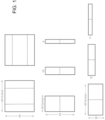
- TT split may be allowed for a coding block with block size 64x64
- BT split may be allowed for block sizes 32x64, 16x64, 8x64, 64x32, 64x16, 64x8, no matter the maximum transform size is 32x32 or 64x64.
- FIG. 1 is an example of allowing BT and TT split depending on block size.
- intra_subpartitions_split_flag [ x0 ][ y0 ] specifies whether the intra subpartitions split type is horizontal or vertical.
- intra_subpartitions_split_flag[ x0 ][ y0 ] is not present, it is inferred as follows:
- sps_sbt_enabled_flag u(1) [[ if(sps _ sbt_enabled_flag ) sps_sbt_max_size_64_flag u(1) ]] sps_affine_enabled_flag u(1) if(sps_affine_enabled_flag ) ⁇ sps_affine_type_flag u(1) sps_affine_amvr_enabled_flag u(1) sps_affine_prof_enabled_flag u(1) ⁇
- [[ sps _ sbt_max_size_64_flag equal to 0 specifies that the maximum CU width and height for allowing subblock transform is 32 luma samples.
- sps_sbt_max_size_64_flag 1 specifies that the maximum CU width and height for allowing subblock transform is 64 luma samples.
- MaxSbtSize Min MaxTbSizeY , sps_sbt_max_size_64_flag ? 64:32
- log2_transform_skip_max_size_minus2 specifies the maximum block size used for transform skip, and shall be in the range of 0 to 3.
- log2_transform_skip_max_size_minus2 When not present, the value of log2_transform_skip_max_size_minus2 is inferred to be equal to 0.
- MaxTsSize is set equal to 1 ⁇ ( log2_transform_skip_max_size_minus2 + 2 ) . ]]
- ciip_flag [ x0 ][ y0 ] specifies whether the combined inter-picture merge and intra-picture prediction is applied for the current coding unit.
- the array indices x0, y0 specify the location (x0, y0 J of the top-left luma sample of the considered coding block relative to the top-left luma sample of the picture.
- sps_max_luma_transform_size_64 flag 1 specifies that the maximum transform size in luma samples is equal to 64.
- sps_max_luma_transform_size_64_flag 0 specifies that the maximum transform size in luma samples is equal to 32.
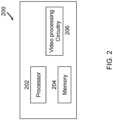
- FIG. 2 is a block diagram of a video processing apparatus 200.
- the apparatus 200 may be used to implement one or more of the methods described herein.
- the apparatus 200 may be embodied in a smartphone, tablet, computer, Internet of Things (IoT) receiver, and so on.
- the apparatus 200 may include one or more processors 202, one or more memories 204 and video processing hardware 206.
- the processor(s) 202 may be configured to implement one or more methods described in the present document.
- the memory (memories) 204 may be used for storing data and code used for implementing the methods and techniques described herein.
- the video processing hardware 206 may be used to implement, in hardware circuitry, some techniques described in the present document. In some embodiments, the video processing hardware 206 may be at least partially within the processors 202 (e.g., a graphics coprocessor).
- the video coding methods may be implemented using an apparatus that is implemented on a hardware platform as described with respect to FIG. 2 .
- Some embodiments of the disclosed technology include making a decision or determination to enable a video processing tool or mode.
- the encoder when the video processing tool or mode is enabled, the encoder will use or implement the tool or mode in the processing of a block of video, but may not necessarily modify the resulting bitstream based on the usage of the tool or mode. That is, a conversion from the block of video to the bitstream representation of the video will use the video processing tool or mode when it is enabled based on the decision or determination.
- the decoder when the video processing tool or mode is enabled, the decoder will process the bitstream with the knowledge that the bitstream has been modified based on the video processing tool or mode. That is, a conversion from the bitstream representation of the video to the block of video will be performed using the video processing tool or mode that was enabled based on the decision or determination.
- Some embodiments of the disclosed technology include making a decision or determination to disable a video processing tool or mode.
- the encoder will not use the tool or mode in the conversion of the block of video to the bitstream representation of the video.
- the decoder will process the bitstream with the knowledge that the bitstream has not been modified using the video processing tool or mode that was enabled based on the decision or determination.
- FIG. 3 is a block diagram showing an example video processing system 300 in which various techniques disclosed herein may be implemented.
- the system 300 may include input 302 for receiving video content.
- the video content may be received in a raw or uncompressed format, e.g., 8 or 10 bit multi-component pixel values, or may be in a compressed or encoded format.
- the input 302 may represent a network interface, a peripheral bus interface, or a storage interface. Examples of network interface include wired interfaces such as Ethernet, passive optical network (PON), etc. and wireless interfaces such as Wi-Fi or cellular interfaces.
- the system 300 may include a coding component 304 that may implement the various coding or encoding methods described in the present document.
- the coding component 304 may reduce the average bitrate of video from the input 302 to the output of the coding component 304 to produce a coded representation of the video.
- the coding techniques are therefore sometimes called video compression or video transcoding techniques.
- the output of the coding component 304 may be either stored, or transmitted via a communication connected, as represented by the component 306.
- the stored or communicated bitstream (or coded) representation of the video received at the input 302 may be used by the component 308 for generating pixel values or displayable video that is sent to a display interface 310.
- the process of generating user-viewable video from the bitstream representation is sometimes called video decompression.
- certain video processing operations are referred to as "coding" operations or tools, it will be appreciated that the coding tools or operations are used at an encoder and corresponding decoding tools or operations that reverse the results of the coding will be performed by
- peripheral bus interface or a display interface may include universal serial bus (USB) or high definition multimedia interface (HDMI) or Displayport, and so on.
- storage interfaces include SATA (serial advanced technology attachment), PCI, IDE interface, and the like.
- FIG. 4 is a flowchart for a method 400 of video processing.
- the method 400 includes, at operation 410, using a dimension of a virtual pipeline data unit (VPDU) used for a conversion between a video comprising one or more video regions comprising one or more video blocks and a bitstream representation of the video to perform a determination of whether a ternary-tree (TT) or a binary tree (BT) partitioning of a video block of the one or more video blocks is enabled, the dimension being equal to VSize in luma samples.
- VPDU virtual pipeline data unit
- the method 400 includes, at operation 420, performing, based on the determination, the conversion.
- FIG. 5 is a flowchart for a method 500 of video processing.
- the method 500 includes, at operation 510, using, for a conversion between a video comprising one or more video regions comprising one or more video blocks and a bitstream representation of the video, a dimension of a video block of the one or more video blocks to perform a determination of whether a ternary-tree (TT) or a binary-tree (BT) partitioning of the video block is enabled.
- TT ternary-tree
- BT binary-tree
- the method 500 includes, at operation 520, performing, based on the determination, the conversion.
- FIG. 6 is a flowchart for a method 600 of video processing.
- the method 600 includes, at operation 610, using a height or a width of a video block to perform a determination of whether a coding tool is enabled for a conversion between a video comprising one or more video regions comprising one or more video blocks comprising the video block and a bitstream representation of the video, the determination being based on a comparison between the height or the width with a value N, and N being a positive integer.
- the method 600 includes, at operation 620, performing, based on the determination, the conversion.
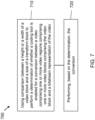
- FIG. 7 is a flowchart for a method 700 of video processing.
- the method 700 includes, at operation 710, using comparison between a height or a width of a video block and a size of a transform block to perform a determination of whether a coding tool is enabled for a conversion between a video comprising one or more video regions comprising one or more video blocks comprising the video block and a bitstream representation of the video.
- the method 700 includes, at operation 720, performing, based on the determination, the conversion.
- FIG. 8 is a flowchart for a method 800 of video processing.
- the method 800 includes, at operation 810, using a height or a width of a video block to perform a determination of whether a coding tool is enabled for a conversion between a video comprising one or more video regions comprising one or more video blocks comprising the video block and a bitstream representation of the video.
- the method 800 includes, at operation 820, performing, based on the determination, the conversion.
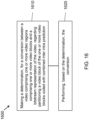
- FIG. 9 is a flowchart for a method 900 of video processing.
- the method 900 includes, at operation 910, using a comparison between a dimension of a sub-partition of a video block and a maximum transform size to perform (a) a determination of whether an intra sub-partition prediction (ISP) mode is enabled for a conversion between a video comprising one or more video regions comprising one or more video blocks comprising the video block, and (b) a selection of one or more allowable partition types for the conversion.
- ISP intra sub-partition prediction
- the method 900 includes, at operation 920, performing, based on the determination and the selection, the conversion.
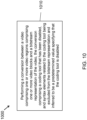
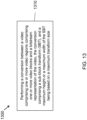
- FIG. 10 is a flowchart for a method 1000 of video processing.
- the method 1000 includes, at operation 1010, performing a conversion between a video comprising one or more video regions comprising one or more video blocks and a bitstream representation of the video, the conversion comprising a coding tool that has been disabled, and syntax elements related to the coding tool being excluded from the bitstream representation and inferred to be a predetermined value specifying that the coding tool is disabled.
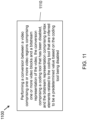
- FIG. 11 is a flowchart for a method 1100 of video processing.
- the method 1100 includes, at operation 1110, performing a conversion between a video comprising one or more video regions comprising one or more video blocks and a bitstream representation of the video, the conversion comprising a coding tool that has been disabled, and the bitstream representation comprising syntax elements related to the coding tool that are inferred to be a predetermined value based on the coding tool being disabled.
- FIG. 12 is a flowchart for a method 1200 of video processing.
- the method 1200 includes, at operation 1210, using a dimension of a virtual pipeline data unit (VPDU) and/or a maximum transform size used for a conversion between a video comprising one or more video regions comprising one or more video blocks and a bitstream representation of the video to perform a determination of whether an implicit (QT) partitioning of a video block of the one or more video blocks is enabled.
- VPDU virtual pipeline data unit
- QT implicit partitioning of a video block of the one or more video blocks
- the method 1200 includes, at operation 1220, performing, based on the determination, the conversion.
- FIG. 13 is a flowchart for a method 1300 of video processing.
- the method 1300 includes, at operation 1310, performing a conversion between a video comprising one or more video regions comprising one or more video blocks and a bitstream representation of the video, the conversion comprising a sub-block transform (SBT), and a maximum height or a maximum width of the SBT being based on a maximum transform size.
- SBT sub-block transform
- FIG. 14 is a flowchart for a method 1400 of video processing.
- the method 1400 includes, at operation 1410, performing a conversion between a video comprising one or more video regions comprising one or more video blocks and a bitstream representation of the video, the conversion comprising a transform skip mode and/or an intra block-based differential pulse code modulation (BDPCM) mode, and a maximum block size used for the transform skip mode being based on a maximum transform size.
- BDPCM intra block-based differential pulse code modulation
- FIG. 15 is a flowchart for a method 1500 of video processing.
- the method 1500 includes, at operation 1510, using a comparison between a height or a width of a video block and a maximum transform size to perform a determination of whether a combined inter intra prediction (CIIP) mode is enabled for a conversion between a video comprising one or more video regions comprising one or more video blocks comprising the video block and a bitstream representation of the video.
- CIIP combined inter intra prediction
- the method 1500 includes, at operation 1520, performing, based on the determination, the conversion.
- FIG. 16 is a flowchart for a method 1600 of video processing.
- the method 1600 includes, at operation 1610, making a determination, for a conversion between a video comprising one or more video regions comprising one or more video blocks and a bitstream representation of the video, regarding partitioning a video block of the one or more video blocks coded with combined inter intra prediction (CIIP).
- CIIP combined inter intra prediction
- the method 1600 includes, at operation 1620, performing, based on the determination, the conversion.
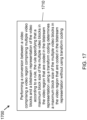
- FIG. 17 is a flowchart for a method 1700 of video processing.
- the method 1700 includes, at operation 1710, performing a conversion between a video comprising a video region comprising multiple video blocks and a bitstream representation of the video according to a rule, the rule specifying that a maximum block size of the multiple video blocks in the video region that are coded in the bitstream representation using a transform coding determines a maximum block size of the multiple video blocks in the video region that are coded in the bitstream representation without using transform coding.
- FIG. 18 is a flowchart for a method 1800 of video processing.
- the method 1800 includes, at operation 1810, performing a conversion between a video comprising a video region comprising multiple video blocks and a bitstream representation of the video according to a rule, the rule specifying that a luma mapping with chroma scaling (LMCS) process is disabled for the video region when lossless coding is enabled for the video region, and the video region being a sequence, a picture, a subpicture, a slice, a tile group, a tile, a brick, a coding tree unit (CTU) row, a CTU, a coding unit (CU), a prediction unit (PU), a transform unit (TU), or a subblock.
- LMCS luma mapping with chroma scaling
- a video block of the one or more video blocks is partitioned into multiple sub-partitions before application of an intra-prediction and transform.
- the SBT comprises one or more transforms being separately applied to one or more partitions of a video block of the one or more video blocks.
- the transform skip mode comprises skipping transform and inverse transform processes for a corresponding coding tool, and in the BDPCM mode, a residual of an intra prediction of the current video block is predictively coded using a differential pulse coding modulation operation.
- a final prediction of the video block is based on a weighted sum of an inter prediction of the video block and an intra prediction of the video block.
- the LMCS process comprises luma samples of the video region being reshaped between a first domain and a second domain and a chroma residual being scaled in a luma-dependent manner.
- the disclosed and other solutions, examples, embodiments, modules and the functional operations described in this document can be implemented in digital electronic circuitry, or in computer software, firmware, or hardware, including the structures disclosed in this document and their structural equivalents, or in combinations of one or more of them.
- the disclosed and other embodiments can be implemented as one or more computer program products, i.e., one or more modules of computer program instructions encoded on a computer readable medium for execution by, or to control the operation of, data processing apparatus.
- the computer readable medium can be a machine-readable storage device, a machine-readable storage substrate, a memory device, a composition of matter effecting a machine-readable propagated signal, or a combination of one or more them.
- data processing apparatus encompasses all apparatus, devices, and machines for processing data, including by way of example a programmable processor, a computer, or multiple processors or computers.
- the apparatus can include, in addition to hardware, code that creates an execution environment for the computer program in question, e.g., code that constitutes processor firmware, a protocol stack, a database management system, an operating system, or a combination of one or more of them.
- a propagated signal is an artificially generated signal, e.g., a machine-generated electrical, optical, or electromagnetic signal, that is generated to encode information for transmission to suitable receiver apparatus.
- a computer program (also known as a program, software, software application, script, or code) can be written in any form of programming language, including compiled or interpreted languages, and it can be deployed in any form, including as a stand-alone program or as a module, component, subroutine, or other unit suitable for use in a computing environment.
- a computer program does not necessarily correspond to a file in a file system.
- a program can be stored in a portion of a file that holds other programs or data (e.g., one or more scripts stored in a markup language document), in a single file dedicated to the program in question, or in multiple coordinated files (e.g., files that store one or more modules, sub programs, or portions of code).
- a computer program can be deployed to be executed on one computer or on multiple computers that are located at one site or distributed across multiple sites and interconnected by a communication network.
- the processes and logic flows described in this document can be performed by one or more programmable processors executing one or more computer programs to perform functions by operating on input data and generating output.
- the processes and logic flows can also be performed by, and apparatus can also be implemented as, special purpose logic circuitry, e.g., an FPGA (field programmable gate array) or an ASIC (application specific integrated circuit).
- processors suitable for the execution of a computer program include, by way of example, both general and special purpose microprocessors, and any one or more processors of any kind of digital computer.
- a processor will receive instructions and data from a read only memory or a random-access memory or both.
- the essential elements of a computer are a processor for performing instructions and one or more memory devices for storing instructions and data.
- a computer will also include, or be operatively coupled to receive data from or transfer data to, or both, one or more mass storage devices for storing data, e.g., magnetic, magneto optical disks, or optical disks.
- mass storage devices for storing data, e.g., magnetic, magneto optical disks, or optical disks.
- a computer need not have such devices.
- Computer readable media suitable for storing computer program instructions and data include all forms of non-volatile memory, media and memory devices, including by way of example semiconductor memory devices, e.g., EPROM, EEPROM, and flash memory devices; magnetic disks, e.g., internal hard disks or removable disks; magneto optical disks; and CD ROM and DVD-ROM disks.
- semiconductor memory devices e.g., EPROM, EEPROM, and flash memory devices
- magnetic disks e.g., internal hard disks or removable disks
- magneto optical disks e.g., CD ROM and DVD-ROM disks.
- the processor and the memory can be supplemented by, or incorporated in, special purpose logic circuitry.
Landscapes
- Engineering & Computer Science (AREA)
- Multimedia (AREA)
- Signal Processing (AREA)
- Theoretical Computer Science (AREA)
- Computing Systems (AREA)
- Physics & Mathematics (AREA)
- General Physics & Mathematics (AREA)
- Compression Or Coding Systems Of Tv Signals (AREA)
- Discrete Mathematics (AREA)
- Processing Or Creating Images (AREA)
- Two-Way Televisions, Distribution Of Moving Picture Or The Like (AREA)
Applications Claiming Priority (3)
| Application Number | Priority Date | Filing Date | Title |
|---|---|---|---|
| CN2019097926 | 2019-07-26 | ||
| CN2019103892 | 2019-08-31 | ||
| PCT/CN2020/104786 WO2021018083A1 (en) | 2019-07-26 | 2020-07-27 | Block size dependent use of video coding mode |
Publications (3)
| Publication Number | Publication Date |
|---|---|
| EP3987776A1 EP3987776A1 (en) | 2022-04-27 |
| EP3987776A4 EP3987776A4 (en) | 2022-10-19 |
| EP3987776B1 true EP3987776B1 (en) | 2025-01-08 |
Family
ID=74230173
Family Applications (2)
| Application Number | Title | Priority Date | Filing Date |
|---|---|---|---|
| EP20847404.9A Active EP3987776B1 (en) | 2019-07-26 | 2020-07-27 | Block size dependent use of video coding mode |
| EP20847406.4A Pending EP3991429A4 (en) | 2019-07-26 | 2020-07-27 | DETERMINING AN IMAGE PARTITION MODE BASED ON BLOCK SIZE |
Family Applications After (1)
| Application Number | Title | Priority Date | Filing Date |
|---|---|---|---|
| EP20847406.4A Pending EP3991429A4 (en) | 2019-07-26 | 2020-07-27 | DETERMINING AN IMAGE PARTITION MODE BASED ON BLOCK SIZE |
Country Status (14)
| Country | Link |
|---|---|
| US (4) | US11659179B2 (pl) |
| EP (2) | EP3987776B1 (pl) |
| JP (3) | JP7369273B2 (pl) |
| KR (2) | KR102698191B1 (pl) |
| CN (3) | CN114175632B (pl) |
| AU (1) | AU2020321002B2 (pl) |
| CA (1) | CA3148299C (pl) |
| ES (1) | ES3007437T3 (pl) |
| HU (1) | HUE070959T2 (pl) |
| MX (1) | MX2022000716A (pl) |
| PH (1) | PH12022550201A1 (pl) |
| PL (1) | PL3987776T3 (pl) |
| WO (2) | WO2021018082A1 (pl) |
| ZA (1) | ZA202201250B (pl) |
Families Citing this family (10)
| Publication number | Priority date | Publication date | Assignee | Title |
|---|---|---|---|---|
| CN116248874B (zh) | 2016-10-10 | 2026-03-20 | 三星电子株式会社 | 通过块映射来对图像进行编码或解码的方法和装置 |
| CN114175632B (zh) | 2019-07-26 | 2024-07-05 | 北京字节跳动网络技术有限公司 | 对视频编解码模式的块尺寸相关使用 |
| JP7655899B2 (ja) * | 2019-09-13 | 2025-04-02 | インターディジタル・シーイー・パテント・ホールディングス・ソシエテ・パ・アクシオンス・シンプリフィエ | コード化ツールとの変換サイズの相互作用 |
| US11943478B2 (en) * | 2019-09-19 | 2024-03-26 | Telefonaktiebolaget Lm Ericsson (Publ) | Allowing a matrix based intra prediction block to have multiple transform blocks |
| CN110865859B (zh) * | 2019-10-29 | 2021-10-22 | 维沃移动通信有限公司 | 图片显示方法、装置、电子设备及介质 |
| US11323732B2 (en) * | 2020-04-13 | 2022-05-03 | Tencent America LLC | Method and apparatus for video coding |
| US11863786B2 (en) * | 2021-05-21 | 2024-01-02 | Varjo Technologies Oy | Method of transporting a framebuffer |
| WO2023193721A1 (en) * | 2022-04-05 | 2023-10-12 | Beijing Bytedance Network Technology Co., Ltd. | Method, apparatus, and medium for video processing |
| CN118923108A (zh) * | 2022-04-12 | 2024-11-08 | Lg 电子株式会社 | 图像编码/解码方法和设备及其上存储比特流的记录介质 |
| US12568224B2 (en) * | 2022-07-11 | 2026-03-03 | Samsung Electronics Co., Ltd. | EVC decoding complexity metrics |
Family Cites Families (69)
| Publication number | Priority date | Publication date | Assignee | Title |
|---|---|---|---|---|
| JP2012080213A (ja) * | 2010-09-30 | 2012-04-19 | Mitsubishi Electric Corp | 動画像符号化装置、動画像復号装置、動画像符号化方法及び動画像復号方法 |
| CN103299637B (zh) | 2011-01-12 | 2016-06-29 | 三菱电机株式会社 | 图像编码装置、图像译码装置、图像编码方法以及图像译码方法 |
| EP4266683B1 (en) | 2011-06-24 | 2025-01-22 | Mitsubishi Electric Corporation | Moving image encoding apparatus, moving image decoding apparatus |
| US20130083840A1 (en) * | 2011-09-30 | 2013-04-04 | Broadcom Corporation | Advance encode processing based on raw video data |
| JP2014045434A (ja) | 2012-08-28 | 2014-03-13 | Nippon Hoso Kyokai <Nhk> | 画像符号化装置、画像復号装置及びそれらのプログラム |
| JP6341426B2 (ja) | 2012-09-10 | 2018-06-13 | サン パテント トラスト | 画像復号化方法および画像復号化装置 |
| US9357212B2 (en) | 2012-12-07 | 2016-05-31 | Qualcomm Incorporated | Advanced residual prediction in scalable and multi-view video coding |
| WO2015012600A1 (ko) * | 2013-07-23 | 2015-01-29 | 성균관대학교 산학협력단 | 영상 부호화/복호화 방법 및 장치 |
| AU2014376061B8 (en) | 2014-01-03 | 2019-05-30 | Microsoft Technology Licensing, Llc | Block vector prediction in video and image coding/decoding |
| CN106105212A (zh) | 2014-03-07 | 2016-11-09 | 高通股份有限公司 | 简化的子预测单元(sub‑pu)运动参数继承(mpi) |
| US10271052B2 (en) * | 2014-03-14 | 2019-04-23 | Qualcomm Incorporated | Universal color-space inverse transform coding |
| WO2015142556A2 (en) * | 2014-03-16 | 2015-09-24 | Vid Scale, Inc. | Method and apparatus for the signaling of lossless video coding |
| US9838712B2 (en) | 2014-03-17 | 2017-12-05 | Hfi Innovation Inc. | Method of signaling for depth-based block partitioning |
| US9877034B2 (en) | 2014-04-14 | 2018-01-23 | Avago Technologies General Ip (Singapore) Pte. Ltd. | Pipelined video decoder system |
| US10327001B2 (en) * | 2014-06-19 | 2019-06-18 | Qualcomm Incorporated | Systems and methods for intra-block copy |
| US20160234510A1 (en) | 2014-06-20 | 2016-08-11 | Mediatek Inc. | Method of Coding for Depth Based Block Partitioning Mode in Three-Dimensional or Multi-view Video Coding |
| EP3143767B1 (en) * | 2014-06-20 | 2022-06-01 | HFI Innovation Inc. | Method of palette predictor signaling for video coding |
| WO2016074147A1 (en) * | 2014-11-11 | 2016-05-19 | Mediatek Singapore Pte. Ltd. | Separated coding tree for luma and chroma |
| WO2016090568A1 (en) * | 2014-12-10 | 2016-06-16 | Mediatek Singapore Pte. Ltd. | Binary tree block partitioning structure |
| US10306229B2 (en) * | 2015-01-26 | 2019-05-28 | Qualcomm Incorporated | Enhanced multiple transforms for prediction residual |
| US20180115787A1 (en) | 2015-04-12 | 2018-04-26 | Lg Electronics Inc. | Method for encoding and decoding video signal, and apparatus therefor |
| US11233998B2 (en) * | 2015-05-29 | 2022-01-25 | Qualcomm Incorporated | Coding data using an enhanced context-adaptive binary arithmetic coding (CABAC) design |
| CN106254870B (zh) * | 2015-06-08 | 2020-08-18 | 财团法人工业技术研究院 | 采用自适性色彩转换的视频编码方法、系统和计算机可读取记录介质 |
| US10390020B2 (en) * | 2015-06-08 | 2019-08-20 | Industrial Technology Research Institute | Video encoding methods and systems using adaptive color transform |
| KR102199463B1 (ko) | 2015-08-31 | 2021-01-06 | 삼성전자주식회사 | 스캔 순서를 고려한 영상의 변환 방법 및 그 장치, 및 역변환 방법 및 그 장치 |
| EP3376764A4 (en) * | 2015-11-12 | 2019-12-04 | LG Electronics Inc. | METHOD AND DEVICE FOR COEFFICIENT-INDUCED INTRAPREDICATION IN A BILDCODING SYSTEM |
| US10440399B2 (en) * | 2015-11-13 | 2019-10-08 | Qualcomm Incorporated | Coding sign information of video data |
| US20170150156A1 (en) | 2015-11-25 | 2017-05-25 | Qualcomm Incorporated | Illumination compensation with non-square predictive blocks in video coding |
| US10212444B2 (en) | 2016-01-15 | 2019-02-19 | Qualcomm Incorporated | Multi-type-tree framework for video coding |
| EP3430808A4 (en) * | 2016-03-16 | 2020-01-15 | Mediatek Inc. | METHOD AND APPARATUS FOR PROCESSING VIDEO DATA WITH A RESTRICTED BLOCK LENGTH IN VIDEO CODING |
| CN116781902A (zh) * | 2016-06-24 | 2023-09-19 | 世宗大学校产学协力团 | 视频信号解码和编码方法、比特流的传输方法 |
| US20190327476A1 (en) * | 2016-06-24 | 2019-10-24 | Industry Academy Cooperation Foundation Of Sejong University | Video signal processing method and device |
| ES3063575T3 (en) * | 2016-10-04 | 2026-04-17 | B1 Institute Image Technology Inc | Image data encoding/decoding method and apparatus |
| US20180109814A1 (en) * | 2016-10-14 | 2018-04-19 | Mediatek Inc. | Method And Apparatus Of Coding Unit Information Inheritance |
| CN109923866B (zh) * | 2016-11-08 | 2023-07-21 | 株式会社Kt | 视频解码方法、编码方法 |
| JPWO2018123315A1 (ja) * | 2016-12-26 | 2019-10-31 | 日本電気株式会社 | 映像符号化方法、映像復号方法、映像符号化装置、映像復号装置及びプログラム |
| CN108702507A (zh) * | 2016-12-26 | 2018-10-23 | 日本电气株式会社 | 视频编码方法、视频解码方法、视频编码设备、视频解码设备以及程序 |
| AU2017393148A1 (en) | 2017-01-12 | 2019-07-25 | Sony Corporation | Image processing device and image processing method |
| CN117201819A (zh) | 2017-05-26 | 2023-12-08 | Sk电信有限公司 | 对视频数据进行编码或解码的方法和存储比特流的方法 |
| US20180367818A1 (en) * | 2017-06-15 | 2018-12-20 | Futurewei Technologies, Inc. | Block Partition Structure in Video Compression |
| CN109151477B (zh) * | 2017-06-28 | 2020-08-07 | 华为技术有限公司 | 一种图像数据的编码、解码方法及装置 |
| WO2019059676A1 (ko) | 2017-09-20 | 2019-03-28 | 한국전자통신연구원 | 영상 부호화/복호화 방법, 장치 및 비트스트림을 저장한 기록 매체 |
| JP2021010046A (ja) * | 2017-10-06 | 2021-01-28 | シャープ株式会社 | 画像符号化装置及び画像復号装置 |
| JP7033946B2 (ja) * | 2017-11-01 | 2022-03-11 | 日本放送協会 | 画像符号化装置及び画像符号化プログラム |
| US11039143B2 (en) * | 2017-11-20 | 2021-06-15 | Qualcomm Incorporated | Memory reduction for context initialization with temporal prediction |
| WO2019131651A1 (en) | 2017-12-29 | 2019-07-04 | Sharp Kabushiki Kaisha | Systems and methods for partitioning video blocks at a boundary of a picture for video coding |
| US11470359B2 (en) | 2018-03-30 | 2022-10-11 | Sharp Kabushiki Kaisha | Systems and methods for partitioning video blocks at a boundary of a picture for video coding |
| US10284866B1 (en) * | 2018-07-02 | 2019-05-07 | Tencent America LLC | Method and apparatus for video coding |
| US10609403B2 (en) | 2018-07-09 | 2020-03-31 | Tencent America LLC | Method and apparatus for block partition with non-uniform quad split |
| US12143580B2 (en) * | 2018-07-14 | 2024-11-12 | Hfi Innovation Inc. | Methods and apparatuses of processing video pictures with partition constraints in a video coding system |
| US10743029B2 (en) | 2018-07-30 | 2020-08-11 | Tencent America LLC | Constraints on coding unit partition |
| EP3836545B1 (en) * | 2018-09-22 | 2023-11-15 | Lg Electronics Inc. | Method for processing video signals using inter prediction |
| US20200120339A1 (en) | 2018-10-11 | 2020-04-16 | Mediatek Inc. | Intra Prediction For Multi-Hypothesis |
| WO2020079667A1 (en) | 2018-10-19 | 2020-04-23 | Takeda Pharmaceutical Company Limited | Image scoring for intestinal pathology |
| BR112021007863A2 (pt) | 2018-11-02 | 2021-07-27 | Beijing Bytedance Network Technology Co., Ltd. | método e aparelho para processar dados de vídeo, e, meios de armazenamento e de gravação legíveis por computador não transitórios |
| WO2020094079A1 (en) | 2018-11-06 | 2020-05-14 | Beijing Bytedance Network Technology Co., Ltd. | Block size dependent storage of motion information |
| WO2020094151A1 (en) | 2018-11-10 | 2020-05-14 | Beijing Bytedance Network Technology Co., Ltd. | Rounding in pairwise average candidate calculations |
| WO2020103935A1 (en) | 2018-11-22 | 2020-05-28 | Beijing Bytedance Network Technology Co., Ltd. | Blending method for inter prediction with geometry partition |
| CN113170150B (zh) | 2018-12-03 | 2024-02-27 | 北京字节跳动网络技术有限公司 | 基于历史的运动矢量预测(hmvp)模式的部分修剪方法 |
| US10999594B2 (en) | 2018-12-20 | 2021-05-04 | Qualcomm Incorporated | Virtual search area for current picture referencing (CPR) and intra block copy (IBC) |
| KR20200083317A (ko) | 2018-12-31 | 2020-07-08 | 한국전자통신연구원 | 영상 부호화/복호화 방법, 장치 및 비트스트림을 저장한 기록 매체 |
| KR20250114566A (ko) * | 2019-01-12 | 2025-07-29 | (주)휴맥스 | 다중 변환 커널을 사용하는 비디오 신호 처리 방법 및 장치 |
| US20200252608A1 (en) * | 2019-02-05 | 2020-08-06 | Qualcomm Incorporated | Sub-partition intra prediction |
| WO2020164479A1 (en) | 2019-02-11 | 2020-08-20 | Beijing Bytedance Network Technology Co., Ltd. | Video block partition based on quinary tree |
| WO2020164628A1 (en) * | 2019-02-17 | 2020-08-20 | Beijing Bytedance Network Technology Co., Ltd. | Motion candidate list construction for intra block copy (ibc) mode and non-ibc inter mode |
| US11159795B2 (en) * | 2019-03-04 | 2021-10-26 | Tencent America LLC | Max transform size control |
| US11032543B2 (en) | 2019-03-22 | 2021-06-08 | Tencent America LLC | Method and apparatus for video coding |
| CN114175632B (zh) | 2019-07-26 | 2024-07-05 | 北京字节跳动网络技术有限公司 | 对视频编解码模式的块尺寸相关使用 |
| US11399199B2 (en) * | 2019-08-05 | 2022-07-26 | Qualcomm Incorporated | Chroma intra prediction units for video coding |
-
2020
- 2020-07-27 CN CN202080054200.9A patent/CN114175632B/zh active Active
- 2020-07-27 CN CN202311469575.3A patent/CN117354527A/zh active Pending
- 2020-07-27 ES ES20847404T patent/ES3007437T3/es active Active
- 2020-07-27 EP EP20847404.9A patent/EP3987776B1/en active Active
- 2020-07-27 JP JP2022505204A patent/JP7369273B2/ja active Active
- 2020-07-27 PH PH1/2022/550201A patent/PH12022550201A1/en unknown
- 2020-07-27 PL PL20847404.9T patent/PL3987776T3/pl unknown
- 2020-07-27 CN CN202080054122.2A patent/CN114175657B/zh active Active
- 2020-07-27 WO PCT/CN2020/104785 patent/WO2021018082A1/en not_active Ceased
- 2020-07-27 WO PCT/CN2020/104786 patent/WO2021018083A1/en not_active Ceased
- 2020-07-27 KR KR1020227001472A patent/KR102698191B1/ko active Active
- 2020-07-27 AU AU2020321002A patent/AU2020321002B2/en active Active
- 2020-07-27 JP JP2022505205A patent/JP7383119B2/ja active Active
- 2020-07-27 MX MX2022000716A patent/MX2022000716A/es unknown
- 2020-07-27 KR KR1020227001503A patent/KR102825449B1/ko active Active
- 2020-07-27 EP EP20847406.4A patent/EP3991429A4/en active Pending
- 2020-07-27 CA CA3148299A patent/CA3148299C/en active Active
- 2020-07-27 HU HUE20847404A patent/HUE070959T2/hu unknown
-
2022
- 2022-01-24 US US17/582,690 patent/US11659179B2/en active Active
- 2022-01-24 US US17/582,600 patent/US11539949B2/en active Active
- 2022-01-24 US US17/582,739 patent/US11930175B2/en active Active
- 2022-01-26 ZA ZA2022/01250A patent/ZA202201250B/en unknown
-
2023
- 2023-11-06 JP JP2023189116A patent/JP7640646B2/ja active Active
- 2023-11-27 US US18/519,287 patent/US12439044B2/en active Active
Also Published As
Similar Documents
| Publication | Publication Date | Title |
|---|---|---|
| EP3987776B1 (en) | Block size dependent use of video coding mode | |
| US12047558B2 (en) | Subpicture dependent signaling in video bitstreams | |
| CN115244924B (zh) | 跨分量自适应环路滤波器的信令通知 | |
| CN113519164B (zh) | 对分割结构的限制 | |
| JP7482220B2 (ja) | サブピクチャのパラメータセットシグナリングにおける構文制約 | |
| CN114556924A (zh) | 视频处理中色度残差的联合编解码与滤波 | |
| US12143641B2 (en) | Interplay between picture header and slice header of a video bitstream | |
| WO2021063421A1 (en) | Syntax for subpicture signaling in a video bitstream | |
| CN114402611A (zh) | 色度去块滤波的量化参数 | |
| CN115362682B (zh) | 视频比特流中编解码信息的信令通知 | |
| WO2021018081A1 (en) | Configurable coding tree unit size in video coding | |
| CN115362677A (zh) | 在视频比特流中以子图片级别信令通知参数 | |
| KR102956246B1 (ko) | 비디오 비트스트림들에서의 서브픽처 의존적 시그널링 | |
| CN115462085B (zh) | 视频处理方法、装置及可读记录介质 |
Legal Events
| Date | Code | Title | Description |
|---|---|---|---|
| STAA | Information on the status of an ep patent application or granted ep patent |
Free format text: STATUS: THE INTERNATIONAL PUBLICATION HAS BEEN MADE |
|
| PUAI | Public reference made under article 153(3) epc to a published international application that has entered the european phase |
Free format text: ORIGINAL CODE: 0009012 |
|
| STAA | Information on the status of an ep patent application or granted ep patent |
Free format text: STATUS: REQUEST FOR EXAMINATION WAS MADE |
|
| 17P | Request for examination filed |
Effective date: 20220124 |
|
| AK | Designated contracting states |
Kind code of ref document: A1 Designated state(s): AL AT BE BG CH CY CZ DE DK EE ES FI FR GB GR HR HU IE IS IT LI LT LU LV MC MK MT NL NO PL PT RO RS SE SI SK SM TR |
|
| A4 | Supplementary search report drawn up and despatched |
Effective date: 20220915 |
|
| RIC1 | Information provided on ipc code assigned before grant |
Ipc: H04N 19/436 20140101ALI20220909BHEP Ipc: H04N 19/96 20140101ALI20220909BHEP Ipc: H04N 19/70 20140101ALI20220909BHEP Ipc: H04N 19/176 20140101ALI20220909BHEP Ipc: H04N 19/156 20140101ALI20220909BHEP Ipc: H04N 19/119 20140101ALI20220909BHEP Ipc: H04N 19/102 20140101ALI20220909BHEP Ipc: H04N 19/00 20140101AFI20220909BHEP |
|
| DAV | Request for validation of the european patent (deleted) | ||
| DAX | Request for extension of the european patent (deleted) | ||
| GRAP | Despatch of communication of intention to grant a patent |
Free format text: ORIGINAL CODE: EPIDOSNIGR1 |
|
| STAA | Information on the status of an ep patent application or granted ep patent |
Free format text: STATUS: GRANT OF PATENT IS INTENDED |
|
| INTG | Intention to grant announced |
Effective date: 20240802 |
|
| GRAS | Grant fee paid |
Free format text: ORIGINAL CODE: EPIDOSNIGR3 |
|
| GRAA | (expected) grant |
Free format text: ORIGINAL CODE: 0009210 |
|
| STAA | Information on the status of an ep patent application or granted ep patent |
Free format text: STATUS: THE PATENT HAS BEEN GRANTED |
|
| P01 | Opt-out of the competence of the unified patent court (upc) registered |
Free format text: CASE NUMBER: APP_62000/2024 Effective date: 20241120 |
|
| AK | Designated contracting states |
Kind code of ref document: B1 Designated state(s): AL AT BE BG CH CY CZ DE DK EE ES FI FR GB GR HR HU IE IS IT LI LT LU LV MC MK MT NL NO PL PT RO RS SE SI SK SM TR |
|
| REG | Reference to a national code |
Ref country code: GB Ref legal event code: FG4D |
|
| REG | Reference to a national code |
Ref country code: CH Ref legal event code: EP |
|
| REG | Reference to a national code |
Ref country code: DE Ref legal event code: R096 Ref document number: 602020044613 Country of ref document: DE |
|
| REG | Reference to a national code |
Ref country code: IE Ref legal event code: FG4D |
|
| REG | Reference to a national code |
Ref country code: ES Ref legal event code: FG2A Ref document number: 3007437 Country of ref document: ES Kind code of ref document: T3 Effective date: 20250320 |
|
| REG | Reference to a national code |
Ref country code: NL Ref legal event code: FP Ref country code: SK Ref legal event code: T3 Ref document number: E 45898 Country of ref document: SK |
|
| REG | Reference to a national code |
Ref country code: SE Ref legal event code: TRGR |
|
| REG | Reference to a national code |
Ref country code: LT Ref legal event code: MG9D |
|
| REG | Reference to a national code |
Ref country code: AT Ref legal event code: MK05 Ref document number: 1759078 Country of ref document: AT Kind code of ref document: T Effective date: 20250108 |
|
| PG25 | Lapsed in a contracting state [announced via postgrant information from national office to epo] |
Ref country code: RS Free format text: LAPSE BECAUSE OF FAILURE TO SUBMIT A TRANSLATION OF THE DESCRIPTION OR TO PAY THE FEE WITHIN THE PRESCRIBED TIME-LIMIT Effective date: 20250408 |
|
| PG25 | Lapsed in a contracting state [announced via postgrant information from national office to epo] |
Ref country code: FI Free format text: LAPSE BECAUSE OF FAILURE TO SUBMIT A TRANSLATION OF THE DESCRIPTION OR TO PAY THE FEE WITHIN THE PRESCRIBED TIME-LIMIT Effective date: 20250108 |
|
| PGFP | Annual fee paid to national office [announced via postgrant information from national office to epo] |
Ref country code: GB Payment date: 20250617 Year of fee payment: 6 |
|
| PG25 | Lapsed in a contracting state [announced via postgrant information from national office to epo] |
Ref country code: IS Free format text: LAPSE BECAUSE OF FAILURE TO SUBMIT A TRANSLATION OF THE DESCRIPTION OR TO PAY THE FEE WITHIN THE PRESCRIBED TIME-LIMIT Effective date: 20250508 Ref country code: NO Free format text: LAPSE BECAUSE OF FAILURE TO SUBMIT A TRANSLATION OF THE DESCRIPTION OR TO PAY THE FEE WITHIN THE PRESCRIBED TIME-LIMIT Effective date: 20250408 |
|
| PGFP | Annual fee paid to national office [announced via postgrant information from national office to epo] |
Ref country code: NL Payment date: 20250619 Year of fee payment: 6 |
|
| PG25 | Lapsed in a contracting state [announced via postgrant information from national office to epo] |
Ref country code: HR Free format text: LAPSE BECAUSE OF FAILURE TO SUBMIT A TRANSLATION OF THE DESCRIPTION OR TO PAY THE FEE WITHIN THE PRESCRIBED TIME-LIMIT Effective date: 20250108 |
|
| PG25 | Lapsed in a contracting state [announced via postgrant information from national office to epo] |
Ref country code: LV Free format text: LAPSE BECAUSE OF FAILURE TO SUBMIT A TRANSLATION OF THE DESCRIPTION OR TO PAY THE FEE WITHIN THE PRESCRIBED TIME-LIMIT Effective date: 20250108 Ref country code: PT Free format text: LAPSE BECAUSE OF FAILURE TO SUBMIT A TRANSLATION OF THE DESCRIPTION OR TO PAY THE FEE WITHIN THE PRESCRIBED TIME-LIMIT Effective date: 20250508 |
|
| PGFP | Annual fee paid to national office [announced via postgrant information from national office to epo] |
Ref country code: FR Payment date: 20250612 Year of fee payment: 6 |
|
| PG25 | Lapsed in a contracting state [announced via postgrant information from national office to epo] |
Ref country code: GR Free format text: LAPSE BECAUSE OF FAILURE TO SUBMIT A TRANSLATION OF THE DESCRIPTION OR TO PAY THE FEE WITHIN THE PRESCRIBED TIME-LIMIT Effective date: 20250409 Ref country code: BG Free format text: LAPSE BECAUSE OF FAILURE TO SUBMIT A TRANSLATION OF THE DESCRIPTION OR TO PAY THE FEE WITHIN THE PRESCRIBED TIME-LIMIT Effective date: 20250108 |
|
| PG25 | Lapsed in a contracting state [announced via postgrant information from national office to epo] |
Ref country code: AT Free format text: LAPSE BECAUSE OF FAILURE TO SUBMIT A TRANSLATION OF THE DESCRIPTION OR TO PAY THE FEE WITHIN THE PRESCRIBED TIME-LIMIT Effective date: 20250108 |
|
| PGFP | Annual fee paid to national office [announced via postgrant information from national office to epo] |
Ref country code: TR Payment date: 20250610 Year of fee payment: 6 Ref country code: SK Payment date: 20250624 Year of fee payment: 6 |
|
| REG | Reference to a national code |
Ref country code: HU Ref legal event code: AG4A Ref document number: E070959 Country of ref document: HU |
|
| PGFP | Annual fee paid to national office [announced via postgrant information from national office to epo] |
Ref country code: SE Payment date: 20250610 Year of fee payment: 6 |
|
| PGFP | Annual fee paid to national office [announced via postgrant information from national office to epo] |
Ref country code: HU Payment date: 20250721 Year of fee payment: 6 |
|
| PG25 | Lapsed in a contracting state [announced via postgrant information from national office to epo] |
Ref country code: SM Free format text: LAPSE BECAUSE OF FAILURE TO SUBMIT A TRANSLATION OF THE DESCRIPTION OR TO PAY THE FEE WITHIN THE PRESCRIBED TIME-LIMIT Effective date: 20250108 |
|
| PGFP | Annual fee paid to national office [announced via postgrant information from national office to epo] |
Ref country code: ES Payment date: 20250819 Year of fee payment: 6 |
|
| REG | Reference to a national code |
Ref country code: DE Ref legal event code: R097 Ref document number: 602020044613 Country of ref document: DE |
|
| PG25 | Lapsed in a contracting state [announced via postgrant information from national office to epo] |
Ref country code: DK Free format text: LAPSE BECAUSE OF FAILURE TO SUBMIT A TRANSLATION OF THE DESCRIPTION OR TO PAY THE FEE WITHIN THE PRESCRIBED TIME-LIMIT Effective date: 20250108 |
|
| PGFP | Annual fee paid to national office [announced via postgrant information from national office to epo] |
Ref country code: DE Payment date: 20250722 Year of fee payment: 6 |
|
| PGFP | Annual fee paid to national office [announced via postgrant information from national office to epo] |
Ref country code: PL Payment date: 20250710 Year of fee payment: 6 |
|
| PG25 | Lapsed in a contracting state [announced via postgrant information from national office to epo] |
Ref country code: EE Free format text: LAPSE BECAUSE OF FAILURE TO SUBMIT A TRANSLATION OF THE DESCRIPTION OR TO PAY THE FEE WITHIN THE PRESCRIBED TIME-LIMIT Effective date: 20250108 Ref country code: CZ Free format text: LAPSE BECAUSE OF FAILURE TO SUBMIT A TRANSLATION OF THE DESCRIPTION OR TO PAY THE FEE WITHIN THE PRESCRIBED TIME-LIMIT Effective date: 20250108 |
|
| PG25 | Lapsed in a contracting state [announced via postgrant information from national office to epo] |
Ref country code: RO Free format text: LAPSE BECAUSE OF FAILURE TO SUBMIT A TRANSLATION OF THE DESCRIPTION OR TO PAY THE FEE WITHIN THE PRESCRIBED TIME-LIMIT Effective date: 20250108 |
|
| PLBE | No opposition filed within time limit |
Free format text: ORIGINAL CODE: 0009261 |
|
| STAA | Information on the status of an ep patent application or granted ep patent |
Free format text: STATUS: NO OPPOSITION FILED WITHIN TIME LIMIT |
|
| REG | Reference to a national code |
Ref country code: CH Ref legal event code: L10 Free format text: ST27 STATUS EVENT CODE: U-0-0-L10-L00 (AS PROVIDED BY THE NATIONAL OFFICE) Effective date: 20251119 |
|
| 26N | No opposition filed |
Effective date: 20251009 |
|
| REG | Reference to a national code |
Ref country code: CH Ref legal event code: H13 Free format text: ST27 STATUS EVENT CODE: U-0-0-H10-H13 (AS PROVIDED BY THE NATIONAL OFFICE) Effective date: 20260224 |
|
| PG25 | Lapsed in a contracting state [announced via postgrant information from national office to epo] |
Ref country code: LU Free format text: LAPSE BECAUSE OF NON-PAYMENT OF DUE FEES Effective date: 20250727 |
|
| REG | Reference to a national code |
Ref country code: BE Ref legal event code: MM Effective date: 20250731 |
|
| PG25 | Lapsed in a contracting state [announced via postgrant information from national office to epo] |
Ref country code: BE Free format text: LAPSE BECAUSE OF NON-PAYMENT OF DUE FEES Effective date: 20250731 |