EP3984780B1 - Tire with shallow groove-based tread wear indicator - Google Patents
Tire with shallow groove-based tread wear indicator Download PDFInfo
- Publication number
- EP3984780B1 EP3984780B1 EP21202178.6A EP21202178A EP3984780B1 EP 3984780 B1 EP3984780 B1 EP 3984780B1 EP 21202178 A EP21202178 A EP 21202178A EP 3984780 B1 EP3984780 B1 EP 3984780B1
- Authority
- EP
- European Patent Office
- Prior art keywords
- tire
- tread
- shallow groove
- wear indicator
- tread wear
- Prior art date
- Legal status (The legal status is an assumption and is not a legal conclusion. Google has not performed a legal analysis and makes no representation as to the accuracy of the status listed.)
- Active
Links
Images



Classifications
-
- B—PERFORMING OPERATIONS; TRANSPORTING
- B60—VEHICLES IN GENERAL
- B60C—VEHICLE TYRES; TYRE INFLATION; TYRE CHANGING; CONNECTING VALVES TO INFLATABLE ELASTIC BODIES IN GENERAL; DEVICES OR ARRANGEMENTS RELATED TO TYRES
- B60C11/00—Tyre tread bands; Tread patterns; Anti-skid inserts
- B60C11/24—Wear-indicating arrangements
-
- B—PERFORMING OPERATIONS; TRANSPORTING
- B60—VEHICLES IN GENERAL
- B60C—VEHICLE TYRES; TYRE INFLATION; TYRE CHANGING; CONNECTING VALVES TO INFLATABLE ELASTIC BODIES IN GENERAL; DEVICES OR ARRANGEMENTS RELATED TO TYRES
- B60C11/00—Tyre tread bands; Tread patterns; Anti-skid inserts
- B60C11/03—Tread patterns
- B60C11/0302—Tread patterns directional pattern, i.e. with main rolling direction
-
- B—PERFORMING OPERATIONS; TRANSPORTING
- B60—VEHICLES IN GENERAL
- B60C—VEHICLE TYRES; TYRE INFLATION; TYRE CHANGING; CONNECTING VALVES TO INFLATABLE ELASTIC BODIES IN GENERAL; DEVICES OR ARRANGEMENTS RELATED TO TYRES
- B60C11/00—Tyre tread bands; Tread patterns; Anti-skid inserts
- B60C11/03—Tread patterns
- B60C11/0304—Asymmetric patterns
-
- B—PERFORMING OPERATIONS; TRANSPORTING
- B60—VEHICLES IN GENERAL
- B60C—VEHICLE TYRES; TYRE INFLATION; TYRE CHANGING; CONNECTING VALVES TO INFLATABLE ELASTIC BODIES IN GENERAL; DEVICES OR ARRANGEMENTS RELATED TO TYRES
- B60C11/00—Tyre tread bands; Tread patterns; Anti-skid inserts
- B60C11/03—Tread patterns
- B60C11/0306—Patterns comprising block rows or discontinuous ribs
-
- B—PERFORMING OPERATIONS; TRANSPORTING
- B60—VEHICLES IN GENERAL
- B60C—VEHICLE TYRES; TYRE INFLATION; TYRE CHANGING; CONNECTING VALVES TO INFLATABLE ELASTIC BODIES IN GENERAL; DEVICES OR ARRANGEMENTS RELATED TO TYRES
- B60C11/00—Tyre tread bands; Tread patterns; Anti-skid inserts
- B60C11/03—Tread patterns
- B60C2011/0337—Tread patterns characterised by particular design features of the pattern
- B60C2011/0339—Grooves
- B60C2011/0341—Circumferential grooves
-
- B—PERFORMING OPERATIONS; TRANSPORTING
- B60—VEHICLES IN GENERAL
- B60C—VEHICLE TYRES; TYRE INFLATION; TYRE CHANGING; CONNECTING VALVES TO INFLATABLE ELASTIC BODIES IN GENERAL; DEVICES OR ARRANGEMENTS RELATED TO TYRES
- B60C11/00—Tyre tread bands; Tread patterns; Anti-skid inserts
- B60C11/03—Tread patterns
- B60C2011/0337—Tread patterns characterised by particular design features of the pattern
- B60C2011/0339—Grooves
- B60C2011/0341—Circumferential grooves
- B60C2011/0344—Circumferential grooves provided at the equatorial plane
-
- B—PERFORMING OPERATIONS; TRANSPORTING
- B60—VEHICLES IN GENERAL
- B60C—VEHICLE TYRES; TYRE INFLATION; TYRE CHANGING; CONNECTING VALVES TO INFLATABLE ELASTIC BODIES IN GENERAL; DEVICES OR ARRANGEMENTS RELATED TO TYRES
- B60C11/00—Tyre tread bands; Tread patterns; Anti-skid inserts
- B60C11/03—Tread patterns
- B60C2011/0337—Tread patterns characterised by particular design features of the pattern
- B60C2011/0339—Grooves
- B60C2011/0341—Circumferential grooves
- B60C2011/0348—Narrow grooves, i.e. having a width of less than 4 mm
-
- B—PERFORMING OPERATIONS; TRANSPORTING
- B60—VEHICLES IN GENERAL
- B60C—VEHICLE TYRES; TYRE INFLATION; TYRE CHANGING; CONNECTING VALVES TO INFLATABLE ELASTIC BODIES IN GENERAL; DEVICES OR ARRANGEMENTS RELATED TO TYRES
- B60C11/00—Tyre tread bands; Tread patterns; Anti-skid inserts
- B60C11/03—Tread patterns
- B60C2011/0337—Tread patterns characterised by particular design features of the pattern
- B60C2011/0339—Grooves
- B60C2011/0341—Circumferential grooves
- B60C2011/0351—Shallow grooves, i.e. having a depth of less than 50% of other grooves
-
- B—PERFORMING OPERATIONS; TRANSPORTING
- B60—VEHICLES IN GENERAL
- B60C—VEHICLE TYRES; TYRE INFLATION; TYRE CHANGING; CONNECTING VALVES TO INFLATABLE ELASTIC BODIES IN GENERAL; DEVICES OR ARRANGEMENTS RELATED TO TYRES
- B60C11/00—Tyre tread bands; Tread patterns; Anti-skid inserts
- B60C11/03—Tread patterns
- B60C2011/0337—Tread patterns characterised by particular design features of the pattern
- B60C2011/0386—Continuous ribs
-
- B—PERFORMING OPERATIONS; TRANSPORTING
- B60—VEHICLES IN GENERAL
- B60C—VEHICLE TYRES; TYRE INFLATION; TYRE CHANGING; CONNECTING VALVES TO INFLATABLE ELASTIC BODIES IN GENERAL; DEVICES OR ARRANGEMENTS RELATED TO TYRES
- B60C11/00—Tyre tread bands; Tread patterns; Anti-skid inserts
- B60C11/03—Tread patterns
- B60C2011/0337—Tread patterns characterised by particular design features of the pattern
- B60C2011/0386—Continuous ribs
- B60C2011/0388—Continuous ribs provided at the equatorial plane
-
- B—PERFORMING OPERATIONS; TRANSPORTING
- B60—VEHICLES IN GENERAL
- B60C—VEHICLE TYRES; TYRE INFLATION; TYRE CHANGING; CONNECTING VALVES TO INFLATABLE ELASTIC BODIES IN GENERAL; DEVICES OR ARRANGEMENTS RELATED TO TYRES
- B60C11/00—Tyre tread bands; Tread patterns; Anti-skid inserts
- B60C11/03—Tread patterns
- B60C2011/0337—Tread patterns characterised by particular design features of the pattern
- B60C2011/0386—Continuous ribs
- B60C2011/039—Continuous ribs provided at the shoulder portion
-
- B—PERFORMING OPERATIONS; TRANSPORTING
- B60—VEHICLES IN GENERAL
- B60C—VEHICLE TYRES; TYRE INFLATION; TYRE CHANGING; CONNECTING VALVES TO INFLATABLE ELASTIC BODIES IN GENERAL; DEVICES OR ARRANGEMENTS RELATED TO TYRES
- B60C11/00—Tyre tread bands; Tread patterns; Anti-skid inserts
- B60C11/03—Tread patterns
- B60C11/13—Tread patterns characterised by the groove cross-section, e.g. for buttressing or preventing stone-trapping
- B60C11/1353—Tread patterns characterised by the groove cross-section, e.g. for buttressing or preventing stone-trapping with special features of the groove bottom
- B60C2011/1361—Tread patterns characterised by the groove cross-section, e.g. for buttressing or preventing stone-trapping with special features of the groove bottom with protrusions extending from the groove bottom
-
- B—PERFORMING OPERATIONS; TRANSPORTING
- B60—VEHICLES IN GENERAL
- B60C—VEHICLE TYRES; TYRE INFLATION; TYRE CHANGING; CONNECTING VALVES TO INFLATABLE ELASTIC BODIES IN GENERAL; DEVICES OR ARRANGEMENTS RELATED TO TYRES
- B60C2200/00—Tyres specially adapted for particular applications
- B60C2200/04—Tyres specially adapted for particular applications for road vehicles, e.g. passenger cars
Definitions
- the invention relates to pneumatic tires and to tread wear indicators for such tires. More particularly, the invention is directed to a tire that includes a tread wear indicator disposed in a shallow groove formed in the tread of the tire.
- tread wear indicators In order to inform a vehicle user when a tire may need to be replaced due to tread wear, tread wear indicators have been developed. Some tread wear indicators involve providing features formed in the base of the main circumferential grooves of the tire tread. When the tread wears down to the same level as the indicators, the tire should be replaced. However, it may be difficult for a user to see an indicator that is formed in the base of the main circumferential grooves of the tread.
- Still other indicators have been developed that involve sensors which measure tire wear and provide an alert or signal to the user as to the wear state of the tire. While such sensors are suitable for their intended purpose, they add to the cost of the tire.
- the invention relates to a tire in accordance with claim 1.
- a tire includes a tread wear indicator.
- the tire includes a pair of sidewalls, in which each sidewall extends from a respective bead area to a tread.
- the tread includes a plurality of main circumferential grooves, in which the main circumferential grooves are disposed in and/or proximate an axial center area of the tread.
- At least one shallow groove is formed in the tread, in which each shallow groove includes a depth relative to the surface of the tread that is less than a depth of each of the main circumferential grooves.
- a primary tread wear indicator is disposed in at least one of the main circumferential grooves, and a secondary tread wear indicator is disposed in the at least one shallow groove.
- Axial and “axially” mean lines or directions that are parallel to the axis of rotation of the tire.
- Equatorial plane means the plane perpendicular to the axis of rotation of the tire and passing through the center of the tire tread.
- “Groove” means an elongated void area in a tread that may extend circumferentially or laterally about the tread in a straight curved, or zigzag manner.
- Inner means toward the inside of the tire.
- “Lateral” and “laterally” are used to indicate axial directions across the tread of the tire.
- Ring and radially are used to mean directions radially toward or away from the axis of rotation of the tire.
- Thread means a molded rubber component which includes that portion of the tire that comes into contact with the road when the tire is normally inflated and under normal load.
- the tire 10 includes a pair of sidewalls 12 and 14 extending from respective bead areas 16 (only one shown) to a tread 20.
- the tread 20 includes a plurality of tread elements 22 that are defined by main circumferential grooves 24 and lateral grooves 26.
- the main circumferential grooves 24 typically are disposed in and/or proximate an axial or lateral center area of the tread 20.
- the tread 20 also includes at least one relatively shallow groove 28.
- the shallow groove 28 is preferably a circumferential groove.
- the shallow groove 28 is preferably disposed axially or laterally between the main circumferential grooves 24 and an adjacent one of the sidewalls 12, 14.
- Each shallow groove 28 includes a depth 50 relative to the surface of the tread 20 that is less than a depth 52 of the main circumferential grooves 24, thereby causing the relatively shallow groove 28 to be shallower than the main circumferential grooves 24.
- the depth 50 of each relatively shallow groove 28 is preferably in a range of from 50 to 90 percent, more preferably 60 to 85 percent, of the depth 52 of each of the one or more main circumferential grooves 24.
- a main or primary tread wear indicator 30 is disposed in one or more of the main circumferential grooves 24.
- the main tread wear indicator 30 will be described in greater detail below.
- the tire 10 of the invention includes a shallow groove-based or secondary tread wear indicator 32 disposed in at least one of the shallow grooves 28.
- the shallow groove-based tread wear indicator 32 will also be described in greater detail below.
- the tire 10 preferably includes more than one main tread wear indicator 30 disposed about the circumference of the tread 20 in one or more of the main circumferential grooves 24.
- the tire 10 also preferably includes more than one shallow groove-based tread wear indicator 32 disposed about the circumference of the tread 20 in one or more of the shallow grooves 28.
- each main tread wear indicator 30 is formed in each of the main circumferential grooves 24.
- Each main tread wear indicator 30 is formed with a radial height 34 extending radially outwardly from a base 36 of the respective main circumferential groove 24 to a radially outer surface 38 of the main indicator.
- the radially outer surface 38 of each main tread wear indicator 30 radially aligns along a line 40.
- Each shallow groove-based indicator 32 is formed in the shallow groove 28.
- Each shallow groove-based indicator 32 is formed with a radial height 42 extending radially outwardly from a base 44 of the shallow groove 28 to a radially outer surface 46 of the shallow groove-based indicator.
- the radially outer surface 46 of each shallow groove-based tread wear indicator 32 radially aligns with a line 48.
- the base 44 of the shallow groove 28, and thus the base of the shallow groove indicator 32, is in radial alignment with the radially outer surface 38 of the main indicators 30, as indicated by the line 40.
- the tire 10 When the tread 20 wears down to the level of the line 40, the tire 10 should be replaced. However, it may be difficult for a user to see the main indicators 30 when the tire 10 is mounted on a vehicle, as they are formed in the base 36 of the main circumferential grooves 24. Because the shallow groove 28 preferably is disposed proximate the outboard sidewall 12, it is easier for a user to see the shallow groove-based indicators 32 than the main indicators 30 when the tire 10 is mounted on a vehicle. In addition, it is easy for a user to check an early wear state of the tire 10 by referring to the shallow groove-based indicator 32 before the tread 20 wears down to the level of the main indicators 30, at line 40.
- the tire 10 is shown in a partially worn state in Figures 4A through 4C .
- the tread 20 has worn down to the radially outer surface 46 of each shallow groove-based tread wear indicator 32, or the line 48, which is radially outwardly of the line 40.
- the shallow groove indicator 32 is visible.
- the shallow groove 28 is disposed proximate the outboard sidewall 12, it is easier for a user to see the shallow groove-based indicators 32 than the main indicators 30 when the tire 10 is mounted on a vehicle.
- it is easy for a user to continue to check an early wear state of the tire 10 by referring to the shallow groove-based indicator 32 before the tread 20 wears down to the level of the main indicators 30, at line 40.
- the tire 10 is shown in a more fully worn state.
- the tread 20 has worn down to the level of the main indicators 30, at line 40.
- the shallow groove indicator 32 no longer visible and the main indicators 30 are then referred to.
- the tire 10 should be replaced.
- the tire 10 includes shallow groove-based indicators 32, which are easier for a user to see than the main indicators 30 when the tire is mounted on a vehicle.
- the tire 10 with the shallow groove-based indicators 32 enables the user to check an early wear state of the tire by referring to the shallow groove-based indicators before the tread 20 wears down to the level of the main indicators 30.
- FIG. 6A through 8 a second exemplary embodiment of a tire 60 including a tread wear indicator of the present invention is shown.
- the second embodiment of the tire 60 is similar in construction and operation to the first embodiment of the tire 10, with the exception of certain features, as will be described in detail below.
- the second embodiment of the tire 60 also includes the tread 20, which is formed with the main circumferential grooves 24 and at least one shallow groove 64.
- Each main or primary tread wear indicator 30 is disposed in one or more of the main circumferential grooves 24, and the radially outer surface 38 of each main tread wear indicator radially aligns along the line 40.
- the second embodiment of the tire 60 includes a shallow groove-based or secondary tread wear indicator 62 disposed in at least one of the shallow grooves 64. In the second embodiment of the tire 60, the shallow groove 64 is smaller or shallower than the shallow groove 28 of the first embodiment of the tire 10.
- the tire 60 is shown in a first wear state, which is a new or relatively unworn state.
- the shallow groove 64 includes a base 66
- the shallow groove-based indicator 62 includes a pocket 68.
- the pocket 68 extends radially inwardly from the base 66 of the shallow groove 64 to a radial depth 70 that is equal to or radially aligned with the base 36 of the main circumferential grooves 24.
- a feature or hump 72 is formed, which extends radially outwardly to a distance in radial alignment with the radially outer surface 38 of each main tread wear indicator 30 and the line 40.
- the feature or hump 72 of the shallow groove-based indicator 62 is in radial alignment with the radially outer surface 38 of the main indicators 30, as indicated by the line 40.
- the tire 60 When the tread 20 wears down to the level of the line 40, the tire 60 should be replaced. However, it may be difficult for a user to see the main indicators 30 when the tire 60 is mounted on a vehicle, as they are formed in the base 36 of the main circumferential grooves 24. Because the shallow groove 64 preferably is disposed proximate the outboard sidewall 12, it is easier for a user to see the shallow groove-based indicators 62 than the main indicators 30 when the tire 60 is mounted on a vehicle. In addition, it may be easy for a user to check an early wear state of the tire 60 by referring to the shallow groove-based indicator 62 before the tread 20 wears down to the level of the main indicators 30, as the base 66 of the shallow groove 64 and the feature or hump 72 is visible.
- the tire 60 is shown in a partially worn state in Figure 7 .
- the tread 20 has worn down to the radially outer surface 66 of each shallow groove-based tread wear indicator 62, at the line 48, which is radially outwardly of the line 40.
- the shallow groove-based tread wear indicator 62 and the feature or hump 72 are visible.
- the shallow groove 64 is disposed proximate the outboard sidewall 12, it is easier for a user to see the shallow groove-based indicators 62 than the main indicators 30 when the tire 60 is mounted on a vehicle.
- it may be easy for a user to check an early wear state of the tire 60 by referring to the shallow groove-based indicator 62 before the tread 20 wears down to the level of the main indicators 30, as the feature or hump 72 is visible.
- the tire 60 is shown in a more fully worn state.
- the tread 20 has worn down to the level of the main indicators 30, or line 40.
- the shallow groove 64 is no longer visible and the main indicators 30 may be referred to.
- the feature or hump 72 of the shallow groove-based indicator 62 is in radial alignment with the radially outer surface 38 of the main indicators 30, the feature or hump is visible.
- the tire 10 should be replaced.
- the tire 60 includes shallow groove-based indicators 62, which are easier for a user to see than the main indicators 30 when the tire is mounted on a vehicle.
- the tire 60 with the shallow groove-based indicators 62 enables the user to check an early wear state of the tire by referring to the shallow groove-based indicators before the tread 20 wears down to the level of the main indicators 30, as the base 66 of the shallow groove 64 and the feature or hump 72 is visible.
- the present invention refers to a tire 10, 60 with a shallow groove-based tread wear indicator 32, 62.
Landscapes
- Engineering & Computer Science (AREA)
- Mechanical Engineering (AREA)
- Tires In General (AREA)
Description
- The invention relates to pneumatic tires and to tread wear indicators for such tires. More particularly, the invention is directed to a tire that includes a tread wear indicator disposed in a shallow groove formed in the tread of the tire.
- In the pneumatic tire art, it is known that, as the tread of the tire wears away, the ability to maintain traction may diminish on wet or snow-covered roads. Accordingly, once the tread is worn beyond a certain tread depth, the tire should be replaced to maintain adequate traction.
- In order to inform a vehicle user when a tire may need to be replaced due to tread wear, tread wear indicators have been developed. Some tread wear indicators involve providing features formed in the base of the main circumferential grooves of the tire tread. When the tread wears down to the same level as the indicators, the tire should be replaced. However, it may be difficult for a user to see an indicator that is formed in the base of the main circumferential grooves of the tread.
- Other indicators have been developed, which are located in the tread or on the surface of the tread of the tires. However, many such prior art indicators have undesirably interfered with tread performance and/or have been difficult for a user to see.
- Still other indicators have been developed that involve sensors which measure tire wear and provide an alert or signal to the user as to the wear state of the tire. While such sensors are suitable for their intended purpose, they add to the cost of the tire.
- As a result, there is a need in the art for a pneumatic tire with a tread wear indicator that is easy for a user to see, does not interfere with tire performance, and is economical to form and use.
-
US 2014/246134 A1 ,US 6,523,586 B1 ,JP S61 202902 A JP 201 024714 A - The invention relates to a tire in accordance with claim 1.
- Dependent claims refer to preferred embodiments of the invention.
- According to an exemplary embodiment of the invention, a tire includes a tread wear indicator. The tire includes a pair of sidewalls, in which each sidewall extends from a respective bead area to a tread. The tread includes a plurality of main circumferential grooves, in which the main circumferential grooves are disposed in and/or proximate an axial center area of the tread. At least one shallow groove is formed in the tread, in which each shallow groove includes a depth relative to the surface of the tread that is less than a depth of each of the main circumferential grooves. A primary tread wear indicator is disposed in at least one of the main circumferential grooves, and a secondary tread wear indicator is disposed in the at least one shallow groove.
- The following definitions are applicable to the present invention.
- "Axial" and "axially" mean lines or directions that are parallel to the axis of rotation of the tire.
- "Equatorial plane" means the plane perpendicular to the axis of rotation of the tire and passing through the center of the tire tread.
- "Groove" means an elongated void area in a tread that may extend circumferentially or laterally about the tread in a straight curved, or zigzag manner.
- "Inner" means toward the inside of the tire.
- "Lateral" and "laterally" are used to indicate axial directions across the tread of the tire.
- "Outer" means toward the outside of the tire.
- "Radial" and "radially" are used to mean directions radially toward or away from the axis of rotation of the tire.
- "Tread" means a molded rubber component which includes that portion of the tire that comes into contact with the road when the tire is normally inflated and under normal load.
- The invention will be described by way of example and with reference to the accompanying drawings, in which:
-
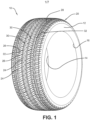
Figure 1 is a perspective view of a first exemplary embodiment of a tire including a tread wear indicator of the present invention; -
Figure 2 is a schematic plan view of a portion of the tire including a tread wear indicator shown inFigure 1 ; -
Figure 3A is a cross-sectional view of a portion of the tire including a tread wear indicator shown inFigure 2 , in a first wear state; -
Figure 3B is an enlarged fragmentary view of the portion of the tire including a tread wear indicator shown inFigure 3A ; -
Figure 3C is a schematic plan view of a portion of the tire including a tread wear indicator shown inFigure 3A ; -
Figure 4A is a cross-sectional view of a portion of the tire including a tread wear indicator shown inFigure 2 , in a second wear state; -
Figure 4B is an enlarged fragmentary view of the portion of the tire including a tread wear indicator shown inFigure 4A ; -
Figure 4C is a schematic plan view of a portion of the tire including a tread wear indicator shown inFigure 4A ; -
Figure 5A is a cross-sectional view of a portion of the tire including a tread wear indicator shown inFigure 2 , in a third wear state; -
Figure 5B is an enlarged fragmentary view of the portion of the tire including a tread wear indicator shown inFigure 5A ; -
Figure 5C is a schematic plan view of a portion of the tire including a tread wear indicator shown inFigure 5A ; -
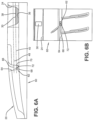
Figure 6A is a cross-sectional fragmentary view of a portion of a second exemplary embodiment of a tire including a tread wear indicator of the present invention, in a first wear state; -
Figure 6B is a schematic plan view of a portion of the tire including a tread wear indicator shown inFigure 6A ; -
Figure 7 is a schematic plan view of a portion of the tire including a tread wear indicator shown inFigure 6B , in a second wear state; and -
Figure 8 is a schematic plan view of a portion of the tire including a tread wear indicator shown inFigure 6B , in a third wear state. - Similar numerals refer to similar parts throughout the drawings.
- Turning to
Figures 1 through 5C , a first exemplary embodiment of atire 10 including a tread wear indicator of the present invention is shown. With particular reference toFigures 1 through 3 , thetire 10 includes a pair ofsidewalls tread 20. When thetire 10 is mounted on a vehicle in accordance with its specification, one of thesidewalls 12 is an outboard sidewall, and theother sidewall 14 is an inboard sidewall. Thetread 20 includes a plurality oftread elements 22 that are defined by maincircumferential grooves 24 andlateral grooves 26. - The main
circumferential grooves 24 typically are disposed in and/or proximate an axial or lateral center area of thetread 20. Thetread 20 also includes at least one relativelyshallow groove 28. Theshallow groove 28 is preferably a circumferential groove. Theshallow groove 28 is preferably disposed axially or laterally between the maincircumferential grooves 24 and an adjacent one of thesidewalls shallow groove 28 includes adepth 50 relative to the surface of thetread 20 that is less than adepth 52 of the maincircumferential grooves 24, thereby causing the relativelyshallow groove 28 to be shallower than the maincircumferential grooves 24. Thedepth 50 of each relativelyshallow groove 28 is preferably in a range of from 50 to 90 percent, more preferably 60 to 85 percent, of thedepth 52 of each of the one or more maincircumferential grooves 24. - It is to be understood that any tread configuration may be employed with the present invention.
- A main or primary
tread wear indicator 30 is disposed in one or more of the maincircumferential grooves 24. The main tread wearindicator 30 will be described in greater detail below. Thetire 10 of the invention includes a shallow groove-based or secondary tread wearindicator 32 disposed in at least one of theshallow grooves 28. The shallow groove-based tread wearindicator 32 will also be described in greater detail below. Thetire 10 preferably includes more than one main tread wearindicator 30 disposed about the circumference of thetread 20 in one or more of the maincircumferential grooves 24. Thetire 10 also preferably includes more than one shallow groove-based tread wearindicator 32 disposed about the circumference of thetread 20 in one or more of theshallow grooves 28. - Turning to
Figures 3A through 3C , thetire 10 is shown in a first wear state, which is a new or relatively unworn state. A respective main tread wearindicator 30 is formed in each of the maincircumferential grooves 24. Each main tread wearindicator 30 is formed with aradial height 34 extending radially outwardly from abase 36 of the respective maincircumferential groove 24 to a radiallyouter surface 38 of the main indicator. The radiallyouter surface 38 of each main tread wearindicator 30 radially aligns along aline 40. - Each shallow groove-based
indicator 32 is formed in theshallow groove 28. Each shallow groove-basedindicator 32 is formed with aradial height 42 extending radially outwardly from abase 44 of theshallow groove 28 to a radiallyouter surface 46 of the shallow groove-based indicator. The radiallyouter surface 46 of each shallow groove-based tread wearindicator 32 radially aligns with aline 48. Thebase 44 of theshallow groove 28, and thus the base of theshallow groove indicator 32, is in radial alignment with the radiallyouter surface 38 of themain indicators 30, as indicated by theline 40. - When the
tread 20 wears down to the level of theline 40, thetire 10 should be replaced. However, it may be difficult for a user to see themain indicators 30 when thetire 10 is mounted on a vehicle, as they are formed in thebase 36 of the maincircumferential grooves 24. Because theshallow groove 28 preferably is disposed proximate theoutboard sidewall 12, it is easier for a user to see the shallow groove-basedindicators 32 than themain indicators 30 when thetire 10 is mounted on a vehicle. In addition, it is easy for a user to check an early wear state of thetire 10 by referring to the shallow groove-basedindicator 32 before thetread 20 wears down to the level of themain indicators 30, atline 40. - The
tire 10 is shown in a partially worn state inFigures 4A through 4C . In this state, thetread 20 has worn down to the radiallyouter surface 46 of each shallow groove-based tread wearindicator 32, or theline 48, which is radially outwardly of theline 40. Because thetread 20 has not yet worn down to thebase 44 of theshallow groove 28 andline 40, theshallow groove indicator 32 is visible. Because theshallow groove 28 is disposed proximate theoutboard sidewall 12, it is easier for a user to see the shallow groove-basedindicators 32 than themain indicators 30 when thetire 10 is mounted on a vehicle. In addition, it is easy for a user to continue to check an early wear state of thetire 10 by referring to the shallow groove-basedindicator 32 before thetread 20 wears down to the level of themain indicators 30, atline 40. - Turning to
Figures 5A through 5C , thetire 10 is shown in a more fully worn state. In this state, thetread 20 has worn down to the level of themain indicators 30, atline 40. At this point, theshallow groove indicator 32 no longer visible and themain indicators 30 are then referred to. Preferably, when thetread 20 has worn down to the same level as themain indicators 30, thetire 10 should be replaced. - In this manner, the
tire 10 includes shallow groove-basedindicators 32, which are easier for a user to see than themain indicators 30 when the tire is mounted on a vehicle. In addition, thetire 10 with the shallow groove-basedindicators 32 enables the user to check an early wear state of the tire by referring to the shallow groove-based indicators before thetread 20 wears down to the level of themain indicators 30. - Turning to
Figures 6A through 8 , a second exemplary embodiment of atire 60 including a tread wear indicator of the present invention is shown. The second embodiment of thetire 60 is similar in construction and operation to the first embodiment of thetire 10, with the exception of certain features, as will be described in detail below. - The second embodiment of the
tire 60 also includes thetread 20, which is formed with the maincircumferential grooves 24 and at least oneshallow groove 64. Each main or primary tread wearindicator 30 is disposed in one or more of the maincircumferential grooves 24, and the radiallyouter surface 38 of each main tread wear indicator radially aligns along theline 40. The second embodiment of thetire 60 includes a shallow groove-based or secondary tread wearindicator 62 disposed in at least one of theshallow grooves 64. In the second embodiment of thetire 60, theshallow groove 64 is smaller or shallower than theshallow groove 28 of the first embodiment of thetire 10. - As shown in
Figures 6A and 6B , thetire 60 is shown in a first wear state, which is a new or relatively unworn state. Theshallow groove 64 includes abase 66, and the shallow groove-basedindicator 62 includes apocket 68. Thepocket 68 extends radially inwardly from thebase 66 of theshallow groove 64 to aradial depth 70 that is equal to or radially aligned with thebase 36 of the maincircumferential grooves 24. In thepocket 68, a feature orhump 72 is formed, which extends radially outwardly to a distance in radial alignment with the radiallyouter surface 38 of each main tread wearindicator 30 and theline 40. In this manner, the feature orhump 72 of the shallow groove-basedindicator 62 is in radial alignment with the radiallyouter surface 38 of themain indicators 30, as indicated by theline 40. - When the
tread 20 wears down to the level of theline 40, thetire 60 should be replaced. However, it may be difficult for a user to see themain indicators 30 when thetire 60 is mounted on a vehicle, as they are formed in thebase 36 of the maincircumferential grooves 24. Because theshallow groove 64 preferably is disposed proximate theoutboard sidewall 12, it is easier for a user to see the shallow groove-basedindicators 62 than themain indicators 30 when thetire 60 is mounted on a vehicle. In addition, it may be easy for a user to check an early wear state of thetire 60 by referring to the shallow groove-basedindicator 62 before thetread 20 wears down to the level of themain indicators 30, as thebase 66 of theshallow groove 64 and the feature orhump 72 is visible. - The
tire 60 is shown in a partially worn state inFigure 7 . In this state, thetread 20 has worn down to the radiallyouter surface 66 of each shallow groove-based tread wearindicator 62, at theline 48, which is radially outwardly of theline 40. Because thetread 20 has not yet worn down to theline 40, the shallow groove-based tread wearindicator 62 and the feature orhump 72 are visible. Because theshallow groove 64 is disposed proximate theoutboard sidewall 12, it is easier for a user to see the shallow groove-basedindicators 62 than themain indicators 30 when thetire 60 is mounted on a vehicle. In addition, it may be easy for a user to check an early wear state of thetire 60 by referring to the shallow groove-basedindicator 62 before thetread 20 wears down to the level of themain indicators 30, as the feature orhump 72 is visible. - Turning to
Figure 8 , thetire 60 is shown in a more fully worn state. In this state, thetread 20 has worn down to the level of themain indicators 30, orline 40. At this point, theshallow groove 64 is no longer visible and themain indicators 30 may be referred to. In addition, because the feature orhump 72 of the shallow groove-basedindicator 62 is in radial alignment with the radiallyouter surface 38 of themain indicators 30, the feature or hump is visible. Preferably, when thetread 20 has worn down to this level, thetire 10 should be replaced. - In this manner, the
tire 60 includes shallow groove-basedindicators 62, which are easier for a user to see than themain indicators 30 when the tire is mounted on a vehicle. In addition, thetire 60 with the shallow groove-basedindicators 62 enables the user to check an early wear state of the tire by referring to the shallow groove-based indicators before thetread 20 wears down to the level of themain indicators 30, as thebase 66 of theshallow groove 64 and the feature orhump 72 is visible. - The present invention refers to a
tire indicator
Claims (12)
- A tire including a tread wear indicator, the tire (10, 60) comprising:a pair of sidewalls (12), each sidewall (12) extending from a respective bead area (16) to a tread (20), the tread (20) including at least one or a plurality of main circumferential grooves (24), said one or more main circumferential grooves (24) being disposed in and/or proximate an axial center area of the tread (20); andat least one primary tread wear indicator (30) being disposed in at least one of the one or more main circumferential grooves (24); characterized in that the tire further comprisesat least one relatively shallow groove (28, 64) being formed in the tread (20), each shallow groove (28, 64) having a depth (50) relative to the surface of the tread (20) being less than a depth (52) of each of the one or more main circumferential grooves (24); andat least one secondary tread wear indicator (32, 62) being disposed in at least one of the at least one shallow grooves (28, 64).
- The tire of claim 1 wherein the at least one shallow groove (28, 64) is disposed axially between the one or more main circumferential grooves (24) and an adjacent one of the sidewalls (12).
- The tire of claim 1 or 2 wherein the tire (10, 60) includes more than one secondary tread wear indicator (32, 62) disposed about a circumference of the tread (10, 60).
- The tire of at least one of the previous claims wherein each primary tread wear indicator (30) is formed with a radial height (34) extending radially outwardly from a base (36) of a respective one of the one or more main circumferential grooves (24) to a radially outer surface (38) of the respective primary tread wear indicator (30).
- The tire of at least one of the previous claims wherein the secondary tread wear indicator (32, 62) is formed with a radial height (42) extending radially outwardly from a base (44, 66) of the respective at least one shallow groove (28, 64) to a radially outer surface (46) of the secondary tread wear indicator (32, 62).
- The tire of at least one of the previous claims wherein the base (44) of the one or more secondary tread wear indicators (32, 62) is in radial alignment with the radially outer surface (38) of the one or more primary tread wear indicators (30).
- The tire of at least one of the previous claims wherein the at least one shallow groove (28, 62) includes a base (44, 66) and the at least one secondary tread wear indicator (32, 62) includes a pocket (68).
- The tire of claim 7 wherein the pocket (68) extends radially inwardly from the base (44, 66) of the at least one shallow groove (28, 62) to a radial depth that is in radial alignment with the base (36) of a respective one of the one or more main circumferential grooves (24).
- The tire of claim 7 or 8, wherein a feature or hump (72) is formed in the pocket (68), the feature or hump (72) extending radially outwardly to a distance in radial alignment with the radially outer surface of each primary tread wear indicator (30).
- The tire of at least one of the previous claims wherein the at least one relatively shallow groove (28, 64) is a circumferential groove.
- The tire of at least one of the previous claims wherein the at least one relatively shallow groove (28, 64) is disposed axially between the one or more main circumferential grooves (24) and the outboard sidewall (12) of the tire (10, 60).
- The tire of at least one of the previous claims wherein the depth (50) of each relatively shallow groove (28, 64) is in a range of from 50 to 90 percent, preferably 60 to 85 percent, of the depth (52) of each of the one or more main circumferential grooves (24).
Applications Claiming Priority (1)
| Application Number | Priority Date | Filing Date | Title |
|---|---|---|---|
| US17/072,352 US11413907B2 (en) | 2020-10-16 | 2020-10-16 | Tire with shallow groove-based tread wear indicator |
Publications (2)
| Publication Number | Publication Date |
|---|---|
| EP3984780A1 EP3984780A1 (en) | 2022-04-20 |
| EP3984780B1 true EP3984780B1 (en) | 2024-02-14 |
Family
ID=80685610
Family Applications (1)
| Application Number | Title | Priority Date | Filing Date |
|---|---|---|---|
| EP21202178.6A Active EP3984780B1 (en) | 2020-10-16 | 2021-10-12 | Tire with shallow groove-based tread wear indicator |
Country Status (2)
| Country | Link |
|---|---|
| US (1) | US11413907B2 (en) |
| EP (1) | EP3984780B1 (en) |
Families Citing this family (2)
| Publication number | Priority date | Publication date | Assignee | Title |
|---|---|---|---|---|
| IT202200013540A1 (en) * | 2022-06-27 | 2023-12-27 | Wittur Holding Gmbh | WHEEL FOR ELEVATOR DOOR OPERATOR |
| JPWO2024262194A1 (en) * | 2023-06-23 | 2024-12-26 |
Family Cites Families (51)
| Publication number | Priority date | Publication date | Assignee | Title |
|---|---|---|---|---|
| US2102784A (en) | 1936-02-06 | 1937-12-21 | Socony Vacuum Oil Co Inc | Method of making a wear indicating tire |
| US2706509A (en) | 1950-04-01 | 1955-04-19 | Gates Rubber Co | Means for indicating tire tread wear |
| GB1275734A (en) | 1968-06-29 | 1972-05-24 | Dunlop Holdings Ltd | Improvements in or relating to pneumatic tyres |
| US4154564A (en) | 1968-06-09 | 1979-05-15 | Dunlop Holdings Limited | Tire molding matrix |
| US3814160A (en) | 1972-09-18 | 1974-06-04 | Ppg Industries Inc | Tread wear indicator |
| US4198774A (en) | 1977-11-18 | 1980-04-22 | The Goodyear Tire & Rubber Company | Indicia for rubber articles |
| US4353402A (en) * | 1978-06-16 | 1982-10-12 | Bandag Incorporated | Slitted tire tread |
| US4226274A (en) | 1978-09-18 | 1980-10-07 | Awaya Herbert Y | Rubber tire with wear indicator therein |
| JPS5925684A (en) | 1982-08-04 | 1984-02-09 | Toyobo Co Ltd | Stable p-hydroxybenzoic acid hydroxylase composition |
| US4823856A (en) | 1984-12-19 | 1989-04-25 | The Goodyear Tire & Rubber Company | Serrated outline marking for a tire side wall |
| JPS61202902A (en) | 1985-03-06 | 1986-09-08 | Bridgestone Corp | Pneumatic tire |
| DE3627832A1 (en) | 1986-08-16 | 1988-02-18 | Continental Gummi Werke Ag | Pneumatic vehicle tyre having a wear indicator |
| US5980668A (en) | 1996-06-10 | 1999-11-09 | Kumho & Co, Inc | Tire with rotation time tread wear indicator |
| FI112340B (en) | 1999-06-29 | 2003-11-28 | Nokian Renkaat Oyj | Vehicle tire tread with means for indicating at any instant the depth of the tread grooves |
| JP4363506B2 (en) | 2000-08-10 | 2009-11-11 | 横浜ゴム株式会社 | Measuring method of tread wear amount of pneumatic tire |
| US6994133B2 (en) | 2002-10-01 | 2006-02-07 | Michelin Recherche Et Technique S.A. | Low or no pressure usage indicator for a tire |
| DE60335740D1 (en) * | 2002-12-02 | 2011-02-24 | Sumitomo Rubber Ind | TIRES WITH DISPLAY MARKING FOR THE ROTATION TIME |
| US7011126B2 (en) | 2003-10-17 | 2006-03-14 | The Goodyear Tire & Rubber Company | Progressive tire tread wear indicator |
| US7140410B2 (en) | 2004-07-09 | 2006-11-28 | The Goodyear Tire & Rubber Company | Asymmetric truck racing tire |
| JP4530407B2 (en) * | 2004-07-20 | 2010-08-25 | 東洋ゴム工業株式会社 | Pneumatic tire |
| US20060037683A1 (en) | 2004-08-23 | 2006-02-23 | Andre Cuny | Tire tread wear indicator and molding device for forming a tread wear indicator |
| KR100644875B1 (en) | 2005-03-08 | 2006-11-14 | 금호타이어 주식회사 | Tread Rubber Compound for Color Smoke Tire, and Tire Comprising The Compound, and Preparation method thereof |
| FR2883508B1 (en) * | 2005-03-25 | 2007-05-18 | Michelin Soc Tech | WEAR INDICATOR FOR PNEUMATIC |
| SK472006A3 (en) | 2006-03-08 | 2007-10-04 | Matador A. S. | Tire for motor vehicle contains indicator of wear tire profile |
| KR100792546B1 (en) * | 2006-03-30 | 2008-01-10 | 금호타이어 주식회사 | Heavy Duty Pneumatic Tire |
| EP2020311B1 (en) | 2006-05-24 | 2011-08-31 | The Yokohama Rubber Co., Ltd. | Pneumatic tire |
| US8695655B2 (en) | 2007-10-15 | 2014-04-15 | The Goodyear Tire & Rubber Company | Tire tread with tread wear indicator |
| US20090114322A1 (en) | 2007-11-06 | 2009-05-07 | O'brien Pat | Tread marker, tire with integral tread markers, and methods for producing both |
| US20110079333A1 (en) | 2009-10-06 | 2011-04-07 | Jacques Collette | Multi-level tire treadwear indicator |
| US20110126949A1 (en) | 2009-12-02 | 2011-06-02 | Cuny Andre | Tire tread wear indicator and molding device for forming a tread wear indicator |
| FR2962373B1 (en) | 2010-07-12 | 2014-01-24 | Michelin Soc Tech | TIRE TREAD WITH PNEUMATIC TIRE COMPRISING A WEAR |
| JP5462762B2 (en) | 2010-10-18 | 2014-04-02 | 東洋ゴム工業株式会社 | Pneumatic tire |
| JP5599692B2 (en) | 2010-11-02 | 2014-10-01 | 東洋ゴム工業株式会社 | Pneumatic tire |
| US8403012B2 (en) | 2010-11-23 | 2013-03-26 | The Goodyear Tire & Rubber Company, Inc. | Tread wear indicator |
| EP2754569B1 (en) * | 2011-09-08 | 2016-08-03 | Bridgestone Corporation | Pneumatic tire |
| US20130160913A1 (en) | 2011-12-22 | 2013-06-27 | Satyajit Avinash Lonkar | Tire with label and relief groove |
| USD717727S1 (en) | 2012-02-27 | 2014-11-18 | Bridgestone Americas Tire Operations, Llc | Tire tread wear indicator |
| JP6118029B2 (en) | 2012-03-02 | 2017-04-19 | 東洋ゴム工業株式会社 | Pneumatic tire |
| US8857252B2 (en) | 2012-06-13 | 2014-10-14 | Continental Reifen Deutschland Gmbh | Optimal tire performance indicator |
| USD738287S1 (en) | 2012-08-28 | 2015-09-08 | Nokian Tyres Plc | Tyre |
| USD736698S1 (en) | 2012-10-25 | 2015-08-18 | Bridgestone Americas Tire Operations, Llc | Tire tread lug |
| FR2998216B1 (en) | 2012-11-19 | 2015-01-16 | Michelin & Cie | WEAR INDICATOR FOR TIRE GENIE CIVIL |
| BR112015015306A2 (en) | 2012-12-26 | 2017-07-11 | Bridgestone Americas Tire Operations Llc | substantially helical groove tire |
| JP5846131B2 (en) * | 2013-01-10 | 2016-01-20 | 横浜ゴム株式会社 | Pneumatic tire |
| US8996239B2 (en) | 2013-06-07 | 2015-03-31 | The Goodyear Tire & Rubber Company | Abradeable sensor system for tire wear monitoring |
| EP3044015B1 (en) * | 2013-09-10 | 2020-12-02 | Cooper Tire & Rubber Company | Visual wear indicator |
| USD751497S1 (en) | 2014-03-18 | 2016-03-15 | Bridgestone Americas Tire Operations, Llc | Tire tread performance indicator |
| USD765589S1 (en) | 2014-03-18 | 2016-09-06 | Bridgestone Americas Tire Operations, Llc | Tire with tread wear indicator |
| USD758297S1 (en) | 2014-03-18 | 2016-06-07 | Bridgestone Americas Tire Operations, Llc | Tire tread performance indicator |
| DE102014003985A1 (en) | 2014-03-19 | 2015-09-24 | Man Truck & Bus Ag | Wear part with a wear indicator and system for wear testing |
| CN106364261B (en) | 2015-07-23 | 2019-11-15 | 住友橡胶工业株式会社 | pneumatic tire |
-
2020
- 2020-10-16 US US17/072,352 patent/US11413907B2/en active Active
-
2021
- 2021-10-12 EP EP21202178.6A patent/EP3984780B1/en active Active
Also Published As
| Publication number | Publication date |
|---|---|
| US20220118801A1 (en) | 2022-04-21 |
| US11413907B2 (en) | 2022-08-16 |
| EP3984780A1 (en) | 2022-04-20 |
Similar Documents
| Publication | Publication Date | Title |
|---|---|---|
| US6220321B1 (en) | Heavy duty tire including wide main grooves, narrow grooves and lug grooves | |
| US20090107600A1 (en) | Grip tire with added puncture protection | |
| EP3501852B1 (en) | Tyre | |
| CA1159345A (en) | Pneumatic radial tires for heavy vehicles having an unsymmetrical thread pattern | |
| EP2923859B1 (en) | Pneumatic tire | |
| US20200324580A1 (en) | Pneumatic Tire | |
| US11541692B2 (en) | Tyre | |
| US11104187B2 (en) | Pneumatic tire | |
| EP3421265B1 (en) | Tire | |
| US4993466A (en) | Radial tire for heavy duty vehicles having a grooved buffer plane outward of each tread edge | |
| EP3984780B1 (en) | Tire with shallow groove-based tread wear indicator | |
| EP3666551B1 (en) | Tire tread | |
| US11325425B2 (en) | Tyre for a motorcycle for rough terrain | |
| US6564839B1 (en) | Pneumatic tire having a load dependent adaptive footprint shape | |
| JPS6143201B2 (en) | ||
| US11077714B2 (en) | Tire and three-wheeled vehicle with the same | |
| EP4219193B1 (en) | Method of using a tyre | |
| EP4209361B1 (en) | Tire | |
| EP3838630B1 (en) | Pneumatic tire | |
| EP3744535B1 (en) | Tire | |
| EP3613613B1 (en) | Pneumatic tire | |
| EP3674106B1 (en) | Tire with integrated tread wear indicator | |
| US20060272761A1 (en) | Pneumatic tire | |
| EP3670211B1 (en) | Tire with groove-based tread wear indicator | |
| JPH0858316A (en) | Pneumatic radial tire |
Legal Events
| Date | Code | Title | Description |
|---|---|---|---|
| PUAI | Public reference made under article 153(3) epc to a published international application that has entered the european phase |
Free format text: ORIGINAL CODE: 0009012 |
|
| STAA | Information on the status of an ep patent application or granted ep patent |
Free format text: STATUS: THE APPLICATION HAS BEEN PUBLISHED |
|
| AK | Designated contracting states |
Kind code of ref document: A1 Designated state(s): AL AT BE BG CH CY CZ DE DK EE ES FI FR GB GR HR HU IE IS IT LI LT LU LV MC MK MT NL NO PL PT RO RS SE SI SK SM TR |
|
| RAP3 | Party data changed (applicant data changed or rights of an application transferred) |
Owner name: THE GOODYEAR TIRE & RUBBER COMPANY |
|
| STAA | Information on the status of an ep patent application or granted ep patent |
Free format text: STATUS: REQUEST FOR EXAMINATION WAS MADE |
|
| 17P | Request for examination filed |
Effective date: 20221020 |
|
| RBV | Designated contracting states (corrected) |
Designated state(s): AL AT BE BG CH CY CZ DE DK EE ES FI FR GB GR HR HU IE IS IT LI LT LU LV MC MK MT NL NO PL PT RO RS SE SI SK SM TR |
|
| RIC1 | Information provided on ipc code assigned before grant |
Ipc: B60C 11/03 20060101ALN20230712BHEP Ipc: B60C 11/13 20060101ALN20230712BHEP Ipc: B60C 11/24 20060101AFI20230712BHEP |
|
| RIC1 | Information provided on ipc code assigned before grant |
Ipc: B60C 11/03 20060101ALN20230731BHEP Ipc: B60C 11/13 20060101ALN20230731BHEP Ipc: B60C 11/24 20060101AFI20230731BHEP |
|
| GRAP | Despatch of communication of intention to grant a patent |
Free format text: ORIGINAL CODE: EPIDOSNIGR1 |
|
| STAA | Information on the status of an ep patent application or granted ep patent |
Free format text: STATUS: GRANT OF PATENT IS INTENDED |
|
| INTG | Intention to grant announced |
Effective date: 20230912 |
|
| GRAS | Grant fee paid |
Free format text: ORIGINAL CODE: EPIDOSNIGR3 |
|
| GRAA | (expected) grant |
Free format text: ORIGINAL CODE: 0009210 |
|
| STAA | Information on the status of an ep patent application or granted ep patent |
Free format text: STATUS: THE PATENT HAS BEEN GRANTED |
|
| AK | Designated contracting states |
Kind code of ref document: B1 Designated state(s): AL AT BE BG CH CY CZ DE DK EE ES FI FR GB GR HR HU IE IS IT LI LT LU LV MC MK MT NL NO PL PT RO RS SE SI SK SM TR |
|
| REG | Reference to a national code |
Ref country code: GB Ref legal event code: FG4D |
|
| REG | Reference to a national code |
Ref country code: CH Ref legal event code: EP |
|
| REG | Reference to a national code |
Ref country code: DE Ref legal event code: R096 Ref document number: 602021009354 Country of ref document: DE |
|
| REG | Reference to a national code |
Ref country code: IE Ref legal event code: FG4D |
|
| REG | Reference to a national code |
Ref country code: LT Ref legal event code: MG9D |
|
| REG | Reference to a national code |
Ref country code: NL Ref legal event code: MP Effective date: 20240214 |
|
| PG25 | Lapsed in a contracting state [announced via postgrant information from national office to epo] |
Ref country code: IS Free format text: LAPSE BECAUSE OF FAILURE TO SUBMIT A TRANSLATION OF THE DESCRIPTION OR TO PAY THE FEE WITHIN THE PRESCRIBED TIME-LIMIT Effective date: 20240614 |
|
| PG25 | Lapsed in a contracting state [announced via postgrant information from national office to epo] |
Ref country code: LT Free format text: LAPSE BECAUSE OF FAILURE TO SUBMIT A TRANSLATION OF THE DESCRIPTION OR TO PAY THE FEE WITHIN THE PRESCRIBED TIME-LIMIT Effective date: 20240214 |
|
| PG25 | Lapsed in a contracting state [announced via postgrant information from national office to epo] |
Ref country code: GR Free format text: LAPSE BECAUSE OF FAILURE TO SUBMIT A TRANSLATION OF THE DESCRIPTION OR TO PAY THE FEE WITHIN THE PRESCRIBED TIME-LIMIT Effective date: 20240515 |
|
| REG | Reference to a national code |
Ref country code: AT Ref legal event code: MK05 Ref document number: 1656752 Country of ref document: AT Kind code of ref document: T Effective date: 20240214 |
|
| PG25 | Lapsed in a contracting state [announced via postgrant information from national office to epo] |
Ref country code: HR Free format text: LAPSE BECAUSE OF FAILURE TO SUBMIT A TRANSLATION OF THE DESCRIPTION OR TO PAY THE FEE WITHIN THE PRESCRIBED TIME-LIMIT Effective date: 20240214 Ref country code: NL Free format text: LAPSE BECAUSE OF FAILURE TO SUBMIT A TRANSLATION OF THE DESCRIPTION OR TO PAY THE FEE WITHIN THE PRESCRIBED TIME-LIMIT Effective date: 20240214 Ref country code: RS Free format text: LAPSE BECAUSE OF FAILURE TO SUBMIT A TRANSLATION OF THE DESCRIPTION OR TO PAY THE FEE WITHIN THE PRESCRIBED TIME-LIMIT Effective date: 20240514 |
|
| PG25 | Lapsed in a contracting state [announced via postgrant information from national office to epo] |
Ref country code: ES Free format text: LAPSE BECAUSE OF FAILURE TO SUBMIT A TRANSLATION OF THE DESCRIPTION OR TO PAY THE FEE WITHIN THE PRESCRIBED TIME-LIMIT Effective date: 20240214 |
|
| PG25 | Lapsed in a contracting state [announced via postgrant information from national office to epo] |
Ref country code: AT Free format text: LAPSE BECAUSE OF FAILURE TO SUBMIT A TRANSLATION OF THE DESCRIPTION OR TO PAY THE FEE WITHIN THE PRESCRIBED TIME-LIMIT Effective date: 20240214 |
|
| PG25 | Lapsed in a contracting state [announced via postgrant information from national office to epo] |
Ref country code: RS Free format text: LAPSE BECAUSE OF FAILURE TO SUBMIT A TRANSLATION OF THE DESCRIPTION OR TO PAY THE FEE WITHIN THE PRESCRIBED TIME-LIMIT Effective date: 20240514 Ref country code: NO Free format text: LAPSE BECAUSE OF FAILURE TO SUBMIT A TRANSLATION OF THE DESCRIPTION OR TO PAY THE FEE WITHIN THE PRESCRIBED TIME-LIMIT Effective date: 20240514 Ref country code: NL Free format text: LAPSE BECAUSE OF FAILURE TO SUBMIT A TRANSLATION OF THE DESCRIPTION OR TO PAY THE FEE WITHIN THE PRESCRIBED TIME-LIMIT Effective date: 20240214 Ref country code: LT Free format text: LAPSE BECAUSE OF FAILURE TO SUBMIT A TRANSLATION OF THE DESCRIPTION OR TO PAY THE FEE WITHIN THE PRESCRIBED TIME-LIMIT Effective date: 20240214 Ref country code: IS Free format text: LAPSE BECAUSE OF FAILURE TO SUBMIT A TRANSLATION OF THE DESCRIPTION OR TO PAY THE FEE WITHIN THE PRESCRIBED TIME-LIMIT Effective date: 20240614 Ref country code: HR Free format text: LAPSE BECAUSE OF FAILURE TO SUBMIT A TRANSLATION OF THE DESCRIPTION OR TO PAY THE FEE WITHIN THE PRESCRIBED TIME-LIMIT Effective date: 20240214 Ref country code: GR Free format text: LAPSE BECAUSE OF FAILURE TO SUBMIT A TRANSLATION OF THE DESCRIPTION OR TO PAY THE FEE WITHIN THE PRESCRIBED TIME-LIMIT Effective date: 20240515 Ref country code: FI Free format text: LAPSE BECAUSE OF FAILURE TO SUBMIT A TRANSLATION OF THE DESCRIPTION OR TO PAY THE FEE WITHIN THE PRESCRIBED TIME-LIMIT Effective date: 20240214 Ref country code: ES Free format text: LAPSE BECAUSE OF FAILURE TO SUBMIT A TRANSLATION OF THE DESCRIPTION OR TO PAY THE FEE WITHIN THE PRESCRIBED TIME-LIMIT Effective date: 20240214 Ref country code: BG Free format text: LAPSE BECAUSE OF FAILURE TO SUBMIT A TRANSLATION OF THE DESCRIPTION OR TO PAY THE FEE WITHIN THE PRESCRIBED TIME-LIMIT Effective date: 20240214 Ref country code: AT Free format text: LAPSE BECAUSE OF FAILURE TO SUBMIT A TRANSLATION OF THE DESCRIPTION OR TO PAY THE FEE WITHIN THE PRESCRIBED TIME-LIMIT Effective date: 20240214 |
|
| PG25 | Lapsed in a contracting state [announced via postgrant information from national office to epo] |
Ref country code: PT Free format text: LAPSE BECAUSE OF FAILURE TO SUBMIT A TRANSLATION OF THE DESCRIPTION OR TO PAY THE FEE WITHIN THE PRESCRIBED TIME-LIMIT Effective date: 20240614 Ref country code: PL Free format text: LAPSE BECAUSE OF FAILURE TO SUBMIT A TRANSLATION OF THE DESCRIPTION OR TO PAY THE FEE WITHIN THE PRESCRIBED TIME-LIMIT Effective date: 20240214 |
|
| PG25 | Lapsed in a contracting state [announced via postgrant information from national office to epo] |
Ref country code: SE Free format text: LAPSE BECAUSE OF FAILURE TO SUBMIT A TRANSLATION OF THE DESCRIPTION OR TO PAY THE FEE WITHIN THE PRESCRIBED TIME-LIMIT Effective date: 20240214 Ref country code: PT Free format text: LAPSE BECAUSE OF FAILURE TO SUBMIT A TRANSLATION OF THE DESCRIPTION OR TO PAY THE FEE WITHIN THE PRESCRIBED TIME-LIMIT Effective date: 20240614 Ref country code: PL Free format text: LAPSE BECAUSE OF FAILURE TO SUBMIT A TRANSLATION OF THE DESCRIPTION OR TO PAY THE FEE WITHIN THE PRESCRIBED TIME-LIMIT Effective date: 20240214 Ref country code: LV Free format text: LAPSE BECAUSE OF FAILURE TO SUBMIT A TRANSLATION OF THE DESCRIPTION OR TO PAY THE FEE WITHIN THE PRESCRIBED TIME-LIMIT Effective date: 20240214 |
|
| PG25 | Lapsed in a contracting state [announced via postgrant information from national office to epo] |
Ref country code: DK Free format text: LAPSE BECAUSE OF FAILURE TO SUBMIT A TRANSLATION OF THE DESCRIPTION OR TO PAY THE FEE WITHIN THE PRESCRIBED TIME-LIMIT Effective date: 20240214 |
|
| PG25 | Lapsed in a contracting state [announced via postgrant information from national office to epo] |
Ref country code: SM Free format text: LAPSE BECAUSE OF FAILURE TO SUBMIT A TRANSLATION OF THE DESCRIPTION OR TO PAY THE FEE WITHIN THE PRESCRIBED TIME-LIMIT Effective date: 20240214 |
|
| PG25 | Lapsed in a contracting state [announced via postgrant information from national office to epo] |
Ref country code: EE Free format text: LAPSE BECAUSE OF FAILURE TO SUBMIT A TRANSLATION OF THE DESCRIPTION OR TO PAY THE FEE WITHIN THE PRESCRIBED TIME-LIMIT Effective date: 20240214 Ref country code: CZ Free format text: LAPSE BECAUSE OF FAILURE TO SUBMIT A TRANSLATION OF THE DESCRIPTION OR TO PAY THE FEE WITHIN THE PRESCRIBED TIME-LIMIT Effective date: 20240214 |
|
| PG25 | Lapsed in a contracting state [announced via postgrant information from national office to epo] |
Ref country code: SK Free format text: LAPSE BECAUSE OF FAILURE TO SUBMIT A TRANSLATION OF THE DESCRIPTION OR TO PAY THE FEE WITHIN THE PRESCRIBED TIME-LIMIT Effective date: 20240214 |
|
| PG25 | Lapsed in a contracting state [announced via postgrant information from national office to epo] |
Ref country code: SM Free format text: LAPSE BECAUSE OF FAILURE TO SUBMIT A TRANSLATION OF THE DESCRIPTION OR TO PAY THE FEE WITHIN THE PRESCRIBED TIME-LIMIT Effective date: 20240214 Ref country code: SK Free format text: LAPSE BECAUSE OF FAILURE TO SUBMIT A TRANSLATION OF THE DESCRIPTION OR TO PAY THE FEE WITHIN THE PRESCRIBED TIME-LIMIT Effective date: 20240214 Ref country code: RO Free format text: LAPSE BECAUSE OF FAILURE TO SUBMIT A TRANSLATION OF THE DESCRIPTION OR TO PAY THE FEE WITHIN THE PRESCRIBED TIME-LIMIT Effective date: 20240214 Ref country code: EE Free format text: LAPSE BECAUSE OF FAILURE TO SUBMIT A TRANSLATION OF THE DESCRIPTION OR TO PAY THE FEE WITHIN THE PRESCRIBED TIME-LIMIT Effective date: 20240214 Ref country code: DK Free format text: LAPSE BECAUSE OF FAILURE TO SUBMIT A TRANSLATION OF THE DESCRIPTION OR TO PAY THE FEE WITHIN THE PRESCRIBED TIME-LIMIT Effective date: 20240214 Ref country code: CZ Free format text: LAPSE BECAUSE OF FAILURE TO SUBMIT A TRANSLATION OF THE DESCRIPTION OR TO PAY THE FEE WITHIN THE PRESCRIBED TIME-LIMIT Effective date: 20240214 |
|
| REG | Reference to a national code |
Ref country code: DE Ref legal event code: R097 Ref document number: 602021009354 Country of ref document: DE |
|
| PLBE | No opposition filed within time limit |
Free format text: ORIGINAL CODE: 0009261 |
|
| STAA | Information on the status of an ep patent application or granted ep patent |
Free format text: STATUS: NO OPPOSITION FILED WITHIN TIME LIMIT |
|
| 26N | No opposition filed |
Effective date: 20241115 |
|
| PG25 | Lapsed in a contracting state [announced via postgrant information from national office to epo] |
Ref country code: SI Free format text: LAPSE BECAUSE OF FAILURE TO SUBMIT A TRANSLATION OF THE DESCRIPTION OR TO PAY THE FEE WITHIN THE PRESCRIBED TIME-LIMIT Effective date: 20240214 |
|
| REG | Reference to a national code |
Ref country code: CH Ref legal event code: PL |
|
| PG25 | Lapsed in a contracting state [announced via postgrant information from national office to epo] |
Ref country code: MC Free format text: LAPSE BECAUSE OF FAILURE TO SUBMIT A TRANSLATION OF THE DESCRIPTION OR TO PAY THE FEE WITHIN THE PRESCRIBED TIME-LIMIT Effective date: 20240214 |
|
| PG25 | Lapsed in a contracting state [announced via postgrant information from national office to epo] |
Ref country code: BE Free format text: LAPSE BECAUSE OF NON-PAYMENT OF DUE FEES Effective date: 20241031 Ref country code: LU Free format text: LAPSE BECAUSE OF NON-PAYMENT OF DUE FEES Effective date: 20241012 |
|
| PG25 | Lapsed in a contracting state [announced via postgrant information from national office to epo] |
Ref country code: CH Free format text: LAPSE BECAUSE OF NON-PAYMENT OF DUE FEES Effective date: 20241031 |
|
| REG | Reference to a national code |
Ref country code: BE Ref legal event code: MM Effective date: 20241031 |
|
| PGFP | Annual fee paid to national office [announced via postgrant information from national office to epo] |
Ref country code: IT Payment date: 20250923 Year of fee payment: 5 |
|
| PGFP | Annual fee paid to national office [announced via postgrant information from national office to epo] |
Ref country code: GB Payment date: 20250923 Year of fee payment: 5 |
|
| PGFP | Annual fee paid to national office [announced via postgrant information from national office to epo] |
Ref country code: FR Payment date: 20250923 Year of fee payment: 5 |
|
| PG25 | Lapsed in a contracting state [announced via postgrant information from national office to epo] |
Ref country code: IE Free format text: LAPSE BECAUSE OF NON-PAYMENT OF DUE FEES Effective date: 20241012 |
|
| PGFP | Annual fee paid to national office [announced via postgrant information from national office to epo] |
Ref country code: DE Payment date: 20250923 Year of fee payment: 5 |
|
| PG25 | Lapsed in a contracting state [announced via postgrant information from national office to epo] |
Ref country code: CY Free format text: LAPSE BECAUSE OF FAILURE TO SUBMIT A TRANSLATION OF THE DESCRIPTION OR TO PAY THE FEE WITHIN THE PRESCRIBED TIME-LIMIT; INVALID AB INITIO Effective date: 20211012 |
|
| PG25 | Lapsed in a contracting state [announced via postgrant information from national office to epo] |
Ref country code: HU Free format text: LAPSE BECAUSE OF FAILURE TO SUBMIT A TRANSLATION OF THE DESCRIPTION OR TO PAY THE FEE WITHIN THE PRESCRIBED TIME-LIMIT; INVALID AB INITIO Effective date: 20211012 |