EP3982684A1 - Verfahren und vorrichtung zur übertragung von signalen, verfahren und vorrichtung zum empfang von signalen, speichermedium und endgerät - Google Patents
Verfahren und vorrichtung zur übertragung von signalen, verfahren und vorrichtung zum empfang von signalen, speichermedium und endgerät Download PDFInfo
- Publication number
- EP3982684A1 EP3982684A1 EP20819346.6A EP20819346A EP3982684A1 EP 3982684 A1 EP3982684 A1 EP 3982684A1 EP 20819346 A EP20819346 A EP 20819346A EP 3982684 A1 EP3982684 A1 EP 3982684A1
- Authority
- EP
- European Patent Office
- Prior art keywords
- indication signaling
- signaling
- transmission
- transmitted
- receiver
- Prior art date
- Legal status (The legal status is an assumption and is not a legal conclusion. Google has not performed a legal analysis and makes no representation as to the accuracy of the status listed.)
- Withdrawn
Links
Images


Classifications
-
- H—ELECTRICITY
- H04—ELECTRIC COMMUNICATION TECHNIQUE
- H04W—WIRELESS COMMUNICATION NETWORKS
- H04W76/00—Connection management
- H04W76/20—Manipulation of established connections
-
- H—ELECTRICITY
- H04—ELECTRIC COMMUNICATION TECHNIQUE
- H04L—TRANSMISSION OF DIGITAL INFORMATION, e.g. TELEGRAPHIC COMMUNICATION
- H04L1/00—Arrangements for detecting or preventing errors in the information received
- H04L1/0001—Systems modifying transmission characteristics according to link quality, e.g. power backoff
- H04L1/0023—Systems modifying transmission characteristics according to link quality, e.g. power backoff characterised by the signalling
- H04L1/0027—Scheduling of signalling, e.g. occurrence thereof
-
- H—ELECTRICITY
- H04—ELECTRIC COMMUNICATION TECHNIQUE
- H04L—TRANSMISSION OF DIGITAL INFORMATION, e.g. TELEGRAPHIC COMMUNICATION
- H04L1/00—Arrangements for detecting or preventing errors in the information received
- H04L1/12—Arrangements for detecting or preventing errors in the information received by using return channel
- H04L1/16—Arrangements for detecting or preventing errors in the information received by using return channel in which the return channel carries supervisory signals, e.g. repetition request signals
- H04L1/1607—Details of the supervisory signal
-
- H—ELECTRICITY
- H04—ELECTRIC COMMUNICATION TECHNIQUE
- H04L—TRANSMISSION OF DIGITAL INFORMATION, e.g. TELEGRAPHIC COMMUNICATION
- H04L1/00—Arrangements for detecting or preventing errors in the information received
- H04L1/12—Arrangements for detecting or preventing errors in the information received by using return channel
- H04L1/16—Arrangements for detecting or preventing errors in the information received by using return channel in which the return channel carries supervisory signals, e.g. repetition request signals
- H04L1/1607—Details of the supervisory signal
- H04L1/1621—Group acknowledgement, i.e. the acknowledgement message defining a range of identifiers, e.g. of sequence numbers
-
- H—ELECTRICITY
- H04—ELECTRIC COMMUNICATION TECHNIQUE
- H04L—TRANSMISSION OF DIGITAL INFORMATION, e.g. TELEGRAPHIC COMMUNICATION
- H04L1/00—Arrangements for detecting or preventing errors in the information received
- H04L1/12—Arrangements for detecting or preventing errors in the information received by using return channel
- H04L1/16—Arrangements for detecting or preventing errors in the information received by using return channel in which the return channel carries supervisory signals, e.g. repetition request signals
- H04L1/18—Automatic repetition systems, e.g. Van Duuren systems
- H04L1/1867—Arrangements specially adapted for the transmitter end
- H04L1/1896—ARQ related signaling
-
- H—ELECTRICITY
- H04—ELECTRIC COMMUNICATION TECHNIQUE
- H04L—TRANSMISSION OF DIGITAL INFORMATION, e.g. TELEGRAPHIC COMMUNICATION
- H04L5/00—Arrangements affording multiple use of the transmission path
- H04L5/003—Arrangements for allocating sub-channels of the transmission path
- H04L5/0053—Allocation of signalling, i.e. of overhead other than pilot signals
-
- H—ELECTRICITY
- H04—ELECTRIC COMMUNICATION TECHNIQUE
- H04W—WIRELESS COMMUNICATION NETWORKS
- H04W68/00—User notification, e.g. alerting and paging, for incoming communication, change of service or the like
- H04W68/005—Transmission of information for alerting of incoming communication
-
- H—ELECTRICITY
- H04—ELECTRIC COMMUNICATION TECHNIQUE
- H04L—TRANSMISSION OF DIGITAL INFORMATION, e.g. TELEGRAPHIC COMMUNICATION
- H04L1/00—Arrangements for detecting or preventing errors in the information received
- H04L1/12—Arrangements for detecting or preventing errors in the information received by using return channel
- H04L1/16—Arrangements for detecting or preventing errors in the information received by using return channel in which the return channel carries supervisory signals, e.g. repetition request signals
- H04L1/1607—Details of the supervisory signal
- H04L1/1614—Details of the supervisory signal using bitmaps
-
- H—ELECTRICITY
- H04—ELECTRIC COMMUNICATION TECHNIQUE
- H04L—TRANSMISSION OF DIGITAL INFORMATION, e.g. TELEGRAPHIC COMMUNICATION
- H04L5/00—Arrangements affording multiple use of the transmission path
- H04L5/003—Arrangements for allocating sub-channels of the transmission path
- H04L5/0053—Allocation of signalling, i.e. of overhead other than pilot signals
- H04L5/0055—Physical resource allocation for ACK/NACK
Definitions
- the present disclosure generally relates to communication technology field, and more particularly, to a signaling transmission method and device, a signaling reception method and device, a storage medium and a terminal.
- RTA Real time application
- the current Institute of Electrical and Electronics Engineers 802.11 (IEEE 802.11) standard (for example, the Wireless Local Area Network (WLAN) standard) cannot guarantee latency at the worst case.
- IEEE 802.11 The current Institute of Electrical and Electronics Engineers 802.11 (IEEE 802.11) standard (for example, the Wireless Local Area Network (WLAN) standard) cannot guarantee latency at the worst case.
- WLAN Wireless Local Area Network
- Embodiments of the present disclosure may shorten latency to meet communication requirements of time sensitive packets in a WLAN system.
- a signaling transmission method including: configuring an indication signaling, wherein the indication signaling is used to notify a receiver of the indication signaling to dynamically suspend transmission of a current data package being transmitted; and transmitting the indication signaling.
- the indication signaling is transmitted on a second link other than a first link on which the current data package is being transmitted by the receiver of the indication signaling.
- the method further includes: receiving a feedback signaling on the second link, wherein the feedback signaling is in response to the indication signaling, and indicates that the receiver of the indication signaling is about to suspend or has suspended the transmission of the current data package.
- the indication signaling and/or the feedback signaling is a data frame or a signal sequence.
- the indication signaling includes a link identifier which points to a link where the receiver of the indication signaling is located.
- the method further includes: detecting whether the receiver of the indication signaling has suspended the transmission of the current data package.
- a signaling reception method including: receiving an indication signaling, wherein the indication signaling is used to notify a receiver of the indication signaling to dynamically suspend transmission of a current data package being transmitted; and extracting the indication signaling.
- the indication signaling is transmitted on a second link other than a first link on which the current data package is being transmitted by the receiver of the indication signaling.
- the method further includes: interrupting the transmission of the current data package being transmitted.
- the current data package being transmitted is an aggregated data package including a plurality of data packets
- interrupting the transmission of the current data package being transmitted includes: interrupting transmission of one of the plurality of data packets which is being transmitted and suspending transmission of other data packets of the plurality of data packets; or after transmission of one of the plurality of data packets which is being transmitted is completed, suspending transmission of other data packets of the plurality of data packets.
- the indication signaling includes a link identifier which points to a link where the receiver of the indication signaling is located.
- the method further includes: in response to the indication signaling, transmitting a feedback signaling on the second link, wherein the feedback signaling indicates that the receiver of the indication signaling is about to suspend or has suspended the transmission of the current data package.
- the indication signaling and/or the feedback signaling is a data frame or a signal sequence.
- a signaling transmission device including: a configuring circuitry configured to configure an indication signaling, wherein the indication signaling is used to notify a receiver of the indication signaling to dynamically suspend transmission of a current data package being transmitted; and a transmitting circuitry configured to transmit the indication signaling.
- a signaling reception device including: a receiving circuitry configured to receive an indication signaling, wherein the indication signaling is used to notify a receiver of the indication signaling to dynamically suspend transmission of a current data package being transmitted; and an extracting circuitry configured to extract the indication signaling.
- a storage medium having computer instructions stored therein is provided, wherein when the computer instructions are executed, the above method is performed.
- a terminal including a memory and a processor
- the memory has computer instructions stored therein, and when the processor executes the computer instructions, the above method is performed.
- Embodiments of the present disclosure may provide following advantages.
- Embodiments of the present disclosure provide a signaling transmission method, including: configuring an indication signaling, wherein the indication signaling is used to notify a receiver of the indication signaling to dynamically suspend transmission of a current data package being transmitted; and transmitting the indication signaling.
- the indication signaling is configured, so that the receiver of the indication signaling may suspend transmission of the current data package being transmitted, and accordingly a transmitter of the indication signaling may acquire a transmission opportunity rapidly to transmit time sensitive data packets. In this way, latency may be shortened, and thus transmission requirements of time sensitive data packets (RTA packets) may be met.
- the indication signaling is transmitted on a second link other than a first link on which the current data package is being transmitted by the receiver of the indication signaling.
- different links are used to transmit the data package (such as on the first link) and the indication signaling (such as on the second link) in a multi-link communication system, so that the receiver of the indication signaling may interrupt a current data package transmission process to achieve time sensitive data communication (such as RTA communication or accelerated retransmission due to transmission delay caused by transmission failure), which provides possibility for time sensitive data communication.
- the signaling transmission method further includes: receiving a feedback signaling on the second link, wherein the feedback signaling is in response to the indication signaling, and indicates that the receiver of the indication signaling is about to suspend or has suspended the transmission of the current data package.
- the transmitter of the indication signaling can be informed that the receiver of the indication signaling is about to suspend or has suspended transmitting the current data package, so that the transmitter of the indication signaling can transmit time sensitive data packets (for example, RTA packets) for communication of time sensitive data packets.
- Embodiments of the present disclosure provide a signaling transmission method, including: configuring an indication signaling, wherein the indication signaling is used to notify a receiver of the indication signaling to dynamically suspend transmission of a current data package being transmitted; and transmitting the indication signaling.
- the indication signaling is configured, so that the receiver of the indication signaling may suspend transmission of the current data package being transmitted, and accordingly a transmitter of the indication signaling may acquire a transmission opportunity rapidly to transmit time sensitive data packets. In this way, latency may be shortened, and thus transmission requirements of time sensitive data packets (RTA packets) may be met.
- Figure 1 is a flow chart of a signaling transmission method according to an embodiment.
- the method may be performed by a WLAN Access Point (AP) or Station (STA).
- AP WLAN Access Point
- STA Station
- the method may include S101 and S102.
- an indication signaling is configured, wherein the indication signaling is used to notify a receiver of the indication signaling to dynamically suspend transmission of a current data package being transmitted.
- the indication signaling is transmitted.
- the AP and the STA may use a same identification number to form a Basic Service Set (BSS). Terminals within the BSS can communicate with each another based on a same Service Set Identifier (SSID).
- BSS Basic Service Set
- SSID Service Set Identifier
- time sensitive data packets for example, RTA packets
- the AP and the STA can dynamically suspend transmission of a data package with a relatively long duration which is currently being transmitted by configuring indication signaling, thereby shortening latency caused by a long time occupied by an air interface of the data packet, so as to transmit time sensitive data packets (for example, RTA packets).
- time sensitive data packets for example, RTA packets
- the above interruption mechanism may shorten the latency caused by a long time occupied by the air interface of the data packet.
- the AP or the STA may configure an indication signaling on a second link to indicate the receiver of the indication signaling to dynamically suspend the current data package being transmitted on a first link.
- the AP or the STA may transmit the indication signaling.
- the indication signaling may be transmitted on a link other than the link on which the receiver of the indication signaling transmits the current data package.
- the indication signaling is transmitted on the second link, the current data package is transmitted on the first link, and the second link is different from the first link.
- the second link may be a control link on which merely control signalings are transmitted generally.
- an AP or a STA receiving the indication signaling is currently transmitting a data package (for example, an aggregated data package)
- the AP or the STA may interrupt the transmission of the current data package being transmitted after extracting the indication signaling.
- the indication signaling may include a link identifier (also referred to as a link number or a link index), where the link identifier is used to point to a link where the receiver of the indication signaling (i.e., the terminal performing the indication signaling) is located.
- the link identifier is determined by the terminal transmitting the indication signaling, so that the terminal receiving the indication signaling determines whether to suspend transmission of the data package being transmitted.
- the AP or the STA that is located on the link with the link identifier and is transmitting a data package may suspend transmission of the data package being transmitted after receiving the indication signaling. Therefore, with the link identifier included in the indication signaling, the AP or the STA working on the link with the link identifier may suspend or interrupt the transmission of the data package being transmitted.
- the multilink system includes a first link, a second link and a third link.
- the second link is a control link on which merely control signalings are transmitted generally
- the first link and the third link are data links on which data packages can be transmitted.
- the indication signaling includes an identifier of the first link
- an AP or a STA working on the first link may interrupt transmission of a current data package being transmitted, after receiving the indication signaling
- an AP or a STA working on the third link may drop the indication signaling without interrupting transmission of a current data package being transmitted, after receiving the indication signaling.
- a data package transmitted subsequently may be shortened to meet transmission requirements of the time sensitive data packets.
- the AP or the STA may further detect whether the receiver of the indication signaling has suspended transmission of the currently transmitted data package. If the detection result indicates that the receiver of the indication signaling has suspended transmission of the currently transmitted data package, the AP or the STA may be capable of transmitting time sensitive data packets for time sensitive communication. Transmitting time sensitive data packets may include acquiring a transmission opportunity without competition or with a relatively short competition window.
- the AP or the STA may receive a feedback signaling from the receiver of the indication signaling.
- the indication signaling and the feedback signaling may be data frames or signal sequences.
- the receiver of the indication signaling in response to the indication signaling, may transmit the feedback signaling which indicates that the receiver of the indication signaling is about to suspend or has suspended transmission of the current data package being transmitted.
- the indication signaling and/or the feedback signaling when the indication signaling and/or the feedback signaling is a data frame, it can be used to notify the receiver of the indication signaling to dynamically suspend transmission of the current data package being transmitted, and may further carry a link identifier.
- the indication signaling and/or the feedback signaling is a signal sequence (for example, a tone), it can be used to notify the receiver of the indication signaling to dynamically suspend transmission of the current data package being transmitted, or may be combined with other signaling frames or a special format so as to carry the link identifier.
- the AP or the STA may transmit time sensitive data packets if it is confirmed that transmission of the originally transmitted data packets on the first link has been suspended.
- Figure 2 is a flow chart of a signaling reception method according to an embodiment.
- the signaling reception method may be performed by the receiver of the indication signaling, such as an AP or a STA.
- the method may include S201 and S202.
- an indication signaling is received, wherein the indication signaling is used to notify a receiver of the indication signaling to dynamically suspend transmission of a current data package being transmitted.
- the AP or the STA may receive the indication signaling.
- the indication signaling is transmitted by another STA or another AP, and is used to notify the receiver of the indication signaling to dynamically suspend transmission of the current data package being transmitted.
- the indication signaling may be configured when the another STA or the another AP determines that a data packet to be transmitted is an RTA packet.
- the receiver of the indication signaling may extract the indication signaling.
- the receiver of the indication signaling may transmit and receive data on multiple links/channels in parallel. Under this condition, the indication signaling may be received on the second link which is different from a first link on which the current data package is being transmitted. That is, the first link is the link where the receiver of the instruction signaling transmits the current data package.
- the receiver of the indication signaling may interrupt the transmission of the current data package being transmitted.
- the current data package being transmitted is an aggregated data package including a plurality of data packets
- the receiver of the indication signaling may interrupt transmission of one of the plurality of data packets which is being transmitted and suspend transmission of other data packets of the plurality of data packets.
- the current data package being transmitted is an aggregated data package including a plurality of data packets, and after transmission of one of the plurality of data packets which is being transmitted is completed, the AP or the STA may suspend transmission of other data packets of the plurality of data packets.
- the indication signaling may include a link identifier which points to a link where the receiver of the indication signaling is located.
- the receiver of the indication signaling may transmit a feedback signaling which is to be received by the another AP or the another STA.
- the feedback signaling indicates that the receiver of the indication signaling has received the indication signaling and is about to suspend or has suspended the transmission of the current data package.
- the feedback signaling is a data frame or a signal sequence.
- the AP or the STA may transmit indication signaling.
- Figure 3 is a diagram of indication signaling in the signaling transmission method as shown in Figure 1 .
- the AP or the STA may transmit data packets and signaling packets on multiple links (for example, multiple transmission channels). There are two transmission channels in Figure 3 , including channel 1 and channel 2.
- the AP or the STA may transmit an aggregated data package on channel 1. After successfully receiving the aggregated data package, a receiver may transmit a Block Acknowledgement (BA), and the AP or the STA may receive the BA.
- the aggregated data package is an Aggregated Media Access Control Protocol Data Unit (AMPDU), and a single data packet in the aggregated data package may be a Media Access Control Protocol Data Unit (MPDU).
- AMPDU Aggregated Media Access Control Protocol Data Unit
- MPDU Media Access Control Protocol Data Unit
- the another data transmitter may transmit an indication signaling on channel 2, which is used to notify a receiver of the indication signaling to dynamically suspend transmission of a current data package being transmitted.
- the AP or the STA may suspend transmission of other data packages (i.e., the data package marked with a dotted frame in Figure 3 ) after transmission of a current data package (i.e., the data package marked with A in Figure 3 ) is completed.
- the AP or the STA may further transmit a feedback signaling on channel 2, where the feedback signaling indicates that the receiver of the indication signaling is about to suspend or has suspended transmission of the current data package being transmitted.
- the transmitter of the indication signaling may perform RTA communication or other time sensitive data packet communication on channel 1.
- the AP or the STA when the AP or the STA transmits the aggregated data package on channel 1 and receives the indication signaling from another transmitter on channel 2, the AP or the STA may suspend transmission of other data packages after interrupting the transmission of the current data package.
- the channel for transmitting the indication signaling may use other frequency bands or other links in addition to other transmission channels.
- the STA or the AP that receives the indication signaling may not transmit the feedback signaling. Instead, a demander for transmission of RTA packets or other time sensitive data packets may detect automatically. After confirming that the transmission of the aggregated data package has been interrupted, the demander for transmission of RTA packets or other time sensitive data packets may transmit RTA packets or other time sensitive data packets.
- the indication signaling and the feedback signaling are both data frames.
- the indication signaling and/or the feedback signaling may be a signal sequence, which is not shown in Figure 3 .
- S201 and S202 can be regarded to be corresponding to S101 and S102 described in the embodiment as shown in Figure 1 . They are complementary in detailed implementation principles and logic. Therefore, the signaling reception method and terminology may be referred to the above descriptions of the embodiment as shown in Figure 1 , which are not described in detail here.
- transmission of the current data package being transmitted is suspended based on the indication signaling, thereby shortening a time occupied by an air interface of the data package. In this way, latency may be shortened, and transmission requirements of RTA packets or other time sensitive data packets may be met.
- Figure 4 is a structural diagram of a signaling transmission device according to an embodiment.
- the signaling transmission device 4 may be applied in a WLAN AP or a WLAN STAto perform the method as shown in Figure 1 .
- the signaling transmission device 4 includes: a configuring circuitry 41 configured to configure an indication signaling, wherein the indication signaling is used to notify a receiver of the indication signaling to dynamically suspend transmission of a current data package being transmitted; and a transmitting circuitry 42 configured to transmit the indication signaling.
- the indication signaling is transmitted on a second link other than a first link on which the current data package is being transmitted by the receiver of the indication signaling.
- the device 4 further includes: a receiving circuitry 43 configured to receive a feedback signaling on the second link, wherein the feedback signaling is in response to the indication signaling, and indicates that the receiver of the indication signaling is about to suspend or has suspended the transmission of the current data package.
- the indication signaling and/or the feedback signaling is a data frame or a signal sequence.
- the indication signaling includes a link identifier which points to a link where the receiver of the indication signaling is located.
- the device 4 further includes: a detecting circuitry 44 configured to detect whether the receiver of the indication signaling has suspended the transmission of the current data package.
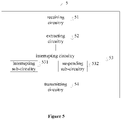
- Figure 5 is a structural diagram of a signaling reception device according to an embodiment.
- the signaling reception device 5 can perform the method as shown in Figure 2 , and may be applied in an AP or a STA.
- the signaling reception device 5 includes: a receiving circuitry 51 configured to receive an indication signaling, wherein the indication signaling is used to notify a receiver of the indication signaling to dynamically suspend transmission of a current data package being transmitted; and an extracting circuitry 52 configured to extract the indication signaling.
- the indication signaling is transmitted on a second link other than a first link on which the current data package is being transmitted by the receiver of the indication signaling.
- the device 5 further includes an interrupting circuitry 53 configured to interrupt the transmission of the current data package being transmitted.
- the current data package being transmitted is an aggregated data package including a plurality of data packets
- the interrupting circuitry 53 includes: an interrupting sub-circuitry 531 configured to interrupt transmission of one of the plurality of data packets which is being transmitted and suspend transmission of other data packets of the plurality of data packets; or a suspending sub-circuitry 532 configured to: after transmission of one of the plurality of data packets which is being transmitted is completed, suspend transmission of other data packets of the plurality of data packets.
- the indication signaling includes a link identifier which points to a link where the receiver of the indication signaling is located.
- the device 5 further includes a transmitting circuitry 54 configured to: in response to the indication signaling, transmit a feedback signaling on the second link, wherein the feedback signaling indicates that the receiver of the indication signaling is about to suspend or has suspended the transmission of the current data package.
- the indication signaling and/or the feedback signaling is a data frame or a signal sequence.
- a storage medium having computer instructions stored therein is provided, wherein when the computer instructions are executed, the above methods as shown in Figures 1 to 3 are performed.
- the storage medium may include a non-volatile or non-transitory memory.
- the storage medium may include a Read Only Memory (ROM), a Random Access Memory (RAM), a magnetic disk or an optical disk.
- a terminal including a memory and a processor
- the memory has computer instructions stored therein, and when the processor executes the computer instructions, the above methods as shown in Figures 1 to 3 are performed.
- the terminal may be a WLAN AP or a WLAN STA.
Landscapes
- Engineering & Computer Science (AREA)
- Signal Processing (AREA)
- Computer Networks & Wireless Communication (AREA)
- Quality & Reliability (AREA)
- Mobile Radio Communication Systems (AREA)
Applications Claiming Priority (2)
| Application Number | Priority Date | Filing Date | Title |
|---|---|---|---|
| CN201910493280.7A CN111294148B (zh) | 2019-06-06 | 2019-06-06 | 信令传输、接收方法及装置、存储介质、终端 |
| PCT/CN2020/086937 WO2020244337A1 (zh) | 2019-06-06 | 2020-04-26 | 信令传输、接收方法及装置、存储介质、终端 |
Publications (2)
| Publication Number | Publication Date |
|---|---|
| EP3982684A1 true EP3982684A1 (de) | 2022-04-13 |
| EP3982684A4 EP3982684A4 (de) | 2022-06-15 |
Family
ID=71028289
Family Applications (1)
| Application Number | Title | Priority Date | Filing Date |
|---|---|---|---|
| EP20819346.6A Withdrawn EP3982684A4 (de) | 2019-06-06 | 2020-04-26 | Verfahren und vorrichtung zur übertragung von signalen, verfahren und vorrichtung zum empfang von signalen, speichermedium und endgerät |
Country Status (4)
| Country | Link |
|---|---|
| US (1) | US20210410223A1 (de) |
| EP (1) | EP3982684A4 (de) |
| CN (1) | CN111294148B (de) |
| WO (1) | WO2020244337A1 (de) |
Families Citing this family (1)
| Publication number | Priority date | Publication date | Assignee | Title |
|---|---|---|---|---|
| CN114449620B (zh) * | 2020-11-02 | 2023-04-28 | 极米科技股份有限公司 | 多链路信息传输的方法、装置及存储介质 |
Family Cites Families (12)
| Publication number | Priority date | Publication date | Assignee | Title |
|---|---|---|---|---|
| CN1756227B (zh) * | 2004-09-29 | 2014-05-07 | 上海贝尔股份有限公司 | 实现无线局域网的实时性和QoS的方法和装置 |
| US8516101B2 (en) * | 2009-06-15 | 2013-08-20 | Qualcomm Incorporated | Resource management for a wireless device |
| US9451637B2 (en) * | 2012-06-27 | 2016-09-20 | Lg Electronics Inc. | Method for indicating channel access type in wireless communication system, and apparatus therefor |
| CN104104486A (zh) * | 2013-04-12 | 2014-10-15 | 北京三星通信技术研究有限公司 | 一种支持多子帧调度上行数据传输的方法和设备 |
| KR102548738B1 (ko) * | 2016-01-22 | 2023-06-29 | 삼성전자주식회사 | 전자 장치, 그의 무선 통신 방법 및 비일시적 컴퓨터 판독가능 기록매체 |
| CN120658353A (zh) * | 2017-05-03 | 2025-09-16 | 交互数字专利控股公司 | 用于提升eMBB的HARQ反馈性能的方法和装置 |
| US10588168B2 (en) * | 2017-05-15 | 2020-03-10 | Apple Inc. | Peer-to-peer transmission pause indication |
| TWI691225B (zh) * | 2017-08-04 | 2020-04-11 | 聯發科技股份有限公司 | 衝突處理之方法、及其使用者設備和基地台 |
| WO2019160332A1 (ko) * | 2018-02-14 | 2019-08-22 | 주식회사 케이티 | 상향링크 데이터를 전송하는 방법 및 장치 |
| EP3852472B1 (de) * | 2018-09-21 | 2024-11-06 | Beijing Xiaomi Mobile Software Co., Ltd. | Uplink-datenübertragungsverfahren und einrichtung, vorrichtung und system |
| CN109587052B (zh) * | 2019-01-30 | 2022-03-15 | 展讯通信(上海)有限公司 | 一种多链路数据传输方法及装置 |
| CN113475152B (zh) * | 2019-02-27 | 2024-06-18 | 索尼集团公司 | 通信装置和方法 |
-
2019
- 2019-06-06 CN CN201910493280.7A patent/CN111294148B/zh active Active
-
2020
- 2020-04-26 US US16/959,787 patent/US20210410223A1/en not_active Abandoned
- 2020-04-26 EP EP20819346.6A patent/EP3982684A4/de not_active Withdrawn
- 2020-04-26 WO PCT/CN2020/086937 patent/WO2020244337A1/zh not_active Ceased
Also Published As
| Publication number | Publication date |
|---|---|
| CN111294148A (zh) | 2020-06-16 |
| WO2020244337A1 (zh) | 2020-12-10 |
| CN111294148B (zh) | 2022-03-29 |
| US20210410223A1 (en) | 2021-12-30 |
| EP3982684A4 (de) | 2022-06-15 |
Similar Documents
| Publication | Publication Date | Title |
|---|---|---|
| US10484983B2 (en) | Robust control channel transmission scheme | |
| US11711711B2 (en) | Method for configuring measurement gap, access network device and terminal | |
| CN106961733B (zh) | 传输数据的方法和装置 | |
| CN109155958B (zh) | 一种切换到中继节点的方法、相关设备及系统 | |
| US20140269544A1 (en) | Transmission opportunity operation of uplink multi-user multiple-input-multiple-output communication in wireless networks | |
| EP2701427B1 (de) | Mobilkommunikationsverfahren, drahtlose basisstation, funkbasisstation | |
| US11224038B2 (en) | Device | |
| EP3873131A1 (de) | Handover-verfahren, handover-vorrichtung und computerlesbares speichermedium | |
| CN112566266B (zh) | 通信方法、装置、设备、存储介质及程序产品 | |
| WO2019158208A1 (en) | Support for receive-limited user equipment in wireless environments | |
| CN108990099B (zh) | 处理测量组态及信令无线承载的装置及方法 | |
| US20250016878A1 (en) | Method, device and computer program product for wireless communication | |
| CN108990100B (zh) | 处理双连接中的测量配置的装置及方法 | |
| US20240214288A1 (en) | Handling radio link failure in the uu interface in case of sidelink relay | |
| US10827403B2 (en) | Data transmission method, user equipment, base station, and system | |
| EP3994859B1 (de) | Sequenzielle paketanpassung | |
| WO2020107348A1 (zh) | 非授权频谱中的通信方法、装置及系统 | |
| EP3982684A1 (de) | Verfahren und vorrichtung zur übertragung von signalen, verfahren und vorrichtung zum empfang von signalen, speichermedium und endgerät | |
| WO2021248418A1 (zh) | 数据接收、发送方法及装置、通信设备及存储介质 | |
| CN115039424B (zh) | 用于无线通信的电子设备和方法、计算机可读存储介质 | |
| EP3477999A1 (de) | Netzwerkzugriffsverfahren, zugriffsvorrichtung und endgerätevorrichtung | |
| EP3641398A1 (de) | Drahtloskommunikationsverfahren und -vorrichtung | |
| EP3905736A1 (de) | Vorrichtungserkennungsverfahren, -einrichtung und -system | |
| US20250227741A1 (en) | Low Latency Session Setup and Use | |
| EP3975643A1 (de) | Verfahren und vorrichtungen zum senden und empfangen von signalen, speichermedium und endgerät |
Legal Events
| Date | Code | Title | Description |
|---|---|---|---|
| STAA | Information on the status of an ep patent application or granted ep patent |
Free format text: STATUS: THE INTERNATIONAL PUBLICATION HAS BEEN MADE |
|
| PUAI | Public reference made under article 153(3) epc to a published international application that has entered the european phase |
Free format text: ORIGINAL CODE: 0009012 |
|
| STAA | Information on the status of an ep patent application or granted ep patent |
Free format text: STATUS: REQUEST FOR EXAMINATION WAS MADE |
|
| 17P | Request for examination filed |
Effective date: 20220105 |
|
| AK | Designated contracting states |
Kind code of ref document: A1 Designated state(s): AL AT BE BG CH CY CZ DE DK EE ES FI FR GB GR HR HU IE IS IT LI LT LU LV MC MK MT NL NO PL PT RO RS SE SI SK SM TR |
|
| REG | Reference to a national code |
Ref country code: DE Ref legal event code: R079 Free format text: PREVIOUS MAIN CLASS: H04W0072120000 Ipc: H04W0076200000 |
|
| A4 | Supplementary search report drawn up and despatched |
Effective date: 20220518 |
|
| RIC1 | Information provided on ipc code assigned before grant |
Ipc: H04L 1/16 20060101ALN20220512BHEP Ipc: H04W 76/20 20180101AFI20220512BHEP |
|
| DAV | Request for validation of the european patent (deleted) | ||
| DAX | Request for extension of the european patent (deleted) | ||
| STAA | Information on the status of an ep patent application or granted ep patent |
Free format text: STATUS: EXAMINATION IS IN PROGRESS |
|
| 17Q | First examination report despatched |
Effective date: 20240807 |
|
| GRAP | Despatch of communication of intention to grant a patent |
Free format text: ORIGINAL CODE: EPIDOSNIGR1 |
|
| STAA | Information on the status of an ep patent application or granted ep patent |
Free format text: STATUS: GRANT OF PATENT IS INTENDED |
|
| INTG | Intention to grant announced |
Effective date: 20250408 |
|
| RIC1 | Information provided on ipc code assigned before grant |
Ipc: H04L 1/1607 20230101ALN20250402BHEP Ipc: H04W 76/20 20180101AFI20250402BHEP |
|
| STAA | Information on the status of an ep patent application or granted ep patent |
Free format text: STATUS: THE APPLICATION IS DEEMED TO BE WITHDRAWN |
|
| 18D | Application deemed to be withdrawn |
Effective date: 20250809 |