EP3982650A1 - Vehicle and vehicle communication system - Google Patents
Vehicle and vehicle communication system Download PDFInfo
- Publication number
- EP3982650A1 EP3982650A1 EP21177376.7A EP21177376A EP3982650A1 EP 3982650 A1 EP3982650 A1 EP 3982650A1 EP 21177376 A EP21177376 A EP 21177376A EP 3982650 A1 EP3982650 A1 EP 3982650A1
- Authority
- EP
- European Patent Office
- Prior art keywords
- vehicle
- information
- communication
- abnormality
- server
- Prior art date
- Legal status (The legal status is an assumption and is not a legal conclusion. Google has not performed a legal analysis and makes no representation as to the accuracy of the status listed.)
- Withdrawn
Links
Images



Classifications
-
- H—ELECTRICITY
- H04—ELECTRIC COMMUNICATION TECHNIQUE
- H04W—WIRELESS COMMUNICATION NETWORKS
- H04W4/00—Services specially adapted for wireless communication networks; Facilities therefor
- H04W4/30—Services specially adapted for particular environments, situations or purposes
- H04W4/40—Services specially adapted for particular environments, situations or purposes for vehicles, e.g. vehicle-to-pedestrians [V2P]
-
- H—ELECTRICITY
- H04—ELECTRIC COMMUNICATION TECHNIQUE
- H04W—WIRELESS COMMUNICATION NETWORKS
- H04W4/00—Services specially adapted for wireless communication networks; Facilities therefor
- H04W4/30—Services specially adapted for particular environments, situations or purposes
- H04W4/40—Services specially adapted for particular environments, situations or purposes for vehicles, e.g. vehicle-to-pedestrians [V2P]
- H04W4/44—Services specially adapted for particular environments, situations or purposes for vehicles, e.g. vehicle-to-pedestrians [V2P] for communication between vehicles and infrastructures, e.g. vehicle-to-cloud [V2C] or vehicle-to-home [V2H]
-
- H—ELECTRICITY
- H04—ELECTRIC COMMUNICATION TECHNIQUE
- H04W—WIRELESS COMMUNICATION NETWORKS
- H04W4/00—Services specially adapted for wireless communication networks; Facilities therefor
- H04W4/30—Services specially adapted for particular environments, situations or purposes
- H04W4/40—Services specially adapted for particular environments, situations or purposes for vehicles, e.g. vehicle-to-pedestrians [V2P]
- H04W4/46—Services specially adapted for particular environments, situations or purposes for vehicles, e.g. vehicle-to-pedestrians [V2P] for vehicle-to-vehicle communication [V2V]
-
- H—ELECTRICITY
- H04—ELECTRIC COMMUNICATION TECHNIQUE
- H04W—WIRELESS COMMUNICATION NETWORKS
- H04W4/00—Services specially adapted for wireless communication networks; Facilities therefor
- H04W4/80—Services using short range communication, e.g. near-field communication [NFC], radio-frequency identification [RFID] or low energy communication
Definitions
- the present invention relates to a vehicle, a vehicle communication system and a method for communication of a plurality of vehicles.
- JP-A-2010-120628 discloses a system in which a motorcycle transmits/receives information to/from a management server on a communication network through a mobile communication system (such as a fourth-generation mobile communication system) using an SIM (Subscriber Identity Module).
- a mobile communication system such as a fourth-generation mobile communication system
- SIM Subscriber Identity Module
- the mobile communication system using the SIM requires high communication cost. Therefore, maintenance cost for maintaining the motorcycle is so high as to impose a great economic burden on an owner who owns the motorcycle. Furthermore, when the motorcycle moves across the border between two countries (for example, when the motorcycle moves from France to Germany), the communication cost of the mobile communication system using the SIM in the destination country rises exponentially. Thus, in terms of the communication cost, there is a problem in the mobile communication system using the SIM. Further, the mobile communication system using the SIM requires high power consumption. For this reason, in a state in which a drive source such as an engine is not driven, the mobile communication system using the SIM consumes electric power stored in a battery at a high pace, and a communication time between the motorcycle and the server is restricted. Thus, from the aforementioned viewpoints, there is still room for examination about the motorcycle that can communicate with the server on the communication network while reducing the communication cost of the motorcycle and the power consumption caused by the communication between the motorcycle and the server.
- An object of the present invention is to provide a vehicle that can communicate with a server on a communication network while reducing communication cost and power consumption caused by the communication.
- another object of the present disclosure is to provide a vehicle communication system and/or method for communication of a plurality of vehicles in which the vehicle can communicate with the server on the communication network while reducing the communication cost and the power consumption caused by the communication, and that can provide rich user experience for an owner of the vehicle.
- said object is solved by vehicle having the features of independent claim 1.
- said object is solved by a vehicle communication system having the features of independent claim 7.
- a straddled vehicle comprising: a short-range communication module configured to communicably connect the vehicle to another vehicle; and an LPWA communication module configured to communicably connect the vehicle to a server on a communication network through an LPWA base station.
- the vehicle transmits vehicle information relevant to the vehicle and identification information of the vehicle to the server through the base station.
- the vehicle transmits the vehicle information and the identification information to the other vehicle.
- the other vehicle transmits the vehicle information and the identification information to the server through the base station.
- the other vehicle transmits the vehicle information and the identification information to the further vehicle.
- the vehicle information is transmitted from the vehicle to the server on the communication network not through a mobile communication system (such as a fourth-generation or fifth-generation mobile communication system) that uses an SIM and that requires high communication cost and high power consumption caused by the communication but through LPWA (Low Power Wide Area) communication that requires low communication cost and low power consumption.
- a mobile communication system such as a fourth-generation or fifth-generation mobile communication system
- LPWA Low Power Wide Area
- the vehicle information is transmitted to the server through the other vehicle or the further vehicle present inside the communication area of the LPWA base station.
- the vehicle information may include maintenance information of the vehicle.
- the maintenance information of the vehicle can be transmitted to the server on the communication network while the communication cost and the power consumption are reduced.
- the vehicle information may include abnormality information indicating abnormality of the vehicle.
- the abnormality information of the vehicle can be transmitted to the server on the communication network while the communication cost and the power consumption are reduced.
- the vehicle determines to transmit the abnormality information and the identification information to the server.
- the abnormality information of the vehicle can be immediately transmitted to the server on the communication network.
- the vehicle information may include position information of the vehicle.
- the positional information of the vehicle can be transmitted to the server on the communication network while the communication cost and the power consumption are reduced.
- the vehicle information may include the position information of the vehicle and abnormality information indicating abnormality of the vehicle.
- the vehicle may determine to transmit the abnormality information, the position information and the identification information to the server.
- the abnormality information of the vehicle and the position information of the vehicle can be immediately transmitted to the server on the communication network.
- the other vehicle and the further vehicle may be straddled vehicles.
- the vehicle can transmit the vehicle information to the server through the other vehicle or the further vehicle that is a saddle-riding type and that is present inside the communication area of the LPWA base station.
- the short-range communication module may be a short-range communication module based on a Wi-SUN communication standard.
- the short-range communication module is the short-range communication module based on the Wi-SUN communication standard. Accordingly, it is possible to construct a mesh network by the short-range communication among the vehicles. Thus, even when the vehicle is not present inside the communication area of the LPWA base station, the vehicle can transmit the vehicle information to the server through the mesh network based on the Wi-SUN communication standard and the LPWA communication. That is, it is possible to supplement the communication area of the LPWA by the Wi-SUN mesh network among the vehicles.
- the server may identify a mobile terminal associated with the vehicle based on the received identification information of the vehicle, and transmit the vehicle information to the identified mobile terminal.
- the vehicle information can be transmitted from the vehicle to the mobile terminal not through the mobile communication system (such as the fifth-generation mobile communication system) that uses the SIM and that requires high communication cost and high power consumption caused by the communication but through the LPWA communication that requires low communication cost and low power consumption.
- the vehicle information can be transmitted from the vehicle to the mobile terminal associated with the vehicle through the server while the communication cost and the power consumption are reduced.
- the owner of the vehicle can grasp the situation of the vehicle through the vehicle information transmitted to the mobile terminal, and can provide the owner of the vehicle with rich user experience.
- a vehicle communication system comprising: a plurality of vehicles; and a server that is communicably connected to at least one of the vehicles through an LPWA base station.
- a first vehicle of the vehicles When a first vehicle of the vehicles is present inside a communication area of the base station, the first vehicle transmits vehicle information relevant to the first vehicle and identification information of the first vehicle to the server through the base station.
- the first vehicle When the first vehicle is present outside the communication area of the base station and the first vehicle can communicate with a second vehicle of the vehicles, the first vehicle transmits the vehicle information and the identification information to the second vehicle.
- the second vehicle When the second vehicle is present inside the communication area, the second vehicle transmits the vehicle information and the identification information to the server through the base station.
- the second vehicle When the second vehicle is present outside the communication area and the second vehicle can communicate with a third vehicle of the vehicles, the second vehicle transmits the vehicle information and the identification information to the third vehicle.
- the server is configured to: receive the vehicle information and the identification information; identify a mobile terminal associated with the first vehicle based on the received identification information; and transmit the vehicle information to the identified mobile terminal.
- the vehicle information is transmitted from the first vehicle to the server on the communication network not through the mobile communication system (such as the fourth-generation or fifth-generation mobile communication system) that uses the SIM and that requires high communication cost and high power consumption caused by the communication but through the LPWA communication that requires low communication cost and low power consumption. Then, the vehicle information is transmitted from the server to the mobile terminal associated with the first vehicle. Further, even when the first vehicle is not present inside the communication area of the LPWA base station, the vehicle information is transmitted to the server through the second vehicle or the third vehicle present inside the communication area of the LPWA base station. Then, the vehicle information is transmitted from the server to the mobile terminal.
- the mobile communication system such as the fourth-generation or fifth-generation mobile communication system
- the vehicle communication system that allows the vehicle to communicate with the server on the communication network while reducing communication cost and power consumption caused by the communication. Further, the owner of the first vehicle can grasp the situation of the first vehicle (such as the abnormality of the first vehicle) through the vehicle information transmitted to the mobile terminal. Therefore, rich user experience can be provided to the owner of the first vehicle.
- the vehicle information may include maintenance information of the first vehicle.
- the owner of the first vehicle can grasp a maintenance situation of the first vehicle by viewing the maintenance information of the first vehicle transmitted to the mobile terminal.
- the vehicle information may include abnormality information indicating abnormality of the first vehicle.
- the owner of the first vehicle can grasp the abnormality of the first vehicle by viewing the abnormality information of the first vehicle transmitted to the mobile terminal.
- the first vehicle may determine to transmit the abnormality information and the identification information to the server.
- the abnormality information and the identification information of the first vehicle are transmitted to the mobile terminal when the abnormality of the first vehicle is detected.
- the owner of the first vehicle can immediately grasp the abnormality of the first vehicle through the mobile terminal.
- the vehicle information may include position information of the first vehicle.
- the owner of the first vehicle can grasp the current position of the first vehicle by viewing the position information of the first vehicle transmitted to the mobile terminal.
- the vehicle information may include the position information of the first vehicle and abnormality information indicating abnormality of the first vehicle.
- the first vehicle may determine to transmit the abnormality information, the position information and the identification information to the server.
- the abnormality information of the first vehicle and the position information of the first vehicle are transmitted to the mobile terminal.
- the owner of the first vehicle can immediately grasp the abnormality of the first vehicle and the current position of the first vehicle through the mobile terminal.
- FIG. 1 is a schematic view showing an example of the vehicle communication system 10 according to the present embodiment.
- the vehicle communication system 10 is provided with vehicles 1A to 1D, a management server 2, and a push notification server 3.
- Each of the vehicles 1A to 1D is a straddled vehicle.
- the vehicle 1A to 1D is a saddle-riding type motorcycle that can be turned by a rider tilting a vehicle body of the motorcycle.
- each of the vehicles 1A to 1D may be generically referred to as vehicle 1.
- vehicle 1 is not limited to a two-wheeled vehicle but may be a straddled three-wheeled vehicle or four-wheeled vehicle.
- the vehicles 1A to 1D form a Wi-SUN (Wireless Smart Utility Network) mesh network. That is, the vehicles 1A to 1D are communicably connected to one another through the Wi-SUN mesh network.
- the Wi-SUN is a communication standard based on the international standard IEEE 802.15.4g.
- the Wi-SUN is a wireless communication standard that uses radio waves in the 920 MHz band to enable to interconnect communication devices without using a base station. Further, the Wi-SUN may support multi-hop.
- the vehicle 1A is communicably connected to the vehicle 1D via the vehicle 1B or the vehicle 1C.
- the Wi-SUN communication is characterized in that it has a comparatively long communication distance (which is, for example, several hundred meters or more) as near field communication so as to secure high radio-wave reachability.
- the vehicle 1 is communicably connected to a server on a communication network 7 through the base station 6.
- LPWA Low Power Wide Area
- the communication network 7 includes at least an IP (Internet Protocol) network such as the Internet.
- IP Internet Protocol
- the LPWA has recently drawn attention as a communication method for a global loT (Internet of Things) network, which is characterized by low cost, low power consumption, and long-distance transmission.
- the LPWA communication method is roughly classified into two types: a communication method that uses an unlicensed band and a communication method that uses a licensed band.
- Examples of typical LPWA communication standards include SIGFOX (registered trademark), LoRaWAN and NB-loT.
- the SIGFOX and the LoRaWAN are communication methods that use an unlicensed band, while the NB-loT is a communication method that uses a licensed band.
- the SIGFOX may be used as an LPWA communication standard.
- the communication area S of the LPWA base station 6 can cover a range of several tens of kilometers ahead of the base station 6.
- the management server 2 is placed on the communication network 7.
- the management server 2 is configured to receive vehicle information of the vehicle 1 and identification information of the vehicle 1 from the vehicle 1 via the LPWA base station 6 and the communication network 7.
- the vehicle information of the vehicle 1 includes, for example, at least one of maintenance information of the vehicle 1, abnormality information indicating abnormality of the vehicle 1, and position information of the vehicle 1.
- the identification information of the vehicle 1 is unique information assigned to the vehicle 1 to identify the vehicle 1.
- the management server 2 is configured to identify a mobile terminal associated with the vehicle 1 based on the identification information of the vehicle 1.
- a vehicle information management table in which information about mobile terminals (such as device tokens of the mobile terminals) and identification information of vehicles are associated with each other is stored in a storage device of the management server 2.
- the mobile terminal is a communication device carried by an owner of the vehicle 1.
- the mobile terminal is typically a smartphone, a mobile phone or a tablet. Further, the mobile terminal may be a wearable device worn by the owner, such as a smartwatch or AR glasses.
- the push notification server 3 is placed on the communication network 7.
- the push notification server 3 is configured to transmit the vehicle information of the vehicle 1 to a predetermined mobile terminal after receiving a device token of the predetermined mobile terminal and the vehicle information of the vehicle 1 from the management server 2 through the communication network 7.
- An address management table in which the device tokens of the mobile terminals and network addresses (such as IP addresses) of the mobile terminals are associated with each other is stored in a storage device of the push notification server 3.
- an owner U1 (rider) of the vehicle 1A carries a mobile terminal 5A. That is, it is assumed that the vehicle 1A and the mobile terminal 5A are associated with each other on the vehicle information management table stored in the management server 2. Further, it is assumed that an owner U2 (rider) of the vehicle 1D carries a mobile terminal 5D. That is, it is assumed that the vehicle 1D and the mobile terminal 5D are associated with each other on the vehicle information management table.
- the mobile terminals 5A and 5D are communicably connected to the management server 2 and the push notification server 3 through the communication network 7.
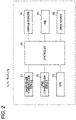
- the vehicle 1 includes a controller 20, a short-range communication module 21, an LPWA communication module 22, and a GPS (Global Positioning System) 23.
- the vehicle 1 further includes various sensors 24, an HMI (Human Machine Interface) 25, and a drive source 26.
- the controller 20 is configured to control the constituent components provided in the vehicle 1.
- the control unit 20 is, for example, constituted by at least one electronic control unit (ECU).
- the ECU may include a computer system including at least one processor and at least one memory, and an electronic circuit constituted by active elements and passive elements.
- the controller 20 may be constituted by ECUs.
- the ECUs constituting the controller 20 may be physically separated from one another.
- the control unit 20 includes the communication control ECU, the traveling control ECU, and the display control ECU.
- the short-range communication module 21 is a short-range communication module based on the Wi-SUN communication standard.
- the short-range communication module 21 is configured to communicably connect the vehicle 1 to another vehicle through short-range communication based on the Wi-SUN communication standard.
- the short-range communication module 21 is provided with a transmission/reception antenna, a radio frequency (RF) circuit, and a signal processing circuit.
- RF radio frequency
- the LPWA communication module 22 is a long-range communication module based on the LPWA communication standard.
- the LPWA communication module 22 is configured to connect the vehicle 1 to the server on the communication network 7 through LPWA communication that requires low communication cost and low power consumption.
- the LPWA communication module 22 is configured to communicably connect the vehicle 1 to the server on the communication network 7 through the LPWA base station 6 and a not-shown core network.
- the LPWA communication module 22 is provided with an antenna, an RF circuit, and a signal processing circuit.
- the GPS 23 is configured to acquire position information indicating the position of the vehicle 1.
- the various sensors 24 may include, for example, a vehicle speed sensor for detecting speed of the vehicle 1, an acceleration sensor for detecting acceleration of the vehicle 1 in three directions of XYZ axes, and an inclination angle sensor for detecting inclination of the vehicle 1 in a left-right direction with respect to the ground.
- the various sensors 24 may further include a drive source rotation speed sensor, a cooling water temperature sensor, and a fuel gauge sensor.
- the vehicle 1 may not include the GPS 23.
- the vehicle 1 may acquire the position information of the vehicle 1 through communication with the base station 6. Further, the vehicle 1 may acquire the position information of the vehicle 1 through communication with an access point of Wi-Fi (registered trademark).
- the Wi-Fi communication module may be mounted on the LPWA communication module 22. It should be noted that accuracy of the position information of the vehicle 1 acquired through the base station 6 or the access point is not higher than accuracy of the position information of the vehicle 1 acquired from the GPS 23. Specifically, the position information of the vehicle 1 acquired through the base station 6 has an error of about several hundred meters with respect to actual position information of the vehicle 1. On the other hand, the position information of the vehicle 1 acquired through the access point has an error of about several meters to several tens of meters with respect to the actual position information of the vehicle 1.
- the HMI 25 functioning as an input/output interface between the rider and the vehicle 1 is constituted by an input portion for accepting an input operation from the rider and an output unit for outputting information from the vehicle 1.
- the input portion of the HMI 25 includes, for example, a throttle grip, a brake lever, a handle switch, and a main switch.
- the output portion of the HMI 25 includes, for example, a meter unit constituted by a speedometer and a tachometer, and the display system for displaying infotainment information.
- the drive source 26 that is configured to generate driving force of the vehicle 1 is an engine and/or a motor.
- FIG. 3 is a flowchart for explaining the vehicle information transmission process executed by the vehicle 1A to 1D (hereinafter simply referred to as vehicle 1).
- vehicle 1A to 1D hereinafter simply referred to as vehicle 1).
- abnormality information of the vehicle 1 and position information of the vehicle 1 are transmitted as an example of the vehicle information from the vehicle 1 to the management server 2.
- the controller 20 detects abnormality of the vehicle 1 based on detection signals outputted from the various sensors 24 or the position information of the vehicle 1. For example, the controller 20 detects abnormality of the vehicle 1 when detecting vibration or inclination of the vehicle 1 based on a detection signal outputted from the acceleration sensor or the inclination angle sensor in a state in which the vehicle 1 has been set to an anti-theft mode. Further, the controller 20 detects abnormality of the vehicle 1 when detecting a significant change in the position of the vehicle 1 based on the position information of the vehicle 1 outputted from the GPS 23 in the state in which the vehicle 1 has been set to the anti-theft mode. Specifically, the controller 20 may detect abnormality of the vehicle 1 when the current position of the vehicle 1 has significantly changed from the position where the vehicle 1 was set to the anti-theft mode.
- the controller 20 determines to transmit the abnormality information indicating the abnormality of the vehicle 1, the position information of the vehicle 1 and identification information of the vehicle 1 to the management server 2 on the network 7 in response to the detection of the abnormality of the vehicle 1. Then, the controller 20 determines whether the vehicle 1 is present inside the communication area S of the LPWA base station 6 or not (step S3). When determining that the vehicle 1 is present inside the communication area S (YES in the step S3), the controller 20 transmits the abnormality information of the vehicle 1, the position information of the vehicle 1, and the identification information of the vehicle 1 to the base station 6 through the LPWA communication module 22 (step S4). Then, these pieces of information are transmitted to the management server 2 through the base station 6 and the communication network 7.
- the controller 20 determines whether the vehicle 1 can communicate with another vehicle in the surroundings or not (step S5). More specifically, in the step S5, the controller 20 determines whether or not the vehicle 1 can communicate with the other vehicle in the surroundings through short-range communication based on the Wi-SUN communication standard.
- the controller 20 When determining that the vehicle 1 can communicate with the other vehicle in the surroundings through the short-range communication based on the Wi-SUN communication standard (YES in the step S5), the controller 20 transmits the abnormality information of the vehicle 1, the position information of the vehicle 1 and the identification information of the vehicle 1 to the other vehicle through the short-range communication module 21 (step S6). In particular, the controller 20 may broadcast these pieces of information toward the other vehicle in the surroundings. On the other hand, when the determination result of the step S5 is NO, the controller 20 executes the determination processing of the step 3 again.
- the abnormality information of the vehicle 1 when the abnormality of the vehicle 1 is detected, the abnormality information of the vehicle 1, the position information of the vehicle 1, the identification information of the vehicle 1 are transmitted to the management server 2.
- these pieces of information are transmitted to the management server 2 on the communication network 7 through the base station 6.
- these pieces of information are broadcast to the other vehicle constituting the Wi-SUN mesh network.
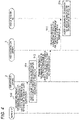
- FIG. 4 is a sequence diagram for explaining a first example of a series of processes executed by the vehicle communication system 10.
- abnormality information of the vehicle 1A and position information of the vehicle 1A are transmitted as an example of the vehicle information of the vehicle 1A to the mobile terminal 5A.
- the controller 20 of the vehicle 1A executes the processing of the step S4 after going through the processings of the steps S1 to S3 shown in FIG.3 .
- the vehicle 1A transmits the abnormality information of the vehicle 1A, the position information of the vehicle 1A, and the identification information of the vehicle 1A to the base station 6. Since these pieces of information are transmitted to the management server 2, it is assumed that information indicating a network address of the management server 2 is added to these pieces of information.
- the management server 2 placed on the communication network 7 identifies the mobile terminal 5A associated with the vehicle 1A based on the identification information of the vehicle 1A (step S11).
- the management server 2 refers to the vehicle information management table to identify the mobile terminal 5A associated with the vehicle 1A from the identification information of the vehicle 1A. In this case, the management server 2 refers to the vehicle information management table to identify a device token of the mobile terminal 5A.
- the management server 2 transmits the abnormality information of the vehicle 1A, the position information of the vehicle 1A, and the device token of the mobile terminal 5A to the push notification server 3 (step S12).
- the push notification server 3 After receiving the abnormality information of the vehicle 1A, the position information of the vehicle 1A, and the device token of the mobile terminal 5A, the push notification server 3 refers to the address management table to identify a network address (for example, an IP address) of the mobile terminal 5A from the device token of the mobile terminal 5A. Then, the push notification server 3 transmits the abnormality information of the vehicle 1A and the position information of the vehicle 1A to the mobile terminal 5A through the communication network 7 (step S13).
- a network address for example, an IP address
- the mobile terminal 5A After receiving the abnormality information of the vehicle 1A and the position information of the vehicle 1A through the communication network 7 and the base station (not shown) for the mobile communication system, the mobile terminal 5A visibly and/or audibly notifies of the pieces of information (step S14).
- the owner U1 of the vehicle 1A carrying the mobile terminal 5A can immediately grasp the abnormality of the vehicle 1A and the current position of the vehicle 1A through the mobile terminal 5A.
- the owner U1 can grasp the abnormality of the vehicle 1A by viewing the abnormality information of the vehicle 1A displayed on the mobile terminal 5A.
- the owner U1 can grasp the current position of the vehicle 1A by viewing the position information of the vehicle 1A displayed on the mobile terminal 5A.
- the owner U1 can grasp the abnormality of the vehicle 1A and the current position of the vehicle 1A in real time through the mobile terminal 5A.
- the abnormality information, the position information and the identification information of the vehicle 1A are transmitted from the vehicle 1A to the management server 2 on the communication network 7 not through a mobile communication system (such as a fifth-generation mobile communication system) that uses an SIM and that requires high communication cost and high power consumption but through the LPWA communication that requires low communication cost and low power consumption. Then, the abnormality information and the position information of the vehicle 1A are transmitted from the management server 2 to the mobile terminal 5A associated with the vehicle 1A via the push notification server 3.
- a mobile communication system such as a fifth-generation mobile communication system
- the abnormality information and the position information of the vehicle 1A can be transmitted to the mobile terminal 5A at low communication cost and low power consumption, and the owner U1 of the vehicle 1A can grasp the situation of the vehicle 1A by viewing the abnormality information and the position information transmitted to the mobile terminal 5A.
- the vehicle communication system 10 capable of providing the owner U1 of the vehicle 1A with rich user experience.
- FIG. 5 is a sequence diagram for explaining a second example of a series of processes executed by the vehicle communication system 10. In this example, it is assumed that abnormality information of the vehicle 1D and position information of the vehicle 1D are transmitted as an example of the vehicle information of the vehicle 1D to the mobile terminal 5D.
- the controller 20 of the vehicle 1D executes the processing of the step S6 after going through the processings of the steps S1, S2, S3, and S5 shown in FIG. 3 .
- the controller 20 of the vehicle 1D broadcasts the abnormality information of the vehicle 1 D, the position information of the vehicle 1D, and the identification information of the vehicle 1D to the vehicles 1B and 1C (an example of a second vehicle) constituting the Wi-SUN mesh network.
- the vehicle 1D when the vehicle 1D is present outside the communication area S of the base station 6 and the vehicle 1D can communicate with the vehicle 1B and the vehicle 1C, the vehicle 1D transmits the abnormality information, the position information, and the identification information of the vehicle 1D to the vehicle 1B and the vehicle 1C.
- the vehicle 1D and the vehicle 1A are not directly connected to each other through the Wi-SUN mesh network.
- the Wi-SUN supports the multi-hop.
- information indicating the network address of the management server 2 is added to these pieces of information.
- the vehicle 1B determines whether the vehicle 1B is present inside the communication area S of the base station 6 or not. In this example, since the vehicle 1B is present outside the communication area S of the base station 6, the vehicle 1B transmits the abnormality information, the position information, and the identification of the vehicle 1D to the vehicle 1A (an example of a third vehicle) constituting the Wi-SUN mesh network (step S21). The vehicle 1C also executes the same process as the vehicle 1B.
- the vehicle 1B and the vehicle 1C when the vehicle 1B and the vehicle 1C are present outside the communication area S of the base station 6 and the vehicle 1B and the vehicle 1C can communicate with the vehicle 1A, the vehicle 1B and the vehicle 1C transmit the abnormality information, the position information, and the identification information of the vehicle 1D to the vehicle 1A.
- the vehicle 1A transmits the abnormality information, the position information, and the identification information of the vehicle 1D to the base station 6 (step S22).
- the abnormality information, the position information, and the identification information of the vehicle 1D are transmitted to the vehicle 1A through the Wi-SUN mesh network. Then, these pieces of information are transmitted to the management server 2 on the communication network 7 through the base station 6.
- the management server 2 placed on the communications network 7 refers to the vehicle information management table to identify the mobile terminal 5D associated with the vehicle 1D based on the identification information of the vehicle 1D (step S23).
- the management server 2 refers to the vehicle information management table to identify a device token of the mobile terminal 5D.
- the management server 2 transmits the abnormality information of the vehicle 1D, the position information of the vehicle 1D, and the device token of the mobile terminal 5D to the push notification server 3 (step S24).
- the push notification server 3 After receiving the abnormality information of the vehicle 1D, the position information of the vehicle 1D, and the device token of the mobile terminal 5D, the push notification server 3 refers to the address management table to identify a network address of the mobile terminal 5D from the device token of the mobile terminal 5D. Then, the push notification server 3 transmits the abnormality information of the vehicle 1D and the position information of the vehicle 1D to the mobile terminal 5D through the communication network 7 (step S25).
- the mobile terminal 5D After receiving the abnormality information of the vehicle 1D and the position information of the vehicle 1D through the communication network 7 and the base station for the mobile communication system, the mobile terminal 5D visibly and/or audibly receives the pieces of information (step S26). Thus, the owner U2 of the vehicle 1D carrying the mobile terminal 5D can immediately grasp the abnormality of the vehicle 1D and the current position of the vehicle 1D through the mobile terminal 5D.
- the abnormal information, the position information, and the identification information of the vehicle 1D are transmitted from the vehicle 1D to the management server 2 on the communication network 7 not through a mobile communication system that uses an SIM and that requires high communication cost and high power consumption but through the LPWA communication that requires low communication cost and lower power consumption.
- the abnormality information, the position information, and the identification information of the vehicle 1D are transmitted from the vehicle 1D to the vehicle 1A present inside the communication area S of the base station 6 via the Wi-SUN mesh network. Then, these pieces of information are transmitted from the vehicle 1A to the management server 2 on the communication network through the base station 6.
- the abnormality information and the position information of the vehicle 1D are transmitted from the management server 2 to the mobile terminal 5D associated with the vehicle 1D via the push notification server 3.
- the abnormality information and the position information of the vehicle 1D can be transmitted to the mobile terminal 5D at low communication cost and low power consumption, and the owner U2 of the vehicle 1D can grasp the situation of the vehicle 1D by viewing the abnormality information and the position information transmitted to the mobile terminal 5D.
- the vehicle communication system 10 capable of providing the owner U2 of the vehicle 1D rich user experience.
- the short-range communication module 21 of the vehicle 1 is a short-range communication module based on the Wi-SUN communication standard. Therefore, even when the vehicles 1A to 1D are distant from one another, the mesh network can be constructed by short-range communication among the vehicles 1A to 1D. Further, when the Wi-SUN supports the multi-hop, it is possible to expand the area of the mesh network constructed by the vehicles 1A to 1D.
- the vehicle 1D can be communicably connected to the vehicle 1A through the vehicle 1B or the vehicle 1C.
- the vehicle information can be transmitted to the management server 2 through the Wi-SUN mesh network and the LPWA communication. That is, it is possible to supplement the communication area of the LPWA by the Wi-SUN mesh network among the vehicles.
- the abnormality information and the position information of the vehicle 1 are transmitted as an example of the vehicle information to the management server 2.
- the vehicle information is not limited to the abnormality information and the position information.
- the vehicle information may be maintenance information of the vehicle 1.
- the maintenance information of the vehicle 1 may include information indicating the degree of consumption of each of the components of the vehicle 1.
- information indicating the degree of consumption of a battery of the vehicle 1 may be transmitted as an example of the maintenance information of the vehicle 1 to the management server 2.
- the Wi-SUN mesh network is constructed by the vehicles.
- the short-range communication standard for interconnecting the vehicles is not limited to the Wi-SUN.
- the short-range communication standard for interconnecting the vehicles may be Wi-Fi (registered trademark) or Bluetooth (registered trademark).
- the vehicle information of the vehicle 1 is transmitted from the management server 2 to the mobile terminal through the push notification server 3.
- the push notification server 3 may be not provided in the vehicle communication system 10.
- the network addresses of the mobile terminals may be included in the vehicle information management table.
- the network addresses of the mobile terminals and the identification information of the vehicles may be associated with each other.
- the information included in the vehicle information management table may be updated whenever the network address of any one of the mobile terminals is changed. For example, after referring to the vehicle information management table to identify the network address of the mobile terminal associated with the identification information of the vehicle 1, the management server 2 may transmit the vehicle information of the vehicle 1 to the mobile terminal.
- contact information (such as e-mail addresses or SNS service user IDs) of the owners of the vehicles may be included in the vehicle information management table. Further, the contact information of the owners of the vehicles and the identification information of the vehicles may be associated with each other. For example, after referring to the vehicle information management table to identify the contact information of the owner of the vehicle 1 associated with the identification information of the vehicle 1, the management server 2 may transmit the vehicle information of the vehicle 1 to the identified contact information. Specifically, when the contact information of the owner of the vehicle 1 is the email address of the owner, the management server 2 may transmit the vehicle information of the vehicle 1 to an incoming mail server that manages the email address of the owner of the vehicle 1. Then, the vehicle information of the vehicle 1 is transmitted from the incoming mail server to the mobile terminal.
- the management server 2 may transmit the vehicle information of the vehicle 1 to an incoming mail server that manages the email address of the owner of the vehicle 1. Then, the vehicle information of the vehicle 1 is transmitted from the incoming mail server to the mobile terminal.
- the management server 2 can directly or indirectly transmit the vehicle information of the vehicle 1 to the mobile terminal.
Landscapes
- Engineering & Computer Science (AREA)
- Computer Networks & Wireless Communication (AREA)
- Signal Processing (AREA)
- Alarm Systems (AREA)
- Telephonic Communication Services (AREA)
Abstract
Description
- The present invention relates to a vehicle, a vehicle communication system and a method for communication of a plurality of vehicles.
-
JP-A-2010-120628 JP-A-2010-120628 - The mobile communication system using the SIM requires high communication cost. Therefore, maintenance cost for maintaining the motorcycle is so high as to impose a great economic burden on an owner who owns the motorcycle. Furthermore, when the motorcycle moves across the border between two countries (for example, when the motorcycle moves from France to Germany), the communication cost of the mobile communication system using the SIM in the destination country rises exponentially. Thus, in terms of the communication cost, there is a problem in the mobile communication system using the SIM. Further, the mobile communication system using the SIM requires high power consumption. For this reason, in a state in which a drive source such as an engine is not driven, the mobile communication system using the SIM consumes electric power stored in a battery at a high pace, and a communication time between the motorcycle and the server is restricted. Thus, from the aforementioned viewpoints, there is still room for examination about the motorcycle that can communicate with the server on the communication network while reducing the communication cost of the motorcycle and the power consumption caused by the communication between the motorcycle and the server.
- An object of the present invention is to provide a vehicle that can communicate with a server on a communication network while reducing communication cost and power consumption caused by the communication. Moreover, another object of the present disclosure is to provide a vehicle communication system and/or method for communication of a plurality of vehicles in which the vehicle can communicate with the server on the communication network while reducing the communication cost and the power consumption caused by the communication, and that can provide rich user experience for an owner of the vehicle. According to the present invention said object is solved by vehicle having the features of
independent claim 1. Moreover, according to the present invention said object is solved by a vehicle communication system having the features ofindependent claim 7. Furthermore, according to the present invention said object is solved by a method for communication of a plurality of vehicles having the features of independent claim 14. Preferred embodiments are laid down in the dependent claims. - According to one or more aspects of the present disclosure, there is provided a straddled vehicle comprising: a short-range communication module configured to communicably connect the vehicle to another vehicle; and an LPWA communication module configured to communicably connect the vehicle to a server on a communication network through an LPWA base station. When the vehicle is present inside a communication area of the base station, the vehicle transmits vehicle information relevant to the vehicle and identification information of the vehicle to the server through the base station. When the vehicle is present outside the communication area of the base station and the vehicle can communicate with the other vehicle, the vehicle transmits the vehicle information and the identification information to the other vehicle. When the other vehicle is present inside the communication area, the other vehicle transmits the vehicle information and the identification information to the server through the base station. When the other vehicle is present outside the communication area and the other vehicle can communicate with a further vehicle, the other vehicle transmits the vehicle information and the identification information to the further vehicle.
- According to the aforementioned configuration, the vehicle information is transmitted from the vehicle to the server on the communication network not through a mobile communication system (such as a fourth-generation or fifth-generation mobile communication system) that uses an SIM and that requires high communication cost and high power consumption caused by the communication but through LPWA (Low Power Wide Area) communication that requires low communication cost and low power consumption. Further, even when the vehicle is not present inside the communication area of the LPWA base station, the vehicle information is transmitted to the server through the other vehicle or the further vehicle present inside the communication area of the LPWA base station. Thus, it is possible to provide the vehicle that can communicate with the server on the communication network while reducing the communication cost and the power consumption.
- The vehicle information may include maintenance information of the vehicle.
- According to the aforementioned configuration, the maintenance information of the vehicle can be transmitted to the server on the communication network while the communication cost and the power consumption are reduced.
- The vehicle information may include abnormality information indicating abnormality of the vehicle.
- According to the aforementioned configuration, the abnormality information of the vehicle can be transmitted to the server on the communication network while the communication cost and the power consumption are reduced.
- In response to detecting the abnormality of the vehicle, the vehicle determines to transmit the abnormality information and the identification information to the server.
- According to the aforementioned configuration, when the abnormality of the vehicle is detected, the abnormality information of the vehicle can be immediately transmitted to the server on the communication network.
- The vehicle information may include position information of the vehicle.
- According to the aforementioned configuration, the positional information of the vehicle can be transmitted to the server on the communication network while the communication cost and the power consumption are reduced.
- The vehicle information may include the position information of the vehicle and abnormality information indicating abnormality of the vehicle. In response to detecting the abnormality of the vehicle, the vehicle may determine to transmit the abnormality information, the position information and the identification information to the server.
- According to the aforementioned configuration, when the abnormality of the vehicle is detected, the abnormality information of the vehicle and the position information of the vehicle can be immediately transmitted to the server on the communication network.
- The other vehicle and the further vehicle may be straddled vehicles.
- According to the aforementioned configuration, even when the vehicle is not present inside the communication area of the LPWA base station, the vehicle can transmit the vehicle information to the server through the other vehicle or the further vehicle that is a saddle-riding type and that is present inside the communication area of the LPWA base station.
- The short-range communication module may be a short-range communication module based on a Wi-SUN communication standard.
- According to the aforementioned configuration, the short-range communication module is the short-range communication module based on the Wi-SUN communication standard. Accordingly, it is possible to construct a mesh network by the short-range communication among the vehicles. Thus, even when the vehicle is not present inside the communication area of the LPWA base station, the vehicle can transmit the vehicle information to the server through the mesh network based on the Wi-SUN communication standard and the LPWA communication. That is, it is possible to supplement the communication area of the LPWA by the Wi-SUN mesh network among the vehicles.
- The server may identify a mobile terminal associated with the vehicle based on the received identification information of the vehicle, and transmit the vehicle information to the identified mobile terminal.
- According to the aforementioned configuration, the vehicle information can be transmitted from the vehicle to the mobile terminal not through the mobile communication system (such as the fifth-generation mobile communication system) that uses the SIM and that requires high communication cost and high power consumption caused by the communication but through the LPWA communication that requires low communication cost and low power consumption. Thus, the vehicle information can be transmitted from the vehicle to the mobile terminal associated with the vehicle through the server while the communication cost and the power consumption are reduced. Further, the owner of the vehicle can grasp the situation of the vehicle through the vehicle information transmitted to the mobile terminal, and can provide the owner of the vehicle with rich user experience.
- According to one or more aspects of the present disclosure, there is provided a vehicle communication system comprising: a plurality of vehicles; and a server that is communicably connected to at least one of the vehicles through an LPWA base station. When a first vehicle of the vehicles is present inside a communication area of the base station, the first vehicle transmits vehicle information relevant to the first vehicle and identification information of the first vehicle to the server through the base station. When the first vehicle is present outside the communication area of the base station and the first vehicle can communicate with a second vehicle of the vehicles, the first vehicle transmits the vehicle information and the identification information to the second vehicle. When the second vehicle is present inside the communication area, the second vehicle transmits the vehicle information and the identification information to the server through the base station. When the second vehicle is present outside the communication area and the second vehicle can communicate with a third vehicle of the vehicles, the second vehicle transmits the vehicle information and the identification information to the third vehicle. The server is configured to: receive the vehicle information and the identification information; identify a mobile terminal associated with the first vehicle based on the received identification information; and transmit the vehicle information to the identified mobile terminal.
- According to the aforementioned configuration, the vehicle information is transmitted from the first vehicle to the server on the communication network not through the mobile communication system (such as the fourth-generation or fifth-generation mobile communication system) that uses the SIM and that requires high communication cost and high power consumption caused by the communication but through the LPWA communication that requires low communication cost and low power consumption. Then, the vehicle information is transmitted from the server to the mobile terminal associated with the first vehicle. Further, even when the first vehicle is not present inside the communication area of the LPWA base station, the vehicle information is transmitted to the server through the second vehicle or the third vehicle present inside the communication area of the LPWA base station. Then, the vehicle information is transmitted from the server to the mobile terminal. Thus, it is possible to provide the vehicle communication system that allows the vehicle to communicate with the server on the communication network while reducing communication cost and power consumption caused by the communication. Further, the owner of the first vehicle can grasp the situation of the first vehicle (such as the abnormality of the first vehicle) through the vehicle information transmitted to the mobile terminal. Therefore, rich user experience can be provided to the owner of the first vehicle.
- The vehicle information may include maintenance information of the first vehicle.
- According to the aforementioned configuration, the owner of the first vehicle can grasp a maintenance situation of the first vehicle by viewing the maintenance information of the first vehicle transmitted to the mobile terminal.
- The vehicle information may include abnormality information indicating abnormality of the first vehicle.
- According to the aforementioned configuration, the owner of the first vehicle can grasp the abnormality of the first vehicle by viewing the abnormality information of the first vehicle transmitted to the mobile terminal.
- In response to detecting the abnormality of the first vehicle, the first vehicle may determine to transmit the abnormality information and the identification information to the server.
- According to the aforementioned configuration, the abnormality information and the identification information of the first vehicle are transmitted to the mobile terminal when the abnormality of the first vehicle is detected. Thus, the owner of the first vehicle can immediately grasp the abnormality of the first vehicle through the mobile terminal.
- The vehicle information may include position information of the first vehicle.
- According to the aforementioned configuration, the owner of the first vehicle can grasp the current position of the first vehicle by viewing the position information of the first vehicle transmitted to the mobile terminal.
- The vehicle information may include the position information of the first vehicle and abnormality information indicating abnormality of the first vehicle. In response to detecting the abnormality of the first vehicle, the first vehicle may determine to transmit the abnormality information, the position information and the identification information to the server.
- According to the aforementioned configuration, when the abnormality of the first vehicle is detected, the abnormality information of the first vehicle and the position information of the first vehicle are transmitted to the mobile terminal. Thus, the owner of the first vehicle can immediately grasp the abnormality of the first vehicle and the current position of the first vehicle through the mobile terminal.
-
-
FIG. 1 is a schematic view showing an example of a vehicle communication system according to the present embodiment; -
FIG. 2 is a block diagram showing an example of the configuration of a vehicle; -
FIG. 3 is a flowchart for explaining a vehicle information transmission process executed by each vehicle; -
FIG. 4 is a sequence diagram for explaining a first example of a series of processes executed by the vehicle communication system; and -
FIG. 5 is a sequence diagram for explaining a second example of a series of processes executed by the vehicle communication system. - An embodiment of the present disclosure (hereinafter referred to as the present embodiment) will be described below with reference to the drawings. First, a
vehicle communication system 10 according to the present embodiment will be described below with reference toFIG. 1 andFIG. 2 .FIG. 1 is a schematic view showing an example of thevehicle communication system 10 according to the present embodiment. As shown inFIG. 1 , thevehicle communication system 10 is provided withvehicles 1A to 1D, amanagement server 2, and apush notification server 3. Each of thevehicles 1A to 1D is a straddled vehicle. In particular, thevehicle 1A to 1D is a saddle-riding type motorcycle that can be turned by a rider tilting a vehicle body of the motorcycle. In the following description, each of thevehicles 1A to 1D may be generically referred to asvehicle 1. In the present embodiment, thevehicle 1 is not limited to a two-wheeled vehicle but may be a straddled three-wheeled vehicle or four-wheeled vehicle. - In the present embodiment, the
vehicles 1A to 1D form a Wi-SUN (Wireless Smart Utility Network) mesh network. That is, thevehicles 1A to 1D are communicably connected to one another through the Wi-SUN mesh network. The Wi-SUN is a communication standard based on the international standard IEEE 802.15.4g. Moreover, the Wi-SUN is a wireless communication standard that uses radio waves in the 920 MHz band to enable to interconnect communication devices without using a base station. Further, the Wi-SUN may support multi-hop. In this case, thevehicle 1A is communicably connected to thevehicle 1D via thevehicle 1B or thevehicle 1C. The Wi-SUN communication is characterized in that it has a comparatively long communication distance (which is, for example, several hundred meters or more) as near field communication so as to secure high radio-wave reachability. - Further, in the case where the
vehicle 1 is present inside a communication area S of an LPWA (Low Power Wide Area)base station 6, thevehicle 1 is communicably connected to a server on acommunication network 7 through thebase station 6. - The
communication network 7 includes at least an IP (Internet Protocol) network such as the Internet. The LPWA has recently drawn attention as a communication method for a global loT (Internet of Things) network, which is characterized by low cost, low power consumption, and long-distance transmission. The LPWA communication method is roughly classified into two types: a communication method that uses an unlicensed band and a communication method that uses a licensed band. Examples of typical LPWA communication standards include SIGFOX (registered trademark), LoRaWAN and NB-loT. The SIGFOX and the LoRaWAN are communication methods that use an unlicensed band, while the NB-loT is a communication method that uses a licensed band. In the present embodiment, for example, the SIGFOX may be used as an LPWA communication standard. In this case, the communication area S of theLPWA base station 6 can cover a range of several tens of kilometers ahead of thebase station 6. - The
management server 2 is placed on thecommunication network 7. Themanagement server 2 is configured to receive vehicle information of thevehicle 1 and identification information of thevehicle 1 from thevehicle 1 via theLPWA base station 6 and thecommunication network 7. The vehicle information of thevehicle 1 includes, for example, at least one of maintenance information of thevehicle 1, abnormality information indicating abnormality of thevehicle 1, and position information of thevehicle 1. The identification information of thevehicle 1 is unique information assigned to thevehicle 1 to identify thevehicle 1. - Further, the
management server 2 is configured to identify a mobile terminal associated with thevehicle 1 based on the identification information of thevehicle 1. A vehicle information management table in which information about mobile terminals (such as device tokens of the mobile terminals) and identification information of vehicles are associated with each other is stored in a storage device of themanagement server 2. The mobile terminal is a communication device carried by an owner of thevehicle 1. The mobile terminal is typically a smartphone, a mobile phone or a tablet. Further, the mobile terminal may be a wearable device worn by the owner, such as a smartwatch or AR glasses. - The
push notification server 3 is placed on thecommunication network 7. Thepush notification server 3 is configured to transmit the vehicle information of thevehicle 1 to a predetermined mobile terminal after receiving a device token of the predetermined mobile terminal and the vehicle information of thevehicle 1 from themanagement server 2 through thecommunication network 7. An address management table in which the device tokens of the mobile terminals and network addresses (such as IP addresses) of the mobile terminals are associated with each other is stored in a storage device of thepush notification server 3. - In the present embodiment, it is assumed that an owner U1 (rider) of the
vehicle 1A carries amobile terminal 5A. That is, it is assumed that thevehicle 1A and themobile terminal 5A are associated with each other on the vehicle information management table stored in themanagement server 2. Further, it is assumed that an owner U2 (rider) of thevehicle 1D carries amobile terminal 5D. That is, it is assumed that thevehicle 1D and the mobile terminal 5D are associated with each other on the vehicle information management table. Themobile terminals management server 2 and thepush notification server 3 through thecommunication network 7. - Next, the configuration of each of the
vehicles 1A to 1D will be described below with reference toFIG. 2 . It is assumed that thevehicles 1A to 1D have the same configuration. Therefore, thevehicle 1A to 1D will be hereinafter simply referred to asvehicle 1 for convenience of explanation. Thevehicle 1 includes acontroller 20, a short-range communication module 21, anLPWA communication module 22, and a GPS (Global Positioning System) 23. Thevehicle 1 further includesvarious sensors 24, an HMI (Human Machine Interface) 25, and adrive source 26. - The
controller 20 is configured to control the constituent components provided in thevehicle 1. Thecontrol unit 20 is, for example, constituted by at least one electronic control unit (ECU). The ECU may include a computer system including at least one processor and at least one memory, and an electronic circuit constituted by active elements and passive elements. - The
controller 20 may be constituted by ECUs. In this case, the ECUs constituting thecontroller 20 may be physically separated from one another. In this respect, when, for example, a communication control ECU for controlling the communication modules, a traveling control ECU for controlling traveling of the vehicle, and a display control ECU for controlling a display system that is a part of theHMI 25 are mounted on thevehicle 1, thecontrol unit 20 includes the communication control ECU, the traveling control ECU, and the display control ECU. - The short-
range communication module 21 is a short-range communication module based on the Wi-SUN communication standard. The short-range communication module 21 is configured to communicably connect thevehicle 1 to another vehicle through short-range communication based on the Wi-SUN communication standard. The short-range communication module 21 is provided with a transmission/reception antenna, a radio frequency (RF) circuit, and a signal processing circuit. - The
LPWA communication module 22 is a long-range communication module based on the LPWA communication standard. TheLPWA communication module 22 is configured to connect thevehicle 1 to the server on thecommunication network 7 through LPWA communication that requires low communication cost and low power consumption. In particular, theLPWA communication module 22 is configured to communicably connect thevehicle 1 to the server on thecommunication network 7 through theLPWA base station 6 and a not-shown core network. TheLPWA communication module 22 is provided with an antenna, an RF circuit, and a signal processing circuit. - The
GPS 23 is configured to acquire position information indicating the position of thevehicle 1. Thevarious sensors 24 may include, for example, a vehicle speed sensor for detecting speed of thevehicle 1, an acceleration sensor for detecting acceleration of thevehicle 1 in three directions of XYZ axes, and an inclination angle sensor for detecting inclination of thevehicle 1 in a left-right direction with respect to the ground. Moreover, thevarious sensors 24 may further include a drive source rotation speed sensor, a cooling water temperature sensor, and a fuel gauge sensor. - The
vehicle 1 may not include theGPS 23. In this case, thevehicle 1 may acquire the position information of thevehicle 1 through communication with thebase station 6. Further, thevehicle 1 may acquire the position information of thevehicle 1 through communication with an access point of Wi-Fi (registered trademark). In this case, the Wi-Fi communication module may be mounted on theLPWA communication module 22. It should be noted that accuracy of the position information of thevehicle 1 acquired through thebase station 6 or the access point is not higher than accuracy of the position information of thevehicle 1 acquired from theGPS 23. Specifically, the position information of thevehicle 1 acquired through thebase station 6 has an error of about several hundred meters with respect to actual position information of thevehicle 1. On the other hand, the position information of thevehicle 1 acquired through the access point has an error of about several meters to several tens of meters with respect to the actual position information of thevehicle 1. - The
HMI 25 functioning as an input/output interface between the rider and thevehicle 1 is constituted by an input portion for accepting an input operation from the rider and an output unit for outputting information from thevehicle 1. The input portion of theHMI 25 includes, for example, a throttle grip, a brake lever, a handle switch, and a main switch. The output portion of theHMI 25 includes, for example, a meter unit constituted by a speedometer and a tachometer, and the display system for displaying infotainment information. Thedrive source 26 that is configured to generate driving force of thevehicle 1 is an engine and/or a motor. - Next, a vehicle information transmission process executed by each of the
vehicles 1A to 1D will be described below with reference toFIG. 1 andFIG. 3. FIG. 3 is a flowchart for explaining the vehicle information transmission process executed by thevehicle 1A to 1D (hereinafter simply referred to as vehicle 1). In this example, it is assumed that abnormality information of thevehicle 1 and position information of thevehicle 1 are transmitted as an example of the vehicle information from thevehicle 1 to themanagement server 2. - In a step S1, as shown in
FIG. 3 , the controller 20 (seeFIG. 2 ) detects abnormality of thevehicle 1 based on detection signals outputted from thevarious sensors 24 or the position information of thevehicle 1. For example, thecontroller 20 detects abnormality of thevehicle 1 when detecting vibration or inclination of thevehicle 1 based on a detection signal outputted from the acceleration sensor or the inclination angle sensor in a state in which thevehicle 1 has been set to an anti-theft mode. Further, thecontroller 20 detects abnormality of thevehicle 1 when detecting a significant change in the position of thevehicle 1 based on the position information of thevehicle 1 outputted from theGPS 23 in the state in which thevehicle 1 has been set to the anti-theft mode. Specifically, thecontroller 20 may detect abnormality of thevehicle 1 when the current position of thevehicle 1 has significantly changed from the position where thevehicle 1 was set to the anti-theft mode. - Next, in a step S2, the
controller 20 determines to transmit the abnormality information indicating the abnormality of thevehicle 1, the position information of thevehicle 1 and identification information of thevehicle 1 to themanagement server 2 on thenetwork 7 in response to the detection of the abnormality of thevehicle 1. Then, thecontroller 20 determines whether thevehicle 1 is present inside the communication area S of theLPWA base station 6 or not (step S3). When determining that thevehicle 1 is present inside the communication area S (YES in the step S3), thecontroller 20 transmits the abnormality information of thevehicle 1, the position information of thevehicle 1, and the identification information of thevehicle 1 to thebase station 6 through the LPWA communication module 22 (step S4). Then, these pieces of information are transmitted to themanagement server 2 through thebase station 6 and thecommunication network 7. - On the other hand, when determining that the
vehicle 1 is present outside the communication area S (NO in the step S3), thecontroller 20 determines whether thevehicle 1 can communicate with another vehicle in the surroundings or not (step S5). More specifically, in the step S5, thecontroller 20 determines whether or not thevehicle 1 can communicate with the other vehicle in the surroundings through short-range communication based on the Wi-SUN communication standard. - When determining that the
vehicle 1 can communicate with the other vehicle in the surroundings through the short-range communication based on the Wi-SUN communication standard (YES in the step S5), thecontroller 20 transmits the abnormality information of thevehicle 1, the position information of thevehicle 1 and the identification information of thevehicle 1 to the other vehicle through the short-range communication module 21 (step S6). In particular, thecontroller 20 may broadcast these pieces of information toward the other vehicle in the surroundings. On the other hand, when the determination result of the step S5 is NO, thecontroller 20 executes the determination processing of thestep 3 again. - Thus, in the present embodiment, when the abnormality of the
vehicle 1 is detected, the abnormality information of thevehicle 1, the position information of thevehicle 1, the identification information of thevehicle 1 are transmitted to themanagement server 2. When thevehicle 1 is present inside the communication area S of thebase station 6, these pieces of information are transmitted to themanagement server 2 on thecommunication network 7 through thebase station 6. On the other hand, when thevehicle 1 is present outside the communication area S of thebase station 6, these pieces of information are broadcast to the other vehicle constituting the Wi-SUN mesh network. - Next, an example in which vehicle information of the
vehicle 1A is transmitted to themobile terminal 5A will be described below with reference toFIG. 1 andFIG. 4. FIG. 4 is a sequence diagram for explaining a first example of a series of processes executed by thevehicle communication system 10. In particular, in this example, it is assumed that abnormality information of thevehicle 1A and position information of thevehicle 1A are transmitted as an example of the vehicle information of thevehicle 1A to themobile terminal 5A. - Since the
vehicle 1A is present inside the communication area S of thebase station 6, thecontroller 20 of thevehicle 1A executes the processing of the step S4 after going through the processings of the steps S1 to S3 shown inFIG.3 . Thus, thevehicle 1A transmits the abnormality information of thevehicle 1A, the position information of thevehicle 1A, and the identification information of thevehicle 1A to thebase station 6. Since these pieces of information are transmitted to themanagement server 2, it is assumed that information indicating a network address of themanagement server 2 is added to these pieces of information. Then, after receiving the abnormality information of thevehicle 1A, the position information of thevehicle 1A, and the identification information of thevehicle 1A, themanagement server 2 placed on thecommunication network 7 identifies themobile terminal 5A associated with thevehicle 1A based on the identification information of thevehicle 1A (step S11). - Specifically, the
management server 2 refers to the vehicle information management table to identify themobile terminal 5A associated with thevehicle 1A from the identification information of thevehicle 1A. In this case, themanagement server 2 refers to the vehicle information management table to identify a device token of themobile terminal 5A. Next, themanagement server 2 transmits the abnormality information of thevehicle 1A, the position information of thevehicle 1A, and the device token of themobile terminal 5A to the push notification server 3 (step S12). - After receiving the abnormality information of the
vehicle 1A, the position information of thevehicle 1A, and the device token of themobile terminal 5A, thepush notification server 3 refers to the address management table to identify a network address (for example, an IP address) of themobile terminal 5A from the device token of themobile terminal 5A. Then, thepush notification server 3 transmits the abnormality information of thevehicle 1A and the position information of thevehicle 1A to themobile terminal 5A through the communication network 7 (step S13). - After receiving the abnormality information of the
vehicle 1A and the position information of thevehicle 1A through thecommunication network 7 and the base station (not shown) for the mobile communication system, themobile terminal 5A visibly and/or audibly notifies of the pieces of information (step S14). Thus, the owner U1 of thevehicle 1A carrying themobile terminal 5A can immediately grasp the abnormality of thevehicle 1A and the current position of thevehicle 1A through themobile terminal 5A. In particular, the owner U1 can grasp the abnormality of thevehicle 1A by viewing the abnormality information of thevehicle 1A displayed on themobile terminal 5A. At the same time, the owner U1 can grasp the current position of thevehicle 1A by viewing the position information of thevehicle 1A displayed on themobile terminal 5A. Further, when the abnormality of thevehicle 1A is detected, the abnormality information of thevehicle 1A and the position information of thevehicle 1A are transmitted to themobile terminal 5A. Therefore, the owner U1 can grasp the abnormality of thevehicle 1A and the current position of thevehicle 1A in real time through themobile terminal 5A. - According to the present embodiment, the abnormality information, the position information and the identification information of the
vehicle 1A are transmitted from thevehicle 1A to themanagement server 2 on thecommunication network 7 not through a mobile communication system (such as a fifth-generation mobile communication system) that uses an SIM and that requires high communication cost and high power consumption but through the LPWA communication that requires low communication cost and low power consumption. Then, the abnormality information and the position information of thevehicle 1A are transmitted from themanagement server 2 to themobile terminal 5A associated with thevehicle 1A via thepush notification server 3. In this manner, the abnormality information and the position information of thevehicle 1A can be transmitted to themobile terminal 5A at low communication cost and low power consumption, and the owner U1 of thevehicle 1A can grasp the situation of thevehicle 1A by viewing the abnormality information and the position information transmitted to themobile terminal 5A. Thus, it is possible to provide thevehicle communication system 10 capable of providing the owner U1 of thevehicle 1A with rich user experience. - Next, an example in which vehicle information of the
vehicle 1D is transmitted to themobile terminal 5D will be described below with reference toFIG. 1 andFIG. 5. FIG. 5 is a sequence diagram for explaining a second example of a series of processes executed by thevehicle communication system 10. In this example, it is assumed that abnormality information of thevehicle 1D and position information of thevehicle 1D are transmitted as an example of the vehicle information of thevehicle 1D to themobile terminal 5D. - Since the
vehicle 1D (an example of a first vehicle) is present outside the communication area S of thebase station 6, thecontroller 20 of thevehicle 1D executes the processing of the step S6 after going through the processings of the steps S1, S2, S3, and S5 shown inFIG. 3 . In a step S20, as shown inFIG. 5 , thecontroller 20 of thevehicle 1D broadcasts the abnormality information of thevehicle 1 D, the position information of thevehicle 1D, and the identification information of thevehicle 1D to thevehicles vehicle 1D is present outside the communication area S of thebase station 6 and thevehicle 1D can communicate with thevehicle 1B and thevehicle 1C, thevehicle 1D transmits the abnormality information, the position information, and the identification information of thevehicle 1D to thevehicle 1B and thevehicle 1C. - In this example, it is assumed that the
vehicle 1D and thevehicle 1A are not directly connected to each other through the Wi-SUN mesh network. In addition, it is assumed that the Wi-SUN supports the multi-hop. Further, since the abnormality information, the position information, and the identification information of thevehicle 1D are to be finally transmitted to themanagement server 2, it is assumed that information indicating the network address of themanagement server 2 is added to these pieces of information. - Next, after receiving the abnormality information, the position information, and the identification information of the
vehicle 1D, thevehicle 1B determines whether thevehicle 1B is present inside the communication area S of thebase station 6 or not. In this example, since thevehicle 1B is present outside the communication area S of thebase station 6, thevehicle 1B transmits the abnormality information, the position information, and the identification of thevehicle 1D to thevehicle 1A (an example of a third vehicle) constituting the Wi-SUN mesh network (step S21). Thevehicle 1C also executes the same process as thevehicle 1B. Thus, when thevehicle 1B and thevehicle 1C are present outside the communication area S of thebase station 6 and thevehicle 1B and thevehicle 1C can communicate with thevehicle 1A, thevehicle 1B and thevehicle 1C transmit the abnormality information, the position information, and the identification information of thevehicle 1D to thevehicle 1A. - Next, since the
vehicle 1A is present inside the communication area S of thebase station 6, thevehicle 1A transmits the abnormality information, the position information, and the identification information of thevehicle 1D to the base station 6 (step S22). Thus, even when thevehicle 1D is not present inside the communication area S of the base station 6 (in other words, even when thevehicle 1D cannot transmit the abnormality information, the position information, and the identification information of thevehicle 1D to themanagement server 2 through the LPWA communication), the abnormality information, the position information, and the identification information of thevehicle 1D are transmitted to thevehicle 1A through the Wi-SUN mesh network. Then, these pieces of information are transmitted to themanagement server 2 on thecommunication network 7 through thebase station 6. - Then, after receiving the abnormality information, the position information, and the identification information of the
vehicle 1D, themanagement server 2 placed on thecommunications network 7 refers to the vehicle information management table to identify the mobile terminal 5D associated with thevehicle 1D based on the identification information of thevehicle 1D (step S23). In this case, themanagement server 2 refers to the vehicle information management table to identify a device token of themobile terminal 5D. Next, themanagement server 2 transmits the abnormality information of thevehicle 1D, the position information of thevehicle 1D, and the device token of the mobile terminal 5D to the push notification server 3 (step S24). - After receiving the abnormality information of the
vehicle 1D, the position information of thevehicle 1D, and the device token of themobile terminal 5D, thepush notification server 3 refers to the address management table to identify a network address of the mobile terminal 5D from the device token of themobile terminal 5D. Then, thepush notification server 3 transmits the abnormality information of thevehicle 1D and the position information of thevehicle 1D to the mobile terminal 5D through the communication network 7 (step S25). - After receiving the abnormality information of the
vehicle 1D and the position information of thevehicle 1D through thecommunication network 7 and the base station for the mobile communication system, the mobile terminal 5D visibly and/or audibly receives the pieces of information (step S26). Thus, the owner U2 of thevehicle 1D carrying themobile terminal 5D can immediately grasp the abnormality of thevehicle 1D and the current position of thevehicle 1D through themobile terminal 5D. - According to the present embodiment, the abnormal information, the position information, and the identification information of the
vehicle 1D are transmitted from thevehicle 1D to themanagement server 2 on thecommunication network 7 not through a mobile communication system that uses an SIM and that requires high communication cost and high power consumption but through the LPWA communication that requires low communication cost and lower power consumption. In particular, even when thevehicle 1D is not present inside the communication area S of thebase station 6, the abnormality information, the position information, and the identification information of thevehicle 1D are transmitted from thevehicle 1D to thevehicle 1A present inside the communication area S of thebase station 6 via the Wi-SUN mesh network. Then, these pieces of information are transmitted from thevehicle 1A to themanagement server 2 on the communication network through thebase station 6. Further, the abnormality information and the position information of thevehicle 1D are transmitted from themanagement server 2 to the mobile terminal 5D associated with thevehicle 1D via thepush notification server 3. In this manner, the abnormality information and the position information of thevehicle 1D can be transmitted to the mobile terminal 5D at low communication cost and low power consumption, and the owner U2 of thevehicle 1D can grasp the situation of thevehicle 1D by viewing the abnormality information and the position information transmitted to themobile terminal 5D. Thus, it is possible to provide thevehicle communication system 10 capable of providing the owner U2 of thevehicle 1D rich user experience. - Further, according to the present embodiment, the short-
range communication module 21 of thevehicle 1 is a short-range communication module based on the Wi-SUN communication standard. Therefore, even when thevehicles 1A to 1D are distant from one another, the mesh network can be constructed by short-range communication among thevehicles 1A to 1D. Further, when the Wi-SUN supports the multi-hop, it is possible to expand the area of the mesh network constructed by thevehicles 1A to 1D. For example, thevehicle 1D can be communicably connected to thevehicle 1A through thevehicle 1B or thevehicle 1C. Thus, even when the predetermined vehicle is not provided inside the communication area S of thebase station 6, the vehicle information can be transmitted to themanagement server 2 through the Wi-SUN mesh network and the LPWA communication. That is, it is possible to supplement the communication area of the LPWA by the Wi-SUN mesh network among the vehicles. - In the present embodiment, the abnormality information and the position information of the
vehicle 1 are transmitted as an example of the vehicle information to themanagement server 2. However, the vehicle information is not limited to the abnormality information and the position information. For example, the vehicle information may be maintenance information of thevehicle 1. In this respect, the maintenance information of thevehicle 1 may include information indicating the degree of consumption of each of the components of thevehicle 1. For example, information indicating the degree of consumption of a battery of thevehicle 1 may be transmitted as an example of the maintenance information of thevehicle 1 to themanagement server 2. - Further, in the present embodiment, the Wi-SUN mesh network is constructed by the vehicles. However, the short-range communication standard for interconnecting the vehicles is not limited to the Wi-SUN. For example, the short-range communication standard for interconnecting the vehicles may be Wi-Fi (registered trademark) or Bluetooth (registered trademark).
- Further, in the present embodiment, the vehicle information of the
vehicle 1 is transmitted from themanagement server 2 to the mobile terminal through thepush notification server 3. However, the present embodiment is not limited thereto. For example, thepush notification server 3 may be not provided in thevehicle communication system 10. In this case, the network addresses of the mobile terminals may be included in the vehicle information management table. Further, the network addresses of the mobile terminals and the identification information of the vehicles may be associated with each other. Further, the information included in the vehicle information management table may be updated whenever the network address of any one of the mobile terminals is changed. For example, after referring to the vehicle information management table to identify the network address of the mobile terminal associated with the identification information of thevehicle 1, themanagement server 2 may transmit the vehicle information of thevehicle 1 to the mobile terminal. - Further, when the
push notification server 3 is not provided in thevehicle communication system 10, contact information (such as e-mail addresses or SNS service user IDs) of the owners of the vehicles may be included in the vehicle information management table. Further, the contact information of the owners of the vehicles and the identification information of the vehicles may be associated with each other. For example, after referring to the vehicle information management table to identify the contact information of the owner of thevehicle 1 associated with the identification information of thevehicle 1, themanagement server 2 may transmit the vehicle information of thevehicle 1 to the identified contact information. Specifically, when the contact information of the owner of thevehicle 1 is the email address of the owner, themanagement server 2 may transmit the vehicle information of thevehicle 1 to an incoming mail server that manages the email address of the owner of thevehicle 1. Then, the vehicle information of thevehicle 1 is transmitted from the incoming mail server to the mobile terminal. - Thus, after identifying the mobile terminal associated with the
vehicle 1 based on the identification information of thevehicle 1, themanagement server 2 can directly or indirectly transmit the vehicle information of thevehicle 1 to the mobile terminal.
Claims (13)
- A straddled vehicle (1), comprising:a short-range communication module (21) configured to communicably connect the vehicle (1) to at least one other vehicle; andan LPWA communication module (22) configured to communicably connect the vehicle (1) to an LPWA base station (6) of a communication network (7) connected to a server (2);wherein:the LPWA communication module (22) of the vehicle (1) is configured to transmit vehicle information relevant for the vehicle (1) and identification information of the vehicle (1) to the server (2) through the base station (6), when the vehicle (1) is present inside a communication area (S) of the base station (6);the short-range communication module (21) of the vehicle (1) is configured to transmit the vehicle information and the identification information to the other vehicle, when the vehicle (1) is present outside the communication area (S) of the base station (6) and the vehicle (1) can communicate with the other vehicle
- The vehicle (1) according to Claim 1, wherein
the vehicle information includes maintenance information of the vehicle (1), and/or the vehicle information includes abnormality information indicating abnormality of the vehicle (1). - The vehicle (1) according to Claim 2, wherein
the vehicle (1) is configured to determine to transmit the abnormality information and the identification information to the server (2), in response to detecting the abnormality of the vehicle (1). - The vehicle (1) according any one of Claims 1 to 3, wherein
the vehicle information includes position information of the vehicle (1). - The vehicle (1) according to Claim 4, wherein
the vehicle information includes the position information of the vehicle (1) and abnormality information indicating abnormality of the vehicle (1); and
the vehicle (1) is configured to determine to transmit the abnormality information, the position information and the identification information to the server (2), in response to detecting the abnormality of the vehicle (1). - The vehicle (1) according to any one of Claims 1 to 5, wherein
the short-range communication module (21) is a short-range communication module based on a Wi-SUN communication standard. - A vehicle communication system (10) comprising:a plurality of vehicles (1A to 1D), preferably according to at least one of the claims 1 to 6; anda server (2) that is communicably connectable to plurality of vehicles (1A to 1D) through an LPWA base station (6);wherein:a first vehicle is configured to transmit vehicle information relevant to the first vehicle and identification information of the first vehicle to the server (2) through the base station (6), when the first vehicle of the plurality of vehicles (1A to 1D) is present inside a communication area (S) of the base station (6);the first vehicle is configured to transmit the vehicle information and the identification information to the second vehicle, when the first vehicle is present outside the communication area (S) of the base station (6) and the first vehicle can communicate with the second vehicle of the plurality of vehicles (1A to 1D);a second vehicle is configured to transmit the vehicle information and the identification information to the server (2) through the base station (6), when the second vehicle is present inside the communication area (S), andthe second vehicle is configured to transmit the vehicle information and the identification information to a third vehicle, when the second vehicle is present outside the communication area (S) and the second vehicle can communicate with the third vehicle of the plurality of vehicles (1A to 1D).
- The vehicle communication system (10) according to Claim 7, wherein
the server (2) is configured to:receive the vehicle information and the identification information;identify a mobile terminal (5A, 5B) associated with at least one of the plurality of vehicles (1A to 1D) based on the received identification information; andtransmit the vehicle information to the identified mobile terminal (5A, 5B). - The vehicle communication system (10) according to Claim 7 or 8, wherein
the vehicle information includes maintenance information of the first vehicle, and/or abnormality information indicating abnormality of the first vehicle. - The vehicle communication system (10) according to Claim 9, wherein
at least one of the a plurality of vehicles (1A to 1D) is configured to determine to transmit the abnormality information and the identification information to the server (2), in response to detecting the abnormality of the vehicle (1). - The vehicle communication system (10) according to any one of Claims 7 to 10, wherein the vehicle information includes position information of the first vehicle.
- The vehicle communication system (10) according to Claim 11, wherein
the vehicle information includes the position information of the first vehicle and abnormality information indicating abnormality of the first vehicle; and
the first vehicle is configured to determine to transmit the abnormality information, the position information and the identification information to the server (2), in response to detecting the abnormality of the first vehicle. - The vehicle communication system (10) according to any one of Claims 7 to 12, wherein the plurality of vehicles (1A to 1D) are straddled vehicles.
Applications Claiming Priority (1)
| Application Number | Priority Date | Filing Date | Title |
|---|---|---|---|
| PCT/JP2020/038526 WO2022079772A1 (en) | 2020-10-12 | 2020-10-12 | Vehicle and vehicle communication system |
Publications (1)
| Publication Number | Publication Date |
|---|---|
| EP3982650A1 true EP3982650A1 (en) | 2022-04-13 |
Family
ID=76250196
Family Applications (1)
| Application Number | Title | Priority Date | Filing Date |
|---|---|---|---|
| EP21177376.7A Withdrawn EP3982650A1 (en) | 2020-10-12 | 2021-06-02 | Vehicle and vehicle communication system |
Country Status (2)
| Country | Link |
|---|---|
| EP (1) | EP3982650A1 (en) |
| WO (1) | WO2022079772A1 (en) |
Families Citing this family (1)
| Publication number | Priority date | Publication date | Assignee | Title |
|---|---|---|---|---|
| JP2025125271A (en) * | 2024-02-15 | 2025-08-27 | 沖電気工業株式会社 | Communication device, communication method, and program |
Citations (4)
| Publication number | Priority date | Publication date | Assignee | Title |
|---|---|---|---|---|
| JP2010120628A (en) | 2008-10-24 | 2010-06-03 | Yamaha Motor Co Ltd | Motorcycle |
| US20190044738A1 (en) * | 2018-05-04 | 2019-02-07 | Intel Corporation | Mobile device certificate distribution |
| WO2019031570A1 (en) * | 2017-08-10 | 2019-02-14 | 京セラ株式会社 | Communication method, communication device, and management device |
| JP2020100297A (en) * | 2018-12-21 | 2020-07-02 | 京セラ株式会社 | Location management system, communication device, method and program |
Family Cites Families (5)
| Publication number | Priority date | Publication date | Assignee | Title |
|---|---|---|---|---|
| JP2002352349A (en) * | 2001-05-29 | 2002-12-06 | Matsushita Electric Ind Co Ltd | Vehicle state notification method and vehicle state notification system |
| JP2013037676A (en) * | 2011-07-12 | 2013-02-21 | Nissan Motor Co Ltd | Vehicle information provision device and vehicle information administration system |
| JP2019175017A (en) * | 2018-03-27 | 2019-10-10 | パナソニックIpマネジメント株式会社 | Communication device and communication method |
| JP7165966B2 (en) * | 2018-08-27 | 2022-11-07 | 国立研究開発法人情報通信研究機構 | Information sharing method between vehicles |
| JP7338138B2 (en) * | 2018-10-03 | 2023-09-05 | 株式会社デンソー | Center equipment, data communication system and data communication program |
-
2020
- 2020-10-12 WO PCT/JP2020/038526 patent/WO2022079772A1/en not_active Ceased
-
2021
- 2021-06-02 EP EP21177376.7A patent/EP3982650A1/en not_active Withdrawn
Patent Citations (4)
| Publication number | Priority date | Publication date | Assignee | Title |
|---|---|---|---|---|
| JP2010120628A (en) | 2008-10-24 | 2010-06-03 | Yamaha Motor Co Ltd | Motorcycle |
| WO2019031570A1 (en) * | 2017-08-10 | 2019-02-14 | 京セラ株式会社 | Communication method, communication device, and management device |
| US20190044738A1 (en) * | 2018-05-04 | 2019-02-07 | Intel Corporation | Mobile device certificate distribution |
| JP2020100297A (en) * | 2018-12-21 | 2020-07-02 | 京セラ株式会社 | Location management system, communication device, method and program |
Also Published As
| Publication number | Publication date |
|---|---|
| WO2022079772A1 (en) | 2022-04-21 |
Similar Documents
| Publication | Publication Date | Title |
|---|---|---|
| US8744745B2 (en) | Method of using vehicle location information with a wireless mobile device | |
| US8335502B2 (en) | Method for controlling mobile communications | |
| US8731627B2 (en) | Method of using a smart phone as a telematics device interface | |
| CN101902685B (en) | Terminal, system and method for position query among group members | |
| US8660549B2 (en) | Avoiding battery depletion of a mobile device | |
| US20140067152A1 (en) | Providing vehicle operating information using a wireless device | |
| US9432828B1 (en) | Vehicle emergency dialing system | |
| CN107835500B (en) | Identifying vehicles using mobile devices | |
| US8340629B2 (en) | Method of contacting a PSAP | |
| US10841746B2 (en) | Group travel and map integration tool for online and offline connectivity and location tracking in real time | |
| US10363904B1 (en) | System and method to detect telematics unit disconnection | |
| US9113288B2 (en) | Controlling a short-range wireless connection between a vehicle telematics unit and an in-vehicle audio system | |
| EP3978291B1 (en) | Display system and vehicle | |
| JP2008275545A (en) | Vehicle failure diagnosis apparatus and vehicle failure diagnosis method | |
| CN102223391B (en) | In-vehicle communication system | |
| US9872159B2 (en) | Systems and methods for delivering product information to a mobile device | |
| KR102611775B1 (en) | Method and electronic device for transmitting group message | |
| US9408043B2 (en) | Detecting the presence of a handheld communication device in a vehicle | |
| US9820124B1 (en) | System and method of emergency contact access during a critical event | |
| WO2022079772A1 (en) | Vehicle and vehicle communication system | |
| JP2011232872A (en) | Emergency notification system and emergency notification method | |
| EP3978297B1 (en) | Display system and vehicle | |
| JP6184504B2 (en) | Communication module | |
| JP2014194342A (en) | On-vehicle navigation apparatus, portable terminal apparatus and navigation system | |
| US20230171829A1 (en) | Communication system |
Legal Events
| Date | Code | Title | Description |
|---|---|---|---|
| PUAI | Public reference made under article 153(3) epc to a published international application that has entered the european phase |
Free format text: ORIGINAL CODE: 0009012 |
|
| STAA | Information on the status of an ep patent application or granted ep patent |
Free format text: STATUS: REQUEST FOR EXAMINATION WAS MADE |
|
| 17P | Request for examination filed |
Effective date: 20210602 |
|
| AK | Designated contracting states |
Kind code of ref document: A1 Designated state(s): AL AT BE BG CH CY CZ DE DK EE ES FI FR GB GR HR HU IE IS IT LI LT LU LV MC MK MT NL NO PL PT RO RS SE SI SK SM TR |
|
| STAA | Information on the status of an ep patent application or granted ep patent |
Free format text: STATUS: EXAMINATION IS IN PROGRESS |
|
| 17Q | First examination report despatched |
Effective date: 20221206 |
|
| P01 | Opt-out of the competence of the unified patent court (upc) registered |
Effective date: 20230527 |
|
| STAA | Information on the status of an ep patent application or granted ep patent |
Free format text: STATUS: THE APPLICATION IS DEEMED TO BE WITHDRAWN |
|
| 18D | Application deemed to be withdrawn |
Effective date: 20250222 |