EP3976952B1 - Verfahren zur überwachung eines injektors auf mechanische schädigung - Google Patents
Verfahren zur überwachung eines injektors auf mechanische schädigung Download PDFInfo
- Publication number
- EP3976952B1 EP3976952B1 EP20730212.6A EP20730212A EP3976952B1 EP 3976952 B1 EP3976952 B1 EP 3976952B1 EP 20730212 A EP20730212 A EP 20730212A EP 3976952 B1 EP3976952 B1 EP 3976952B1
- Authority
- EP
- European Patent Office
- Prior art keywords
- injector
- area
- individual
- pattern
- operating
- Prior art date
- Legal status (The legal status is an assumption and is not a legal conclusion. Google has not performed a legal analysis and makes no representation as to the accuracy of the status listed.)
- Active
Links
Images


Classifications
-
- F—MECHANICAL ENGINEERING; LIGHTING; HEATING; WEAPONS; BLASTING
- F02—COMBUSTION ENGINES; HOT-GAS OR COMBUSTION-PRODUCT ENGINE PLANTS
- F02D—CONTROLLING COMBUSTION ENGINES
- F02D41/00—Electrical control of supply of combustible mixture or its constituents
- F02D41/22—Safety or indicating devices for abnormal conditions
- F02D41/221—Safety or indicating devices for abnormal conditions relating to the failure of actuators or electrically driven elements
-
- F—MECHANICAL ENGINEERING; LIGHTING; HEATING; WEAPONS; BLASTING
- F02—COMBUSTION ENGINES; HOT-GAS OR COMBUSTION-PRODUCT ENGINE PLANTS
- F02D—CONTROLLING COMBUSTION ENGINES
- F02D41/00—Electrical control of supply of combustible mixture or its constituents
- F02D41/22—Safety or indicating devices for abnormal conditions
-
- F—MECHANICAL ENGINEERING; LIGHTING; HEATING; WEAPONS; BLASTING
- F02—COMBUSTION ENGINES; HOT-GAS OR COMBUSTION-PRODUCT ENGINE PLANTS
- F02D—CONTROLLING COMBUSTION ENGINES
- F02D41/00—Electrical control of supply of combustible mixture or its constituents
- F02D41/22—Safety or indicating devices for abnormal conditions
- F02D2041/224—Diagnosis of the fuel system
-
- F—MECHANICAL ENGINEERING; LIGHTING; HEATING; WEAPONS; BLASTING
- F02—COMBUSTION ENGINES; HOT-GAS OR COMBUSTION-PRODUCT ENGINE PLANTS
- F02D—CONTROLLING COMBUSTION ENGINES
- F02D41/00—Electrical control of supply of combustible mixture or its constituents
- F02D41/24—Electrical control of supply of combustible mixture or its constituents characterised by the use of digital means
- F02D41/26—Electrical control of supply of combustible mixture or its constituents characterised by the use of digital means using computer, e.g. microprocessor
- F02D41/28—Interface circuits
- F02D2041/286—Interface circuits comprising means for signal processing
-
- F—MECHANICAL ENGINEERING; LIGHTING; HEATING; WEAPONS; BLASTING
- F02—COMBUSTION ENGINES; HOT-GAS OR COMBUSTION-PRODUCT ENGINE PLANTS
- F02D—CONTROLLING COMBUSTION ENGINES
- F02D2200/00—Input parameters for engine control
- F02D2200/02—Input parameters for engine control the parameters being related to the engine
- F02D2200/06—Fuel or fuel supply system parameters
- F02D2200/0602—Fuel pressure
-
- F—MECHANICAL ENGINEERING; LIGHTING; HEATING; WEAPONS; BLASTING
- F02—COMBUSTION ENGINES; HOT-GAS OR COMBUSTION-PRODUCT ENGINE PLANTS
- F02D—CONTROLLING COMBUSTION ENGINES
- F02D2200/00—Input parameters for engine control
- F02D2200/02—Input parameters for engine control the parameters being related to the engine
- F02D2200/06—Fuel or fuel supply system parameters
- F02D2200/0618—Actual fuel injection timing or delay, e.g. determined from fuel pressure drop
-
- Y—GENERAL TAGGING OF NEW TECHNOLOGICAL DEVELOPMENTS; GENERAL TAGGING OF CROSS-SECTIONAL TECHNOLOGIES SPANNING OVER SEVERAL SECTIONS OF THE IPC; TECHNICAL SUBJECTS COVERED BY FORMER USPC CROSS-REFERENCE ART COLLECTIONS [XRACs] AND DIGESTS
- Y02—TECHNOLOGIES OR APPLICATIONS FOR MITIGATION OR ADAPTATION AGAINST CLIMATE CHANGE
- Y02T—CLIMATE CHANGE MITIGATION TECHNOLOGIES RELATED TO TRANSPORTATION
- Y02T10/00—Road transport of goods or passengers
- Y02T10/10—Internal combustion engine [ICE] based vehicles
- Y02T10/40—Engine management systems
Definitions
- the invention relates to a method for monitoring an injector for mechanical damage, in which a target/actual deviation of an operating point of the injection is determined from an individual accumulator pressure and an abstracting function, in particular Gaussian normal distribution, is calculated from a plurality of target/actual deviations of the operating points.
- a common rail system with individual accumulators is known, in which the injection is assessed on the basis of the measured individual accumulator pressure.
- a target/actual deviation of the start of injection is determined and compared with a tolerance band. This applies mutatis mutandis to the spray end. If both the start-of-injection deviation and the end-of-injection deviation are within the tolerance band, the injector is fault-free. If the start-of-injection deviation or the end-of-injection deviation is outside the tolerance band, the injector is assessed as being faulty and the injector control parameters are then either adjusted or deactivated.
- the reference describes a purely reactive system in which the injector is replaced at a fixed time interval or only after a malfunction has been identified.
- a method for predicting the state of an injector in a common rail system in which, in a first step, a target/actual deviation of the injection is determined on the basis of the individual accumulator pressure.
- a Gaussian normal distribution is determined as an abstracting function from a plurality of deviations of the operating points, and the development over time of its parameters, ie the mean value and the standard deviation, is observed.
- a third step a status forecast is derived and the injector is assessed as error-free as a whole, based on a limit value analysis, or a maintenance recommendation for replacing the injector is given. Poor fuel quality, for example, can result in a premature recommendation for maintenance with this method.
- DE 10 2013 106061 A1 discloses an abnormality determination device for a fuel injector that identifies an abnormality based on a comparison between a threshold value and a difference between a parameter and a reference value.
- the invention is therefore based on the object of providing an alternative method for estimating the cause of errors.
- a target actual deviation of an operating point of the injection is determined from the individual accumulator pressure and an abstracting function, in particular Gaussian normal distribution, is calculated from a plurality of target actual deviations of the operating points. Furthermore, the abstracting function is compared with a predetermined damage pattern and a wear cause is assigned on the basis of the comparison. The injector then continues to operate on the basis of the comparison. For example, the characteristic patterns for the end of the service life of the injector, nozzle coking/cavitation or pilot valve wear are stored as damage patterns. The cause of pilot valve wear is poor fuel quality. The injector can still be operated until the wear limit is reached, as this has no effect on the pollutant limit values. At the same time, the operator is given a recommendation to replace the fuel filter before the actual maintenance date of the injector and is informed that the fuel quality is probably outside the specifications for the equipment.
- an abstracting function in particular Gaussian normal distribution
- the method is made more precise by determining the position of the actual operating point in an injector characteristic map, with the injector characteristic map having a number of areas, for example areas for ballistic operation. For each area of the injector characteristic map, an area-specific abstracting function is then determined from the target/actual deviations of the operating points, and the entirety of the area-specific abstracting functions is then compared with the damage pattern.
- An embodiment of this provides that each area-specific abstracting function via an evaluation matrix in the form of a area-specific Key figure is characterized, from the area-specific key figures an operating pattern is created and the operating pattern is in turn compared with the damage pattern for identity.
- the method can be supplemented by a status prediction, in which the development of the abstracting function over time is observed and the comparison with the damage pattern is made using the predicted abstracting function.
- the invention offers the well-known advantages of condition-based maintenance, that is, the injector is no longer rigidly replaced at predetermined maintenance intervals, but as a function of the respective wear. Especially in the case of large diesel engines with, for example, sixteen cylinders, this is a decisive cost advantage for the operator due to the cost of spare parts for an injector.
- the pattern recognition allows an improved assessment of the cause and ultimately also allows a maintenance strategy that is adapted to the situation.
- the prognosis offers the advantage of early procurement of spare parts, including early commissioning of the service personnel. Overall, therefore, there is a higher degree of availability of the internal combustion engine.
- the process can be applied later in the electronic control unit as a program supplement without changing the sensors.
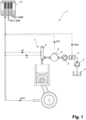
- the figure 1 shows a system diagram of an electronically controlled internal combustion engine 1 with a common rail system together with individual accumulators.
- the common rail system includes the following mechanical components: a low-pressure pump 3 to deliver fuel from a fuel tank 2, a variable intake throttle 4 for influencing the volumetric flow of fuel flowing through, a high-pressure pump 5 for delivering the fuel with an increase in pressure, a rail 6 for storing the fuel and injectors 7 for injecting the fuel into the combustion chambers of the internal combustion engine 1.
- a single accumulator 8 integrated in the injector 7 as an additional buffer volume. The fuel to be injected by the injector 7 is taken from the individual reservoir 8 .
- the feed line from the rail 6 to the individual reservoir 8 is designed in such a way that during the injection pause just enough fuel is conveyed from the rail 6 into the individual reservoir 8 for the individual reservoir 8 to be filled again at the beginning of the new injection.
- the inlet line therefore has a defined hydraulic resistance.
- the mode of operation of the internal combustion engine 1 is determined by an electronic control unit 10 .
- the electronic control unit 10 contains the usual components of a microcomputer system, for example a microprocessor, I/O components, buffers and memory components (EEPROM, RAM).
- the operating data relevant to the operation of the internal combustion engine 1 are applied in characteristic diagrams/characteristic curves or as engine models in the memory modules.
- Electronic control unit 10 uses this to calculate the output variables from the input variables.
- the rail pressure pCR which is measured by a rail pressure sensor 9, an engine speed nMOT, the individual accumulator pressure pE and an input variable EIN.
- the power specification by the operator and the other sensor signals, for example the charge air pressure of an exhaust gas turbocharger, are summarized under the input variable IN.
- a signal PWM for controlling the intake throttle 4 a signal ve for controlling the injector 7 (start of injection/end of injection) and an output variable AUS are shown as the output variables of the electronic control unit 10.
- the output variable OUT represents a display signal on an operator display and for the other actuating signals for controlling and regulating internal combustion engine 1, for example an actuating signal for activating a second exhaust gas turbocharger in register charging.
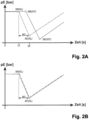
- the figure 2 consists of the two partial figures 2A and 2B, which show the individual accumulator pressure pE over time.
- a target injection curve is shown as a dot-dash line, while the solid line indicates an actual injection curve.
- the curves also apply in an analogous manner to one Course over a crankshaft angle.
- a setpoint fuel volume and the injection time/start of injection are calculated in a known manner from the performance specification of the operator.
- the target fuel volume and the rail pressure then define an injection duration and ultimately an energization duration with which the injector is activated.
- the electronic control unit initiates an injection at a first point in time t1 and then deactivates the injection at a second point in time t2.
- the period t1/t2 corresponds to an energization duration BD.
- the profile of the individual accumulator pressure pE corresponds to a target start of injection SB(SL) and a target end of injection SE(SL).
- the electronic control unit determines the actual course of the injection from the measured individual accumulator pressure pE. In the Figure 2A this is shown as actual start of injection SB(IST) and as actual end of injection SE(IST).
- the electronic control unit now adapts the actual progression to the target progression by changing the energization duration BD.
- the adjusted history is in the Figure 2B shown accordingly.
- the method can also be implemented in an analogous manner by adapting the start of injection.
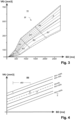
- the figure 3 shows an injector characteristics map 11 for an ideal injector.
- the current supply duration BD is shown in milliseconds on the abscissa and the fuel volume VKr to be injected is shown in cubic millimeters on the ordinate.
- the injector characteristics map 11 shows seven operating ranges Bi with the reference symbols B1 to B7. As an example, an actual working point B is drawn in the operating range B6.
- the operating ranges B1 to B3 characterize the ballistic operation of the injector.
- the parallel lines within the injector characteristics map 11 correspond to the rail pressure pCR.
- its maximum scope is assumed, namely that the injector characteristics map has a plurality of areas Bi and an area-specific abstracting function for the pattern recognition is determined for each area. In a simpler form, however, the invention can also be used for an injector characteristics map with only one area Bi.
- the figure 4 shows a section of the injector characteristics map 11 of FIG figure 3 , more precisely, the area B6.
- a family of straight lines is shown, which defines the maximum adjustment range of the energization duration BD.
- the energization duration BD has been corrected by 75% of the maximum permissible correction of the ideal value, point B, by 75% -100% has been shortened to inject the specified amount of fuel.
- An injection event in area B6 with minus seventy-five percent is therefore counted as a discrete value. This applies to point D in an analogous manner, ie an injection event in area B6 is counted with plus twenty-five percent.
- Point E is outside the adjustment range.
- the figure 5 includes the sub-figures 5A and 5B, in which the basic procedure for defining an operating pattern is shown.
- the Figure 5A shows an evaluation matrix 12 and the Figure 5B shows an operating pattern 15 determined from this.
- the abscissa of the evaluation matrix 12 corresponds to the range from -100% to +100% of the figure 4 .
- the density curve is plotted on the ordinate.
- a histogram 13 is shown as a shaded area.
- the histogram 13 depicts the target/actual deviations, counted in classes, of the operating points in the area B6, for example the two values of figure 4 , i.e. minus seventy-five percent and plus twenty-five percent.
- the Gaussian normal distribution 14 corresponds to the histogram 13.
- the two functions are to be regarded as equivalent in the further description.
- the further method now consists in assessing the Gaussian normal distribution 14 or the histogram 13 with regard to the local position within the evaluation matrix 12 . This is done by checking in a first step whether the Gaussian normal distribution is in the positive range of 0% to +100% or in the negative range of 0% to -100% of the evaluation matrix. In a second step, lines L1 to L4 are used to check which geometric position has the area majority of the Gaussian normal distribution, for example the area majority of 60%.
- the 60% area share in relation to the total area is to the left of the line L2 in the direction of the minus 100% mark, viewed in the direction of the drawing.
- this Gaussian normal distribution is assigned the index L2 and in the operating pattern 15 the Figure 5B stored in area B6.
- FIG 6 is the procedure of figure 5 shown as a whole for the areas B1 to B7 of the injector map.
- area B1 the 60% area portion lies to the right of line L4 in the direction of the +100% marking.
- the area-specific index L4 is therefore assigned to this Gaussian normal distribution via the evaluation matrix and entered into the operating template 15 .
- the example was the figure 5 taken as a basis, ie in the operating model 15 in the area B6 the code L2 is entered.
- the other key figures for the areas B2, B3, B4, B5 and B7 are determined in the same way and entered in the operating template 15.
- the predetermined damage patterns 16 are shown. It show: the Figure 7A a normal enema of the injector that Figure 7B an reached end of life of the injector, the Figure 7C a pilot valve wear and the Figure 7D nozzle coking or cavitation.
- the further procedure is that the operating pattern 15 of figure 6 with the specified damage pattern figure 7 is compared for identity.
- the operating pattern is 15 with the damage pattern Figure 7B identical, i.e. the injector has reached the end of its life.
- the further operation of the internal combustion engine then takes place on the basis of the comparison. In this case, maintenance is recommended to the operator and the service technician is informed. If the damage pattern of the Figure 7C detected, the operator is shown an indication of poor fuel quality.
- the injector does not have to be replaced and can therefore be operated until the wear limit is reached. In addition, however, the operator is recommended to replace the fuel filter before the end of the injector's service life.
- the damage pattern of Figure 7D there is nozzle coking or cavitation.
- the behavior of the injector can be corrected by adjusting the control parameters (start of injection/end of injection), but the spray pattern can be changed, which in turn triggers premature maintenance in emission-critical applications.
- the procedure is shown in a program flow chart.
- the individual accumulator pressure pE is read within a specified time window or crankshaft angle range.
- the injection duration and from this the energization duration BD are determined from the individual accumulator pressure pE.
- the energization duration BD is then assigned as the actual operating point to an area of the injector characteristics map, and an area-specific setpoint/actual deviation dBD is calculated, see FIG figure 4 .
- the target/actual deviation becomes data reduction counted in a class, from which the area-specific histogram is created.
- the area-specific Gaussian normal distribution and its parameters are then determined at S4 from the area-specific histogram.
- Step S4 therefore describes the transition from discrete numerical values to a mathematical function.
- the characteristics of a Gaussian normal distribution are the mean value My and the standard deviation Sigma.
- a code number is then assigned to the area-specific Gaussian normal distribution via the evaluation matrix, for example the code number L2 for area B6.
- This code is also entered in the operating pattern at S5.
- the key figures are then stored in the operating model for all areas B1 to B7 of the injector map.
- the operating pattern is compared to the damage pattern for identity. In other words: the pattern recognition takes place at S6.
- step S6 corresponds to the description of the Figures 6 and 7 . After that, it is checked at S7 whether there is damage.
- test result at S7 is negative, interrogation result S7: no, normal operation remains set at S8 and the program sequence is continued at S9. If the test result at S7 is positive, a follow-up action is initiated at S10, ie the injector continues to operate on the basis of the comparison. It is then checked at S9 whether the operator initiated an engine stop. If this is not the case, the program flow chart branches to point A. Otherwise the program flow chart is ended.
- step S4 is replaced by step S4A.
- the invention was described using the monitoring of an injector for mechanical damage.
- the method according to the invention can also be transferred to a feed pump (water, oil).
- a target/actual deviation of the conveyed volume is then determined, counted in classes and a Gaussian normal distribution is determined and this is compared with a damage pattern.
Landscapes
- Engineering & Computer Science (AREA)
- Chemical & Material Sciences (AREA)
- Combustion & Propulsion (AREA)
- Mechanical Engineering (AREA)
- General Engineering & Computer Science (AREA)
- Fuel-Injection Apparatus (AREA)
- Combined Controls Of Internal Combustion Engines (AREA)
- Electrical Control Of Air Or Fuel Supplied To Internal-Combustion Engine (AREA)
- Testing Of Devices, Machine Parts, Or Other Structures Thereof (AREA)
Description
- Die Erfindung betrifft ein Verfahren zur Überwachung eines Injektors auf mechanische Schädigung, bei dem aus einem Einzelspeicherdruck eine Soll-Istabweichung eines Arbeitspunkts der Einspritzung bestimmt wird und aus einer Mehrzahl von Soll-Istabweichungen der Arbeitspunkte eine abstrahierende Funktion, insbesondere Gauß-Normalverteilung, berechnet wird.
- Aus der
DE 10 2004 006 896 A1 ist ein Common-Railsystem mit Einzelspeichern bekannt, bei dem anhand des gemessenen Einzelspeicherdrucks die Einspritzung beurteilt wird. Hierzu wird eine Soll-Istabweichung des Spritzbeginns bestimmt und mit einem Toleranzband verglichen. Für das Spritzende gilt dies mutatis mutandis. Liegen sowohl die Spritzbeginn-Abweichung als auch die Spritzende-Abweichung innerhalb des Toleranzbandes, ist der Injektor fehlerfrei. Liegt die Spritzbeginn-Abweichung oder die Spritzende-Abweichung außerhalb des Toleranzbandes, so wird der Injektor als fehlerbehaftet bewertet und nachfolgend entweder die Steuerparameter des Injektors angepasst oder dieser deaktiviert. Die Fundstelle beschreibt ein rein reaktives System, bei dem ein Austausch des Injektors in einem starren Zeitintervall oder erst nach festgestelltem Fehlverhalten initiiert wird. - Aus der nicht vorveröffentlichten deutschen Patentanmeldung mit dem amtlichen Aktenzeichen
DE 10 2019 001 677.7 ist ein Verfahren zur Zustandsprognose eines Injektors in einem Common-Railsystem bekannt, bei dem in einem ersten Schritt anhand des Einzelspeicherdrucks eine Soll-Istabweichung der Einspritzung bestimmt wird. In einem zweiten Schritt wird aus einer Mehrzahl von Abweichungen der Arbeitspunkte eine Gauß-Normalverteilung als abstrahierende Funktion bestimmt und wird die zeitliche Entwicklung deren Kenngrößen, also des Mittelwerts sowie der Standardabweichung, beobachtet. Auf Basis der zeitlichen Entwicklung der Kenngrößen wird in einem dritten Schritt eine Zustandsprognose abgeleitet und über eine Grenzwertbetrachtung der Injektor ganzheitlich als fehlerfrei bewertet oder eine Wartungsempfehlung zum Injektortausch abgegeben. Eine zum Beispiel schlechte Kraftstoffqualität kann bei diesem Verfahren jedoch eine vorzeitige Wartungsempfehlung bewirken. -
DE 10 2013 106061 A1 offenbart eine Anormalitätsbestimmungsvorrichtung für einen Kraftstoffinjektor, die eine Anomalie anhand eines Vergleichs zwischen einem Schwellwert und einer Differenz zwischen einem Parameter und einem Referenzwert identifiziert. - Der Erfindung liegt daher die Aufgabe zugrunde, ein alternatives Verfahren zur Fehlerursachenabschätzung bereitzustellen.
- Gelöst wird diese Aufgabe durch die Merkmale von Anspruch 1. Die Ausgestaltungen sind in den Unteransprüchen dargestellt.
- Beim erfindungsgemäßen Verfahren zur Überwachung eines Injektors auf mechanische Schädigung wird aus dem Einzelspeicherdruck eine Soll-Istabweichung eines Arbeitspunkts der Einspritzung bestimmt und aus einer Mehrzahl von Soll-Istabweichungen der Arbeitspunkte eine abstrahierende Funktion, insbesondere Gauß-Normalverteilung, berechnet. Ferner wird die abstrahierende Funktion mit einem vorgegebenen Schädigungsmuster verglichen und eine Verschleißursache anhand des Vergleichs zugeordnet. Der Weiterbetrieb des Injektors erfolgt dann auf Basis des Vergleichs. Als Schädigungsmuster sind beispielsweise die charakteristischen Muster für ein Lebensdauerende des Injektors, eine Düsenverkokung/Kavitation oder ein Pilotventilverschleiß hinterlegt. Die Ursache für einen Pilotventilverschleiß ist eine schlechte Kraftstoffqualität. Der Injektor kann trotzdem bis zum Erreichen der Verschleißgrenze betreiben werden, da dies keinen Einfluss auf die Schadstoffgrenzwerte hat. Flankierend wird dem Betreiber vor dem eigentlichen Wartungstermin des Injektors bereits eine Empfehlung zum Kraftstofffilter-Tausch angezeigt und darauf hingewiesen, dass die Kraftstoffqualität wohl außerhalb der Betriebsmittelvorschrift liegt.
- Präzisiert wird das Verfahren indem die Lage des Ist-Arbeitspunkts in einem Injektor-Kennfeld ermittelt wird, wobei das Injektor-Kennfeld mehrere Bereiche aufweist, beispielsweise Bereiche für den ballistischen Betrieb. Für jeden Bereich des Injektor-Kennfelds wird dann eine bereichsindividuelle abstrahierende Funktion aus den Soll-Istabweichungen der Arbeitspunkte bestimmt und wird anschließend die Gesamtheit der bereichsindividuellen abstrahierenden Funktionen mit dem Schädigungsmuster verglichen. Eine Ausführungsform hierzu sieht vor, dass jede bereichsindividuelle abstrahierenden Funktion über eine Bewertungsmatrix in Form einer bereichsindividuellen Kennzahl charakterisiert wird, aus den bereichsindividuellen Kennzahlen eine Betriebsmuster erstellt wird und das Betriebsmuster wiederum mit dem Schädigungsmuster auf Identität verglichen wird. Ergänzt werden kann das Verfahren durch eine Zustandsvorhersage, bei der die zeitliche Entwicklung der abstrahierenden Funktion beobachtet wird und der Vergleich mit dem Schädigungsmuster anhand der vorhergesagten abstrahierenden Funktion getroffen wird.
- Die Erfindung bietet die bekannten Vorteile einer zustandsbasierten Wartung, das heißt, der Injektor wird eben nicht mehr starr in vorgegebenen Wartungsintervallen getauscht, sondern in Abhängigkeit vom jeweiligen Verschleiß. Gerade bei Großdieselmotoren mit zum Beispiel sechszehn Zylindern ist dies, aufgrund der Ersatzteilkosten für einen Injektor, für den Betreiber ein entscheidender Kostenvorteil. Die Mustererkennung erlaubt eine verbesserte Ursachenabschätzung und erlaubt damit letztendlich auch eine an die Situation angepasste Wartungsstrategie. Die Prognose wiederum bietet den Vorteil einer frühzeitigen Ersatzteilbeschaffung einschließlich einer frühzeitigen Beauftragung des Servicepersonals. In der Summe ergibt sich daher ein höherer Verfügungsgrad der Brennkraftmaschine. Als softwarebasierte Lösung kann das Verfahren nachträglich im elektronischen Steuergerät ohne Änderung der Sensorik als Programm-Ergänzung appliziert werden.
- In den Figuren ist ein bevorzugtes Ausführungsbeispiel dargestellt. Es zeigen:
- Fig. 1
- ein Systemschaubild,
- Fig. 2
- einen Verlauf des Einzelspeicherdrucks,
- Fig. 3
- ein Injektor-Kennfeld,
- Fig. 4
- einen Ausschnitt des Injektor-Kennfelds,
- Fig. 5
- eine Bewertungsmatrix,
- Fig. 6
- eine Bewertungsmatrix mit Betriebsmuster,
- Fig. 7
- mehrere Schädigungsmuster und
- Fig. 8
- einen Programm-Ablaufplan.
- Die
Figur 1 zeigt ein Systemschaubild einer elektronisch gesteuerten Brennkraftmaschine 1 mit einem Common-Railsystem nebst Einzelspeichern. Das Common-Railsystem umfasst folgende mechanische Komponenten: eine Niederdruckpumpe 3 zur Förderung von Kraftstoff aus einem Kraftstofftank 2, eine veränderbare Saugdrossel 4 zur Beeinflussung des durchströmenden Kraftstoff-Volumenstroms, eine Hochdruckpumpe 5 zur Förderung des Kraftstoffs unter Druckerhöhung, ein Rail 6 zum Speichern des Kraftstoffs und Injektoren 7 zum Einspritzen des Kraftstoffs in die Brennräume der Brennkraftmaschine 1. Bei der dargestellten Ausführungsform ist ein Einzelspeicher 8 im Injektor 7 als zusätzliches Puffervolumen integriert. Der vom Injektor 7 einzuspritzende Kraftstoff wird aus dem Einzelspeicher 8 entnommen. Die Zulaufleitung vom Rail 6 zum Einzelspeicher 8 ist in der Art ausgelegt, dass in der Einspritzpause gerade so viel Kraftstoff aus dem Rail 6 in den Einzelspeicher 8 gefördert wird, dass der Einzelspeicher 8 zu Beginn der neuen Einspritzung wieder gefüllt ist. Die Zulaufleitung besitzt daher einen definierten hydraulischen Widerstand. - Die Betriebsweise der Brennkraftmaschine 1 wird durch ein elektronisches Steuergerät 10 bestimmt. Das elektronische Steuergerät 10 beinhaltet die üblichen Bestandteile eines Mikrocomputersystems, beispielsweise einen Mikroprozessor, I/O-Bausteine, Puffer und Speicherbausteine (EEPROM, RAM). In den Speicherbausteinen sind die für den Betrieb der Brennkraftmaschine 1 relevanten Betriebsdaten in Kennfeldern/Kennlinien oder als Motormodelle appliziert. Über diese berechnet das elektronische Steuergerät 10 aus den Eingangsgrößen die Ausgangsgrößen. In der
Figur 1 sind exemplarisch folgende Eingangsgrößen dargestellt: der Raildruck pCR, der mittels eines Rail-Drucksensors 9 gemessen wird, eine Motordrehzahl nMOT, der Einzelspeicherdruck pE und eine Eingangsgröße EIN. Unter der Eingangsgröße EIN sind die Leistungsvorgabe durch den Betreiber und die weiteren Sensorsignale zusammengefasst, beispielsweise der Ladeluftdruck eines Abgasturboladers. In derFigur 1 sind als Ausgangsgrößen des elektronischen Steuergeräts 10 ein Signal PWM zur Ansteuerung der Saugdrossel 4, ein Signal ve zur Ansteuerung des Injektors 7 (Spritzbeginn/ Spritzende) und eine Ausgangsgröße AUS dargestellt. Die Ausgangsgröße AUS steht stellvertretend für ein Anzeigesignal auf einer Bedieneranzeige und für die weiteren Stellsignale zur Steuerung und Regelung der Brennkraftmaschine 1, beispielsweise für ein Stellsignal zur Aktivierung eines zweiten Abgasturboladers bei einer Registeraufladung. - Die
Figur 2 besteht aus den beiden Teilfiguren 2A und 2B, welche den Einzelspeicherdruck pE über der Zeit zeigen. In derFigur 2A ist ein Soll-Einspritzverlauf als strichpunktierte Linie dargestellt, während die durchgezogene Linie einen Ist-Einspritzverlauf kennzeichnet. Die Kurvenzüge gelten auch in analoger Weise für einen Verlauf über einem Kurbelwellenwinkel. Aus der Leistungsvorgabe des Betreibers wird in bekannter Weise eine Soll-Kraftstoffvolumen und der Einspritzzeitpunkt/Spritzbeginn berechnet. Das Soll-Kraftstoffvolumen und der Raildruck definieren dann eine Spritzdauer und letztendlich eine Bestromungsdauer, mit welcher der Injektor angesteuert wird. Wie in derFigur 2A dargestellt, initiiert das elektronische Steuergerät zu einem ersten Zeitpunkt t1 eine Einspritzung und deaktiviert dann zu einem zweiten Zeitpunkt t2 die Einspritzung. Der Zeitraum t1/t2 entspricht einer Bestromungsdauer BD. Zu diesem Einspritzereignis korrespondiert der Verlauf des Einzelspeicherdrucks pE mit einem Soll-Spritzbeginn SB(SL) und einem Soll-Spritzende SE(SL). Aufgrund von Signallaufzeiten, Toleranzen oder Alterungseffekten weicht der tatsächliche Verlauf der Einspritzung jedoch von der Vorgabe ab. Den tatsächlichen Verlauf der Einspritzung bestimmt das elektronische Steuergerät aus dem gemessenen Einzelspeicherdruck pE. In derFigur 2A ist dies als Ist-Spritzbeginn SB(IST) und als Ist-Spritzende SE(IST) dargestellt. Vom elektronischen Steuergerät wird nun der Ist-Verlauf dem Soll-Verlauf angepasst, indem die Bestromungsdauer BD verändert wird. Der angepasste Verlauf ist in derFigur 2B entsprechend dargestellt. Das Verfahren lässt sich in analoger Vorgehensweise auch über eine Anpassung des Spritzbeginns realisieren. - Die
Figur 3 zeigt ein Injektor-Kennfeld 11 für einen idealen Injektor. Auf der Abszisse ist die Bestromungsdauer BD in Millisekunden und auf der Ordinate das einzuspritzende Kraftstoffvolumen VKr in Kubikmillimeter dargestellt. Das Injektor-Kennfeld 11 zeigt sieben Betriebsbereiche Bi mit den Bezugszeichen B1 bis B7. Exemplarisch ist im Betriebsbereich B6 ein Ist-Arbeitspunkt B eingezeichnet. Die Betriebsbereiche B1 bis B3 kennzeichnen den ballistischen Betrieb des Injektors. Die parallelen Linien innerhalb des Injektor-Kennfelds 11 korrespondieren zum Raildruck pCR. Bei der weiteren Beschreibung der Erfindung wird von deren Maximalumfang ausgegangen, nämlich dass das Injektor-Kennfeld mehrere Bereich Bi aufweist und für jeden Bereich eine bereichsindividuelle abstrahierende Funktion für die Mustererkennung bestimmt wird. In einer einfacheren Form ist die Erfindung jedoch auch für ein Injektor-Kennfeld mit nur einem Bereich Bi anwendbar. - Die
Figur 4 zeigt einen Ausschnitt des Injektor-Kennfelds 11 derFigur 3 , genauer gesagt, den Bereich B6. Dargestellt ist eine Geradenschar, welche den maximalen Verstellbereich der Bestromungsdauer BD definiert. Begrenzt wird die Geradenschar durch eine Gerade mit dem Referenzwert RV=-100% und einer Gerade mit dem Referenzwert RV=+100%. - Die strichpunktierte Gerade mit dem Referenzwert RV=0% entspricht der idealen Injektor-Kennlinie. Im Idealfall liegt der Punkt B auf der Gerade mit dem Referenzwert RV=0%. Aufgrund von Alterungseffekten kann der Punkt B jedoch zum Beispiel auf der Gerade mit dem Referenzwert RV=-75% liegen. In der Figur entspricht dies dem Punkt C. Für den Punkt C gilt, dass die Bestromungsdauer BD gegenüber dem Idealwert, Punkt B, um 75% der maximal zulässigen Korrektur von
-100% verkürzt wurde, um die vorgegebene Kraftstoffmenge einzuspritzen. Gezählt wird daher ein Einspritzereignis im Bereich B6 mit minus fünfundsiebzig Prozent als diskreter Wert. Für den Punkt D gilt dies in analoger Vorgehensweise, das heißt, es wird ein Einspritzereignis im Bereich B6 mit plus fünfundzwanzig Prozent gezählt. Der Punkt E liegt außerhalb des Verstellbereichs. - Die
Figur 5 umfasst die Teilfiguren 5A und 5B, in welchen die prinzipielle Vorgehensweise zur Festlegung eines Betriebsmusters dargestellt ist. DieFigur 5A zeigt eine Bewertungsmatrix 12 und dieFigur 5B zeigt ein hieraus ermitteltes Betriebsmuster 15. Die Abszisse der Bewertungsmatrix 12 entspricht dem Bereich von -100% bis +100% derFigur 4 . Auf der Ordinate ist der Dichteverlauf abgetragen. Beim vorliegenden Beispiel ist in derFigur 5A ein Histogramm 13 als schraffierte Fläche dargestellt. Das Histogramm 13 bildet die in Klassen gezählten Soll-Istabweichungen der Arbeitspunkte des Bereichs B6 ab, beispielsweise die beiden Werte derFigur 4 , also minus fünfundsiebzig Prozent und plus fünfundzwanzig Prozent. Zum Histogramm 13 korrespondiert die Gauß-Normalverteilung 14. Die beiden Funktionen sind in der weiteren Beschreibung als äquivalent zu sehen. Das weitere Verfahren besteht nun darin, dass die Gauß-Normalverteilung 14 bzw. das Histogramm 13 hinsichtlich der örtlichen Lage innerhalb der Bewertungsmatrix 12 beurteilt wird. Dies erfolgt indem in einem ersten Schritt geprüft wird ob die Gauß-Normalverteilung im positiven Bereich 0% bis +100% oder im negativen Bereich 0% bis -100% der Bewertungsmatrix liegt. In einem zweiten Schritt wird dann anhand der Linien L1 bis L4 geprüft, welche geometrische Position die Flächenmehrheit der Gauß-Normalverteilung hat, beispielsweise die Flächenmehrheit von 60%. Beim dargestellten Beispiel liegt der 60%-ige Flächenanteil bezogen auf die Gesamtfläche in Zeichnungsrichtung gesehen links der Linie L2 in Richtung der minus 100%-Markierung. Entsprechend wird dieser Gauß-Normalverteilung die Kennzahl L2 zugeordnet und im Betriebsmuster 15 derFigur 5B im Bereich B6 abgelegt. - In der
Figur 6 ist die Vorgehensweise derFigur 5 gesamtheitlich für die Bereiche B1 bis B7 des Injektor-Kennfelds dargestellt. Beim Bereich B1 liegt der 60%-ige Flächenanteil rechts der Linie L4 in Richtung des +100%-Markierung. Über die Bewertungsmatrix wird daher dieser Gauß-Normalverteilung die bereichsindividuelle Kennzahl L4 zugeordnet und in das Betriebsmuster 15 eingetragen. Für den Bereich B6 wurde das Beispiel derFigur 5 zugrunde gelegt, d.h. im Betriebsmuster 15 ist im Bereich B6 die Kennzahl L2 eingetragen. Die weiteren Kennzahlen für die Bereich B2, B3, B4, B5 und B7 werden in gleicher Weise ermittelt und in das Betriebsmuster 15 eingetragen. - In der
Figur 7 sind die vorgegebenen Schädigungsmuster 16 dargestellt. Es zeigen: dieFigur 7A einen normalen Einlauf des Injektors, dieFigur 7B ein erreichtes Lebensdauerende des Injektors, dieFigur 7C ein Pilotventilverschleiß und dieFigur 7D eine Düsenverkokung bzw. Kavitation. Das weitere Verfahren besteht nun darin, dass das Betriebsmuster 15 derFigur 6 mit dem vorgegebenen Schädigungsmuster derFigur 7 auf Identität verglichen wird. Beim vorliegenden Beispiel ist das Betriebsmuster 15 mit dem Schädigungsmuster derFigur 7B identisch, das heißt, der Injektor hat sein Lebensende erreicht. Der weitere Betrieb der Brennkraftmaschine erfolgt dann anhand des Vergleichs. In diesem Fall wird dem Betreiber eine Wartung empfohlen und der Servicetechniker informiert. Wird das Schädigungsmuster derFigur 7C erkannt, so wird dem Betreiber ein Hinweis auf schlechte Kraftstoffqualität anzeigt. Der Injektor muss nicht getauscht werden und kann daher bis zum Erreichen der Verschleißgrenze betrieben werden. Ergänzend wird dem Betreiber jedoch bereits vor Ablauf der Injektor-Lebensdauer ein Kraftstofffilter-Tausch empfohlen. Beim Schädigungsmuster derFigur 7D liegt Düsenverkokung bzw. Kavitation vor. In diesem Fall ist zwar das Verhalten des Injektors über eine Anpassung der Steuerparameter (Spritzbeginn/Spritzende) korrigierbar aber das Spritzbild kann verändert sein, was wiederum bei emissionskritischen Anwendungen eine vorzeitige Wartung auslöst. - In der
Figur 8 ist das Verfahren in einem Programm-Ablaufplan dargestellt. Bei S1 wird der Einzelspeicherdruck pE innerhalb eines vorgegebenen Zeitfensters oder Kurbelwellen-Winkelbereichs eingelesen. Bei S2 werden aus dem Einzelspeicherdruck pE zunächst die Spritzdauer und hieraus die Bestromungsdauer BD bestimmt. Ebenfalls bei S2 wird dann die Bestromungsdauer BD als Ist-Arbeitspunkt einem Bereich des Injektor-Kennfelds zugeordnet und eine bereichsindividuelle Soll-Istabweichung dBD berechnet, sieheFigur 4 . Im Anschluss daran wird bei S3 die Soll-Istabweichung zur Datenreduktion in eine Klasse gezählt, woraus das bereichsindividuelle Histogramm entsteht. Aus dem bereichsindividuellen Histogramm werden dann bei S4 die bereichsindividuelle Gauß-Normalverteilung und deren Kenngrößen bestimmt. Der Schritt S4 beschreibt daher den Übergang von diskreten Zahlenwerten zu einer mathematischen Funktion. Bekanntermaßen sind die Kenngrößen einer Gauß-Normalverteilung der Mittelwert My und die Standardabweichung Sigma. Bei S5 wird dann der bereichsindividuellen Gauß-Normalverteilung über die Bewertungsmatrix eine Kennzahl zugeordnet, beispielsweise für den Bereich B6 die Kennzahl L2. Ebenfalls bei S5 wird diese Kennzahl in das Betriebsmuster eingetragen. Im Betriebsmuster sind dann für alle Bereich B1 bis B7 des Injektor-Kennfelds die Kennzahlen abgelegt. Bei S6 wird das Betriebsmuster mit dem Schädigungsmuster auf Identität verglichen. Mit anderen Worten: bei S6 erfolgt die Mustererkennung. Insofern entspricht der Schritt S6 der Beschreibung zu denFiguren 6 und 7 . Danach wird bei S7 geprüft, ob eine Schädigung vorliegt. Bei negativem Prüfergebnis bei S7, Abfrageergebnis S7: nein, bleibt bei S8 der Normalbetrieb gesetzt und der Programm-Ablauf wird bei S9 fortgesetzt. Bei positivem Prüfergebnis bei S7, wird bei S10 eine Nachfolgeaktion initiiert, das heißt, der Weiterbetrieb des Injektors erfolgt auf Basis des Vergleichs. Im Anschluss wird bei S9 geprüft, ob vom Betreiber ein Motorstopp initiiert wurde. Ist dies nicht der Fall, so verzweigt der Programm-Ablaufplan zum Punkt A. Anderenfalls ist der Programm-Ablaufplan beendet. - Ergänzt werden kann der Programm-Ablaufplan durch eine Vorhersage. In diesem Fall wird der Schritt S4 durch den Schritt S4A ersetzt. Bei S4A wird die zeitliche Entwicklung der Gauß-Normalverteilung innerhalb eines Zeitraums beobachtet, zum Beispiel für tx=1000 Betriebsstunden. Anhand der zeitlichen Veränderung der Kenngrößen Sigma (t+tx) und My(t+tx) wird dann in analoger Vorgehensweise zur Beschreibung der
Figuren 6 und 7 eine Mustererkennung durchgeführt. - Die Erfindung wurde anhand der Überwachung eines Injektors auf mechanische Schädigung beschrieben. Das Verfahren gemäß der Erfindung lässt sich auch auf eine Förderpumpe (Wasser, Öl) übertragen. Für diesen Anwendungsfall wird dann eine Soll-Istabweichung des geförderten Volumens ermittelt, in Klassen gezählt und eine Gauß-Normalverteilung ermittelt und diese mit einem Schädigungsmuster verglichen.
-
- 1
- Brennkraftmaschine
- 2
- Kraftstofftank
- 3
- Niederdruckpumpe
- 4
- Saugdrossel
- 5
- Hochdruckpumpe
- 6
- Rail
- 7
- Injektor
- 8
- Einzelspeicher
- 9
- Rail-Drucksensor
- 10
- Elektronisches Steuergerät
- 11
- Injektor-Kennfeld
- 12
- Bewertungsmatrix
- 13
- Histogramm
- 14
- Gauß-Normalverteilung
- 15
- Betriebsmuster
- 16
- Schädigungsmuster
Claims (4)
- Verfahren zur Überwachung eines Injektors (7) auf mechanische Schädigung, bei dem aus einem Einzelspeicherdruck (pE) eine Soll-Istabweichung eines Arbeitspunkts der Einspritzung bestimmt wird, aus einer Mehrzahl von Soll-Istabweichungen der Arbeitspunkte eine abstrahierende Funktion, insbesondere Gauß-Normalverteilung (14), berechnet wird, bei dem die abstrahierende Funktion mit einem vorgegebenen Schädigungsmuster (16) verglichen wird, anhand des Vergleichs eine Verschleißursache zugeordnet wird und bei dem der Weiterbetrieb des Injektors (7) auf Basis des Vergleichs erfolgt.
- Verfahren nach Anspruch 1, dadurch gekennzeichnet, dass anhand der Lage des Ist-Arbeitspunkts in einem Injektor-Kennfeld (11) ein Bereich (Bi) des Injektor-Kennfelds (11) festgelegt wird, für jeden Bereich (Bi) des Injektor-Kennfelds (11) eine bereichsindividuelle abstrahierende Funktion aus den Soll-Istabweichungen der Arbeitspunkte bestimmt wird und die Gesamtheit der bereichsindividuellen abstrahierenden Funktionen mit dem Schädigungsmuster (16) verglichen wird.
- Verfahren nach Anspruch 2, dadurch gekennzeichnet, dass jede bereichsindividuelle abstrahierenden Funktion über eine Bewertungsmatrix (12) in Form einer bereichsindividuellen Kennzahl charakterisiert wird, aus den bereichsindividuellen Kennzahlen eine Betriebsmuster (15) erstellt wird und das Betriebsmuster (15) mit dem Schädigungsmuster (16) auf Identität verglichen wird.
- Verfahren nach Anspruch 3, dadurch gekennzeichnet, dass eine zeitliche Entwicklung der bereichsindividuellen abstrahierenden Funktion beobachtet wird und der Vergleich mit dem Schädigungsmuster (16) auf Basis der vorhergesagten abstrahierenden Funktion getroffen wird.
Applications Claiming Priority (2)
| Application Number | Priority Date | Filing Date | Title |
|---|---|---|---|
| DE102019003815.0A DE102019003815B4 (de) | 2019-05-29 | 2019-05-29 | Verfahren zur Überwachung eines Injektors auf mechanische Schädigung |
| PCT/EP2020/064612 WO2020239788A1 (de) | 2019-05-29 | 2020-05-26 | Verfahren zur überwachung eines injektors auf mechanische schädigung |
Publications (2)
| Publication Number | Publication Date |
|---|---|
| EP3976952A1 EP3976952A1 (de) | 2022-04-06 |
| EP3976952B1 true EP3976952B1 (de) | 2023-07-05 |
Family
ID=70975856
Family Applications (1)
| Application Number | Title | Priority Date | Filing Date |
|---|---|---|---|
| EP20730212.6A Active EP3976952B1 (de) | 2019-05-29 | 2020-05-26 | Verfahren zur überwachung eines injektors auf mechanische schädigung |
Country Status (4)
| Country | Link |
|---|---|
| EP (1) | EP3976952B1 (de) |
| CN (1) | CN114207265B (de) |
| DE (1) | DE102019003815B4 (de) |
| WO (1) | WO2020239788A1 (de) |
Family Cites Families (19)
| Publication number | Priority date | Publication date | Assignee | Title |
|---|---|---|---|---|
| DE102004006896A1 (de) * | 2004-02-12 | 2005-09-15 | Mtu Friedrichshafen Gmbh | Verfahren zur Steuerung und Regelung einer Brennkraftmaschine |
| DE102007015876A1 (de) * | 2006-06-12 | 2007-12-13 | Robert Bosch Gmbh | Verfahren zur Erkennung einer Fehlfunktion eines Raildrucksensors |
| DE102006034513B3 (de) * | 2006-07-26 | 2007-10-04 | Mtu Friedrichshafen Gmbh | Verfahren zur Erkennung einer Voreinspritzung |
| GB2449706A (en) * | 2007-06-01 | 2008-12-03 | Scania Cv Ab | Identifying a Malfunctioning Fuel Injector |
| JP2009191778A (ja) * | 2008-02-15 | 2009-08-27 | Hitachi Ltd | 高圧燃料システムの制御診断装置 |
| DE102011085926A1 (de) * | 2011-11-08 | 2013-05-08 | Robert Bosch Gmbh | Verfahren zum Betreiben einer Brennkraftmaschine |
| JP5724953B2 (ja) * | 2012-06-14 | 2015-05-27 | 株式会社デンソー | 燃料噴射弁の異常判定装置 |
| DE102013216192B4 (de) * | 2013-08-14 | 2020-08-06 | Mtu Friedrichshafen Gmbh | Verfahren zur Bestimmung von wenigstens einem Einspritzparameter einer Brennkraftmaschine und Brennkraftmaschine |
| DE102013216255B3 (de) * | 2013-08-15 | 2014-11-27 | Mtu Friedrichshafen Gmbh | Verfahren zur injektorindividuellen Diagnose einer Kraftstoff-Einspritzeinrichtung und Brennkraftmaschine mit einer Kraftstoff-Einspritzeinrichtung |
| DE102013110169A1 (de) * | 2013-09-16 | 2015-03-19 | Denso Corporation | Verfahren zur Bestimmung eines Akkumulator-Drucks und Verfahren zur Steuerung einer Kraftstoffpumpe |
| DE102013220589B3 (de) * | 2013-10-11 | 2015-02-19 | Mtu Friedrichshafen Gmbh | Verfahren zum Betrieb einer Brennkraftmaschine sowie Einrichtung zum Steuern und Regeln einer Brennkraftmaschine, Einspritzsystem und Brennkraftmaschine |
| DE102013222547A1 (de) * | 2013-11-06 | 2015-05-07 | Robert Bosch Gmbh | Verfahren zum Erkennen einer Abweichung einer Ist-Einspritzmenge von einer Soll-Einspritzmenge eines Injektors einer Brennkraftmaschine |
| DE102013223756B4 (de) * | 2013-11-21 | 2015-08-27 | Continental Automotive Gmbh | Verfahren zum Betreiben von Injektoren eines Einspritzsystems |
| DE102015217776A1 (de) * | 2015-09-17 | 2017-03-23 | Robert Bosch Gmbh | Verfahren zur Erkennung einer Schädigung einer Düsennadel eines Kraftstoffinjektors oder des Düsennadelsitzes |
| DE102016218278A1 (de) * | 2016-09-22 | 2018-03-22 | Robert Bosch Gmbh | Funktionsüberwachung von Magnetventilen für Kraftstoffeinspritzsysteme |
| US10480474B2 (en) * | 2017-04-06 | 2019-11-19 | Ge Global Sourcing Llc | Method and system for determining remaining useful life for an injector of a reciprocating engine |
| DE102017004424B4 (de) * | 2017-05-08 | 2020-07-09 | Mtu Friedrichshafen Gmbh | Verfahren zur bedarfsgerechten Wartung eines Injektors |
| DE102017216989B4 (de) * | 2017-09-25 | 2019-07-18 | Mtu Friedrichshafen Gmbh | Verfahren zum Betreiben einer Brennkraftmaschine mit einem Einspritzsystem und Einspritzsystem zur Durchführung eines solchen Verfahrens |
| DE102019001677B4 (de) * | 2019-03-08 | 2020-12-10 | Mtu Friedrichshafen Gmbh | Verfahren zur Zustandsprognose eines Injektors |
-
2019
- 2019-05-29 DE DE102019003815.0A patent/DE102019003815B4/de not_active Expired - Fee Related
-
2020
- 2020-05-26 EP EP20730212.6A patent/EP3976952B1/de active Active
- 2020-05-26 WO PCT/EP2020/064612 patent/WO2020239788A1/de not_active Ceased
- 2020-05-26 CN CN202080055148.9A patent/CN114207265B/zh active Active
Also Published As
| Publication number | Publication date |
|---|---|
| DE102019003815A1 (de) | 2020-12-03 |
| WO2020239788A1 (de) | 2020-12-03 |
| EP3976952A1 (de) | 2022-04-06 |
| CN114207265B (zh) | 2024-09-27 |
| CN114207265A (zh) | 2022-03-18 |
| DE102019003815B4 (de) | 2021-01-28 |
Similar Documents
| Publication | Publication Date | Title |
|---|---|---|
| EP1730394B1 (de) | Verfahren zur steuerung und regelung einer brennkraftmaschine | |
| DE69906459T2 (de) | Kraftstoffeinspritzvorrichtung der Accumulatorgattung | |
| DE10162989C1 (de) | Schaltungsanordnung zum Regeln einer regelbaren Kraftstoffpumpe, Verfahren zum Regeln einer Förderleistung und Verfahren zum Überprüfen der Funktionsfähigkeit einer regelbaren Kraftstoffpumpe | |
| EP0795077A1 (de) | Verfahren und vorrichtung zur überwachung eines kraftstoffzumesssystems | |
| DE102010017368A1 (de) | Datenspeichervorrichtung | |
| WO2011050920A1 (de) | Verfahren zur steuerung und regelung einer brennkraftmaschine | |
| DE19726756A1 (de) | System zum Betreiben einer Brennkraftmaschine insbesondere eines Kraftfahrzeugs | |
| EP1740813B1 (de) | VERFAHREN ZUM BESTIMMEN EINER SCHLIEßZEIT EINES SCHLIEßGLIEDES UND SCHALTUNGSANORDNUNG | |
| WO2013034479A1 (de) | Verfahren zur analyse des wirkungsgrades der hochdruckpumpe eines kraftstoffeinspritzsystems | |
| DE19833086A1 (de) | Verfahren und Vorrichtung zur Erkennung einer Leckage in einem Kraftstoffversorgungssystem einer Brennkraftmaschine | |
| EP0764777A2 (de) | Verfahren und Vorrichtung zur Steuerung einer Brennkraftmaschine | |
| DE102019202004B4 (de) | Verfahren zum Betreiben eines Einspritzsystems einer Brennkraftmaschine, Einspritzsystem für eine Brennkraftmaschine sowie Brennkraftmaschine mit einem solchen Einspritzsystem | |
| EP1735673B1 (de) | Verfahren zum überwachen einer kraftstoffzuführeinrichtung einer brennkraftmaschine | |
| DE102019001677B4 (de) | Verfahren zur Zustandsprognose eines Injektors | |
| EP3976952B1 (de) | Verfahren zur überwachung eines injektors auf mechanische schädigung | |
| DE102008024545A1 (de) | Verfahren und Vorrichtung zur Diagnose eines Fehlers, insbesondere in einem Niederdruckbereich eines Kraftstoff-Einspritzsystems eines Verbrennungsmotors | |
| DE112008000659B4 (de) | Verfahren für die Diagnose eines Verbrennungsmotors | |
| DE102016220123B4 (de) | Verfahren und Vorrichtung zur Plausibilierung der Funktionsfähigkeit eines Hochdrucksensors eines Kraftstoffeinspritzsystems eines Kraftfahrzeugs | |
| CH708777A2 (de) | Motorsteuergerät. | |
| DE10338775B4 (de) | Diagnoseeinrichtung für einen Verbrennungsmotor | |
| DE102005047350A1 (de) | Verfahren und Vorrichtung zur Steuerung einer Brennkraftmaschine | |
| DE102015200565A1 (de) | Verfahren und Einrichtung zum Adaptieren eines Bauteils einer Brennkraftmaschine | |
| WO2021018875A1 (de) | Verfahren und vorrichtung zur überprüfung des zustands der auslassventile eines motors eines kraftfahrzeugs | |
| DE102013218505A1 (de) | Verfahren zum Betreiben eines Verbrennungsmotors in einem Notfahrbetrieb | |
| DE102010031002A1 (de) | Verfahren zum Regeln des Drucks in einem Kraftstoff-Hochdruckspeicher einer Brennkraftmaschine |
Legal Events
| Date | Code | Title | Description |
|---|---|---|---|
| STAA | Information on the status of an ep patent application or granted ep patent |
Free format text: STATUS: UNKNOWN |
|
| STAA | Information on the status of an ep patent application or granted ep patent |
Free format text: STATUS: THE INTERNATIONAL PUBLICATION HAS BEEN MADE |
|
| PUAI | Public reference made under article 153(3) epc to a published international application that has entered the european phase |
Free format text: ORIGINAL CODE: 0009012 |
|
| STAA | Information on the status of an ep patent application or granted ep patent |
Free format text: STATUS: REQUEST FOR EXAMINATION WAS MADE |
|
| 17P | Request for examination filed |
Effective date: 20220103 |
|
| AK | Designated contracting states |
Kind code of ref document: A1 Designated state(s): AL AT BE BG CH CY CZ DE DK EE ES FI FR GB GR HR HU IE IS IT LI LT LU LV MC MK MT NL NO PL PT RO RS SE SI SK SM TR |
|
| DAV | Request for validation of the european patent (deleted) | ||
| DAX | Request for extension of the european patent (deleted) | ||
| GRAP | Despatch of communication of intention to grant a patent |
Free format text: ORIGINAL CODE: EPIDOSNIGR1 |
|
| STAA | Information on the status of an ep patent application or granted ep patent |
Free format text: STATUS: GRANT OF PATENT IS INTENDED |
|
| INTG | Intention to grant announced |
Effective date: 20230202 |
|
| GRAS | Grant fee paid |
Free format text: ORIGINAL CODE: EPIDOSNIGR3 |
|
| GRAA | (expected) grant |
Free format text: ORIGINAL CODE: 0009210 |
|
| STAA | Information on the status of an ep patent application or granted ep patent |
Free format text: STATUS: THE PATENT HAS BEEN GRANTED |
|
| RAP3 | Party data changed (applicant data changed or rights of an application transferred) |
Owner name: ROLLS-ROYCE SOLUTIONS GMBH |
|
| AK | Designated contracting states |
Kind code of ref document: B1 Designated state(s): AL AT BE BG CH CY CZ DE DK EE ES FI FR GB GR HR HU IE IS IT LI LT LU LV MC MK MT NL NO PL PT RO RS SE SI SK SM TR |
|
| P01 | Opt-out of the competence of the unified patent court (upc) registered |
Effective date: 20230530 |
|
| REG | Reference to a national code |
Ref country code: CH Ref legal event code: EP |
|
| REG | Reference to a national code |
Ref country code: AT Ref legal event code: REF Ref document number: 1585052 Country of ref document: AT Kind code of ref document: T Effective date: 20230715 |
|
| REG | Reference to a national code |
Ref country code: DE Ref legal event code: R096 Ref document number: 502020004055 Country of ref document: DE |
|
| REG | Reference to a national code |
Ref country code: IE Ref legal event code: FG4D Free format text: LANGUAGE OF EP DOCUMENT: GERMAN |
|
| REG | Reference to a national code |
Ref country code: LT Ref legal event code: MG9D |
|
| REG | Reference to a national code |
Ref country code: NL Ref legal event code: MP Effective date: 20230705 |
|
| PG25 | Lapsed in a contracting state [announced via postgrant information from national office to epo] |
Ref country code: NL Free format text: LAPSE BECAUSE OF FAILURE TO SUBMIT A TRANSLATION OF THE DESCRIPTION OR TO PAY THE FEE WITHIN THE PRESCRIBED TIME-LIMIT Effective date: 20230705 |
|
| PG25 | Lapsed in a contracting state [announced via postgrant information from national office to epo] |
Ref country code: GR Free format text: LAPSE BECAUSE OF FAILURE TO SUBMIT A TRANSLATION OF THE DESCRIPTION OR TO PAY THE FEE WITHIN THE PRESCRIBED TIME-LIMIT Effective date: 20231006 |
|
| PG25 | Lapsed in a contracting state [announced via postgrant information from national office to epo] |
Ref country code: ES Free format text: LAPSE BECAUSE OF FAILURE TO SUBMIT A TRANSLATION OF THE DESCRIPTION OR TO PAY THE FEE WITHIN THE PRESCRIBED TIME-LIMIT Effective date: 20230705 |
|
| PG25 | Lapsed in a contracting state [announced via postgrant information from national office to epo] |
Ref country code: IS Free format text: LAPSE BECAUSE OF FAILURE TO SUBMIT A TRANSLATION OF THE DESCRIPTION OR TO PAY THE FEE WITHIN THE PRESCRIBED TIME-LIMIT Effective date: 20231105 |
|
| PG25 | Lapsed in a contracting state [announced via postgrant information from national office to epo] |
Ref country code: SE Free format text: LAPSE BECAUSE OF FAILURE TO SUBMIT A TRANSLATION OF THE DESCRIPTION OR TO PAY THE FEE WITHIN THE PRESCRIBED TIME-LIMIT Effective date: 20230705 Ref country code: RS Free format text: LAPSE BECAUSE OF FAILURE TO SUBMIT A TRANSLATION OF THE DESCRIPTION OR TO PAY THE FEE WITHIN THE PRESCRIBED TIME-LIMIT Effective date: 20230705 Ref country code: PT Free format text: LAPSE BECAUSE OF FAILURE TO SUBMIT A TRANSLATION OF THE DESCRIPTION OR TO PAY THE FEE WITHIN THE PRESCRIBED TIME-LIMIT Effective date: 20231106 Ref country code: NO Free format text: LAPSE BECAUSE OF FAILURE TO SUBMIT A TRANSLATION OF THE DESCRIPTION OR TO PAY THE FEE WITHIN THE PRESCRIBED TIME-LIMIT Effective date: 20231005 Ref country code: LV Free format text: LAPSE BECAUSE OF FAILURE TO SUBMIT A TRANSLATION OF THE DESCRIPTION OR TO PAY THE FEE WITHIN THE PRESCRIBED TIME-LIMIT Effective date: 20230705 Ref country code: LT Free format text: LAPSE BECAUSE OF FAILURE TO SUBMIT A TRANSLATION OF THE DESCRIPTION OR TO PAY THE FEE WITHIN THE PRESCRIBED TIME-LIMIT Effective date: 20230705 Ref country code: IS Free format text: LAPSE BECAUSE OF FAILURE TO SUBMIT A TRANSLATION OF THE DESCRIPTION OR TO PAY THE FEE WITHIN THE PRESCRIBED TIME-LIMIT Effective date: 20231105 Ref country code: HR Free format text: LAPSE BECAUSE OF FAILURE TO SUBMIT A TRANSLATION OF THE DESCRIPTION OR TO PAY THE FEE WITHIN THE PRESCRIBED TIME-LIMIT Effective date: 20230705 Ref country code: GR Free format text: LAPSE BECAUSE OF FAILURE TO SUBMIT A TRANSLATION OF THE DESCRIPTION OR TO PAY THE FEE WITHIN THE PRESCRIBED TIME-LIMIT Effective date: 20231006 Ref country code: FI Free format text: LAPSE BECAUSE OF FAILURE TO SUBMIT A TRANSLATION OF THE DESCRIPTION OR TO PAY THE FEE WITHIN THE PRESCRIBED TIME-LIMIT Effective date: 20230705 Ref country code: ES Free format text: LAPSE BECAUSE OF FAILURE TO SUBMIT A TRANSLATION OF THE DESCRIPTION OR TO PAY THE FEE WITHIN THE PRESCRIBED TIME-LIMIT Effective date: 20230705 |
|
| PG25 | Lapsed in a contracting state [announced via postgrant information from national office to epo] |
Ref country code: PL Free format text: LAPSE BECAUSE OF FAILURE TO SUBMIT A TRANSLATION OF THE DESCRIPTION OR TO PAY THE FEE WITHIN THE PRESCRIBED TIME-LIMIT Effective date: 20230705 |
|
| REG | Reference to a national code |
Ref country code: DE Ref legal event code: R097 Ref document number: 502020004055 Country of ref document: DE |
|
| PG25 | Lapsed in a contracting state [announced via postgrant information from national office to epo] |
Ref country code: SM Free format text: LAPSE BECAUSE OF FAILURE TO SUBMIT A TRANSLATION OF THE DESCRIPTION OR TO PAY THE FEE WITHIN THE PRESCRIBED TIME-LIMIT Effective date: 20230705 Ref country code: RO Free format text: LAPSE BECAUSE OF FAILURE TO SUBMIT A TRANSLATION OF THE DESCRIPTION OR TO PAY THE FEE WITHIN THE PRESCRIBED TIME-LIMIT Effective date: 20230705 Ref country code: EE Free format text: LAPSE BECAUSE OF FAILURE TO SUBMIT A TRANSLATION OF THE DESCRIPTION OR TO PAY THE FEE WITHIN THE PRESCRIBED TIME-LIMIT Effective date: 20230705 Ref country code: DK Free format text: LAPSE BECAUSE OF FAILURE TO SUBMIT A TRANSLATION OF THE DESCRIPTION OR TO PAY THE FEE WITHIN THE PRESCRIBED TIME-LIMIT Effective date: 20230705 Ref country code: CZ Free format text: LAPSE BECAUSE OF FAILURE TO SUBMIT A TRANSLATION OF THE DESCRIPTION OR TO PAY THE FEE WITHIN THE PRESCRIBED TIME-LIMIT Effective date: 20230705 Ref country code: SK Free format text: LAPSE BECAUSE OF FAILURE TO SUBMIT A TRANSLATION OF THE DESCRIPTION OR TO PAY THE FEE WITHIN THE PRESCRIBED TIME-LIMIT Effective date: 20230705 |
|
| PLBE | No opposition filed within time limit |
Free format text: ORIGINAL CODE: 0009261 |
|
| STAA | Information on the status of an ep patent application or granted ep patent |
Free format text: STATUS: NO OPPOSITION FILED WITHIN TIME LIMIT |
|
| 26N | No opposition filed |
Effective date: 20240408 |
|
| PG25 | Lapsed in a contracting state [announced via postgrant information from national office to epo] |
Ref country code: SI Free format text: LAPSE BECAUSE OF FAILURE TO SUBMIT A TRANSLATION OF THE DESCRIPTION OR TO PAY THE FEE WITHIN THE PRESCRIBED TIME-LIMIT Effective date: 20230705 |
|
| PG25 | Lapsed in a contracting state [announced via postgrant information from national office to epo] |
Ref country code: BG Free format text: LAPSE BECAUSE OF FAILURE TO SUBMIT A TRANSLATION OF THE DESCRIPTION OR TO PAY THE FEE WITHIN THE PRESCRIBED TIME-LIMIT Effective date: 20230705 |
|
| PG25 | Lapsed in a contracting state [announced via postgrant information from national office to epo] |
Ref country code: BG Free format text: LAPSE BECAUSE OF FAILURE TO SUBMIT A TRANSLATION OF THE DESCRIPTION OR TO PAY THE FEE WITHIN THE PRESCRIBED TIME-LIMIT Effective date: 20230705 |
|
| REG | Reference to a national code |
Ref country code: CH Ref legal event code: PL |
|
| PG25 | Lapsed in a contracting state [announced via postgrant information from national office to epo] |
Ref country code: MC Free format text: LAPSE BECAUSE OF FAILURE TO SUBMIT A TRANSLATION OF THE DESCRIPTION OR TO PAY THE FEE WITHIN THE PRESCRIBED TIME-LIMIT Effective date: 20230705 |
|
| PG25 | Lapsed in a contracting state [announced via postgrant information from national office to epo] |
Ref country code: LU Free format text: LAPSE BECAUSE OF NON-PAYMENT OF DUE FEES Effective date: 20240526 |
|
| PG25 | Lapsed in a contracting state [announced via postgrant information from national office to epo] |
Ref country code: MC Free format text: LAPSE BECAUSE OF FAILURE TO SUBMIT A TRANSLATION OF THE DESCRIPTION OR TO PAY THE FEE WITHIN THE PRESCRIBED TIME-LIMIT Effective date: 20230705 Ref country code: LU Free format text: LAPSE BECAUSE OF NON-PAYMENT OF DUE FEES Effective date: 20240526 Ref country code: CH Free format text: LAPSE BECAUSE OF NON-PAYMENT OF DUE FEES Effective date: 20240531 |
|
| REG | Reference to a national code |
Ref country code: BE Ref legal event code: MM Effective date: 20240531 |
|
| PG25 | Lapsed in a contracting state [announced via postgrant information from national office to epo] |
Ref country code: IE Free format text: LAPSE BECAUSE OF NON-PAYMENT OF DUE FEES Effective date: 20240526 |
|
| PG25 | Lapsed in a contracting state [announced via postgrant information from national office to epo] |
Ref country code: BE Free format text: LAPSE BECAUSE OF NON-PAYMENT OF DUE FEES Effective date: 20240531 |
|
| PGFP | Annual fee paid to national office [announced via postgrant information from national office to epo] |
Ref country code: DE Payment date: 20250521 Year of fee payment: 6 |
|
| PGFP | Annual fee paid to national office [announced via postgrant information from national office to epo] |
Ref country code: GB Payment date: 20250527 Year of fee payment: 6 |
|
| PGFP | Annual fee paid to national office [announced via postgrant information from national office to epo] |
Ref country code: IT Payment date: 20250527 Year of fee payment: 6 |
|
| PGFP | Annual fee paid to national office [announced via postgrant information from national office to epo] |
Ref country code: FR Payment date: 20250528 Year of fee payment: 6 |
|
| PGFP | Annual fee paid to national office [announced via postgrant information from national office to epo] |
Ref country code: AT Payment date: 20250721 Year of fee payment: 5 |
|
| PG25 | Lapsed in a contracting state [announced via postgrant information from national office to epo] |
Ref country code: HU Free format text: LAPSE BECAUSE OF FAILURE TO SUBMIT A TRANSLATION OF THE DESCRIPTION OR TO PAY THE FEE WITHIN THE PRESCRIBED TIME-LIMIT; INVALID AB INITIO Effective date: 20200526 |
|
| PG25 | Lapsed in a contracting state [announced via postgrant information from national office to epo] |
Ref country code: CY Free format text: LAPSE BECAUSE OF FAILURE TO SUBMIT A TRANSLATION OF THE DESCRIPTION OR TO PAY THE FEE WITHIN THE PRESCRIBED TIME-LIMIT; INVALID AB INITIO Effective date: 20200526 |