EP3975648B1 - Uplink-übertragungsverfahren, elektronische vorrichtung und speichermedium - Google Patents
Uplink-übertragungsverfahren, elektronische vorrichtung und speichermedium Download PDFInfo
- Publication number
- EP3975648B1 EP3975648B1 EP19951807.7A EP19951807A EP3975648B1 EP 3975648 B1 EP3975648 B1 EP 3975648B1 EP 19951807 A EP19951807 A EP 19951807A EP 3975648 B1 EP3975648 B1 EP 3975648B1
- Authority
- EP
- European Patent Office
- Prior art keywords
- uplink channel
- terminal device
- start position
- symbol
- uplink
- Prior art date
- Legal status (The legal status is an assumption and is not a legal conclusion. Google has not performed a legal analysis and makes no representation as to the accuracy of the status listed.)
- Active
Links
Images


Classifications
-
- H—ELECTRICITY
- H04—ELECTRIC COMMUNICATION TECHNIQUE
- H04W—WIRELESS COMMUNICATION NETWORKS
- H04W72/00—Local resource management
- H04W72/12—Wireless traffic scheduling
- H04W72/1263—Mapping of traffic onto schedule, e.g. scheduled allocation or multiplexing of flows
- H04W72/1268—Mapping of traffic onto schedule, e.g. scheduled allocation or multiplexing of flows of uplink data flows
-
- H—ELECTRICITY
- H04—ELECTRIC COMMUNICATION TECHNIQUE
- H04W—WIRELESS COMMUNICATION NETWORKS
- H04W72/00—Local resource management
- H04W72/12—Wireless traffic scheduling
-
- H—ELECTRICITY
- H04—ELECTRIC COMMUNICATION TECHNIQUE
- H04L—TRANSMISSION OF DIGITAL INFORMATION, e.g. TELEGRAPHIC COMMUNICATION
- H04L1/00—Arrangements for detecting or preventing errors in the information received
- H04L1/0001—Systems modifying transmission characteristics according to link quality, e.g. power backoff
- H04L1/0023—Systems modifying transmission characteristics according to link quality, e.g. power backoff characterised by the signalling
- H04L1/0026—Transmission of channel quality indication
-
- H—ELECTRICITY
- H04—ELECTRIC COMMUNICATION TECHNIQUE
- H04L—TRANSMISSION OF DIGITAL INFORMATION, e.g. TELEGRAPHIC COMMUNICATION
- H04L1/00—Arrangements for detecting or preventing errors in the information received
- H04L1/12—Arrangements for detecting or preventing errors in the information received by using return channel
- H04L1/16—Arrangements for detecting or preventing errors in the information received by using return channel in which the return channel carries supervisory signals, e.g. repetition request signals
- H04L1/18—Automatic repetition systems, e.g. Van Duuren systems
- H04L1/1812—Hybrid protocols; Hybrid automatic repeat request [HARQ]
-
- H—ELECTRICITY
- H04—ELECTRIC COMMUNICATION TECHNIQUE
- H04L—TRANSMISSION OF DIGITAL INFORMATION, e.g. TELEGRAPHIC COMMUNICATION
- H04L27/00—Modulated-carrier systems
- H04L27/26—Systems using multi-frequency codes
- H04L27/2601—Multicarrier modulation systems
- H04L27/2602—Signal structure
- H04L27/26025—Numerology, i.e. varying one or more of symbol duration, subcarrier spacing, Fourier transform size, sampling rate or down-clocking
-
- H—ELECTRICITY
- H04—ELECTRIC COMMUNICATION TECHNIQUE
- H04L—TRANSMISSION OF DIGITAL INFORMATION, e.g. TELEGRAPHIC COMMUNICATION
- H04L27/00—Modulated-carrier systems
- H04L27/26—Systems using multi-frequency codes
- H04L27/2601—Multicarrier modulation systems
- H04L27/2602—Signal structure
- H04L27/2605—Symbol extensions, e.g. Zero Tail, Unique Word [UW]
- H04L27/2607—Cyclic extensions
-
- H—ELECTRICITY
- H04—ELECTRIC COMMUNICATION TECHNIQUE
- H04L—TRANSMISSION OF DIGITAL INFORMATION, e.g. TELEGRAPHIC COMMUNICATION
- H04L5/00—Arrangements affording multiple use of the transmission path
- H04L5/0001—Arrangements for dividing the transmission path
- H04L5/0003—Two-dimensional division
- H04L5/0005—Time-frequency
- H04L5/0007—Time-frequency the frequencies being orthogonal, e.g. OFDM(A) or DMT
-
- H—ELECTRICITY
- H04—ELECTRIC COMMUNICATION TECHNIQUE
- H04L—TRANSMISSION OF DIGITAL INFORMATION, e.g. TELEGRAPHIC COMMUNICATION
- H04L5/00—Arrangements affording multiple use of the transmission path
- H04L5/003—Arrangements for allocating sub-channels of the transmission path
- H04L5/0044—Allocation of payload; Allocation of data channels, e.g. PDSCH or PUSCH
-
- H—ELECTRICITY
- H04—ELECTRIC COMMUNICATION TECHNIQUE
- H04L—TRANSMISSION OF DIGITAL INFORMATION, e.g. TELEGRAPHIC COMMUNICATION
- H04L5/00—Arrangements affording multiple use of the transmission path
- H04L5/003—Arrangements for allocating sub-channels of the transmission path
- H04L5/0048—Allocation of pilot signals, i.e. of signals known to the receiver
- H04L5/005—Allocation of pilot signals, i.e. of signals known to the receiver of common pilots, i.e. pilots destined for multiple users or terminals
-
- H—ELECTRICITY
- H04—ELECTRIC COMMUNICATION TECHNIQUE
- H04L—TRANSMISSION OF DIGITAL INFORMATION, e.g. TELEGRAPHIC COMMUNICATION
- H04L5/00—Arrangements affording multiple use of the transmission path
- H04L5/003—Arrangements for allocating sub-channels of the transmission path
- H04L5/0053—Allocation of signalling, i.e. of overhead other than pilot signals
-
- H—ELECTRICITY
- H04—ELECTRIC COMMUNICATION TECHNIQUE
- H04W—WIRELESS COMMUNICATION NETWORKS
- H04W56/00—Synchronisation arrangements
- H04W56/004—Synchronisation arrangements compensating for timing error of reception due to propagation delay
- H04W56/0045—Synchronisation arrangements compensating for timing error of reception due to propagation delay compensating for timing error by altering transmission time
-
- H—ELECTRICITY
- H04—ELECTRIC COMMUNICATION TECHNIQUE
- H04W—WIRELESS COMMUNICATION NETWORKS
- H04W72/00—Local resource management
- H04W72/04—Wireless resource allocation
- H04W72/044—Wireless resource allocation based on the type of the allocated resource
- H04W72/0446—Resources in time domain, e.g. slots or frames
-
- H—ELECTRICITY
- H04—ELECTRIC COMMUNICATION TECHNIQUE
- H04W—WIRELESS COMMUNICATION NETWORKS
- H04W72/00—Local resource management
- H04W72/20—Control channels or signalling for resource management
- H04W72/23—Control channels or signalling for resource management in the downlink direction of a wireless link, i.e. towards a terminal
-
- H—ELECTRICITY
- H04—ELECTRIC COMMUNICATION TECHNIQUE
- H04W—WIRELESS COMMUNICATION NETWORKS
- H04W72/00—Local resource management
- H04W72/50—Allocation or scheduling criteria for wireless resources
- H04W72/51—Allocation or scheduling criteria for wireless resources based on terminal or device properties
-
- H—ELECTRICITY
- H04—ELECTRIC COMMUNICATION TECHNIQUE
- H04L—TRANSMISSION OF DIGITAL INFORMATION, e.g. TELEGRAPHIC COMMUNICATION
- H04L1/00—Arrangements for detecting or preventing errors in the information received
- H04L1/12—Arrangements for detecting or preventing errors in the information received by using return channel
- H04L1/16—Arrangements for detecting or preventing errors in the information received by using return channel in which the return channel carries supervisory signals, e.g. repetition request signals
- H04L1/18—Automatic repetition systems, e.g. Van Duuren systems
- H04L1/1829—Arrangements specially adapted for the receiver end
- H04L1/1854—Scheduling and prioritising arrangements
-
- H—ELECTRICITY
- H04—ELECTRIC COMMUNICATION TECHNIQUE
- H04L—TRANSMISSION OF DIGITAL INFORMATION, e.g. TELEGRAPHIC COMMUNICATION
- H04L1/00—Arrangements for detecting or preventing errors in the information received
- H04L1/12—Arrangements for detecting or preventing errors in the information received by using return channel
- H04L1/16—Arrangements for detecting or preventing errors in the information received by using return channel in which the return channel carries supervisory signals, e.g. repetition request signals
- H04L1/18—Automatic repetition systems, e.g. Van Duuren systems
- H04L1/1867—Arrangements specially adapted for the transmitter end
- H04L1/1896—ARQ related signaling
-
- H—ELECTRICITY
- H04—ELECTRIC COMMUNICATION TECHNIQUE
- H04L—TRANSMISSION OF DIGITAL INFORMATION, e.g. TELEGRAPHIC COMMUNICATION
- H04L5/00—Arrangements affording multiple use of the transmission path
- H04L5/003—Arrangements for allocating sub-channels of the transmission path
- H04L5/0053—Allocation of signalling, i.e. of overhead other than pilot signals
- H04L5/0055—Physical resource allocation for ACK/NACK
Definitions
- the present disclosure relates to wireless communication technology, and more particularly, to an uplink transmission method, an electronic device, and a storage medium.
- NR-based access to unlicensed spectrum when a terminal device (or User Equipment (UE)) is scheduled for uplink transmission, a start position of the uplink transmission indicated by a network device may occur before a valid uplink transmission resource. In this case, it is not clear how the terminal device is to perform the uplink transmission.
- US2019/289622A1 discloses a method of support of aggressive user equipment (UE) minimum processing times for physical downlink shared channel (PDSCH) processing and physical uplink shared channel (PUSCH) preparation in new radio (NR).
- PDSCH physical downlink shared channel
- PUSCH physical uplink shared channel
- WO2021/080337A1 discloses an operation method for a terminal in a wireless communication system.
- CN110035544A discloses an uplink control information transmission method and device.
- the embodiments of the present disclosure provide an uplink transmission method, an electronic device, and a storage medium, capable of enabling a terminal device to perform an uplink transmission when a start position of the uplink transmission indicated by a network device occurs before a valid uplink transmission resource.
- an embodiment of the present disclosure provides an uplink transmission method.
- the method includes: determining, by a terminal device, a start position of an uplink channel; and determining, by the terminal device, a transmission of the uplink channel based on whether a processing delay is satisfied. Whether the processing delay is satisfied is dependent on the start position of the uplink channel and/or a processing capability of the terminal device.
- the uplink channel is an uplink channel carrying first Hybrid Automatic Repeat reQuest-Acknowledgement (HARQ-ACK) information corresponding to a first Physical Downlink Shared Channel (PDSCH).
- the processing delay being satisfied includes: a time length between an end position of a last symbol of the first PDSCH received by the terminal device and a first start position of a Cyclic Prefix (CP) of a first symbol in the uplink channel being greater than first processing time.
- the first processing time is determined depending on the start position of the uplink channel and/or the processing capability of the terminal device.
- the uplink channel is a first Physical Uplink Shared Channel (PUSCH) carrying a target transport block and/or a Demodulation Reference Signal (DMRS).
- the first PUSCH is scheduled by a first PDCCH.
- the processing delay being satisfied includes: a time length between an end position of a last symbol of the first PDCCH received by the terminal device and a first start position of a Cyclic Prefix (CP) of the first symbol in the uplink channel being greater than second processing time.
- the second processing time is determined depending on the start position of the uplink channel and/or the processing capability of the terminal device.
- T c 1 / ( ⁇ f max ⁇ N f )
- ⁇ f max 480 ⁇ 10 3 Hz
- N f 4096
- ⁇ is used to determine a subcarrier spacing
- ⁇ is used to determine a length of an Extended Cyclic Prefix, ECP, C is dependent on a subcarrier spacing
- N 2 denotes preparation time of the first PUSCH
- k 64
- the start position of the uplink channel includes the first start position of the Cyclic Prefix, CP, of the first symbol in the uplink channel.
- the uplink channel is the uplink channel carrying the first Hybrid Automatic Repeat reQuest-Acknowledgement (HARQ-ACK) information corresponding to the first Physical Downlink Shared Channel (PDSCH).
- the determining, by the terminal device, the transmission of the uplink channel based on whether the processing delay is satisfied includes: determining, by the terminal device, that the uplink channel includes the valid first HARQ-ACK information when the processing delay is satisfied, or determining, by the terminal device, that the uplink channel does not include the valid first HARQ-ACK information when the processing delay is not satisfied.
- HARQ-ACK Hybrid Automatic Repeat reQuest-Acknowledgement
- the uplink channel is the first Physical Uplink Shared Channel (PUSCH) carrying the target transport block and/or the Demodulation Reference Signal (DMRS).
- the first PUSCH is scheduled by the first PDCCH.
- the determining, by the terminal device, the transmission of the uplink channel based on whether the processing delay is satisfied includes: determining, by the terminal device, to transmit the uplink channel when the processing delay is satisfied, or refraining, by the terminal device, from transmitting the uplink channel when the processing delay is not satisfied.
- an embodiment of the present disclosure provides an uplink transmission method.
- the method includes: determining, by a network device, whether an uplink channel received by the network device includes valid data based on a start position of the uplink channel transmitted by a terminal device and/or a processing capability of the terminal device.
- the uplink channel is an uplink channel carrying first Hybrid Automatic Repeat reQuest-Acknowledgement (HARQ-ACK) information corresponding to a first Physical Downlink Shared Channel (PDSCH).
- the determining, by the network device, whether the uplink channel received by the network device includes the valid data includes: determining, by the network device, that the uplink channel includes the valid first HARQ-ACK information when a time length between an end position of a last symbol of the first PDSCH transmitted by the network device and the first start position of a Cyclic Prefix (CP) of the first symbol in the uplink channel is greater than first processing time; or otherwise, determining, by the network device that the uplink channel does not include the valid first HARQ-ACK information.
- CP Cyclic Prefix
- the first processing time is determined depending on the start position of the uplink channel and/or the processing capability of the terminal device.
- the uplink channel is a first Physical Uplink Shared Channel (PUSCH) carrying a target transport block and/or a Demodulation Reference Signal (DMRS).
- the first PUSCH is scheduled by a first PDCCH.
- the determining, by the network device, whether the uplink channel received by the network device includes valid data includes: determining, by the network device, that the uplink channel includes the valid data when a time length between an end position of a last symbol of the first PDCCH transmitted by the network device and a first start position of a Cyclic Prefix (CP) of a first symbol in the uplink channel is greater than second processing time.
- the second processing time is determined depending on the start position of the uplink channel and/or the processing capability of the terminal device.
- T c 1 / ( ⁇ f max ⁇ N f )
- ⁇ f max 480 ⁇ 10 3 Hz
- N f 4096
- ⁇ is used to determine a subcarrier spacing
- ⁇ is used to determine a length of an Extended Cyclic Prefix, ECP, C is dependent on a subcarrier spacing
- N 2 denotes preparation time of the first PUSCH
- k 64
- the start position of the uplink channel includes the first start position of the Cyclic Prefix, CP, of the first symbol in the uplink channel.
- an embodiment of the present disclosure provides a terminal device.
- the terminal device includes a processor and a memory for storing a computer program executable on the processor.
- the processor is configured to, when executing the computer program, perform the steps of the above uplink transmission method performed by the terminal device.
- an embodiment of the present disclosure provides a network device.
- the network device includes a processor and a memory for storing a computer program executable on the processor.
- the processor is configured to, when executing the computer program, perform the steps of the above uplink transmission method performed by the network device.
- a terminal device determines a start position of an uplink channel, and determines a transmission of the uplink channel based on whether a processing delay is satisfied.
- whether the processing delay is satisfied is dependent on the start position of the uplink channel and/or a processing capability of the terminal device.
- the terminal device can determine whether the processing delay is satisfied based on the start position of the uplink channel and/or the processing capability of the terminal device, and determine the transmission of the uplink channel based on whether the processing delay is satisfied.
- a network device can also determine whether the uplink channel received by the network device includes valid data based on the start position of the uplink channel and/or the processing capability of the terminal device. In this way, the terminal device is enabled to perform the uplink transmission when the start position of the uplink transmission indicated by the network device occurs before a valid uplink transmission resource of the terminal device.
- the unlicensed spectrum is a spectrum that is planned by countries and regions for communications of radio devices.
- This spectrum is usually considered to be a shared spectrum. That is, communication devices in different communication systems can use this spectrum as long as they meet the regulatory requirements set by the countries or regions on the spectrum, without having to apply for any proprietary spectrum licenses from the governments.
- LBT Listen Before Talk
- CCA Clear Channel Assessment
- a PUSCH transmission is determined based on an N2 value. If a terminal device receives uplink grant information from a network device, the uplink grant information schedules the terminal device to transmit a target PUSCH carrying a target transport block and a Demodulation Reference Signal (DMRS). If the terminal device determines, based on the uplink grant information, e.g., based on a Start and Length Indication Value (SLIV) in the uplink grant information, that a start position of the first uplink symbol of the target PUSCH, with the influence of timing advance taken into account, is not earlier than Symbol L2, then the terminal device can transmit the target transport block; or otherwise the UE ignores the Downlink Control Information (DCI) corresponding to the scheduling.
- DCI Downlink Control Information
- Symbol L2 is defined as the next uplink symbol after the end position of the last symbol of the Physical Downlink Control Channel (PDCCH) carrying the uplink grant information.
- SCS subcarrier spacing
- Processing Capability 2 is a processing capability different from Processing Capability 1. It can be understood that the N 2 values corresponding to Processing Capability 1 of the terminal device are different from the N 2 values corresponding to Processing Capability 2 of the terminal device. Table 1 below shows the N 2 values corresponding to Processing Capability 1 of the terminal device, and Table 2 below shows the N 2 values corresponding to Processing Capability 2 of the terminal device. Table 1 ⁇ PUSCH preparation time N 2 (symbols) 0 10 1 12 2 23 3 36 Table 2 ⁇ PUSCH preparation time N 2 (symbols) 0 5 1 5.5 2 11for frequency range 1
- a PUCCH transmission is determined based on an N1 value or PDSCH processing time of a terminal device.
- the terminal device receives downlink grant information from a network device.
- the downlink grant information schedules the terminal device to receive a PDSCH carrying a target transport block. If the terminal device determines, based on timing information K1 of allocated Hybrid Automatic Repeat reQuest - ACK (HARQ-ACK) information and PUCCH resource indication information, that HARQ-ACK information corresponding to the scheduled PDSCH is transmitted via a target PUCCH, and the start position of the first uplink symbol of the target PUCCH, with the influence of timing advance taken into account, is not earlier than Symbol L1, then the terminal device can transmit the valid HARQ-ACK information for the scheduled PDSCH to the network device; or otherwise the terminal device cannot transmit the valid HARQ-ACK information for the scheduled PDSCH to the network device.
- HARQ-ACK Hybrid Automatic Repeat reQuest - ACK
- Symbol L1 is defined as the next uplink symbol after the end position of the last symbol of the PDSCH carrying the target transport block.
- d 1,1 is dependent on the mapping type of PDSCH.
- Processing Capability 2 is a processing capability different from Processing Capability 1. It can be understood that the N1 values corresponding to Processing Capability 1 of the terminal device are different from the N1 values corresponding to Processing Capability 2 of the terminal device. Table 3 below shows the N1 values corresponding to Processing Capability 1 of the terminal device, and Table 4 below shows the N1 values corresponding to Processing Capability 2 of the terminal device.
- ⁇ corresponds to the subcarrier spacing from ( ⁇ PDCCH , ⁇ PPDSCH , ⁇ UL ) that can maximize the value of T proc, 1 , where ⁇ PDCCH corresponds to the subcarrier spacing of the PDCCH scheduling the PDSCH, ⁇ PDSCH corresponds to the subcarrier spacing of the scheduled PDSCH, and ⁇ UL corresponds to the subcarrier spacing of the uplink channel for the HARQ-ACK to be transmitted.
- a terminal device When a CSI request field in DCI triggers reporting of CSI on a PUSCH, a terminal device provides a valid CSI report for the n-th triggered CSI report. If the start position of the first uplink symbol of the target PUSCH carrying the CSI, with the influence of timing advance taken into account, is not earlier than Symbol Z ref , and the start position of the first uplink symbol of the target PUSCH carrying the n-th CSI report, with the influence of timing advance taken into account, is not earlier than Symbol Z' ref (n).
- Symbol Z ref is defined as the next uplink symbol after the end position of the last symbol of the PDCCH that carries information triggering the reporting of CSI.
- Symbol Z' ref (n) is defined as, when aperiodic Channel State Information - Reference Signal (CSI-RS) is used for channel measurement that triggers the n-th CSI report, the next uplink symbol after the end position of the last symbol of an aperiodic CSI-RS resource for channel measurement, an aperiodic CSI Interference Measurement (CSI-IM) resource for interference measurement, or an aperiodic Non-Zero Power (NZP) CSI-RS resource for interference measurement, whichever occurs last.
- CSI Calculation Processing Capability 1 and CSI Calculation Processing Capability 2 of the terminal device correspond to different processing capabilities of the terminal device, respectively.
- the start position of the uplink channel may be located before a valid uplink channel transmission resource (such as PUSCH resource).
- the start position of the PUSCH is at the start position of the Extended Cyclic Prefix (ECP).
- ECP Extended Cyclic Prefix
- the length of the ECP indicated to the terminal device is determined based on at least one of the following situations:
- C1, C2, and C3 can be different for different subcarrier spacings.
- C1 1 for the SCS of 15 kHz and 30 kHz
- C1 2 for the SCS of 60 kHz.
- the terminal device When the start position of the scheduled PUSCH for the terminal device occurs before the valid PUSCH resource, it is not clear how the terminal device is to perform uplink transmission, e.g., whether to perform uplink transmission and what data the uplink transmission is to carry.
- GSM Global System of Mobile communication
- CDMA Code Division Multiple Access
- WCDMA Wideband Code Division Multiple Access
- GPRS General Packet Radio Service
- LTE Long Term Evolution
- FDD Frequency Division Duplex
- TDD Time Division Duplex
- LTE-A New Radio
- NR New Radio
- NR-U Universal Mobile Telecommunication System
- UMTS Universal Mobile Telecommunication System
- WiMAX Worldwide Interoperability for Microwave Access
- WLAN Wireless Local Area Network
- WiFi Wireless Fidelity
- next-generation communication system or any other communication system, etc.
- D2D Device to Device
- M2M Machine to Machine
- MTC Machine Type Communication
- V2V Vehicle to Vehicle
- the network device in the embodiments of the present disclosure may be an ordinary base station (such as a NodeB or eNB or gNB), a New Radio (NR) controller, a centralized unit, an NR base station, a remote radio module, a micro base station, a relay, a distributed unit, a Transmission Reception Point (TRP), a Transmission Point (TP), or any other device.
- NR New Radio
- the embodiments of the present disclosure is not limited to any specific technology or any specific device form adopted by the network device.
- the above apparatuses that provide wireless communication functions for terminal devices are collectively referred to as network devices.
- the network device and the terminal device can be deployed on land, including indoor or outdoor, handheld or vehicle-mounted, or on water or on airborne aircraft, balloon, or satellite.
- the embodiments of the present application are not limited to any application scenarios of the network device and the terminal device.
- the communication between the network device and the terminal device and between the terminal devices can be carried out on a licensed spectrum, an unlicensed spectrum, or both.
- the communication between the network device and the terminal device and between the terminal devices can be carried out on the frequency spectrum below 7 gigahertz (GHz), the frequency spectrum above 7 GHz, or both.
- GHz gigahertz
- the embodiments of the present disclosure are not limited to any specific spectral resources used between the network device and the terminal device.
- D2D Device to Device
- M2M Machine to Machine
- MTC Machine Type Communication
- V2V Vehicle to Vehicle
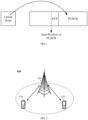
- the communication system 100 may include a network device 110, which may be a device that communicates with terminal devices 120 (or referred to as communication terminal or terminal).
- the network device 110 may provide communication coverage for a specific geographic area, and may communicate with terminal devices located in the coverage area.
- the network device 110 may be a base station such as Base Transceiver Station (BTS) in a GSM system or a CDMA system, a base station such as a NodeB (NB) in a WCDMA system, an evolved base station such as an evolutional Node B (eNB or eNodeB) in an LTE system, or a wireless controller in a Cloud Radio Access Network (CRAN).
- BTS Base Transceiver Station
- NB NodeB
- eNB or eNodeB evolutional Node B
- the network device can be a mobile switching center, a relay station, an access point, a vehicle-mounted device, a wearable device, a hub, a switch, a bridge, a router, a network side device in a 5G network, or a network device in a future evolved Public Land Mobile Network (PLMN), etc.
- PLMN Public Land Mobile Network
- the communication system 100 also includes at least one terminal device 120 located within the coverage area of the network device 110.
- the "terminal device” may include, but not limited to, an apparatus connected via a wired line, e.g., via a Public Switched Telephone Network (PSTN), a Digital Subscriber Line (DSL), a digital cable, or a direct cable connection, and/or via another data connection/network, and/or via a wireless interface, e.g., for a cellular network, a Wireless Local Area Network (WLAN), a digital TV network such as a Digital Video Broadcasting Handheld (DVB-H) network, a satellite network, an Amplitude Modulation (AM)-Frequency Modulation (FM) broadcast transmitter, and/or another terminal device, and configured to receive/transmit communication signals, and/or an Internet of Things (IoT) device.
- PSTN Public Switched Telephone Network
- DSL Digital Subscriber Line
- WLAN Wireless Local Area Network
- DVD-H Digital Video Broadcasting Handheld
- a terminal device configured to communicate via a wireless interface may be referred to as a "wireless communication terminal", a “wireless terminal”, or a “mobile terminal”.
- the mobile terminal may include, but not limited to, a satellite or cellular phone, a Personal Communications System (PCS) terminal combining cellular radio phone with data processing, fax, and data communication capabilities, a PDA including a radio phone, a pager, Internet/intranet access, a Web browser, a memo pad, a calendar, and/or a Global Positioning System (GPS) receiver, or a conventional laptop and/or palmtop receiver or another electronic device including a radio telephone transceiver.
- PCS Personal Communications System
- GPS Global Positioning System
- the terminal device may be an access terminal, a User Equipment (UE), a user unit, a user station, a mobile station, a mobile platform, a remote station, a remote terminal, a mobile device, a user terminal, a terminal, a wireless communication device, a user agent, or a user device.
- UE User Equipment
- the access terminal can be a cellular phone, a cordless phone, a Session Initiation Protocol (SIP) phone, a Wireless Local Loop (WLL) station, a Personal Digital Assistant (PDA), a handheld device or a computing device having a wireless communication function, another processing device connected to a wireless modem, a vehicle-mounted device, a wearable device, a terminal device in a 5G network, or a terminal devices in a future evolved PLMN, etc.
- SIP Session Initiation Protocol
- WLL Wireless Local Loop
- PDA Personal Digital Assistant
- D2D Device to Device
- a signal or channel transmitted in the D2D communication may be referred to as a sidelink signal or a sidelink channel
- a transmission opportunity used for transmitting a sidelink signal or a sidelink channel may be referred to as a sidelink transmission opportunity.
- the 5G system or 5G network may also be referred to as a New Radio (NR) system or NR network.
- NR New Radio
- FIG. 2 exemplarily shows one network device and two terminal devices.
- the communication system 100 may include a plurality of network devices and the coverage of each network device may include a different number of terminal devices.
- the embodiments of the present disclosure are not limited to this.
- the communication system 100 may also include other network entities such as a network controller and a mobility management entity.
- network entities such as a network controller and a mobility management entity.
- the embodiments of the present disclosure are not limited to this.
- any device with a communication function in the network/system in the embodiments of the present disclosure may be referred to as a communication device.
- the communication devices may include the network device 110 and the terminal devices 120, each having a communication function.
- the network device 110 and the terminal devices 120 may be the specific devices as described above, and details thereof will be omitted here.
- the communication device may also include other devices in the communication system 100, such as a network controller, a mobility management entity, and other network entities.
- the embodiments of the present disclosure are not limited to this.
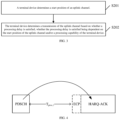
- the claimed processing procedure of an uplink transmission method applied in a terminal device according to an embodiment of the present disclosure, as shown in FIG. 3 includes at least part of the following content.
- a terminal device determines a start position of an uplink channel.
- a network device can transmit scheduling information to the terminal device, and the terminal device can determine the start position of the uplink channel to be transmitted based on the scheduling information.
- the terminal device determines a transmission of the uplink channel based on whether a processing delay is satisfied. Whether the processing delay is satisfied is dependent on the start position of the uplink channel and/or a processing capability of the terminal device.
- the operation of determining the transmission of the uplink channel may include determining whether to transmit the uplink channel, or determining information or data to be carried in the transmitted uplink channel.
- the start position of the uplink channel includes a first start position of a CP of the first symbol in the uplink channel, and/or the start position of the uplink channel includes a second start position of an ECP of the first symbol in the uplink channel.
- the second start position is determined depending on a first parameter C and/or a second parameter ⁇ .
- the ECP has a length dependent on the first parameter C and/or the second parameter ⁇ .
- the length of the ECP is a length between the second start position and the first start position.
- the first parameter C is dependent on a subcarrier spacing.
- the first parameter C may be determined to be one of C1, C2, and C3, depending on the start position of the uplink channel transmitted by the terminal device.
- the value of C1 can be different, the value of C2 can be different, and the value of C3 can also be different.
- the first parameter may be in units of number of symbols, and the first parameter may have a value greater than or equal to 0.
- the second parameter ⁇ is determined, based on the start position of the uplink channel transmitted by the terminal device, to be 0, 16 microseconds, 25 microseconds, 16 microseconds + Timing Advance (TA), and 25 microseconds + TA; where the TA is a timing advance corresponding to the transmission of the uplink channel.
- the second parameter may be in units of microseconds.
- the uplink transmission method according to the embodiment of the present disclosure will be described below with respect to different types of uplink channels.
- the uplink channel is an uplink channel carrying first Hybrid Automatic Repeat reQuest - Acknowledgement (HARQ-ACK) information corresponding to a first Physical Downlink Shared Channel (PDSCH).
- HARQ-ACK Hybrid Automatic Repeat reQuest - Acknowledgement
- PDSCH Physical Downlink Shared Channel
- the terminal device may determine that the processing delay is satisfied; or otherwise, the terminal device may determine that the processing delay is not satisfied.
- the terminal device may determine that the transmitted uplink channel includes a valid first HARQ-ACK information. If the processing delay is not satisfied, the terminal device may determine that the transmitted uplink channel does not include the valid first HARQ-ACK information.
- the terminal device may determine the uplink channel to be the uplink channel carrying the first HARQ-ARK information according to downlink grant information transmitted by the network device. For example, the terminal device may receive the downlink grant information transmitted by the network device, and the downlink grant information may be used to schedule the terminal device to receive the first PDSCH carrying a target transport block. The terminal device can determine that the first HARQ-ACK information corresponding to the scheduled first PDSCH is transmitted via a PUCCH according to allocated HARQ-ACK timing information K1 and PUCCH resource indication information.
- the terminal device can determine that the uplink channel includes the valid first HARQ-ACK information.
- Symbol L1' may be the next uplink symbol after the end position of the last symbol of the first PDSCH.
- the CP position of the next uplink symbol after the end position of the last symbol of the first PDSCH is T proc, 1 or T proc-nru, 1 ; or the ECP position of the next uplink symbol after the end position of the last symbol of the first PDSCH is T pr o c, 1 or T proc-nru, 1 .
- the uplink channel may be a first PUSCH carrying a target transport block and/or a DMRS, and the first PUSCH is scheduled by a first PDCCH.
- the terminal device can determine that the processing delay is satisfied; or otherwise, the terminal device can determine that the processing delay is not satisfied.
- FIG. 6 Alternatively in a non-claimed embodiment, as shown in FIG.
- the terminal device can determine that the processing delay is satisfied; or otherwise, the terminal device can determine that the processing delay is not satisfied.
- the second processing time is determined depending on the start position of the uplink channel and/or the processing capability of the terminal device, and the second processing time includes (the third alternative being claimed):
- T proc , 2 max N 2 + d 2,1 2048 + 144 ⁇ ⁇ 2 ⁇ ⁇ ⁇ T C , d 2,2 , or
- the terminal device determines to transmit the uplink channel. If the processing delay is not satisfied, the terminal device refrains from transmitting the uplink channel. Alternatively, if the processing delay is not satisfied, the terminal device may ignore the first PDCCH.
- the terminal device may determine the uplink channel to be the uplink channel carrying the target transport block and/or DMRS according to uplink grant information transmitted by the network device. For example, the terminal device may receive the uplink grant information transmitted by the network device, and the uplink grant information may be used to schedule the terminal device to transmit the first PUSCH carrying the target transport block and/or DMRS.
- the terminal device determines, based on an SLIV indication in the uplink grant information, that the time length between the end position of the last symbol of the first PDCCH and the first start position of the CP of the first symbol of the first PUSCH is greater than the second processing time, or the time length between the end position of the last symbol of the first PDCCH and the first start position of the ECP of the first symbol of the PUSCH is greater than the second processing time, the terminal device can determine to transmit the first PUSCH.
- the terminal device may determine to transmit the first PUSCH when the start position of the first symbol in the first PUSCH, with the influence of timing advance taken into account, is not earlier than Symbol L2'.
- Symbol L2' may be the next uplink symbol after the end position of the last symbol of the first PDCCH.
- the start position of the CP of the next uplink symbol after the end position of the last symbol of the first PDCCH is T proc ,2 or T proc-nru ,2 ; or the start position of the ECP of the next uplink symbol after the end position of the last symbol of the first PDCCH is T proc ,2 or T proc-nru ,2 .
- the uplink channel may be a second PUSCH carrying Channel State Information (CSI), and reporting of the CSI may be triggered by a second PDCCH. If a time length between an end position of the last symbol of the second PDCCH received by the terminal device and the first start position of the CP of the first symbol in the uplink channel is greater than third processing time, the terminal device may determine that the processing delay is satisfied; or otherwise, the terminal device may determine that the delay is not satisfied.
- CSI Channel State Information
- the terminal device may determine that the processing delay is satisfied; or otherwise the terminal device may determine that the delay is not satisfied.
- the third processing time may be determined depending on the start position of the uplink channel and/or the processing capability of the terminal device, and the third processing time may include T proc,CSI or T proc-nru,CSI .
- T proc,CSI ( Z )(2048 +144) ⁇ ⁇ 2 - ⁇ ⁇ T c , or T proc ⁇ nru
- CSI Z + C 2048 + 144 ⁇ ⁇ 2 ⁇ ⁇ ⁇ T C
- T proc ⁇ nru Z + C 2048 + 144 ⁇ ⁇ 2 ⁇ ⁇ T C , or T proc ⁇ nru
- CSI Z + C 2048 + 144 ⁇ ⁇ 2 ⁇ ⁇ T C ⁇ ceil ⁇ / ⁇ 2 ⁇ ⁇ ⁇ T C ⁇ ⁇ 2 ⁇ ⁇ ⁇ T C .
- the terminal device may determine that the uplink channel includes the valid CSI. If the processing delay is not satisfied, the terminal device may determine that the uplink channel does not include the valid CSI.
- the CSI report may be the n-th CSI report. If a time length between an end position of a reference symbol received by the terminal device and the first start position of the CP of the first symbol in the uplink channel is greater than fourth processing time, the terminal device may determine that the processing delay is satisfied; or otherwise, the terminal device may determine that the delay is not satisfied. Alternatively, if a time length between the end position of the reference symbol received by the terminal device and the second start position of the ECP of the first symbol in the uplink channel is greater than the fourth processing time, the terminal device may determine that the processing delay is satisfied; or otherwise, the terminal device may determine that the delay is not satisfied.
- the reference symbol is the last symbol of an aperiodic CSI Reference Signal (CSI-RS) resource for channel measurement, an aperiodic CSI Interference Measurement (CSI-IM) resource for interference measurement, or an aperiodic Non-Zero Power (NZP) CSI-RS resource for interference measurement, corresponding to the n-th CSI report, whichever occurs last.
- CSI-RS aperiodic CSI Reference Signal
- CSI-IM aperiodic CSI Interference Measurement
- NZP Non-Zero Power
- the fourth processing time may be determined depending on the start position of the uplink channel and/or the processing capability of the terminal device, and the fourth processing time may include T' proc,CSI or T proc ⁇ nru , CSI ′ .
- T ′ proc , CSI Z ′ 2048 + 144 ⁇ ⁇ 2 ⁇ ⁇ ⁇ T C , or T proc ⁇ nru
- CSI ′ Z ′ + C 2048 + 144 ⁇ ⁇ 2 ⁇ ⁇ ⁇ T C
- CSI Z ′ + C 2048 + 144 ⁇ ⁇ 2 ⁇ ⁇ T C ⁇ ceil ⁇ / ⁇ 2 ⁇ ⁇ ⁇ T C ⁇ ⁇ 2 ⁇ ⁇ ⁇ T C .
- the terminal device may determine that the uplink channel includes the valid CSI corresponding to the n-th CSI report; or otherwise, the terminal device may determine that the uplink channel includes the valid CSI corresponding to the (n-1)-th CSI report.
- the terminal device may determine the uplink channel to be the second PUSCH carrying the CSI according to DCI transmitted by the network device, and the DCI may be carried on the second PDCCH.
- the terminal device may transmit the valid CSI report for the n-th request for triggering the reporting of the CSI.
- the terminal device may determine that the uplink channel includes the valid CSI corresponding to the n-th CSI report; or otherwise, the terminal device may determine that the uplink channel does not include the valid CSI corresponding to the n-th CSI report.
- the terminal device may determine to transmit the second PUSCH.
- the reference symbol is the last symbol of an aperiodic CSI-RS resource for channel measurement, an aperiodic CSI-IM resource for interference measurement, or an aperiodic NZP CSI-RS resource for interference measurement, corresponding to the n-th CSI report, whichever occurs last.
- Symbol Z ref-nru may be the next uplink symbol after the end position of the last symbol of the second PDCCH, and the start position of the CP of the next uplink symbol after the end position of the last symbol of the second PDCCH is T proc,CSI or T proc-nru,CSI ; or the start position of the ECP of the next uplink symbol after the end position of the last symbol of the second PDCCH is T proc,CSI or T proc-nru,CSI .
- Symbol Z' ref-nru (n) may be the next uplink symbol after the reference symbol, and the start position of the CP of the next uplink symbol after the reference symbol is T' proc,CSI or T proc ⁇ nru , CSI ′ ; or the start position of the ECP of the next uplink symbol after the reference symbol is T' proc,CSI or T proc ⁇ nru , CSI ′ .
- T proc-nru f ( T proc , C , ⁇ ).
- T proc may be one of T proc, 1 , T proc-nru, 1 , T proc, 2 , T proc-nru,2 , T proc,CSI , T proc-nru,CSI , T' proc,CSI , and T' proc-nru,CSI .
- C can be determined as one of C1, C2, and C3 depending on the start position of the uplink channel transmitted by the terminal device, and ⁇ can be determined as one of 0, 16 microseconds, 25 microseconds, 16 microseconds seconds + TA, or 25 microseconds + TA, based on the start position of the uplink channel transmitted by the terminal device.
- An optional processing procedure of an uplink transmission method applied in a network device according to an embodiment of the present disclosure, as shown in FIG. 8 includes at least part of the following content.
- a network device determines whether an uplink channel received by the network device includes valid data based on a start position of the uplink channel transmitted by a terminal device and/or a processing capability of the terminal device.
- the start position of the uplink channel may include a first start position of a CP of the first symbol in the uplink channel, and/or the start position of the uplink channel may include a second start position of an ECP of the first symbol in the uplink channel.
- the second start position may be determined depending on a first parameter and/or a second parameter, and/or the ECP may have a length dependent on the first parameter and/or the second parameter, and the length of the ECP may be a length between the second start position and the first start position.
- the first parameter may be in units of number of symbols, the first parameter may have a value greater than or equal to 0, and the second parameter may be in units of microseconds.
- the first parameter C may be dependent on a subcarrier spacing.
- the first parameter C may be determined to be one of C1, C2, and C3, depending on the start position of the uplink channel transmitted by the terminal device.
- the value of C1 can be different, the value of C2 can be different, and the value of C3 can also be different.
- the first parameter may be in units of number of symbols, and the first parameter may have a value greater than or equal to 0.
- the second parameter ⁇ may be determined to be 0, 16 microseconds, 25 microseconds, 16 microseconds + Timing Advance (TA), and 25 microseconds + TA, based on the start position of the uplink channel transmitted by the terminal device; where the TA is a timing advance corresponding to the transmission of the uplink channel.
- the second parameter may be in units of microseconds.
- the uplink transmission method according to the embodiment of the present disclosure will be described below with respect to different types of uplink channels.
- the uplink channel may be an uplink channel carrying first HARQ-ARK information corresponding to a first PDSCH. If a time length between an end position of the last symbol of the first PDSCH received by the terminal device and the first start position of the CP of the first symbol in the uplink channel is greater than first processing time, the network device may determine that the uplink channel includes the valid first HARQ-ACK information; or otherwise, the network device may determine that the uplink channel does not include the valid first HARQ-ACK information.
- the network device may determine that the uplink channel includes the valid first HARQ-ACK information; or otherwise, the network device may determine that the uplink channel does not include the valid first HARQ-ACK information.
- the uplink channel may be a first PUSCH carrying a target transport block and/or a DMRS, and the first PUSCH is scheduled by a first PDCCH. If a time length between an end position of the last symbol of the first PDCCH transmitted by the network device and the first start position of the CP of the first symbol in the uplink channel is greater than second processing time, or a time length between the end position of the last symbol of the first PDCCH transmitted by the network device and the second start position of the ECP of the first symbol in the uplink channel is greater than the second processing time, the network device may determine that the uplink channel includes the valid data.
- the uplink channel may be a second PUSCH carrying CSI, and reporting of the CSI may be triggered by a second PDCCH. If a time length between an end position of the last symbol of the second PDCCH transmitted by the network device and the first start position of the CP of the first symbol in the uplink channel is greater than third processing time, or the time length between the end position of the last symbol of the first PDCCH transmitted by the network device and the second start position of the ECP of the first symbol in the uplink channel is greater than the third processing time, the network device may determine that the uplink channel includes the valid CSI; or otherwise, the network device may determine that the uplink channel does not include the valid CSI.
- the CSI report may be the n-th CSI report. If a time length between an end position of a reference symbol transmitted by the network device and the first start position of the CP of the first symbol in the uplink channel is greater than fourth processing time, or a time length between the end position of the reference symbol transmitted by the network device and the second start position of the ECP of the first symbol in the uplink channel is greater than the fourth processing time, the network device may determine that the uplink channel includes the valid CSI corresponding to the n-th CSI report; or otherwise, the network device may determine that the uplink channel includes the valid CSI corresponding to the (n-1)-th CSI report.
- the reference symbol may be the last symbol of an aperiodic CSI-RS resource for channel measurement, an aperiodic CSI-IM resource for interference measurement, or an aperiodic NZP CSI-RS resource for interference measurement, corresponding to the n-th CSI report, whichever occurs last.
- an embodiment of the present disclosure further provides a terminal device.
- the terminal device 400 has a structure as shown in FIG. 9 , including: a first processing unit 401 configured to determine a start position of an uplink channel; and a second processing unit 402 configured to determine a transmission of the uplink channel based on whether a processing delay is satisfied.
- Whether the processing delay is satisfied is dependent on the start position of the uplink channel and/or a processing capability of the terminal device.
- the start position of the uplink channel may include a first start position of a CP of the first symbol in the uplink channel, and/or the start position of the uplink channel may include a second start position of an ECP of the first symbol in the uplink channel.
- the second start position may be determined depending on a first parameter and/or a second parameter, and/or the ECP may have a length dependent on the first parameter and/or the second parameter, and the length of the ECP may be a length between the second start position and the first start position.
- the first parameter may be in units of number of symbols, the first parameter may have a value greater than or equal to 0, and the second parameter may be in units of microseconds.
- the value of the first parameter may be dependent on a subcarrier spacing.
- the second parameter may have a value including at least one of: 0, 16 microseconds, 25 microseconds, 16 microseconds + TA, and 25 microseconds + TA.
- the TA is a timing advance corresponding to the transmission of the uplink channel.
- the uplink channel may be an uplink channel carrying first HARQ-ACK information corresponding to a first PDSCH.
- the processing delay being satisfied may include: a time length between an end position of the last symbol of the first PDSCH received by the terminal device and the first start position of the CP of the first symbol in the uplink channel being greater than first processing time, or a time length between the end position of the last symbol of the first PDSCH received by the terminal device and the second start position of the ECP of the first symbol in the uplink channel being greater than the first processing time.
- the second processing unit 402 may be configured to determine that the uplink channel includes the valid first HARQ-ACK information when the processing delay is satisfied, or determine that the uplink channel does not include the valid first HARQ-ACK information when the processing delay is not satisfied.
- the uplink channel may be a first PUSCH carrying a target transport block and/or a DMRS.
- the first PUSCH is scheduled by a first PDCCH.
- the processing delay being satisfied may include: a time length between an end position of the last symbol of the first PDCCH received by the terminal device and the first start position of the CP of the first symbol in the uplink channel being greater than second processing time, or a time length between the end position of the last symbol of the first PDCCH received by the terminal device and the second start position of the ECP of the first symbol in the uplink channel being greater than the second processing time.
- the second processing unit 402 may be configured to determine to transmit the uplink channel when the processing delay is satisfied, or refrain from transmitting the uplink channel when the processing delay is not satisfied.
- the uplink channel may be a second PUSCH carrying CSI. Reporting of the CSI is triggered by a second PDCCH.
- the processing delay being satisfied may include: a time length between an end position of the last symbol of the second PDCCH received by the terminal device and the first start position of the CP of the first symbol in the uplink channel being greater than third processing time, or a time length between the end position of the last symbol of the first PDCCH received by the terminal device and the second start position of the ECP of the first symbol in the uplink channel being greater than the third processing time.
- the second processing unit 402 may be configured to determine that the uplink channel includes the valid CSI when the processing delay is satisfied, or determine that the uplink channel does not include the valid CSI when the processing delay is not satisfied.
- the CSI report may be the n-th CSI report.
- the processing delay being satisfied may further include: a time length between an end position of a reference symbol received by the terminal device and the first start position of the CP of the first symbol in the uplink channel being greater than fourth processing time; or, a time length between the end position of the reference symbol received by the terminal device and the second start position of the ECP of the first symbol in the uplink channel being greater than the fourth processing time.
- the reference symbol is the last symbol of an aperiodic CSI-RS resource for channel measurement, an aperiodic CSI-IM resource for interference measurement, or an aperiodic NZP CSI-RS resource for interference measurement, corresponding to the n-th CSI report, whichever occurs last.
- the second processing unit 402 may be configured to determine that the uplink channel includes the valid CSI corresponding to the n-th CSI report when the processing delay is satisfied, or determine that the uplink channel includes the valid CSI corresponding to the (n-1)-th CSI report when the processing delay is not satisfied.
- an embodiment of the present disclosure further provides a network device.
- the network device 500 has a structure as shown in FIG. 10 , including: a third processing unit 501 configured to determine whether an uplink channel received by the network device includes valid data based on a start position of the uplink channel transmitted by a terminal device and/or a processing capability of the terminal device.
- the start position of the uplink channel may include a first start position of a CP of the first symbol in the uplink channel, and/or the start position of the uplink channel may include a second start position of an ECP of the first symbol in the uplink channel.
- the second start position may be determined depending on a first parameter and/or a second parameter, and/or the ECP may have a length dependent on the first parameter and/or the second parameter, and the length of the ECP may be a length between the second start position and the first start position.
- the first parameter may be in units of number of symbols, the first parameter may have a value greater than or equal to 0, and the second parameter may be in units of microseconds.
- the value of the first parameter may be dependent on a subcarrier spacing.
- the second parameter may have a value including at least one of: 0, 16 microseconds, 25 microseconds, 16 microseconds + TA, and 25 microseconds + TA.
- the TA is a timing advance corresponding to the transmission of the uplink channel.
- the uplink channel may be an uplink channel carrying first HARQ-ACK information corresponding to a first PDSCH.
- the third processing unit 501 may be configured to: determine that the uplink channel includes the valid first HARQ-ACK information when a time length between an end position of the last symbol of the first PDSCH transmitted by the network device and the first start position of the CP of the first symbol in the uplink channel is longer than the first processing time, or a time length between the end position of the last symbol of the first PDSCH transmitted by the network device and the second start position of the ECP of the first symbol in the uplink channel is greater than the first processing time, or otherwise determine that the uplink channel does not include the valid first HARQ-ACK information.
- the uplink channel may be a first PUSCH carrying a target transport block and/or a DMRS.
- the first PUSCH is scheduled by a first PDCCH.
- the third processing unit 501 may be configured to: determine that the uplink channel includes the valid data when a time length between an end position of the last symbol of the first PDCCH transmitted by the network device and the first start position of the CP of the first symbol in the uplink channel is greater than second processing time, or a time length between the end position of the last symbol of the first PDCCH transmitted by the network device and the second start position of the ECP of the first symbol in the uplink channel is greater than the second processing time.
- the uplink channel may be a second PUSCH carrying CSI. Reporting of the CSI is triggered by a second PDCCH.
- the third processing unit 501 may be configured to: determine that the uplink channel includes the valid CSI when a time length between an end position of the last symbol of the second PDCCH transmitted by the network device and the first start position of the CP of the first symbol in the uplink channel is greater than third processing time, or the time length between the end position of the last symbol of the first PDCCH transmitted by the network device and the second start position of the ECP of the first symbol in the uplink channel is greater than the third processing time; or otherwise determine that the uplink channel does not include valid CSI.
- the CSI report may be the n-th CSI report.
- the third processing unit may be configured to: determine the uplink channel includes the valid CSI corresponding to the n-th CSI report when a time length between an end position of a reference symbol transmitted by the network device and the first start position of the CP of the first symbol in the uplink channel is greater than fourth processing time, or a time length between the end position of the reference symbol transmitted by the network device and the second start position of the ECP of the first symbol in the uplink channel is greater than the fourth processing time; or otherwise determine that the uplink channel includes the valid CSI corresponding to the (n-1)-th CSI report.
- the reference symbol may be the last symbol of an aperiodic CSI-RS resource for channel measurement, an aperiodic CSI-IM resource for interference measurement, or an aperiodic NZP CSI-RS resource for interference measurement, corresponding to the n-th CSI report, whichever occurs last.
- d2,1 0 or 1
- T c 1 / ( ⁇ f max ⁇ N f )
- ⁇ f max 480 ⁇ 10 3 Hz
- N f 4096
- ⁇ is used to determine a subcarrier spacing.
- An embodiment of the present disclosure further provides a terminal device.
- the terminal device includes a processor and a memory for storing a computer program executable on the processor.
- the processor is configured to, when executing the computer program, perform the steps of the above uplink transmission method performed by the terminal device.
- An embodiment of the present disclosure further provides a chip.
- the chip includes a processor configured to invoke and execute a computer program from a memory, to enable a device provided with the chip to perform the above uplink transmission method performed by the terminal device.
- An embodiment of the present disclosure further provides a chip.
- the chip includes a processor configured to invoke and execute a computer program from a memory, to enable a device provided with the chip to perform the above uplink transmission method performed by the network device.
- An embodiment of the present disclosure further provides a storage medium.
- the storage medium stores an executable program which, when executed by a processor, implements the above uplink transmission method performed by the terminal device.
- An embodiment of the present disclosure further provides a storage medium.
- the storage medium stores an executable program which, when executed by a processor, implements the above uplink transmission method performed by the network device.
- An embodiment of the present disclosure further provides a computer program product.
- the computer program product includes computer program instructions that cause a computer to perform the above uplink transmission method performed by the terminal device.
- An embodiment of the present disclosure further provides a computer program product.
- the computer program product includes computer program instructions that cause a computer to perform the above uplink transmission method performed by the network device.
- An embodiment of the present disclosure further provides a computer program.
- the computer program causes a computer to perform the above uplink transmission method performed by the terminal device.
- An embodiment of the present disclosure further provides a computer program.
- the computer program causes a computer to perform the above uplink transmission method performed by the network device.
- FIG. 11 is a schematic diagram showing a hardware structure of an electronic device (terminal device or network device) according to an embodiment of the present disclosure.
- the electronic device 700 includes: at least one processor 701, a memory 702, and at least one network interface 704.
- the components in the electronic device 700 are coupled together via a bus system 705.
- the bus system 705 is configured to implement connection and communication between these components.
- the bus system 705 also includes a power bus, a control bus, and a status signal bus. However, for the purpose of description, these buses are denoted as the bus system 705 in FIG. 11 .
- the memory 702 may be a transitory memory or a non-transitory memory, and may also include both transitory and non-transitory memories.
- the non-transitory memory can be a ROM, a Programmable Read-Only Memory (PROM), an Erasable Programmable Read-Only Memory (EPROM), an Electrically Erasable Programmable Read-Only Memory (EEPROM), a Ferromagnetic Random Access Memory (FRAM), a flash memory, a magnetic surface memory (e.g., magnetic disk storage or magnetic tape storage), an optical disc, or a Compact Disc Read-Only Memory (CD-ROM).
- the transitory memory may be a Random Access Memory (RAM), which can be used as an external cache.
- RAMs are available, such as Static Random Access Memory (SRAM), Synchronous Static Random Access Memory (SSRAM), Dynamic Random Access Memory (DRAM), Synchronous Dynamic Random Access Memory (SDRAM), Double Data Rate Synchronous Dynamic Random Access Memory (DDRSDRAM), Enhanced Synchronous Dynamic Random Access Memory (ESDRAM), SyncLink Dynamic Random Access Memory (SLDRAM), or Direct Rambus Random Access Memory (DRRAM).
- SRAM Static Random Access Memory
- SSRAM Synchronous Static Random Access Memory
- DRAM Dynamic Random Access Memory
- SDRAM Synchronous Dynamic Random Access Memory
- DDRSDRAM Double Data Rate Synchronous Dynamic Random Access Memory
- ESDRAM Enhanced Synchronous Dynamic Random Access Memory
- SLDRAM SyncLink Dynamic Random Access Memory
- DRRAM Direct Rambus Random Access Memory
- the memory 702 in the embodiment of the present disclosure is configured to store various types of data to support the operation of the electronic device 700.
- Examples of such data include: any computer program operable on the electronic device 700, such as an application program 7022.
- the program for implementing the method of the embodiment of the present disclosure may be included in the application program 7022.
- the method disclosed in any of the embodiments of the present disclosure may be applied to the processor 701 or implemented by the processor 701.
- the processor 701 may be an integrated circuit chip with signal processing capabilities. In the implementation process, the steps of any of the above methods can be performed by a hardware integrated logic circuit in the processor 701 or instructions in the form of software.
- the above processor 701 may be a general-purpose processor, a Digital Signal Processor (DSP), or any other programmable logic device, discrete gate or transistor logic device, discrete hardware component, or the like.
- DSP Digital Signal Processor
- the processor 701 may implement or execute the methods, steps, and logical block diagrams disclosed in the embodiments of the present disclosure.
- the general-purpose processor may be a microprocessor or any conventional processor or the like.
- the steps of the method disclosed in any of the embodiments of the present disclosure may be directly embodied as being executed and completed by a hardware decoding processor, or by a combination of hardware and software modules in the decoding processor.
- the software modules may be located in a storage medium, which may be provided in the memory 702.
- the processor 701 reads information from the memory 702 and performs the steps of any of the methods in combination with its hardware.
- the electronic device 700 may be implemented by one or more Application Specific Integrated Circuits (ASICs), DSPs, Programmable Logic Devices (PLDs), Complex Programmable Logic Devices (CPLDs), FPGAs, general-purpose processors, controllers, MCUs, MPUs, or other electronic components to implement any of the methods.
- ASICs Application Specific Integrated Circuits
- DSPs Digital Signal processors
- PLDs Programmable Logic Devices
- CPLDs Complex Programmable Logic Devices
- FPGAs general-purpose processors
- controllers MCUs, MPUs, or other electronic components to implement any of the methods.
- These computer program instructions can also be stored in a computer-readable memory that can direct a computer or any other programmable data processing device to operate in such a manner that instructions stored in the computer-readable memory can generate an article of manufacture including instruction means for implementing the functions specified in one or more processes in the flowcharts and/or one or more blocks in the block diagrams.
- These computer program instructions can also be loaded on a computer or any other programmable data processing device, such that a sequence of operation steps can be executed on the computer or any other programmable device to generate computer-implemented processes, so as to perform the steps for implementing the functions specified in one or more processes in the flowcharts and/or one or more blocks in the block diagrams on the computer or any other programmable device.
Landscapes
- Engineering & Computer Science (AREA)
- Signal Processing (AREA)
- Computer Networks & Wireless Communication (AREA)
- Quality & Reliability (AREA)
- Physics & Mathematics (AREA)
- Mathematical Physics (AREA)
- Mobile Radio Communication Systems (AREA)
Claims (8)
- Uplink-Übertragungsverfahren, umfassend:Bestimmen(S201) einer Startposition eines Uplink-Kanals durch ein Endgerät undBestimmen (S202) einer Übertragung des Uplink-Kanals durch das Endgerät basierend darauf, ob eine Verarbeitungsverzögerung eingehalten wird,wobei es von der Startposition des Uplink-Kanals und/oder einer Verarbeitungsfähigkeit des Endgeräts abhängig ist, ob die Verarbeitungsverzögerung eingehalten wird,dadurch gekennzeichnet, dass der Uplink-Kanal ein Uplink-Kanal ist, der erste Hybrid-Automatic-Repeat-reQuest-Acknowledgement-, HARQ-ACK-, Informationen entsprechend einem ersten gemeinsamen physikalischen Downlink-Kanal, Physical Downlink Shared Channel, PDSCH, mitführt, und das Einhalten der Verarbeitungsverzögerung Folgendes umfasst:dass eine Zeitdauer zwischen einer Endposition eines letzten Symbols des ersten PDSCH, das durch das Endgerät empfangen wird, und einer ersten Startposition eines zyklischen Präfixes, Cyclic Prefix, CP, eines ersten Symbols in dem Uplink-Kanal größer ist als eine erste Verarbeitungszeit, wobei die erste Verarbeitungszeit in Abhängigkeit von der Startposition des Uplink-Kanals und/oder der Verarbeitungsfähigkeit des Endgeräts bestimmt wird, und die erste Verarbeitungszeit Folgendes umfasst:
T proc-nru,1 = (N 1 + d 1,1 + C)(2048 + 144) · K 2-µ · Tc - ceil(Δ/( K 2-µ · Tc )) · K 2-µ · Tc , der Uplink-Kanal ein erster gemeinsamer physikalischer Uplink-Kanal, Physical Uplink Shared Channel, PUSCH, ist, der einen Zieltransportblock und/oder ein Demodulationsreferenzsignal, DMRS, mitführt, wobei der erste PUSCH durch einen ersten PDCCH geplant wird, und das Einhalten der Verarbeitungsverzögerung Folgendes umfasst:
dass eine Zeitdauer zwischen einer Endposition eines letzten Symbols des ersten PDCCH, das durch das Endgerät empfangen wird, und einer ersten Startposition eines zyklischen Präfixes, Cyclic Prefix, CP, des ersten Symbols in dem Uplink-Kanal größer ist als eine zweite Verarbeitungszeit, wobei die zweite Verarbeitungszeit in Abhängigkeit von der Startposition des Uplink-Kanals und/oder der Verarbeitungsfähigkeit des Endgeräts bestimmt wird, und die zweite Verarbeitungszeit Folgendes umfasst:T proc-nru,2 = max((N 2 + d 2,1 + C)(2048 + 144) · K 2-µ · Tc - ceil(Δ/( K 2-µ · Tc )) · K 2-µ · Tc ,d 2,2) - Verfahren nach Anspruch 1, wobei die Startposition des Uplink-Kanals die erste Startposition des zyklischen Präfixes, Cyclic Prefix, CP, des ersten Symbols in dem Uplink-Kanal umfasst.
- Verfahren nach Anspruch 1 oder 2, wobei der Uplink-Kanal der Uplink-Kanal ist, der die ersten Hybrid-Automatic-Repeat-reQuest-Acknowledgement-, HARQ-ACK-, Informationen entsprechend dem ersten gemeinsamen physikalischen Downlink-Kanal, Physical Downlink Shared Channel, PDSCH, mitführt, und das Bestimmen der Übertragung des Uplink-Kanals durch das Endgerät basierend darauf, ob die Verarbeitungsverzögerung eingehalten wird, Folgendes umfasst:Bestimmen durch das Endgerät, dass der Uplink-Kanal die gültigen ersten HARQ-ACK-Informationen beinhaltet, wenn die Verarbeitungsverzögerung eingehalten wird, oderBestimmen durch das Endgerät, dass der Uplink-Kanal die gültigen ersten HARQ-ACK-Informationen nicht beinhaltet, wenn die Verarbeitungsverzögerung nicht eingehalten wird.
- Verfahren nach Anspruch 1 oder 2, wobei der Uplink-Kanal der erste gemeinsame physikalische Uplink-Kanal, Physical Uplink Shared Channel, PUSCH, ist, der den Zieltransportblock und/oder das Demodulationsreferenzsignal, DMRS, mitführt, wobei der erste PUSCH durch den ersten PDCCH geplant wird, und das Bestimmen der Übertragung des Uplink-Kanals durch das Endgerät basierend darauf, ob die Verarbeitungsverzögerung eingehalten wird, Folgendes umfasst:Bestimmen durch das Endgerät, den Uplink-Kanal zu übertragen, wenn die Verarbeitungsverzögerung eingehalten wird, oderUnterlassen des Übertragens des Uplink-Kanals durch das Endgerät, wenn die Verarbeitungsverzögerung nicht eingehalten wird.
- Uplink-Übertragungsverfahren, umfassend:Bestimmen (S301) durch ein Netzwerkgerät, ob ein durch das Netzwerkgerät empfangener Uplink-Kanal gültige Daten umfasst, basierend auf einer Startposition des Uplink-Kanals, der von einem Endgerät übertragen wird, und/oder einer Verarbeitungsfähigkeit des Endgeräts,dadurch gekennzeichnet, dass der Uplink-Kanal ein Uplink-Kanal ist, der erste Hybrid-Automatic-Repeat-reQuest-Acknowledgement-, HARQ-ACK-, Informationen entsprechend einem ersten gemeinsamen physikalischen Downlink-Kanal, Physical Downlink Shared Channel, PDSCH, mitführt, und das Bestimmen (S301) durch das Netzwerkgerät, ob der durch das Netzwerkgerät empfangene Uplink-Kanal die gültigen Daten umfasst, Folgendes umfasst:Bestimmen durch das Netzwerkgerät, dass der Uplink-Kanal die gültigen ersten HARQ-ACK-Informationen beinhaltet, wenn eine Zeitdauer zwischen einer Endposition eines letzten Symbols des ersten PDSCH, das durch das Netzwerkgerät übertragen wird, und der ersten Startposition eines zyklischen Präfixes, Cyclic Prefix, CP, des ersten Symbols in dem Uplink-Kanal größer ist als eine erste Verarbeitungszeit, oderanderenfalls Bestimmen durch das Netzwerkgerät, dass der Uplink-Kanal die gültigen ersten HARQ-ACK-Informationen nicht beinhaltet, wobei die erste Verarbeitungszeit in Abhängigkeit von der Startposition des Uplink-Kanals und/oder der Verarbeitungsfähigkeit des Endgeräts bestimmt wird, und die erste Verarbeitungszeit Folgendes umfasst:
T proc-nru,1 = (N 1 + d 1,1 + C)(2048 + 144) · K 2-µ · Tc - ceil(Δ/( K 2-µ · Tc )) · K 2-µ · Tc , der Uplink-Kanal ein erster gemeinsamer physikalischer Uplink-Kanal, Physical Uplink Shared Channel, PUSCH, ist, der einen Zieltransportblock und/oder ein Demodulationsreferenzsignal, DMRS, mitführt, wobei der erste PUSCH durch einen ersten PDCCH geplant wird, und das Bestimmen (S301) durch das Netzwerkgerät, ob der durch das Netzwerkgerät empfangene Uplink-Kanal gültige Daten umfasst, Folgendes umfasst:
Bestimmen durch das Netzwerkgerät, dass der Uplink-Kanal die gültigen Daten beinhaltet, wenn eine Zeitdauer zwischen einer Endposition eines letzten Symbols des ersten PDCCH, das durch das Netzwerkgerät übertragen wird, und einer ersten Startposition eines zyklischen Präfixes, Cyclic Prefix, CP, eines ersten Symbols in dem Uplink-Kanal größer ist als eine zweite Verarbeitungszeit, wobei die zweite Verarbeitungszeit in Abhängigkeit von der Startposition des Uplink-Kanals und/oder der Verarbeitungsfähigkeit des Endgeräts bestimmt wird, und die zweite Verarbeitungszeit Folgendes umfasst:T proc-nru,2 = (N 1 + d 2,1 + C)(2048 + 144) · K 2-µ · Tc - ceil(Δ/( K 2-µ · Tc )) · K 2-µ · Tc ,d 2,2) - Verfahren nach Anspruch 5, wobei die Startposition des Uplink-Kanals die erste Startposition des zyklischen Präfixes, Cyclic Prefix, CP, des ersten Symbols in dem Uplink-Kanal umfasst.
- Endgerät, einen Prozessor und einen Speicher zum Speichern eines Computerprogramms umfassend, das auf dem Prozessor ausführbar ist, wobei der Prozessor dafür konfiguriert ist, bei Ausführung des Computerprogramms die Schritte des Uplink-Übertragungsverfahrens nach einem der Ansprüche 1 bis 4 durchzuführen.
- Netzwerkgerät, einen Prozessor und einen Speicher zum Speichern eines Computerprogramms umfassend, das auf dem Prozessor ausführbar ist, wobei der Prozessor dafür konfiguriert ist, bei Ausführung des Computerprogramms die Schritte des Uplink-Übertragungsverfahrens nach einem der Ansprüche 5 bis 6 durchzuführen.
Applications Claiming Priority (1)
| Application Number | Priority Date | Filing Date | Title |
|---|---|---|---|
| PCT/CN2019/116866 WO2021088066A1 (zh) | 2019-11-08 | 2019-11-08 | 一种上行传输方法、电子设备及存储介质 |
Publications (3)
| Publication Number | Publication Date |
|---|---|
| EP3975648A1 EP3975648A1 (de) | 2022-03-30 |
| EP3975648A4 EP3975648A4 (de) | 2022-07-27 |
| EP3975648B1 true EP3975648B1 (de) | 2024-08-28 |
Family
ID=75849547
Family Applications (1)
| Application Number | Title | Priority Date | Filing Date |
|---|---|---|---|
| EP19951807.7A Active EP3975648B1 (de) | 2019-11-08 | 2019-11-08 | Uplink-übertragungsverfahren, elektronische vorrichtung und speichermedium |
Country Status (6)
| Country | Link |
|---|---|
| US (1) | US12101793B2 (de) |
| EP (1) | EP3975648B1 (de) |
| JP (1) | JP7437425B2 (de) |
| KR (1) | KR102913346B1 (de) |
| CN (2) | CN114375062B (de) |
| WO (1) | WO2021088066A1 (de) |
Families Citing this family (2)
| Publication number | Priority date | Publication date | Assignee | Title |
|---|---|---|---|---|
| CN116193615A (zh) * | 2021-11-25 | 2023-05-30 | 上海移远通信技术股份有限公司 | 一种用于无线通信的节点中的方法和装置 |
| KR20240020076A (ko) | 2022-08-05 | 2024-02-14 | 주식회사 엘지에너지솔루션 | 배터리 팩 |
Family Cites Families (14)
| Publication number | Priority date | Publication date | Assignee | Title |
|---|---|---|---|---|
| CN110035544B (zh) * | 2018-01-12 | 2020-09-25 | 中国信息通信研究院 | 一种上行控制信息传输方法及设备 |
| CN110149726B (zh) * | 2018-02-12 | 2021-03-30 | 电信科学技术研究院有限公司 | 一种信息传输方法及终端 |
| WO2019160387A1 (ko) | 2018-02-17 | 2019-08-22 | 주식회사 윌러스표준기술연구소 | 무선 통신 시스템의 상향링크 제어 정보 전송 방법 및 이를 이용하는 장치 |
| CN110417521B (zh) * | 2018-04-28 | 2022-01-11 | 华为技术有限公司 | 异步上行传输的方法、设备和存储介质 |
| US10813116B2 (en) * | 2018-05-11 | 2020-10-20 | Apple Inc. | Support of advanced user equipment (UE) minimum processing times in new radio (NR) systems |
| KR102656606B1 (ko) * | 2018-08-10 | 2024-04-12 | 삼성전자주식회사 | 무선 통신 시스템에서 harq-ack 피드백을 송수신하는 방법 및 장치 |
| KR20200050596A (ko) | 2018-11-02 | 2020-05-12 | 주식회사 윌러스표준기술연구소 | 무선 통신시스템에서 harq-ack 다중화 방법, 장치 및 시스템 |
| CN111435880B (zh) * | 2019-01-11 | 2021-07-20 | 华为技术有限公司 | 一种能力配置方法及装置 |
| CN111865511B (zh) * | 2019-04-30 | 2022-01-11 | 华为技术有限公司 | 传输混合自动重传请求harq反馈信息的方法和通信装置 |
| CN111885737B (zh) * | 2019-05-03 | 2022-12-06 | 华为技术有限公司 | 随机接入的方法和装置 |
| CN112217619B (zh) * | 2019-07-12 | 2022-06-14 | 大唐移动通信设备有限公司 | 混合自动重传请求确认码本的确定方法、终端及网络设备 |
| EP4044707A4 (de) * | 2019-09-30 | 2022-11-09 | Huawei Technologies Co., Ltd. | Dynamische ressourcenanzeigeverfahren und -vorrichtung |
| KR20210049612A (ko) * | 2019-10-25 | 2021-05-06 | 삼성전자주식회사 | 무선 통신 시스템에서 데이터를 송수신하는 방법 및 장치 |
| US11792856B2 (en) * | 2020-02-13 | 2023-10-17 | Qualcomm Incorporated | Uplink collision handling |
-
2019
- 2019-11-08 JP JP2021578080A patent/JP7437425B2/ja active Active
- 2019-11-08 EP EP19951807.7A patent/EP3975648B1/de active Active
- 2019-11-08 WO PCT/CN2019/116866 patent/WO2021088066A1/zh not_active Ceased
- 2019-11-08 CN CN202210125263.XA patent/CN114375062B/zh active Active
- 2019-11-08 CN CN201980094929.6A patent/CN113678553A/zh active Pending
- 2019-11-08 KR KR1020217042507A patent/KR102913346B1/ko active Active
-
2021
- 2021-12-28 US US17/563,803 patent/US12101793B2/en active Active
Also Published As
| Publication number | Publication date |
|---|---|
| US20220124699A1 (en) | 2022-04-21 |
| EP3975648A4 (de) | 2022-07-27 |
| KR20220098083A (ko) | 2022-07-11 |
| JP7437425B2 (ja) | 2024-02-22 |
| CN114375062B (zh) | 2023-07-18 |
| CN113678553A (zh) | 2021-11-19 |
| US12101793B2 (en) | 2024-09-24 |
| EP3975648A1 (de) | 2022-03-30 |
| WO2021088066A1 (zh) | 2021-05-14 |
| CN114375062A (zh) | 2022-04-19 |
| KR102913346B1 (ko) | 2026-01-19 |
| JP2023509807A (ja) | 2023-03-10 |
Similar Documents
| Publication | Publication Date | Title |
|---|---|---|
| EP3937441B1 (de) | Verfahren zur überwachung eines aufwecksignals und elektronisches gerät | |
| EP3844994B1 (de) | Kanalzugriffsmechanismen in drahtloser kommunikation | |
| US12484025B2 (en) | Resource selection method, terminal device, and storage medium | |
| EP4271084B1 (de) | Verfahren zur bestimmung von direktzugriffsressourcen, elektronische vorrichtung und speichermedium | |
| US12167335B2 (en) | Discontinuous reception method, electronic device and storage medium | |
| EP4024999A1 (de) | Kommunikationsverfahren, vorrichtung und speichermedium | |
| EP4236576B1 (de) | Direktzugriffsverfahren, kommunikationsvorrichtung und speichermedium | |
| EP3972159B1 (de) | Drahtloskommunikationsverfahren, endgerätevorrichtung und netzwerkvorrichtung | |
| CN112806086B (zh) | 一种随机接入方法、设备及存储介质 | |
| AU2018436718B2 (en) | Signal transmission method, terminal device and network device | |
| EP3629666A1 (de) | Erneut hören nach sprechen für broadcast-/multicast-kommunikation | |
| WO2022021226A1 (zh) | 一种控制信息的传输方法、电子设备及存储介质 | |
| WO2021128210A1 (zh) | 一种测量方法、电子设备及存储介质 | |
| US12101793B2 (en) | Uplink transmission method, electronic device, and storage medium | |
| US11357008B2 (en) | Methods and terminal device for activating a semi-persistently configured resource | |
| CN114449571A (zh) | 强干扰条件下配置小区接入资源的方法及装置 | |
| EP3813471B1 (de) | Verfahren zur anzeige des kanalzugriffstyps, endgerät und netzwerkvorrichtung | |
| WO2022082659A1 (zh) | 一种信号传输方法、电子设备及存储介质 | |
| CN113273274B (zh) | 无线通信的方法和设备 | |
| WO2022188110A1 (zh) | 一种信息传输方法、电子设备及存储介质 | |
| EP4262246B1 (de) | Verfahren zur bestimmung eines repeatermodus, elektronische vorrichtung und speichermedium |
Legal Events
| Date | Code | Title | Description |
|---|---|---|---|
| STAA | Information on the status of an ep patent application or granted ep patent |
Free format text: STATUS: THE INTERNATIONAL PUBLICATION HAS BEEN MADE |
|
| PUAI | Public reference made under article 153(3) epc to a published international application that has entered the european phase |
Free format text: ORIGINAL CODE: 0009012 |
|
| STAA | Information on the status of an ep patent application or granted ep patent |
Free format text: STATUS: REQUEST FOR EXAMINATION WAS MADE |
|
| 17P | Request for examination filed |
Effective date: 20211224 |
|
| AK | Designated contracting states |
Kind code of ref document: A1 Designated state(s): AL AT BE BG CH CY CZ DE DK EE ES FI FR GB GR HR HU IE IS IT LI LT LU LV MC MK MT NL NO PL PT RO RS SE SI SK SM TR |
|
| REG | Reference to a national code |
Ref country code: DE Ref legal event code: R079 Free format text: PREVIOUS MAIN CLASS: H04W0072120000 Ipc: H04L0005000000 Ref document number: 602019058143 Country of ref document: DE |
|
| A4 | Supplementary search report drawn up and despatched |
Effective date: 20220627 |
|
| RIC1 | Information provided on ipc code assigned before grant |
Ipc: H04L 1/18 20060101ALN20220621BHEP Ipc: H04L 5/00 20060101AFI20220621BHEP |
|
| DAV | Request for validation of the european patent (deleted) | ||
| DAX | Request for extension of the european patent (deleted) | ||
| STAA | Information on the status of an ep patent application or granted ep patent |
Free format text: STATUS: EXAMINATION IS IN PROGRESS |
|
| 17Q | First examination report despatched |
Effective date: 20230315 |
|
| GRAP | Despatch of communication of intention to grant a patent |
Free format text: ORIGINAL CODE: EPIDOSNIGR1 |
|
| STAA | Information on the status of an ep patent application or granted ep patent |
Free format text: STATUS: GRANT OF PATENT IS INTENDED |
|
| RIC1 | Information provided on ipc code assigned before grant |
Ipc: H04L 1/1867 20230101ALN20240229BHEP Ipc: H04L 1/1829 20230101ALN20240229BHEP Ipc: H04L 1/18 20060101ALN20240229BHEP Ipc: H04L 5/00 20060101AFI20240229BHEP |
|
| INTG | Intention to grant announced |
Effective date: 20240320 |
|
| GRAS | Grant fee paid |
Free format text: ORIGINAL CODE: EPIDOSNIGR3 |
|
| GRAA | (expected) grant |
Free format text: ORIGINAL CODE: 0009210 |
|
| STAA | Information on the status of an ep patent application or granted ep patent |
Free format text: STATUS: THE PATENT HAS BEEN GRANTED |
|
| AK | Designated contracting states |
Kind code of ref document: B1 Designated state(s): AL AT BE BG CH CY CZ DE DK EE ES FI FR GB GR HR HU IE IS IT LI LT LU LV MC MK MT NL NO PL PT RO RS SE SI SK SM TR |
|
| REG | Reference to a national code |
Ref country code: CH Ref legal event code: EP |
|
| REG | Reference to a national code |
Ref country code: DE Ref legal event code: R096 Ref document number: 602019058143 Country of ref document: DE |
|
| REG | Reference to a national code |
Ref country code: IE Ref legal event code: FG4D |
|
| P01 | Opt-out of the competence of the unified patent court (upc) registered |
Free format text: CASE NUMBER: APP_49577/2024 Effective date: 20240902 |
|
| REG | Reference to a national code |
Ref country code: LT Ref legal event code: MG9D |
|
| PG25 | Lapsed in a contracting state [announced via postgrant information from national office to epo] |
Ref country code: NO Free format text: LAPSE BECAUSE OF FAILURE TO SUBMIT A TRANSLATION OF THE DESCRIPTION OR TO PAY THE FEE WITHIN THE PRESCRIBED TIME-LIMIT Effective date: 20241128 |
|
| REG | Reference to a national code |
Ref country code: AT Ref legal event code: MK05 Ref document number: 1719128 Country of ref document: AT Kind code of ref document: T Effective date: 20240828 |
|
| PG25 | Lapsed in a contracting state [announced via postgrant information from national office to epo] |
Ref country code: NL Free format text: LAPSE BECAUSE OF FAILURE TO SUBMIT A TRANSLATION OF THE DESCRIPTION OR TO PAY THE FEE WITHIN THE PRESCRIBED TIME-LIMIT Effective date: 20240828 Ref country code: PL Free format text: LAPSE BECAUSE OF FAILURE TO SUBMIT A TRANSLATION OF THE DESCRIPTION OR TO PAY THE FEE WITHIN THE PRESCRIBED TIME-LIMIT Effective date: 20240828 Ref country code: GR Free format text: LAPSE BECAUSE OF FAILURE TO SUBMIT A TRANSLATION OF THE DESCRIPTION OR TO PAY THE FEE WITHIN THE PRESCRIBED TIME-LIMIT Effective date: 20241129 Ref country code: FI Free format text: LAPSE BECAUSE OF FAILURE TO SUBMIT A TRANSLATION OF THE DESCRIPTION OR TO PAY THE FEE WITHIN THE PRESCRIBED TIME-LIMIT Effective date: 20240828 Ref country code: PT Free format text: LAPSE BECAUSE OF FAILURE TO SUBMIT A TRANSLATION OF THE DESCRIPTION OR TO PAY THE FEE WITHIN THE PRESCRIBED TIME-LIMIT Effective date: 20241230 |
|
| PG25 | Lapsed in a contracting state [announced via postgrant information from national office to epo] |
Ref country code: BG Free format text: LAPSE BECAUSE OF FAILURE TO SUBMIT A TRANSLATION OF THE DESCRIPTION OR TO PAY THE FEE WITHIN THE PRESCRIBED TIME-LIMIT Effective date: 20240828 |
|
| PG25 | Lapsed in a contracting state [announced via postgrant information from national office to epo] |
Ref country code: LV Free format text: LAPSE BECAUSE OF FAILURE TO SUBMIT A TRANSLATION OF THE DESCRIPTION OR TO PAY THE FEE WITHIN THE PRESCRIBED TIME-LIMIT Effective date: 20240828 |
|
| REG | Reference to a national code |
Ref country code: NL Ref legal event code: MP Effective date: 20240828 |
|
| PG25 | Lapsed in a contracting state [announced via postgrant information from national office to epo] |
Ref country code: IS Free format text: LAPSE BECAUSE OF FAILURE TO SUBMIT A TRANSLATION OF THE DESCRIPTION OR TO PAY THE FEE WITHIN THE PRESCRIBED TIME-LIMIT Effective date: 20241228 Ref country code: AT Free format text: LAPSE BECAUSE OF FAILURE TO SUBMIT A TRANSLATION OF THE DESCRIPTION OR TO PAY THE FEE WITHIN THE PRESCRIBED TIME-LIMIT Effective date: 20240828 |
|
| PG25 | Lapsed in a contracting state [announced via postgrant information from national office to epo] |
Ref country code: HR Free format text: LAPSE BECAUSE OF FAILURE TO SUBMIT A TRANSLATION OF THE DESCRIPTION OR TO PAY THE FEE WITHIN THE PRESCRIBED TIME-LIMIT Effective date: 20240828 |
|
| PG25 | Lapsed in a contracting state [announced via postgrant information from national office to epo] |
Ref country code: RS Free format text: LAPSE BECAUSE OF FAILURE TO SUBMIT A TRANSLATION OF THE DESCRIPTION OR TO PAY THE FEE WITHIN THE PRESCRIBED TIME-LIMIT Effective date: 20241128 Ref country code: ES Free format text: LAPSE BECAUSE OF FAILURE TO SUBMIT A TRANSLATION OF THE DESCRIPTION OR TO PAY THE FEE WITHIN THE PRESCRIBED TIME-LIMIT Effective date: 20240828 |
|
| PG25 | Lapsed in a contracting state [announced via postgrant information from national office to epo] |
Ref country code: RS Free format text: LAPSE BECAUSE OF FAILURE TO SUBMIT A TRANSLATION OF THE DESCRIPTION OR TO PAY THE FEE WITHIN THE PRESCRIBED TIME-LIMIT Effective date: 20241128 Ref country code: PT Free format text: LAPSE BECAUSE OF FAILURE TO SUBMIT A TRANSLATION OF THE DESCRIPTION OR TO PAY THE FEE WITHIN THE PRESCRIBED TIME-LIMIT Effective date: 20241230 Ref country code: PL Free format text: LAPSE BECAUSE OF FAILURE TO SUBMIT A TRANSLATION OF THE DESCRIPTION OR TO PAY THE FEE WITHIN THE PRESCRIBED TIME-LIMIT Effective date: 20240828 Ref country code: NO Free format text: LAPSE BECAUSE OF FAILURE TO SUBMIT A TRANSLATION OF THE DESCRIPTION OR TO PAY THE FEE WITHIN THE PRESCRIBED TIME-LIMIT Effective date: 20241128 Ref country code: NL Free format text: LAPSE BECAUSE OF FAILURE TO SUBMIT A TRANSLATION OF THE DESCRIPTION OR TO PAY THE FEE WITHIN THE PRESCRIBED TIME-LIMIT Effective date: 20240828 Ref country code: LV Free format text: LAPSE BECAUSE OF FAILURE TO SUBMIT A TRANSLATION OF THE DESCRIPTION OR TO PAY THE FEE WITHIN THE PRESCRIBED TIME-LIMIT Effective date: 20240828 Ref country code: IS Free format text: LAPSE BECAUSE OF FAILURE TO SUBMIT A TRANSLATION OF THE DESCRIPTION OR TO PAY THE FEE WITHIN THE PRESCRIBED TIME-LIMIT Effective date: 20241228 Ref country code: HR Free format text: LAPSE BECAUSE OF FAILURE TO SUBMIT A TRANSLATION OF THE DESCRIPTION OR TO PAY THE FEE WITHIN THE PRESCRIBED TIME-LIMIT Effective date: 20240828 Ref country code: GR Free format text: LAPSE BECAUSE OF FAILURE TO SUBMIT A TRANSLATION OF THE DESCRIPTION OR TO PAY THE FEE WITHIN THE PRESCRIBED TIME-LIMIT Effective date: 20241129 Ref country code: FI Free format text: LAPSE BECAUSE OF FAILURE TO SUBMIT A TRANSLATION OF THE DESCRIPTION OR TO PAY THE FEE WITHIN THE PRESCRIBED TIME-LIMIT Effective date: 20240828 Ref country code: ES Free format text: LAPSE BECAUSE OF FAILURE TO SUBMIT A TRANSLATION OF THE DESCRIPTION OR TO PAY THE FEE WITHIN THE PRESCRIBED TIME-LIMIT Effective date: 20240828 Ref country code: BG Free format text: LAPSE BECAUSE OF FAILURE TO SUBMIT A TRANSLATION OF THE DESCRIPTION OR TO PAY THE FEE WITHIN THE PRESCRIBED TIME-LIMIT Effective date: 20240828 Ref country code: AT Free format text: LAPSE BECAUSE OF FAILURE TO SUBMIT A TRANSLATION OF THE DESCRIPTION OR TO PAY THE FEE WITHIN THE PRESCRIBED TIME-LIMIT Effective date: 20240828 |
|
| PG25 | Lapsed in a contracting state [announced via postgrant information from national office to epo] |
Ref country code: DK Free format text: LAPSE BECAUSE OF FAILURE TO SUBMIT A TRANSLATION OF THE DESCRIPTION OR TO PAY THE FEE WITHIN THE PRESCRIBED TIME-LIMIT Effective date: 20240828 Ref country code: SM Free format text: LAPSE BECAUSE OF FAILURE TO SUBMIT A TRANSLATION OF THE DESCRIPTION OR TO PAY THE FEE WITHIN THE PRESCRIBED TIME-LIMIT Effective date: 20240828 Ref country code: RO Free format text: LAPSE BECAUSE OF FAILURE TO SUBMIT A TRANSLATION OF THE DESCRIPTION OR TO PAY THE FEE WITHIN THE PRESCRIBED TIME-LIMIT Effective date: 20240828 |
|
| PG25 | Lapsed in a contracting state [announced via postgrant information from national office to epo] |
Ref country code: EE Free format text: LAPSE BECAUSE OF FAILURE TO SUBMIT A TRANSLATION OF THE DESCRIPTION OR TO PAY THE FEE WITHIN THE PRESCRIBED TIME-LIMIT Effective date: 20240828 |
|
| PG25 | Lapsed in a contracting state [announced via postgrant information from national office to epo] |
Ref country code: CZ Free format text: LAPSE BECAUSE OF FAILURE TO SUBMIT A TRANSLATION OF THE DESCRIPTION OR TO PAY THE FEE WITHIN THE PRESCRIBED TIME-LIMIT Effective date: 20240828 |
|
| PG25 | Lapsed in a contracting state [announced via postgrant information from national office to epo] |
Ref country code: SK Free format text: LAPSE BECAUSE OF FAILURE TO SUBMIT A TRANSLATION OF THE DESCRIPTION OR TO PAY THE FEE WITHIN THE PRESCRIBED TIME-LIMIT Effective date: 20240828 Ref country code: IT Free format text: LAPSE BECAUSE OF FAILURE TO SUBMIT A TRANSLATION OF THE DESCRIPTION OR TO PAY THE FEE WITHIN THE PRESCRIBED TIME-LIMIT Effective date: 20240828 |
|
| REG | Reference to a national code |
Ref country code: DE Ref legal event code: R097 Ref document number: 602019058143 Country of ref document: DE |
|
| REG | Reference to a national code |
Ref country code: CH Ref legal event code: PL |
|
| PLBE | No opposition filed within time limit |
Free format text: ORIGINAL CODE: 0009261 |
|
| STAA | Information on the status of an ep patent application or granted ep patent |
Free format text: STATUS: NO OPPOSITION FILED WITHIN TIME LIMIT |
|
| PG25 | Lapsed in a contracting state [announced via postgrant information from national office to epo] |
Ref country code: MC Free format text: LAPSE BECAUSE OF FAILURE TO SUBMIT A TRANSLATION OF THE DESCRIPTION OR TO PAY THE FEE WITHIN THE PRESCRIBED TIME-LIMIT Effective date: 20240828 |
|
| PG25 | Lapsed in a contracting state [announced via postgrant information from national office to epo] |
Ref country code: LU Free format text: LAPSE BECAUSE OF NON-PAYMENT OF DUE FEES Effective date: 20241108 |
|
| REG | Reference to a national code |
Ref country code: CH Ref legal event code: PL |
|
| PG25 | Lapsed in a contracting state [announced via postgrant information from national office to epo] |
Ref country code: CH Free format text: LAPSE BECAUSE OF NON-PAYMENT OF DUE FEES Effective date: 20241130 |
|
| 26N | No opposition filed |
Effective date: 20250530 |
|
| REG | Reference to a national code |
Ref country code: BE Ref legal event code: MM Effective date: 20241130 |
|
| PG25 | Lapsed in a contracting state [announced via postgrant information from national office to epo] |
Ref country code: SE Free format text: LAPSE BECAUSE OF FAILURE TO SUBMIT A TRANSLATION OF THE DESCRIPTION OR TO PAY THE FEE WITHIN THE PRESCRIBED TIME-LIMIT Effective date: 20240828 |
|
| PG25 | Lapsed in a contracting state [announced via postgrant information from national office to epo] |
Ref country code: BE Free format text: LAPSE BECAUSE OF NON-PAYMENT OF DUE FEES Effective date: 20241130 |
|
| PG25 | Lapsed in a contracting state [announced via postgrant information from national office to epo] |
Ref country code: IE Free format text: LAPSE BECAUSE OF NON-PAYMENT OF DUE FEES Effective date: 20241108 |
|
| PGFP | Annual fee paid to national office [announced via postgrant information from national office to epo] |
Ref country code: DE Payment date: 20251124 Year of fee payment: 7 |
|
| PGFP | Annual fee paid to national office [announced via postgrant information from national office to epo] |
Ref country code: GB Payment date: 20251126 Year of fee payment: 7 |
|
| PGFP | Annual fee paid to national office [announced via postgrant information from national office to epo] |
Ref country code: FR Payment date: 20251126 Year of fee payment: 7 |
|
| PG25 | Lapsed in a contracting state [announced via postgrant information from national office to epo] |
Ref country code: HU Free format text: LAPSE BECAUSE OF FAILURE TO SUBMIT A TRANSLATION OF THE DESCRIPTION OR TO PAY THE FEE WITHIN THE PRESCRIBED TIME-LIMIT; INVALID AB INITIO Effective date: 20191108 |