EP3974926A1 - Manufacture condition output device, quality management system, and program - Google Patents
Manufacture condition output device, quality management system, and program Download PDFInfo
- Publication number
- EP3974926A1 EP3974926A1 EP20810345.7A EP20810345A EP3974926A1 EP 3974926 A1 EP3974926 A1 EP 3974926A1 EP 20810345 A EP20810345 A EP 20810345A EP 3974926 A1 EP3974926 A1 EP 3974926A1
- Authority
- EP
- European Patent Office
- Prior art keywords
- manufacturing
- product
- data
- model
- manufacturing condition
- Prior art date
- Legal status (The legal status is an assumption and is not a legal conclusion. Google has not performed a legal analysis and makes no representation as to the accuracy of the status listed.)
- Withdrawn
Links
Images



Classifications
-
- G—PHYSICS
- G06—COMPUTING OR CALCULATING; COUNTING
- G06Q—INFORMATION AND COMMUNICATION TECHNOLOGY [ICT] SPECIALLY ADAPTED FOR ADMINISTRATIVE, COMMERCIAL, FINANCIAL, MANAGERIAL OR SUPERVISORY PURPOSES; SYSTEMS OR METHODS SPECIALLY ADAPTED FOR ADMINISTRATIVE, COMMERCIAL, FINANCIAL, MANAGERIAL OR SUPERVISORY PURPOSES, NOT OTHERWISE PROVIDED FOR
- G06Q10/00—Administration; Management
- G06Q10/06—Resources, workflows, human or project management; Enterprise or organisation planning; Enterprise or organisation modelling
- G06Q10/063—Operations research, analysis or management
- G06Q10/0639—Performance analysis of employees; Performance analysis of enterprise or organisation operations
- G06Q10/06395—Quality analysis or management
-
- G—PHYSICS
- G05—CONTROLLING; REGULATING
- G05B—CONTROL OR REGULATING SYSTEMS IN GENERAL; FUNCTIONAL ELEMENTS OF SUCH SYSTEMS; MONITORING OR TESTING ARRANGEMENTS FOR SUCH SYSTEMS OR ELEMENTS
- G05B23/00—Testing or monitoring of control systems or parts thereof
- G05B23/02—Electric testing or monitoring
- G05B23/0205—Electric testing or monitoring by means of a monitoring system capable of detecting and responding to faults
- G05B23/0218—Electric testing or monitoring by means of a monitoring system capable of detecting and responding to faults characterised by the fault detection method dealing with either existing or incipient faults
- G05B23/0224—Process history based detection method, e.g. whereby history implies the availability of large amounts of data
- G05B23/024—Quantitative history assessment, e.g. mathematical relationships between available data; Functions therefor; Principal component analysis [PCA]; Partial least square [PLS]; Statistical classifiers, e.g. Bayesian networks, linear regression or correlation analysis; Neural networks
-
- G—PHYSICS
- G05—CONTROLLING; REGULATING
- G05B—CONTROL OR REGULATING SYSTEMS IN GENERAL; FUNCTIONAL ELEMENTS OF SUCH SYSTEMS; MONITORING OR TESTING ARRANGEMENTS FOR SUCH SYSTEMS OR ELEMENTS
- G05B19/00—Program-control systems
- G05B19/02—Program-control systems electric
- G05B19/418—Total factory control, i.e. centrally controlling a plurality of machines, e.g. direct or distributed numerical control [DNC], flexible manufacturing systems [FMS], integrated manufacturing systems [IMS] or computer integrated manufacturing [CIM]
-
- G—PHYSICS
- G05—CONTROLLING; REGULATING
- G05B—CONTROL OR REGULATING SYSTEMS IN GENERAL; FUNCTIONAL ELEMENTS OF SUCH SYSTEMS; MONITORING OR TESTING ARRANGEMENTS FOR SUCH SYSTEMS OR ELEMENTS
- G05B19/00—Program-control systems
- G05B19/02—Program-control systems electric
- G05B19/418—Total factory control, i.e. centrally controlling a plurality of machines, e.g. direct or distributed numerical control [DNC], flexible manufacturing systems [FMS], integrated manufacturing systems [IMS] or computer integrated manufacturing [CIM]
- G05B19/41875—Total factory control, i.e. centrally controlling a plurality of machines, e.g. direct or distributed numerical control [DNC], flexible manufacturing systems [FMS], integrated manufacturing systems [IMS] or computer integrated manufacturing [CIM] characterised by quality surveillance of production
-
- G—PHYSICS
- G05—CONTROLLING; REGULATING
- G05B—CONTROL OR REGULATING SYSTEMS IN GENERAL; FUNCTIONAL ELEMENTS OF SUCH SYSTEMS; MONITORING OR TESTING ARRANGEMENTS FOR SUCH SYSTEMS OR ELEMENTS
- G05B23/00—Testing or monitoring of control systems or parts thereof
- G05B23/02—Electric testing or monitoring
- G05B23/0205—Electric testing or monitoring by means of a monitoring system capable of detecting and responding to faults
- G05B23/0218—Electric testing or monitoring by means of a monitoring system capable of detecting and responding to faults characterised by the fault detection method dealing with either existing or incipient faults
- G05B23/0243—Electric testing or monitoring by means of a monitoring system capable of detecting and responding to faults characterised by the fault detection method dealing with either existing or incipient faults model based detection method, e.g. first-principles knowledge model
- G05B23/0254—Electric testing or monitoring by means of a monitoring system capable of detecting and responding to faults characterised by the fault detection method dealing with either existing or incipient faults model based detection method, e.g. first-principles knowledge model based on a quantitative model, e.g. mathematical relationships between inputs and outputs; functions: observer, Kalman filter, residual calculation, Neural Networks
-
- G—PHYSICS
- G05—CONTROLLING; REGULATING
- G05B—CONTROL OR REGULATING SYSTEMS IN GENERAL; FUNCTIONAL ELEMENTS OF SUCH SYSTEMS; MONITORING OR TESTING ARRANGEMENTS FOR SUCH SYSTEMS OR ELEMENTS
- G05B23/00—Testing or monitoring of control systems or parts thereof
- G05B23/02—Electric testing or monitoring
- G05B23/0205—Electric testing or monitoring by means of a monitoring system capable of detecting and responding to faults
- G05B23/0259—Electric testing or monitoring by means of a monitoring system capable of detecting and responding to faults characterized by the response to fault detection
- G05B23/0267—Fault communication, e.g. human machine interface [HMI]
- G05B23/0272—Presentation of monitored results, e.g. selection of status reports to be displayed; Filtering information to the user
-
- G—PHYSICS
- G05—CONTROLLING; REGULATING
- G05B—CONTROL OR REGULATING SYSTEMS IN GENERAL; FUNCTIONAL ELEMENTS OF SUCH SYSTEMS; MONITORING OR TESTING ARRANGEMENTS FOR SUCH SYSTEMS OR ELEMENTS
- G05B23/00—Testing or monitoring of control systems or parts thereof
- G05B23/02—Electric testing or monitoring
- G05B23/0205—Electric testing or monitoring by means of a monitoring system capable of detecting and responding to faults
- G05B23/0259—Electric testing or monitoring by means of a monitoring system capable of detecting and responding to faults characterized by the response to fault detection
- G05B23/0286—Modifications to the monitored process, e.g. stopping operation or adapting control
- G05B23/0294—Optimizing process, e.g. process efficiency, product quality
-
- G—PHYSICS
- G06—COMPUTING OR CALCULATING; COUNTING
- G06N—COMPUTING ARRANGEMENTS BASED ON SPECIFIC COMPUTATIONAL MODELS
- G06N20/00—Machine learning
- G06N20/20—Ensemble learning
-
- G—PHYSICS
- G06—COMPUTING OR CALCULATING; COUNTING
- G06N—COMPUTING ARRANGEMENTS BASED ON SPECIFIC COMPUTATIONAL MODELS
- G06N5/00—Computing arrangements using knowledge-based models
- G06N5/01—Dynamic search techniques; Heuristics; Dynamic trees; Branch-and-bound
-
- G—PHYSICS
- G05—CONTROLLING; REGULATING
- G05B—CONTROL OR REGULATING SYSTEMS IN GENERAL; FUNCTIONAL ELEMENTS OF SUCH SYSTEMS; MONITORING OR TESTING ARRANGEMENTS FOR SUCH SYSTEMS OR ELEMENTS
- G05B2219/00—Program-control systems
- G05B2219/30—Nc systems
- G05B2219/32—Operator till task planning
- G05B2219/32187—Correlation between controlling parameters for influence on quality parameters
-
- G—PHYSICS
- G05—CONTROLLING; REGULATING
- G05B—CONTROL OR REGULATING SYSTEMS IN GENERAL; FUNCTIONAL ELEMENTS OF SUCH SYSTEMS; MONITORING OR TESTING ARRANGEMENTS FOR SUCH SYSTEMS OR ELEMENTS
- G05B2219/00—Program-control systems
- G05B2219/30—Nc systems
- G05B2219/32—Operator till task planning
- G05B2219/32188—Teaching relation between controlling parameters and quality parameters
-
- G—PHYSICS
- G05—CONTROLLING; REGULATING
- G05B—CONTROL OR REGULATING SYSTEMS IN GENERAL; FUNCTIONAL ELEMENTS OF SUCH SYSTEMS; MONITORING OR TESTING ARRANGEMENTS FOR SUCH SYSTEMS OR ELEMENTS
- G05B2219/00—Program-control systems
- G05B2219/30—Nc systems
- G05B2219/32—Operator till task planning
- G05B2219/32191—Real time statistical process monitoring
-
- G—PHYSICS
- G05—CONTROLLING; REGULATING
- G05B—CONTROL OR REGULATING SYSTEMS IN GENERAL; FUNCTIONAL ELEMENTS OF SUCH SYSTEMS; MONITORING OR TESTING ARRANGEMENTS FOR SUCH SYSTEMS OR ELEMENTS
- G05B2219/00—Program-control systems
- G05B2219/30—Nc systems
- G05B2219/32—Operator till task planning
- G05B2219/32193—Ann, neural base quality management
-
- G—PHYSICS
- G05—CONTROLLING; REGULATING
- G05B—CONTROL OR REGULATING SYSTEMS IN GENERAL; FUNCTIONAL ELEMENTS OF SUCH SYSTEMS; MONITORING OR TESTING ARRANGEMENTS FOR SUCH SYSTEMS OR ELEMENTS
- G05B2219/00—Program-control systems
- G05B2219/30—Nc systems
- G05B2219/32—Operator till task planning
- G05B2219/32224—Identify parameters with highest probability of failure
-
- Y—GENERAL TAGGING OF NEW TECHNOLOGICAL DEVELOPMENTS; GENERAL TAGGING OF CROSS-SECTIONAL TECHNOLOGIES SPANNING OVER SEVERAL SECTIONS OF THE IPC; TECHNICAL SUBJECTS COVERED BY FORMER USPC CROSS-REFERENCE ART COLLECTIONS [XRACs] AND DIGESTS
- Y02—TECHNOLOGIES OR APPLICATIONS FOR MITIGATION OR ADAPTATION AGAINST CLIMATE CHANGE
- Y02P—CLIMATE CHANGE MITIGATION TECHNOLOGIES IN THE PRODUCTION OR PROCESSING OF GOODS
- Y02P90/00—Enabling technologies with a potential contribution to greenhouse gas [GHG] emissions mitigation
- Y02P90/02—Total factory control, e.g. smart factories, flexible manufacturing systems [FMS] or integrated manufacturing systems [IMS]
Definitions
- An embodiment of the present invention relates to a manufacturing condition output apparatus, a quality management system, and a program.
- Quality management is performed in manufacturing of various kinds of products.
- methods have been proposed which include a method of controlling quality of products by calculating a target value of an optimal manufacturing condition using a linear regression formula on actual data of a manufacturing condition and changing the manufacturing condition on the basis of the target value, and a method of improving quality by automatically extracting combinations of operation factors which are effective in improvement of quality and automatically providing guidance regarding combinations of operating conditions which satisfy a predetermined quality level.
- the method using the linear regression formula can only be applied to manufacturing conditions in which respective variables have linear relationship. Further, with the method of automatically providing guidance regarding combinations of the operating conditions, a calculation amount in accordance with the number of combinations enormously increases as the number of combinations of operation factors increases, and thus, appropriate multivariable analysis cannot be performed on operation factor data with a large number of dimensions. For example, in a case of manufacturing of a die-cast product, or the like, the manufacturing condition has non-linear relationship with respect to quality and also has a large number of operation factors. Further, these methods do not take into account how a manufacturing condition should be set for a defect probability to prevent occurrence of a defect of a product.
- the present embodiment is therefore directed to providing a manufacturing condition output apparatus which is capable of presenting how a manufacturing condition should be set for a defect probability to prevent occurrence of a defect of a product, a quality management system using the output, and a program having a function of causing the above-described manufacturing condition to be output.
- a manufacturing condition output apparatus of the embodiment is a manufacturing condition output apparatus which outputs a manufacturing condition of a product, and includes a change degree information output unit configured to output change degree information which is information regarding degrees of change of values regarding defect probabilities for a plurality of variables relating to manufacturing of the product from model information of a model generated through machine learning on the basis of manufacturing data of the product and inspection result data of the product, as a manufacturing condition.
- Fig. 1 is a configuration diagram of a quality management system 1 relating to manufacturing of a cast product according to the present embodiment.
- the quality management system 1 is a cast quality management system which performs quality management of a cast product such as an aluminum die-cast product.
- the quality management system 1 includes a data acquisition apparatus 2, a model learning apparatus 3, and an estimation apparatus 4.
- the data acquisition apparatus 2 is connected to a die-casting machine 5 and a product state inspection apparatus 6.
- the die-casting machine 5 is a manufacturing apparatus which manufactures a die-cast product as a product.
- the die-casting machine 5 includes a manufacturing mechanism (not illustrated) such as a mechanism for moving a mold and a mechanism for injecting a molten metal such as aluminum to a mold cavity, and a control apparatus 5a which controls operation of the die-casting machine 5.
- a manufacturing mechanism such as a mechanism for moving a mold and a mechanism for injecting a molten metal such as aluminum to a mold cavity
- a control apparatus 5a which controls operation of the die-casting machine 5.
- the estimation apparatus 4 generates a setting screen for setting a manufacturing condition for a good-quality product and outputs the setting screen to a display apparatus 4c.
- the estimation apparatus 4 constitutes a manufacturing condition output apparatus which outputs a manufacturing condition of a product and the quality management system 1 performs quality management using the output manufacturing condition.
- the manufacturing condition output apparatus is part of the quality management system 1.
- the data acquisition apparatus 2, the model learning apparatus 3 and the estimation apparatus 4 may be connected to one another with a signal line which will be described later to transmit and receive data, and may be disposed, for example, in one factory in which the die-casting machine 5 is provided.
- the model learning apparatus 3 and the estimation apparatus 4 may be servers on cloud via a network such as the Internet.
- the data acquisition apparatus 2 which is an apparatus including a processor 11, is, for example, a personal computer (hereinafter, referred to as a "PC") including an input/output interface with the die-casting machine 5 and the product state inspection apparatus 6.
- the processor 11 includes a manufacturing data acquisition unit 12, a manufacturing data processing unit 13, and an inspection result data acquisition unit 14.
- the processor 11 includes a central processing unit (hereinafter, referred to as a "CPU"), a ROM, and a RAM
- the processor 11 also includes a non-volatile memory such as a hard disk apparatus.
- the data acquisition apparatus 2 can receive various kinds of data from the die-casting machine 5 and the product state inspection apparatus 6 and transmit various kinds of data to the model learning apparatus 3 and the estimation apparatus 4 by the CPU reading out and executing various kinds of software programs stored in the ROM and the non-volatile memory.
- the manufacturing data acquisition unit 12, the manufacturing data processing unit 13, and the inspection result data acquisition unit 14 are constituted with software programs. Note that all or part of the manufacturing data acquisition unit 12 and the inspection result data acquisition unit 14 may be constituted with electronic circuits.
- the manufacturing data acquisition unit 12 acquires manufacturing data from the control apparatus 5a of the die-casting machine 5 via a communication line 5b.
- the manufacturing data is, for example, time point data, manufacturing shot number and various kinds of measurement data for each shot of die-cast product.
- the manufacturing shot number is shot identification information for identifying a manufacturing shot.
- the control apparatus 5a includes a clock and generates time point data.
- the time point data includes date and time.
- the control apparatus 5a of the die-casting machine 5 collects various kinds of measurement data for each shot of die-cast product and stores the manufacturing shot number and the time point data in a memory (not illustrated) such as a buffer.
- the manufacturing data acquisition unit 12 includes various kinds of interface circuits for acquiring manufacturing data temporarily stored in the memory of the die-casting machine 5, and a software program for performing processing of temporarily storing the acquired manufacturing data in a memory (not illustrated).
- the manufacturing data processing unit 13 performs adjustment of the number of digits of data, supplement of deficiency of data, or the like, on the manufacturing data stored in the manufacturing data acquisition unit 12 so that the model learning apparatus 3 which will be described later can appropriately execute model learning processing.
- Various kinds of processing are performed on a die-cast product manufactured at the die-casting machine 5, for example, an aluminum die-cast product in subsequent process.
- Inspection result data is data indicating whether the die-cast product is a good-quality product or a defective product.
- the inspection result data may include data including a type of a defect of the defective product. The type of a defect includes a misrun, a blowhole, and the like.
- the inspection result data may be a numerical value indicating quality. In this case, the inspection result data is, for example, a numerical value indicating a degree of dent on a surface, and the inspection result data may be indicated in a range of the numerical value.
- the product state inspection apparatus 6 which is, for example, an inspection apparatus of a die-cast product, inspects the die-cast product using an apparatus such as a camera and determines whether the die-cast product is a good-quality product or a defective product on the basis of an inspection result.
- the product state inspection apparatus 6 generates and outputs the inspection result data indicating whether the die-cast product is a good-quality product or a defective product for each shot number of the inspected cast product on the basis of a determination result.
- the inspection result data acquisition unit 14 acquires the inspection result data from the product state inspection apparatus 6 via a communication line 6a. In other words, the inspection result data acquisition unit 14 acquires the inspection result data of the die-cast product manufactured by the die-casting machine 5.
- the product state inspection apparatus 6 may be an apparatus, for example, a PC to which a result of determination performed by the inspector, that is, a determination result indicating whether the die-cast product is a good-quality product or a defective product is input.
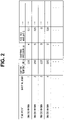
- Fig. 2 is a view illustrating an example of the manufacturing data.
- the manufacturing data includes various kinds of data such as a time point, a shot number, a casting temperature A, a casting pressure B and a cooling amount C.
- One shot corresponds to manufacturing of one die-cast product, and one piece of manufacturing data is one piece of record data regarding one shot.
- a plurality of pieces of manufacturing data are acquired at the manufacturing data acquisition unit 12.
- a plurality of pieces of manufacturing data are contained in a manufacturing data storage unit 25 as data in a tabular form as illustrated in Fig. 2 .
- Fig. 3 is a view illustrating an example of the inspection result data.
- the inspection result data includes data of an inspection result, time point data and a shot number.
- the time point data is the same as the time point data in the manufacturing data specified with the shot number.
- a plurality of pieces of inspection result data are contained in an inspection result data storage unit 26 as data in a tabular form as illustrated in Fig. 3 .
- One piece of inspection result data can be associated with one piece of manufacturing data by the shot number.
- the model learning apparatus 3 includes a processor 21 and a storage apparatus 22.
- the processor 21 is connected to the data acquisition apparatus 2 via a communication line 2a.
- the processor 21 includes a CPU, a ROM, a RAM and a hard disk apparatus.
- the model learning apparatus 3 performs machine learning on the basis of the manufacturing data and the inspection result data from the data acquisition apparatus 2 and creates a model M which is an identification model for whether the die-cast product is good or defective.
- the processor 21 acquires the manufacturing data and the inspection result data from the data acquisition apparatus 2 via the communication line 2a using a command by a user or with a predetermined period.
- the processor 21 stores the acquired manufacturing data in the manufacturing data storage unit 25 of the storage apparatus 22.
- the processor 21 stores the acquired inspection result data in the inspection result data storage unit 26 of the storage apparatus 22.
- the manufacturing data storage unit 25 is a predetermined recording area in the storage apparatus 22 for storing the manufacturing data.
- the inspection result data storage unit 26 is a predetermined recording area in the storage apparatus 22 for storing the inspection result data.
- the processor 31 includes a model condition setting unit 23 and a model learning unit 24.
- the model condition setting unit 23 is a software program which sets parameter data of various kinds of conditions of when machine learning is performed and provides the set parameter data to the model learning unit 24.
- the model learning apparatus 3 includes an input apparatus such as a keyboard and a mouse which are not illustrated, a display apparatus, and the like, which is not illustrated.
- the user can set parameter data of various kinds of conditions to be set at the model condition setting unit 23 using the input apparatus and the display apparatus.
- the parameter data is, for example, the number of pieces of training data to be used when the model is generated, the number of decision trees to be generated, or the like.
- the model learning unit 24 is a software program which generates a model M through machine learning using the manufacturing data and the inspection result data stored in the storage apparatus 22 as training data.
- the model learning unit 24 generates a model which estimates whether the die-cast product manufactured at the die-casting machine 5 is a good-quality product or a defective product through machine learning on the basis of the manufacturing data and the inspection result data.
- the manufacturing data can be associated with the inspection result data by the shot number, so that the processor 31 can provide a plurality of pieces of training data in which the manufacturing data is respectively associated with the inspection result data, to the model learning unit 24.
- the model M is a non-linear model generated using a machine learning algorithm of random forest.
- the model M is a defect identification model which estimates and outputs a probability that a defect occurs, that is, a defect probability of a die-cast product manufactured in accordance with manufacturing data in a case where the manufacturing data is provided.
- the random forest is a collective learning algorithm which creates a plurality of decision trees from randomly selected variables (manufacturing data) and performing ensemble learning by performing processing of averaging, or the like, the plurality of decision trees using respective decision trees as weak classifiers. A classification boundary with high accuracy is created by classification boundaries of the respective created decision trees being added.
- the non-linear model M is a model learned through ensemble learning such as random forest using a plurality of decision trees.
- a robust classification boundary is generated from a plurality of decision trees which are weak classifiers by the decision trees being ultimately integrated through ensemble learning.
- model learning unit 24 uses the machine learning algorithm of the random forest as a collective learning algorithm which performs ensemble learning to generate the model M here, the model learning unit 24 may use machine learning algorithm such as bagging method, boosting method, adaptive boosting method, gradient boosting method, extreme gradient boosting method, extreme randomized tree method and regularized random forest method.
- machine learning algorithm such as bagging method, boosting method, adaptive boosting method, gradient boosting method, extreme gradient boosting method, extreme randomized tree method and regularized random forest method.
- the model M means collection of a plurality of decision trees generated also using learning data (training data) as illustrated in Fig. 4.
- Fig. 4 is a view for explaining an example of a decision tree.
- the casting temperature A exceeds 230°C
- the casting temperature A is equal to or lower than 230°C
- the casting pressure B exceeds 20
- the casting temperature A is equal to or lower than 230°C
- the casting pressure B is equal to or less than 20
- the die-cast product is a defective product.
- Model data of the model M generated at the model learning unit 24, that is, model information MI is contained in the memory of the processor 21 and transmitted to the estimation apparatus 4.
- the decision tree is expressed as data in a list form.
- the estimation apparatus 4 includes a processor 31 and a storage apparatus 32.
- the processor 31 is connected to a man-machine interface (hereinafter, referred to as an "MMI") 4a.
- MMI 4a includes an input apparatus 4b and a display apparatus 4c.
- the input apparatus 4b includes a keyboard, a mouse, and the like.
- the estimation apparatus 4 acquires the manufacturing data from the data acquisition apparatus 2 and displays an estimation result of good or defective at the display apparatus 4c on the basis of the manufacturing data. Further, the estimation apparatus 4 analyzes the model information MI of the model M received from the model learning apparatus 3, outputs information regarding decrease in a defect probability and displays the information at the display apparatus 4c.
- the processor 31 is connected to the data acquisition apparatus 2 via a communication line 2b. Further, the processor 31 is connected to the control apparatus 5a of the die-casting machine 5 via a communication line 5c. The processor 31 is connected to the model learning apparatus 3 via a communication line 3a.
- the processor 21 includes a CPU, a ROM, a RAM and a hard disk apparatus.
- the processor 31 includes an estimation result output unit 33 and a model analysis unit 34.
- the storage apparatus 32 includes a learning model storage unit 35.
- the processor 31 receives the model information MI of the model M from the model learning apparatus 3 and stores the model information MI in the learning model storage unit 35.
- the learning model storage unit 35 is a storage area which contains the received model information MI of the model M.
- the estimation result output unit 33 is a software program which outputs an estimation result of good or defective on the basis of the manufacturing data.
- Fig. 5 is a functional block diagram of the estimation result output unit 33.
- the estimation result output unit 33 includes an estimated defect probability output unit 41 and a good/defective determination unit 42.
- the estimated defect probability output unit 41 calculates a defect probability on the basis of the received manufacturing data using the model information MI of the model M contained in the learning model storage unit 35 and outputs defect probability data DP to the good/defective determination unit 42.
- the good/defective determination unit 42 outputs an estimation result DR as to whether the die-cast product manufactured in a shot regarding the received manufacturing data on the basis of the received defect probability data DP is good or defective.
- the estimation result output unit 33 estimates whether the die-cast product is a good-quality product or a defective product on the basis of the manufacturing data acquired at the data acquisition apparatus 2 using the model M and outputs the estimation result.
- the estimation result output unit 33 estimates whether the die-cast product is good or defective on the basis of the manufacturing data using the model information MI of the model M and outputs the estimation result DR. In other words, the estimation result output unit 33 can estimate whether the die-cast product manufactured at the die-casting machine 5 is good or defective using the model M on the basis of the manufacturing data acquired in real time.
- a manufacturing data containment unit 43 which accumulates the manufacturing data from the manufacturing data processing unit 13 is provided at the estimation apparatus 4.
- the manufacturing data containment unit 43 is a storage apparatus which can contain manufacturing data corresponding to a predetermined period, for example, one day or one week.
- the estimated defect probability output unit 41 calculates a defect probability using the model M on the basis of a plurality of pieces of manufacturing data contained in the manufacturing data containment unit 43.
- the good/defective determination unit 42 determines whether each shot is good or defective on the basis of each piece of defect probability data DP and outputs the estimation result DR.
- the defect probability data DP is defect probability data for each shot.
- the good/defective determination unit 42 has a predetermined threshold, and, for example, if the threshold is 50, determines that the die-cast product in the shot is a defective product in a case where the defect probability is equal to or higher than 50% and determines that the die-cast product in the shot is a good-quality product in a case where the defect probability is lower than 50%. In other words, the good/defective determination unit 42 determines whether the die-cast product is good or defective on the basis of the defect probability data.
- the good/defective determination unit 42 determines whether the die-cast product in the shot is a good-quality product or a defective product in accordance with a predetermined determination rule.
- the estimation result output unit 33 may include an estimated good probability output unit configured to output a probability that the die-cast product may be estimated as good in place of the estimated defect probability output unit 41, and the good/defective determination unit 42 may determine that the die-cast product in the shot is a defective product in a case where a good probability becomes lower than 50%, for example.
- Fig. 6 is a block diagram of the model analysis unit 34.
- the model analysis unit 34 is a software program including an important item extraction unit 51, an important item display unit 52, a defect probability change degree output unit 53, and a manufacturing condition setting unit 54.
- the important item extraction unit 51 calculates degrees of importance of respective variables in the model M and extracts important items from the calculated degrees of importance of the respective variables. In other words, the important item extraction unit 51 extracts variable names of a plurality of variables as important items in accordance with the degrees of importance calculated from the model information MI.
- the degree of importance of each variable is calculated from a variable used in each decision tree and estimation accuracy of the decision tree.
- the calculated degree of importance indicates a magnitude of impact on the estimation accuracy among the variables regarding respective decision trees.
- the important item extraction unit 51 calculates degrees of importance regarding a plurality of variables such as a casting temperature, a casting pressure and a cooling amount in the manufacturing data.
- the degree of importance is, for example, a degree of change of a Gini coefficient and MSE (mean squared error) effectiveness in the random forest.
- the degree of importance indicates to what degree the Gini coefficient and the MSE effectiveness changed in data which has not been used.
- the important item extraction unit 51 outputs a plurality of variable names with degrees of importance higher than a set value among information regarding the degrees of importance calculated for a plurality of variables as important items.
- the important item extraction unit 51 may output information regarding variable names of a predetermined number in descending order of the degree of importance among the information regarding the degrees of importance calculated for a plurality of variables.
- the important item display unit 52 generates display data IM for displaying the important items extracted at the important item extraction unit 51 at the display apparatus 4c.
- the important item extraction unit 51 outputs information regarding variable names with high degrees of importance to the important item display unit 52.
- the important item display unit 52 generates display data IM for displaying variable names with high degrees of importance from the received information regarding the variable names and outputs the display data IM to the display apparatus 4c.
- the important item display unit 52 constitutes an important item output unit which outputs information regarding important items extracted by the important item extraction unit 51.
- Fig. 7 is a view illustrating a display example of the display data generated at the important item display unit 52.
- Fig. 7 indicates degrees of importance of six variables.
- a vertical axis indicates variable names and a horizontal axis indicates values of degrees of importance.
- the degree of importance is a value subjected to predetermined standardization, such as the Gini coefficient.
- the degree of importance of a casting temperature A is the highest, and the degrees of importance of a casting pressure B, a cooling amount C, a casting temperature D, a casting pressure E and a cooling amount F are higher in this order.
- the degrees of importance are indicated by dots corresponding to each variable.
- variable names and the degrees of importance of the important items as illustrated in Fig. 7 are displayed at the display apparatus 4c, so that the user can recognize variables which are important for the defect probability.
- the defect probability change degree output unit 53 calculates and outputs a degree of change of the defect probability for each variable from the model information MI of the model M.
- the defect probability change degree output unit 53 outputs function data of the degree of change of the defect probability regarding each variable.
- Fig. 8 is a view illustrating a graph displaying the degree of change of a defective rate in accordance with values of the variable.
- the graph in Fig. 8 is a graph for each variable
- Fig. 8 is a graph displaying a degree of change of the defective rate for the casting temperature A.
- a function of a graph g can be obtained from a partial dependence plot of the random forest.
- Each value in the graph g corresponds to a value of the partial dependence plot.
- the degree of change of the defect probability for each variable is calculated from the model information MI of the model M.
- the degree of change of the defect probability for each variable is calculated using the partial dependence plot of the random forest.
- the defect probability change degree output unit 53 outputs the function data of the degree of change of the defect probability for each variable here, the change degree information of the defect probability only has to include a value regarding a defect probability corresponding to the value of each variable and may be discrete data.
- the user can know from viewing the graph g in Fig. 8 that the defect probability largely changes when the casting temperature A exceeds 36°C and when the casting temperature A becomes lower than 28°C.
- a temperature range indicated with a white arrow between dashed-two dotted lines is a good-quality product region where the defect probability is low.
- the user can therefore quantitatively determine that the defect probability can be lowered, for example, by setting the casting temperature A so as to fall within a range from 28°C to 36°C.
- the defect probability change degree output unit 53 constitutes a change degree information output unit which outputs change degree information which is information regarding degrees of change of values regarding the defect probabilities for a plurality of variables relating to manufacturing of the product from the model information of the model generated through machine learning, as a good-quality product condition, that is, a manufacturing condition.
- the manufacturing condition is values or ranges of the variables where the die-cast product becomes a good-quality product or a defective product in accordance with the defect probabilities.
- the manufacturing condition setting unit 54 generates display data SI of a setting screen for setting the manufacturing condition for a good-quality product using the function data of the degrees of change of the defect probabilities from the defect probability change degree output unit 53.
- the display data includes the graph g in Fig. 8 . The user can set the manufacturing condition for a good-quality product for each variable using the setting screen.
- the estimation apparatus 4 displays the graph as illustrated in Fig. 8 at the display apparatus 4c, so that the user can set a good-quality product region on a screen displayed at the display apparatus 4c using the input apparatus 4b.
- the manufacturing condition setting unit 54 outputs the display data for setting the manufacturing condition such as a casting temperature in association with a probability that the die-cast product may become a good-quality product or a defective product.
- the defect probability change degree output unit 53 may obtain information regarding variable names with high degrees of importance from the important item display unit 52 and may calculate and output the degree of change of the defect probability for each variable only for variables of a predetermined number with higher degrees of importance. The number of variables for which degrees of change of the defect probability are calculated at the defect probability change degree output unit 53 decreases, so that it is possible to reduce load of the processor 31.
- Fig. 9 is a flowchart illustrating an example of flow of processing of the model learning unit 24.
- the model learning unit 24 is a software program, and thus, the processor 21 performs machine learning of the model by the CPU of the processor 21 reading out the program of the model learning unit 24 from a ROM, or the like, and executing the program.
- the processor 21 acquires manufacturing data from the data acquisition apparatus 2 and records the manufacturing data in the manufacturing data storage unit 25 of the storage apparatus 22 (step (hereinafter, abbreviated as S) 1).
- the processor 21 acquires inspection result data from the data acquisition apparatus 2 and records the inspection result data in the inspection result data storage unit 26 of the storage apparatus 22 (S2).
- the processor 21 determines whether data corresponding to a predetermined number of shots (the manufacturing data and the inspection result data corresponding to the manufacturing data) is stored in the storage apparatus 22 with reference to the data stored in the manufacturing data storage unit 25 and the inspection result data storage unit 26 (S3).
- the processing returns to S1.
- the processor 21 reads out the data (the manufacturing data and the inspection result data corresponding to the manufacturing data) recorded in the storage apparatus 22 (S4).
- the processor 21 generates the model M through machine learning using the readout data (the manufacturing data and the inspection result data corresponding to the manufacturing data) as training data (S5).
- the machine learning is ensemble learning using the random forest.
- the random forest is an algorithm for ensemble-learning results of a plurality of decision trees using the plurality of decision trees as weak classifiers, and the model M (that is, a final classifier) learned through the random forest is generated through S5.
- the processor 21 transmits model information MI of the generated model M to the estimation apparatus 4 and stores the model information MI in the learning model storage unit 35 (S6).
- the user can generate the model M in accordance with a desired data amount by setting a data amount required for generating the model M as a predetermined number of shots.
- Fig. 10 is a flowchart illustrating an example of flow of processing of the estimation result output unit 33.
- the estimation result output unit 33 is a software program, and thus, the processor 31 outputs an estimation result DR by the CPU of the processor 31 reading out a program for estimating good or defective from a ROM, or the like, and executing the program.
- the processor 31 reads out the model information MI from the learning model storage unit 35.
- the processor 31 acquires the manufacturing data which is an estimation target from the data acquisition apparatus 2 (S11). For example, in a case where the data acquisition apparatus 2 acquires the manufacturing data of the die-casting machine 5 in real time, the processor 31 acquires the real-time manufacturing data.
- the processor 31 estimates, that is, calculates a defect probability of the die-cast product manufactured in accordance with the manufacturing data acquired in S11 using the model information MI of the model M stored in the learning model storage unit 35 (S12).
- the processing in S12 is performed by the estimated defect probability output unit 41.
- the processor 31 determines whether the die-cast product relating to the manufacturing data is good or defective on the basis of the defect probability (S13).
- the processing in S13 is performed by the good/defective determination unit 42.
- the estimation result DR is output to the display apparatus 4c, and the determination result of good or defective is displayed at the display apparatus 4c.
- Fig. 11 is a flowchart illustrating an example of flow of processing of the model analysis unit 34.
- the model analysis unit 34 is a software program, and thus, the processor 31 performs model analysis by the CPU of the processor 31 reading out the software program from a ROM, or the like, and executing the software program. Before the processing in Fig. 11 , the processor 31 also reads out the model information MI from the learning model storage unit 35.
- the processor 31 extracts important items from the model information (S21). In the processing in S21, as described above, the processor 31 estimates and extracts variable names as important items on the basis of a degree of impact on the estimation accuracy of good or defective. The processing in S21 is performed by the important item extraction unit 51.
- the processor 31 generates a setting screen for setting a manufacturing condition for a good-quality product and outputs the setting screen to the display apparatus 4c (S22).
- the processing in S22 is performed by the manufacturing condition setting unit 54.
- the estimation apparatus 4 constitutes the manufacturing condition output apparatus which outputs the manufacturing condition of the product.
- the processor 31 executes setting processing of setting the manufacturing condition of variables on the basis of input performed on the setting screen (S23).
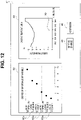
- Fig. 12 is a view illustrating a display example of the setting screen generated in S22.
- Two windows 62 and 63 are displayed on the display screen 61 of the display apparatus 4c.
- the window 62 displays the display data which is generated at the important item display unit 52 and which is illustrated in Fig. 7 .
- the window 63 displays the display data which is generated at the manufacturing condition setting unit 54 and which is illustrated in Fig. 8 .
- Checkboxes 62a are displayed on a left side of the respective variable names in the window 62.
- the user can check each checkbox 62a using a mouse, or the like, of the input apparatus 4b.
- the checkbox 62a corresponding to the variable name of the "casting temperature A" is checked.
- a setting screen corresponding to the checked variable name is displayed in the window 63.
- the user can select a desired variable by utilizing the checkbox 62a and can change a setting of the manufacturing condition for the variable by clicking, for example, a "setting change" button 64 using the input apparatus 4b.
- two dotted lines indicate a lower limit value and an upper limit value of the casting temperature.
- the user moves positions of the dotted lines which define the good-quality product region so that one dotted line is moved at a position of 28°C and the other dotted line is moved at a position of 36°C by operating a mouse, or the like, when the user desires to change the setting of the manufacturing condition.
- the user can register and change the manufacturing condition as set in the window 63 by operating the input apparatus 4b to click, for example, a "registration" button 64.
- the user can set a temperature range of the casting temperature A having an upper limit of 36°C and a lower limit of 28°C so that the defect probability of the manufactured die-cast product becomes equal to or lower than 10% for the casting temperature A in Fig. 12 .
- the setting information is transmitted from the processor 31 to the control apparatus 5a of the die-casting machine 5 via a signal line 5c.
- the received setting information is contained in the memory of the control apparatus 5a and used for controlling operation of the die-casting machine 5.
- the control apparatus 5a controls the casting temperature A on the basis of the received setting information.
- equipment such as a valve relating to control of the casting temperature A of the die-casting machine 5 is controlled so that the casting temperature A upon manufacturing falls within a range from 28°C to 36°C with two dotted lines, so that the defect probability is reduced.
- the defect probability change degree output unit 53 calculates degrees of change of the defect probabilities of a plurality of variables from the model information MI of the model M, so that the user can also set the manufacturing condition for other desired variables in a similar manner.
- a degree of change of the defect probability of each variable is presented to the user, so that the user can set a condition of each variable so that the die-cast product becomes a good-quality product by viewing the degree of change of the defect probability of each variable.
- a threshold of the defect probability may be set in advance in the memory of the processor 31, and the good-quality product region for each variable may be automatically set on the basis of the threshold.
- the manufacturing condition setting unit 54 may only present the degree of change of the defect probability of each variable to the user by displaying the degree of change at the display apparatus 4c. The user can manually make settings at the control apparatus 5a on the basis of the presented setting information.
- the user sets one or more variables relating to the setting information at the control apparatus 5a so as to match the setting information.
- the manufacturing data may be supplied to the manufacturing condition setting unit 54 in real time, and an actual measurement value of a desired variable (here, the casting temperature A) in the manufacturing data may be superimposed on the screen.
- Fig. 12 indicates the actual measurement value of the casting temperature A with a dot MD The user can therefore predict whether the die-cast product manufactured now at the die-casting machine 5 is a good-quality product or a defective product by confirming a control state of the casting temperature A in real time from the superimposed actual measurement value.
- the user can recognize the manufacturing condition such as which prevents occurrence of a defect for a variable which is largely involved with occurrence of a defect of the die-cast product by the model analysis unit 34. Then, the user can set a manufacturing condition of a desired variable so as to prevent occurrence of a defect, so that it is possible to prevent occurrence of a defect of the die-cast product.
- a non-linear machine learning model is used, so that it is possible to perform estimation of good or defective for manufacturing data with a large number of dimensions. Further, an important item regarding whether good or defective is also extracted, so that the user can easily set the manufacturing condition for reliably reducing the defect probability.
- the product for which quality is to be managed in the above-described embodiment is a die-cast product
- a defect of the die-cast product such as a blowhole inside is often found in a post-process after the die-cast product taken out from the die-casting machine is processed thereafter.
- a defective die-cast product is prevented from being supplied to the post-process, which leads to prevention of useless processing process of the die-cast product.
- the product for which quality is to be managed in the above-described embodiment is a die-cast product
- the product may be other manufactures such as an injection-molded article manufactured using an injection molding machine, and the above-described embodiment can be applied to manufactures other than the die-cast product.
- part or all of the processors of the above-described respective apparatuses may be constituted as electronic circuits or may be constituted as circuit blocks in an integrated circuit such as an FPGA (field programmable gate array).
- FPGA field programmable gate array
- a manufacturing condition output apparatus which is capable of presenting how a manufacturing condition should be set for a defect probability to prevent occurrence of a defect of a product, a quality management system using the output, and a program having a function of causing the above-described manufacturing condition to be output.
- the whole or part of the program to be executed at respective apparatuses described above is recorded or stored in a portable medium such as a flexible disk and a CD-ROM, or a storage medium such as a hard disk as a computer program product. All or part of operation is executed by the program being read by a computer. Alternatively, the whole or part of the program can be distributed or provided via a communication network. A user can easily implement the manufacturing condition output apparatus or the quality management system of the present embodiment by downloading the program via a communication network and installing the program in the computer or installing the program in the computer from a recording medium.
Landscapes
- Engineering & Computer Science (AREA)
- Physics & Mathematics (AREA)
- General Physics & Mathematics (AREA)
- Business, Economics & Management (AREA)
- Human Resources & Organizations (AREA)
- Automation & Control Theory (AREA)
- Theoretical Computer Science (AREA)
- Artificial Intelligence (AREA)
- Evolutionary Computation (AREA)
- Mathematical Physics (AREA)
- Quality & Reliability (AREA)
- General Engineering & Computer Science (AREA)
- Development Economics (AREA)
- Educational Administration (AREA)
- Economics (AREA)
- Entrepreneurship & Innovation (AREA)
- Strategic Management (AREA)
- Software Systems (AREA)
- Human Computer Interaction (AREA)
- Manufacturing & Machinery (AREA)
- Game Theory and Decision Science (AREA)
- Tourism & Hospitality (AREA)
- Operations Research (AREA)
- General Business, Economics & Management (AREA)
- Marketing (AREA)
- Data Mining & Analysis (AREA)
- Computing Systems (AREA)
- Medical Informatics (AREA)
- Computer Vision & Pattern Recognition (AREA)
- Computational Linguistics (AREA)
- General Factory Administration (AREA)
- Injection Moulding Of Plastics Or The Like (AREA)
- Testing And Monitoring For Control Systems (AREA)
- Management, Administration, Business Operations System, And Electronic Commerce (AREA)
Abstract
Description
- An embodiment of the present invention relates to a manufacturing condition output apparatus, a quality management system, and a program.
- Quality management is performed in manufacturing of various kinds of products. To improve quality of products, methods have been proposed which include a method of controlling quality of products by calculating a target value of an optimal manufacturing condition using a linear regression formula on actual data of a manufacturing condition and changing the manufacturing condition on the basis of the target value, and a method of improving quality by automatically extracting combinations of operation factors which are effective in improvement of quality and automatically providing guidance regarding combinations of operating conditions which satisfy a predetermined quality level.
- However, the method using the linear regression formula can only be applied to manufacturing conditions in which respective variables have linear relationship. Further, with the method of automatically providing guidance regarding combinations of the operating conditions, a calculation amount in accordance with the number of combinations enormously increases as the number of combinations of operation factors increases, and thus, appropriate multivariable analysis cannot be performed on operation factor data with a large number of dimensions. For example, in a case of manufacturing of a die-cast product, or the like, the manufacturing condition has non-linear relationship with respect to quality and also has a large number of operation factors. Further, these methods do not take into account how a manufacturing condition should be set for a defect probability to prevent occurrence of a defect of a product.
-
- Patent Literature 1:
Japanese Patent Application Laid-Open Publication No. 2009-64054 - Patent Literature 2:
Japanese Patent Application Laid-Open Publication No. 2008-146621 - The present embodiment is therefore directed to providing a manufacturing condition output apparatus which is capable of presenting how a manufacturing condition should be set for a defect probability to prevent occurrence of a defect of a product, a quality management system using the output, and a program having a function of causing the above-described manufacturing condition to be output.
- A manufacturing condition output apparatus of the embodiment is a manufacturing condition output apparatus which outputs a manufacturing condition of a product, and includes a change degree information output unit configured to output change degree information which is information regarding degrees of change of values regarding defect probabilities for a plurality of variables relating to manufacturing of the product from model information of a model generated through machine learning on the basis of manufacturing data of the product and inspection result data of the product, as a manufacturing condition.
-
-
Fig. 1 is a configuration diagram of a quality management system relating to manufacturing of a cast product according to an embodiment; -
Fig. 2 is a view illustrating an example of manufacturing data according to the embodiment; -
Fig. 3 is a view illustrating an example of inspection result data according to the embodiment; -
Fig. 4 is a view for explaining an example of a decision tree according to the embodiment; -
Fig. 5 is a functional block diagram of an estimation result output unit according to the embodiment; -
Fig. 6 is a block diagram of a model analysis unit according to the embodiment; -
Fig. 7 is a view illustrating a display example of display data generated at an important item display unit according to the embodiment; -
Fig. 8 is a view indicating a graph which displays a degree of change of a defective rate in accordance with a value of a variable according to the embodiment; -
Fig. 9 is a flowchart illustrating an example of flow of processing of a model learning unit according to the embodiment; -
Fig. 10 is a flowchart illustrating an example of flow of processing of the estimation result output unit according to the embodiment; -
Fig. 11 is a flowchart illustrating an example of flow of processing of the model analysis unit according to the embodiment; and -
Fig. 12 is a view illustrating a display example of a setting screen according to the embodiment. - An embodiment will be described below with reference to the drawings.
-
Fig. 1 is a configuration diagram of aquality management system 1 relating to manufacturing of a cast product according to the present embodiment. Thequality management system 1 is a cast quality management system which performs quality management of a cast product such as an aluminum die-cast product. Thequality management system 1 includes adata acquisition apparatus 2, amodel learning apparatus 3, and anestimation apparatus 4. Thedata acquisition apparatus 2 is connected to a die-casting machine 5 and a productstate inspection apparatus 6. The die-casting machine 5 is a manufacturing apparatus which manufactures a die-cast product as a product. The die-casting machine 5 includes a manufacturing mechanism (not illustrated) such as a mechanism for moving a mold and a mechanism for injecting a molten metal such as aluminum to a mold cavity, and acontrol apparatus 5a which controls operation of the die-casting machine 5. - Note that the
estimation apparatus 4 generates a setting screen for setting a manufacturing condition for a good-quality product and outputs the setting screen to adisplay apparatus 4c. Thus, theestimation apparatus 4 constitutes a manufacturing condition output apparatus which outputs a manufacturing condition of a product and thequality management system 1 performs quality management using the output manufacturing condition. In other words, the manufacturing condition output apparatus is part of thequality management system 1. - Note that the
data acquisition apparatus 2, themodel learning apparatus 3 and theestimation apparatus 4 may be connected to one another with a signal line which will be described later to transmit and receive data, and may be disposed, for example, in one factory in which the die-casting machine 5 is provided. Alternatively, themodel learning apparatus 3 and theestimation apparatus 4 may be servers on cloud via a network such as the Internet. - The
data acquisition apparatus 2, which is an apparatus including aprocessor 11, is, for example, a personal computer (hereinafter, referred to as a "PC") including an input/output interface with the die-casting machine 5 and the productstate inspection apparatus 6. Theprocessor 11 includes a manufacturingdata acquisition unit 12, a manufacturingdata processing unit 13, and an inspection resultdata acquisition unit 14. - The
processor 11 includes a central processing unit (hereinafter, referred to as a "CPU"), a ROM, and a RAM Theprocessor 11 also includes a non-volatile memory such as a hard disk apparatus. Thedata acquisition apparatus 2 can receive various kinds of data from the die-casting machine 5 and the productstate inspection apparatus 6 and transmit various kinds of data to themodel learning apparatus 3 and theestimation apparatus 4 by the CPU reading out and executing various kinds of software programs stored in the ROM and the non-volatile memory. - Here, the manufacturing
data acquisition unit 12, the manufacturingdata processing unit 13, and the inspection resultdata acquisition unit 14 are constituted with software programs. Note that all or part of the manufacturingdata acquisition unit 12 and the inspection resultdata acquisition unit 14 may be constituted with electronic circuits. - The manufacturing
data acquisition unit 12 acquires manufacturing data from thecontrol apparatus 5a of the die-casting machine 5 via acommunication line 5b. The manufacturing data is, for example, time point data, manufacturing shot number and various kinds of measurement data for each shot of die-cast product. - Various kinds of sensors for various kinds of measurement data, such as a temperature sensor, a position sensor and a pressure sensor are attached to the die-
casting machine 5 or incorporated into the die-casting machine 5. The manufacturing shot number is shot identification information for identifying a manufacturing shot. Thecontrol apparatus 5a includes a clock and generates time point data. The time point data includes date and time. Thecontrol apparatus 5a of the die-casting machine 5 collects various kinds of measurement data for each shot of die-cast product and stores the manufacturing shot number and the time point data in a memory (not illustrated) such as a buffer. - The manufacturing
data acquisition unit 12 includes various kinds of interface circuits for acquiring manufacturing data temporarily stored in the memory of the die-casting machine 5, and a software program for performing processing of temporarily storing the acquired manufacturing data in a memory (not illustrated). - The manufacturing
data processing unit 13 performs adjustment of the number of digits of data, supplement of deficiency of data, or the like, on the manufacturing data stored in the manufacturingdata acquisition unit 12 so that themodel learning apparatus 3 which will be described later can appropriately execute model learning processing. - Various kinds of processing are performed on a die-cast product manufactured at the die-
casting machine 5, for example, an aluminum die-cast product in subsequent process. - A die-cast product inspection is performed for the die-cast product which is manufactured at the die-
casting machine 5 or the die-cast product which is processed in subsequent process. Inspection result data is data indicating whether the die-cast product is a good-quality product or a defective product. Note that the inspection result data may include data including a type of a defect of the defective product. The type of a defect includes a misrun, a blowhole, and the like. Further, the inspection result data may be a numerical value indicating quality. In this case, the inspection result data is, for example, a numerical value indicating a degree of dent on a surface, and the inspection result data may be indicated in a range of the numerical value. - The product
state inspection apparatus 6, which is, for example, an inspection apparatus of a die-cast product, inspects the die-cast product using an apparatus such as a camera and determines whether the die-cast product is a good-quality product or a defective product on the basis of an inspection result. The productstate inspection apparatus 6 generates and outputs the inspection result data indicating whether the die-cast product is a good-quality product or a defective product for each shot number of the inspected cast product on the basis of a determination result. The inspection resultdata acquisition unit 14 acquires the inspection result data from the productstate inspection apparatus 6 via acommunication line 6a. In other words, the inspection resultdata acquisition unit 14 acquires the inspection result data of the die-cast product manufactured by the die-castingmachine 5. - Note that an inspector may perform inspection, and the product
state inspection apparatus 6 may be an apparatus, for example, a PC to which a result of determination performed by the inspector, that is, a determination result indicating whether the die-cast product is a good-quality product or a defective product is input. -
Fig. 2 is a view illustrating an example of the manufacturing data. The manufacturing data includes various kinds of data such as a time point, a shot number, a casting temperature A, a casting pressure B and a cooling amount C. One shot corresponds to manufacturing of one die-cast product, and one piece of manufacturing data is one piece of record data regarding one shot. A plurality of pieces of manufacturing data are acquired at the manufacturingdata acquisition unit 12. As will be described later, a plurality of pieces of manufacturing data are contained in a manufacturingdata storage unit 25 as data in a tabular form as illustrated inFig. 2 . -
Fig. 3 is a view illustrating an example of the inspection result data. The inspection result data includes data of an inspection result, time point data and a shot number. The time point data is the same as the time point data in the manufacturing data specified with the shot number. As will be described later, a plurality of pieces of inspection result data are contained in an inspection resultdata storage unit 26 as data in a tabular form as illustrated inFig. 3 . One piece of inspection result data can be associated with one piece of manufacturing data by the shot number. - The
model learning apparatus 3 includes aprocessor 21 and astorage apparatus 22. Themodel learning apparatus 3, which is, for example, a PC, may be a server on the Internet as described above. Theprocessor 21 is connected to thedata acquisition apparatus 2 via acommunication line 2a. Theprocessor 21 includes a CPU, a ROM, a RAM and a hard disk apparatus. Themodel learning apparatus 3 performs machine learning on the basis of the manufacturing data and the inspection result data from thedata acquisition apparatus 2 and creates a model M which is an identification model for whether the die-cast product is good or defective. - The
processor 21 acquires the manufacturing data and the inspection result data from thedata acquisition apparatus 2 via thecommunication line 2a using a command by a user or with a predetermined period. Theprocessor 21 stores the acquired manufacturing data in the manufacturingdata storage unit 25 of thestorage apparatus 22. Theprocessor 21 stores the acquired inspection result data in the inspection resultdata storage unit 26 of thestorage apparatus 22. The manufacturingdata storage unit 25 is a predetermined recording area in thestorage apparatus 22 for storing the manufacturing data. The inspection resultdata storage unit 26 is a predetermined recording area in thestorage apparatus 22 for storing the inspection result data. - The
processor 31 includes a modelcondition setting unit 23 and amodel learning unit 24. The modelcondition setting unit 23 is a software program which sets parameter data of various kinds of conditions of when machine learning is performed and provides the set parameter data to themodel learning unit 24. - The
model learning apparatus 3 includes an input apparatus such as a keyboard and a mouse which are not illustrated, a display apparatus, and the like, which is not illustrated. Thus, the user can set parameter data of various kinds of conditions to be set at the modelcondition setting unit 23 using the input apparatus and the display apparatus. The parameter data is, for example, the number of pieces of training data to be used when the model is generated, the number of decision trees to be generated, or the like. - The
model learning unit 24 is a software program which generates a model M through machine learning using the manufacturing data and the inspection result data stored in thestorage apparatus 22 as training data. In other words, themodel learning unit 24 generates a model which estimates whether the die-cast product manufactured at the die-castingmachine 5 is a good-quality product or a defective product through machine learning on the basis of the manufacturing data and the inspection result data. The manufacturing data can be associated with the inspection result data by the shot number, so that theprocessor 31 can provide a plurality of pieces of training data in which the manufacturing data is respectively associated with the inspection result data, to themodel learning unit 24. - Here, the model M is a non-linear model generated using a machine learning algorithm of random forest. The model M is a defect identification model which estimates and outputs a probability that a defect occurs, that is, a defect probability of a die-cast product manufactured in accordance with manufacturing data in a case where the manufacturing data is provided. The random forest is a collective learning algorithm which creates a plurality of decision trees from randomly selected variables (manufacturing data) and performing ensemble learning by performing processing of averaging, or the like, the plurality of decision trees using respective decision trees as weak classifiers. A classification boundary with high accuracy is created by classification boundaries of the respective created decision trees being added. In other words, the non-linear model M is a model learned through ensemble learning such as random forest using a plurality of decision trees. Thus, a robust classification boundary is generated from a plurality of decision trees which are weak classifiers by the decision trees being ultimately integrated through ensemble learning.
- Note that while the
model learning unit 24 uses the machine learning algorithm of the random forest as a collective learning algorithm which performs ensemble learning to generate the model M here, themodel learning unit 24 may use machine learning algorithm such as bagging method, boosting method, adaptive boosting method, gradient boosting method, extreme gradient boosting method, extreme randomized tree method and regularized random forest method. - Here, the model M means collection of a plurality of decision trees generated also using learning data (training data) as illustrated in
Fig. 4. Fig. 4 is a view for explaining an example of a decision tree. InFig. 4 , in a case where the casting temperature A exceeds 230°C, it is determined that the die-cast product is a good-quality product. Further, in a case where the casting temperature A is equal to or lower than 230°C, and the casting pressure B exceeds 20, it is determined that the die-cast product is a good-quality product. Still further, in a case where the casting temperature A is equal to or lower than 230°C, and the casting pressure B is equal to or less than 20, it is determined that the die-cast product is a defective product. - Model data of the model M generated at the
model learning unit 24, that is, model information MI is contained in the memory of theprocessor 21 and transmitted to theestimation apparatus 4. In the model information MI, the decision tree is expressed as data in a list form. - The
estimation apparatus 4 includes aprocessor 31 and astorage apparatus 32. Theprocessor 31 is connected to a man-machine interface (hereinafter, referred to as an "MMI") 4a. TheMMI 4a includes aninput apparatus 4b and adisplay apparatus 4c. Theinput apparatus 4b includes a keyboard, a mouse, and the like. Theestimation apparatus 4 acquires the manufacturing data from thedata acquisition apparatus 2 and displays an estimation result of good or defective at thedisplay apparatus 4c on the basis of the manufacturing data. Further, theestimation apparatus 4 analyzes the model information MI of the model M received from themodel learning apparatus 3, outputs information regarding decrease in a defect probability and displays the information at thedisplay apparatus 4c. - The
processor 31 is connected to thedata acquisition apparatus 2 via acommunication line 2b. Further, theprocessor 31 is connected to thecontrol apparatus 5a of the die-castingmachine 5 via acommunication line 5c. Theprocessor 31 is connected to themodel learning apparatus 3 via acommunication line 3a. Theprocessor 21 includes a CPU, a ROM, a RAM and a hard disk apparatus. - The
processor 31 includes an estimationresult output unit 33 and amodel analysis unit 34. Thestorage apparatus 32 includes a learningmodel storage unit 35. Theprocessor 31 receives the model information MI of the model M from themodel learning apparatus 3 and stores the model information MI in the learningmodel storage unit 35. The learningmodel storage unit 35 is a storage area which contains the received model information MI of the model M. - The estimation
result output unit 33 is a software program which outputs an estimation result of good or defective on the basis of the manufacturing data.Fig. 5 is a functional block diagram of the estimationresult output unit 33. The estimationresult output unit 33 includes an estimated defectprobability output unit 41 and a good/defective determination unit 42. The estimated defectprobability output unit 41 calculates a defect probability on the basis of the received manufacturing data using the model information MI of the model M contained in the learningmodel storage unit 35 and outputs defect probability data DP to the good/defective determination unit 42. The good/defective determination unit 42 outputs an estimation result DR as to whether the die-cast product manufactured in a shot regarding the received manufacturing data on the basis of the received defect probability data DP is good or defective. Thus, the estimationresult output unit 33 estimates whether the die-cast product is a good-quality product or a defective product on the basis of the manufacturing data acquired at thedata acquisition apparatus 2 using the model M and outputs the estimation result. - When the manufacturing data regarding the die-cast product manufactured at the die-casting
machine 5 is transmitted from thedata acquisition apparatus 2 to the estimationresult output unit 33 in real time, the estimationresult output unit 33 estimates whether the die-cast product is good or defective on the basis of the manufacturing data using the model information MI of the model M and outputs the estimation result DR. In other words, the estimationresult output unit 33 can estimate whether the die-cast product manufactured at the die-castingmachine 5 is good or defective using the model M on the basis of the manufacturing data acquired in real time. - Note that whether die-cast products are good or defective may be collectively estimated for a plurality of pieces of manufacturing data through batch processing. In this case, as indicated with a dotted line in
Fig. 5 , a manufacturingdata containment unit 43 which accumulates the manufacturing data from the manufacturingdata processing unit 13 is provided at theestimation apparatus 4. The manufacturingdata containment unit 43 is a storage apparatus which can contain manufacturing data corresponding to a predetermined period, for example, one day or one week. The estimated defectprobability output unit 41 calculates a defect probability using the model M on the basis of a plurality of pieces of manufacturing data contained in the manufacturingdata containment unit 43. The good/defective determination unit 42 determines whether each shot is good or defective on the basis of each piece of defect probability data DP and outputs the estimation result DR. - The defect probability data DP is defect probability data for each shot. The good/
defective determination unit 42 has a predetermined threshold, and, for example, if the threshold is 50, determines that the die-cast product in the shot is a defective product in a case where the defect probability is equal to or higher than 50% and determines that the die-cast product in the shot is a good-quality product in a case where the defect probability is lower than 50%. In other words, the good/defective determination unit 42 determines whether the die-cast product is good or defective on the basis of the defect probability data. - Further, in a case where the defect probability data is output in accordance with a plurality of types of defects, the good/
defective determination unit 42 determines whether the die-cast product in the shot is a good-quality product or a defective product in accordance with a predetermined determination rule. - In addition, the estimation
result output unit 33 may include an estimated good probability output unit configured to output a probability that the die-cast product may be estimated as good in place of the estimated defectprobability output unit 41, and the good/defective determination unit 42 may determine that the die-cast product in the shot is a defective product in a case where a good probability becomes lower than 50%, for example. -
Fig. 6 is a block diagram of themodel analysis unit 34. Themodel analysis unit 34 is a software program including an importantitem extraction unit 51, an importantitem display unit 52, a defect probability changedegree output unit 53, and a manufacturingcondition setting unit 54. - The important
item extraction unit 51 calculates degrees of importance of respective variables in the model M and extracts important items from the calculated degrees of importance of the respective variables. In other words, the importantitem extraction unit 51 extracts variable names of a plurality of variables as important items in accordance with the degrees of importance calculated from the model information MI. - In the random forest, the degree of importance of each variable is calculated from a variable used in each decision tree and estimation accuracy of the decision tree. In other words, the calculated degree of importance indicates a magnitude of impact on the estimation accuracy among the variables regarding respective decision trees. Thus, the important
item extraction unit 51 calculates degrees of importance regarding a plurality of variables such as a casting temperature, a casting pressure and a cooling amount in the manufacturing data. The degree of importance is, for example, a degree of change of a Gini coefficient and MSE (mean squared error) effectiveness in the random forest. In other words, the degree of importance indicates to what degree the Gini coefficient and the MSE effectiveness changed in data which has not been used. - Here, the important
item extraction unit 51 outputs a plurality of variable names with degrees of importance higher than a set value among information regarding the degrees of importance calculated for a plurality of variables as important items. Alternatively, the importantitem extraction unit 51 may output information regarding variable names of a predetermined number in descending order of the degree of importance among the information regarding the degrees of importance calculated for a plurality of variables. - The important
item display unit 52 generates display data IM for displaying the important items extracted at the importantitem extraction unit 51 at thedisplay apparatus 4c. As described above, the importantitem extraction unit 51 outputs information regarding variable names with high degrees of importance to the importantitem display unit 52. The importantitem display unit 52 generates display data IM for displaying variable names with high degrees of importance from the received information regarding the variable names and outputs the display data IM to thedisplay apparatus 4c. Thus, the importantitem display unit 52 constitutes an important item output unit which outputs information regarding important items extracted by the importantitem extraction unit 51. -
Fig. 7 is a view illustrating a display example of the display data generated at the importantitem display unit 52.Fig. 7 indicates degrees of importance of six variables. A vertical axis indicates variable names and a horizontal axis indicates values of degrees of importance. The degree of importance is a value subjected to predetermined standardization, such as the Gini coefficient. As illustrated inFig. 7 , the degree of importance of a casting temperature A is the highest, and the degrees of importance of a casting pressure B, a cooling amount C, a casting temperature D, a casting pressure E and a cooling amount F are higher in this order. The degrees of importance are indicated by dots corresponding to each variable. - The variable names and the degrees of importance of the important items as illustrated in
Fig. 7 are displayed at thedisplay apparatus 4c, so that the user can recognize variables which are important for the defect probability. - The defect probability change
degree output unit 53 calculates and outputs a degree of change of the defect probability for each variable from the model information MI of the model M. The defect probability changedegree output unit 53 outputs function data of the degree of change of the defect probability regarding each variable. -
Fig. 8 is a view illustrating a graph displaying the degree of change of a defective rate in accordance with values of the variable. The graph inFig. 8 is a graph for each variable, andFig. 8 is a graph displaying a degree of change of the defective rate for the casting temperature A. InFig. 8 , a function of a graph g can be obtained from a partial dependence plot of the random forest. Each value in the graph g corresponds to a value of the partial dependence plot. In other words, the degree of change of the defect probability for each variable is calculated from the model information MI of the model M. Here, the degree of change of the defect probability for each variable is calculated using the partial dependence plot of the random forest. - Note that while the defect probability change
degree output unit 53 outputs the function data of the degree of change of the defect probability for each variable here, the change degree information of the defect probability only has to include a value regarding a defect probability corresponding to the value of each variable and may be discrete data. - As will be described later, as a result of the graph g in
Fig. 8 being presented to the user, the user can know from viewing the graph g inFig. 8 that the defect probability largely changes when the casting temperature A exceeds 36°C and when the casting temperature A becomes lower than 28°C. In other words, a temperature range indicated with a white arrow between dashed-two dotted lines is a good-quality product region where the defect probability is low. The user can therefore quantitatively determine that the defect probability can be lowered, for example, by setting the casting temperature A so as to fall within a range from 28°C to 36°C. - Thus, the defect probability change
degree output unit 53 constitutes a change degree information output unit which outputs change degree information which is information regarding degrees of change of values regarding the defect probabilities for a plurality of variables relating to manufacturing of the product from the model information of the model generated through machine learning, as a good-quality product condition, that is, a manufacturing condition. The manufacturing condition is values or ranges of the variables where the die-cast product becomes a good-quality product or a defective product in accordance with the defect probabilities. - The manufacturing
condition setting unit 54 generates display data SI of a setting screen for setting the manufacturing condition for a good-quality product using the function data of the degrees of change of the defect probabilities from the defect probability changedegree output unit 53. The display data includes the graph g inFig. 8 . The user can set the manufacturing condition for a good-quality product for each variable using the setting screen. - As will be described later, the
estimation apparatus 4 displays the graph as illustrated inFig. 8 at thedisplay apparatus 4c, so that the user can set a good-quality product region on a screen displayed at thedisplay apparatus 4c using theinput apparatus 4b. Thus, the manufacturingcondition setting unit 54 outputs the display data for setting the manufacturing condition such as a casting temperature in association with a probability that the die-cast product may become a good-quality product or a defective product. - Note that as indicated with a dotted line in
Fig. 6 , the defect probability changedegree output unit 53 may obtain information regarding variable names with high degrees of importance from the importantitem display unit 52 and may calculate and output the degree of change of the defect probability for each variable only for variables of a predetermined number with higher degrees of importance. The number of variables for which degrees of change of the defect probability are calculated at the defect probability changedegree output unit 53 decreases, so that it is possible to reduce load of theprocessor 31. - Operation of the
quality management system 1 will be described next. Here, processing of themodel learning unit 24, the estimationresult output unit 33, and themodel analysis unit 34 will be described. -
Fig. 9 is a flowchart illustrating an example of flow of processing of themodel learning unit 24. As described above, themodel learning unit 24 is a software program, and thus, theprocessor 21 performs machine learning of the model by the CPU of theprocessor 21 reading out the program of themodel learning unit 24 from a ROM, or the like, and executing the program. - The
processor 21 acquires manufacturing data from thedata acquisition apparatus 2 and records the manufacturing data in the manufacturingdata storage unit 25 of the storage apparatus 22 (step (hereinafter, abbreviated as S) 1). Theprocessor 21 acquires inspection result data from thedata acquisition apparatus 2 and records the inspection result data in the inspection resultdata storage unit 26 of the storage apparatus 22 (S2). Theprocessor 21 determines whether data corresponding to a predetermined number of shots (the manufacturing data and the inspection result data corresponding to the manufacturing data) is stored in thestorage apparatus 22 with reference to the data stored in the manufacturingdata storage unit 25 and the inspection result data storage unit 26 (S3). - In a case where the data corresponding to the predetermined number of shots is not stored in the storage apparatus 22 (S3: No), the processing returns to S1. In a case where the data corresponding to the predetermined number of shots is stored in the storage apparatus 22 (S3: Yes), the
processor 21 reads out the data (the manufacturing data and the inspection result data corresponding to the manufacturing data) recorded in the storage apparatus 22 (S4). - The
processor 21 generates the model M through machine learning using the readout data (the manufacturing data and the inspection result data corresponding to the manufacturing data) as training data (S5). Here, the machine learning is ensemble learning using the random forest. The random forest is an algorithm for ensemble-learning results of a plurality of decision trees using the plurality of decision trees as weak classifiers, and the model M (that is, a final classifier) learned through the random forest is generated through S5. Theprocessor 21 transmits model information MI of the generated model M to theestimation apparatus 4 and stores the model information MI in the learning model storage unit 35 (S6). - The user can generate the model M in accordance with a desired data amount by setting a data amount required for generating the model M as a predetermined number of shots.
-
Fig. 10 is a flowchart illustrating an example of flow of processing of the estimationresult output unit 33. As described above, the estimationresult output unit 33 is a software program, and thus, theprocessor 31 outputs an estimation result DR by the CPU of theprocessor 31 reading out a program for estimating good or defective from a ROM, or the like, and executing the program. Before the processing inFig. 10 , theprocessor 31 reads out the model information MI from the learningmodel storage unit 35. - The
processor 31 acquires the manufacturing data which is an estimation target from the data acquisition apparatus 2 (S11). For example, in a case where thedata acquisition apparatus 2 acquires the manufacturing data of the die-castingmachine 5 in real time, theprocessor 31 acquires the real-time manufacturing data. - The
processor 31 estimates, that is, calculates a defect probability of the die-cast product manufactured in accordance with the manufacturing data acquired in S11 using the model information MI of the model M stored in the learning model storage unit 35 (S12). The processing in S12 is performed by the estimated defectprobability output unit 41. - The
processor 31 determines whether the die-cast product relating to the manufacturing data is good or defective on the basis of the defect probability (S13). The processing in S13 is performed by the good/defective determination unit 42. The estimation result DR is output to thedisplay apparatus 4c, and the determination result of good or defective is displayed at thedisplay apparatus 4c. -
Fig. 11 is a flowchart illustrating an example of flow of processing of themodel analysis unit 34. As described above, themodel analysis unit 34 is a software program, and thus, theprocessor 31 performs model analysis by the CPU of theprocessor 31 reading out the software program from a ROM, or the like, and executing the software program. Before the processing inFig. 11 , theprocessor 31 also reads out the model information MI from the learningmodel storage unit 35. - The
processor 31 extracts important items from the model information (S21). In the processing in S21, as described above, theprocessor 31 estimates and extracts variable names as important items on the basis of a degree of impact on the estimation accuracy of good or defective. The processing in S21 is performed by the importantitem extraction unit 51. - The
processor 31 generates a setting screen for setting a manufacturing condition for a good-quality product and outputs the setting screen to thedisplay apparatus 4c (S22). The processing in S22 is performed by the manufacturingcondition setting unit 54. Thus, theestimation apparatus 4 constitutes the manufacturing condition output apparatus which outputs the manufacturing condition of the product. - The
processor 31 executes setting processing of setting the manufacturing condition of variables on the basis of input performed on the setting screen (S23). -
Fig. 12 is a view illustrating a display example of the setting screen generated in S22. Twowindows display screen 61 of thedisplay apparatus 4c. Thewindow 62 displays the display data which is generated at the importantitem display unit 52 and which is illustrated inFig. 7 . Thewindow 63 displays the display data which is generated at the manufacturingcondition setting unit 54 and which is illustrated inFig. 8 . -
Checkboxes 62a are displayed on a left side of the respective variable names in thewindow 62. The user can check eachcheckbox 62a using a mouse, or the like, of theinput apparatus 4b. InFig. 12 , thecheckbox 62a corresponding to the variable name of the "casting temperature A" is checked. Thus, a setting screen corresponding to the checked variable name is displayed in thewindow 63. - Thus, the user can select a desired variable by utilizing the
checkbox 62a and can change a setting of the manufacturing condition for the variable by clicking, for example, a "setting change"button 64 using theinput apparatus 4b. InFig. 12 , two dotted lines indicate a lower limit value and an upper limit value of the casting temperature. For example, the user moves positions of the dotted lines which define the good-quality product region so that one dotted line is moved at a position of 28°C and the other dotted line is moved at a position of 36°C by operating a mouse, or the like, when the user desires to change the setting of the manufacturing condition. - Thereafter, the user can register and change the manufacturing condition as set in the
window 63 by operating theinput apparatus 4b to click, for example, a "registration"button 64. For example, the user can set a temperature range of the casting temperature A having an upper limit of 36°C and a lower limit of 28°C so that the defect probability of the manufactured die-cast product becomes equal to or lower than 10% for the casting temperature A inFig. 12 . - The setting information is transmitted from the
processor 31 to thecontrol apparatus 5a of the die-castingmachine 5 via asignal line 5c. The received setting information is contained in the memory of thecontrol apparatus 5a and used for controlling operation of the die-castingmachine 5. In the above-described example, thecontrol apparatus 5a controls the casting temperature A on the basis of the received setting information. As a result, equipment such as a valve relating to control of the casting temperature A of the die-castingmachine 5 is controlled so that the casting temperature A upon manufacturing falls within a range from 28°C to 36°C with two dotted lines, so that the defect probability is reduced. - As described above, the defect probability change
degree output unit 53 calculates degrees of change of the defect probabilities of a plurality of variables from the model information MI of the model M, so that the user can also set the manufacturing condition for other desired variables in a similar manner. - In other words, a degree of change of the defect probability of each variable is presented to the user, so that the user can set a condition of each variable so that the die-cast product becomes a good-quality product by viewing the degree of change of the defect probability of each variable.
- Note that while in the above-described example, the user sets the setting of the good-quality product region using the
MMI 4a, a threshold of the defect probability may be set in advance in the memory of theprocessor 31, and the good-quality product region for each variable may be automatically set on the basis of the threshold. - Further, while in the above-described example, the setting information is transmitted to the
control apparatus 5a via thesignal line 5c and the setting information is automatically set, the manufacturingcondition setting unit 54 may only present the degree of change of the defect probability of each variable to the user by displaying the degree of change at thedisplay apparatus 4c. The user can manually make settings at thecontrol apparatus 5a on the basis of the presented setting information. - In addition, in a case where the setting information is a variable which cannot be directly set at the
control apparatus 5a, the user sets one or more variables relating to the setting information at thecontrol apparatus 5a so as to match the setting information. - Further, as indicated with a dashed-two dotted line in
Fig. 6 , the manufacturing data may be supplied to the manufacturingcondition setting unit 54 in real time, and an actual measurement value of a desired variable (here, the casting temperature A) in the manufacturing data may be superimposed on the screen.Fig. 12 indicates the actual measurement value of the casting temperature A with a dot MD The user can therefore predict whether the die-cast product manufactured now at the die-castingmachine 5 is a good-quality product or a defective product by confirming a control state of the casting temperature A in real time from the superimposed actual measurement value. - As described above, according to the above-described embodiment, the user can recognize the manufacturing condition such as which prevents occurrence of a defect for a variable which is largely involved with occurrence of a defect of the die-cast product by the
model analysis unit 34. Then, the user can set a manufacturing condition of a desired variable so as to prevent occurrence of a defect, so that it is possible to prevent occurrence of a defect of the die-cast product. - Particularly, according to the above-described embodiment, a non-linear machine learning model is used, so that it is possible to perform estimation of good or defective for manufacturing data with a large number of dimensions. Further, an important item regarding whether good or defective is also extracted, so that the user can easily set the manufacturing condition for reliably reducing the defect probability.
- Note that while the product for which quality is to be managed in the above-described embodiment is a die-cast product, a defect of the die-cast product such as a blowhole inside is often found in a post-process after the die-cast product taken out from the die-casting machine is processed thereafter. According to the above-described embodiment, when such a die-cast product is manufactured, it is possible to set a manufacturing condition which makes a defect less likely to occur. As a result, a defective die-cast product is prevented from being supplied to the post-process, which leads to prevention of useless processing process of the die-cast product.
- Further, while the product for which quality is to be managed in the above-described embodiment is a die-cast product, the product may be other manufactures such as an injection-molded article manufactured using an injection molding machine, and the above-described embodiment can be applied to manufactures other than the die-cast product.
- In addition, part or all of the processors of the above-described respective apparatuses may be constituted as electronic circuits or may be constituted as circuit blocks in an integrated circuit such as an FPGA (field programmable gate array).
- As described above, according to the above-described embodiment, it is possible to provide a manufacturing condition output apparatus which is capable of presenting how a manufacturing condition should be set for a defect probability to prevent occurrence of a defect of a product, a quality management system using the output, and a program having a function of causing the above-described manufacturing condition to be output.
- The whole or part of the program to be executed at respective apparatuses described above is recorded or stored in a portable medium such as a flexible disk and a CD-ROM, or a storage medium such as a hard disk as a computer program product. All or part of operation is executed by the program being read by a computer. Alternatively, the whole or part of the program can be distributed or provided via a communication network. A user can easily implement the manufacturing condition output apparatus or the quality management system of the present embodiment by downloading the program via a communication network and installing the program in the computer or installing the program in the computer from a recording medium.
- While the embodiment of the present invention has been described, the embodiment is presented for illustrative purpose and are not intended to limit the scope of the invention. The new embodiment can be implemented in other various forms, and various omission, replacement and change can be made within a range not deviating from the gist of the invention. The embodiment and the modifications are incorporated into the scope and the gist of the invention and incorporated into the invention recited in the claims and an equivalent range of the invention.
- The present application is based on and claims the benefit of priority from
Japanese Patent Application No. 2019-96286 filed on May 22, 2019
Claims (10)
- A manufacturing condition output apparatus which outputs a manufacturing condition of a product, the manufacturing condition output apparatus comprising:
a change degree information output unit configured to output change degree information which is information regarding degrees of change of values regarding defect probabilities for a plurality of variables relating to manufacturing of the product from model information of a model generated through machine learning on a basis of manufacturing data of the product and inspection result data of the product, as a manufacturing condition. - The manufacturing condition output apparatus according to claim 1,
wherein the change degree information includes values regarding the defect probabilities corresponding to values of respective variables. - The manufacturing condition output apparatus according to claim 1 or 2,
wherein the model is a non-linear model. - The manufacturing condition output apparatus according to claim 3,
wherein the non-linear model is a model learned through ensemble learning such as random forest using a plurality of decision trees. - The manufacturing condition output apparatus according to claim 1 or 2,
wherein the manufacturing condition is values or ranges of variables where the product becomes a good-quality product or a defective product in accordance with the defect probabilities. - The manufacturing condition output apparatus according to claim 5, comprising:a manufacturing condition setting unit configured to set the manufacturing condition,wherein the manufacturing condition setting unit outputs display data for setting the manufacturing condition in association with a probability that the product becomes the good-quality product or the defective product.
- The manufacturing condition output apparatus according to claim 1 or 2, comprising:an important item extraction unit configured to extract variable names of the plurality of variables as important items in accordance with degrees of importance calculated from the model information; andan important item output unit configured to output information of the important items extracted by the important item extraction unit.
- The manufacturing condition output apparatus according to claim 1 or 2,
wherein the product is a die-cast product manufactured by a die-casting machine. - A quality management system comprising a data acquisition apparatus, a model learning apparatus and an estimation result output apparatus,
the data acquisition apparatus comprising:a manufacturing data acquisition unit configured to acquire manufacturing data from a manufacturing apparatus which manufactures a product; andan inspection result data acquisition unit configured to acquire inspection result data of the product manufactured by the manufacturing apparatus,the model learning apparatus comprising:a manufacturing data storage unit configured to store the manufacturing data acquired from the manufacturing data acquisition unit;an inspection result data storage unit configured to store the inspection result data acquired from the inspection result data acquisition unit; anda model learning unit configured to generate a model which estimates whether the product manufactured at the manufacturing apparatus is a good-quality product or a defective product through machine learning on a basis of the manufacturing data in the manufacturing data storage unit and the inspection result data in the inspection result data storage unit, andthe estimation apparatus comprising:an estimation result output unit configured to estimate whether the product is the good-quality product or the defective product on a basis of the manufacturing data acquired at the data acquisition apparatus using the model and output an estimation result; anda change degree information output unit configured to output change degree information which is information regarding degrees of change of values regarding defect probabilities for variables relating to a manufacturing condition of the product from model information of the model, as a manufacturing condition. - A program for causing a computer to execute:
a function of outputting change degree information which is information regarding degrees of change of values regarding defect probabilities for a plurality of variables relating to manufacturing of a product from model information of a model generated through machine learning on a basis of manufacturing data of the product and inspection result data of the product, as a manufacturing condition.
Applications Claiming Priority (2)
| Application Number | Priority Date | Filing Date | Title |
|---|---|---|---|
| JP2019096286A JP2020190956A (en) | 2019-05-22 | 2019-05-22 | Manufacturing condition output device, quality control system and program |
| PCT/JP2020/011373 WO2020235194A1 (en) | 2019-05-22 | 2020-03-16 | Manufacture condition output device, quality management system, and program |
Publications (2)
| Publication Number | Publication Date |
|---|---|
| EP3974926A1 true EP3974926A1 (en) | 2022-03-30 |
| EP3974926A4 EP3974926A4 (en) | 2023-06-14 |
Family
ID=73453731
Family Applications (1)
| Application Number | Title | Priority Date | Filing Date |
|---|---|---|---|
| EP20810345.7A Withdrawn EP3974926A4 (en) | 2019-05-22 | 2020-03-16 | MANUFACTURING CONDITION OBTAINING DEVICE, QUALITY MANAGEMENT SYSTEM AND PROGRAM |
Country Status (6)
| Country | Link |
|---|---|
| US (1) | US12019434B2 (en) |
| EP (1) | EP3974926A4 (en) |
| JP (2) | JP2020190956A (en) |
| KR (2) | KR20210047955A (en) |
| CN (1) | CN113168170A (en) |
| WO (1) | WO2020235194A1 (en) |
Families Citing this family (17)
| Publication number | Priority date | Publication date | Assignee | Title |
|---|---|---|---|---|
| US12572150B2 (en) | 2019-11-05 | 2026-03-10 | Strong Force Vcn Portfolio 2019, Llc | Robot fleet management for value chain networks |
| CN115210024A (en) * | 2020-03-05 | 2022-10-18 | 发那科株式会社 | Machine learning device, prediction device, and control device |
| US11748668B2 (en) * | 2020-07-08 | 2023-09-05 | Vmware, Inc. | Internal load balancer for tree-based ensemble classifiers |
| JP7188470B2 (en) * | 2021-01-28 | 2022-12-13 | 横河電機株式会社 | Analysis method, analysis program and information processing device |
| JP2022156989A (en) * | 2021-03-31 | 2022-10-14 | 新東工業株式会社 | Molding condition derivation device, molding condition derivation method, machine learning device and machine learning method |
| JP7438615B2 (en) * | 2021-05-06 | 2024-02-27 | 三菱総研Dcs株式会社 | Information processing device and program |
| JP7491274B2 (en) * | 2021-07-29 | 2024-05-28 | トヨタ自動車株式会社 | Inspection device and inspection method |
| JP7493128B2 (en) * | 2021-08-19 | 2024-05-31 | Jfeスチール株式会社 | Operation condition presentation method and operation condition presentation device |
| JP7582130B2 (en) * | 2021-09-03 | 2024-11-13 | トヨタ自動車株式会社 | Inspection method and inspection device |
| JP7241149B1 (en) * | 2021-10-27 | 2023-03-16 | 本田技研工業株式会社 | Machining support system |
| JP7774425B2 (en) * | 2021-11-16 | 2025-11-21 | 芝浦機械株式会社 | Molding machine, molding machine support device, and molding system |
| JP2023092189A (en) * | 2021-12-21 | 2023-07-03 | 横浜ゴム株式会社 | Mandrel void detection system, void occurrence estimation system, and mandrel manufacturing method |
| WO2023166584A1 (en) * | 2022-03-02 | 2023-09-07 | 株式会社アドバンテスト | Semiconductor test result analyzing device, semiconductor test result analyzing method and computer program |
| KR20240141818A (en) * | 2022-03-28 | 2024-09-27 | 제이에프이 스틸 가부시키가이샤 | Manufacturing method and control device for sintered ore |
| KR102726116B1 (en) * | 2024-04-09 | 2024-11-05 | 주식회사 인프라시스템 | Process prediction management system |
| USD1119962S1 (en) * | 2024-10-30 | 2026-03-24 | Google Llc | Display screen or portion thereof with graphical user interface |
| CN119204600B (en) * | 2024-11-26 | 2025-04-25 | 宁波硕迪智能科技有限公司 | Production management system and method for die castings of new energy vehicles |
Family Cites Families (29)
| Publication number | Priority date | Publication date | Assignee | Title |
|---|---|---|---|---|
| JPH06259047A (en) * | 1993-03-09 | 1994-09-16 | Toyota Motor Corp | Display controller |
| US6901560B1 (en) * | 1999-07-01 | 2005-05-31 | Honeywell Inc. | Process variable generalized graphical device display and methods regarding same |
| JP3974736B2 (en) * | 2000-02-08 | 2007-09-12 | 東芝機械株式会社 | Die casting machine control system |
| JP2003228411A (en) * | 2002-02-05 | 2003-08-15 | Sumitomo Rubber Ind Ltd | Production control method |
| JP2007165721A (en) * | 2005-12-15 | 2007-06-28 | Omron Corp | Process abnormality analysis apparatus and program |
| JP4855353B2 (en) * | 2006-11-14 | 2012-01-18 | 新日本製鐵株式会社 | Product quality improvement condition analysis apparatus, analysis method, computer program, and computer-readable recording medium |
| JP2008181341A (en) * | 2007-01-24 | 2008-08-07 | Fuji Electric Holdings Co Ltd | Manufacturing failure factor analysis support device |
| JP5003362B2 (en) | 2007-09-04 | 2012-08-15 | 住友金属工業株式会社 | Product quality control method and control device |
| JP5232560B2 (en) * | 2008-07-30 | 2013-07-10 | 本田技研工業株式会社 | Quality prediction method |
| JP5434837B2 (en) * | 2010-07-23 | 2014-03-05 | 新日鐵住金株式会社 | Quality prediction apparatus, quality prediction method, program, and computer-readable recording medium |
| GB2496040B (en) * | 2011-10-24 | 2019-04-03 | Fisher Rosemount Systems Inc | Predicted fault analysis |
| US9823652B2 (en) * | 2012-02-23 | 2017-11-21 | Hitachi Kokusai Electric Inc. | Substrate processing system, management device, and display method for facilitating trouble analysis |
| CN103236382B (en) * | 2013-05-04 | 2015-06-10 | 四川虹欧显示器件有限公司 | Method for determining process parallel rationalization of manufacturing process of plasma display screen |
| JP6458403B2 (en) * | 2014-08-25 | 2019-01-30 | 富士電機株式会社 | Prediction model generation device, prediction model generation method, and program |
| JP5849167B1 (en) * | 2015-04-09 | 2016-01-27 | 株式会社日立パワーソリューションズ | Anomaly detection method and apparatus |
| CN105023060B (en) * | 2015-07-10 | 2018-05-25 | 北京航空航天大学 | Merge the production qualification rate Forecasting Methodology of manufacturing equipment degradation information |
| JP6811018B2 (en) * | 2016-03-07 | 2021-01-13 | 三菱重工業株式会社 | Quality evaluation system, quality evaluation method and program |
| JP6856236B2 (en) * | 2016-10-31 | 2021-04-07 | 株式会社小林製作所 | Systems, terminals, server devices, programs and methods |
| CN106769069B (en) * | 2016-12-21 | 2019-05-28 | 中国航发南方工业有限公司 | Turn time qualification rate control method and device more than engine |
| JP2018116545A (en) * | 2017-01-19 | 2018-07-26 | オムロン株式会社 | Prediction model creation device, production facility monitoring system, and production facility monitoring method |
| JP6861564B2 (en) * | 2017-04-06 | 2021-04-21 | 三菱電機株式会社 | Monitoring and control device |
| CN107282907A (en) * | 2017-05-17 | 2017-10-24 | 河钢股份有限公司邯郸分公司 | The method that continuous cast mold liquid fluctuating qualification rate is counted using PLC program |
| CN107065811B (en) * | 2017-06-06 | 2019-04-12 | 北京梆梆安全科技有限公司 | The low correlation factor of production qualification rate great-jump-forward behavior is caused to determine method and apparatus |
| JP6953990B2 (en) * | 2017-10-17 | 2021-10-27 | 日本製鉄株式会社 | Quality prediction device and quality prediction method |
| JP6591509B2 (en) * | 2017-11-06 | 2019-10-16 | 株式会社東芝 | Mold temperature abnormality sign detection device and program |
| JP6943224B2 (en) | 2017-11-24 | 2021-09-29 | 株式会社セガ | Game system and game equipment |
| JP7021052B2 (en) | 2018-11-06 | 2022-02-16 | 株式会社東芝 | Product condition estimator |
| CN109472105B (en) * | 2018-11-22 | 2023-09-19 | 上海华力微电子有限公司 | Semiconductor product yield upper limit analysis method |
| CN109523086B (en) * | 2018-11-26 | 2021-08-24 | 浙江蓝卓工业互联网信息技术有限公司 | Quality prediction method and system for chemical products based on random forest |
-
2019
- 2019-05-22 JP JP2019096286A patent/JP2020190956A/en active Pending
-
2020
- 2020-03-16 CN CN202080006307.6A patent/CN113168170A/en active Pending
- 2020-03-16 EP EP20810345.7A patent/EP3974926A4/en not_active Withdrawn
- 2020-03-16 KR KR1020217010723A patent/KR20210047955A/en not_active Ceased
- 2020-03-16 KR KR1020237031403A patent/KR102799513B1/en active Active
- 2020-03-16 WO PCT/JP2020/011373 patent/WO2020235194A1/en not_active Ceased
-
2021
- 2021-09-07 JP JP2021145782A patent/JP7297831B2/en active Active
- 2021-11-18 US US17/455,460 patent/US12019434B2/en active Active
Also Published As
| Publication number | Publication date |
|---|---|
| KR20210047955A (en) | 2021-04-30 |
| EP3974926A4 (en) | 2023-06-14 |
| KR102799513B1 (en) | 2025-04-23 |
| CN113168170A (en) | 2021-07-23 |
| JP2020190956A (en) | 2020-11-26 |
| JP7297831B2 (en) | 2023-06-26 |
| US12019434B2 (en) | 2024-06-25 |
| US20220075360A1 (en) | 2022-03-10 |
| KR20230135177A (en) | 2023-09-22 |
| JP2022002111A (en) | 2022-01-06 |
| WO2020235194A1 (en) | 2020-11-26 |
Similar Documents
| Publication | Publication Date | Title |
|---|---|---|
| US12019434B2 (en) | Manufacturing condition output apparatus, quality management system, and storage medium | |
| JP6824838B2 (en) | Work data management system and work data management method | |
| JP6811018B2 (en) | Quality evaluation system, quality evaluation method and program | |
| US10152879B2 (en) | Method, apparatus, and system for monitoring manufacturing equipment | |
| JP7156975B2 (en) | Management evaluation device, management evaluation method, and program | |
| WO2008157498A1 (en) | Methods and systems for predicting equipment operation | |
| CN114201905A (en) | Method and device for producing modified particles | |
| JP2020052740A (en) | Abnormality detection device, abnormality detection method, and program | |
| JP2012226511A (en) | Yield prediction system and yield prediction program | |
| JP7374868B2 (en) | Information processing device, information processing method and program | |
| US10974318B2 (en) | Cast product mechanical characteristic prediction method, cast product mechanical characteristic prediction system, and computer readable recording medium recording cast product mechanical characteristic prediction program | |
| US11157821B2 (en) | Traceability system and method for traceability | |
| JP5003362B2 (en) | Product quality control method and control device | |
| Sika et al. | Application of instance-based learning for cast iron casting defects prediction | |
| JP5962290B2 (en) | Steel heat transfer coefficient prediction apparatus and cooling control method | |
| JP7118690B2 (en) | Manufacturing method, information processing device, relational expression calculation device, and manufacturing system | |
| JP5403180B1 (en) | Image evaluation method, image evaluation apparatus, and image evaluation program | |
| JP6885321B2 (en) | Process status diagnosis method and status diagnosis device | |
| JP2019173096A5 (en) | ||
| US20230367927A1 (en) | Non-transitory computer readable storage medium storing operation improvement assistance program, operation improvement assistance device, and operation improvement assistance method | |
| JP5220458B2 (en) | Output value prediction method, apparatus, and program for the method | |
| JP4102019B2 (en) | Analysis apparatus, method, and computer-readable storage medium in manufacturing process | |
| CN121285306A (en) | Methods, systems, and computer readable media for assessing meat quality | |
| JP2003029825A (en) | Quality control system, quality control method, quality control program, and recording medium recording quality control program | |
| CN119794293B (en) | Borax adding method and device in TP2 copper alloy continuous casting process |
Legal Events
| Date | Code | Title | Description |
|---|---|---|---|
| STAA | Information on the status of an ep patent application or granted ep patent |
Free format text: STATUS: THE INTERNATIONAL PUBLICATION HAS BEEN MADE |
|
| PUAI | Public reference made under article 153(3) epc to a published international application that has entered the european phase |
Free format text: ORIGINAL CODE: 0009012 |
|
| STAA | Information on the status of an ep patent application or granted ep patent |
Free format text: STATUS: REQUEST FOR EXAMINATION WAS MADE |
|
| 17P | Request for examination filed |
Effective date: 20210908 |
|
| AK | Designated contracting states |
Kind code of ref document: A1 Designated state(s): AL AT BE BG CH CY CZ DE DK EE ES FI FR GB GR HR HU IE IS IT LI LT LU LV MC MK MT NL NO PL PT RO RS SE SI SK SM TR |
|
| DAV | Request for validation of the european patent (deleted) | ||
| DAX | Request for extension of the european patent (deleted) | ||
| A4 | Supplementary search report drawn up and despatched |
Effective date: 20230516 |
|
| RIC1 | Information provided on ipc code assigned before grant |
Ipc: G06Q 10/0639 20230101ALI20230510BHEP Ipc: G06N 5/01 20230101ALI20230510BHEP Ipc: G06N 20/20 20190101ALI20230510BHEP Ipc: G05B 23/02 20060101ALI20230510BHEP Ipc: G05B 19/418 20060101AFI20230510BHEP |
|
| STAA | Information on the status of an ep patent application or granted ep patent |
Free format text: STATUS: EXAMINATION IS IN PROGRESS |
|
| 17Q | First examination report despatched |
Effective date: 20240820 |
|
| STAA | Information on the status of an ep patent application or granted ep patent |
Free format text: STATUS: THE APPLICATION IS DEEMED TO BE WITHDRAWN |
|
| 18D | Application deemed to be withdrawn |
Effective date: 20250830 |