EP3974318B1 - Optimierung der leistung und unterbringung eines automatischen schleudersitzes basierend auf der passiven erfassung von daten der flugbesatzung - Google Patents
Optimierung der leistung und unterbringung eines automatischen schleudersitzes basierend auf der passiven erfassung von daten der flugbesatzung Download PDFInfo
- Publication number
- EP3974318B1 EP3974318B1 EP21199112.0A EP21199112A EP3974318B1 EP 3974318 B1 EP3974318 B1 EP 3974318B1 EP 21199112 A EP21199112 A EP 21199112A EP 3974318 B1 EP3974318 B1 EP 3974318B1
- Authority
- EP
- European Patent Office
- Prior art keywords
- user
- identifier
- controller
- settings
- electronic
- Prior art date
- Legal status (The legal status is an assumption and is not a legal conclusion. Google has not performed a legal analysis and makes no representation as to the accuracy of the status listed.)
- Active
Links
Images



Classifications
-
- B—PERFORMING OPERATIONS; TRANSPORTING
- B64—AIRCRAFT; AVIATION; COSMONAUTICS
- B64D—EQUIPMENT FOR FITTING IN OR TO AIRCRAFT; FLIGHT SUITS; PARACHUTES; ARRANGEMENT OR MOUNTING OF POWER PLANTS OR PROPULSION TRANSMISSIONS IN AIRCRAFT
- B64D25/00—Emergency apparatus or devices, not otherwise provided for
- B64D25/08—Ejecting or escaping means
- B64D25/10—Ejector seats
-
- B—PERFORMING OPERATIONS; TRANSPORTING
- B64—AIRCRAFT; AVIATION; COSMONAUTICS
- B64C—AEROPLANES; HELICOPTERS
- B64C19/00—Aircraft control not otherwise provided for
-
- B—PERFORMING OPERATIONS; TRANSPORTING
- B64—AIRCRAFT; AVIATION; COSMONAUTICS
- B64D—EQUIPMENT FOR FITTING IN OR TO AIRCRAFT; FLIGHT SUITS; PARACHUTES; ARRANGEMENT OR MOUNTING OF POWER PLANTS OR PROPULSION TRANSMISSIONS IN AIRCRAFT
- B64D11/00—Passenger or crew accommodation; Flight-deck installations not otherwise provided for
- B64D11/06—Arrangements of seats, or adaptations or details specially adapted for aircraft seats
- B64D11/0616—Arrangements of seats, or adaptations or details specially adapted for aircraft seats with ejection means
Definitions
- the present disclosure relates to ejection systems for aircraft and, more particularly, to automatic optimization of such ejection systems based on passive detected data, i.e., data detected automatically by a sensor.
- Certain aircraft may include ejection systems designed to eject a member of the flight crew from the aircraft in certain situations.
- These ejection systems typically include an ejection seat in which the member of the flight crew is located during flight.
- the ejection seat may have various adjustable settings which are desirable to adjust based on parameters and preferences of the ejection seat and/or flight crew member.
- the ejection seat may have settings related to timing of ejection, deployment of parachutes, adjustments to dimensions (e.g., lumbar support, seat height, headrest position), or the like.
- these settings are manually input during a pre-flight check. However, this is a time-consuming process as each setting is adjusted manually and separate from many other settings.
- CN 109 573 51 A describes a device for the adjustment of an ejection seat.
- US 4 673 147 A describes a programmable ejection seat.
- Disclosed herein and defined in claim 1 is a system for automatic adjustment of an ejection system for an aircraft.
- the image data includes an image of a face of the user
- the controller is further configured to determine the identifier of the user by running a facial recognition algorithm.
- the image data includes an image of a retina of the user
- the controller is further configured to determine the identifier of the user by analyzing the image of the retina of the user.
- the senor includes an electronic port configured to be electrically coupled to an electronic device and the user data includes data received from the electronic device via the electronic port.
- the user data includes an identifier of the user and the controller is further configured to: retrieve specific settings of the user by accessing a database based on the identifier; and adjust the at least one of the adjustable settings based on the specific settings of the user retrieved from the database.
- the user data includes specific settings of the user and the controller is further configured to adjust the at least one of the adjustable settings based on the specific settings received from the electronic device.
- the ejection system includes a seat electronic sequencer and the plurality of the adjustable settings include at least one of a parachute deployment timing, a drogue deployment timing, or a thrust angle alignment;
- the ejection system includes a seat electronic position controller and the plurality of the adjustable settings include at least one of a seat height, a lumbar support, a headrest position, a rail angle, or an actuator position; or
- the ejection system includes an interseat electronic sequencer and the plurality of the adjustable settings include an interseat timing.
- Also disclosed and defined in claim 6 is a method for automatic adjustment of an ejection system for an aircraft.
- detecting the image data includes detecting an image of a face of the user, and determining the identifier of the user includes determining the identifier of the user by running a facial recognition algorithm.
- detecting the image data includes detecting an image of a retina of the user, and determining the identifier of the user includes determining the identifier of the user by analyzing the image of the retina of the user.
- detecting the user data includes receiving, at an electronic port, the user data from an electronic device.
- Any of the foregoing embodiments may further include receiving, at the electronic port, an identifier of the user; retrieving, by the controller, specific settings of the user by accessing a database based on the identifier; and adjusting, by the controller, the at least one of the adjustable settings based on the specific settings of the user retrieved from the database.
- the user data includes specific settings of the user
- adjusting the at least one of the adjustable settings includes adjusting the at least one of the adjustable settings based on the specific settings received from the electronic device.
- an aircraft 100 may include a fuselage 102.
- the fuselage 102 may define or include a cockpit 104 in which one or more member of a flight crew may be located.
- the fuselage 102 may further define or include a second cockpit 108 in which one or more member of a flight crew may be located.
- the cockpit 104 may include one or more ejection systems to facilitate ejection of one or more member of the flight crew.
- the first cockpit 104 may include a hatch or canopy 106 that separates from or moves relative to the first cockpit 104 to allow the member or members of the flight crew in the first cockpit 104 to eject from the fuselage 102.
- the second cockpit 108 may further include a hatch or canopy 110 that separates from or moves relative to the second cockpit 108 to allow the member or members of the flight crew in the second cockpit 108 to eject from the fuselage 102.
- the aircraft 100 may be a passenger aircraft, a cargo aircraft, a military aircraft, or the like.
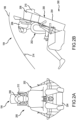
- an exemplary ejection system 200 may be included in the cockpit 104.
- the ejection system 200 may include a seat 204 on which a user 202 may sit or otherwise rest.
- the ejection system 200 includes a helmet 206 which may be supported on a head of the user 202.
- the seat 204 may include various components of the ejection system 200 such as a main parachute 208 and a drogue 210.
- the seat 204 may further include a catapult or rocket that ejects the seat 204 and any occupant thereof from the cockpit 104.
- the drogue 210 may be a parachute that initially deploys after ejection of the seat 204 and may reduce a velocity of the seat 204 as it travels towards a ground surface.
- the main parachute 208 may deploy after the drogue 210 and may provide further reduction of the velocity of at least one of the seat 204 or the user 202 as it travels towards the ground surface.
- a system 300 automatically adjusts features of the ejection system 200 based on passive detected data.
- Passive detected data may refer to any data that is detected by a sensor without an action performed by the user 202.
- RFID radio frequency identification
- the data detected by the RFID reader i.e., any data transferred to the RFID reader from the RFID tag
- passive detected data may be referred to as “passive detected data.”
- the system 300 includes a controller 302.
- the controller 302 may include one or more logic devices such as one or more of a central processing unit (CPU), an accelerated processing unit (APU), a digital signal processor (DSP), a field programmable gate array (FPGA), an application specific integrated circuit (ASIC), or the like.
- the controller 302 may further include any non-transitory memory known in the art.
- the memory may store instructions usable by the logic device to perform operations.
- the system 300 further includes a database or remote memory 304.
- the database 304 may be located on a same aircraft as the system 300 or may be located remote from the system 300.
- the controller 302 may communicate with the database 304 via any wired or wireless protocol. In that regard, the controller 302 accesses data stored in the database 304.
- the database 304 stores identifiers associated with users of the system 300 and stores specific settings for various components of the ejection system 200 that are associated with each of the user identifiers. For example, a first user identifier may be associated with a first set of settings for the ejection system 200 and a second user identifier may be associated with a second set of settings for the ejection system 200.
- the controller 302 may access the specific settings for each user identifier by comparing the user identifier to the database 304.
- the system 300 further includes one or more sensors.
- the sensor includes an image sensor.
- the sensor may include any one or more of a first image sensor 212, a second image sensor 214, or an electronic port 312.
- Each of the sensors may communicate with the controller 302.
- the first image sensor 212 is located on the helmet 206 and may detect data corresponding to a face of the user 202.
- the first image sensor 212 may include a camera, light detector, infrared detector, or any other image sensor capable of detecting image data corresponding to any wavelength of light.
- the image sensor 212 may be designed to detect image data corresponding to a biometric feature of the user.
- the image sensor 212 may be configured to detect a retina scan of the user.
- the image sensor 212 may be configured to detect a face of the user.
- the controller 302 may receive the detected retinal scan or facial scan of the user and may perform a facial recognition algorithm or a retinal recognition algorithm to identify the user.
- the controller 302 may determine a specific identifier of the user based on the detected facial scan or retinal scan.
- the controller 302 may retrieve the specific settings associated with the specific identifier of the user from the database 304 using the determined specific identifier of the user.
- the controller 302 may adjust adjustable settings of the ejection system 200 to have the specific settings associated with the user identifier.
- the second image sensor 214 may be located on another portion of the ejection system 200 away from the helmet 206 and may include a camera, light detector, infrared detector, or any other image sensor capable of detecting image data corresponding to any wavelength of light.
- the second image sensor 214 may be located on the canopy 106 of the first cockpit 104.
- the second image sensor 214 may be located at an entrance location of the aircraft 100 of FIG. 1 or the first cockpit 104.
- the second image sensor 214 may detect a facial scan of the user 202 or a retinal scan of the user 202 in a similar manner as discussed above with reference to the first image sensor 212.
- the controller 302 may determine an identifier of the user 202 based on the image data, may retrieve the specific settings associated with the user identifier from the database 304, and adjust the adjustable settings of the ejection system 200 based on the specific settings.
- the electronic port 312 may be designed to communicate with at least one of a first electronic device 314 or a second electronic device 316 via a wireless protocol.
- the electronic device 314 may be a portable computing device and may include a mobile telephone, a tablet, a laptop, or the like.
- the electronic device 316 may include, for example, a RFID tag, a key fob, a near field communication (NFC) transmitter, or the like.
- NFC near field communication
- the electronic port 312 and at least one of the first electronic device 314 or the second electronic device 316 may communicate via a wireless protocol such as an 802.11a/b/g/n/ac signal (e.g., Wi-Fi), a wireless communications protocol using short wavelength UHF radio waves and defined at least in part by IEEE 802.15.1 (e.g., the BLUETOOTH protocol maintained by Bluetooth Special Interest Group), a wireless communications protocol defined at least in part by IEEE 802.15.4 (e.g., the ZigBee protocol maintained by the ZigBee alliance), a cellular protocol, an infrared protocol, an optical protocol, a RFID protocol, a NFC protocol, or any other protocol capable of wireless transmissions.
- a wireless protocol such as an 802.11a/b/g/n/ac signal (e.g., Wi-Fi)
- a wireless communications protocol using short wavelength UHF radio waves and defined at least in part by IEEE 802.15.1 e.g., the BLUETOOTH protocol maintained by Bluetooth Special Interest Group
- the electronic port 312 may automatically communicate with at least one of the first electronic device 314 or the second electronic device 316 in response to the first electronic device 314 or the second electronic device 316 being located within range of the electronic port 312.
- the electronic port may be provided with information from the first electronic device 314 or the second electronic device 316.
- the information may include an identifier of the user 202, other data related to the user 202 (in which case the controller 302 may determine the identifier based on the other data), or specific settings of the user related to the ejection system 200.
- the controller 302 may access specific user settings from the database 304 related to the user 202.
- the controller 302 may adjust the adjustable settings of the ejection system based on the retrieved or received specific settings of the user.
- these elements may further include any non-transitory memory known in the art.
- the seat electronic sequencer 324, the seat electronic position controller 326, and the interseat electronic sequencer 338 may be coupled to the controller 302 and may receive the specific settings from the controller 302 or may receive instructions regarding adjustments of components of the ejection system 200 from the controller 302.
- the seat electronic sequencer 324 may make adjustments to components of the ejection system 200 that alter a sequence or timing of ejection events such as settings associated with the drogue 210, the main parachute 208, and a thrust angle of the seat 204 during ejection. For example, the seat electronic sequencer 324 may set a parachute deployment timing corresponding to a delay between ejection and deployment of the main parachute 208. The seat electronic sequencer 324 may further set a drogue deployment timing corresponding to a delay between ejection and deployment of the drogue 210. The seat electronic sequencer 324 may further adjust the angle of the seat 204 relative to the fuselage 102 of FIG. 1 during ejection of the seat 204 from the cockpit 104.
- the seat electronic position controller 326 may make adjustments to components of the ejection system 200 that affect a position of a user within the system 200 such as positions of various elements of the seat 204. For example, the seat electronic position controller 326 may adjust a position of a headrest 328 (e.g., in any two or more directions corresponding to a front of an aircraft, a rear of an aircraft, closer to a floor surface 331, farther from the floor surface 331, towards a starboard side, and towards a port side). The seat electronic position controller 326 may further control a seat height actuator 336 to adjust a seat height 330 of the seat 204 (e.g., to increase or decrease the seat height 330).
- a seat height actuator 336 to adjust a seat height 330 of the seat 204 (e.g., to increase or decrease the seat height 330).
- the seat electronic position controller 326 may further adjust a rail angle 333 corresponding to an angle between seat rails 332 and the floor surface 331.
- the seat electronic position controller 326 may further adjust a lumbar support 334 to extend closer to or farther from a surface 335 of a backrest 337.
- the interseat electronic sequencer 338 may make adjustments to components of the ejection system 200 that affect an interseat timing between components. For example, the interseat electronic sequencer 338 may adjust a timing or delay between ejection of the seat 204 and separation of at least one of a hatch or canopy (e.g., the hatch or canopy 106, 110 of FIG. 1 ) from the respective fuselage, or adjust a delay between ejection of two or more cockpits (e.g., between the first cockpit 104 and the second cockpit 108 of FIG. 1 ). For example, it may be desirable for a different timing to be used for a heavier user relative to a lighter user.
- a hatch or canopy e.g., the hatch or canopy 106, 110 of FIG. 1
- the interseat electronic sequencer 338 may select an order of ejection between two or more cockpits based on the specific settings of two or more users. As another example, it may be desirable for a different timing to be used for a heavier user relative to a lighter user. In that regard, the interseat electronic sequencer 338 may select a timing for a user to eject relative to separation of a hatch or canopy from a fuselage based on the specific settings of the user.
- the various adjustable settings of the ejection system 200 may vary based on at least one of physical characteristics of a user or user preferences.
- the specific settings of the user stored in the database 304 or retrieved from the electronic device 314 or 316 may include at least one of physical characteristics of the user or user preferences.
- the controller 302 or one or more of the seat electronic sequencer 324, the seat electronic position controller 326, or the interseat electronic sequencer 338 may select values for the various adjustable settings based on the one or more of the physical characteristics of the user or the user preferences.
- a flowchart illustrates a method 400 for automatic adjustment of an ejection system based on user data detected by a sensor (which may include an electronic port).
- the method 400 is performed by components of a system similar to the system 300 of FIGS. 2A, 2B , 3A, and 3B .
- the method 400 may begin in block 402 where a sensor of the system detects user data corresponding to a user of an ejection system.
- the user input may include biometric data (e.g., a fingerprint or retina scan detected by an image sensor) or electronic data detected by an electronic port from an electronic device (e.g., a portable electronic device).
- the user data may be passive detected data detected without action from a user (besides potentially bringing an electronic device within range of the sensor).
- a controller of the system determines an identifier of the user based on the user data. For example, the controller may compare the biometric data to stored biometric data, or may analyze the biometric data, to determine a user identifier associated with the user. As another example, the controller may receive the user identifier from the portable computing device.
- the controller retrieves specific settings of the user corresponding to settings of an ejection system from a database using the user identifier. For example, the controller may access the database and compare the user identifier to user identifiers stored in the database, and may retrieve the specific settings associated with the user identifier.
- a controller of the system may determine specific settings of the user corresponding to settings of an ejection system based on the user data detected from the electronic device.
- the data received from the electronic device may include the specific settings.
- the received data may include a user identifier and the controller may retrieve the specific settings from a database based on the user identifier.
- the controller may adjust at least one of a plurality of adjustable settings (e.g., those described above with reference to the seat electronic sequencer, the seat electronic position controller, and the interseat electronic sequencer) based on the specific settings received from the electronic device or retrieved from the database.
- a plurality of adjustable settings e.g., those described above with reference to the seat electronic sequencer, the seat electronic position controller, and the interseat electronic sequencer
Landscapes
- Engineering & Computer Science (AREA)
- Aviation & Aerospace Engineering (AREA)
- Business, Economics & Management (AREA)
- Emergency Management (AREA)
- Collating Specific Patterns (AREA)
- User Interface Of Digital Computer (AREA)
Claims (12)
- System zur automatischen Anpassung eines Schleudersystems (200) für ein Luftfahrzeug, wobei das System Folgendes umfasst:das Schleudersystem (200), das eine Vielzahl von anpassbaren Einstellungen aufweist;einen Helm (206);einen Bildsensor (212), der sich an dem Helm (206) befindet und zum Erfassen von einem Benutzer des Schleudersystems entsprechenden Benutzerdaten konfiguriert ist, wobei der Bildsensor zum Erfassen von dem Benutzer entsprechenden Bilddaten konfiguriert ist und wobei die Bilddaten die Benutzerdaten sind; undeine Steuerung (302), die an das Schleudersystem und an den Bildsensor gekoppelt und zu Folgendem konfiguriert ist:Bestimmen einer Kennung des Benutzers des Systems basierend auf den Benutzerdaten;Abrufen spezifischer Einstellungen des Benutzers durch Zugreifen auf eine Datenbank basierend auf der Kennung; undAnpassen mindestens einer der Vielzahl der anpassbaren Einstellungen des Schleudersystems basierend auf den aus der Datenbank abgerufenen spezifischen Einstellungen des Benutzers.
- System nach Anspruch 1, wobei die Bilddaten ein Bild eines Gesichts des Benutzers beinhalten und die Steuerung (302) ferner zum Bestimmen der Kennung des Benutzers durch Ausführen eines Gesichtserkennungsalgorithmus konfiguriert ist oder wobei die Bilddaten ein Bild einer Netzhaut des Benutzers beinhalten und die Steuerung ferner zum Bestimmen der Kennung des Benutzers durch Analysieren des Bilds der Netzhaut des Benutzers konfiguriert ist.
- System nach einem der vorhergehenden Ansprüche, wobei der Bildsensor (212) einen elektronischen Anschluss beinhaltet, der zum elektrischen Koppeln an eine elektronische Vorrichtung konfiguriert ist, und die Benutzerdaten Daten beinhalten, die über den elektronischen Anschluss von der elektronischen Vorrichtung empfangen wurden.
- System nach Anspruch 3, wobei die Benutzerdaten die Kennung des Benutzers beinhalten und die Steuerung ferner zu Folgendem konfiguriert ist:
Anpassen der mindestens einen der anpassbaren Einstellungen basierend auf den von der elektronischen Vorrichtung empfangenen spezifischen Einstellungen. - System nach Anspruch 1, wobei:
das Schleudersystem (200) eine elektronische Sitzpositionssteuerung beinhaltet und die Vielzahl der einstellbaren Einstellungen mindestens eine von einer Sitzhöhe, einer Lendenstütze, einer Kopfstützenposition, einem Schienenwinkel oder einer Aktuatorposition beinhaltet. - Verfahren zur automatischen Anpassung eines Schleudersystems für ein Luftfahrzeug, wobei das Verfahren Folgendes umfasst:Erfassen von einem Benutzer des Schleudersystems entsprechenden Benutzerdaten durch einen Bildsensor (212), der sich an einem Helm (206) befindet, wobei der Bildsensor zum Erfassen von dem Benutzer entsprechenden Bilddaten konfiguriert ist und wobei die Bilddaten die Benutzerdaten sind;Bestimmen einer Kennung des Benutzers basierend auf den Benutzerdaten durch eine Steuerung (302);Abrufen spezifischer Einstellungen des Benutzers durch die Steuerung (302) basierend auf der Kennung durch Zugreifen auf eine Datenbank; undAnpassen mindestens einer einer Vielzahl der Einstellungen des Schleudersystems basierend auf aus der Datenbank abgerufenen spezifischen Einstellungen des Benutzers durch eine Steuerung (302) .
- Verfahren nach Anspruch 6, wobei das Erfassen der Bilddaten Erfassen eines Bilds eines Gesichts des Benutzers beinhaltet und das Bestimmen der Kennung des Benutzers Bestimmen der Kennung des Benutzers durch Ausführen eines Gesichtserkennungsalgorithmus beinhaltet oder wobei das Erfassen der Bilddaten Erfassen eines Bilds einer Netzhaut des Benutzers beinhaltet und das Bestimmen der Kennung des Benutzers Bestimmen der Kennung des Benutzers durch Analysieren des Bilds der Netzhaut des Benutzers beinhaltet.
- Verfahren nach Anspruch 6, wobei das Erfassen der Benutzerdaten Empfangen der Benutzerdaten von einer elektronischen Vorrichtung an einem elektronischen Anschluss beinhaltet.
- Verfahren nach Anspruch 8, ferner umfassend:Empfangen der Kennung des Benutzers an dem elektronischen Anschluss; undAbrufen der spezifischen Einstellungen des Benutzers durch die Steuerung (302) durch Zugreifen auf die Datenbank basierend auf der Kennung über den elektronischen Anschluss.
- Verfahren nach Anspruch 8 oder 9, wobei die Benutzerdaten spezifische Einstellungen des Benutzers beinhalten und das Anpassen der mindestens einen der anpassbaren Einstellungen Anpassen der mindestens einen der anpassbaren Einstellungen basierend auf den spezifischen Einstellungen beinhaltet, die von der elektronischen Vorrichtung über den elektronischen Anschluss empfangen werden.
- System nach Anspruch 1, wobei das Schleudersystem (200) einen elektronischen Sitzsequenzer beinhaltet und die Vielzahl der einstellbaren Einstellungen mindestens eine von einem Zeitablauf der Fallschirmauslösung, einem Zeitablauf der Bremsfallschirmauslösung oder einer Schubwinkelausrichtung beinhaltet.
- System nach Anspruch 1, wobei das Schleudersystem (200) einen elektronischen Interseat-Sequenzer beinhaltet und die Vielzahl der anpassbaren Einstellungen einen Interseat-Zeitablauf beinhaltet.
Applications Claiming Priority (1)
| Application Number | Priority Date | Filing Date | Title |
|---|---|---|---|
| US17/036,391 US11518528B2 (en) | 2020-09-29 | 2020-09-29 | Automatic ejection seat performance and accommodation optimization based on passive detection of aircrew data |
Publications (2)
| Publication Number | Publication Date |
|---|---|
| EP3974318A1 EP3974318A1 (de) | 2022-03-30 |
| EP3974318B1 true EP3974318B1 (de) | 2025-05-07 |
Family
ID=77998717
Family Applications (1)
| Application Number | Title | Priority Date | Filing Date |
|---|---|---|---|
| EP21199112.0A Active EP3974318B1 (de) | 2020-09-29 | 2021-09-27 | Optimierung der leistung und unterbringung eines automatischen schleudersitzes basierend auf der passiven erfassung von daten der flugbesatzung |
Country Status (2)
| Country | Link |
|---|---|
| US (1) | US11518528B2 (de) |
| EP (1) | EP3974318B1 (de) |
Families Citing this family (2)
| Publication number | Priority date | Publication date | Assignee | Title |
|---|---|---|---|---|
| US11891183B2 (en) * | 2020-09-29 | 2024-02-06 | Ami Industries, Inc. | Automatic ejection seat performance and accomodation optimization based on active input of aircrew data |
| US12304644B2 (en) | 2022-11-14 | 2025-05-20 | Rockwell Collins, Inc. | Variable mode timing with divergence inhibit |
Citations (2)
| Publication number | Priority date | Publication date | Assignee | Title |
|---|---|---|---|---|
| US7116803B2 (en) * | 1996-05-15 | 2006-10-03 | Lemelson Jerome H | Facial-recognition vehicle security system and automatically starting vehicle |
| US20200151475A1 (en) * | 2018-11-13 | 2020-05-14 | Denso International America, Inc. | Driver Authentication For Vehicle-Sharing Fleet |
Family Cites Families (26)
| Publication number | Priority date | Publication date | Assignee | Title |
|---|---|---|---|---|
| GB959900A (en) | 1961-09-04 | 1964-06-03 | Martin James | Apparatus for use in making preliminary tests in connection with aircraft rocket propelled or assisted ejection seats |
| SE320271B (de) * | 1967-03-17 | 1970-02-02 | J Martin | |
| US4673147A (en) | 1985-02-21 | 1987-06-16 | Rockwell International Corporation | Programmable ejection seat system |
| US4846421A (en) | 1986-06-23 | 1989-07-11 | The Boeing Company | Adaptive control system for crew escape devices |
| FR2714021B1 (fr) | 1993-12-22 | 1996-03-15 | Aerospatiale | Siège d'aéronef et notamment de giravion, à dispositif d'absorption d'énergie automatiquement ajustable en fonction de la taille de l'occupant. |
| DE19734508C2 (de) | 1997-08-08 | 2001-05-17 | Siemens Ag | Steuervorrichtung für ein Insassenschutzmittel eines Kraftfahrzeugs |
| US7878312B2 (en) | 2006-05-31 | 2011-02-01 | University Of Maryland | Adaptive energy absorption system for a vehicle seat |
| US8473163B2 (en) | 2007-02-02 | 2013-06-25 | Techno-Sciences, Inc. | Method of determining impact severity and adaptive impact attenuation |
| FR2918642B1 (fr) | 2007-07-12 | 2013-11-29 | Airbus France | Poste de pilotage perfectionne d'avion |
| US8594868B2 (en) | 2009-07-31 | 2013-11-26 | Control Solutions LLC | Controller and methods of controlling a personal electric motorized vehicle based on a weight of an operator |
| US9523985B1 (en) * | 2009-08-11 | 2016-12-20 | Rockwell Collins, Inc. | Real time and in-flight dynamic personalization of an aircraft |
| WO2013120142A1 (en) | 2012-02-16 | 2013-08-22 | Brt Group Pty Ltd | Active damping system |
| US9428197B2 (en) | 2014-02-04 | 2016-08-30 | Ford Global Technology, Llc | Method and apparatus for persistent transferrable customizable vehicle settings |
| GB2524495C (en) * | 2014-03-24 | 2017-04-05 | British Airways Plc | Travel environment control |
| US10272863B1 (en) * | 2014-10-31 | 2019-04-30 | Safe, Inc. | Structure and method for protecting a passenger during a crash |
| US11066172B2 (en) | 2015-10-15 | 2021-07-20 | The Boeing Company | Controlled energy absorption of seats for impact |
| US10577112B2 (en) | 2016-08-25 | 2020-03-03 | Seyednezam Azizi Pourzadeh | Emergency ejection seat with propulsion system |
| CN107804468A (zh) | 2016-09-08 | 2018-03-16 | 法乐第(北京)网络科技有限公司 | 确定座椅弹射时机的方法、座椅弹射控制方法及系统 |
| RU2671896C1 (ru) | 2017-05-17 | 2018-11-07 | Шарапов Александр Иванович | Способ и система приземления парашютиста |
| US10410075B2 (en) | 2017-12-18 | 2019-09-10 | Honeywell International Inc. | Different levels of access to aircraft based on biometric input data |
| US11847548B2 (en) | 2018-02-23 | 2023-12-19 | Rockwell Collins, Inc. | Universal passenger seat system and data interface |
| US11680618B2 (en) | 2018-09-24 | 2023-06-20 | Joby Aero, Inc. | Dynamic energy absorbing seat |
| CN109573051B (zh) | 2018-11-07 | 2022-05-27 | 航宇救生装备有限公司 | 一种实现弹射座椅电动机构自动调节装置 |
| US11148816B2 (en) | 2018-12-12 | 2021-10-19 | Goodrich Corporation | Adjustable leg restraints for ejection seats |
| US11981438B2 (en) | 2019-09-26 | 2024-05-14 | Rockwell Collins, Inc. | Retention of flight deck preferences |
| US11300078B2 (en) | 2020-01-20 | 2022-04-12 | Ami Industries, Inc. | Variable thrust catapult |
-
2020
- 2020-09-29 US US17/036,391 patent/US11518528B2/en active Active
-
2021
- 2021-09-27 EP EP21199112.0A patent/EP3974318B1/de active Active
Patent Citations (2)
| Publication number | Priority date | Publication date | Assignee | Title |
|---|---|---|---|---|
| US7116803B2 (en) * | 1996-05-15 | 2006-10-03 | Lemelson Jerome H | Facial-recognition vehicle security system and automatically starting vehicle |
| US20200151475A1 (en) * | 2018-11-13 | 2020-05-14 | Denso International America, Inc. | Driver Authentication For Vehicle-Sharing Fleet |
Also Published As
| Publication number | Publication date |
|---|---|
| US20220097861A1 (en) | 2022-03-31 |
| US11518528B2 (en) | 2022-12-06 |
| EP3974318A1 (de) | 2022-03-30 |
Similar Documents
| Publication | Publication Date | Title |
|---|---|---|
| EP3974321B1 (de) | Optimierung der leistung und unterbringung eines automatischen schleudersitzes auf basis der aktiven eingabe von flugbesatzungsdaten | |
| EP3974318B1 (de) | Optimierung der leistung und unterbringung eines automatischen schleudersitzes basierend auf der passiven erfassung von daten der flugbesatzung | |
| EP3974319B1 (de) | Automatische optimierung der leistung eines schleudersitzes basierend auf der erfassung des gewichts der flugzeugbesatzung | |
| US20200339266A1 (en) | System and method for aircraft seat and suite control via a personal electronic device | |
| EP3305033B1 (de) | Verstellbare beleuchtung in einem fahrzeug basierend auf der position eines beweglichen objekts | |
| US9305457B2 (en) | System for managing a cabin environment in a platform, and associated management method | |
| US8186760B2 (en) | Adjustable width seats | |
| US6963292B1 (en) | System and method for reporting emergencies from an aircraft | |
| US10407176B2 (en) | Pretensioner for retractable shoulder belt and seat belt | |
| US20090108649A1 (en) | System and method for an anticipatory passenger cabin | |
| US10829220B2 (en) | Aircraft cabin management system | |
| EP3466018B1 (de) | Systeme und verfahren zur abwendung eines unbefugten zugriffs auf fahrzeugbordnetzwerke | |
| WO2015200368A1 (en) | Wireless passenger services system | |
| EP3974320B1 (de) | Automatische schleudersitzleistungs- und -aufnahmeoptimierung auf basis eines verbinders | |
| US11993386B2 (en) | Smart systems and methods for automatic deployment of an ejection system | |
| US11560232B2 (en) | Ejection mode verification system | |
| US11505326B2 (en) | Automatic mode selection system | |
| CN114514520A (zh) | 用于航空系统的认证系统和方法 | |
| US10476683B2 (en) | Methods and systems to wirelessly connect to a vehicle | |
| EP3988453B1 (de) | Systeme für die landung von flugzeugen nach dem ausstoss | |
| CN219361332U (zh) | 一种航空智能座椅系统 | |
| US12296960B2 (en) | Leg restraint system with compliance indicator | |
| EP4431394A1 (de) | Beinrückhaltesystem mit nachgiebigkeitsanzeige |
Legal Events
| Date | Code | Title | Description |
|---|---|---|---|
| PUAI | Public reference made under article 153(3) epc to a published international application that has entered the european phase |
Free format text: ORIGINAL CODE: 0009012 |
|
| STAA | Information on the status of an ep patent application or granted ep patent |
Free format text: STATUS: THE APPLICATION HAS BEEN PUBLISHED |
|
| AK | Designated contracting states |
Kind code of ref document: A1 Designated state(s): AL AT BE BG CH CY CZ DE DK EE ES FI FR GB GR HR HU IE IS IT LI LT LU LV MC MK MT NL NO PL PT RO RS SE SI SK SM TR |
|
| STAA | Information on the status of an ep patent application or granted ep patent |
Free format text: STATUS: REQUEST FOR EXAMINATION WAS MADE |
|
| 17P | Request for examination filed |
Effective date: 20220929 |
|
| RBV | Designated contracting states (corrected) |
Designated state(s): AL AT BE BG CH CY CZ DE DK EE ES FI FR GB GR HR HU IE IS IT LI LT LU LV MC MK MT NL NO PL PT RO RS SE SI SK SM TR |
|
| STAA | Information on the status of an ep patent application or granted ep patent |
Free format text: STATUS: EXAMINATION IS IN PROGRESS |
|
| RIC1 | Information provided on ipc code assigned before grant |
Ipc: B64D 25/10 20060101ALI20230705BHEP Ipc: B64D 11/06 20060101AFI20230705BHEP |
|
| 17Q | First examination report despatched |
Effective date: 20230727 |
|
| P01 | Opt-out of the competence of the unified patent court (upc) registered |
Effective date: 20230922 |
|
| GRAP | Despatch of communication of intention to grant a patent |
Free format text: ORIGINAL CODE: EPIDOSNIGR1 |
|
| STAA | Information on the status of an ep patent application or granted ep patent |
Free format text: STATUS: GRANT OF PATENT IS INTENDED |
|
| INTG | Intention to grant announced |
Effective date: 20241205 |
|
| GRAS | Grant fee paid |
Free format text: ORIGINAL CODE: EPIDOSNIGR3 |
|
| GRAA | (expected) grant |
Free format text: ORIGINAL CODE: 0009210 |
|
| STAA | Information on the status of an ep patent application or granted ep patent |
Free format text: STATUS: THE PATENT HAS BEEN GRANTED |
|
| AK | Designated contracting states |
Kind code of ref document: B1 Designated state(s): AL AT BE BG CH CY CZ DE DK EE ES FI FR GB GR HR HU IE IS IT LI LT LU LV MC MK MT NL NO PL PT RO RS SE SI SK SM TR |
|
| REG | Reference to a national code |
Ref country code: GB Ref legal event code: FG4D |
|
| REG | Reference to a national code |
Ref country code: CH Ref legal event code: EP |
|
| REG | Reference to a national code |
Ref country code: DE Ref legal event code: R096 Ref document number: 602021030316 Country of ref document: DE |
|
| REG | Reference to a national code |
Ref country code: IE Ref legal event code: FG4D |
|
| REG | Reference to a national code |
Ref country code: NL Ref legal event code: MP Effective date: 20250507 |
|
| PG25 | Lapsed in a contracting state [announced via postgrant information from national office to epo] |
Ref country code: PT Free format text: LAPSE BECAUSE OF FAILURE TO SUBMIT A TRANSLATION OF THE DESCRIPTION OR TO PAY THE FEE WITHIN THE PRESCRIBED TIME-LIMIT Effective date: 20250908 Ref country code: FI Free format text: LAPSE BECAUSE OF FAILURE TO SUBMIT A TRANSLATION OF THE DESCRIPTION OR TO PAY THE FEE WITHIN THE PRESCRIBED TIME-LIMIT Effective date: 20250507 Ref country code: ES Free format text: LAPSE BECAUSE OF FAILURE TO SUBMIT A TRANSLATION OF THE DESCRIPTION OR TO PAY THE FEE WITHIN THE PRESCRIBED TIME-LIMIT Effective date: 20250507 |
|
| REG | Reference to a national code |
Ref country code: LT Ref legal event code: MG9D |
|
| PG25 | Lapsed in a contracting state [announced via postgrant information from national office to epo] |
Ref country code: NO Free format text: LAPSE BECAUSE OF FAILURE TO SUBMIT A TRANSLATION OF THE DESCRIPTION OR TO PAY THE FEE WITHIN THE PRESCRIBED TIME-LIMIT Effective date: 20250807 |
|
| PG25 | Lapsed in a contracting state [announced via postgrant information from national office to epo] |
Ref country code: NL Free format text: LAPSE BECAUSE OF FAILURE TO SUBMIT A TRANSLATION OF THE DESCRIPTION OR TO PAY THE FEE WITHIN THE PRESCRIBED TIME-LIMIT Effective date: 20250507 Ref country code: PL Free format text: LAPSE BECAUSE OF FAILURE TO SUBMIT A TRANSLATION OF THE DESCRIPTION OR TO PAY THE FEE WITHIN THE PRESCRIBED TIME-LIMIT Effective date: 20250507 |
|
| REG | Reference to a national code |
Ref country code: AT Ref legal event code: MK05 Ref document number: 1792242 Country of ref document: AT Kind code of ref document: T Effective date: 20250507 |
|
| PG25 | Lapsed in a contracting state [announced via postgrant information from national office to epo] |
Ref country code: BG Free format text: LAPSE BECAUSE OF FAILURE TO SUBMIT A TRANSLATION OF THE DESCRIPTION OR TO PAY THE FEE WITHIN THE PRESCRIBED TIME-LIMIT Effective date: 20250507 |
|
| PGFP | Annual fee paid to national office [announced via postgrant information from national office to epo] |
Ref country code: GB Payment date: 20250820 Year of fee payment: 5 |
|
| PG25 | Lapsed in a contracting state [announced via postgrant information from national office to epo] |
Ref country code: HR Free format text: LAPSE BECAUSE OF FAILURE TO SUBMIT A TRANSLATION OF THE DESCRIPTION OR TO PAY THE FEE WITHIN THE PRESCRIBED TIME-LIMIT Effective date: 20250507 |
|
| PG25 | Lapsed in a contracting state [announced via postgrant information from national office to epo] |
Ref country code: AT Free format text: LAPSE BECAUSE OF FAILURE TO SUBMIT A TRANSLATION OF THE DESCRIPTION OR TO PAY THE FEE WITHIN THE PRESCRIBED TIME-LIMIT Effective date: 20250507 |
|
| PG25 | Lapsed in a contracting state [announced via postgrant information from national office to epo] |
Ref country code: RS Free format text: LAPSE BECAUSE OF FAILURE TO SUBMIT A TRANSLATION OF THE DESCRIPTION OR TO PAY THE FEE WITHIN THE PRESCRIBED TIME-LIMIT Effective date: 20250807 |
|
| PG25 | Lapsed in a contracting state [announced via postgrant information from national office to epo] |
Ref country code: IS Free format text: LAPSE BECAUSE OF FAILURE TO SUBMIT A TRANSLATION OF THE DESCRIPTION OR TO PAY THE FEE WITHIN THE PRESCRIBED TIME-LIMIT Effective date: 20250907 |
|
| PG25 | Lapsed in a contracting state [announced via postgrant information from national office to epo] |
Ref country code: LV Free format text: LAPSE BECAUSE OF FAILURE TO SUBMIT A TRANSLATION OF THE DESCRIPTION OR TO PAY THE FEE WITHIN THE PRESCRIBED TIME-LIMIT Effective date: 20250507 |
|
| PG25 | Lapsed in a contracting state [announced via postgrant information from national office to epo] |
Ref country code: DK Free format text: LAPSE BECAUSE OF FAILURE TO SUBMIT A TRANSLATION OF THE DESCRIPTION OR TO PAY THE FEE WITHIN THE PRESCRIBED TIME-LIMIT Effective date: 20250507 Ref country code: SM Free format text: LAPSE BECAUSE OF FAILURE TO SUBMIT A TRANSLATION OF THE DESCRIPTION OR TO PAY THE FEE WITHIN THE PRESCRIBED TIME-LIMIT Effective date: 20250507 |
|
| PG25 | Lapsed in a contracting state [announced via postgrant information from national office to epo] |
Ref country code: CZ Free format text: LAPSE BECAUSE OF FAILURE TO SUBMIT A TRANSLATION OF THE DESCRIPTION OR TO PAY THE FEE WITHIN THE PRESCRIBED TIME-LIMIT Effective date: 20250507 |
|
| PG25 | Lapsed in a contracting state [announced via postgrant information from national office to epo] |
Ref country code: EE Free format text: LAPSE BECAUSE OF FAILURE TO SUBMIT A TRANSLATION OF THE DESCRIPTION OR TO PAY THE FEE WITHIN THE PRESCRIBED TIME-LIMIT Effective date: 20250507 |
|
| PG25 | Lapsed in a contracting state [announced via postgrant information from national office to epo] |
Ref country code: RO Free format text: LAPSE BECAUSE OF FAILURE TO SUBMIT A TRANSLATION OF THE DESCRIPTION OR TO PAY THE FEE WITHIN THE PRESCRIBED TIME-LIMIT Effective date: 20250507 Ref country code: SK Free format text: LAPSE BECAUSE OF FAILURE TO SUBMIT A TRANSLATION OF THE DESCRIPTION OR TO PAY THE FEE WITHIN THE PRESCRIBED TIME-LIMIT Effective date: 20250507 |
|
| PG25 | Lapsed in a contracting state [announced via postgrant information from national office to epo] |
Ref country code: IT Free format text: LAPSE BECAUSE OF FAILURE TO SUBMIT A TRANSLATION OF THE DESCRIPTION OR TO PAY THE FEE WITHIN THE PRESCRIBED TIME-LIMIT Effective date: 20250507 |
|
| REG | Reference to a national code |
Ref country code: DE Ref legal event code: R097 Ref document number: 602021030316 Country of ref document: DE |
|
| PLBE | No opposition filed within time limit |
Free format text: ORIGINAL CODE: 0009261 |
|
| STAA | Information on the status of an ep patent application or granted ep patent |
Free format text: STATUS: NO OPPOSITION FILED WITHIN TIME LIMIT |
|
| REG | Reference to a national code |
Ref country code: CH Ref legal event code: L10 Free format text: ST27 STATUS EVENT CODE: U-0-0-L10-L00 (AS PROVIDED BY THE NATIONAL OFFICE) Effective date: 20260318 |
|
| 26N | No opposition filed |
Effective date: 20260210 |