EP3973649B1 - Kommunikationsvorrichtung, infrastrukturausrüstung und verfahren - Google Patents
Kommunikationsvorrichtung, infrastrukturausrüstung und verfahren Download PDFInfo
- Publication number
- EP3973649B1 EP3973649B1 EP20726002.7A EP20726002A EP3973649B1 EP 3973649 B1 EP3973649 B1 EP 3973649B1 EP 20726002 A EP20726002 A EP 20726002A EP 3973649 B1 EP3973649 B1 EP 3973649B1
- Authority
- EP
- European Patent Office
- Prior art keywords
- data
- communications device
- tcp
- protocol
- infrastructure equipment
- Prior art date
- Legal status (The legal status is an assumption and is not a legal conclusion. Google has not performed a legal analysis and makes no representation as to the accuracy of the status listed.)
- Active
Links
Images


Classifications
-
- H—ELECTRICITY
- H04—ELECTRIC COMMUNICATION TECHNIQUE
- H04W—WIRELESS COMMUNICATION NETWORKS
- H04W28/00—Network traffic management; Network resource management
- H04W28/02—Traffic management, e.g. flow control or congestion control
- H04W28/06—Optimizing the usage of the radio link, e.g. header compression, information sizing, discarding information
-
- H—ELECTRICITY
- H04—ELECTRIC COMMUNICATION TECHNIQUE
- H04W—WIRELESS COMMUNICATION NETWORKS
- H04W4/00—Services specially adapted for wireless communication networks; Facilities therefor
- H04W4/70—Services for machine-to-machine communication [M2M] or machine type communication [MTC]
-
- H—ELECTRICITY
- H04—ELECTRIC COMMUNICATION TECHNIQUE
- H04L—TRANSMISSION OF DIGITAL INFORMATION, e.g. TELEGRAPHIC COMMUNICATION
- H04L1/00—Arrangements for detecting or preventing errors in the information received
- H04L1/12—Arrangements for detecting or preventing errors in the information received by using return channel
- H04L1/16—Arrangements for detecting or preventing errors in the information received by using return channel in which the return channel carries supervisory signals, e.g. repetition request signals
- H04L1/1607—Details of the supervisory signal
- H04L1/1642—Formats specially adapted for sequence numbers
-
- H—ELECTRICITY
- H04—ELECTRIC COMMUNICATION TECHNIQUE
- H04L—TRANSMISSION OF DIGITAL INFORMATION, e.g. TELEGRAPHIC COMMUNICATION
- H04L1/00—Arrangements for detecting or preventing errors in the information received
- H04L1/12—Arrangements for detecting or preventing errors in the information received by using return channel
- H04L1/16—Arrangements for detecting or preventing errors in the information received by using return channel in which the return channel carries supervisory signals, e.g. repetition request signals
- H04L1/18—Automatic repetition systems, e.g. Van Duuren systems
- H04L1/1809—Selective-repeat protocols
-
- H—ELECTRICITY
- H04—ELECTRIC COMMUNICATION TECHNIQUE
- H04L—TRANSMISSION OF DIGITAL INFORMATION, e.g. TELEGRAPHIC COMMUNICATION
- H04L41/00—Arrangements for maintenance, administration or management of data switching networks, e.g. of packet switching networks
- H04L41/14—Network analysis or design
- H04L41/142—Network analysis or design using statistical or mathematical methods
-
- H—ELECTRICITY
- H04—ELECTRIC COMMUNICATION TECHNIQUE
- H04L—TRANSMISSION OF DIGITAL INFORMATION, e.g. TELEGRAPHIC COMMUNICATION
- H04L41/00—Arrangements for maintenance, administration or management of data switching networks, e.g. of packet switching networks
- H04L41/40—Arrangements for maintenance, administration or management of data switching networks, e.g. of packet switching networks using virtualisation of network functions or resources, e.g. SDN or NFV entities
-
- H—ELECTRICITY
- H04—ELECTRIC COMMUNICATION TECHNIQUE
- H04L—TRANSMISSION OF DIGITAL INFORMATION, e.g. TELEGRAPHIC COMMUNICATION
- H04L43/00—Arrangements for monitoring or testing data switching networks
- H04L43/08—Monitoring or testing based on specific metrics, e.g. QoS, energy consumption or environmental parameters
- H04L43/0852—Delays
- H04L43/0864—Round trip delays
-
- H—ELECTRICITY
- H04—ELECTRIC COMMUNICATION TECHNIQUE
- H04L—TRANSMISSION OF DIGITAL INFORMATION, e.g. TELEGRAPHIC COMMUNICATION
- H04L43/00—Arrangements for monitoring or testing data switching networks
- H04L43/16—Threshold monitoring
-
- H—ELECTRICITY
- H04—ELECTRIC COMMUNICATION TECHNIQUE
- H04L—TRANSMISSION OF DIGITAL INFORMATION, e.g. TELEGRAPHIC COMMUNICATION
- H04L43/00—Arrangements for monitoring or testing data switching networks
- H04L43/20—Arrangements for monitoring or testing data switching networks the monitoring system or the monitored elements being virtualised, abstracted or software-defined entities, e.g. SDN or NFV
-
- H—ELECTRICITY
- H04—ELECTRIC COMMUNICATION TECHNIQUE
- H04L—TRANSMISSION OF DIGITAL INFORMATION, e.g. TELEGRAPHIC COMMUNICATION
- H04L5/00—Arrangements affording multiple use of the transmission path
- H04L5/003—Arrangements for allocating sub-channels of the transmission path
- H04L5/0053—Allocation of signalling, i.e. of overhead other than pilot signals
-
- H—ELECTRICITY
- H04—ELECTRIC COMMUNICATION TECHNIQUE
- H04L—TRANSMISSION OF DIGITAL INFORMATION, e.g. TELEGRAPHIC COMMUNICATION
- H04L69/00—Network arrangements, protocols or services independent of the application payload and not provided for in the other groups of this subclass
- H04L69/16—Implementation or adaptation of Internet protocol [IP], of transmission control protocol [TCP] or of user datagram protocol [UDP]
- H04L69/163—In-band adaptation of TCP data exchange; In-band control procedures
-
- H—ELECTRICITY
- H04—ELECTRIC COMMUNICATION TECHNIQUE
- H04L—TRANSMISSION OF DIGITAL INFORMATION, e.g. TELEGRAPHIC COMMUNICATION
- H04L69/00—Network arrangements, protocols or services independent of the application payload and not provided for in the other groups of this subclass
- H04L69/22—Parsing or analysis of headers
-
- H—ELECTRICITY
- H04—ELECTRIC COMMUNICATION TECHNIQUE
- H04L—TRANSMISSION OF DIGITAL INFORMATION, e.g. TELEGRAPHIC COMMUNICATION
- H04L47/00—Traffic control in data switching networks
- H04L47/10—Flow control; Congestion control
- H04L47/34—Flow control; Congestion control ensuring sequence integrity, e.g. using sequence numbers
-
- H—ELECTRICITY
- H04—ELECTRIC COMMUNICATION TECHNIQUE
- H04L—TRANSMISSION OF DIGITAL INFORMATION, e.g. TELEGRAPHIC COMMUNICATION
- H04L67/00—Network arrangements or protocols for supporting network services or applications
- H04L67/01—Protocols
- H04L67/12—Protocols specially adapted for proprietary or special-purpose networking environments, e.g. medical networks, sensor networks, networks in vehicles or remote metering networks
- H04L67/125—Protocols specially adapted for proprietary or special-purpose networking environments, e.g. medical networks, sensor networks, networks in vehicles or remote metering networks involving control of end-device applications over a network
-
- H—ELECTRICITY
- H04—ELECTRIC COMMUNICATION TECHNIQUE
- H04W—WIRELESS COMMUNICATION NETWORKS
- H04W4/00—Services specially adapted for wireless communication networks; Facilities therefor
- H04W4/80—Services using short range communication, e.g. near-field communication [NFC], radio-frequency identification [RFID] or low energy communication
-
- H—ELECTRICITY
- H04—ELECTRIC COMMUNICATION TECHNIQUE
- H04W—WIRELESS COMMUNICATION NETWORKS
- H04W80/00—Wireless network protocols or protocol adaptations to wireless operation
- H04W80/06—Transport layer protocols, e.g. TCP [Transport Control Protocol] over wireless
Definitions
- the present disclosure relates to communications devices, infrastructure equipment and methods for the transmission of data associated with an end-to-end connection in a wireless communications network as defined in the appended claims.
- Third and fourth generation mobile telecommunication systems such as those based on the 3GPP defined UMTS and Long Term Evolution (LTE) architecture, are able to support more sophisticated services than simple voice and messaging services offered by previous generations of mobile telecommunication systems.
- LTE Long Term Evolution
- a user is able to enjoy high data rate applications such as mobile video streaming and mobile video conferencing that would previously only have been available via a fixed line data connection.
- the demand to deploy such networks is therefore strong and the coverage area of these networks, i.e. geographic locations where access to the networks is possible, may be expected to increase ever more rapidly.
- Future wireless communications networks will be expected to support communications routinely and efficiently with a wider range of devices associated with a wider range of data traffic profiles and types than current systems are optimised to support. For example it is expected future wireless communications networks will be expected to efficiently support communications with devices including reduced complexity devices, machine type communication (MTC) devices, high resolution video displays, virtual reality headsets and so on. Some of these different types of devices may be deployed in very large numbers, for example low complexity devices for supporting the "The Internet of Things", and may typically be associated with the transmissions of relatively small amounts of data with relatively high latency tolerance.
- MTC machine type communication
- Some new services may generate data traffic which is asymmetric - that is, where an amount of data generated for transmission in one direction (for example, in an uplink direction, where uplink data is transmitted from a communications device to an infrastructure equipment) is significantly greater than that generated for transmission in the opposite direction (for example in a downlink direction from an infrastructure equipment to a communications device).
- the quantity of data in one direction may be substantially zero.
- Some such services may nevertheless require reliable and in-order data transmission, which can be achieved by means of an end-to-end protocol which generates acknowledgements which are transmitted to the sender of the data.
- EP 3 151 608 A1 (HUAWEI TECH CO L TO [CN]) 5 April 2017 discloses a data transmission method and device to reduce a quantity of TCP-layer ACK packets transmitted on a radio air interface link between two devices.
- the present disclosure can help address or mitigate at least some of the issues discussed above.
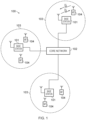
- Figure 1 provides a schematic diagram illustrating some basic functionality of a mobile telecommunications network / system 100 operating generally in accordance with LTE principles, but which may also support other radio access technologies, and which may be adapted to implement embodiments of the disclosure as described herein.
- Various elements of Figure 1 and certain aspects of their respective modes of operation are well-known and defined in the relevant standards administered by the 3GPP (RTM) body, and also described in many books on the subject, for example, Holma H. and Toskala A [2].
- the network 100 includes a plurality of base stations 101 connected to a core network part 102.
- Each base station provides a coverage area 103 (e.g. a cell) within which data can be communicated to and from communications devices 104.
- Data is transmitted from the base stations 101 to the communications devices 104 within their respective coverage areas 103 via a radio downlink.
- Data is transmitted from the communications devices 104 to the base stations 101 via a radio uplink.
- the core network part 102 routes data to and from the communications devices 104 via the respective base stations 101 and provides functions such as authentication, mobility management, charging and so on.
- Communications devices may also be referred to as mobile stations, user equipment (UE), user terminals, mobile radios, terminal devices, and so forth.
- Base stations which are an example of network infrastructure equipment / network access nodes, may also be referred to as transceiver stations / nodeBs / e-nodeBs, g-nodeBs (gNB) and so forth.
- transceiver stations / nodeBs / e-nodeBs, g-nodeBs (gNB) and so forth.
- gNB g-nodeBs
- different terminology is often associated with different generations of wireless telecommunications systems for elements providing broadly comparable functionality.
- example embodiments of the disclosure may be equally implemented in different generations of wireless telecommunications systems such as 5G or new radio as explained below, and for simplicity certain terminology may be used regardless of the underlying network architecture. That is to say, the use of a specific term in relation to certain example implementations is not intended to indicate these implementations are limited to a certain generation of network that may be most associated with that particular terminology.
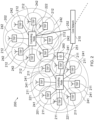
- FIG. 2 is a schematic diagram illustrating a network architecture for a new RAT wireless communications network / system 200 based on previously proposed approaches which may also be adapted to provide functionality in accordance with embodiments of the disclosure described herein.
- the new RAT network 200 represented in Figure 2 comprises a first communication cell 201 and a second communication cell 202.
- Each communication cell 201, 202 comprises a controlling node (centralised unit) 221, 222 in communication with a core network component 210 over a respective wired or wireless link 251, 252.
- the respective controlling nodes 221, 222 are also each in communication with a plurality of distributed units (radio access nodes / remote transmission and reception points (TRPs)) 211, 212 in their respective cells.
- TRPs remote transmission and reception points
- the distributed units (DUs) 211, 212 are responsible for providing the radio access interface for communications devices connected to the network.
- Each distributed unit 211, 212 has a coverage area (radio access footprint) 241, 242 where the sum of the coverage areas of the distributed units under the control of a controlling node together define the coverage of the respective communication cells 201, 202.
- Each distributed unit 211, 212 includes transceiver circuitry for transmission and reception of wireless signals and processor circuitry configured to control the respective distributed units 211, 212.
- the core network component 210 of the new RAT communications network represented in Figure 2 may be broadly considered to correspond with the core network 102 represented in Figure 1 , and the respective controlling nodes 221, 222 and their associated distributed units / TRPs 211, 212 may be broadly considered to provide functionality corresponding to the base stations 101 of Figure 1 .
- the term network infrastructure equipment / access node may be used to encompass these elements and more conventional base station type elements of wireless communications systems.
- the responsibility for scheduling transmissions which are scheduled on the radio interface between the respective distributed units and the communications devices may lie with the controlling node / centralised unit and / or the distributed units / TRPs.
- a communications device or UE 260 is represented in Figure 2 within the coverage area of the first communication cell 201. This communications device 260 may thus exchange signalling with the first controlling node 221 in the first communication cell via one of the distributed units 211 associated with the first communication cell 201. In some cases communications for a given communications device are routed through only one of the distributed units, but it will be appreciated in some other implementations communications associated with a given communications device may be routed through more than one distributed unit, for example in a soft handover scenario and other scenarios.
- two communication cells 201, 202 and one communications device 260 are shown for simplicity, but it will of course be appreciated that in practice the system may comprise a larger number of communication cells (each supported by a respective controlling node and plurality of distributed units) serving a larger number of communications devices.
- Figure 2 represents merely one example of a proposed architecture for a new RAT communications system in which approaches in accordance with the principles described herein may be adopted, and the functionality disclosed herein may also be applied in respect of wireless communications systems having different architectures.
- example embodiments of the disclosure as discussed herein may be implemented in wireless telecommunication systems / networks according to various different architectures, such as the example architectures shown in Figures 1 and 2 . It will thus be appreciated the specific wireless communications architecture in any given implementation is not of primary significance to the principles described herein. In this regard, example embodiments of the disclosure may be described generally in the context of communications between network infrastructure equipment / access nodes and a communications device, wherein the specific nature of the network infrastructure equipment / access node and the communications device will depend on the network infrastructure for the implementation at hand.
- the network infrastructure equipment / access node may comprise a base station, such as an LTE-type base station 101 as shown in Figure 1 which is adapted to provide functionality in accordance with the principles described herein, and in other examples the network infrastructure equipment / access node may comprise a control unit / controlling node 221, 222 and / or a TRP 211, 212 of the kind shown in Figure 2 which is adapted to provide functionality in accordance with the principles described herein.
- a base station such as an LTE-type base station 101 as shown in Figure 1 which is adapted to provide functionality in accordance with the principles described herein
- the network infrastructure equipment / access node may comprise a control unit / controlling node 221, 222 and / or a TRP 211, 212 of the kind shown in Figure 2 which is adapted to provide functionality in accordance with the principles described herein.
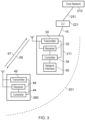
- the DU 211 comprises, as a simplified representation, a transmitter 30, a receiver 32 and a controller or controlling processor 34 which may operate to control the transmitter 30 and the receiver 32 to transmit and receive radio signals to the first communications device 260 within the first cell 201 via a wireless interface comprising an uplink 67 and downlink 66 portion.
- the communications device 260 is shown to include a corresponding transmitter 49, a receiver 48 and a controller 44 which is configured to control the transmitter 49 and the receiver 48 to transmit signals representing uplink data to the wireless communications network via the wireless access interface 66, 67.
- the communications device 260 operates within the coverage of a cell (such as the first cell 201) of a wireless communications network, using communications resources which may be allocated by the wireless communications network (such as by the DU 211 or the CU 221).
- the transmitters 30, 49 and the receivers 32, 48 may include radio frequency filters and amplifiers as well as signal processing components and devices in order to transmit and receive radio signals in accordance for, example, with the 5G/NR standard.
- the transmitters 30, 49 and the receivers 32, 48 are connected to antennas for transmitting and receiving signals on a wireless access interface.
- the controllers 34, 44 may be, for example, a microprocessor, a CPU, or a dedicated chipset, etc., configured to carry out instructions which are stored on a computer readable medium, such as a nonvolatile memory.
- the processing steps described herein may be carried out by, for example, a microprocessor in conjunction with a random access memory, operating according to instructions stored on a computer readable medium.
- the transmitters, receivers and controllers are schematically shown in Figure 3 as separate elements for ease of representation. However, it will be appreciated that the functionality of these elements can be provided in various different ways, for example using one or more suitably programmed programmable computer(s), or one or more suitably configured application-specific integrated circuit(s) / circuitry / chip(s) / chipset(s). As will be appreciated the infrastructure equipment 260 will in general comprise various other elements associated with its operating functionality.
- the DU 211 also includes a network interface 50 which connects to the CU 221 via a physical interface 16.
- the network interface 50 therefore provides a communication link for data and signalling traffic from the DU 211 via the CU 221 to the core network 210.
- the network interface of the CU provides connectivity via interfaces 251, 16 to the core network 210 and DU 211 respectively.
- the controller of the CU 221 may be, for example, a microprocessor, a CPU, or a dedicated chipset, etc., configured to carry out instructions which are stored on a computer readable medium, such as a nonvolatile memory.
- the processing steps described herein may be carried out by, for example, a microprocessor in conjunction with a random access memory, operating according to instructions stored on a computer readable medium.
- Enhanced Mobile Broadband (eMBB) services are characterised by high capacity with a requirement to support up to 20 Gb/s.
- the requirements for Ultra Reliable & Low Latency Communications (URLLC) services are for a reliability of 1 - 10 -5 (99.999 %) or higher for one transmission of a 32 byte packet with a user plane latency of 1 ms [3]. In some scenarios, there may be a requirement for a reliability of 1 - 10 -6 (99.9999 %) or higher with either 0.5ms or 1ms of user plane latency.
- Massive Machine Type Communications (mMTC) is another example of a service which may be supported by NR-based communications networks.
- systems may be expected to support further enhancements related to Industrial Internet of Things (IIoT) in order to support services with new requirements of high availability, high reliability, low latency, and in some cases, high-accuracy positioning.
- IIoT Industrial Internet of Things
- Industrial automation, energy power distribution and intelligent transport systems are examples of new use cases for Industrial Internet of Things (IIoT).
- IIoT Industrial Internet of Things
- the system may involve different distributed components working together. These components may include sensors, virtualized hardware controllers and autonomous robots, which may be capable of initiating actions or reacting to critical events occurring within a factory and communicating over a local area network.
- the UEs in the network may therefore be expected to handle a mixture of different traffic, for example, associated with different applications and potentially different quality of service requirements (such as maximum latency, reliability, packet sizes, throughput).
- Some messages for transmission may be time sensitive and be associated with strict deadlines and the communications network may therefore be required to provide time sensitive networking (TSN) [6].
- TSN time sensitive networking
- URLLC services are required in order to meet the requirements for IIoT, which require high availability, high reliability, low latency, and in some cases, high-accuracy positioning [1].
- Some IIoT services may be implemented by using a mixture of eMBB and URLLC techniques, where some data is transmitted by eMBB and other data is transmitted by URLLC.
- Data generated by an application associated with a first device is typically for transmission to a corresponding application in a different device.
- an application running on a processor of a communications device may generate data for transmission to a peer application running on a processor within a corresponding device.
- the corresponding device may be for example a server within, or accessible via, the core network.
- TCP Transmission Control Protocol
- TCP data sequence numbering associated with transmitted data
- acknowledgement mechanisms so that a recipient of data can indicate to the transmitter which data has been successfully received.
- TCP operates in conjunction with a version of the Internet Protocol (IP).
- IP Internet Protocol
- Data transmitted using TCP is transmitted with a TCP header.
- TCP operates in a connection-based approach, where connections are established and maintained between peer entities. Connections permit bi-directional data transfer, so that a TCP header associated with TCP data transmitted in one direction between corresponding devices may include control information (such as acknowledgement information) in respect of TCP data previously transmitted in the opposite direction using the same connection.
- control information such as acknowledgement information
- standalone TCP control packets that is, IP packets containing TCP-related fields, but no TCP data received from an application or protocol higher than TCP
- TCP protocol may be generated in accordance with the TCP protocol in order to indicate, for example, the acknowledgement status of previously received TCP data.
- TCP headers and TCP control packets may be conventionally treated as 'user data' by lower layer protocols. That is, lower layer protocols may not distinguish between TCP control packets and packets containing TCP data.
- Each byte of TCP data is assigned a sequence number (which may be shared among a number of consecutive bytes in some implementations).
- a TCP header indicates the sequence number of the first byte of TCP data in the packet.
- the receiver of TCP data acknowledges the receipt of TCP data by transmitting an acknowledgement indication as a TCP control packet or as a TCP header field, comprising an indication of the sequence number of the next expected byte of TCP data.
- TCP ACK TCP acknowledgement
- the sender receives multiple TCP ACK indications indicating the same next expected sequence number this is likely an indication that data (including at least the data having the indicated next expected sequence number) has not been received by the receiver but that some data having a higher sequence number has been received.
- the receiver may transmit a selective acknowledgement indicating one or more ranges of data that has not yet been received. For example if, after receiving data having sequence numbers 4000-4999, the receiver receives data having sequence numbers 6000-6499, and data having sequence numbers 7000-7499 then it may transmit a TCP selective ACK to indicate that data from 5000-5999 and 6500-6999 is missing. This can improve performance since the sender can identify which data has or has not been correctly received.
- a negative acknowledgement indication Any indication that, in accordance with conventional TCP specifications, allows a sender of TCP data to determine that data that has been transmitted has not been successfully received by the intended recipient is referred herein to a negative acknowledgement indication.
- a negative acknowledgement indication may also be a 'positive' acknowledgement indication, insofar as it indicates that all data up to the next expected sequence number has been successfully received.
- a TCP selective ACK is an example of a negative acknowledgement indication.
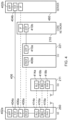
- Figure 4 illustrates schematically an example of interaction between TCP and a selection of lower layer protocols in the context of the network of Figure 2 .
- An entity of an application 402a running on the communications device 260 generates data for transmission to a peer application entity 402b running at an endpoint such as on a server 480.
- the communications device 260 and server 480 each support TCP and, as the data is required to be transmitted reliably and in order, TCP protocol entities 404a, 404b running on the communications device 260 and server 480 are used.
- data generated by the application entity 402a is processed by the TCP entity 404a. That is, it is assigned sequence numbers corresponding to bytes of the application data, and a TCP header is associated with the application data.
- the TCP data may comprise acknowledgement information regarding previous data received at the communications device's TCP protocol entity 400a using the TCP connection 406.
- the combined TCP header and data is then passed to an IP protocol entity 406a in which an IP address associated with the communications device 260 is added as a source address, and an IP address associated with the server 480 is added as a destination address.
- IP protocol entity 406a may be integrated with the TCP protocol entity 404a).
- NAS non access stratum
- AS access stratum
- LTE and 5G/NR networks (including the core network parts) provide IP connectivity and thus can permit IP packets to be transmitted.
- the following steps (and embodiments described herein) are described with reference to a 5G/NR network, however it will be appreciated that the principles may apply to other wireless communications systems.
- AS access stratum
- the AS protocol entities include a packet data convergence protocol (PDCP) entity 408a.
- a peer PDCP entity 408b is located within the CU 221; accordingly, the CU 221 is an example of an AS infrastructure equipment.
- the PDCP protocol may provide, for example, header compression functionality to reduce the quantity of information to be transmitted via the wireless access interface and security functions to protect the confidentiality of the data. Accordingly, the IP and TCP headers generated by the IP protocol entity 406a and the TCP protocol entity 404a may be compressed.
- a PDCP entity (such as the PDCP entity 408a) may form a PDCP header which is associated with (and transmitted together with) the data received from the IP protocol entity 406a.
- a peer PDCP entity (such as the PDCP entity 408a) which receives data having a PDCP header may remove the PDCP header, perform header decompression, and pass the resulting IP packet to the IP protocol entity 406a.
- RLC radio link control
- MAC medium access control
- PHY physical layer
- Received PDCP protocol data units are formed at the DU's RLC entity 414b based on data transmitted over the wireless access interface, and forwarded via a backhaul link 420 to the CU 221.
- the IP packet is formed by removing the PDCP header and applying any applicable header decompression and security functions.
- the IP packet is transmitted to the core network 210 using an appropriate backhaul protocol, such as general packet radio service (GPRS) tunnelling protocol (GTP).
- GTP general packet radio service tunnelling protocol
- the CU 221 and core network 210 may have peer GTP entities 410a, 410b responsible for transmitting IP packets to and from the core network 210 via a GTP connection 412.
- the core network 210 routes the IP packet based on its destination IP address to the server 480.
- the server 480 may be within the core network 210, may be directly connected to the core network 210, or may be reached from the core network 210 via one or more intermediate networks, such as the Internet. Examples and embodiments disclosed herein are not limited to a particular network topology in respect of the relative location of the server 480 and core network 210.
- the TCP entity 404b processes the TCP packet and updates state information regarding the acknowledgement status of data associated with the TCP connection 406.
- the TCP header is removed and the resulting data is passed to the application 402b.
- Data generated by the application 402b at the server 480 for transmission to the communications device 260 may be processed in, substantially, the reverse manner.
- data generated at the application 402b in the server 480 is referred to as 'downlink data'
- data generated at the application 402a in the communications device 260 is referred to as 'uplink data'.
- a significant portion of downlink transmissions on the wireless access interface may comprise TCP control packets.
- a method of receiving downlink data associated with an end-to-end connection between a communications device and an endpoint by an non-access stratum infrastructure equipment in a wireless communications network comprising a core network, the access stratum infrastructure equipment and another access stratum infrastructure equipment, the access stratum infrastructure equipment connected to the core network and to the other access stratum infrastructure equipment, the other access stratum infrastructure equipment, providing a wireless access interface, wherein the wireless access interface is for the transmission of data to and the reception of data from the communications device and the downlink data is for transmission to the communications device.
- the method comprising: determining a round trip time between the communications device and the endpoint, the round trip time comprising a total time from the transmission of data by the communications device using the end-to-end connection to the reception by the communications device of an acknowledgement indication transmitted by the endpoint in response to receiving the data, transmitting an indication of the determined round trip time to the other access stratum infrastructure equipment for transmission to the communications device, receiving the downlink data from the core network, determining that the downlink data comprises a positive acknowledgement indication generated in accordance with an end-to-end protocol providing reliable, in-order delivery of data, the positive acknowledgement indication indicating that uplink data associated with the end-to-end connection transmitted by the communications device has been successfully received at the endpoint, and in response to determining that the downlink data comprises the positive acknowledgement indication, determining that one or more discard criteria are met, the one or more discard criteria comprising a criterion that the positive acknowledgement indication generated in accordance with the end-to-end protocol is not a duplicate of a previous positive acknowledgement indication generated in accord
- Embodiments of the present technique can reduce the amount of bandwidth or communications resources on the wireless access interface required for the transmission of control information associated with the end-to-end protocol, in particular when the quantity of user data (i.e. that which may be received by the respective protocol entities from an application or other higher layer protocols) in the uplink is significantly greater than that sent in the downlink. Accordingly, communications resources on a wireless access interface can be more efficiently used.
- the CU is enhanced to identify TCP control information received from the core network associated with an end-to-end TCP connection and to selectively discard TCP control information.
- TCP acknowledgement (ACK) information is discarded and not forwarded to the DU for transmission to the communications device.
- TCP control information is generated at a protocol entity lower than the TCP protocol entity and passed to the TCP entity, so as to appear to have been transmitted originally by the endpoint (such as the server 480).
- the TCP protocol entity at the communications device receives sufficient acknowledgement information to ensure that a high rate of data transmission towards the server can be maintained, while the quantity of TCP control information transmitted in the downlink from the DU to the communications device is reduced compared with conventional techniques.
- Figure 5 illustrates a message sequence chart in accordance with embodiments of the present technique.
- Figure 5 shows the communications device 260, CU 221 and server 480 as described above in respect of Figure 4 .
- Transmissions are shown at the PDCP layer between the communications device 260 and the CU 221.
- PDCP transmissions comprise a transmission of data via a DU such as the DU 211 of Figure 4 , and in particular, using the appropriate access stratum protocols, via the wireless access interface provided by the DU.
- the details of these lower layer protocols are not important to the principles of the present disclosure and are omitted for conciseness.
- the details of the transmission of TCP segments from the CU 221 to the server 480 are omitted for conciseness.
- IP protocol entities are assumed to be integrated with respective TCP entities and IP layer functions are assumed to be incorporated within the TCP protocol entities.
- references to TCP segment, TCP header, etc. refer to the TCP segment encapsulated in an IP packet and the combination of TCP header and IP header, respectively).
- the sequence in Figure 5 assumes that a TCP connection is already established between the TCP protocol entities 404a, 404b in the communications device 260 and the server 480 respectively.
- the associated TCP protocol entities 404a, 404b are referred to as a sending TCP protocol entity and receiving TCP protocol entity, respectively.
- the present disclosure does not preclude that in addition, data is transmitted from the server 480 to the communications device 260 using the established TCP connection.
- the sequence illustrated in Figure 5 starts with a transmission of a TCP segment 504 comprising bytes numbered 5000-5500 from the sending TCP protocol entity 404a to the PDCP entity 406a of the communications device 260.
- the PDCP entity 406a forms one or more PDCP PDUs 502 containing the TCP segment 504 and forwards these to AS protocol entities for transmission via the wireless access interface to the DU 211 and hence to the CU 221.
- the PDCP entity 406a starts a timer of duration T_RTT_MAX_ESTIMATE and stores the sequence number of the highest-numbered byte in the TCP segment 504.
- the PDCP entity 406b of the CU 221 processes the PDCP PDU(s) 502 to extract the TCP segment 504.
- the TCP segment 504 is forwarded via the core network 210 to the server 480.
- the TCP protocol entity 404b of the server 480 In response to receiving the TCP segment 504, the TCP protocol entity 404b of the server 480, having no data to transmit to its peer entity 404a, generates a TCP control segment 506, comprising a TCP ACK indicating that the next byte expected to be received has the sequence number 5501. This is transmitted via the core network 210 to the CU 221.
- the PDCP protocol entity 406b receives the TCP control segment 506.
- the PDCP protocol entity 406b determines that the TCP control segment 506 is in fact a TCP control segment (for example, by inspecting the IP and TCP headers).
- the PDCP protocol entity 406b determines that discard criteria applicable to the TCP control segment 506 are met.
- the PDCP protocol entity 406b discards the TCP control segment 506, and the TCP control segment 506 is not forwarded to the DU 211 for transmission to the communications device 260.
- the timer at the PDCP protocol entity 406a of the communications device 260 expires.
- the PDCP protocol entity 406a generates a TCP ACK 508 which is passed to the TCP protocol entity 404a of the communications device 260.
- the TCP ACK 508 is formatted so as to indicate to the TCP protocol entity 404a that the previous TCP segment 504 was correctly received by the peer TCP protocol entity 404b of the server 480.
- the IP header of the TCP ACK 508 indicates a source address associated with the server 480, and indicates that the next expected sequence number is one greater than the highest sequence number of the TCP segment 504.
- the TCP ACK 508 is substantially identical to the TCP ACK 506 discarded by the CU 221.
- the TCP protocol entity 404a Based on the reception of the TCP ACK 508, the TCP protocol entity 404a updates its transmit window accordingly. In accordance with conventional TCP procedures, the TCP protocol entity 404a may transmit further data (such as second TCP segment 510).
- the sending TCP protocol entity 404a may have multiple TCP segments 'in flight' - that is, segments which have been passed to lower layers for transmission but for which no positive acknowledgement has been received.
- the PDCP protocol entity 406a may have multiple instances of the timer which are concurrently running, each associated with a TCP segment and sequence number. When an instance of the timer expires, a corresponding TCP ACK is generated and passed to the sending TCP protocol entity 404a
- TCP operates using a transmit window which limits the amount of TCP data which can be 'in flight' at any given time.
- TCP ACKs are generated by the PDCP protocol entity 406a at the communications device 260 and are passed to the sending TCP protocol entity 404a. This ensures that the sending TCP protocol entity 404a is able to advance its transmit window and does not stall its transmissions due to an absence of TCP ACKs, even though the CU 221 is discarding TCP ACKs generated by the server 480.
- the rate at which data may be transmitted in accordance with the TCP protocol by the communications device 260 is not substantially reduced compared with a conventional technique in which all TCP control information is forwarded by the CU 221.
- discard criteria are applied at the CU 221 in order to selectively forward certain TCP control data in order to avoid a 'false positive' ACK at the communications device 260 - that is, a scenario in which the sending TCP protocol entity 404a incorrectly determines that previously-transmitted TCP data has been received at the receiving TCP protocol entity 404b.
- a duplicate TCP ACK - that is, one which indicates a next-expected sequence number which is the same as that indicated by a previous TCP ACK - is not to be discarded, but to be forwarded to the DU.
- the sending TCP protocol entity may receive duplicate ACKs: one generated by the PDCP entity 406a at the expiry of the appropriate timer, and a second forwarded from the CU 221 via the DU 211.
- the sending TCP protocol entity 404a may initiate a retransmission of data.
- a TCP selective ACK is never discarded.
- a TCP selective ACK indicates that the receiving TCP protocol entity 404b has determined that at least some TCP data has been transmitted by the sending TCP protocol entity 404a but not yet been received. For example this may be because data has been received out-of-order.
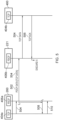
- FIG. 8 illustrates a sequence of transmissions of TCP data and acknowledgements in accordance with embodiments of the present disclosure, which illustrates how a duplicate TCP ACK may be detected and processed.
- TCP data and control information is shown, although it will be appreciated that other signalling and headers associated with lower layer protocols will be transmitted, which may for example be broadly in accordance with conventional techniques.
- the process starts at step S802 with the transmission of a TCP data segment containing data bytes numbered 1 to 4, denoted by [TCP 1:4] in Figure 8 .
- This is forwarded at step S804 by the UE PDCP protocol entity 406a via the wireless access interface and the DU 211 to the CU PDCP protocol entity 406b.
- a timer T1 is started by the UE PDCP protocol entity 406a.
- the CU PDCP protocol entity 406b forwards the TCP data bytes 1-4 via the core network (not shown) to the receiving TCP entity 404b at step S806.
- the receiving TCP entity 404b In response, the receiving TCP entity 404b generates a TCP acknowledgement, indicating that the next expected TCP data has sequence number 5. This is denoted by [ACK 5] in Figure 8 .
- the TCP ACK is transmitted at step S808 to the CU 211 where it is processed by the CU PDCP entity 406b at step S810.
- the CU PDCP entity 406b determines at step S810 that the data comprises only TCP acknowledgment information, and that it satisfies any other applicable discard criteria. Accordingly, the TCP ACK is discarded, as indicated by the 'x' in Figure 8 .
- the timer T1 expires and in response, at step S812, the UE PDCP entity 406a generates a TCP acknowledgement indicating that the the next expected TCP data has sequence number 5, and passes this to the sending TCP protocol entity 404a.
- the sending TCP protocol entity 404a determines that TCP data bytes 1-4 have been received correctly, while no communications resources of the wireless access interface have been used in respect of the acknowledgement.
- TCP segments comprising data bytes 5-10, 11-15, and 16-20 respectively are generated by the TCP protocol entity 404a at the UE 260 and passed to the PDCP protocol entity 406a.
- the TCP segments are transmitted via the wireless access interface from the UE 260 to the CU 221 and are accordingly received at the CU PDCP protocol entity 406b.
- timers T2, T3 and T4 are started when the respective TCP segments are passed by the PDCP protocol entity 406b to lower layer protocols (e.g. the RLC protocol entity 414a) for transmission.
- the TCP segments are transmitted via the core network to the receiving TCP protocol entity 404b.
- the TCP segment comprising data bytes 11-15 does not arrive at the receiving TCP protocol entity 404b.
- the loss is shown as occurring between the CU 221 and the receiving TCP protocol entity 404b, it is not important where or how the packet is lost, after it has been transmitted by the UE 260.
- the receiving TCP protocol entity 404b In response to receiving the TCP segment comprising data bytes 5-10, the receiving TCP protocol entity 404b generates and transmits at step S832 TCP ACK 11 - i.e. an acknowledgement indicating that the next expected byte is numbered 11.
- the receiving TCP protocol entity 404b in response to receiving the TCP segment comprising data bytes 16-20, the receiving TCP protocol entity 404b generates and transmits at step S836 TCP ACK 11. This is because although bytes 16-20 have been received, these have not been received in order and the next in-sequence byte expected is still that numbered 11.
- the CU PDCP protocol entity 406b processes the first ACK 11 and discards it. However, at step S838, the CU PDCP protocol entity 406b processes the second ACK 11 and determines that it is a duplicate of a previously received TCP ACK. Accordingly, the discard criteria are not satisfied and the second TCP ACK 11 is forwarded at step S840 to the DU 211 and onwards via the wireless access interface to the UE 260.
- a TCP ACK 11 is generated at forwarded to the sending TCP protocol entity 404a.
- the TCP ACK 11 forwarded by the CU 221 at step S840 is received by the UE PDCP protocol entity 406a and forwarded to the sending TCP protocol entity 404a at step S844.
- the sending TCP protocol entity 404a receives two TCP ACKs, both indicating that the next expected data (to be received by the receiving TCP protocol entity 404b) has sequence number 11.
- the sending TCP protocol entity 404a determines at step S846 that duplicate acknowledgements have been received and that previously transmitteddata has been either lost or received out of order.
- the sending TCP protocol entity 404a accordingly retransmits the data segment comprising bytes 11-15 at step S848, which is forwarded to the CU 221 in step S850 and further to the receiving TCP protocol entity 404b at step S852.
- the UE PDCP protocol entity 406a determines that the expiry of timers T3 and T4 (i.e. those which correspond to the transmission of higher-numbered TCP data) is not to result in the generation of a TCP ACK to be forwarded to the sending TCP protocol entity 404a.
- the timers T3 and T4 are cancelled in response to the receipt of the TCP ACK 11 at step S840.
- the sending TCP protocol entity 404a does not incorrectly determine that TCP data has been received correctly and in-order by the receiving TCP protocol entity 404b.
- steps shown in Figure 8 may occur in a different sequence (for example, the transmission of the first ACK 11 at step S832 may occur before the receipt of the TCP data 16-20). It will also be appreciated that some subsequent and preceding steps (such as the establishment of the TCP connection, and subsequent acknowledgement and data transmissions) have been omitted for conciseness.
- timers at the UE PDCP protocol entity 406a are sufficiently long to ensure that duplicate acknowledgements forwarded by the CU 221 are received prior to the expiry of timers associated with data having a higher sequence number, in order to ensure that the sending TCP entity 404a does not discard from its transmit buffer data which has been lost.
- timers are set such that any selective ACK is received before any timer associated with data that can be indicated as missing by the selective ACK expires, in order to prevent the generation by the UE PDCP protocol entity 406a of a TCP ACK indication which will prevent any retransmission of lost data.
- the CU 221 maintains TCP connection identification information and TCP connection state information associated with the TCP connection.
- the TCP connection identification information may comprise IP addresses and port numbers used for IP packets carrying TCP data associated with the TCP connection.
- the next received TCP control packet is forwarded to the DU.
- the TCP connection state information may comprise a number of consecutively discarded TCP control data packets associated with the connection, which may be reset to zero when a TCP control data packet is forwarded to the DU.
- TCP control data is determined not to satisfy the discard criteria because it indicates (or may indicate) that TCP data has not been received (i.e. comprises negative acknowledgement information), and thus is forwarded to the DU, then subsequent TCP control data is also forwarded to the DU. For example, a predetermined number of packets containing TCP control data which are received by the CU after the forwarded TCP control data comprising the negative acknowledgement information is forwarded to the DU, irrespective of their contents.
- the TCP connection state information may comprise a number of consecutively forwarded TCP control data packets since a most recent TCP control data did not satisfy the criteria for forwarding.
- the duration of the timer used by the PDCP protocol entity 406a is set to an estimate of a communications device-server round-trip time, that is, the time from the transmission of data by the communications device 260 until the reception of a TCP ACK transmitted by the server 480 in response to receiving the data.
- the communications device-server round-trip time is estimated by the communications device based on TCP control data generated by the server 480 which is forwarded by the CU 221 and not discarded.
- TCP control data packets associated with the TCP connection are forwarded by the CU 221 to the DU 211.
- TCP control data packets associated with the TCP connection are forwarded by the CU 221 to the DU 211.
- TCP control data packets may be forwarded for a predetermined duration, or until a predetermined number of TCP control data packets have been forwarded.
- the communications device 260 determines the communications device-server round-trip time based on one or more indications transmitted by the CU 221 to the communications device 260.
- the indications may comprise measurements (or statistics thereof) of a CU-server round-trip delay between the CU 221 and the server 480.
- the CU 221 may estimate or measure a CU-server round-trip delay between the CU 221 and the server 480, based on transmitted TCP data and received TCP ACKs associated with the TCP connection.
- the CU 221 and/or the communications device may estimate or measure a communications device-CU round trip time.
- the CU 221 may transmit an indication to the communications device 260 an average, maximum and/or minimum communications device-CU round-trip delay. Alternatively, the CU 221 may estimate, based on measurements of the CU-server round-trip delay and of the communications device-CU round-trip delay, the communications device-server round trip delay.
- the communications device 260 may thus determine communications device-server round-trip time based on measurements or indications of the communications device-CU round-trip delay combined with an indication of the CU-server round-trip delay. Alternatively, the communications device may receive an indication of an estimated communications device-server round-trip time transmitted by the CU.
- the communications device 260 may set the timer based on the determined communications device-server round-trip time. Any TCP control data which may indicate that data has not been received by the server 480 must be received by the communications device before the communications device generates a TCP ACK indicating that the data has been successfully received is generated in response to the expiry of the timer. Accordingly, the timer must not be set to a duration less than the minimum communications device-server round-trip time, and should preferably be set to a maximum communications device-server round-trip time (taking into account, for example, variation in scheduling delays, congestion, which may be applicable to either the TCP segment or to the TCP control data).
- the communications device 260 may determine a range of the communications device-server round-trip time. In some embodiments, the communications device 260 sets the timer to expire after a time period equal to the highest time period in the range.
- Indications of round trip times transmitted by the CU 221 to the communications device 260 may be within a PDCP control PDU, generated by the PDCP protocol entity 408b of the CU 221 and received and processed by the PDCP protocol entity 408a of the communications device 260.
- the indications of the round trip times transmitted by the CU 221 to the communications device 260 may be within a PDCP data PDU.
- indications of round trip times transmitted by the CU 221 to the communications device 260 may be within a radio resource control (RRC) configuration message.
- RRC radio resource control
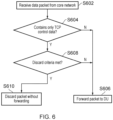
- Figure 6 illustrates a flow chart for a process carried out by the CU 221 (in particular, for example, by the PDCP protocol entity 404b of the CU 221) in accordance with embodiments of the present technique.
- the process starts at step S602 when the CU 221 receives from the core network data for transmission to the communications device 260.
- the CU 221 may determine that the data is for transmission to the communications device 260 based on a GTP header associated with the data.
- step S604 the CU 221 determines whether the data comprises solely TCP acknowledgement information. If not (i.e., the data comprises data generated at an application or protocol layer above the TCP layer or the data is not associated with a TCP connection and does not have a TCP header), then control asses to step S606.
- step S606 the data is processed by the PDCP protocol entity 404b in accordance with conventional techniques, and transmitted via a backhaul connection to the DU 211, for transmission to the communications device 260.
- step S604 determines that the data comprises only TCP acknowledgement information
- step S608 the CU 221 determines whether the TCP acknowledgement information satisfies one or more discard criteria, as will be described in more detail below with respect to Figure 7 .
- Figure 7 illustrates a flow chart for a process carried out by the CU 221 (in particular, for example, by the PDCP protocol entity 404b of the CU 221) in accordance with embodiments of the present technique.
- the process illustrated in Figure 7 may correspond to the evaluation at step S608 of the process illustrated in Figure 6 and described above.
- the process starts at step S702.
- the process is applied in respect of data received from the core network, for transmission to the communications device 260, the data comprising TCP control information.
- Control passes to step S704.
- step S704 it is determined if the data comprises negative acknowledgement information. That is if, according to the TCP protocol, receipt of the data could lead at the sending TCP protocol entity to an inference (either directly, or in combination with other TCP control data) that data has been lost and/or received out of order by the receiving TCP protocol entity.
- a TCP Selective ACK may lead to the inference that a portion of data has not been received correctly by the receiving TCP protocol entity; therefore, if the TCP data comprises a TCP Selective ACK, the data comprises negative acknowledgement information.
- the other TCP control data may include TCP control data which will be, or has been, generated by the PDCP protocol entity at the UE in accordance with embodiments of the present disclosure.
- TCP control data which will be, or has been, generated by the PDCP protocol entity at the UE in accordance with embodiments of the present disclosure.
- a positive acknowledgement indicating that byte 'N' is the next in sequence data byte expected may not comprise negative acknowledgement information
- a second positive acknowledgement also indicating byte 'N' is the next in sequence data byte expected may comprise negative acknowledgement information.
- a duplicate TCP ACK may indicate that certain data has not been correctly received.
- a second (or subsequent) TCP ACK having a same 'next expected' byte indication as a previous TCP ACK may comprise negative acknowledgement information.
- step S704 If at step S704 it is determined that the data does not comprise negative acknowledgement information, then control passes to step S708.
- step S708 it is determined if a counter indicating a number of consecutively received TCP control data packets that have been discarded and not forwarded to the DU exceeds a predetermined maximum discard count threshold. If it is determined that the counter exceeds the maximum discard count threshold, then control passes to step S706 and the counter is reset. Otherwise, control passes to step S710 and the counter is incremented.
- step S710 it is determined i) if previously received data was forwarded to the DU because it comprised negative acknowledgement information, and ii) if the minimum forwarding count counter indicating a number of consecutively forwarded TCP control data packets since the most recently forwarded data satisfying requirement i) does not exceed a predetermined minimum forwarding count threshold. If these requirements are both satisfied, then control passes to step S706 and the minimum forwarding count counter is incremented by one, otherwise control passes to step S712.
- step S712 it is determined whether a number of data packets (or in some embodiments, TCP control data packets) originating at the sending TCP protocol entity and associated with the present TCP connection have been forwarded to the DU for transmission to the communications device exceeds a predetermined RTT determination forwarding count threshold. If the number of packets does not exceed the predetermined RTT determination forwarding count threshold, then control passes to step S706, otherwise control passes to step S714.
- step S706 it is determined that the discard criteria are not satisfied, and therefore that, according to the discard criteria, the TCP control information should be forwarded to the DU.
- step S714 it is determined that the discard criteria are satisfied, and therefore that, according to the discard criteria, the TCP control information should not be forwarded to the DU, but should be discarded.
- the process illustrated in Figure 7 may be used to evaluate the discard criteria at step S608 of the process of Figure 6 .
- This step ensures that the communications device 260 receives a proportion of TCP control data packets originating at the receiving TCP protocol entity.
- the predetermined maximum discard count threshold is fixed according to standards specifications.
- the predetermined maximum discard count threshold may be set to 24, so that (at least) every 25 th TCP control packet received at the CU from the core network is forwarded to the communications device 260.
- the predetermined maximum discard count threshold is configured by the wireless communications network. In some embodiments, the predetermined maximum discard count threshold is adapted based on previously collected data associated with a service (which may be identified by a port number and/or IP address associated with the server 480 or from quality of service (QoS) flow information present in a service data adaptation protocol (SDAP) layer header, or a combination of above). In some embodiments, an SDAP protocol entity within the CU 221 may provide an indication of the QoS flow information to the PDCP entity 406b of the CU 221.
- QoS quality of service
- SDAP service data adaptation protocol
- TCP control data is not discarded if the RTT determination forwarding count threshold has not been met i.e. a number of TCP control data packets forwarded by the CU to the DU has not yet passed a threshold.
- the discard criteria are adaptively modified, for example based on one or more of a quantity of data transmitted using the TCP uplink, an assessment of radio conditions applicable to transmissions between the DU 211 and the communications device 260, sequence numbers indicated as not having being received by the receiving TCP protocol entity, and such like.
- the predetermined maximum discard count threshold is increased in response to a determination that a rate of data transmitted using the TCP connection exceeds a predetermined threshold.
- all TCP control data may be forwarded to mitigate the effect of a negative acknowledgement and corresponding subsequent TCP slow start process.
- the CU 221 may determine that wireless access interface criteria based on radio measurements associated with the wireless access interface between the DU 211 and the communications device 260 are satisfied, and in response, determine that the discard criteria cannot be satisfied (i.e. that all TCP control data is to be forwarded to the DU 211 for transmission to the communications device 260).
- the wireless access interface criteria may generally be satisfied if relatively poor performance of the radio link between the DU and the communications device is being (or is likely to be) experienced.
- the wireless access interface criteria may be based on one or more of radio measurements, such as Reference Signal Received Power (RSRP) / Reference Signal Received Quality (RSRQ) / signal to interference and noise ratio (SINR) measurements, statistics related to a number of RLC retransmissions or hybrid automatic repeat request (HARQ) retransmissions required for correct reception of data transmitted via the wireless access interface, and measured error rates, such as block error rate or bit error rate.
- RSRP Reference Signal Received Power
- RSRQ Reference Signal Received Quality
- SINR signal to interference and noise ratio
- HARQ hybrid automatic repeat request
- the wireless access criteria may be satisfied if the average block error rate, measured over the last three seconds in respect of data transmitted by the communications device 260 and received at the DU 211 exceeds 15%.
- the determination that the wireless access criteria are satisfied may comprise receiving an indication of the measurements from the DU 211 and/or from the communications device 260.
- the DU 211 and/or the communications device 260 may determine that the wireless access interface criteria are met and transmit an indication that the wireless access interface criteria are met to the CU 221.
- the discard criteria may be based on a rate of detected negative acknowledgement indications. For example, where three or more negative acknowledgment indications are detected in respect of a TCP connection within one second, the CU 221 may determine that the discard criteria cannot be satisfied (irrespective of any other criteria being satisfied) so that all TCP control data is forwarded to the DU 211.
- TCP ACK may be generated by the PDCP protocol entity 406a at the communications device 260.
- PDCP protocol entities assign a sequence number to each PDCP PDU in order to permit in-order delivery of data within received PDCP PDUs to upper protocol layers.
- PDCP sequence numbers are assigned to TCP control data packets which are discarded by the CU's PDCP protocol entity 406b; similarly, the communications device 260 assigns PDCP sequence numbers to TCP ACKs which are generated in response to timer expiry. Accordingly, the PDCP protocol entity in the communications device 260 is able to process any forwarded TCP control data packets based on the sequence number taking into account PDCP PDUs which were not actually transmitted.
- negative acknowledgement information forwarded by the CU to the UE is associated with a PDCP sequence number.
- the CU PDCP protocol entity 406b may pre-emptively ('blindly') retransmit the negative acknowledgement information, using the same PDCP sequence number.
- the UE PDCP protocol entity 406a may detect duplicate transmissions of negative acknowledgement information based on the PDCP sequence number and accordingly discard duplicate negative acknowledgement information.
- PDCP sequence numbers are not assigned to discarded TCP control data packets. Although this may introduce some additional latency (because intermediate TCP ACKs will be generated only once the corresponding timer has expired), this simplifies the processing at both PDCP entities.
- the TCP protocol entity 404a is shown as being implemented within the communications device 260. However, the present disclosure is not so limited, and the TCP protocol entity 404a may be within a discrete device connected to the communications device 260 by a wired connection (e.g. USB), or by a short-range wireless communications link using e.g. Bluetooth, or Wi-Fi direct.
- a wired connection e.g. USB
- a short-range wireless communications link e.g. Bluetooth, or Wi-Fi direct.
- the TCP connection may be operated by the respective endpoints in accordance with various well-known modifications and variations to the TCP protocol, for example involving the use of delayed acknowledgements according to RFC 1122 [7].
- the end-to-end protocol providing reliable, in-order delivery is the TCP protocol.
- the scope of the present disclosure is not so limited.
- the Quick User Datagram Protocol (UDP) Internet Connections (QUIC) protocol may be used in some embodiments, in particular where the QUIC packets are not encrypted.
- the negative acknowledgement indication may comprise a QUIC NACK control packet.
- the wireless communications network comprising a core network, the access stratum infrastructure equipment and another access stratum infrastructure equipment, the access stratum infrastructure equipment connected to the core network and to the other access stratum infrastructure equipment, the other access stratum infrastructure equipment providing a wireless access interface, wherein the wireless access interface is for the transmission of data to and the reception of data from the communications device and the downlink data is for transmission to the communications device, the method comprising: determining a round trip time between the communications device and the endpoint, the round trip time comprising a total time from the transmission of data by the communications device using the end-to-end connection to the reception by the communications device of an acknowledgement indication transmitted by the endpoint in response to receiving the data, transmitting an indication of the determined round trip time to the other access stratum infrastructure equipment for transmission to the communications device, receiving the downlink data from the core network, determining that the downlink data comprises
- a method for transmitting uplink data associated with an end-to-end connection to an endpoint by a communications device in a wireless communications network comprising a first access stratum infrastructure equipment connected to a core network, and a second access stratum equipment providing a wireless access interface and connected to the first access stratum infrastructure equipment, the method comprising determining an estimated maximum round-trip time, the maximum round trip time comprising a total time from the transmission of data by the communications device using the end-to-end connection to the reception by the communications device of an acknowledgement indication transmitted by the endpoint in response to receiving the data, transmitting via the wireless access interface the uplink data in accordance with an end-to-end protocol providing reliable, in-order delivery of data, wherein the end-to-end connection was established in accordance with the end-to-end protocol, determining that a timer started upon transmission of the data and being associated with the estimated maximum round-trip time has passed since transmitting the data, in response to determining that the estimated maximum round-trip time has expired, in
- predetermined / predefined information may in general be established, for example, by definition in an operating standard for the wireless telecommunication system, or in previously exchanged signalling between the base station and communications devices, for example in system information signalling, or in association with radio resource control setup signalling, or in information stored in a SIM application. That is to say, the specific manner in which the relevant predefined information is established and shared between the various elements of the wireless telecommunications system is not of primary significance to the principles of operation described herein.
Landscapes
- Engineering & Computer Science (AREA)
- Signal Processing (AREA)
- Computer Networks & Wireless Communication (AREA)
- Computer Security & Cryptography (AREA)
- Environmental & Geological Engineering (AREA)
- Physics & Mathematics (AREA)
- Algebra (AREA)
- General Physics & Mathematics (AREA)
- Mathematical Analysis (AREA)
- Mathematical Optimization (AREA)
- Mathematical Physics (AREA)
- Probability & Statistics with Applications (AREA)
- Pure & Applied Mathematics (AREA)
- Mobile Radio Communication Systems (AREA)
Claims (13)
- Verfahren zum Empfangen von Downlink-Daten, die mit einer End-to-End-Verbindung zwischen einer Kommunikationsvorrichtung (260) und einem Endpunkt verknüpft sind, durch eine Zugangs-Stratum-Infrastrukturausrüstung (221) in einem drahtlosen Kommunikationsnetz, wobei das drahtlose Kommunikationsnetz ein Kernnetz (210), die Zugangs-Stratum-Infrastrukturausrüstung und eine weitere Zugangs-Stratum-Infrastrukturausrüstung umfasst, wobei die Zugangs-Stratum-Infrastrukturausrüstung mit dem Kernnetz und der weiteren Zugangs-Stratum-Infrastrukturausrüstung verbunden ist, die andere Zugangs-Stratum-Infrastrukturausrüstung eine drahtlose Zugangsschnittstelle bereitstellt, wobei die drahtlose Zugangsschnittstelle für die Übertragung von Daten zu und den Empfang von Daten von der Kommunikationsvorrichtung dient und die Downlink-Daten für die Übertragung zur Kommunikationsvorrichtung dienen, das Verfahren umfassend:Bestimmen einer Umlaufzeit zwischen der Kommunikationsvorrichtung und dem Endpunkt, wobei die Umlaufzeit eine Gesamtzeit von der Übertragung von Daten durch die Kommunikationsvorrichtung unter Verwendung der End-to-End-Verbindung bis zum Empfang einer Bestätigungsanzeige, die durch den Endpunkt als Reaktion auf den Empfang der Daten übertragen wird, durch die Kommunikationsvorrichtung umfasst,Übertragen einer Anzeige der bestimmten Umlaufzeit an die andere Zugangs-Stratum-Infrastrukturausrüstung zur Übertragung an die Kommunikationsvorrichtung, Empfangen (S602) der Downlink-Daten von dem Kernnetz, Bestimmen (S604), dass die Downlink-Daten eine positive Bestätigungsanzeige umfassen, die gemäß einem End-to-End-Protokoll erzeugt wird, das eine zuverlässige, ordnungsgemäße Zustellung von Daten bereitstellt, wobei die positive Bestätigungsanzeige anzeigt, dass Uplink-Daten, die mit der von der Kommunikationsvorrichtung übertragenen End-to-End-Verbindung verknüpft sind, erfolgreich an dem Endpunkt empfangen wurden, undals Reaktion auf das Bestimmen, dass die Downlink-Daten die positive Bestätigungsanzeige umfassen, Bestimmen (S608), dass ein oder mehrere Verwerfungskriterien erfüllt sind, wobei das eine oder die mehreren Verwerfungskriterien ein Kriterium umfassen, dass die positive Bestätigungsanzeige, die gemäß dem End-to-End-Protokoll erzeugt wird, kein Duplikat einer vorherigen positiven Bestätigungsanzeige ist, die gemäß dem End-to-End-Protokoll erzeugt wurde, und Verwerfen (S610) der Downlink-Daten.
- Verfahren nach Anspruch 1, wobei die Downlink-Daten keine Daten umfassen, die durch eine Anmeldung oder ein Protokoll einer höheren Schicht erzeugt werden, welches das End-to-End-Protokoll verwendet, um eine zuverlässige und geordnete Zustellung dieser Daten sicherzustellen.
- Verfahren nach Anspruch 1, das Verfahren umfassendEmpfangen von Uplink-Daten von der anderen Zugangs-Stratum-Infrastrukturausrüstung, wobei die Uplink-Daten von der Kommunikationsvorrichtung übertragen werden,Bestimmen, dass die Uplink-Daten einen Header umfassen, der gemäß dem End-to-End-Protokoll erzeugt wird, und eine mit den Uplink-Daten verknüpfte Sequenznummer umfassen, undSpeichern der mit den Uplink-Daten verknüpften Sequenznummer.
- Verfahren nach Anspruch 1, das Verfahren umfassendEmpfangen von zweiten Downlink-Daten vom Kernnetz,Bestimmen, dass die zweiten Downlink-Daten eine negative Bestätigungsanzeige umfassen, die gemäß dem End-to-End-Protokoll erzeugt wird und anzeigt, dass mindestens ein Abschnitt von Downlink-Daten, die durch die mit der End-to-End-Verbindung verknüpfte Kommunikationsvorrichtung übertragen werden, nicht erfolgreich an dem Endpunkt empfangen worden ist, undals Reaktion auf das Bestimmen, dass die zweiten Downlink-Daten eine negative Bestätigungsanzeige umfassen, Weiterleiten der zweiten Downlink-Daten an die andere Zugangs-Stratum-Infrastrukturausrüstung zur Übertragung an die Kommunikationsvorrichtung.
- Verfahren nach Anspruch 4, wobei die negative Bestätigungsanzeige eine selektive Bestätigung umfasst, die anzeigt, dass Daten, die mit einem Bereich von Sequenznummern verknüpft sind, nicht empfangen wurden.
- Verfahren nach Anspruch 1, das Verfahren umfassendEmpfangen von dritten Downlink-Daten vom Kernnetz,Bestimmen, dass die dritten Downlink-Daten Daten umfassen, die mit der End-to-End-Verbindung verknüpft sind und durch eine Anmeldung oder ein Protokoll einer höheren Schicht erzeugt werden, das die End-to-End-Verbindung für die Übertragung von Daten verwendet, undbasierend auf dem Bestimmen, dass die dritten Downlink-Daten Daten umfassen, die mit der End-to-End-Verbindung verknüpft sind und durch eine Anmeldung oder ein Protokoll einer höheren Schicht erzeugt werden, das die End-to-End-Verbindung für die Übertragung von Daten verwendet, Weiterleiten der dritten Downlink-Daten an die andere Zugangs-Stratum-Infrastrukturausrüstung zur Übertragung an die Kommunikationsvorrichtung.
- Verfahren nach Anspruch 1, das Verfahren umfassendEmpfangen von vierten Downlink-Daten vom Kernnetz,Bestimmen, dass die vierten Downlink-Daten eine positive Bestätigungsanzeige umfassen, die gemäß dem mit der End-to-End-Verbindung verknüpften End-to-End-Protokoll erzeugt wird, und keine Daten umfassen, die mit der End-to-End-Verbindung verknüpft sind und von einer Anmeldung oder einem Protokoll einer höheren Schicht erzeugt werden, das die End-to-End-Verbindung für die Übertragung von Daten verwendet,Bestimmen, dass die vierten Downlink-Daten vorgegebene Bedingungen für ein Weiterleiten an die Kommunikationsvorrichtung erfüllen, undals Reaktion auf das Bestimmen, dass die vierten Downlink-Daten die vorgegebenen Bedingungen erfüllen, Weiterleiten der vierten Downlink-Daten an die andere Zugangs-Stratum-Infrastrukturausrüstung zur Übertragung an die Kommunikationsvorrichtung.
- Verfahren nach Anspruch 7, wobei die vierten Downlink-Daten die vorbestimmten Bedingungen erfüllen, wenn eine Zeitperiode, seit die aktuellsten Downlink-Daten, die mit der End-to-End-Verbindung verknüpft sind, an die andere Zugangs-Stratum-Infrastrukturausrüstung zur Übertragung an die Kommunikationsvorrichtung weitergeleitet wurden, eine vorbestimmte Zeitperiode überschreitet.
- Verfahren nach Anspruch 7, wobei die vierten Downlink-Daten die vorbestimmten Bedingungen erfüllen, wenn die Anzahl der mit der End-zu-End-Verbindung verknüpften Downlink-Datenpakete, die von der Zugangs-Stratum-Infrastrukturausrüstung verworfen wurden, seit die aktuellsten mit der End-zu-End-Verbindung verknüpften Downlink-Daten an die andere Zugangs-Stratum-Infrastrukturausrüstung zur Übertragung an die Kommunikationsvorrichtung weitergeleitet wurden, einen vorbestimmten maximalen Verwerfungszählschwellenwert überschreitet.
- Verfahren zum Übertragen von Uplink-Daten, die mit einer End-to-End-Verbindung verknüpft sind, zu einem Endpunkt durch eine Kommunikationsvorrichtung (260) in einem drahtlosen Kommunikationsnetz, wobei das drahtlose Kommunikationsnetz eine erste Zugangs-Stratum-Infrastrukturausrüstung (221), die mit einem Kernnetz (210) verbunden ist, und eine zweite Zugangs-Stratum-Ausrüstung umfasst, die eine drahtlose Zugangsschnittstelle bereitstellt und mit der ersten Zugangs-Stratum-Infrastrukturausrüstung verbunden ist, das Verfahren umfassendBestimmen einer geschätzten maximalen Umlaufzeit, wobei die maximale Umlaufzeit eine Gesamtzeit von der Übertragung von Daten durch die Kommunikationsvorrichtung unter Verwendung der End-to-End-Verbindung bis zum Empfang einer Bestätigungsanzeige, die durch den Endpunkt als Reaktion auf den Empfang der Daten übertragen wird, durch die Kommunikationsvorrichtung umfasst,Übertragen der Uplink-Daten über die drahtlose Zugangsschnittstelle gemäß einem End-to-End-Protokoll, das eine zuverlässige, ordnungsgemäße Zustellung von Daten bereitstellt, wobei die End-to-End-Verbindung gemäß dem End-to-End-Protokoll hergestellt wurde,Bestimmen, dass ein Timer, der bei der Übertragung der Daten gestartet wurde und mit der geschätzten maximalen Umlaufzeit verknüpft ist, abgelaufen ist,als Reaktion auf das Bestimmen, dass der Timer abgelaufen ist, Aktualisieren gespeicherter Zustandsinformationen, die mit der End-to-End-Verbindung verknüpft sind, um anzuzeigen, dass die Uplink-Daten erfolgreich am Endpunkt empfangen wurden, indem an einerPaketdatenkonvergenzprotokoll- (Packet Data Convergence Protocol, PDCP) Entität der Kommunikationsvorrichtung Steuerinformationen erzeugt werden, wobei die Steuerinformationen anzeigen, dass die Uplink-Daten erfolgreich am Endpunkt empfangen wurden, die Steuerinformationen gemäß dem End-to-End-Protokoll formatiert sind und das Verarbeiten der Steuerinformationen gemäß dem End-to-End-Protokoll in einer mit der End-to-End-Verbindung verknüpften Protokollentität undÜbertragen von zweiten Uplink-Daten, die mit der End-to-End-Verbindung verknüpft sind, gemäß dem End-to-End-Protokoll und den aktualisierten gespeicherten Statusinformationen.
- Verfahren nach Anspruch 10, das Verfahren umfassendBestimmen, dass, wenn die geschätzte maximale Umlaufzeit seit dem Übertragen der Daten verstrichen ist, keine negative Bestätigungsanzeige empfangen wurde, die anzeigt, dass mindestens ein Abschnitt der Uplink-Daten erfolgreich am Endpunkt empfangen wurde, wobeidas Aktualisieren der gespeicherten Statusinformationen, die mit der End-to-End-Verbindung verknüpft sind, als Reaktion auf das Bestimmen erfolgt, dass keine negative Bestätigungsanzeige empfangen wurde.
- Zugangs-Stratum-Infrastrukturausrüstung (221) zur Verwendung in einem drahtlosen Kommunikationsnetz, wobei das drahtlose Kommunikationsnetz ein Kernnetz (210), die Zugangs-Stratum-Infrastrukturausrüstung und eine weitere Zugangs-Stratum-Infrastrukturausrüstung umfasst, wobei die Zugangs-Stratum-Infrastrukturausrüstung mit dem Kernnetz und der weiteren Zugangs-Stratum-Infrastrukturausrüstung verbunden ist, wobei die weitere Zugangs-Stratum-Infrastrukturausrüstung eine drahtlose Zugangsschnittstelle bereitstellt, wobei die drahtlose Zugangsschnittstelle für die Übertragung von Daten zu und den Empfang von Daten von einer Kommunikationsvorrichtung (260) dient, wobei die Zugangs-Stratum-Infrastrukturausrüstung umfassteine Netzschnittstelle, die konfiguriert ist, um Signale zu der anderen Infrastrukturausrüstung zu übertragen und von dieser zu empfangen und um Signale zu dem Kernnetz zu übertragen und von diesem zu empfangen, undeine Steuerung, die konfiguriert ist, um die Netzschnittstelle zu steuern, so dass die Zugangs-Stratum-Infrastrukturausrüstung betriebsfähig ist zum:Bestimmen einer Umlaufzeit zwischen der Kommunikationsvorrichtung und dem Endpunkt, wobei die Umlaufzeit eine Gesamtzeit von der Übertragung von Daten durch die Kommunikationsvorrichtung unter Verwendung der End-to-End-Verbindung bis zum Empfang einer Bestätigungsanzeige, die durch den Endpunkt als Reaktion auf den Empfang der Daten übertragen wird, durch die Kommunikationsvorrichtung umfasst,Übertragen einer Anzeige der bestimmten Umlaufzeit an die andere Zugangs-Stratum-Infrastrukturausrüstung zur Übertragung an die Kommunikationsvorrichtung,Empfangen von Downlink-Daten zur Übertragung an die Kommunikationsvorrichtung über die drahtlose Zugangsschnittstelle vom Kernnetz,Bestimmen, dass die Downlink-Daten eine positive Bestätigungsanzeige umfassen, die gemäß einem End-to-End-Protokoll erzeugt wird, das eine zuverlässige, ordnungsgemäße Zustellung von Daten bereitstellt, wobei die positive Bestätigungsanzeige anzeigt, dass die von der Kommunikationsvorrichtung übertragenen Uplink-Daten erfolgreich an einem Endpunkt empfangen wurden, wobei die Downlink-Daten mit einer End-to-End-Verbindung zwischen der Kommunikationsvorrichtung und dem Endpunkt verknüpft sind, undals Reaktion auf die Bestimmung, dass die Downlink-Daten die positive Bestätigungsanzeige umfassen,Bestimmen, dass ein oder mehrere Verwerfungskriterien erfüllt sind, wobei das eine oder die mehreren Verwerfungskriterien ein Kriterium umfassen, dass die positive Bestätigungsanzeige, die gemäß dem End-to-End-Protokoll erzeugt wird, kein Duplikat einer vorherigen positiven Bestätigungsanzeige ist, die gemäß dem End-to-End-Protokoll erzeugt wurde, undVerwerfen der Downlink-Daten.
- Kommunikationsvorrichtung (260) zur Verwendung in einem drahtlosen Kommunikationsnetz, wobei das drahtlose Kommunikationsnetz eine erste Zugangs-Stratum-Infrastrukturausrüstung (221), die mit einem Kernnetz (210) verbunden ist, und eine zweite Zugangs-Stratum-Ausrüstung umfasst, die eine drahtlose Zugangsschnittstelle bereitstellt und mit der ersten Zugangs-Stratum-Infrastrukturausrüstung verbunden ist, die Kommunikationsvorrichtung umfassendeinen Sender, der konfiguriert ist, um Uplink-Daten, die mit einer End-to-End-Verbindung verknüpft sind, über die drahtlose Zugangsschnittstelle zu übertragen, wobei die Uplink-Daten einen Endpunkt als Ziel haben,einen Empfänger, der konfiguriert ist, um Signale zu empfangen, undeine Steuerung, die konfiguriert ist, um den Sender und den Empfänger zu steuern, sodass die Kommunikationsvorrichtung betriebsfähig ist zum:Bestimmen einer geschätzten maximalen Umlaufzeit, wobei die maximale Umlaufzeit eine Gesamtzeit von der Übertragung von Daten durch die Kommunikationsvorrichtung unter Verwendung der End-to-End-Verbindung bis zum Empfang einer Bestätigungsanzeige, die durch den Endpunkt als Reaktion auf den Empfang der Daten übertragen wird, durch die Kommunikationsvorrichtung umfasst,Übertragen der Uplink-Daten über die drahtlose Zugangsschnittstelle gemäß einem End-to-End-Protokoll, das eine zuverlässige, ordnungsgemäße Zustellung von Daten bereitstellt, wobei die End-to-End-Verbindung gemäß dem End-to-End-Protokoll hergestellt wurde,Bestimmen, dass ein Timer, der bei der Übertragung der Daten gestartet wurde und mit der geschätzten maximalen Umlaufzeit verknüpft ist, abgelaufen ist,als Reaktion auf das Bestimmen, dass der Timer abgelaufen ist, Aktualisieren gespeicherter Zustandsinformationen, die mit der End-to-End-Verbindung verknüpft sind, um anzuzeigen, dass die Uplink-Daten erfolgreich am Endpunkt empfangen wurden, indem an einer Paketdatenkonvergenzprotokoll- (Packet Data Convergence Protocol, PDCP) Entität der Kommunikationsvorrichtung Steuerinformationen erzeugt werden, wobei die Steuerinformationen anzeigen, dass die Uplink-Daten erfolgreich am Endpunkt empfangen wurden, die Steuerinformationen gemäß dem End-to-End-Protokoll formatiert sind und das Verarbeiten der Steuerinformationen gemäß dem End-to-End-Protokoll in einer mit der End-to-End-Verbindung verknüpften Protokollentität undÜbertragen von zweiten Uplink-Daten, die mit der End-to-End-Verbindung verknüpft sind, gemäß dem End-to-End-Protokoll und den aktualisierten gespeicherten Statusinformationen.
Applications Claiming Priority (2)
| Application Number | Priority Date | Filing Date | Title |
|---|---|---|---|
| EP19179816 | 2019-06-12 | ||
| PCT/EP2020/062615 WO2020249324A1 (en) | 2019-06-12 | 2020-05-06 | Communications device, infrastructure equipment and methods |
Publications (2)
| Publication Number | Publication Date |
|---|---|
| EP3973649A1 EP3973649A1 (de) | 2022-03-30 |
| EP3973649B1 true EP3973649B1 (de) | 2025-06-25 |
Family
ID=67001528
Family Applications (1)
| Application Number | Title | Priority Date | Filing Date |
|---|---|---|---|
| EP20726002.7A Active EP3973649B1 (de) | 2019-06-12 | 2020-05-06 | Kommunikationsvorrichtung, infrastrukturausrüstung und verfahren |
Country Status (3)
| Country | Link |
|---|---|
| US (1) | US20220225163A1 (de) |
| EP (1) | EP3973649B1 (de) |
| WO (1) | WO2020249324A1 (de) |
Families Citing this family (6)
| Publication number | Priority date | Publication date | Assignee | Title |
|---|---|---|---|---|
| US10873533B1 (en) * | 2019-09-04 | 2020-12-22 | Cisco Technology, Inc. | Traffic class-specific congestion signatures for improving traffic shaping and other network operations |
| CN116472741A (zh) | 2020-10-06 | 2023-07-21 | 联发科技(新加坡)私人有限公司 | 降低移动通信中协议数据单元速率 |
| US11711809B2 (en) * | 2020-12-30 | 2023-07-25 | Nxp Usa, Inc. | System and method for providing an enhanced acknowledgement frame |
| US12562840B2 (en) * | 2021-01-19 | 2026-02-24 | Qualcomm Incorporated | Techniques for transmission control protocol (TCP) packet loss recovery |
| CN115379428B (zh) * | 2021-05-18 | 2025-09-05 | 华为技术有限公司 | 一种基于无线短距通信协议架构的装置及电子设备 |
| EP4445603A4 (de) * | 2022-01-03 | 2025-03-12 | Samsung Electronics Co., Ltd. | Verfahren und vorrichtung für selektive sicherheit auf benutzerebene in einem drahtloskommunikationssystem |
Family Cites Families (7)
| Publication number | Priority date | Publication date | Assignee | Title |
|---|---|---|---|---|
| US8379547B2 (en) * | 2009-05-15 | 2013-02-19 | Telefonaktiebolaget L M Ericsson (Publ) | Resource selection for transmission of multiple ACK/NACK on PUCCH channel |
| US20110194490A1 (en) * | 2010-02-10 | 2011-08-11 | Xg Technology, Inc. | Method for tcp ack containment in unidirectional flows with cross layer optimization in wireless networks |
| US11825419B2 (en) * | 2012-04-16 | 2023-11-21 | Comcast Cable Communications, Llc | Cell timing in a wireless device and base station |
| JP6236933B2 (ja) * | 2013-07-02 | 2017-11-29 | 富士通株式会社 | 中継装置 |
| EP3151608B1 (de) * | 2014-06-25 | 2022-07-27 | Huawei Technologies Co., Ltd. | Datenübertragungsverfahren und -vorrichtung |
| KR20180125455A (ko) * | 2016-03-30 | 2018-11-23 | 광동 오포 모바일 텔레커뮤니케이션즈 코포레이션 리미티드 | 데이터 전송 방법, 기지국 및 단말 장치 |
| US10972399B2 (en) * | 2018-02-28 | 2021-04-06 | Telefonaktiebolaget Lm Ericsson (Publ) | Method of determining passive round trip time, RTT, delay in a telecommunications system |
-
2020
- 2020-05-06 US US17/614,553 patent/US20220225163A1/en active Pending
- 2020-05-06 WO PCT/EP2020/062615 patent/WO2020249324A1/en not_active Ceased
- 2020-05-06 EP EP20726002.7A patent/EP3973649B1/de active Active
Also Published As
| Publication number | Publication date |
|---|---|
| US20220225163A1 (en) | 2022-07-14 |
| EP3973649A1 (de) | 2022-03-30 |
| WO2020249324A1 (en) | 2020-12-17 |
Similar Documents
| Publication | Publication Date | Title |
|---|---|---|
| US10531336B2 (en) | Link control in centralized deployments | |
| US20220225163A1 (en) | Communications device, infrastructure equipment and methods | |
| CN102598774B (zh) | 在无线通信系统中将数据分组的递送通信至用户设备的方法和装置 | |
| JP6005710B2 (ja) | 無線通信システムの状態情報送信方法及び受信装置 | |
| EP2979514B1 (de) | Übertragungssteuerungsprotokoll in einem lte-funkzugangsnetz | |
| CN103975613B (zh) | 一种数据传输的控制方法、装置及系统 | |
| US7920477B2 (en) | Network layer error control systems and methods | |
| JP6262991B2 (ja) | ユーザ装置及び方法 | |
| JP5352852B2 (ja) | 移動通信システム、及び通信方法 | |
| EP3111579A1 (de) | Verfahren und vorrichtung zur auslösung von bestätigungsstatusberichten in einem drahtloskommunikationssystem | |
| US7881204B2 (en) | Mobile telecommunication | |
| WO2011100047A1 (en) | Method for tcp ack containment in unidirectional flows with cross layer optimization in wireless networks | |
| KR20100069125A (ko) | 통신 시스템 및 그의 rrc 접속 방법 | |
| WO2018097073A1 (ja) | 情報通知装置、情報通知方法およびプログラムが記録された記録媒体 | |
| WO2024090357A1 (ja) | 通信制御方法、及びネットワーク装置 | |
| EP4659392A1 (de) | Schnelle wiederherstellung nach einer übergabe mit ausgabe ausserhalb der reihenfolge | |
| JP2008099171A (ja) | 無線データ通信装置 |
Legal Events
| Date | Code | Title | Description |
|---|---|---|---|
| STAA | Information on the status of an ep patent application or granted ep patent |
Free format text: STATUS: UNKNOWN |
|
| STAA | Information on the status of an ep patent application or granted ep patent |
Free format text: STATUS: THE INTERNATIONAL PUBLICATION HAS BEEN MADE |
|
| PUAI | Public reference made under article 153(3) epc to a published international application that has entered the european phase |
Free format text: ORIGINAL CODE: 0009012 |
|
| STAA | Information on the status of an ep patent application or granted ep patent |
Free format text: STATUS: REQUEST FOR EXAMINATION WAS MADE |
|
| 17P | Request for examination filed |
Effective date: 20211125 |
|
| AK | Designated contracting states |
Kind code of ref document: A1 Designated state(s): AL AT BE BG CH CY CZ DE DK EE ES FI FR GB GR HR HU IE IS IT LI LT LU LV MC MK MT NL NO PL PT RO RS SE SI SK SM TR |
|
| DAV | Request for validation of the european patent (deleted) | ||
| DAX | Request for extension of the european patent (deleted) | ||
| STAA | Information on the status of an ep patent application or granted ep patent |
Free format text: STATUS: EXAMINATION IS IN PROGRESS |
|
| 17Q | First examination report despatched |
Effective date: 20230310 |
|
| REG | Reference to a national code |
Ref country code: DE Ref legal event code: R079 Free format text: PREVIOUS MAIN CLASS: H04L0001180000 Ipc: H04L0001180900 Ref document number: 602020053302 Country of ref document: DE |
|
| GRAP | Despatch of communication of intention to grant a patent |
Free format text: ORIGINAL CODE: EPIDOSNIGR1 |
|
| STAA | Information on the status of an ep patent application or granted ep patent |
Free format text: STATUS: GRANT OF PATENT IS INTENDED |
|
| RIC1 | Information provided on ipc code assigned before grant |
Ipc: H04W 4/80 20180101ALN20241218BHEP Ipc: H04L 67/125 20220101ALN20241218BHEP Ipc: H04L 47/34 20220101ALN20241218BHEP Ipc: H04W 4/70 20180101ALI20241218BHEP Ipc: H04L 69/22 20220101ALI20241218BHEP Ipc: H04L 69/163 20220101ALI20241218BHEP Ipc: H04L 43/20 20220101ALI20241218BHEP Ipc: H04L 43/0864 20220101ALI20241218BHEP Ipc: H04L 43/16 20220101ALI20241218BHEP Ipc: H04L 41/40 20220101ALI20241218BHEP Ipc: H04L 41/142 20220101ALI20241218BHEP Ipc: H04L 1/1809 20230101AFI20241218BHEP |
|
| INTG | Intention to grant announced |
Effective date: 20250109 |
|
| GRAS | Grant fee paid |
Free format text: ORIGINAL CODE: EPIDOSNIGR3 |
|
| GRAA | (expected) grant |
Free format text: ORIGINAL CODE: 0009210 |
|
| STAA | Information on the status of an ep patent application or granted ep patent |
Free format text: STATUS: THE PATENT HAS BEEN GRANTED |
|
| P01 | Opt-out of the competence of the unified patent court (upc) registered |
Free format text: CASE NUMBER: APP_19576/2025 Effective date: 20250423 |
|
| AK | Designated contracting states |
Kind code of ref document: B1 Designated state(s): AL AT BE BG CH CY CZ DE DK EE ES FI FR GB GR HR HU IE IS IT LI LT LU LV MC MK MT NL NO PL PT RO RS SE SI SK SM TR |
|
| REG | Reference to a national code |
Ref country code: GB Ref legal event code: FG4D |
|
| REG | Reference to a national code |
Ref country code: CH Ref legal event code: EP |
|
| REG | Reference to a national code |
Ref country code: CH Ref legal event code: EP |
|
| REG | Reference to a national code |
Ref country code: IE Ref legal event code: FG4D |
|
| REG | Reference to a national code |
Ref country code: DE Ref legal event code: R096 Ref document number: 602020053302 Country of ref document: DE |
|
| PG25 | Lapsed in a contracting state [announced via postgrant information from national office to epo] |
Ref country code: FI Free format text: LAPSE BECAUSE OF FAILURE TO SUBMIT A TRANSLATION OF THE DESCRIPTION OR TO PAY THE FEE WITHIN THE PRESCRIBED TIME-LIMIT Effective date: 20250625 |
|
| REG | Reference to a national code |
Ref country code: LT Ref legal event code: MG9D |
|
| PG25 | Lapsed in a contracting state [announced via postgrant information from national office to epo] |
Ref country code: NO Free format text: LAPSE BECAUSE OF FAILURE TO SUBMIT A TRANSLATION OF THE DESCRIPTION OR TO PAY THE FEE WITHIN THE PRESCRIBED TIME-LIMIT Effective date: 20250925 Ref country code: GR Free format text: LAPSE BECAUSE OF FAILURE TO SUBMIT A TRANSLATION OF THE DESCRIPTION OR TO PAY THE FEE WITHIN THE PRESCRIBED TIME-LIMIT Effective date: 20250926 |
|
| PG25 | Lapsed in a contracting state [announced via postgrant information from national office to epo] |
Ref country code: BG Free format text: LAPSE BECAUSE OF FAILURE TO SUBMIT A TRANSLATION OF THE DESCRIPTION OR TO PAY THE FEE WITHIN THE PRESCRIBED TIME-LIMIT Effective date: 20250625 |
|
| PG25 | Lapsed in a contracting state [announced via postgrant information from national office to epo] |
Ref country code: HR Free format text: LAPSE BECAUSE OF FAILURE TO SUBMIT A TRANSLATION OF THE DESCRIPTION OR TO PAY THE FEE WITHIN THE PRESCRIBED TIME-LIMIT Effective date: 20250625 |
|
| PG25 | Lapsed in a contracting state [announced via postgrant information from national office to epo] |
Ref country code: RS Free format text: LAPSE BECAUSE OF FAILURE TO SUBMIT A TRANSLATION OF THE DESCRIPTION OR TO PAY THE FEE WITHIN THE PRESCRIBED TIME-LIMIT Effective date: 20250925 |
|
| PG25 | Lapsed in a contracting state [announced via postgrant information from national office to epo] |
Ref country code: LV Free format text: LAPSE BECAUSE OF FAILURE TO SUBMIT A TRANSLATION OF THE DESCRIPTION OR TO PAY THE FEE WITHIN THE PRESCRIBED TIME-LIMIT Effective date: 20250625 |
|
| REG | Reference to a national code |
Ref country code: NL Ref legal event code: MP Effective date: 20250625 |
|
| PG25 | Lapsed in a contracting state [announced via postgrant information from national office to epo] |
Ref country code: NL Free format text: LAPSE BECAUSE OF FAILURE TO SUBMIT A TRANSLATION OF THE DESCRIPTION OR TO PAY THE FEE WITHIN THE PRESCRIBED TIME-LIMIT Effective date: 20250625 |
|
| PG25 | Lapsed in a contracting state [announced via postgrant information from national office to epo] |
Ref country code: PT Free format text: LAPSE BECAUSE OF FAILURE TO SUBMIT A TRANSLATION OF THE DESCRIPTION OR TO PAY THE FEE WITHIN THE PRESCRIBED TIME-LIMIT Effective date: 20251027 |
|
| REG | Reference to a national code |
Ref country code: AT Ref legal event code: MK05 Ref document number: 1807719 Country of ref document: AT Kind code of ref document: T Effective date: 20250625 |
|
| PG25 | Lapsed in a contracting state [announced via postgrant information from national office to epo] |
Ref country code: IS Free format text: LAPSE BECAUSE OF FAILURE TO SUBMIT A TRANSLATION OF THE DESCRIPTION OR TO PAY THE FEE WITHIN THE PRESCRIBED TIME-LIMIT Effective date: 20251025 |
|
| PG25 | Lapsed in a contracting state [announced via postgrant information from national office to epo] |
Ref country code: AT Free format text: LAPSE BECAUSE OF FAILURE TO SUBMIT A TRANSLATION OF THE DESCRIPTION OR TO PAY THE FEE WITHIN THE PRESCRIBED TIME-LIMIT Effective date: 20250625 Ref country code: SM Free format text: LAPSE BECAUSE OF FAILURE TO SUBMIT A TRANSLATION OF THE DESCRIPTION OR TO PAY THE FEE WITHIN THE PRESCRIBED TIME-LIMIT Effective date: 20250625 |
|
| PG25 | Lapsed in a contracting state [announced via postgrant information from national office to epo] |
Ref country code: CZ Free format text: LAPSE BECAUSE OF FAILURE TO SUBMIT A TRANSLATION OF THE DESCRIPTION OR TO PAY THE FEE WITHIN THE PRESCRIBED TIME-LIMIT Effective date: 20250625 |
|
| PG25 | Lapsed in a contracting state [announced via postgrant information from national office to epo] |
Ref country code: PL Free format text: LAPSE BECAUSE OF FAILURE TO SUBMIT A TRANSLATION OF THE DESCRIPTION OR TO PAY THE FEE WITHIN THE PRESCRIBED TIME-LIMIT Effective date: 20250625 |
|
| PG25 | Lapsed in a contracting state [announced via postgrant information from national office to epo] |
Ref country code: EE Free format text: LAPSE BECAUSE OF FAILURE TO SUBMIT A TRANSLATION OF THE DESCRIPTION OR TO PAY THE FEE WITHIN THE PRESCRIBED TIME-LIMIT Effective date: 20250625 |
|
| PG25 | Lapsed in a contracting state [announced via postgrant information from national office to epo] |
Ref country code: SK Free format text: LAPSE BECAUSE OF FAILURE TO SUBMIT A TRANSLATION OF THE DESCRIPTION OR TO PAY THE FEE WITHIN THE PRESCRIBED TIME-LIMIT Effective date: 20250625 |
|
| PG25 | Lapsed in a contracting state [announced via postgrant information from national office to epo] |
Ref country code: ES Free format text: LAPSE BECAUSE OF FAILURE TO SUBMIT A TRANSLATION OF THE DESCRIPTION OR TO PAY THE FEE WITHIN THE PRESCRIBED TIME-LIMIT Effective date: 20250625 |
|
| PGFP | Annual fee paid to national office [announced via postgrant information from national office to epo] |
Ref country code: GB Payment date: 20260317 Year of fee payment: 7 |
|
| PG25 | Lapsed in a contracting state [announced via postgrant information from national office to epo] |
Ref country code: DK Free format text: LAPSE BECAUSE OF FAILURE TO SUBMIT A TRANSLATION OF THE DESCRIPTION OR TO PAY THE FEE WITHIN THE PRESCRIBED TIME-LIMIT Effective date: 20250625 |
|
| PG25 | Lapsed in a contracting state [announced via postgrant information from national office to epo] |
Ref country code: IT Free format text: LAPSE BECAUSE OF FAILURE TO SUBMIT A TRANSLATION OF THE DESCRIPTION OR TO PAY THE FEE WITHIN THE PRESCRIBED TIME-LIMIT Effective date: 20250625 |
|
| PLBE | No opposition filed within time limit |
Free format text: ORIGINAL CODE: 0009261 |
|
| STAA | Information on the status of an ep patent application or granted ep patent |
Free format text: STATUS: NO OPPOSITION FILED WITHIN TIME LIMIT |
|
| REG | Reference to a national code |
Ref country code: CH Ref legal event code: L10 Free format text: ST27 STATUS EVENT CODE: U-0-0-L10-L00 (AS PROVIDED BY THE NATIONAL OFFICE) Effective date: 20260507 |