EP3973545B1 - Procédé et système d'anonymisation de vidéos brutes d'interventions chirurgicales - Google Patents
Procédé et système d'anonymisation de vidéos brutes d'interventions chirurgicales Download PDFInfo
- Publication number
- EP3973545B1 EP3973545B1 EP19929816.7A EP19929816A EP3973545B1 EP 3973545 B1 EP3973545 B1 EP 3973545B1 EP 19929816 A EP19929816 A EP 19929816A EP 3973545 B1 EP3973545 B1 EP 3973545B1
- Authority
- EP
- European Patent Office
- Prior art keywords
- video
- surgical
- raw
- text
- personally
- Prior art date
- Legal status (The legal status is an assumption and is not a legal conclusion. Google has not performed a legal analysis and makes no representation as to the accuracy of the status listed.)
- Active
Links
Images


Classifications
-
- G—PHYSICS
- G06—COMPUTING OR CALCULATING; COUNTING
- G06F—ELECTRIC DIGITAL DATA PROCESSING
- G06F21/00—Security arrangements for protecting computers, components thereof, programs or data against unauthorised activity
- G06F21/60—Protecting data
- G06F21/62—Protecting access to data via a platform, e.g. using keys or access control rules
- G06F21/6218—Protecting access to data via a platform, e.g. using keys or access control rules to a system of files or objects, e.g. local or distributed file system or database
- G06F21/6245—Protecting personal data, e.g. for financial or medical purposes
- G06F21/6254—Protecting personal data, e.g. for financial or medical purposes by anonymising data, e.g. decorrelating personal data from the owner's identification
-
- G—PHYSICS
- G16—INFORMATION AND COMMUNICATION TECHNOLOGY [ICT] SPECIALLY ADAPTED FOR SPECIFIC APPLICATION FIELDS
- G16H—HEALTHCARE INFORMATICS, i.e. INFORMATION AND COMMUNICATION TECHNOLOGY [ICT] SPECIALLY ADAPTED FOR THE HANDLING OR PROCESSING OF MEDICAL OR HEALTHCARE DATA
- G16H70/00—ICT specially adapted for the handling or processing of medical references
-
- A—HUMAN NECESSITIES
- A61—MEDICAL OR VETERINARY SCIENCE; HYGIENE
- A61B—DIAGNOSIS; SURGERY; IDENTIFICATION
- A61B90/00—Instruments, implements or accessories specially adapted for surgery or diagnosis and not covered by any of the groups A61B1/00 - A61B50/00, e.g. for luxation treatment or for protecting wound edges
- A61B90/36—Image-producing devices or illumination devices not otherwise provided for
- A61B90/361—Image-producing devices, e.g. surgical cameras
-
- G—PHYSICS
- G16—INFORMATION AND COMMUNICATION TECHNOLOGY [ICT] SPECIALLY ADAPTED FOR SPECIFIC APPLICATION FIELDS
- G16H—HEALTHCARE INFORMATICS, i.e. INFORMATION AND COMMUNICATION TECHNOLOGY [ICT] SPECIALLY ADAPTED FOR THE HANDLING OR PROCESSING OF MEDICAL OR HEALTHCARE DATA
- G16H10/00—ICT specially adapted for the handling or processing of patient-related medical or healthcare data
- G16H10/60—ICT specially adapted for the handling or processing of patient-related medical or healthcare data for patient-specific data, e.g. for electronic patient records
-
- G—PHYSICS
- G16—INFORMATION AND COMMUNICATION TECHNOLOGY [ICT] SPECIALLY ADAPTED FOR SPECIFIC APPLICATION FIELDS
- G16H—HEALTHCARE INFORMATICS, i.e. INFORMATION AND COMMUNICATION TECHNOLOGY [ICT] SPECIALLY ADAPTED FOR THE HANDLING OR PROCESSING OF MEDICAL OR HEALTHCARE DATA
- G16H30/00—ICT specially adapted for the handling or processing of medical images
- G16H30/40—ICT specially adapted for the handling or processing of medical images for processing medical images, e.g. editing
-
- G—PHYSICS
- G16—INFORMATION AND COMMUNICATION TECHNOLOGY [ICT] SPECIALLY ADAPTED FOR SPECIFIC APPLICATION FIELDS
- G16H—HEALTHCARE INFORMATICS, i.e. INFORMATION AND COMMUNICATION TECHNOLOGY [ICT] SPECIALLY ADAPTED FOR THE HANDLING OR PROCESSING OF MEDICAL OR HEALTHCARE DATA
- G16H50/00—ICT specially adapted for medical diagnosis, medical simulation or medical data mining; ICT specially adapted for detecting, monitoring or modelling epidemics or pandemics
- G16H50/20—ICT specially adapted for medical diagnosis, medical simulation or medical data mining; ICT specially adapted for detecting, monitoring or modelling epidemics or pandemics for computer-aided diagnosis, e.g. based on medical expert systems
-
- G—PHYSICS
- G16—INFORMATION AND COMMUNICATION TECHNOLOGY [ICT] SPECIALLY ADAPTED FOR SPECIFIC APPLICATION FIELDS
- G16H—HEALTHCARE INFORMATICS, i.e. INFORMATION AND COMMUNICATION TECHNOLOGY [ICT] SPECIALLY ADAPTED FOR THE HANDLING OR PROCESSING OF MEDICAL OR HEALTHCARE DATA
- G16H50/00—ICT specially adapted for medical diagnosis, medical simulation or medical data mining; ICT specially adapted for detecting, monitoring or modelling epidemics or pandemics
- G16H50/30—ICT specially adapted for medical diagnosis, medical simulation or medical data mining; ICT specially adapted for detecting, monitoring or modelling epidemics or pandemics for calculating health indices; for individual health risk assessment
-
- G—PHYSICS
- G16—INFORMATION AND COMMUNICATION TECHNOLOGY [ICT] SPECIALLY ADAPTED FOR SPECIFIC APPLICATION FIELDS
- G16H—HEALTHCARE INFORMATICS, i.e. INFORMATION AND COMMUNICATION TECHNOLOGY [ICT] SPECIALLY ADAPTED FOR THE HANDLING OR PROCESSING OF MEDICAL OR HEALTHCARE DATA
- G16H50/00—ICT specially adapted for medical diagnosis, medical simulation or medical data mining; ICT specially adapted for detecting, monitoring or modelling epidemics or pandemics
- G16H50/70—ICT specially adapted for medical diagnosis, medical simulation or medical data mining; ICT specially adapted for detecting, monitoring or modelling epidemics or pandemics for mining of medical data, e.g. analysing previous cases of other patients
-
- H—ELECTRICITY
- H04—ELECTRIC COMMUNICATION TECHNIQUE
- H04L—TRANSMISSION OF DIGITAL INFORMATION, e.g. TELEGRAPHIC COMMUNICATION
- H04L63/00—Network architectures or network communication protocols for network security
- H04L63/04—Network architectures or network communication protocols for network security for providing a confidential data exchange among entities communicating through data packet networks
- H04L63/0407—Network architectures or network communication protocols for network security for providing a confidential data exchange among entities communicating through data packet networks wherein the identity of one or more communicating identities is hidden
-
- H—ELECTRICITY
- H04—ELECTRIC COMMUNICATION TECHNIQUE
- H04L—TRANSMISSION OF DIGITAL INFORMATION, e.g. TELEGRAPHIC COMMUNICATION
- H04L63/00—Network architectures or network communication protocols for network security
- H04L63/04—Network architectures or network communication protocols for network security for providing a confidential data exchange among entities communicating through data packet networks
- H04L63/0407—Network architectures or network communication protocols for network security for providing a confidential data exchange among entities communicating through data packet networks wherein the identity of one or more communicating identities is hidden
- H04L63/0421—Anonymous communication, i.e. the party's identifiers are hidden from the other party or parties, e.g. using an anonymizer
-
- G—PHYSICS
- G06—COMPUTING OR CALCULATING; COUNTING
- G06F—ELECTRIC DIGITAL DATA PROCESSING
- G06F16/00—Information retrieval; Database structures therefor; File system structures therefor
- G06F16/20—Information retrieval; Database structures therefor; File system structures therefor of structured data, e.g. relational data
- G06F16/22—Indexing; Data structures therefor; Storage structures
- G06F16/2228—Indexing structures
- G06F16/2272—Management thereof
-
- G—PHYSICS
- G16—INFORMATION AND COMMUNICATION TECHNOLOGY [ICT] SPECIALLY ADAPTED FOR SPECIFIC APPLICATION FIELDS
- G16H—HEALTHCARE INFORMATICS, i.e. INFORMATION AND COMMUNICATION TECHNOLOGY [ICT] SPECIALLY ADAPTED FOR THE HANDLING OR PROCESSING OF MEDICAL OR HEALTHCARE DATA
- G16H20/00—ICT specially adapted for therapies or health-improving plans, e.g. for handling prescriptions, for steering therapy or for monitoring patient compliance
- G16H20/40—ICT specially adapted for therapies or health-improving plans, e.g. for handling prescriptions, for steering therapy or for monitoring patient compliance relating to mechanical, radiation or invasive therapies, e.g. surgery, laser therapy, dialysis or acupuncture
-
- G—PHYSICS
- G16—INFORMATION AND COMMUNICATION TECHNOLOGY [ICT] SPECIALLY ADAPTED FOR SPECIFIC APPLICATION FIELDS
- G16H—HEALTHCARE INFORMATICS, i.e. INFORMATION AND COMMUNICATION TECHNOLOGY [ICT] SPECIALLY ADAPTED FOR THE HANDLING OR PROCESSING OF MEDICAL OR HEALTHCARE DATA
- G16H40/00—ICT specially adapted for the management or administration of healthcare resources or facilities; ICT specially adapted for the management or operation of medical equipment or devices
- G16H40/60—ICT specially adapted for the management or administration of healthcare resources or facilities; ICT specially adapted for the management or operation of medical equipment or devices for the operation of medical equipment or devices
Definitions
- the present disclosure generally relates to building surgical procedure video analysis tools and, more specifically, to systems, devices and techniques for anonymizing raw surgical procedure videos to de-identify personally-identifiable information and providing the anonymized surgical procedure videos for various research purposes.
- US 2018/122506 A1 discusses a multi-channel recorder/encoder for collecting, integrating, synchronizing and recording medical or surgical data received as independent live or real-time data streams from a plurality of hardware units.
- the medical or surgical data relating to a live or real-time medical procedure.
- Example hardware units include a control interface, cameras, sensors, audio devices, and patient monitoring hardware.
- Further example systems may include a cloud based platform incorporating the encoder.
- US 2013/182006 A1 discusses a visual media de-identification system.
- the system includes an image merger and a de-identifying engine.
- the image merger is configured to merge a sequence of images from a set of visual media data into an averaged image.
- the de-identifying engine is configured to: bound portions of the averaged image that are determined to be relatively fixed, wherein each bounded portion is identified by a corresponding position in the averaged image; generate a template comprising the bounded portions and the corresponding position for each bounded portion in the averaged image; and de-identify the sequence of images by obfuscating content in the bounded portions.
- raw surgical videos from recordings in the operating room can contain all sorts of patient information in the form of text-based identifiers including the patient's name, medical record number, age, sex, demographic, date and time of surgery, among others.
- some surgical procedure videos can also contain sensitive and personal information captured inside the OR, such as information written on the whiteboard in the OR and the faces of surgical staff.
- the raw surgical procedure videos need to be anonymized in order to be free of personally-identifiable information and to be compliant with HIPAA regulations and processes.
- the terms “anonymization” and “de-identification” are used interchangeably to mean de-identification of personally-identifiable information.
- the terms “anonymize” and “de-identify” are used interchangeably to mean the action of de-identification of personally-identifiable information.
- the terms “anonymized” and “de-identified” are used interchangeably to mean the result of de-identification of personally-identifiable information.
- Raw surgical videos often include all sorts of personally-identifiable information, including both patient identifiable information and surgical staff identifiable information.
- Patient identifiable information or "patient data” hereinafter is any information that can be used to identify the patient, which can include, but are not limited to the name, date of birth (DOB), social security number (SSN), age, sex, address, medical record number (MRN) of the patient, and the time of the surgery.
- Surgical staff identifiable information or “staff data” hereinafter
- the above-described personally-identifiable information can be in text format.
- some of the personally-identifiable information can be embedded in the metadata associated with the video files and the file folder which contains the surgical video files.
- any conventional text-data analysis technique can be used to anonymize or de-identify text-based patient identifiable information associated with recorded raw surgical videos.
- the above-described personally-identifiable information can be in image format and embedded in some of the video frames within a given surgical video.
- Image-based personally-identifiable information can include text being recorded in various manners during a surgical procedure. For example, text printed on surgical tools used inside patient's body can be recorded during an endoscopic procedure. Such text may identify surgeon's name and the type of the tool be engaged.
- the video images can capture such text as "Dr. Hogan's scissors" or "Dr. Hogan's staplers" on the corresponding surgical tools.
- Image-based personally-identifiable information can also include a text box inserted into a recorded procedure video which shows such identifiable information as the name of the surgeon and the name of the hospital.
- image-based personally-identifiable information can also include patient and/or staff data written on a whiteboard or displayed on a monitor inside an OR room. Note that such information is often accidentally recorded during an out of body event of an endoscope procedure (described in more detail below).
- personally-identifiable information can also include non-textual information.
- non-textual personally-identifiable information can include face images of the patient and/or the surgical staff. Again, such face images can be accidentally recorded during an out of body event of an endoscope procedure.
- Non-textual personally-identifiable information can also include recorded audio tracks embedded in a raw surgical video.
- each raw endoscope video can include a number of out-of-body (OOB) events.
- OOB event is generally defined as a time period when the endoscope is taken out of the patient's body for one of various reasons during the surgical procedure while the endoscope camera continues to record, or right before and/or right after the surgical procedure while the endoscope camera is recording.
- an OOB event can take place for a number of reasons. For example, an OOB event will occur if the endoscope lens has to be cleaned.
- a number of surgical events can cause the endoscopic view to be partially or entirely blocked to prevent surgeon from viewing the anatomy.
- These surgical events can include, but are not limited to: (a) endoscope lens is covered with blood (e.g., due to a bleeding complication); (b) fogging of the endoscope lens due to condensation; and (c) endoscope lens is covered with cautery-generated tissue particles, which stick to the lens and eventually block the endoscopic view.
- the endoscope camera needs to be taken out of the body so that the endoscope lens can be cleaned to restore visibility or warmed up for condensation removal. After cleaning and/or other necessary treatment, the endoscope camera often needs to be re-calibrated, including performing white-balancing before it can be put back into the patient's body. Note that this lens-cleaning type of OOB event can take a few minutes to complete.
- an initial OOB time/event can exist at the beginning of a surgical procedure if the endoscope camera is turned on prior to being inserted into the patient's body; and a final OOB time/event can exist at the end of a surgical procedure if the endoscope camera remains turned on for a period of time after the completion of the surgical procedure when the endoscope camera has been taken out of the patient's body.
- the disclosed raw surgical video anonymization techniques can be used to detect and anonymize/de-identify each type of the above-described personally-identifiable information, either in forms of textual information embedded in video frames or in forms of face images in video frames.
- the textual information embedded in video frames can include text/dialog panels/boxes inserted in the video frames, text printed on surgical tools, and textual information on a whiteboard or a monitor inside an OR accidentally captured during an OOB event; whereas face images in video frames can include faces of the patient and surgical staff inside an OR accidentally captured during an OOB event.
- FIG. 1 shows a block diagram of an exemplary raw surgical video anonymization system 100 in accordance with some embodiments described herein.
- raw surgical video anonymization system 100 (or "video anonymization system 100" hereinafter) includes a text-data-de-identification module 102, a file merging module 112, an image-data-de-identification module 104, a verification module 106, and a raw data purging module 108, which are coupled to each other in the illustrated order.
- text-data-de-identification module 102 of video anonymization system 100 is coupled to a surgical video repository 130, which is generally not part of video-anonymization system 100.
- surgical video repository 130 is a HIPAA compliant video repository.
- surgical video repository 130 can temporarily store raw surgical procedure videos recorded for surgical procedures performed in the ORs, wherein the surgical procedures can include open surgery procedures, endoscopic surgery procedures, or robotic surgery procedures.
- the raw surgical procedure videos can include various types of raw surgical videos, including but not limited to raw open surgery videos, raw endoscopic surgery videos, and raw robotic surgery videos.
- a full surgical procedure is recorded into a single video file, the video can be a few hours in length (e.g., 2-2.5 hours) and multiple gigabytes in file size (e.g., 4-5 GB).
- hospital IT department often places some restrictions on how big the actual file sizes can be because these recorded raw video files have to be transferred to different storage devices.
- a long surgical procedure is typically broken down and recorded as a set of shorter video segments, such as a set of video files of 500-megabyte (MB) per file.
- MB 500-megabyte
- a full surgical procedure corresponding to a 4-gigabyte (GB) procedure video will be recorded as eight 500 MB video files instead of a single 4-GB video.
- the original order or some time-sequence information of the set of recorded segments needs to be known in order to reconstruct the full surgical procedure later on, e.g., by file merging module 112.
- text-data-de-identification module 102 receives a set of raw surgical video files 120 corresponding to a set of recorded video segments/clips of a full surgical procedure from surgical video repository 130.
- Text-data-de-identification module 102 is configured to process the received set raw video files to detect text-based personally-identifiable information embedded in file identifiers (e.g., filenames), folder identifiers (e.g., folder names), file properties, and other metadata associated with the set of raw surgical video files 120.
- file identifiers e.g., filenames
- folder identifiers e.g., folder names
- file properties e.g., file properties
- Text-data-de-identification module 102 subsequently removes or otherwise de-identifies the detected text-based personally-identifiable information from the corresponding file identifiers, folder identifiers, and other metadata associated with the set of raw video files 120. Text-data-de-identification module 102 then outputs a set of partially-processed raw video files 122. Note that text-data-de-identification module 102 can be implemented with open source text detection and removal tools or based on conventional text detection techniques.
- file merging module 112 receives the set of partially-processed raw video files 122 corresponding to the set of recorded video segments/clips of the full surgical procedure from text-data-de-identification module 102, and subsequently stitches together the set of partially-processed raw video files to recreate a partially-processed full procedure video 124 (or "full procedure video 124").
- the set of raw video files needs to have the same format. Also note that for a surgical procedure comprising a set of raw video segments, the set of video segments would have different file names and is typically stored within a single file folder with a folder name.
- file merging module 112 should be configured to analyze different naming conventions to determine the right order for the set of received video segments associated with a particular recording device in order to merge these segments back to a proper full-length procedure video. Note that if a given surgical procedure is made up of a single video segment, no file merging would actually occur.
- file merging module 112 can separately receive the set of raw video files 120 from surgical video repository 130, and subsequently merge the set of raw video files to recreate a merged (i.e., full procedure) raw surgical video.
- image-data-de-identification module 104 receives the partially-processed full procedure video 124.
- image-data-de-identification module 104 is configured to detect various types of image-based personally-identifiable information embedded in the raw video images/frames of full procedure video 124, and subsequently de-identify the detected personally-identifiable information in the corresponding video images/frames.
- image-data-de-identification module 104 can include a set of data anonymization submodules, such as an image-text de-identification submodule 104-1 and an OOB-event removal submodule 104-2.
- image-text de-identification submodule 104-1 is configure to detect various personally-identifiable text either being recorded or automatically inserted into the raw video images so that they are a part of the raw video images.
- recorded text can include text printed on surgical tools used during laparoscopic or endoscopic surgical procedure.
- Recorded text can also include various text-based information displayed inside an OR but accidentally recorded by an laparoscope or endoscope camera during an OOB event, e.g., text written on a whiteboard inside the OR, text printed on surgical staff's scrubs or uniforms, text displayed on a monitor inside the OR, or other text-bearing objects inside the OR.
- Personally-identifiable text can also include inserted text such as a standard user interface (UI) text box/panel automatically inserted into a recorded procedure video which shows such identifiable information as the name of the surgeon, and the name of the hospital.
- UI user interface
- image-text de-identification submodule 104-1 can also be configured to automatically blur out or otherwise make the detected text unreadable using other special effects or techniques in the corresponding video frames.
- the entire text box may be blurred out or otherwise edited out.
- the text within a detected text box can be recognized first, and then the recognized text can be separated into sensitive text and the informative text. Next, only the determined sensitive text, such as the name of the surgeon will be blurred out or otherwise edited out, whereas the determined informative text, such as the surgical tool type/name can be left in the video images untouched.
- image-text de-identification submodule 104-1 can include one or more machine-learning models trained to detect and identify various recorded text and text boxes within a given video image, such as text printed on a surgical tool or displayed within a text box. Hence, image-text de-identification submodule 104-1 can use the one or more machine-learning models to automatically identify different types of personally-identifiable text embedded in the video images of partially-processed video 124, and automatically blur out/make unreadable or otherwise de-identify the detected text data in the corresponding video images.
- image-text de-identification submodule 104-1 can include a surgical-tool-text-detection model configured to first detect a surgical tool within a video image with a machine-learning-based tool-detection-and-recognition model. Next, surgical-tool-text-detection model further processes the detected tool image to detect any personally-identifiable text within a boundary of the detected tool image. If such text is detected, image-text de-identification submodule 104-1 is configured to blur out or otherwise make the detected text unreadable.
- image-text de-identification submodule 104-1 can include a text-box detection model configured to detect a standard UI panel or a standard dialog box within video images.
- this text-box detection model may be trained based on a set of video images containing inserted text panels. To prepare the training data, properly-sized boxes can be drawn around the text panels within the training images, indicating that the contents inside the text boxes are not part of the surgical video. Next, the text-box detection model can be trained based on these generated text boxes to teach the model to look for such standard UI panels within other video frames which could contain personally-identifiable text that needs be edited out. Note that a single video frame may contain more than one such standard UI panel/text box which should be detected by the model.
- the text-box detection model can also learn from the training data the potential locations of the potential UI panels/text boxes within a given video frame to facilitate detecting these standard UI panels/text boxes with higher accuracy and faster speed.
- multiple machine-learning-based image-text detection models can be constructed such that each of the detection models is used to detect a particular type of image-text embedded in the video images.
- each of the detection models is used to detect a particular type of image-text embedded in the video images.
- the above-described one or more image-text detection models for detecting text embedded in video images can include a regression model, a deep neural network-based model, a support vector machine, a decision tree, a Naive Bayes classifier, a Bayesian network, or a k-nearest neighbors (KNN) model.
- each of these machine-learning models is constructed based on a convolutional neural network (CNN) architecture, a recurrent neural network (RNN) architecture, or another form of deep neural network (DNN) architecture.
- CNN convolutional neural network
- RNN recurrent neural network
- DNN deep neural network
- OOB-event removal submodule 104-2 of data-de-identification module 104 is configured to detect each OOB event within a raw surgical video and subsequently remove the identified OOB segment from the raw surgical video.
- OOB-event removal submodule 104-2 can include an OOB event detector which is configured to scan a procedure video to look for OOB events.
- OOB event detector can include an image processing unit configured to detect when the endoscope is being taken out of the patient's body, i.e., the beginning of an OOB event. The image processing unit is also configured to detect when the endoscope is being inserted back into the patient's body, i.e., the end of the OOB event.
- the sequence of video frames between the detected beginning and the end of the OOB event corresponds to a detected OOB segment within the full procedure video.
- each video frame in the detected OOB segment can be completely blurred out or otherwise edited out (e.g., replaced with a black screen), so that any personally-identifiable information within an edited video frame, such as all recorded text and inserted text boxes, and non-textual personally-identifiable information such as human faces cannot be identified.
- the video frames associated with each detected OOB segment are only blurred out or otherwise edited out but the actual frames are not cut out from the video, thereby maintaining the original timing information for the detected OOB events.
- OOB-event removal submodule 104-2 can include a machine-learning-based OOB-event detection model trained to detect an OOB segment within a raw surgical video.
- This OOB-event detection model may be trained based on a set of labeled video segments of a set of actual OOB events extracted from actual surgical procedure videos.
- the OOB-event detection model can also be trained based on a set of video segments of a set of simulated OOB events extracted from actual procedure videos or training videos. For example, if a training OOB video segment corresponds to a 15-second segment of a procedure video, then all the video frames from the 15-second segment can be labeled with an "OOB" identifier.
- the OOB-event detection model can be trained based on these labeled video frames to teach the model to detect and identify similar events in raw surgical videos.
- OOB-event detection model may be used by OOB-event removal submodule 104-2 to detect various OOB events within a full procedure video caused by different reasons, and each detected OOB video segment is subsequently blurred out, blacked out, or otherwise de-identified.
- multiple machine-learning-based OOB-event detection models can be constructed such that each of the OOB-event detection models is used to detect one type of OOB events caused by a particular triggering reason/event.
- the above-described single or multiple OOB-event detection models for detecting OOB segments in full surgical procedure videos can include a regression model, a deep neural network-based model, a support vector machine, a decision tree, a Naive Bayes classifier, a Bayesian network, or a k-nearest neighbors (KNN) model.
- each of these machine-learning models is constructed based on a convolutional neural network (CNN) architecture, a recurrent neural network (RNN) architecture, or another form of deep neural network (DNN) architecture.
- CNN convolutional neural network
- RNN recurrent neural network
- DNN deep neural network
- personally-identifiable information embedded in the raw video images can also include non-textual personally-identifiable information.
- non-textual personally-identifiable information can include face images of the patient and/or the surgical staff. For example, such face images can be accidentally recorded during an OOB event.
- any face images captured during an OOB event can be effectively removed using the above-described OOB-event removal submodule 104-2.
- image-data-de-identification module 104 can also include a face-image removal submodule (not shown in FIG. 1 ) configured to detect faces embedded in raw video images (e.g., by using conventional face detection techniques), and subsequently blur out or otherwise de-identify each detected faces from the corresponding video images.
- image-data-de-identification module 104 can first apply OOB-event removal submodule 104-2 to a raw surgical video to remove OOB events from the raw surgical video. Next, image-data-de-identification module 104 applies the herein-described face-image removal submodule to the processed video images to search for any faces in video frames outside of the detected OOB segments and subsequently blur out any detected face.
- video anonymization system 100 can include additional modules for detecting and de-identifying other types of personally-identifiable information within a raw surgical video not described in conjunction with text-data-de-identification module 102 and image-data-de-identification module 104.
- video anonymization system 100 may also include an audio-data-de-identification module configured to detect and de-identify audio data containing personally-identifiable information, such as surgical staff communications recorded during the surgical procedure.
- an audio-data-de-identification module is configured to completely remove all voice tracks embedded in a given raw surgical video.
- image-data-de-identification module 104 outputs a fully-processed full procedure video 126, which is received by verification module 106.
- verification module 106 is configured to ensure that a given fully-processed surgical video is indeed free of any personally-identifiable information.
- verification module 106 is configured to perform a random sampling of fully-processed surgical video 126, i.e., by randomly selecting a number of video segments within the fully-processed surgical video and verifying that the randomly selected video segments are free of any personally-identifiable information.
- verification module 106 can perform a strategic random sampling to choose a set of video segments from portions of a processed surgical video having higher probability to contain personally-identifiable information for verification. For example, if it can be learned from statistics that during a particular step/phase or steps/phases of a given surgical procedure, the surgeon would often or almost always take the camera out for cleaning or for other reasons, then it becomes more predictable roughly when one or more OOB events might have taken place during a recorded procedure.
- verification module 106 can first determine one or more time periods associated with the one or more particular procedure steps/phases which have high probabilities to contain an OOB event. Verification module 106 subsequently selects a set of video segments within or around the determined high-probability time periods to verify that the selected video segments are free of any personally-identifiable information.
- verification module 106 can collaborate with a surgical-phase segmentation engine, which is configured to segment a surgical procedure video into a set of pre-defined phases, wherein each phase represents a particular stage of the associated surgical procedure that serves a unique and distinguishable purpose in the entire surgical procedure. More detail of the surgical phase segmentation technique based on surgical video analysis has been described in a related patent application having serial number 15/987,782, and filing date May 23, 2018 .
- fully-processed procedure video 126 or even partially-processed procedure video 124 can be first sent to a phase segmentation engine configured to identify different phases for the surgical procedure video.
- the outputs from the phase segmentation engine include a set of pre-defined phases and the associated timing information with respect to the full procedure video.
- verification module 106 can then "zoom" into each of the "high OOB probability" phases of fully-processed procedure video 126, and strategically select a set of video segments from these high-probability phases of the fully-processed video for verification that the selected video segments are free of any personally-identifiable information.
- verification module 106 can also reuse the above-described OOB-event-detection model to identify the exact segments of fully-processed procedure video 126 that correspond to the detect OOB events. Each identified OOB video segment is then directly verified (e.g., by a human operator) to determine whether the OOB video segment is free of any personally-identifiable information.
- video anonymization system 100 can be configured to reapply image-data-de-identification module 104 on a portion of fully-processed procedure video 126 containing the problematic video segment in an attempt to de-identify any remaining personally-identifiable information in the portion of the video (shown in FIG. 1 by the arrow going back to module 104 from verification module 106).
- a manual de-identification process can be used to de-identify any remaining personally-identifiable information within the sampled video segments determined to contain personally-identifiable information.
- verification module 106 can be reapplied on the further processed surgical video to perform another pass of the above-described verification operations.
- raw data purging module 108 can be configured to permanently remove any raw and partially-processed video file along with the detected textual-based personally identifiers.
- raw data purging module 108 can permanently remove raw surgical video files 120, raw surgical video file 122, partially-processed full procedure video file 124 and fully-processed full procedure video file 126.
- raw data purging module 108 is also configured to store de-identified surgical video 128 back into surgical video repository 130. If surgical video repository 130 also stores the original raw surgical video files 120 of de-identified surgical video 128, raw data purging module 108 can be configured to permanently remove any copy of the raw surgical video files 120 from surgical video repository 130. In some embodiments, raw data purging module 108 is also configured to create a database of the de-identified surgical videos. In some embodiments, a database entry in surgical video repository 130 associated with de-identified surgical video 128 can store the filename, along with other statistical data and properties of de-identified surgical video 128 extracted during the above-described video anonymization process.
- these statistical data and properties can include, but are not limited to the type of the surgical procedure, a full video/video segment identifier, a laparoscopic procedure/robotic procedure identifier, the number of surgeons contributed to the given procedure, the number of OOB events during the procedure, among others.
- the de-identified surgical videos stored in surgical video repository 130 can be released to or otherwise made available to clinical experts for various research purposes.
- the de-identified surgical videos can be released to surgical video data experts who can use the de-identified surgical videos to construct various machine-learning-based analysis tools.
- the de-identified surgical videos can be used to establish machine learning targets in preparation for mining surgical data from surgical videos of a given surgical procedure as described in a related patent application having serial number 15/987,782, and filing date May 23, 2018 ; to build machine-learning-based surgical tool inventory and tool usage tracking tools as described in a related patent application having serial number 16/129,607, and filing date September 12, 2018 ; or to build surgical phase segmentation tools also described in the related patent application having serial number 15/987,782, and filing date May 23, 2018 .
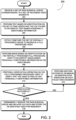
- FIG. 2 presents a flowchart illustrating an exemplary process 200 for anonymizing a raw surgical video to de-identify personally-identifiable information embedded in the video images in accordance with some embodiments described herein.
- one or more of the steps in FIG. 2 may be omitted, repeated, and/or performed in a different order. Accordingly, the specific arrangement of steps shown in FIG. 2 should not be construed as limiting the scope of the technique.
- Process 200 may begin by receiving a set of raw surgical videos corresponding to a set of recorded video segments/clips of a full surgical procedure performed in the OR (step 202).
- the set of raw surgical videos corresponds to a set of shorter video segments/clips of the full surgical procedure, wherein each of the raw surgical videos can be generated as a result of a maximum file-size constraint, e.g., 500 MB/video.
- process 200 can receive the set of raw surgical videos from a HIPAA compliant video repository.
- the set of recorded raw surgical videos were first transferred from the OR to the HIPAA compliant repository for temporary storage.
- process 200 can receive the set of raw surgical videos directly from a recording device within the OR through a secure network connection, without having to retrieve the stored videos from a HIPAA compliant video repository. Note that when receiving the set of raw surgical video files, process 200 can receive the set of raw video files along with a file folder.
- process 200 performs text-based de-identification on the set of received raw surgical videos and the file folder to detect and de-identify text-based personally-identifiable information associated with the raw surgical videos and the associated file folder (step 204).
- the text-based de-identification operation analyzes those text data associated with the raw surgical videos and the file folder (containing the raw surgical videos) that are not embedded in the video images. More specifically, the text-based de-identification operation detects text-based personally-identifiable information embedded in file identifiers (e.g., filenames), folder identifiers (e.g., folder names), file metadata such as file properties, and other metadata associated with the set of raw video files and file folder.
- file identifiers e.g., filenames
- folder identifiers e.g., folder names
- file metadata such as file properties, and other metadata associated with the set of raw video files and file folder.
- the text-based personally-identifiable information can include both text-based patient data and text-based staff data
- text-based patient data can include, but are not limited to the name, DOB, age, sex, SSN, address, MRN of the patient embedded in the text-based data of the video files and file folder.
- Process 200 subsequently removes or otherwise de-identifies the detected text-based personally-identifiable information from the file identifiers, the folder identifiers, and other metadata associated with the set of raw video files and file folder.
- process 200 can use open source text detection and removal tools or conventional text detection techniques in step 204. Note that at the end of step 204, the set of raw video files is considered partially-processed: i.e., while the text-based personally-identifiable information has been de-identified, potential personally-identifiable information embedded in the video images has not been de-identified.
- process 200 stitches together the set of partially-processed videos to recreate a full procedure video corresponding to the full surgical procedure (step 206).
- different recording devices often have different naming conventions.
- merging the set of partially-processed video files involves first analyzing the particular naming convention used by the set of video files to determine the correct order for the set of video segments with respect to the full surgical procedure, and subsequently putting together the set of partially-processed videos back to the full procedure video.
- process 200 performs image-based de-identification on the partially-processed full procedure video to detect and de-identify image-based personally-identifiable information embedded in the corresponding video images (step 208).
- the image-based personally-identifiable information can include various texts either being recorded or automatically inserted into the video frames so that they can be displayed along with the video images.
- process 200 can use the above-described image-text de-identification submodule 204-1 to automatically identify different types of personally-identifiable text within raw video images of the full procedure video, and automatically blur out/make unreadable or otherwise de-identify the detected text data embedded in the corresponding video images.
- process 200 can use the above-described OOB-event removal submodule 104-2 to automatically detect various OOB segments within the full procedure video, and subsequently blur out, black out, or otherwise de-identify the identified OOB segments from the full procedure video.
- process 200 can use a dedicated face-image removal submodule to search for any face not removed by OOB-event removal submodule 104-2 in video frames outside of the detected OOB segments and blur out each detected face. Note that at the end of step 208, the full procedure video is considered fully-processed.
- process 200 performs a verification operation on the fully-processed procedure video to verify that the fully-processed procedure video is free of any personally-identifiable information (step 210).
- process 200 can use the above-described verification module 106 to automatically perform either a random sampling of the fully-processed procedure video or a strategic sampling of the fully-processed procedure video.
- process 200 determines if the verification operation is successful (step 212). If one or more sampled video segments are found to be not completely free of personally-identifiable information, process 200 can perform either another automatic de-identification operation or a manual de-identification operation on each failed video segment (step 214). After each problematic video segment has been properly processed, the verification operation can be repeated (i.e., process 200 returns to step 210). If the verification operation is determined to be successful at step 212, the video de-identification process is completed. Process 200 then permanently removes the raw surgical videos and related file data from the video repository and stores the de-identified procedure video in place of the removed raw surgical video (step 216).
- the disclosed anonymizing techniques have been described in the scope of anonymizing raw surgical procedure videos, the disclosed techniques can also be used to anonymize still images captured inside an OR to de-identify personally-identifiable information embedded in the still images.
- the disclosed anonymizing techniques can also be applied to a single surgical procedure video to de-identify personally-identifiable information embedded in the single surgical procedure video.
- FIG. 3 presents a flowchart illustrating an exemplary process 300 for detecting and removing an OOB video segment from a raw surgical video to de-identify personally-identifiable information embedded in the associated OOB video images in accordance with some embodiments described herein.
- one or more of the steps in FIG. 3 may be omitted, repeated, and/or performed in a different order. Accordingly, the specific arrangement of steps shown in FIG. 3 should not be construed as limiting the scope of the technique.
- Process 300 may begin by training an OOB-event detection model (step 302).
- this OOB-event detection model may be trained based on a set of labeled video segments of a set of actual OOB events extracted from actual surgical procedure videos. For example, if a training OOB video segment corresponds to a 15-second segment of a procedure video, then all the video frames from the 15-second segment can be labeled with an "OOB" identifier. Next, the OOB-event detection model can be trained based on these labeled video frames to teach the model to detect and identify similar events in raw surgical videos.
- the OOB-event detection model can be trained to detect the beginning phase of an OOB event, i.e., a sequence of video images corresponding to the event that an endoscope is being taken out of the patient's body; and an ending phase of an OOB event, i.e., a sequence of video images corresponding to the event that the endoscope is being inserted back into the patient's body.
- the OOB-event detection model is also trained to correlate a detected beginning phase to a detected ending phase to the same OOB event. For example, if the detected ending phase of an OOB event immediately follows the detected beginning phase of an OOB event, and the time interval between the two detections is below a pre-determined threshold, the two detected phases may be considered to belong to the same OOB event.
- Process 300 next applies the trained OOB-event detection model to a raw procedure video to detect the beginning phase of an OOB event (step 304). If the beginning phase of an OOB event is detected, process 300 subsequent applies the trained OOB-event detection model to the raw procedure video to detect an ending phase of an OOB event (step 306). Next, process 300 determines if the detected beginning phase and the ending phase belong to the same OOB event (step 308), and if so, process 300 blurs out, blacks out, or otherwise de-identifies all video frames between the detected beginning phase and ending phase of the OOB event (step 310). However, if process 300 determines that the detected beginning phase and the ending phase do not belong to the same OOB event, process 300 may generate an alert indicating an exception is detected (step 312).
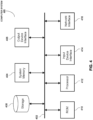
- FIG. 4 conceptually illustrates a computer system with which some embodiments of the subject technology can be implemented.
- Computer system 400 can be a client, a server, a computer, a smartphone, a PDA, a laptop, or a tablet computer with one or more processors embedded therein or coupled thereto, or any other sort of computing device.
- Such a computer system includes various types of computer-readable media and interfaces for various other types of computer-readable media.
- Computer system 400 includes a bus 402, processing unit(s) 412, a system memory 404, a read-only memory (ROM) 410, a permanent storage device 408, an input device interface 414, an output device interface 406, and a network interface 416.
- ROM read-only memory
- computer system 400 is a part of a robotic surgical system.
- Bus 402 collectively represents all system, peripheral, and chipset buses that communicatively connect the numerous internal devices of computer system 400. For instance, bus 402 communicatively connects processing unit(s) 412 with ROM 410, system memory 404, and permanent storage device 408.
- processing unit(s) 412 retrieves instructions to execute and data to process in order to execute various processes described in this patent disclosure, including the above-described processes of anonymizing raw surgical videos to de-identify personally-identifiable information embedded in the corresponding file and folder identifiers, and the corresponding video images in conjunction with FIGs. 1-3 .
- the processing unit(s) 412 can include any type of processor, including, but not limited to, a microprocessor, a graphics processing unit (GPU), a tensor processing unit (TPU), an intelligent processor unit (IPU), a digital signal processor (DSP), a field-programmable gate array (FPGA), and an application-specific integrated circuit (ASIC).
- Processing unit(s) 412 can be a single processor or a multi-core processor in different implementations.
- ROM 410 stores static data and instructions that are needed by processing unit(s) 412 and other modules of the computer system.
- system memory 404 is a read-and-write memory device. However, unlike storage device 408, system memory 404 is a volatile read-and-write memory, such as a random access memory. System memory 404 stores some of the instructions and data that the processor needs at runtime.
- various processes described in this patent disclosure including the above-described processes of anonymizing raw surgical videos to de-identify personally-identifiable information embedded in the corresponding file and folder identifiers, and in the corresponding video images in conjunction with FIGs. 1-3 , are stored in system memory 404, permanent storage device 408, and/or ROM 410. From these various memory units, processing unit(s) 412 retrieve instructions to execute and data to process in order to execute the processes of some implementations.
- Bus 402 also connects to input and output devices 414 and 406.
- Input devices 414 enable the user to communicate information to and select commands for the computer system.
- Input devices 414 can include, for example, alphanumeric keyboards and pointing devices (also called “cursor control devices").
- Output devices 406 enable, for example, the display of images generated by computer system 400.
- Output devices 406 can include, for example, printers and display devices, such as cathode ray tubes (CRT) or liquid crystal displays (LCD). Some implementations include devices such as a touchscreen that functions as both input and output devices.
- CTR cathode ray tubes
- LCD liquid crystal displays
- bus 402 also couples computer system 400 to a network (not shown) through a network interface 416.
- the computer can be a part of a network of computers (such as a local area network (“LAN”), a wide area network (“WAN”), an intranet, or a network of networks, such as the Internet. Any or all components of computer system 400 can be used in conjunction with the subject disclosure.
- DSP digital signal processor
- ASIC application-specific integrated circuit
- FPGA field-programmable gate array
- a general-purpose processor may be a microprocessor, but in the alternative, the processor may be any conventional processor, controller, microcontroller, or state machine.
- a processor may also be implemented as a combination of receiver devices, e.g., a combination of a DSP and a microprocessor, a plurality of microprocessors, one or more microprocessors in conjunction with a DSP core, or any other such configuration. Alternatively, some steps or methods may be performed by circuitry that is specific to a given function.
- the functions described may be implemented in hardware, software, firmware, or any combination thereof. If implemented in software, the functions may be stored as one or more instructions or code on a non-transitory computer-readable storage medium or non-transitory processor-readable storage medium. The steps of a method or algorithm disclosed herein may be embodied in processor-executable instructions that may reside on a non-transitory computer-readable or processor-readable storage medium. Non-transitory computer-readable or processor-readable storage media may be any storage media that may be accessed by a computer or a processor.
- non-transitory computer-readable or processor-readable storage media may include RAM, ROM, EEPROM, flash memory, CD-ROM or other optical disk storage, magnetic disk storage or other magnetic storage devices, or any other medium that may be used to store desired program code in the form of instructions or data structures and that may be accessed by a computer.
- Disk and disc include compact disc (CD), laser disc, optical disc, digital versatile disc (DVD), floppy disk, and Blu-ray disc, where disks usually reproduce data magnetically, while discs reproduce data optically with lasers. Combinations of the above are also included within the scope of non-transitory computer-readable and processor-readable media.
- the operations of a method or algorithm may reside as one or any combination or set of codes and/or instructions on a non-transitory processor-readable storage medium and/or computer-readable storage medium, which may be incorporated into a computer-program product.
Landscapes
- Engineering & Computer Science (AREA)
- Health & Medical Sciences (AREA)
- Medical Informatics (AREA)
- General Health & Medical Sciences (AREA)
- Public Health (AREA)
- Computer Security & Cryptography (AREA)
- Primary Health Care (AREA)
- Epidemiology (AREA)
- Biomedical Technology (AREA)
- General Engineering & Computer Science (AREA)
- Computer Hardware Design (AREA)
- Databases & Information Systems (AREA)
- Bioethics (AREA)
- Theoretical Computer Science (AREA)
- Pathology (AREA)
- Data Mining & Analysis (AREA)
- Nuclear Medicine, Radiotherapy & Molecular Imaging (AREA)
- Computer Networks & Wireless Communication (AREA)
- Signal Processing (AREA)
- Computing Systems (AREA)
- Life Sciences & Earth Sciences (AREA)
- Surgery (AREA)
- Physics & Mathematics (AREA)
- General Physics & Mathematics (AREA)
- Software Systems (AREA)
- Radiology & Medical Imaging (AREA)
- Oral & Maxillofacial Surgery (AREA)
- Heart & Thoracic Surgery (AREA)
- Molecular Biology (AREA)
- Animal Behavior & Ethology (AREA)
- Veterinary Medicine (AREA)
- Endoscopes (AREA)
- Medical Treatment And Welfare Office Work (AREA)
Claims (15)
- Procédé mis en œuvre par ordinateur permettant d'anonymiser des vidéos brutes d'interventions chirurgicales enregistrées par un dispositif d'enregistrement dans une salle d'opération, le procédé comprenant :la réception (202) d'un ensemble de vidéos chirurgicales brutes (120) produites par le dispositif d'enregistrement et correspondant à une intervention chirurgicale effectuée dans la salle d'opération ;la fusion (206) de l'ensemble de vidéos chirurgicales brutes pour générer une vidéo d'intervention chirurgicale (124) correspondant à l'intervention chirurgicale, dans lequel la vidéo d'intervention chirurgicale comprend un ensemble d'images vidéo brutes ; etla détection d'informations d'identification personnelle basées sur l'image intégrées dans l'ensemble d'images vidéo brutes de la vidéo d'intervention chirurgicale, dans lequel la détection des informations d'identification personnelle basées sur l'image intégrées dans l'ensemble d'images vidéo brutes de la vidéo d'intervention chirurgicale comporte en outre :le balayage de l'ensemble d'images vidéo brutes pour détecter un segment vidéo correspondant à un événement hors du corps lorsque le dispositif d'enregistrement a été retiré du corps d'un patient, dans lequel des informations d'identification personnelle peuvent être capturées par le dispositif d'enregistrement lors de l'événement hors du corps ; eten réponse à la détection d'un événement hors du corps dans l'ensemble d'images vidéo brutes, le floutage, l'édition ou toute autre forme de dépersonnalisation de chaque image vidéo dans le segment vidéo détecté correspondant à l'événement hors du corps détecté, de sorte que toute information d'identification personnelle intégrée dans le segment vidéo détecté ne peut pas être identifiée.
- Procédé mis en œuvre par ordinateur selon la revendication 1, dans lequel la fusion de l'ensemble de vidéos chirurgicales brutes pour générer la vidéo d'intervention chirurgicale comporte :l'analyse d'un ensemble de noms de fichiers associés à l'ensemble de vidéos chirurgicales brutes pour déterminer un ordre correct par rapport à l'intervention chirurgicale ; etl'assemblage de l'ensemble de vidéos chirurgicales brutes sur la base de l'ordre déterminé.
- Procédé mis en œuvre par ordinateur selon la revendication 1, dans lequel la détection des informations d'identification personnelle basées sur l'image intégrées dans l'ensemble d'images vidéo brutes de la vidéo d'intervention chirurgicale comporte en outre :la détection d'une ou plusieurs formes de textes d'identification personnelle intégrés dans l'ensemble d'images vidéo brutes ;en réponse à la détection d'une forme de texte d'identification personnelle dans une ou plusieurs images vidéo brutes de l'ensemble d'images vidéo brutes, la dépersonnalisation des informations d'identification personnelle basées sur l'image détectées en floutant ou en rendant illisible de toute autre manière le texte détecté dans la ou les images vidéo brutes.
- Procédé mis en œuvre par ordinateur selon la revendication 3, dans lequel la ou les formes de textes d'identification personnelle comportent en outre une forme de texte enregistré qui est capturé par le dispositif d'enregistrement utilisé pour enregistrer l'ensemble de vidéos chirurgicales brutes.
- Procédé mis en œuvre par ordinateur selon la revendication 4, dans lequel le texte enregistré peut comporter un ou plusieurs parmi :du texte imprimé sur un ou plusieurs outils chirurgicaux utilisés dans le cadre de l'intervention chirurgicale et enregistré par le dispositif d'enregistrement à l'intérieur du corps d'un patient dans lequel l'intervention chirurgicale a été effectuée ; etdu texte affiché à l'intérieur de la salle d'opération où l'intervention chirurgicale a été effectuée, dans lequel le texte a été enregistré par le dispositif d'enregistrement lors d'un événement hors du corps lorsque le dispositif d'enregistrement a été retiré du corps du patient.
- Procédé mis en œuvre par ordinateur selon la revendication 5, dans lequel la détection du texte imprimé sur le ou les outils chirurgicaux comporte :la détection, à l'aide d'un modèle de détection et de reconnaissance d'outils basé sur l'apprentissage automatique, d'un outil chirurgical dans la ou les images vidéo brutes ; etle traitement d'une partie de la ou des images vidéo brutes contenant l'outil chirurgical détecté pour détecter tout texte d'identification personnelle dans la partie de la ou des images vidéo brutes.
- Procédé mis en œuvre par ordinateur selon la revendication 3, dans lequel la ou les formes de textes d'identification personnelle comportent en outre une zone de texte insérée dans la vidéo d'intervention chirurgicale pour afficher des informations relatives à l'intervention chirurgicale.
- Procédé mis en œuvre par ordinateur selon la revendication 7, dans lequel la détection de la zone de texte dans la vidéo d'intervention chirurgicale comporte :la détection, à l'aide d'un modèle de détection de zone de texte basé sur l'apprentissage automatique, d'une zone de texte au niveau d'un emplacement prédéterminé ou à proximité d'un emplacement prédéterminé dans la ou les images vidéo brutes ; etle traitement d'une partie de la ou des images vidéo brutes contenant la zone de texte détectée pour détecter tout texte d'identification personnelle dans la partie de la ou des images vidéo brutes.
- Procédé mis en œuvre par ordinateur selon la revendication 1, dans lequel la détection d'un segment vidéo correspondant à un événement hors du corps dans l'ensemble d'images vidéo brutes comporte :la détection, à l'aide d'un modèle de détection d'événements hors du corps basé sur l'apprentissage automatique, d'une phase de début d'un événement hors du corps lorsqu'une caméra endoscopique est retirée du corps d'un patient ;la détection, à l'aide du modèle de détection d'événements hors du corps basé sur l'apprentissage automatique, d'une phase de fin de l'événement hors du corps lorsque la caméra de l'endoscope est réinsérée dans le corps du patient ; etle marquage d'un ensemble d'images vidéo entre la phase de début détectée et la phase de fin détectée dans l'ensemble d'images vidéo brutes en tant que segment vidéo correspondant à l'événement hors du corps détecté.
- Procédé mis en œuvre par ordinateur selon la revendication 1, dans lequel, avant de fusionner l'ensemble de vidéos chirurgicales brutes, le procédé comporte en outre :le traitement de l'ensemble reçu de vidéos chirurgicales brutes pour détecter des informations d'identification personnelle textuelles intégrées dans des données de structure de fichier associées à l'ensemble de vidéos chirurgicales brutes ; etsi des informations d'identification personnelle textuelles sont détectées, la suppression ou toute autre forme de dépersonnalisation des informations d'identification personnelle textuelles détectées dans les données de structure de fichier.
- Procédé mis en œuvre par ordinateur selon la revendication 10, dans lequel les données de structure de fichier comportent :des identifiants de fichiers associés à l'ensemble de vidéos chirurgicales brutes ;des identifiants de dossier d'un dossier de fichiers contenant l'ensemble de vidéos chirurgicales brutes ;des propriétés de fichiers associées à l'ensemble de vidéos chirurgicales brutes ; etd'autres métadonnées associées à l'ensemble de vidéos chirurgicales brutes.
- Procédé mis en œuvre par ordinateur selon la revendication 1, dans lequel le procédé comporte en outre :la réalisation d'un échantillonnage aléatoire dans la vidéo d'intervention chirurgicale dépersonnalisée pour sélectionner de manière aléatoire un certain nombre de segments vidéo dans la vidéo d'intervention chirurgicale dépersonnalisée ; etle fait de vérifier que les segments vidéo sélectionnés de manière aléatoire sont exempts de toute information d'identification personnelle.
- Procédé mis en œuvre par ordinateur selon la revendication 1, dans lequel le procédé comporte en outre :
la suppression définitive de l'ensemble de vidéos chirurgicales brutes d'un référentiel de vidéos chirurgicales ; et le remplacement des vidéos chirurgicales brutes retirées par des vidéos de procédures chirurgicales dépersonnalisées. - Procédé mis en œuvre par ordinateur selon la revendication 1, dans lequel les informations d'identification personnelle comportent à la fois des informations d'identification de patient associées à un patient recevant l'intervention chirurgicale et des informations d'identification de personnel chirurgical associées au personnel chirurgical effectuant l'intervention chirurgicale.
- Système (100, 400) permettant d'anonymiser des vidéos brutes d'interventions chirurgicales enregistrées par un dispositif d'enregistrement dans une salle d'opération, le système comprenant :un ou plusieurs processeurs (412) ;une mémoire (408) couplée au ou aux processeurs ; etdans lequel la mémoire stocke un ensemble d'instructions qui, lorsqu'elles sont exécutées par le ou les processeurs, amènent le système à exécuter le procédé selon la revendication 1.
Applications Claiming Priority (2)
| Application Number | Priority Date | Filing Date | Title |
|---|---|---|---|
| US16/418,809 US11080424B2 (en) | 2019-05-21 | 2019-05-21 | Method and system for anonymizing raw surgical procedure videos |
| PCT/US2019/034064 WO2020236191A1 (fr) | 2019-05-21 | 2019-05-24 | Procédé et système d'anonymisation de vidéos brutes d'interventions chirurgicales |
Publications (4)
| Publication Number | Publication Date |
|---|---|
| EP3973545A1 EP3973545A1 (fr) | 2022-03-30 |
| EP3973545A4 EP3973545A4 (fr) | 2023-06-21 |
| EP3973545C0 EP3973545C0 (fr) | 2025-02-12 |
| EP3973545B1 true EP3973545B1 (fr) | 2025-02-12 |
Family
ID=73457158
Family Applications (1)
| Application Number | Title | Priority Date | Filing Date |
|---|---|---|---|
| EP19929816.7A Active EP3973545B1 (fr) | 2019-05-21 | 2019-05-24 | Procédé et système d'anonymisation de vidéos brutes d'interventions chirurgicales |
Country Status (5)
| Country | Link |
|---|---|
| US (4) | US11080424B2 (fr) |
| EP (1) | EP3973545B1 (fr) |
| KR (1) | KR102723622B1 (fr) |
| CN (1) | CN113853658A (fr) |
| WO (1) | WO2020236191A1 (fr) |
Families Citing this family (13)
| Publication number | Priority date | Publication date | Assignee | Title |
|---|---|---|---|---|
| US12462909B2 (en) * | 2006-11-27 | 2025-11-04 | Therap Services, Llc | Artificial intelligence machine learning method and system for identifying and redacting personally identifiable information in a monitored environment using real-time sensor data |
| GB2585691B (en) * | 2019-07-11 | 2024-03-20 | Cmr Surgical Ltd | Anonymising robotic data |
| JP7599293B2 (ja) * | 2020-08-07 | 2024-12-13 | キヤノンメディカルシステムズ株式会社 | 医用画像診断装置及び医用画像診断方法 |
| EP4248350A1 (fr) * | 2020-11-20 | 2023-09-27 | SST Canada Inc. | Systèmes et procédés pour dépersonnalisation de vidéo chirurgicale |
| DE102021107075A1 (de) | 2021-03-22 | 2022-09-22 | Olympus Winter & Ibe Gmbh | Verfahren, System und Softwareprogrammprodukt zum Erstellen von Trainingsdaten für endoskopische Anwendungen |
| WO2023002661A1 (fr) * | 2021-07-21 | 2023-01-26 | ソニーグループ株式会社 | Système de traitement d'informations, procédé de traitement d'informations, et programme |
| KR102585793B1 (ko) * | 2021-11-09 | 2023-10-06 | (주)미소정보기술 | 의료 이미지 처리 방법 |
| WO2023107474A1 (fr) * | 2021-12-06 | 2023-06-15 | Genesis Medtech (USA) Inc. | Système de gestion et de récupération de vidéo en chirurgie intelligente |
| US12300024B2 (en) * | 2021-12-29 | 2025-05-13 | Verb Surgical Inc. | Robust operating room video anonymization based on ensemble deep learning |
| US12248603B2 (en) * | 2022-01-19 | 2025-03-11 | Sensory, Incorporated | Sanitizing personally identifiable information (PII) in audio and visual data |
| US12380228B2 (en) | 2022-01-19 | 2025-08-05 | Sensory, Incorporated | Sanitizing personally identifiable information (PII) in audio and visual data |
| US20250191787A1 (en) * | 2022-03-03 | 2025-06-12 | Sony Group Corporation | Information processing apparatus, information processing terminal, information processing method, and program |
| EP4542503A1 (fr) * | 2023-10-20 | 2025-04-23 | Medinbox | Procédé et système d'enregistrement et de transmission d'images d'une installation médicale, notamment d'images d'une salle d'opération |
Citations (1)
| Publication number | Priority date | Publication date | Assignee | Title |
|---|---|---|---|---|
| US20200285771A1 (en) * | 2019-03-05 | 2020-09-10 | Abhishek Dey | System and method for removing personally identifiable information from medical data |
Family Cites Families (20)
| Publication number | Priority date | Publication date | Assignee | Title |
|---|---|---|---|---|
| JP2002253478A (ja) | 2001-02-28 | 2002-09-10 | Olympus Optical Co Ltd | 電子内視鏡装置 |
| JP2003070804A (ja) | 2001-09-05 | 2003-03-11 | Olympus Optical Co Ltd | 遠隔医療支援システム |
| US9147178B2 (en) * | 2012-01-16 | 2015-09-29 | International Business Machines Corporation | De-identification in visual media data |
| US20140142984A1 (en) * | 2012-11-21 | 2014-05-22 | Datcard Systems, Inc. | Cloud based viewing, transfer and storage of medical data |
| US11322248B2 (en) * | 2015-03-26 | 2022-05-03 | Surgical Safety Technologies Inc. | Operating room black-box device, system, method and computer readable medium for event and error prediction |
| CA3041237A1 (fr) | 2015-10-22 | 2017-04-27 | Tyto Care Ltd. | Systeme, procede et produit-programme informatique pour surveillance physiologique |
| CN206097116U (zh) * | 2015-12-29 | 2017-04-12 | 重庆安碧捷科技股份有限公司 | 医疗隐私过滤系统 |
| US10347294B2 (en) * | 2016-06-30 | 2019-07-09 | Google Llc | Generating moving thumbnails for videos |
| US10342410B2 (en) * | 2016-10-26 | 2019-07-09 | Virgo Surgical Video Solutions, Inc. | Automated system for medical video recording and storage |
| US20180211062A1 (en) * | 2017-01-26 | 2018-07-26 | Microsoft Technology Licensing, Llc | Selectively obscuring representative attributes of files |
| KR101981583B1 (ko) | 2017-02-27 | 2019-05-23 | 재단법인 아산사회복지재단 | 의료영상 내 정보처리방법 |
| KR102000745B1 (ko) * | 2017-03-17 | 2019-07-16 | (주) 프로큐라티오 | 개인의료정보데이터 관리방법 및 시스템 |
| KR101938376B1 (ko) * | 2017-06-01 | 2019-01-14 | 재단법인 아산사회복지재단 | 웹기반으로 임상시험 의료영상을 관리하는 시스템, 방법 및 프로그램 |
| US10878966B2 (en) * | 2017-08-13 | 2020-12-29 | Theator inc. | System and method for analysis and presentation of surgical procedure videos |
| KR101955025B1 (ko) | 2018-05-15 | 2019-03-06 | 김광호 | 개인정보 자동보호처리를 이용한 의료자문 서비스 제공 방법 |
| US11205508B2 (en) | 2018-05-23 | 2021-12-21 | Verb Surgical Inc. | Machine-learning-oriented surgical video analysis system |
| US10839104B2 (en) * | 2018-06-08 | 2020-11-17 | Microsoft Technology Licensing, Llc | Obfuscating information related to personally identifiable information (PII) |
| US10679743B2 (en) | 2018-09-12 | 2020-06-09 | Verb Surgical Inc. | Method and system for automatically tracking and managing inventory of surgical tools in operating rooms |
| US20200272660A1 (en) * | 2019-02-21 | 2020-08-27 | Theator inc. | Indexing characterized intraoperative surgical events |
| US11120156B2 (en) * | 2019-03-13 | 2021-09-14 | International Business Machines Corporation | Privacy preserving data deletion |
-
2019
- 2019-05-21 US US16/418,809 patent/US11080424B2/en active Active
- 2019-05-24 CN CN201980096650.1A patent/CN113853658A/zh active Pending
- 2019-05-24 KR KR1020217041464A patent/KR102723622B1/ko active Active
- 2019-05-24 WO PCT/US2019/034064 patent/WO2020236191A1/fr not_active Ceased
- 2019-05-24 EP EP19929816.7A patent/EP3973545B1/fr active Active
-
2021
- 2021-07-20 US US17/380,909 patent/US11687671B2/en active Active
-
2023
- 2023-05-18 US US18/320,127 patent/US12189821B2/en active Active
-
2024
- 2024-12-06 US US18/972,735 patent/US20250094636A1/en active Pending
Patent Citations (1)
| Publication number | Priority date | Publication date | Assignee | Title |
|---|---|---|---|---|
| US20200285771A1 (en) * | 2019-03-05 | 2020-09-10 | Abhishek Dey | System and method for removing personally identifiable information from medical data |
Also Published As
| Publication number | Publication date |
|---|---|
| EP3973545C0 (fr) | 2025-02-12 |
| EP3973545A4 (fr) | 2023-06-21 |
| US11080424B2 (en) | 2021-08-03 |
| US20250094636A1 (en) | 2025-03-20 |
| CN113853658A (zh) | 2021-12-28 |
| US11687671B2 (en) | 2023-06-27 |
| KR102723622B1 (ko) | 2024-10-31 |
| US20210350025A1 (en) | 2021-11-11 |
| KR20210157915A (ko) | 2021-12-29 |
| US20200372180A1 (en) | 2020-11-26 |
| EP3973545A1 (fr) | 2022-03-30 |
| WO2020236191A1 (fr) | 2020-11-26 |
| US20230289474A1 (en) | 2023-09-14 |
| US12189821B2 (en) | 2025-01-07 |
Similar Documents
| Publication | Publication Date | Title |
|---|---|---|
| US12189821B2 (en) | Method and system for anonymizing raw surgical procedure videos | |
| US11901065B2 (en) | Surgery evaluation using machine-learning-based surgical video analysis | |
| CN107239666B (zh) | 一种对医疗影像数据进行脱敏处理的方法及系统 | |
| JP4416828B2 (ja) | 神経精神病の診断を生成するためのコンピュータ実装方法、コンピュータ・プログラム製品、装置及びシステム | |
| US20240290459A1 (en) | Using multiple modalities of surgical data for comprehensive data analytics of a surgical procedure | |
| US11217345B2 (en) | Anonymization of audio-visual medical data | |
| JP2022546666A (ja) | 画像内の識別情報の機械学習を用いる自動検出及び置き換え | |
| JP7082993B2 (ja) | 医療画像処理装置、方法及びプログラム、診断支援装置、方法及びプログラム並びに医療支援システム及び方法 | |
| US9280818B2 (en) | Medical report writing support system, medical report writing unit, and medical image observation unit | |
| US12387005B2 (en) | De-identifying data obtained from microphones | |
| Ye et al. | A Comprehensive Video Dataset for Surgical Laparoscopic Action Analysis | |
| US20240273900A1 (en) | Protection of personally identifiable content in a video stream generated by an imaging device during a medical procedure | |
| JP7245906B2 (ja) | 画像記録装置、情報処理装置、情報処理方法および情報処理プログラム | |
| KR20200049099A (ko) | 수술 동영상에서 수술 도구 움직임에 따른 주요 수술 이벤트 추출하기 위한 방법 및 장치 | |
| Parameswarappa | Live Memory Forensic for Windows | |
| US11580337B2 (en) | Medical object detection and identification | |
| US20220165394A1 (en) | Method, apparatus, and non-transitory computer readable medium for managing medical images | |
| Ilhami et al. | Analysis Technique Data hiding using HPA DCO on SATA Hard Drive | |
| Rueckert et al. | Video Dataset for Surgical Phase, Keypoint, and Instrument Recognition in Laparoscopic Surgery (PhaKIR) | |
| EP4393140A1 (fr) | Procédé de sauvegarde rapide pour l'enregistrement de vidéos chirurgicales | |
| JP2009009501A (ja) | ファイル管理装置及びプログラム | |
| Kuru et al. | Diagnostic Decision Support System in Genetic Diseases: The FaceGP DDSS |
Legal Events
| Date | Code | Title | Description |
|---|---|---|---|
| STAA | Information on the status of an ep patent application or granted ep patent |
Free format text: STATUS: THE INTERNATIONAL PUBLICATION HAS BEEN MADE |
|
| PUAI | Public reference made under article 153(3) epc to a published international application that has entered the european phase |
Free format text: ORIGINAL CODE: 0009012 |
|
| STAA | Information on the status of an ep patent application or granted ep patent |
Free format text: STATUS: REQUEST FOR EXAMINATION WAS MADE |
|
| 17P | Request for examination filed |
Effective date: 20211221 |
|
| AK | Designated contracting states |
Kind code of ref document: A1 Designated state(s): AL AT BE BG CH CY CZ DE DK EE ES FI FR GB GR HR HU IE IS IT LI LT LU LV MC MK MT NL NO PL PT RO RS SE SI SK SM TR |
|
| DAV | Request for validation of the european patent (deleted) | ||
| DAX | Request for extension of the european patent (deleted) | ||
| A4 | Supplementary search report drawn up and despatched |
Effective date: 20230523 |
|
| RIC1 | Information provided on ipc code assigned before grant |
Ipc: H04L 9/40 20220101ALI20230516BHEP Ipc: G16H 10/60 20180101ALI20230516BHEP Ipc: G06F 21/62 20130101ALI20230516BHEP Ipc: G16H 50/70 20180101ALI20230516BHEP Ipc: G16H 50/30 20180101ALI20230516BHEP Ipc: G16H 50/20 20180101ALI20230516BHEP Ipc: G16H 30/40 20180101ALI20230516BHEP Ipc: G16H 70/00 20180101AFI20230516BHEP |
|
| GRAP | Despatch of communication of intention to grant a patent |
Free format text: ORIGINAL CODE: EPIDOSNIGR1 |
|
| STAA | Information on the status of an ep patent application or granted ep patent |
Free format text: STATUS: GRANT OF PATENT IS INTENDED |
|
| INTG | Intention to grant announced |
Effective date: 20241009 |
|
| GRAS | Grant fee paid |
Free format text: ORIGINAL CODE: EPIDOSNIGR3 |
|
| GRAA | (expected) grant |
Free format text: ORIGINAL CODE: 0009210 |
|
| STAA | Information on the status of an ep patent application or granted ep patent |
Free format text: STATUS: THE PATENT HAS BEEN GRANTED |
|
| AK | Designated contracting states |
Kind code of ref document: B1 Designated state(s): AL AT BE BG CH CY CZ DE DK EE ES FI FR GB GR HR HU IE IS IT LI LT LU LV MC MK MT NL NO PL PT RO RS SE SI SK SM TR |
|
| REG | Reference to a national code |
Ref country code: GB Ref legal event code: FG4D |
|
| REG | Reference to a national code |
Ref country code: CH Ref legal event code: EP |
|
| REG | Reference to a national code |
Ref country code: DE Ref legal event code: R096 Ref document number: 602019065987 Country of ref document: DE |
|
| REG | Reference to a national code |
Ref country code: IE Ref legal event code: FG4D |
|
| U01 | Request for unitary effect filed |
Effective date: 20250303 |
|
| U07 | Unitary effect registered |
Designated state(s): AT BE BG DE DK EE FI FR IT LT LU LV MT NL PT RO SE SI Effective date: 20250311 |
|
| U20 | Renewal fee for the european patent with unitary effect paid |
Year of fee payment: 7 Effective date: 20250407 |
|
| PG25 | Lapsed in a contracting state [announced via postgrant information from national office to epo] |
Ref country code: RS Free format text: LAPSE BECAUSE OF FAILURE TO SUBMIT A TRANSLATION OF THE DESCRIPTION OR TO PAY THE FEE WITHIN THE PRESCRIBED TIME-LIMIT Effective date: 20250512 |
|
| PG25 | Lapsed in a contracting state [announced via postgrant information from national office to epo] |
Ref country code: PL Free format text: LAPSE BECAUSE OF FAILURE TO SUBMIT A TRANSLATION OF THE DESCRIPTION OR TO PAY THE FEE WITHIN THE PRESCRIBED TIME-LIMIT Effective date: 20250212 |
|
| PG25 | Lapsed in a contracting state [announced via postgrant information from national office to epo] |
Ref country code: ES Free format text: LAPSE BECAUSE OF FAILURE TO SUBMIT A TRANSLATION OF THE DESCRIPTION OR TO PAY THE FEE WITHIN THE PRESCRIBED TIME-LIMIT Effective date: 20250212 |
|
| PGFP | Annual fee paid to national office [announced via postgrant information from national office to epo] |
Ref country code: GB Payment date: 20250401 Year of fee payment: 7 |
|
| PG25 | Lapsed in a contracting state [announced via postgrant information from national office to epo] |
Ref country code: IS Free format text: LAPSE BECAUSE OF FAILURE TO SUBMIT A TRANSLATION OF THE DESCRIPTION OR TO PAY THE FEE WITHIN THE PRESCRIBED TIME-LIMIT Effective date: 20250612 Ref country code: NO Free format text: LAPSE BECAUSE OF FAILURE TO SUBMIT A TRANSLATION OF THE DESCRIPTION OR TO PAY THE FEE WITHIN THE PRESCRIBED TIME-LIMIT Effective date: 20250512 |
|
| PG25 | Lapsed in a contracting state [announced via postgrant information from national office to epo] |
Ref country code: HR Free format text: LAPSE BECAUSE OF FAILURE TO SUBMIT A TRANSLATION OF THE DESCRIPTION OR TO PAY THE FEE WITHIN THE PRESCRIBED TIME-LIMIT Effective date: 20250212 |
|
| PG25 | Lapsed in a contracting state [announced via postgrant information from national office to epo] |
Ref country code: GR Free format text: LAPSE BECAUSE OF FAILURE TO SUBMIT A TRANSLATION OF THE DESCRIPTION OR TO PAY THE FEE WITHIN THE PRESCRIBED TIME-LIMIT Effective date: 20250513 |
|
| PG25 | Lapsed in a contracting state [announced via postgrant information from national office to epo] |
Ref country code: SM Free format text: LAPSE BECAUSE OF FAILURE TO SUBMIT A TRANSLATION OF THE DESCRIPTION OR TO PAY THE FEE WITHIN THE PRESCRIBED TIME-LIMIT Effective date: 20250212 |
|
| PG25 | Lapsed in a contracting state [announced via postgrant information from national office to epo] |
Ref country code: CZ Free format text: LAPSE BECAUSE OF FAILURE TO SUBMIT A TRANSLATION OF THE DESCRIPTION OR TO PAY THE FEE WITHIN THE PRESCRIBED TIME-LIMIT Effective date: 20250212 |
|
| PG25 | Lapsed in a contracting state [announced via postgrant information from national office to epo] |
Ref country code: SK Free format text: LAPSE BECAUSE OF FAILURE TO SUBMIT A TRANSLATION OF THE DESCRIPTION OR TO PAY THE FEE WITHIN THE PRESCRIBED TIME-LIMIT Effective date: 20250212 |