EP3972669B1 - Entleerung eines blutkreislaufes nach extrakorporaler blutbehandlung - Google Patents
Entleerung eines blutkreislaufes nach extrakorporaler blutbehandlung Download PDFInfo
- Publication number
- EP3972669B1 EP3972669B1 EP20719141.2A EP20719141A EP3972669B1 EP 3972669 B1 EP3972669 B1 EP 3972669B1 EP 20719141 A EP20719141 A EP 20719141A EP 3972669 B1 EP3972669 B1 EP 3972669B1
- Authority
- EP
- European Patent Office
- Prior art keywords
- line
- control system
- blood treatment
- flow circuit
- clamp
- Prior art date
- Legal status (The legal status is an assumption and is not a legal conclusion. Google has not performed a legal analysis and makes no representation as to the accuracy of the status listed.)
- Active
Links
Images



Classifications
-
- A—HUMAN NECESSITIES
- A61—MEDICAL OR VETERINARY SCIENCE; HYGIENE
- A61M—DEVICES FOR INTRODUCING MEDIA INTO, OR ONTO, THE BODY; DEVICES FOR TRANSDUCING BODY MEDIA OR FOR TAKING MEDIA FROM THE BODY; DEVICES FOR PRODUCING OR ENDING SLEEP OR STUPOR
- A61M1/00—Suction or pumping devices for medical purposes; Devices for carrying-off, for treatment of, or for carrying-over, body-liquids; Drainage systems
- A61M1/14—Dialysis systems; Artificial kidneys; Blood oxygenators ; Reciprocating systems for treatment of body fluids, e.g. single needle systems for hemofiltration or pheresis
- A61M1/15—Dialysis systems; Artificial kidneys; Blood oxygenators ; Reciprocating systems for treatment of body fluids, e.g. single needle systems for hemofiltration or pheresis with a cassette forming partially or totally the flow circuit for the treating fluid, e.g. the dialysate fluid circuit or the treating gas circuit
- A61M1/152—Details related to the interface between cassette and machine
-
- A—HUMAN NECESSITIES
- A61—MEDICAL OR VETERINARY SCIENCE; HYGIENE
- A61M—DEVICES FOR INTRODUCING MEDIA INTO, OR ONTO, THE BODY; DEVICES FOR TRANSDUCING BODY MEDIA OR FOR TAKING MEDIA FROM THE BODY; DEVICES FOR PRODUCING OR ENDING SLEEP OR STUPOR
- A61M1/00—Suction or pumping devices for medical purposes; Devices for carrying-off, for treatment of, or for carrying-over, body-liquids; Drainage systems
- A61M1/14—Dialysis systems; Artificial kidneys; Blood oxygenators ; Reciprocating systems for treatment of body fluids, e.g. single needle systems for hemofiltration or pheresis
- A61M1/15—Dialysis systems; Artificial kidneys; Blood oxygenators ; Reciprocating systems for treatment of body fluids, e.g. single needle systems for hemofiltration or pheresis with a cassette forming partially or totally the flow circuit for the treating fluid, e.g. the dialysate fluid circuit or the treating gas circuit
- A61M1/156—Constructional details of the cassette, e.g. specific details on material or shape
- A61M1/1563—Details of incorporated filters
- A61M1/15632—Details of incorporated filters the filter being a dialyser
-
- A—HUMAN NECESSITIES
- A61—MEDICAL OR VETERINARY SCIENCE; HYGIENE
- A61M—DEVICES FOR INTRODUCING MEDIA INTO, OR ONTO, THE BODY; DEVICES FOR TRANSDUCING BODY MEDIA OR FOR TAKING MEDIA FROM THE BODY; DEVICES FOR PRODUCING OR ENDING SLEEP OR STUPOR
- A61M1/00—Suction or pumping devices for medical purposes; Devices for carrying-off, for treatment of, or for carrying-over, body-liquids; Drainage systems
- A61M1/14—Dialysis systems; Artificial kidneys; Blood oxygenators ; Reciprocating systems for treatment of body fluids, e.g. single needle systems for hemofiltration or pheresis
- A61M1/16—Dialysis systems; Artificial kidneys; Blood oxygenators ; Reciprocating systems for treatment of body fluids, e.g. single needle systems for hemofiltration or pheresis with membranes
- A61M1/168—Sterilisation or cleaning before or after use
-
- A—HUMAN NECESSITIES
- A61—MEDICAL OR VETERINARY SCIENCE; HYGIENE
- A61M—DEVICES FOR INTRODUCING MEDIA INTO, OR ONTO, THE BODY; DEVICES FOR TRANSDUCING BODY MEDIA OR FOR TAKING MEDIA FROM THE BODY; DEVICES FOR PRODUCING OR ENDING SLEEP OR STUPOR
- A61M1/00—Suction or pumping devices for medical purposes; Devices for carrying-off, for treatment of, or for carrying-over, body-liquids; Drainage systems
- A61M1/14—Dialysis systems; Artificial kidneys; Blood oxygenators ; Reciprocating systems for treatment of body fluids, e.g. single needle systems for hemofiltration or pheresis
- A61M1/16—Dialysis systems; Artificial kidneys; Blood oxygenators ; Reciprocating systems for treatment of body fluids, e.g. single needle systems for hemofiltration or pheresis with membranes
- A61M1/1694—Dialysis systems; Artificial kidneys; Blood oxygenators ; Reciprocating systems for treatment of body fluids, e.g. single needle systems for hemofiltration or pheresis with membranes with recirculating dialysing liquid
-
- A—HUMAN NECESSITIES
- A61—MEDICAL OR VETERINARY SCIENCE; HYGIENE
- A61M—DEVICES FOR INTRODUCING MEDIA INTO, OR ONTO, THE BODY; DEVICES FOR TRANSDUCING BODY MEDIA OR FOR TAKING MEDIA FROM THE BODY; DEVICES FOR PRODUCING OR ENDING SLEEP OR STUPOR
- A61M1/00—Suction or pumping devices for medical purposes; Devices for carrying-off, for treatment of, or for carrying-over, body-liquids; Drainage systems
- A61M1/36—Other treatment of blood in a by-pass of the natural circulatory system, e.g. temperature adaptation, irradiation ; Extra-corporeal blood circuits
- A61M1/3621—Extra-corporeal blood circuits
- A61M1/3622—Extra-corporeal blood circuits with a cassette forming partially or totally the blood circuit
- A61M1/36222—Details related to the interface between cassette and machine
-
- A—HUMAN NECESSITIES
- A61—MEDICAL OR VETERINARY SCIENCE; HYGIENE
- A61M—DEVICES FOR INTRODUCING MEDIA INTO, OR ONTO, THE BODY; DEVICES FOR TRANSDUCING BODY MEDIA OR FOR TAKING MEDIA FROM THE BODY; DEVICES FOR PRODUCING OR ENDING SLEEP OR STUPOR
- A61M1/00—Suction or pumping devices for medical purposes; Devices for carrying-off, for treatment of, or for carrying-over, body-liquids; Drainage systems
- A61M1/36—Other treatment of blood in a by-pass of the natural circulatory system, e.g. temperature adaptation, irradiation ; Extra-corporeal blood circuits
- A61M1/3621—Extra-corporeal blood circuits
- A61M1/3622—Extra-corporeal blood circuits with a cassette forming partially or totally the blood circuit
- A61M1/36225—Extra-corporeal blood circuits with a cassette forming partially or totally the blood circuit with blood pumping means or components thereof
-
- A—HUMAN NECESSITIES
- A61—MEDICAL OR VETERINARY SCIENCE; HYGIENE
- A61M—DEVICES FOR INTRODUCING MEDIA INTO, OR ONTO, THE BODY; DEVICES FOR TRANSDUCING BODY MEDIA OR FOR TAKING MEDIA FROM THE BODY; DEVICES FOR PRODUCING OR ENDING SLEEP OR STUPOR
- A61M1/00—Suction or pumping devices for medical purposes; Devices for carrying-off, for treatment of, or for carrying-over, body-liquids; Drainage systems
- A61M1/36—Other treatment of blood in a by-pass of the natural circulatory system, e.g. temperature adaptation, irradiation ; Extra-corporeal blood circuits
- A61M1/3621—Extra-corporeal blood circuits
- A61M1/3622—Extra-corporeal blood circuits with a cassette forming partially or totally the blood circuit
- A61M1/36226—Constructional details of cassettes, e.g. specific details on material or shape
- A61M1/362265—Details of valves
-
- A—HUMAN NECESSITIES
- A61—MEDICAL OR VETERINARY SCIENCE; HYGIENE
- A61M—DEVICES FOR INTRODUCING MEDIA INTO, OR ONTO, THE BODY; DEVICES FOR TRANSDUCING BODY MEDIA OR FOR TAKING MEDIA FROM THE BODY; DEVICES FOR PRODUCING OR ENDING SLEEP OR STUPOR
- A61M1/00—Suction or pumping devices for medical purposes; Devices for carrying-off, for treatment of, or for carrying-over, body-liquids; Drainage systems
- A61M1/36—Other treatment of blood in a by-pass of the natural circulatory system, e.g. temperature adaptation, irradiation ; Extra-corporeal blood circuits
- A61M1/3621—Extra-corporeal blood circuits
- A61M1/3627—Degassing devices; Buffer reservoirs; Drip chambers; Blood filters
-
- A—HUMAN NECESSITIES
- A61—MEDICAL OR VETERINARY SCIENCE; HYGIENE
- A61M—DEVICES FOR INTRODUCING MEDIA INTO, OR ONTO, THE BODY; DEVICES FOR TRANSDUCING BODY MEDIA OR FOR TAKING MEDIA FROM THE BODY; DEVICES FOR PRODUCING OR ENDING SLEEP OR STUPOR
- A61M1/00—Suction or pumping devices for medical purposes; Devices for carrying-off, for treatment of, or for carrying-over, body-liquids; Drainage systems
- A61M1/36—Other treatment of blood in a by-pass of the natural circulatory system, e.g. temperature adaptation, irradiation ; Extra-corporeal blood circuits
- A61M1/3621—Extra-corporeal blood circuits
- A61M1/3643—Priming, rinsing before or after use
- A61M1/3644—Mode of operation
- A61M1/3646—Expelling the residual body fluid after use, e.g. back to the body
-
- A—HUMAN NECESSITIES
- A61—MEDICAL OR VETERINARY SCIENCE; HYGIENE
- A61M—DEVICES FOR INTRODUCING MEDIA INTO, OR ONTO, THE BODY; DEVICES FOR TRANSDUCING BODY MEDIA OR FOR TAKING MEDIA FROM THE BODY; DEVICES FOR PRODUCING OR ENDING SLEEP OR STUPOR
- A61M1/00—Suction or pumping devices for medical purposes; Devices for carrying-off, for treatment of, or for carrying-over, body-liquids; Drainage systems
- A61M1/36—Other treatment of blood in a by-pass of the natural circulatory system, e.g. temperature adaptation, irradiation ; Extra-corporeal blood circuits
- A61M1/3621—Extra-corporeal blood circuits
- A61M1/3643—Priming, rinsing before or after use
- A61M1/3644—Mode of operation
- A61M1/365—Mode of operation through membranes, e.g. by inverted trans-membrane pressure [TMP]
-
- A—HUMAN NECESSITIES
- A61—MEDICAL OR VETERINARY SCIENCE; HYGIENE
- A61M—DEVICES FOR INTRODUCING MEDIA INTO, OR ONTO, THE BODY; DEVICES FOR TRANSDUCING BODY MEDIA OR FOR TAKING MEDIA FROM THE BODY; DEVICES FOR PRODUCING OR ENDING SLEEP OR STUPOR
- A61M1/00—Suction or pumping devices for medical purposes; Devices for carrying-off, for treatment of, or for carrying-over, body-liquids; Drainage systems
- A61M1/36—Other treatment of blood in a by-pass of the natural circulatory system, e.g. temperature adaptation, irradiation ; Extra-corporeal blood circuits
- A61M1/3621—Extra-corporeal blood circuits
- A61M1/3653—Interfaces between patient blood circulation and extra-corporal blood circuit
-
- A—HUMAN NECESSITIES
- A61—MEDICAL OR VETERINARY SCIENCE; HYGIENE
- A61M—DEVICES FOR INTRODUCING MEDIA INTO, OR ONTO, THE BODY; DEVICES FOR TRANSDUCING BODY MEDIA OR FOR TAKING MEDIA FROM THE BODY; DEVICES FOR PRODUCING OR ENDING SLEEP OR STUPOR
- A61M1/00—Suction or pumping devices for medical purposes; Devices for carrying-off, for treatment of, or for carrying-over, body-liquids; Drainage systems
- A61M1/14—Dialysis systems; Artificial kidneys; Blood oxygenators ; Reciprocating systems for treatment of body fluids, e.g. single needle systems for hemofiltration or pheresis
- A61M1/15—Dialysis systems; Artificial kidneys; Blood oxygenators ; Reciprocating systems for treatment of body fluids, e.g. single needle systems for hemofiltration or pheresis with a cassette forming partially or totally the flow circuit for the treating fluid, e.g. the dialysate fluid circuit or the treating gas circuit
- A61M1/154—Dialysis systems; Artificial kidneys; Blood oxygenators ; Reciprocating systems for treatment of body fluids, e.g. single needle systems for hemofiltration or pheresis with a cassette forming partially or totally the flow circuit for the treating fluid, e.g. the dialysate fluid circuit or the treating gas circuit with sensing means or components thereof
-
- A—HUMAN NECESSITIES
- A61—MEDICAL OR VETERINARY SCIENCE; HYGIENE
- A61M—DEVICES FOR INTRODUCING MEDIA INTO, OR ONTO, THE BODY; DEVICES FOR TRANSDUCING BODY MEDIA OR FOR TAKING MEDIA FROM THE BODY; DEVICES FOR PRODUCING OR ENDING SLEEP OR STUPOR
- A61M1/00—Suction or pumping devices for medical purposes; Devices for carrying-off, for treatment of, or for carrying-over, body-liquids; Drainage systems
- A61M1/14—Dialysis systems; Artificial kidneys; Blood oxygenators ; Reciprocating systems for treatment of body fluids, e.g. single needle systems for hemofiltration or pheresis
- A61M1/16—Dialysis systems; Artificial kidneys; Blood oxygenators ; Reciprocating systems for treatment of body fluids, e.g. single needle systems for hemofiltration or pheresis with membranes
-
- A—HUMAN NECESSITIES
- A61—MEDICAL OR VETERINARY SCIENCE; HYGIENE
- A61M—DEVICES FOR INTRODUCING MEDIA INTO, OR ONTO, THE BODY; DEVICES FOR TRANSDUCING BODY MEDIA OR FOR TAKING MEDIA FROM THE BODY; DEVICES FOR PRODUCING OR ENDING SLEEP OR STUPOR
- A61M1/00—Suction or pumping devices for medical purposes; Devices for carrying-off, for treatment of, or for carrying-over, body-liquids; Drainage systems
- A61M1/36—Other treatment of blood in a by-pass of the natural circulatory system, e.g. temperature adaptation, irradiation ; Extra-corporeal blood circuits
- A61M1/3621—Extra-corporeal blood circuits
- A61M1/3622—Extra-corporeal blood circuits with a cassette forming partially or totally the blood circuit
- A61M1/36224—Extra-corporeal blood circuits with a cassette forming partially or totally the blood circuit with sensing means or components thereof
-
- A—HUMAN NECESSITIES
- A61—MEDICAL OR VETERINARY SCIENCE; HYGIENE
- A61M—DEVICES FOR INTRODUCING MEDIA INTO, OR ONTO, THE BODY; DEVICES FOR TRANSDUCING BODY MEDIA OR FOR TAKING MEDIA FROM THE BODY; DEVICES FOR PRODUCING OR ENDING SLEEP OR STUPOR
- A61M1/00—Suction or pumping devices for medical purposes; Devices for carrying-off, for treatment of, or for carrying-over, body-liquids; Drainage systems
- A61M1/36—Other treatment of blood in a by-pass of the natural circulatory system, e.g. temperature adaptation, irradiation ; Extra-corporeal blood circuits
- A61M1/3621—Extra-corporeal blood circuits
- A61M1/3622—Extra-corporeal blood circuits with a cassette forming partially or totally the blood circuit
- A61M1/36226—Constructional details of cassettes, e.g. specific details on material or shape
- A61M1/362262—Details of incorporated reservoirs
Definitions
- the present invention relates to operating an extracorporeal blood treatment apparatus, e.g. a dialysis machine, and in particular to a technique of emptying a blood circuit subsequent to blood treatment.
- an extracorporeal blood treatment apparatus e.g. a dialysis machine
- Extracorporeal blood treatment such as hemodialysis
- an apparatus that is configured to supply one or more fluids for use in the treatment.
- Equipment that is exposed to blood during treatment is typically replaced after each treatment.
- Such disposable equipment may include a dialyzer and a line set with tubing for defining an extracorporeal blood circuit for conducting blood from a patient, through the dialyzer and back to the patient.
- the extracorporeal circuit is connected to the patient at a withdrawal end and a return end, respectively, and a blood pump of the apparatus is operated to pump the patient's blood through the blood circuit while one or more pressure sensors of the apparatus are connected in fluid communication with the line set to monitor the pressure in the blood circuit.
- the blood pump is stopped and a so-called rinseback procedure is initiated.
- Attending staff disconnects the withdrawal end from the patient and connects it to a bag containing a physiological saline solution, whereupon the blood pump is operated so that the saline solution pushes most of the blood present in the blood circuit back into the patient.
- attending staff may disconnect the return end from the patient and place the disposable equipment in a special container for contaminated waste.
- the staff may first carry the dialyzer, the line set and the bag to a nearby sink or container for draining of remaining fluid.
- the attending staff may start a draining procedure on the apparatus, whereby the apparatus operates the blood pump to pump remaining fluid through the return connector into the nearby sink or container.
- the prior art comprises US2003/0100857 which proposes to procedure for draining the blood circuit via the dialyzer by use of a specialized line set.
- the specialized line set includes a dedicated branch tube which is terminated by a connector that is specifically configured for interconnection with a connector on the return end of the line set. After rinseback and while the withdrawal end is connected to a flexible bag of saline solution, the caretaker connects the connector on the branch tube to the connector on the return end so as to form a closed loop.
- the apparatus then operates the blood pump to circulate the remaining fluid in the closed loop and controls one or more of its dialysis fluid pumps to create a pressure gradient over the membrane of the dialyzer, so as to drive the remaining liquid through the membrane into the apparatus for safe disposal.
- dialysis clinics are required to acquire and keep in stock the specialized line set. This is undesirable from a logistic point of view and increases operating cost and internal handling and storage at the dialysis clinics. Further, it is currently believed that it may be difficult to ensure a sufficient drainage of the blood circuit by use of the proposed line set and the associated draining procedure.
- a further objective is to provide a technique that enables draining of the blood circuit after completed blood treatment by use of a conventional line set.
- Another objective is to facilitate or improve automated draining of the blood circuit.
- a first aspect is a control system for a blood treatment apparatus.
- the blood treatment apparatus comprises a fluid supply unit and is configured for installation of a dialyzer and a line set to define a first flow circuit for conducting a fluid provided by the fluid supply unit through the dialyzer and back to the fluid supply unit, and to define a second flow circuit which is separated from the first flow circuit by a semi-permeable membrane of the dialyzer and comprises return and withdrawal lines for connection to a vascular system of a subject during a blood treatment session.
- the control system is configured to, subsequent to a termination of the blood treatment session: instruct an operator to connect the second flow circuit to a first port of a container that holds a human-compatible fluid; operate the blood treatment apparatus to push remaining blood in the second flow circuit into the vascular system of the subject through the return line while admitting the human-compatible fluid from the container into the second flow circuit; instruct the operator to disconnect the return line from the vascular system of the subject and re-arrange the second flow circuit to define a closed loop; and operate, in a draining phase, the blood treatment apparatus to draw residual liquid from the closed loop into the first flow circuit through the semi-permeable membrane of the dialyzer.
- control system is further configured to instruct the operator to re-arrange the second flow circuit by connecting the second flow circuit to a second port of the container so that the container is included in the closed loop.
- the first inventive concept enables the second flow circuit and the container to be substantially drained of residual fluid in the draining phase by a combination of automated control and operator instructions.
- the second flow circuit is connected in fluid communication with two separate ports of the container in the draining phase.
- Such use of a container that has more than one port enables the closed loop to be formed by a simple and conventional line set.
- the ports on the container may be configured for connection, directly or indirectly, to any two suitable existing connectors of such a conventional line set, e.g. terminal connectors on the ends of the withdrawal and return lines.
- the first inventive concept also improves the ability of the blood treatment apparatus to perform an automated draining of the second flow circuit.
- the withdrawal line in the closed loop, is connected in fluid communication with the first port of the container and the return line is connected in fluid communication with the second port of the container.
- terminating connectors on the withdrawal and return lines are connected, directly or indirectly, to the first and second ports, respectively, of the container.
- control system is further configured to, in the draining phase, operate the blood treatment apparatus to circulate the residual liquid in the closed loop, and thus through the container.
- control system further is configured to instruct the operator to re-arrange the second flow circuit by connecting the return and withdrawal lines in fluid communication with the first port of the container through a three-way manifold coupling unit.
- the second inventive concept enables the closed loop to be formed by a simple and conventional line set since the three-way manifold coupling unit, when connected to the first port of the container, provides two ports for connection, directly or indirectly, to any two existing connectors of a conventional line set, e.g. terminal connectors on the ends of the withdrawal and return lines.
- control system is further configured to, in the draining phase, operate the blood treatment apparatus to circulate the residual liquid in the closed loop.
- control system is further configured to, in the draining phase, operate a clamp of the blood treatment apparatus to selectively open a branch line, which is included in the line set and is arranged in fluid communication with the second flow circuit, so as to ventilate the closed loop.
- control system is configured to, during the draining phase, operate the clamp to keep the branch line open and only intermittently close the branch line.
- control system is configured to, in the draining phase, operate the clamp to repeatedly close the branch line, e.g. for 0.1-10 seconds, and preferably for 0.4-5 seconds.
- control system is configured to, when terminating the draining phase, operate the clamp to close the branch line, operate the blood treatment apparatus to generate a sub-atmospheric pressure in the thus-closed branch line, and operate the clamp to open the branch line to release the sub-atmospheric pressure.
- one of the return and withdrawal lines is arranged in the clamp during the blood treatment session, and the control system is further configured to, before the draining phase, instruct the operator to remove said one of the return and withdrawal lines from the clamp and install the branch line in the clamp.
- the branch line is branched from the withdrawal line.
- control system is further configured to, before the draining phase, instruct the operator to disconnect the branch line from a sensor port of the blood treatment apparatus.
- the return line is arranged in the clamp and the withdrawal line is arranged in a further clamp of the blood treatment apparatus during the blood treatment session, the branch line is branched from the withdrawal line downstream of the further clamp, and the control system is further configured to, before the draining phase, instruct the operator to remove the return line from the clamp, install the branch line in the clamp, and instruct the operator to disconnect the branch line from a sensor port of the blood treatment apparatus, wherein the control system is further configured to, before instructing the operator to disconnect the branch line, close the further clamp and operate the blood treatment apparatus to generate a sub-atmospheric pressure in the withdrawal line downstream of the further clamp and in the branch line.
- the connecting line extends from a degassing device in the drain flow path, and wherein the control system is further configured to, during the blood treatment session, open the valve in the connecting line to expel gases from the degassing device through the connecting line.
- control system is further configured to, in the draining phase: open a bypass valve in a bypass line, which extends between a third location in the drain flow path intermediate the inlet valve and the second location, and a fourth location in the supply flow path intermediate the supply pump and the outlet valve, so as to establish fluid communication between the inlet port and a pressure sensor in the supply flow path; and control the drain pump based on a pressure signal from the pressure sensor.
- a second aspect is a blood treatment machine comprising a fluid supply unit configured to supply a fluid to a first flow circuit, a pump operable to engage with a second flow circuit, and the control system in accordance with the first or second inventive concept or any embodiment thereof.
- the method comprises, subsequent to a rinseback procedure and while the withdrawal line is connected to a first port of a container and when the return line has been disconnected from the vascular system of the subject: causing a re-arrangement of the second flow circuit to define a closed loop; and operating, in a draining phase, the blood treatment apparatus to draw residual liquid from the closed loop into the first flow circuit through the semi-permeable membrane of the dialyzer.
- the re-arrangement comprises connecting the second flow circuit to a second port of the container so that the container is included in the closed loop.
- the re-arrangement comprises connecting terminating connectors on the withdrawal and return lines, directly or indirectly, to the first and second ports, respectively, of the container.
- the method of the first inventive concept further comprises: operating, in the draining phase, the blood treatment apparatus to circulate the residual liquid in the closed loop, and thus through the container.
- the re-arrangement comprises connecting the return and withdrawal lines in fluid communication with the first port of the container through a three-way manifold coupling unit.
- the re-arrangement results in a first port of the three-way manifold coupling unit being connected in fluid communication with the first port of the container, a second port of the three-way manifold coupling unit being connected in fluid communication with the withdrawal line, and a third port of the three-way manifold coupling unit being connected in fluid communication with the return line.
- the method further comprises, in the draining phase, operating a clamp to selectively open a branch line, which is included in the line set and is arranged in fluid communication with the second flow circuit, so as to ventilate the closed loop.
- the method comprises, during the draining phase, operating the clamp to keep the branch line open and only intermittently closing the branch line.
- the method further comprises, in the draining phase, operating the clamp to repeatedly close the branch line, e.g. for 0.1-10 seconds, and preferably for 0.4-5 seconds.
- the method further comprises, when terminating the draining phase: operating the clamp to close the branch line; operating the blood treatment apparatus to generate a sub-atmospheric pressure in the thus-closed branch line; operating the clamp to open the branch line to release the sub-atmospheric pressure.
- one of the return and withdrawal lines is arranged in the clamp during the blood treatment session, and the method further comprises, before the draining phase, removing said one of the return and withdrawal lines from the clamp and installing the branch line in the clamp.
- the branch line is branched from the withdrawal line.
- the method further comprises, before the draining phase, disconnecting the branch line from a sensor port of the blood treatment apparatus.
- the return line is arranged in the clamp and the withdrawal line is arranged in a further clamp of the blood treatment apparatus during the blood treatment session, and the branch line is branched from the withdrawal line downstream of the further clamp, wherein the method further comprises, before the draining phase, removing the return line from the clamp, installing the branch line in the clamp, and disconnecting the branch line from a sensor port of the blood treatment apparatus, and wherein the method further comprises, before said disconnecting the branch line, closing the further clamp and operating the blood treatment apparatus to generate a sub-atmospheric pressure in the withdrawal line downstream of the further clamp and in the branch line.
- the fluid supply unit is configured to define a drain flow path, which extends from an inlet port for connection to the first flow circuit to a drain pump and which comprises a set of sensors and an inlet valve intermediate the inlet port and the set of sensors, and a supply flow path, which comprises an outlet valve and extends from a supply pump to an outlet port for connection to the first flow circuit, and the method further comprises, in the draining phase: closing the outlet and inlet valves; opening a valve located in a connecting line, which extends between a first location in the drain flow path intermediate the inlet port and inlet valve and a second location in the drain flow path intermediate the drain pump and the set of sensors; and operating the drain pump to draw the residual liquid from the closed loop into the first flow circuit through the semi-permeable membrane of the dialyzer and from the first flow circuit into the drain flow path via the inlet port.
- the connecting line extends from a degassing device in the drain flow path, and the method further comprises, during the blood treatment session, opening the valve in the connecting line to expel gases from the degassing device through the connecting line.
- the method further comprises, in the draining phase: opening a bypass valve in a bypass line, which extends between a third location in the drain flow path intermediate the inlet valve and the second location and a fourth location in the supply flow path intermediate the supply pump and the outlet valve, so as to establish fluid communication between the inlet port and a pressure sensor in the supply flow path; and controlling the drain pump based on a pressure signal from the pressure sensor.
- a fourth aspect is a computer-readable medium comprising computer instructions which, when executed by a processor, cause the processor to perform the method in accordance with the first or second inventive concept or any embodiment thereof.
- the terms “a” and/or “an” shall mean “at least one” or “one or more,” even though the phrase “one or more” or “at least one” is also used herein.
- the word “comprise” or variations such as “comprises” or “comprising” is used in an inclusive sense, that is, to specify the presence of the stated features but not to preclude the presence or addition of further features in various embodiments of the invention, which is defined by the appended claims.
- dialysis machine an apparatus configured for treatment of renal failure
- FIG. 1 shows an example of such a dialysis machine 1, which is operable to perform a dialysis treatment when combined with a set of disposable products or "disposables" to be described below with reference to FIG. 2 .
- the dialysis machine 1 in FIG. 1 is also known as "monitor” and defines a machine chassis that exposes holders for mounting the disposable(s) in operative engagement with components such as connectors, pumps, sensors, clamps, etc.
- the disposables are exposed to circulating blood and are typically for single-use, i.e. they are discarded after each treatment session.
- a control system or controller 2 in the machine 1 is configured to synchronize and control the operation of the components of the machine 1, e.g. by electric control signals.
- the operation of the control system 2 may be at least partly controlled by software instructions that are supplied on a computer-readable medium for execution by a processor 2A in conjunction with a memory 2B in the control system 2.
- a display unit 3 is operable to provide information and instructions for an operator, such as a nurse, a physician or a patient.
- the machine 1 may also enable the operator to enter data into the machine, e.g. via mechanical buttons (not shown) or virtual buttons on a touch panel, e.g. in the display unit 3.
- a fluid supply unit 4 is configured to supply one or more suitable fluids during operation of the machine 1.
- Such fluids may include one of more of a treatment fluid (dialysis fluid) for use during blood treatment, a disinfectant for use in disinfection of the machine between treatments, a saline solution, and purified water.
- the fluids may be supplied from replaceable containers attached to the machine 1 or may be generated on demand by the machine 1 or another apparatus in fluid communication with the machine 1.
- the machine comprises machine ports 5, 6, 5', 6' in fluid connection to the supply unit 4.
- the machine ports 5, 6 are input and output ports, respectively, for a human-compatible fluid such as a treatment fluid, saline solution or water, whereas the machine ports 5', 6' are input and output ports, respectively, for a disinfectant.
- the machine 1 further comprises a holder 7 for a dialyzer (20 in FIG. 2 ), a machine-controlled peristaltic pump ("blood pump") 8 for engagement with a withdrawal line (24" in FIG. 2 ), and a holder 9 for a drip chamber (25 in FIG. 2 ), and two machine-controlled clamps 10, 11. Further, a holder 12 is provided for a container (30 in FIGS 4A-4B ).
- the machine 1 also comprises sensor ports 13, 14 in fluid communication with pressure sensors (not shown) within the machine 1.
- the machine 1 may comprise further components that are not shown in FIG. 1A, e.g. a blood detector, an injection system for anticoagulant, etc.
- FIG. 2 illustrates a dialysis machine 1, e.g. as shown in FIG. 1 , which is connected to a set of disposables and operated for hemodialysis treatment of a subject S, in this example a human patient.
- the set of disposables includes a dialyzer 20, which is a blood filtration unit configured for fluid connection to a line set (below) and for fluid connection to the machine ports 5, 6.
- a semi-permeable membrane 21 (“dialyzer membrane”) is arranged inside the housing of the dialyzer 20 to separate a first chamber (“dialysis fluid side compartment") 22 from a second chamber (“blood side compartment”) 23.
- the first and second chambers 22, 23 are configured to be perfused by blood and dialysis fluid, respectively, during blood treatment.
- the set of disposables further includes fluid-conducting devices in the form of first and second line arrangements 24A, 24B, which are collectively known as a "line set" in the art.
- the first line arrangement 24A comprises a drip chamber 25 and flexible tubing that defines a flow path extending from a first end with a dialyzer connector to a second end having a terminal connector 26.
- the tubing 24' that extends to the terminal connector 26 is denoted "return line”.
- the second line arrangement 24B comprises flexible tubing that defines a flow path from a first end with a terminal connector 27 to a second end with a dialyzer connector.
- the tubing 24" that extends to the terminal connector 27 is denoted "withdrawal line”.
- the line arrangements 24A, 24B and the dialyzer 20 may be provided as separate components that are interconnected before use, or they may be delivered as a preassembled unit. Although not shown in FIG. 2 , each of the line arrangements 24A, 24B may include further components, such as one or more manual clamps, one or more branch lines for dedicated use such as connection to a pressure sensor (cf. sensor ports 13, 14 in FIG. 1 ), infusion of anticoagulant, replacement fluid, etc.
- the dialyzer 20 is connected by a supply line 20' and a drain line 20" to establish fluid communication between the first chamber 22 and the ports 5, 6, thereby forming the first flow circuit C1. Further, the dialyzer 20 is connected for establishing fluid communication between the second chamber 23 and the line arrangements 24A, 24B, thereby forming the second flow circuit C2.
- the terminal connectors 26, 27 are connected to a blood vessel access of the subject S.
- the blood vessel access also known as "vascular access”
- the terminal connectors 26, 27 may be connected to the blood vessel access by any conventional device, including needles or catheters.
- FIG. 2 also illustrates fluid lines 16, 17 that extend inside the machine 1 from the fluid supply unit 4 ( FIG. 1 ) to the ports 5, 6, via machine-operated outlet and inlet valves 18, 19 for selectively opening and closing the ports 5, 6.
- filled and non-filled valve symbols indicate that a valve is open and closed, respectively.
- the machine 1 is operated by the control system 2 ( FIG. 1 ) to open the valves 18, 19 and establish a flow of dialysis fluid through the first chamber 22 of the dialyzer 20, as indicated by arrows.
- the machine 1 is also operated by the control system 2 to open clamps 10, 11 and run pump 8 so that blood is drawn from the vascular system of the subject S along line arrangement 24B, pushed through the second chamber 23 of the dialyzer 20 and back to the vascular subject S along line arrangement 24A, as indicated by arrows, while the blood is being subjected to dialysis treatment in the dialyzer 20.
- Dialysis treatment as such is well-known to the person skilled in the art and will not be described in detail herein.
- the second flow circuit C2 contains a residual fluid in the form of a mixture of rinseback fluid and blood.
- Embodiments of the invention aim at facilitating disposal of the residual fluid.
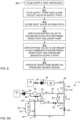
- FIG. 3A represents a post-treatment procedure 300 that includes rinseback, a draining phase and removal of disposables.
- Each of the steps 301-305 of the method 300 may be controlled by the control system 2 of the dialysis machine 1.
- the control system 2 may generate and present corresponding instructions for the operator, e.g. on the display 3, and may also require the operator to confirm when the manual operation has been completed, e.g. by pressing or touching a button on the machine 1.
- one or more of the steps are independently performed by the operator based on written instructions, e.g. from an operations manual or work guide, without involvement of the control system 2.
- the procedure 300 is initiated after termination of the dialysis treatment in FIG. 2 .
- the dialysis treatment may be terminated by the machine 1 stopping the blood pump 8, closing the clamps 10, 11, and closing the valves 18, 19.
- a rinseback step 301 the operator connects a container 30, which contains a human-compatible fluid ("rinseback fluid"), to the second flow circuit C2 and the machine 1 is operated to perform the above-mentioned rinseback.
- the rinseback fluid may be any fluid, which by its composition is compatible with the human body if administered to its circulatory system in relevant amounts, including but not limited to a saline solution, a treatment fluid, and water.
- the rinseback fluid is held within an internal space 31 of the container 30, which comprises an outlet port 32 and an inlet port 33 in fluid communication with the internal space 31.
- the container 30 may be made of rigid or flexible material, preferably a transparent or translucent material that allows for ocular inspection of the contents in the container 30.
- the container 30 further defines a suspension hole 36.
- step 301 involves instructing the operator to disconnect the terminal connector 27 from the vascular access of the subject S and connect the terminal connector 27 to the outlet port 32 of the container 30.
- the dialysis machine 1 then opens clamps 10, 11 and operates pump 8 to push the remaining in the second flow circuit C2 into the subject S while drawing rinseback fluid from the container 30 into the withdrawal line 24", as indicated by arrows in FIG. 4A , until all or a majority of the remaining blood in the second flow circuit C2 has been returned to the subject S.
- the machine 1 stops pump 8 and closes clamps 10, 11.
- the rinseback may be terminated manually by the operator or automatically by the machine 1 based on input from a dedicated sensor (not shown).
- a re-arrangement step 302 which is performed after termination of the rinseback step 301, the operator is instructed to re-arrange the second flow circuit C2 to form a closed loop that includes the container 30.
- the closed loop is formed by connecting the terminal connector 26 on the return line 24' to the inlet port 33 of the container 30.
- step 302 the machine 1 enters a draining phase that includes a circulation step 303 and a filtration step 304.
- the machine 1 is operated to open clamps 10, 11 and start pump 8 to circulate the residual fluid in (along) the closed loop, as indicated by arrows in FIG. 4B .
- the residual fluid is composed of remaining rinseback fluid in the container 30 and a mixture of rinseback fluid and blood residues in the line arrangements 24A, 24B and in the second chamber 23 of the dialyzer 20.
- the machine 1 is operated to draw residual fluid from the second flow circuit C2 into the first flow circuit C1 through the membrane 21, and from the first flow circuit C1 into the drain line 17 of the machine 1, as indicated by arrows in FIG. 4B .
- This process may be achieved by controlling the machine 1 to generate a lower pressure in the first chamber 22 compared to the second chamber 23.
- inlet valve 19 is opened, outlet valve 18 is closed and the fluid supply unit 4 is operated to generate suction on drain line 17, to thereby reduce the pressure in the first chamber 22 and draw residual fluid across the membrane 21.
- both valves 18, 19 are opened and the fluid supply unit 4 is operated to supply a fluid, e.g.
- step 304 may be at least partly concurrent with the circulation of step 303. It is conceivable that the machine 1 is operated to alternate between filtration and circulation. Steps 303 and 304 are terminated when the second flow circuit C2 is deemed to be sufficiently drained of residual fluid. Steps 303 and 304 may be terminated by the operator, e.g. by pressing a button on the machine, or automatically by the machine 1, e.g. based on dead-reckoning of the volume pumped into the patient by the pump 8 and/or based on input from a sensor, such as a pressure sensor in fluid communication with the closed loop (cf. P1, P2 in FIGS 6A-6B ) and/or a pressure sensor in the fluid supply unit (cf. P3 in FIGS 9A-9B ).
- a sensor such as a pressure sensor in fluid communication with the closed loop (cf. P1, P2 in FIGS 6A-6B ) and/or a pressure sensor in the fluid supply unit (cf. P3 in FIGS 9A
- step 305 clamps 10, 11 are opened and the operator is instructed to strip the machine 1 of the set of disposables by disconnecting the dialyzer 20, the line arrangements 24A, 24B and the container 30, preferably as a unit. The operator may then discard the set of disposables. Subsequently, the machine 1 may perform a conventional disinfection procedure, e.g. after instructing the operator to connect tubing 20', 20" to ports 5', 6' ( FIG. 1 ).
- the procedure 300 enables the closed loop, including the container 30, to be substantially drained of residual fluid during the draining phase. This reduces the weight of the set of disposables to be discarded and also reduces the risk that residual fluid is spilled on and around the machine 1.
- the procedure 300 may be implemented by use of a simple and conventional line set and by use of a conventional dialysis machine 1.
- the circulation of residual fluid through the container 30 serves to facilitate draining of the closed loop.
- the inflow of residual fluid through the inlet port 33 may serve to reduce the risk of the outlet port 32 becoming obstructed before the container 30 is completely drained. Such obstruction may occur, e.g., if the container is compliant (flexible) and gradually collapses as the amount of residual fluid in the container 30 diminishes.
- the inventors have found that the draining of the closed loop may be facilitated if the closed loop is vented to the atmosphere during the filtration and/or between periods of filtration (step 304). Such venting will counteract formation of negative (sub-atmospheric) pressure in the closed loop by the filtration, and thereby ensure a sufficient pressure difference between the chambers 23, 22 as well as counteract flow resistance caused by negative pressure, e.g. a collapsing of the container 30 (if flexible).
- the venting is preferably machine-controlled.
- the line arrangement 24A includes a branch line 28 in fluid communication with the drip chamber 25 and extending to a connector for connection to sensor port 13, which is in fluid communication with a first pressure sensor P1 in the machine 1.
- the line arrangement 24B includes a branch line 29 in fluid communication with the withdrawal line 24" and extending to a connector for connection to sensor port 14, which is in fluid communication with a second pressure sensor P2 in the machine 1.
- the branch lines 28, 29 are connected to the ports 13, 14 during blood treatment, thereby enabling the machine 1 to monitor pressure (aka “arterial pressure”) on the withdrawal side of the second flow circuit C2 upstream of the pump 8, and pressure (aka “venous pressure”) on the return side of the second flow circuit C2.
- cardiac pressure aka “arterial pressure”
- venous pressure a pressure on the return side of the second flow circuit C2.
- the procedure 500 is performed when the blood treatment in FIG. 6A has been terminated and includes an initial rinseback step 501, which may be identical to step 301, and a re-arrangement step 502, which may be identical to step 302 and results in connectors 26, 27 being connected to ports 33, 32 of container 30, as seen in FIG. 6B .
- the operator is instructed to remove the withdrawal line 24" from the clamp 11, which is opened (step 503), disconnect branch line 29 from sensor port 14 so that the terminal end of branch line 29 is open to the environment (step 504), and install branch line 29 in clamp 11 so that clamp 11 is operable to selectively open and close branch line 29 (step 505).
- the procedure 500 then proceeds to the draining phase, by performing a circulation step 506 and a filtration step 507 in correspondence with steps 303 and 304 as described above, as well as a ventilation step 508, in which clamp 11 is opened to vent the closed loop, for reasons explained above.
- steps 506 and 507 are performed with open clamps 10, 11 to ensure proper filtration and circulation, as illustrated in FIG. 6B , in which a dashed arrow designates air that enters the opened branch line 29.
- the inventors have found that the draining of the closed loop may be facilitated, particularly at end of the draining phase when small amounts of residual fluid remain in the container 30, if clamp 11 is intermittently closed during circulation and/or filtration.
- the clamp 11 is closed during a fraction of the duration of the draining phase, e.g. less than 20%, 15%, 10% or 5%.
- the branch line is kept open during the draining phase except for one or more short time periods in which the branch line is closed.
- draining may be improved by toggling the clamp 11, particularly towards the end of the draining phase.
- the clamp 11 is repeatedly (2 or more times) switched to close and then re-open the branch line 29.
- the clamp 11 is intermittently closed for 0.1-10 seconds, and preferably 0.4-5 seconds, during the toggling.
- step 509 when the second flow circuit C2 is deemed, by operator input or based on sensor data, to be sufficiently drained of residual fluid the clamps 10, 11 are closed.
- the pump 8 is stopped and filtration is terminated (step 511).
- the filtration may be stopped already at step 509 or step 510.
- the procedure 500 may be implemented by use of a simple and conventional line set and by use of a conventional dialysis machine 1 and enables facilitated draining of the second flow circuit C2 by machine-controlled venting of the closed loop.
- steps 503, 505 are modified to instruct the operator to replace the return line 24' by the branch line 29 in clamp 10, resulting in the configuration shown in FIG. 6C .
- All other steps of the procedure 500 may be implemented as described with reference to FIG. 6B .
- clamp 10 is operated for ventilation/toggling.
- only clamp 11 may be closed in step 509, whereas clamp 10 may be subsequently closed in step 511.
- the installation of the branch line 29 in clamp 10 enables a dedicated leakage prevention procedure to be performed between steps 502 and 504.
- the control system 2 closes clamp 11 and then operates pump 8 to generate negative pressure in the withdrawal line 24" downstream of the clamp 11 and in the branch line 29.
- the control system 2 may stop the blood pump 8 after a predefined time or when a predefined pressure is attained in the branch line 29, e.g. indicated by the pressure sensor P2.
- the negative pressure reduces the risk of blood leakage when the branch line 29 is disconnected from the sensor port 14 in step 504.
- the installation of the branch line 29 in clamp 11 as shown in FIG. 6B , or in clamp 10 as shown in FIG. 6C , has the advantage of enabling the blood pump 8 to generate a negative pressure in the branch line 29 by steps 509-511.
- steps 503-505 are modified to instruct the operator to disconnect branch line 28 from sensor port 13 and install branch line 28 in either of clamps 10, 11.
- the implementation of the procedure 500 may depend on the particular combination of dialysis machine and line set, e.g. which branch line 28, 29 is long enough to be arranged in which clamp 10, 11.
- the above-mentioned negative pressure may be generated by operation of the blood pump 8 and/or by performing filtration through the dialyzer membrane.
- a single-port container may be preferred.
- a dialysis clinic may want to keep an existing supply chain of single-port containers, may want to avoid stock-keeping of different container types, etc.
- a three-way manifold coupling unit which defines three ports and an internal manifold that fluidly connects the ports.
- a coupling unit may also be denoted "T coupling” or “Y coupling” in the art.
- One port of the coupling unit is connected to the port of the single-port container to provide two ports for connection to the return and withdrawal lines of a line set.
- a closed loop may be formed by use of a conventional line set, where the container is fluidly connected to the closed loop by the coupling unit, but is located outside of the closed loop.
- the closed loop and the container may be substantially drained of residual fluid by performing the above-described filtration to draw the residual fluid into the dialysis machine through the dialyzer membrane.
- FIG. 3B in combination with the system diagram in FIG. 7 , which includes a container 30 with a single port 32' and otherwise corresponds to FIG. 6C .
- the flow chart in FIG. 3B corresponds to FIG. 3A and represents a post-treatment procedure 300' that includes rinseback, a draining phase and removal of disposables. Unless otherwise stated, the description of FIG. 3A is equally applicable to FIG. 3B .
- the procedure 300' differs from the procedure 300 by the re-arrangement step 302', in which the operator is instructed to connect a first port of a 3-way manifold coupling unit 38 to the container port 32' and to connect the terminal connectors 26, 27 to second and third ports of the coupling unit 38. It is realized from FIG. 7 that the provision of the coupling unit 38 enables the use of a conventional line set and that steps 301, 303-305 may be performed as described for FIG. 3A . As indicated by an arrow in FIG. 7 , fluid is drawn from the container 30 into the closed loop by the filtration (step 304). In a variant, the coupling unit 38 is connected to the container port 32' already in step 301, i.e. in preparation for the rinseback procedure.
- step 301 may involve connecting the first port of the coupling unit 38 to the container port 32' and connecting the connector 27 on the withdrawal line 24" to the second port of the coupling unit 38, while ensuring that the third port of the coupling unit 38 is closed.
- the dialysis machine then performs rinseback.
- step 302 the operator may be instructed to form the closed loop by connecting the connector 26 on the return line 24' to the third port of the coupling 28.
- step 502 is modified in correspondence with step 302'.
- the coupling unit 38 may optionally be connected to the container port 32' already in step 501. All embodiments described with reference to FIGS 6A-6C are equally applicable to the second inventive concept.
- venting step 508 and in particular the toggling of the branch line during the venting step 508, results in a significant reduction in the time required for draining the second flow circuit C2 in accordance with the second inventive concept.
- the toggling will provide a motive force that actively pulls fluid from the container into the closed loop and thereby reduces the time required for draining the container 30.
- the first and second inventive concepts may be implemented to substantially drain the second fluid circuit C2 and the container 30 of residual fluid in 1-3 minutes, assuming that the total volume of residual fluid to be drained is less than approx. 0.5-0.8 L and that the dialyzer 20 has a high-flux or high-permeability membrane (having an ultrafiltration capacity of more than 20 mL/h/mmHg).
- substantially drain may indicate that the total remaining amount of residual fluid after the draining phase is no more than 0.1 L, and preferably no more than 0.05 L.
- a drain flow path within the fluid supply unit 4 is modified during filtration compared to blood treatment to avoid such exposure.
- the flow paths within the fluid supply unit 4 may be modified such that the output signal of a pressure sensor in the fluid supply unit 4 represents pressure in the first chamber 22 of the dialyzer 20, allowing the control system 2 to at least partly control the filtration based on the output signal.
- the fluid supply unit 4 defines a supply flow path 40 that extends from a dialysis fluid supply 41 to the outlet port 5 and includes a supply valve 42, a supply pump 43, a degassing device 44, a conductivity sensor 45, a pressure sensor P3, a flow sensor 47, and an outlet valve 48.
- the fluid supply system 4 also defines a drain flow path 50 that extends from the inlet port 6 to a drain 57 and includes a degassing device 51, an inlet valve 52, a flow sensor 53, a conductivity sensor 54, a blood detector 55, and a drain pump 56.
- a gas evacuation line 80 connects the degassing chamber 51 to the drain flow path 50 upstream of the drain pump 56 and includes an evacuation valve 81.
- fluid communication may be established between the first and second flow paths 40, 50, via either of a first and a second bypass line 60, 70 with a respective bypass valve 61, 71.
- the first bypass line 60 extends between an upstream end of flow sensor 53 and a downstream end of flow sensor 47
- the second bypass line 70 extends between a downstream end of flow sensor 53 and an upstream end of flow sensor 47.
- further sensors may be included in the inlet and outlet flow paths 40, 50, e.g. sensors included in a protective system of the machine 1.
- the fluid supply unit 4 may be operated during blood treatment, by the control system 2 ( FIG. 1 ), to generate a flow of fresh dialysis fluid through the outlet port 5 and a flow of spent dialysis fluid through the inlet port 6, as indicated by solid arrows in FIG. 9A .
- valves 42, 48 are open, supply 43 pump is active, bypass valves 61, 71 are closed, valve 52 is open and drain pump 56 is active.
- evacuation valve 81 is opened, at least intermittently, to allow gases to be drawn from degassing device 51 along gas evacuation line 80 by drain pump 56, as indicated by a dashed arrow.
- FIG. 8 illustrates a method 800 of operating the fluid supply unit 4 for achieving the above-mentioned filtration during the draining phase.
- the control system 2 may execute the method 800 by generating suitable control signals for the valves and the pumps in the fluid supply unit 4.
- the resulting configuration of the fluid supply unit 4 is shown in FIG. 9B .
- supply pump 43 is stopped and outlet valve 48 is closed.
- supply valve 42 may also be closed.
- inlet valve 52 is closed.
- evacuation valve 81 is opened to establish a flow path between drain port 6 and drain pump 56.
- bypass valve 71 is opened to establish fluid communication between drain flow path 50 and the pressure sensor P3 in the supply flow path 40.
- step 805 drain pump 56 is started to thereby draw residual fluid from dialyzer 20 into inlet port 6, via degassing device 51, evacuation line 81, and drain pump 56 into drain 57, as indicated by solid arrows in FIG. 9B .
- this unconventional use of the gas evacuation line 80 makes it possible to avoid exposing the sensors 53-55 in the drain flow path 50 to residual fluid.
- the pressure sensor P3 will be responsive to pressure changes in the second chamber 22 of the dialyzer 20.
- the drain pump 56 and thus the filtration may be controlled based on the output signal of the pressure sensor P3.
- the method 800 may be implemented in any fluid supply unit 4 that defines a supply flow path (cf. 40) and a drain flow path (cf. 50) comprising a set of sensors (cf. 53-55), wherein step 803 generally involves opening a valve (cf. 81) located in a connecting line (cf. 80), which extends between a first location in the drain flow path intermediate an inlet port (cf. 6) and an inlet valve (cf. 52) and a second location in the drain flow path intermediate a drain pump (cf. 56) and the set of sensors. Further, step 804 may generally involve opening a bypass valve (cf. 61, 71) in a bypass line (cf.
- 60, 70 which extends between a third location in the drain flow path intermediate the inlet valve (cf. 52) and the second location, and a fourth location in the supply flow path intermediate a supply pump (cf. 43) and an outlet valve (cf. 48), so as to establish fluid communication between the inlet port (cf. 6) and a pressure sensor (cf. P3) in the supply flow path.
- the foregoing description is equally applicable to any machine or apparatus which is configured to perform extracorporeal blood treatment by use of a dialyzer or an equivalent filtration unit, including but not limited to hemodialysis, hemofiltration, hemodiafiltration, plasmapheresis, extracorporeal blood oxygenation, extracorporeal liver support/dialysis, ultrafiltration, etc.
- conventional line sets may include a branch line for infusion of anticoagulant and/or a branch line for infusion of substitution fluid.
- the branch line may be installed in any other machine-controlled clamp than the withdrawal and return clamps that may be present on the dialysis machine.
- dialysis machines may comprise a venting clamp for engagement with a branch line ("venting line") connected to the drip chamber 25. It is also conceivable to omit steps 503-505 and perform step 508 by controlling the venting clamp in engagement with the venting line.
- steps 503 and 505 are omitted, which means that the branch line is disconnected to be open to the atmosphere during steps 506-508.
- step 508 may be achieved by instructing the operator to intermittently and manually pinch the branch line, e.g. by use of a manual clamp.
- steps 509-511 may involve instructing the operator to manually pinch the return or withdrawal line 24', 24" and the branch line to create the desired negative pressure in the branch line at step 511.
Landscapes
- Health & Medical Sciences (AREA)
- Heart & Thoracic Surgery (AREA)
- Vascular Medicine (AREA)
- Life Sciences & Earth Sciences (AREA)
- Engineering & Computer Science (AREA)
- Anesthesiology (AREA)
- Biomedical Technology (AREA)
- Hematology (AREA)
- Animal Behavior & Ethology (AREA)
- General Health & Medical Sciences (AREA)
- Public Health (AREA)
- Veterinary Medicine (AREA)
- Cardiology (AREA)
- Urology & Nephrology (AREA)
- Emergency Medicine (AREA)
- External Artificial Organs (AREA)
Claims (28)
- Steuersystem für eine Blutbehandlungsvorrichtung (1), die eine Fluidzufuhreinheit (4) umfasst und für die Installation eines Dialysators (20) und eines Leitungssatzes (24A, 24B) konfiguriert ist, um einen ersten Strömungskreislauf (C1) zum Leiten eines Fluids, das durch die Fluidzufuhreinheit (4) bereitgestellt wird, durch den Dialysator (20) und zurück zu der Fluidzufuhreinheit (4) zu definieren, und um einen zweiten Strömungskreislauf (C2) zu definieren, der von dem ersten Strömungskreislauf (C1) durch eine semipermeable Membran (21) des Dialysators (20) getrennt ist, und Rücklauf- und Entnahmeleitungen (24', 24'') zur Verbindung mit einem Gefäßsystem eines Probanden (S) während einer Blutbehandlungssitzung umfasst, wobei das Steuersystem konfiguriert ist, im Anschluss an eine Beendigung der Blutbehandlungssitzung:einen Bediener anzuweisen, den zweiten Strömungskreislauf (C2) mit einem ersten Anschluss (32) eines Behälters (30), der ein für den Menschen verträgliches Fluid beinhaltet, zu verbinden;die Blutbehandlungsvorrichtung (1) zu betreiben, um verbleibendes Blut in dem zweiten Strömungskreislauf (C2) durch die Rücklaufleitung (24') in das Gefäßsystem des Probanden (S) zu drücken, während das für den Menschen verträgliche Fluid von dem Behälter (30) in den zweiten Strömungskreislauf (C2) eingeleitet wird;den Bediener anzuweisen, die Rücklaufleitung (24') von dem Gefäßsystem des Probanden (S) zu trennen und den zweiten Strömungskreislauf (C2) neu anzuordnen, um einen geschlossenen Regelkreis zu definieren; undin einer Entleerungsphase die Blutbehandlungsvorrichtung (1) zu betreiben, um Restflüssigkeit aus dem geschlossenen Regelkreis durch die semipermeable Membran (21) des Dialysators (20) in den ersten Strömungskreislauf (C1) zu ziehen;wobei der Bediener angewiesen wird, den zweiten Strömungskreislauf (C2) neu anzuordnen, indem er den zweiten Strömungskreislauf (C2) mit einem zweiten Anschluss (33) des Behälters (30) derart verbindet, dass der Behälter (30) in den geschlossenen Regelkreis eingebunden wird.
- Steuersystem nach Anspruch 1, wobei in dem geschlossenen Regelkreis die Entnahmeleitung (24'') mit dem ersten Anschluss (32) des Behälters (30) in fluidtechnischer Kommunikation verbunden ist und die Rücklaufleitung (24') mit dem zweiten Anschluss (33) des Behälters (30) in fluidtechnischer Kommunikation verbunden ist.
- Steuersystem nach Anspruch 1 oder 2, wobei in dem geschlossenen Regelkreis Abschlusssteckverbinder (27, 26) auf den Entnahme- und Rücklaufleitungen (24'', 24') direkt oder indirekt mit dem ersten bzw. zweiten Anschluss (32, 33) des Behälters (30) verbunden sind.
- Steuersystem nach einem vorhergehenden Anspruch, das ferner konfiguriert ist, in der Entleerungsphase die Blutbehandlungsvorrichtung (1) derart zu betreiben, dass sie die Restflüssigkeit in dem geschlossenen Regelkreis und somit durch den Behälter (30) zirkuliert.
- Steuersystem nach einem vorhergehenden Anspruch, das ferner konfiguriert ist, in der Entleerungsphase eine Klemme (10; 11) der Blutbehandlungsvorrichtung (1) zu betreiben, um eine Zweigleitung (28; 29), die in dem Leitungssatz (24A, 24B) enthalten ist und in fluidtechnischer Kommunikation mit dem zweiten Strömungskreis (C2) angeordnet ist, selektiv zu öffnen, um den geschlossenen Regelkreis zu entlüften.
- Steuersystem nach Anspruch 5, das konfiguriert ist, während der Entleerungsphase die Klemme (10; 11) zu betreiben, um die Zweigleitung (28; 29) offen zu halten und die Zweigleitung (28; 29) nur zeitweise zu schließen.
- Steuersystem nach Anspruch 5, das ferner konfiguriert ist, in der Entleerungsphase die Klemme (10; 11) zu betreiben, um die Zweigleitung (28; 29) wiederholt, z. B. für 0,1 bis 10 Sekunden, und bevorzugt für 0,4 bis 5 Sekunden zu schließen.
- Steuersystem nach einem der Ansprüche 5-7, das konfiguriert ist, dann, wenn es die Entleerungsphase beendet, die Klemme (10; 11) zu betreiben, um die Zweigleitung (28; 29) zu schließen, die Blutbehandlungsvorrichtung (1) zu betreiben, um einen subatmosphärischen Druck in der so geschlossenen Zweigleitung (28; 29) zu erzeugen, und die Klemme (10; 11) zu betreiben, um die Zweigleitung (28; 29) zu öffnen, um den subatmosphärischen Druck zu entlasten.
- Steuersystem nach einem der Ansprüche 5-8, wobei eine der Rücklauf- und Entnahmeleitungen (24', 24'') während der Blutbehandlungssitzung in der Klemme (10; 11) angeordnet ist und wobei das Steuersystem ferner konfiguriert ist, vor der Entleerungsphase den Bediener anzuweisen, die eine der Rücklauf- und Entnahmeleitungen (24', 24") aus der Klemme (10; 11) zu entfernen und die Zweigleitung (28; 29) in der Klemme (10; 11) zu installieren.
- Steuersystem nach einem der Ansprüche 5-9, wobei die Zweigleitung (29) von der Entnahmeleitung (24'') abzweigt.
- Steuersystem nach einem der Ansprüche 5-10, das ferner konfiguriert ist, vor der Entleerungsphase den Bediener anzuweisen, die Zweigleitung (28; 29) von einem Sensoranschluss (13, 14) der Blutbehandlungsvorrichtung (1) zu trennen.
- Steuersystem nach einem der Ansprüche 5-8, wobei während der Blutbehandlungssitzung die Rücklaufleitung (24') in der Klemme (10) angeordnet ist und die Entnahmeleitung (24'') in einer weiteren Klemme (11) der Blutbehandlungsvorrichtung (1) angeordnet ist, wobei die Zweigleitung (29) auf der stromabwärts gelegenen Seite der weiteren Klemme (11) von der Entnahmeleitung (24'') abzweigt, wobei das Steuersystem ferner konfiguriert ist, den Bediener vor der Entleerungsphase anzuweisen, die Rücklaufleitung (24') aus der Klemme (10) zu entfernen, die Zweigleitung (29) in der Klemme (10) zu installieren, und den Bediener anzuweisen, die Zweigleitung (29) von einem Sensoranschluss (13, 14) der Blutbehandlungsvorrichtung (1) zu trennen, und wobei das Steuersystem ferner konfiguriert ist, vor dem Anweisen des Bedieners, die Zweigleitung (28; 29) zu trennen, die weitere Klemme (11) zu schließen und die Blutbehandlungsvorrichtung (1) zu betreiben, um auf der stromabwärts gelegenen Seite der weiteren Klemme (11) und in der Zweigleitung (29) subatmosphärischen Druck zu erzeugen.
- Steuersystem nach einem vorhergehenden Anspruch, wobei die Fluidzufuhreinheit (4) einen Entleerungsströmungsweg (50) definiert, der sich von einem Einlassanschluss (6) zur Verbindung mit dem ersten Strömungskreislauf (C1) zu einer Entleerungspumpe (56) erstreckt, wobei der Entleerungsströmungsweg (50) einen Satz von Sensoren (53, 54, 55) und ein Einlassventil (52), das zwischen dem Einlassanschluss (6) und dem Satz von Sensoren (53, 54, 55) liegt, umfasst, wobei die Fluidzufuhreinheit (4) ferner einen Zufuhrströmungsweg (40) definiert, der ein Auslassventil (48) umfasst und sich von einer Zufuhrpumpe (43) zu einem Auslassanschluss (5) für die Verbindung mit dem ersten Strömungskreislauf (C1) erstreckt, wobei das Steuersystem ferner konfiguriert ist, in der Entleerungsphase:das Auslass- und das Einlassventil (48, 52) zu schließen;ein Ventil (81) zu öffnen, das sich in einer Verbindungsleitung (80) befindet, die sich zwischen einem ersten Ort in dem Entleerungsströmungsweg (50), der zwischen dem Einlassanschluss (6) und dem Einlassventil (52) liegt, und einem zweiten Ort in dem Entleerungsströmungsweg (50), der zwischen der Entleerungspumpe (56) und dem Satz von Sensoren (53, 54, 55) liegt, erstreckt; unddie Entleerungspumpe (56) zu betreiben, um die Restflüssigkeit aus dem geschlossenen Regelkreis durch die semipermeable Membran (21) des Dialysators (20) in den ersten Strömungskreislauf (C1), und aus dem ersten Strömungskreislauf (C1) über den Einlassanschluss (6) in den Entleerungsströmungsweg (59) zu ziehen.
- Steuersystem nach Anspruch 13, wobei sich die Verbindungsleitung (80) von einer Entgasungsvorrichtung (51) in dem Entleerungsströmungsweg (50) erstreckt, und wobei das Steuersystem ferner konfiguriert ist, während der Blutbehandlungssitzung das Ventil (81) in der Verbindungsleitung (80) zu öffnen, um Gase aus der Entgasungsvorrichtung (51) durch die Verbindungsleitung (80) auszustoßen.
- Steuersystem nach Anspruch 13 oder 14, das ferner konfiguriert ist, in der Entleerungsphase:ein Umgehungsventil (61;71) in einer Umgehungsleitung (60; 70), die sich zwischen einem dritten Ort in dem Entleerungsströmungsweg (50), der zwischen dem Einlassventil (52) und dem zweiten Ort liegt, und einem vierten Ort in dem Zufuhrströmungsweg (40), der zwischen der Zufuhrpumpe (43) und dem Auslassventil (48) liegt, erstreckt, um eine fluidtechnische Kommunikation zwischen dem Einlassanschluss (6) und einem Drucksensor (P3) in dem Zufuhrströmungsweg (40) herzustellen; unddie Entleerungspumpe (56) basierend auf einem Drucksignal von dem Drucksensor (P3) zu steuern.
- Steuersystem für eine Blutbehandlungsvorrichtung (1), die eine Fluidzufuhreinheit (4) umfasst und für die Installation eines Dialysators (20) und eines Leitungssatzes (24A, 24B) konfiguriert ist, um einen ersten Strömungskreislauf (C1) zum Leiten eines Fluids, das durch die Fluidzufuhreinheit (4) bereitgestellt wird, durch den Dialysator (20) und zurück zu der Fluidzufuhreinheit (4) zu definieren, und um einen zweiten Strömungskreislauf (C2) zu definieren, der von dem ersten Strömungskreislauf (C1) durch eine semipermeable Membran (21) des Dialysators (20) getrennt ist, und Rücklauf- und Entnahmeleitungen (24', 24'') zur Verbindung mit einem Gefäßsystem eines Probanden (S) während einer Blutbehandlungssitzung umfasst, wobei das Steuersystem konfiguriert ist, im Anschluss an eine Beendigung der Blutbehandlungssitzung:einen Bediener anzuweisen, die Entnahmeleitung (24'') mit einem Anschluss (32') eines Behälters (30), der ein für den Menschen verträgliches Fluid beinhaltet, zu verbinden;die Blutbehandlungsvorrichtung (1) zu betreiben, um in dem zweiten Strömungskreislauf (C2) verbleibendes Blut durch die Rücklaufleitung (24') in das Gefäßsystem des Probanden (S) zu drücken, während das für den Menschen verträgliche Fluid von dem Behälter (30) in die Entnahmeleitung (24") eingeleitet wird;den Bediener anzuweisen, die Rücklaufleitung (24') von dem Gefäßsystem des Probanden (S) zu trennen und den zweiten Strömungskreislauf (C2) neu anzuordnen, um einen geschlossenen Regelkreis zu definieren; undin einer Entleerungsphase die Blutbehandlungsvorrichtung (1) zu betreiben, um die Restflüssigkeit aus dem geschlossenen Regelkreis durch die semipermeable Membran (21) des Dialysators (20) in den ersten Strömungskreislauf (C1) zu ziehen;wobei der Bediener angewiesen wird, den zweiten Strömungskreislauf (C2) neu anzuordnen, indem er die Rücklauf- und Entnahmeleitungen (24', 24'') in fluidtechnischer Kommunikation durch eine Dreiwege-Verteilerkupplungseinheit (38) mit dem Anschluss (32') des Behälters (30) verbindet.
- Steuersystem nach Anspruch 16, das ferner konfiguriert ist, in der Entleerungsphase eine Klemme (10; 11) der Blutbehandlungsvorrichtung (1) zu betreiben, um eine Zweigleitung (28; 29), die in dem Leitungssatz (24A, 24B) enthalten ist und in fluidtechnischer Kommunikation mit dem zweiten Strömungskreislauf (C2) angeordnet ist, selektiv zu öffnen, um den geschlossenen Regelkreis zu entlüften.
- Steuersystem nach Anspruch 17, das konfiguriert ist, während der Entleerungsphase die Klemme (10; 11) zu betreiben, um die Zweigleitung (28; 29) offen zu halten und die Zweigleitung (28; 29) nur zeitweise zu schließen.
- Steuersystem nach Anspruch 17 oder 18, das ferner konfiguriert ist, in der Entleerungsphase die Klemme (10; 11) zu betreiben, um die Zweigleitung (28; 29) wiederholt, z. B. für 0,1-10 Sekunden, und bevorzugt für 0,4-5 Sekunden zu schließen.
- Steuersystem nach einem der Ansprüche 17-19, das konfiguriert ist, dann, wenn es die Entleerungsphase beendet, die Klemme (10; 11) zu betreiben, um die Zweigleitung (28; 29) zu schließen, die Blutbehandlungsvorrichtung (1) zu betreiben, um einen subatmosphärischen Druck in der so geschlossenen Zweigleitung (28; 29) zu erzeugen, und die Klemme (10; 11) zu betreiben, um die Zweigleitung (28; 29) zu öffnen, um den subatmosphärischen Druck zu entlasten.
- Steuersystem nach einem der Ansprüche 17-20, wobei eine der Rücklauf- und Entnahmeleitungen (24', 24'') während der Blutbehandlungssitzung in der Klemme (10; 11) angeordnet ist, und wobei das Steuersystem ferner konfiguriert ist, vor der Entleerungsphase den Bediener anzuweisen, die eine der Rücklauf- und Entnahmeleitungen (24', 24") aus der Klemme (10; 11) zu entfernen und die Zweigleitung (28; 29) in der Klemme (10; 11) zu installieren.
- Steuersystem nach einem der Ansprüche 17-21, das ferner konfiguriert ist, vor der Entleerungsphase den Bediener anzuweisen, die Zweigleitung (28; 29) von einem Sensoranschluss (13, 14) der Blutbehandlungsvorrichtung (1) zu trennen.
- Steuersystem nach einem der Ansprüche 17-20, wobei während der Blutbehandlungssitzung die Rücklaufleitung (24') in der Klemme (10) angeordnet ist und die Entnahmeleitung (24") in einer weiteren Klemme (11) der Blutbehandlungsvorrichtung (1) angeordnet ist, wobei die Zweigleitung (29) auf der stromabwärts gelegenen Seite der weiteren Klemme (11) von der Entnahmeleitung (24") abzweigt, wobei das Steuersystem ferner konfiguriert ist, vor der Entleerungsphase den Bediener anzuweisen, die Rücklaufleitung (24') aus der Klemme (10) zu entfernen, die Zweigleitung (29) in der Klemme (10) zu installieren, und den Bediener anzuweisen, die Zweigleitung (29) von einem Sensoranschluss (13, 14) der Blutbehandlungsvorrichtung (1) zu trennen, und wobei das Steuersystem ferner konfiguriert ist, vor dem Anweisen des Bedieners, die Zweigleitung (28; 29) zu trennen, die weitere Klemme (11) zu schließen und die Blutbehandlungsvorrichtung (1) zu betreiben, um auf der stromabwärts gelegenen Seite der weiteren Klemme (11) und in der Zweigleitung (29) einen subatmosphärischen Druck zu erzeugen.
- Steuersystem nach einem der Ansprüche 16-23, wobei die Fluidzufuhreinheit (4) einen Entleerungsströmungsweg (50) definiert, der sich von einem Einlassanschluss (6) zur Verbindung mit dem ersten Strömungskreislauf (C1) zu einer Entleerungspumpe (56) erstreckt, wobei der Entleerungsströmungsweg (50) einen Satz von Sensoren (53, 54, 55) und ein Einlassventil (52), das zwischen dem Einlassanschluss (6) und dem Satz von Sensoren (53, 54, 55) liegt, umfasst, wobei die Fluidzufuhreinheit (4) ferner einen Zufuhrströmungsweg (40) definiert, der ein Auslassventil (48) umfasst und sich von einer Zufuhrpumpe (43) zu einem Auslassanschluss (5) zur Verbindung mit dem ersten Strömungskreislauf (C1) erstreckt, wobei das Steuersystem ferner konfiguriert ist, in der Entleerungsphase:das Auslass- und das Einlassventil (48, 52) zu schließen;ein Ventil (81) zu öffnen, das sich in einer Verbindungsleitung (80) befindet, die sich zwischen einem ersten Ort in dem Entleerungsströmungsweg (50), der zwischen dem Einlassanschluss (6) und dem Einlassventil (52) liegt, und einem zweiten Ort in dem Entleerungsströmungsweg (50), der zwischen der Entleerungspumpe (56) und dem Satz von Sensoren (53, 54, 55) liegt, erstreckt; unddie Entleerungspumpe (56) zu betreiben, um die Restflüssigkeit aus dem geschlossenen Regelkreis durch die semipermeable Membran (21) des Dialysators (20) in den ersten Strömungskreislauf (C1), und aus dem ersten Strömungskreislauf (C1) über den Einlassanschluss (6) in den Entleerungsströmungsweg (59) zu ziehen.
- Blutbehandlungsvorrichtung, die eine Fluidzufuhreinheit (4), die konfiguriert ist, einem ersten Strömungskreislauf (C1) ein Fluid zuzuführen, eine Pumpe (8), die betrieben werden kann, um mit einem zweiten Strömungskreislauf (C2) in Eingriff zu treten, und das Steuersystem nach einem vorhergehenden Anspruch umfasst.
- Verfahren zum Betreiben einer Blutbehandlungsvorrichtung (1), die eine Fluidzufuhreinheit (4) umfasst und für die Installation eines Dialysators (20) und eines Leitungssatzes (24A, 24B) konfiguriert ist, um einen ersten Strömungskreislauf (C1) zum Leiten eines Fluids, das durch die Fluidzufuhreinheit (4) bereitgestellt wird, durch den Dialysator (20) und zurück zu der Fluidzufuhreinheit (4) zu definieren, und um einen zweiten Strömungskreislauf (C2) zu definieren, der von dem ersten Strömungskreislauf (C1) durch eine semipermeable Membran (21) des Dialysators (20) getrennt ist und Rücklauf- und Entnahmeleitungen (24', 24'') zur Verbindung mit einem Gefäßsystem eines Probanden (S) während einer Blutbehandlungssitzung umfasst, wobei das Verfahren nach einem Rückspülvorgang (301; 501) und während die Entnahmeleitung (24'') mit einem ersten Anschluss (32) eines Behälters (30) verbunden ist, und dann, wenn die Rücklaufleitung (24') von dem Gefäßsystem des Probanden (S) getrennt worden ist, Folgendes umfasst:Veranlassen (302; 502) einer Neuanordnung des zweiten Strömungskreislaufs (C2), um einen geschlossenen Regelkreis zu definieren, wobei die Neuanordnung veranlasst wird, indem ein Bediener durch ein Steuersystem, das für die Blutbehandlungsvorrichtung konfiguriert ist, angewiesen wird, den zweiten Strömungskreislauf (C2) neu anzuordnen, und wobei die Neuanordnung das Verbinden des zweiten Strömungskreislaufs (C2) mit einem zweiten Anschluss (33) des Behälters (30) derart umfasst, dass der Behälter (30) in dem geschlossenen Regelkreis enthalten ist; undBetreiben (304, 504) der Blutbehandlungsvorrichtung (1) in einer Entleerungsphase, um die Restflüssigkeit durch die semipermeable Membran (21) des Dialysators (20) aus dem geschlossenen Regelkreis in den ersten Strömungskreislauf (C1) zu ziehen.
- Verfahren zum Betreiben einer Blutbehandlungsvorrichtung (1), die eine Fluidzufuhreinheit (4) umfasst und für die Installation eines Dialysators (20) und eines Leitungssatzes (24A, 24B) konfiguriert ist, um einen ersten Strömungskreislauf (C1) zum Leiten eines Fluids, das durch die Fluidzufuhreinheit (4) bereitgestellt wird, durch den Dialysator (20) und zurück zu der Fluidzufuhreinheit (4) zu definieren, und um einen zweiten Strömungskreislauf (C2) zu definieren, der von dem ersten Strömungskreislauf (C1) durch eine semipermeable Membran (21) des Dialysators (20) getrennt ist und Rücklauf- und Entnahmeleitungen (24', 24'') zur Verbindung mit einem Gefäßsystem eines Probanden (S) während einer Blutbehandlungssitzung umfasst, wobei das Verfahren nach einem Rückspülvorgang (301; 501) und während die Entnahmeleitung (24'') mit einem Anschluss (32') eines Behälters (30) verbunden ist und dann, wenn die Rücklaufleitung (24') von dem Gefäßsystem des Probanden (S) getrennt worden ist, Folgendes umfasst:Veranlassen (302'; 502) einer Neuanordnung des zweiten Strömungskreislaufs (C2), um einen geschlossenen Regelkreis zu definieren, wobei die Neuanordnung veranlasst wird, indem ein Bediener durch ein Steuersystem, das für die Blutbehandlungsvorrichtung konfiguriert ist, angewiesen wird, den zweiten Strömungskreislauf (C2) neu anzuordnen, und wobei die Neuanordnung das Verbinden der Rücklauf- und Entnahmeleitungen (24', 24'') in fluidtechnischer Kommunikation mit dem Anschluss (32') des Behälters (30) durch eine Dreiwege-Verteilerkupplungseinheit (38) umfasst; undBetreiben (304, 504) der Blutbehandlungsvorrichtung (1) in einer Entleerungsphase, um die Restflüssigkeit durch die semipermeable Membran (21) des Dialysators (20) aus dem geschlossenen Regelkreis in den ersten Strömungskreislauf (C1) zu ziehen.
- Computerlesbares Medium, das Computeranweisungen umfasst, die dann, wenn sie durch einen Prozessor (2A) eines Steuersystems, das für eine Blutbehandlungsvorrichtung konfiguriert ist, ausgeführt werden, wobei die Blutbehandlungsvorrichtung technische Eigenschaften der Blutbehandlungsvorrichtung nach Anspruch 26 und 27 umfasst, das Steuersystem veranlassen, das Verfahren nach Anspruch 26 oder 27 durchzuführen.
Applications Claiming Priority (2)
| Application Number | Priority Date | Filing Date | Title |
|---|---|---|---|
| SE1950610 | 2019-05-23 | ||
| PCT/EP2020/059979 WO2020233895A1 (en) | 2019-05-23 | 2020-04-08 | Emptying a blood circuit after extracorporeal blood treatment |
Publications (2)
| Publication Number | Publication Date |
|---|---|
| EP3972669A1 EP3972669A1 (de) | 2022-03-30 |
| EP3972669B1 true EP3972669B1 (de) | 2025-01-15 |
Family
ID=70289385
Family Applications (1)
| Application Number | Title | Priority Date | Filing Date |
|---|---|---|---|
| EP20719141.2A Active EP3972669B1 (de) | 2019-05-23 | 2020-04-08 | Entleerung eines blutkreislaufes nach extrakorporaler blutbehandlung |
Country Status (8)
| Country | Link |
|---|---|
| US (1) | US12478719B2 (de) |
| EP (1) | EP3972669B1 (de) |
| JP (1) | JP7529695B2 (de) |
| KR (1) | KR102894575B1 (de) |
| CN (1) | CN113905774B (de) |
| AU (1) | AU2020280654B2 (de) |
| ES (1) | ES3017861T3 (de) |
| WO (1) | WO2020233895A1 (de) |
Family Cites Families (26)
| Publication number | Priority date | Publication date | Assignee | Title |
|---|---|---|---|---|
| DE2838414C2 (de) * | 1978-09-02 | 1984-10-31 | Fresenius AG, 6380 Bad Homburg | Vorrichtung zur Hämodialyse und zum Entziehen von Ultrafiltrat |
| ATE133341T1 (de) * | 1989-06-20 | 1996-02-15 | Univ Washington | Hemodialysesystem |
| US5591344A (en) * | 1995-02-13 | 1997-01-07 | Aksys, Ltd. | Hot water disinfection of dialysis machines, including the extracorporeal circuit thereof |
| US7780619B2 (en) * | 1999-11-29 | 2010-08-24 | Nxstage Medical, Inc. | Blood treatment apparatus |
| IT1319785B1 (it) * | 2000-01-12 | 2003-11-03 | Gambro Dasco Spa | Metodo di svuotamento di un circuito ematico in una macchina didialisi e circuito ematico per l'attuazione del metodo. |
| US20030010717A1 (en) * | 2001-07-13 | 2003-01-16 | Nx Stage Medical, Inc. | Systems and methods for handling air and/or flushing fluids in a fluid circuit |
| JP2005040394A (ja) * | 2003-07-23 | 2005-02-17 | Noiesu:Kk | 血液浄化装置 |
| US8029454B2 (en) * | 2003-11-05 | 2011-10-04 | Baxter International Inc. | High convection home hemodialysis/hemofiltration and sorbent system |
| DE102006012087B4 (de) | 2006-03-14 | 2008-10-02 | Fresenius Medical Care Deutschland Gmbh | Verfahren zum zumindest teilweise Entleeren eines extrakorporalen Blutkreislaufs und Hämodialysegerät zur Anwendung des Verfahrens |
| DE102006042120B3 (de) * | 2006-09-07 | 2008-04-03 | Fresenius Medical Care Deutschland Gmbh | Blutbehandlungsgerät und Verfahren zum Entleeren eines Blutschlauchsatzes eines Blutbehandlungsgerätes |
| EP2142234B1 (de) * | 2007-04-12 | 2013-01-23 | Gambro Lundia AB | Verfahren und gerät zum primen eines extrakorporalen blutkreislaufs |
| US8137553B2 (en) * | 2007-11-29 | 2012-03-20 | Fresenius Medical Care Holdings, Inc. | Priming system and method for dialysis systems |
| DE102009008346B4 (de) | 2009-02-11 | 2014-11-13 | Fresenius Medical Care Deutschland Gmbh | Verfahren zum Entfernen von Blut aus einem extrakorporalen Blutkreislauf für eine Behandlungsvorrichtung nach Beenden einer Blutbehandlungssitzung und Vorrichtung zum Ausführen desselben |
| US9572920B2 (en) * | 2011-06-21 | 2017-02-21 | Gambro Lundia Ab | Disposables for blood treatment, and methods of operating the same |
| DE102011108785A1 (de) | 2011-07-29 | 2013-01-31 | Fresenius Medical Care Deutschland Gmbh | Verfahren zum Entfernen von Fluid aus einem Blutfilter nach Beendigung einer Blutbehandlungssitzung und Behandlungsvorrichtung zum Durchführen desselben |
| US10850016B2 (en) * | 2013-02-01 | 2020-12-01 | Medtronic, Inc. | Modular fluid therapy system having jumpered flow paths and systems and methods for cleaning and disinfection |
| EP3398628B1 (de) * | 2013-02-06 | 2022-04-06 | NxStage Medical Inc. | Fluidkreislauffüllverfahren, -vorrichtungen und -systeme |
| DE202013101695U1 (de) * | 2013-04-19 | 2013-05-07 | B. Braun Avitum Ag | Rezirkulationsvorrichtung eines extrakorporalen Blutbehandlungsgeräts |
| JP2015195833A (ja) * | 2014-03-31 | 2015-11-09 | 旭化成メディカル株式会社 | 血液浄化装置及び血液浄化装置の抜液方法 |
| DE102014109136A1 (de) | 2014-06-30 | 2015-12-31 | Fresenius Medical Care Deutschland Gmbh | Verfahren zum Entfernen von Fluid aus einem Blutfilter nach Beendigung einer Blutbehandlungssitzung mittels Flusserhöhung und Behandlungsvorrichtung zum Durchführen desselben |
| DE102014011673A1 (de) * | 2014-08-05 | 2016-02-11 | Fresenius Medical Care Deutschland Gmbh | Verfahren zum Auswaschen von Gasblasen in einem extrakoporalen Blutkreislauf |
| CN108136097B (zh) * | 2015-10-14 | 2021-01-15 | 甘布罗伦迪亚股份公司 | 包括流路绝缘体的透析系统 |
| DE102016107026A1 (de) * | 2016-04-15 | 2017-10-19 | B. Braun Avitum Ag | Verfahren zur Entleerung eines Geräts zur extrakorporalen Blutbehandlung |
| WO2018001994A1 (en) * | 2016-06-30 | 2018-01-04 | Gambro Lundia Ab | Connection test for blood treatment machines i |
| US10806843B2 (en) * | 2017-09-21 | 2020-10-20 | Fresenius Medical Care Holding, Inc. | Automatic dialysate detection in dialysis machines |
| EP3476414A1 (de) * | 2017-10-27 | 2019-05-01 | Gambro Lundia AB | Dialysemaschine und verfahren |
-
2020
- 2020-04-08 EP EP20719141.2A patent/EP3972669B1/de active Active
- 2020-04-08 WO PCT/EP2020/059979 patent/WO2020233895A1/en not_active Ceased
- 2020-04-08 CN CN202080038384.XA patent/CN113905774B/zh active Active
- 2020-04-08 US US17/609,218 patent/US12478719B2/en active Active
- 2020-04-08 KR KR1020217040621A patent/KR102894575B1/ko active Active
- 2020-04-08 JP JP2021569984A patent/JP7529695B2/ja active Active
- 2020-04-08 AU AU2020280654A patent/AU2020280654B2/en active Active
- 2020-04-08 ES ES20719141T patent/ES3017861T3/es active Active
Also Published As
| Publication number | Publication date |
|---|---|
| CA3138733A1 (en) | 2020-11-26 |
| US12478719B2 (en) | 2025-11-25 |
| CN113905774A (zh) | 2022-01-07 |
| JP2022535719A (ja) | 2022-08-10 |
| WO2020233895A1 (en) | 2020-11-26 |
| KR20220013375A (ko) | 2022-02-04 |
| AU2020280654B2 (en) | 2025-03-20 |
| AU2020280654A1 (en) | 2022-01-20 |
| CN113905774B (zh) | 2024-08-30 |
| US20220211928A1 (en) | 2022-07-07 |
| ES3017861T3 (en) | 2025-05-13 |
| JP7529695B2 (ja) | 2024-08-06 |
| EP3972669A1 (de) | 2022-03-30 |
| KR102894575B1 (ko) | 2025-12-02 |
Similar Documents
| Publication | Publication Date | Title |
|---|---|---|
| CN101400387B (zh) | 至少部分排空体外血液循环的方法以及用于应用此方法的血液透析仪 | |
| US7147616B2 (en) | Method for emptying a blood circuit of an apparatus for the extracorporeal treatment of blood | |
| CN101309710B (zh) | 血液净化装置和其穿刺针的连接状态判断方法 | |
| EP2377570B1 (de) | Verbinder für eine Flüssigkeitstransportleitung einer medizinischen Vorrichtung | |
| US10610634B2 (en) | Blood purification apparatus | |
| US20240216592A1 (en) | Preparing an extracorporeal blood treatment apparatus | |
| US9616471B2 (en) | Rinsing line, medical technical functional device, medical technical treatment apparatus and method | |
| CA2762300C (en) | Method and system for providing priming and restitution liquids for an extracorporeal blood treatment | |
| US20190038890A1 (en) | Infusion Methods for Extracoporeal Systems | |
| EP3972669B1 (de) | Entleerung eines blutkreislaufes nach extrakorporaler blutbehandlung | |
| CA3138733C (en) | Emptying a blood circuit after extracorporeal blood treatment | |
| JP5558260B2 (ja) | 血液処理器のプライミングシステム | |
| CN118022088A (zh) | 一种透析机自动预充系统 | |
| EP3834861A1 (de) | Zusatzmodul für eine vorrichtung zur extrakorporalen behandlung von blut und mit besagtem zusatzmodul ausgestatteter blutsatz |
Legal Events
| Date | Code | Title | Description |
|---|---|---|---|
| STAA | Information on the status of an ep patent application or granted ep patent |
Free format text: STATUS: UNKNOWN |
|
| STAA | Information on the status of an ep patent application or granted ep patent |
Free format text: STATUS: THE INTERNATIONAL PUBLICATION HAS BEEN MADE |
|
| PUAI | Public reference made under article 153(3) epc to a published international application that has entered the european phase |
Free format text: ORIGINAL CODE: 0009012 |
|
| STAA | Information on the status of an ep patent application or granted ep patent |
Free format text: STATUS: REQUEST FOR EXAMINATION WAS MADE |
|
| 17P | Request for examination filed |
Effective date: 20211223 |
|
| AK | Designated contracting states |
Kind code of ref document: A1 Designated state(s): AL AT BE BG CH CY CZ DE DK EE ES FI FR GB GR HR HU IE IS IT LI LT LU LV MC MK MT NL NO PL PT RO RS SE SI SK SM TR |
|
| DAV | Request for validation of the european patent (deleted) | ||
| DAX | Request for extension of the european patent (deleted) | ||
| GRAP | Despatch of communication of intention to grant a patent |
Free format text: ORIGINAL CODE: EPIDOSNIGR1 |
|
| STAA | Information on the status of an ep patent application or granted ep patent |
Free format text: STATUS: GRANT OF PATENT IS INTENDED |
|
| INTG | Intention to grant announced |
Effective date: 20240904 |
|
| RIN1 | Information on inventor provided before grant (corrected) |
Inventor name: ANDERSSON, GUNILLA Inventor name: FORSLAND, KARL HENRIK |
|
| GRAS | Grant fee paid |
Free format text: ORIGINAL CODE: EPIDOSNIGR3 |
|
| GRAA | (expected) grant |
Free format text: ORIGINAL CODE: 0009210 |
|
| STAA | Information on the status of an ep patent application or granted ep patent |
Free format text: STATUS: THE PATENT HAS BEEN GRANTED |
|
| AK | Designated contracting states |
Kind code of ref document: B1 Designated state(s): AL AT BE BG CH CY CZ DE DK EE ES FI FR GB GR HR HU IE IS IT LI LT LU LV MC MK MT NL NO PL PT RO RS SE SI SK SM TR |
|
| REG | Reference to a national code |
Ref country code: CH Ref legal event code: EP Ref country code: GB Ref legal event code: FG4D |
|
| REG | Reference to a national code |
Ref country code: DE Ref legal event code: R096 Ref document number: 602020044781 Country of ref document: DE |
|
| REG | Reference to a national code |
Ref country code: IE Ref legal event code: FG4D |
|
| PGFP | Annual fee paid to national office [announced via postgrant information from national office to epo] |
Ref country code: FR Payment date: 20250319 Year of fee payment: 6 |
|
| PGFP | Annual fee paid to national office [announced via postgrant information from national office to epo] |
Ref country code: GB Payment date: 20250319 Year of fee payment: 6 |
|
| REG | Reference to a national code |
Ref country code: ES Ref legal event code: FG2A Ref document number: 3017861 Country of ref document: ES Kind code of ref document: T3 Effective date: 20250513 |
|
| REG | Reference to a national code |
Ref country code: NL Ref legal event code: MP Effective date: 20250115 |
|
| PG25 | Lapsed in a contracting state [announced via postgrant information from national office to epo] |
Ref country code: NL Free format text: LAPSE BECAUSE OF FAILURE TO SUBMIT A TRANSLATION OF THE DESCRIPTION OR TO PAY THE FEE WITHIN THE PRESCRIBED TIME-LIMIT Effective date: 20250115 |
|
| PG25 | Lapsed in a contracting state [announced via postgrant information from national office to epo] |
Ref country code: RS Free format text: LAPSE BECAUSE OF FAILURE TO SUBMIT A TRANSLATION OF THE DESCRIPTION OR TO PAY THE FEE WITHIN THE PRESCRIBED TIME-LIMIT Effective date: 20250415 |
|
| PG25 | Lapsed in a contracting state [announced via postgrant information from national office to epo] |
Ref country code: FI Free format text: LAPSE BECAUSE OF FAILURE TO SUBMIT A TRANSLATION OF THE DESCRIPTION OR TO PAY THE FEE WITHIN THE PRESCRIBED TIME-LIMIT Effective date: 20250115 |
|
| PG25 | Lapsed in a contracting state [announced via postgrant information from national office to epo] |
Ref country code: PL Free format text: LAPSE BECAUSE OF FAILURE TO SUBMIT A TRANSLATION OF THE DESCRIPTION OR TO PAY THE FEE WITHIN THE PRESCRIBED TIME-LIMIT Effective date: 20250115 |
|
| PGFP | Annual fee paid to national office [announced via postgrant information from national office to epo] |
Ref country code: DE Payment date: 20250319 Year of fee payment: 6 |
|
| PGFP | Annual fee paid to national office [announced via postgrant information from national office to epo] |
Ref country code: ES Payment date: 20250502 Year of fee payment: 6 |
|
| REG | Reference to a national code |
Ref country code: LT Ref legal event code: MG9D |
|
| PG25 | Lapsed in a contracting state [announced via postgrant information from national office to epo] |
Ref country code: IS Free format text: LAPSE BECAUSE OF FAILURE TO SUBMIT A TRANSLATION OF THE DESCRIPTION OR TO PAY THE FEE WITHIN THE PRESCRIBED TIME-LIMIT Effective date: 20250515 Ref country code: NO Free format text: LAPSE BECAUSE OF FAILURE TO SUBMIT A TRANSLATION OF THE DESCRIPTION OR TO PAY THE FEE WITHIN THE PRESCRIBED TIME-LIMIT Effective date: 20250415 |
|
| PGFP | Annual fee paid to national office [announced via postgrant information from national office to epo] |
Ref country code: IT Payment date: 20250423 Year of fee payment: 6 |
|
| REG | Reference to a national code |
Ref country code: AT Ref legal event code: MK05 Ref document number: 1759435 Country of ref document: AT Kind code of ref document: T Effective date: 20250115 |
|
| PG25 | Lapsed in a contracting state [announced via postgrant information from national office to epo] |
Ref country code: HR Free format text: LAPSE BECAUSE OF FAILURE TO SUBMIT A TRANSLATION OF THE DESCRIPTION OR TO PAY THE FEE WITHIN THE PRESCRIBED TIME-LIMIT Effective date: 20250115 |
|
| PG25 | Lapsed in a contracting state [announced via postgrant information from national office to epo] |
Ref country code: LV Free format text: LAPSE BECAUSE OF FAILURE TO SUBMIT A TRANSLATION OF THE DESCRIPTION OR TO PAY THE FEE WITHIN THE PRESCRIBED TIME-LIMIT Effective date: 20250115 Ref country code: PT Free format text: LAPSE BECAUSE OF FAILURE TO SUBMIT A TRANSLATION OF THE DESCRIPTION OR TO PAY THE FEE WITHIN THE PRESCRIBED TIME-LIMIT Effective date: 20250515 |
|
| PG25 | Lapsed in a contracting state [announced via postgrant information from national office to epo] |
Ref country code: GR Free format text: LAPSE BECAUSE OF FAILURE TO SUBMIT A TRANSLATION OF THE DESCRIPTION OR TO PAY THE FEE WITHIN THE PRESCRIBED TIME-LIMIT Effective date: 20250416 Ref country code: BG Free format text: LAPSE BECAUSE OF FAILURE TO SUBMIT A TRANSLATION OF THE DESCRIPTION OR TO PAY THE FEE WITHIN THE PRESCRIBED TIME-LIMIT Effective date: 20250115 |
|
| PG25 | Lapsed in a contracting state [announced via postgrant information from national office to epo] |
Ref country code: AT Free format text: LAPSE BECAUSE OF FAILURE TO SUBMIT A TRANSLATION OF THE DESCRIPTION OR TO PAY THE FEE WITHIN THE PRESCRIBED TIME-LIMIT Effective date: 20250115 |
|
| PG25 | Lapsed in a contracting state [announced via postgrant information from national office to epo] |
Ref country code: SE Free format text: LAPSE BECAUSE OF FAILURE TO SUBMIT A TRANSLATION OF THE DESCRIPTION OR TO PAY THE FEE WITHIN THE PRESCRIBED TIME-LIMIT Effective date: 20250115 |
|
| PG25 | Lapsed in a contracting state [announced via postgrant information from national office to epo] |
Ref country code: SM Free format text: LAPSE BECAUSE OF FAILURE TO SUBMIT A TRANSLATION OF THE DESCRIPTION OR TO PAY THE FEE WITHIN THE PRESCRIBED TIME-LIMIT Effective date: 20250115 |
|
| PG25 | Lapsed in a contracting state [announced via postgrant information from national office to epo] |
Ref country code: DK Free format text: LAPSE BECAUSE OF FAILURE TO SUBMIT A TRANSLATION OF THE DESCRIPTION OR TO PAY THE FEE WITHIN THE PRESCRIBED TIME-LIMIT Effective date: 20250115 |
|
| REG | Reference to a national code |
Ref country code: DE Ref legal event code: R097 Ref document number: 602020044781 Country of ref document: DE |
|
| PG25 | Lapsed in a contracting state [announced via postgrant information from national office to epo] |
Ref country code: CZ Free format text: LAPSE BECAUSE OF FAILURE TO SUBMIT A TRANSLATION OF THE DESCRIPTION OR TO PAY THE FEE WITHIN THE PRESCRIBED TIME-LIMIT Effective date: 20250115 Ref country code: EE Free format text: LAPSE BECAUSE OF FAILURE TO SUBMIT A TRANSLATION OF THE DESCRIPTION OR TO PAY THE FEE WITHIN THE PRESCRIBED TIME-LIMIT Effective date: 20250115 |
|
| PG25 | Lapsed in a contracting state [announced via postgrant information from national office to epo] |
Ref country code: RO Free format text: LAPSE BECAUSE OF FAILURE TO SUBMIT A TRANSLATION OF THE DESCRIPTION OR TO PAY THE FEE WITHIN THE PRESCRIBED TIME-LIMIT Effective date: 20250115 |
|
| PG25 | Lapsed in a contracting state [announced via postgrant information from national office to epo] |
Ref country code: SK Free format text: LAPSE BECAUSE OF FAILURE TO SUBMIT A TRANSLATION OF THE DESCRIPTION OR TO PAY THE FEE WITHIN THE PRESCRIBED TIME-LIMIT Effective date: 20250115 |
|
| PLBE | No opposition filed within time limit |
Free format text: ORIGINAL CODE: 0009261 |
|
| STAA | Information on the status of an ep patent application or granted ep patent |
Free format text: STATUS: NO OPPOSITION FILED WITHIN TIME LIMIT |
|
| REG | Reference to a national code |
Ref country code: CH Ref legal event code: H13 Free format text: ST27 STATUS EVENT CODE: U-0-0-H10-H13 (AS PROVIDED BY THE NATIONAL OFFICE) Effective date: 20251125 |
|
| REG | Reference to a national code |
Ref country code: CH Ref legal event code: L10 Free format text: ST27 STATUS EVENT CODE: U-0-0-L10-L00 (AS PROVIDED BY THE NATIONAL OFFICE) Effective date: 20251126 |
|
| PG25 | Lapsed in a contracting state [announced via postgrant information from national office to epo] |
Ref country code: LU Free format text: LAPSE BECAUSE OF NON-PAYMENT OF DUE FEES Effective date: 20250408 |
|
| PG25 | Lapsed in a contracting state [announced via postgrant information from national office to epo] |
Ref country code: MC Free format text: LAPSE BECAUSE OF FAILURE TO SUBMIT A TRANSLATION OF THE DESCRIPTION OR TO PAY THE FEE WITHIN THE PRESCRIBED TIME-LIMIT Effective date: 20250115 |
|
| 26N | No opposition filed |
Effective date: 20251016 |
|
| REG | Reference to a national code |
Ref country code: BE Ref legal event code: MM Effective date: 20250430 |
|
| PG25 | Lapsed in a contracting state [announced via postgrant information from national office to epo] |
Ref country code: BE Free format text: LAPSE BECAUSE OF NON-PAYMENT OF DUE FEES Effective date: 20250430 |
|
| PG25 | Lapsed in a contracting state [announced via postgrant information from national office to epo] |
Ref country code: CH Free format text: LAPSE BECAUSE OF NON-PAYMENT OF DUE FEES Effective date: 20250430 |