EP3971451B1 - Gear determination method and system, and vehicle - Google Patents
Gear determination method and system, and vehicle Download PDFInfo
- Publication number
- EP3971451B1 EP3971451B1 EP20826736.9A EP20826736A EP3971451B1 EP 3971451 B1 EP3971451 B1 EP 3971451B1 EP 20826736 A EP20826736 A EP 20826736A EP 3971451 B1 EP3971451 B1 EP 3971451B1
- Authority
- EP
- European Patent Office
- Prior art keywords
- state
- vehicle
- actual
- gear
- shifter
- Prior art date
- Legal status (The legal status is an assumption and is not a legal conclusion. Google has not performed a legal analysis and makes no representation as to the accuracy of the status listed.)
- Active
Links
Images



Classifications
-
- F—MECHANICAL ENGINEERING; LIGHTING; HEATING; WEAPONS; BLASTING
- F16—ENGINEERING ELEMENTS AND UNITS; GENERAL MEASURES FOR PRODUCING AND MAINTAINING EFFECTIVE FUNCTIONING OF MACHINES OR INSTALLATIONS; THERMAL INSULATION IN GENERAL
- F16H—GEARING
- F16H61/00—Control functions within control units of change-speed- or reversing-gearings for conveying rotary motion ; Control of exclusively fluid gearing, friction gearing, gearings with endless flexible members or other particular types of gearing
- F16H61/02—Control functions within control units of change-speed- or reversing-gearings for conveying rotary motion ; Control of exclusively fluid gearing, friction gearing, gearings with endless flexible members or other particular types of gearing characterised by the signals used
- F16H61/0202—Control functions within control units of change-speed- or reversing-gearings for conveying rotary motion ; Control of exclusively fluid gearing, friction gearing, gearings with endless flexible members or other particular types of gearing characterised by the signals used the signals being electric
- F16H61/0204—Control functions within control units of change-speed- or reversing-gearings for conveying rotary motion ; Control of exclusively fluid gearing, friction gearing, gearings with endless flexible members or other particular types of gearing characterised by the signals used the signals being electric for gearshift control, e.g. control functions for performing shifting or generation of shift signal
- F16H61/0213—Control functions within control units of change-speed- or reversing-gearings for conveying rotary motion ; Control of exclusively fluid gearing, friction gearing, gearings with endless flexible members or other particular types of gearing characterised by the signals used the signals being electric for gearshift control, e.g. control functions for performing shifting or generation of shift signal characterised by the method for generating shift signals
-
- F—MECHANICAL ENGINEERING; LIGHTING; HEATING; WEAPONS; BLASTING
- F16—ENGINEERING ELEMENTS AND UNITS; GENERAL MEASURES FOR PRODUCING AND MAINTAINING EFFECTIVE FUNCTIONING OF MACHINES OR INSTALLATIONS; THERMAL INSULATION IN GENERAL
- F16H—GEARING
- F16H61/00—Control functions within control units of change-speed- or reversing-gearings for conveying rotary motion ; Control of exclusively fluid gearing, friction gearing, gearings with endless flexible members or other particular types of gearing
- F16H61/02—Control functions within control units of change-speed- or reversing-gearings for conveying rotary motion ; Control of exclusively fluid gearing, friction gearing, gearings with endless flexible members or other particular types of gearing characterised by the signals used
- F16H61/0202—Control functions within control units of change-speed- or reversing-gearings for conveying rotary motion ; Control of exclusively fluid gearing, friction gearing, gearings with endless flexible members or other particular types of gearing characterised by the signals used the signals being electric
-
- B—PERFORMING OPERATIONS; TRANSPORTING
- B60—VEHICLES IN GENERAL
- B60W—CONJOINT CONTROL OF VEHICLE SUB-UNITS OF DIFFERENT TYPE OR DIFFERENT FUNCTION; CONTROL SYSTEMS SPECIALLY ADAPTED FOR HYBRID VEHICLES; ROAD VEHICLE DRIVE CONTROL SYSTEMS FOR PURPOSES NOT RELATED TO THE CONTROL OF A PARTICULAR SUB-UNIT
- B60W10/00—Conjoint control of vehicle sub-units of different type or different function
- B60W10/10—Conjoint control of vehicle sub-units of different type or different function including control of change-speed gearings
-
- B—PERFORMING OPERATIONS; TRANSPORTING
- B60—VEHICLES IN GENERAL
- B60W—CONJOINT CONTROL OF VEHICLE SUB-UNITS OF DIFFERENT TYPE OR DIFFERENT FUNCTION; CONTROL SYSTEMS SPECIALLY ADAPTED FOR HYBRID VEHICLES; ROAD VEHICLE DRIVE CONTROL SYSTEMS FOR PURPOSES NOT RELATED TO THE CONTROL OF A PARTICULAR SUB-UNIT
- B60W20/00—Control systems specially adapted for hybrid vehicles
- B60W20/30—Control strategies involving selection of transmission gear ratio
-
- B—PERFORMING OPERATIONS; TRANSPORTING
- B60—VEHICLES IN GENERAL
- B60W—CONJOINT CONTROL OF VEHICLE SUB-UNITS OF DIFFERENT TYPE OR DIFFERENT FUNCTION; CONTROL SYSTEMS SPECIALLY ADAPTED FOR HYBRID VEHICLES; ROAD VEHICLE DRIVE CONTROL SYSTEMS FOR PURPOSES NOT RELATED TO THE CONTROL OF A PARTICULAR SUB-UNIT
- B60W50/00—Details of control systems for road vehicle drive control not related to the control of a particular sub-unit, e.g. process diagnostic or vehicle driver interfaces
- B60W50/02—Ensuring safety in case of control system failures, e.g. by diagnosing, circumventing or fixing failures
- B60W50/0205—Diagnosing or detecting failures; Failure detection models
-
- B—PERFORMING OPERATIONS; TRANSPORTING
- B60—VEHICLES IN GENERAL
- B60W—CONJOINT CONTROL OF VEHICLE SUB-UNITS OF DIFFERENT TYPE OR DIFFERENT FUNCTION; CONTROL SYSTEMS SPECIALLY ADAPTED FOR HYBRID VEHICLES; ROAD VEHICLE DRIVE CONTROL SYSTEMS FOR PURPOSES NOT RELATED TO THE CONTROL OF A PARTICULAR SUB-UNIT
- B60W50/00—Details of control systems for road vehicle drive control not related to the control of a particular sub-unit, e.g. process diagnostic or vehicle driver interfaces
- B60W50/02—Ensuring safety in case of control system failures, e.g. by diagnosing, circumventing or fixing failures
- B60W50/029—Adapting to failures or work around with other constraints, e.g. circumvention by avoiding use of failed parts
-
- F—MECHANICAL ENGINEERING; LIGHTING; HEATING; WEAPONS; BLASTING
- F16—ENGINEERING ELEMENTS AND UNITS; GENERAL MEASURES FOR PRODUCING AND MAINTAINING EFFECTIVE FUNCTIONING OF MACHINES OR INSTALLATIONS; THERMAL INSULATION IN GENERAL
- F16H—GEARING
- F16H59/00—Control inputs to control units of change-speed- or reversing-gearings for conveying rotary motion
- F16H59/36—Inputs being a function of speed
- F16H59/44—Inputs being a function of speed dependent on machine speed, e.g. the vehicle speed
-
- F—MECHANICAL ENGINEERING; LIGHTING; HEATING; WEAPONS; BLASTING
- F16—ENGINEERING ELEMENTS AND UNITS; GENERAL MEASURES FOR PRODUCING AND MAINTAINING EFFECTIVE FUNCTIONING OF MACHINES OR INSTALLATIONS; THERMAL INSULATION IN GENERAL
- F16H—GEARING
- F16H59/00—Control inputs to control units of change-speed- or reversing-gearings for conveying rotary motion
- F16H59/50—Inputs being a function of the status of the machine, e.g. position of doors or safety belts
-
- B—PERFORMING OPERATIONS; TRANSPORTING
- B60—VEHICLES IN GENERAL
- B60W—CONJOINT CONTROL OF VEHICLE SUB-UNITS OF DIFFERENT TYPE OR DIFFERENT FUNCTION; CONTROL SYSTEMS SPECIALLY ADAPTED FOR HYBRID VEHICLES; ROAD VEHICLE DRIVE CONTROL SYSTEMS FOR PURPOSES NOT RELATED TO THE CONTROL OF A PARTICULAR SUB-UNIT
- B60W50/00—Details of control systems for road vehicle drive control not related to the control of a particular sub-unit, e.g. process diagnostic or vehicle driver interfaces
- B60W50/02—Ensuring safety in case of control system failures, e.g. by diagnosing, circumventing or fixing failures
- B60W50/0205—Diagnosing or detecting failures; Failure detection models
- B60W2050/0215—Sensor drifts or sensor failures
-
- B—PERFORMING OPERATIONS; TRANSPORTING
- B60—VEHICLES IN GENERAL
- B60W—CONJOINT CONTROL OF VEHICLE SUB-UNITS OF DIFFERENT TYPE OR DIFFERENT FUNCTION; CONTROL SYSTEMS SPECIALLY ADAPTED FOR HYBRID VEHICLES; ROAD VEHICLE DRIVE CONTROL SYSTEMS FOR PURPOSES NOT RELATED TO THE CONTROL OF A PARTICULAR SUB-UNIT
- B60W50/00—Details of control systems for road vehicle drive control not related to the control of a particular sub-unit, e.g. process diagnostic or vehicle driver interfaces
- B60W50/02—Ensuring safety in case of control system failures, e.g. by diagnosing, circumventing or fixing failures
- B60W50/029—Adapting to failures or work around with other constraints, e.g. circumvention by avoiding use of failed parts
- B60W2050/0292—Fail-safe or redundant systems, e.g. limp-home or backup systems
-
- B—PERFORMING OPERATIONS; TRANSPORTING
- B60—VEHICLES IN GENERAL
- B60W—CONJOINT CONTROL OF VEHICLE SUB-UNITS OF DIFFERENT TYPE OR DIFFERENT FUNCTION; CONTROL SYSTEMS SPECIALLY ADAPTED FOR HYBRID VEHICLES; ROAD VEHICLE DRIVE CONTROL SYSTEMS FOR PURPOSES NOT RELATED TO THE CONTROL OF A PARTICULAR SUB-UNIT
- B60W2510/00—Input parameters relating to a particular sub-units
- B60W2510/10—Change speed gearings
- B60W2510/1005—Transmission ratio engaged
-
- B—PERFORMING OPERATIONS; TRANSPORTING
- B60—VEHICLES IN GENERAL
- B60W—CONJOINT CONTROL OF VEHICLE SUB-UNITS OF DIFFERENT TYPE OR DIFFERENT FUNCTION; CONTROL SYSTEMS SPECIALLY ADAPTED FOR HYBRID VEHICLES; ROAD VEHICLE DRIVE CONTROL SYSTEMS FOR PURPOSES NOT RELATED TO THE CONTROL OF A PARTICULAR SUB-UNIT
- B60W2510/00—Input parameters relating to a particular sub-units
- B60W2510/24—Energy storage means
- B60W2510/242—Energy storage means for electrical energy
-
- B—PERFORMING OPERATIONS; TRANSPORTING
- B60—VEHICLES IN GENERAL
- B60W—CONJOINT CONTROL OF VEHICLE SUB-UNITS OF DIFFERENT TYPE OR DIFFERENT FUNCTION; CONTROL SYSTEMS SPECIALLY ADAPTED FOR HYBRID VEHICLES; ROAD VEHICLE DRIVE CONTROL SYSTEMS FOR PURPOSES NOT RELATED TO THE CONTROL OF A PARTICULAR SUB-UNIT
- B60W2520/00—Input parameters relating to overall vehicle dynamics
- B60W2520/10—Longitudinal speed
-
- B—PERFORMING OPERATIONS; TRANSPORTING
- B60—VEHICLES IN GENERAL
- B60W—CONJOINT CONTROL OF VEHICLE SUB-UNITS OF DIFFERENT TYPE OR DIFFERENT FUNCTION; CONTROL SYSTEMS SPECIALLY ADAPTED FOR HYBRID VEHICLES; ROAD VEHICLE DRIVE CONTROL SYSTEMS FOR PURPOSES NOT RELATED TO THE CONTROL OF A PARTICULAR SUB-UNIT
- B60W2710/00—Output or target parameters relating to a particular sub-units
- B60W2710/10—Change speed gearings
- B60W2710/1005—Transmission ratio engaged
-
- B—PERFORMING OPERATIONS; TRANSPORTING
- B60—VEHICLES IN GENERAL
- B60Y—INDEXING SCHEME RELATING TO ASPECTS CROSS-CUTTING VEHICLE TECHNOLOGY
- B60Y2200/00—Type of vehicle
- B60Y2200/90—Vehicles comprising electric prime movers
- B60Y2200/91—Electric vehicles
-
- B—PERFORMING OPERATIONS; TRANSPORTING
- B60—VEHICLES IN GENERAL
- B60Y—INDEXING SCHEME RELATING TO ASPECTS CROSS-CUTTING VEHICLE TECHNOLOGY
- B60Y2300/00—Purposes or special features of road vehicle drive control systems
- B60Y2300/91—Battery charging
-
- F—MECHANICAL ENGINEERING; LIGHTING; HEATING; WEAPONS; BLASTING
- F16—ENGINEERING ELEMENTS AND UNITS; GENERAL MEASURES FOR PRODUCING AND MAINTAINING EFFECTIVE FUNCTIONING OF MACHINES OR INSTALLATIONS; THERMAL INSULATION IN GENERAL
- F16H—GEARING
- F16H61/00—Control functions within control units of change-speed- or reversing-gearings for conveying rotary motion ; Control of exclusively fluid gearing, friction gearing, gearings with endless flexible members or other particular types of gearing
- F16H61/02—Control functions within control units of change-speed- or reversing-gearings for conveying rotary motion ; Control of exclusively fluid gearing, friction gearing, gearings with endless flexible members or other particular types of gearing characterised by the signals used
- F16H61/0202—Control functions within control units of change-speed- or reversing-gearings for conveying rotary motion ; Control of exclusively fluid gearing, friction gearing, gearings with endless flexible members or other particular types of gearing characterised by the signals used the signals being electric
- F16H61/0204—Control functions within control units of change-speed- or reversing-gearings for conveying rotary motion ; Control of exclusively fluid gearing, friction gearing, gearings with endless flexible members or other particular types of gearing characterised by the signals used the signals being electric for gearshift control, e.g. control functions for performing shifting or generation of shift signal
- F16H61/0213—Control functions within control units of change-speed- or reversing-gearings for conveying rotary motion ; Control of exclusively fluid gearing, friction gearing, gearings with endless flexible members or other particular types of gearing characterised by the signals used the signals being electric for gearshift control, e.g. control functions for performing shifting or generation of shift signal characterised by the method for generating shift signals
- F16H2061/0234—Adapting the ratios to special vehicle conditions
-
- F—MECHANICAL ENGINEERING; LIGHTING; HEATING; WEAPONS; BLASTING
- F16—ENGINEERING ELEMENTS AND UNITS; GENERAL MEASURES FOR PRODUCING AND MAINTAINING EFFECTIVE FUNCTIONING OF MACHINES OR INSTALLATIONS; THERMAL INSULATION IN GENERAL
- F16H—GEARING
- F16H61/00—Control functions within control units of change-speed- or reversing-gearings for conveying rotary motion ; Control of exclusively fluid gearing, friction gearing, gearings with endless flexible members or other particular types of gearing
- F16H61/12—Detecting malfunction or potential malfunction, e.g. fail safe ; Circumventing or fixing failures
- F16H2061/1256—Detecting malfunction or potential malfunction, e.g. fail safe ; Circumventing or fixing failures characterised by the parts or units where malfunctioning was assumed or detected
- F16H2061/1284—Detecting malfunction or potential malfunction, e.g. fail safe ; Circumventing or fixing failures characterised by the parts or units where malfunctioning was assumed or detected the failing part is a sensor
Definitions
- the present disclosure relates to the technical field of vehicle control, in particular to a gear determination method, system and vehicle.
- an entire-vehicle controller is a core component of the entire vehicle, and coordinates, optimizes, matches and controls related controllers such as a motor controller, a battery controller and an electric power steering system, so that the relevant controllers maximize their respective functions.
- a required torque outputted by the entire-vehicle controller needs to depend on a logic gear state. Therefore, a gear control strategy is particularly important in the control of the entire electric vehicle. An improper gear control strategy will cause great harm.
- the electronic gear position control system comprises an electronic gear shifter and a whole car controller.
- the electronic gear shifter executes the gear shifting operation of a user, obtains a first target gear position corresponding to the gear shifting operation, and returns to the default initial position after gear shifting operation is finished.
- the whole car controller obtains the current state information of a car, determines that the gear position actually executed by the car currently is the first target gear position when the state information is matched with the first target gear position, and sends the actually executed first target gear position to the electronic gear shifter to be displayed.
- a second target gear position actually executed by the car currently is judged according to the state information and the first target gear position, and the actually executed second target gear position is sent to the electronic gear shifter to be displayed.
- JP2019056390 A discloses a shift range switching process wherein an ECU takes a diagnosis of abnormality on a power circuit on condition that a vehicle is traveling in a D-range mode, a hydraulic controller controls, when a shift range operation detection part detects an N range operation during the diagnosis of abnormality, an output state of a control valve to place a T/M in a power cutoff state, and an ACT switches, after the diagnosis of abnormality is completed, the position of a manual valve to a position corresponding to an N range.
- US 20150198239A1 discloses a control system for a hybrid powertrain including a transmission and a hybrid system.
- the control system includes a memory unit, and a controller.
- the memory unit is configured to store at least one shift map therein.
- the controller is coupled to the memory unit, the transmission, and the hybrid system.
- the controller is configured to receive an operating state of the transmission and the hybrid system.
- the controller is further configured to determine if the received operating state meets a gearshift criteria with the at least one shift map, and trigger one or more gearshifts in the transmission based on the determination.
- US 20180043877A1 discloses a system and method for controlling a hybrid electric vehicle using a driving tendency.
- the method includes determining a driving tendency level based on data to determine a driving tendency of a driver and determining a target engine torque using an engine torque map based on a vehicle speed and a required torque. Whether the driving tendency level corresponds to a predetermined level is determined as well as whether the required torque is equal to or greater than a torque that corresponds to an optimal operating point of an engine when the driving tendency level corresponds to the predetermined level.
- the target engine torque is then adjusted when the required torque is equal to or greater than the torque that corresponds to the optimal operating point of the engine.
- the present invention proposes a gear determination method, a system and a vehicle, to realize the gear determination under an entire-vehicle state, a change situation of the entire-vehicle state and a change situation of a shifter state.
- a vehicle according to claim 10 is also provided.
- the gear determination method, system, and vehicle according to the present invention can obtain a first actual shift strategy corresponding to an actual entire-vehicle state and an actual shifter state when the entire-vehicle state is a first fixed state and the shifter state is a second fixed state; and obtain a second actual shift strategy corresponding to the change situation of the actual entire-vehicle state and/or the change situation of the actual shifter state when the entire-vehicle state is the first change state and/or the actual shifter state is the second change state.
- the current gear of the vehicle can be determined based on the first actual shift strategy and the second actual shift strategy, and the current gear can be ensured to be a reasonable gear, thereby avoiding the unreasonable logical gear control in the conventional technology and reducing the probability of serious accidents in vehicles.
- a vehicle mentioned in the following embodiments is briefly introduced.
- the following vehicle refers to a pure electric vehicle or a hybrid vehicle, but is not used to limit the type of the vehicle.
- the gear determination solution according to the present invention is made for one change situation, and the present invention does not involve a gear determination solution made for multiple states changing at the same time.
- the present invention will be described in detail through embodiments.
- terms “first” and “second” are only used for distinction, but are not used to indicate an order.
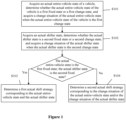
- Figure 1 is a flowchart of a gear determination method according to an embodiment, and the method is mainly used to determine which gear a vehicle is in and set a different shift strategy according to different vehicle states and different shifter states.
- the specific method is as follows.
- the gear determination method includes the following steps.
- step S101 an actual entire-vehicle state of a vehicle is acquired, it is determined whether the actual entire-vehicle state is a first fixed state or a first change state, and a change situation of the actual entire-vehicle state is acquired when the actual entire-vehicle state of the vehicle is the first change state.
- Step S101 can achieve the acquisition of the actual entire-vehicle state of the vehicle, and the actual vehicle state of the vehicle may be a low-voltage state, a charging state or a high-voltage state.
- the change situation of the actual entire-vehicle state may refer to a transition among the low-voltage state, the charging state and the high-voltage state.
- the first change state does not always need to be acquired, but is acquired according to an actual need.
- the change situation of the actual entire-vehicle state is acquired when the actual entire-vehicle state of the vehicle is the first change state.
- step S102 an actual shifter state is acquired, it is determined whether the actual shifter state is a second fixed state or a second change state, and a change situation of the actual shifter state is acquired when the actual shifter state is the second change state.
- Step S 102 can obtain the actual shifter state, and the shifter state may be a fault state or a normal state.
- the state may be identified by a recognizer.
- the fault state indicates that the shifter has a certain problem and cannot work normally, and on the contrary, the normal state indicates that the shifter can work normally.
- the change situation of the actual shifter state mentioned in step S 102 since the actual shifter state may be one of the above two states, the change situation refers to a mutual change between the above two states. When it is determined that there is no change between the two states, it is not required to collect the change situation of the actual shifter state.
- an actual state of the vehicle and its change state may be acquired through steps S101 and S 102 described above. Finally, a most suitable gear is determined, to improve driving safety.
- step S103 in a case that the actual entire-vehicle state is the first fixed state and the actual shifter state is the second fixed state, a first actual shift strategy corresponding to the actual entire-vehicle state and the actual shifter state is determined according to a preset first shift strategy set for reflecting shift strategies respectively corresponding to respective entire-vehicle states under the first fixed state and for reflecting shift strategies respectively corresponding to respective shifter states under the second fixed state, and a current gear of the vehicle is determined based on the first actual shift strategy.
- the above-mentioned solution is used to obtain a shift strategy when the actual entire-vehicle state and the actual shifter state are both not changed. Since there are many entire-vehicle states and many shifter states, and each state corresponds to a shift strategy, the above first shift strategy set including various shift strategies is specially designed so as to realize the centralized management of shift strategies.
- This solution aims to distinguish the case where the entire-vehicle state and the shifter state are both fixed states from the case where any one or two of the entire-vehicle state and the shifter state are change states. Different shifting strategy sets are considered in the two different cases.
- step S 104 in a case that the actual entire-vehicle state is the first change state and/or the actual shifter state is the second change state, a second actual shift strategy corresponding to the change situation of the actual entire-vehicle state and/or the change situation of the actual shifter state is determined according to a preset second shift strategy set for reflecting shift strategies respectively corresponding to change situations of respective entire-vehicle states under the first change state and/or for reflecting shift strategies respectively corresponding to change situations of respective shifter states under the second change state, and a current gear of the vehicle is determined based on the second actual shift strategy.
- the second shift strategy set and the first shift strategy set described above belong to different sets in consideration of the two different cases.
- the second shift strategy set includes shift strategies corresponding to change situations.
- the change situations refer to the mutual change among the low-voltage state, the charging state and the high-voltage state of the actual entire-vehicle state, as well as the mutual change between the fault state and the normal state of the actual shifter state.
- Each change situation corresponds to one second shift strategy, and all second shift strategies are combined together to form the second shift strategy set which contains shift strategies corresponding to all change situations.
- the current gear of the vehicle may be determined by the first shift strategy; when the entire-vehicle state and/or the shifter state is changed, the current gear of the vehicle may be determined by the second shift strategy.
- the gear can be ensured to be at the most reasonable position based on the actual sets, which ensures the safety of the vehicle.
- the first embodiment illustrates that the entire-vehicle state and the shifter state each may have a fixed state and a change state, specifically including the first fixed state, the second fixed state, the first change state and the second change state.
- the gear may be determined based on the first shift strategy set and the second shift strategy set respectively under the two states.
- the second embodiment is used to specifically describe gear determination when the entire-vehicle state and the shifter state are both fixed states.
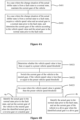
- Figure 2A is a further detailed description of the first actual shift strategy on basis of the first embodiment. All first actual shift strategies should be included in the first shift strategy set.
- Figure 2B and Figure 2C are further improvements made on the basis of Figure 2A .
- Figure 2B and Figure 2C are further improvements on step "determining the current gear of the vehicle according to the vehicle speed value and the actual shifter state" in Figure 2A .
- Figure 2B is an improvement made under a case where the actual shifter state is the fault state
- Figure 2C is an improvement made under a case where the actual shifter state is the normal state.
- the respective entire-vehicle states of the vehicle may include a low-voltage state, a charging state or a high-voltage state.
- the respective shifter states may include: a fault state in which the shifter is identified to be failed, and a normal state in which the shifter is identified to be normal.
- the first actual shift strategy is configured as follows.
- step S201 the current gear of the vehicle is set to a neutral gear, in a case that the actual entire-vehicle state is the low-voltage state or the charging state.
- Such design can prevent the vehicle from being driven by misoperation under the low-voltage state or the charging state. Once the vehicle is driven, it will cause serious consequences. Such setting can effectively improve the vehicle safety.
- step S202 in a case that the actual entire-vehicle state is the high-voltage state, a vehicle speed value is acquired and the current gear of the vehicle is determined according to the vehicle speed value and the actual shifter state.
- the vehicle speed value is acquired in real time, and the vehicle speed value in step S202 is acquired when the actual entire-vehicle state is a high-voltage state.
- the vehicle speed value is mainly used to determine the current gear of the vehicle in cooperation with the actual shifter state.
- the step of determining the current gear of the vehicle according to the vehicle speed value and the actual shifter state may specifically performed as follows. As shown in Figure 2B , the actual shifter state is a fault state. Next, the vehicle speed value is compared with a preset vehicle speed threshold. If the vehicle speed value is greater than the vehicle speed threshold, and the current gear of the vehicle is a drive gear, the current gear of the vehicle is maintained. If it is determined that the vehicle speed value is greater than the preset vehicle speed threshold, and the current gear of the vehicle is a neutral gear or a reverse gear, the current gear of the vehicle is set to the neutral gear. If it is determined that the vehicle speed value is less than or equal to the preset vehicle speed threshold, the current gear of the vehicle is set to the neutral gear.
- the actual shifter state is a normal state, and next the vehicle speed value is compared with the preset vehicle speed threshold. If the vehicle speed value is less than or equal to the preset vehicle speed threshold, it indicates that the vehicle is in a driving state with a low speed. At this time, a shifter gear is acquired and the current gear of the vehicle is set as the shifter gear. If the vehicle speed value is greater than the preset vehicle speed threshold, the current gear of the vehicle is set to the neutral gear, until the vehicle speed value is less than or equal to the vehicle speed threshold, then the shifter gear is acquired and the current gear of the vehicle is set as the shifter gear.
- the static shift logic under a high voltage may be used to shift a gear (as described above).
- the dynamic shift logic under a high voltage is used to shift a gear (as described above).
- the above two shifting logics correspond to different cases and are selected according to the acquired vehicle speed value.
- the shifter gear actually refers to the gear in which the shifter is identified to be located, and the shifter gear may be a neutral gear, a reverse gear, a drive gear, and the like, and is mainly used to indicate the driver's driving intention.
- the current gear of the vehicle may be determined under the fixed states, thus to ensure a reasonable shift under the fixed states of the vehicle and acquire a reasonable current gear.
- the second embodiment specifically describes the gear determination under a case where the entire-vehicle state and the shifter state are both fixed states.
- the third embodiment will describe the gear determination under a case where the entire-vehicle state changes.
- Figure 3 illustrates the gear determination under a case where the entire-vehicle state of the vehicle changes.
- the third embodiment is a further improvement made on the basis of the first embodiment, and is mainly used to introduce the specific determination method of the second actual shift strategy.
- the change situations of respective entire-vehicle states include: the mutual change between the low-voltage state and the high-voltage state, and the transition from the non-charging state to the charging state.
- the second actual shift strategy may be configured as follows.
- step S301 the current gear of the vehicle is set to a neutral gear, in a case where the change situation of the actual entire-vehicle state is a mutual change between the low-voltage state and the high-voltage state.
- step S302 in a case that the change situation of the actual entire-vehicle state is from the non-charging state to the charging state, the current gear of the vehicle is set as the neutral gear, and the current gear of the vehicle is switched from the neutral gear to a parking gear after a lock signal is acquired.
- the mutual change between a low-voltage state and a high-voltage state includes a change from a low-voltage state to a high-voltage state, or a change from a high-voltage state to a low-voltage state.
- the shifter gear is not considered, and the current gear of the vehicle is directly set as the neutral gear regardless of which gear the shifter is in.
- the current gear of the vehicle may be switched from the neutral gear to the parking gear to realize stop and lock.
- the way of switching into the parking gear described above may be that: a request for the locked state is sent to a parking controller, the request is sent for only one cycle, and the parking controller sends a lock signal to control the current gear of the vehicle to switch from the above neutral gear into the parking gear.
- Figure 4A illustrates the gear determination under a case where the shifter state changes.
- Figure 4B is an illustration of further optimization and improvement made on step of "determining the current gear of the vehicle according to the vehicle speed value and the actual gear in a normal state prior to the fault state" of Figure 4A .
- the fourth embodiment is a further improvement made on the basis of the first embodiment, and is mainly used to introduce the specific determination method of the second actual shift strategy.
- the change situations of respective shifter states include: a change from a fault state to a normal state and a change from a normal state to a fault state.
- the second actual shift strategy may be configured as follows.
- step S401 the current gear of the vehicle is maintained, in a case where the change situation of the actual shifter state is from a fault state to a normal state.
- step S401 when the shifter state is recovered from the fault state, it is found that the shifter gear has changed. At this time, the current gear of the vehicle is kept unchanged. No matter which gear the vehicle is in under the fault state, once the normal state is restored, it does not consider whether the driver has operated or not, and the gear under the fault state is still maintained.
- the above step S401 is mainly used to avoid the change of the shifter gear and entering into an unexpected gear due to non-driver operations, so as to avoid danger.
- step S402 in a case where the change situation of the actual shifter state is from a normal state to a fault state, a vehicle speed value is acquired.
- the vehicle speed value is acquired in real time when the actual shifter state is changed from a normal state to a fault state.
- an actual gear in a normal state prior to the fault state is acquired, and the current gear of the vehicle is determined according to the vehicle speed value and the actual gear in the normal state prior to the fault state.
- the current gear of the vehicle may be determined according to the vehicle speed value and the actual gear in the normal state prior to the fault state, and the specific determination way will be described as follows.
- step S4021 it is determined whether the vehicle speed value is less than or equal to a preset vehicle speed threshold.
- a preset vehicle speed threshold As described above, the vehicle speed value is acquired in real time when the actual shifter state is changed from a normal state to a fault state.
- step S4022 the current gear of the vehicle is switched to the neutral gear, if the vehicle speed value is less than or equal to the preset vehicle speed threshold.
- step S4022 actually the shifter is identified to be failed at a low vehicle speed.
- the current gear of the vehicle is directly switched to the neutral gear, so as to avoid driving the vehicle when the driver's intention cannot be determined, thereby ensuring the safety of the entire vehicle.
- the shifter is found to be failed and the shifter gear cannot be known, then the current gear of the vehicle is directly set to the neutral gear.
- step S4023 there are the following cases if the vehicle speed value is greater than the preset vehicle speed threshold.
- step 4a an actual gear in a normal state prior to the fault state is identified, and in a case that the actual gear in the normal state prior to the fault state is a reverse gear or a neutral gear, the current gear of the vehicle is set to the neutral gear.
- step 4b) an actual gear in a normal state prior to the fault state is identified, and in a case that the actual gear in the normal state prior to the fault state is a drive gear, the current gear of the vehicle is set to the drive gear.
- step S4023 the step 4a) is to avoid driving the vehicle when the driver's intention cannot be determined at a high speed, so as to ensure the safety of the entire vehicle, and step 4b) is to avoid unexpected slowdown of the vehicle at a high speed (the vehicle speed is greater than the preset vehicle speed threshold) and affecting safety.
- the most reasonable gear can be outputted in a case where the shifter state changes, ensuring the safety of the entire vehicle, avoiding changes in the shifter gear caused by non-driver operations, and avoiding entry of an unexpected gear.
- Figure 5 is a flow chart of the fifth embodiment.
- the fifth embodiment may be combined with the above-mentioned first to fourth embodiments or may exist independently without being combined with them.
- the parking state may be a locked state or an unlocked state.
- the vehicle cannot be driven under the locked state, and the first embodiment to the fourth embodiment described above may be implemented under the unlocked state.
- the gear determination method may include the following steps.
- step S501 an actual parking state is acquired in real time.
- step S502 the current gear is set as a parking gear, if the actual parking state is determined as a locked state.
- the actual parking state is acquired from an electronic parking controller.
- the actual parking state is the locked state
- the current gear is directly set as the parking gear. Otherwise, the first embodiment to fourth embodiment may be implemented.
- the vehicle can be locked, thus to avoid the abnormal movement of the vehicle and improve the safety of the vehicle.
- Figure 6 is a structural topological block diagram of a gear determination system according to the sixth embodiment.
- the main functions of the entire-vehicle state controller 10, the electronic shifter 20, and the gear control module 30 in Figure 6 will be described as follows.
- an identification module for the electronic shifter 20 is further provided in this embodiment and is used for identifying a gear of the electronic shifter 20.
- the gear determination system includes:
- the respective entire-vehicle states include: a low-voltage state, a charging state, or a high-voltage state; the first actual shift strategy performed by the gear control module 30 is configured as:
- the respective shifter states include: a fault state in which a shifter is identified to be failed, and a normal state in which the shifter is identified to be normal; the determining, by the gear control module 30, the current gear of the vehicle according to the vehicle speed value and the actual shifter state includes:
- the change situations of the respective entire-vehicle states include: a mutual change between a low-voltage state and a high-voltage state, and a transition from a non-charging state to a charging state;
- the second actual shift strategy performed by the gear control module 30 is configured as:
- the change situations of the respective shifter states may include: a transition from a fault state to a normal state, and a transition from a normal state to a fault state;
- the second actual shift strategy performed by the gear control module 30 is configured as:
- the determining, by the gear control module 30, the current gear of the vehicle according to the vehicle speed value and the actual gear in the normal state prior to the fault state includes:
- gear determination system may further include:
- this embodiment has the same effects as the above first embodiment to fifth embodiment, which will not be repeated herein.
- the vehicle may include the gear control system according to the sixth embodiment described above.
- this embodiment has the same effects as the first embodiment to sixth embodiment described above, which will not be repeated herein.
Landscapes
- Engineering & Computer Science (AREA)
- Mechanical Engineering (AREA)
- General Engineering & Computer Science (AREA)
- Automation & Control Theory (AREA)
- Transportation (AREA)
- Human Computer Interaction (AREA)
- Chemical & Material Sciences (AREA)
- Combustion & Propulsion (AREA)
- Control Of Transmission Device (AREA)
Description
- The present disclosure relates to the technical field of vehicle control, in particular to a gear determination method, system and vehicle.
- In electric vehicles, especially pure electric vehicles, an entire-vehicle controller is a core component of the entire vehicle, and coordinates, optimizes, matches and controls related controllers such as a motor controller, a battery controller and an electric power steering system, so that the relevant controllers maximize their respective functions. A required torque outputted by the entire-vehicle controller needs to depend on a logic gear state. Therefore, a gear control strategy is particularly important in the control of the entire electric vehicle. An improper gear control strategy will cause great harm.
- However, currently, the gear control strategy is extremely easy to switch to an improper gear when an entire-vehicle state changes, resulting in a serious vehicle accident. Therefore, how to avoid the above situation has become an urgent problem to be solved at this stage.
-
CN106090203 A discloses an electronic gear position control system. The electronic gear position control system comprises an electronic gear shifter and a whole car controller. The electronic gear shifter executes the gear shifting operation of a user, obtains a first target gear position corresponding to the gear shifting operation, and returns to the default initial position after gear shifting operation is finished. The whole car controller obtains the current state information of a car, determines that the gear position actually executed by the car currently is the first target gear position when the state information is matched with the first target gear position, and sends the actually executed first target gear position to the electronic gear shifter to be displayed. When the state information is not matched with the first target gear position, a second target gear position actually executed by the car currently is judged according to the state information and the first target gear position, and the actually executed second target gear position is sent to the electronic gear shifter to be displayed. -
JP2019056390 A -
US 20150198239A1 discloses a control system for a hybrid powertrain including a transmission and a hybrid system. The control system includes a memory unit, and a controller. The memory unit is configured to store at least one shift map therein. The controller is coupled to the memory unit, the transmission, and the hybrid system. The controller is configured to receive an operating state of the transmission and the hybrid system. The controller is further configured to determine if the received operating state meets a gearshift criteria with the at least one shift map, and trigger one or more gearshifts in the transmission based on the determination. -
US 20180043877A1 discloses a system and method for controlling a hybrid electric vehicle using a driving tendency. The method includes determining a driving tendency level based on data to determine a driving tendency of a driver and determining a target engine torque using an engine torque map based on a vehicle speed and a required torque. Whether the driving tendency level corresponds to a predetermined level is determined as well as whether the required torque is equal to or greater than a torque that corresponds to an optimal operating point of an engine when the driving tendency level corresponds to the predetermined level. The target engine torque is then adjusted when the required torque is equal to or greater than the torque that corresponds to the optimal operating point of the engine. - In view of this, the present invention proposes a gear determination method, a system and a vehicle, to realize the gear determination under an entire-vehicle state, a change situation of the entire-vehicle state and a change situation of a shifter state.
- To achieve the above objective, a gear determination method according to claim 1 and a gear determination system according to claim 8 are provided.
- Preferred embodiments of the present invention are laid down in the dependent claims.
- According to the present invention, a vehicle according to
claim 10 is also provided. - Compared with the conventional technology, the gear determination method, system, and vehicle according to the present invention can obtain a first actual shift strategy corresponding to an actual entire-vehicle state and an actual shifter state when the entire-vehicle state is a first fixed state and the shifter state is a second fixed state; and obtain a second actual shift strategy corresponding to the change situation of the actual entire-vehicle state and/or the change situation of the actual shifter state when the entire-vehicle state is the first change state and/or the actual shifter state is the second change state. According to the present invention, the current gear of the vehicle can be determined based on the first actual shift strategy and the second actual shift strategy, and the current gear can be ensured to be a reasonable gear, thereby avoiding the unreasonable logical gear control in the conventional technology and reducing the probability of serious accidents in vehicles.
- Other features and advantages of the present invention will be described in detail in the following specific embodiments.
- The drawings constituting a part of the present invention are used to provide a further understanding of the present invention, and the exemplary embodiments and descriptions of the present invention are used to explain the present invention, and do not constitute an improper limitation of the present invention, which is defined by the appended claims.
-
Figure 1 is a flowchart of a gear determination method according to an embodiment of the present invention; -
Figure 2A is a flowchart of a gear determination method according to an embodiment of the present invention; -
Figure 2B is a flowchart of a further improved gear determination method in a case that the actual shifter state inFigure 2A is a fault state in an embodiment of the present invention; -
Figure 2C is a flowchart of a further improved gear determination method in a case that the actual shifter state inFigure 2A is a normal state in an embodiment of the present invention; -
Figure 3 is a flowchart of gear determination in a case that the entire-vehicle state changes according to an embodiment of the present invention; -
Figure 4A is a flowchart of gear determination in a case that the shifter state changes according to an embodiment of the present invention; -
Figure 4B is a flowchart of a further improved gear determination method with respect to the step of "determine a current gear of the vehicle based on the vehicle speed value and the actual gear in the normal state prior to the fault state" inFigure 4A according to an embodiment of the present invention; -
Figure 5 is a flowchart of a gear determination method according to an embodiment of the present invention; and -
Figure 6 is a structural topological block diagram of a gear determination system according to an embodiment of the present invention. - Description of reference signs:
- 10 refers to entire-vehicle state controller, 20 refers to electronic shifter,
- 30 refers to gear control module.
- It should be noted that, embodiments in the present invention and features in the embodiments may be combined with each other, wherein the present invention is defined by the appended claims.
- Before describing the present invention in detail, a vehicle mentioned in the following embodiments is briefly introduced. The following vehicle refers to a pure electric vehicle or a hybrid vehicle, but is not used to limit the type of the vehicle. It should also be noted that the gear determination solution according to the present invention is made for one change situation, and the present invention does not involve a gear determination solution made for multiple states changing at the same time. Hereinafter, the present invention will be described in detail through embodiments. In the following embodiments, terms "first" and "second" are only used for distinction, but are not used to indicate an order.
-
Figure 1 is a flowchart of a gear determination method according to an embodiment, and the method is mainly used to determine which gear a vehicle is in and set a different shift strategy according to different vehicle states and different shifter states. The specific method is as follows. The gear determination method includes the following steps. - In step S101, an actual entire-vehicle state of a vehicle is acquired, it is determined whether the actual entire-vehicle state is a first fixed state or a first change state, and a change situation of the actual entire-vehicle state is acquired when the actual entire-vehicle state of the vehicle is the first change state.
- Step S101 can achieve the acquisition of the actual entire-vehicle state of the vehicle, and the actual vehicle state of the vehicle may be a low-voltage state, a charging state or a high-voltage state. Correspondingly, the change situation of the actual entire-vehicle state may refer to a transition among the low-voltage state, the charging state and the high-voltage state. The first change state does not always need to be acquired, but is acquired according to an actual need. The change situation of the actual entire-vehicle state is acquired when the actual entire-vehicle state of the vehicle is the first change state.
- In step S102, an actual shifter state is acquired, it is determined whether the actual shifter state is a second fixed state or a second change state, and a change situation of the actual shifter state is acquired when the actual shifter state is the second change state.
-
Step S 102 can obtain the actual shifter state, and the shifter state may be a fault state or a normal state. The state may be identified by a recognizer. The fault state indicates that the shifter has a certain problem and cannot work normally, and on the contrary, the normal state indicates that the shifter can work normally. In addition, for the change situation of the actual shifter state mentioned instep S 102, since the actual shifter state may be one of the above two states, the change situation refers to a mutual change between the above two states. When it is determined that there is no change between the two states, it is not required to collect the change situation of the actual shifter state. - Specifically, an actual state of the vehicle and its change state may be acquired through steps S101 and
S 102 described above. Finally, a most suitable gear is determined, to improve driving safety. - After obtaining the above data, the following step is further included in this embodiment.
- In step S103, in a case that the actual entire-vehicle state is the first fixed state and the actual shifter state is the second fixed state, a first actual shift strategy corresponding to the actual entire-vehicle state and the actual shifter state is determined according to a preset first shift strategy set for reflecting shift strategies respectively corresponding to respective entire-vehicle states under the first fixed state and for reflecting shift strategies respectively corresponding to respective shifter states under the second fixed state, and a current gear of the vehicle is determined based on the first actual shift strategy.
- The above-mentioned solution is used to obtain a shift strategy when the actual entire-vehicle state and the actual shifter state are both not changed. Since there are many entire-vehicle states and many shifter states, and each state corresponds to a shift strategy, the above first shift strategy set including various shift strategies is specially designed so as to realize the centralized management of shift strategies. This solution aims to distinguish the case where the entire-vehicle state and the shifter state are both fixed states from the case where any one or two of the entire-vehicle state and the shifter state are change states. Different shifting strategy sets are considered in the two different cases.
- In
step S 104, in a case that the actual entire-vehicle state is the first change state and/or the actual shifter state is the second change state, a second actual shift strategy corresponding to the change situation of the actual entire-vehicle state and/or the change situation of the actual shifter state is determined according to a preset second shift strategy set for reflecting shift strategies respectively corresponding to change situations of respective entire-vehicle states under the first change state and/or for reflecting shift strategies respectively corresponding to change situations of respective shifter states under the second change state, and a current gear of the vehicle is determined based on the second actual shift strategy. - The second shift strategy set and the first shift strategy set described above belong to different sets in consideration of the two different cases. The second shift strategy set includes shift strategies corresponding to change situations. For example, the change situations refer to the mutual change among the low-voltage state, the charging state and the high-voltage state of the actual entire-vehicle state, as well as the mutual change between the fault state and the normal state of the actual shifter state. Each change situation corresponds to one second shift strategy, and all second shift strategies are combined together to form the second shift strategy set which contains shift strategies corresponding to all change situations.
- Through the above embodiments, when the entire-vehicle state and the shifter state are both fixed, the current gear of the vehicle may be determined by the first shift strategy; when the entire-vehicle state and/or the shifter state is changed, the current gear of the vehicle may be determined by the second shift strategy. The gear can be ensured to be at the most reasonable position based on the actual sets, which ensures the safety of the vehicle.
- The first embodiment illustrates that the entire-vehicle state and the shifter state each may have a fixed state and a change state, specifically including the first fixed state, the second fixed state, the first change state and the second change state. The gear may be determined based on the first shift strategy set and the second shift strategy set respectively under the two states. In the following, the second embodiment is used to specifically describe gear determination when the entire-vehicle state and the shifter state are both fixed states.
-
Figure 2A is a further detailed description of the first actual shift strategy on basis of the first embodiment. All first actual shift strategies should be included in the first shift strategy set.Figure 2B andFigure 2C are further improvements made on the basis ofFigure 2A . Specifically,Figure 2B andFigure 2C are further improvements on step "determining the current gear of the vehicle according to the vehicle speed value and the actual shifter state" inFigure 2A . Specifically,Figure 2B is an improvement made under a case where the actual shifter state is the fault state, andFigure 2C is an improvement made under a case where the actual shifter state is the normal state. In this embodiment, the respective entire-vehicle states of the vehicle may include a low-voltage state, a charging state or a high-voltage state. The respective shifter states may include: a fault state in which the shifter is identified to be failed, and a normal state in which the shifter is identified to be normal. - As shown in
Figure 2A , in the second embodiment, the first actual shift strategy is configured as follows. - In step S201, the current gear of the vehicle is set to a neutral gear, in a case that the actual entire-vehicle state is the low-voltage state or the charging state.
- Such design can prevent the vehicle from being driven by misoperation under the low-voltage state or the charging state. Once the vehicle is driven, it will cause serious consequences. Such setting can effectively improve the vehicle safety.
- In step S202, in a case that the actual entire-vehicle state is the high-voltage state, a vehicle speed value is acquired and the current gear of the vehicle is determined according to the vehicle speed value and the actual shifter state.
- The vehicle speed value is acquired in real time, and the vehicle speed value in step S202 is acquired when the actual entire-vehicle state is a high-voltage state. The vehicle speed value is mainly used to determine the current gear of the vehicle in cooperation with the actual shifter state.
- Further, the step of determining the current gear of the vehicle according to the vehicle speed value and the actual shifter state may specifically performed as follows. As shown in
Figure 2B , the actual shifter state is a fault state. Next, the vehicle speed value is compared with a preset vehicle speed threshold. If the vehicle speed value is greater than the vehicle speed threshold, and the current gear of the vehicle is a drive gear, the current gear of the vehicle is maintained. If it is determined that the vehicle speed value is greater than the preset vehicle speed threshold, and the current gear of the vehicle is a neutral gear or a reverse gear, the current gear of the vehicle is set to the neutral gear. If it is determined that the vehicle speed value is less than or equal to the preset vehicle speed threshold, the current gear of the vehicle is set to the neutral gear. As shown inFigure 2C , the actual shifter state is a normal state, and next the vehicle speed value is compared with the preset vehicle speed threshold. If the vehicle speed value is less than or equal to the preset vehicle speed threshold, it indicates that the vehicle is in a driving state with a low speed. At this time, a shifter gear is acquired and the current gear of the vehicle is set as the shifter gear. If the vehicle speed value is greater than the preset vehicle speed threshold, the current gear of the vehicle is set to the neutral gear, until the vehicle speed value is less than or equal to the vehicle speed threshold, then the shifter gear is acquired and the current gear of the vehicle is set as the shifter gear. - When the actual shifter state is the normal state and the vehicle speed value is less than or equal to the preset vehicle speed threshold, the static shift logic under a high voltage may be used to shift a gear (as described above). When the actual shifter state is the normal state and the vehicle speed value is greater than the preset vehicle speed threshold, the dynamic shift logic under a high voltage is used to shift a gear (as described above). The above two shifting logics correspond to different cases and are selected according to the acquired vehicle speed value. In addition, the shifter gear actually refers to the gear in which the shifter is identified to be located, and the shifter gear may be a neutral gear, a reverse gear, a drive gear, and the like, and is mainly used to indicate the driver's driving intention.
- Through the above embodiments, the current gear of the vehicle may be determined under the fixed states, thus to ensure a reasonable shift under the fixed states of the vehicle and acquire a reasonable current gear.
- The second embodiment specifically describes the gear determination under a case where the entire-vehicle state and the shifter state are both fixed states. Hereinafter, the third embodiment will describe the gear determination under a case where the entire-vehicle state changes.
-
Figure 3 illustrates the gear determination under a case where the entire-vehicle state of the vehicle changes. The third embodiment is a further improvement made on the basis of the first embodiment, and is mainly used to introduce the specific determination method of the second actual shift strategy. In this embodiment, the change situations of respective entire-vehicle states include: the mutual change between the low-voltage state and the high-voltage state, and the transition from the non-charging state to the charging state. - As shown in
Figure 3 , the second actual shift strategy may be configured as follows. - In step S301, the current gear of the vehicle is set to a neutral gear, in a case where the change situation of the actual entire-vehicle state is a mutual change between the low-voltage state and the high-voltage state.
- In step S302, in a case that the change situation of the actual entire-vehicle state is from the non-charging state to the charging state, the current gear of the vehicle is set as the neutral gear, and the current gear of the vehicle is switched from the neutral gear to a parking gear after a lock signal is acquired.
- The mutual change between a low-voltage state and a high-voltage state includes a change from a low-voltage state to a high-voltage state, or a change from a high-voltage state to a low-voltage state. In both cases, the shifter gear is not considered, and the current gear of the vehicle is directly set as the neutral gear regardless of which gear the shifter is in. In addition, in step S302, the current gear of the vehicle may be switched from the neutral gear to the parking gear to realize stop and lock. The way of switching into the parking gear described above may be that: a request for the locked state is sent to a parking controller, the request is sent for only one cycle, and the parking controller sends a lock signal to control the current gear of the vehicle to switch from the above neutral gear into the parking gear.
- Through the above embodiments, it is possible to avoid unexpected movement of the vehicle during charging, avoid abnormal operation during the transition from the non-charging state to the charging state, and avoid misoperation which will cause danger.
-
Figure 4A illustrates the gear determination under a case where the shifter state changes.Figure 4B is an illustration of further optimization and improvement made on step of "determining the current gear of the vehicle according to the vehicle speed value and the actual gear in a normal state prior to the fault state" ofFigure 4A . The fourth embodiment is a further improvement made on the basis of the first embodiment, and is mainly used to introduce the specific determination method of the second actual shift strategy. In this embodiment, the change situations of respective shifter states include: a change from a fault state to a normal state and a change from a normal state to a fault state. - As shown in
Figure 4A , the second actual shift strategy may be configured as follows. - In step S401, the current gear of the vehicle is maintained, in a case where the change situation of the actual shifter state is from a fault state to a normal state.
- In above step S401, when the shifter state is recovered from the fault state, it is found that the shifter gear has changed. At this time, the current gear of the vehicle is kept unchanged. No matter which gear the vehicle is in under the fault state, once the normal state is restored, it does not consider whether the driver has operated or not, and the gear under the fault state is still maintained.
- The above step S401 is mainly used to avoid the change of the shifter gear and entering into an unexpected gear due to non-driver operations, so as to avoid danger.
- In step S402, in a case where the change situation of the actual shifter state is from a normal state to a fault state, a vehicle speed value is acquired. The vehicle speed value is acquired in real time when the actual shifter state is changed from a normal state to a fault state. Moreover, an actual gear in a normal state prior to the fault state is acquired, and the current gear of the vehicle is determined according to the vehicle speed value and the actual gear in the normal state prior to the fault state.
- Further, as shown in
Figure 4B , in step S402, the current gear of the vehicle may be determined according to the vehicle speed value and the actual gear in the normal state prior to the fault state, and the specific determination way will be described as follows. - In step S4021, it is determined whether the vehicle speed value is less than or equal to a preset vehicle speed threshold. As described above, the vehicle speed value is acquired in real time when the actual shifter state is changed from a normal state to a fault state.
- In step S4022, the current gear of the vehicle is switched to the neutral gear, if the vehicle speed value is less than or equal to the preset vehicle speed threshold.
- In step S4022, actually the shifter is identified to be failed at a low vehicle speed. In this case, the current gear of the vehicle is directly switched to the neutral gear, so as to avoid driving the vehicle when the driver's intention cannot be determined, thereby ensuring the safety of the entire vehicle. For example, when the vehicle is reversing, the shifter is found to be failed and the shifter gear cannot be known, then the current gear of the vehicle is directly set to the neutral gear.
- In step S4023, there are the following cases if the vehicle speed value is greater than the preset vehicle speed threshold.
- In
step 4a), an actual gear in a normal state prior to the fault state is identified, and in a case that the actual gear in the normal state prior to the fault state is a reverse gear or a neutral gear, the current gear of the vehicle is set to the neutral gear. Instep 4b), an actual gear in a normal state prior to the fault state is identified, and in a case that the actual gear in the normal state prior to the fault state is a drive gear, the current gear of the vehicle is set to the drive gear. - In step S4023, the
step 4a) is to avoid driving the vehicle when the driver's intention cannot be determined at a high speed, so as to ensure the safety of the entire vehicle, andstep 4b) is to avoid unexpected slowdown of the vehicle at a high speed (the vehicle speed is greater than the preset vehicle speed threshold) and affecting safety. - Through the above- embodiments, the most reasonable gear can be outputted in a case where the shifter state changes, ensuring the safety of the entire vehicle, avoiding changes in the shifter gear caused by non-driver operations, and avoiding entry of an unexpected gear.
-
Figure 5 is a flow chart of the fifth embodiment. The fifth embodiment may be combined with the above-mentioned first to fourth embodiments or may exist independently without being combined with them. In this embodiment, the parking state may be a locked state or an unlocked state. The vehicle cannot be driven under the locked state, and the first embodiment to the fourth embodiment described above may be implemented under the unlocked state. - As shown in
Figure 5 , the gear determination method may include the following steps. - In step S501, an actual parking state is acquired in real time.
- In step S502, the current gear is set as a parking gear, if the actual parking state is determined as a locked state.
- The actual parking state is acquired from an electronic parking controller. When the actual parking state is the locked state, the current gear is directly set as the parking gear. Otherwise, the first embodiment to fourth embodiment may be implemented.
- Through the above method, the vehicle can be locked, thus to avoid the abnormal movement of the vehicle and improve the safety of the vehicle.
-
Figure 6 is a structural topological block diagram of a gear determination system according to the sixth embodiment. The main functions of the entire-vehicle state controller 10, theelectronic shifter 20, and thegear control module 30 inFigure 6 will be described as follows. In addition, an identification module for theelectronic shifter 20 is further provided in this embodiment and is used for identifying a gear of theelectronic shifter 20. - As shown in
Figure 6 , the gear determination system includes: - an entire-
vehicle state controller 10, configured to acquire an actual entire-vehicle state of a vehicle, determine whether the actual entire-vehicle state of the vehicle is a first fixed state or a first change state, and acquire a change situation of the actual entire-vehicle state when the actual entire-vehicle state of the vehicle is the first change state; - an
electronic shifter 20, configured to acquire an actual shifter state, determine whether the actual shifter state is a second fixed state or a second change state, and acquire a change situation of the actual shifter state when the actual shifter state is the second change state; and - a
gear control module 30, configured to:- in a case that the actual entire-vehicle state of the vehicle is the first fixed state and the actual shifter state is the second fixed state, determine, according to a preset first shift strategy set for reflecting shift strategies respectively corresponding to respective entire-vehicle states under the first fixed state and for reflecting shift strategies respectively corresponding to respective shifter states under the second fixed state, a first actual shift strategy corresponding to the actual entire-vehicle state and the actual shifter state, and determine a current gear of the vehicle based on the first actual shift strategy; and
- in a case that the actual entire-vehicle state is the first change state and/or the actual shifter state is the second change state, determine, according to a preset second shift strategy set for reflecting shift strategies respectively corresponding to change situations of respective entire-vehicle states under the first change state and/or for reflecting shift strategies respectively corresponding to change situations of respective shifter states under the second change state, a second actual shift strategy corresponding to the change situation of the actual entire-vehicle state and/or the change situation of the actual shifter state, and determine a current gear of the vehicle based on the second actual shift strategy.
- Further, the respective entire-vehicle states include: a low-voltage state, a charging state, or a high-voltage state;
the first actual shift strategy performed by thegear control module 30 is configured as: - setting the current gear of the vehicle to a neutral gear, in a case that the actual entire-vehicle state is the low-voltage state or the charging state;
- acquiring a vehicle speed value and determining the current gear of the vehicle according to the vehicle speed value and the actual shifter state, in a case that the actual entire-vehicle state is the high-voltage state.
- Further, the respective shifter states include: a fault state in which a shifter is identified to be failed, and a normal state in which the shifter is identified to be normal;
the determining, by thegear control module 30, the current gear of the vehicle according to the vehicle speed value and the actual shifter state includes: - in a case of determining that the actual shifter state is the fault state,
set the current gear of the vehicle as a neutral gear; - in a case of determining that the actual shifter state is the normal state,
- acquire a shifter gear and set the current gear of the vehicle as the shifter gear, in a case where it is determined that the vehicle speed value is less than or equal to the preset vehicle speed threshold;
- in a case where it is determined that the vehicle speed value is greater than the preset vehicle speed threshold, set the current gear of the vehicle to the neutral gear, until the vehicle speed value is less than or equal to the vehicle speed threshold, and then acquire the shifter gear and set the current gear of the vehicle as the shifter gear.
- Further, the change situations of the respective entire-vehicle states include: a mutual change between a low-voltage state and a high-voltage state, and a transition from a non-charging state to a charging state;
the second actual shift strategy performed by thegear control module 30 is configured as: - in a case where the change situation of the actual entire-vehicle state is a mutual change between the low-voltage state and the high-voltage state,
setting the current gear of the vehicle to a neutral gear; - in a case that the change situation of the actual entire-vehicle state is from the non-charging state to the charging state,
setting the current gear of the vehicle as the neutral gear, and switching the current gear of the vehicle from the neutral gear to a parking gear after a lock signal is acquired. - Further, the change situations of the respective shifter states may include: a transition from a fault state to a normal state, and a transition from a normal state to a fault state;
the second actual shift strategy performed by thegear control module 30 is configured as: - in a case where the change situation of the actual shifter state is from a fault state to a normal state, maintaining the current gear of the vehicle;
- in a case where the change situation of the actual shifter state is from a normal state to a fault state, acquiring a vehicle speed value and an actual gear in a normal state prior to the fault state, and determining the current gear of the vehicle according to the vehicle speed value and the actual gear in the normal state prior to the fault state.
- Further, the determining, by the
gear control module 30, the current gear of the vehicle according to the vehicle speed value and the actual gear in the normal state prior to the fault state includes: - determine whether the vehicle speed value is less than or equal to a preset vehicle speed threshold,
- switch the current gear of the vehicle to the neutral gear, if it is determined that the vehicle speed value is less than or equal to the preset vehicle speed threshold;
- if it is determined that the vehicle speed value is greater than the preset vehicle speed threshold,
- in a case that the actual gear in the normal state prior to the fault state is a reverse gear or a neutral gear, set the current gear of the vehicle to the neutral gear;
- in a case that the actual gear in the normal state prior to the fault state is a drive gear, set the current gear of the vehicle to the drive gear.
- Further, the gear determination system may further include:
- an electronic parking controller, configured to acquire an actual parking state in real time;
- the
gear control module 30 is configured to set the current gear of the vehicle as a parking gear, if the actual parking state is determined as a locked state. - Compared with the conventional technology, this embodiment has the same effects as the above first embodiment to fifth embodiment, which will not be repeated herein.
- An embodiment of a vehicle is further included in the present invention. The vehicle may include the gear control system according to the sixth embodiment described above.
- Compared with the conventional technology, this embodiment has the same effects as the first embodiment to sixth embodiment described above, which will not be repeated herein.
Claims (10)
- A gear determination method comprising:acquire an actual entire-vehicle state of an vehicle, wherein the respective entire-vehicle states, representing fixed states, comprise: a low-voltage state, a charging state, or a high-voltage state,wherein change situations of the respective entire-vehicle states comprise: a mutual change between a low-voltage state and a high-voltage state, and a transition from a non-charging state to a charging state;determine whether the actual entire-vehicle state of the vehicle is a first fixed state or a first change state, and acquire a change situation of the actual entire-vehicle state when the actual entire-vehicle state of the vehicle is the first change state;acquire an actual shifter state, wherein the respective shifter states, representing fixed states, comprise: a fault state in which an electronic shifter is identified to be failed, and a normal state in which the electronic shifter is identified to be normal;wherein the change situations of the respective shifter states comprise: a transition from a fault state to a normal state, and a transition from a normal state to a fault state;determine whether the actual shifter state is a second fixed state or a second change state, and acquire a change situation of the actual shifter state when the actual shifter state is the second change state;in a case that the actual entire-vehicle state is the first fixed state and the actual shifter state is the second fixed state, determine, according to a preset first shift strategy set for reflecting shift strategies respectively corresponding to respective entire-vehicle states under the first fixed state and for reflecting shift strategies respectively corresponding to respective shifter states under the second fixed state, a first actual shift strategy corresponding to the actual entire-vehicle state and the actual shifter state, and determine a current gear of the vehicle based on the first actual shift strategy; andin a case that the actual entire-vehicle state is the first change state and/or the actual shifter state is the second change state, determine, according to a preset second shift strategy set for reflecting shift strategies respectively corresponding to change situations of respective entire-vehicle states under the first change state and/or for reflecting shift strategies respectively corresponding to change situations of respective shifter states under the second change state, a second actual shift strategy corresponding to the change situation of the actual entire-vehicle state and/or the change situation of the actual shifter state, and determine a current gear of the vehicle based on the second actual shift strategy.
- The gear determination method according to claim 1,;
wherein the first actual shift strategy is configured as:setting the current gear of the vehicle to a neutral gear, in a case that the actual entire-vehicle state is the low-voltage state or the charging state; andacquiring a vehicle speed value and determining the current gear of the vehicle according to the vehicle speed value and the actual shifter state, in a case that the actual entire-vehicle state is the high-voltage state. - The gear determination method according to claim 2,
wherein the determining the current gear of the vehicle according to the vehicle speed value and the actual shifter state comprises:in a case of determining that the actual shifter state is the fault state,maintaining the current gear of the vehicle, in a case where it is determined that the vehicle speed value is greater than a preset vehicle speed threshold and the current gear of the vehicle is a drive gear;setting the current gear of the vehicle as a neutral gear, in a case where it is determined that the vehicle speed is greater than the preset vehicle speed threshold and the current gear of the vehicle is a neutral gear or a reverse gear;setting the current gear of the vehicle as a neutral gear, in a case where it is determined that the vehicle speed value is less than or equal to the preset vehicle speed threshold;in a case of determining that the actual shifter state is the normal state,acquiring a shifter gear and setting the current gear of the vehicle as the shifter gear, in a case where it is determined that the vehicle speed value is less than or equal to the preset vehicle speed threshold;in a case where it is determined that the vehicle speed value is greater than the preset vehicle speed threshold, setting the current gear of the vehicle to the neutral gear, until the vehicle speed value is less than or equal to the vehicle speed threshold, and then acquiring the shifter gear and setting the current gear of the vehicle as the shifter gear. - The gear determination method according to claim 1,wherein, the second actual shift strategy is configured as:
setting the current gear of the vehicle to a neutral gear, in a case where the change situation of the actual entire-vehicle state is a mutual change between the low-voltage state and the high-voltage state;in a case that the change situation of the actual entire-vehicle state is from the non-charging state to the charging state,
setting the current gear of the vehicle as the neutral gear, and switching the current gear of the vehicle from the neutral gear to a parking gear after a lock signal is acquired. - The gear determination method according to claim 1,
wherein, the second actual shift strategy is configured as:in a case where the change situation of the actual shifter state is from a fault state to a normal state, maintaining the current gear of the vehicle;in a case where the change situation of the actual shifter state is from a normal state to a fault state, acquiring a vehicle speed value and an actual gear in a normal state prior to the fault state, and determining the current gear of the vehicle according to the vehicle speed value and the actual gear in the normal state prior to the fault state. - The gear determination method according to claim 5, wherein the determining the current gear of the vehicle according to the vehicle speed value and the actual gear in the normal state prior to the fault state comprises:determining whether the vehicle speed value is less than or equal to a preset vehicle speed threshold,switching the current gear of the vehicle to the neutral gear, if it is determined that the vehicle speed value is less than or equal to the preset vehicle speed threshold;if it is determined that the vehicle speed value is greater than the preset vehicle speed threshold,in a case that the actual gear in the normal state prior to the fault state is a reverse gear or a neutral gear, setting the current gear of the vehicle to the neutral gear;in a case that the actual gear in the normal state prior to the fault state is a drive gear, setting the current gear of the vehicle to the drive gear.
- The gear determination method according to any one of claims 1-6, further comprising:acquiring an actual parking state in real time; andsetting the current gear of the vehicle as a parking gear, if the actual parking state is determined as a locked state.
- A gear determination system comprising:an entire-vehicle state controller, configured to acquire an actual entire-vehicle state of an electric vehicle, wherein the respective entire-vehicle states, representing fixed states, comprise: a low-voltage state, a charging state, or a high-voltage state, wherein change situations of the respective entire-vehicle states comprise: a mutual change between a low-voltage state and a high-voltage state, and a transition from a non-charging state to a charging state; said entire-vehicle state controller configured to determine whether the actual entire-vehicle state of the vehicle is a first fixed state or a first change state, and acquire a change situation of the actual entire-vehicle state when the actual entire-vehicle state of the vehicle is the first change state;an electronic shifter, configured to acquire an actual shifter state, wherein the respective shifter states, representing fixed states, comprise: a fault state in which the electronic shifter is identified to be failed, and a normal state in which the electronic shifter is identified to be normal; wherein the change situations of the respective shifter states comprise: a transition from a fault state to a normal state, and a transition from a normal state to a fault state; wherein said electronic shifter configured to determine whether the actual shifter state is a second fixed state or a second change state, and acquire a change situation of the actual shifter state when the actual shifter state is the second change state; anda gear control module, configured to:in a case that the actual entire-vehicle state of the vehicle is the first fixed state and the actual shifter state is the second fixed state, determine, according to a preset first shift strategy set for reflecting shift strategies respectively corresponding to respective entire-vehicle states under the first fixed state and for reflecting shift strategies respectively corresponding to respective shifter states under the second fixed state, a first actual shift strategy corresponding to the actual entire-vehicle state and the actual shifter state, and determine a current gear of the vehicle based on the first actual shift strategy; andin a case that the actual entire-vehicle state is the first change state and/or the actual shifter state is the second change state, determine, according to a preset second shift strategy set for reflecting shift strategies respectively corresponding to change situations of respective entire-vehicle states under the first change state and/or for reflecting shift strategies respectively corresponding to change situations of respective shifter states under the second change state, a second actual shift strategy corresponding to the change situation of the actual entire-vehicle state and/or the change situation of the actual shifter state, and determine a current gear of the vehicle based on the second actual shift strategy.
- The gear determination system according to claim 8, wherein the gear determination system further comprises:an electronic parking controller, configured to acquire an actual parking state in real time and transmit the actual parking state to the gear control module;wherein the gear control module is configured to set the current gear of the vehicle as a parking gear, if the actual parking state is determined as a locked state.
- A vehicle, characterized by comprising the gear determination system according to any one of claims 8 and 9.
Applications Claiming Priority (2)
| Application Number | Priority Date | Filing Date | Title |
|---|---|---|---|
| CN201910523677.6A CN111379852B (en) | 2019-06-17 | 2019-06-17 | Gear determination method, system and vehicle |
| PCT/CN2020/096348 WO2020253677A1 (en) | 2019-06-17 | 2020-06-16 | Gear determination method and system, and vehicle |
Publications (3)
| Publication Number | Publication Date |
|---|---|
| EP3971451A1 EP3971451A1 (en) | 2022-03-23 |
| EP3971451A4 EP3971451A4 (en) | 2022-09-21 |
| EP3971451B1 true EP3971451B1 (en) | 2024-09-18 |
Family
ID=71216910
Family Applications (1)
| Application Number | Title | Priority Date | Filing Date |
|---|---|---|---|
| EP20826736.9A Active EP3971451B1 (en) | 2019-06-17 | 2020-06-16 | Gear determination method and system, and vehicle |
Country Status (3)
| Country | Link |
|---|---|
| EP (1) | EP3971451B1 (en) |
| CN (1) | CN111379852B (en) |
| WO (1) | WO2020253677A1 (en) |
Families Citing this family (2)
| Publication number | Priority date | Publication date | Assignee | Title |
|---|---|---|---|---|
| CN112849116B (en) * | 2020-12-31 | 2022-05-20 | 大运汽车股份有限公司 | Gear recognition control system and control method suitable for new energy commercial vehicle |
| CN117028555B (en) * | 2023-08-24 | 2026-03-13 | 阿尔特汽车技术股份有限公司 | Vehicle gear control method and device |
Family Cites Families (31)
| Publication number | Priority date | Publication date | Assignee | Title |
|---|---|---|---|---|
| CN1907747B (en) * | 2005-08-01 | 2010-11-10 | 爱信艾达株式会社 | Electric vehicle drive control device and electric vehicle drive control method |
| JP5845839B2 (en) * | 2011-11-17 | 2016-01-20 | トヨタ自動車株式会社 | Control device for hybrid vehicle |
| KR101339247B1 (en) * | 2011-11-30 | 2014-01-06 | 기아자동차 주식회사 | Battery charging method for a hybrid vehicle and the hybrid vehicle using the same |
| CN103187772B (en) * | 2011-12-31 | 2016-08-17 | 比亚迪股份有限公司 | The system that electric automobile and external electric automobile are powered |
| JP5723312B2 (en) * | 2012-03-23 | 2015-05-27 | 富士重工業株式会社 | Shift-by-wire control system for automobiles |
| KR20140066373A (en) * | 2012-11-23 | 2014-06-02 | 현대 파워텍 주식회사 | Method for correcting shift range detection according to voltage of transmission range sensor |
| EP2940348B1 (en) * | 2012-12-26 | 2019-02-27 | Nissan Motor Co., Ltd | Eletric vehicle gearshift control method and device |
| CN104228586B (en) * | 2013-06-18 | 2017-03-15 | 北汽福田汽车股份有限公司 | The control method of pure electric automobile, system and pure electric automobile |
| CN103359116B (en) * | 2013-07-29 | 2016-06-01 | 重庆长安汽车股份有限公司 | A kind of dynamic property economy shift control method of pure electric automobile and system |
| WO2015072296A1 (en) * | 2013-11-14 | 2015-05-21 | 日立オートモティブシステムズ株式会社 | Electric motor drive device and vehicle drive system |
| CN103883727A (en) * | 2013-12-31 | 2014-06-25 | 江苏陆地方舟新能源电动汽车有限公司 | Automatic shift control system and method for electric vehicles |
| US20150198239A1 (en) * | 2014-01-10 | 2015-07-16 | Caterpillar Inc. | Control system for hybrid powertrain |
| CN103925358B (en) * | 2014-04-18 | 2017-04-05 | 重庆小康工业集团股份有限公司 | Electric automobile self shifter control method and its device |
| CN104842996B (en) * | 2014-06-18 | 2017-10-10 | 北汽福田汽车股份有限公司 | A kind of hybrid vehicle process for gear and system |
| KR101542988B1 (en) * | 2014-07-08 | 2015-08-07 | 현대자동차 주식회사 | Method for controlling hybrid electric vehicle using driving tendency of driver |
| CN105276156B (en) * | 2014-07-09 | 2017-09-22 | 上海汽车集团股份有限公司 | Automobile automatic shifting control method and device |
| CN104149788B (en) * | 2014-07-25 | 2016-06-01 | 湖南大学 | A kind of electromobile prevents the method for officer's mishandle |
| CN104455383B (en) * | 2014-09-30 | 2017-03-29 | 浙江吉利汽车研究院有限公司 | A kind of automatic gearbox neutral control method |
| KR101619654B1 (en) * | 2014-12-03 | 2016-05-10 | 현대자동차주식회사 | Method and device for controlling transmission shift pattern of hybrid vehicle |
| KR101684027B1 (en) * | 2014-12-24 | 2016-12-07 | 현대자동차주식회사 | Apparatus and Method for controlling motor in vehicle |
| CN106090203B (en) * | 2016-06-20 | 2018-12-11 | 重庆长安汽车股份有限公司 | A kind of electronics shift control system and method |
| JP6870371B2 (en) * | 2017-02-17 | 2021-05-12 | スズキ株式会社 | Vehicle control device |
| CN107120426A (en) * | 2017-04-28 | 2017-09-01 | 北京新能源汽车股份有限公司 | Electric automobile control method and device and electric automobile |
| CN107599891A (en) * | 2017-08-31 | 2018-01-19 | 北京新能源汽车股份有限公司 | Gear shifting method and device |
| JP6834876B2 (en) * | 2017-09-20 | 2021-02-24 | トヨタ自動車株式会社 | Vehicle shift range switching device |
| CN107791968B (en) * | 2017-09-26 | 2019-09-10 | 厦门金龙汽车新能源科技有限公司 | A kind of pure electric coach AT gearbox shifting control device and control method |
| CN108454459A (en) * | 2018-01-26 | 2018-08-28 | 北京新能源汽车股份有限公司 | Gear shifting control method and device and electric automobile |
| CN108515879A (en) * | 2018-03-12 | 2018-09-11 | 上海伊控动力系统有限公司 | A kind of electric vehicle shift control system and its control method |
| CN109050346B (en) * | 2018-07-09 | 2021-05-28 | 北京车和家信息技术有限公司 | Vehicle gear shifting method and device and vehicle |
| CN109296747B (en) * | 2018-11-05 | 2020-09-01 | 湖北达峰汽车智能控制系统有限公司 | Failure solution method and system for electronic gear shifter |
| CN110043656B (en) * | 2019-04-25 | 2021-03-09 | 四川阿尔特新能源汽车有限公司 | Automobile gear shifting method, whole automobile controller, automobile and storage medium |
-
2019
- 2019-06-17 CN CN201910523677.6A patent/CN111379852B/en active Active
-
2020
- 2020-06-16 WO PCT/CN2020/096348 patent/WO2020253677A1/en not_active Ceased
- 2020-06-16 EP EP20826736.9A patent/EP3971451B1/en active Active
Also Published As
| Publication number | Publication date |
|---|---|
| WO2020253677A1 (en) | 2020-12-24 |
| CN111379852A (en) | 2020-07-07 |
| CN111379852B (en) | 2021-07-13 |
| EP3971451A1 (en) | 2022-03-23 |
| EP3971451A4 (en) | 2022-09-21 |
Similar Documents
| Publication | Publication Date | Title |
|---|---|---|
| CN109843687B (en) | Backup device for vehicle | |
| US12115970B2 (en) | Powertrain controls for an electric motor and an automated manual transmission | |
| US8531053B2 (en) | Variable voltage control system and method for hybrid vehicle | |
| CN102271951B (en) | Vehicle control device | |
| CN101973270B (en) | Auto manual transmission (AMT) of automobile and control method thereof | |
| KR100887797B1 (en) | How to control auto cruise driving of hybrid vehicle | |
| KR101704191B1 (en) | Torque intervention for hybrid vehicle and method thereof | |
| CN101624053B (en) | Control method for gear signal safety of plug-in hybrid electric vehicle | |
| CN110356252B (en) | Driving control method and device and computer readable storage medium | |
| CN104627172A (en) | Hybrid vehicle and control method for the same | |
| CN115076364B (en) | Hybrid power gear shifting system and fault diagnosis processing method thereof | |
| EP3971451B1 (en) | Gear determination method and system, and vehicle | |
| CN115973121B (en) | Compensation method, device, equipment and medium for vehicle braking force | |
| US11951844B2 (en) | Electric vehicle | |
| CN112477845A (en) | Hybrid power system of new energy vehicle and control method, device and equipment thereof | |
| US10160445B2 (en) | Shift control method for hybrid electric vehicle | |
| CN108501765A (en) | Shift control method, device and the vehicle of electric vehicle | |
| US11870379B2 (en) | Control device for rotating electrical machine | |
| CN113757350B (en) | Intelligent driving vehicle gear control method and system and automobile | |
| CN112606817B (en) | Gear shifting system of fuel cell hydrogen energy automobile and control method thereof | |
| CN105711425A (en) | Vehicle drive control method and vehicle drive control system | |
| CN113483091A (en) | Control method and system based on monostable knob type gear | |
| CN113715801A (en) | Controller and control method of vehicle with hybrid power coupling system and vehicle | |
| US12203546B2 (en) | Enhanced techniques for independent securement and ignition management for electrified vehicles with e-securement systems | |
| CN112594383A (en) | Clutch fault processing method, controller and vehicle |
Legal Events
| Date | Code | Title | Description |
|---|---|---|---|
| STAA | Information on the status of an ep patent application or granted ep patent |
Free format text: STATUS: THE INTERNATIONAL PUBLICATION HAS BEEN MADE |
|
| PUAI | Public reference made under article 153(3) epc to a published international application that has entered the european phase |
Free format text: ORIGINAL CODE: 0009012 |
|
| STAA | Information on the status of an ep patent application or granted ep patent |
Free format text: STATUS: REQUEST FOR EXAMINATION WAS MADE |
|
| 17P | Request for examination filed |
Effective date: 20211217 |
|
| AK | Designated contracting states |
Kind code of ref document: A1 Designated state(s): AL AT BE BG CH CY CZ DE DK EE ES FI FR GB GR HR HU IE IS IT LI LT LU LV MC MK MT NL NO PL PT RO RS SE SI SK SM TR |
|
| A4 | Supplementary search report drawn up and despatched |
Effective date: 20220823 |
|
| DAV | Request for validation of the european patent (deleted) | ||
| DAX | Request for extension of the european patent (deleted) | ||
| RIC1 | Information provided on ipc code assigned before grant |
Ipc: F16H 61/12 20100101ALN20220817BHEP Ipc: B60W 30/18 20120101ALI20220817BHEP Ipc: F16H 61/02 20060101AFI20220817BHEP |
|
| P01 | Opt-out of the competence of the unified patent court (upc) registered |
Effective date: 20230530 |
|
| STAA | Information on the status of an ep patent application or granted ep patent |
Free format text: STATUS: EXAMINATION IS IN PROGRESS |
|
| 17Q | First examination report despatched |
Effective date: 20230720 |
|
| RIC1 | Information provided on ipc code assigned before grant |
Ipc: F16H 61/12 20100101ALN20240228BHEP Ipc: B60W 30/18 20120101ALI20240228BHEP Ipc: F16H 61/02 20060101AFI20240228BHEP |
|
| GRAP | Despatch of communication of intention to grant a patent |
Free format text: ORIGINAL CODE: EPIDOSNIGR1 |
|
| STAA | Information on the status of an ep patent application or granted ep patent |
Free format text: STATUS: GRANT OF PATENT IS INTENDED |
|
| INTG | Intention to grant announced |
Effective date: 20240412 |
|
| GRAS | Grant fee paid |
Free format text: ORIGINAL CODE: EPIDOSNIGR3 |
|
| GRAA | (expected) grant |
Free format text: ORIGINAL CODE: 0009210 |
|
| STAA | Information on the status of an ep patent application or granted ep patent |
Free format text: STATUS: THE PATENT HAS BEEN GRANTED |
|
| AK | Designated contracting states |
Kind code of ref document: B1 Designated state(s): AL AT BE BG CH CY CZ DE DK EE ES FI FR GB GR HR HU IE IS IT LI LT LU LV MC MK MT NL NO PL PT RO RS SE SI SK SM TR |
|
| REG | Reference to a national code |
Ref country code: GB Ref legal event code: FG4D |
|
| REG | Reference to a national code |
Ref country code: CH Ref legal event code: EP |
|
| REG | Reference to a national code |
Ref country code: DE Ref legal event code: R096 Ref document number: 602020038062 Country of ref document: DE |
|
| REG | Reference to a national code |
Ref country code: IE Ref legal event code: FG4D |
|
| REG | Reference to a national code |
Ref country code: LT Ref legal event code: MG9D |
|
| PG25 | Lapsed in a contracting state [announced via postgrant information from national office to epo] |
Ref country code: NO Free format text: LAPSE BECAUSE OF FAILURE TO SUBMIT A TRANSLATION OF THE DESCRIPTION OR TO PAY THE FEE WITHIN THE PRESCRIBED TIME-LIMIT Effective date: 20241218 |
|
| PG25 | Lapsed in a contracting state [announced via postgrant information from national office to epo] |
Ref country code: GR Free format text: LAPSE BECAUSE OF FAILURE TO SUBMIT A TRANSLATION OF THE DESCRIPTION OR TO PAY THE FEE WITHIN THE PRESCRIBED TIME-LIMIT Effective date: 20241219 Ref country code: FI Free format text: LAPSE BECAUSE OF FAILURE TO SUBMIT A TRANSLATION OF THE DESCRIPTION OR TO PAY THE FEE WITHIN THE PRESCRIBED TIME-LIMIT Effective date: 20240918 |
|
| PG25 | Lapsed in a contracting state [announced via postgrant information from national office to epo] |
Ref country code: BG Free format text: LAPSE BECAUSE OF FAILURE TO SUBMIT A TRANSLATION OF THE DESCRIPTION OR TO PAY THE FEE WITHIN THE PRESCRIBED TIME-LIMIT Effective date: 20240918 |
|
| PG25 | Lapsed in a contracting state [announced via postgrant information from national office to epo] |
Ref country code: LV Free format text: LAPSE BECAUSE OF FAILURE TO SUBMIT A TRANSLATION OF THE DESCRIPTION OR TO PAY THE FEE WITHIN THE PRESCRIBED TIME-LIMIT Effective date: 20240918 |
|
| PG25 | Lapsed in a contracting state [announced via postgrant information from national office to epo] |
Ref country code: HR Free format text: LAPSE BECAUSE OF FAILURE TO SUBMIT A TRANSLATION OF THE DESCRIPTION OR TO PAY THE FEE WITHIN THE PRESCRIBED TIME-LIMIT Effective date: 20240918 |
|
| REG | Reference to a national code |
Ref country code: NL Ref legal event code: MP Effective date: 20240918 |
|
| PG25 | Lapsed in a contracting state [announced via postgrant information from national office to epo] |
Ref country code: RS Free format text: LAPSE BECAUSE OF FAILURE TO SUBMIT A TRANSLATION OF THE DESCRIPTION OR TO PAY THE FEE WITHIN THE PRESCRIBED TIME-LIMIT Effective date: 20241218 |
|
| PG25 | Lapsed in a contracting state [announced via postgrant information from national office to epo] |
Ref country code: RS Free format text: LAPSE BECAUSE OF FAILURE TO SUBMIT A TRANSLATION OF THE DESCRIPTION OR TO PAY THE FEE WITHIN THE PRESCRIBED TIME-LIMIT Effective date: 20241218 Ref country code: NO Free format text: LAPSE BECAUSE OF FAILURE TO SUBMIT A TRANSLATION OF THE DESCRIPTION OR TO PAY THE FEE WITHIN THE PRESCRIBED TIME-LIMIT Effective date: 20241218 Ref country code: LV Free format text: LAPSE BECAUSE OF FAILURE TO SUBMIT A TRANSLATION OF THE DESCRIPTION OR TO PAY THE FEE WITHIN THE PRESCRIBED TIME-LIMIT Effective date: 20240918 Ref country code: HR Free format text: LAPSE BECAUSE OF FAILURE TO SUBMIT A TRANSLATION OF THE DESCRIPTION OR TO PAY THE FEE WITHIN THE PRESCRIBED TIME-LIMIT Effective date: 20240918 Ref country code: GR Free format text: LAPSE BECAUSE OF FAILURE TO SUBMIT A TRANSLATION OF THE DESCRIPTION OR TO PAY THE FEE WITHIN THE PRESCRIBED TIME-LIMIT Effective date: 20241219 Ref country code: FI Free format text: LAPSE BECAUSE OF FAILURE TO SUBMIT A TRANSLATION OF THE DESCRIPTION OR TO PAY THE FEE WITHIN THE PRESCRIBED TIME-LIMIT Effective date: 20240918 Ref country code: BG Free format text: LAPSE BECAUSE OF FAILURE TO SUBMIT A TRANSLATION OF THE DESCRIPTION OR TO PAY THE FEE WITHIN THE PRESCRIBED TIME-LIMIT Effective date: 20240918 |
|
| REG | Reference to a national code |
Ref country code: AT Ref legal event code: MK05 Ref document number: 1724938 Country of ref document: AT Kind code of ref document: T Effective date: 20240918 |
|
| PG25 | Lapsed in a contracting state [announced via postgrant information from national office to epo] |
Ref country code: NL Free format text: LAPSE BECAUSE OF FAILURE TO SUBMIT A TRANSLATION OF THE DESCRIPTION OR TO PAY THE FEE WITHIN THE PRESCRIBED TIME-LIMIT Effective date: 20240918 |
|
| PG25 | Lapsed in a contracting state [announced via postgrant information from national office to epo] |
Ref country code: PT Free format text: LAPSE BECAUSE OF FAILURE TO SUBMIT A TRANSLATION OF THE DESCRIPTION OR TO PAY THE FEE WITHIN THE PRESCRIBED TIME-LIMIT Effective date: 20250120 Ref country code: IS Free format text: LAPSE BECAUSE OF FAILURE TO SUBMIT A TRANSLATION OF THE DESCRIPTION OR TO PAY THE FEE WITHIN THE PRESCRIBED TIME-LIMIT Effective date: 20250118 |
|
| PG25 | Lapsed in a contracting state [announced via postgrant information from national office to epo] |
Ref country code: SM Free format text: LAPSE BECAUSE OF FAILURE TO SUBMIT A TRANSLATION OF THE DESCRIPTION OR TO PAY THE FEE WITHIN THE PRESCRIBED TIME-LIMIT Effective date: 20240918 Ref country code: RO Free format text: LAPSE BECAUSE OF FAILURE TO SUBMIT A TRANSLATION OF THE DESCRIPTION OR TO PAY THE FEE WITHIN THE PRESCRIBED TIME-LIMIT Effective date: 20240918 |
|
| PG25 | Lapsed in a contracting state [announced via postgrant information from national office to epo] |
Ref country code: ES Free format text: LAPSE BECAUSE OF FAILURE TO SUBMIT A TRANSLATION OF THE DESCRIPTION OR TO PAY THE FEE WITHIN THE PRESCRIBED TIME-LIMIT Effective date: 20240918 |
|
| PG25 | Lapsed in a contracting state [announced via postgrant information from national office to epo] |
Ref country code: AT Free format text: LAPSE BECAUSE OF FAILURE TO SUBMIT A TRANSLATION OF THE DESCRIPTION OR TO PAY THE FEE WITHIN THE PRESCRIBED TIME-LIMIT Effective date: 20240918 Ref country code: EE Free format text: LAPSE BECAUSE OF FAILURE TO SUBMIT A TRANSLATION OF THE DESCRIPTION OR TO PAY THE FEE WITHIN THE PRESCRIBED TIME-LIMIT Effective date: 20240918 |
|
| PG25 | Lapsed in a contracting state [announced via postgrant information from national office to epo] |
Ref country code: CZ Free format text: LAPSE BECAUSE OF FAILURE TO SUBMIT A TRANSLATION OF THE DESCRIPTION OR TO PAY THE FEE WITHIN THE PRESCRIBED TIME-LIMIT Effective date: 20240918 Ref country code: PL Free format text: LAPSE BECAUSE OF FAILURE TO SUBMIT A TRANSLATION OF THE DESCRIPTION OR TO PAY THE FEE WITHIN THE PRESCRIBED TIME-LIMIT Effective date: 20240918 |
|
| PG25 | Lapsed in a contracting state [announced via postgrant information from national office to epo] |
Ref country code: IT Free format text: LAPSE BECAUSE OF FAILURE TO SUBMIT A TRANSLATION OF THE DESCRIPTION OR TO PAY THE FEE WITHIN THE PRESCRIBED TIME-LIMIT Effective date: 20240918 Ref country code: SK Free format text: LAPSE BECAUSE OF FAILURE TO SUBMIT A TRANSLATION OF THE DESCRIPTION OR TO PAY THE FEE WITHIN THE PRESCRIBED TIME-LIMIT Effective date: 20240918 |
|
| REG | Reference to a national code |
Ref country code: DE Ref legal event code: R097 Ref document number: 602020038062 Country of ref document: DE |
|
| PGFP | Annual fee paid to national office [announced via postgrant information from national office to epo] |
Ref country code: DE Payment date: 20250617 Year of fee payment: 6 |
|
| PG25 | Lapsed in a contracting state [announced via postgrant information from national office to epo] |
Ref country code: DK Free format text: LAPSE BECAUSE OF FAILURE TO SUBMIT A TRANSLATION OF THE DESCRIPTION OR TO PAY THE FEE WITHIN THE PRESCRIBED TIME-LIMIT Effective date: 20240918 |
|
| PGFP | Annual fee paid to national office [announced via postgrant information from national office to epo] |
Ref country code: GB Payment date: 20250625 Year of fee payment: 6 |
|
| PGFP | Annual fee paid to national office [announced via postgrant information from national office to epo] |
Ref country code: FR Payment date: 20250630 Year of fee payment: 6 |
|
| PLBE | No opposition filed within time limit |
Free format text: ORIGINAL CODE: 0009261 |
|
| STAA | Information on the status of an ep patent application or granted ep patent |
Free format text: STATUS: NO OPPOSITION FILED WITHIN TIME LIMIT |
|
| 26N | No opposition filed |
Effective date: 20250619 |
|
| PG25 | Lapsed in a contracting state [announced via postgrant information from national office to epo] |
Ref country code: SE Free format text: LAPSE BECAUSE OF FAILURE TO SUBMIT A TRANSLATION OF THE DESCRIPTION OR TO PAY THE FEE WITHIN THE PRESCRIBED TIME-LIMIT Effective date: 20240918 |
|
| REG | Reference to a national code |
Ref country code: CH Ref legal event code: H13 Free format text: ST27 STATUS EVENT CODE: U-0-0-H10-H13 (AS PROVIDED BY THE NATIONAL OFFICE) Effective date: 20260127 |
|
| PG25 | Lapsed in a contracting state [announced via postgrant information from national office to epo] |
Ref country code: MC Free format text: LAPSE BECAUSE OF FAILURE TO SUBMIT A TRANSLATION OF THE DESCRIPTION OR TO PAY THE FEE WITHIN THE PRESCRIBED TIME-LIMIT Effective date: 20240918 |
|
| PG25 | Lapsed in a contracting state [announced via postgrant information from national office to epo] |
Ref country code: LU Free format text: LAPSE BECAUSE OF NON-PAYMENT OF DUE FEES Effective date: 20250616 |
|
| REG | Reference to a national code |
Ref country code: BE Ref legal event code: MM Effective date: 20250630 |
|
| PG25 | Lapsed in a contracting state [announced via postgrant information from national office to epo] |
Ref country code: IE Free format text: LAPSE BECAUSE OF NON-PAYMENT OF DUE FEES Effective date: 20250616 |
|
| PG25 | Lapsed in a contracting state [announced via postgrant information from national office to epo] |
Ref country code: BE Free format text: LAPSE BECAUSE OF NON-PAYMENT OF DUE FEES Effective date: 20250630 |
|
| PG25 | Lapsed in a contracting state [announced via postgrant information from national office to epo] |
Ref country code: CH Free format text: LAPSE BECAUSE OF NON-PAYMENT OF DUE FEES Effective date: 20250630 |