EP3970472B1 - Electric work vehicle - Google Patents
Electric work vehicle Download PDFInfo
- Publication number
- EP3970472B1 EP3970472B1 EP21177560.6A EP21177560A EP3970472B1 EP 3970472 B1 EP3970472 B1 EP 3970472B1 EP 21177560 A EP21177560 A EP 21177560A EP 3970472 B1 EP3970472 B1 EP 3970472B1
- Authority
- EP
- European Patent Office
- Prior art keywords
- carrier
- vehicle body
- support
- storage portion
- guide rail
- Prior art date
- Legal status (The legal status is an assumption and is not a legal conclusion. Google has not performed a legal analysis and makes no representation as to the accuracy of the status listed.)
- Active
Links
Images






Classifications
-
- A—HUMAN NECESSITIES
- A01—AGRICULTURE; FORESTRY; ANIMAL HUSBANDRY; HUNTING; TRAPPING; FISHING
- A01D—HARVESTING; MOWING
- A01D69/00—Driving mechanisms or parts thereof for harvesters or mowers
- A01D69/02—Driving mechanisms or parts thereof for harvesters or mowers electric
-
- B—PERFORMING OPERATIONS; TRANSPORTING
- B60—VEHICLES IN GENERAL
- B60K—ARRANGEMENT OR MOUNTING OF PROPULSION UNITS OR OF TRANSMISSIONS IN VEHICLES; ARRANGEMENT OR MOUNTING OF PLURAL DIVERSE PRIME-MOVERS IN VEHICLES; AUXILIARY DRIVES FOR VEHICLES; INSTRUMENTATION OR DASHBOARDS FOR VEHICLES; ARRANGEMENTS IN CONNECTION WITH COOLING, AIR INTAKE, GAS EXHAUST OR FUEL SUPPLY OF PROPULSION UNITS IN VEHICLES
- B60K1/00—Arrangement or mounting of electrical propulsion units
- B60K1/04—Arrangement or mounting of electrical propulsion units of the electric storage means for propulsion
-
- B—PERFORMING OPERATIONS; TRANSPORTING
- B60—VEHICLES IN GENERAL
- B60L—PROPULSION OF ELECTRICALLY-PROPELLED VEHICLES; SUPPLYING ELECTRIC POWER FOR AUXILIARY EQUIPMENT OF ELECTRICALLY-PROPELLED VEHICLES; ELECTRODYNAMIC BRAKE SYSTEMS FOR VEHICLES IN GENERAL; MAGNETIC SUSPENSION OR LEVITATION FOR VEHICLES; MONITORING OPERATING VARIABLES OF ELECTRICALLY-PROPELLED VEHICLES; ELECTRIC SAFETY DEVICES FOR ELECTRICALLY-PROPELLED VEHICLES
- B60L50/00—Electric propulsion with power supplied within the vehicle
- B60L50/50—Electric propulsion with power supplied within the vehicle using propulsion power supplied by batteries or fuel cells
- B60L50/60—Electric propulsion with power supplied within the vehicle using propulsion power supplied by batteries or fuel cells using power supplied by batteries
- B60L50/66—Arrangements of batteries
-
- A—HUMAN NECESSITIES
- A01—AGRICULTURE; FORESTRY; ANIMAL HUSBANDRY; HUNTING; TRAPPING; FISHING
- A01D—HARVESTING; MOWING
- A01D34/00—Mowers; Mowing apparatus of harvesters
- A01D34/01—Mowers; Mowing apparatus of harvesters characterised by features relating to the type of cutting apparatus
- A01D34/412—Mowers; Mowing apparatus of harvesters characterised by features relating to the type of cutting apparatus having rotating cutters
- A01D34/63—Mowers; Mowing apparatus of harvesters characterised by features relating to the type of cutting apparatus having rotating cutters having cutters rotating about a vertical axis
- A01D34/64—Mowers; Mowing apparatus of harvesters characterised by features relating to the type of cutting apparatus having rotating cutters having cutters rotating about a vertical axis mounted on a vehicle, e.g. a tractor, or drawn by an animal or a vehicle
- A01D34/66—Mowers; Mowing apparatus of harvesters characterised by features relating to the type of cutting apparatus having rotating cutters having cutters rotating about a vertical axis mounted on a vehicle, e.g. a tractor, or drawn by an animal or a vehicle with two or more cutters
-
- B—PERFORMING OPERATIONS; TRANSPORTING
- B60—VEHICLES IN GENERAL
- B60K—ARRANGEMENT OR MOUNTING OF PROPULSION UNITS OR OF TRANSMISSIONS IN VEHICLES; ARRANGEMENT OR MOUNTING OF PLURAL DIVERSE PRIME-MOVERS IN VEHICLES; AUXILIARY DRIVES FOR VEHICLES; INSTRUMENTATION OR DASHBOARDS FOR VEHICLES; ARRANGEMENTS IN CONNECTION WITH COOLING, AIR INTAKE, GAS EXHAUST OR FUEL SUPPLY OF PROPULSION UNITS IN VEHICLES
- B60K1/00—Arrangement or mounting of electrical propulsion units
- B60K1/04—Arrangement or mounting of electrical propulsion units of the electric storage means for propulsion
- B60K2001/0455—Removal or replacement of the energy storages
- B60K2001/0494—Removal or replacement of the energy storages with arrangements for sliding
-
- B—PERFORMING OPERATIONS; TRANSPORTING
- B60—VEHICLES IN GENERAL
- B60Y—INDEXING SCHEME RELATING TO ASPECTS CROSS-CUTTING VEHICLE TECHNOLOGY
- B60Y2200/00—Type of vehicle
- B60Y2200/20—Off-Road Vehicles
- B60Y2200/22—Agricultural vehicles
- B60Y2200/223—Ridable lawn mowers
-
- Y—GENERAL TAGGING OF NEW TECHNOLOGICAL DEVELOPMENTS; GENERAL TAGGING OF CROSS-SECTIONAL TECHNOLOGIES SPANNING OVER SEVERAL SECTIONS OF THE IPC; TECHNICAL SUBJECTS COVERED BY FORMER USPC CROSS-REFERENCE ART COLLECTIONS [XRACs] AND DIGESTS
- Y02—TECHNOLOGIES OR APPLICATIONS FOR MITIGATION OR ADAPTATION AGAINST CLIMATE CHANGE
- Y02T—CLIMATE CHANGE MITIGATION TECHNOLOGIES RELATED TO TRANSPORTATION
- Y02T10/00—Road transport of goods or passengers
- Y02T10/60—Other road transportation technologies with climate change mitigation effect
- Y02T10/70—Energy storage systems for electromobility, e.g. batteries
Definitions
- the present invention relates to an electric work vehicle that is a work vehicle such as a riding mower or a tractor, and that works while traveling with a battery mounted thereon.
- an example of the electric work vehicle is a riding mower that works while traveling with a battery mounted thereon.
- a carrier in which a battery can be stored is provided.
- the electric work vehicle is configured such that the battery is replaced by attaching and removing the carrier to and from the vehicle body.
- JP2018-197076A an operator operates a front portion of the carrier placed on the ground so as to lift it, and places the front portion of the carrier on a roller of the vehicle body while moving the carrier forward.
- the operator then operates a rear portion of the carrier so that it is lifted, causes the carrier to be supported by a guide portion of the vehicle body, and pushes the carrier forward, thus installing the carrier in a carrier storage portion of the vehicle body.
- An object of the present invention is to configure an electric work vehicle such that, when an operator operates a carrier placed on the ground so as to be lifted, and causes the carrier to be supported by a guide portion of the vehicle body, the operator can easily perform the operation of aligning the height of the carrier with the height of the guide portion of the vehicle body.
- An electric work vehicle according to the present invention is defined in claim 1.
- the operator when the carrier placed on the ground is installed in the carrier storage portion of the vehicle body, the operator operates the carrier placed on the ground so as to be lifted, and causes the support portion of the carrier to be supported by the guide portion of the vehicle body.
- the operation of lifting the carrier is stopped by the positioning portion when the support portion of the carrier has reached a position at which the support portion can be supported by the guide portion of the vehicle body. Accordingly, the operator can easily recognize that the support portion of the carrier has reached a position at which the support portion can be supported by the guide portion of the vehicle body. The operator can easily cause the support portion of the carrier to be supported by the guide portion of the vehicle body in a state in which the operation of lifting the carrier is stopped by the positioning portion.
- the operator can install the carrier in the carrier storage portion of the vehicle body by moving the carrier toward the carrier storage portion of the vehicle body in a state in which the carrier is supported by the guide portion of the vehicle body by the support portion.
- the operation of aligning the height of the carrier with the height of the guide portion of the vehicle body operation of causing the support portion of the carrier to be located at a position at which the support portion can be supported by the guide portion of the vehicle body
- the operation of aligning the height of the carrier with the height of the guide portion of the vehicle body operation of causing the support portion of the carrier to be located at a position at which the support portion can be supported by the guide portion of the vehicle body
- the guide portion of the vehicle body is a guide rail
- the support portion of the carrier is a support roller. Therefore, this configuration is advantageous in terms of simplification of the structures of the guide portion of the vehicle body and the support portion of the carrier.
- the operation of lifting the carrier is stopped by the positioning portion when the support roller of the carrier has reached the entrance portion of the guide rail of the vehicle body.
- the operator can easily cause the support roller of the carrier to be supported by the guide rail of the vehicle body from the entrance portion of the guide rail of the vehicle body in a state in which the operation of lifting the carrier is stopped by the positioning portion.
- the guide rail is formed to be inclined downward from the entrance portion toward the carrier storage portion so as to descend toward the carrier storage portion.
- the operator After causing the support roller of the carrier to be supported by the guide rail of the vehicle body as described above, the operator operates the carrier to move along the guide rail of the vehicle body, thus installing the carrier in the carrier storage portion of the vehicle body.
- the guide rail of the vehicle body is formed to be inclined downward from the entrance portion of the guide rail of the vehicle body toward the carrier storage portion of the vehicle body. Accordingly, the carrier attempts to move toward the carrier storage portion of the vehicle body under its own weight.
- the operator when the operator operates the carrier to move from the carrier storage portion of the vehicle body to the entrance portion of the guide rail of the vehicle body, and removes the carrier from the vehicle body, the operator needs to operate the carrier to move against a state in which the carrier attempts to move toward the carrier storage portion of the vehicle body under its own weight.
- the operator who is standing outward of the vehicle body relative to the carrier storage portion of the vehicle body, performs the moving operation while pulling the carrier.
- it is easier to exert a large force on the carrier for pulling than pushing, and therefore the operation of removing the carrier from the vehicle body hardly is of little burden to the operator.
- a resistance portion is provided that is configured to, when the carrier is operated to move from the carrier storage portion toward an outer side of the vehicle body and has reached a position immediately in front of the entrance portion, provide resistance to the operation of moving the carrier.
- the operator in the case where the operator operates the carrier to move from the carrier storage portion of the vehicle body to the entrance portion of the guide rail of the vehicle body, and removes the carrier from the vehicle body, resistance is generated to the operation of moving the carrier when the carrier has reached a position immediately in front of the entrance portion of the guide rail of the vehicle body. Therefore, the operator can easily recognize that the carrier has reached a position immediately in front of the entrance portion of the guide rail of the vehicle body.
- the operator can operate the support roller of the carrier to move to the entrance portion of the guide rail of the vehicle body and separate the support roller from the guide rail of the vehicle body while recognizing the position of the carrier, thus effortlessly removing the carrier from the vehicle body.
- the resistance portion is an opening that allows entry and exit of the support roller.
- a stopper portion is provided that is configured to, when the carrier is operated to move from the carrier storage portion toward an outer side of the vehicle body and has reached the entrance portion, stop the operation of moving the carrier.
- the operation of moving the carrier is stopped when the carrier has reached the entrance portion of the guide rail of the vehicle body. Therefore, the operator can easily recognize that the carrier has reached the entrance portion of the guide rail of the vehicle body.
- the operator can separate the support roller of the carrier from the entrance portion of the guide rail of the vehicle body while recognizing the position of the carrier, thus effortlessly removing the carrier from the vehicle body.
- the stopper portion is configured to stop the operation of moving the carrier by abutting against the support roller.
- the configuration of the stopper portion can be simplified by configuring the stopper portion so as to stop the operation of moving the carrier by abutting against the support roller of the carrier that moves along the guide rail of the vehicle body. Therefore, this configuration is advantageous in terms of simplification of the structure.
- FIGS. 1 to 14 show an electric riding mower as an example of the electric work vehicle.
- “F” indicates a forward direction
- “B” indicates a backward direction
- “U” indicates an upper direction
- “D” indicates a downward direction
- “R” indicates a rightward direction
- “L” indicates a leftward direction.
- the riding mower includes left and right front wheels 1 supported at a front portion of a vehicle body 7, left and right rear wheels 2 supported at a rear portion of the vehicle body 7, a mower 3 supported between the front wheels 1 and the rear wheels 2 below the vehicle body 7, a carrier storage portion 4 (see FIGS. 3 and 4 ) supported between the left and right rear wheels 2 at the rear portion of the vehicle body 7, a driver's seat 5 and a ROPS frame 6 supported on the upper side of the vehicle body 7, and so forth.
- the vehicle body 7 includes left and right body frames 8 extending along the front-rear direction, and a floor 9 coupled to the left and right body frames 8 so as to span therebetween.
- the driver's seat 5 is supported by the rear portion of the floor 9.
- a lower portion of the ROPS frame 6 is coupled to the left and right body frames 8.
- the left and right front wheels 1 are each configured as a caster wheel that is freely rotatable about an axis extending in the up-down direction.
- the left and right front wheels 1 are supported at a front portion of the left and right body frames 8.
- left and right support frames 12 are downwardly coupled to the rear portions of the body frames 8.
- Left and right electric motors 10 and speed reduction mechanisms 11 are coupled to the support frames 12.
- the rear wheels 2 are supported by the speed reduction mechanisms 11.
- the power of the electric motors 10 is transmitted to the rear wheels 2 via the speed reduction mechanisms 11.
- the left and right rear wheels 2 are rotated independently.
- left and right fenders 13 are provided above the rear wheels 2.
- Left and right shift levers 14 are provided at front portions of the fenders 13. The shift levers 14 can be operated from a neutral position to a forward side, which is the front side, and to a backward side, which is the rear side.
- the right electric motor 10 When the right shift lever 14 is operated to the neutral position, the right electric motor 10 is brought into a stopped state. When the right shift lever 14 is operated to the forward side, the right electric motor 10 is actuated to the forward side. When the right shift lever 14 is operated to the backward side, the right electric motor 10 is actuated to the backward side. When the left shift lever 14 is operated to the neutral position, the forward side, and the backward side, the left electric motor 10 is actuated in the same manner as described above.
- the left and right rear wheels 2 are rotated independently of each other to the forward side and the backward side, whereby the forward movement, backward movement, and left and right turns of the vehicle body 7 are performed.
- the mower 3 is provided with a mower deck 16, and a cutting blade 17 supported so as to be rotatable about an inner vertical axis of the mower deck 16.
- the cutting blade 17 is rotated by an electric motor 18.
- the mower 3 is supported by the body frames 8 such that the mower 3 can be elevated and lowered by a link mechanism 19.
- An electric actuator (not shown) that actuates the link mechanism 19 to be elevated and lowered, and an operation pedal 20 that actuates the electric actuator are provided.
- the electric actuator is actuated by the operation pedal 20 being pressed down with a foot, thus allowing the mower 3 to be elevated and lowered to a non-work position (see FIG. 1 ) elevated from the ground, and a work position in contact with the ground.
- the carrier storage portion 4 is formed rearward of the electric motors 10 at a rear portion (on the rear side relative to the driver's seat 5 and the ROPS frame 6) of the vehicle body 7 between the left and right rear wheels 2 (speed reduction mechanisms 11) and between the left and right body frames 8.
- a flat plate-shaped support frame 15 is coupled to lower portions of the left and right support frames 12 so as to span therebetween.
- a flat plate-shaped stopper portion 23 is coupled to the support frame 15. Consequently, the carrier storage portion 4 is open rearward, downward, and upward.
- the left and right first guide rails 21 (corresponding to a guide rail) (corresponding to a guide portion) each formed by a flat plate-shaped plate material are coupled to rear inner portions of the body frames 8 along the front-rear direction.
- Left and right second guide rails 22 (corresponding to a guide rail) (corresponding to a guide portion) each formed by a flat plate-shaped plate material are coupled to the rear inner portions of the body frames 8 at positions on the upper side of the first guide rails 21 along the front-rear direction.
- a front end portion of each of the second guide rails 22 is bent downward and coupled to a front end portion of the corresponding first guide rail 21.
- the front end portion of the second guide rail 22 forms a stopper portion 22a.
- a rear end portion of each of the second guide rails 22 is bent downward.
- the rear end portion of the second guide rail 22 forms a stopper portion 22b.
- Two openings 22c and 22d are open at positions of the second guide rail 22 that are located slightly forward of the stopper portion 22b.
- a rear end portion of each of the first guide rails 21 is disposed forward relative to the stopper portion 22b of the corresponding second guide rail 22.
- An entrance portion 24 is provided between the rear end portion of the first guide rail 21 and the stopper portion 22b of the second guide rail 22.
- first guide rails 21 and the second guide rails 22 are provided extending from the carrier storage portion 4 toward the rear (outer side) of the vehicle body 7, and have the entrance portions 24 provided at the rear (outer) end portion of the vehicle body 7.
- the body frames 8 are parallel (horizontal) to the ground.
- the first guide rails 21 and the second guide rails 22 are formed to be inclined downward from the entrance portions 24 toward the carrier storage portion 4 in a side view so as to descend toward the carrier storage portion 4.
- left and right holding mechanisms 25 are provided at rear end portions of the body frames 8.
- Support members 26 each having a channel shape in a plan view are coupled to the rear end portions of the body frames 8 so as to face backward.
- a flat plate-shaped support member 27 is coupled to each of the support members 26.
- a recess 27a in the form of an upwardly open cut-out portion is formed in an upper side portion of the support member 27.
- a holding pin 28 that is bent into an angular shape is supported by each of the support members 26 so as to be slidable along the left-right direction.
- a spring receiving pin 28a and a spring receiving plate 28b are attached to each of the holding pins 28.
- a spring 29 is provided between the support member 26 and the spring receiving plate 28b of each of the holding pins 28.
- the holding pin 28 is biased by the spring 29 so as to protrude toward the center in the left-right direction of the vehicle body 7.
- the operator holds an outer portion of the holding pin 28, operates the holding pin 28 to slide outward against the spring 29, and rotates the holding pin 28 by about 90 degrees to place the spring receiving pin 28a of the holding pin 28 in the recess 27a of the support member 27, whereby the holding pin 28 is held in a state in which it has been operated to the outer side.
- the holding mechanisms 25 each include the support members 26 and 27, the holding pin 28, the spring 29, and so forth.
- left and right support rollers 30 are supported at inner portions of the support members 26 so as to be rotatable about an axis extending along the left-right direction.
- Left and right hooks 31 for traction each having a U-shape in a rear view are coupled to lower portions of the support members 26 so as to face downward.
- the carrier 32 is configured such that a battery (not shown) can be housed inside a main body portion 33 and can be replaced therefrom.
- the main body portion 33 is configured in a box shape including a bottom portion 33a, a front wall portion 33b, left and right lateral wall portions 33c, a rear wall portion 33d, and a ceiling portion 33e.
- Left and right brackets 34 are coupled to lower rear portions of the respective corresponding lateral wall portions 33c of the main body portion 33.
- Left and right wheels 35 are supported by the respective corresponding brackets 34 so as to be freely rotatable about an axis extending in the left-right direction.
- An angular receiving plate 36 is coupled to a front portion of the bottom portion 33a of the main body portion 33 along the left-right direction.
- Left and right ground contact portions 37 made of hard rubber are attached to left and right portions of the receiving plate 36, and protrude slightly below the receiving plate 36.
- An arch-shaped handle 38 is coupled to upper front portions of the lateral wall portions 33c of the main body portion 33 so as to span therebetween, and disposed above the ceiling portion 33e of the main body portion 33.
- a handle 39 is coupled to left and right portions of the rear wall portion 33d of the main body portion 33 so as to span therebetween, and extends rearward from the rear wall portion 33d of the main body portion 33.
- Left and right support rollers 40 (corresponding to a support portion) are supported at front portions of the respective corresponding lateral wall portions 33c of the main body portion 33 so as to be rotatable about an axis extending along the left-right direction.
- Left and right angular support arms 41 are coupled to upper portions relative to the support rollers 40 on the respective corresponding lateral wall portions 33c of the main body portion 33.
- Left and right positioning rollers 42 (corresponding to a positioning portion) are supported by the respective corresponding support arms 41 so as to be rotatable about an axis extending along the left-right direction.
- Each positioning roller 42 is disposed slightly upward of the support roller 40, and slightly forward of the support roller 40 (on the front wall portion 33b side of the main body portion 33) in a side view.
- Left and right support rails 43 having a flat plate shape are coupled to rearward portions relative to the support rollers 40 on the respective corresponding lateral wall portions 33c of the main body portion 33 along the front-rear direction.
- a front end portion of each of the support rails 43 is bent downward.
- the front end portion of the support rail 43 forms a receiving portion 43a.
- Left and right holding portions 44 are coupled to rear end portions of the support rails 43 on the respective corresponding lateral wall portions 33c of the main body portion 33.
- an inclined portion 44a is provided over the corresponding lateral wall portion 33c of the main body portion 33, and a pipe portion 44b extending along the left-right direction is provided over the corresponding lateral wall portion 33c of the main body portion 33, at a rearward portion relative to the inclined portion 44a.
- the state shown in FIG. 8 is a state in which the carrier 32 is placed on the ground located rearward of the vehicle body 7 (carrier storage portion 4), and the wheels 35 and the ground contact portions 37 of the carrier 32 are in contact with the ground.
- the operator operates a front portion of the carrier 32 so as to be lifted from the ground while holding the handles 38 and 39 of the carrier 32, and operates the carrier 32 to move forward toward the vehicle body 7 (carrier storage portion 4) using the wheels 35 so as to place the front portion of the carrier 32 between the left and right body frames 8.
- the operator engages each of the receiving portions 43a of the support rails 43 of the carrier 32 with the corresponding support roller 30 while placing the receiving portion 43a between the holding pin 28 of the holding mechanism 25 and the support roller 30.
- the support roller 40 of the carrier 32 is located at a position in proximity to the rear side of the stopper portion 22b of the second guide rail 22, and the positioning roller 42 of the carrier 32 is located rearward of and higher than the stopper portion 22b of the second guide rail 22.
- the operator operates the rear portion of the carrier 32 so as to be lifted from the ground while holding the handles 38 and 39 of the carrier 32.
- the receiving portions 43a of the support rails 43 of the carrier 32 are engaged with the support rollers 30, and therefore the rear portion of the carrier 32 is operated so as to be lifted from the ground with the support rollers 30 serving as a fulcrum.
- the carrier 32 will not move rearward, and the receiving portions 43a of the support rails 43 of the carrier 32 will not disengage from the support rollers 30.
- each of the positioning rollers 42 of the carrier 32 abuts against an upper surface of the corresponding second guide rail 22, and the operation of lifting the rear portion of the carrier 32 is stopped. This allows the transition to a state in which the support rollers 40 of the carrier 32 are supported by the first guide rails 21 and the second guide rails 22.
- the operator holds the handles 38 and 39 of the carrier 32, and operates the carrier 32 to move forward while preventing the positioning rollers 42 of the carrier 32 from being separated upward from the upper surfaces of the second guide rails 22, as shown in FIG. 11 .
- the carrier 32 is supported by the support rollers 30 via the support rails 43, and the carrier 32 is supported by the support rollers 40 via the second guide rails 22.
- the center of gravity of the carrier 32 When the center of gravity of the carrier 32 is brought into a state of being located forward relative to the support rollers 30 in a side view as a result of the operator operating the carrier 32 to move forward, the front portion of the carrier 32 is brought into a state of being lowered with the support rollers 30 serving as a fulcrum. In this state, the carrier 32 is supported by the support rollers 30 via the support rails 43, and the carrier 32 is supported by the support rollers 40 via the first guide rails 21.
- the carrier 32 attempts to move toward the carrier storage portion 4 under its own weight, and the operator can easily operate the carrier 32 to move forward toward the carrier storage portion 4 along the first guide rails 21 and the second guide rails 22.
- the springs 29 cause the holding pins 28 of the holding mechanisms 25 to automatically enter the pipe portions 44b of the holding portions 44 of the carrier 32.
- the state shown in FIGS. 1 , 2 , and 12 is the state in which the carrier 32 is installed and held in the carrier storage portion 4.
- the carrier 32 that has been operated so as to be lifted from the ground is supported by the first guide rails 21 and the second guide rails 22 via the support rollers 40 in the state of being lifted from the ground, and the carrier 32 is guided from the rear (outer side) of the vehicle body 7 toward the carrier storage portion 4.
- the support rollers 40 of the carrier 32 are in contact with the stopper portions 22a of the second guide rails 22, and the receiving plate 36 of the carrier 32 is in contact with the stopper portion 23.
- the holding pins 28 of the holding mechanisms 25 enter the pipe portions 44b of the holding portions 44 of the carrier 32, and the carrier 32 is held in the carrier storage portion 4.
- the operator When removing the carrier 32 installed in the carrier storage portion 4, the operator holds outer portions of the holding pins 28 in the holding mechanisms 25, outwardly slides the holding pins 28 against the springs 29, and pulls the holding pins 28 out of the pipe portions 44b of the holding portions 44 of the carrier 32.
- the operator places the spring receiving pins 28a of the holding pins 28 in the recesses 27a of the support members 27 by rotating the holding pins 28 by about 90 degrees, and holds the holding pins 28 in the state of being operated outward (see “Configuration of Holding Mechanism Capable of Holding Carrier in Carrier Storage Portion" described above).
- the operator operates the carrier 32 to move rearward from the carrier storage portion 4.
- the first guide rails 21 and the second guide rails 22 are formed to be inclined downward from the entrance portions 24 toward the carrier storage portion 4 in a side view (see “Configuration of First Guide Rails and Second Guide Rails” described above). Therefore, the operator needs to operate the carrier 32 to move rearward against the state in which the carrier 32 attempts to move toward the carrier storage portion 4 under its own weight.
- the operator who is standing rearward (outward) of the vehicle body 7 relative to the carrier storage portion 4, pulls the carrier 32 rearward by holding the handle 39 of the carrier 32. Accordingly, the operation of moving the carrier 32 rearward is of little burden to the operator.
- the operator slightly lowers the front portion of the carrier 32 while holding the handles 38 and 39, and moves the support rollers 40 of the carrier 32 out of the entrance portions 24 so as to be disengaged from the stopper portions 22b of the second guide rails 22, thus bringing the carrier 32 into the state shown in FIG. 10 .
- the carrier 32 is brought into the state shown in FIG. 9 , and the carrier 32 is removed from the vehicle body 7 as shown in FIG. 8 .
- first guide rails 21 and the second guide rails 22 are in a horizontal orientation in a side view in a state in which the front wheels 1 and the rear wheels 2 are in contact with the ground.
- a plurality of support rollers may be provided on the vehicle body 7 so as to constitute the guide portion, and guide rails (not shown) may be provided on the carrier 32 so as to constitute the support portion.
- small protrusions may be provided on the second guide rails 22 and the body frames 8, and the protrusions may constitute the resistance portion.
- Protrusions (not shown) separate from the rear end portions of the second guide rails 22 may be provided on the body frames 8, and the protrusions may constitute the stopper portion.
- the present invention is applicable not only to a riding mower, but also to an electric work vehicle such as a tractor that performs work while traveling with a battery mounted therein.
Landscapes
- Engineering & Computer Science (AREA)
- Mechanical Engineering (AREA)
- Transportation (AREA)
- Life Sciences & Earth Sciences (AREA)
- Sustainable Development (AREA)
- Combustion & Propulsion (AREA)
- Chemical & Material Sciences (AREA)
- Sustainable Energy (AREA)
- Power Engineering (AREA)
- Environmental Sciences (AREA)
- Handcart (AREA)
- Agricultural Machines (AREA)
- Harvester Elements (AREA)
- Arrangement Or Mounting Of Propulsion Units For Vehicles (AREA)
Description
- The present invention relates to an electric work vehicle that is a work vehicle such as a riding mower or a tractor, and that works while traveling with a battery mounted thereon.
- As disclosed in
JP2018-197076A JP2018-197076A - In
JP2018-197076A - The operator then operates a rear portion of the carrier so that it is lifted, causes the carrier to be supported by a guide portion of the vehicle body, and pushes the carrier forward, thus installing the carrier in a carrier storage portion of the vehicle body.
-
JP2018-197076A FIGS. 7 to 12 ).US 2018/0026244 A1 describes an electric work vehicle according to the preamble ofclaim 1. - According to
JP2018-197076A - An object of the present invention is to configure an electric work vehicle such that, when an operator operates a carrier placed on the ground so as to be lifted, and causes the carrier to be supported by a guide portion of the vehicle body, the operator can easily perform the operation of aligning the height of the carrier with the height of the guide portion of the vehicle body.
- An electric work vehicle according to the present invention is defined in
claim 1. - According to the present invention, when the carrier placed on the ground is installed in the carrier storage portion of the vehicle body, the operator operates the carrier placed on the ground so as to be lifted, and causes the support portion of the carrier to be supported by the guide portion of the vehicle body.
- According to the present invention, as the operator operates the carrier placed on the ground so as to be lifted, the operation of lifting the carrier is stopped by the positioning portion when the support portion of the carrier has reached a position at which the support portion can be supported by the guide portion of the vehicle body. Accordingly, the operator can easily recognize that the support portion of the carrier has reached a position at which the support portion can be supported by the guide portion of the vehicle body. The operator can easily cause the support portion of the carrier to be supported by the guide portion of the vehicle body in a state in which the operation of lifting the carrier is stopped by the positioning portion.
- Thereafter, the operator can install the carrier in the carrier storage portion of the vehicle body by moving the carrier toward the carrier storage portion of the vehicle body in a state in which the carrier is supported by the guide portion of the vehicle body by the support portion.
- As described above, according to the present invention, when the operator operates the carrier placed on ground so as to be lifted and causes the carrier to be supported by the guide portion of the vehicle body, the operation of aligning the height of the carrier with the height of the guide portion of the vehicle body (operation of causing the support portion of the carrier to be located at a position at which the support portion can be supported by the guide portion of the vehicle body) can be easily performed, thus making it possible to improve the workability of attachment to the carrier storage portion of the vehicle body in the carrier.
- (deleted)
- According to the present invention, the guide portion of the vehicle body is a guide rail, and the support portion of the carrier is a support roller. Therefore, this configuration is advantageous in terms of simplification of the structures of the guide portion of the vehicle body and the support portion of the carrier.
- According to the present invention, as the operator operates the carrier placed on the ground so as to be lifted, the operation of lifting the carrier is stopped by the positioning portion when the support roller of the carrier has reached the entrance portion of the guide rail of the vehicle body.
- The operator can easily cause the support roller of the carrier to be supported by the guide rail of the vehicle body from the entrance portion of the guide rail of the vehicle body in a state in which the operation of lifting the carrier is stopped by the positioning portion.
- In the present invention, it is preferable that the guide rail is formed to be inclined downward from the entrance portion toward the carrier storage portion so as to descend toward the carrier storage portion.
- After causing the support roller of the carrier to be supported by the guide rail of the vehicle body as described above, the operator operates the carrier to move along the guide rail of the vehicle body, thus installing the carrier in the carrier storage portion of the vehicle body.
- According to the present invention, the guide rail of the vehicle body is formed to be inclined downward from the entrance portion of the guide rail of the vehicle body toward the carrier storage portion of the vehicle body. Accordingly, the carrier attempts to move toward the carrier storage portion of the vehicle body under its own weight.
- This allows the operator to easily operate the carrier to move along the guide rail of the vehicle body, and install the carrier in the carrier storage portion of the vehicle body.
- According to the present invention, when the operator operates the carrier to move from the carrier storage portion of the vehicle body to the entrance portion of the guide rail of the vehicle body, and removes the carrier from the vehicle body, the operator needs to operate the carrier to move against a state in which the carrier attempts to move toward the carrier storage portion of the vehicle body under its own weight.
- In this case, the operator, who is standing outward of the vehicle body relative to the carrier storage portion of the vehicle body, performs the moving operation while pulling the carrier. For the operator, it is easier to exert a large force on the carrier for pulling than pushing, and therefore the operation of removing the carrier from the vehicle body hardly is of little burden to the operator.
- In the present invention, it is preferable that a resistance portion is provided that is configured to, when the carrier is operated to move from the carrier storage portion toward an outer side of the vehicle body and has reached a position immediately in front of the entrance portion, provide resistance to the operation of moving the carrier.
- According to the present invention, in the case where the operator operates the carrier to move from the carrier storage portion of the vehicle body to the entrance portion of the guide rail of the vehicle body, and removes the carrier from the vehicle body, resistance is generated to the operation of moving the carrier when the carrier has reached a position immediately in front of the entrance portion of the guide rail of the vehicle body. Therefore, the operator can easily recognize that the carrier has reached a position immediately in front of the entrance portion of the guide rail of the vehicle body.
- Accordingly, the operator can operate the support roller of the carrier to move to the entrance portion of the guide rail of the vehicle body and separate the support roller from the guide rail of the vehicle body while recognizing the position of the carrier, thus effortlessly removing the carrier from the vehicle body.
- In the present invention, it is preferable that the resistance portion is an opening that allows entry and exit of the support roller.
- According to the present invention, in the case where the operator operates the carrier to move toward the entrance portion of the guide rail of the vehicle body after the support roller of the carrier has entered the opening, resistance is generated when the support roller of the carrier is pulled out from the opening.
- Accordingly, a suitable level of resistance that does not impose a burden on the operator can be generated to the operation of moving the carrier. Since the configuration of the resistance portion can be simplified with the opening, this configuration is advantageous in terms of simplification of the structure.
- In the present invention, it is preferable that a stopper portion is provided that is configured to, when the carrier is operated to move from the carrier storage portion toward an outer side of the vehicle body and has reached the entrance portion, stop the operation of moving the carrier.
- According to the present invention, in the case where the operator operates the carrier to move from the carrier storage portion of the vehicle body to the entrance portion of the guide rail of the vehicle body and removes the carrier from the vehicle body, the operation of moving the carrier is stopped when the carrier has reached the entrance portion of the guide rail of the vehicle body. Therefore, the operator can easily recognize that the carrier has reached the entrance portion of the guide rail of the vehicle body.
- Accordingly, the operator can separate the support roller of the carrier from the entrance portion of the guide rail of the vehicle body while recognizing the position of the carrier, thus effortlessly removing the carrier from the vehicle body.
- In the present invention, it is preferable that the stopper portion is configured to stop the operation of moving the carrier by abutting against the support roller.
- According to the present invention, the configuration of the stopper portion can be simplified by configuring the stopper portion so as to stop the operation of moving the carrier by abutting against the support roller of the carrier that moves along the guide rail of the vehicle body. Therefore, this configuration is advantageous in terms of simplification of the structure.
-
-
FIG. 1 is a left side view of a riding mower. -
FIG. 2 is a plan view of the riding mower. -
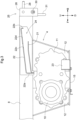
FIG. 3 is a left side view of the vicinity of a carrier storage portion. -
FIG. 4 is a plan view of the vicinity of the carrier storage portion. -
FIG. 5 is a plan view of a holding mechanism. -
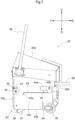
FIG. 6 is a perspective view of a carrier. -
FIG. 7 is a left side view of the carrier. -
FIG. 8 is a left side view showing a state in which the carrier is installed in the carrier storage portion. -
FIG. 9 is a left side view showing a state in which the carrier is installed in the carrier storage portion. -
FIG. 10 is a left side view showing a state in which the carrier is installed in the carrier storage portion. -
FIG. 11 is a left side view showing a state in which the carrier is installed in the carrier storage portion. -
FIG. 12 is a left side view showing a state in which the carrier has been installed in the carrier storage portion. -
FIG. 13 is a left side view showing a state in which the carrier is removed from the carrier storage portion. -
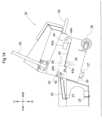
FIG. 14 is a left side view showing a state in which the carrier is removed from the carrier storage portion. -
FIGS. 1 to 14 show an electric riding mower as an example of the electric work vehicle. InFIGS. 1 to 14 , "F" indicates a forward direction, "B" indicates a backward direction, "U" indicates an upper direction, "D" indicates a downward direction, "R" indicates a rightward direction, and "L" indicates a leftward direction. - As shown in
FIGS. 1 and2 , the riding mower includes left and rightfront wheels 1 supported at a front portion of avehicle body 7, left and rightrear wheels 2 supported at a rear portion of thevehicle body 7, amower 3 supported between thefront wheels 1 and therear wheels 2 below thevehicle body 7, a carrier storage portion 4 (seeFIGS. 3 and4 ) supported between the left and rightrear wheels 2 at the rear portion of thevehicle body 7, a driver'sseat 5 and aROPS frame 6 supported on the upper side of thevehicle body 7, and so forth. - The
vehicle body 7 includes left and right body frames 8 extending along the front-rear direction, and afloor 9 coupled to the left and right body frames 8 so as to span therebetween. The driver'sseat 5 is supported by the rear portion of thefloor 9. A lower portion of theROPS frame 6 is coupled to the left and right body frames 8. - As shown in
FIGS. 1 and2 , the left and rightfront wheels 1 are each configured as a caster wheel that is freely rotatable about an axis extending in the up-down direction. The left and rightfront wheels 1 are supported at a front portion of the left and right body frames 8. - As shown in
FIGS. 3 and4 , left and right support frames 12 are downwardly coupled to the rear portions of the body frames 8. Left and rightelectric motors 10 andspeed reduction mechanisms 11 are coupled to the support frames 12. Therear wheels 2 are supported by thespeed reduction mechanisms 11. The power of theelectric motors 10 is transmitted to therear wheels 2 via thespeed reduction mechanisms 11. The left and rightrear wheels 2 are rotated independently. - As shown in
FIGS. 1 and2 , left andright fenders 13 are provided above therear wheels 2. Left and right shift levers 14 are provided at front portions of thefenders 13. The shift levers 14 can be operated from a neutral position to a forward side, which is the front side, and to a backward side, which is the rear side. - When the
right shift lever 14 is operated to the neutral position, the rightelectric motor 10 is brought into a stopped state. When theright shift lever 14 is operated to the forward side, the rightelectric motor 10 is actuated to the forward side. When theright shift lever 14 is operated to the backward side, the rightelectric motor 10 is actuated to the backward side. When theleft shift lever 14 is operated to the neutral position, the forward side, and the backward side, the leftelectric motor 10 is actuated in the same manner as described above. - As described above, as a result of the left and right shift levers 14 being operated, the left and right
rear wheels 2 are rotated independently of each other to the forward side and the backward side, whereby the forward movement, backward movement, and left and right turns of thevehicle body 7 are performed. - As shown in
FIGS. 1 and2 , themower 3 is provided with amower deck 16, and acutting blade 17 supported so as to be rotatable about an inner vertical axis of themower deck 16. Thecutting blade 17 is rotated by anelectric motor 18. - The
mower 3 is supported by the body frames 8 such that themower 3 can be elevated and lowered by alink mechanism 19. An electric actuator (not shown) that actuates thelink mechanism 19 to be elevated and lowered, and anoperation pedal 20 that actuates the electric actuator are provided. - The electric actuator is actuated by the
operation pedal 20 being pressed down with a foot, thus allowing themower 3 to be elevated and lowered to a non-work position (seeFIG. 1 ) elevated from the ground, and a work position in contact with the ground. - As shown in
FIGS. 3 and4 , thecarrier storage portion 4 is formed rearward of theelectric motors 10 at a rear portion (on the rear side relative to the driver'sseat 5 and the ROPS frame 6) of thevehicle body 7 between the left and right rear wheels 2 (speed reduction mechanisms 11) and between the left and right body frames 8. - A flat plate-shaped
support frame 15 is coupled to lower portions of the left and right support frames 12 so as to span therebetween. A flat plate-shapedstopper portion 23 is coupled to thesupport frame 15. Consequently, thecarrier storage portion 4 is open rearward, downward, and upward. - As shown in
FIGS. 3 and4 , the left and right first guide rails 21 (corresponding to a guide rail) (corresponding to a guide portion) each formed by a flat plate-shaped plate material are coupled to rear inner portions of the body frames 8 along the front-rear direction. - Left and right second guide rails 22 (corresponding to a guide rail) (corresponding to a guide portion) each formed by a flat plate-shaped plate material are coupled to the rear inner portions of the body frames 8 at positions on the upper side of the
first guide rails 21 along the front-rear direction. - A front end portion of each of the second guide rails 22 is bent downward and coupled to a front end portion of the corresponding
first guide rail 21. The front end portion of thesecond guide rail 22 forms astopper portion 22a. A rear end portion of each of the second guide rails 22 is bent downward. The rear end portion of thesecond guide rail 22 forms astopper portion 22b. Twoopenings second guide rail 22 that are located slightly forward of thestopper portion 22b. - A rear end portion of each of the
first guide rails 21 is disposed forward relative to thestopper portion 22b of the correspondingsecond guide rail 22. Anentrance portion 24 is provided between the rear end portion of thefirst guide rail 21 and thestopper portion 22b of thesecond guide rail 22. - With the above-described configuration, the
first guide rails 21 and thesecond guide rails 22 are provided extending from thecarrier storage portion 4 toward the rear (outer side) of thevehicle body 7, and have theentrance portions 24 provided at the rear (outer) end portion of thevehicle body 7. - In a state in which the
front wheels 1 and therear wheels 2 are in contact with the ground, the body frames 8 are parallel (horizontal) to the ground. Thefirst guide rails 21 and thesecond guide rails 22 are formed to be inclined downward from theentrance portions 24 toward thecarrier storage portion 4 in a side view so as to descend toward thecarrier storage portion 4. - As shown in
FIGS. 3 ,4 , and5 , left and right holdingmechanisms 25 are provided at rear end portions of the body frames 8. -
Support members 26 each having a channel shape in a plan view are coupled to the rear end portions of the body frames 8 so as to face backward. A flat plate-shapedsupport member 27 is coupled to each of thesupport members 26. Arecess 27a in the form of an upwardly open cut-out portion is formed in an upper side portion of thesupport member 27. - A holding
pin 28 that is bent into an angular shape is supported by each of thesupport members 26 so as to be slidable along the left-right direction. Aspring receiving pin 28a and aspring receiving plate 28b are attached to each of the holding pins 28. Aspring 29 is provided between thesupport member 26 and thespring receiving plate 28b of each of the holding pins 28. - In each holding
mechanism 25, the holdingpin 28 is biased by thespring 29 so as to protrude toward the center in the left-right direction of thevehicle body 7. The operator holds an outer portion of the holdingpin 28, operates the holdingpin 28 to slide outward against thespring 29, and rotates the holdingpin 28 by about 90 degrees to place thespring receiving pin 28a of the holdingpin 28 in therecess 27a of thesupport member 27, whereby the holdingpin 28 is held in a state in which it has been operated to the outer side. - As described above, the holding
mechanisms 25 each include thesupport members pin 28, thespring 29, and so forth. - In the holding
mechanisms 25, left andright support rollers 30 are supported at inner portions of thesupport members 26 so as to be rotatable about an axis extending along the left-right direction. Left andright hooks 31 for traction each having a U-shape in a rear view are coupled to lower portions of thesupport members 26 so as to face downward. - As shown in
FIGS. 6 and7 , thecarrier 32 is configured such that a battery (not shown) can be housed inside amain body portion 33 and can be replaced therefrom. - The
main body portion 33 is configured in a box shape including abottom portion 33a, afront wall portion 33b, left and rightlateral wall portions 33c, arear wall portion 33d, and aceiling portion 33e. Left andright brackets 34 are coupled to lower rear portions of the respective correspondinglateral wall portions 33c of themain body portion 33. Left andright wheels 35 are supported by the respectivecorresponding brackets 34 so as to be freely rotatable about an axis extending in the left-right direction. - An
angular receiving plate 36 is coupled to a front portion of thebottom portion 33a of themain body portion 33 along the left-right direction. Left and rightground contact portions 37 made of hard rubber are attached to left and right portions of the receivingplate 36, and protrude slightly below the receivingplate 36. - An arch-shaped
handle 38 is coupled to upper front portions of thelateral wall portions 33c of themain body portion 33 so as to span therebetween, and disposed above theceiling portion 33e of themain body portion 33. Ahandle 39 is coupled to left and right portions of therear wall portion 33d of themain body portion 33 so as to span therebetween, and extends rearward from therear wall portion 33d of themain body portion 33. - Left and right support rollers 40 (corresponding to a support portion) are supported at front portions of the respective corresponding
lateral wall portions 33c of themain body portion 33 so as to be rotatable about an axis extending along the left-right direction. - Left and right
angular support arms 41 are coupled to upper portions relative to thesupport rollers 40 on the respective correspondinglateral wall portions 33c of themain body portion 33. Left and right positioning rollers 42 (corresponding to a positioning portion) are supported by the respectivecorresponding support arms 41 so as to be rotatable about an axis extending along the left-right direction. Each positioningroller 42 is disposed slightly upward of thesupport roller 40, and slightly forward of the support roller 40 (on thefront wall portion 33b side of the main body portion 33) in a side view. - Left and right support rails 43 having a flat plate shape are coupled to rearward portions relative to the
support rollers 40 on the respective correspondinglateral wall portions 33c of themain body portion 33 along the front-rear direction. A front end portion of each of the support rails 43 is bent downward. The front end portion of thesupport rail 43 forms a receivingportion 43a. - Left and right holding
portions 44 are coupled to rear end portions of the support rails 43 on the respective correspondinglateral wall portions 33c of themain body portion 33. At a front portion of each of the holdingportions 44, aninclined portion 44a is provided over the correspondinglateral wall portion 33c of themain body portion 33, and apipe portion 44b extending along the left-right direction is provided over the correspondinglateral wall portion 33c of themain body portion 33, at a rearward portion relative to theinclined portion 44a. - Transition to State in which Support Rollers of Carrier Are Supported by First Guide Rails and Second Guide Rails in Installation of Carrier in Carrier Storage Portion
- The state shown in
FIG. 8 is a state in which thecarrier 32 is placed on the ground located rearward of the vehicle body 7 (carrier storage portion 4), and thewheels 35 and theground contact portions 37 of thecarrier 32 are in contact with the ground. - From the state shown in
FIG. 8 , the operator operates a front portion of thecarrier 32 so as to be lifted from the ground while holding thehandles carrier 32, and operates thecarrier 32 to move forward toward the vehicle body 7 (carrier storage portion 4) using thewheels 35 so as to place the front portion of thecarrier 32 between the left and right body frames 8. - As shown in
FIG. 9 , the operator engages each of the receivingportions 43a of the support rails 43 of thecarrier 32 with thecorresponding support roller 30 while placing the receivingportion 43a between the holdingpin 28 of theholding mechanism 25 and thesupport roller 30. In the state shown inFIG. 9 , thesupport roller 40 of thecarrier 32 is located at a position in proximity to the rear side of thestopper portion 22b of thesecond guide rail 22, and thepositioning roller 42 of thecarrier 32 is located rearward of and higher than thestopper portion 22b of thesecond guide rail 22. - In the state shown in
FIG. 9 , even if the operator attempts to operate thecarrier 32 to move forward, thesupport rollers 40 of thecarrier 32 abut against thestopper portions 22b of thesecond guide rails 22, whereby the operation of moving thecarrier 32 forward is stopped. This stops the transition to a state in which thesupport rollers 40 of thecarrier 32 are supported by thefirst guide rails 21 and the second guide rails 22. - As shown in
FIGS. 9 and10 , the operator operates the rear portion of thecarrier 32 so as to be lifted from the ground while holding thehandles carrier 32. In this case, the receivingportions 43a of the support rails 43 of thecarrier 32 are engaged with thesupport rollers 30, and therefore the rear portion of thecarrier 32 is operated so as to be lifted from the ground with thesupport rollers 30 serving as a fulcrum. Thecarrier 32 will not move rearward, and the receivingportions 43a of the support rails 43 of thecarrier 32 will not disengage from thesupport rollers 30. - As shown in
FIGS. 9 and10 , when the rear portion of thecarrier 32 is operated so as to be lifted from the ground with thesupport rollers 30 serving as a fulcrum, thesupport rollers 40 and thepositioning rollers 42 of thecarrier 32 move downward with thesupport rollers 30 serving as a fulcrum. - As shown in
FIG. 10 , when each of thesupport rollers 40 of thecarrier 32 has reached a position (the position of the entrance portion 24) slightly below thestopper portion 22b of the correspondingsecond guide rail 22 through the operation of lifting the rear portion of thecarrier 32, thesupport roller 40 of thecarrier 32 is located at a position at which thesupport roller 40 can be supported by thefirst guide rail 21 and thesecond guide rail 22. - In the state shown in
FIG. 10 , each of thepositioning rollers 42 of thecarrier 32 abuts against an upper surface of the correspondingsecond guide rail 22, and the operation of lifting the rear portion of thecarrier 32 is stopped. This allows the transition to a state in which thesupport rollers 40 of thecarrier 32 are supported by thefirst guide rails 21 and the second guide rails 22. - As shown in
FIG. 10 , in a state in which the transition to a state in which thesupport rollers 40 of thecarrier 32 are supported by thefirst guide rails 21 and the second guide rails 22 is allowed, the operator holds thehandles carrier 32, and operates thecarrier 32 to move forward while preventing thepositioning rollers 42 of thecarrier 32 from being separated upward from the upper surfaces of thesecond guide rails 22, as shown inFIG. 11 . - Consequently, each of the
support rollers 40 of thecarrier 32 enters between the correspondingfirst guide rail 21 and the correspondingsecond guide rail 22 from theentrance portion 24, while thecarrier 32 is supported by thesupport rollers 30 via the support rails 43. - Even when the rear portion of the
carrier 32 is to be lowered with thesupport rollers 30 serving as a fulcrum in a state in which the center of gravity of thecarrier 32 is located rearward of thesupport rollers 30 in a side view, thesupport rollers 40 of thecarrier 32 abut against the lower surfaces of the second guide rails 22. Therefore, the rear portion of thecarrier 32 will not be lowered. Even when thecarrier 32 attempts to move rearward, thesupport rollers 40 of thecarrier 32 abut against thestopper portions 22b of the second guide rails 22. Therefore, rearward movement of thecarrier 32 is stopped. - Accordingly, in a state in which the center of gravity of the
carrier 32 is located rearward relative to thesupport rollers 30 in a side view, thecarrier 32 is supported by thesupport rollers 30 via the support rails 43, and thecarrier 32 is supported by thesupport rollers 40 via the second guide rails 22. - When the operator operates the
carrier 32 to move forward from the state shown inFIG. 10 , thesupport rollers 40 of thecarrier 32 enter and exit theopenings FIGS. 3 and4 ) of the second guide rails 22. Consequently, a small amount of resistance is generated to the operation of moving thecarrier 32 forward. This allows the operator to easily recognize that thesupport rollers 40 of thecarrier 32 are supported by the second guide rails 22. - When the center of gravity of the
carrier 32 is brought into a state of being located forward relative to thesupport rollers 30 in a side view as a result of the operator operating thecarrier 32 to move forward, the front portion of thecarrier 32 is brought into a state of being lowered with thesupport rollers 30 serving as a fulcrum. In this state, thecarrier 32 is supported by thesupport rollers 30 via the support rails 43, and thecarrier 32 is supported by thesupport rollers 40 via the first guide rails 21. - The
first guide rails 21 and thesecond guide rails 22 are each formed to be inclined downward from theentrance portion 24 toward thecarrier storage portion 4 in a side view (see "Configuration of First Guide Rails and Second Guide Rails" described above). - Accordingly, the
carrier 32 attempts to move toward thecarrier storage portion 4 under its own weight, and the operator can easily operate thecarrier 32 to move forward toward thecarrier storage portion 4 along thefirst guide rails 21 and the second guide rails 22. - When the
carrier 32 is operated to move forward by the operator, and thecarrier 32 has reached a position in front of thecarrier storage portion 4, theinclined portions 44a of the holdingportions 44 of thecarrier 32 abut against the holding pins 28 of the holdingmechanisms 25. The holding pins 28 of the holdingmechanisms 25 are pressed against thesprings 29 by theinclined portions 44a of the holdingportions 44 of thecarrier 32. - As shown in
FIG. 12 , when the holding pins 28 of the holdingmechanisms 25 have reached thepipe portions 44b of the holdingportions 44 of thecarrier 32, thesprings 29 cause the holding pins 28 of the holdingmechanisms 25 to automatically enter thepipe portions 44b of the holdingportions 44 of thecarrier 32. - The state shown in
FIGS. 1 ,2 , and12 is the state in which thecarrier 32 is installed and held in thecarrier storage portion 4. In this state, thecarrier 32 that has been operated so as to be lifted from the ground is supported by thefirst guide rails 21 and thesecond guide rails 22 via thesupport rollers 40 in the state of being lifted from the ground, and thecarrier 32 is guided from the rear (outer side) of thevehicle body 7 toward thecarrier storage portion 4. - As shown in
FIGS. 1 ,2 , and12 , in the state in which thecarrier 32 is installed and held in thecarrier storage portion 4, thecarrier 32 is supported in the state of being lifted from the ground by the first andsecond guide rails support rollers 40, and thesupport rollers 30 and the support rails 43. - The
support rollers 40 of thecarrier 32 are in contact with thestopper portions 22a of thesecond guide rails 22, and the receivingplate 36 of thecarrier 32 is in contact with thestopper portion 23. The holding pins 28 of the holdingmechanisms 25 enter thepipe portions 44b of the holdingportions 44 of thecarrier 32, and thecarrier 32 is held in thecarrier storage portion 4. - When removing the
carrier 32 installed in thecarrier storage portion 4, the operator holds outer portions of the holding pins 28 in the holdingmechanisms 25, outwardly slides the holding pins 28 against thesprings 29, and pulls the holding pins 28 out of thepipe portions 44b of the holdingportions 44 of thecarrier 32. The operator places the spring receiving pins 28a of the holding pins 28 in therecesses 27a of thesupport members 27 by rotating the holding pins 28 by about 90 degrees, and holds the holding pins 28 in the state of being operated outward (see "Configuration of Holding Mechanism Capable of Holding Carrier in Carrier Storage Portion" described above). - As shown in
FIGS. 12 and13 , the operator operates thecarrier 32 to move rearward from thecarrier storage portion 4. Thefirst guide rails 21 and thesecond guide rails 22 are formed to be inclined downward from theentrance portions 24 toward thecarrier storage portion 4 in a side view (see "Configuration of First Guide Rails and Second Guide Rails" described above). Therefore, the operator needs to operate thecarrier 32 to move rearward against the state in which thecarrier 32 attempts to move toward thecarrier storage portion 4 under its own weight. - In this case, the operator, who is standing rearward (outward) of the
vehicle body 7 relative to thecarrier storage portion 4, pulls thecarrier 32 rearward by holding thehandle 39 of thecarrier 32. Accordingly, the operation of moving thecarrier 32 rearward is of little burden to the operator. - As shown in
FIGS. 12 and13 , when the center of gravity of thecarrier 32 is brought into a state of being located rearward relative to thesupport rollers 30 in a side view, thesupport rollers 40 of thecarrier 32 abut against the lower surfaces of thesecond guide rails 22 even when the rear portion of thecarrier 32 is to be lowered with thesupport rollers 30 serving as a fulcrum. - When the
support rollers 40 of thecarrier 32 have reached positions in front of thestopper portions 22b of thesecond guide rails 22 through the operation of moving thecarrier 32 rearward performed by the operator (corresponding to the state in which thecarrier 32 is operated to move from thecarrier storage portion 4 toward the outer side of thevehicle body 7 and has reached a position immediately in front of the entrance portions 24), thesupport rollers 40 of thecarrier 32 enter and exit theopenings FIGS. 3 and4 ) of the second guide rails 22. Consequently, a small amount of resistance is generated to the operation of moving thecarrier 32 rearward. - This allows the operator to easily recognize that the carrier 32 (support rollers 40) has reached a position immediately in front of the
entrance portions 24 of thefirst guide rails 21 and the second guide rails 22. - As shown in
FIG. 14 , when thesupport rollers 40 of thecarrier 32 abut against thestopper portions 22b of thesecond guide rails 22 through the operation of moving thecarrier 32 rearward performed by the operator (corresponding to the state in which thecarrier 32 is operated to move from thecarrier storage portion 4 toward the outer side of thevehicle body 7 and has reached the entrance portions 24), the operation of moving thecarrier 32 rearward is stopped. This allows the operator to easily recognize that the carrier 32 (support rollers 40) has reached theentrance portions 24 of thefirst guide rails 21 and the second guide rails 22. - Next, the operator slightly lowers the front portion of the
carrier 32 while holding thehandles support rollers 40 of thecarrier 32 out of theentrance portions 24 so as to be disengaged from thestopper portions 22b of thesecond guide rails 22, thus bringing thecarrier 32 into the state shown inFIG. 10 . Next, thecarrier 32 is brought into the state shown inFIG. 9 , and thecarrier 32 is removed from thevehicle body 7 as shown inFIG. 8 . - As described above, the
carrier 32 is supported in the state of being lifted from the ground by thefirst guide rails 21 and thesecond guide rails 22 via thesupport rollers 40, and is guided from thecarrier storage portion 4 toward the rear (outer side) of thevehicle body 7 so as to be removed from thevehicle body 7 and be placed on the ground. - It is possible to adopt a configuration in which the
carrier storage portion 4 is provided between the left and rightfront wheels 1 at the front portion of thevehicle body 7, and thecarrier 32 can be attached or removed to and from thecarrier storage portion 4 from the front (outer side) of thevehicle body 7. This configuration allows a work apparatus (not shown) to be supported at the rear portion of thevehicle body 7. - It is possible to adopt a configuration in which the
first guide rails 21 and thesecond guide rails 22 are in a horizontal orientation in a side view in a state in which thefront wheels 1 and therear wheels 2 are in contact with the ground. - A plurality of support rollers (not shown) may be provided on the
vehicle body 7 so as to constitute the guide portion, and guide rails (not shown) may be provided on thecarrier 32 so as to constitute the support portion. - In place of the
openings second guide rails 22, small protrusions (not shown) may be provided on thesecond guide rails 22 and the body frames 8, and the protrusions may constitute the resistance portion. - Protrusions (not shown) separate from the rear end portions of the
second guide rails 22 may be provided on the body frames 8, and the protrusions may constitute the stopper portion. - The present invention is applicable not only to a riding mower, but also to an electric work vehicle such as a tractor that performs work while traveling with a battery mounted therein.
Claims (6)
- An electric work vehicle comprising:a vehicle body (7) capable of traveling;a carrier (32) in which a battery can be stored and a support portion (40) is provided;a carrier storage portion (4) provided in the vehicle body and capable of holding the carrier;a guide portion (21, 22) that is capable of supporting, via the support portion, the carrier operated so as to be lifted from the ground, in a state in which the carrier is lifted from the ground, and guiding the carrier from an outer side of the vehicle body toward the carrier storage portion, and that guides the carrier from the carrier storage portion toward the outer side of the vehicle body so as to allow a state in which the carrier is removed from the vehicle body and placed on the ground;a positioning portion (42) configured to, when the carrier placed on the ground is operated so as to be lifted and the support portion (40) has reached a position at which the support portion can be supported by the guide portion (21, 22), stop the operation of lifting the carrier so as to allow transition to a state in which the support portion (40) is supported by the guide portion (21, 22),
whereinthe guide portion is a guide rail (21,22) that is provided extending from the carrier storage portion (4) toward an outer side of the vehicle body (7), and that has an entrance portion (24) provided at outer end portion of the vehicle body,characterized in thatthe support portion is a support roller (40) configured to be supported by the guide rail (21,22) in the entrance portion, to be separated from the guide rail in the entrance portion, and to be movable along the guide rail, andthe positioning portion (42) is configured to, when the carrier placed on the ground is operated so as to be lifted, and the support roller (40) has reached the entrance portion (24), stop the operation of lifting the carrier (32) so as to allow transition to a state in which the support roller (40) is supported by the guide rail (21,22) from the entrance portion (24). - The electric work vehicle according to claim 1, wherein
the guide rail (21,22) is formed to be inclined downward from the entrance portion (24) toward the carrier storage portion so as to descend toward the carrier storage portion (4). - The electric work vehicle according to claim 1 or 2, further comprising
a resistance portion (22c, 22d) configured to, when the carrier is operated to move from the carrier storage portion (4) toward an outer side of the vehicle body (7) and has reached a position immediately in front of the entrance portion, provide resistance to the operation of moving the carrier (32). - The electric work vehicle according to claim 3, wherein
the resistance portion is an opening (22c, 22d) that allows entry and exit of the support roller (40). - The electric work vehicle according to any one of claims 1 to 4, further comprising
a stopper portion (22b) configured to, when the carrier is operated to move from the carrier storage portion (4) toward an outer side of the vehicle body (7) and has reached the entrance portion (24), stop the operation of moving the carrier (32). - The electric work vehicle according to claim 5, wherein
the stopper portion (22b) is configured to stop the operation of moving the carrier (32) by abutting against the support roller (40).
Applications Claiming Priority (1)
| Application Number | Priority Date | Filing Date | Title |
|---|---|---|---|
| JP2020155677A JP7362579B2 (en) | 2020-09-16 | 2020-09-16 | electric work vehicle |
Publications (2)
| Publication Number | Publication Date |
|---|---|
| EP3970472A1 EP3970472A1 (en) | 2022-03-23 |
| EP3970472B1 true EP3970472B1 (en) | 2025-03-05 |
Family
ID=76269627
Family Applications (1)
| Application Number | Title | Priority Date | Filing Date |
|---|---|---|---|
| EP21177560.6A Active EP3970472B1 (en) | 2020-09-16 | 2021-06-03 | Electric work vehicle |
Country Status (3)
| Country | Link |
|---|---|
| US (1) | US11623505B2 (en) |
| EP (1) | EP3970472B1 (en) |
| JP (1) | JP7362579B2 (en) |
Families Citing this family (4)
| Publication number | Priority date | Publication date | Assignee | Title |
|---|---|---|---|---|
| JP7390998B2 (en) * | 2020-09-16 | 2023-12-04 | 株式会社クボタ | grass cutting equipment |
| JP7362579B2 (en) * | 2020-09-16 | 2023-10-17 | 株式会社クボタ | electric work vehicle |
| US12485981B2 (en) | 2021-03-24 | 2025-12-02 | Polaris Industries Inc. | Electric recreational vehicle |
| JP7827334B1 (en) * | 2024-12-04 | 2026-03-10 | 有限会社河島農具製作所 | Battery equipment |
Family Cites Families (17)
| Publication number | Priority date | Publication date | Assignee | Title |
|---|---|---|---|---|
| US3797600A (en) * | 1972-04-21 | 1974-03-19 | Lawlor Industries | Power pack mount |
| US5360307A (en) * | 1992-12-07 | 1994-11-01 | Windsor Industries | Battery transfer technique for vehicle |
| US10029551B2 (en) * | 2015-11-16 | 2018-07-24 | Kubota Corporation | Electric work vehicle, battery pack for electric work vehicle and contactless charging system |
| JP2017109662A (en) | 2015-12-18 | 2017-06-22 | 長野工業株式会社 | Dolly with battery and battery driving device |
| US11069936B2 (en) * | 2016-07-22 | 2021-07-20 | Kubota Corporation | Electric work vehicle |
| JP6842854B2 (en) | 2016-07-22 | 2021-03-17 | 株式会社クボタ | Electric work vehicle |
| JP6851260B2 (en) | 2017-05-24 | 2021-03-31 | 株式会社クボタ | Electric work vehicle |
| US11102928B2 (en) * | 2017-07-13 | 2021-08-31 | Kubota Corporation | Electric work vehicle and mower unit |
| US10980173B2 (en) * | 2017-09-13 | 2021-04-20 | Black & Decker Inc. | Riding mower with removeable battery module |
| US11148518B2 (en) * | 2018-12-26 | 2021-10-19 | Kubota Corporation | Electric work vehicle arrangement |
| US11273716B2 (en) * | 2019-03-12 | 2022-03-15 | Kubota Corporation | Electric work vehicle |
| JP7178955B2 (en) * | 2019-05-14 | 2022-11-28 | 株式会社クボタ | Battery pack for electric work vehicle |
| JP7173944B2 (en) * | 2019-10-08 | 2022-11-16 | 株式会社クボタ | electric work vehicle |
| JP7419130B2 (en) * | 2020-03-24 | 2024-01-22 | 株式会社クボタ | electric work vehicle |
| JP7362579B2 (en) * | 2020-09-16 | 2023-10-17 | 株式会社クボタ | electric work vehicle |
| US11396237B2 (en) * | 2020-09-28 | 2022-07-26 | Artisan Vehicle Systems, Inc. | Battery assembly stabilization mechanism |
| JP7450566B2 (en) * | 2021-02-05 | 2024-03-15 | 株式会社クボタ | electric work vehicle |
-
2020
- 2020-09-16 JP JP2020155677A patent/JP7362579B2/en active Active
-
2021
- 2021-06-03 EP EP21177560.6A patent/EP3970472B1/en active Active
- 2021-06-04 US US17/339,215 patent/US11623505B2/en active Active
Also Published As
| Publication number | Publication date |
|---|---|
| JP2022049457A (en) | 2022-03-29 |
| JP7362579B2 (en) | 2023-10-17 |
| US20220080818A1 (en) | 2022-03-17 |
| EP3970472A1 (en) | 2022-03-23 |
| US11623505B2 (en) | 2023-04-11 |
Similar Documents
| Publication | Publication Date | Title |
|---|---|---|
| EP3970472B1 (en) | Electric work vehicle | |
| JP7419130B2 (en) | electric work vehicle | |
| JP6851260B2 (en) | Electric work vehicle | |
| US8347995B2 (en) | Automobile provided with a power supply battery which is removable by a vertical movement, and device for installing and removing such a battery | |
| EP3739658B1 (en) | Battery pack for electric work vehicle | |
| US7673920B2 (en) | Operator's station structure for work vehicle | |
| JPS6229269B2 (en) | ||
| JP6552406B2 (en) | Work vehicle | |
| EP4039516B1 (en) | Electric work vehicle | |
| JP6827398B2 (en) | Electric work vehicle | |
| JP2020110107A (en) | Sulky type rice transplanter | |
| JP2020150630A (en) | Electric work vehicle | |
| JPH11310377A (en) | Moving walk floor | |
| EP2412591A2 (en) | Work vehicle brake | |
| JP2515784Y2 (en) | Moving agricultural machine | |
| US20070085362A1 (en) | Operation means box device | |
| JP4032570B2 (en) | Agricultural machine | |
| JP4187702B2 (en) | Mower | |
| JP3734603B2 (en) | Rice transplanter step structure | |
| JP2018012563A (en) | Reach type forklift | |
| JP2003135528A (en) | Vehicle for wheelchair | |
| TW202604345A (en) | Seedling transplanter | |
| JP4081463B2 (en) | Rice transplanter | |
| JPH025364B2 (en) | ||
| JP2002272224A (en) | Rice transplanter |
Legal Events
| Date | Code | Title | Description |
|---|---|---|---|
| PUAI | Public reference made under article 153(3) epc to a published international application that has entered the european phase |
Free format text: ORIGINAL CODE: 0009012 |
|
| STAA | Information on the status of an ep patent application or granted ep patent |
Free format text: STATUS: REQUEST FOR EXAMINATION WAS MADE |
|
| 17P | Request for examination filed |
Effective date: 20210603 |
|
| AK | Designated contracting states |
Kind code of ref document: A1 Designated state(s): AL AT BE BG CH CY CZ DE DK EE ES FI FR GB GR HR HU IE IS IT LI LT LU LV MC MK MT NL NO PL PT RO RS SE SI SK SM TR |
|
| GRAP | Despatch of communication of intention to grant a patent |
Free format text: ORIGINAL CODE: EPIDOSNIGR1 |
|
| STAA | Information on the status of an ep patent application or granted ep patent |
Free format text: STATUS: GRANT OF PATENT IS INTENDED |
|
| RIC1 | Information provided on ipc code assigned before grant |
Ipc: A01D 34/66 20060101ALN20241009BHEP Ipc: A01D 69/02 20060101AFI20241009BHEP |
|
| INTG | Intention to grant announced |
Effective date: 20241018 |
|
| GRAS | Grant fee paid |
Free format text: ORIGINAL CODE: EPIDOSNIGR3 |
|
| GRAA | (expected) grant |
Free format text: ORIGINAL CODE: 0009210 |
|
| STAA | Information on the status of an ep patent application or granted ep patent |
Free format text: STATUS: THE PATENT HAS BEEN GRANTED |
|
| AK | Designated contracting states |
Kind code of ref document: B1 Designated state(s): AL AT BE BG CH CY CZ DE DK EE ES FI FR GB GR HR HU IE IS IT LI LT LU LV MC MK MT NL NO PL PT RO RS SE SI SK SM TR |
|
| REG | Reference to a national code |
Ref country code: GB Ref legal event code: FG4D |
|
| REG | Reference to a national code |
Ref country code: CH Ref legal event code: EP |
|
| REG | Reference to a national code |
Ref country code: IE Ref legal event code: FG4D |
|
| REG | Reference to a national code |
Ref country code: DE Ref legal event code: R096 Ref document number: 602021027022 Country of ref document: DE |
|
| PG25 | Lapsed in a contracting state [announced via postgrant information from national office to epo] |
Ref country code: RS Free format text: LAPSE BECAUSE OF FAILURE TO SUBMIT A TRANSLATION OF THE DESCRIPTION OR TO PAY THE FEE WITHIN THE PRESCRIBED TIME-LIMIT Effective date: 20250605 |
|
| PG25 | Lapsed in a contracting state [announced via postgrant information from national office to epo] |
Ref country code: FI Free format text: LAPSE BECAUSE OF FAILURE TO SUBMIT A TRANSLATION OF THE DESCRIPTION OR TO PAY THE FEE WITHIN THE PRESCRIBED TIME-LIMIT Effective date: 20250305 |
|
| PGFP | Annual fee paid to national office [announced via postgrant information from national office to epo] |
Ref country code: DE Payment date: 20250617 Year of fee payment: 5 |
|
| REG | Reference to a national code |
Ref country code: NL Ref legal event code: MP Effective date: 20250305 |
|
| PG25 | Lapsed in a contracting state [announced via postgrant information from national office to epo] |
Ref country code: ES Free format text: LAPSE BECAUSE OF FAILURE TO SUBMIT A TRANSLATION OF THE DESCRIPTION OR TO PAY THE FEE WITHIN THE PRESCRIBED TIME-LIMIT Effective date: 20250305 |
|
| REG | Reference to a national code |
Ref country code: LT Ref legal event code: MG9D |
|
| PG25 | Lapsed in a contracting state [announced via postgrant information from national office to epo] |
Ref country code: NO Free format text: LAPSE BECAUSE OF FAILURE TO SUBMIT A TRANSLATION OF THE DESCRIPTION OR TO PAY THE FEE WITHIN THE PRESCRIBED TIME-LIMIT Effective date: 20250605 |
|
| PG25 | Lapsed in a contracting state [announced via postgrant information from national office to epo] |
Ref country code: HR Free format text: LAPSE BECAUSE OF FAILURE TO SUBMIT A TRANSLATION OF THE DESCRIPTION OR TO PAY THE FEE WITHIN THE PRESCRIBED TIME-LIMIT Effective date: 20250305 |
|
| PG25 | Lapsed in a contracting state [announced via postgrant information from national office to epo] |
Ref country code: LV Free format text: LAPSE BECAUSE OF FAILURE TO SUBMIT A TRANSLATION OF THE DESCRIPTION OR TO PAY THE FEE WITHIN THE PRESCRIBED TIME-LIMIT Effective date: 20250305 |
|
| PGFP | Annual fee paid to national office [announced via postgrant information from national office to epo] |
Ref country code: FR Payment date: 20250513 Year of fee payment: 5 |
|
| PG25 | Lapsed in a contracting state [announced via postgrant information from national office to epo] |
Ref country code: GR Free format text: LAPSE BECAUSE OF FAILURE TO SUBMIT A TRANSLATION OF THE DESCRIPTION OR TO PAY THE FEE WITHIN THE PRESCRIBED TIME-LIMIT Effective date: 20250606 Ref country code: BG Free format text: LAPSE BECAUSE OF FAILURE TO SUBMIT A TRANSLATION OF THE DESCRIPTION OR TO PAY THE FEE WITHIN THE PRESCRIBED TIME-LIMIT Effective date: 20250305 |
|
| REG | Reference to a national code |
Ref country code: AT Ref legal event code: MK05 Ref document number: 1771993 Country of ref document: AT Kind code of ref document: T Effective date: 20250305 |
|
| PG25 | Lapsed in a contracting state [announced via postgrant information from national office to epo] |
Ref country code: NL Free format text: LAPSE BECAUSE OF FAILURE TO SUBMIT A TRANSLATION OF THE DESCRIPTION OR TO PAY THE FEE WITHIN THE PRESCRIBED TIME-LIMIT Effective date: 20250305 |
|
| PG25 | Lapsed in a contracting state [announced via postgrant information from national office to epo] |
Ref country code: SE Free format text: LAPSE BECAUSE OF FAILURE TO SUBMIT A TRANSLATION OF THE DESCRIPTION OR TO PAY THE FEE WITHIN THE PRESCRIBED TIME-LIMIT Effective date: 20250305 |
|
| PG25 | Lapsed in a contracting state [announced via postgrant information from national office to epo] |
Ref country code: SM Free format text: LAPSE BECAUSE OF FAILURE TO SUBMIT A TRANSLATION OF THE DESCRIPTION OR TO PAY THE FEE WITHIN THE PRESCRIBED TIME-LIMIT Effective date: 20250305 |
|
| PG25 | Lapsed in a contracting state [announced via postgrant information from national office to epo] |
Ref country code: PT Free format text: LAPSE BECAUSE OF FAILURE TO SUBMIT A TRANSLATION OF THE DESCRIPTION OR TO PAY THE FEE WITHIN THE PRESCRIBED TIME-LIMIT Effective date: 20250707 |
|
| PG25 | Lapsed in a contracting state [announced via postgrant information from national office to epo] |
Ref country code: IT Free format text: LAPSE BECAUSE OF FAILURE TO SUBMIT A TRANSLATION OF THE DESCRIPTION OR TO PAY THE FEE WITHIN THE PRESCRIBED TIME-LIMIT Effective date: 20250305 Ref country code: PL Free format text: LAPSE BECAUSE OF FAILURE TO SUBMIT A TRANSLATION OF THE DESCRIPTION OR TO PAY THE FEE WITHIN THE PRESCRIBED TIME-LIMIT Effective date: 20250305 |
|
| PG25 | Lapsed in a contracting state [announced via postgrant information from national office to epo] |
Ref country code: AT Free format text: LAPSE BECAUSE OF FAILURE TO SUBMIT A TRANSLATION OF THE DESCRIPTION OR TO PAY THE FEE WITHIN THE PRESCRIBED TIME-LIMIT Effective date: 20250305 |
|
| PG25 | Lapsed in a contracting state [announced via postgrant information from national office to epo] |
Ref country code: CZ Free format text: LAPSE BECAUSE OF FAILURE TO SUBMIT A TRANSLATION OF THE DESCRIPTION OR TO PAY THE FEE WITHIN THE PRESCRIBED TIME-LIMIT Effective date: 20250305 Ref country code: EE Free format text: LAPSE BECAUSE OF FAILURE TO SUBMIT A TRANSLATION OF THE DESCRIPTION OR TO PAY THE FEE WITHIN THE PRESCRIBED TIME-LIMIT Effective date: 20250305 |
|
| PG25 | Lapsed in a contracting state [announced via postgrant information from national office to epo] |
Ref country code: RO Free format text: LAPSE BECAUSE OF FAILURE TO SUBMIT A TRANSLATION OF THE DESCRIPTION OR TO PAY THE FEE WITHIN THE PRESCRIBED TIME-LIMIT Effective date: 20250305 |
|
| PG25 | Lapsed in a contracting state [announced via postgrant information from national office to epo] |
Ref country code: SK Free format text: LAPSE BECAUSE OF FAILURE TO SUBMIT A TRANSLATION OF THE DESCRIPTION OR TO PAY THE FEE WITHIN THE PRESCRIBED TIME-LIMIT Effective date: 20250305 |
|
| PG25 | Lapsed in a contracting state [announced via postgrant information from national office to epo] |
Ref country code: IS Free format text: LAPSE BECAUSE OF FAILURE TO SUBMIT A TRANSLATION OF THE DESCRIPTION OR TO PAY THE FEE WITHIN THE PRESCRIBED TIME-LIMIT Effective date: 20250705 |
|
| REG | Reference to a national code |
Ref country code: DE Ref legal event code: R097 Ref document number: 602021027022 Country of ref document: DE |
|
| PLBE | No opposition filed within time limit |
Free format text: ORIGINAL CODE: 0009261 |
|
| STAA | Information on the status of an ep patent application or granted ep patent |
Free format text: STATUS: NO OPPOSITION FILED WITHIN TIME LIMIT |
|
| PG25 | Lapsed in a contracting state [announced via postgrant information from national office to epo] |
Ref country code: DK Free format text: LAPSE BECAUSE OF FAILURE TO SUBMIT A TRANSLATION OF THE DESCRIPTION OR TO PAY THE FEE WITHIN THE PRESCRIBED TIME-LIMIT Effective date: 20250305 |
|
| REG | Reference to a national code |
Ref country code: CH Ref legal event code: L10 Free format text: ST27 STATUS EVENT CODE: U-0-0-L10-L00 (AS PROVIDED BY THE NATIONAL OFFICE) Effective date: 20260114 |
|
| REG | Reference to a national code |
Ref country code: CH Ref legal event code: H13 Free format text: ST27 STATUS EVENT CODE: U-0-0-H10-H13 (AS PROVIDED BY THE NATIONAL OFFICE) Effective date: 20260127 |
|
| PG25 | Lapsed in a contracting state [announced via postgrant information from national office to epo] |
Ref country code: MC Free format text: LAPSE BECAUSE OF FAILURE TO SUBMIT A TRANSLATION OF THE DESCRIPTION OR TO PAY THE FEE WITHIN THE PRESCRIBED TIME-LIMIT Effective date: 20250305 |
|
| 26N | No opposition filed |
Effective date: 20251208 |
|
| PG25 | Lapsed in a contracting state [announced via postgrant information from national office to epo] |
Ref country code: LU Free format text: LAPSE BECAUSE OF NON-PAYMENT OF DUE FEES Effective date: 20250603 |
|
| GBPC | Gb: european patent ceased through non-payment of renewal fee |
Effective date: 20250605 |
|
| REG | Reference to a national code |
Ref country code: BE Ref legal event code: MM Effective date: 20250630 |
|
| PG25 | Lapsed in a contracting state [announced via postgrant information from national office to epo] |
Ref country code: GB Free format text: LAPSE BECAUSE OF NON-PAYMENT OF DUE FEES Effective date: 20250605 |
|
| PG25 | Lapsed in a contracting state [announced via postgrant information from national office to epo] |
Ref country code: IE Free format text: LAPSE BECAUSE OF NON-PAYMENT OF DUE FEES Effective date: 20250603 |
|
| PG25 | Lapsed in a contracting state [announced via postgrant information from national office to epo] |
Ref country code: BE Free format text: LAPSE BECAUSE OF NON-PAYMENT OF DUE FEES Effective date: 20250630 |
|
| PG25 | Lapsed in a contracting state [announced via postgrant information from national office to epo] |
Ref country code: CH Free format text: LAPSE BECAUSE OF NON-PAYMENT OF DUE FEES Effective date: 20250630 |