EP3967534A1 - Power unit suspension structure - Google Patents
Power unit suspension structure Download PDFInfo
- Publication number
- EP3967534A1 EP3967534A1 EP20802115.4A EP20802115A EP3967534A1 EP 3967534 A1 EP3967534 A1 EP 3967534A1 EP 20802115 A EP20802115 A EP 20802115A EP 3967534 A1 EP3967534 A1 EP 3967534A1
- Authority
- EP
- European Patent Office
- Prior art keywords
- power unit
- suspension structure
- motor
- transaxle
- mount
- Prior art date
- Legal status (The legal status is an assumption and is not a legal conclusion. Google has not performed a legal analysis and makes no representation as to the accuracy of the status listed.)
- Granted
Links
Images


Classifications
-
- B—PERFORMING OPERATIONS; TRANSPORTING
- B62—LAND VEHICLES FOR TRAVELLING OTHERWISE THAN ON RAILS
- B62D—MOTOR VEHICLES; TRAILERS
- B62D21/00—Understructures, i.e. chassis frame on which a vehicle body may be mounted
- B62D21/11—Understructures, i.e. chassis frame on which a vehicle body may be mounted with resilient means for suspension, e.g. of wheels or engine; sub-frames for mounting engine or suspensions
-
- B—PERFORMING OPERATIONS; TRANSPORTING
- B60—VEHICLES IN GENERAL
- B60K—ARRANGEMENT OR MOUNTING OF PROPULSION UNITS OR OF TRANSMISSIONS IN VEHICLES; ARRANGEMENT OR MOUNTING OF PLURAL DIVERSE PRIME-MOVERS IN VEHICLES; AUXILIARY DRIVES FOR VEHICLES; INSTRUMENTATION OR DASHBOARDS FOR VEHICLES; ARRANGEMENTS IN CONNECTION WITH COOLING, AIR INTAKE, GAS EXHAUST OR FUEL SUPPLY OF PROPULSION UNITS IN VEHICLES
- B60K1/00—Arrangement or mounting of electrical propulsion units
-
- B—PERFORMING OPERATIONS; TRANSPORTING
- B60—VEHICLES IN GENERAL
- B60K—ARRANGEMENT OR MOUNTING OF PROPULSION UNITS OR OF TRANSMISSIONS IN VEHICLES; ARRANGEMENT OR MOUNTING OF PLURAL DIVERSE PRIME-MOVERS IN VEHICLES; AUXILIARY DRIVES FOR VEHICLES; INSTRUMENTATION OR DASHBOARDS FOR VEHICLES; ARRANGEMENTS IN CONNECTION WITH COOLING, AIR INTAKE, GAS EXHAUST OR FUEL SUPPLY OF PROPULSION UNITS IN VEHICLES
- B60K17/00—Arrangement or mounting of transmissions in vehicles
- B60K17/04—Arrangement or mounting of transmissions in vehicles characterised by arrangement, location or kind of gearing
- B60K17/16—Arrangement or mounting of transmissions in vehicles characterised by arrangement, location or kind of gearing of differential gearing
-
- B—PERFORMING OPERATIONS; TRANSPORTING
- B60—VEHICLES IN GENERAL
- B60K—ARRANGEMENT OR MOUNTING OF PROPULSION UNITS OR OF TRANSMISSIONS IN VEHICLES; ARRANGEMENT OR MOUNTING OF PLURAL DIVERSE PRIME-MOVERS IN VEHICLES; AUXILIARY DRIVES FOR VEHICLES; INSTRUMENTATION OR DASHBOARDS FOR VEHICLES; ARRANGEMENTS IN CONNECTION WITH COOLING, AIR INTAKE, GAS EXHAUST OR FUEL SUPPLY OF PROPULSION UNITS IN VEHICLES
- B60K1/00—Arrangement or mounting of electrical propulsion units
- B60K2001/001—Arrangement or mounting of electrical propulsion units one motor mounted on a propulsion axle for rotating right and left wheels of this axle
-
- B—PERFORMING OPERATIONS; TRANSPORTING
- B60—VEHICLES IN GENERAL
- B60Y—INDEXING SCHEME RELATING TO ASPECTS CROSS-CUTTING VEHICLE TECHNOLOGY
- B60Y2400/00—Special features of vehicle units
- B60Y2400/61—Arrangements of controllers for electric machines, e.g. inverters
Definitions
- the present invention relates to a suspension structure for a power unit of an electric vehicle, the power unit including a motor, a transaxle, and other unit-forming members.
- an electric vehicle including a suspension structure for a power unit like the one disclosed in Patent Literature 1.
- a suspension structure for a power unit disclosed in Patent Literature 1 an axis common to a motor and a speed reducer is arranged in a vehicle width direction.
- the suspension structure for a power unit disclosed in Patent Literature 1 has such a structure that both of a left side portion and a right side portion of the power unit are suspended from side frame portions of a sub-frame arranged around the power unit through intermediation of suspension brackets, mount rubbers, and motor-side mount brackets.
- a principal axis of inertia of the unit is inclined with respect to an axis of the vehicle width direction or the like, and it is thus difficult to balance an axis of inertia in a unit roll direction, which is substantially parallel with the vehicle width direction. Consequently, when a drive reaction force is input, the power unit is not balanced, and there may occur such problems that the unbalance causes occurrence of large vibration and noise or is liable to reduce durability.
- the present invention has an object to provide a suspension structure for a power unit, which is capable of suspending the power unit in a well-balanced manner while saving a space required for suspending the power unit in a vehicle front-rear direction.
- a suspension structure for a power unit of an electric vehicle including a motor, a transaxle, and other unit-forming members, wherein the transaxle is arranged in a substantially center portion in a vehicle width direction, wherein the motor is arranged at a position on an upper side with respect to the transaxle, and on one side in the vehicle width direction, wherein some or all of the other unit-forming members are arranged at a position on the upper side with respect to the transaxle, and on an opposite side of the motor, and wherein the motor and the other unit-forming members are suspended on a principal axis of inertia substantially parallel with an axis in the vehicle width direction when the power unit is viewed from above.
- the suspension structure for a power unit according to the present invention is configured such that the motor and the other unit-forming members are arranged on the upper side with respect to the transaxle. With this configuration, according to the suspension structure for a power unit of the present invention, it is possible to minimize the space in the vehicle front-rear direction required for suspending the power unit. Thus, according to the suspension structure for a power unit of the present invention, it is possible to expect various side effects achieved by the space saving in the vehicle front-rear direction.
- the side effects include, for example, an increase in a cabin of the electric vehicle and minimized portions (dead strokes upon a collision) remaining not crashed after impact of a collision is received.
- the suspension structure for a power unit of the present invention is configured such that the transaxle is arranged in the substantially center portion in the vehicle width direction, the motor is arranged on the one side with respect to the transaxle in the vehicle width direction, some or all of the other unit-forming members are arranged on the other side, and the motor and the other unit-forming members are suspended on the principal axis of inertia substantially parallel with the axis in the vehicle width direction.
- the axis of inertia in the unit roll direction which is substantially parallel with the vehicle width direction, can be arranged substantially in parallel with the axis in the vehicle width direction, thereby being capable of suspending the power unit in a well-balanced manner.
- the suspension structure for a power unit of the present invention there are expected such effects as, for example, suppression of vibration and noise and an increase in durability.
- the suspension structure for a power unit of the present invention it is possible to reduce, upon collision, a liability of interference, for example, between the transaxle and a steering shaft, pedals, and the like by arranging the transaxle in the substantially center portion in the vehicle width direction. As a result, it is possible to suppress a liability of occurrence of dead strokes upon collision to the minimum in regions intended as crash strokes. Moreover, as a result of the minimization of the dead strokes, the present invention can also contribute to achievement of a short overhung of the electric vehicle and the space saving in the front-rear direction.
- a differential gear provided for the transaxle be arranged on a center line passing through the substantially center portion in the vehicle width direction.
- the suspension structure for a power unit of the present invention include a pair of side members arranged in such a manner as to extend in a front-rear direction on both sides of the electric vehicle in the vehicle width direction, the motor be suspended directly or indirectly from one of the pair of side members through intermediation of a first mount, some or all of the other unit-forming members be suspended directly or indirectly from another one of the pair of side members through intermediation of a second mount, and the suspension structure for a power unit further include a reaction force reception member configured to receive a toque reaction force which acts on the motor is provided.
- the motor and some or all of the other unit-forming members may be suspended directly from the side members through intermediation of the first mount and the second mount, respectively, as described above, but may be suspended from, for example, suspensions or a cross member, which is not mounted to the side members, through intermediation of the first mount and the second mount, thereby being indirectly suspended from the side members.
- reaction force reception member configured to receive the torque reaction force acting on the motor may be formed of, for example, a mount similar to the first mount and the second mount, or may be formed of a so-called torque rod, a so-called torque stopper, or the like. Further, the reaction force reception member may be formed of a single mount or the like or a plurality of mounts or the like.
- each of one or both of the first mount and the second mount be arranged in a vicinity of a base end of a suspension tower provided for the electric vehicle, and be coupled to the suspension tower, or be integrated with the suspension tower.
- the other unit-forming members include a power control unit or another accessory.
- the suspension structure for a power unit capable of suspending the power unit in a well-balanced manner while saving the space required for suspending the power unit in the vehicle front-rear direction can be provided.
- the power unit suspension structure 10 is configured to use a left side member 2 and a right side member 4 forming a body of an electric vehicle to suspend a power unit 20.
- the side members 2 and 4 respectively, are a pair of a left member and a right member arranged in such a manner as to extend in a vehicle front-rear direction on both sides (left and right) in a vehicle width direction of the electric vehicle.
- the power unit 20 includes a transaxle 22, a motor 24, and other unit-forming members.
- a power control unit 26 is provided as the other unit-forming members.
- the power unit 20 is installed in such a manner as to be suspended by the side members 2 and 4 through intermediation of a first mount 30 and a second mount 32, respectively, and so as to receive a torque reaction force acting on the motor 24 through intermediation of a reaction force reception member 34.
- a mount similar to the first mount 30 and the second mount 32 a so-called torque rod or a so-called torque stopper, or the like to form the reaction force reception member 34.
- the reaction force reception member 34 may be formed of a single mount or the like or a plurality of mounts or the like.
- the transaxle 22 is arranged in a substantially center portion in the vehicle width direction.
- the transaxle 22 is a device formed by integrating a transmission (not shown), a differential gear 22a, and the like with one another similarly to a transaxle that has hitherto been publicly known.
- the differential gear 22a is connected to drive shafts 6 and 8 provided in such a manner as to extend in both directions (a left direction and a right direction) in the vehicle width direction.
- the motor 24 is arranged on an upper side with respect to the transaxle 22. Moreover, the motor 24 is arranged at a position adjacent to the transaxle 22 on one side (left side in the illustrated example) in the vehicle width direction.
- the transaxle 22 is suspended from the side member 2 on the left side through intermediation of the first mount 30.
- the first mount 30 is provided at a position of the side member 2 in a vicinity of a base of a suspension tower 3.
- An output shaft of the motor 24 is connected directly or indirectly to the differential gear 22a so as to be capable of transmitting power to the differential gear 22a.
- the power control unit 26 is arranged on the upper side with respect to the transaxle 22. Moreover, the power control unit 26 is arranged at a position on an opposite side (right side in the illustrated example) of the motor 24. The power control unit 26 is suspended from the side member 4 on the right side through intermediation of the second mount 32. The second mount 32 is provided at a position of the side member 4 in a vicinity of a base of a suspension tower 5.
- the power unit suspension structure 10 is configured such that the motor 24 and the transaxle 22 (differential gear 22a) are arranged on the upper side and the lower side, respectively.
- the power unit suspension structure 10 is configured such that the motor 24 and the power control unit 26 are suspended on a principal axis of inertia X substantially parallel with an axis in the vehicle width direction when the power unit 20 is viewed from an upper side of the vehicle (in a top view).
- the power unit suspension structure 10 is configured such that the differential gear 22a comes to a center line CL passing through the substantially center portion in the vehicle width direction.
- the power unit suspension structure 10 is configured such that the motor 24 and the power control unit 26 are arranged on the upper side with respect to the transaxle 22. Consequently, with the power unit suspension structure 10, it is possible to minimize the space in the vehicle front-rear direction required for suspending the power unit 20. As a result, it is possible to achieve, for example, space saving in the vehicle front-rear direction such as an increase in a cabin of the electric vehicle and minimized dead strokes upon a collision, and to achieve a short overhang.
- the power unit suspension structure 10 is configured such that the transaxle 22 is arranged in the substantially center portion in the vehicle width direction, the motor 24 is arranged on the one side with respect to the transaxle 22 in the vehicle width direction, and the power control unit 26 is arranged on the opposite side of the motor 24. Further, the motor 24 and the power control unit 26 are suspended directly above the principal axis of inertia X substantially parallel with the axis in the vehicle width direction. With this configuration, an axis of inertia in a unit roll direction, which is substantially parallel with the vehicle width direction, can be balanced, thereby being capable of suspending the power unit 20 in a well-balanced manner. Thus, with the power unit suspension structure 10, there are expected such effects as, for example, suppression of vibration and noise and an increase in durability.
- this embodiment can also contribute to achievement of the short overhang of the electric vehicle.
- the power unit suspension structure 10 is configured such that the differential gear 22a is arranged on the center line CL passing through the substantially center portion in the vehicle width direction.
- the lengths of the left drive shaft 6 and the right drive shaft 8 are substantially equal to each other, and torsional rigidity acting thereon, respectively, can be substantially uniform, thereby being capable of suppressing occurrence of torque steer.
- the first mount 30 and the second mount 32 provided for the side members 2 and 4, respectively, and the reaction force reception member 34 can be used to bring the motor 24 and the power control unit 26 into a floating state.
- mount shafts each other between the left side and the right side of the vehicle.
- the power unit suspension structure 10 facilitates control of a mount characteristic for the drive reaction force.
- the power unit suspension structure 10 facilitates matching between the pair of the side members 2 and 4 in yield strength and deformation amount upon a collision.
- the first mount 30 and the second mount 32 are arranged in the vicinities of the base ends of the suspension towers 3 and 5, respectively, provided for the electric vehicle. Still further, the first mount 30 and the second mount 32 are coupled to the suspension towers 3 and 5 through intermediation of coupling members 36 and 38 such as stays, respectively. With this configuration, it is possible to increase the body stiffness of the electric vehicle, and to suppress portions that are of the suspension towers, and remain not crashed to the minimum amounts even when the suspension towers receive the impact of a collision.
- both of the first mount 30 and the second mount 32 are arranged in the vicinities of the base ends of the suspension towers 3 and 5, respectively, and are configured to be coupled to the suspension towers 3 and 5 through intermediations of the coupling members 36 and 38, respectively, but the present invention is not limited to this example.
- the power unit suspension structure 10 may have such a configuration that the first mount 30 and the second mount 32 are integrated with the suspension towers 3 and 5 without intermediation of the coupling members 36 and 38, respectively.
- the power unit suspension structure 10 it is not always required to couple or integrate both of the first mount 30 and the second mount 32 to or with the suspension towers 3 and 5, respectively, and only any one of the first mount 30 and the second mount 32 may be coupled to or integrated with corresponding one of the suspension towers 3 and 5.
- a vehicle such as a vehicle of a rear drive type in which the coupling structure or the integration structure cannot be formed between the first mount 30 and the suspension tower 3 and between the second mount 32 and the suspension tower 5, it is not required to employ the above-mentioned coupling structure or the integration structure.
- the power control unit 26 is provided as the other unit-forming member forming the power control unit 26 together with the motor 24 and the transaxle 22, and is provided at the position on the upper side with respect to the transaxle 22 and on the opposite side of the motor 24, but the present invention is not limited to this example.
- the other unit-forming member that is provided at the position on the upper side with respect to the transaxle 22 and on the opposite side of the motor 24, there may be provided, for example, an air conditioner compressor or the like as the another component in place of the power control unit 26 or in addition to the power control unit 26.
- the present invention may be suitably utilized in the electric vehicle equipped with the power unit including the motor, the transaxle, and the other unit-forming members.
Landscapes
- Engineering & Computer Science (AREA)
- Chemical & Material Sciences (AREA)
- Combustion & Propulsion (AREA)
- Transportation (AREA)
- Mechanical Engineering (AREA)
- Arrangement Or Mounting Of Propulsion Units For Vehicles (AREA)
- Arrangement Of Transmissions (AREA)
- Motor Power Transmission Devices (AREA)
- Body Structure For Vehicles (AREA)
Abstract
Description
- The present invention relates to a suspension structure for a power unit of an electric vehicle, the power unit including a motor, a transaxle, and other unit-forming members.
- Hitherto, there has been provided an electric vehicle including a suspension structure for a power unit like the one disclosed in Patent Literature 1. In the suspension structure for a power unit disclosed in Patent Literature 1, an axis common to a motor and a speed reducer is arranged in a vehicle width direction. Moreover, the suspension structure for a power unit disclosed in Patent Literature 1 has such a structure that both of a left side portion and a right side portion of the power unit are suspended from side frame portions of a sub-frame arranged around the power unit through intermediation of suspension brackets, mount rubbers, and motor-side mount brackets.
- [PTL 1]
JP 2012-171529 A - Many of related-art suspension structures for a power unit are intended for employing a vehicle body developed based on a vehicle equipped with an internal combustion engine as a vehicle body for an electric vehicle and suspending a power unit from the vehicle body. As a result, for example, when a differential gear is arranged at a position apart from a substantially center portion (centerline) in the vehicle width direction, in order to eliminate torque steer, another member such as an intermediate shaft may be required in some cases. Moreover, in the related-art suspension structure for a power unit, there may occur a problem of, for example, a restriction in an arrangement space in view of balance with side members. As a result, the related art has problems such as necessity of a large space in a vehicle front-rear direction for suspending the power unit.
- Moreover, in the related-art suspension structure for a power unit, a principal axis of inertia of the unit is inclined with respect to an axis of the vehicle width direction or the like, and it is thus difficult to balance an axis of inertia in a unit roll direction, which is substantially parallel with the vehicle width direction. Consequently, when a drive reaction force is input, the power unit is not balanced, and there may occur such problems that the unbalance causes occurrence of large vibration and noise or is liable to reduce durability.
- In view of the above-mentioned problems, the present invention has an object to provide a suspension structure for a power unit, which is capable of suspending the power unit in a well-balanced manner while saving a space required for suspending the power unit in a vehicle front-rear direction.
- In order to solve the above-mentioned problems, according to the present invention, there is provided a suspension structure for a power unit of an electric vehicle, the power unit including a motor, a transaxle, and other unit-forming members, wherein the transaxle is arranged in a substantially center portion in a vehicle width direction, wherein the motor is arranged at a position on an upper side with respect to the transaxle, and on one side in the vehicle width direction, wherein some or all of the other unit-forming members are arranged at a position on the upper side with respect to the transaxle, and on an opposite side of the motor, and wherein the motor and the other unit-forming members are suspended on a principal axis of inertia substantially parallel with an axis in the vehicle width direction when the power unit is viewed from above.
- The suspension structure for a power unit according to the present invention is configured such that the motor and the other unit-forming members are arranged on the upper side with respect to the transaxle. With this configuration, according to the suspension structure for a power unit of the present invention, it is possible to minimize the space in the vehicle front-rear direction required for suspending the power unit. Thus, according to the suspension structure for a power unit of the present invention, it is possible to expect various side effects achieved by the space saving in the vehicle front-rear direction. The side effects include, for example, an increase in a cabin of the electric vehicle and minimized portions (dead strokes upon a collision) remaining not crashed after impact of a collision is received.
- Moreover, the suspension structure for a power unit of the present invention is configured such that the transaxle is arranged in the substantially center portion in the vehicle width direction, the motor is arranged on the one side with respect to the transaxle in the vehicle width direction, some or all of the other unit-forming members are arranged on the other side, and the motor and the other unit-forming members are suspended on the principal axis of inertia substantially parallel with the axis in the vehicle width direction. With this configuration, the axis of inertia in the unit roll direction, which is substantially parallel with the vehicle width direction, can be arranged substantially in parallel with the axis in the vehicle width direction, thereby being capable of suspending the power unit in a well-balanced manner. Thus, according to the suspension structure for a power unit of the present invention, there are expected such effects as, for example, suppression of vibration and noise and an increase in durability.
- Moreover, as in the suspension structure for a power unit of the present invention, it is possible to reduce, upon collision, a liability of interference, for example, between the transaxle and a steering shaft, pedals, and the like by arranging the transaxle in the substantially center portion in the vehicle width direction. As a result, it is possible to suppress a liability of occurrence of dead strokes upon collision to the minimum in regions intended as crash strokes. Moreover, as a result of the minimization of the dead strokes, the present invention can also contribute to achievement of a short overhung of the electric vehicle and the space saving in the front-rear direction.
- Moreover, it is preferred that, in the suspension structure for a power unit of the present invention, a differential gear provided for the transaxle be arranged on a center line passing through the substantially center portion in the vehicle width direction.
- With this configuration, torsional rigidity acting on the left and right drive shafts, respectively, can be substantially uniform. As a result, occurrence of torque steer in the electric vehicle can be suppressed.
- It is preferred that the suspension structure for a power unit of the present invention include a pair of side members arranged in such a manner as to extend in a front-rear direction on both sides of the electric vehicle in the vehicle width direction, the motor be suspended directly or indirectly from one of the pair of side members through intermediation of a first mount, some or all of the other unit-forming members be suspended directly or indirectly from another one of the pair of side members through intermediation of a second mount, and the suspension structure for a power unit further include a reaction force reception member configured to receive a toque reaction force which acts on the motor is provided.
- With this configuration, the motor and the other unit-forming members can be brought into floating states. As a result, it is possible to reduce transmission of gear noise and vibration occurring to the other unit-forming members.
- The motor and some or all of the other unit-forming members may be suspended directly from the side members through intermediation of the first mount and the second mount, respectively, as described above, but may be suspended from, for example, suspensions or a cross member, which is not mounted to the side members, through intermediation of the first mount and the second mount, thereby being indirectly suspended from the side members.
- Moreover, the reaction force reception member configured to receive the torque reaction force acting on the motor may be formed of, for example, a mount similar to the first mount and the second mount, or may be formed of a so-called torque rod, a so-called torque stopper, or the like. Further, the reaction force reception member may be formed of a single mount or the like or a plurality of mounts or the like.
- With the above-mentioned configuration, it is possible to match mount shafts each other between the left side and the right side of the vehicle. As a result, there are provided an effect of facilitating control of mount characteristics for the driving reaction force, an effect of facilitating matching between the pair of side members in yield strength and deformation amount upon a collision, and the like.
- It is preferred that, in the suspension structure for a power unit of the present invention, each of one or both of the first mount and the second mount be arranged in a vicinity of a base end of a suspension tower provided for the electric vehicle, and be coupled to the suspension tower, or be integrated with the suspension tower.
- With the above-mentioned configuration, it is possible to increase the body stiffness of the electric vehicle, and to suppress portions that are of the suspension towers, and remain not crashed to the minimum amounts even when the suspension towers receive impact of a collision.
- It is preferred that, in the suspension structure for a power unit of the present invention, the other unit-forming members include a power control unit or another accessory.
- According to the present invention, the suspension structure for a power unit capable of suspending the power unit in a well-balanced manner while saving the space required for suspending the power unit in the vehicle front-rear direction can be provided.
-
-
FIG. 1 is a schematic diagram for illustrating a suspension structure for a power unit according to an embodiment of the present invention. -
FIG. 2 is a side view of the suspension structure for a power unit ofFIG. 1 . -
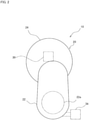
FIG. 3(a) and FIG. 3(b) are explanatory diagrams for illustrating a relationship between the suspension structure for a power unit and a principal axis of inertia. - Description is now given of a
suspension structure 10 for a power unit (hereinafter referred to as "powerunit suspension structure 10") according to an embodiment of the present invention with reference to drawings. As illustrated inFIG. 1 , the powerunit suspension structure 10 is configured to use aleft side member 2 and aright side member 4 forming a body of an electric vehicle to suspend apower unit 20. Theside members - As illustrated in
FIG. 1 , thepower unit 20 includes atransaxle 22, amotor 24, and other unit-forming members. In the powerunit suspension structure 10 according to this embodiment, as the other unit-forming members, apower control unit 26 is provided. Thepower unit 20 is installed in such a manner as to be suspended by theside members first mount 30 and asecond mount 32, respectively, and so as to receive a torque reaction force acting on themotor 24 through intermediation of a reactionforce reception member 34. It is possible to use, for example, a mount similar to thefirst mount 30 and thesecond mount 32, a so-called torque rod or a so-called torque stopper, or the like to form the reactionforce reception member 34. The reactionforce reception member 34 may be formed of a single mount or the like or a plurality of mounts or the like. - Specifically, the
transaxle 22 is arranged in a substantially center portion in the vehicle width direction. Thetransaxle 22 is a device formed by integrating a transmission (not shown), adifferential gear 22a, and the like with one another similarly to a transaxle that has hitherto been publicly known. Thedifferential gear 22a is connected to driveshafts - The
motor 24 is arranged on an upper side with respect to thetransaxle 22. Moreover, themotor 24 is arranged at a position adjacent to thetransaxle 22 on one side (left side in the illustrated example) in the vehicle width direction. Thetransaxle 22 is suspended from theside member 2 on the left side through intermediation of thefirst mount 30. Thefirst mount 30 is provided at a position of theside member 2 in a vicinity of a base of asuspension tower 3. An output shaft of themotor 24 is connected directly or indirectly to thedifferential gear 22a so as to be capable of transmitting power to thedifferential gear 22a. - The
power control unit 26 is arranged on the upper side with respect to thetransaxle 22. Moreover, thepower control unit 26 is arranged at a position on an opposite side (right side in the illustrated example) of themotor 24. Thepower control unit 26 is suspended from theside member 4 on the right side through intermediation of thesecond mount 32. Thesecond mount 32 is provided at a position of theside member 4 in a vicinity of a base of asuspension tower 5. - As illustrated in
FIG. 1 andFIG. 2 , the powerunit suspension structure 10 is configured such that themotor 24 and the transaxle 22 (differential gear 22a) are arranged on the upper side and the lower side, respectively. Moreover, as illustrated inFIG. 3(a) and FIG. 3(b) , the powerunit suspension structure 10 is configured such that themotor 24 and thepower control unit 26 are suspended on a principal axis of inertia X substantially parallel with an axis in the vehicle width direction when thepower unit 20 is viewed from an upper side of the vehicle (in a top view). Moreover, the powerunit suspension structure 10 is configured such that thedifferential gear 22a comes to a center line CL passing through the substantially center portion in the vehicle width direction. - As described above, the power
unit suspension structure 10 is configured such that themotor 24 and thepower control unit 26 are arranged on the upper side with respect to thetransaxle 22. Consequently, with the powerunit suspension structure 10, it is possible to minimize the space in the vehicle front-rear direction required for suspending thepower unit 20. As a result, it is possible to achieve, for example, space saving in the vehicle front-rear direction such as an increase in a cabin of the electric vehicle and minimized dead strokes upon a collision, and to achieve a short overhang. - Moreover, as described above, the power
unit suspension structure 10 is configured such that thetransaxle 22 is arranged in the substantially center portion in the vehicle width direction, themotor 24 is arranged on the one side with respect to thetransaxle 22 in the vehicle width direction, and thepower control unit 26 is arranged on the opposite side of themotor 24. Further, themotor 24 and thepower control unit 26 are suspended directly above the principal axis of inertia X substantially parallel with the axis in the vehicle width direction. With this configuration, an axis of inertia in a unit roll direction, which is substantially parallel with the vehicle width direction, can be balanced, thereby being capable of suspending thepower unit 20 in a well-balanced manner. Thus, with the powerunit suspension structure 10, there are expected such effects as, for example, suppression of vibration and noise and an increase in durability. - Moreover, it is possible to reduce a liability of interference between the
transaxle 22 and a steering shaft, pedals, and the like upon a collision by arranging thetransaxle 22 in the substantially center portion in the vehicle width direction as in the powerunit suspension structure 10 according to this embodiment. As a result, it is possible to suppress a liability of occurrence of portions (dead strokes) that remain not crashed when impact of a collision is received to the minimum degree in regions intended as crash strokes. Moreover, as a result of the minimization of the dead strokes, this embodiment can also contribute to achievement of the short overhang of the electric vehicle. - Moreover, as described above, the power
unit suspension structure 10 is configured such that thedifferential gear 22a is arranged on the center line CL passing through the substantially center portion in the vehicle width direction. As a result, the lengths of theleft drive shaft 6 and theright drive shaft 8 are substantially equal to each other, and torsional rigidity acting thereon, respectively, can be substantially uniform, thereby being capable of suppressing occurrence of torque steer. - As described above, in the power
unit suspension structure 10 in this embodiment, thefirst mount 30 and thesecond mount 32 provided for theside members force reception member 34 can be used to bring themotor 24 and thepower control unit 26 into a floating state. As a result, it is possible to reduce transmission of gear noise and vibration occurring to thepower control unit 26. Moreover, with the above-mentioned configuration, it is possible to match mount shafts each other between the left side and the right side of the vehicle. As a result, the powerunit suspension structure 10 facilitates control of a mount characteristic for the drive reaction force. Moreover, the powerunit suspension structure 10 facilitates matching between the pair of theside members - Further, in the power
unit suspension structure 10, thefirst mount 30 and thesecond mount 32 are arranged in the vicinities of the base ends of the suspension towers 3 and 5, respectively, provided for the electric vehicle. Still further, thefirst mount 30 and thesecond mount 32 are coupled to the suspension towers 3 and 5 through intermediation ofcoupling members - In the example of the power
unit suspension structure 10 ofFIG. 1 , both of thefirst mount 30 and thesecond mount 32 are arranged in the vicinities of the base ends of the suspension towers 3 and 5, respectively, and are configured to be coupled to the suspension towers 3 and 5 through intermediations of thecoupling members unit suspension structure 10 may have such a configuration that thefirst mount 30 and thesecond mount 32 are integrated with the suspension towers 3 and 5 without intermediation of thecoupling members unit suspension structure 10, it is not always required to couple or integrate both of thefirst mount 30 and thesecond mount 32 to or with the suspension towers 3 and 5, respectively, and only any one of thefirst mount 30 and thesecond mount 32 may be coupled to or integrated with corresponding one of the suspension towers 3 and 5. Moreover, in a vehicle such as a vehicle of a rear drive type in which the coupling structure or the integration structure cannot be formed between thefirst mount 30 and thesuspension tower 3 and between thesecond mount 32 and thesuspension tower 5, it is not required to employ the above-mentioned coupling structure or the integration structure. - In this embodiment, there is described the example in which the
power control unit 26 is provided as the other unit-forming member forming thepower control unit 26 together with themotor 24 and thetransaxle 22, and is provided at the position on the upper side with respect to thetransaxle 22 and on the opposite side of themotor 24, but the present invention is not limited to this example. Specifically, as the other unit-forming member that is provided at the position on the upper side with respect to thetransaxle 22 and on the opposite side of themotor 24, there may be provided, for example, an air conditioner compressor or the like as the another component in place of thepower control unit 26 or in addition to thepower control unit 26. - The present invention is not limited to the embodiments or modification examples described above, and it is easily understood for those skilled in the art that other embodiments may be provided from the teaching and spirit of the present invention without departing from the scope of claims.
- The present invention may be suitably utilized in the electric vehicle equipped with the power unit including the motor, the transaxle, and the other unit-forming members.
-
- 2
- : side member
- 3
- : suspension tower
- 4
- : side member
- 5
- : suspension tower
- 6
- : drive shaft
- 8
- : drive shaft
- 10
- : power unit suspension structure
- 20
- : power unit
- 22
- : transaxle
- 22a
- : differential gear
- 24
- : motor
- 26
- : power control unit
- 30
- : first mount
- 32
- : second mount
- 34
- : reaction force reception member
- CL
- : center line
- X
- : principal axis of inertia
Claims (5)
- A suspension structure for a power unit of an electric vehicle, the power unit including a motor, a transaxle, and other unit-forming members,wherein the transaxle is arranged in a substantially center portion in a vehicle width direction,wherein the motor is arranged at a position on an upper side with respect to the transaxle, and on one side in the vehicle width direction,wherein some or all of the other unit-forming members are arranged at a position on the upper side with respect to the transaxle, and on an opposite side of the motor, andwherein the motor and the other unit-forming members are suspended on a principal axis of inertia substantially parallel with an axis in the vehicle width direction when the power unit is viewed from above.
- The suspension structure for a power unit according to claim 1, wherein a differential gear provided for the transaxle is arranged on a center line passing through the substantially center portion in the vehicle width direction.
- The suspension structure for a power unit according to claim 1 or 2, comprising a pair of side members arranged in such a manner as to extend in a front-rear direction on both sides of the electric vehicle in the vehicle width direction,wherein the motor is suspended directly or indirectly from one of the pair of side members through intermediation of a first mount, andwherein some or all of the other unit-forming members are suspended directly or indirectly from another one of the pair of side members through intermediation of a second mount,the suspension structure further comprising a reaction force reception member configured to receive a toque reaction force which acts on the motor.
- The suspension structure for a power unit according to claim 3, wherein each of one or both of the first mount and the second mount is arranged in a vicinity of a base end of a suspension tower provided for the electric vehicle, and is coupled to the suspension tower, or is integrated with the suspension tower.
- The suspension structure for a power unit according any of claims 1 to 4, wherein the other unit-forming members include a power control unit or another accessory.
Applications Claiming Priority (2)
| Application Number | Priority Date | Filing Date | Title |
|---|---|---|---|
| JP2019087411A JP7285684B2 (en) | 2019-05-07 | 2019-05-07 | Power unit suspension structure |
| PCT/JP2020/002993 WO2020225947A1 (en) | 2019-05-07 | 2020-01-28 | Power unit suspension structure |
Publications (3)
| Publication Number | Publication Date |
|---|---|
| EP3967534A1 true EP3967534A1 (en) | 2022-03-16 |
| EP3967534A4 EP3967534A4 (en) | 2023-02-15 |
| EP3967534B1 EP3967534B1 (en) | 2026-01-07 |
Family
ID=73045362
Family Applications (1)
| Application Number | Title | Priority Date | Filing Date |
|---|---|---|---|
| EP20802115.4A Active EP3967534B1 (en) | 2019-05-07 | 2020-01-28 | Electrical vehicle with a power unit comprising a suspension structure |
Country Status (5)
| Country | Link |
|---|---|
| US (1) | US11987289B2 (en) |
| EP (1) | EP3967534B1 (en) |
| JP (1) | JP7285684B2 (en) |
| CN (1) | CN113853320B (en) |
| WO (1) | WO2020225947A1 (en) |
Families Citing this family (3)
| Publication number | Priority date | Publication date | Assignee | Title |
|---|---|---|---|---|
| JP7285684B2 (en) * | 2019-05-07 | 2023-06-02 | ダイハツ工業株式会社 | Power unit suspension structure |
| CN116507498B (en) | 2020-10-30 | 2026-03-10 | 株式会社理光 | Liquid droplet forming apparatus and fine particle manufacturing apparatus |
| JP7487710B2 (en) * | 2021-06-22 | 2024-05-21 | トヨタ自動車株式会社 | Vehicle front structure |
Family Cites Families (30)
| Publication number | Priority date | Publication date | Assignee | Title |
|---|---|---|---|---|
| JP4345241B2 (en) * | 2001-04-24 | 2009-10-14 | 日産自動車株式会社 | Hybrid vehicle power unit |
| JP5589766B2 (en) * | 2010-10-29 | 2014-09-17 | マツダ株式会社 | Parts mounting structure in the motor room of electric vehicles |
| JP5589772B2 (en) * | 2010-10-29 | 2014-09-17 | マツダ株式会社 | Electric parts mounting structure for electric vehicles |
| US9030063B2 (en) * | 2010-12-17 | 2015-05-12 | Tesla Motors, Inc. | Thermal management system for use with an integrated motor assembly |
| JP5494499B2 (en) * | 2011-01-12 | 2014-05-14 | マツダ株式会社 | Electric vehicle |
| JP5800214B2 (en) * | 2011-02-23 | 2015-10-28 | スズキ株式会社 | Electric vehicle power unit suspension structure |
| US20130105241A1 (en) * | 2011-10-26 | 2013-05-02 | Coda Automotive, Inc. | Electric vehicle powertrain suspension system |
| JP5900012B2 (en) * | 2012-02-24 | 2016-04-06 | 日産自動車株式会社 | Powertrain structure for electric vehicles |
| EP2977251A1 (en) | 2013-03-18 | 2016-01-27 | Hitachi Automotive Systems, Ltd. | Drive device for electric vehicle |
| US9120389B1 (en) * | 2014-02-08 | 2015-09-01 | Atieva, Inc. | Integrated motor assembly with compliantly mounted power inverter |
| JP6455654B2 (en) * | 2014-03-26 | 2019-01-23 | 三菱自動車工業株式会社 | Vehicle power plant mounting structure |
| JP2016022811A (en) * | 2014-07-18 | 2016-02-08 | トヨタ自動車株式会社 | vehicle |
| JP2016132326A (en) * | 2015-01-16 | 2016-07-25 | トヨタ自動車株式会社 | Electric vehicle, holding mechanism, and electric vehicle manufacturing method |
| JP2017044237A (en) * | 2015-08-25 | 2017-03-02 | アイシン精機株式会社 | Vehicle drive device |
| WO2017114422A1 (en) * | 2015-12-31 | 2017-07-06 | Byd Company Limited | Vehicle and electric drive axle assembly for vehicle |
| JP6304270B2 (en) * | 2016-01-29 | 2018-04-04 | トヨタ自動車株式会社 | Control unit mounting structure |
| JP6436146B2 (en) * | 2016-10-31 | 2018-12-12 | トヨタ自動車株式会社 | Electric vehicle |
| JP6620763B2 (en) * | 2017-01-16 | 2019-12-18 | マツダ株式会社 | Electric vehicle |
| JP6597653B2 (en) * | 2017-01-19 | 2019-10-30 | トヨタ自動車株式会社 | Fuel cell vehicle |
| US10253857B2 (en) * | 2017-01-31 | 2019-04-09 | Dana Heavy Vehicle Systems Group, Llc | Multi-speed electric transaxle unit with co-axial shafts |
| JP2018154194A (en) * | 2017-03-16 | 2018-10-04 | 三菱自動車工業株式会社 | On-vehicle device protection structure |
| JP6822922B2 (en) * | 2017-08-14 | 2021-01-27 | トヨタ自動車株式会社 | In-vehicle structure of electronic devices |
| JP7155925B2 (en) * | 2018-11-16 | 2022-10-19 | トヨタ自動車株式会社 | Vehicle drive system |
| CN113711476A (en) * | 2019-04-19 | 2021-11-26 | 日本电产株式会社 | Drive device |
| JP7285684B2 (en) * | 2019-05-07 | 2023-06-02 | ダイハツ工業株式会社 | Power unit suspension structure |
| CN112009568B (en) * | 2019-05-30 | 2022-10-28 | 马自达汽车株式会社 | Powertrain support structure of vehicle |
| WO2021002381A1 (en) * | 2019-07-01 | 2021-01-07 | 日本電産株式会社 | Motor and motor unit |
| EP4145016A1 (en) * | 2021-04-12 | 2023-03-08 | Volvo Car Corporation | Gear assembly for use in electric drive transmissions |
| JP7517353B2 (en) * | 2022-01-12 | 2024-07-17 | トヨタ自動車株式会社 | Front and rear independent drive vehicles |
| JP7447920B2 (en) * | 2022-01-12 | 2024-03-12 | トヨタ自動車株式会社 | Vehicle drive system |
-
2019
- 2019-05-07 JP JP2019087411A patent/JP7285684B2/en active Active
-
2020
- 2020-01-28 US US17/608,993 patent/US11987289B2/en active Active
- 2020-01-28 EP EP20802115.4A patent/EP3967534B1/en active Active
- 2020-01-28 WO PCT/JP2020/002993 patent/WO2020225947A1/en not_active Ceased
- 2020-01-28 CN CN202080030320.5A patent/CN113853320B/en active Active
Also Published As
| Publication number | Publication date |
|---|---|
| CN113853320B (en) | 2024-08-16 |
| CN113853320A (en) | 2021-12-28 |
| WO2020225947A1 (en) | 2020-11-12 |
| US11987289B2 (en) | 2024-05-21 |
| JP2020183144A (en) | 2020-11-12 |
| JP7285684B2 (en) | 2023-06-02 |
| EP3967534B1 (en) | 2026-01-07 |
| US20220204084A1 (en) | 2022-06-30 |
| EP3967534A4 (en) | 2023-02-15 |
Similar Documents
| Publication | Publication Date | Title |
|---|---|---|
| US11987289B2 (en) | Power unit suspension structure | |
| US10239560B2 (en) | Subframe for vehicle | |
| KR101184285B1 (en) | Structure of engine mounting for vehicle | |
| CN109515143B (en) | electric vehicle | |
| US10099551B2 (en) | Power train supporting structure for vehicle | |
| JP6206341B2 (en) | Vehicle power transmission structure | |
| US4779701A (en) | Support structure of power transfer device in combination with transmission unit | |
| US12275295B2 (en) | Vehicle drive apparatus | |
| WO2019131512A1 (en) | Arrangement structure for vibration damping devices for electric automobiles | |
| EP1735174B1 (en) | Vehicle | |
| JP2012051431A (en) | Power train supporting apparatus | |
| US8574084B2 (en) | Vehicle-use propeller shaft | |
| JP2002200924A (en) | Power plant support structure | |
| JP4639769B2 (en) | Torque steer suppression structure for vehicle | |
| CN211032154U (en) | Support structure of power unit for vehicle | |
| JPH03129141A (en) | Power transmitter for vehicle | |
| JP4645230B2 (en) | Vehicle steering device | |
| JP4792774B2 (en) | Drive mechanism arrangement structure for all-wheel drive vehicles | |
| JP7272133B2 (en) | Vehicle cable mounting structure | |
| JP4985242B2 (en) | Drive unit support structure | |
| JPH04365628A (en) | Power unit structure for vehicle | |
| KR20160063510A (en) | Apparatus for sub-frame of vehicle | |
| JP2002331844A (en) | Vehicle propeller shaft structure | |
| KR20070063842A (en) | Vehicle propulsion shaft using joint with wide axis alignment angle compensation | |
| JP2004026044A (en) | Shaft connection structure and propeller shaft |
Legal Events
| Date | Code | Title | Description |
|---|---|---|---|
| STAA | Information on the status of an ep patent application or granted ep patent |
Free format text: STATUS: THE INTERNATIONAL PUBLICATION HAS BEEN MADE |
|
| PUAI | Public reference made under article 153(3) epc to a published international application that has entered the european phase |
Free format text: ORIGINAL CODE: 0009012 |
|
| STAA | Information on the status of an ep patent application or granted ep patent |
Free format text: STATUS: REQUEST FOR EXAMINATION WAS MADE |
|
| 17P | Request for examination filed |
Effective date: 20210804 |
|
| AK | Designated contracting states |
Kind code of ref document: A1 Designated state(s): AL AT BE BG CH CY CZ DE DK EE ES FI FR GB GR HR HU IE IS IT LI LT LU LV MC MK MT NL NO PL PT RO RS SE SI SK SM TR |
|
| DAV | Request for validation of the european patent (deleted) | ||
| DAX | Request for extension of the european patent (deleted) | ||
| A4 | Supplementary search report drawn up and despatched |
Effective date: 20230116 |
|
| RIC1 | Information provided on ipc code assigned before grant |
Ipc: B60K 1/00 19680901ALI20230110BHEP Ipc: B60K 17/12 19680901ALI20230110BHEP Ipc: B60K 17/04 19680901AFI20230110BHEP |
|
| GRAP | Despatch of communication of intention to grant a patent |
Free format text: ORIGINAL CODE: EPIDOSNIGR1 |
|
| STAA | Information on the status of an ep patent application or granted ep patent |
Free format text: STATUS: GRANT OF PATENT IS INTENDED |
|
| INTG | Intention to grant announced |
Effective date: 20250729 |
|
| GRAS | Grant fee paid |
Free format text: ORIGINAL CODE: EPIDOSNIGR3 |
|
| GRAA | (expected) grant |
Free format text: ORIGINAL CODE: 0009210 |
|
| STAA | Information on the status of an ep patent application or granted ep patent |
Free format text: STATUS: THE PATENT HAS BEEN GRANTED |
|
| RAP3 | Party data changed (applicant data changed or rights of an application transferred) |
Owner name: TOYOTA JIDOSHA KABUSHIKI KAISHA Owner name: HINO MOTORS, LTD. Owner name: MAZDA MOTOR CORPORATION Owner name: ISUZU MOTORS LIMITED Owner name: YAMAHA HATSUDOKI KABUSHIKI KAISHA Owner name: SUZUKI MOTOR CORPORATION Owner name: SUBARU CORPORATION |
|
| RAP3 | Party data changed (applicant data changed or rights of an application transferred) |
Owner name: SUZUKI MOTOR CORPORATION Owner name: SUBARU CORPORATION Owner name: TOYOTA JIDOSHA KABUSHIKI KAISHA Owner name: HINO MOTORS, LTD. Owner name: MAZDA MOTOR CORPORATION Owner name: ISUZU MOTORS LIMITED Owner name: YAMAHA HATSUDOKI KABUSHIKI KAISHA |
|
| AK | Designated contracting states |
Kind code of ref document: B1 Designated state(s): AL AT BE BG CH CY CZ DE DK EE ES FI FR GB GR HR HU IE IS IT LI LT LU LV MC MK MT NL NO PL PT RO RS SE SI SK SM TR |
|
| REG | Reference to a national code |
Ref country code: CH Ref legal event code: F10 Free format text: ST27 STATUS EVENT CODE: U-0-0-F10-F00 (AS PROVIDED BY THE NATIONAL OFFICE) Effective date: 20260107 Ref country code: GB Ref legal event code: FG4D |
|
| REG | Reference to a national code |
Ref country code: DE Ref legal event code: R096 Ref document number: 602020065229 Country of ref document: DE |
|
| REG | Reference to a national code |
Ref country code: IE Ref legal event code: FG4D |
|
| PGFP | Annual fee paid to national office [announced via postgrant information from national office to epo] |
Ref country code: DE Payment date: 20260107 Year of fee payment: 7 |