EP3965480B1 - Verfahren zur begrenzung von uplink-sendeleistungsstrahlung und entsprechendes produkt - Google Patents
Verfahren zur begrenzung von uplink-sendeleistungsstrahlung und entsprechendes produkt Download PDFInfo
- Publication number
- EP3965480B1 EP3965480B1 EP19926802.0A EP19926802A EP3965480B1 EP 3965480 B1 EP3965480 B1 EP 3965480B1 EP 19926802 A EP19926802 A EP 19926802A EP 3965480 B1 EP3965480 B1 EP 3965480B1
- Authority
- EP
- European Patent Office
- Prior art keywords
- frequency band
- combination
- hpue
- tdd
- maximum
- Prior art date
- Legal status (The legal status is an assumption and is not a legal conclusion. Google has not performed a legal analysis and makes no representation as to the accuracy of the status listed.)
- Active
Links
Images




Classifications
-
- H—ELECTRICITY
- H04—ELECTRIC COMMUNICATION TECHNIQUE
- H04W—WIRELESS COMMUNICATION NETWORKS
- H04W52/00—Power management, e.g. Transmission Power Control [TPC] or power classes
- H04W52/04—Transmission power control [TPC]
- H04W52/30—Transmission power control [TPC] using constraints in the total amount of available transmission power
- H04W52/36—Transmission power control [TPC] using constraints in the total amount of available transmission power with a discrete range or set of values, e.g. step size, ramping or offsets
- H04W52/367—Power values between minimum and maximum limits, e.g. dynamic range
-
- H—ELECTRICITY
- H04—ELECTRIC COMMUNICATION TECHNIQUE
- H04B—TRANSMISSION
- H04B1/00—Details of transmission systems, not covered by a single one of groups H04B3/00 - H04B13/00; Details of transmission systems not characterised by the medium used for transmission
- H04B1/38—Transceivers, i.e. devices in which transmitter and receiver form a structural unit and in which at least one part is used for functions of transmitting and receiving
- H04B1/3827—Portable transceivers
- H04B1/3833—Hand-held transceivers
- H04B1/3838—Arrangements for reducing RF exposure to the user, e.g. by changing the shape of the transceiver while in use
-
- H—ELECTRICITY
- H04—ELECTRIC COMMUNICATION TECHNIQUE
- H04W—WIRELESS COMMUNICATION NETWORKS
- H04W52/00—Power management, e.g. Transmission Power Control [TPC] or power classes
- H04W52/04—Transmission power control [TPC]
- H04W52/30—Transmission power control [TPC] using constraints in the total amount of available transmission power
- H04W52/34—TPC management, i.e. sharing limited amount of power among users or channels or data types, e.g. cell loading
-
- H—ELECTRICITY
- H04—ELECTRIC COMMUNICATION TECHNIQUE
- H04W—WIRELESS COMMUNICATION NETWORKS
- H04W52/00—Power management, e.g. Transmission Power Control [TPC] or power classes
- H04W52/04—Transmission power control [TPC]
- H04W52/38—TPC being performed in particular situations
-
- H—ELECTRICITY
- H04—ELECTRIC COMMUNICATION TECHNIQUE
- H04W—WIRELESS COMMUNICATION NETWORKS
- H04W52/00—Power management, e.g. Transmission Power Control [TPC] or power classes
- H04W52/04—Transmission power control [TPC]
- H04W52/06—TPC algorithms
- H04W52/14—Separate analysis of uplink or downlink
- H04W52/146—Uplink power control
-
- H—ELECTRICITY
- H04—ELECTRIC COMMUNICATION TECHNIQUE
- H04W—WIRELESS COMMUNICATION NETWORKS
- H04W88/00—Devices specially adapted for wireless communication networks, e.g. terminals, base stations or access point devices
- H04W88/02—Terminal devices
- H04W88/06—Terminal devices adapted for operation in multiple networks or having at least two operational modes, e.g. multi-mode terminals
Definitions
- Embodiments of the present disclosure generally relate to communication technologies, and more particularly, to a method for limiting uplink transmit power radiation and related product.
- High Power UE may support an E-UTRA-NR Dual Connectivity (EN-DC) function, and for different DC frequency band combinations and maximum transmit power combinations that HPUE may support, current standards have not yet determined a corresponding Specific Absorption Rate (SAR) protection mechanism.
- EN-DC E-UTRA-NR Dual Connectivity
- SAR Specific Absorption Rate
- Embodiments of the present disclosure provide a method for limiting uplink transmit power radiation and a related product in order to, for different frequency band combinations that a high power user equipment may support, formulate corresponding different transmission limitation rules by considering different duplex mode combinations, different maximum transmit power combinations, and whether the frequency band combinations support a single transmission or a dual transmission mode, and accordingly ensure the electromagnetic radiation requirements of the high power terminal (user equipment).
- an embodiment of the present disclosure provides a method for limiting uplink transmit power radiation.
- the method is applied to a High Power User Equipment (HPUE) supporting a Dual Connectivity (DC) mode.
- the DC mode refers to dual connectivity based on a DC frequency band combination, and the DC frequency band combination comprises a Long Term Evolution (LTE) frequency band and a New Radio (NR) frequency band.
- the method includes:
- an embodiment of the present disclosure provides a device for limiting uplink transmit power radiation.
- the device is applied to a High Power User Equipment (HPUE) supporting a Dual Connectivity (DC) mode.
- the DC mode refers to dual connectivity based on a DC frequency band combination, and the DC frequency band combination comprises a Long Term Evolution (LTE) frequency band and a New Radio (NR) frequency band.
- the device includes a processing unit and a communication unit: wherein the processing unit is configured to:
- the high power terminal first determines the transmission power radiation limitation policy of the high power terminal in the DC mode, and then adjusts the uplink transmission configuration of the high power terminal according to the transmission power radiation limitation policy.
- the uplink transmission configuration comprises a Time Division Multiplexing (TDM) pattern for the DC frequency band combination or a maximum uplink duty cycle of the LTE frequency band and/or the NR frequency band in the DC frequency band combination.
- the high power terminal supports a Dual Connectivity (DC) mode, and the DC mode refers to dual connectivity based on the DC frequency band combination, and the DC frequency band combination comprises a Long Term Evolution (LTE) frequency band and a New Radio (NR) frequency band.
- DC Dual Connectivity
- the high power terminal in embodiments of the present disclosure can dynamically determine the transmission power radiation limitation policy in the DC mode, and adjust the local uplink transmission configuration according to the transmission power radiation limitation policy, that is, flexibly set the transmission restriction rules, so that the electromagnetic radiation requirements of the high power terminal in the uplink transmission procedure can be guaranteed.
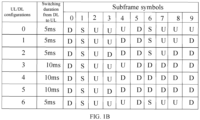
- the existing LTE Time Division Duplexing (TDD) configurations include seven configurations as shown in the figures (corresponding to 0/1/2/3/4/5/6 in FIG. 1B ).
- the existing SAR solution is defined as follows in the standard: the TDD configurations of LTE are limited, and the basic principle is that a configuration of uplink (UL) duty cycle not exceeding 50% is allowed; otherwise, the configuration is not allowed.
- UE supports a different power class than the default UE power class (generally, Power Class 3, 23dBm) for EN-DC band combination, and the supported power class enables higher maximum output power than that of the default power class:
- the default UE power class generally, Power Class 3, 23dBm
- the above-mentioned mechanism that satisfies SAR is also applicable to in-band continuous EN-DC combination (E-UTRA and NR dual connectivity), such as LTE B41+NR n41.
- NR UL/DL configuration for EN-DC HPUE will follow LTE's TDD HPUE configuration, i.e., the max UL duty cycle is 50%.
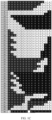
- the NR TDD configurations are very flexible, and there are dozens of configurations, as shown in FIG. 1C .
- SAR is the electromagnetic wave energy (dW) (30MHz-10GHz) absorbed by biological tissue per unit time (dt) or unit mass (dm or pdV).
- the distance below is a distance at which the field strength of electric field of the incident plane wave (of a given frequency) from the boundary of the lossy medium to the inside of the medium is attenuated to 1/e of its original value.
- LTE TDD + NR TDD duplex mode
- LTE TDD PC3 + NR TDD PC3 the following mechanism for LTE TDD PC3 + NR TDD PC3 is established to limit and report the uplink duty cycle.
- UE based solution is FFS (for further study). Also solution to combine network and UE based solution will be FFS.
- LTE TDD PC2+NR TDD PC3 and LTE TDD PC2+NR TDD PC2 the situations of HPUE may be different, and the working mechanism needs to be discussed.
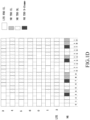
- FIG. 1D shows the case of a feasible TDM pattern
- FIG. 1E and FIG. 1F show the case of a single transmission working state.
- the NR TDD configuration is clear, and the LTE FDD configuration may be specified. But in fact, NR is very flexible, and there are dozens of configurations, which will limit the flexibility of base station scheduling, and more than just these configurations can be supported.
- the present disclosure formulates a complete and feasible uplink transmit power radiation limitation mechanism for all possible LTE+NR DC frequency band combinations and maximum transmit power combinations that may occur for HPUE, so as to flexibly and reliably guarantee the SAR requirements of the terminal.
- the present disclosure provides a method for limiting the uplink transmit power radiation.
- the present disclosure also mainly provides a method in which the terminal can report its capability indication based on different application scenarios and frequency band combinations, combined with base station scheduling, to ensure that the uplink transmit power statistics of the terminal do not go beyond the requirement, achieving the purpose of safety management of electromagnetic radiation.
- duplex mode combinations for frequency band combinations there are four combinations.
- different transmission limitation rules may be formulated to ensure the electromagnetic radiation requirements of the terminal.
- Table 2 duplex mode combinations for LTE+NR HPUE LTE duplex mode NR duplex mode duplex mode combinations TDD TDD FDD TDD FDD FDD TDD FDD Table 3: maximum transmit power combinations for LTE+NR HPUE EN-DC total power LTE maximum power NR maximum power 1 26dBm 23dBm 23dBm 2 26dBm 23dBm 26dBm 2 26dBm 26dBm 26dBm 26dBm 26dBm
- Program example 1 information element of measurement report for DC (MRDC) parameter
- FIG. 2 is a method for limiting uplink transmit power radiation according to an embodiment of the present disclosure.
- the method is applied to a High Power User Equipment (HPUE) supporting a Dual Connectivity (DC) mode.
- the DC mode refers to dual connectivity based on a DC frequency band combination, and the DC frequency band combination comprises a Long Term Evolution (LTE) frequency band and a New Radio (NR) frequency band.
- the method includes the following steps.
- step 201 the HPUE determines a transmit power radiation limitation policy of the HPUE in the DC mode.
- the transmit power radiation limitation policy includes any one of the following: (1) reporting capability indication combined with base station scheduling based on different application scenarios and frequency band combinations to ensure that the uplink power statistics transmitted by the terminal does not go beyond the requirement; (2) autonomous power back-off; (3) power adjustment triggered by a sensor.
- the HPUE adjusts an uplink transmission configuration of the HPUE according to the transmit power radiation limitation policy.
- the uplink transmission configuration comprises a Time Division Multiplexing (TDM) pattern for the DC frequency band combination or a maximum uplink duty cycle of the LTE frequency band and/or the NR frequency band in the DC frequency band combination.
- TDM Time Division Multiplexing
- the high power terminal first determines the transmission power radiation limitation policy of the high power terminal in the DC mode, and then adjusts the uplink transmission configuration of the high power terminal according to the transmission power radiation limitation policy.
- the uplink transmission configuration comprises a Time Division Multiplexing (TDM) pattern for the DC frequency band combination or a maximum uplink duty cycle of the LTE frequency band and/or the NR frequency band in the DC frequency band combination.
- the high power terminal supports a Dual Connectivity (DC) mode, and the DC mode refers to dual connectivity based on the DC frequency band combination, and the DC frequency band combination comprises a Long Term Evolution (LTE) frequency band and a New Radio (NR) frequency band.
- DC Dual Connectivity
- the high power terminal in embodiments of the present disclosure can dynamically determine the transmission power radiation limitation policy in the DC mode, and adjust the local uplink transmission configuration according to the transmission power radiation limitation policy, that is, flexibly set the transmission restriction rules, so that the electromagnetic radiation requirements of the high power terminal in the uplink transmission procedure can be guaranteed.
- determining the transmit power radiation limitation policy of the HPUE in the DC mode comprises:
- the transmission mode includes a single transmission mode and a dual transmission mode
- the duplex mode combination includes the combinations described in Table 2 above
- the maximum transmit power combination includes the combinations shown in Table 3 above.
- the at least one DC frequency band combination is a frequency band combination that supports the dual transmission mode
- the duplex mode combination is LTE Time Division Duplex (TDD)+NR TDD.
- Adjusting, by the HPUE, the uplink transmission configuration of the HPUE according to the transmit power radiation limitation policy comprises:
- the LTE TDD configurations are countable and known, and the HPUE does not need to report its capabilities, and the HPUE only needs to limit the maximum uplink duty cycle of the corresponding NR TDD frequency band, and reports the capability information.
- the HPUE may report two sets of values (the maximum uplink duty cycle of the NR TDD frequency band as shown in Table 1).
- Table 4 UL duty cycle configurations for DC frequency band combinations LTE UL/DL configurations (UL duty cycle) 1 2 3 4 5 (40%) (20%) (30%) (20%) (10%) Default value for UL duty cycle of NR frequency band (10% as granularity) [10]% [30]% [20]% [30]% [40]%
- the at least one DC frequency band combination is a frequency band combination that supports the dual transmission mode
- the duplex mode combination is LTE Frequency Division Duplex (FDD)+NR TDD
- adjusting, by the HPUE, the uplink transmission configuration of the HPUE according to the transmit power radiation limitation policy comprises:
- the HPUE also needs to limit the maximum uplink duty cycle and report the capability like the NR TDD frequency band.
- HPUE For the situation in which the LTE FDD frequency band supports the uplink and downlink configurations of the LTE TDD frequency band, HPUE needs to simultaneously limit the maximum uplink duty cycles of the LTE frequency band and the NR frequency band (combination of two duty cycles); for the three situations: 23dBm+23dBm, 23dBm+26dBm or 26dBm+ 26dBm, the HPUE reports three sets of values, as shown in Table 5.
- Table 5 maximum UL duty cycle combinations for LTE frequency band and NR frequency band maximum UL duty cycle of LTE frequency band [X1]% [X2]% ... maximum UL duty cycle of NR frequency band [Y1]% [Y2]% ...
- the HPUE For the situation in which the LTE FDD frequency band does not support the uplink and downlink configurations of the LTE TDD frequency band, the worst case is that the HPUE needs to support continuous transmission (100% duty cycle, no additional reporting is required), and the HPUE only needs to report the maximum uplink duty cycle of the NR TDD frequency band.
- the HPUE reports two sets of values, as shown in Table 6.
- Table 6 DC frequency band combination (LTE FDD+ NR TDD) 23dBm+23dBm 23dBm+26dBm Maximum UL duty cycle of the NR frequency band [X]% [Y]%
- the at least one DC frequency band combination is a frequency band combination that supports a single transmission mode
- the duplex mode combination is LTE TDD+NR TDD
- adjusting, by the HPUE, the uplink transmission configuration of the HPUE according to the transmit power radiation limitation policy comprises:
- determining, by the HPUE, the transmit power radiation limitation policy of the HPUE in the DC mode comprises:
- the regional feature can be, for example, "network signaling"-NS 01, indicating China Regional 3, US regional1, and there may be different corresponding SAR index requirements and terminal power fallback MPR (Maximum Power Reduction), and different restriction policies may be formulated.
- adjusting, by the HPUE, the uplink transmission configuration of the HPUE according to the transmit power radiation limitation policy comprises:
- determining, by the HPUE, the transmit power radiation limitation policy of the HPUE in the DC mode comprises: determining, by the HPUE, an autonomous power fallback policy of the HPUE as the transmit power radiation limitation policy in the DC mode.
- determining, by the HPUE, the transmit power radiation limitation policy of the HPUE in the DC mode comprises: determining, by the HPUE, a power adjustment policy of the HPUE which is based on sensor triggering as the transmit power radiation limitation policy in the DC mode.
- the present disclosure provides a method for limiting the uplink transmission of a HPUE that supports a LTE + NR DC frequency band combination in a single transmission mode.
- the frequency band combinations that the HPUE may support different duplex working modes, different maximum transmit power combinations, and whether the DC frequency band combinations support the single transmission mode or the dual transmission mode are considered, to formulate corresponding different transmission restriction rules to ensure the electromagnetic radiation requirements of the HPUE.
- HPUE generally has a self-implemented sensor-based power back-off mechanism to meet the electromagnetic radiation requirements, and the present disclosure mainly assists in meeting the requirements from the perspective of network-side scheduling to limit the uplink transmission, which improves the reliability of the HPUE, and simplifies the design of the HPUE to some extent, and can even reduce the costs associated with sensors.
- a High Power User Equipment (HPUE) supporting a Dual Connectivity (DC) mode is included within a signal coverage range of the network device.
- the DC mode refers to dual connectivity based on a DC frequency band combination, and the DC frequency band combination comprises a Long Term Evolution (LTE) frequency band and a New Radio (NR) frequency band.
- LTE Long Term Evolution
- NR New Radio
- the network device performs the following operations: receiving from the HPUE a maximum uplink duty cycle of a NR Time Division Duplex (TDD) frequency band corresponding to a LTE TDD frequency band to adjust an uplink transmission configuration of the HPUE, wherein the maximum uplink duty cycle of the NR TDD frequency band corresponding to the LTE TDD frequency is obtained by the HPUE by performing the following operations:
- TDD Time Division Duplex
- the high power terminal first determines the transmission power radiation limitation policy of the high power terminal in the DC mode, and then adjusts the uplink transmission configuration of the high power terminal according to the transmission power radiation limitation policy.
- the uplink transmission configuration comprises a Time Division Multiplexing (TDM) pattern for the DC frequency band combination or a maximum uplink duty cycle of the LTE frequency band and/or the NR frequency band in the DC frequency band combination.
- the high power terminal supports a Dual Connectivity (DC) mode, and the DC mode refers to dual connectivity based on the DC frequency band combination, and the DC frequency band combination comprises a Long Term Evolution (LTE) frequency band and a New Radio (NR) frequency band.
- LTE Long Term Evolution
- NR New Radio
- the high power terminal in embodiments of the present disclosure can dynamically determine the transmission power radiation limitation policy in the DC mode, and adjust the local uplink transmission configuration according to the transmission power radiation limitation policy, that is, flexibly set the transmission restriction rules, so that the electromagnetic radiation requirements of the high power terminal in the uplink transmission procedure can be guaranteed.
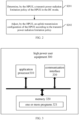
- FIG. 3 is a schematic structural diagram of a HPUE 300 according to an embodiment of the present disclosure.
- the HPUE 300 includes a processor 310, a memory 320, a communication interface 330, and one or more programs 321.
- the one or more programs 321 are stored in the memory 320 and are configured to be executed by the processor 310, and the one or more programs 321 include instructions for performing the following steps:
- the high power terminal first determines the transmission power radiation limitation policy of the high power terminal in the DC mode, and then adjusts the uplink transmission configuration of the high power terminal according to the transmission power radiation limitation policy.
- the uplink transmission configuration comprises a Time Division Multiplexing (TDM) pattern for the DC frequency band combination or a maximum uplink duty cycle of the LTE frequency band and/or the NR frequency band in the DC frequency band combination.
- the high power terminal supports a Dual Connectivity (DC) mode, and the DC mode refers to dual connectivity based on the DC frequency band combination, and the DC frequency band combination comprises a Long Term Evolution (LTE) frequency band and a New Radio (NR) frequency band.
- DC Dual Connectivity
- the high power terminal in embodiments of the present disclosure can dynamically determine the transmission power radiation limitation policy in the DC mode, and adjust the local uplink transmission configuration according to the transmission power radiation limitation policy, that is, flexibly set the transmission restriction rules, so that the electromagnetic radiation requirements of the high power terminal in the uplink transmission procedure can be guaranteed.
- the instructions in the programs are configured to perform the following operations:
- the at least one DC frequency band combination is a frequency band combination that supports a dual transmission mode
- the duplex mode combination is LTE Time Division Duplex (TDD)+NR TDD;
- the instructions in the programs are configured to perform the following operations:
- the at least one DC frequency band combination is a frequency band combination that supports a dual transmission mode
- the duplex mode combination is LTE Frequency Division Duplex (FDD)+NR TDD
- the instructions in the programs are configured to perform the following operations:
- the at least one DC frequency band combination is a frequency band combination that supports a single transmission mode
- the duplex mode combination is LTE FDD+NR TDD
- the instructions in the programs are configured to perform the following operations:
- the at least one DC frequency band combination is a frequency band combination that supports a single transmission mode
- the duplex mode combination is LTE TDD+NR TDD
- the instructions in the programs are configured to perform the following operations:
- the instructions in the programs are configured to perform the following operations:
- the instructions in the programs are configured to perform the following operations:
- the instructions in the programs are configured to perform the following operations: determining an autonomous power fallback policy of the HPUE as the transmit power radiation limitation policy in the DC mode.
- the instructions in the programs are configured to perform the following operations: determining a power adjustment policy of the HPUE which is based on sensor triggering as the transmit power radiation limitation policy in the DC mode.
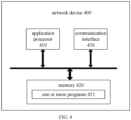
- FIG. 4 is a schematic structural diagram of a network device 400 according to an embodiment, which is not claimed, of the present disclosure.
- the network device 400 includes a processor 410, a memory 420, a communication interface 430, and one or more programs 421.
- the one or more programs 421 are stored in the memory 420 and configured to be executed by the processor 410, and the one or more programs 421 include instructions configured to perform the following steps; receiving from the HPUE a maximum uplink duty cycle of a NR Time Division Duplex (TDD) frequency band corresponding to a LTE TDD frequency band to adjust an uplink transmission configuration of the HPUE, wherein the maximum uplink duty cycle of the NR TDD frequency band corresponding to the LTE TDD frequency is obtained by the HPUE by performing the following operations:
- TDD Time Division Duplex
- the high power terminal first determines the transmission power radiation limitation policy of the high power terminal in the DC mode, and then adjusts the uplink transmission configuration of the high power terminal according to the transmission power radiation limitation policy.
- the uplink transmission configuration comprises a Time Division Multiplexing (TDM) pattern for the DC frequency band combination or a maximum uplink duty cycle of the LTE frequency band and/or the NR frequency band in the DC frequency band combination.
- the high power terminal supports a Dual Connectivity (DC) mode, and the DC mode refers to dual connectivity based on the DC frequency band combination, and the DC frequency band combination comprises a Long Term Evolution (LTE) frequency band and a New Radio (NR) frequency band.
- DC Dual Connectivity
- the high power terminal in embodiments of the present disclosure can dynamically determine the transmission power radiation limitation policy in the DC mode, and adjust the local uplink transmission configuration according to the transmission power radiation limitation policy, that is, flexibly set the transmission restriction rules, so that the electromagnetic radiation requirements of the high power terminal in the uplink transmission procedure can be guaranteed.
- the terminal includes hardware structures and/or software modules corresponding to each function.
- units and algorithm steps of the examples described in embodiments disclosed herein can be implemented in the form of hardware or a combination of hardware and computer software. Whether a certain function is implemented by hardware or by hardware driven by computer software depends on the specific application and design constraint conditions of the technical solutions. Those skilled in this art can use different methods for each specific application to implement the described functions, but such implementation should not be considered as going beyond the scope of the present disclosure.
- the terminal may be divided into functional units according to the foregoing method embodiments.
- functional units may be divided corresponding to functions, or two or more functions may be integrated into one processing unit.
- the integrated unit can be implemented in the form of hardware or software program module. It should be noted that the division of units in the embodiments of the present disclosure is illustrative, and is only a logical function division, and there may be other division methods in actual implementation.
- FIG. 5 shows a block diagram of a possible functional unit composition of the device for limiting uplink transmission power radiation involved in the foregoing embodiments.
- the device 500 for limiting uplink transmit power radiation is a High Power User Equipment (HPUE) supporting a Dual Connectivity (DC) mode.
- the DC mode refers to dual connectivity based on a DC frequency band combination, the DC frequency band combination comprises a Long Term Evolution (LTE) frequency band and a New Radio (NR) frequency band.
- the device 500 includes a processing unit 502 and a communication unit 503.
- the processing unit 502 is used to control and manage the actions of the HPUE.
- the processing unit 502 is used to support the terminal to perform steps 201 and 202 in FIG. 2 and/or other processes used herein.
- the communication unit 503 is used to support communications between the HPUE and other devices.
- the HPUE may further include a storage unit 501 for storing program codes and data of the HPUE.
- the processing unit 502 may be a processor or a controller, for example, a Central Processing Unit (CPU), a general-purpose processor, a Digital Signal Processor (DSP), an Application-Specific Integrated Circuit (ASIC), a Field Programmable Gate Array (FPGA) or other programmable logic device, a transistor logic device, a hardware component or any combination thereof.
- the processing unit 502 can implement or execute various exemplary logical blocks, modules, and circuits described in embodiments of the present disclosure.
- the processor may also be a combination for realizing computing functions, for example, including a combination of one or more microprocessors, a combination of a DSP and a microprocessor, and so on.
- the communication unit 503 may be a communication interface, a transceiver, a transceiver circuit, and so on.
- the storage unit 501 may be a memory.
- the processing unit 502 is configured to:
- the high power terminal first determines the transmission power radiation limitation policy of the high power terminal in the DC mode, and then adjusts the uplink transmission configuration of the high power terminal according to the transmission power radiation limitation policy.
- the uplink transmission configuration comprises a Time Division Multiplexing (TDM) pattern for the DC frequency band combination or a maximum uplink duty cycle of the LTE frequency band and/or the NR frequency band in the DC frequency band combination.
- the high power terminal supports a Dual Connectivity (DC) mode, and the DC mode refers to dual connectivity based on the DC frequency band combination, and the DC frequency band combination comprises a Long Term Evolution (LTE) frequency band and a New Radio (NR) frequency band.
- DC Dual Connectivity
- the high power terminal in embodiments of the present disclosure can dynamically determine the transmission power radiation limitation policy in the DC mode, and adjust the local uplink transmission configuration according to the transmission power radiation limitation policy, that is, flexibly set the transmission restriction rules, so that the electromagnetic radiation requirements of the high power terminal in the uplink transmission procedure can be guaranteed.
- the processing unit 502 is configured to:
- the at least one DC frequency band combination is a frequency band combination that supports a dual transmission mode
- the duplex mode combination is LTE Time Division Duplex (TDD)+NR TDD
- the processing unit 502 is configured to:
- the at least one DC frequency band combination is a frequency band combination that supports a dual transmission mode
- the duplex mode combination is LTE Frequency Division Duplex (FDD)+NR TDD
- the processing unit 502 is configured to:
- the at least one DC frequency band combination is a frequency band combination that supports a single transmission mode
- the duplex mode combination is LTE FDD+NR TDD
- the processing unit 502 is configured to:
- the at least one DC frequency band combination is a frequency band combination that supports a single transmission mode
- the duplex mode combination is LTE TDD+NR TDD
- the processing unit 502 is configured to:
- the processing unit 502 is configured to:
- the processing unit 502 is configured to:
- the processing unit 502 is configured to: determine an autonomous power fallback policy of the HPUE as the transmit power radiation limitation policy in the DC mode.
- the processing unit 502 is configured to: determine a power adjustment policy of the HPUE which is based on sensor triggering as the transmit power radiation limitation policy in the DC mode.
- the HPUE involved in embodiments of the present disclosure may be the HPUE shown in FIG. 3 .
- FIG. 6 shows a block diagram of a possible functional unit composition of the device for limiting uplink transmission power radiation involved in the foregoing embodiments, which are not claimed.
- the device 600 for limiting uplink transmit power radiation is applied to a network device.
- a High Power User Equipment (HPUE) supporting a Dual Connectivity (DC) mode is included within a signal coverage range of the network device.
- the DC mode refers to dual connectivity based on a DC frequency band combination, the DC frequency band combination comprises a Long Term Evolution (LTE) frequency band and a New Radio (NR) frequency band.
- the device 600 includes a processing unit 602 and a communication unit 603.
- the processing unit 602 is used to control and manage the actions of the network device.
- the communication unit 603 is used to support communications between the HPUE and other devices.
- the HPUE may further include a storage unit 601 for storing program codes and data of the HPUE.
- the processing unit 602 may be a processor or a controller, for example, a Central Processing Unit (CPU), a general-purpose processor, a Digital Signal Processor (DSP), an Application-Specific Integrated Circuit (ASIC), a Field Programmable Gate Array (FPGA) or other programmable logic device, a transistor logic device, a hardware component or any combination thereof.
- the processing unit 602 can implement or execute various exemplary logical blocks, modules, and circuits described in embodiments of the present disclosure.
- the processor may also be a combination for realizing computing functions, for example, including a combination of one or more microprocessors, a combination of a DSP and a microprocessor, and so on.
- the communication unit 603 may be a communication interface, a transceiver, a transceiver circuit, and so on.
- the storage unit 601 may be a memory.
- the processing unit 602 is configured to perform the following operations: receiving from the HPUE a maximum uplink duty cycle of a NR Time Division Duplex (TDD) frequency band corresponding to a LTE TDD frequency band via the communication unit 603 to adjust an uplink transmission configuration of the HPUE, wherein the maximum uplink duty cycle of the NR TDD frequency band corresponding to the LTE TDD frequency is obtained by the HPUE by performing the following operations:
- TDD Time Division Duplex
- An embodiment of the present disclosure provides a computer-readable storage medium, wherein the computer-readable storage medium stores a computer program for electronic data exchange, and the computer program causes a computer to perform all or part of steps performed by the HPUE in the previously described method embodiments.
- An embodiment of the present disclosure provides a computer-readable storage medium, wherein the computer-readable storage medium stores a computer program for electronic data exchange, and the computer program causes a computer to perform all or part of steps performed by the network side device in the previously described method embodiments.
- An embodiment of the present disclosure provides a computer program product, wherein the computer program product includes a non-transitory computer-readable storage medium storing a computer program, and the computer program is operable to cause a computer to perform all or part of the steps performed by the terminal in the previously described method.
- the computer program product may be a software installation package.
- the steps of the methods or algorithms described in the embodiments of the present disclosure may be implemented in a hardware manner, or may be implemented in a manner in which a processor executes software instructions.
- Software instructions can be composed of corresponding software modules, which can be stored in Random Access Memory (RAM), flash memory, Read Only Memory (ROM), Erasable Programmable ROM (EPROM), Electrically EPROM (EEPROM), registers, hard disks, portable hard disks, CD-ROM, or any other form of storage medium known in the art.
- An exemplary storage medium is coupled to the processor, so that the processor can read information from the storage medium and write information to the storage medium.
- the storage medium may also be a constituting part of the processor.
- the processor and the storage medium may be located in an ASIC.
- the ASIC may be located in an access network device, a target network device, or a core network device.
- the processor and the storage medium may exist as discrete components in the access network device, the target network device, or the core network device.
- the functions described in the embodiments of the present disclosure may be implemented in whole or in part by software, hardware, firmware, or any combination thereof.
- the functions can be implemented in the form of a computer program product in whole or in part.
- the computer program product includes one or more computer instructions.
- the computer may be a general-purpose computer, a special-purpose computer, a computer network, or other programmable devices.
- the computer instructions may be stored in a computer-readable storage medium, or transmitted from one computer-readable storage medium to another computer-readable storage medium.
- the computer instructions may be transmitted from a website, a computer, a server, or a data center to another website, another computer, another server or another data center in a wired manner (such as coaxial cable, optical fiber, Digital Subscriber Line (DSL)) or in a wireless manner (such as infrared, wireless, microwave, etc.).
- the computer-readable storage medium may be any available medium that can be accessed by a computer or a data storage device such as a server or data center integrated with one or more available medium.
- the available medium may be a magnetic medium (for example, a floppy disk, a hard disk, a magnetic tape), an optical medium (for example, a Digital Video Disc (DVD)), or a semiconductor medium (for example, a Solid State Disk (SSD)), and so on.
- a magnetic medium for example, a floppy disk, a hard disk, a magnetic tape
- an optical medium for example, a Digital Video Disc (DVD)
- DVD Digital Video Disc
- SSD Solid State Disk
Landscapes
- Engineering & Computer Science (AREA)
- Computer Networks & Wireless Communication (AREA)
- Signal Processing (AREA)
- Mobile Radio Communication Systems (AREA)
Claims (7)
- Verfahren zur Begrenzung von Uplink-Sendeleistungsstrahlung, wobei das Verfahren auf ein "High Power User Equipment" (Hochleistungs-Benutzergerät), HPUE, angewendet wird, das einen "Dual Connectivity"- (Dualkonnektivitäts-), DC-, Modus unterstützt, wobei sich der DC-Modus auf eine duale Konnektivität basierend auf einer DC-Frequenzbandkombination bezieht, wobei die DC-Frequenzbandkombination ein "Long Term Evolution"-(Langzeitevolutions-), LTE-, Frequenzband und ein "New Radio"- (Neufunk-), NR-, Frequenzband umfasst, und das Verfahren Folgendes umfasst:Bestimmen (S201) einer Sendeleistungsstrahlungsbegrenzungsrichtlinie des HPUE im DC-Modus; undAnpassen (S202) einer Uplink-Übertragungskonfiguration des HPUE gemäß der Sendeleistungsstrahlungsbegrenzungsrichtlinie, wobei die Uplink-Übertragungskonfiguration ein "Time Division Multiplexing"- (Zeitmultiplex-), TDM-, Muster für die DC-Frequenzbandkombination oder ein maximales Uplink-Tastverhältnis des LTE-Frequenzbands und/oder des NR-Frequenzbands in der DC-Frequenzbandkombination umfasst;wobei das Bestimmen der Sendeleistungsstrahlungsbegrenzungsrichtlinie des HPUE im DC-Modus Folgendes umfasst:Erhalten eines Übertragungsmodus, der durch jede DC-Frequenzbandkombination in mindestens einer durch das HPUE unterstützten DC-Frequenzbandkombination unterstützt wird, und Erhalten einer Duplexmoduskombination und einer maximalen Sendeleistungskombination des HPUE, wobei die Duplexmoduskombination einen LTE-Duplexmodus und einen NR-Duplexmodus umfasst, wobei die maximale Leistungskombination eine LTE-Maximalleistung und eine NR-Maximalleistung umfasst; undgemäß dem durch jede DC-Frequenzbandkombination unterstützten Übertragungsmodus, der Duplexmoduskombination und der maximalen Sendeleistungskombination Bestimmen der Sendeleistungsstrahlungsbegrenzungsrichtlinie des HPUE im DC-Modus;wobei, wenn die mindestens eine DC-Frequenzbandkombination eine Frequenzbandkombination ist, die einen einzelnen Übertragungsmodus unterstützt, und die Duplexmoduskombination LTE "Frequency Division Duplex" (Frequenzduplex), FDD, + NR "Time Division Duplex" (Zeitduplex), TDD, ist,das Anpassen der Uplink-Übertragungskonfiguration des HPUE gemäß der Sendeleistungsstrahlungsbegrenzungsrichtlinie Folgendes umfasst:
wenn die maximale Sendeleistungskombination 23 dBm + 26 dBm ist und durch Zusammenwirken mit der Netzwerkvorrichtung bestätigt wird, dass ein Zeitmultiplexmodus als TDD-Muster konfiguriert ist, das HPUE jedoch in einem dualen Übertragungsmodus arbeitet, Senden von maximalen Uplink-Arbeitszyklen, die durch das LTE-FDD-Frequenzband und das NR-TDD-Frequenzband in jeder DC-Frequenzbandkombination jeweils unterstützbar sind, an die Netzwerkvorrichtung, um die Uplink-Übertragungskonfiguration des HPUE anzupassen. - Verfahren nach Anspruch 1, wobei, wenn die mindestens eine DC-Frequenzbandkombination eine Frequenzbandkombination ist, die einen dualen Übertragungsmodus unterstützt, und die Duplexmoduskombination LTE TDD+NR TDD ist,
das Anpassen der Uplink-Übertragungskonfiguration des HPUE gemäß der Sendeleistungsstrahlungsbegrenzungsrichtlinie Folgendes umfasst:Erhalten einer Konfiguration eines LTE-TDD-Frequenzbands in jeder DC-Frequenzbandkombination;Abfragen einer voreingestellten Uplink-Tastverhältniskonfigurationstabelle, um ein maximales Uplink-Tastverhältnis eines NR-TDD-Frequenzbands zu bestimmen, das dem LTE-TDD-Frequenzband entspricht, wobei die Uplink-Tastverhältniskonfigurationstabelle Zuordnungsbeziehungen zwischen maximalen Uplink-Tastverhältnissen von LTE-TDD-Frequenzbändern und maximalen Uplink-Tastverhältnissen von NR-TDD-Frequenzbändern enthält, die durch die maximale Sendeleistungskombination eingeschränkt sind; undSenden des maximalen Uplink-Tastverhältnisses des NR-TDD-Frequenzbands, das dem LTE-TDD-Frequenzband entspricht, an eine Netzwerkvorrichtung, um die Uplink-Übertragungskonfiguration des HPUE anzupassen. - Verfahren nach Anspruch 1, wobei, wenn die mindestens eine DC-Frequenzbandkombination eine Frequenzbandkombination ist, die einen dualen Übertragungsmodus unterstützt, und die Duplexmoduskombination LTE FDD+NR TDD ist,
das Anpassen der Uplink-Übertragungskonfiguration des HPUE gemäß der Sendeleistungsstrahlungsbegrenzungsrichtlinie Folgendes umfasst:Bestimmen, durch Zusammenwirken mit einer Netzwerkvorrichtung, dass ein LTE-FDD-Frequenzband die Uplink- und Downlink-Konfigurationen eines LTE-TDD-Frequenzbands unterstützt;Bestimmen eines maximalen Uplink-Tastverhältnisses des LTE-FDD-Frequenzbands und eines maximalen Uplink-Tastverhältnisses des NR-TDD-Frequenzbands in jeder DC-Frequenzbandkombination; undSenden des maximalen Uplink-Tastverhältnisses des LTE-FDD-Frequenzbands und des maximalen Uplink-Tastverhältnisses des NR-TDD-Frequenzbands an die Netzwerkvorrichtung, um die Uplink-Übertragungskonfiguration des HPUE anzupassen;
oderBestimmen, durch Zusammenwirken mit der Netzwerkvorrichtung, dass das LTE-FDD-Frequenzband nicht die Uplink- und Downlink-Konfigurationen des LTE-TDD-Frequenzbands unterstützt;Bestimmen des maximalen Uplink-Tastverhältnisses des NR-TDD-Frequenzbands in jeder DC-Frequenzbandkombination; undSenden des maximalen Uplink-Tastverhältnisses des NR-TDD-Frequenzbands an die Netzwerkvorrichtung, um die Uplink-Übertragungskonfiguration des HPUE anzupassen. - Verfahren nach Anspruch 1, wobei, wenn die mindestens eine DC-Frequenzbandkombination eine Frequenzbandkombination ist, die einen einzelnen Übertragungsmodus unterstützt, und die Duplexmoduskombination LTE FDD+NR TDD ist,
das Anpassen der Uplink-Übertragungskonfiguration des HPUE gemäß der Sendeleistungsstrahlungsbegrenzungsrichtlinie ferner Folgendes umfasst:wenn bestimmt wird, dass sich das HPUE in einem dualen Übertragungsmodus befindet oder von einem einzelnen Übertragungsmodus in den dualen Übertragungsmodus wechselt,Bestimmen, durch Zusammenwirken mit einer Netzwerkvorrichtung, dass ein LTE-FDD-Frequenzband die Uplink- und Downlink-Konfigurationen eines LTE-TDD-Frequenzbands unterstützt; Bestimmen eines maximalen Uplink-Tastverhältnisses des LTE-FDD-Frequenzbands und eines maximalen Uplink-Tastverhältnisses des NR-TDD-Frequenzbands in jeder DC-Frequenzbandkombination; Senden des maximalen Uplink-Tastverhältnisses des LTE-FDD-Frequenzbands und des maximalen Uplink-Tastverhältnisses des NR-TDD-Frequenzbands an die Netzwerkvorrichtung, um die Uplink-Übertragungskonfiguration des HPUE anzupassen; oder Bestimmen, durch Zusammenwirken mit der Netzwerkvorrichtung, dass das LTE-FDD-Frequenzband die Uplink- und Downlink-Konfigurationen des LTE-TDD-Frequenzbands nicht unterstützt; Bestimmen des maximalen Uplink-Tastverhältnisses des NR-TDD-Frequenzbands in jeder DC-Frequenzbandkombination; Senden des maximalen Uplink-Tastverhältnisses des NR-TDD-Frequenzbands an die Netzwerkvorrichtung, um die Uplink-Übertragungskonfiguration des HPUE anzupassen;
oderwenn bestimmt wird, dass das HPUE vom dualen Übertragungsmodus in den einzelnen Übertragungsmodus wechselt,wenn die maximale Sendeleistungskombination 23 dBm + 23 dBm ist, Senden eines voreingestellten maximalen Uplink-Tastverhältnisses jeder DC-Frequenzbandkombination an die Netzwerkvorrichtung, um die Uplink-Übertragungskonfiguration des HPUE anzupassen;wenn die maximale Sendeleistungskombination 23 dBm + 23 dBm oder 23 dBm + 26 dBm ist und die Netzwerkvorrichtung das TDD-Muster konfiguriert, das HPUE jedoch im einzelnen Übertragungsmodus arbeitet, Senden des maximalen Uplink-Tastverhältnisses des NR-TDD-Frequenzbands in jeder DC-Frequenzbandkombination an die Netzwerkvorrichtung, um die Uplink-Übertragungskonfiguration des HPUE anzupassen, wobei das maximale Uplink-Tastverhältnis gemäß dem NR-TDD-Frequenzband konfiguriert wird;wenn durch Zusammenwirken mit der Netzwerkvorrichtung bestätigt wird, dass kein TDD-Muster konfiguriert ist, Senden der maximalen Uplink-Tastverhältnisse, die durch das LTE-FDD-Frequenzband und das NR-FDD-Frequenzband in jeder DC-Frequenzbandkombination jeweils unterstützbar sind, an die Netzwerkvorrichtung, um die Uplink-Übertragungskonfiguration des HPUE anzupassen. - Verfahren nach Anspruch 1, wobei, wenn die mindestens eine DC-Frequenzbandkombination eine Frequenzbandkombination ist, die einen einzelnen Übertragungsmodus unterstützt, und die Duplexmoduskombination LTE TDD+NR TDD ist,
wobei das Anpassen der Uplink-Übertragungskonfiguration des HPUE gemäß der Sendeleistungsstrahlungsbegrenzungsrichtlinie Folgendes umfasst:wenn die maximale Sendeleistungskombination 23 dBm + 23 dBm ist, Anpassen der Uplink-Übertragungskonfiguration des HPUE durch das HPUE selbst;wenn die maximale Sendeleistungskombination 23 dBm + 26 dBm ist, und durch Zusammenwirken mit einer Netzwerkvorrichtung bestätigt wird, dass ein TDD-Muster konfiguriert ist, und das HPUE in einem dualen Übertragungszustand arbeitet, Senden eines voreingestellten maximalen Uplink-Tastverhältnisses jeder DC-Frequenzbandkombination an die Netzwerkvorrichtung, um die Uplink-Übertragungskonfiguration des HPUE anzupassen;wenn die maximale Sendeleistungskombination 23 dBm + 26 dBm ist und durch Zusammenwirken mit der Netzwerkvorrichtung bestätigt wird, dass das TDD-Muster konfiguriert ist, und das HPUE im einzelnen Übertragungszustand arbeitet oder vom dualen Übertragungszustand in den einzelnen Übertragungszustand wechselt oder vom einzelnen Übertragungszustand in den dualen Übertragungszustand wechselt, Senden des voreingestellten maximalen Uplink-Tastverhältnisses jeder DC-Frequenzbandkombination an die Netzwerkvorrichtung, um die Uplink-Übertragungskonfiguration des HPUE anzupassen;wenn die maximale Sendeleistungskombination 26 dBm + 26 dBm ist, Senden des voreingestellten maximalen Uplink-Tastverhältnisses jeder DC-Frequenzbandkombination an die Netzwerkvorrichtung, um die Uplink-Übertragung des HPUE anzupassen. - Vorrichtung zur Begrenzung von Uplink-Sendeleistungsstrahlung, wobei die Vorrichtung auf ein "High Power User Equipment" (Hochleistungs-Benutzergerät), HPUE, angewendet wird, das einen "Dual Connectivity"- (Dualkonnektivitäts-), DC-, Modus unterstützt, wobei sich der DC-Modus auf eine Dualkonnektivität basierend auf einer DC-Frequenzbandkombination bezieht, wobei die DC-Frequenzbandkombination ein "Long Term Evolution"-(Langzeitevolutions-), LTE-, Frequenzband und ein "New Radio"- (Neufunk-), NR-, Frequenzband umfasst, und die Vorrichtung eine Verarbeitungseinheit und eine Kommunikationseinheit umfasst:
wobei die Verarbeitungseinheit dazu ausgelegt ist:eine Sendeleistungsstrahlungsbegrenzungsrichtlinie des HPUE im DC-Modus zu bestimmen; undüber die Kommunikationseinheit eine Uplink-Übertragungskonfiguration des HPUE gemäß der Sendeleistungsstrahlungsbegrenzungsrichtlinie anzupassen, wobei die Uplink-Übertragungskonfiguration ein "Time Division Multiplexing"- (Zeitmultiplex-), TDM-, Muster für die DC-Frequenzbandkombination oder ein maximales Uplink-Tastverhältnis des LTE-Frequenzbands und/oder des NR-Frequenzbands in der DC-Frequenzbandkombination umfasst;wobei in Bezug auf das Bestimmen der Sendeleistungsstrahlungsbegrenzungsrichtlinie des HPUE im DC-Modus die Verarbeitungseinheit dazu konfiguriert ist:einen Übertragungsmodus zu erhalten, der durch jede DC-Frequenzbandkombination in mindestens einer durch das HPUE unterstützten DC-Frequenzbandkombination unterstützt wird, und Erhalten einer Duplexmoduskombination und einer maximalen Sendeleistungskombination des HPUE, wobei die Duplexmoduskombination einen LTE-Duplexmodus und einen NR-Duplexmodus umfasst, wobei die maximale Leistungskombination eine LTE-Maximalleistung und eine NR-Maximalleistung umfasst; undgemäß dem durch jede DC-Frequenzbandkombination unterstützten Übertragungsmodus, der Duplexmoduskombination und der maximalen Sendeleistungskombination die Sendeleistungsstrahlungsbegrenzungsrichtlinie des HPUE im DC-Modus zu bestimmen;wobei, wenn die mindestens eine DC-Frequenzbandkombination eine Frequenzbandkombination ist, die einen einzelnen Übertragungsmodus unterstützt, und die Duplexmoduskombination LTE "Frequency Division Duplex" (Frequenzduplex), FDD, + NR "Time Division Duplex" (Zeitduplex), TDD, ist, das Anpassen der Uplink-Übertragungskonfiguration des HPUE gemäß der Sendeleistungsstrahlungsbegrenzungsrichtlinie Folgendes umfasst:
wenn die maximale Sendeleistungskombination 23 dBm + 26 dBm ist und durch Zusammenwirken mit der Netzwerkvorrichtung bestätigt wird, dass ein Zeitmultiplexmodus als TDD-Muster konfiguriert ist, das HPUE jedoch in einem dualen Übertragungsmodus arbeitet, Senden von maximalen Uplink-Arbeitszyklen, die durch das LTE-FDD-Frequenzband und das NR-TDD-Frequenzband in jeder DC-Frequenzbandkombination jeweils unterstützbar sind, an die Netzwerkvorrichtung, um die Uplink-Übertragungskonfiguration des HPUE anzupassen. - Vorrichtung nach Anspruch 6, wobei, wenn die mindestens eine DC-Frequenzbandkombination eine Frequenzbandkombination ist, die einen dualen Übertragungsmodus unterstützt, und die Duplexmoduskombination LTE "Time Division Duplex" (Zeitduplex) TDD, + NR TDD ist,
das Anpassen der Uplink-Übertragungskonfiguration des HPUE über die Kommunikationseinheit gemäß der Sendeleistungsstrahlungsbegrenzungsrichtlinie Folgendes umfasst:Erhalten einer Konfiguration eines LTE-TDD-Frequenzbands in jeder DC-Frequenzbandkombination über die Kommunikationseinheit;Abfragen einer voreingestellten Uplink-Tastverhältniskonfigurationstabelle, um ein maximales Uplink-Tastverhältnis eines NR-TDD-Frequenzbands zu bestimmen, das dem LTE-TDD-Frequenzband entspricht, wobei die Uplink-Tastverhältniskonfigurationstabelle Zuordnungsbeziehungen zwischen maximalen Uplink-Tastverhältnissen von LTE-TDD-Frequenzbändern und maximalen Uplink-Tastverhältnissen von NR-TDD-Frequenzbändern enthält, die durch die maximale Sendeleistungskombination eingeschränkt sind; undSenden des maximalen Uplink-Tastverhältnisses des NR-TDD-Frequenzbands, das dem LTE-TDD-Frequenzband entspricht, an eine Netzwerkvorrichtung, um die Uplink-Übertragungskonfiguration des HPUE anzupassen.
Applications Claiming Priority (1)
| Application Number | Priority Date | Filing Date | Title |
|---|---|---|---|
| PCT/CN2019/085391 WO2020220364A1 (zh) | 2019-04-30 | 2019-04-30 | 上行发射功率辐射限制方法及相关产品 |
Publications (3)
| Publication Number | Publication Date |
|---|---|
| EP3965480A1 EP3965480A1 (de) | 2022-03-09 |
| EP3965480A4 EP3965480A4 (de) | 2022-04-27 |
| EP3965480B1 true EP3965480B1 (de) | 2025-04-23 |
Family
ID=73029644
Family Applications (1)
| Application Number | Title | Priority Date | Filing Date |
|---|---|---|---|
| EP19926802.0A Active EP3965480B1 (de) | 2019-04-30 | 2019-04-30 | Verfahren zur begrenzung von uplink-sendeleistungsstrahlung und entsprechendes produkt |
Country Status (5)
| Country | Link |
|---|---|
| US (1) | US12369124B2 (de) |
| EP (1) | EP3965480B1 (de) |
| KR (1) | KR102685568B1 (de) |
| CN (1) | CN113228755A (de) |
| WO (1) | WO2020220364A1 (de) |
Families Citing this family (6)
| Publication number | Priority date | Publication date | Assignee | Title |
|---|---|---|---|---|
| US11924819B2 (en) * | 2019-05-24 | 2024-03-05 | Qualcomm Incorporated | Power limits based on signal type for managing maximum permissible exposure |
| CN112584374B (zh) * | 2019-09-27 | 2022-03-25 | 维沃移动通信有限公司 | 能力参数确定方法、上行调度方法、终端和网络侧设备 |
| CN113873497A (zh) * | 2020-06-30 | 2021-12-31 | 中国电信股份有限公司 | 上报功率和控制功率的方法、终端、基站和通信系统 |
| EP4033821A1 (de) * | 2021-01-21 | 2022-07-27 | Google LLC | Verbesserung der uplink-leistungs- und ressourcenzuteilung für benutzervorrichtungen |
| CN116017409A (zh) * | 2021-10-22 | 2023-04-25 | 维沃移动通信有限公司 | 信息上报方法、接收方法、终端、网络侧设备和存储介质 |
| CN117729639B (zh) * | 2024-01-18 | 2024-05-28 | 北京智芯微电子科技有限公司 | 上行占空比调整方法、装置、设备、芯片及可读存储介质 |
Family Cites Families (14)
| Publication number | Priority date | Publication date | Assignee | Title |
|---|---|---|---|---|
| EP2989727B1 (de) * | 2013-04-24 | 2018-12-26 | Telefonaktiebolaget LM Ericsson (publ) | Drx-verfahren mit tdm-begrenzung und benutzervorrichtung damit |
| WO2014189490A1 (en) * | 2013-05-20 | 2014-11-27 | Nokia Corporation | Indication of tdm extension pattern for dual connectivity |
| US9509485B2 (en) * | 2014-05-08 | 2016-11-29 | Intel Corporation | Systems and methods for in-device co-existence interference avoidance for dual connectivity |
| CN107889209B (zh) | 2016-09-29 | 2023-09-22 | 华为技术有限公司 | 一种功率控制的方法及终端设备 |
| CN109586943B (zh) * | 2017-09-28 | 2021-05-11 | 维沃移动通信有限公司 | 资源切换配置方法、装置和设备 |
| CN109587704B (zh) * | 2017-09-28 | 2021-05-28 | 维沃移动通信有限公司 | 信息传输方法、终端、网络设备及计算机可读存储介质 |
| CN111885717B (zh) * | 2017-11-25 | 2021-10-15 | 华为技术有限公司 | 一种信息接收方法及装置 |
| WO2019208906A1 (ko) * | 2018-04-26 | 2019-10-31 | 엘지전자 주식회사 | 전력 제어를 수행하는 전자 기기 |
| US12021796B2 (en) * | 2018-07-10 | 2024-06-25 | Qualcomm Incorporated | Methods for maximum permissible exposure mitigation based on new radio time domain duplex configuration |
| BR112021005623A2 (pt) * | 2018-09-25 | 2021-06-22 | Guangdong Oppo Mobile Telecommunications Corp., Ltd. | método de comunicação sem fio e dispositivo terminal |
| WO2020092054A1 (en) * | 2018-10-30 | 2020-05-07 | Idac Holdings, Inc. | Methods for bandwidth part and supplementary uplink operation in wireless systems |
| CN109587779B (zh) * | 2019-01-29 | 2021-12-07 | 中国联合网络通信集团有限公司 | 一种双连接通信结构及其上行方法 |
| EP3925397A4 (de) * | 2019-02-13 | 2022-01-26 | Telefonaktiebolaget Lm Ericsson (Publ) | Master-knoten, sekundärknoten, benutzergerät und verfahren darin zur handhabung einer sekundären zellgruppe (scg) |
| EP4124145B1 (de) * | 2021-05-17 | 2025-10-22 | Apple Inc. | Systeme und verfahren zur kontolle der radiofrequenzaussetzung |
-
2019
- 2019-04-30 EP EP19926802.0A patent/EP3965480B1/de active Active
- 2019-04-30 CN CN201980085490.0A patent/CN113228755A/zh active Pending
- 2019-04-30 WO PCT/CN2019/085391 patent/WO2020220364A1/zh not_active Ceased
- 2019-04-30 KR KR1020217038671A patent/KR102685568B1/ko active Active
-
2021
- 2021-10-29 US US17/515,059 patent/US12369124B2/en active Active
Also Published As
| Publication number | Publication date |
|---|---|
| EP3965480A4 (de) | 2022-04-27 |
| KR20220002517A (ko) | 2022-01-06 |
| WO2020220364A1 (zh) | 2020-11-05 |
| EP3965480A1 (de) | 2022-03-09 |
| KR102685568B1 (ko) | 2024-07-17 |
| US20220053429A1 (en) | 2022-02-17 |
| CN113228755A (zh) | 2021-08-06 |
| US12369124B2 (en) | 2025-07-22 |
Similar Documents
| Publication | Publication Date | Title |
|---|---|---|
| EP3965480B1 (de) | Verfahren zur begrenzung von uplink-sendeleistungsstrahlung und entsprechendes produkt | |
| US11122523B2 (en) | Information transmission method and apparatus | |
| CN111726135B (zh) | 通信方法和通信设备 | |
| EP3836704A1 (de) | Ressourcenzuweisungsverfahren, endgerät, netzwerkvorrichtung und computerspeichermedium | |
| CN103339994B (zh) | 为用户装置设置最大输出功率并报告功率余量的方法以及用户装置 | |
| WO2022032661A1 (en) | Method for a relaxed ue processing time | |
| EP3860028A1 (de) | Drahtloskommunikationsverfahren und drahtloskommunikationsvorrichtung | |
| BR112019026427A2 (pt) | transmissão de canal compartilhado físico para otimização de retardo de confirmação | |
| EP3926851A1 (de) | Verfahren und vorrichtung zur antennenumschaltung für ein endgerät | |
| CN111769919B (zh) | 探测参考信号srs的传输方法及通信装置 | |
| US12490304B2 (en) | Information transmission method with shared cot and communications device | |
| CN115334633A (zh) | 功率余量上报方法、终端及网络侧设备 | |
| CN112867129A (zh) | 功率余量上报发送方法和装置 | |
| US12137423B2 (en) | Safety control method and apparatus | |
| EP4391678A1 (de) | Verfahren und vorrichtung zur steuerung der signalübertragungsleistung | |
| EP4124168B1 (de) | Datenübertragungsverfahren, benutzergerät und basisstation | |
| EP3820232A1 (de) | Benutzergerät und planungsknoten | |
| EP4701285A2 (de) | Verfahren zur bestimmung der uplink-sendeleistung und endgerätevorrichtung | |
| BR112019026853A2 (pt) | método de transmissão de sinal e dispositivo terminal | |
| CN114071536A (zh) | 通信的方法和装置 | |
| CN110915285B (zh) | 终端及基站 | |
| KR20230089161A (ko) | 단말 기반 빔 제어 기법의 승인 및 제어 방법 및 장치 | |
| WO2021022894A1 (zh) | 一种天线面板状态的通知方法、设备、芯片及存储介质 | |
| EP4184993B1 (de) | Verfahren und vorrichtung zur strahlmessung | |
| WO2022033691A1 (en) | Apparatus, methods, and computer programs for uplink power reduction |
Legal Events
| Date | Code | Title | Description |
|---|---|---|---|
| STAA | Information on the status of an ep patent application or granted ep patent |
Free format text: STATUS: THE INTERNATIONAL PUBLICATION HAS BEEN MADE |
|
| PUAI | Public reference made under article 153(3) epc to a published international application that has entered the european phase |
Free format text: ORIGINAL CODE: 0009012 |
|
| STAA | Information on the status of an ep patent application or granted ep patent |
Free format text: STATUS: REQUEST FOR EXAMINATION WAS MADE |
|
| 17P | Request for examination filed |
Effective date: 20211102 |
|
| AK | Designated contracting states |
Kind code of ref document: A1 Designated state(s): AL AT BE BG CH CY CZ DE DK EE ES FI FR GB GR HR HU IE IS IT LI LT LU LV MC MK MT NL NO PL PT RO RS SE SI SK SM TR |
|
| A4 | Supplementary search report drawn up and despatched |
Effective date: 20220324 |
|
| RIC1 | Information provided on ipc code assigned before grant |
Ipc: H04W 52/38 20090101ALI20220319BHEP Ipc: H04W 52/36 20090101ALI20220319BHEP Ipc: H04W 52/34 20090101ALI20220319BHEP Ipc: H04W 52/14 20090101AFI20220319BHEP |
|
| DAV | Request for validation of the european patent (deleted) | ||
| DAX | Request for extension of the european patent (deleted) | ||
| STAA | Information on the status of an ep patent application or granted ep patent |
Free format text: STATUS: EXAMINATION IS IN PROGRESS |
|
| 17Q | First examination report despatched |
Effective date: 20230314 |
|
| GRAP | Despatch of communication of intention to grant a patent |
Free format text: ORIGINAL CODE: EPIDOSNIGR1 |
|
| STAA | Information on the status of an ep patent application or granted ep patent |
Free format text: STATUS: GRANT OF PATENT IS INTENDED |
|
| INTG | Intention to grant announced |
Effective date: 20241218 |
|
| GRAS | Grant fee paid |
Free format text: ORIGINAL CODE: EPIDOSNIGR3 |
|
| GRAA | (expected) grant |
Free format text: ORIGINAL CODE: 0009210 |
|
| STAA | Information on the status of an ep patent application or granted ep patent |
Free format text: STATUS: THE PATENT HAS BEEN GRANTED |
|
| AK | Designated contracting states |
Kind code of ref document: B1 Designated state(s): AL AT BE BG CH CY CZ DE DK EE ES FI FR GB GR HR HU IE IS IT LI LT LU LV MC MK MT NL NO PL PT RO RS SE SI SK SM TR |
|
| REG | Reference to a national code |
Ref country code: GB Ref legal event code: FG4D |
|
| REG | Reference to a national code |
Ref country code: CH Ref legal event code: EP |
|
| REG | Reference to a national code |
Ref country code: DE Ref legal event code: R096 Ref document number: 602019069188 Country of ref document: DE |
|
| REG | Reference to a national code |
Ref country code: IE Ref legal event code: FG4D |
|
| PGFP | Annual fee paid to national office [announced via postgrant information from national office to epo] |
Ref country code: DE Payment date: 20250612 Year of fee payment: 7 |
|
| PGFP | Annual fee paid to national office [announced via postgrant information from national office to epo] |
Ref country code: GB Payment date: 20250604 Year of fee payment: 7 |
|
| REG | Reference to a national code |
Ref country code: NL Ref legal event code: MP Effective date: 20250423 |
|
| PG25 | Lapsed in a contracting state [announced via postgrant information from national office to epo] |
Ref country code: NL Free format text: LAPSE BECAUSE OF FAILURE TO SUBMIT A TRANSLATION OF THE DESCRIPTION OR TO PAY THE FEE WITHIN THE PRESCRIBED TIME-LIMIT Effective date: 20250423 |
|
| REG | Reference to a national code |
Ref country code: AT Ref legal event code: MK05 Ref document number: 1789047 Country of ref document: AT Kind code of ref document: T Effective date: 20250423 |
|
| P01 | Opt-out of the competence of the unified patent court (upc) registered |
Free format text: CASE NUMBER: UPC_APP_5263_3965480/2025 Effective date: 20250829 |
|
| PG25 | Lapsed in a contracting state [announced via postgrant information from national office to epo] |
Ref country code: PT Free format text: LAPSE BECAUSE OF FAILURE TO SUBMIT A TRANSLATION OF THE DESCRIPTION OR TO PAY THE FEE WITHIN THE PRESCRIBED TIME-LIMIT Effective date: 20250825 Ref country code: ES Free format text: LAPSE BECAUSE OF FAILURE TO SUBMIT A TRANSLATION OF THE DESCRIPTION OR TO PAY THE FEE WITHIN THE PRESCRIBED TIME-LIMIT Effective date: 20250423 Ref country code: FI Free format text: LAPSE BECAUSE OF FAILURE TO SUBMIT A TRANSLATION OF THE DESCRIPTION OR TO PAY THE FEE WITHIN THE PRESCRIBED TIME-LIMIT Effective date: 20250423 |
|
| REG | Reference to a national code |
Ref country code: LT Ref legal event code: MG9D |
|
| PG25 | Lapsed in a contracting state [announced via postgrant information from national office to epo] |
Ref country code: GR Free format text: LAPSE BECAUSE OF FAILURE TO SUBMIT A TRANSLATION OF THE DESCRIPTION OR TO PAY THE FEE WITHIN THE PRESCRIBED TIME-LIMIT Effective date: 20250724 Ref country code: NO Free format text: LAPSE BECAUSE OF FAILURE TO SUBMIT A TRANSLATION OF THE DESCRIPTION OR TO PAY THE FEE WITHIN THE PRESCRIBED TIME-LIMIT Effective date: 20250723 |
|
| PG25 | Lapsed in a contracting state [announced via postgrant information from national office to epo] |
Ref country code: PL Free format text: LAPSE BECAUSE OF FAILURE TO SUBMIT A TRANSLATION OF THE DESCRIPTION OR TO PAY THE FEE WITHIN THE PRESCRIBED TIME-LIMIT Effective date: 20250423 |
|
| PG25 | Lapsed in a contracting state [announced via postgrant information from national office to epo] |
Ref country code: BG Free format text: LAPSE BECAUSE OF FAILURE TO SUBMIT A TRANSLATION OF THE DESCRIPTION OR TO PAY THE FEE WITHIN THE PRESCRIBED TIME-LIMIT Effective date: 20250423 |
|
| PG25 | Lapsed in a contracting state [announced via postgrant information from national office to epo] |
Ref country code: HR Free format text: LAPSE BECAUSE OF FAILURE TO SUBMIT A TRANSLATION OF THE DESCRIPTION OR TO PAY THE FEE WITHIN THE PRESCRIBED TIME-LIMIT Effective date: 20250423 |
|
| PG25 | Lapsed in a contracting state [announced via postgrant information from national office to epo] |
Ref country code: AT Free format text: LAPSE BECAUSE OF FAILURE TO SUBMIT A TRANSLATION OF THE DESCRIPTION OR TO PAY THE FEE WITHIN THE PRESCRIBED TIME-LIMIT Effective date: 20250423 |
|
| PG25 | Lapsed in a contracting state [announced via postgrant information from national office to epo] |
Ref country code: RS Free format text: LAPSE BECAUSE OF FAILURE TO SUBMIT A TRANSLATION OF THE DESCRIPTION OR TO PAY THE FEE WITHIN THE PRESCRIBED TIME-LIMIT Effective date: 20250723 |
|
| PG25 | Lapsed in a contracting state [announced via postgrant information from national office to epo] |
Ref country code: IS Free format text: LAPSE BECAUSE OF FAILURE TO SUBMIT A TRANSLATION OF THE DESCRIPTION OR TO PAY THE FEE WITHIN THE PRESCRIBED TIME-LIMIT Effective date: 20250823 |
|
| PG25 | Lapsed in a contracting state [announced via postgrant information from national office to epo] |
Ref country code: LV Free format text: LAPSE BECAUSE OF FAILURE TO SUBMIT A TRANSLATION OF THE DESCRIPTION OR TO PAY THE FEE WITHIN THE PRESCRIBED TIME-LIMIT Effective date: 20250423 |
|
| REG | Reference to a national code |
Ref country code: CH Ref legal event code: H13 Free format text: ST27 STATUS EVENT CODE: U-0-0-H10-H13 (AS PROVIDED BY THE NATIONAL OFFICE) Effective date: 20251125 |
|
| PG25 | Lapsed in a contracting state [announced via postgrant information from national office to epo] |
Ref country code: LU Free format text: LAPSE BECAUSE OF NON-PAYMENT OF DUE FEES Effective date: 20250430 |
|
| REG | Reference to a national code |
Ref country code: BE Ref legal event code: MM Effective date: 20250430 |
|
| PG25 | Lapsed in a contracting state [announced via postgrant information from national office to epo] |
Ref country code: DK Free format text: LAPSE BECAUSE OF FAILURE TO SUBMIT A TRANSLATION OF THE DESCRIPTION OR TO PAY THE FEE WITHIN THE PRESCRIBED TIME-LIMIT Effective date: 20250423 Ref country code: SM Free format text: LAPSE BECAUSE OF FAILURE TO SUBMIT A TRANSLATION OF THE DESCRIPTION OR TO PAY THE FEE WITHIN THE PRESCRIBED TIME-LIMIT Effective date: 20250423 |
|
| PG25 | Lapsed in a contracting state [announced via postgrant information from national office to epo] |
Ref country code: BE Free format text: LAPSE BECAUSE OF NON-PAYMENT OF DUE FEES Effective date: 20250430 |
|
| PG25 | Lapsed in a contracting state [announced via postgrant information from national office to epo] |
Ref country code: CH Free format text: LAPSE BECAUSE OF NON-PAYMENT OF DUE FEES Effective date: 20250430 |
|
| PG25 | Lapsed in a contracting state [announced via postgrant information from national office to epo] |
Ref country code: CZ Free format text: LAPSE BECAUSE OF FAILURE TO SUBMIT A TRANSLATION OF THE DESCRIPTION OR TO PAY THE FEE WITHIN THE PRESCRIBED TIME-LIMIT Effective date: 20250423 |
|
| PG25 | Lapsed in a contracting state [announced via postgrant information from national office to epo] |
Ref country code: EE Free format text: LAPSE BECAUSE OF FAILURE TO SUBMIT A TRANSLATION OF THE DESCRIPTION OR TO PAY THE FEE WITHIN THE PRESCRIBED TIME-LIMIT Effective date: 20250423 |
|
| REG | Reference to a national code |
Ref country code: DE Ref legal event code: R097 Ref document number: 602019069188 Country of ref document: DE |
|
| PG25 | Lapsed in a contracting state [announced via postgrant information from national office to epo] |
Ref country code: RO Free format text: LAPSE BECAUSE OF FAILURE TO SUBMIT A TRANSLATION OF THE DESCRIPTION OR TO PAY THE FEE WITHIN THE PRESCRIBED TIME-LIMIT Effective date: 20250423 Ref country code: SK Free format text: LAPSE BECAUSE OF FAILURE TO SUBMIT A TRANSLATION OF THE DESCRIPTION OR TO PAY THE FEE WITHIN THE PRESCRIBED TIME-LIMIT Effective date: 20250423 |
|
| PG25 | Lapsed in a contracting state [announced via postgrant information from national office to epo] |
Ref country code: IT Free format text: LAPSE BECAUSE OF FAILURE TO SUBMIT A TRANSLATION OF THE DESCRIPTION OR TO PAY THE FEE WITHIN THE PRESCRIBED TIME-LIMIT Effective date: 20250423 |
|
| PG25 | Lapsed in a contracting state [announced via postgrant information from national office to epo] |
Ref country code: MC Free format text: LAPSE BECAUSE OF FAILURE TO SUBMIT A TRANSLATION OF THE DESCRIPTION OR TO PAY THE FEE WITHIN THE PRESCRIBED TIME-LIMIT Effective date: 20250423 |
|
| PLBE | No opposition filed within time limit |
Free format text: ORIGINAL CODE: 0009261 |
|
| STAA | Information on the status of an ep patent application or granted ep patent |
Free format text: STATUS: NO OPPOSITION FILED WITHIN TIME LIMIT |
|
| REG | Reference to a national code |
Ref country code: CH Ref legal event code: L10 Free format text: ST27 STATUS EVENT CODE: U-0-0-L10-L00 (AS PROVIDED BY THE NATIONAL OFFICE) Effective date: 20260304 |