EP3963989B1 - Zeitdomänen-ressourcenzuweisung (tdra) für mehrfache übertragungszeitintervall(tti)-berechtigungen - Google Patents
Zeitdomänen-ressourcenzuweisung (tdra) für mehrfache übertragungszeitintervall(tti)-berechtigungen Download PDFInfo
- Publication number
- EP3963989B1 EP3963989B1 EP20727514.0A EP20727514A EP3963989B1 EP 3963989 B1 EP3963989 B1 EP 3963989B1 EP 20727514 A EP20727514 A EP 20727514A EP 3963989 B1 EP3963989 B1 EP 3963989B1
- Authority
- EP
- European Patent Office
- Prior art keywords
- tdra
- pusch
- pattern
- transmissions
- allocation
- Prior art date
- Legal status (The legal status is an assumption and is not a legal conclusion. Google has not performed a legal analysis and makes no representation as to the accuracy of the status listed.)
- Active
Links
Images




Classifications
-
- H—ELECTRICITY
- H04—ELECTRIC COMMUNICATION TECHNIQUE
- H04W—WIRELESS COMMUNICATION NETWORKS
- H04W72/00—Local resource management
- H04W72/20—Control channels or signalling for resource management
- H04W72/23—Control channels or signalling for resource management in the downlink direction of a wireless link, i.e. towards a terminal
-
- H—ELECTRICITY
- H04—ELECTRIC COMMUNICATION TECHNIQUE
- H04L—TRANSMISSION OF DIGITAL INFORMATION, e.g. TELEGRAPHIC COMMUNICATION
- H04L5/00—Arrangements affording multiple use of the transmission path
- H04L5/003—Arrangements for allocating sub-channels of the transmission path
- H04L5/0044—Allocation of payload; Allocation of data channels, e.g. PDSCH or PUSCH
-
- H—ELECTRICITY
- H04—ELECTRIC COMMUNICATION TECHNIQUE
- H04L—TRANSMISSION OF DIGITAL INFORMATION, e.g. TELEGRAPHIC COMMUNICATION
- H04L5/00—Arrangements affording multiple use of the transmission path
- H04L5/003—Arrangements for allocating sub-channels of the transmission path
- H04L5/0053—Allocation of signalling, i.e. of overhead other than pilot signals
-
- H—ELECTRICITY
- H04—ELECTRIC COMMUNICATION TECHNIQUE
- H04L—TRANSMISSION OF DIGITAL INFORMATION, e.g. TELEGRAPHIC COMMUNICATION
- H04L5/00—Arrangements affording multiple use of the transmission path
- H04L5/003—Arrangements for allocating sub-channels of the transmission path
- H04L5/0078—Timing of allocation
- H04L5/0082—Timing of allocation at predetermined intervals
-
- H—ELECTRICITY
- H04—ELECTRIC COMMUNICATION TECHNIQUE
- H04W—WIRELESS COMMUNICATION NETWORKS
- H04W72/00—Local resource management
- H04W72/04—Wireless resource allocation
- H04W72/044—Wireless resource allocation based on the type of the allocated resource
- H04W72/0446—Resources in time domain, e.g. slots or frames
-
- H—ELECTRICITY
- H04—ELECTRIC COMMUNICATION TECHNIQUE
- H04W—WIRELESS COMMUNICATION NETWORKS
- H04W72/00—Local resource management
- H04W72/12—Wireless traffic scheduling
- H04W72/1263—Mapping of traffic onto schedule, e.g. scheduled allocation or multiplexing of flows
- H04W72/1268—Mapping of traffic onto schedule, e.g. scheduled allocation or multiplexing of flows of uplink data flows
-
- H—ELECTRICITY
- H04—ELECTRIC COMMUNICATION TECHNIQUE
- H04W—WIRELESS COMMUNICATION NETWORKS
- H04W72/00—Local resource management
- H04W72/20—Control channels or signalling for resource management
- H04W72/23—Control channels or signalling for resource management in the downlink direction of a wireless link, i.e. towards a terminal
- H04W72/231—Control channels or signalling for resource management in the downlink direction of a wireless link, i.e. towards a terminal the control data signalling from the layers above the physical layer, e.g. RRC or MAC-CE signalling
-
- H—ELECTRICITY
- H04—ELECTRIC COMMUNICATION TECHNIQUE
- H04W—WIRELESS COMMUNICATION NETWORKS
- H04W72/00—Local resource management
- H04W72/20—Control channels or signalling for resource management
- H04W72/23—Control channels or signalling for resource management in the downlink direction of a wireless link, i.e. towards a terminal
- H04W72/232—Control channels or signalling for resource management in the downlink direction of a wireless link, i.e. towards a terminal the control data signalling from the physical layer, e.g. DCI signalling
-
- H—ELECTRICITY
- H04—ELECTRIC COMMUNICATION TECHNIQUE
- H04W—WIRELESS COMMUNICATION NETWORKS
- H04W76/00—Connection management
- H04W76/20—Manipulation of established connections
- H04W76/27—Transitions between radio resource control [RRC] states
Definitions
- aspects of the present disclosure relate to wireless communications, and more particularly, to techniques time-domain resource allocation (TDRA) for multi-transmission time interval (TTI) grants.
- TDRA time-domain resource allocation
- TTI multi-transmission time interval
- Wireless communication systems are widely deployed to provide various telecommunication services such as telephony, video, data, messaging, broadcasts, etc. These wireless communication systems may employ multiple-access technologies capable of supporting communication with multiple users by sharing available system resources (e.g., bandwidth, transmit power, etc.). Examples of such multiple-access systems include 3rd Generation Partnership Project (3GPP) Long Term Evolution (LTE) systems, LTE Advanced (LTE-A) systems, code division multiple access (CDMA) systems, time division multiple access (TDMA) systems, frequency division multiple access (FDMA) systems, orthogonal frequency division multiple access (OFDMA) systems, single-carrier frequency division multiple access (SC-FDMA) systems, and time division synchronous code division multiple access (TD-SCDMA) systems, to name a few.
- 3GPP 3rd Generation Partnership Project
- LTE Long Term Evolution
- LTE-A LTE Advanced
- CDMA code division multiple access
- TDMA time division multiple access
- FDMA frequency division multiple access
- OFDMA orthogonal frequency division
- a wireless multiple-access communication system may include a number of base stations (BSs), which are each capable of simultaneously supporting communication for multiple communication devices, otherwise known as user equipments (UEs).
- BSs base stations
- UEs user equipments
- a set of one or more base stations may define an eNodeB (eNB).
- eNB eNodeB
- a wireless multiple access communication system may include a number of distributed units (DUs) (e.g., edge units (EUs), edge nodes (ENs), radio heads (RHs), smart radio heads (SRHs), transmission reception points (TRPs), etc.) in communication with a number of central units (CUs) (e.g., central nodes (CNs), access node controllers (ANCs), etc.), where a set of one or more DUs, in communication with a CU, may define an access node (e.g., which may be referred to as a BS, next generation NodeB (gNB or gNodeB), TRP, etc.).
- DUs distributed units
- EUs edge units
- ENs edge nodes
- RHs radio heads
- RHs smart radio heads
- TRPs transmission reception points
- CUs central units
- CUs central nodes
- ANCs access node controllers
- a BS or DU may communicate with a set of UEs on downlink channels (e.g., for transmissions from a BS or DU to a UE) and uplink channels (e.g., for transmissions from a UE to a BS or DU).
- downlink channels e.g., for transmissions from a BS or DU to a UE
- uplink channels e.g., for transmissions from a UE to a BS or DU.
- New radio e.g., 5G NR
- 5G NR is an example of an emerging telecommunication standard.
- NR is a set of enhancements to the LTE mobile standard promulgated by 3GPP.
- NR is designed to better support mobile broadband Internet access by improving spectral efficiency, lowering costs, improving services, making use of new spectrum, and better integrating with other open standards using OFDMA with a cyclic prefix (CP) on the downlink (DL) and on the uplink (UL).
- CP cyclic prefix
- NR supports beamforming, multiple-input multiple-output (MIMO) antenna technology, and carrier aggregation.
- MIMO multiple-input multiple-output
- TDRA design for scheduling multiple consecutive transmissions (e.g. PUSCH transmissions) in a multi-TTI DCI while allowing for mini-slot allocation in the beginning, in the middle, and/or at the end of the multi-TTI allocation.
- LTE Long Term Evolution
- LTE-A LTE-Advanced
- CDMA code division multiple access
- TDMA time division multiple access
- FDMA frequency division multiple access
- OFDMA orthogonal frequency division multiple access
- SC-FDMA single-carrier frequency division multiple access
- TD-SCDMA time division synchronous code division multiple access
- network and “system” are often used interchangeably.
- a CDMA network may implement a radio technology such as Universal Terrestrial Radio Access (UTRA), cdma2000, etc.
- UTRA includes Wideband CDMA (WCDMA) and other variants of CDMA.
- cdma2000 covers IS-2000, IS-95 and IS-856 standards.
- a TDMA network may implement a radio technology such as Global System for Mobile Communications (GSM).
- GSM Global System for Mobile Communications
- An OFDMA network may implement a radio technology such as NR (e.g. 5G RA), Evolved UTRA (E-UTRA), Ultra Mobile Broadband (UMB), IEEE 802.11 (Wi-Fi), IEEE 802.16 (WiMAX), IEEE 802.20, Flash-OFDMA, etc.
- NR e.g. 5G RA
- E-UTRA Evolved UTRA
- UMB Ultra Mobile Broadband
- IEEE 802.11 Wi-Fi
- IEEE 802.16 WiMAX
- IEEE 802.20 Flash-OFDMA
- LTE and LTE-A are releases of UMTS that use E-UTRA.
- UTRA, E-UTRA, UMTS, LTE, LTE-A and GSM are described in documents from an organization named "3rd Generation Partnership Project” (3GPP).
- cdma2000 and UMB are described in documents from an organization named "3rd Generation Partnership Project 2" (3 GPP2).
- New Radio is an emerging wireless communications technology under development in conjunction with the 5G Technology Forum (5GTF).
- 5G NR may support various wireless communication services, such as enhanced mobile broadband (eMBB) targeting wide bandwidth (e.g., 80 MHz or beyond), millimeter wave (mmW) targeting high carrier frequency (e.g., 25 GHz or beyond), massive machine type communications MTC (mMTC) targeting non-backward compatible MTC techniques, and/or mission critical targeting ultra-reliable low-latency communications (URLLC).
- eMBB enhanced mobile broadband
- mmW millimeter wave
- mMTC massive machine type communications MTC
- URLLC ultra-reliable low-latency communications
- These services may include latency and reliability requirements.
- TTI transmission time intervals
- QoS quality of service
- these services may co-exist in the same subframe.
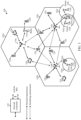
- FIG. 1 illustrates an example wireless communication network 100 in which aspects of the present disclosure may be performed.
- the wireless communication network 100 may be an NR system (e.g., a 5GNR network).
- each of the User Equipments (UEs) 120 may be configured to perform operations relating to time-domain resource allocation (TDRA) for multi-transmission time interval (TTI) grants, according to aspects described herein.
- each of the BSs 110 may be configured to perform operations related to time-domain resource allocation (TDRA) for multi-transmission time interval (TTI) grants, according to aspects described herein.
- TDRA time-domain resource allocation
- TTI multi-transmission time interval
- the wireless communication network 100 may include a number of base stations (BSs) 110 and other network entities.
- a BS may be a station that communicates with user equipments (UEs).
- Each BS 110 may provide communication coverage for a particular geographic area.
- the term "cell” can refer to a coverage area of a Node B (NB) and/or a NB subsystem serving this coverage area, depending on the context in which the term is used.
- NB Node B
- AP access point
- DU distributed unit
- carrier or transmission reception point (TRP)
- a cell may not necessarily be stationary, and the geographic area of the cell may move according to the location of a mobile BS.
- the BSs may be interconnected to one another and/or to one or more other BSs or network nodes (not shown) in wireless communication network 100 through various types of backhaul interfaces, such as a direct physical connection, a wireless connection, a virtual network, or the like using any suitable transport network.
- any number of wireless networks may be deployed in a given geographic area.
- Each wireless network may support a particular radio access technology (RAT) and may operate on one or more frequencies.
- a RAT may also be referred to as a radio technology, an air interface, etc.
- a frequency may also be referred to as a carrier, a subcarrier, a frequency channel, a tone, a subband, etc.
- Each frequency may support a single RAT in a given geographic area in order to avoid interference between wireless networks of different RATs.
- NR or 5G RAT networks may be deployed.
- a BS may provide communication coverage for a macro cell, a pico cell, a femto cell, and/or other types of cells.
- a macro cell may cover a relatively large geographic area (e.g., several kilometers in radius) and may allow unrestricted access by UEs with service subscription.
- a pico cell may cover a relatively small geographic area and may allow unrestricted access by UEs with service subscription.
- a femto cell may cover a relatively small geographic area (e.g., a home) and may allow restricted access by UEs having an association with the femto cell (e.g., UEs in a Closed Subscriber Group (CSG), UEs for users in the home, etc.).
- CSG Closed Subscriber Group
- a BS for a macro cell may be referred to as a macro BS.
- a BS for a pico cell may be referred to as a pico BS.
- a BS for a femto cell may be referred to as a femto BS or a home BS.
- the BSs 110a, 110b and 110c may be macro BSs for the macro cells 102a, 102b and 102c, respectively.
- the BS 110x may be a pico BS for a pico cell 102x.
- the BSs 110y and 110z may be femto BSs for the femto cells 102y and 102z, respectively.
- a BS may support one or multiple (e.g., three) cells.
- Wireless communication network 100 may also include relay stations.
- a relay station is a station that receives a transmission of data and/or other information from an upstream station (e.g., a BS or a UE) and sends a transmission of the data and/or other information to a downstream station (e.g., a UE or a BS).
- a relay station may also be a UE that relays transmissions for other UEs.
- a relay station 110r may communicate with the BS 110a and a UE 120r in order to facilitate communication between the BS 110a and the UE 120r.
- a relay station may also be referred to as a relay BS, a relay, etc.
- Wireless communication network 100 may be a heterogeneous network that includes BSs of different types, e.g., macro BS, pico BS, femto BS, relays, etc. These different types of BSs may have different transmit power levels, different coverage areas, and different impact on interference in the wireless communication network 100.
- macro BS may have a high transmit power level (e.g., 20 Watts) whereas pico BS, femto BS, and relays may have a lower transmit power level (e.g., 1 Watt).
- Wireless communication network 100 may support synchronous or asynchronous operation.
- the BSs may have similar frame timing, and transmissions from different BSs may be approximately aligned in time.
- the BSs may have different frame timing, and transmissions from different BSs may not be aligned in time.
- the techniques described herein may be used for both synchronous and asynchronous operation.
- a network controller 130 may couple to a set of BSs and provide coordination and control for these BSs.
- the network controller 130 may communicate with the BSs 110 via a backhaul.
- the BSs 110 may also communicate with one another (e.g., directly or indirectly) via wireless or wireline backhaul.
- the UEs 120 may be dispersed throughout the wireless communication network 100, and each UE may be stationary or mobile.
- a UE may also be referred to as a mobile station, a terminal, an access terminal, a subscriber unit, a station, a Customer Premises Equipment (CPE), a cellular phone, a smart phone, a personal digital assistant (PDA), a wireless modem, a wireless communication device, a handheld device, a laptop computer, a cordless phone, a wireless local loop (WLL) station, a tablet computer, a camera, a gaming device, a netbook, a smartbook, an ultrabook, an appliance, a medical device or medical equipment, a biometric sensor/device, a wearable device such as a smart watch, smart clothing, smart glasses, a smart wrist band, smart jewelry (e.g., a smart ring, a smart bracelet, etc.), an entertainment device (e.g., a music device, a
- Some UEs may be considered machine-type communication (MTC) devices or evolved MTC (eMTC) devices.
- MTC and eMTC UEs include, for example, robots, drones, remote devices, sensors, meters, monitors, location tags, etc., that may communicate with a BS, another device (e.g., remote device), or some other entity.
- a wireless node may provide, for example, connectivity for or to a network (e.g., a wide area network such as Internet or a cellular network) via a wired or wireless communication link.
- Some UEs may be considered Internet-of Things (IoT) devices, which may be narrowband IoT (NB-IoT) devices.
- IoT Internet-of Things
- NB-IoT narrowband IoT
- Certain wireless networks utilize orthogonal frequency division multiplexing (OFDM) on the downlink and single-carrier frequency division multiplexing (SC-FDM) on the uplink.
- OFDM and SC-FDM partition the system bandwidth into multiple (K) orthogonal subcarriers, which are also commonly referred to as tones, bins, etc.
- K orthogonal subcarriers
- Each subcarrier may be modulated with data.
- modulation symbols are sent in the frequency domain with OFDM and in the time domain with SC-FDM.
- the spacing between adjacent subcarriers may be fixed, and the total number of subcarriers (K) may be dependent on the system bandwidth.
- the spacing of the subcarriers may be 15 kHz and the minimum resource allocation (called a "resource block” (RB)) may be 12 subcarriers (or 180 kHz). Consequently, the nominal Fast Fourier Transfer (FFT) size may be equal to 128, 256, 512, 1024 or 2048 for system bandwidth of 1.25, 2.5, 5, 10, or 20 megahertz (MHz), respectively.
- the system bandwidth may also be partitioned into subbands. For example, a subband may cover 1.08 MHz (e.g., 6 RBs), and there may be 1, 2, 4, 8, or 16 subbands for system bandwidth of 1.25, 2.5, 5, 10 or 20 MHz, respectively.
- the basic transmission time interval (TTI) or packet duration is the 1 ms subframe.
- a subframe is still 1 ms, but the basic TTI is referred to as a slot.
- a subframe contains a variable number of slots (e.g., 1, 2, 4, 8, 16, ... slots) depending on the subcarrier spacing.
- the NR RB is 12 consecutive frequency subcarriers.
- NR may support a base subcarrier spacing of 15 KHz and other subcarrier spacing may be defined with respect to the base subcarrier spacing, for example, 30 kHz, 60 kHz, 120 kHz, 240 kHz, etc.
- the symbol and slot lengths scale with the subcarrier spacing.
- the CP length also depends on the subcarrier spacing.
- NR may utilize OFDM with a CP on the uplink and downlink and include support for half-duplex operation using TDD. Beamforming may be supported and beam direction may be dynamically configured. MIMO transmissions with precoding may also be supported. In some examples, MIMO configurations in the DL may support up to 8 transmit antennas with multi-layer DL transmissions up to 8 streams and up to 2 streams per UE. In some examples, multi-layer transmissions with up to 2 streams per UE may be supported. Aggregation of multiple cells may be supported with up to 8 serving cells.
- a scheduling entity (e.g., a BS) allocates resources for communication among some or all devices and equipment within its service area or cell.
- the scheduling entity may be responsible for scheduling, assigning, reconfiguring, and releasing resources for one or more subordinate entities. That is, for scheduled communication, subordinate entities utilize resources allocated by the scheduling entity.
- Base stations are not the only entities that may function as a scheduling entity.
- a UE may function as a scheduling entity and may schedule resources for one or more subordinate entities (e.g., one or more other UEs), and the other UEs may utilize the resources scheduled by the UE for wireless communication.
- a UE may function as a scheduling entity in a peer-to-peer (P2P) network, and/or in a mesh network.
- P2P peer-to-peer
- UEs may communicate directly with one another in addition to communicating with a scheduling entity.
- two or more subordinate entities may communicate with each other using sidelink signals.
- Real-world applications of such sidelink communications may include public safety, proximity services, UE-to-network relaying, vehicle-to-vehicle (V2V) communications, Internet of Everything (IoE) communications, IoT communications, mission-critical mesh, and/or various other suitable applications.
- a sidelink signal may refer to a signal communicated from one subordinate entity (e.g., UE1) to another subordinate entity (e.g., UE2) without relaying that communication through the scheduling entity (e.g., UE or BS), even though the scheduling entity may be utilized for scheduling and/or control purposes.
- the sidelink signals may be communicated using a licensed spectrum (unlike wireless local area networks, which typically use an unlicensed spectrum).
- a solid line with double arrows indicates desired transmissions between a UE and a serving BS, which is a BS designated to serve the UE on the downlink and/or uplink.
- a finely dashed line with double arrows indicates potentially interfering transmissions between a UE and a BS.
- FIG. 2 illustrates example components of BS 110 and UE 120 (e.g., in the wireless communication network 100 of FIG. 1 ), which may be used to implement aspects of the present disclosure.
- antennas 252, processors 266, 258, 264, and/or controller/processor 280 of the UE 120 and/or antennas 234, processors 220, 230, 238, and/or controller/processor 240 of the BS 110 may be used to perform the various techniques and methods described herein.
- the controller/processor 240 of the BS 110 may be configured for time-domain resource allocation (TDRA) for multi-transmission time interval (TTI) grants, according to aspects described herein.
- the controller/processor 280 of the UE 120 may be configured for time-domain resource allocation (TDRA) for multi-transmission time interval (TTI) grants, according to aspects described herein.
- a transmit processor 220 may receive data from a data source 212 and control information from a controller/processor 240.
- the control information may be for the physical broadcast channel (PBCH), physical control format indicator channel (PCFICH), physical hybrid ARQ indicator channel (PHICH), physical downlink control channel (PDCCH), group common PDCCH (GC PDCCH), etc.
- the data may be for the physical downlink shared channel (PDSCH), etc.
- the processor 220 may process (e.g., encode and symbol map) the data and control information to obtain data symbols and control symbols, respectively.
- the transmit processor 220 may also generate reference symbols, such as for the primary synchronization signal (PSS), secondary synchronization signal (SSS), and cell-specific reference signal (CRS).
- PSS primary synchronization signal
- SSS secondary synchronization signal
- CRS cell-specific reference signal
- a transmit (TX) multiple-input multiple-output (MIMO) processor 230 may perform spatial processing (e.g., precoding) on the data symbols, the control symbols, and/or the reference symbols, if applicable, and may provide output symbol streams to the modulators (MODs) 232a-232t.
- Each modulator 232 may process a respective output symbol stream (e.g., for OFDM, etc.) to obtain an output sample stream.
- Each modulator may further process (e.g., convert to analog, amplify, filter, and upconvert) the output sample stream to obtain a downlink signal.
- Downlink signals from modulators 232a-232t may be transmitted via the antennas 234a-234t, respectively.
- the antennas 252a-252r may receive the downlink signals from the BS 110 and may provide received signals to the demodulators (DEMODs) in transceivers 254a-254r, respectively.
- Each demodulator 254 may condition (e.g., filter, amplify, downconvert, and digitize) a respective received signal to obtain input samples.
- Each demodulator may further process the input samples (e.g., for OFDM, etc.) to obtain received symbols.
- a MIMO detector 256 may obtain received symbols from all the demodulators 254a-254r, perform MIMO detection on the received symbols if applicable, and provide detected symbols.
- a receive processor 258 may process (e.g., demodulate, deinterleave, and decode) the detected symbols, provide decoded data for the UE 120 to a data sink 260, and provide decoded control information to a controller/processor 280.
- a transmit processor 264 may receive and process data (e.g., for the physical uplink shared channel (PUSCH)) from a data source 262 and control information (e.g., for the physical uplink control channel (PUCCH) from the controller/processor 280.
- the transmit processor 264 may also generate reference symbols for a reference signal (e.g., for the sounding reference signal (SRS)).
- the symbols from the transmit processor 264 may be precoded by a TX MIMO processor 266 if applicable, further processed by the demodulators in transceivers 254a-254r (e.g., for SC-FDM, etc.), and transmitted to the base station 110.
- data e.g., for the physical uplink shared channel (PUSCH)
- control information e.g., for the physical uplink control channel (PUCCH) from the controller/processor 280.
- the transmit processor 264 may also generate reference symbols for a reference signal (e.g., for the sounding reference signal (SRS)
- the uplink signals from the UE 120 may be received by the antennas 234, processed by the modulators 232, detected by a MIMO detector 236 if applicable, and further processed by a receive processor 238 to obtain decoded data and control information sent by the UE 120.
- the receive processor 238 may provide the decoded data to a data sink 239 and the decoded control information to the controller/processor 240.
- the controllers/processors 240 and 280 may direct the operation at the BS 110 and the UE 120, respectively.
- the controller/processor 240 and/or other processors and modules at the BS 110 may perform or direct the execution of processes for the techniques described herein.
- the memories 242 and 282 may store data and program codes for BS 110 and UE 120, respectively.
- a scheduler 244 may schedule UEs for data transmission on the downlink and/or uplink.
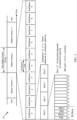
- FIG. 3 is a diagram showing an example of a frame format 300 for NR.
- the transmission timeline for each of the downlink and uplink may be partitioned into units of radio frames.
- Each radio frame may have a predetermined duration (e.g., 10 ms) and may be partitioned into 10 subframes, each of 1 ms, with indices of 0 through 9.
- Each subframe may include a variable number of slots depending on the subcarrier spacing.
- Each slot may include a variable number of symbol periods (e.g., 7 or 14 symbols) depending on the subcarrier spacing.
- the symbol periods in each slot may be assigned indices.
- a mini-slot which may be referred to as a sub-slot structure, refers to a transmit time interval having a duration less than a slot (e.g., 2, 3, or 4 symbols).
- Each symbol in a slot may indicate a link direction (e.g., DL, UL, or flexible) for data transmission and the link direction for each subframe may be dynamically switched.
- the link directions may be based on the slot format.
- Each slot may include DL/UL data as well as DL/UL control information.
- a synchronization signal (SS) block is transmitted.
- the SS block includes a PSS, a SSS, and a two symbol PBCH.
- the SS block can be transmitted in a fixed slot location, such as the symbols 0-3 as shown in FIG. 3 .
- the PSS and SSS may be used by UEs for cell search and acquisition.
- the PSS may provide half-frame timing, the SS may provide the CP length and frame timing.
- the PSS and SSS may provide the cell identity.
- the PBCH carries some basic system information, such as downlink system bandwidth, timing information within radio frame, SS burst set periodicity, system frame number, etc.
- the SS blocks may be organized into SS bursts to support beam sweeping.
- Further system information such as, remaining minimum system information (RMSI), system information blocks (SIBs), other system information (OSI) can be transmitted on a physical downlink shared channel (PDSCH) in certain subframes.
- the SS block can be transmitted up to sixty-four times, for example, with up to sixty-four different beam directions for mmW.
- the up to sixty-four transmissions of the SS block are referred to as the SS burst set.
- SS blocks in an SS burst set are transmitted in the same frequency region, while SS blocks in different SS bursts sets can be transmitted at different frequency locations.
- TDRA Time-Domain Resource Allocation
- TDRA is indicated as part of DCI.
- NR defines a number of options for allocating time domain resources for a transmission in a TDRA table, where each entry/row of the TDRA table defines a different allocation of time domain resources.
- a TDRA field in the DCI scheduling a transmission indicates one of the entries/rows from the TDRA table.
- a receiving UE decodes the DCI, identifies the indication in TDRA field and uses the resource allocation from the corresponding TDRA table entry for the scheduled transmission.
- the TDRA table may be a default table known to the network and the UE, or may be a configurable table that is configured via RRC signaling.
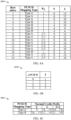
- FIG. 4A illustrates an example default TDRA table 400A as defined by NR (e.g., NR Release 15).
- NR e.g., NR Release 15
- default TDRA table 400A defines sixteen different time domain resource allocations for scheduling PUSCH transmissions, where each row of the table 400A defines a different resource allocation.
- the columns of the table 400A include various parameters defining the details of the resource allocation.
- the table 400A defines a Row index, a mapping type, a slot offset (K 2 ), a starting symbol (S) and an allocation length L.
- the mapping type may be either mapping type A or B for the scheduled PUSCH transmission.
- the slot offset K 2 provides an offset relative to the slot in which the DCI was transmitted.
- PUSCH is transmitted in slot n+K 2 .
- the starting symbol S specifies the particular symbol of a slot (e.g., symbol 0, 1, 2... 14) at which the corresponding PUSCH transmission is scheduled to start.
- the allocation length L defines a symbol length of the PUSCH transmission from the starting symbol S.
- the starting symbol S and the allocation length L may be indicated jointly as Start and Length Indicator Value (SLIV).
- FIG. 4B illustrates an example table 400B specifying values of j for use in determining starting symbol S as defined by NR (e.g., NR Release 15).
- NR e.g., NR Release 15
- the parameter ⁇ PUSCH as shown in table 400B specifies the subcarrier spacing.
- the value 0, 1, 2 and 3 of ⁇ PUSCH represent subcarrier spacing of 15KHz, 30KHz, 60KHz and 120KHz respectively.
- the value of j is a function of the subcarrier spacing.
- FIG. 4C illustrates an example table 400C specifying valid combinations of starting symbol S and allocation length L as defined by NR (e.g., NR Release 15).
- NR e.g., NR Release 15
- the values of S and L in table 400B are a function of the mapping type.
- the values of S and L are defined such that an allocation does not cross a slot boundary. For example, S+L-1 is at most the last symbol in an allocated slot.
- the bit length of the TDRA field is a function of the number of rows in the TDRA table. For example, bit-width of the TDRA field is 4 bits for indicating each of the sixteen TDRA options from the default TDRA table as shown in FIG. 4A .
- the TDRA table may be a configurable (e.g., no default).
- NR e.g., NR Release 15
- TDRA field indicates one of the entries of the higher layer parameter pusch-TimeDomainAllocationList, if this higher layer parameter is configured.
- the higher layer parameter pusch-TimeDomainAllocationList is an RRC parameter defining a configurable TDRA table. If this parameter is not configured, the default TDRA table is used.
- the maximum number of TDRA options (e.g., entries) configured by the configurable TDRA table is sixteen.
- the bit-width of the TDRA field may be 0-4 depending on a number of entries configured in the configurable table.
- the RRC parameter pusch-TimeDomainAllocationList specifies a mapping type, a slot offset (K 2 ), a starting symbol (S) and an allocation length L for each configured TDRA entry. Additionally, the pusch-TimeDomainAllocationList specifies a maximum number of entries configured. In an aspect, the starting symbol S and the allocation length L is indicated jointly as Start and Length Indicator Value (SLIV).
- SIV Start and Length Indicator Value
- NR supports Multi-Transmission Time Interval (Multi-TTI) grants.
- a multi-TTI grant is generally a single grant (e.g., Downlink/Uplink grant) that schedules multiple transport blocks (TBs) (e.g., PDSCH or PUSCH) on multiple TTIs.
- TBs transport blocks
- a TTI includes a slot or a mini-slot of an NR subframe.
- Multi-TTI grants are particularly useful for multi-TTI PUSCH grants in NR based access to unlicensed spectrum (NRU). For example, without multi-TTI PUSCH grants, multiple downlink portions may have to be used for transmitting multiple PUSCH grants, which would not only cause additional overhead but would also involve multiple switches between downlink and uplink. Since NRU uses Listen-Before-Talk to gain access to a medium, switches between downlink and uplink may potentially lead to loss of medium.
- the current agreement in 3GPP standards regarding multi-TTI PUSCH grants in NRU states that "scheduling PUSCH over multiple slots/mini-slots by single DCI supports at least multiple continuous PUSCHs with separate TBs, where each TB is mapped to at most one slot or one mini-slot". It is envisioned that a similar agreement may be reached regarding multi-TTI PDSCH grants for NRU in the future.
- mini-slot allocation may need to be allowed at the beginning (e.g., one or more initial PUSCH transmissions) of a multi-TTI transmission (scheduled by multi-TTI grant), to enable more Listen Before Talk (LBT) opportunities for the UE in the beginning of the multi-TTI transmission.
- mini-slot allocation may need to be allowed anywhere in the middle of a multi-TTI transmission.
- a PUSCH transmission in the middle of the multi-TTI transmission corresponds to a retransmission and Code Block Group Transmission Information (CBGTI) field in the DCI indicates only some of the CBGs require retransmission (e.g. 1 out of 8), a smaller number of resources (e.g., only some symbols of a slot and not the entire slot) are needed for the retransmission.
- the TDRA since the Frequency Domain Resource Allocation (FDRA) is likely to be the same for all PUSCHs, the TDRA may indicate a smaller number of symbols than a full slot.
- mini-slot allocation may need to be allowed at the end of a multi-TTI transmission. For example, when there is not enough data in the UE buffer that would take an entire slot for a last PUSCH transmission, the last PUSCH transmission may be allocated a subset of symbols in the slot and the transmission may end a few symbols before the slot boundary.
- TDRA design for scheduling multiple consecutive transmissions (e.g. PUSCH transmissions) in a multi-TTI DCI while allowing for mini-slot allocation in the beginning, in the middle, and/or at the end of the multi-TTI allocation.
- the TDRA designs discussed in aspects of the present disclosure include TDRA table designs defining a number of time domain resource allocations for a multi-TTI grant.
- the discussed TDRA tables may be used as default TDRA tables (with fixed table size) or may be configured via RRC signaling (e.g., configurable entries/rows).
- the proposed TDRA table designs provide an acceptable tradeoff between scheduling flexibility and RRC overhead/TDRA field bit-width.
- the bit-width of the TDRA field (determined by the number of entries/rows in the TDRA table) should not be too large to avoid increasing the DCI size by too much.
- a large TDRA table size including a large number of TDRA entries/rows results in a large RRC overhead to convey the table configuration.
- a tradeoff is needed between the scheduling flexibility offered by the TDRA table design and the size of the TDRA table.
- certain concepts relating to multi-TTI grants in Licensed-Assisted Access may be leveraged for reducing the DCI size for multi-TTI grants in NR.
- Multi-TTI grant in LAA uses DCI formats 0B/4B in accordance with 3GPP LTE specifications.
- the LTE specifications include several definitions for multi-TTI UL grants.
- a "maxNumberOfSchedSubframes" parameter is configured via Radio Resource Control (RRC) signaling.
- RRC Radio Resource Control
- This parameter configures a maximum number of TTIs (e.g., 2 or 4 subframes) that may be scheduled by a multi-TTI grant.
- DCI is used to dynamically indicate how many TTIs or subframes are actually scheduled by a particular.
- the DCI uses 1 bit or 2 bits for this dynamic indication based on the maximum number of scheduled TTIs configured via RRC signaling being 2 or 4 TTIs respectively.
- the DCI size is independent of the number of TTIs scheduled dynamically, and is only a function of the maximum number of scheduled TTIs that is semi-statically configured via RRC signaling.
- FIG. 5 illustrates example operations 500 performed by a base station (BS) for allocating time domain resource allocation for a multi-TTI grant, in accordance with aspects of the claimed invention.
- BS base station
- Operations 500 begin, at 502, by allocating time domain resources for a plurality of physical uplink shared channel (PUSCH) transmissions (e.g., corresponding to transport blocks), according to a Time Domain Resource Allocation (TDRA) pattern selected from a TDRA table designed for multi-PUSCH grants.
- PUSCH physical uplink shared channel
- TDRA Time Domain Resource Allocation
- the BS transmits downlink control information (DCI) scheduling the plurality of PUSCH transmissions, wherein the DCI comprises an indication of the TDRA pattern selected from the TDRA table.
- DCI downlink control information
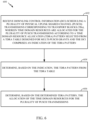
- FIG. 6 illustrates example operations 600 performed by a user equipment (UE) for determining time domain resource allocation for a multi-TTI grant, in accordance with aspects of the claimed invention.
- UE user equipment
- Operations 600 begin, at 602, by receiving downlink control information (DCI) scheduling a plurality of physical uplink shared channel (PUSCH) transmissions (e.g., corresponding to transport blocks), wherein time domain resources are allocated for the plurality of PUSCH transmissions according to a Time Domain Resource Allocation (TDRA) pattern selected from a TDRA table designed for multi-PUSCH grants and the DCI comprises an indication of the TDRA pattern.
- DCI downlink control information
- PUSCH physical uplink shared channel
- TDRA Time Domain Resource Allocation
- the UE determines, based on the indication, the TDRA pattern from the TDRA table.
- the UE determines, based on the determined TDRA pattern, the allocation of the time domain resources for the plurality of PUSCH transmissions.
- each row of the TDRA table corresponds to a different TDRA pattern
- each TDRA pattern is defined by allocation information in a plurality of columns of the TDRA table corresponding to the row for the TDRA pattern, where each TDRA pattern defines a different pattern for allocating time domain resources in the plurality of TTIs for the plurality of transmissions.
- the TDRA indication transmitted in the DCI indicates to a particular row/TDRA pattern form the TDRA table.
- each TTI includes a full slot or a mini-slot, wherein each TTI is assigned one transmission (PUSCH) such that different TTIs are assigned different PUSCH transmissions.
- FIG. 7A illustrates a TDRA table design 700A for multi-TTI grants (PUSCH grants), in accordance with certain aspects of the claimed invention.
- each entry/row of the TDRA table 700A defines a different TDRA pattern for allocation of time domain resources.
- each entry/row of the TDRA table 700A includes time domain resource allocations for the maximum number of PUSCH transmissions N that can be scheduled by a particular multi-TTI grant.
- a particular multi-TTI grant may use only 'n' number of allocations of the 'N' allocations defined in a particular TDRA pattern from the TDRA table 700A.
- Extending a TDRA table as described herein generally allows a DCI to indicate single or multiple continuous PUSCH transmissions in any slot of the multiple scheduled slots.
- the maximum number of PUSCHs that can be configured in a row of the TDRA table is 8.
- the actual number of scheduled PUSCHs may be signaled by the number of indicated valid SLIVs in the row of the TDRA table signaled in the DCI (e.g., up to the limit of 8).
- each entry/row of the TDRA table 700A is identified by a Row index that identifies a unique TDRA pattern.
- Each entry/row includes a slot offset (K2) and a starting symbol (S) for the first PUSCH transmission scheduled by the multi-TTI grant.
- each TDRA pattern comprises a slot offset only for the first scheduled PUSCH transmission.
- the start symbol for each subsequent PUSCH transmission (after the first PUSCH transmission) may be determined based on the length L i of a previous transmission.
- each entry/row further includes a mapping type of each PUSCH i.
- FIG. 7B illustrates an example allocation 700B according to TDRA patterns defined the table 700A, in accordance with certain aspects of the present disclosure.
- allocation 710 corresponds to a multi-TTI grant allocating time domain resources according to the TDRA pattern corresponding to Row index 1 from the TDRA table 700A.
- allocation 720 corresponds to a multi-TTI grant allocating time domain resources according to the TDRA pattern corresponding to Row index 2 from the TDRA table 700A.
- each of the allocations 710 and 720 shows allocation of time domain resources over three time slots, the first slot in each case carrying the DCI scheduling the corresponding multi-TTI grant.
- the first PUSCH transmission starts in slot 2, as the value of slot K2 in row index 1 is ⁇ 1', which means an offset of one slot from the slot carrying the DCI grant.
- a table format of a TDRA table (e.g., TDRA table 700A) is defined by the number of columns for an entry/row in the table and the allowed values for each column.
- the table format is a function of N (max number of PUSCHs that can be scheduled by a multi-TTI grant).
- the table format determines the RRC overhead (e.g. number of bits for configuring each entry/row) when the table is configurable (i.e. not a default table).
- mapping type A it can also be mapping type B
- mapping type B the other PUSCHs in the slot have to be mapping type B. This may be seen from TDRA table 700A.
- the table size of a TDRA table (e.g., TDRA table 700A) is defined by the number of entries/rows allowed in the TDRA table.
- the table size determines the DCI overhead, as the amount of bits needed to indicate an entry of the TDRA table in the TDRA field of the DCI is a function of the number of entries/rows in the TDRA table. In an aspect, the table size also determines the RRC overhead when the table is configurable.
- the values of L i and mapping types are not completely independent. Hence, the information for configuring each entry of the TDRA table may be compressed.
- FIG. 8A illustrates an example design of a compressed TDRA table 800A for multi-TTI grants (e.g., PUSCH grants), in accordance with certain aspects of the present disclosure.
- multi-TTI grants e.g., PUSCH grants
- each row/entry of the TDRA table 800A is identified by a unique row index and defines a different TDRA pattern for the multi-TTI grant.
- each row/entry includes a slot offset (K2) and starting symbol (S) for a first PUSCH transmission.
- Each row/entry further includes a number of scheduled slots (K) including partially allocated slots (e.g., first or last slots) and fully allocated slots (e.g., middle slots).
- each member ID of the member ID vector defines the mini-slot structure for a corresponding scheduled slot, wherein each member ID points to a unique entry/row of a mini-slot table, wherein each row of the mini-slot table defines a mini-slot structure for a given slot.
- FIG. 8B illustrates an example mini-slot table 800B for defining a mini-slot structure for a given slot, in accordance with certain aspects of the present disclosure.
- each row/entry of the mini-slot table 800B is identified by a unique member ID and defines a different mini-slot structure for a given slot.
- Each row/entry of the mini-slot table 800B defines a number of mini-slots (M) per slot, a length vector of size M-1 defining a length of each mini-slot, a mapping type (A or B) for the first mini-slot of the given slot and a presence/absence of the last mini-slot in the given slot.
- the vector indicating the length of each mini-slot is of length M-1 since the length of the last mini-slot of the given slot is not needed, as it is known given the other values. For example, given there are 14 symbols per slot, for the first slot sum of length should be equal to 14-S, and for other slots sum needs to be equal to 14.
- the information regarding the presence/absence of the last mini-slot is useful when the last few symbols are not allocated.
- a one-bit value is used to indicate the presence/absence of the last mini-slot in the given slot, wherein a value of '1' indicates a presence of the last mini-slot and a value of '0' indicates an absence of the last mini-slot.
- the value of n (actual number of PUSCHs) indicated in the DCI may be used to determine this information. For example, if PUSCH n is scheduled in a particular slot, and there are multiple mini-slots in the particular slot, the remaining mini-slots in the slot after the PUSCH n has been transmitted are not transmitted.
- FIG. 8C illustrates an example allocation 800C according to TDRA patterns defined the table 800A, in accordance with certain aspects of the present disclosure.
- allocation 810 corresponds to a multi-TTI grant allocating time domain resources according to the TDRA pattern corresponding to Row index 1 from the TDRA table 800A.
- allocation 820 corresponds to a multi-TTI grant allocating time domain resources according to the TDRA pattern corresponding to Row index 2 from the TDRA table 800A.
- each of the allocations 810 and 820 shows allocation of time domain resources over three time slots, the first slot in each case carrying the DCI scheduling the corresponding multi-TTI grant.
- the first PUSCH transmission starts in slot 2, as the value of slot K2 in row index 1 is ⁇ 1', which means an offset of one slot from the slot carrying the DCI grant.
- PUSCH 1 starts at symbol #3 as indicated by the value of starting symbol S (assuming symbol index ranges from 0-13).
- Row index 1 indicates that two slots are to be scheduled and the member ID vector indicates member ID 4 for the mini-slot structure of the first slot and indicates member ID 1 for the mini-slot structure of the second slot.
- the mini-slots within the two slots of allocation 810 are allocated in accordance with the mini-slot table 800B.
- member ID #4 of the mini-slot table 800B 2 mini-slots are to be scheduled in the first scheduled slot, and the length of the first mini-slot in the first scheduled slot is 4 symbols. Since the last column of member ID 4 indicates a presence of the last mini-slot in the slot, the second mini-slot of the first scheduled slot (which is the last mini-slot of the slot) occupies the remaining slots of the first scheduled slot. Looking at member ID #1 of the mini-slot table 800B, 1 mini-slot is to be scheduled in the second scheduled slot. Since the last column of member ID 4 indicates a presence of the last mini-slot in the slot, the mini-slot of the second scheduled slot (which is the last mini-slot of the slot) occupies all slots of the second scheduled slot.
- allocation 820 allocates time domain resource in accordance with TDRA pattern defined in Row index 2, wherein the mini-slot structure of the scheduled slots is decided by the defined member IDs of the mini-slot table 800B.
- the RRC overhead is lower if the table 800A is configurable.
- a maximum number of slots K_max may be defined.
- multi-TTI PUSCH may be limited such that only the first slot (or the first two slots) can contain mini-slots and the rest are full-slot PUSCH (i.e. mini-slots only allowed in the beginning).
- a member of the mini-slot table 800B may be used in multiple entries/rows of the TDRA table 800A (i.e. can be defined once and used multiple times). This may help further reduce the RRC overhead.
- FIG. 9B illustrates an example TDRA when one entry/row from the TDRA table 800B covers multiple multi-TTI grant allocations, in accordance with certain aspects of the present disclosure.
- the row index 1 is used to allocate time domain resources for two different multi-TTI grant allocations 910 and 920.
- the member ID vector assigns member IDs to the three slots based on the example allocations discussed above.
- allocation 910 uses only the first two slot allocations from the table.
- the methods disclosed herein comprise one or more steps or actions for achieving the methods.
- the method steps and/or actions may be interchanged with one another without departing from the scope of the claims.
- the order and/or use of specific steps and/or actions may be modified without departing from the scope of the claims.
- a phrase referring to "at least one of" a list of items refers to any combination of those items, including single members.
- "at least one of: a, b, or c” is intended to cover a, b, c, a-b, a-c, b-c, and a-b-c, as well as any combination with multiples of the same element (e.g., a-a, a-a-a, a-a-b, a-a-c, a-b-b, a-c-c, b-b, b-b-b, b-b-c, c-c, and c-c-c or any other ordering of a, b, and c).
- determining encompasses a wide variety of actions. For example, “determining” may include calculating, computing, processing, deriving, investigating, looking up (e.g., looking up in a table, a database or another data structure), ascertaining and the like. Also, “determining” may include receiving (e.g., receiving information), accessing (e.g., accessing data in a memory) and the like. Also, “determining” may include resolving, selecting, choosing, establishing and the like.
- the various operations of methods described above may be performed by any suitable means capable of performing the corresponding functions.
- the means may include various hardware and/or software component(s) and/or module(s), including, but not limited to a circuit, an application specific integrated circuit (ASIC), or processor.
- ASIC application specific integrated circuit
- DSP digital signal processor
- ASIC application specific integrated circuit
- FPGA field programmable gate array
- PLD programmable logic device
- a general-purpose processor may be a microprocessor, but in the alternative, the processor may be any commercially available processor, controller, microcontroller, or state machine.
- a processor may also be implemented as a combination of computing devices, e.g., a combination of a DSP and a microprocessor, a plurality of microprocessors, one or more microprocessors in conjunction with a DSP core, or any other such configuration.
- an example hardware configuration may comprise a processing system in a wireless node.
- the processing system may be implemented with a bus architecture.
- the bus may include any number of interconnecting buses and bridges depending on the specific application of the processing system and the overall design constraints.
- the bus may link together various circuits including a processor, machine-readable media, and a bus interface.
- the bus interface may be used to connect a network adapter, among other things, to the processing system via the bus.
- the network adapter may be used to implement the signal processing functions of the PHY layer.
- a user interface e.g., keypad, display, mouse, joystick, etc.
- the bus may also link various other circuits such as timing sources, peripherals, voltage regulators, power management circuits, and the like, which are well known in the art, and therefore, will not be described any further.
- the processor may be implemented with one or more general-purpose and/or special-purpose processors. Examples include microprocessors, microcontrollers, DSP processors, and other circuitry that can execute software. Those skilled in the art will recognize how best to implement the described functionality for the processing system depending on the particular application and the overall design constraints imposed on the overall system.
- the functions may be stored or transmitted over as one or more instructions or code on a computer readable medium.
- Software shall be construed broadly to mean instructions, data, or any combination thereof, whether referred to as software, firmware, middleware, microcode, hardware description language, or otherwise.
- Computer-readable media include both computer storage media and communication media including any medium that facilitates transfer of a computer program from one place to another.
- the processor may be responsible for managing the bus and general processing, including the execution of software modules stored on the machine-readable storage media.
- a computer-readable storage medium may be coupled to a processor such that the processor can read information from, and write information to, the storage medium. In the alternative, the storage medium may be integral to the processor.
- the machine-readable media may include a transmission line, a carrier wave modulated by data, and/or a computer readable storage medium with instructions stored thereon separate from the wireless node, all of which may be accessed by the processor through the bus interface.
- the machine-readable media, or any portion thereof may be integrated into the processor, such as the case may be with cache and/or general register files.
- machine-readable storage media may include, by way of example, RAM (Random Access Memory), flash memory, ROM (Read Only Memory), PROM (Programmable Read-Only Memory), EPROM (Erasable Programmable Read-Only Memory), EEPROM (Electrically Erasable Programmable Read-Only Memory), registers, magnetic disks, optical disks, hard drives, or any other suitable storage medium, or any combination thereof.
- RAM Random Access Memory
- ROM Read Only Memory
- PROM PROM
- EPROM Erasable Programmable Read-Only Memory
- EEPROM Electrical Erasable Programmable Read-Only Memory
- registers magnetic disks, optical disks, hard drives, or any other suitable storage medium, or any combination thereof.
- the machine-readable media may be embodied in a computer-program product.
- a software module may comprise a single instruction, or many instructions, and may be distributed over several different code segments, among different programs, and across multiple storage media.
- the computer-readable media may comprise a number of software modules.
- the software modules include instructions that, when executed by an apparatus such as a processor, cause the processing system to perform various functions.
- the software modules may include a transmission module and a receiving module. Each software module may reside in a single storage device or be distributed across multiple storage devices.
- a software module may be loaded into RAM from a hard drive when a triggering event occurs.
- the processor may load some of the instructions into cache to increase access speed.
- One or more cache lines may then be loaded into a general register file for execution by the processor.
- any connection is properly termed a computer-readable medium.
- the software is transmitted from a website, server, or other remote source using a coaxial cable, fiber optic cable, twisted pair, digital subscriber line (DSL), or wireless technologies such as infrared (IR), radio, and microwave
- the coaxial cable, fiber optic cable, twisted pair, DSL, or wireless technologies such as infrared, radio, and microwave are included in the definition of medium.
- Disk and disc include compact disc (CD), laser disc, optical disc, digital versatile disc (DVD), floppy disk, and Blu-ray ® disc where disks usually reproduce data magnetically, while discs reproduce data optically with lasers.
- computer-readable media may comprise non-transitory computer-readable media (e.g., tangible media).
- computer-readable media may comprise transitory computer- readable media (e.g., a signal). Combinations of the above should also be included within the scope of computer-readable media.
- certain aspects may comprise a computer program product for performing the operations presented herein.
- a computer program product may comprise a computer-readable medium having instructions stored (and/or encoded) thereon, the instructions being executable by one or more processors to perform the operations described herein.
- instructions for performing the operations described herein and illustrated in Figures 5 and 6 may be executable by one or more processors to perform the operations described herein.
- modules and/or other appropriate means for performing the methods and techniques described herein can be downloaded and/or otherwise obtained by a user terminal and/or base station as applicable.
- a user terminal and/or base station can be coupled to a server to facilitate the transfer of means for performing the methods described herein.
- various methods described herein can be provided via storage means (e.g., RAM, ROM, a physical storage medium such as a compact disc (CD) or floppy disk, etc.), such that a user terminal and/or base station can obtain the various methods upon coupling or providing the storage means to the device.
- storage means e.g., RAM, ROM, a physical storage medium such as a compact disc (CD) or floppy disk, etc.
- CD compact disc
- floppy disk etc.
- any other suitable technique for providing the methods and techniques described herein to a device can be utilized.
Landscapes
- Engineering & Computer Science (AREA)
- Signal Processing (AREA)
- Computer Networks & Wireless Communication (AREA)
- Mobile Radio Communication Systems (AREA)
Claims (15)
- Ein Verfahren zur drahtlosen Kommunikation durch ein Benutzergerät, UE, aufweisend:Empfangen (602) Abwärtsverbindungssteuerinformationen, DCI, die eine Vielzahl von Übertragungen über gemeinsam genutzte physikalische Aufwärtsverbindungskanäle, PUSCH, für entsprechende Transportblöcke, TBs, planen, wobei Zeitbereichsressourcen für die Vielzahl von PUSCH-Übertragungen gemäß einem Zeitbereichsressourcen-Zuordnungsmuster, TDRA, zugeordnet werden, das aus einer TDRA-Tabelle ausgewählt wird, die für Mehrfachübertragungszeitintervall-, Multi-TTI-, PUSCH-Gewährungen ausgelegt ist, und die DCI eine Angabe des TDRA-Musters aufweist, wobei jedes TDRA-Muster einen Schlitzversatz nur für die erste geplante PUSCH-Übertragung der Vielzahl geplanter PUSCH-Übertragungen aufweist;Bestimmen (604), basierend auf der Angabe, des TDRA-Musters aus der TDRA-Tabelle; undBestimmen (606), basierend auf dem bestimmten TDRA-Muster, der Zuweisung der Zeitbereichsressourcen für die Vielzahl von PUSCH-Übertragungen.
- Das Verfahren nach Anspruch 1, wobei:jede Zeile der TDRA-Tabelle einem anderen TDRA-Muster entspricht;jedes TDRA-Muster durch Zuweisungsinformationen in einer Vielzahl von Spalten der entsprechenden Zeile der TDRA-Tabelle definiert ist; undjedes TDRA-Muster ein anderes Muster für die Zuweisung von Zeitbereichsressourcen für die Vielzahl von PUSCH-Übertragungen definiert.
- Das Verfahren nach Anspruch 2, wobei die Zuweisungsinformationen für jedes TDRA-Muster aus der TDRA-Tabelle aufweisen:
für zumindest eine erste geplante PUSCH-Übertragung aus der Vielzahl von PUSCH-Übertragungen Informationen bezüglich eines Startsymbols, einer Zuordnungssymbolänge und eines Mapping-Typs. - Das Verfahren nach Anspruch 2, wobei die Zuordnungsinformationen für jedes TDRA-Muster
aus der TDRA-Tabelle weiter aufweisen:
für jede nachfolgende PUSCH-Übertragung aus der Vielzahl von PUSCH-Übertragungen Informationen, die sich auf zumindest eines von einer Zuordnungssymbolänge oder einem Mapping-Typ beziehen. - Das Verfahren nach Anspruch 4, wobei die jeder PUSCH-Übertragung gemäß der Zuordnungsinformation in der TDRA-Tabelle zugewiesenen Zeitbereichsressourcen in einem Schlitz eines Unterrahmens enthalten sind.
- Das Verfahren nach Anspruch 1, weiter aufweisend Empfangen einer Angabe einer maximalen Anzahl von Übertragungen, die durch die DCI über eine Funkressourcensteuerung, RRC, Signalisierung, geplant werden können.
- Das Verfahren nach Anspruch 1, weiter aufweisend das Empfangen einer Konfiguration der TDRA-Tabelle über eine Funkressourcensteuerung, RRC, Signalisierung.
- Ein Verfahren zur drahtlosen Kommunikation durch eine Basisstation, BS, aufweisend:Zuweisen (502) von Zeitbereichsressourcen für eine Vielzahl von Übertragungen eines gemeinsam genutzten physikalischen Aufwärtsverbindungskanals, PUSCH, für entsprechende Transportblöcke, TBs,gemäß einem Zeitbereichsressourcenzuweisungsmuster, TDRA, ausgewählt aus einer TDRA-Tabelle, die für Mehrfachübertragungszeitintervall-, Multi-TTI-, PUSCH-Gewährungen ausgelegt ist; undÜbertragen (504) von Abwärtsverbindungssteuerinformationen, DCI, zum Planen der Vielzahl von PUSCH-Übertragungen, wobei die DCI eine Angabe des aus der TDRA-Tabelle ausgewählten TDRA-Musters aufweist, wobei jedes TDRA-Muster einen Schlitzversatz nur für die erste geplante PUSCH-Übertragung der Vielzahl geplanter PUSCH-Übertragungen aufweist.
- Das Verfahren nach Anspruch 8, wobei:jede Zeile der TDRA-Tabelle einem anderen TDRA-Muster entspricht;jedes TDRA-Muster durch Zuordnungsinformationen in einer Vielzahl von Spalten der entsprechenden Zeile der TDRA-Tabelle definiert ist; undjedes TDRA-Muster ein anderes Muster zum Zuordnen von Zeitbereichsressourcen für die Vielzahl von PUSCH-Übertragungen definiert.
- Das Verfahren nach Anspruch 9, wobei die Zuordnungsinformation für jedes TDRA-Muster aus der TDRA-Tabelle aufweist:
für zumindest eine erste geplante PUSCH-Übertragung aus der Vielzahl von PUSCH-Übertragungen Informationen bezüglich eines Startsymbols, einer Zuordnungssymbolänge und eines Mapping-Typs. - Das Verfahren nach Anspruch 10, wobei die Zuordnungsinformation für jedes TDRA-Muster aus der TDRA-Tabelle weiter aufweist:
für jede nachfolgende PUSCH-Übertragung der Vielzahl von PUSCH-Übertragungen Informationen, die sich auf zumindest eines von einem Zuordnungssymbol und einem Zuordnungstyp beziehen. - Das Verfahren nach Anspruch 9, das weiter das Anzeigen einer maximalen Anzahl von Übertragungen aufweist, die durch die DCI über eine Funkressourcensteuerung, RRC, Signalisierung, geplant werden können.
- Eine Vorrichtung zur drahtlosen Kommunikation durch ein Benutzergerät, UE, aufweisend:Mittel zum Empfangen von Abwärtsverbindungssteuerinformationen, DCI, die eine Vielzahl von Übertragungen über gemeinsam genutzte physikalische Aufwärtsverbindungskanäle, PUSCH, planen, wobei Zeitbereichsressourcen für die Vielzahl von PUSCH-Übertragungen gemäß einem Muster zur Zuweisung von Zeitbereichsressourcen, TDRA, zugewiesen werden, das aus einer TDRA-Tabelle ausgewählt wird, das für Mehrfachübertragungszeitintervall-, Mehrfach-TTI-, PUSCH-Zuteilungen entworfen ist, und die DCI eine Angabe des TDRA-Musters aufweist, wobei jedes TDRA-Muster einen Schlitzversatz nur für die erste geplante PUSCH-Übertragung der Vielzahl geplanter PUSCH-Übertragungen aufweist; undMittel zum Bestimmen des TDRA-Musters aus der TDRA-Tabelle auf der Grundlage der Angabe und zum Bestimmen der Zuweisung der Zeitbereichsressourcen für die Vielzahl von PUSCH-Übertragungen auf der Grundlage des bestimmten TDRA-Musters.
- Eine Vorrichtung zur drahtlosen Kommunikation durch eine Basisstation, BS, aufweisend:Mittel zur Zuweisung von Zeitbereichsressourcen für eine Vielzahl von Übertragungen über einen gemeinsam genutzten physikalischen Aufwärtsverbindungskanal, PUSCH, gemäß einemZeitbereichsressourcenzuweisungsmuster, TDRA, ausgewählt aus einer TDRA-Tabelle, die für Mehrfachübertragungszeitintervall-, Multi-TTI-, PUSCH-Zuweisungen ausgelegt ist; undMittel zum Übertragen von Abwärtsverbindungssteuerinformationen, DCI, zum Planen der Vielzahl von PUSCH-Übertragungen, wobei die DCI eine Angabe des aus der TDRA-Tabelle ausgewählten TDRA-Musters aufweist, wobei jedes TDRA-Muster einen Schlitzversatz nur für die erste geplante PUSCH-Übertragung der Vielzahl geplanter PUSCH-Übertragungen aufweist.
- Ein Computerprogrammprodukt, aufweisend:
ein computerlesbares Medium, aufweisend Programmcode, der einen Computer eines Benutzergeräts, UE, veranlasst, ein Verfahren gemäß einem der Ansprüche 1 bis 7 auszuführen, oder einen Computer einer Basisstation, BS, veranlasst, ein Verfahren gemäß einem der Ansprüche 8 bis 12 auszuführen, wenn es ausgeführt wird.
Applications Claiming Priority (3)
| Application Number | Priority Date | Filing Date | Title |
|---|---|---|---|
| IN201941017814 | 2019-05-03 | ||
| US16/864,110 US11382127B2 (en) | 2019-05-03 | 2020-04-30 | Time domain resource allocation (TDRA) for multi-transmission time interval (TTI) grants |
| PCT/US2020/031086 WO2020227119A1 (en) | 2019-05-03 | 2020-05-01 | Time domain resource allocation (tdra) for multitransmission time interval (tti) grants |
Publications (3)
| Publication Number | Publication Date |
|---|---|
| EP3963989A1 EP3963989A1 (de) | 2022-03-09 |
| EP3963989B1 true EP3963989B1 (de) | 2024-11-13 |
| EP3963989C0 EP3963989C0 (de) | 2024-11-13 |
Family
ID=73016880
Family Applications (1)
| Application Number | Title | Priority Date | Filing Date |
|---|---|---|---|
| EP20727514.0A Active EP3963989B1 (de) | 2019-05-03 | 2020-05-01 | Zeitdomänen-ressourcenzuweisung (tdra) für mehrfache übertragungszeitintervall(tti)-berechtigungen |
Country Status (6)
| Country | Link |
|---|---|
| US (2) | US11382127B2 (de) |
| EP (1) | EP3963989B1 (de) |
| KR (1) | KR20220004034A (de) |
| CN (1) | CN113767688A (de) |
| SG (1) | SG11202110693TA (de) |
| WO (1) | WO2020227119A1 (de) |
Families Citing this family (27)
| Publication number | Priority date | Publication date | Assignee | Title |
|---|---|---|---|---|
| US11483814B2 (en) * | 2019-01-04 | 2022-10-25 | Qualcomm Incorporated | Control channel design for shared wireless communications |
| US11382127B2 (en) * | 2019-05-03 | 2022-07-05 | Qualcomm Incorporated | Time domain resource allocation (TDRA) for multi-transmission time interval (TTI) grants |
| CN113796040B (zh) * | 2019-05-03 | 2024-02-23 | Lg电子株式会社 | 在无线通信系统中发送和接收信号的方法和装置 |
| US11695532B2 (en) * | 2019-08-07 | 2023-07-04 | Intel Corporation | Transmission time interval (TTI) scheduling for physical uplink shared channel (PUSCH) transmissions |
| US11696281B2 (en) * | 2019-08-14 | 2023-07-04 | Apple Inc. | Multiple TTI PUSCH transmissions in a wireless communication system |
| GB201914328D0 (en) * | 2019-10-04 | 2019-11-20 | Nokia Technologies Oy | Data Transmission Slot Indexing |
| CA3098577A1 (en) * | 2019-11-07 | 2021-05-07 | Comcast Cable Communications, Llc | Wireless communications for scheduling transmissions |
| CA3161293A1 (en) * | 2019-11-15 | 2021-05-20 | Ntt Docomo, Inc. | Terminal and radio communication method |
| WO2021134386A1 (zh) * | 2019-12-31 | 2021-07-08 | 华为技术有限公司 | 一种通信方法、通信装置和系统 |
| EP3940976A1 (de) * | 2020-07-16 | 2022-01-19 | Panasonic Intellectual Property Corporation of America | Benutzergerät, planungsknoten, verfahren für benutzergeräte und verfahren zur planung von knoten |
| US20230300829A1 (en) * | 2020-08-06 | 2023-09-21 | Lg Electronics Inc. | Method, user equipment, processing device, storage medium, and computer program for transmitting pusch, and method and base station for receiving pusch |
| US20230284233A1 (en) * | 2020-08-06 | 2023-09-07 | Panasonic Intellectual Property Corporation Of America | Multi-tb scheduling for single dci-based multi-trp and panel transmission |
| WO2022056844A1 (en) | 2020-09-18 | 2022-03-24 | Lenovo (Beijing) Limited | Method and apparatus for multiple transmissions scheduled by one dci format |
| WO2022086174A1 (ko) * | 2020-10-23 | 2022-04-28 | 엘지전자 주식회사 | 무선 통신 시스템에서 무선 신호 송수신 방법 및 장치 |
| US11910374B2 (en) * | 2020-12-18 | 2024-02-20 | Qualcomm Incorporated | Techniques for adapting scheduling timeline to processing grid |
| EP4268524A4 (de) | 2020-12-28 | 2024-10-02 | Lenovo (Beijing) Limited | Verfahren und vorrichtung zur zuweisung von zeitbereichsressourcen |
| JP7423823B2 (ja) * | 2021-01-14 | 2024-01-29 | エルジー エレクトロニクス インコーポレイティド | 伝送ブロック伝送方法及び装置 |
| CN115088369B (zh) * | 2021-01-14 | 2025-09-26 | 苹果公司 | 用于高频率下多PxSCH信令的系统和方法 |
| CN116783854A (zh) * | 2021-01-15 | 2023-09-19 | 华为技术有限公司 | 一种通信方法、装置及计算机可读存储介质 |
| US11716711B2 (en) | 2021-03-11 | 2023-08-01 | Qualcomm Incorporated | Time domain resource allocation for a time domain waveform |
| CN115150944A (zh) * | 2021-03-31 | 2022-10-04 | 中国移动通信有限公司研究院 | 资源指示方法及装置 |
| KR20230173206A (ko) * | 2021-05-06 | 2023-12-26 | 베이징 시아오미 모바일 소프트웨어 컴퍼니 리미티드 | 시간 영역 자원 할당 방법 및 그 장치(time domain resource assignment method and apparatus) |
| US11716741B2 (en) * | 2021-07-23 | 2023-08-01 | Qualcomm Incorporated | Dynamic switching between TB repetitions and multiple TBs via DCI |
| WO2023081161A1 (en) * | 2021-11-04 | 2023-05-11 | Intel Corporation | Out-of-order handling for tboms scheduling in 5g nr |
| WO2023141298A1 (en) * | 2022-01-21 | 2023-07-27 | Intel Corporation | Valid pdschs or puschs with multiple pdsch or pusch scheduling |
| US12439402B2 (en) * | 2022-04-21 | 2025-10-07 | Samsung Electronics Co., Ltd. | DCI fields for multi-cell scheduling |
| EP4595654A1 (de) * | 2023-02-17 | 2025-08-06 | Lenovo (Beijing) Limited | Verfahren und vorrichtung zur zeitbereichsressourcenanzeige in einem mehrzellen-planungsszenario |
Family Cites Families (5)
| Publication number | Priority date | Publication date | Assignee | Title |
|---|---|---|---|---|
| EP3142435B1 (de) * | 2014-05-09 | 2024-04-03 | LG Electronics Inc. | Verfahren zur zuweisung von ressourcen zur kommunikation zwischen sendenden/empfangenden endgeräten in einem kommunikationssystem zur unterstützung der vorrichtung-zu-vorrichtung-kommunikation und vorrichtung dafür |
| CN110351847A (zh) * | 2018-04-04 | 2019-10-18 | 中兴通讯股份有限公司 | 时域资源的确定、检测方法及装置、存储介质、电子装置 |
| US11991690B2 (en) * | 2018-09-07 | 2024-05-21 | Lenovo (Beijing) Limited | Method and apparatus for flexible transmission on unlicensed spectrum |
| US11382127B2 (en) * | 2019-05-03 | 2022-07-05 | Qualcomm Incorporated | Time domain resource allocation (TDRA) for multi-transmission time interval (TTI) grants |
| US11646832B2 (en) * | 2020-04-09 | 2023-05-09 | Ofinno, Llc | HARQ feedback collision in unlicensed bands |
-
2020
- 2020-04-30 US US16/864,110 patent/US11382127B2/en active Active
- 2020-05-01 SG SG11202110693TA patent/SG11202110693TA/en unknown
- 2020-05-01 KR KR1020217034221A patent/KR20220004034A/ko active Pending
- 2020-05-01 CN CN202080031797.5A patent/CN113767688A/zh active Pending
- 2020-05-01 EP EP20727514.0A patent/EP3963989B1/de active Active
- 2020-05-01 WO PCT/US2020/031086 patent/WO2020227119A1/en not_active Ceased
-
2022
- 2022-06-07 US US17/834,761 patent/US20220304044A1/en not_active Abandoned
Also Published As
| Publication number | Publication date |
|---|---|
| EP3963989A1 (de) | 2022-03-09 |
| KR20220004034A (ko) | 2022-01-11 |
| SG11202110693TA (en) | 2021-11-29 |
| US20220304044A1 (en) | 2022-09-22 |
| WO2020227119A1 (en) | 2020-11-12 |
| EP3963989C0 (de) | 2024-11-13 |
| CN113767688A (zh) | 2021-12-07 |
| US11382127B2 (en) | 2022-07-05 |
| US20200351934A1 (en) | 2020-11-05 |
Similar Documents
| Publication | Publication Date | Title |
|---|---|---|
| EP3963989B1 (de) | Zeitdomänen-ressourcenzuweisung (tdra) für mehrfache übertragungszeitintervall(tti)-berechtigungen | |
| US20250247876A1 (en) | Uplink transmission (ul tx) preparation time | |
| US10841942B2 (en) | Scheduling and time-domain configuration in integrated access and backhaul | |
| US12284639B2 (en) | Bandwidth operation for full duplex user equipment | |
| EP3837783B1 (de) | Ratenanpassung eines nulleistungs-kanalzustandsinformationsreferenzsignals (csi-rs) mit slotaggregation | |
| US11457464B2 (en) | Carrier-group based cross-slot scheduling adaptation | |
| US20200336892A1 (en) | Carrier aggregation capability framework | |
| EP4038818B1 (de) | Kontrollkanalüberwachung basierend auf dem subträgerabstand | |
| EP4336768A2 (de) | Planung der gewährung eines mehrfachübertragungszeitintervalls (tti) | |
| US11672016B2 (en) | RACH configuration for different power classes | |
| CN112970221A (zh) | 用于双连接的物理下行链路控制信道限制 | |
| CN114557081A (zh) | 利用侧行链路反馈转发的混合自动重传请求(harq)码本增强和物理上行链路控制信道(pucch)资源确定 | |
| US10986657B2 (en) | Scheduling offset management for wireless communications | |
| KR20230095961A (ko) | 사이드링크 (sl) 통신을 위한 타이밍 어드밴스 (ta) 결정 | |
| US12177814B2 (en) | Low-complexity physical downlink control channels and related signaling | |
| US11825450B2 (en) | Channel reservation for sidelink |
Legal Events
| Date | Code | Title | Description |
|---|---|---|---|
| STAA | Information on the status of an ep patent application or granted ep patent |
Free format text: STATUS: UNKNOWN |
|
| STAA | Information on the status of an ep patent application or granted ep patent |
Free format text: STATUS: THE INTERNATIONAL PUBLICATION HAS BEEN MADE |
|
| PUAI | Public reference made under article 153(3) epc to a published international application that has entered the european phase |
Free format text: ORIGINAL CODE: 0009012 |
|
| STAA | Information on the status of an ep patent application or granted ep patent |
Free format text: STATUS: REQUEST FOR EXAMINATION WAS MADE |
|
| 17P | Request for examination filed |
Effective date: 20210924 |
|
| AK | Designated contracting states |
Kind code of ref document: A1 Designated state(s): AL AT BE BG CH CY CZ DE DK EE ES FI FR GB GR HR HU IE IS IT LI LT LU LV MC MK MT NL NO PL PT RO RS SE SI SK SM TR |
|
| DAV | Request for validation of the european patent (deleted) | ||
| DAX | Request for extension of the european patent (deleted) | ||
| REG | Reference to a national code |
Ref country code: DE Ref legal event code: R079 Free format text: PREVIOUS MAIN CLASS: H04W0072040000 Ipc: H04W0072044600 Ref document number: 602020041278 Country of ref document: DE |
|
| GRAP | Despatch of communication of intention to grant a patent |
Free format text: ORIGINAL CODE: EPIDOSNIGR1 |
|
| STAA | Information on the status of an ep patent application or granted ep patent |
Free format text: STATUS: GRANT OF PATENT IS INTENDED |
|
| RIC1 | Information provided on ipc code assigned before grant |
Ipc: H04W 72/232 20230101ALN20240526BHEP Ipc: H04L 5/00 20060101ALI20240526BHEP Ipc: H04W 72/0446 20230101AFI20240526BHEP |
|
| INTG | Intention to grant announced |
Effective date: 20240618 |
|
| RIN1 | Information on inventor provided before grant (corrected) |
Inventor name: ZHANG, XIAOXIA Inventor name: BHATTAD, KAPIL Inventor name: SUN, JING Inventor name: KHOSHNEVISAN, MOSTAFA |
|
| GRAS | Grant fee paid |
Free format text: ORIGINAL CODE: EPIDOSNIGR3 |
|
| GRAA | (expected) grant |
Free format text: ORIGINAL CODE: 0009210 |
|
| STAA | Information on the status of an ep patent application or granted ep patent |
Free format text: STATUS: THE PATENT HAS BEEN GRANTED |
|
| AK | Designated contracting states |
Kind code of ref document: B1 Designated state(s): AL AT BE BG CH CY CZ DE DK EE ES FI FR GB GR HR HU IE IS IT LI LT LU LV MC MK MT NL NO PL PT RO RS SE SI SK SM TR |
|
| REG | Reference to a national code |
Ref country code: GB Ref legal event code: FG4D |
|
| REG | Reference to a national code |
Ref country code: CH Ref legal event code: EP |
|
| REG | Reference to a national code |
Ref country code: DE Ref legal event code: R096 Ref document number: 602020041278 Country of ref document: DE |
|
| REG | Reference to a national code |
Ref country code: IE Ref legal event code: FG4D |
|
| U01 | Request for unitary effect filed |
Effective date: 20241122 |
|
| U07 | Unitary effect registered |
Designated state(s): AT BE BG DE DK EE FI FR IT LT LU LV MT NL PT RO SE SI Effective date: 20241129 |
|
| PG25 | Lapsed in a contracting state [announced via postgrant information from national office to epo] |
Ref country code: HR Free format text: LAPSE BECAUSE OF FAILURE TO SUBMIT A TRANSLATION OF THE DESCRIPTION OR TO PAY THE FEE WITHIN THE PRESCRIBED TIME-LIMIT Effective date: 20241113 Ref country code: IS Free format text: LAPSE BECAUSE OF FAILURE TO SUBMIT A TRANSLATION OF THE DESCRIPTION OR TO PAY THE FEE WITHIN THE PRESCRIBED TIME-LIMIT Effective date: 20250313 |
|
| PG25 | Lapsed in a contracting state [announced via postgrant information from national office to epo] |
Ref country code: ES Free format text: LAPSE BECAUSE OF FAILURE TO SUBMIT A TRANSLATION OF THE DESCRIPTION OR TO PAY THE FEE WITHIN THE PRESCRIBED TIME-LIMIT Effective date: 20241113 |
|
| PG25 | Lapsed in a contracting state [announced via postgrant information from national office to epo] |
Ref country code: NO Free format text: LAPSE BECAUSE OF FAILURE TO SUBMIT A TRANSLATION OF THE DESCRIPTION OR TO PAY THE FEE WITHIN THE PRESCRIBED TIME-LIMIT Effective date: 20250213 |
|
| PG25 | Lapsed in a contracting state [announced via postgrant information from national office to epo] |
Ref country code: GR Free format text: LAPSE BECAUSE OF FAILURE TO SUBMIT A TRANSLATION OF THE DESCRIPTION OR TO PAY THE FEE WITHIN THE PRESCRIBED TIME-LIMIT Effective date: 20250214 |
|
| PG25 | Lapsed in a contracting state [announced via postgrant information from national office to epo] |
Ref country code: PL Free format text: LAPSE BECAUSE OF FAILURE TO SUBMIT A TRANSLATION OF THE DESCRIPTION OR TO PAY THE FEE WITHIN THE PRESCRIBED TIME-LIMIT Effective date: 20241113 |
|
| PG25 | Lapsed in a contracting state [announced via postgrant information from national office to epo] |
Ref country code: RS Free format text: LAPSE BECAUSE OF FAILURE TO SUBMIT A TRANSLATION OF THE DESCRIPTION OR TO PAY THE FEE WITHIN THE PRESCRIBED TIME-LIMIT Effective date: 20250213 |
|
| U20 | Renewal fee for the european patent with unitary effect paid |
Year of fee payment: 6 Effective date: 20250410 |
|
| PG25 | Lapsed in a contracting state [announced via postgrant information from national office to epo] |
Ref country code: SM Free format text: LAPSE BECAUSE OF FAILURE TO SUBMIT A TRANSLATION OF THE DESCRIPTION OR TO PAY THE FEE WITHIN THE PRESCRIBED TIME-LIMIT Effective date: 20241113 |
|
| PGFP | Annual fee paid to national office [announced via postgrant information from national office to epo] |
Ref country code: GB Payment date: 20250410 Year of fee payment: 6 |
|
| PG25 | Lapsed in a contracting state [announced via postgrant information from national office to epo] |
Ref country code: SK Free format text: LAPSE BECAUSE OF FAILURE TO SUBMIT A TRANSLATION OF THE DESCRIPTION OR TO PAY THE FEE WITHIN THE PRESCRIBED TIME-LIMIT Effective date: 20241113 |
|
| PG25 | Lapsed in a contracting state [announced via postgrant information from national office to epo] |
Ref country code: CZ Free format text: LAPSE BECAUSE OF FAILURE TO SUBMIT A TRANSLATION OF THE DESCRIPTION OR TO PAY THE FEE WITHIN THE PRESCRIBED TIME-LIMIT Effective date: 20241113 |
|
| PGFP | Annual fee paid to national office [announced via postgrant information from national office to epo] |
Ref country code: IE Payment date: 20250408 Year of fee payment: 6 |
|
| PLBE | No opposition filed within time limit |
Free format text: ORIGINAL CODE: 0009261 |
|
| STAA | Information on the status of an ep patent application or granted ep patent |
Free format text: STATUS: NO OPPOSITION FILED WITHIN TIME LIMIT |
|
| 26N | No opposition filed |
Effective date: 20250814 |
|
| REG | Reference to a national code |
Ref country code: CH Ref legal event code: H13 Free format text: ST27 STATUS EVENT CODE: U-0-0-H10-H13 (AS PROVIDED BY THE NATIONAL OFFICE) Effective date: 20251223 |
|
| PG25 | Lapsed in a contracting state [announced via postgrant information from national office to epo] |
Ref country code: CH Free format text: LAPSE BECAUSE OF NON-PAYMENT OF DUE FEES Effective date: 20250531 |
|
| PG25 | Lapsed in a contracting state [announced via postgrant information from national office to epo] |
Ref country code: MC Free format text: LAPSE BECAUSE OF FAILURE TO SUBMIT A TRANSLATION OF THE DESCRIPTION OR TO PAY THE FEE WITHIN THE PRESCRIBED TIME-LIMIT Effective date: 20241113 |