EP3963787B1 - Suchraumdesign für nr-u-wb-operationen - Google Patents
Suchraumdesign für nr-u-wb-operationen Download PDFInfo
- Publication number
- EP3963787B1 EP3963787B1 EP19722587.3A EP19722587A EP3963787B1 EP 3963787 B1 EP3963787 B1 EP 3963787B1 EP 19722587 A EP19722587 A EP 19722587A EP 3963787 B1 EP3963787 B1 EP 3963787B1
- Authority
- EP
- European Patent Office
- Prior art keywords
- search space
- control resource
- sub
- resource sets
- bands
- Prior art date
- Legal status (The legal status is an assumption and is not a legal conclusion. Google has not performed a legal analysis and makes no representation as to the accuracy of the status listed.)
- Active
Links
Images



Classifications
-
- H—ELECTRICITY
- H04—ELECTRIC COMMUNICATION TECHNIQUE
- H04L—TRANSMISSION OF DIGITAL INFORMATION, e.g. TELEGRAPHIC COMMUNICATION
- H04L5/00—Arrangements affording multiple use of the transmission path
- H04L5/003—Arrangements for allocating sub-channels of the transmission path
- H04L5/0053—Allocation of signalling, i.e. of overhead other than pilot signals
-
- H—ELECTRICITY
- H04—ELECTRIC COMMUNICATION TECHNIQUE
- H04L—TRANSMISSION OF DIGITAL INFORMATION, e.g. TELEGRAPHIC COMMUNICATION
- H04L5/00—Arrangements affording multiple use of the transmission path
- H04L5/0001—Arrangements for dividing the transmission path
- H04L5/0003—Two-dimensional division
- H04L5/0005—Time-frequency
- H04L5/0007—Time-frequency the frequencies being orthogonal, e.g. OFDM(A) or DMT
- H04L5/001—Time-frequency the frequencies being orthogonal, e.g. OFDM(A) or DMT the frequencies being arranged in component carriers
-
- H—ELECTRICITY
- H04—ELECTRIC COMMUNICATION TECHNIQUE
- H04L—TRANSMISSION OF DIGITAL INFORMATION, e.g. TELEGRAPHIC COMMUNICATION
- H04L5/00—Arrangements affording multiple use of the transmission path
- H04L5/003—Arrangements for allocating sub-channels of the transmission path
- H04L5/0048—Allocation of pilot signals, i.e. of signals known to the receiver
-
- H—ELECTRICITY
- H04—ELECTRIC COMMUNICATION TECHNIQUE
- H04L—TRANSMISSION OF DIGITAL INFORMATION, e.g. TELEGRAPHIC COMMUNICATION
- H04L5/00—Arrangements affording multiple use of the transmission path
- H04L5/003—Arrangements for allocating sub-channels of the transmission path
- H04L5/0048—Allocation of pilot signals, i.e. of signals known to the receiver
- H04L5/0051—Allocation of pilot signals, i.e. of signals known to the receiver of dedicated pilots, i.e. pilots destined for a single user or terminal
-
- H—ELECTRICITY
- H04—ELECTRIC COMMUNICATION TECHNIQUE
- H04L—TRANSMISSION OF DIGITAL INFORMATION, e.g. TELEGRAPHIC COMMUNICATION
- H04L5/00—Arrangements affording multiple use of the transmission path
- H04L5/003—Arrangements for allocating sub-channels of the transmission path
- H04L5/0058—Allocation criteria
- H04L5/0064—Rate requirement of the data, e.g. scalable bandwidth, data priority
-
- H—ELECTRICITY
- H04—ELECTRIC COMMUNICATION TECHNIQUE
- H04L—TRANSMISSION OF DIGITAL INFORMATION, e.g. TELEGRAPHIC COMMUNICATION
- H04L5/00—Arrangements affording multiple use of the transmission path
- H04L5/0091—Signalling for the administration of the divided path, e.g. signalling of configuration information
- H04L5/0094—Indication of how sub-channels of the path are allocated
-
- H—ELECTRICITY
- H04—ELECTRIC COMMUNICATION TECHNIQUE
- H04L—TRANSMISSION OF DIGITAL INFORMATION, e.g. TELEGRAPHIC COMMUNICATION
- H04L5/00—Arrangements affording multiple use of the transmission path
- H04L5/0091—Signalling for the administration of the divided path, e.g. signalling of configuration information
- H04L5/0096—Indication of changes in allocation
Definitions
- the present invention relates to an apparatus, a method and a computer program product by which an improved search space design for NR-U wideband (WB) operations can be achieved.
- WB wideband
- HUAWEI ET AL "NRU wideband BWP operation", vol. RAN WG1, no. Xi'an, China; 20190408 - 20190412, (20190407), 3GPP DRAFT; R1-1903932, 3RD GENERATION PARTNERSHIP PROJECT (3GPP), MOBILE COMPETENCE CENTRE ; 650, ROUTE DES LUCIOLES ; F-06921 SOPHIA-ANTIPOLIS CEDEX ; FRANCE ; discusses various proposals for NRU wideband BWP operation including enhancements on partial BW transmission and receiving.
- This document proposes that it can beneficial for a UE to monitor multiple PDCCH searching spaces in different LBT subbands in case CCA fails on part of LBT subbands of a wideband BWP and that a UE can be configured with PDCCH search spaces associating with CORESET(s) in different LBT subbands and each CORESET limited within a LBT subband.
- NOKIA ET AL "On wideband operation in NR-U", vol. RAN WG1, no. Xi'an, China; 20190408 - 20190412, (20190407), 3GPP DRAFT; R1-1904194_WB OPERATION_NOKIA, 3RD GENERATION PARTNERSHIP PROJECT (3GPP), MOBILE COMPETENCE CENTRE ; 650, ROUTE DES LUCIOLES ; F-06921 SOPHIA-ANTIPOLIS CEDEX ; FRANCE , discusses wideband operation in NR-U and discloses that, in NR licenses, CORESETs and search-space-sets are configured within/p[er BWP. Up to 2 (mandatory) or 3 (supported by spec) CORESETs can be configured per BWP. Similarly, up to 10 search-space-sets can be configured in a BWP within the CORESETs.
- LG ELECTRONICS "Summary on wide-band operation for NR-U", vol. RAN WG1, no. Athens, Greece; 20190225 - 20190301, (20190227), 3GPP DRAFT; R1-1903392, 3RD GENERATION PARTNERSHIP PROJECT (3GPP), MOBILE COMPETENCE CENTRE ; 650, ROUTE DES LUCIOLES ; F-06921 SOPHIA-ANTIPOLIS CEDEX ; FRANCE , discusses wide-band operation for NR-U and proposes that, at least at beginning of a DL burst, UE should be configured to monito PDCCH search spaces associating with CORESETS on different LBT sub-bands wherein each CORESET should be within a LBT sub-band. It also proposes that, when configuring a CORESET to be mapped across multiple LBT sub-bands, a hashed PDCCH candidate can be mapped to be confined within a sub
- Example embodiments although not limited to this, relate NR unlicensed (NR-U), and in particular with a physical layer design of NR-U. More specifically, it is focused on DL control signalling aspects of NR-U operating on a carrier comprising of multiple LBT sub-bands (typically 20 MHz each).
- a gNB In NR-U, it is required that a gNB carries out an LBT (listen before talk) process before actually transmitting a signal on a certain channel.
- LBT listen before talk
- a bandwidth part BWP
- a channel is measured to be vacant (or idle or unoccupied) if the energy measured on the channel within a measurement period is below an energy threshold.
- a channel is measured to be occupied if the energy measured on the channel within a measurement period is above an energy threshold.
- the energy threshold is predetermined and may depend e.g. on the intended transmission power. For all Categories of LBT CCA is performed, except for Category 1 LBT.
- the outcome of the LBT process may be that LBT is successful only on parts (of LBT sub-bands) of a configured BWP, and that the gNB is not allowed to transmit on other parts. This affects transmission of PDCCH in downlink.
- an UE has to search for a PDCCH sent from the gNB.
- Example embodiments of the present invention address this situation and aim to provide measures for providing an efficient search strategy and the related arrangement for a PDCCH in NR-U.
- an apparatus which comprises at least one processor and at least one memory including computer program code, the at least one memory and the computer program code configured to, with the at least one processor, cause the apparatus at least to perform: obtaining a configuration for a set of control resource sets and at least one search space on a bandwidth part, wherein the bandwidth part comprises at least two sub-bands, each search space is associated with a subset of at least two control resource sets, and the at least two control resource sets are on different sub-bands, and mapping and monitoring each search space according to the obtained configuration.
- a method which comprises:
- the first and second aspects may be modified as follows:
- the mapping and monitoring may be performed for each monitoring occasion of the search space, separately for each channel occupancy time.
- the sub-bands within the transmission bandwidth of a channel occupation time of a network control element may be determined based on an indication received from the network control element and/or by detecting a downlink demodulation reference signal.
- the indication received from the network control element may be a group-common physical downlink control channel, and the search space carrying the group-common physical downlink control channel may be mapped to all associated control resource sets.
- the control resource sets that a certain search space is associated with may be ranked based on a priority.
- the association of the search space to the control resource sets may depend on a combination of sub-bands that the network control element transmits, and a certain search space may be mapped to a control resource set with the highest priority among transmitted associated control resource sets.
- the associated control resource sets may be defined for certain search space and the number thereof may be smaller than the number of sub-bands of the bandwidth part, and the certain search space may be dropped when these control resource sets are not available.
- a search space may be associated with multiple control resource sets, and mapping and monitoring the search space may be performed on all associated control resource sets if the network control element is transmitting on the sub-band corresponding to the control resource set, and/or if the number of the sub-bands, on which the network control element transmits, is equal to one of the numbers configured for the search space or equal to the number configured for the search space.
- Associated control resource sets may share a set of common parameters. Moreover, the associated control resource sets may differ only in a frequency domain location within the bandwidth part.
- the configuration may be obtained by receiving the configuration from a network control element.
- an apparatus which comprises at least one processor and at least one memory including computer program code, the at least one memory and the computer program code configured to, with the at least one processor, cause the apparatus at least to perform: preparing a configuration for a set of control resource sets and at least one search space on a bandwidth part, wherein the bandwidth part comprises at least two sub-bands, each search space is associated with a subset of at least two control resource sets, and the at least two control resource sets are on different sub-bands, and sending the configuration to a user equipment.
- a method which comprises:
- the third and fourth aspects may be modified as follows: The following may be performed:
- the control resource sets that the search spaces are associated with may be ranked based on a priority.
- the associated control resources sets may share a set of common parameters. Moreover, the associated control resource sets may differ only in a frequency domain location within the bandwidth part.
- a computer program product which comprises code means for performing a method according to any one of the second and fourth aspects and/or their modifications when run on a processing means or module.
- the computer program product may be embodied on a computer-readable medium, and/or the computer program product may be directly loadable into the internal memory of the computer and/or transmittable via a network by means of at least one of upload, download and push procedures.
- example embodiments relate to searching for a PDCCH in NR-U.
- PDCCH operation in NR licensed band operation in explained at high level in TS 38.300.
- the Physical Downlink Control Channel can be used to schedule DL transmissions on PDSCH and UL transmissions on PUSCH, where the Downlink Control Information (DCI) on PDCCH includes:
- a UE monitors a set of PDCCH candidates in the configured monitoring occasions in one or more configured COntrol REsource SETs (CORESETs) according to the corresponding search space configurations.
- CORESETs COntrol REsource SETs
- a CORESET consists of a set of PRBs with a time duration of 1 to 3 OFDM symbols.
- the resource units Resource Element Groups (REGs) and Control Channel Elements (CCEs) are defined within a CORESET with each CCE consisting a set of REGs.
- Control channels are formed by aggregation of CCE. Different code rates for the control channels are realized by aggregating different number of CCE. Interleaved and non-interleaved CCE-to-REG mapping are supported in a CORESET.
- Polar coding is used for PDCCH.
- Each resource element group carrying PDCCH carries its own DMRS.
- QPSK modulation is used for PDCCH.
- the PDCCH-Config defines CORESETs and their Search Spaces.
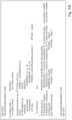
- the element is configured with the IEs as shown in Fig. 5A and taken from TS 38.331, (V15.5.1 (2019-04)).
- the CORESETs is configured with the IEs as shown in Fig. 5B and taken from TS 38.331, (V15.5.1 (2019-04)).
- the Search space of the CORESET are configured with the IEs as shown in Fig. 5C and taken from TS 38.331, (V15.5.1 (2019-04)). Particularly notice that in R15 Search space can be associated with only one CORESET.
- example embodiments are not limited to the above-described values.
- the techniques described in the following example embodiments could be applied equally well for 6 GHz unlicensed band scenario.
- a 15 kHz SCS can be considered. It supports 40 MHz BWP size with 4k FFT.
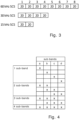
- Carrier bandwidth the NR carrier bandwidth, such as 40 MHz, 80 MHz or 160 MHz, see Fig. 3 described in the following.
- Sub-band one (or possibly multiple adjacent) channel(s) on an unlicensed carrier, typically having a bandwidth of 20 MHz. Sub-band is aligned with the bandwidth of single LBT.
- Fig. 3 shows possible carrier bandwidth capabilities for such scenario assuming 4k FFT, where each carrier bandwidth comprises multiple 20 MHz sub-bands. For the case of 8k FFT, the number of sub-bands supported double compared to Fig. 3 .
- a DL scenario is considered.
- gNB When operating according to NR-U scenario, gNB must perform LBT before it can start transmitting DL Tx burst in the cell.
- NR unlicensed should support per sub-band LBT, e.g. with 20 MHz resolution in 5 GHz unlicensed spectrum. This has already been agreed in RAN1#92bis (see agreement below). The practical implementation of sub-band LBT is beyond the scope of this description.
- LBT can be performed in units of 20 MHz. Details on how to perform LBT for as single carrier with bandwidth greater than 20 MHz, i.e., integer multiples of 20 MHz, are not specified yet.
- Fig. 4 shows possible transmission bandwidth combinations for gNB after sub-band specific LBT. This example assumes 80 MHz carrier bandwidth, and contiguous allocation of 20 MHz sub-bands, although non-contiguous combination of the channels could be allowed.
- the gNB may need to adjust the transmission bandwidth (Tx BW) configuration, including RF settings (center frequency, analog filters) in order to meet the regulatory rules defined for the out-of-band emissions.
- the gNB may decide on and perform the transmission bandwidth adaptation during the LBT process, although the details of gNB BW adaptation are outside of the scope of this description.
- the transmission bandwidth (TX BW) is defined as a specific term, namely as the part of the spectrum on which the gNB actually transmits after LBT and consequent COT or its parts.
- TX BW may be equal to the carrier BW or it is a portion of carrier BW (one or more sub-bands) based on the outcome of LBT.
- the number of supported CORESETs per BWP will need to be increased at least by a factor of two to 4-6 CORESETs, to be able to meaningfully operate with a 80MHz BWP.
- there are only 10 search spaces available per BWP (based on NR Rel-15 operation). Allowed number of search spaces would need to be increased as well (at least doubled).
- the increase of number of search spaces per BWP is not a good way to go, because it would increase significantly PDCCH candidate mapping algorithm complexity even further, please see TS38.213 end of section 10.1.
- the core of the issue is tackled and a DL control channel structure is proposed, where one search space can be mapped into multiple CORESETs within a BWP.
- COT means channel occupancy time.
- a starting point of the COT may be the start of the transmission of the PDCCH or other signal after LBT.
- the maximum duration of the COT may depend on regulatory rules.
- the actual duration of the COT may vary depending on the configuration and/or gNB scheduling.
- a gNB acquired COT may contain only DL portion, or it may cover both DL and UL.
- gNB acquired COT may contain single or multiple DL and UL portion(s). It is noted that some literature use the term "transmission opportunity (TXOP)" for a similar purpose of defining a time interval when the device (such as gNB) occupies the channel.
- TXOP transmission opportunity
- Some example embodiments of the present application aim to overcome the above problem.
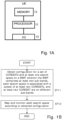
- Fig. 1A shows an UE 1 as an example for a first apparatus according to the present example embodiment.
- the invention is not limited to an UE, but can be any kind of terminal device.
- it can be also Mobile Termination (MT) part of a relay node (Integrated Access and Backhaul (IAB) node according to NR 3GPP terminology).
- Fig. 1B illustrates a process carried out by the UE 1.
- MT Mobile Termination
- IAB Integrated Access and Backhaul
- the UE 1 comprises at least one processor 11 and at least one memory 12 including computer program code.
- the at least one processor 11, with the at least one memory 12 and the computer program code, is configured to cause the apparatus to perform: obtaining (step ST11 in Fig. 1A ) a configuration for a set of control resource sets (e.g., CORESETs) and at least one search space on a bandwidth part, wherein the bandwidth part comprises at least two sub-bands, each search space is associated with a subset of at least two control resource sets, and at least two control resource sets are on a different sub-band, and mapping and monitoring (ST12 in Fig. 2a ) each search space according to the obtained configuration.
- control resource sets e.g., CORESETs
- mapping and monitoring ST12 in Fig. 2a
- Fig. 2A shows an gNB 2 as an example for a second apparatus according to the present example embodiment.
- the invention is not limited to an gNB, but can be any kind of network control device or element.
- it can be also Distributed Unit (DU) part of a relay node (IAB node according to NR 3GPP terminology).
- Fig. 1B illustrates a process carried out by the gNB 2.
- DU Distributed Unit
- the gNB 2 comprises at least one processor 21 and at least one memory 22 including computer program code.
- the at least one processor 21, with the at least one memory 22 and the computer program code, is configured to cause the apparatus to perform: preparing (ST21 in Fig. 2B ) a configuration for a set of control resource sets (e.g., CORESETs) and at least one search space on a bandwidth part, wherein the bandwidth part comprises at least two sub-bands, each search space is associated with a subset of at least two control resource sets, and at least two control resource sets are on different sub-bands, and sending (ST22 in Fig. 2B ) the configuration to a user equipment (e.g., UE 1 shown in Fig. 1A ).
- a user equipment e.g., UE 1 shown in Fig. 1A
- the UE 1 may further comprise an I/O unit 13, which is capable of transmitting to/receiving from the gNB 2 via a radio network.
- the gNB 2 may further comprise an I/O unit 23, which is capable of transmitting to/receiving from the UE 1 via the radio network, and may also be capable to provide a connection to a core network.
- a specific configuration of search space associated with CORSETs is provided, so that it is possible to enable one DL control signaling search space (SS) to be associated with multiple CORESETs.
- SS DL control signaling search space
- the gNB or the corresponding network control element may perform the following procedures:
- SS DL control signalling search space
- two mechanisms are proposed to enable adaptation of PDCCH capacity to a variable number of LBT sub-bands (that are used e.g. depending on a gNB's scheduling decisions and/or on the success of LBT) within the COT.
- the sub-band, on which a given search space is mapped based on configuration depends on the outcome of scheduling and/or LBT operation, i.e. which LBT sub-bands are in use.
- novel rules for such scheduling-dependent search space mapping are presented.
- the UE's method can be defined as follows: The UE receives a configuration for a set of CORESETs and for one or more search spaces on a (NR-U) BWP.
- each said search space is associated with a subset of one or more CORESETs belonging to the said set of CORESETs, where each associated CORESET is on a different LBT sub-band.
- the CORESETs that the search spaces are associated with may be ranked based on priority (i.e. primary, secondary, etc.).
- the UE determines LBT sub-bands within the transmission bandwidth of a gNB COT. This may be done e.g. based on indication received from the gNB (such as GC-PDCCH or unicast PDCCH), and/or by UE by blind detection DL DMRS (e.g. PDCCH DMRS).
- the search space carrying GC-PDCCH may be mapped to all associated CORESETs (one-to-all) that are transmitted. This will avoid a chicken-and-egg problem related to detection of GC-PDCCH or unicast PDCCH, before transmission BW is known to the UE.
- the UE determines on which of the one or more associated CORESETs to monitor each search space depending on the LBT sub-bands within the transmission bandwidth of the gNB COT. For this, the two following options 1 and 2 may be applied.
- the search space-to-CORESET association depends on the combination of LBT sub-bands that the gNB transmits.
- a given search space is monitored on the primary CORESET if gNB is transmitting on the primary CORESET's corresponding LBT sub-band; otherwise the search space is monitored on the secondary CORESET if gNB is transmitting on the secondary CORESET's corresponding LBT sub-band, etc.
- the UE monitors each search space only in one CORESET at given time.
- there is a number of associated CORESTs defined for certain search space (the number being smaller than the number of sub-bands of the BWP), e.g. the primary CORESET and the secondary CORESET. If these CORESETs are not available (due to LBT) then the related search space is dropped (i.e. not mapped, and not monitored by UE).
- a search space can be associated with multiple CORESETs.
- the search space is mapped to all associated CORESET's, if gNB is transmitting on the LBT sub-band corresponding to the CORESET, and/or if number of LBT sub-bands on which gNB transmits is equal to the value(s) of N configured for the search space.
- association and “mapping” as used in the present description are described.
- association and “mapping” as used in the present description are described.
- mapping depends on the CORESETs (and LBT-sub-bands) that are transmitted at a given point in time. That is, the association is semi-static or fixed, while mapping is dynamic (based on transmission of CORESETS at a given point in time).
- Control channel search space mapping is a procedure that involves determining which of the plurality of control channel candidates (i.e. the search spaces) may contain control information for a specific UE or group of UEs. A given UE is only expected to only monitor the mapped control channel candidates and search spaces.
- Both the gNB and the UE perform the mapping in the same way.
- search spaces it is noted that this term is in line with RAN2 terminology. However, it is noted that in RAN1 terminology, the same is defined as search-space sets. Example embodiments of the present application refer to both terms. Both terms cover scenarios with one or multiple aggregation levels per referred term.
- the search space-to-CORESET association depends on combination of LBT sub-bands that the gNB transmits.
- a UE would be configured for example with four search spaces and four CORESETs, where each CORESET is on a different LBT sub-band.
- CORESET#0 is located on LBT sub-band #0
- CORESET#1 is located on LBT sub-band#1, etc. This provides load balancing opportunities for gNB when mapping search spaces among different sub-bands.
- search space (SS) to CORESETs could be for example as follows: Primary associated CORESET Secondary associated CORESET Tertiary associated CORESET SS#0 CORESET #1 CORESET #2 CORESET #3 SS#1 CORESET #2 CORESET #1 CORESET #4 SS#2 CORESET #3 CORESET #4 CORESET #1 SS#3 CORESET #4 CORESET #3 CORESET #2
- the example shows for each search space (SS), the three CORESETs on which the search space can be mapped and transmitted. If the primary CORESET for a given SS is not transmitted, the SS is mapped onto the secondary associated CORESET, and if also the secondary associated CORESET is not transmitted, SS is mapped transmitted on the tertiary associated CORESET. If none of the CORESETs associated with a give SS are transmitted, CORESET is not mapped, i.e. is omitted or dropped.
- LBT is positive for LBT sub-band #1 (where CORESET#1 is), and LBT sub-band #3 (where CORESET#3 is), and gNB transmits on LBT sub-band#1 and #3, then SS#0 and SS#1 will be mapped to CORESET#1, and SS#2 and SS#3 will be mapped to CORESET#3.
- N [n_1, n_2, ...] are configured values of N for a search-space. Then, the UE maps the search-space "for monitoring" to a CORESET only if M equals to one of the configured values of N.
- a UE would be configured, for example, with three SS sets and four CORESETs, where each CORESET is located on a different LBT sub-band.
- CORESET#0 is located on LBT sub-band #0, CORESET#1 on LBT sub-band#1, etc. This provides adaptability of PDCCH candidate capacity to LBT outcome of BWP LBT sub-bands (the more sub-bands are available, the more PDCCH capacity is needed).
- a gNB may configure 2 PDCCH candidates per sub-band, and there would be 6 or 8 (depending on number of transmitted LBT sub-bands N) PDCCH candidates total for the UE if SS#0 is mapped.
- SS#1 may be configured with 4 PDCCH candidates, there would be 4 or 8 (depending on number of transmitted LBT sub-bands N) PDCCH candidates total. This enables adaptation of PDCCH capacity, and such enables frequency domain multiplexing of UEs within LBT sub-bands acquired by gNB in a particular COT or its part.
- associated CORESETs share a set of common parameters, e.g. such as TCI state(s) or CORESET length, the number of PRBs, DMRS strategy, interleaving strategy and/or REG bundle size.
- the only difference between the associated CORESETs may be the frequency domain location within the wideband BWP (in other words, each associated CORESET may locate on separate sub-bands).
- the sharing a set of common parameters may reduce configuration and implementation complexity.
- different Search spaces may use different PDCCH monitoring strategies. For example, a DCI carrying GC-PDCCH (indicating the LBT outcome) may be mapped to all sub-bands/associated CORESETs whereas dedicated search spaces may use option 1 or option 2 described above.
- option 1 allows load balancing for search spaces among different sub-bands.
- Option 1 and Option 2 provide adaptability of PDCCH candidate capacity to LBT outcome of BWP LBT sub-bands (the more sub-bands are available, the more PDCCH capacity is needed).
- Option 2 supports also one-to-all mapping.
- the solution according to the example embodiments is compatible to NR licensed, potentially with some restrictions on similarity of associated CORESET parameters.
- Names of network elements, protocols, and methods are based on current standards. In other versions or other technologies, the names of these network elements and/or protocols and/or methods may be different, as long as they provide a corresponding functionality.
- example embodiments may be implemented by computer software stored in the memory (memory resources, memory circuitry) 12, 22 and executable by the processor (processing resources, processing circuitry) 11, 21 or by hardware, or by a combination of software and/or firmware and hardware.
- circuitry refers to all of the following:
- circuitry applies to all uses of this term in this application, including in any claims.
- circuitry would also cover an implementation of merely a processor (or multiple processors) or portion of a processor and its (or their) accompanying software and/or firmware.
- circuitry would also cover, for example and if applicable to the particular claim element, a baseband integrated circuit or applications processor integrated circuit for a mobile phone or a similar integrated circuit in server, a cellular network device, or other network device.
- connection means any connection or coupling, either direct or indirect, between two or more elements, and may encompass the presence of one or more intermediate elements between two elements that are “connected” or “coupled” together.
- the coupling or connection between the elements can be physical, logical, or a combination thereof.
- two elements may be considered to be “connected” or “coupled” together by the use of one or more wires, cables and printed electrical connections, as well as by the use of electromagnetic energy, such as electromagnetic energy having wavelengths in the radio frequency region, the microwave region and the optical (both visible and invisible) region, as non-limiting examples.
- the memory (memory resources, memory circuitry) 12, 22 may be of any type suitable to the local technical environment and may be implemented using any suitable data storage technology, such as semiconductor based memory devices, magnetic memory devices and systems, optical memory devices and systems, fixed memory and removable memory, and non-transitory computer-readable media.
- the processor (processing resources, processing circuitry) 11, 21 may be of any type suitable to the local technical environment, and may include one or more of general purpose computers, special purpose computers, microprocessors, digital signal processors (DSPs) and processors based on a multi core processor architecture, as non-limiting examples.
Landscapes
- Engineering & Computer Science (AREA)
- Signal Processing (AREA)
- Computer Networks & Wireless Communication (AREA)
- Mobile Radio Communication Systems (AREA)
- Machine Translation (AREA)
Claims (15)
- Vorrichtung (1), die Folgendes umfasst
mindestens einen Prozessor (11) und mindestens einen Speicher (12), der Computerprogrammcode beinhaltet, wobei der mindestens eine Speicher und der Computerprogrammcode dazu ausgelegt sind, die Vorrichtung mit dem mindestens einen Prozessor zu veranlassen, mindestens Folgendes durchzuführen:Erhalten (ST11) einer Auslegung für einen Satz von Steuerressourcensätzen und mindestens einen Suchraum in einem Bandbreitenteil, wobei der Bandbreitenteil mindestens zwei Unterbänder umfasst, jeder Suchraum mit einem Untersatz von mindestens zwei Steuerressourcensätzen verknüpft ist und die mindestens zwei Steuerressourcensätze sich in verschiedenen Unterbändern befinden, undZuordnen und Überwachen (ST12) von jedem Suchraum gemäß der erhaltenen Auslegung. - Vorrichtung (1) nach Anspruch 1, wobei der mindestens eine Speicher (12) und der Computerprogrammcode dazu ausgelegt sind, die Vorrichtung mit dem mindestens einen Prozessor (11) zu veranlassen, ferner Folgendes durchzuführen:
separates Durchführen des Zuordnens und des Überwachens für jede Überwachungsgelegenheit des Suchraums für jede Kanalbelegungszeit. - Vorrichtung (1) nach Anspruch 1 oder 2, wobei der mindestens eine Speicher (12) und der Computerprogrammcode dazu ausgelegt sind, die Vorrichtung mit dem mindestens einen Prozessor (11) zu veranlassen, ferner Folgendes durchzuführen:
Bestimmen der Unterbänder in der Übertragungsbandbreite einer Kanalbelegungszeit eines Netzwerksteuerelements auf Basis einer Anzeige, die vom Netzwerksteuerelement empfangen wird, und/oder durch Detektieren eines Downlinkreferenzdemodulationssignals. - Vorrichtung (1) nach Anspruch 3, wobeidie vom Netzwerksteuerelement empfangene Anzeige ein für eine Gruppe gemeinsamer physischer Downlinksteuerkanal ist undder mindestens eine Speicher (12) und der Computerprogrammcode dazu ausgelegt sind, die Vorrichtung mit dem mindestens einen Prozessor (11) zu veranlassen, ferner Folgendes durchzuführen:
Zuordnen des Suchraums, in dem sich der für eine Gruppe gemeinsame physische Downlinksteuerkanal befindet, zu allen verknüpften Steuerressourcensätzen. - Vorrichtung (1) nach einem der Ansprüche 3 bis 4, wobei der mindestens eine Speicher (12) und der Computerprogrammcode dazu ausgelegt sind, die Vorrichtung mit dem mindestens einen Prozessor (11) zu veranlassen, ferner Folgendes durchzuführen:
Bestimmen in Abhängigkeit von den Unterbändern in der Übertragungsbandbreite einer Kanalbelegungszeit des Netzwerksteuerelements, in welchem des einen oder der mehreren verknüpften Steuerressourcensätze ein bestimmter Suchraum zuzuordnen und zu überwachen ist. - Vorrichtung (1) nach einem der Ansprüche 1 bis 5, wobei die Steuerressourcensätze, mit denen ein bestimmter Suchraum verknüpft ist, auf Basis einer Priorität eingestuft werden.
- Vorrichtung (1) nach Anspruch 6, wobeidie Verknüpfung des Suchraums mit den Steuerressourcensätzen von einer Kombination von Unterbändern abhängig ist, die vom Netzwerksteuerelement übertragen werden, undder mindestens eine Speicher (12) und der Computerprogrammcode dazu ausgelegt sind, die Vorrichtung mit dem mindestens einen Prozessor (11) zu veranlassen, ferner Folgendes durchzuführen:
Zuordnen eines bestimmten Suchraums zu einem Steuerressourcensatz mit der höchsten Priorität unter übertragenen verknüpften Steuerressourcensätzen. - Vorrichtung (1) nach Anspruch 7, wobeidie verknüpften Steuerressourcensätze für einen bestimmten Suchraum definiert werden und die Anzahl davon kleiner ist als die Anzahl von Unterbändern des Bandbreitenteils undder mindestens eine Speicher (12) und der Computerprogrammcode dazu ausgelegt sind, die Vorrichtung mit dem mindestens einen Prozessor (11) zu veranlassen, ferner Folgendes durchzuführen:
Trennen des bestimmten Suchraums, wenn diese Steuerressourcensätze nicht verfügbar sind. - Vorrichtung (1) nach Anspruch 5, wobeiein Suchraum mit mehreren Steuerressourcensätzen verknüpft ist undder mindestens eine Speicher (12) und der Computerprogrammcode dazu ausgelegt sind, die Vorrichtung mit dem mindestens einen Prozessor (11) zu veranlassen, ferner Folgendes durchzuführen:
Zuordnen und Überwachen des Suchraums in allen verknüpften Steuerressourcensätzen, wenn das Netzwerksteuerelement auf dem Unterband überträgt, das dem Steuerressourcensatz entspricht, und/oder wenn die Anzahl der Unterbänder, auf denen das Netzwerksteuerelement überträgt, gleich einer der Anzahlen ist, die für den Suchraum ausgelegt sind, oder gleich der Anzahl ist, die für den Suchraum ausgelegt ist. - Vorrichtung (2), die Folgendes umfasst
mindestens einen Prozessor (21) und mindestens einen Speicher (22), der Computerprogrammcode beinhaltet, wobei der mindestens eine Speicher und der Computerprogrammcode dazu ausgelegt sind, die Vorrichtung mit dem mindestens einen Prozessor zu veranlassen, mindestens Folgendes durchzuführen:Vorbereiten (ST21) einer Auslegung für einen Satz von Steuerressourcensätzen und mindestens einen Suchraum in einem Bandbreitenteil, wobei der Bandbreitenteil mindestens zwei Unterbänder umfasst, jeder Suchraum mit einem Untersatz von mindestens zwei Steuerressourcensätzen verknüpft ist und die mindestens zwei Steuerressourcensätze sich in verschiedenen Unterbändern befinden, undSenden (ST22) der Auslegung an eine Teilnehmereinrichtung (1) . - Vorrichtung (2) nach Anspruch 10, wobei der mindestens eine Speicher (22) und der Computerprogrammcode dazu ausgelegt sind, die Vorrichtung mit dem mindestens einen Prozessor (21) zu veranlassen, ferner Folgendes durchzuführen:Detektieren, ob ein Kanal frei ist,Bestimmen, dass eine Kanalbelegungszeit begonnen hat, wenn detektiert wird, dass ein Kanal für mindestens ein Unterband frei ist,Bestimmen einer Übertragungsbandbreite für die aktuelle Kanalbelegungszeit,Bestimmen einer Verknüpfung zwischen Suchraum und Steuerressourcensatz für mindestens einen Suchraum und die Teilnehmereinrichtung undÜbertragen von mindestens einem physischen Downlinksteuerkanal für die Teilnehmereinrichtung auf Basis der bestimmten Verknüpfung zwischen Suchraum und Steuerressourcensatz.
- Vorrichtung (2) nach Anspruch 10 oder 11, wobei die Steuerressourcensätze, mit denen die Suchräume verknüpft sind, auf Basis einer Priorität eingestuft werden.
- Verfahren, das Folgendes umfasst:Erhalten (S11) einer Auslegung für einen Satz von Steuerressourcensätzen und mindestens einen Suchraum in einem Bandbreitenteil an einer Teilnehmereinrichtung (1), wobei der Bandbreitenteil mindestens zwei Unterbänder umfasst, jeder Suchraum mit einem Untersatz von mindestens zwei Steuerressourcensätzen verknüpft ist und die mindestens zwei Steuerressourcensätze sich in verschiedenen Unterbändern befinden, undZuordnen und Überwachen (ST12) von jedem Suchraum gemäß der erhaltenen Auslegung.
- Verfahren, das Folgendes umfasstVorbereiten (ST21) einer Auslegung für einen Satz von Steuerressourcensätzen und mindestens einen Suchraum in einem Bandbreitenteil in einem Netzwerksteuerelement, wobei der Bandbreitenteil mindestens zwei Unterbänder umfasst, jeder Suchraum mit einem Untersatz von mindestens zwei Steuerressourcensätzen verknüpft ist und die mindestens zwei Steuerressourcensätze sich in verschiedenen Unterbändern befinden, undSenden (ST22) der Auslegung an eine Teilnehmereinrichtung (1) .
- Computerprogrammprodukt, das Codemittel zum Durchführen eines Verfahrens nach einem der Ansprüche 13 bis 14, wenn es auf einem Verarbeitungsmittel (11,21) oder einem Modul ausgeführt wird, umfasst.
Priority Applications (1)
| Application Number | Priority Date | Filing Date | Title |
|---|---|---|---|
| PL19722587.3T PL3963787T3 (pl) | 2019-05-03 | 2019-05-03 | Projektowanie przestrzeni wyszukiwania dla operacji nr-u wb |
Applications Claiming Priority (1)
| Application Number | Priority Date | Filing Date | Title |
|---|---|---|---|
| PCT/EP2019/061430 WO2020224749A1 (en) | 2019-05-03 | 2019-05-03 | Search space design for nr-u wb operations |
Publications (3)
| Publication Number | Publication Date |
|---|---|
| EP3963787A1 EP3963787A1 (de) | 2022-03-09 |
| EP3963787C0 EP3963787C0 (de) | 2024-04-10 |
| EP3963787B1 true EP3963787B1 (de) | 2024-04-10 |
Family
ID=66440045
Family Applications (1)
| Application Number | Title | Priority Date | Filing Date |
|---|---|---|---|
| EP19722587.3A Active EP3963787B1 (de) | 2019-05-03 | 2019-05-03 | Suchraumdesign für nr-u-wb-operationen |
Country Status (6)
| Country | Link |
|---|---|
| US (1) | US12526113B2 (de) |
| EP (1) | EP3963787B1 (de) |
| CN (1) | CN114073030B (de) |
| ES (1) | ES2980997T3 (de) |
| PL (1) | PL3963787T3 (de) |
| WO (1) | WO2020224749A1 (de) |
Families Citing this family (4)
| Publication number | Priority date | Publication date | Assignee | Title |
|---|---|---|---|---|
| JP7197014B2 (ja) * | 2019-07-24 | 2022-12-27 | 日本電信電話株式会社 | 帯域共用通信システム、回線制御方法、回線制御装置および回線制御プログラム |
| US20210058970A1 (en) * | 2019-11-08 | 2021-02-25 | Intel Corporation | Mechanisms to operate on a downlink wideband carrier in unlicensed band |
| US11855836B2 (en) * | 2020-01-31 | 2023-12-26 | Qualcomm Incorporated | Indicating user equipment capability for beam failure detection |
| CN116709543A (zh) * | 2022-03-04 | 2023-09-05 | 北京三星通信技术研究有限公司 | 一种终端进行下行控制信道检测的方法 |
Family Cites Families (17)
| Publication number | Priority date | Publication date | Assignee | Title |
|---|---|---|---|---|
| US20100254329A1 (en) | 2009-03-13 | 2010-10-07 | Interdigital Patent Holdings, Inc. | Uplink grant, downlink assignment and search space method and apparatus in carrier aggregation |
| CA2765513C (en) | 2009-06-16 | 2015-08-11 | Huawei Technologies Co., Ltd. | Method and apparatus for mapping and detecting control channel |
| US20110069637A1 (en) | 2009-09-18 | 2011-03-24 | Futurewei Technologies, Inc. | System and Method for Control Channel Search Space Location Indication for a Relay Backhaul Link |
| EP3972182A1 (de) * | 2011-05-03 | 2022-03-23 | Telefonaktiebolaget LM Ericsson (publ) | Suchbereichsbasierte steuerkanalüberwachung |
| US10079658B2 (en) * | 2011-11-04 | 2018-09-18 | Qualcomm Incorporated | Search space design for e-PDCCH in wireless communication networks |
| US9054843B2 (en) * | 2012-01-30 | 2015-06-09 | Nokia Solutions And Networks Oy | Search space arrangement for control channel |
| US10791548B2 (en) * | 2016-05-02 | 2020-09-29 | Qualcomm Incorporated | Search space design for control channel in wireless communication |
| CN108633052B (zh) * | 2017-03-24 | 2023-09-26 | 中兴通讯股份有限公司 | 一种资源配置方法、装置和设备 |
| CN109151833B (zh) * | 2017-06-16 | 2020-07-21 | 华为技术有限公司 | 传输控制信息的方法和装置 |
| CN109391971B (zh) * | 2017-08-11 | 2020-08-18 | 维沃移动通信有限公司 | 一种pdcch的搜索空间的配置、监听方法及设备 |
| JP7085868B2 (ja) * | 2018-03-15 | 2022-06-17 | シャープ株式会社 | 端末装置、基地局装置、および、通信方法 |
| CN119922729A (zh) * | 2018-09-27 | 2025-05-02 | 交互数字专利控股公司 | 新无线电的未经许可的频谱中的子频带操作 |
| DE112019005481T5 (de) * | 2018-11-02 | 2021-08-12 | Lg Electronics Inc. | Verfahren und vorrichtung für drahtlossignalübertragung oder -empfang in einem drahtloskommunikationssystem |
| US12289730B2 (en) * | 2018-12-18 | 2025-04-29 | Google Llc | Resource allocation in unlicensed bandwidth part |
| US12127210B2 (en) * | 2019-01-10 | 2024-10-22 | Lg Electronics Inc. | Method for transmitting and receiving downlink control information between terminal and base station in wireless communication system and device for supporting same |
| EP3884607B1 (de) * | 2019-01-11 | 2025-07-09 | Apple Inc. | Systeme und verfahren zur auswahl von kandidaten für einen physikalischen downlink-steuerungskanal |
| WO2020171478A1 (ko) * | 2019-02-22 | 2020-08-27 | 한국전자통신연구원 | 통신 시스템에서 가변 대역폭을 사용하여 신호를 송수신하는 방법 및 장치 |
-
2019
- 2019-05-03 US US17/607,439 patent/US12526113B2/en active Active
- 2019-05-03 ES ES19722587T patent/ES2980997T3/es active Active
- 2019-05-03 EP EP19722587.3A patent/EP3963787B1/de active Active
- 2019-05-03 PL PL19722587.3T patent/PL3963787T3/pl unknown
- 2019-05-03 CN CN201980098091.8A patent/CN114073030B/zh active Active
- 2019-05-03 WO PCT/EP2019/061430 patent/WO2020224749A1/en not_active Ceased
Also Published As
| Publication number | Publication date |
|---|---|
| EP3963787A1 (de) | 2022-03-09 |
| EP3963787C0 (de) | 2024-04-10 |
| WO2020224749A1 (en) | 2020-11-12 |
| CN114073030B (zh) | 2024-06-21 |
| CN114073030A (zh) | 2022-02-18 |
| US20220209919A1 (en) | 2022-06-30 |
| US12526113B2 (en) | 2026-01-13 |
| ES2980997T3 (es) | 2024-10-04 |
| PL3963787T3 (pl) | 2024-06-03 |
Similar Documents
| Publication | Publication Date | Title |
|---|---|---|
| US11528090B2 (en) | Parameter determining method, monitoring method, and communications apparatus | |
| CN112189353B (zh) | 用于对新无线电可用的未许可频带的宽带pdcch | |
| CN110603877B (zh) | 单载波宽带操作的带宽部分配置 | |
| US9276710B2 (en) | Method and apparatus for resource allocation with carrier extension | |
| EP2584853B1 (de) | Erkennung einer Abwärtssteuerungsstruktur zur Trägeraggregation | |
| JP7379475B2 (ja) | アンライセンスサブバンドのダウンリンク制御 | |
| TWI816065B (zh) | 供無線通訊系統中的使用者設備使用的方法、無線通訊系統中的使用者設備及供無線通訊系統中的基地台使用的方法 | |
| WO2020029945A1 (zh) | 确定载波聚合下监控pdcch候选数目的方法和装置 | |
| EP3963787B1 (de) | Suchraumdesign für nr-u-wb-operationen | |
| JP7798386B2 (ja) | 無線通信システムにおいて上りリンク/下りリンク送信を行う方法及びそのための装置 | |
| CN114337965A (zh) | 用于灵活资源使用的方法 | |
| US12349087B2 (en) | Managing potential collision between uplink transmission and synchronization signal block (SSB) | |
| KR20110081070A (ko) | 복수의 컴포넌트 캐리어를 지원하는 무선통신 시스템에서 크로스-캐리어 스케쥴링을 통한 데이터 전송 방법 및 장치 | |
| US20220256601A1 (en) | Terminal | |
| US20240040429A1 (en) | Method and apparatus for dci size for multi-cell scheduling | |
| EP3857775B1 (de) | Burst-detektion in der drahtlosen kommunikation | |
| EP3531767B1 (de) | Trägerzeitplanungsverfahren und -vorrichtung | |
| CN118945848A (zh) | 通信方法和通信装置 | |
| HK40057800B (en) | Downlink control of unlicensed sub-bands | |
| HK40057800A (en) | Downlink control of unlicensed sub-bands |
Legal Events
| Date | Code | Title | Description |
|---|---|---|---|
| STAA | Information on the status of an ep patent application or granted ep patent |
Free format text: STATUS: UNKNOWN |
|
| STAA | Information on the status of an ep patent application or granted ep patent |
Free format text: STATUS: THE INTERNATIONAL PUBLICATION HAS BEEN MADE |
|
| PUAI | Public reference made under article 153(3) epc to a published international application that has entered the european phase |
Free format text: ORIGINAL CODE: 0009012 |
|
| STAA | Information on the status of an ep patent application or granted ep patent |
Free format text: STATUS: REQUEST FOR EXAMINATION WAS MADE |
|
| 17P | Request for examination filed |
Effective date: 20211203 |
|
| AK | Designated contracting states |
Kind code of ref document: A1 Designated state(s): AL AT BE BG CH CY CZ DE DK EE ES FI FR GB GR HR HU IE IS IT LI LT LU LV MC MK MT NL NO PL PT RO RS SE SI SK SM TR |
|
| DAV | Request for validation of the european patent (deleted) | ||
| DAX | Request for extension of the european patent (deleted) | ||
| STAA | Information on the status of an ep patent application or granted ep patent |
Free format text: STATUS: EXAMINATION IS IN PROGRESS |
|
| 17Q | First examination report despatched |
Effective date: 20230403 |
|
| GRAP | Despatch of communication of intention to grant a patent |
Free format text: ORIGINAL CODE: EPIDOSNIGR1 |
|
| STAA | Information on the status of an ep patent application or granted ep patent |
Free format text: STATUS: GRANT OF PATENT IS INTENDED |
|
| INTG | Intention to grant announced |
Effective date: 20231030 |
|
| GRAS | Grant fee paid |
Free format text: ORIGINAL CODE: EPIDOSNIGR3 |
|
| GRAA | (expected) grant |
Free format text: ORIGINAL CODE: 0009210 |
|
| STAA | Information on the status of an ep patent application or granted ep patent |
Free format text: STATUS: THE PATENT HAS BEEN GRANTED |
|
| AK | Designated contracting states |
Kind code of ref document: B1 Designated state(s): AL AT BE BG CH CY CZ DE DK EE ES FI FR GB GR HR HU IE IS IT LI LT LU LV MC MK MT NL NO PL PT RO RS SE SI SK SM TR |
|
| REG | Reference to a national code |
Ref country code: GB Ref legal event code: FG4D |
|
| REG | Reference to a national code |
Ref country code: CH Ref legal event code: EP |
|
| REG | Reference to a national code |
Ref country code: DE Ref legal event code: R096 Ref document number: 602019049966 Country of ref document: DE |
|
| REG | Reference to a national code |
Ref country code: IE Ref legal event code: FG4D |
|
| U01 | Request for unitary effect filed |
Effective date: 20240410 |
|
| U07 | Unitary effect registered |
Designated state(s): AT BE BG DE DK EE FI FR IT LT LU LV MT NL PT SE SI Effective date: 20240416 |
|
| U20 | Renewal fee for the european patent with unitary effect paid |
Year of fee payment: 6 Effective date: 20240419 |
|
| REG | Reference to a national code |
Ref country code: GR Ref legal event code: EP Ref document number: 20240401251 Country of ref document: GR Effective date: 20240716 |
|
| REG | Reference to a national code |
Ref country code: ES Ref legal event code: FG2A Ref document number: 2980997 Country of ref document: ES Kind code of ref document: T3 Effective date: 20241004 |
|
| PG25 | Lapsed in a contracting state [announced via postgrant information from national office to epo] |
Ref country code: IS Free format text: LAPSE BECAUSE OF FAILURE TO SUBMIT A TRANSLATION OF THE DESCRIPTION OR TO PAY THE FEE WITHIN THE PRESCRIBED TIME-LIMIT Effective date: 20240810 |
|
| PG25 | Lapsed in a contracting state [announced via postgrant information from national office to epo] |
Ref country code: HR Free format text: LAPSE BECAUSE OF FAILURE TO SUBMIT A TRANSLATION OF THE DESCRIPTION OR TO PAY THE FEE WITHIN THE PRESCRIBED TIME-LIMIT Effective date: 20240410 |
|
| PG25 | Lapsed in a contracting state [announced via postgrant information from national office to epo] |
Ref country code: NO Free format text: LAPSE BECAUSE OF FAILURE TO SUBMIT A TRANSLATION OF THE DESCRIPTION OR TO PAY THE FEE WITHIN THE PRESCRIBED TIME-LIMIT Effective date: 20240710 Ref country code: IS Free format text: LAPSE BECAUSE OF FAILURE TO SUBMIT A TRANSLATION OF THE DESCRIPTION OR TO PAY THE FEE WITHIN THE PRESCRIBED TIME-LIMIT Effective date: 20240810 Ref country code: HR Free format text: LAPSE BECAUSE OF FAILURE TO SUBMIT A TRANSLATION OF THE DESCRIPTION OR TO PAY THE FEE WITHIN THE PRESCRIBED TIME-LIMIT Effective date: 20240410 Ref country code: RS Free format text: LAPSE BECAUSE OF FAILURE TO SUBMIT A TRANSLATION OF THE DESCRIPTION OR TO PAY THE FEE WITHIN THE PRESCRIBED TIME-LIMIT Effective date: 20240710 |
|
| REG | Reference to a national code |
Ref country code: CH Ref legal event code: PL |
|
| REG | Reference to a national code |
Ref country code: DE Ref legal event code: R097 Ref document number: 602019049966 Country of ref document: DE |
|
| PG25 | Lapsed in a contracting state [announced via postgrant information from national office to epo] |
Ref country code: SK Free format text: LAPSE BECAUSE OF FAILURE TO SUBMIT A TRANSLATION OF THE DESCRIPTION OR TO PAY THE FEE WITHIN THE PRESCRIBED TIME-LIMIT Effective date: 20240410 Ref country code: RO Free format text: LAPSE BECAUSE OF FAILURE TO SUBMIT A TRANSLATION OF THE DESCRIPTION OR TO PAY THE FEE WITHIN THE PRESCRIBED TIME-LIMIT Effective date: 20240410 |
|
| PG25 | Lapsed in a contracting state [announced via postgrant information from national office to epo] |
Ref country code: SM Free format text: LAPSE BECAUSE OF FAILURE TO SUBMIT A TRANSLATION OF THE DESCRIPTION OR TO PAY THE FEE WITHIN THE PRESCRIBED TIME-LIMIT Effective date: 20240410 |
|
| PG25 | Lapsed in a contracting state [announced via postgrant information from national office to epo] |
Ref country code: SM Free format text: LAPSE BECAUSE OF FAILURE TO SUBMIT A TRANSLATION OF THE DESCRIPTION OR TO PAY THE FEE WITHIN THE PRESCRIBED TIME-LIMIT Effective date: 20240410 Ref country code: SK Free format text: LAPSE BECAUSE OF FAILURE TO SUBMIT A TRANSLATION OF THE DESCRIPTION OR TO PAY THE FEE WITHIN THE PRESCRIBED TIME-LIMIT Effective date: 20240410 Ref country code: RO Free format text: LAPSE BECAUSE OF FAILURE TO SUBMIT A TRANSLATION OF THE DESCRIPTION OR TO PAY THE FEE WITHIN THE PRESCRIBED TIME-LIMIT Effective date: 20240410 Ref country code: CH Free format text: LAPSE BECAUSE OF NON-PAYMENT OF DUE FEES Effective date: 20240531 Ref country code: MC Free format text: LAPSE BECAUSE OF FAILURE TO SUBMIT A TRANSLATION OF THE DESCRIPTION OR TO PAY THE FEE WITHIN THE PRESCRIBED TIME-LIMIT Effective date: 20240410 |
|
| PLBE | No opposition filed within time limit |
Free format text: ORIGINAL CODE: 0009261 |
|
| STAA | Information on the status of an ep patent application or granted ep patent |
Free format text: STATUS: NO OPPOSITION FILED WITHIN TIME LIMIT |
|
| 26N | No opposition filed |
Effective date: 20250113 |
|
| PG25 | Lapsed in a contracting state [announced via postgrant information from national office to epo] |
Ref country code: IE Free format text: LAPSE BECAUSE OF NON-PAYMENT OF DUE FEES Effective date: 20240503 |
|
| U20 | Renewal fee for the european patent with unitary effect paid |
Year of fee payment: 7 Effective date: 20250407 |
|
| PGFP | Annual fee paid to national office [announced via postgrant information from national office to epo] |
Ref country code: PL Payment date: 20250407 Year of fee payment: 7 |
|
| PGFP | Annual fee paid to national office [announced via postgrant information from national office to epo] |
Ref country code: GB Payment date: 20250401 Year of fee payment: 7 Ref country code: ES Payment date: 20250605 Year of fee payment: 7 |
|
| PGFP | Annual fee paid to national office [announced via postgrant information from national office to epo] |
Ref country code: GR Payment date: 20250416 Year of fee payment: 7 |
|
| PGFP | Annual fee paid to national office [announced via postgrant information from national office to epo] |
Ref country code: TR Payment date: 20250424 Year of fee payment: 7 |
|
| PGFP | Annual fee paid to national office [announced via postgrant information from national office to epo] |
Ref country code: CZ Payment date: 20250423 Year of fee payment: 7 |
|
| PG25 | Lapsed in a contracting state [announced via postgrant information from national office to epo] |
Ref country code: CY Free format text: LAPSE BECAUSE OF FAILURE TO SUBMIT A TRANSLATION OF THE DESCRIPTION OR TO PAY THE FEE WITHIN THE PRESCRIBED TIME-LIMIT; INVALID AB INITIO Effective date: 20190503 |
|
| PG25 | Lapsed in a contracting state [announced via postgrant information from national office to epo] |
Ref country code: HU Free format text: LAPSE BECAUSE OF FAILURE TO SUBMIT A TRANSLATION OF THE DESCRIPTION OR TO PAY THE FEE WITHIN THE PRESCRIBED TIME-LIMIT; INVALID AB INITIO Effective date: 20190503 |