EP3963469B1 - Lernendes ressourcenverbrauchsmodell zur optimierung von big-data-abfragen - Google Patents
Lernendes ressourcenverbrauchsmodell zur optimierung von big-data-abfragen Download PDFInfo
- Publication number
- EP3963469B1 EP3963469B1 EP20720888.5A EP20720888A EP3963469B1 EP 3963469 B1 EP3963469 B1 EP 3963469B1 EP 20720888 A EP20720888 A EP 20720888A EP 3963469 B1 EP3963469 B1 EP 3963469B1
- Authority
- EP
- European Patent Office
- Prior art keywords
- operator
- query
- resource consumption
- model
- models
- Prior art date
- Legal status (The legal status is an assumption and is not a legal conclusion. Google has not performed a legal analysis and makes no representation as to the accuracy of the status listed.)
- Active
Links
Images


Classifications
-
- G—PHYSICS
- G06—COMPUTING OR CALCULATING; COUNTING
- G06F—ELECTRIC DIGITAL DATA PROCESSING
- G06F16/00—Information retrieval; Database structures therefor; File system structures therefor
- G06F16/20—Information retrieval; Database structures therefor; File system structures therefor of structured data, e.g. relational data
- G06F16/24—Querying
- G06F16/245—Query processing
- G06F16/2453—Query optimisation
- G06F16/24534—Query rewriting; Transformation
- G06F16/24542—Plan optimisation
-
- G—PHYSICS
- G06—COMPUTING OR CALCULATING; COUNTING
- G06F—ELECTRIC DIGITAL DATA PROCESSING
- G06F16/00—Information retrieval; Database structures therefor; File system structures therefor
- G06F16/20—Information retrieval; Database structures therefor; File system structures therefor of structured data, e.g. relational data
- G06F16/21—Design, administration or maintenance of databases
- G06F16/211—Schema design and management
-
- G—PHYSICS
- G06—COMPUTING OR CALCULATING; COUNTING
- G06F—ELECTRIC DIGITAL DATA PROCESSING
- G06F16/00—Information retrieval; Database structures therefor; File system structures therefor
- G06F16/20—Information retrieval; Database structures therefor; File system structures therefor of structured data, e.g. relational data
- G06F16/22—Indexing; Data structures therefor; Storage structures
- G06F16/2228—Indexing structures
- G06F16/2246—Trees, e.g. B+trees
-
- G—PHYSICS
- G06—COMPUTING OR CALCULATING; COUNTING
- G06N—COMPUTING ARRANGEMENTS BASED ON SPECIFIC COMPUTATIONAL MODELS
- G06N20/00—Machine learning
- G06N20/10—Machine learning using kernel methods, e.g. support vector machines [SVM]
-
- G—PHYSICS
- G06—COMPUTING OR CALCULATING; COUNTING
- G06N—COMPUTING ARRANGEMENTS BASED ON SPECIFIC COMPUTATIONAL MODELS
- G06N20/00—Machine learning
- G06N20/20—Ensemble learning
-
- G—PHYSICS
- G06—COMPUTING OR CALCULATING; COUNTING
- G06N—COMPUTING ARRANGEMENTS BASED ON SPECIFIC COMPUTATIONAL MODELS
- G06N3/00—Computing arrangements based on biological models
- G06N3/02—Neural networks
- G06N3/08—Learning methods
-
- G—PHYSICS
- G06—COMPUTING OR CALCULATING; COUNTING
- G06N—COMPUTING ARRANGEMENTS BASED ON SPECIFIC COMPUTATIONAL MODELS
- G06N3/00—Computing arrangements based on biological models
- G06N3/02—Neural networks
- G06N3/08—Learning methods
- G06N3/09—Supervised learning
-
- G—PHYSICS
- G06—COMPUTING OR CALCULATING; COUNTING
- G06N—COMPUTING ARRANGEMENTS BASED ON SPECIFIC COMPUTATIONAL MODELS
- G06N5/00—Computing arrangements using knowledge-based models
- G06N5/01—Dynamic search techniques; Heuristics; Dynamic trees; Branch-and-bound
-
- G—PHYSICS
- G06—COMPUTING OR CALCULATING; COUNTING
- G06F—ELECTRIC DIGITAL DATA PROCESSING
- G06F16/00—Information retrieval; Database structures therefor; File system structures therefor
- G06F16/20—Information retrieval; Database structures therefor; File system structures therefor of structured data, e.g. relational data
- G06F16/24—Querying
- G06F16/245—Query processing
- G06F16/2453—Query optimisation
- G06F16/24534—Query rewriting; Transformation
- G06F16/24537—Query rewriting; Transformation of operators
Definitions
- a cost-based query optimizer is a crucial component for massively parallel big data infrastructures, where improvement in execution plans can potentially lead to better performance and resource efficiency.
- the core of a cost-based optimizer uses a cost model to predict the latency of operators and picks the plan with the cheapest overall resource consumption (e.g., the time required to execute the query).
- cost modeling is becoming challenging for several reasons. First, the complexity of big data systems coupled with the variance in cloud environments makes cost modeling incredibly difficult, as inaccurate cost estimates can easily produce execution plans with significantly poor performance. Second, any improvements in cost estimates need to be consistent across workloads and over time, which makes cost tuning more difficult since performance spikes are detrimental to the reliability expectations of cloud customers. Finally, reducing total cost of operations is crucial in cloud environments, especially when cloud resources for carrying out the execution plan could be provisioned dynamically and on demand.
- Prior approaches have used machine learning for performance prediction of queries over centralized databases, i.e., given a fixed query plan from the query optimizer, their goal is to predict a resource consumption (e.g., execution time) correctly.
- resource consumption e.g., execution time
- many of these techniques are external to the query optimizer.
- feedback may be provided to the query optimizer for more accurate statistics, and deep learning techniques may be implemented for exploring optimal join orders.
- accurately modeling the runtime behavior of physical operators remains a major challenge.
- Other works have improved plan robustness by working around inaccurate cost estimates, e.g., information passing, re-optimization, and using multiple plans. Unfortunately, most of these are difficult to employ with minimal cost and time overheads in a production cloud environment.
- US 2018/060389 A1 describes that a system includes reception of a database query, determination of a first logical query execution plan to execute the database query over a plurality of heterogeneous execution engines, selection of a first logical operator of a first operation level of the first logical query execution plan, identification of a first one or more physical operators corresponding to the first logical operator and an output format of each of the first one or more physical operators.
- references in the specification to "one embodiment,” “an embodiment,” “an example embodiment,” etc., indicate that the embodiment described may include a particular feature, structure, or characteristic, but every embodiment may not necessarily include the particular feature, structure, or characteristic. Moreover, such phrases are not necessarily referring to the same embodiment. Further, when a particular feature, structure, or characteristic is described in connection with an example embodiment, it is submitted that it is within the knowledge of one skilled in the art to effect such feature, structure, or characteristic in connection with other embodiments whether or not explicitly described.
- adjectives such as “substantially” and “about” modifying a condition or relationship characteristic of a feature or features of an example embodiment of the disclosure are understood to mean that the condition or characteristic is defined to within tolerances that are acceptable for operation of the embodiment for an application for which it is intended.
- a cost-based query optimizer is a crucial component for massively parallel big data infrastructures, where improvement in execution plans can potentially lead to better performance and resource efficiency.
- the core of a cost-based optimizer uses a cost model to predict the latency of operators and picks the plan with the cheapest overall resource consumption (e.g., the time required to execute the query).
- cost modeling is becoming challenging for several reasons. First, the complexity of big data systems coupled with the variance in cloud environments makes cost modeling incredibly difficult, as inaccurate cost estimates can easily produce execution plans with significantly poor performance. Second, any improvements in cost estimates need to be consistent across workloads and over time, which makes cost tuning more difficult since performance spikes are detrimental to the reliability expectations of cloud customers. Finally, reducing total cost of operations is crucial in cloud environments, especially when cloud resources for carrying out the execution plan could be provisioned dynamically and on demand.
- a logical operator determiner may determine to determine a logical operator representation of a query to be executed.
- a physical operator determiner may transform the logical operator representation to a plurality of different physical operator representations for executing the query.
- a resource consumption evaluator may to apply a plurality of resource consumption models to determine a resource consumption estimate for each of the physical operator representations.
- the plurality of resource consumption models may be trained based at least on a history of query executions.
- Each of the resource consumption models may be trained in different manners, such that each model may have different granularity, coverage, and/or accuracy characteristics in estimating a resource consumption of a query.
- a query plan selector may select a particular one of the physical operator representations.
- Evaluating a resource consumption of a query in this manner has numerous advantages, including reducing the resources utilized to execute a query. For instance, by estimating the resource consumption of different physical operator representations for a query to be executed using a plurality of different models, the resource consumption estimates may be determined in a more accurate fashion, enabling a query optimizer to select a particular physical operator representation that utilizes resources in the most efficient manner (e.g., based on the speed at which the query may be executed, the volume of computing resources used to execute the query, etc.). Furthermore, as described in greater detail below, the physical operator representations may also include a partition count associated with each such representation, enabling the query optimizer to take the available resources into account when selecting the appropriate representation to execute the query. In this manner, computing resources may be taken into account during optimization itself, enabling such resources (whether locally or distributed across a plurality of machines) to be utilized more efficiently.
- resource consumption models may be trained using learning-based techniques from past workloads which may be fed into a query optimizer during optimization.
- learning-based techniques may be employed that harness the vast cloud workloads to learn both accurate and widely applicable resource consumption models based on historical query runtime behaviors.
- the disclosed techniques entail the learning of a large number of specialized models at varying levels of granularity, accuracy and coverage in a mutually enhancing fashion.
- the disclosed techniques further learn a meta-ensemble model that combines and corrects the predictions from multiple specialized models to provide both high accuracy and high coverage in determining resource consumption estimates.
- the learned resource consumption models may be integrated within a big data system.
- the integrated optimizer can leverage learned models not only for resource consumption estimation, but also for efficiently finding the optimal resources, which in many instances can be important for reducing operational costs in cloud environments.
- experimental evaluation of the disclosed system demonstrates that the disclosed techniques improve the accuracy of the resource consumption estimates. For instance, it has been observed in some situations that the resource consumption estimates determined by applying the learned resource consumption models may be several orders of magnitude more accurate than other approaches, more correlated with accrual runtimes, and result in both improved latency and resource usage.
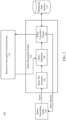
- FIG. 1 shows a block diagram of a system 100 for executing a query plan.
- system 100 includes a query processing system 102, a query-generating entity 104, one or more relational data store(s) 112, and a resource consumption learning system 114.
- query processing system 102 includes a query pre-processor 106, a query optimizer 108, a query execution engine 110. It is noted that system 100 is described herein merely by way of example only.
- system 100 may comprise any number of entities (e.g., computing devices and/or servers or other entities), including those illustrated in FIG. 1 and optionally one or more further devices not expressly illustrated, coupled in any manner.
- entities e.g., computing devices and/or servers or other entities
- query processing system 102 relational data store(s) 112, and resource consumption learning system 114 are shown separate from each other, any one or more of such components (or subcomponents) may be co-located, located remote from each other, may be implemented on a single computing device or server, or may be implemented on or distributed across one or more additional computing devices not expressly illustrated in FIG. 1 .
- System 100 is further described as follows.
- one or more of query processing system 102, query-generating entity 104, relational data store(s) 112, and/or resource consumption learning system 114 may be communicatively coupled via one or more networks, not shown.
- Such networks may include one or more of any of a local area network (LAN), a wide area network (WAN), a personal area network (PAN), a combination of communication networks, such as the Internet, and/or a virtual network.
- any one or more of query processing system 102, query-generating entity 104, relational data store(s) 112, and/or resource consumption learning system 114 may communicate via one or more application programming interfaces (API), network calls, and/or according to other interfaces and/or techniques.
- API application programming interfaces
- Query processing system 102, query-generating entity 104, relational data store(s) 112, and/or resource consumption learning system 114 may each include at least one network interface that enables communications with each other.
- Examples of such a network interface, wired or wireless include an IEEE 802.11 wireless LAN (WLAN) wireless interface, a Worldwide Interoperability for Microwave Access (Wi-MAX) interface, an Ethernet interface, a Universal Serial Bus (USB) interface, a cellular network interface, a Bluetooth TM interface, a near field communication (NFC) interface, etc.
- Query-generating entity 104 may comprise a device, a computer program, or some other hardware-based or software-based entity that is capable of generating a query to be applied to a relational database.
- query-generating entity 104 provides a user interface by which a user thereof can submit the query.
- query-generating entity 104 is capable of automatically generating the query.
- Still other techniques for generating the query may be implemented by query-generating entity 104.
- the query generated by query-generating entity 104 may be represented using Structured Query Language (SQL) or any other database query language, depending upon the implementation.
- SQL Structured Query Language
- query-generating entity 104 may include any computing device of one or more users (e.g., individual users, family users, enterprise users, governmental users, etc.) that may comprise one or more applications, operating systems, virtual machines, storage devices, etc. that may be used to generate a query to be applied to a relational database as described.
- Query-generating entity 104 may include any number of programs or computing devices, including tens, hundreds, thousands, millions, or even greater numbers.
- query-generating entity 104 may be any type of stationary or mobile computing device, including a mobile computer or mobile computing device (e.g., a Microsoft ® Surface ® device, a personal digital assistant (PDA), a laptop computer, a notebook computer, a tablet computer such as an Apple iPad TM , a netbook, etc.), a mobile phone, a wearable computing device, or other type of mobile device, or a stationary computing device such as a desktop computer or PC (personal computer), or a server.
- Query-generating entity 104 is not limited to a physical machine, but may include other types of machines or nodes, such as a virtual machine.
- Query-generating entity 104 may interface with query processing system 102 through APIs and/or by other mechanisms. Note that any number of program interfaces may be present.
- Query-generating entity 104 is communicatively connected to query processing system 104 and is operable to submit the query thereto.
- query processing system 102 comprises a software-implemented system executing on one or more computers or server devices.
- query processing system 102 may comprise a collection of cloud-based computing resources or servers that may provide cloud-based services for a plurality of clients, tenants, organizations, etc.
- query processing system 102 is configured to receive the query from query-generating entity 104, to execute the query against relational data store(s) 112 to obtain data responsive to the query, and to return such data as query results to query-generating entity 104.
- query processing system 102 comprises a version of SQL SERVER ® , published by Microsoft Corporation of Redmond, Washington.
- this example is not intended to be limiting, and may include other programs, software packages, services, etc. for executing a query from query-generating entity 104 and providing the results of the query back to query-generating entity 104.
- Query pre-processor 106 is configured to receive the query submitted by query-generating entity 104 and to perform certain operations thereon to generate a representation of the query that is suitable for further processing by query optimizer 108. Such operations may include but are not limited to one or more of query normalization, query binding, and query validation.
- query pre-processor 106 outputs a logical operator representation of the query.
- the logical operator representation of the query may comprise a logical operator tree.
- a logical operator representation may be obtained by translating the original query text generated by query-generating entity 104 into a tree or other hierarchal structure with a root-level operator, one or more leaf nodes representing inputs (e.g., table accesses) and internal nodes representing relational operators (e.g., a relational join operator).
- Query optimizer 108 is configured to receive the logical operator representation of the query output by query pre-processor 106 process such representation to generate and select an appropriate plan for executing the query.
- An execution plan may represent an efficient execution strategy for the query, such as a strategy for executing the query in a manner that conserves time and/or system resources.
- query optimizer 108 operates to generate an execution plan for the query by determining a plurality of physical operator representations for the logical operator representation (e.g., by performing query transforms), determines a resource consumption estimate for each physical operator representation through application of a plurality of learning-based resource consumption models, and selects a particular one of the physical operator representations to execute the query based on the determined estimates.
- query optimizer 108 may apply a plurality of learning-based models generated by resource consumption learning system 114, described in greater detail below, to each of the physical operator representations.
- query optimizer 108 may be implemented in one or more runtime optimization frameworks as appreciated by those skilled in the art. For instance, query optimizer 108 may be implemented in conjunction with a top-down optimizer, such as a Cascades-style optimizer, or optimizer.
- Query optimizer 108 may also be configured to select a partition count for each of the physical operator representations prior to determining the resource consumption estimate for each physical operator representation, such that query optimizer 108 may factor in the number of partitions on which a physical operator representation may be executed during optimization. Based on the determined estimates, query optimizer 108 may select a particular one of the physical operator representations as a query execution plan for executing the query. Further details concerning the resource consumption estimation process will be provided in the following section.
- query optimizer 108 provides the execution plan to query execution engine 110.
- Query execution engine 110 is configured to carry out the execution plan by performing certain physical operations specified by the execution plan (e.g., executable code) against relational data store(s) 112.
- Relational data store(s) 112 may comprise a collection of data items organized as a set of formally described tables from which data may be accessed by receiving queries from users, applications or other entities, executing such queries against the relational data store to produce a results dataset, and returning the results dataset to the entity that submitted the query. The performance of such operations described herein results in obtaining one or more datasets from the relational data store(s) 112.
- Query execution engine 110 may also be configured to perform certain post-processing operations on the dataset(s) obtained from relational data store(s) 112.
- post-processing functions may include but are not limited to combination operations (e.g., joins or unions), dataset manipulation operations (e.g. orderby operations, groupby operations, filters, or the like), or calculation operations.
- Query execution engine 110 may be configured to store or log runtime results associated with query executions for ingestion by resource consumption learning system 114.
- Resource consumption learning system 114 may train a plurality of resource consumption models, each having a different level of granularity, accuracy and coverage, based on historical query executions.
- each resource consumption model may comprise a machine-learning model that is trained based on a feature set associated with the history of query executions, the feature set corresponding to each machine-learning model being weighted differently from one another.
- resource consumption models may be trained based on physical operator tree schemas, root operators of physical operator trees, leaf node inputs of physical operator trees, a number of total operators in a physical operator tree, or any combination thereof. Resource consumption models may be trained offline, although implementations are not so limited.
- the resource consumption models generated by resource consumption learning system 114 may be provided to query optimizer 108 during optimization of a query to determine resource consumption estimates such that an appropriate query plan may be selected.
- query processing system 102 may be implemented on one or more computers.
- query pre-processor 106, query optimizer 108, and query execution engine 110 may be implemented on the same computer.
- each of query pre-processor 106, query optimizer 108 and query execution engine 110 may be implemented on different computers.
- each of query pre-processor 106, query optimizer 108 and query execution engine 110 may be implemented using multiple computers.
- a distributed computing approach e.g., in a cloud computing environment
- Still other implementations may be used
- query-generating entity 104 and some or all of the components of query processing system 102 are executed on the same computer.
- the query generated by query-generating entity 104 may be provided to query processing system 102 via a communication channel that is internal to the computer.
- query-generating entity 104 is implemented on a device that is separate from the computer(s) used to implement query processing system 102.
- communication between query-generating entity 104 and query processing system 102 may be carried out over a communication network (e.g., a LAN, WAN, direct connections, or a combination thereof).
- the communications network includes the Internet, which is a network of networks.
- the communications network may include wired communication mechanisms, wireless communication mechanisms, or a combination thereof. Communications over such a communications network may be carried out using any of a variety of well-known wired or wireless communication protocols.
- Query optimizer 108 and resource consumption learning system 114 may operate in various ways to select an execution plan for a query to be executed. For instance, query optimizer 108 and resource consumption learning system 114 may operate according to FIG. 2.
- FIG. 2 shows a flowchart 200 of a method for selecting a query plan based on resource consumption estimates, according to an example embodiment. For illustrative purposes, flowchart 200, query optimizer 108, and resource consumption learning system are described as follows with respect to FIG. 3 .
- FIG. 3 shows a block diagram of a system 300 for determining a plurality of resource consumption estimates, according to an example embodiment.
- system 300 includes an example implementation of query-generating entity 104, query processing system 102, relational data store(s) 112, and resource consumption learning system 114.
- query processing system 102 includes query pre-processor 106, query optimizer 108, and query execution engine 110.
- Query pre-processor 106 includes a logical operator determiner 314.
- Query optimizer 108 includes a physical operator determiner 316, a resource consumption evaluator 318, and a query plan selector 320.
- Resource consumption learning system includes query execution repository 302, resource consumption model generator 304, and resource consumption model 305.
- Resource consumption model 305 includes an operator-subgraph model, an operator-subgraph approximation model 308, an operator-inputs model 310, and an operator model 312.
- Flowchart 200 and system 300 are described in further detail as follows.
- Flowchart 200 of FIG. 2 begins with step 202.
- a logical operator representation of a query to be executed is determined.
- logical operator determiner 314 may obtain a query to be executed from query generating entity 104 and determine a logical operator representation of the query.
- logical operator determiner 314 may be configured to generate a logical operator tree, or other representation of the query to be executed.
- logical operator determiner 314 may execute software instructions to compile or parse an SQL query generated by query-generating entity 104 into a parse tree, a derivation tree, a concrete or abstract syntax tree, etc.
- Logical operator determiner 314 may also be configured to convert such a tree into another tree, such as a logical operator tree or other algebraic expression representing the query. These examples are not intended to be limiting, and other logical operator representations of the query may be used, such as directed acyclic graphs (DAGs), to represent the relationships between operators.
- DAGs directed acyclic graphs
- a logical operator tree determined by logical operator determiner 314 may have a variety of forms, including but not limited to a tree or hierarchy that includes a number of operators (e.g., a root level operator and/or one or more operators below a root level) as well as a plurality of inputs to one or more of the operators in the tree (e.g., leaf node inputs).
- logical operator determiner 314 may be configured to output a single logical operator representation in some implementations, such as a preferred logical operator representation, examples are not limited and logical operator determiner 314 may also be configured to output a plurality of equivalent logical operator representations.
- the logical operator representation is transformed into two or more physical operator representations.
- physical operator determiner 316 may be configured to obtain the logical operator representation from logical operator determiner 314 and transform the logical operator representation into two or more physical operator representations for executing the query.
- each physical operator representation may comprise a physical operator tree (or other suitable physical operator representation) that indicates a physical implementation (e.g., a set of physical operators) of a logical operator representation.
- Each of the determined physical operator representations may comprise, for example, execution plan alternatives corresponding to the logical operator representation.
- physical operator determiner 316 may determine one or more corresponding physical operator representations by converting one or more logical operators within the logical operator tree to physical operators.
- physical operator determiner 316 may transform a single logical operator representation into many different physical operator representations, where each physical operator representation may have a resource consumption.
- a join operator in a logical operator representation may be physically implemented as a hash join or a merge join, or another operator that comprises executable code that may enable query execution engine 110 to execute the query.
- physical operator determiner 316 may also be configured to transform one or more logical operators to one or more equivalent logical operators while generating the plurality of physical operator representations, since a physical operator corresponding to a first logical operator may have a different resource consumption than a physical operator corresponding to a second (but logically equivalent) logical operator. In this manner, physical operator determiner 316 may determine a plurality of physical operator representations for the same query to be executed. It is noted, however, that in some implementations, an exploration space may be limited for logical and/or physical transformations of a query (e.g., to reduce a latency).
- a plurality of resource consumption models that are trained based at least on a history of query executions are applied to each of the physical operator representations to determine a resource consumption estimate for each physical operator representation.
- resource consumption evaluator 318 may be configured to apply a plurality of models (e.g., two or more of operator-subgraph model 306, operator-subgraph approximation model 308, operator-inputs model 310, and/or operator model 312) to each of the physical operator representations determined by physical operator determiner 316 to determine a resource consumption estimate for each of the physical operator representations.
- Resource consumption estimates associated with each physical operator representation may be an estimate of the time required to process the query based on the physical operator representation, an estimate of an amount of system resources (e.g., processing cycles, communication bandwidth, memory, or the like) that will be consumed when processing the query using the physical operator representation, an estimate of some other aspect associated with processing the query using the physical operator representation, or some combination thereof.
- system resources e.g., processing cycles, communication bandwidth, memory, or the like
- resource consumption functions e.g., costs
- cost functions may take into account different desired goals, including but not limited to reduced query processing time and/or reduced system resource utilization.
- operator-subgraph model 306, operator-subgraph approximation model 308, operator-inputs model 310, and/or operator model 312 may be trained based at least on a history of prior query executions. For instance, upon executing a query pursuant to a selected execution plan, query execution engine 110 may be configured to store runtime information associated with the query execution in query execution repository 302. Query execution repository 302 may comprise a plurality of runtime logs for query executions carried out by query execution engine 110.
- the runtime information may comprise, for instance, properties of past workloads, statistics of past workloads, cardinality information of past workloads, query execution times, computer resource utilization information (e.g., a number and/or identity of partitions or other computing resources used to execute a query), information associated with a logical and/or physical operator representation of past executed queries (including but not limited to the number and/or identity of operators in such representations), or any other information that may be associated with, extracted from, or otherwise derived from past workloads.
- computer resource utilization information e.g., a number and/or identity of partitions or other computing resources used to execute a query
- information associated with a logical and/or physical operator representation of past executed queries including but not limited to the number and/or identity of operators in such representations
- any other information that may be associated with, extracted from, or otherwise derived from past workloads.
- Resource consumption model generator 304 may be configured to generate and/or train each of operator-subgraph model 306, operator-subgraph approximation model 308, operator-inputs model 310, and/or operator model 312 based on a query execution history stored in query execution repository 302.
- resource consumption model generator 304 may generate and/or train the resource consumption models offline, and fed back into query optimizer 108 during optimization, although implementations are not so limited.
- resource consumption evaluator 318 may apply two or more of the resource consumption models to determine a resource consumption estimate for each of the physical operator representations.
- resource consumption model generator 304 may train one or more of operator-subgraph model 306, operator-subgraph approximation model 308, operator-inputs model 310, and/or operator model 312 using the same set of training data (e.g., query execution history stored in query execution repository 302). In some implementations, resource consumption model generator 304 may train the resource consumption models using the same or similar features or feature sets.
- Feature sets used by resource consumption model generator 304 to train the resource consumption models may include basic features and/or derived features
- Basic features may include features extracted from the query that was executed in the past, such as operator information in the query, cardinality information for a particular operator in the query, row sizes that were operated upon, inputs to a workload, parameters of a workload, or other characteristics or statistical information that can be obtained from a previously executed query.
- Derived queries may include other features, such as features derived from a combination of basic features (e.g., features based on mathematical operations, such as a product, square, square root, deviation, etc.), sizes of inputs and outputs of the workload, execution time of the workload, partition information (e.g., the number and/or identity of partitions utilized to execute the workload, or any other feature that may relate to a contributing factor in the resource consumption of a previously executed query.
- basic features e.g., features based on mathematical operations, such as a product, square, square root, deviation, etc.
- partition information e.g., the number and/or identity of partitions utilized to execute the workload, or any other feature that may relate to a contributing factor in the resource consumption of a previously executed query.
- each resource consumption model may comprise a machine-learning model that may be trained differently.
- each machine-learning model may be trained based at least on a feature set, where the feature set corresponding to each model may be weighted differently from the feature set used to train other machine-learning models.
- one resource consumption model e.g., operator-subgraph model 306 designed to be more granular or specialized may comprise relatively higher weights for certain features (and/or weights of zero, or close to zero, for other features), while another model designed to be more generalized (e.g., operator model 312) may weigh features more evenly.
- resource consumption model generator 304 may train a plurality of resource consumption models, including but not limited to operator-subgraph model 306, operator-subgraph approximation model 308, operator-inputs model 310, and/or operator model 312, as shown in FIG. 3 .
- operator-subgraph model 306 may comprise a model trained based at least on prior query executions that comprise a physical operator tree with a common schema as a physical operator tree of at least one of the physical operator representations.
- operator-subgraph model 306 may be based on prior executions that a similar physical operator tree in certain respects, such as the operators (e.g., same root operator and operators below the root operator), as well as the same type of leaf node inputs (e.g., whether the input is structured or unstructured, the size of the input, location of the source file, the source file type, etc.).
- operator-subgraph model 306 may comprise a model that may have a high accuracy. Because operator-subgraph model 306 may be trained based on the particular schemas, operator-subgraph model 306 may have a reduced coverage, as it may not be applicable to physical operator representations with different schemas. In some implementations, however, operator-subgraph model 306 may be trained based on the most commonly or frequently appearing subgraphs, thereby improving the coverage of such a model.
- Operator model 312 may be trained based at least on prior query executions that comprise a physical operator tree with a common root operator as a physical operator tree of at least one of the physical operator representations For instance, operator model 312 may be trained based on the root-level operator, rather than the operators or inputs beneath the root level. In other words, so long as the root-level operator may comprise the same operator as the physical operator representations determined by physical operator determiner 316, operator model 312 may be applied to determine a resource consumption estimate (even if inputs below the operator may be different). In this manner, operator model 312 may be more widely applicable to determine costs associated with a physical operator representation, although the accuracy may be reduced because contextual information (e.g., information related to the operators and inputs below the root level) may not be present.
- contextual information e.g., information related to the operators and inputs below the root level
- Operator-subgraph approximation model 308 may comprise a model trained based at least on prior query executions that comprise a physical operator tree with a common root operator, a common set of leaf node inputs, and a same number of total operators as a physical operator tree of at least one of the physical operator representations. For instance, while operator-subgraph approximation model 308 may be trained based on a common root operator similar to operator model 312, operator subgraph approximation model 308 may also be trained based on other characteristics relating to nodes of a physical operator tree beneath the root level operator.
- operator subgraph approximation model 308 may also comprise the same type of leaf node inputs (e.g., whether the input is structured or unstructured, the size of the input, location of the source file, the source file type, etc.), as well as a similar overall tree structure (e.g., the same overall number of operator counts as the physical operator representation of the query to be executed).
- leaf node inputs e.g., whether the input is structured or unstructured, the size of the input, location of the source file, the source file type, etc.
- a similar overall tree structure e.g., the same overall number of operator counts as the physical operator representation of the query to be executed.
- operator-subgraph approximation model 308 may nevertheless be applied to estimate a resource consumption for the subgraph. In this manner, the accuracy may be improved relative to operator model 312, while coverage may be improved relative to operator-subgraph model 306.
- Operator-inputs model 310 may comprise a model trained based at least on prior query executions that comprise a physical operator tree with a common root operator, a common set of leaf node inputs, and a different number of total operators as a physical operator tree of at least one of the physical operator representations.
- operator-inputs model 310 may be similar to operator-subgraph approximation model 308, operator-inputs model 310 may comprise a different overall operator count (and therefore a different tree structure) than the physical operator representation of a query to be executed, thereby improving the coverage of this model compared to operator-subgraph approximation model 308.
- resource consumption model generator 304 may train four machine-learning models (operator-subgraph model 306, operator-subgraph approximation model 308, operator-inputs model 310, and operator model 312), implementations are not limited to these particular models, or any particular number of models. Those skilled in the relevant arts may appreciate that other types and quantities of machine-learning models may be implemented, in addition to or as an alternative to those described herein, to achieve a desired combination of coverage and/or accuracy for estimating a resource consumption.
- resource consumption model generator 304 may train a plurality of models using past workload information and feed those models back into resource consumption evaluator 318 future optimizations.
- Resource consumption evaluator 318 may obtain the models in various, including via a service or network call, accessing a file, or any other manner as appreciated by those skilled in the relevant arts.
- resource consumption evaluator 318 may apply a plurality (or even all) of the resource consumption models (operator-subgraph model 306, operator-subgraph approximation model 308, operator-inputs model 310, and/or operator model 312) to each of the physical operator representations determined by physical operator determiner 316 to determine a resource consumption estimate (e.g., an execution time) for the physical operator representation.
- a resource consumption estimate e.g., an execution time
- resource consumption models may vary in granularity, accuracy, and/or coverage
- applying a plurality of the models to each physical operator representation may enable resource consumption evaluator 318 to determine estimates in a manner that more closely resembles an actual execution time, thereby enabling the selection of an appropriate physical operator representation to execute the query.
- a particular one of the physical operator representations is selected based on the determined resource consumption estimates.
- query plan selector 320 may be configured to select a particular one of the physical operator representations from among the plurality of representations determined by physical operator determiner 316 to execute the query.
- query plan selector 320 may select a physical operator representation based, at least on, resource consumption estimates determined by resource consumption evaluator 318, such as by selecting the physical operator representation with the lowest or otherwise optimal resource consumption (e.g., the lowest execution time) for executing the query.
- query execution engine 110 may execute a query plan corresponding to the selected representation as described herein. Following execution, query execution engine 110 may also be configured to store runtime information (e.g., runtime logs or the like) associated with the query execution in query execution repository 302 that may be used as training data to further train any one or more of operator-subgraph model 306, operator-subgraph approximation model 308, operator-inputs model 310, and/or operator model 312. As a result, such resource consumption models may be continuously refined based on actual runtime information, enabling resource consumption evaluator 318 to apply those models in a more accurate fashion to better determine resource consumption estimates during query optimization.
- runtime information e.g., runtime logs or the like
- FIG. 4 shows a flowchart of a method for selecting a partition count for physical operator representations prior to determining resource consumption estimates, according to the invention.
- the method of flowchart 400 may be implemented by physical operator determiner 316.
- FIG. 4 is described with continued reference to FIG. 3 .
- Other structural and operational implementations will be apparent to persons skilled in the relevant art(s) based on the following discussion regarding flowchart 400 and system 300 of FIG. 3 .
- Flowchart 400 begins with step 402.
- step 402 a partition count for each of the physical operator representation is selected prior to determining the resource consumption estimate of each of the physical operator representations.
- physical operator determiner 316 may be configured to select a partition count for each of the physical operator representations.
- the partition count may be selected in a number of ways, including based at least on a resource consumption estimate of a portion of each physical operator representation.
- the partition count to carry out a physical operator representation may be based on resource consumption estimates (e.g., execution times) for particular stages, operators, nodes, etc. of the physical operator representation.
- physical operator determiner 316 may be configured to select an appropriate partition count for one or more child nodes (e.g., based on the lowest resource consumption across all of the operators in a given stage). Once physical operator determiner 316 selects a partition count for a particular stage, the same partition count may be selected for other stages for the physical operator representation.
- partitions e.g., containers, machines, nodes, virtualized set of resources that may includes a set of processing units, memory, etc.
- selecting the partition count prior to determining the resource consumption estimate may enable resource consumption evaluator 318 to more accurately determine resource consumption estimates, thereby allowing query plan selector 320 to select a more optimal plan during query optimization.
- query optimizer 108 may be configured to select the appropriate partition count (or other degree of distributive processing or parallelism relating to the execution of a query) within the optimizer itself to further enhance the performance of the optimizer.
- resource consumption evaluator 318 may be configured to apply a plurality of resource consumption models to determine a resource consumption estimate for a physical operator representation of a query.
- the plurality of models may be combined into a single model for application by resource consumption evaluator 318.
- FIG. 5 shows a flowchart of a method for determining resource consumption estimates by applying a combined model generated from a plurality of resource consumption models, according to an example embodiment.
- the method of flowchart 500 may be implemented by resource consumption model generator 304, resource consumption model 305, and/or resource consumption evaluator 318.
- FIG. 5 is described with continued reference to FIG. 3 .
- Other structural and operational implementations will be apparent to persons skilled in the relevant art(s) based on the following discussion regarding flowchart 500 and system 300 of FIG. 3 .
- Flowchart 500 begins with step 502.
- a plurality of resource consumption models are applied by applying a combined model generated from the plurality of resource consumption models.
- resource consumption evaluator 318 may be configured to apply resource consumption model 305 that may be generated from two or more of operator-subgraph model 306, operator-subgraph approximation model 308, operator-inputs model 310, and/or operator model 312.
- resource consumption model 305 may combine a plurality of such models (or any other models not expressly described herein) by weighting each of the models.
- resource consumption model 305 may weight any one or more of the models relatively heavier than other models (e.g., to increase coverage, increase accuracy, and/or increase a combination of coverage and accuracy).
- one or more resource consumption models may be combined into resource consumption model 305 in various ways, as will be described in greater detail below in Section III.D.3.
- techniques may be implemented by one or more of query processor 106, query optimizer 108, query execution 110, query execution repository 302, resource consumption model generator 304, and resource consumption model 305 (including any subcomponents thereof).
- query processor 106 query optimizer 108, query execution 110, query execution repository 302, resource consumption model generator 304, and resource consumption model 305 (including any subcomponents thereof).
- query optimizer embodiments may employ a learning-based approach to train cost models (e.g., resource consumption models as described above) from past workloads and feed them back to optimize future queries, thereby providing an integrated workload-driven approach to query optimization.
- Embodiments described herein are capable of harnessing massive workloads visible in modern cloud data services to continuously learn models that accurately capture the query runtime behavior. This not only helps in dealing with the various complexities in the cloud, but also specialize or "instance optimize" to specific customers or workloads, which is often highly desirable. Additionally, in contrast to years of experience needed to tune traditional optimizers, learned cost models are easy to update at a regular frequency.
- One implementation described herein is used to extend a big data query optimizer in a minimally invasive way. It builds on top learning cardinalities approaches and provides practical industry-strength steps towards a fully learned database system, a vision shared by the broader database community.
- Cloud workloads are often quite diverse in nature, i.e., there is no representative workload to tune a query optimizer, and hence there is no single cost model that fits the entire workload, i.e., no-one-size-fits-all. Therefore, embodiments described herein learn a large collection of smaller-sized cost models, one for each of a plurality of common subexpressions that are typically abundant in production query workloads. While this approach may result in specialized cost models that are very accurate, the models may not cover the entire workload: expressions that are not common across queries may not have a model. The other extreme is to learn a cost model per operator, which covers the entire workload but sacrifices the accuracy with very general models. Thus, there is an accuracy-coverage trade-off that makes cost modeling challenging.
- the notion of cost model robustness may be defined with three desired properties: (i) high accuracy, (ii) high coverage, and (iii) high retention, i.e., stable performance for a long time period before retraining.
- Embodiments described herein follow a two-fold approach towards achieving this objective. First, the accuracy-coverage gap is bridged by learning additional mutually enhancing models that improve the coverage as well as accuracy. Then, a combined model is learned that automatically corrects and combines the predictions from individual ones, providing accurate and stable predictions for sufficiently long window (e.g., more than 10 days).
- the learned cost models are leveraged to also consider resources (e.g., number of machines for each operator) in a Cascades-style top-down query optimization to produce both the query- and resource- optimal plans.
- resources e.g., number of machines for each operator
- the cost estimation problem is motivated from production workloads. Prior attempts for manually improving the cost model are analyzed, and the impact of cardinality estimation on the cost model accuracy is considered.
- Machine learning techniques are proposed to learn highly accurate cost models. Instead of building a generic cost model for the entire workload, a large collection of smaller models is learned, one for each common (physical) subexpression, that are highly accurate in predicting the runtime costs.
- This section provides a brief overview of SCOPE and motivates the cost modeling problem from production workloads. This section further shows how the cost model is still a problem even if the intermediate cardinalities in a query plan are fixed. Finally, this section discusses observations derived from production workloads.
- SCOPE is a big data system used for internal data analytics across the whole of Microsoft to analyze and improve various products, including Bing, Office, Skype, Windows, XBox, etc. It runs on a hyper scale infrastructure consisting of hundreds of thousands of machines, running a massive workload of hundreds of thousands of jobs per day that process exabytes of data. SCOPE exposes a job service interface where users submit their analytical queries and the system takes care of automatically provisioning resources and running queries in a distributed environment.
- the SCOPE query processor partitions data into smaller subsets and processes them in parallel on multiple machines.
- the number of machines running in parallel i.e., degree of parallelism
- partition count of the input When no specific partitioning is required by upstream operators, certain physical operators (e.g., Extract and Exchange (interchangeably referred as Shuffle)), choose partition counts based on data statistics and heuristics.
- Extract and Exchange Interchangeably referred as Shuffle
- the sequence of intermediate operators that operate over the same set of input partitions are grouped into a stage - all operators on a stage run on the same set of machines. Except for selected scenarios, Exchange operator is commonly used to repartition data between two stages.
- SCOPE uses a cost-based query optimizer based on the Cascades framework.
- the Cascades framework transforms a logical plan using multiple tasks: (i) Optimize Groups, (ii) Optimize Expressions, (iii) Explore Groups, and (iv) Explore Expressions, and (v) Optimize Inputs. While the first four tasks explore candidate plans via multiple transformation rules and reasoning over partitioning, grouping, and sorting properties, embodiments described herein may be implemented as part of the Optimize Inputs tasks. The cost of every candidate physical operator is computed within Optimize Inputs task.
- SCOPE the cost of an operator is modeled to capture its runtime latency, estimated using a combination of data statistics and hand-crafted heuristics developed over many years.
- the Cascades framework performs optimization in a top-down fashion, first identifying physical operators higher in the tree, followed by recursively finding physical operators in the sub-tree. After all the sub-tree physical operators are identified and their costs estimated, the total cost of the higher-level operator is computed by combining local cost with the cost of the sub-tree.
- properties are propagated via (i) enforcing a required property on a lower level operator that it must satisfy, or (ii) letting an operator derive a property (i.e., derived property) from a lower level operator.
- the derivation of partition counts are optimized, as partition counts may be an important factor in cost estimation (discussed in Section III.E) for largely parallel data systems, while still reusing the propagation mechanism for other properties.
- embodiments described may enable improvements to the cost models with minimal changes to the Cascades framework, using the current cost models in SCOPE as an example.
- Non-Invasive It is desirable to reuse the search strategy, including the transformation rules and the properties propagation, and only leverage the learned cost models for predicting the costs of operators. Therefore, the learned model should be implementable within existing query optimization frameworks.
- heterogeneity problem This issue may be referred to as the heterogeneity problem.
- learning cost models from previous query executions carries the risk of over-fitting to the specific patterns or statistics that may not be applicable to the larger workload or for a long period of time.
- the learned models jointly find the optimal resources (particularly the number of machines) as well as the cost, making the integration with existing resource-agnostic query optimizers challenging.
- FIG. 6 illustrates a system that includes a common subexpression, consisting of a scan followed by a filter, between two queries, according to an example embodiment.
- Embodiments described herein may exploit these common subexpressions by learning a large number of specialized models, one for each such operator-subgraph. While this is similar to learning cardinalities, cardinalities is a property of the logical tree, and cost is a property of the physical tree. Therefore, embodiments learn a model for each physical operator root of the operator-subgraph template and consider physical properties such as partition count.
- Learning operator-subgraph models has a number of advantages.
- the behavior of an operator can change based on what operators have executed before it on the same machine. For example, the execution time of an operator can differ depending on whether it is running in a pipelined manner (i.e., simultaneously), or is blocked until the completion of the prior operators.
- this is modeled by learning the behavior of each physical operator conditioned on the operators beneath it in the query plan, thereby capturing the context for the operator.
- the estimation errors of statistics tend to grow exponentially as one moves up the query plan, with each operator building upon the errors of its children operators.
- operator costs depend more on the leaf level inputs since the intermediate subexpression is fixed. In other words, different variations of the subgraphs will have different models.
- the subgraph models can partially mitigate the damage by adjusting the weights of features or statistics such that the cost predictions are closes to actual (discussed subsequently in Section III.C.2.II).
- the recurring or overlapping jobs often execute over similar platforms since they are issued by users performing similar tasks, or belonging to the same business group, and thus share hardware or software characteristics (e.g., buffer size, disk speed, cache, RAM). These characteristics typically remain stable over a short duration, and thus, as is shown in Section III.F, a model trained once can make sufficiently accurate predictions. Moreover, operator-subgraph models lead to a high correlation (e.g., more than 0.9) between predicted cost and actual runtime (see Section III.F) a substantial improvement over the correlation in the default cost model (e.g., around 0.1). As in any machine learning approach, two problems should be addressed, namely the feature selection and the model selection. These are discussed in greater detail below.
- hardware or software characteristics e.g., buffer size, disk speed, cache, RAM.
- Table 1 Basic Features Feature Description Input Cardinality (I) Total Input Cardinality from children operators Base Cardinality (B) Total Input Cardinality at the leaf operators of subgraph Output Cardinality (C) Output Cardinality from the current operator AverageRowLength (L) Length (in bytes) of each tuple Number of Partitions (P) Number partitions allocated to the current operator Parameters (PM) Parameters Input (IN) Inputs Sqrt (Input Cardinality) (sqrt(I)) Square root of input cardinality Sqrt (Base Cardinality ) (sqrt(B)) Square root of base cardinality Table 2: Derived Features Category Features Input / output data size L*I, L*B, L*log(B), L*log(I), L*log(C) Combined input-output data B*C, I*C, B*log(C), I*log(C), log(I)*log(C), I*C, log(B)*log(C
- the basic features include, but are not limited to: the cardinality, the average row length, the number of partitions, the parameters, and the inputs to the sub-graph.
- Three kinds of cardinalities are considered: 1) base cardinality: the total input cardinality of the leaf operators in the subgraph, 2) input cardinality: the total input cardinality from the children operators, and 3) output cardinality: the cardinality output from the current operator.
- additional features are also considered that are formed via combinations of basic features. They are also classified into three categories. The first category contains features where cardinalities are multiplied with the row length to capture the amount of data read, written, or transferred over the network.
- the product of input or base cardinalities with the output cardinalities are further considered, together covering the data processing and network communication aspects.
- the third category captures the amount of data processed per machine and is unique to parallel big data systems. Typically, partitions of data are processed in parallel with each machine often handling one or more partitions of data, with all operators belonging to the same stage sharing the same number of partitions. Thus, the features in the third category capture the per-machine input and output cardinality, as well as per machine input and output partition size.
- the number of partitions or machines is also estimated by the optimizer.
- the main challenge is that the number of partitions (and thus the number of machines) is solely decided by the partitioning operators (e.g., Exchange and Extract) without assessing the impact on the cost of other operators on the stage. This can result in sub-optimal performance for the stage.
- Query planning extensions for jointly finding the optimal cost and partitions are discussed in Section III.E. Note that features such as job name or cluster name are intentionally ignored, since they could induce strong bias and make the model brittle to the smallest change in names.
- the accuracy of a learned model may depend on the availability of sufficient training data. While the overall training data can be large, it was observed that for many operator-subgraph templates, the number of training examples is highly non-uniform, with many subgraphs having fewer training examples (e.g., more than half of the subgraph instances have ⁇ 30 training samples for the workload described in Section III.B). Additionally, given the variance in cloud environments (e.g., failures), training samples can have noise in their class labels (i.e., execution times of past queries) as well as features (e.g., inaccurate statistics). Both these factors together make the over-fitting problem challenging. In fact, for these reasons, it was found that neural network model as well as ensemble models such as gradient-boost and random forest do not lead to significant improvements compared to their non-ensemble variants (Section III.F. 1).
- Elastic net A variant of elastic net was used.
- Elastic net is a regularized linear regression model that combines L1 and L2 regularization to automatically vary the complexity (i.e., features and weights) of a model depending on the subgraph and available training samples.
- L1 and L2 regularization tends to address this by making the changes more stable, thereby leading to smoother predictions.
- the number of candidate features 25 to 30 in number
- these informative predictors further tend to differ across different subgraph instances. Naturally, it is almost impossible to keep track of relevant predictors for each subgraph instance separately.
- Elastic net appropriately, helps perform automatic feature selection, by selecting a few informative predictors for each subgraph independently.
- all subgraphs are trained with the same set of features, and elastic net is permitted to select the relevant ones.
- the elastic net model is intuitive and easily interpretable, like the default cost models which usually are the weighted sum of a number of statistics. This is one of the important requirements (as discussed in Section III.B), and a prerequisite for effective debugging and understanding the execution behaviors of production jobs.
- the experiments over production workloads show that elastic net models are accurate, have low storage footprint, and are fast to invoke during query optimization. The low storage footprint indeed makes it feasible to learn specialized models for each possible subgraph (see R1 and R5 in Section III.B.3).
- This section will first explain the coverage and accuracy tradeoff for the operator-subgraph model. Then, this section will discuss the other extreme, namely an operator model, and introduce additional models to bridge the gap between the two extremes. Finally, this section will discuss combining the individual models to achieve robustness.
- Operator-subgraph model The operator-subgraph model (e.g., operator-subgraph model 306 described herein) presented in Section III.C may be highly specialized in implementations, since it captures the context below an operator for query subgraphs that are seen repeatedly in the query workload. As a result, this model is likely to be highly accurate. At the same time, the operator-subgraph model may not generalize well to sub-graphs not appearing repeatedly in the training dataset and therefore may cover only a limited part of the workload, i.e., low coverage (See Sections III.F.1 and III.F.2 for accuracy and coverage over production workloads). Thus, it may be difficult in some instances to predict cost for arbitrary query plans consisting of subgraphs never seen in training dataset.
- Operator model In contrast to the operator-subgraph model, a model for can be learned for each of the physical operators, similar to how traditional query optimizers model the cost.
- the operator models e.g., operator model 312 described herein
- the operator models can be used to estimate the execution latency of a given query by composing the costs in a hierarchical manner akin to how default cost models derive query costs from the costs of individual operators.
- the operator model can be used to estimate costs for any arbitrary query, i.e., it covers the entire workload, however, similar to traditional query optimizers, it may suffer from decreased accuracy in some instances since the behavior of an operator changes based on what operations appear below it. In fact, it can be difficult to learn a single model that captures all instances of an operator.
- the estimation errors in the features or statistics at the lower level operators of a query plan are propagated to the upper level operators that can degrade the final prediction accuracy.
- an accuracy and coverage tradeoff can be observed when learning cost models, with operator-subgraph and operator models being the two extremes of this tradeoff.
- the operator-subgraph and operator models are referred to as extremes in one example embodiment.
- Other models may also be trained and utilized as will be appreciated by those skilled in the art.
- Operator-input model An alternative (or in addition) to per-operator is to learn a model for all jobs that share similar inputs. Similar inputs also tend to have similar schema and similar data distribution even as the size of data change over time. Thus, the behavior of operators learned over similar inputs often generalize over future job invocations.
- a model e.g., operator-inputs model 310 described herein
- An input template is a normalized input where the dates, numbers, and parts of names that change over time are ignored for the same recurring input. This helps to group jobs that run on the same input schema over different days.
- the intermediate subgraph is featured by introducing two additional features. The first feature counts the number of logical operator in the subgraph, while the second feature counts the depth of the physical operator in the sub-graph.
- Operator-subgraphApprox model While subgraph modeling exploits the overlapping and recurring nature of big data analytics, it has been observed that there are a large number of jobs with subgraphs that are similar to each other, but not exactly the same. Thus, a model (e.g., operator-subgraph approximation model 308 described herein) can be learned for jobs that share similar input as well as have the same approximate underlying subgraph. Two subgraphs may be considered to be approximately the same if they have the same physical operator at the root and consist of the same frequency of each logical operator in the underneath subgraph.
- a model e.g., operator-subgraph approximation model 308 described herein
- Operator-subgraphApprox may be a hybrid of the operator-subgraph and operator-input model and may capture the characteristics of both models: it can achieve higher accuracy compared to the operator or operator-input models, and more coverage compared to the operator-subgraph model.
- FIG. 7 illustrates the four different learning granularities for bridging a gap between model accuracy and workload coverage that have been discussed so far, according to an example embodiment.
- the model accuracy decreases while the coverage over the workload increases.
- feature or attribute weights may be varied for each of these models. For instance, the weight for specialized models, like the operator-subgraph model, may be concentrated on a few features while the weights for more generalized models, like the per-operator model, may be more evenly distributed. Given the multiple learned models, with varying accuracy and coverage, a determination may be made as to which model (or models) to use and when. A manner of addressing this determination will now be discussed.
- One way to select a learned model to use is to adopt a rule-based approach that looks for the presence of learned models in decreasing order of specialization, starting from operator-subgraphs to operator-subgraphApprox to operator-inputs to operators.
- picking the models in this way is not always effective. For example, even though operator-subgraph has the best performance in general, there are instances, especially with insufficient training data, where these models give poor performance due to over-fitting.
- An improvement is to choose a threshold in terms of accuracy over validation data to decide which model to use for a given subgraph.
- a meta-ensemble model is introduced that uses the predictions from specialized models as features (i.e., meta features), along with additional features: (i) cardinalities, (ii) cardinalities per partition, and (iii) number of partitions to output a corrected or predicted cost, as illustrated in FIG. 8 .
- FIG. 8 shows an interaction among learned models to generate a combined model (e.g., resource consumption model 305) for predicting a query execution cost, according to an example embodiment
- a combined model e.g., resource consumption model 305
- a number of machine learning models were evaluated as a meta-learner in example production workloads (Section III.F. 1), and it was found that FastTreeRegression leads to greater accurate cost predictions.
- FastTreeRegression is a variant of the gradient boosted regression trees that uses an efficient implementation of the MART gradient boosting algorithm.
- FastTreeRegression builds a series of regression trees, with each successive tree fitting on the residual of trees that precede it.
- Each tree recursively partitions the space defined by the predictions from individual models (and raw features) to create fine-grained sub-spaces.
- FastTreeRegression outputs either (i) either the prediction from one of the individual models, or (ii) learns a new prediction depending on the feature values.
- FastTreeRegression is able to learn the complex dependencies between the individual model predictions, additional feature values, and operator's actual runtime behavior without using explicit binning or thresholds.
- This section describes a two-fold integration of the learned cost models discussed herein with the SCOPE query optimizer: (i) feeding back learned cost models and looking them up, instead of the default ones, during query optimization, and (ii) extending the query planner for resource-aware optimization using the learned cost models.
- training models may be carried out based on the past workload trace for each cluster. It was observed that a training window of two days and a training frequency of every ten days provides reasonably good accuracy and coverage (Section III.F), although these time periods are not intended to be limiting in any way.
- each of the four individual models may learn independently on the first day, and use their predictions, along with other features, to learn the combined model on the second day.
- the models may be provided as feedback to the optimizer, as described herein.
- one or more of operator-subgraph model 306, operator-subgraph approximation model 308, operator-inputs model 310, operator model 312, and/or a combined model may be provided as a feedback to optimizer 108.
- the models may be serialized and served either from a text file, using an additional compiler flag, or using a web service that is backed by a SQL database. All models relevant for a cluster may be loaded upfront, into a hash map, to avoid expensive lookup calls during query optimization.
- the keys of the hash map may be identifiers or signatures of the different plan granularities, as shown in FIG. 7 , corresponding to each of the models.
- FIG. 9 shows a flowchart of a method for resource-aware query planning, according to an example embodiment.
- FIG. 9 it is shown how example embodiments described herein may be implemented in conjunction with the Optimize Input task of the Cascades framework, e.g., integrating learned cost models inside the optimizer.
- calls to the default cost-models may be replaced with invocations of the learned models as shown in FIG. 9 .
- features that learned models may utilize can be derived from the same set of statistics that are used by the default model.
- Partition count may be one of features that is not reused in some instances. Instead, a more optimal partition count may be determined during optimization since it is directly related with the number of machines, and hence the query latencies. The partition selection process is described in greater detail below.
- the partition count may be an important feature in determining the cost of an operator. This is because the degree of parallelism (i.e. number of machines or containers allocated), a key factor in massively parallel databases, may depend on the partition count. Therefore, picking the right partition count is important for optimizing the operator costs.
- the partition count, and thus the number of machines for a given stage may be decided primarily by partitioning operators (e.g., Merge for stage 2 in FIG. 10 ) based on local costs. For example, in stage 2 of FIG. 10 , Merge selects a partition count of 2 as it result in smallest local cost (i.e., 15).
- a resource-aware query planning approach may be implemented in accordance with embodiments (outlined in FIG. 9 and illustrated in FIG. 10 ).
- the notion of a resource-context may first be utilized, within the optimizer-context, for passing context necessary for partition optimization (or more generally resource optimizations) across operators in a stage.
- a partition exploration step may be added (more generally resource-exploration), where each physical operator attaches either a list of learned costs for different partition counts, or an analytical partition count model to the resource-context. Both of these modes of partition exploration are described in more detail in the next section.
- FIG. 9 is a flowchart of a method for resource-aware query planning, according to an example embodiment, if a partition comes as required property from upstream operators (step 902 of FIG. 9 ), the partition count may be set to the required value without exploration (step 904 of FIG. 9 ), and children groups may be optimized as described herein (step 910 of FIG. 9 ).
- partition exploration may be performed (step 906).
- the resource-context table shows the learned cost for different partition counts as added by each of the three operators at the beginning of the Optimize Input task (step 906 in FIG. 9 ).
- Children groups may first be optimized (step 912), and it may be determined whether a partitioning operator is present (step 914). On reaching the stage boundary, for instance, the partitioning operator performs partition optimization (step 918 in FIG. 9 ) to select the stage optimal partition count and a resource context may be updated (step 908).
- the partitioning operator sets its local partition count to the selected one. For example, in stage 2 of FIG.
- the Merge operator sets the partition count to 16, which has the least cost of 125 across all operators. Thereafter, all upper level operators simply derive the partition count from the partitioning operator (step 916 in FIG. 9 ), similar to how they may be derived in the standard query planning.
- the stage optimal partition count is then used to estimate each operators' local costs using the learned models (step 920), and the costs may be combined and returned (step 922), which may result in an overall lower cost.
- the above resource-aware query planning with the three new abstractions to the Cascades framework may also incorporate additional resources such as memory sizes, number of cores, and virtual machine (VM) instance types, and other infrastructure level decisions to jointly optimize for both plan and resources. While some implementations may allow these other resources to be varied, implementations are not so limited. However, even where such resources may not be varied, partition counts may still be varied, which can be one of the more important resources in some distributed systems. Moreover, embodiments described herein can also be applied to other top down query optimizers (or other optimizers generally), such as Spark, Flink, Calcite, etc., as appreciated by those skilled in the relevant arts.
- the resource-aware query planning can not only generate better plans in terms of latency, resource savings may also be achieved.
- One challenge is that estimating the cost for every partition count for each operator in the query plan can enlarge the search space and make query planning difficult. An approach to address this challenge is discussed below.
- Sample-based approach may the search space for exploring the partition counts.
- this approach there are two limitations of this approach: (i) low sampling frequency can result partition counts that can be far from optimal, and (ii) high sampling frequency can quickly grow the number of model invocations, first for the individual learned models, and then for the combined model. Therefore, a different approach is discussed that can be more efficient in finding a single optimal partition count analytically from the learned models.
- the learned individual models can also be reused to directly understand the relationship between the partition count and the cost of an operator.
- One insight is that only features where partition count is present may be relevant for partition exploration, while the others can be considered constants since their values are available during partition exploration.
- operator cost can be expressed follows: cost ⁇ ⁇ 1 ⁇ I + ⁇ 2 ⁇ C + ⁇ 3 ⁇ I ⁇ C P + ⁇ c ⁇ P
- I, C, and P refer to Input cardinality, Cardinality and Partition count respectively.
- I, C, I * C are known, therefore: cost ⁇ ⁇ P P + ⁇ c ⁇ P .
- ⁇ P P corresponds to the processing cost per partition
- ⁇ c * P corresponds to the overhead with each partition.
- the cost decreases with the increase in the partition count (due to less processing per partition) but after a certain number of partitions, the communication overhead dominates which results in the increase in cost.
- each operator calculates ⁇ P and ⁇ C and adds them to resource-context.
- the partitioning operator computes the optimal partition for the stage using the above formulation, thereby avoiding exponential invocations of the learned cost models.
- the analytical model makes only 5m model invocations, a factor log ( s +1)/ s P max less than the sampling-based approach. It has been observed that the analytical model incurs only few tens of invocations while the sampling-based approach can incur several thousands depending on the skipping coefficients.
- the accuracy of the sampling strategy is empirically compared with the analytical model, as well as with other sampling strategies such as uniform and random sampling.
- learned cost models are evaluated with respect to the default optimizer.
- the same statistics e.g., cardinality, average row length
- the goals of the experiment are four-fold: (i) to compare the prediction accuracy of the learned cost models when using different machine learning models, (ii) to evaluate the effectiveness of various sampling strategies and the analytical approach in finding the optimal resource (i.e. partition count), (iii) to test the coverage and accuracy of the learned cost models over varying test windows, and (iv) to analyze the performance of plans produced by the learned cost models using both the TPC-H benchmark and production workloads.
- the same production Microsoft workload as discussed in Section III.B.1 is considered, consisting of tens of thousands of SCOPE jobs appearing in a single day from one of the largest customers, Asimov.
- the default cost model was compared with five of the most commonly used machine learning models: (i) Elastic net, a regularized linear-regression model, (ii) DecisionTree Regressor, (iii) Random Forest, (iv) Gradient Boosting Tree, and (v) Multilayer Perceptron Regressor (MLP).
- MLP Multilayer Perceptron Regressor
- Coverage may be described as the fraction of subgraphs for which learned cost models are applicable. The same production workload as used in the previous section may be considered.
- the coverage of different subgraph models may be described over varying test window.
- the first day (day 0) workload may be used for training the individual models, and the next day for training the combined model.
- the coverage of per-operator and combined model may be considered as 100% because they learn one model for each physical operator.
- the coverage of per-subgraph models, strictest among all the models, was observed to be about 58% after 2 days in experimentation and was observed to decrease to 37% after 28 days.
- the coverage of per-subgraphApprox ranged between 75% and 60% in experimentation.
- the per-operatorinput model, on the other handle remained more stable between 78% and 84% during testing.
- the combined model (i) may have 100% coverage, (ii) matched the accuracy of best performing individual model at any time, and has a high correlation (> 0.80) with actual runtimes, and (iii) gives relatively stable performance with graceful degradation in accuracy over longer run. Together, these results show that the combined model is indeed robust.
- the performance evaluation described below is split into two parts. First, a case-study is presented on the TPC-H benchmark, explaining in detail the plan changes caused by the learned cost models. Then, the runtime performance over production workloads is presented. For these evaluation, a new version of the SCOPE runtime was deployed on the production clusters implementing techniques described herein and the performance of this runtime was compared with the default production SCOPE runtime.
- a TPC-H dataset was generated with a scale factor of 1000, i.e., total input of 1TB. All 22 queries were ran 10 times, each time with randomly chosen different parameters, to generate the training dataset. The cost models were then trained on this workload and the learned models were fed back to re-run all 22 queries. The performance with and without the feedback was compared. For each observation, the average of 3 runs was taken. Overall, 7 TPC-H queries had plan changes. Out of these, 5 changes led to improvement in latency as well as total processing time, while 2 changes led to performance regression. The differences from each of these seven queries are described below.
- Example performance evaluation results are presented below from the same production workload as used in the previous sections. Since production resources are expensive, a subset of the workload was selected, similar to prior work, as follows.
- the jobs with learned cost model feedback are recompiled, and jobs that had at least one change in physical operator implementations were selected, e.g., for aggregation (hash vs stream grouping), join (hash vs merge), addition or removal of grouping, sort or exchange operators; filtering out those that have redundant scan operators with the default cost model plans, as discussed above. Seventeen such jobs were selected and executed with and without the learned cost model feedback over the same production data, while redirecting the output to a dummy location, similar to prior work.
- a change in end-to-end latency for each of the jobs with respect to their latency when using default cost model was observed.
- a positive change denotes a decrease in latency.
- the change in the total processing time (CPU hours) was analyzed to better understand the changes. While most of the time, these changes resulted in improvement in latency, there were jobs that were adversely affected by these changes.
- the typical strategy to improve latency in massively parallel systems is to scale out the processing, i.e., increase the degree of parallelism by increasing the number of partitions. Higher parallelism increases the total processing time, but it is expected to decrease the end to end latency.
- example experiments showed that this strategy did not always help.
- the resource-aware learned model was able to improve the end-to-end latency of 10 out of 12 jobs with less degree of parallelism, resulting in large amount of reduction (up to 70%) in total processing time.
- resource-awareness has the potential to achieve both performance improvement as well as cost savings.
- the parallel model trainer uses SCOPE to significantly speedup the training process. For example, it takes less than 4 hours to analyze and learn models from over more than 50K jobs from one of the largest production clusters at Microsoft. On average, the number of jobs to analyze are much fewer, and the overall training and validation process can be finished in less than 2 hrs.
- cost model use-cases are relevant in cloud environments, where accuracy of predicted costs can be crucial. Examples include performance prediction, allocating resources to queries, estimating task runtimes for scheduling, estimating the progress of a query especially in server-less query processors, and running what-if analysis for physical design selection.
- Cardinality is one key input to cost estimation and several learning and feedback-driven approaches have been proposed.
- approaches have either focused only on recurring or strict subgraphs, or learn only the ratio between the actual and predicted cardinality that can go wrong in many situations.
- fixing cardinalities alone do not always lead to accurate costs.
- resources e.g., partitions
- operator implementations e.g., custom operators
- hardware characteristics e.g., parallel distributed environment
- Dynamic or progressive query optimization copes with inaccurate cost estimates by re-optimizing a plan if estimated statistics are found to be inaccurate at runtime.
- this approach has three major drawbacks: (i) cardinality estimation errors are known to propagate exponentially and so much of the query may have already been executed before the system can correct the really bad estimates, (ii) adjusting the query plan, in case of reoptimization, is tedious in a distributed system, since intermediate data needs to be materialized (blocking any pipelined execution), and stitched to the new plan, and (iii) the overheads are incurred for every single query, since the adjustments are not made at compile time. Instead, techniques described herein leverage feedback at compile time, i.e., optimize the current query using the statistics collected from past query executions.
- Query processing system 102 query-generating entity 104, query pre-processor 106, query optimizer 108, query execution engine 110, relational data store(s) 112, resource consumption learning system 114, query execution repository 302, resource consumption model generator 304, resource consumption model 305, operator-subgraph model 306, operator-subgraph approximation model 308, operator-inputs model 310, operator model 312, logical operator determiner 314, physical operator determiner 316, resource consumption evaluator 318, query plan selector 320, any of the components shown in FIGS.
- flowchart 200, flowchart 400, flowchart 500, and/or flowchart 900 may be implemented in hardware, or hardware combined with one or both of software and/or firmware, such as being implemented as computer program code/instructions stored in a physical/hardware-based computer readable storage medium and configured to be executed in one or more processors, or being implemented as hardware logic/electrical circuitry (e.g., electrical circuits comprised of transistors, logic gates, operational amplifiers, one or more application specific integrated circuits (ASICs), one or more field programmable gate arrays (FPGAs)).
- ASICs application specific integrated circuits
- FPGAs field programmable gate arrays
- query processing system 102 For instance, one or more of query processing system 102, query-generating entity 104, query pre-processor 106, query optimizer 108, query execution engine 110, relational data store(s) 112, resource consumption learning system 114, query execution repository 302, resource consumption model generator 304, resource consumption model 305, operator-subgraph model 306, operator-subgraph approximation model 308, operator-inputs model 310, operator model 312, logical operator determiner 314, physical operator determiner 316, resource consumption evaluator 318, query plan selector 320, any of the components shown in FIGS. 6-8 and 10 , flowchart 200, flowchart 400, flowchart 500, and/or flowchart 900 may be implemented separately or together in a SoC.
- the SoC may include an integrated circuit chip that includes one or more of a processor (e.g., a central processing unit (CPU), microcontroller, microprocessor, digital signal processor (DSP), etc.), memory, one or more communication interfaces, and/or further circuits, and may optionally execute received program code and/or include embedded firmware to perform functions.
- a processor e.g., a central processing unit (CPU), microcontroller, microprocessor, digital signal processor (DSP), etc.
- memory e.g., a central processing unit (CPU), microcontroller, microprocessor, digital signal processor (DSP), etc.
- DSP digital signal processor
- FIG. 11 depicts an example processor-based computer system 1100 that may be used to implement various example embodiments described herein as described above.
- 6-8 and 10 may be implemented in one or more computing devices similar to computing device 1100 in stationary or mobile computer embodiments, including one or more features of computing device 1100 and/or alternative features.
- the description of system 1100 provided herein is provided for purposes of illustration and is not intended to be limiting. Embodiments may be implemented in further types of computer systems, as would be known to persons skilled in the relevant art(s).
- system 1100 includes a processing unit 1102, a system memory 1104, and a bus 1106 that couples various system components including system memory 1104 to processing unit 1102.
- Processing unit 1102 may comprise one or more microprocessors or microprocessor cores.
- Bus 1106 represents one or more of any of several types of bus structures, including a memory bus or memory controller, a peripheral bus, an accelerated graphics port, and a processor or local bus using any of a variety of bus architectures.
- System memory 1104 includes read only memory (ROM) 1108 and random-access memory (RAM) 1110.
- ROM read only memory
- RAM random-access memory
- a basic input/output system 1112 (BIOS) is stored in ROM 1108.
- System 1100 also has one or more of the following drives: a hard disk drive 1114 for reading from and writing to a hard disk, a magnetic disk drive 1116 for reading from or writing to a removable magnetic disk 1118, and an optical disk drive 1120 for reading from or writing to a removable optical disk 1122 such as a CD ROM, DVD ROM, BLU-RAY TM disk or other optical media.
- Hard disk drive 1114, magnetic disk drive 1116, and optical disk drive 1120 are connected to bus 1106 by a hard disk drive interface 1124, a magnetic disk drive interface 1126, and an optical drive interface 1128, respectively.
- the drives and their associated computer-readable media provide nonvolatile storage of computer-readable instructions, data structures, program modules and other data for the computer.
- a hard disk a removable magnetic disk and a removable optical disk
- other types of computer-readable memory devices and storage structures can be used to store data, such as flash memory cards, digital video disks, random access memories (RAMs), read only memories (ROM), and the like.
- a number of program modules or components may be stored on the hard disk, magnetic disk, optical disk, ROM, or RAM. These program modules include an operating system 1130, one or more application programs 1132, other program modules 1134, and program data 1136.
- Application programs 1032 or other programs 1034 may include, for example, computer program logic (e.g., computer program code or instructions) for implementing query processing system 102, query-generating entity 104, query preprocessor 106, query optimizer 108, query execution engine 110, relational data store(s) 112, resource consumption learning system 114, query execution repository 302, resource consumption model generator 304, resource consumption model 305, operator-subgraph model 306, operator-subgraph approximation model 308, operator-inputs model 310, operator model 312, logical operator determiner 314, physical operator determiner 316, resource consumption evaluator 318, query plan selector 320, any of the components shown in FIGS. 6-8 and 10 , flowchart 200, flowchart 400, flowchart 500, and/or flowchart
- a user may enter commands and information into system 1100 through input devices such as a keyboard 1138 and a pointing device 1140.
- Other input devices may include a microphone, joystick, game controller, scanner, or the like.
- a touch screen is provided in conjunction with a display 1144 to allow a user to provide user input via the application of a touch (as by a finger or stylus for example) to one or more points on the touch screen.
- processing unit 1102 through a serial port interface 1142 that is coupled to bus 1106, but may be connected by other interfaces, such as a parallel port, game port, or a universal serial bus (USB).
- Such interfaces may be wired or wireless interfaces.
- a display 1144 is also connected to bus 1106 via an interface, such as a video adapter 1146.
- Display screen 1144 may display information, as well as being a user interface for receiving user commands and/or other information (e.g., by touch, finger gestures, virtual keyboard, etc.).
- system 1100 may include other peripheral output devices (not shown) such as speakers and printers.
- System 1100 is connected to a network 1148 (e.g., a local area network or wide area network such as the Internet) through a network interface or adapter 1150, a modem 1152, or other suitable means for establishing communications over the network.
- Modem 1152 which may be internal or external, is connected to bus 1106 via serial port interface 1142.
- the terms "computer program medium,” “computer-readable medium,” and “computer-readable storage medium” are used to generally refer to memory devices or storage structures such as the hard disk associated with hard disk drive 1114, removable magnetic disk 1118, removable optical disk 1122, as well as other memory devices or storage structures such as flash memory cards, digital video disks, random access memories (RAMs), read only memories (ROM), and the like.
- Such computer-readable storage media are distinguished from and non-overlapping with communication media (do not include communication media).
- Communication media typically embodies computer-readable instructions, data structures, program modules or other data in a modulated data signal such as a carrier wave.
- modulated data signal means a signal that has one or more of its characteristics set or changed in such a manner as to encode information in the signal.
- communication media includes wireless media such as acoustic, RF, infrared and other wireless media. Embodiments are also directed to such communication media
- computer programs and modules may be stored on the hard disk, magnetic disk, optical disk, ROM, or RAM. Such computer programs may also be received via network interface 1150, serial port interface 1142, or any other interface type. Such computer programs, when executed or loaded by an application, enable system 1100 to implement features of embodiments of the present methods and systems described herein. Accordingly, such computer programs represent controllers of the system 1100.
- Embodiments are also directed to computer program products comprising software stored on any computer useable medium. Such software, when executed in one or more data processing devices, causes a data processing device(s) to operate as described herein.
- Embodiments of the present methods and systems employ any computer-useable or computer-readable medium, known now or in the future. Examples of computer-readable mediums include but are not limited to memory devices and storage structures such as RAM, hard drives, floppy disks, CD ROMs, DVD ROMs, zip disks, tapes, magnetic storage devices, optical storage devices, MEMs, nanotechnology-based storage devices, and the like.
- a system for evaluating a resource consumption of a query includes: one or more processors; and one or more memory devices that store program code configured to be executed by the one or more processors, the program code comprising: a logical operator determiner configured to determine a logical operator representation of a query to be executed; a physical operator determiner configured to transform the logical operator representation to two or more physical operator representations for executing the query; a resource consumption evaluator configured to apply a plurality of resource consumption models trained based at least on a history of query executions to each of the physical operator representations to determine a resource consumption estimate of each of the physical operator representations; and a query plan selector configured to select a particular one of the physical operator representations based on the determined resource consumption estimates.
- the physical operator determiner is configured to select a partition count for each of the physical operator representations prior to the resource consumption evaluator determining the resource consumption estimate of each of the physical operator representations, the partition count being selected based at least on a resource consumption estimate of a portion of each physical operator representation.
- each of the plurality of resource consumption models comprises a machine-learning model that is trained based at least on a feature set associated with the history of query executions, the feature set corresponding to each machine-learning model being weighted differently from one another.
- At least one resource consumption model is trained based at least on prior query executions that comprise a physical operator tree with a common schema as a physical operator tree of at least one of the physical operator representations.
- At least one resource consumption model is trained based at least on prior query executions that comprise a physical operator tree with a common root operator as a physical operator tree of at least one of the physical operator representations
- At least one resource consumption model is trained based at least on prior query executions that comprise a physical operator tree with a common root operator, a common set of leaf node inputs, and a same number of total operators as a physical operator tree of at least one of the physical operator representations.
- At least one resource consumption model is trained based at least on prior query executions that comprise a physical operator tree with a common root operator, a common set of leaf node inputs, and a different number of total operators as a physical operator tree of at least one of the physical operator representations.
- the resource consumption evaluator is configured to apply the plurality of resource consumption models by applying a combined model generated from the plurality of resource consumption models.
- the combined model is generated from a weighting of each of the plurality of resource consumption models.
- a method for evaluating a resource consumption of a query includes: determining a logical operator representation of a query to be executed; transforming the logical operator representation to two or more physical operator representations for executing the query; applying a plurality of resource consumption models trained based at least on a history of query executions to each of the physical operator representations to determine a resource consumption estimate of each of the physical operator representations; and selecting a particular one of the physical operator representations based on the determined resource consumption estimates.
- the method further comprises: selecting a partition count for each of the physical operator representations prior to determining the resource consumption estimate of each of the physical operator representations, the partition count being selected based at least on a resource consumption estimate of a portion of each physical operator representation.
- each of the plurality of resource consumption models comprises a machine-learning model that is trained based at least on a feature set associated with the history of query executions, the feature set corresponding to each machine-learning model being weighted differently from one another.
- At least one resource consumption model is trained based at least on prior query executions that comprise a physical operator tree with a common schema as a physical operator tree of at least one of the physical operator representations.
- At least one resource consumption model is trained based at least on prior query executions that comprise a physical operator tree with a common root operator as a physical operator tree of at least one of the physical operator representations
- the resource consumption evaluator is configured to apply the plurality of resource consumption models by applying a combined model generated from the plurality of resource consumption models.
- a computer-readable memory is disclosed herein.
- the computer-readable memory has program code recorded thereon that when executed by at least one processor causes the at least one processor to perform a method comprising: determining a logical operator representation of a query to be executed; transforming the logical operator representation to two or more physical operator representations for executing the query; applying a plurality of resource consumption models trained based at least on a history of query executions to each of the physical operator representations to determine a resource consumption estimate of each of the physical operator representations; and selecting a particular one of the physical operator representations based on the determined resource consumption estimates.
- the method further comprises: selecting a partition count for each of the physical operator representations prior to determining the resource consumption estimate of each of the physical operator representations, the partition count being selected based at least on a resource consumption estimate of a portion of each physical operator representation.
- each of the plurality of resource consumption models comprises a machine-learning model that is trained based at least on a feature set associated with the history of query executions, the feature set corresponding to each machine-learning model being weighted differently from one another.
- At least one resource consumption model is trained based at least on prior query executions that comprise a physical operator tree with a common schema as a physical operator tree of at least one of the physical operator representations.
- At least one resource consumption model is trained based at least on prior query executions that comprise a physical operator tree with a common root operator as a physical operator tree of at least one of the physical operator representations.
- Predicting accurate costs can be important for finding efficient execution plans in big data systems.
- modeling query executing costs can be difficult in these systems.
- techniques are presented to learn cost models from the large cloud workloads. Cloud workloads are highly heterogenous in nature and no one model fits all. Instead, common subexpression patterns in the workload are levered and specialized models are learned for each pattern. The accuracy and coverage trade-off of these specialized models are described and additional mutual enhancing models to bridge the gap are presented in the foregoing. The predictions from all of these individual models are combined into a robust model that may provide advantages in both accuracy and coverage over a sufficiently long period of time Furthermore, the learned cost models may be integrated with existing query optimization frameworks.
Landscapes
- Engineering & Computer Science (AREA)
- Theoretical Computer Science (AREA)
- Physics & Mathematics (AREA)
- General Engineering & Computer Science (AREA)
- Data Mining & Analysis (AREA)
- General Physics & Mathematics (AREA)
- Software Systems (AREA)
- Evolutionary Computation (AREA)
- Mathematical Physics (AREA)
- Artificial Intelligence (AREA)
- Computing Systems (AREA)
- Databases & Information Systems (AREA)
- Computational Linguistics (AREA)
- Medical Informatics (AREA)
- Computer Vision & Pattern Recognition (AREA)
- Operations Research (AREA)
- General Health & Medical Sciences (AREA)
- Molecular Biology (AREA)
- Biophysics (AREA)
- Biomedical Technology (AREA)
- Life Sciences & Earth Sciences (AREA)
- Health & Medical Sciences (AREA)
- Information Retrieval, Db Structures And Fs Structures Therefor (AREA)
Claims (13)
- System (100, 300, 1100) zum Bewerten eines Ressourcenverbrauchs einer Abfrage, wobei das System umfasst:einen oder mehrere Prozessoren (1102); undeine oder mehrere Speichervorrichtungen (1110), die Programmcode (1134) speichern, der so konfiguriert ist, dass er von dem einen oder den mehreren Prozessoren (1102) ausgeführt wird, wobei der Programmcode (1134) umfasst:einen logischen Operatordeterminator (314), der so konfiguriert ist, dass er eine logische Operatordarstellung einer auszuführenden Abfrage ermittelt;einen physischen Operatordeterminator (316), der so konfiguriert ist, dass er die logische Operatordarstellung in zwei oder mehr physische Operatordarstellungen zum Ausführen der Abfrage umwandelt;einen Ressourcenverbrauchsevaluator (318), der so konfiguriert ist, dass er eine Vielzahl von Ressourcenverbrauchsmodellen (306, 308, 310, 312), die mindestens auf der Grundlage einer Historie von Abfrageausführungen trainiert wurden, auf jede der physischen Operatordarstellungen anwendet, um eine Ressourcenverbrauchsschätzung für jede der physischen Operatordarstellungen zu ermitteln; undeinen Abfrageplanselektor, der so konfiguriert ist, dass er eine bestimmte der physischen Operatordarstellungen auf der Grundlage der ermittelten Ressourcenverbrauchsschätzungen auswählt, wobei der physische Operatordeterminator so konfiguriert ist, dass er einen Partitionszählwert für jede der physischen Operatordarstellungen auswählt (402), bevor der Ressourcenverbrauchsevaluator die Ressourcenverbrauchsschätzung für jede der physischen Operatordarstellungen ermittelt, wobei der Partitionszählwert mindestens auf der Grundlage einer Ressourcenverbrauchsschätzung eines Abschnitts jeder physischen Operatordarstellung ausgewählt wird.
- System nach Anspruch 1, wobei jedes der Vielzahl der Ressourcenverbrauchsmodelle ein Maschinenlernmodell umfasst, das auf der Grundlage mindestens eines Merkmalssatzes trainiert wird, der der Historie von Abfrageausführungen zugeordnet ist, wobei der Merkmalssatz, der jedem Maschinenlernmodell entspricht, unterschiedlich gewichtet ist.
- System nach Anspruch 1, wobei mindestens ein Ressourcenverbrauchsmodell mindestens auf der Grundlage früherer Abfrageausführungen trainiert wird, die einen physischen Operatorbaum mit einem gemeinsamen Schema als physischen Operatorbaum von mindestens einer der physischen Operatordarstellungen umfassen.
- System nach Anspruch 1, wobei mindestens ein Ressourcenverbrauchsmodell mindestens auf der Grundlage früherer Abfrageausführungen trainiert wird, die einen physischen Operatorbaum mit einem gemeinsamen Stammoperator als physischen Operatorbaum von mindestens einer der physischen Operatordarstellungen umfassen.
- System nach Anspruch 1, wobei mindestens ein Ressourcenverbrauchsmodell mindestens auf der Grundlage früherer Abfrageausführungen trainiert wird, die einen physischen Operatorbaum mit einem gemeinsamen Stammoperator, einem gemeinsamen Satz von Blattknoteneingaben und einer gleichen Anzahl von Gesamtoperatoren als physischen Operatorbaum von mindestens einer der physischen Operatordarstellungen umfassen.
- System nach Anspruch 1, wobei mindestens ein Ressourcenverbrauchsmodell mindestens auf der Grundlage früherer Abfrageausführungen trainiert wird, die einen physischen Operatorbaum mit einem gemeinsamen Stammoperator, einem gemeinsamen Satz von Blattknoteneingaben und einer unterschiedlichen Anzahl von Gesamtoperatoren als physischen Operatorbaum von mindestens einer der physischen Operatordarstellungen umfassen.
- System nach Anspruch 1, wobei der Ressourcenverbrauchsevaluator so konfiguriert ist, dass er die Vielzahl von Ressourcenverbrauchsmodellen anwendet, indem er ein kombiniertes Modell anwendet, das aus der Vielzahl von Ressourcenverbrauchsmodellen generiert wird.
- System nach Anspruch 7, wobei das kombinierte Modell aus einer Gewichtung eines jeden der Vielzahl von Ressourcenverbrauchsmodellen generiert wird.
- Verfahren (200) zum Bewerten eines Ressourcenverbrauchs einer Abfrage, wobei das Verfahren umfasst:Ermitteln (202) einer logischen Operatordarstellung einer auszuführenden Abfrage;Umwandeln (204) der logischen Operatordarstellung in zwei oder mehr physische Operatordarstellungen zum Ausführen der Abfrage;Anwenden (206) einer Vielzahl von Ressourcenverbrauchsmodellen, die mindestens auf der Grundlage einer Historie von Abfrageausführungen trainiert wurden, auf jede der physischen Operatordarstellungen, um eine Ressourcenverbrauchsschätzung für jede der physischen Operatordarstellungen zu ermitteln; undAuswählen einer bestimmten der physischen Operatordarstellungen auf Grundlage der ermittelten Ressourcenverbrauchsschätzungen; undAuswählen (402) eines Partitionszählwerts für jede der physischen Operatordarstellungen vor dem Ermitteln der Ressourcenverbrauchsschätzung einer jeden der physischen Operatordarstellungen, wobei der Partitionszählwert mindestens auf der Grundlage einer Ressourcenverbrauchsschätzung eines Abschnitts jeder physischen Operatordarstellung ausgewählt wird.
- Verfahren nach Anspruch 9, wobei jedes der Vielzahl der Ressourcenverbrauchsmodelle ein Maschinenlernmodell umfasst, das auf der Grundlage mindestens eines Merkmalssatzes trainiert wird, der der Historie von Abfrageausführungen zugeordnet ist, wobei der Merkmalssatz, der jedem Maschinenlernmodell entspricht, unterschiedlich gewichtet ist.
- Verfahren nach Anspruch 9, wobei mindestens ein Ressourcenverbrauchsmodell mindestens auf der Grundlage früherer Abfrageausführungen trainiert wird, die einen physischen Operatorbaum mit einem gemeinsamen Schema als physischen Operatorbaum von mindestens einer der physischen Operatordarstellungen umfassen.
- Verfahren nach Anspruch 9, wobei mindestens ein Ressourcenverbrauchsmodell mindestens auf der Grundlage früherer Abfrageausführungen trainiert wird, die einen physischen Operatorbaum mit einem gemeinsamen Stammoperator als physischen Operatorbaum von mindestens einer der physischen Operatordarstellungen umfassen.
- Computerlesbares Speichermedium (1104, 1114, 1118, 1122), auf dem Programmanweisungen aufgezeichnet sind, umfassend:
Computerprogrammlogik (1134), um einem Prozessor (1102) zu ermöglichen, das Verfahren nach einem der Ansprüche 9 bis 12 auszuführen.
Applications Claiming Priority (3)
| Application Number | Priority Date | Filing Date | Title |
|---|---|---|---|
| US201962840897P | 2019-04-30 | 2019-04-30 | |
| US16/511,966 US20200349161A1 (en) | 2019-04-30 | 2019-07-15 | Learned resource consumption model for optimizing big data queries |
| PCT/US2020/026018 WO2020222961A1 (en) | 2019-04-30 | 2020-03-31 | Learned resource consumption model for optimizing big data queries |
Publications (3)
| Publication Number | Publication Date |
|---|---|
| EP3963469A1 EP3963469A1 (de) | 2022-03-09 |
| EP3963469B1 true EP3963469B1 (de) | 2024-05-29 |
| EP3963469B8 EP3963469B8 (de) | 2024-07-10 |
Family
ID=73017554
Family Applications (1)
| Application Number | Title | Priority Date | Filing Date |
|---|---|---|---|
| EP20720888.5A Active EP3963469B8 (de) | 2019-04-30 | 2020-03-31 | Erlerntes ressourcenverbrauchsmodell zur optimierung von big-data-abfragen |
Country Status (4)
| Country | Link |
|---|---|
| US (1) | US20200349161A1 (de) |
| EP (1) | EP3963469B8 (de) |
| CN (1) | CN113711198B (de) |
| WO (1) | WO2020222961A1 (de) |
Families Citing this family (35)
| Publication number | Priority date | Publication date | Assignee | Title |
|---|---|---|---|---|
| US11354155B1 (en) * | 2019-02-28 | 2022-06-07 | United Services Automobile Association (Usaa) | System and method for maximizing processor and server use |
| US11144360B2 (en) * | 2019-05-31 | 2021-10-12 | Qubole, Inc. | System and method for scheduling and running interactive database queries with service level agreements in a multi-tenant processing system |
| US12182688B2 (en) * | 2019-11-27 | 2024-12-31 | Amazon Technologies, Inc. | Hierarchical partitioning of operators |
| US11455306B2 (en) * | 2020-01-21 | 2022-09-27 | Oracle International Corporation | Query classification and processing using neural network based machine learning |
| US11567916B2 (en) * | 2020-03-10 | 2023-01-31 | International Business Machines Corporation | Evaluating query performance |
| GB2610085A (en) * | 2020-04-28 | 2023-02-22 | Encyclopaedia Britannica Inc | Systems, methods, and apparatus for context-driven search |
| CN114610453A (zh) * | 2020-12-09 | 2022-06-10 | 中国科学院深圳先进技术研究院 | 一种边缘计算平台上数据分析框架Spark配置参数的优化系统 |
| US11704307B2 (en) | 2020-12-23 | 2023-07-18 | Oracle International Corporation | Intelligent query editor using neural network based machine learning |
| US11568320B2 (en) * | 2021-01-21 | 2023-01-31 | Snowflake Inc. | Handling system-characteristics drift in machine learning applications |
| US11755954B2 (en) * | 2021-03-11 | 2023-09-12 | International Business Machines Corporation | Scheduled federated learning for enhanced search |
| US12367334B2 (en) * | 2021-04-01 | 2025-07-22 | Synopsys, Inc. | Runtime and memory efficient attribute query handling for distributed engine |
| WO2022245706A1 (en) * | 2021-05-17 | 2022-11-24 | DataRobot, Inc. | Fault detection and mitigation for aggregate models using artificial intelligence |
| US11914595B2 (en) | 2021-07-13 | 2024-02-27 | Capital One Services, Llc | Virtual warehouse query monitoring and reporting |
| US11494413B1 (en) | 2021-07-13 | 2022-11-08 | Capital One Services, Llc | Query alerts generation for virtual warehouse |
| US11669529B2 (en) | 2021-07-13 | 2023-06-06 | Capital One Services, Llc | Dynamic query allocation to virtual warehouses |
| CN118251665A (zh) * | 2021-11-16 | 2024-06-25 | 谷歌有限责任公司 | 经由参数敏感规划选择的数据库查询优化 |
| CN114519432B (zh) * | 2021-12-25 | 2025-07-11 | 浙江大华技术股份有限公司 | 一种提高嵌入式设备运行机器学习模型的速度的方法 |
| CN114218287B (zh) * | 2021-12-30 | 2022-11-04 | 北京诺司时空科技有限公司 | 一种面向时序数据库的查询时间预测方法 |
| CN114529162A (zh) * | 2022-01-21 | 2022-05-24 | 中国科学院深圳先进技术研究院 | 一种面向城市决策和评估的多尺度信息目录构建系统 |
| US20230342379A1 (en) * | 2022-04-22 | 2023-10-26 | Microsoft Technology Licensing, Llc | Partitioning time series data using category cardinality |
| CN115185525B (zh) * | 2022-05-17 | 2023-07-18 | 贝壳找房(北京)科技有限公司 | 数据倾斜代码块定位方法、装置、设备及介质 |
| CN115002217B (zh) * | 2022-05-23 | 2024-02-06 | 中国电信股份有限公司 | 调度方法、装置、设备及介质 |
| US12105705B2 (en) * | 2022-06-16 | 2024-10-01 | International Business Machines Corporation | Database query processing with database clients |
| CN115328972B (zh) * | 2022-08-24 | 2023-05-23 | 桂林电子科技大学 | 一种平滑自回归基数估计方法 |
| US11620289B1 (en) * | 2022-09-07 | 2023-04-04 | Snowflake Inc. | Data-driven query-execution scheduling |
| CN115598164B (zh) * | 2022-12-14 | 2023-04-07 | 南京师范大学 | 一种集成机器学习的土壤重金属浓度检测方法及系统 |
| US12353414B2 (en) | 2023-05-04 | 2025-07-08 | International Business Machines Corporation | Database query optimization based on analytics |
| CN116701429B (zh) * | 2023-05-19 | 2023-12-29 | 杭州云之重器科技有限公司 | 一种基于批量历史任务模糊化的公共查询方法 |
| US12353413B2 (en) | 2023-08-04 | 2025-07-08 | Optum, Inc. | Quality evaluation and augmentation of data provided by a federated query system |
| US12204538B1 (en) | 2023-09-06 | 2025-01-21 | Optum, Inc. | Dynamically tailored time intervals for federated query system |
| US12393593B2 (en) | 2023-09-12 | 2025-08-19 | Optum, Inc. | Priority-driven federated query-based data caching |
| US20250086202A1 (en) * | 2023-09-13 | 2025-03-13 | Microsoft Technology Licensing, Llc | Robust tuner for database cluster configuration tuning in production |
| US12475121B2 (en) * | 2023-11-13 | 2025-11-18 | International Business Machines Corporation | Hybrid cost model for evaluating query execution plans |
| US20250190436A1 (en) * | 2023-12-11 | 2025-06-12 | Beijing Volcano Engine Technology Co., Ltd. | Data query method and apparatus, and storage medium |
| WO2025136465A1 (en) * | 2023-12-22 | 2025-06-26 | Google Llc | Foundational machine learning model for learned database tasks |
Family Cites Families (6)
| Publication number | Priority date | Publication date | Assignee | Title |
|---|---|---|---|---|
| US8745037B2 (en) * | 2009-12-17 | 2014-06-03 | Microsoft Corporation | Exploiting partitioning, grouping, and sorting in query optimization |
| US9229983B2 (en) * | 2012-11-30 | 2016-01-05 | Amazon Technologies, Inc. | System-wide query optimization |
| CN104050202B (zh) * | 2013-03-15 | 2019-03-15 | 伊姆西公司 | 用于搜索数据库的方法和装置 |
| US10412155B2 (en) * | 2015-10-29 | 2019-09-10 | Capital One Services, Llc | Automated server workload management using machine learning |
| US20180060389A1 (en) * | 2016-08-29 | 2018-03-01 | Sap Se | Query optimization over distributed heterogeneous execution engines |
| US11971793B2 (en) * | 2019-03-05 | 2024-04-30 | Micro Focus Llc | Machine learning model-based dynamic prediction of estimated query execution time taking into account other, concurrently executing queries |
-
2019
- 2019-07-15 US US16/511,966 patent/US20200349161A1/en active Pending
-
2020
- 2020-03-31 CN CN202080029797.1A patent/CN113711198B/zh active Active
- 2020-03-31 WO PCT/US2020/026018 patent/WO2020222961A1/en not_active Ceased
- 2020-03-31 EP EP20720888.5A patent/EP3963469B8/de active Active
Also Published As
| Publication number | Publication date |
|---|---|
| EP3963469B8 (de) | 2024-07-10 |
| WO2020222961A1 (en) | 2020-11-05 |
| CN113711198B (zh) | 2024-10-29 |
| US20200349161A1 (en) | 2020-11-05 |
| CN113711198A (zh) | 2021-11-26 |
| EP3963469A1 (de) | 2022-03-09 |
Similar Documents
| Publication | Publication Date | Title |
|---|---|---|
| EP3963469B1 (de) | Lernendes ressourcenverbrauchsmodell zur optimierung von big-data-abfragen | |
| EP3776375B1 (de) | Lernoptimierer für gemeinsame genutzte cloud | |
| Siddiqui et al. | Cost models for big data query processing: Learning, retrofitting, and our findings | |
| US11620574B2 (en) | Holistic optimization for accelerating iterative machine learning | |
| US11500830B2 (en) | Learning-based workload resource optimization for database management systems | |
| Negi et al. | Steering query optimizers: A practical take on big data workloads | |
| Gal et al. | Data Analytics and Machine Learning for Coverage Closure | |
| US11275735B2 (en) | Materialized graph views for efficient graph analysis | |
| US10628417B2 (en) | Physical planning of database queries using partial solutions | |
| US11720565B2 (en) | Automated query predicate selectivity prediction using machine learning models | |
| Bilal et al. | Finding the right cloud configuration for analytics clusters | |
| US20210089532A1 (en) | Cloud based query workload optimization | |
| WO2022066245A1 (en) | Data-driven checkpoint selector | |
| Nangi et al. | Predictive SQL Query Tuning Using Sequence Modeling of Query Plans for Performance Optimization | |
| US20230177053A1 (en) | Query Optimizer Advisor | |
| Wang et al. | Aop: Automated and interactive llm pipeline orchestration for answering complex queries | |
| US20230376800A1 (en) | Predicting runtime variation in big data analytics | |
| JP2025531153A (ja) | クエリグラフを使用した自動クエリ選択性予測 | |
| Sparks et al. | Tupaq: An efficient planner for large-scale predictive analytic queries | |
| Scheinert et al. | On the potential of execution traces for batch processing workload optimization in public clouds | |
| Kuchnik | Beyond Model Efficiency: Data Optimizations for Machine Learning Systems | |
| Chen et al. | AQETuner: Reliable Query-level Configuration Tuning for Analytical Query Engines | |
| Liu et al. | Auto-tuning for HPC storage stack: an optimization perspective | |
| US20250077290A1 (en) | Distributed artificial intelligence software code optimizer | |
| Ponce et al. | Improving Data Science Applications with a Visual Cross-Platform Execution Environment |
Legal Events
| Date | Code | Title | Description |
|---|---|---|---|
| STAA | Information on the status of an ep patent application or granted ep patent |
Free format text: STATUS: UNKNOWN |
|
| STAA | Information on the status of an ep patent application or granted ep patent |
Free format text: STATUS: THE INTERNATIONAL PUBLICATION HAS BEEN MADE |
|
| PUAI | Public reference made under article 153(3) epc to a published international application that has entered the european phase |
Free format text: ORIGINAL CODE: 0009012 |
|
| STAA | Information on the status of an ep patent application or granted ep patent |
Free format text: STATUS: REQUEST FOR EXAMINATION WAS MADE |
|
| 17P | Request for examination filed |
Effective date: 20211008 |
|
| AK | Designated contracting states |
Kind code of ref document: A1 Designated state(s): AL AT BE BG CH CY CZ DE DK EE ES FI FR GB GR HR HU IE IS IT LI LT LU LV MC MK MT NL NO PL PT RO RS SE SI SK SM TR |
|
| DAV | Request for validation of the european patent (deleted) | ||
| DAX | Request for extension of the european patent (deleted) | ||
| GRAP | Despatch of communication of intention to grant a patent |
Free format text: ORIGINAL CODE: EPIDOSNIGR1 |
|
| STAA | Information on the status of an ep patent application or granted ep patent |
Free format text: STATUS: GRANT OF PATENT IS INTENDED |
|
| INTG | Intention to grant announced |
Effective date: 20231120 |
|
| P01 | Opt-out of the competence of the unified patent court (upc) registered |
Effective date: 20231204 |
|
| GRAS | Grant fee paid |
Free format text: ORIGINAL CODE: EPIDOSNIGR3 |
|
| GRAA | (expected) grant |
Free format text: ORIGINAL CODE: 0009210 |
|
| STAA | Information on the status of an ep patent application or granted ep patent |
Free format text: STATUS: THE PATENT HAS BEEN GRANTED |
|
| AK | Designated contracting states |
Kind code of ref document: B1 Designated state(s): AL AT BE BG CH CY CZ DE DK EE ES FI FR GB GR HR HU IE IS IT LI LT LU LV MC MK MT NL NO PL PT RO RS SE SI SK SM TR |
|
| REG | Reference to a national code |
Ref country code: CH Ref legal event code: EP |
|
| REG | Reference to a national code |
Ref country code: CH Ref legal event code: PK Free format text: BERICHTIGUNG B8 |
|
| REG | Reference to a national code |
Ref country code: IE Ref legal event code: FG4D |
|
| REG | Reference to a national code |
Ref country code: DE Ref legal event code: R096 Ref document number: 602020031630 Country of ref document: DE |
|
| REG | Reference to a national code |
Ref country code: LT Ref legal event code: MG9D |
|
| REG | Reference to a national code |
Ref country code: NL Ref legal event code: MP Effective date: 20240529 |
|
| PG25 | Lapsed in a contracting state [announced via postgrant information from national office to epo] |
Ref country code: IS Free format text: LAPSE BECAUSE OF FAILURE TO SUBMIT A TRANSLATION OF THE DESCRIPTION OR TO PAY THE FEE WITHIN THE PRESCRIBED TIME-LIMIT Effective date: 20240929 |
|
| PG25 | Lapsed in a contracting state [announced via postgrant information from national office to epo] |
Ref country code: BG Free format text: LAPSE BECAUSE OF FAILURE TO SUBMIT A TRANSLATION OF THE DESCRIPTION OR TO PAY THE FEE WITHIN THE PRESCRIBED TIME-LIMIT Effective date: 20240529 |
|
| PG25 | Lapsed in a contracting state [announced via postgrant information from national office to epo] |
Ref country code: FI Free format text: LAPSE BECAUSE OF FAILURE TO SUBMIT A TRANSLATION OF THE DESCRIPTION OR TO PAY THE FEE WITHIN THE PRESCRIBED TIME-LIMIT Effective date: 20240529 Ref country code: HR Free format text: LAPSE BECAUSE OF FAILURE TO SUBMIT A TRANSLATION OF THE DESCRIPTION OR TO PAY THE FEE WITHIN THE PRESCRIBED TIME-LIMIT Effective date: 20240529 |
|
| PG25 | Lapsed in a contracting state [announced via postgrant information from national office to epo] |
Ref country code: GR Free format text: LAPSE BECAUSE OF FAILURE TO SUBMIT A TRANSLATION OF THE DESCRIPTION OR TO PAY THE FEE WITHIN THE PRESCRIBED TIME-LIMIT Effective date: 20240830 |
|
| REG | Reference to a national code |
Ref country code: AT Ref legal event code: MK05 Ref document number: 1691219 Country of ref document: AT Kind code of ref document: T Effective date: 20240529 |
|
| PG25 | Lapsed in a contracting state [announced via postgrant information from national office to epo] |
Ref country code: ES Free format text: LAPSE BECAUSE OF FAILURE TO SUBMIT A TRANSLATION OF THE DESCRIPTION OR TO PAY THE FEE WITHIN THE PRESCRIBED TIME-LIMIT Effective date: 20240529 |
|
| PG25 | Lapsed in a contracting state [announced via postgrant information from national office to epo] |
Ref country code: AT Free format text: LAPSE BECAUSE OF FAILURE TO SUBMIT A TRANSLATION OF THE DESCRIPTION OR TO PAY THE FEE WITHIN THE PRESCRIBED TIME-LIMIT Effective date: 20240529 |
|
| PG25 | Lapsed in a contracting state [announced via postgrant information from national office to epo] |
Ref country code: PL Free format text: LAPSE BECAUSE OF FAILURE TO SUBMIT A TRANSLATION OF THE DESCRIPTION OR TO PAY THE FEE WITHIN THE PRESCRIBED TIME-LIMIT Effective date: 20240529 |
|
| PG25 | Lapsed in a contracting state [announced via postgrant information from national office to epo] |
Ref country code: LV Free format text: LAPSE BECAUSE OF FAILURE TO SUBMIT A TRANSLATION OF THE DESCRIPTION OR TO PAY THE FEE WITHIN THE PRESCRIBED TIME-LIMIT Effective date: 20240529 |
|
| PG25 | Lapsed in a contracting state [announced via postgrant information from national office to epo] |
Ref country code: PL Free format text: LAPSE BECAUSE OF FAILURE TO SUBMIT A TRANSLATION OF THE DESCRIPTION OR TO PAY THE FEE WITHIN THE PRESCRIBED TIME-LIMIT Effective date: 20240529 Ref country code: NO Free format text: LAPSE BECAUSE OF FAILURE TO SUBMIT A TRANSLATION OF THE DESCRIPTION OR TO PAY THE FEE WITHIN THE PRESCRIBED TIME-LIMIT Effective date: 20240829 Ref country code: LV Free format text: LAPSE BECAUSE OF FAILURE TO SUBMIT A TRANSLATION OF THE DESCRIPTION OR TO PAY THE FEE WITHIN THE PRESCRIBED TIME-LIMIT Effective date: 20240529 Ref country code: IS Free format text: LAPSE BECAUSE OF FAILURE TO SUBMIT A TRANSLATION OF THE DESCRIPTION OR TO PAY THE FEE WITHIN THE PRESCRIBED TIME-LIMIT Effective date: 20240929 Ref country code: HR Free format text: LAPSE BECAUSE OF FAILURE TO SUBMIT A TRANSLATION OF THE DESCRIPTION OR TO PAY THE FEE WITHIN THE PRESCRIBED TIME-LIMIT Effective date: 20240529 Ref country code: GR Free format text: LAPSE BECAUSE OF FAILURE TO SUBMIT A TRANSLATION OF THE DESCRIPTION OR TO PAY THE FEE WITHIN THE PRESCRIBED TIME-LIMIT Effective date: 20240830 Ref country code: FI Free format text: LAPSE BECAUSE OF FAILURE TO SUBMIT A TRANSLATION OF THE DESCRIPTION OR TO PAY THE FEE WITHIN THE PRESCRIBED TIME-LIMIT Effective date: 20240529 Ref country code: ES Free format text: LAPSE BECAUSE OF FAILURE TO SUBMIT A TRANSLATION OF THE DESCRIPTION OR TO PAY THE FEE WITHIN THE PRESCRIBED TIME-LIMIT Effective date: 20240529 Ref country code: BG Free format text: LAPSE BECAUSE OF FAILURE TO SUBMIT A TRANSLATION OF THE DESCRIPTION OR TO PAY THE FEE WITHIN THE PRESCRIBED TIME-LIMIT Effective date: 20240529 Ref country code: AT Free format text: LAPSE BECAUSE OF FAILURE TO SUBMIT A TRANSLATION OF THE DESCRIPTION OR TO PAY THE FEE WITHIN THE PRESCRIBED TIME-LIMIT Effective date: 20240529 Ref country code: RS Free format text: LAPSE BECAUSE OF FAILURE TO SUBMIT A TRANSLATION OF THE DESCRIPTION OR TO PAY THE FEE WITHIN THE PRESCRIBED TIME-LIMIT Effective date: 20240829 |
|
| PG25 | Lapsed in a contracting state [announced via postgrant information from national office to epo] |
Ref country code: NL Free format text: LAPSE BECAUSE OF FAILURE TO SUBMIT A TRANSLATION OF THE DESCRIPTION OR TO PAY THE FEE WITHIN THE PRESCRIBED TIME-LIMIT Effective date: 20240529 |
|
| PG25 | Lapsed in a contracting state [announced via postgrant information from national office to epo] |
Ref country code: NL Free format text: LAPSE BECAUSE OF FAILURE TO SUBMIT A TRANSLATION OF THE DESCRIPTION OR TO PAY THE FEE WITHIN THE PRESCRIBED TIME-LIMIT Effective date: 20240529 |
|
| PG25 | Lapsed in a contracting state [announced via postgrant information from national office to epo] |
Ref country code: DK Free format text: LAPSE BECAUSE OF FAILURE TO SUBMIT A TRANSLATION OF THE DESCRIPTION OR TO PAY THE FEE WITHIN THE PRESCRIBED TIME-LIMIT Effective date: 20240529 |
|
| PG25 | Lapsed in a contracting state [announced via postgrant information from national office to epo] |
Ref country code: EE Free format text: LAPSE BECAUSE OF FAILURE TO SUBMIT A TRANSLATION OF THE DESCRIPTION OR TO PAY THE FEE WITHIN THE PRESCRIBED TIME-LIMIT Effective date: 20240529 |
|
| PG25 | Lapsed in a contracting state [announced via postgrant information from national office to epo] |
Ref country code: CZ Free format text: LAPSE BECAUSE OF FAILURE TO SUBMIT A TRANSLATION OF THE DESCRIPTION OR TO PAY THE FEE WITHIN THE PRESCRIBED TIME-LIMIT Effective date: 20240529 |
|
| PG25 | Lapsed in a contracting state [announced via postgrant information from national office to epo] |
Ref country code: SK Free format text: LAPSE BECAUSE OF FAILURE TO SUBMIT A TRANSLATION OF THE DESCRIPTION OR TO PAY THE FEE WITHIN THE PRESCRIBED TIME-LIMIT Effective date: 20240529 Ref country code: RO Free format text: LAPSE BECAUSE OF FAILURE TO SUBMIT A TRANSLATION OF THE DESCRIPTION OR TO PAY THE FEE WITHIN THE PRESCRIBED TIME-LIMIT Effective date: 20240529 |
|
| PG25 | Lapsed in a contracting state [announced via postgrant information from national office to epo] |
Ref country code: SM Free format text: LAPSE BECAUSE OF FAILURE TO SUBMIT A TRANSLATION OF THE DESCRIPTION OR TO PAY THE FEE WITHIN THE PRESCRIBED TIME-LIMIT Effective date: 20240529 |
|
| PG25 | Lapsed in a contracting state [announced via postgrant information from national office to epo] |
Ref country code: SM Free format text: LAPSE BECAUSE OF FAILURE TO SUBMIT A TRANSLATION OF THE DESCRIPTION OR TO PAY THE FEE WITHIN THE PRESCRIBED TIME-LIMIT Effective date: 20240529 Ref country code: SK Free format text: LAPSE BECAUSE OF FAILURE TO SUBMIT A TRANSLATION OF THE DESCRIPTION OR TO PAY THE FEE WITHIN THE PRESCRIBED TIME-LIMIT Effective date: 20240529 Ref country code: RO Free format text: LAPSE BECAUSE OF FAILURE TO SUBMIT A TRANSLATION OF THE DESCRIPTION OR TO PAY THE FEE WITHIN THE PRESCRIBED TIME-LIMIT Effective date: 20240529 Ref country code: EE Free format text: LAPSE BECAUSE OF FAILURE TO SUBMIT A TRANSLATION OF THE DESCRIPTION OR TO PAY THE FEE WITHIN THE PRESCRIBED TIME-LIMIT Effective date: 20240529 Ref country code: DK Free format text: LAPSE BECAUSE OF FAILURE TO SUBMIT A TRANSLATION OF THE DESCRIPTION OR TO PAY THE FEE WITHIN THE PRESCRIBED TIME-LIMIT Effective date: 20240529 Ref country code: CZ Free format text: LAPSE BECAUSE OF FAILURE TO SUBMIT A TRANSLATION OF THE DESCRIPTION OR TO PAY THE FEE WITHIN THE PRESCRIBED TIME-LIMIT Effective date: 20240529 |
|
| PG25 | Lapsed in a contracting state [announced via postgrant information from national office to epo] |
Ref country code: IT Free format text: LAPSE BECAUSE OF FAILURE TO SUBMIT A TRANSLATION OF THE DESCRIPTION OR TO PAY THE FEE WITHIN THE PRESCRIBED TIME-LIMIT Effective date: 20240529 |
|
| REG | Reference to a national code |
Ref country code: DE Ref legal event code: R097 Ref document number: 602020031630 Country of ref document: DE |
|
| PLBE | No opposition filed within time limit |
Free format text: ORIGINAL CODE: 0009261 |
|
| STAA | Information on the status of an ep patent application or granted ep patent |
Free format text: STATUS: NO OPPOSITION FILED WITHIN TIME LIMIT |
|
| PGFP | Annual fee paid to national office [announced via postgrant information from national office to epo] |
Ref country code: DE Payment date: 20250218 Year of fee payment: 6 |
|
| PG25 | Lapsed in a contracting state [announced via postgrant information from national office to epo] |
Ref country code: SI Free format text: LAPSE BECAUSE OF FAILURE TO SUBMIT A TRANSLATION OF THE DESCRIPTION OR TO PAY THE FEE WITHIN THE PRESCRIBED TIME-LIMIT Effective date: 20240529 |
|
| PGFP | Annual fee paid to national office [announced via postgrant information from national office to epo] |
Ref country code: GB Payment date: 20250221 Year of fee payment: 6 |
|
| 26N | No opposition filed |
Effective date: 20250303 |
|
| PG25 | Lapsed in a contracting state [announced via postgrant information from national office to epo] |
Ref country code: SE Free format text: LAPSE BECAUSE OF FAILURE TO SUBMIT A TRANSLATION OF THE DESCRIPTION OR TO PAY THE FEE WITHIN THE PRESCRIBED TIME-LIMIT Effective date: 20240529 |
|
| PG25 | Lapsed in a contracting state [announced via postgrant information from national office to epo] |
Ref country code: MC Free format text: LAPSE BECAUSE OF FAILURE TO SUBMIT A TRANSLATION OF THE DESCRIPTION OR TO PAY THE FEE WITHIN THE PRESCRIBED TIME-LIMIT Effective date: 20240529 |
|
| REG | Reference to a national code |
Ref country code: CH Ref legal event code: H13 Free format text: ST27 STATUS EVENT CODE: U-0-0-H10-H13 (AS PROVIDED BY THE NATIONAL OFFICE) Effective date: 20251023 |
|
| PG25 | Lapsed in a contracting state [announced via postgrant information from national office to epo] |
Ref country code: LU Free format text: LAPSE BECAUSE OF NON-PAYMENT OF DUE FEES Effective date: 20250331 |