EP3959062B1 - Additives fertigungsverfahren zur herstellung eines formkörpers aus elastomer - Google Patents
Additives fertigungsverfahren zur herstellung eines formkörpers aus elastomer Download PDFInfo
- Publication number
- EP3959062B1 EP3959062B1 EP20720047.8A EP20720047A EP3959062B1 EP 3959062 B1 EP3959062 B1 EP 3959062B1 EP 20720047 A EP20720047 A EP 20720047A EP 3959062 B1 EP3959062 B1 EP 3959062B1
- Authority
- EP
- European Patent Office
- Prior art keywords
- elastomer material
- unit
- elastomer
- shaped article
- steps
- Prior art date
- Legal status (The legal status is an assumption and is not a legal conclusion. Google has not performed a legal analysis and makes no representation as to the accuracy of the status listed.)
- Active
Links
Images

Classifications
-
- B—PERFORMING OPERATIONS; TRANSPORTING
- B29—WORKING OF PLASTICS; WORKING OF SUBSTANCES IN A PLASTIC STATE IN GENERAL
- B29C—SHAPING OR JOINING OF PLASTICS; SHAPING OF MATERIAL IN A PLASTIC STATE, NOT OTHERWISE PROVIDED FOR; AFTER-TREATMENT OF THE SHAPED PRODUCTS, e.g. REPAIRING
- B29C64/00—Additive manufacturing, i.e. manufacturing of three-dimensional [3D] objects by additive deposition, additive agglomeration or additive layering, e.g. by 3D printing, stereolithography or selective laser sintering
- B29C64/10—Processes of additive manufacturing
- B29C64/106—Processes of additive manufacturing using only liquids or viscous materials, e.g. depositing a continuous bead of viscous material
- B29C64/118—Processes of additive manufacturing using only liquids or viscous materials, e.g. depositing a continuous bead of viscous material using filamentary material being melted, e.g. fused deposition modelling [FDM]
-
- B—PERFORMING OPERATIONS; TRANSPORTING
- B29—WORKING OF PLASTICS; WORKING OF SUBSTANCES IN A PLASTIC STATE IN GENERAL
- B29C—SHAPING OR JOINING OF PLASTICS; SHAPING OF MATERIAL IN A PLASTIC STATE, NOT OTHERWISE PROVIDED FOR; AFTER-TREATMENT OF THE SHAPED PRODUCTS, e.g. REPAIRING
- B29C64/00—Additive manufacturing, i.e. manufacturing of three-dimensional [3D] objects by additive deposition, additive agglomeration or additive layering, e.g. by 3D printing, stereolithography or selective laser sintering
- B29C64/20—Apparatus for additive manufacturing; Details thereof or accessories therefor
- B29C64/205—Means for applying layers
-
- B—PERFORMING OPERATIONS; TRANSPORTING
- B29—WORKING OF PLASTICS; WORKING OF SUBSTANCES IN A PLASTIC STATE IN GENERAL
- B29C—SHAPING OR JOINING OF PLASTICS; SHAPING OF MATERIAL IN A PLASTIC STATE, NOT OTHERWISE PROVIDED FOR; AFTER-TREATMENT OF THE SHAPED PRODUCTS, e.g. REPAIRING
- B29C64/00—Additive manufacturing, i.e. manufacturing of three-dimensional [3D] objects by additive deposition, additive agglomeration or additive layering, e.g. by 3D printing, stereolithography or selective laser sintering
- B29C64/10—Processes of additive manufacturing
- B29C64/106—Processes of additive manufacturing using only liquids or viscous materials, e.g. depositing a continuous bead of viscous material
-
- B—PERFORMING OPERATIONS; TRANSPORTING
- B29—WORKING OF PLASTICS; WORKING OF SUBSTANCES IN A PLASTIC STATE IN GENERAL
- B29C—SHAPING OR JOINING OF PLASTICS; SHAPING OF MATERIAL IN A PLASTIC STATE, NOT OTHERWISE PROVIDED FOR; AFTER-TREATMENT OF THE SHAPED PRODUCTS, e.g. REPAIRING
- B29C64/00—Additive manufacturing, i.e. manufacturing of three-dimensional [3D] objects by additive deposition, additive agglomeration or additive layering, e.g. by 3D printing, stereolithography or selective laser sintering
- B29C64/20—Apparatus for additive manufacturing; Details thereof or accessories therefor
- B29C64/295—Heating elements
-
- B—PERFORMING OPERATIONS; TRANSPORTING
- B29—WORKING OF PLASTICS; WORKING OF SUBSTANCES IN A PLASTIC STATE IN GENERAL
- B29C—SHAPING OR JOINING OF PLASTICS; SHAPING OF MATERIAL IN A PLASTIC STATE, NOT OTHERWISE PROVIDED FOR; AFTER-TREATMENT OF THE SHAPED PRODUCTS, e.g. REPAIRING
- B29C64/00—Additive manufacturing, i.e. manufacturing of three-dimensional [3D] objects by additive deposition, additive agglomeration or additive layering, e.g. by 3D printing, stereolithography or selective laser sintering
- B29C64/30—Auxiliary operations or equipment
- B29C64/307—Handling of material to be used in additive manufacturing
- B29C64/321—Feeding
-
- B—PERFORMING OPERATIONS; TRANSPORTING
- B33—ADDITIVE MANUFACTURING TECHNOLOGY
- B33Y—ADDITIVE MANUFACTURING, i.e. MANUFACTURING OF THREE-DIMENSIONAL [3D] OBJECTS BY ADDITIVE DEPOSITION, ADDITIVE AGGLOMERATION OR ADDITIVE LAYERING, e.g. BY 3D PRINTING, STEREOLITHOGRAPHY OR SELECTIVE LASER SINTERING
- B33Y10/00—Processes of additive manufacturing
-
- B—PERFORMING OPERATIONS; TRANSPORTING
- B33—ADDITIVE MANUFACTURING TECHNOLOGY
- B33Y—ADDITIVE MANUFACTURING, i.e. MANUFACTURING OF THREE-DIMENSIONAL [3D] OBJECTS BY ADDITIVE DEPOSITION, ADDITIVE AGGLOMERATION OR ADDITIVE LAYERING, e.g. BY 3D PRINTING, STEREOLITHOGRAPHY OR SELECTIVE LASER SINTERING
- B33Y30/00—Apparatus for additive manufacturing; Details thereof or accessories therefor
-
- B—PERFORMING OPERATIONS; TRANSPORTING
- B33—ADDITIVE MANUFACTURING TECHNOLOGY
- B33Y—ADDITIVE MANUFACTURING, i.e. MANUFACTURING OF THREE-DIMENSIONAL [3D] OBJECTS BY ADDITIVE DEPOSITION, ADDITIVE AGGLOMERATION OR ADDITIVE LAYERING, e.g. BY 3D PRINTING, STEREOLITHOGRAPHY OR SELECTIVE LASER SINTERING
- B33Y70/00—Materials specially adapted for additive manufacturing
Definitions
- the invention relates to a manufacturing method for producing a shaped body according to the features of claim 1.
- Elastomer prepared in extruders is introduced into injection molds using nozzles. Small nozzles with average channel diameters of 1-5 mm are used. The pressure loss within the nozzle depends heavily on the nozzle geometry and throughput, as well as on the material viscosity.
- the WO 2018 /153467 A1 describes an additive process for the production of molded bodies, using liquid silicone as the structure-forming material and wax as the supporting material.
- the US 2018/0208797 A1 discloses a jetting process in which silicone rubber is ballistically printed drop by drop using the DOD process to form objects.
- the object of the present invention is to describe a method for producing a molded body by means of which molded bodies can be produced from non-thermoplastic elastomer material.
- a further object is that the method can also be used to produce molded bodies with particularly fine structures with high precision.
- the process steps a) to e) can be carried out in particular in a machine, a device for producing a molded body.
- the device for producing a molded body can be designed such that step e) can take place in a separate, spaced-apart device, namely when the entire molded body is cross-linked.
- the elastomer material is a non-thermoplastic elastomer material according to ASTM D1418 - 17 "Standard Practice for Rubber and Rubber Latices-Nomenclature".
- non-thermoplastic elastomer material The technically interesting properties of the non-thermoplastic elastomer material are only achieved through compounding.
- Compounding means the addition of certain additives, e.g. fillers, anti-aging agents, plasticizers, processing aids, cross-linking chemicals, etc.
- the type and amount of additives depend on the required property profile of the material.
- the so-called vulcanization of the non-thermoplastic elastomer material irreversible chemical cross-linking points are formed.
- the elastomer material which is fed into the storage unit in step c) is a ready-mixed material to which no further substances are added.
- the non-thermoplastic elastomer material is a material consisting of chemically cross-linked rubber.
- the elastomer material is highly viscous during steps a) to d), i.e. not liquid, and is also crosslinkable.
- the elastomer material has a viscosity, ie a resistance to shear, in the range from 100 to 1,000,000 Pa s. This means that the viscosity is significantly higher than, for example, thermoplastics processed using the injection molding process.
- the elastomer material used cannot be solidified and is elastic or viscoelastic. This means that the elastomer material never assumes a solid phase, but retains its elastic or viscoelastic properties.
- the elastomer material can be, for example, polyacrylate rubber (ACM), nitrile rubber (NBR), ethylene propylene diene rubber (EPDM) or solid silicone rubber (High Consistency Rubber HCR).
- ACM polyacrylate rubber
- NBR nitrile rubber
- EPDM ethylene propylene diene rubber
- HCR Solid silicone rubber
- step b) the elastomer material is prepared using one or more screws and/or a piston pump and/or a gear pump and/or a static mixer.
- step b) and/or in step d) control and regulate the temperature of the elastomer material in step b) and/or in step d) to above 20°C and below 150°C, in particular to below 90°C and in the case of processing HCR to below 35°C. This prevents premature cross-linking of the elastomer material.
- the temperature is significantly lower than, for example, thermoplastics processed using the injection molding process.
- the preparation unit and/or the molding unit can have a temperature control device for cooling and/or heating the elastomer material.
- the forming unit in step d) is designed as a clocked nozzle.
- the clocked nozzle has a clocked controllable closure means so that elastomer material is pressed through the nozzle alternately and the nozzle is then closed again. It appears to be particularly advantageous if the nozzle has a diameter of less than 0.25 mm. This allows molded bodies with particularly fine structures to be produced.
- the elastomer material in the area of the nozzle has a shear rate of 10 to 5500 1/s.
- the prevailing pressure losses are then relatively low.
- the shear rate is also referred to as the shear velocity.
- the elastomer material is applied in sequential form in the form of a pearl necklace.
- the pearl necklace is characterized by a series of pearls, namely by a pearl-shaped, changing diameter on a strand.
- the diameter can vary by 1 to 15%.
- the geometry and packing density of the pearl chain can be adjusted and adapted by the clock frequency of the closure means of the clocked nozzle. It has been found that a pearl chain can be used to create particularly fine structures in the molded body. Another advantage is that corners in the molded body can be created more easily than, for example, if the elastomer material is applied in the form of a strand. It also appears to be advantageous that, in pearl necklaces, a tighter packing density of the elastomer material in the molded body can be achieved compared to strands.
- a relative movement can take place between the mold unit or the cross-linking unit and a mold receiving unit, i.e. a carrier for the molded body to be produced, for positioning the elastomer material applied or for positioning the effective area of the cross-linking unit.
- the elastomer material applied can thus be deposited in a targeted manner on the mold receiving unit or an elastomer layer already located there. Precision positioning systems that enable multi-axis positioning and thus the required relative movement are known in the specialist world.
- steps d) and e) are repeated alternately in order to build up and crosslink individual layers of the molded body before the next layer is applied.
- an additional step involves applying support material to create a support area, with the steps of applying elastomer material and applying support material taking place alternately, depending on the geometry of the molded body to be produced.
- the support material then forms the supporting structure for subsequently applied layers of elastomer material.
- the support material is selected so that it can be easily removed later. It can, for example, be water-soluble or soluble in a lye that does not attack the elastomer material. In this way, molded bodies with complex geometries can also be advantageously produced.
- Fig.1 a device for producing a molded body in an additive manufacturing process
- the figure shows a device 10 for producing a molded body 100, in which a molded body 100 is produced from an elastomer material 1 in an additive manufacturing process.
- elastomer material 1 is fed to a processing unit 2 and processed there by means of a screw 3.
- the elastomer material 1 thus prepared is fed to a storage unit 4, through which it is provided to a forming unit 5 with a nozzle 6.
- a mold receiving unit 7 is arranged below the nozzle 6 and is freely movable. Elastomer material 1 emerging from the nozzle 6 is deposited on this and the molded body 100 is thus formed.
- a cross-linking unit 9 is arranged near the nozzle 6 and serves to cross-link the layers of elastomer material 1.
- the preparation unit 2 and the molding unit 5 can each be assigned a temperature control device 8 for regulating the temperature of the elastomer material 1 in the preparation unit 2 and the molding unit 5.
- the nozzle 6 and possibly also the cross-linking unit 9 are moved relative to the mold receiving unit 7.
- the cross-linking unit 9 could also be arranged separately and at a distance from the other components of the device 10, namely when the entire molded body 100 is to be cross-linked as a whole.
- the method according to the invention can be carried out with the device 10 for producing a shaped body 100.
- an elastomer material 1 is fed to a processing unit 2.
- the processing unit 2 the elastomer material 1 is processed and a material flow of the elastomer material 1 is generated.
- the elastomer material 1 is processed using a screw 3, which conveys the elastomer material 1 into a storage unit 4, where a pre-pressure is built up that is sufficient to dispense the elastomer material 1 through a molding unit 5.
- the molding unit 5 which is designed as a clocked nozzle 6, the elastomer material 1 is specifically dispensed in the sequential form of a string of beads. In this way, a layer of the molded body 100 to be formed is deposited on a mold receiving unit 7.
- the preparation unit 2 and the molding unit 5 have a tempering device 8 for cooling and/or heating the elastomer material 1, so that the temperature of the elastomer material 1 is controlled and regulated to above 20°C and below 150°C. Premature crosslinking of the elastomer material can thus be prevented.
- crosslinking of at least one layer of the molded body 100 is carried out by a crosslinking unit 9.
- Application of the elastomer material 1 and crosslinking of the layer are repeated alternately in order to build up and crosslink individual layers of the molded body 100 until the molded body 100 is completed.
- a relative movement between the mold unit 5 and a mold receiving unit 7 enables the positioning of the dispensed elastomer material 1.
- a relative movement between the networking unit 9 and a mold receiving unit 7 is also possible for positioning the effective area of the networking unit 9.
- the nozzle 6 and possibly also the cross-linking unit 9 are moved relative to the mold receiving unit 7.
- the cross-linking unit 9 could also be arranged separately and at a distance from the other components of the device 10, namely when the entire molded body 100 is to be cross-linked as a whole. Then, between the step "applying elastomer material 1" for forming the molded body and the step “cross-linking", the molded body 100 is transported to the cross-linking unit 9.
Landscapes
- Chemical & Material Sciences (AREA)
- Engineering & Computer Science (AREA)
- Materials Engineering (AREA)
- Manufacturing & Machinery (AREA)
- Physics & Mathematics (AREA)
- Mechanical Engineering (AREA)
- Optics & Photonics (AREA)
- Injection Moulding Of Plastics Or The Like (AREA)
- Casting Or Compression Moulding Of Plastics Or The Like (AREA)
- Extrusion Moulding Of Plastics Or The Like (AREA)
- Processing And Handling Of Plastics And Other Materials For Molding In General (AREA)
Description
- Die Erfindung betrifft ein Fertigungsverfahren zur Herstellung eines Formkörpers gemäß den Merkmalen von Anspruch 1.
- Die Extrusion, das Dosieren und das Spritzgießen von Elastomerformmassen werden in der Industrie standardmäßig eingesetzt, z.B. zur Herstellung von Dichtungen und Membranen. In Extrudern aufbereitetes Elastomer wird mittels Düsen in Spritzgussformen eingebracht. Dabei kommen kleine Düsen mit mittleren Kanaldurchmessern von 1-5 mm zum Einsatz. Der Druckverlust innerhalb der Düse ist stark von der Düsengeometrie und dem Durchsatz, sowie von der Materialviskosität abhängig.
- Es ist auch allgemein bekannt und zunehmend verbreitet unterschiedlichste Materialien im sogenannten 3D-Druck zu verarbeiten und in einem additiven Fertigungsverfahren Produkte zu fertigen. So ist eine Anlage zum schichtweisen Aufbau von Produkten aus thermoplastischen Materialien in additiver Fertigung bekannt. Eine solche Anlage ist beispielsweise beschrieben in der
DE 10 2009 030 099 A1 , derEP 1 886 793 B1 und derEP 2 782 742 81 B1 - Die
WO 2018 /153467 A1 beschreibt ein additives Verfahren zur Herstellung von Formkörpern, wobei flüssiges Silikon als strukturbildendes Material und Wachs als Stützmaterial verwendet werden. - Die
US 2018/0208797 A1 offenbart ein Jettingverfahren, in welchem Silikongummi tröpfchenweise im DOD-Verfahren ballistisch gedruckt und so Objekte gebildet werden. - Ein weiteres Verfahren zur Herstellung eines Formkörpers ist aus der
WO 2019/ 063094 A1 bekannt. - Aufgabe der vorliegenden Erfindung ist es ein Verfahren zur Herstellung eines Formkörpers zu beschreiben durch welches Formkörper aus nicht-thermoplastischem Elastomermaterial hergestellt werden können. Weitere Aufgabe ist es, dass durch das Verfahren auch Formkörper mit besonders feinen Strukturen hochgenau gefertigt werden können.
- Gelöst wird diese Aufgabe durch ein Fertigungsverfahren zur Herstellung eines Formkörpers mit den Merkmalen von Anspruch 1.
- Erfindungsgemäß wurde als vorteilhaft erkannt nicht-thermoplastisches Elastomermaterial in einem additiven Fertigungsverfahren zu verarbeiten und dabei Formkörper herzustellen.
- Das erfindungsgemäße Verfahren dient als additives Fertigungsverfahren zur Herstellung eines dreidimensionalen Formkörpers aus nicht-thermoplastischem Elastomermaterial aus mindestens einer Schicht. Bei dem Material handelt es sich also um ein kautschukartiges Material unter Ausschluss von thermoplastischen Elastomeren. Das Verfahren weist nachfolgende Schritte auf:
- a) Zuführen eines Elastomermaterials als Rohmaterial in Form eines Fells (d.h. einer Matte aus Elastomermaterial), eines Streifens, eines Pucks (d.h. einer Scheibe aus Elastomermaterial) oder einer Schnur zu einer Aufbereitungseinheit.
- b) Aufbereitung des Elastomermaterials in der Aufbereitungseinheit und Erzeugung eines Materialstroms des Elastomers, wobei eine thermische und stoffliche Homogenisierung erfolgt und dabei auch eine bestimmte Viskosität des Elastomermaterials erzeugt werden kann.
- c) Fördern des Elastomermaterials in eine Speichereinheit und Erzeugung eines Vordrucks des Elastomermaterials in der Speichereinheit. Der Vordruck liegt dabei insbesondere in einem Bereich von unter 600 bar und ist abhängig vom verarbeiteten Material.
- d) Fördern des Elastomermaterials zu einer Formeinheit, in welcher das Elastomermaterial gezielt ausgebracht wird zur Erzeugung von mindestens einer Schicht des zu bildenden Formkörpers und so zur schichtweisen Formgebung des Formkörpers. Das Elastomermaterial wird dabei insbesondere mit einem Massestrom im Bereich von 0,5 - 30 g/h gefördert.
- e) Vernetzung der mindestens einen Schicht des Formkörpers oder des gesamten Formkörpers durch eine Vernetzungseinheit, wobei die Vernetzung thermisch, optisch oder chemisch erfolgen kann.
- Die Verfahrensschritte a) bis e) können insbesondere in einer Maschine, einer Vorrichtung zur Herstellung eines Formkörpers, abgearbeitet werden. Alternativ kann die Vorrichtung zur Herstellung eines Formkörpers so ausgestaltet sein, dass der Schritt e) in einer separaten, beabstandet angeordneten Einrichtung erfolgen kann, nämlich dann, wenn eine Vernetzung des gesamten Formkörpers erfolgt.
- Bei dem Elastomermaterial handelt es sich um ein nicht-thermoplastisches Elastomermaterial gemäß der Norm ASTM D1418 - 17 "Standard Practice for Rubber and Rubber Latices-Nomenclature".
- Die technisch interessanten Eigenschaften des nicht-thermoplastischen Elastomermaterials werden erst durch das Compoundieren erreicht. Unter Compoundieren versteht man die Zugabe von bestimmten Additiven, z.B.: Füllstoffe, Alterungsschutzmittel, Weichmacher, Verarbeitungshilfen, Vernetzungschemikalien, etc. Art und Menge der Additive richten sich nach dem jeweils geforderten Eigenschaftsprofil des Werkstoffes. Bei dem Vernetzungsvorgang, der sogenannten Vulkanisation des nicht-thermoplastischen Elastomermaterials, werden irreversible, chemische Vernetzungsstellen gebildet.
- Diese hochpolymeren, organischen Netzwerke weisen eine hohe Elastizität auf und sind in der Lage reversibel große Verformungen auszuführen.
- Bei dem Elastomermaterial, welches in Schritt c) in die Speichereinheit gefördert wird, handelt es sich um ein fertig gemischtes Material, welchem keine weiteren Stoffe mehr hinzugesetzt werden.
- Besonders bevorzugt handelt es sich bei dem nicht-thermoplastischen Elastomermaterial um ein Material, welches aus chemisch vernetztem Kautschuk besteht.
- Beim erfindungsgemäßen Verfahren ist das Elastomermaterial während den Schritten a) bis d) hochviskos, also nicht flüssig, und ist auch vernetzbar. Das Elastomermaterial weist eine Viskosität, d.h. einen Widerstand gegenüber Scherung im Bereich von 100 bis 1.000.000 Pa s auf. Damit liegt eine Viskosität vor, welche z.B. im Vergleich zu im Spritzgießverfahren verarbeiteten Thermoplasten deutlich höher ist.
- Dass ein solches Verfahren mit nicht-thermoplastischem Elastomermaterial funktioniert ist überraschend:
Die Berechnung von Druckverlusten von durch eine Düse transportiertem Material ist unter anderem in dem Fachbuch "Extrusionswerkzeuge für Kunststoffe und Kautschuke, Michaeli, 2. Auflage, Kapitel 2.1 und Kapitel 3.1" beschrieben. - Die Druckverlustberechnung basiert auf dem Hagen-Poiseuille-Gesetz für laminare Strömung eines inkompressiblen viskosen Fluids durch ein Rohr:
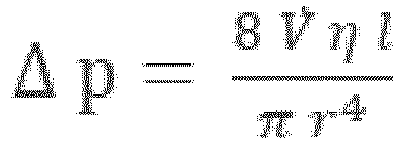
- Δ= Volumenstrom durch das Rohr [m3/s]

- Δp = Druckdifferenz zwischen Anfang und Ende eines Rohres [Pa]
- r = Innenradius des Rohres [m]
- l = Länge des Rohres [m]
- η = Viskosität der strömenden Flüssigkeit [Pa s]
- Für die Herstellung und z.B. Dosierung von Strängen mit einem keinen Durchmesser mit Standard-Elastomercompounds und üblichen Viskositäten werden gemäß den üblichen Rechengesetzen aus der Literatur sehr hohe Drücke von circa 700 bis weit über 10.000 bar benötigt, um Masseströme von 0,5 - 30 g/h zu erreichen. Derart hohe Drücke wären jedoch nur schwerlich zu erzeugen und wären nicht praktikabel. Es wurde überraschend gefunden, dass auch geringere Drücke ausreichen, um Elastomermaterial in einer Formeinheit zu formen und auszubringen. Das liegt daran, dass der tatsächliche Druckverlust von Elastomermaterial bei der Förderung durch eine Formeinheit, z.B. eine feine Düse, deutlich niedriger ist, als nach fachüblicher Berechnung zu erwarten gewesen wäre.
- In besonders vorteilhafter und daher bevorzugter Weiterbildung des Verfahrens ist das verwendete Elastomermaterial nicht verfestigbar und dabei elastisch oder viskoelastisch. D.h. das Elastomermaterial nimmt nie eine feste Phase an, sondern behält seine elastische oder viskoelastische Eigenschaft bei.
- Bei dem Elastomermaterial kann es sich beispielsweise um Polyacrylat-Kautschuk (ACM), Nitrilkautschuk (NBR), Ethylen-Propylendien-Kautschuk (EPDM) oder Festsilikonkautschuk (High Consistency Rubber HCR) handeln.
- In möglicher Ausgestaltung des Verfahrens erfolgt in Schritt b) die Aufbereitung des Elastomermaterials unter Verwendung einer oder mehrerer Schnecken und/oder einer Kolbenpumpe und/oder einer Zahnradpumpe und/oder eines statischen Mischers.
- Es hat sich als besonders vorteilhaft erwiesen in Schritt b) und/oder in Schritt d) eine Kontrolle und Regelung der Temperatur des Elastomermaterials durchzuführen auf über 20°C und unter 150°C, insbesondere auf unter 90°C und im Fall der Verarbeitung von HCR auf unter 35°C. Ein vorzeitiges Vernetzen des Elastomermaterials kann so verhindert werden. Damit liegt eine Temperatur vor, welche z.B. im Vergleich zu im Spritzgießverfahren verarbeiteten Thermoplasten deutlich geringer ist.
- Dazu kann die Aufbereitungseinheit und/oder die Formeinheit eine Temperiereinrichtung besitzen zum Kühlen und/oder Erhitzen des Elastomermaterials.
- Die Formeinheit in Schritt d) ist als getaktete Düse ausgeführt.
- Die getaktete Düse besitzt ein getaktet ansteuerbares Verschlussmittel, sodass abwechselnd Elastomermaterial durch die Düse gepresst und die Düse dann wieder verschlossen wird. Besonders vorteilhaft erscheint es, wenn die Düse einen Durchmesser von unter 0,25mm aufweist. So können Formkörper mit besonders feinen Strukturen erzeugt werden.
- Es hat sich als vorteilhaft erwiesen, wenn das Elastomermaterial im Bereich der Düse eine Schergeschwindigkeit von 10 bis 5500 1/s aufweist. Dann sind die vorherrschenden Druckverluste relativ gering. Die Schergeschwindigkeit wird auch als Scherrate bezeichnet.
- Das Elastomermaterial wird in Schritt d) des Verfahrens in sequenzieller Form in Form einer Perlenkette ausgebracht. Die Perlenkette zeichnet sich durch eine Aneinanderreihung von Perlen, nämlich durch einen sich perlenförmig ändernden Durchmesser an einem Strang aus. Der Durchmesser kann dabei um 1 bis 15% variieren. Perlenketten mit einem mittleren Durchmesser von unter 1mm, insbesondere von unter 0,3mm sind dabei bevorzugt.
- Die Geometrie und Packdichte der Perlenkette kann durch die Taktfrequenz des Verschlussmittels der getakteten Düse eingestellt und angepasst werden. Es hat sich herausgestellt, dass durch eine Perlenkette besonders feine Strukturen des Formkörpers realisiert werden können. Ein weiterer Vorteil ergibt sich, weil Ecken im Formkörper einfacher erzeugt werden können als beispielsweise, wenn das Elastomermaterial in Form eines Stranges ausgebracht wird. Auch vorteilhaft erscheint, dass bei Perlenketten im Vergleich zu Strängen eine engere Packungsdichte des Elastomermaterials im Formkörper erreicht werden kann.
- Bei dem erfindungsgemäßen Verfahren kann in den Schritten d) und e) eine Relativbewegung zwischen der Formeinheit bzw. der Vernetzungseinheit und einer Formaufnahmeeinheit, d.h. einem Träger für den herzustellenden Formkörper, erfolgen zur Positionierung des ausgebrachten Elastomermaterials bzw. zur Positionierung des Wirkbereichs der Vernetzungseinheit. Das ausgebrachte Elastomermaterial kann so gezielt auf die Formaufnahmeeinheit oder eine sich dort bereits befindliche Elastomerschicht abgelegt werden. Präzisionspositioniersysteme, welche eine Mehrachspositionierung und damit die erforderliche Relativbewegung ermöglichen, sind der Fachwelt bekannt.
- In einer vorteilhaften Variante des erfindungsgemäßen Verfahrens werden die Schritte d) und e) abwechselnd wiederholt, um einzelne Schichten des Formkörpers aufzubauen und zu vernetzen, bevor eine jeweils nächste Schicht aufgebracht wird.
- In einer vorteilhaften Variante des erfindungsgemäßen Verfahrens erfolgt in einem zusätzlichen Schritt ein Ausbringen von Stützmaterial zur Erzeugung eines Stützbereichs, wobei die Schritte Ausbringen Elastomermaterial und Ausbringen Stützmaterial abwechselnd erfolgen, abhängig von der Geometrie des zu erzeugenden Formkörpers. Das Stützmaterial bildet dann die Tragstruktur für nachfolgend ausgebrachte Schichten von Elastomermaterial. Das Stützmaterial wird so gewählt, dass es später einfach wieder entfernt werden kann. Es kann z.B. wasserlöslich sein oder in einer Lauge, die das Elastomermaterial nicht angreift, löslich sein. So können in vorteilhafter Weise auch Formkörper mit komplexer Geometrie erzeugt werden.
- Die beschriebene Erfindung und die beschriebenen vorteilhaften Weiterbildungen der Erfindung stellen auch in Kombination miteinander - soweit dies technisch sinnvoll ist - vorteilhafte Weiterbildungen der Erfindung dar.
- Hinsichtlich weiterer Vorteile und in konstruktiver und funktioneller Hinsicht vorteilhafter Ausgestaltungen der Erfindung wird auf die Unteransprüche sowie die Beschreibung von Ausführungsbeispielen unter Bezugnahme auf die beiliegende Figur verwiesen.
- In Versuchen wurden bei den folgenden Geometrien, Materialien und Viskositäten die beschriebenen Druckverluste erzielt. Theoretische Druckverluste liegen bei den angegebenen, wesentlichen höheren Werten:
Material Viskosität in [Pas] bei T [°C] und γ̇ [1/s] Durchmesser D [mm] L/D Volumenstrom V̇ [mm3/s] Druckverlust, theoretisch [bar] Druckverlust, praktisch [bar] 70 NBR 1100 0,25 10 0,628 2000 380 T= 90 γ̇ = 2002 γ̇ Schergeschwindigkeit
T Temperatur
D Durchmesser der Düse
L/D Längen-Durchmesser-Verhältnis der Düse - Die in praktischen Versuchsreihen gemessenen Druckverluste bei weiteren Materialien (mehrere Hundert Bar) in sehr feinen Düsen mit einem Durchmesser von unter 0,3 mm waren im Vergleich zu den berechneten Druckverlusten (mehrere Tausend Bar) wesentlich geringer. Durch diese Versuchsreihen konnte also bestätigt werden, dass Elastomermaterial durch Formeinheiten, wie z.B. dünne Düsen, gepresst und so ein Formkörper aus Elastomermaterial in additivem Fertigungsverfahren hergestellt werden kann.
- Die Erfindung soll an Hand beigefügter Figur noch näher erläutert werden. Zugunsten einer besseren Übersichtlichkeit der Figur wurde auf eine maßstabsgetreue Darstellung verzichtet.
-
Fig. 1 eine Vorrichtung zur Herstellung eines Formkörpers in einem additiven Fertigungsverfahren - In der Figur ist eine Vorrichtung 10 zur Herstellung eines Formkörpers 100 dargestellt, in welcher in einem additiven Fertigungsverfahren aus einem Elastomermaterial 1 ein Formkörper 100 hergestellt wird. Dazu wird Elastomermaterial 1 einer Aufbereitungseinheit 2 zugeführt und dort mittels einer Schnecke 3 aufbereitet.
- Das so aufbereitete Elastomermaterial 1 wird einer Speichereinheit 4 zugeführt, durch welche es einer Formeinheit 5 mit einer Düse 6 bereitgestellt wird.
- Eine Formaufnahmeeinheit 7 ist unterhalb der Düse 6 angeordnet und frei beweglich. Auf dieser wird aus der Düse 6 austretendes Elastomermaterial 1 abgelegt und so der Formkörper 100 ausgebildet. Eine Vernetzungseinheit 9 ist in der Nähe der Düse 6 angeordnet und dient der Vernetzung der Schichten aus Elastomermaterial 1. Der Aufbereitungseinheit 2 und der Formeinheit 5 kann je eine Temperiereinrichtung 8 zugeordnet sein, zur Regelung der Temperatur des Elastomermaterials 1 in Aufbereitungseinheit 2 und Formeinheit 5.
- In einer alternativen, nicht dargestellten Ausführungsform werden die Düse 6 und evtl. auch die Vernetzungseinheit 9 relativ zur Formaufnahmeeinheit 7 bewegt.
- Die Vernetzungseinheit 9 könnte auch separat und beabstandet zu den anderen Komponenten der Vorrichtung 10 angeordnet sein, nämlich dann, wenn der gesamte Formkörper 100 als Ganzes vernetzt werden soll.
- Mit der Vorrichtung 10 zur Herstellung eines Formkörpers 100 kann das erfindungsgemäße Verfahren durchgeführt werden.
- In einem ersten Schritt erfolgt ein Zuführen eines Elastomermaterials 1 zu einer Aufbereitungseinheit 2. In der Aufbereitungseinheit 2 wird eine Aufbereitung des Elastomermaterials 1 durchgeführt und ein Materialstrom des Elastomermaterials 1 erzeugt. Die Aufbereitung des Elastomermaterials 1 erfolgt unter Verwendung einer Schnecke 3, welche das Elastomermaterial 1 in eine Speichereinheit 4 fördert, wo ein Vordruck aufgebaut wird, der zur Ausbringung des Elastomermaterials 1 durch eine Formeinheit 5 genügt. In der Formeinheit 5, welche als getaktete Düse 6 ausgebildet ist, wird das Elastomermaterial 1 gezielt in sequenzieller Form einer Perlenkette ausgebracht. So wird eine Schicht des zu bildenden Formkörpers 100 auf einer Formaufnahmeeinheit 7 abgelegt. Die Aufbereitungseinheit 2 und die Formeinheit 5 besitzen eine Temperiereinrichtung 8 zum Kühlen und/oder Erhitzen des Elastomermaterials 1, sodass eine Kontrolle und Regelung der Temperatur des Elastomermaterials 1 erfolgt auf über 20°C und unter 150°C. Ein vorzeitiges Vernetzen des Elastomermaterials kann so verhindert werden.
- Eine Vernetzung der mindestens einen Schicht des Formkörpers 100 erfolgt in einem nächsten Schritt durch eine Vernetzungseinheit 9. Abwechselnd werden Ausbringen des Elastomermaterials 1 und Vernetzen der Schicht wiederholt, um einzelne Schichten des Formkörpers 100 aufzubauen und zu vernetzen bis der Formkörper 100 fertiggestellt ist.
- Wie durch Doppelpfeile angedeutet wird eine Relativbewegung zwischen der Formeinheit 5 und einer Formaufnahmeeinheit 7 ermöglicht zur Positionierung des ausgebrachten Elastomermaterials 1.
- Wie durch Doppelpfeile angedeutet wird auch eine Relativbewegung zwischen der Vernetzungseinheit 9 und einer Formaufnahmeeinheit 7 ermöglicht zur Positionierung des Wirkbereichs der Vernetzungseinheit 9.
- In einer alternativen, nicht dargestellten Ausführungsform des Verfahrens werden die Düse 6 und evtl. auch die Vernetzungseinheit 9 relativ zur Formaufnahmeeinheit 7 bewegt.
- Die Vernetzungseinheit 9 könnte auch separat und beabstandet zu den anderen Komponenten der Vorrichtung 10 angeordnet sein, nämlich dann, wenn der gesamte Formkörper 100 als Ganzes vernetzt werden soll. Dann erfolgt zwischen dem Schritt "Elastomermaterial 1 Ausbringen" zur Ausbildung des Formkörpers und dem Schritt "Vernetzen" ein Transport des Formkörpers 100 zur Vernetzungseinheit 9.
-
- 1
- Elastomermaterial
- 2
- Aufbereitungseinheit
- 3
- Schnecke
- 4
- Speichereinheit
- 5
- Formeinheit
- 6
- Düse
- 7
- Formaufnahmeeinheit
- 8
- Temperiereinrichtung
- 9
- Vernetzungseinheit
- 10
- Vorrichtung zur Herstellung eines Formkörpers
- 100
- Formkörper
Claims (10)
- Verfahren zur Herstellung eines Formkörpers (100) aus nicht-thermoplastischem Elastomermaterial (1) aus mindestens einer Schicht mit nachfolgenden Schritten:a) Zuführen eines Elastomermaterials (1) zu einer Aufbereitungseinheit (2)b) Aufbereitung des Elastomermaterials (1) in der Aufbereitungseinheit (2), nämlich thermische und stoffliche Homogenisierung, und Erzeugung eines Materialstroms des Elastomermaterials (1)c) Fördern des Elastomermaterials (1) in eine Speichereinheit (4) und Erzeugung eines Vordrucks des Elastomermaterials (1) in der Speichereinheit (4)d) Fördern des Elastomermaterials (1) zu einer Formeinheit (5) ausgeführt als getaktete Düse (6), in welcher das Elastomermaterial (1) gezielt in sequenzieller Form in Form einer Perlenkette ausgebracht wird zur Erzeugung von mindestens einer Schicht des zu bildenden Formkörpers (100)e) Vernetzung der mindestens einen Schicht des Formkörpers (100) oder des gesamten Formkörpers (100) durch eine Vernetzungseinheit (9) wobeidas Elastomermaterial (1) während den Schritten a) bis d) hochviskos und vernetzbar ist und das Elastomermaterial eine Viskosität im Bereich von 100 bis 1.000.000 Pa s aufweist.
- Verfahren nach einem der vorangehenden Ansprüche dadurch gekennzeichnet, dass
das Elastomermaterial (1) nicht verfestigbar ist und elastisch oder viskoelastisch ist. - Verfahren nach einem der vorangehenden Ansprüche, wobei das Elastomermaterial (1) als ACM, NBR, EPDM oder HCR ausgeführt ist.
- Verfahren nach einem der vorangehenden Ansprüche, wobei in Schritt b) die Aufbereitung des Elastomermaterials (1) unter Verwendung einer oder mehrerer Schnecken (3) und/oder einer Kolbenpumpe und/oder einer Zahnradpumpe und/oder eines statischen Mischers erfolgt.
- Verfahren nach einem der vorangehenden Ansprüche, wobei in Schritt b) und/oder in Schritt d) eine Kontrolle und Regelung der Temperatur des Elastomermaterials (1) erfolgt auf unter 150°C, insbesondere auf unter 90°C.
- Verfahren nach Anspruch 5 dadurch gekennzeichnet, dass die Aufbereitungseinheit (2) und/oder die Formeinheit (5) eine Temperiereinrichtung (8) besitzen zum Kühlen und/oder Erhitzen des Elastomermaterials (1).
- Verfahren nach einem der vorangehenden Ansprüche, wobei das Elastomermaterial (1) im Bereich der Düse (6) eine Schergeschwindigkeit von 10 bis 5500 1/s aufweist.
- Verfahren nach einem der vorangehenden Ansprüche, wobei in den Schritten d) und e) eine Relativbewegung zwischen der Formeinheit (5) bzw. der Vernetzungseinheit (9) und einer Formaufnahmeeinheit (7) erfolgt zur Positionierung des ausgebrachten Elastomermaterials (1) bzw. zur Positionierung des Wirkbereichs der Vernetzungseinheit (9).
- Verfahren nach einem der vorangehenden Ansprüche, wobei die Schritte d) und e) abwechselnd wiederholt werden, um einzelne Schichten des Formkörpers (100) aufzubauen und zu vernetzen.
- Verfahren nach einem der vorangehenden Ansprüche, mit einem zusätzlichen Schritt
d') Ausbringen von Stützmaterial zur Erzeugung eines Stützbereichs wobei die Schritte d) und d') abwechselnd erfolgen, abhängig von der Geometrie des zu erzeugenden Formkörpers (100).
Applications Claiming Priority (2)
| Application Number | Priority Date | Filing Date | Title |
|---|---|---|---|
| DE102019110718.0A DE102019110718A1 (de) | 2019-04-25 | 2019-04-25 | Additives Fertigungsverfahren zur Herstellung eines Formkörpers aus Elastomer |
| PCT/EP2020/060985 WO2020216710A1 (de) | 2019-04-25 | 2020-04-20 | Additives fertigungsverfahren zur herstellung eines formkörpers aus elastomer |
Publications (2)
| Publication Number | Publication Date |
|---|---|
| EP3959062A1 EP3959062A1 (de) | 2022-03-02 |
| EP3959062B1 true EP3959062B1 (de) | 2024-05-01 |
Family
ID=70295160
Family Applications (1)
| Application Number | Title | Priority Date | Filing Date |
|---|---|---|---|
| EP20720047.8A Active EP3959062B1 (de) | 2019-04-25 | 2020-04-20 | Additives fertigungsverfahren zur herstellung eines formkörpers aus elastomer |
Country Status (7)
| Country | Link |
|---|---|
| US (1) | US12466126B2 (de) |
| EP (1) | EP3959062B1 (de) |
| JP (1) | JP7295271B2 (de) |
| CN (1) | CN113710460A (de) |
| DE (1) | DE102019110718A1 (de) |
| ES (1) | ES2984613T3 (de) |
| WO (1) | WO2020216710A1 (de) |
Families Citing this family (1)
| Publication number | Priority date | Publication date | Assignee | Title |
|---|---|---|---|---|
| JP2024003270A (ja) * | 2022-06-26 | 2024-01-12 | 祥司 八賀 | 超高速射出点描画による熱溶解積層法 |
Citations (1)
| Publication number | Priority date | Publication date | Assignee | Title |
|---|---|---|---|---|
| WO2019063094A1 (de) * | 2017-09-29 | 2019-04-04 | Wacker Chemie Ag | 3d-gedruckte formteile aus mehr als einem silicon-material |
Family Cites Families (21)
| Publication number | Priority date | Publication date | Assignee | Title |
|---|---|---|---|---|
| DE102006037927A1 (de) | 2006-08-11 | 2008-02-14 | Karl Hehl | Verfahren und Vorrichtung zur Herstellung eines dreidimensionalen Gegenstandes sowie Verwendung einer kunststofftechnischen Einheit zu dessen Herstellung |
| DE102009030099B4 (de) * | 2009-06-22 | 2011-05-19 | Karl Hehl | Vorrichtung zur Herstellung eines dreidimensionalen Gegenstandes |
| DE102011109368A1 (de) * | 2011-08-04 | 2013-02-07 | Arburg Gmbh + Co Kg | Verfahren zur Herstellung eines dreidimensionalen Gegenstandes aus verfestigbarem Material sowie damit hergestellter Gegenstand |
| DE102011119337A1 (de) | 2011-11-25 | 2013-05-29 | Arburg Gmbh + Co. Kg | Vorrichtung zur Herstellung eines dreidimensionalenGegenstandes mit einer Druckerzeugungseinheit |
| DE102012004988A1 (de) * | 2012-03-14 | 2013-09-19 | Arburg Gmbh + Co. Kg | Verfahren zur Ausbringung eines Volumenstroms |
| GB201300483D0 (en) * | 2013-01-11 | 2013-02-27 | Zephyros Inc | Extrusion of bands of material |
| JP5767656B2 (ja) * | 2013-01-25 | 2015-08-19 | 住友ゴム工業株式会社 | カレンダー成形用のゴム組成物及びこれを用いたトッピングゴムの製造方法 |
| DE102014222685A1 (de) * | 2014-11-06 | 2016-05-12 | Wacker Chemie Ag | Verfahren zur Herstellung von Siliconelastomerteilen |
| WO2017005803A1 (de) * | 2015-07-06 | 2017-01-12 | Ftc 3D Gmbh | 3d-druck mit einem pastösen, inhomogenen druckmaterial |
| DE102015214883A1 (de) * | 2015-08-04 | 2017-02-09 | Wacker Chemie Ag | Verfahren zur Herstellung von Formkörpern |
| CN108025494B (zh) | 2015-11-26 | 2020-03-10 | 瓦克化学股份公司 | 用于通过弹道生成方法生产弹性体模制部件的高粘性硅酮组合物 |
| CN105647801B (zh) * | 2015-12-30 | 2018-06-19 | 四川蓝光英诺生物科技股份有限公司 | 生物打印机喷头组件及生物打印机 |
| US11021593B2 (en) | 2016-03-07 | 2021-06-01 | Sumitomo Rubber Industries, Ltd. | Rubber composition for additive manufacturing |
| CN108367487B (zh) * | 2016-10-17 | 2020-05-19 | 瓦克化学股份公司 | 用于生产打印质量提高的聚硅氧烷弹性体制品的方法 |
| EP3321074A1 (de) * | 2016-11-11 | 2018-05-16 | Dow Corning Corporation | Vorrichtung zum formfreien drucken eines dreidimensionalen objekts in schichten |
| US20180207863A1 (en) | 2017-01-20 | 2018-07-26 | Southern Methodist University | Methods and apparatus for additive manufacturing using extrusion and curing and spatially-modulated multiple materials |
| CN109196055A (zh) * | 2017-02-23 | 2019-01-11 | 瓦克化学股份公司 | 使用由蜡制成的支撑材料制造成型体的增材方法 |
| CN106956406B (zh) * | 2017-04-28 | 2022-09-06 | 青岛科技大学 | 一种橡胶动态注射成型装置和方法 |
| JP7193795B2 (ja) * | 2017-07-14 | 2022-12-21 | 兵庫県 | 熱溶解積層法による三次元造形プリンタ用の未加硫ゴム組成物、未加硫ゴム組成物を造形原料とする三次元造形物の製造方法 |
| CN107283819B (zh) * | 2017-07-17 | 2019-05-21 | 西安交通大学 | 一种面向高分子量硅橡胶的3d打印设备及打印方法 |
| CN109624150B (zh) * | 2018-12-11 | 2020-10-27 | 青岛科技大学 | 橡胶注射冷流道设计与优化方法 |
-
2019
- 2019-04-25 DE DE102019110718.0A patent/DE102019110718A1/de active Pending
-
2020
- 2020-04-20 ES ES20720047T patent/ES2984613T3/es active Active
- 2020-04-20 EP EP20720047.8A patent/EP3959062B1/de active Active
- 2020-04-20 WO PCT/EP2020/060985 patent/WO2020216710A1/de not_active Ceased
- 2020-04-20 US US17/604,767 patent/US12466126B2/en active Active
- 2020-04-20 JP JP2021563423A patent/JP7295271B2/ja active Active
- 2020-04-20 CN CN202080030548.4A patent/CN113710460A/zh active Pending
Patent Citations (1)
| Publication number | Priority date | Publication date | Assignee | Title |
|---|---|---|---|---|
| WO2019063094A1 (de) * | 2017-09-29 | 2019-04-04 | Wacker Chemie Ag | 3d-gedruckte formteile aus mehr als einem silicon-material |
Also Published As
| Publication number | Publication date |
|---|---|
| US20220193984A1 (en) | 2022-06-23 |
| US12466126B2 (en) | 2025-11-11 |
| JP2022530485A (ja) | 2022-06-29 |
| ES2984613T3 (es) | 2024-10-30 |
| WO2020216710A1 (de) | 2020-10-29 |
| EP3959062A1 (de) | 2022-03-02 |
| DE102019110718A1 (de) | 2020-10-29 |
| CN113710460A (zh) | 2021-11-26 |
| JP7295271B2 (ja) | 2023-06-20 |
Similar Documents
| Publication | Publication Date | Title |
|---|---|---|
| EP1886793B1 (de) | Verfahren und Vorrichtung zur Herstellung eines dreidimensionalen Gegenstandes sowie Verwendung einer Plastifiziereinheit zu dessen Herstellung | |
| EP2611596B1 (de) | Verfahren und vorrichtung zur herstellung eines dreidimensionalen gegenstandes | |
| EP2720853B1 (de) | Vorrichtung und verfahren zur herstellung eines dreidimensionalen gegenstandes | |
| DE102011109368A1 (de) | Verfahren zur Herstellung eines dreidimensionalen Gegenstandes aus verfestigbarem Material sowie damit hergestellter Gegenstand | |
| EP2825384B1 (de) | Verfahren zur ausbringung eines volumenstroms | |
| EP2739460A2 (de) | Verfahren und vorrichtung zur herstellung eines dreidimensionalen gegenstands mit faserzuführung | |
| DE102016213439A1 (de) | Extruder für 3D-Drucker mit variablem Materialdurchsatz | |
| DE102009033681A1 (de) | Vorrichtung zur Herstellung von Kunststoff-Formteilen und deren Verwendung | |
| EP3687763A1 (de) | 3d-gedruckte formteile aus mehr als einem silicon-material | |
| EP1237697B1 (de) | Extrusionsvorrichtung und verfahren zur herstellung von kunststoffhohlprofilen mit wenigstens einem ausgeschäumten hohlkammerraum | |
| DE102017105231A1 (de) | Verfahren und Vorrichtung zum computergestützten Erzeugen 3-dimensionaler Schaumstrukturen aus einem Gemisch aus einem Polymerwerkstoff und einem Treibmittel | |
| WO2018184797A1 (de) | Extrusionseinheit, vorrichtung zur extrusion thermoplastischer kunststoffe und verwendung der vorrichtung | |
| EP3310543B2 (de) | Vorrichtung und verfahren zum schäumen eines viskosen materials | |
| EP2860020B1 (de) | Verfahren zur herstellung eines dreidimensionalen gegenstands sowie zugehöriger gegenstand | |
| DE102017217696A1 (de) | Schnecke für Spritzgussanlage und Spritzgussanlage | |
| DE102008022596A1 (de) | Verfahren und Vorrichtung zur Herstellung eines beschichteten Bauteils | |
| DE102019110718A1 (de) | Additives Fertigungsverfahren zur Herstellung eines Formkörpers aus Elastomer | |
| DE102008019246B3 (de) | Schließrichtung und Verfahren zum Betrieb einer solchen | |
| WO2006136609A1 (de) | Vorrichtung und verfahren zur herstellung physikalisch getriebener schäume | |
| WO2001036175A1 (de) | Extruder zur aufbereitung von kautschukmischungen | |
| EP3231575B1 (de) | Verfahren und vorrichtung zur herstellung eines produkts aus thermoplastischem material durch extrusion | |
| EP4622792A1 (de) | Verfahren zur ausbringung diskreter volumina | |
| DE102015209334A1 (de) | Granulat, Verfahren und Vorrichtung zu dessen Herstellung | |
| DE102014005842A1 (de) | Verfahren zur Herstellung eines Dekorformteils | |
| DE29923755U1 (de) | Extruder zur Aufbereitung von Kautschukmischungen |
Legal Events
| Date | Code | Title | Description |
|---|---|---|---|
| STAA | Information on the status of an ep patent application or granted ep patent |
Free format text: STATUS: UNKNOWN |
|
| STAA | Information on the status of an ep patent application or granted ep patent |
Free format text: STATUS: THE INTERNATIONAL PUBLICATION HAS BEEN MADE |
|
| PUAI | Public reference made under article 153(3) epc to a published international application that has entered the european phase |
Free format text: ORIGINAL CODE: 0009012 |
|
| STAA | Information on the status of an ep patent application or granted ep patent |
Free format text: STATUS: REQUEST FOR EXAMINATION WAS MADE |
|
| 17P | Request for examination filed |
Effective date: 20211007 |
|
| AK | Designated contracting states |
Kind code of ref document: A1 Designated state(s): AL AT BE BG CH CY CZ DE DK EE ES FI FR GB GR HR HU IE IS IT LI LT LU LV MC MK MT NL NO PL PT RO RS SE SI SK SM TR |
|
| RIN1 | Information on inventor provided before grant (corrected) |
Inventor name: BITTNER, DENIS Inventor name: FIEBIGER, JENS Inventor name: ANDERS, BRITTA Inventor name: SCHMITT-FERRARESE, SEBASTIAN Inventor name: KAUL, STEFAN |
|
| DAV | Request for validation of the european patent (deleted) | ||
| DAX | Request for extension of the european patent (deleted) | ||
| STAA | Information on the status of an ep patent application or granted ep patent |
Free format text: STATUS: EXAMINATION IS IN PROGRESS |
|
| 17Q | First examination report despatched |
Effective date: 20230301 |
|
| GRAP | Despatch of communication of intention to grant a patent |
Free format text: ORIGINAL CODE: EPIDOSNIGR1 |
|
| STAA | Information on the status of an ep patent application or granted ep patent |
Free format text: STATUS: GRANT OF PATENT IS INTENDED |
|
| INTG | Intention to grant announced |
Effective date: 20231116 |
|
| P01 | Opt-out of the competence of the unified patent court (upc) registered |
Effective date: 20240130 |
|
| GRAS | Grant fee paid |
Free format text: ORIGINAL CODE: EPIDOSNIGR3 |
|
| GRAA | (expected) grant |
Free format text: ORIGINAL CODE: 0009210 |
|
| STAA | Information on the status of an ep patent application or granted ep patent |
Free format text: STATUS: THE PATENT HAS BEEN GRANTED |
|
| AK | Designated contracting states |
Kind code of ref document: B1 Designated state(s): AL AT BE BG CH CY CZ DE DK EE ES FI FR GB GR HR HU IE IS IT LI LT LU LV MC MK MT NL NO PL PT RO RS SE SI SK SM TR |
|
| REG | Reference to a national code |
Ref country code: GB Ref legal event code: FG4D Free format text: NOT ENGLISH |
|
| REG | Reference to a national code |
Ref country code: CH Ref legal event code: EP |
|
| REG | Reference to a national code |
Ref country code: IE Ref legal event code: FG4D Free format text: LANGUAGE OF EP DOCUMENT: GERMAN |
|
| REG | Reference to a national code |
Ref country code: DE Ref legal event code: R096 Ref document number: 502020007865 Country of ref document: DE |
|
| REG | Reference to a national code |
Ref country code: CH Ref legal event code: PK Free format text: BERICHTIGUNGEN |
|
| RIN2 | Information on inventor provided after grant (corrected) |
Inventor name: BITTNER, DENIS Inventor name: FIEBIGER, JENS Inventor name: ANDERS, BRITTA Inventor name: SCHMITT-FERRARESE, SEBASTIAN Inventor name: KAUL, STEFAN |
|
| REG | Reference to a national code |
Ref country code: LT Ref legal event code: MG9D |
|
| REG | Reference to a national code |
Ref country code: NL Ref legal event code: MP Effective date: 20240501 |
|
| PG25 | Lapsed in a contracting state [announced via postgrant information from national office to epo] |
Ref country code: IS Free format text: LAPSE BECAUSE OF FAILURE TO SUBMIT A TRANSLATION OF THE DESCRIPTION OR TO PAY THE FEE WITHIN THE PRESCRIBED TIME-LIMIT Effective date: 20240901 |
|
| PG25 | Lapsed in a contracting state [announced via postgrant information from national office to epo] |
Ref country code: BG Free format text: LAPSE BECAUSE OF FAILURE TO SUBMIT A TRANSLATION OF THE DESCRIPTION OR TO PAY THE FEE WITHIN THE PRESCRIBED TIME-LIMIT Effective date: 20240501 |
|
| PG25 | Lapsed in a contracting state [announced via postgrant information from national office to epo] |
Ref country code: FI Free format text: LAPSE BECAUSE OF FAILURE TO SUBMIT A TRANSLATION OF THE DESCRIPTION OR TO PAY THE FEE WITHIN THE PRESCRIBED TIME-LIMIT Effective date: 20240501 Ref country code: HR Free format text: LAPSE BECAUSE OF FAILURE TO SUBMIT A TRANSLATION OF THE DESCRIPTION OR TO PAY THE FEE WITHIN THE PRESCRIBED TIME-LIMIT Effective date: 20240501 |
|
| PG25 | Lapsed in a contracting state [announced via postgrant information from national office to epo] |
Ref country code: GR Free format text: LAPSE BECAUSE OF FAILURE TO SUBMIT A TRANSLATION OF THE DESCRIPTION OR TO PAY THE FEE WITHIN THE PRESCRIBED TIME-LIMIT Effective date: 20240802 |
|
| PG25 | Lapsed in a contracting state [announced via postgrant information from national office to epo] |
Ref country code: PT Free format text: LAPSE BECAUSE OF FAILURE TO SUBMIT A TRANSLATION OF THE DESCRIPTION OR TO PAY THE FEE WITHIN THE PRESCRIBED TIME-LIMIT Effective date: 20240902 |
|
| PG25 | Lapsed in a contracting state [announced via postgrant information from national office to epo] |
Ref country code: NL Free format text: LAPSE BECAUSE OF FAILURE TO SUBMIT A TRANSLATION OF THE DESCRIPTION OR TO PAY THE FEE WITHIN THE PRESCRIBED TIME-LIMIT Effective date: 20240501 |
|
| PG25 | Lapsed in a contracting state [announced via postgrant information from national office to epo] |
Ref country code: PL Free format text: LAPSE BECAUSE OF FAILURE TO SUBMIT A TRANSLATION OF THE DESCRIPTION OR TO PAY THE FEE WITHIN THE PRESCRIBED TIME-LIMIT Effective date: 20240501 |
|
| PG25 | Lapsed in a contracting state [announced via postgrant information from national office to epo] |
Ref country code: LV Free format text: LAPSE BECAUSE OF FAILURE TO SUBMIT A TRANSLATION OF THE DESCRIPTION OR TO PAY THE FEE WITHIN THE PRESCRIBED TIME-LIMIT Effective date: 20240501 |
|
| REG | Reference to a national code |
Ref country code: ES Ref legal event code: FG2A Ref document number: 2984613 Country of ref document: ES Kind code of ref document: T3 Effective date: 20241030 |
|
| PG25 | Lapsed in a contracting state [announced via postgrant information from national office to epo] |
Ref country code: PT Free format text: LAPSE BECAUSE OF FAILURE TO SUBMIT A TRANSLATION OF THE DESCRIPTION OR TO PAY THE FEE WITHIN THE PRESCRIBED TIME-LIMIT Effective date: 20240902 Ref country code: PL Free format text: LAPSE BECAUSE OF FAILURE TO SUBMIT A TRANSLATION OF THE DESCRIPTION OR TO PAY THE FEE WITHIN THE PRESCRIBED TIME-LIMIT Effective date: 20240501 Ref country code: NO Free format text: LAPSE BECAUSE OF FAILURE TO SUBMIT A TRANSLATION OF THE DESCRIPTION OR TO PAY THE FEE WITHIN THE PRESCRIBED TIME-LIMIT Effective date: 20240801 Ref country code: NL Free format text: LAPSE BECAUSE OF FAILURE TO SUBMIT A TRANSLATION OF THE DESCRIPTION OR TO PAY THE FEE WITHIN THE PRESCRIBED TIME-LIMIT Effective date: 20240501 Ref country code: LV Free format text: LAPSE BECAUSE OF FAILURE TO SUBMIT A TRANSLATION OF THE DESCRIPTION OR TO PAY THE FEE WITHIN THE PRESCRIBED TIME-LIMIT Effective date: 20240501 Ref country code: IS Free format text: LAPSE BECAUSE OF FAILURE TO SUBMIT A TRANSLATION OF THE DESCRIPTION OR TO PAY THE FEE WITHIN THE PRESCRIBED TIME-LIMIT Effective date: 20240901 Ref country code: HR Free format text: LAPSE BECAUSE OF FAILURE TO SUBMIT A TRANSLATION OF THE DESCRIPTION OR TO PAY THE FEE WITHIN THE PRESCRIBED TIME-LIMIT Effective date: 20240501 Ref country code: GR Free format text: LAPSE BECAUSE OF FAILURE TO SUBMIT A TRANSLATION OF THE DESCRIPTION OR TO PAY THE FEE WITHIN THE PRESCRIBED TIME-LIMIT Effective date: 20240802 Ref country code: FI Free format text: LAPSE BECAUSE OF FAILURE TO SUBMIT A TRANSLATION OF THE DESCRIPTION OR TO PAY THE FEE WITHIN THE PRESCRIBED TIME-LIMIT Effective date: 20240501 Ref country code: BG Free format text: LAPSE BECAUSE OF FAILURE TO SUBMIT A TRANSLATION OF THE DESCRIPTION OR TO PAY THE FEE WITHIN THE PRESCRIBED TIME-LIMIT Effective date: 20240501 Ref country code: RS Free format text: LAPSE BECAUSE OF FAILURE TO SUBMIT A TRANSLATION OF THE DESCRIPTION OR TO PAY THE FEE WITHIN THE PRESCRIBED TIME-LIMIT Effective date: 20240801 |
|
| REG | Reference to a national code |
Ref country code: DE Ref legal event code: R081 Ref document number: 502020007865 Country of ref document: DE Owner name: CARL FREUDENBERG KG, DE Free format text: FORMER OWNER: FREUDENBERG SE, 69469 WEINHEIM, DE |
|
| RAP2 | Party data changed (patent owner data changed or rights of a patent transferred) |
Owner name: CARL FREUDENBERG KG |
|
| PG25 | Lapsed in a contracting state [announced via postgrant information from national office to epo] |
Ref country code: DK Free format text: LAPSE BECAUSE OF FAILURE TO SUBMIT A TRANSLATION OF THE DESCRIPTION OR TO PAY THE FEE WITHIN THE PRESCRIBED TIME-LIMIT Effective date: 20240501 |
|
| PG25 | Lapsed in a contracting state [announced via postgrant information from national office to epo] |
Ref country code: EE Free format text: LAPSE BECAUSE OF FAILURE TO SUBMIT A TRANSLATION OF THE DESCRIPTION OR TO PAY THE FEE WITHIN THE PRESCRIBED TIME-LIMIT Effective date: 20240501 |
|
| PG25 | Lapsed in a contracting state [announced via postgrant information from national office to epo] |
Ref country code: CZ Free format text: LAPSE BECAUSE OF FAILURE TO SUBMIT A TRANSLATION OF THE DESCRIPTION OR TO PAY THE FEE WITHIN THE PRESCRIBED TIME-LIMIT Effective date: 20240501 |
|
| PG25 | Lapsed in a contracting state [announced via postgrant information from national office to epo] |
Ref country code: SK Free format text: LAPSE BECAUSE OF FAILURE TO SUBMIT A TRANSLATION OF THE DESCRIPTION OR TO PAY THE FEE WITHIN THE PRESCRIBED TIME-LIMIT Effective date: 20240501 Ref country code: RO Free format text: LAPSE BECAUSE OF FAILURE TO SUBMIT A TRANSLATION OF THE DESCRIPTION OR TO PAY THE FEE WITHIN THE PRESCRIBED TIME-LIMIT Effective date: 20240501 |
|
| PG25 | Lapsed in a contracting state [announced via postgrant information from national office to epo] |
Ref country code: SM Free format text: LAPSE BECAUSE OF FAILURE TO SUBMIT A TRANSLATION OF THE DESCRIPTION OR TO PAY THE FEE WITHIN THE PRESCRIBED TIME-LIMIT Effective date: 20240501 |
|
| PG25 | Lapsed in a contracting state [announced via postgrant information from national office to epo] |
Ref country code: SM Free format text: LAPSE BECAUSE OF FAILURE TO SUBMIT A TRANSLATION OF THE DESCRIPTION OR TO PAY THE FEE WITHIN THE PRESCRIBED TIME-LIMIT Effective date: 20240501 Ref country code: SK Free format text: LAPSE BECAUSE OF FAILURE TO SUBMIT A TRANSLATION OF THE DESCRIPTION OR TO PAY THE FEE WITHIN THE PRESCRIBED TIME-LIMIT Effective date: 20240501 Ref country code: RO Free format text: LAPSE BECAUSE OF FAILURE TO SUBMIT A TRANSLATION OF THE DESCRIPTION OR TO PAY THE FEE WITHIN THE PRESCRIBED TIME-LIMIT Effective date: 20240501 Ref country code: EE Free format text: LAPSE BECAUSE OF FAILURE TO SUBMIT A TRANSLATION OF THE DESCRIPTION OR TO PAY THE FEE WITHIN THE PRESCRIBED TIME-LIMIT Effective date: 20240501 Ref country code: DK Free format text: LAPSE BECAUSE OF FAILURE TO SUBMIT A TRANSLATION OF THE DESCRIPTION OR TO PAY THE FEE WITHIN THE PRESCRIBED TIME-LIMIT Effective date: 20240501 Ref country code: CZ Free format text: LAPSE BECAUSE OF FAILURE TO SUBMIT A TRANSLATION OF THE DESCRIPTION OR TO PAY THE FEE WITHIN THE PRESCRIBED TIME-LIMIT Effective date: 20240501 |
|
| REG | Reference to a national code |
Ref country code: DE Ref legal event code: R097 Ref document number: 502020007865 Country of ref document: DE |
|
| PLBE | No opposition filed within time limit |
Free format text: ORIGINAL CODE: 0009261 |
|
| STAA | Information on the status of an ep patent application or granted ep patent |
Free format text: STATUS: NO OPPOSITION FILED WITHIN TIME LIMIT |
|
| 26N | No opposition filed |
Effective date: 20250204 |
|
| PG25 | Lapsed in a contracting state [announced via postgrant information from national office to epo] |
Ref country code: SI Free format text: LAPSE BECAUSE OF FAILURE TO SUBMIT A TRANSLATION OF THE DESCRIPTION OR TO PAY THE FEE WITHIN THE PRESCRIBED TIME-LIMIT Effective date: 20240501 |
|
| PGFP | Annual fee paid to national office [announced via postgrant information from national office to epo] |
Ref country code: DE Payment date: 20250428 Year of fee payment: 6 |
|
| PGFP | Annual fee paid to national office [announced via postgrant information from national office to epo] |
Ref country code: GB Payment date: 20250422 Year of fee payment: 6 Ref country code: ES Payment date: 20250513 Year of fee payment: 6 |
|
| PGFP | Annual fee paid to national office [announced via postgrant information from national office to epo] |
Ref country code: IT Payment date: 20250422 Year of fee payment: 6 |
|
| PGFP | Annual fee paid to national office [announced via postgrant information from national office to epo] |
Ref country code: FR Payment date: 20250424 Year of fee payment: 6 |
|
| PGFP | Annual fee paid to national office [announced via postgrant information from national office to epo] |
Ref country code: IE Payment date: 20250417 Year of fee payment: 6 |
|
| PG25 | Lapsed in a contracting state [announced via postgrant information from national office to epo] |
Ref country code: SE Free format text: LAPSE BECAUSE OF FAILURE TO SUBMIT A TRANSLATION OF THE DESCRIPTION OR TO PAY THE FEE WITHIN THE PRESCRIBED TIME-LIMIT Effective date: 20240501 |
|
| REG | Reference to a national code |
Ref country code: CH Ref legal event code: H13 Free format text: ST27 STATUS EVENT CODE: U-0-0-H10-H13 (AS PROVIDED BY THE NATIONAL OFFICE) Effective date: 20251125 |
|
| PG25 | Lapsed in a contracting state [announced via postgrant information from national office to epo] |
Ref country code: LU Free format text: LAPSE BECAUSE OF NON-PAYMENT OF DUE FEES Effective date: 20250420 |
|
| PG25 | Lapsed in a contracting state [announced via postgrant information from national office to epo] |
Ref country code: MC Free format text: LAPSE BECAUSE OF FAILURE TO SUBMIT A TRANSLATION OF THE DESCRIPTION OR TO PAY THE FEE WITHIN THE PRESCRIBED TIME-LIMIT Effective date: 20240501 |
|
| REG | Reference to a national code |
Ref country code: BE Ref legal event code: MM Effective date: 20250430 |
|
| PG25 | Lapsed in a contracting state [announced via postgrant information from national office to epo] |
Ref country code: BE Free format text: LAPSE BECAUSE OF NON-PAYMENT OF DUE FEES Effective date: 20250430 |
|
| PG25 | Lapsed in a contracting state [announced via postgrant information from national office to epo] |
Ref country code: CH Free format text: LAPSE BECAUSE OF NON-PAYMENT OF DUE FEES Effective date: 20250430 |