EP3958424B1 - Temperature based self-regulated cooling enhancement - Google Patents
Temperature based self-regulated cooling enhancement Download PDFInfo
- Publication number
- EP3958424B1 EP3958424B1 EP21218487.3A EP21218487A EP3958424B1 EP 3958424 B1 EP3958424 B1 EP 3958424B1 EP 21218487 A EP21218487 A EP 21218487A EP 3958424 B1 EP3958424 B1 EP 3958424B1
- Authority
- EP
- European Patent Office
- Prior art keywords
- power
- cooling
- switch
- controller
- temperature
- Prior art date
- Legal status (The legal status is an assumption and is not a legal conclusion. Google has not performed a legal analysis and makes no representation as to the accuracy of the status listed.)
- Active
Links
Images




Classifications
-
- H—ELECTRICITY
- H02—GENERATION; CONVERSION OR DISTRIBUTION OF ELECTRIC POWER
- H02S—GENERATION OF ELECTRIC POWER BY CONVERSION OF INFRARED RADIATION, VISIBLE LIGHT OR ULTRAVIOLET LIGHT, e.g. USING PHOTOVOLTAIC [PV] MODULES
- H02S40/00—Components or accessories in combination with PV modules, not provided for in groups H02S10/00 - H02S30/00
- H02S40/40—Thermal components
- H02S40/42—Cooling means
-
- H—ELECTRICITY
- H02—GENERATION; CONVERSION OR DISTRIBUTION OF ELECTRIC POWER
- H02J—ELECTRIC POWER NETWORKS; CIRCUIT ARRANGEMENTS OR SYSTEMS FOR SUPPLYING OR DISTRIBUTING ELECTRIC POWER; SYSTEMS FOR STORING ELECTRIC ENERGY
- H02J3/00—Circuit arrangements for AC mains or AC distribution networks
- H02J3/38—Arrangements for feeding a single network from two or more generators or sources in parallel; Arrangements for feeding already energised networks from additional generators or sources in parallel
- H02J3/46—Controlling the sharing of generated power between the generators, sources or networks
-
- H—ELECTRICITY
- H02—GENERATION; CONVERSION OR DISTRIBUTION OF ELECTRIC POWER
- H02J—ELECTRIC POWER NETWORKS; CIRCUIT ARRANGEMENTS OR SYSTEMS FOR SUPPLYING OR DISTRIBUTING ELECTRIC POWER; SYSTEMS FOR STORING ELECTRIC ENERGY
- H02J7/00—Circuit arrangements for charging or discharging batteries or for supplying loads from batteries
- H02J7/34—Parallel operation in networks using both storage and other DC sources, e.g. providing buffering
- H02J7/35—Parallel operation in networks using both storage and other DC sources, e.g. providing buffering with light sensitive cells
-
- G—PHYSICS
- G06—COMPUTING OR CALCULATING; COUNTING
- G06F—ELECTRIC DIGITAL DATA PROCESSING
- G06F1/00—Details not covered by groups G06F3/00 - G06F13/00 and G06F21/00
- G06F1/16—Constructional details or arrangements
- G06F1/20—Cooling means
-
- G—PHYSICS
- G06—COMPUTING OR CALCULATING; COUNTING
- G06F—ELECTRIC DIGITAL DATA PROCESSING
- G06F1/00—Details not covered by groups G06F3/00 - G06F13/00 and G06F21/00
- G06F1/16—Constructional details or arrangements
- G06F1/20—Cooling means
- G06F1/206—Cooling means comprising thermal management
-
- G—PHYSICS
- G06—COMPUTING OR CALCULATING; COUNTING
- G06F—ELECTRIC DIGITAL DATA PROCESSING
- G06F1/00—Details not covered by groups G06F3/00 - G06F13/00 and G06F21/00
- G06F1/26—Power supply means, e.g. regulation thereof
- G06F1/263—Arrangements for using multiple switchable power supplies, e.g. battery and AC
-
- G—PHYSICS
- G06—COMPUTING OR CALCULATING; COUNTING
- G06F—ELECTRIC DIGITAL DATA PROCESSING
- G06F1/00—Details not covered by groups G06F3/00 - G06F13/00 and G06F21/00
- G06F1/26—Power supply means, e.g. regulation thereof
- G06F1/266—Arrangements to supply power to external peripherals either directly from the computer or under computer control, e.g. supply of power through the communication port, computer controlled power-strips
-
- H—ELECTRICITY
- H02—GENERATION; CONVERSION OR DISTRIBUTION OF ELECTRIC POWER
- H02J—ELECTRIC POWER NETWORKS; CIRCUIT ARRANGEMENTS OR SYSTEMS FOR SUPPLYING OR DISTRIBUTING ELECTRIC POWER; SYSTEMS FOR STORING ELECTRIC ENERGY
- H02J3/00—Circuit arrangements for AC mains or AC distribution networks
- H02J3/12—Arrangements for adjusting voltage in AC networks by changing a characteristic of the network load
- H02J3/14—Arrangements for adjusting voltage in AC networks by changing a characteristic of the network load by switching loads on to, or off from, the networks, e.g. progressively balanced loading
-
- H—ELECTRICITY
- H02—GENERATION; CONVERSION OR DISTRIBUTION OF ELECTRIC POWER
- H02J—ELECTRIC POWER NETWORKS; CIRCUIT ARRANGEMENTS OR SYSTEMS FOR SUPPLYING OR DISTRIBUTING ELECTRIC POWER; SYSTEMS FOR STORING ELECTRIC ENERGY
- H02J7/00—Circuit arrangements for charging or discharging batteries or for supplying loads from batteries
- H02J7/855—Circuit arrangements for charging or discharging batteries or for supplying loads from batteries with circuits adapted for supplying loads from the battery
-
- H—ELECTRICITY
- H02—GENERATION; CONVERSION OR DISTRIBUTION OF ELECTRIC POWER
- H02S—GENERATION OF ELECTRIC POWER BY CONVERSION OF INFRARED RADIATION, VISIBLE LIGHT OR ULTRAVIOLET LIGHT, e.g. USING PHOTOVOLTAIC [PV] MODULES
- H02S40/00—Components or accessories in combination with PV modules, not provided for in groups H02S10/00 - H02S30/00
- H02S40/30—Electrical components
-
- H—ELECTRICITY
- H05—ELECTRIC TECHNIQUES NOT OTHERWISE PROVIDED FOR
- H05K—PRINTED CIRCUITS; CASINGS OR CONSTRUCTIONAL DETAILS OF ELECTRIC APPARATUS; MANUFACTURE OF ASSEMBLAGES OF ELECTRICAL COMPONENTS
- H05K7/00—Constructional details common to different types of electric apparatus
- H05K7/20—Modifications to facilitate cooling, ventilating, or heating
- H05K7/20218—Modifications to facilitate cooling, ventilating, or heating using a liquid coolant without phase change in electronic enclosures
- H05K7/20272—Accessories for moving fluid, for expanding fluid, for connecting fluid conduits, for distributing fluid, for removing gas or for preventing leakage, e.g. pumps, tanks or manifolds
-
- H—ELECTRICITY
- H05—ELECTRIC TECHNIQUES NOT OTHERWISE PROVIDED FOR
- H05K—PRINTED CIRCUITS; CASINGS OR CONSTRUCTIONAL DETAILS OF ELECTRIC APPARATUS; MANUFACTURE OF ASSEMBLAGES OF ELECTRICAL COMPONENTS
- H05K7/00—Constructional details common to different types of electric apparatus
- H05K7/20—Modifications to facilitate cooling, ventilating, or heating
- H05K7/20218—Modifications to facilitate cooling, ventilating, or heating using a liquid coolant without phase change in electronic enclosures
- H05K7/20281—Thermal management, e.g. liquid flow control
-
- H—ELECTRICITY
- H10—SEMICONDUCTOR DEVICES; ELECTRIC SOLID-STATE DEVICES NOT OTHERWISE PROVIDED FOR
- H10N—ELECTRIC SOLID-STATE DEVICES NOT OTHERWISE PROVIDED FOR
- H10N10/00—Thermoelectric devices comprising a junction of dissimilar materials, i.e. devices exhibiting Seebeck or Peltier effects
- H10N10/10—Thermoelectric devices comprising a junction of dissimilar materials, i.e. devices exhibiting Seebeck or Peltier effects operating with only the Peltier or Seebeck effects
-
- G—PHYSICS
- G06—COMPUTING OR CALCULATING; COUNTING
- G06F—ELECTRIC DIGITAL DATA PROCESSING
- G06F2200/00—Indexing scheme relating to G06F1/04 - G06F1/32
- G06F2200/20—Indexing scheme relating to G06F1/20
- G06F2200/201—Cooling arrangements using cooling fluid
-
- Y—GENERAL TAGGING OF NEW TECHNOLOGICAL DEVELOPMENTS; GENERAL TAGGING OF CROSS-SECTIONAL TECHNOLOGIES SPANNING OVER SEVERAL SECTIONS OF THE IPC; TECHNICAL SUBJECTS COVERED BY FORMER USPC CROSS-REFERENCE ART COLLECTIONS [XRACs] AND DIGESTS
- Y02—TECHNOLOGIES OR APPLICATIONS FOR MITIGATION OR ADAPTATION AGAINST CLIMATE CHANGE
- Y02B—CLIMATE CHANGE MITIGATION TECHNOLOGIES RELATED TO BUILDINGS, e.g. HOUSING, HOUSE APPLIANCES OR RELATED END-USER APPLICATIONS
- Y02B70/00—Technologies for an efficient end-user side electric power management and consumption
- Y02B70/30—Systems integrating technologies related to power network operation and communication or information technologies for improving the carbon footprint of the management of residential or tertiary loads, i.e. smart grids as climate change mitigation technology in the buildings sector, including also the last stages of power distribution and the control, monitoring or operating management systems at local level
- Y02B70/3225—Demand response systems, e.g. load shedding, peak shaving
-
- Y—GENERAL TAGGING OF NEW TECHNOLOGICAL DEVELOPMENTS; GENERAL TAGGING OF CROSS-SECTIONAL TECHNOLOGIES SPANNING OVER SEVERAL SECTIONS OF THE IPC; TECHNICAL SUBJECTS COVERED BY FORMER USPC CROSS-REFERENCE ART COLLECTIONS [XRACs] AND DIGESTS
- Y04—INFORMATION OR COMMUNICATION TECHNOLOGIES HAVING AN IMPACT ON OTHER TECHNOLOGY AREAS
- Y04S—SYSTEMS INTEGRATING TECHNOLOGIES RELATED TO POWER NETWORK OPERATION, COMMUNICATION OR INFORMATION TECHNOLOGIES FOR IMPROVING THE ELECTRICAL POWER GENERATION, TRANSMISSION, DISTRIBUTION, MANAGEMENT OR USAGE, i.e. SMART GRIDS
- Y04S20/00—Management or operation of end-user stationary applications or the last stages of power distribution; Controlling, monitoring or operating thereof
- Y04S20/20—End-user application control systems
- Y04S20/222—Demand response systems, e.g. load shedding, peak shaving
Definitions
- Embodiments of the present disclosure relate generally to architecture for powering data centers and the IT clusters and equipment within the data centers and, more particularly, to self-regulated power distribution based on temperature measurements.
- UPS Uninterruptible Power Supplies
- the UPSs also provide backup power through lead-acid batteries for a short-duration utility power interruption; however, if a longer period interruption occurs, the diesel generators provide the backup power.
- US 2017/299237 A1 discloses a solar-powered system that can be used in a predetermined space and that includes a plurality of solar panels to convert the sunlight into electrical energy; a thermoelectric device electrically connected with the solar panels to provide a hot surface and a cold surface; and a control module to control the temperature in the predetermined space.
- the solar-powered system is configured to cool down or heat up the temperature in the predetermined space.
- US 2014/343745 A1 discloses a modular data center that includes one or more data modules.
- the modular data center includes a network module connected to the one or more data modules, the network module containing equipment for facilitating data communications by the one or more data modules.
- the modular data center includes a power module connected to the one or more data modules and the network module, the power module containing electronics equipment for conditioning and distributing power to the one or more data modules and the network module.
- each module of the one or more data modules, the network module, and the power module comprises: an enclosure defining an internal space; a floor within the enclosure separating the internal space into an above-floor space and a sub-floor space; and a plurality of bays in the subfloor space, each bay of the plurality of bays configured to contain a field-replaceable environmental management component.
- Embodiments of the present disclosure provide a self-regulated power system for supplying electrical power to an information technology (IT) system, a power supply system for data center having a plurality of servers and a plurality of thermoelectric coolers (TECs) configured to extract heat from the servers, and a method for energizing a data center having a plurality of servers and a plurality of thermoelectric coolers (TECs) configured to extract heat from the servers.
- IT information technology
- TECs thermoelectric coolers
- TECs thermoelectric coolers
- some embodiments of the present disclosure provide a self-regulated power system for supplying electrical power to an information technology (IT) system
- the system includes: a photovoltaic (PV) system; a power converter; a main switch interposed between the PV system and the power converter; a temperature sensor configured to read an ambient atmospheric temperature; a cooling system for cooling IT equipment; and a controller receiving the ambient atmospheric temperature from the temperature sensor and activating the main switch to connect the PV system to the power converter to deliver solar power to the cooling system when the temperature reading is above a preset threshold.
- PV photovoltaic
- some embodiments of the present disclosure provide a method for energizing a data center having a plurality of servers and a plurality of thermoelectric coolers (TECs) configured to extract heat from the servers, the method includes: measuring ambient temperature exterior to the data center; monitoring the ambient temperature to determine when the ambient temperature is above a preset threshold and at that time activating a first switch to connect a photovoltaic (PV) system to a DC/DC converter, and activating a second switch to connect the DC/DC converter to the plurality of TECs.
- PV photovoltaic
- the current disclosure introduces a modular design and architecture that enables self-regulated power supply for data centers.
- Disclosed embodiments provide "green” or sustainable solutions that reduce capital and operational costs, and maximize utilization and efficiency of the power distribution network.
- Disclosed embodiments provide architectures for supplying power to data center in efficient manner using simplified control. Disclosed embodiments take advantage of the observation that the same environmental conditions that lead to increased power generation also lead to high power demand by specific elements of the data center, namely, the cooling elements.
- Disclosed embodiments provide a module for supplying electrical power during periods when the cooling system requires increased power, while avoiding increase consumption of utility power.
- the need for the cooling system to require power increase can be understood as the cooling system may not satisfy the thermal management under the existing operating condition, which is governed by utility power efficiency requirement. Consequently, the disclosed embodiments reduce operational cost of the data center.
- Disclosed embodiments include design of power system distributed among different cooling elements in the data center.
- the design consists of two levels: power delivery level and the control level.
- the embodiments aim at improving the efficiency of power usage during different operating conditions by controlling the power flow according to temperature measurements.
- the disclosed embodiments provide efficient methods for implementing PV systems into the IT cluster, especially given that the PV system may not fully function as a full reliable power source.
- the disclosed architecture improves the data center power system cost efficiency and at the same time, improve the system robustness without sacrificing the reliability.
- disclosed embodiments introduce method of using the PV system with multi-level control approach. Detecting and controlling the PV power is critical and challenging since the PV power is highly dependent on multiple factors.
- the disclosed design implements a novel detection mechanism which efficiently relegates the utilization of the PV output to proper use cases.
- Disclosed embodiments simplify the control strategy of the solar power.
- the control is self-governing and correlates well with increased cooling requirement and increased solar power availability. That is, at the time the temperature measurement is high, it means that the cooling requirement is increased and also the solar power availability is increased.
- Disclosed aspects further provide power supply system for data center which is self-regulated.
- the outside ambient temperature is measured and used for controlling the entire system.
- the outside temperature is used as a proxy for the PV system output, which is employed to control switches for connecting the PV system to complete a close circuit for powering the load.
- the PV power is connected to the TEC (thermoelectric cooling) and other cooling enhancement hardware or systems for cooling the IT equipment.
- a rack level power distribution is used for multiple TEC and/or other cooling units.
- the power distribution design is used for distributing and controlling the power flow from the PV system to different types of loads, either computing load or cooling load.
- a controller is used to collect the temperature measurements and control the switches' status, as well as the load analysis.
- the control design can be integrated in a single controller or in a hierarchy manner.
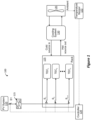
- Figure 1 is a general schematic illustrating an embodiment for power distribution system 100 in a data center.
- the embodiment illustrated in Figure 1 shows only the power delivery from the PV system 110, since the remaining power delivery arrangement may include any other conventional systems, such as utility power.
- the IT equipment not relevant to the cooling discussion, since this particular embodiment illustrates the application of solar-generated power solely for the cooling equipment.
- rack 125 includes a plurality of TEC, indicated as TEC1-TECn.
- TEC1-TECn extracts heat from a corresponding IT device and transfers the heat to the cooling system 130, which then transfers it to the ambient using, e.g., chillers 135.
- the chiller 135 can be understood as an air-cooled chiller; however, element 135 can be also used for representing different cooling units, such as cooling tower, dry cooler, etc.
- the cooling system 130 and 135 can be understood as any type of cooling system for a data center.
- the term ambient is used herein to indicate the atmospheric environment existing outside of the data center.
- Each of the TECs requires electrical power to perform its heat pumping and transfer function.
- the subject inventor has recognized that the load imposed by the TECs correlates with the ambient temperature, i.e., the required cooling load increases during times that the ambient temperature increases. That is, the ambient temperature increase causes the cooling capacity of the main cooling system to decrease, thus necessitating energizing the TECs to provide enhanced heat transfer.
- the subject inventor has recognized that such cooling load increase actually also correlates with solar power output increase. That is, the increase in ambient temperature generally correlates with increase in sun radiation, thus increase in solar power output. Therefore, in this embodiment a temperature sensor 122 sends to controller 120 a signal indicating the ambient temperature. Based on the signal, the controller operates switches S 1 -S n+1 to direct the power generated by the solar system 110 to energize the TECs.
- the temperature sensor 122 can be existing temperature sensor used by data center or data center cooling unit, since the majority of the data center cooling units are equipped with ambient temperature sensors. Also, the temperature sensor can be temperature sensors which are used in the standard cooling system, such as fluid temperature sensors installed on the cooling water loop, the chiller water loop, etc. Such temperature may directly or indirectly be impacted by the ambient temperature and therefore reflect the increasing or decreasing ambient temperature. In other words, the temperature signal received by the controller may be any temperature reading that serves as a proxy to the ambient temperature.
- the controller manages and enable the system to provide the power generated by the PV system 110 to the TEC, while when it decreases the controller manages to disconnect the power.
- the TEC When the power is connected and delivered to the TEC units, the TEC will function as thermal pump to pump the heat from the hot side (which contacts the electronic devices) to the cold side (which may contact liquid cooling plate). In this manner, the flow of the electrical current in the PV system enables the thermal transportation of heat from the electronic devices to the cooling system. Consequently, the electronic devices' temperature (such as T case ) may temporarily decrease or be maintained at the designated value when the cooling conditions are operable.
- the switch S 1 is provided in between the PV system and the DC/DC converter 115.
- the DC/DC converter 115 conditions and regulates the power delivered by the PV system. However, when no energy is required for the TEC, the PV system is disconnected from the DC/DC converter 115.
- server rack 125 includes a dedicated busbar or power delivery design which provides power to TECs of individual servers.
- the busbar is directly powered by the solar power from the DC/DC converter 115 using a switch that is controlled by the controller 120 according to the signal from the sensor 122.
- the ambient temperature is used for the system control.
- the cooling system of the IT cluster and data center relies on the outside ambient temperature since the heat is eventually extracted to the atmosphere. Therefore, when the ambient temperature is higher, such as during hot hours of summer days, the cooling capacity may be decrease if no additional mechanical cooling is added. However, when the outside temperature is high, which mostly happens during noon and early afternoon, the sun shines so that solar energy is in high availability. Therefore, the disclosed embodiment utilizes the outside temperature as a proxy for the solar power output from the PV system and uses this indicator to control the solar power circuit through the switches to enhance the cooling capacity of the system.
- the system is self-regulated according to the outside ambient temperature.
- the outside temperature increases, it triggers the PV system and connects the PV to the TECs to provide enhanced heat extraction and transfer from the IT devices.
- the normal cooling recovers and there is no need for enhanced heat extraction, the PV system may then disconnect from the load.
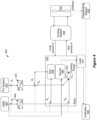
- FIG. 2 illustrates a somewhat more versatile embodiment wherein the power from the PV system may be used for powering other IT equipment in addition to the cooling elements.
- the system 200 includes the PV system 210 coupled to switch S 1 , which, when engaged, delivers the power to DC/DC converter 215 to condition and regulate the delivered power.
- the power from the converter 215 may be supplied to the TEC 226 as in the embodiment of Figure 1 and, in addition or alternatively, to server 240 and/or storage system 250.
- each of the TEC 226, server 240 and storage system 250 may stand for a plurality of such elements, i.e., TEC 226 may be a plurality of TECs, server 240 may be a plurality of servers, and storage 250 may be a plurality of storage systems.
- the embodiment of Figure 2 enables more diversified utilization of the PV power, since at times the TEC may not be needed even during the high ambient temperature period. This may be, for example, when IT computing power or demand is not high, this means that the IT equipment does not generate large amount of power. The TEC may not need to pump too much heat even though the ambient temperature is high. Under such a scenario, the PV power may still be utilized for multiple types of loads by properly activating either or both of switches S 2 and S 4 .
- the embodiment illustrated in Figure 2 incorporates two features that, while not exclusively, are particularly beneficial in embodiments wherein the PV power may be used for purposes other than cooling.
- the first feature is a load controller 224, that communicates to the controller 220 the computational load on the server 240.
- the information from the load controller 224 may be used by the controller 220 to determine the optimized operating strategy for distribution of the PV power.
- the controller 220 may determine the optimized strategy based on variables such as, e.g., the IT load requirements, the PV output capabilities, and the overall cooling requirement.
- the second feature is the inclusion of optional voltage sensor 217.
- Voltage sensor 217 is used at the output of the PV system 210 as a backup or alternative for the temperature sensor 222. Since in this embodiment the PV system may also be used for other than cooling system, the backup detection may be used to increase the system reliability, in the case when temperature sensing fails.
- the design shown in figure 2 enables a more flexible power management for the rack based on different parameters, including the sever load and ambient temperature, in a more precise manner for higher efficiency.
- FIG. 3 illustrates another embodiment utilizing the PV system 310 for powering TECs 326 as well as other cooling units such as cooling pump 323.
- the cooling pump 323 may be, for example, the rack level liquid cooling pump (e.g., for liquid cooled cooling plates) or IT level pump.
- the cooling pump 323 can also be the main pump used for normal cooling operation or an auxiliary pump dedicated for cooling enhancement. It is recommend to design a separate auxiliary pump for such an application. Although there is only one pump 323 illustrated in the figure, there may be multiple pumps including both the main cooling pumps and/or enhanced cooling pumps.
- the controller 320 receives the temperature reading from temperature sensor 322 and determines whether to engage the PV system 310 by closing switch S 1 .
- the controller determines whether to apply the power from the PV system 310 to the TECs 326 by closing switch S 2 , to the cooling pump 323 by closing switch S 3 , or both.
- the controller 320 may apply the PV power to power both the TEC 326 and Cooling pump 323 for enhanced cooling.
- the use of the pump 323 increases the flow rate of the cooling fluid, such that the heat removal, e.g., cold plates, can be improved.
- the controller may change the operational mode such that only one of the TEC 326 or pump 323 is powered by the PV system 310.
- the cooling pump can be other types of cooling units such as fans or valves.
- FIG. 4 provides a more comprehensive illustration of the system architecture, in which both the main utility power source as well as the PV power source are employed.
- either power source can used for powering the TEC 426 and cooling pump 423. This arrangement enables enhanced cooling even when the solar panels do not receive sunlight, such as under cloudy conditions.
- the utility power 402 is coupled to the server 440 in a conventional manner. Additionally, utility power 402 is coupled to AC/DC converter 404 via switch S 2 , which is controlled by controller 420. When switch S 2 is closed by the controller, closing switch S 5 will deliver utility power to TECs 426, while closing switch S 6 will deliver utility power to cooling pump 423. When the reading of temperature sensor 422 indicate rising temperature, the controller 420 may engage the PV system 410. To engage the solar power 410, controller 420 closes switch S 1 , and switch S 3 to deliver solar power to TECs 426 and/or switch S 4 to deliver solar power to cooling pump 423.
- the design utilize the PV power more efficiently, since it is not only used for the cooling enhancement devices such as TEC, but it is also used for normal operations. As an example, when no TEC is needed, the PV power is directly used for the cooling pump with switch S 4 closed, e.g., under the circumstance when the computing workload is not heavy.
- FIG. 5 illustrates another embodiment of utilizing solar power.
- the solar power may be used to power the IT cooling components as well as the facility side or cluster side cooling enhancement design.
- the cooling system shown in Figure 5 represent both a facility level unit, a cluster level unit or rack level unit.
- the cooling system is used to process and deliver cooling liquid to the IT racks, and receives hot return fluid.
- temperature sensor 522 delivers temperature measurements to the controller 520, which controls the delivery of power from the PV system 510 to the TECs 526 by closing switches S 1 and S 3 .
- the controller 520 also closes switch S 2 to deliver PV power to the cooling enhancement system.
- valve 1 is open and cooling pump 1 is operating on utility power.
- the controller closes switch S 2 to deliver solar power to open valve 2 and energize cooling pump 2. This provides increase cooling liquid flow, which enhances the cooling rate.
- cooling pump 2 is used for cooling enhancement when operating using PV system power.
- FIG. 6 is a flow chart illustrating a process according to an embodiment. This embodiment corresponds to an arrangement wherein the PV power output is dedicated to powering the TEC system.
- the flow chart shows the fundamental method for controlling the switches using ambient temperature. The temperature can be obtained using sensors that are part of the control system or obtaining reading from existing sensor that form part of the existing data center infrastructure.
- Step 600 indicates the initial state wherein all of the system's switches assume the open position, such that solar power is not applied to the TEC system.
- step 605 it is checked whether ambient temperature reading is higher than a preset threshold. If it is not, the process reverts to step 600. Otherwise, if the temperature reading exceeds the threshold, at step 610 the controller activates the solar power connection by closing switch S 1 , thereby connecting the PV system to the converter.
- the self-activation can be understood as no actual detection may be used or dedicated for the PV system.
- step 615 the controller closes the switches to the TEC to provide power from the converter to the TEC. Thereafter the controller continues to monitor the temperature, so that so long as the temperature remains high, the connection to the TEC is maintained. Conversely, when in step 620 it is determined that the temperature T dropped below a preset threshold Th, which may be different from the onset threshold of step 605, the controller reverts to the initial state of step 600, wherein all the switches are opened.
- a preset threshold Th which may be different from the onset threshold of step 605
- Figure 7 is a flow chart illustrating control process according to an embodiment.
- the control operation corresponds to an embodiment wherein the PV system is connected to multiple types of IT loads, as exemplified in several embodiments disclosed herein.
- the process of Figure 7 There are two design goals implemented by the process of Figure 7 .
- the current operation design can be integrated into existing infrastructure and control architecture.
- the process can enable further optimization of the cooling operations.
- the PV power may also be used for battery based energy system, while using the temperature measurements to connect the PV system to the batteries.
- the temperature set point for connecting the PV system to the batteries may be lower than the set point for running/powering the TEC.
- an optimized solution may be configured for performance enhancement, including both cooling performance as well as computing performance.
- step 705 it is determined whether usable solar power is available, based on the temperature measurement. As indicated in Figure 7 , optionally, as a backup, voltage measurement may also be used to determine the availability of usable solar power. As shown in Figure 2 , the readings of the temperature sensor 222 and the voltage sensor 217, as well as the switches, are correlated. So long as no usable solar power is available, the process reverts to the initial state of step 700.
- step 710 When in step 705 it is determined that usable power is available, in step 710 the main switch is closed so as to connect the PV system to the converter. Then in step 715 it is determined whether the available power is higher than the heat load threshold. If not, the process proceeds to step 730, wherein the converter is connected to charge the batteries. Conversely, if the available power is higher than the heat load threshold, the process proceeds to step 720 to determine whether additional computing power is needed. If not, the process proceeds to step 735 wherein the solar power is applied to the TEC. Conversely, in step 725 the controller applies the PV power to both the TEC and the server while optimizing the power distribution among the TEC and server.
- step 740 it is determined that the temperature T dropped below a preset threshold Th, which may be different from the onset threshold of step 705, the controller reverts to the initial state of step 700, wherein all the switches are opened.
- a power supply system for a computing system having a cooling system comprising a solar power system and a controller, the controller connected to an ambient temperature sensor measuring the ambient temperature outside the facility housing the computing system, wherein when the temperature sensor provides a temperature reading that is above a present threshold the controller is programmed to connect the solar power system to a power converter and connect the power converter to the cooling system.
- the cooling system may include thermoelectric cooling TEC and cooling pumps.
- the solar power may be applied to the servers within the computing system and/or to batteries.
- the controller may alternate the supplied power between utility power and solar power according to the temperature reading of the temperature sensor.
- a voltage sensor may be positioned to read the voltage provided by the solar system as a backup to the temperature sensor.
Landscapes
- Engineering & Computer Science (AREA)
- Theoretical Computer Science (AREA)
- Physics & Mathematics (AREA)
- General Engineering & Computer Science (AREA)
- Power Engineering (AREA)
- General Physics & Mathematics (AREA)
- Microelectronics & Electronic Packaging (AREA)
- Human Computer Interaction (AREA)
- Thermal Sciences (AREA)
- Computer Hardware Design (AREA)
- Cooling Or The Like Of Electrical Apparatus (AREA)
- Power Sources (AREA)
Description
- Embodiments of the present disclosure relate generally to architecture for powering data centers and the IT clusters and equipment within the data centers and, more particularly, to self-regulated power distribution based on temperature measurements.
- Generally, data centers incorporate redundant power supply to the servers and the various ancillary equipment (such as cooling, lights, etc.) so as to ensure uninterruptable service. The power supplies may include utility power (provided by utilities companies), diesel generators, and battery backup. In modern data centers the utility power may be delivered to the servers via Uninterruptible Power Supplies (UPS), which perform the required power conditioning and charge the backup battery banks. The UPSs also provide backup power through lead-acid batteries for a short-duration utility power interruption; however, if a longer period interruption occurs, the diesel generators provide the backup power.
- The power supply redundancy required in order to ensure uninterruptable operation increases the cost and complexity of the data center. Moreover, much of the equipment that is dedicated for redundancy idles most of the time, thereby leading to inefficient use of resources. This is exacerbated by the fact that the backup equipment requires periodic maintenance even if it is not used.
- There has been lately an increasing focus on developing and introducing solar systems to power data centers. However, solar power depends on the availability and direction of sunlight, such that its output is cyclic over 24 hours period and also variable during daytime depending on cloud coverage and sun angle. Moreover, the data center load may also be variable and cyclic over different periods, e.g., first level of demand during work hours and possibly a second level of demand during backup performed over non-working hours. Consequently, there is a mismatch between level of power provided by a PV system and the level of load generated by the data center.
- The control of implementing a new power source to data center is also a challenge since it may involve complex power dispatch for different workloads. It is critical to develop robust solutions for controlling the power sources for powering data centers.
US 2017/299237 A1 discloses a solar-powered system that can be used in a predetermined space and that includes a plurality of solar panels to convert the sunlight into electrical energy; a thermoelectric device electrically connected with the solar panels to provide a hot surface and a cold surface; and a control module to control the temperature in the predetermined space. The solar-powered system is configured to cool down or heat up the temperature in the predetermined space.
US 2014/343745 A1 discloses a modular data center that includes one or more data modules. The modular data center includes a network module connected to the one or more data modules, the network module containing equipment for facilitating data communications by the one or more data modules. The modular data center includes a power module connected to the one or more data modules and the network module, the power module containing electronics equipment for conditioning and distributing power to the one or more data modules and the network module. In the modular data center, each module of the one or more data modules, the network module, and the power module comprises: an enclosure defining an internal space; a floor within the enclosure separating the internal space into an above-floor space and a sub-floor space; and a plurality of bays in the subfloor space, each bay of the plurality of bays configured to contain a field-replaceable environmental management component. - Embodiments of the present disclosure provide a self-regulated power system for supplying electrical power to an information technology (IT) system, a power supply system for data center having a plurality of servers and a plurality of thermoelectric coolers (TECs) configured to extract heat from the servers, and a method for energizing a data center having a plurality of servers and a plurality of thermoelectric coolers (TECs) configured to extract heat from the servers.
- According to a first aspect, some embodiments of the present disclosure provide a self-regulated power system for supplying electrical power to an information technology (IT) system, the system includes: a photovoltaic (PV) system; a power converter; a main switch interposed between the PV system and the power converter; a temperature sensor configured to read an ambient atmospheric temperature; a cooling system for cooling IT equipment; and a controller receiving the ambient atmospheric temperature from the temperature sensor and activating the main switch to connect the PV system to the power converter to deliver solar power to the cooling system when the temperature reading is above a preset threshold.
- According to a second aspect, some embodiments of the present disclosure provide a method for energizing a data center having a plurality of servers and a plurality of thermoelectric coolers (TECs) configured to extract heat from the servers, the method includes: measuring ambient temperature exterior to the data center; monitoring the ambient temperature to determine when the ambient temperature is above a preset threshold and at that time activating a first switch to connect a photovoltaic (PV) system to a DC/DC converter, and activating a second switch to connect the DC/DC converter to the plurality of TECs.
- Embodiments of the invention are illustrated by way of example and not limitation in the figures of the accompanying drawings in which like references indicate similar elements.
-
Figure 1 is a block diagram illustrating an example of system architecture according to an embodiment. -
Figure 2 illustrates a block diagram of another power control arrangement according to an embodiment. -
Figures 3 illustrates an example of a solar power system which includes powering a cooling pump, according to disclosed embodiments. -
Figure 4 illustrates an example of a set-up wherein utility and solar power are used for the cooling system, according to disclosed embodiments. -
Figure 5 illustrates an example of solar power design which include enhanced cooling pump, according to an embodiment. -
Figure 6 illustrates an example of a control flow according to an embodiment. -
Figure 7 illustrates an example of a control flow according to another embodiment. - Various embodiments and aspects of the inventions will be described with reference to details discussed below, and the accompanying drawings will illustrate the various embodiments. The following description and drawings are illustrative of the invention and are not to be construed as limiting the invention. Numerous specific details are described to provide a thorough understanding of various embodiments of the present invention. However, in certain instances, well-known or conventional details are not described in order to provide a concise discussion of embodiments of the present inventions.
- Reference in the specification to "one embodiment" or "an embodiment" means that a particular feature, structure, or characteristic described in conjunction with the embodiment can be included in at least one embodiment of the invention. The appearances of the phrase "in one embodiment" in various places in the specification do not necessarily all refer to the same embodiment.
- The following detailed description provides examples that highlight certain features and aspects of the innovative solar power supply claimed herein. Different embodiments or their combinations may be used for different applications or to achieve different results or benefits. Depending on the outcome sought to be achieved, different features disclosed herein may be utilized partially or to their fullest, alone or in combination with other features, balancing advantages with requirements and constraints. Therefore, certain benefits will be highlighted with reference to different embodiments, but are not limited to the disclosed embodiments. That is, the features disclosed herein are not limited to the embodiment within which they are described, but may be "mixed and matched" with other features and incorporated in other embodiments.
- The current disclosure introduces a modular design and architecture that enables self-regulated power supply for data centers. Disclosed embodiments provide "green" or sustainable solutions that reduce capital and operational costs, and maximize utilization and efficiency of the power distribution network.
- Disclosed embodiments provide architectures for supplying power to data center in efficient manner using simplified control. Disclosed embodiments take advantage of the observation that the same environmental conditions that lead to increased power generation also lead to high power demand by specific elements of the data center, namely, the cooling elements.
- Disclosed embodiments provide a module for supplying electrical power during periods when the cooling system requires increased power, while avoiding increase consumption of utility power. The need for the cooling system to require power increase can be understood as the cooling system may not satisfy the thermal management under the existing operating condition, which is governed by utility power efficiency requirement. Consequently, the disclosed embodiments reduce operational cost of the data center.
- Disclosed embodiments include design of power system distributed among different cooling elements in the data center. The design consists of two levels: power delivery level and the control level. The embodiments aim at improving the efficiency of power usage during different operating conditions by controlling the power flow according to temperature measurements.
- As for power delivery aspect, modern data center and IT cluster designs require simplification of the system and ease of deployment and operation. Therefore, the modular design approach is beneficial. The disclosed embodiments provide efficient methods for implementing PV systems into the IT cluster, especially given that the PV system may not fully function as a full reliable power source. The disclosed architecture improves the data center power system cost efficiency and at the same time, improve the system robustness without sacrificing the reliability.
- As for the control aspect, disclosed embodiments introduce method of using the PV system with multi-level control approach. Detecting and controlling the PV power is critical and challenging since the PV power is highly dependent on multiple factors. The disclosed design implements a novel detection mechanism which efficiently relegates the utilization of the PV output to proper use cases.
- Disclosed embodiments simplify the control strategy of the solar power. By using the temperature (and optionally load and voltage input) the control is self-governing and correlates well with increased cooling requirement and increased solar power availability. That is, at the time the temperature measurement is high, it means that the cooling requirement is increased and also the solar power availability is increased.
- Disclosed aspects further provide power supply system for data center which is self-regulated. The outside ambient temperature is measured and used for controlling the entire system. The outside temperature is used as a proxy for the PV system output, which is employed to control switches for connecting the PV system to complete a close circuit for powering the load. The PV power is connected to the TEC (thermoelectric cooling) and other cooling enhancement hardware or systems for cooling the IT equipment. A rack level power distribution is used for multiple TEC and/or other cooling units. The power distribution design is used for distributing and controlling the power flow from the PV system to different types of loads, either computing load or cooling load. A controller is used to collect the temperature measurements and control the switches' status, as well as the load analysis. The control design can be integrated in a single controller or in a hierarchy manner.
-
Figure 1 is a general schematic illustrating an embodiment forpower distribution system 100 in a data center. The embodiment illustrated inFigure 1 shows only the power delivery from thePV system 110, since the remaining power delivery arrangement may include any other conventional systems, such as utility power. Also omitted from the drawing is the IT equipment not relevant to the cooling discussion, since this particular embodiment illustrates the application of solar-generated power solely for the cooling equipment. - As with conventional systems,
rack 125 includes a plurality of TEC, indicated as TEC1-TECn. Each of the TECs extracts heat from a corresponding IT device and transfers the heat to thecooling system 130, which then transfers it to the ambient using, e.g.,chillers 135. In this regards, thechiller 135 can be understood as an air-cooled chiller; however,element 135 can be also used for representing different cooling units, such as cooling tower, dry cooler, etc. In an embodiment, thecooling system - Each of the TECs requires electrical power to perform its heat pumping and transfer function. The subject inventor has recognized that the load imposed by the TECs correlates with the ambient temperature, i.e., the required cooling load increases during times that the ambient temperature increases. That is, the ambient temperature increase causes the cooling capacity of the main cooling system to decrease, thus necessitating energizing the TECs to provide enhanced heat transfer. Moreover, the subject inventor has recognized that such cooling load increase actually also correlates with solar power output increase. That is, the increase in ambient temperature generally correlates with increase in sun radiation, thus increase in solar power output. Therefore, in this embodiment a
temperature sensor 122 sends to controller 120 a signal indicating the ambient temperature. Based on the signal, the controller operates switches S1-Sn+1 to direct the power generated by thesolar system 110 to energize the TECs. - The
temperature sensor 122 can be existing temperature sensor used by data center or data center cooling unit, since the majority of the data center cooling units are equipped with ambient temperature sensors. Also, the temperature sensor can be temperature sensors which are used in the standard cooling system, such as fluid temperature sensors installed on the cooling water loop, the chiller water loop, etc. Such temperature may directly or indirectly be impacted by the ambient temperature and therefore reflect the increasing or decreasing ambient temperature. In other words, the temperature signal received by the controller may be any temperature reading that serves as a proxy to the ambient temperature. - When the temperature increases, the controller manages and enable the system to provide the power generated by the
PV system 110 to the TEC, while when it decreases the controller manages to disconnect the power. When the power is connected and delivered to the TEC units, the TEC will function as thermal pump to pump the heat from the hot side (which contacts the electronic devices) to the cold side (which may contact liquid cooling plate). In this manner, the flow of the electrical current in the PV system enables the thermal transportation of heat from the electronic devices to the cooling system. Consequently, the electronic devices' temperature (such as Tcase) may temporarily decrease or be maintained at the designated value when the cooling conditions are operable. - Note that in the embodiment of
Figure 1 the switch S1 is provided in between the PV system and the DC/DC converter 115. The DC/DC converter 115 conditions and regulates the power delivered by the PV system. However, when no energy is required for the TEC, the PV system is disconnected from the DC/DC converter 115. - In one example,
server rack 125 includes a dedicated busbar or power delivery design which provides power to TECs of individual servers. The busbar is directly powered by the solar power from the DC/DC converter 115 using a switch that is controlled by thecontroller 120 according to the signal from thesensor 122. - In the embodiment illustrated in
Figure 1 the ambient temperature is used for the system control. The cooling system of the IT cluster and data center relies on the outside ambient temperature since the heat is eventually extracted to the atmosphere. Therefore, when the ambient temperature is higher, such as during hot hours of summer days, the cooling capacity may be decrease if no additional mechanical cooling is added. However, when the outside temperature is high, which mostly happens during noon and early afternoon, the sun shines so that solar energy is in high availability. Therefore, the disclosed embodiment utilizes the outside temperature as a proxy for the solar power output from the PV system and uses this indicator to control the solar power circuit through the switches to enhance the cooling capacity of the system. - By the embodiment of
Figure 1 , the system is self-regulated according to the outside ambient temperature. When the outside temperature increases, it triggers the PV system and connects the PV to the TECs to provide enhanced heat extraction and transfer from the IT devices. Once the outside temperature drops, the normal cooling recovers and there is no need for enhanced heat extraction, the PV system may then disconnect from the load. -
Figure 2 illustrates a somewhat more versatile embodiment wherein the power from the PV system may be used for powering other IT equipment in addition to the cooling elements. Thesystem 200 includes thePV system 210 coupled to switch S1, which, when engaged, delivers the power to DC/DC converter 215 to condition and regulate the delivered power. The power from theconverter 215 may be supplied to theTEC 226 as in the embodiment ofFigure 1 and, in addition or alternatively, toserver 240 and/orstorage system 250. Note that each of theTEC 226,server 240 andstorage system 250 may stand for a plurality of such elements, i.e.,TEC 226 may be a plurality of TECs,server 240 may be a plurality of servers, andstorage 250 may be a plurality of storage systems. - Thus, the embodiment of
Figure 2 enables more diversified utilization of the PV power, since at times the TEC may not be needed even during the high ambient temperature period. This may be, for example, when IT computing power or demand is not high, this means that the IT equipment does not generate large amount of power. The TEC may not need to pump too much heat even though the ambient temperature is high. Under such a scenario, the PV power may still be utilized for multiple types of loads by properly activating either or both of switches S2 and S4. - The embodiment illustrated in
Figure 2 incorporates two features that, while not exclusively, are particularly beneficial in embodiments wherein the PV power may be used for purposes other than cooling. The first feature is aload controller 224, that communicates to thecontroller 220 the computational load on theserver 240. When the PV power may be used for powering theserver 240, the information from theload controller 224 may be used by thecontroller 220 to determine the optimized operating strategy for distribution of the PV power. Thecontroller 220 may determine the optimized strategy based on variables such as, e.g., the IT load requirements, the PV output capabilities, and the overall cooling requirement. - The second feature is the inclusion of
optional voltage sensor 217.Voltage sensor 217 is used at the output of thePV system 210 as a backup or alternative for thetemperature sensor 222. Since in this embodiment the PV system may also be used for other than cooling system, the backup detection may be used to increase the system reliability, in the case when temperature sensing fails. - The design shown in
figure 2 enables a more flexible power management for the rack based on different parameters, including the sever load and ambient temperature, in a more precise manner for higher efficiency. -
Figure 3 illustrates another embodiment utilizing thePV system 310 for poweringTECs 326 as well as other cooling units such ascooling pump 323. Thecooling pump 323 may be, for example, the rack level liquid cooling pump (e.g., for liquid cooled cooling plates) or IT level pump. Thecooling pump 323 can also be the main pump used for normal cooling operation or an auxiliary pump dedicated for cooling enhancement. It is recommend to design a separate auxiliary pump for such an application. Although there is only onepump 323 illustrated in the figure, there may be multiple pumps including both the main cooling pumps and/or enhanced cooling pumps. - As in other disclosed embodiments, the
controller 320 receives the temperature reading fromtemperature sensor 322 and determines whether to engage thePV system 310 by closing switch S1. The controller determines whether to apply the power from thePV system 310 to theTECs 326 by closing switch S2, to thecooling pump 323 by closing switch S3, or both. For example, when the temperature outside is hot, thecontroller 320 may apply the PV power to power both theTEC 326 andCooling pump 323 for enhanced cooling. The use of thepump 323 increases the flow rate of the cooling fluid, such that the heat removal, e.g., cold plates, can be improved. Conversely, when the ambient temperature decreases, the controller may change the operational mode such that only one of theTEC 326 or pump 323 is powered by thePV system 310. - In an embodiment, the cooling pump can be other types of cooling units such as fans or valves.
-
Figure 4 provides a more comprehensive illustration of the system architecture, in which both the main utility power source as well as the PV power source are employed. In this embodiment either power source can used for powering theTEC 426 andcooling pump 423. This arrangement enables enhanced cooling even when the solar panels do not receive sunlight, such as under cloudy conditions. - The
utility power 402 is coupled to theserver 440 in a conventional manner. Additionally,utility power 402 is coupled to AC/DC converter 404 via switch S2, which is controlled bycontroller 420. When switch S2 is closed by the controller, closing switch S5 will deliver utility power toTECs 426, while closing switch S6 will deliver utility power to coolingpump 423. When the reading oftemperature sensor 422 indicate rising temperature, thecontroller 420 may engage thePV system 410. To engage thesolar power 410,controller 420 closes switch S1, and switch S3 to deliver solar power toTECs 426 and/or switch S4 to deliver solar power to coolingpump 423. The design utilize the PV power more efficiently, since it is not only used for the cooling enhancement devices such as TEC, but it is also used for normal operations. As an example, when no TEC is needed, the PV power is directly used for the cooling pump with switch S4 closed, e.g., under the circumstance when the computing workload is not heavy. -
Figure 5 illustrates another embodiment of utilizing solar power. In the embodiment ofFigure 5 the solar power may be used to power the IT cooling components as well as the facility side or cluster side cooling enhancement design. The cooling system shown inFigure 5 represent both a facility level unit, a cluster level unit or rack level unit. The cooling system is used to process and deliver cooling liquid to the IT racks, and receives hot return fluid. - As in other disclosed embodiments,
temperature sensor 522 delivers temperature measurements to thecontroller 520, which controls the delivery of power from thePV system 510 to theTECs 526 by closing switches S1 and S3. When cooling enhancement is needed, thecontroller 520 also closes switch S2 to deliver PV power to the cooling enhancement system. - Specifically, during normal operation mode,
valve 1 is open andcooling pump 1 is operating on utility power. When enhanced cooling is needed, the controller closes switch S2 to deliver solar power to openvalve 2 and energizecooling pump 2. This provides increase cooling liquid flow, which enhances the cooling rate. In this respect, coolingpump 2 is used for cooling enhancement when operating using PV system power. -
Figure 6 is a flow chart illustrating a process according to an embodiment. This embodiment corresponds to an arrangement wherein the PV power output is dedicated to powering the TEC system. The flow chart shows the fundamental method for controlling the switches using ambient temperature. The temperature can be obtained using sensors that are part of the control system or obtaining reading from existing sensor that form part of the existing data center infrastructure. - Step 600 indicates the initial state wherein all of the system's switches assume the open position, such that solar power is not applied to the TEC system. In
step 605 it is checked whether ambient temperature reading is higher than a preset threshold. If it is not, the process reverts to step 600. Otherwise, if the temperature reading exceeds the threshold, atstep 610 the controller activates the solar power connection by closing switch S1, thereby connecting the PV system to the converter. The self-activation can be understood as no actual detection may be used or dedicated for the PV system. - Then, in
step 615 the controller closes the switches to the TEC to provide power from the converter to the TEC. Thereafter the controller continues to monitor the temperature, so that so long as the temperature remains high, the connection to the TEC is maintained. Conversely, when instep 620 it is determined that the temperature T dropped below a preset threshold Th, which may be different from the onset threshold ofstep 605, the controller reverts to the initial state ofstep 600, wherein all the switches are opened. -
Figure 7 is a flow chart illustrating control process according to an embodiment. In the embodiment ofFigure 7 , the control operation corresponds to an embodiment wherein the PV system is connected to multiple types of IT loads, as exemplified in several embodiments disclosed herein. There are two design goals implemented by the process ofFigure 7 . First, the current operation design can be integrated into existing infrastructure and control architecture. Second, the process can enable further optimization of the cooling operations. - The PV power may also be used for battery based energy system, while using the temperature measurements to connect the PV system to the batteries. In this scenario, the temperature set point for connecting the PV system to the batteries may be lower than the set point for running/powering the TEC. As another scenario, when the PV power is used for powering both the TEC and other IT loads, an optimized solution may be configured for performance enhancement, including both cooling performance as well as computing performance.
- In
Figure 7 , the initial point is depicted instep 700, wherein all the switches assume the open position. In step 705 it is determined whether usable solar power is available, based on the temperature measurement. As indicated inFigure 7 , optionally, as a backup, voltage measurement may also be used to determine the availability of usable solar power. As shown inFigure 2 , the readings of thetemperature sensor 222 and thevoltage sensor 217, as well as the switches, are correlated. So long as no usable solar power is available, the process reverts to the initial state ofstep 700. - When in step 705 it is determined that usable power is available, in step 710 the main switch is closed so as to connect the PV system to the converter. Then in
step 715 it is determined whether the available power is higher than the heat load threshold. If not, the process proceeds to step 730, wherein the converter is connected to charge the batteries. Conversely, if the available power is higher than the heat load threshold, the process proceeds to step 720 to determine whether additional computing power is needed. If not, the process proceeds to step 735 wherein the solar power is applied to the TEC. Conversely, instep 725 the controller applies the PV power to both the TEC and the server while optimizing the power distribution among the TEC and server. - Thereafter the controller continues to monitor the temperature, so that so long as the temperature remains high, the connection to the load is maintained. Conversely, when in
step 740 it is determined that the temperature T dropped below a preset threshold Th, which may be different from the onset threshold of step 705, the controller reverts to the initial state ofstep 700, wherein all the switches are opened. - With the above disclosure, a power supply system for a computing system having a cooling system is provided, the system comprising a solar power system and a controller, the controller connected to an ambient temperature sensor measuring the ambient temperature outside the facility housing the computing system, wherein when the temperature sensor provides a temperature reading that is above a present threshold the controller is programmed to connect the solar power system to a power converter and connect the power converter to the cooling system.
- In the disclosed embodiments, the cooling system may include thermoelectric cooling TEC and cooling pumps. Also, the solar power may be applied to the servers within the computing system and/or to batteries. The controller may alternate the supplied power between utility power and solar power according to the temperature reading of the temperature sensor. A voltage sensor may be positioned to read the voltage provided by the solar system as a backup to the temperature sensor.
- In the foregoing specification, embodiments of the invention have been described with reference to specific exemplary embodiments thereof. It will be evident that various modifications may be made thereto without departing from the scope of the invention as set forth in the following claims. The specification and drawings are, accordingly, to be regarded in an illustrative sense rather than a restrictive sense.
Claims (12)
- A self-regulated power system for supplying electrical power to an information technology, IT, system, the system comprising:a photovoltaic, PV, system (110, 210, 310, 410, 510);a power converter (115, 215, 315, 415, 515);a main switch (S1) interposed between the PV system (110) and the power converter (115);a temperature sensor (122, 222, 322, 422, 522) configured to read an ambient atmospheric temperature;a cooling system (130, 230, 330, 430, 530) for cooling IT equipment; anda controller (120, 220, 320, 420, 520) configured to receive the ambient atmospheric temperature from the temperature sensor (122, 222, 322, 422, 522) and to activate the main switch (S1) to connect the PV system (110, 210, 310, 410, 510) to the power converter (115, 215, 315, 415, 515) to deliver solar power to the cooling system (130, 230, 330, 430, 530) when the temperature reading is above a preset threshold.
- The system of claim 1, wherein the cooling system comprises a plurality of thermoelectric coolers, TEC.
- The system of claim 2, wherein each of the TECs is interposed between a respective processor and a cooling device.
- The system of any one of claims 1-3, further comprising a supply switch interposed between the power converter (115, 215, 315, 415, 515) and the cooling system (130, 230, 330, 430, 530) and activated by the controller (120, 220, 320, 420, 520),
preferably, the system further comprises: a compute server (240, 340, 440, 540) and a secondary switch (S2) interposed between the power converter (115, 215, 315, 415, 515) and the compute server (240, 340, 440, 540), the secondary switch (S2) being activated by the controller (120, 220, 320, 420, 520). - The system of claim 4, further comprising a load controller (224) transmitting to the controller (120, 220, 320, 420, 520) a signal indicative of the computing load of the compute server (240, 340, 440, 540),
preferably, the temperature sensor (122, 222, 322, 422, 522) forms an integral part of the cooling system (130, 230, 330, 430, 530). - The system of claim 2, wherein the cooling system further comprises:at least one cooling pump;a first power switch (S2) interposed between the power converter (115, 215, 315, 415, 515) and the plurality of TECs (226, 326, 426, 526); and,a second power switch (S3) interposed between the power converter (115, 215, 315, 415, 515) and the at least one cooling pump;wherein the first and second power switches (S1, S2) are activated by the controller (120, 220, 320, 420, 520).
- The system of claim 2, wherein the cooling system further comprises:a main cooling pump coupled to utility power and operable to pump cooling liquid via a main valve;a secondary pump operable to pump cooling liquid via secondary valve;secondary switch interposed between the power converter and the secondary pump and operable by the controller to deliver PV power to the secondary pump when the temperature reading is above the preset threshold.
- A method for energizing a data center having a plurality of servers (240, 340, 440, 540) and a plurality of thermoelectric coolers, TECs, (226, 326, 426, 526) configured to extract heat from the servers (240, 340, 440, 540), comprising:measuring ambient temperature exterior to the data center;monitoring the ambient temperature to determine when the ambient temperature is above a preset threshold and at that time activating a first switch to connect a photovoltaic, PV, system (110, 210, 310, 410, 510) to a DC/DC converter (115, 215, 315, 415, 515), and activating a second switch to connect the DC/DC converter (115, 215, 315, 415, 515) to the plurality of TECs (226, 326, 426, 526).
- The method of claim 8, further comprising continuing to monitor the ambient temperature to determine when the ambient temperature drops below a second threshold and at that time disconnecting the first switch and the second switch.
- The method of claim 9, further comprising monitoring power level provided by the PV system (110, 210, 310, 410, 510) to determine when the power level exceeds a heat load threshold and, at that time, coupling the PV system (110, 210, 310, 410, 510) to a battery bank to charge the battery bank.
- The method of any one of claims 8-10, further comprising monitoring voltage output of the PV system (110, 210, 310, 410, 510) as a backup to the ambient temperature measurement.
- The method of any one of claims 8-10, further comprising monitoring computational load of the plurality of servers (240, 340, 440, 540) and when the computational load exceeds a load threshold coupling the PV system (110, 210, 310, 410, 510) to the plurality of servers (240, 340, 440, 540) to apply solar power to the plurality of servers (240, 340, 440, 540),
preferably, the method further comprises: when the ambient temperature is above a preset threshold connecting the PV system (110, 210, 310, 410, 510) to a cooling unit.
Applications Claiming Priority (1)
| Application Number | Priority Date | Filing Date | Title |
|---|---|---|---|
| US17/147,656 US11848641B2 (en) | 2021-01-13 | 2021-01-13 | Temperature based self-regulated cooling enhancement |
Publications (3)
| Publication Number | Publication Date |
|---|---|
| EP3958424A2 EP3958424A2 (en) | 2022-02-23 |
| EP3958424A3 EP3958424A3 (en) | 2022-12-21 |
| EP3958424B1 true EP3958424B1 (en) | 2024-11-06 |
Family
ID=79230557
Family Applications (1)
| Application Number | Title | Priority Date | Filing Date |
|---|---|---|---|
| EP21218487.3A Active EP3958424B1 (en) | 2021-01-13 | 2021-12-31 | Temperature based self-regulated cooling enhancement |
Country Status (4)
| Country | Link |
|---|---|
| US (1) | US11848641B2 (en) |
| EP (1) | EP3958424B1 (en) |
| JP (1) | JP7274001B2 (en) |
| CN (1) | CN114765383A (en) |
Families Citing this family (3)
| Publication number | Priority date | Publication date | Assignee | Title |
|---|---|---|---|---|
| US11930625B2 (en) | 2021-03-26 | 2024-03-12 | Baidu Usa Llc | Thermal management system and method for power optimization for cooling an electronic rack |
| US12457707B2 (en) * | 2021-04-20 | 2025-10-28 | Nvidia Corporation | Quick disconnect blind-mate manifold |
| US12455605B2 (en) * | 2023-04-25 | 2025-10-28 | Dell Products L.P. | Server information handling system with power interface component |
Family Cites Families (20)
| Publication number | Priority date | Publication date | Assignee | Title |
|---|---|---|---|---|
| JPH0854901A (en) | 1994-08-09 | 1996-02-27 | Yoshio Ito | Load selection control method and device |
| JPH1134647A (en) * | 1997-07-15 | 1999-02-09 | Daido Hoxan Inc | Cooling and heating system for automobile |
| JP3990266B2 (en) | 2002-04-08 | 2007-10-10 | Hoya株式会社 | Holding holder and spectacle frame shape measuring device |
| US7866173B2 (en) * | 2008-02-28 | 2011-01-11 | International Business Machines Corporation | Variable performance server system and method of operation |
| JP2009271643A (en) | 2008-05-01 | 2009-11-19 | Fujitsu Ltd | Housing for electronic apparatus and electronic apparatus |
| US20140343745A1 (en) | 2009-11-25 | 2014-11-20 | Io Data Centers, Llc | Modular data center |
| JP2011200097A (en) * | 2010-02-26 | 2011-10-06 | Sanyo Electric Co Ltd | Air conditioning system |
| CN102520744A (en) * | 2011-12-12 | 2012-06-27 | 合肥聚能新能源科技有限公司 | Thermostatic control system of photovoltaic constant temperature current transformer |
| US9891679B2 (en) * | 2011-12-22 | 2018-02-13 | Astec International Limited | Single phase redundant power supply systems for reducing phase current imbalances |
| US9999163B2 (en) * | 2012-08-22 | 2018-06-12 | International Business Machines Corporation | High-efficiency data center cooling |
| US8925333B2 (en) | 2012-09-13 | 2015-01-06 | International Business Machines Corporation | Thermoelectric-enhanced air and liquid cooling of an electronic system |
| US9297559B2 (en) * | 2013-09-25 | 2016-03-29 | Intel Corporation | Adaptive thermoelectric cooling in a processor |
| US9857809B2 (en) * | 2013-12-30 | 2018-01-02 | Intel Corporation | Fuzzy logic control of thermoelectric cooling in a processor |
| JP6466716B2 (en) | 2015-01-08 | 2019-02-06 | 株式会社Nttファシリティーズ | Air conditioner |
| US20170299237A1 (en) * | 2016-04-17 | 2017-10-19 | Andrew Xianyi Huang | Solar-powered system |
| CN106091744B (en) * | 2016-05-31 | 2018-06-19 | 北京百度网讯科技有限公司 | Data center machine room, greenhouse and Power Cycle |
| US11455021B2 (en) * | 2016-08-18 | 2022-09-27 | Cato | Datacenter power management using AC and DC power sources |
| KR101991416B1 (en) * | 2017-10-01 | 2019-06-20 | 김건민 | Cooling rack for server |
| US11552345B2 (en) * | 2019-08-20 | 2023-01-10 | Baidu Usa Llc | Power architecture design for thermal management of battery backup energy storage |
| CN212259655U (en) * | 2020-06-23 | 2020-12-29 | 黑龙江正泽信服务外包有限公司 | Photovoltaic auxiliary refrigeration device of data center |
-
2021
- 2021-01-13 US US17/147,656 patent/US11848641B2/en active Active
- 2021-11-10 CN CN202111324211.7A patent/CN114765383A/en active Pending
- 2021-12-31 EP EP21218487.3A patent/EP3958424B1/en active Active
-
2022
- 2022-01-05 JP JP2022000362A patent/JP7274001B2/en active Active
Also Published As
| Publication number | Publication date |
|---|---|
| US20220224286A1 (en) | 2022-07-14 |
| US11848641B2 (en) | 2023-12-19 |
| CN114765383A (en) | 2022-07-19 |
| JP7274001B2 (en) | 2023-05-15 |
| JP2022046739A (en) | 2022-03-23 |
| EP3958424A2 (en) | 2022-02-23 |
| EP3958424A3 (en) | 2022-12-21 |
Similar Documents
| Publication | Publication Date | Title |
|---|---|---|
| EP3958424B1 (en) | Temperature based self-regulated cooling enhancement | |
| US7866173B2 (en) | Variable performance server system and method of operation | |
| CN106463979B (en) | Apparatus and method for connecting to a battery management system | |
| KR20240110352A (en) | Energy Storage System | |
| KR101297287B1 (en) | Power supply system of internet data center, power supply system of computer installation and power saving system of computer installation using dc power | |
| US10978886B2 (en) | Self-inspection topology design for battery energy storage | |
| KR20240026674A (en) | Energy Storage System | |
| US20250260234A1 (en) | Fuel cell system architecture for artificial intelligence model training | |
| CN218771422U (en) | Modular green electricity hydrogen production storage control system | |
| EP4009416A2 (en) | Data center multi-stage backup system | |
| US12255492B2 (en) | Centralized uninterruptable power supply system | |
| CN114663251B (en) | Information technology IT power systems for data centers | |
| KR102222843B1 (en) | Hierarchical type power control system | |
| KR20240032473A (en) | Energy Storage System | |
| KR102298838B1 (en) | Low temperature storage system with hybrid optimal operation method using solar energy | |
| KR20240053785A (en) | Energy Storage System | |
| CN220674155U (en) | Server system and server integrated cabinet | |
| KR102723313B1 (en) | Energy Storage System | |
| CN114791762B (en) | Renewable energy system based on current detection for data center | |
| KR20240009163A (en) | Energy Storage System | |
| KR20240058369A (en) | Energy Storage System | |
| KR20240011295A (en) | Energy Storage System | |
| CN120638662A (en) | Energy utilization methods, systems, equipment, media and products | |
| KR20240011294A (en) | Energy Storage System | |
| EP4562735A1 (en) | Portable energy system with two-stage power saving feature |
Legal Events
| Date | Code | Title | Description |
|---|---|---|---|
| PUAI | Public reference made under article 153(3) epc to a published international application that has entered the european phase |
Free format text: ORIGINAL CODE: 0009012 |
|
| STAA | Information on the status of an ep patent application or granted ep patent |
Free format text: STATUS: REQUEST FOR EXAMINATION WAS MADE |
|
| 17P | Request for examination filed |
Effective date: 20211231 |
|
| AK | Designated contracting states |
Kind code of ref document: A2 Designated state(s): AL AT BE BG CH CY CZ DE DK EE ES FI FR GB GR HR HU IE IS IT LI LT LU LV MC MK MT NL NO PL PT RO RS SE SI SK SM TR |
|
| PUAL | Search report despatched |
Free format text: ORIGINAL CODE: 0009013 |
|
| AK | Designated contracting states |
Kind code of ref document: A3 Designated state(s): AL AT BE BG CH CY CZ DE DK EE ES FI FR GB GR HR HU IE IS IT LI LT LU LV MC MK MT NL NO PL PT RO RS SE SI SK SM TR |
|
| RIC1 | Information provided on ipc code assigned before grant |
Ipc: G06F 1/20 20060101ALI20221111BHEP Ipc: H02J 3/46 20060101ALI20221111BHEP Ipc: G06F 1/26 20060101ALI20221111BHEP Ipc: H02J 3/14 20060101AFI20221111BHEP |
|
| STAA | Information on the status of an ep patent application or granted ep patent |
Free format text: STATUS: EXAMINATION IS IN PROGRESS |
|
| 17Q | First examination report despatched |
Effective date: 20230908 |
|
| GRAP | Despatch of communication of intention to grant a patent |
Free format text: ORIGINAL CODE: EPIDOSNIGR1 |
|
| STAA | Information on the status of an ep patent application or granted ep patent |
Free format text: STATUS: GRANT OF PATENT IS INTENDED |
|
| INTG | Intention to grant announced |
Effective date: 20240531 |
|
| P01 | Opt-out of the competence of the unified patent court (upc) registered |
Free format text: CASE NUMBER: APP_40629/2024 Effective date: 20240709 |
|
| GRAS | Grant fee paid |
Free format text: ORIGINAL CODE: EPIDOSNIGR3 |
|
| GRAA | (expected) grant |
Free format text: ORIGINAL CODE: 0009210 |
|
| STAA | Information on the status of an ep patent application or granted ep patent |
Free format text: STATUS: THE PATENT HAS BEEN GRANTED |
|
| AK | Designated contracting states |
Kind code of ref document: B1 Designated state(s): AL AT BE BG CH CY CZ DE DK EE ES FI FR GB GR HR HU IE IS IT LI LT LU LV MC MK MT NL NO PL PT RO RS SE SI SK SM TR |
|
| REG | Reference to a national code |
Ref country code: GB Ref legal event code: FG4D |
|
| REG | Reference to a national code |
Ref country code: CH Ref legal event code: EP |
|
| REG | Reference to a national code |
Ref country code: DE Ref legal event code: R096 Ref document number: 602021021356 Country of ref document: DE |
|
| REG | Reference to a national code |
Ref country code: IE Ref legal event code: FG4D |
|
| REG | Reference to a national code |
Ref country code: LT Ref legal event code: MG9D |
|
| REG | Reference to a national code |
Ref country code: NL Ref legal event code: MP Effective date: 20241106 |
|
| PG25 | Lapsed in a contracting state [announced via postgrant information from national office to epo] |
Ref country code: HR Free format text: LAPSE BECAUSE OF FAILURE TO SUBMIT A TRANSLATION OF THE DESCRIPTION OR TO PAY THE FEE WITHIN THE PRESCRIBED TIME-LIMIT Effective date: 20241106 Ref country code: IS Free format text: LAPSE BECAUSE OF FAILURE TO SUBMIT A TRANSLATION OF THE DESCRIPTION OR TO PAY THE FEE WITHIN THE PRESCRIBED TIME-LIMIT Effective date: 20250306 Ref country code: PT Free format text: LAPSE BECAUSE OF FAILURE TO SUBMIT A TRANSLATION OF THE DESCRIPTION OR TO PAY THE FEE WITHIN THE PRESCRIBED TIME-LIMIT Effective date: 20250306 |
|
| PG25 | Lapsed in a contracting state [announced via postgrant information from national office to epo] |
Ref country code: FI Free format text: LAPSE BECAUSE OF FAILURE TO SUBMIT A TRANSLATION OF THE DESCRIPTION OR TO PAY THE FEE WITHIN THE PRESCRIBED TIME-LIMIT Effective date: 20241106 Ref country code: NL Free format text: LAPSE BECAUSE OF FAILURE TO SUBMIT A TRANSLATION OF THE DESCRIPTION OR TO PAY THE FEE WITHIN THE PRESCRIBED TIME-LIMIT Effective date: 20241106 |
|
| REG | Reference to a national code |
Ref country code: AT Ref legal event code: MK05 Ref document number: 1740458 Country of ref document: AT Kind code of ref document: T Effective date: 20241106 |
|
| PG25 | Lapsed in a contracting state [announced via postgrant information from national office to epo] |
Ref country code: BG Free format text: LAPSE BECAUSE OF FAILURE TO SUBMIT A TRANSLATION OF THE DESCRIPTION OR TO PAY THE FEE WITHIN THE PRESCRIBED TIME-LIMIT Effective date: 20241106 |
|
| PG25 | Lapsed in a contracting state [announced via postgrant information from national office to epo] |
Ref country code: ES Free format text: LAPSE BECAUSE OF FAILURE TO SUBMIT A TRANSLATION OF THE DESCRIPTION OR TO PAY THE FEE WITHIN THE PRESCRIBED TIME-LIMIT Effective date: 20241106 |
|
| PG25 | Lapsed in a contracting state [announced via postgrant information from national office to epo] |
Ref country code: NO Free format text: LAPSE BECAUSE OF FAILURE TO SUBMIT A TRANSLATION OF THE DESCRIPTION OR TO PAY THE FEE WITHIN THE PRESCRIBED TIME-LIMIT Effective date: 20250206 |
|
| PG25 | Lapsed in a contracting state [announced via postgrant information from national office to epo] |
Ref country code: LV Free format text: LAPSE BECAUSE OF FAILURE TO SUBMIT A TRANSLATION OF THE DESCRIPTION OR TO PAY THE FEE WITHIN THE PRESCRIBED TIME-LIMIT Effective date: 20241106 Ref country code: GR Free format text: LAPSE BECAUSE OF FAILURE TO SUBMIT A TRANSLATION OF THE DESCRIPTION OR TO PAY THE FEE WITHIN THE PRESCRIBED TIME-LIMIT Effective date: 20250207 Ref country code: AT Free format text: LAPSE BECAUSE OF FAILURE TO SUBMIT A TRANSLATION OF THE DESCRIPTION OR TO PAY THE FEE WITHIN THE PRESCRIBED TIME-LIMIT Effective date: 20241106 |
|
| PG25 | Lapsed in a contracting state [announced via postgrant information from national office to epo] |
Ref country code: PL Free format text: LAPSE BECAUSE OF FAILURE TO SUBMIT A TRANSLATION OF THE DESCRIPTION OR TO PAY THE FEE WITHIN THE PRESCRIBED TIME-LIMIT Effective date: 20241106 |
|
| PG25 | Lapsed in a contracting state [announced via postgrant information from national office to epo] |
Ref country code: RS Free format text: LAPSE BECAUSE OF FAILURE TO SUBMIT A TRANSLATION OF THE DESCRIPTION OR TO PAY THE FEE WITHIN THE PRESCRIBED TIME-LIMIT Effective date: 20250206 |
|
| PG25 | Lapsed in a contracting state [announced via postgrant information from national office to epo] |
Ref country code: SM Free format text: LAPSE BECAUSE OF FAILURE TO SUBMIT A TRANSLATION OF THE DESCRIPTION OR TO PAY THE FEE WITHIN THE PRESCRIBED TIME-LIMIT Effective date: 20241106 |
|
| PG25 | Lapsed in a contracting state [announced via postgrant information from national office to epo] |
Ref country code: DK Free format text: LAPSE BECAUSE OF FAILURE TO SUBMIT A TRANSLATION OF THE DESCRIPTION OR TO PAY THE FEE WITHIN THE PRESCRIBED TIME-LIMIT Effective date: 20241106 |
|
| PG25 | Lapsed in a contracting state [announced via postgrant information from national office to epo] |
Ref country code: EE Free format text: LAPSE BECAUSE OF FAILURE TO SUBMIT A TRANSLATION OF THE DESCRIPTION OR TO PAY THE FEE WITHIN THE PRESCRIBED TIME-LIMIT Effective date: 20241106 |
|
| PG25 | Lapsed in a contracting state [announced via postgrant information from national office to epo] |
Ref country code: RO Free format text: LAPSE BECAUSE OF FAILURE TO SUBMIT A TRANSLATION OF THE DESCRIPTION OR TO PAY THE FEE WITHIN THE PRESCRIBED TIME-LIMIT Effective date: 20241106 |
|
| PG25 | Lapsed in a contracting state [announced via postgrant information from national office to epo] |
Ref country code: SK Free format text: LAPSE BECAUSE OF FAILURE TO SUBMIT A TRANSLATION OF THE DESCRIPTION OR TO PAY THE FEE WITHIN THE PRESCRIBED TIME-LIMIT Effective date: 20241106 |
|
| PG25 | Lapsed in a contracting state [announced via postgrant information from national office to epo] |
Ref country code: CZ Free format text: LAPSE BECAUSE OF FAILURE TO SUBMIT A TRANSLATION OF THE DESCRIPTION OR TO PAY THE FEE WITHIN THE PRESCRIBED TIME-LIMIT Effective date: 20241106 |
|
| PG25 | Lapsed in a contracting state [announced via postgrant information from national office to epo] |
Ref country code: IT Free format text: LAPSE BECAUSE OF FAILURE TO SUBMIT A TRANSLATION OF THE DESCRIPTION OR TO PAY THE FEE WITHIN THE PRESCRIBED TIME-LIMIT Effective date: 20241106 |
|
| REG | Reference to a national code |
Ref country code: CH Ref legal event code: PL |
|
| REG | Reference to a national code |
Ref country code: DE Ref legal event code: R097 Ref document number: 602021021356 Country of ref document: DE |
|
| PG25 | Lapsed in a contracting state [announced via postgrant information from national office to epo] |
Ref country code: LU Free format text: LAPSE BECAUSE OF NON-PAYMENT OF DUE FEES Effective date: 20241231 |
|
| PG25 | Lapsed in a contracting state [announced via postgrant information from national office to epo] |
Ref country code: SE Free format text: LAPSE BECAUSE OF FAILURE TO SUBMIT A TRANSLATION OF THE DESCRIPTION OR TO PAY THE FEE WITHIN THE PRESCRIBED TIME-LIMIT Effective date: 20241106 |
|
| PLBE | No opposition filed within time limit |
Free format text: ORIGINAL CODE: 0009261 |
|
| STAA | Information on the status of an ep patent application or granted ep patent |
Free format text: STATUS: NO OPPOSITION FILED WITHIN TIME LIMIT |
|
| PG25 | Lapsed in a contracting state [announced via postgrant information from national office to epo] |
Ref country code: MC Free format text: LAPSE BECAUSE OF FAILURE TO SUBMIT A TRANSLATION OF THE DESCRIPTION OR TO PAY THE FEE WITHIN THE PRESCRIBED TIME-LIMIT Effective date: 20241106 |
|
| REG | Reference to a national code |
Ref country code: BE Ref legal event code: MM Effective date: 20241231 |
|
| 26N | No opposition filed |
Effective date: 20250807 |
|
| PG25 | Lapsed in a contracting state [announced via postgrant information from national office to epo] |
Ref country code: BE Free format text: LAPSE BECAUSE OF NON-PAYMENT OF DUE FEES Effective date: 20241231 |
|
| PG25 | Lapsed in a contracting state [announced via postgrant information from national office to epo] |
Ref country code: CH Free format text: LAPSE BECAUSE OF NON-PAYMENT OF DUE FEES Effective date: 20241231 |
|
| PG25 | Lapsed in a contracting state [announced via postgrant information from national office to epo] |
Ref country code: IE Free format text: LAPSE BECAUSE OF NON-PAYMENT OF DUE FEES Effective date: 20241231 |
|
| PGFP | Annual fee paid to national office [announced via postgrant information from national office to epo] |
Ref country code: FR Payment date: 20251110 Year of fee payment: 5 |
|
| PGFP | Annual fee paid to national office [announced via postgrant information from national office to epo] |
Ref country code: DE Payment date: 20251222 Year of fee payment: 5 |