EP3955486B1 - Datenübertragungsverfahren und zugehörige vorrichtung - Google Patents
Datenübertragungsverfahren und zugehörige vorrichtung Download PDFInfo
- Publication number
- EP3955486B1 EP3955486B1 EP20814470.9A EP20814470A EP3955486B1 EP 3955486 B1 EP3955486 B1 EP 3955486B1 EP 20814470 A EP20814470 A EP 20814470A EP 3955486 B1 EP3955486 B1 EP 3955486B1
- Authority
- EP
- European Patent Office
- Prior art keywords
- data
- ont
- olt
- template
- service flow
- Prior art date
- Legal status (The legal status is an assumption and is not a legal conclusion. Google has not performed a legal analysis and makes no representation as to the accuracy of the status listed.)
- Active
Links
Images
Classifications
-
- H—ELECTRICITY
- H04—ELECTRIC COMMUNICATION TECHNIQUE
- H04L—TRANSMISSION OF DIGITAL INFORMATION, e.g. TELEGRAPHIC COMMUNICATION
- H04L1/00—Arrangements for detecting or preventing errors in the information received
- H04L1/0078—Avoidance of errors by organising the transmitted data in a format specifically designed to deal with errors, e.g. location
- H04L1/0079—Formats for control data
-
- H—ELECTRICITY
- H04—ELECTRIC COMMUNICATION TECHNIQUE
- H04L—TRANSMISSION OF DIGITAL INFORMATION, e.g. TELEGRAPHIC COMMUNICATION
- H04L12/00—Data switching networks
- H04L12/28—Data switching networks characterised by path configuration, e.g. LAN [Local Area Networks] or WAN [Wide Area Networks]
- H04L12/2854—Wide area networks, e.g. public data networks
- H04L12/2856—Access arrangements, e.g. Internet access
- H04L12/2869—Operational details of access network equipments
- H04L12/2878—Access multiplexer, e.g. DSLAM
- H04L12/2879—Access multiplexer, e.g. DSLAM characterised by the network type on the uplink side, i.e. towards the service provider network
- H04L12/2885—Arrangements interfacing with optical systems
-
- H—ELECTRICITY
- H04—ELECTRIC COMMUNICATION TECHNIQUE
- H04L—TRANSMISSION OF DIGITAL INFORMATION, e.g. TELEGRAPHIC COMMUNICATION
- H04L1/00—Arrangements for detecting or preventing errors in the information received
- H04L1/0001—Systems modifying transmission characteristics according to link quality, e.g. power backoff
- H04L1/0033—Systems modifying transmission characteristics according to link quality, e.g. power backoff arrangements specific to the transmitter
-
- H—ELECTRICITY
- H04—ELECTRIC COMMUNICATION TECHNIQUE
- H04L—TRANSMISSION OF DIGITAL INFORMATION, e.g. TELEGRAPHIC COMMUNICATION
- H04L43/00—Arrangements for monitoring or testing data switching networks
- H04L43/06—Generation of reports
- H04L43/065—Generation of reports related to network devices
-
- H—ELECTRICITY
- H04—ELECTRIC COMMUNICATION TECHNIQUE
- H04L—TRANSMISSION OF DIGITAL INFORMATION, e.g. TELEGRAPHIC COMMUNICATION
- H04L67/00—Network arrangements or protocols for supporting network services or applications
- H04L67/01—Protocols
- H04L67/10—Protocols in which an application is distributed across nodes in the network
- H04L67/1097—Protocols in which an application is distributed across nodes in the network for distributed storage of data in networks, e.g. transport arrangements for network file system [NFS], storage area networks [SAN] or network attached storage [NAS]
-
- H—ELECTRICITY
- H04—ELECTRIC COMMUNICATION TECHNIQUE
- H04Q—SELECTING
- H04Q11/00—Selecting arrangements for multiplex systems
- H04Q11/0001—Selecting arrangements for multiplex systems using optical switching
- H04Q11/0062—Network aspects
- H04Q11/0067—Provisions for optical access or distribution networks, e.g. Gigabit Ethernet Passive Optical Network (GE-PON), ATM-based Passive Optical Network (A-PON), PON-Ring
-
- H—ELECTRICITY
- H04—ELECTRIC COMMUNICATION TECHNIQUE
- H04L—TRANSMISSION OF DIGITAL INFORMATION, e.g. TELEGRAPHIC COMMUNICATION
- H04L41/00—Arrangements for maintenance, administration or management of data switching networks, e.g. of packet switching networks
- H04L41/02—Standardisation; Integration
- H04L41/0226—Mapping or translating multiple network management protocols
-
- H—ELECTRICITY
- H04—ELECTRIC COMMUNICATION TECHNIQUE
- H04L—TRANSMISSION OF DIGITAL INFORMATION, e.g. TELEGRAPHIC COMMUNICATION
- H04L41/00—Arrangements for maintenance, administration or management of data switching networks, e.g. of packet switching networks
- H04L41/04—Network management architectures or arrangements
- H04L41/044—Network management architectures or arrangements comprising hierarchical management structures
-
- H—ELECTRICITY
- H04—ELECTRIC COMMUNICATION TECHNIQUE
- H04L—TRANSMISSION OF DIGITAL INFORMATION, e.g. TELEGRAPHIC COMMUNICATION
- H04L43/00—Arrangements for monitoring or testing data switching networks
- H04L43/08—Monitoring or testing based on specific metrics, e.g. QoS, energy consumption or environmental parameters
- H04L43/0823—Errors, e.g. transmission errors
- H04L43/0829—Packet loss
-
- H—ELECTRICITY
- H04—ELECTRIC COMMUNICATION TECHNIQUE
- H04L—TRANSMISSION OF DIGITAL INFORMATION, e.g. TELEGRAPHIC COMMUNICATION
- H04L43/00—Arrangements for monitoring or testing data switching networks
- H04L43/08—Monitoring or testing based on specific metrics, e.g. QoS, energy consumption or environmental parameters
- H04L43/0876—Network utilisation, e.g. volume of load or congestion level
-
- H—ELECTRICITY
- H04—ELECTRIC COMMUNICATION TECHNIQUE
- H04Q—SELECTING
- H04Q11/00—Selecting arrangements for multiplex systems
- H04Q11/0001—Selecting arrangements for multiplex systems using optical switching
- H04Q11/0062—Network aspects
- H04Q2011/0064—Arbitration, scheduling or medium access control aspects
-
- H—ELECTRICITY
- H04—ELECTRIC COMMUNICATION TECHNIQUE
- H04Q—SELECTING
- H04Q11/00—Selecting arrangements for multiplex systems
- H04Q11/0001—Selecting arrangements for multiplex systems using optical switching
- H04Q11/0062—Network aspects
- H04Q2011/0088—Signalling aspects
Definitions
- This application relates to the access network communications field, and in particular, to a data transmission method and a related device.
- an Internet protocol detail record may provide a statistics collecting and reporting mechanism and statistics information that are defined in a data over cable service interface specification (DOCSIS) standard.
- DOCSIS data over cable service interface specification
- CMTS passive optical network
- IPDR IPDR
- US2008232801A1 relates to method and system for transporting DOCSIS communication signals over a passive optical network.
- US8831425B1 relates to data over cable service interface specification (DOCSIS) over passive optical network (PON).
- DOCSIS data over cable service interface specification
- PON passive optical network
- Embodiments of this application provide a data transmission method and a related device, to reduce power consumption of a management server configured to manage ONT data.
- a first aspect of this application provides a data transmission method, including: an OLT obtains a data template; then the OLT may obtain corresponding ONT data based on one or more data types defined in the data template; and then the OLT encodes the ONT data according to an XDR format and sends encoded ONT data to a management server; and the management server stores and manages the ONT data.
- the OLT collects the corresponding ONT data based on the data template, and encodes and reports the ONT data according to the uniform XDR format.
- This application defines a unified statistics collecting and reporting manner of ONT data and uses standardly-defined ONT data, to help the management server store and manage the ONT data.
- the management server is specifically an IPDR server.
- the IPDR server may be configured to store CM data collected by a CMTS device in a D-CCAP scenario. Therefore, in a hybrid networking scenario of a PON and a D-CCAP, the IPDR server is also configured to store ONT data collected by an OLT. In this way, a management server dedicated to storing and managing ONT data does not need to be configured. This reduces network deployment costs.
- the OLT may further receive cable modem (CM) data sent by a cable modem termination system (CMTS) device, and then the OLT encodes the CM data according to the XDR format, and sends encoded CM data to the IPDR server.
- CM cable modem
- CMTS cable modem termination system
- the CM data is also reported to the IPDR server by using the OLT. Therefore, the IPDR server may store and manage the ONT data and the CM data. In addition, an XDR encoding manner is used for both the ONT data and the CM data. This improves scalability of this solution.
- the OLT receives CM data sent by a CMTS device, where the CM data is encoded by the CMTS device according to XDR. Therefore, the OLT directly forwards the CM data to the IPDR server without encoding the CM data.
- the CMTS device may perform XDR encoding on CM data. This improves flexibility of this solution.
- the data template includes at least two of a media access control (MAC) address of an ONT, an online status of the ONT, last registration time of the ONT, an identifier of an ONT service flow, a traffic template of the ONT service flow, a direction of the ONT service flow, a quantity of forwarded bytes of the ONT service flow, a quantity of forwarded packets of the ONT service flow, and a quantity of discarded packets of the ONT service flow.
- MAC media access control
- the OLT collects the ONT data based on the data template. Because the data template includes a plurality of ONT data types, the OLT may collect the plurality of types of ONT data at one time and jointly report the plurality of types of ONT data to the management server. Therefore, the management server does not need to send one query request to the OLT for each type of ONT data, thereby reducing power consumption of the management server.
- an OLT obtains a data template includes: the OLT receives the data template sent by the management server.
- the OLT obtains the data template, that is, the OLT receives the data template sent by the management server.
- the management server centrally delivers the data template to the OLT, thereby improving practicality of this solution.
- a second aspect of this application provides an OLT, including:
- the management server is an IPDR server.
- the second obtaining unit is further configured to:
- the second obtaining unit is further configured to:
- the data template includes at least two of a MAC address of the ONT, an online status of the ONT, last registration time of the ONT, an identifier of an ONT service flow, a traffic template of the ONT service flow, a direction of the ONT service flow, a quantity of forwarded bytes of the ONT service flow, a quantity of forwarded packets of the ONT service flow, and a quantity of discarded packets of the ONT service flow.
- the first obtaining unit is specifically configured to: receive the data template sent by the management server.
- a third aspect of this application provides an OLT, including:
- a fourth aspect of the implementations of this application provides a computer program product including instructions.
- the computer program product runs on a computer, the computer is enabled to perform the processes in the data transmission method according to the first aspect.
- the OLT obtains the data template; then the OLT may obtain the corresponding ONT data based on one or more data types defined in the data template; and then the OLT encodes the ONT data according to the XDR format and sends the encoded ONT data to the management server; and the management server stores and manages the ONT data.
- the OLT collects the corresponding ONT data based on the data template, and encodes and reports the ONT data according to the uniform XDR format.
- This application defines a unified statistics collecting and reporting manner of ONT data and uses standardly-defined ONT data, to help the management server store and manage the ONT data.
- Embodiments of this application provide a data transmission method and a related device, to reduce power consumption of a management server configured to manage ONT data.
- the copper access technology may include various digital subscriber line (DSL) technologies.
- DSL digital subscriber line
- An access network implemented by using the optical access technology is referred to as an optical access network (OAN).
- a passive optical network is an implementation technology of the optical access network, and the PON is an optical access technology of point-to-multipoint transmission.
- This application mainly provides an ONT data collection process applied to a PON scenario or a hybrid networking scenario of a PON and a D-CCAP.
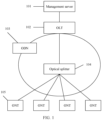
- FIG. 1 is a diagram of a system architecture applied to the PON scenario according to an implementation of this application.
- An optical line terminal (OLT) (102) is configured to provide a network side interface for an OAN.
- the OLT (102) is connected to an upper-layer management server (101), and is connected to one or more optical distribution networks (ODN) (103) at a lower layer.
- ODN optical distribution networks
- the ODN (103) includes an optical splitter (104) configured to split optical power, a feeder fiber connected between the optical splitter (104) and the OLT (102), and distribution fibers connected between the optical splitter (104) and optical network terminals (optical network terminal, ONT) (105).
- the ODN (103) transmits downlink data of the OLT (102) to the ONTs (105) by using the optical splitter (104).
- the ODN (103) converges uplink data of the ONTs (105) and then transmits converged uplink data to the OLT (102).
- the ONT (105) provides a user side interface for the OAN, and is also connected to the ODN (103).
- the management server (101) in this implementation of this application is dedicated to storing and managing ONT data.
- the management server (101) may be a network management device that performs a network management task such as network planning or network monitoring.
- the ONTs (105) may report ONT data to the OLT (102) by using the ODN (103); the OLT (102) encodes the collected ONT data in a uniform format and then sends encoded ONT data to the management server (101); and the management server (101) stores and manages the ONT data.
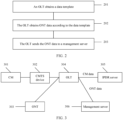
- An implementation of the data transmission method in this application includes the following steps.
- An OLT obtains a data template.
- the OLT receives the data template sent by a management server.
- the data template indicates at least two data types associated with an ONT. It should be noted that the OLT may alternatively obtain the data template in another manner, for example, by preconfiguring the data template. This is not specifically limited herein.
- ONT data types in the data template refer to Table 1.
- ONT data type Character data type Data length XDR object Data record MAC address of the ONT UCHAR 6 ipdr:macAddress Online status of the ONT UCHAR 1 Integer Last registration time of the ONT uint64 8 dateTime Identifier of an ONT service flow ULONG 4 unsignedInt Traffic template of the ONT service flow UCHAR 15+1 string Direction of the ONT service flow UCHAR 1 Integer Quantity of forwarded bytes of the ONT service flow 64ULONG 8 unsignedLong Quantity of forwarded packets of the ONT service flow 64ULONG 8 unsignedLong Quantity of discarded packets of the ONT service flow ULONG 4 unsignedInt OLT device name UCHAR 50 string OLT start time UINT 4 unsignedInt
- the data template includes at least two of the media access control (MAC) address of the ONT, the online status of the ONT, the last registration time of the ONT, the identifier of the ONT service flow, the traffic template of the ONT service flow, the direction of the ONT service flow, the quantity of forwarded bytes of the ONT service flow, the quantity of forwarded packets of the ONT service flow, and the quantity of discarded packets of the ONT service flow.
- the data template may further include some information associated with the OLT, such as the OLT device name and the OLT start time.
- the data template listed in Table 1 does not include all ONT data types in this application.
- the ONT in the data template in this application corresponds to a CM in the DOCSIS standard.
- the data template further includes other items corresponding to the ONT data types (for example, a character data type, a data length, and an XDR object that correspond to each type of ONT data).
- the ONT data types for example, a character data type, a data length, and an XDR object that correspond to each type of ONT data.
- IPDR data collection template defined in the DOCSIS.
- parameters such as the character data type and the data length that correspond to the ONT data in the data template defined in this application is consistent with parameters such as a character data type and a data length that correspond to CM data in the IPDR data collection template defined in the DOCSIS.
- the OLT obtains ONT data based on the data template.
- one OLT may manage a plurality of ONTs.
- the OLT broadcasts a message to all the managed ONTs to request the ONTs to report ONT data, and then the ONTs send ONT data of the ONTs to the OLT by using a time division multiple access (TDMA) technology.
- TDMA time division multiple access
- the OLT fills, based on the data template, ONT data corresponding to each data type.
- the OLT sends the ONT data to the management server.
- the OLT after collecting the ONT data, the OLT encodes the ONT data in a uniform format, and then send encoded ONT data to the management server; and the management server stores and manages the ONT data.
- an encoding manner is external data representation (XDR).
- the OLT may jointly package ONT data filled in the data template and send packaged ONT data to the management server.
- the OLT may alternatively send the ONT data to the management server in batches based on different requirements. This is not specifically limited herein.
- the OLT may establish a connection to the management server in a plurality of manners, for example, in an active mode or a passive mode.
- the active mode means that the OLT actively initiates a connection request to the management server; and the management server listens to a status of a port connected to the OLT, and after receiving the request, the management server makes a response and establishes a connection.
- the passive mode means that the management server actively initiates a connection request to the OLT; and the OLT listens to a status of a port connected to the management server, and after receiving the request, the OLT makes a response and establishes a connection.
- the OLT may send the ONT data to the management server in a plurality of manners, for example, may periodically report the ONT data to the management server or report the ONT data to the management server at one time.
- the periodic reporting means that a statistics collecting period is configured for the OLT.
- the OLT may send a session start message to the management server, to identify start of data reporting of the statistics collecting period, and then the OLT sends collected ONT data to the management server.
- the OLT sends a session end message to the management server, to identify end of the data reporting of the statistics collecting period.
- the statistics collecting period may be delivered by the management server to the OLT, or may be locally configured in the OLT. This is not specifically limited herein.
- the one-time reporting means that the management server initiates a statistics collecting session, and then the OLT sends collected ONT data to the management server according to an indication of the statistics collecting session.
- the statistics collecting session may be a logical connection between the OLT and the management server, for completing data transmission and recording. There may be a plurality of statistics collecting sessions between the OLT and the management server, and different statistics collecting sessions are distinguished from each other by using session identifiers.
- the management server may locally store the ONT data, and forward the ONT data to an MSO background running system.
- the MSO background running system (such as an OSS or a BSS) may analyze the ONT data to meet a related requirement of an operator, such as charging.
- the OLT obtains the data template; then the OLT may obtain the corresponding ONT data based on one or more data types defined in the data template; and then the OLT encodes the ONT data according to an XDR format and sends the encoded ONT data to the management server; and the management server stores and manages the ONT data.
- the OLT collects the corresponding ONT data based on the data template, and encodes and reports the ONT data according to the uniform XDR format.
- This application defines a unified statistics collecting and reporting manner of ONT data and uses standardly-defined ONT data, to help the management server store and manage the ONT data.
- Second scenario Hybrid networking scenario of a PON and a D-CCAP.
- the foregoing mainly describes the process in which the OLT sends the ONT data to the management server in the PON scenario. It may be understood that, as copper access evolves to optical access, as a typical solution of an MSO, the hybrid networking scenario of the PON and the D-CCAP has been widely applied.
- FIG. 3 is a diagram of a system architecture applied to a hybrid networking scenario of a PON and a D-CCAP according to an implementation of this application.
- the hybrid networking scenario of the PON and the D-CCAP may include a CM (301), a CMTS device (302), an ONT (303), an OLT (304), an IPDR server (305), and a management server (306).
- the CMTS device (302) is configured to: collect CM data from the CM (301), and encode the CM data and then send encoded CM data to the OLT (304), and the OLT (304) sends the encoded CM data to the IPDR server (305).
- the OLT (304) may collect ONT data from the ONT (303), and encode the ONT data and then send encoded ONT data to the management server (306). It can be learned that the IPDR server (305) and the management server (306) are respectively configured to manage the CM data and the ONT data.
- the management server (306) may be specifically the IPDR server (305), that is, the IPDR server is further configured to manage the ONT data in addition to the CM data.
- the management server (306) and the IPDR server (305) are no longer separated, so that network deployment costs can be reduced to a specific extent.
- the management server (306) is specifically the IPDR server (305) in the hybrid networking scenario of the PON and the D-CCAP.
- Another implementation of the data transmission method in this application includes the following steps.
- An OLT obtains a data template.
- the OLT obtains ONT data based on the data template.
- the OLT sends the ONT data to an IPDR server.
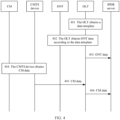
- steps 401 to 403 are similar to steps 201 to 203 in the implementation shown in FIG. 2 .
- the management server interacts with the OLT
- the IPDR server interacts with the OLT. Details are not described herein.
- a CMTS device obtains CM data.
- the CMTS device may collect the CM data in a manner defined in a DOCSIS standard. For example, the CMTS device may receive a data template that is about the CM data and that is sent by the IPDR server, and then the CMTS device collects the corresponding CM data based on the data template.
- the CMTS device sends the CM data to the OLT.
- the CMTS device is a cascaded device of the OLT, that is, data of the CMTS device needs to be reported by using the OLT. Therefore, the CMTS device needs to first send the collected CM data to the OLT.
- the CMTS device may encode the CM data in a uniform format, and send encoded CM data to the OLT.
- An encoding manner may be XDR. It may be understood that the CM data and the ONT data are encoded in a same encoding manner.
- the CMTS device and the OLT may be devices independent of each other, or may be aggregated as an optical-copper integrated access device, that is, the CMTS device and the OLT device are externally virtualized as an independent access device to interact with the IPDR server. This is not specifically limited herein.
- the OLT sends the CM data to the IPDR server.
- the OLT may forward the received CM data to the IPDR server. It may be understood that, if the CMTS device does not encode the CM data in step 405, the OLT may alternatively encode the CM data after receiving the CM data. This is not specifically limited herein.
- Steps 401 to 403 may be first performed, steps 404 to 406 may be first performed, or steps 401 to 403 and steps 404 to 406 may be simultaneously performed.
- the OLT may jointly package the CM data and the ONT data and send packaged data to the IPDR server, or may separately package the CM data and the ONT data and send packaged CM data and packaged ONT data to the IPDR server. This is not specifically limited herein.
- the IPDR server may store and manage the CM data collected by the CMTS device, and may further store and manage the ONT data collected by the OLT.
- the management server and the IPDR server are no longer separated. This reduces network deployment costs.
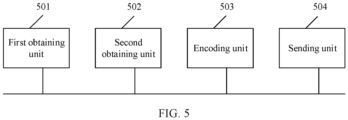
- An implementation of the OLT in the implementations of this application includes:
- the management server includes an IPDR server.
- the second obtaining unit 502 is further configured to: receive CM data sent by a CMTS device.
- the encoding unit 503 is further configured to: encode the CM data according to the XDR.
- the sending unit 504 is further configured to: send encoded CM data to the IPDR server.
- the second obtaining unit 502 is further configured to: receive CM data sent by a CMTS device, where the CM data is encoded by the CMTS device according to the XDR.
- the sending unit 504 is further configured to: send the encoded CM data to the IPDR server.
- the data template includes at least two of a MAC address of the ONT, an online status of the ONT, last registration time of the ONT, an identifier of an ONT service flow, a traffic template of the ONT service flow, a direction of the ONT service flow, a quantity of forwarded bytes of the ONT service flow, a quantity of forwarded packets of the ONT service flow, and a quantity of discarded packets of the ONT service flow.
- the first obtaining unit 501 is specifically configured to: receive the data template sent by the management server.
- the first obtaining unit 501 obtains the data template; then the second obtaining unit 502 obtains the ONT data based on the data template; then the encoding unit 503 encodes the ONT data according to an XDR format; and the sending unit 504 sends the encoded ONT data to the management server.
- the OLT collects the corresponding ONT data based on the data template, and encodes and reports the ONT data according to the uniform XDR format.
- This application defines a unified statistics collecting and reporting manner of ONT data and uses standardly-defined ONT data, to help the management server store and manage the ONT data.
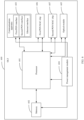
- FIG. 6 is a schematic diagram of a hardware structure of an OLT (600) according to this application.
- the OLT (600) mainly includes the following parts: a processor 601, a memory 602, a communications apparatus 603, and a power management module 604.
- the power management module 604 is configured to provide a stable current for the OLT (600).
- the communications apparatus 603 may be used by the OLT (600) to communicate with another communications device, such as a network side device, another optical line terminal, or a client device.
- the network side device is a management server.
- a first PON interface and a second PON interface are configured in the communications apparatus 603.
- the first PON interface is used by the OLT (600) to perform optical communication with an upper-layer device (another upper-layer optical line terminal), and the second PON interface is used by the OLT (600) to perform optical communication with a client device.
- Both the first PON interface and the second PON interface are ports used for connection by using a PON (passive optical network) technology.
- the first PON interface may include at least one of the following: an Ethernet PON (EPON) interface, a gigabit PON (GPON) interface, a 10 gigabit Ethernet PON (10G-EPON) interface, or a future PON interface with a higher operating rate.
- the second PON interface may include at least one of the following: a GPON interface, an EPON interface, a symmetric 10G-GPON interface, an asymmetric 10G-GPON interface, a 10G-EPON interface, or a future PON interface with a higher operating rate.
- the first PON interface and the second PON interface may be PON interfaces of different types, or may be PON interfaces of a same type.
- the following describes functions of the modules in the OLT (600).
- the first PON interface and the second PON interface may be PON interfaces of different types.
- the processor 601 is configured to perform protocol conversion processing on an optical signal that is received through the first PON interface or the second PON interface, so that a processed optical signal is applicable to the second PON interface or the first PON interface. Two conversion manners are described below.
- protocol conversion is directly performed on the optical signal.
- the processor 601 is configured to: parse, by using a protocol corresponding to the first PON interface, a first optical signal received by the first PON interface, and encapsulate a parsed first optical signal by using a protocol corresponding to the second PON interface, to complete protocol conversion of the first optical signal; and during uplink data transmission, the processor 601 is configured to: parse, by using the protocol corresponding to the second PON interface, a second optical signal received by the second PON interface, and encapsulate a parsed second optical signal by using the protocol corresponding to the first PON interface, to complete protocol conversion of the second optical signal.
- the processor 601 is specifically configured to: indicate the optical module 605 to convert a first optical signal received through the first PON interface into a first electrical signal, indicate the first PON MAC chip 606 to perform protocol deframing on the first electrical signal, indicate the second PON MAC chip 607 to perform protocol framing on a first electrical signal obtained after the protocol deframing, and indicate the optical module 605 to perform electrical-to-optical conversion on a first electrical signal obtained after the protocol framing, to obtain a processed first optical signal. In this way, protocol conversion of the first optical signal is completed.
- the processor 601 is specifically configured to: indicate the optical module 605 to convert a second optical signal received through the second PON interface into a second electrical signal, indicate the second PON MAC chip 607 to perform protocol deframing on the second electrical signal, indicate the first PON MAC chip 606 to perform protocol framing on a second electrical signal obtained after the protocol deframing, and indicate the optical module 605 to perform electrical-to-optical conversion on a second electrical signal obtained after the protocol framing, to obtain a processed second optical signal. In this way, protocol conversion of the second optical signal is completed.
- the first PON interface and the second PON interface are PON interfaces of a same type.
- the optical line terminal may perform processing such as denoising and signal enhancement on a received signal by using the processor, to improve signal transmission reliability.
- an Ethernet interface may be further configured for the communications apparatus 603.
- the Ethernet interface is an interface used for communication over an Ethernet protocol, and may be used by the OLT (600) to communicate with an upper-layer network side device (a switch, a router, or the like).
- the memory 602 is coupled to the processor 601, and is configured to store various software programs and/or a plurality of sets of instructions.
- the memory 602 may include a high-speed random access memory, and may also include a nonvolatile memory, for example, one or more magnetic disk storage devices, flash memory devices, or other nonvolatile solid-state storage devices.
- the memory 602 may store an operating system (briefly referred to as a system in the following), for example, an embedded operating system such as ANDROID, IOS, WINDOWS, or LINUX.
- the memory 602 may further store a network communications program.
- the network communications program may be used to communicate with one or more optical line terminations, one or more customer-premises equipments, or one or more network side devices.
- the processor 601 may be configured to read and execute computer-readable instructions, to complete a management function of the OLT (600); parse, control, or process a packet received by the OLT (600); and the like. Specifically, the processor 601 may be configured to invoke the program stored in the memory 602, and execute instructions included in the program. The instructions may be used to implement a signal transmission function of the OLT (600) in a PON communications network.
- the OLT (600) may further include an upstream board, a backplane that provides a physical connection for units, a clock, a fan, a fan control module, and the like. Details are not described herein.
- the OLT (600) shown in FIG. 6 is merely an implementation of this application. In an actual application, the OLT (600) may alternatively include more or fewer components. This is not limited herein.
- the OLT may be configured to perform all or some of the actions performed by the OLT in the implementations shown in FIG. 2 and FIG. 4 .
- the disclosed system, apparatus, and method may be implemented in other manners.
- the described apparatus implementation is merely an example.
- division into units is merely logical function division and may be other division in an actual implementation.
- a plurality of units or components may be combined or integrated into another system, or some features may be ignored or not performed.
- the displayed or discussed mutual couplings or direct couplings or communication connections may be implemented through some interfaces.
- the indirect couplings or communication connections between the apparatuses or units may be implemented in electronic, mechanical, or other forms.
- the units described as separate parts may or may not be physically separate, and parts displayed as units may or may not be physical units, that is, may be located in one position, or may be distributed on a plurality of network units. Some or all of the units may be selected based on actual requirements to achieve the objectives of the solutions of the implementations.
- functional units in the implementations of this application may be integrated into one processing unit, or each of the units may exist alone physically, or two or more units may be integrated into one unit.
- the integrated unit may be implemented in a form of hardware, or may be implemented in a form of a software functional unit.
- the integrated unit When the integrated unit is implemented in the form of a software functional unit and sold or used as an independent product, the integrated unit may be stored in a computer readable storage medium.
- the computer software product is stored in a storage medium and includes several instructions for instructing a computer device (which may be a personal computer, a server, a network device, or the like) to perform all or some of the steps of the methods described in the implementations of this application.
- the foregoing storage medium includes: any medium that can store program code, such as a USB flash drive, a removable hard disk, a read-only memory (ROM), a random access memory (RAM), a magnetic disk, or an optical disc.
Landscapes
- Engineering & Computer Science (AREA)
- Computer Networks & Wireless Communication (AREA)
- Signal Processing (AREA)
- Quality & Reliability (AREA)
- Small-Scale Networks (AREA)
Claims (10)
- Datenübertragungsverfahren, umfassend:Erlangen (201) einer Datenvorlage durch ein optisches Leitungsterminal, OLT;Erlangen (202) von ONT-Daten durch das OLT basierend auf der Datenvorlage;Codieren der ONT-Daten durch das OLT gemäß einem externen Datendarstellungsformat, XDR-Format; undSenden (203) codierter ONT-Daten durch das OLT an einen Verwaltungsserver, wobei der Verwaltungsserver ein Internet Protocol Detail Record-Server, IPDR-Server, ist;wobei das Erlangen einer Datenvorlage durch ein OLT Empfangen der durch den Verwaltungsserver gesendeten Datenvorlage durch das OLT umfasst, wobei die Datenvorlage mindestens zwei einem ONT zugeordnete Datentypen umfasst und ferner ein XDR-Objekt entsprechend jedem dem ONT zugeordneten Datentyp derart umfasst, dass ein oder mehrere Parameter, die einen Zeichendatentyp und eine Datenlänge beinhalten, die den ONT-Daten in der Datenvorlage entsprechen, mit einem oder mehreren Parametern konsistent sind, die einen Zeichendatentyp und eine Datenlänge beinhalten, die CM-Daten in einer IPDR-Datenerfassungsvorlage entsprechen, welche in der Data Over Cable Service Interface Specification, DOCSIS, definiert ist.
- Verfahren nach Anspruch 1, wobei das Verfahren ferner Folgendes umfasst:Empfangen von CM-Daten, die durch eine Vorrichtung des Kabelmodem-Abschlusssystems, CMTS-Vorrichtung, gesendet werden, durch das OLT-Kabelmodem;Codieren der CM-Daten durch das OLT gemäß dem XDR-Format; undSenden codierter CM-Daten durch das OLT an den IPDR-Server.
- Verfahren nach Anspruch 1, wobei das Verfahren ferner Folgendes umfasst:Empfangen von CM-Daten, die durch eine CMTS-Vorrichtung gesendet werden, durch das OLT, wobei die CM-Daten durch die CMTS-Vorrichtung gemäß dem XDR-Format codiert werden; undSenden der codierten CM-Daten durch das OLT an den IPDR-Server.
- Verfahren nach einem der Ansprüche 1 bis 3, wobei die Datenvorlage mindestens zwei von einer Media Access Control-Adresse, MAC-Adresse, des ONT, einem Online-Status des ONT, der letzten Registrierungszeit des ONT, einer Kennung eines ONT-Service-Flusses, einer Verkehrsvorlage des ONT-Service-Flusses, einer Richtung des ONT-Service-Flusses, einer Menge weitergeleiteter Bytes des ONT-Service-Flusses, einer Menge weitergeleiteter Pakete des ONT-Service-Flusses und einer Menge verworfener Pakete des ONT-Service-Flusses umfasst.
- OLT, umfassend:eine erste Erlangungseinheit (501), die dazu konfiguriert ist, eine Datenvorlage zu erlangen;eine zweite Erlangungseinheit (502), die dazu konfiguriert ist, ONT-Daten basierend auf der Datenvorlage zu erlangen;eine Codiereinheit (503), die dazu konfiguriert ist, die ONT-Daten gemäß dem externen Datendarstellungsformat, XDR-Format, zu codieren; undeine Sendeeinheit (504), die dazu konfiguriert ist, codierte ONT-Daten an einen Verwaltungsserver zu senden, wobei der Verwaltungsserver ein IPDR-Server ist;wobei die erste Erlangungseinheit speziell dazu konfiguriert ist: die Datenvorlage, die durch den Verwaltungsserver gesendet wurde, zu empfangen, wobei die Datenvorlage mindestens zwei einem ONT zugeordnete Datentypen umfasst und ferner ein XDR-Objekt entsprechend jedem dem ONT zugeordneten Datentyp derart umfasst, dass ein oder mehrere Parameter, die einen Zeichendatentyp und eine Datenlänge beinhalten, die den ONT-Daten in der Datenvorlage entsprechen, mit einem oder mehreren Parametern konsistent sind, die einen Zeichendatentyp und eine Datenlänge beinhalten, die CM-Daten in einer IPDR-Datenerfassungsvorlage entsprechen, welche in der Data Over Cable Service Interface Specification, DOCSIS, definiert ist.
- OLT nach Anspruch 5, wobei die zweite Erlangungseinheit ferner dazu konfiguriert ist:CM-Daten zu empfangen, die durch eine CMTS-Vorrichtung gesendet werden;die Codiereinheit ferner dazu konfiguriert ist:die CM-Daten gemäß dem XDR-Format zu codieren; unddie Sendeeinheit ferner dazu konfiguriert ist:
verschlüsselte CM-Daten an den IPDR-Server zu senden. - OLT nach Anspruch 5, wobei die zweite Erlangungseinheit ferner dazu konfiguriert ist:CM-Daten zu empfangen, die durch eine CMTS-Vorrichtung gesendet werden, wobei die CM-Daten durch die CMTS-Vorrichtung gemäß dem XDR-Format codiert werden; unddie Sendeeinheit ferner dazu konfiguriert ist:
die verschlüsselten CM-Daten an den IPDR-Server zu senden. - OLT nach einem der Ansprüche 5 bis 7, wobei die Datenvorlage mindestens zwei von einer MAC-Adresse eines ONT, einem Online-Status des ONT, der letzten Registrierungszeit des ONT, einer Kennung eines ONT-Service-Flusses, einer Verkehrsvorlage des ONT-Service-Flusses, einer Richtung des ONT-Service-Flusses, einer Menge weitergeleiteter Bytes des ONT-Service-Flusses, einer Menge weitergeleiteter Pakete des ONT-Service-Flusses und einer Menge verworfener Pakete des ONT-Service-Flusses umfasst.
- OLT (600), umfassend:einen Prozessor (601) und einen Speicher (602), wobei der Speicher Programmcode speichert; undder Prozessor beim Aufrufen des Programmcodes in dem Speicher das Datenübertragungsverfahren nach einem der Ansprüche 1 bis 4 ausführt.
- Computerprogrammprodukt, umfassend Anweisungen, wobei, wenn das Computerprogrammprodukt auf einem Computer ausgeführt wird, der Computer in die Lage versetzt wird, die Prozesse in dem Datenübertragungsverfahren nach einem der Ansprüche 1 bis 4 durchzuführen.
Applications Claiming Priority (2)
| Application Number | Priority Date | Filing Date | Title |
|---|---|---|---|
| CN201910469620.2A CN112019299B (zh) | 2019-05-31 | 2019-05-31 | 一种数据传输方法及相关设备 |
| PCT/CN2020/071700 WO2020238251A1 (zh) | 2019-05-31 | 2020-01-13 | 一种数据传输方法及相关设备 |
Publications (3)
| Publication Number | Publication Date |
|---|---|
| EP3955486A1 EP3955486A1 (de) | 2022-02-16 |
| EP3955486A4 EP3955486A4 (de) | 2022-06-15 |
| EP3955486B1 true EP3955486B1 (de) | 2025-04-23 |
Family
ID=73501893
Family Applications (1)
| Application Number | Title | Priority Date | Filing Date |
|---|---|---|---|
| EP20814470.9A Active EP3955486B1 (de) | 2019-05-31 | 2020-01-13 | Datenübertragungsverfahren und zugehörige vorrichtung |
Country Status (4)
| Country | Link |
|---|---|
| US (1) | US11652660B2 (de) |
| EP (1) | EP3955486B1 (de) |
| CN (1) | CN112019299B (de) |
| WO (1) | WO2020238251A1 (de) |
Families Citing this family (4)
| Publication number | Priority date | Publication date | Assignee | Title |
|---|---|---|---|---|
| WO2021024315A1 (ja) * | 2019-08-02 | 2021-02-11 | 日本電信電話株式会社 | 通信装置、及び通信方法 |
| WO2022159631A1 (en) * | 2021-01-21 | 2022-07-28 | Arris Enterprises Llc | Ipdr communication system for virtualized core sources |
| WO2022254662A1 (ja) * | 2021-06-03 | 2022-12-08 | 日本電信電話株式会社 | 対象情報収集装置、方法およびプログラム |
| CN117527060A (zh) * | 2022-07-28 | 2024-02-06 | 中国电信股份有限公司 | 一种onu数据的采集方法、装置及系统 |
Family Cites Families (28)
| Publication number | Priority date | Publication date | Assignee | Title |
|---|---|---|---|---|
| US8127042B1 (en) * | 1998-01-21 | 2012-02-28 | Ciena Corporation | Data driven connection rule/constraint engine applied to trail management |
| CN100454835C (zh) * | 2005-09-07 | 2009-01-21 | 中兴通讯股份有限公司 | 以太网无源光网络系统中光网络单元远程管理方法 |
| CN101043275B (zh) * | 2006-05-17 | 2012-03-21 | 华为技术有限公司 | 一种管理光网络单元或光网络终端的系统和方法 |
| CN101247258B (zh) * | 2007-02-12 | 2011-02-09 | 华为技术有限公司 | 一种业务发放方法及系统 |
| US8036530B2 (en) * | 2007-03-20 | 2011-10-11 | Arris Group, Inc. | Method and system for transporting DOCSIS communication signals over a passive optical network |
| CN101272213B (zh) * | 2007-03-23 | 2013-08-07 | 华为技术有限公司 | 在波分复用的无源光网络中传输数据的方法、系统和设备 |
| CN101414925B (zh) * | 2007-10-17 | 2011-04-06 | 华为技术有限公司 | 光网络终端配置的方法及系统、装置 |
| CN101179433A (zh) * | 2007-10-24 | 2008-05-14 | 中兴通讯股份有限公司 | 一种对无源光网络终端进行远程管理的方法及系统 |
| US8831425B1 (en) * | 2008-01-09 | 2014-09-09 | Cisco Technology, Inc. | Data over cable service interface specification (DOCSIS) over passive optical network (PON) |
| US20090238561A1 (en) * | 2008-03-19 | 2009-09-24 | Tellabs Vienna, Inc. | Method and apparatus for measuring quality of traffic performance in a passive optical network (PON) |
| US8144594B2 (en) * | 2009-03-25 | 2012-03-27 | Comcast Cable Communications, Llc | Congestion management in a shared network |
| CN102104420A (zh) * | 2009-12-22 | 2011-06-22 | 华为技术有限公司 | 光网络终端的参数配置方法、装置和系统 |
| CN101815008B (zh) * | 2010-03-25 | 2013-03-27 | 浙江工业大学 | Gpon网管系统的olt代理子系统 |
| ES2390546B1 (es) * | 2010-12-28 | 2013-10-02 | Telefónica, S.A. | Dispositivo y método para monitorizar tráfico de extremo a extremo y medir la calidad entregada a los clientes en redes ópticas pasivas |
| CN102546612B (zh) * | 2011-12-23 | 2015-07-08 | 华中科技大学 | 用户态下基于rdma协议的远程过程调用实现方法 |
| US8793714B2 (en) * | 2012-01-03 | 2014-07-29 | Time Warner Cable Enterprises Llc | Excluding specific application traffic from customer consumption data |
| US9270480B1 (en) * | 2012-06-25 | 2016-02-23 | Adtran, Inc. | Systems and methods for Ethernet-based management of optical networks using OMCI |
| CN103167363B (zh) * | 2013-02-01 | 2015-12-23 | 北京邮电大学 | 以帧为单位的无源光网络网络编码的方法、装置和系统 |
| CN105208575B (zh) * | 2014-06-30 | 2020-02-14 | 中兴通讯股份有限公司 | 一种网络接口信令监测的信息处理方法及装置 |
| CN104536700B (zh) * | 2014-12-22 | 2017-07-07 | 深圳市博瑞得科技有限公司 | 一种码流数据的快速存储/读取方法及系统 |
| CN105991196B (zh) * | 2015-02-17 | 2019-04-19 | 华为技术有限公司 | 一种数据预编码器、系统以及编码方法 |
| CN105007180B (zh) * | 2015-07-02 | 2019-01-29 | 广州珠江数码集团股份有限公司 | 一种分布式ccmts管理方法 |
| WO2017113349A1 (zh) * | 2015-12-31 | 2017-07-06 | 华为技术有限公司 | 数据解析和数据传输方法、装置 |
| US10356496B2 (en) * | 2016-01-27 | 2019-07-16 | Accelink Technologies Co., Ltd. | Converged passive optical LAN |
| CN107454579B (zh) * | 2016-05-30 | 2020-02-25 | 普天信息技术有限公司 | 一种lte网络支持计费的s1接口缓存加速方法、系统及装置 |
| EP3497885B1 (de) * | 2016-08-15 | 2021-08-11 | Incognito Software Systems Inc. | System und verfahren zur berichterstattung über bandbreitenaktivitäten |
| CN107193909A (zh) * | 2017-05-08 | 2017-09-22 | 杭州东方通信软件技术有限公司 | 数据处理方法及系统 |
| CN106911437A (zh) * | 2017-05-09 | 2017-06-30 | 郑州云海信息技术有限公司 | 一种nfs协议一致性测试系统和方法 |
-
2019
- 2019-05-31 CN CN201910469620.2A patent/CN112019299B/zh active Active
-
2020
- 2020-01-13 WO PCT/CN2020/071700 patent/WO2020238251A1/zh not_active Ceased
- 2020-01-13 EP EP20814470.9A patent/EP3955486B1/de active Active
-
2021
- 2021-11-17 US US17/528,906 patent/US11652660B2/en active Active
Also Published As
| Publication number | Publication date |
|---|---|
| WO2020238251A1 (zh) | 2020-12-03 |
| EP3955486A1 (de) | 2022-02-16 |
| CN112019299A (zh) | 2020-12-01 |
| CN112019299B (zh) | 2022-05-13 |
| US20220078041A1 (en) | 2022-03-10 |
| US11652660B2 (en) | 2023-05-16 |
| EP3955486A4 (de) | 2022-06-15 |
Similar Documents
| Publication | Publication Date | Title |
|---|---|---|
| US11652660B2 (en) | Optical line terminal and data transmission method, system, and apparatus | |
| US8832761B2 (en) | Method and apparatus for service configuration conversion in doscic-over-PON system | |
| US7899323B2 (en) | Multi-interface protocol analysis system | |
| US8913630B2 (en) | Optical network terminal management and control interface over ethernet | |
| EP3528437B1 (de) | Verfahren zur zugangsnetzwerk-virtualisierung und proxy-knoten | |
| EP4216566A1 (de) | Mehrstufiges pon-verwaltungsverfahren und zugehörige vorrichtung | |
| US20110078755A1 (en) | Passive Optical Network Data Over Cable Service Interface Specification Upstream Proxy Architecture Over the Next Generation Hybrid Fiber-Coaxial Networks | |
| US11309967B2 (en) | Communications network and related device | |
| US8929396B2 (en) | Ethernet media access control organization specific extension | |
| EP3244571B1 (de) | Konfigurationsdatenverteilungsverfahren und -vorrichtung | |
| KR20040025354A (ko) | 이더넷 수동형광가입자망에서 오에이엠 기능 디스커버리방법 | |
| EP4614998A1 (de) | Nachrichtenübertragungsverfahren, master-vorrichtung, olt und optisches kommunikationssystem | |
| EP3979662A1 (de) | Nachrichtenverarbeitungsverfahren und -vorrichtung | |
| CN101141193B (zh) | 在吉比特无源光网络系统中对用户侧设备远程管理的方法 | |
| CN100488120C (zh) | 无源光网络的管理方法 | |
| CN107517118A (zh) | 一种业务开通方法和系统、光线路终端及光网络单元 | |
| CN113556632B (zh) | 数据转发方法和网络侧接入设备 | |
| RU2809182C1 (ru) | Способ передачи служебных данных, соответствующее устройство и микросхема цифровой обработки | |
| CN111654764B (zh) | 终端管理方法及系统 | |
| CN120786209A (zh) | 一种基于olt级联的数据传输控制方法、装置及系统 | |
| JP2020113877A (ja) | Pon局側装置、管理サーバ、ponシステム、および加入者回線の管理方法 |
Legal Events
| Date | Code | Title | Description |
|---|---|---|---|
| STAA | Information on the status of an ep patent application or granted ep patent |
Free format text: STATUS: THE INTERNATIONAL PUBLICATION HAS BEEN MADE |
|
| PUAI | Public reference made under article 153(3) epc to a published international application that has entered the european phase |
Free format text: ORIGINAL CODE: 0009012 |
|
| STAA | Information on the status of an ep patent application or granted ep patent |
Free format text: STATUS: REQUEST FOR EXAMINATION WAS MADE |
|
| 17P | Request for examination filed |
Effective date: 20211109 |
|
| AK | Designated contracting states |
Kind code of ref document: A1 Designated state(s): AL AT BE BG CH CY CZ DE DK EE ES FI FR GB GR HR HU IE IS IT LI LT LU LV MC MK MT NL NO PL PT RO RS SE SI SK SM TR |
|
| REG | Reference to a national code |
Ref country code: DE Ref legal event code: R079 Free format text: PREVIOUS MAIN CLASS: H04L0001000000 Ipc: H04L0012280000 Ref country code: DE Ref legal event code: R079 Ref document number: 602020050063 Country of ref document: DE Free format text: PREVIOUS MAIN CLASS: H04L0001000000 Ipc: H04L0012280000 |
|
| A4 | Supplementary search report drawn up and despatched |
Effective date: 20220513 |
|
| RIC1 | Information provided on ipc code assigned before grant |
Ipc: H04Q 11/00 20060101ALI20220509BHEP Ipc: H04L 12/28 20060101AFI20220509BHEP |
|
| DAV | Request for validation of the european patent (deleted) | ||
| DAX | Request for extension of the european patent (deleted) | ||
| GRAP | Despatch of communication of intention to grant a patent |
Free format text: ORIGINAL CODE: EPIDOSNIGR1 |
|
| STAA | Information on the status of an ep patent application or granted ep patent |
Free format text: STATUS: GRANT OF PATENT IS INTENDED |
|
| INTG | Intention to grant announced |
Effective date: 20241206 |
|
| GRAS | Grant fee paid |
Free format text: ORIGINAL CODE: EPIDOSNIGR3 |
|
| GRAA | (expected) grant |
Free format text: ORIGINAL CODE: 0009210 |
|
| STAA | Information on the status of an ep patent application or granted ep patent |
Free format text: STATUS: THE PATENT HAS BEEN GRANTED |
|
| AK | Designated contracting states |
Kind code of ref document: B1 Designated state(s): AL AT BE BG CH CY CZ DE DK EE ES FI FR GB GR HR HU IE IS IT LI LT LU LV MC MK MT NL NO PL PT RO RS SE SI SK SM TR |
|
| REG | Reference to a national code |
Ref country code: GB Ref legal event code: FG4D |
|
| REG | Reference to a national code |
Ref country code: CH Ref legal event code: EP |
|
| REG | Reference to a national code |
Ref country code: DE Ref legal event code: R096 Ref document number: 602020050063 Country of ref document: DE |
|
| REG | Reference to a national code |
Ref country code: IE Ref legal event code: FG4D |
|
| REG | Reference to a national code |
Ref country code: NL Ref legal event code: MP Effective date: 20250423 |
|
| PG25 | Lapsed in a contracting state [announced via postgrant information from national office to epo] |
Ref country code: NL Free format text: LAPSE BECAUSE OF FAILURE TO SUBMIT A TRANSLATION OF THE DESCRIPTION OR TO PAY THE FEE WITHIN THE PRESCRIBED TIME-LIMIT Effective date: 20250423 |
|
| REG | Reference to a national code |
Ref country code: AT Ref legal event code: MK05 Ref document number: 1788897 Country of ref document: AT Kind code of ref document: T Effective date: 20250423 |
|
| PG25 | Lapsed in a contracting state [announced via postgrant information from national office to epo] |
Ref country code: FI Free format text: LAPSE BECAUSE OF FAILURE TO SUBMIT A TRANSLATION OF THE DESCRIPTION OR TO PAY THE FEE WITHIN THE PRESCRIBED TIME-LIMIT Effective date: 20250423 Ref country code: PT Free format text: LAPSE BECAUSE OF FAILURE TO SUBMIT A TRANSLATION OF THE DESCRIPTION OR TO PAY THE FEE WITHIN THE PRESCRIBED TIME-LIMIT Effective date: 20250825 Ref country code: ES Free format text: LAPSE BECAUSE OF FAILURE TO SUBMIT A TRANSLATION OF THE DESCRIPTION OR TO PAY THE FEE WITHIN THE PRESCRIBED TIME-LIMIT Effective date: 20250423 |
|
| REG | Reference to a national code |
Ref country code: LT Ref legal event code: MG9D |
|
| PG25 | Lapsed in a contracting state [announced via postgrant information from national office to epo] |
Ref country code: GR Free format text: LAPSE BECAUSE OF FAILURE TO SUBMIT A TRANSLATION OF THE DESCRIPTION OR TO PAY THE FEE WITHIN THE PRESCRIBED TIME-LIMIT Effective date: 20250724 Ref country code: NO Free format text: LAPSE BECAUSE OF FAILURE TO SUBMIT A TRANSLATION OF THE DESCRIPTION OR TO PAY THE FEE WITHIN THE PRESCRIBED TIME-LIMIT Effective date: 20250723 |
|
| PG25 | Lapsed in a contracting state [announced via postgrant information from national office to epo] |
Ref country code: PL Free format text: LAPSE BECAUSE OF FAILURE TO SUBMIT A TRANSLATION OF THE DESCRIPTION OR TO PAY THE FEE WITHIN THE PRESCRIBED TIME-LIMIT Effective date: 20250423 |
|
| PG25 | Lapsed in a contracting state [announced via postgrant information from national office to epo] |
Ref country code: BG Free format text: LAPSE BECAUSE OF FAILURE TO SUBMIT A TRANSLATION OF THE DESCRIPTION OR TO PAY THE FEE WITHIN THE PRESCRIBED TIME-LIMIT Effective date: 20250423 |
|
| PG25 | Lapsed in a contracting state [announced via postgrant information from national office to epo] |
Ref country code: HR Free format text: LAPSE BECAUSE OF FAILURE TO SUBMIT A TRANSLATION OF THE DESCRIPTION OR TO PAY THE FEE WITHIN THE PRESCRIBED TIME-LIMIT Effective date: 20250423 |
|
| PG25 | Lapsed in a contracting state [announced via postgrant information from national office to epo] |
Ref country code: AT Free format text: LAPSE BECAUSE OF FAILURE TO SUBMIT A TRANSLATION OF THE DESCRIPTION OR TO PAY THE FEE WITHIN THE PRESCRIBED TIME-LIMIT Effective date: 20250423 |
|
| PG25 | Lapsed in a contracting state [announced via postgrant information from national office to epo] |
Ref country code: RS Free format text: LAPSE BECAUSE OF FAILURE TO SUBMIT A TRANSLATION OF THE DESCRIPTION OR TO PAY THE FEE WITHIN THE PRESCRIBED TIME-LIMIT Effective date: 20250723 |
|
| PG25 | Lapsed in a contracting state [announced via postgrant information from national office to epo] |
Ref country code: IS Free format text: LAPSE BECAUSE OF FAILURE TO SUBMIT A TRANSLATION OF THE DESCRIPTION OR TO PAY THE FEE WITHIN THE PRESCRIBED TIME-LIMIT Effective date: 20250823 |
|
| PG25 | Lapsed in a contracting state [announced via postgrant information from national office to epo] |
Ref country code: LV Free format text: LAPSE BECAUSE OF FAILURE TO SUBMIT A TRANSLATION OF THE DESCRIPTION OR TO PAY THE FEE WITHIN THE PRESCRIBED TIME-LIMIT Effective date: 20250423 |
|
| PG25 | Lapsed in a contracting state [announced via postgrant information from national office to epo] |
Ref country code: SM Free format text: LAPSE BECAUSE OF FAILURE TO SUBMIT A TRANSLATION OF THE DESCRIPTION OR TO PAY THE FEE WITHIN THE PRESCRIBED TIME-LIMIT Effective date: 20250423 Ref country code: DK Free format text: LAPSE BECAUSE OF FAILURE TO SUBMIT A TRANSLATION OF THE DESCRIPTION OR TO PAY THE FEE WITHIN THE PRESCRIBED TIME-LIMIT Effective date: 20250423 |
|
| PGFP | Annual fee paid to national office [announced via postgrant information from national office to epo] |
Ref country code: FR Payment date: 20251208 Year of fee payment: 7 |
|
| PG25 | Lapsed in a contracting state [announced via postgrant information from national office to epo] |
Ref country code: CZ Free format text: LAPSE BECAUSE OF FAILURE TO SUBMIT A TRANSLATION OF THE DESCRIPTION OR TO PAY THE FEE WITHIN THE PRESCRIBED TIME-LIMIT Effective date: 20250423 |
|
| PG25 | Lapsed in a contracting state [announced via postgrant information from national office to epo] |
Ref country code: EE Free format text: LAPSE BECAUSE OF FAILURE TO SUBMIT A TRANSLATION OF THE DESCRIPTION OR TO PAY THE FEE WITHIN THE PRESCRIBED TIME-LIMIT Effective date: 20250423 |
|
| REG | Reference to a national code |
Ref country code: DE Ref legal event code: R097 Ref document number: 602020050063 Country of ref document: DE |
|
| PG25 | Lapsed in a contracting state [announced via postgrant information from national office to epo] |
Ref country code: RO Free format text: LAPSE BECAUSE OF FAILURE TO SUBMIT A TRANSLATION OF THE DESCRIPTION OR TO PAY THE FEE WITHIN THE PRESCRIBED TIME-LIMIT Effective date: 20250423 Ref country code: SK Free format text: LAPSE BECAUSE OF FAILURE TO SUBMIT A TRANSLATION OF THE DESCRIPTION OR TO PAY THE FEE WITHIN THE PRESCRIBED TIME-LIMIT Effective date: 20250423 |
|
| PG25 | Lapsed in a contracting state [announced via postgrant information from national office to epo] |
Ref country code: IT Free format text: LAPSE BECAUSE OF FAILURE TO SUBMIT A TRANSLATION OF THE DESCRIPTION OR TO PAY THE FEE WITHIN THE PRESCRIBED TIME-LIMIT Effective date: 20250423 |
|
| PLBE | No opposition filed within time limit |
Free format text: ORIGINAL CODE: 0009261 |
|
| STAA | Information on the status of an ep patent application or granted ep patent |
Free format text: STATUS: NO OPPOSITION FILED WITHIN TIME LIMIT |
|
| REG | Reference to a national code |
Ref country code: CH Ref legal event code: L10 Free format text: ST27 STATUS EVENT CODE: U-0-0-L10-L00 (AS PROVIDED BY THE NATIONAL OFFICE) Effective date: 20260304 |