EP3955363A1 - Lithium ion secondary battery - Google Patents
Lithium ion secondary battery Download PDFInfo
- Publication number
- EP3955363A1 EP3955363A1 EP20805623.4A EP20805623A EP3955363A1 EP 3955363 A1 EP3955363 A1 EP 3955363A1 EP 20805623 A EP20805623 A EP 20805623A EP 3955363 A1 EP3955363 A1 EP 3955363A1
- Authority
- EP
- European Patent Office
- Prior art keywords
- negative electrode
- secondary battery
- cyclic ester
- ion secondary
- lithium ion
- Prior art date
- Legal status (The legal status is an assumption and is not a legal conclusion. Google has not performed a legal analysis and makes no representation as to the accuracy of the status listed.)
- Withdrawn
Links
- 229910001416 lithium ion Inorganic materials 0.000 title claims abstract description 52
- HBBGRARXTFLTSG-UHFFFAOYSA-N Lithium ion Chemical compound [Li+] HBBGRARXTFLTSG-UHFFFAOYSA-N 0.000 title claims abstract description 46
- -1 cyclic ester Chemical class 0.000 claims abstract description 81
- 239000003792 electrolyte Substances 0.000 claims abstract description 77
- 239000000463 material Substances 0.000 claims abstract description 24
- 239000002904 solvent Substances 0.000 claims abstract description 22
- 229910003002 lithium salt Inorganic materials 0.000 claims abstract description 18
- 159000000002 lithium salts Chemical class 0.000 claims abstract description 18
- OKTJSMMVPCPJKN-UHFFFAOYSA-N Carbon Chemical compound [C] OKTJSMMVPCPJKN-UHFFFAOYSA-N 0.000 claims abstract description 17
- 229910002804 graphite Inorganic materials 0.000 claims abstract description 15
- 239000010439 graphite Substances 0.000 claims abstract description 15
- 230000004888 barrier function Effects 0.000 claims abstract description 11
- 239000007773 negative electrode material Substances 0.000 claims abstract description 8
- 239000003575 carbonaceous material Substances 0.000 claims abstract description 7
- YEJRWHAVMIAJKC-UHFFFAOYSA-N 4-Butyrolactone Chemical group O=C1CCCO1 YEJRWHAVMIAJKC-UHFFFAOYSA-N 0.000 claims description 26
- 239000002121 nanofiber Substances 0.000 claims description 20
- 239000011148 porous material Substances 0.000 claims description 14
- KMTRUDSVKNLOMY-UHFFFAOYSA-N Ethylene carbonate Chemical compound O=C1OCCO1 KMTRUDSVKNLOMY-UHFFFAOYSA-N 0.000 claims description 13
- 150000005676 cyclic carbonates Chemical class 0.000 claims description 11
- 230000006866 deterioration Effects 0.000 abstract description 11
- 239000000047 product Substances 0.000 description 37
- 238000000354 decomposition reaction Methods 0.000 description 13
- 230000002829 reductive effect Effects 0.000 description 8
- OZJPLYNZGCXSJM-UHFFFAOYSA-N 5-valerolactone Chemical group O=C1CCCCO1 OZJPLYNZGCXSJM-UHFFFAOYSA-N 0.000 description 6
- WHXSMMKQMYFTQS-UHFFFAOYSA-N Lithium Chemical compound [Li] WHXSMMKQMYFTQS-UHFFFAOYSA-N 0.000 description 6
- NBIIXXVUZAFLBC-UHFFFAOYSA-N Phosphoric acid Chemical compound OP(O)(O)=O NBIIXXVUZAFLBC-UHFFFAOYSA-N 0.000 description 6
- 239000011230 binding agent Substances 0.000 description 6
- 229910052744 lithium Inorganic materials 0.000 description 6
- 239000012046 mixed solvent Substances 0.000 description 6
- RUOJZAUFBMNUDX-UHFFFAOYSA-N propylene carbonate Chemical compound CC1COC(=O)O1 RUOJZAUFBMNUDX-UHFFFAOYSA-N 0.000 description 6
- PXHVJJICTQNCMI-UHFFFAOYSA-N Nickel Chemical compound [Ni] PXHVJJICTQNCMI-UHFFFAOYSA-N 0.000 description 5
- 239000002033 PVDF binder Substances 0.000 description 5
- 229920002521 macromolecule Polymers 0.000 description 5
- 229920002981 polyvinylidene fluoride Polymers 0.000 description 5
- 229910001290 LiPF6 Inorganic materials 0.000 description 4
- 230000015572 biosynthetic process Effects 0.000 description 4
- 239000002134 carbon nanofiber Substances 0.000 description 4
- 150000005678 chain carbonates Chemical class 0.000 description 4
- 239000006258 conductive agent Substances 0.000 description 4
- 238000005087 graphitization Methods 0.000 description 4
- 238000003780 insertion Methods 0.000 description 4
- 150000002642 lithium compounds Chemical class 0.000 description 4
- VNWKTOKETHGBQD-UHFFFAOYSA-N methane Chemical compound C VNWKTOKETHGBQD-UHFFFAOYSA-N 0.000 description 4
- 229910052759 nickel Inorganic materials 0.000 description 4
- 239000011255 nonaqueous electrolyte Substances 0.000 description 4
- 229920002239 polyacrylonitrile Polymers 0.000 description 4
- 239000007774 positive electrode material Substances 0.000 description 4
- 239000010409 thin film Substances 0.000 description 4
- 238000004804 winding Methods 0.000 description 4
- 229920003171 Poly (ethylene oxide) Polymers 0.000 description 3
- 229910000147 aluminium phosphate Inorganic materials 0.000 description 3
- 229910021383 artificial graphite Inorganic materials 0.000 description 3
- 239000003349 gelling agent Substances 0.000 description 3
- 230000005764 inhibitory process Effects 0.000 description 3
- XEEYBQQBJWHFJM-UHFFFAOYSA-N iron Substances [Fe] XEEYBQQBJWHFJM-UHFFFAOYSA-N 0.000 description 3
- 229910052742 iron Inorganic materials 0.000 description 3
- 239000011572 manganese Substances 0.000 description 3
- 239000012528 membrane Substances 0.000 description 3
- 239000000203 mixture Substances 0.000 description 3
- 229910021382 natural graphite Inorganic materials 0.000 description 3
- 238000007614 solvation Methods 0.000 description 3
- 229920003048 styrene butadiene rubber Polymers 0.000 description 3
- 229920003002 synthetic resin Polymers 0.000 description 3
- 239000000057 synthetic resin Substances 0.000 description 3
- 229910052723 transition metal Inorganic materials 0.000 description 3
- 150000003624 transition metals Chemical group 0.000 description 3
- BQCIDUSAKPWEOX-UHFFFAOYSA-N 1,1-Difluoroethene Chemical compound FC(F)=C BQCIDUSAKPWEOX-UHFFFAOYSA-N 0.000 description 2
- RYGMFSIKBFXOCR-UHFFFAOYSA-N Copper Chemical compound [Cu] RYGMFSIKBFXOCR-UHFFFAOYSA-N 0.000 description 2
- 229910013385 LiN(SO2C2F5)2 Inorganic materials 0.000 description 2
- 229910013406 LiN(SO2CF3)2 Inorganic materials 0.000 description 2
- 229910013426 LiN(SO2F)2 Inorganic materials 0.000 description 2
- 229910012265 LiPO2F2 Inorganic materials 0.000 description 2
- 239000004743 Polypropylene Substances 0.000 description 2
- 229920002125 Sokalan® Polymers 0.000 description 2
- 239000006230 acetylene black Substances 0.000 description 2
- 239000013543 active substance Substances 0.000 description 2
- 125000000217 alkyl group Chemical group 0.000 description 2
- 239000002131 composite material Substances 0.000 description 2
- 150000001875 compounds Chemical class 0.000 description 2
- 229920001577 copolymer Polymers 0.000 description 2
- 239000013078 crystal Substances 0.000 description 2
- 238000009792 diffusion process Methods 0.000 description 2
- 230000002708 enhancing effect Effects 0.000 description 2
- JBTWLSYIZRCDFO-UHFFFAOYSA-N ethyl methyl carbonate Chemical compound CCOC(=O)OC JBTWLSYIZRCDFO-UHFFFAOYSA-N 0.000 description 2
- HCDGVLDPFQMKDK-UHFFFAOYSA-N hexafluoropropylene Chemical group FC(F)=C(F)C(F)(F)F HCDGVLDPFQMKDK-UHFFFAOYSA-N 0.000 description 2
- 229910001496 lithium tetrafluoroborate Inorganic materials 0.000 description 2
- QSZMZKBZAYQGRS-UHFFFAOYSA-N lithium;bis(trifluoromethylsulfonyl)azanide Chemical compound [Li+].FC(F)(F)S(=O)(=O)[N-]S(=O)(=O)C(F)(F)F QSZMZKBZAYQGRS-UHFFFAOYSA-N 0.000 description 2
- 229910052751 metal Inorganic materials 0.000 description 2
- 239000002184 metal Substances 0.000 description 2
- 239000004584 polyacrylic acid Substances 0.000 description 2
- 229920005672 polyolefin resin Polymers 0.000 description 2
- 229920001155 polypropylene Polymers 0.000 description 2
- RMAQACBXLXPBSY-UHFFFAOYSA-N silicic acid Chemical compound O[Si](O)(O)O RMAQACBXLXPBSY-UHFFFAOYSA-N 0.000 description 2
- 235000012239 silicon dioxide Nutrition 0.000 description 2
- 229920002134 Carboxymethyl cellulose Polymers 0.000 description 1
- 229910001357 Li2MPO4F Inorganic materials 0.000 description 1
- 229910010364 Li2MSiO4 Inorganic materials 0.000 description 1
- 229910052493 LiFePO4 Inorganic materials 0.000 description 1
- 229910001305 LiMPO4 Inorganic materials 0.000 description 1
- 229920000459 Nitrile rubber Polymers 0.000 description 1
- 229920002845 Poly(methacrylic acid) Polymers 0.000 description 1
- 239000004698 Polyethylene Substances 0.000 description 1
- 239000004793 Polystyrene Substances 0.000 description 1
- 239000004372 Polyvinyl alcohol Substances 0.000 description 1
- 239000005030 aluminium foil Substances 0.000 description 1
- QVGXLLKOCUKJST-UHFFFAOYSA-N atomic oxygen Chemical compound [O] QVGXLLKOCUKJST-UHFFFAOYSA-N 0.000 description 1
- 239000001768 carboxy methyl cellulose Substances 0.000 description 1
- 235000010948 carboxy methyl cellulose Nutrition 0.000 description 1
- 239000008112 carboxymethyl-cellulose Substances 0.000 description 1
- 230000015556 catabolic process Effects 0.000 description 1
- 230000001413 cellular effect Effects 0.000 description 1
- 238000006243 chemical reaction Methods 0.000 description 1
- 239000011248 coating agent Substances 0.000 description 1
- 238000000576 coating method Methods 0.000 description 1
- 229910017052 cobalt Inorganic materials 0.000 description 1
- 239000010941 cobalt Substances 0.000 description 1
- GUTLYIVDDKVIGB-UHFFFAOYSA-N cobalt atom Chemical compound [Co] GUTLYIVDDKVIGB-UHFFFAOYSA-N 0.000 description 1
- 229910052802 copper Inorganic materials 0.000 description 1
- 239000010949 copper Substances 0.000 description 1
- 239000011889 copper foil Substances 0.000 description 1
- 125000004122 cyclic group Chemical group 0.000 description 1
- 230000006378 damage Effects 0.000 description 1
- 230000007423 decrease Effects 0.000 description 1
- 238000006731 degradation reaction Methods 0.000 description 1
- IEJIGPNLZYLLBP-UHFFFAOYSA-N dimethyl carbonate Chemical compound COC(=O)OC IEJIGPNLZYLLBP-UHFFFAOYSA-N 0.000 description 1
- 238000010494 dissociation reaction Methods 0.000 description 1
- 230000005593 dissociations Effects 0.000 description 1
- 238000004090 dissolution Methods 0.000 description 1
- 238000001523 electrospinning Methods 0.000 description 1
- 239000000835 fiber Substances 0.000 description 1
- 239000010408 film Substances 0.000 description 1
- 239000007789 gas Substances 0.000 description 1
- 238000001879 gelation Methods 0.000 description 1
- 229910021385 hard carbon Inorganic materials 0.000 description 1
- 150000003949 imides Chemical class 0.000 description 1
- 238000005470 impregnation Methods 0.000 description 1
- 230000002401 inhibitory effect Effects 0.000 description 1
- 230000016507 interphase Effects 0.000 description 1
- GELKBWJHTRAYNV-UHFFFAOYSA-K lithium iron phosphate Chemical compound [Li+].[Fe+2].[O-]P([O-])([O-])=O GELKBWJHTRAYNV-UHFFFAOYSA-K 0.000 description 1
- WPBNNNQJVZRUHP-UHFFFAOYSA-L manganese(2+);methyl n-[[2-(methoxycarbonylcarbamothioylamino)phenyl]carbamothioyl]carbamate;n-[2-(sulfidocarbothioylamino)ethyl]carbamodithioate Chemical compound [Mn+2].[S-]C(=S)NCCNC([S-])=S.COC(=O)NC(=S)NC1=CC=CC=C1NC(=S)NC(=O)OC WPBNNNQJVZRUHP-UHFFFAOYSA-L 0.000 description 1
- 229910044991 metal oxide Inorganic materials 0.000 description 1
- 150000004706 metal oxides Chemical class 0.000 description 1
- 238000000034 method Methods 0.000 description 1
- 239000011356 non-aqueous organic solvent Substances 0.000 description 1
- 239000010450 olivine Substances 0.000 description 1
- 229910052609 olivine Inorganic materials 0.000 description 1
- 230000003647 oxidation Effects 0.000 description 1
- 238000007254 oxidation reaction Methods 0.000 description 1
- 229910052760 oxygen Inorganic materials 0.000 description 1
- 239000001301 oxygen Substances 0.000 description 1
- 230000002093 peripheral effect Effects 0.000 description 1
- 239000012466 permeate Substances 0.000 description 1
- 229920001483 poly(ethyl methacrylate) polymer Polymers 0.000 description 1
- 229920003214 poly(methacrylonitrile) Polymers 0.000 description 1
- 229920003229 poly(methyl methacrylate) Polymers 0.000 description 1
- 229920002627 poly(phosphazenes) Polymers 0.000 description 1
- 229920000515 polycarbonate Polymers 0.000 description 1
- 239000004417 polycarbonate Substances 0.000 description 1
- 229920000728 polyester Polymers 0.000 description 1
- 229920000573 polyethylene Polymers 0.000 description 1
- 239000004926 polymethyl methacrylate Substances 0.000 description 1
- 229920001451 polypropylene glycol Polymers 0.000 description 1
- 229920001296 polysiloxane Polymers 0.000 description 1
- 229920002223 polystyrene Polymers 0.000 description 1
- 229920001343 polytetrafluoroethylene Polymers 0.000 description 1
- 239000004810 polytetrafluoroethylene Substances 0.000 description 1
- 229920002689 polyvinyl acetate Polymers 0.000 description 1
- 239000011118 polyvinyl acetate Substances 0.000 description 1
- 229920002451 polyvinyl alcohol Polymers 0.000 description 1
- 150000003839 salts Chemical class 0.000 description 1
- 239000007784 solid electrolyte Substances 0.000 description 1
- 238000006557 surface reaction Methods 0.000 description 1
- 238000004381 surface treatment Methods 0.000 description 1
- 239000002562 thickening agent Substances 0.000 description 1
Images


Classifications
-
- H—ELECTRICITY
- H01—ELECTRIC ELEMENTS
- H01M—PROCESSES OR MEANS, e.g. BATTERIES, FOR THE DIRECT CONVERSION OF CHEMICAL ENERGY INTO ELECTRICAL ENERGY
- H01M10/00—Secondary cells; Manufacture thereof
- H01M10/42—Methods or arrangements for servicing or maintenance of secondary cells or secondary half-cells
- H01M10/4235—Safety or regulating additives or arrangements in electrodes, separators or electrolyte
-
- H—ELECTRICITY
- H01—ELECTRIC ELEMENTS
- H01M—PROCESSES OR MEANS, e.g. BATTERIES, FOR THE DIRECT CONVERSION OF CHEMICAL ENERGY INTO ELECTRICAL ENERGY
- H01M10/00—Secondary cells; Manufacture thereof
- H01M10/05—Accumulators with non-aqueous electrolyte
- H01M10/052—Li-accumulators
- H01M10/0525—Rocking-chair batteries, i.e. batteries with lithium insertion or intercalation in both electrodes; Lithium-ion batteries
-
- H—ELECTRICITY
- H01—ELECTRIC ELEMENTS
- H01M—PROCESSES OR MEANS, e.g. BATTERIES, FOR THE DIRECT CONVERSION OF CHEMICAL ENERGY INTO ELECTRICAL ENERGY
- H01M10/00—Secondary cells; Manufacture thereof
- H01M10/05—Accumulators with non-aqueous electrolyte
- H01M10/056—Accumulators with non-aqueous electrolyte characterised by the materials used as electrolytes, e.g. mixed inorganic/organic electrolytes
- H01M10/0564—Accumulators with non-aqueous electrolyte characterised by the materials used as electrolytes, e.g. mixed inorganic/organic electrolytes the electrolyte being constituted of organic materials only
- H01M10/0565—Polymeric materials, e.g. gel-type or solid-type
-
- H—ELECTRICITY
- H01—ELECTRIC ELEMENTS
- H01M—PROCESSES OR MEANS, e.g. BATTERIES, FOR THE DIRECT CONVERSION OF CHEMICAL ENERGY INTO ELECTRICAL ENERGY
- H01M10/00—Secondary cells; Manufacture thereof
- H01M10/05—Accumulators with non-aqueous electrolyte
- H01M10/056—Accumulators with non-aqueous electrolyte characterised by the materials used as electrolytes, e.g. mixed inorganic/organic electrolytes
- H01M10/0564—Accumulators with non-aqueous electrolyte characterised by the materials used as electrolytes, e.g. mixed inorganic/organic electrolytes the electrolyte being constituted of organic materials only
- H01M10/0566—Liquid materials
- H01M10/0569—Liquid materials characterised by the solvents
-
- H—ELECTRICITY
- H01—ELECTRIC ELEMENTS
- H01M—PROCESSES OR MEANS, e.g. BATTERIES, FOR THE DIRECT CONVERSION OF CHEMICAL ENERGY INTO ELECTRICAL ENERGY
- H01M4/00—Electrodes
- H01M4/02—Electrodes composed of, or comprising, active material
- H01M4/13—Electrodes for accumulators with non-aqueous electrolyte, e.g. for lithium-accumulators; Processes of manufacture thereof
- H01M4/133—Electrodes based on carbonaceous material, e.g. graphite-intercalation compounds or CFx
-
- H—ELECTRICITY
- H01—ELECTRIC ELEMENTS
- H01M—PROCESSES OR MEANS, e.g. BATTERIES, FOR THE DIRECT CONVERSION OF CHEMICAL ENERGY INTO ELECTRICAL ENERGY
- H01M4/00—Electrodes
- H01M4/02—Electrodes composed of, or comprising, active material
- H01M4/36—Selection of substances as active materials, active masses, active liquids
- H01M4/362—Composites
- H01M4/366—Composites as layered products
-
- H—ELECTRICITY
- H01—ELECTRIC ELEMENTS
- H01M—PROCESSES OR MEANS, e.g. BATTERIES, FOR THE DIRECT CONVERSION OF CHEMICAL ENERGY INTO ELECTRICAL ENERGY
- H01M4/00—Electrodes
- H01M4/02—Electrodes composed of, or comprising, active material
- H01M4/36—Selection of substances as active materials, active masses, active liquids
- H01M4/58—Selection of substances as active materials, active masses, active liquids of inorganic compounds other than oxides or hydroxides, e.g. sulfides, selenides, tellurides, halogenides or LiCoFy; of polyanionic structures, e.g. phosphates, silicates or borates
- H01M4/583—Carbonaceous material, e.g. graphite-intercalation compounds or CFx
- H01M4/587—Carbonaceous material, e.g. graphite-intercalation compounds or CFx for inserting or intercalating light metals
-
- H—ELECTRICITY
- H01—ELECTRIC ELEMENTS
- H01M—PROCESSES OR MEANS, e.g. BATTERIES, FOR THE DIRECT CONVERSION OF CHEMICAL ENERGY INTO ELECTRICAL ENERGY
- H01M4/00—Electrodes
- H01M4/02—Electrodes composed of, or comprising, active material
- H01M4/62—Selection of inactive substances as ingredients for active masses, e.g. binders, fillers
- H01M4/628—Inhibitors, e.g. gassing inhibitors, corrosion inhibitors
-
- H—ELECTRICITY
- H01—ELECTRIC ELEMENTS
- H01M—PROCESSES OR MEANS, e.g. BATTERIES, FOR THE DIRECT CONVERSION OF CHEMICAL ENERGY INTO ELECTRICAL ENERGY
- H01M50/00—Constructional details or processes of manufacture of the non-active parts of electrochemical cells other than fuel cells, e.g. hybrid cells
- H01M50/40—Separators; Membranes; Diaphragms; Spacing elements inside cells
- H01M50/409—Separators, membranes or diaphragms characterised by the material
- H01M50/44—Fibrous material
-
- H—ELECTRICITY
- H01—ELECTRIC ELEMENTS
- H01M—PROCESSES OR MEANS, e.g. BATTERIES, FOR THE DIRECT CONVERSION OF CHEMICAL ENERGY INTO ELECTRICAL ENERGY
- H01M4/00—Electrodes
- H01M4/02—Electrodes composed of, or comprising, active material
- H01M2004/026—Electrodes composed of, or comprising, active material characterised by the polarity
- H01M2004/027—Negative electrodes
-
- H—ELECTRICITY
- H01—ELECTRIC ELEMENTS
- H01M—PROCESSES OR MEANS, e.g. BATTERIES, FOR THE DIRECT CONVERSION OF CHEMICAL ENERGY INTO ELECTRICAL ENERGY
- H01M2300/00—Electrolytes
- H01M2300/0017—Non-aqueous electrolytes
- H01M2300/0025—Organic electrolyte
-
- H—ELECTRICITY
- H01—ELECTRIC ELEMENTS
- H01M—PROCESSES OR MEANS, e.g. BATTERIES, FOR THE DIRECT CONVERSION OF CHEMICAL ENERGY INTO ELECTRICAL ENERGY
- H01M2300/00—Electrolytes
- H01M2300/0085—Immobilising or gelification of electrolyte
-
- H—ELECTRICITY
- H01—ELECTRIC ELEMENTS
- H01M—PROCESSES OR MEANS, e.g. BATTERIES, FOR THE DIRECT CONVERSION OF CHEMICAL ENERGY INTO ELECTRICAL ENERGY
- H01M50/00—Constructional details or processes of manufacture of the non-active parts of electrochemical cells other than fuel cells, e.g. hybrid cells
- H01M50/40—Separators; Membranes; Diaphragms; Spacing elements inside cells
- H01M50/409—Separators, membranes or diaphragms characterised by the material
- H01M50/443—Particulate material
Definitions
- the present invention relates to a lithium ion secondary battery.
- a lithium ion secondary battery is mainly constituted by positive and negative electrodes that store and release lithium, a nonaqueous electrolyte, and a separator, and is used for, for example, electronic equipment such as a cellular phone or a personal computer and an electric vehicle.
- the nonaqueous electrolyte has a structure in which lithium salt is dissolved in a nonaqueous solvent such as ethylene carbonate, propylene carbonate, or dimethyl carbonate.
- a lithium ion secondary battery has problems of volatilization of a flammable nonaqueous solvent at high temperatures and release of oxygen from dissolved lithium composite oxide used as a positive electrode active material.
- Patent Document 1 proposes that safety of a lithium secondary battery is increased by enhancing nonflammability of an electrolyte with the use of an electrolyte including a nonaqueous organic solvent including cyclic carbonate and ⁇ -butyrolactone, halogenated ethylene carbonate, and two or more salts as an electrolyte for a lithium secondary battery.
- Patent Document 1 also describes that dissolution of the electrolyte is reduced by a coating of halogenated ethylene carbonate on the surface of a negative electrode and that generation of a dissolved gas in storage at high temperatures is reduced by adding a gelling compound to the electrolyte to form a gelled electrolyte.
- PATENT DOCUMENT 1 Japanese Patent No. 4671589
- cyclic ester such as ⁇ -butyrolactone is useful as a nonaqueous solvent of a lithium ion secondary battery
- a study of inventors of the present invention shows that cyclic ester is dissolved in a negative electrode to produce a decomposed product that reduces power of the battery.
- This decomposed product might be diffused to hinder formation of a normal solid electrolyte interphase (SEI) layer on the negative electrode and, if the decomposed product moves, the decomposed product can be a cause of inhibition of movement of lithium ions, such as clogging of a separator.
- SEI solid electrolyte interphase
- the present invention can solve problems caused by a decomposed product of cyclic ester that lead to cycle deterioration and storage deterioration of a lithium ion secondary battery.
- the inventors of the present invention studied to prevent contact of cyclic ester with a negative electrode.
- the inventors also studied to prevent diffusion of a decomposed product of cyclic ester between electrodes even if the decomposed product is generated at the electrodes.
- a lithium ion secondary battery disclosed here includes a positive electrode; a negative electrode including a graphite-based carbon material as a negative electrode active material; an electrolyte in which lithium salt is dissolved in a nonaqueous solvent containing cyclic ester; and either a barrier layer configured to inhibit contact of the cyclic ester with the negative electrode or a capturing material configured to trap a decomposed product of the cyclic ester generated at the negative electrode.
- examples of the cyclic ester include ⁇ -butyrolactone, ⁇ -valerolactone, and alkyl substituted bodies such as methyl ⁇ -butyrolactone, ethyl ⁇ -butyrolactone, and ethyl ⁇ -valerolactone.
- Cyclic ester has a low vapor pressure, a low viscosity, and a high dielectric constant, and is capable of reducing the viscosity of an electrolyte without decreases of the flash point of an electrolyte and the degree of dissociation of the electrolyte. Thus, discharge characteristics of the battery can be enhanced without an increase in flammability of the electrolyte.
- cyclic esters ⁇ -butyrolactone is preferable.
- the barrier layer inhibits decomposition of the cyclic ester caused by contact with the negative electrode.
- the cyclic ester may be used in combination with other solvents.
- a mixed solvent of cyclic ester, cyclic carbonate such as ethylene carbonate or propylene carbonate, and/or chain carbonate such as ethyl methyl carbonate may be used.
- a negative electrode-side gelled electrolyte layer not containing the cyclic ester may be disposed in a portion adjacent to the negative electrode between the positive electrode and the negative electrode.
- the negative electrode-side gelled electrolyte layer may hold ethylene carbonate.
- ethylene carbonate facilitates formation of an SEI layer on the surface of the negative electrode (graphite).
- graphite co-insertion of solvation Li ions between graphite layers is reduced, and removal of the graphite layers and decomposition of the solvent are reduced. Accordingly, cycle stability performance of the battery can be enhanced.
- a separator may be disposed between the positive electrode and the negative electrode-side gelled electrolyte layer, the separator being impregnated with an electrolyte in which lithium salt is dissolved in a nonaqueous solvent containing cyclic ester.
- a positive electrode-side gelled electrolyte layer not containing the cyclic ester may be disposed in a position adjacent to the positive electrolyte between the positive electrode and the separator.
- the positive electrode-side gelled electrolyte layer may hold an electrolyte in which lithium salt is dissolved in cyclic carbonate. Accordingly, high battery performance can be advantageously obtained.
- the capturing material configured to trap a decomposed product of the cyclic ester generated at the negative electrode, even if the cyclic ester is decomposed, the decomposed product is trapped by the capturing material, and is not diffused. Thus, deterioration of the battery by the decomposed product can be prevented.
- the cyclic ester may be used in combination with other solvents.
- a mixed solvent of cyclic ester, cyclic carbonate such as ethylene carbonate or propylene carbonate, and/or chain carbonate such as ethyl methyl carbonate may be used.
- the capturing material may be a capturing material disposed between the positive electrode and the negative electrode and constituted by porous nanofibers having a large number of pores configured to trap the decomposed product. That is, a decomposed product of cyclic ester is captured by pores of the porous nanofibers so that diffusion of the decomposed product is thereby inhibited.
- the pore diameter (opening diameter) of the pores of the porous nanofibers is larger than the molecular diameter of the decomposed product in order to capture the decomposed product in the pores. If the pore diameter is excessively large, the decomposed product easily passes through the pores.
- the pore diameter is preferably 100 nm or less.
- a large part of the porous nanofibers may be entangled and form a film-shaped separator configured to prevent short circuit between the positive electrode and the negative electrode, and space that allows lithium ions to pass through the space may be formed between the porous nanofibers of the separator.
- the separator is capable of trapping a decomposed product of cyclic ester while allowing lithium ions to pass therethrough.
- the lithium ion secondary battery including: the positive electrode; the negative electrode including the graphite-based carbon material as the negative electrode active material; and the electrolyte in which lithium salt is dissolved in the nonaqueous solvent containing cyclic ester
- the presence of the barrier layer configured to inhibit contact of the cyclic ester with the negative electrode or the capturing material configured to trap a decomposed product of the cyclic ester generated at the negative electrode can solve the problem of battery deterioration caused by a decomposed product of cyclic ester.
- the embodiments relate to lithium ion secondary batteries, and are applicable to electronic equipment, electric vehicles, hybrid vehicles, and so forth.
- a lithium ion secondary battery 1 includes a wound body 2 obtained by winding a unit of a plurality of thin films into a flat spiral shape (roll shape), an insulating sheet 3 covering the outer periphery of the wound body 2, a box-shaped case 4 accommodating the wound body 2 and the insulating sheet 3, and a positive electrode terminal 5 and a negative electrode terminal 6 provided on the upper surface of the case 4.
- the wound body 2 includes two separators 7, a sheet-like positive electrode 8 connected to the positive electrode terminal 5, and a sheet-like negative electrode 9 connected to the negative electrode terminal 6.
- the wound body 2 is formed by winding, into a flat spiral shape, a stacked body in which the separators 7, the negative electrode 9, the separators 7, and the positive electrode 8 are stacked in this order.
- the positive electrode 8 is obtained by applying a mixture of a positive electrode active material and agents (e.g., a binder and a conductive agent) onto a current collector that is a conductive metal thin film.
- a positive electrode active material and agents e.g., a binder and a conductive agent
- the current collector include aluminium foil.
- the positive electrode active material include a composite metal oxide with lithium including at least one material selected from the group consisting of cobalt, manganese, and nickel, a phosphoric acid-based lithium compound, and a silicic acid-based lithium compound.
- phosphoric acid-based lithium is preferably employed.
- These positive electrode active materials can be used alone or lithium-ion in combination of two or more of them.
- M transition metal such as Fe, Co, Ni, or Mn
- M transition metal such as Fe, Co, Ni, or Mn
- iron phosphate lithium LiFePO 4 is preferable.
- PVdF polyvinylidene fluoride
- conductive agent carbon black, acetylene black, or carbon nanofiber (CNF), for example, is preferably employed.
- the negative electrode 9 is obtained by applying a mixture of a negative electrode active material and agents (e.g., a binder and a conductive agent) onto a current collector that is a conductive metal thin film.
- a negative electrode active material and agents e.g., a binder and a conductive agent
- the current collector include copper foil.
- the negative electrode active material a graphite-based carbon material, that is, artificial graphite or natural graphite, is preferably employed.
- the graphite-based carbon material preferably has a low graphitization degree.
- Artificial graphite or hard carbon having a low graphitization degree is preferable as a negative electrode active material, but natural graphite having high crystalline alone shows early deterioration, and thus, natural graphite or artificial graphite subjected to surface treatment are additionally used.
- the binder include styrene-butadiene rubber (SBR), a mixture of the styrene-butadiene rubber and carboxymethyl cellulose as a thickener (SBR-CMC), PVdF, an imide-based binder, and a polyacrylic acid-based binder.
- SBR styrene-butadiene rubber
- SBR-CMC carboxymethyl cellulose as a thickener
- PVdF an imide-based binder
- a polyacrylic acid-based binder Preferable examples of the conductive agent include carbon black, acetylene black, and carbon nanofiber CNF.
- the separators 7 are porous thin films of a synthetic resin such as polyethylene or polypropylene, and are impregnated with a nonaqueous electrolyte.
- a charger 11 is connected to the positive electrode 8 and the negative electrode 9.
- an electrolyte spread in the separators 7 includes cyclic ester, such as ⁇ -butyrolactone (hereinafter referred to as "GBL") as a solvent, the following phenomena occur.
- GBL ⁇ -butyrolactone
- This embodiment has a feature in providing a barrier layer that inhibits contact of cyclic ester such as GBL with the negative electrode 9 in order to prevent decomposition of the cyclic ester on the negative electrode 9.
- a gelled electrolyte layer 15 not containing the cyclic ester is provided as a barrier layer in a portion adjacent to the negative electrode 9 between the positive electrode 8 and the negative electrode 9.
- the separators 7 and the negative electrode-side gelled electrolyte layer 15 are disposed between the positive electrode 8 and the negative electrode 9.
- the negative electrode-side gelled electrolyte layer 15 is laminated on the surface of the negative electrode 9.
- the separators 7 is obtained by impregnating a porous film of a synthetic resin (e.g., a polyolefin-based resin) with an electrolyte.
- a solvent of this electrolyte is a mixed solvent of cyclic ester and cyclic carbonate.
- the solvent may be a single solvent of cyclic ester such as GBL, or a mixed solvent with, for example, chain carbonate.
- the negative electrode-side gelled electrolyte layer 15 is obtained by gelling an electrolyte, that is, a gelled electrolyte layer including the electrolyte and a macromolecular compound holding the electrolyte.
- an electrolyte that is, a gelled electrolyte layer including the electrolyte and a macromolecular compound holding the electrolyte.
- lithium salt such as lithium hexafluorophosphate LiPF 6
- ethylene carbonate as a nonaqueous solvent.
- other cyclic carbonate such as propylene carbonate or chain carbonate may be employed, for example.
- This electrolyte does not include the cyclic ester.
- the lithium salt includes LiPO 2 F 2 , LiBF 4 , LiN(SO 2 F) 2 , LiN(SO 2 CF 3 ) 2 , and LiN(SO 2 C 2 F 5 ) 2 , in addition to LiPF 6 described above.
- the lithium salt may be used alone or in combination of two or more of the materials described above.
- the concentration of lithium salt in the separators 7 and the electrolyte of the negative electrode-side gelled electrolyte layer 15 is, for example, 0.5 M or more and 2.0 M or less.
- Examples of the macromolecular compound as a gelling agent of the negative electrode-side gelled electrolyte layer 15 include polyacrylonitrile, polyvinylidene fluoride, polytetrafluoroethylene, polyhexafluoropropylene, polyethylene oxide, a crosslinked body including polyethylene oxide, copolymer of vinylidene fluoride and hexafluoropropylene, a compound including polypropylene oxide or polymethacrylonitrile as a repeating unit, polyphosphazene, polysiloxane, polyvinyl acetate, polyvinyl alcohol, polymethyl methacrylate, polyacrylic acid, polymethacrylic acid, styrene-butadiene rubber, nitrile-butadiene rubber, polystyrene, and polycarbonate.
- a macromolecular compound having a polyethylene oxide structure, polyacrylonitrile, polyethylmethacrylate, polyvinylidene fluoride, polyhexafluoropropylene, and copolymer of vinylidene fluoride and hexafluoropropylene are preferable.
- the amount of addition of the gelling agent to the electrolyte is, for example, about 5% by mass to about 50% by mass of the electrolyte.
- the negative electrode-side gelled electrolyte layer 15 prevents contact of cyclic ester in the electrolyte of the separators 7 with the negative electrode 9. Accordingly, decomposition of cyclic ester on the negative electrode 9 can be avoided so that the problem of deterioration of the battery caused by the decomposed product of cyclic ester can be solved.
- an SEI layer can be easily formed on the surface of the negative electrode 9.
- co-insertion of solvation Li ions between graphite layers is reduced, removal of the graphite layers and decomposition of the solvent are reduced.
- cycle stability performance of the battery can be enhanced.
- the separators 7 include the electrolyte using a mixed solvent of cyclic carbonate and cyclic ester in an impregnation state.
- lithium ions smoothly move between the positive electrode 8 and the negative electrode 9 through the separators 7. This is advantageous to performance (power) of the battery 1.
- a positive electrode-side gelled electrolyte layer 17 is disposed next to the separator 7 of the embodiment illustrated in FIG. 3 .
- the positive electrode-side gelled electrolyte layer 17 is obtained by gelling an electrolyte, that is, a gelled electrolyte layer including the electrolyte and a macromolecular compound holding the electrolyte.
- an electrolyte that is, a gelled electrolyte layer including the electrolyte and a macromolecular compound holding the electrolyte.
- lithium salt such as lithium hexafluorophosphate LiPF 6
- cyclic carbonate such as ethylene carbonate or propylene carbonate.
- This electrolyte does not contain the cyclic ester described above.
- ethylene carbonate is preferably employed.
- polyacrylonitrile for example, can be used, in a manner similar to the negative electrode-side gelled electrolyte layer 15.
- lithium salt Preferable examples of the lithium salt are described above, and one of the example materials may be used alone, or two or more of the materials be used in combination.
- the negative electrode-side gelled electrolyte layer 15 inhibits contact of cyclic ester with the negative electrode 9, and a decomposed product of the cyclic ester is less frequently generated. Even if the decomposition product is generated, the decomposition product easily remains because of gel, and formation of other normal SEI layers is not inhibited on the negative electrode 9. Even if the decomposed product permeates the separators 7 because of, for example, destruction of gel of the negative electrode, the positive electrode-side gelled electrolyte layer 17 on the surface of the positive electrode 8 can also reduce the risk of inhibiting surface reaction at the positive electrode side. In addition, lithium ions smoothly move between the positive electrode 8 and the negative electrode 9 through the separators 7. This is advantageous to performance (power) of the battery 1.
- the separators 7 impregnated with the electrolyte may be replaced by separators holding the electrolyte in a gelled state.
- the lithium ion secondary battery has a structure in which three gelled electrolyte layers of a positive electrode-side layer, a negative electrode-side layer, and an intermediate-side layer are stacked.
- This embodiment has a feature in which a lithium ion secondary battery includes a capturing material that traps a decomposed product of cyclic ester such as GBL.
- a capturing material 25 of this embodiment is a membrane body in which a large number of porous nanofibers 26 are entangled, and is disposed as separators 7 in the lithium ion secondary battery 1 illustrated in FIG. 1 or 2 .
- each of the porous nanofibers 26 has a diameter of about 0.1 ⁇ m to about 1 ⁇ m.
- a large number of pores 27 each having a pore diameter of about 20 nm to about 100 nm and capable of trapping a decomposed product of the cyclic ester are formed at the surfaces of the porous nanofibers 26.
- space (1 ⁇ m or less, preferably 0.5 ⁇ m or less) 28 that allows lithium ions to pass therethrough is formed between fibers in the membrane body in which the large number of porous nanofibers 26 are entangled.
- the porous nanofibers 26 can be formed by electrospinning, for example.
- a polyolefin-based resin e.g., polypropylene or polyester
- an insulating synthetic resin such as polyacrylonitrile
- the capturing material 25 is formed of the membrane body in which the large number of porous nanofibers 26 are entangled, and is disposed as the separators 7 in the lithium ion secondary battery 1.
- the decomposed product of cyclic ester such as GBL generated on the negative electrode 9 is captured in the individual pores 27 of the porous nanofibers 26, and remains. Accordingly, deterioration of the battery 1 caused by the decomposed product can be prevented. Since lithium ions passes through the space 28 between the porous nanofibers 26, the capturing material 25 effectively functions as separators.
- the solvent of the electrolyte spread in the capturing material 25 may be a single solvent of cyclic ester such as GBL, ⁇ -valerolactone, or an alkyl substituted body such as methyl ⁇ -butyrolactone, ethyl ⁇ -butyrolactone, or ethyl ⁇ -valerolactone or may be a mixed solvent of cyclic ester such as GBL and cyclic carbonate such as ethylene carbonate or propylene carbonate.
- the lithium salt include LiPF 6 , LiPO 2 F 2 , LiBF 4 , LiN(SO 2 F) 2 , LiN(SO 2 CF 3 ) 2 , and LiN(SO 2 C 2 F 5 ) 2 .
- the lithium salt may be used alone or in combination of two or more of the materials described above.
- the concentration of the lithium salt in the nonaqueous electrolyte is 0.5 M or more and 2.0 M or less, for example.
- the insulating sheet 3 covering the outer periphery of the wound body 2 may be omitted by winding the separator 7 at the outer periphery around the wound body 2 in one turn.
- the wound body 2 may be cylindrical instead of flat.
- the lithium ion secondary battery may not be of a winding type, and may be in various modes such as a stacked type in which the positive electrodes 8 and the negative electrodes 9 are alternately stacked with the separators 7 interposed therebetween.
Landscapes
- Chemical & Material Sciences (AREA)
- Chemical Kinetics & Catalysis (AREA)
- Electrochemistry (AREA)
- General Chemical & Material Sciences (AREA)
- Engineering & Computer Science (AREA)
- Manufacturing & Machinery (AREA)
- Inorganic Chemistry (AREA)
- Condensed Matter Physics & Semiconductors (AREA)
- General Physics & Mathematics (AREA)
- Physics & Mathematics (AREA)
- Materials Engineering (AREA)
- Composite Materials (AREA)
- Dispersion Chemistry (AREA)
- Secondary Cells (AREA)
Abstract
Description
- The present invention relates to a lithium ion secondary battery.
- A lithium ion secondary battery is mainly constituted by positive and negative electrodes that store and release lithium, a nonaqueous electrolyte, and a separator, and is used for, for example, electronic equipment such as a cellular phone or a personal computer and an electric vehicle. The nonaqueous electrolyte has a structure in which lithium salt is dissolved in a nonaqueous solvent such as ethylene carbonate, propylene carbonate, or dimethyl carbonate. Such a lithium ion secondary battery has problems of volatilization of a flammable nonaqueous solvent at high temperatures and release of oxygen from dissolved lithium composite oxide used as a positive electrode active material.
- In view of this,
Patent Document 1 proposes that safety of a lithium secondary battery is increased by enhancing nonflammability of an electrolyte with the use of an electrolyte including a nonaqueous organic solvent including cyclic carbonate and γ-butyrolactone, halogenated ethylene carbonate, and two or more salts as an electrolyte for a lithium secondary battery.Patent Document 1 also describes that dissolution of the electrolyte is reduced by a coating of halogenated ethylene carbonate on the surface of a negative electrode and that generation of a dissolved gas in storage at high temperatures is reduced by adding a gelling compound to the electrolyte to form a gelled electrolyte. - PATENT DOCUMENT 1:
Japanese Patent No. 4671589 - Although cyclic ester such as γ-butyrolactone is useful as a nonaqueous solvent of a lithium ion secondary battery, a study of inventors of the present invention shows that cyclic ester is dissolved in a negative electrode to produce a decomposed product that reduces power of the battery. This decomposed product might be diffused to hinder formation of a normal solid electrolyte interphase (SEI) layer on the negative electrode and, if the decomposed product moves, the decomposed product can be a cause of inhibition of movement of lithium ions, such as clogging of a separator.
- The present invention can solve problems caused by a decomposed product of cyclic ester that lead to cycle deterioration and storage deterioration of a lithium ion secondary battery.
- To solve the problems described above, the inventors of the present invention studied to prevent contact of cyclic ester with a negative electrode. To solve the problems described above, the inventors also studied to prevent diffusion of a decomposed product of cyclic ester between electrodes even if the decomposed product is generated at the electrodes.
- A lithium ion secondary battery disclosed here includes a positive electrode; a negative electrode including a graphite-based carbon material as a negative electrode active material; an electrolyte in which lithium salt is dissolved in a nonaqueous solvent containing cyclic ester; and either a barrier layer configured to inhibit contact of the cyclic ester with the negative electrode or a capturing material configured to trap a decomposed product of the cyclic ester generated at the negative electrode.
- Specifically, examples of the cyclic ester include γ-butyrolactone, δ-valerolactone, and alkyl substituted bodies such as methyl γ-butyrolactone, ethyl γ-butyrolactone, and ethyl δ-valerolactone.
- Cyclic ester has a low vapor pressure, a low viscosity, and a high dielectric constant, and is capable of reducing the viscosity of an electrolyte without decreases of the flash point of an electrolyte and the degree of dissociation of the electrolyte. Thus, discharge characteristics of the battery can be enhanced without an increase in flammability of the electrolyte. Among cyclic esters, γ-butyrolactone is preferable.
- In the case of including a barrier layer configured to inhibit contact of the cyclic ester with the negative electrode, the barrier layer inhibits decomposition of the cyclic ester caused by contact with the negative electrode. As a result, the problem of deterioration of the battery caused by a decomposed product of cyclic ester can be solved.
- The cyclic ester may be used in combination with other solvents. For example, a mixed solvent of cyclic ester, cyclic carbonate such as ethylene carbonate or propylene carbonate, and/or chain carbonate such as ethyl methyl carbonate may be used.
- In one embodiment, as the barrier layer, a negative electrode-side gelled electrolyte layer not containing the cyclic ester may be disposed in a portion adjacent to the negative electrode between the positive electrode and the negative electrode. With this configuration, the negative electrode-side gelled electrolyte layer inhibits contact of cyclic ester in the electrolyte with the negative electrode, and thus, decomposition of the cyclic ester on the negative electrode can be avoided.
- In one embodiment, the negative electrode-side gelled electrolyte layer may hold ethylene carbonate.
- In the case of using a graphite-based carbon material as a negative electrode active material, if an SEI layer is insufficiently formed on the surface of the negative electrode, solvation Li ions are inserted between graphite layers (co-insertion), decomposition reaction of the solvent progresses between the graphite layers, and the crystal structure of graphite is destroyed. This causes the problem of degradation of cycle stability performance of the battery. As the graphitization degree increases, the battery capacity increases advantageously, but the problem of the co-insertion becomes conspicuous.
- On the other hand, in this embodiment, ethylene carbonate facilitates formation of an SEI layer on the surface of the negative electrode (graphite). Thus, co-insertion of solvation Li ions between graphite layers is reduced, and removal of the graphite layers and decomposition of the solvent are reduced. Accordingly, cycle stability performance of the battery can be enhanced.
- In one embodiment, a separator may be disposed between the positive electrode and the negative electrode-side gelled electrolyte layer, the separator being impregnated with an electrolyte in which lithium salt is dissolved in a nonaqueous solvent containing cyclic ester. With this configuration, lithium ions easily move between the positive electrode and the negative electrode through the electrolyte of the separator. This is advantageous to enhancement of power of the battery.
- In one embodiment, a positive electrode-side gelled electrolyte layer not containing the cyclic ester may be disposed in a position adjacent to the positive electrolyte between the positive electrode and the separator. With this configuration, even if a decomposed product of cyclic ester is generated, the positive electrode-side gelled electrolyte layer can reduce the risk of inhibition of reaction by the decomposed product at the positive electrode side in a manner similar to the negative electrode. Since the gelled electrolyte layer does not contain cyclic ester, it is possible to avoid the problem of deterioration of the battery caused by oxidation decomposition of cyclic ester on the positive electrode due to overcharging, for example.
- In one embodiment, the positive electrode-side gelled electrolyte layer may hold an electrolyte in which lithium salt is dissolved in cyclic carbonate. Accordingly, high battery performance can be advantageously obtained.
- In the case of including the capturing material configured to trap a decomposed product of the cyclic ester generated at the negative electrode, even if the cyclic ester is decomposed, the decomposed product is trapped by the capturing material, and is not diffused. Thus, deterioration of the battery by the decomposed product can be prevented.
- The cyclic ester may be used in combination with other solvents. For example, a mixed solvent of cyclic ester, cyclic carbonate such as ethylene carbonate or propylene carbonate, and/or chain carbonate such as ethyl methyl carbonate may be used.
- In one embodiment, the capturing material may be a capturing material disposed between the positive electrode and the negative electrode and constituted by porous nanofibers having a large number of pores configured to trap the decomposed product. That is, a decomposed product of cyclic ester is captured by pores of the porous nanofibers so that diffusion of the decomposed product is thereby inhibited. The pore diameter (opening diameter) of the pores of the porous nanofibers is larger than the molecular diameter of the decomposed product in order to capture the decomposed product in the pores. If the pore diameter is excessively large, the decomposed product easily passes through the pores. Thus, the pore diameter is preferably 100 nm or less.
- In one embodiment, a large part of the porous nanofibers may be entangled and form a film-shaped separator configured to prevent short circuit between the positive electrode and the negative electrode, and space that allows lithium ions to pass through the space may be formed between the porous nanofibers of the separator.
- With this configuration, the separator is capable of trapping a decomposed product of cyclic ester while allowing lithium ions to pass therethrough.
- According to the present invention, in the lithium ion secondary battery including: the positive electrode; the negative electrode including the graphite-based carbon material as the negative electrode active material; and the electrolyte in which lithium salt is dissolved in the nonaqueous solvent containing cyclic ester, the presence of the barrier layer configured to inhibit contact of the cyclic ester with the negative electrode or the capturing material configured to trap a decomposed product of the cyclic ester generated at the negative electrode can solve the problem of battery deterioration caused by a decomposed product of cyclic ester.
-
- [
FIG. 1 ] A perspective view illustrating a partially cut-out internal configuration of a lithium ion secondary battery. - [
FIG. 2 ] A schematic view illustrating generation and movement of a decomposed product of cyclic ester in the lithium ion secondary battery. - [
FIG. 3 ] A schematic cross-sectional view of a lithium ion secondary battery according to a first embodiment of the present invention. - [
FIG. 4 ] A schematic cross-sectional view of a lithium ion secondary battery according to a second embodiment of the present invention. - [
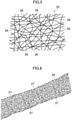
FIG. 5 ] A schematic plan view of a capturing material according to a third embodiment of the present invention. - [
FIG. 6 ] A schematic perspective view illustrating a part of porous nanofibers constituting the capturing material. - Embodiments for carrying out the present invention will be described with reference to the drawings. The following embodiments are merely preferred examples in nature, and are not intended to limit the invention, applications, and use of the applications.
- The embodiments relate to lithium ion secondary batteries, and are applicable to electronic equipment, electric vehicles, hybrid vehicles, and so forth.
- As illustrated in
FIG. 1 , a lithium ionsecondary battery 1 includes awound body 2 obtained by winding a unit of a plurality of thin films into a flat spiral shape (roll shape), an insulatingsheet 3 covering the outer periphery of thewound body 2, a box-shaped case 4 accommodating thewound body 2 and the insulatingsheet 3, and apositive electrode terminal 5 and anegative electrode terminal 6 provided on the upper surface of the case 4. - The
wound body 2 includes twoseparators 7, a sheet-likepositive electrode 8 connected to thepositive electrode terminal 5, and a sheet-likenegative electrode 9 connected to thenegative electrode terminal 6. Thewound body 2 is formed by winding, into a flat spiral shape, a stacked body in which theseparators 7, thenegative electrode 9, theseparators 7, and thepositive electrode 8 are stacked in this order. - The
positive electrode 8 is obtained by applying a mixture of a positive electrode active material and agents (e.g., a binder and a conductive agent) onto a current collector that is a conductive metal thin film. Preferable examples of the current collector include aluminium foil. - Preferable examples of the positive electrode active material include a composite metal oxide with lithium including at least one material selected from the group consisting of cobalt, manganese, and nickel, a phosphoric acid-based lithium compound, and a silicic acid-based lithium compound. In particular, phosphoric acid-based lithium is preferably employed. These positive electrode active materials can be used alone or lithium-ion in combination of two or more of them.
- Preferable examples of phosphoric acid-based lithium compound include LiMPO4 (M = transition metal such as Fe, Co, Ni, or Mn) and Li2MPO4F (M = transition metal such as Fe, Co, Ni, or Mn) both having olivine crystal structures. In particular, iron phosphate lithium LiFePO4 is preferable. Examples of silicic acid-based lithium compound include Li2MSiO4 (M = transition metal such as Fe, Co, Ni, or Mn).
- As the binder, polyvinylidene fluoride (PVdF) is preferably employed. As the conductive agent, carbon black, acetylene black, or carbon nanofiber (CNF), for example, is preferably employed.
- The
negative electrode 9 is obtained by applying a mixture of a negative electrode active material and agents (e.g., a binder and a conductive agent) onto a current collector that is a conductive metal thin film. Preferable examples of the current collector include copper foil. - As the negative electrode active material, a graphite-based carbon material, that is, artificial graphite or natural graphite, is preferably employed. From the viewpoint of enhancing storage and release capacity of Li ions, the graphite-based carbon material preferably has a low graphitization degree. For example, the graphitization degree is preferably 0.015 radian or more in terms of the half-power bandwidth of a diffraction peak corresponding to a diffraction angle of a CuKα line of 2θ = 26.6 degrees. Artificial graphite or hard carbon having a low graphitization degree is preferable as a negative electrode active material, but natural graphite having high crystalline alone shows early deterioration, and thus, natural graphite or artificial graphite subjected to surface treatment are additionally used.
- Preferable examples of the binder include styrene-butadiene rubber (SBR), a mixture of the styrene-butadiene rubber and carboxymethyl cellulose as a thickener (SBR-CMC), PVdF, an imide-based binder, and a polyacrylic acid-based binder. Preferable examples of the conductive agent include carbon black, acetylene black, and carbon nanofiber CNF.
- The
separators 7 are porous thin films of a synthetic resin such as polyethylene or polypropylene, and are impregnated with a nonaqueous electrolyte. - In the lithium ion
secondary battery 1 schematically illustrated inFIG. 2 , acharger 11 is connected to thepositive electrode 8 and thenegative electrode 9. In a case where an electrolyte spread in theseparators 7 includes cyclic ester, such as γ-butyrolactone (hereinafter referred to as "GBL") as a solvent, the following phenomena occur. - In normal charging, electrons e- move from the
positive electrode 8 to thenegative electrode 9 through thecharger 11, and lithium ions Li+ in the electrolyte are stored in thenegative electrode 9 from thepositive electrode 8 through the electrolyte. In this charging process, if a failure or the like is present in forming the SEI layer in thenegative electrode 9, reductive decomposition reaction of GBL occurs in thenegative electrode 9. In another case, when thebattery 1 is overdischarged, a current collector (copper) of thenegative electrode 9 is dissolved in the electrolyte, and reductive decomposition reaction of GBL occurs in thenegative electrode 9 accordingly. When the generated decomposedproduct 12 of GBL is diffused, reformation of a peripheral normal SEI layer is inhibited, and when the decomposedproduct 12 enters theseparators 7, theseparators 7 are clogged. Consequently, a SEI formation failure and inhibition of movement of Li+ passing through the separators degrade cycle characteristics of thebattery 1. - This embodiment has a feature in providing a barrier layer that inhibits contact of cyclic ester such as GBL with the
negative electrode 9 in order to prevent decomposition of the cyclic ester on thenegative electrode 9. - As illustrated in
FIG. 3 , in this embodiment, a gelledelectrolyte layer 15 not containing the cyclic ester is provided as a barrier layer in a portion adjacent to thenegative electrode 9 between thepositive electrode 8 and thenegative electrode 9. In this embodiment, theseparators 7 and the negative electrode-side gelledelectrolyte layer 15 are disposed between thepositive electrode 8 and thenegative electrode 9. The negative electrode-side gelledelectrolyte layer 15 is laminated on the surface of thenegative electrode 9. - The
separators 7 is obtained by impregnating a porous film of a synthetic resin (e.g., a polyolefin-based resin) with an electrolyte. A solvent of this electrolyte is a mixed solvent of cyclic ester and cyclic carbonate. The solvent may be a single solvent of cyclic ester such as GBL, or a mixed solvent with, for example, chain carbonate. - The negative electrode-side gelled
electrolyte layer 15 is obtained by gelling an electrolyte, that is, a gelled electrolyte layer including the electrolyte and a macromolecular compound holding the electrolyte. In this electrolyte, lithium salt such as lithium hexafluorophosphate LiPF6 is dissolved in ethylene carbonate as a nonaqueous solvent. As the nonaqueous solvent, other cyclic carbonate such as propylene carbonate or chain carbonate may be employed, for example. This electrolyte does not include the cyclic ester. - Preferable examples of the lithium salt includes LiPO2F2, LiBF4, LiN(SO2F)2, LiN(SO2CF3)2, and LiN(SO2C2F5)2, in addition to LiPF6 described above. The lithium salt may be used alone or in combination of two or more of the materials described above.
- The concentration of lithium salt in the
separators 7 and the electrolyte of the negative electrode-side gelledelectrolyte layer 15 is, for example, 0.5 M or more and 2.0 M or less. - Examples of the macromolecular compound as a gelling agent of the negative electrode-side gelled
electrolyte layer 15 include polyacrylonitrile, polyvinylidene fluoride, polytetrafluoroethylene, polyhexafluoropropylene, polyethylene oxide, a crosslinked body including polyethylene oxide, copolymer of vinylidene fluoride and hexafluoropropylene, a compound including polypropylene oxide or polymethacrylonitrile as a repeating unit, polyphosphazene, polysiloxane, polyvinyl acetate, polyvinyl alcohol, polymethyl methacrylate, polyacrylic acid, polymethacrylic acid, styrene-butadiene rubber, nitrile-butadiene rubber, polystyrene, and polycarbonate. From the viewpoint of stability, a macromolecular compound having a polyethylene oxide structure, polyacrylonitrile, polyethylmethacrylate, polyvinylidene fluoride, polyhexafluoropropylene, and copolymer of vinylidene fluoride and hexafluoropropylene are preferable. The amount of addition of the gelling agent to the electrolyte is, for example, about 5% by mass to about 50% by mass of the electrolyte. - In this embodiment, the negative electrode-side gelled
electrolyte layer 15 prevents contact of cyclic ester in the electrolyte of theseparators 7 with thenegative electrode 9. Accordingly, decomposition of cyclic ester on thenegative electrode 9 can be avoided so that the problem of deterioration of the battery caused by the decomposed product of cyclic ester can be solved. With ethylene carbonate of the negative electrode-side gelledelectrolyte layer 15, an SEI layer can be easily formed on the surface of thenegative electrode 9. Thus, co-insertion of solvation Li ions between graphite layers is reduced, removal of the graphite layers and decomposition of the solvent are reduced. Thus, cycle stability performance of the battery can be enhanced. On the other hand, theseparators 7 include the electrolyte using a mixed solvent of cyclic carbonate and cyclic ester in an impregnation state. Thus, lithium ions smoothly move between thepositive electrode 8 and thenegative electrode 9 through theseparators 7. This is advantageous to performance (power) of thebattery 1. - In embodiment illustrated in
FIG. 4 , a positive electrode-side gelledelectrolyte layer 17 is disposed next to theseparator 7 of the embodiment illustrated inFIG. 3 . - The positive electrode-side gelled
electrolyte layer 17 is obtained by gelling an electrolyte, that is, a gelled electrolyte layer including the electrolyte and a macromolecular compound holding the electrolyte. In this electrolyte, lithium salt such as lithium hexafluorophosphate LiPF6 is preferably dissolved in cyclic carbonate such as ethylene carbonate or propylene carbonate. This electrolyte does not contain the cyclic ester described above. As the cyclic carbonate, ethylene carbonate is preferably employed. - As the macromolecular compound that is the gelling agent, polyacrylonitrile, for example, can be used, in a manner similar to the negative electrode-side gelled
electrolyte layer 15. - Preferable examples of the lithium salt are described above, and one of the example materials may be used alone, or two or more of the materials be used in combination.
- In this embodiment, the negative electrode-side gelled
electrolyte layer 15 inhibits contact of cyclic ester with thenegative electrode 9, and a decomposed product of the cyclic ester is less frequently generated. Even if the decomposition product is generated, the decomposition product easily remains because of gel, and formation of other normal SEI layers is not inhibited on thenegative electrode 9. Even if the decomposed product permeates theseparators 7 because of, for example, destruction of gel of the negative electrode, the positive electrode-side gelledelectrolyte layer 17 on the surface of thepositive electrode 8 can also reduce the risk of inhibiting surface reaction at the positive electrode side. In addition, lithium ions smoothly move between thepositive electrode 8 and thenegative electrode 9 through theseparators 7. This is advantageous to performance (power) of thebattery 1. - In the embodiment illustrated in
FIG. 4 , theseparators 7 impregnated with the electrolyte may be replaced by separators holding the electrolyte in a gelled state. In this case, the lithium ion secondary battery has a structure in which three gelled electrolyte layers of a positive electrode-side layer, a negative electrode-side layer, and an intermediate-side layer are stacked. - This embodiment has a feature in which a lithium ion secondary battery includes a capturing material that traps a decomposed product of cyclic ester such as GBL.
- As illustrated in
FIG. 5 , a capturingmaterial 25 of this embodiment is a membrane body in which a large number ofporous nanofibers 26 are entangled, and is disposed asseparators 7 in the lithium ionsecondary battery 1 illustrated inFIG. 1 or2 . - As illustrated in
FIG. 6 , each of theporous nanofibers 26 has a diameter of about 0.1 µm to about 1 µm. A large number ofpores 27 each having a pore diameter of about 20 nm to about 100 nm and capable of trapping a decomposed product of the cyclic ester are formed at the surfaces of theporous nanofibers 26. As illustrated inFIG. 5 , space (1 µm or less, preferably 0.5 µm or less) 28 that allows lithium ions to pass therethrough is formed between fibers in the membrane body in which the large number ofporous nanofibers 26 are entangled. - The
porous nanofibers 26 can be formed by electrospinning, for example. As a material for theporous nanofibers 26, a polyolefin-based resin (e.g., polypropylene or polyester) and an insulating synthetic resin such as polyacrylonitrile may be employed. - As described above, in this embodiment, the capturing
material 25 is formed of the membrane body in which the large number ofporous nanofibers 26 are entangled, and is disposed as theseparators 7 in the lithium ionsecondary battery 1. - Thus, the decomposed product of cyclic ester such as GBL generated on the
negative electrode 9 is captured in theindividual pores 27 of theporous nanofibers 26, and remains. Accordingly, deterioration of thebattery 1 caused by the decomposed product can be prevented. Since lithium ions passes through thespace 28 between theporous nanofibers 26, the capturingmaterial 25 effectively functions as separators. - The solvent of the electrolyte spread in the capturing
material 25 may be a single solvent of cyclic ester such as GBL, δ-valerolactone, or an alkyl substituted body such as methyl γ-butyrolactone, ethyl γ-butyrolactone, or ethyl δ-valerolactone or may be a mixed solvent of cyclic ester such as GBL and cyclic carbonate such as ethylene carbonate or propylene carbonate. - Preferable examples of the lithium salt include LiPF6, LiPO2F2, LiBF4, LiN(SO2F)2, LiN(SO2CF3)2, and LiN(SO2C2F5)2. The lithium salt may be used alone or in combination of two or more of the materials described above.
- The concentration of the lithium salt in the nonaqueous electrolyte is 0.5 M or more and 2.0 M or less, for example.
- In the lithium ion secondary battery, the insulating
sheet 3 covering the outer periphery of thewound body 2 may be omitted by winding theseparator 7 at the outer periphery around thewound body 2 in one turn. Thewound body 2 may be cylindrical instead of flat. - The lithium ion secondary battery may not be of a winding type, and may be in various modes such as a stacked type in which the
positive electrodes 8 and thenegative electrodes 9 are alternately stacked with theseparators 7 interposed therebetween. -
- 1
- lithium ion secondary battery
- 7
- separator
- 8
- positive electrode
- 9
- negative electrode
- 11
- charger
- 12
- decomposed product
- 13
- stacked layer of decomposed product
- 15
- negative electrode-side gelled electrolyte layer (barrier layer)
- 17
- positive electrode-side gelled electrolyte layer
- 25
- capturing material (separator)
- 26
- porous nanofibers
- 27
- pore
- 28
- space
Claims (10)
- A lithium ion secondary battery comprising:a positive electrode;a negative electrode including a graphite-based carbon material as a negative electrode active material;an electrolyte in which lithium salt is dissolved in a nonaqueous solvent containing cyclic ester; andeither a barrier layer configured to inhibit contact of the cyclic ester with the negative electrode or a capturing material configured to trap a decomposed product of the cyclic ester generated at the negative electrode.
- The lithium ion secondary battery according to claim 1, wherein
the cyclic ester is γ-butyrolactone. - The lithium ion secondary battery according to claim 1 or 2, wherein
as the barrier layer, a negative electrode-side gelled electrolyte layer not containing the cyclic ester is disposed in a portion adjacent to the negative electrode between the positive electrode and the negative electrode. - The lithium ion secondary battery according to claim 3, wherein
the negative electrode-side gelled electrolyte layer holds ethylene carbonate. - The lithium ion secondary battery according to claim 3 or 4, wherein
a separator is disposed between the positive electrode and the negative electrode-side gelled electrolyte layer, the separator being impregnated with an electrolyte in which lithium salt is dissolved in a nonaqueous solvent containing cyclic ester. - The lithium ion secondary battery according to claim 5, wherein
a positive electrode-side gelled electrolyte layer not containing the cyclic ester is disposed in a position adjacent to the positive electrolyte between the positive electrode and the separator. - The lithium ion secondary battery according to claim 6, wherein
the positive electrode-side gelled electrolyte layer holds an electrolyte in which lithium salt is dissolved in cyclic carbonate. - The lithium ion secondary battery according to claim 1 or 2, wherein
the capturing material is a capturing material disposed between the positive electrode and the negative electrode and constituted by porous nanofibers having a large number of pores configured to trap the decomposed product. - The lithium ion secondary battery according to claim 8, wherein
each of the pores of the porous nanofibers has a diameter of 100 nm or less. - The lithium ion secondary battery according to claim 8 or 9, whereina large part of the porous nanofibers is entangled and forms a film-shaped separator configured to prevent short circuit between the positive electrode and the negative electrode, andspace that allows lithium ions to pass through the space is formed between the porous nanofibers of the separator.
Applications Claiming Priority (3)
| Application Number | Priority Date | Filing Date | Title |
|---|---|---|---|
| JP2019091048A JP2020187902A (en) | 2019-05-14 | 2019-05-14 | Lithium ion secondary battery |
| JP2019091046A JP2020187901A (en) | 2019-05-14 | 2019-05-14 | Lithium ion secondary battery |
| PCT/JP2020/019261 WO2020230847A1 (en) | 2019-05-14 | 2020-05-14 | Lithium ion secondary battery |
Publications (2)
| Publication Number | Publication Date |
|---|---|
| EP3955363A1 true EP3955363A1 (en) | 2022-02-16 |
| EP3955363A4 EP3955363A4 (en) | 2022-06-08 |
Family
ID=73290159
Family Applications (1)
| Application Number | Title | Priority Date | Filing Date |
|---|---|---|---|
| EP20805623.4A Withdrawn EP3955363A4 (en) | 2019-05-14 | 2020-05-14 | Lithium ion secondary battery |
Country Status (4)
| Country | Link |
|---|---|
| US (1) | US20220223927A1 (en) |
| EP (1) | EP3955363A4 (en) |
| CN (1) | CN113875060A (en) |
| WO (1) | WO2020230847A1 (en) |
Family Cites Families (16)
| Publication number | Priority date | Publication date | Assignee | Title |
|---|---|---|---|---|
| TW431004B (en) * | 1998-10-29 | 2001-04-21 | Toshiba Corp | Nonaqueous electrolyte secondary battery |
| JP2000331715A (en) * | 1999-05-18 | 2000-11-30 | Asahi Chem Ind Co Ltd | Non-aqueous secondary battery |
| JP2002015772A (en) * | 2000-06-30 | 2002-01-18 | Toyota Central Res & Dev Lab Inc | Lithium secondary battery and method of manufacturing the same |
| JP2003223930A (en) * | 2002-01-30 | 2003-08-08 | Japan Storage Battery Co Ltd | Non-aqueous electrolyte battery |
| JP2004253249A (en) * | 2003-02-20 | 2004-09-09 | Sanyo Electric Co Ltd | Nonaqueous electrolyte battery |
| JP4083040B2 (en) * | 2003-03-06 | 2008-04-30 | 三洋電機株式会社 | Lithium battery |
| JP4671589B2 (en) | 2003-07-15 | 2011-04-20 | 三星エスディアイ株式会社 | Electrolyte for lithium secondary battery and lithium secondary battery |
| JP4702511B2 (en) * | 2003-09-17 | 2011-06-15 | ソニー株式会社 | Secondary battery |
| CN101771175A (en) * | 2008-12-31 | 2010-07-07 | 深圳市海太阳实业有限公司 | Polymer lithium ion battery |
| JP2010267475A (en) * | 2009-05-14 | 2010-11-25 | Panasonic Corp | Lithium ion secondary battery |
| WO2012077434A1 (en) * | 2010-12-09 | 2012-06-14 | 株式会社 村田製作所 | Non-aqueous electrolyte secondary battery |
| CN102208680B (en) * | 2011-05-05 | 2014-07-02 | 中国东方电气集团有限公司 | Gel electrolyte and preparation method thereof and corresponding anode and lithium sulfur battery |
| CN102522560B (en) * | 2011-12-20 | 2014-03-12 | 中国东方电气集团有限公司 | Lithium ion secondary battery and preparation method thereof |
| WO2014171290A1 (en) * | 2013-04-16 | 2014-10-23 | 株式会社村田製作所 | Lithium ion secondary battery and production method therefor |
| CN103456991B (en) * | 2013-09-02 | 2015-07-15 | 宁德时代新能源科技有限公司 | Lithium ion battery and gel electrolyte and preparation method thereof |
| CN103579665A (en) * | 2013-10-25 | 2014-02-12 | 东莞市安德丰电池有限公司 | A kind of high and low temperature gel lithium ion battery and its manufacturing method |
-
2020
- 2020-05-14 EP EP20805623.4A patent/EP3955363A4/en not_active Withdrawn
- 2020-05-14 CN CN202080035671.5A patent/CN113875060A/en active Pending
- 2020-05-14 WO PCT/JP2020/019261 patent/WO2020230847A1/en not_active Ceased
- 2020-05-14 US US17/595,237 patent/US20220223927A1/en not_active Abandoned
Also Published As
| Publication number | Publication date |
|---|---|
| EP3955363A4 (en) | 2022-06-08 |
| CN113875060A (en) | 2021-12-31 |
| US20220223927A1 (en) | 2022-07-14 |
| WO2020230847A1 (en) | 2020-11-19 |
Similar Documents
| Publication | Publication Date | Title |
|---|---|---|
| KR102140129B1 (en) | Anode with mesh type insulating layer, lithium secondary battery containing the same | |
| US9484593B2 (en) | Stack-folding type electrode assembly | |
| US9711798B2 (en) | Lithium electrode and lithium secondary battery comprising the same | |
| US10680278B2 (en) | Composite separator and lithium ion battery comprising said separator and method for producing said composite separator | |
| US10573879B2 (en) | Electrolytes and methods for using the same | |
| TWI536637B (en) | Lithium electrode and lithium secondary battery comprising the same | |
| KR101120053B1 (en) | Hybrid super capacitor using composite electrode | |
| KR102420592B1 (en) | Method for preparing negative electrode for lithium secondary battery | |
| US20150349308A1 (en) | Lithium Secondary Battery | |
| CN114914399B (en) | Lithium-containing electrode comprising ceramic particles and method for making the same | |
| KR20110021974A (en) | Lithium-ion Secondary Battery Electrode and Lithium-ion Secondary Battery | |
| KR20210043434A (en) | Lithium secondary battery and manufacturing method thereof | |
| US20220166017A1 (en) | Electrodes and electrochemical cells including a dendrite inhibitor protective coating | |
| JP2014503951A (en) | Electrochemical cell | |
| JP7513983B2 (en) | Lithium-ion secondary battery and its manufacturing method | |
| JP2016062849A (en) | Separator for electrochemical device and electrochemical device using the same | |
| JP4649862B2 (en) | Lithium ion secondary battery and manufacturing method thereof | |
| US20190393465A1 (en) | Secondary battery | |
| US20230335753A1 (en) | Patterned current collector for anodeless electrochemical battery cells | |
| KR20180127759A (en) | Separator for lithium secondary battery and lithium secondary battery including the same | |
| US20220223927A1 (en) | Lithium ion secondary battery | |
| JP2020187902A (en) | Lithium ion secondary battery | |
| KR100793604B1 (en) | Electrode with improved performance and safety and lithium secondary battery comprising the same | |
| JP2020187901A (en) | Lithium ion secondary battery | |
| KR102933417B1 (en) | Cathode active material and lithium ion battery containing the cathode active material |
Legal Events
| Date | Code | Title | Description |
|---|---|---|---|
| STAA | Information on the status of an ep patent application or granted ep patent |
Free format text: STATUS: THE INTERNATIONAL PUBLICATION HAS BEEN MADE |
|
| PUAI | Public reference made under article 153(3) epc to a published international application that has entered the european phase |
Free format text: ORIGINAL CODE: 0009012 |
|
| STAA | Information on the status of an ep patent application or granted ep patent |
Free format text: STATUS: REQUEST FOR EXAMINATION WAS MADE |
|
| 17P | Request for examination filed |
Effective date: 20211110 |
|
| AK | Designated contracting states |
Kind code of ref document: A1 Designated state(s): AL AT BE BG CH CY CZ DE DK EE ES FI FR GB GR HR HU IE IS IT LI LT LU LV MC MK MT NL NO PL PT RO RS SE SI SK SM TR |
|
| A4 | Supplementary search report drawn up and despatched |
Effective date: 20220510 |
|
| RIC1 | Information provided on ipc code assigned before grant |
Ipc: H01M 4/02 20060101ALN20220503BHEP Ipc: H01M 50/44 20210101ALI20220503BHEP Ipc: H01M 10/42 20060101ALI20220503BHEP Ipc: H01M 4/587 20100101ALI20220503BHEP Ipc: H01M 4/133 20100101ALI20220503BHEP Ipc: H01M 10/0569 20100101ALI20220503BHEP Ipc: H01M 10/0565 20100101ALI20220503BHEP Ipc: H01M 10/0525 20100101ALI20220503BHEP Ipc: H01M 10/058 20100101AFI20220503BHEP |
|
| DAV | Request for validation of the european patent (deleted) | ||
| DAX | Request for extension of the european patent (deleted) | ||
| STAA | Information on the status of an ep patent application or granted ep patent |
Free format text: STATUS: THE APPLICATION HAS BEEN WITHDRAWN |
|
| 18W | Application withdrawn |
Effective date: 20230523 |