EP3955172A1 - Runtime hyper-heterogeneous optimization for processing circuits executing inference model - Google Patents
Runtime hyper-heterogeneous optimization for processing circuits executing inference model Download PDFInfo
- Publication number
- EP3955172A1 EP3955172A1 EP21190639.1A EP21190639A EP3955172A1 EP 3955172 A1 EP3955172 A1 EP 3955172A1 EP 21190639 A EP21190639 A EP 21190639A EP 3955172 A1 EP3955172 A1 EP 3955172A1
- Authority
- EP
- European Patent Office
- Prior art keywords
- model
- previous
- partition size
- graph partition
- processing circuits
- Prior art date
- Legal status (The legal status is an assumption and is not a legal conclusion. Google has not performed a legal analysis and makes no representation as to the accuracy of the status listed.)
- Granted
Links
Images



Classifications
-
- G—PHYSICS
- G06—COMPUTING OR CALCULATING; COUNTING
- G06N—COMPUTING ARRANGEMENTS BASED ON SPECIFIC COMPUTATIONAL MODELS
- G06N3/00—Computing arrangements based on biological models
- G06N3/02—Neural networks
- G06N3/06—Physical realisation, i.e. hardware implementation of neural networks, neurons or parts of neurons
- G06N3/063—Physical realisation, i.e. hardware implementation of neural networks, neurons or parts of neurons using electronic means
-
- G—PHYSICS
- G06—COMPUTING OR CALCULATING; COUNTING
- G06N—COMPUTING ARRANGEMENTS BASED ON SPECIFIC COMPUTATIONAL MODELS
- G06N3/00—Computing arrangements based on biological models
- G06N3/02—Neural networks
- G06N3/08—Learning methods
-
- G—PHYSICS
- G06—COMPUTING OR CALCULATING; COUNTING
- G06N—COMPUTING ARRANGEMENTS BASED ON SPECIFIC COMPUTATIONAL MODELS
- G06N3/00—Computing arrangements based on biological models
- G06N3/02—Neural networks
- G06N3/08—Learning methods
- G06N3/084—Backpropagation, e.g. using gradient descent
-
- G—PHYSICS
- G06—COMPUTING OR CALCULATING; COUNTING
- G06N—COMPUTING ARRANGEMENTS BASED ON SPECIFIC COMPUTATIONAL MODELS
- G06N3/00—Computing arrangements based on biological models
- G06N3/02—Neural networks
- G06N3/04—Architecture, e.g. interconnection topology
- G06N3/045—Combinations of networks
Definitions
- an electronic device such as a personal computer, a notebook or a cell phone generally has two or more processors for executing different tasks.
- a complex model such as an artificial intelligence (AI) model is running, and the accurate and fast results are required, how to use the processors to execute the model becomes a problem.
- the electronic device comprises a central processing unit (CPU), a graphics processing unit (GPU) and a vision processing unit (VPU), and only the CPU is arranged to execute the whole model, the GPU and the VPU may not be fully utilized, and it may cause the CPU to be overloaded and the processing time may be too long.
- most of the models may be executed by one processor such as CPU, and the other processors are only used to execute the operations that are not supported by the CPU, however, the processors may have much idle time, and the processors need to synchronize the intermediate result.
- an electronic device comprising a plurality of processing circuits
- the apparatus comprises a circuitry configured to perform the steps of: receiving a model and input data for execution; analyzing the model to obtain a graph partition size of the model; partitioning the model into a plurality of graphs based on the graph partition size, wherein each of the graphs comprises a portion of operations of the model; deploying the plurality of graphs to at least two of the processing circuits, respectively; and generating output data according to results of the at least two of the processing circuits executing the plurality of graphs.
- a machine-readable storage medium comprising program codes
- the processor when the program codes are executed by a processor, the processor performs the steps of: receiving a model and input data for execution; analyzing the model to obtain a graph partition size of the model; partitioning the model into a plurality of graphs based on the graph partition size, wherein each of the graphs comprises a portion of operations of the model; deploying the plurality of graphs to at least two of the processing circuits, respectively; and generating output data according to results of the at least two of the processing circuits executing the plurality of graphs.
- FIG. 1 is a diagram of deploying a model 110 to an electronic device according to one embodiment of the present invention.
- the electronic device comprises a plurality of processing circuits such as a CPU 132, a GPU 1 34, a VPU 136 and a deep learning accelerator (DLA) 1 38, and an platform 120.
- the platform 120 is a software platform which can be implement by using the CPU 132 to execute program codes stored in a memory of the electronic device, and the platform 120 may deploy the model 110 to at least part of the processing circuits, so that the at least part of processing circuits can execute the model 110.
- the model 110 may generally be referred to as an inference model and can include any of a variety of models arranged to generate output data (e.g., inference) from input data.
- the model 110 may be an inference model or an artificial neural network model.
- the platform 120 has a hyper-heterogeneous optimization (H2O) engine 122, wherein the H2O engine 122 is used to analyze the model 110 and/or train the model 110, so that the model 110 can be partitioned into at least one computational graph that is/are to be executed by at least one processing circuit.
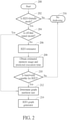
- FIG. 2 is a flowchart of the H2O engine 122 according to one embodiment of the present invention.
- Step 200 the flow starts, and the platform 120 loads the model 110.
- the H2O engine 122 determines if the model 110 is H2O-friendly model, if yes, the flow enters Step 204; and if not, the flow enters Step 216.
- the H2O engine 122 may refer to shape of the model 110 to determine if the model 110 is H2O-friendly model, for example, if the model 110 has operations that down-sample too much data, the model 110 is not H2O-friendly model. Specifically, if the model 110 comprises an operation that greatly reduces the image resolution such as the ratio of image resolution reduction is greater than a threshold (e.g., the image resolution is reduced from 640*480 to 32*24), the processing circuits such as the CPU 132 and/or the GPU 134 may need to perform complex compensation operations, therefore, the model 110 is not H2O-friendly model.
- a threshold e.g., the image resolution is reduced from 640*480 to 32*24
- the model 110 can be regarded as the H2O-friendly model.
- the H2O engine 122 determines if the model 110 is an offline-tuned model, that is the H2O engine 122 determines if the model 110 has been analyzed and trained offline, if yes, the flow enters Step 212; and if not, the model 110 can be regarded as an unknown model, and the flow enters Step 206.
- the H2O engine 122 estimates the model 110 to predict the inference time and memory usage if the model 110 is executed by one or more processing circuits.
- the H2O engine 122 can use a gradient boosting model such as a LGBM model to estimate the model 110 to obtain the estimated memory usage and predicted execution time (Step 208).
- the LGBM model is an artificial intelligence algorithm skill that can be used for all kinds of modeling and prediction.
- the LGBM model can sequentially establish many trees, wherein a first tree outputs a first result based on input data, a second tree is used to leverage the first tree and outputs a second result based on the input data, a third tree is used to leverage the second tree and outputs a third result based on the input data, a fourth tree is used to leverage the third tree and outputs a fourth result based on the input data, ... etc.. Then, the performance prediction of the operation run by the processing circuit can be obtained by adding the multiple results of the trees. Because the LGBM model is open source distributed, and a person skilled in the art should understand the operations of the LGBM model, further descriptions of the LGBM model are omitted here.
- Step 210 the H2O engine 122 determines if the bandwidth is capable for the using two or more processing circuits to execute the model 110. If yes, the flow enters Step 212; and if not, the flow enters Step 216.
- the H2O engine 122 determines the graph partition size for two or more processing circuits, that is, the H2O engine 122 can determine the workloads or number of operations of two or more processing circuits.
- the H2O engine 122 generates the graph for two or more processing circuits. For example, if the CPU 132 and the GPU 134 are determined to run the model 110, the H2O engine 122 may partition the model 110 into a first graph and a second graph, and the CPU 132 will run the operations of the first graph, while the GPU 134 will run the operations of the second graph.
- Step 216 the H2O engine 122 does not deploy the model 110 to more processing circuits, that is, the model 110 may only be executed by the CPU 132.
- the H2O engine 122 can perform runtime model analysis and runtime bandwidth estimation to partition the model 110 to generate two or more graphs for two or more processing circuits. Therefore, the model 110 can be executed efficiently.
- FIG. 3 is a flowchart of the H2O engine 122 according to another embodiment of the present invention.
- the flow starts, and the platform 120 loads the model 110.
- the H2O engine 122 determines if the model 110 is H2O-friendly model, if yes, the flow enters Step 304; and if not, the flow enters Step 326.
- the H2O engine 122 may refer to shape of the model 110 to determine if the model 110 is H2O-friendly model, for example, if the model 110 has operations that down-sample too much data, the model 110 is not H2O-friendly model.
- the model 110 comprises an operation that greatly reduces the image resolution such as the ratio of image resolution reduction is greater than a threshold (e.g., the image resolution is reduced from 640*480 to 32*24), the processing circuits such as the CPU 132 and/or the GPU 134 may need to perform complex compensation operations, therefore, the model 110 is not H2O-friendly model.
- the model 110 does not comprise the operations that down-sample too much data, and/or the operations of the model 110 can be easily divided into two or more graphs without increasing too many additional operations, the model 110 can be regarded as the H2O-friendly model.
- Step 304 the H2O engine 122 determines if the model 110 is an offline-tuned model, that is, the H2O engine 122 determines if the model 110 has been analyzed and trained offline, if yes, the flow enters Step 314; and if not, the flow enters Step 306.
- Step 306 the H2O engine 112 determines if the model 110 has been analyzed and predicted by the H2O engine 112 before. If yes, the flow enters Step 318; and if not, the model 110 can be regarded as an unknown model, and the flow enters Step 308.
- the H2O engine 122 estimates the model 110 to predict the inference time and memory usage.
- the H2O engine 122 can use a gradient boosting model such as a LGBM model to estimate the model 110 to obtain the estimated memory usage and predicted execution time (Step 310).
- a gradient boosting model such as a LGBM model
- the LGBM model is open source distributed, and a person skilled in the art should understand the operations of the LGBM model, further descriptions of the LGBM model are omitted here.
- Step 312 the H2O engine 122 determines if the bandwidth is capable for the using two or more processing circuits to execute the model 110. If yes, the flow enters Step 314; and if not, the flow goes back to Step 300.
- Step 318 the H2O engine 122 determines if a prediction error of the model 110 is greater than a blacklist threshold, if yes, the flow enters Step 326; and if not, the flow enters Step 320.
- the H2O engine 122 can exactly know a difference between the previous estimated execution time and the previous actual execution time of the model 110, and the H2O engine 122 can also exactly know a difference between the previous estimated memory usage and the previous actual memory usage when the model 110 is executed previously, wherein the above differences, alone or in combination, can be regarded as the prediction error of the model 110.
- Step 320 the H2O engine 122 determines if the prediction error of the model 110 is less than a whitelist threshold, if yes, the flow enters Step 322; and if not, the flow enters Step 324.
- the blacklist threshold is greater than the whitelist threshold.
- the H2O engine 122 uses the previous determined graph partition size for two or more processing circuits, that is, if the model 110 previously executed by the processing circuits is partitioned into a first graph with a first size and a second graph with a second size, now the H2O engine 122 also partition the model 110 into the first graph with the first size and the second graph with the second size.
- the H2O engine 122 tunes the graph partition size based on the previous determined graph partition size and the prediction error of the model 110 as described in Steps 318 and 320, to generate an updated graph partition size. For example, if the actual execution time of a graph is greater than the previous predicted execution time, the H2O engine 122 may reduce the size of this graph to shorten the execution time.
- the H2O engine 122 determines the graph partition size for two or more processing circuits, that is, the H2O engine 122 can determine the workloads or number of operations of two or more processing circuits. In this embodiment, the H2O engine 122 can use the off-line tuned graph partition size, the previous determined graph partition size in Step 322, or the updated graph partition size in Step 324. In Step 316, the H2O engine 122 generates the graph for two or more processing circuits. For example, if the CPU 132 and the GPU 134 are determined to run the model 110, the H2O engine 122 may partition the model 110 into the first graph and the second graph, and the CPU 132 will run the operations of the first graph, while the GPU 134 will run the operations of the second graph.
- Step 326 the H2O engine 122 does not deploy the model 110 to more processing circuits, that is, the model 110 may only be executed by the CPU 132.
- the H2O engine 122 can perform runtime model analysis and runtime bandwidth estimation to partition the model 110 to obtain the graph partition size to generate two or more graphs for two or more processing circuits. Furthermore, the H2O engine 122 can update the graph partition size of the model 110 based on the previous determined graph partition size every time the model 110 is executed, to optimize the performance of the processing circuits. Therefore, the execution of the model 110 can become more and more efficient.
- FIG. 4 shows a graph partition of a model 400 according to one embodiment of the present invention, wherein the model 400 may be an unknown model for the platform 110.
- the model 400 comprises operations 402 - 420, and the H2O engine 122 can partition the operations into several graphs so that the CPU 132, the GPU 134 and the DLA 138 are used to execute the model 400.
- the CPU 132 receives the input data and sequentially performs the operations 402 and 404 to output two results to the GPU 134 and the DLA 138, respectively.
- the GPU 134 performs the operations 406 - 414 based on the result generated by the CPU 132 in Step 404, and the DLA 1 38 performs the operation 416 based on the other result generated by the CPU 132 is Step 404.
- the CPU 132 executes the operations 418 and 420 based on the results generated by the GPU 134 and DLA 138 in Steps 412, 414 and 416, respectively, to generate the output data.
- FIG. 5 shows a graph partition of a model 500 according to one embodiment of the present invention, wherein the model 500 may be an unknown model for the platform 110.
- the model 500 comprises operations 502 - 516
- the H2O engine 122 can force the graph to be parallel, that is the H2O engine 122 partition each of the operations 502 - 516 into two parts, wherein the first graph after partitioning comprises operations 502_1 - 516_1, and the second graph after partitioning comprises operations 502_2 - 516_2.
- the CPU 132 receives the input data and sends the required data to the GPU 134 and the DLA 138, respectively (operations 501 _1 and 501_2).
- the GPU 134 performs the operations 502_1 - 516_1 based on the received input signal, and the DLA 138 performs the operations 502_2 - 516_2 based on the received input signal.
- the CPU 132 generates the output data based on the results generated by the GPU 134 and the DLA 138 (operation 518).
- the H2O engine 122 can tune the graph partition size to optimize the workloads of the operations 502_1 - 516_1 and 502_2 - 516_2, so that the GPU 134 and DLA 138 can execute the model 500 more efficient.
- the execution times of the GPU 134 and DLA 138 may be 96.457 milliseconds (ms) and 124.219ms, respectively, when the model 500 is executed for the first time; the execution times of the GPU 134 and DLA 138 may be 98.383ms and 116.894ms, respectively, when the model 500 is executed for the second time; the execution times of the GPU 134 and DLA 138 may be 100.323ms and 109.009ms, respectively, when the model 500 is executed for the third time; and the execution times of the GPU 134 and DLA 138 may be 101.572ms and 101.955ms, respectively, when the model 500 is executed for the fourth time. As the execution times of the GPU 134 and DLA 138 will get closer to closer, the overall execution time of the system will become shorter.
- an artificial intelligence algorithm is used estimate the unknown model to predict the performance of two or more processing circuits to obtain a graph partition size, for generating two or more graphs to be simultaneously executed by the two or more processing circuits, respectively. Furthermore, the artificial intelligence algorithm is also used tune the graph partition size to optimize the workloads of two or more processing circuits every time the model is to be executed, so that the model will become more and more efficient in execution.
- the present invention may also be defined by means of the following numbered clauses.
Landscapes
- Engineering & Computer Science (AREA)
- Physics & Mathematics (AREA)
- Theoretical Computer Science (AREA)
- Health & Medical Sciences (AREA)
- Life Sciences & Earth Sciences (AREA)
- Biomedical Technology (AREA)
- Biophysics (AREA)
- General Health & Medical Sciences (AREA)
- Data Mining & Analysis (AREA)
- Evolutionary Computation (AREA)
- Computational Linguistics (AREA)
- Molecular Biology (AREA)
- Computing Systems (AREA)
- General Engineering & Computer Science (AREA)
- General Physics & Mathematics (AREA)
- Mathematical Physics (AREA)
- Software Systems (AREA)
- Artificial Intelligence (AREA)
- Neurology (AREA)
- Debugging And Monitoring (AREA)
Abstract
Description
- This application claims the priority of
US Provisional Application No. 63/063,992 (filed on August 11th, 2020 - Recently, an electronic device such as a personal computer, a notebook or a cell phone generally has two or more processors for executing different tasks. However, when a complex model such as an artificial intelligence (AI) model is running, and the accurate and fast results are required, how to use the processors to execute the model becomes a problem. For example, if the electronic device comprises a central processing unit (CPU), a graphics processing unit (GPU) and a vision processing unit (VPU), and only the CPU is arranged to execute the whole model, the GPU and the VPU may not be fully utilized, and it may cause the CPU to be overloaded and the processing time may be too long. In another case, most of the models may be executed by one processor such as CPU, and the other processors are only used to execute the operations that are not supported by the CPU, however, the processors may have much idle time, and the processors need to synchronize the intermediate result.
- It is therefore an objective of the present invention to provide a runtime hyper-heterogeneous processes optimization method, to solve the above-mentioned problems.
- According to one embodiment of the present invention, an electronic device comprising a plurality of processing circuits is disclosed, wherein the apparatus comprises a circuitry configured to perform the steps of: receiving a model and input data for execution; analyzing the model to obtain a graph partition size of the model; partitioning the model into a plurality of graphs based on the graph partition size, wherein each of the graphs comprises a portion of operations of the model; deploying the plurality of graphs to at least two of the processing circuits, respectively; and generating output data according to results of the at least two of the processing circuits executing the plurality of graphs.
- According to another embodiment of the present invention, a machine-readable storage medium comprising program codes is disclosed, wherein when the program codes are executed by a processor, the processor performs the steps of: receiving a model and input data for execution; analyzing the model to obtain a graph partition size of the model; partitioning the model into a plurality of graphs based on the graph partition size, wherein each of the graphs comprises a portion of operations of the model; deploying the plurality of graphs to at least two of the processing circuits, respectively; and generating output data according to results of the at least two of the processing circuits executing the plurality of graphs.
- These and other objectives of the present invention will no doubt become obvious to those of ordinary skill in the art after reading the following detailed description of the preferred embodiment that is illustrated in the various figures and drawings.
-
-
FIG. 1 is a diagram of deploying a model to an electronic device according to one embodiment of the present invention. -
FIG. 2 is a flowchart of the H2O engine according to one embodiment of the present invention. -
FIG. 3 is a flowchart of the H2O engine according to another embodiment of the present invention. -
FIG. 4 shows a graph partition of a model according to one embodiment of the present invention. -
FIG. 5 shows a graph partition of a model according to another embodiment of the present invention. - Certain terms are used throughout the following description and claims to refer to particular system components. As one skilled in the art will appreciate, manufacturers may refer to a component by different names. This document does not intend to distinguish between components that differ in name but not function. In the following discussion and in the claims, the terms "including" and "comprising" are used in an open-ended fashion, and thus should be interpreted to mean "including, but not limited to ...". The terms "couple" and "couples" are intended to mean either an indirect or a direct electrical connection. Thus, if a first device couples to a second device, that connection may be through a direct electrical connection, or through an indirect electrical connection via other devices and connections.
-
FIG. 1 is a diagram of deploying amodel 110 to an electronic device according to one embodiment of the present invention. As shown inFIG. 1 , the electronic device comprises a plurality of processing circuits such as aCPU 132, a GPU 1 34, aVPU 136 and a deep learning accelerator (DLA) 1 38, and anplatform 120. Theplatform 120 is a software platform which can be implement by using theCPU 132 to execute program codes stored in a memory of the electronic device, and theplatform 120 may deploy themodel 110 to at least part of the processing circuits, so that the at least part of processing circuits can execute themodel 110. In this embodiment, themodel 110 may generally be referred to as an inference model and can include any of a variety of models arranged to generate output data (e.g., inference) from input data. For example, themodel 110 may be an inference model or an artificial neural network model. - The
platform 120 has a hyper-heterogeneous optimization (H2O)engine 122, wherein theH2O engine 122 is used to analyze themodel 110 and/or train themodel 110, so that themodel 110 can be partitioned into at least one computational graph that is/are to be executed by at least one processing circuit. Specifically,FIG. 2 is a flowchart of theH2O engine 122 according to one embodiment of the present invention. InStep 200, the flow starts, and theplatform 120 loads themodel 110. InStep 202, theH2O engine 122 determines if themodel 110 is H2O-friendly model, if yes, the flow entersStep 204; and if not, the flow entersStep 216. In one embodiment, theH2O engine 122 may refer to shape of themodel 110 to determine if themodel 110 is H2O-friendly model, for example, if themodel 110 has operations that down-sample too much data, themodel 110 is not H2O-friendly model. Specifically, if themodel 110 comprises an operation that greatly reduces the image resolution such as the ratio of image resolution reduction is greater than a threshold (e.g., the image resolution is reduced from 640*480 to 32*24), the processing circuits such as theCPU 132 and/or theGPU 134 may need to perform complex compensation operations, therefore, themodel 110 is not H2O-friendly model. In addition, if themodel 110 does not comprise the operations that down-sample too much data, and/or the operations of themodel 110 can be easily divided into two or more graphs without increasing too many additional operations, themodel 110 can be regarded as the H2O-friendly model. InStep 204, theH2O engine 122 determines if themodel 110 is an offline-tuned model, that is theH2O engine 122 determines if themodel 110 has been analyzed and trained offline, if yes, the flow entersStep 212; and if not, themodel 110 can be regarded as an unknown model, and the flow entersStep 206. - In
Step 206, theH2O engine 122 estimates themodel 110 to predict the inference time and memory usage if themodel 110 is executed by one or more processing circuits. For example, theH2O engine 122 can use a gradient boosting model such as a LGBM model to estimate themodel 110 to obtain the estimated memory usage and predicted execution time (Step 208). The LGBM model is an artificial intelligence algorithm skill that can be used for all kinds of modeling and prediction. Specifically, for an operation run by a processing circuit, the LGBM model can sequentially establish many trees, wherein a first tree outputs a first result based on input data, a second tree is used to leverage the first tree and outputs a second result based on the input data, a third tree is used to leverage the second tree and outputs a third result based on the input data, a fourth tree is used to leverage the third tree and outputs a fourth result based on the input data, ... etc.. Then, the performance prediction of the operation run by the processing circuit can be obtained by adding the multiple results of the trees. Because the LGBM model is open source distributed, and a person skilled in the art should understand the operations of the LGBM model, further descriptions of the LGBM model are omitted here. -
Step 210, theH2O engine 122 determines if the bandwidth is capable for the using two or more processing circuits to execute themodel 110. If yes, the flow entersStep 212; and if not, the flow entersStep 216. - In
step 212, theH2O engine 122 determines the graph partition size for two or more processing circuits, that is, theH2O engine 122 can determine the workloads or number of operations of two or more processing circuits. InStep 214, theH2O engine 122 generates the graph for two or more processing circuits. For example, if theCPU 132 and theGPU 134 are determined to run themodel 110, theH2O engine 122 may partition themodel 110 into a first graph and a second graph, and theCPU 132 will run the operations of the first graph, while theGPU 134 will run the operations of the second graph. - In
Step 216, theH2O engine 122 does not deploy themodel 110 to more processing circuits, that is, themodel 110 may only be executed by theCPU 132. - In the embodiment shown in
FIG. 2 , when themodel 110 is an unknown model for the platform 120 (e.g., theplatform 120 has never process this model before), theH2O engine 122 can perform runtime model analysis and runtime bandwidth estimation to partition themodel 110 to generate two or more graphs for two or more processing circuits. Therefore, themodel 110 can be executed efficiently. -
FIG. 3 is a flowchart of theH2O engine 122 according to another embodiment of the present invention. InStep 300, the flow starts, and theplatform 120 loads themodel 110. InStep 302, theH2O engine 122 determines if themodel 110 is H2O-friendly model, if yes, the flow entersStep 304; and if not, the flow entersStep 326. The H2Oengine 122 may refer to shape of themodel 110 to determine if themodel 110 is H2O-friendly model, for example, if themodel 110 has operations that down-sample too much data, themodel 110 is not H2O-friendly model. Specifically, if themodel 110 comprises an operation that greatly reduces the image resolution such as the ratio of image resolution reduction is greater than a threshold (e.g., the image resolution is reduced from 640*480 to 32*24), the processing circuits such as theCPU 132 and/or theGPU 134 may need to perform complex compensation operations, therefore, themodel 110 is not H2O-friendly model. In addition, if themodel 110 does not comprise the operations that down-sample too much data, and/or the operations of themodel 110 can be easily divided into two or more graphs without increasing too many additional operations, themodel 110 can be regarded as the H2O-friendly model. InStep 304, theH2O engine 122 determines if themodel 110 is an offline-tuned model, that is, theH2O engine 122 determines if themodel 110 has been analyzed and trained offline, if yes, the flow entersStep 314; and if not, the flow entersStep 306. - In
Step 306, the H2O engine 112 determines if themodel 110 has been analyzed and predicted by the H2O engine 112 before. If yes, the flow entersStep 318; and if not, themodel 110 can be regarded as an unknown model, and the flow entersStep 308. - In
Step 308, theH2O engine 122 estimates themodel 110 to predict the inference time and memory usage. For example, theH2O engine 122 can use a gradient boosting model such as a LGBM model to estimate themodel 110 to obtain the estimated memory usage and predicted execution time (Step 310). Because the LGBM model is open source distributed, and a person skilled in the art should understand the operations of the LGBM model, further descriptions of the LGBM model are omitted here. -
Step 312, theH2O engine 122 determines if the bandwidth is capable for the using two or more processing circuits to execute themodel 110. If yes, the flow entersStep 314; and if not, the flow goes back toStep 300. - In
Step 318, theH2O engine 122 determines if a prediction error of themodel 110 is greater than a blacklist threshold, if yes, the flow entersStep 326; and if not, the flow entersStep 320. Specifically, because themodel 110 is previously estimated and executed, theH2O engine 122 can exactly know a difference between the previous estimated execution time and the previous actual execution time of themodel 110, and theH2O engine 122 can also exactly know a difference between the previous estimated memory usage and the previous actual memory usage when themodel 110 is executed previously, wherein the above differences, alone or in combination, can be regarded as the prediction error of themodel 110. - In
Step 320, theH2O engine 122 determines if the prediction error of themodel 110 is less than a whitelist threshold, if yes, the flow entersStep 322; and if not, the flow entersStep 324. In this embodiment, the blacklist threshold is greater than the whitelist threshold. - In
Step 322, theH2O engine 122 uses the previous determined graph partition size for two or more processing circuits, that is, if themodel 110 previously executed by the processing circuits is partitioned into a first graph with a first size and a second graph with a second size, now theH2O engine 122 also partition themodel 110 into the first graph with the first size and the second graph with the second size. - In
Step 324, theH2O engine 122 tunes the graph partition size based on the previous determined graph partition size and the prediction error of themodel 110 as described inSteps H2O engine 122 may reduce the size of this graph to shorten the execution time. - In
step 314, theH2O engine 122 determines the graph partition size for two or more processing circuits, that is, theH2O engine 122 can determine the workloads or number of operations of two or more processing circuits. In this embodiment, theH2O engine 122 can use the off-line tuned graph partition size, the previous determined graph partition size inStep 322, or the updated graph partition size inStep 324. InStep 316, theH2O engine 122 generates the graph for two or more processing circuits. For example, if theCPU 132 and theGPU 134 are determined to run themodel 110, theH2O engine 122 may partition themodel 110 into the first graph and the second graph, and theCPU 132 will run the operations of the first graph, while theGPU 134 will run the operations of the second graph. - In
Step 326, theH2O engine 122 does not deploy themodel 110 to more processing circuits, that is, themodel 110 may only be executed by theCPU 132. - In the embodiment shown in
FIG. 3 , when themodel 110 is an unknown model for theplatform 120, theH2O engine 122 can perform runtime model analysis and runtime bandwidth estimation to partition themodel 110 to obtain the graph partition size to generate two or more graphs for two or more processing circuits. Furthermore, theH2O engine 122 can update the graph partition size of themodel 110 based on the previous determined graph partition size every time themodel 110 is executed, to optimize the performance of the processing circuits. Therefore, the execution of themodel 110 can become more and more efficient. -
FIG. 4 shows a graph partition of a model 400 according to one embodiment of the present invention, wherein the model 400 may be an unknown model for theplatform 110. As shown inFIG. 4 , the model 400 comprises operations 402 - 420, and theH2O engine 122 can partition the operations into several graphs so that theCPU 132, theGPU 134 and theDLA 138 are used to execute the model 400. Specifically, theCPU 132 receives the input data and sequentially performs theoperations GPU 134 and theDLA 138, respectively. Then, theGPU 134 performs the operations 406 - 414 based on the result generated by theCPU 132 inStep 404, and the DLA 1 38 performs theoperation 416 based on the other result generated by theCPU 132 isStep 404. Then, theCPU 132 executes theoperations GPU 134 andDLA 138 inSteps -
FIG. 5 shows a graph partition of a model 500 according to one embodiment of the present invention, wherein the model 500 may be an unknown model for theplatform 110. As shown inFIG. 5 , the model 500 comprises operations 502 - 516, and theH2O engine 122 can force the graph to be parallel, that is theH2O engine 122 partition each of the operations 502 - 516 into two parts, wherein the first graph after partitioning comprises operations 502_1 - 516_1, and the second graph after partitioning comprises operations 502_2 - 516_2. Initially, theCPU 132 receives the input data and sends the required data to theGPU 134 and theDLA 138, respectively (operations 501 _1 and 501_2). Then, theGPU 134 performs the operations 502_1 - 516_1 based on the received input signal, and theDLA 138 performs the operations 502_2 - 516_2 based on the received input signal. Finally, theCPU 132 generates the output data based on the results generated by theGPU 134 and the DLA 138 (operation 518). - In addition, every time the model 500 is to be executed, the
H2O engine 122 can tune the graph partition size to optimize the workloads of the operations 502_1 - 516_1 and 502_2 - 516_2, so that theGPU 134 andDLA 138 can execute the model 500 more efficient. For example, the execution times of theGPU 134 andDLA 138 may be 96.457 milliseconds (ms) and 124.219ms, respectively, when the model 500 is executed for the first time; the execution times of theGPU 134 andDLA 138 may be 98.383ms and 116.894ms, respectively, when the model 500 is executed for the second time; the execution times of theGPU 134 andDLA 138 may be 100.323ms and 109.009ms, respectively, when the model 500 is executed for the third time; and the execution times of theGPU 134 andDLA 138 may be 101.572ms and 101.955ms, respectively, when the model 500 is executed for the fourth time. As the execution times of theGPU 134 andDLA 138 will get closer to closer, the overall execution time of the system will become shorter. - Briefly summarized, in the H2O engine of the present invention, an artificial intelligence algorithm is used estimate the unknown model to predict the performance of two or more processing circuits to obtain a graph partition size, for generating two or more graphs to be simultaneously executed by the two or more processing circuits, respectively. Furthermore, the artificial intelligence algorithm is also used tune the graph partition size to optimize the workloads of two or more processing circuits every time the model is to be executed, so that the model will become more and more efficient in execution.
- Those skilled in the art will readily observe that numerous modifications and alterations of the device and method may be made while retaining the teachings of the invention. Accordingly, the above disclosure should be construed as limited only by the metes and bounds of the appended claims.
- The present invention may also be defined by means of the following numbered clauses.
- 1. An electronic device comprising a plurality of processing circuits, comprising:
a circuitry, configured to perform the steps of:- receiving a model and input data for execution;
- analyzing the model to obtain a graph partition size of the model;
- partitioning the model into a plurality of graphs based on the graph partition size, wherein each of the graphs comprises a portion of operations of the model;
- deploying the plurality of graphs to at least two of the processing circuits, respectively; and
- generating output data according to results of the at least two of the processing circuits executing the plurality of graphs.
- 2. The electronic device of clause 1, wherein the model is an unknown model for the plurality of processing circuits within the apparatus.
- 3. The electronic device of clause 1, wherein the model is an artificial neural network model.
- 4. The electronic device of clause 1, wherein the plurality of processing circuits comprise at least two of a central processing unit (CPU), a graphics processing unit (GPU), a vision processing unit (VPU) and a deep learning accelerator (DLA).
- 5. The electronic device of clause 1, wherein step of analyzing the model to obtain the graph partition size of the model comprises:
using a gradient boosting model to estimate the model to obtain the graph partition size of the model. - 6. The electronic device of clause 1, wherein step of analyzing the model to obtain the graph partition size of the model comprises:
- estimate the model to obtain an estimated memory usage and a predicted execution time; and
- generating the graph partition size according to the estimated memory usage and the predicted execution time.
- 7. The electronic device of clause 1, wherein step of analyzing the model to obtain the graph partition size of the model comprises:
- generating a prediction error of the model according to a difference between a previous estimated performance and a previous actual performance of the model when the model is executed previously;
- updating a previous graph partition size to generate the graph partition size according to the prediction error.
- 8. The electronic device of clause 7, wherein the previous estimated performance and the previous actual performance of the model are a previous memory usage and a previous actual memory usage of the model, respectively; or the previous estimated performance and the previous actual performance of the model are a previous execution time and a previous actual execution time of the model, respectively.
- 9. A machine-readable storage medium comprising program codes, wherein when the program codes are executed by a processor, the processor performs the steps of:
- receiving a model and input data for execution;
- analyzing the model to obtain a graph partition size of the model;
- partitioning the model into a plurality of graphs based on the graph partition size, wherein each of the graphs comprises a portion of operations of the model;
- deploying the plurality of graphs to at least two of the processing circuits, respectively; and
- generating output data according to results of the at least two of the processing circuits executing the plurality of graphs.
- 10. The machine-readable storage medium of clause 9, wherein the model is an unknown model for the plurality of processing circuits within the apparatus.
- 11. The machine-readable storage medium of clause 9, wherein the model is an artificial neural network model.
- 12. The machine-readable storage medium of clause 9, wherein the plurality of processing circuits comprise at least two of a central processing unit (CPU), a graphics processing unit (GPU), a vision processing unit (VPU) and a deep learning accelerator (DLA).
- 13. The machine-readable storage medium of clause 9, wherein step of analyzing the model to obtain the graph partition size of the model comprises:
using a gradient boosting model to estimate the model to obtain the graph partition size of the model. - 14. The machine-readable storage medium of clause 9, wherein step of analyzing the model to obtain the graph partition size of the model comprises:
- estimate the model to obtain an estimated memory usage and a predicted execution time;
- generating the graph partition size according to the estimated memory usage and the predicted execution time.
- 15. The machine-readable storage medium of clause 9, wherein step of analyzing the model to obtain the graph partition size of the model comprises:
- generating a prediction error of the model according to a difference between a previous estimated performance and a previous actual performance of the model when the model is executed previously;
- updating a previous graph partition size to generate the graph partition size according to the prediction error.
- 16. The machine-readable storage medium of clause 15, wherein the previous estimated performance and the previous actual performance of the model are a previous memory usage and a previous actual memory usage of the model, respectively; or the previous estimated performance and the previous actual performance of the model are a previous execution time and a previous actual execution time of the model, respectively.
Claims (15)
- An electronic device comprising a plurality of processing circuits, comprising:
a circuitry, configured to perform the steps of:receiving a model (110, 400, 500) and input data for execution;analyzing the model (110, 400, 500) to obtain a graph partition size of the model (110, 400, 500);partitioning the model (110, 400, 500) into a plurality of graphs based on the graph partition size, wherein each of the graphs comprises a portion of operations of the model (110, 400, 500);deploying the plurality of graphs to at least two of the processing circuits, respectively; andgenerating output data according to results of the at least two of the processing circuits executing the plurality of graphs. - The electronic device of claim 1, wherein the model (110, 400, 500) is an unknown model for the plurality of processing circuits within the apparatus.
- The electronic device of claim 1, wherein the model (110, 400, 500) is an artificial neural network model.
- The electronic device of any one of the preceding claims, wherein the plurality of processing circuits comprise at least two of a central processing unit, CPU, (132) a graphics processing unit, GPU, (134) a vision processing unit, VPU, (136) and a deep learning accelerator, DLA (138).
- The electronic device of any one of the preceding claims, wherein step of analyzing the model (1 10, 400, 500) to obtain the graph partition size of the model (110, 400, 500) comprises:
using a gradient boosting model to estimate the model (110, 400, 500) to obtain the graph partition size of the model (110, 400, 500). - The electronic device of any one of claims 1 to 4, wherein step of analyzing the model (110, 400, 500) to obtain the graph partition size of the model (110, 400, 500) comprises:estimate the model (110, 400, 500) to obtain an estimated memory usage and a predicted execution time; andgenerating the graph partition size according to the estimated memory usage and the predicted execution time.
- The electronic device of any one of claims 1 to 4, wherein step of analyzing the model (110, 400, 500) to obtain the graph partition size of the model (110, 400, 500) comprises:generating a prediction error of the model (110, 400, 500) according to a difference between a previous estimated performance and a previous actual performance of the model (1 10, 400, 500) when the model (110, 400, 500) is executed previously;updating a previous graph partition size to generate the graph partition size according to the prediction error.
- The electronic device of claim 7, wherein the previous estimated performance and the previous actual performance of the model (110, 400, 500) are a previous memory usage and a previous actual memory usage of the model, respectively; or the previous estimated performance and the previous actual performance of the model (110, 400, 500) are a previous execution time and a previous actual execution time of the model (110, 400, 500), respectively.
- A machine-readable storage medium comprising program codes, wherein when the program codes are executed by a processor, the processor performs the steps of:receiving a model (110, 400, 500) and input data for execution;analyzing the model (110, 400, 500) to obtain a graph partition size of the model (110, 400, 500);partitioning the model (110, 400, 500) into a plurality of graphs based on the graph partition size, wherein each of the graphs comprises a portion of operations of the model (110, 400, 500);deploying the plurality of graphs to at least two of the processing circuits, respectively; andgenerating output data according to results of the at least two of the processing circuits executing the plurality of graphs.
- The machine-readable storage medium of claim 9, wherein the model (110, 400, 500) is an unknown model for the plurality of processing circuits within the apparatus; or wherein the model (110, 400, 500) is an artificial neural network model.
- The machine-readable storage medium of claim 9 or claim 10, wherein the plurality of processing circuits comprise at least two of a central processing unit, CPU, (132) a graphics processing unit, GPU, (134) a vision processing unit, VPU, (136) and a deep learning accelerator, DLA (138).
- The machine-readable storage medium of claim 9 or claim 10, wherein step of analyzing the model (110, 400, 500) to obtain the graph partition size of the model (110, 400, 500) comprises:
using a gradient boosting model to estimate the model (110, 400, 500) to obtain the graph partition size of the model (110, 400, 500). - The machine-readable storage medium of claim 9 or claim 10, wherein step of analyzing the model (110, 400, 500) to obtain the graph partition size of the model (110, 400, 500) comprises:estimate the model (110, 400, 500) to obtain an estimated memory usage and a predicted execution time;generating the graph partition size according to the estimated memory usage and the predicted execution time.
- The machine-readable storage medium of claim 9 or claim 10, wherein step of analyzing the model (110, 400, 500) to obtain the graph partition size of the model (110, 400, 500) comprises:generating a prediction error of the model (110, 400, 500) according to a difference between a previous estimated performance and a previous actual performance of the model (110, 400, 500) when the model (110, 400, 500) is executed previously;updating a previous graph partition size to generate the graph partition size according to the prediction error.
- The machine-readable storage medium of claim 14, wherein the previous estimated performance and the previous actual performance of the model (110, 400, 500) are a previous memory usage and a previous actual memory usage of the model, respectively; or the previous estimated performance and the previous actual performance of the model (110, 400, 500) are a previous execution time and a previous actual execution time of the model (110, 400, 500), respectively.
Applications Claiming Priority (2)
| Application Number | Priority Date | Filing Date | Title |
|---|---|---|---|
| US202063063992P | 2020-08-11 | 2020-08-11 | |
| US17/396,762 US20220051085A1 (en) | 2020-08-11 | 2021-08-08 | Runtime hyper-heterogeneous optimization for processing circuits executing inference model |
Publications (2)
| Publication Number | Publication Date |
|---|---|
| EP3955172A1 true EP3955172A1 (en) | 2022-02-16 |
| EP3955172B1 EP3955172B1 (en) | 2026-04-01 |
Family
ID=77300757
Family Applications (1)
| Application Number | Title | Priority Date | Filing Date |
|---|---|---|---|
| EP21190639.1A Active EP3955172B1 (en) | 2020-08-11 | 2021-08-10 | Runtime hyper-heterogeneous optimization for processing circuits executing inference model |
Country Status (2)
| Country | Link |
|---|---|
| US (1) | US20220051085A1 (en) |
| EP (1) | EP3955172B1 (en) |
Cited By (1)
| Publication number | Priority date | Publication date | Assignee | Title |
|---|---|---|---|---|
| CN114610482A (en) * | 2022-02-25 | 2022-06-10 | 南京南瑞继保电气有限公司 | Model edge end deployment method based on multi-task fusion |
Families Citing this family (2)
| Publication number | Priority date | Publication date | Assignee | Title |
|---|---|---|---|---|
| CN115878429A (en) * | 2022-12-22 | 2023-03-31 | 中国联合网络通信集团有限公司 | MLOps model monitoring method, device, computer equipment and storage medium |
| CN119476419B (en) * | 2024-11-13 | 2025-10-28 | 哈尔滨工业大学 | Deep learning load mapping optimization method and system on multi-accelerator heterogeneous SoC platform |
Citations (1)
| Publication number | Priority date | Publication date | Assignee | Title |
|---|---|---|---|---|
| WO2017075360A1 (en) * | 2015-10-28 | 2017-05-04 | Google Inc. | Stream-based accelerator processing of computational graphs |
Family Cites Families (15)
| Publication number | Priority date | Publication date | Assignee | Title |
|---|---|---|---|---|
| US8521483B1 (en) * | 2010-06-02 | 2013-08-27 | Cadence Design Systems, Inc. | Method and apparatus for concurrent design of modules across different design entry tools targeted to single simulation |
| JP2012108748A (en) * | 2010-11-18 | 2012-06-07 | Sony Corp | Data processing device, data processing method, and program |
| EP3353718B1 (en) * | 2015-10-28 | 2023-07-19 | Google LLC | Modifying computational graphs |
| SG11201807694WA (en) * | 2016-03-09 | 2018-10-30 | Celmatix Inc | Methods and systems for assessing infertility and ovulatory function disorders |
| CN108304177A (en) * | 2017-01-13 | 2018-07-20 | 辉达公司 | Calculate the execution of figure |
| US20190102693A1 (en) * | 2017-09-29 | 2019-04-04 | Facebook, Inc. | Optimizing parameters for machine learning models |
| US11627156B2 (en) * | 2018-09-21 | 2023-04-11 | Radware Ltd. | System and method for detecting bots using semi-supervised deep learning techniques |
| US10510002B1 (en) * | 2019-02-14 | 2019-12-17 | Capital One Services, Llc | Stochastic gradient boosting for deep neural networks |
| US11790250B2 (en) * | 2019-05-09 | 2023-10-17 | Intel Corporation | Using computational cost and instantaneous load analysis for intelligent deployment of neural networks on multiple hardware executors |
| US11797876B1 (en) * | 2019-06-26 | 2023-10-24 | Amazon Technologies, Inc | Unified optimization for convolutional neural network model inference on integrated graphics processing units |
| US11651194B2 (en) * | 2019-11-27 | 2023-05-16 | Nvidia Corp. | Layout parasitics and device parameter prediction using graph neural networks |
| US11461662B1 (en) * | 2020-03-25 | 2022-10-04 | Amazon Technologies, Inc. | Compilation time reduction for memory and compute bound neural networks |
| US11475161B2 (en) * | 2020-05-29 | 2022-10-18 | Accenture Global Solutions Limited | Differentially private dataset generation and modeling for knowledge graphs |
| US11409015B2 (en) * | 2020-06-12 | 2022-08-09 | Saudi Arabian Oil Company | Methods and systems for generating graph neural networks for reservoir grid models |
| US11551445B2 (en) * | 2020-08-14 | 2023-01-10 | Sony Corporation | Heatmap visualization of object detections |
-
2021
- 2021-08-08 US US17/396,762 patent/US20220051085A1/en active Pending
- 2021-08-10 EP EP21190639.1A patent/EP3955172B1/en active Active
Patent Citations (1)
| Publication number | Priority date | Publication date | Assignee | Title |
|---|---|---|---|---|
| WO2017075360A1 (en) * | 2015-10-28 | 2017-05-04 | Google Inc. | Stream-based accelerator processing of computational graphs |
Non-Patent Citations (1)
| Title |
|---|
| MART\'IN ABADI ET AL: "TensorFlow: Large-Scale Machine Learning on Heterogeneous Distributed Systems", ARXIV.ORG, CORNELL UNIVERSITY LIBRARY, 201 OLIN LIBRARY CORNELL UNIVERSITY ITHACA, NY 14853, 14 March 2016 (2016-03-14), XP080689634 * |
Cited By (1)
| Publication number | Priority date | Publication date | Assignee | Title |
|---|---|---|---|---|
| CN114610482A (en) * | 2022-02-25 | 2022-06-10 | 南京南瑞继保电气有限公司 | Model edge end deployment method based on multi-task fusion |
Also Published As
| Publication number | Publication date |
|---|---|
| EP3955172B1 (en) | 2026-04-01 |
| US20220051085A1 (en) | 2022-02-17 |
Similar Documents
| Publication | Publication Date | Title |
|---|---|---|
| EP3955172B1 (en) | Runtime hyper-heterogeneous optimization for processing circuits executing inference model | |
| US20250021761A1 (en) | Accelerating inferencing in generative artificial intelligence models | |
| CN110826708B (en) | Method for realizing neural network model splitting by using multi-core processor and related product | |
| US20050071301A1 (en) | Learning system and learning method | |
| CN109559734B (en) | Acceleration method and device for acoustic model training | |
| US20120084747A1 (en) | Partitioned iterative convergance programming model | |
| CN113822173B (en) | Pedestrian attribute recognition training acceleration method based on node merging and path prediction | |
| CN113139381B (en) | Unbalanced sample classification method, device, electronic equipment and storage medium | |
| CN114610270A (en) | AI model generation method, electronic device, and storage medium | |
| Lagaros et al. | An adaptive neural network strategy for improving the computational performance of evolutionary structural optimization | |
| WO2022235251A1 (en) | Generating and globally tuning application-specific machine learning accelerators | |
| EP4740148A1 (en) | System and method for machine learning model re-formulation | |
| KR20200052417A (en) | Apparatus and method for selecting inference module of target device | |
| CN112817660A (en) | Method, device, equipment and storage medium for expanding small program capacity | |
| CN112395859B (en) | Text processing method and related device | |
| TWI785781B (en) | An electronic device, an method for generating output data and a machine-readable storage medium compring program codes | |
| CN120872291A (en) | Method, apparatus and computer program product for development using agents | |
| JP5126694B2 (en) | Learning system | |
| US20230214646A1 (en) | Method and system for searching deep neural network architecture | |
| CN117950710A (en) | Early warning method, device, storage medium and computer equipment | |
| CN115940202A (en) | Multi-inverter power distribution control method, device and equipment based on artificial intelligence | |
| CN117687745A (en) | Task scheduling methods, model generation methods, and electronic devices | |
| CN120086025B (en) | Model training method, device, storage medium and computer equipment | |
| WO2026044469A1 (en) | Adaptive frequency modification scheme for hardware accelerator during inferencing of machine learning model | |
| CN120598063B (en) | Model training optimization method, device, electronic equipment, storage medium and program |
Legal Events
| Date | Code | Title | Description |
|---|---|---|---|
| PUAI | Public reference made under article 153(3) epc to a published international application that has entered the european phase |
Free format text: ORIGINAL CODE: 0009012 |
|
| STAA | Information on the status of an ep patent application or granted ep patent |
Free format text: STATUS: THE APPLICATION HAS BEEN PUBLISHED |
|
| AK | Designated contracting states |
Kind code of ref document: A1 Designated state(s): AL AT BE BG CH CY CZ DE DK EE ES FI FR GB GR HR HU IE IS IT LI LT LU LV MC MK MT NL NO PL PT RO RS SE SI SK SM TR |
|
| STAA | Information on the status of an ep patent application or granted ep patent |
Free format text: STATUS: REQUEST FOR EXAMINATION WAS MADE |
|
| 17P | Request for examination filed |
Effective date: 20220812 |
|
| RBV | Designated contracting states (corrected) |
Designated state(s): AL AT BE BG CH CY CZ DE DK EE ES FI FR GB GR HR HU IE IS IT LI LT LU LV MC MK MT NL NO PL PT RO RS SE SI SK SM TR |
|
| P01 | Opt-out of the competence of the unified patent court (upc) registered |
Effective date: 20230607 |
|
| STAA | Information on the status of an ep patent application or granted ep patent |
Free format text: STATUS: EXAMINATION IS IN PROGRESS |
|
| 17Q | First examination report despatched |
Effective date: 20250116 |
|
| GRAP | Despatch of communication of intention to grant a patent |
Free format text: ORIGINAL CODE: EPIDOSNIGR1 |
|
| STAA | Information on the status of an ep patent application or granted ep patent |
Free format text: STATUS: GRANT OF PATENT IS INTENDED |
|
| RIC1 | Information provided on ipc code assigned before grant |
Ipc: G06N 3/063 20060101AFI20251016BHEP Ipc: G06N 3/084 20230101ALI20251016BHEP |
|
| INTG | Intention to grant announced |
Effective date: 20251029 |
|
| GRAS | Grant fee paid |
Free format text: ORIGINAL CODE: EPIDOSNIGR3 |
|
| GRAA | (expected) grant |
Free format text: ORIGINAL CODE: 0009210 |
|
| STAA | Information on the status of an ep patent application or granted ep patent |
Free format text: STATUS: THE PATENT HAS BEEN GRANTED |
|
| AK | Designated contracting states |
Kind code of ref document: B1 Designated state(s): AL AT BE BG CH CY CZ DE DK EE ES FI FR GB GR HR HU IE IS IT LI LT LU LV MC MK MT NL NO PL PT RO RS SE SI SK SM TR |
|
| REG | Reference to a national code |
Ref country code: CH Ref legal event code: F10 Free format text: ST27 STATUS EVENT CODE: U-0-0-F10-F00 (AS PROVIDED BY THE NATIONAL OFFICE) Effective date: 20260401 Ref country code: GB Ref legal event code: FG4D |
|
| REG | Reference to a national code |
Ref country code: DE Ref legal event code: R096 Ref document number: 602021051000 Country of ref document: DE |
|
| PGFP | Annual fee paid to national office [announced via postgrant information from national office to epo] |
Ref country code: FR Payment date: 20260331 Year of fee payment: 6 |
|
| REG | Reference to a national code |
Ref country code: IE Ref legal event code: FG4D |