EP3951042A1 - Laundry treatment device, control method, control system, and readable storage medium - Google Patents
Laundry treatment device, control method, control system, and readable storage medium Download PDFInfo
- Publication number
- EP3951042A1 EP3951042A1 EP19921000.6A EP19921000A EP3951042A1 EP 3951042 A1 EP3951042 A1 EP 3951042A1 EP 19921000 A EP19921000 A EP 19921000A EP 3951042 A1 EP3951042 A1 EP 3951042A1
- Authority
- EP
- European Patent Office
- Prior art keywords
- washing
- treatment device
- laundry treatment
- water level
- motor
- Prior art date
- Legal status (The legal status is an assumption and is not a legal conclusion. Google has not performed a legal analysis and makes no representation as to the accuracy of the status listed.)
- Granted
Links
Images



Classifications
-
- D—TEXTILES; PAPER
- D06—TREATMENT OF TEXTILES OR THE LIKE; LAUNDERING; FLEXIBLE MATERIALS NOT OTHERWISE PROVIDED FOR
- D06F—LAUNDERING, DRYING, IRONING, PRESSING OR FOLDING TEXTILE ARTICLES
- D06F33/00—Control of operations performed in washing machines or washer-dryers
- D06F33/30—Control of washing machines characterised by the purpose or target of the control
- D06F33/32—Control of operational steps, e.g. optimisation or improvement of operational steps depending on the condition of the laundry
- D06F33/36—Control of operational steps, e.g. optimisation or improvement of operational steps depending on the condition of the laundry of washing
-
- D—TEXTILES; PAPER
- D06—TREATMENT OF TEXTILES OR THE LIKE; LAUNDERING; FLEXIBLE MATERIALS NOT OTHERWISE PROVIDED FOR
- D06F—LAUNDERING, DRYING, IRONING, PRESSING OR FOLDING TEXTILE ARTICLES
- D06F33/00—Control of operations performed in washing machines or washer-dryers
- D06F33/30—Control of washing machines characterised by the purpose or target of the control
- D06F33/32—Control of operational steps, e.g. optimisation or improvement of operational steps depending on the condition of the laundry
- D06F33/34—Control of operational steps, e.g. optimisation or improvement of operational steps depending on the condition of the laundry of water filling
-
- D—TEXTILES; PAPER
- D06—TREATMENT OF TEXTILES OR THE LIKE; LAUNDERING; FLEXIBLE MATERIALS NOT OTHERWISE PROVIDED FOR
- D06F—LAUNDERING, DRYING, IRONING, PRESSING OR FOLDING TEXTILE ARTICLES
- D06F2103/00—Parameters monitored or detected for the control of domestic laundry washing machines, washer-dryers or laundry dryers
- D06F2103/18—Washing liquid level
-
- D—TEXTILES; PAPER
- D06—TREATMENT OF TEXTILES OR THE LIKE; LAUNDERING; FLEXIBLE MATERIALS NOT OTHERWISE PROVIDED FOR
- D06F—LAUNDERING, DRYING, IRONING, PRESSING OR FOLDING TEXTILE ARTICLES
- D06F2103/00—Parameters monitored or detected for the control of domestic laundry washing machines, washer-dryers or laundry dryers
- D06F2103/24—Spin speed; Drum movements
-
- D—TEXTILES; PAPER
- D06—TREATMENT OF TEXTILES OR THE LIKE; LAUNDERING; FLEXIBLE MATERIALS NOT OTHERWISE PROVIDED FOR
- D06F—LAUNDERING, DRYING, IRONING, PRESSING OR FOLDING TEXTILE ARTICLES
- D06F2103/00—Parameters monitored or detected for the control of domestic laundry washing machines, washer-dryers or laundry dryers
- D06F2103/38—Time, e.g. duration
-
- D—TEXTILES; PAPER
- D06—TREATMENT OF TEXTILES OR THE LIKE; LAUNDERING; FLEXIBLE MATERIALS NOT OTHERWISE PROVIDED FOR
- D06F—LAUNDERING, DRYING, IRONING, PRESSING OR FOLDING TEXTILE ARTICLES
- D06F2105/00—Systems or parameters controlled or affected by the control systems of washing machines, washer-dryers or laundry dryers
- D06F2105/02—Water supply
-
- D—TEXTILES; PAPER
- D06—TREATMENT OF TEXTILES OR THE LIKE; LAUNDERING; FLEXIBLE MATERIALS NOT OTHERWISE PROVIDED FOR
- D06F—LAUNDERING, DRYING, IRONING, PRESSING OR FOLDING TEXTILE ARTICLES
- D06F2105/00—Systems or parameters controlled or affected by the control systems of washing machines, washer-dryers or laundry dryers
- D06F2105/28—Electric heating
-
- D—TEXTILES; PAPER
- D06—TREATMENT OF TEXTILES OR THE LIKE; LAUNDERING; FLEXIBLE MATERIALS NOT OTHERWISE PROVIDED FOR
- D06F—LAUNDERING, DRYING, IRONING, PRESSING OR FOLDING TEXTILE ARTICLES
- D06F2105/00—Systems or parameters controlled or affected by the control systems of washing machines, washer-dryers or laundry dryers
- D06F2105/46—Drum speed; Actuation of motors, e.g. starting or interrupting
-
- D—TEXTILES; PAPER
- D06—TREATMENT OF TEXTILES OR THE LIKE; LAUNDERING; FLEXIBLE MATERIALS NOT OTHERWISE PROVIDED FOR
- D06F—LAUNDERING, DRYING, IRONING, PRESSING OR FOLDING TEXTILE ARTICLES
- D06F2105/00—Systems or parameters controlled or affected by the control systems of washing machines, washer-dryers or laundry dryers
- D06F2105/52—Changing sequence of operational steps; Carrying out additional operational steps; Modifying operational steps, e.g. by extending duration of steps
Definitions
- the present application relates to the technical field of laundry treatment devices, and in particular to a control method for a laundry treatment device, a computer readable storage medium, a control system of a laundry treatment device, a control system for a laundry treatment device, and a laundry treatment device.
- a water-refill washing phase is generally added before main washing. If water refilling is actuated, the washing operation time can be certainly increased, but the water level sensing is inaccurate.
- the water refilling end time is determined according to a water level, and therefore, inaccurate water level sensing possibly causes stopping if water is not refilled sufficiently, resulting in frequent water refilling, which is not conducive to cleaning.
- the present application aims to solve at least one of the technical problems existing in the prior art or a related art.
- a control method for a laundry treatment device is disclosed.
- a computer readable storage medium is disclosed.
- a control system for a laundry treatment device is disclosed.
- a control system for a laundry treatment device is disclosed.
- a laundry treatment device is disclosed.
- a laundry treatment device is disclosed.
- a first aspect of the present application provides a control method for a laundry treatment device, including: controlling a motor of the laundry treatment device to operate in a washing cycle; acquiring an operating state of the motor, determining that the motor stops rotating, and acquiring a water level of an outer drum of the laundry treatment device; and determining that the water level is lower than a first water level, and controlling a water inlet valve of the laundry treatment device to open.
- the motor of the laundry treatment device is controlled to operate in the washing cycle, such that an inner drum of the laundry treatment device is driven to rotate for washing; in the washing process, the operating state of the motor is acquired, and when the motor stops rotating, the water level of the outer drum is acquired; when the motor stops rotating, whether the water level of the outer drum is lower than the first water level or not is judged; and when the water level of the outer drum is lower than the first water level, the water inlet valve of the laundry treatment device is controlled to open for refilling water.
- the control method in the present application takes advantage of the phase in which the motor stops rotating in the washing process to detect the water level and refill the water, such that, a separate water-refill washing phase is canceled, reducing the washing time, and moreover, the time period when the motor stops rotating is rationally used, further reducing the washing time, and guaranteeing the washing operation time as much as possible; in addition, the water level sensing is accurate, avoiding frequent water refilling, thereby effectively improving the washing efficiency and the cleaning effect.
- the first water level is a preset value; when the water level in the outer drum is lower than the first water level, water refilling is needed, and the first water level can be specifically set according to an empirical value.
- the control method for the laundry treatment device provided in the present application further has the following technical characteristics: In the technical solution, in the process of controlling the water inlet valve to open until the water inlet valve is closed, the motor stops rotating.
- accuracy of water level detection can be improved by controlling the motor to be kept in a state of stopping rotating in a water refilling process, thereby avoiding stopping if the water is not refilled sufficiently and frequent water refilling.
- control method further includes: determining that the water level reaches a second water level, controlling the water inlet valve to close and controlling the motor to operate in the washing cycle, wherein the second water level is greater than or equal to the first water level.
- the second water level is a preset value
- the motor is controlled to be kept in a state of stopping after the laundry treatment device starts refilling water, and the water level of the outer drum is monitored to control the water refilling process according to the second water level.
- the water inlet valve is controlled to close for stopping water refilling.
- the motor is controlled to operate in the washing cycle, such that the inner drum is driven to rotate for continuously washing.
- the second water level is a set water level at which water refilling is accomplished, the second water level is not smaller than the first water level, and the second water level is greater than the first water level, such that frequent water refilling can be avoided.
- the second water level can be specifically set according to the empirical value.
- washing operation is not performed during water refilling, such that water level sensing is accurate, thereby avoiding frequent water refilling and improving the cleaning effect.
- a water-level-controlled water refilling process can be accomplished according to set water refilling, the control logics is simple and the water level of the outer drum is ensured to meet washing needs, thereby improving the washing efficiency and the cleaning effect.
- the washing cycle is rotating for a first duration and stopping for a second duration.
- the washing cycle of the motor is limited, specifically, the motor rotates for the first duration (named as an on phase) and stops for the second duration (named as an off phase), which may be one washing cycle.
- the motor operates in the washing cycle.
- the on phase of the washing cycle the water level is not detected and water refilling is not performed; only in the off phase, the water level of the outer drum is detected, and the water inlet valve is controlled to open for water refilling when the water level is lower than the first water level.
- controlling the motor of the laundry treatment device to operate in the washing cycle specifically includes: controlling the motor of the laundry treatment device to operate with an operation rotation speed in the washing cycle.
- the motor operates with the operation rotation speed in the washing cycle in the washing process, specifically, the motor rotates with the operation rotation speed and stops for the second duration while rotating for the first duration every time.
- the operation rotation speed is not lower than 30 revolutions per minute and is not higher than 60 revolutions per minute.
- the operation rotation speed is limited, and specifically, the operation rotation speed is not lower than 30 revolutions per minute and is not higher than 60 revolutions per minute.
- the motor drives the inner drum to rotate for forming the lift-up and drop washing effect on the laundries.
- the phase in which the motor stops rotating is used to detect the water level and refill the water.
- the motor is ensured to stop rotating, reducing the washing time and making water level sensing accurate, thereby avoiding frequent water refilling, guaranteeing the washing operation time as much as possible, and effectively improving the washing efficiency and the cleaning effect.
- control method for the laundry treatment device further includes: controlling the laundry treatment device to perform a main washing phase in an alternating mode of lift-up and drop washing and drum-rotating washing, wherein the main washing phase includes a first lift-up and drop washing process and a second lift-up and drop washing process.
- Controlling the motor to operate with the operation rotation speed in the washing cycle specifically includes: controlling the motor to perform the first lift-up and drop washing process with the first rotation speed in the first washing cycle, and controlling the motor to perform the second lift-up and drop washing process with the second rotation speed in the second washing cycle, wherein the first washing cycle is different from the second washing cycle.
- the laundry treatment device is controlled to perform the main washing phase in an alternating mode of lift-up and drop washing and drum-rotating washing, and the main washing phase includes a first lift-up and drop washing process and a second lift-up and drop washing process.
- the first lift-up and drop washing process and the second lift-up and drop washing process are a washing phase between a phase in which water feeding is ended and a phase in which drum-rotating washing starts, or a washing phase between a phase in which current drum-rotating washing is ended and a phase in which next drum-rotating washing starts.
- the variation of the washing cycle is improved, such that the motor respectively performs the first lift-up and drop washing process and the second lift-up and drop washing process in different washing cycles (namely the first washing cycle and the second washing cycle).
- the whole washing process does not need to heat washing water, thereby avoiding damages to the laundries of a high temperature and reducing energy consumption.
- an alternating washing mode of multi-washing-cycle washing and high-speed drum-rotating washing is adopted, such that the washing efficiency and the cleaning effect are effectively improved.
- the main washing phase further includes a third lift-up and drop washing process.
- Controlling the motor to operate with the operation rotation speed in the washing cycle specifically includes: controlling the motor to perform the third lift-up and drop washing process with the third rotation speed in the third washing cycle, wherein the third washing cycle is different from the first washing cycle and the second washing cycle.
- the main washing phase further includes the third lift-up and drop washing process in which the motor operates with the third rotation speed in the third washing cycle, wherein the third washing cycle is different from the first washing cycle and the second washing cycle.
- three different washing cycles can be adopted to respectively perform the first, second and third lift-up and drop washing processes, such that the variation of the washing cycles is further improved, thereby improving the washing efficiency and the cleaning effect.
- the first washing cycle, the first rotation speed, the second washing cycle, the second rotation speed, the third washing cycle and the third rotation speed are all preset value; as long as the first washing cycle, the second washing cycle and the third washing cycle are different, the laundry treatment device alternatively washes in multiple nodes, which can be realized.
- control method for the laundry treatment device further includes: acquiring an operating state of the motor when the first lift-up and drop washing process, the second lift-up and drop washing process and the third lift-up and drop washing process are performed, and determining that the motor stops rotating; acquiring a water level of an outer drum, determining that the water level is lower than a first water level, and controlling a water inlet valve to open.
- water-refill monitoring is performed in the lift-up and drop washing processes of the main washing phase, and specifically, the water level of the outer drum is obtained when the motor stops rotating; when the motor stops rotating, whether the water level of the outer drum is lower than the first water level or not is judged; and when the water level of the outer drum is lower than the first water level, the water inlet valve of the laundry treatment device is controlled to open for refilling water.
- the water level of the outer drum can be ensured to meet the washing needs, such that the washing efficiency and the cleaning effect are improved.
- control method for the laundry treatment device further includes: controlling a heating device of the laundry treatment device to switch off in a process of controlling the laundry treatment device to perform the main washing phase in an alternating mode of lift-up and drop washing and drum-rotating washing.
- the purpose of not heating washing water is achieved by controlling the heating device of the laundry treatment device to switch off in the main washing phase, thereby avoiding damages to the laundries of the high temperature and reducing energy consumption; and meanwhile, an alternating washing mode of multi-washing-cycle washing and high-speed drum-rotating washing is adopted, such that the washing efficiency and the cleaning effect are effectively improved.
- a second aspect of the present application provides a computer readable storage medium having stored therein a computer program.
- the computer program When executed by a processor, the computer program performs the control method for the laundry treatment device according to any of the technical solutions.
- the computer readable storage medium achieves all beneficial effects of the control method for the laundry treatment device according to any of the technical solutions.
- a third aspect of the present application provides a control system of a laundry treatment device, including a memory, a processor and a computer program stored in the memory and configured to be capable of running on the processor, and when executed by the processor, the computer program performs the control method for the laundry treatment device according to any of the technical solutions.
- the control system for the laundry treatment device achieves all beneficial effects of the control method for the laundry treatment device according to any of the technical solutions.
- a fourth aspect of the present application provides a control system for a laundry treatment device, including: a control unit configured to control a motor of the laundry treatment device to operate in a washing cycle; an acquisition unit configured to acquire an operating state of the motor, determine that the motor stops rotating and acquire a water level of an outer drum of the laundry treatment device; and a control unit configured to determine that the water level is lower than a first water level and control a water inlet valve of the laundry treatment device to open.
- the motor of the laundry treatment device is controlled to operate in the washing cycle, such that an inner drum of the laundry treatment device is driven to rotate for washing; in the washing process, the operating state of the motor is acquired, and when the motor stops rotating, the water level of the outer drum is acquired; when the motor stops rotating, whether the water level of the outer drum is lower than the first water level or not is judged; and when the water level of the outer drum is lower than the first water level, the water inlet valve of the laundry treatment device is controlled to open for refilling water.
- the control system for the laundry treatment device in the present application takes advantage of the phase in which the motor stops rotating in the washing process to detect the water level and refill the water, such that, a separate water-refill washing phase is canceled, reducing the washing time, and moreover, the time period when the motor stops rotating is rationally used, further reducing the washing time, and guaranteeing the washing operation time as much as possible; and meanwhile, the water level sensing is accurate, avoiding frequent water refilling, thereby effectively improving the washing efficiency and the cleaning effect.
- the first water level is a preset value; when the water level in the outer drum is lower than the first water level, water refilling is needed, and the first water level can be specifically set according to an empirical value.
- accuracy of water level detection can be improved by controlling the motor to be kept in a state of stopping rotating in a water refilling process, thereby avoiding stopping if the water is not refilled sufficiently and frequent water refilling.
- control unit is further configured to determine that the water level reaches the second water level, control the water inlet valve to close and control the motor to drive the inner drum to wash in the washing cycle, wherein the second water level is greater than or equal to the first water level.
- the second water level is a preset value
- the motor is controlled to be kept in a state of stopping after the laundry treatment device starts refilling water, and the water level of the outer drum is monitored to control the water refilling process according to the second water level.
- the water inlet valve is controlled to close for stopping water refilling.
- the motor is controlled to operate in the washing cycle, such that the inner drum is driven to rotate for continuously washing.
- the second water level is a set water level at which water refilling is accomplished, the second water level is not smaller than the first water level, and the second water level is greater than the first water level, such that frequent water refilling can be avoided.
- the second water level can be specifically set according to the empirical value.
- washing operation is not performed during water refilling, such that water level sensing is accurate, thereby avoiding frequent water refilling and improving the cleaning effect.
- a water-level-controlled water refilling process can be accomplished according to set water refilling, the control logics is simple and the water level of the outer drum is ensured to meet washing needs, thereby improving the washing efficiency and the cleaning effect.
- the washing cycle is rotating for a first duration and stopping for a second duration.
- the washing cycle of the motor is limited, specifically, the motor rotates for the first duration (named as an on phase) and stops for the second duration (named as an off phase), which may be one washing cycle.
- the motor operates in the washing cycle.
- the on phase of the washing cycle the water level is not detected and water refilling is not performed; only in the off phase, the water level of the outer drum is detected, and the water inlet valve is controlled to open for water refilling when the water level is lower than the first water level.
- the operation that the control unit is configured to control the motor of the laundry treatment device to operate in the washing cycle specifically includes: controlling the motor of the laundry treatment device to operate with an operation rotation speed in the washing cycle.
- the motor operates with the operation rotation speed in the washing cycle in the washing process, specifically, the motor rotates with the operation rotation speed and stops for the second duration while rotating for the first duration every time.
- the operation rotation speed is not lower than 30 revolutions per minute and is not higher than 60 revolutions per minute.
- the operation rotation speed is limited, and specifically, the operation rotation speed is not lower than 30 revolutions per minute and is not higher than 60 revolutions per minute.
- the motor drives the inner drum to rotate for forming the lift-up and drop washing effect on the laundries.
- the phase in which the motor stops rotating is used to detect the water level and refill the water.
- the motor is ensured to stop rotating, reducing the washing time and making water level sensing accurate, thereby avoiding frequent water refilling, guaranteeing the washing operation time as much as possible, and effectively improving the washing efficiency and the cleaning effect.
- control unit is further configured to control the laundry treatment device to perform a main washing phase in an alternating mode of lift-up and drop washing and drum-rotating washing, and the main washing phase includes a first lift-up and drop washing process and a second lift-up and drop washing process;
- control unit is specifically configured to control the motor to perform the first lift-up and drop washing process with the first rotation speed in the first washing cycle, and control the motor to perform the second lift-up and drop washing process with the second rotation speed in the second washing cycle, and the first washing cycle is different from the second washing cycle.
- the laundry treatment device is controlled to perform the main washing phase in an alternating mode of lift-up and drop washing and drum-rotating washing, and the main washing phase includes a first lift-up and drop washing process and a second lift-up and drop washing process.
- the first lift-up and drop washing process and the second lift-up and drop washing process are a washing phase between a phase in which water feeding is ended and a phase in which drum-rotating washing starts, or a washing phase between a phase in which current drum-rotating washing is ended and a phase in which next drum-rotating washing starts.
- the variation of the washing cycle is improved, such that the motor respectively performs the first lift-up and drop washing process and the second lift-up and drop washing process in different washing cycles (namely the first washing cycle and the second washing cycle).
- the whole washing process does not need to heat washing water, thereby avoiding damages to the laundries of a high temperature and reducing energy consumption.
- an alternating washing mode of multi-washing-cycle washing and high-speed drum-rotating washing is adopted, such that the washing efficiency and the cleaning effect are effectively improved.
- the main washing phase further includes a third lift-up and drop washing process.
- the control unit is specifically configured to control the motor to operate with the third rotation speed in the third washing cycle, and the third washing cycle is different from the first washing cycle and the second washing cycle.
- the main washing phase further includes the third lift-up and drop washing process in which the motor operates with the third rotation speed in the third washing cycle, wherein the third washing cycle is different from the first washing cycle and the second washing cycle.
- three different washing cycles can be adopted to respectively perform the first, second and third lift-up and drop washing processes, such that the variation of the washing cycles is further improved, thereby improving the washing efficiency and the cleaning effect.
- the first washing cycle, the first rotation speed, the second washing cycle, the second rotation speed, the third washing cycle and the third rotation speed are all preset value; as long as the first washing cycle, the second washing cycle and the third washing cycle are different, the laundry treatment device alternatively washes in multiple nodes, which can be realized.
- the acquisition unit is specifically configured to acquire an operating state of the motor when the first lift-up and drop washing process, the second lift-up and drop washing process and the third lift-up and drop washing process are performed, determine that the motor stops rotating, and acquire a water level of an outer drum; and the control unit is configured to determine that the water level is lower than a first water level and control the water inlet valve to open.
- water-refill monitoring is performed in the lift-up and drop washing processes of the main washing phase, and specifically, the water level of the outer drum is obtained when the motor stops rotating; when the motor stops rotating, whether the water level of the outer drum is lower than the first water level or not is judged; and when the water level of the outer drum is lower than the first water level, the water inlet valve of the laundry treatment device is controlled to open for refilling water.
- the water level of the outer drum can be ensured to meet the washing needs, such that the washing efficiency and the cleaning effect are improved.
- control unit is further configured to control a heating device of the laundry treatment device to switch off in a process of controlling the laundry treatment device to perform the main washing phase in an alternating mode of lift-up and drop washing and drum-rotating washing.
- the purpose of not heating washing water is achieved by controlling the heating device of the laundry treatment device to switch off in the main washing phase, thereby avoiding damages to the laundries of the high temperature and reducing energy consumption; and meanwhile, an alternating washing mode of multi-washing-cycle washing and high-speed drum-rotating washing is adopted, such that the washing efficiency and the cleaning effect are effectively improved.
- a fifth aspect of the present application provides a laundry treatment device, including: the control system for the laundry treatment device in any of the technical solutions; and a water level detecting device which is respectively connected with a control system for the laundry treatment device and an outer drum of the laundry treatment device, and is configured to detect a water level of the outer drum.
- the laundry treatment device achieves all beneficial effects of the control system for the laundry treatment device according to any of the technical solutions.
- a sixth aspect of the present application provides a laundry treatment device, including a memory, a processor, and a computer program stored in the memory and configured to be capable of running on the processor, and when executed by the processor, the computer program performs the control method for the laundry treatment device according to any of the technical solutions.
- the control system for the laundry treatment device achieves all beneficial effects of the control method for the laundry treatment device according to any of the technical solutions.
- a first aspect of the present application provides a control method for a laundry treatment device.
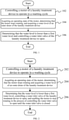
- FIG. 1 shows a flow chart of a control method for a laundry treatment device according to one embodiment of the present application.
- the control method for the laundry treatment device includes:
- the motor of the laundry treatment device is controlled to operate in the washing cycle, such that an inner drum of the laundry treatment device is driven to rotate for washing; in the washing process, the operating state of the motor is acquired, and when the motor stops rotating, the water level of the outer drum is acquired; when the motor stops rotating, whether the water level of the outer drum is lower than the first water level or not is judged; and when the water level is lower than the first water level, the water inlet valve of the laundry treatment device is controlled to open for refilling water.
- the control method takes advantage of the phase in which the motor stops rotating in the washing process to detect the water level and refill the water, such that, a separate water-refill washing phase is canceled, reducing the washing time, and moreover, the time period when the motor stops rotating is rationally used, further reducing the washing time, and guaranteeing the washing operation time as much as possible; in addition, the water level sensing is accurate, avoiding frequent water refilling, thereby effectively improving the washing efficiency and the cleaning effect.
- the first water level is a preset value; when the water level in the outer drum is lower than the first water level, water refilling is needed, and the first water level can be specifically set according to an empirical value.
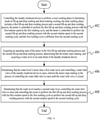
- FIG. 2 shows a flow chart of a control method for a laundry treatment device according to another one embodiment of the present application.
- the control method for the laundry treatment device includes:
- accuracy of water level detection can be improved by controlling the motor to be kept in a state of stopping rotating in a water refilling process, thereby avoiding stopping if water is not refilled sufficiently and frequent water refilling.
- FIG. 3 shows a flow chart of a control method for a laundry treatment device according to another embodiment of the present application.
- the control method for the laundry treatment device includes:
- the motor is controlled to be kept in a state of stopping after the laundry treatment device starts refilling water, and the water level of the outer drum is monitored to control the water refilling process according to the second water level.
- the water inlet valve is controlled to close for stopping water refilling.
- the motor is controlled to operate in the washing cycle, such that the inner drum is driven to rotate for continuously washing.
- the second water level is a set water level at which water refilling is accomplished, the second water level is not smaller than the first water level, and the second water level is greater than the first water level, such that frequent water refilling can be avoided.
- the second water level can be specifically set according to the empirical value.
- washing operation is not performed during water refilling, such that water level sensing is accurate, thereby avoiding frequent water refilling and improving the cleaning effect.
- a water-level-controlled water refilling process can be accomplished according to set water refilling, the control logics is simple and the water level of the outer drum is ensured to meet washing needs, thereby improving the washing efficiency and the cleaning effect.
- the washing cycle is rotating for a first duration and stopping for a second duration.
- the washing cycle of the motor is limited, specifically, the motor rotates for the first duration (named as an on phase) and stops for the second duration (named as an off phase), which may be one washing cycle.
- the motor operates in the washing cycle.
- the on phase of the washing cycle the water level is not detected and water refilling is not performed; only in the off phase, the water level of the outer drum is detected, and the water inlet valve is controlled to open for water refilling when the water level is lower than the first water level.
- controlling the motor of the laundry treatment device to operate in the washing cycle specifically includes: controlling the motor of the laundry treatment device to operate in the washing cycle with operation rotation speed.
- the motor operates with the operation rotation speed in the washing cycle in the washing process. Specifically, the motor rotates with the operation rotation speed and stops for the second duration while rotating for the first duration every time.
- a water level sensor configured to detect the water level of the outer drum is controlled to detect the water level of the outer drum in the off phase of each washing cycle; or the water level sensor detects every set duration which is set according to the first duration and the second duration, such that the detection operation is only performed in the off phase of the washing cycle; or the water level sensor detects every washing cycle.
- the operation rotation speed is not lower than 30 revolutions per minute and is not higher than 60 revolutions per minute.
- the operation rotation speed is limited, and specifically, the operation rotation speed is not lower than 30 revolutions per minute and is not higher than 60 revolutions per minute.
- the motor drives the inner drum to rotate for forming the lift-up and drop washing effect on the laundries.
- the phase in which the motor stops rotating is used to detect the water level and refill the water.
- the motor is ensured to stop rotating, reducing the washing time and making water level sensing accurate, thereby avoiding frequent water refilling, guaranteeing the washing operation time as much as possible, and effectively improving the washing efficiency and the cleaning effect.
- FIG. 4 shows a flow chart of a control method for a laundry treatment device according to another embodiment of the present application.
- the control method for the laundry treatment device includes:
- the laundry treatment device is controlled to perform the main washing phase in an alternating mode of lift-up and drop washing and drum-rotating washing, and the main washing phase includes a first lift-up and drop washing process and a second lift-up and drop washing process.
- the first lift-up and drop washing process and the second lift-up and drop washing process are a washing phase between a phase in which water feeding is ended and a phase in which drum-rotating washing starts, or a washing phase between a phase in which current drum-rotating washing is ended and a phase in which next drum-rotating washing starts.
- the variation of the washing cycle is improved, such that the motor respectively performs the first lift-up and drop washing process and the second lift-up and drop washing process in different washing cycles (namely the first washing cycle and the second washing cycle).
- the whole washing process does not need to heat washing water, thereby avoiding damages to the laundries of a high temperature and reducing energy consumption.
- an alternating washing mode of multi-washing-cycle washing and high-speed drum-rotating washing is adopted, such that the washing efficiency and the cleaning effect are effectively improved.
- FIG. 5 shows a flow chart of a control method for a laundry treatment device according to another embodiment of the present application.
- the control method for the laundry treatment device includes:
- the main washing phase further includes the third lift-up and drop washing process in which the motor operates with the third rotation speed in the third washing cycle, wherein the third washing cycle is different from the first washing cycle and the second washing cycle.
- three different washing cycles can be adopted to respectively perform the first, second and third lift-up and drop washing processes, such that the variation of the washing cycles is further improved, thereby improving the washing efficiency and the cleaning effect.
- Water-refill monitoring is performed in the lift-up and drop washing processes of the main washing phase, and specifically, the water level of the outer drum is obtained when the motor stops rotating; when the motor stops rotating, whether the water level of the outer drum is lower than the first water level or not is judged; and when the water level of the outer drum is lower than the first water level, the water inlet valve of the laundry treatment device is controlled to open for refilling water.
- the water level of the outer drum can be ensured to meet the washing needs, such that the washing efficiency and the cleaning effect are improved.
- the first washing cycle, the first rotation speed, the second washing cycle, the second rotation speed, the third washing cycle and the third rotation speed are all preset value; as long as the first washing cycle, the second washing cycle and the third washing cycle are different, the laundry treatment device alternatively washes in multiple nodes, which can be realized.
- control method for the laundry treatment device further includes: controlling a heating device of the laundry treatment device to switch off in a process of controlling the laundry treatment device to perform the main washing phase in an alternating mode of lift-up and drop washing and drum-rotating washing.
- the purpose of not heating washing water is achieved by controlling the heating device of the laundry treatment device to switch off in the main washing phase, thereby avoiding damages to the laundries of the high temperature and reducing energy consumption; and meanwhile, an alternating washing mode of multi-washing-cycle washing and high-speed drum-rotating washing is adopted, such that the washing efficiency and the cleaning effect are effectively improved.
- a second aspect of the present application provides a computer readable storage medium having stored therein a computer program.
- the computer program When executed by a processor, the computer program performs the control method for the laundry treatment device according to any of the technical solutions.
- the computer readable storage medium achieves all beneficial effects of the laundry treatment device according to any of the technical solutions.
- a third aspect of the present application provides a control system for a laundry treatment device.
- FIG. 6 shows a schematic block diagram of a control system 600 of a laundry treatment device according to one embodiment of the present application.
- the control system 600 for the laundry treatment device includes a memory 602, a processor 604 and a computer program stored in the memory 602 and configured to be capable of running on the processor 604, and the processor 604 being configured to perform the control method for the laundry treatment device according to any of the technical solutions when executing the computer program.
- the control system 600 for the laundry treatment device achieves all beneficial effects of the control method for the laundry treatment device according to any of the technical solutions.
- a fourth aspect of the present application provides a control system for a laundry treatment device.
- FIG. 7 shows a schematic block diagram of a control system 700 for a laundry treatment device according to one embodiment of the present application.
- the control system 700 for the laundry treatment device includes:
- the control unit 702 is further configured to determine that the water level is lower than a first water level and control a water inlet valve of the laundry treatment device to open.
- the motor of the laundry treatment device is controlled to operate in the washing cycle, such that an inner drum of the laundry treatment device is driven to rotate for washing; in the washing process, the operating state of the motor is acquired, and when the motor stops rotating, the water level of the outer drum is acquired; when the motor stops rotating, whether the water level of the outer drum is lower than the first water level or not is judged; and when the water level of the outer drum is lower than the first water level, the water inlet valve of the laundry treatment device is controlled to open for refilling water.
- the control system 700 for the laundry treatment device in the present application takes advantage of the phase in which the motor stops rotating in the washing process to detect the water level and refill the water, such that, a separate water-refill washing phase is canceled, reducing the washing time, and moreover, the time period when the motor stops rotating is rationally used, further reducing the washing time, and guaranteeing the washing operation time as much as possible; and meanwhile, the water level sensing is accurate, avoiding frequent water refilling, thereby effectively improving the washing efficiency and the cleaning effect.
- the first water level is a preset value; when the water level in the outer drum is lower than the first water level, water refilling is needed, and the first water level can be specifically set according to an empirical value.
- the motor stops rotating.
- accuracy of water level detection can be improved by controlling the motor to be kept in a state of stopping rotating in a water refilling process, thereby avoiding stopping if water is not refilled sufficiently and frequent water refilling.
- control unit 702 is further configured to determine that the water level reaches the second water level, control the water inlet valve to close and control the motor to drive the inner drum to wash in the washing cycle, wherein the second water level is greater than or equal to the first water level.
- the motor is controlled to be kept in a state of stopping after the laundry treatment device starts refilling water, and the water level of the outer drum is monitored to control the water refilling process according to the second water level.
- the water inlet valve is controlled to close for stopping water refilling.
- the motor is controlled to operate in the washing cycle, such that the inner drum is driven to rotate for continuously washing.
- the second water level is a set water level at which water refilling is accomplished, the second water level is not smaller than the first water level, and the second water level is greater than the first water level, such that frequent water refilling can be avoided.
- the second water level can be specifically set according to the empirical value.
- washing operation is not performed during water refilling, such that water level sensing is accurate, thereby avoiding frequent water refilling and improving the cleaning effect.
- a water-level-controlled water refilling process can be accomplished according to set water refilling, the control logics is simple and the water level of the outer drum is ensured to meet washing needs, thereby improving the washing efficiency and the cleaning effect.
- the washing cycle is rotating for a first duration and stopping for a second duration.
- the washing cycle of the motor is limited, specifically, the motor rotates for the first duration (named as an on phase) and stops for the second duration (named as an off phase), which may be one washing cycle.
- the motor operates in the washing cycle.
- the on phase of the washing cycle the water level is not detected and water refilling is not performed; only in the off phase, the water level of the outer drum is detected, and the water inlet valve is controlled to open for water refilling when the water level is lower than the first water level.
- the operation that the control unit 702 is configured to control the motor of the laundry treatment device to operate in the washing cycle specifically includes: controlling the motor of the laundry treatment device to operate with an operation rotation speed in the washing cycle.
- the motor operates with the operation rotation speed in the washing cycle in the washing process, specifically, the motor rotates with the operation rotation speed and stops for the second duration while rotating for the first duration every time.
- the operation rotation speed is not lower than 30 revolutions per minute and is not higher than 60 revolutions per minute.
- the operation rotation speed is limited, and specifically, the operation rotation speed is not lower than 30 revolutions per minute and is not higher than 60 revolutions per minute.
- the motor drives the inner drum to rotate for forming the lift-up and drop washing effect on the laundries.
- the phase in which the motor stops rotating is used to detect the water level and refill the water.
- the motor is ensured to stop rotating, reducing the washing time and making water level sensing accurate, thereby avoiding frequent water refilling, guaranteeing the washing operation time as much as possible, and effectively improving the washing efficiency and the cleaning effect.
- control unit 702 is further configured to control the laundry treatment device to perform a main washing phase in an alternating mode of lift-up and drop washing and drum-rotating washing, and the main washing phase includes a first lift-up and drop washing process and a second lift-up and drop washing process; the control unit 702 is specifically configured to control the motor to perform the first lift-up and drop washing process with the first rotation speed in the first washing cycle, and control the motor to perform the second lift-up and drop washing process with the second rotation speed in the second washing cycle, and the first washing cycle is different from the second washing cycle.
- the laundry treatment device is controlled to perform the main washing phase in an alternating mode of lift-up and drop washing and drum-rotating washing, and the main washing phase includes a first lift-up and drop washing process and a second lift-up and drop washing process.
- the first lift-up and drop washing process and the second lift-up and drop washing process are a washing phase between a phase in which water feeding is ended and a phase in which drum-rotating washing starts, or a washing phase between a phase in which current drum-rotating washing is ended and a phase in which next drum-rotating washing starts.
- the variation of the washing cycle is improved, such that the motor respectively performs the first lift-up and drop washing process and the second lift-up and drop washing process in different washing cycles (namely the first washing cycle and the second washing cycle).
- the whole washing process does not need to heat washing water, thereby avoiding damages to the laundries of a high temperature and reducing energy consumption.
- an alternating washing mode of multi-washing-cycle washing and high-speed drum-rotating washing is adopted, such that the washing efficiency and the cleaning effect are effectively improved.
- the main washing phase further includes a third lift-up and drop washing process.
- the control unit 702 is specifically configured to control the motor to operate with the third rotation speed in the third washing cycle, and the third washing cycle is different from the first washing cycle and the second washing cycle.
- the main washing phase further includes the third lift-up and drop washing process in which the motor operates with the third rotation speed in the third washing cycle, wherein the third washing cycle is different from the first washing cycle and the second washing cycle.
- three different washing cycles can be adopted to respectively perform the first, second and third lift-up and drop washing processes, such that the variation of the washing cycles is further improved, thereby improving the washing efficiency and the cleaning effect.
- the acquisition unit 704 is specifically configured to acquire an operating state of the motor when the first lift-up and drop washing process, the second lift-up and drop washing process and the third lift-up and drop washing process are performed, determine that the motor stops rotating, and acquire a water level of an outer drum; and the control unit is configured to determine that the water level is lower than a first water level and control the water inlet valve to open.
- water-refill monitoring is performed in the lift-up and drop washing processes of the main washing phase, and specifically, the water level of the outer drum is obtained when the motor stops rotating; when the motor stops rotating, whether the water level of the outer drum is lower than the first water level or not is judged; and when the water level of the outer drum is lower than the first water level, the water inlet valve of the laundry treatment device is controlled to open for refilling water.
- the water level of the outer drum can be ensured to meet the washing needs, such that the washing efficiency and the cleaning effect are improved.
- control unit 702 is further configured to control a heating device of the laundry treatment device to switch off in a process of controlling the laundry treatment device to perform the main washing phase in an alternating mode of lift-up and drop washing and drum-rotating washing.
- the purpose of not heating washing water is achieved by controlling the heating device of the laundry treatment device to switch off in the main washing phase, thereby avoiding damages to the laundries of the high temperature and reducing energy consumption; and meanwhile, an alternating washing mode of multi-washing-cycle washing and high-speed drum-rotating washing is adopted, such that the washing efficiency and the cleaning effect are effectively improved.
- a fifth aspect of the present application provides a laundry treatment device, including: the control system for the laundry treatment device in any of the embodiments; and a water level detecting device which is respectively connected with a control system for the laundry treatment device and an outer drum of the laundry treatment device, and is configured to detect a water level of the outer drum.
- the laundry treatment device achieves all beneficial effects of the control system for the laundry treatment device according to any of the embodiments.
- a sixth aspect of the present application provides a laundry treatment device, including a memory, a processor and a computer program stored in the memory and configured to be capable of running on the processor, and when executed by the processor, the computer program performs the control method for the laundry treatment device according to any of the embodiments.
- the laundry treatment device achieves all beneficial effects of the control method for the laundry treatment device according to any of the embodiments.
- a specific embodiment provides a control method for a laundry treatment device, which is used for a drum washing machine.
- the washing process includes main washing and rinsing, wherein the main washing includes water feeding and detergent adding as well as lift-up and drop washing.
- the control method for the laundry treatment device cancels a separate water-refill washing phase and directly performs lift-up and drop washing after water feeding is accomplished; and the water level is detected and the water is refilled in the off phase of the lift-up and drop washing, thereby guaranteeing the washing operation time as much as possible and effectively improving the washing efficiency and the cleaning effect.
- the control method for the laundry treatment device detects the water level and refills the water level in the off phase of the rinsing phase, and cancels a separate water-refill washing phase, thereby guaranteeing the washing operation time as much as possible and effectively improving the washing efficiency and the cleaning effect.
- FIG. 10 shows a flow chart of a control method for a laundry treatment device according to another specific embodiment of the present application.
- the control method for the laundry treatment device includes:
- water-refill monitoring is performed in the lift-up and drop washing phases in the main washing process, and specifically, the operating state of the motor is acquired and the water level of the outer drum is acquired when the motor stops rotating; when the motor stops rotating, whether the water level of the outer drum is lower than the first water level or not is judged; and when the water level of the outer drum is lower than the first water level, the water inlet valve of the laundry treatment device is controlled to open for refilling water, and the motor is kept in the state of stopping in the water refilling process; and when the water level reaches the second water level, the water inlet valve is controlled to close for stopping water refilling, wherein the second water level is greater than the first water level.
- the control method provided in the present application takes advantage of the phase in which the motor stops rotating in the washing process to detect the water level and refill the water, such that, a separate water-refill washing phase is canceled, reducing the washing time, and moreover, the time period when the motor stops rotating is rationally used, further reducing the washing time, and guaranteeing the washing operation time as much as possible; and in addition, the water level sensing is accurate, avoiding frequent water refilling, thereby effectively improving the washing efficiency and the cleaning effect.
- a computer readable storage medium may include any medium capable of storing or transmitting information. Examples of the computer-readable storage medium include electronic circuits, semiconductor memory devices, ROM, flash memory, erasable ROM (EROM), floppy disks, CD-ROMs, optical disks, hard disks, optical fiber media, radio frequency (RF) links, and so on.
- a code segment can be downloaded via a computer network such as the Internet, an intranet, and so on.
- connection may refer to fixed connection or detachable connection or integral connection, and may refer to direct connection or indirect connection through an intermediate medium.
- connecting may refer to fixed connection or detachable connection or integral connection, and may refer to direct connection or indirect connection through an intermediate medium.
Landscapes
- Engineering & Computer Science (AREA)
- Textile Engineering (AREA)
- Control Of Washing Machine And Dryer (AREA)
Abstract
Description
- The present application claims priority to
Chinese Patent Application NO. 201910237463.2, filed on March 27, 2019 Chinese Patent Application NO. 201910237450.5, filed on March 27, 2019 - The present application relates to the technical field of laundry treatment devices, and in particular to a control method for a laundry treatment device, a computer readable storage medium, a control system of a laundry treatment device, a control system for a laundry treatment device, and a laundry treatment device.
- To improve the cleaning effect of an existing drum washing machine, a water-refill washing phase is generally added before main washing. If water refilling is actuated, the washing operation time can be certainly increased, but the water level sensing is inaccurate. The water refilling end time is determined according to a water level, and therefore, inaccurate water level sensing possibly causes stopping if water is not refilled sufficiently, resulting in frequent water refilling, which is not conducive to cleaning.
- The present application aims to solve at least one of the technical problems existing in the prior art or a related art.
- According to a first aspect of the present application, a control method for a laundry treatment device is disclosed.
- According to a second aspect of the present application, a computer readable storage medium is disclosed.
- According to a third aspect of the present application, a control system for a laundry treatment device is disclosed.
- According to a fourth aspect of the present application, a control system for a laundry treatment device is disclosed.
- According to a fifth aspect of the present application, a laundry treatment device is disclosed.
- According to a sixth aspect of the present application, a laundry treatment device is disclosed.
- In view of this, a first aspect of the present application provides a control method for a laundry treatment device, including: controlling a motor of the laundry treatment device to operate in a washing cycle; acquiring an operating state of the motor, determining that the motor stops rotating, and acquiring a water level of an outer drum of the laundry treatment device; and determining that the water level is lower than a first water level, and controlling a water inlet valve of the laundry treatment device to open.
- According to the control method for the laundry treatment device provided in the present application, the motor of the laundry treatment device is controlled to operate in the washing cycle, such that an inner drum of the laundry treatment device is driven to rotate for washing; in the washing process, the operating state of the motor is acquired, and when the motor stops rotating, the water level of the outer drum is acquired; when the motor stops rotating, whether the water level of the outer drum is lower than the first water level or not is judged; and when the water level of the outer drum is lower than the first water level, the water inlet valve of the laundry treatment device is controlled to open for refilling water. The control method in the present application takes advantage of the phase in which the motor stops rotating in the washing process to detect the water level and refill the water, such that, a separate water-refill washing phase is canceled, reducing the washing time, and moreover, the time period when the motor stops rotating is rationally used, further reducing the washing time, and guaranteeing the washing operation time as much as possible; in addition, the water level sensing is accurate, avoiding frequent water refilling, thereby effectively improving the washing efficiency and the cleaning effect.
- The first water level is a preset value; when the water level in the outer drum is lower than the first water level, water refilling is needed, and the first water level can be specifically set according to an empirical value.
- The control method for the laundry treatment device provided in the present application further has the following technical characteristics:
In the technical solution, in the process of controlling the water inlet valve to open until the water inlet valve is closed, the motor stops rotating. - In the technical solution, accuracy of water level detection can be improved by controlling the motor to be kept in a state of stopping rotating in a water refilling process, thereby avoiding stopping if the water is not refilled sufficiently and frequent water refilling.
- In any of the technical solutions, the control method further includes: determining that the water level reaches a second water level, controlling the water inlet valve to close and controlling the motor to operate in the washing cycle, wherein the second water level is greater than or equal to the first water level.
- In the technical solution, the second water level is a preset value, the motor is controlled to be kept in a state of stopping after the laundry treatment device starts refilling water, and the water level of the outer drum is monitored to control the water refilling process according to the second water level. When the water level reaches the second water level, the water inlet valve is controlled to close for stopping water refilling. Meanwhile, the motor is controlled to operate in the washing cycle, such that the inner drum is driven to rotate for continuously washing. The second water level is a set water level at which water refilling is accomplished, the second water level is not smaller than the first water level, and the second water level is greater than the first water level, such that frequent water refilling can be avoided. The second water level can be specifically set according to the empirical value. According to the control method provided in the present application, washing operation is not performed during water refilling, such that water level sensing is accurate, thereby avoiding frequent water refilling and improving the cleaning effect. Meanwhile, a water-level-controlled water refilling process can be accomplished according to set water refilling, the control logics is simple and the water level of the outer drum is ensured to meet washing needs, thereby improving the washing efficiency and the cleaning effect.
- In any of the technical solutions, the washing cycle is rotating for a first duration and stopping for a second duration.
- In the technical solution, the washing cycle of the motor is limited, specifically, the motor rotates for the first duration (named as an on phase) and stops for the second duration (named as an off phase), which may be one washing cycle. In the washing process, the motor operates in the washing cycle. In the on phase of the washing cycle, the water level is not detected and water refilling is not performed; only in the off phase, the water level of the outer drum is detected, and the water inlet valve is controlled to open for water refilling when the water level is lower than the first water level.
- In any of the technical solutions, controlling the motor of the laundry treatment device to operate in the washing cycle specifically includes: controlling the motor of the laundry treatment device to operate with an operation rotation speed in the washing cycle.
- In the technical solution, the motor operates with the operation rotation speed in the washing cycle in the washing process, specifically, the motor rotates with the operation rotation speed and stops for the second duration while rotating for the first duration every time.
- In any of the technical solutions, the operation rotation speed is not lower than 30 revolutions per minute and is not higher than 60 revolutions per minute.
- In the technical solution, the operation rotation speed is limited, and specifically, the operation rotation speed is not lower than 30 revolutions per minute and is not higher than 60 revolutions per minute. Based on the operation rotation speed, the motor drives the inner drum to rotate for forming the lift-up and drop washing effect on the laundries. In the lift-up and drop washing process, the phase in which the motor stops rotating is used to detect the water level and refill the water. In the water refilling process, the motor is ensured to stop rotating, reducing the washing time and making water level sensing accurate, thereby avoiding frequent water refilling, guaranteeing the washing operation time as much as possible, and effectively improving the washing efficiency and the cleaning effect.
- In any of the technical solutions, the control method for the laundry treatment device further includes: controlling the laundry treatment device to perform a main washing phase in an alternating mode of lift-up and drop washing and drum-rotating washing, wherein the main washing phase includes a first lift-up and drop washing process and a second lift-up and drop washing process. Controlling the motor to operate with the operation rotation speed in the washing cycle specifically includes: controlling the motor to perform the first lift-up and drop washing process with the first rotation speed in the first washing cycle, and controlling the motor to perform the second lift-up and drop washing process with the second rotation speed in the second washing cycle, wherein the first washing cycle is different from the second washing cycle.
- In the technical solution, the laundry treatment device is controlled to perform the main washing phase in an alternating mode of lift-up and drop washing and drum-rotating washing, and the main washing phase includes a first lift-up and drop washing process and a second lift-up and drop washing process. The first lift-up and drop washing process and the second lift-up and drop washing process are a washing phase between a phase in which water feeding is ended and a phase in which drum-rotating washing starts, or a washing phase between a phase in which current drum-rotating washing is ended and a phase in which next drum-rotating washing starts. Meanwhile, the variation of the washing cycle is improved, such that the motor respectively performs the first lift-up and drop washing process and the second lift-up and drop washing process in different washing cycles (namely the first washing cycle and the second washing cycle). Through the control method for the laundry treatment device provided in the present application, the whole washing process does not need to heat washing water, thereby avoiding damages to the laundries of a high temperature and reducing energy consumption. Meanwhile, an alternating washing mode of multi-washing-cycle washing and high-speed drum-rotating washing is adopted, such that the washing efficiency and the cleaning effect are effectively improved.
- In any of the technical solutions, the main washing phase further includes a third lift-up and drop washing process. Controlling the motor to operate with the operation rotation speed in the washing cycle specifically includes: controlling the motor to perform the third lift-up and drop washing process with the third rotation speed in the third washing cycle, wherein the third washing cycle is different from the first washing cycle and the second washing cycle.
- In the technical solution, the main washing phase further includes the third lift-up and drop washing process in which the motor operates with the third rotation speed in the third washing cycle, wherein the third washing cycle is different from the first washing cycle and the second washing cycle. As a result, three different washing cycles can be adopted to respectively perform the first, second and third lift-up and drop washing processes, such that the variation of the washing cycles is further improved, thereby improving the washing efficiency and the cleaning effect.
- The first washing cycle, the first rotation speed, the second washing cycle, the second rotation speed, the third washing cycle and the third rotation speed are all preset value; as long as the first washing cycle, the second washing cycle and the third washing cycle are different, the laundry treatment device alternatively washes in multiple nodes, which can be realized.
- In any of the technical solutions, the control method for the laundry treatment device further includes: acquiring an operating state of the motor when the first lift-up and drop washing process, the second lift-up and drop washing process and the third lift-up and drop washing process are performed, and determining that the motor stops rotating; acquiring a water level of an outer drum, determining that the water level is lower than a first water level, and controlling a water inlet valve to open.
- In the technical solution, water-refill monitoring is performed in the lift-up and drop washing processes of the main washing phase, and specifically, the water level of the outer drum is obtained when the motor stops rotating; when the motor stops rotating, whether the water level of the outer drum is lower than the first water level or not is judged; and when the water level of the outer drum is lower than the first water level, the water inlet valve of the laundry treatment device is controlled to open for refilling water. In such a manner, the water level of the outer drum can be ensured to meet the washing needs, such that the washing efficiency and the cleaning effect are improved.
- In any of the technical solutions, the control method for the laundry treatment device further includes: controlling a heating device of the laundry treatment device to switch off in a process of controlling the laundry treatment device to perform the main washing phase in an alternating mode of lift-up and drop washing and drum-rotating washing.
- In the technical solution, the purpose of not heating washing water is achieved by controlling the heating device of the laundry treatment device to switch off in the main washing phase, thereby avoiding damages to the laundries of the high temperature and reducing energy consumption; and meanwhile, an alternating washing mode of multi-washing-cycle washing and high-speed drum-rotating washing is adopted, such that the washing efficiency and the cleaning effect are effectively improved.
- A second aspect of the present application provides a computer readable storage medium having stored therein a computer program. When executed by a processor, the computer program performs the control method for the laundry treatment device according to any of the technical solutions. As a result, the computer readable storage medium achieves all beneficial effects of the control method for the laundry treatment device according to any of the technical solutions.
- A third aspect of the present application provides a control system of a laundry treatment device, including a memory, a processor and a computer program stored in the memory and configured to be capable of running on the processor, and when executed by the processor, the computer program performs the control method for the laundry treatment device according to any of the technical solutions. As a result, the control system for the laundry treatment device achieves all beneficial effects of the control method for the laundry treatment device according to any of the technical solutions.
- A fourth aspect of the present application provides a control system for a laundry treatment device, including: a control unit configured to control a motor of the laundry treatment device to operate in a washing cycle; an acquisition unit configured to acquire an operating state of the motor, determine that the motor stops rotating and acquire a water level of an outer drum of the laundry treatment device; and a control unit configured to determine that the water level is lower than a first water level and control a water inlet valve of the laundry treatment device to open.
- According to the control system for the laundry treatment device provided in the present application, the motor of the laundry treatment device is controlled to operate in the washing cycle, such that an inner drum of the laundry treatment device is driven to rotate for washing; in the washing process, the operating state of the motor is acquired, and when the motor stops rotating, the water level of the outer drum is acquired; when the motor stops rotating, whether the water level of the outer drum is lower than the first water level or not is judged; and when the water level of the outer drum is lower than the first water level, the water inlet valve of the laundry treatment device is controlled to open for refilling water. The control system for the laundry treatment device in the present application takes advantage of the phase in which the motor stops rotating in the washing process to detect the water level and refill the water, such that, a separate water-refill washing phase is canceled, reducing the washing time, and moreover, the time period when the motor stops rotating is rationally used, further reducing the washing time, and guaranteeing the washing operation time as much as possible; and meanwhile, the water level sensing is accurate, avoiding frequent water refilling, thereby effectively improving the washing efficiency and the cleaning effect.
- The first water level is a preset value; when the water level in the outer drum is lower than the first water level, water refilling is needed, and the first water level can be specifically set according to an empirical value.
- In the technical solution, in the process of controlling the water inlet valve to open until the water inlet valve is closed, the motor stops rotating.
- In the technical solution, accuracy of water level detection can be improved by controlling the motor to be kept in a state of stopping rotating in a water refilling process, thereby avoiding stopping if the water is not refilled sufficiently and frequent water refilling.
- In the technical solution, the control unit is further configured to determine that the water level reaches the second water level, control the water inlet valve to close and control the motor to drive the inner drum to wash in the washing cycle, wherein the second water level is greater than or equal to the first water level.
- In the technical solution, the second water level is a preset value, the motor is controlled to be kept in a state of stopping after the laundry treatment device starts refilling water, and the water level of the outer drum is monitored to control the water refilling process according to the second water level. When the water level reaches the second water level, the water inlet valve is controlled to close for stopping water refilling. Meanwhile, the motor is controlled to operate in the washing cycle, such that the inner drum is driven to rotate for continuously washing. The second water level is a set water level at which water refilling is accomplished, the second water level is not smaller than the first water level, and the second water level is greater than the first water level, such that frequent water refilling can be avoided. The second water level can be specifically set according to the empirical value. According to the control method provided in the present application, washing operation is not performed during water refilling, such that water level sensing is accurate, thereby avoiding frequent water refilling and improving the cleaning effect. Meanwhile, a water-level-controlled water refilling process can be accomplished according to set water refilling, the control logics is simple and the water level of the outer drum is ensured to meet washing needs, thereby improving the washing efficiency and the cleaning effect.
- In any of the technical solutions, the washing cycle is rotating for a first duration and stopping for a second duration.
- In the technical solution, the washing cycle of the motor is limited, specifically, the motor rotates for the first duration (named as an on phase) and stops for the second duration (named as an off phase), which may be one washing cycle. In the washing process, the motor operates in the washing cycle. In the on phase of the washing cycle, the water level is not detected and water refilling is not performed; only in the off phase, the water level of the outer drum is detected, and the water inlet valve is controlled to open for water refilling when the water level is lower than the first water level.
- In any of the technical solutions, the operation that the control unit is configured to control the motor of the laundry treatment device to operate in the washing cycle specifically includes: controlling the motor of the laundry treatment device to operate with an operation rotation speed in the washing cycle.
- In the technical solution, the motor operates with the operation rotation speed in the washing cycle in the washing process, specifically, the motor rotates with the operation rotation speed and stops for the second duration while rotating for the first duration every time.
- In any of the technical solutions, the operation rotation speed is not lower than 30 revolutions per minute and is not higher than 60 revolutions per minute.
- In the technical solution, the operation rotation speed is limited, and specifically, the operation rotation speed is not lower than 30 revolutions per minute and is not higher than 60 revolutions per minute. Based on the operation rotation speed, the motor drives the inner drum to rotate for forming the lift-up and drop washing effect on the laundries. In the lift-up and drop washing process, the phase in which the motor stops rotating is used to detect the water level and refill the water. In the water refilling process, the motor is ensured to stop rotating, reducing the washing time and making water level sensing accurate, thereby avoiding frequent water refilling, guaranteeing the washing operation time as much as possible, and effectively improving the washing efficiency and the cleaning effect.
- In any of the technical solutions, the control unit is further configured to control the laundry treatment device to perform a main washing phase in an alternating mode of lift-up and drop washing and drum-rotating washing, and the main washing phase includes a first lift-up and drop washing process and a second lift-up and drop washing process; the control unit is specifically configured to control the motor to perform the first lift-up and drop washing process with the first rotation speed in the first washing cycle, and control the motor to perform the second lift-up and drop washing process with the second rotation speed in the second washing cycle, and the first washing cycle is different from the second washing cycle.
- In the technical solution, the laundry treatment device is controlled to perform the main washing phase in an alternating mode of lift-up and drop washing and drum-rotating washing, and the main washing phase includes a first lift-up and drop washing process and a second lift-up and drop washing process. The first lift-up and drop washing process and the second lift-up and drop washing process are a washing phase between a phase in which water feeding is ended and a phase in which drum-rotating washing starts, or a washing phase between a phase in which current drum-rotating washing is ended and a phase in which next drum-rotating washing starts. Meanwhile, the variation of the washing cycle is improved, such that the motor respectively performs the first lift-up and drop washing process and the second lift-up and drop washing process in different washing cycles (namely the first washing cycle and the second washing cycle). Through the control method for the laundry treatment device provided in the present application, the whole washing process does not need to heat washing water, thereby avoiding damages to the laundries of a high temperature and reducing energy consumption. Meanwhile, an alternating washing mode of multi-washing-cycle washing and high-speed drum-rotating washing is adopted, such that the washing efficiency and the cleaning effect are effectively improved.
- In any of the technical solutions, the main washing phase further includes a third lift-up and drop washing process. The control unit is specifically configured to control the motor to operate with the third rotation speed in the third washing cycle, and the third washing cycle is different from the first washing cycle and the second washing cycle.
- In the technical solution, the main washing phase further includes the third lift-up and drop washing process in which the motor operates with the third rotation speed in the third washing cycle, wherein the third washing cycle is different from the first washing cycle and the second washing cycle. As a result, three different washing cycles can be adopted to respectively perform the first, second and third lift-up and drop washing processes, such that the variation of the washing cycles is further improved, thereby improving the washing efficiency and the cleaning effect.
- The first washing cycle, the first rotation speed, the second washing cycle, the second rotation speed, the third washing cycle and the third rotation speed are all preset value; as long as the first washing cycle, the second washing cycle and the third washing cycle are different, the laundry treatment device alternatively washes in multiple nodes, which can be realized.
- In any of the technical solutions, the acquisition unit is specifically configured to acquire an operating state of the motor when the first lift-up and drop washing process, the second lift-up and drop washing process and the third lift-up and drop washing process are performed, determine that the motor stops rotating, and acquire a water level of an outer drum; and the control unit is configured to determine that the water level is lower than a first water level and control the water inlet valve to open.
- In the technical solution, water-refill monitoring is performed in the lift-up and drop washing processes of the main washing phase, and specifically, the water level of the outer drum is obtained when the motor stops rotating; when the motor stops rotating, whether the water level of the outer drum is lower than the first water level or not is judged; and when the water level of the outer drum is lower than the first water level, the water inlet valve of the laundry treatment device is controlled to open for refilling water. In such a manner, the water level of the outer drum can be ensured to meet the washing needs, such that the washing efficiency and the cleaning effect are improved.
- In any of the technical solutions, the control unit is further configured to control a heating device of the laundry treatment device to switch off in a process of controlling the laundry treatment device to perform the main washing phase in an alternating mode of lift-up and drop washing and drum-rotating washing.
- In the technical solution, the purpose of not heating washing water is achieved by controlling the heating device of the laundry treatment device to switch off in the main washing phase, thereby avoiding damages to the laundries of the high temperature and reducing energy consumption; and meanwhile, an alternating washing mode of multi-washing-cycle washing and high-speed drum-rotating washing is adopted, such that the washing efficiency and the cleaning effect are effectively improved.
- A fifth aspect of the present application provides a laundry treatment device, including: the control system for the laundry treatment device in any of the technical solutions; and a water level detecting device which is respectively connected with a control system for the laundry treatment device and an outer drum of the laundry treatment device, and is configured to detect a water level of the outer drum. As a result, the laundry treatment device achieves all beneficial effects of the control system for the laundry treatment device according to any of the technical solutions.
- A sixth aspect of the present application provides a laundry treatment device, including a memory, a processor, and a computer program stored in the memory and configured to be capable of running on the processor, and when executed by the processor, the computer program performs the control method for the laundry treatment device according to any of the technical solutions. As a result, the control system for the laundry treatment device achieves all beneficial effects of the control method for the laundry treatment device according to any of the technical solutions.
- Additional aspects and advantages of the present application will be obvious from the description below, or be learned by practice of the present application.
- The above and/or additional aspects and advantages of the present application will become obvious and easy to understand from the description of the embodiments in conjunction with the following drawings, in which:
-
FIG. 1 shows a flow chart of a control method for a laundry treatment device according to one embodiment of the present application. -
FIG. 2 shows a flow chart of a control method for a laundry treatment device according to the other embodiment of the present application. -
FIG. 3 shows a flow chart of a control method for a laundry treatment device according to another embodiment of the present application. -
FIG. 4 shows a flow chart of a control method for a laundry treatment device according to another embodiment of the present application. -
FIG. 5 shows a flow chart of a control method for a laundry treatment device according to another embodiment of the present application. -
FIG. 6 shows a schematic block diagram of a control system for a laundry treatment device according to one embodiment of the present application. -
FIG. 7 shows a schematic block diagram of a control system for a laundry treatment device according to one embodiment of the present application. -
FIG. 8 shows a schematic diagram of a control method for a laundry treatment device according to one specific embodiment of the present application. -
FIG. 9 shows a schematic diagram of a control method for a laundry treatment device according to one specific embodiment of the present application. -
FIG. 10 shows a schematic diagram of a control method for a laundry treatment device according to another specific embodiment of the present application. - To understand above purposes, features and advantages of the present application more clearly, the present application is further detailed below in combination with drawings and specific embodiments. It should be explained that if there is no conflict, embodiments in the present application and the features in the embodiments can be mutually combined.
- In the following description, many specific details are set forth in order to fully understand the present application. However, the present application can also be implemented in other ways than described herein. Therefore, the protection scope of the present application is not limited by the following specific embodiments disclosed.
- A first aspect of the present application provides a control method for a laundry treatment device.
-
FIG. 1 shows a flow chart of a control method for a laundry treatment device according to one embodiment of the present application. The control method for the laundry treatment device includes: -
step 102, controlling a motor of the laundry treatment device to operate in a washing cycle; -
step 104, acquiring an operating state of the motor, determining that the motor stops rotating, and acquiring a water level of an outer drum of the laundry treatment device; and -
step 106, determining that the water level is lower than a first water level and controlling a water inlet valve of the laundry treatment device to open. - According to the control method for the laundry treatment device provided in the present application, the motor of the laundry treatment device is controlled to operate in the washing cycle, such that an inner drum of the laundry treatment device is driven to rotate for washing; in the washing process, the operating state of the motor is acquired, and when the motor stops rotating, the water level of the outer drum is acquired; when the motor stops rotating, whether the water level of the outer drum is lower than the first water level or not is judged; and when the water level is lower than the first water level, the water inlet valve of the laundry treatment device is controlled to open for refilling water. The control method takes advantage of the phase in which the motor stops rotating in the washing process to detect the water level and refill the water, such that, a separate water-refill washing phase is canceled, reducing the washing time, and moreover, the time period when the motor stops rotating is rationally used, further reducing the washing time, and guaranteeing the washing operation time as much as possible; in addition, the water level sensing is accurate, avoiding frequent water refilling, thereby effectively improving the washing efficiency and the cleaning effect.
- The first water level is a preset value; when the water level in the outer drum is lower than the first water level, water refilling is needed, and the first water level can be specifically set according to an empirical value.
-
FIG. 2 shows a flow chart of a control method for a laundry treatment device according to another one embodiment of the present application. The control method for the laundry treatment device includes: -
step 202, controlling a motor of the laundry treatment device to operate in a washing cycle; -
step 204, acquiring an operating state of the motor, determining that the motor stops rotating, and acquiring a water level of an outer drum of the laundry treatment device; and -
step 206, determining that the water level is lower than a first water level, controlling a water inlet valve of the laundry treatment device to open, and enabling the motor to stop rotating in the process of controlling the water inlet valve to open until the water inlet valve is closed. - In the embodiment, accuracy of water level detection can be improved by controlling the motor to be kept in a state of stopping rotating in a water refilling process, thereby avoiding stopping if water is not refilled sufficiently and frequent water refilling.
-
FIG. 3 shows a flow chart of a control method for a laundry treatment device according to another embodiment of the present application. The control method for the laundry treatment device includes: -
step 302, controlling a motor of the laundry treatment device to operate in a washing cycle; -
step 304, acquiring an operating state of the motor, determining that the motor stops rotating, and acquiring a water level of an outer drum of the laundry treatment device; -
step 306, determining that the water level is lower than a first water level, controlling a water inlet valve of the laundry treatment device to open, and enabling the motor to stop rotating in the process of controlling the water inlet valve to open until the water inlet valve is closed; and -
step 308, determining that the water level reaches a second water level, controlling the water inlet valve to close and controlling the motor to operate in the washing cycle. - In the embodiment, the motor is controlled to be kept in a state of stopping after the laundry treatment device starts refilling water, and the water level of the outer drum is monitored to control the water refilling process according to the second water level. When the water level reaches the second water level, the water inlet valve is controlled to close for stopping water refilling. Meanwhile, the motor is controlled to operate in the washing cycle, such that the inner drum is driven to rotate for continuously washing. The second water level is a set water level at which water refilling is accomplished, the second water level is not smaller than the first water level, and the second water level is greater than the first water level, such that frequent water refilling can be avoided. The second water level can be specifically set according to the empirical value. According to the control method provided in the present application, washing operation is not performed during water refilling, such that water level sensing is accurate, thereby avoiding frequent water refilling and improving the cleaning effect. Meanwhile, a water-level-controlled water refilling process can be accomplished according to set water refilling, the control logics is simple and the water level of the outer drum is ensured to meet washing needs, thereby improving the washing efficiency and the cleaning effect.
- In any of the embodiments, the washing cycle is rotating for a first duration and stopping for a second duration.
- In the embodiment, the washing cycle of the motor is limited, specifically, the motor rotates for the first duration (named as an on phase) and stops for the second duration (named as an off phase), which may be one washing cycle. In the washing process, the motor operates in the washing cycle. In the on phase of the washing cycle, the water level is not detected and water refilling is not performed; only in the off phase, the water level of the outer drum is detected, and the water inlet valve is controlled to open for water refilling when the water level is lower than the first water level.
- In any of the embodiments, controlling the motor of the laundry treatment device to operate in the washing cycle specifically includes: controlling the motor of the laundry treatment device to operate in the washing cycle with operation rotation speed.
- In the technical solution, the motor operates with the operation rotation speed in the washing cycle in the washing process. Specifically, the motor rotates with the operation rotation speed and stops for the second duration while rotating for the first duration every time.
- In one specific embodiment of the present application, a water level sensor configured to detect the water level of the outer drum is controlled to detect the water level of the outer drum in the off phase of each washing cycle; or the water level sensor detects every set duration which is set according to the first duration and the second duration, such that the detection operation is only performed in the off phase of the washing cycle; or the water level sensor detects every washing cycle.
- In any of the embodiments, the operation rotation speed is not lower than 30 revolutions per minute and is not higher than 60 revolutions per minute.
- In the embodiment, the operation rotation speed is limited, and specifically, the operation rotation speed is not lower than 30 revolutions per minute and is not higher than 60 revolutions per minute. Based on the operation rotation speed, the motor drives the inner drum to rotate for forming the lift-up and drop washing effect on the laundries. In the lift-up and drop washing process, the phase in which the motor stops rotating is used to detect the water level and refill the water. In the water refilling process, the motor is ensured to stop rotating, reducing the washing time and making water level sensing accurate, thereby avoiding frequent water refilling, guaranteeing the washing operation time as much as possible, and effectively improving the washing efficiency and the cleaning effect.
-
FIG. 4 shows a flow chart of a control method for a laundry treatment device according to another embodiment of the present application. The control method for the laundry treatment device includes: -
step 402, controlling the laundry treatment device to perform a main washing phase in an alternating mode of lift-up and drop washing and drum-rotating washing, wherein the main washing phase includes a first lift-up and drop washing process and a second lift-up and drop washing process, the motor is controlled to perform the first lift-up and drop washing process with the first rotation speed in the first washing cycle, and the motor is controlled to perform the second lift-up and drop washing process with the second rotation speed in the second washing cycle, and the first washing cycle is different from the second washing cycle; -
step 404, acquiring an operating state of the motor in the first lift-up and drop washing process and the second lift-up and drop washing process, determining that the motor stops rotating, and acquiring a water level of an outer drum of the laundry treatment device; and -
step 406, determining that the water level is lower than a first water level, controlling a water inlet valve of the laundry treatment device to open, and enabling the motor to stop rotating in the process of controlling the water inlet valve to open until the water inlet valve is closed; and - step 408, determining that the water level reaches a second water level, controlling the water inlet valve to close and controlling the motor to perform the first lift-up and drop washing process with the first rotation speed in the first washing cycle or perform the second lift-up and drop washing process with the second rotation speed in the second washing cycle.
- In the embodiment, the laundry treatment device is controlled to perform the main washing phase in an alternating mode of lift-up and drop washing and drum-rotating washing, and the main washing phase includes a first lift-up and drop washing process and a second lift-up and drop washing process. The first lift-up and drop washing process and the second lift-up and drop washing process are a washing phase between a phase in which water feeding is ended and a phase in which drum-rotating washing starts, or a washing phase between a phase in which current drum-rotating washing is ended and a phase in which next drum-rotating washing starts. Meanwhile, the variation of the washing cycle is improved, such that the motor respectively performs the first lift-up and drop washing process and the second lift-up and drop washing process in different washing cycles (namely the first washing cycle and the second washing cycle). Through the control method for the laundry treatment device provided in the present application, the whole washing process does not need to heat washing water, thereby avoiding damages to the laundries of a high temperature and reducing energy consumption. Meanwhile, an alternating washing mode of multi-washing-cycle washing and high-speed drum-rotating washing is adopted, such that the washing efficiency and the cleaning effect are effectively improved.
-
FIG. 5 shows a flow chart of a control method for a laundry treatment device according to another embodiment of the present application. The control method for the laundry treatment device includes: -
step 502, controlling the laundry treatment device to perform a main washing phase in an alternating mode of lift-up and drop washing and drum-rotating washing, wherein the main washing phase includes a first lift-up and drop washing process and a second lift-up and drop washing process, the motor is controlled to perform the first lift-up and drop washing process with the first rotation speed in the first washing cycle, the motor is controlled to perform the second lift-up and drop washing process with the second rotation speed in the second washing cycle, and the motor is controlled to perform the third lift-up and drop washing process with the third rotation speed in the third washing cycle;
wherein the first washing cycle, the second washing cycle and the third washing cycle are all different. -
step 504, acquiring an operating state of the motor in the first lift-up and drop washing process, the second lift-up and drop washing process and the third lift-up and drop washing process, determining that the motor stops rotating, and acquiring a water level of an outer drum of the laundry treatment device; -
step 506, determining that the water level is lower than a first water level, controlling a water inlet valve of the laundry treatment device to open, and enabling the motor to stop rotating in the process of controlling the water inlet valve to open until the water inlet valve is closed; and -
step 508, determining that the water level reaches a second water level, controlling the water inlet valve to close and controlling the motor to perform the first lift-up and drop washing process with the first rotation speed in the first washing cycle or perform the second lift-up and drop washing process with the second rotation speed in the second washing cycle or the third lift-up and drop washing process with the third rotation speed in the third washing cycle. - In the embodiment, the main washing phase further includes the third lift-up and drop washing process in which the motor operates with the third rotation speed in the third washing cycle, wherein the third washing cycle is different from the first washing cycle and the second washing cycle. As a result, three different washing cycles can be adopted to respectively perform the first, second and third lift-up and drop washing processes, such that the variation of the washing cycles is further improved, thereby improving the washing efficiency and the cleaning effect.
- Water-refill monitoring is performed in the lift-up and drop washing processes of the main washing phase, and specifically, the water level of the outer drum is obtained when the motor stops rotating; when the motor stops rotating, whether the water level of the outer drum is lower than the first water level or not is judged; and when the water level of the outer drum is lower than the first water level, the water inlet valve of the laundry treatment device is controlled to open for refilling water. In such a manner, the water level of the outer drum can be ensured to meet the washing needs, such that the washing efficiency and the cleaning effect are improved.
- The first washing cycle, the first rotation speed, the second washing cycle, the second rotation speed, the third washing cycle and the third rotation speed are all preset value; as long as the first washing cycle, the second washing cycle and the third washing cycle are different, the laundry treatment device alternatively washes in multiple nodes, which can be realized.
- In some embodiments of the present application, the control method for the laundry treatment device further includes: controlling a heating device of the laundry treatment device to switch off in a process of controlling the laundry treatment device to perform the main washing phase in an alternating mode of lift-up and drop washing and drum-rotating washing.
- In the embodiment, the purpose of not heating washing water is achieved by controlling the heating device of the laundry treatment device to switch off in the main washing phase, thereby avoiding damages to the laundries of the high temperature and reducing energy consumption; and meanwhile, an alternating washing mode of multi-washing-cycle washing and high-speed drum-rotating washing is adopted, such that the washing efficiency and the cleaning effect are effectively improved.
- A second aspect of the present application provides a computer readable storage medium having stored therein a computer program. When executed by a processor, the computer program performs the control method for the laundry treatment device according to any of the technical solutions. As a result, the computer readable storage medium achieves all beneficial effects of the laundry treatment device according to any of the technical solutions.
- A third aspect of the present application provides a control system for a laundry treatment device.
-
FIG. 6 shows a schematic block diagram of acontrol system 600 of a laundry treatment device according to one embodiment of the present application. Thecontrol system 600 for the laundry treatment device includes amemory 602, aprocessor 604 and a computer program stored in thememory 602 and configured to be capable of running on theprocessor 604, and theprocessor 604 being configured to perform the control method for the laundry treatment device according to any of the technical solutions when executing the computer program. As a result, thecontrol system 600 for the laundry treatment device achieves all beneficial effects of the control method for the laundry treatment device according to any of the technical solutions. - A fourth aspect of the present application provides a control system for a laundry treatment device.
-
FIG. 7 shows a schematic block diagram of acontrol system 700 for a laundry treatment device according to one embodiment of the present application. Thecontrol system 700 for the laundry treatment device includes: - a
control unit 702 configured to control a motor of a laundry treatment device to operate in a washing cycle; and - an
acquisition unit 704 configured to acquire an operating state of the motor determine that the motor stops rotating and acquire a water level of an outer drum of the laundry treatment device. - The
control unit 702 is further configured to determine that the water level is lower than a first water level and control a water inlet valve of the laundry treatment device to open. - According to the
control system 700 for the laundry treatment device provided in the present application, the motor of the laundry treatment device is controlled to operate in the washing cycle, such that an inner drum of the laundry treatment device is driven to rotate for washing; in the washing process, the operating state of the motor is acquired, and when the motor stops rotating, the water level of the outer drum is acquired; when the motor stops rotating, whether the water level of the outer drum is lower than the first water level or not is judged; and when the water level of the outer drum is lower than the first water level, the water inlet valve of the laundry treatment device is controlled to open for refilling water. Thecontrol system 700 for the laundry treatment device in the present application takes advantage of the phase in which the motor stops rotating in the washing process to detect the water level and refill the water, such that, a separate water-refill washing phase is canceled, reducing the washing time, and moreover, the time period when the motor stops rotating is rationally used, further reducing the washing time, and guaranteeing the washing operation time as much as possible; and meanwhile, the water level sensing is accurate, avoiding frequent water refilling, thereby effectively improving the washing efficiency and the cleaning effect. - The first water level is a preset value; when the water level in the outer drum is lower than the first water level, water refilling is needed, and the first water level can be specifically set according to an empirical value.
- In one embodiment of the present application, in the process of controlling the water inlet valve to open until the water inlet valve is closed, the motor stops rotating.
- In the embodiment, accuracy of water level detection can be improved by controlling the motor to be kept in a state of stopping rotating in a water refilling process, thereby avoiding stopping if water is not refilled sufficiently and frequent water refilling.
- In one embodiment of the present application, the
control unit 702 is further configured to determine that the water level reaches the second water level, control the water inlet valve to close and control the motor to drive the inner drum to wash in the washing cycle, wherein the second water level is greater than or equal to the first water level. - In the embodiment, the motor is controlled to be kept in a state of stopping after the laundry treatment device starts refilling water, and the water level of the outer drum is monitored to control the water refilling process according to the second water level. When the water level reaches the second water level, the water inlet valve is controlled to close for stopping water refilling. Meanwhile, the motor is controlled to operate in the washing cycle, such that the inner drum is driven to rotate for continuously washing. The second water level is a set water level at which water refilling is accomplished, the second water level is not smaller than the first water level, and the second water level is greater than the first water level, such that frequent water refilling can be avoided. The second water level can be specifically set according to the empirical value. According to the control method provided in the present application, washing operation is not performed during water refilling, such that water level sensing is accurate, thereby avoiding frequent water refilling and improving the cleaning effect. Meanwhile, a water-level-controlled water refilling process can be accomplished according to set water refilling, the control logics is simple and the water level of the outer drum is ensured to meet washing needs, thereby improving the washing efficiency and the cleaning effect.
- In one embodiment of the present application, the washing cycle is rotating for a first duration and stopping for a second duration.
- In the embodiment, the washing cycle of the motor is limited, specifically, the motor rotates for the first duration (named as an on phase) and stops for the second duration (named as an off phase), which may be one washing cycle. In the washing process, the motor operates in the washing cycle. In the on phase of the washing cycle, the water level is not detected and water refilling is not performed; only in the off phase, the water level of the outer drum is detected, and the water inlet valve is controlled to open for water refilling when the water level is lower than the first water level.
- In one embodiment of the present application, the operation that the
control unit 702 is configured to control the motor of the laundry treatment device to operate in the washing cycle specifically includes: controlling the motor of the laundry treatment device to operate with an operation rotation speed in the washing cycle. - In the embodiment, the motor operates with the operation rotation speed in the washing cycle in the washing process, specifically, the motor rotates with the operation rotation speed and stops for the second duration while rotating for the first duration every time.
- In one embodiment of the present application, the operation rotation speed is not lower than 30 revolutions per minute and is not higher than 60 revolutions per minute.
- In the embodiment, the operation rotation speed is limited, and specifically, the operation rotation speed is not lower than 30 revolutions per minute and is not higher than 60 revolutions per minute. Based on the operation rotation speed, the motor drives the inner drum to rotate for forming the lift-up and drop washing effect on the laundries. In the lift-up and drop washing process, the phase in which the motor stops rotating is used to detect the water level and refill the water. In the water refilling process, the motor is ensured to stop rotating, reducing the washing time and making water level sensing accurate, thereby avoiding frequent water refilling, guaranteeing the washing operation time as much as possible, and effectively improving the washing efficiency and the cleaning effect.
- In one embodiment of the present application, the
control unit 702 is further configured to control the laundry treatment device to perform a main washing phase in an alternating mode of lift-up and drop washing and drum-rotating washing, and the main washing phase includes a first lift-up and drop washing process and a second lift-up and drop washing process; thecontrol unit 702 is specifically configured to control the motor to perform the first lift-up and drop washing process with the first rotation speed in the first washing cycle, and control the motor to perform the second lift-up and drop washing process with the second rotation speed in the second washing cycle, and the first washing cycle is different from the second washing cycle. - In the embodiment, the laundry treatment device is controlled to perform the main washing phase in an alternating mode of lift-up and drop washing and drum-rotating washing, and the main washing phase includes a first lift-up and drop washing process and a second lift-up and drop washing process. The first lift-up and drop washing process and the second lift-up and drop washing process are a washing phase between a phase in which water feeding is ended and a phase in which drum-rotating washing starts, or a washing phase between a phase in which current drum-rotating washing is ended and a phase in which next drum-rotating washing starts. Meanwhile, the variation of the washing cycle is improved, such that the motor respectively performs the first lift-up and drop washing process and the second lift-up and drop washing process in different washing cycles (namely the first washing cycle and the second washing cycle). Through the control method for the laundry treatment device provided in the present application, the whole washing process does not need to heat washing water, thereby avoiding damages to the laundries of a high temperature and reducing energy consumption. Meanwhile, an alternating washing mode of multi-washing-cycle washing and high-speed drum-rotating washing is adopted, such that the washing efficiency and the cleaning effect are effectively improved.
- In one embodiment of the present application, the main washing phase further includes a third lift-up and drop washing process. The
control unit 702 is specifically configured to control the motor to operate with the third rotation speed in the third washing cycle, and the third washing cycle is different from the first washing cycle and the second washing cycle. - In the embodiment, the main washing phase further includes the third lift-up and drop washing process in which the motor operates with the third rotation speed in the third washing cycle, wherein the third washing cycle is different from the first washing cycle and the second washing cycle. As a result, three different washing cycles can be adopted to respectively perform the first, second and third lift-up and drop washing processes, such that the variation of the washing cycles is further improved, thereby improving the washing efficiency and the cleaning effect.
- In one embodiment of the present application, the
acquisition unit 704 is specifically configured to acquire an operating state of the motor when the first lift-up and drop washing process, the second lift-up and drop washing process and the third lift-up and drop washing process are performed, determine that the motor stops rotating, and acquire a water level of an outer drum; and the control unit is configured to determine that the water level is lower than a first water level and control the water inlet valve to open. - In the embodiment, water-refill monitoring is performed in the lift-up and drop washing processes of the main washing phase, and specifically, the water level of the outer drum is obtained when the motor stops rotating; when the motor stops rotating, whether the water level of the outer drum is lower than the first water level or not is judged; and when the water level of the outer drum is lower than the first water level, the water inlet valve of the laundry treatment device is controlled to open for refilling water. In such a manner, the water level of the outer drum can be ensured to meet the washing needs, such that the washing efficiency and the cleaning effect are improved.
- In one embodiment of the present application, the
control unit 702 is further configured to control a heating device of the laundry treatment device to switch off in a process of controlling the laundry treatment device to perform the main washing phase in an alternating mode of lift-up and drop washing and drum-rotating washing. - In the embodiment, the purpose of not heating washing water is achieved by controlling the heating device of the laundry treatment device to switch off in the main washing phase, thereby avoiding damages to the laundries of the high temperature and reducing energy consumption; and meanwhile, an alternating washing mode of multi-washing-cycle washing and high-speed drum-rotating washing is adopted, such that the washing efficiency and the cleaning effect are effectively improved.
- A fifth aspect of the present application provides a laundry treatment device, including: the control system for the laundry treatment device in any of the embodiments; and a water level detecting device which is respectively connected with a control system for the laundry treatment device and an outer drum of the laundry treatment device, and is configured to detect a water level of the outer drum. As a result, the laundry treatment device achieves all beneficial effects of the control system for the laundry treatment device according to any of the embodiments.
- A sixth aspect of the present application provides a laundry treatment device, including a memory, a processor and a computer program stored in the memory and configured to be capable of running on the processor, and when executed by the processor, the computer program performs the control method for the laundry treatment device according to any of the embodiments. As a result, the laundry treatment device achieves all beneficial effects of the control method for the laundry treatment device according to any of the embodiments.
- A specific embodiment provides a control method for a laundry treatment device, which is used for a drum washing machine. The washing process includes main washing and rinsing, wherein the main washing includes water feeding and detergent adding as well as lift-up and drop washing. As shown in
FIG. 8 , the control method for the laundry treatment device cancels a separate water-refill washing phase and directly performs lift-up and drop washing after water feeding is accomplished; and the water level is detected and the water is refilled in the off phase of the lift-up and drop washing, thereby guaranteeing the washing operation time as much as possible and effectively improving the washing efficiency and the cleaning effect. - In addition, in the rinsing phase, as shown in
FIG. 9 , the control method for the laundry treatment device detects the water level and refills the water level in the off phase of the rinsing phase, and cancels a separate water-refill washing phase, thereby guaranteeing the washing operation time as much as possible and effectively improving the washing efficiency and the cleaning effect. -
FIG. 10 shows a flow chart of a control method for a laundry treatment device according to another specific embodiment of the present application. The control method for the laundry treatment device includes: -
step 802, feeding water and adding a detergent; -
step 804, performing a first lift-up and drop washing process with a rotation speed of 37 revolutions per minute in a washing cycle of 9 on/9off, wherein water is automatically refilled within 2 minutes; -
step 806, performing high-speed drum-rotating washing; -
step 808, performing a second lift-up and drop washing process with a rotation speed of 48 revolutions per minute in a washing cycle of 22 on/5off, wherein water is automatically refilled within 2 minutes; -
step 810, performing high-speed drum-rotating washing; -
step 812, performing a third lift-up and drop washing process with a rotation speed of 52 revolutions per minute in a washing cycle of 18 on/8off, wherein water is automatically refilled within 2 minutes; -
step 814, performing high-speed drum-rotating washing; -
step 816, repeatedly performingstep 804 to step 814 in sequence; -
step 818, discharging water to an empty position; and -
step 820, dewatering, wherein the highest rotation speed is 600 revolutions per minute. - In the embodiment, water-refill monitoring is performed in the lift-up and drop washing phases in the main washing process, and specifically, the operating state of the motor is acquired and the water level of the outer drum is acquired when the motor stops rotating; when the motor stops rotating, whether the water level of the outer drum is lower than the first water level or not is judged; and when the water level of the outer drum is lower than the first water level, the water inlet valve of the laundry treatment device is controlled to open for refilling water, and the motor is kept in the state of stopping in the water refilling process; and when the water level reaches the second water level, the water inlet valve is controlled to close for stopping water refilling, wherein the second water level is greater than the first water level. The control method provided in the present application takes advantage of the phase in which the motor stops rotating in the washing process to detect the water level and refill the water, such that, a separate water-refill washing phase is canceled, reducing the washing time, and moreover, the time period when the motor stops rotating is rationally used, further reducing the washing time, and guaranteeing the washing operation time as much as possible; and in addition, the water level sensing is accurate, avoiding frequent water refilling, thereby effectively improving the washing efficiency and the cleaning effect.
- A computer readable storage medium may include any medium capable of storing or transmitting information. Examples of the computer-readable storage medium include electronic circuits, semiconductor memory devices, ROM, flash memory, erasable ROM (EROM), floppy disks, CD-ROMs, optical disks, hard disks, optical fiber media, radio frequency (RF) links, and so on. A code segment can be downloaded via a computer network such as the Internet, an intranet, and so on.
- In the illustration of this description, the terms such as "first" and "second" are only used for the purpose of illustration, rather than being understood to indicate or imply relative importance, unless otherwise clearly specified and limited. Terms such as "connecting", "installing", "fixation" and the like shall be understood in broad sense, and for example, "connecting" may refer to fixed connection or detachable connection or integral connection, and may refer to direct connection or indirect connection through an intermediate medium. For those ordinary skilled in the art, the specific meanings of the above terms in the present application may be understood according to concrete conditions.
- The above only describes preferred embodiments of the present application and is not intended to limit the present application. For those skilled in the art, various variations and changes can be made to the present application. Any modification, equivalent replacement, improvement, etc. made within the spirit and the principle of the present application shall be included within the protection scope of the present application.
Claims (24)
- A control method for a laundry treatment device, comprising:controlling a motor of the laundry treatment device to operate in a washing cycle;acquiring an operating state of the motor, determining that the motor stops rotating and acquiring a water level of an outer drum of the laundry treatment device; anddetermining that the water level is lower than a first water level and controlling a water inlet valve of the laundry treatment device to open.
- The control method for the laundry treatment device according to claim 1, wherein in the process of controlling the water inlet valve to open until the water inlet valve is closed, the motor stops rotating.
- The control method for the laundry treatment device according to claim 1, further comprising:
determining that the water level reaches a second water level, controlling the water inlet valve to close and controlling the motor to operate in the washing cycle, wherein the second water level is greater than or equal to the first water level. - The control method for the laundry treatment device according to claim 1, wherein
the washing cycle is rotating for a first duration and stopping for a second duration. - The control method for the laundry treatment device according to claim 1, wherein controlling the motor of the laundry treatment device to operate in the washing cycle specifically comprises: controlling the motor to operate with an operation rotation speed in the washing cycle.
- The control method for the laundry treatment device according to claim 5, wherein
the operation rotation speed is not lower than 30 revolutions per minute and is not higher than 60 revolutions per minute. - The control method for the laundry treatment device according to claim 5, further comprising:controlling the laundry treatment device to perform a main washing phase in an alternating mode of lift-up and drop washing and drum-rotating washing, wherein the main washing phase comprises a first lift-up and drop washing process and a second lift-up and drop washing process;controlling the motor to operate with the operation rotation speed in the washing cycle specifically comprises: controlling the motor to perform the first lift-up and drop washing process with the first rotation speed in the first washing cycle, and controlling the motor to perform the second lift-up and drop washing process with the second rotation speed in the second washing cycle,wherein the first washing cycle is different from the second washing cycle.
- The control method for the laundry treatment device according to claim 7, wherein the main washing phase further comprises a third lift-up and drop washing process;the controlling the motor to operate with the operation rotation speed in the washing cycle specifically comprises: controlling the motor to perform the third lift-up and drop washing process with the third rotation speed in the third washing cycle;the third washing cycle is different from the first washing cycle and the second washing cycle.
- The control method for the laundry treatment device according to claim 8, further comprising:acquiring an operating state of the motor when the first lift-up and drop washing process, the second lift-up and drop washing process and the third lift-up and drop washing process are performed, and determining that the motor stops rotating;acquiring a water level of the outer drum, determining that the water level is lower than a first water level, and controlling the water inlet valve to open.
- The control method for the laundry treatment device according to any one of claims 7 to 9, further comprising:
controlling a heating device of the laundry treatment device to switch off in a process of controlling the laundry treatment device to perform the main washing phase in an alternating mode of lift-up and drop washing and drum-rotating washing. - A computer readable storage medium, having stored therein a computer programthat, when executed by a processor, perform a control method for a laundry treatment device according to any one of claims 1to 10.
- A control system of a laundry treatment device, comprising:a memory,a processor, anda computer program, stored in the memory and configured to be capable of running on the processor, wherein when executed by the processor, the computer program performs a control method for a laundry treatment device according to any one of claims 1 to 10.
- A control system for a laundry treatment device, comprising:a control unit, configured to control a motor of the laundry treatment device to operate in a washing cycle; andan acquisition unit, configured to acquire an operating state of the motor, determine that the motor stops rotating and acquire a water level of an outer drum of the laundry treatment device;wherein the control unit is further configured to determine that the water level is lower than a first water level and control a water inlet valve of the laundry treatment device to open.
- The control system for the laundry treatment device according to claim 13, wherein in the process of controlling the water inlet valve to open until the water inlet valve is closed, the motor stops rotating.
- The control system for the laundry treatment device according to claim 13, whereinthe control unit is further configured to determine that the water level reaches the second water level, control the water inlet valve to close and control the motor to operate in the washing cycle;wherein the second water level is greater than or equal to the first water level.
- The control system for the laundry treatment device according to claim 13, wherein
the washing cycle is rotating for a first duration and stopping for a second duration. - The control system for the laundry treatment device according to claim 13, wherein
that the control unit is configured to control the motor to operate in the washing cycle specifically comprises: controlling the motor to operate with an operation rotation speed in the washing cycle. - The control system for the laundry treatment device according to claim 17, wherein
the operation rotation speed is not lower than 30 revolutions per minute and is not higher than 60 revolutions per minute. - The control system for the laundry treatment device according to claim 17, whereinthe control unit is further configured to control the laundry treatment device to perform a main washing phase in an alternating mode of lift-up and drop washing and drum-rotating washing, and the main washing phase comprises a first lift-up and drop washing process and a second lift-up and drop washing process;the control unit is specifically configured to control the motor to perform the first lift-up and drop washing process with the first rotation speed in the first washing cycle, and control the motor to perform the second lift-up and drop washing process with the second rotation speed in the second washing cycle;wherein the first washing cycle is different from the second washing cycle.
- The control system for the laundry treatment device according to claim 19, whereinthe main washing phase further comprises a third lift-up and drop washing process;the control unit is specifically configured to control the motor to perform the third lift-up and drop washing process with the third rotation speed in the third washing cycle;the third washing cycle is different from the first washing cycle and the second washing cycle.
- The control system for the laundry treatment device according to claim 20, whereinthe acquisition unit is specifically configured to acquire an operating state of the motor when the first lift-up and drop washing process, the second lift-up and drop washing process and the third lift-up and drop washing process are performed, determine that the motor stops rotating, and acquire a water level of the outer drum; andthe control unit is configured to determine that the water level is lower than a first water level and control the water inlet valve to open.
- The control system for the laundry treatment device according to any one of claims 7 to 9, wherein
the control unit is further configured to control a heating device of the laundry treatment device to switch off in a process of controlling the laundry treatment device to perform the main washing phase in an alternating mode of lift-up and drop washing and drum-rotating washing. - A laundry treatment device, comprising:a control system for a laundry treatment device of any one of claims 13 to 21; anda water-level detecting device, connected to the control system for the laundry treatment device and an outer drum of the laundry treatment device respectively, and configured to detect a water level of the outer drum.
- A laundry treatment device, comprising:a memory,a processor, anda computer program, stored in the memory and configured to be capable of running on the processor;wherein when executed by the processor, the computer program performs a control method for a laundry treatment device according to any one of claims 1 to 10.
Applications Claiming Priority (3)
| Application Number | Priority Date | Filing Date | Title |
|---|---|---|---|
| CN201910237450.5A CN111826877B (en) | 2019-03-27 | 2019-03-27 | Clothes treating apparatus, control method, control system, and readable storage medium |
| CN201910237463.2A CN111826879B (en) | 2019-03-27 | 2019-03-27 | Clothes processing device, control method, control system and readable storage medium |
| PCT/CN2019/086902 WO2020191886A1 (en) | 2019-03-27 | 2019-05-14 | Laundry treatment device, control method, control system, and readable storage medium |
Publications (4)
| Publication Number | Publication Date |
|---|---|
| EP3951042A1 true EP3951042A1 (en) | 2022-02-09 |
| EP3951042A4 EP3951042A4 (en) | 2022-05-18 |
| EP3951042B1 EP3951042B1 (en) | 2025-04-02 |
| EP3951042C0 EP3951042C0 (en) | 2025-04-02 |
Family
ID=72610469
Family Applications (1)
| Application Number | Title | Priority Date | Filing Date |
|---|---|---|---|
| EP19921000.6A Active EP3951042B1 (en) | 2019-03-27 | 2019-05-14 | Laundry treatment device, control method, control system, and readable storage medium |
Country Status (4)
| Country | Link |
|---|---|
| EP (1) | EP3951042B1 (en) |
| ES (1) | ES3025536T3 (en) |
| PL (1) | PL3951042T3 (en) |
| WO (1) | WO2020191886A1 (en) |
Family Cites Families (13)
| Publication number | Priority date | Publication date | Assignee | Title |
|---|---|---|---|---|
| DE1218988B (en) * | 1962-06-01 | 1966-06-16 | Walter Holzer | Method for operating a washing machine and device for carrying out the method |
| JPH06327881A (en) * | 1993-05-27 | 1994-11-29 | Sanyo Electric Co Ltd | How to wash an automatic washing machine |
| KR100444958B1 (en) * | 2002-02-20 | 2004-08-21 | 삼성전자주식회사 | Control method of washing machine |
| KR101012356B1 (en) * | 2003-07-25 | 2011-02-09 | 엘지전자 주식회사 | Control method of drum washing machine |
| DE102013210129A1 (en) * | 2013-05-29 | 2014-12-04 | BSH Bosch und Siemens Hausgeräte GmbH | Method for operating a washing machine with an improved residual moisture content of the laundry and suitable washing machine for this purpose |
| CN105088633A (en) * | 2014-04-30 | 2015-11-25 | 无锡小天鹅股份有限公司 | Drum washing machine and washing method thereof |
| CN105088635B (en) * | 2014-04-30 | 2018-03-16 | 无锡小天鹅股份有限公司 | Roller washing machine and its control method of washing |
| CN105088640B (en) * | 2014-04-30 | 2018-03-16 | 无锡小天鹅股份有限公司 | Roller washing machine and its control method of washing |
| CN105088638B (en) * | 2014-04-30 | 2018-03-16 | 无锡小天鹅股份有限公司 | Roller washing machine and its control method of washing |
| CN105088616A (en) * | 2014-04-30 | 2015-11-25 | 无锡小天鹅股份有限公司 | Drum washing machine and washing control method thereof |
| CN104878561B (en) * | 2015-05-25 | 2017-10-27 | 无锡小天鹅股份有限公司 | The thick heavy duty method and apparatus of washing of drum type washing machine |
| CN108660682B (en) * | 2018-07-06 | 2020-12-08 | 无锡小天鹅电器有限公司 | Control method and device of washing machine and washing machine |
| CN109440389A (en) * | 2018-12-27 | 2019-03-08 | 无锡小天鹅股份有限公司 | Control method, device and the device for clothing processing of device for clothing processing |
-
2019
- 2019-05-14 ES ES19921000T patent/ES3025536T3/en active Active
- 2019-05-14 EP EP19921000.6A patent/EP3951042B1/en active Active
- 2019-05-14 PL PL19921000.6T patent/PL3951042T3/en unknown
- 2019-05-14 WO PCT/CN2019/086902 patent/WO2020191886A1/en not_active Ceased
Also Published As
| Publication number | Publication date |
|---|---|
| EP3951042A4 (en) | 2022-05-18 |
| PL3951042T3 (en) | 2025-07-07 |
| WO2020191886A1 (en) | 2020-10-01 |
| EP3951042B1 (en) | 2025-04-02 |
| EP3951042C0 (en) | 2025-04-02 |
| ES3025536T3 (en) | 2025-06-09 |
Similar Documents
| Publication | Publication Date | Title |
|---|---|---|
| EP3385436B1 (en) | Water draining method of washing machine | |
| US7921492B2 (en) | Method of controlling laundry treatment machine | |
| US20150113740A1 (en) | Washing machine and control method thereof | |
| CN104631036A (en) | Washing machine and control method thereof | |
| EA017259B1 (en) | Method for eliminating foam in a drum washing machine and drum washing machine suitable therefor | |
| CN102260984A (en) | Control method for washing machine and washing machine | |
| JP2019025136A (en) | Washing machine | |
| RU2006124328A (en) | WASHING MACHINE AND METHOD FOR MANAGING THIS MACHINE | |
| EP3951042B1 (en) | Laundry treatment device, control method, control system, and readable storage medium | |
| CN108796981A (en) | Washing machine and its control method | |
| CN112663281A (en) | Control method and device of washing machine and washing machine | |
| JP2011177462A (en) | Washing machine | |
| KR20090120575A (en) | Control method of the washing machine | |
| EP3951041A1 (en) | Clothing treatment apparatus, control method, control system, and readable storage medium | |
| CN112941812B (en) | Control method and device of washing machine, storage medium and processor | |
| CN118127766A (en) | Laundry treatment apparatus, control method, control system, and readable storage medium | |
| JP4074957B2 (en) | Fully automatic washing machine | |
| JP2017080087A (en) | Washing machine | |
| JP3567314B2 (en) | Fully automatic washing machine | |
| JPH04256790A (en) | Washing machine | |
| KR101447151B1 (en) | Washing machine and method of controlling the same | |
| KR100712267B1 (en) | How to measure drum washing machine eccentricity | |
| JP5873970B2 (en) | Drum washing machine | |
| KR20130017216A (en) | Apparatus for washing sensitive laundry in drum type washing machine | |
| KR20040102507A (en) | Washing method of a washer |
Legal Events
| Date | Code | Title | Description |
|---|---|---|---|
| STAA | Information on the status of an ep patent application or granted ep patent |
Free format text: STATUS: THE INTERNATIONAL PUBLICATION HAS BEEN MADE |
|
| PUAI | Public reference made under article 153(3) epc to a published international application that has entered the european phase |
Free format text: ORIGINAL CODE: 0009012 |
|
| STAA | Information on the status of an ep patent application or granted ep patent |
Free format text: STATUS: REQUEST FOR EXAMINATION WAS MADE |
|
| 17P | Request for examination filed |
Effective date: 20211027 |
|
| AK | Designated contracting states |
Kind code of ref document: A1 Designated state(s): AL AT BE BG CH CY CZ DE DK EE ES FI FR GB GR HR HU IE IS IT LI LT LU LV MC MK MT NL NO PL PT RO RS SE SI SK SM TR |
|
| A4 | Supplementary search report drawn up and despatched |
Effective date: 20220420 |
|
| RIC1 | Information provided on ipc code assigned before grant |
Ipc: D06F 33/00 20200101AFI20220412BHEP |
|
| DAV | Request for validation of the european patent (deleted) | ||
| DAX | Request for extension of the european patent (deleted) | ||
| STAA | Information on the status of an ep patent application or granted ep patent |
Free format text: STATUS: EXAMINATION IS IN PROGRESS |
|
| 17Q | First examination report despatched |
Effective date: 20230922 |
|
| GRAP | Despatch of communication of intention to grant a patent |
Free format text: ORIGINAL CODE: EPIDOSNIGR1 |
|
| STAA | Information on the status of an ep patent application or granted ep patent |
Free format text: STATUS: GRANT OF PATENT IS INTENDED |
|
| INTG | Intention to grant announced |
Effective date: 20250115 |
|
| GRAS | Grant fee paid |
Free format text: ORIGINAL CODE: EPIDOSNIGR3 |
|
| GRAA | (expected) grant |
Free format text: ORIGINAL CODE: 0009210 |
|
| STAA | Information on the status of an ep patent application or granted ep patent |
Free format text: STATUS: THE PATENT HAS BEEN GRANTED |
|
| AK | Designated contracting states |
Kind code of ref document: B1 Designated state(s): AL AT BE BG CH CY CZ DE DK EE ES FI FR GB GR HR HU IE IS IT LI LT LU LV MC MK MT NL NO PL PT RO RS SE SI SK SM TR |
|
| REG | Reference to a national code |
Ref country code: GB Ref legal event code: FG4D |
|
| REG | Reference to a national code |
Ref country code: CH Ref legal event code: EP |
|
| REG | Reference to a national code |
Ref country code: DE Ref legal event code: R096 Ref document number: 602019068273 Country of ref document: DE |
|
| REG | Reference to a national code |
Ref country code: IE Ref legal event code: FG4D |
|
| U01 | Request for unitary effect filed |
Effective date: 20250424 |
|
| U07 | Unitary effect registered |
Designated state(s): AT BE BG DE DK EE FI FR IT LT LU LV MT NL PT RO SE SI Effective date: 20250502 |
|
| REG | Reference to a national code |
Ref country code: ES Ref legal event code: FG2A Ref document number: 3025536 Country of ref document: ES Kind code of ref document: T3 Effective date: 20250609 |
|
| U20 | Renewal fee for the european patent with unitary effect paid |
Year of fee payment: 7 Effective date: 20250522 |
|
| PGFP | Annual fee paid to national office [announced via postgrant information from national office to epo] |
Ref country code: PL Payment date: 20250424 Year of fee payment: 7 |
|
| PGFP | Annual fee paid to national office [announced via postgrant information from national office to epo] |
Ref country code: ES Payment date: 20250602 Year of fee payment: 7 |
|
| PG25 | Lapsed in a contracting state [announced via postgrant information from national office to epo] |
Ref country code: NO Free format text: LAPSE BECAUSE OF FAILURE TO SUBMIT A TRANSLATION OF THE DESCRIPTION OR TO PAY THE FEE WITHIN THE PRESCRIBED TIME-LIMIT Effective date: 20250702 Ref country code: GR Free format text: LAPSE BECAUSE OF FAILURE TO SUBMIT A TRANSLATION OF THE DESCRIPTION OR TO PAY THE FEE WITHIN THE PRESCRIBED TIME-LIMIT Effective date: 20250703 |
|
| PG25 | Lapsed in a contracting state [announced via postgrant information from national office to epo] |
Ref country code: HR Free format text: LAPSE BECAUSE OF FAILURE TO SUBMIT A TRANSLATION OF THE DESCRIPTION OR TO PAY THE FEE WITHIN THE PRESCRIBED TIME-LIMIT Effective date: 20250402 |
|
| PG25 | Lapsed in a contracting state [announced via postgrant information from national office to epo] |
Ref country code: RS Free format text: LAPSE BECAUSE OF FAILURE TO SUBMIT A TRANSLATION OF THE DESCRIPTION OR TO PAY THE FEE WITHIN THE PRESCRIBED TIME-LIMIT Effective date: 20250702 |
|
| PG25 | Lapsed in a contracting state [announced via postgrant information from national office to epo] |
Ref country code: IS Free format text: LAPSE BECAUSE OF FAILURE TO SUBMIT A TRANSLATION OF THE DESCRIPTION OR TO PAY THE FEE WITHIN THE PRESCRIBED TIME-LIMIT Effective date: 20250802 |
|
| REG | Reference to a national code |
Ref country code: CH Ref legal event code: H13 Free format text: ST27 STATUS EVENT CODE: U-0-0-H10-H13 (AS PROVIDED BY THE NATIONAL OFFICE) Effective date: 20251223 |
|
| PG25 | Lapsed in a contracting state [announced via postgrant information from national office to epo] |
Ref country code: SM Free format text: LAPSE BECAUSE OF FAILURE TO SUBMIT A TRANSLATION OF THE DESCRIPTION OR TO PAY THE FEE WITHIN THE PRESCRIBED TIME-LIMIT Effective date: 20250402 |
|
| PG25 | Lapsed in a contracting state [announced via postgrant information from national office to epo] |
Ref country code: CH Free format text: LAPSE BECAUSE OF NON-PAYMENT OF DUE FEES Effective date: 20250531 |
|
| PG25 | Lapsed in a contracting state [announced via postgrant information from national office to epo] |
Ref country code: CZ Free format text: LAPSE BECAUSE OF FAILURE TO SUBMIT A TRANSLATION OF THE DESCRIPTION OR TO PAY THE FEE WITHIN THE PRESCRIBED TIME-LIMIT Effective date: 20250402 |
|
| PG25 | Lapsed in a contracting state [announced via postgrant information from national office to epo] |
Ref country code: SK Free format text: LAPSE BECAUSE OF FAILURE TO SUBMIT A TRANSLATION OF THE DESCRIPTION OR TO PAY THE FEE WITHIN THE PRESCRIBED TIME-LIMIT Effective date: 20250402 |
|
| PG25 | Lapsed in a contracting state [announced via postgrant information from national office to epo] |
Ref country code: MC Free format text: LAPSE BECAUSE OF FAILURE TO SUBMIT A TRANSLATION OF THE DESCRIPTION OR TO PAY THE FEE WITHIN THE PRESCRIBED TIME-LIMIT Effective date: 20250402 |
|
| PLBE | No opposition filed within time limit |
Free format text: ORIGINAL CODE: 0009261 |
|
| STAA | Information on the status of an ep patent application or granted ep patent |
Free format text: STATUS: NO OPPOSITION FILED WITHIN TIME LIMIT |
|
| REG | Reference to a national code |
Ref country code: CH Ref legal event code: L10 Free format text: ST27 STATUS EVENT CODE: U-0-0-L10-L00 (AS PROVIDED BY THE NATIONAL OFFICE) Effective date: 20260211 |
|
| 26N | No opposition filed |
Effective date: 20260105 |
|
| GBPC | Gb: european patent ceased through non-payment of renewal fee |
Effective date: 20250702 |
|
| PG25 | Lapsed in a contracting state [announced via postgrant information from national office to epo] |
Ref country code: GB Free format text: LAPSE BECAUSE OF NON-PAYMENT OF DUE FEES Effective date: 20250702 |
|
| PG25 | Lapsed in a contracting state [announced via postgrant information from national office to epo] |
Ref country code: IE Free format text: LAPSE BECAUSE OF NON-PAYMENT OF DUE FEES Effective date: 20250514 |