EP3950926A1 - Method for promoting bacterial cell wall degradation - Google Patents
Method for promoting bacterial cell wall degradation Download PDFInfo
- Publication number
- EP3950926A1 EP3950926A1 EP20779474.4A EP20779474A EP3950926A1 EP 3950926 A1 EP3950926 A1 EP 3950926A1 EP 20779474 A EP20779474 A EP 20779474A EP 3950926 A1 EP3950926 A1 EP 3950926A1
- Authority
- EP
- European Patent Office
- Prior art keywords
- cell wall
- wall degradation
- saccharide
- arabinose
- acetylmuramidase
- Prior art date
- Legal status (The legal status is an assumption and is not a legal conclusion. Google has not performed a legal analysis and makes no representation as to the accuracy of the status listed.)
- Pending
Links
Images




Classifications
-
- C—CHEMISTRY; METALLURGY
- C12—BIOCHEMISTRY; BEER; SPIRITS; WINE; VINEGAR; MICROBIOLOGY; ENZYMOLOGY; MUTATION OR GENETIC ENGINEERING
- C12N—MICROORGANISMS OR ENZYMES; COMPOSITIONS THEREOF; PROPAGATING, PRESERVING, OR MAINTAINING MICROORGANISMS; MUTATION OR GENETIC ENGINEERING; CULTURE MEDIA
- C12N1/00—Microorganisms; Compositions thereof; Processes of propagating, maintaining or preserving microorganisms or compositions thereof; Processes of preparing or isolating a composition containing a microorganism; Culture media therefor
- C12N1/06—Lysis of microorganisms
-
- A—HUMAN NECESSITIES
- A01—AGRICULTURE; FORESTRY; ANIMAL HUSBANDRY; HUNTING; TRAPPING; FISHING
- A01N—PRESERVATION OF BODIES OF HUMANS OR ANIMALS OR PLANTS OR PARTS THEREOF; BIOCIDES, e.g. AS DISINFECTANTS, AS PESTICIDES OR AS HERBICIDES; PEST REPELLANTS OR ATTRACTANTS; PLANT GROWTH REGULATORS
- A01N63/00—Biocides, pest repellants or attractants, or plant growth regulators containing microorganisms, viruses, microbial fungi, animals or substances produced by, or obtained from, microorganisms, viruses, microbial fungi or animals, e.g. enzymes or fermentates
- A01N63/50—Isolated enzymes; Isolated proteins
-
- A—HUMAN NECESSITIES
- A01—AGRICULTURE; FORESTRY; ANIMAL HUSBANDRY; HUNTING; TRAPPING; FISHING
- A01N—PRESERVATION OF BODIES OF HUMANS OR ANIMALS OR PLANTS OR PARTS THEREOF; BIOCIDES, e.g. AS DISINFECTANTS, AS PESTICIDES OR AS HERBICIDES; PEST REPELLANTS OR ATTRACTANTS; PLANT GROWTH REGULATORS
- A01N43/00—Biocides, pest repellants or attractants, or plant growth regulators containing heterocyclic compounds
- A01N43/02—Biocides, pest repellants or attractants, or plant growth regulators containing heterocyclic compounds having rings with one or more oxygen or sulfur atoms as the only ring hetero atoms
- A01N43/04—Biocides, pest repellants or attractants, or plant growth regulators containing heterocyclic compounds having rings with one or more oxygen or sulfur atoms as the only ring hetero atoms with one hetero atom
- A01N43/14—Biocides, pest repellants or attractants, or plant growth regulators containing heterocyclic compounds having rings with one or more oxygen or sulfur atoms as the only ring hetero atoms with one hetero atom six-membered rings
- A01N43/16—Biocides, pest repellants or attractants, or plant growth regulators containing heterocyclic compounds having rings with one or more oxygen or sulfur atoms as the only ring hetero atoms with one hetero atom six-membered rings with oxygen as the ring hetero atom
-
- A—HUMAN NECESSITIES
- A01—AGRICULTURE; FORESTRY; ANIMAL HUSBANDRY; HUNTING; TRAPPING; FISHING
- A01P—BIOCIDAL, PEST REPELLANT, PEST ATTRACTANT OR PLANT GROWTH REGULATORY ACTIVITY OF CHEMICAL COMPOUNDS OR PREPARATIONS
- A01P1/00—Disinfectants; Antimicrobial compounds or mixtures thereof
-
- C—CHEMISTRY; METALLURGY
- C12—BIOCHEMISTRY; BEER; SPIRITS; WINE; VINEGAR; MICROBIOLOGY; ENZYMOLOGY; MUTATION OR GENETIC ENGINEERING
- C12N—MICROORGANISMS OR ENZYMES; COMPOSITIONS THEREOF; PROPAGATING, PRESERVING, OR MAINTAINING MICROORGANISMS; MUTATION OR GENETIC ENGINEERING; CULTURE MEDIA
- C12N1/00—Microorganisms; Compositions thereof; Processes of propagating, maintaining or preserving microorganisms or compositions thereof; Processes of preparing or isolating a composition containing a microorganism; Culture media therefor
- C12N1/20—Bacteria; Culture media therefor
-
- C—CHEMISTRY; METALLURGY
- C12—BIOCHEMISTRY; BEER; SPIRITS; WINE; VINEGAR; MICROBIOLOGY; ENZYMOLOGY; MUTATION OR GENETIC ENGINEERING
- C12N—MICROORGANISMS OR ENZYMES; COMPOSITIONS THEREOF; PROPAGATING, PRESERVING, OR MAINTAINING MICROORGANISMS; MUTATION OR GENETIC ENGINEERING; CULTURE MEDIA
- C12N9/00—Enzymes; Proenzymes; Compositions thereof; Processes for preparing, activating, inhibiting, separating or purifying enzymes
- C12N9/14—Hydrolases (3)
- C12N9/24—Hydrolases (3) acting on glycosyl compounds (3.2)
- C12N9/2402—Hydrolases (3) acting on glycosyl compounds (3.2) hydrolysing O- and S- glycosyl compounds (3.2.1)
-
- C—CHEMISTRY; METALLURGY
- C12—BIOCHEMISTRY; BEER; SPIRITS; WINE; VINEGAR; MICROBIOLOGY; ENZYMOLOGY; MUTATION OR GENETIC ENGINEERING
- C12R—INDEXING SCHEME ASSOCIATED WITH SUBCLASSES C12C - C12Q, RELATING TO MICROORGANISMS
- C12R2001/00—Microorganisms ; Processes using microorganisms
- C12R2001/01—Bacteria or Actinomycetales ; using bacteria or Actinomycetales
- C12R2001/465—Streptomyces
-
- C—CHEMISTRY; METALLURGY
- C12—BIOCHEMISTRY; BEER; SPIRITS; WINE; VINEGAR; MICROBIOLOGY; ENZYMOLOGY; MUTATION OR GENETIC ENGINEERING
- C12Y—ENZYMES
- C12Y302/00—Hydrolases acting on glycosyl compounds, i.e. glycosylases (3.2)
- C12Y302/01—Glycosidases, i.e. enzymes hydrolysing O- and S-glycosyl compounds (3.2.1)
- C12Y302/01017—Lysozyme (3.2.1.17)
Definitions
- the present invention relates to a method for promoting bacterial cell wall degradation.
- the bacterial cell wall maintains the cell structure and protects the cell from turgor pressure due to the fact that the cell contains many molecules such as proteins.
- the cell wall is located in the outermost layer of the cell and therefore plays a role of regulating the interaction between the cell and the external environment. Accordingly, understanding the composition, structure, and function of the cell wall is important for elucidating the properties of bacteria and trying to utilize the bacteria.
- the cell wall of Gram-negative bacteria is composed of a peptidoglycan layer and an outer membrane on the outer side thereof, whereas the cell wall of Gram-positive bacteria is composed of a thick peptidoglycan layer and is modified with teichoic acid and glycan.
- the peptidoglycan has a sugar chain composed of repetition of N-acetylmuramic acid and N-acetylglucosamine as a basic skeleton and forms a strong network structure through binding of a peptide consisting of several amino acids to the carboxyl group of muramic acid and crosslinking of the peptides to each other.
- Enzymes known to degrade the bacterial cell wall include, for example, an N-acetylmuramidase (systematic name: peptidoglycan N-acetylmuramoylhydrolase).
- the N-acetylmuramidase is an enzyme for hydrolysis of the ⁇ -1,4-glycosidic bond between N-acetylmuramic acid and N-acetylglucosamine constituting peptidoglycan, and is utilized in, for example, extraction of nucleic acids, studies of cell wall structure or cell wall components, and preparation of protoplasts.
- Non-Patent Literature 1 Non-Patent Literature 1
- Non-Patent Literature 1 KOBAYASHI, Osamu, et al., Science and industry, 75(3), 117-122, 2001
- the bacterial cell wall peptidoglycan is not sufficiently degraded in some cases. Accordingly, it is an object of the present invention to provide a method which can simply and efficiently degrade the bacterial cell wall.
- the present inventors have conducted an extensive study to search for substances that promote the degradation reaction in bacterial cell wall degradation by an N-acetylmuramidase, and found that when the cell wall degradation reaction is performed in the presence of an aldopentose, an L-aldohexose, or a ketohexose, the cell wall degradation rate is improved and/or the initial cell wall degradation speed is improved, thereby completing the present invention.
- the present invention provides the following [1] to [12] .
- the bacterial cell wall degradation rate can be improved and/or the initial cell wall degradation speed can be improved by a simple method of performing the degradation in the presence of a specific saccharide. Consequently, a cell wall degradation product can be obtained with a high yield and a high purity, and it is possible to contribute to elucidation of the composition, structure, and function of the bacterial cell wall, cell membrane, or cytoplasm.
- the method for promoting bacterial cell wall degradation of the present invention comprises allowing an N-acetylmuramidase to act on bacteria in the presence of one or more saccharides selected from the group consisting of: a monosaccharide wherein the monosaccharide is an aldopentose, an L-aldohexose, or a ketohexose; a disaccharide, an oligosaccharide, and a polysaccharide each containing one or more of the monosaccharides as a constituent saccharide; and a derivative thereof.
- Promotion of cell wall degradation in the present invention means improvement in cell wall degradation rate and/or improvement in initial cell wall degradation speed.
- a bacterium as a target for cell wall degradation is not particularly limited, and examples thereof include Gram-positive bacteria, such as lactic acid bacteria, Bifidobacterium, and Clostridium; and Gram-negative bacteria, such as Escherichia coli and Bacteroides.
- Gram-positive bacteria such as lactic acid bacteria, Bifidobacterium, and Clostridium
- Gram-negative bacteria such as Escherichia coli and Bacteroides.
- preferred are Gram-positive bacteria having thick peptidoglycan layers, more preferred are lactic acid bacteria and Bifidobacterium, and particularly preferred are lactic acid bacteria.
- lactic acid bacteria lactic acid bacteria belonging to the genus Lactobacillus, Streptococcus, Lactococcus, Leuconostoc, or Pediococcus are preferable.
- Lactobacillus casei Lactobacillus acidophilus, Lactobacillus salivarius, Lactobacillus gasseri, Lactobacillus fermentum, Lactobacillus helveticus, Lactobacillus jugurti, Lactobacillus delbrueckii subsp. bulgaricus, Streptococcus thermophilus, Lactococcus lactis subsp. lactis, Lactococcus lactis subsp. cremoris, Leuconostoc mesenteroides, and Pediococcus pentosaceus, and Lactobacillus casei is particularly preferred.
- Lactobacillus casei Lactobacillus casei YIT 9029 (FERM BP-1366) is preferable.
- the method for preparing the bacteria is not particularly limited and may be performed according to a conventional process.
- an inoculum of the bacteria is inoculated in a growth medium and is cultured, and after the culture, the bacteria can be prepared by a method for isolating and purifying bacterial cells, such as centrifugation or filtration.
- the medium include, but not limited to, a synthetic medium in which individual components are mixed, such as MRS, and a medium using a milk component such as milk or skim milk powder.
- the thus-prepared bacterial cells may be directly subjected to cell wall degradation reaction.
- the bacterial cells may be suspended in a buffer solution which shows a buffering capacity around pH 7.0, such as Tris-maleate buffer, Tris-HCl buffer, phosphate buffer, or HEPES buffer, and the suspension may be used for cell wall degradation reaction.
- a buffer solution which shows a buffering capacity around pH 7.0, such as Tris-maleate buffer, Tris-HCl buffer, phosphate buffer, or HEPES buffer, and the suspension may be used for cell wall degradation reaction.
- the enzyme to be used for degradation of the bacterial cell wall in the present invention is not particularly limited as long as it is an N-acetylmuramidase, an N-acetylmuramidase derived from Streptomyces globisporus is preferable.
- N-acetylmuramidase derived from Streptomyces globisporus may be a wild-type N-acetylmuramidase produced by Streptomyces globisporus, or may be an enzyme that is obtained by expressing a gene encoding the N-acetylmuramidase in Escherichia coli or the like or an enzyme that is obtained by modifying the gene by recombinant DNA technology and expressing the modified gene and retains an N-acetylmuramidase activity.
- N-acetylmuramidase examples include N-acetylmuramidase M1, N-acetylmuramidase M2, and a mixture including at least N-acetylmuramidase M1 and N-acetylmuramidase M2, and a typical example thereof is mutanolysin.
- a commercial product can also be used as the N-acetylmuramidase, and examples thereof include mutanolysin from Streptomyces globisporus ATCC 21553 (manufactured by Sigma-Aldrich Co.) and mutanolysin (recombinant) (manufactured by A&A Biotechnology).
- the form of the N-acetylmuramidase is not particularly limited.
- dried enzyme protein, particles containing enzyme protein, or a liquid containing enzyme protein can be used.
- the N-acetylmuramidases may be used alone or in combination of two or more thereof or may be used in combination with another cell wall degradation enzyme.
- the amount of the N-acetylmuramidase to be used may be appropriately set considering, for example, the amount of the bacteria to be used and the size of the reaction system, and is, for example, preferably from 1 to 1,000 U, more preferably from 10 to 500 U, and even more preferably from 50 to 300 U.
- 1 U refers to an amount of an enzyme causing ⁇ A600nm of 0.01 in one minute in a reaction using a suspension of the cell wall of Streptococcus faecalis as a substrate under reaction conditions of pH 6.0, 37°C, and 1 mL.
- the saccharide to be used in the present invention is one or more saccharides selected from the group consisting of: a monosaccharide wherein the monosaccharide is an aldopentose, an L-aldohexose, or a ketohexose; a disaccharide, an oligosaccharide, and a polysaccharide each containing one or more of the monosaccharides as a constituent saccharide; and a derivative thereof.
- the disaccharide refers to a molecule formed from two monosaccharides bonded through a glycosidic bond
- the oligosaccharide refers to a molecule formed from about one to ten monosaccharides bonded through glycosidic bonds
- the polysaccharide refers to a molecule formed from a large number of monosaccharides bonded through glycosidic bonds.
- Examples of the derivative of a saccharide include, but not limited to, a deoxy sugar in which a hydroxy group of a saccharide is substituted with a hydrogen atom, a uronic acid in which a hydroxymethyl group of a saccharide is substituted with a carboxyl group, an amino sugar in which a hydroxy group of a saccharide is substituted with an amino group, and a sugar alcohol in which a carbonyl group of a saccharide is reduced to an alcohol.
- the saccharide may be a natural product or a synthetic product.
- the aldopentose is a monosaccharide having 5 carbon atoms and having an aldehyde group at the 1-position.
- the aldopentose may be either the D-form or the L-form, and examples thereof include D-arabinose, L-arabinose, D-lyxose, L-lyxose, D-xylose, L-xylose, D-ribose, and L-ribose.
- Examples of the derivative of aldopentose include D-deoxyribose, D-arabinitol, xylitol, and ribitol.
- disaccharide examples include xylobiose, primeverose, vicianose, xyloglucan, arabinan, arabinoxylan, and rhamnogalacturonan-I.
- disaccharide examples include xylobiose, primeverose, vicianose, xyloglucan, arabinan, arabinoxylan, and rhamnogalacturonan-I.
- D-arabinose, L-arabinose, D-lyxose, L-lyxose, L-xylose, D-ribose, and L-ribose are preferable.
- the L-aldohexose is a monosaccharide having 6 carbon atoms, having an aldehyde group at the 1-position and being an L-form. Specifically, examples thereof include L-mannose, L-allose, L-altrose, L-glucose, L-gulose, L-idose, L-galactose, and L-talose. Examples of the derivative of L-aldohexose include L-fucose, L-rhamnose, L-talomethylose, colitose, iduronic acid, and L-mannitol.
- disaccharide examples include scillabiose, neohesperidose, rutinose, rutinulose, fucoidan, rhamnogalacturonan, and rhamnogalacturonan-II.
- scillabiose neohesperidose
- rutinose rutinulose
- fucoidan fucoidan
- rhamnogalacturonan examples include scillabiose, neohesperidose, rutinose, rutinulose, fucoidan, rhamnogalacturonan, and rhamnogalacturonan-II.
- L-fucose, L-mannose, and L-rhamnose are preferable.
- the ketohexose is a monosaccharide having 6 carbon atoms and having a ketone group at the 2-position.
- the ketohexose may be either the D-form or the L-form, and examples thereof include D-fructose, L-fructose, D-psicose, L-psicose, D-sorbose, L-sorbose, D-tagatose, and L-tagatose.
- D-fructose is preferable.
- saccharides from the viewpoint of the cell wall degradation-promoting effect, preferred are an aldopentose, an L-aldohexose, a ketohexose, and a derivative thereof, and more preferred are an aldopentose, an L-aldohexose, and a derivative thereof.
- D-arabinose, L-arabinose, D-lyxose, L-lyxose, D-xylose, L-xylose, D-ribose, L-ribose, L-fucose, L-mannose, L-rhamnose, and D-fructose more preferred are D-arabinose, L-arabinose, D-lyxose, L-lyxose, L-xylose, D-ribose, L-ribose, L-fucose, L-mannose, and L-rhamnose, and even more preferred are D-arabinose, L-arabinose, D-lyxose, L-lyxose, L-xylose, D-ribose, L-ribose, and L-fucose.
- D-arabinose, L-arabinose, D-lyxose, L-lyxose, L-xylose, and L-fucose are particularly preferable.
- These saccharides may be used alone or in combination of two or more thereof.
- the amount of the saccharide to be used may be appropriately set considering, for example, the amount of the bacteria to be used and the size of the reaction system, and is, for example, preferably from 0.01 to 3 M, more preferably from 0.05 to 2 M, even more preferably from 0.1 to 1.5 M, and particularly preferably from 0.5 to 1.5 M, from the viewpoint of the cell wall degradation-promoting effect and the solubility of the saccharide.
- the saccharide is useful as an agent for promoting bacterial cell wall degradation.
- the saccharide may be used as is as an agent for promoting bacterial cell wall degradation or may be used as a material for manufacturing an agent for promoting bacterial cell wall degradation.
- the agent for promoting bacterial cell wall degradation of the present invention may contain a solvent in addition to the saccharide, and examples of the solvent include an aqueous medium.
- examples of the aqueous medium include not only water but also various buffer solutions, such as phosphate buffer, glycine buffer, Good's buffer, Tris buffer, and ammonia buffer, and the agent may contain one or more of these media.
- the agent for promoting bacterial cell wall degradation of the present invention has good solubility in the solvent and is easy to handle.
- the agent for promoting bacterial cell wall degradation of the present invention may contain, for example, a pH buffer and a surfactant, in addition to the saccharide and the solvent.
- an N-acetylmuramidase may be allowed to act on bacteria in the presence of the saccharide.
- the order of addition of the saccharide is not particularly limited.
- a saccharide may be added to a bacterial suspension, and then an N-acetylmuramidase may be added to perform cell wall degradation reaction, or an N-acetylmuramidase may be added to a bacterial suspension, and then a saccharide may be added to perform cell wall degradation reaction.
- the reaction temperature for the cell wall degradation reaction may be any temperature that can maintain the activity of the N-acetylmuramidase and is preferably from 30°C to 60°C, more preferably from 35°C to 55°C, and even more preferably from 37°C to 50°C from the viewpoint of the enzyme activity.
- the reaction time varies depending on, for example, the type of the bacterium to be used, but is preferably from 10 minutes to 48 hours and more preferably from 30 minutes to 24 hours from the viewpoint of degradation rate.
- the pH is preferably from 5.5 to 8.0 and more preferably from 6.0 to 7.0.
- An improvement in the cell wall degradation rate in the present invention means, for example, that the cell wall degradation rate calculated by the equation above is improved compared with that in the absence of the saccharide.
- An improvement in the initial cell wall degradation speed in the present invention means that the cell wall degradation speed from the start of the action of an N-acetylmuramidase to 5 hours, preferably 2 hours, and more preferably 1 hour after the start is improved compared with that in the absence of the saccharide.
- kits for promoting bacterial cell wall degradation comprising one or more saccharides selected from the group consisting of: a monosaccharide wherein the monosaccharide is an aldopentose, an L-aldohexose, or a ketohexose; a disaccharide, an oligosaccharide, and a polysaccharide each containing one or more of the monosaccharides as a constituent saccharide; and a derivative thereof and comprising an N-acetylmuramidase.
- the kit may contain, for example, a buffer solution and instructions for procedures of the method as needed.
- cell wall degradation reaction can be promoted by allowing an N-acetylmuramidase to act on bacteria in the presence of the saccharide.
- the degradation product can be collected with a high yield from the reaction solution by an appropriate combination of conventional methods such as enzyme treatment, dialysis, and chromatography.
- the methods are not particularly limited.
- the reaction solution may be subjected to protease treatment then to nuclease treatment and may be then dialyzed.
- Lactobacillus casei YIT 9029 (hereinafter, referred to as YIT 9029) was used.
- Difco Lactobacilli MRS Broth (manufactured by Becton, Dickinson and Company) was prepared by the method indicated by the manufacturer, and 30 mL of the broth was dispensed in a 50-mL polypropylene centrifuge tube (manufactured by Eppendorf North America, Inc.).
- a bacterial solution containing 2 to 3 ⁇ 10 9 CFU/mL of YIT 9029 was centrifugated (5,000 ⁇ g, 15 minutes), and the precipitate was washed with sterilized water of the same volume as that of the original bacterial solution three times.
- the bacteria were suspended in a 5 mM Tris-maleate buffer solution (manufactured by Sigma-Aldrich Co.) (pH 6.4) of the same volume as that of the original bacterial solution, and 100 ⁇ g of lysozyme from chicken egg white lyophilized powder (manufactured by Sigma-Aldrich Co., hereinafter, referred to as lysozyme), which is egg white lysozyme, and 100 U of mutanolysin (recombinant) (manufactured by A&A Biotechnology) were added per 1 mL of the suspension. The reaction solution was treated at 37°C for 24 hours.
- Tris-maleate buffer solution manufactured by Sigma-Aldrich Co.
- the turbidity (OD 615 ) of the bacterial suspension at 615 nm was measured over time using a spectrophotometer PiCOSCOPE PAS-110 (manufactured by Ushio Inc.), and the degradation rate was calculated by the following equation (1).
- Example 2 The same reaction as in Example 1 was performed except that L-rhamnose was added at a final concentration of 0 (no addition of saccharide), 0.5, 1.0, or 1.5 M and the reaction temperature was set to 37°C or 50°C, and the effect of L-rhamnose on the cell wall degradation reaction was examined. Each reaction was performed in triplicate.
- the degradation rate was increased with increasing concentrations of L-rhamnose regardless of the reaction temperature.
- the degradation rate after 5 hours of the reaction was 0.36 when no L-rhamnose was added and was 0.83 when 1.5 M of L-rhamnose was added.
- the degradation rate after 1 hour of the reaction was 0.33 when no L-rhamnose was added and was 0.69 when 1.5 M of L-rhamnose was added.
- the degradation rate after 24 hours of the reaction was 0.97 when the reaction temperature was 37°C and was 0.87 when the reaction temperature was 50°C.
- Example 2 The same reaction as in Example 1 was performed except that L-rhamnose was added at a final concentration of 1.5 M, 100 U of mutanolysin from Streptomyces globisporus ATCC 21553 (manufactured by Sigma-Aldrich Co.) or 100 U of mutanolysin (recombinant) (manufactured by A&A Biotechnology) was used as the N-acetylmuramidase, and the reaction temperature was set to 37°C or 50°C, and the effect of L-rhamnose on the cell wall degradation reaction was examined. Each reaction was performed without replicates.
- Example 1 The same reaction as in Example 1 was performed except that D-arabinose, L-arabinose, D-lyxose, L-lyxose, D-xylose, L-xylose, D-ribose, L-ribose, D-fucose, L-fucose, D-mannose, L-mannose, D-galactose, or D-fructose was added as the saccharide, and the cell wall degradation-promoting effect of each saccharide was examined. Each reaction was performed in triplicate.
- D-arabinose, L-arabinose, D-lyxose, L-lyxose, L-xylose, D-ribose, L-ribose, L-fucose, and L-mannose showed the cell wall degradation-promoting effect.
- D-xylose and D-fructose showed the cell wall degradation-promoting effect after 1 hour of the reaction.
- the degradation rate after 1 hour of the reaction was about 3 times higher than that of the reaction in which no saccharide was added
- D-arabinose or L-arabinose was added
- the degradation rate after 1 hour of the reaction was about 4 times higher than that of the reaction in which no saccharide was added.
- Example 2 the same reaction as in Example 1 was performed except that D-arabinose was added as the saccharide at a final concentration of 1.5 M and mutanolysin (recombinant) (manufactured by A&A Biotechnology) alone, lysozyme alone, or a combination of mutanolysin (recombinant) and lysozyme was used. Each reaction was performed without replicates.
- Example 2 the same reaction as in Example 1 was performed except that L-rhamnose, L-mannose, L-fucose, or L-arabinose was added as the saccharide at a final concentration of 0.5, 1.0, or 1.5 M and mutanolysin (recombinant) (manufactured by A&A Biotechnology) was used alone. Each reaction was performed in triplicate.
- Example 4 With regard to D-arabinose and L-arabinose which showed a high rate of increase in the mutanolysin activity in Example 4, a difference in the promotion effect between the D-form and the L-form and optimum conditions when arabinose was added were examined. Specifically, the same reaction as in Example 1 was performed except that D-arabinose or L-arabinose was added at a final concentration of 0, 0.1, 0.5, 1.0, or 1.5 M and the reaction temperature was set to 37°C or 50°C. Each reaction was performed in triplicate.
Landscapes
- Life Sciences & Earth Sciences (AREA)
- Engineering & Computer Science (AREA)
- Health & Medical Sciences (AREA)
- Zoology (AREA)
- Chemical & Material Sciences (AREA)
- Wood Science & Technology (AREA)
- General Health & Medical Sciences (AREA)
- Biotechnology (AREA)
- Organic Chemistry (AREA)
- Genetics & Genomics (AREA)
- Bioinformatics & Cheminformatics (AREA)
- Microbiology (AREA)
- Environmental Sciences (AREA)
- Plant Pathology (AREA)
- Pest Control & Pesticides (AREA)
- Virology (AREA)
- General Engineering & Computer Science (AREA)
- Biomedical Technology (AREA)
- Medicinal Chemistry (AREA)
- Biochemistry (AREA)
- Agronomy & Crop Science (AREA)
- Dentistry (AREA)
- Tropical Medicine & Parasitology (AREA)
- General Chemical & Material Sciences (AREA)
- Chemical Kinetics & Catalysis (AREA)
- Proteomics, Peptides & Aminoacids (AREA)
- Molecular Biology (AREA)
- Mycology (AREA)
- Micro-Organisms Or Cultivation Processes Thereof (AREA)
- Enzymes And Modification Thereof (AREA)
- Pharmaceuticals Containing Other Organic And Inorganic Compounds (AREA)
Abstract
Description
- The present invention relates to a method for promoting bacterial cell wall degradation.
- The bacterial cell wall maintains the cell structure and protects the cell from turgor pressure due to the fact that the cell contains many molecules such as proteins. In addition, the cell wall is located in the outermost layer of the cell and therefore plays a role of regulating the interaction between the cell and the external environment. Accordingly, understanding the composition, structure, and function of the cell wall is important for elucidating the properties of bacteria and trying to utilize the bacteria.
- The cell wall of Gram-negative bacteria is composed of a peptidoglycan layer and an outer membrane on the outer side thereof, whereas the cell wall of Gram-positive bacteria is composed of a thick peptidoglycan layer and is modified with teichoic acid and glycan. The peptidoglycan has a sugar chain composed of repetition of N-acetylmuramic acid and N-acetylglucosamine as a basic skeleton and forms a strong network structure through binding of a peptide consisting of several amino acids to the carboxyl group of muramic acid and crosslinking of the peptides to each other.
- Enzymes known to degrade the bacterial cell wall include, for example, an N-acetylmuramidase (systematic name: peptidoglycan N-acetylmuramoylhydrolase). The N-acetylmuramidase is an enzyme for hydrolysis of the β-1,4-glycosidic bond between N-acetylmuramic acid and N-acetylglucosamine constituting peptidoglycan, and is utilized in, for example, extraction of nucleic acids, studies of cell wall structure or cell wall components, and preparation of protoplasts. In addition, it has been reported that allowing lysozyme, one of N-acetylmuramidases, and mutanolysin, another N-acetylmuramidase, to act on lactic acid bacteria provides a synergistic bactericidal effect (Non-Patent Literature 1) .
- Non-Patent Literature 1: KOBAYASHI, Osamu, et al., Science and industry, 75(3), 117-122, 2001
- However, it was revealed that even if lysozyme and mutanolysin are used in combination, the bacterial cell wall peptidoglycan is not sufficiently degraded in some cases. Accordingly, it is an object of the present invention to provide a method which can simply and efficiently degrade the bacterial cell wall.
- Accordingly, the present inventors have conducted an extensive study to search for substances that promote the degradation reaction in bacterial cell wall degradation by an N-acetylmuramidase, and found that when the cell wall degradation reaction is performed in the presence of an aldopentose, an L-aldohexose, or a ketohexose, the cell wall degradation rate is improved and/or the initial cell wall degradation speed is improved, thereby completing the present invention.
- The present invention provides the following [1] to [12] .
- [1] A method for promoting cell wall degradation, comprising allowing an N-acetylmuramidase to act on a bacterium in the presence of one or more saccharides selected from the group consisting of:
- a monosaccharide wherein the monosaccharide is an aldopentose, an L-aldohexose, or a ketohexose;
- a disaccharide, an oligosaccharide, and a polysaccharide each containing one or more of the monosaccharides as a constituent saccharide; and
- a derivative thereof.
- [2] The method for promoting cell wall degradation according to [1], wherein the saccharide is one or more selected from the group consisting of D-arabinose, L-arabinose, D-lyxose, L-lyxose, D-xylose, L-xylose, D-ribose, L-ribose, L-fucose, L-mannose, L-rhamnose, and D-fructose.
- [3] The method for promoting cell wall degradation according to [1] or [2], wherein the N-acetylmuramidase is derived from Streptomyces globisporus.
- [4] The method for promoting cell wall degradation according to any one of [1] to [3], wherein the N-acetylmuramidase is mutanolysin.
- [5] The method for promoting cell wall degradation according to any one of [1] to [4], wherein the bacterium is a Gram-positive bacterium.
- [6] The method for promoting cell wall degradation according to any one of [1] to [5], wherein the bacterium is a bacterium belonging to the genus Lactobacillus.
- [7] An agent for promoting bacterial cell wall degradation, comprising, as an active ingredient, one or more saccharides selected from the group consisting of:
- a monosaccharide wherein the monosaccharide is an aldopentose, an L-aldohexose, or a ketohexose;
- a disaccharide, an oligosaccharide, and a polysaccharide each containing one or more of the monosaccharides as a constituent saccharide; and
- a derivative thereof.
- [8] The agent for promoting cell wall degradation according to [7], wherein the saccharide is one or more selected from the group consisting of D-arabinose, L-arabinose, D-lyxose, L-lyxose, D-xylose, L-xylose, D-ribose, L-ribose, L-fucose, L-mannose, L-rhamnose, and D-fructose.
- [9] A kit for promoting bacterial cell wall degradation, comprising one or more saccharides selected from the group consisting of:
- a monosaccharide wherein the monosaccharide is an aldopentose, an L-aldohexose, or a ketohexose;
- a disaccharide, an oligosaccharide, and a polysaccharide each containing one or more of the monosaccharides as a constituent saccharide; and
- a derivative thereof, and
- [10] The kit for promoting cell wall degradation according to [9], wherein the saccharide is one or more selected from the group consisting of D-arabinose, L-arabinose, D-lyxose, L-lyxose, D-xylose, L-xylose, D-ribose, L-ribose, L-fucose, L-mannose, L-rhamnose, and D-fructose.
- [11] Use of one or more saccharides selected from the group consisting of:
- a monosaccharide wherein the monosaccharide is an aldopentose, an L-aldohexose, or a ketohexose;
- a disaccharide, an oligosaccharide, and a polysaccharide each containing one or more of the monosaccharides as a constituent saccharide; and
- a derivative thereof,
- [12] The use according to [11], wherein the saccharide is one or more selected from the group consisting of D-arabinose, L-arabinose, D-lyxose, L-lyxose, D-xylose, L-xylose, D-ribose, L-ribose, L-fucose, L-mannose, L-rhamnose, and D-fructose.
- According to the present invention, in bacterial cell wall degradation using an N-acetylmuramidase, the bacterial cell wall degradation rate can be improved and/or the initial cell wall degradation speed can be improved by a simple method of performing the degradation in the presence of a specific saccharide. Consequently, a cell wall degradation product can be obtained with a high yield and a high purity, and it is possible to contribute to elucidation of the composition, structure, and function of the bacterial cell wall, cell membrane, or cytoplasm.
-
- [
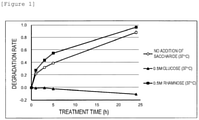
Figure 1] Figure 1 is a graph showing the effect of addition of D-glucose or L-rhamnose in cell wall degradation reaction by an N-acetylmuramidase. - [
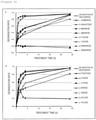
Figure 2] Figure 2 is graphs showing the effect of addition of L-rhamnose in cell wall degradation reaction by an N-acetylmuramidase (A: reaction temperature of 37°C, B: reaction temperature of 50°C) . - [
Figure 3] Figure 3 is graphs showing the effect of addition of L-rhamnose in cell wall degradation reaction by an N-acetylmuramidase (A: Mutanolysin from Streptomyces globisporus ATCC 21553, B: Mutanolysin (recombinant)) . - [
Figure 4] Figure 4 is graphs showing the effect of addition of various saccharides in cell wall degradation reaction by an N-acetylmuramidase. - [
Figure 5] Figure 5 is graphs showing the effect of addition of various saccharides in cell wall degradation reaction by an N-acetylmuramidase (A: effect of D-arabinose on various enzymes, B: effect of various saccharides on mutanolysin alone). - [
Figure 6] Figure 6 is graphs showing the effect of addition of D-arabinose, L-arabinose, or L-rhamnose in cell wall degradation reaction by an N-acetylmuramidase. - [
Figure 7] Figure 7 is a graph showing the difference in effect caused by the difference in reaction temperature at the time of addition of D-arabinose in cell wall degradation reaction by an N-acetylmuramidase. - The method for promoting bacterial cell wall degradation of the present invention comprises allowing an N-acetylmuramidase to act on bacteria in the presence of one or more saccharides selected from the group consisting of: a monosaccharide wherein the monosaccharide is an aldopentose, an L-aldohexose, or a ketohexose; a disaccharide, an oligosaccharide, and a polysaccharide each containing one or more of the monosaccharides as a constituent saccharide; and a derivative thereof. Promotion of cell wall degradation in the present invention means improvement in cell wall degradation rate and/or improvement in initial cell wall degradation speed.
- In the present invention, a bacterium as a target for cell wall degradation is not particularly limited, and examples thereof include Gram-positive bacteria, such as lactic acid bacteria, Bifidobacterium, and Clostridium; and Gram-negative bacteria, such as Escherichia coli and Bacteroides. Among these bacteria, preferred are Gram-positive bacteria having thick peptidoglycan layers, more preferred are lactic acid bacteria and Bifidobacterium, and particularly preferred are lactic acid bacteria. As the lactic acid bacteria, lactic acid bacteria belonging to the genus Lactobacillus, Streptococcus, Lactococcus, Leuconostoc, or Pediococcus are preferable. Specific examples thereof include Lactobacillus casei, Lactobacillus acidophilus, Lactobacillus salivarius, Lactobacillus gasseri, Lactobacillus fermentum, Lactobacillus helveticus, Lactobacillus jugurti, Lactobacillus delbrueckii subsp. bulgaricus, Streptococcus thermophilus, Lactococcus lactis subsp. lactis, Lactococcus lactis subsp. cremoris, Leuconostoc mesenteroides, and Pediococcus pentosaceus, and Lactobacillus casei is particularly preferred. As Lactobacillus casei, Lactobacillus casei YIT 9029 (FERM BP-1366) is preferable.
- The method for preparing the bacteria is not particularly limited and may be performed according to a conventional process. For example, an inoculum of the bacteria is inoculated in a growth medium and is cultured, and after the culture, the bacteria can be prepared by a method for isolating and purifying bacterial cells, such as centrifugation or filtration. Examples of the medium include, but not limited to, a synthetic medium in which individual components are mixed, such as MRS, and a medium using a milk component such as milk or skim milk powder. The thus-prepared bacterial cells may be directly subjected to cell wall degradation reaction. Alternatively, the bacterial cells may be suspended in a buffer solution which shows a buffering capacity around pH 7.0, such as Tris-maleate buffer, Tris-HCl buffer, phosphate buffer, or HEPES buffer, and the suspension may be used for cell wall degradation reaction.
- Although the enzyme to be used for degradation of the bacterial cell wall in the present invention is not particularly limited as long as it is an N-acetylmuramidase, an N-acetylmuramidase derived from Streptomyces globisporus is preferable. Here, the "N-acetylmuramidase derived from Streptomyces globisporus" may be a wild-type N-acetylmuramidase produced by Streptomyces globisporus, or may be an enzyme that is obtained by expressing a gene encoding the N-acetylmuramidase in Escherichia coli or the like or an enzyme that is obtained by modifying the gene by recombinant DNA technology and expressing the modified gene and retains an N-acetylmuramidase activity. Examples of the N-acetylmuramidase include N-acetylmuramidase M1, N-acetylmuramidase M2, and a mixture including at least N-acetylmuramidase M1 and N-acetylmuramidase M2, and a typical example thereof is mutanolysin. Alternatively, a commercial product can also be used as the N-acetylmuramidase, and examples thereof include mutanolysin from Streptomyces globisporus ATCC 21553 (manufactured by Sigma-Aldrich Co.) and mutanolysin (recombinant) (manufactured by A&A Biotechnology). The form of the N-acetylmuramidase is not particularly limited. For example, dried enzyme protein, particles containing enzyme protein, or a liquid containing enzyme protein can be used. In the method for promoting cell wall degradation of the present invention, the N-acetylmuramidases may be used alone or in combination of two or more thereof or may be used in combination with another cell wall degradation enzyme.
- The amount of the N-acetylmuramidase to be used may be appropriately set considering, for example, the amount of the bacteria to be used and the size of the reaction system, and is, for example, preferably from 1 to 1,000 U, more preferably from 10 to 500 U, and even more preferably from 50 to 300 U. Here, 1 U refers to an amount of an enzyme causing ΔA600nm of 0.01 in one minute in a reaction using a suspension of the cell wall of Streptococcus faecalis as a substrate under reaction conditions of pH 6.0, 37°C, and 1 mL.
- The saccharide to be used in the present invention is one or more saccharides selected from the group consisting of: a monosaccharide wherein the monosaccharide is an aldopentose, an L-aldohexose, or a ketohexose; a disaccharide, an oligosaccharide, and a polysaccharide each containing one or more of the monosaccharides as a constituent saccharide; and a derivative thereof. Here, the disaccharide refers to a molecule formed from two monosaccharides bonded through a glycosidic bond; the oligosaccharide refers to a molecule formed from about one to ten monosaccharides bonded through glycosidic bonds; and the polysaccharide refers to a molecule formed from a large number of monosaccharides bonded through glycosidic bonds.
- Examples of the derivative of a saccharide include, but not limited to, a deoxy sugar in which a hydroxy group of a saccharide is substituted with a hydrogen atom, a uronic acid in which a hydroxymethyl group of a saccharide is substituted with a carboxyl group, an amino sugar in which a hydroxy group of a saccharide is substituted with an amino group, and a sugar alcohol in which a carbonyl group of a saccharide is reduced to an alcohol. The saccharide may be a natural product or a synthetic product.
- The aldopentose is a monosaccharide having 5 carbon atoms and having an aldehyde group at the 1-position. The aldopentose may be either the D-form or the L-form, and examples thereof include D-arabinose, L-arabinose, D-lyxose, L-lyxose, D-xylose, L-xylose, D-ribose, and L-ribose. Examples of the derivative of aldopentose include D-deoxyribose, D-arabinitol, xylitol, and ribitol. Examples of the disaccharide, oligosaccharide, and polysaccharide include xylobiose, primeverose, vicianose, xyloglucan, arabinan, arabinoxylan, and rhamnogalacturonan-I. Among them, from the viewpoint of the cell wall degradation-promoting effect, D-arabinose, L-arabinose, D-lyxose, L-lyxose, L-xylose, D-ribose, and L-ribose are preferable.
- The L-aldohexose is a monosaccharide having 6 carbon atoms, having an aldehyde group at the 1-position and being an L-form. Specifically, examples thereof include L-mannose, L-allose, L-altrose, L-glucose, L-gulose, L-idose, L-galactose, and L-talose. Examples of the derivative of L-aldohexose include L-fucose, L-rhamnose, L-talomethylose, colitose, iduronic acid, and L-mannitol. Examples of the disaccharide, oligosaccharide, and polysaccharide include scillabiose, neohesperidose, rutinose, rutinulose, fucoidan, rhamnogalacturonan, and rhamnogalacturonan-II. Among them, from the viewpoint of the cell wall degradation-promoting effect, L-fucose, L-mannose, and L-rhamnose are preferable.
- The ketohexose is a monosaccharide having 6 carbon atoms and having a ketone group at the 2-position. The ketohexose may be either the D-form or the L-form, and examples thereof include D-fructose, L-fructose, D-psicose, L-psicose, D-sorbose, L-sorbose, D-tagatose, and L-tagatose. Among them, from the viewpoint of the cell wall degradation-promoting effect, D-fructose is preferable.
- Among the saccharides, from the viewpoint of the cell wall degradation-promoting effect, preferred are an aldopentose, an L-aldohexose, a ketohexose, and a derivative thereof, and more preferred are an aldopentose, an L-aldohexose, and a derivative thereof. Specifically, preferred are D-arabinose, L-arabinose, D-lyxose, L-lyxose, D-xylose, L-xylose, D-ribose, L-ribose, L-fucose, L-mannose, L-rhamnose, and D-fructose, more preferred are D-arabinose, L-arabinose, D-lyxose, L-lyxose, L-xylose, D-ribose, L-ribose, L-fucose, L-mannose, and L-rhamnose, and even more preferred are D-arabinose, L-arabinose, D-lyxose, L-lyxose, L-xylose, D-ribose, L-ribose, and L-fucose. From the viewpoint of being inexpensive, D-arabinose, L-arabinose, D-lyxose, L-lyxose, L-xylose, and L-fucose are particularly preferable. These saccharides may be used alone or in combination of two or more thereof.
- The amount of the saccharide to be used may be appropriately set considering, for example, the amount of the bacteria to be used and the size of the reaction system, and is, for example, preferably from 0.01 to 3 M, more preferably from 0.05 to 2 M, even more preferably from 0.1 to 1.5 M, and particularly preferably from 0.5 to 1.5 M, from the viewpoint of the cell wall degradation-promoting effect and the solubility of the saccharide.
- The saccharide is useful as an agent for promoting bacterial cell wall degradation. The saccharide may be used as is as an agent for promoting bacterial cell wall degradation or may be used as a material for manufacturing an agent for promoting bacterial cell wall degradation. The agent for promoting bacterial cell wall degradation of the present invention may contain a solvent in addition to the saccharide, and examples of the solvent include an aqueous medium. Examples of the aqueous medium include not only water but also various buffer solutions, such as phosphate buffer, glycine buffer, Good's buffer, Tris buffer, and ammonia buffer, and the agent may contain one or more of these media. The agent for promoting bacterial cell wall degradation of the present invention has good solubility in the solvent and is easy to handle. In addition, the agent for promoting bacterial cell wall degradation of the present invention may contain, for example, a pH buffer and a surfactant, in addition to the saccharide and the solvent.
- In order to implement the method for promoting bacterial cell wall degradation of the present invention, an N-acetylmuramidase may be allowed to act on bacteria in the presence of the saccharide. The order of addition of the saccharide is not particularly limited. For example, a saccharide may be added to a bacterial suspension, and then an N-acetylmuramidase may be added to perform cell wall degradation reaction, or an N-acetylmuramidase may be added to a bacterial suspension, and then a saccharide may be added to perform cell wall degradation reaction.
- The reaction temperature for the cell wall degradation reaction may be any temperature that can maintain the activity of the N-acetylmuramidase and is preferably from 30°C to 60°C, more preferably from 35°C to 55°C, and even more preferably from 37°C to 50°C from the viewpoint of the enzyme activity. The reaction time varies depending on, for example, the type of the bacterium to be used, but is preferably from 10 minutes to 48 hours and more preferably from 30 minutes to 24 hours from the viewpoint of degradation rate. The pH is preferably from 5.5 to 8.0 and more preferably from 6.0 to 7.0.
- The degree of progress in degradation of the cell wall can be evaluated by, for example, measuring the turbidity (OD615) of a bacterial suspension before and after reaction with a spectrophotometer, and calculating the degradation rate by the following equation (1):

- An improvement in the cell wall degradation rate in the present invention means, for example, that the cell wall degradation rate calculated by the equation above is improved compared with that in the absence of the saccharide. An improvement in the initial cell wall degradation speed in the present invention means that the cell wall degradation speed from the start of the action of an N-acetylmuramidase to 5 hours, preferably 2 hours, and more preferably 1 hour after the start is improved compared with that in the absence of the saccharide.
- In order to implement the method for promoting bacterial cell wall degradation of the present invention, it is preferable to use a kit for promoting bacterial cell wall degradation comprising one or more saccharides selected from the group consisting of: a monosaccharide wherein the monosaccharide is an aldopentose, an L-aldohexose, or a ketohexose; a disaccharide, an oligosaccharide, and a polysaccharide each containing one or more of the monosaccharides as a constituent saccharide; and a derivative thereof and comprising an N-acetylmuramidase. The kit may contain, for example, a buffer solution and instructions for procedures of the method as needed.
- According to the method for promoting bacterial cell wall degradation of the present invention, as shown in Examples below, cell wall degradation reaction can be promoted by allowing an N-acetylmuramidase to act on bacteria in the presence of the saccharide. After the completion of the cell wall degradation reaction, as needed, the degradation product can be collected with a high yield from the reaction solution by an appropriate combination of conventional methods such as enzyme treatment, dialysis, and chromatography. The methods are not particularly limited. For example, the reaction solution may be subjected to protease treatment then to nuclease treatment and may be then dialyzed.
- The present invention will now be described in further detail with reference to Examples, but the present invention is not limited thereto.
- Lactobacillus casei YIT 9029 (hereinafter, referred to as YIT 9029) was used.
- Difco Lactobacilli MRS Broth (manufactured by Becton, Dickinson and Company) was prepared by the method indicated by the manufacturer, and 30 mL of the broth was dispensed in a 50-mL polypropylene centrifuge tube (manufactured by Eppendorf North America, Inc.).
- Thirty microliters of the pre-cultured bacterial solution of about 2×10⁹ CFU/mL cultured in the MRS Broth was inoculated in 30 mL of the MRS Broth prepared in the above (2) and then cultured at 37°C for 24 hours.
- A bacterial solution containing 2 to 3×10⁹ CFU/mL of YIT 9029 was centrifugated (5,000×g, 15 minutes), and the precipitate was washed with sterilized water of the same volume as that of the original bacterial solution three times. The bacteria were suspended in a 5 mM Tris-maleate buffer solution (manufactured by Sigma-Aldrich Co.) (pH 6.4) of the same volume as that of the original bacterial solution, and 100 µg of lysozyme from chicken egg white lyophilized powder (manufactured by Sigma-Aldrich Co., hereinafter, referred to as lysozyme), which is egg white lysozyme, and 100 U of mutanolysin (recombinant) (manufactured by A&A Biotechnology) were added per 1 mL of the suspension. The reaction solution was treated at 37°C for 24 hours. In addition, in order to examine the influence of the addition of a saccharide on cell wall degradation reaction, the same reaction was performed using a Tris-maleate buffer solution containing D-glucose or L-rhamnose at a final concentration of 0.5 M instead of the Tris-maleate buffer solution. Each reaction was performed in triplicate.
- The turbidity (OD615) of the bacterial suspension at 615 nm (maximal absorption wavelength; measurement wavelength range: 575-660 nm) was measured over time using a spectrophotometer PiCOSCOPE PAS-110 (manufactured by Ushio Inc.), and the degradation rate was calculated by the following equation (1). The degradation rate was shown by the mean ± standard deviation of triplicate.

- As shown in
Figure 1 , a decrease in cell wall degradation rate was observed when D-glucose was added, compared with the reaction in which no saccharide was added. In contrast, an increase in cell wall degradation rate was observed when L-rhamnose was added. - The same reaction as in Example 1 was performed except that L-rhamnose was added at a final concentration of 0 (no addition of saccharide), 0.5, 1.0, or 1.5 M and the reaction temperature was set to 37°C or 50°C, and the effect of L-rhamnose on the cell wall degradation reaction was examined. Each reaction was performed in triplicate.
- As a result, as shown in
Figure 2 , the degradation rate was increased with increasing concentrations of L-rhamnose regardless of the reaction temperature. When the reaction temperature was 37°C, the degradation rate after 5 hours of the reaction was 0.36 when no L-rhamnose was added and was 0.83 when 1.5 M of L-rhamnose was added. When the reaction temperature was 50°C, the degradation rate after 1 hour of the reaction was 0.33 when no L-rhamnose was added and was 0.69 when 1.5 M of L-rhamnose was added. When 1.5 M of L-rhamnose was added, the degradation rate after 24 hours of the reaction was 0.97 when the reaction temperature was 37°C and was 0.87 when the reaction temperature was 50°C. - The same reaction as in Example 1 was performed except that L-rhamnose was added at a final concentration of 1.5 M, 100 U of mutanolysin from Streptomyces globisporus ATCC 21553 (manufactured by Sigma-Aldrich Co.) or 100 U of mutanolysin (recombinant) (manufactured by A&A Biotechnology) was used as the N-acetylmuramidase, and the reaction temperature was set to 37°C or 50°C, and the effect of L-rhamnose on the cell wall degradation reaction was examined. Each reaction was performed without replicates.
- As a result, as shown in
Figure 3 , regardless of the reaction temperature and the type of N-acetylmuramidase derived from Streptomyces globisporus, an increase in cell wall degradation rate was observed when L-rhamnose was added, compared with the reaction in which no saccharide was added. Accordingly, it was suggested that L-rhamnose promotes cell wall degradation regardless of the type of N-acetylmuramidase derived from Streptomyces globisporus. - The same reaction as in Example 1 was performed except that D-arabinose, L-arabinose, D-lyxose, L-lyxose, D-xylose, L-xylose, D-ribose, L-ribose, D-fucose, L-fucose, D-mannose, L-mannose, D-galactose, or D-fructose was added as the saccharide, and the cell wall degradation-promoting effect of each saccharide was examined. Each reaction was performed in triplicate.
- As a result, as shown in
Figure 4 , D-arabinose, L-arabinose, D-lyxose, L-lyxose, L-xylose, D-ribose, L-ribose, L-fucose, and L-mannose showed the cell wall degradation-promoting effect. In addition, D-xylose and D-fructose showed the cell wall degradation-promoting effect after 1 hour of the reaction. In particular, when L-fucose was added, the degradation rate after 1 hour of the reaction was about 3 times higher than that of the reaction in which no saccharide was added, and when D-arabinose or L-arabinose was added, the degradation rate after 1 hour of the reaction was about 4 times higher than that of the reaction in which no saccharide was added. - It was expected from Examples 1 to 4 that a saccharide such as D-arabinose increases the activity of mutanolysin to promote the degradation of cell wall. However, since a possibility that the saccharide increases the activity of lysozyme that has been added together cannot be excluded, the degradation rate when YIT 9029 was treated with mutanolysin or lysozyme alone was examined using some saccharides. Specifically, the same reaction as in Example 1 was performed except that D-arabinose was added as the saccharide at a final concentration of 1.5 M and mutanolysin (recombinant) (manufactured by A&A Biotechnology) alone, lysozyme alone, or a combination of mutanolysin (recombinant) and lysozyme was used. Each reaction was performed without replicates. In addition, the same reaction as in Example 1 was performed except that L-rhamnose, L-mannose, L-fucose, or L-arabinose was added as the saccharide at a final concentration of 0.5, 1.0, or 1.5 M and mutanolysin (recombinant) (manufactured by A&A Biotechnology) was used alone. Each reaction was performed in triplicate.
- As a result, as shown in
Figure 5A , D-arabinose did not show significant promotion of degradation when lysozyme was used alone, and promoted the degradation when mutanolysin was used alone and when mutanolysin and lysozyme were used in combination. In addition, as shown inFigure 5B , L-rhamnose, L-mannose, L-fucose, and L-arabinose, which showed degradation-promoting effect in Example 4, also showed the degradation-promoting effect when mutanolysin was used alone. Accordingly, it was suggested that each of the saccharides increased the activity of mutanolysin. - With regard to D-arabinose and L-arabinose which showed a high rate of increase in the mutanolysin activity in Example 4, a difference in the promotion effect between the D-form and the L-form and optimum conditions when arabinose was added were examined. Specifically, the same reaction as in Example 1 was performed except that D-arabinose or L-arabinose was added at a final concentration of 0, 0.1, 0.5, 1.0, or 1.5 M and the reaction temperature was set to 37°C or 50°C. Each reaction was performed in triplicate.
- As a result, as shown in
Figure 6 , there was no difference between the promotion effects of the D-form and the L-form within a concentration range from 0.1 M to 1.5 M. In addition, the degradation rate after 1 hour of the reaction exceeded 80% in both the case where the concentration was 1.0 M and the case where the concentration was 1.5 M and the degradation rate in the case where the concentration was 1.5 M was slightly higher than that in the case where the concentration was 1.0 M at each time, and concentration dependence was observed within a concentration range of 0.1 M and 1.0 M. Accordingly, it was inferred that 1.5 M, which is near the upper limit of the solubility in water at room temperature, is the optimum concentration. Furthermore, as shown inFigure 7 , in the reaction for a short time, the degradation rate at 50°C was higher than that at 37°C, and when 1.5 M of D-arabinose was added, the degradation rate reached 93% after 1 hour.
Claims (12)
- A method for promoting cell wall degradation, comprising allowing an N-acetylmuramidase to act on a bacterium in the presence of one or more saccharides selected from the group consisting of:a monosaccharide wherein the monosaccharide is an aldopentose, an L-aldohexose, or a ketohexose;a disaccharide, an oligosaccharide, and a polysaccharide each containing one or more of the monosaccharides as a constituent saccharide; anda derivative thereof.
- The method for promoting cell wall degradation according to Claim 1, wherein the saccharide is one or more selected from the group consisting of D-arabinose, L-arabinose, D-lyxose, L-lyxose, D-xylose, L-xylose, D-ribose, L-ribose, L-fucose, L-mannose, L-rhamnose, and D-fructose.
- The method for promoting cell wall degradation according to Claim 1 or 2, wherein the N-acetylmuramidase is derived from Streptomyces globisporus.
- The method for promoting cell wall degradation according to any one of Claims 1 to 3, wherein the N-acetylmuramidase is mutanolysin.
- The method for promoting cell wall degradation according to any one of Claims 1 to 4, wherein the bacterium is a Gram-positive bacterium.
- The method for promoting cell wall degradation according to any one of Claims 1 to 5, wherein the bacterium is a bacterium belonging to the genus Lactobacillus.
- An agent for promoting bacterial cell wall degradation, comprising, as an active ingredient, one or more saccharides selected from the group consisting of:a monosaccharide wherein the monosaccharide is an aldopentose, an L-aldohexose, or a ketohexose;a disaccharide, an oligosaccharide, and a polysaccharide each containing one or more of the monosaccharides as a constituent saccharide; anda derivative thereof.
- The agent for promoting cell wall degradation according to Claim 7, wherein the saccharide is one or more selected from the group consisting of D-arabinose, L-arabinose, D-lyxose, L-lyxose, D-xylose, L-xylose, D-ribose, L-ribose, L-fucose, L-mannose, L-rhamnose, and D-fructose.
- A kit for promoting bacterial cell wall degradation, comprising one or more saccharides selected from the group consisting of:a monosaccharide wherein the monosaccharide is an aldopentose, an L-aldohexose, or a ketohexose;a disaccharide, an oligosaccharide, and a polysaccharide each containing one or more of the monosaccharides as a constituent saccharide; anda derivative thereof, andan N-acetylmuramidase.
- The kit for promoting cell wall degradation according to Claim 9, wherein the saccharide is one or more selected from the group consisting of D-arabinose, L-arabinose, D-lyxose, L-lyxose, D-xylose, L-xylose, D-ribose, L-ribose, L-fucose, L-mannose, L-rhamnose, and D-fructose.
- Use of one or more saccharides selected from the group consisting of:a monosaccharide wherein the monosaccharide is an aldopentose, an L-aldohexose, or a ketohexose;a disaccharide, an oligosaccharide, and a polysaccharide each containing one or more of the monosaccharides as a constituent saccharide; anda derivative thereof,for manufacturing an agent for promoting cell wall degradation.
- The use according to Claim 11, wherein the saccharide is one or more selected from the group consisting of D-arabinose, L-arabinose, D-lyxose, L-lyxose, D-xylose, L-xylose, D-ribose, L-ribose, L-fucose, L-mannose, L-rhamnose, and D-fructose.
Applications Claiming Priority (2)
| Application Number | Priority Date | Filing Date | Title |
|---|---|---|---|
| JP2019056337 | 2019-03-25 | ||
| PCT/JP2020/012638 WO2020196374A1 (en) | 2019-03-25 | 2020-03-23 | Method for promoting bacterial cell wall degradation |
Publications (2)
| Publication Number | Publication Date |
|---|---|
| EP3950926A1 true EP3950926A1 (en) | 2022-02-09 |
| EP3950926A4 EP3950926A4 (en) | 2022-12-28 |
Family
ID=72610981
Family Applications (1)
| Application Number | Title | Priority Date | Filing Date |
|---|---|---|---|
| EP20779474.4A Pending EP3950926A4 (en) | 2019-03-25 | 2020-03-23 | METHOD FOR PROMOTING BACTERIAL CELL WALL DEGRADATION |
Country Status (6)
| Country | Link |
|---|---|
| US (1) | US20220248687A1 (en) |
| EP (1) | EP3950926A4 (en) |
| JP (1) | JP7472104B2 (en) |
| CN (1) | CN113614220B (en) |
| TW (1) | TWI914302B (en) |
| WO (1) | WO2020196374A1 (en) |
Families Citing this family (1)
| Publication number | Priority date | Publication date | Assignee | Title |
|---|---|---|---|---|
| WO2025197945A1 (en) * | 2024-03-21 | 2025-09-25 | 株式会社ヤクルト本社 | Intestinal barrier protective agent and prophylactic agent against intestinal barrier disruption-related disease |
Family Cites Families (6)
| Publication number | Priority date | Publication date | Assignee | Title |
|---|---|---|---|---|
| JPS5988086A (en) * | 1982-11-12 | 1984-05-21 | Yakult Honsha Co Ltd | Production of protoplast of bacterium of lactobacillus |
| JPS6030678A (en) * | 1983-07-30 | 1985-02-16 | Yakult Honsha Co Ltd | Preparation of protoplast of bacteria belonging to lactobacillus genus |
| JPS62208275A (en) * | 1986-03-08 | 1987-09-12 | Norin Suisan Gijutsu Joho Kyokai | Preparation of protoplast of bacteria of genus lactobacillus |
| JPH0811065B2 (en) * | 1987-09-09 | 1996-02-07 | 雪印乳業株式会社 | Method for producing lactic acid bacterium cell wall lytic enzyme |
| ATE114710T1 (en) * | 1989-04-24 | 1994-12-15 | Novo Nordisk As | BACILLUS PABULI ENZYMES FOR CELL WALL BREAKDOWN. |
| CA2544574C (en) * | 2003-10-01 | 2013-07-23 | Daiichi Fine Chemical Co., Ltd. | Stable vitamin b6 derivative |
-
2020
- 2020-03-23 JP JP2021509371A patent/JP7472104B2/en active Active
- 2020-03-23 CN CN202080024025.9A patent/CN113614220B/en active Active
- 2020-03-23 US US17/438,101 patent/US20220248687A1/en active Pending
- 2020-03-23 TW TW109109638A patent/TWI914302B/en active
- 2020-03-23 EP EP20779474.4A patent/EP3950926A4/en active Pending
- 2020-03-23 WO PCT/JP2020/012638 patent/WO2020196374A1/en not_active Ceased
Also Published As
| Publication number | Publication date |
|---|---|
| CN113614220B (en) | 2025-02-18 |
| TWI914302B (en) | 2026-02-11 |
| TW202102660A (en) | 2021-01-16 |
| US20220248687A1 (en) | 2022-08-11 |
| JPWO2020196374A1 (en) | 2020-10-01 |
| EP3950926A4 (en) | 2022-12-28 |
| WO2020196374A1 (en) | 2020-10-01 |
| JP7472104B2 (en) | 2024-04-22 |
| CN113614220A (en) | 2021-11-05 |
Similar Documents
| Publication | Publication Date | Title |
|---|---|---|
| Jørgensen et al. | Enzymatic conversion of D-galactose to D-tagatose: heterologous expression and characterisation of a thermostable L-arabinose isomerase from Thermoanaerobacter mathranii | |
| Nakajima et al. | Structure of the extracellular polysaccharide from slime-forming Lactococcus lactis subsp. cremoris SBT 0495 | |
| US12012622B1 (en) | Paenibacillus pabuli-derived enzyme capable of producing galacto-oligosaccharide, and method for producing galacto-oligosaccharide | |
| EP2918677B1 (en) | Method for producing d-allose | |
| Pham et al. | Immobilization of β-galactosidases from Lactobacillus on chitin using a chitin-binding domain | |
| JP5677097B2 (en) | Cellobiose 2-epimerase, production method and use thereof | |
| US20220248687A1 (en) | Method for promoting bacterial cell wall degradation | |
| Igarashi et al. | Characterization of the dextranase purified from Streptococcus mutans Ingbritt | |
| CA2628671A1 (en) | Process for the production of oligosaccharides | |
| Tenovuo et al. | Antibacterial effect of salivary peroxidases on a cariogenic strain of Streptococcus mutans | |
| Herzberg et al. | Cell-free released components of Streptococcus sanguis inhibit human platelet aggregation | |
| US5071763A (en) | Lactose hydrolysis by mutant streptococcus thermophilus | |
| EP2211643B1 (en) | L-arabinose isomerase for converting d-galactose into d-tagatose in a dairy product which contains d-galactose | |
| AU2018295686B2 (en) | Method for producing galactooligosaccharide | |
| US5198351A (en) | Lactose hydrolysis by mutant Streptococcus thermophilus | |
| KR20140012932A (en) | Method for preparing galactooligosaccharide using lactobacillus extract and whey | |
| JP3886061B2 (en) | Novel β-galactosidase | |
| WO2010097416A1 (en) | Fructanase | |
| Wilkinson et al. | A novel glycosulphatase isolated from a mucus glycopeptide-degrading Bacteroides species | |
| EP4257687A1 (en) | Novel l-rhamnose isomerase | |
| Tanaka et al. | Efficient protoplast regeneration for some homofermentative lactobacilli and pediococci | |
| TW202511494A (en) | Production method for cellobiose | |
| KR20130083174A (en) | Methods for preparing galactooligosaccharide using lactobacillus extract and whey | |
| Bechtner | Molecular mechanisms of water kefir lactobacilli to persist in and shape their environment | |
| Vasiljevic | Lactose hydrolysis by disrupted thermophilic lactic acid bacteria |
Legal Events
| Date | Code | Title | Description |
|---|---|---|---|
| STAA | Information on the status of an ep patent application or granted ep patent |
Free format text: STATUS: THE INTERNATIONAL PUBLICATION HAS BEEN MADE |
|
| PUAI | Public reference made under article 153(3) epc to a published international application that has entered the european phase |
Free format text: ORIGINAL CODE: 0009012 |
|
| STAA | Information on the status of an ep patent application or granted ep patent |
Free format text: STATUS: REQUEST FOR EXAMINATION WAS MADE |
|
| 17P | Request for examination filed |
Effective date: 20210826 |
|
| AK | Designated contracting states |
Kind code of ref document: A1 Designated state(s): AL AT BE BG CH CY CZ DE DK EE ES FI FR GB GR HR HU IE IS IT LI LT LU LV MC MK MT NL NO PL PT RO RS SE SI SK SM TR |
|
| DAV | Request for validation of the european patent (deleted) | ||
| DAX | Request for extension of the european patent (deleted) | ||
| A4 | Supplementary search report drawn up and despatched |
Effective date: 20221124 |
|
| RIC1 | Information provided on ipc code assigned before grant |
Ipc: C12N 9/36 20060101ALI20221118BHEP Ipc: C12N 1/20 20060101ALI20221118BHEP Ipc: C12N 1/06 20060101AFI20221118BHEP |