EP3949665B1 - Vorrichtung und verfahren zur drahtlosen kommunikation - Google Patents
Vorrichtung und verfahren zur drahtlosen kommunikation Download PDFInfo
- Publication number
- EP3949665B1 EP3949665B1 EP20890450.8A EP20890450A EP3949665B1 EP 3949665 B1 EP3949665 B1 EP 3949665B1 EP 20890450 A EP20890450 A EP 20890450A EP 3949665 B1 EP3949665 B1 EP 3949665B1
- Authority
- EP
- European Patent Office
- Prior art keywords
- data
- resource
- mac
- delivered
- prioritization
- Prior art date
- Legal status (The legal status is an assumption and is not a legal conclusion. Google has not performed a legal analysis and makes no representation as to the accuracy of the status listed.)
- Active
Links
Images
Classifications
-
- H—ELECTRICITY
- H04—ELECTRIC COMMUNICATION TECHNIQUE
- H04W—WIRELESS COMMUNICATION NETWORKS
- H04W72/00—Local resource management
- H04W72/12—Wireless traffic scheduling
-
- H—ELECTRICITY
- H04—ELECTRIC COMMUNICATION TECHNIQUE
- H04B—TRANSMISSION
- H04B7/00—Radio transmission systems, i.e. using radiation field
- H04B7/02—Diversity systems; Multi-antenna system, i.e. transmission or reception using multiple antennas
- H04B7/04—Diversity systems; Multi-antenna system, i.e. transmission or reception using multiple antennas using two or more spaced independent antennas
- H04B7/06—Diversity systems; Multi-antenna system, i.e. transmission or reception using multiple antennas using two or more spaced independent antennas at the transmitting station
- H04B7/0686—Hybrid systems, i.e. switching and simultaneous transmission
- H04B7/0695—Hybrid systems, i.e. switching and simultaneous transmission using beam selection
- H04B7/06952—Selecting one or more beams from a plurality of beams, e.g. beam training, management or sweeping
- H04B7/06964—Re-selection of one or more beams after beam failure
-
- H—ELECTRICITY
- H04—ELECTRIC COMMUNICATION TECHNIQUE
- H04L—TRANSMISSION OF DIGITAL INFORMATION, e.g. TELEGRAPHIC COMMUNICATION
- H04L47/00—Traffic control in data switching networks
- H04L47/50—Queue scheduling
- H04L47/62—Queue scheduling characterised by scheduling criteria
- H04L47/625—Queue scheduling characterised by scheduling criteria for service slots or service orders
- H04L47/6275—Queue scheduling characterised by scheduling criteria for service slots or service orders based on priority
-
- H—ELECTRICITY
- H04—ELECTRIC COMMUNICATION TECHNIQUE
- H04L—TRANSMISSION OF DIGITAL INFORMATION, e.g. TELEGRAPHIC COMMUNICATION
- H04L5/00—Arrangements affording multiple use of the transmission path
- H04L5/0001—Arrangements for dividing the transmission path
- H04L5/0003—Two-dimensional division
- H04L5/0005—Time-frequency
- H04L5/0007—Time-frequency the frequencies being orthogonal, e.g. OFDM(A) or DMT
- H04L5/001—Time-frequency the frequencies being orthogonal, e.g. OFDM(A) or DMT the frequencies being arranged in component carriers
-
- H—ELECTRICITY
- H04—ELECTRIC COMMUNICATION TECHNIQUE
- H04L—TRANSMISSION OF DIGITAL INFORMATION, e.g. TELEGRAPHIC COMMUNICATION
- H04L5/00—Arrangements affording multiple use of the transmission path
- H04L5/0001—Arrangements for dividing the transmission path
- H04L5/0014—Three-dimensional division
- H04L5/0023—Time-frequency-space
-
- H—ELECTRICITY
- H04—ELECTRIC COMMUNICATION TECHNIQUE
- H04L—TRANSMISSION OF DIGITAL INFORMATION, e.g. TELEGRAPHIC COMMUNICATION
- H04L5/00—Arrangements affording multiple use of the transmission path
- H04L5/003—Arrangements for allocating sub-channels of the transmission path
- H04L5/0044—Allocation of payload; Allocation of data channels, e.g. PDSCH or PUSCH
-
- H—ELECTRICITY
- H04—ELECTRIC COMMUNICATION TECHNIQUE
- H04W—WIRELESS COMMUNICATION NETWORKS
- H04W72/00—Local resource management
- H04W72/12—Wireless traffic scheduling
- H04W72/1263—Mapping of traffic onto schedule, e.g. scheduled allocation or multiplexing of flows
-
- H—ELECTRICITY
- H04—ELECTRIC COMMUNICATION TECHNIQUE
- H04W—WIRELESS COMMUNICATION NETWORKS
- H04W72/00—Local resource management
- H04W72/12—Wireless traffic scheduling
- H04W72/1263—Mapping of traffic onto schedule, e.g. scheduled allocation or multiplexing of flows
- H04W72/1268—Mapping of traffic onto schedule, e.g. scheduled allocation or multiplexing of flows of uplink data flows
-
- H—ELECTRICITY
- H04—ELECTRIC COMMUNICATION TECHNIQUE
- H04W—WIRELESS COMMUNICATION NETWORKS
- H04W72/00—Local resource management
- H04W72/50—Allocation or scheduling criteria for wireless resources
- H04W72/56—Allocation or scheduling criteria for wireless resources based on priority criteria
-
- H—ELECTRICITY
- H04—ELECTRIC COMMUNICATION TECHNIQUE
- H04W—WIRELESS COMMUNICATION NETWORKS
- H04W72/00—Local resource management
- H04W72/50—Allocation or scheduling criteria for wireless resources
- H04W72/56—Allocation or scheduling criteria for wireless resources based on priority criteria
- H04W72/566—Allocation or scheduling criteria for wireless resources based on priority criteria of the information or information source or recipient
- H04W72/569—Allocation or scheduling criteria for wireless resources based on priority criteria of the information or information source or recipient of the traffic information
-
- H—ELECTRICITY
- H04—ELECTRIC COMMUNICATION TECHNIQUE
- H04W—WIRELESS COMMUNICATION NETWORKS
- H04W76/00—Connection management
- H04W76/10—Connection setup
- H04W76/19—Connection re-establishment
-
- H—ELECTRICITY
- H04—ELECTRIC COMMUNICATION TECHNIQUE
- H04W—WIRELESS COMMUNICATION NETWORKS
- H04W72/00—Local resource management
- H04W72/20—Control channels or signalling for resource management
- H04W72/21—Control channels or signalling for resource management in the uplink direction of a wireless link, i.e. towards the network
Definitions
- the present disclosure relates to the field of communication systems, and more particularly, to an apparatus and a method of wireless communication, which can provide a good communication performance and/or high reliability.
- Wireless communication systems are widely deployed to provide various types of communication content such as voice, video, packet data, messaging, broadcast, and so on. These wireless communication systems may be capable of supporting communication with multiple users by sharing available system resources (e.g., time, frequency, and power). Examples of such multiple-access systems include fourth generation (4G) systems such as long term evolution (LTE) systems and fifth generation (5G) systems which may be referred to as new radio (NR) systems.
- 4G fourth generation
- LTE long term evolution
- 5G fifth generation
- NR new radio
- a wireless multiple-access communications system may include a number of base stations or network access nodes, each simultaneously supporting communication for multiple communication devices, which may be otherwise known as user equipments (UEs).
- UEs user equipments
- a wireless communication network may include a base station that can support communication for a UE.
- the UE may communicate with the base station via downlink and uplink.
- the downlink refers to a communication link from the base station to the UE
- the uplink refers to a communication link from the UE to the base station.
- 3GPP TSG-RAN WG2 Meeting #108, R2-1915331 is a related prior art for this field.
- R2-1915331 discloses an option 2 in which secondary cell (SCell) beam failure recovery (BFR) medium access control (MAC) control element (CE) should have higher priority at least than "single entry physical (PHR) MAC CE or multiple entry PHR MAC CE" and "MAC CE for buffer status report (BSR), with exception of BSR included for padding".
- SCell BFR MAC CE has higher priority at least than "data from any logical channel, except data from uplink common control channel (UL-CCCH)", higher priority is further for study (FFS). Therefore, there is an open issue on how the UE preforms prioritization for a scheduling request (SR) overlapping an uplink shared channel (UL-SCH) resource. Further, it is unclear which layer of the UE has responsibility on the prioritization.
- an apparatus such as a user equipment (UE) and/or a base station
- a method of wireless communication which can solve issues in the prior art, provide prioritization involving scheduling request (SR), provide a good communication performance, and/or provide high reliability.
- SR scheduling request
- EP3567776A1 describes BFR procedures, which comprises a wireless device receiving one or more configuration parameters that indicate one or more physical uplink control channel (PUCCH) resources for transmission of a first signal for a beam failure recovery procedure; based on a detected beam failure, determining to transmit the first signal; determining that a first PUCCH resource, of the one or more PUCCH resources for transmission of the first signal, overlaps with a scheduled transmission of one or more transport blocks via a physical uplink shared channel (PUSCH); and based on the determining that the first PUCCH resource overlaps with the scheduled transmission of the one or more transport blocks via the PUSCH: dropping the scheduled transmission of the one or more transport blocks via the PUSCH; and transmitting the first signal via the first PUCCH resource.
- PUCCH physical uplink control channel
- WO2019/033072A1 provides systems, apparatuses, and methods are described for communications associated with beam failure recovery.
- the method comprises: a wireless device from a base station receiving one or more radio resource control messages comprising configuration parameters of a cell.
- the configuration parameters comprise: a first preamble received target power value of the cell for a first random access procedure of a beam failure recovery procedure; and a second preamble received target power value of the cell for a second random access procedure; based on detecting a beam failure of the cell, using a first transmission power that is based on the first preamble received target power value of the cell, transmitting a first preamble for the first random access procedure of the cell; and using a second transmission power that is based on the second preamble received target power value of the cell, transmitting a second preamble for the second random access procedure of the cell.
- US2019/306875A1 provides a beam failure recovery procedure, which comprises: a wireless device transmitting a first scheduling request (SR) based on a buffer status reporting procedure; in response to initiating a beam failure recovery, triggering a second SR; transmitting the second SR via an uplink control channel resource configured for the second SR; receiving a first downlink control information as a response to the second SR via a downlink control channel; and based on receiving the first downlink control information: keeping the first SR pending; and cancelling the second SR for the beam failure recovery.
- SR scheduling request
- An object of the present disclosure is to propose an apparatus (such as a user equipment (UE) and/or a base station) and a method of wireless communication, which can solve issues in the prior art, provide prioritization involving scheduling request (SR), provide a good communication performance, and/or provide high reliability.
- UE user equipment
- SR scheduling request
- Intra-user equipment (UE) prioritization and multiplexing are Intra-user equipment (UE) prioritization and multiplexing:
- DG dynamic grant
- CG configured grant
- PUSCH physical uplink shared channel
- LCH logical channel
- a priority value of an uplink grant is the highest priority of the LCHs that is multiplexed or can be multiplexed in MAC protocol data unit (PDU), taking into account LCH restrictions and data availability.
- SR transmission is allowed (prioritized) based on a comparison of priority of the LCH that triggered the SR and a priority value for the UL-SCH resource (where the priority value is determined as in current agreement), if the priority of the LCH that triggered the SR is higher.
- PUCCH physical uplink control channel
- prioritization is up to UE implementation.
- UL-SCH i.e. data
- SR can be triggered by other MAC CE, such as a BFR MAC CE.
- BFR MAC CE is triggered due to beam failure. This is not related to LCH, but related to downlink (DL) channel quality issue. And the SR triggered by the BFR MAC CE can also collide with PUSCH. Thus, it is clear this case cannot be handled by a current radio layer 2 (RAN2) agreement, and there is a need for further discussion.
- RAN2 radio layer 2
- BFI_COUNTER Upon reconfiguration of beamFailureDetectionTimer, beamFailureInstanceMaxCount, or any of the reference signals used for beam failure detection by upper layers, BFI_COUNTER is set to 0 for the given Serving Cell.
- SCell BFR SR resource is not configured and SCell BFR MAC CE transmission triggers SCell BFR SR, random access procedure on SpCell is triggered to request UL resources to transmit the SCell BFR MAC CE (similarly to Rel-15 behavior on SR).
- the UE When SCell BFR SR is triggered and the UE has an overlapping SR PUCCH resource with the SCell BFR SR PUCCH resource, the UE shall select the SCell BFR SR PUCCH resource for transmission.
- Pending SR for SCell beam failure recovery triggered prior to the MAC PDU assembly shall be cancelled when the MAC PDU is transmitted and this PDU includes a SCell BFR MAC CE.
- SCell BFR MAC CE can carry information of multiple failed SCells, i.e., multiple entry format for SCell BFR MAC CE is defined.
- the SCell BFR MAC CE For each SCell, the SCell BFR MAC CE indicates the following information: information about the failed SCell index; indication if a new candidate beam RS is detected or not; and/or new candidate beam RS index (if available).
- SCell BFR MAC CE has higher priority at least than "data from any logical channel, except data from uplink common control channel (UL-CCCH)" and LBT MAC CE, higher priority is further for study (FFS).
- the MAC entity shall for each pending SR:
- some embodiments of the present disclosure propose an apparatus (such as a user equipment (UE) and/or a base station) and a method of wireless communication, which can solve issues in the prior art, provide prioritization involving scheduling request (SR), provide a good communication performance, and/or provide high reliability.
- UE user equipment
- SR scheduling request
- UL-SCH uplink shared channel
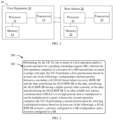
- FIG. 1 illustrates that, in some embodiments, one or more user equipments (UEs) 10 and a base station (e.g., gNB or eNB) 20 for wireless communication in a communication network system 30 according to an embodiment of the present disclosure are provided.
- the communication network system 30 includes the one or more UEs 10 and the base station 20.
- the one or more UEs 10 may include a memory 12, a transceiver 13, and a processor 11 coupled to the memory 12 and the transceiver 13.
- the base station 20 may include a memory 22, a transceiver 23, and a processor 21 coupled to the memory 22 and the transceiver 23.
- the processor 11 or 21 may be configured to implement proposed functions, procedures and/or methods described in this description.
- Layers of radio interface protocol may be implemented in the processor 11 or 21.
- the memory 12 or 22 is operatively coupled with the processor 11 or 21 and stores a variety of information to operate the processor 11 or 21.
- the transceiver 13 or 23 is operatively coupled with the processor 11 or 21, and the transceiver 13 or 23 transmits and/or receives a radio signal.
- the processor 11 or 21 may include application-specific integrated circuit (ASIC), other chipset, logic circuit and/or data processing device.
- the memory 12 or 22 may include read-only memory (ROM), random access memory (RAM), flash memory, memory card, storage medium and/or other storage device.
- the transceiver 13 or 23 may include baseband circuitry to process radio frequency signals.
- modules e.g., procedures, functions, and so on
- the modules can be stored in the memory 12 or 22 and executed by the processor 11 or 21.
- the memory 12 or 22 can be implemented within the processor 11 or 21 or external to the processor 11 or 21 in which case those can be communicatively coupled to the processor 11 or 21 via various means as is known in the art.
- the processor 11 is configured to perform one or more of a first operation and a second operation for a pending scheduling request (SR); wherein the first operation comprises if a resource for a SR transmission occasion overlaps with data, the processor 11 performs a first prioritization based on at least one of the followings: configured/pre-defined priority between a secondary cell (SCell) beam failure recovery (BFR) SR and the data; prioritizing the SCell BFR SR or the data; prioritizing the SCell BFR SR having a higher priority than a priority of the data; and prioritizing the SCell BFR SR if no ultra-reliable low latency communication (URLLC) or no high priority data is multiplexed or can be multiplexed in a grant; wherein the second operation comprises the processor 11 performing a second prioritization by selecting a prioritized resource based on at least one of the followings: a SCell BFR SR resource; a priority configured to a SR configuration; and a resource configured to
- the processor 21 is configured to determine, from the user equipment (UE) 10, a pending scheduling request (SR), wherein the pending SR is associated with one or more of a first operation and a second operation; wherein the first operation comprises if a resource for a SR transmission occasion overlaps with data, a first prioritization performed by the UE 10 is based on at least one of the followings: configured/pre-defined priority between a secondary cell (SCell) beam failure recovery (BFR) SR and the data; prioritizing the SCell BFR SR or the data; prioritizing the SCell BFR SR having a higher priority than a priority of the data; and prioritizing the SCell BFR SR if no ultra-reliable low latency communication (URLLC) or no high priority data is multiplexed or can be multiplexed in a grant; wherein the second operation comprises the UE 10 performing a second prioritization by selecting a prioritized resource based on at least one of the followings: a SCell BFR
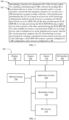
- FIG. 2 illustrates a method 200 of wireless communication by the user equipment (UE) 10 according to an embodiment of the present disclosure.
- the method 200 includes: a block 202, performing, by the UE 10, one or more of a first operation and a second operation for a pending scheduling request (SR), wherein the first operation comprises if a resource for a SR transmission occasion overlaps with data, the UE 10 performs a first prioritization based on at least one of the followings: configured/pre-defined priority between a secondary cell (SCell) beam failure recovery (BFR) SR and the data, prioritizing the SCell BFR SR or the data, prioritizing the SCell BFR SR having a higher priority than a priority of the data, and prioritizing the SCell BFR SR if no ultra-reliable low latency communication (URLLC) or no high priority data is multiplexed or can be multiplexed in a grant, wherein the second operation comprises the UE 10 performing a second prioritization by selecting a
- FIG. 3 illustrates a method 300 of wireless communication by the base station 20 according to an embodiment of the present disclosure.
- the method 300 includes: a block 302, determining, from the user equipment (UE) 10 by the base station 20, a pending scheduling request (SR), wherein the pending SR is associated with one or more of a first operation and a second operation; wherein the first operation comprises if a resource for a SR transmission occasion overlaps with data, a first prioritization performed by the UE 10 is based on at least one of the followings: configured/predefined priority between a secondary cell (SCell) beam failure recovery (BFR) SR and the data; prioritizing the SCell BFR SR or the data; prioritizing the SCell BFR SR having a higher priority than a priority of the data; and prioritizing the SCell BFR SR if no ultra-reliable low latency communication (URLLC) or no high priority data is multiplexed or can be multiplexed in a grant; wherein the second operation comprises
- one or more of a first operation and/or a second operation may comprise one or more of the first operation and the second operation; or one or more of the first operation or the second operation.
- One or more of the first operation and the second operation may comprise the first operation, the second operation, or the first operation and the second operation, etc.
- One or more of the first operation or the second operation may comprise the first operation, the second operation, multiples of the first operation, or multiples of the second operation, etc.
- the data comprises an uplink shared channel (UL-SCH) resource.
- the first prioritization can be performed in one or more of a medium access control (MAC) layer and a physical (PHY) layer of the UE 10.
- MAC medium access control
- PHY physical
- both the SR and the data are delivered to the PHY layer.
- a latter one resource of the SR and the data is not delivered to the PHY layer.
- the first prioritization performed in the MAC layer is performed before both the SR and the data are delivered to the PHY layer, only one resource of the SR and the data is delivered.
- a latter one resource of the SR and the data is delivered to the PHY layer if the later one resource of the SCell BFR SR and the data has a higher priority or is prioritized.
- the UE 10 is configured with a prioritization parameter and the SR has a higher priority than the data or the SR is prioritized; the UE 10 is configured with the prioritization parameter and it is the SCell BFR SR; the UE 10 is configured with the prioritization parameter and it is the SCell BFR SR which has a higher priority than a priority of the data; the UE 10 is configured with the prioritization parameter and it is the SCell BFR SR and no URLLC/higher priority data is multiplexed or can be multiplexed in the grant; the SR has a higher priority than the data and the SR is prioritized; it is the SCell BFR SR; it is the SCell BFR SR which has a higher priority than the priority of the data; and it is the SCell BFR SR and no URLLC/higher priority data is multiplexed or can be multiplexed in the grant.
- a prioritized resource comprises a prioritized physical uplink control channel (PUCCH) resource.
- the second prioritization can be performed in one or more of a medium access control (MAC) layer and a physical (PHY) layer of the UE 10.
- MAC medium access control
- PHY physical
- both a first SR and a second SR are delivered to the PHY layer.
- the second prioritization can be performed in the MAC layer, one of a first SR and a second SR is delivered to the PHY layer.
- a first SR is delivered to the PHY layer, a latter second SR is not delivered to the PHY layer.
- the second prioritization can be performed in the MAC layer and the PHY layer and the second prioritization is performed before a first SR and a second SR are delivered to the PHY layer, only one of the first SR and the second SR is delivered.
- the latter one resource of the first SR and the second SR is delivered to the PHY layer if the later one resource of the first SR and the second SR has a higher priority or the later one resource of the first SR and the second SR is prioritized.
- the UE 10 is configured with a prioritization parameter and a first SR has a higher priority than a second SR triggered by a logical channel (LCH) or the first SR is prioritized; the UE 10 is configured with the prioritization parameter and it is the SCell BFR SR; the UE 10 is configured with the prioritization parameter and the resource for the SR transmission occasion does not overlap with the resource for SCell BFR SR; the UE 10 is configured with the prioritization parameter and the resource for the SR transmission occasion does not overlap with a resource for SR with a higher priority; the first SR has a higher priority than the second SR triggered by the LCH or the first SR is prioritized; it is the SCell BFR SR; the resource for the SR transmission occasion does not overlap with a resource for SCell BFR SR; and the resource for the SR transmission occasion does not overlap with the resource for SR with higher priority.
- LCH logical channel
- the SR is prioritized.
- the SCell BFR SR is not triggered by an LCH.
- the SCell BFR SR is not related to the LCH.
- the SCell BFR SR is triggered due to beam failure.
- FIG. 1 illustrates that, in some embodiments, MAC entity of the UE 10 handles the following transport channels: broadcast channel (BCH), downlink shared channel(s) (DL-SCH), paging channel (PCH), uplink shared channel(s) (UL-SCH), and random access channel(s) (RACH).
- BCH broadcast channel
- DL-SCH downlink shared channel
- PCH paging channel
- UL-SCH uplink shared channel
- RACH random access channel
- the MAC entity of the UE 10 handles the following transport channel for sidelink: sidelink shared channel (SL-SCH), and sidelink broadcast channel (SL-BCH).
- SL-SCH sidelink shared channel
- SL-BCH sidelink broadcast channel
- two MAC entities are configured to the UE: one for a master cell group (MCG) and one for a secondary cell group (SCG).
- MCG master cell group
- SCG secondary cell group
- the MAC entity is configured with one or more SCells, there are multiple DL-SCHs and there may be multiple UL-SCHs as well as multiple RACHs per MAC entity, one DL-SCH, one UL-SCH, and one RACH on a special Cell (SpCell), one DL-SCH, zero or one UL-SCH, and zero or one RACH for each SCell.
- SpCell refers to a primary cell (PCell) of the MCG or a primary SCell (pSCell) of the SCG depending on if the MAC entity is associated to the MCG or the SCG, respectively. Otherwise the term SpCell refers to the PCell.
- a SpCell supports a physical uplink control channel (PUCCH) transmission and a contention-based random access, and is always activated.
- PUCCH physical uplink control channel
- LCHs Logical Channels
- a MAC sublayer provides data transfer services on logical channels. To accommodate different kinds of data transfer services, multiple types of logical channels are defined i.e. each supporting transfer of a particular type of information. Each logical channel type is defined by what type of information is transferred.
- the MAC sublayer provides control and traffic channels listed in Table 1 below. Table 1: Logical channels provided by MAC Logical channel name Acronym Control channel Traffic channel Broadcast Control Channel BCCH X Paging Control Channel PCCH X Common Control Channel CCCH X Dedicated Control Channel DCCH X Dedicated Traffic Channel DTCH X Sidelink Broadcast Control Channel SBCCH X Sidelink Control Channel SCCH X Sidelink Traffic Channel STCH X
- FIG. 1 illustrates that, in some embodiments, the UE 10 do prioritization based on one of the following options: Configured/pre-defined priority between SCell BFR SR and data (UL-SCH); always prioritizing SCell BFR SR or data (UL-SCH); prioritizing SCell BFR SR having a higher priority than a priority of UL-SCH; and/or prioritizing SCell BFR SR if no URLLC/high priority data is multiplexed or can be multiplexed in a grant.
- This can solve issues in the prior art, provide prioritization involving scheduling request (SR), provide a good communication performance, and/or provide high reliability.
- SR scheduling request
- the prioritization can be performed in a MAC layer and/or a PHY layer of the UE. In examples, if the prioritization can be performed in the PHY layer, both SR and data are delivered to the PHY layer. In examples, if the prioritization can be performed in the MAC layer, either SR or data is delivered to the PHY layer. Optionally, if one collision resource of one of SR and data is delivered to the PHY, the latter one of another of SR and data shall not be delivered to the PHY layer. In embodiments, the prioritization is performed in the MAC layer and if the prioritization is performed before both SR and data are delivered to the PHY layer, only one resource is delivered. If one collision resource is delivered to the PHY layer, the latter one will be delivered to the PHY layer if the later one has a higher priority or is prioritized.
- FIG. 1 illustrates that, in examples, the UE 10 selects a prioritized PUCCH resource according at least one of the followings: SCell BFR SR PUCCH resource; priority configured to SR configuration; and/or PUCCH resource configured to SR.
- SCell BFR SR PUCCH resource priority configured to SR configuration
- PUCCH resource configured to SR.
- the prioritization can be performed in a MAC layer and/or a PHY layer of the UE. In some embodiments, if the prioritization can be performed in the PHY layer, both SRs are delivered to the PHY layer. In examples, if the prioritization can be performed in the MAC layer, one of the SRs is delivered to the PHY layer. Optionally, if one SR is delivered to the PHY layer, the latter SR shall not be delivered to the PHY layer. In embodiments, the prioritization is performed in the MAC layer and if prioritization is performed before both SRs are delivered to the PHY layer, only one SR is delivered. If one collision resource is delivered to the PHY layer, the latter one will be delivered to the PHY layer if the later on has a higher priority or is prioritized.
- the MAC entity shall for each pending SR:
- the MAC entity is configured with priorityBasedPrioritizationM and SR is with a higher priority than UL-SCH/prioritized; or the MAC entity is configured with priorityBasedPrioritizationM and it is SCell BFR SR; or the MAC entity is configured with priorityBasedPrioritizationM and it is SCell BFR SR which has a higher priority than the priority of UL-SCH; or the MAC entity is configured with priorityBasedPrioritizationM and it is SCell BFR SR and no URLLC/higher priority data is multiplexed or can be multiplexed in the grant; or SR is with a higher priority than UL-SCH /prioritized; or it is SCell BFR SR; or it is SCell BFR SR which has a higher priority than the priority of UL-SCH; or it is SCell BFR SR and no URLLC/higher priority data is multiplexed or can be multiplexed in the grant.
- one of the following is the criteria on whether it is the prioritized SR: Configured/pre-defined priority between SCell BFR SR and data (UL-SCH); or always prioritizing SCell BFR SR or data (UL-SCH); or prioritizing SCell BFR SR has a higher priority than the priority of UL-SCH; or prioritizing SCell BFR SR if no URLLC/higher priority data is multiplexed or can be multiplexed in the grant.
- the MAC entity shall for each pending SR:
- the MAC entity is configured with priorityBasedPrioritizationM and the SR is with a higher priority than other SR triggered by LCH/prioritized; or the MAC entity is configured with priorityBasedPrioritizationM and it is SCell BFR SR; or the MAC entity is configured with priorityBasedPrioritizationM and the PUCCH resource for the SR transmission occasion does not overlap with PUCCH resource for SCell BFR SR; or the MAC entity is configured with priorityBasedPrioritizationM and the PUCCH resource for the SR transmission occasion does not overlap with PUCCH resource for SR with higher priority, i.e.
- SCell BFR SR or the SR is with a higher priority than other SR triggered by LCH/prioritized ; or it is SCell BFR SR; or the PUCCH resource for the SR transmission occasion does not overlap with PUCCH resource for SCell BFR SR; or the PUCCH resource for the SR transmission occasion does not overlap with PUCCH resource for SR with higher priority, i.e. SCell BFR SR.
- the Scheduling Request is used for requesting UL-SCH resources for new transmission.
- the MAC entity may be configured with zero, one, or more SR configurations.
- An SR configuration consists of a set of PUCCH resources for SR across different BWPs and cells. For a logical channel or for SCell beam failure recovery and for consistent LBT failure, at most one PUCCH resource for SR is configured per BWP.
- Each SR configuration corresponds to one or more logical channels and/or to SCell beam failure recovery and/or to consistent LBT failure.
- Each logical channel, SCell beam failure recovery, and consistent LBT failure may be mapped to zero or one SR configuration, which is configured by RRC.
- the SR configuration of the logical channel that triggered a BSR or the SCell beam failure recovery or the consistent LBT failure is considered as corresponding SR configuration for the triggered SR.
- Any SR configuration may be used for an SR triggered by Pre-emptive BSR.
- each SR configuration corresponds to one or more logical channels and/or to SCell beam failure recovery. This proves that BFR SR is not related to LCH. Beneficial effects: In the prior art, BFR is higher than BSR, and BSR is higher than LCH transmission. Generally, it should be transmitted first High priority. The priority transmission of the BSR is now. BFR is a higher priority.
- SR can be triggered by other MAC CE, such as a BFR MAC CE.
- BFR MAC CE is triggered due to beam failure. This is not related to LCH, but related to downlink (DL) channel quality issue. Therefore, BFR MAC CE is not triggered by LCH.
- BFR SR is not triggered by LCH.
- RRC configures the following parameters for the scheduling request procedure: sr-ProhibitTimer (per SR configuration); and/or sr-TransMax (per SR configuration).
- SR_COUNTER per SR configuration
- the MAC entity shall set the SR_COUNTER of the corresponding SR configuration to 0.
- All pending SR(s) for Pre-emptive BSR triggered according to the Pre-emptive BSR procedure prior to the MAC PDU assembly shall be cancelled and each respective sr-ProhibitTimer shall be stopped when a MAC PDU containing the relevant Pre-emptive BSR MAC CE is transmitted.
- Pending SR triggered for beam failure recovery of an SCell shall be cancelled and respective sr-ProhibitTimer shall be stopped when the MAC PDU is transmitted and this PDU includes an BFR MAC CE or Truncated BFR MAC CE which contains beam failure recovery information of that SCell.
- Pending SR triggered for beam failure recovery of an SCell shall be cancelled upon deactivation of that SCell.
- the MAC entity shall for each pending SR triggered by consistent LBT failure for a Serving Cell:
- the MAC entity shall for each pending SR:
- PUCCH resources overlapping with the idle time of a fixed frame period are not considered valid.
- the MAC entity may stop, if any, ongoing Random Access procedure due to a pending SR for BSR and BFR which has no valid PUCCH resources configured, which was initiated by MAC entity prior to the MAC PDU assembly.
- the ongoing Random Access procedure due to a pending SR for BSR may be stopped when the MAC PDU is transmitted using a UL grant other than a UL grant provided by Random Access Response or a UL grant determined for the transmission of the MSGA payload, and this PDU includes a BSR MAC CE which contains buffer status up to (and including) the last event that triggered a BSR prior to the MAC PDU assembly, or when the UL grant(s) can accommodate all pending data available for transmission.
- the ongoing Random Access procedure due to a pending SR for BFR of an SCell may be stopped when the MAC PDU is transmitted using a UL grant other than a UL grant provided by Random Access Response or a UL grant determined for the transmission of the MSGA payload and this PDU contains an BFR MAC CE or Truncated BFR MAC CE which includes beam failure recovery information of that SCell.
- the ongoing Random Access procedure due to a pending SR for BFR may be stopped if all triggered BFRs for SCells are cancelled.
- the MAC entity may stop, if any, ongoing Random Access procedure due to a pending SR for consistent LBT failure, which has no valid PUCCH resources configured, if: all the SCells that triggered consistent LBT failure are deactivated; or a MAC PDU is transmitted using a UL grant other than a UL grant provided by Random Access Response or a UL grant determined for the transmission of the MSGA payload, and this PDU includes an LBT failure MAC CE that indicates consistent LBT failure for all the SCells that triggered consistent LBT failure.
- the Buffer Status reporting (BSR) procedure is used to provide the serving gNB with information about UL data volume in the MAC entity.
- RRC configures the following parameters to control the BSR: periodicBSR-Timer; retxBSR-Timer ; logicalChannelSR - DelayTimerApplied ; logicalChannelSR-DelayTimer ; logicalChannelSR-Mask ; logicalChannelGroup.
- Each logical channel may be allocated to an LCG using the logicalChannelGroup.
- the maximum number of LCGs is eight.
- the MAC entity determines the amount of UL data available for a logical channel according to the data volume calculation procedure.
- a BSR shall be triggered if any of the following events occur: UL data, for a logical channel which belongs to an LCG, becomes available to the MAC entity; and either this UL data belongs to a logical channel with higher priority than the priority of any logical channel containing available UL data which belong to any LCG; or none of the logical channels which belong to an LCG contains any available UL data.
- the BSR is referred below to as 'Regular BSR'.
- UL resources are allocated and number of padding bits is equal to or larger than the size of the Buffer Status Report MAC CE plus its subheader, in which case the BSR is referred below to as 'Padding BSR'; retxBSR-Timer expires, and at least one of the logical channels which belong to an LCG contains UL data, in which case the BSR is referred below to as 'Regular BSR'; periodicBSR-Timer expires, in which case the BSR is referred below to as 'Periodic BSR'.
- the MAC entity shall:
- the MAC entity shall:
- the MAC entity shall:
- the MAC entity For BSR triggered by retxBSR-Timer expiry, the MAC entity considers that the logical channel that triggered the BSR is the highest priority logical channel that has data available for transmission at the time the BSR is triggered.
- the MAC entity shall: 1> if the Buffer Status reporting procedure determines that at least one BSR has been triggered and not cancelled:
- UL-SCH resources are considered available if the MAC entity has an active configuration for either type of configured uplink grants, or if the MAC entity has received a dynamic uplink grant, or if both of these conditions are met. If the MAC entity has determined at a given point in time that UL-SCH resources are available, this need not imply that UL-SCH resources are available for use at that point in time.
- a MAC PDU shall contain at most one BSR MAC CE, even when multiple events have triggered a BSR.
- the Regular BSR and the Periodic BSR shall have precedence over the padding BSR.
- the MAC entity shall restart retxBSR-Timer upon reception of a grant for transmission of new data on any UL-SCH.
- All triggered BSRs may be cancelled when the UL grant(s) can accommodate all pending data available for transmission but is not sufficient to additionally accommodate the BSR MAC CE plus its subheader. All BSRs triggered prior to MAC PDU assembly shall be cancelled when a MAC PDU is transmitted and this PDU includes a Long or Short BSR MAC CE which contains buffer status up to (and including) the last event that triggered a BSR prior to the MAC PDU assembly.
- MAC PDU assembly can happen at any point in time between uplink grant reception and actual transmission of the corresponding MAC PDU.
- BSR and SR can be triggered after the assembly of a MAC PDU which contains a BSR MAC CE, but before the transmission of this MAC PDU.
- BSR and SR can be triggered during MAC PDU assembly.
- Some embodiments of the present disclosure are used by 5G-NR chipset vendors, V2X communication system development vendors, automakers including cars, trains, trucks, buses, bicycles, moto-bikes, helmets, and etc., drones (unmanned aerial vehicles), smartphone makers, communication devices for public safety use, AR/VR device maker for example gaming, conference/seminar, education purposes.
- 5G-NR chipset vendors V2X communication system development vendors, automakers including cars, trains, trucks, buses, bicycles, moto-bikes, helmets, and etc., drones (unmanned aerial vehicles), smartphone makers, communication devices for public safety use, AR/VR device maker for example gaming, conference/seminar, education purposes.
- Some embodiments of the present disclosure are a combination of "techniques/processes" that can be adopted in 3GPP specification to create an end product.
- Some embodiments of the present disclosure could be adopted in the 5G NR unlicensed band communications.
- FIG. 4 is a block diagram of an example system 700 for wireless communication according to an embodiment of the present disclosure. Embodiments described herein may be implemented into the system using any suitably configured hardware and/or software.
- FIG. 4 illustrates the system 700 including a radio frequency (RF) circuitry 710, a baseband circuitry 720, an application circuitry 730, a memory/storage 740, a display 750, a camera 760, a sensor 770, and an input/output (I/O) interface 780, coupled with each other at least as illustrated.
- the application circuitry 730 may include a circuitry such as, but not limited to, one or more single-core or multi-core processors.
- the processors may include any combination of general-purpose processors and dedicated processors, such as graphics processors, application processors.
- the processors may be coupled with the memory/storage and configured to execute instructions stored in the memory/storage to enable various applications and/or operating systems running on the system.
- the baseband circuitry 720 may include circuitry such as, but not limited to, one or more single-core or multi-core processors.
- the processors may include a baseband processor.
- the baseband circuitry may handle various radio control functions that enables communication with one or more radio networks via the RF circuitry.
- the radio control functions may include, but are not limited to, signal modulation, encoding, decoding, radio frequency shifting, etc.
- the baseband circuitry may provide for communication compatible with one or more radio technologies.
- the baseband circuitry may support communication with an evolved universal terrestrial radio access network (EUTRAN) and/or other wireless metropolitan area networks (WMAN), a wireless local area network (WLAN), a wireless personal area network (WPAN).
- EUTRAN evolved universal terrestrial radio access network
- WMAN wireless metropolitan area networks
- WLAN wireless local area network
- WPAN wireless personal area network
- Embodiments in which the baseband circuitry is configured to support radio communications of more than one wireless protocol may be referred to as multi-mode baseband circuit
- the baseband circuitry 720 may include circuitry to operate with signals that are not strictly considered as being in a baseband frequency.
- baseband circuitry may include circuitry to operate with signals having an intermediate frequency, which is between a baseband frequency and a radio frequency.
- the RF circuitry 710 may enable communication with wireless networks using modulated electromagnetic radiation through a non-solid medium.
- the RF circuitry may include switches, filters, amplifiers, etc. to facilitate the communication with the wireless network.
- the RF circuitry 710 may include circuitry to operate with signals that are not strictly considered as being in a radio frequency.
- RF circuitry may include circuitry to operate with signals having an intermediate frequency, which is between a baseband frequency and a radio frequency.
- the transmitter circuitry, control circuitry, or receiver circuitry discussed above with respect to the user equipment, eNB, or gNB may be embodied in whole or in part in one or more of the RF circuitry, the baseband circuitry, and/or the application circuitry.
- circuitry may refer to, be part of, or include an Application Specific Integrated Circuit (ASIC), an electronic circuit, a processor (shared, dedicated, or group), and/or a memory (shared, dedicated, or group) that execute one or more software or firmware programs, a combinational logic circuit, and/or other suitable hardware components that provide the described functionality.
- ASIC Application Specific Integrated Circuit
- the electronic device circuitry may be implemented in, or functions associated with the circuitry may be implemented by, one or more software or firmware modules.
- some or all of the constituent components of the baseband circuitry, the application circuitry, and/or the memory/storage may be implemented together on a system on a chip (SOC).
- SOC system on a chip
- the memory/storage 740 may be used to load and store data and/or instructions, for example, for system.
- the memory/storage for one embodiment may include any combination of suitable volatile memory, such as dynamic random access memory (DRAM)), and/or non-volatile memory, such as flash memory.
- DRAM dynamic random access memory
- flash memory non-volatile memory
- the I/O interface 780 may include one or more user interfaces designed to enable user interaction with the system and/or peripheral component interfaces designed to enable peripheral component interaction with the system.
- User interfaces may include, but are not limited to a physical keyboard or keypad, a touchpad, a speaker, a microphone, etc.
- Peripheral component interfaces may include, but are not limited to, a non-volatile memory port, a universal serial bus (USB) port, an audio jack, and a power supply interface.
- the sensor 770 may include one or more sensing devices to determine environmental conditions and/or location information related to the system.
- the sensors may include, but are not limited to, a gyro sensor, an accelerometer, a proximity sensor, an ambient light sensor, and a positioning unit.
- the positioning unit may also be part of, or interact with, the baseband circuitry and/or RF circuitry to communicate with components of a positioning network, e.g., a global positioning system (GPS) satellite.
- GPS global positioning system
- the display 750 may include a display, such as a liquid crystal display and a touch screen display.
- the system 700 may be a mobile computing device such as, but not limited to, a laptop computing device, a tablet computing device, a netbook, an ultrabook, a smartphone, an AR/VR glasses, etc.
- system may have more or less components, and/or different architectures.
- methods described herein may be implemented as a computer program.
- the computer program may be stored on a storage medium, such as a non-transitory storage medium.
- the units as separating components for explanation are or are not physically separated.
- the units for display are or are not physical units, that is, located in one place or distributed on a plurality of network units. Some or all of the units are used according to the purposes of the embodiments.
- each of the functional units in each of the embodiments can be integrated in one processing unit, physically independent, or integrated in one processing unit with two or more than two units.
- the software function unit is realized and used and sold as a product, it can be stored in a readable storage medium in a computer.
- the technical plan proposed by the present disclosure can be essentially or partially realized as the form of a software product.
- one part of the technical plan beneficial to the conventional technology can be realized as the form of a software product.
- the software product in the computer is stored in a storage medium, including a plurality of commands for a computational device (such as a personal computer, a server, or a network device) to run all or some of the steps disclosed by the embodiments of the present disclosure.
- the storage medium includes a USB disk, a mobile hard disk, a read-only memory (ROM), a random access memory (RAM), a floppy disk, or other kinds of media capable of storing program codes.
Landscapes
- Engineering & Computer Science (AREA)
- Signal Processing (AREA)
- Computer Networks & Wireless Communication (AREA)
- Mobile Radio Communication Systems (AREA)
Claims (8)
- Drahtloses Kommunikationsverfahren durch ein Benutzergerät (User Equipment, UE), umfassend:Durchführen (202), durch das UE, einer ersten Operation für eine ausstehende Planungsanforderung (Scheduling Request, SR) durch das UE;wobei die erste Operation umfasst, dass, wenn sich eine Ressource für einen SR-Übertragungsanlass mit Daten überschneidet, das UE eine erste Priorisierung basierend auf mindestens einem der Folgenden durchführt:Priorisieren einer SR einer Strahlausfallwiederherstellung (Beam Failure Recovery, BFR) einer Sekundärzelle (Secondary Cell, SCell) oder der Daten; undPriorisieren der SCell-BFR-SR, wenn keine Daten mit höherer Priorität multiplexiert werden oder in einer Zuteilung multiplexiert werden können; undwobei die erste Priorisierung in einer Medienzugriffssteuerungs(Medium Access Control, MAC)-Schicht des UE durchgeführt wird;dadurch gekennzeichnet, dass, wenn die in der MAC-Schicht durchgeführte erste Priorisierung durchgeführt wird, bevor sowohl die SR als auch die Daten für die Bitübertragungsschicht geliefert werden, nur eine Ressource der SR und der Daten geliefert wird; undwenn eine überlappende Ressource der Ressource der SR und der Daten an die Bitübertragungsschicht geliefert wird, eine letztere Ressource der SR und der Daten an die Bitübertragungsschicht geliefert wird, wenn die letztere eine Ressource der SR und der Daten eine höhere Priorität aufweist oder priorisiert ist.
- Verfahren nach Anspruch 1, wobei die Daten eine Ressource eines gemeinsamen Uplink-Kanals (Uplink Shared Channel, UL-SCH) umfassen.
- Drahtloses Kommunikationsverfahren durch eine Basisstation, umfassend:Bestimmen (302), von einem Benutzergerät (UE), durch die Basisstation, einer ausstehenden Planungsanforderung (SR), wobei die ausstehende SR einer ersten Operation zugeordnet ist;wobei die erste Operation umfasst, dass, wenn sich eine Ressource für einen SR-Übertragungsanlass mit Daten überschneidet, eine durch das UE durchgeführte erste Priorisierung auf mindestens einem der Folgenden basiert:Priorisieren einer Sekundärzellen(SCell)-Strahlausfallwiederherstellung(BFR)-SR oder der Daten; undPriorisieren der SCell-BFR-SR, wenn keine Daten mit höherer Priorität multiplexiert werden oder in einer Zuteilung multiplexiert werden können; undwobei die erste Priorisierung in einer Medienzugriffssteuerungs(MAC)-Schicht des UE durchgeführt wird;wobei, wenn die in der MAC-Schicht durchgeführte erste Priorisierung durchgeführt wird, bevor sowohl die SR als auch die Daten für die Bitübertragungsschicht geliefert werden, nur eine Ressource der SR und der Daten geliefert werden; undwenn eine überlappende Ressource der Ressource der SR und der Daten an die Bitübertragungsschicht geliefert wird, eine letztere Ressource der SR und der Daten an die Bitübertragungsschicht geliefert wird, wenn die letztere eine Ressource der SR und der Daten eine höhere Priorität aufweist oder priorisiert ist.
- Verfahren nach Anspruch 3, wobei die Daten eine Ressource eines gemeinsamen Uplink-Kanals (UL-SCH) umfassen.
- Benutzergerät (UE) (10), umfassend:einen Speicher (12);einen Transceiver (13); undeinen Prozessor (11), der mit dem Speicher und dem Transceiver gekoppelt ist;wobei der Prozessor konfiguriert ist, um eine erste Operation für eine ausstehende Planungsanforderung (SR) durchzuführen;wobei die erste Operation umfasst, dass, wenn sich eine Ressource für einen SR-Übertragungsanlass mit Daten überschneidet, der Prozessor eine erste Priorisierung basierend auf mindestens einem der Folgenden durchführt:Priorisieren einer Sekundärzellen (SCell)-Strahlausfallwiederherstellung (BFR)-SR oder der Daten; undPriorisieren der SCell-BFR-SR, wenn keine Daten mit höherer Priorität multiplexiert werden oder in einer Zuteilung multiplexiert werden können; undwobei die erste Priorisierung in einer Medienzugriffssteuerungs(MAC)-Schicht des UE durchgeführt wird;dadurch gekennzeichnet, dass, wenn die in der MAC-Schicht durchgeführte erste Priorisierung durchgeführt wird, bevor sowohl die SR als auch die Daten für die Bitübertragungsschicht geliefert werden, nur eine Ressource der SR und der Daten geliefert wird; undwenn eine überlappende Ressource der Ressource der SR und der Daten an die Bitübertragungsschicht geliefert wird, eine letztere Ressource der SR und der Daten an die Bitübertragungsschicht geliefert wird, wenn die letztere eine Ressource der SR und der Daten eine höhere Priorität aufweist oder priorisiert ist.
- UE nach Anspruch 5, wobei die Daten eine Ressource eines gemeinsamen Uplink-Kanals (UL-SCH) umfassen.
- Basisstation (20), umfassend:einen Speicher (22);einen Transceiver (23); undeinen Prozessor (21), der mit dem Speicher und dem Transceiver gekoppelt ist;wobei der Prozessor konfiguriert ist, um von einem Benutzergerät (UE) eine ausstehende Planungsanforderung (SR) zu bestimmen, wobei die ausstehende SR einer ersten Operation zugeordnet ist;wobei die erste Operation umfasst, dass, wenn sich eine Ressource für einen SR-Übertragungsanlass mit Daten überschneidet, eine durch das UE durchgeführte erste Priorisierung auf mindestens einem der Folgenden basiert:Priorisieren einer Sekundärzellen(SCell)-Strahlausfallwiederherstellung(BFR)-SR oder der Daten; undPriorisieren der SCell-BFR-SR, wenn keine Daten mit hoher Priorität multiplexiert werden oder in einer Zuteilung multiplexiert werden können; undwobei die erste Priorisierung in einer Medienzugriffssteuerungs(MAC)-Schicht des UE durchgeführt wird;dadurch gekennzeichnet, dass, wenn die in der MAC-Schicht durchgeführte erste Priorisierung durchgeführt wird, bevor sowohl die SR als auch die Daten für die Bitübertragungsschicht geliefert werden, nur eine Ressource der SR und der Daten geliefert wird; undwenn eine überlappende Ressource der Ressource der SR und der Daten an die Bitübertragungsschicht geliefert wird, eine letztere Ressource der SR und der Daten an die Bitübertragungsschicht geliefert wird, wenn die letztere eine Ressource der SR und der Daten eine höhere Priorität aufweist oder priorisiert ist.
- Basisstation nach Anspruch 7, wobei die Daten eine Ressource eines gemeinsamen Uplink-Kanals (UL-SCH) umfassen.
Applications Claiming Priority (2)
| Application Number | Priority Date | Filing Date | Title |
|---|---|---|---|
| US201962939557P | 2019-11-22 | 2019-11-22 | |
| PCT/CN2020/130530 WO2021098836A1 (en) | 2019-11-22 | 2020-11-20 | Apparatus and method of wireless communication |
Publications (3)
| Publication Number | Publication Date |
|---|---|
| EP3949665A1 EP3949665A1 (de) | 2022-02-09 |
| EP3949665A4 EP3949665A4 (de) | 2022-06-29 |
| EP3949665B1 true EP3949665B1 (de) | 2024-08-14 |
Family
ID=75980395
Family Applications (1)
| Application Number | Title | Priority Date | Filing Date |
|---|---|---|---|
| EP20890450.8A Active EP3949665B1 (de) | 2019-11-22 | 2020-11-20 | Vorrichtung und verfahren zur drahtlosen kommunikation |
Country Status (6)
| Country | Link |
|---|---|
| US (1) | US12155445B2 (de) |
| EP (1) | EP3949665B1 (de) |
| JP (1) | JP7623963B2 (de) |
| KR (1) | KR20220103036A (de) |
| CN (2) | CN113825247B (de) |
| WO (1) | WO2021098836A1 (de) |
Families Citing this family (9)
| Publication number | Priority date | Publication date | Assignee | Title |
|---|---|---|---|---|
| CN113162732B (zh) * | 2020-01-07 | 2025-07-15 | 夏普株式会社 | 由用户设备执行的方法以及用户设备 |
| KR102881443B1 (ko) * | 2020-04-01 | 2025-11-06 | 삼성전자 주식회사 | 무선 통신 시스템에서 유휴 모드 동작을 위한 방법 및 장치 |
| US11595974B2 (en) * | 2020-04-01 | 2023-02-28 | Qualcomm Incorporated | Intra-user equipment traffic prioritization on uplink with medium access control-physical (MAC-PHY) layer interaction |
| EP4135461A4 (de) * | 2020-05-21 | 2023-09-27 | Samsung Electronics Co., Ltd. | Verfahren und vorrichtung zum senden und empfangen von daten in einem drahtloskommunikationssystem |
| CN113766660B (zh) * | 2020-06-04 | 2024-02-09 | 大唐移动通信设备有限公司 | Sr发送方法和终端 |
| KR20220017787A (ko) * | 2020-08-05 | 2022-02-14 | 삼성전자주식회사 | Urllc 서비스를 지원하기 위한 방법 및 장치 |
| US20240015735A1 (en) * | 2020-11-20 | 2024-01-11 | Telefonaktiebolaget Lm Ericsson (Publ) | Application layer preemptive scheduling requests for ultra-low latency |
| US20230180333A1 (en) * | 2021-12-08 | 2023-06-08 | Samsung Electronics Co., Ltd. | Method and apparatus for handling pucch resource for enhanced beam failure recovery in wireless communication system |
| WO2023168697A1 (zh) * | 2022-03-11 | 2023-09-14 | Oppo广东移动通信有限公司 | 侧行传输方法、装置、设备、介质及程序产品 |
Family Cites Families (9)
| Publication number | Priority date | Publication date | Assignee | Title |
|---|---|---|---|---|
| WO2019033072A1 (en) | 2017-08-10 | 2019-02-14 | Comcast Cable Communications, Llc | TRANSMISSION OF REQUEST FOR RESUME ON FAILURE OF BEAM |
| CN110139383B (zh) * | 2018-02-09 | 2021-02-19 | 维沃移动通信有限公司 | 数据传输方法和设备 |
| CN110300433B (zh) * | 2018-03-22 | 2022-03-01 | 华硕电脑股份有限公司 | 无线通信中的物理下行链路控制信道监测的方法和设备 |
| CN110300423B (zh) * | 2018-03-22 | 2022-12-20 | 华硕电脑股份有限公司 | 无线通信系统中用于波束故障处置的方法和设备 |
| KR20250133809A (ko) * | 2018-03-30 | 2025-09-08 | 레즈메드 아이엔씨. | 스케줄링 요청 기반 빔 장애 복구 |
| EP3930237A1 (de) * | 2018-05-10 | 2021-12-29 | Comcast Cable Communications, LLC | Priorisierung bei strahlausfallwiederherstellungsverfahren |
| US11006397B2 (en) * | 2018-06-08 | 2021-05-11 | Apple Inc. | Multiplexing physical uplink control channels in a slot for a new radio (NR) system |
| WO2020164574A1 (en) * | 2019-02-15 | 2020-08-20 | FG Innovation Company Limited | Methods and apparatuses for beam failure recovery |
| CN110366260B (zh) * | 2019-07-16 | 2022-11-15 | 展讯通信(上海)有限公司 | 调度请求的传输方法、装置及存储介质 |
-
2020
- 2020-11-20 WO PCT/CN2020/130530 patent/WO2021098836A1/en not_active Ceased
- 2020-11-20 JP JP2021577134A patent/JP7623963B2/ja active Active
- 2020-11-20 KR KR1020217042438A patent/KR20220103036A/ko active Pending
- 2020-11-20 EP EP20890450.8A patent/EP3949665B1/de active Active
- 2020-11-20 CN CN202111211144.8A patent/CN113825247B/zh active Active
- 2020-11-20 CN CN202080007017.3A patent/CN113228809A/zh active Pending
-
2021
- 2021-12-17 US US17/554,081 patent/US12155445B2/en active Active
Also Published As
| Publication number | Publication date |
|---|---|
| CN113228809A (zh) | 2021-08-06 |
| EP3949665A1 (de) | 2022-02-09 |
| JP2023502818A (ja) | 2023-01-26 |
| KR20220103036A (ko) | 2022-07-21 |
| US12155445B2 (en) | 2024-11-26 |
| CN113825247A (zh) | 2021-12-21 |
| CN113825247B (zh) | 2023-07-04 |
| US20220109486A1 (en) | 2022-04-07 |
| JP7623963B2 (ja) | 2025-01-29 |
| WO2021098836A1 (en) | 2021-05-27 |
| EP3949665A4 (de) | 2022-06-29 |
Similar Documents
| Publication | Publication Date | Title |
|---|---|---|
| EP3949665B1 (de) | Vorrichtung und verfahren zur drahtlosen kommunikation | |
| US20230232447A1 (en) | User equipment and method of performing transmission in shared spectrum by same | |
| US12167450B2 (en) | Apparatus and method of wireless communication | |
| EP3973741B1 (de) | Lbt-fehler-wiederherstellung | |
| EP3914009A1 (de) | Verbesserung der meldung des pufferzustands | |
| US12218730B2 (en) | Apparatus and method of wireless communication | |
| WO2022028461A1 (en) | Wireless communication method for data transmission in inactive state and related devices | |
| US20240298375A1 (en) | Method for small data transmission in power saving state and related devices | |
| CN112715013A (zh) | 用户设备及其混合自动重传请求选项配置方法 | |
| US20250193959A1 (en) | Method for small data transmission in power saving state and related devices | |
| US12289738B2 (en) | Apparatus and method of communication of same | |
| JPWO2021098836A5 (de) | ||
| US12445898B2 (en) | Method of transmission in shared spectrum, user equipment and storage medium | |
| CN114615692B (zh) | 无线通信的装置和方法 | |
| CN113316965B (zh) | 用户设备间复用的无线电节点装置和方法 | |
| WO2021171054A1 (en) | User equipment and method of communication of the same | |
| US20230135241A1 (en) | Ue initiated channel access in unlicensed spectrum | |
| WO2021081780A1 (en) | Apparatus and method operable for medium access control packet data unit |
Legal Events
| Date | Code | Title | Description |
|---|---|---|---|
| STAA | Information on the status of an ep patent application or granted ep patent |
Free format text: STATUS: THE INTERNATIONAL PUBLICATION HAS BEEN MADE |
|
| PUAI | Public reference made under article 153(3) epc to a published international application that has entered the european phase |
Free format text: ORIGINAL CODE: 0009012 |
|
| STAA | Information on the status of an ep patent application or granted ep patent |
Free format text: STATUS: REQUEST FOR EXAMINATION WAS MADE |
|
| 17P | Request for examination filed |
Effective date: 20211102 |
|
| AK | Designated contracting states |
Kind code of ref document: A1 Designated state(s): AL AT BE BG CH CY CZ DE DK EE ES FI FR GB GR HR HU IE IS IT LI LT LU LV MC MK MT NL NO PL PT RO RS SE SI SK SM TR |
|
| A4 | Supplementary search report drawn up and despatched |
Effective date: 20220601 |
|
| RIC1 | Information provided on ipc code assigned before grant |
Ipc: H04W 72/12 20090101ALI20220525BHEP Ipc: H04W 74/08 20090101AFI20220525BHEP |
|
| STAA | Information on the status of an ep patent application or granted ep patent |
Free format text: STATUS: EXAMINATION IS IN PROGRESS |
|
| DAV | Request for validation of the european patent (deleted) | ||
| DAX | Request for extension of the european patent (deleted) | ||
| 17Q | First examination report despatched |
Effective date: 20230216 |
|
| REG | Reference to a national code |
Ref legal event code: R079 Free format text: PREVIOUS MAIN CLASS: H04W0074080000 Ref country code: DE Ref legal event code: R079 Ref document number: 602020035966 Country of ref document: DE Free format text: PREVIOUS MAIN CLASS: H04W0074080000 Ipc: H04W0072566000 |
|
| GRAP | Despatch of communication of intention to grant a patent |
Free format text: ORIGINAL CODE: EPIDOSNIGR1 |
|
| RIC1 | Information provided on ipc code assigned before grant |
Ipc: H04W 72/21 20230101ALN20240201BHEP Ipc: H04W 72/566 20230101AFI20240201BHEP |
|
| STAA | Information on the status of an ep patent application or granted ep patent |
Free format text: STATUS: GRANT OF PATENT IS INTENDED |
|
| RIC1 | Information provided on ipc code assigned before grant |
Ipc: H04W 72/21 20230101ALN20240212BHEP Ipc: H04W 72/566 20230101AFI20240212BHEP |
|
| RIC1 | Information provided on ipc code assigned before grant |
Ipc: H04W 72/21 20230101ALN20240216BHEP Ipc: H04W 72/566 20230101AFI20240216BHEP |
|
| INTG | Intention to grant announced |
Effective date: 20240314 |
|
| RIC1 | Information provided on ipc code assigned before grant |
Ipc: H04W 72/21 20230101ALN20240304BHEP Ipc: H04W 72/566 20230101AFI20240304BHEP |
|
| GRAS | Grant fee paid |
Free format text: ORIGINAL CODE: EPIDOSNIGR3 |
|
| GRAA | (expected) grant |
Free format text: ORIGINAL CODE: 0009210 |
|
| STAA | Information on the status of an ep patent application or granted ep patent |
Free format text: STATUS: THE PATENT HAS BEEN GRANTED |
|
| AK | Designated contracting states |
Kind code of ref document: B1 Designated state(s): AL AT BE BG CH CY CZ DE DK EE ES FI FR GB GR HR HU IE IS IT LI LT LU LV MC MK MT NL NO PL PT RO RS SE SI SK SM TR |
|
| REG | Reference to a national code |
Ref country code: GB Ref legal event code: FG4D |
|
| REG | Reference to a national code |
Ref country code: CH Ref legal event code: EP |
|
| REG | Reference to a national code |
Ref country code: DE Ref legal event code: R096 Ref document number: 602020035966 Country of ref document: DE |
|
| REG | Reference to a national code |
Ref country code: IE Ref legal event code: FG4D |
|
| P01 | Opt-out of the competence of the unified patent court (upc) registered |
Free format text: CASE NUMBER: APP_49628/2024 Effective date: 20240902 |
|
| REG | Reference to a national code |
Ref country code: LT Ref legal event code: MG9D |
|
| REG | Reference to a national code |
Ref country code: NL Ref legal event code: MP Effective date: 20240814 |
|
| PGFP | Annual fee paid to national office [announced via postgrant information from national office to epo] |
Ref country code: DE Payment date: 20241122 Year of fee payment: 5 |
|
| PG25 | Lapsed in a contracting state [announced via postgrant information from national office to epo] |
Ref country code: NO Free format text: LAPSE BECAUSE OF FAILURE TO SUBMIT A TRANSLATION OF THE DESCRIPTION OR TO PAY THE FEE WITHIN THE PRESCRIBED TIME-LIMIT Effective date: 20241114 |
|
| REG | Reference to a national code |
Ref country code: AT Ref legal event code: MK05 Ref document number: 1714468 Country of ref document: AT Kind code of ref document: T Effective date: 20240814 |
|
| PG25 | Lapsed in a contracting state [announced via postgrant information from national office to epo] |
Ref country code: FI Free format text: LAPSE BECAUSE OF FAILURE TO SUBMIT A TRANSLATION OF THE DESCRIPTION OR TO PAY THE FEE WITHIN THE PRESCRIBED TIME-LIMIT Effective date: 20240814 Ref country code: NL Free format text: LAPSE BECAUSE OF FAILURE TO SUBMIT A TRANSLATION OF THE DESCRIPTION OR TO PAY THE FEE WITHIN THE PRESCRIBED TIME-LIMIT Effective date: 20240814 Ref country code: PL Free format text: LAPSE BECAUSE OF FAILURE TO SUBMIT A TRANSLATION OF THE DESCRIPTION OR TO PAY THE FEE WITHIN THE PRESCRIBED TIME-LIMIT Effective date: 20240814 Ref country code: GR Free format text: LAPSE BECAUSE OF FAILURE TO SUBMIT A TRANSLATION OF THE DESCRIPTION OR TO PAY THE FEE WITHIN THE PRESCRIBED TIME-LIMIT Effective date: 20241115 Ref country code: PT Free format text: LAPSE BECAUSE OF FAILURE TO SUBMIT A TRANSLATION OF THE DESCRIPTION OR TO PAY THE FEE WITHIN THE PRESCRIBED TIME-LIMIT Effective date: 20241216 |
|
| PGFP | Annual fee paid to national office [announced via postgrant information from national office to epo] |
Ref country code: GB Payment date: 20241122 Year of fee payment: 5 |
|
| PG25 | Lapsed in a contracting state [announced via postgrant information from national office to epo] |
Ref country code: BG Free format text: LAPSE BECAUSE OF FAILURE TO SUBMIT A TRANSLATION OF THE DESCRIPTION OR TO PAY THE FEE WITHIN THE PRESCRIBED TIME-LIMIT Effective date: 20240814 |
|
| PGFP | Annual fee paid to national office [announced via postgrant information from national office to epo] |
Ref country code: FR Payment date: 20241122 Year of fee payment: 5 |
|
| PG25 | Lapsed in a contracting state [announced via postgrant information from national office to epo] |
Ref country code: LV Free format text: LAPSE BECAUSE OF FAILURE TO SUBMIT A TRANSLATION OF THE DESCRIPTION OR TO PAY THE FEE WITHIN THE PRESCRIBED TIME-LIMIT Effective date: 20240814 |
|
| PG25 | Lapsed in a contracting state [announced via postgrant information from national office to epo] |
Ref country code: AT Free format text: LAPSE BECAUSE OF FAILURE TO SUBMIT A TRANSLATION OF THE DESCRIPTION OR TO PAY THE FEE WITHIN THE PRESCRIBED TIME-LIMIT Effective date: 20240814 Ref country code: IS Free format text: LAPSE BECAUSE OF FAILURE TO SUBMIT A TRANSLATION OF THE DESCRIPTION OR TO PAY THE FEE WITHIN THE PRESCRIBED TIME-LIMIT Effective date: 20241214 |
|
| PG25 | Lapsed in a contracting state [announced via postgrant information from national office to epo] |
Ref country code: HR Free format text: LAPSE BECAUSE OF FAILURE TO SUBMIT A TRANSLATION OF THE DESCRIPTION OR TO PAY THE FEE WITHIN THE PRESCRIBED TIME-LIMIT Effective date: 20240814 |
|
| PG25 | Lapsed in a contracting state [announced via postgrant information from national office to epo] |
Ref country code: ES Free format text: LAPSE BECAUSE OF FAILURE TO SUBMIT A TRANSLATION OF THE DESCRIPTION OR TO PAY THE FEE WITHIN THE PRESCRIBED TIME-LIMIT Effective date: 20240814 Ref country code: RS Free format text: LAPSE BECAUSE OF FAILURE TO SUBMIT A TRANSLATION OF THE DESCRIPTION OR TO PAY THE FEE WITHIN THE PRESCRIBED TIME-LIMIT Effective date: 20241114 |
|
| PG25 | Lapsed in a contracting state [announced via postgrant information from national office to epo] |
Ref country code: RS Free format text: LAPSE BECAUSE OF FAILURE TO SUBMIT A TRANSLATION OF THE DESCRIPTION OR TO PAY THE FEE WITHIN THE PRESCRIBED TIME-LIMIT Effective date: 20241114 Ref country code: PT Free format text: LAPSE BECAUSE OF FAILURE TO SUBMIT A TRANSLATION OF THE DESCRIPTION OR TO PAY THE FEE WITHIN THE PRESCRIBED TIME-LIMIT Effective date: 20241216 Ref country code: PL Free format text: LAPSE BECAUSE OF FAILURE TO SUBMIT A TRANSLATION OF THE DESCRIPTION OR TO PAY THE FEE WITHIN THE PRESCRIBED TIME-LIMIT Effective date: 20240814 Ref country code: NO Free format text: LAPSE BECAUSE OF FAILURE TO SUBMIT A TRANSLATION OF THE DESCRIPTION OR TO PAY THE FEE WITHIN THE PRESCRIBED TIME-LIMIT Effective date: 20241114 Ref country code: NL Free format text: LAPSE BECAUSE OF FAILURE TO SUBMIT A TRANSLATION OF THE DESCRIPTION OR TO PAY THE FEE WITHIN THE PRESCRIBED TIME-LIMIT Effective date: 20240814 Ref country code: LV Free format text: LAPSE BECAUSE OF FAILURE TO SUBMIT A TRANSLATION OF THE DESCRIPTION OR TO PAY THE FEE WITHIN THE PRESCRIBED TIME-LIMIT Effective date: 20240814 Ref country code: IS Free format text: LAPSE BECAUSE OF FAILURE TO SUBMIT A TRANSLATION OF THE DESCRIPTION OR TO PAY THE FEE WITHIN THE PRESCRIBED TIME-LIMIT Effective date: 20241214 Ref country code: HR Free format text: LAPSE BECAUSE OF FAILURE TO SUBMIT A TRANSLATION OF THE DESCRIPTION OR TO PAY THE FEE WITHIN THE PRESCRIBED TIME-LIMIT Effective date: 20240814 Ref country code: GR Free format text: LAPSE BECAUSE OF FAILURE TO SUBMIT A TRANSLATION OF THE DESCRIPTION OR TO PAY THE FEE WITHIN THE PRESCRIBED TIME-LIMIT Effective date: 20241115 Ref country code: FI Free format text: LAPSE BECAUSE OF FAILURE TO SUBMIT A TRANSLATION OF THE DESCRIPTION OR TO PAY THE FEE WITHIN THE PRESCRIBED TIME-LIMIT Effective date: 20240814 Ref country code: ES Free format text: LAPSE BECAUSE OF FAILURE TO SUBMIT A TRANSLATION OF THE DESCRIPTION OR TO PAY THE FEE WITHIN THE PRESCRIBED TIME-LIMIT Effective date: 20240814 Ref country code: BG Free format text: LAPSE BECAUSE OF FAILURE TO SUBMIT A TRANSLATION OF THE DESCRIPTION OR TO PAY THE FEE WITHIN THE PRESCRIBED TIME-LIMIT Effective date: 20240814 Ref country code: AT Free format text: LAPSE BECAUSE OF FAILURE TO SUBMIT A TRANSLATION OF THE DESCRIPTION OR TO PAY THE FEE WITHIN THE PRESCRIBED TIME-LIMIT Effective date: 20240814 |
|
| PG25 | Lapsed in a contracting state [announced via postgrant information from national office to epo] |
Ref country code: RO Free format text: LAPSE BECAUSE OF FAILURE TO SUBMIT A TRANSLATION OF THE DESCRIPTION OR TO PAY THE FEE WITHIN THE PRESCRIBED TIME-LIMIT Effective date: 20240814 Ref country code: DK Free format text: LAPSE BECAUSE OF FAILURE TO SUBMIT A TRANSLATION OF THE DESCRIPTION OR TO PAY THE FEE WITHIN THE PRESCRIBED TIME-LIMIT Effective date: 20240814 Ref country code: SM Free format text: LAPSE BECAUSE OF FAILURE TO SUBMIT A TRANSLATION OF THE DESCRIPTION OR TO PAY THE FEE WITHIN THE PRESCRIBED TIME-LIMIT Effective date: 20240814 |
|
| PG25 | Lapsed in a contracting state [announced via postgrant information from national office to epo] |
Ref country code: EE Free format text: LAPSE BECAUSE OF FAILURE TO SUBMIT A TRANSLATION OF THE DESCRIPTION OR TO PAY THE FEE WITHIN THE PRESCRIBED TIME-LIMIT Effective date: 20240814 |
|
| PG25 | Lapsed in a contracting state [announced via postgrant information from national office to epo] |
Ref country code: CZ Free format text: LAPSE BECAUSE OF FAILURE TO SUBMIT A TRANSLATION OF THE DESCRIPTION OR TO PAY THE FEE WITHIN THE PRESCRIBED TIME-LIMIT Effective date: 20240814 |
|
| PG25 | Lapsed in a contracting state [announced via postgrant information from national office to epo] |
Ref country code: IT Free format text: LAPSE BECAUSE OF FAILURE TO SUBMIT A TRANSLATION OF THE DESCRIPTION OR TO PAY THE FEE WITHIN THE PRESCRIBED TIME-LIMIT Effective date: 20240814 Ref country code: SK Free format text: LAPSE BECAUSE OF FAILURE TO SUBMIT A TRANSLATION OF THE DESCRIPTION OR TO PAY THE FEE WITHIN THE PRESCRIBED TIME-LIMIT Effective date: 20240814 |
|
| REG | Reference to a national code |
Ref country code: DE Ref legal event code: R097 Ref document number: 602020035966 Country of ref document: DE |
|
| PLBE | No opposition filed within time limit |
Free format text: ORIGINAL CODE: 0009261 |
|
| STAA | Information on the status of an ep patent application or granted ep patent |
Free format text: STATUS: NO OPPOSITION FILED WITHIN TIME LIMIT |
|
| REG | Reference to a national code |
Ref country code: CH Ref legal event code: PL |
|
| PG25 | Lapsed in a contracting state [announced via postgrant information from national office to epo] |
Ref country code: MC Free format text: LAPSE BECAUSE OF FAILURE TO SUBMIT A TRANSLATION OF THE DESCRIPTION OR TO PAY THE FEE WITHIN THE PRESCRIBED TIME-LIMIT Effective date: 20240814 |
|
| PG25 | Lapsed in a contracting state [announced via postgrant information from national office to epo] |
Ref country code: LU Free format text: LAPSE BECAUSE OF NON-PAYMENT OF DUE FEES Effective date: 20241120 |
|
| REG | Reference to a national code |
Ref country code: CH Ref legal event code: PL |
|
| 26N | No opposition filed |
Effective date: 20250515 |
|
| PG25 | Lapsed in a contracting state [announced via postgrant information from national office to epo] |
Ref country code: CH Free format text: LAPSE BECAUSE OF NON-PAYMENT OF DUE FEES Effective date: 20241130 |
|
| REG | Reference to a national code |
Ref country code: BE Ref legal event code: MM Effective date: 20241130 |
|
| PG25 | Lapsed in a contracting state [announced via postgrant information from national office to epo] |
Ref country code: SE Free format text: LAPSE BECAUSE OF FAILURE TO SUBMIT A TRANSLATION OF THE DESCRIPTION OR TO PAY THE FEE WITHIN THE PRESCRIBED TIME-LIMIT Effective date: 20240814 |
|
| PG25 | Lapsed in a contracting state [announced via postgrant information from national office to epo] |
Ref country code: BE Free format text: LAPSE BECAUSE OF NON-PAYMENT OF DUE FEES Effective date: 20241130 |
|
| PG25 | Lapsed in a contracting state [announced via postgrant information from national office to epo] |
Ref country code: IE Free format text: LAPSE BECAUSE OF NON-PAYMENT OF DUE FEES Effective date: 20241120 |