EP3938272B1 - Pedal arrangement and electric vehicle - Google Patents
Pedal arrangement and electric vehicle Download PDFInfo
- Publication number
- EP3938272B1 EP3938272B1 EP20770656.5A EP20770656A EP3938272B1 EP 3938272 B1 EP3938272 B1 EP 3938272B1 EP 20770656 A EP20770656 A EP 20770656A EP 3938272 B1 EP3938272 B1 EP 3938272B1
- Authority
- EP
- European Patent Office
- Prior art keywords
- pedal
- power transmission
- transmission shaft
- pedal crank
- rotation
- Prior art date
- Legal status (The legal status is an assumption and is not a legal conclusion. Google has not performed a legal analysis and makes no representation as to the accuracy of the status listed.)
- Active
Links
Images


Classifications
-
- B—PERFORMING OPERATIONS; TRANSPORTING
- B62—LAND VEHICLES FOR TRAVELLING OTHERWISE THAN ON RAILS
- B62M—RIDER PROPULSION OF WHEELED VEHICLES OR SLEDGES; POWERED PROPULSION OF SLEDGES OR SINGLE-TRACK CYCLES; TRANSMISSIONS SPECIALLY ADAPTED FOR SUCH VEHICLES
- B62M6/00—Rider propulsion of wheeled vehicles with additional source of power, e.g. combustion engine or electric motor
- B62M6/40—Rider propelled cycles with auxiliary electric motor
- B62M6/60—Rider propelled cycles with auxiliary electric motor power-driven at axle parts
-
- B—PERFORMING OPERATIONS; TRANSPORTING
- B62—LAND VEHICLES FOR TRAVELLING OTHERWISE THAN ON RAILS
- B62M—RIDER PROPULSION OF WHEELED VEHICLES OR SLEDGES; POWERED PROPULSION OF SLEDGES OR SINGLE-TRACK CYCLES; TRANSMISSIONS SPECIALLY ADAPTED FOR SUCH VEHICLES
- B62M6/00—Rider propulsion of wheeled vehicles with additional source of power, e.g. combustion engine or electric motor
- B62M6/40—Rider propelled cycles with auxiliary electric motor
-
- B—PERFORMING OPERATIONS; TRANSPORTING
- B60—VEHICLES IN GENERAL
- B60L—PROPULSION OF ELECTRICALLY-PROPELLED VEHICLES; SUPPLYING ELECTRIC POWER FOR AUXILIARY EQUIPMENT OF ELECTRICALLY-PROPELLED VEHICLES; ELECTRODYNAMIC BRAKE SYSTEMS FOR VEHICLES IN GENERAL; MAGNETIC SUSPENSION OR LEVITATION FOR VEHICLES; MONITORING OPERATING VARIABLES OF ELECTRICALLY-PROPELLED VEHICLES; ELECTRIC SAFETY DEVICES FOR ELECTRICALLY-PROPELLED VEHICLES
- B60L53/00—Methods of charging batteries, specially adapted for electric vehicles; Charging stations or on-board charging equipment therefor; Exchange of energy storage elements in electric vehicles
- B60L53/50—Charging stations characterised by energy-storage or power-generation means
- B60L53/53—Batteries
-
- B—PERFORMING OPERATIONS; TRANSPORTING
- B62—LAND VEHICLES FOR TRAVELLING OTHERWISE THAN ON RAILS
- B62J—CYCLE SADDLES OR SEATS; AUXILIARY DEVICES OR ACCESSORIES SPECIALLY ADAPTED TO CYCLES AND NOT OTHERWISE PROVIDED FOR, e.g. ARTICLE CARRIERS OR CYCLE PROTECTORS
- B62J45/00—Electrical equipment arrangements specially adapted for use as accessories on cycles, not otherwise provided for
- B62J45/40—Sensor arrangements; Mounting thereof
- B62J45/41—Sensor arrangements; Mounting thereof characterised by the type of sensor
- B62J45/413—Rotation sensors
-
- B—PERFORMING OPERATIONS; TRANSPORTING
- B62—LAND VEHICLES FOR TRAVELLING OTHERWISE THAN ON RAILS
- B62K—CYCLES; CYCLE FRAMES; CYCLE STEERING DEVICES; RIDER-OPERATED TERMINAL CONTROLS SPECIALLY ADAPTED FOR CYCLES; CYCLE AXLE SUSPENSIONS; CYCLE SIDECARS, FORECARS, OR THE LIKE
- B62K5/00—Cycles with handlebars, equipped with three or more main road wheels
- B62K5/01—Motorcycles with four or more wheels
-
- B—PERFORMING OPERATIONS; TRANSPORTING
- B62—LAND VEHICLES FOR TRAVELLING OTHERWISE THAN ON RAILS
- B62M—RIDER PROPULSION OF WHEELED VEHICLES OR SLEDGES; POWERED PROPULSION OF SLEDGES OR SINGLE-TRACK CYCLES; TRANSMISSIONS SPECIALLY ADAPTED FOR SUCH VEHICLES
- B62M1/00—Rider propulsion of wheeled vehicles
- B62M1/24—Rider propulsion of wheeled vehicles with reciprocating levers, e.g. foot levers
-
- B—PERFORMING OPERATIONS; TRANSPORTING
- B62—LAND VEHICLES FOR TRAVELLING OTHERWISE THAN ON RAILS
- B62M—RIDER PROPULSION OF WHEELED VEHICLES OR SLEDGES; POWERED PROPULSION OF SLEDGES OR SINGLE-TRACK CYCLES; TRANSMISSIONS SPECIALLY ADAPTED FOR SUCH VEHICLES
- B62M19/00—Transmissions characterised by use of non-mechanical gearing, e.g. fluid gearing
-
- B—PERFORMING OPERATIONS; TRANSPORTING
- B62—LAND VEHICLES FOR TRAVELLING OTHERWISE THAN ON RAILS
- B62M—RIDER PROPULSION OF WHEELED VEHICLES OR SLEDGES; POWERED PROPULSION OF SLEDGES OR SINGLE-TRACK CYCLES; TRANSMISSIONS SPECIALLY ADAPTED FOR SUCH VEHICLES
- B62M3/00—Construction of cranks operated by hand or foot
-
- B—PERFORMING OPERATIONS; TRANSPORTING
- B62—LAND VEHICLES FOR TRAVELLING OTHERWISE THAN ON RAILS
- B62M—RIDER PROPULSION OF WHEELED VEHICLES OR SLEDGES; POWERED PROPULSION OF SLEDGES OR SINGLE-TRACK CYCLES; TRANSMISSIONS SPECIALLY ADAPTED FOR SUCH VEHICLES
- B62M6/00—Rider propulsion of wheeled vehicles with additional source of power, e.g. combustion engine or electric motor
- B62M6/40—Rider propelled cycles with auxiliary electric motor
- B62M6/45—Control or actuating devices therefor
- B62M6/50—Control or actuating devices therefor characterised by detectors or sensors, or arrangement thereof
-
- B—PERFORMING OPERATIONS; TRANSPORTING
- B62—LAND VEHICLES FOR TRAVELLING OTHERWISE THAN ON RAILS
- B62M—RIDER PROPULSION OF WHEELED VEHICLES OR SLEDGES; POWERED PROPULSION OF SLEDGES OR SINGLE-TRACK CYCLES; TRANSMISSIONS SPECIALLY ADAPTED FOR SUCH VEHICLES
- B62M6/00—Rider propulsion of wheeled vehicles with additional source of power, e.g. combustion engine or electric motor
- B62M6/80—Accessories, e.g. power sources; Arrangements thereof
-
- Y—GENERAL TAGGING OF NEW TECHNOLOGICAL DEVELOPMENTS; GENERAL TAGGING OF CROSS-SECTIONAL TECHNOLOGIES SPANNING OVER SEVERAL SECTIONS OF THE IPC; TECHNICAL SUBJECTS COVERED BY FORMER USPC CROSS-REFERENCE ART COLLECTIONS [XRACs] AND DIGESTS
- Y02—TECHNOLOGIES OR APPLICATIONS FOR MITIGATION OR ADAPTATION AGAINST CLIMATE CHANGE
- Y02T—CLIMATE CHANGE MITIGATION TECHNOLOGIES RELATED TO TRANSPORTATION
- Y02T10/00—Road transport of goods or passengers
- Y02T10/60—Other road transportation technologies with climate change mitigation effect
- Y02T10/70—Energy storage systems for electromobility, e.g. batteries
-
- Y—GENERAL TAGGING OF NEW TECHNOLOGICAL DEVELOPMENTS; GENERAL TAGGING OF CROSS-SECTIONAL TECHNOLOGIES SPANNING OVER SEVERAL SECTIONS OF THE IPC; TECHNICAL SUBJECTS COVERED BY FORMER USPC CROSS-REFERENCE ART COLLECTIONS [XRACs] AND DIGESTS
- Y02—TECHNOLOGIES OR APPLICATIONS FOR MITIGATION OR ADAPTATION AGAINST CLIMATE CHANGE
- Y02T—CLIMATE CHANGE MITIGATION TECHNOLOGIES RELATED TO TRANSPORTATION
- Y02T10/00—Road transport of goods or passengers
- Y02T10/60—Other road transportation technologies with climate change mitigation effect
- Y02T10/7072—Electromobility specific charging systems or methods for batteries, ultracapacitors, supercapacitors or double-layer capacitors
-
- Y—GENERAL TAGGING OF NEW TECHNOLOGICAL DEVELOPMENTS; GENERAL TAGGING OF CROSS-SECTIONAL TECHNOLOGIES SPANNING OVER SEVERAL SECTIONS OF THE IPC; TECHNICAL SUBJECTS COVERED BY FORMER USPC CROSS-REFERENCE ART COLLECTIONS [XRACs] AND DIGESTS
- Y02—TECHNOLOGIES OR APPLICATIONS FOR MITIGATION OR ADAPTATION AGAINST CLIMATE CHANGE
- Y02T—CLIMATE CHANGE MITIGATION TECHNOLOGIES RELATED TO TRANSPORTATION
- Y02T90/00—Enabling technologies or technologies with a potential or indirect contribution to GHG emissions mitigation
- Y02T90/10—Technologies relating to charging of electric vehicles
- Y02T90/12—Electric charging stations
Definitions
- the object of the presented solution is a pedal arrangement for a vehicle.
- a further object of the presented solution is an electric vehicle including a pedal arrangement.
- Embodiments of vehicles are very different and thus there is a need for vehicles and their pedal arrangements, which are compact, reliable to operate and applicable to be used, for example, in vehicles based on an electric drive transmission.
- CN 204750463 U discloses a pedal arrangement for a vehicle including a single pair of reciprocating pedals for generating electricity that drives the vehicle.
- US 2014/0262578 A1 discloses a pedal arrangement for a vehicle including a single pair of reciprocating pedals for charging a battery, and the vehicle is driven by an electric motor.
- a pedal arrangement for a vehicle including a single pair of reciprocating pedals, power transmission apparatus and shaft arrangements, and a generator according to the preambles of claims 1 and 7 is disclosed in CN 102079359 A .
- the electric vehicle including a pedal arrangement according to the invention is also presented in the enclosed claim 10.
- Advantages of the presented pedal arrangement are slight use of space, because the pedal movement is based on reciprocating movement instead of rotating motion. This also makes possible the compact structure of the pedal arrangement, because the components of the pedal arrangement and the components of the associated mechanical power transmission apparatus can be placed in the proximity of or adjacent to the pedals, when needed, because the movement of the pedals is limited. Thus, also the components of the pedal arrangement become simpler.
- the length of the pedal cranks of the presented pedal arrangement can be fitted longer than that of rotating pedal cranks, when the same space is available.
- the pedal force generated by the user achieves a larger torque and kinetic energy with longer pedal cranks, which is utilised, for example, in a generator.
- the presented pedal arrangement makes also possible to place two pedal pairs side by side and to couple them to a common power transmission shaft or a pair of power transmission shafts.
- the presented pedal arrangement makes possible the placing of components associated with the pedal arrangement into a place, in which they are not in the way of the vehicle's driver, for example, in the legroom of the vehicle.
- the said pedal arrangement makes it possible to convert the generated mechanical energy into electric energy by means of a generator coupled to the pedal arrangement.
- the pedal arrangement makes it possible to place the generator and associated mechanical power transmission apparatus more freely and in a compact form, as the mechanical energy generated by the pedals is not exploited in the drive transmission of the vehicle, but only in the generation of electric energy.
- the vertical movement of the user's knees is smaller than with rotating pedal cranks, which makes it possible to place the vehicle controls, such as the steering wheel, into a place which is optimal for the user's hands and taking into account safe driving and ergonomics.
- the knee movement may even only be a third compared to the knee movement caused by rotating pedal cranks.
- the space reserved for the movement of feet, especially the legroom and its height in particular may thus be smaller than with rotating pedal cranks. This makes possible, among others, high clearance and even base of the vehicle.
- the pedal arrangement of the invention is intended especially for vehicles; for example, for electric vehicles.
- the pedal arrangement 64 comprises a first power transmission shaft 10, to which at least one pair of pedal cranks 12, 16 is coupled, to which pedals 14, 18 in turn have been connected.
- the first power transmission shaft 10 defines a fictitious first rotation axis X1, and it is adapted to rotate at least in a first direction of rotation R1 about the rotation axis X1.
- the rotation axis X1 in question is most appropriately parallel to the longitudinal direction of the power transmission shaft 10.
- the power transmission shaft 10 In its position of use, the power transmission shaft 10 is, for example, essentially horizontal.
- the first pedal crank 12 has a first end, which is coupled to the first power transmission shaft 10, and a second end, to which the first pedal 14 is rotatably connected for a user's foot.
- the first pedal crank 12 is adapted to perform reciprocating rotary movement in relation to the first rotation axis X1.
- the movement of the pedal is curvilinear and limited to occur between two different angular positions.
- the second pedal crank 16 has a first end, which is connected to the first power transmission shaft 10, and a second end, to which the second pedal 18 is rotatably connected for the user's other foot.
- the second pedal crank 12 is adapted to perform reciprocating rotary movement in relation to the first rotation axis X1.
- the movement of the pedals 14, 18 is curvilinear and limited to occur between two different angular positions.
- the first pedal 14 is in one angular position
- the second pedal is in the second angular position.
- the pedals 14, 18 move in opposite directions.
- the pedal arrangement further comprises a generator 22, which is coupled to the first power transmission shaft 10 via a mechanical power transmission apparatus 24.
- the generator 22 is, for example, of the type, in which there is an input shaft 54 to rotate the generator and which is adapted to convert the mechanical energy of the rotary movement of the input shaft 54 into electric energy.
- the generator 22 is, for example, shaped as a disc with its input shaft 54 in its hub.
- the generator 22 or its input shaft 54 defines a fictitious third rotation axis X3. It is most preferable that the rotation axis X3 is parallel to the rotation axis X1 and/or a rotation axis X2.
- the mechanical power transmission apparatus 24 is adapted to convert the rotary movement of the power transmission shaft 10 into rotary movement occurring in the generator 22; for example, into the rotary movement of its input shaft 54.
- the pedal arrangement further comprises synchronisation elements 20, which are connected to the first pedal crank 12 on the one hand, and to the second pedal crank 16 on the other hand.
- the synchronisation elements 20 are adapted to force the first pedal crank 12 to move in a second direction of rotation R2 while the second pedal crank 16 is simultaneously forced by the user to move in the first direction of rotation R1, which is opposite to the second direction of rotation R2.
- the synchronisation elements 20 are further adapted to force the second pedal crank 16 to move in the second direction of rotation R2 while the first pedal crank 12 is simultaneously forced by the user to move in the first direction of rotation R1.
- the synchronisation elements comprise a first push rod 26, which is articulatedly connected to the first pedal crank 12, and a second push rod 28, which is articulatedly connected to the second pedal crank 16, and a rigid lever 30, a first end of which is articulatedly connected to the first push rod 26 and a second end of which is articulatedly connected to the second push rod 28.
- the lever 30 is adapted to be coupled so that its first and second ends can move back and forth.
- connection elements 56 for connecting it articulatedly, for example, to a vehicle frame. The movement of the lever 30 is limited to occur between two different angular positions.
- the first push rod 26 is adapted to force the lever 30 to turn and simultaneously push the second push rod 28, which in turn forces the second pedal crank 16 to return and move in the second direction of rotation R2.
- the second push rod 28 is in turn adapted to force the lever 30 to turn in the direction, which is opposite in relation to the above-mentioned lever movement, and simultaneously push the first push rod 26, which again forces the first pedal crank 12 to return and move in the second direction of rotation R2.
- the return of the pedal most preferably refers to a movement, in which the pedal moves towards the user and, at the same time, the user's knee bends.
- the user moves the pedal by pushing it away from oneself, most preferably by stretching the leg.
- the first pedal crank 12 is connected to the first power transmission shaft 10 with such a clutch arrangement 52, which first of all forces the first power transmission shaft 10 to rotate in the first direction of rotation R1 while the first pedal crank 12 simultaneously also moves in the first direction of rotation R1.
- the said clutch arrangement 52 allows the rotation of the first power transmission shaft 10 to continue in the first direction of rotation R1 at the same time as the first pedal crank 12 is immobile or moves in the second direction of rotation R2.
- the second pedal crank 16 is additionally connected to the first power transmission shaft 10 with a second clutch arrangement 52, which first of all forces the first power transmission shaft 10 to rotate in the first direction of rotation R1 at the same time as the second pedal crank 16 also moves in the first direction of rotation R1.
- the said clutch arrangement allows the rotation of the first power transmission shaft 10 to continue in the first direction of rotation R1 while the second pedal crank 16 is simultaneously immobile or it moves in the second direction of rotation R2.
- the above-mentioned clutch arrangement 52 comprises a freewheel clutch, which rotates freely in one direction of rotation, most preferably in the second direction of rotation R2, and to transmit the rotary movement, for example, to the first power transmission shaft 10, it locks when rotating in the opposite direction of rotation, most preferably in the first direction of rotation R1.
- This makes possible the rotation of the first power transmission shaft 10 by pushing a pedal, and the pedal can return freely while it simultaneously allows the first power transmission shaft 10 to be rotated by means of the push movement of another pedal.
- the mechanical power transmission apparatus 24 is adapted to form a predetermined fixed transmission ratio between an input shaft and an output shaft.
- the input shaft is the first power transmission shaft 10 and the output shaft is a rotating component of the generator 22, for example, its rotor or, most preferably, the input shaft 54 of the generator 22.
- the mechanical power transmission apparatus 24 comprises a second power transmission shaft 34, which defines the fictitious second rotation axis X2 and which is fitted to rotate about the second rotation axis X2.
- the first power transmission shaft 10 is simultaneously adapted to rotate the second power transmission shaft 34 by means of a chain 38 or a belt or similar.
- the mechanical power transmission apparatus 24 further comprises a second chain pulley 36 or a belt pulley or similar, which is connected to the second power transmission shaft 34 and adapted to rotate simultaneously with the second power transmission shaft 34.
- the said second chain pulley 36 or the belt pulley or similar is adapted to simultaneously rotate the generator 22, for example, its input shaft 54.
- the mechanical power transmission apparatus 24 further comprises a gearing with stepless or stepped operation so that the said transmission ratio can be selected to be stepless or stepped.
- the gearing is, for example, automatically adjustable, electrically or mechanically controllable.
- the mechanical power transmission apparatus 24 comprises a first chain pulley 32 or a belt pulley or similar, which is coupled to the first power transmission shaft 10.
- the said first chain pulley 32 or the belt pulley or similar may be located between the first pedal crank 12 and the second pedal crank 16. This makes possible compact placing and the first power transmission shaft 10 to be short.
- the said first chain pulley 32 or the belt pulley or similar may be adapted to simultaneously rotate with the first power transmission shaft 10, and it is fitted to simultaneously rotate the said second power transmission shaft 34 via the said chain 38, the belt or similar.
- the first power transmission shaft 10 is essentially parallel to the second power transmission shaft 34. In addition, they are most preferably horizontal.
- the first pedal crank 12 and second pedal crank 16 are suspended below the first power transmission shaft 10 and adapted to perform there the said reciprocating movement. This provides unobstructed space for the user's feet and their movement.
- the generator 22 is, observed in a horizontal direction, located on that side of the first power transmission shaft 10, in the direction of the side of which the first and second pedal cranks 12, 16 move when they rotate in the first direction of rotation R1. This makes possible that the user and the generator are on different sides of the first power transmission shaft 10, thus providing more unobstructed space for the user.
- the synchronisation elements 20 are, observed in a horizontal direction, located on that side of the first power transmission shaft 10, in the direction of the side of which the first and second pedal cranks 12, 16 move when they in their turn rotate in the first direction of rotation R1.
- the transmission ratio of the said mechanical power transmission apparatus 24 is adapted to set the rotational speed of the generator 22, for example the rotational speed of its input shaft 54, to be multiple in relation to the rotational speed of the first power transmission shaft 10.
- the pedal arrangement further has several bearing units 40, each of which comprises a bearing housing, via which the bearing unit is connected to the first or second power transmission shaft 10, 34, and additionally a support part, via which the first or second power transmission shaft 10, 34 is attachable to a desired place; for example, a vehicle frame, for example its structures above the legroom in the frame.
- bearing units 40 each of which comprises a bearing housing, via which the bearing unit is connected to the first or second power transmission shaft 10, 34, and additionally a support part, via which the first or second power transmission shaft 10, 34 is attachable to a desired place; for example, a vehicle frame, for example its structures above the legroom in the frame.
- the said pedal arrangement is for one user or for two users that are side by side.
- the pedal arrangement further comprises a second pair of pedals.
- the pedal arrangement further comprises a third pedal crank 44, which has a first end connected to the first power transmission shaft 10, and a second end, to which a third pedal 46 is rotatably coupled for the foot of the second user.
- the third pedal crank 44 is adapted to perform reciprocating rotary movement in relation to the first rotation axis X1.
- the pedal arrangement further comprises a fourth pedal crank 48, which has a first end connected to the first power transmission shaft 10, and a second end, to which a fourth pedal 50 is rotatably coupled for the other foot of the second user.
- the fourth pedal crank 48 is adapted to perform reciprocating rotary movement in relation to the first rotating axis X1.
- the movement of the pedals 46, 50 is curvilinear and limited to occur between two different angular positions.
- the third pedal 46 is in one angular position
- the fourth pedal 50 is in the second angular position.
- the pedals 46, 50 move in opposite directions.
- the place of the pedal 14, 18, 46, 50 at the end of the pedal crank 12, 16, 44, 48 and, at the same time, its distance from the first power transmission shaft 10 and the first rotation axis X1 is adjustable either in a stepless or stepwise manner. This is done, for example, by means of fastening elements for the pedals 14, 18, 46, 48.
- the pedal 14, 18, 46, 48 there are, for example, three alternative fastening points, for example, at 30 mm intervals. This makes possible the adjustment of the pedal arrangement 64 and especially the pedals 14, 18, 46, 48 to suit different users so that, for example, the dimensions and paths of the user's foot, leg or body can be taken into account.
- An electric vehicle 62 in which the pedal arrangement 64 presented above is applied, comprises a frame 76.
- the pedal arrangement 64 is attached to the frame 76 and fitted into its position of use.
- the electric vehicle 62 further has a seat 70 for a pedalling person and, according to one example, legroom in the frame 76 for the person's feet.
- the pedals 46, 50 are located in the legroom.
- the positions of use and placing principles for the pedal arrangement 64 may be applied, which are described above. This makes possible, for example, the compact structure and spacious legroom for the user, as has been described above.
- the first power transmission shaft 10, i.e. the first rotation axis X1 is located in the upper section of the legroom above the first and second pedal cranks 12, 16 so that, in the position of use, it is essentially horizontal and transverse, or essentially perpendicular to the longitudinal direction Y1 of the frame 76. This way the power transmission shaft 10 is located above the pedals 46, 50 and the user's feet. A respective placement is most preferably used also for the third and fourth pedal cranks 46, 50.
- the generator 22 is located on the opposite side of the first power transmission shaft 10, i.e. the first rotation axis X1 in relation to the seat 70.
- the said mechanical power transmission apparatus 24 and/or the said synchronisation elements 20 are, observed in a horizontal direction, located on the opposite side of the first power transmission shaft 10, i.e. the first rotation axis X1 in relation to the seat 70, and in this case they are, for example, together with the generator 22 on the same side of the power transmission shaft 10, i.e. on the same side of the first rotation axis X1.
- the pedal arrangement 64 is adapted to utilise mechanical energy in the generator 22 but, for example, not in a mechanical drive transmission, by means of which the electric vehicle 62 would move.
- the purpose of the pedal arrangement 64 is, for example, to generate electric energy by means of the generator 22, which is stored, for example, to a storage battery 72 and/or utilised, for example, in an electric transmission system 78.
- a simple, compact structure is thus achieved, as it is not necessary to take into account, for example, a mechanical drive transmission in the pedal arrangement 64.
- the pedal arrangement 64, the first power transmission shaft 10 and the mechanical power transmission apparatus 24 are fitted separately from the said electric transmission system 78 and to convert mechanical energy into electric energy by means of the generator 22, which is used to move the electric vehicle 62.
- the generator 22 for the pedal arrangement 64 is coupled to the storage battery 72, for example, by means of an electronic control unit 74.
- At least three or four wheels 66 are rotatably coupled to the frame 76, to at least one of which there is attached the electric transmission system 78 to move the electric vehicle 62.
- the storage battery 72 for storing electric energy and/or supplying electric energy to the electric transmission system 78 may be located in the frame 76.
- the electronic control unit 74 may also be installed in the frame 76, the electronic control unit controlling the operation of the storage battery 72 and/or the electric transmission system 78. With apparatuses and controls coupled to the electronic control unit 74, the user can, for example, control the operation of the electric vehicle 62, for example, during driving.
- the electric vehicle 62 has two seats 70 side by side, for either one or two pedalling persons, and legroom in the frame 76 for the persons' feet.
- the electric vehicle 62 may further include controls 68, such as a steering wheel to control the direction of travel of the electric vehicle 62.
- the position of the controls 68 may be adjustable.
- the legroom observed in a horizontal direction and in the longitudinal direction Y1 of the frame 76 is located in front of the seat 70 and the first and second pedal cranks 12, 16 of the pedal arrangement 64 are placed in the legroom.
- the said longitudinal direction Y1 is simultaneously the direction, with which the pedalling person is aligned when sitting in the seat 70, while the feet are in the legroom.
- each pedal crank 44, 48 is coupled to the first power transmission shaft 10 with such a clutch arrangement 52, which corresponds to the examples and functions presented in connection with the first and second pedal cranks 12, 16.
- the third pedal crank 44 is coupled to the first power transmission shaft 10 with such a clutch arrangement 52 which, first of all, forces the first power transmission shaft 10 to rotate in the first direction of rotation R1 at the same time as the third pedal crank 44 moves in the first direction of rotation R1.
- the said clutch arrangement 52 allows the rotation of the power transmission shaft 10 to continue in the first direction of rotation R1, while the third pedal crank 44 is immobile or it moves in the second direction of rotation R1.
- the fourth pedal crank 48 is further coupled to the first power transmission shaft 10 with such a second clutch arrangement 52 which, first of all, forces the first power transmission shaft 10 to rotate in the first direction of rotation R1 at the same time as the fourth pedal crank 48 moves in the first direction of rotation R1.
- the said clutch arrangement 52 allows the rotation of the first power transmission shaft 10 to continue in the first direction of rotation R1, while the fourth pedal crank 48 is immobile or it moves in the second direction of rotation R2.
- first, second, third and fourth used in the specification below and referring to different components do not define or limit the total quantity of these components, but they only distinguish the components from each other, for example so that the references “first” and “second” are separate components.
- the pedal arrangement 64 further comprises an additional power transmission shaft 110.
- the additional power transmission shaft 110 there is coupled at least one pair of pedal cranks.
- the pedal cranks 12 and 16 presented above, their clutch elements 52 and synchronisation elements 20 are coupled to the additional power transmission shaft 110 instead of the first power transmission shaft 10.
- the additional power transmission shaft 110 is forced into rotary movement by means of the reciprocating movement of the pedal cranks 12, 16 in the way presented above.
- the additional power transmission shaft 110 defines a fictitious additional rotation axis X101 and it is adapted to rotate about the additional rotation axis X101 at least in a third direction of rotation R101, which is opposite to a fourth direction of rotation R102.
- the said additional rotation axis X101 is most preferably parallel to the longitudinal direction of the additional power transmission shaft 110.
- the additional power transmission shaft 110 is, for example, essentially horizontal.
- the additional power transmission shaft 110 is parallel to the first power transmission shaft 10 and, simultaneously, the additional rotation axis X101 is parallel to the first rotation axis X1.
- the third direction of rotation R101 is uniform with the first direction of rotation R1.
- the additional power transmission shaft 110 is an extension to the first power transmission shaft 10 as in Figure 5 and, simultaneously, the additional rotation axis X101 joins with the first rotation axis X1.
- the pedal cranks 12 and 16 shown above, their clutch elements 52 and synchronisation elements 20 are coupled to the additional power transmission shaft 110 so that their operation corresponds to what is presented above as they are connected to the first power transmission shaft 10.
- the third direction of rotation R101 equals the first direction of rotation R1
- the fourth direction of rotation R102 equals the second direction of rotation R2.
- the pedal arrangement further has one or several bearing units 40, each of which comprises a bearing housing, via which the bearing unit is coupled to the additional power transmission shaft 110, and also a support element, with which the additional power transmission shaft 110 is attachable to a desired object; for example, the vehicle frame, for example to its structures above the legroom in the frame.
- bearing units 40 each of which comprises a bearing housing, via which the bearing unit is coupled to the additional power transmission shaft 110, and also a support element, with which the additional power transmission shaft 110 is attachable to a desired object; for example, the vehicle frame, for example to its structures above the legroom in the frame.
- the additional power transmission shaft 110 is coupled to the first power transmission shaft 10 so that as the additional power transmission shaft 110 is in rotary movement (direction of rotation R102), also the first power transmission shaft 10 is forced into rotary movement (direction of rotation R2).
- This concerns for example, only the directions of rotation R1 and R102, but not the directions of rotation R2 and R102.
- the additional power transmission shaft 110 is coupled to the first power transmission shaft 10 with such an additional clutch arrangement 152 which, first of all, forces the first power transmission shaft 10 to rotate in the first direction of rotation R1 at the same time as the additional power transmission shaft 110 rotates in the third direction of rotation R101.
- the said additional clutch arrangement 152 allows the rotation of the first power transmission shaft 10 to continue in the first direction of rotation R1 at the same time as the additional power transmission shaft 110 is immobile or moves in the fourth direction of rotation R102.
- the additional clutch arrangement 152 is coupled both to an end of the first power transmission shaft 10 and to an end of the additional rotation axis X101, the purpose of this being, as presented above, to transmit the rotary movement selectively from the additional rotation axis X101 to the first power transmission shaft 10.
- the additional clutch arrangement 152 mentioned above comprises a freewheel clutch, which rotates freely in one direction of rotation, most preferably in the second/fourth direction of rotation R2/R102.
- the additional clutch arrangement 152 locks when rotating in the opposite direction of rotation, i.e. in the first/third direction of rotation R1/R101.
- the pedal arrangement 64 further comprises a first sensor device 122, which is adapted to detect, whether the third pedal crank 44 and/or the fourth pedal crank 48 is in such movement, which forces the first power transmission shaft 10 into rotary movement; for example, into rotary movement in the first direction of rotation R1.
- the sensor device 122 generates an electric measuring signal, on the basis of which it can be concluded whether the pedal crank 44, 48 in question is in the said movement.
- the basis of the said electric measuring signal also the velocity of the movement in question can be concluded.
- the first sensor device 122 may be applied in the manner presented above also in the alternative for the pedal arrangement 64, which does not utilise the additional power transmission shaft 110.
- the first sensor device 122 may be by the first power transmission shaft 10 or coupled to it.
- the first sensor device 122 is, instead of the first power transmission shaft 10, connected to the third pedal crank 44 and/or to the fourth pedal crank 48, or to some other part of the pedal arrangement 64, which is moving simultaneously with the said pedal crank 44, 48 and by means of which it can be concluded whether the said pedal crank is moving (causing the rotary movement of the first power transmission shaft 10 in the direction of rotation R1).
- the part in question is, for example, the synchronisation elements 20 belonging to the said pedal cranks or the clutch arrangement 52 of the said pedal crank.
- the pedal arrangement 64 comprises a second sensor device 124, which is adapted to detect whether the first pedal crank 12 and/or the second pedal crank 16 is in such movement, which forces the additional power transmission shaft 110 into rotary movement; for examples, into rotary movement in the third direction of rotation R101.
- the pedal cranks 12, 16 are coupled to the additional power transmission shaft 110 in the way presented above.
- the additional power transmission shaft 110 is coupled to the first power transmission shaft 10 so that the rotary movement (direction of rotation R101) of the additional power transmission shaft 110 forces the first power transmission shaft 10 into rotary movement (direction of rotation R1).
- the second sensor device 124 is adapted to detect whether the first pedal crank 12 and/or the second pedal crank 16 is in such movement, which forces the first power transmission shaft 10 into rotary movement; for example, into rotary movement in the first direction of rotation R1.
- the second sensor device 124 generates an electric measuring signal, on the basis of which it can be concluded, whether the pedal crank 12, 16 in question is moving. According to one example, on the basis of the said electric measuring signal also the velocity of the movement in question can be concluded.
- the second sensor device 124 may be by the additional power transmission shaft 110 or coupled to it.
- the second sensor device 124 is, instead of the first power transmission shaft 10 and the additional power transmission shaft 110, coupled to the first pedal crank 12 and/or to the second pedal crank 16, or to some other such part of the pedal arrangement 64, which is moving simultaneously with the said pedal crank 12, 16 and by means of which it can be concluded, whether the said pedal crank is moving (causing the rotary movement of the first power transmission shaft 10 or the additional power transmission shaft 110 in the direction of rotation R1 or R101).
- the said part is, for example, the synchronisation elements 20 belonging to the said pedal cranks or the clutch arrangement 52 for the said pedal crank.
- the pedal arrangement 64 comprises a third sensor device 120, which is located in or coupled to the additional clutch arrangement 152 described above.
- the third sensor device 120 is adapted to detect the rotary movement of the additional power transmission shaft 110 in the third direction of rotation R101. Of this it can be concluded whether the pedal crank 12, 16 is in motion (forcing the rotary movement of the additional power transmission shaft 110 in the direction of rotation R101).
- the third sensor device 120 generates an electric measuring signal, on the basis of which it can be concluded whether the pedal crank 12, 16 is moving. According to one example, also the velocity of the said movement can be concluded on the basis of the said electric measuring signal.
- the sensor device 120, 122 and/or 124 may be connected with the electronic control unit 74 for the electric vehicle 62, which controls the operation of the electric vehicle 62 and/or the electric transmission system 78 on the basis of said one or several measuring signals.
- the sensor device 120, 122 and/or 124 may apply sensors and principles known per se and, at least partly, be based on mechanical, electric, magnetic, inductive or capacitive operation.
- the first sensor device 122 and/or the second sensor device 124 may be executed so that it is connected to the synchronisation elements 20.
- the said sensor device 122, 124 comprises a mechanism 114 moving along with the synchronisation elements 20 and a stationary sensor 112, which is adapted to detect the movement of the mechanism 114, generating an electric measuring signal, on the basis of which it can be concluded whether the mechanism 114 is moving; in other words, whether the respective first and second pedal cranks 12, 16 or the third and fourth pedal cranks 44, 48 are in such motion, which forces the respective first power transmission shaft 10 or the additional power transmission shaft 110 into rotary movement (direction of rotation R1/R101).
- the mechanism 114 comprises a cogging 116, which travels past the sensor 112 as the mechanism 114 is moving.
- the sensor 112 detects the movement of the cogging 116 based, for example, on an inductive operation principle.
- the sensor 112 is attached, for example, to the vehicle frame.
- the electric vehicle 62 which has at least two pairs of pedal cranks in a manner presented above.
- the additional power transmission shaft 110 may be utilised, when needed.
- the generator 22 is then also coupled to the first power transmission shaft 10 via the mechanical transmission device 24.
- one pair of pedal cranks i.e. the pedal cranks 44, 48
- the pedal cranks 44, 48 are coupled to the first power transmission shaft 10; for example, for a passenger pedalling next to a driver.
- driver refers to such a pedalling person, who takes care of the control of the direction of travel and functions in the electric vehicle 62, such as breaking, for example, by means of the controls 68.
- a second pair of pedal cranks (i.e. the pedal cranks 12, 16), for example, for the driver, is connected to the first power transmission shaft 10 in accordance with the first embodiment of the invention, when the additional power transmission shaft 110 is not in use, or in accordance with the second embodiment of the invention, the said second pair of pedal cranks is coupled to the additional power transmission shaft 110.
- At least the second sensor device 124 is used in the said first embodiment, which is connected as presented above (for example, to the pedal cranks 12, 16) instead of the first power transmission shaft 10.
- the first sensor device 122 may be used, which is coupled as presented above (for example, to the pedal cranks 44, 48) instead of the power transmission shaft 10.
- the second sensor device 124 is used in the above-mentioned second embodiment, which is either connected to the additional power transmission shaft 110 or, instead of the additional power transmission shaft 110, the second sensor device 124 is coupled as has been presented above (for example, to the pedal cranks 12, 16).
- the first sensor device 122 may be used, which is connected as has been presented above (for example, to the pedal cranks 44, 48) instead of the power transmission shaft 10.
- the third sensor device 120 is used in the above-mentioned second embodiment.
- the second sensor device 122 may be used, which is connected as has been presented above (for example, to the pedal cranks 44, 48) instead of the power transmission shaft 10.
- the electronic control unit 74 based on the measuring signals generated by the sensor devices, for example, the measuring signals generated by the sensor devices 120 and 124, it is now possible, based on a predetermined algorithm, to conclude in the electronic control unit 74 at each moment, whether the driver is pedalling or not. In addition to this, based on the measuring signals generated by the sensor devices, for example, the measuring signal generated by the sensor device 122, it can also be concluded in the electronic control unit 74 at each moment, whether the passenger is pedalling or not.
- the storage battery 72 may be recharged while being stationary.
- the passenger may start pedalling while the electric vehicle 62 is not moving or it has been stopped, but the benefit here is that by means of the presented solution the passenger's pedalling is not interpreted as a command for the electric vehicle 62 to start moving. Only after the driver starts pedalling, this is a command for the electric vehicle 62 to move.
- the benefits to be achieved increase the safe use of the electric vehicle 62 and it operates in an unsurprising way, for example, in the driver's control.
Landscapes
- Engineering & Computer Science (AREA)
- Chemical & Material Sciences (AREA)
- Combustion & Propulsion (AREA)
- Mechanical Engineering (AREA)
- Transportation (AREA)
- Power Engineering (AREA)
- Arrangement And Mounting Of Devices That Control Transmission Of Motive Force (AREA)
- Mechanical Control Devices (AREA)
- Transmission Devices (AREA)
Description
- The object of the presented solution is a pedal arrangement for a vehicle. A further object of the presented solution is an electric vehicle including a pedal arrangement.
- In vehicles based on mechanical or electric implementation, it is possible, by means of pedals moved by a person, to generate mechanical energy needed for the advancing of the vehicle and/or generate electric energy needed by the vehicle's electric system or drive transmission. It is possible to execute the pedals, for example, by pedal cranks based on continuous rotational movement and pedals, which are rotated around a hub in the vehicle frame. By means of a power transmission apparatus coupled to the pedals, for example, a chain pulley and a chain, it is possible to transmit the mechanical energy of the pedals elsewhere to the vehicle and to be used there in a desired way.
- Embodiments of vehicles are very different and thus there is a need for vehicles and their pedal arrangements, which are compact, reliable to operate and applicable to be used, for example, in vehicles based on an electric drive transmission.
-
CN 204750463 U discloses a pedal arrangement for a vehicle including a single pair of reciprocating pedals for generating electricity that drives the vehicle.US 2014/0262578 A1 discloses a pedal arrangement for a vehicle including a single pair of reciprocating pedals for charging a battery, and the vehicle is driven by an electric motor. - A pedal arrangement for a vehicle including a single pair of reciprocating pedals, power transmission apparatus and shaft arrangements, and a generator according to the preambles of
claims 1 and 7 is disclosed inCN 102079359 A . - The pedal arrangement for a vehicle according to the invention is presented in the enclosed claim 1.
- Another pedal arrangement for a vehicle according to the invention is also presented in the enclosed
claim 7. - The electric vehicle including a pedal arrangement according to the invention is also presented in the enclosed
claim 10. - Advantages of the presented pedal arrangement are slight use of space, because the pedal movement is based on reciprocating movement instead of rotating motion. This also makes possible the compact structure of the pedal arrangement, because the components of the pedal arrangement and the components of the associated mechanical power transmission apparatus can be placed in the proximity of or adjacent to the pedals, when needed, because the movement of the pedals is limited. Thus, also the components of the pedal arrangement become simpler.
- The length of the pedal cranks of the presented pedal arrangement can be fitted longer than that of rotating pedal cranks, when the same space is available. Thus, the pedal force generated by the user achieves a larger torque and kinetic energy with longer pedal cranks, which is utilised, for example, in a generator.
- The presented pedal arrangement makes also possible to place two pedal pairs side by side and to couple them to a common power transmission shaft or a pair of power transmission shafts. The presented pedal arrangement makes possible the placing of components associated with the pedal arrangement into a place, in which they are not in the way of the vehicle's driver, for example, in the legroom of the vehicle.
- The said pedal arrangement makes it possible to convert the generated mechanical energy into electric energy by means of a generator coupled to the pedal arrangement. The pedal arrangement makes it possible to place the generator and associated mechanical power transmission apparatus more freely and in a compact form, as the mechanical energy generated by the pedals is not exploited in the drive transmission of the vehicle, but only in the generation of electric energy.
- With the presented pedal arrangement, the vertical movement of the user's knees is smaller than with rotating pedal cranks, which makes it possible to place the vehicle controls, such as the steering wheel, into a place which is optimal for the user's hands and taking into account safe driving and ergonomics. The knee movement may even only be a third compared to the knee movement caused by rotating pedal cranks. The space reserved for the movement of feet, especially the legroom and its height in particular may thus be smaller than with rotating pedal cranks. This makes possible, among others, high clearance and even base of the vehicle.
- The invention is next explained by simultaneously referring to the enclosed figures and reference numbers of their different components.
-
Figure 1 illustrates a first embodiment of the pedal arrangement for a vehicle according to the invention, seen obliquely from above, being essentially horizontal in its one position of use. -
Figure 2 illustrates a detail of the pedal arrangement ofFigure 1 seen from above. -
Figure 3 illustrates an electric vehicle in which the pedal arrangement of the invention is applied, shown as a simplified schematic view and seen from above. -
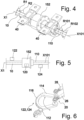
Figure 4 illustrates the implementation of a detail of the pedal arrangement ofFigure 1 in accordance with a second embodiment of the pedal arrangement for a vehicle according to the invention, seen obliquely from above, being essentially horizontal in its one position of use. -
Figure 5 illustrates the implementation of a detail of the pedal arrangement ofFigure 1 in accordance with the second embodiment of the pedal arrangement for a vehicle according to the invention. -
Figure 6 illustrates the implementation of a second detail of the pedal arrangement ofFigure 1 in accordance with an example of the second embodiment of the pedal arrangement for a vehicle according to the invention. - The pedal arrangement of the invention is intended especially for vehicles; for example, for electric vehicles.
- According to the first embodiment of the invention, the
pedal arrangement 64 comprises a firstpower transmission shaft 10, to which at least one pair ofpedal cranks pedals - The first
power transmission shaft 10 defines a fictitious first rotation axis X1, and it is adapted to rotate at least in a first direction of rotation R1 about the rotation axis X1. The rotation axis X1 in question is most appropriately parallel to the longitudinal direction of thepower transmission shaft 10. - In its position of use, the
power transmission shaft 10 is, for example, essentially horizontal. - The
first pedal crank 12 has a first end, which is coupled to the firstpower transmission shaft 10, and a second end, to which thefirst pedal 14 is rotatably connected for a user's foot. Thefirst pedal crank 12 is adapted to perform reciprocating rotary movement in relation to the first rotation axis X1. The movement of the pedal is curvilinear and limited to occur between two different angular positions. - The
second pedal crank 16 has a first end, which is connected to the firstpower transmission shaft 10, and a second end, to which thesecond pedal 18 is rotatably connected for the user's other foot. Thesecond pedal crank 12 is adapted to perform reciprocating rotary movement in relation to the first rotation axis X1. - According to one example, the movement of the
pedals first pedal 14 is in one angular position, the second pedal is in the second angular position. Thepedals - The pedal arrangement further comprises a
generator 22, which is coupled to the firstpower transmission shaft 10 via a mechanicalpower transmission apparatus 24. - The
generator 22 is, for example, of the type, in which there is aninput shaft 54 to rotate the generator and which is adapted to convert the mechanical energy of the rotary movement of theinput shaft 54 into electric energy. Thegenerator 22 is, for example, shaped as a disc with itsinput shaft 54 in its hub. Thegenerator 22 or itsinput shaft 54 defines a fictitious third rotation axis X3. It is most preferable that the rotation axis X3 is parallel to the rotation axis X1 and/or a rotation axis X2. - The mechanical
power transmission apparatus 24 is adapted to convert the rotary movement of thepower transmission shaft 10 into rotary movement occurring in thegenerator 22; for example, into the rotary movement of itsinput shaft 54. - According to one example, the pedal arrangement further comprises
synchronisation elements 20, which are connected to thefirst pedal crank 12 on the one hand, and to thesecond pedal crank 16 on the other hand. Thesynchronisation elements 20 are adapted to force thefirst pedal crank 12 to move in a second direction of rotation R2 while thesecond pedal crank 16 is simultaneously forced by the user to move in the first direction of rotation R1, which is opposite to the second direction of rotation R2. Thesynchronisation elements 20 are further adapted to force thesecond pedal crank 16 to move in the second direction of rotation R2 while thefirst pedal crank 12 is simultaneously forced by the user to move in the first direction of rotation R1. - According to one example, the synchronisation elements comprise a
first push rod 26, which is articulatedly connected to thefirst pedal crank 12, and asecond push rod 28, which is articulatedly connected to thesecond pedal crank 16, and arigid lever 30, a first end of which is articulatedly connected to thefirst push rod 26 and a second end of which is articulatedly connected to thesecond push rod 28. According to an example, thelever 30 is adapted to be coupled so that its first and second ends can move back and forth. For example, in a middle section of thelever 30 there areconnection elements 56 for connecting it articulatedly, for example, to a vehicle frame. The movement of thelever 30 is limited to occur between two different angular positions. - As the
first pedal crank 12 moves in the first direction of rotation R1, thefirst push rod 26 is adapted to force thelever 30 to turn and simultaneously push thesecond push rod 28, which in turn forces thesecond pedal crank 16 to return and move in the second direction of rotation R2. - As the
second pedal crank 16 moves in the first direction of rotation R1, thesecond push rod 28 is in turn adapted to force thelever 30 to turn in the direction, which is opposite in relation to the above-mentioned lever movement, and simultaneously push thefirst push rod 26, which again forces thefirst pedal crank 12 to return and move in the second direction of rotation R2. - The return of the pedal most preferably refers to a movement, in which the pedal moves towards the user and, at the same time, the user's knee bends. The user moves the pedal by pushing it away from oneself, most preferably by stretching the leg.
- According to one example, the first pedal crank 12 is connected to the first
power transmission shaft 10 with such aclutch arrangement 52, which first of all forces the firstpower transmission shaft 10 to rotate in the first direction of rotation R1 while the first pedal crank 12 simultaneously also moves in the first direction of rotation R1. In addition to this, the saidclutch arrangement 52 allows the rotation of the firstpower transmission shaft 10 to continue in the first direction of rotation R1 at the same time as the first pedal crank 12 is immobile or moves in the second direction of rotation R2. - In the example above, the second pedal crank 16 is additionally connected to the first
power transmission shaft 10 with a secondclutch arrangement 52, which first of all forces the firstpower transmission shaft 10 to rotate in the first direction of rotation R1 at the same time as the second pedal crank 16 also moves in the first direction of rotation R1. In addition to this, the said clutch arrangement allows the rotation of the firstpower transmission shaft 10 to continue in the first direction of rotation R1 while the second pedal crank 16 is simultaneously immobile or it moves in the second direction of rotation R2. - By means of the
clutch arrangements 52 described above, it is possible to maintain the continuous rotary movement of the firstpower transmission shaft 10 in the first direction of rotation R1 at the same time as the pedals move back and forth and the user applies force alternately to the pedals. - According to one example, the above-mentioned
clutch arrangement 52 comprises a freewheel clutch, which rotates freely in one direction of rotation, most preferably in the second direction of rotation R2, and to transmit the rotary movement, for example, to the firstpower transmission shaft 10, it locks when rotating in the opposite direction of rotation, most preferably in the first direction of rotation R1. This makes possible the rotation of the firstpower transmission shaft 10 by pushing a pedal, and the pedal can return freely while it simultaneously allows the firstpower transmission shaft 10 to be rotated by means of the push movement of another pedal. - According to one example, the mechanical
power transmission apparatus 24 is adapted to form a predetermined fixed transmission ratio between an input shaft and an output shaft. In this solution, the input shaft is the firstpower transmission shaft 10 and the output shaft is a rotating component of thegenerator 22, for example, its rotor or, most preferably, theinput shaft 54 of thegenerator 22. - According to one example, to execute the desired fixed transmission ratio, the mechanical
power transmission apparatus 24 comprises a secondpower transmission shaft 34, which defines the fictitious second rotation axis X2 and which is fitted to rotate about the second rotation axis X2. The firstpower transmission shaft 10 is simultaneously adapted to rotate the secondpower transmission shaft 34 by means of achain 38 or a belt or similar. To the secondpower transmission shaft 34 there may be coupled abelt pulley 60, to which thechain 38, the belt or similar is connected. - In the example above, the mechanical
power transmission apparatus 24 further comprises asecond chain pulley 36 or a belt pulley or similar, which is connected to the secondpower transmission shaft 34 and adapted to rotate simultaneously with the secondpower transmission shaft 34. The saidsecond chain pulley 36 or the belt pulley or similar is adapted to simultaneously rotate thegenerator 22, for example, itsinput shaft 54. To thegenerator 22, for example, itsinput shaft 54, there may be coupled abelt pulley 58, to which achain 42, a belt or similar is connected. - According to one example, the mechanical
power transmission apparatus 24 further comprises a gearing with stepless or stepped operation so that the said transmission ratio can be selected to be stepless or stepped. The gearing is, for example, automatically adjustable, electrically or mechanically controllable. - According to one example, the mechanical
power transmission apparatus 24 comprises afirst chain pulley 32 or a belt pulley or similar, which is coupled to the firstpower transmission shaft 10. - The said
first chain pulley 32 or the belt pulley or similar may be located between the first pedal crank 12 and the second pedal crank 16. This makes possible compact placing and the firstpower transmission shaft 10 to be short. - The said
first chain pulley 32 or the belt pulley or similar may be adapted to simultaneously rotate with the firstpower transmission shaft 10, and it is fitted to simultaneously rotate the said secondpower transmission shaft 34 via the saidchain 38, the belt or similar. - According to one example, the first
power transmission shaft 10 is essentially parallel to the secondpower transmission shaft 34. In addition, they are most preferably horizontal. - According to one example, as the pedal arrangement is in its one position of use, the first pedal crank 12 and second pedal crank 16 are suspended below the first
power transmission shaft 10 and adapted to perform there the said reciprocating movement. This provides unobstructed space for the user's feet and their movement. - According to one example, as the pedal arrangement is in its above-mentioned position of use, the
generator 22 is, observed in a horizontal direction, located on that side of the firstpower transmission shaft 10, in the direction of the side of which the first and second pedal cranks 12, 16 move when they rotate in the first direction of rotation R1. This makes possible that the user and the generator are on different sides of the firstpower transmission shaft 10, thus providing more unobstructed space for the user. - According to one example, as the pedal arrangement is in its above-mentioned position of use, the
synchronisation elements 20 are, observed in a horizontal direction, located on that side of the firstpower transmission shaft 10, in the direction of the side of which the first and second pedal cranks 12, 16 move when they in their turn rotate in the first direction of rotation R1. - According to one example, the transmission ratio of the said mechanical
power transmission apparatus 24 is adapted to set the rotational speed of thegenerator 22, for example the rotational speed of itsinput shaft 54, to be multiple in relation to the rotational speed of the firstpower transmission shaft 10. - According to one example, the pedal arrangement further has several bearing
units 40, each of which comprises a bearing housing, via which the bearing unit is connected to the first or secondpower transmission shaft power transmission shaft - The said pedal arrangement is for one user or for two users that are side by side. The pedal arrangement further comprises a second pair of pedals.
- The pedal arrangement further comprises a third pedal crank 44, which has a first end connected to the first
power transmission shaft 10, and a second end, to which athird pedal 46 is rotatably coupled for the foot of the second user. The third pedal crank 44 is adapted to perform reciprocating rotary movement in relation to the first rotation axis X1. - The pedal arrangement further comprises a fourth pedal crank 48, which has a first end connected to the first
power transmission shaft 10, and a second end, to which afourth pedal 50 is rotatably coupled for the other foot of the second user. The fourth pedal crank 48 is adapted to perform reciprocating rotary movement in relation to the first rotating axis X1. - According to one example, the movement of the
pedals third pedal 46 is in one angular position, thefourth pedal 50 is in the second angular position. Thepedals - According to one example, the place of the pedal 14, 18, 46, 50 at the end of the pedal crank 12, 16, 44, 48 and, at the same time, its distance from the first
power transmission shaft 10 and the first rotation axis X1 is adjustable either in a stepless or stepwise manner. This is done, for example, by means of fastening elements for thepedals pedal pedal arrangement 64 and especially thepedals - An
electric vehicle 62, in which thepedal arrangement 64 presented above is applied, comprises aframe 76. Thepedal arrangement 64 is attached to theframe 76 and fitted into its position of use. Theelectric vehicle 62 further has aseat 70 for a pedalling person and, according to one example, legroom in theframe 76 for the person's feet. Thepedals - In the placement of the
pedal arrangement 64, the positions of use and placing principles for thepedal arrangement 64 may be applied, which are described above. This makes possible, for example, the compact structure and spacious legroom for the user, as has been described above. - It is most preferable that the first
power transmission shaft 10, i.e. the first rotation axis X1 is located in the upper section of the legroom above the first and second pedal cranks 12, 16 so that, in the position of use, it is essentially horizontal and transverse, or essentially perpendicular to the longitudinal direction Y1 of theframe 76. This way thepower transmission shaft 10 is located above thepedals - It is also most preferable that, observed in a horizontal direction, the
generator 22 is located on the opposite side of the firstpower transmission shaft 10, i.e. the first rotation axis X1 in relation to theseat 70. - According to one example, also the said mechanical
power transmission apparatus 24 and/or the saidsynchronisation elements 20 are, observed in a horizontal direction, located on the opposite side of the firstpower transmission shaft 10, i.e. the first rotation axis X1 in relation to theseat 70, and in this case they are, for example, together with thegenerator 22 on the same side of thepower transmission shaft 10, i.e. on the same side of the first rotation axis X1. - According to one example, the
pedal arrangement 64 is adapted to utilise mechanical energy in thegenerator 22 but, for example, not in a mechanical drive transmission, by means of which theelectric vehicle 62 would move. The purpose of thepedal arrangement 64 is, for example, to generate electric energy by means of thegenerator 22, which is stored, for example, to astorage battery 72 and/or utilised, for example, in anelectric transmission system 78. A simple, compact structure is thus achieved, as it is not necessary to take into account, for example, a mechanical drive transmission in thepedal arrangement 64. - According to one example, the
pedal arrangement 64, the firstpower transmission shaft 10 and the mechanicalpower transmission apparatus 24 are fitted separately from the saidelectric transmission system 78 and to convert mechanical energy into electric energy by means of thegenerator 22, which is used to move theelectric vehicle 62. - For example, to store electric energy, the
generator 22 for thepedal arrangement 64 is coupled to thestorage battery 72, for example, by means of anelectronic control unit 74. - According to one example, at least three or four
wheels 66 are rotatably coupled to theframe 76, to at least one of which there is attached theelectric transmission system 78 to move theelectric vehicle 62. Also, thestorage battery 72 for storing electric energy and/or supplying electric energy to theelectric transmission system 78 may be located in theframe 76. - The
electronic control unit 74 may also be installed in theframe 76, the electronic control unit controlling the operation of thestorage battery 72 and/or theelectric transmission system 78. With apparatuses and controls coupled to theelectronic control unit 74, the user can, for example, control the operation of theelectric vehicle 62, for example, during driving. - According to one example, the
electric vehicle 62 has twoseats 70 side by side, for either one or two pedalling persons, and legroom in theframe 76 for the persons' feet. Theelectric vehicle 62 may further includecontrols 68, such as a steering wheel to control the direction of travel of theelectric vehicle 62. The position of thecontrols 68 may be adjustable. The legroom observed in a horizontal direction and in the longitudinal direction Y1 of theframe 76 is located in front of theseat 70 and the first and second pedal cranks 12, 16 of thepedal arrangement 64 are placed in the legroom. The said longitudinal direction Y1 is simultaneously the direction, with which the pedalling person is aligned when sitting in theseat 70, while the feet are in the legroom. - According to one example, as the
pedal arrangement 64 comprises the third and fourth pedal cranks 44 and 48 in the manner presented above, each pedal crank 44, 48 is coupled to the firstpower transmission shaft 10 with such aclutch arrangement 52, which corresponds to the examples and functions presented in connection with the first and second pedal cranks 12, 16. - In other words, the third pedal crank 44 is coupled to the first
power transmission shaft 10 with such aclutch arrangement 52 which, first of all, forces the firstpower transmission shaft 10 to rotate in the first direction of rotation R1 at the same time as the third pedal crank 44 moves in the first direction of rotation R1. In addition to this, the saidclutch arrangement 52 allows the rotation of thepower transmission shaft 10 to continue in the first direction of rotation R1, while the third pedal crank 44 is immobile or it moves in the second direction of rotation R1. - In the example above, the fourth pedal crank 48 is further coupled to the first
power transmission shaft 10 with such a secondclutch arrangement 52 which, first of all, forces the firstpower transmission shaft 10 to rotate in the first direction of rotation R1 at the same time as the fourth pedal crank 48 moves in the first direction of rotation R1. In addition to this, the saidclutch arrangement 52 allows the rotation of the firstpower transmission shaft 10 to continue in the first direction of rotation R1, while the fourth pedal crank 48 is immobile or it moves in the second direction of rotation R2. - With the
clutch arrangements 52 described above, it is possible to maintain the continuous rotary movement of the firstpower transmission shaft 10 in the first direction of rotation R1 at the same time as the pedals move back and forth and the user applies forces alternately to thepedals - The terms first, second, third and fourth used in the specification below and referring to different components do not define or limit the total quantity of these components, but they only distinguish the components from each other, for example so that the references "first" and "second" are separate components.
- According to the second embodiment of the invention, and in accordance with
Figure 4 , thepedal arrangement 64 further comprises an additionalpower transmission shaft 110. To the additionalpower transmission shaft 110 there is coupled at least one pair of pedal cranks. - For example, the pedal cranks 12 and 16 presented above, their
clutch elements 52 andsynchronisation elements 20 are coupled to the additionalpower transmission shaft 110 instead of the firstpower transmission shaft 10. The additionalpower transmission shaft 110 is forced into rotary movement by means of the reciprocating movement of the pedal cranks 12, 16 in the way presented above. - The additional
power transmission shaft 110 defines a fictitious additional rotation axis X101 and it is adapted to rotate about the additional rotation axis X101 at least in a third direction of rotation R101, which is opposite to a fourth direction of rotation R102. The said additional rotation axis X101 is most preferably parallel to the longitudinal direction of the additionalpower transmission shaft 110. - In its position of use, the additional
power transmission shaft 110 is, for example, essentially horizontal. - The additional
power transmission shaft 110 is parallel to the firstpower transmission shaft 10 and, simultaneously, the additional rotation axis X101 is parallel to the first rotation axis X1. In addition, according to one example, the third direction of rotation R101 is uniform with the first direction of rotation R1. - The additional
power transmission shaft 110 is an extension to the firstpower transmission shaft 10 as inFigure 5 and, simultaneously, the additional rotation axis X101 joins with the first rotation axis X1. - According to one example, the pedal cranks 12 and 16 shown above, their
clutch elements 52 andsynchronisation elements 20 are coupled to the additionalpower transmission shaft 110 so that their operation corresponds to what is presented above as they are connected to the firstpower transmission shaft 10. In this case, the third direction of rotation R101 equals the first direction of rotation R1 and the fourth direction of rotation R102 equals the second direction of rotation R2. - According to one example, the pedal arrangement further has one or several bearing
units 40, each of which comprises a bearing housing, via which the bearing unit is coupled to the additionalpower transmission shaft 110, and also a support element, with which the additionalpower transmission shaft 110 is attachable to a desired object; for example, the vehicle frame, for example to its structures above the legroom in the frame. - According to one example, the additional
power transmission shaft 110 is coupled to the firstpower transmission shaft 10 so that as the additionalpower transmission shaft 110 is in rotary movement (direction of rotation R102), also the firstpower transmission shaft 10 is forced into rotary movement (direction of rotation R2). This concerns for example, only the directions of rotation R1 and R102, but not the directions of rotation R2 and R102. - According to an example in
Figure 4 , the additionalpower transmission shaft 110 is coupled to the firstpower transmission shaft 10 with such an additionalclutch arrangement 152 which, first of all, forces the firstpower transmission shaft 10 to rotate in the first direction of rotation R1 at the same time as the additionalpower transmission shaft 110 rotates in the third direction of rotation R101. In addition to this, the said additionalclutch arrangement 152 allows the rotation of the firstpower transmission shaft 10 to continue in the first direction of rotation R1 at the same time as the additionalpower transmission shaft 110 is immobile or moves in the fourth direction of rotation R102. - According to an example in
Figure 4 , the additionalclutch arrangement 152 is coupled both to an end of the firstpower transmission shaft 10 and to an end of the additional rotation axis X101, the purpose of this being, as presented above, to transmit the rotary movement selectively from the additional rotation axis X101 to the firstpower transmission shaft 10. - According to an example, the additional
clutch arrangement 152 mentioned above comprises a freewheel clutch, which rotates freely in one direction of rotation, most preferably in the second/fourth direction of rotation R2/R102. To transmit the rotary movement from the additional rotation axis X101 to the firstpower transmission shaft 10, the additionalclutch arrangement 152 locks when rotating in the opposite direction of rotation, i.e. in the first/third direction of rotation R1/R101. - According to an example in
Figure 5 , thepedal arrangement 64 further comprises afirst sensor device 122, which is adapted to detect, whether the third pedal crank 44 and/or the fourth pedal crank 48 is in such movement, which forces the firstpower transmission shaft 10 into rotary movement; for example, into rotary movement in the first direction of rotation R1. According to one example, thesensor device 122 generates an electric measuring signal, on the basis of which it can be concluded whether the pedal crank 44, 48 in question is in the said movement. According to one example, on the basis of the said electric measuring signal also the velocity of the movement in question can be concluded. - The
first sensor device 122 may be applied in the manner presented above also in the alternative for thepedal arrangement 64, which does not utilise the additionalpower transmission shaft 110. - The
first sensor device 122 may be by the firstpower transmission shaft 10 or coupled to it. - Alternatively, especially in the alternative utilising the additional
power transmission shaft 110, thefirst sensor device 122 is, instead of the firstpower transmission shaft 10, connected to the third pedal crank 44 and/or to the fourth pedal crank 48, or to some other part of thepedal arrangement 64, which is moving simultaneously with the said pedal crank 44, 48 and by means of which it can be concluded whether the said pedal crank is moving (causing the rotary movement of the firstpower transmission shaft 10 in the direction of rotation R1). The part in question is, for example, thesynchronisation elements 20 belonging to the said pedal cranks or theclutch arrangement 52 of the said pedal crank. - According to another example, the
pedal arrangement 64 comprises asecond sensor device 124, which is adapted to detect whether the first pedal crank 12 and/or the second pedal crank 16 is in such movement, which forces the additionalpower transmission shaft 110 into rotary movement; for examples, into rotary movement in the third direction of rotation R101. In this example, the pedal cranks 12, 16 are coupled to the additionalpower transmission shaft 110 in the way presented above. In this example, the additionalpower transmission shaft 110 is coupled to the firstpower transmission shaft 10 so that the rotary movement (direction of rotation R101) of the additionalpower transmission shaft 110 forces the firstpower transmission shaft 10 into rotary movement (direction of rotation R1). - When the additional
power transmission shaft 110 is not in use, thesecond sensor device 124 is adapted to detect whether the first pedal crank 12 and/or the second pedal crank 16 is in such movement, which forces the firstpower transmission shaft 10 into rotary movement; for example, into rotary movement in the first direction of rotation R1. - According to an example, the
second sensor device 124 generates an electric measuring signal, on the basis of which it can be concluded, whether the pedal crank 12, 16 in question is moving. According to one example, on the basis of the said electric measuring signal also the velocity of the movement in question can be concluded. - In accordance with
Figure 5 , thesecond sensor device 124 may be by the additionalpower transmission shaft 110 or coupled to it. - Alternatively, especially in the alternative without the additional
power transmission shaft 110, thesecond sensor device 124 is, instead of the firstpower transmission shaft 10 and the additionalpower transmission shaft 110, coupled to the first pedal crank 12 and/or to the second pedal crank 16, or to some other such part of thepedal arrangement 64, which is moving simultaneously with the said pedal crank 12, 16 and by means of which it can be concluded, whether the said pedal crank is moving (causing the rotary movement of the firstpower transmission shaft 10 or the additionalpower transmission shaft 110 in the direction of rotation R1 or R101). The said part is, for example, thesynchronisation elements 20 belonging to the said pedal cranks or theclutch arrangement 52 for the said pedal crank. - According to one example, the
pedal arrangement 64 comprises athird sensor device 120, which is located in or coupled to the additionalclutch arrangement 152 described above. Thethird sensor device 120 is adapted to detect the rotary movement of the additionalpower transmission shaft 110 in the third direction of rotation R101. Of this it can be concluded whether the pedal crank 12, 16 is in motion (forcing the rotary movement of the additionalpower transmission shaft 110 in the direction of rotation R101). According to one example, thethird sensor device 120 generates an electric measuring signal, on the basis of which it can be concluded whether the pedal crank 12, 16 is moving. According to one example, also the velocity of the said movement can be concluded on the basis of the said electric measuring signal. - The
sensor device electronic control unit 74 for theelectric vehicle 62, which controls the operation of theelectric vehicle 62 and/or theelectric transmission system 78 on the basis of said one or several measuring signals. - The
sensor device - According to one example, the
first sensor device 122 and/or thesecond sensor device 124 may be executed so that it is connected to thesynchronisation elements 20. In this case, in accordance with the example inFigure 6 , the saidsensor device mechanism 114 moving along with thesynchronisation elements 20 and astationary sensor 112, which is adapted to detect the movement of themechanism 114, generating an electric measuring signal, on the basis of which it can be concluded whether themechanism 114 is moving; in other words, whether the respective first and second pedal cranks 12, 16 or the third and fourth pedal cranks 44, 48 are in such motion, which forces the respective firstpower transmission shaft 10 or the additionalpower transmission shaft 110 into rotary movement (direction of rotation R1/R101). - According to one example, the
mechanism 114 comprises acogging 116, which travels past thesensor 112 as themechanism 114 is moving. Thesensor 112 detects the movement of the cogging 116 based, for example, on an inductive operation principle. Thesensor 112 is attached, for example, to the vehicle frame. - With the sensor devices described above, special benefits are achieved in the
electric vehicle 62, which has at least two pairs of pedal cranks in a manner presented above. In this case, also the additionalpower transmission shaft 110 may be utilised, when needed. Thegenerator 22 is then also coupled to the firstpower transmission shaft 10 via themechanical transmission device 24. - In the said
electric vehicle 62, one pair of pedal cranks (i.e. the pedal cranks 44, 48) are coupled to the firstpower transmission shaft 10; for example, for a passenger pedalling next to a driver. In this specification, driver refers to such a pedalling person, who takes care of the control of the direction of travel and functions in theelectric vehicle 62, such as breaking, for example, by means of thecontrols 68. - A second pair of pedal cranks (i.e. the pedal cranks 12, 16), for example, for the driver, is connected to the first
power transmission shaft 10 in accordance with the first embodiment of the invention, when the additionalpower transmission shaft 110 is not in use, or in accordance with the second embodiment of the invention, the said second pair of pedal cranks is coupled to the additionalpower transmission shaft 110. - Following one example, at least the
second sensor device 124 is used in the said first embodiment, which is connected as presented above (for example, to the pedal cranks 12, 16) instead of the firstpower transmission shaft 10. In addition, also thefirst sensor device 122 may be used, which is coupled as presented above (for example, to the pedal cranks 44, 48) instead of thepower transmission shaft 10. - Following one example, at least the
second sensor device 124 is used in the above-mentioned second embodiment, which is either connected to the additionalpower transmission shaft 110 or, instead of the additionalpower transmission shaft 110, thesecond sensor device 124 is coupled as has been presented above (for example, to the pedal cranks 12, 16). In addition to this, also thefirst sensor device 122 may be used, which is connected as has been presented above (for example, to the pedal cranks 44, 48) instead of thepower transmission shaft 10. - Following one example, at least the
third sensor device 120 is used in the above-mentioned second embodiment. In addition to this, also thesecond sensor device 122 may be used, which is connected as has been presented above (for example, to the pedal cranks 44, 48) instead of thepower transmission shaft 10. - In the embodiments presented above, based on the measuring signals generated by the sensor devices, for example, the measuring signals generated by the
sensor devices electronic control unit 74 at each moment, whether the driver is pedalling or not. In addition to this, based on the measuring signals generated by the sensor devices, for example, the measuring signal generated by thesensor device 122, it can also be concluded in theelectronic control unit 74 at each moment, whether the passenger is pedalling or not. - On the basis of said deduction, it is now possible to control the operation of the
electric vehicle 62 and/or theelectric transmission system 78 by means of theelectric control unit 74, based on the operation of the driver (when the driver uses thecontrols 68, pedals, or does not pedal) irrespective of the operation of the passenger (i.e. the passenger pedals, or does not pedal). - What has been presented above is of advantage, for example, in a situation in which the
electric vehicle 62 is held momentarily stopped by the driver (for example so that the driver is not pedalling) and irrespective of whether the passenger is pedalling or not. - What has been presented above is also of advantage, for example, in a situation in which, for example after a stop or after having been stationary, the
electric vehicle 62 is set in motion or it is kept in motion by the driver (for example so that the driver is pedalling) and irrespective of whether the passenger is pedalling or not. - When the electric vehicle stays still or is stationary also when the passenger is pedalling, the
storage battery 72 may be recharged while being stationary. According to another example, the passenger may start pedalling while theelectric vehicle 62 is not moving or it has been stopped, but the benefit here is that by means of the presented solution the passenger's pedalling is not interpreted as a command for theelectric vehicle 62 to start moving. Only after the driver starts pedalling, this is a command for theelectric vehicle 62 to move. - Thus, the benefits to be achieved increase the safe use of the
electric vehicle 62 and it operates in an unsurprising way, for example, in the driver's control. - The examples presented above are not limited only to alternatives, in which there are two pedal crank pairs, but also to the examples, in which the pedal arrangement or the electric vehicle comprises three or several pedal crank pairs.
- The presented solution is specified more closely in accordance with the enclosed claims.
Claims (13)
- A pedal arrangement for a vehicle, comprising:- a first power transmission shaft (10), which defines a fictitious first rotating axis (X1) and which is adapted to rotate at least in a first direction of rotation (R1) about the first rotating axis (X1);- a generator (22), adapted to convert mechanical energy of rotary movement into electric energy;- a mechanical power transmission apparatus (24), adapted to convert rotary movement of the first power transmission shaft (10) into rotary movement of the generator (22);- a first pedal crank (12), which has a first end coupled to the first power transmission shaft (10) and a second end, to which a first pedal (14) for a user's foot is rotatably connected so that the first pedal crank (12) is adapted to perform reciprocating rotary movement in relation to the first rotating axis (X1); and- a second pedal crank (16), which has a first end coupled to the first power transmission shaft (10) and a second end, to which a second pedal (18) for the user's other foot is rotatably connected so that the second pedal crank (16) is adapted to perform reciprocating rotary movement in relation to the first rotation axis (X1);characterised in that the pedal arrangement further comprises:- a third pedal crank (44), which has a first end connected to the first power transmission shaft (10), and a second end, to which a third pedal (46) for a second user's foot is rotatably connected so that the third pedal crank (44) is adapted to perform reciprocating rotary movement in relation to the first rotation axis (X1); and- a fourth pedal crank (48), which has a first end coupled to the first power transmission shaft (10), and a second end, to which a fourth pedal (50) for the second user's other foot is rotatably connected so that the fourth pedal crank (48) is adapted to perform reciprocating rotary movement in relation to the first rotating axis (X1).
- The pedal arrangement according to claim 1, wherein the first pedal crank (12) and the second pedal crank (16) are, in their position of use, suspended below the first power transmission shaft (10) and adapted to perform there the said reciprocating rotary movement.
- The pedal arrangement according to claim 1 or 2, wherein the pedal arrangement further comprises:- synchronisation elements (20), which are coupled, on the one hand, to the first pedal crank (12) and, on the other hand, to the second pedal crank (16), and which are adapted- to force the first pedal crank (12) to move in a second direction of rotation (R2) while, at the same time, the second pedal crank (16) is forced by the user to move in the first direction of rotation (R1), which is opposite to the second direction of rotation (R2), and- to force in turn the second pedal crank (16) to move in the second direction of rotation (R2) while, at the same time, the first pedal crank (12) is forced by the user to move in the first direction of rotation (R1).
- The pedal arrangement according to any one of claims 1 to 3, further comprising a first sensor device (122), which is adapted to detect whether the third pedal crank (44) and/or the fourth pedal crank (48) is in such motion, which forces the first power transmission shaft (10) into rotary movement in the first direction of rotation (R1).
- The pedal arrangement according to any one of claims 1 to 4, further comprising a second sensor device (124), which is adapted to detect whether the first pedal crank (12) and/or the second pedal crank (16) is in such motion, which forces the first power transmission shaft (10) into rotary movement in the first direction of rotation (R1).
- The pedal arrangement according to claims 3 and 5, wherein the second sensor device (124) is coupled to the first pedal crank (12) or to the second pedal crank (16), or to the synchronisation elements (20), which are, on the one hand, connected to the first pedal crank (12) and, on the other hand, to the second pedal crank (16).
- A pedal arrangement for a vehicle, comprising:- a first power transmission shaft (10), which defines a fictitious first rotating axis (X1) and which is adapted to rotate at least in a first direction of rotation (R1) about the first rotating axis (X1);- a generator (22), adapted to convert mechanical energy of rotary movement into electric energy;- a mechanical power transmission apparatus (24), adapted to convert rotary movement of the first power transmission shaft (10) into rotary movement of the generator (22);- an additional power transmission shaft (110), which defines a fictitious first additional rotating axis (X101) and which is adapted to rotate at least in a third direction of rotation (R101) about the first additional rotating axis;- a first pedal crank (12), which has a first end coupled to the additional power transmission shaft (110) and a second end, which has a first pedal for a user's foot so that the first pedal crank is adapted to perform reciprocating rotary movement in relation to the first additional rotating axis (X101); and- a second pedal crank (16), which has a first end coupled to the additional power transmission shaft (110) and a second end, which has a second pedal for the user's other foot so that the second pedal crank is adapted to perform reciprocating rotary movement in relation to the first additional rotating axis (X101); and- wherein in the pedal arrangement the additional power transmission shaft (110) is parallel to the first power transmission shaft (10) and forms an extension for the first power transmission shaft (10) so that the first additional rotating axis (X101) joins with the first rotating axis (X1);characterised in that the pedal arrangement further comprises:- a third pedal crank (44), which has a first end coupled to the first power transmission shaft (10), and a second end, which has a third pedal (46) for a second user's foot so that the third pedal crank (44) is adapted to perform reciprocating rotary movement in relation to the first rotating axis (X1); and- a fourth pedal crank (48), which has a first end coupled to the first power transmission shaft (10), and a second end, in which there is a fourth pedal (50) for the second user's other foot so that the fourth pedal crank (48) is adapted to perform reciprocating rotary movement in relation to the first rotating axis (X1).
- The pedal arrangement according to claim 7, further comprising a first sensor device (120, 124), which is adapted to detect whether the first pedal crank (12) and/or the second pedal crank (16) is in such motion, which forces the additional power transmission shaft (110) into rotary movement in the third direction of rotation (R101).
- The pedal arrangement according to claim 7 or 8, further comprising a second sensor device (122), which is adapted to detect whether the third pedal crank (44) and/or the fourth pedal crank (48) is in such motion, which forces the first power transmission shaft (10) into rotary movement in the first direction of rotation (R1).
- An electric vehicle (62), comprising:- a frame (76), which defines a longitudinal direction (Y1) of the frame;- a seat (70) for the user;- an electric transmission system (78) to move the electric vehicle (62);- the pedal arrangement (64) according to any one of claims 1 to 6 or the pedal arrangement (64) according to any one of claims 7 to 9, attached to the frame (76);- a storage battery (72) to store electric energy generated by the generator (22) and/or needed by the electric transmission system (78); and- an electronic control unit (74), which is adapted to control operation of the storage battery (72) and/or the electric transmission system (78).
- The electric vehicle according to claim 10, further comprising:- a second seat (70) for the second user; and- wherein the electronic control unit (74), based on measuring signals generated by sensor devices of the electric vehicle and on a predefined algorithm, is adapted to conclude whether the user is pedalling or not, when the said user is the driver of the electric vehicle, and further to conclude whether the second user is pedalling or not, when the said second user is a passenger of the electric vehicle.
- The electric vehicle according to claim 11, wherein the electronic control unit (74) is adapted to control operation of the electric vehicle (62) and/or the electric transmission system (78) so that the electric vehicle is held stopped, when the driver is not pedalling and irrespective of whether the passenger is pedalling or not.
- The electric vehicle according to claim 11 or 12, wherein the electronic control unit (74) is adapted to control operation of the electric vehicle (62) and/or the electric transmission system (78) so that the electric vehicle is set in motion or kept moving when the driver is pedalling and irrespective of whether the passenger is pedalling or not.
Applications Claiming Priority (2)
| Application Number | Priority Date | Filing Date | Title |
|---|---|---|---|
| FI20195177A FI129286B (en) | 2019-03-11 | 2019-03-11 | Electric vehicle and pedal arrangement |
| PCT/FI2020/050148 WO2020183061A1 (en) | 2019-03-11 | 2020-03-10 | Pedal arrangement and an electric vehicle |
Publications (4)
| Publication Number | Publication Date |
|---|---|
| EP3938272A1 EP3938272A1 (en) | 2022-01-19 |
| EP3938272A4 EP3938272A4 (en) | 2022-12-14 |
| EP3938272C0 EP3938272C0 (en) | 2024-02-21 |
| EP3938272B1 true EP3938272B1 (en) | 2024-02-21 |
Family
ID=72427205
Family Applications (1)
| Application Number | Title | Priority Date | Filing Date |
|---|---|---|---|
| EP20770656.5A Active EP3938272B1 (en) | 2019-03-11 | 2020-03-10 | Pedal arrangement and electric vehicle |
Country Status (3)
| Country | Link |
|---|---|
| EP (1) | EP3938272B1 (en) |
| FI (1) | FI129286B (en) |
| WO (1) | WO2020183061A1 (en) |
Families Citing this family (1)
| Publication number | Priority date | Publication date | Assignee | Title |
|---|---|---|---|---|
| FR3142168A1 (en) * | 2022-11-21 | 2024-05-24 | France Quadricycle | Quadricycle-type transport vehicle comprising a human-powered chassis, seats and mechanisms |
Family Cites Families (8)
| Publication number | Priority date | Publication date | Assignee | Title |
|---|---|---|---|---|
| DE102009032033B4 (en) * | 2009-07-07 | 2017-05-04 | Sergei Afanasiev | Hybrid folding velomobile |
| CN102079359B (en) | 2010-12-03 | 2013-11-20 | 杨淇钧 | Body-building and labor-saving bicycle riding at high speed and driven by oscillating bar |
| US20130081892A1 (en) * | 2011-09-29 | 2013-04-04 | Richard Kronfeld | Human-rechargeable electric vehicle |
| US8840127B2 (en) * | 2012-01-04 | 2014-09-23 | Robert Musgrove | Spiral cone pulley reciprocal pedal drive system and methods |
| WO2014108579A1 (en) * | 2013-01-11 | 2014-07-17 | Brizuela Fernández Fernando | Oscillating-pedal traction system having output selection for pedal-driven vehicles |
| US8840131B1 (en) | 2013-03-15 | 2014-09-23 | Planet Rider LLC | Three-wheeled vehicle |
| CN203381744U (en) * | 2013-07-10 | 2014-01-08 | 蔡志忠 | Three-wheel folding electric bicycle |
| CN204750463U (en) | 2015-07-22 | 2015-11-11 | 沈晓华 | Manpower electricity generation circulation power car |
-
2019
- 2019-03-11 FI FI20195177A patent/FI129286B/en active IP Right Grant
-
2020
- 2020-03-10 EP EP20770656.5A patent/EP3938272B1/en active Active
- 2020-03-10 WO PCT/FI2020/050148 patent/WO2020183061A1/en not_active Ceased
Also Published As
| Publication number | Publication date |
|---|---|
| EP3938272C0 (en) | 2024-02-21 |
| FI129286B (en) | 2021-11-15 |
| EP3938272A4 (en) | 2022-12-14 |
| EP3938272A1 (en) | 2022-01-19 |
| FI20195177A1 (en) | 2020-09-12 |
| WO2020183061A1 (en) | 2020-09-17 |
Similar Documents
| Publication | Publication Date | Title |
|---|---|---|
| CN116529508B (en) | Drive unit for vehicles that can be driven simultaneously by human muscle force and electric motors. | |
| EP3360769B1 (en) | Electric bicycle and method of controlling the same | |
| EP2348230B1 (en) | bicycle with bidirectional input and one-way output | |
| CN107406120B (en) | Dual motor power unit and method of mounting the unit to a bicycle frame | |
| EP2979919B1 (en) | Electric-powered vehicle | |
| EP3814211B1 (en) | Method for providing electrical propulsion assistance in a pedal-propelled vehicle, and controller implementing same | |
| EP2361826A1 (en) | Bicycle with bidirectional input and one-way output | |
| US20140251709A1 (en) | Vehicle having a pedal drive and a reverse gear mechanism | |
| CN107438558B (en) | Single-motor power unit and method of mounting the unit to a bicycle frame | |
| US9540069B2 (en) | Vehicle, particularly a bicycle, comprising an electrical auxiliary drive | |
| KR200453025Y1 (en) | Rail bike | |
| EP3938272B1 (en) | Pedal arrangement and electric vehicle | |
| EP2380805A1 (en) | Bicycle With Bidirectional Input and One-Way Output Transmission Combined With Crank Hole Thereof | |
| CN201076561Y (en) | Multifunction rehabilitation wheelchair | |
| JP3163028U (en) | Bi-directional drive | |
| US8297636B2 (en) | Manpower-driven device with bi-directional input and constant directional rotation output | |
| US8475313B2 (en) | Bicycle with output in constant rotating direction and having internal rocker arm epicycle wheel set | |
| KR101597361B1 (en) | A human-powered device that is input in both directions and output in a constant rotational direction | |
| JP7205054B2 (en) | electric moving body | |
| JPH06211179A (en) | Power assisted bicycle | |
| US20100154585A1 (en) | Bidirectional different speed ratio driving device with bidirectional manpower input | |
| CN113874280A (en) | electric bicycle | |
| US8567805B2 (en) | Bicycle with bidirectional input and one-way output transmission combined with crank hole thereof | |
| US20140001764A1 (en) | Human-Powered Electrical Generating Device | |
| JP2008213802A (en) | Power control signal input device for engine and motor in vehicle to be operated by human beings such as automobile |
Legal Events
| Date | Code | Title | Description |
|---|---|---|---|
| STAA | Information on the status of an ep patent application or granted ep patent |
Free format text: STATUS: THE INTERNATIONAL PUBLICATION HAS BEEN MADE |
|
| PUAI | Public reference made under article 153(3) epc to a published international application that has entered the european phase |
Free format text: ORIGINAL CODE: 0009012 |
|
| STAA | Information on the status of an ep patent application or granted ep patent |
Free format text: STATUS: REQUEST FOR EXAMINATION WAS MADE |
|
| 17P | Request for examination filed |
Effective date: 20211007 |
|
| AK | Designated contracting states |
Kind code of ref document: A1 Designated state(s): AL AT BE BG CH CY CZ DE DK EE ES FI FR GB GR HR HU IE IS IT LI LT LU LV MC MK MT NL NO PL PT RO RS SE SI SK SM TR |
|
| DAV | Request for validation of the european patent (deleted) | ||
| DAX | Request for extension of the european patent (deleted) | ||
| A4 | Supplementary search report drawn up and despatched |
Effective date: 20221111 |
|
| RIC1 | Information provided on ipc code assigned before grant |
Ipc: B62J 45/413 20200101ALI20221107BHEP Ipc: B62K 5/01 20130101ALI20221107BHEP Ipc: B62M 6/60 20100101ALI20221107BHEP Ipc: B62M 6/50 20100101ALI20221107BHEP Ipc: B62M 3/00 20060101ALI20221107BHEP Ipc: B62M 1/24 20130101AFI20221107BHEP |
|
| RIC1 | Information provided on ipc code assigned before grant |
Ipc: B62J 45/413 20200101ALI20230807BHEP Ipc: B62K 5/01 20130101ALI20230807BHEP Ipc: B62M 19/00 20060101ALI20230807BHEP Ipc: B62M 6/80 20100101ALI20230807BHEP Ipc: B62M 6/60 20100101ALI20230807BHEP Ipc: B62M 6/50 20100101ALI20230807BHEP Ipc: B62M 3/00 20060101ALI20230807BHEP Ipc: B62M 1/24 20130101AFI20230807BHEP |
|
| GRAP | Despatch of communication of intention to grant a patent |
Free format text: ORIGINAL CODE: EPIDOSNIGR1 |
|
| STAA | Information on the status of an ep patent application or granted ep patent |
Free format text: STATUS: GRANT OF PATENT IS INTENDED |
|
| INTG | Intention to grant announced |
Effective date: 20230920 |
|
| GRAS | Grant fee paid |
Free format text: ORIGINAL CODE: EPIDOSNIGR3 |
|
| GRAA | (expected) grant |
Free format text: ORIGINAL CODE: 0009210 |
|
| STAA | Information on the status of an ep patent application or granted ep patent |
Free format text: STATUS: THE PATENT HAS BEEN GRANTED |
|
| AK | Designated contracting states |
Kind code of ref document: B1 Designated state(s): AL AT BE BG CH CY CZ DE DK EE ES FI FR GB GR HR HU IE IS IT LI LT LU LV MC MK MT NL NO PL PT RO RS SE SI SK SM TR |
|
| REG | Reference to a national code |
Ref country code: GB Ref legal event code: FG4D |
|
| REG | Reference to a national code |
Ref country code: CH Ref legal event code: EP |
|
| REG | Reference to a national code |
Ref country code: IE Ref legal event code: FG4D |
|
| REG | Reference to a national code |
Ref country code: DE Ref legal event code: R096 Ref document number: 602020026095 Country of ref document: DE |
|
| U01 | Request for unitary effect filed |
Effective date: 20240304 |
|
| U07 | Unitary effect registered |
Designated state(s): AT BE BG DE DK EE FI FR IT LT LU LV MT NL PT SE SI Effective date: 20240311 |
|
| U20 | Renewal fee for the european patent with unitary effect paid |
Year of fee payment: 5 Effective date: 20240312 |
|
| PG25 | Lapsed in a contracting state [announced via postgrant information from national office to epo] |
Ref country code: IS Free format text: LAPSE BECAUSE OF FAILURE TO SUBMIT A TRANSLATION OF THE DESCRIPTION OR TO PAY THE FEE WITHIN THE PRESCRIBED TIME-LIMIT Effective date: 20240621 |
|
| PG25 | Lapsed in a contracting state [announced via postgrant information from national office to epo] |
Ref country code: GR Free format text: LAPSE BECAUSE OF FAILURE TO SUBMIT A TRANSLATION OF THE DESCRIPTION OR TO PAY THE FEE WITHIN THE PRESCRIBED TIME-LIMIT Effective date: 20240522 |
|
| PG25 | Lapsed in a contracting state [announced via postgrant information from national office to epo] |
Ref country code: HR Free format text: LAPSE BECAUSE OF FAILURE TO SUBMIT A TRANSLATION OF THE DESCRIPTION OR TO PAY THE FEE WITHIN THE PRESCRIBED TIME-LIMIT Effective date: 20240221 Ref country code: RS Free format text: LAPSE BECAUSE OF FAILURE TO SUBMIT A TRANSLATION OF THE DESCRIPTION OR TO PAY THE FEE WITHIN THE PRESCRIBED TIME-LIMIT Effective date: 20240521 |
|
| PG25 | Lapsed in a contracting state [announced via postgrant information from national office to epo] |
Ref country code: ES Free format text: LAPSE BECAUSE OF FAILURE TO SUBMIT A TRANSLATION OF THE DESCRIPTION OR TO PAY THE FEE WITHIN THE PRESCRIBED TIME-LIMIT Effective date: 20240221 |
|
| PG25 | Lapsed in a contracting state [announced via postgrant information from national office to epo] |
Ref country code: RS Free format text: LAPSE BECAUSE OF FAILURE TO SUBMIT A TRANSLATION OF THE DESCRIPTION OR TO PAY THE FEE WITHIN THE PRESCRIBED TIME-LIMIT Effective date: 20240521 Ref country code: NO Free format text: LAPSE BECAUSE OF FAILURE TO SUBMIT A TRANSLATION OF THE DESCRIPTION OR TO PAY THE FEE WITHIN THE PRESCRIBED TIME-LIMIT Effective date: 20240521 Ref country code: IS Free format text: LAPSE BECAUSE OF FAILURE TO SUBMIT A TRANSLATION OF THE DESCRIPTION OR TO PAY THE FEE WITHIN THE PRESCRIBED TIME-LIMIT Effective date: 20240621 Ref country code: HR Free format text: LAPSE BECAUSE OF FAILURE TO SUBMIT A TRANSLATION OF THE DESCRIPTION OR TO PAY THE FEE WITHIN THE PRESCRIBED TIME-LIMIT Effective date: 20240221 Ref country code: GR Free format text: LAPSE BECAUSE OF FAILURE TO SUBMIT A TRANSLATION OF THE DESCRIPTION OR TO PAY THE FEE WITHIN THE PRESCRIBED TIME-LIMIT Effective date: 20240522 Ref country code: ES Free format text: LAPSE BECAUSE OF FAILURE TO SUBMIT A TRANSLATION OF THE DESCRIPTION OR TO PAY THE FEE WITHIN THE PRESCRIBED TIME-LIMIT Effective date: 20240221 |
|
| PG25 | Lapsed in a contracting state [announced via postgrant information from national office to epo] |
Ref country code: PL Free format text: LAPSE BECAUSE OF FAILURE TO SUBMIT A TRANSLATION OF THE DESCRIPTION OR TO PAY THE FEE WITHIN THE PRESCRIBED TIME-LIMIT Effective date: 20240221 |
|
| PG25 | Lapsed in a contracting state [announced via postgrant information from national office to epo] |
Ref country code: PL Free format text: LAPSE BECAUSE OF FAILURE TO SUBMIT A TRANSLATION OF THE DESCRIPTION OR TO PAY THE FEE WITHIN THE PRESCRIBED TIME-LIMIT Effective date: 20240221 |
|
| PG25 | Lapsed in a contracting state [announced via postgrant information from national office to epo] |
Ref country code: SM Free format text: LAPSE BECAUSE OF FAILURE TO SUBMIT A TRANSLATION OF THE DESCRIPTION OR TO PAY THE FEE WITHIN THE PRESCRIBED TIME-LIMIT Effective date: 20240221 |
|
| PG25 | Lapsed in a contracting state [announced via postgrant information from national office to epo] |
Ref country code: CZ Free format text: LAPSE BECAUSE OF FAILURE TO SUBMIT A TRANSLATION OF THE DESCRIPTION OR TO PAY THE FEE WITHIN THE PRESCRIBED TIME-LIMIT Effective date: 20240221 |
|
| PG25 | Lapsed in a contracting state [announced via postgrant information from national office to epo] |
Ref country code: SK Free format text: LAPSE BECAUSE OF FAILURE TO SUBMIT A TRANSLATION OF THE DESCRIPTION OR TO PAY THE FEE WITHIN THE PRESCRIBED TIME-LIMIT Effective date: 20240221 |
|
| PG25 | Lapsed in a contracting state [announced via postgrant information from national office to epo] |
Ref country code: SM Free format text: LAPSE BECAUSE OF FAILURE TO SUBMIT A TRANSLATION OF THE DESCRIPTION OR TO PAY THE FEE WITHIN THE PRESCRIBED TIME-LIMIT Effective date: 20240221 Ref country code: SK Free format text: LAPSE BECAUSE OF FAILURE TO SUBMIT A TRANSLATION OF THE DESCRIPTION OR TO PAY THE FEE WITHIN THE PRESCRIBED TIME-LIMIT Effective date: 20240221 Ref country code: RO Free format text: LAPSE BECAUSE OF FAILURE TO SUBMIT A TRANSLATION OF THE DESCRIPTION OR TO PAY THE FEE WITHIN THE PRESCRIBED TIME-LIMIT Effective date: 20240221 Ref country code: CZ Free format text: LAPSE BECAUSE OF FAILURE TO SUBMIT A TRANSLATION OF THE DESCRIPTION OR TO PAY THE FEE WITHIN THE PRESCRIBED TIME-LIMIT Effective date: 20240221 |
|
| REG | Reference to a national code |
Ref country code: CH Ref legal event code: PL |
|
| PG25 | Lapsed in a contracting state [announced via postgrant information from national office to epo] |
Ref country code: MC Free format text: LAPSE BECAUSE OF FAILURE TO SUBMIT A TRANSLATION OF THE DESCRIPTION OR TO PAY THE FEE WITHIN THE PRESCRIBED TIME-LIMIT Effective date: 20240221 |
|
| REG | Reference to a national code |
Ref country code: DE Ref legal event code: R097 Ref document number: 602020026095 Country of ref document: DE |
|
| PG25 | Lapsed in a contracting state [announced via postgrant information from national office to epo] |
Ref country code: MC Free format text: LAPSE BECAUSE OF FAILURE TO SUBMIT A TRANSLATION OF THE DESCRIPTION OR TO PAY THE FEE WITHIN THE PRESCRIBED TIME-LIMIT Effective date: 20240221 |
|
| PLBE | No opposition filed within time limit |
Free format text: ORIGINAL CODE: 0009261 |
|
| STAA | Information on the status of an ep patent application or granted ep patent |
Free format text: STATUS: NO OPPOSITION FILED WITHIN TIME LIMIT |
|
| PG25 | Lapsed in a contracting state [announced via postgrant information from national office to epo] |
Ref country code: IE Free format text: LAPSE BECAUSE OF NON-PAYMENT OF DUE FEES Effective date: 20240310 |
|
| 26N | No opposition filed |
Effective date: 20241122 |
|
| GBPC | Gb: european patent ceased through non-payment of renewal fee |
Effective date: 20240521 |
|
| PG25 | Lapsed in a contracting state [announced via postgrant information from national office to epo] |
Ref country code: IE Free format text: LAPSE BECAUSE OF NON-PAYMENT OF DUE FEES Effective date: 20240310 Ref country code: CH Free format text: LAPSE BECAUSE OF NON-PAYMENT OF DUE FEES Effective date: 20240331 |
|
| U20 | Renewal fee for the european patent with unitary effect paid |
Year of fee payment: 6 Effective date: 20250317 |
|
| PG25 | Lapsed in a contracting state [announced via postgrant information from national office to epo] |
Ref country code: GB Free format text: LAPSE BECAUSE OF NON-PAYMENT OF DUE FEES Effective date: 20240521 |
|
| PG25 | Lapsed in a contracting state [announced via postgrant information from national office to epo] |
Ref country code: CY Free format text: LAPSE BECAUSE OF FAILURE TO SUBMIT A TRANSLATION OF THE DESCRIPTION OR TO PAY THE FEE WITHIN THE PRESCRIBED TIME-LIMIT; INVALID AB INITIO Effective date: 20200310 |
|
| PG25 | Lapsed in a contracting state [announced via postgrant information from national office to epo] |
Ref country code: HU Free format text: LAPSE BECAUSE OF FAILURE TO SUBMIT A TRANSLATION OF THE DESCRIPTION OR TO PAY THE FEE WITHIN THE PRESCRIBED TIME-LIMIT; INVALID AB INITIO Effective date: 20200310 |
|
| PG25 | Lapsed in a contracting state [announced via postgrant information from national office to epo] |
Ref country code: TR Free format text: LAPSE BECAUSE OF FAILURE TO SUBMIT A TRANSLATION OF THE DESCRIPTION OR TO PAY THE FEE WITHIN THE PRESCRIBED TIME-LIMIT Effective date: 20240221 |