EP3935447B1 - Unbemannter mobiler roboter und software zur klinischen untersuchung und behandlung - Google Patents
Unbemannter mobiler roboter und software zur klinischen untersuchung und behandlung Download PDFInfo
- Publication number
- EP3935447B1 EP3935447B1 EP20764931.0A EP20764931A EP3935447B1 EP 3935447 B1 EP3935447 B1 EP 3935447B1 EP 20764931 A EP20764931 A EP 20764931A EP 3935447 B1 EP3935447 B1 EP 3935447B1
- Authority
- EP
- European Patent Office
- Prior art keywords
- subject
- platform
- orientation
- photography
- drone
- Prior art date
- Legal status (The legal status is an assumption and is not a legal conclusion. Google has not performed a legal analysis and makes no representation as to the accuracy of the status listed.)
- Active
Links
Images






Classifications
-
- G—PHYSICS
- G01—MEASURING; TESTING
- G01S—RADIO DIRECTION-FINDING; RADIO NAVIGATION; DETERMINING DISTANCE OR VELOCITY BY USE OF RADIO WAVES; LOCATING OR PRESENCE-DETECTING BY USE OF THE REFLECTION OR RERADIATION OF RADIO WAVES; ANALOGOUS ARRANGEMENTS USING OTHER WAVES
- G01S15/00—Systems using the reflection or reradiation of acoustic waves, e.g. sonar systems
- G01S15/88—Sonar systems specially adapted for specific applications
-
- A—HUMAN NECESSITIES
- A61—MEDICAL OR VETERINARY SCIENCE; HYGIENE
- A61B—DIAGNOSIS; SURGERY; IDENTIFICATION
- A61B5/00—Measuring for diagnostic purposes; Identification of persons
- A61B5/0059—Measuring for diagnostic purposes; Identification of persons using light, e.g. diagnosis by transillumination, diascopy, fluorescence
- A61B5/0077—Devices for viewing the surface of the body, e.g. camera, magnifying lens
-
- A—HUMAN NECESSITIES
- A61—MEDICAL OR VETERINARY SCIENCE; HYGIENE
- A61B—DIAGNOSIS; SURGERY; IDENTIFICATION
- A61B5/00—Measuring for diagnostic purposes; Identification of persons
- A61B5/44—Detecting, measuring or recording for evaluating the integumentary system, e.g. skin, hair or nails
- A61B5/441—Skin evaluation, e.g. for skin disorder diagnosis
- A61B5/444—Evaluating skin marks, e.g. mole, nevi, tumour, scar
-
- A—HUMAN NECESSITIES
- A61—MEDICAL OR VETERINARY SCIENCE; HYGIENE
- A61B—DIAGNOSIS; SURGERY; IDENTIFICATION
- A61B5/00—Measuring for diagnostic purposes; Identification of persons
- A61B5/44—Detecting, measuring or recording for evaluating the integumentary system, e.g. skin, hair or nails
- A61B5/441—Skin evaluation, e.g. for skin disorder diagnosis
- A61B5/445—Evaluating skin irritation or skin trauma, e.g. rash, eczema, wound, bed sore
-
- A—HUMAN NECESSITIES
- A61—MEDICAL OR VETERINARY SCIENCE; HYGIENE
- A61B—DIAGNOSIS; SURGERY; IDENTIFICATION
- A61B5/00—Measuring for diagnostic purposes; Identification of persons
- A61B5/48—Other medical applications
- A61B5/4842—Monitoring progression or stage of a disease
-
- A—HUMAN NECESSITIES
- A61—MEDICAL OR VETERINARY SCIENCE; HYGIENE
- A61N—ELECTROTHERAPY; MAGNETOTHERAPY; RADIATION THERAPY; ULTRASOUND THERAPY
- A61N5/00—Radiation therapy
- A61N5/06—Radiation therapy using light
- A61N5/0613—Apparatus adapted for a specific treatment
- A61N5/062—Photodynamic therapy, i.e. excitation of an agent
-
- G—PHYSICS
- G01—MEASURING; TESTING
- G01S—RADIO DIRECTION-FINDING; RADIO NAVIGATION; DETERMINING DISTANCE OR VELOCITY BY USE OF RADIO WAVES; LOCATING OR PRESENCE-DETECTING BY USE OF THE REFLECTION OR RERADIATION OF RADIO WAVES; ANALOGOUS ARRANGEMENTS USING OTHER WAVES
- G01S15/00—Systems using the reflection or reradiation of acoustic waves, e.g. sonar systems
- G01S15/88—Sonar systems specially adapted for specific applications
- G01S15/93—Sonar systems specially adapted for specific applications for anti-collision purposes
-
- G—PHYSICS
- G01—MEASURING; TESTING
- G01S—RADIO DIRECTION-FINDING; RADIO NAVIGATION; DETERMINING DISTANCE OR VELOCITY BY USE OF RADIO WAVES; LOCATING OR PRESENCE-DETECTING BY USE OF THE REFLECTION OR RERADIATION OF RADIO WAVES; ANALOGOUS ARRANGEMENTS USING OTHER WAVES
- G01S17/00—Systems using the reflection or reradiation of electromagnetic waves other than radio waves, e.g. lidar systems
- G01S17/88—Lidar systems specially adapted for specific applications
-
- G—PHYSICS
- G01—MEASURING; TESTING
- G01S—RADIO DIRECTION-FINDING; RADIO NAVIGATION; DETERMINING DISTANCE OR VELOCITY BY USE OF RADIO WAVES; LOCATING OR PRESENCE-DETECTING BY USE OF THE REFLECTION OR RERADIATION OF RADIO WAVES; ANALOGOUS ARRANGEMENTS USING OTHER WAVES
- G01S17/00—Systems using the reflection or reradiation of electromagnetic waves other than radio waves, e.g. lidar systems
- G01S17/88—Lidar systems specially adapted for specific applications
- G01S17/93—Lidar systems specially adapted for specific applications for anti-collision purposes
-
- G—PHYSICS
- G05—CONTROLLING; REGULATING
- G05D—SYSTEMS FOR CONTROLLING OR REGULATING NON-ELECTRIC VARIABLES
- G05D1/00—Control of position, course, altitude or attitude of land, water, air or space vehicles, e.g. using automatic pilots
- G05D1/0094—Control of position, course, altitude or attitude of land, water, air or space vehicles, e.g. using automatic pilots involving pointing a payload, e.g. camera, weapon, sensor, towards a fixed or moving target
-
- G—PHYSICS
- G05—CONTROLLING; REGULATING
- G05D—SYSTEMS FOR CONTROLLING OR REGULATING NON-ELECTRIC VARIABLES
- G05D1/00—Control of position, course, altitude or attitude of land, water, air or space vehicles, e.g. using automatic pilots
- G05D1/60—Intended control result
- G05D1/656—Interaction with payloads or external entities
- G05D1/689—Pointing payloads towards fixed or moving targets
-
- A—HUMAN NECESSITIES
- A61—MEDICAL OR VETERINARY SCIENCE; HYGIENE
- A61B—DIAGNOSIS; SURGERY; IDENTIFICATION
- A61B2562/00—Details of sensors; Constructional details of sensor housings or probes; Accessories for sensors
- A61B2562/04—Arrangements of multiple sensors of the same type
-
- A—HUMAN NECESSITIES
- A61—MEDICAL OR VETERINARY SCIENCE; HYGIENE
- A61N—ELECTROTHERAPY; MAGNETOTHERAPY; RADIATION THERAPY; ULTRASOUND THERAPY
- A61N5/00—Radiation therapy
- A61N5/06—Radiation therapy using light
- A61N2005/0626—Monitoring, verifying, controlling systems and methods
-
- A—HUMAN NECESSITIES
- A61—MEDICAL OR VETERINARY SCIENCE; HYGIENE
- A61N—ELECTROTHERAPY; MAGNETOTHERAPY; RADIATION THERAPY; ULTRASOUND THERAPY
- A61N5/00—Radiation therapy
- A61N5/06—Radiation therapy using light
- A61N2005/0635—Radiation therapy using light characterised by the body area to be irradiated
- A61N2005/0642—Irradiating part of the body at a certain distance
-
- A—HUMAN NECESSITIES
- A61—MEDICAL OR VETERINARY SCIENCE; HYGIENE
- A61N—ELECTROTHERAPY; MAGNETOTHERAPY; RADIATION THERAPY; ULTRASOUND THERAPY
- A61N5/00—Radiation therapy
- A61N5/06—Radiation therapy using light
- A61N2005/0658—Radiation therapy using light characterised by the wavelength of light used
- A61N2005/0661—Radiation therapy using light characterised by the wavelength of light used ultraviolet
-
- B—PERFORMING OPERATIONS; TRANSPORTING
- B64—AIRCRAFT; AVIATION; COSMONAUTICS
- B64U—UNMANNED AERIAL VEHICLES [UAV]; EQUIPMENT THEREFOR
- B64U10/00—Type of UAV
- B64U10/10—Rotorcrafts
- B64U10/13—Flying platforms
- B64U10/14—Flying platforms with four distinct rotor axes, e.g. quadcopters
-
- B—PERFORMING OPERATIONS; TRANSPORTING
- B64—AIRCRAFT; AVIATION; COSMONAUTICS
- B64U—UNMANNED AERIAL VEHICLES [UAV]; EQUIPMENT THEREFOR
- B64U2101/00—UAVs specially adapted for particular uses or applications
- B64U2101/30—UAVs specially adapted for particular uses or applications for imaging, photography or videography
-
- B—PERFORMING OPERATIONS; TRANSPORTING
- B64—AIRCRAFT; AVIATION; COSMONAUTICS
- B64U—UNMANNED AERIAL VEHICLES [UAV]; EQUIPMENT THEREFOR
- B64U30/00—Means for producing lift; Empennages; Arrangements thereof
- B64U30/20—Rotors; Rotor supports
-
- G—PHYSICS
- G03—PHOTOGRAPHY; CINEMATOGRAPHY; ANALOGOUS TECHNIQUES USING WAVES OTHER THAN OPTICAL WAVES; ELECTROGRAPHY; HOLOGRAPHY
- G03B—APPARATUS OR ARRANGEMENTS FOR TAKING PHOTOGRAPHS OR FOR PROJECTING OR VIEWING THEM; APPARATUS OR ARRANGEMENTS EMPLOYING ANALOGOUS TECHNIQUES USING WAVES OTHER THAN OPTICAL WAVES; ACCESSORIES THEREFOR
- G03B15/00—Special procedures for taking photographs; Apparatus therefor
- G03B15/006—Apparatus mounted on flying objects
-
- G—PHYSICS
- G03—PHOTOGRAPHY; CINEMATOGRAPHY; ANALOGOUS TECHNIQUES USING WAVES OTHER THAN OPTICAL WAVES; ELECTROGRAPHY; HOLOGRAPHY
- G03B—APPARATUS OR ARRANGEMENTS FOR TAKING PHOTOGRAPHS OR FOR PROJECTING OR VIEWING THEM; APPARATUS OR ARRANGEMENTS EMPLOYING ANALOGOUS TECHNIQUES USING WAVES OTHER THAN OPTICAL WAVES; ACCESSORIES THEREFOR
- G03B17/00—Details of cameras or camera bodies; Accessories therefor
- G03B17/56—Accessories
- G03B17/561—Support related camera accessories
-
- G—PHYSICS
- G03—PHOTOGRAPHY; CINEMATOGRAPHY; ANALOGOUS TECHNIQUES USING WAVES OTHER THAN OPTICAL WAVES; ELECTROGRAPHY; HOLOGRAPHY
- G03B—APPARATUS OR ARRANGEMENTS FOR TAKING PHOTOGRAPHS OR FOR PROJECTING OR VIEWING THEM; APPARATUS OR ARRANGEMENTS EMPLOYING ANALOGOUS TECHNIQUES USING WAVES OTHER THAN OPTICAL WAVES; ACCESSORIES THEREFOR
- G03B35/00—Stereoscopic photography
- G03B35/02—Stereoscopic photography by sequential recording
Definitions
- This application relates to systems and methods for imaging the surface of a subject, for example a subject's skin.
- Example embodiments provide systems and methods for imaging using a self-propelled apparatus, for example an unmanned aerial vehicle (UAV).
- UAV unmanned aerial vehicle
- Imaging a subject There are many applications that require imaging a subject. For example, many medical examinations require imaging a patient's body or a portion thereof. Medical applications of body imaging include diagnosis and monitoring of conditions afflicting a patient's skin, eyes, mouth, or nails. Furthermore, many of these afflictions require monitoring over a period of time to diagnose and treat.
- skin cancer One condition benefiting from monitoring over time is skin cancer. Furthermore, early diagnosis of skin cancer may improve patient outcome.
- Skin screening is one method to achieve early diagnosis of skin cancer. Performed regularly, self-examination can alert an individual to changes in the skin and aid in the early detection of skin conditions and diseases.
- naked eye examination lacks the sensitivity required for early-stage detection of some skin conditions and diseases, for example skin cancer.
- differences in imaging conditions for example differences in lighting between different imaging sessions, may limit the utility of such monitoring.
- dermatologists and other health professionals may systemically check the entire surface of the skin, hair, and nails, and especially areas exposed to the sun. Skin lesions (e.g. parts of the skin that have abnormal appearance compared to the skin around them) and hair and nail features may be recorded by hand by plotting a full-body chart or by taking a series of images.
- TBP Total body photography
- TBP systems are known. Some systems employ numerous cameras positioned to surround a patient and simultaneously capture images. Other systems employ multiple cameras positioned to simultaneously capture images of a section of a patient's body. Such conventional systems are typically bulky, expensive, and require a dedicated space and personnel to operate. Further, depending on the position and angle of the cameras relative to the patient's body, the quality of the acquired images may be affected, thereby complicating detection and diagnosis. Further still, since a patient's body dimensions change and the patient's positioning relative to the cameras is difficult to replicate over time, it is difficult to reproduce the multiple variables that impact the acquisition of consistent images (e.g.
- Skin conditions may be treated with photodynamic therapy, wherein a lesion is illuminated with light of a certain intensity for a period of time. Treating skin conditions with photodynamic therapy poses similar difficulties to imaging of skin. In particular, it is difficult to accurately administer photodynamic therapy, and consistently administer photodynamic therapy during multiple treatment sessions.
- US 2017/0301109 A1 discloses a vision-based guidance system for a drone to autonomously track an object of interest during surveillance.
- One aspect of the disclosure provides a method of photographing at least a portion of a subject with a platform carrying an imaging system, the method comprising: generating a photography scheme, the photography scheme comprising a set of photography control points, each of the photography control points comprising: a location of the platform relative to the subject; an orientation of the platform relative to the subject; and one or more photography parameters; determining a location and an orientation of the platform carrying the imaging system; navigating the platform to each of the photography control points and operating the imaging system to capture an image of the subject at each of the photography control points according to the associated photography parameters.
- an imaging system comprising: an unmanned aerial drone, the drone comprising: a drone body; four rotors mounted to the drone body; a digital camera mounted to the drone body; a light source mounted to the drone body; a laser sensor mounted to the drone body; a drone transceiver mounted to the drone body; a drone computer mounted to the drone body, the drone computer configured to: control the four rotors to navigate the drone; control the digital camera to capture one or more digital images; control the light source to emit light; receive data from the laser sensor; and transmit and receive data via the drone transceiver; three GPS receivers, wherein each of the GPS receivers is configured to receive a signal from the drone transceiver; a controller, the controller comprising: a memory storing at least one previous image of a subject; a controller transceiver configured to communicate with the drone transceiver and the three GPS receivers; wherein the controller is configured to control the drone to: control the rotors to navigate the drone about a subject; control the
- One aspect of the disclosure provides a method of administering photodynamic therapy to a subject with a platform carrying a photodynamic treatment system, the method comprising: receiving a photodynamic therapy prescription, the photodynamic therapy prescription comprising: a therapy region corresponding to an area of the subject; and a therapy light dose; generating a photodynamic therapy scheme at least in part based on the photodynamic therapy prescription; wherein the photodynamic therapy scheme comprises a set of photodynamic control points, each of the photodynamic control points comprising: a location of the platform relative to the subject; an orientation of the platform relative to the subject; an illumination intensity; and an illumination time; and navigating the platform to each of the photodynamic control points and controlling the photodynamic treatment system to illuminate the subject with light of the illumination intensity and for the illumination time of each of the photodynamic control points.
- optical element refers to a lens, a filter, an optical film, a diffuser, or a polarizer.
- the term "diffuser” refers to a filter that diffuses or scatters light in some manner.
- a diffuser may be applied to provide soft light and/or to achieve a more uniform light distribution.
- polarizer refers to an optical filter that can convert a beam of light of undefined or mixed polarization into a beam of well-defined polarization.
- linear polarizer refers to a polarizer that selectively passes or creates a linearly-polarized electromagnetic wave (e.g. a linearly-polarized light wave).
- the direction of the electric field of the electromagnetic wave is aligned parallel to a polarization direction or 'polarization axis' of the polarizer.
- Circular polarizer refers to a polarizer filter that selectively passes and/or creates a circularly-polarized electromagnetic wave.
- Circular polarization can be either clockwise or counterclockwise.
- cross polarization refers to the polarization of light in an orthogonal direction to the polarization of light being discussed.
- focal length refers to the distance between a lens and a focal point of an optical system, wherein the lens converges parallel rays of light into the optical system's focal point.
- the focal length of an optical system is a measure of how strongly the system converges or diverges light. A system with a shorter focal length has greater optical power than one with a longer focal length since the system with the shorter focal length is able to bring light rays into focus in a shorter distance.
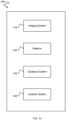
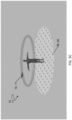
- Fig. 1A depicts a system 100 for imaging a subject, for example by total body photography (TBP) of the subject.
- System 100 comprises: imaging system 110, platform 120, guidance system 130, and analysis system 140.
- Imaging system 110 is carried by platform 120.
- Guidance system 130 controls platform 120.
- Imaging system 110 captures images and provides the images to analysis system 140.
- Analysis system 140 processes the images provided by imaging system 110.
- Imaging system 110 comprises one or more digital cameras.
- Example embodiments of digital cameras include:
- platform 120 may comprise a mount to retain the smartphone or tablet computer.
- platform 120 may comprise a light deflector, for example a mirror or a prism, to direct light to a digital camera of the smartphone or tablet computer.
- the light deflector may be configured to direct light perpendicular to the digital camera of the smartphone or tablet computer.
- the smartphone or tablet computer may be mounted to platform 120 with a face of the smartphone or tablet computer facing upward from the ground or downward towards the ground. Mounting a smartphone or tablet computer to platform 120 with a face of the smartphone or tablet computer facing upward from the ground or downward towards the ground may improve the stability of platform 120.
- Platform 120 may comprise a light deflector to direct light into the camera of the smartphone or tablet computer. The light deflector may direct light traveling horizontal to the ground into the camera of the smartphone or tablet computer.
- platform 120 comprises a propulsion system and is partially or entirely self-propelled by the propulsion system.
- guidance system may 130 control the propulsion system of platform 120.
- platform 120 is at least partially controlled by guidance system 130 controlling the propulsion system of platform 120.
- Example embodiments of platform 120 which comprise a propulsion system and are at least partially self-propelled include:
- platform 120 is partially or entirely propelled by a user. Where platform 120 is at least partially propelled by a user, guidance system 130 provides human perceptible instructions to the user for controlling platform 120.
- Human perceptible instructions provided by guidance system 130 may include audio and/or visual instructions, for example audio cues, light cues, synthesized speech, pre-recorded messages, text instructions, vibration feedback, and the like.
- Examples of platform 120 which are at least partially propelled by a user include:
- Imaging system 110 may further comprise a light source, for example one or more light emitting diodes, incandescent lamps, and/or fluorescent lamps.
- the light source of imaging system 110 may further comprise one or more filters configured to selectively transmit light of a certain polarity and/or spectrum.
- the filters may comprise one or more polarizing filters, and/or one or more optical filters.
- the light source and any other optical elements of imaging system 110 may be used by imaging system 110 to capture images, for example to illuminate a subject to photograph.
- platform 120 is integrated with imaging system 110, for example a UAV or a UGV with an integrated camera.
- imaging system 110 is removably mounted to platform 120, for example a a UAV or a UGV with a removably mounted smartphone.
- guidance system 130 may comprise one or more modules which control the movement, position, and/or orientation of platform 120.
- guidance system 130 is integrated with imaging system 110.
- imaging system 110 may comprise a smartphone and one or more modules of guidance system 130 may be implemented by the smartphone.
- the smartphone may be communicatively coupled to the platform by a wired interface, for example a Lightning TM or USB cable.
- the modules of guidance system 130 may be downloaded to the smartphone by downloading a mobile app.
- a mobile app is a software application designed to run on a smartphone.
- a mobile app may be downloaded from an app store, which is an online database of mobile apps.
- the smartphone may comprise a memory storing the mobile app.
- Guidance system 130 may control platform 120 to:
- guidance system 130 may comprise one or more systems which provide instructions to a user controlling platform 120. Instructions provided by guidance system 130 to control platform 120 may include:
- instructions provided by guidance system 130 to a user of platform 120 include audio cues
- providing the instructions may comprise playing a pre-recorded message, for example a message such as "lower the platform by one meter”, or "rotate the platform around the subject by 45 degrees”.
- platform 120 may comprise one or more visual outputs, for example a liquid crystal display (LCD) or a set of LEDs arranged around a periphery of platform 120.
- guidance system 130 may display instructions via the visual display.
- Example instructions displayed by the visual display may include:
- platform 120 comprises a smartphone or tablet computer
- audio instructions may be provided by a speaker of the smartphone and/or tablet computer
- visual instructions may be provided by a display of the smartphone and/or tablet computer.
- Guidance system 130 may also be in communication with imaging system 110 and control imaging system 110 to:
- guidance system 130 may determine and/or store:
- Guidance system 130 may comprise one or more modules including:
- Guidance system 130 may comprise one or more inputs, for example one or more sensors. Examples of sensors comprising guidance system 130 include:
- Analysis system 140 comprises one or more modules which may receive and/or analyze images from imaging system 110. Examples of modules of analysis system 140 include:
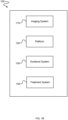
- Fig. 1B depicts a system 102 for administering photodynamic therapy to a subject.
- System 102 comprises: imaging system 110, platform 120, and guidance system 130, similar to system 100 described above.
- Treatment system 150 comprises one or more light sources configured to emit light for administering photodynamic therapy.
- treatment system 150 comprises one or more light emitting diodes (LEDs) for administering photodynamic therapy.
- LEDs light emitting diodes
- treatment system may be configured to administer photodynamic therapy according to a photodynamic therapy scheme.
- Treatment system 150 may be configured to generate the photodynamic therapy scheme at least in part based on:
- the photodynamic therapy prescription may comprise a photodynamic therapy region and a photodynamic therapy light dose.
- the photodynamic therapy region may correspond to a region of a subject, for example a lesion of a subject.
- the photodynamic therapy scheme generated by treatment system 150 may comprise a set of photodynamic control points, wherein each of the photodynamic control points comprises:
- the photodynamic control points may be generated by treatment system 150 by first determining the location and the orientation of platform 120 required to illuminate the photodynamic therapy region. Once the location and the orientation of platform 120 required to illuminate the photodynamic therapy region is determined, treatment system 150 may determine the illumination intensity and illumination time required to deliver the photodynamic therapy prescription to the photodynamic therapy region from the location and the orientation of platform 120.
- treatment system 150 may control platform 120 and direct platform 120 to each of the photodynamic therapy control points and control the light source of treatment system 150 to illuminate the photodynamic therapy region of the subject with light of the illumination intensity and for the illumination time.
- An aspect of the disclosure provides an UAV capable of acquiring high resolution two-dimensional (2D) and/or three-dimensional (3D) body surface images, including images of skin, hair, and nails.
- the UAV provides a low-cost solution for TBP that is suitable for indoor use at skin clinics, medical offices, hospitals, pharmacies, home, etc.
- An unmanned aerial vehicle (also known as a drone) is an aircraft without an onboard human operator.
- An UAV is typically one component of an UAV system, which includes the UAV, a controller, and a communication system between the UAV and the controller.
- An UAV may operate under remote control by a human operator or autonomously by one or more onboard computers.
- Images may be acquired by the UAV in 2D or 3D.
- the UAV is used to acquire 3D body surface images directly in 3D with a 3D camera, or by merging position-known 2D images acquired by navigating the UAV around an object to be imaged.
- the images may be a series of 2D or 3D images, which may be combined to form a 3D representation of the imaged body.
- the UAV includes a digital camera for acquiring images.
- the UAV may include one or more sensors, LED cross-polarized lighting, and/or an onboard computer system (i.e. hardware and software) capable of real-time image acquisition, storage, and/or analysis.
- the UAV may transmit images wirelessly to an external computer system to analyze the images acquired by the UAV.
- the position and/or location of the UAV may be determined in real-time.
- the UAV may be maneuvered automatically to specific locations to capture desired images. In this way, the UAV is capable of taking reproducible images. Such images are useful for TBP. When such images are taken over time, comparisons between such images may be further useful for TBP.
- the UAV includes means for stabilizing the UAV.
- the UAV may comprise one or more stability sensors such as gyroscopes and/or accelerometers to measure the tilt, rotation, and/or pitch of the UAV. Such measurements of tilt, rotation, and/or pitch may be used to stabilize the UAV.
- stability sensors such as gyroscopes and/or accelerometers to measure the tilt, rotation, and/or pitch of the UAV.
- Such measurements of tilt, rotation, and/or pitch may be used to stabilize the UAV.
- high quality images may be acquired. Such images may be useful for TBP.
- the UAV may be used to acquire full-body or partial-body surface images. Such images may be used and analyzed for automated screening of skin conditions, for example automated screening for skin cancer, pigmented lesions, and/or vascular lesions.
- the UAV may be used to analyze other skin conditions, such as acne, rashes and inflammatory diseases such as psoriasis or eczema.
- the UAV may be used to estimate the size and coverage of the disease area as well as to estimate the depth of the condition (for example wrinkles, raised lesions, wounds, etc.), to monitor a condition on different body parts, and/or to monitor treatment progress.
- the UAV may be used for cosmetic and/or plastic surgery applications and/or may be used by dermatologists, surgeons, general practitioners, nurses, photographers, and consumers/patients.
- the UAV may be used by a user to acquire an overview image of a patient's body or body part. In some embodiments, the UAV may be used to identify and image a body or body part, detect skin lesions in the acquired image, and label and place the lesions on a 2D or 3D body map.
- the UAV may be used to automatically identify areas of interest of the skin such as acne, rashes, psoriasis, eczema and wounds, and place them on a 2D or 3D body map for labelling, archiving and monitoring over time.
- the UAV may be used to analyze skin lesions on a real-time basis.
- Onboard and/or external computer systems may be used to instruct the UAV to reimage and/or get closer to a lesion to take higher quality images.
- the UAV is equipped with a dermoscope to take dermoscopy images.
- the dermoscopy images may be any combination of polarized/non-polarized/cross-polarized images.
- FIG. 2A depicts an embodiment of imaging system 110 and platform 120 comprising unmanned aerial vehicle (UAV) 200 and controller 202.
- UAV unmanned aerial vehicle
- UAV 200 comprises body 204 and rotors 206. UAV 200 is lifted and propelled by rotors 206.
- UAV 200 further comprises digital camera 208 and light source 210.
- Light source 210 is configured to illuminate a subject, and digital camera 208 is configured to capture one or more digital images of the illuminated subject.
- light source 210 emits polarized light.
- UAV 200 further comprises one or more sensors 212, transceiver 214, and onboard computer 216.
- Computer 216 comprises a memory and a processor.
- Computer 216 is communicatively coupled to digital camera 208, light source 210, sensors 212, and transceiver 214.
- Controller 202 comprises transceiver 218 and computer 220.
- Computer 220 comprises a processor and a memory storing software to be executed by the processor.
- UAV transceiver 212 and transceiver 218 are configured to wirelessly communicate with each other, for example by the MAVLink TM communication protocol.
- Sensors 212 may comprise one or more devices capable of measuring a parameter of the environment proximate UAV 200, for example one or more of: LIDAR sensors, infrared range sensors, digital cameras, ultrasonic range sensors, accelerometers and an indoor-GPS transmitter (described below).
- Computer 216 is configured to receive sensor data from sensors 212.
- Computer 216 may control rotors 206 in part based on sensor data received from sensors 212.
- computer 212 may control rotors 206 to navigate UAV 200 to avoid an obstacle, for example to avoid a wall, ceiling, floor, object or person.
- Computer 216 is configured to control transceiver 214 to transmit sensor data to controller 202 via transceiver 218.
- Computer 220 may be configured to receive sensor data from transceiver 218.
- Computer 220 is configured to control UAV 200, and control transceiver 218 to transmit commands to UAV 200 via transceiver 214.
- Computer 216 may receive commands from transceiver 214 and control rotors 206 to navigate UAV according to the command.
- Computer 220 may generate commands for controlling UAV 200 based in part on one or more of: received sensor data, stored images, and user input. For example, computer 220 may generate one or more commands to:
- Computer 216 may be configured to control transceiver 214 to transmit digital images generated by digital camera 208 to controller 202 via transceiver 218.
- Computer 216 may be configured to store digital images generated by digital camera 208 in a memory, for example a flash memory card.
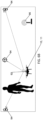
- Fig. 2A depicts an example method 201 performed by UAV 200 and controller 202 for photographing a subject.
- the subject Prior to performing method 201, the subject may be positioned in a pre-determined location.
- the subject may be a person, and the person may be instructed to stand in a specified location with a specified posture.
- the person may stand upright with their feet placed on a specific location and with their hands grasping handles fixed proximate the specific location.
- Method 201 comprises:
- the location of UAV 200 may be determined in step 232 for example by UAV photographing at least one marker in a network of markers, and computer 220 determining the location of UAV 200 from the photographed marker, as described below.
- the position of UAV 200 may be stored in the memory of computer 220.
- the position of UAV 200 may be represented by a location vector representing a direction and distance from a certain location. For example, one marker in the network of markers may be designated as a prime marker, and all other location vectors may represent a direction and distance from the prime marker.
- the orientation of UAV 200 may be determined in step 232 by determining an orientation of the photographed marker.
- computer 220 may determine a rotation of the photographed marker from an orientation of a known marker. For example, computer 220 may determine that a photographed marker is rotated a certain degree from a known marker. If digital camera 208 is mounted at a known position on UAV 200, then the orientation of UAV 200 can be determined from the certain degree of rotation of the photographed marker.
- a known marker may have a known orientation relative to the prime marker.
- Computer 220 may determine a rotation of a photographed marker relative to the known marker, and thereby determine a rotation of the photographed marker relative to the prime marker.
- Computer 220 may then determine a rotation of UAV 200 relative to the prime marker from the rotation of the photographed marker relative to the prime marker.
- the location and orientation of the subject may be determined in step 234 by positioning and orientating the subject in a pre-determined location, and storing the pre-determined location of the subject in the memory of computer 220.
- the subject is a person
- the person may be positioned by standing on a certain marker, designated a subject marker, in the network of markers.
- Computer 220 may store the position of the subject marker as a location vector representing a direction and a distance from the prime marker.
- the person may be positioned at the subject marker in a certain orientation by having the person assume a certain posture at the subject marker. For example, the person may be instructed to: stand, sit or lie down, and/or grasp a handle fixed proximate the subject marker, and/or arrange their limbs in a certain manner. For example, the person may be instructed to stand upon the subject marker with their body erect and with their hands at their sides.
- the person to be photographed may be instructed to assume a posture at the subject marker corresponding to a position and an orientation of a representative person.
- Computer 220 may store a position and an orientation of the representative person as a three dimensional (3D) model.
- the 3D model of the representative person may represent the position of major features of the representative person.
- the 3D model may include location vectors for each of the representative person's major body parts.
- Such major body parts may include the representative person's head, chest, arms and legs.
- the body part location vectors may be represented as location vectors relative to the prime marker.
- the one or more images of the subject may be received in step 236 by computer 220 retrieving the images from the memory of computer 220. Such images may have been captured previously by UAV 200.
- the images may include associated metadata, for example one or more photography parameters (described below) and a location and/or orientation of UAV 200 used to capture an image.
- the location and/or orientation of UAV 200 may be represented as a location vector indicating a direction and distance from the prime marker.
- Step 238 may comprise generating a photography scheme based at least in part on:
- the photography scheme comprises a set of photography control points, each of the photography control points comprise:
- the one or more photography parameters may include one or more of: a shutter speed; an aperture size; a focal length; an ISO sensitivity; and an illumination level.
- computer 220 may determine a number of images required of the subject. For example, computer 220 may determine that thirty images of the subject are required, where ten images are taken at a first elevation, ten images are taken at a second elevation greater than the first elevation, and ten images are taken at a third elevation greater than the second elevation. Each of the ten images at each elevation may be separated by an equal angle about the subject.
- a first image may be taken at a starting position
- a second image may be taken at a second position 36° around the subject from the starting position
- a third image may be taken at a third position 72° around the subject from the starting position
- each image being taken at a position (n ⁇ 36°) around the subject from the starting position, where n is an index identifying the image with 0 ⁇ n ⁇ 9 in this example.
- computer 220 may determine the photography control points required to capture each of the required images. For example, computer 220 may determine a position and an orientation of drone 200 required to capture each of the thirty images referenced above. To determine the position and orientation of drone 200 required to capture each image, computer 220 may determine a distance from the subject for each image. The distance from the subject for each image may be represented as an image vector with a direction and distance from the subject marker. The set of image vectors may then be used to generate the set of photography control points specifying the location and orientation of UAV 200 required to capture each of the required images.
- Computer 220 may generate one or more photography parameters for each of the photography control points. For example, computer 220 may set a focal length and an aperture size of a photography control point to capture a certain depth of field a certain distance from drone 200.
- the distance of the depth of field from drone 200 may be approximately equal to a distance from the subject to drone 200 when drone 200 is at the location and orientation of the respective photography control point.
- the depth of field may be approximately equal to the depth of the subject. In some embodiments the depth of field may be 1 meter.
- Computer 220 may also set a shutter speed and ISO sensitivity for each of the photography control points.
- Computer 220 may set the shutter speed and ISO sensitivity of a photography control point as a function of the focal length and aperture size of the photography control point.
- computer 220 may set the shutter speed and ISO sensitivity of a photography control point to produce a certain exposure level.
- An exposure level approximates the amount of light reaching digital camera 208, which affects the brightness of an image captured by digital camera 208.
- Computer 220 may modify the photography control points based on one or more previous images of the subject. For example, computer 220 may determine that a previous image of the subject was taken by drone 200 at a certain location and with a certain orientation. Determining the location and orientation of drone 200 used to capture the previous image may comprise reading metadata associated with the previous image. Computer 220 may then select one of the photography control points with the nearest position and orientation to the position and orientation of the previous image, and modify the location and orientation of the selected photography control point to more closely match the position and orientation of the previous image.
- Computer 220 may modify the photography control points based on one or more previous images of the subject by adding a photography control point.
- the added photography control point may have the same location, orientation, and photography parameters as the location, orientation, and photography parameters of a previous image of the subject.
- a user may select a previous image of the subject to be reproduced.
- the user may select the previous image from a database of previous images using an interface of computer 220.
- Computer 220 may then add a photography control point with the same location, orientation, and photography parameters as the location, orientation, and photography parameters of the selected image of the subject.
- Controlling UAV 200 according to the photography scheme in step 240 may comprise controller 202 determining commands to navigate UAV 200 between a current position and orientation of UAV 200 and a position and an orientation of one of the photography control points, and controlling UAV 200 to navigate UAV 200 to one of the photography control points.
- the commands determined by controller 202 may include commands to operate the rotors of UAV 200 to navigate UAV 200.
- controller 202 may increase power to one or more of the rotors of UAV 200 to move UAV 200 in a certain direction.
- controller 202 may control digital camera 208 to capture a photograph according to one or more photography parameters associated with the one of the photography control points.
- Computer 220 may modify one or more photography control points based on sensor data acquired while controlling UAV 200 according to the photography scheme in step 240.
- sensors 212 may comprise a LIDAR sensor configured to measure a distance from UAV 200 to the subject. Once UAV 200 is at a photography control point, the LIDAR sensor may determine a distance between UAV 200 and the subject.
- Computer 220 may then modify one or more photography parameters of the photography control points based on the distance between UAV 200 and the subject. For example, computer 220 may determine an aperture size and/or focal length required to capture an image of the subject at the distance between UAV 200 and the subject. Computer 220 may then modify the aperture size and/or focal length of the photography control point according to the determined aperture size and/or focal length.
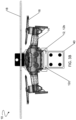
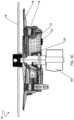
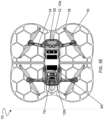
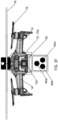
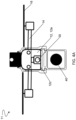
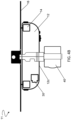
- UAV 10 according to an example embodiment of the present disclosure is shown in FIGS. 3A-3E .
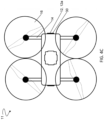
- An alternative embodiment, UAV 11, is shown in FIGS. 4A-4D .
- Many features and components of UAV 10 are similar to features and components of UAV 11, with the same reference numerals being used to indicate features and components that are similar between the embodiments.
- UAV 10, 11 is used to capture images and may be employed in a variety of indoor or outdoor applications. In some embodiments, UAV 10, 11 is used to capture images of a subject. For example, UAV 10, 11 may be used to capture images of a patient's body or part thereof. The captured images may be used to detect, monitor, diagnose, and monitor treatment of skin, hair, and/or nail features, conditions, and/or diseases.
- UAV 10, 11 may be used indoors, for example in healthcare, professional offices, hospitals, private homes, etc.
- UAV 10, 11 is a multirotor drone that is lifted and propelled by rotors (i.e. horizontally-oriented propellers).
- UAV 10, 11 comprises a quadcopter having a body 12, four arms 14 extending outwardly from the body, and a rotor 16 coupled to each arm.
- UAV 10, 11 may comprise any number of rotors capable of lifting and propelling UAV 10, 11.
- UAV 10, 11 may comprise one or more rotor guards.
- UAV 10 comprises rotor guard 18 sized and positioned above rotors 16 to protect the rotors and/or to prevent rotors 16 from causing damage should the UAV collide with a user, bystander, and/or other object.
- UAV 10, 11 may comprise three, four, or more coaxial rotors capable of lifting and propelling UAV 10, 11.
- UAV 10, 11 comprises imaging system 20.
- Imaging system 20 includes at least one camera 30 and at least one light source 40.
- camera 30 houses at least one light source 40.
- camera 30 is mounted to a front surface 12a of body 12 and light source 40 is mounted to a bottom surface 12c of body 12.
- Camera 30 and/or light source 40 may be mounted on alternative positions of body 12.
- camera 30 and/or light source 40 is mounted on body 12 using a gimbal (not shown).
- the gimbal may permit camera 30 and/or light source 40 to pivot about one, two, or three axes.
- the gimbal may permit camera 30 to pivot about one, two, or three axes to reduce the effect of propeller vibration on image quality and/or to orient camera 30 for capturing an image.
- Camera 30 is a digital camera that captures high-quality images.
- High-quality images may be images with a resolution of at least 12-megapixels.
- images are captured and stored in the digital memory (e.g. SD card) of camera 30 and/or are captured and wirelessly transmitted to external memory of cloud computing or other external computing devices via WiFi, satellite, and/or mobile connection.
- One or more photography parameters of camera 30 such as shutter speed, aperture length, focal length and ISO sensitivity, may be selected such that a desired magnification of an object with minimal optical distortion is acquired.
- the focal length of camera 30 is between about 15 and about 35 mm and/or the optical magnification of camera 30 is between about 1.5x and 2x.
- camera 30 comprises a 12-megapixel CMOS sensor and 24 mm f/2.8 lens with a 35 mm-equivalent focal length.
- Imaging system 20 may comprise one or more optical elements, such as lenses, films, filters, diffusers, and polarizers (e.g. linear polarizers, circular polarizers, etc.) for improving image quality and/or for acquiring magnified images.
- Imaging system 20 may comprise a plurality of lenses.
- Each lens (not shown) may for example comprise a double-convex lens, a plano-convex lens, a Fresnel lens, a doublet lens, an achromatic lens, or a meniscus lens.
- Each lens may be coated with an anti-reflection coating to improve image quality.
- imaging system 20 comprises one or more filters (not shown).
- the one or more filters may be used to filter and/or polarize the light emitted by imaging system 20 and/or the light that is reflected by an object or patient to be imaged.
- the one or more filters may be used to achieve cross polarization for improving image quality.
- imaging system 20 comprises multiple cameras having different optical specifications.
- fig. 3F depicts an embodiment of imaging system 20 comprising a first camera 40a to take overview images of a first image quality, a second camera 40b that has an optical zoom to take images of a second image quality, and a third camera 40c to take dermoscopic images.
- the quality of an image may be the resolution of the image.
- the photography parameters may include which camera is used to capture a certain image.
- Light source 40 may comprise one or more optical elements, such as films, filters, diffusers, and polarizers (e.g. linear polarizers, circular polarizers, etc.) for improving image quality and/or for acquiring magnified images.
- light source 40 includes one or more filters (not shown). The one or more filters may be used to filter and/or polarize the light emitted by light source 40. In some embodiments, the one or more filters may be used to achieve cross polarization.
- light emitted by imaging system 20 and/or light source 40 illuminates skin to be imaged.
- Light is reflected by the skin as specular reflection and/or by diffuse reflection.
- Light rays that are reflected from the surface of an object via specular reflection may create glare in the acquired image. Specular reflected light often causes the imaged skin to appear shiny. Specular reflected light interferes with the acquisition of an image showing detailed features of the skin. Specular reflected light tends to have substantially the same polarization as the incident light emitted by UAV 10, 11.
- diffused light is not polarized. Since skin is partially translucent, some light hitting the surface of the skin is reflected as diffuse light by the skin's deeper layers. Diffuse light may contain useful information about the skin and its features.
- diffused reflected light passes through one or more filters (not shown).
- the one or more filters may be used to substantially block specular reflected light rays and/or remove glare and/or acquire a digital image of a feature below the surface of skin.
- a first filter is a linear polarizer
- a second filter may be set with its polarization axis rotated 90° relative to that of the first filter. If the first filter is a circular polarizer that polarizes light in the clockwise direction, then to block specular reflected light rays, the second filter can be a circular polarizer that polarizes light in the counter clockwise direction. If the first filter is a circular polarizer that polarizes light in the counter clockwise direction, then to block specular reflected light rays, the second filter can be a polarizer that polarizes light in the clockwise direction.
- imaging system 20 and/or light source 40 may include a filter (not shown) for providing structured precision lighting to an object to be imaged.
- Structured lighting may assist in determining a depth of an imaging subject.
- Structured precision lighting may include emitting light in a known pattern, for example a regular grid of light. When such emitted light is reflected by an object and captured in an image, the imaged grid may be compared to the emitted grid to determine a depth of the imaging subject.
- UAV 10, 11 may be used to administer photodynamic therapy.
- light source 40 may emit ultraviolet (UVA and/or UVB) light.
- UVA and/or UVB ultraviolet light
- Such embodiments may be used to reduce the symptoms of psoriasis (e.g. skin pigmentation caused by sun damage).
- UVB light may penetrate the skin of a subject and slow the growth of affected skin cells.
- Such phototherapy with UVB light may involve exposing a subject's skin to a UVB light source for a set length of time for a set period of time.
- a patient may be treated by photodynamic therapy according to a photodynamic treatment scheme.
- System 20 may be configured to generate a photodynamic treatment scheme according to imaging of the subject.
- UAV 10, 11 further comprises a guidance system.
- the guidance system may comprise an indoor global positioning (indoor-GPS) system.
- the indoor-GPS system may provide accurate location data (e.g. within about 2 cm) for UAV 10, 11.
- the indoor-GPS system comprises a transmitter mounted to UAV 10, 11 and a network of stationary receivers (i.e. stations) positioned on the ground and/or walls about an object to be imaged by UAV 10, 11.
- the transmitter mounted to UAV 10, 11 and network of stationary receivers are in communication via a radio interface.
- the indoor-GPS system is used to determine the location of UAV 10, 11 while moving or stationary by using multiple ranges (i.e. distances) between UAV 10, 11 and the receivers which are positioned at known locations.
- FIGS. 3A-4D illustrate an example embodiment of a localization module of guidance system 130 comprising an indoor-GPS, wherein the indoor-GPS comprises markers of known locations and camera 70 .
- Camera 70 is mounted to bottom surface 12c of body 12 and oriented toward the ground. A network of markers is placed on the ground in view of camera 70.
- Camera 70 is positioned and oriented to acquire images of the network of markers positioned on the ground about an object.
- Camera 70 is a digital camera that is used to capture real-time images and/or video of the markers. Real-time images and/or video may be captured, stored, processed, and analyzed in the digital memory (e.g. SD card) of UAV 10, 11 and/or are wirelessly transmitted to an external computing system via WiFi, satellite, and/or mobile connection.
- the computing system then stores, processes, and analyzes the images and/or video to determine a position of UAV 10, 11.
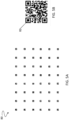
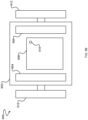
- FIGS. 5A-5B illustrate a network of markers 80 of a localization module according to an example embodiment.
- Network of markers 80 comprises multiple markers 82 arranged in a grid pattern.
- network 80 comprises a 8 x 6 grid of markers 82 spaced an equidistance apart from one another.
- network 80 may comprise any arrangement and configuration of markers 82 provided that the location of each marker is known.
- Each marker 80 in the network of markers 82 has a distinct pattern.
- each marker 80 may comprise a distinct black and white pattern.
- Camera 70 may provide real-time images and/or a video stream of network 80 to an external computer system to estimate the position of UAV 10, 11.
- Provided camera 70 is able to image at least one marker 82, the position of UAV 10, 11 may be estimated.
- UAV 10, 11 can detect and recognize at least four markers 82.
- UAV 10, 11 is configured to adjust a height (altitude) at which UAV 10, 11 is flying to maintain a certain number of markers 82 in view of camera 70. In some embodiments, UAV 10, 11 must be at least about 30 cm above network 80 to detect at least four markers 82.
- UAV 10, 11 uses camera 70 to detect and identify markers 82 of network 80.
- camera 70 automatically extracts contour and/or filters acquired images.
- contour extraction and filtering is performed by an external computer and image data is transmitted from camera 70 via WiFi, satellite, and/or mobile connection.
- each marker 82 comprises a unique ArUco code or QRCode as shown in FIG. 5B .
- An ArUco code or QRCode consists of black squares arranged in a square grid on a white background, a photograph of which can be captured by an imaging device (e.g. camera 70). The arrangement of black squares in the ArUco code or QRCode may then be extracted from the imaged marker to match the imaged marker with a marker in a database of known markers and marker locations. The matched marker may then be used to determine the position of UAV 10, 11 relative to the ArUco codes.
- a localization module may capture images of network 80, and detect contours from the images of network 80. Contours in the images indicate the presence of squares, and therefore markers 82, in the images. Images lacking contours may be rejected from further processing.
- the black and white squares in each image may then be identified by dividing the image into cells using horizontal and vertical grid lines. Depending on the amount of black or white pixels present in each grid region, each grid region is then assigned a value of 0 (white) or 1 (black) (or vice versa).
- the resulting pattern of black and white regions in each image is then compared to a database of black and white regions for known markers 82 in the network 80 of markers, and the image may be matched to a known marker.
- the position of UAV 10, 11 may then be determined from the position of the known marker.
- the position of UAV 10, 11 may be represented as a translation vector from the known marker, where the translation vector represents a direction and distance of UAV 10, 11 from the known marker.
- four markers 82 may be imaged, and the position of camera 70 may be taken as an average of the positions computed according to each detected marker 82.
- an adaptive threshold may be used to permit marker detection in poor light conditions. For example, if less than a threshold number of pixels in an image are designated as white pixels, then a threshold illumination level for identifying a pixel as white may be lowered. Similarly, if more than a threshold number of pixels in an image are designated as black pixels, then a threshold illumination level for identifying a pixel as black may be increased.
- FIGS. 6A-6B illustrate an indoor-GPS 90 according to an example embodiment.
- Indoor-GPS 90 comprises a transmitter 92 mounted to UAV 10, 11, at least one receiver 94, and a modem 96.
- transmitter 92 is mounted to a top surface 12d of body 12 to decrease propeller noise and/or increase the accuracy of navigation.
- Transmitter 92 may be mounted to alternative positions of body 12 provided UAV 10, 11 (and the parts thereof) do not obscure or weaken the strength of the signal emitted by transmitter 92 to a level which cannot be received by receivers 94.
- receivers 94 have an unobstructed line of sight to transmitter 92.
- Transmitter 92 emits a signal periodically to provide geolocation and time information to receivers 94. In some embodiments, transmitter 92 emits a signal every 0.1 seconds to 5 seconds. In some embodiments, transmitter 92 emits a signal every 2 seconds.
- a time between when transmitter 92 transmits a signal and when each of receivers 94 receive the signal is proportional to the distance from transmitter 92 to each of receivers 94.
- Such time delay between transmission of the signal and reception of the signal by each of receivers 94 may be used to determine the position of transmitter 92, and thereby the position of UAV 10, 11.
- receivers 94 determine a position of transmitter 92 by computing one or more navigation equations (e.g. a trilateration algorithm) to determine the position of transmitter 92.
- indoor-GPS 90 comprises four receivers 94 configured to measure four time delays for a signal transmitted by transmitter 92.
- the four time delays are used to compute a system of four equations, wherein the four equations represent three position coordinates and a clock deviation. The clock deviation may be used to correct for clock deviations between receivers 94.
- indoor-GPS 90 may be configured to autonomously determine a position of each of receivers 94 and determine a map of receivers 94.
- Indoor-GPS 90 may determine a location of receivers 94 by each of receivers 94 emitting a signal which is then received by each other of receivers 94.
- Indoor-GPS 90 may then determine a position of each of receivers 94 similar to determining the position of transmitter 92 described above.
- a map of receivers 94 may then be determined from the position of each of receivers 94.
- the map of receivers 94 may be stored in the memory of a modem 96.
- FIG. 6A comprises four receivers 94, more or fewer receivers may be used.
- One or more receivers 94 may be mounted to one or more walls and/or the ceiling inside a confined space.
- a receiver 94 is mounted to each of the four walls of a rectangular room.
- the configuration of the walls may take on other geometric shapes (e.g. triangular, square, etc.).
- guidance system 130 uses a library such as the Open Computer Vision (OpenCV TM ) for human body skeleton detection and tracking.
- the input to guidance system 130 may be a video stream, for example a video stream from imaging system 110.
- the input video stream is processed frame by frame.
- a plurality of major body joints of a subject being imaged are identified and tracked by guidance system 130.
- a skeletal model is then generated from the identified major body joints.
- the skeletal model may then be used by guidance system 130 to control platform 120, for example to align platform 120 and imaging system 110 with an area of interest of a subject.
- the area of interest may then be imaged using imaging system 110.
- guidance system 130 may compensate for unintentional subject movement during an imaging session, and/or between imaging sessions.
- UAV 200, 10, 11 comprises one or more laser sensors to prevent collision of UAV 200, 10, 11 with other objects.
- the one or more laser sensors detect objects proximate the UAV 200, 10, 11. If an object is detected within an threshold distance of UAV 200, 10, 11, UAV 200, 10, 11 may autonomously navigate to avoid a collision with the detected object.
- UAV 200, 10, 11 may stop or hold position when an object is detected within a threshold distance of UAV 200, 10, 11.
- UAV 200, 10, 11 comprises one or more laser sensors for determining the height of the UAV relative to the ground.
- Analysis system 140 may comprise computer software to acquire, store, process, manage, and/or manipulate digital images.
- the software may be stored on UAV 200, 10, 11, a mobile device carried by UAV 200, 10,11, and/or a computer in communication with UAV 200, 10, 11, for example computer 220.
- the software may be used to improve image quality.
- the software may be used to control illumination and/or colour, bring an object to be imaged into focus, and/or correct image defects (for example, by making corrections for artifacts such as oil or gel bubbles, hair, and/or shadows).
- the software may use a graphics processing unit and/or central processing unit to process images in real-time.
- the software may be used to label, archive, monitor, and/or analyze skin features including, but not limited to, lesions, psoriasis, eczema, wounds, and wrinkles.
- the software may be used to monitor changes in the height, diameter, and/or pigmentation of such skin features by comparing two or more digital images acquired at different times.
- the appearance and/or disappearance of skin features may be monitored over subsequent images.
- the software is configured to process image data to calculate an ABCD (i.e. "Asymmetry, Border, Colors, and Dermoscopic structures") score and/or other conventional dermoscopic criteria.
- ABCD i.e. "Asymmetry, Border, Colors, and Dermoscopic structures”
- Such processing may be used to analyze skin lesions such as pigmented and non-pigmented lesions.
- the automated analysis of the data captured may be used to determine if a lesion is prone to be benign or malignant growth and if further treatment and examination is recommended.
- the software may also recommend a personalized skin care and/or treatment plan.
- the software can also generate a report to be sent to a specialist for further examination and monitoring.
- the software may provide a database of images for comparison and diagnostic purposes. Diagnosis may be performed automatically by the software and/or performed by a user or the user's physician.
- UAV 200, 10, 11 may be configured to capture multiple images of an object from different viewpoints to construct a three-dimensional (3D) reconstruction of the object.
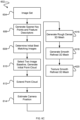
- Fig. 6C depicts an example embodiment of 3D reconstruction method 602.
- the input of 3D reconstruction algorithm 602 is a set of images 604 captured from different angles with varying degree of overlap.
- first step 606 of the 3D reconstruction algorithm a set of sparse key points is generated for each image in the set of overlapping images, and a set of feature descriptors (compact numerical representations) is generated from the set of sparse key points.
- the sparse key points may comprise corner points determined using one or more methods described in U.S. Patent 6,711,293 titled Method and apparatus for identifying scale invariant features in an image and use of same for locating an object in an image, or in Fast explicit diffusion for accelerated features in nonlinear scale spaces by Pablo F Alcantarilla, Jes ⁇ s Nuevo, and Adrien Bartoli. (Trans. Pattern Anal. Machine Intell, 34(7):1281-1298, 2011 .
- photometric matches between each image are determined based on a number of feature descriptors in common between two images.
- An Euclidean distance from each feature descriptor to each other feature descriptor is determined, and the Euclidean distances are compared to determine an initial set of photometric matches comprising the best matching images.
- step 610 two images are selected from the initial set of best matching images as an initial baseline from which to construct an initial sparse 3D point-cloud.
- the two initial images may be selected based on a number of corresponding feature descriptors.
- the initial sparse 3D point-cloud is then iteratively extended by adding images from the set of images by using pose estimation and triangulation, for example using an incremental structure from motion (SfM) algorithm.
- SfM incremental structure from motion
- Key point matches may be removed which have similar descriptors but are incorrect in their geometric location with respect to other key point matches.
- the position of the camera in space may be estimated in step 614, for example by using a method described in Adaptive structure from motion with a contrario model estimation by Pierre Moulon, Pascal Monasse, and Renaud Marlet. (ACCV, 2012 ).
- a rough dense 3D mesh may be generated in step 616.
- a smooth refined 3D mesh may then be generated from the rough dense 3D mesh in step 618.
- the smooth refined 3D mesh is textured in step 620 using the initial set of imaged to generate a textured 3D model.
- the dense point-cloud may be generated according to a method described in PatchMatch: A randomized correspondence algorithm for structural image editing by Barnes, C., Shechtman, E., Finkelstein, A. and Goldman, D.B.. (ACM Transactions on Graphics (ToG), 28(3), 2009 ).
- the smooth refined 3D mesh may be generated according to a method described in High accuracy and visibility-consistent dense multiview stereo by Vu, H.H., Labatut, P., Pons, J.P. and Keriven, R. (IEEE transactions on pattern analysis and machine intelligence, 34(5 )).
- the UAV 200, 10, 11 may acquire an image of a skin lesion of a subject and map the lesion image to a previously identified skin lesion on a body map of the subject.
- UAV 200, 10, 11 may use automated or supervised pattern-matching to map the skin lesion in the image to a previously identified skin lesion.
- the image may be a lower quality overview image acquired using a digital camera, or higher quality dermoscopy image acquired using a dermoscope.
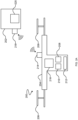
- FIG. 7A is a schematic top view of an embodiment of system 100 comprising an unmanned ground vehicle (UGV) 700
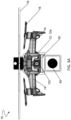
- Fig. 7B is a schematic front view of UGV 700.
- UGV 700 comprises body 710.
- UGV 700 is propelled by two or more wheels 720.
- Wheels 720 are powered by one or more motors 730 mounted to body 710.
- UGV 700 further comprises a guidance system.
- the guidance system comprises an indoor global positioning system (indoor-GPS).
- the indoor-GPS may provide accurate location data for UGV 700, similar to the indoor-GPS system of UAV 10, 11 as described above.
- UGV 700 further comprises digital camera 740, light source 750, sensors 760, and controller 770.
- Controller 770 is communicatively coupled to digital camera 740, light source 750, sensors 760, and motors 730.
- FIG. 7 illustrates an embodiment of UGV 700 wherein sensor 760 comprises a camera 761 of the localization module. Camera 761 is positioned and oriented to acquire images of a network of markers positioned on the ground about an object.
- Light source 750 is configured to illuminate a region proximate to UGV 700, and digital camera 740 is configured to capture images of subjects illuminated by light source 750.
- UGV 700 may comprise a mount configured to receive a computing device comprising an imaging system, for example a tablet computer comprising a camera such as an Apple iPad TM .
- FIG. 8 is a schematic view of an embodiment of system 100 comprising circular stand 800.
- Circular stand 800 comprises body 810 mounted on pedestal 820.
- Pedestal 820 is mounted to track 830.
- Track 830 follows a substantially circular path about center 840.
- Pedestal 820 comprises motor 822 for propelling pedestal 820 along track 830.
- Digital camera 850, light source 860, and sensors 870 are mounted on body 810.
- Light source 860 is configured to illuminate a subject located at center 840
- digital camera 850 is configured to photograph a subject at center 840 illuminated by light source 860.
- Circular stand 800 is communicatively coupled to control system 880.
- Control system 880 may be communicatively coupled by a wired and/or wireless connection to digital camera 850, light source 860, sensors 870, and motor 822.
- Control system 880 receives sensor data from sensors 870 and digital images from camera 850.
- Control system 880 may receive user input, and/or access stored digital images. Stored digital images may include digital images previously taken of a subject.
- Control system 880 controls circular stand 800 based on one or more of: sensor data received form sensors 870, digital images received from digital camera 850, user input, and stored digital images.
- FIG. 9A depicts a schematic view of an embodiment of imaging system comprising flash light case 900.
- a flash light case is hand-held device comprising one or more light sources and a mount for an imaging device.
- the light sources of the flash light case are configured to illuminate a region proximate the flash light case, and the mount of the flash light case is configured to orientate an imaging device towards the region illuminated by the light sources when an imaging device is mounted on the mount.
- Flash light case 900 comprises body 902, light source 904 and mount 906.
- Light source 904 and mount 906 are attached to body 902.
- Mount 906 is configured to receive a computing device comprising an imaging system, for example a tablet computer comprising a camera such as an Apple iPad TM .
- Flash light case 910 further comprises handles 912 attached to body 902. Handles 912 support body 902. Handles 912 are configured to be grasped by a user of flash light case 910.
- FIG. 9B depicts computing device 908 received by mount 904.
- Computing device 908 comprises digital camera 910.
- digital camera 910 is oriented towards a subject illuminated by light source 904.
- grasping handles 912 a user may move flash light case 900 about a subject, and orientate light source 904 and a digital camera 910 relative to the subject.
- Computing device 908 may be configured to provide commands to a user of flash light case 910 for moving flash light case 910 and controlling digital camera 910. For example, computing device 908 may generate a command to move flash light case 910 to orientate digital camera 910 relative to a feature of a subject, and photograph the feature with digital camera 910.
- Software and other modules may reside on servers, workstations, personal computers, tablet computers, image data encoders, image data decoders, PDAs, color-grading tools, video projectors, audio-visual receivers, displays (such as televisions), digital cinema projectors, media players, and other devices suitable for the purposes described herein.
- aspects of the system can be practised with other communications, data processing, or computer system configurations, including: Internet appliances, hand-held devices (including personal digital assistants (PDAs)), wearable computers, all manner of cellular or mobile phones, multi-processor systems, microprocessor-based or programmable consumer electronics (e.g., video projectors, audio-visual receivers, displays, such as televisions, and the like), set-top boxes, color-grading tools, network PCs, mini-computers, mainframe computers, and the like.
- PDAs personal digital assistants
- wearable computers all manner of cellular or mobile phones
- multi-processor systems e.g., microprocessor-based or programmable consumer electronics (e.g., video projectors, audio-visual receivers, displays, such as televisions, and the like), set-top boxes, color-grading tools, network PCs, mini-computers, mainframe computers, and the like.
Landscapes
- Health & Medical Sciences (AREA)
- Life Sciences & Earth Sciences (AREA)
- Engineering & Computer Science (AREA)
- Physics & Mathematics (AREA)
- Remote Sensing (AREA)
- Radar, Positioning & Navigation (AREA)
- Biomedical Technology (AREA)
- General Health & Medical Sciences (AREA)
- Public Health (AREA)
- Biophysics (AREA)
- Pathology (AREA)
- Animal Behavior & Ethology (AREA)
- Veterinary Medicine (AREA)
- Heart & Thoracic Surgery (AREA)
- Surgery (AREA)
- Molecular Biology (AREA)
- Medical Informatics (AREA)
- General Physics & Mathematics (AREA)
- Computer Networks & Wireless Communication (AREA)
- Dermatology (AREA)
- Acoustics & Sound (AREA)
- Nuclear Medicine, Radiotherapy & Molecular Imaging (AREA)
- Radiology & Medical Imaging (AREA)
- Aviation & Aerospace Engineering (AREA)
- Automation & Control Theory (AREA)
- Electromagnetism (AREA)
- Studio Devices (AREA)
Claims (13)
- Ein Verfahren zum Fotografieren von mindestens einem Teil eines Subjekts mit einer Plattform, die ein Bildgebungssystem trägt, wobei das Subjekt eine Person ist, wobei das Verfahren umfasst:Erzeugen eines Fotografie-Schemas, wobei das Fotografie-Schema einen Satz von Fotografie-Kontrollpunkten aufweist, wobei jeder der Fotografie-Kontrollpunkte aufweist:einen Ort der Plattform relativ zu einem repräsentativen Subjekt, wobei das repräsentative Subjekt eine repräsentative Person ist;eine Orientierung der Plattform relativ zu dem repräsentativen Subjekt; undeinen oder mehrere Fotografie-Parameter; gekennzeichnet durchAnweisen des Subjekts, eine Position und eine Orientierung des repräsentativen Subjekts einzunehmen;Bestimmen eines Ortes und einer Orientierung des Subjekts, wobei das Bestimmen des Ortes und der Orientierung des Subjekts ein Abrufen eines Ortes und einer Orientierung des repräsentativen Subjekts umfasst;Bestimmen eines Ortes und einer Orientierung der Plattform, die das Bildgebungssystem trägt;Navigieren der Plattform zu jedem der Fotografie-Kontrollpunkte und Betreiben des Bildgebungsystems zum Erfassen eines Bildes des Subjekts an jedem der Fotografie-Kontrollpunkte gemäß den assoziierten Fotografie-Parametern;wobei das Erfassen eines Bildes des Subjekts an jedem der Fotografie-Kontrollpunkte ein Bestimmen einer Position und einer Orientierung der Plattform an jedem der Fotografie-Kontrollpunkte wenigstens teilweise basierend auf dem Ort und der Orientierung des Subjekts umfasst.
- Das Verfahren gemäß Anspruch 1, wobei das Erzeugen des Fotografie-Schemas basierend wenigstens teilweise auf dem Ort und der Orientierung des Subjekts umfasst:Bestimmen einer Distanz zwischen dem Subjekt und der Plattform für jeden der Fotografie-Kontrollpunkte; undBestimmen einer Orientierung der Plattform relativ zu dem Subjekt für jeden der Fotografie Kontrollpunkte.
- Das Verfahren gemäß einem der Ansprüche 1 und 2, umfassend:Empfangen eines zuvor erfassten Bildes des Subjekts;Bestimmen von einem oder mehreren Fotografie-Parametern, die mit dem zuvor erfassten Bild assoziiert sind; undwobei das Erzeugen des Fotografie-Schemas ein Erzeugen von einem oder mehreren Fotografie-Kontrollpunkten mit Fotografie-Parametern umfasst, die den Fotografie-Parametern gleichen, die mit dem zuvor erfassten Bild assoziiert sind.
- Das Verfahren gemäß Anspruch 3, umfassend:Bestimmen eines Ortes und einer Orientierung der Plattform relativ zu dem Subjekt, das mit dem zuvor erfassten Bild assoziiert ist; undwobei das Erzeugen des Fotografie-Schemas ein Erzeugen eines Fotografie-Kontrollpunkts mit Folgendem umfasst:einem Ort der Plattform relativ zu dem Subjekt, der dem Ort der Plattform relativ zu dem Subjekt gleicht, das mit dem zuvor erfassten Bild assoziiert ist; undeiner Orientierung der Plattform relativ zu dem Subjekt, die der Orientierung der Plattform relativ zudem Subjekt gleicht, das mit dem zuvor erfassten Bild assoziiert ist.
- Das Verfahren gemäß Anspruch 1, wobei das Bestimmen des Ortes und der Orientierung des Subjekts umfasst:Erfassen von einem oder mehreren Bildern des Subjekts mit dem Bildgebungssystem; undBestimmen des Ortes und der Orientierung des Subjekts anhand der Bilder.
- Das Verfahren gemäß einem der Ansprüche 1 bis 5, wobei das Navigieren der Plattform zu jedem der Fotografie-Kontrollpunkte umfasst:Bestimmen einer derzeitigen Position der Plattform;Bestimmen eines Translationsvektors, der eine Richtung und eine Distanz von der derzeitigen Position der Plattform zu einem der Fotografie-Kontrollpunkte repräsentiert; undNavigieren der Plattform über die Distanz und in der Richtung des Translationsvektors.
- Das Verfahren gemäß einem der Ansprüche 1 bis 6, wobei das Bestimmen des Ortes der Plattform umfasst:Erfassen eines Bildes eines Markers;Abgleichen des Bildes des Markers mit einem bekannten Marker in einem Satz von bekannten Markern, wobei jeder der bekannten Marker mit einem entsprechenden Markerort assoziiert ist; undBestimmen der Position der Plattform anhand von dem bekannten Marker und dem entsprechenden Markerort.
- Das Verfahren gemäß Anspruch 7, wobei jeder der bekannten Marker mit einer entsprechenden Markerorientierung assoziiert ist und das Bestimmen der Orientierung der Plattform umfasst:Bestimmen einer Orientierung des Markers in dem Bild des Markers; undBestimmen der Orientierung der Plattform anhand der Orientierung des Markers in dem Bild des Markers und der entsprechenden Markerorientierung des bekannten Markers.
- Das Verfahren gemäß einem der Ansprüche 1 bis 8, wobei das Bestimmen des Ortes und der Orientierung der Plattform umfasst:Übermitteln eines Signals von der Plattform;Empfangen des Signals mit drei Empfängern an bekannten Orten;Bestimmen von Zeitverzögerungen des Signals zu den drei Empfängern; undBestimmen einer Position der Plattform anhand der Zeitverzögerungen und der bekannten Orte der Empfänger.
- Das Verfahren gemäß einem der Ansprüche 1 bis 9, wobei:die Plattform eine Luftdrohne aufweist;das Bildgebungssystem eine Digitalkamera aufweist, die an der Luftdrohne angebracht ist; unddas Navigieren der Plattform zu jedem der Fotografie-Kontrollpunkte ein Fliegen der Luftdrohne zu jedem der Fotografie-Kontrollpunkte umfasst.
- Das Verfahren gemäß einem der Ansprüche 1 bis 9, wobei die Plattform ein unbemanntes Bodenfahrzeug (UGV) aufweist;das Bildgebungssystem eine Digitalkamera aufweist, die an dem UGV angebracht ist; unddas Navigieren der Plattform zu jedem der Fotografie-Kontrollpunkte ein Fahren des UGV zwischen jedem der Fotografie-Kontrollpunkte umfasst.
- Das Verfahren gemäß einem der Ansprüche 10 und 11, wobei die Plattform einen Sensor aufweist und das Navigieren der Plattform zu jedem der Fotografie-Kontrollpunkte umfasst:Empfangen von Daten von dem Sensor;Bestimmen eines Hindernisses zwischen zwei der Fotografie-Kontrollpunkte anhand der Sensordaten; undSteuern der Plattform zum Vermeiden eines Berührens des Hindernisses.
- Ein Bildgebungssystem, das aufweist:eine unbemannte Luftdrohne, wobei die Drohne aufweist:einen Drohnenkörper;vier Rotoren, die an dem Drohnenkörper angebracht sind;eine Digitalkamera, die an dem Drohnenkörper angebracht ist;eine Lichtquelle, die an dem Drohnenkörper angebracht ist;einen Lasersensor, der an dem Drohnenkörper angebracht ist;einen Drohnen-Sendeempfänger, der an dem Drohnenkörper angebracht ist;einen Drohnencomputer, der an dem Drohnenkörper angebracht ist;wobei der Drohnencomputer eingerichtet ist:die vier Rotoren zum Navigieren der Drohne zu steuern;die Digitalkamera zum Erfassen von einem oder mehreren digitalen Bilder zu steuern;die Lichtquelle zum Emittieren von Licht zu steuern;von dem Lasersensor Daten zu empfangen; undDaten über den Drohnen-Sendeempfänger zu übermitteln und zu empfangen;drei GPS-Empfänger, wobei jeder der GPS-Empfänger eingerichtet ist, ein Signal von dem Drohnen-Sendeempfänger zu empfangen;eine Steuerung, wobei die Steuerung aufweist:einen Speicher, der wenigstens ein vorheriges Bild eines Subjekts speichert;einen Steuerungs-Sendeempfänger, der eingerichtet ist, mit dem Drohnen-Sendeempfänger und den drei GPS-Empfängern zu kommunizieren;wobei die Steuerung eingerichtet ist, die Drohne zu steuern zum:Steuern des Rotors zum Navigieren der Drohne um ein Subjekt;Steuern des Rotors zum Orientieren der Digitalkamera zu dem Subjekt hin;Steuern der Lichtquelle zum Beleuchten des Subjekts;Steuern der Digitalkamera zum Aufnehmen von einem oder mehreren Bildern des Subjekts; undSpeichern des einen oder der mehreren Bilder des Subjekts in dem Speicher;wobei die Steuerung eingerichtet ist, die Drohne zu steuern, wenigstens einen Teil des Subjekts durch Ausführen des Verfahrens gemäß einem der Ansprüche 1 bis 12 zu fotografieren.
Applications Claiming Priority (2)
| Application Number | Priority Date | Filing Date | Title |
|---|---|---|---|
| US201962814175P | 2019-03-05 | 2019-03-05 | |
| PCT/CA2020/050234 WO2020176969A1 (en) | 2019-03-05 | 2020-02-24 | Unmanned mobile robot and software for clinical examination and treatment |
Publications (3)
| Publication Number | Publication Date |
|---|---|
| EP3935447A1 EP3935447A1 (de) | 2022-01-12 |
| EP3935447A4 EP3935447A4 (de) | 2022-11-30 |
| EP3935447B1 true EP3935447B1 (de) | 2025-05-28 |
Family
ID=72338105
Family Applications (1)
| Application Number | Title | Priority Date | Filing Date |
|---|---|---|---|
| EP20764931.0A Active EP3935447B1 (de) | 2019-03-05 | 2020-02-24 | Unbemannter mobiler roboter und software zur klinischen untersuchung und behandlung |
Country Status (4)
| Country | Link |
|---|---|
| US (2) | US12171525B2 (de) |
| EP (1) | EP3935447B1 (de) |
| AU (1) | AU2020232985A1 (de) |
| WO (1) | WO2020176969A1 (de) |
Families Citing this family (6)
| Publication number | Priority date | Publication date | Assignee | Title |
|---|---|---|---|---|
| WO2021221758A2 (en) * | 2020-02-13 | 2021-11-04 | Skydio, Inc. | Performing 3d reconstruction via an unmanned aerial vehicle |
| EP4137402A4 (de) * | 2020-04-14 | 2024-01-10 | Kawasaki Jukogyo Kabushiki Kaisha | Multikopter |
| WO2022173457A1 (en) * | 2021-02-10 | 2022-08-18 | Stoneridge Electronics Ab | Camera assisted docking system for commercial shipping assets in a dynamic information discovery protocol environment |
| US12148205B2 (en) * | 2021-11-10 | 2024-11-19 | Skydio, Inc. | Contour scanning with an unmanned aerial vehicle |
| JP7707439B2 (ja) | 2021-11-10 | 2025-07-14 | スカイディオ,インコーポレイテッド | 無人航空機を使用する輪郭スキャン |
| CN114954941A (zh) * | 2022-06-20 | 2022-08-30 | 河北工业大学 | 一种自主飞行的自动除颤猝死急救装置 |
Citations (1)
| Publication number | Priority date | Publication date | Assignee | Title |
|---|---|---|---|---|
| US20080033410A1 (en) * | 2006-08-02 | 2008-02-07 | Rastegar Jahangir S | Automated laser-treatment system with real-time integrated 3D vision system for laser debridement and the like |
Family Cites Families (23)
| Publication number | Priority date | Publication date | Assignee | Title |
|---|---|---|---|---|
| US6711293B1 (en) * | 1999-03-08 | 2004-03-23 | The University Of British Columbia | Method and apparatus for identifying scale invariant features in an image and use of same for locating an object in an image |
| US7697972B2 (en) * | 2002-11-19 | 2010-04-13 | Medtronic Navigation, Inc. | Navigation system for cardiac therapies |
| IL199763B (en) | 2009-07-08 | 2018-07-31 | Elbit Systems Ltd | Automatic contractual system and method for observation |
| US9573684B2 (en) | 2013-10-26 | 2017-02-21 | Amazon Technologies, Inc. | Unmanned aerial vehicle delivery system |
| WO2016149513A1 (en) * | 2015-03-18 | 2016-09-22 | Izak Van Cruyningen | Flight planning for unmanned aerial tower inspection with long baseline positioning |
| US10959107B2 (en) * | 2015-04-14 | 2021-03-23 | ETAK Systems, LLC | Systems and methods for delivering a close out package for work done at a telecommunications site |
| US10625856B2 (en) * | 2015-04-14 | 2020-04-21 | ETAK Systems, LLC | Battery backup via unmanned aerial vehicles for failure recovery |
| CN105120146B (zh) * | 2015-08-05 | 2018-06-26 | 普宙飞行器科技(深圳)有限公司 | 一种利用无人机进行运动物体自动锁定拍摄装置及拍摄方法 |
| US10618673B2 (en) | 2016-04-15 | 2020-04-14 | Massachusetts Institute Of Technology | Systems and methods for dynamic planning and operation of autonomous systems using image observation and information theory |
| US10646138B2 (en) * | 2016-04-19 | 2020-05-12 | The Boeing Company | Systems and methods for assessing ergonomics utilizing visual sensing |
| US11156573B2 (en) * | 2016-06-30 | 2021-10-26 | Skydio, Inc. | Solar panel inspection using unmanned aerial vehicles |
| US11203425B2 (en) * | 2016-06-30 | 2021-12-21 | Skydio, Inc. | Unmanned aerial vehicle inspection system |
| US11150654B2 (en) * | 2016-06-30 | 2021-10-19 | Skydio, Inc. | Dynamically adjusting UAV flight operations based on radio frequency signal data |
| US10520943B2 (en) * | 2016-08-12 | 2019-12-31 | Skydio, Inc. | Unmanned aerial image capture platform |
| MX2019003894A (es) | 2016-10-04 | 2019-09-04 | Walmart Apollo Llc | Sistemas y metodos para navegacion autonoma con dron. |
| WO2018089268A1 (en) | 2016-11-04 | 2018-05-17 | Loveland Innovations, LLC | Systems and methods for autonomous imaging and structural analysis |
| KR102680675B1 (ko) | 2016-12-05 | 2024-07-03 | 삼성전자주식회사 | 비행 제어 방법 및 이를 지원하는 전자 장치 |
| JP2018146546A (ja) * | 2017-03-09 | 2018-09-20 | エアロセンス株式会社 | 情報処理システム、情報処理装置および情報処理方法 |
| CN111279572A (zh) * | 2017-08-15 | 2020-06-12 | 萨罗尼科斯贸易与服务一人有限公司 | 为电动飞行器提供动力的组件和方法和/或配备所述组件的电动飞行器 |
| GB201808075D0 (en) * | 2017-09-13 | 2018-07-04 | Flirtey Holdings Inc | Unmanned aerial vehicle and payload delivery system |
| WO2019076759A1 (en) | 2017-10-17 | 2019-04-25 | Basf Se | AERIAL VEHICLE WITHOUT PILOT |
| CN108566513A (zh) | 2018-03-28 | 2018-09-21 | 深圳臻迪信息技术有限公司 | 一种无人机对运动目标的拍摄方法 |
| US11340618B2 (en) * | 2019-08-08 | 2022-05-24 | Robotic Research Opco, Llc | Drone based inspection system at railroad crossings |
-
2020
- 2020-02-24 EP EP20764931.0A patent/EP3935447B1/de active Active
- 2020-02-24 WO PCT/CA2020/050234 patent/WO2020176969A1/en not_active Ceased
- 2020-02-24 AU AU2020232985A patent/AU2020232985A1/en not_active Abandoned
- 2020-02-24 US US17/432,876 patent/US12171525B2/en active Active
-
2024
- 2024-11-13 US US18/946,044 patent/US20250134383A1/en active Pending
Patent Citations (1)
| Publication number | Priority date | Publication date | Assignee | Title |
|---|---|---|---|---|
| US20080033410A1 (en) * | 2006-08-02 | 2008-02-07 | Rastegar Jahangir S | Automated laser-treatment system with real-time integrated 3D vision system for laser debridement and the like |
Also Published As
| Publication number | Publication date |
|---|---|
| AU2020232985A1 (en) | 2021-10-28 |
| EP3935447A1 (de) | 2022-01-12 |
| WO2020176969A1 (en) | 2020-09-10 |
| US20250134383A1 (en) | 2025-05-01 |
| US20220202294A1 (en) | 2022-06-30 |
| EP3935447A4 (de) | 2022-11-30 |
| US12171525B2 (en) | 2024-12-24 |
Similar Documents
| Publication | Publication Date | Title |
|---|---|---|
| EP3935447B1 (de) | Unbemannter mobiler roboter und software zur klinischen untersuchung und behandlung | |
| US12169123B2 (en) | Generation of one or more edges of luminosity to form three-dimensional models of objects | |
| US10008028B2 (en) | 3D scanning apparatus including scanning sensor detachable from screen | |
| US20160225164A1 (en) | Automatic generation of virtual materials from real-world materials | |
| CN113197666A (zh) | 用于手术导航的装置及系统 | |
| US20190037133A1 (en) | Tracking image collection for digital capture of environments, and associated systems and methods | |
| US20150301439A1 (en) | Imaging Projection System | |
| US20230222830A1 (en) | Body Pose Tracking System and Method | |
| CN112155553A (zh) | 一种基于结构光3d测量的创面评估系统及方法 | |
| CN111671466A (zh) | 一种成像系统 | |
| Burger | Automated surgical light positioning system using thermal-imaging and optical techniques | |
| HK40077686A (en) | Generation of one or more edges of luminosity to form three-dimensional models of objects | |
| HK40078009A (en) | Generation of one or more edges of luminosity to form three-dimensional models of objects |
Legal Events
| Date | Code | Title | Description |
|---|---|---|---|
| STAA | Information on the status of an ep patent application or granted ep patent |
Free format text: STATUS: THE INTERNATIONAL PUBLICATION HAS BEEN MADE |
|
| TPAC | Observations filed by third parties |
Free format text: ORIGINAL CODE: EPIDOSNTIPA |
|
| PUAI | Public reference made under article 153(3) epc to a published international application that has entered the european phase |
Free format text: ORIGINAL CODE: 0009012 |
|
| STAA | Information on the status of an ep patent application or granted ep patent |
Free format text: STATUS: REQUEST FOR EXAMINATION WAS MADE |
|
| 17P | Request for examination filed |
Effective date: 20211005 |
|
| AK | Designated contracting states |
Kind code of ref document: A1 Designated state(s): AL AT BE BG CH CY CZ DE DK EE ES FI FR GB GR HR HU IE IS IT LI LT LU LV MC MK MT NL NO PL PT RO RS SE SI SK SM TR |
|
| RAP3 | Party data changed (applicant data changed or rights of an application transferred) |
Owner name: METAOPTIMA TECHNOLOGY INC. |
|
| DAV | Request for validation of the european patent (deleted) | ||
| DAX | Request for extension of the european patent (deleted) | ||
| REG | Reference to a national code |
Ref country code: DE Ref legal event code: R079 Free format text: PREVIOUS MAIN CLASS: G03B0015000000 Ipc: G05D0001000000 Ref document number: 602020052022 Country of ref document: DE |
|
| A4 | Supplementary search report drawn up and despatched |
Effective date: 20221028 |
|
| RIC1 | Information provided on ipc code assigned before grant |
Ipc: G01S 17/933 20200101ALI20221024BHEP Ipc: G01S 15/931 20200101ALI20221024BHEP Ipc: G01S 15/93 20200101ALI20221024BHEP Ipc: B60R 11/04 20060101ALI20221024BHEP Ipc: G01S 17/931 20200101ALI20221024BHEP Ipc: B64C 39/02 20060101ALI20221024BHEP Ipc: A61N 5/06 20060101ALI20221024BHEP Ipc: A61B 5/00 20060101ALI20221024BHEP Ipc: G03B 15/00 20210101ALI20221024BHEP Ipc: G05D 1/00 20060101AFI20221024BHEP |
|
| STAA | Information on the status of an ep patent application or granted ep patent |
Free format text: STATUS: EXAMINATION IS IN PROGRESS |
|
| 17Q | First examination report despatched |
Effective date: 20231115 |
|
| TPAC | Observations filed by third parties |
Free format text: ORIGINAL CODE: EPIDOSNTIPA |
|
| GRAP | Despatch of communication of intention to grant a patent |
Free format text: ORIGINAL CODE: EPIDOSNIGR1 |
|
| STAA | Information on the status of an ep patent application or granted ep patent |
Free format text: STATUS: GRANT OF PATENT IS INTENDED |
|
| INTG | Intention to grant announced |
Effective date: 20240816 |
|
| GRAJ | Information related to disapproval of communication of intention to grant by the applicant or resumption of examination proceedings by the epo deleted |
Free format text: ORIGINAL CODE: EPIDOSDIGR1 |
|
| STAA | Information on the status of an ep patent application or granted ep patent |
Free format text: STATUS: EXAMINATION IS IN PROGRESS |
|
| GRAP | Despatch of communication of intention to grant a patent |
Free format text: ORIGINAL CODE: EPIDOSNIGR1 |
|
| STAA | Information on the status of an ep patent application or granted ep patent |
Free format text: STATUS: GRANT OF PATENT IS INTENDED |
|
| INTC | Intention to grant announced (deleted) | ||
| INTG | Intention to grant announced |
Effective date: 20241220 |
|
| GRAS | Grant fee paid |
Free format text: ORIGINAL CODE: EPIDOSNIGR3 |
|
| GRAA | (expected) grant |
Free format text: ORIGINAL CODE: 0009210 |
|
| STAA | Information on the status of an ep patent application or granted ep patent |
Free format text: STATUS: THE PATENT HAS BEEN GRANTED |
|
| AK | Designated contracting states |
Kind code of ref document: B1 Designated state(s): AL AT BE BG CH CY CZ DE DK EE ES FI FR GB GR HR HU IE IS IT LI LT LU LV MC MK MT NL NO PL PT RO RS SE SI SK SM TR |
|
| REG | Reference to a national code |
Ref country code: GB Ref legal event code: FG4D |
|
| REG | Reference to a national code |
Ref country code: CH Ref legal event code: EP |
|
| REG | Reference to a national code |
Ref country code: IE Ref legal event code: FG4D Ref country code: DE Ref legal event code: R096 Ref document number: 602020052022 Country of ref document: DE |
|
| REG | Reference to a national code |
Ref country code: NL Ref legal event code: MP Effective date: 20250528 |
|
| PG25 | Lapsed in a contracting state [announced via postgrant information from national office to epo] |
Ref country code: FI Free format text: LAPSE BECAUSE OF FAILURE TO SUBMIT A TRANSLATION OF THE DESCRIPTION OR TO PAY THE FEE WITHIN THE PRESCRIBED TIME-LIMIT Effective date: 20250528 Ref country code: ES Free format text: LAPSE BECAUSE OF FAILURE TO SUBMIT A TRANSLATION OF THE DESCRIPTION OR TO PAY THE FEE WITHIN THE PRESCRIBED TIME-LIMIT Effective date: 20250528 |
|
| REG | Reference to a national code |
Ref country code: LT Ref legal event code: MG9D |
|
| PG25 | Lapsed in a contracting state [announced via postgrant information from national office to epo] |
Ref country code: GR Free format text: LAPSE BECAUSE OF FAILURE TO SUBMIT A TRANSLATION OF THE DESCRIPTION OR TO PAY THE FEE WITHIN THE PRESCRIBED TIME-LIMIT Effective date: 20250829 Ref country code: NO Free format text: LAPSE BECAUSE OF FAILURE TO SUBMIT A TRANSLATION OF THE DESCRIPTION OR TO PAY THE FEE WITHIN THE PRESCRIBED TIME-LIMIT Effective date: 20250828 |
|
| PG25 | Lapsed in a contracting state [announced via postgrant information from national office to epo] |
Ref country code: NL Free format text: LAPSE BECAUSE OF FAILURE TO SUBMIT A TRANSLATION OF THE DESCRIPTION OR TO PAY THE FEE WITHIN THE PRESCRIBED TIME-LIMIT Effective date: 20250528 Ref country code: PL Free format text: LAPSE BECAUSE OF FAILURE TO SUBMIT A TRANSLATION OF THE DESCRIPTION OR TO PAY THE FEE WITHIN THE PRESCRIBED TIME-LIMIT Effective date: 20250528 |
|
| PG25 | Lapsed in a contracting state [announced via postgrant information from national office to epo] |
Ref country code: BG Free format text: LAPSE BECAUSE OF FAILURE TO SUBMIT A TRANSLATION OF THE DESCRIPTION OR TO PAY THE FEE WITHIN THE PRESCRIBED TIME-LIMIT Effective date: 20250528 |
|
| PG25 | Lapsed in a contracting state [announced via postgrant information from national office to epo] |
Ref country code: HR Free format text: LAPSE BECAUSE OF FAILURE TO SUBMIT A TRANSLATION OF THE DESCRIPTION OR TO PAY THE FEE WITHIN THE PRESCRIBED TIME-LIMIT Effective date: 20250528 |
|
| PG25 | Lapsed in a contracting state [announced via postgrant information from national office to epo] |
Ref country code: RS Free format text: LAPSE BECAUSE OF FAILURE TO SUBMIT A TRANSLATION OF THE DESCRIPTION OR TO PAY THE FEE WITHIN THE PRESCRIBED TIME-LIMIT Effective date: 20250828 |
|
| PG25 | Lapsed in a contracting state [announced via postgrant information from national office to epo] |
Ref country code: IS Free format text: LAPSE BECAUSE OF FAILURE TO SUBMIT A TRANSLATION OF THE DESCRIPTION OR TO PAY THE FEE WITHIN THE PRESCRIBED TIME-LIMIT Effective date: 20250928 |
|
| PG25 | Lapsed in a contracting state [announced via postgrant information from national office to epo] |
Ref country code: LV Free format text: LAPSE BECAUSE OF FAILURE TO SUBMIT A TRANSLATION OF THE DESCRIPTION OR TO PAY THE FEE WITHIN THE PRESCRIBED TIME-LIMIT Effective date: 20250528 |