EP3935119B1 - Trockenelektrodenklebstoff - Google Patents
Trockenelektrodenklebstoff Download PDFInfo
- Publication number
- EP3935119B1 EP3935119B1 EP20706353.8A EP20706353A EP3935119B1 EP 3935119 B1 EP3935119 B1 EP 3935119B1 EP 20706353 A EP20706353 A EP 20706353A EP 3935119 B1 EP3935119 B1 EP 3935119B1
- Authority
- EP
- European Patent Office
- Prior art keywords
- ethyl
- methylimidazolium
- choline
- meth
- pressure sensitive
- Prior art date
- Legal status (The legal status is an assumption and is not a legal conclusion. Google has not performed a legal analysis and makes no representation as to the accuracy of the status listed.)
- Active
Links
Images





Classifications
-
- C—CHEMISTRY; METALLURGY
- C09—DYES; PAINTS; POLISHES; NATURAL RESINS; ADHESIVES; COMPOSITIONS NOT OTHERWISE PROVIDED FOR; APPLICATIONS OF MATERIALS NOT OTHERWISE PROVIDED FOR
- C09J—ADHESIVES; NON-MECHANICAL ASPECTS OF ADHESIVE PROCESSES IN GENERAL; ADHESIVE PROCESSES NOT PROVIDED FOR ELSEWHERE; USE OF MATERIALS AS ADHESIVES
- C09J133/00—Adhesives based on homopolymers or copolymers of compounds having one or more unsaturated aliphatic radicals, each having only one carbon-to-carbon double bond, and at least one being terminated by only one carboxyl radical, or of salts, anhydrides, esters, amides, imides, or nitriles thereof; Adhesives based on derivatives of such polymers
- C09J133/04—Homopolymers or copolymers of esters
- C09J133/06—Homopolymers or copolymers of esters of esters containing only carbon, hydrogen and oxygen, the oxygen atom being present only as part of the carboxyl radical
- C09J133/10—Homopolymers or copolymers of methacrylic acid esters
- C09J133/12—Homopolymers or copolymers of methyl methacrylate
-
- C—CHEMISTRY; METALLURGY
- C09—DYES; PAINTS; POLISHES; NATURAL RESINS; ADHESIVES; COMPOSITIONS NOT OTHERWISE PROVIDED FOR; APPLICATIONS OF MATERIALS NOT OTHERWISE PROVIDED FOR
- C09J—ADHESIVES; NON-MECHANICAL ASPECTS OF ADHESIVE PROCESSES IN GENERAL; ADHESIVE PROCESSES NOT PROVIDED FOR ELSEWHERE; USE OF MATERIALS AS ADHESIVES
- C09J133/00—Adhesives based on homopolymers or copolymers of compounds having one or more unsaturated aliphatic radicals, each having only one carbon-to-carbon double bond, and at least one being terminated by only one carboxyl radical, or of salts, anhydrides, esters, amides, imides, or nitriles thereof; Adhesives based on derivatives of such polymers
- C09J133/04—Homopolymers or copolymers of esters
- C09J133/06—Homopolymers or copolymers of esters of esters containing only carbon, hydrogen and oxygen, the oxygen atom being present only as part of the carboxyl radical
- C09J133/062—Copolymers with monomers not covered by C09J133/06
- C09J133/066—Copolymers with monomers not covered by C09J133/06 containing -OH groups
-
- A—HUMAN NECESSITIES
- A61—MEDICAL OR VETERINARY SCIENCE; HYGIENE
- A61B—DIAGNOSIS; SURGERY; IDENTIFICATION
- A61B5/00—Measuring for diagnostic purposes; Identification of persons
- A61B5/24—Detecting, measuring or recording bioelectric or biomagnetic signals of the body or parts thereof
- A61B5/25—Bioelectric electrodes therefor
- A61B5/251—Means for maintaining electrode contact with the body
- A61B5/257—Means for maintaining electrode contact with the body using adhesive means, e.g. adhesive pads or tapes
- A61B5/259—Means for maintaining electrode contact with the body using adhesive means, e.g. adhesive pads or tapes using conductive adhesive means, e.g. gels
-
- A—HUMAN NECESSITIES
- A61—MEDICAL OR VETERINARY SCIENCE; HYGIENE
- A61B—DIAGNOSIS; SURGERY; IDENTIFICATION
- A61B5/00—Measuring for diagnostic purposes; Identification of persons
- A61B5/24—Detecting, measuring or recording bioelectric or biomagnetic signals of the body or parts thereof
- A61B5/25—Bioelectric electrodes therefor
- A61B5/279—Bioelectric electrodes therefor specially adapted for particular uses
- A61B5/28—Bioelectric electrodes therefor specially adapted for particular uses for electrocardiography [ECG]
-
- C—CHEMISTRY; METALLURGY
- C09—DYES; PAINTS; POLISHES; NATURAL RESINS; ADHESIVES; COMPOSITIONS NOT OTHERWISE PROVIDED FOR; APPLICATIONS OF MATERIALS NOT OTHERWISE PROVIDED FOR
- C09J—ADHESIVES; NON-MECHANICAL ASPECTS OF ADHESIVE PROCESSES IN GENERAL; ADHESIVE PROCESSES NOT PROVIDED FOR ELSEWHERE; USE OF MATERIALS AS ADHESIVES
- C09J7/00—Adhesives in the form of films or foils
- C09J7/30—Adhesives in the form of films or foils characterised by the adhesive composition
- C09J7/38—Pressure-sensitive adhesives [PSA]
- C09J7/381—Pressure-sensitive adhesives [PSA] based on macromolecular compounds obtained by reactions involving only carbon-to-carbon unsaturated bonds
- C09J7/385—Acrylic polymers
-
- C—CHEMISTRY; METALLURGY
- C09—DYES; PAINTS; POLISHES; NATURAL RESINS; ADHESIVES; COMPOSITIONS NOT OTHERWISE PROVIDED FOR; APPLICATIONS OF MATERIALS NOT OTHERWISE PROVIDED FOR
- C09J—ADHESIVES; NON-MECHANICAL ASPECTS OF ADHESIVE PROCESSES IN GENERAL; ADHESIVE PROCESSES NOT PROVIDED FOR ELSEWHERE; USE OF MATERIALS AS ADHESIVES
- C09J9/00—Adhesives characterised by their physical nature or the effects produced, e.g. glue sticks
- C09J9/02—Electrically-conducting adhesives
-
- G—PHYSICS
- G01—MEASURING; TESTING
- G01N—INVESTIGATING OR ANALYSING MATERIALS BY DETERMINING THEIR CHEMICAL OR PHYSICAL PROPERTIES
- G01N33/00—Investigating or analysing materials by specific methods not covered by groups G01N1/00 - G01N31/00
- G01N33/48—Biological material, e.g. blood, urine; Haemocytometers
- G01N33/483—Physical analysis of biological material
- G01N33/4833—Physical analysis of biological material of solid biological material, e.g. tissue samples, cell cultures
-
- A—HUMAN NECESSITIES
- A61—MEDICAL OR VETERINARY SCIENCE; HYGIENE
- A61B—DIAGNOSIS; SURGERY; IDENTIFICATION
- A61B2562/00—Details of sensors; Constructional details of sensor housings or probes; Accessories for sensors
- A61B2562/12—Manufacturing methods specially adapted for producing sensors for in-vivo measurements
- A61B2562/125—Manufacturing methods specially adapted for producing sensors for in-vivo measurements characterised by the manufacture of electrodes
-
- C—CHEMISTRY; METALLURGY
- C08—ORGANIC MACROMOLECULAR COMPOUNDS; THEIR PREPARATION OR CHEMICAL WORKING-UP; COMPOSITIONS BASED THEREON
- C08K—Use of inorganic or non-macromolecular organic substances as compounding ingredients
- C08K5/00—Use of organic ingredients
- C08K5/16—Nitrogen-containing compounds
- C08K5/34—Heterocyclic compounds having nitrogen in the ring
- C08K5/3442—Heterocyclic compounds having nitrogen in the ring having two nitrogen atoms in the ring
- C08K5/3445—Five-membered rings
Definitions
- the present invention relates to an electrode adhesive, which is an ionically conductive pressure sensitive adhesive allowing prolongated biosignal monitoring times without skin irritation and loss of signal quality.
- ECG electrocardiography
- EEG electroencephalography
- EMG electromyography
- ECG electrodes are connected to the skin via gel, which acts as an electrolyte and transfers the body signal to the electrode.
- gel acts as an electrolyte and transfers the body signal to the electrode.
- they dry out overtime and cannot be used for prolongated measurements.
- they do not have long storage times, most of the cases one month at the maximum after opening, and furthermore, they need a special packaging preventing them from drying out.
- Electrodes are also on the market, which are attached to the skin via a gel-type adhesive. These electrodes do not need an additional skin adhesive, since the gel itself is adhering to the skin. However, these electrodes also comprise a salt and water, and can dry out over time and are therefore not suitable for prolongated measurements. The cohesion of the adhesive is often poor in these electrodes, leading to cohesive failure upon removal of the electrode.
- a pressure sensitive adhesive comprising conductive fillers, such as carbon black can be used in the electrodes to measure biosignals.
- conductive fillers such as carbon black
- the drawback in this kind of electrodes is that a high carbon black concentration is needed, which leads to a loss in adhesion. Furthermore, the signal quality in this kind of electrodes is poor without ionically conducting adhesives.
- the electrode comprises adhesives comprising the combination of carbon black and a salt.
- An electrophoretic alignment of conductive fillers is required in order to obtain sufficient impedances in this solution.
- this electrophoretic activation step makes the electrode production expensive and complicated.
- Documents US 2018/086948 A1 and EP 3360473 A1 relate to an adhesive composition comprising a resin and an electro-conductive material for bio-electrodes.
- Documents US 2014/295180 A1 and US 2009/163626 A1 relate to an antistatic pressure-sensitive adhesive composition comprising a (meth)acrylic-based polymer containing a reactive ionic liquid as a monomer unit.
- the present invention relates to an ionically conductive pressure sensitive adhesive composition
- a (meth)acrylate resin comprising at least 10% of a (meth)acrylate monomer comprising OH-group (hydroxyl group) by weight of the total weight of the (meth)acrylate resin; and b) an ionic liquid.
- the present invention also relates to a dry film formed from the ionically conductive pressure sensitive adhesive composition according to the present invention.
- the present invention encompasses use of an ionically conductive pressure sensitive adhesive composition or a dry film according to the present invention in skin applications as a contact medium as part of electrodes measuring biosignals from the skin.
- the dry electrode adhesive according to the present invention is an ionically conductive pressure sensitive adhesive (PSA) with low impedance and good skin compatibility.
- PSA pressure sensitive adhesive
- the ionically conductive pressure sensitive adhesive according to the present invention is based on a polar solvent-based acrylic pressure sensitive adhesive with high breathability and a non-toxic, non-irritating ionic liquid leading to ionic conductivity.
- the ionically conductive pressure sensitive adhesive composition according to the present invention can be used as a dry film, which offers a solution for a long-term monitoring of biosignals by acting as a functional contact between electrode and skin.
- a dry film In contrast to gel-type electrodes currently in the market it cannot dry out and it does not lead to skin irritation.
- the impedance of the PSA according to the present invention is very low without any addition of water.
- the present invention relates to an ionically conductive pressure sensitive adhesive composition
- a (meth)acrylate resin comprising (meth)acrylate monomer comprising OH-group (hydroxyl group) and an ionic liquid.
- An ionically conductive pressure sensitive adhesive composition according to the present invention comprises a (meth)acrylate resin comprising at least 10% of a (meth)acrylate monomer comprising OH-group by weight of the total weight of the (meth)acrylate resin.
- Suitable (meth)acrylate resin for use in the present invention is preferably formed from the monomers selected from the group consisting of hydroxyethyl acrylate, hydroxypropyl acrylate, hydroxybutyl acrylate, methyl methacrylate, butyl acrylate, ethylhexylacrylate, acrylic acid, C1-C18 alkyl (meth)acrylate, (meth)acrylamide, vinyl acetate, N-vinyl caprolactame, acrylonitrile, vinyl ether, benzyl (meth)acrylate, cyclohexyl (meth)acrylate, glycidyl (meth)acrylate and mixtures thereof, preferably formed from the monomers selected from the group consisting of hydroxyethyl acrylate, methyl methacrylate, butyl acrylate, ethylhexylacrylate and mixtures thereof, and more preferably said (meth)acrylate resin is formed from hydroxyethyl acryl
- Suitable commercially available (meth)acrylate resins for use in the present invention include, but not limited to Loctite DURO-TAK 222A, Loctite DURO-TAK 87-202A; Loctite DURO-TAK 87-402A; Loctite DURO-TAK 73-626A from Henkel.
- a PSA comprising a (meth)acrylate resin comprising at least 10% of a (meth)acrylate monomer comprising OH-group provides good impedance and electrodes do not dry out and they can be used for longer period measurement (the higher OH content increases the water vapor transmission rate of the polymer, which contributes to increased breathability and longer wear times).
- Preferably content of said (meth)acrylate monomer comprising OH-group in said (meth)acrylate resin is at least 15% by weight of the total weight of the (meth)acrylate resin, more preferably at least 20%, more preferably at least 25%, and most preferably at least 30%, but no more than 65%, preferably no more than 60%, more preferably no more than 55%, and most preferably no more than 50%.
- the (meth)acrylate monomer comprising OH-group in said (meth)acrylate resin is more than 65% by weight of the total weight of the (meth)acrylate resin, the higher OH-group content may negatively affect the adhesion properties.
- An ionically conductive pressure sensitive adhesive composition according to the present invention may comprise said (meth)acrylate resin from 5 to 80% by weight of the total weight of the composition, preferably from 15 to 75% and more preferably from 30 to 70%.
- Lower (meth)acrylate resin quantity may lead to poor adhesion properties and is not beneficial to film forming properties, whereas too high quantity may lead to poor conductivity.
- An ionically conductive pressure sensitive adhesive composition according to the present invention comprises an ionic liquid, preferably a non-toxic, non-irritating ionic liquid leading to ionic conductivity.
- an ionically conductive pressure sensitive adhesive composition comprises an ionic liquid selected from the group consisting of imidazolium acetates, imidazolium sulfonates, imidazolium chlorides, imidazolium sulphates, imidazolium phosphates, imidazolium thiocyanates, imidazolium dicyanamides, imidazolium benzoates, imidazolium triflates, choline triflates, choline saccharinate, choline sulfamates, pyridinium acetates, pyridinium sulfonates, pyridinium chlorides, pyridinium sulphates, pyridinium phosphates, pyridinium thiocyanates, pyridinium dicyanamides, pyridinium benzoates, pyridinium triflates, pyrrolidinium acetates, pyrrolidinium acetates, pyrrol
- said ionic liquid is selected from the group consisting of 1-ethyl-3-methylimidazolium acetate, 1-ethyl-3-methylimidazolium methane sulfonate, 1-ethyl-3-methylimidazolium trifluoromethane sulfonate, 1-ethyl-3-methylimidazolium chloride, 1-ethyl-3-methylimidazolium ethyl sulphate, 1-ethyl-3-methylimidazolium diethylphosphate, 1-ethyl-3-methylimidazolium thiocyanate, 1-ethyl-3-methylimidazolium dicyanamide, 1-ethyl-3-methylimidazolium benzoate, choline trifluoromethanesulfonate, choline saccharinate, choline acesulfamate, choline N- cyclohexylsulfamate, tris(2-hydroxyethyl
- the ionic liquid is selected from the group consisting of 1-ethyl-3-methylimidazolium benzoate, 1-ethyl-3-methylimidazolium tetrafluoroborate, 1-ethyl-3-methylimidazolium methane sulfonate, 1-ethyl-3-methylimidazolium chloride, 1-ethyl-3-methylimidazolium trifluoromethane sulfonate, choline trifluoromethane sulfonate, 1-ethyl-3-methylimidazolium acetate, choline acetate, 1-ethyl-3-methylimidazolium diethylphosphate, 1-allyl-3-methylimidazolium bis(trifluoromethylsulfonyl)imide, 1-ethyl-3-methylimidazolium ethyl sulphate, 1-ethyl-3-methylimidazolium thiocyanate, 1-ethyl-3-
- ionic liquids are preferred because they have good solubility to the (meth)acrylate resin according to the present invention and low toxicity.
- two or more ionic liquids are used, in this embodiment said ionic liquids are selected from the group consisting of 1-ethyl-3-methylimidazolium acetate, 1-ethyl-3-methylimidazolium methane sulfonate, 1-ethyl-3-methylimidazolium trifluoromethane sulfonate, 1-ethyl-3-methylimidazolium chloride, 1-ethyl-3-methylimidazolium ethyl sulphate, 1-ethyl-3-methylimidazolium diethylphosphate, 1-ethyl-3-methylimidazolium thiocyanate, 1-ethyl-3-methylimidazolium dicyanamide, 1-ethyl-3-methylimidazolium benzoate, choline trifluoromethanesulfonate, choline saccharinate, choline acesulfamate, choline N- cyclohexyls
- Suitable commercially available ionic liquids for use in the present invention include, but are not limited to Basionics ST80, Basionics Kat1, Basionics BC01, Basionics VS11, Basionics VS03, and Efka IO 6785, all from BASF.
- An ionically conductive pressure sensitive adhesive composition according to the present invention may comprise an ionic liquid from 0.1 to 35% by weight of the total weight of the composition, preferably from 0.5 to 25%, and more preferably from 1 to 15%.
- the adhesive may not show any ionic conductivity and the signal may be lost, whereas too high quantity may not provide improvement in signal quality but may increase the chances of skin irritation and decrease the adhesion properties.
- An ionically conductive pressure sensitive adhesive composition according to the present invention may further comprise an ionic conductivity promoter, preferably a non-toxic, non-irritating ionic conductivity promoter leading to additional ionic conductivity.
- the ionic conductivity promoter is semi-solid or solid under room temperature and can be dissolved in the ionic liquid. It has good compatibility with the (meth)acrylate resin according to the present invention.
- the ionic conductivity promoter suitable for the present invention is selected from choline chloride, choline bitartrate, choline dihydrogen citrate, choline phosphate, choline gluconate, choline fumarate, choline carbonate, choline pyrophosphate, sodium chloride, lithium chloride, potassium chloride, calcium chloride, magnesium chloride, aluminium chloride, silver chloride, ammonium chlorides, alkylammonium chlorides, dialkylammonium chlorides, trialkylammonium chlorides, tetraalkylammonium chlorides and mixture thereof.
- the ionically conductive pressure sensitive adhesive composition according to the present invention may comprise an ionic conductivity promoter from 0.1 to 35% by weight of the total weight of the composition, preferably from 0.5 to 25%, and more preferably from 1 to 15%.
- the pressure sensitive adhesive may not show any ionic conductivity and the signal may be lost, whereas too high quantity may not provide improvement in signal quality but may increase the chances of skin irritation and decrease adhesion properties.
- An ionically conductive pressure sensitive adhesive composition according to the present invention may further comprise electrically conductive particles.
- electrically conductive particles are selected from the group consisting of metal particles and metal nanoparticles, metal containing particles and nanoparticles, graphite particles and nanoparticles, carbon particles and nanoparticles, carbon nanowires, conductive polymer particles and nanoparticles, and mixtures thereof, more preferably selected from the group consisting of silver containing particles, silver particles, copper particles, copper containing particles, silver nanowires, copper nanowires, graphite particles, carbon particles and mixtures thereof, and even more preferably selected from graphite particles, carbon particles and mixtures thereof.
- Graphite particles and carbon particles are preferred due the fact that they do not cause skin irritation but provide adequate conductivity.
- Suitable commercially available electrically conductive particles for use in the present invention include, but are not limited to Ensaco 250G, Timrex KS6 from Timcal, Printex XE2B from Necarbo, C-Nergy Super C65 from Imerys and Vulcan XC72R from Cabot.
- An ionically conductive pressure sensitive adhesive composition according to the present invention may comprise said electrically conductive particles from 0.1 to 35% by weight of the total weight of the composition, preferably from 0.5 to 25%, and more preferably from 1 to 15%.
- the quantity of the electrically conductive particles is too low, it may lead to poor conductivity, whereas too high quantity may lead to loss of adhesion properties.
- An ionically conductive pressure sensitive adhesive composition according to the present invention may further comprise a polyether polyol.
- the polyether polyol is selected from polyethylene glycol (PEG), polypropylene glycol (PPG), polytetramethylene glycol (PTMG) and mixture thereof.
- polyether polyol is an exceptionally good host for ionic conductivity due to the open and flexible molecule chains, and therefore, has a positive impact on the impedance.
- the applicant has found out that already a small quantity of polyether polyol has a positive impact, which is beneficial regarding the skin compatibility of the composition.
- the polyether polyol may have a weight averaged molecular weight (Mw) from 300 to 1000 g/mol, preferably from 350 to 750 g/mol and more preferably from 380 to 420 g/mol, wherein the molecular weight is measured by gel permeation chromatography according to DIN 55672-1 :2007-08 with THF as the eluent.
- Mw weight averaged molecular weight
- Suitable commercially available polyether polyols for use in the present invention include but are not limited to Kollisolv PEG 400 from BASF.
- An ionically conductive pressure sensitive adhesive composition according to the present invention may comprise polyether polyol from 0.1 to 35% by weight of the total weight of the composition, preferably from 0.5 to 25% and more preferably from 1 to 15%.
- Too high polyether polyol quantity may lead to loss of adhesion properties.
- An ionically conductive pressure sensitive adhesive composition according to the present invention may further comprise a solvent.
- Suitable solvent for use in the present invention may be selected from the group consisting of water, ethyl acetate, butyl acetate, butyl diglycol, 2-butoxyethanol, ethylene glycol, diethylene glycol, propylene glycol, dipropylene glycol, methanol, isopropanol, butanol, dibasic esters, hexane, heptane, 2,4-pentadione, toluene, xylene, benzene, hexane, heptane, methyl ethyl ketone, methyl isobutyl ketone, diethylether and mixtures thereof, preferably said solvent is selected from the group consisting of ethyl acetate, butyl acetate, ethylene glycol, propylene glycol and mixtures thereof.
- Suitable commercially available solvents for use in the present invention include, but are not limited to ethyl acetate and ethylene glycol from Brenntag, butyl acetate from Shell Chemicals and propylene glycol from Lyondell.
- An ionically conductive pressure sensitive adhesive composition according to the present invention may comprise a solvent from 10 to 90% by weight of the total weight of the composition, preferably from 20 to 80%, and more preferably from 30 to 70%.
- An ionically conductive pressure sensitive adhesive composition according to the present invention has impedance value below 1,000,000 Ohm at 1000 Hz, preferably below 100,000 Ohm at 1000 Hz and more preferably below 40,000 Ohm at 1000 Hz, wherein said impedance is measured by connecting two electrodes coated each with 25 ⁇ m of an ionic conductive pressure sensitive adhesive having a contact area of 0.25 cm 2 .
- the combination of the (meth)acrylate resin and the ionic liquid leads to a low impedance.
- the ionic liquid provides the ionic conductivity, however, if the ionic liquid is not miscible with the (meth)acrylate resin, one will not see any ionic conductivity in the pressure sensitive adhesive.
- the additional ether groups from the PEG make the system more polar and enhance the ionic conductivity of the ionic liquid in the (meth)acrylate resin.
- An ionically conductive pressure sensitive adhesive composition according to the present invention has high breathability. Good breathability is obtained if the water can penetrate easily through the adhesive layer. To achieve this effect, a quite polar resin is required, in this occasion, the OH-functionalities support and improve the breathability.
- Adhesive according to the present invention has a breathability value of about 4600 g/m 2 in 24 hours.
- a standard acrylic PSA has a breathability value of about 2000 g/m 2 in 24 hours.
- the breathability is measured through a moisture vapor transmission rate (MVTR) measurement according to ASTM D1653.
- the present invention also relates to a dry film formed from the ionically conductive pressure sensitive adhesive composition according to the present invention.
- the dry film formation can be done by coating the ionically conductive pressure sensitive adhesive composition on a supporting substrate (such as a film) and drying the film in an oven at for example 120°C for 3 minutes to remove the solvent and form a dry film of the ionically conductive pressure sensitive adhesive on the supporting substrate.
- a supporting substrate such as a film
- the known method used for preparing pressure-sensitive adhesive can be used. Specifically, examples include roll coating, gravure coating, reverse coating, roll brushing, spray coating, and air knife coating methods, immersing and curtain coating method, and extruding coating method with a die coater.
- the present invention also relates to use of an ionically conductive pressure sensitive adhesive composition according to the present invention in skin applications as a contact medium as part of electrodes measuring biosignals from the skin.
- the present invention also encompasses use of a dry film according to the present invention in skin applications as a contact medium as part of electrodes measuring biosignals from the skin.
- Impedance is the key parameter for the functionality of electrodes.
- the requirements and measurement procedures for disposable ECG electrodes are defined by ANSI/AAMI EC12:2000/(R)2015.
- the impedance of the electrodes at 10 Hz is required to be below 2000 Ohm on average for two electrodes attached to eachother with their adhesive sides.
- Electrodes comprising ionically conductive pressure sensitive adhesive according to the present invention have impedance value below 100,000 Ohm at 10 Hz, preferably below 10,000 Ohm at 10 Hz and more preferably below 2,000 Ohm at 10 Hz, wherein said impedance is measured by attaching two electrodes to each other with their adhesive sides.
- DOR Defibrillation Overload Recovery
- the defibrillation overload recovery may be influenced by the selection of the ionic liquid/salt, especially the anion of the ionic liquid/salt.
- Chloride provides fast defibrillation overload recovery times on Ag/AgCI electrodes. In principle, every chloride may be used, however, chlorides of ionic liquids (e.g. EMIM chloride or choline chloride) are preferred due to their good compatibility with the adhesive material. However, EMIM chloride in the adhesive composition may not lead to sufficient bulk conductivity to pass the impedance requirements. Surprisingly, ionic liquids with anions providing good bulk conductivity (e.g. EMIM dicyanamide) do not show a fast defibrillation overload recovery.
- a combination of two or more different ionic liquids or salts in an ionically conductive PSA according to the present invention may be a solution to meet all performance requirements of electrodes.
- chloride salts provide fast discharge properties already in lower quantities ( ⁇ 2wt% of the dry adhesive film according to the present invention) because electrodes with adhesives comprising chlorides have a DC resistance in the kOhm range, whereas electrodes with adhesives without chlorides have a DC resistance about 10 MOhm. Only a low DC resistivity allows the sample to discharge in a short time, and therefore, the defibrillation overload recovery requirement can be met.
- the combination of the (meth)acrylate resin and the ionic liquid(s) leads to a fast discharge of electrode samples and the defibrillation overload requirements are met for electrodes with matched interface between adhesive and conductive layer.
- the mixtures were coated onto a release liner and dried at room temperature for 30 min yielding PSA films with a thickness of 20 ⁇ m. Subsequently the drawdown was cured at 120°C for 3 min and covered with another release liner.
- Table 2 lists the (meth)acrylate resin and ionic liquid used in the mixtures, OH-functionality of the (meth)acrylate resin (the amount of OH-functional (meth)acrylate monomers by weight of the total weight of the (meth)acrylate resin), and the amount of ionic liquid (% by weight of the dry PSA film).
- Figure 2 illustrates that the addition of ionic liquids to an OH functionalized pressure sensitive adhesive reduces the impedance significantly.
- the plateau which can be seen in the curves corresponds to the bulk resistance of the adhesive and is shifted to lower values by the ionic liquids.
- Ionic liquids with biggest impact on the impedance reduction are EMIM dicyanamide, EMIM thiocyanate and EMIM triflate.
- the skin compatibility of the pressure sensitive adhesive composition was measured in an in-vitro skin irritation test using an OS-REp model (Open Source Reconstructed Epidermis). 25 ⁇ L of the active pressure sensitive adhesive composition was applied to the epidermis model. After 42 h incubation and 3 h incubation with MTT (200 ⁇ l, 1 mg/ml MTT (3-(4,5-Dimethylthiazol-2-yl)-2,5-diphenyltetrazolium bromide)), a formazan extraction was performed and the optical density at 570-590 nm was measured. The relative vitality of the cells was calculated by the optical density.
- the skin irritation test is a modified version of an OS-REp test according to OECD TG 439 which is a protocol for the identification of irritant neat substances and salts.
- the usual contact time of the potential irritant with the skin model is 35 min. Subsequently the substance to be tested will be washed off and an incubation time of 42h starts. For a relative vitality of the cells >50% the substance can be considered being non-irritant.
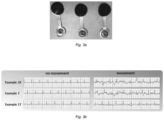
- ECG measurements were performed on a portable MedX5 ECG device, which can be used with all kinds of standard electrodes. ECG spectra were recorded over a period of 30 seconds and can be viewed by a software Heartscan 2.0 provided by MedX5.
- FIG. 3a illustrates an electrode set used for an ECG measurement.
- the electrodes were laminated with a PSA filled with an ionic liquid (adhesive according to the present invention) and carbon black for better visibility.
- FIG. 3b illustrates the recorded ECG spectra.
- ECG signals were recorded using three electrodes (working-, counter- and reference electrode) placed at the inner side of the human forearms (two on the left arm, one on the right arm) and the derivation was measured between left and right arm. The monitoring took place while resting the arms (no movement) and moving the arms continuously up and down (movement). In all cases good ECG signals were obtained especially for the higher ionic liquid concentrations.
- the mixtures (Table 6) were coated onto a release liner and dried at room temperature for 30 min yielding PSA films with a thickness of 20 ⁇ m. Subsequently the drawdown was cured at 120°C for 3 min and covered with another release liner.
- electrodes were prepared by transferring the dried PSA films to TPU substrates coated with Ag/AgCI layer (Loctite EDAG 6038E SS from Henkel). Electrodes with an area of 3.1 cm 2 were cut and attached to each other to form an Ag/AgCI-PSA-Ag/AgCI capacitor with an area of 3.1 cm 2 and 40 ⁇ m PSA thickness. The electrode pair was connected with alligator clips and the impedance of the capacitor was measured with a potentiostat from Metrohm Autolab at a frequency range from 9 ⁇ 10 5 to 0.01 Hz.
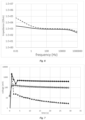
- FIG. 6 illustrates impedance spectra of electrodes with dry adhesive compositions according to Example 23 (solid line) and example 5 (dotted line).
- Impedance spectra of electrodes with Ag/AgCI conductive layer without chloride in the adhesive show a strong capacitive increase at low frequencies corresponding to the existence of a blocking electrode and therefore a high DC resistance since (almost) no charge transfer across the electrode/adhesive interface occurs.
- electrodes with adhesives comprising chloride allow reactions between the Ag/AgCI conductive layer and the electrode adhesive leading to charge transfer (at suitable low voltages) and therefore low DC resistance which enables a fast discharge during DOR (defibrillation overload recovery) experiments.
- Figure 8 illustrates three consecutive defibrillation overload recovery discharge curves according to ANSI/AAMI EC12:2000/(R)2015 for an electrode pair with electrode adhesive according to the Example 5.
- An overview of test conditions for an electrode pair with electrode adhesive according to the Example 5 is illustrated in table 8 below. Three out of four requirements were not met showing the need for an adhesive that allows a faster discharge.
- Table 8 Example 2 Time Need (mV) 1 st discharge 2 nd discharge 3 rd discharge 2s ⁇ 2000 759 765 765 7s ⁇ 100 718 730 734 7-17s ⁇ 11 39 29 25 17-27s ⁇ 11 25 21 16
- Figure 9 illustrates three consecutive defibrillation overload recovery discharge curves according to ANSI/AAMI EC12:2000/(R)2015 for an electrode pair with electrode adhesive according to the Example 23.
- Table 9 Example 2 Time Need (mV) 1 st discharge 2 nd discharge 3 rd discharge 2s ⁇ 2000 26.9 25.9 20.2 7s ⁇ 100 15.8 15.4 14.6 7-17s ⁇ 11 5.7 4.6 4 17-27s ⁇ 11 2.3 2.1 1.7
- ANSI/AAMI EC12:2000/(R)2015 describes that the use time of an electrode is limited to the time a sample (two electrodes attached to eachother via their adhesive sides) can be biased with 200 nA current at a resulting voltage ⁇ 100mV. A DC offset >100 mV should not be measured. This value correlates to the starting points of the current bias curves.
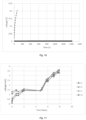
- Figure 10 illustrates a voltage increase during current bias for electrode samples with different adhesive compositions according to the present invention: Example 23 - solid line and Example 5 - dotted line.
- Example 23 corresponds to a sample with DC conductivity.
- the voltage is defined by Ohm's law. This voltage can be maintained for a long time. Since DC conductivity corresponds to a reversible electrochemical reaction at the interface, the voltage will stay relatively constant as long as reactants are available at the interface. Example 5 does not provide significant DC conductivity across the interface. Therefore, the voltage corresponds to a charging of the interface capacitance and is therefore significantly increasing with time.
- Electrodes that provide a DC conductivity also show longer current bias tolerance and lower DC offset values.
- electrode adhesives show both DC conductivity and low impedance.
- Figure 11 illustrates a voltage increase during long time current bias (200nA) for electrode samples having an electrode adhesive according to the present invention (Example 23).
- Figure 12 illustrates a voltage increase during long time current bias (2 ⁇ A) for an electrode sample having an electrode adhesive (Example 23).
- 2 ⁇ A corresponds to ten times the current required by the norm. This test aims at qualifying an accelerated test. The results are roughly corresponding with an increase occurring from 40-45h. With factoring in the higher current (and figuring that the relevant value is the flown charge) that would correspond to 6 days in the normal test (where 5 days were seen). The voltages here were higher due to Ohm's law (and therefore the beginning of the increase might be hidden).
- ANSI/AAMI EC12:2000/(R)2015 requires a peak-to-peak voltage of less than 150 ⁇ V (after 1min stabilization) to guarantee a low noise ECG signal.
- the AC signal of an electrode sample with electrode adhesive recorded via an ECG system usually has a peak-to-peak voltage below 10 ⁇ V.
- Figure 13 illustrates an offset instability and internal noise measurement for an electrode sample having an electrode adhesive according to the present invention (Example 23).
- the measurement corresponds to an ECG measurement with interconnected electrodes instead of a human body.
- the total bandwidth was about 8 ⁇ V and therefore much lower than required in the norm (150 ⁇ V).
- Impedance of paired electrodes with dry electrode adhesives according to the present invention comprising 10 wt.% EMIM-salt and a (meth)acrylate resin comprising different quantities of a (meth)acrylate monomer comprising OH-group; the following quantities according to the present invention were tested: 15.0 wt.%, 18.8 wt.%, 22.5 wt.%, 30.0 wt.% and 50.0 wt.% and were compared to quantities 0 wt% and 7.5 wt.%.
- the impedance values were normalised to a film thickness of 30 ⁇ m and an area of 4cm 2 . The test results are illustrated in figure 14 .
- Figure 14 shows the impedance curves of the adhesives described above. The general trend is that the impedance curves shift to lower values for higher OH content indicating an improved suitability to ECG application.
Landscapes
- Health & Medical Sciences (AREA)
- Life Sciences & Earth Sciences (AREA)
- Chemical & Material Sciences (AREA)
- Engineering & Computer Science (AREA)
- Physics & Mathematics (AREA)
- Biomedical Technology (AREA)
- General Health & Medical Sciences (AREA)
- Biophysics (AREA)
- Pathology (AREA)
- Molecular Biology (AREA)
- Organic Chemistry (AREA)
- Public Health (AREA)
- Surgery (AREA)
- Medical Informatics (AREA)
- Veterinary Medicine (AREA)
- Heart & Thoracic Surgery (AREA)
- Animal Behavior & Ethology (AREA)
- Cardiology (AREA)
- Dispersion Chemistry (AREA)
- Optics & Photonics (AREA)
- Chemical Kinetics & Catalysis (AREA)
- Hematology (AREA)
- Urology & Nephrology (AREA)
- Food Science & Technology (AREA)
- Medicinal Chemistry (AREA)
- Analytical Chemistry (AREA)
- Biochemistry (AREA)
- General Physics & Mathematics (AREA)
- Immunology (AREA)
- Adhesives Or Adhesive Processes (AREA)
- Measurement And Recording Of Electrical Phenomena And Electrical Characteristics Of The Living Body (AREA)
Claims (15)
- Ionisch leitfähige druckempfindliche Klebstoffzusammensetzung, umfassenda) ein (Meth)acrylatharz, umfassend mindestens zu 10 Gew.-% des Gesamtgewichts des (Meth)acrylatharzes ein (Meth)acrylatmonomer, umfassend eine OH-Gruppe; undb) eine ionische Flüssigkeit.
- Ionisch leitfähige druckempfindliche Klebstoffzusammensetzung nach Anspruch 1, wobei die ionische Flüssigkeit aus der Gruppe ausgewählt ist, bestehend aus Imidazoliumacetaten, Imidazoliumsulfonaten, Imidazoliumchloriden, Imidazoliumsulfaten, Imidazoliumphosphaten, Imidazoliumthiocyanaten, Imidazoliumdicyanamiden, Imidazoliumbenzoaten, Imidazoliumtriflaten, Cholintriflaten, Cholinsaccharinat, Cholinsulfamaten, Pyridiniumacetaten, Pyridiniumsulfonaten, Pyridiniumchloriden, Pyridiniumsulfaten, Pyridiniumphosphaten, Pyridiniumthiocyanaten, Pyridiniumdicyanamiden, Pyridiniumbenzoaten, Pyridiniumtriflaten, Pyrrolidiniumacetaten, Pyrrolidiniumsulfonaten, Pyrrolidiniumchloriden, Pyrrolidiniumsulfaten, Pyrrolidiniumphosphaten, Pyrrolidiniumthiocyanaten, Pyrrolidiniumdicyanamiden, Pyrrolidiniumbenzoaten, Pyrrolidiniumtriflaten, Phosphoniumacetaten, Phosphoniumsulfonaten, Phosphoniumchloriden, Phosphoniumsulfaten, Phosphoniumphosphaten, Phosphoniumthiocyanaten, Phosphoniumdicyanamiden, Phosphoniumbenzoaten, Phosphoniumtriflaten, Sulfoniumacetaten, Sulfoniumsulfonaten, Sulfoniumchloriden, Sulfoniumsulfaten, Sulfoniumphosphaten, Sulfoniumthiocyanaten, Sulfoniumdicyanamiden, Sulfoniumbenzoaten, Sulfoniumtriflaten, Ammoniumacetaten, Ammoniumsulfonaten, Ammoniumchloriden, Ammoniumsulfaten, Ammoniumphosphaten, Ammoniumthiocyanaten, Ammoniumdicyanamiden, Ammoniumbenzoaten, Ammoniumtriflaten und Gemischen davon.
- Ionisch leitfähige druckempfindliche Klebstoffzusammensetzung nach Anspruch 1 oder 2, wobei der Gehalt des (Meth)acrylatmonomers, umfassend die OH-Gruppe, in dem (Meth)acrylatharz mindestens 15 Gew.-% des Gesamtgewichts des (Meth)acrylatharzes, vorzugsweise mindestens 20 Gew.-%, stärker bevorzugt mindestens 25 Gew.-% und am stärksten bevorzugt mindestens 30 Gew.-%, aber nicht mehr als 65 Gew.-%, vorzugsweise nicht mehr als 60 Gew.-%, stärker bevorzugt nicht mehr als 55 Gew.-% und am stärksten bevorzugt nicht mehr als 50 Gew.-% beträgt.
- Ionisch leitfähige druckempfindliche Klebstoffzusammensetzung nach einem der Ansprüche 1 bis 3, wobei das (Meth)acrylatharz aus den Monomeren ausgebildet ist, die aus der Gruppe ausgewählt sind, bestehend aus Hydroxyethylacrylat, Hydroxypropylacrylat, Hydroxybutylacrylat, Methylmethacrylat, Butylacrylat, Ethylhexylacrylat, Acrylsäure, C1-C18-Alkyl(meth)acrylat, (Meth)acrylamid, Vinylacetat, N-Vinylcaprolactam, Acrylnitril, Vinylether, Benzyl(meth)acrylat, Cyclohexyl(meth)acrylat, Glycidyl(meth)acrylat und Gemischen davon, vorzugsweise aus den Monomeren ausgebildet ist, die aus der Gruppe ausgewählt sind, bestehend aus Hydroxyethylacrylat, Methylmethacrylat, Butylacrylat, Ethylhexylacrylat und Gemischen davon, und stärker bevorzugt das (Meth)acrylatharz aus Hydroxyethylacrylat, Methyl(meth)acrylat, Butylacrylat und Ethylhexylacrylat ausgebildet ist.
- Ionisch leitfähige druckempfindliche Klebstoffzusammensetzung nach einem der Ansprüche 1 bis 4, wobei das (Meth)acrylatharz in von 5 bis 80 Gew.-% des Gesamtgewichts der Zusammensetzung, vorzugsweise von 15 bis 75 Gew.-% und stärker bevorzugt in von 30 bis 70 Gew.-% vorkommt.
- Ionisch leitfähige druckempfindliche Klebstoffzusammensetzung nach einem der Ansprüche 1 bis 5, wobei die ionische Flüssigkeit aus der Gruppe ausgewählt ist, bestehend aus 1-Ethyl-3-methylimidazoliumacetat, 1-Ethyl-3-methylimidazoliummethansulfonat, 1-Ethyl-3-methylimidazoliumtrifluormethansulfonat, 1-Ethyl-3-methylimidazoliumchlorid, 1-Ethyl-3-methylimidazoliumethylsulfat, 1-Ethyl-3-methylimidazoliumdiethylphosphat, 1-Ethyl-3-methylimidazoliumthiocyanat, 1-Ethyl-3-methylimidazoliumdicyanamid, 1-Ethyl-3-methylimidazoliumbenzoat, Cholintrifluormethansulfonat, Cholinsaccharinat, Cholinacesulfamate, Cholin-N-cyclohexylsulfamat, Tris(2-hydroxyethyl)methylammoniummethylsulfat, 1-Ethyl-3-methylimidazoliumtetrafluoroborat, 1-Allyl-3-ethylimidazolium-bis-(trifluormethylsulfonyl)imide, Cholinacetat und Gemischen davon, und stärker bevorzugt aus der Gruppe ausgewählt ist, bestehend aus 1-Ethyl-3-methylimidazoliumbenzoat, 1-Ethyl-3-methylimidazoliumtetrafluoroborat, 1-Ethyl-3-methylimidazoliummethansulfonat, 1-Ethyl-3-methylimidazoliumchlorid, 1-Ethyl-3-methylimidazoliumtrifluoromethansulfonat, Cholintrifluoromethansulfonat, 1-Ethyl-3-methylimidazoliumacetat, Cholinacetat, 1-Ethyl-3-methylimidazoliumdiethylphosphat, 1-Allyl-3-methylimidazolium-bis-(trifluormethylsulfonyl)imid, 1-Ethyl-3-methylimidazoliumethylsulfat, 1-Ethyl-3-methylimidazoliumthiocyanat, 1-Ethyl-3-methylimidazoliumdicyanamid, Cholinsaccharinat, Cholinacesulfamat und einem Gemisch davon.
- Ionisch leitfähige druckempfindliche Klebstoffzusammensetzung nach einem der Ansprüche 1 bis 6, wobei die ionische Flüssigkeit in von 0,1 bis 35 Gew.-% des Gesamtgewichts der Zusammensetzung, vorzugsweise in von 0,5 bis 25 Gew.-% und stärker bevorzugt in von 1 bis 15 Gew.-% vorkommt.
- Ionisch leitfähige druckempfindliche Klebstoffzusammensetzung nach einem der Ansprüche 1 bis 7, ferner umfassend einen ionischen Leitfähigkeitspromotor, der vorzugsweise aus Cholinchlorid, Cholinbitartrat, Cholindihydrogencitrat, Cholinphosphat, Cholingluconat, Cholinfumarat, Cholincarbonat, Cholinpyrophosphat und dem Gemisch davon ausgewählt ist.
- Ionisch leitfähige druckempfindliche Klebstoffzusammensetzung nach Anspruch 8, wobei der ionische leitfähige Promoter in von 0,1 bis 35 Gew.-% des Gesamtgewichts der Zusammensetzung, vorzugsweise in von 0,5 bis 25 Gew.-% und stärker bevorzugt in von 1 bis 15 Gew.-% vorkommt.
- Ionisch leitfähige druckempfindliche Klebstoffzusammensetzung nach einem der Ansprüche 1 bis 9, ferner umfassend elektrisch leitfähige Partikel, die vorzugsweise aus der Gruppe ausgewählt sind, bestehend aus Metallpartikeln und Metallnanopartikeln, metallhaltigen Partikeln und Nanopartikeln, Graphitpartikeln und Nanopartikeln, Kohlenstoffpartikeln und Nanopartikeln, Kohlenstoffnanodrähten, leitfähigen Polymerpartikeln und Nanopartikeln und Gemischen davon, stärker bevorzugt aus der Gruppe ausgewählt, bestehend aus silberhaltigen Partikeln, Silberpartikeln, Kupferpartikeln, kupferhaltigen Partikeln, Silbernanodrähten, Kupfernanodrähten, Graphitpartikeln, Kohlenstoffpartikeln und Gemischen davon, und noch stärker bevorzugt aus Graphitpartikeln, Kohlenstoffpartikeln und Gemischen davon ausgewählt sind.
- Ionisch leitfähige druckempfindliche Klebstoffzusammensetzung nach einem der Ansprüche 1 bis 10, ferner umfassend ein Polyetherpolyol, das vorzugsweise aus Polyethylenglykol, Polypropylenglykol, Polytetramethylenglykol und stärker bevorzugt Polyethylenglykol ausgewählt ist, das ein gewichtsmittleres Molekulargewicht von 300 bis 1000, stärker bevorzugt von 350 bis 750 und noch stärker bevorzugt von 380 bis 420 g/mol aufweist, wobei das Molekulargewicht durch eine Gelpermeationschromatographie gemäß DIN 55672-1:2007-08 mit THF als das Eluent gemessen wird.
- Ionisch leitfähige druckempfindliche Klebstoffzusammensetzung nach einem der Ansprüche 1 bis 11, ferner umfassend ein Lösungsmittel, das aus der Gruppe ausgewählt ist, bestehend aus Wasser, Ethylacetat, Butylacetat, Butyldiglykol, 2-Butoxyethanol, Ethylenglykol, Diethylenglykol, Propylenglykol, Dipropylenglykol, Methanol, Isopropanol, Butanol, zweibasigen Estern, Hexan, Heptan, 2,4-Pentadion, Toluol, Xylol, Benzol, Hexan, Heptan, Methylethylketon, Methylisobutylketon, Diethylether und Gemischen davon, wobei das Lösungsmittel vorzugsweise aus der Gruppe ausgewählt ist, bestehend aus Ethylacetat, Butylacetat, Ethylenglykol, Propylenglykol und Gemischen davon.
- Ionisch leitfähige druckempfindliche Klebstoffzusammensetzung nach einem der Ansprüche 1 bis 12, wobei der Klebstoff einen Impedanzwert unter 1.000.000 Ohm bei 1000 Hz, vorzugsweise unter 100.000 Ohm bei 1000 Hz und stärker bevorzugt unter 40.000 bei 1000 Hz aufweist, wobei die Impedanz durch ein Verbinden von zwei Elektroden gemessen wird, die jeweils mit 25 µm eines ionischen leitfähigen druckempfindlichen Klebstoffs beschichtet sind, der eine Kontaktfläche von 0,25 cm2 aufweist.
- Trockenfilm, der aus der ionisch leitfähigen druckempfindlichen Klebstoffzusammensetzung nach einem der Ansprüche 1 bis 13 ausgebildet ist.
- Verwendung einer ionisch leitfähigen druckempfindlichen Klebstoffzusammensetzung nach einem der Ansprüche 1 bis 13 oder eines Trockenfilms nach Anspruch 14 in Hautanwendungen als ein Kontaktmedium als Teil von Elektroden, die Biosignale von der Haut messen.
Applications Claiming Priority (2)
| Application Number | Priority Date | Filing Date | Title |
|---|---|---|---|
| EP19161196 | 2019-03-07 | ||
| PCT/EP2020/055388 WO2020178218A1 (en) | 2019-03-07 | 2020-03-02 | Dry electrode adhesive |
Publications (2)
| Publication Number | Publication Date |
|---|---|
| EP3935119A1 EP3935119A1 (de) | 2022-01-12 |
| EP3935119B1 true EP3935119B1 (de) | 2024-01-24 |
Family
ID=65951465
Family Applications (1)
| Application Number | Title | Priority Date | Filing Date |
|---|---|---|---|
| EP20706353.8A Active EP3935119B1 (de) | 2019-03-07 | 2020-03-02 | Trockenelektrodenklebstoff |
Country Status (6)
| Country | Link |
|---|---|
| US (1) | US20220098454A1 (de) |
| EP (1) | EP3935119B1 (de) |
| CN (1) | CN113557281A (de) |
| CA (1) | CA3131757A1 (de) |
| TW (1) | TWI858025B (de) |
| WO (1) | WO2020178218A1 (de) |
Families Citing this family (5)
| Publication number | Priority date | Publication date | Assignee | Title |
|---|---|---|---|---|
| EP3964257A1 (de) * | 2020-09-04 | 2022-03-09 | Henkel AG & Co. KGaA | Stimulier-/messelektrode mit bedruckbarem klebstoff |
| KR20230169152A (ko) * | 2021-04-14 | 2023-12-15 | 헨켈 아게 운트 코. 카게아아 | 용매계 감압성 접착제 (psa)를 기반으로 하는 탈결합가능한 구조체 |
| EP4328247A1 (de) | 2022-08-25 | 2024-02-28 | Henkel AG & Co. KGaA | Leitfähiger druckempfindlicher klebstoff |
| WO2025118203A1 (en) * | 2023-12-06 | 2025-06-12 | Henkel Ag & Co. Kgaa | Bonded structure comprising an electrochemically debondable film adhesive |
| WO2025205588A1 (ja) * | 2024-03-29 | 2025-10-02 | 住友化学株式会社 | 粘着剤組成物、及び粘着剤層付き光学フィルム |
Family Cites Families (6)
| Publication number | Priority date | Publication date | Assignee | Title |
|---|---|---|---|---|
| TWI384049B (zh) * | 2005-09-05 | 2013-02-01 | Nitto Denko Corp | Adhesive composition, adhesive sheet and surface protective film |
| JP6181958B2 (ja) * | 2013-03-28 | 2017-08-16 | 日東電工株式会社 | 帯電防止性粘着シート、及び、光学フィルム |
| DE102015012381A1 (de) * | 2015-09-21 | 2017-03-23 | Leonhard Lang | Hydrogel, Herstellungsverfahren und medizinisches Gerät umfassend eine damit beschichtete Elektrode |
| WO2018008712A1 (ja) * | 2016-07-08 | 2018-01-11 | 日東電工株式会社 | 粘着剤組成物、粘着剤層、粘着剤層付光学フィルム、画像表示パネル、及び、液晶表示装置 |
| JP6761386B2 (ja) * | 2016-09-29 | 2020-09-23 | 信越化学工業株式会社 | 粘着剤組成物、生体電極、生体電極の製造方法、及び塩 |
| JP6836520B2 (ja) * | 2017-02-14 | 2021-03-03 | 信越化学工業株式会社 | 生体電極組成物、生体電極、及び生体電極の製造方法 |
-
2020
- 2020-03-02 CA CA3131757A patent/CA3131757A1/en active Pending
- 2020-03-02 EP EP20706353.8A patent/EP3935119B1/de active Active
- 2020-03-02 WO PCT/EP2020/055388 patent/WO2020178218A1/en not_active Ceased
- 2020-03-02 CN CN202080018928.6A patent/CN113557281A/zh active Pending
- 2020-03-03 TW TW109106826A patent/TWI858025B/zh active
-
2021
- 2021-08-31 US US17/446,476 patent/US20220098454A1/en active Pending
Also Published As
| Publication number | Publication date |
|---|---|
| CN113557281A (zh) | 2021-10-26 |
| TWI858025B (zh) | 2024-10-11 |
| TW202039757A (zh) | 2020-11-01 |
| EP3935119A1 (de) | 2022-01-12 |
| WO2020178218A1 (en) | 2020-09-10 |
| CA3131757A1 (en) | 2020-09-10 |
| US20220098454A1 (en) | 2022-03-31 |
Similar Documents
| Publication | Publication Date | Title |
|---|---|---|
| EP3935119B1 (de) | Trockenelektrodenklebstoff | |
| US20210386379A1 (en) | Electrode comprising a conductive acrylate based pressure sensitive adhesive | |
| TWI846837B (zh) | 皮膚相容電極之製造技術 | |
| US10323157B2 (en) | Silver-silver chloride compositions and electrical devices containing the same | |
| EP0740525B1 (de) | Biomedizinischer leiter mit anorganischen oxiden und daraus hergestellte elektroden | |
| US6731965B2 (en) | Corrosion prevention in biomedical electrodes | |
| EP0896722A1 (de) | Elektrischer leiter für biomedischen elektroden und daraus hergestellte biomedische elektroden | |
| EP2598204B1 (de) | Implantierbare elektrode | |
| WO2022048910A1 (en) | Stimulating / sensing electrode comprising a printable adhesive | |
| US20230200703A1 (en) | Dry Stimulating electrode | |
| EP1412020B1 (de) | Korrosionsschutz bei biomedizinischen elektroden | |
| JPH029074B2 (de) | ||
| EP4442777A1 (de) | Elektrisch leitfähige tintenzusammensetzung | |
| EP4328247A1 (de) | Leitfähiger druckempfindlicher klebstoff |
Legal Events
| Date | Code | Title | Description |
|---|---|---|---|
| STAA | Information on the status of an ep patent application or granted ep patent |
Free format text: STATUS: UNKNOWN |
|
| STAA | Information on the status of an ep patent application or granted ep patent |
Free format text: STATUS: THE INTERNATIONAL PUBLICATION HAS BEEN MADE |
|
| PUAI | Public reference made under article 153(3) epc to a published international application that has entered the european phase |
Free format text: ORIGINAL CODE: 0009012 |
|
| STAA | Information on the status of an ep patent application or granted ep patent |
Free format text: STATUS: REQUEST FOR EXAMINATION WAS MADE |
|
| 17P | Request for examination filed |
Effective date: 20210824 |
|
| AK | Designated contracting states |
Kind code of ref document: A1 Designated state(s): AL AT BE BG CH CY CZ DE DK EE ES FI FR GB GR HR HU IE IS IT LI LT LU LV MC MK MT NL NO PL PT RO RS SE SI SK SM TR |
|
| DAV | Request for validation of the european patent (deleted) | ||
| DAX | Request for extension of the european patent (deleted) | ||
| P01 | Opt-out of the competence of the unified patent court (upc) registered |
Effective date: 20230530 |
|
| GRAP | Despatch of communication of intention to grant a patent |
Free format text: ORIGINAL CODE: EPIDOSNIGR1 |
|
| STAA | Information on the status of an ep patent application or granted ep patent |
Free format text: STATUS: GRANT OF PATENT IS INTENDED |
|
| RIC1 | Information provided on ipc code assigned before grant |
Ipc: C08K 5/3442 20060101ALI20231003BHEP Ipc: C08K 5/17 20060101ALI20231003BHEP Ipc: A61B 5/05 20210101ALI20231003BHEP Ipc: C09J 133/06 20060101AFI20231003BHEP |
|
| INTG | Intention to grant announced |
Effective date: 20231017 |
|
| GRAS | Grant fee paid |
Free format text: ORIGINAL CODE: EPIDOSNIGR3 |
|
| GRAA | (expected) grant |
Free format text: ORIGINAL CODE: 0009210 |
|
| STAA | Information on the status of an ep patent application or granted ep patent |
Free format text: STATUS: THE PATENT HAS BEEN GRANTED |
|
| AK | Designated contracting states |
Kind code of ref document: B1 Designated state(s): AL AT BE BG CH CY CZ DE DK EE ES FI FR GB GR HR HU IE IS IT LI LT LU LV MC MK MT NL NO PL PT RO RS SE SI SK SM TR |
|
| REG | Reference to a national code |
Ref country code: GB Ref legal event code: FG4D |
|
| REG | Reference to a national code |
Ref country code: CH Ref legal event code: EP |
|
| REG | Reference to a national code |
Ref country code: IE Ref legal event code: FG4D |
|
| REG | Reference to a national code |
Ref country code: DE Ref legal event code: R096 Ref document number: 602020024808 Country of ref document: DE |
|
| REG | Reference to a national code |
Ref country code: LT Ref legal event code: MG9D |
|
| REG | Reference to a national code |
Ref country code: NL Ref legal event code: MP Effective date: 20240124 |
|
| PG25 | Lapsed in a contracting state [announced via postgrant information from national office to epo] |
Ref country code: NL Free format text: LAPSE BECAUSE OF FAILURE TO SUBMIT A TRANSLATION OF THE DESCRIPTION OR TO PAY THE FEE WITHIN THE PRESCRIBED TIME-LIMIT Effective date: 20240124 |
|
| PG25 | Lapsed in a contracting state [announced via postgrant information from national office to epo] |
Ref country code: NL Free format text: LAPSE BECAUSE OF FAILURE TO SUBMIT A TRANSLATION OF THE DESCRIPTION OR TO PAY THE FEE WITHIN THE PRESCRIBED TIME-LIMIT Effective date: 20240124 |
|
| PG25 | Lapsed in a contracting state [announced via postgrant information from national office to epo] |
Ref country code: IS Free format text: LAPSE BECAUSE OF FAILURE TO SUBMIT A TRANSLATION OF THE DESCRIPTION OR TO PAY THE FEE WITHIN THE PRESCRIBED TIME-LIMIT Effective date: 20240524 |
|
| PG25 | Lapsed in a contracting state [announced via postgrant information from national office to epo] |
Ref country code: LT Free format text: LAPSE BECAUSE OF FAILURE TO SUBMIT A TRANSLATION OF THE DESCRIPTION OR TO PAY THE FEE WITHIN THE PRESCRIBED TIME-LIMIT Effective date: 20240124 |
|
| PG25 | Lapsed in a contracting state [announced via postgrant information from national office to epo] |
Ref country code: GR Free format text: LAPSE BECAUSE OF FAILURE TO SUBMIT A TRANSLATION OF THE DESCRIPTION OR TO PAY THE FEE WITHIN THE PRESCRIBED TIME-LIMIT Effective date: 20240425 |
|
| REG | Reference to a national code |
Ref country code: AT Ref legal event code: MK05 Ref document number: 1652214 Country of ref document: AT Kind code of ref document: T Effective date: 20240124 |
|
| PG25 | Lapsed in a contracting state [announced via postgrant information from national office to epo] |
Ref country code: HR Free format text: LAPSE BECAUSE OF FAILURE TO SUBMIT A TRANSLATION OF THE DESCRIPTION OR TO PAY THE FEE WITHIN THE PRESCRIBED TIME-LIMIT Effective date: 20240124 Ref country code: RS Free format text: LAPSE BECAUSE OF FAILURE TO SUBMIT A TRANSLATION OF THE DESCRIPTION OR TO PAY THE FEE WITHIN THE PRESCRIBED TIME-LIMIT Effective date: 20240424 |
|
| PG25 | Lapsed in a contracting state [announced via postgrant information from national office to epo] |
Ref country code: ES Free format text: LAPSE BECAUSE OF FAILURE TO SUBMIT A TRANSLATION OF THE DESCRIPTION OR TO PAY THE FEE WITHIN THE PRESCRIBED TIME-LIMIT Effective date: 20240124 |
|
| PG25 | Lapsed in a contracting state [announced via postgrant information from national office to epo] |
Ref country code: AT Free format text: LAPSE BECAUSE OF FAILURE TO SUBMIT A TRANSLATION OF THE DESCRIPTION OR TO PAY THE FEE WITHIN THE PRESCRIBED TIME-LIMIT Effective date: 20240124 |
|
| PG25 | Lapsed in a contracting state [announced via postgrant information from national office to epo] |
Ref country code: RS Free format text: LAPSE BECAUSE OF FAILURE TO SUBMIT A TRANSLATION OF THE DESCRIPTION OR TO PAY THE FEE WITHIN THE PRESCRIBED TIME-LIMIT Effective date: 20240424 Ref country code: NO Free format text: LAPSE BECAUSE OF FAILURE TO SUBMIT A TRANSLATION OF THE DESCRIPTION OR TO PAY THE FEE WITHIN THE PRESCRIBED TIME-LIMIT Effective date: 20240424 Ref country code: LT Free format text: LAPSE BECAUSE OF FAILURE TO SUBMIT A TRANSLATION OF THE DESCRIPTION OR TO PAY THE FEE WITHIN THE PRESCRIBED TIME-LIMIT Effective date: 20240124 Ref country code: IS Free format text: LAPSE BECAUSE OF FAILURE TO SUBMIT A TRANSLATION OF THE DESCRIPTION OR TO PAY THE FEE WITHIN THE PRESCRIBED TIME-LIMIT Effective date: 20240524 Ref country code: HR Free format text: LAPSE BECAUSE OF FAILURE TO SUBMIT A TRANSLATION OF THE DESCRIPTION OR TO PAY THE FEE WITHIN THE PRESCRIBED TIME-LIMIT Effective date: 20240124 Ref country code: GR Free format text: LAPSE BECAUSE OF FAILURE TO SUBMIT A TRANSLATION OF THE DESCRIPTION OR TO PAY THE FEE WITHIN THE PRESCRIBED TIME-LIMIT Effective date: 20240425 Ref country code: FI Free format text: LAPSE BECAUSE OF FAILURE TO SUBMIT A TRANSLATION OF THE DESCRIPTION OR TO PAY THE FEE WITHIN THE PRESCRIBED TIME-LIMIT Effective date: 20240124 Ref country code: ES Free format text: LAPSE BECAUSE OF FAILURE TO SUBMIT A TRANSLATION OF THE DESCRIPTION OR TO PAY THE FEE WITHIN THE PRESCRIBED TIME-LIMIT Effective date: 20240124 Ref country code: BG Free format text: LAPSE BECAUSE OF FAILURE TO SUBMIT A TRANSLATION OF THE DESCRIPTION OR TO PAY THE FEE WITHIN THE PRESCRIBED TIME-LIMIT Effective date: 20240124 Ref country code: AT Free format text: LAPSE BECAUSE OF FAILURE TO SUBMIT A TRANSLATION OF THE DESCRIPTION OR TO PAY THE FEE WITHIN THE PRESCRIBED TIME-LIMIT Effective date: 20240124 |
|
| PG25 | Lapsed in a contracting state [announced via postgrant information from national office to epo] |
Ref country code: PT Free format text: LAPSE BECAUSE OF FAILURE TO SUBMIT A TRANSLATION OF THE DESCRIPTION OR TO PAY THE FEE WITHIN THE PRESCRIBED TIME-LIMIT Effective date: 20240524 Ref country code: PL Free format text: LAPSE BECAUSE OF FAILURE TO SUBMIT A TRANSLATION OF THE DESCRIPTION OR TO PAY THE FEE WITHIN THE PRESCRIBED TIME-LIMIT Effective date: 20240124 |
|
| PG25 | Lapsed in a contracting state [announced via postgrant information from national office to epo] |
Ref country code: SE Free format text: LAPSE BECAUSE OF FAILURE TO SUBMIT A TRANSLATION OF THE DESCRIPTION OR TO PAY THE FEE WITHIN THE PRESCRIBED TIME-LIMIT Effective date: 20240124 Ref country code: PT Free format text: LAPSE BECAUSE OF FAILURE TO SUBMIT A TRANSLATION OF THE DESCRIPTION OR TO PAY THE FEE WITHIN THE PRESCRIBED TIME-LIMIT Effective date: 20240524 Ref country code: PL Free format text: LAPSE BECAUSE OF FAILURE TO SUBMIT A TRANSLATION OF THE DESCRIPTION OR TO PAY THE FEE WITHIN THE PRESCRIBED TIME-LIMIT Effective date: 20240124 Ref country code: LV Free format text: LAPSE BECAUSE OF FAILURE TO SUBMIT A TRANSLATION OF THE DESCRIPTION OR TO PAY THE FEE WITHIN THE PRESCRIBED TIME-LIMIT Effective date: 20240124 |
|
| PG25 | Lapsed in a contracting state [announced via postgrant information from national office to epo] |
Ref country code: DK Free format text: LAPSE BECAUSE OF FAILURE TO SUBMIT A TRANSLATION OF THE DESCRIPTION OR TO PAY THE FEE WITHIN THE PRESCRIBED TIME-LIMIT Effective date: 20240124 |
|
| PG25 | Lapsed in a contracting state [announced via postgrant information from national office to epo] |
Ref country code: SM Free format text: LAPSE BECAUSE OF FAILURE TO SUBMIT A TRANSLATION OF THE DESCRIPTION OR TO PAY THE FEE WITHIN THE PRESCRIBED TIME-LIMIT Effective date: 20240124 |
|
| PG25 | Lapsed in a contracting state [announced via postgrant information from national office to epo] |
Ref country code: CZ Free format text: LAPSE BECAUSE OF FAILURE TO SUBMIT A TRANSLATION OF THE DESCRIPTION OR TO PAY THE FEE WITHIN THE PRESCRIBED TIME-LIMIT Effective date: 20240124 Ref country code: EE Free format text: LAPSE BECAUSE OF FAILURE TO SUBMIT A TRANSLATION OF THE DESCRIPTION OR TO PAY THE FEE WITHIN THE PRESCRIBED TIME-LIMIT Effective date: 20240124 |
|
| REG | Reference to a national code |
Ref country code: DE Ref legal event code: R097 Ref document number: 602020024808 Country of ref document: DE |
|
| PG25 | Lapsed in a contracting state [announced via postgrant information from national office to epo] |
Ref country code: SK Free format text: LAPSE BECAUSE OF FAILURE TO SUBMIT A TRANSLATION OF THE DESCRIPTION OR TO PAY THE FEE WITHIN THE PRESCRIBED TIME-LIMIT Effective date: 20240124 |
|
| PG25 | Lapsed in a contracting state [announced via postgrant information from national office to epo] |
Ref country code: SM Free format text: LAPSE BECAUSE OF FAILURE TO SUBMIT A TRANSLATION OF THE DESCRIPTION OR TO PAY THE FEE WITHIN THE PRESCRIBED TIME-LIMIT Effective date: 20240124 Ref country code: SK Free format text: LAPSE BECAUSE OF FAILURE TO SUBMIT A TRANSLATION OF THE DESCRIPTION OR TO PAY THE FEE WITHIN THE PRESCRIBED TIME-LIMIT Effective date: 20240124 Ref country code: EE Free format text: LAPSE BECAUSE OF FAILURE TO SUBMIT A TRANSLATION OF THE DESCRIPTION OR TO PAY THE FEE WITHIN THE PRESCRIBED TIME-LIMIT Effective date: 20240124 Ref country code: DK Free format text: LAPSE BECAUSE OF FAILURE TO SUBMIT A TRANSLATION OF THE DESCRIPTION OR TO PAY THE FEE WITHIN THE PRESCRIBED TIME-LIMIT Effective date: 20240124 Ref country code: CZ Free format text: LAPSE BECAUSE OF FAILURE TO SUBMIT A TRANSLATION OF THE DESCRIPTION OR TO PAY THE FEE WITHIN THE PRESCRIBED TIME-LIMIT Effective date: 20240124 |
|
| REG | Reference to a national code |
Ref country code: CH Ref legal event code: PL |
|
| PG25 | Lapsed in a contracting state [announced via postgrant information from national office to epo] |
Ref country code: LU Free format text: LAPSE BECAUSE OF NON-PAYMENT OF DUE FEES Effective date: 20240302 |
|
| PG25 | Lapsed in a contracting state [announced via postgrant information from national office to epo] |
Ref country code: MC Free format text: LAPSE BECAUSE OF FAILURE TO SUBMIT A TRANSLATION OF THE DESCRIPTION OR TO PAY THE FEE WITHIN THE PRESCRIBED TIME-LIMIT Effective date: 20240124 |
|
| PG25 | Lapsed in a contracting state [announced via postgrant information from national office to epo] |
Ref country code: MC Free format text: LAPSE BECAUSE OF FAILURE TO SUBMIT A TRANSLATION OF THE DESCRIPTION OR TO PAY THE FEE WITHIN THE PRESCRIBED TIME-LIMIT Effective date: 20240124 Ref country code: LU Free format text: LAPSE BECAUSE OF NON-PAYMENT OF DUE FEES Effective date: 20240302 |
|
| PLBE | No opposition filed within time limit |
Free format text: ORIGINAL CODE: 0009261 |
|
| STAA | Information on the status of an ep patent application or granted ep patent |
Free format text: STATUS: NO OPPOSITION FILED WITHIN TIME LIMIT |
|
| PG25 | Lapsed in a contracting state [announced via postgrant information from national office to epo] |
Ref country code: IT Free format text: LAPSE BECAUSE OF FAILURE TO SUBMIT A TRANSLATION OF THE DESCRIPTION OR TO PAY THE FEE WITHIN THE PRESCRIBED TIME-LIMIT Effective date: 20240124 |
|
| REG | Reference to a national code |
Ref country code: BE Ref legal event code: MM Effective date: 20240331 |
|
| PG25 | Lapsed in a contracting state [announced via postgrant information from national office to epo] |
Ref country code: IT Free format text: LAPSE BECAUSE OF FAILURE TO SUBMIT A TRANSLATION OF THE DESCRIPTION OR TO PAY THE FEE WITHIN THE PRESCRIBED TIME-LIMIT Effective date: 20240124 |
|
| 26N | No opposition filed |
Effective date: 20241025 |
|
| PG25 | Lapsed in a contracting state [announced via postgrant information from national office to epo] |
Ref country code: BE Free format text: LAPSE BECAUSE OF NON-PAYMENT OF DUE FEES Effective date: 20240331 |
|
| PG25 | Lapsed in a contracting state [announced via postgrant information from national office to epo] |
Ref country code: BE Free format text: LAPSE BECAUSE OF NON-PAYMENT OF DUE FEES Effective date: 20240331 Ref country code: CH Free format text: LAPSE BECAUSE OF NON-PAYMENT OF DUE FEES Effective date: 20240331 |
|
| PG25 | Lapsed in a contracting state [announced via postgrant information from national office to epo] |
Ref country code: SI Free format text: LAPSE BECAUSE OF FAILURE TO SUBMIT A TRANSLATION OF THE DESCRIPTION OR TO PAY THE FEE WITHIN THE PRESCRIBED TIME-LIMIT Effective date: 20240124 |
|
| PG25 | Lapsed in a contracting state [announced via postgrant information from national office to epo] |
Ref country code: RO Free format text: LAPSE BECAUSE OF FAILURE TO SUBMIT A TRANSLATION OF THE DESCRIPTION OR TO PAY THE FEE WITHIN THE PRESCRIBED TIME-LIMIT Effective date: 20240124 |
|
| PG25 | Lapsed in a contracting state [announced via postgrant information from national office to epo] |
Ref country code: CY Free format text: LAPSE BECAUSE OF FAILURE TO SUBMIT A TRANSLATION OF THE DESCRIPTION OR TO PAY THE FEE WITHIN THE PRESCRIBED TIME-LIMIT; INVALID AB INITIO Effective date: 20200302 |
|
| PG25 | Lapsed in a contracting state [announced via postgrant information from national office to epo] |
Ref country code: HU Free format text: LAPSE BECAUSE OF FAILURE TO SUBMIT A TRANSLATION OF THE DESCRIPTION OR TO PAY THE FEE WITHIN THE PRESCRIBED TIME-LIMIT; INVALID AB INITIO Effective date: 20200302 |
|
| PG25 | Lapsed in a contracting state [announced via postgrant information from national office to epo] |
Ref country code: TR Free format text: LAPSE BECAUSE OF FAILURE TO SUBMIT A TRANSLATION OF THE DESCRIPTION OR TO PAY THE FEE WITHIN THE PRESCRIBED TIME-LIMIT Effective date: 20240124 |
|
| PGFP | Annual fee paid to national office [announced via postgrant information from national office to epo] |
Ref country code: GB Payment date: 20260324 Year of fee payment: 7 |
|
| PGFP | Annual fee paid to national office [announced via postgrant information from national office to epo] |
Ref country code: DE Payment date: 20260319 Year of fee payment: 7 Ref country code: IE Payment date: 20260319 Year of fee payment: 7 |
|
| PGFP | Annual fee paid to national office [announced via postgrant information from national office to epo] |
Ref country code: FR Payment date: 20260323 Year of fee payment: 7 |