EP3934400B1 - Pumpenaggregat mit wärmeleitfähigem material auf einer folienschicht - Google Patents
Pumpenaggregat mit wärmeleitfähigem material auf einer folienschicht Download PDFInfo
- Publication number
- EP3934400B1 EP3934400B1 EP21181305.0A EP21181305A EP3934400B1 EP 3934400 B1 EP3934400 B1 EP 3934400B1 EP 21181305 A EP21181305 A EP 21181305A EP 3934400 B1 EP3934400 B1 EP 3934400B1
- Authority
- EP
- European Patent Office
- Prior art keywords
- thermally conductive
- pump unit
- unit
- film layer
- component
- Prior art date
- Legal status (The legal status is an assumption and is not a legal conclusion. Google has not performed a legal analysis and makes no representation as to the accuracy of the status listed.)
- Active
Links
Images
Classifications
-
- B—PERFORMING OPERATIONS; TRANSPORTING
- B60—VEHICLES IN GENERAL
- B60T—VEHICLE BRAKE CONTROL SYSTEMS OR PARTS THEREOF; BRAKE CONTROL SYSTEMS OR PARTS THEREOF, IN GENERAL; ARRANGEMENT OF BRAKING ELEMENTS ON VEHICLES IN GENERAL; PORTABLE DEVICES FOR PREVENTING UNWANTED MOVEMENT OF VEHICLES; VEHICLE MODIFICATIONS TO FACILITATE COOLING OF BRAKES
- B60T17/00—Component parts, details, or accessories of power brake systems not covered by groups B60T8/00, B60T13/00 or B60T15/00, or presenting other characteristic features
- B60T17/02—Arrangements of pumps or compressors, or control devices therefor
-
- B—PERFORMING OPERATIONS; TRANSPORTING
- B60—VEHICLES IN GENERAL
- B60T—VEHICLE BRAKE CONTROL SYSTEMS OR PARTS THEREOF; BRAKE CONTROL SYSTEMS OR PARTS THEREOF, IN GENERAL; ARRANGEMENT OF BRAKING ELEMENTS ON VEHICLES IN GENERAL; PORTABLE DEVICES FOR PREVENTING UNWANTED MOVEMENT OF VEHICLES; VEHICLE MODIFICATIONS TO FACILITATE COOLING OF BRAKES
- B60T5/00—Vehicle modifications to facilitate cooling of brakes
-
- B—PERFORMING OPERATIONS; TRANSPORTING
- B60—VEHICLES IN GENERAL
- B60T—VEHICLE BRAKE CONTROL SYSTEMS OR PARTS THEREOF; BRAKE CONTROL SYSTEMS OR PARTS THEREOF, IN GENERAL; ARRANGEMENT OF BRAKING ELEMENTS ON VEHICLES IN GENERAL; PORTABLE DEVICES FOR PREVENTING UNWANTED MOVEMENT OF VEHICLES; VEHICLE MODIFICATIONS TO FACILITATE COOLING OF BRAKES
- B60T8/00—Arrangements for adjusting wheel-braking force to meet varying vehicular or ground-surface conditions, e.g. limiting or varying distribution of braking force
- B60T8/32—Arrangements for adjusting wheel-braking force to meet varying vehicular or ground-surface conditions, e.g. limiting or varying distribution of braking force responsive to a speed condition, e.g. acceleration or deceleration
- B60T8/34—Arrangements for adjusting wheel-braking force to meet varying vehicular or ground-surface conditions, e.g. limiting or varying distribution of braking force responsive to a speed condition, e.g. acceleration or deceleration having a fluid pressure regulator responsive to a speed condition
- B60T8/36—Arrangements for adjusting wheel-braking force to meet varying vehicular or ground-surface conditions, e.g. limiting or varying distribution of braking force responsive to a speed condition, e.g. acceleration or deceleration having a fluid pressure regulator responsive to a speed condition including a pilot valve responding to an electromagnetic force
- B60T8/3615—Electromagnetic valves specially adapted for anti-lock brake and traction control systems
- B60T8/3675—Electromagnetic valves specially adapted for anti-lock brake and traction control systems integrated in modulator units
- B60T8/368—Electromagnetic valves specially adapted for anti-lock brake and traction control systems integrated in modulator units combined with other mechanical components, e.g. pump units, master cylinders
Definitions
- the invention relates to a pump unit for a motor vehicle brake system according to the preamble of claim 1.
- a common pump assembly for the brake system of a motor vehicle includes a hydraulic unit and an electronic unit.
- the hydraulic unit includes a piston pump and control valves.
- the electronics unit includes a printed circuit board and electromagnets for controlling the control valves in the hydraulic unit.
- the electronics unit is arranged on the hydraulic unit.
- the electronics unit also includes an electric motor, the shaft of which protrudes into the hydraulic unit in order to drive the pistons of the pump.
- DE 197 56 186 C1 U.S. 2008/017174 A1 and DE 10 2007 001733 A1 disclose a motor-pump unit with means for cooling the electronic components.
- thermal interface material is applied to cool the electronic components.
- the surface of a component is wetted with a thermally conductive paste, with a heat sink being in contact with the component for heat dissipation.
- the piston pot of the piston pump for example, is used as a heat sink.
- Thermal paste is a paste that improves heat transfer between two components.
- the cooling surfaces of heat sinks always contain more or less deep scores, grooves, elevations and depressions due to mechanical processing. Even if these are small, the resulting cavities inhibit heat transfer by reducing the effective area. The same applies to the component to be cooled. Processors, for example, often have inscriptions that lead to indentations. Thermally conductive pastes fill in these bumps and thus enable better heat transfer from the component to the heat sink. In contrast to some types of thermal pads, they are not intended or suitable for bridging larger distances between the heat source and the heat sink.
- thermal pad Similar to thermal paste, a thermal pad is used to better dissipate the heat loss of electronic components.
- thermal pads are used, which displace the air from these spaces and thus improve the heat transfer.
- the pads deform permanently, adapt flexibly to the surface structure and do not spring back into shape. At the same time, they are self-adhesive, which makes assembly easier.
- thermally conductive adhesives are also used, which are used, for example, to mount heat sinks.
- the specific thermal conductivity is usually lower. Added to this is the usually required thicker layer.
- the glued connection usually has to be weakened beforehand. This can be done by heating. However, such a priority is disadvantageous and costly in production.
- the first step is to remove the hardened old thermal material without leaving any residue. This is only possible through mechanical processing and can damage the components. Therefore, in series production, the components are not prepared for reuse, but sent for scrapping.
- a pump unit for a motor vehicle brake system comprising a hydraulic unit and a hydraulic unit arranged thereon Electronics unit, the electronics unit comprising a printed circuit board with a large number of electronic components, a heat sink being provided for cooling at least one of the components, a thermally conductive layer being provided between the component and the heat sink, the thermally conductive layer being applied to a foil layer which in turn is attached to the component or the heat sink.
- the old, already cured material is simply peeled off the component or heat sink through the foil layer.
- the film layer is previously arranged between the surfaces of the component and heat sink that are to be wetted. It is self-adhesive and tear-resistant. When it is peeled off, no residue of thermally conductive material is left on the element to which the foil layer was applied. As a result, the surface of this element does not have to be post-treated.
- the film layer is preferably attached detachably from the component or the heat sink. This makes it possible to subsequently remove the components from one another and then apply a new film layer with new thermally conductive material. This process can be repeated as often as you like. This avoids scrap costs in production and protects the environment because technical components are reused.
- the foil layer is made of a polymeric material.
- the choice of material for the film must be adapted to the respective requirements or to the power loss to be dissipated. This allows the thermal resistance to be adjusted so that the thermal influence of the additional foil on the entire cooling path is minimized.
- the foil layer comprises a peel-off tab which is not coated with the thermally conductive layer. This simplifies the removal of the foil layer.
- a further preferred embodiment provides that the cooling body is at least partially accommodated in the hydraulic unit.
- the heat sink is preferably a piston pot of a pump which is accommodated in the hydraulic unit.
- the piston top is preferably made of a metal as a heat sink.
- the proposed pump assembly is used in a brake system of a motor vehicle.
- a film layer as a separating film can also be used with other pasty materials such as molded seals.
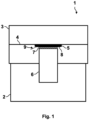
- the design of a pump unit 1 is only shown schematically here.
- the pump unit 1 includes a hydraulic unit 2 and an electronics unit 3.
- the hydraulic unit 2 is generally a cuboid metal block in which a number of bores are drilled. The (not shown) holes are used for. B. as liners for the pump pistons of a pump. In each of the liners of the pump, there is a piston pot which is also used as a heat sink. Additional bores form channels that run from the pump to control valves and from there to connections for brake lines in order to be able to deliver the pressure medium to the respective wheel brakes.
- the design of the hydraulic unit is only shown schematically here.
- Electronic unit 3 is arranged on one side of hydraulic unit 2 . This includes (not shown) an electric motor and several electromagnets.
- the motor shaft of the electric motor merges into an eccentric in hydraulic unit 2, where it drives the pump pistons.
- the electromagnets are arranged around the electric motor.
- a printed circuit board 4 is arranged on the upper side of the electric motor.
- the system of electric motor, electromagnet and printed circuit board 4 is surrounded by a plastic housing cap, the edge of which rests on the hydraulic unit 2 and is connected to it by screws.
- Printed circuit board 4 is provided with a large number of electronic components 5, which as such require cooling during operation.
- the compact design of pump unit 1 can be used as a cooling body 6 piston pot.
- the heat sink 6 made of metal has an essentially flat surface which is in contact with at least one component 5 of the printed circuit board 4 in order to dissipate the heat generated by the component 5 by heat transfer.
- Mainly copper and aluminum or alloys made from these come into consideration as the material for heat sinks 6 .
- a plastic material with corresponding heat dissipation is also conceivable. So that the heat transfer from the component 5 to the heat sink is improved, the corresponding surfaces are generally wetted with a thermally conductive material 7, such as thermally conductive paste.
- thermally conductive material 7 has the disadvantage that it cannot easily be removed without leaving any residue. Thermally conductive material 7 hardens during operation and forms a chemical bond with the surfaces. If component 5 and/or heat sink 6 are to be reused, their surfaces must first be treated and prepared in a complex manner. For example, old thermally conductive material 7 must first be "scraped off" and the surface of heat sink 6 must be polished.
- a film layer 8 is provided between the component 5 and the heat sink 6, for example.
- Film layer 8 is a thin separating film, for example made of a polymer material, which is applied either to component 5 or to heat sink 6 in a self-adhesive manner.
- the thermally conductive material 5 is then applied to the respective other side, which then correspondingly wets the surface of the heat sink 6 or component 5 .
- Foil layer 8 is that should be as thermally conductive as possible. For example, aluminum foils can also be considered.
- film layer 8 should be designed to be tear-resistant.
- a tab 9 is provided, by means of which the film layer 8 can be pulled off.
- Tab 9 is provided with neither thermally conductive material 7 nor an adhesive.
- the provision of a film layer 8 with a pull tab 9, which is arranged between the thermally conductive material 7 and the element 5 or 6 to be cooled, enables the thermally conductive material 7 to be removed without leaving any residue.
- components such as component 5 or printed circuit board 4 or heat sink 6 can be reused directly without having to be processed in a complex manner. This reduces scrap costs and cycle times in the assembly process.
Landscapes
- Engineering & Computer Science (AREA)
- Transportation (AREA)
- Mechanical Engineering (AREA)
- Physics & Mathematics (AREA)
- Electromagnetism (AREA)
- Fluid Mechanics (AREA)
- Cooling Or The Like Of Electrical Apparatus (AREA)
- Valves And Accessory Devices For Braking Systems (AREA)
Description
- Die Erfindung betrifft ein Pumpenaggregat für eine Kraftfahrzeugbremsanlage gemäß dem Oberbegriff von Anspruch 1.
- Ein gängiges Pumpenaggregat für die Bremsanlage eines Kraftfahrzeuges umfasst eine Hydraulikeinheit und eine Elektronikeinheit. Ein solches ist bspw. aus der
DE 197 09 740 A1 bekannt. Die Hydraulikeinheit umfasst eine Kolbenpumpe und Steuerungsventile. Die Elektronikeinheit umfasst eine Leiterplatte und Elektromagneten zur Ansteuerung der Steuerungsventile in der Hydraulikeinheit. Hierfür ist die Elektronikeinheit an der Hydraulikeinheit angeordnet. Die Elektronikeinheit umfasst zudem einen Elektromotor, dessen Welle in die Hydraulikeinheit hineinragt, um die Kolben der Pumpe anzutreiben.DE 197 56 186 C1 ,US 2008/017174 A1 undDE 10 2007 001733 A1 offenbaren ein Motor-Pumpenaggregat, mit Mitteln zur Kühlung der elektronischen Bauelementen. - Im Betrieb erwärmen sich die elektronischen Bauelemente der Leiterplatte. Daher gilt es diese zu kühlen. Zur Kühlung der elektronischen Bauelementen wird ein sogenanntes "thermal interface material" appliziert. Als solches wird bspw. die Oberfläche eines Bauelements mit einer Wärmeleitpaste benetzt, wobei ein Kühlkörper zur Wärmeabfuhr an dem Bauelement anliegt. Als Kühlkörper wird bspw. der Kolbentopf der Kolbenpumpe verwendet.
- Wärmeleitpaste ist eine Paste, welche die Wärmeübertragung zwischen zwei Bauteilen verbessert. Die Kühlflächen von Kühlkörpern enthalten durch mechanische Bearbeitung stets mehr oder weniger tiefe Riefen, Rillen, Erhöhungen und Vertiefungen. Auch wenn diese klein sind, hemmen die entstehenden Hohlräume die Wärmeübertragung durch die Verkleinerung der wirksamen Fläche. Dasselbe gilt für das zu kühlende Bauteil. Prozessoren tragen z.B. oft eine Beschriftung, die zu Vertiefungen führen. Wärmeleitpasten füllen diese Unebenheiten auf und ermöglichen somit eine bessere Wärmeübertragung vom Bauteil zum Kühlkörper. Sie sind im Gegensatz zu manchen Arten von Wärmeleitpads nicht dafür gedacht oder geeignet, größere Abstände zwischen Wärmequelle und Kühlkörper zu überbrücken.
- Ein Wärmeleitpad dient ähnlich wie Wärmeleitpaste der besseren Ableitung der Verlustwärme elektronischer Bauteile. Um Lufträume zu vermeiden, welche Aufgrund der Unebenheiten der anliegenden Flächen entstehen und dadurch den Wärmeübergang behindern, werden Wärmeleitpads verwendet, welche die Luft aus diesen Zwischenräumen verdrängen und somit den Wärmeübergang verbessern. Bei Druck verformen sich die Pads permanent, passen sich flexibel der Oberflächenstruktur an und springen nicht in ihre Form zurück. Gleichzeitig sind sie selbsthaftend, was die Montage erleichtert.
- Des Weiteren werden auch Wärmeleitkleber verwendet, welche bspw. zur Montage von Kühlkörpern dienen. Gegenüber Wärmeleitpaste ist die spezifische Wärmeleitfähigkeit in der Regel geringer. Hinzu kommt die meist erforderliche größere Schichtdicke. Zur zerstörungsfreien Demontage geklebten Bauteile muss jedoch meist die Klebeverbindung vorher geschwächt werden. Dies kann durch Erwärmen erfolgen. Solch ein Vorrang ist in der Produktion allerdings unvorteilhaft und kostenintensiv.
- Aufgrund von chemischen Vorgängen und der Aushärtung des thermischen Materials, kann eine nachträgliche Trennung des Kühlkörpers von dem Bauelement also nur mit erheblichem Aufwand erfolgen. Für eine erneute Verwendung von Kühlkörper und/oder Bauelement ist eine erneute Applizierung des thermischen Materials notwendig. Daher bedarf es zunächst einer rückstandslosen Entfernung des ausgehärteten thermischen Altmaterials. Dies ist nur durch eine mechanische Bearbeitung möglich und kann zur Beschädigung der Bauteile. Daher werden in der Serienproduktion die Bauteile nicht für eine erneute Verwendung aufbereitet, sondern der Verschrottung zugeführt.
- Es ist daher Aufgabe der Erfindung ein Pumpenaggregat für eine Kraftfahrzeugbremsanlage bereitzustellen, bei welchem das Entfernen von einem thermisch leitfähigen Material vereinfacht ist.
- Erfindungsgemäß wird ein Pumpenaggregat für eine Kraftfahrzeugbremsanlage bereitgestellt, umfassend eine Hydraulikeinheit und eine daran angeordnete Elektronikeinheit, wobei die Elektronikeinheit eine Leiterplatte mit einer Vielzahl an elektronischen Bauelementen umfasst, wobei zur Kühlung zumindest eines der Bauelemente ein Kühlkörper vorgesehen ist, wobei eine thermisch leitfähige Schicht zwischen dem Bauelement und dem Kühlkörper vorgesehen ist, wobei die thermisch leitfähige Schicht auf einer Folienschicht aufgetragen ist, welche wiederum auf dem Bauelement oder dem Kühlkörper angebracht ist.
- Um das Auftragen eines neuen thermisch leitfähigen Materials zu vereinfachen, wird das alte bereits ausgehärtete Material einfach durch die Folienschicht von dem Bauelement oder dem Kühlkörper abgezogen. Die Folienschicht ist zuvor Folienschicht zwischen die zu benetzenden Flächen von Bauelement und Kühlkörper angeordnet werden. Sie ist selbstklebend und reißfest. Wird sie abgezogen, verbleiben keine Rückstände von thermisch leitfähigem Material auf dem Element, an welchem die Folienschicht aufgebracht wurde. Dadurch muss die Oberfläche dieses Elements nicht nachbehandelt werden.
- Bevorzugt ist die Folienschicht lösbar von dem Bauelement oder dem Kühlkörper angebracht. Dadurch ist es möglich die Komponenten nachträglich voneinander zu entfernen und anschließend eine neue Folienschicht mit neuem wärmeleitfähigem Material aufzubringen. Dieser Vorgang kann beliebig oft widerholt werden. Dadurch werden in der Produktion Schrottkosten vermieden und die Umwelt wird dadurch geschont, dass technische Komponenten Wiederverwendung finden.
- Nach einer bevorzugten Ausführungsform ist die Folienschicht aus einem Polymermaterial hergestellt. Die Materialwahl der Folie ist an die jeweiligen Anforderungen bzw. an die abzuführende Verlustleistung anzupassen. Dadurch kann der thermische Widerstand angepasst werden, sodass der thermische Einfluss der zusätzlichen Folie auf den kompletten Kühlpfad minimiert wird.
- Gemäß einer weiteren bevorzugten Ausführungsform umfasst die Folienschicht eine Lasche zum Abziehen, welche nicht mit der thermisch leitfähigen Schicht beschichtet ist. Dies vereinfacht das Entfernen der Folienschicht.
- Eine weitere bevorzugte Ausführungsform sieht vor, dass der Kühlkörper zumindest teilweise in der Hydraulikeinheit aufgenommen ist. Vorzugsweise ist der der Kühlkörper ein Kolbentopf einer Pumpe, welche in der Hydraulikeinheit aufgenommen ist. Hierbei wird der Kolbentop als Kühlkörper bevorzugt aus einem Metall hergestellt. So findet das vorgeschlagene Pumpenaggregat verwendet in einer Bremsanlage eines Kraftfahrzeugs.
- Das vorgeschlagene Anwenden einer Folienschicht als Trennfolie lässt sich auch bei anderen pastösartigen Materialien wie Formdichtungen anwenden.
- Weitere bevorzugte Ausführungsformen der Erfindung ergeben sich aus der nachfolgenden Beschreibung eines Ausführungsbeispiels an Hand der Figur.
- Es zeigt
- Fig.1
- ein beispielsgemäßes Pumpenaggregat.
- Die Ausgestaltung eines Pumpenaggregats 1 ist hier nur schematisch gezeigt. Als solches umfasst Pumpenaggregat 1 eine Hydraulikeinheit 2 und eine Elektronikeinheit 3. Hydraulikeinheit 2 ist in der Regel ein quaderförmiger Metallblock, in welchem mehrere Bohrungen eingebracht sind. Die (nicht gezeigten) Bohrungen dienen z. B. als Laufbuchsen für die Pumpenkolben einer Pumpe. In den Laufbuchsen der Pumpe ist jeweils ein Kolbentopf angeordnet, welcher zugleich als Kühlkörper verwendet wird. Weitere Bohrungen bilden Kanäle, die von der Pumpe zu Steuerventilen laufen und von dort zu Anschlüssen für Bremsleitungen, um das Druckmittel zu den jeweiligen Radbremsen fördern zu können. Die Ausgestaltung der Hydraulikeinheit ist hier nur schematisch gezeigt.
- An einer Seite der Hydraulikeinheit 2 ist Elektronikeinheit 3 angeordnet. Diese umfasst (nicht gezeigt) einen Elektromotor und mehrere Elektromagnete. Die Motorwelle des Elektromotors geht über in einen Exzenter in Hydraulikeinheit 2 und treibt dort die Pumpenkolben an. Die Elektromagnete sind um den Elektromotor angeordnet. An der Oberseite des Elektromotors ist eine Leiterplatte 4 angeordnet.
- Das System aus Elektromotor, Elektromagneten sowie Leiterplatte 4 ist von einer Gehäusekappe aus Kunststoff umgeben, deren Rand auf Hydraulikeinheit 2 aufsitzt und mit dieser über Schrauben verbunden ist.
- Leiterplatte 4 ist mit einer Vielzahl an elektronischen Bauelementen 5 versehen, welche als solche im Betrieb der Kühlung bedürfen. Durch die kompakte Bauweise von Pumpenaggregats 1 kann als Kühlkörper 6 Kolbentopf verwendet werden. Der aus einem Metall hergestellte Kühlkörper 6 weist eine im Wesentlichen plane Fläche auf, welche in Kontakt mit zumindest einem Bauelement 5 der Leiterplatte 4 steht, um die vom Bauelement 5 erzeugte Wärme durch Wärmeübertragung abzuführen. Als Material für Kühlkörper 6 kommen vor allem Kupfer und Aluminium bzw. aus diesen hergestellten Legierungen in Betracht. Aber auch ein Kunststoffmaterial mit entsprechender Wärmeabfuhr ist vorstellbar. Damit der Wärmeübergang von Bauelement 5 auf Kühlkörper verbessert wird, werden die korrespondieren Flächen in der Regel mit einem thermisch leitfähigen Material 7, wie bspw. Wärmeleitpaste, benetzt.
- Solch ein thermisch leitfähiges Material 7 hat allerdings den Nachteil, dass es sich nicht ohne Weiteres rückstandslos entfernen lässt. Thermisch leitfähiges Material 7 härtet im Betrieb aus und geht mit den Oberflächen eine chemische Verbindung ein. Sollen Bauelement 5 und/oder Kühlkörper 6 wiederverwendet werden, müssen deren Oberflächen zunächst aufwendig behandelt und aufbereitet werden. So muss altes thermisch leitfähiges Material 7 zunächst "abgekratzt" werden und die Oberfläche von Kühlkörper 6 muss poliert werden.
- Um diese umständliche Aufbereitung zu verhindern und in der Produktion Taktzeiten zu verkürzen, wird beispielsgemäß eine Folienschicht 8 zwischen Bauelement 5 und Kühlkörper 6 vorgesehen. Folienschicht 8 ist eine dünne Trennfolie, bspw. aus einem Polymermaterial, welche selbstklebend entweder auf Bauelement 5 oder auf Kühlkörper 6 aufgebracht wird. Auf die jeweils andere Seite wird dann das thermisch leitfähige Material 5 appliziert, welches dann entsprechend Kühlkörper 6 oder Bauelement 5 flächig benetzt. Auch für das Material der Folienschicht 8 gilt, dass bestmöglich Wärmeleitfähig sein sollte. So kommen bspw. auch Alufolien in Betracht.
- Als wesentliche Eigenschaft sollte Folienschicht 8 reißfest ausgestaltet sein. So ist nämlich eine Lasche 9 vorgesehen, mittels welcher sich Folienschicht 8 abziehen lässt. Lasche 9 ist weder mit thermisch leitfähigen Material 7 noch einem Haftmittel versehen. Durch das Vorsehen einer Folienschicht 8 mit einer Abziehlasche 9, welche zwischen thermisch leitfähiges Material 7 und das zu kühlende Element 5 oder 6 angeordnet wird, ist ein rückstandloses Entfernen des thermisch leitfähigen Materials 7 ermöglicht worden. Dadurch können Bauteile wie Bauelement 5 bzw. Leiterplatte 4 oder auch Kühlkörper 6 direkt wiederverwendet werden, ohne aufwendig aufbereitet werden zu müssen. Dadurch senken sich die Ausschusskosten und die Taktzeiten im Montageprozess.
-
- 1
- Pumpenaggregat
- 2
- Hydraulikeinheit
- 3
- Elektronikeinheit
- 4
- Leiterplatte
- 5
- Bauelement
- 6
- Kühlkörper
- 7
- thermisch leitfähige Schicht
- 8
- Folienschicht
- 9
- Lasche
Claims (9)
- Pumpenaggregat (1) für eine Kraftfahrzeugbremsanlage, umfassend eine Hydraulikeinheit (2) und eine daran angeordnete Elektronikeinheit (3), wobei die Elektronikeinheit (3) eine Leiterplatte (4) mit einer Vielzahl an elektronischen Bauelementen (5) umfasst, wobei zur Kühlung zumindest eines der Bauelemente (5) ein Kühlkörper (6) vorgesehen ist, wobei eine thermisch leitfähige Schicht (7) zwischen dem Bauelement (5) und dem Kühlkörper (6) vorgesehen ist, dadurch gekennzeichnet, dass die thermisch leitfähige Schicht (7) auf einer Folienschicht (8) aufgetragen ist, welche wiederum auf dem Bauelement (5) oder dem Kühlkörper (6) angebracht ist.
- Pumpenaggregat (1) nach Anspruch 1, dadurch gekennzeichnet, dass die Folienschicht (8) lösbar von dem Bauelement (5) oder dem Kühlkörper (6) angebracht ist.
- Pumpenaggregat (1) nach Anspruch 1 oder 2, dadurch gekennzeichnet, dass die Folienschicht (8) selbstklebend ist.
- Pumpenaggregat (1) nach einem der Ansprüche 1 bis 3, dadurch gekennzeichnet, dass die Folienschicht (8) aus einem Polymermaterial hergestellt ist.
- Pumpenaggregat (1) nach einem der Ansprüche 1 bis 4, dadurch gekennzeichnet, dass die Folienschicht (8) eine Lasche (9) zum Abziehen umfasst, welche nicht mit der thermisch leitfähigen Schicht (7) beschichtet ist.
- Pumpenaggregat (1) nach einem der Ansprüche 1 bis 5, dadurch gekennzeichnet, dass der Kühlkörper (6) zumindest teilweise in der Hydraulikeinheit (2) aufgenommen ist.
- Pumpenaggregat (1) nach einem der Ansprüche 1 bis 6, dadurch gekennzeichnet, dass der Kühlkörper (6) ein Kolbentopf einer Pumpe ist, welche in der Hydraulikeinheit (2) aufgenommen ist.
- Pumpenaggregat (1) nach einem der Ansprüche 1 bis 7, dadurch gekennzeichnet, dass der Kühlkörper (6) aus einem Metall hergestellt ist.
- Kraftfahrzeug umfassend ein Pumpenaggregat (1) nach einem der vorangehenden Ansprüche.
Applications Claiming Priority (1)
| Application Number | Priority Date | Filing Date | Title |
|---|---|---|---|
| DE102020208376.2A DE102020208376A1 (de) | 2020-07-03 | 2020-07-03 | Pumpenaggregat mit wärmeleitfähigem Material auf einer Folienschicht |
Publications (2)
| Publication Number | Publication Date |
|---|---|
| EP3934400A1 EP3934400A1 (de) | 2022-01-05 |
| EP3934400B1 true EP3934400B1 (de) | 2023-04-12 |
Family
ID=76623877
Family Applications (1)
| Application Number | Title | Priority Date | Filing Date |
|---|---|---|---|
| EP21181305.0A Active EP3934400B1 (de) | 2020-07-03 | 2021-06-24 | Pumpenaggregat mit wärmeleitfähigem material auf einer folienschicht |
Country Status (2)
| Country | Link |
|---|---|
| EP (1) | EP3934400B1 (de) |
| DE (1) | DE102020208376A1 (de) |
Family Cites Families (10)
| Publication number | Priority date | Publication date | Assignee | Title |
|---|---|---|---|---|
| US3586102A (en) * | 1969-02-17 | 1971-06-22 | Teledyne Inc | Heat sink pillow |
| DE4422491A1 (de) | 1994-06-28 | 1996-01-04 | Teves Gmbh Alfred | Druckregelvorrichtung |
| DE19709740A1 (de) | 1997-03-10 | 1998-09-17 | Itt Mfg Enterprises Inc | Drucksteuervorrichtung |
| DE19756186C1 (de) * | 1997-12-17 | 1999-06-10 | Trw Fahrzeugelektrik | Elektromotorisch angetriebene Pumpe, insbesondere für die Servolenkung eines Kraftfahrzeuges |
| KR100653406B1 (ko) | 2003-11-12 | 2006-12-04 | 주식회사 만도 | 전자제어식 브레이크 시스템용 솔레노이드밸브의코일조립체 고정장치 |
| US20080017174A1 (en) * | 2003-12-17 | 2008-01-24 | Continental Teves Ag & Co. Ohg | Electronic Control Unit for Motor Vehicle Braking Systems |
| DE102007001733A1 (de) * | 2007-01-11 | 2008-07-17 | Continental Teves Ag & Co. Ohg | Motor-Pumpenaggregat |
| JP5384580B2 (ja) * | 2011-08-05 | 2014-01-08 | 日立オートモティブシステムズ株式会社 | 電子制御装置 |
| DE102015221149A1 (de) * | 2015-10-29 | 2017-05-04 | Robert Bosch Gmbh | Steuervorrichtung für eine Getriebesteuerung eines Kraftfahrzeugs |
| CN110636746B (zh) * | 2019-09-17 | 2021-02-26 | 华为技术有限公司 | 一种散热装置及终端设备 |
-
2020
- 2020-07-03 DE DE102020208376.2A patent/DE102020208376A1/de not_active Withdrawn
-
2021
- 2021-06-24 EP EP21181305.0A patent/EP3934400B1/de active Active
Also Published As
| Publication number | Publication date |
|---|---|
| EP3934400A1 (de) | 2022-01-05 |
| DE102020208376A1 (de) | 2022-01-05 |
Similar Documents
| Publication | Publication Date | Title |
|---|---|---|
| EP3111506B1 (de) | Verfahren zur herstellung einer baugruppe aus einem energiespeichermodul und einem kühlelement und baugruppe | |
| DE3877146T2 (de) | Thermoelektrischer kuehler. | |
| EP2335842A2 (de) | Verfahren zur Herstellung eines Warmformwerkzeugs und Warmformwerkzeug mit Verschleißschutz | |
| EP3698400B1 (de) | Verfahren zum erzeugen eines kühlkörpers auf einer elektronischen baugruppe | |
| DE112015004789T5 (de) | Schaltungsbaugruppe und Verfahren zum Herstellen einer Schaltungsbaugruppe | |
| EP3555913B1 (de) | Halbleitermodul mit bodenplatte mit hohlwölbung | |
| EP3026702B1 (de) | Verfahren zum herstellen eines halbleiterelements mit substratadapter und halbleiterelement mit substratadapter | |
| EP3934400B1 (de) | Pumpenaggregat mit wärmeleitfähigem material auf einer folienschicht | |
| DE102014013036A1 (de) | Leistungsmodul für ein Kraftfahrzeug | |
| EP4127592A1 (de) | Temperierkörpergehäuse, temperieranordnung, elektrische vorrichtung und verwenden derselben | |
| DE102008050798A1 (de) | Verfahren zum Positionieren und Fixieren eines Bauteils auf einem anderen Bauteil sowie eine Anordnung zum Positionieren und Vorfixieren | |
| DE102020132411A1 (de) | Halbleitervorrichtung und Verfahren zum Herstellen einer Halbleitervorrichtung | |
| DE102004021633B4 (de) | Verfahren zum Verbinden eines Halbleiterchips mit einem Chipträger und Anordnung mit einem Halbleiterchip und einem Chipträger | |
| EP3994724A1 (de) | Kühlanordnung | |
| EP1864561B1 (de) | Leiterplattenanordnung | |
| EP1727685B1 (de) | Prägestempel zum heiss- oder kaltprägen | |
| DE102012018943A1 (de) | Halbleitergehäuse mit Rückseiten-Strukturierung | |
| DE10304388B4 (de) | Zerspanbares Blockstück | |
| DE102022109312A1 (de) | Vorrichtung zum beschleunigten, miniaturisierten Kühlen und Heizen in der Medizintechnik | |
| AT526330A4 (de) | Verfahren zur Herstellung einer Kühlvorrichtung | |
| WO2018037113A1 (de) | Verfahren zur herstellung eines bauelementmoduls und bauelementmodul | |
| DE102022200002B4 (de) | Wärmeableitvorrichtung, elektronische Vorrichtung und Kraftfahrzeug | |
| EP2540487A1 (de) | Pressblech oder Endlosband mit einer Struktur in Sandwichbauweise | |
| EP2521430A1 (de) | Verfahren zur Befestigung einer Leiterplatte auf einem Körper sowie elektromotorisch angetriebene Pumpe | |
| DE102024104935B3 (de) | Kühlverfahren von Bauteilen nach einem Trocknungsprozess und Kühlvorrichtung |
Legal Events
| Date | Code | Title | Description |
|---|---|---|---|
| PUAI | Public reference made under article 153(3) epc to a published international application that has entered the european phase |
Free format text: ORIGINAL CODE: 0009012 |
|
| STAA | Information on the status of an ep patent application or granted ep patent |
Free format text: STATUS: THE APPLICATION HAS BEEN PUBLISHED |
|
| AK | Designated contracting states |
Kind code of ref document: A1 Designated state(s): AL AT BE BG CH CY CZ DE DK EE ES FI FR GB GR HR HU IE IS IT LI LT LU LV MC MK MT NL NO PL PT RO RS SE SI SK SM TR |
|
| B565 | Issuance of search results under rule 164(2) epc |
Effective date: 20211117 |
|
| STAA | Information on the status of an ep patent application or granted ep patent |
Free format text: STATUS: REQUEST FOR EXAMINATION WAS MADE |
|
| RAP1 | Party data changed (applicant data changed or rights of an application transferred) |
Owner name: CONTINENTAL AUTOMOTIVE TECHNOLOGIES GMBH |
|
| 17P | Request for examination filed |
Effective date: 20220705 |
|
| RBV | Designated contracting states (corrected) |
Designated state(s): AL AT BE BG CH CY CZ DE DK EE ES FI FR GB GR HR HU IE IS IT LI LT LU LV MC MK MT NL NO PL PT RO RS SE SI SK SM TR |
|
| GRAP | Despatch of communication of intention to grant a patent |
Free format text: ORIGINAL CODE: EPIDOSNIGR1 |
|
| STAA | Information on the status of an ep patent application or granted ep patent |
Free format text: STATUS: GRANT OF PATENT IS INTENDED |
|
| RIC1 | Information provided on ipc code assigned before grant |
Ipc: B60T 8/36 20060101ALI20221025BHEP Ipc: B60T 17/02 20060101ALI20221025BHEP Ipc: H05K 7/20 20060101AFI20221025BHEP |
|
| INTG | Intention to grant announced |
Effective date: 20221124 |
|
| GRAS | Grant fee paid |
Free format text: ORIGINAL CODE: EPIDOSNIGR3 |
|
| GRAA | (expected) grant |
Free format text: ORIGINAL CODE: 0009210 |
|
| STAA | Information on the status of an ep patent application or granted ep patent |
Free format text: STATUS: THE PATENT HAS BEEN GRANTED |
|
| AK | Designated contracting states |
Kind code of ref document: B1 Designated state(s): AL AT BE BG CH CY CZ DE DK EE ES FI FR GB GR HR HU IE IS IT LI LT LU LV MC MK MT NL NO PL PT RO RS SE SI SK SM TR |
|
| REG | Reference to a national code |
Ref country code: GB Ref legal event code: FG4D Free format text: NOT ENGLISH |
|
| REG | Reference to a national code |
Ref country code: CH Ref legal event code: EP |
|
| REG | Reference to a national code |
Ref country code: DE Ref legal event code: R096 Ref document number: 502021000563 Country of ref document: DE |
|
| REG | Reference to a national code |
Ref country code: IE Ref legal event code: FG4D Free format text: LANGUAGE OF EP DOCUMENT: GERMAN |
|
| REG | Reference to a national code |
Ref country code: AT Ref legal event code: REF Ref document number: 1560522 Country of ref document: AT Kind code of ref document: T Effective date: 20230515 |
|
| REG | Reference to a national code |
Ref country code: LT Ref legal event code: MG9D |
|
| REG | Reference to a national code |
Ref country code: NL Ref legal event code: MP Effective date: 20230412 |
|
| PG25 | Lapsed in a contracting state [announced via postgrant information from national office to epo] |
Ref country code: NL Free format text: LAPSE BECAUSE OF FAILURE TO SUBMIT A TRANSLATION OF THE DESCRIPTION OR TO PAY THE FEE WITHIN THE PRESCRIBED TIME-LIMIT Effective date: 20230412 |
|
| PG25 | Lapsed in a contracting state [announced via postgrant information from national office to epo] |
Ref country code: SE Free format text: LAPSE BECAUSE OF FAILURE TO SUBMIT A TRANSLATION OF THE DESCRIPTION OR TO PAY THE FEE WITHIN THE PRESCRIBED TIME-LIMIT Effective date: 20230412 Ref country code: PT Free format text: LAPSE BECAUSE OF FAILURE TO SUBMIT A TRANSLATION OF THE DESCRIPTION OR TO PAY THE FEE WITHIN THE PRESCRIBED TIME-LIMIT Effective date: 20230814 Ref country code: NO Free format text: LAPSE BECAUSE OF FAILURE TO SUBMIT A TRANSLATION OF THE DESCRIPTION OR TO PAY THE FEE WITHIN THE PRESCRIBED TIME-LIMIT Effective date: 20230712 Ref country code: ES Free format text: LAPSE BECAUSE OF FAILURE TO SUBMIT A TRANSLATION OF THE DESCRIPTION OR TO PAY THE FEE WITHIN THE PRESCRIBED TIME-LIMIT Effective date: 20230412 |
|
| PG25 | Lapsed in a contracting state [announced via postgrant information from national office to epo] |
Ref country code: RS Free format text: LAPSE BECAUSE OF FAILURE TO SUBMIT A TRANSLATION OF THE DESCRIPTION OR TO PAY THE FEE WITHIN THE PRESCRIBED TIME-LIMIT Effective date: 20230412 Ref country code: PL Free format text: LAPSE BECAUSE OF FAILURE TO SUBMIT A TRANSLATION OF THE DESCRIPTION OR TO PAY THE FEE WITHIN THE PRESCRIBED TIME-LIMIT Effective date: 20230412 Ref country code: LV Free format text: LAPSE BECAUSE OF FAILURE TO SUBMIT A TRANSLATION OF THE DESCRIPTION OR TO PAY THE FEE WITHIN THE PRESCRIBED TIME-LIMIT Effective date: 20230412 Ref country code: LT Free format text: LAPSE BECAUSE OF FAILURE TO SUBMIT A TRANSLATION OF THE DESCRIPTION OR TO PAY THE FEE WITHIN THE PRESCRIBED TIME-LIMIT Effective date: 20230412 Ref country code: IS Free format text: LAPSE BECAUSE OF FAILURE TO SUBMIT A TRANSLATION OF THE DESCRIPTION OR TO PAY THE FEE WITHIN THE PRESCRIBED TIME-LIMIT Effective date: 20230812 Ref country code: HR Free format text: LAPSE BECAUSE OF FAILURE TO SUBMIT A TRANSLATION OF THE DESCRIPTION OR TO PAY THE FEE WITHIN THE PRESCRIBED TIME-LIMIT Effective date: 20230412 Ref country code: GR Free format text: LAPSE BECAUSE OF FAILURE TO SUBMIT A TRANSLATION OF THE DESCRIPTION OR TO PAY THE FEE WITHIN THE PRESCRIBED TIME-LIMIT Effective date: 20230713 Ref country code: AL Free format text: LAPSE BECAUSE OF FAILURE TO SUBMIT A TRANSLATION OF THE DESCRIPTION OR TO PAY THE FEE WITHIN THE PRESCRIBED TIME-LIMIT Effective date: 20230412 |
|
| PG25 | Lapsed in a contracting state [announced via postgrant information from national office to epo] |
Ref country code: FI Free format text: LAPSE BECAUSE OF FAILURE TO SUBMIT A TRANSLATION OF THE DESCRIPTION OR TO PAY THE FEE WITHIN THE PRESCRIBED TIME-LIMIT Effective date: 20230412 |
|
| REG | Reference to a national code |
Ref country code: DE Ref legal event code: R097 Ref document number: 502021000563 Country of ref document: DE |
|
| PG25 | Lapsed in a contracting state [announced via postgrant information from national office to epo] |
Ref country code: SK Free format text: LAPSE BECAUSE OF FAILURE TO SUBMIT A TRANSLATION OF THE DESCRIPTION OR TO PAY THE FEE WITHIN THE PRESCRIBED TIME-LIMIT Effective date: 20230412 |
|
| PG25 | Lapsed in a contracting state [announced via postgrant information from national office to epo] |
Ref country code: MC Free format text: LAPSE BECAUSE OF FAILURE TO SUBMIT A TRANSLATION OF THE DESCRIPTION OR TO PAY THE FEE WITHIN THE PRESCRIBED TIME-LIMIT Effective date: 20230412 |
|
| PG25 | Lapsed in a contracting state [announced via postgrant information from national office to epo] |
Ref country code: SM Free format text: LAPSE BECAUSE OF FAILURE TO SUBMIT A TRANSLATION OF THE DESCRIPTION OR TO PAY THE FEE WITHIN THE PRESCRIBED TIME-LIMIT Effective date: 20230412 Ref country code: SK Free format text: LAPSE BECAUSE OF FAILURE TO SUBMIT A TRANSLATION OF THE DESCRIPTION OR TO PAY THE FEE WITHIN THE PRESCRIBED TIME-LIMIT Effective date: 20230412 Ref country code: RO Free format text: LAPSE BECAUSE OF FAILURE TO SUBMIT A TRANSLATION OF THE DESCRIPTION OR TO PAY THE FEE WITHIN THE PRESCRIBED TIME-LIMIT Effective date: 20230412 Ref country code: MC Free format text: LAPSE BECAUSE OF FAILURE TO SUBMIT A TRANSLATION OF THE DESCRIPTION OR TO PAY THE FEE WITHIN THE PRESCRIBED TIME-LIMIT Effective date: 20230412 Ref country code: EE Free format text: LAPSE BECAUSE OF FAILURE TO SUBMIT A TRANSLATION OF THE DESCRIPTION OR TO PAY THE FEE WITHIN THE PRESCRIBED TIME-LIMIT Effective date: 20230412 Ref country code: DK Free format text: LAPSE BECAUSE OF FAILURE TO SUBMIT A TRANSLATION OF THE DESCRIPTION OR TO PAY THE FEE WITHIN THE PRESCRIBED TIME-LIMIT Effective date: 20230412 Ref country code: CZ Free format text: LAPSE BECAUSE OF FAILURE TO SUBMIT A TRANSLATION OF THE DESCRIPTION OR TO PAY THE FEE WITHIN THE PRESCRIBED TIME-LIMIT Effective date: 20230412 |
|
| PLBE | No opposition filed within time limit |
Free format text: ORIGINAL CODE: 0009261 |
|
| STAA | Information on the status of an ep patent application or granted ep patent |
Free format text: STATUS: NO OPPOSITION FILED WITHIN TIME LIMIT |
|
| REG | Reference to a national code |
Ref country code: DE Ref legal event code: R081 Ref document number: 502021000563 Country of ref document: DE Owner name: CONTINENTAL AUTOMOTIVE TECHNOLOGIES GMBH, DE Free format text: FORMER OWNER: CONTINENTAL AUTOMOTIVE TECHNOLOGIES GMBH, 30165 HANNOVER, DE Ref country code: DE Ref legal event code: R081 Ref document number: 502021000563 Country of ref document: DE Owner name: AUMOVIO GERMANY GMBH, DE Free format text: FORMER OWNER: CONTINENTAL AUTOMOTIVE TECHNOLOGIES GMBH, 30165 HANNOVER, DE |
|
| REG | Reference to a national code |
Ref country code: BE Ref legal event code: MM Effective date: 20230630 |
|
| PG25 | Lapsed in a contracting state [announced via postgrant information from national office to epo] |
Ref country code: LU Free format text: LAPSE BECAUSE OF NON-PAYMENT OF DUE FEES Effective date: 20230624 |
|
| 26N | No opposition filed |
Effective date: 20240115 |
|
| REG | Reference to a national code |
Ref country code: IE Ref legal event code: MM4A |
|
| PG25 | Lapsed in a contracting state [announced via postgrant information from national office to epo] |
Ref country code: LU Free format text: LAPSE BECAUSE OF NON-PAYMENT OF DUE FEES Effective date: 20230624 |
|
| PG25 | Lapsed in a contracting state [announced via postgrant information from national office to epo] |
Ref country code: IE Free format text: LAPSE BECAUSE OF NON-PAYMENT OF DUE FEES Effective date: 20230624 |
|
| PG25 | Lapsed in a contracting state [announced via postgrant information from national office to epo] |
Ref country code: IE Free format text: LAPSE BECAUSE OF NON-PAYMENT OF DUE FEES Effective date: 20230624 |
|
| PG25 | Lapsed in a contracting state [announced via postgrant information from national office to epo] |
Ref country code: SI Free format text: LAPSE BECAUSE OF FAILURE TO SUBMIT A TRANSLATION OF THE DESCRIPTION OR TO PAY THE FEE WITHIN THE PRESCRIBED TIME-LIMIT Effective date: 20230412 |
|
| PG25 | Lapsed in a contracting state [announced via postgrant information from national office to epo] |
Ref country code: SI Free format text: LAPSE BECAUSE OF FAILURE TO SUBMIT A TRANSLATION OF THE DESCRIPTION OR TO PAY THE FEE WITHIN THE PRESCRIBED TIME-LIMIT Effective date: 20230412 Ref country code: IT Free format text: LAPSE BECAUSE OF FAILURE TO SUBMIT A TRANSLATION OF THE DESCRIPTION OR TO PAY THE FEE WITHIN THE PRESCRIBED TIME-LIMIT Effective date: 20230412 Ref country code: FR Free format text: LAPSE BECAUSE OF NON-PAYMENT OF DUE FEES Effective date: 20230630 Ref country code: BE Free format text: LAPSE BECAUSE OF NON-PAYMENT OF DUE FEES Effective date: 20230630 |
|
| PG25 | Lapsed in a contracting state [announced via postgrant information from national office to epo] |
Ref country code: BG Free format text: LAPSE BECAUSE OF FAILURE TO SUBMIT A TRANSLATION OF THE DESCRIPTION OR TO PAY THE FEE WITHIN THE PRESCRIBED TIME-LIMIT Effective date: 20230412 |
|
| PG25 | Lapsed in a contracting state [announced via postgrant information from national office to epo] |
Ref country code: BG Free format text: LAPSE BECAUSE OF FAILURE TO SUBMIT A TRANSLATION OF THE DESCRIPTION OR TO PAY THE FEE WITHIN THE PRESCRIBED TIME-LIMIT Effective date: 20230412 |
|
| REG | Reference to a national code |
Ref country code: CH Ref legal event code: PL |
|
| PG25 | Lapsed in a contracting state [announced via postgrant information from national office to epo] |
Ref country code: CH Free format text: LAPSE BECAUSE OF NON-PAYMENT OF DUE FEES Effective date: 20240630 |
|
| PGFP | Annual fee paid to national office [announced via postgrant information from national office to epo] |
Ref country code: DE Payment date: 20250630 Year of fee payment: 5 |
|
| PGFP | Annual fee paid to national office [announced via postgrant information from national office to epo] |
Ref country code: AT Payment date: 20250721 Year of fee payment: 5 |
|
| PG25 | Lapsed in a contracting state [announced via postgrant information from national office to epo] |
Ref country code: CY Free format text: LAPSE BECAUSE OF FAILURE TO SUBMIT A TRANSLATION OF THE DESCRIPTION OR TO PAY THE FEE WITHIN THE PRESCRIBED TIME-LIMIT; INVALID AB INITIO Effective date: 20210624 |
|
| PG25 | Lapsed in a contracting state [announced via postgrant information from national office to epo] |
Ref country code: HU Free format text: LAPSE BECAUSE OF FAILURE TO SUBMIT A TRANSLATION OF THE DESCRIPTION OR TO PAY THE FEE WITHIN THE PRESCRIBED TIME-LIMIT; INVALID AB INITIO Effective date: 20210624 |
|
| PG25 | Lapsed in a contracting state [announced via postgrant information from national office to epo] |
Ref country code: TR Free format text: LAPSE BECAUSE OF FAILURE TO SUBMIT A TRANSLATION OF THE DESCRIPTION OR TO PAY THE FEE WITHIN THE PRESCRIBED TIME-LIMIT Effective date: 20230412 |
|
| REG | Reference to a national code |
Ref country code: DE Ref legal event code: R081 Ref document number: 502021000563 Country of ref document: DE Owner name: AUMOVIO GERMANY GMBH, DE Free format text: FORMER OWNER: CONTINENTAL AUTOMOTIVE TECHNOLOGIES GMBH, 30175 HANNOVER, DE |
|
| GBPC | Gb: european patent ceased through non-payment of renewal fee |
Effective date: 20250624 |
|
| PG25 | Lapsed in a contracting state [announced via postgrant information from national office to epo] |
Ref country code: GB Free format text: LAPSE BECAUSE OF NON-PAYMENT OF DUE FEES Effective date: 20250624 |