EP3933951A1 - Non-aqueous electrolyte secondary battery - Google Patents
Non-aqueous electrolyte secondary battery Download PDFInfo
- Publication number
- EP3933951A1 EP3933951A1 EP20840109.1A EP20840109A EP3933951A1 EP 3933951 A1 EP3933951 A1 EP 3933951A1 EP 20840109 A EP20840109 A EP 20840109A EP 3933951 A1 EP3933951 A1 EP 3933951A1
- Authority
- EP
- European Patent Office
- Prior art keywords
- negative electrode
- positive electrode
- collector lead
- electrode group
- nonaqueous electrolyte
- Prior art date
- Legal status (The legal status is an assumption and is not a legal conclusion. Google has not performed a legal analysis and makes no representation as to the accuracy of the status listed.)
- Withdrawn
Links
- 239000011255 nonaqueous electrolyte Substances 0.000 title claims abstract description 54
- 238000007789 sealing Methods 0.000 claims abstract description 56
- 239000005001 laminate film Substances 0.000 claims abstract description 41
- HBBGRARXTFLTSG-UHFFFAOYSA-N Lithium ion Chemical compound [Li+] HBBGRARXTFLTSG-UHFFFAOYSA-N 0.000 claims description 16
- 239000000463 material Substances 0.000 claims description 14
- 229910001416 lithium ion Inorganic materials 0.000 claims description 10
- 239000007773 negative electrode material Substances 0.000 claims description 6
- 239000007774 positive electrode material Substances 0.000 claims description 5
- 230000004308 accommodation Effects 0.000 abstract 7
- 239000010410 layer Substances 0.000 description 49
- 229920005989 resin Polymers 0.000 description 24
- 239000011347 resin Substances 0.000 description 24
- 238000009826 distribution Methods 0.000 description 19
- 230000005855 radiation Effects 0.000 description 17
- 239000002904 solvent Substances 0.000 description 17
- 238000012360 testing method Methods 0.000 description 15
- 239000011267 electrode slurry Substances 0.000 description 14
- 229910052751 metal Inorganic materials 0.000 description 14
- 239000002184 metal Substances 0.000 description 14
- 229910052782 aluminium Inorganic materials 0.000 description 13
- XAGFODPZIPBFFR-UHFFFAOYSA-N aluminium Chemical compound [Al] XAGFODPZIPBFFR-UHFFFAOYSA-N 0.000 description 12
- 239000011230 binding agent Substances 0.000 description 12
- 239000011888 foil Substances 0.000 description 12
- -1 for example Substances 0.000 description 11
- 239000006258 conductive agent Substances 0.000 description 9
- 238000003466 welding Methods 0.000 description 9
- RYGMFSIKBFXOCR-UHFFFAOYSA-N Copper Chemical compound [Cu] RYGMFSIKBFXOCR-UHFFFAOYSA-N 0.000 description 8
- SECXISVLQFMRJM-UHFFFAOYSA-N N-Methylpyrrolidone Chemical compound CN1CCCC1=O SECXISVLQFMRJM-UHFFFAOYSA-N 0.000 description 8
- 238000003475 lamination Methods 0.000 description 8
- 230000002093 peripheral effect Effects 0.000 description 7
- OKTJSMMVPCPJKN-UHFFFAOYSA-N Carbon Chemical compound [C] OKTJSMMVPCPJKN-UHFFFAOYSA-N 0.000 description 6
- 239000002033 PVDF binder Substances 0.000 description 5
- 239000004698 Polyethylene Substances 0.000 description 5
- 230000007423 decrease Effects 0.000 description 5
- 239000003792 electrolyte Substances 0.000 description 5
- 239000012530 fluid Substances 0.000 description 5
- 229920000573 polyethylene Polymers 0.000 description 5
- 229920001343 polytetrafluoroethylene Polymers 0.000 description 5
- 239000004810 polytetrafluoroethylene Substances 0.000 description 5
- 229920002981 polyvinylidene fluoride Polymers 0.000 description 5
- 238000002360 preparation method Methods 0.000 description 5
- 239000004743 Polypropylene Substances 0.000 description 4
- 239000013543 active substance Substances 0.000 description 4
- 239000000654 additive Substances 0.000 description 4
- 230000000996 additive effect Effects 0.000 description 4
- 229910052802 copper Inorganic materials 0.000 description 4
- 239000010949 copper Substances 0.000 description 4
- 239000011889 copper foil Substances 0.000 description 4
- 230000006866 deterioration Effects 0.000 description 4
- 230000000694 effects Effects 0.000 description 4
- 230000020169 heat generation Effects 0.000 description 4
- 238000004519 manufacturing process Methods 0.000 description 4
- 238000000034 method Methods 0.000 description 4
- 229920000098 polyolefin Polymers 0.000 description 4
- 229920001155 polypropylene Polymers 0.000 description 4
- 229920003048 styrene butadiene rubber Polymers 0.000 description 4
- VAYTZRYEBVHVLE-UHFFFAOYSA-N 1,3-dioxol-2-one Chemical compound O=C1OC=CO1 VAYTZRYEBVHVLE-UHFFFAOYSA-N 0.000 description 3
- 229920002134 Carboxymethyl cellulose Polymers 0.000 description 3
- KMTRUDSVKNLOMY-UHFFFAOYSA-N Ethylene carbonate Chemical compound O=C1OCCO1 KMTRUDSVKNLOMY-UHFFFAOYSA-N 0.000 description 3
- 239000002174 Styrene-butadiene Substances 0.000 description 3
- 238000006243 chemical reaction Methods 0.000 description 3
- 239000003795 chemical substances by application Substances 0.000 description 3
- JBTWLSYIZRCDFO-UHFFFAOYSA-N ethyl methyl carbonate Chemical compound CCOC(=O)OC JBTWLSYIZRCDFO-UHFFFAOYSA-N 0.000 description 3
- XLYOFNOQVPJJNP-UHFFFAOYSA-N water Substances O XLYOFNOQVPJJNP-UHFFFAOYSA-N 0.000 description 3
- DHKHKXVYLBGOIT-UHFFFAOYSA-N 1,1-Diethoxyethane Chemical compound CCOC(C)OCC DHKHKXVYLBGOIT-UHFFFAOYSA-N 0.000 description 2
- YEJRWHAVMIAJKC-UHFFFAOYSA-N 4-Butyrolactone Chemical compound O=C1CCCO1 YEJRWHAVMIAJKC-UHFFFAOYSA-N 0.000 description 2
- XEEYBQQBJWHFJM-UHFFFAOYSA-N Iron Chemical compound [Fe] XEEYBQQBJWHFJM-UHFFFAOYSA-N 0.000 description 2
- 229910001290 LiPF6 Inorganic materials 0.000 description 2
- WHXSMMKQMYFTQS-UHFFFAOYSA-N Lithium Chemical compound [Li] WHXSMMKQMYFTQS-UHFFFAOYSA-N 0.000 description 2
- PXHVJJICTQNCMI-UHFFFAOYSA-N Nickel Chemical compound [Ni] PXHVJJICTQNCMI-UHFFFAOYSA-N 0.000 description 2
- 239000004677 Nylon Substances 0.000 description 2
- 239000004372 Polyvinyl alcohol Substances 0.000 description 2
- VYPSYNLAJGMNEJ-UHFFFAOYSA-N Silicium dioxide Chemical compound O=[Si]=O VYPSYNLAJGMNEJ-UHFFFAOYSA-N 0.000 description 2
- 238000004458 analytical method Methods 0.000 description 2
- 239000006229 carbon black Substances 0.000 description 2
- 239000001768 carboxy methyl cellulose Substances 0.000 description 2
- 235000010948 carboxy methyl cellulose Nutrition 0.000 description 2
- 239000008112 carboxymethyl-cellulose Substances 0.000 description 2
- IEJIGPNLZYLLBP-UHFFFAOYSA-N dimethyl carbonate Chemical compound COC(=O)OC IEJIGPNLZYLLBP-UHFFFAOYSA-N 0.000 description 2
- 229910002804 graphite Inorganic materials 0.000 description 2
- 239000010439 graphite Substances 0.000 description 2
- 238000010030 laminating Methods 0.000 description 2
- 229910052744 lithium Inorganic materials 0.000 description 2
- 239000002931 mesocarbon microbead Substances 0.000 description 2
- 239000007769 metal material Substances 0.000 description 2
- 229920001778 nylon Polymers 0.000 description 2
- 229920000139 polyethylene terephthalate Polymers 0.000 description 2
- 239000005020 polyethylene terephthalate Substances 0.000 description 2
- 229920005672 polyolefin resin Polymers 0.000 description 2
- 229920002451 polyvinyl alcohol Polymers 0.000 description 2
- 229920000036 polyvinylpyrrolidone Polymers 0.000 description 2
- 239000001267 polyvinylpyrrolidone Substances 0.000 description 2
- 235000013855 polyvinylpyrrolidone Nutrition 0.000 description 2
- LIVNPJMFVYWSIS-UHFFFAOYSA-N silicon monoxide Chemical compound [Si-]#[O+] LIVNPJMFVYWSIS-UHFFFAOYSA-N 0.000 description 2
- 239000002356 single layer Substances 0.000 description 2
- 239000000243 solution Substances 0.000 description 2
- 239000011135 tin Substances 0.000 description 2
- JWUJQDFVADABEY-UHFFFAOYSA-N 2-methyltetrahydrofuran Chemical compound CC1CCCO1 JWUJQDFVADABEY-UHFFFAOYSA-N 0.000 description 1
- BJWMSGRKJIOCNR-UHFFFAOYSA-N 4-ethenyl-1,3-dioxolan-2-one Chemical compound C=CC1COC(=O)O1 BJWMSGRKJIOCNR-UHFFFAOYSA-N 0.000 description 1
- SBLRHMKNNHXPHG-UHFFFAOYSA-N 4-fluoro-1,3-dioxolan-2-one Chemical compound FC1COC(=O)O1 SBLRHMKNNHXPHG-UHFFFAOYSA-N 0.000 description 1
- 239000004925 Acrylic resin Substances 0.000 description 1
- 229920000049 Carbon (fiber) Polymers 0.000 description 1
- BVKZGUZCCUSVTD-UHFFFAOYSA-L Carbonate Chemical compound [O-]C([O-])=O BVKZGUZCCUSVTD-UHFFFAOYSA-L 0.000 description 1
- OIFBSDVPJOWBCH-UHFFFAOYSA-N Diethyl carbonate Chemical compound CCOC(=O)OCC OIFBSDVPJOWBCH-UHFFFAOYSA-N 0.000 description 1
- XTHFKEDIFFGKHM-UHFFFAOYSA-N Dimethoxyethane Chemical compound COCCOC XTHFKEDIFFGKHM-UHFFFAOYSA-N 0.000 description 1
- 229910013776 LiCo0.15Ni0.8Al0.05O2 Inorganic materials 0.000 description 1
- 229910012735 LiCo1/3Ni1/3Mn1/3O2 Inorganic materials 0.000 description 1
- 229910032387 LiCoO2 Inorganic materials 0.000 description 1
- 229910052493 LiFePO4 Inorganic materials 0.000 description 1
- 229910013406 LiN(SO2CF3)2 Inorganic materials 0.000 description 1
- 229910002099 LiNi0.5Mn1.5O4 Inorganic materials 0.000 description 1
- 229910003005 LiNiO2 Inorganic materials 0.000 description 1
- 229910002097 Lithium manganese(III,IV) oxide Inorganic materials 0.000 description 1
- 239000004962 Polyamide-imide Substances 0.000 description 1
- 239000004642 Polyimide Substances 0.000 description 1
- ATJFFYVFTNAWJD-UHFFFAOYSA-N Tin Chemical compound [Sn] ATJFFYVFTNAWJD-UHFFFAOYSA-N 0.000 description 1
- FDLZQPXZHIFURF-UHFFFAOYSA-N [O-2].[Ti+4].[Li+] Chemical compound [O-2].[Ti+4].[Li+] FDLZQPXZHIFURF-UHFFFAOYSA-N 0.000 description 1
- 239000006230 acetylene black Substances 0.000 description 1
- 239000011149 active material Substances 0.000 description 1
- 239000012790 adhesive layer Substances 0.000 description 1
- 150000001298 alcohols Chemical class 0.000 description 1
- 239000000956 alloy Substances 0.000 description 1
- 238000010420 art technique Methods 0.000 description 1
- 229910021383 artificial graphite Inorganic materials 0.000 description 1
- 238000005452 bending Methods 0.000 description 1
- 239000004327 boric acid Substances 0.000 description 1
- 238000004364 calculation method Methods 0.000 description 1
- 239000004917 carbon fiber Substances 0.000 description 1
- 229910021393 carbon nanotube Inorganic materials 0.000 description 1
- 239000002041 carbon nanotube Substances 0.000 description 1
- 239000003575 carbonaceous material Substances 0.000 description 1
- 229910052681 coesite Inorganic materials 0.000 description 1
- 239000012141 concentrate Substances 0.000 description 1
- 229920001577 copolymer Polymers 0.000 description 1
- 239000011258 core-shell material Substances 0.000 description 1
- 229910052906 cristobalite Inorganic materials 0.000 description 1
- 238000000354 decomposition reaction Methods 0.000 description 1
- 239000008367 deionised water Substances 0.000 description 1
- 229910021641 deionized water Inorganic materials 0.000 description 1
- 238000011161 development Methods 0.000 description 1
- 239000011883 electrode binding agent Substances 0.000 description 1
- 238000005516 engineering process Methods 0.000 description 1
- 238000011156 evaluation Methods 0.000 description 1
- 239000004744 fabric Substances 0.000 description 1
- 229920001973 fluoroelastomer Polymers 0.000 description 1
- 239000011491 glass wool Substances 0.000 description 1
- 229910021385 hard carbon Inorganic materials 0.000 description 1
- 150000003949 imides Chemical class 0.000 description 1
- 238000009413 insulation Methods 0.000 description 1
- 229910052742 iron Inorganic materials 0.000 description 1
- 239000003273 ketjen black Substances 0.000 description 1
- 229910001540 lithium hexafluoroarsenate(V) Inorganic materials 0.000 description 1
- GELKBWJHTRAYNV-UHFFFAOYSA-K lithium iron phosphate Chemical compound [Li+].[Fe+2].[O-]P([O-])([O-])=O GELKBWJHTRAYNV-UHFFFAOYSA-K 0.000 description 1
- MHCFAGZWMAWTNR-UHFFFAOYSA-M lithium perchlorate Chemical compound [Li+].[O-]Cl(=O)(=O)=O MHCFAGZWMAWTNR-UHFFFAOYSA-M 0.000 description 1
- 229910001486 lithium perchlorate Inorganic materials 0.000 description 1
- 229910003002 lithium salt Inorganic materials 0.000 description 1
- 159000000002 lithium salts Chemical class 0.000 description 1
- 229910001496 lithium tetrafluoroborate Inorganic materials 0.000 description 1
- QSZMZKBZAYQGRS-UHFFFAOYSA-N lithium;bis(trifluoromethylsulfonyl)azanide Chemical compound [Li+].FC(F)(F)S(=O)(=O)[N-]S(=O)(=O)C(F)(F)F QSZMZKBZAYQGRS-UHFFFAOYSA-N 0.000 description 1
- MCVFFRWZNYZUIJ-UHFFFAOYSA-M lithium;trifluoromethanesulfonate Chemical compound [Li+].[O-]S(=O)(=O)C(F)(F)F MCVFFRWZNYZUIJ-UHFFFAOYSA-M 0.000 description 1
- 238000005259 measurement Methods 0.000 description 1
- 229910044991 metal oxide Inorganic materials 0.000 description 1
- 150000004706 metal oxides Chemical class 0.000 description 1
- VNWKTOKETHGBQD-UHFFFAOYSA-N methane Chemical compound C VNWKTOKETHGBQD-UHFFFAOYSA-N 0.000 description 1
- 239000012046 mixed solvent Substances 0.000 description 1
- 239000000203 mixture Substances 0.000 description 1
- 229910021382 natural graphite Inorganic materials 0.000 description 1
- 229910052759 nickel Inorganic materials 0.000 description 1
- 150000003014 phosphoric acid esters Chemical class 0.000 description 1
- 229920002312 polyamide-imide Polymers 0.000 description 1
- 229920001225 polyester resin Polymers 0.000 description 1
- 239000004645 polyester resin Substances 0.000 description 1
- 229920001721 polyimide Polymers 0.000 description 1
- 238000006116 polymerization reaction Methods 0.000 description 1
- 239000004800 polyvinyl chloride Substances 0.000 description 1
- RUOJZAUFBMNUDX-UHFFFAOYSA-N propylene carbonate Chemical compound CC1COC(=O)O1 RUOJZAUFBMNUDX-UHFFFAOYSA-N 0.000 description 1
- 238000011160 research Methods 0.000 description 1
- 229910052710 silicon Inorganic materials 0.000 description 1
- 239000000377 silicon dioxide Substances 0.000 description 1
- 229920002379 silicone rubber Polymers 0.000 description 1
- 238000004088 simulation Methods 0.000 description 1
- 229910021384 soft carbon Inorganic materials 0.000 description 1
- 239000007784 solid electrolyte Substances 0.000 description 1
- 229910052682 stishovite Inorganic materials 0.000 description 1
- 238000003860 storage Methods 0.000 description 1
- 229920005792 styrene-acrylic resin Polymers 0.000 description 1
- 239000000126 substance Substances 0.000 description 1
- HXJUTPCZVOIRIF-UHFFFAOYSA-N sulfolane Chemical compound O=S1(=O)CCCC1 HXJUTPCZVOIRIF-UHFFFAOYSA-N 0.000 description 1
- 229920003002 synthetic resin Polymers 0.000 description 1
- 239000000057 synthetic resin Substances 0.000 description 1
- 229920005992 thermoplastic resin Polymers 0.000 description 1
- 239000002562 thickening agent Substances 0.000 description 1
- 229910052718 tin Inorganic materials 0.000 description 1
- 229910000314 transition metal oxide Inorganic materials 0.000 description 1
- 229910052905 tridymite Inorganic materials 0.000 description 1
- 238000002604 ultrasonography Methods 0.000 description 1
Images



Classifications
-
- H—ELECTRICITY
- H01—ELECTRIC ELEMENTS
- H01M—PROCESSES OR MEANS, e.g. BATTERIES, FOR THE DIRECT CONVERSION OF CHEMICAL ENERGY INTO ELECTRICAL ENERGY
- H01M10/00—Secondary cells; Manufacture thereof
- H01M10/04—Construction or manufacture in general
- H01M10/0463—Cells or batteries with horizontal or inclined electrodes
-
- H—ELECTRICITY
- H01—ELECTRIC ELEMENTS
- H01M—PROCESSES OR MEANS, e.g. BATTERIES, FOR THE DIRECT CONVERSION OF CHEMICAL ENERGY INTO ELECTRICAL ENERGY
- H01M10/00—Secondary cells; Manufacture thereof
- H01M10/05—Accumulators with non-aqueous electrolyte
- H01M10/052—Li-accumulators
- H01M10/0525—Rocking-chair batteries, i.e. batteries with lithium insertion or intercalation in both electrodes; Lithium-ion batteries
-
- H—ELECTRICITY
- H01—ELECTRIC ELEMENTS
- H01M—PROCESSES OR MEANS, e.g. BATTERIES, FOR THE DIRECT CONVERSION OF CHEMICAL ENERGY INTO ELECTRICAL ENERGY
- H01M10/00—Secondary cells; Manufacture thereof
- H01M10/05—Accumulators with non-aqueous electrolyte
- H01M10/058—Construction or manufacture
- H01M10/0585—Construction or manufacture of accumulators having only flat construction elements, i.e. flat positive electrodes, flat negative electrodes and flat separators
-
- H—ELECTRICITY
- H01—ELECTRIC ELEMENTS
- H01M—PROCESSES OR MEANS, e.g. BATTERIES, FOR THE DIRECT CONVERSION OF CHEMICAL ENERGY INTO ELECTRICAL ENERGY
- H01M10/00—Secondary cells; Manufacture thereof
- H01M10/60—Heating or cooling; Temperature control
- H01M10/61—Types of temperature control
- H01M10/617—Types of temperature control for achieving uniformity or desired distribution of temperature
-
- H—ELECTRICITY
- H01—ELECTRIC ELEMENTS
- H01M—PROCESSES OR MEANS, e.g. BATTERIES, FOR THE DIRECT CONVERSION OF CHEMICAL ENERGY INTO ELECTRICAL ENERGY
- H01M10/00—Secondary cells; Manufacture thereof
- H01M10/60—Heating or cooling; Temperature control
- H01M10/64—Heating or cooling; Temperature control characterised by the shape of the cells
- H01M10/647—Prismatic or flat cells, e.g. pouch cells
-
- H—ELECTRICITY
- H01—ELECTRIC ELEMENTS
- H01M—PROCESSES OR MEANS, e.g. BATTERIES, FOR THE DIRECT CONVERSION OF CHEMICAL ENERGY INTO ELECTRICAL ENERGY
- H01M10/00—Secondary cells; Manufacture thereof
- H01M10/60—Heating or cooling; Temperature control
- H01M10/65—Means for temperature control structurally associated with the cells
- H01M10/655—Solid structures for heat exchange or heat conduction
- H01M10/6553—Terminals or leads
-
- H—ELECTRICITY
- H01—ELECTRIC ELEMENTS
- H01M—PROCESSES OR MEANS, e.g. BATTERIES, FOR THE DIRECT CONVERSION OF CHEMICAL ENERGY INTO ELECTRICAL ENERGY
- H01M50/00—Constructional details or processes of manufacture of the non-active parts of electrochemical cells other than fuel cells, e.g. hybrid cells
- H01M50/10—Primary casings; Jackets or wrappings
- H01M50/102—Primary casings; Jackets or wrappings characterised by their shape or physical structure
- H01M50/105—Pouches or flexible bags
-
- H—ELECTRICITY
- H01—ELECTRIC ELEMENTS
- H01M—PROCESSES OR MEANS, e.g. BATTERIES, FOR THE DIRECT CONVERSION OF CHEMICAL ENERGY INTO ELECTRICAL ENERGY
- H01M50/00—Constructional details or processes of manufacture of the non-active parts of electrochemical cells other than fuel cells, e.g. hybrid cells
- H01M50/10—Primary casings; Jackets or wrappings
- H01M50/116—Primary casings; Jackets or wrappings characterised by the material
- H01M50/117—Inorganic material
- H01M50/119—Metals
-
- H—ELECTRICITY
- H01—ELECTRIC ELEMENTS
- H01M—PROCESSES OR MEANS, e.g. BATTERIES, FOR THE DIRECT CONVERSION OF CHEMICAL ENERGY INTO ELECTRICAL ENERGY
- H01M50/00—Constructional details or processes of manufacture of the non-active parts of electrochemical cells other than fuel cells, e.g. hybrid cells
- H01M50/10—Primary casings; Jackets or wrappings
- H01M50/116—Primary casings; Jackets or wrappings characterised by the material
- H01M50/121—Organic material
-
- H—ELECTRICITY
- H01—ELECTRIC ELEMENTS
- H01M—PROCESSES OR MEANS, e.g. BATTERIES, FOR THE DIRECT CONVERSION OF CHEMICAL ENERGY INTO ELECTRICAL ENERGY
- H01M50/00—Constructional details or processes of manufacture of the non-active parts of electrochemical cells other than fuel cells, e.g. hybrid cells
- H01M50/10—Primary casings; Jackets or wrappings
- H01M50/116—Primary casings; Jackets or wrappings characterised by the material
- H01M50/124—Primary casings; Jackets or wrappings characterised by the material having a layered structure
- H01M50/126—Primary casings; Jackets or wrappings characterised by the material having a layered structure comprising three or more layers
- H01M50/129—Primary casings; Jackets or wrappings characterised by the material having a layered structure comprising three or more layers with two or more layers of only organic material
-
- H—ELECTRICITY
- H01—ELECTRIC ELEMENTS
- H01M—PROCESSES OR MEANS, e.g. BATTERIES, FOR THE DIRECT CONVERSION OF CHEMICAL ENERGY INTO ELECTRICAL ENERGY
- H01M50/00—Constructional details or processes of manufacture of the non-active parts of electrochemical cells other than fuel cells, e.g. hybrid cells
- H01M50/10—Primary casings; Jackets or wrappings
- H01M50/172—Arrangements of electric connectors penetrating the casing
- H01M50/174—Arrangements of electric connectors penetrating the casing adapted for the shape of the cells
- H01M50/178—Arrangements of electric connectors penetrating the casing adapted for the shape of the cells for pouch or flexible bag cells
-
- H—ELECTRICITY
- H01—ELECTRIC ELEMENTS
- H01M—PROCESSES OR MEANS, e.g. BATTERIES, FOR THE DIRECT CONVERSION OF CHEMICAL ENERGY INTO ELECTRICAL ENERGY
- H01M50/00—Constructional details or processes of manufacture of the non-active parts of electrochemical cells other than fuel cells, e.g. hybrid cells
- H01M50/40—Separators; Membranes; Diaphragms; Spacing elements inside cells
- H01M50/409—Separators, membranes or diaphragms characterised by the material
-
- H—ELECTRICITY
- H01—ELECTRIC ELEMENTS
- H01M—PROCESSES OR MEANS, e.g. BATTERIES, FOR THE DIRECT CONVERSION OF CHEMICAL ENERGY INTO ELECTRICAL ENERGY
- H01M50/00—Constructional details or processes of manufacture of the non-active parts of electrochemical cells other than fuel cells, e.g. hybrid cells
- H01M50/50—Current conducting connections for cells or batteries
- H01M50/531—Electrode connections inside a battery casing
-
- H—ELECTRICITY
- H01—ELECTRIC ELEMENTS
- H01M—PROCESSES OR MEANS, e.g. BATTERIES, FOR THE DIRECT CONVERSION OF CHEMICAL ENERGY INTO ELECTRICAL ENERGY
- H01M50/00—Constructional details or processes of manufacture of the non-active parts of electrochemical cells other than fuel cells, e.g. hybrid cells
- H01M50/50—Current conducting connections for cells or batteries
- H01M50/531—Electrode connections inside a battery casing
- H01M50/54—Connection of several leads or tabs of plate-like electrode stacks, e.g. electrode pole straps or bridges
-
- H—ELECTRICITY
- H01—ELECTRIC ELEMENTS
- H01M—PROCESSES OR MEANS, e.g. BATTERIES, FOR THE DIRECT CONVERSION OF CHEMICAL ENERGY INTO ELECTRICAL ENERGY
- H01M50/00—Constructional details or processes of manufacture of the non-active parts of electrochemical cells other than fuel cells, e.g. hybrid cells
- H01M50/50—Current conducting connections for cells or batteries
- H01M50/543—Terminals
-
- H—ELECTRICITY
- H01—ELECTRIC ELEMENTS
- H01M—PROCESSES OR MEANS, e.g. BATTERIES, FOR THE DIRECT CONVERSION OF CHEMICAL ENERGY INTO ELECTRICAL ENERGY
- H01M50/00—Constructional details or processes of manufacture of the non-active parts of electrochemical cells other than fuel cells, e.g. hybrid cells
- H01M50/50—Current conducting connections for cells or batteries
- H01M50/531—Electrode connections inside a battery casing
- H01M50/536—Electrode connections inside a battery casing characterised by the method of fixing the leads to the electrodes, e.g. by welding
-
- Y—GENERAL TAGGING OF NEW TECHNOLOGICAL DEVELOPMENTS; GENERAL TAGGING OF CROSS-SECTIONAL TECHNOLOGIES SPANNING OVER SEVERAL SECTIONS OF THE IPC; TECHNICAL SUBJECTS COVERED BY FORMER USPC CROSS-REFERENCE ART COLLECTIONS [XRACs] AND DIGESTS
- Y02—TECHNOLOGIES OR APPLICATIONS FOR MITIGATION OR ADAPTATION AGAINST CLIMATE CHANGE
- Y02E—REDUCTION OF GREENHOUSE GAS [GHG] EMISSIONS, RELATED TO ENERGY GENERATION, TRANSMISSION OR DISTRIBUTION
- Y02E60/00—Enabling technologies; Technologies with a potential or indirect contribution to GHG emissions mitigation
- Y02E60/10—Energy storage using batteries
-
- Y—GENERAL TAGGING OF NEW TECHNOLOGICAL DEVELOPMENTS; GENERAL TAGGING OF CROSS-SECTIONAL TECHNOLOGIES SPANNING OVER SEVERAL SECTIONS OF THE IPC; TECHNICAL SUBJECTS COVERED BY FORMER USPC CROSS-REFERENCE ART COLLECTIONS [XRACs] AND DIGESTS
- Y02—TECHNOLOGIES OR APPLICATIONS FOR MITIGATION OR ADAPTATION AGAINST CLIMATE CHANGE
- Y02P—CLIMATE CHANGE MITIGATION TECHNOLOGIES IN THE PRODUCTION OR PROCESSING OF GOODS
- Y02P70/00—Climate change mitigation technologies in the production process for final industrial or consumer products
- Y02P70/50—Manufacturing or production processes characterised by the final manufactured product
Definitions
- Embodiments described herein relate generally to a nonaqueous electrolyte secondary battery.
- Non patent literature 1 discloses an analysis result of how a position of each collector lead to an electrode group in a lithium ion secondary battery effects a current distribution in the electrode group.
- collector leads are connected to one side surface of the electrode group.
- the analysis result shows that, in the one-side tab battery, when charge/discharge is performed in a high rate, a charge/discharge reaction is concentrated to the proximity of the connection part of each collector lead of the electrode group, and thus, the proximity of the connection part tends to be heated.
- the heat is localized in the electro group, current is concentrated to the heated part, and thus, the charge/discharge state in the electrode group becomes uneven.
- Non patent literature 1 points out that unevenness of the temperature distribution in the electrode group causes unevenness of deterioration, and thus, the battery life may possibly be shortened.
- the unevenness of temperature distribution of the electrode group shortens the battery life.
- the nonaqueous electrolyte secondary battery is required to effectively release the heat generated in the electrode group to even the temperature distribution of the electrode group.
- a nonaqueous electrolyte secondary battery according to an embodiment comprises;
- the separator 3 is a lithium ion transmissive porous film, and is, for example, a porous polyolefin film having a thickness of 5 to 30 ⁇ m. The components of the separator 3 will be described later.
- the negative electrode plate 2 includes a negative electrode collector 2a and a negative electrode layer 2b formed on the both surfaces of the collector 2a.
- the negative electrode collector 2a is, for example, a rectangular copper foil.
- the negative electrode collector 2a has a thickness of 6 to 14 ⁇ m, for example.
- the negative electrode layer 2b contains a negative electrode active substance which can collect/release lithium ions, and contains, for example, the negative electrode active substance, conductive agent, and binding agent. The components of the negative electrode plate 2 will be described later.
- the negative electrode collector lead 12 extend from the side surface of the negative electrode plate 2 positioned in the first side surface F1 side of the electrode group 10.
- the negative electrode collector leads 12 are converged to, for example, the center side along the direction of the lamination of the electrode group 10 (direction Z) to be connected to each other.
- the positive electrode collector leads 11 extend similarly from the side surface of the positive electrode plate 1 positioned in the first side surface F1 side of the electrode group 10.
- the positive electrode collector leads 11 are, as with the negative electrode collector leads 12, converged and connected.
- the outer body RF is formed of two laminate films RF1 and RF2 as in FIGS. 4(b) and 5 .
- the laminate films RF1 and RF2 are, for example, each shaped as a rectangle with a container concave part shaped as rectangular hollow shape with a bottom, and a rectangular frame-like flat part positioned in the periphery of the container concave part.
- the outer body RF has, for example, a rectangle having a width W7 in the direction X and a length L6 in the direction Y.
- the outer body RF has a maximum thickness of t R2 , for example.
- the container member includes a first container part R2 and a second container part R3 divided by the direction X.
- the first container part R2 is, for example, a rectangular area of the container member in the opposite side of the extension side of each of the terminals 13 and 14 about the dividing line PL.
- the second container part R3 is, for example, a rectangular area of the container member in the extension side of each of the terminals 13 and 14 about the dividing line PL.
- the first container part R2 accommodating the electrode group 10 is adjacent to the sealing member R1 in the third side surface F3, second side surface F2, and fourth side surface F4, and is adjacent to the second container part R3 in the first side surface F1.
- Such a laminated lithium ion secondary battery generates, in the charge/discharge state, heat caused by reaction heat in the electrode group 10.
- the charge/discharge reaction tends to concentrate in the proximity of the connection part of the collector leads 11 and 12 of the electrode group 10, and the part tends to become a high temperature. If the electrode group 10 locally becomes a high temperature, and current is focused to the high temperature part, and thus, the charge/discharge state in the electrode group 10 becomes uneven, and the battery life becomes shorter. Thus, it is required that the heat generated in the electrode group 10 is effectively released to the outside to even the temperature distribution of the electrode group 10.
- r1 and r2 can be changed by adjusting each of the dimensions in consideration of each of the heat conductive ratios ⁇ 1 and ⁇ 2 of the collector leads 11 and 12.
- aluminum generally used as a material of the positive electrode collector lead 11 has approximately half the heat conductive ratio as compared to copper which is generally used as a material for the negative electrode collector lead 12.
- thickness t12 of the negative electrode collector lead 12 is set as twice as thickness t 11 of the positive electrode collector lead 11 to set the ratio of r2/r1 to the above range.
- the first side surface F1 is the side surface of the electrode group 10 in the latitudinal direction
- a temperature difference in the electrode group 10 becomes greater as compared to a case where the first side surface F1 is the side surface of the electrode group 10 in the longitudinal direction.
- the widths of the collector leads 11 and 12 connected to the electrode group 10 can be increased.
- the heat radiation from the electrode group 10 to the collector leads 11 and 12 can be performed more effectively.
- the ratio W2/W1 should be 0.6 or more and 0.9 or less.
- the heat generated in the electrode group 10 is concentrated in the area in the proximity of the connection part of the collector leads 11 and 12 of the electrode group 10.
- effective heat radiation performed by increasing the widths of the collector leads 11 and 12 directly connected to the positive electrode plate 1 and the negative electrode plate 2 is important.
- the ratio of W2/W1 is 0.6 or more and 0.9 or less, the heat radiation of the electrode group 10 to the collector leads 11 and 12 can be performed effectively with the greater widths of the collector leads 11 and 12.
- the ratio of W2/W1 is below 0.6, the effect of heat radiation from the electrode group 10 to the collector leads 11 and 12 decreases, and thus, effective heat radiation of the electrode group 10 to the collector leads may not be performed.
- the ratio of W2/W1 is 0.5
- a sum of the widths of the collector leads 11 and 12 becomes 1/2 as compared to the electrode group 10, and thus, the effect of the heat radiation from the electrode group 10 to the collector leads 11 and 12 becomes half accordingly.
- the ratio of W2W1 is above 0.9, the heat radiation from the electrode group 10 to the collector leads is performed effectively while a gap between the collector leads 11 and 12 becomes narrower, and a possibility of short circuit increases.
- the conductive agent may or may not be added, and if added, the same conductive agent used for the positive electrode can be used.
- the nonaqueous electrolyte is not limited specifically, and is a known or commercially-available electrolyte, for example, lithium salt such as LiBF 4 , LiPF 6 , LiAsF 6 , LiCF 3 , CFO, LiSO 3 CF 3 , LiCF 2 CF 2 SO 3 , LiClO 4 , LiN(COCF 2 CF 3 ) 2 , LiN(SO 2 CF 3 ) 2 as single or mixture.
- the concentration of electrolyte is, for example, 0.3 mol/L to 3.0 mol/L.
Landscapes
- Chemical & Material Sciences (AREA)
- Chemical Kinetics & Catalysis (AREA)
- Electrochemistry (AREA)
- General Chemical & Material Sciences (AREA)
- Engineering & Computer Science (AREA)
- Manufacturing & Machinery (AREA)
- Materials Engineering (AREA)
- Secondary Cells (AREA)
- Inorganic Chemistry (AREA)
- Connection Of Batteries Or Terminals (AREA)
- Sealing Battery Cases Or Jackets (AREA)
Abstract
Description
- Embodiments described herein relate generally to a nonaqueous electrolyte secondary battery.
- In recent years, nonaqueous electrolyte secondary batteries such as lithium ion secondary battery are widely used because of their high energy density characteristics, for example, and are used in mobile devices such as a mobile phone, digital camera, laptop computers, and the like as a power source thereof. Furthermore, demands for the nonaqueous electrolyte secondary battery are increased since it is rechargeable, which is ecologically preferred. Currently, the nonaqueous electrolyte secondary battery is being developed as a storage battery for electronic cars, houses, and business facilities. The nonaqueous electrolyte secondary battery is required to exert good charge/discharge characteristics at a high rate for rapid charge/discharge.
- A laminate film, cylinder can, and polygonal can are used as the outer body of the nonaqueous electrolyte secondary battery. Specifically, the nonaqueous electrolyte secondary battery with a laminate film as its outer body is, as compared to the other examples, lighter, with higher heat radiation, and with increased volume energy density, and thus, is widely used.
- In the nonaqueous electrolyte secondary battery, a rectangular electrode group is accommodated in the outer body of laminate film. The electrode group includes a positive electrode plate and a negative electrode plate arranged to be opposed to each other with a separator interposed therebetween, and maintains a nonaqueous electrolyte. Band-shaped positive electrode collector lead and negative electrode collector lead are electrically connected to the positive electrode plate and the negative electrode plate, respectively. The positive electrode collector lead and the negative electrode collector lead are electrically connected to a positive terminal and a negative terminal, respectively, in the outer body. The positive terminal and the negative terminal extend to the outside through the sealing member of the outer body.
-
Non patent literature 1 discloses an analysis result of how a position of each collector lead to an electrode group in a lithium ion secondary battery effects a current distribution in the electrode group. In a one-side tab battery, collector leads are connected to one side surface of the electrode group. The analysis result shows that, in the one-side tab battery, when charge/discharge is performed in a high rate, a charge/discharge reaction is concentrated to the proximity of the connection part of each collector lead of the electrode group, and thus, the proximity of the connection part tends to be heated. When the heat is localized in the electro group, current is concentrated to the heated part, and thus, the charge/discharge state in the electrode group becomes uneven.Non patent literature 1 points out that unevenness of the temperature distribution in the electrode group causes unevenness of deterioration, and thus, the battery life may possibly be shortened. - Non Patent Literature 1: Haruki MOTEGI, et al., Development of Simulation Technologies for Battery Manufacturer (Part 1), Technical report of Mizuho Information & Research Institute, Inc. 8(1).
- As mentioned above, the unevenness of temperature distribution of the electrode group shortens the battery life. Thus, the nonaqueous electrolyte secondary battery is required to effectively release the heat generated in the electrode group to even the temperature distribution of the electrode group.
- The present invention is to present a nonaqueous electrolyte secondary battery with high heat radiation, in which temperature distribution of an electrode group in the charge/discharge state is evened.
- In order to solve said problem, a nonaqueous electrolyte secondary battery according to an embodiment comprises;
- a rectangular electrode group including a positive electrode plate and a negative electrode plate arranged to be opposed to each other with a separator interposed therebetween, the group having one side surface;
- a nonaqueous electrolyte maintained in the electrode group;
- a band-shaped positive electrode collector lead electrically connected to the positive electrode plate in the side surface;
- a band-shaped negative electrode collector lead electrically connected to the negative electrode plate in the side surface;
- a flat plate-shaped positive terminal electrically connected to one end of the positive electrode collector lead;
- a flat plate-shaped negative terminal electrically connected to one end of the negative electrode collector lead; and
- an outer body formed of one or two laminate films, the outer body including a sealing member formed by sealing periphery edges of the laminate films, and a container member surrounded by the sealing member to contain the electrode group, wherein
- the container member includes a first container member and a second container member divided by a direction parallel to the direction along the side surface,
- the electrode group, positive electrode collector lead, and part of the negative electrode collector lead are accommodated in the first container member,
- the positive electrode collector lead, remaining part of the negative electrode collector lead, and part of the positive terminal and the negative terminal connected to each collector lead are accommodated in the second container member,
- the positive electrode collector lead and the negative electrode collector lead extend form the side surface of the electrode group to the second container member, and
- the positive terminal and the second terminal extend from the second container member to the outside through the sealing member.
- According to the present invention, a nonaqueous electrolyte secondary battery with high heat radiation, in which temperature distribution of an electrode group in the charge/discharge state is evened can be provided.
-
-
FIG. 1 is a plan view of an electrode group used in a nonaqueous electrolyte secondary battery of an embodiment. -
FIG. 2 is a disassembled perspective view of the electrode group ofFIG. 1 . -
FIG. 3 is a plan view illustrating a state where a pair of a positive electrode plate and a negative electrode plate are overlapped with each other in the electrode group ofFIG. 1 . -
FIG. 4 illustrates the nonaqueous electrolyte secondary battery of the present embodiment, whereFIG. 4(a) is a plan view as being viewed from a direction Z andFIG. 4(b) is a plan view as being viewed from a direction X. -
FIG. 5 is a cross-sectional view of line V-V ofFIG. 4(a) . -
FIG. 6 is a plan view illustrating a state where the electrode group ofFIG. 1 is accommodated in the outer body. -
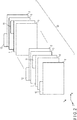
FIG. 7 is a plan view illustrating a first container divided into nine equal areas in a plan view. - Hereinafter, some embodiments will be explained with reference to the accompanying drawings.
- Note that the disclosure is merely an example, and proper changes within the spirit of the invention, which are easily conceivable by a skilled person, are included in the scope of the invention as a matter of course. In some cases, in order to make the description clearer, the widths, thicknesses, shapes, etc., of the respective parts are schematically illustrated in the drawings, compared to the actual modes. However, the schematic illustration is merely an example, and adds no restrictions to the interpretation of the invention. In the specification and drawings, the same elements as those described in connection with preceding drawings are denoted by like reference numerals, and a detailed description thereof may be omitted.
- Now, the nonaqueous electrolyte secondary battery of the present embodiment will be explained as a laminated lithium ion secondary battery with reference to
FIGS. 1 to 6 . -
FIG. 1 is a plan view of the internal structure of the laminated lithium ion secondary battery excluding the outer body thereof.FIG. 2 is a perspective view of anelectrode group 10 ofFIG. 1 in a disassembled manner.FIG. 3 is a plan view illustrating a state where a pair of apositive electrode plate 1 and anegative electrode plate 2 of theelectrode group 10 ofFIG. 1 are overlapped with each other.FIG. 4 illustrates the laminated lithium ion battery of the present embodiment, whereFIG. 4(a) is a plan view as being viewed from a direction Z andFIG. 4(b) is a plan view as being viewed from a direction X.FIG. 5 is a cross-sectional view, taken along line V-V ofFIG. 4(a) .FIG. 6 is a plan view of theelectrode group 10 ofFIG. 1 accommodated in the outer body. - The laminated lithium ion secondary battery includes, as in
FIG. 1 , a rectangular (for example, cuboid)electrode group 10. Theelectrode group 10 includes a first side surface F1 and a second side surface F2 which are opposed to each other. Theelectrode group 10 includes different side surfaces which are opposed to each other, that is, a third side surface F3 and a fourth side surface F4. Note that, in the present application, a direction parallel to the direction along the first side surface F1 and the second side surface F2 is defined as direction X, direction parallel to the direction along the third side surface F3 and the fourth side surface F4 is defined as direction Y, and direction perpendicular to the directions X and Y is defined as direction Z. Theelectrode group 10 includes a width W1 in the direction X, and a length L1 in the direction Y which is shorter than the width W1. - The
electrode group 10 includes apositive electrode plate 1 and anegative electrode plate 2 arranged to be opposed to each other with aseparator 3 therebetween. Theelectrode group 10 maintains a nonaqueous electrolyte. The nonaqueous electrolyte is a nonaqueous electrolyte solution containing a nonaqueous solvent and electrolytes, for example. The components of the nonaqueous electrolyte will be described later. Theelectrode group 10 is structured as inFIG. 2 such that a plurality ofpositive electrode plates 1 and a plurality ofnegative electrode plates 2 are laminated in the direction Z while aseparator 3 is interposed between thepositive electrode plate 1 and thenegative electrode plate 2. - The
positive electrode plate 1 includes, as inFIG. 5 , apositive electrode collector 1a and apositive electrode layer 1b formed on the both surfaces of thecollector 1a. Thepositive electrode collector 1a is, for example, a rectangular aluminum foil. Thepositive electrode collector 1a has a thickness of 10 to 30 µm, for example. Thepositive electrode layer 1b contains a positive electrode active substance which can collect/release lithium ions, and contains, for example, the positive electrode active substance, conductive agent, and binding agent. The components of thepositive electrode plate 1 will be described later. - A band-like positive
electrode collector lead 11 is electrically connected to a side surface of thepositive electrode plate 1 positioned in the first side surface F1 side of theelectrode group 10. The positiveelectrode collector lead 11 is connected to the fourth side surface F4 side with respect to the center line CL in the direction X as inFIG. 1 . The positiveelectrode collector lead 11 is formed integrally with thepositive electrode collector 1a, for example. The positiveelectrode collector lead 11 has a thickness t11 of 10 to 30 µm, for example. - The
separator 3 is a lithium ion transmissive porous film, and is, for example, a porous polyolefin film having a thickness of 5 to 30 µm. The components of theseparator 3 will be described later. - The
negative electrode plate 2 includes anegative electrode collector 2a and anegative electrode layer 2b formed on the both surfaces of thecollector 2a. Thenegative electrode collector 2a is, for example, a rectangular copper foil. Thenegative electrode collector 2a has a thickness of 6 to 14 µm, for example. Thenegative electrode layer 2b contains a negative electrode active substance which can collect/release lithium ions, and contains, for example, the negative electrode active substance, conductive agent, and binding agent. The components of thenegative electrode plate 2 will be described later. - A band-like negative
electrode collector lead 12 is electrically connected to a side surface of thenegative electrode plate 2 positioned in the first side surface F1 side of theelectrode group 10. The negativeelectrode collector lead 12 is connected to the third side surface F3 side with respect to the center line CL in the direction X as inFIG. 1 . The negativeelectrode collector lead 12 is formed integrally with thenegative electrode collector 2a, for example. The negativeelectrode collector lead 12 has a thickness t12 of 6 to 14 µm, for example. - A battery structured as above with the positive
electrode collector lead 11 and the negativeelectrode collector lead 12 extending from the first side surface F1 of theelectrode group 10 is referred to as one-side tab battery. - As shown in
FIG. 5 below, the negativeelectrode collector lead 12 extend from the side surface of thenegative electrode plate 2 positioned in the first side surface F1 side of theelectrode group 10. The negative electrode collector leads 12 are converged to, for example, the center side along the direction of the lamination of the electrode group 10 (direction Z) to be connected to each other. Although this is not shown, the positive electrode collector leads 11 extend similarly from the side surface of thepositive electrode plate 1 positioned in the first side surface F1 side of theelectrode group 10. The positive electrode collector leads 11 are, as with the negative electrode collector leads 12, converged and connected. - One end of a
positive terminal 13 is electrically connected to the positiveelectrode collector lead 11. Thepositive terminal 13 is, for example, a flat rectangular aluminum plate. Thepositive terminal 13 has a thickness of 0.08 to 1.0 mm and a width W3 in the direction X, and extends in the direction Y, for example. To both surfaces of thepositive terminal 13, converged tips of the positive electrode collector leads 11 are connected via ultrasonic welding, resistance welding, or the like. The positiveelectrode collector lead 11 and thepositive terminal 13 are connected via aspot welding part 15, for example. - One end of a
negative terminal 14 is electrically connected to the negativeelectrode collector lead 12. Thenegative terminal 14 is, for example, a flat rectangular copper plate. Thenegative terminal 14 has a thickness of 0.08 to 1.0 mm and a width W4 in the direction X, and extends in the direction Y, for example. To both surfaces of thenegative terminal 14, converged tips of the negative electrode collector leads 12 are connected via ultrasonic welding, resistance welding, or the like. The negativeelectrode collector lead 12 and thenegative terminal 14 are connected via aspot welding part 16, for example. - In the part of each of the
terminals resin part 6 is formed to cover the circumferential surface of theterminals resin part 6 is heat sealed with heat sealing resin layers of laminate films RF1 and RF2 which will be described later. The heat sealingresin part 6 increases adhesion strength of the part of the sealing member R1 where each of theterminals resin part 6 is formed of a thermoplastic resin such as polyolefin. - As in
FIG. 3 , thepositive electrode plate 1 is, for example, formed to be slightly smaller than thenegative electrode plate 2 in the area. The hatched part inFIG. 3 illustrates the area where the collector leads 11 and 12 and theterminals electrode collector lead 11 has a length L2 from one end connected to thepositive electrode plate 1 to the other end connected to thepositive terminal 13. The negativeelectrode collector lead 12 has a length L3 from one end connected to thenegative electrode plate 2 to the other end connected to thenegative terminal 14. - In the laminated lithium ion secondary battery, the above-described
electrode group 10 is accommodated in the outer body RF including one or two laminate films RF1 and RF2. - The outer body RF is formed of two laminate films RF1 and RF2 as in
FIGS. 4(b) and5 . The laminate films RF1 and RF2 are, for example, each shaped as a rectangle with a container concave part shaped as rectangular hollow shape with a bottom, and a rectangular frame-like flat part positioned in the periphery of the container concave part. The outer body RF has, for example, a rectangle having a width W7 in the direction X and a length L6 in the direction Y. The outer body RF has a maximum thickness of tR2, for example. The flat part is formed such that the area in the first side surface F1 is greater than are the areas in the second side surface F2, third side surface F3, and fourth side surface F4. The laminate films RF1 and RF2 are each structured with a protection layer (outer layer), metal layer (middle layer), and heat sealing resin layer (inner layer) laminated in this order. The components of the outer body RF will be described later. - The outer body RF includes a rectangular frame-like sealing member R1, and a container member which is surrounded by the sealing member R1 to accommodate the
electrode group 10. The sealing member R1 is formed by sealing the heat sealing resin layers positioned in the peripheries of the flat parts of the laminate films RF1 and RF2. The rectangular frame-like sealing member R1 has the same width in the first side surface F1, second side surface F2, third side surface F3, and fourth side surface F4 sides. Thus, on the flat parts with a wider area positioned in the first side surfaces F1 side of the laminate films RF1 and RF2, a non-sealed area surrounded by a reverse C letter-like part of the sealing member R1. That is, the non-sealed area is the area where the heat sealing resin layers of the laminate films RF1 and RF2 opposed to each other are not sealed. - The container member includes a first container part R2 and a second container part R3 divided by the direction X. The first container part R2 is, for example, a rectangular area of the container member in the opposite side of the extension side of each of the
terminals terminals - The first container part R2 is an area defined by the container concave parts of the laminate films RF1 and RF2 opposed to each other. In the first container part R2, for example, a part of the
electrode group 10, positiveelectrode collector lead 11, and negativeelectrode collector lead 12 is accommodated. The first container part R2 has a shape along the accommodatedelectrode group 10, for example. The first container part R2 is shaped as a cuboid having a width W8 in the direction X, length La in the direction Y, and thickness tR2 in the direction Z. As inFIG. 5 , theelectrode group 10 and a part of the negativeelectrode collector lead 12 extending from theelectrode group 10 before being converged are accommodated in the first container part R2. Note that, although this is not shown, a part of the positiveelectrode collector lead 11 is accommodated in the first container part R2 as with the negativeelectrode collector lead 12. As inFIG. 4(a) , the first container part R2 accommodating theelectrode group 10 is adjacent to the sealing member R1 in the third side surface F3, second side surface F2, and fourth side surface F4, and is adjacent to the second container part R3 in the first side surface F1. - The second container part R3 is, for example, a non-sealed area of two flat parts of the laminate films RF1 and RF2 opposed to each other excluding the sealing member R1. The second container part R3 has a length Lb in the direction Y. As in
FIG. 5 , the second container part R3 accommodates a part of the negativeelectrode collector lead 12 and a part of thenegative terminal 14 connected to the negativeelectrode collector lead 12. Note that, although this is not shown, the positiveelectrode collector lead 11 and thepositive terminal 13 connected to the positiveelectrode collector lead 11 are partly accommodated in the second container part R3 as with the negativeelectrode collector lead 12 and thenegative terminal 14. As inFIGS. 5 and6 , each of the collector leads 11 and 12 extends in the direction Y from the first side surface F1 of theelectrode group 10 in the first container part R2 to the inside of the second container part R2. The collector leads 11 and 12 andterminals spot welding parts terminals terminals FIG. 4(a) , exposed to the outside of the outer body RF. - Such a laminated lithium ion secondary battery generates, in the charge/discharge state, heat caused by reaction heat in the
electrode group 10. In the above-described one-side tab battery, the charge/discharge reaction tends to concentrate in the proximity of the connection part of the collector leads 11 and 12 of theelectrode group 10, and the part tends to become a high temperature. If theelectrode group 10 locally becomes a high temperature, and current is focused to the high temperature part, and thus, the charge/discharge state in theelectrode group 10 becomes uneven, and the battery life becomes shorter. Thus, it is required that the heat generated in theelectrode group 10 is effectively released to the outside to even the temperature distribution of theelectrode group 10. - The heat generated in the
electrode group 10 is mainly transferred from the collector leads 11 and 12 in the outer body RF to theterminals terminals electrode group 10. In such a case, the heat release to the outside through theterminals entire electrode group 10. Thus, the second container part R3 functions as a main part of the heat release part of the battery. When theelectrode group 10 is heated, the heat is scattered to the collector leads 11 and 12 accommodated in the container part R3, and the heat is evened between theelectrode group 10 and the collector leads 11 and 12. Thus, the heat is transferred to theterminals electrode group 10 is improved. Here, the heat generated in theelectrode group 10 is transferred greatly when the cross-sectional area of theterminals terminals terminals terminals terminals - As in
FIG. 4(a) , the length La of the first container part R2 in the direction Y and the length Lb of the second container part R3 should satisfy 0.1≤Lb/(La+Lb)≤0.2. Since the second container part R3 functions as a main part of the heat releasing part, when the value of Lb becomes greater, the amount of heat radiation of theelectrode group 10 becomes greater. Thus, the value of Lb should be designed based on the amount of heat radiation of theelectrode group 10. If the value of Lb is small (Lb/(La+Lb)<0.1), there may be a possibility that the heat generated in theelectrode group 10 is not effectively released to the outside. On the other hand, if the value of Lb is too large (0.2<Lb/(La+Lb)), the weight of the second container part R3 which does not contribute to the charge/discharge increases, and thus, the specific energy of the battery decreases. In consideration of the above, 0.1≤Lb/(La+Lb)≤0.2 should be satisfied to achieve a sufficient heat radiation of the battery while suppressing a decrease in specific energy of the battery. - When the heat resistance of the part of the positive electrode collector lead 11 from one end connected to the
positive electrode plate 1 to the other end connected to thepositive terminal 13 is r1, and the heat resistance of the part of the negative electrode collector lead 12 from one end connected to thenegative electrode plate 2 to the other end connected to thenegative terminal 14 is r2, a ratio of r2/r1 is, preferably, 0.7 or more and 1.4 or less. - The heat generated in the
electrode group 10 in the charge/discharge state is released through the collector leads 11 and 12 as described above, and thus, if there is a greater difference between r1 and r2, there may be a difference in the heat radiation performance between thepositive electrode plate 1 and thenegative electrode plate 2 which may cause uneven deterioration of the plates. When the ratio of r2/r1 is defined as 0.7 or more and 1.4 or less, the heat released through the collector leads 11 and 12 can be evened, and the temperature distribution of theelectrode group 10 in the charge/discharge state can further be evened. - As in
FIG. 3 , the heat resistance r1 is derived from the following formula (1) based on width W5 of the part of the positiveelectrode collector lead 11, length L2 and thickness t11 of the part, and heat conductive ratio λ1.
- On the other hand, the heat resistance r2 is derived from the following formula (2) based on width W6 of the part of the negative
electrode collector lead 12, length L3 and thickness t12 of the part, and heat conductive ratio λ2.
- Note that r1 and r2 can be changed by adjusting each of the dimensions in consideration of each of the heat conductive ratios λ1 and λ2 of the collector leads 11 and 12. For example, aluminum generally used as a material of the positive
electrode collector lead 11 has approximately half the heat conductive ratio as compared to copper which is generally used as a material for the negativeelectrode collector lead 12. Thus, if other dimensions (widths and lengths) are the same, thickness t12 of the negativeelectrode collector lead 12 is set as twice as thickness t11 of the positiveelectrode collector lead 11 to set the ratio of r2/r1 to the above range. - As in
FIG. 5 , theelectrode group 10 is, preferably, formed as a cuboid and the first side surface F1 is, preferably, the side surface of the longitudinal direction of theelectrode group 10. If the first side surface F1 is, hypothetically, the side surface of the latitudinal direction of theelectrode group 10, a gap between the part of theelectrode group 10 in the proximity of the heated terminal and the part of theelectrode group 10 which is farthermost from the terminal becomes long in the direction to which the terminal projects. Thus, in a case where the first side surface F1 is the side surface of theelectrode group 10 in the latitudinal direction, a temperature difference in theelectrode group 10 becomes greater as compared to a case where the first side surface F1 is the side surface of theelectrode group 10 in the longitudinal direction. Furthermore, if the first side surface F1 is the side surface of theelectrode group 10 in the longitudinal direction, the widths of the collector leads 11 and 12 connected to theelectrode group 10 can be increased. Thus, the heat radiation from theelectrode group 10 to the collector leads 11 and 12 can be performed more effectively. - When the width of the first side surface F1 of the
electrode group 10 is W1 (W1 ofFIG. 1 ), and a sum of the widths of the collector leads 11 and 12 is W2 (that is, sum of W5 and W6 ofFIG. 3 ), the ratio W2/W1 should be 0.6 or more and 0.9 or less. - As described above, the heat generated in the
electrode group 10 is concentrated in the area in the proximity of the connection part of the collector leads 11 and 12 of theelectrode group 10. Thus, effective heat radiation performed by increasing the widths of the collector leads 11 and 12 directly connected to thepositive electrode plate 1 and thenegative electrode plate 2 is important. When the ratio of W2/W1 is 0.6 or more and 0.9 or less, the heat radiation of theelectrode group 10 to the collector leads 11 and 12 can be performed effectively with the greater widths of the collector leads 11 and 12. When the ratio of W2/W1 is below 0.6, the effect of heat radiation from theelectrode group 10 to the collector leads 11 and 12 decreases, and thus, effective heat radiation of theelectrode group 10 to the collector leads may not be performed. In an example, if the ratio of W2/W1 is 0.5, a sum of the widths of the collector leads 11 and 12 becomes 1/2 as compared to theelectrode group 10, and thus, the effect of the heat radiation from theelectrode group 10 to the collector leads 11 and 12 becomes half accordingly. If the ratio of W2W1 is above 0.9, the heat radiation from theelectrode group 10 to the collector leads is performed effectively while a gap between the collector leads 11 and 12 becomes narrower, and a possibility of short circuit increases. - The first container part R2 to accommodate the
electrode group 10 functions as a heat generation part of the battery. The heat generated by theelectrode group 10 is released to the outside from the surface of theelectrode group 10 through the collector leads 11 and 12,terminals terminals terminals 13 and 14) are small such as 2 mm or less, the total surface area S2 does not include the total surface area of the members in the thickness direction. That is, if the total surface area S2 can be calculated from the sum of areas as being projected from the forward and opposite directions in the direction Z (two directions) if the thicknesses of the members are small. On the other hand, in the total surface area S1, the thickness tR2 of the first container part R2 is generally 2 mm or more, and thus, the total surface area S3 in the thickness direction (sum of the areas as being projected from the forward directions and the opposite direction in the directions X and Y (four directions)) is included. - By defining the ratio of S2/S1 as 0.4 or more and 1.0 or less, the total surface area S2 of sufficient heat releasing part can be secured based on the total surface area S1 of the first container part R2 (heat generation part). Thus, the battery with the above ratio of S2/S1 can effectively release the heat generated in the
electrode group 10, and the temperature distribution of theelectrode group 10 can be evened. Thus, the current distribution of theelectrode group 10 of the battery can be evened, and deterioration of the battery life because of local deterioration of each active material of thepositive electrode plate 1 and thenegative electrode plate 2 can be suppressed. If the ratio of S2/S1 is below 0.4, the total surface area S2 of the heat releasing part becomes small, the effective heat radiation may not be performed, and thus, the temperature distribution of theelectrode group 10 may become uneven. On the other hand, if ratio of S2/S1 is above 1.0, when the weight of the heat releasing part which does not contribute to the charge/discharge increases, the specific energy of the battery may decrease. - If the total surface area of the first container part R2 (heat generation part) is S3, and the total surface area of the heat releasing part is S2, the ratio of S2/S3 is, preferably, 4.5 or more.
- The total surface area S3 of the first container part R2 in the thickness direction becomes greater in proportion to the thickness of the
electrode group 10 accommodated (in correlation with the number of laminated layers of the electrode group 10), generally. The heat generated from theelectrode group 10 increases in proportion to the total surface area S3, and the heat tends to be accumulated, and thus, it is necessary to increase the heat radiation of the battery by increasing the total surface area S2 of the heat releasing part. If the ratio of S2/S3 is 4.5 or more, the heat release can be performed more effectively, and the temperature distribution of theelectrode group 10 in the charge/discharge state can be evened. - Note that the outer body RF is not limited to the structure with two laminate films RF1 and RF2, and the outer body RF may be formed of one laminate film bent by several times. If such a single laminate film is used, three sides of peripheral edges are sealed excluding the bending part to form the sealing member R1, and the sealing member R1 becomes a reversed C letter shape. Furthermore, a phrase of "the container member is surrounded by the sealing member R1" is not limited to a case where the four sides of the container member are surrounded by the sealing member R1, and may be a case where the three sides of the container member are surrounded by the sealing member R1.
- Furthermore, if the outer body RF is formed of two laminate films RF1 and RF2, each of films may not have a container concave part, and instead, one film may have a container concave part and a flat part as in the lamination film RF1 while the other lamination film RF2 may have a flat part. In that case, the first container part R2 corresponds to the area defined by the container concave part of one lamination film RF1 and the flat part of the other laminate film RF2 opposed to the container concave part.
- As the nonaqueous electrolyte secondary battery is, in the above example, a laminate lithium ion secondary battery; however, no limitation is intended thereby, and it can be applied to various known nonaqueous electrolyte batteries. For example, the nonaqueous electrolyte secondary battery may be a wound lithium ion secondary battery in which electrode group is wound.
- Now, materials in a case where the nonaqueous electrolyte secondary battery is a lithium ion secondary battery will be explained.
- The
positive electrode layer 1b includes, for example, a positive electrode active material, conductive agent, and binding agent. - The positive electrode active material is not limited specifically, and is a known or commercially-available material, for example, a lithium containing transition metal oxide such as LiCoO2, LiNiO2, LiMn2O4, LiFePO4, LiCo1/3Ni1/3Mn1/3O2, LiCo0.15Ni0.8Al0.05O2, or LiNi0.5Mn1.5O4.
- The conductive agent is not limited specifically, and is a known or commercially-available agent, for example, carbon black such as acetylene black or Ketjen black, carbon nanotube, carbon fiber, activated carbon, or graphite.
- The binding agent is not limited specifically, and is a known or commercially-available agent, for example, polyvinylidene fluoride (PVdF), polytetrafluoroethylene (PTFE), polyvinylpyrrolidone (PVP), polyvinyl chloride (PVC), polyethylene (PE), polypropylene (PP), ethylene-propylene copolymer, styrene butadiene rubber (SBR), or acrylic resin.
- The
positive electrode collector 1a is not limited specifically, and is a known or commercially-available material, for example, a metal foil such as aluminum foil, copper foil, or stainless foil, or a porous metal such as porous aluminum. - The
negative electrode layer 2b contains, as described above, a negative electrode active material, conductive agent, and binding agent, for example. - The negative electrode active material is not limited specifically, and is a known or commercial-available material, for example, a carbon material such as natural graphite, artificial graphite, mesocarbon microbeads (MCMB), hard carbon, or soft carbon, metal material which can absorb/release lithium such as Al, Si, or Sn and alloy material including such metal materials, or metal oxide material such as SiO, SiO2, lithium titanium oxide (Li4Ti5O12).
- The binding agent is not limited specifically, and is a known or commercially-available agent, for example, PTFE, PVdF, fluororubber, SBR, carboxymethyl cellulose (CMC), core shell binder, polyvinyl alcohol, polyimide, and imide resin such as polyamide-imide.
- The conductive agent may or may not be added, and if added, the same conductive agent used for the positive electrode can be used.
- The
negative electrode collector 2a is not limited specifically, and is a known or commercially-available material, for example, a metal foil such as aluminum foil, copper foil, or stainless foil, or a porous metal such as porous aluminum. - The separator is not limited specifically, and is a known or commercially-available separator, for example, a synthetic resin non-woven cloth formed of a polyolefin resin such as PE or PP, or PTFE, or a prous sheet.
- The nonaqueous electrolyte is not limited specifically, and is a known or commercially-available electrolyte, for example, lithium salt such as LiBF4, LiPF6, LiAsF6, LiCF3, CFO, LiSO3CF3, LiCF2CF2SO3, LiClO4, LiN(COCF2CF3)2, LiN(SO2CF3)2 as single or mixture. The concentration of electrolyte is, for example, 0.3 mol/L to 3.0 mol/L.
- The nonaqueous solution is not limited specifically, and is a known or commercially-available solution, for example, ethylene carbonate (EC), ethyl methyl carbonate (EMC), γ-butyrolactone, diethyl carbonate, dimethyl carbonate (DMC) as a main solvent. Furthermore, as a sub solvent to be mixed to the main solvent, propylene carbonate, sulfolane, dimethoxyethane, diethoxyethane, 2-methyltetrahydrofuran, and various glymes can be used.
- Furthermore, as an additive of the nonaqueous electrolyte, an organic substance having unsaturated bond in molecules and being able to reduction polymerization is preferred. If the additive is added, an effective solid electrolyte interface film on the surface of the negative electrode material, and decomposition of the electrolyte and nonaqueous solvent can be suppressed. As the additive, for example, a carbonate such as fluoroethylene carbonate, vinylene carbonate (VC), and vinylethylene carbonate, and its derivative, or unsaturated carboxylate esters, phosphate esters, boric acid ester, and alcohols can be used.
- The laminate films RF1 and RF2 of the outer body RF include, as described above, a protection layer, metal layer, and heat sealing resin layer. The protection layer, metal layer, heat sealing resin layer are formed of a single or multiple layers of the following materials. An adhesive layer may be formed between the layers.
- The protection layer is not limited specifically, and is a known or commercially-available material, for example, nylon, or polyethylene terephthalate (PET).
- The metal layer is not limited specifically, and is a known or commercially-available material, for example, a metal foil containing at least one metal selected from a group of iron, nickel, copper, tin, and aluminum. The metal layer is, preferably, an aluminum foil or a stainless foil.
- The heat sealing resin layer is not limited specifically, and is a known or commercially-available material, for example, a polyolefin resins such as PP and PE.
- Now, an example of a manufacturing method of the nonaqueous electrolyte secondary battery of the present embodiment will be explained.
- A positive electrode slurry is prepared by mixing a positive electrode active material, conductive agent, binding agent, and solvent. Then, the positive electrode slurry is applied to both surfaces of a positive electrode collector body. Then, the solvent is dried, and the dried positive electrode slurry is compressed to form a positive electrode layer. Then, the layer is cut such that a band-like positive
electrode collector lead 11 extends from one side of thepositive electrode plate 1 as a rectangular positive electrode collector body in which the positive electrode layer is formed. - A negative electrode slurry is prepared by mixing a negative electrode active material, binding agent, and solvent. Then, the negative electrode slurry is applied to both surfaces of a negative electrode collector body. Then, the solvent is dried, and the dried negative electrode slurry is compressed to form a negative electrode layer. Then, the layer is cut such that a band-like negative
electrode collector lead 12 extends from one side of thenegative electrode plate 2 as a rectangular negative electrode collector body in which the negative electrode layer is formed. - Then,
positive electrode plates 1,negative electrode plates 2, and separators are prepared. Anelectrode group 10 is prepared by laminating thepositive electrode plates 1 and thenegative electrode plates 2 alternately with separators interposed therebetween. Note that thenegative electrode plates 2 are disposed at end surfaces of theelectrode group 10 in the lamination direction (direction Z). At that time, they are laminated such that the positiveelectrode collector lead 11 and the negativeelectrode collector lead 12 extend in the direction Y from the first side surface F1 of the electrode group 10 (the upper side inFIG. 1 ). - Then, the collector leads 11 and 12 extending from the
electrode group 10 are converged to be biased to the center along the lamination direction of the electrode group 10 (direction Z). Then, on the upper surfaces of theterminals terminals resin part 6 covering the peripheral surface thereof is formed. - Then, as in
FIGS. 4(a) and 4(b) , two laminate films RF1 and RF2 having the same shape with a hollow rectangular container concave part with a bottom, and a flat part surrounding the container concave part are prepared. Then, two laminate films RF1 and RF2 are arranged such that the heat sealing resin layers thereof are opposed to each other. Then, the laminate films RF1 and RF2 are overlaid such that theelectrode group 10 and a part of the collector leads 11 and 12 are accommodated in two container concave parts. At that time, a part of each of theterminals resin part 6 is formed passes through a gap between the peripheral edges of two laminate films RF1 and RF2, and theelectrode group 10 is arranged such that a part of theterminals terminals FIG. 4(a) in three sides including the side where theterminals resin part 6 is heat sealed. - Then, a nonaqueous electrolyte fluid is charged in from one side of the outer body RF where is not heat sealed. Then, under the decompressed environment, the remaining one side of the outer body RF is heat sealed, and the nonaqueous electrolyte secondary battery as in
FIGS. 4(a) and 4(b) is manufactured. - Note that, before using a lithium ion secondary battery as an example of the nonaqueous electrolyte secondary battery, a gas discharge process is, preferably, performed by performing preliminary charge/discharge to discharge a gas. Through a gas discharge process, an expansion of the outer body RF by a gas in the use of the battery can be prevented.
- Note that, a solvent used for a positive electrode slurry and a negative electrode slurry is not limited specifically, and is a known or commercially-available solvent, for example, N-methyl-2-pyrrolidone (NMP). If PVdF is used as a binding agent, NMP should be used as a solvent. If SBR, PTFE, polyvinyl alcohol, CMC or the like is used as a binding agent, water should be used as a solvent.
- Now, the present invention will be explained further based on an example.
- A test battery of an example was manufactured through the following method. Note that the manufacturing method of the test battery which is not specified in the following description is the same as the above-described manufacturing method of the nonaqueous electrolyte secondary battery of the embodiment.
- 90 pts.wt. of lithium iron phosphate as a positive electrode active material, 5 pts.wt. of PVdF as a binding agent, and 5 pts.wt. of carbon black as a conductive agent were dispersed in NMP as a solvent to prepare a positive electrode slurry. Then, the positive electrode slurry was applied to both surfaces of aluminum foil as a positive electrode collector (heat conductivity λ1: 237W/m·K, thickness t11: 20 µm). Then, the solvent is dried, and the dried positive electrode slurry was compressed to form a positive electrode layer. Then, the layer was cut such that a band-like positive electrode collector lead extends from one side of the positive electrode plate as a rectangular positive electrode collector with the positive electrode layer. As a separator, a PE single layer film prepared by a wet biaxial stretching method with a thickness of 25 µm.
- 98 pts.wt. of graphite as a negative electrode active material, 1 pt.wt. of SBR as a binding agent, and 1 pt.wt. of CMC as a thickener were dispersed in deionized water as a solvent to prepare a negative electrode slurry. Then, the negative electrode slurry was applied to both surfaces of copper foil as a negative electrode collector (heat conductivity λ2: 401W/m·K, thickness t12: 10 µm). Then, the solvent is dried, and the dried negative electrode slurry was compressed to form a negative electrode layer. Then, the layer was cut such that a band-like negative electrode collector lead extends from one side of the negative electrode plate as a rectangular negative electrode collector with the negative electrode layer.
- Then, an electrode group was prepared by laminating 29 positive electrode plates and 30 negative electrode plates alternately with separators are interposed therebetween. Note that negative electrode plates are arranged at end surfaces of the electrode group in the lamination direction (direction Z). At that time, the plates are laminated such that each collector lead extends from the first side surface F1 of the electrode group (upper side of
FIG. 1 ) to the direction Y. The manufactured electrode group is a cuboid having a width in the direction X (width of the first side surface F1) (W1 ofFIG. 1 ) of 164 mm, and a length in the direction Y (L1 ofFIG. 1 ) of 115 mm. Thus, the first side surface F1 is a side surface of the electrode group in the longitudinal direction. - Then, the collector leads are converged along the lamination direction of the electrode group (direction Z) to be biased to the center, and are connected to one surface of an end of each terminal by ultrasonic welding. The positive electrode plate is an aluminum plate having a width in the direction X (W3 of
FIG. 1 ) of 60 mm and a thickness of 0.3 mm. The negative electrode terminal is a copper plate having a width in the direction X (W4 ofFIG. 1 ) of 60 mm and a thickness of 0.3 mm. Then, at the part of the positive electrode terminal and the negative electrode terminal passing through the sealing member, a heat sealing resin part formed of polyolefin is formed to cover the peripheral surface thereof. - The widths of the collector leads in the direction X (W5 and W6 of
FIG. 3 ) are 62 and 63 mm, respectively. Thus, if the width of the first side surface of the electrode group (W1 ofFIG. 1 ) is W1, and a sum of widths of the collector leads (W5+W6) is W2, a ratio of W2/W1 is approximately 0.76. - The positive electrode collector lead has a length from one end connected to the positive electrode plate to the other end connected to the positive terminal (L2 of
FIG. 3 ) is 12 mm. The negative electrode collector lead has a length from one end connected to the negative electrode plate to the other end connected to the negative terminal (L3 ofFIG. 3 ) is 8 mm. Thus, a ratio of r2/r1 is, based on the values of heat resistances r1 and r2 calculated from the above-mentioned formulae (1) and (2), 0.78. - Two laminate films having a rectangular outer shape with a container concave part to accommodate the electrode group and a flat part surrounding the container concave part were prepared as in
FIGS. 4(a) and 4(b) . The laminate film includes a heat sealing resin layer formed of polyolefin, metal layer formed of aluminum foil, and protection layer formed of nylon resin and polyester resin, layered in this order. Two laminate films have a thickness of 153 µm. - Two laminate films were arranged such that the heat sealing resin layers thereof are opposed to each other. Then, the laminate films were overlaid such that the electrode group is accommodated in two container concave parts. Between the peripheral edges of two laminate films, the electrode group was arranged such that a part of each of the terminals where the heat sealing resin part is formed passes through, and a part of the terminals is exposed. In that state, the heat sealing resin layers of the peripheral edges of the laminate films are heat sealed in three sides including a side where each terminal of the laminate films extends, and a rectangular frame-like sealing member with a width of 10 mm was prepared.
- Then, from one side of the outer body which has not been heat sealed, a nonaqueous electrolyte fluid was charged. The nonaqueous electrolyte fluid was prepared based on a mixed solvent with a volume ratio of EC:EMC:DMC of 2:5:3, and LiPF6 as electrolytes dissolved therein with a ratio of 1.3 mol/L. As an additive, 3 pts.wt. VC was added to the nonaqueous electrolyte fluid. Then, under the decompressed environment, the remaining one side of the outer body was heat sealed, and the nonaqueous electrolyte secondary battery of
FIGS. 4(a) and 4(b) was manufactured. - The outer body was rectangular in a plan view, and the width of the outer body in the direction X (W7 of
FIG. 4(a) ) was 194 mm, and the length in the direction Y (L6 ofFIG. 4(a) ) was 162.5 mm. The first container part was formed as a cuboid along the shape of the electrode group, and width W8 in the direction X was 170 mm, and a length in the direction Y (La ofFIG. 1 ) was 120 mm, and a thickness (tR2 ofFIG. 4(b) ) was 9.5 mm. The width of the terminal exposed to the outside in the direction X (W3 and W4 ofFIG. 4 ) was 60 mm, and a length in the direction Y (L4 and L5 ofFIG. 4(a) ) was 23.5 mm. - The total surface area S1 of the first container part calculated from the above dimensions was 463.1 cm2. Furthermore, the total surface area of the first container part in the thickness direction was 55.1 cm2. In the calculation of the total surface area S2, since the thickness of each components in the heat releasing part was 2 mm or less, the surface area in the thickness direction was ignored. In the test battery, a ratio of S2/S1 was 0.6. Furthermore, in the test battery, a ratio of S2/S3 was 5.06. The second container part had a length in the direction Y (Lb of
FIG. 1 ) of 20.5 mm. Thus, the value of Lb/(La+Lb) of the test battery was 0.15. - Temperature distribution of the first container part in a high rate discharge state was measured with respect to the test battery of the example.
FIG. 7 is a plan view of the first container part of the nonaqueous electrolyte secondary battery which was divided to three parts in the directions X and Y to be nine equal areas in a plan view. - In order to measure the temperature distribution of the first container part, a thermocouple was connected to the center of each of nine areas. Then, the test battery to which the thermocouple was connected was interposed between two silicon rubbers and wrapped by a glass wool insulation to be insulated. Then, after checking that nine thermocouples showed an average temperature of 25 °C, each of test batteries were charged/discharged in the following charge/discharge conditions. A temperature at the time when 5.0C discharge was performed until 2.0 V in the following conditions was measured in each of the nine thermocouples. Then, an average value of the temperatures of nine thermocouples was calculated in each test battery.
-
- 0.5C discharge until 2.0 V
- Halt for fifteen minutes
- 0.5C charge until 3.6 V (performed until charge current decreases to 0.05C)
- 5.0C discharge until 2.0 V
- The temperature distribution of the first container part of the test battery was determined to be even if the maximum temperature difference ΔTmax with respect to the average temperature of nine points was within 2.0 °C. Table 1 shows a temperature difference ΔT of measurement points of divisions [1] to [9] of
FIG. 7 with respect to an average temperature. Here, as inFIG. 7 , in the test battery, divisions [1], [4], and [7] are in the side where the negative electrode collector lead is connected, and divisions [3], [6], and [9] are in the side where the positive electrode collector lead is connected. The divisions [1], [2], and [3] are in the same position in the direction Y. Divisions [4], [5], and [6] are in the same position in the direction Y. Divisions [7], [8], and [9] are in the same positioned in the direction Y. By comparing the divisions [1], [4], and [7] with the divisions [3], [6], and [9], a difference of the heat releasing performances of the side where the positive electrode collector lead is connected and the side where the negative electrode collector lead is connected can be checked.Table 1 Division Temperature difference ΔT[°C] Division Temperature difference ΔT[°C] Division Temperature difference ΔT[°C] [1] -1.5 [2] -1 [3] -1 [4] 0.7 [5] 1.3 [6] 0.7 [7] 0 [8] 0.7 [9] 0.1 - As in Table 1, the test battery of the example indicated that the maximum temperature difference ΔTmax with respect to the average temperature of nine points was approximately 1.5 °C, and the temperature distribution of the first container part in the discharge state was even. Furthermore, as in the above-mentioned prior-art technique literature, it is generally known that a temperature becomes high in the divisions [1], [2], and [3] closer to the first side surface to which each collector lead is connected. In the test battery of the example, the temperature of the divisions [1], [2], and [3] facing the second container part is lower than the average temperature, and thus, it is obvious that the heat of the electrode group has been released from the second container part.
- Furthermore, when temperature differences ΔT between divisions [1] and [3], between [4] and [6], and between [7] and [9] were compared, there was almost no difference therebetween. The result shows that, with r2/r1 defined as 0.7 or more and 1.4 or less, the heat generated in the electrode group was released to the same degree through the collector leads, and the temperature distribution became the same in the side where the positive electrode collector lead was connected and in the side where the negative electrode collector lead was connected.
- From the results obtained from the example, it is determined that the nonaqueous electrolyte secondary battery of the embodiment exerted high heat radiation and evened temperature distribution of the electrode group in the charge/discharge state.
- Although some embodiments have been described in detail, these are only examples. The present invention is not limited to these embodiments and examples, and various changes based on the technical concept of the present invention are possible.
Claims (8)
- A nonaqueous electrolyte secondary battery comprising:a rectangular electrode group including a positive electrode plate and a negative electrode plate arranged to be opposed to each other with a separator interposed therebetween, the group having one side surface;a nonaqueous electrolyte maintained in the electrode group;a band-shaped positive electrode collector lead electrically connected to the positive electrode plate in the side surface;a band-shaped negative electrode collector lead electrically connected to the negative electrode plate in the side surface;a flat plate-shaped positive terminal electrically connected to one end of the positive electrode collector lead;a flat plate-shaped negative terminal electrically connected to one end of the negative electrode collector lead; andan outer body formed of one or two laminate films, the outer body including a sealing member formed by sealing periphery edges of the laminate films, and a container member surrounded by the sealing member to contain the electrode group, whereinthe container member includes a first container member and a second container member divided by a direction parallel to the direction along the side surface,the electrode group, positive electrode collector lead, and part of the negative electrode collector lead are accommodated in the first container member,the positive electrode collector lead, remaining part of the negative electrode collector lead, and part of the positive terminal and the negative terminal connected to each collector lead are accommodated in the second container member,the positive electrode collector lead and the negative electrode collector lead extend form the side surface of the electrode group to the second container member, andthe positive terminal and the second terminal extend from the second container member to the outside through the sealing member.
- The nonaqueous electrolyte secondary battery of claim 1, wherein a length La of the first container member in a direction orthogonal to the side surface and a length Lb of the second container satisfy a relationship of 0.1≤Lb/(La+Lb)≤0.2.
- The nonaqueous electrolyte secondary battery of claim 1 or 2, wherein
a ratio of r2/r1, where a thermal resistance of a part of the positive electrode collector lead from one end connected to the positive electrode plate to the other end connected to the positive electrode terminal is r2, and a thermal resistance of a part of the negative electrode collector lead from one end connected to the negative electrode plate to the other end connected to the negative electrode is r1, is 0.7 or more and 1.4 or less. - The nonaqueous electrolyte secondary battery of any one of claims 1 to 3, wherein the side surface is a side surface of the electrode group in the longitudinal direction.
- The nonaqueous electrolyte secondary battery of any one of claims 1 to 4, wherein a ratio of W2/W1, where a width of the side surface of the electrode group is W1 and a sum of widths of the positive electrode collector lead and the negative electrode collector lead is W2, is 0.6 or more and 0.9 or less.
- The nonaqueous electrolyte secondary battery of any one of claims 1 to 5, whereina part of the outer body excluding the first container member and a part of the positive terminal and the negative terminal exposed to the outside function as a radiator, anda ratio of S2/S1, where a total surface area of the first container member is S1 and a total surface area of the radiator is S2, is 0.4 or more and 1.0 or less.
- The nonaqueous electrolyte secondary battery of claim 6, wherein
a ratio of S2/S3, where a total surface area of the first container member in the thickness direction is S3 and a total surface area of the radiator is S2, is 4.5 or more. - The nonaqueous electrolyte secondary battery of any one of claims 1 to 7, wherein
a positive electrode active material used in the positive electrode plate and a negative electrode active material used in the negative electrode plate are formed of a material which can charge/discharge lithium ion.
Applications Claiming Priority (2)
| Application Number | Priority Date | Filing Date | Title |
|---|---|---|---|
| JP2019130270A JP6780071B1 (en) | 2019-07-12 | 2019-07-12 | Non-aqueous electrolyte secondary battery |
| PCT/JP2020/006096 WO2021009957A1 (en) | 2019-07-12 | 2020-02-17 | Non-aqueous electrolyte secondary battery |
Publications (2)
| Publication Number | Publication Date |
|---|---|
| EP3933951A1 true EP3933951A1 (en) | 2022-01-05 |
| EP3933951A4 EP3933951A4 (en) | 2022-10-26 |
Family
ID=73022422
Family Applications (1)
| Application Number | Title | Priority Date | Filing Date |
|---|---|---|---|
| EP20840109.1A Withdrawn EP3933951A4 (en) | 2019-07-12 | 2020-02-17 | Non-aqueous electrolyte secondary battery |
Country Status (6)
| Country | Link |
|---|---|
| US (1) | US11201356B2 (en) |
| EP (1) | EP3933951A4 (en) |
| JP (1) | JP6780071B1 (en) |
| AU (1) | AU2020313619B2 (en) |
| CA (1) | CA3114570C (en) |
| WO (1) | WO2021009957A1 (en) |
Cited By (1)
| Publication number | Priority date | Publication date | Assignee | Title |
|---|---|---|---|---|
| EP4080668A4 (en) * | 2020-09-07 | 2024-02-28 | Contemporary Amperex Technology Co., Limited | Battery cell, battery, and power consuming device |
Families Citing this family (4)
| Publication number | Priority date | Publication date | Assignee | Title |
|---|---|---|---|---|
| JP2022111526A (en) * | 2021-01-20 | 2022-08-01 | Fdk株式会社 | Laminate type power storage element |
| JP7459833B2 (en) * | 2021-03-31 | 2024-04-02 | トヨタ自動車株式会社 | Energy storage cell |
| WO2022261876A1 (en) * | 2021-06-16 | 2022-12-22 | 宁德新能源科技有限公司 | Electrochemical apparatus and secondary battery |
| FR3128318A1 (en) * | 2021-10-15 | 2023-04-21 | Faurecia Systemes D'echappement | Pocket cell and electricity storage battery |
Family Cites Families (8)
| Publication number | Priority date | Publication date | Assignee | Title |
|---|---|---|---|---|
| AT306274B (en) * | 1968-06-14 | 1973-04-10 | Floatglas Gmbh | Method and system for manufacturing a wired glass ribbon using the float method |
| JPH0516814A (en) * | 1991-07-11 | 1993-01-26 | Tetsuya Oda | Car with lift |
| JP2006244833A (en) * | 2005-03-02 | 2006-09-14 | Toyota Motor Corp | Lithium secondary battery and manufacturing method thereof |
| JP5016814B2 (en) * | 2005-12-14 | 2012-09-05 | 株式会社日立製作所 | Non-aqueous secondary battery |
| JP5701688B2 (en) * | 2011-01-31 | 2015-04-15 | 三洋電機株式会社 | Multilayer battery and method for manufacturing the same |
| JP2013135186A (en) * | 2011-12-27 | 2013-07-08 | Asahi Kasei Corp | Method for manufacturing laminate type storage element |
| JP2014035951A (en) * | 2012-08-09 | 2014-02-24 | Sanyo Electric Co Ltd | Nonaqueous electrolyte secondary battery |
| JP5955693B2 (en) * | 2012-08-09 | 2016-07-20 | 三洋電機株式会社 | Nonaqueous electrolyte secondary battery |
-
2019
- 2019-07-12 JP JP2019130270A patent/JP6780071B1/en active Active
-
2020
- 2020-02-17 WO PCT/JP2020/006096 patent/WO2021009957A1/en not_active Ceased
- 2020-02-17 EP EP20840109.1A patent/EP3933951A4/en not_active Withdrawn
- 2020-02-17 AU AU2020313619A patent/AU2020313619B2/en active Active
- 2020-02-17 CA CA3114570A patent/CA3114570C/en active Active
-
2021
- 2021-03-26 US US17/213,541 patent/US11201356B2/en active Active
Cited By (2)
| Publication number | Priority date | Publication date | Assignee | Title |
|---|---|---|---|---|
| EP4080668A4 (en) * | 2020-09-07 | 2024-02-28 | Contemporary Amperex Technology Co., Limited | Battery cell, battery, and power consuming device |
| US12494557B2 (en) | 2020-09-07 | 2025-12-09 | Contemporary Amperex Technology (Hong Kong) Limited | Battery cell, battery, and electric apparatus |
Also Published As
| Publication number | Publication date |
|---|---|
| AU2020313619B2 (en) | 2021-12-16 |
| EP3933951A4 (en) | 2022-10-26 |
| CA3114570A1 (en) | 2021-01-21 |
| JP6780071B1 (en) | 2020-11-04 |
| CA3114570C (en) | 2022-01-04 |
| US11201356B2 (en) | 2021-12-14 |
| JP2021015728A (en) | 2021-02-12 |
| US20210218066A1 (en) | 2021-07-15 |
| AU2020313619A1 (en) | 2021-11-04 |
| WO2021009957A1 (en) | 2021-01-21 |
Similar Documents
| Publication | Publication Date | Title |
|---|---|---|
| US11201356B2 (en) | Nonaqueous electrolyte secondary battery | |
| CN108140759B (en) | Sealing device for battery case with increased pressure and heat application area | |
| KR101843577B1 (en) | Non-aqueous electrolyte secondary battery and method for manufacturing the same | |
| JP4173674B2 (en) | Electrochemical device module | |
| EP1143549A2 (en) | Non-aqueous electrolyte secondary battery | |
| US11563216B2 (en) | Secondary battery and manufacturing method of secondary battery | |
| EP2975668B1 (en) | Battery system | |
| US20180315970A1 (en) | Nonaqueous electrolyte secondary battery | |
| KR102765071B1 (en) | Current collector of secondary battery and secondary battery | |
| US10686182B2 (en) | Secondary battery | |
| US20230307791A1 (en) | Power storage device | |
| JP7237055B2 (en) | Non-aqueous electrolyte secondary battery | |
| JPWO2018193771A1 (en) | Battery and manufacturing method thereof, battery pack, and electronic device | |
| JP4055345B2 (en) | Solid electrolyte battery | |
| US20180375101A1 (en) | Nonaqueous electrolyte secondary battery | |
| KR102592517B1 (en) | Sealed batteries, battery packs, and engine starting batteries | |
| US20240047829A1 (en) | Secondary battery | |
| WO2021199484A1 (en) | Secondary battery | |
| JP7325471B2 (en) | Nonaqueous electrolyte secondary battery and method for manufacturing nonaqueous electrolyte secondary battery | |
| JP7384291B2 (en) | secondary battery | |
| JP7430665B2 (en) | Secondary battery current collector and its manufacturing method, and secondary battery | |
| WO2019151494A1 (en) | Nonaqueous electrolyte secondary battery | |
| WO2023189762A1 (en) | Secondary battery | |
| JPH10172607A (en) | Sheet-like lithium secondary battery | |
| US20240405367A1 (en) | Secondary battery |
Legal Events
| Date | Code | Title | Description |
|---|---|---|---|
| STAA | Information on the status of an ep patent application or granted ep patent |
Free format text: STATUS: THE INTERNATIONAL PUBLICATION HAS BEEN MADE |
|
| PUAI | Public reference made under article 153(3) epc to a published international application that has entered the european phase |
Free format text: ORIGINAL CODE: 0009012 |
|
| STAA | Information on the status of an ep patent application or granted ep patent |
Free format text: STATUS: REQUEST FOR EXAMINATION WAS MADE |
|
| 17P | Request for examination filed |
Effective date: 20210930 |
|
| AK | Designated contracting states |
Kind code of ref document: A1 Designated state(s): AL AT BE BG CH CY CZ DE DK EE ES FI FR GB GR HR HU IE IS IT LI LT LU LV MC MK MT NL NO PL PT RO RS SE SI SK SM TR |
|
| REG | Reference to a national code |
Ref country code: DE Ref legal event code: R079 Free format text: PREVIOUS MAIN CLASS: H99Z9999999999 Ipc: H01M0010040000 |
|
| DAV | Request for validation of the european patent (deleted) | ||
| DAX | Request for extension of the european patent (deleted) | ||
| A4 | Supplementary search report drawn up and despatched |
Effective date: 20220922 |
|
| RIC1 | Information provided on ipc code assigned before grant |
Ipc: H01M 50/536 20210101ALN20220916BHEP Ipc: H01M 10/0585 20100101ALI20220916BHEP Ipc: H01M 50/54 20210101ALI20220916BHEP Ipc: H01M 50/178 20210101ALI20220916BHEP Ipc: H01M 50/129 20210101ALI20220916BHEP Ipc: H01M 50/121 20210101ALI20220916BHEP Ipc: H01M 50/119 20210101ALI20220916BHEP Ipc: H01M 50/105 20210101ALI20220916BHEP Ipc: H01M 10/0525 20100101ALI20220916BHEP Ipc: H01M 10/04 20060101AFI20220916BHEP |
|
| STAA | Information on the status of an ep patent application or granted ep patent |
Free format text: STATUS: EXAMINATION IS IN PROGRESS |
|
| 17Q | First examination report despatched |
Effective date: 20230626 |
|
| GRAP | Despatch of communication of intention to grant a patent |
Free format text: ORIGINAL CODE: EPIDOSNIGR1 |
|
| STAA | Information on the status of an ep patent application or granted ep patent |
Free format text: STATUS: GRANT OF PATENT IS INTENDED |
|
| RIC1 | Information provided on ipc code assigned before grant |
Ipc: H01M 50/536 20210101ALN20231115BHEP Ipc: H01M 10/0585 20100101ALI20231115BHEP Ipc: H01M 50/54 20210101ALI20231115BHEP Ipc: H01M 50/178 20210101ALI20231115BHEP Ipc: H01M 50/129 20210101ALI20231115BHEP Ipc: H01M 50/121 20210101ALI20231115BHEP Ipc: H01M 50/119 20210101ALI20231115BHEP Ipc: H01M 50/105 20210101ALI20231115BHEP Ipc: H01M 10/0525 20100101ALI20231115BHEP Ipc: H01M 10/04 20060101AFI20231115BHEP |
|
| INTG | Intention to grant announced |
Effective date: 20231219 |
|
| STAA | Information on the status of an ep patent application or granted ep patent |
Free format text: STATUS: THE APPLICATION IS DEEMED TO BE WITHDRAWN |
|
| 18D | Application deemed to be withdrawn |
Effective date: 20240420 |