EP3933844B1 - Verfahren zur verwaltung chirurgischer gegenstände und system zur verwaltung chirurgischer gegenstände für einen intelligenten operationssaal - Google Patents
Verfahren zur verwaltung chirurgischer gegenstände und system zur verwaltung chirurgischer gegenstände für einen intelligenten operationssaal Download PDFInfo
- Publication number
- EP3933844B1 EP3933844B1 EP21178194.3A EP21178194A EP3933844B1 EP 3933844 B1 EP3933844 B1 EP 3933844B1 EP 21178194 A EP21178194 A EP 21178194A EP 3933844 B1 EP3933844 B1 EP 3933844B1
- Authority
- EP
- European Patent Office
- Prior art keywords
- rfid tag
- surgical item
- flexible rfid
- surgical
- patient
- Prior art date
- Legal status (The legal status is an assumption and is not a legal conclusion. Google has not performed a legal analysis and makes no representation as to the accuracy of the status listed.)
- Active
Links
Images




Classifications
-
- G—PHYSICS
- G16—INFORMATION AND COMMUNICATION TECHNOLOGY [ICT] SPECIALLY ADAPTED FOR SPECIFIC APPLICATION FIELDS
- G16H—HEALTHCARE INFORMATICS, i.e. INFORMATION AND COMMUNICATION TECHNOLOGY [ICT] SPECIALLY ADAPTED FOR THE HANDLING OR PROCESSING OF MEDICAL OR HEALTHCARE DATA
- G16H40/00—ICT specially adapted for the management or administration of healthcare resources or facilities; ICT specially adapted for the management or operation of medical equipment or devices
- G16H40/20—ICT specially adapted for the management or administration of healthcare resources or facilities; ICT specially adapted for the management or operation of medical equipment or devices for the management or administration of healthcare resources or facilities, e.g. managing hospital staff or surgery rooms
-
- G—PHYSICS
- G16—INFORMATION AND COMMUNICATION TECHNOLOGY [ICT] SPECIALLY ADAPTED FOR SPECIFIC APPLICATION FIELDS
- G16H—HEALTHCARE INFORMATICS, i.e. INFORMATION AND COMMUNICATION TECHNOLOGY [ICT] SPECIALLY ADAPTED FOR THE HANDLING OR PROCESSING OF MEDICAL OR HEALTHCARE DATA
- G16H20/00—ICT specially adapted for therapies or health-improving plans, e.g. for handling prescriptions, for steering therapy or for monitoring patient compliance
- G16H20/40—ICT specially adapted for therapies or health-improving plans, e.g. for handling prescriptions, for steering therapy or for monitoring patient compliance relating to mechanical, radiation or invasive therapies, e.g. surgery, laser therapy, dialysis or acupuncture
-
- A—HUMAN NECESSITIES
- A61—MEDICAL OR VETERINARY SCIENCE; HYGIENE
- A61B—DIAGNOSIS; SURGERY; IDENTIFICATION
- A61B5/00—Measuring for diagnostic purposes; Identification of persons
- A61B5/0033—Features or image-related aspects of imaging apparatus, e.g. for MRI, optical tomography or impedance tomography apparatus; Arrangements of imaging apparatus in a room
- A61B5/0046—Arrangements of imaging apparatus in a room, e.g. room provided with shielding or for improved access to apparatus
-
- A—HUMAN NECESSITIES
- A61—MEDICAL OR VETERINARY SCIENCE; HYGIENE
- A61B—DIAGNOSIS; SURGERY; IDENTIFICATION
- A61B5/00—Measuring for diagnostic purposes; Identification of persons
- A61B5/0059—Measuring for diagnostic purposes; Identification of persons using light, e.g. diagnosis by transillumination, diascopy, fluorescence
- A61B5/0077—Devices for viewing the surface of the body, e.g. camera, magnifying lens
-
- A—HUMAN NECESSITIES
- A61—MEDICAL OR VETERINARY SCIENCE; HYGIENE
- A61B—DIAGNOSIS; SURGERY; IDENTIFICATION
- A61B5/00—Measuring for diagnostic purposes; Identification of persons
- A61B5/74—Details of notification to user or communication with user or patient; User input means
- A61B5/746—Alarms related to a physiological condition, e.g. details of setting alarm thresholds or avoiding false alarms
-
- G—PHYSICS
- G06—COMPUTING OR CALCULATING; COUNTING
- G06K—GRAPHICAL DATA READING; PRESENTATION OF DATA; RECORD CARRIERS; HANDLING RECORD CARRIERS
- G06K19/00—Record carriers for use with machines and with at least a part designed to carry digital markings
- G06K19/06—Record carriers for use with machines and with at least a part designed to carry digital markings characterised by the kind of the digital marking, e.g. shape, nature, code
- G06K19/067—Record carriers with conductive marks, printed circuits or semiconductor circuit elements, e.g. credit or identity cards also with resonating or responding marks without active components
- G06K19/07—Record carriers with conductive marks, printed circuits or semiconductor circuit elements, e.g. credit or identity cards also with resonating or responding marks without active components with integrated circuit chips
- G06K19/0723—Record carriers with conductive marks, printed circuits or semiconductor circuit elements, e.g. credit or identity cards also with resonating or responding marks without active components with integrated circuit chips the record carrier comprising an arrangement for non-contact communication, e.g. wireless communication circuits on transponder cards, non-contact smart cards or RFIDs
-
- G—PHYSICS
- G06—COMPUTING OR CALCULATING; COUNTING
- G06T—IMAGE DATA PROCESSING OR GENERATION, IN GENERAL
- G06T7/00—Image analysis
- G06T7/70—Determining position or orientation of objects or cameras
-
- G—PHYSICS
- G08—SIGNALLING
- G08B—SIGNALLING SYSTEMS, e.g. PERSONAL CALLING SYSTEMS; ORDER TELEGRAPHS; ALARM SYSTEMS
- G08B21/00—Alarms responsive to a single specified undesired or abnormal condition and not otherwise provided for
- G08B21/18—Status alarms
- G08B21/24—Reminder alarms, e.g. anti-loss alarms
-
- G—PHYSICS
- G16—INFORMATION AND COMMUNICATION TECHNOLOGY [ICT] SPECIALLY ADAPTED FOR SPECIFIC APPLICATION FIELDS
- G16H—HEALTHCARE INFORMATICS, i.e. INFORMATION AND COMMUNICATION TECHNOLOGY [ICT] SPECIALLY ADAPTED FOR THE HANDLING OR PROCESSING OF MEDICAL OR HEALTHCARE DATA
- G16H30/00—ICT specially adapted for the handling or processing of medical images
- G16H30/20—ICT specially adapted for the handling or processing of medical images for handling medical images, e.g. DICOM, HL7 or PACS
-
- G—PHYSICS
- G16—INFORMATION AND COMMUNICATION TECHNOLOGY [ICT] SPECIALLY ADAPTED FOR SPECIFIC APPLICATION FIELDS
- G16H—HEALTHCARE INFORMATICS, i.e. INFORMATION AND COMMUNICATION TECHNOLOGY [ICT] SPECIALLY ADAPTED FOR THE HANDLING OR PROCESSING OF MEDICAL OR HEALTHCARE DATA
- G16H40/00—ICT specially adapted for the management or administration of healthcare resources or facilities; ICT specially adapted for the management or operation of medical equipment or devices
- G16H40/40—ICT specially adapted for the management or administration of healthcare resources or facilities; ICT specially adapted for the management or operation of medical equipment or devices for the management of medical equipment or devices, e.g. scheduling maintenance or upgrades
-
- G—PHYSICS
- G16—INFORMATION AND COMMUNICATION TECHNOLOGY [ICT] SPECIALLY ADAPTED FOR SPECIFIC APPLICATION FIELDS
- G16H—HEALTHCARE INFORMATICS, i.e. INFORMATION AND COMMUNICATION TECHNOLOGY [ICT] SPECIALLY ADAPTED FOR THE HANDLING OR PROCESSING OF MEDICAL OR HEALTHCARE DATA
- G16H40/00—ICT specially adapted for the management or administration of healthcare resources or facilities; ICT specially adapted for the management or operation of medical equipment or devices
- G16H40/60—ICT specially adapted for the management or administration of healthcare resources or facilities; ICT specially adapted for the management or operation of medical equipment or devices for the operation of medical equipment or devices
- G16H40/63—ICT specially adapted for the management or administration of healthcare resources or facilities; ICT specially adapted for the management or operation of medical equipment or devices for the operation of medical equipment or devices for local operation
-
- G—PHYSICS
- G06—COMPUTING OR CALCULATING; COUNTING
- G06T—IMAGE DATA PROCESSING OR GENERATION, IN GENERAL
- G06T2207/00—Indexing scheme for image analysis or image enhancement
- G06T2207/10—Image acquisition modality
- G06T2207/10016—Video; Image sequence
-
- G—PHYSICS
- G06—COMPUTING OR CALCULATING; COUNTING
- G06T—IMAGE DATA PROCESSING OR GENERATION, IN GENERAL
- G06T2207/00—Indexing scheme for image analysis or image enhancement
- G06T2207/30—Subject of image; Context of image processing
- G06T2207/30004—Biomedical image processing
-
- G—PHYSICS
- G06—COMPUTING OR CALCULATING; COUNTING
- G06T—IMAGE DATA PROCESSING OR GENERATION, IN GENERAL
- G06T2207/00—Indexing scheme for image analysis or image enhancement
- G06T2207/30—Subject of image; Context of image processing
- G06T2207/30196—Human being; Person
Definitions
- the present disclosure relates to a surgical item managing method and a surgical item managing system for an operating room and, more particularly, to a surgical item managing method and a surgical item managing system for an operating room to prevent retained surgical items (RSIs).
- RSIs retained surgical items
- Surgical procedures is performed on patients, using surgical instruments like scalpels, artery forceps, and suturing instruments, as well as consumables like gauze and cotton pads.
- a surgical procedure involves dissecting the tissue in the vicinity of a lesion, cutting the lesion, suturing the lesion to stem bleeding from the lesion, removing all surgical instruments and consumables from the patient's body, and finally suturing the dissected tissue.
- RSIs are harmful to human tissue, posing a threat to medical safety and patients' health.
- RSIs have a global incidence of 10% and are a major category of medical negligence. Therefore, it is necessary to provide a method and device for preventing RSIs.
- US 2008/200926 A1 which represents the closest prior art, discloses a surgical item managing method for a smart operating room, for use by a surgical item managing system for the smart operating room to manage a surgical item used during a surgical procedure, wherein the surgical item comprises a flexible RFID tag, and wherein the surgical item managing method comprises the steps of: obtaining a tag position of the flexible RFID tag; taking an image of a patient, so as to obtain an image position of the patient; determining whether a position of the flexible RFID tag and the image position of the patient overlap, so as to determine whether the surgical item corresponding to the flexible RFID tag is in a body of the patient; wherein a particular working portion may be selected to be particularly illustrated on a display, wherein specific information relating to the particular working portion can also be specifically displayed or illustrated on the display.
- the present disclosure provides a surgical item managing method for a smart operating room according to independent claim 1 and a surgical item managing system for a smart operating room according to independent claim 5.
- the dependent claims show further embodiments of the said method and system, respectively.
- the surgical item managing method for a smart operating room for use by a surgical item managing system for the smart operating room to manage a surgical item used during a surgical procedure, the surgical item including a flexible RFID tag, includes the steps of: obtaining a tag position of the flexible RFID tag; taking an image of a patient, so as to obtain an image position of the patient; determining whether a position of the flexible RFID tag and the image position of the patient overlap, so as to determine whether the surgical item corresponding to the flexible RFID tag is in the patient's body; and sending a warning when the surgical item is in the patient's body. Therefore, the surgical item managing method is effective in sending position-related data to a blockchain system of an external network to record and track the entire surgical procedure.
- the step of obtaining the tag position of the flexible RFID tag further includes: scanning the flexible RFID tag and receiving a plurality of return signals.
- the step of obtaining the tag position of the flexible RFID tag further includes: computing the tag position of the flexible RFID tag according to levels of signal strength of the return signals.
- the surgical item managing method for a smart operating room further includes: transmitting data about the position of the flexible RFID tag to an external computer or a blockchain network.
- the flexible RFID tag carries a transportation history
- the surgical item managing method for a smart operating room further includes: recording the transportation history in a blockchain network. Therefore, surgical record cannot be tampered with.
- Another objective of the present disclosure is to provide a surgical item managing system for a smart operating room to prevent retained surgical items (RSIs).
- the present disclosure further provides the surgical item managing system for use in a smart operating room to manage a surgical item used during a surgical procedure.
- the surgical item includes a flexible RFID tag.
- the surgical item managing system for a smart operating room includes an RFID tag reader/writer a video recording module, a processing module and a warning module.
- the RFID tag reader/writer scans the flexible RFID tag.
- the video recording module takes images of a patient to obtain a position of the patient.
- the processing module is in signal connection with the RFID tag reader/writer and a video recording module.
- the processing module computes a position of the flexible RFID tag according to a data which the RFID tag reader/writer acquires by scanning the flexible RFID tag and determine whether a position of the flexible RFID tag and the image position of the patient overlap, so as to determine whether the position of the flexible RFID tag is in the patient's body.
- the warning module is in signal connection with the processing module. The warning module sends a warning signal when the processing module determines that the position of the flexible RFID tag is in patient's body.
- the RFID tag reader/writer scans the flexible RFID tag and receives a plurality of return signals.
- the processing module computes the position of the flexible RFID tag according to levels of signal strength of the return signals.
- the surgical item managing system for a smart operating room further includes a network module.
- the network module is in signal connection with the RFID tag reader/writer.
- the network module transmits data about the position of the flexible RFID tag to an external computer or a blockchain network.
- the surgical item managing system for a smart operating room further includes a blockchain tracking module.
- the blockchain tracking module is in signal connection with the RFID tag reader/writer.
- the blockchain tracking module records a transportation history in a blockchain network.
- the surgical item further includes at least one surgical instrument and at least one surgical consumable.
- FIG. 1 is a schematic view of a patient on an operating table, a surgical item managing system for a smart operating room, and a surgical item according to an embodiment of the present disclosure.
- FIG. 2 is a schematic view of the surgical item and flexible RFID tags according to an embodiment of the present disclosure.
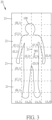
- FIG. 3 is a schematic view of read regions of an RFID tag reader/writer according to an embodiment of the present disclosure.
- FIG. 4 is a block diagram of the surgical item managing system for a smart operating room, a blockchain network and an external computer according to an embodiment of the present disclosure.
- FIG. 5 is a flowchart of a surgical item managing method for a smart operating room according to an embodiment of the present disclosure.
- a surgical item managing system 1 for a smart operating room manages a surgical item 900 is used during a surgical procedure to prevent the surgical item 900 from being left behind in the body of a patient 100 (also known as "retained surgical item (RSI)"), so as to reduce medical negligence and medical disputes, prevent reinfection, and reduce the required healthcare staff.
- the system 1 is a necessary post-operative facility for use in a smart operating room.
- the patient 100 lies on an operating table 200 while receiving a surgical operation.
- the surgical item 900 is, for example, a surgical instrument kit whose package comes with a positioning chip and is made of flexible, biodegradable plastic.
- the surgical item 900 includes two flexible RFID tags 901, 901a, a surgical instrument 910 and a surgical consumable 920.
- the surgical instrument 910 is, for example, a scalpel, whose handle is made of biodegradable plastic.
- the surgical consumable 920 is, for example, a gauze, which is made of biodegradable plastic.
- the numbers of the surgical instrument 910 and surgical consumable 920 are not limited thereto but are subject to changes, for example, are changed to at least one.
- the surgical instrument 910 may also be scissors, clamp, retractor, artery forceps, or suturing instrument.
- the surgical consumable 920 may also be fabric, surgical sponge, cotton pad or the like.
- the two flexible RFID tags 901, 901a are sensing chips disposed on the surgical instrument 910 and surgical consumable 920, respectively.
- the two flexible RFID tags 901, 901a carry information about the surgical instrument 910 and surgical consumable 920, such as the type, manufacturing date, and transportation process/date of the surgical instrument 910 and surgical consumable 920.
- the information is entered into the flexible RFID tags 901, 901a with an external computer 800.
- the information is not limited thereto but is subject to changes as needed.
- the number of the flexible RFID tags is not limited thereto but is subject to changes as needed, for example, is changed to at least one, so as to correspond in quantity to the surgical instrument and surgical consumable.
- the operating radio frequency of the flexible RFID tags 901, 901a falls within a high frequency range of 3M ⁇ 30MHz. As revealed by experimental data, radio frequency which falls within a high frequency range penetrates the human body effectively without affecting the human body.
- the operating radio frequency of the flexible RFID tags 901, 901a is 13.56MHz, as required by ISM (Industrial Scientific Medical), at a read distance of around 1.5 m.
- the number of the flexible RFID tags 901, 901a is not limited to two but is subject to changes as needed, for example, is changed to at least one, so as to correspond in quantity to the surgical instrument 910 and surgical consumable 920.
- the external computer 800 is, for example, a host computer in a surgical central control room.
- the external computer 800 is connected to an external blockchain network, such that a surgical procedure is thoroughly recorded, and the record is not to be tampered with, so as to achieve decentralization and protect the rights and interests of surgeons and patients.
- the surgical item managing system 1 for a smart operating room includes a scanner 20, a warning module 30, a network module 40, a blockchain tracking module 50, a processing module 60, a memory 70 and a video recording module 80.
- the scanner 20 is a scanning platform equipped with a built-in RFID tag reader/writer, lies 1-5 m above the operating table 200, and faces the operating table 200 to scan the flexible RFID tags 901, 901a and receive return signals from the flexible RFID tags 901, 901a. After that, the return signals are transmitted to the processing module 60, such that the positions of the flexible RFID tags 901, 901a can be computed subsequently.
- the scanner 20 has a plurality of read regions 21.
- Each read region 21 has positioning coordinates (X, Y), where X is A to H corresponding to the read regions from bottom to top, and Y is 1 to 4 corresponding to the read regions from left to right.
- the scanner 20 After the scanner 20 has scanned the flexible RFID tags 901, 901a, the scanned flexible RFID tags 901, 901a transmit the return signals to the read regions 21 of the scanner 20. Owing to unequal distances between the flexible RFID tags 901, 901a, the level of signal strength of the received return signals varies from read region 21 to read region 21. For example, the read region 21 with positioning coordinates (E, 3) is nearest to the flexible RFID tag 901, and thus the level of signal strength of the received return signals from the flexible RFID tag 901 is the highest.
- the read regions 21 with positioning coordinates (E, 2), (E, 4), (D, 3), (F, 3), which lie in the vicinity of the read region 21 with positioning coordinates (E, 3), are far from the flexible RFID tag 901, and thus the level of signal strength of the received return signals is low.
- Data about the levels of signal strength of the return signals received by the read regions 21 is sent to the processing module 60, such that the processing module 60 computes the position of the flexible RFID tag 901 according to different levels of signal strength.
- the flexible RFID tags 901, 901a will be scanned by the read regions 21 but with an overly low level of signal strength; alternatively, the flexible RFID tags may not even be scanned, and it can be determined that none of the flexible RFID tags lies on the operating table 200 and inside the body of the patient 100 either.
- the warning module 30 is, for example, a warning lamp disposed at the scanner 20 and in signal connection with the scanner 20.
- the warning module 30 gives a light warning when the scanner 20 determines that the position of any one of the flexible RFID tags 901, 901a is in the body of the patient 100.
- the warning module 30 may also be any other warning apparatus, for example, a player capable of generating a warning sound.
- the network module 40 is a network card disposed at the scanner 20 and in signal connection with the scanner 20.
- the network module 40 transmits data about the positions of the flexible RFID tags 901, 901a to the external computer 800.
- the external computer 800 connects to the network module 40 and controls the surgical item managing system 1.
- the blockchain tracking module 50 is disposed at the scanner 20 and in signal connection with the scanner 20.
- the blockchain tracking module 50 is a computing chip in signal connection with an external blockchain network 700.
- the blockchain tracking module 50 records a transportation history of the flexible RFID tags 901, 901a in the external blockchain network 700.
- the record of the transportation history of the flexible RFID tags 901, 901a includes place of surgery, and the process of preserving and transporting the surgical instrument 910 and surgical consumable 920 of the surgical item 900.
- Caretakers enter data about the transportation history of the flexible RFID tags 901, 901a into the blockchain tracking module 50 with the external computer 800.
- the blockchain tracking module 50 records the transportation history in the external blockchain network 700. Therefore, with a blockchain capable of tracking and its record being unlikely to be tampered with, the transportation history of the surgical instrument 910 and surgical consumable 920 of the surgical item 900 can be clearly recorded and managed.
- the processing module 60 is, for example, a CPU (central processing unit).
- the processing module 60 is disposed at the scanner 20 and in signal connection with the scanner 20, warning module 30, network module 40, blockchain tracking module 50, memory 70 and video recording module 80.
- the processing module 60 coordinates and controls the operation of the scanner 20, warning module 30, network module 40, blockchain tracking module 50, memory 70 and video recording module 80.
- the processing module 60 computes the positions of the flexible RFID tags 901, 901a according to the levels of signal strength of the return signals and determines whether the positions of the flexible RFID tags 901, 901a and the position of the patient 100 overlap, so as to determine whether the positions of the flexible RFID tags 901, 901a are in the body of the patient 100.
- the memory 70 is in signal connection with the processing module 60.
- the memory 70 stores data and software required to perform the surgical item managing method for a smart operating room.
- the video recording module 80 is a photographic lens disposed at the scanner 20 and adapted to take images of the patient 100, so as to obtain a position of the patient 100.
- the surgical item managing method for a smart operating room is programmed to become a computer program software stored in the memory 70.
- a nurse connects the external computer 800 to the surgical item managing system 1, such that the surgical item managing system 1 executes the software of the surgical item managing method, so as to prevent the surgical item 900 from being left behind in the body of the patient 100.
- the surgical item managing system 1 performs step 101: scanning flexible RFID tags and receiving a plurality of return signals.
- the read regions 21 of the scanner 20 above the operating table 200 face the operating table 200 so as to scan the flexible RFID tags 901, 901a.
- the flexible RFID tags 901, 901a thus scanned transmit return signals to the read regions 21 of the scanner 20.
- the read regions 21 obtain different levels of signal strength.
- the surgical item managing system 1 performs step 102: computing positions of the flexible RFID tags according to levels of signal strength of return signals.
- the data about levels of signal strength of the return signals received by the read regions 21 is transmitted to the processing module 60, such that the processing module 60 computes the position of the flexible RFID tag 901 according to different levels of signal strength.
- the level of signal strength of the return signals received by read region 21 with positioning coordinates (E, 3) from the flexible RFID tag 901 is the highest, whereas the levels of signal strength of the return signals received by read regions 21 with positioning coordinates (E, 2), (E, 4), (D, 3), (F, 3), which lie in the vicinity of read region 21 with positioning coordinates (E, 3), are low.
- data about different levels of signal strength of the return signals received by the read regions 21 is transmitted to the processing module 60, such that the processing module 60 determines that read region 21 with positioning coordinates (E, 3) is nearest to the flexible RFID tag 901 according to different levels of signal strength, so as to compute and confirm that the position of the flexible RFID tag 901 lies below read region 21 with positioning coordinates (E, 3).
- the surgical item managing system 1 performs step 103: taking images of a patient, so as to obtain a position of the patient.
- the video recording module 80 takes images of the patient 100 on the operating table 200, so as to obtain an image of a position of the patient 100.
- the image taken of the position of the patient 100 by the video recording module 80 is transmitted to the processing module 60.
- the video recording module 80 shoots a video of the entire surgical procedure and takes pictures thereof at important points in time during the surgical procedure and uploads the video and pictures to a blockchain network for evidential purposes.
- the surgical item managing system 1 performs step 104: determining whether the positions of the flexible RFID tags and the position of the patient overlap, so as to determine whether the positions of the flexible RFID tags are in the patient's body.
- the processing module 60 computes the position of the flexible RFID tag 901 according to different levels of signal strength and receives the image of the position of the patient 100 from the video recording module 80. After that, the processing module 60 compares the position of the flexible RFID tag 901 and the image (sent from the video recording module 80) of the position of the patient 100 to determine whether the position of the flexible RFID tag 901 and the position of the body of the patient 100 overlap. If they overlap, it will confirm that the position of the flexible RFID tag 901 is in the patient's body. If they do not overlap, it will confirm that the position of the flexible RFID tag 901 is not in the patient's body.
- the surgeon Upon determination that the position of the flexible RFID tag 901 is not in the patient's body, the surgeon performs a suturing process on the body of the patient 100 to finalize the surgical operation and terminate the process flow of the method.
- the surgical item managing system 1 Upon determination that the position of the flexible RFID tag 901 is in the patient's body, the surgical item managing system 1 performs step 105: giving a warning.
- the processing module 60 sends the message of determining that the position of the flexible RFID tag 901 is in the patient's body to the warning module 30 to cause the warning module 30 to give a light warning and thus instantly warn the surgeon of the presence of the surgical instrument 910 with the flexible RFID tag 901 in the body of the patient 100. Therefore, the surgeon removes the surgical instrument 910 with the flexible RFID tag 901 from the body of the patient 100 before performing the suturing process on the body of the patient 100.
- the surgical item managing system 1 performs step 106: transmitting data about the positions of the flexible RFID tags to an external computer.
- the processing module 60 After computing the position of the flexible RFID tag 901, the processing module 60 transmits data about the position of the flexible RFID tag 901 to the network module 40.
- the network module 40 transmits the data about the position of the flexible RFID tag 901 to the external computer 800. Then, the position of the flexible RFID tag 901 is recorded in the external computer 800 to serve as surgical reference data.
- step 107 recording transportation history in a blockchain network.
- the nurse operates the external computer 800, such that the external computer 800 enters the transportation history of the flexible RFID tags 901, 901a into the blockchain tracking module 50.
- the blockchain tracking module 50 records the transportation history of the flexible RFID tags 901, 901a in the external blockchain network 700.
- a blockchain being capable of tracking item transportation history
- a process of preservation and transportation and the place of surgery corresponding to the surgical instrument 910 and surgical consumable 920 of the surgical item 900 are recorded in the external blockchain network 700. Consequently, with a blockchain capable of tracking and its record being unlikely to be tampered with, the transportation history of the surgical instrument 910 and surgical consumable 920 of the surgical item 900 can be clearly recorded and managed.
- the present disclosure provides the surgical item managing system 1 and surgical item managing method to prevent a surgeon from leaving a surgical item behind in a patient's body at the end of a surgical operation which the surgeon has performed on the patient, so as to enhance medical safety. Furthermore, the surgical item managing system 1 and surgical item managing method are effective in tracking surgical item transportation history. Part of the surgical item is made of biodegradable plastic and thus is environment-friendly.
Landscapes
- Health & Medical Sciences (AREA)
- Engineering & Computer Science (AREA)
- Life Sciences & Earth Sciences (AREA)
- Biomedical Technology (AREA)
- Public Health (AREA)
- Medical Informatics (AREA)
- General Health & Medical Sciences (AREA)
- Physics & Mathematics (AREA)
- Business, Economics & Management (AREA)
- General Business, Economics & Management (AREA)
- Epidemiology (AREA)
- Primary Health Care (AREA)
- Surgery (AREA)
- Nuclear Medicine, Radiotherapy & Molecular Imaging (AREA)
- Veterinary Medicine (AREA)
- Animal Behavior & Ethology (AREA)
- Molecular Biology (AREA)
- Heart & Thoracic Surgery (AREA)
- Pathology (AREA)
- General Physics & Mathematics (AREA)
- Biophysics (AREA)
- Theoretical Computer Science (AREA)
- Radiology & Medical Imaging (AREA)
- Computer Networks & Wireless Communication (AREA)
- Physiology (AREA)
- Microelectronics & Electronic Packaging (AREA)
- Computer Hardware Design (AREA)
- Computer Vision & Pattern Recognition (AREA)
- Emergency Management (AREA)
- Urology & Nephrology (AREA)
- Medical Treatment And Welfare Office Work (AREA)
- Quality & Reliability (AREA)
- Electromagnetism (AREA)
- Signal Processing (AREA)
- Accommodation For Nursing Or Treatment Tables (AREA)
Claims (9)
- Chirurgisches-Element-Verwaltungsverfahren für einen intelligenten Operationssaal, zur Verwendung durch ein Chirurgisches-Element-Verwaltungssystem (1) für den intelligenten Operationssaal, um ein chirurgisches Element (900) zu verwalten, das während eines chirurgischen Eingriffs verwendet wird, wobei das chirurgische Element (900) ein flexibles RFID-Etikett (901, 901a) aufweist, wobei das Chirurgisches-Element-Verwaltungssystem (1) für den intelligenten Operationssaal ferner einen Scanner (20) aufweist, wobei der Scanner (20) eine Mehrzahl von Lesebereichen (21) aufweist und jeder Bereich (21) der Mehrzahl von Lesebereichen (21) Positionierungskoordinaten (X, Y) hat,
wobei das Chirurgisches-Element-Verwaltungsverfahren die folgenden Schritte aufweist:Scannen des flexiblen RFID-Etiketts (901, 901a) mit dem Scanner (20) und Empfangen einer Mehrzahl von Rücksignalen von dem flexiblen RFID-Etikett (901, 901a) durch die Mehrzahl von Lesebereichen (21), Berechnen einer Etikett-Position des flexiblen RFID-Etiketts (901, 901a) gemäß verschiedenen Signalstärkepegeln der von den Lesebereichen (21) empfangenen Rücksignale zwischen dem flexiblen RFID-Etikett (901, 901a) und den Lesebereichen (21), um die Etikett-Position des flexiblen RFID-Etiketts (901, 901a) zu erhalten,Aufnehmen eines Bildes eines Patienten (100), um eine Bildposition des Patienten (100) zu erhalten,Ermitteln, ob eine Position des flexiblen RFID-Etiketts (901, 901a) und die Bildposition des Patienten (100) einander überlappen, um zu ermitteln, ob sich das chirurgische Element (900), das mit dem flexiblen RFID-Etikett (901, 901a) korrespondiert, in einem Körper des Patienten (100) befindet, undAusgeben einer Warnung, wenn sich das chirurgische Element (900) im Körper des Patienten (100) befindet. - Chirurgisches-Element-Verwaltungsverfahren für den intelligenten Operationssaal gemäß Anspruch 1, wobei der Lesebereich (21), der die Rücksignale mit dem höchsten Signalstärkepegel empfängt, dem flexiblen RFID-Etikett (901, 901a) am nächsten ist.
- Chirurgisches-Element-Verwaltungsverfahren für den intelligenten Operationssaal gemäß Anspruch 2, ferner aufweisend: Übermitteln von Daten über die Position des flexiblen RFID-Etiketts (901, 901a) an einen externen Rechner (800) .
- Chirurgisches-Element-Verwaltungsverfahren für den intelligenten Operationssaal gemäß Anspruch 3, ferner aufweisend: Aufzeichnen einer von dem flexiblen RFID-Etikett (901, 901a) getragenen Transporthistorie in einem Blockchain-Netzwerk (700).
- Chirurgisches-Element-Verwaltungssystem (1) für einen intelligenten Operationssaal, wobei das Chirurgisches-Element-Verwaltungssystem (1) angepasst ist, um ein chirurgisches Element (900) zu verwalten, das während eines chirurgischen Eingriffs verwendet wird, wobei das chirurgische Element (900) ein flexibles RFID-Etikett (901, 901a) aufweist, wobei das Chirurgisches-Element-Verwaltungssystem (1) aufweist:einen Scanner (20) zum Scannen des flexiblen RFID-Etiketts (901, 901a), um eine Etikett-Position des flexiblen RFID-Etiketts (901, 901a) zu erhalten, wobei der Scanner (20) eine Mehrzahl von Lesebereichen (21) zum Empfangen einer Mehrzahl von Rücksignalen von dem flexiblen RFID-Etikett (901, 901a) aufweist, und jeder Bereich (21) der Mehrzahl von Lesebereichen (21) Positionierungskoordinaten (X, Y) hat,ein Videoaufzeichnungsmodul (80) zum Aufnehmen eines Bildes eines Patienten (100), um eine Bildposition des Patienten (100) zu erhalten,ein Verarbeitungsmodul (60) in Signalverbindung mit dem Scanner (20) und dem Videoaufnahmemodul (80) und angepasst, um eine Position des flexiblen RFID-Etiketts (901, 901a) gemäß einer Information zu erhalten, die der Scanner (20) durch Scannen des flexiblen RFID-Etiketts (901, 901a) erlangt, und zu ermitteln, ob sich eine Position des flexiblen RFID-Etiketts (901, 901a) und die Bildposition des Patienten (100) überlappen, um zu ermitteln, ob sich das chirurgische Element (900), das mit dem flexiblen RFID-Etikett (901, 901a) korrespondiert, in einem Körper des Patienten (100) befindet, wobei das Verarbeitungsmodul (60) die Etikett-Position des flexiblen RFID-Etiketts (901, 901a) gemäß verschiedenen Signalstärkepegeln der von den Lesebereichen (21) empfangenen Rücksignale zwischen dem flexiblen RFID-Etikett (901, 901a) und den Lesebereichen (21) berechnet, undein Warnmodul (30) in Signalverbindung mit dem Verarbeitungsmodul (60), das angepasst ist, um ein Warnsignal zu erzeugen, wenn das Verarbeitungsmodul (60) das Vorhandensein des chirurgischen Elements (900) im Körper des Patienten (100) bestätigt.
- Chirurgisches-Element-Verwaltungssystem (1) für den intelligenten Operationssaal gemäß Anspruch 5, wobei der Lesebereich (21), der die Rücksignale mit dem höchsten Signalstärkepegel empfängt, dem flexiblen RFID-Etikett (901, 901a) am nächsten ist.
- Chirurgisches-Element-Verwaltungssystem (1) für den intelligenten Operationssaal gemäß Anspruch 6, ferner aufweisend ein Netzwerkmodul (40) in Signalverbindung mit dem Scanner (20) und angepasst, um eine Information über die Position des flexiblen RFID-Etiketts (901, 901a) an einen externen Rechner (800) zu übermitteln.
- Chirurgisches-Element-Verwaltungssystem (1) für den intelligenten Operationssaal gemäß Anspruch 7, ferner aufweisend ein Blockchain-Verfolgungsmodul (50) in Signalverbindung mit dem Scanner (20) und angepasst, um in einem Blockchain-Netzwerk (700) eine von dem flexiblen RFID-Etikett (901, 901a) getragene Transporthistorie aufzuzeichnen.
- Chirurgisches-Element-Verwaltungssystem (1) für den intelligenten Operationssaal gemäß Anspruch 8, wobei das chirurgische Element (900) ferner mindestens ein chirurgisches Instrument (910) und mindestens ein chirurgisches Verbrauchsmaterial (920) aufweist.
Applications Claiming Priority (1)
| Application Number | Priority Date | Filing Date | Title |
|---|---|---|---|
| TW109122075A TWI755779B (zh) | 2020-06-30 | 2020-06-30 | 智慧手術房手術物品管理方法和手術物品管理系統 |
Publications (3)
| Publication Number | Publication Date |
|---|---|
| EP3933844A1 EP3933844A1 (de) | 2022-01-05 |
| EP3933844B1 true EP3933844B1 (de) | 2024-12-18 |
| EP3933844C0 EP3933844C0 (de) | 2024-12-18 |
Family
ID=76325430
Family Applications (1)
| Application Number | Title | Priority Date | Filing Date |
|---|---|---|---|
| EP21178194.3A Active EP3933844B1 (de) | 2020-06-30 | 2021-06-08 | Verfahren zur verwaltung chirurgischer gegenstände und system zur verwaltung chirurgischer gegenstände für einen intelligenten operationssaal |
Country Status (4)
| Country | Link |
|---|---|
| US (1) | US11551811B2 (de) |
| EP (1) | EP3933844B1 (de) |
| JP (1) | JP7524131B2 (de) |
| TW (1) | TWI755779B (de) |
Families Citing this family (1)
| Publication number | Priority date | Publication date | Assignee | Title |
|---|---|---|---|---|
| US12502230B2 (en) | 2023-01-18 | 2025-12-23 | Covidien Lp | Inventory systems and methods for retained surgical item detection |
Citations (1)
| Publication number | Priority date | Publication date | Assignee | Title |
|---|---|---|---|---|
| US7932830B2 (en) * | 2004-05-07 | 2011-04-26 | Sensormatic Electronics, LLC | Method of assigning and deducing the location of articles detected by multiple RFID antennae |
Family Cites Families (25)
| Publication number | Priority date | Publication date | Assignee | Title |
|---|---|---|---|---|
| US20020067263A1 (en) * | 1999-12-13 | 2002-06-06 | Tafoya Benedict J. | Method of performing an inventory of medical instruments |
| US6861954B2 (en) * | 2001-03-30 | 2005-03-01 | Bruce H. Levin | Tracking medical products with integrated circuits |
| JP4247084B2 (ja) | 2003-09-29 | 2009-04-02 | 川本産業株式会社 | 遺残事故防止システム |
| JP2006280445A (ja) | 2005-03-31 | 2006-10-19 | Toshiba Corp | 体内残置防止システム、およびガーゼ |
| US20070125392A1 (en) * | 2005-12-01 | 2007-06-07 | Sdgi Holdings, Inc. | Systems and methods of accounting for surgical instruments and disposables |
| WO2008033574A2 (en) * | 2006-09-13 | 2008-03-20 | Clearcount Medical Solutions, Inc. | Apparatus and methods for monitioring objects in a surgical field |
| US8660635B2 (en) * | 2006-09-29 | 2014-02-25 | Medtronic, Inc. | Method and apparatus for optimizing a computer assisted surgical procedure |
| US8600478B2 (en) | 2007-02-19 | 2013-12-03 | Medtronic Navigation, Inc. | Automatic identification of instruments used with a surgical navigation system |
| US7518502B2 (en) | 2007-05-24 | 2009-04-14 | Smith & Nephew, Inc. | System and method for tracking surgical assets |
| WO2010008846A2 (en) * | 2008-06-23 | 2010-01-21 | John Richard Dein | Intra-operative system for identifying and tracking surgical sharp objects, instruments, and sponges |
| JP2011015395A (ja) | 2009-06-03 | 2011-01-20 | Nippon Information System:Kk | Rfidタグ付き布およびrfidタグ付き布管理システム |
| CN202036416U (zh) * | 2010-12-31 | 2011-11-16 | 稳健实业(深圳)有限公司 | 手术用安全敷料及手术用安全敷料识别装置 |
| CN202584142U (zh) * | 2011-12-13 | 2012-12-05 | 深圳市新元素医疗技术开发有限公司 | 一种纱布计数与探测装置、系统 |
| US9675272B2 (en) | 2013-03-13 | 2017-06-13 | DePuy Synthes Products, Inc. | Methods, systems, and devices for guiding surgical instruments using radio frequency technology |
| CN203226897U (zh) * | 2013-03-25 | 2013-10-09 | 田保军 | 一种基于射频识别记录手术器械与纱布使用状况的系统 |
| US20160371574A1 (en) * | 2013-05-06 | 2016-12-22 | The Johns Hopkins University | System for preventing instrument retention |
| CN106535811A (zh) | 2014-01-24 | 2017-03-22 | 伊卢森特医药公司 | 包括定位剂的系统和方法 |
| WO2016183653A1 (pt) * | 2015-05-19 | 2016-11-24 | Pereto Henrique | Equipamento e método de controle de absorventes têxteis cirúrgicos, instrumentos e acessórios cirúrgicos, com etiqueta e monitoramento com chip e identificação por radiofrequência, operando em uhf (ultra high frequency) |
| WO2017059228A1 (en) | 2015-10-02 | 2017-04-06 | Elucent Medical, Inc. | Signal tag detection components, devices, and systems |
| AU2017297294A1 (en) * | 2016-07-11 | 2018-11-29 | Covidien Lp | Method and apparatus to account for transponder tagged objects used during clinical procedures, for example including count in and/or count out and presence detection |
| CN208017595U (zh) * | 2017-03-31 | 2018-10-30 | 稳健医疗用品股份有限公司 | 手术敷料的管理系统 |
| US12027250B2 (en) * | 2017-12-05 | 2024-07-02 | Sony Olympus Medical Solutions Inc. | Medical information processing apparatus and information processing method |
| US10758310B2 (en) | 2017-12-28 | 2020-09-01 | Ethicon Llc | Wireless pairing of a surgical device with another device within a sterile surgical field based on the usage and situational awareness of devices |
| EP3762853A4 (de) * | 2018-03-08 | 2021-11-24 | Duke University | Etikettierungssysteme zur elektronischen identifizierung, verfahren, applikatoren und bänder zur verfolgung und verwaltung von medizinischer ausrüstung und anderen objekten |
| EP4022635B1 (de) * | 2019-08-30 | 2025-09-03 | Stryker Corporation | System und verfahren zur verwaltung chirurgischer gegenstände während eines chirurgischen eingriffs |
-
2020
- 2020-06-30 TW TW109122075A patent/TWI755779B/zh active
- 2020-08-19 US US16/997,150 patent/US11551811B2/en active Active
-
2021
- 2021-06-02 JP JP2021093060A patent/JP7524131B2/ja active Active
- 2021-06-08 EP EP21178194.3A patent/EP3933844B1/de active Active
Patent Citations (1)
| Publication number | Priority date | Publication date | Assignee | Title |
|---|---|---|---|---|
| US7932830B2 (en) * | 2004-05-07 | 2011-04-26 | Sensormatic Electronics, LLC | Method of assigning and deducing the location of articles detected by multiple RFID antennae |
Also Published As
| Publication number | Publication date |
|---|---|
| JP7524131B2 (ja) | 2024-07-29 |
| EP3933844C0 (de) | 2024-12-18 |
| TW202203247A (zh) | 2022-01-16 |
| US11551811B2 (en) | 2023-01-10 |
| US20210407659A1 (en) | 2021-12-30 |
| EP3933844A1 (de) | 2022-01-05 |
| JP2022013719A (ja) | 2022-01-18 |
| TWI755779B (zh) | 2022-02-21 |
Similar Documents
| Publication | Publication Date | Title |
|---|---|---|
| US11672611B2 (en) | Automatic identification of instruments | |
| US9098861B2 (en) | Method and apparatus for controlling the operation of a medical device | |
| US10592857B2 (en) | System and method for managing equipment in a medical procedure | |
| JP7380557B2 (ja) | 情報処理システム、情報処理装置及び情報処理方法 | |
| KR101703779B1 (ko) | 수술 기구 및 시술 기구 자동 인식 시스템 및 이의 정보 처리 방법 | |
| EP4148741A1 (de) | Systeme und verfahren zur lokalisierung von gehaltenen chirurgischen artikeln mit rfid-etiketten und computervision | |
| US20210186460A1 (en) | Method of spatially locating points of interest during a surgical procedure | |
| US20060100508A1 (en) | Method and apparatus for expert system to track and manipulate patients | |
| EP1480153A2 (de) | Verwaltungs- und Unterstützungssystem für medizinische Werkzeuge | |
| EP3933844B1 (de) | Verfahren zur verwaltung chirurgischer gegenstände und system zur verwaltung chirurgischer gegenstände für einen intelligenten operationssaal | |
| EP4521416A1 (de) | System und verfahren zur verwaltung von chirurgischen krankenhausinstrumenten | |
| TWI755835B (zh) | 智慧手術房手術物品管理方法和手術物品管理系統 | |
| JP6545871B2 (ja) | 端末装置、端末装置の制御方法および端末装置の制御プログラム | |
| JP6793225B2 (ja) | 端末装置、情報処理装置および情報処理方法 | |
| CN101198958A (zh) | 专家系统跟踪和处理患者的方法和设备 | |
| JP2002355257A (ja) | 手術システム |
Legal Events
| Date | Code | Title | Description |
|---|---|---|---|
| PUAI | Public reference made under article 153(3) epc to a published international application that has entered the european phase |
Free format text: ORIGINAL CODE: 0009012 |
|
| STAA | Information on the status of an ep patent application or granted ep patent |
Free format text: STATUS: THE APPLICATION HAS BEEN PUBLISHED |
|
| AK | Designated contracting states |
Kind code of ref document: A1 Designated state(s): AL AT BE BG CH CY CZ DE DK EE ES FI FR GB GR HR HU IE IS IT LI LT LU LV MC MK MT NL NO PL PT RO RS SE SI SK SM TR |
|
| B565 | Issuance of search results under rule 164(2) epc |
Effective date: 20211130 |
|
| STAA | Information on the status of an ep patent application or granted ep patent |
Free format text: STATUS: REQUEST FOR EXAMINATION WAS MADE |
|
| 17P | Request for examination filed |
Effective date: 20220502 |
|
| RBV | Designated contracting states (corrected) |
Designated state(s): AL AT BE BG CH CY CZ DE DK EE ES FI FR GB GR HR HU IE IS IT LI LT LU LV MC MK MT NL NO PL PT RO RS SE SI SK SM TR |
|
| RAP1 | Party data changed (applicant data changed or rights of an application transferred) |
Owner name: AI BIOELECTRONIC HEALTHTECH CO., LTD. |
|
| GRAP | Despatch of communication of intention to grant a patent |
Free format text: ORIGINAL CODE: EPIDOSNIGR1 |
|
| STAA | Information on the status of an ep patent application or granted ep patent |
Free format text: STATUS: GRANT OF PATENT IS INTENDED |
|
| INTG | Intention to grant announced |
Effective date: 20240709 |
|
| GRAS | Grant fee paid |
Free format text: ORIGINAL CODE: EPIDOSNIGR3 |
|
| GRAA | (expected) grant |
Free format text: ORIGINAL CODE: 0009210 |
|
| STAA | Information on the status of an ep patent application or granted ep patent |
Free format text: STATUS: THE PATENT HAS BEEN GRANTED |
|
| AK | Designated contracting states |
Kind code of ref document: B1 Designated state(s): AL AT BE BG CH CY CZ DE DK EE ES FI FR GB GR HR HU IE IS IT LI LT LU LV MC MK MT NL NO PL PT RO RS SE SI SK SM TR |
|
| REG | Reference to a national code |
Ref country code: CH Ref legal event code: EP |
|
| REG | Reference to a national code |
Ref country code: DE Ref legal event code: R096 Ref document number: 602021023448 Country of ref document: DE |
|
| REG | Reference to a national code |
Ref country code: IE Ref legal event code: FG4D |
|
| U01 | Request for unitary effect filed |
Effective date: 20250115 |
|
| U07 | Unitary effect registered |
Designated state(s): AT BE BG DE DK EE FI FR IT LT LU LV MT NL PT RO SE SI Effective date: 20250121 |
|
| PG25 | Lapsed in a contracting state [announced via postgrant information from national office to epo] |
Ref country code: HR Free format text: LAPSE BECAUSE OF FAILURE TO SUBMIT A TRANSLATION OF THE DESCRIPTION OR TO PAY THE FEE WITHIN THE PRESCRIBED TIME-LIMIT Effective date: 20241218 |
|
| PG25 | Lapsed in a contracting state [announced via postgrant information from national office to epo] |
Ref country code: NO Free format text: LAPSE BECAUSE OF FAILURE TO SUBMIT A TRANSLATION OF THE DESCRIPTION OR TO PAY THE FEE WITHIN THE PRESCRIBED TIME-LIMIT Effective date: 20250318 |
|
| PG25 | Lapsed in a contracting state [announced via postgrant information from national office to epo] |
Ref country code: GR Free format text: LAPSE BECAUSE OF FAILURE TO SUBMIT A TRANSLATION OF THE DESCRIPTION OR TO PAY THE FEE WITHIN THE PRESCRIBED TIME-LIMIT Effective date: 20250319 |
|
| PG25 | Lapsed in a contracting state [announced via postgrant information from national office to epo] |
Ref country code: RS Free format text: LAPSE BECAUSE OF FAILURE TO SUBMIT A TRANSLATION OF THE DESCRIPTION OR TO PAY THE FEE WITHIN THE PRESCRIBED TIME-LIMIT Effective date: 20250318 |
|
| PG25 | Lapsed in a contracting state [announced via postgrant information from national office to epo] |
Ref country code: SM Free format text: LAPSE BECAUSE OF FAILURE TO SUBMIT A TRANSLATION OF THE DESCRIPTION OR TO PAY THE FEE WITHIN THE PRESCRIBED TIME-LIMIT Effective date: 20241218 |
|
| PG25 | Lapsed in a contracting state [announced via postgrant information from national office to epo] |
Ref country code: PL Free format text: LAPSE BECAUSE OF FAILURE TO SUBMIT A TRANSLATION OF THE DESCRIPTION OR TO PAY THE FEE WITHIN THE PRESCRIBED TIME-LIMIT Effective date: 20241218 |
|
| PG25 | Lapsed in a contracting state [announced via postgrant information from national office to epo] |
Ref country code: ES Free format text: LAPSE BECAUSE OF FAILURE TO SUBMIT A TRANSLATION OF THE DESCRIPTION OR TO PAY THE FEE WITHIN THE PRESCRIBED TIME-LIMIT Effective date: 20241218 |
|
| PG25 | Lapsed in a contracting state [announced via postgrant information from national office to epo] |
Ref country code: IS Free format text: LAPSE BECAUSE OF FAILURE TO SUBMIT A TRANSLATION OF THE DESCRIPTION OR TO PAY THE FEE WITHIN THE PRESCRIBED TIME-LIMIT Effective date: 20250418 |
|
| U20 | Renewal fee for the european patent with unitary effect paid |
Year of fee payment: 5 Effective date: 20250610 |
|
| PG25 | Lapsed in a contracting state [announced via postgrant information from national office to epo] |
Ref country code: SK Free format text: LAPSE BECAUSE OF FAILURE TO SUBMIT A TRANSLATION OF THE DESCRIPTION OR TO PAY THE FEE WITHIN THE PRESCRIBED TIME-LIMIT Effective date: 20241218 |
|
| PG25 | Lapsed in a contracting state [announced via postgrant information from national office to epo] |
Ref country code: CZ Free format text: LAPSE BECAUSE OF FAILURE TO SUBMIT A TRANSLATION OF THE DESCRIPTION OR TO PAY THE FEE WITHIN THE PRESCRIBED TIME-LIMIT Effective date: 20241218 |
|
| PLBE | No opposition filed within time limit |
Free format text: ORIGINAL CODE: 0009261 |
|
| STAA | Information on the status of an ep patent application or granted ep patent |
Free format text: STATUS: NO OPPOSITION FILED WITHIN TIME LIMIT |
|
| REG | Reference to a national code |
Ref country code: CH Ref legal event code: L10 Free format text: ST27 STATUS EVENT CODE: U-0-0-L10-L00 (AS PROVIDED BY THE NATIONAL OFFICE) Effective date: 20251029 |
|
| 26N | No opposition filed |
Effective date: 20250919 |
|
| REG | Reference to a national code |
Ref country code: CH Ref legal event code: H13 Free format text: ST27 STATUS EVENT CODE: U-0-0-H10-H13 (AS PROVIDED BY THE NATIONAL OFFICE) Effective date: 20260127 |
|
| PG25 | Lapsed in a contracting state [announced via postgrant information from national office to epo] |
Ref country code: MC Free format text: LAPSE BECAUSE OF FAILURE TO SUBMIT A TRANSLATION OF THE DESCRIPTION OR TO PAY THE FEE WITHIN THE PRESCRIBED TIME-LIMIT Effective date: 20241218 |
|
| GBPC | Gb: european patent ceased through non-payment of renewal fee |
Effective date: 20250608 |