EP3930358A1 - Communication device and computer program for terminal device - Google Patents
Communication device and computer program for terminal device Download PDFInfo
- Publication number
- EP3930358A1 EP3930358A1 EP21179998.6A EP21179998A EP3930358A1 EP 3930358 A1 EP3930358 A1 EP 3930358A1 EP 21179998 A EP21179998 A EP 21179998A EP 3930358 A1 EP3930358 A1 EP 3930358A1
- Authority
- EP
- European Patent Office
- Prior art keywords
- communication device
- network
- signal
- communication
- state
- Prior art date
- Legal status (The legal status is an assumption and is not a legal conclusion. Google has not performed a legal analysis and makes no representation as to the accuracy of the status listed.)
- Granted
Links
Images



Classifications
-
- H—ELECTRICITY
- H04—ELECTRIC COMMUNICATION TECHNIQUE
- H04W—WIRELESS COMMUNICATION NETWORKS
- H04W76/00—Connection management
- H04W76/10—Connection setup
- H04W76/15—Setup of multiple wireless link connections
-
- H—ELECTRICITY
- H04—ELECTRIC COMMUNICATION TECHNIQUE
- H04W—WIRELESS COMMUNICATION NETWORKS
- H04W4/00—Services specially adapted for wireless communication networks; Facilities therefor
- H04W4/80—Services using short range communication, e.g. near-field communication [NFC], radio-frequency identification [RFID] or low energy communication
-
- H—ELECTRICITY
- H04—ELECTRIC COMMUNICATION TECHNIQUE
- H04W—WIRELESS COMMUNICATION NETWORKS
- H04W76/00—Connection management
- H04W76/10—Connection setup
-
- H—ELECTRICITY
- H04—ELECTRIC COMMUNICATION TECHNIQUE
- H04W—WIRELESS COMMUNICATION NETWORKS
- H04W76/00—Connection management
- H04W76/10—Connection setup
- H04W76/14—Direct-mode setup
-
- H—ELECTRICITY
- H04—ELECTRIC COMMUNICATION TECHNIQUE
- H04W—WIRELESS COMMUNICATION NETWORKS
- H04W76/00—Connection management
- H04W76/10—Connection setup
- H04W76/18—Management of setup rejection or failure
-
- H—ELECTRICITY
- H04—ELECTRIC COMMUNICATION TECHNIQUE
- H04W—WIRELESS COMMUNICATION NETWORKS
- H04W76/00—Connection management
- H04W76/30—Connection release
- H04W76/34—Selective release of ongoing connections
- H04W76/36—Selective release of ongoing connections for reassigning the resources associated with the released connections
-
- H—ELECTRICITY
- H04—ELECTRIC COMMUNICATION TECHNIQUE
- H04N—PICTORIAL COMMUNICATION, e.g. TELEVISION
- H04N1/00—Scanning, transmission or reproduction of documents or the like, e.g. facsimile transmission; Details thereof
- H04N1/00127—Connection or combination of a still picture apparatus with another apparatus, e.g. for storage, processing or transmission of still picture signals or of information associated with a still picture
- H04N1/00204—Connection or combination of a still picture apparatus with another apparatus, e.g. for storage, processing or transmission of still picture signals or of information associated with a still picture with a digital computer or a digital computer system, e.g. an internet server
- H04N1/00209—Transmitting or receiving image data, e.g. facsimile data, via a computer, e.g. using e-mail, a computer network, the internet, I-fax
- H04N1/00222—Transmitting or receiving image data, e.g. facsimile data, via a computer, e.g. using e-mail, a computer network, the internet, I-fax details of image data generation or reproduction, e.g. scan-to-email or network printing
- H04N1/00233—Transmitting or receiving image data, e.g. facsimile data, via a computer, e.g. using e-mail, a computer network, the internet, I-fax details of image data generation or reproduction, e.g. scan-to-email or network printing details of image data reproduction, e.g. network printing or remote image display
-
- H—ELECTRICITY
- H04—ELECTRIC COMMUNICATION TECHNIQUE
- H04W—WIRELESS COMMUNICATION NETWORKS
- H04W84/00—Network topologies
- H04W84/02—Hierarchically pre-organised networks, e.g. paging networks, cellular networks, WLAN [Wireless Local Area Network] or WLL [Wireless Local Loop]
- H04W84/10—Small scale networks; Flat hierarchical networks
- H04W84/12—WLAN [Wireless Local Area Networks]
-
- H—ELECTRICITY
- H04—ELECTRIC COMMUNICATION TECHNIQUE
- H04W—WIRELESS COMMUNICATION NETWORKS
- H04W84/00—Network topologies
- H04W84/18—Self-organising networks, e.g. ad-hoc networks or sensor networks
-
- H—ELECTRICITY
- H04—ELECTRIC COMMUNICATION TECHNIQUE
- H04W—WIRELESS COMMUNICATION NETWORKS
- H04W88/00—Devices specially adapted for wireless communication networks, e.g. terminals, base stations or access point devices
- H04W88/02—Terminal devices
- H04W88/06—Terminal devices adapted for operation in multiple networks or having at least two operational modes, e.g. multi-mode terminals
Definitions
- the present disclosure discloses a technique for executing wireless communication between a communication device and a terminal device according to Bluetooth (registered trademark) standard.
- US Patent Application Publication No. 2017-280502 describes a system for executing communication according to Bluetooth standard and according to Wi-Fi standard between a mobile terminal and a printing device.
- the mobile terminal uses GATT communication of Bluetooth (registered trademark) Low Energy (BLE) scheme to ask the printing device whether the number of Wi-Fi standard wireless connections established by the printing device (i.e., the number of other terminals that have established a wireless connection with the printing device) has reached an upper limit.
- BLE Bluetooth Low Energy
- the mobile terminal displays a confirmation screen for confirming with a user whether to establish a Wi-Fi standard wireless connection with the printing device in the case where the number of wireless connections with the printing device has reached the upper limit.
- a communication device disclosed in the disclosure may comprise: a first wireless interface configured to execute wireless communication according to Bluetooth standard; a second wireless interface configured to execute wireless communication according to Wi-Fi standard; a first interface control unit configured to, in a case where a state of the communication device is a respondent state, cause the first wireless interface to send a first signal, the respondent state being a state in which a Wi-Fi connection that is a wireless connection via the second wireless interface is able to be established between the communication device and a terminal device, and the first signal being sent from the first wireless interface before a Bluetooth connection that is a wireless connection via the first wireless interface is established between the communication device and the terminal device; and a second interface control unit configured to, in a case where a state of the communication device is a non-respondent state, cause the first wireless interface to send a second signal different from the first signal, the non-respondent state being a state in which the Wi-Fi connection is not able to be established between the communication device and the terminal device, and the second signal being sent from the first wireless
- the communication device before establishing the Bluetooth connection with the terminal device, the communication device sends, via the first wireless interface, the first signal indicating that the communication device is in the respondent state, or the second signal indicating that the communication device is in the non-respondent state. For this reason, the communication device can notify the terminal device of the state of the communication device more quickly than a configuration in which a signal indicating the state of the communication device is sent after the Bluetooth connection is established.
- the communication device may further comprise a connection information communication unit configured to, in a case where the Bluetooth connection is established between the communication device and the terminal device in response to the first signal being received by the terminal device, execute communication of connection information with the terminal device via the first wireless interface using the Bluetooth connection, the connection information being for establishing the Wi-Fi connection between the communication device and the terminal device; and an establishment unit configured to, in a case where the communication of the connection information is executed with terminal device, establish the Wi-Fi connection between the communication device and the terminal device.
- a connection information communication unit configured to, in a case where the Bluetooth connection is established between the communication device and the terminal device in response to the first signal being received by the terminal device, execute communication of connection information with the terminal device via the first wireless interface using the Bluetooth connection, the connection information being for establishing the Wi-Fi connection between the communication device and the terminal device
- an establishment unit configured to, in a case where the communication of the connection information is executed with terminal device, establish the Wi-Fi connection between the communication device and the terminal device.
- the communication device may be configured to form a parent station network that is a wireless network of the Wi-Fi standard and in which the communication device operates as a parent station.
- the non-respondent state may include a first non-respondent state in which a number of a child station belonging to the parent station network is equal to an upper limit.
- the non-respondent state may further include a second non-respondent state in which the number of the child station belonging to the parent station network is less than the upper limit and a first belonging process is in execution, the first belonging process being for causing an external device to belong to the parent station network as the child station.
- the second interface control unit may be configured to: in a case where the state of the communication device is the first non-respondent state, cause the first wireless interface to send the second signal including first status information indicating that the number of the child station belonging to the parent station network is equal to the upper limit, and in a case where the state of the communication device is the second non-respondent state, cause the first wireless interface to send the second signal including second status information indicating that the first belonging process is in execution.
- the upper limit may be a predetermined integer greater than or equal to 2.
- the second interface control unit may be configured to: in a case where the state of the communication device is the second non-respondent state in which the number of the child station belonging to the parent station network is less than a specific number that is one less than the upper limit and the first belonging process is in execution, cause the first wireless interface to send the second signal including the second status information; and in a case where the state of the communication device is the second non-respondent state in which the number of the child station belonging to the parent station network is equal to the specific number and the first belonging process is in execution, cause the first wireless interface to send the second signal including the first status information.
- the non-respondent state may include a third non-respondent state in which a second belonging process is in execution, the second belonging process being for causing the communication device to belong, as a child station, to an AP network that is a wireless network of the Wi-Fi standard and in which an access point operates as a parent station.
- the first interface control unit may be configured to, in a case where the state of the communication device is the respondent state and the communication device belongs, as a child station, to an AP network that is a wireless network of the Wi-Fi standard and in which an access point operates as a parent station, cause the first wireless interface to send the first signal including an IP address of the communication device, the IP address being used in the AP network.
- the second interface control unit may be configured to, in a case where the state of the communication device is the non-respondent state and the communication device belongs, as the child station, to the AP network, cause the first wireless interface to send the second signal including the IP address of the communication device, the IP address being used in the AP network.
- the first signal may be an ADV_IND signal according to a Bluetooth Low Energy (BLE) scheme of the Bluetooth standard
- the second signal may be an ADV_NONCONN_IND signal according to the BLE scheme.
- BLE Bluetooth Low Energy
- a computer program for a terminal device comprising: a first wireless interface configured to execute wireless communication according to Bluetooth standard; a second wireless interface configured to execute wireless communication according to Wi-Fi standard; a display unit; and a computer, wherein the computer program causes the computer to function as: a first reception unit, in a case where a state of a first communication device is a respondent state, receive a first signal from the first communication device via the first wireless interface, the first communication device being one of a plurality of communication devices that exists around the terminal device, the respondent state being a state in which a Wi-Fi connection that is a wireless connection via the second wireless interface is able to be established between the first communication device and the terminal device, the first signal being received via the first wireless interface before a Bluetooth connection that is a wireless connection via the first wireless interface is established between the first communication device and the terminal device; a second reception unit configured to, in a case where a state of a second communication device different from the first communication device among the plurality of communication devices is
- the terminal device receives from the first communication device the first signal indicating that the first communication device is in the respondent state before the Bluetooth connection with the first communication device is established, and receives from the second communication device the second signal indicating that the second communication device is in the non-respondent state before the Bluetooth connection with the second communication device is established. For this reason, the terminal device can know the state of each communication device more quickly than with a configuration in which a signal indicating the state of each communication device is sent after the Bluetooth connection is established.
- the terminal device displays the first device information related to the first communication device that is the sender of the first signal indicating that the first communication device is in the respondent state preferentially over the second device information related to the second communication device that is the sender of the second signal indicating that the second communication device is in the non-respondent state.
- the user can appropriately recognize that the first communication device is capable of establishing a Wi-Fi connection.
- the computer program may further cause the computer to function as: a connection information communication unit configured to, in a case where the Bluetooth connection is established between the first communication device and the terminal device in response to the displayed first device information being selected by a user, execute communication of connection information with the first communication device via the first wireless interface using the Bluetooth connection, the connection information being for establishing the Wi-Fi connection between the first communication device and the terminal device; and an establishment unit configured to, in a case where the communication of the connection information is executed with the first communication device, establish the Wi-Fi connection between the first communication device and the terminal device.
- the second signal may include status information indicating a reason why the state of the second communication device is the non-respondent state.
- the display control unit may be configured to display the second device information and the status information in association with each other on the display unit.
- the second communication device may be configured to form a first parent station network that is a wireless network of the Wi-Fi standard and in which the second communication device operates as a parent station, and the second signal received from the second communication device may include first status information indicating that a number of a child station belonging to the first parent station network is equal to an upper limit.
- the second reception unit may be further configured to, in a case where a state of a third communication device different from the first and second communication devices among the plurality of communication devices is the non-respondent state, receive the second signal from the third communication device via the first wireless interface.
- the third communication device may be configured to form a second parent station network that is a wireless network of the Wi-Fi standard and in which the third communication device operates as a parent station, the second signal received from the third communication device may include second status information indicating that a first belonging process is in execution, and the first belonging process may be for causing an external device to belong to the second parent station network as a child station.
- the display control unit may be configured to display third device information related to the third communication device that is a sender of the second signal including the second status information on the display unit preferentially over the second device information related to the second communication device that is a sender of the second signal including the first status information.
- the second signal received from the second communication device may include first IP address of the second communication device, the first IP address being used in the first AP network.
- the computer program may further cause the computer to function as: a first determination unit configured to determine whether the terminal device belongs, as a child station, to the first AP network using the first IP address included in the second signal received from the second communication device.
- the second signal received from the third communication device may include second IP address of the third communication device, the second IP address being used in the second AP network.
- the first determination unit may be further configured to determine whether the terminal device belongs, as a child station, to the second AP network using the second IP address included in the second signal received from the third communication device.
- the display control unit may be configured to: in a case where it is determined that the terminal device does not belong, as a child station, to the first AP network and it is determined that the terminal device does not belong, as a child station, to the second AP network, display the third device information on the display unit preferentially over the second device information, in a case where it is determined that the terminal device does not belong, as a child station, to the first AP network and it is determined that the terminal device belongs, as a child station, to the second AP network, display the third device information on the display unit preferentially over the second device information, and in a case where it is determined that the terminal device belongs, as a child station, to the first AP network and it is determined that the terminal device does not belong, as a child station, to the second AP network, display the second device information on the display unit preferentially over the third device information.
- the second signal received from the second communication device may include third status information indicating that a second belonging process is in execution, the second belonging process may be for causing the second communication device to belong to an AP network that is a wireless network of the Wi-Fi standard and in which an access point operates as a parent station.
- the second reception unit may be further configured to, in a case where a state of a third communication device different from the first and second communication devices among the plurality of communication devices is the non-respondent state, receive the second signal from the third communication device via the first wireless interface.
- the third communication device may be configured to form a parent station network that is a wireless connection of the Wi-Fi standard and in which the third communication device operates as a parent station, the second signal received from the third communication device may include second status information indicating that a first belonging process is in execution, and the first belonging process may be for causing an external device to belong to the parent station network as a child station.
- the display control unit may be configured to display third device information related to the third communication device that is a sender of the second signal including the second status information on the display unit preferentially over the second device information related to the second communication device that is a sender of the second signal including the third status information.
- the second communication device may be configured to form a parent station network that is a wireless network of the Wi-Fi standard and in which the second communication device operates as a parent station, and the second signal received from the second communication device may include first status information indicating that a number of a child station belonging to the parent station network is equal to an upper limit.
- the second reception unit may be further configured to, in a case where a state of a third communication device different from the first and second communication devices among the plurality of communication devices is the non-respondent state, receive the second signal from the third communication device via the first wireless interface.
- the second signal received from the third communication device may include third status information indicating that a second belonging process is in execution, the second belonging process may be for causing the third communication device to belong, as a child station, to an AP network that is a wireless network of the Wi-Fi standard and in which an access point operates as a parent station.
- the display control unit may be configured to display third device information related to the third communication device that is a sender of the second signal including the third status information on the display unit preferentially over second device information related to the second communication device that is a sender of the second signal including the first status information.
- the first signal received from the first communication device may include a third IP address of the first communication device, the third IP address being used in the third AP network.
- the computer program may further cause the computer to function as: a second determination unit configured to determine whether the terminal device belongs, as a child station, to the third AP network using the third IP address included in the first signal received from the first communication device.
- the first reception unit may be configured to, in a case where a state of a fourth communication device different from the first and second communication devices among the plurality of communication devices is a respondent state, receive the first signal from the fourth communication device via the first wireless interface.
- the fourth communication device belongs, as a child station, to a fourth AP network that is a wireless network of the Wi-Fi standard and in which a fourth access point operates as a parent station
- the first signal received from the fourth communication device may include a fourth IP address of the fourth communication device, the fourth IP address being used in the fourth AP network.
- the second determination unit may be further configured to determine whether the terminal device belongs, as a child station, to the fourth AP network using the fourth IP address included in the first signal received from the fourth communication device.
- the display control unit may be configured to, in a case where it is determined that the terminal device belongs, as a child station, to the third AP network and it is determined that the terminal device does not belong, as a child station, to the fourth AP network, display the first device information related to the first communication device that belongs to the third AP network on the display unit preferentially over fourth device information related to the fourth communication device that belongs to the fourth AP network.
- the first signal may be an ADV_IND signal according to a Bluetooth Low Energy (BLE) scheme of the Bluetooth standard
- the second signal may be an ADV_NONCONN_IND signal according to the BLE scheme.
- BLE Bluetooth Low Energy
- a computer program for implementing the above communication device, a computer-readable recording medium storing the computer program, and a method implemented by the above communication device are also novel and useful.
- a computer-readable recording medium storing the computer program of the above terminal device, the above terminal device itself, and a method implemented by the above terminal device are also novel and useful.
- a system comprising the above communication device and the above terminal device is also novel and useful.
- a communication system 2 comprises a group of terminals 10 constituted of a plurality of terminals including a terminal 10A, etc., a plurality of access points 50A, 50B, and a group of printers 100 constituted of a plurality of printers including a printer 100A, etc.
- a user causes any printer included in the group of printers 100 to execute printing by using the terminal 10A.
- the terminal 10A particularly executes wireless communication according to Bluetooth Low Energy (BLE) scheme of the Bluetooth (BT, registered trademark) standard (called “BLE communication” below) with each printer, and displays a selection screen for selecting a printer that is to execute printing. Then, in the case where a printer is selected in the selection screen, the terminal 10A uses a wireless communication according to the Wi-Fi standard (called “Wi-Fi communication” below) to send print data representing an image to be printed to the selected printer.
- Wi-Fi communication Wi-Fi communication
- Each AP 50A, 50B is a common AP called a wireless LAN access point, wireless LAN router, Wi-Fi router, or the like.
- Each AP 50A, 50B is not a parent station (i.e., SoftAP, Group Owner, etc.) of a so-called SoftAP scheme, Wi-Fi Direct (WFD, registered trademark) scheme, or the like.
- the terminal 10A of the group of terminals 10 comprises the same configuration as the terminal 10A.
- the terminal 10A is a portable terminal device such as a mobile phone (e.g., a smartphone), a PDA, a tablet PC, etc.
- the terminal 10A comprises an operation unit 12, a display unit 14, a Bluetooth (BT, registered trademark) interface 20, a Wi-Fi interface 22, and a controller 30.
- the units 12 to 30 are connected to a bus line (reference number omitted).
- the operation unit 12 comprises one or more buttons.
- the operation unit 12 is configured to receive various instructions from the user.
- the display unit 14 is a display for displaying various types of information.
- the display unit 14 also functions as a touch screen (i.e., operation unit) that receives instructions from the user.
- the BT I/F 20 is a wireless I/F for executing BLE communication.
- the BLE scheme is a wireless communication scheme based on IEEE 802.15.1 and standards conforming thereto and, particularly, is a scheme implemented in version 4.0 or later of the BT standard.
- the BT I/F 20 is configured to execute communication of various signals defined by the BLE scheme. In the present embodiment, the BT I/F 20 is configured to execute communication of an ADV_IND signal, an ADV_NONCONN_IND signal, and a CONNECT_IND signal.
- Each of the aforementioned signals is a signal communicated before a wireless connection according to the BT standard (termed “BT connection” below) is established.
- the BT connection can also be referred to as Logical Link Control and Application Protocol (L2CAP) Link.
- the ADV_IND signal is a signal for notifying that a BT connection can be established.
- the ADV_NONCONN_IND signal is a signal for notifying that a BT connection cannot be established.
- the CONNECT_IND signal is a signal communicated after the ADV_IND signal, and is a signal for establishing a BT connection.
- the Wi-Fi I/F 22 is a wireless I/F for executing Wi-Fi communication.
- the Wi-Fi standard is a wireless communication standard based on the Institute of Electrical and Electronics Engineers, Inc. (IEEE) standard 802.11 and standards conforming thereto (e.g., 802.11a, 11b, 11g, 11n, 11ac, etc.).
- the terminal 10A establishes a wireless connection (termed "AP connection” below) with an AP (e.g., 50A) via the Wi-Fi I/F 22, and can belong as a child station to a wireless network (termed “APNW” below) in which the AP operates as a parent station.
- AP connection a wireless connection
- APNW wireless network
- the Wi-Fi I/F 22 supports, in particular, the WFD scheme formulated by the Wi-Fi Alliance.
- the WFD scheme is a wireless communication scheme described in the standard document "Wi-Fi Peer-to-Peer (P2P) Technical Specification Version 1.1" created by the Wi-Fi Alliance.
- the terminal 10A establishes a wireless connection (termed “WFD connection” below) with a printer (e.g., 100A) via the Wi-Fi I/F 22, and can belong as a child station (i.e., client of the WFD scheme) to a wireless network (termed “WFDNW” below) in which the printer operates as a parent station (i.e., Group Owner of the WFD scheme).
- a Group Owner and a client are termed "G/O", "CL", respectively.
- Wi-Fi communication e.g., maximum communication speed is 600 Mbps
- BLE communication e.g., maximum communication speed is 24 Mbps
- a frequency of a carrier wave in the Wi-Fi communication is a 2.4 GHz band or 5.0 GHz band.
- a frequency of a carrier wave in the BLE communication is the 2.4 GHz band.
- a maximum distance at which the Wi-Fi communication can be executed e.g., about 100 meters
- a maximum distance at which the BLE communication can be executed e.g., about several tens of meters).
- the controller 30 comprises a CPU 32 and a memory 34.
- the CPU 32 executes various processes in accordance with programs 40, 42 stored in the memory 34.
- the memory 34 is configured of a volatile memory, a non-volatile memory, and the like, and stores an Operating System (OS) program 40 (simply termed “OS 40” below) and a printer application 42 (simply termed “application 42” below).
- OS Operating System
- application 42 printer application 42
- the OS 40 is a program for controlling basic operations of the terminal 10A and is, e.g., iOS (registered trademark) or Android (registered trademark).
- the application 42 is an application for executing BT communication with the group of printers 100 and displaying the aforementioned selection screen, and for sending print data to the selected printer.
- the application 42 may be, e.g., installed on the terminal 10A from a server on the Internet provided by a vendor of the group of printers 100, or installed on the terminal 10A from a medium shipped with any of the printers.
- the configuration of the printer 100A among the group of printers 100 will be described.
- the other printers among the group of printers 100 comprise the same configuration as the printer 100A.
- the printer 100A is a peripheral device (e.g., a peripheral device of the terminal 10A) configured to execute a printing function.
- the printer 100A comprises an operation unit 112, a display unit 114, a print executing unit 116, a BT I/F 120, a Wi-Fi I/F 122, and a controller 130.
- the operation unit 112 comprises one or more buttons.
- the operation unit 112 is configured to receive various instructions from the user.
- the display unit 114 is a display for displaying various types of information.
- the display unit 114 also functions as a touch screen (i.e., operation unit) that receives instructions from the user.
- the print executing unit 116 comprises a printing mechanism of an ink jet scheme, a laser scheme, or the like.
- the BT I/F 120 is the same as the BT I/F 20 of the terminal 10A. That is, the BT I/F 120 supports the BLE scheme.
- the Wi-Fi I/F 122 is the same as the Wi-Fi I/F 22 of the terminal 10A. That is, the Wi-Fi I/F 122 supports the WFD scheme.
- the printer 100A can establish an AP connection with an AP (e.g., 50A) via the Wi-Fi I/F 122, and belong as a child station to an APNW in which the AP operates as a parent station. Further, when the power of the printer 100A is turned ON, the printer 100A operates as a G/O of the WFD scheme.
- the printer 100A can establish a WFD connection with a terminal (e.g., 10A) via the Wi-Fi I/F 122, and cause the terminal to belong as a child station (i.e., CL) to a WFDNW in which the printer 100A operates as a parent station (i.e., G/O).
- An upper limit of the number of child stations that can belong to the WFDNW in which the printer 100A operates as a parent station is predetermined, and is "2" in the present embodiment.
- the upper limit may be "1", or an integer of "3" or more.
- the controller 130 comprises a CPU 132 and a memory 134.
- the CPU 132 executes various processes in accordance with a program 140 stored in the memory 134.
- the memory 134 is configured of a volatile memory, a non-volatile memory, and the like.
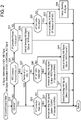
- a BT control process executed by the CPU 132 of the printer 100A will be described with reference to FIG. 2 .
- the other printers in the group of printers 100 execute the BT control process in the same way as the printer 100A.
- the BT control process is started with the power of the printer 100A being turned ON as the trigger.
- the CPU 132 determines whether the number of CL currently belonging to the WFDNW in which the printer 100A operates as a G/O is equal to the upper limit (i.e., "2").
- the CPU 132 stores information of that CL (e.g., MAC address) in the memory 134, and when a CL leaves the WFDNW, the CPU 132 deletes the information of that CL from the memory 134.
- the CPU 132 determines that the number of CL is equal to the upper limit (YES in S10), and proceeds to S20.
- the CPU 132 determines that the number of CL is not equal to the upper limit (NO in S10), and proceeds to S30.
- the CPU 132 determines whether the printer 100A has established an AP connection with any AP (e.g., 50A). That is, the CPU 132 determines whether the printer 100A currently belongs to the APNW as a child station. When the printer 100A belongs to the APNW, the CPU 132 stores in the memory 134 belonging information indicating that the printer 100A belongs to the APNW. When the printer 100A leaves the APNW, the CPU 132 stores, in the memory 134, non-belonging information indicating that the printer 100A does not belong to the APNW. In the case where the belonging information is stored in the memory 134, the CPU 132 determines that an AP connection has been established (YES in S20), and proceeds to S22. In the case where the non-belonging information is stored in the memory 134, the CPU 132 determines that an AP connection has not been established (NO in S20), and proceeds to S24.
- any AP e.g., 50A
- the CPU 132 instructs the BT I/F 120 to send the ADV_NONCONN_IND signal (termed “ANI signal” below) including status information "CLMAX” and an IP address "IPA” of the printer 100A to be used in the APNW to which the printer 100A currently belongs.
- the BT I/F 120 repeatedly sends this ANI signal.
- the BT I/F 120 repeatedly sends a signal in response to the instruction to the BT I/F 120.
- the ANI signal further includes a model name "AAA" of the printer 100A. This point is the same for the ANI signal and ADV_IND signal below.
- the status information "CLMAX" is information indicating that the number of CL currently belonging to the WFDNW in which the printer 100A operates as a G/O is equal to the upper limit.
- the printer 100A cannot newly establish a WFD connection with the terminal 10A. For this reason, in the case of being CLMAX (YES in S10), the printer 100A notifies the terminal 10A that the WFD connection cannot be established by sending the ANI signal.
- the IP address "IPA” is assigned by, e.g., an AP when the printer 100A belongs to the APNW, and is stored in the memory 134.
- the CPU 132 acquires the IP address "IPA” from the memory 134, and instructs the BT I/F 120 to send an ANI signal including the acquired IP address "IPA". Since the ANI signal includes the IP address "IPA" of the printer 100A, the terminal 10A can know that the printer 100A belongs to the APNW and determine whether the terminal 10A and the printer 100A belong to the same APNW by using the IP address "IPA".
- S22 ends, the process returns to S10.
- the CPU 132 instructs the BT I/F 120 to send an ANI signal including the status information "CLMAX". This ANI signal does not include the IP address of the printer 100A.
- S24 ends, the process returns to S10.
- the CPU 132 determines whether the printer 100A is executing a process for establishing a WFD connection (termed “WFD process” below) with any terminal.
- the WFD process is a process executed between receipt of a CONNECT_IND signal from any terminal in response to sending of an ADV_IND signal and establishment of a WFD connection with the terminal.
- the CPU 132 determines YES in S30 and proceeds to S32, while determines NO in S30 and proceeds to S50 in the case where the WFD process is not in execution.
- the CPU 132 determines whether the number of CL currently belonging to the WFDNW in which the printer 100A operates as a G/O is equal to "upper limit -1 (i.e., "1")". In the case where the number of items of CL information stored in the memory 134 is "1", the CPU 132 determines that the number of CL is equal to "upper limit -1" (YES in S32), and proceeds to S20. In the case where the number of items of CL information is "0", the CPU 132 determines that the number of CL is not equal to "upper limit -1" (NO in S32), and proceeds to S40.
- S40 is the same as S20.
- the CPU 132 proceeds to S42 in the case of determining that the AP connection has been established (YES in S40), while proceeds to S44 in the case of determining that the AP connection has not been established (NO in S40).
- the CPU 132 instructs the BT I/F 20 to send an ANI signal including status information "WFD process", and the IP address "IPA" of the printer 100A to be used in the APNW to which the printer 100A currently belongs.
- the status information "WFD process” is information indicating that the printer 100A is executing the WFD process.
- the printer 100A cannot newly establish a WFD connection with the terminal 10A until that WFD process ends. For this reason, in the case where the printer 100A is executing the WFD process (YES in S30), the printer 100A notifies the terminal 10A that the WFD connection cannot be established by sending the ANI signal.
- S42 ends, the process returns to S10.
- the CPU 132 instructs the BT I/F 120 to send an ANI signal including the status information "WFD process". This ANI signal does not include the IP address of the printer 100A.
- S44 ends, the process returns to S10.
- the CPU 132 determines whether the printer 100A is executing a process for establishing an AP connection (termed “AP process” below) with any AP.
- the AP process is a process executed between receipt of an instruction for establishing an AP connection by the operation unit 112 and establishment of an AP connection.
- the CPU 132 determines YES in S50 and proceeds to S52 in the case where the AP process is in execution, while determines NO in S50 and proceeds to S60 in the case where the AP process is not in execution.
- the CPU 132 instructs the BT I/F 120 to send an ANI signal including the status information "AP process".
- the status information "AP process” is information indicating that the printer 100A is executing the AP process.
- the printer 100A cannot establish a WFD connection with the terminal 10A until that AP process ends. For this reason, in the case where the printer 100A is executing the AP process (YES in S50), the printer 100A notifies the terminal 10A that the WFD connection cannot be established by sending the ANI signal.
- the process returns to S10.
- S60 is the same as S20.
- the CPU 132 proceeds to S62 in the case of determining that the AP connection has been established (YES in S60), while proceeds to S64 in the case of determining that the AP connection has not been established (NO in S60).
- the CPU 132 instructs the BT I/F 20 to send an ADV IND signal (termed “AI signal” below) including the IP address "IPA" of the printer 100A to be used in the APNW to which the printer 100A currently belongs.
- AI signal an ADV IND signal
- the printer 100A can immediately establish a WFD connection with the terminal 10A. For this reason, the printer 100A notifies the terminal 10A that the WFD connection can be established by sending the AI signal.
- the process returns to S10.
- the CPU 132 instructs the BT I/F 120 to send an AI signal.
- the AI signal does not include the IP address of the printer 100A.
- a display process executed by the CPU 32 of the terminal 10A will be described with reference to FIG. 3 .
- the display process is implemented by the CPU 32 executing the application 42.
- the display process is started with the activation of the application 42 as a trigger.
- the CPU 32 monitors receipt of an ANI signal or AI signal from any printer via the BT I/F 20. In the case where an ANI signal or AI signal is received, the CPU 32 determines YES in S100, and proceeds to S110. Below, the signal received in S100 is termed "target signal”.
- the CPU 32 determines whether the target signal includes an IP address. The CPU 32 proceeds to S112 in the case of determining that the target signal includes an IP address (YES in S110), while proceeds to S130 in the case of determining that the target signal does not include an IP address (NO in S110).
- the CPU 32 instructs the Wi-Fi I/F 22 to send a confirmation signal including the IP address included in the target signal as the destination address.
- the Wi-Fi I/F 22 sends the confirmation signal to that AP.
- the Wi-Fi I/F 22 does not send a confirmation signal.
- the confirmation signal is, e.g., a PING signal.
- the CPU 32 determines whether a response signal has been received via the Wi-Fi I/F 22 in response to the instruction to the Wi-Fi I/F 22 in S112. In the case where a response signal has been received, the CPU 32 determines YES in S 114, and proceeds to S120. Receiving a response signal means that the terminal 10A and the printer that has sent the target signal belong to the same APNW. On the other hand, in the case where a response signal has not been received even after a predetermined time has elapsed since the sending of the confirmation signal, the CPU 32 determines NO in S114, and proceeds to S130.
- the CPU 32 determines whether the target signal is an AI signal.
- the CPU 32 determines YES in S 120 and proceeds to S 122 in the case where the target signal is an AI signal, while determines NO in S120 and proceeds to S124 in the case where the target signal is an ANI signal.
- the CPU 32 stores a model name included in the target signal and a first rank in association with each other in the memory 34.
- the CPU 32 stores the model name included in the target signal and the second rank in association with each other in the memory 34.
- the process returns to S100.
- the printer from which the ANI signal is sent is executing the WFD process or the AP process, or has established a WFD connection with two terminals (i.e., CLMAX) (see S22, S24, S42, S44 of FIG. 2 ).
- This printer may not be able to immediately start printing in response to a request from the terminal 10A. This is because, in the case where the WFD process or the AP process is in execution, printing is started after this process ends. Further, in the case of CLMAX, this is because it is possible that printing is in execution in response to a request from another terminal, and it is necessary to wait until this printing ends.
- the printer from which the AI signal is sent can immediately start printing in response to a request from the terminal 10A.
- the rank of the printer from which the AI signal is sent i.e., the rank of S122
- the rank of the printer from which the ANI signal is sent i.e., the rank of S124.
- S130 is the same as S120.
- the CPU 32 determines YES in S130 and proceeds to S132 in the case where the target signal is an AI signal, while determines NO in S130 and proceeds to S134 in the case where the target signal is an ANI signal.
- the CPU 32 stores the model name included in the target signal and the third rank in association with each other in the memory 34.
- the process returns to S100.
- the CPU 32 confirms the status information included in the target signal and determines the rank.
- the CPU 32 determines as the fourth rank in the case where the status information is "WFD process", determines as the fifth rank in the case where the status information is "AP process”, and determines as the sixth rank in the case where the status information is "CLMAX”. Then, the CPU 32 stores the model name included in the target signal and the determined rank in association with each other in the memory 34.
- the process returns to S100.
- the terminal 10A and the printer from which the target signal is sent belong to the same APNW (i.e., YES in S114)
- the terminal 10A and the printer can execute communication of print data by using the APNW (i.e., via the AP) without establishing a WFD connection.
- the printer can immediately receive print data from the terminal 10A and, consequently, can immediately execute printing.
- the terminal 10A and the printer sending the target signal do not belong to the same APNW (i.e., NO in S110 or NO in S114)
- the terminal 10A and the printer execute communication of print data by using a WFDNW after establishing a WFD connection. Therefore, time is needed to execute the process of establishing the WFD connection. For this reason, the ranks of printers belonging to the same APNW as the terminal 10A (i.e., the rank of S122 and S124) are higher than the ranks of printers not belonging to the same APNW as the terminal 10A (i.e., the ranks of S132 and S134).
- the reason why the rank of S132 is higher than the rank of S134 is as follows. In the case where the printer from which the ANI signal is sent is executing the WFD process or the AP process, the printer cannot establish a WFD connection with the terminal 10A unless the process ends. Further, in the case where the printer from which the ANI signal is sent is CLMAX, the printer cannot establish a WFD connection with the terminal 10A in the first place, and cannot execute communication of print data with the terminal 10A by using the WFDNW. On the other hand, it is highly likely that the printer from which the AI signal is sent can immediately start the WFD process for establishing a WFD connection with the terminal 10A. For this reason, the rank of the printer from which the AI signal is sent (i.e., the rank of S132) is higher than the rank of the printer from which the ANI signal is sent (i.e., the rank of S134).
- each rank of S134 is as follows.
- the time required for the WFD process is usually shorter than the time required for the AP process.
- the rank corresponding to the WFD process i.e., fourth rank
- the rank corresponding to the AP process i.e., fifth rank
- the printer which is CLMAX cannot execute communication of print data with the terminal 10A.
- the rank corresponding to the WFD process or the AP process i.e., fourth or fifth rank
- the rank corresponding to the CLMAX i.e., sixth rank.
- the CPU 32 monitors whether a predetermined time has elapsed since the application 42 was activated. In the case where the predetermined time has elapsed, the CPU 32 determines YES in S140, and proceeds to S150.
- the CPU 32 displays a selection screen including model names on the display unit 14 according to the information stored in the memory 34 in S122, etc. Specifically, the CPU 32 generates a selection screen such that the model name associated with the higher rank is positioned at the upper portion, and displays the generated selection screen on the display unit 14. Further, the CPU 32 displays the status information in association with each model name. Specifically, the CPU 32 displays a character string "Same NW" in association with the first rank and/or second rank model name.
- the CPU 32 displays a character string "Waiting" in association with the third rank model name, displays a character string "Executing WFD Process” in association with the fourth rank model name, displays a character string "Executing AP Process” in association with the fifth rank model name, and displays a character string "CLMAX” in association with the sixth rank model name.
- S150 ends, the display process of FIG. 3 ends.
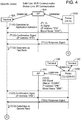
- FIGS. 4 to 7 The processes of FIGS. 4 to 7 are chiefly implemented by the processes of FIGS. 2 and 3 .
- BT communication and Wi-Fi communication between devices are represented by a broken line and a solid line, respectively.
- the terminal 10A has established an AP connection with the AP 50A. Further, the printer 100A has also established an AP connection with the AP 50A. That is, the terminal 10A and the printer 100A belong to the same APNW. In T100, the terminal 10A receives an operation for application activation (trigger for the process of FIG. 3 ).
- the printer 100A has not established a WFD connection with any terminal (NO in S10 of FIG. 2 ), is not executing a WFD process (NO in S30), or is not executing an AP process (NO in S50). For this reason, in T110 the printer 100A sends an AI signal including an IP address "IPA” of the printer 100A and a model name "AAA" of the printer 100A (YES in S60, S62).
- the terminal 10A determines that the AI signal includes the IP address "IPA” (YES in S110) and, in T120, sends to the AP 50A a confirmation signal including the IP address "IPA” as the destination address (S112).
- the printer 100A When receiving the confirmation signal from the terminal 10A via the AP 50A in T120, the printer 100A sends a response signal to the terminal 10A via the AP 50A in T122 (a process different from FIG. 3 ).
- the terminal 10A When receiving the response signal from the printer 100A via the AP 50A in T122 (YES in S114), the terminal 10A stores the model name "AAA" and the first rank in association with each other in T130 (YES in S120, S122).
- the printer 100B has also established an AP connection with the AP 50A.
- the printer 100B has also established a WFD connection with each of two terminals 10B, 10C. That is, the printer 100B is CLMAX (YES in S10 of FIG. 2 ). For this reason, in T210, the printer 100B sends an ANI signal including the status information "CLMAX", an IP address "IPB" of the printer 100B, and a model name "BBB" of the printer 100B (YES in S20, S22).
- T220 and T222 are the same as T120 and T122 except that the printer 100B is used instead of the printer 100A.
- the terminal 10A stores the model name "BBB" and the second rank in association with each other in T230 (NO in S120, S124).
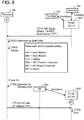
- FIG. 5 (Continuation of FIG. 4: FIG. 5)
- a printer 100C has established an AP connection with an AP 50B that is different from the AP 50A. That is, the printer 100C belongs to an APNW that is different from the APNW to which the terminal 10A belongs.
- the printer 100C sends an AI signal including an IP address "IPC" of the printer 100C, and a model name "CCC" of the printer 100C (NO in S10, NO in S30, NO in S50, YES in S60, S62 of FIG. 2 ).
- the terminal 10A When receiving the AI signal from the printer 100C in T310 (YES in S100 of FIG. 3 ), the terminal 10A sends to the AP 50B a confirmation signal including the IP address "IPC" as the destination address in T320 (YES in S110, S112). Then, the terminal 10A determines that a response signal has not been received (NO in S114), and stores the model name "CCC" and the third rank in association with each other in T330 (YES in S130, S132).
- a printer 100D has also established an AP connection with the AP 50B that is different from the AP 50A.
- the printer 100D is executing a WFD process for establishing a WFD connection with a terminal 10D (NO in S10, YES in S30 of FIG. 2 ). For this reason, in T410, the printer 100D sends an ANI signal including status information "WFD process", an IP address "IPD" of the printer 100D, and a model name "DDD" of the printer 100D (NO in S32, YES in S40, S42).
- the terminal 10A When receiving the ANI signal from the printer 100D in T410 (YES in S100 of FIG. 3 ), the terminal 10A sends to the AP 50B a confirmation signal including the IP address "IPD" as the destination address in T420 (YES in S110, S112). Then, the terminal 10A determines that a response signal has not been received (NO in S114), and stores the model name "DDD" and the fourth rank corresponding to the status information "WFD process" in association with each other in T430 (NO in S130, S134).
- a printer 100E is executing an AP process for establishing an AP connection with the AP 50B (NO in S10, NO in S30, YES in S50). For this reason, in T510 the printer 100E sends an ANI signal including status information "AP process” and a model name "EEE" of the printer 100E (S52).
- the terminal 10A When receiving the ANI signal from the printer 100E in T510 (YES in S100 of FIG. 3 ), the terminal 10A stores the model name "EEE” and the fifth rank in accordance with the status information "AP process" in association with each other in T530 (NO in S110, NO in S130, S134).
- FIG. 6 (Continuation of FIG. 5: FIG. 6)
- a printer 100F has established a WFD connection with a terminal 10E, and is executing a WFD process for establishing a WFD connection with a terminal 10F (NO in S10, YES in S30). That is, the printer 100F is executing the WFD process in the situation in which the number of CL belonging to the WFDNW in which the printer 100F operates as the G/O is "upper limit -1". For this reason, the printer 100F sends an ANI signal including the status information "CLMAX" and a model name "FFF" of the printer 100F in T610 (YES in S32, NO in S20, S24).
- the printer 100F sends an ANI signal including the status information "CLMAX". Thereby, selection of the printer 100F, which cannot establish a WFD connection, by the user of the terminal 10A can be prevented.
- the terminal 10A When receiving the ANI signal from the printer 100F in T610 (YES in S100 of FIG. 3 ), the terminal 10A stores the model name "FFF" and the sixth rank corresponding to the status information "CLMAX" in association with each other in T630 (NO in S110, NO in S130, S134).
- the terminal 10A When receiving and processing the AI signals and the ANI signals from all the printers 100A to 100F, the terminal 10A displays a selection screen including each model name "AAA” to "FFF” and its corresponding status information in T640 according to the determined rank (S150). Thereby, the user can know the rank of each printer and the status information of each printer.
- the terminal 10A accepts selection of the model name "AAA" in the selection screen from the user in T700.
- the terminal 10A sends to the printer 100A print data with the IP address "IPA” (see T110 of FIG. 4 ) as the destination address via the AP 50A in T710 (a process different from FIG. 3 ).
- the printer 100A executes printing of an image represented by the print data in T720 (a process different from FIG. 2 ).
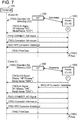
- the terminal 10A accepts selection of the model name "CCC" in the selection screen from the user in T800.
- the terminal 10A receives an AI signal again from the printer 100C in T810, and sends a CONNECT IND signal to the printer 100C via the BT I/F 20 in T812 (a process different from FIG. 3 ).
- a BT connection is established between the terminal 10A and the printer 100C.
- the printer 100C uses the BT connection to send connection information to the terminal 10A in T820 (a process different from FIG. 2 ).
- the connection information is information needed to establish a WFD connection with the printer 100C that is the G/O, and includes, e.g., an SSID and a password.
- a WFD connection can be appropriately established between the terminal 10A and the printer 100C.
- the printer 100C executes the WFD process when receiving the CONNECT IND signal from the terminal 10A, and therefore sends the ANI signal instead of the AI signal (YES in S30, NO in S32, YES in S40, S42 of FIG. 2 ).
- the terminal 10A executes various types of communication such as Probe, Authentication, Association, 4-Way Handshake, etc. with the printer 100C via the Wi-Fi I/F 22 in T822 (a process different from FIG. 3 ).
- connection information is sent to the printer 100C from the terminal 10A, and authentication of the connection information is executed by the printer 100C.
- the authentication succeeds, a WFD connection between the terminal 10A and the printer 100C is established.
- the terminal 10A When establishing the WFD connection with the printer 100C in T822, the terminal 10A sends print data to the printer 100C in T830 (a process different from FIG. 3 ).
- the IP address of the printer 100C which is the destination of the print data, is sent from the printer 100C to the terminal 10A after the WFD connection has been established (not shown).
- the printer 100C executes printing of an image represented by the print data in T840 (a process different from FIG. 2 ).
- the terminal 10A accepts selection of the model name "EEE" in the selection screen from the user in T900. In this case, the terminal 10A waits until receiving an AI signal from the printer 100E (a process different from FIG. 3 ).
- the printer 100E sends an ANI signal in T910 while executing the AP process with the AP 50B (YES in S50, S52 of FIG. 2 ).
- the printer 100E sends an AI signal including an IP address "IPE” and the model name "EEE” of the printer 100E in T920 (NO in S50, YES in S60, S62).
- T922 to T950 are the same as T812 to T840 of case B except that the printer 100E is used instead of the printer 100C.
- each printer such as the printer 100A can send an AI signal or ANI signal to the terminal 10A before establishing a BT connection with the terminal 10A (T110 of FIG. 4 , etc.). For this reason, each printer such as the printer 100A can notify the terminal 10A of the state of that printer more quickly as compared to a configuration in which a signal indicating the state of that printer is sent after the establishment of the BT connection.
- the terminal 10A can receive an AI signal or ANI signal from each printer such as the printer 100A before establishing the BT connection with each printer such as the printer 100A (T110, T210, etc. of FIG. 4 ). For this reason, the terminal 10A can learn the state of each printer such as the printer 100A more quickly as compared to a configuration in which a signal indicating the state of each printer such as the printer 100A is received after the establishment of the BT connection. Then, the terminal 10A displays the model name (e.g., "CCC") of the printer from which the AI signal is sent preferentially over the model name (e.g., "DDD") of the printer from which the ANI signal is sent (T640 of FIG. 6 ). Consequently, the user can appropriately identify which printer can establish the WFD connection.
- the model name e.g., "CCC”
- DDD model name
- Any printer (e.g., 100A) among the group of printers 100 is an example of "communication device”.
- the terminal 10A is an example of "terminal device”.
- the BT I/F 120, the Wi-Fi I/F 122 are examples of “first wireless interface”, “second wireless interface” of “communication device”, respectively.
- the BT I/F 20, the Wi-Fi I/F 22 are examples of “first wireless interface”, “second wireless interface” of "terminal device", respectively.
- the state in which NO is determined in S10, S30, and S50 of FIG. 2 is an example of "respondent state".
- Each of the state in which YES is determined in S10, the state in which YES is determined in S30, and the state in which YES is determined in S50 of FIG. 2 is an example of "non-respondent state”.
- the AI signal and the ANI signal are examples of "first signal” and “second signal”, respectively.
- the WFDNW and APNW are examples of “parent station network” and "
- the state of the printer 100B i.e., the state in which YES is determined in S10 of FIG. 2
- the status information "CLMAX” are examples of “first non-respondent state” and “first status information”, respectively.
- the state of the printer 100D i.e., the state in which YES is determined in S30 of FIG. 2
- the status information "WFD process” are examples of “second non-respondent state” and “second status information”, respectively.
- the state of the printer 100E i.e., the state in which YES is determined in S50 of FIG. 2
- the status information "AP process” are examples of “third non-respondent state” and “third status information", respectively.
- the WFD process and the AP process are examples of "first belonging process” and "second belonging process", respectively.
- Each printer 100A, 100C and each model name "AAA”, “CCC” are examples of “first communication device”, “first device information”, respectively.
- Each printer 100B, 100D, 100E, 100F and each model name "BBB”, “DDD” to “FFF” are examples of “second communication device” and “second device information”, respectively.
- the printer 100B, the model name "BBB”, the IP address "IPB”, the printer 100D, the model name “DDD”, the IP address "IPD”, the AP 50A and the AP 50B are examples of "second communication device", “second device information”, “first IP address”, "third communication device”, “third device information”, “second IP address”, "first access point” and “second access point”, respectively.
- the printer 100E, the model name “EEE”, the printer 100D, the model name “DDD” and the AP 50B are examples of “second communication device”, “second device information”, “third communication device”, “third device information” and “access point”, respectively.
- the printer 100F, the model name "FFF”, the printer 100E, the model name “EEE” and the AP 50B are examples of "second communication device”, “second device information”, “third communication device”, “third device information” and "access point”, respectively.
- the printer 100A, the model name "AAA”, the IP address "IPA”, the printer 100C, the model name “CCC”, the IP address "IPC”, the AP 50A and the AP 50B are examples of "first communication device”, “first device information”, “third IP address”, “fourth communication device”, “fourth device information”, “fourth IP address”, "third access point” and “fourth access point”, respectively.
- each unit of “communication device” is as follows.
- the processes of S62, S64 of FIG. 2 are examples of processes executed by "first interface control unit”.
- the processes of S22, S24, S42, S442 are examples of processes executed by "second interface control unit”.
- the processes of T820, T930 of FIG. 7 are examples of processes executed by "connection information communication unit”.
- the processes of T822, T932 are examples of processes executed by "establishment unit”.
- each unit of “terminal device” is as follows.
- the process of receiving the AI signal and the process of receiving the ANI signal are examples of processes executed by "first reception unit", “second reception unit”, respectively.
- the process of S150 is an example of a process executed by "display control unit”.
- the process of T820 and the process of T822 of FIG. 7 are examples of processes executed by "connection information communication unit", “establishment unit”, respectively.
- the processes of S112 and S114 of FIG. 3 are examples of processes executed by "first determination unit” and "second determination unit”.
- the terminal 10A may display the model name as follows. That is, the terminal 10A may display a message prompting selection of a printer to execute printing and model names corresponding to lower ranks (e.g., fourth to sixth ranks) in a first color (e.g., black) and model names corresponding to higher ranks (e.g., first to third ranks) in a second color different from the first color (e.g., red). In this case, since the second color is conspicuous, the model names corresponding to the higher ranks are displayed preferentially.
- a printer e.g., fourth to sixth ranks
- model names corresponding to higher ranks e.g., first to third ranks
- a second color different from the first color e.g., red
- the terminal 10A may display only the model names corresponding to higher ranks (e.g., first to third ranks) without displaying the model names corresponding to lower ranks (e.g., fourth to sixth ranks). In this case as well, the model names corresponding to higher ranks are displayed preferentially.
- the method of "displayed preferentially" is not limited to the method of the embodiment.
- connection information is sent from the terminal 10A to the printer 100C.
- “connection information” may be sent from “communication device (or first communication device)” to “terminal device” as in the above embodiment, or may be sent from “terminal device” to “communication device (or first communication device)” as in the present variant.
- connection information communication unit and “establishment unit” may be omitted.
- non-respondent state may not include “first non-respondent state”, and “first status information” may not be used.
- non-respondent state may not include “second non-respondent state”, and “second status information” may not be used.
- the ANI signal may not include the status information.
- the same rank is determined in S134 of FIG. 3 regardless of the states of the printers.
- second signal may not include "status information”.
- S32 of FIG. 2 may not be executed. That is, in the case of YES in S30, the printer 100A or the like may send an ANI signal including the status information "WFD process" regardless of the number of CL of the printer.
- "second interface control unit” may cause the first wireless interface to execute sending of the second signal including the second status information.
- non-respondent state may not include “third non-respondent state”, and “third status information” may not be used.
- the processes of S20, S40, and S60 of FIG. 2 may not be executed. That is, the printer 100A or the like may send an AI signal or ANI signal that does not include an IP address even if the printer 100A or the like belong to the APNW.
- first signal and “second signal” may not include the IP address of the communication device in the case where the communication device belongs as a child station to the AP network.
- S110 to S124 of FIG. 3 may not be executed. That is, the terminal 10A may determine the first rank in the case where the received signal is the AI signal, and may determine each rank from the second rank onward in accordance with the status information in the case where the received signal is the ANI signal.
- first determination unit” and “second determination unit” may be omitted.
- First signal may not be an AI signal, but may be another type of signal of the BT standard.
- Second signal may not be an ANI signal, but may be another type of signal of the BT standard.
- first signal and second signal only need to be different signals.
- Communication device may not be a printer, but may be for example a scanner, a FAX device, a multi-function device, a PC, or a scanner.
- FIGS. 4 to 7 are implemented by the CPU 32 of the terminal 10A executing the application 42, and the CPU 132 or the like of the printer 100A or the like executing the program 140.
- any of the processes may be implemented by hardware such as a logic circuit.
Landscapes
- Engineering & Computer Science (AREA)
- Computer Networks & Wireless Communication (AREA)
- Signal Processing (AREA)
- Mobile Radio Communication Systems (AREA)
- Facsimiles In General (AREA)
- Telephone Function (AREA)
- Accessory Devices And Overall Control Thereof (AREA)
Abstract
Description
- The present disclosure discloses a technique for executing wireless communication between a communication device and a terminal device according to Bluetooth (registered trademark) standard.
-
US Patent Application Publication No. 2017-280502 describes a system for executing communication according to Bluetooth standard and according to Wi-Fi standard between a mobile terminal and a printing device. The mobile terminal uses GATT communication of Bluetooth (registered trademark) Low Energy (BLE) scheme to ask the printing device whether the number of Wi-Fi standard wireless connections established by the printing device (i.e., the number of other terminals that have established a wireless connection with the printing device) has reached an upper limit. The mobile terminal displays a confirmation screen for confirming with a user whether to establish a Wi-Fi standard wireless connection with the printing device in the case where the number of wireless connections with the printing device has reached the upper limit. - In the technique of
US Patent Application Publication No. 2017-280502 , in order for the mobile terminal to notify the printing device whether the number of wireless connections of the Wi-Fi standard in the printing device has reached the upper limit, it is necessary to establish a BLE standard wireless connection for executing GATT communication between the mobile terminal and the printing device. The present disclosure provides a technique which can immediately notify a terminal device of the state of a communication device. - A communication device disclosed in the disclosure may comprise: a first wireless interface configured to execute wireless communication according to Bluetooth standard; a second wireless interface configured to execute wireless communication according to Wi-Fi standard; a first interface control unit configured to, in a case where a state of the communication device is a respondent state, cause the first wireless interface to send a first signal, the respondent state being a state in which a Wi-Fi connection that is a wireless connection via the second wireless interface is able to be established between the communication device and a terminal device, and the first signal being sent from the first wireless interface before a Bluetooth connection that is a wireless connection via the first wireless interface is established between the communication device and the terminal device; and a second interface control unit configured to, in a case where a state of the communication device is a non-respondent state, cause the first wireless interface to send a second signal different from the first signal, the non-respondent state being a state in which the Wi-Fi connection is not able to be established between the communication device and the terminal device, and the second signal being sent from the first wireless interface before the Bluetooth connection is established between the communication device and the terminal device.
- According to the aforementioned configuration, before establishing the Bluetooth connection with the terminal device, the communication device sends, via the first wireless interface, the first signal indicating that the communication device is in the respondent state, or the second signal indicating that the communication device is in the non-respondent state. For this reason, the communication device can notify the terminal device of the state of the communication device more quickly than a configuration in which a signal indicating the state of the communication device is sent after the Bluetooth connection is established.
- The communication device may further comprise a connection information communication unit configured to, in a case where the Bluetooth connection is established between the communication device and the terminal device in response to the first signal being received by the terminal device, execute communication of connection information with the terminal device via the first wireless interface using the Bluetooth connection, the connection information being for establishing the Wi-Fi connection between the communication device and the terminal device; and an establishment unit configured to, in a case where the communication of the connection information is executed with terminal device, establish the Wi-Fi connection between the communication device and the terminal device.
- The communication device may be configured to form a parent station network that is a wireless network of the Wi-Fi standard and in which the communication device operates as a parent station. The non-respondent state may include a first non-respondent state in which a number of a child station belonging to the parent station network is equal to an upper limit.
- The non-respondent state may further include a second non-respondent state in which the number of the child station belonging to the parent station network is less than the upper limit and a first belonging process is in execution, the first belonging process being for causing an external device to belong to the parent station network as the child station.
- The second interface control unit may be configured to: in a case where the state of the communication device is the first non-respondent state, cause the first wireless interface to send the second signal including first status information indicating that the number of the child station belonging to the parent station network is equal to the upper limit, and in a case where the state of the communication device is the second non-respondent state, cause the first wireless interface to send the second signal including second status information indicating that the first belonging process is in execution.
- The upper limit may be a predetermined integer greater than or equal to 2. The second interface control unit may be configured to: in a case where the state of the communication device is the second non-respondent state in which the number of the child station belonging to the parent station network is less than a specific number that is one less than the upper limit and the first belonging process is in execution, cause the first wireless interface to send the second signal including the second status information; and in a case where the state of the communication device is the second non-respondent state in which the number of the child station belonging to the parent station network is equal to the specific number and the first belonging process is in execution, cause the first wireless interface to send the second signal including the first status information.
- The non-respondent state may include a third non-respondent state in which a second belonging process is in execution, the second belonging process being for causing the communication device to belong, as a child station, to an AP network that is a wireless network of the Wi-Fi standard and in which an access point operates as a parent station.
- The first interface control unit may be configured to, in a case where the state of the communication device is the respondent state and the communication device belongs, as a child station, to an AP network that is a wireless network of the Wi-Fi standard and in which an access point operates as a parent station, cause the first wireless interface to send the first signal including an IP address of the communication device, the IP address being used in the AP network. The second interface control unit may be configured to, in a case where the state of the communication device is the non-respondent state and the communication device belongs, as the child station, to the AP network, cause the first wireless interface to send the second signal including the IP address of the communication device, the IP address being used in the AP network.
- The first signal may be an ADV_IND signal according to a Bluetooth Low Energy (BLE) scheme of the Bluetooth standard, and the second signal may be an ADV_NONCONN_IND signal according to the BLE scheme.
- A computer program for a terminal device is disclosed in the disclosure. The terminal device comprising: a first wireless interface configured to execute wireless communication according to Bluetooth standard; a second wireless interface configured to execute wireless communication according to Wi-Fi standard; a display unit; and a computer, wherein the computer program causes the computer to function as: a first reception unit, in a case where a state of a first communication device is a respondent state, receive a first signal from the first communication device via the first wireless interface, the first communication device being one of a plurality of communication devices that exists around the terminal device, the respondent state being a state in which a Wi-Fi connection that is a wireless connection via the second wireless interface is able to be established between the first communication device and the terminal device, the first signal being received via the first wireless interface before a Bluetooth connection that is a wireless connection via the first wireless interface is established between the first communication device and the terminal device; a second reception unit configured to, in a case where a state of a second communication device different from the first communication device among the plurality of communication devices is a non-respondent state, receive a second signal different from the first signal from the second communication device via the first wireless interface, the non-respondent state being a state in which the Wi-Fi connection is not able to be established between the second communication device and the terminal device, and the second signal being received via the first wireless interface before the Bluetooth connection is established between the second communication device and the terminal device; and a display control unit configured to display on the display unit first device information related to the first communication device that is a sender of the first signal preferentially over second device information related to the second communication device that is a sender of the second signal.
- According to the aforementioned configuration, the terminal device receives from the first communication device the first signal indicating that the first communication device is in the respondent state before the Bluetooth connection with the first communication device is established, and receives from the second communication device the second signal indicating that the second communication device is in the non-respondent state before the Bluetooth connection with the second communication device is established. For this reason, the terminal device can know the state of each communication device more quickly than with a configuration in which a signal indicating the state of each communication device is sent after the Bluetooth connection is established. Then, the terminal device displays the first device information related to the first communication device that is the sender of the first signal indicating that the first communication device is in the respondent state preferentially over the second device information related to the second communication device that is the sender of the second signal indicating that the second communication device is in the non-respondent state. As a result, the user can appropriately recognize that the first communication device is capable of establishing a Wi-Fi connection.
- The computer program may further cause the computer to function as: a connection information communication unit configured to, in a case where the Bluetooth connection is established between the first communication device and the terminal device in response to the displayed first device information being selected by a user, execute communication of connection information with the first communication device via the first wireless interface using the Bluetooth connection, the connection information being for establishing the Wi-Fi connection between the first communication device and the terminal device; and an establishment unit configured to, in a case where the communication of the connection information is executed with the first communication device, establish the Wi-Fi connection between the first communication device and the terminal device.
- The second signal may include status information indicating a reason why the state of the second communication device is the non-respondent state. The display control unit may be configured to display the second device information and the status information in association with each other on the display unit.
- The second communication device may be configured to form a first parent station network that is a wireless network of the Wi-Fi standard and in which the second communication device operates as a parent station, and the second signal received from the second communication device may include first status information indicating that a number of a child station belonging to the first parent station network is equal to an upper limit. The second reception unit may be further configured to, in a case where a state of a third communication device different from the first and second communication devices among the plurality of communication devices is the non-respondent state, receive the second signal from the third communication device via the first wireless interface. The third communication device may be configured to form a second parent station network that is a wireless network of the Wi-Fi standard and in which the third communication device operates as a parent station, the second signal received from the third communication device may include second status information indicating that a first belonging process is in execution, and the first belonging process may be for causing an external device to belong to the second parent station network as a child station. The display control unit may be configured to display third device information related to the third communication device that is a sender of the second signal including the second status information on the display unit preferentially over the second device information related to the second communication device that is a sender of the second signal including the first status information.
- In a case where the second communication device belongs, as a child station, to a first AP network that is a wireless network of the Wi-Fi standard and in which a first access point operates as a parent station, the second signal received from the second communication device may include first IP address of the second communication device, the first IP address being used in the first AP network. The computer program may further cause the computer to function as: a first determination unit configured to determine whether the terminal device belongs, as a child station, to the first AP network using the first IP address included in the second signal received from the second communication device. In a case where the third communication device belongs, as a child station, to a second AP network that is a wireless network of the Wi-Fi standard and in which a second access point operates as a parent station, the second signal received from the third communication device may include second IP address of the third communication device, the second IP address being used in the second AP network. The first determination unit may be further configured to determine whether the terminal device belongs, as a child station, to the second AP network using the second IP address included in the second signal received from the third communication device. The display control unit may be configured to: in a case where it is determined that the terminal device does not belong, as a child station, to the first AP network and it is determined that the terminal device does not belong, as a child station, to the second AP network, display the third device information on the display unit preferentially over the second device information, in a case where it is determined that the terminal device does not belong, as a child station, to the first AP network and it is determined that the terminal device belongs, as a child station, to the second AP network, display the third device information on the display unit preferentially over the second device information, and in a case where it is determined that the terminal device belongs, as a child station, to the first AP network and it is determined that the terminal device does not belong, as a child station, to the second AP network, display the second device information on the display unit preferentially over the third device information.
- The second signal received from the second communication device may include third status information indicating that a second belonging process is in execution, the second belonging process may be for causing the second communication device to belong to an AP network that is a wireless network of the Wi-Fi standard and in which an access point operates as a parent station. The second reception unit may be further configured to, in a case where a state of a third communication device different from the first and second communication devices among the plurality of communication devices is the non-respondent state, receive the second signal from the third communication device via the first wireless interface. The third communication device may be configured to form a parent station network that is a wireless connection of the Wi-Fi standard and in which the third communication device operates as a parent station, the second signal received from the third communication device may include second status information indicating that a first belonging process is in execution, and the first belonging process may be for causing an external device to belong to the parent station network as a child station. The display control unit may be configured to display third device information related to the third communication device that is a sender of the second signal including the second status information on the display unit preferentially over the second device information related to the second communication device that is a sender of the second signal including the third status information.
- The second communication device may be configured to form a parent station network that is a wireless network of the Wi-Fi standard and in which the second communication device operates as a parent station, and the second signal received from the second communication device may include first status information indicating that a number of a child station belonging to the parent station network is equal to an upper limit. The second reception unit may be further configured to, in a case where a state of a third communication device different from the first and second communication devices among the plurality of communication devices is the non-respondent state, receive the second signal from the third communication device via the first wireless interface. The second signal received from the third communication device may include third status information indicating that a second belonging process is in execution, the second belonging process may be for causing the third communication device to belong, as a child station, to an AP network that is a wireless network of the Wi-Fi standard and in which an access point operates as a parent station. The display control unit may be configured to display third device information related to the third communication device that is a sender of the second signal including the third status information on the display unit preferentially over second device information related to the second communication device that is a sender of the second signal including the first status information.
- In a case where the first communication device belongs, as a child station, to a third AP network that is a wireless network of the Wi-Fi standard and in which a third access point operates as a parent station, the first signal received from the first communication device may include a third IP address of the first communication device, the third IP address being used in the third AP network. The computer program may further cause the computer to function as: a second determination unit configured to determine whether the terminal device belongs, as a child station, to the third AP network using the third IP address included in the first signal received from the first communication device. The first reception unit may be configured to, in a case where a state of a fourth communication device different from the first and second communication devices among the plurality of communication devices is a respondent state, receive the first signal from the fourth communication device via the first wireless interface. In a case where the fourth communication device belongs, as a child station, to a fourth AP network that is a wireless network of the Wi-Fi standard and in which a fourth access point operates as a parent station, the first signal received from the fourth communication device may include a fourth IP address of the fourth communication device, the fourth IP address being used in the fourth AP network. The second determination unit may be further configured to determine whether the terminal device belongs, as a child station, to the fourth AP network using the fourth IP address included in the first signal received from the fourth communication device. The display control unit may be configured to, in a case where it is determined that the terminal device belongs, as a child station, to the third AP network and it is determined that the terminal device does not belong, as a child station, to the fourth AP network, display the first device information related to the first communication device that belongs to the third AP network on the display unit preferentially over fourth device information related to the fourth communication device that belongs to the fourth AP network.
- The first signal may be an ADV_IND signal according to a Bluetooth Low Energy (BLE) scheme of the Bluetooth standard, and the second signal may be an ADV_NONCONN_IND signal according to the BLE scheme.
- A computer program for implementing the above communication device, a computer-readable recording medium storing the computer program, and a method implemented by the above communication device are also novel and useful. A computer-readable recording medium storing the computer program of the above terminal device, the above terminal device itself, and a method implemented by the above terminal device are also novel and useful. Moreover, a system comprising the above communication device and the above terminal device is also novel and useful.
-
FIG. 1 shows a configuration of a communication system. -
FIG. 2 shows a flowchart of a BT control process of a printer. -
FIG. 3 shows a flowchart of a display process of a terminal. -
FIG. 4 shows a sequence diagram of a specific case. -
FIG. 5 shows a sequence diagram of a continuation ofFIG. 4 . -
FIG. 6 shows a sequence diagram of a continuation ofFIG. 5 and Case A in which a model name "AAA" is selected. -
FIG. 7 shows a sequence diagram of Case B in which a model name "CCC" is selected, and Case C in which a model name "EEE" is selected. - As shown in
FIG. 1 , acommunication system 2 comprises a group ofterminals 10 constituted of a plurality of terminals including aterminal 10A, etc., a plurality ofaccess points printers 100 constituted of a plurality of printers including aprinter 100A, etc. In the present embodiment, a user causes any printer included in the group ofprinters 100 to execute printing by using theterminal 10A. - The terminal 10A particularly executes wireless communication according to Bluetooth Low Energy (BLE) scheme of the Bluetooth (BT, registered trademark) standard (called "BLE communication" below) with each printer, and displays a selection screen for selecting a printer that is to execute printing. Then, in the case where a printer is selected in the selection screen, the terminal 10A uses a wireless communication according to the Wi-Fi standard (called "Wi-Fi communication" below) to send print data representing an image to be printed to the selected printer. The reason that the terminal 10A sends the print data to the printer using Wi-Fi communication instead of BLE communication is that a communication speed of Wi-Fi communication is usually faster than a communication speed of BLE communication.
- Below, an access point is termed an "AP". Each
AP AP - A configuration of the terminal 10A of the group of
terminals 10 will be described. The other terminals in the group ofterminals 10 comprise the same configuration as the terminal 10A. The terminal 10A is a portable terminal device such as a mobile phone (e.g., a smartphone), a PDA, a tablet PC, etc. The terminal 10A comprises anoperation unit 12, adisplay unit 14, a Bluetooth (BT, registered trademark)interface 20, a Wi-Fi interface 22, and acontroller 30. Theunits 12 to 30 are connected to a bus line (reference number omitted). - The
operation unit 12 comprises one or more buttons. Theoperation unit 12 is configured to receive various instructions from the user. Thedisplay unit 14 is a display for displaying various types of information. Thedisplay unit 14 also functions as a touch screen (i.e., operation unit) that receives instructions from the user. - Below, an interface is termed "I/F". The BT I/
F 20 is a wireless I/F for executing BLE communication. The BLE scheme is a wireless communication scheme based on IEEE 802.15.1 and standards conforming thereto and, particularly, is a scheme implemented in version 4.0 or later of the BT standard. The BT I/F 20 is configured to execute communication of various signals defined by the BLE scheme. In the present embodiment, the BT I/F 20 is configured to execute communication of an ADV_IND signal, an ADV_NONCONN_IND signal, and a CONNECT_IND signal. - Each of the aforementioned signals is a signal communicated before a wireless connection according to the BT standard (termed "BT connection" below) is established. The BT connection can also be referred to as Logical Link Control and Application Protocol (L2CAP) Link. The ADV_IND signal is a signal for notifying that a BT connection can be established. The ADV_NONCONN_IND signal is a signal for notifying that a BT connection cannot be established. The CONNECT_IND signal is a signal communicated after the ADV_IND signal, and is a signal for establishing a BT connection.
- The Wi-Fi I/
F 22 is a wireless I/F for executing Wi-Fi communication. The Wi-Fi standard is a wireless communication standard based on the Institute of Electrical and Electronics Engineers, Inc. (IEEE) standard 802.11 and standards conforming thereto (e.g., 802.11a, 11b, 11g, 11n, 11ac, etc.). The terminal 10A establishes a wireless connection (termed "AP connection" below) with an AP (e.g., 50A) via the Wi-Fi I/F 22, and can belong as a child station to a wireless network (termed "APNW" below) in which the AP operates as a parent station. - The Wi-Fi I/
F 22 supports, in particular, the WFD scheme formulated by the Wi-Fi Alliance. The WFD scheme is a wireless communication scheme described in the standard document "Wi-Fi Peer-to-Peer (P2P) Technical Specification Version 1.1" created by the Wi-Fi Alliance. The terminal 10A establishes a wireless connection (termed "WFD connection" below) with a printer (e.g., 100A) via the Wi-Fi I/F 22, and can belong as a child station (i.e., client of the WFD scheme) to a wireless network (termed "WFDNW" below) in which the printer operates as a parent station (i.e., Group Owner of the WFD scheme). Below, a Group Owner and a client are termed "G/O", "CL", respectively. - Differences between Wi-Fi communication and BLE communication will be described. The communication speed of Wi-Fi communication (e.g., maximum communication speed is 600 Mbps) is faster than the communication speed of BLE communication (e.g., maximum communication speed is 24 Mbps). A frequency of a carrier wave in the Wi-Fi communication is a 2.4 GHz band or 5.0 GHz band. A frequency of a carrier wave in the BLE communication is the 2.4 GHz band. Further, a maximum distance at which the Wi-Fi communication can be executed (e.g., about 100 meters) is greater than a maximum distance at which the BLE communication can be executed (e.g., about several tens of meters).
- The
controller 30 comprises aCPU 32 and amemory 34. TheCPU 32 executes various processes in accordance withprograms 40, 42 stored in thememory 34. Thememory 34 is configured of a volatile memory, a non-volatile memory, and the like, and stores an Operating System (OS) program 40 (simply termed "OS 40" below) and a printer application 42 (simply termed "application 42" below). - The
OS 40 is a program for controlling basic operations of the terminal 10A and is, e.g., iOS (registered trademark) or Android (registered trademark). The application 42 is an application for executing BT communication with the group ofprinters 100 and displaying the aforementioned selection screen, and for sending print data to the selected printer. The application 42 may be, e.g., installed on the terminal 10A from a server on the Internet provided by a vendor of the group ofprinters 100, or installed on the terminal 10A from a medium shipped with any of the printers. - The configuration of the
printer 100A among the group ofprinters 100 will be described. The other printers among the group ofprinters 100 comprise the same configuration as theprinter 100A. Theprinter 100A is a peripheral device (e.g., a peripheral device of the terminal 10A) configured to execute a printing function. Theprinter 100A comprises anoperation unit 112, adisplay unit 114, aprint executing unit 116, a BT I/F 120, a Wi-Fi I/F 122, and acontroller 130. - The
operation unit 112 comprises one or more buttons. Theoperation unit 112 is configured to receive various instructions from the user. Thedisplay unit 114 is a display for displaying various types of information. Thedisplay unit 114 also functions as a touch screen (i.e., operation unit) that receives instructions from the user. Theprint executing unit 116 comprises a printing mechanism of an ink jet scheme, a laser scheme, or the like. - The BT I/
F 120 is the same as the BT I/F 20 of the terminal 10A. That is, the BT I/F 120 supports the BLE scheme. The Wi-Fi I/F 122 is the same as the Wi-Fi I/F 22 of the terminal 10A. That is, the Wi-Fi I/F 122 supports the WFD scheme. - The
printer 100A can establish an AP connection with an AP (e.g., 50A) via the Wi-Fi I/F 122, and belong as a child station to an APNW in which the AP operates as a parent station. Further, when the power of theprinter 100A is turned ON, theprinter 100A operates as a G/O of the WFD scheme. Theprinter 100A can establish a WFD connection with a terminal (e.g., 10A) via the Wi-Fi I/F 122, and cause the terminal to belong as a child station (i.e., CL) to a WFDNW in which theprinter 100A operates as a parent station (i.e., G/O). An upper limit of the number of child stations that can belong to the WFDNW in which theprinter 100A operates as a parent station is predetermined, and is "2" in the present embodiment. In a variant, the upper limit may be "1", or an integer of "3" or more. - The
controller 130 comprises aCPU 132 and amemory 134. TheCPU 132 executes various processes in accordance with aprogram 140 stored in thememory 134. Thememory 134 is configured of a volatile memory, a non-volatile memory, and the like. - A BT control process executed by the
CPU 132 of theprinter 100A will be described with reference toFIG. 2 . The other printers in the group ofprinters 100 execute the BT control process in the same way as theprinter 100A. The BT control process is started with the power of theprinter 100A being turned ON as the trigger. - In S10, the
CPU 132 determines whether the number of CL currently belonging to the WFDNW in which theprinter 100A operates as a G/O is equal to the upper limit (i.e., "2"). When a CL belongs to the WFDNW, theCPU 132 stores information of that CL (e.g., MAC address) in thememory 134, and when a CL leaves the WFDNW, theCPU 132 deletes the information of that CL from thememory 134. In the case where the number of items of CL information stored in thememory 134 is "2", theCPU 132 determines that the number of CL is equal to the upper limit (YES in S10), and proceeds to S20. In the case where the number of items of CL information is "0" or "1", theCPU 132 determines that the number of CL is not equal to the upper limit (NO in S10), and proceeds to S30. - In S20, the
CPU 132 determines whether theprinter 100A has established an AP connection with any AP (e.g., 50A). That is, theCPU 132 determines whether theprinter 100A currently belongs to the APNW as a child station. When theprinter 100A belongs to the APNW, theCPU 132 stores in thememory 134 belonging information indicating that theprinter 100A belongs to the APNW. When theprinter 100A leaves the APNW, theCPU 132 stores, in thememory 134, non-belonging information indicating that theprinter 100A does not belong to the APNW. In the case where the belonging information is stored in thememory 134, theCPU 132 determines that an AP connection has been established (YES in S20), and proceeds to S22. In the case where the non-belonging information is stored in thememory 134, theCPU 132 determines that an AP connection has not been established (NO in S20), and proceeds to S24. - In S22, the
CPU 132 instructs the BT I/F 120 to send the ADV_NONCONN_IND signal (termed "ANI signal" below) including status information "CLMAX" and an IP address "IPA" of theprinter 100A to be used in the APNW to which theprinter 100A currently belongs. Thereby, the BT I/F 120 repeatedly sends this ANI signal. In the later described processes of S24, S42, S44, S62, and S64 as well, the BT I/F 120 repeatedly sends a signal in response to the instruction to the BT I/F 120. Although not shown in S22, the ANI signal further includes a model name "AAA" of theprinter 100A. This point is the same for the ANI signal and ADV_IND signal below. - The status information "CLMAX" is information indicating that the number of CL currently belonging to the WFDNW in which the
printer 100A operates as a G/O is equal to the upper limit. In the case where theprinter 100A is CLMAX, theprinter 100A cannot newly establish a WFD connection with the terminal 10A. For this reason, in the case of being CLMAX (YES in S10), theprinter 100A notifies the terminal 10A that the WFD connection cannot be established by sending the ANI signal. - The IP address "IPA" is assigned by, e.g., an AP when the
printer 100A belongs to the APNW, and is stored in thememory 134. In S22, theCPU 132 acquires the IP address "IPA" from thememory 134, and instructs the BT I/F 120 to send an ANI signal including the acquired IP address "IPA". Since the ANI signal includes the IP address "IPA" of theprinter 100A, theterminal 10A can know that theprinter 100A belongs to the APNW and determine whether the terminal 10A and theprinter 100A belong to the same APNW by using the IP address "IPA". When S22 ends, the process returns to S10. - In S24, the
CPU 132 instructs the BT I/F 120 to send an ANI signal including the status information "CLMAX". This ANI signal does not include the IP address of theprinter 100A. When S24 ends, the process returns to S10. - In S30, the
CPU 132 determines whether theprinter 100A is executing a process for establishing a WFD connection (termed "WFD process" below) with any terminal. The WFD process is a process executed between receipt of a CONNECT_IND signal from any terminal in response to sending of an ADV_IND signal and establishment of a WFD connection with the terminal. In the case where the WFD process is in execution, theCPU 132 determines YES in S30 and proceeds to S32, while determines NO in S30 and proceeds to S50 in the case where the WFD process is not in execution. - In S32, the
CPU 132 determines whether the number of CL currently belonging to the WFDNW in which theprinter 100A operates as a G/O is equal to "upper limit -1 (i.e., "1")". In the case where the number of items of CL information stored in thememory 134 is "1", theCPU 132 determines that the number of CL is equal to "upper limit -1" (YES in S32), and proceeds to S20. In the case where the number of items of CL information is "0", theCPU 132 determines that the number of CL is not equal to "upper limit -1" (NO in S32), and proceeds to S40. - S40 is the same as S20. The
CPU 132 proceeds to S42 in the case of determining that the AP connection has been established (YES in S40), while proceeds to S44 in the case of determining that the AP connection has not been established (NO in S40). - In S42, the
CPU 132 instructs the BT I/F 20 to send an ANI signal including status information "WFD process", and the IP address "IPA" of theprinter 100A to be used in the APNW to which theprinter 100A currently belongs. The status information "WFD process" is information indicating that theprinter 100A is executing the WFD process. In the case where theprinter 100A is executing the WFD process, theprinter 100A cannot newly establish a WFD connection with the terminal 10A until that WFD process ends. For this reason, in the case where theprinter 100A is executing the WFD process (YES in S30), theprinter 100A notifies the terminal 10A that the WFD connection cannot be established by sending the ANI signal. When S42 ends, the process returns to S10. - In S44, the
CPU 132 instructs the BT I/F 120 to send an ANI signal including the status information "WFD process". This ANI signal does not include the IP address of theprinter 100A. When S44 ends, the process returns to S10. - In S50, the
CPU 132 determines whether theprinter 100A is executing a process for establishing an AP connection (termed "AP process" below) with any AP. The AP process is a process executed between receipt of an instruction for establishing an AP connection by theoperation unit 112 and establishment of an AP connection. TheCPU 132 determines YES in S50 and proceeds to S52 in the case where the AP process is in execution, while determines NO in S50 and proceeds to S60 in the case where the AP process is not in execution. - In S52, the
CPU 132 instructs the BT I/F 120 to send an ANI signal including the status information "AP process". The status information "AP process" is information indicating that theprinter 100A is executing the AP process. In the case where theprinter 100A is executing the AP process, theprinter 100A cannot establish a WFD connection with the terminal 10A until that AP process ends. For this reason, in the case where theprinter 100A is executing the AP process (YES in S50), theprinter 100A notifies the terminal 10A that the WFD connection cannot be established by sending the ANI signal. When S52 ends, the process returns to S10. - S60 is the same as S20. The
CPU 132 proceeds to S62 in the case of determining that the AP connection has been established (YES in S60), while proceeds to S64 in the case of determining that the AP connection has not been established (NO in S60). - In S62, the
CPU 132 instructs the BT I/F 20 to send an ADV IND signal (termed "AI signal" below) including the IP address "IPA" of theprinter 100A to be used in the APNW to which theprinter 100A currently belongs. In the case where theprinter 100A is not CLMAX or not executing either of the WFD process or the AP process (NO in S10, NO in S30, NO in S50), theprinter 100A can immediately establish a WFD connection with the terminal 10A. For this reason, theprinter 100A notifies the terminal 10A that the WFD connection can be established by sending the AI signal. When S62 ends, the process returns to S10. - In S64, the
CPU 132 instructs the BT I/F 120 to send an AI signal. The AI signal does not include the IP address of theprinter 100A. When S64 ends, the process returns to S10. - A display process executed by the
CPU 32 of the terminal 10A will be described with reference toFIG. 3 . The display process is implemented by theCPU 32 executing the application 42. The display process is started with the activation of the application 42 as a trigger. - In S100, the
CPU 32 monitors receipt of an ANI signal or AI signal from any printer via the BT I/F 20. In the case where an ANI signal or AI signal is received, theCPU 32 determines YES in S100, and proceeds to S110. Below, the signal received in S100 is termed "target signal". - In S110, the
CPU 32 determines whether the target signal includes an IP address. TheCPU 32 proceeds to S112 in the case of determining that the target signal includes an IP address (YES in S110), while proceeds to S130 in the case of determining that the target signal does not include an IP address (NO in S110). - In S112, the
CPU 32 instructs the Wi-Fi I/F 22 to send a confirmation signal including the IP address included in the target signal as the destination address. In the case where the Wi-Fi I/F 22 has established an AP connection with any AP, the Wi-Fi I/F 22 sends the confirmation signal to that AP. In the case where the Wi-Fi I/F 22 has not established an AP connection with any AP, the Wi-Fi I/F 22 does not send a confirmation signal. The confirmation signal is, e.g., a PING signal. - In S114, the
CPU 32 determines whether a response signal has been received via the Wi-Fi I/F 22 in response to the instruction to the Wi-Fi I/F 22 in S112. In the case where a response signal has been received, theCPU 32 determines YES inS 114, and proceeds to S120. Receiving a response signal means that the terminal 10A and the printer that has sent the target signal belong to the same APNW. On the other hand, in the case where a response signal has not been received even after a predetermined time has elapsed since the sending of the confirmation signal, theCPU 32 determines NO in S114, and proceeds to S130. - In S120, the
CPU 32 determines whether the target signal is an AI signal. TheCPU 32 determines YES inS 120 and proceeds toS 122 in the case where the target signal is an AI signal, while determines NO in S120 and proceeds to S124 in the case where the target signal is an ANI signal. - In S122, the
CPU 32 stores a model name included in the target signal and a first rank in association with each other in thememory 34. The smaller the rank number, the higher the rank. That is, the first rank is the highest rank and, in the present embodiment, the sixth rank is the lowest rank. It can be said that the ranks indicate ranks of printers capable of executing printing immediately. When S122 ends, the process returns to S100. - In S124, the
CPU 32 stores the model name included in the target signal and the second rank in association with each other in thememory 34. When S124 ends, the process returns to S100. - Here, the reason why the rank of S122 is higher than the rank of S124 will be described. The printer from which the ANI signal is sent is executing the WFD process or the AP process, or has established a WFD connection with two terminals (i.e., CLMAX) (see S22, S24, S42, S44 of
FIG. 2 ). This printer may not be able to immediately start printing in response to a request from the terminal 10A. This is because, in the case where the WFD process or the AP process is in execution, printing is started after this process ends. Further, in the case of CLMAX, this is because it is possible that printing is in execution in response to a request from another terminal, and it is necessary to wait until this printing ends. On the other hand, it is highly likely that the printer from which the AI signal is sent can immediately start printing in response to a request from the terminal 10A. For this reason, the rank of the printer from which the AI signal is sent (i.e., the rank of S122) is higher than the rank of the printer from which the ANI signal is sent (i.e., the rank of S124). - S130 is the same as S120. The
CPU 32 determines YES in S130 and proceeds to S132 in the case where the target signal is an AI signal, while determines NO in S130 and proceeds to S134 in the case where the target signal is an ANI signal. - In S132, the
CPU 32 stores the model name included in the target signal and the third rank in association with each other in thememory 34. When S132 ends, the process returns to S100. - In S134, the
CPU 32 confirms the status information included in the target signal and determines the rank. TheCPU 32 determines as the fourth rank in the case where the status information is "WFD process", determines as the fifth rank in the case where the status information is "AP process", and determines as the sixth rank in the case where the status information is "CLMAX". Then, theCPU 32 stores the model name included in the target signal and the determined rank in association with each other in thememory 34. When S134 ends, the process returns to S100. - Here, the reason why the ranks of S122 and S124 are higher than the ranks of S132 and S134 will be described. In the case where the terminal 10A and the printer from which the target signal is sent belong to the same APNW (i.e., YES in S114), the terminal 10A and the printer can execute communication of print data by using the APNW (i.e., via the AP) without establishing a WFD connection. For this reason, the printer can immediately receive print data from the terminal 10A and, consequently, can immediately execute printing. On the other hand, in the case where the terminal 10A and the printer sending the target signal do not belong to the same APNW (i.e., NO in S110 or NO in S114), the terminal 10A and the printer execute communication of print data by using a WFDNW after establishing a WFD connection. Therefore, time is needed to execute the process of establishing the WFD connection. For this reason, the ranks of printers belonging to the same APNW as the
terminal 10A (i.e., the rank of S122 and S124) are higher than the ranks of printers not belonging to the same APNW as theterminal 10A (i.e., the ranks of S132 and S134). - Further, the reason why the rank of S132 is higher than the rank of S134 is as follows. In the case where the printer from which the ANI signal is sent is executing the WFD process or the AP process, the printer cannot establish a WFD connection with the terminal 10A unless the process ends. Further, in the case where the printer from which the ANI signal is sent is CLMAX, the printer cannot establish a WFD connection with the terminal 10A in the first place, and cannot execute communication of print data with the terminal 10A by using the WFDNW. On the other hand, it is highly likely that the printer from which the AI signal is sent can immediately start the WFD process for establishing a WFD connection with the terminal 10A. For this reason, the rank of the printer from which the AI signal is sent (i.e., the rank of S132) is higher than the rank of the printer from which the ANI signal is sent (i.e., the rank of S134).
- The reason for determining each rank of S134 as described above is as follows. The time required for the WFD process is usually shorter than the time required for the AP process. For this reason, the rank corresponding to the WFD process (i.e., fourth rank) is higher than the rank corresponding to the AP process (i.e., fifth rank). Further, as described above, the printer which is CLMAX cannot execute communication of print data with the terminal 10A. For this reason, the rank corresponding to the WFD process or the AP process (i.e., fourth or fifth rank) is higher than the rank corresponding to the CLMAX (i.e., sixth rank).
- In S140, the
CPU 32 monitors whether a predetermined time has elapsed since the application 42 was activated. In the case where the predetermined time has elapsed, theCPU 32 determines YES in S140, and proceeds to S150. - In S150, the
CPU 32 displays a selection screen including model names on thedisplay unit 14 according to the information stored in thememory 34 in S122, etc. Specifically, theCPU 32 generates a selection screen such that the model name associated with the higher rank is positioned at the upper portion, and displays the generated selection screen on thedisplay unit 14. Further, theCPU 32 displays the status information in association with each model name. Specifically, theCPU 32 displays a character string "Same NW" in association with the first rank and/or second rank model name. TheCPU 32 displays a character string "Waiting" in association with the third rank model name, displays a character string "Executing WFD Process" in association with the fourth rank model name, displays a character string "Executing AP Process" in association with the fifth rank model name, and displays a character string "CLMAX" in association with the sixth rank model name. When S150 ends, the display process ofFIG. 3 ends. - Next, specific cases executed by the terminal 10A and the plurality of
printers 100A to 100F included in the group ofprinters 100 will be described with reference toFIGS. 4 to 7 . The processes ofFIGS. 4 to 7 are chiefly implemented by the processes ofFIGS. 2 and3 . InFIGS. 4 to 7 , BT communication and Wi-Fi communication between devices are represented by a broken line and a solid line, respectively. - The terminal 10A has established an AP connection with the
AP 50A. Further, theprinter 100A has also established an AP connection with theAP 50A. That is, the terminal 10A and theprinter 100A belong to the same APNW. In T100, theterminal 10A receives an operation for application activation (trigger for the process ofFIG. 3 ). - The
printer 100A has not established a WFD connection with any terminal (NO in S10 ofFIG. 2 ), is not executing a WFD process (NO in S30), or is not executing an AP process (NO in S50). For this reason, in T110 theprinter 100A sends an AI signal including an IP address "IPA" of theprinter 100A and a model name "AAA" of theprinter 100A (YES in S60, S62). - When receiving the AI signal from the
printer 100A (YES in S100 ofFIG. 3 ), theterminal 10A determines that the AI signal includes the IP address "IPA" (YES in S110) and, in T120, sends to theAP 50A a confirmation signal including the IP address "IPA" as the destination address (S112). - When receiving the confirmation signal from the terminal 10A via the
AP 50A in T120, theprinter 100A sends a response signal to the terminal 10A via theAP 50A in T122 (a process different fromFIG. 3 ). - When receiving the response signal from the
printer 100A via theAP 50A in T122 (YES in S114), the terminal 10A stores the model name "AAA" and the first rank in association with each other in T130 (YES in S120, S122). - The
printer 100B has also established an AP connection with theAP 50A. Theprinter 100B has also established a WFD connection with each of twoterminals printer 100B is CLMAX (YES in S10 ofFIG. 2 ). For this reason, in T210, theprinter 100B sends an ANI signal including the status information "CLMAX", an IP address "IPB" of theprinter 100B, and a model name "BBB" of theprinter 100B (YES in S20, S22). - T220 and T222 are the same as T120 and T122 except that the
printer 100B is used instead of theprinter 100A. When receiving the response signal from theprinter 100B via theAP 50A in T222 (YES in S114 ofFIG. 3 ), the terminal 10A stores the model name "BBB" and the second rank in association with each other in T230 (NO in S120, S124). - As shown in
FIG. 5 , aprinter 100C has established an AP connection with anAP 50B that is different from theAP 50A. That is, theprinter 100C belongs to an APNW that is different from the APNW to which theterminal 10A belongs. In T310, theprinter 100C sends an AI signal including an IP address "IPC" of theprinter 100C, and a model name "CCC" of theprinter 100C (NO in S10, NO in S30, NO in S50, YES in S60, S62 ofFIG. 2 ). - When receiving the AI signal from the
printer 100C in T310 (YES in S100 ofFIG. 3 ), theterminal 10A sends to theAP 50B a confirmation signal including the IP address "IPC" as the destination address in T320 (YES in S110, S112). Then, theterminal 10A determines that a response signal has not been received (NO in S114), and stores the model name "CCC" and the third rank in association with each other in T330 (YES in S130, S132). - A
printer 100D has also established an AP connection with theAP 50B that is different from theAP 50A. Theprinter 100D is executing a WFD process for establishing a WFD connection with a terminal 10D (NO in S10, YES in S30 ofFIG. 2 ). For this reason, in T410, theprinter 100D sends an ANI signal including status information "WFD process", an IP address "IPD" of theprinter 100D, and a model name "DDD" of theprinter 100D (NO in S32, YES in S40, S42). - When receiving the ANI signal from the
printer 100D in T410 (YES in S100 ofFIG. 3 ), theterminal 10A sends to theAP 50B a confirmation signal including the IP address "IPD" as the destination address in T420 (YES in S110, S112). Then, theterminal 10A determines that a response signal has not been received (NO in S114), and stores the model name "DDD" and the fourth rank corresponding to the status information "WFD process" in association with each other in T430 (NO in S130, S134). - A
printer 100E is executing an AP process for establishing an AP connection with theAP 50B (NO in S10, NO in S30, YES in S50). For this reason, in T510 theprinter 100E sends an ANI signal including status information "AP process" and a model name "EEE" of theprinter 100E (S52). - When receiving the ANI signal from the
printer 100E in T510 (YES in S100 ofFIG. 3 ), the terminal 10A stores the model name "EEE" and the fifth rank in accordance with the status information "AP process" in association with each other in T530 (NO in S110, NO in S130, S134). - As shown in
FIG. 6 , aprinter 100F has established a WFD connection with a terminal 10E, and is executing a WFD process for establishing a WFD connection with a terminal 10F (NO in S10, YES in S30). That is, theprinter 100F is executing the WFD process in the situation in which the number of CL belonging to the WFDNW in which theprinter 100F operates as the G/O is "upper limit -1". For this reason, theprinter 100F sends an ANI signal including the status information "CLMAX" and a model name "FFF" of theprinter 100F in T610 (YES in S32, NO in S20, S24). As just described, in the situation in which theprinter 100F is not CLMAX but will soon become CLMAX (i.e., the situation in which the WFD connection with the terminal 10A cannot be established), theprinter 100F sends an ANI signal including the status information "CLMAX". Thereby, selection of theprinter 100F, which cannot establish a WFD connection, by the user of the terminal 10A can be prevented. - When receiving the ANI signal from the
printer 100F in T610 (YES in S100 ofFIG. 3 ), the terminal 10A stores the model name "FFF" and the sixth rank corresponding to the status information "CLMAX" in association with each other in T630 (NO in S110, NO in S130, S134). - When receiving and processing the AI signals and the ANI signals from all the
printers 100A to 100F, the terminal 10A displays a selection screen including each model name "AAA" to "FFF" and its corresponding status information in T640 according to the determined rank (S150). Thereby, the user can know the rank of each printer and the status information of each printer. - In case A, the
terminal 10A accepts selection of the model name "AAA" in the selection screen from the user in T700. In this case, theterminal 10A sends to theprinter 100A print data with the IP address "IPA" (see T110 ofFIG. 4 ) as the destination address via theAP 50A in T710 (a process different fromFIG. 3 ). - When receiving the print data from the terminal 10A via the
AP 50A in T710, theprinter 100A executes printing of an image represented by the print data in T720 (a process different fromFIG. 2 ). - As shown in
FIG. 7 , in Case B, theterminal 10A accepts selection of the model name "CCC" in the selection screen from the user in T800. In this case, theterminal 10A receives an AI signal again from theprinter 100C in T810, and sends a CONNECT IND signal to theprinter 100C via the BT I/F 20 in T812 (a process different fromFIG. 3 ). As a result, a BT connection is established between the terminal 10A and theprinter 100C. - When establishing the BT connection with the terminal 10A, the
printer 100C uses the BT connection to send connection information to the terminal 10A in T820 (a process different fromFIG. 2 ). The connection information is information needed to establish a WFD connection with theprinter 100C that is the G/O, and includes, e.g., an SSID and a password. As described above, since communication of the connection information is executed between the terminal 10A and theprinter 100C by using the BT connection, a WFD connection can be appropriately established between the terminal 10A and theprinter 100C. Although not shown, theprinter 100C executes the WFD process when receiving the CONNECT IND signal from the terminal 10A, and therefore sends the ANI signal instead of the AI signal (YES in S30, NO in S32, YES in S40, S42 ofFIG. 2 ). - When receiving the connection information from the
printer 100C in T820, theterminal 10A executes various types of communication such as Probe, Authentication, Association, 4-Way Handshake, etc. with theprinter 100C via the Wi-Fi I/F 22 in T822 (a process different fromFIG. 3 ). In this process, connection information is sent to theprinter 100C from the terminal 10A, and authentication of the connection information is executed by theprinter 100C. When the authentication succeeds, a WFD connection between the terminal 10A and theprinter 100C is established. - When establishing the WFD connection with the
printer 100C in T822, theterminal 10A sends print data to theprinter 100C in T830 (a process different fromFIG. 3 ). Here, the IP address of theprinter 100C, which is the destination of the print data, is sent from theprinter 100C to the terminal 10A after the WFD connection has been established (not shown). - When receiving the print data from the terminal 10A in T830, the
printer 100C executes printing of an image represented by the print data in T840 (a process different fromFIG. 2 ). - In case C, the
terminal 10A accepts selection of the model name "EEE" in the selection screen from the user in T900. In this case, the terminal 10A waits until receiving an AI signal from theprinter 100E (a process different fromFIG. 3 ). - The
printer 100E sends an ANI signal in T910 while executing the AP process with theAP 50B (YES in S50, S52 ofFIG. 2 ). When establishing an AP connection with theAP 50B in T912, theprinter 100E sends an AI signal including an IP address "IPE" and the model name "EEE" of theprinter 100E in T920 (NO in S50, YES in S60, S62). - T922 to T950 are the same as T812 to T840 of case B except that the
printer 100E is used instead of theprinter 100C. - According to the present embodiment, each printer such as the
printer 100A can send an AI signal or ANI signal to the terminal 10A before establishing a BT connection with the terminal 10A (T110 ofFIG. 4 , etc.). For this reason, each printer such as theprinter 100A can notify the terminal 10A of the state of that printer more quickly as compared to a configuration in which a signal indicating the state of that printer is sent after the establishment of the BT connection. - Further, according to the present embodiment, the
terminal 10A can receive an AI signal or ANI signal from each printer such as theprinter 100A before establishing the BT connection with each printer such as theprinter 100A (T110, T210, etc. ofFIG. 4 ). For this reason, theterminal 10A can learn the state of each printer such as theprinter 100A more quickly as compared to a configuration in which a signal indicating the state of each printer such as theprinter 100A is received after the establishment of the BT connection. Then, the terminal 10A displays the model name (e.g., "CCC") of the printer from which the AI signal is sent preferentially over the model name (e.g., "DDD") of the printer from which the ANI signal is sent (T640 ofFIG. 6 ). Consequently, the user can appropriately identify which printer can establish the WFD connection. - Any printer (e.g., 100A) among the group of
printers 100 is an example of "communication device". The terminal 10A is an example of "terminal device". The BT I/F 120, the Wi-Fi I/F 122 are examples of "first wireless interface", "second wireless interface" of "communication device", respectively. The BT I/F 20, the Wi-Fi I/F 22 are examples of "first wireless interface", "second wireless interface" of "terminal device", respectively. The state in which NO is determined in S10, S30, and S50 ofFIG. 2 is an example of "respondent state". Each of the state in which YES is determined in S10, the state in which YES is determined in S30, and the state in which YES is determined in S50 ofFIG. 2 is an example of "non-respondent state". The AI signal and the ANI signal are examples of "first signal" and "second signal", respectively. The WFDNW and APNW are examples of "parent station network" and "AP network", respectively. - The state of the
printer 100B (i.e., the state in which YES is determined in S10 ofFIG. 2 ) and the status information "CLMAX" are examples of "first non-respondent state" and "first status information", respectively. The state of theprinter 100D (i.e., the state in which YES is determined in S30 ofFIG. 2 ) and the status information "WFD process" are examples of "second non-respondent state" and "second status information", respectively. The state of theprinter 100E (i.e., the state in which YES is determined in S50 ofFIG. 2 ) and the status information "AP process" are examples of "third non-respondent state" and "third status information", respectively. The WFD process and the AP process are examples of "first belonging process" and "second belonging process", respectively. - Each
printer printer printer 100B, the model name "BBB", the IP address "IPB", theprinter 100D, the model name "DDD", the IP address "IPD", theAP 50A and theAP 50B are examples of "second communication device", "second device information", "first IP address", "third communication device", "third device information", "second IP address", "first access point" and "second access point", respectively. In another example, theprinter 100E, the model name "EEE", theprinter 100D, the model name "DDD" and theAP 50B are examples of "second communication device", "second device information", "third communication device", "third device information" and "access point", respectively. In yet another example, theprinter 100F, the model name "FFF", theprinter 100E, the model name "EEE" and theAP 50B are examples of "second communication device", "second device information", "third communication device", "third device information" and "access point", respectively. In yet another example, theprinter 100A, the model name "AAA", the IP address "IPA", theprinter 100C, the model name "CCC", the IP address "IPC", theAP 50A and theAP 50B are examples of "first communication device", "first device information", "third IP address", "fourth communication device", "fourth device information", "fourth IP address", "third access point" and "fourth access point", respectively. - The corresponding relationship of each unit of "communication device" is as follows. The processes of S62, S64 of
FIG. 2 are examples of processes executed by "first interface control unit". The processes of S22, S24, S42, S442 are examples of processes executed by "second interface control unit". The processes of T820, T930 ofFIG. 7 are examples of processes executed by "connection information communication unit". The processes of T822, T932 are examples of processes executed by "establishment unit". - The corresponding relationship of each unit of "terminal device" is as follows. In S100 of
FIG. 3 , the process of receiving the AI signal and the process of receiving the ANI signal are examples of processes executed by "first reception unit", "second reception unit", respectively. The process of S150 is an example of a process executed by "display control unit". The process of T820 and the process of T822 ofFIG. 7 are examples of processes executed by "connection information communication unit", "establishment unit", respectively. The processes of S112 and S114 ofFIG. 3 are examples of processes executed by "first determination unit" and "second determination unit". - In S150 of
FIG. 3 , instead of displaying the model name corresponding to the higher rank at the upper portion of the screen, the terminal 10A may display the model name as follows. That is, the terminal 10A may display a message prompting selection of a printer to execute printing and model names corresponding to lower ranks (e.g., fourth to sixth ranks) in a first color (e.g., black) and model names corresponding to higher ranks (e.g., first to third ranks) in a second color different from the first color (e.g., red). In this case, since the second color is conspicuous, the model names corresponding to the higher ranks are displayed preferentially. In another variant, the terminal 10A may display only the model names corresponding to higher ranks (e.g., first to third ranks) without displaying the model names corresponding to lower ranks (e.g., fourth to sixth ranks). In this case as well, the model names corresponding to higher ranks are displayed preferentially. Generally speaking, the method of "displayed preferentially" is not limited to the method of the embodiment. - For example, in Case B of
FIG. 7 , the terminal 10A may operate as the G/O and theprinter 100C may operate as the CL. In this case, in T820, the connection information is sent from the terminal 10A to theprinter 100C. Generally speaking, "connection information" may be sent from "communication device (or first communication device)" to "terminal device" as in the above embodiment, or may be sent from "terminal device" to "communication device (or first communication device)" as in the present variant. - T700 to T720 of
FIG. 6 , T800 to T840, and T900 to T950 ofFIG. 7 may not be executed. In the present variant, "connection information communication unit" and "establishment unit" may be omitted. - S10 to S24 of
FIG. 2 and the process related to CLMAX in S134 ofFIG. 3 may not be executed. Generally speaking, "non-respondent state" may not include "first non-respondent state", and "first status information" may not be used. - S30 to S44 of
FIG. 2 and the process related to the WFD process in S134 ofFIG. 3 may not be executed. Generally speaking, "non-respondent state" may not include "second non-respondent state", and "second status information" may not be used. - The ANI signal may not include the status information. In this case, the same rank is determined in S134 of
FIG. 3 regardless of the states of the printers. Generally speaking, "second signal" may not include "status information". - S32 of
FIG. 2 may not be executed. That is, in the case of YES in S30, theprinter 100A or the like may send an ANI signal including the status information "WFD process" regardless of the number of CL of the printer. Generally speaking, in the case where the state of the communication device is in the second non-respondent state in which the number of child stations is equal to (upper limit -1) and the first belonging process is in execution, "second interface control unit" may cause the first wireless interface to execute sending of the second signal including the second status information. - S50 to S52 of
FIG. 2 and the process related to the AP process in S134 ofFIG. 3 may not be executed. Generally speaking, "non-respondent state" may not include "third non-respondent state", and "third status information" may not be used. - The processes of S20, S40, and S60 of
FIG. 2 may not be executed. That is, theprinter 100A or the like may send an AI signal or ANI signal that does not include an IP address even if theprinter 100A or the like belong to the APNW. Generally speaking, "first signal" and "second signal" may not include the IP address of the communication device in the case where the communication device belongs as a child station to the AP network. Further, in the present variant, S110 to S124 ofFIG. 3 may not be executed. That is, the terminal 10A may determine the first rank in the case where the received signal is the AI signal, and may determine each rank from the second rank onward in accordance with the status information in the case where the received signal is the ANI signal. In the present variant, "first determination unit" and "second determination unit" may be omitted. - "First signal" may not be an AI signal, but may be another type of signal of the BT standard. "Second signal" may not be an ANI signal, but may be another type of signal of the BT standard. Generally speaking, "first signal" and "second signal" only need to be different signals.
- "Communication device" may not be a printer, but may be for example a scanner, a FAX device, a multi-function device, a PC, or a scanner.
- In the aforementioned embodiments, the processes of
FIGS. 4 to 7 are implemented by theCPU 32 of the terminal 10A executing the application 42, and theCPU 132 or the like of theprinter 100A or the like executing theprogram 140. However, any of the processes may be implemented by hardware such as a logic circuit.
Claims (18)
- A communication (100A) device comprising:a first wireless interface (120) configured to execute wireless communication according to Bluetooth standard;a second wireless interface (122) configured to execute wireless communication according to Wi-Fi standard;a first interface control unit configured to, in a case where a state of the communication device is a respondent state, cause the first wireless interface (120) to send a first signal, the respondent state being a state in which a Wi-Fi connection that is a wireless connection via the second wireless interface (122) is able to be established between the communication device (100A) and a terminal device (10A), and the first signal being sent from the first wireless interface (120) before a Bluetooth connection that is a wireless connection via the first wireless interface (120) is established between the communication device (100A) and the terminal device (10A); anda second interface control unit configured to, in a case where a state of the communication device (100A) is a non-respondent state, cause the first wireless interface (120) to send a second signal different from the first signal, the non-respondent state being a state in which the Wi-Fi connection is not able to be established between the communication device (100A) and the terminal device (10A), and the second signal being sent from the first wireless interface (120) before the Bluetooth connection is established between the communication device (100A) and the terminal device (10A).
- The communication device (100A) as in claim 1, further comprising
a connection information communication unit configured to, in a case where the Bluetooth connection is established between the communication device (100A) and the terminal device (10A) in response to the first signal being received by the terminal device (10A), execute communication of connection information with the terminal device (10A) via the first wireless interface (120) using the Bluetooth connection, the connection information being for establishing the Wi-Fi connection between the communication device (100A) and the terminal device (10A); and
an establishment unit configured to, in a case where the communication of the connection information is executed with terminal device (10A), establish the Wi-Fi connection between the communication device (100A) and the terminal device (10A). - The communication device (100A) as in claim 1 or 2, wherein
the communication device (100A) is configured to form a parent station network that is a wireless network of the Wi-Fi standard and in which the communication device (100A) operates as a parent station, and
the non-respondent state includes a first non-respondent state in which a number of a child station belonging to the parent station network is equal to an upper limit. - The communication device (100A) as in claim 3, wherein
the non-respondent state further includes a second non-respondent state in which the number of the child station belonging to the parent station network is less than the upper limit and a first belonging process is in execution, the first belonging process being for causing an external device to belong to the parent station network as the child station. - The communication device (100A) as in claim 4, wherein
the second interface control unit is configured to:in a case where the state of the communication device (100A) is the first non-respondent state, cause the first wireless interface (120) to send the second signal including first status information indicating that the number of the child station belonging to the parent station network is equal to the upper limit, andin a case where the state of the communication device (100A) is the second non-respondent state, cause the first wireless interface (120) to send the second signal including second status information indicating that the first belonging process is in execution. - The communication device (100A) as in claim 5, wherein
the upper limit is a predetermined integer greater than or equal to 2,
wherein the second interface control unit is configured to:in a case where the state of the communication device (100A) is the second non-respondent state in which the number of the child station belonging to the parent station network is less than a specific number that is one less than the upper limit and the first belonging process is in execution, cause the first wireless interface (120) to send the second signal including the second status information; andin a case where the state of the communication device (100A) is the second non-respondent state in which the number of the child station belonging to the parent station network is equal to the specific number and the first belonging process is in execution, cause the first wireless interface (120) to send the second signal including the first status information. - The communication device (100A) as in any one of claims 1 to 6, wherein
the non-respondent state includes a third non-respondent state in which a second belonging process is in execution, the second belonging process being for causing the communication device (100A) to belong, as a child station, to an AP network that is a wireless network of the Wi-Fi standard and in which an access point operates as a parent station. - The communication device (100A) as in any one of claims 1 to 7, wherein
the first interface control unit is configured to, in a case where the state of the communication device (100A) is the respondent state and the communication device (100A) belongs, as a child station, to an AP network that is a wireless network of the Wi-Fi standard and in which an access point operates as a parent station, cause the first wireless interface (120) to send the first signal including an IP address of the communication device (100A), the IP address being used in the AP network, and
the second interface control unit is configured to, in a case where the state of the communication device (100A) is the non-respondent state and the communication device (100A) belongs, as the child station, to the AP network, cause the first wireless interface (120) to send the second signal including the IP address of the communication device (100A), the IP address being used in the AP network. - The communication device (100A) as in any one of claims 1 to 8, wherein
the first signal is an ADV_IND signal according to a Bluetooth Low Energy (BLE) scheme of the Bluetooth standard, and
the second signal is an ADV_NONCONN_IND signal according to the BLE scheme. - A computer program for a terminal device (10A),
wherein the terminal device (10A) comprising:a first wireless interface (20) configured to execute wireless communication according to Bluetooth standard;a second wireless interface (22) configured to execute wireless communication according to Wi-Fi standard;a display unit (14); anda computer (32),wherein the computer program causes the computer (32) to function as:a first reception unit, in a case where a state of a first communication device (100A) is a respondent state, receive a first signal from the first communication device (100A) via the first wireless interface (20), the first communication device (100A) being one of a plurality of communication devices (100) that exists around the terminal device (10A), the respondent state being a state in which a Wi-Fi connection that is a wireless connection via the second wireless interface (22) is able to be established between the first communication device (100A) and the terminal device (10A), the first signal being received via the first wireless interface (20) before a Bluetooth connection that is a wireless connection via the first wireless interface (20) is established between the first communication device (100A) and the terminal device (10A);a second reception unit configured to, in a case where a state of a second communication device (100B, 100D, 100E, 100F) different from the first communication device (100A) among the plurality of communication devices (100) is a non-respondent state, receive a second signal different from the first signal from the second communication device (100B, 100D, 100E, 100F) via the first wireless interface (20), the non-respondent state being a state in which the Wi-Fi connection is not able to be established between the second communication device (100B, 100D, 100E, 100F) and the terminal device (10A), and the second signal being received via the first wireless interface (20) before the Bluetooth connection is established between the second communication device (100B, 100D, 100E, 100F) and the terminal device (10A); anda display control unit configured to display on the display unit (14) first device information related to the first communication device (100A) that is a sender of the first signal preferentially over second device information related to the second communication device (100B, 100D, 100E, 100F) that is a sender of the second signal. - The computer program as in claim 10, wherein
the computer program further causes the computer (32) to function as:a connection information communication unit configured to, in a case where the Bluetooth connection is established between the first communication device (100A) and the terminal device (10A) in response to the displayed first device information being selected by a user, execute communication of connection information with the first communication device (100A) via the first wireless interface (20) using the Bluetooth connection, the connection information being for establishing the Wi-Fi connection between the first communication device (100A) and the terminal device (10A); andan establishment unit configured to, in a case where the communication of the connection information is executed with the first communication device (100A), establish the Wi-Fi connection between the first communication device (100A) and the terminal device (10A). - The computer program as in claim 10 or 11, wherein
the second signal includes status information indicating a reason why the state of the second communication device (100B, 100D, 100E, 100F) is the non-respondent state,
wherein the display control unit is configured to display the second device information and the status information in association with each other on the display unit (14). - The computer program as in any one of claims 10 to 12, wherein
the second communication device (100B, 100F) is configured to form a first parent station network that is a wireless network of the Wi-Fi standard and in which the second communication device (100B, 100F) operates as a parent station, and
the second signal received from the second communication device (100B, 100F) includes first status information indicating that a number of a child station belonging to the first parent station network is equal to an upper limit,
wherein the second reception unit is further configured to, in a case where a state of a third communication device (100D) different from the first and second communication devices (100A, 100B, 100F) among the plurality of communication devices (100) is the non-respondent state, receive the second signal from the third communication device (100D) via the first wireless interface (20),
the third communication device (100D) is configured to form a second parent station network that is a wireless network of the Wi-Fi standard and in which the third communication device (100D) operates as a parent station,
the second signal received from the third communication device (100D) includes second status information indicating that a first belonging process is in execution, and
the first belonging process is for causing an external device to belong to the second parent station network as a child station,
wherein the display control unit is configured to display third device information related to the third communication device (100D) that is a sender of the second signal including the second status information on the display unit (14) preferentially over the second device information related to the second communication device (100B, 100F) that is a sender of the second signal including the first status information. - The computer program as in claim 13, wherein
in a case where the second communication device (100B) belongs, as a child station, to a first AP network that is a wireless network of the Wi-Fi standard and in which a first access point (50A) operates as a parent station, the second signal received from the second communication device (100B) includes first IP address of the second communication device (100B), the first IP address being used in the first AP network,
wherein the computer program further causes the computer (32) to function as:a first determination unit configured to determine whether the terminal device (10A) belongs, as a child station, to the first AP network using the first IP address included in the second signal received from the second communication device (100B),wherein in a case where the third communication device (100C) belongs, as a child station, to a second AP network that is a wireless network of the Wi-Fi standard and in which a second access point (50B) operates as a parent station, the second signal received from the third communication device (100D) includes second IP address of the third communication device (100D), the second IP address being used in the second AP network,wherein the first determination unit is further configured to determine whether the terminal device (10A) belongs, as a child station, to the second AP network using the second IP address included in the second signal received from the third communication device (100D),wherein the display control unit is configured to:in a case where it is determined that the terminal device (10A) does not belong, as a child station, to the first AP network and it is determined that the terminal device (10A) does not belong, as a child station, to the second AP network, display the third device information on the display unit (14) preferentially over the second device information,in a case where it is determined that the terminal device (10A) does not belong, as a child station, to the first AP network and it is determined that the terminal device (10A) belongs, as a child station, to the second AP network, display the third device information on the display unit (14) preferentially over the second device information, andin a case where it is determined that the terminal device (10A) belongs, as a child station, to the first AP network and it is determined that the terminal device (10A) does not belong, as a child station, to the second AP network, display the second device information on the display unit (14) preferentially over the third device information. - The computer program as in any one of claims 10 to 12, wherein
the second signal received from the second communication device (100E) includes third status information indicating that a second belonging process is in execution,
the second belonging process is for causing the second communication device (100E) to belong to an AP network that is a wireless network of the Wi-Fi standard and in which an access point (50B) operates as a parent station,
wherein the second reception unit is further configured to, in a case where a state of a third communication device (100D) different from the first and second communication devices (100A, 100F) among the plurality of communication devices (100) is the non-respondent state, receive the second signal from the third communication device (100D) via the first wireless interface (20),
the third communication device (100D) is configured to form a parent station network that is a wireless connection of the Wi-Fi standard and in which the third communication device (100D) operates as a parent station,
the second signal received from the third communication device (100D) includes second status information indicating that a first belonging process is in execution, and
the first belonging process is for causing an external device to belong to the parent station network as a child station,
wherein the display control unit is configured to display third device information related to the third communication device (100D) that is a sender of the second signal including the second status information on the display unit (14) preferentially over the second device information related to the second communication device (100A) that is a sender of the second signal including the third status information. - The computer program as in any one of claims 10 to 12, wherein
the second communication device (100F) is configured to form a parent station network that is a wireless network of the Wi-Fi standard and in which the second communication device (100F) operates as a parent station, and
the second signal received from the second communication device (100F) includes first status information indicating that a number of a child station belonging to the parent station network is equal to an upper limit,
wherein the second reception unit is further configured to, in a case where a state of a third communication device (100E) different from the first and second communication devices (100A, 100E) among the plurality of communication devices (100) is the non-respondent state, receive the second signal from the third communication device (100E) via the first wireless interface (20),
the second signal received from the third communication device (100E) includes third status information indicating that a second belonging process is in execution,
the second belonging process is for causing the third communication device (100E) to belong, as a child station, to an AP network that is a wireless network of the Wi-Fi standard and in which an access point operates as a parent station,
wherein the display control unit is configured to display third device information related to the third communication device (100E) that is a sender of the second signal including the third status information on the display unit (14) preferentially over second device information related to the second communication device (100A) that is a sender of the second signal including the first status information. - The computer program as in any one of claim 10 to 16, wherein
in a case where the first communication device (100A) belongs, as a child station, to a third AP network that is a wireless network of the Wi-Fi standard and in which a third access point (50A) operates as a parent station, the first signal received from the first communication device (100A) includes a third IP address of the first communication device (100A), the third IP address being used in the third AP network,
wherein the computer program further causes the computer (32) to function as:a second determination unit configured to determine whether the terminal device (10A) belongs, as a child station, to the third AP network using the third IP address included in the first signal received from the first communication device (100A),wherein the first reception unit is configured to, in a case where a state of a fourth communication device (100C) different from the first and second communication devices (100A, 100B, 100D, 100E, 100F) among the plurality of communication devices (100) is a respondent state, receive the first signal from the fourth communication device (100C) via the first wireless interface (20),in a case where the fourth communication device (100C) belongs, as a child station, to a fourth AP network that is a wireless network of the Wi-Fi standard and in which a fourth access point (50B) operates as a parent station, the first signal received from the fourth communication device (100C) includes a fourth IP address of the fourth communication device (100C), the fourth IP address being used in the fourth AP network,wherein the second determination unit is further configured to determine whether the terminal device (10A) belongs, as a child station, to the fourth AP network using the fourth IP address included in the first signal received from the fourth communication device (100C),wherein the display control unit is configured to, in a case where it is determined that the terminal device (10A) belongs, as a child station, to the third AP network and it is determined that the terminal device (10A) does not belong, as a child station, to the fourth AP network, display the first device information related to the first communication device (100A) that belongs to the third AP network on the display unit (14) preferentially over fourth device information related to the fourth communication device (100C) that belongs to the fourth AP network. - The computer program as in any one of claims 10 to 17, wherein
the first signal is an ADV_IND signal according to a Bluetooth Low Energy (BLE) scheme of the Bluetooth standard, and
the second signal is an ADV_NONCONN_IND signal according to the BLE scheme.
Applications Claiming Priority (1)
| Application Number | Priority Date | Filing Date | Title |
|---|---|---|---|
| JP2020108050A JP7472676B2 (en) | 2020-06-23 | 2020-06-23 | Computer program for communication device and terminal device |
Publications (2)
| Publication Number | Publication Date |
|---|---|
| EP3930358A1 true EP3930358A1 (en) | 2021-12-29 |
| EP3930358B1 EP3930358B1 (en) | 2026-02-18 |
Family
ID=76744593
Family Applications (1)
| Application Number | Title | Priority Date | Filing Date |
|---|---|---|---|
| EP21179998.6A Active EP3930358B1 (en) | 2020-06-23 | 2021-06-17 | Communication device and computer program for terminal device |
Country Status (4)
| Country | Link |
|---|---|
| US (2) | US11838968B2 (en) |
| EP (1) | EP3930358B1 (en) |
| JP (1) | JP7472676B2 (en) |
| CN (1) | CN113840268B (en) |
Families Citing this family (3)
| Publication number | Priority date | Publication date | Assignee | Title |
|---|---|---|---|---|
| KR101063489B1 (en) * | 2008-11-20 | 2011-09-07 | 현대자동차주식회사 | Variable valve lift |
| JP7759234B2 (en) * | 2021-10-29 | 2025-10-23 | キヤノン株式会社 | Wireless communication device and control method thereof |
| JP7835070B2 (en) * | 2022-03-18 | 2026-03-25 | ブラザー工業株式会社 | Communication devices, computer programs for communication devices, and application programs for terminal devices. |
Citations (2)
| Publication number | Priority date | Publication date | Assignee | Title |
|---|---|---|---|---|
| US20160128119A1 (en) * | 2014-11-05 | 2016-05-05 | Samsung Electronics Co., Ltd. | Method of connecting to device and apparatus for supporting wi-fi direct for performing the method |
| US20170280502A1 (en) | 2016-03-24 | 2017-09-28 | Canon Kabushiki Kaisha | Communication apparatus and control method for communication apparatus |
Family Cites Families (20)
| Publication number | Priority date | Publication date | Assignee | Title |
|---|---|---|---|---|
| US7996571B2 (en) * | 2008-03-25 | 2011-08-09 | Nokia Corporation | Wireless coordination of apparatus interaction |
| US9155026B2 (en) * | 2012-01-10 | 2015-10-06 | Htc Corporation | Systems for facilitating wireless communication and related methods |
| US20130178163A1 (en) | 2012-01-10 | 2013-07-11 | Htc Corporation | Systems for Facilitating Wireless Communication and Related Methods |
| US9380638B2 (en) * | 2013-03-14 | 2016-06-28 | Honeywell International Inc. | Hierarchical tree network using TDMA protocol with 802.11 infrastructure nodes for fire detection systems and other systems |
| JP6276532B2 (en) * | 2013-07-29 | 2018-02-07 | キヤノン株式会社 | Power receiving device, power transmitting device, control method thereof, and program |
| JP5954304B2 (en) * | 2013-12-16 | 2016-07-20 | カシオ計算機株式会社 | Wireless communication apparatus, wireless communication system, wireless communication method, program, and peripheral |
| KR102322917B1 (en) | 2014-07-31 | 2021-11-08 | 엘지전자 주식회사 | Method and apparatus for controlling electronic device in wireless communication system supporting bluetooth communication |
| KR101658630B1 (en) * | 2014-10-31 | 2016-09-22 | 삼성전자주식회사 | User terminal apparatus, electronic apparatus, system and controlling method thereof |
| EP3998762B1 (en) * | 2015-02-02 | 2024-08-07 | Apple Inc. | Device, method, and graphical user interface for establishing a relationship and connection between two devices |
| US9949063B2 (en) * | 2015-06-01 | 2018-04-17 | Apple Inc. | Bluetooth low energy triggering NAN for further discovery and connection |
| US20170028850A1 (en) | 2015-07-31 | 2017-02-02 | Ford Global Technologies, Llc | Vehicle display systems |
| JP6562867B2 (en) | 2016-03-31 | 2019-08-21 | キヤノン株式会社 | Information processing apparatus, control method, and program |
| JP2018006814A (en) | 2016-06-27 | 2018-01-11 | キヤノン株式会社 | Information processing device, control method thereof, and program |
| CN106131837A (en) * | 2016-08-22 | 2016-11-16 | 珠海市魅族科技有限公司 | Method, terminal and the communication system that a kind of wireless network connects |
| JP6834482B2 (en) * | 2016-12-28 | 2021-02-24 | ブラザー工業株式会社 | Computer program for communication equipment |
| CA3062317A1 (en) * | 2017-05-04 | 2018-11-08 | Modjoul, Inc. | Wearable electronic belt device |
| JP6915414B2 (en) | 2017-07-05 | 2021-08-04 | ブラザー工業株式会社 | Communication device |
| US11178014B1 (en) * | 2017-09-28 | 2021-11-16 | Amazon Technologies, Inc. | Establishment and control of grouped autonomous device networks |
| JP6879155B2 (en) | 2017-09-29 | 2021-06-02 | ブラザー工業株式会社 | Communication equipment and terminal equipment |
| JP6547820B2 (en) | 2017-12-14 | 2019-07-24 | ブラザー工業株式会社 | Communication device |
-
2020
- 2020-06-23 JP JP2020108050A patent/JP7472676B2/en active Active
-
2021
- 2021-06-17 US US17/350,679 patent/US11838968B2/en active Active
- 2021-06-17 EP EP21179998.6A patent/EP3930358B1/en active Active
- 2021-06-21 CN CN202110684293.XA patent/CN113840268B/en active Active
-
2023
- 2023-10-25 US US18/494,144 patent/US12507302B2/en active Active
Patent Citations (2)
| Publication number | Priority date | Publication date | Assignee | Title |
|---|---|---|---|---|
| US20160128119A1 (en) * | 2014-11-05 | 2016-05-05 | Samsung Electronics Co., Ltd. | Method of connecting to device and apparatus for supporting wi-fi direct for performing the method |
| US20170280502A1 (en) | 2016-03-24 | 2017-09-28 | Canon Kabushiki Kaisha | Communication apparatus and control method for communication apparatus |
Also Published As
| Publication number | Publication date |
|---|---|
| EP3930358B1 (en) | 2026-02-18 |
| US12507302B2 (en) | 2025-12-23 |
| CN113840268A (en) | 2021-12-24 |
| US11838968B2 (en) | 2023-12-05 |
| CN113840268B (en) | 2025-09-12 |
| JP7472676B2 (en) | 2024-04-23 |
| JP2022003744A (en) | 2022-01-11 |
| US20210400749A1 (en) | 2021-12-23 |
| US20240057188A1 (en) | 2024-02-15 |
Similar Documents
| Publication | Publication Date | Title |
|---|---|---|
| EP2900030B1 (en) | Wireless communication device | |
| EP3930358B1 (en) | Communication device and computer program for terminal device | |
| US20130260819A1 (en) | Communication Device | |
| JP6572702B2 (en) | Communication equipment | |
| US12418951B2 (en) | Communication device, non-transitory computer-readable recording medium storing computer-readable instructions for communication device, and non-transitory computer-readable recording medium storing application program including computer-readable instructions for terminal device | |
| JP6819418B2 (en) | Computer programs for terminal devices and communication devices | |
| EP3462806B1 (en) | Communication device, system, and method performed by communication device for establishing a wireless connection with an external device | |
| US10609532B2 (en) | Communication apparatus | |
| JP2018107778A (en) | Communication device | |
| JP2026042837A (en) | Communication device and computer program for communication device | |
| JP2018129617A (en) | Computer program for communication device | |
| CN108347539A (en) | Non-transitory computer-readable medium for communication equipment | |
| JP6398750B2 (en) | Communication equipment | |
| US10445036B2 (en) | Communication device, and non-transitory computer-readable recording medium storing computer-readable instructions for terminal device | |
| JP7567269B2 (en) | COMPUTER PROGRAM FOR TERMINAL DEVICE AND COMMUNICATION DEVICE | |
| JP7056725B2 (en) | Computer programs for terminal devices and communication devices | |
| JP7147221B2 (en) | Application programs for communication equipment and terminal equipment | |
| JP7563133B2 (en) | Application program for a terminal device, terminal device, and method executed by a terminal device | |
| JP7718560B2 (en) | communication equipment | |
| JP7354811B2 (en) | Computer programs for communication devices and terminal devices | |
| JP7156461B2 (en) | communication equipment | |
| JP2019024221A (en) | Communication equipment | |
| JP2022187387A (en) | Computer program for terminal, terminal and method performed by terminal | |
| JP2020048231A (en) | Communication equipment |
Legal Events
| Date | Code | Title | Description |
|---|---|---|---|
| PUAI | Public reference made under article 153(3) epc to a published international application that has entered the european phase |
Free format text: ORIGINAL CODE: 0009012 |
|
| STAA | Information on the status of an ep patent application or granted ep patent |
Free format text: STATUS: THE APPLICATION HAS BEEN PUBLISHED |
|
| AK | Designated contracting states |
Kind code of ref document: A1 Designated state(s): AL AT BE BG CH CY CZ DE DK EE ES FI FR GB GR HR HU IE IS IT LI LT LU LV MC MK MT NL NO PL PT RO RS SE SI SK SM TR |
|
| B565 | Issuance of search results under rule 164(2) epc |
Effective date: 20211119 |
|
| STAA | Information on the status of an ep patent application or granted ep patent |
Free format text: STATUS: REQUEST FOR EXAMINATION WAS MADE |
|
| 17P | Request for examination filed |
Effective date: 20220523 |
|
| RBV | Designated contracting states (corrected) |
Designated state(s): AL AT BE BG CH CY CZ DE DK EE ES FI FR GB GR HR HU IE IS IT LI LT LU LV MC MK MT NL NO PL PT RO RS SE SI SK SM TR |
|
| P01 | Opt-out of the competence of the unified patent court (upc) registered |
Effective date: 20230529 |
|
| STAA | Information on the status of an ep patent application or granted ep patent |
Free format text: STATUS: EXAMINATION IS IN PROGRESS |
|
| 17Q | First examination report despatched |
Effective date: 20230808 |
|
| REG | Reference to a national code |
Ref country code: DE Ref legal event code: R079 Free format text: PREVIOUS MAIN CLASS: H04W0004800000 Ipc: H04W0076100000 Ref document number: 602021048035 Country of ref document: DE |
|
| GRAP | Despatch of communication of intention to grant a patent |
Free format text: ORIGINAL CODE: EPIDOSNIGR1 |
|
| STAA | Information on the status of an ep patent application or granted ep patent |
Free format text: STATUS: GRANT OF PATENT IS INTENDED |
|
| RIC1 | Information provided on ipc code assigned before grant |
Ipc: H04W 84/12 20090101ALI20250415BHEP Ipc: H04W 76/36 20180101ALI20250415BHEP Ipc: H04W 4/80 20180101ALI20250415BHEP Ipc: H04W 84/18 20090101ALI20250415BHEP Ipc: H04W 88/06 20090101ALI20250415BHEP Ipc: H04W 76/10 20180101AFI20250415BHEP |
|
| INTG | Intention to grant announced |
Effective date: 20250507 |
|
| GRAJ | Information related to disapproval of communication of intention to grant by the applicant or resumption of examination proceedings by the epo deleted |
Free format text: ORIGINAL CODE: EPIDOSDIGR1 |
|
| STAA | Information on the status of an ep patent application or granted ep patent |
Free format text: STATUS: EXAMINATION IS IN PROGRESS |
|
| INTC | Intention to grant announced (deleted) | ||
| GRAP | Despatch of communication of intention to grant a patent |
Free format text: ORIGINAL CODE: EPIDOSNIGR1 |
|
| STAA | Information on the status of an ep patent application or granted ep patent |
Free format text: STATUS: GRANT OF PATENT IS INTENDED |
|
| INTG | Intention to grant announced |
Effective date: 20250915 |
|
| GRAS | Grant fee paid |
Free format text: ORIGINAL CODE: EPIDOSNIGR3 |
|
| GRAA | (expected) grant |
Free format text: ORIGINAL CODE: 0009210 |
|
| STAA | Information on the status of an ep patent application or granted ep patent |
Free format text: STATUS: THE PATENT HAS BEEN GRANTED |
|
| AK | Designated contracting states |
Kind code of ref document: B1 Designated state(s): AL AT BE BG CH CY CZ DE DK EE ES FI FR GB GR HR HU IE IS IT LI LT LU LV MC MK MT NL NO PL PT RO RS SE SI SK SM TR |
|
| REG | Reference to a national code |
Ref country code: CH Ref legal event code: F10 Free format text: ST27 STATUS EVENT CODE: U-0-0-F10-F00 (AS PROVIDED BY THE NATIONAL OFFICE) Effective date: 20260218 Ref country code: GB Ref legal event code: FG4D |
|
| REG | Reference to a national code |
Ref country code: IE Ref legal event code: FG4D |
|
| REG | Reference to a national code |
Ref country code: DE Ref legal event code: R096 Ref document number: 602021048035 Country of ref document: DE |
|
| REG | Reference to a national code |
Ref country code: NL Ref legal event code: MP Effective date: 20260218 |
|
| PG25 | Lapsed in a contracting state [announced via postgrant information from national office to epo] |
Ref country code: RS Free format text: LAPSE BECAUSE OF FAILURE TO SUBMIT A TRANSLATION OF THE DESCRIPTION OR TO PAY THE FEE WITHIN THE PRESCRIBED TIME-LIMIT Effective date: 20260518 |
|
| PG25 | Lapsed in a contracting state [announced via postgrant information from national office to epo] |
Ref country code: ES Free format text: LAPSE BECAUSE OF FAILURE TO SUBMIT A TRANSLATION OF THE DESCRIPTION OR TO PAY THE FEE WITHIN THE PRESCRIBED TIME-LIMIT Effective date: 20260218 |
|
| PG25 | Lapsed in a contracting state [announced via postgrant information from national office to epo] |
Ref country code: PL Free format text: LAPSE BECAUSE OF FAILURE TO SUBMIT A TRANSLATION OF THE DESCRIPTION OR TO PAY THE FEE WITHIN THE PRESCRIBED TIME-LIMIT Effective date: 20260218 |
|
| PGFP | Annual fee paid to national office [announced via postgrant information from national office to epo] |
Ref country code: GB Payment date: 20260611 Year of fee payment: 6 |
|
| PG25 | Lapsed in a contracting state [announced via postgrant information from national office to epo] |
Ref country code: GR Free format text: LAPSE BECAUSE OF FAILURE TO SUBMIT A TRANSLATION OF THE DESCRIPTION OR TO PAY THE FEE WITHIN THE PRESCRIBED TIME-LIMIT Effective date: 20260519 |
|
| REG | Reference to a national code |
Ref country code: LT Ref legal event code: MG9D |
|
| PG25 | Lapsed in a contracting state [announced via postgrant information from national office to epo] |
Ref country code: LT Free format text: LAPSE BECAUSE OF FAILURE TO SUBMIT A TRANSLATION OF THE DESCRIPTION OR TO PAY THE FEE WITHIN THE PRESCRIBED TIME-LIMIT Effective date: 20260218 |
|
| PGFP | Annual fee paid to national office [announced via postgrant information from national office to epo] |
Ref country code: DE Payment date: 20260609 Year of fee payment: 6 |
|
| PG25 | Lapsed in a contracting state [announced via postgrant information from national office to epo] |
Ref country code: NO Free format text: LAPSE BECAUSE OF FAILURE TO SUBMIT A TRANSLATION OF THE DESCRIPTION OR TO PAY THE FEE WITHIN THE PRESCRIBED TIME-LIMIT Effective date: 20260518 |
|
| PG25 | Lapsed in a contracting state [announced via postgrant information from national office to epo] |
Ref country code: AT Free format text: LAPSE BECAUSE OF FAILURE TO SUBMIT A TRANSLATION OF THE DESCRIPTION OR TO PAY THE FEE WITHIN THE PRESCRIBED TIME-LIMIT Effective date: 20260218 Ref country code: FI Free format text: LAPSE BECAUSE OF FAILURE TO SUBMIT A TRANSLATION OF THE DESCRIPTION OR TO PAY THE FEE WITHIN THE PRESCRIBED TIME-LIMIT Effective date: 20260218 Ref country code: SE Free format text: LAPSE BECAUSE OF FAILURE TO SUBMIT A TRANSLATION OF THE DESCRIPTION OR TO PAY THE FEE WITHIN THE PRESCRIBED TIME-LIMIT Effective date: 20260218 |
|
| REG | Reference to a national code |
Ref country code: AT Ref legal event code: MK05 Ref document number: 1889640 Country of ref document: AT Kind code of ref document: T Effective date: 20260218 |
|
| PG25 | Lapsed in a contracting state [announced via postgrant information from national office to epo] |
Ref country code: HR Free format text: LAPSE BECAUSE OF FAILURE TO SUBMIT A TRANSLATION OF THE DESCRIPTION OR TO PAY THE FEE WITHIN THE PRESCRIBED TIME-LIMIT Effective date: 20260218 |
|
| PG25 | Lapsed in a contracting state [announced via postgrant information from national office to epo] |
Ref country code: IS Free format text: LAPSE BECAUSE OF FAILURE TO SUBMIT A TRANSLATION OF THE DESCRIPTION OR TO PAY THE FEE WITHIN THE PRESCRIBED TIME-LIMIT Effective date: 20260618 Ref country code: PT Free format text: LAPSE BECAUSE OF FAILURE TO SUBMIT A TRANSLATION OF THE DESCRIPTION OR TO PAY THE FEE WITHIN THE PRESCRIBED TIME-LIMIT Effective date: 20260618 |
|
| PG25 | Lapsed in a contracting state [announced via postgrant information from national office to epo] |
Ref country code: NL Free format text: LAPSE BECAUSE OF FAILURE TO SUBMIT A TRANSLATION OF THE DESCRIPTION OR TO PAY THE FEE WITHIN THE PRESCRIBED TIME-LIMIT Effective date: 20260218 |
|
| PGFP | Annual fee paid to national office [announced via postgrant information from national office to epo] |
Ref country code: FR Payment date: 20260608 Year of fee payment: 6 |
|
| PG25 | Lapsed in a contracting state [announced via postgrant information from national office to epo] |
Ref country code: LV Free format text: LAPSE BECAUSE OF FAILURE TO SUBMIT A TRANSLATION OF THE DESCRIPTION OR TO PAY THE FEE WITHIN THE PRESCRIBED TIME-LIMIT Effective date: 20260218 |
|
| PG25 | Lapsed in a contracting state [announced via postgrant information from national office to epo] |
Ref country code: BG Free format text: LAPSE BECAUSE OF FAILURE TO SUBMIT A TRANSLATION OF THE DESCRIPTION OR TO PAY THE FEE WITHIN THE PRESCRIBED TIME-LIMIT Effective date: 20260218 |