EP3929035B1 - Motorradleuchte zur realisierung mindestens einer leuchtenfunktion - Google Patents
Motorradleuchte zur realisierung mindestens einer leuchtenfunktion Download PDFInfo
- Publication number
- EP3929035B1 EP3929035B1 EP21165286.2A EP21165286A EP3929035B1 EP 3929035 B1 EP3929035 B1 EP 3929035B1 EP 21165286 A EP21165286 A EP 21165286A EP 3929035 B1 EP3929035 B1 EP 3929035B1
- Authority
- EP
- European Patent Office
- Prior art keywords
- light
- motorbike
- lamp
- housing
- light source
- Prior art date
- Legal status (The legal status is an assumption and is not a legal conclusion. Google has not performed a legal analysis and makes no representation as to the accuracy of the status listed.)
- Active
Links
Images


Classifications
-
- B—PERFORMING OPERATIONS; TRANSPORTING
- B60—VEHICLES IN GENERAL
- B60Q—ARRANGEMENT OF SIGNALLING OR LIGHTING DEVICES, THE MOUNTING OR SUPPORTING THEREOF OR CIRCUITS THEREFOR, FOR VEHICLES IN GENERAL
- B60Q1/00—Arrangement of optical signalling or lighting devices, the mounting or supporting thereof or circuits therefor
- B60Q1/26—Arrangement of optical signalling or lighting devices, the mounting or supporting thereof or circuits therefor the devices being primarily intended to indicate the vehicle, or parts thereof, or to give signals, to other traffic
- B60Q1/50—Arrangement of optical signalling or lighting devices, the mounting or supporting thereof or circuits therefor the devices being primarily intended to indicate the vehicle, or parts thereof, or to give signals, to other traffic for indicating other intentions or conditions, e.g. request for waiting or overtaking
- B60Q1/52—Arrangement of optical signalling or lighting devices, the mounting or supporting thereof or circuits therefor the devices being primarily intended to indicate the vehicle, or parts thereof, or to give signals, to other traffic for indicating other intentions or conditions, e.g. request for waiting or overtaking for indicating emergencies
-
- B—PERFORMING OPERATIONS; TRANSPORTING
- B60—VEHICLES IN GENERAL
- B60Q—ARRANGEMENT OF SIGNALLING OR LIGHTING DEVICES, THE MOUNTING OR SUPPORTING THEREOF OR CIRCUITS THEREFOR, FOR VEHICLES IN GENERAL
- B60Q1/00—Arrangement of optical signalling or lighting devices, the mounting or supporting thereof or circuits therefor
- B60Q1/26—Arrangement of optical signalling or lighting devices, the mounting or supporting thereof or circuits therefor the devices being primarily intended to indicate the vehicle, or parts thereof, or to give signals, to other traffic
- B60Q1/2657—Arrangement of optical signalling or lighting devices, the mounting or supporting thereof or circuits therefor the devices being primarily intended to indicate the vehicle, or parts thereof, or to give signals, to other traffic mounted on a shaft, e.g. telescopic
-
- B—PERFORMING OPERATIONS; TRANSPORTING
- B60—VEHICLES IN GENERAL
- B60Q—ARRANGEMENT OF SIGNALLING OR LIGHTING DEVICES, THE MOUNTING OR SUPPORTING THEREOF OR CIRCUITS THEREFOR, FOR VEHICLES IN GENERAL
- B60Q1/00—Arrangement of optical signalling or lighting devices, the mounting or supporting thereof or circuits therefor
- B60Q1/26—Arrangement of optical signalling or lighting devices, the mounting or supporting thereof or circuits therefor the devices being primarily intended to indicate the vehicle, or parts thereof, or to give signals, to other traffic
- B60Q1/34—Arrangement of optical signalling or lighting devices, the mounting or supporting thereof or circuits therefor the devices being primarily intended to indicate the vehicle, or parts thereof, or to give signals, to other traffic for indicating change of drive direction
- B60Q1/38—Arrangement of optical signalling or lighting devices, the mounting or supporting thereof or circuits therefor the devices being primarily intended to indicate the vehicle, or parts thereof, or to give signals, to other traffic for indicating change of drive direction using immovably-mounted light sources, e.g. fixed flashing lamps
- B60Q1/381—Arrangement of optical signalling or lighting devices, the mounting or supporting thereof or circuits therefor the devices being primarily intended to indicate the vehicle, or parts thereof, or to give signals, to other traffic for indicating change of drive direction using immovably-mounted light sources, e.g. fixed flashing lamps with several light sources activated in sequence, e.g. to create a sweep effect
-
- B—PERFORMING OPERATIONS; TRANSPORTING
- B60—VEHICLES IN GENERAL
- B60Q—ARRANGEMENT OF SIGNALLING OR LIGHTING DEVICES, THE MOUNTING OR SUPPORTING THEREOF OR CIRCUITS THEREFOR, FOR VEHICLES IN GENERAL
- B60Q1/00—Arrangement of optical signalling or lighting devices, the mounting or supporting thereof or circuits therefor
- B60Q1/26—Arrangement of optical signalling or lighting devices, the mounting or supporting thereof or circuits therefor the devices being primarily intended to indicate the vehicle, or parts thereof, or to give signals, to other traffic
- B60Q1/46—Arrangement of optical signalling or lighting devices, the mounting or supporting thereof or circuits therefor the devices being primarily intended to indicate the vehicle, or parts thereof, or to give signals, to other traffic for giving flashing caution signals during drive, other than signalling change of direction, e.g. flashing the headlights or hazard lights
-
- B—PERFORMING OPERATIONS; TRANSPORTING
- B62—LAND VEHICLES FOR TRAVELLING OTHERWISE THAN ON RAILS
- B62J—CYCLE SADDLES OR SEATS; AUXILIARY DEVICES OR ACCESSORIES SPECIALLY ADAPTED TO CYCLES AND NOT OTHERWISE PROVIDED FOR, e.g. ARTICLE CARRIERS OR CYCLE PROTECTORS
- B62J6/00—Arrangement of optical signalling or lighting devices on cycles; Mounting or supporting thereof; Circuits therefor
- B62J6/02—Headlights
- B62J6/022—Headlights specially adapted for motorcycles or the like
- B62J6/027—Supporting means therefor, e.g. mounting brackets
-
- B—PERFORMING OPERATIONS; TRANSPORTING
- B62—LAND VEHICLES FOR TRAVELLING OTHERWISE THAN ON RAILS
- B62J—CYCLE SADDLES OR SEATS; AUXILIARY DEVICES OR ACCESSORIES SPECIALLY ADAPTED TO CYCLES AND NOT OTHERWISE PROVIDED FOR, e.g. ARTICLE CARRIERS OR CYCLE PROTECTORS
- B62J6/00—Arrangement of optical signalling or lighting devices on cycles; Mounting or supporting thereof; Circuits therefor
- B62J6/04—Rear lights
-
- B—PERFORMING OPERATIONS; TRANSPORTING
- B62—LAND VEHICLES FOR TRAVELLING OTHERWISE THAN ON RAILS
- B62J—CYCLE SADDLES OR SEATS; AUXILIARY DEVICES OR ACCESSORIES SPECIALLY ADAPTED TO CYCLES AND NOT OTHERWISE PROVIDED FOR, e.g. ARTICLE CARRIERS OR CYCLE PROTECTORS
- B62J6/00—Arrangement of optical signalling or lighting devices on cycles; Mounting or supporting thereof; Circuits therefor
- B62J6/04—Rear lights
- B62J6/045—Rear lights indicating braking
-
- B—PERFORMING OPERATIONS; TRANSPORTING
- B62—LAND VEHICLES FOR TRAVELLING OTHERWISE THAN ON RAILS
- B62J—CYCLE SADDLES OR SEATS; AUXILIARY DEVICES OR ACCESSORIES SPECIALLY ADAPTED TO CYCLES AND NOT OTHERWISE PROVIDED FOR, e.g. ARTICLE CARRIERS OR CYCLE PROTECTORS
- B62J6/00—Arrangement of optical signalling or lighting devices on cycles; Mounting or supporting thereof; Circuits therefor
- B62J6/05—Direction indicators
- B62J6/055—Electrical means, e.g. lamps
-
- B—PERFORMING OPERATIONS; TRANSPORTING
- B62—LAND VEHICLES FOR TRAVELLING OTHERWISE THAN ON RAILS
- B62J—CYCLE SADDLES OR SEATS; AUXILIARY DEVICES OR ACCESSORIES SPECIALLY ADAPTED TO CYCLES AND NOT OTHERWISE PROVIDED FOR, e.g. ARTICLE CARRIERS OR CYCLE PROTECTORS
- B62J6/00—Arrangement of optical signalling or lighting devices on cycles; Mounting or supporting thereof; Circuits therefor
- B62J6/22—Warning or information lights
- B62J6/26—Warning or information lights warning or informing other road users, e.g. police flash lights
-
- B—PERFORMING OPERATIONS; TRANSPORTING
- B62—LAND VEHICLES FOR TRAVELLING OTHERWISE THAN ON RAILS
- B62K—CYCLES; CYCLE FRAMES; CYCLE STEERING DEVICES; RIDER-OPERATED TERMINAL CONTROLS SPECIALLY ADAPTED FOR CYCLES; CYCLE AXLE SUSPENSIONS; CYCLE SIDECARS, FORECARS, OR THE LIKE
- B62K21/00—Steering devices
- B62K21/12—Handlebars; Handlebar stems
-
- F—MECHANICAL ENGINEERING; LIGHTING; HEATING; WEAPONS; BLASTING
- F21—LIGHTING
- F21S—NON-PORTABLE LIGHTING DEVICES; SYSTEMS THEREOF; VEHICLE LIGHTING DEVICES SPECIALLY ADAPTED FOR VEHICLE EXTERIORS
- F21S41/00—Illuminating devices specially adapted for vehicle exteriors, e.g. headlamps
- F21S41/10—Illuminating devices specially adapted for vehicle exteriors, e.g. headlamps characterised by the light source
- F21S41/14—Illuminating devices specially adapted for vehicle exteriors, e.g. headlamps characterised by the light source characterised by the type of light source
- F21S41/141—Light emitting diodes [LED]
- F21S41/143—Light emitting diodes [LED] the main emission direction of the LED being parallel to the optical axis of the illuminating device
-
- F—MECHANICAL ENGINEERING; LIGHTING; HEATING; WEAPONS; BLASTING
- F21—LIGHTING
- F21S—NON-PORTABLE LIGHTING DEVICES; SYSTEMS THEREOF; VEHICLE LIGHTING DEVICES SPECIALLY ADAPTED FOR VEHICLE EXTERIORS
- F21S41/00—Illuminating devices specially adapted for vehicle exteriors, e.g. headlamps
- F21S41/30—Illuminating devices specially adapted for vehicle exteriors, e.g. headlamps characterised by reflectors
- F21S41/32—Optical layout thereof
- F21S41/322—Optical layout thereof the reflector using total internal reflection
-
- F—MECHANICAL ENGINEERING; LIGHTING; HEATING; WEAPONS; BLASTING
- F21—LIGHTING
- F21S—NON-PORTABLE LIGHTING DEVICES; SYSTEMS THEREOF; VEHICLE LIGHTING DEVICES SPECIALLY ADAPTED FOR VEHICLE EXTERIORS
- F21S43/00—Signalling devices specially adapted for vehicle exteriors, e.g. brake lamps, direction indicator lights or reversing lights
- F21S43/10—Signalling devices specially adapted for vehicle exteriors, e.g. brake lamps, direction indicator lights or reversing lights characterised by the light source
- F21S43/13—Signalling devices specially adapted for vehicle exteriors, e.g. brake lamps, direction indicator lights or reversing lights characterised by the light source characterised by the type of light source
- F21S43/14—Light emitting diodes [LED]
-
- F—MECHANICAL ENGINEERING; LIGHTING; HEATING; WEAPONS; BLASTING
- F21—LIGHTING
- F21S—NON-PORTABLE LIGHTING DEVICES; SYSTEMS THEREOF; VEHICLE LIGHTING DEVICES SPECIALLY ADAPTED FOR VEHICLE EXTERIORS
- F21S43/00—Signalling devices specially adapted for vehicle exteriors, e.g. brake lamps, direction indicator lights or reversing lights
- F21S43/20—Signalling devices specially adapted for vehicle exteriors, e.g. brake lamps, direction indicator lights or reversing lights characterised by refractors, transparent cover plates, light guides or filters
-
- F—MECHANICAL ENGINEERING; LIGHTING; HEATING; WEAPONS; BLASTING
- F21—LIGHTING
- F21S—NON-PORTABLE LIGHTING DEVICES; SYSTEMS THEREOF; VEHICLE LIGHTING DEVICES SPECIALLY ADAPTED FOR VEHICLE EXTERIORS
- F21S43/00—Signalling devices specially adapted for vehicle exteriors, e.g. brake lamps, direction indicator lights or reversing lights
- F21S43/20—Signalling devices specially adapted for vehicle exteriors, e.g. brake lamps, direction indicator lights or reversing lights characterised by refractors, transparent cover plates, light guides or filters
- F21S43/27—Attachment thereof
-
- F—MECHANICAL ENGINEERING; LIGHTING; HEATING; WEAPONS; BLASTING
- F21—LIGHTING
- F21S—NON-PORTABLE LIGHTING DEVICES; SYSTEMS THEREOF; VEHICLE LIGHTING DEVICES SPECIALLY ADAPTED FOR VEHICLE EXTERIORS
- F21S43/00—Signalling devices specially adapted for vehicle exteriors, e.g. brake lamps, direction indicator lights or reversing lights
- F21S43/20—Signalling devices specially adapted for vehicle exteriors, e.g. brake lamps, direction indicator lights or reversing lights characterised by refractors, transparent cover plates, light guides or filters
- F21S43/281—Materials thereof; Structures thereof; Properties thereof; Coatings thereof
-
- F—MECHANICAL ENGINEERING; LIGHTING; HEATING; WEAPONS; BLASTING
- F21—LIGHTING
- F21S—NON-PORTABLE LIGHTING DEVICES; SYSTEMS THEREOF; VEHICLE LIGHTING DEVICES SPECIALLY ADAPTED FOR VEHICLE EXTERIORS
- F21S43/00—Signalling devices specially adapted for vehicle exteriors, e.g. brake lamps, direction indicator lights or reversing lights
- F21S43/30—Signalling devices specially adapted for vehicle exteriors, e.g. brake lamps, direction indicator lights or reversing lights characterised by reflectors
- F21S43/31—Optical layout thereof
- F21S43/315—Optical layout thereof using total internal reflection
-
- F—MECHANICAL ENGINEERING; LIGHTING; HEATING; WEAPONS; BLASTING
- F21—LIGHTING
- F21S—NON-PORTABLE LIGHTING DEVICES; SYSTEMS THEREOF; VEHICLE LIGHTING DEVICES SPECIALLY ADAPTED FOR VEHICLE EXTERIORS
- F21S43/00—Signalling devices specially adapted for vehicle exteriors, e.g. brake lamps, direction indicator lights or reversing lights
- F21S43/40—Signalling devices specially adapted for vehicle exteriors, e.g. brake lamps, direction indicator lights or reversing lights characterised by the combination of reflectors and refractors
- F21S43/402—Total internal reflection [TIR] collimators
-
- F—MECHANICAL ENGINEERING; LIGHTING; HEATING; WEAPONS; BLASTING
- F21—LIGHTING
- F21S—NON-PORTABLE LIGHTING DEVICES; SYSTEMS THEREOF; VEHICLE LIGHTING DEVICES SPECIALLY ADAPTED FOR VEHICLE EXTERIORS
- F21S43/00—Signalling devices specially adapted for vehicle exteriors, e.g. brake lamps, direction indicator lights or reversing lights
- F21S43/601—Signalling devices specially adapted for vehicle exteriors, e.g. brake lamps, direction indicator lights or reversing lights characterised by variable optical properties, e.g. involving the use of LCD or movable parts
-
- F—MECHANICAL ENGINEERING; LIGHTING; HEATING; WEAPONS; BLASTING
- F21—LIGHTING
- F21V—FUNCTIONAL FEATURES OR DETAILS OF LIGHTING DEVICES OR SYSTEMS THEREOF; STRUCTURAL COMBINATIONS OF LIGHTING DEVICES WITH OTHER ARTICLES, NOT OTHERWISE PROVIDED FOR
- F21V5/00—Refractors for light sources
- F21V5/04—Refractors for light sources of lens shape
-
- G—PHYSICS
- G02—OPTICS
- G02B—OPTICAL ELEMENTS, SYSTEMS OR APPARATUS
- G02B19/00—Condensers, e.g. light collectors or similar non-imaging optics
- G02B19/0004—Condensers, e.g. light collectors or similar non-imaging optics characterised by the optical means employed
- G02B19/0028—Condensers, e.g. light collectors or similar non-imaging optics characterised by the optical means employed refractive and reflective surfaces, e.g. non-imaging catadioptric systems
-
- G—PHYSICS
- G02—OPTICS
- G02B—OPTICAL ELEMENTS, SYSTEMS OR APPARATUS
- G02B19/00—Condensers, e.g. light collectors or similar non-imaging optics
- G02B19/0033—Condensers, e.g. light collectors or similar non-imaging optics characterised by the use
- G02B19/0047—Condensers, e.g. light collectors or similar non-imaging optics characterised by the use for use with a light source
- G02B19/0061—Condensers, e.g. light collectors or similar non-imaging optics characterised by the use for use with a light source the light source comprising a LED
-
- F—MECHANICAL ENGINEERING; LIGHTING; HEATING; WEAPONS; BLASTING
- F21—LIGHTING
- F21W—INDEXING SCHEME ASSOCIATED WITH SUBCLASSES F21K, F21L, F21S and F21V, RELATING TO USES OR APPLICATIONS OF LIGHTING DEVICES OR SYSTEMS
- F21W2103/00—Exterior vehicle lighting devices for signalling purposes
- F21W2103/10—Position lights
-
- F—MECHANICAL ENGINEERING; LIGHTING; HEATING; WEAPONS; BLASTING
- F21—LIGHTING
- F21Y—INDEXING SCHEME ASSOCIATED WITH SUBCLASSES F21K, F21L, F21S and F21V, RELATING TO THE FORM OR THE KIND OF THE LIGHT SOURCES OR OF THE COLOUR OF THE LIGHT EMITTED
- F21Y2113/00—Combination of light sources
- F21Y2113/10—Combination of light sources of different colours
- F21Y2113/13—Combination of light sources of different colours comprising an assembly of point-like light sources
-
- F—MECHANICAL ENGINEERING; LIGHTING; HEATING; WEAPONS; BLASTING
- F21—LIGHTING
- F21Y—INDEXING SCHEME ASSOCIATED WITH SUBCLASSES F21K, F21L, F21S and F21V, RELATING TO THE FORM OR THE KIND OF THE LIGHT SOURCES OR OF THE COLOUR OF THE LIGHT EMITTED
- F21Y2115/00—Light-generating elements of semiconductor light sources
- F21Y2115/10—Light-emitting diodes [LED]
Definitions
- motorcycle lights are known in different embodiments. These can be designed to generate one or more lamp functions. In particular, the lights can generate one or more of the following light functions: turn signals, position lights, daytime running lights, cornering lights, rear lights and/or brake lights.
- the known light includes a housing with a light exit opening and a bracket attached to the housing for attaching the motorcycle light to a motorcycle.
- a single light source which can be in the form of an LED, is arranged in the housing.
- the LED is arranged and aligned in the housing in such a way that it emits light in a main emission direction running through the light exit opening.
- an emitter with a reflector which deflects light emitted laterally to the main emission direction of the LED in the direction of the main emission direction.
- the emitter can be designed as an optical attachment made of a solid, transparent material, with the reflection surfaces of the reflector then being formed by totally reflecting lateral boundary surfaces of the optical attachment.
- the attachment lens closes the light exit opening and deflects and shapes the light emitted by the LED to generate a light distribution of the light function realized by the motorcycle light.
- lateral visibility are also provided for in the standards applicable in other countries outside the EU, e.g. the United Nations Regulations or SAE (Society of Automotive Engineers, Inc.) and FMVSS (Federal Motor Vehicle Safety Standards) in the USA or the CMVSS (Canada Motor Vehicle Safety Standards) in Canada.
- SAE Society of Automotive Engineers, Inc.
- FMVSS Federal Motor Vehicle Safety Standards
- CMVSS Canada Motor Vehicle Safety Standards
- the optical elements are designed, for example, as prisms or cylindrical lenses.
- the disadvantage of the optical elements is that the light exit surface of the attachment optics is not smooth, so that dirt, insects, etc. can easily settle.
- the cleaning of the light exit surface is complicated due to the protruding optical elements. This disadvantage is exacerbated by the fact that edges form at the transition between the light exit surface of the attachment optics and the optical elements, in which dirt and insects can adhere particularly stubbornly.
- the object of the present invention is to design and develop a motorcycle light of the type mentioned at the outset in such a way that the requirements for the lateral visibility or recognisability of the light or the light function generated by it can also be met without optical elements on the Light exit surface of the attachment optics can be met.
- a motorcycle lamp with the features of claim 1 is proposed.
- a light exit surface of the attachment optics be viewed in a horizontal plane that runs through the light source or one of the light sources and includes the main direction of radiation of the light source, a first convex curvature and viewed in a vertical plane that passes through the light source or one of the light sources runs and includes the main emission direction of the light source, has a second convex curvature that is less than the first convex curvature in the horizontal plane.
- the light is preferably attached to the side of a motorcycle.
- the holder for fastening the lamp preferably comprises a threaded rod onto which a nut can be screwed.
- the holder is preferably designed in one piece with the housing of the lamp, for example milled from a metal part (e.g. aluminium). A portion of the motorcycle may be clamped between the nut and the lamp body or a corresponding stop of the lamp, thereby securing the lamp to the motorcycle.
- a metal part e.g. aluminium
- a portion of the motorcycle may be clamped between the nut and the lamp body or a corresponding stop of the lamp, thereby securing the lamp to the motorcycle.
- the holding element By tightening the nut, the holding element is compressed and deformed, in particular curved outwards, so that its circumference increases.
- the deformed retaining element presses from the inside against a tubular receiving element of the motorcycle, for example a handlebar, into which the holder of the lamp with the retaining element has been inserted before tightening the nut, so that the lamp after tightening the nut is clamped to the receiving element and thus also attached to the motorcycle.
- the main emission direction of the light source when the motorcycle is traveling straight ahead is preferably in the direction of travel (for a front lamp mounted on a front portion of the motorcycle) or against the direction of travel of the motorcycle (for a rear lamp mounted on a rear portion of the motorcycle).
- the horizontal plane of the lamp includes the main emission direction of the light source and is aligned perpendicular to a vertical longitudinal plane of the motorcycle when the lamp is mounted on the motorcycle.
- the longitudinal plane of the motorcycle passes through the two wheels of the motorcycle and is perpendicular to the axes of rotation of the wheels.
- the curvature of the light exit surface in the horizontal plane and - if desired also - in the vertical plane ensures an expansion or scattering of the emerging light beam in the corresponding plane.
- the scatter is greater in the horizontal direction than in the vertical direction.
- the scattering of the exiting light in the horizontal plane ensures improved lateral visibility or recognizability (visibility or geometric visibility) of the light, which at least meets the legal requirements.
- the light exit surface of the attachment optics also forms the end of the light to the outside.
- a light source designed as an LED emits light in a main emission direction and in a half-space that preferably encompasses 180° around the main emission direction.
- the light emitted by the light source enters the front optics via a light entry area.
- the light entry area preferably includes a depression, so that a light entry surface, which runs approximately perpendicular to the main direction of emission of the light source, results at the bottom of the depression and a light entry collar, which runs approximately parallel to the main direction of emission of the light source, at the edge of the depression.
- the light beams emitted in the main direction of emission and a small angular range e.g.
- the light passing through the attachment optics can be shaped and deflected in the desired manner by specific shaping of the light entry and light exit surfaces.
- the light entry surface and/or the light exit surface can be flat or curved.
- the curvature of the light exit surface is convex in the horizontal plane and in the vertical plane.
- the light entry surface can be convex or concave or flat.
- a larger angular range e.g. > 30°
- the shape of the boundary surfaces can be varied in a targeted manner in order to shape and deflect the light passing through the front optics in the desired way.
- a single common attachment optics ensures the desired deflection and shaping of the light passing through the light sources in order to be able to achieve the desired lamp function.
- the attachment optics is preferably designed in such a way that the light emitted by different light sources and coupled into the attachment optics serves to generate different lighting functions after exiting the attachment optics.
- the attachment optics have their own light entry area for each light source.
- the light entry areas can be configured differently. For example, the light entry surfaces of the various light entry areas can be at different distances from the light emission surfaces of the respectively assigned light sources.
- the light entry collars of the various light entry areas do not extend over the entire circumference of the associated depressions, but only over part of the circumference of the depression.
- the light entry collars of the different light entry areas can adjoin one another and complement each other to form a single light entry collar, which surrounds all of the light sources of the luminaire on the circumference.
- the individual light sources are assigned converging lenses, so that the light emitted by the light sources is first bundled before it falls on the assigned light entry areas of the attachment optics. As a result, it can be achieved that at least approximately all of the light emitted by the light sources enters the attachment optics through the associated light entry surfaces (and not via the light entry collar).
- the curvature is preferably selected in such a way that in the horizontal direction inwards (towards the motorcycle to which the lamp is attached) lateral visibility of at least 10° and outwards (away from the motorcycle to which the luminaire is fixed) of at least 45° is achieved. Visibility of at least +/-5° is preferably achieved in the vertical direction due to the upward and downward curvature.
- the lamp is particularly preferably designed in such a way, in particular the light exit surface is curved in such a way that the legal requirements for the lateral visibility of the corresponding lamp function are met without additional optical elements in the beam path, in particular on the light exit surface of the attachment optics be able.
- the light exit surface of the attachment optics be inclined with respect to a plane that runs perpendicular to the main emission direction of the light source or one of the light sources, viewed in the horizontal plane.
- the light exit surface of the attachment optics is preferably inclined with respect to the plane that runs perpendicular to the main emission direction of the light source or one of the light sources, viewed in the horizontal plane, in a direction that is directed away from the motorcycle when the motorcycle light is attached to a motorcycle.
- the plane with respect to which the light exit surface of the front optics is inclined, viewed in the horizontal plane, preferably runs perpendicular both to the horizontal plane and to the vertical plane.
- a surface normal in the center of the light exit surface is inclined to the side when viewed in the horizontal plane.
- the light exit surface of the attachment optics or a surface normal in the center of the light exit surface is preferably directed away from the motorcycle when the motorcycle light is attached to a motorcycle.
- the surface normal of the light exit surface is therefore in relation to the main emission direction of the light source or one of the light sources or directed obliquely outwards with respect to the vertical longitudinal plane of the motorcycle.
- the light entry area In order to be able to achieve the necessary light distribution (e.g. maximum and/or minimum values and distribution of the light intensity) for a desired luminaire function despite the lateral inclination of the light exit surface, it can be advantageous to tilt the light entry area viewed in the horizontal plane with respect to the main emission direction of the associated light source .
- the inclination of the light entry area can be in the same direction as the inclination of the light exit surface or in a different direction.
- the inclination of the light entry area can result in the light entry surface not running perpendicularly to the main emission direction of the associated light source and/or in partial areas of the light entry collar running at different degrees of inclination with respect to the main emission direction.
- the inclination of the light exit surface and/or the inclination of the light entry area of the attachment optics leads to an asymmetrical design of the attachment optics with respect to the main emission direction of the associated light source.
- the holder is attached to the side of the housing viewed in the horizontal plane and that the light exit surface of the attachment optics or a surface normal in the center of the light exit surface viewed in the horizontal plane is inclined away from the holder.
- the housing has side walls which delimit the housing to the side and the light exit opening, that the holder is attached to the side of the housing when viewed in the horizontal plane, and that a side wall directed away from the holder or a part of a side wall directed away from the holder has a lower height than an opposite side wall or an opposite part of a side wall.
- a side wall or a part of a side wall directed away from the motorcycle has a lower height than an opposite side wall or an opposite part of a side wall.
- the motorcycle light has a number of light sources, these are preferably used to implement a number of different light functions. At least one of the light sources preferably serves to implement one of the lamp functions.
- the different light functions of the motorcycle light advantageously include a flashing light and a position light or a rear light and a brake light or a flashing light, a rear light and a brake light. At least two of the light sources preferably emit light of different colors. These different colors emitted by the light sources of a lamp are, for example, white and yellow or red and yellow.
- a common attachment optics be arranged between all light sources and the light exit opening and the attachment optics deflect and shape the light emitted by the light sources to generate the light distributions of the different lamp functions.
- Each of the light sources is preferably assigned its own separate light entry area of the attachment optics.
- partial areas of the attachment optics e.g. the light exit surface
- the light exit surface of the attachment optics protrudes outwards over the light exit opening when the light exit opening is closed by the attachment optics.
- the collar can be higher on the side of the lamp facing away from the mount than on the opposite side facing the mount.
- the light emitted by the at least one light source and bundled by the optical attachment can emerge laterally through the transparent collar of the optical attachment and thus further improve the lateral visibility of the lamp.
- the transparent collar of the attachment optics is preferably flush with the adjacent wall sections of the lamp housing.
- the light exit surface of the attachment optics end flush with an edge of the housing delimiting the light exit opening when the light exit opening is closed by the attachment optics.
- the light exit surface of the attachment optics thus transitions into the housing of the lamp without steps or edges.
- the light exit surface does not protrude beyond the edge of the housing delimiting the light exit opening.
- the attachment optics are preferably arranged in or on the light exit opening and attached to the housing.
- the fastening can be done, for example, by means of screws, a snap lock, a thread, gluing or welding.
- a seal can be provided between the edge of the light exit opening and the front optics.
- the attachment optics is preferably glued in the light exit opening, with the adhesive being able to simultaneously serve as a seal between the attachment optics and the edge of the light exit opening of the housing.
- a combination of sealant and adhesive is preferably used.
- the adhesive used comprises MS (modified silane) polymer.
- the adhesive also serves to compensate for manufacturing tolerances of the optical attachment and/or the housing in order to always ensure the same, highly precise positioning of the optical attachment on the light exit opening.
- the housing have a peripheral edge that delimits the light exit opening
- the attachment optics have a peripheral collar that projects radially outwards, and that the edge and the collar have contact surfaces facing one another, via which the attachment optics can be attached attached to the housing.
- the edge that delimits the light exit opening is preferably an upper edge of the side walls of the housing.
- the contact surface of the attachment optics is on an underside of the collar, and the contact surface of the housing is on an upper side of the edge.
- the attachment optics is placed with its collar on the edge of the housing and attached to it. A large part of the attachment optics extends through the light exit opening into the interior of the housing.
- the bearing surfaces of the peripheral edge of the housing and the peripheral collar of the attachment optics be beveled correspondingly to one another, so that the bearing surface of the peripheral edge has a cone-like shape and the peripheral collar tapers outwards.
- the at least one light source be arranged on a printed circuit board and electrically contacted via this and that the printed circuit board rests on a support area of the housing in a direction parallel to the main emission direction of the at least one light source with its side facing away from the at least one light source and fixed in the housing.
- the printed circuit board is thus positioned with great precision in the z-direction with respect to the housing.
- the printed circuit board can be fastened in the housing by means of screws, a snap lock, a thread, gluing or welding.
- An adhesive is preferably used, in particular a thermally conductive adhesive, in order to transfer the waste heat generated during operation of the at least one light source to the housing as efficiently as possible.
- the housing simultaneously serves as a heat sink or heat sink for the at least one light source and—if present—further electrical components arranged on the printed circuit board.
- the circuit board and—if present—the other electrical components arranged on the circuit board are preferably encapsulated with the adhesive.
- a cavity between an underside of the printed circuit board and the housing is particularly preferably filled with the adhesive.
- the attachment optics be positioned in a plane perpendicular to the main emission direction of the at least one light source by means of locking pins which engage in corresponding locking openings.
- the attachment optics is thus positioned with high precision in the xy plane in relation to the housing.
- a highly precise positioning of the attachment optics with respect to the light sources mounted on the printed circuit board is ensured via the housing.
- the at least one light source 10 comprises an LED or any other semiconductor light source (e.g. OLED, laser LED) and is arranged and aligned in the housing 4 in such a way that it emits light in a main emission direction 14 running through the light exit opening 6 (cf. 4 ) radiates.
- the attachment optics 12 closes the light exit opening 6 and deflects and shapes the light emitted by the at least one light source 10 to generate a light distribution corresponding to the light function implemented by the motorcycle light 2 . So that the motorcycle light 2 meets the requirements for the lateral visibility or recognizability of the light 2 or the light function it generates without additional optical elements in the beam path, e.g.
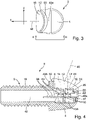
- the light exit surface 16 of the attachment optics 2 viewed in a horizontal plane (cf. Figs. 2 and 4 ), which runs through the light source 10 or one of the light sources 10 and includes the main emission direction 14 of the light source 10, a first convex curvature and viewed in a vertical plane (cf. 3 ), which runs through the light source 10 or one of the light sources 10 and includes the main emission direction 14 of the light source 10, has a second convex curvature which is less than the first convex curvature in the horizontal plane.
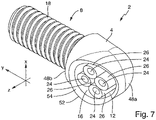
- the horizontal plane corresponds to the yz plane, the vertical plane to the xz plane.
- the light exit surface 16 of the attachment optics 2 also forms a closure of the lamp 2 to the outside.
- the attachment optics 2 not only fulfills a light-shaping function, but also a protective function, which in conventional lights is usually fulfilled by a separate flat cover plate. Such an additional separate cover plate is neither necessary nor provided for the lamp 2 according to the invention.
- the lamp 2 is preferably attached to the side of a motorcycle.
- the holder 8 for fastening the lamp 2 preferably comprises a threaded rod 18 onto which a nut (not shown) can be screwed.
- the holder 18 is preferably formed in one piece with the housing 4 of the lamp 2, for example milled together with the housing 4 from a common metal part (e.g. aluminum) or manufactured by means of die casting.
- the housing 4 and the holder 8 can also be made of plastic, for example by means of injection molding.
- a part of the motorcycle, for example a side panel, can be clamped between the nut and the housing 4 of the lamp 2 or a corresponding stop of the lamp 2 and the lamp 2 can thus be fastened to the motorcycle.
- an elastically deformable, hollow-cylindrical holding element (not shown) between the nut and the housing 4 or a stop of the lamp 2, through the inner cavity of which the threaded rod 18 is guided.
- the holding element By tightening the nut, the holding element is compressed and deformed, in particular curved outwards, so that its circumference increases.
- the deformed holding element presses from the inside against a tubular receiving element of the motorcycle, e.g is attached to the receiving element and thus also to the motorcycle.
- the main emission direction 14 of the light source is preferably in the direction of travel (in the case of a front lamp 2 mounted on a front area of the motorcycle) or counter to the direction of travel Direction of travel of the motorcycle (with a rear lamp 2 mounted on a rear portion of the motorcycle).
- the horizontal plane of the lamp includes the main emission direction 14 of the light source 10 and is aligned perpendicularly to a vertical longitudinal plane of the motorcycle when the lamp 2 is mounted on the motorcycle.
- the longitudinal plane of the motorcycle passes through the two wheels of the motorcycle and is perpendicular to the axes of rotation of the wheels.
- the curvature in the horizontal plane (cf. Figs. 2 and 4 ) is stronger than a curvature in the vertical plane (cf. 3 ).
- the curvature in the vertical plane is practically zero, so that the light exit surface 16 is largely flat when viewed in the vertical plane.
- a slight curvature in the vertical plane can only be seen at the outer edge of the light exit surface 16 .
- practically no light passes through these edge areas, so that this slight curvature in the edge areas has practically no influence on the resulting lamp function or its light distribution.
- the curvature of the light exit surface 16 is preferably selected in such a way that in the horizontal plane inward (in the direction of the motorcycle to which the light 2 is attached) there is lateral visibility of at least 10° and outward (away from the motorcycle to which the light 2 is attached). 2 is attached) of at least 45° is achieved.
- the upward and downward curvature preferably achieves a recognizability of at least +/-5°.
- the lamp 2 is particularly preferably designed in such a way, in particular the light exit surface 16 is curved in such a way that without additional optical elements in the beam path, in particular on the light exit surface 16 of the attachment optics 12, the legal requirements for the lateral recognisability of the corresponding luminaire function are fulfilled.
- the holder 8 is preferably designed as a threaded rod 18 .
- the holder 8 has the shape of a hollow cylinder, with the cylindrical cavity 42 of the holder 8 opening into the interior of the housing 4 .
- the light sources 10 are preferably attached to the top of a printed circuit board 34 and electrically contacted via this. Further electrical components 36 , 38 which are required for the operation of the light sources 10 are arranged on the circuit board 34 and electrically contacted via the circuit board 34 . All electrical components 36, 38 required for the operation of the light sources 10 are preferably arranged on the printed circuit board 34, so that the light 2 can be connected directly to an electrical system of the motorcycle and an additional electrical ballast is not required.
- a part of the circuit board 34 can protrude into the cavity 42 of the holder 8 .
- Power cords may extend from the motorcycle through the cavity 42 to the circuit board 34 and connect thereto are to connect the circuit board 34, the electrical components 36, 38 and the light sources 10 to the vehicle electrical system.
- a light source 10 embodied as an LED emits light in the main emission direction 14 and in a half-space that preferably encompasses 180° around the main emission direction 14 .
- the light emitted by the light source 10 enters the optical head 4 via a light entry area 20 .
- a separate light entry area 20 is assigned to each light source 10 .
- the light entry area 20 includes a depression 22, so that a light entry surface 24, which runs approximately perpendicular to the main emission direction 14 of the associated light source 10, is on the bottom of the depression 22 and a light entry collar 26, which runs approximately parallel to the main emission direction 14 of the light source 10 runs, arise at the edge of the recess 22.
- the light beams emitted in the main emission direction 14 and a small angular range e.g.
- the light passing through the front optics 12 can be shaped and deflected in the desired manner by specific shaping of the light entry surface 24 and the light exit surface 16 .
- the light entry surface 24 and/or the light exit surface 16 can be planar or curved.
- the light entry surface 24 can be convexly or concavely curved or can be flat.
- the curvature of the light exit surface 16 is convex in the horizontal plane and in the vertical plane.
- the light rays radiated in a larger angular range (e.g. > 30°) around the main emission direction 14 (cf. 30 in 8 ) occur via the light entry collar 26 in the attachment optics 12 and leave them again - possibly after a reflection at a lateral totally reflecting interface 32 of the attachment optics 12 - via the light exit surface 16.
- a reflection of the side in the Light beams 30 entering the optical attachment 12 may not occur, depending on the design of the optical attachment 12 .
- a reflection can be excluded.
- the shape of the boundary surfaces 32 can be specifically varied in order to shape and deflect the light passing through the front optics 12 in the desired manner.
- the light exit surface 16 of the attachment optics 12 be viewed in the horizontal plane with respect to a plane 44 that runs perpendicular to the main emission direction 14 of the light source 10 or one of the light sources 10 (cf. 4 ) is inclined.
- the plane 44 corresponds to the xy plane.
- the light exit surface 16 of the attachment optics 12 is preferably inclined with respect to the plane 44 viewed in the horizontal plane in a direction which is directed away from the motorcycle when the motorcycle lamp 2 is fastened to a motorcycle.
- the plane 44 with respect to which the light exit surface 16 of the front optics 12 is inclined, viewed in the horizontal plane, preferably runs perpendicular both to the horizontal plane and to the vertical plane.
- a surface normal 46 in the center of the light exit surface 16 is inclined to the side when viewed in the horizontal plane.
- This lateral inclination of the light exit surface 16 of the optical attachment 12 directs the light passing through the optical attachment 12 from the at least one light source 10 to the side, amplified by refraction. In this way, it is possible to achieve even better lateral recognition of the lamp 2, which at least meets the legal requirements or can even exceed them.
- the light exit surface 16 of the attachment optics 12 or the surface normal 46 in the center of the light exit surface 16 is preferably directed away from the motorcycle when the motorcycle lamp 2 is attached to a motorcycle.
- the surface normal 46 of the light exit surface 16 is thus directed obliquely outward with respect to the main emission direction 14 of the light source 10 or one of the light sources 10 or with respect to the vertical longitudinal plane of the motorcycle.
- the light entry area 20 In order to be able to achieve the required light distribution (e.g. maximum and/or minimum values and distribution of the light intensity) for a desired luminaire function despite the lateral inclination of the light exit surface 16, it can be advantageous to view the light entry area 20 in the horizontal plane with respect to the main emission direction 14 of the associated Tilting the light source 10 (cf. 8 ).
- the inclination of the light entry area 20 can be in the same direction as the inclination of the light exit surface 16 or in a different direction.
- the inclination of the light entry area 20 can result in the light entry surface 24 no longer running perpendicular to the main emission direction 14 of the associated light source 10 and/or in partial areas of the light entry collar 26 being inclined at different degrees with respect to the main emission direction 14.
- the inclination of the light exit surface 16 and/or the inclination of the light entry area 20 of the attachment optics 20 results in an asymmetrical configuration of the attachment optics 12 with respect to the main emission direction 14 of the associated light source
- the mount 8 is attached to the side of the housing 4 viewed in the horizontal plane, the light exit surface 16 of the attachment optics 12 or the surface normal 46 in the center of the light exit surface 16 would be inclined away from the mount 8 viewed in the horizontal plane.
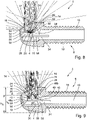
- the housing 4 can have side walls 48 (cf. 9 ), which delimit the housing 4 to the side and the light exit opening 6.
- a side wall 48a directed away from the holder 8 or a part of a side wall directed away from the holder 8 has a lower height h_a than an opposite side wall 48b or an opposite part of a side wall with the height h_b (h_a ⁇ h_b).
- the side wall 48a facing away from the motorcycle or a part of a side wall facing away from the motorcycle has a lower height h_a than an opposite side wall 48b or an opposite part of a side wall with the height h_b.
- the motorcycle lamp 2 has a plurality of light sources 10, these preferably serve to implement a plurality of different lamp functions.
- at least one of the light sources 10 preferably serves to implement one of the lamp functions.
- the different light functions of the motorcycle light 2 advantageously include a flashing light and a position light or a rear light and a brake light or a flashing light, a rear light and a brake light.
- At least two of the light sources 10 preferably emit light of different colors. These different colors, which are emitted by the light sources 10 of a lamp 2, are, for example, white and yellow or red and yellow.
- a common attachment optics 12 is preferably arranged between all light sources 10 and the light exit opening 6 .
- the attachment optics 12 deflects and shapes the light emitted by the light sources 10 in order to generate the light distributions corresponding to the different lamp functions.
- Each of the light sources 10 is preferably assigned its own separate light entry area 20 of the optical attachment 12 .
- partial areas of the attachment optics 12 e.g. the light exit surface 16
- the light exit surface 16 of the attachment optics 12 protrudes outwards over the light exit opening when the light exit opening 6 is closed by the attachment optics 12 (cf. Figs. 1-4 ).
- the peripheral surface 50 can be formed higher on the side of the lamp 2 facing away from the holder 8 than on the opposite side facing the holder 8 when viewed in a horizontal section.
- the light emitted by the at least one light source 10 and bundled by the optical attachment 12 can emerge laterally through the transparent peripheral surface 50 of the optical attachment 12 and thus improve the lateral visibility of the lamp 2 even further.
- the peripheral surface 50 of the attachment optics 12 is preferably flush with the adjacent ones Wall sections 48 of the lamp housing 4 from.
- the outer shape of the part of the lamp 2 that is visible from the outside when the lamp 2 is installed is defined by the outer surfaces of the housing 4 and by the light exit surface 16 and the surrounding peripheral surface 50 of the transparent attachment optics 12 .
- a lens 40 in particular a converging lens, can be arranged on a light source 10 designed as an LED (cf. Figs. 4 and 9 ) in order to reduce the emission angle of the emitted light, for example to approximately 80° (+/- 40° on both sides of the main emission direction 14; cf. 9 ).
- a single common attachment optics 12 ensures the desired deflection and shaping of the light passing through the light sources 10 in order to be able to achieve the desired lamp function(s).
- the optical attachment 12 is preferably designed in such a way that the light emitted by different light sources 10 and coupled into the optical attachment 12 serves to generate different lighting functions after exiting the optical attachment 12 .
- the front optics 12 have their own light entry area 20 for each light source 10 .
- the light entry areas 20 can be configured differently.
- the light entry surfaces 24 of the various light entry regions 20 can have different distances from the light emission surfaces of the light sources 10 assigned in each case.
- the light entry collars 26 of the various light entry regions 20 do not extend over the entire circumference of the associated depressions 22 but only over part of the circumference of the depressions 22 .
- the light entry collars 26 of the various light entry regions 20 can adjoin one another and can be combined to form a single light entry collar, which surrounds all of the light sources 10 of the lamp 2 on the circumference.
- the individual light sources 10 can be assigned converging lenses 40 so that the light emitted by the light sources 10 is first concentrated before it falls on the assigned light entry areas 20 of the attachment optics 12 . It can thereby be achieved that at least approximately all of the light emitted by the light sources 10 enters the optical attachment 12 through the respectively associated light entry surfaces 24 (and not via the light entry collar 26).
- the optical attachment 12 is preferably arranged in or on the light exit opening 6 and attached to the housing 4 .
- the fastening can be done, for example, by means of screws, a thread, a snap lock, gluing or welding.
- a seal (not shown) can be provided between an edge of the light exit opening 6 and the front optics 12 .
- the attachment optics 12 is preferably glued in or on the light exit opening 6 , with the adhesive being able to simultaneously serve as a seal between the attachment optics 12 and the edge of the light exit opening 6 of the housing 4 .
- the adhesive used comprises an MS (modified silane) polymer.
- the adhesive also serves to compensate for manufacturing tolerances of the optical attachment 12 and/or the housing 4 in order to always ensure the same highly precise positioning and dust-tight and moisture-tight attachment of the optical attachment 12 to the light exit opening 6 .
- the light exit surface 16 of the attachment optics 12 is flush with an edge 52 of the housing 4 that delimits the light exit opening 6 (cf. 8 ).
- the light exit surface 16 of the attachment optics 12 thus transitions into the housing 4 of the lamp 2 without steps or edges.
- the light exit surface 6 does not protrude beyond the edge 52 of the housing 4 that delimits the light exit opening 6 .
- the light exit surface 16 of the transparent attachment optics 12 together with the outer surfaces of the housing 4 defines the outer shape of the part of the lamp 2 that is visible from the outside when the motorcycle lamp 2 is mounted on the motorcycle.
- the housing 4 has a peripheral rim 52 delimiting the light exit opening 6, the front optics 12 has a radially outwardly protruding peripheral collar 54, and the rim 52 and the collar 54 have mutually facing bearing surfaces over which the front optics 12 rests on the housing 4 (cf. figure 8th ).
- An adhesive can be introduced between the bearing surfaces, so that the optical attachment 12 is also fastened to the housing via the bearing surfaces.
- the edge 52 which the light exit opening 6 limited, it is preferably an upper edge of the side walls 48 of the housing 4.
- the contact surface of the optical attachment 12 is located on an underside of the collar 54, and the contact surface of the housing 4 is located on an upper side of the edge 52.
- the optical attachment 12 is placed with its collar 54 on the edge 52 of the housing 4 and attached thereto. A large part of the attachment optics 12 extends through the light exit opening 6 into the interior of the housing 4.
- the bearing surfaces of the peripheral edge 52 of the housing 4 and the peripheral collar 54 of the front optics 12 are beveled correspondingly to one another, so that the bearing surface of the peripheral edge 52 has a cone-like shape and the peripheral collar 54 tapers outwards.
- the at least one light source 10 is arranged on the printed circuit board 34 and electrically contacted via it.
- the printed circuit board 34 lies in a z-direction parallel to the main emission direction 14 of the at least one light source 10 with its side facing away from the at least one light source 10 on a support area 56 of the housing 4 (cf. 9 ).
- the circuit board 34 is fixed in the housing 4 .
- the printed circuit board 34 with the light sources 10 mounted thereon is positioned with great precision in the z-direction with respect to the housing 4 .
- attachment optics 12 Since the attachment optics 12 is positioned with great precision in the z-direction with respect to the housing 4 via the contact surfaces of the edge 52 of the housing 4 and the collar 54 of the attachment optics 12, this results in a highly precise positioning of the attachment optics 12 with respect to the light sources 10 in the z-direction.
- the printed circuit board 34 can be fastened in the housing 4 by means of screws, a snap lock, a thread, gluing or welding.
- An adhesive 58 is preferably used, in particular a thermally conductive adhesive, in order to transfer the waste heat generated during operation of the at least one light source 10 to the housing 4 as efficiently as possible.
- the thermally conductive adhesive can be based on epoxy resin and/or have silver particles.
- the housing 4 or the holder 8 act as a heat sink or heat sink for the at least one light source 10 and--if present--further electrical components 36, 38 arranged on the circuit board 34.
- the circuit board 34 and--if present--the further electrical components 36, 38 arranged on the circuit board 34 are encapsulated with the adhesive 58 .
- a cavity between the underside of the printed circuit board 34 and the housing 4 is particularly preferably at least partially filled with the adhesive 58 .
- a cavity between the light sources 10 and the housing 4 can also be at least partially filled with the adhesive 58 .
- the attachment optics 12 be positioned in an xy plane perpendicular to the main emission direction 14 of the at least one light source 10 with respect to the circuit board 34 by means of locking pins which engage in corresponding locking openings in the circuit board 34 .
- the attachment optics 34 is thus positioned with high precision in the xy plane with respect to the light sources 10 fastened on the printed circuit board 34 .
- the embodiment of Figs. 5 and 8th has only one light source 10 for generating a single lighting function, for example an indicator light or position light or rear light or brake light.
- the embodiment of Figs. 6 and 9 has, on the other hand, a total of four light sources 10, with two light sources 10 each serving to generate a lighting function.
- a position light and a flashing light or a rear light and a flashing light or a rear light and a brake light can be implemented.
- It would also be conceivable to generate a third lamp function by operating one or more of the light sources 10 with a higher or lower current. By increasing the operating current, the light sources 10 for generating the rear light could thus generate a brake light.
- the two individual light sources 10 could generate, for example, a turn signal light and a rear light, and the two remaining light sources 10 a brake light.
Landscapes
- Engineering & Computer Science (AREA)
- Mechanical Engineering (AREA)
- General Engineering & Computer Science (AREA)
- Physics & Mathematics (AREA)
- Optics & Photonics (AREA)
- Microelectronics & Electronic Packaging (AREA)
- General Physics & Mathematics (AREA)
- Non-Portable Lighting Devices Or Systems Thereof (AREA)
Description
- Die vorliegende Erfindung betrifft eine Motorradleuchte zur Realisierung mindestens einer Leuchtenfunktion. Die Motorradleuchte umfasst
- ein Gehäuse mit einer Lichtaustrittsöffnung,
- eine an dem Gehäuse befestigte Halterung zur Befestigung der Motorradleuchte an einem Motorrad,
- mindestens eine in dem Gehäuse angeordnete Lichtquelle und
- eine zwischen der mindestens einen Lichtquelle und der Lichtaustrittsöffnung angeordnete Vorsatzoptik aus einem massivem transparenten Material,
- wobei die mindestens eine Lichtquelle eine LED aufweist und in dem Gehäuse derart angeordnet und ausgerichtet ist, dass sie Licht in einer durch die Lichtaustrittsöffnung verlaufenden Hauptabstrahlrichtung abstrahlt, und
- wobei die Vorsatzoptik die Lichtaustrittsöffnung verschließt und das von der mindestens einen Lichtquelle abgestrahlte Licht zur Erzeugung einer Lichtverteilung entsprechend einer von der Motorradleuchte realisierten Leuchtenfunktion umlenkt und formt.
- Aus dem Stand der Technik, zum Beispiel in dem Dokument
DE102004064204 A1 , sind Motorradleuchten in unterschiedlichen Ausführungsformen bekannt. Diese können zur Erzeugung einer oder mehrerer Leuchtenfunktionen ausgebildet sein. Insbesondere können die Leuchten eine oder mehrere der nachfolgenden Leuchtenfunktionen erzeugen: Blinklicht, Positionslicht, Tagfahrlicht, Kurvenlicht, Rücklicht und/oder Bremslicht. - Aus der
DE 11 2017 004 088 A5 ist eine Motorradleuchte der eingangs genannten Art bekannt. Die bekannte Leuchte umfasst ein Gehäuse mit einer Lichtaustrittsöffnung und eine an dem Gehäuse befestigte Halterung zur Befestigung der Motorradleuchte an einem Motorrad. In dem Gehäuse ist eine einzige Lichtquelle angeordnet, die als eine LED ausgebildet sein kann. Die LED ist in dem Gehäuse derart angeordnet und ausgerichtet, dass sie Licht in einer durch die Lichtaustrittsöffnung verlaufenden Hauptabstrahlrichtung abstrahlt. Zwischen der Lichtquelle und der Lichtaustrittsöffnung ist ein Abstrahlkörper mit einem Reflektor auf, der seitlich der Hauptabstrahlrichtung der LED abgestrahltes Licht in Richtung der Hauptabstrahlrichtung umlenkt. Der Abstrahlkörper kann als eine Vorsatzoptik aus einem massivem transparenten Material ausgebildet sein, wobei die Reflexionsflächen des Reflektors dann durch totalreflektierende seitliche Grenzflächen der Vorsatzoptik gebildet sind. Die Vorsatzoptik verschließt die Lichtaustrittsöffnung und lenkt um und formt das von der LED ausgesandte Licht zur Erzeugung einer Lichtverteilung der von der Motorradleuchte realisierten Leuchtenfunktion. - Auf der Lichtaustrittsfläche der Vorsatzoptik der bekannten Leuchte sind zusätzliche optische Elemente im Strahlengang angeordnet, um das durch die Vorsatzoptik hindurchtretende Licht gezielt in bestimmte Richtungen umzulenken. Dadurch sollen insbesondere die gesetzlichen Anforderungen an die seitliche Sichtbarkeit bzw. Erkennbarkeit der Leuchte und deren Leuchtenfunktion erfüllt werden. Die ECE-Regelung 50 sieht bspw. die folgenden Werte für die Erkennbarkeit einer Leuchte vor:
- Positionslicht (wenn nur eine einzelne Leuchte montiert ist): horizontal: +/- 80° nach links und nach rechts; vertikal: +15° nach oben und -10° nach unten;
- Positionslicht (wenn ein Paar Leuchten montiert ist): horizontal: 45° nach innen und 80° nach außen; vertikal: +15° nach oben und -10° nach unten;
- Rücklicht (wenn nur eine einzelne Leuchte montiert ist): horizontal: +/- 80° nach links und nach rechts; vertikal: +15° nach oben und -10° nach unten;
- Rücklicht (wenn ein Paar Leuchten montiert ist): horizontal: 45° nach innen und 80° nach außen; vertikal: +15° nach oben und -10° nach unten;
- Blinklicht: horizontal: 20° nach innen und 80° nach außen; vertikal: +/-15° nach oben und nach unten; und
- Bremslicht: horizontal: +/- 45° nach links und nach rechts; vertikal: +15° nach oben und -10° nach unten.
- Entsprechende oder ähnliche Werte für die seitliche Erkennbarkeit sehen auch die in anderen Ländern außerhalb der EU geltenden Normen vor, bspw. die die United Nations Regulations oder SAE (Society of Automotive Engineers, Inc.) und FMVSS (Federal Motor Vehicle Safety Standards) in den USA oder die CMVSS (Canada Motor Vehicle Safety Standards) in Kanada. Diese Werte können bei der bekannten Leuchte nur mit Hilfe der zusätzlichen optischen Elemente auf der Lichtaustrittsfläche der Vorsatzoptik erzielt werden. Die optischen Elemente sind bspw. als Prismen oder Zylinderlinsen ausgebildet. Der Nachteil der optischen Elemente liegt darin, dass die Lichtaustrittsfläche der Vorsatzoptik nicht glatt ist, so dass sich Schmutz, Insekten o.ä. leicht absetzen können. Zudem gestaltet sich die Reinigung der Lichtaustrittsfläche aufgrund der hervorstehenden optischen Elemente als aufwendig. Dieser Nachteil wird noch dadurch verschärft, dass sich am Übergang zwischen der Lichtaustrittsfläche der Vorsatzoptik und den optischen Elementen Kanten bilden, in denen Schmutz und Insekten besonders hartnäckig anhaften können.
- Ausgehend von dem beschriebenen Stand der Technik liegt der vorliegenden Erfindung die Aufgabe zugrunde, eine Motorradleuchte der eingangs genannten Art dahingehend auszugestalten und weiterzubilden, dass die Anforderungen an die seitliche Sichtbarkeit bzw. Erkennbarkeit der Leuchte oder der durch sie erzeugten Leuchtenfunktion auch ohne optische Elemente auf der Lichtaustrittsfläche der Vorsatzoptik erfüllt werden können.
- Zur Lösung dieser Aufgabe wird eine Motorradleuchte mit den Merkmalen des Anspruchs 1 vorgeschlagen. Insbesondere wird ausgehend von der Motorradleuchte der eingangs genannten Art vorgeschlagen, dass eine Lichtaustrittsfläche der Vorsatzoptik in einer Horizontalebene betrachtet, die durch die Lichtquelle oder eine der Lichtquellen verläuft und die Hauptabstrahlrichtung der Lichtquelle umfasst, eine erste konvexe Wölbung und in einer Vertikalebene betrachtet, die durch die Lichtquelle oder eine der Lichtquellen verläuft und die Hauptabstrahlrichtung der Lichtquelle umfasst, eine zweite konvexe Wölbung aufweist, die geringer ist als die erste konvexe Wölbung in der Horizontalebene.
- Die Leuchte wird vorzugsweise seitlich an einem Motorrad befestigt. Die Halterung zur Befestigung der Leuchte umfasst vorzugsweise eine Gewindestange, auf die eine Mutter aufgeschraubt werden kann. Bevorzugt ist die Halterung einstückig mit dem Gehäuse der Leuchte ausgebildet, bspw. aus einem Metallteil (z.B. Aluminium) gefräst. Ein Teil des Motorrads kann zwischen der Mutter und dem Gehäuse der Leuchte oder einem entsprechenden Anschlag der Leuchte eingespannt und die Leuchte so an dem Motorrad befestigt werden. Alternativ wäre es auch denkbar, zwischen der Mutter und dem Gehäuse oder einem Anschlag der Leuchte ein elastisch verformbares hohlzylinderförmiges Halteelement anzuordnen, in dessen inneren Hohlraum die Gewindestange verläuft. Durch Festziehen der Mutter wird das Halteelement komprimiert und verformt, insbesondere nach außen gewölbt, so dass sich dessen Umfang vergrößert. Das verformte Halteelement drückt von innen gegen ein rohrförmiges Aufnahmeelement des Motorrads, beispielsweise eine Lenkerstange, in das die Halterung der Leuchte mit dem Halteelement vor dem Festziehen der Mutter eingeführt worden ist, so dass die Leuchte nach dem Festziehen der Mutter klemmend an dem Aufnahmeelement und somit auch an dem Motorrad befestigt ist.
- Bei ordnungsgemäß an dem Motorrad befestigter Leuchte ist die Hauptabstrahlrichtung der Lichtquelle bei Geradeausfahrt vorzugsweise in Fahrtrichtung (bei einer an einem vorderen Bereich des Motorrads montierten vorderen Leuchte) oder entgegen der Fahrtrichtung des Motorrads (bei einer an einem hinteren Bereich des Motorrads montierten hinteren Leuchte) gerichtet. Die Horizontalebene der Leuchte umfasst die Hauptabstrahlrichtung der Lichtquelle und ist bei an dem Motorrad montierter Leuchte senkrecht zu einer vertikalen Längsebene des Motorrads ausgerichtet. Die Längsebene des Motorrads verläuft durch die beiden Räder des Motorrads und senkrecht zu den Drehachsen der Räder.
- Die Wölbung der Lichtaustrittsfläche in der Horizontalebene und - falls gewünscht auch - in der Vertikalebene sorgt für eine Aufweitung bzw. Streuung des austretenden Lichtbündels in der entsprechenden Ebene. Die Streuung ist in horizontaler Richtung größer als in vertikaler Richtung. Die Streuung des austretenden Lichts in der Horizontalebene sorgt für eine verbesserte seitliche Sichtbarkeit bzw. Erkennbarkeit (visibility or geometric visibility) der Leuchte, die zumindest die gesetzlichen Anforderungen erfüllt. Bei der Motorradleuchte bildet die Lichtaustrittsfläche der Vorsatzoptik gleichzeitig einen Abschluss der Leuchte nach außen.
- Eine als LED ausgebildete Lichtquelle strahlt Licht in einer Hauptabstrahlrichtung und in einen vorzugsweise 180° umfassenden Halbraum um die Hauptabstrahlrichtung herum ab. Das von der Lichtquelle abgestrahlte Licht tritt über einen Lichteintrittsbereich in die Vorsatzoptik ein. Der Lichteintrittsbereich umfasst vorzugsweise eine Vertiefung, so dass sich eine Lichteintrittsfläche, die in etwa senkrecht zu der Hauptabstrahlrichtung der Lichtquelle verläuft, am Boden der Vertiefung und ein Lichteintrittskragen, der in etwa parallel zu der Hauptabstrahlrichtung der Lichtquelle verläuft, am Rand der Vertiefung ergeben. Die in Hauptabstrahlrichtung und einem geringen Winkelbereich (bspw. +/- 30°) um die Hauptabstrahlrichtung herum abgestrahlten Lichtstrahlen treten über die Lichteintrittsfläche in die Vorsatzoptik ein und verlassen diese wieder - in der Regel ohne Reflexionen - über die Lichtaustrittsfläche. Beim Eintritt in die Vorsatzoptik und beim Austritt aus der Vorsatzoptik werden die Lichtstrahlen nach den allgemeinen Gesetzen der Optik gebrochen. Somit kann durch gezieltes Formen der Lichteintritts- und Lichtaustrittsflächen das durch die Vorsatzoptik hindurchtretende Licht in gewünschter Weise geformt und umgelenkt werden. Insbesondere ist es denkbar, die Lichteintrittsfläche und/oder die Lichtaustrittsfläche eben oder gewölbt auszubilden. Die Wölbung der Lichtaustrittsfläche ist in der Horizontalebene und in der Vertikalebene konvex ausgebildet. Die Lichteintrittsfläche kann konvex oder konkav gewölbt oder eben ausgebildet sein. Zudem ist es denkbar, den Lichteintrittsbereich in der Horizontalebene betrachtet bezüglich der Hauptabstrahlrichtung zu neigen.
- Die in einem größeren Winkelbereich (bspw. > 30°) um die Hauptabstrahlrichtung herum abgestrahlten Lichtstrahlen treten über den Lichteintrittskragen in die Vorsatzoptik ein und verlassen diese wieder - unter Umständen nach einer Reflexion an einer seitlichen totalreflektierenden Grenzfläche der Vorsatzoptik - über die Lichtaustrittsfläche. Eine Reflexion der seitlich in die Vorsatzoptik eintretenden Lichtstrahlen tritt abhängig von der Ausgestaltung der Vorsatzoptik unter Umständen nicht auf. So kann bspw. durch Schrägstellen des Lichteintrittskragens und/oder durch Abflachen der seitlichen totalreflektierenden Grenzfläche der Vorsatzoptik eine Reflexion ausgeschlossen werden. Zudem kann in dem Fall, dass die Lichtstrahlen an den Grenzflächen der Vorsatzoptik totalreflektiert werden, die Form der Grenzflächen gezielt variiert werden, um das durch die Vorsatzoptik hindurchtretende Licht in gewünschter Weise zu formen und umzulenken.
- Falls die Motorradleuchte mehr als eine Lichtquelle aufweist, sorgt eine einzige gemeinsame Vorsatzoptik für die gewünschte Umlenkung und Formung des hindurchtretenden Lichts der Lichtquellen, um die gewünschte Leuchtenfunktion erzielen zu können. Bevorzugt ist die Vorsatzoptik derart ausgebildet, dass das von unterschiedlichen Lichtquellen abgestrahlte und in die Vorsatzoptik eingekoppelte Licht nach dem Austritt aus der Vorsatzoptik zur Erzeugung unterschiedlicher Leuchtfunktionen dient. Insbesondere wird vorgeschlagen, dass die Vorsatzoptik für jede Lichtquelle einen eigenen Lichteintrittsbereich aufweist. Die Lichteintrittsbereiche können unterschiedlich ausgestaltet sein. So können bspw. die Lichteintrittsflächen der verschiedenen Lichteintrittsbereiche unterschiedliche Abstände zu den Lichtabstrahlflächen der jeweils zugeordneten Lichtquellen aufweisen. Ferner ist es denkbar, dass sich die Lichteintrittskragen der verschiedenen Lichteintrittsbereiche nicht über den gesamten Umfang der zugeordneten Vertiefungen, sondern nur über einen Teil des Umfangs der Vertiefung erstrecken. Die Lichteintrittskragen der verschiedenen Lichteintrittsbereiche können aneinandergrenzen und sich zu einem einzigen Lichteintrittskragen ergänzen, der alle Lichtquellen der Leuchte umfangsseitig umgibt. Ferner ist es denkbar, dass den einzelnen Lichtquellen Sammellinsen zugeordnet sind, so dass das von den Lichtquellen abgestrahlte Licht zunächst gebündelt wird bevor es auf die zugeordneten Lichteintrittsbereiche der Vorsatzoptik fällt. Dadurch kann erreicht werden, dass zumindest näherungsweise das gesamte von den Lichtquellen abgestrahlte Licht durch die jeweils zugeordneten Lichteintrittsflächen (und nicht über die Lichteintrittskragen) in die Vorsatzoptik eintritt.
- Vorzugsweise ist die Wölbung derart gewählt, dass in horizontaler Richtung nach innen (in Richtung des Motorrads, an dem die Leuchte befestigt ist) eine seitliche Erkennbarkeit von mindestens 10° und nach außen (weg von dem Motorrad, an dem die Leuchte befestigt ist) von mindestens 45° erzielt wird. In vertikaler Richtung wird durch die Wölbung nach oben und unten vorzugsweise eine Sichtbarkeit von mindestens +/- 5° erzielt. Besonders bevorzugt ist die Leuchte in Abhängigkeit von der durch sie erzeugten Leuchtenfunktion derart ausgebildet, insbesondere ist die Lichtaustrittsfläche derart gewölbt, dass ohne zusätzliche optische Elemente im Strahlengang, insbesondere auf der Lichtaustrittsfläche der Vorsatzoptik, die gesetzlichen Anforderungen an die seitliche Sichtbarkeit der entsprechenden Leuchtenfunktion erfüllt werden können.
- Gemäß einer vorteilhaften Weiterbildung der vorliegenden Erfindung wird vorgeschlagen, dass die Lichtaustrittsfläche der Vorsatzoptik bezüglich einer Ebene, die senkrecht zu der Hauptabstrahlrichtung der Lichtquelle oder einer der Lichtquellen verläuft, in der Horizontalebene betrachtet geneigt ist. Bevorzugt ist die Lichtaustrittsfläche der Vorsatzoptik bezüglich der Ebene, die senkrecht zu der Hauptabstrahlrichtung der Lichtquelle oder einer der Lichtquellen verläuft, in der Horizontalebene betrachtet in eine Richtung geneigt, die bei an einem Motorrad befestigter Motorradleuchte von dem Motorrad weg gerichtet ist.
- Die Ebene, bezüglich der die Lichtaustrittsfläche der Vorsatzoptik in der Horizontalebene betrachtet geneigt ist, verläuft vorzugsweise senkrecht sowohl zu der Horizontalebene als auch zu der Vertikalebene. Eine Flächennormale im Zentrum der Lichtaustrittsfläche ist in der Horizontalebene betrachtet zur Seite geneigt. Diese Seitenneigung der Lichtaustrittsfläche der Vorsatzoptik lenkt das durch die Vorsatzoptik hindurchtretende Licht der mindestens einen Lichtquelle durch Brechung verstärkt zur Seite. Auf diese Weise kann eine deutlich verbesserte seitliche Erkennbarkeit der Leuchte erzielt werden, die zumindest die gesetzlichen Anforderungen erfüllt bzw. diese sogar noch übertreffen kann.
- Vorzugsweise ist die Lichtaustrittsfläche der Vorsatzoptik bzw. eine Flächennormale im Zentrum der Lichtaustrittsfläche bei an einem Motorrad befestigter Motorradleuchte von dem Motorrad weg gerichtet. Die Flächennormale der Lichtaustrittsfläche ist somit bezüglich der Hauptabstrahlrichtung der Lichtquelle oder einer der Lichtquellen bzw. bezüglich der vertikalen Längsebene des Motorrads nach schräg außen gerichtet.
- Um trotz der Seitenneigung der Lichtaustrittsfläche die erforderliche Lichtverteilung (bspw. maximale und/oder minimale Werte und Verteilung der Lichtstärke) für eine gewünschte Leuchtenfunktion erzielen zu können, kann es vorteilhaft sein, den Lichteintrittsbereich in der Horizontalebene betrachtet bezüglich der Hauptabstrahlrichtung der zugeordneten Lichtquelle zu neigen. Die Neigung des Lichteintrittsbereichs kann in die gleiche Richtung wie die Neigung der Lichtaustrittsfläche oder in eine andere Richtung erfolgen. Die Neigung des Lichteintrittsbereichs kann dazu führen, dass die Lichteintrittsfläche nicht senkrecht zu der Hauptabstrahlrichtung der zugeordneten Lichtquelle verläuft und/oder dass Teilbereiche des Lichteintrittskragens unterschiedlich stark geneigt bezüglich der Hauptabstrahlrichtung verlaufen. Insgesamt führt die Neigung der Lichtaustrittsfläche und/oder die Neigung des Lichteintrittsbereichs der Vorsatzoptik zu einer asymmetrischen Ausgestaltung der Vorsatzoptik bezüglich der Hauptabstrahlrichtung der zugeordneten Lichtquelle.
- Es wird vorgeschlagen, dass die Halterung in der Horizontalebene betrachtet seitlich an dem Gehäuse befestigt ist und dass die Lichtaustrittsfläche der Vorsatzoptik bzw. eine Flächennormale im Zentrum der Lichtaustrittsfläche in der Horizontalebene betrachtet von der Halterung weg geneigt ist.
- Gemäß einer anderen vorteilhaften Weiterbildung der Erfindung wird vorgeschlagen, dass das Gehäuse Seitenwände aufweist, welche das Gehäuse zur Seite hin und die Lichtaustrittsöffnung begrenzen, dass die Halterung in der Horizontalebene betrachtet seitlich an dem Gehäuse befestigt ist und dass eine von der Halterung weg gerichtete Seitenwand oder ein von der Halterung weg gerichteter Teil einer Seitenwand eine geringere Höhe aufweist als eine gegenüberliegende Seitenwand bzw. ein gegenüberliegender Teil einer Seitenwand. Bei an einem Motorrad befestigter Motorradleuchte weist eine von dem Motorrad weg gerichtete Seitenwand oder ein von dem Motorrad weg gerichteter Teil einer Seitenwand eine geringere Höhe auf als eine gegenüberliegende Seitenwand bzw. ein gegenüberliegender Teil einer Seitenwand.
- Wenn die Motorradleuchte mehrere Lichtquellen aufweist, dienen diese vorzugsweise zur Realisierung mehrerer unterschiedlicher Leuchtenfunktionen. Dabei dient bevorzugt jeweils mindestens eine der Lichtquellen zur Realisierung einer der Leuchtenfunktionen. Die unterschiedlichen Leuchtenfunktionen der Motorradleuchte umfassen vorteilhafterweise ein Blinklicht und ein Positionslicht oder ein Rücklicht und ein Bremslicht oder ein Blinklicht, ein Rücklicht und ein Bremslicht. Dabei senden bevorzugt mindestens zwei der Lichtquellen Licht unterschiedlicher Farben aus. Diese unterschiedlichen Farben, die von den Lichtquellen einer Leuchte ausgesandt werden, sind bspw. weiß und gelb oder rot und gelb. Wenn mehrere Lichtquellen vorgesehen sind, wird vorgeschlagen, dass eine gemeinsame Vorsatzoptik zwischen allen Lichtquellen und der Lichtaustrittsöffnung angeordnet ist und die Vorsatzoptik das von den Lichtquellen ausgesandte Licht zur Erzeugung der Lichtverteilungen der unterschiedlichen Leuchtenfunktionen umlenkt und formt. Vorzugsweise ist zwar jeder der Lichtquellen ein eigener separater Lichteintrittsbereich der Vorsatzoptik zugeordnet. Es ist aber denkbar, dass Teilbereiche der Vorsatzoptik (z.B. der Lichtaustrittsfläche) von Lichtstrahlen, die von unterschiedlichen Lichtquellen abgestrahlt werden und zur Erzeugung unterschiedlicher Leuchtenfunktionen dienen, gleichermaßen genutzt werden.
- Es ist denkbar, dass die Lichtaustrittsfläche der Vorsatzoptik bei durch die Vorsatzoptik verschlossener Lichtaustrittsöffnung nach außen über die Lichtaustrittsöffnung hervorragt. Dadurch ergibt sich um die Lichtaustrittsfläche herum ein transparenter Kragen, der vorzugsweise parallel zur Hauptabstrahlrichtung der mindestens einen Lichtquelle ausgerichtet ist. Der Kragen kann auf der von der Halterung abgewandten Seite der Leuchte höher als auf der gegenüberliegenden, zur Halterung zugewandten Seite ausgebildet sein. Das von der mindestens einen Lichtquelle ausgesandte und durch die Vorsatzoptik gebündelte Licht kann seitlich durch den transparenten Kragen der Vorsatzoptik austreten und somit die seitliche Sichtbarkeit der Leuchte nochmals verbessern. Der transparente Kragen der Vorsatzoptik schließt vorzugsweise bündig mit den angrenzenden Wandabschnitten des Leuchtengehäuses ab.
- Gemäß einer bevorzugten Ausführungsform der Erfindung wird jedoch vorgeschlagen, dass die Lichtaustrittsfläche der Vorsatzoptik bei durch die Vorsatzoptik verschlossener Lichtaustrittsöffnung bündig mit einem die Lichtaustrittsöffnung begrenzenden Rand des Gehäuses abschließt. Die Lichtaustrittsfläche der Vorsatzoptik geht somit ohne Stufen oder Kanten in das Gehäuse der Leuchte über. Die Lichtaustrittsfläche steht nicht über den die Lichtaustrittsöffnung begrenzenden Rand des Gehäuses hervor.
- Zum Verschließen der Lichtaustrittsöffnung mit der Vorsatzoptik wird die Vorsatzoptik bevorzugt in oder auf der Lichtaustrittsöffnung angeordnet und an dem Gehäuse befestigt. Die Befestigung kann bspw. mittels Schrauben, einem Schnappverschluss, einem Gewinde, Kleben oder Schweißen erfolgen. Zwischen dem Rand der Lichtaustrittsöffnung und der Vorsatzoptik kann eine Dichtung vorgesehen sein. Bevorzugt wird die Vorsatzoptik in der Lichtaustrittsöffnung verklebt, wobei der Klebstoff gleichzeitig als Dichtung zwischen der Vorsatzoptik und dem Rand der Lichtaustrittsöffnung des Gehäuses dienen kann. Bevorzugt kommt eine Kombination aus Dicht- und Klebstoff zum Einsatz. Besonders bevorzugt umfasst der verwendete Klebstoff MS (modifizierte Silane)-Polymer. Der Klebstoff dient auch dazu, Fertigungstoleranzen der Vorsatzoptik und/oder des Gehäuses auszugleichen, um stets eine gleiche hochgenaue Positionierung der Vorsatzoptik auf der Lichtaustrittsöffnung sicherzustellen.
- Gemäß einer weiteren vorteilhaften Weiterbildung der Erfindung wird vorgeschlagen, dass das Gehäuse einen die Lichtaustrittsöffnung begrenzenden umlaufenden Rand aufweist, dass die Vorsatzoptik einen radial nach außen abstehenden umlaufenden Kragen aufweist, und dass der Rand und der Kragen einander zugewandte Auflageflächen aufweisen, über die die Vorsatzoptik an dem Gehäuse befestigt ist. Bei dem Rand, der die Lichtaustrittsöffnung begrenzt, handelt es sich vorzugsweise um einen oberen Rand der Seitenwände des Gehäuses. Die Auflagefläche der Vorsatzoptik befindet sich auf einer Unterseite des Kragens, und die Auflagefläche des Gehäuses befindet sich auf einer Oberseite des Randes. Die Vorsatzoptik wird mit ihrem Kragen auf den Rand des Gehäuses aufgesetzt und daran befestigt. Dabei erstreckt sich ein Großteil der Vorsatzoptik durch die Lichtaustrittsöffnung in das Innere des Gehäuses.
- Gemäß einer bevorzugten Ausführungsform wird vorgeschlagen, dass die Auflageflächen des umlaufenden Rands des Gehäuses und des umlaufenden Kragens der Vorsatzoptik einander entsprechend abgeschrägt sind, so dass die Auflagefläche des umlaufenden Rands eine konusartige Form aufweist und der umlaufende Kragen nach außen hin spitz zuläuft.
- Des Weiteren wird vorgeschlagen, dass die mindestens eine Lichtquelle auf einer Leiterplatte angeordnet und über diese elektrisch kontaktiert ist und dass die Leiterplatte in einer Richtung parallel zu der Hauptabstrahlrichtung der mindestens einen Lichtquelle mit ihrer von der mindestens einen Lichtquelle abgewandten Seite auf einem Auflagebereich des Gehäuses aufliegt und in dem Gehäuse befestigt ist. Die Leiterplatte ist somit in z-Richtung hochgenau bezüglich des Gehäuses positioniert. Die Befestigung der Leiterplatte in dem Gehäuse kann mittels Schrauben, einem Schnappverschluss, einem Gewinde, Kleben oder Schweißen erfolgen. Bevorzugt kommt ein Klebstoff zum Einsatz, insbesondere ein wärmeleitender Klebstoff, um die beim Betrieb der mindestens einen Lichtquelle entstehende Abwärme möglichst effizient auf das Gehäuse zu übertragen. Das Gehäuse dient gleichzeitig als Wärmesenke oder Kühlkörper für die mindestens eine Lichtquelle und - sofern vorhanden - weitere auf der Leiterplatte angeordnete elektrische Bauteile. Bevorzugt werden die Leiterplatte und - sofern vorhanden - die weiteren auf der Leiterplatte angeordneten elektrischen Bauteile mit dem Klebstoff umgossen. Besonders bevorzugt wird ein Hohlraum zwischen einer Unterseite der Leiterplatte und dem Gehäuse mit dem Klebstoff ausgefüllt.
- Schließlich wird gemäß einer vorteilhaften Weiterbildung der Erfindung vorgeschlagen, dass die Vorsatzoptik in einer Ebene senkrecht zu der Hauptabstrahlrichtung der mindestens einen Lichtquelle durch Arretierstifte, die in entsprechende Arretieröffnungen eingreifen, positioniert ist. Die Vorsatzoptik ist somit in der xy-Ebene hochgenau bezüglich des Gehäuses positioniert. Somit ist über das Gehäuse eine hochgenaue Positionierung der Vorsatzoptik bezüglich der auf der Leiterplatte befestigten Lichtquellen sichergestellt.
- Weitere Merkmale und Vorteile der vorliegenden Erfindung werden nachfolgend anhand der Figuren näher erläutert. Dabei können die einzelnen, in den Figuren gezeigten Merkmale der Motorradleuchte auch jeweils für sich alleine betrachtet erfindungswesentlich sein, selbst wenn dies in der Beschreibung nicht ausdrücklich erwähnt ist. Ferner können die in den verschiedenen Figuren gezeigten Merkmale der Motorradleuchte auch in beliebiger Weise miteinander kombiniert werden, selbst wenn diese Kombination in der Beschreibung nicht ausdrücklich erwähnt ist. Es zeigen:
- Figur 1
- eine erste Ausführungsform einer erfindungsgemäßen Motorradleuchte in einer perspektivischen Ansicht;
- Figur 2
- die Motorradleuchte aus
Fig. 1 in einer Draufsicht; - Figur 3
- die Motorradleuchte aus
Fig. 1 in einer Seitenansicht; - Figur 4
- die Motorradleuchte aus
Fig. 1 in einer Schnittansicht in einer Horizontalebene; - Figur 5
- eine zweite Ausführungsform einer erfindungsgemäßen Motorradleuchte in einer perspektivischen Ansicht;
- Figur 6
- die Motorradleuchte aus
Fig. 5 in einer Draufsicht; - Figur 7
- eine dritte Ausführungsform einer erfindungsgemäßen Motorradleuchte in einer perspektivischen Ansicht;
- Figur 8
- die Motorradleuchte aus
Fig. 5 in einer Schnittansicht in einer Horizontalebene; und - Figur 9
- die Motorradleuchte aus
Fig. 7 in einer Schnittansicht in einer Horizontalebene. - Die erfindungsgemäße Motorradleuchte der
Fign. 1-4 ist in ihrer Gesamtheit mit dem Bezugszeichen 2 bezeichnet. Sie dient zur Realisierung mindestens einer Leuchtenfunktion, bspw. Blinklicht, Positionslicht, Kurvenlicht, Rücklicht und/oder Bremslicht. Die Motorradleuchte 2 umfasst - ein Gehäuse 4 mit einer Lichtaustrittsöffnung 6 (vgl.
Fig. 4 ), - eine an dem Gehäuse 4 befestigte Halterung 8 zur Befestigung der Motorradleuchte 2 an einem Motorrad,
- mindestens eine in dem Gehäuse 4 angeordnete Lichtquelle 10 (vgl.
Fig. 4 ) und - eine zwischen der mindestens einen Lichtquelle 10 und der Lichtaustrittsöffnung 6 angeordnete Vorsatzoptik 12 aus einem massivem transparenten Material, wie bspw. Glas oder Kunststoff.
- Die mindestens eine Lichtquelle 10 umfasst eine LED oder eine beliebig andere Halbleiterlichtquelle (z.B. OLED, Laser-LED) und ist in dem Gehäuse 4 derart angeordnet und ausgerichtet, dass sie Licht in einer durch die Lichtaustrittsöffnung 6 verlaufenden Hauptabstrahlrichtung 14 (vgl.
Fig. 4 ) abstrahlt. Die Vorsatzoptik 12 verschließt die Lichtaustrittsöffnung 6 und lenkt um und formt das von der mindestens einen Lichtquelle 10 abgestrahlte Licht zur Erzeugung einer Lichtverteilung entsprechend der von der Motorradleuchte 2 realisierten Leuchtenfunktion. Damit die Motorradleuchte 2 die Anforderungen an die seitliche Sichtbarkeit bzw. Erkennbarkeit der Leuchte 2 oder der durch sie erzeugten Leuchtenfunktion ohne zusätzliche optische Elemente im Strahlengang, bspw. auf einer Lichtaustrittsfläche 16 der Vorsatzoptik 12, erfüllt, wird vorgeschlagen, dass die Lichtaustrittsfläche 16 der Vorsatzoptik 2 in einer Horizontalebene betrachtet (vgl.Fign. 2 und4 ), die durch die Lichtquelle 10 oder eine der Lichtquellen 10 verläuft und die Hauptabstrahlrichtung 14 der Lichtquelle 10 umfasst, eine erste konvexe Wölbung und in einer Vertikalebene betrachtet (vgl.Fig. 3 ), die durch die Lichtquelle 10 oder eine der Lichtquellen 10 verläuft und die Hauptabstrahlrichtung 14 der Lichtquelle 10 umfasst, eine zweite konvexe Wölbung aufweist, die geringer ist als die erste konvexe Wölbung in der Horizontalebene. Die Horizontalebene entspricht der yz-Ebene, die Vertikalebene der xz-Ebene. - Bei der Leuchte 2 bildet die Lichtaustrittsfläche 16 der Vorsatzoptik 2 gleichzeitig auch einen Abschluss der Leuchte 2 nach außen. Insofern erfüllt die Vorsatzoptik 2 nicht nur eine lichtformende Funktion, sondern auch eine schützende Funktion, die bei herkömmlichen Leuchten üblicherweise von einer separaten flächigen Abdeckscheibe erfüllt wird. Eine solche zusätzliche separate Abdeckscheibe ist bei der erfindungsgemäßen Leuchte 2 weder erforderlich noch vorgesehen.
- Die Leuchte 2 wird vorzugsweise seitlich an einem Motorrad befestigt. Die Halterung 8 zur Befestigung der Leuchte 2 umfasst vorzugsweise eine Gewindestange 18, auf die eine Mutter (nicht gezeigt) aufgeschraubt werden kann. Bevorzugt ist die Halterung 18 einstückig mit dem Gehäuse 4 der Leuchte 2 ausgebildet, bspw. zusammen mit dem Gehäuse 4 aus einem gemeinsamen Metallteil (z.B. Aluminium) gefräst oder mittels Druckguss gefertigt. Alternativ können das Gehäuse 4 und die Halterung 8 auch bspw. mittels Spritzguss aus Kunststoff gefertigt sein. Ein Teil des Motorrads, bspw. eine seitliche Verkleidung, kann zwischen der Mutter und dem Gehäuse 4 der Leuchte 2 oder einem entsprechenden Anschlag der Leuchte 2 eingespannt und die Leuchte 2 so an dem Motorrad befestigt werden. Bei am Motorrad montierter Motorradleuchte 2 sind nur das Gehäuse 4 und die Vorsatzoptik 12 von außen sichtbar.
- Alternativ wäre es auch denkbar, zwischen der Mutter und dem Gehäuse 4 oder einem Anschlag der Leuchte 2 ein elastisch verformbares hohlzylinderförmiges Halteelement (nicht gezeigt) anzuordnen, durch dessen inneren Hohlraum die Gewindestange 18 geführt ist. Durch Festziehen der Mutter wird das Halteelement komprimiert und verformt, insbesondere nach außen gewölbt, so dass sich dessen Umfang vergrößert. Das verformte Halteelement drückt von innen gegen ein rohrförmiges Aufnahmeelement des Motorrads, bspw. eine Lenkerstange, in das die Halterung 8 der Leuchte 2 mit dem Halteelement vor dem Festziehen der Mutter eingeführt worden ist, so dass die Leuchte 2 nach dem Festziehen der Mutter klemmend an dem Aufnahmeelement und somit auch an dem Motorrad befestigt ist.
- Bei ordnungsgemäß an dem Motorrad befestigter Leuchte 2 ist die Hauptabstrahlrichtung 14 der Lichtquelle vorzugsweise in Fahrtrichtung (bei einer an einem vorderen Bereich des Motorrads montierten vorderen Leuchte 2) oder entgegen der Fahrtrichtung des Motorrads (bei einer an einem hinteren Bereich des Motorrads montierten hinteren Leuchte 2) gerichtet. Die Horizontalebene der Leuchte umfasst die Hauptabstrahlrichtung 14 der Lichtquelle 10 und ist bei an dem Motorrad montierter Leuchte 2 senkrecht zu einer vertikalen Längsebene des Motorrads ausgerichtet. Die Längsebene des Motorrads verläuft durch die beiden Räder des Motorrads und senkrecht zu den Drehachsen der Räder.
- Anhand der
Fign. 2-4 kann man erkennen, dass die Wölbung in der Horizontalebene (vgl.Fign. 2 und4 ) stärker ist als eine Wölbung in der Vertikalebene (vgl.Fig. 3 ). In dem gezeigten Beispiel ist die Wölbung in der Vertikalebene praktisch null, so dass die Lichtaustrittsfläche 16 in der Vertikalebene betrachtet weitgehend eben ist. Lediglich am äußeren Rand der Lichtaustrittsfläche 16 ist eine geringfügige Wölbung in der Vertikalebene erkennbar. Während des Betriebs der Leuchte 2 tritt durch diese Randbereiche jedoch praktisch kein Licht, so dass diese geringfügige Wölbung in den Randbereichen praktisch keinen Einfluss auf die resultierende Leuchtenfunktion bzw. deren Lichtverteilung hat. - Die Wölbung der Lichtaustrittsfläche 16 in der Horizontalebene und in der Vertikalebene sorgt für eine Aufweitung bzw. Streuung des aus der Leuchte 2 austretenden Lichtbündels in der entsprechenden Ebene. Die Streuung ist in der Horizontalebene größer als in der Vertikalebene. Die Streuung des austretenden Lichts in der Horizontalebene sorgt für eine verbesserte seitliche Sichtbarkeit bzw. Erkennbarkeit (visibility or geometric visibility) der Leuchte 2 für andere Verkehrsteilnehmer, die zumindest die gesetzlichen Anforderungen erfüllt. Die ECE-Regelung 50 sieht bspw. - abhängig von der Leuchtenfunktion - die folgenden Mindestwerte für die seitliche Erkennbarkeit einer Leuchte 2 vor (Messung gemäß der ECE R50):
- Positionslicht (wenn nur eine einzelne Leuchte montiert ist): horizontal: +/- 80° nach links und nach rechts; vertikal: +15° nach oben und -10° nach unten;
- Positionslicht (wenn ein Paar Leuchten montiert ist): horizontal: 45° nach innen und 80° nach außen; vertikal: +15° nach oben und -10° nach unten;
- Rücklicht (wenn nur eine einzelne Leuchte montiert ist): horizontal: +/- 80° nach links und nach rechts; vertikal: +15° nach oben und -10° nach unten;
- Rücklicht (wenn ein Paar Leuchten montiert ist): horizontal: 45° nach innen und 80° nach außen; vertikal: +15° nach oben und -10° nach unten;
- Blinklicht: horizontal: 20° nach innen und 80° nach außen; vertikal: +/-15° nach oben und nach unten; und
- Bremslicht: horizontal: +/- 45° nach links und nach rechts; vertikal: +15° nach oben und -10° nach unten.
- Vorzugsweise ist die Wölbung der Lichtaustrittsfläche 16 derart gewählt, dass in der Horizontalebene nach innen (in Richtung des Motorrads, an dem die Leuchte 2 befestigt ist) eine seitliche Erkennbarkeit von mindestens 10° und nach außen (weg von dem Motorrad, an dem die Leuchte 2 befestigt ist) von mindestens 45° erzielt wird. In der Vertikalebene wird durch die Wölbung nach oben und unten vorzugsweise eine Erkennbarkeit von mindestens +/- 5° erzielt. Besonders bevorzugt ist die Leuchte 2 in Abhängigkeit von der durch sie erzeugten Leuchtenfunktion derart ausgebildet, insbesondere ist die Lichtaustrittsfläche 16 derart gewölbt, dass ohne zusätzliche optische Elemente im Strahlengang, insbesondere auf der Lichtaustrittsfläche 16 der Vorsatzoptik 12, die gesetzlichen Anforderungen an die seitliche Erkennbarkeit der entsprechenden Leuchtenfunktion erfüllt sind.
- Die Halterung 8 ist - wie gesagt - vorzugsweise als eine Gewindestange 18 ausgebildet. Die Halterung 8 hat die Form eines Hohlzylinders, wobei der zylindrische Hohlraum 42 der Halterung 8 in das Innere des Gehäuses 4 mündet. Die Lichtquellen 10 sind vorzugsweise auf der Oberseite einer Leiterplatte 34 befestigt und über diese elektrisch kontaktiert. Auf der Leiterplatte 34 sind weitere elektrische Bauteile 36, 38, die zum Betrieb der Lichtquellen 10 erforderlich sind, angeordnet und über die Leiterplatte 34 elektrisch kontaktiert. Vorzugsweise sind alle für den Betrieb der Lichtquellen 10 erforderlichen elektrischen Bauteile 36, 38 auf der Leiterplatte 34 angeordnet, so dass die Leuchte 2 unmittelbar an ein elektrisches Bordnetz des Motorrads angeschlossen werden kann und ein zusätzliches elektrisches Vorschaltgerät nicht erforderlich ist. Ein Teil der Leiterplatte 34 kann in den Hohlraum 42 der Halterung 8 hineinragen. Anschlusskabel (nicht gezeigt) können sich von dem Motorrad durch den Hohlraum 42 zu der Leiterplatte 34 erstrecken und daran angeschlossen werden, um die Leiterplatte 34, die elektrischen Bauteile 36, 38 und die Lichtquellen 10 an das Bordnetz anzuschließen.
- Eine als LED ausgebildete Lichtquelle 10 strahlt Licht in der Hauptabstrahlrichtung 14 und in einen vorzugsweise 180° umfassenden Halbraum um die Hauptabstrahlrichtung 14 herum ab. Das von der Lichtquelle 10 abgestrahlte Licht tritt über einen Lichteintrittsbereich 20 in die Vorsatzoptik 4 ein. Jeder Lichtquelle 10 ist separater Lichteintrittsbereich 20 zugeordnet. Der Lichteintrittsbereich 20 umfasst eine Vertiefung 22, so dass sich eine Lichteintrittsfläche 24, die in etwa senkrecht zu der Hauptabstrahlrichtung 14 der zugeordneten Lichtquelle 10 verläuft, am Boden der Vertiefung 22 und ein Lichteintrittskragen 26, der in etwa parallel zu der Hauptabstrahlrichtung 14 der Lichtquelle 10 verläuft, am Rand der Vertiefung 22 ergeben. Die in Hauptabstrahlrichtung 14 und einem geringen Winkelbereich (bspw. +/- 30°) um die Hauptabstrahlrichtung 14 herum abgestrahlten Lichtstrahlen (vgl. 28 in
Fig. 8 ) treten über die Lichteintrittsfläche 24 in die Vorsatzoptik 12 ein und verlassen diese wieder - in der Regel ohne Reflexionen - über die Lichtaustrittsfläche 16. Beim Eintritt in die Vorsatzoptik 12 und beim Austritt aus der Vorsatzoptik 12 werden die Lichtstrahlen nach den allgemeinen Gesetzen der Optik gebrochen. Somit kann durch gezieltes Formen der Lichteintrittsfläche 24 und der Lichtaustrittsfläche 16 das durch die Vorsatzoptik 12 hindurchtretende Licht in gewünschter Weise geformt und umgelenkt werden. Insbesondere ist es denkbar, die Lichteintrittsfläche 24 und/oder die Lichtaustrittsfläche 16 eben oder gewölbt auszubilden. Die Lichteintrittsfläche 24 kann konvex oder konkav gewölbt oder eben ausgebildet sein. Die Wölbung der Lichtaustrittsfläche 16 ist in der Horizontalebene und in der Vertikalebene konvex ausgebildet. - Zudem ist es denkbar, den Lichteintrittsbereich 20 in der Horizontalebene betrachtet bezüglich der Hauptabstrahlrichtung 14 zu neigen (vgl.
Fig. 8 ). - Die in einem größeren Winkelbereich (bspw. > 30°) um die Hauptabstrahlrichtung 14 herum abgestrahlten Lichtstrahlen (vgl. 30 in
Fig. 8 ) treten über den Lichteintrittskragen 26 in die Vorsatzoptik 12 ein und verlassen diese wieder - unter Umständen nach einer Reflexion an einer seitlichen totalreflektierenden Grenzfläche 32 der Vorsatzoptik 12 - über die Lichtaustrittsfläche 16. Eine Reflexion der seitlich in die Vorsatzoptik 12 eintretenden Lichtstrahlen 30 tritt abhängig von der Ausgestaltung der Vorsatzoptik 12 unter Umständen nicht auf. So kann bspw. durch Schrägstellen des Lichteintrittskragens 26 und/oder durch Abflachen der seitlichen totalreflektierenden Grenzfläche 32 der Vorsatzoptik 12 eine Reflexion ausgeschlossen werden. Zudem kann in dem Fall, dass die Lichtstrahlen 30 an den Grenzflächen 32 der Vorsatzoptik 12 totalreflektiert werden, die Form der Grenzflächen 32 gezielt variiert werden, um das durch die Vorsatzoptik 12 hindurchtretende Licht in gewünschter Weise zu formen und umzulenken. - Ferner wird vorgeschlagen, dass die Lichtaustrittsfläche 16 der Vorsatzoptik 12 bezüglich einer Ebene 44, die senkrecht zu der Hauptabstrahlrichtung 14 der Lichtquelle 10 oder einer der Lichtquellen 10 verläuft, in der Horizontalebene betrachtet (vgl.
Fig. 4 ) geneigt ist. Die Ebene 44 entspricht der xy-Ebene. Bevorzugt ist die Lichtaustrittsfläche 16 der Vorsatzoptik 12 bezüglich der Ebene 44 in der Horizontalebene betrachtet in eine Richtung geneigt, die bei an einem Motorrad befestigter Motorradleuchte 2 von dem Motorrad weg gerichtet ist. - Die Ebene 44, bezüglich der die Lichtaustrittsfläche 16 der Vorsatzoptik 12 in der Horizontalebene betrachtet geneigt ist, verläuft vorzugsweise senkrecht sowohl zu der Horizontalebene als auch zu der Vertikalebene. Eine Flächennormale 46 im Zentrum der Lichtaustrittsfläche 16 ist in der Horizontalebene betrachtet zur Seite geneigt. Diese Seitenneigung der Lichtaustrittsfläche 16 der Vorsatzoptik 12 lenkt das durch die Vorsatzoptik 12 hindurchtretende Licht der mindestens einen Lichtquelle 10 durch Brechung verstärkt zur Seite. Auf diese Weise kann eine nochmals verbesserte seitliche Erkennbarkeit der Leuchte 2 erzielt werden, die zumindest die gesetzlichen Anforderungen erfüllt bzw. diese sogar noch übertreffen kann.
- Vorzugsweise ist die Lichtaustrittsfläche 16 der Vorsatzoptik 12 bzw. die Flächennormale 46 im Zentrum der Lichtaustrittsfläche 16 bei an einem Motorrad befestigter Motorradleuchte 2 von dem Motorrad weg gerichtet. Die Flächennormale 46 der Lichtaustrittsfläche 16 ist somit bezüglich der Hauptabstrahlrichtung 14 der Lichtquelle 10 oder einer der Lichtquellen 10 bzw. bezüglich der vertikalen Längsebene des Motorrads nach schräg außen gerichtet.
- Um trotz der Seitenneigung der Lichtaustrittsfläche 16 die erforderliche Lichtverteilung (bspw. maximale und/oder minimale Werte und Verteilung der Lichtstärke) für eine gewünschte Leuchtenfunktion erzielen zu können, kann es vorteilhaft sein, den Lichteintrittsbereich 20 in der Horizontalebene betrachtet bezüglich der Hauptabstrahlrichtung 14 der zugeordneten Lichtquelle 10 zu neigen (vgl.
Fig. 8 ). Die Neigung des Lichteintrittsbereichs 20 kann in die gleiche Richtung wie die Neigung der Lichtaustrittsfläche 16 oder in eine andere Richtung erfolgen. Die Neigung des Lichteintrittsbereichs 20 kann dazu führen, dass die Lichteintrittsfläche 24 nicht mehr senkrecht zu der Hauptabstrahlrichtung 14 der zugeordneten Lichtquelle 10 verläuft und/oder dass Teilbereiche des Lichteintrittskragens 26 unterschiedlich stark geneigt bezüglich der Hauptabstrahlrichtung 14 verlaufen. Insgesamt führt die Neigung der Lichtaustrittsfläche 16 und/oder die Neigung des Lichteintrittsbereichs 20 der Vorsatzoptik 20 zu einer asymmetrischen Ausgestaltung der Vorsatzoptik 12 bezüglich der Hauptabstrahlrichtung 14 der zugeordneten Lichtquelle 10. - Wenn die Halterung 8 in der Horizontalebene betrachtet seitlich an dem Gehäuse 4 befestigt ist, wäre die Lichtaustrittsfläche 16 der Vorsatzoptik 12 bzw. die Flächennormale 46 im Zentrum der Lichtaustrittsfläche 16 in der Horizontalebene betrachtet von der Halterung 8 weg geneigt.
- Das Gehäuse 4 kann Seitenwände 48 aufweisen (vgl.
Fig. 9 ), welche das Gehäuse 4 zur Seite hin und die Lichtaustrittsöffnung 6 begrenzen. Eine von der Halterung 8 weg gerichtete Seitenwand 48a oder ein von der Halterung 8 weg gerichteter Teil einer Seitenwand weist eine geringere Höhe h_a auf als eine gegenüberliegende Seitenwand 48b bzw. ein gegenüberliegender Teil einer Seitenwand mit der Höhe h_b (h_a < h_b). Bei an einem Motorrad befestigter Motorradleuchte 2 weist die von dem Motorrad weg gerichtete Seitenwand 48a oder ein von dem Motorrad weg gerichteter Teil einer Seitenwand eine geringere Höhe h_a auf als eine gegenüberliegende Seitenwand 48b bzw. ein gegenüberliegender Teil einer Seitenwand mit der Höhe h_b. - Wenn die Motorradleuchte 2 mehrere Lichtquellen 10 aufweist, dienen diese vorzugsweise zur Realisierung mehrerer unterschiedlicher Leuchtenfunktionen. Dabei dient bevorzugt jeweils mindestens eine der Lichtquellen 10 zur Realisierung einer der Leuchtenfunktionen. Die unterschiedlichen Leuchtenfunktionen der Motorradleuchte 2 umfassen vorteilhafterweise ein Blinklicht und ein Positionslicht oder ein Rücklicht und ein Bremslicht oder ein Blinklicht, ein Rücklicht und ein Bremslicht. Dabei senden bevorzugt mindestens zwei der Lichtquellen 10 Licht unterschiedlicher Farben aus. Diese unterschiedlichen Farben, die von den Lichtquellen 10 einer Leuchte 2 ausgesandt werden, sind bspw. weiß und gelb oder rot und gelb.
- Wenn mehrere Lichtquellen 10 vorgesehen sind, ist vorzugsweise eine gemeinsame Vorsatzoptik 12 zwischen allen Lichtquellen 10 und der Lichtaustrittsöffnung 6 angeordnet. Die Vorsatzoptik 12 lenkt um und formt das von den Lichtquellen 10 abgestrahlte Licht zur Erzeugung der Lichtverteilungen entsprechend der unterschiedlichen Leuchtenfunktionen. Vorzugsweise ist zwar jeder der Lichtquellen 10 ein eigener separater Lichteintrittsbereich 20 der Vorsatzoptik 12 zugeordnet. Es ist aber denkbar, dass Teilbereiche der Vorsatzoptik 12 (z.B. die Lichtaustrittsfläche16) von Lichtstrahlen, die von unterschiedlichen Lichtquellen 10 abgestrahlt werden und zur Erzeugung unterschiedlicher Leuchtenfunktionen dienen, gleichermaßen genutzt werden (vgl.
Fig. 9 ). - Es ist denkbar, dass die Lichtaustrittsfläche 16 der Vorsatzoptik 12 bei durch die Vorsatzoptik 12 verschlossener Lichtaustrittsöffnung 6 nach außen über die Lichtaustrittsöffnung hervorragt (vgl.
Fign. 1-4 ). Dadurch ergibt sich um die Lichtaustrittsfläche 6 herum eine umlaufende transparente Umfangsfläche 50, die vorzugsweise parallel zur Hauptabstrahlrichtung 14 der mindestens einen Lichtquelle 10 ausgerichtet ist. Die Umfangsfläche 50 kann in einem Horizontalschnitt betrachtet auf der von der Halterung 8 abgewandten Seite der Leuchte 2 höher als auf der gegenüberliegenden, zur Halterung 8 gewandten Seite ausgebildet sein. Das von der mindestens einen Lichtquelle 10 ausgesandte und durch die Vorsatzoptik 12 gebündelte Licht kann seitlich durch die transparente Umfangsfläche 50 der Vorsatzoptik 12 austreten und somit die seitliche Sichtbarkeit der Leuchte 2 nochmals verbessern. Die Umfangsfläche 50 der Vorsatzoptik 12 schließt vorzugsweise bündig mit den angrenzenden Wandabschnitten 48 des Leuchtengehäuses 4 ab. In dem Ausführungsbeispiel derFign. 1-4 wird die äußere Form des bei montierter Leuchte 2 von außen sichtbaren Teils der Leuchte 2 durch die Außenflächen des Gehäuses 4, sowie durch die Lichtaustrittsfläche 16 und die umlaufende Umfangsfläche 50 der transparenten Vorsatzoptik 12 definiert. - Auf einer als LED ausgebildeten Lichtquelle 10 kann eine Linse 40, insbesondere eine Sammellinse, angeordnet sein (vgl.
Fign. 4 und9 ), um den Abstrahlwinkel des abgestrahlten Lichts zu reduzieren, bspw. auf ca. 80° (+/- 40° zu beiden Seiten der Hauptabstrahlrichtung 14; vgl.Fig. 9 ). Falls die Motorradleuchte 2 mehr als eine Lichtquelle 10 aufweist, sorgt - wie gesagt - eine einzige gemeinsame Vorsatzoptik 12 für die gewünschte Umlenkung und Formung des hindurchtretenden Lichts der Lichtquellen 10, um die gewünschte(n) Leuchtenfunktion(en) erzielen zu können. Bevorzugt ist die Vorsatzoptik 12 derart ausgebildet, dass das von unterschiedlichen Lichtquellen 10 abgestrahlte und in die Vorsatzoptik 12 eingekoppelte Licht nach dem Austritt aus der Vorsatzoptik 12 zur Erzeugung unterschiedlicher Leuchtfunktionen dient. Insbesondere wird vorgeschlagen, dass die Vorsatzoptik 12 für jede Lichtquelle 10 einen eigenen Lichteintrittsbereich 20 aufweist. Die Lichteintrittsbereiche 20 können unterschiedlich ausgestaltet sein. So können bspw. die Lichteintrittsflächen 24 der verschiedenen Lichteintrittsbereiche 20 unterschiedliche Abstände zu den Lichtabstrahlflächen der jeweils zugeordneten Lichtquellen 10 aufweisen. Ferner ist es denkbar, dass sich die Lichteintrittskragen 26 der verschiedenen Lichteintrittsbereiche 20 nicht über den gesamten Umfang der zugeordneten Vertiefungen 22, sondern nur über einen Teil des Umfangs der Vertiefungen 22 erstrecken. Die Lichteintrittskragen 26 der verschiedenen Lichteintrittsbereiche 20 können aneinandergrenzen und sich zu einem einzigen Lichteintrittskragen ergänzen, der alle Lichtquellen 10 der Leuchte 2 umfangsseitig umgibt. Ferner ist es - wie gesagt - denkbar, dass den einzelnen Lichtquellen 10 Sammellinsen 40 zugeordnet sind, so dass das von den Lichtquellen 10 abgestrahlte Licht zunächst gebündelt wird bevor es auf die zugeordneten Lichteintrittsbereiche 20 der Vorsatzoptik 12 fällt. Dadurch kann erreicht werden, dass zumindest näherungsweise das gesamte von den Lichtquellen 10 abgestrahlte Licht durch die jeweils zugeordneten Lichteintrittsflächen 24 (und nicht über die Lichteintrittskragen 26) in die Vorsatzoptik 12 eintritt. - Zum Verschließen der Lichtaustrittsöffnung 6 mit der Vorsatzoptik 12 wird die Vorsatzoptik 12 bevorzugt in oder auf der Lichtaustrittsöffnung 6 angeordnet und an dem Gehäuse 4 befestigt. Die Befestigung kann bspw. mittels Schrauben, einem Gewinde, einem Schnappverschluss, Kleben oder Schweißen erfolgen. Zwischen einem Rand der Lichtaustrittsöffnung 6 und der Vorsatzoptik 12 kann eine Dichtung (nicht abgebildet) vorgesehen sein. Bevorzugt wird die Vorsatzoptik 12 in oder auf der Lichtaustrittsöffnung 6 verklebt, wobei der Klebstoff gleichzeitig als Dichtung zwischen der Vorsatzoptik 12 und dem Rand der Lichtaustrittsöffnung 6 des Gehäuses 4 dienen kann. Besonders bevorzugt umfasst der verwendete Klebstoff ein MS (modifiziertes Silane)-Polymer. Der Klebstoff dient auch dazu, Fertigungstoleranzen der Vorsatzoptik 12 und/oder des Gehäuses 4 auszugleichen, um stets eine gleiche hochgenaue Positionierung und staub- und feuchtigkeitsdichte Befestigung der Vorsatzoptik 12 auf der Lichtaustrittsöffnung 6 sicherzustellen.
- In den Ausführungsbeispielen der
Fign. 5-9 schließt die Lichtaustrittsfläche 16 der Vorsatzoptik 12 bei durch die Vorsatzoptik 12 verschlossener Lichtaustrittsöffnung 6 bündig mit einem die Lichtaustrittsöffnung 6 begrenzenden Rand 52 des Gehäuses 4 ab (vgl.Fig. 8 ). Die Lichtaustrittsfläche 16 der Vorsatzoptik 12 geht somit ohne Stufen oder Kanten in das Gehäuse 4 der Leuchte 2 über. Insbesondere steht die Lichtaustrittsfläche 6 nicht über den die Lichtaustrittsöffnung 6 begrenzenden Rand 52 des Gehäuses 4 hervor. Vielmehr definiert die Lichtaustrittsfläche 16 der transparenten Vorsatzoptik 12 zusammen mit den Außenflächen des Gehäuses 4 die äußere Form des bei am Motorrad montierter Motorradleuchte 2 von außen sichtbaren Teils der Leuchte 2. - Besonders bevorzugt ist es, wenn das Gehäuse 4 einen die Lichtaustrittsöffnung 6 begrenzenden umlaufenden Rand 52 aufweist, die Vorsatzoptik 12 einen radial nach außen abstehenden umlaufenden Kragen 54 aufweist, und der Rand 52 und der Kragen 54 einander zugewandte Auflageflächen aufweisen, über die die Vorsatzoptik 12 an dem Gehäuse 4 aufliegt (vgl.
fig. 8 ). Zwischen den Auflageflächen kann ein Klebstoff eingebracht sein, sodass die Vorsatzoptik 12 über die Auflageflächen auch an dem Gehäuse befestigt ist. Bei dem Rand 52, der die Lichtaustrittsöffnung 6 begrenzt, handelt es sich vorzugsweise um einen oberen Rand der Seitenwände 48 des Gehäuses 4. Die Auflagefläche der Vorsatzoptik 12 befindet sich auf einer Unterseite des Kragens 54, und die Auflagefläche des Gehäuses 4 befindet sich auf einer Oberseite des Randes 52. Die Vorsatzoptik 12 wird mit ihrem Kragen 54 auf den Rand 52 des Gehäuses 4 aufgesetzt und daran befestigt. Dabei erstreckt sich ein Großteil der Vorsatzoptik 12 durch die Lichtaustrittsöffnung 6 in das Innere des Gehäuses 4. - Es ist bevorzugt, dass die Auflageflächen des umlaufenden Rands 52 des Gehäuses 4 und des umlaufenden Kragens 54 der Vorsatzoptik 12 einander entsprechend abgeschrägt sind, so dass die Auflagefläche des umlaufenden Rands 52 eine konusartige Form aufweist und der umlaufende Kragen 54 nach außen hin spitz zuläuft.
- Die mindestens eine Lichtquelle 10 ist auf der Leiterplatte 34 angeordnet und über diese elektrisch kontaktiert. Die Leiterplatte 34 liegt in einer z-Richtung parallel zu der Hauptabstrahlrichtung 14 der mindestens einen Lichtquelle 10 mit ihrer von der mindestens einen Lichtquelle 10 abgewandten Seite auf einem Auflagebereich 56 des Gehäuses 4 auf (vgl.
Fig. 9 ). Die Leiterplatte 34 ist in dem Gehäuse 4 befestigt. Dadurch ist die Leiterplatte 34 mit den darauf befestigten Lichtquellen 10 in z-Richtung bezüglich des Gehäuses 4 hochgenau positioniert. Da die Vorsatzoptik 12 über die Auflageflächen des Rands 52 des Gehäuses 4 und des Kragens 54 der Vorsatzoptik 12 in z-Richtung bezüglich des Gehäuses 4 hochgenau positioniert ist, ergibt sich somit eine hochgenaue Positionierung der Vorsatzoptik 12 bezüglich der Lichtquellen 10 in z-Richtung. - Die Befestigung der Leiterplatte 34 in dem Gehäuse 4 kann mittels Schrauben, einem Schnappverschluss, einem Gewinde, Kleben oder Schweißen erfolgen. Bevorzugt kommt ein Klebstoff 58 zum Einsatz, insbesondere ein wärmeleitender Klebstoff, um die beim Betrieb der mindestens einen Lichtquelle 10 entstehende Abwärme möglichst effizient auf das Gehäuse 4 zu übertragen. Der wärmeleitende Klebstoff (thermic glue) kann auf Epoxidharz-Basis sein und/oder Silberpartikel aufweisen. Das Gehäuse 4 bzw. die Halterung 8 fungieren dabei als Wärmesenke oder Kühlkörper für die mindestens eine Lichtquelle 10 und - sofern vorhanden - weitere auf der Leiterplatte 34 angeordnete elektrische Bauteile 36, 38. Bevorzugt werden die Leiterplatte 34 und - sofern vorhanden - die weiteren auf der Leiterplatte 34 angeordneten elektrischen Bauteile 36, 38 mit dem Klebstoff 58 umgossen. Besonders bevorzugt wird ein Hohlraum zwischen der Unterseite der Leiterplatte 34 und dem Gehäuse 4 zumindest teilweise mit dem Klebstoff 58 ausgefüllt. Auch ein Hohlraum zwischen den Lichtquellen 10 und dem Gehäuse 4 kann zumindest teilweise mit dem Klebstoff 58 ausgefüllt sein.
- Ferner wird vorgeschlagen, dass die Vorsatzoptik 12 in einer xy-Ebene senkrecht zu der Hauptabstrahlrichtung 14 der mindestens einen Lichtquelle 10 durch Arretierstifte, die in entsprechende Arretieröffnungen in der Leiterplatte 34 eingreifen, bezüglich der Leiterplatte 34 positioniert ist. Die Vorsatzoptik 34 ist somit bezüglich der auf der Leiterplatte 34 befestigten Lichtquellen 10 in der xy-Ebene hochgenau positioniert.
- Das Ausführungsbeispiel der
Fign. 5 und8 weist lediglich eine Lichtquelle 10 zur Erzeugung einer einzigen Leuchtenfunktion, bspw. Blinklicht oder Positionslicht oder Rücklicht oder Bremslicht, auf. Das Ausführungsbeispiel derFign. 6 und9 weist dagegen insgesamt vier Lichtquellen 10 auf, wobei jeweils zwei Lichtquellen 10 der Erzeugung einer Leuchtenfunktion dienen. Mit der Leuchte 2 gemäßFign. 6 und9 kann bspw. ein Positionslicht und ein Blinklicht oder ein Rücklicht und ein Blinklicht oder ein Rücklicht und ein Bremslicht realisiert werden. Es wäre auch denkbar, eine dritte Leuchtenfunktion dadurch zu erzeugen, dass eine oder mehrere der Lichtquellen 10 mit einem höheren oder einem niedrigeren Strom betrieben werden. Durch Erhöhen des Betriebsstroms könnten somit die Lichtquellen 10 zur Erzeugung des Rücklichts ein Bremslicht erzeugen. Selbstverständlich wäre es auch denkbar, jeweils eine von zwei Lichtquellen 10 sowie die zwei verbleibenden Lichtquellen 10 gemeinsam zur Erzeugung jeweils einer Leuchtenfunktion heranzuziehen. Auf diese Weise könnten die beiden Einzel-Lichtquellen 10 bspw. ein Blinklicht und ein Rücklicht erzeugen und die beiden verbleibenden Lichtquellen 10 ein Bremslicht.
Claims (15)
- Motorradleuchte (2) zur Realisierung mindestens einer Leuchtenfunktion, die Motorradleuchte (2) umfassend- ein Gehäuse (4) mit einer Lichtaustrittsöffnung (6),- eine an dem Gehäuse (4) befestigte Halterung (8) zur Befestigung der Motorradleuchte (2) an einem Motorrad,- mindestens eine in dem Gehäuse (4) angeordnete Lichtquelle (10) und- eine zwischen der mindestens einen Lichtquelle (10) und der Lichtaustrittsöffnung (6) angeordnete Vorsatzoptik (12) aus einem massivem transparenten Material,wobei die mindestens eine Lichtquelle (10) eine LED aufweist und in dem Gehäuse (4) derart angeordnet und ausgerichtet ist, dass sie Licht in einer durch die Lichtaustrittsöffnung (6) verlaufenden Hauptabstrahlrichtung (14) abstrahlt, undwobei die Vorsatzoptik (12) die Lichtaustrittsöffnung (6) verschließt und das von der mindestens einen Lichtquelle (10) abgestrahlte Licht zur Erzeugung einer Lichtverteilung entsprechend einer von der Motorradleuchte (2) realisierten Leuchtenfunktion umlenkt und formt,wobei eine Lichtaustrittsfläche (16) der Vorsatzoptik (12) in einer Horizontalebene betrachtet, die durch die Lichtquelle (10) oder eine der Lichtquellen (10) verläuft, die Hauptabstrahlrichtung (14) der Lichtquelle (10) umfasst und bei an dem Motorrad montierter Motorradleuchte (2) senkrecht zu einer vertikalen Längsebene des Motorrads ausgerichtet ist, wobei die Längsebene des Motorrads durch Räder des Motorrads und senkrecht zu den Drehachsen der Räder verläuft, eine erste konvexe Wölbung aufweist, und in einer Vertikalebene betrachtet, die durch die Lichtquelle (10) oder eine der Lichtquellen (10) verläuft, die Hauptabstrahlrichtung (14) der Lichtquelle (10) umfasst und parallel zu der Längsebene des Motorrads ausgerichtet ist, eine zweite konvexe Wölbung aufweist,dadurch gekennzeichnet, dassdie zweite konvexe Wölbung in der Vertikalebene geringer ist als die erste konvexe Wölbung in der Horizontalebene.
- Motorradleuchte (2) nach Anspruch 1, dadurch gekennzeichnet, dass
die Lichtaustrittsfläche (16) der Vorsatzoptik (12) bezüglich einer Ebene (44), die senkrecht zu der Hauptabstrahlrichtung (14) der Lichtquelle (10) oder einer der Lichtquellen (10) verläuft, in der Horizontalebene betrachtet geneigt ist. - Motorradleuchte (2) nach Anspruch 2, dadurch gekennzeichnet, dass
die Lichtaustrittsfläche (16) der Vorsatzoptik (12) bezüglich der Ebene (44), die senkrecht zu der Hauptabstrahlrichtung (14) der Lichtquelle (10) oder einer der Lichtquellen (10) verläuft, in der Horizontalebene betrachtet in eine Richtung geneigt ist, die bei an einem Motorrad befestigter Motorradleuchte (2) von dem Motorrad weg gerichtet ist. - Motorradleuchte (2) nach einem der vorhergehenden Ansprüche, dadurch gekennzeichnet, dass
die Halterung (8) in der Horizontalebene betrachtet seitlich an dem Gehäuse (4) befestigt ist und dass die Lichtaustrittsfläche (16) der Vorsatzoptik (12) in der Horizontalebene betrachtet von der Halterung (8) weg geneigt ist. - Motorradleuchte (2) nach einem der vorhergehenden Ansprüche, dadurch gekennzeichnet, dass
das Gehäuse (4) Seitenwände (48) aufweist, welche das Gehäuse (4) zur Seite hin und die Lichtaustrittsöffnung (6) begrenzen, wobei bei an einem Motorrad befestigter Motorradleuchte (2) eine von dem Motorrad weg gerichtete Seitenwand (48a) oder ein von dem Motorrad weg gerichteter Teil einer Seitenwand (48a) eine geringere Höhe (h_a) aufweist als eine gegenüberliegende Seitenwand (48b) bzw. ein gegenüberliegender Teil einer Seitenwand (48b). - Motorradleuchte (2) nach einem der vorhergehenden Ansprüche, dadurch gekennzeichnet, dass
das Gehäuse (4) Seitenwände (48) aufweist, welche das Gehäuse (4) zur Seite hin und die Lichtaustrittsöffnung (6) begrenzen, dass die Halterung (8) in der Horizontalebene betrachtet seitlich an dem Gehäuse (4) befestigt ist und dass eine von der Halterung (8) weg gerichtete Seitenwand (48a) oder ein von der Halterung (8) weg gerichteter Teil einer Seitenwand (48a) eine geringere Höhe (h_a) aufweist als eine gegenüberliegende Seitenwand (48b) bzw. ein gegenüberliegender Teil einer Seitenwand (48b). - Motorradleuchte (2) nach einem der vorhergehenden Ansprüche, dadurch gekennzeichnet, dass
die Motorradleuchte (2) mehrere Lichtquellen (10) zur Realisierung mehrerer unterschiedlicher Leuchtenfunktionen aufweist, wobei jeweils mindestens eine der Lichtquellen (10) zur Realisierung einer der Leuchtenfunktionen dient. - Motorradleuchte (2) nach Anspruch 7, dadurch gekennzeichnet, dass
die unterschiedlichen Leuchtenfunktionen der Motorradleuchte (2) ein Blinklicht und ein Positionslicht oder ein Rücklicht und ein Bremslicht oder ein Blinklicht, ein Rücklicht und ein Bremslicht umfassen. - Motorradleuchte (2) nach Anspruch 7 oder 8, dadurch gekennzeichnet, dass
die Vorsatzoptik (12) zwischen allen Lichtquellen (10) und der Lichtaustrittsöffnung (6) angeordnet ist und die Vorsatzoptik (12) das von allen Lichtquellen (10) ausgesandte Licht zur Erzeugung der Lichtverteilungen der entsprechenden Leuchtenfunktionen umlenkt und formt. - Motorradleuchte (2) nach einem der Ansprüche 7 bis 9, dadurch gekennzeichnet, dass
mindestens zwei der Lichtquellen (10) Licht unterschiedlicher Farben aussenden. - Motorradleuchte (2) nach einem der vorhergehenden Ansprüche, dadurch gekennzeichnet, dass
die Lichtaustrittsfläche (16) der Vorsatzoptik (12) bei durch die Vorsatzoptik (12) verschlossener Lichtaustrittsöffnung (6) bündig mit einem die Lichtaustrittsöffnung (6) begrenzenden Rand (52) des Gehäuses (4) abschließt. - Motorradleuchte (2) nach einem der vorhergehenden Ansprüche, dadurch gekennzeichnet, dass
das Gehäuse (4) einen die Lichtaustrittsöffnung (6) begrenzenden umlaufenden Rand (52) aufweist, dass die Vorsatzoptik (12) einen radial nach außen abstehenden umlaufenden Kragen (54) aufweist, und dass der Rand (52) und der Kragen (54) einander zugewandte Auflageflächen aufweisen, über die die Vorsatzoptik (12) an dem Gehäuse (4) befestigt ist. - Motorradleuchte (2) nach Anspruch 12, dadurch gekennzeichnet, dass
die Auflageflächen des umlaufenden Rands (52) des Gehäuses (4) und des umlaufenden Kragens (54) der Vorsatzoptik (12) einander entsprechend abgeschrägt sind, so dass die Auflagefläche des umlaufenden Rands (52) eine konusartige Form aufweist und der umlaufende Kragen (54) nach außen hin spitz zuläuft. - Motorradleuchte (2) nach einem der vorhergehenden Ansprüche, dadurch gekennzeichnet, dass
die mindestens eine Lichtquelle (10) auf einer Leiterplatte (34) angeordnet und über diese elektrisch kontaktiert ist und dass die Leiterplatte (34) in einer Richtung (z) parallel zu der Hauptabstrahlrichtung (14) der mindestens einen Lichtquelle (10) mit ihrer von der mindestens einen Lichtquelle (10) abgewandten Seite auf einem Auflagebereich (56) des Gehäuses (4) aufliegt und in dem Gehäuse (4) befestigt ist. - Motorradleuchte (2) nach Anspruch 14, dadurch gekennzeichnet, dass
die Vorsatzoptik (12) in einer Ebene (xy) senkrecht zu der Hauptabstrahlrichtung (14) der mindestens einen Lichtquelle (10) durch Arretierstifte, die in entsprechende Arretieröffnungen der Leiterplatte (34) eingreifen, bezüglich der Leiterplatte (34) positioniert ist.
Applications Claiming Priority (1)
| Application Number | Priority Date | Filing Date | Title |
|---|---|---|---|
| DE102020003849.2A DE102020003849B4 (de) | 2020-06-26 | 2020-06-26 | Motorradleuchte zur Realisierung mindestens einer Leuchtenfunktion |
Publications (2)
| Publication Number | Publication Date |
|---|---|
| EP3929035A1 EP3929035A1 (de) | 2021-12-29 |
| EP3929035B1 true EP3929035B1 (de) | 2022-10-05 |
Family
ID=75252446
Family Applications (1)
| Application Number | Title | Priority Date | Filing Date |
|---|---|---|---|
| EP21165286.2A Active EP3929035B1 (de) | 2020-06-26 | 2021-03-26 | Motorradleuchte zur realisierung mindestens einer leuchtenfunktion |
Country Status (3)
| Country | Link |
|---|---|
| US (1) | US11535325B2 (de) |
| EP (1) | EP3929035B1 (de) |
| DE (1) | DE102020003849B4 (de) |
Families Citing this family (3)
| Publication number | Priority date | Publication date | Assignee | Title |
|---|---|---|---|---|
| CN117628431A (zh) * | 2022-08-12 | 2024-03-01 | 巨铠精密工业股份有限公司 | 多光源照明模块及其汽车灯具 |
| IT202200022791A1 (it) * | 2022-11-04 | 2024-05-04 | Domino S R L | Dispositivo a manopola per manubrio con organo generatore laser |
| IT202400001182A1 (it) * | 2024-01-23 | 2025-07-23 | Piaggio & C Spa | Gruppo ottico posteriore per motoveicoli a sella cavalcabile |
Citations (1)
| Publication number | Priority date | Publication date | Assignee | Title |
|---|---|---|---|---|
| DE102012214138B4 (de) * | 2012-08-09 | 2021-01-28 | Automotive Lighting Reutlingen Gmbh | Lichtmodul einer Kfz-Beleuchtungseinrichtung mit Linsenelement und Reflektor |
Family Cites Families (12)
| Publication number | Priority date | Publication date | Assignee | Title |
|---|---|---|---|---|
| DE10329185A1 (de) * | 2003-06-27 | 2005-01-20 | Guido Kellermann Produktentwicklung & Handel | Leuchte für ein Fahrzeug |
| JP2006111153A (ja) * | 2004-10-15 | 2006-04-27 | Matsushita Electric Ind Co Ltd | 自転車用led前照灯 |
| JP2009166790A (ja) * | 2008-01-18 | 2009-07-30 | Yamaha Motor Co Ltd | フラッシャーおよび鞍乗型車両 |
| DE102009010572A1 (de) * | 2009-02-25 | 2010-10-28 | Frank Genscher | Kombination einer Bremsleuchte und eines Fahrtrichtungsanzeigers |
| JP5543665B2 (ja) * | 2011-03-31 | 2014-07-09 | 本田技研工業株式会社 | 車両の灯火装置 |
| US8931941B2 (en) * | 2012-05-30 | 2015-01-13 | Tong Yah Electronic Technology Co., Ltd. | Vehicular light-emitting diode light providing uniform wider illumination |
| JP5799078B2 (ja) * | 2013-12-24 | 2015-10-21 | 本田技研工業株式会社 | ウインカ装置 |
| US20150241022A1 (en) * | 2014-02-21 | 2015-08-27 | Kuo-Chin Huang | Lamp structure for improvement of luminous efficiency |
| WO2016050237A1 (de) * | 2014-09-29 | 2016-04-07 | Guido Kellermann Produktentwicklung & Handel E. K. | Fahrzeugleuchte |
| DE102016124492B4 (de) | 2016-08-15 | 2024-07-11 | Kellermann Gmbh | Motorradleuchte |
| AU201617382S (en) * | 2016-12-30 | 2017-02-20 | 360 Two Pty Ltd | Motorcycle turn Indicator |
| JP2021012760A (ja) * | 2019-07-03 | 2021-02-04 | ヤマハ発動機株式会社 | 鞍乗型車両用の灯火器、及び、鞍乗型車両 |
-
2020
- 2020-06-26 DE DE102020003849.2A patent/DE102020003849B4/de active Active
-
2021
- 2021-03-26 EP EP21165286.2A patent/EP3929035B1/de active Active
- 2021-06-08 US US17/341,713 patent/US11535325B2/en active Active
Patent Citations (1)
| Publication number | Priority date | Publication date | Assignee | Title |
|---|---|---|---|---|
| DE102012214138B4 (de) * | 2012-08-09 | 2021-01-28 | Automotive Lighting Reutlingen Gmbh | Lichtmodul einer Kfz-Beleuchtungseinrichtung mit Linsenelement und Reflektor |
Also Published As
| Publication number | Publication date |
|---|---|
| EP3929035A1 (de) | 2021-12-29 |
| DE102020003849A1 (de) | 2021-12-30 |
| US11535325B2 (en) | 2022-12-27 |
| US20210403112A1 (en) | 2021-12-30 |
| DE102020003849B4 (de) | 2023-07-20 |
Similar Documents
| Publication | Publication Date | Title |
|---|---|---|
| EP2431657B1 (de) | Reflexionsmodul eines kraftfahrzeug-scheinwerfers | |
| EP3929035B1 (de) | Motorradleuchte zur realisierung mindestens einer leuchtenfunktion | |
| EP2428724B1 (de) | Optimale Lichteinkopplung für Rückblickeinrichtungen | |
| EP2339228B1 (de) | Lichtmodul für eine Beleuchtungseinrichtung sowie Beleuchtungseinrichtung eines Kraftfahrzeugs mit einem solchen Lichtmodul | |
| DE60302708T2 (de) | Kfz-Scheinwerfer nach dem Projektionsprinzip mit einer sekundären Lichtquelle | |
| EP2783155B1 (de) | Beleuchtungsvorrichtung für ein kraftfahrzeug | |
| DE102007040728B4 (de) | Fahrzeugscheinwerfer | |
| EP1642064A1 (de) | Leuchte für ein fahrzeug | |
| DE102015100831B4 (de) | Nebelleuchte für Fahrzeuge | |
| DE102009022848B4 (de) | Scheinwerferanordnung und Scheinwerfersystem für ein Kraftfahrzeug | |
| DE102021120990A1 (de) | Leuchte für ein fahrzeug | |
| WO2017102459A1 (de) | Beleuchtungsvorrichtung für fahrzeuge | |
| DE19646042B4 (de) | Fahrzeug-Beleuchtungseinrichtung | |
| DE20211305U1 (de) | Beleuchtungseinrichtung für ein Kraftfahrzeug mit mehreren Leuchteinheiten | |
| DE202023102261U1 (de) | Fahrzeugleuchte | |
| DE19739400B4 (de) | Fahrzeugrückleuchte, insbesondere für Fahrräder | |
| DE102009035544B4 (de) | Scheinwerfer in einem Kraftfahrzeug mit mehreren Halbleiterlichtquellen | |
| US4559589A (en) | Lighting fixture with a concave reflector, such as a tail, warning or signal light etc. | |
| DE102022108281B4 (de) | Lichtmodul und Kraftfahrzeugbeleuchtungseinrichtung mit einem solchen Lichtmodul | |
| DE102015204735B4 (de) | Lichtleiterelement einer Kraftfahrzeug-Beleuchtungseinrichtung und Kraftfahrzeug-Beleuchtungseinrichtung mit einem solchen Lichtleiterelement | |
| DE19838224C2 (de) | Frontleuchtenanordnung für Kraftfahrzeuge | |
| EP2835578B1 (de) | Plattenförmiges Lichtleiterelement aus einem transparenten Material und Lichtmodul für eine Kraftfahrzeug-Beleuchtungseinrichtung mit einem solchen Lichtleiterelement | |
| DE102012215124B4 (de) | Beleuchtungseinrichtung mit mehreren Lichtquellen und Lichtleitkörpern sowie einem Reflektor | |
| DE10055462C2 (de) | Einrichtung für ein Fahrzeugleuchtensystem und Verwendung der Einrichtung | |
| WO2015043819A1 (de) | Beleuchtungsvorrichtung für fahrzeuge |
Legal Events
| Date | Code | Title | Description |
|---|---|---|---|
| PUAI | Public reference made under article 153(3) epc to a published international application that has entered the european phase |
Free format text: ORIGINAL CODE: 0009012 |
|
| STAA | Information on the status of an ep patent application or granted ep patent |
Free format text: STATUS: THE APPLICATION HAS BEEN PUBLISHED |
|
| STAA | Information on the status of an ep patent application or granted ep patent |
Free format text: STATUS: REQUEST FOR EXAMINATION WAS MADE |
|
| AK | Designated contracting states |
Kind code of ref document: A1 Designated state(s): AL AT BE BG CH CY CZ DE DK EE ES FI FR GB GR HR HU IE IS IT LI LT LU LV MC MK MT NL NO PL PT RO RS SE SI SK SM TR |
|
| B565 | Issuance of search results under rule 164(2) epc |
Effective date: 20210921 |
|
| 17P | Request for examination filed |
Effective date: 20211208 |
|
| RBV | Designated contracting states (corrected) |
Designated state(s): AL AT BE BG CH CY CZ DE DK EE ES FI FR GB GR HR HU IE IS IT LI LT LU LV MC MK MT NL NO PL PT RO RS SE SI SK SM TR |
|
| GRAP | Despatch of communication of intention to grant a patent |
Free format text: ORIGINAL CODE: EPIDOSNIGR1 |
|
| STAA | Information on the status of an ep patent application or granted ep patent |
Free format text: STATUS: GRANT OF PATENT IS INTENDED |
|
| RIC1 | Information provided on ipc code assigned before grant |
Ipc: F21S 41/32 20180101ALI20220711BHEP Ipc: G02B 27/09 20060101ALI20220711BHEP Ipc: G02B 19/00 20060101ALI20220711BHEP Ipc: F21V 7/00 20060101ALI20220711BHEP Ipc: F21S 41/143 20180101ALI20220711BHEP Ipc: B60Q 1/26 20060101ALI20220711BHEP Ipc: F21S 43/14 20180101ALI20220711BHEP Ipc: F21S 43/20 20180101ALI20220711BHEP Ipc: F21S 43/27 20180101ALI20220711BHEP Ipc: F21S 43/31 20180101ALI20220711BHEP Ipc: B60Q 1/46 20060101ALI20220711BHEP Ipc: B60Q 1/52 20060101ALI20220711BHEP Ipc: B62J 6/05 20200101ALI20220711BHEP Ipc: B60Q 1/38 20060101AFI20220711BHEP |
|
| GRAS | Grant fee paid |
Free format text: ORIGINAL CODE: EPIDOSNIGR3 |
|
| GRAA | (expected) grant |
Free format text: ORIGINAL CODE: 0009210 |
|
| STAA | Information on the status of an ep patent application or granted ep patent |
Free format text: STATUS: THE PATENT HAS BEEN GRANTED |
|
| INTG | Intention to grant announced |
Effective date: 20220808 |
|
| AK | Designated contracting states |
Kind code of ref document: B1 Designated state(s): AL AT BE BG CH CY CZ DE DK EE ES FI FR GB GR HR HU IE IS IT LI LT LU LV MC MK MT NL NO PL PT RO RS SE SI SK SM TR |
|
| REG | Reference to a national code |
Ref country code: GB Ref legal event code: FG4D Free format text: NOT ENGLISH |
|
| REG | Reference to a national code |
Ref country code: CH Ref legal event code: EP |
|
| REG | Reference to a national code |
Ref country code: AT Ref legal event code: REF Ref document number: 1522567 Country of ref document: AT Kind code of ref document: T Effective date: 20221015 |
|
| REG | Reference to a national code |
Ref country code: IE Ref legal event code: FG4D Free format text: LANGUAGE OF EP DOCUMENT: GERMAN |
|
| REG | Reference to a national code |
Ref country code: DE Ref legal event code: R096 Ref document number: 502021000175 Country of ref document: DE |
|
| REG | Reference to a national code |
Ref country code: LT Ref legal event code: MG9D |
|
| REG | Reference to a national code |
Ref country code: DE Ref legal event code: R082 Ref document number: 502021000175 Country of ref document: DE Representative=s name: WOERZ PATENTANWAELTE PARTNERSCHAFTSGESELLSCHAF, DE |
|
| REG | Reference to a national code |
Ref country code: NL Ref legal event code: MP Effective date: 20221005 |
|
| PG25 | Lapsed in a contracting state [announced via postgrant information from national office to epo] |
Ref country code: NL Free format text: LAPSE BECAUSE OF FAILURE TO SUBMIT A TRANSLATION OF THE DESCRIPTION OR TO PAY THE FEE WITHIN THE PRESCRIBED TIME-LIMIT Effective date: 20221005 |
|
| PG25 | Lapsed in a contracting state [announced via postgrant information from national office to epo] |
Ref country code: SE Free format text: LAPSE BECAUSE OF FAILURE TO SUBMIT A TRANSLATION OF THE DESCRIPTION OR TO PAY THE FEE WITHIN THE PRESCRIBED TIME-LIMIT Effective date: 20221005 Ref country code: PT Free format text: LAPSE BECAUSE OF FAILURE TO SUBMIT A TRANSLATION OF THE DESCRIPTION OR TO PAY THE FEE WITHIN THE PRESCRIBED TIME-LIMIT Effective date: 20230206 Ref country code: NO Free format text: LAPSE BECAUSE OF FAILURE TO SUBMIT A TRANSLATION OF THE DESCRIPTION OR TO PAY THE FEE WITHIN THE PRESCRIBED TIME-LIMIT Effective date: 20230105 Ref country code: LT Free format text: LAPSE BECAUSE OF FAILURE TO SUBMIT A TRANSLATION OF THE DESCRIPTION OR TO PAY THE FEE WITHIN THE PRESCRIBED TIME-LIMIT Effective date: 20221005 Ref country code: FI Free format text: LAPSE BECAUSE OF FAILURE TO SUBMIT A TRANSLATION OF THE DESCRIPTION OR TO PAY THE FEE WITHIN THE PRESCRIBED TIME-LIMIT Effective date: 20221005 Ref country code: ES Free format text: LAPSE BECAUSE OF FAILURE TO SUBMIT A TRANSLATION OF THE DESCRIPTION OR TO PAY THE FEE WITHIN THE PRESCRIBED TIME-LIMIT Effective date: 20221005 |
|
| PG25 | Lapsed in a contracting state [announced via postgrant information from national office to epo] |
Ref country code: RS Free format text: LAPSE BECAUSE OF FAILURE TO SUBMIT A TRANSLATION OF THE DESCRIPTION OR TO PAY THE FEE WITHIN THE PRESCRIBED TIME-LIMIT Effective date: 20221005 Ref country code: PL Free format text: LAPSE BECAUSE OF FAILURE TO SUBMIT A TRANSLATION OF THE DESCRIPTION OR TO PAY THE FEE WITHIN THE PRESCRIBED TIME-LIMIT Effective date: 20221005 Ref country code: LV Free format text: LAPSE BECAUSE OF FAILURE TO SUBMIT A TRANSLATION OF THE DESCRIPTION OR TO PAY THE FEE WITHIN THE PRESCRIBED TIME-LIMIT Effective date: 20221005 Ref country code: IS Free format text: LAPSE BECAUSE OF FAILURE TO SUBMIT A TRANSLATION OF THE DESCRIPTION OR TO PAY THE FEE WITHIN THE PRESCRIBED TIME-LIMIT Effective date: 20230205 Ref country code: HR Free format text: LAPSE BECAUSE OF FAILURE TO SUBMIT A TRANSLATION OF THE DESCRIPTION OR TO PAY THE FEE WITHIN THE PRESCRIBED TIME-LIMIT Effective date: 20221005 Ref country code: GR Free format text: LAPSE BECAUSE OF FAILURE TO SUBMIT A TRANSLATION OF THE DESCRIPTION OR TO PAY THE FEE WITHIN THE PRESCRIBED TIME-LIMIT Effective date: 20230106 |
|
| REG | Reference to a national code |
Ref country code: DE Ref legal event code: R097 Ref document number: 502021000175 Country of ref document: DE |
|
| PG25 | Lapsed in a contracting state [announced via postgrant information from national office to epo] |
Ref country code: SM Free format text: LAPSE BECAUSE OF FAILURE TO SUBMIT A TRANSLATION OF THE DESCRIPTION OR TO PAY THE FEE WITHIN THE PRESCRIBED TIME-LIMIT Effective date: 20221005 Ref country code: RO Free format text: LAPSE BECAUSE OF FAILURE TO SUBMIT A TRANSLATION OF THE DESCRIPTION OR TO PAY THE FEE WITHIN THE PRESCRIBED TIME-LIMIT Effective date: 20221005 Ref country code: EE Free format text: LAPSE BECAUSE OF FAILURE TO SUBMIT A TRANSLATION OF THE DESCRIPTION OR TO PAY THE FEE WITHIN THE PRESCRIBED TIME-LIMIT Effective date: 20221005 Ref country code: DK Free format text: LAPSE BECAUSE OF FAILURE TO SUBMIT A TRANSLATION OF THE DESCRIPTION OR TO PAY THE FEE WITHIN THE PRESCRIBED TIME-LIMIT Effective date: 20221005 Ref country code: CZ Free format text: LAPSE BECAUSE OF FAILURE TO SUBMIT A TRANSLATION OF THE DESCRIPTION OR TO PAY THE FEE WITHIN THE PRESCRIBED TIME-LIMIT Effective date: 20221005 |
|
| PLBE | No opposition filed within time limit |
Free format text: ORIGINAL CODE: 0009261 |
|
| STAA | Information on the status of an ep patent application or granted ep patent |
Free format text: STATUS: NO OPPOSITION FILED WITHIN TIME LIMIT |
|
| PG25 | Lapsed in a contracting state [announced via postgrant information from national office to epo] |
Ref country code: SK Free format text: LAPSE BECAUSE OF FAILURE TO SUBMIT A TRANSLATION OF THE DESCRIPTION OR TO PAY THE FEE WITHIN THE PRESCRIBED TIME-LIMIT Effective date: 20221005 Ref country code: AL Free format text: LAPSE BECAUSE OF FAILURE TO SUBMIT A TRANSLATION OF THE DESCRIPTION OR TO PAY THE FEE WITHIN THE PRESCRIBED TIME-LIMIT Effective date: 20221005 |
|
| 26N | No opposition filed |
Effective date: 20230706 |
|
| PG25 | Lapsed in a contracting state [announced via postgrant information from national office to epo] |
Ref country code: MC Free format text: LAPSE BECAUSE OF FAILURE TO SUBMIT A TRANSLATION OF THE DESCRIPTION OR TO PAY THE FEE WITHIN THE PRESCRIBED TIME-LIMIT Effective date: 20221005 |
|
| PG25 | Lapsed in a contracting state [announced via postgrant information from national office to epo] |
Ref country code: SI Free format text: LAPSE BECAUSE OF FAILURE TO SUBMIT A TRANSLATION OF THE DESCRIPTION OR TO PAY THE FEE WITHIN THE PRESCRIBED TIME-LIMIT Effective date: 20221005 |
|
| REG | Reference to a national code |
Ref country code: BE Ref legal event code: MM Effective date: 20230331 |
|
| PG25 | Lapsed in a contracting state [announced via postgrant information from national office to epo] |
Ref country code: LU Free format text: LAPSE BECAUSE OF NON-PAYMENT OF DUE FEES Effective date: 20230326 |
|
| REG | Reference to a national code |
Ref country code: IE Ref legal event code: MM4A |
|
| PG25 | Lapsed in a contracting state [announced via postgrant information from national office to epo] |
Ref country code: IE Free format text: LAPSE BECAUSE OF NON-PAYMENT OF DUE FEES Effective date: 20230326 Ref country code: FR Free format text: LAPSE BECAUSE OF NON-PAYMENT OF DUE FEES Effective date: 20230331 |
|
| PG25 | Lapsed in a contracting state [announced via postgrant information from national office to epo] |
Ref country code: BE Free format text: LAPSE BECAUSE OF NON-PAYMENT OF DUE FEES Effective date: 20230331 |
|
| PG25 | Lapsed in a contracting state [announced via postgrant information from national office to epo] |
Ref country code: IT Free format text: LAPSE BECAUSE OF FAILURE TO SUBMIT A TRANSLATION OF THE DESCRIPTION OR TO PAY THE FEE WITHIN THE PRESCRIBED TIME-LIMIT Effective date: 20221005 |
|
| REG | Reference to a national code |
Ref country code: CH Ref legal event code: PL |
|
| PG25 | Lapsed in a contracting state [announced via postgrant information from national office to epo] |
Ref country code: BG Free format text: LAPSE BECAUSE OF FAILURE TO SUBMIT A TRANSLATION OF THE DESCRIPTION OR TO PAY THE FEE WITHIN THE PRESCRIBED TIME-LIMIT Effective date: 20221005 |
|
| PG25 | Lapsed in a contracting state [announced via postgrant information from national office to epo] |
Ref country code: BG Free format text: LAPSE BECAUSE OF FAILURE TO SUBMIT A TRANSLATION OF THE DESCRIPTION OR TO PAY THE FEE WITHIN THE PRESCRIBED TIME-LIMIT Effective date: 20221005 |
|
| PG25 | Lapsed in a contracting state [announced via postgrant information from national office to epo] |
Ref country code: CH Free format text: LAPSE BECAUSE OF NON-PAYMENT OF DUE FEES Effective date: 20240331 |
|
| PGFP | Annual fee paid to national office [announced via postgrant information from national office to epo] |
Ref country code: AT Payment date: 20250417 Year of fee payment: 5 |
|
| PGFP | Annual fee paid to national office [announced via postgrant information from national office to epo] |
Ref country code: DE Payment date: 20250520 Year of fee payment: 5 |
|
| PG25 | Lapsed in a contracting state [announced via postgrant information from national office to epo] |
Ref country code: CY Free format text: LAPSE BECAUSE OF FAILURE TO SUBMIT A TRANSLATION OF THE DESCRIPTION OR TO PAY THE FEE WITHIN THE PRESCRIBED TIME-LIMIT; INVALID AB INITIO Effective date: 20210326 |
|
| PG25 | Lapsed in a contracting state [announced via postgrant information from national office to epo] |
Ref country code: HU Free format text: LAPSE BECAUSE OF FAILURE TO SUBMIT A TRANSLATION OF THE DESCRIPTION OR TO PAY THE FEE WITHIN THE PRESCRIBED TIME-LIMIT; INVALID AB INITIO Effective date: 20210326 |
|
| GBPC | Gb: european patent ceased through non-payment of renewal fee |
Effective date: 20250326 |
|
| PG25 | Lapsed in a contracting state [announced via postgrant information from national office to epo] |
Ref country code: TR Free format text: LAPSE BECAUSE OF FAILURE TO SUBMIT A TRANSLATION OF THE DESCRIPTION OR TO PAY THE FEE WITHIN THE PRESCRIBED TIME-LIMIT Effective date: 20221005 |
|
| PG25 | Lapsed in a contracting state [announced via postgrant information from national office to epo] |
Ref country code: GB Free format text: LAPSE BECAUSE OF NON-PAYMENT OF DUE FEES Effective date: 20250326 |