EP3922518B1 - Construction machine control system and construction machine control method - Google Patents
Construction machine control system and construction machine control method Download PDFInfo
- Publication number
- EP3922518B1 EP3922518B1 EP20771096.3A EP20771096A EP3922518B1 EP 3922518 B1 EP3922518 B1 EP 3922518B1 EP 20771096 A EP20771096 A EP 20771096A EP 3922518 B1 EP3922518 B1 EP 3922518B1
- Authority
- EP
- European Patent Office
- Prior art keywords
- smart key
- password
- user
- authentication code
- module
- Prior art date
- Legal status (The legal status is an assumption and is not a legal conclusion. Google has not performed a legal analysis and makes no representation as to the accuracy of the status listed.)
- Active
Links
Images






Classifications
-
- E—FIXED CONSTRUCTIONS
- E02—HYDRAULIC ENGINEERING; FOUNDATIONS; SOIL SHIFTING
- E02F—DREDGING; SOIL-SHIFTING
- E02F9/00—Component parts of dredgers or soil-shifting machines, not restricted to one of the kinds covered by groups E02F3/00 - E02F7/00
- E02F9/20—Drives; Control devices
- E02F9/2025—Particular purposes of control systems not otherwise provided for
- E02F9/205—Remotely operated machines, e.g. unmanned vehicles
-
- H—ELECTRICITY
- H04—ELECTRIC COMMUNICATION TECHNIQUE
- H04L—TRANSMISSION OF DIGITAL INFORMATION, e.g. TELEGRAPHIC COMMUNICATION
- H04L9/00—Cryptographic mechanisms or cryptographic arrangements for secret or secure communications; Network security protocols
- H04L9/32—Cryptographic mechanisms or cryptographic arrangements for secret or secure communications; Network security protocols including means for verifying the identity or authority of a user of the system or for message authentication, e.g. authorization, entity authentication, data integrity or data verification, non-repudiation, key authentication or verification of credentials
- H04L9/3226—Cryptographic mechanisms or cryptographic arrangements for secret or secure communications; Network security protocols including means for verifying the identity or authority of a user of the system or for message authentication, e.g. authorization, entity authentication, data integrity or data verification, non-repudiation, key authentication or verification of credentials using a predetermined code, e.g. password, passphrase or PIN
-
- B—PERFORMING OPERATIONS; TRANSPORTING
- B60—VEHICLES IN GENERAL
- B60R—VEHICLES, VEHICLE FITTINGS, OR VEHICLE PARTS, NOT OTHERWISE PROVIDED FOR
- B60R25/00—Fittings or systems for preventing or indicating unauthorised use or theft of vehicles
- B60R25/10—Fittings or systems for preventing or indicating unauthorised use or theft of vehicles actuating a signalling device
- B60R25/102—Fittings or systems for preventing or indicating unauthorised use or theft of vehicles actuating a signalling device a signal being sent to a remote location, e.g. a radio signal being transmitted to a police station, a security company or the owner
-
- B—PERFORMING OPERATIONS; TRANSPORTING
- B60—VEHICLES IN GENERAL
- B60R—VEHICLES, VEHICLE FITTINGS, OR VEHICLE PARTS, NOT OTHERWISE PROVIDED FOR
- B60R25/00—Fittings or systems for preventing or indicating unauthorised use or theft of vehicles
- B60R25/20—Means to switch the anti-theft system on or off
- B60R25/23—Means to switch the anti-theft system on or off using manual input of alphanumerical codes
-
- B—PERFORMING OPERATIONS; TRANSPORTING
- B60—VEHICLES IN GENERAL
- B60R—VEHICLES, VEHICLE FITTINGS, OR VEHICLE PARTS, NOT OTHERWISE PROVIDED FOR
- B60R25/00—Fittings or systems for preventing or indicating unauthorised use or theft of vehicles
- B60R25/20—Means to switch the anti-theft system on or off
- B60R25/24—Means to switch the anti-theft system on or off using electronic identifiers containing a code not memorised by the user
-
- E—FIXED CONSTRUCTIONS
- E02—HYDRAULIC ENGINEERING; FOUNDATIONS; SOIL SHIFTING
- E02F—DREDGING; SOIL-SHIFTING
- E02F9/00—Component parts of dredgers or soil-shifting machines, not restricted to one of the kinds covered by groups E02F3/00 - E02F7/00
- E02F9/20—Drives; Control devices
- E02F9/2025—Particular purposes of control systems not otherwise provided for
- E02F9/2054—Fleet management
-
- B—PERFORMING OPERATIONS; TRANSPORTING
- B60—VEHICLES IN GENERAL
- B60R—VEHICLES, VEHICLE FITTINGS, OR VEHICLE PARTS, NOT OTHERWISE PROVIDED FOR
- B60R2325/00—Indexing scheme relating to vehicle anti-theft devices
- B60R2325/10—Communication protocols, communication systems of vehicle anti-theft devices
- B60R2325/108—Encryption
-
- B—PERFORMING OPERATIONS; TRANSPORTING
- B60—VEHICLES IN GENERAL
- B60R—VEHICLES, VEHICLE FITTINGS, OR VEHICLE PARTS, NOT OTHERWISE PROVIDED FOR
- B60R2325/00—Indexing scheme relating to vehicle anti-theft devices
- B60R2325/20—Communication devices for vehicle anti-theft devices
- B60R2325/205—Mobile phones
-
- B—PERFORMING OPERATIONS; TRANSPORTING
- B60—VEHICLES IN GENERAL
- B60Y—INDEXING SCHEME RELATING TO ASPECTS CROSS-CUTTING VEHICLE TECHNOLOGY
- B60Y2200/00—Type of vehicle
- B60Y2200/40—Special vehicles
- B60Y2200/41—Construction vehicles, e.g. graders, excavators
-
- E—FIXED CONSTRUCTIONS
- E02—HYDRAULIC ENGINEERING; FOUNDATIONS; SOIL SHIFTING
- E02F—DREDGING; SOIL-SHIFTING
- E02F9/00—Component parts of dredgers or soil-shifting machines, not restricted to one of the kinds covered by groups E02F3/00 - E02F7/00
- E02F9/20—Drives; Control devices
Definitions
- the present invention relates to a control system for construction machinery and a control method for construction machinery. More particularly, the present invention relates to a control system for construction machinery using a smart key system and a control method for construction machinery using the same.
- a smart key system may be provided, so that an operational function such as vehicle door unlock, vehicle door lock, engine ignition, etc. may be performed while a user holds a smart key.
- an operational function such as vehicle door unlock, vehicle door lock, engine ignition, etc.
- US 2005/0099265 A1 describes an access control system for work vehicles.
- US 2017/0374605 A1 describes a device and a method for authorizing access to a service on a first device upon detection of a second device located in near proximity.
- US 2017/0337900 A1 describes methods, systems, and apparatus, including computer programs encoded on a computer storage medium, for wireless user interface projection for vehicles.
- a first password is generated in a smart key module mounted in a construction machine.
- a user setting graphic interface through which a user can input a password, in the smart key module or a user terminal, is provided to the user.
- the password inputted by the user is compared with the first password in the smart key module, to authenticate.
- An authentication code of a near smart key that is recognized by the smart key module is registered as a new registration authentication code when the inputted password is authenticated.
- generating the first password may include creating cryptographic variables by combining construction machinery information, date and time.
- generating the first password may include creating cryptographic variables using AES algorithm or RSA algorithm.
- the method may further include, when the user setting graphic interface in the smart key module is provided, generating and providing a second password identical to the first password, in the user terminal, to the user.
- generating the second password may include creating cryptographic variables by combining construction machinery information, date and time.
- generating the second password may include creating cryptographic variables using AES algorithm or RSA algorithm.
- the method may further include, when the user setting graphic interface in the user terminal is provided, transmitting the password inputted by the user to a server by the user terminal, and receiving the password inputted by the user from the server in the smart key module.
- receiving the inputted password from the server in the smart key module may include receiving the inputted password through a remote management device which communicates wirelessly with the server.
- registering the authentication code of the near smart key that is recognized by the smart key module as a new registration authentication code may include transmitting an authentication signal in the smart key module to an area around the construction machine, and receiving a response signal in response to the authentication signal to register an activated authentication code of the near smart key.
- registering the activated authentication code of the near smart key may include storing a plurality of authentication codes in the smart key, and activating any one of the authentication codes.
- first, second, third, etc. may be used herein to describe various elements, components, regions, layers and/or sections, these elements, components, regions, layers and/or sections should not be limited by these terms. These terms are only used to distinguish one element, component, region, layer or section from another element, component, region, layer or section. Thus, a first element, component, region, layer or section discussed below could be termed a second element, component, region, layer or section without departing from the teachings of example embodiments.
- Example embodiments may, however, be embodied in many different forms and should not be construed as limited to example embodiments set forth herein. Rather, these example embodiments are provided so that this disclosure will be thorough and complete, and will fully convey the scope of example embodiments to those skilled in the art.
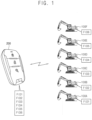
- FIG. 1 is a view illustrating a control system for construction machinery in accordance with example embodiments.
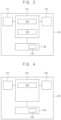
- FIG. 2 is a block diagram illustrating the control system for construction machinery in FIG. 1 .
- FIG. 3 is block diagram illustrating a smart key module of the control system for construction machinery in FIG. 1 .
- FIG. 4 is a block diagram illustrating a smart key of the control system for construction machinery in FIG. 1 .
- FIG. 5 is a perspective view illustrating the smart key in FIG. 4 .
- a control system for construction machinery 10 may include at least one smart key (FOB) 200 configured to selectively control a plurality of construction machines 100A, 100B, 100C, 100D, 100E, 100F and smart key modules 130 respectively installed in the construction machines 100A, 100B, 100C, 100D, 100E, 100F to communicate wirelessly with the smart key 200. Additionally, the control system for construction machinery 10 may further include a user terminal 300 configured to provide a graphic interface for performing user settings for the construction machine.
- FOB smart key
- the construction machine may include an excavator, a wheel loader, a forklift, etc.
- an excavator a wheel loader
- a forklift a forklift
- the smart key module 130 may be installed in the construction machine, and may communicate with the smart key 200 to perform a smart key function.
- the smart key may store a plurality of authentication codes FIB 1, FID2, FID3, FID4, FID5, FID6 and may be operable of activating any one of the authentication codes.
- Each of the construction machines 100A, 100B, 100C, 100D, 100E, 100F may include the smart key module 130.
- Each of the smart key modules 130 may communicate wirelessly with the smart key 200 and may include registration authentication codes which match with the registration authentication codes respectively (in one to one correspondence).
- the smart key 200 as the fob key of a smart key system may transmit and receive information with the smart key module 130.
- the transmissions of the information may be performed using at least one of wireless signals such as a low frequency (LF) signal, a radio frequency (RF) signal, etc.
- the smart key 200 may be configured to transmit a response signal in response to the search signal.
- the search signal may be an LF (low frequency) signal (for example, 125kHz)
- the response signal may be a RF (radio frequency) signal (for example, 315MHz, 433MHz, etc).
- the search signal may include information requesting the authentication code
- the response signal may include information on the authentication code corresponding to the search signal.
- the smart key module 130 may transmit the search signal for searching a smart key 200 near the smart key module 130 and may receive the response signal from the smart key 200.
- the smart key module 130 may authenticate whether or not a registration authentication code included in the response signal matches with a pre-stored registration authentication code. If the registration authentication code included in the response signal matched with the pre-stored registration authentication code, the smart key module 130 may perform an operational function such as vehicle door unlock, vehicle door lock, engine ignition, etc. corresponding to the received control signal.
- the construction machine 100A may receive a control signal from the smart key 200 or a remote control server 400, and may perform an operational function corresponding to the received control signal.
- the construction machine 100A may include a GPS module 110, a remote management device 120, a user interface device 140 and a smart key module 130.
- the GPS module 110 may include a GPS (global positioning system) receiver.
- the GPS module 110 may receive a signal transmitted from a GPS satellite to calculate a current location of the construction machine 100A and to generate construction machine location information.
- the smart key module 130 may receive the control signal such as an engine ignition signal to perform the operational function corresponding to the received remote control signal. Additionally, as described later, the smart key module 130 may be connected to the remote management system 120 to receive the password which is inputted to the user terminal 300.
- the GPS module 110, the remote management device 120 and the smart key module 130 may communicate with each other using CAN (Controller Area Network) communication.
- the smart key module 130 may be provided integrally with a vehicle control unit (VCU) or an engine control unit (ECU) for an overall control of the construction machine or may be provided as a separate control unit.
- VCU vehicle control unit
- ECU engine control unit
- the smart key module 130 may transmit a signal requesting the operational function of the construction machine to the vehicle control unit or the engine control unit.
- the smart key module 130 may directly output the control signal to a driving portion for the required operational function.
- the user interface device 140 may be configured in the form of an information output device for outputting information to the user and an information input device for allowing the user to inputting information, and a display device and the information input device may be provided integrally with each other to be in the form of a display unit of an instrument panel that can provide user setting graphic interface.
- the user interface device 140 may be connected to an input portion 132 of the smart key module 130 through CAN network, and may be provided integrally with the input portion 132.
- the smart key module 130 may include a communication portion 131, an input portion 132, a module controller 134 and a module storage portion 138.
- the communication portion 131 may include at least one information transceiver module configured to search for a smart key 200 near the smart key module 130 and to certificate.
- the information transceiver module may include an LF communication module having an LF antenna and a RF transceiver module having a RF antenna.
- the LF antenna may transmit the search signal (LF signal) and the RF antenna may receive the response signal (RF signal).
- the input portion 132 may be a port connected to the user interface device 140 which is used to register the authentication code of the smart key 200 activated by a user to the smart key module 130, and may be the user interface device 140 itself.
- the user may select a registration mode for registering the user's activated authentication code of the smart key 200 through the user interface device 140, and may input a password that is required to be inputted for registration of the authentication code.
- the input portion 132 may receive the mode selection information and the information related to the password from the user interface device 140 and may transmit to the module controller 134.
- the module controller 134 may be a central control device of the smart key module capable of executing a control program for general smart key operation.
- the module controller 134 may execute a control program for smart key registration for registering an activated authentication code of the smart key 200.
- the module controller 134 may include a first password generation portion 135 for generating a first password in the smart key registration mode and an authentication portion 136 for comparing the generated first password with the password which is inputted through the input unit 132.
- the first password generated by the first password generation portion 135 by the selection of the user in the smart key registration mode may be provided to the user through the user interface device 140.
- the module storage portion 138 may include a program region for storing the control program for the general smart key operation and the control program for the smart key registration and a temporary region for storing data generated during the execution of the control program. Additionally, the module storage portion 138 may include a registration authentication code data area 139 for storing the activated authentication code of the smart key 200 as a new registration authentication code when authenticated by the authentication portion 136. A plurality of the authentication codes of the smart key 200 may be stored in the registration authentication code data area 139. Thus, a plurality of smart keys for which an authentication procedure, which will be described later, is completed, may be registered to one construction machine, thereby providing conveniences for management when each construction machine is managed by a plurality of personnel.
- the smart key 200 may include a communication portion 210, an input portion 220, a smart key controller 230 and a smart key storage portion 240.
- the communication portion 210 may include at least one information transceiver module configured to transmit and receive information with the smart key module 130 installed in the construction machine.
- the information transceiver module may include an LF communication module and a RF transceiver module.
- the input portion 220 may include an operation selection portion for smart key operation and smart key activation. As illustrated in FIG. 5 , the input portion 132 may include a selection button 222 for authentication code selection, a first operation selection button 224 for vehicle door unlock, a second operation selection button 226 for vehicle door lock, etc.
- the user may select and activate any one of the authentication codes stored in the smart key 200 by clicking the selection button 222.
- the construction machine including the smart key module 130 having a registration authentication code which matches with the activated authentication code installed therein may be controlled by the smart key 200.
- the stored authentication codes may be sequentially activated, and the repeated click of the selection button 222 may be continued until the authentication code corresponding to the construction machine which the user wants is activated.
- an alarm device (lamp or horn) of the construction machine (e.g., 100A) that matches with the activated authentication code may operate for a predetermined time.
- the smart key controller 230 may execute a control program for general smart key operation.
- the smart key controller 230 may execute a control program for smart key registration for registering an activated authentication code of the smart key 200.
- the smart key controller 230 may include an authentication code processor 232 configured to activate an authentication code signal activated by the selection button and transmit through the communication portion 210.
- the smart key storage portion 240 may include a program region for storing the control program for the general smart key operation and the control program for the smart key registration and a temporary region for storing data generated during the execution of the control program. Additionally, the smart key storage portion 240 may include an authentication code data area 139 for storing a plurality of authentication codes and an authentication code activated by the authentication code processor 232.
- the construction machine control APP 310 may provide a user with an interface for generating the construction machine control information.
- the construction machine control APP 310 may provide the user with a smart key registration interface for registering the smart key.
- the user terminal 300 may include an input portion and a terminal controller.
- the input portion of the user terminal 300 may be configured in the form of an information output device and an input device that can provide user setting graphic interface, and may transmit information corresponding to user's manipulation of the input device based on the information outputted from the information output device to a terminal controller.
- the input portion of the user terminal 300 may be configured that the terminal controller is connected to a display device that can provide information output and input.
- the terminal controller may include a second password generation portion for generating a second password.
- the second password may be identical to the first password which is generated by the first password generation portion 135.
- the second password generated by the second password generation portion may be provided to a user through the input portion of the user terminal 300.
- the first and second password generation portions may create cryptographic variables using AES (advance encryption standard) algorithm or RSA (Rivest Sharmir Adleman) algorithm.
- the first and second password generation portions may generate the passwords by combining construction machine information, date and time.
- a user may select the smart key registration mode and then input a password, and information of the password may be inputted to the terminal controller through the input portion.
- the user terminal 300 may transmit the inputted password to the remote control server 400, and the remote control server 400 may transmit the password inputted to the user terminal 300 to the smart key module 130 through the remote management device 120.
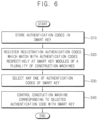
- FIG. 6 is a flow chart illustrating a control method for construction machinery in accordance with example embodiments.
- a plurality of authentication codes FID1, FID2, FID3, FID4, FID5, FID6 may be stored in the smart key 200 (S10), and registration authentication codes which match with the authentication code respectively may be registered respectively in the smart key modules 130 which are installed in a plurality of construction machines 100A, 100B, 100C, 100D, 100E, 100F (S20). Then, any one of the authentication codes of the smart key 200 may be selected (S30), and the construction machine corresponding to the selected authentication code may be controlled with the smart key 200 (S40).
- a plurality of the authentication codes FID1, FID2, FID3, FID4, FID5, FID6 may be stored in the smart key storage portion 240 of the smart key 200. Stages of registering the registration authentication codes which match with the authentication codes respectively in the smart key modules 130 of a plurality of the construction machines 100A, 100B, 100C, 100D, 100E, 100F will be described later.
- a user may select and activate any one of the authentication codes of the smart key 200 by clicking the selection button 222.
- the construction machine including the smart key module 130 having the registration authentication code which matches with the activated authentication code may be controlled by the smart key 200.
- an alarm device (lamp or horn) of the construction machine (e.g., 100A) that matches with the activated authentication code may operate for a predetermined time.
- an alarm device (lamp or horn) of the construction machine (e.g., 100B) that matches with the activated authentication code may operate for a predetermined time.
- a plurality of the authentication codes FID1, FID2, FID3, FID4, FID5, FID6 may be stored in the smart key 200 and the smart key may be operable that any one of the authentication codes may be activated.
- a plurality of the smart key modules 130 installed respectively in a plurality of the construction machines 100A, 100B, 100C, 100D, 100E, 100F may have the registration authentication codes which match with the authentication codes respectively.
- the construction machine including the smart key module 130 having the registration authentication code which matches with the activated authentication code installed therein may be controlled by the smart key 200.
- construction machines 100A, 100B, 100C, 100D, 100E, 100F may be selectively and remotely controlled by one smart key 200.
- the user operates or manages a plurality of the construction machines, by carrying one smart key, it may be possible to eliminate the inconvenience of carrying a plurality of smart keys or losing the smart key.
- a plurality of the registration authentication codes can be stored in each of the construction machines 100A, 100B, 100C, 100D, 100E, 100F, the use of multiple smart keys may be possible. Therefore, a plurality of personnel can easily operate or manage the construction machine.
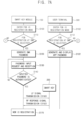
- FIGS. 7A and 7B are flow charts illustrating a registration method of a smart key for construction machinery in accordance with example embodiments.
- FIGS. 8A to 8D are screens provided through an input portion of a smart key module in a smart key registration mode.
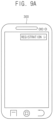
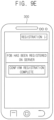
- FIGS. 9A to 9E are views illustrating screens provided through an input portion of a user terminal in a smart key registration mode.
- a smart key (FOB ID) registration mode is entered in the smart key module (SMK) 130 installed in the construction machine 100A (S100), and a smart key (FOD ID) registration mode is entered in the user terminal (APP) 300 (S102).
- SK smart key module
- FOD ID smart key registration mode
- the user interface device 140 of the construction machine and the user terminal 300 may provide the user with a user menu for inquiring whether or not to enter the smart key (FOB ID) registration mode. If the user's entry request of the smart key registration mode is selected, the smart key (FOB ID) registration mode may be switched.
- the user interface device 140 of the construction machine and the user terminal 300 may provide the user with a user menu for inquiring whether or not to proceed with the smart key registration (S110, S112).
- the module controller 134 of the smart key module 130 may generate a first password (S120). Additionally, as illustrated in FIG. 9C , the user terminal 300 may generate and provide a second password identical to the first password to the user (S122).
- the first password generation portion 135 of the smart key module 310 and the user terminal 300 may create cryptographic variables using AES algorithm or RSA algorithm.
- the first password generation portion 135 of the smart key module 310 and the user terminal 300 may generate the passwords by combining construction machinery information, date and time.
- the user terminal 300 may perform the smart key registration mode in a state in which security is maintained through AES encryption even in a situation where communication is not available.
- the user interface device 140 of the construction machine may ask the user to input a password the same as the second password provided by the user terminal 300 (S130), and the smart key module 310 may compare the password inputted through the input portion 132 to authenticate (S140).
- the authentication portion 136 of the smart key module 310 may compare the first password generated by the first password generation portion 135 and the password which is inputted through the user interface device 140 of the construction machine each other to authenticate.
- the authentication code of the near smart key 200 that is recognized by the smart key module 130 may be registered as a new registration authentication code (S170).
- the communication portion 131 of the smart key module 130 may transmit a search signal (LF signal) (S150), and the communication portion 210 of the smart key module 200 may transmit a response signal (RF signal) in response to the search signal (S152).
- LF signal search signal
- RF signal response signal
- the transmission of the response signal may proceed by contacting the smart key 200 with a specific position within a cabin of the construction machine.
- An RF transceiver which is connected to be capable of transmitting and receiving information with the smart key module 130 and transmitting and receiving an RF signal of the smart key 200 may be disposed at the specific location.
- the RF transceiver may be a button type start key provided in the cabin.
- the response signal may include authentication information of the smart key 200, that is, the activated authentication code of the authentication codes stored in the smart key 200.
- the smart key module 130 may store the activated authentication code of the smart key 200 as a new registration authentication code when authenticated by the authentication portion 136.
- the smart key module 130 may generate and provide a first password to the user (S121).
- the first password generation portion 135 of the smart key module 310 may create cryptographic variables using AES algorithm or RSA algorithm.
- the first password generation portion 135 of the smart key module 310 may generate the password by combining construction machinery information, date and time.
- the user terminal 300 may ask the user to input a password the same as the first password provided by the smart key module 130 (S132), and the user terminal 300 may transmit the inputted password to the remote control server 400 (S160), the remote control server 400 may transmit the password to the smart key module 130 through the remote management device 120 (S162). Then, the smart key module 310 may compare the password inputted through the remote management device 120 to authenticate (S141).
- the authentication portion 136 of the smart key module 310 may compare the first password generated by the first password generation portion 135 and the password which is inputted through the user terminal 300 each other to authenticate.
- the authentication code of the near smart key 200 that is recognized by the smart key module 130 may be registered as a new registration authentication code (S170).
- the communication portion 131 of the smart key module 130 may transmit a search signal (LF signal) (S151), and the communication portion 210 of the smart key module 200 may transmit a response signal (RF signal) in response to the search signal (S153).
- LF signal search signal
- RF signal response signal
- the response signal may include authentication information of the smart key 200, that is, the activated authentication code of the authentication codes stored in the smart key 200.
- the smart key module 130 may store the activated authentication code of the smart key 200 as a new registration authentication code when authenticated by the authentication portion 136.
- the input portion 132 of the smart key module 130 and the construction machine control APP of the user terminal 300 may provide the user with a user menu for inquiring whether or not to exit the smart key (FOB ID) registration mode, and by confirming by the user, the smart key (FOB ID) registration mode may be terminated.
- identical passwords may be generated in the smart key module 130 and the user terminal 300 respectively and the generated password may be inputted through another device (user terminal or smart key module) and authenticated, to thereby allow the user to easily register the smart key at the smart key module mounted on the construction machine using the user terminal such as a mobile phone while maintaining security.
- Security may be enhanced using AES encryption. Further, regardless of whether the communication of the user terminal is available or not, the smart key registration may be performed while maintaining security thoroughly.
Landscapes
- Engineering & Computer Science (AREA)
- Mechanical Engineering (AREA)
- Mining & Mineral Resources (AREA)
- Civil Engineering (AREA)
- General Engineering & Computer Science (AREA)
- Structural Engineering (AREA)
- Computer Security & Cryptography (AREA)
- Computer Networks & Wireless Communication (AREA)
- Signal Processing (AREA)
- Lock And Its Accessories (AREA)
- Selective Calling Equipment (AREA)
Description
- The present invention relates to a control system for construction machinery and a control method for construction machinery. More particularly, the present invention relates to a control system for construction machinery using a smart key system and a control method for construction machinery using the same.
- In construction machinery such as an excavator, a smart key system may be provided, so that an operational function such as vehicle door unlock, vehicle door lock, engine ignition, etc. may be performed while a user holds a smart key. However, when the user operates or manages a plurality of construction machines, it may be inconvenient to carry all of a plurality of smart keys for controlling the construction machines, and in this case, there is a problem in that the probability of losing the smart key becomes high.
US 2005/0099265 A1 describes an access control system for work vehicles.
US 2017/0374605 A1 describes a device and a method for authorizing access to a service on a first device upon detection of a second device located in near proximity.
US 2017/0337900 A1 describes methods, systems, and apparatus, including computer programs encoded on a computer storage medium, for wireless user interface projection for vehicles. - An object of the present invention provides a method of registering a smart key in a construction machine in order to manage a plurality of construction machines with at least one smart key.
- The invention is set out in the appended set of claims.
According to example embodiments, in a method of registering a smart key for construction machinery, a first password is generated in a smart key module mounted in a construction machine. A user setting graphic interface through which a user can input a password, in the smart key module or a user terminal, is provided to the user. The password inputted by the user is compared with the first password in the smart key module, to authenticate. An authentication code of a near smart key that is recognized by the smart key module is registered as a new registration authentication code when the inputted password is authenticated. - In example embodiments, generating the first password may include creating cryptographic variables by combining construction machinery information, date and time.
- In example embodiments, generating the first password may include creating cryptographic variables using AES algorithm or RSA algorithm.
- In example embodiments, the method may further include, when the user setting graphic interface in the smart key module is provided, generating and providing a second password identical to the first password, in the user terminal, to the user.
- In example embodiments, generating the second password may include creating cryptographic variables by combining construction machinery information, date and time.
- In example embodiments, generating the second password may include creating cryptographic variables using AES algorithm or RSA algorithm.
- In example embodiments, the method may further include, when the user setting graphic interface in the user terminal is provided, transmitting the password inputted by the user to a server by the user terminal, and receiving the password inputted by the user from the server in the smart key module.
- In example embodiments, receiving the inputted password from the server in the smart key module may include receiving the inputted password through a remote management device which communicates wirelessly with the server.
- In example embodiments, registering the authentication code of the near smart key that is recognized by the smart key module as a new registration authentication code may include transmitting an authentication signal in the smart key module to an area around the construction machine, and receiving a response signal in response to the authentication signal to register an activated authentication code of the near smart key.
- In example embodiments, registering the activated authentication code of the near smart key may include storing a plurality of authentication codes in the smart key, and activating any one of the authentication codes.
- According to example embodiments, identical passwords may be generated in a smart key module and a user terminal respectively and the generated password may be inputted through another device (user terminal or smart key module) and authenticated, to thereby allow the user to easily register the smart key at the smart key module mounted on the construction machine using the user terminal such as a mobile phone while maintaining security. Security may be enhanced using AES encryption. Further, regardless of whether the communication of the user terminal is available or not, the smart key registration may be performed while maintaining security thoroughly.
- However, the effect of the invention may not be limited thereto, and may be expanded without being deviated from the concept and the scope of the present invention.
-
-
FIG. 1 is a view illustrating a control system for construction machinery in accordance with example embodiments. -
FIG. 2 is a block diagram illustrating the control system for construction machinery inFIG. 1 . -
FIG. 3 is block diagram illustrating a smart key module of the control system for construction machinery inFIG. 1 . -
FIG. 4 is a block diagram illustrating a smart key of the control system for construction machinery inFIG. 1 . -
FIG. 5 is a perspective view illustrating the smart key inFIG. 4 . -
FIG. 6 is a flow chart illustrating a control method for construction machinery in accordance with example embodiments. -
FIGS. 7A and7B are flow charts illustrating a registration method of a smart key for construction machinery in accordance with example embodiments. -
FIGS. 8A to 8D are screens provided through an input portion of a smart key module in a smart key registration mode. -
FIGS. 9A to 9E are views illustrating screens provided through an input portion of a user terminal in a smart key registration mode. - Hereinafter, preferable embodiments of the present invention will be explained in detail with reference to the accompanying drawings.
- In the drawings, the sizes and relative sizes of components or elements may be exaggerated for clarity.
- It will be understood that, although the terms first, second, third, etc. may be used herein to describe various elements, components, regions, layers and/or sections, these elements, components, regions, layers and/or sections should not be limited by these terms. These terms are only used to distinguish one element, component, region, layer or section from another element, component, region, layer or section. Thus, a first element, component, region, layer or section discussed below could be termed a second element, component, region, layer or section without departing from the teachings of example embodiments.
- The terminology used herein is for the purpose of describing particular example embodiments only and is not intended to be limiting of example embodiments. As used herein, the singular forms "a," "an" and "the" are intended to include the plural forms as well, unless the context clearly indicates otherwise. It will be further understood that the terms "comprises" and/or "comprising," when used in this specification, specify the presence of stated features, integers, steps, operations, elements, and/or components, but do not preclude the presence or addition of one or more other features, integers, steps, operations, elements, components, and/or groups thereof.
- Unless otherwise defined, all terms (including technical and scientific terms) used herein have the same meaning as commonly understood by one of ordinary skill in the art to which example embodiments belong. It will be further understood that terms, such as those defined in commonly used dictionaries, should be interpreted as having a meaning that is consistent with their meaning in the context of the relevant art and will not be interpreted in an idealized or overly formal sense unless expressly so defined herein.
- Example embodiments may, however, be embodied in many different forms and should not be construed as limited to example embodiments set forth herein. Rather, these example embodiments are provided so that this disclosure will be thorough and complete, and will fully convey the scope of example embodiments to those skilled in the art.
-
FIG. 1 is a view illustrating a control system for construction machinery in accordance with example embodiments.FIG. 2 is a block diagram illustrating the control system for construction machinery inFIG. 1 .FIG. 3 is block diagram illustrating a smart key module of the control system for construction machinery inFIG. 1 .FIG. 4 is a block diagram illustrating a smart key of the control system for construction machinery inFIG. 1 .FIG. 5 is a perspective view illustrating the smart key inFIG. 4 . - Referring to
FIGS. 1 to 5 , a control system forconstruction machinery 10 may include at least one smart key (FOB) 200 configured to selectively control a plurality ofconstruction machines smart key modules 130 respectively installed in theconstruction machines smart key 200. Additionally, the control system forconstruction machinery 10 may further include auser terminal 300 configured to provide a graphic interface for performing user settings for the construction machine. - In example embodiments, the construction machine may include an excavator, a wheel loader, a forklift, etc. Hereinafter, it will be explained that example embodiments may be applied to the excavator. However, it may not be limited thereto, and it may be understood that example embodiments may be applied to other construction machine such as the wheel loader, the forklift, etc. The smart
key module 130 may be installed in the construction machine, and may communicate with thesmart key 200 to perform a smart key function. - The smart key (FOB) may store a plurality of
authentication codes FIB 1, FID2, FID3, FID4, FID5, FID6 and may be operable of activating any one of the authentication codes. Each of theconstruction machines key module 130. Each of the smartkey modules 130 may communicate wirelessly with thesmart key 200 and may include registration authentication codes which match with the registration authentication codes respectively (in one to one correspondence). - The
smart key 200 as the fob key of a smart key system may transmit and receive information with the smartkey module 130. The transmissions of the information may be performed using at least one of wireless signals such as a low frequency (LF) signal, a radio frequency (RF) signal, etc. When thesmart key 200 receives a search signal from the smartkey module 130, thesmart key 200 may be configured to transmit a response signal in response to the search signal. For example, the search signal may be an LF (low frequency) signal (for example, 125kHz), and the response signal may be a RF (radio frequency) signal (for example, 315MHz, 433MHz, etc). The search signal may include information requesting the authentication code, and the response signal may include information on the authentication code corresponding to the search signal. - When the smart
key module 130 receives a control signal for controlling the construction machine, the smartkey module 130 may transmit the search signal for searching asmart key 200 near the smartkey module 130 and may receive the response signal from thesmart key 200. The smartkey module 130 may authenticate whether or not a registration authentication code included in the response signal matches with a pre-stored registration authentication code. If the registration authentication code included in the response signal matched with the pre-stored registration authentication code, the smartkey module 130 may perform an operational function such as vehicle door unlock, vehicle door lock, engine ignition, etc. corresponding to the received control signal. - As illustrated in
FIG. 2 , theconstruction machine 100A may receive a control signal from thesmart key 200 or aremote control server 400, and may perform an operational function corresponding to the received control signal. For example, theconstruction machine 100A may include aGPS module 110, aremote management device 120, auser interface device 140 and a smartkey module 130. - The
GPS module 110 may include a GPS (global positioning system) receiver. TheGPS module 110 may receive a signal transmitted from a GPS satellite to calculate a current location of theconstruction machine 100A and to generate construction machine location information. - The
remote management device 120 may communicate directly with an external device, for example, theremote control server 400 or through a network connected to theremote control server 400 in order to remotely control theconstruction machine 100A. The network connected to theremote control server 400 may include at least one of a conventional wireless communication network and a wired communication network. Theremote management device 120 may transmit the construction machine location information to theremote control server 400. Additionally, theremote management device 120 may receive a remote control signal from theremote control server 400. As described later, the smartkey module 130 may receive a password, which is inputted to theuser terminal 300, from theremote control server 400. For example, theremote management device 120 may include a TMS (Tele-Management System) module. - The smart
key module 130 may receive the control signal such as an engine ignition signal to perform the operational function corresponding to the received remote control signal. Additionally, as described later, the smartkey module 130 may be connected to theremote management system 120 to receive the password which is inputted to theuser terminal 300. TheGPS module 110, theremote management device 120 and the smartkey module 130 may communicate with each other using CAN (Controller Area Network) communication. The smartkey module 130 may be provided integrally with a vehicle control unit (VCU) or an engine control unit (ECU) for an overall control of the construction machine or may be provided as a separate control unit. When the operational function of the construction machine corresponding to the received remote control signal is required to be performed, the smartkey module 130 may transmit a signal requesting the operational function of the construction machine to the vehicle control unit or the engine control unit. In case that the smartkey module 130 is provided integrally with the vehicle control unit to perform the function of the vehicle control unit, the smartkey module 130 may directly output the control signal to a driving portion for the required operational function. - The
user interface device 140 may be configured in the form of an information output device for outputting information to the user and an information input device for allowing the user to inputting information, and a display device and the information input device may be provided integrally with each other to be in the form of a display unit of an instrument panel that can provide user setting graphic interface. Theuser interface device 140 may be connected to aninput portion 132 of the smartkey module 130 through CAN network, and may be provided integrally with theinput portion 132. - As illustrated in
FIG. 3 , the smartkey module 130 may include acommunication portion 131, aninput portion 132, amodule controller 134 and amodule storage portion 138. - The
communication portion 131 may include at least one information transceiver module configured to search for asmart key 200 near the smartkey module 130 and to certificate. In example embodiments, the information transceiver module may include an LF communication module having an LF antenna and a RF transceiver module having a RF antenna. In case that the LF antenna and the RF antenna are included, the LF antenna may transmit the search signal (LF signal) and the RF antenna may receive the response signal (RF signal). - The
input portion 132 may be a port connected to theuser interface device 140 which is used to register the authentication code of thesmart key 200 activated by a user to the smartkey module 130, and may be theuser interface device 140 itself. The user may select a registration mode for registering the user's activated authentication code of thesmart key 200 through theuser interface device 140, and may input a password that is required to be inputted for registration of the authentication code. Theinput portion 132 may receive the mode selection information and the information related to the password from theuser interface device 140 and may transmit to themodule controller 134. - The
module controller 134 may be a central control device of the smart key module capable of executing a control program for general smart key operation. Themodule controller 134 may execute a control program for smart key registration for registering an activated authentication code of thesmart key 200. In particular, themodule controller 134 may include a firstpassword generation portion 135 for generating a first password in the smart key registration mode and anauthentication portion 136 for comparing the generated first password with the password which is inputted through theinput unit 132. In example embodiments, the first password generated by the firstpassword generation portion 135 by the selection of the user in the smart key registration mode may be provided to the user through theuser interface device 140. - The
module storage portion 138 may include a program region for storing the control program for the general smart key operation and the control program for the smart key registration and a temporary region for storing data generated during the execution of the control program. Additionally, themodule storage portion 138 may include a registration authenticationcode data area 139 for storing the activated authentication code of thesmart key 200 as a new registration authentication code when authenticated by theauthentication portion 136. A plurality of the authentication codes of thesmart key 200 may be stored in the registration authenticationcode data area 139. Thus, a plurality of smart keys for which an authentication procedure, which will be described later, is completed, may be registered to one construction machine, thereby providing conveniences for management when each construction machine is managed by a plurality of personnel. - As illustrated in
FIG. 4 , thesmart key 200 may include acommunication portion 210, aninput portion 220, a smartkey controller 230 and a smartkey storage portion 240. - The
communication portion 210 may include at least one information transceiver module configured to transmit and receive information with the smartkey module 130 installed in the construction machine. The information transceiver module may include an LF communication module and a RF transceiver module. - The
input portion 220 may include an operation selection portion for smart key operation and smart key activation. As illustrated inFIG. 5 , theinput portion 132 may include aselection button 222 for authentication code selection, a firstoperation selection button 224 for vehicle door unlock, a secondoperation selection button 226 for vehicle door lock, etc. - The user may select and activate any one of the authentication codes stored in the
smart key 200 by clicking theselection button 222. The construction machine including the smartkey module 130 having a registration authentication code which matches with the activated authentication code installed therein may be controlled by thesmart key 200. In example embodiments, each time theselection button 222 is clicked, the stored authentication codes may be sequentially activated, and the repeated click of theselection button 222 may be continued until the authentication code corresponding to the construction machine which the user wants is activated. - When the user selects any one of the stored authentication codes (e.g., FID1) through the
selection button 222, an alarm device (lamp or horn) of the construction machine (e.g., 100A) that matches with the activated authentication code may operate for a predetermined time. - The smart
key controller 230 may execute a control program for general smart key operation. The smartkey controller 230 may execute a control program for smart key registration for registering an activated authentication code of thesmart key 200. In particular, the smartkey controller 230 may include anauthentication code processor 232 configured to activate an authentication code signal activated by the selection button and transmit through thecommunication portion 210. - The smart
key storage portion 240 may include a program region for storing the control program for the general smart key operation and the control program for the smart key registration and a temporary region for storing data generated during the execution of the control program. Additionally, the smartkey storage portion 240 may include an authenticationcode data area 139 for storing a plurality of authentication codes and an authentication code activated by theauthentication code processor 232. - Referring again to
FIG. 2 , theuser terminal 300 may generate construction machine control information for remotely controlling the construction machine. Theuser terminal 300 may provide a user with a graphic interface for registering the activated authentication code of thesmart key 200. For example, theuser terminal 300 may include a smart phone, a smart pad, PDA, etc. In some embodiments, theuser terminal 300 may include a construction machine control application (APP) 310. - The construction
machine control APP 310 may provide a user with an interface for generating the construction machine control information. The constructionmachine control APP 310 may provide the user with a smart key registration interface for registering the smart key. - In particular, the
user terminal 300 may include an input portion and a terminal controller. The input portion of theuser terminal 300 may be configured in the form of an information output device and an input device that can provide user setting graphic interface, and may transmit information corresponding to user's manipulation of the input device based on the information outputted from the information output device to a terminal controller. Similarly to the user interface device of the smart key module as described above, the input portion of theuser terminal 300 may be configured that the terminal controller is connected to a display device that can provide information output and input. The terminal controller may include a second password generation portion for generating a second password. The second password may be identical to the first password which is generated by the firstpassword generation portion 135. The second password generated by the second password generation portion may be provided to a user through the input portion of theuser terminal 300. - In example embodiments, the first and second password generation portions may create cryptographic variables using AES (advance encryption standard) algorithm or RSA (Rivest Sharmir Adleman) algorithm. The first and second password generation portions may generate the passwords by combining construction machine information, date and time.
- In example embodiments, a user may select the smart key registration mode and then input a password, and information of the password may be inputted to the terminal controller through the input portion. In this case, the
user terminal 300 may transmit the inputted password to theremote control server 400, and theremote control server 400 may transmit the password inputted to theuser terminal 300 to the smartkey module 130 through theremote management device 120. - Hereinafter, a method of controlling the construction machine using the control system for construction machinery in
FIG. 1 will be explained. -
FIG. 6 is a flow chart illustrating a control method for construction machinery in accordance with example embodiments. - Referring to
FIGS. 1 to 6 , first, a plurality of authentication codes FID1, FID2, FID3, FID4, FID5, FID6 may be stored in the smart key 200 (S10), and registration authentication codes which match with the authentication code respectively may be registered respectively in the smartkey modules 130 which are installed in a plurality ofconstruction machines smart key 200 may be selected (S30), and the construction machine corresponding to the selected authentication code may be controlled with the smart key 200 (S40). - In example embodiments, a plurality of the authentication codes FID1, FID2, FID3, FID4, FID5, FID6 may be stored in the smart
key storage portion 240 of thesmart key 200. Stages of registering the registration authentication codes which match with the authentication codes respectively in the smartkey modules 130 of a plurality of theconstruction machines - Then, a user may select and activate any one of the authentication codes of the
smart key 200 by clicking theselection button 222. The construction machine including the smartkey module 130 having the registration authentication code which matches with the activated authentication code may be controlled by thesmart key 200. - When the user selects any one of the stored authentication codes (e.g., FID1) through the
selection button 222, an alarm device (lamp or horn) of the construction machine (e.g., 100A) that matches with the activated authentication code may operate for a predetermined time. - When the user clicks the
selection button 222 of thesmart key 200 again to select another one of the stored authentication codes (e.g., FID2), an alarm device (lamp or horn) of the construction machine (e.g., 100B) that matches with the activated authentication code may operate for a predetermined time. - As mentioned above, a plurality of the authentication codes FID1, FID2, FID3, FID4, FID5, FID6 may be stored in the
smart key 200 and the smart key may be operable that any one of the authentication codes may be activated. A plurality of the smartkey modules 130 installed respectively in a plurality of theconstruction machines smart key 200, the construction machine including the smartkey module 130 having the registration authentication code which matches with the activated authentication code installed therein may be controlled by thesmart key 200. - Accordingly,
several construction machines smart key 200. Thus, in case that the user operates or manages a plurality of the construction machines, by carrying one smart key, it may be possible to eliminate the inconvenience of carrying a plurality of smart keys or losing the smart key. Further, since a plurality of the registration authentication codes can be stored in each of theconstruction machines - Hereinafter, a method of registering the smart key at the smart key module which is installed in any one of a plurality of construction machines in the control system for construction machinery in
FIG. 1 will be explained. -
FIGS. 7A and7B are flow charts illustrating a registration method of a smart key for construction machinery in accordance with example embodiments.FIGS. 8A to 8D are screens provided through an input portion of a smart key module in a smart key registration mode.FIGS. 9A to 9E are views illustrating screens provided through an input portion of a user terminal in a smart key registration mode. - Referring to
FIGS. 1 to 9E , first, a smart key (FOB ID) registration mode is entered in the smart key module (SMK) 130 installed in theconstruction machine 100A (S100), and a smart key (FOD ID) registration mode is entered in the user terminal (APP) 300 (S102). - In example embodiments, as illustrated in
FIG. 8A and9A , theuser interface device 140 of the construction machine and theuser terminal 300 may provide the user with a user menu for inquiring whether or not to enter the smart key (FOB ID) registration mode. If the user's entry request of the smart key registration mode is selected, the smart key (FOB ID) registration mode may be switched. - As illustrated in
FIGS. 8B and9B , when the smart key registration mode is started, theuser interface device 140 of the construction machine and theuser terminal 300 may provide the user with a user menu for inquiring whether or not to proceed with the smart key registration (S110, S112). - As illustrated in
FIG. 7A , when the user chooses to proceed with the smart key registration through theuser interface device 140 of the construction machine (FOB REGISTRATION AT SMK), themodule controller 134 of the smartkey module 130 may generate a first password (S120). Additionally, as illustrated inFIG. 9C , theuser terminal 300 may generate and provide a second password identical to the first password to the user (S122). - In example embodiments, the first
password generation portion 135 of the smartkey module 310 and theuser terminal 300 may create cryptographic variables using AES algorithm or RSA algorithm. The firstpassword generation portion 135 of the smartkey module 310 and theuser terminal 300 may generate the passwords by combining construction machinery information, date and time. In this case, theuser terminal 300 may perform the smart key registration mode in a state in which security is maintained through AES encryption even in a situation where communication is not available. - Then, as illustrated in
FIG. 8C , theuser interface device 140 of the construction machine may ask the user to input a password the same as the second password provided by the user terminal 300 (S130), and the smartkey module 310 may compare the password inputted through theinput portion 132 to authenticate (S140). - The
authentication portion 136 of the smartkey module 310 may compare the first password generated by the firstpassword generation portion 135 and the password which is inputted through theuser interface device 140 of the construction machine each other to authenticate. - Then, when the inputted password is authenticated, the authentication code of the near
smart key 200 that is recognized by the smartkey module 130 may be registered as a new registration authentication code (S170). - In particular, the
communication portion 131 of the smartkey module 130 may transmit a search signal (LF signal) (S150), and thecommunication portion 210 of the smartkey module 200 may transmit a response signal (RF signal) in response to the search signal (S152). In order to increase the accuracy of the RF information transmission and reception, the transmission of the response signal may proceed by contacting thesmart key 200 with a specific position within a cabin of the construction machine. An RF transceiver which is connected to be capable of transmitting and receiving information with the smartkey module 130 and transmitting and receiving an RF signal of thesmart key 200 may be disposed at the specific location. In example embodiments, the RF transceiver may be a button type start key provided in the cabin. - In example embodiments, the response signal may include authentication information of the
smart key 200, that is, the activated authentication code of the authentication codes stored in thesmart key 200. The smartkey module 130 may store the activated authentication code of thesmart key 200 as a new registration authentication code when authenticated by theauthentication portion 136. - As illustrated in
FIG. 7B , when the user chooses to proceed with the smart key registration through the user terminal 300 (FOB REGISTRATION AT SERVER), as illustrated inFIG. 8D , the smartkey module 130 may generate and provide a first password to the user (S121). - In example embodiments, the first
password generation portion 135 of the smartkey module 310 may create cryptographic variables using AES algorithm or RSA algorithm. The firstpassword generation portion 135 of the smartkey module 310 may generate the password by combining construction machinery information, date and time. - Then, as illustrated in
FIG. 9D , theuser terminal 300 may ask the user to input a password the same as the first password provided by the smart key module 130 (S132), and theuser terminal 300 may transmit the inputted password to the remote control server 400 (S160), theremote control server 400 may transmit the password to the smartkey module 130 through the remote management device 120 (S162). Then, the smartkey module 310 may compare the password inputted through theremote management device 120 to authenticate (S141). - The
authentication portion 136 of the smartkey module 310 may compare the first password generated by the firstpassword generation portion 135 and the password which is inputted through theuser terminal 300 each other to authenticate. - Then, when the inputted password is authenticated, the authentication code of the near
smart key 200 that is recognized by the smartkey module 130 may be registered as a new registration authentication code (S170). - In particular, the
communication portion 131 of the smartkey module 130 may transmit a search signal (LF signal) (S151), and thecommunication portion 210 of the smartkey module 200 may transmit a response signal (RF signal) in response to the search signal (S153). - In example embodiments, the response signal may include authentication information of the
smart key 200, that is, the activated authentication code of the authentication codes stored in thesmart key 200. The smartkey module 130 may store the activated authentication code of thesmart key 200 as a new registration authentication code when authenticated by theauthentication portion 136. - When the activated authentication code of the
smart key 200 is registered, theinput portion 132 of the smartkey module 130 and the construction machine control APP of theuser terminal 300 may provide the user with a user menu for inquiring whether or not to exit the smart key (FOB ID) registration mode, and by confirming by the user, the smart key (FOB ID) registration mode may be terminated. - As mentioned above, identical passwords may be generated in the smart
key module 130 and theuser terminal 300 respectively and the generated password may be inputted through another device (user terminal or smart key module) and authenticated, to thereby allow the user to easily register the smart key at the smart key module mounted on the construction machine using the user terminal such as a mobile phone while maintaining security. Security may be enhanced using AES encryption. Further, regardless of whether the communication of the user terminal is available or not, the smart key registration may be performed while maintaining security thoroughly. - The present invention has been explained with reference to preferable embodiments, however, those skilled in the art may understand that the present invention may be modified or changed without being deviated from the concept and the scope of the present invention disclosed in the following claims.
-
- 10: control system for construction machinery
- 100A, 100B, 100C, 100D, 100E, 100F: construction machine
- 110: GPS module 120: remote management device
- 130: smart key module 131: communication portion
- 132: input portion 134: module controller
- 138: module storage portion 200: smart key
- 210: communication portion 220: input portion
- 230: smart key controller 240: smart key storage portion
- 300: user terminal 310: construction machine control APP
- 400: remote control server
Claims (5)
- A method of registering a smart key (200) for construction machinery, the method comprising:generating a first password in a smart key module (130) mounted in a construction machine (100A, 100B, 100C, 100D, 100E, 100F);providing a user setting graphic interface through which a user can input a password, in the smart key module (130), to the user;generating and providing a second password identical to the first password, in a user terminal (300), to the user;comparing the password inputted by the user with the first password in the smart key module (130) to authenticate; andregistering an authentication code (FIB1, FID2, FID3, FID4, FID5, FID6) of a near smart key (200) that is recognized by the smart key module (130) as a new registration authentication code (FIB1, FID2, FID3, FID4, FID5, FID6) when the inputted password is authenticated,wherein generating the first password comprises creating cryptographic variables by combining construction machinery information, date and time; andgenerating the second password comprises creating cryptographic variables by combining construction machinery information, date and time.
- The method of claim 1, wherein generating the first password comprises creating cryptographic variables using AES algorithm or RSA algorithm.
- The method of claim 1, wherein generating the second password comprises creating cryptographic variables using AES algorithm or RSA algorithm.
- The method of claim 1, wherein registering the authentication code (FIB1, FID2, FID3, FID4, FID5, FID6) of the near smart key (200) that is recognized by the smart key module (130) as the new registration authentication code (FIB1, FID2, FID3, FID4, FID5, FID6) comprises:transmitting an authentication signal in the smart key module (130) to an area around the construction machine (100A, 100B, 100C, 100D, 100E, 100F); andreceiving a response signal in response to the authentication signal to register an activated authentication code (FIB1, FID2, FID3, FID4, FID5, FID6) of the near smart key (200) as the new registration authentication code (FIB1, FID2, FID3, FID4, FID5, FID6).
- The method of claim 4, wherein registering the activated authentication code (FIB1, FID2, FID3, FID4, FID5, FID6) of the near smart key (200) comprises:storing a plurality of authentication codes (FIB1, FID2, FID3, FID4, FID5, FID6) in the smart key (200); andactivating any one of the authentication codes (FIB1, FID2, FID3, FID4, FID5, FID6).
Applications Claiming Priority (2)
| Application Number | Priority Date | Filing Date | Title |
|---|---|---|---|
| KR1020190028359A KR102733439B1 (en) | 2019-03-12 | 2019-03-12 | Control system and control method for construction machinery |
| PCT/KR2020/003424 WO2020184997A1 (en) | 2019-03-12 | 2020-03-12 | Construction machine control system and construction machine control method |
Publications (3)
| Publication Number | Publication Date |
|---|---|
| EP3922518A1 EP3922518A1 (en) | 2021-12-15 |
| EP3922518A4 EP3922518A4 (en) | 2022-11-23 |
| EP3922518B1 true EP3922518B1 (en) | 2025-04-23 |
Family
ID=72427704
Family Applications (1)
| Application Number | Title | Priority Date | Filing Date |
|---|---|---|---|
| EP20771096.3A Active EP3922518B1 (en) | 2019-03-12 | 2020-03-12 | Construction machine control system and construction machine control method |
Country Status (5)
| Country | Link |
|---|---|
| US (1) | US12074977B2 (en) |
| EP (1) | EP3922518B1 (en) |
| KR (1) | KR102733439B1 (en) |
| CN (1) | CN113613963B (en) |
| WO (1) | WO2020184997A1 (en) |
Family Cites Families (17)
| Publication number | Priority date | Publication date | Assignee | Title |
|---|---|---|---|---|
| US7042333B2 (en) * | 2003-11-12 | 2006-05-09 | Cnh America Llc | Central access control system |
| JP4841950B2 (en) | 2005-12-28 | 2011-12-21 | 株式会社ユーシン | Security system using electronic keys |
| DE102006015212B4 (en) * | 2006-03-30 | 2017-05-04 | Bundesdruckerei Gmbh | Method for protecting a movable good, in particular a vehicle, against unauthorized use |
| JP5144946B2 (en) * | 2006-05-22 | 2013-02-13 | ヤマハ発動機株式会社 | Vehicle anti-theft system and vehicle equipped with anti-theft system |
| EP2211499A4 (en) | 2007-11-16 | 2017-06-21 | Fujitsu Ten Limited | Authentication method, authentication system, on-vehicle device, and authentication device |
| KR101011148B1 (en) | 2009-05-06 | 2011-01-26 | 주식회사 유타렉스 | Starting authentication system of heavy equipment vehicle using smart key and starting authentication method using same |
| KR101132368B1 (en) * | 2010-04-26 | 2012-07-13 | (주)에이케이씨에스 | System for safely inputting password using shift value of password input and method thereof |
| CN104954596B (en) * | 2011-07-25 | 2018-03-30 | 株式会社久保田 | The setting altering system of working rig and working rig |
| US9156436B2 (en) * | 2012-02-29 | 2015-10-13 | Pra Group, Inc. | Vehicle immobilizing devices, systems, and methods |
| KR20140080764A (en) | 2012-12-18 | 2014-07-01 | 두산인프라코어 주식회사 | Smart key device for operating excavator |
| CN104627122B (en) * | 2013-11-11 | 2017-06-06 | 比亚迪股份有限公司 | Method and method, the system of control vehicle that digital key is bound with vehicle |
| KR101520573B1 (en) * | 2014-01-27 | 2015-05-14 | 명지대학교 산학협력단 | Smart key, control method and apparatus thereof |
| JP6413330B2 (en) * | 2014-05-09 | 2018-10-31 | 株式会社タダノ | Work vehicle anti-theft release system and work vehicle anti-theft device |
| US20170337900A1 (en) * | 2016-05-17 | 2017-11-23 | Google Inc. | Wireless user interface projection for vehicles |
| EP3264712A1 (en) | 2016-06-28 | 2018-01-03 | Thomson Licensing | Apparatus and method for autorizing access to a service according to device proximity |
| TWI629188B (en) | 2016-10-14 | 2018-07-11 | 光陽工業股份有限公司 | Vehicle prompting method and vehicle prompting system |
| KR101959300B1 (en) * | 2017-05-02 | 2019-03-18 | 엘지전자 주식회사 | Smart key for vehicle and system |
-
2019
- 2019-03-12 KR KR1020190028359A patent/KR102733439B1/en active Active
-
2020
- 2020-03-12 US US17/435,788 patent/US12074977B2/en active Active
- 2020-03-12 CN CN202080020373.9A patent/CN113613963B/en active Active
- 2020-03-12 EP EP20771096.3A patent/EP3922518B1/en active Active
- 2020-03-12 WO PCT/KR2020/003424 patent/WO2020184997A1/en not_active Ceased
Also Published As
| Publication number | Publication date |
|---|---|
| EP3922518A1 (en) | 2021-12-15 |
| CN113613963A (en) | 2021-11-05 |
| CN113613963B (en) | 2023-09-29 |
| KR20200109181A (en) | 2020-09-22 |
| WO2020184997A1 (en) | 2020-09-17 |
| EP3922518A4 (en) | 2022-11-23 |
| US20220150067A1 (en) | 2022-05-12 |
| US12074977B2 (en) | 2024-08-27 |
| KR102733439B1 (en) | 2024-11-25 |
Similar Documents
| Publication | Publication Date | Title |
|---|---|---|
| EP3708441B1 (en) | Control system and control method for construction machinery | |
| EP3263409B1 (en) | Locking and unlocking system and key unit | |
| US7224262B2 (en) | Wireless vehicle control system and method | |
| US10249123B2 (en) | Systems and methods for mobile phone key fob management | |
| CN107107869B (en) | Long-range control by mobile terminal device to vehicle functions | |
| US10482696B2 (en) | Locking and unlocking system, portable terminal capable of communicating with server, locking and unlocking method executed by portable terminal, and non-transitory storage medium storing program | |
| EP2719585B1 (en) | Electronic key registration system | |
| US20150045013A1 (en) | Multi-level vehicle remote start authentication method & system | |
| EP1291748A2 (en) | Electronic device capable of wirelessly transmitting a password that can be used to unlock/lock a password protected electronic device | |
| CN107545628A (en) | Locking is with system for unlocking and for locking server and method with system for unlocking | |
| US11284232B2 (en) | Vehicle control system | |
| US10399543B2 (en) | Method for releasing one or more functions in a vehicle | |
| EP1399339B1 (en) | Securing vehicles | |
| CN113596627B (en) | Authorization control method and device for power equipment, electronic equipment and storage medium | |
| JP6274849B2 (en) | Vehicle control system | |
| EP3922518B1 (en) | Construction machine control system and construction machine control method | |
| CN114511948A (en) | Card key and vehicle control method using the same | |
| CN112466014A (en) | Shared vehicle offline unlocking and authorization method, wearable device, terminal and system | |
| US10607429B2 (en) | Onboard device and mobile terminal | |
| EP4730852A1 (en) | A device, a server and a method for setting a parameter of a digital key-based service | |
| JP2022168992A (en) | Control device and program |
Legal Events
| Date | Code | Title | Description |
|---|---|---|---|
| STAA | Information on the status of an ep patent application or granted ep patent |
Free format text: STATUS: THE INTERNATIONAL PUBLICATION HAS BEEN MADE |
|
| PUAI | Public reference made under article 153(3) epc to a published international application that has entered the european phase |
Free format text: ORIGINAL CODE: 0009012 |
|
| STAA | Information on the status of an ep patent application or granted ep patent |
Free format text: STATUS: REQUEST FOR EXAMINATION WAS MADE |
|
| 17P | Request for examination filed |
Effective date: 20210910 |
|
| AK | Designated contracting states |
Kind code of ref document: A1 Designated state(s): AL AT BE BG CH CY CZ DE DK EE ES FI FR GB GR HR HU IE IS IT LI LT LU LV MC MK MT NL NO PL PT RO RS SE SI SK SM TR |
|
| DAV | Request for validation of the european patent (deleted) | ||
| DAX | Request for extension of the european patent (deleted) | ||
| A4 | Supplementary search report drawn up and despatched |
Effective date: 20221026 |
|
| RIC1 | Information provided on ipc code assigned before grant |
Ipc: E02F 9/20 20060101ALI20221020BHEP Ipc: B60R 25/102 20130101ALI20221020BHEP Ipc: B60R 25/24 20130101AFI20221020BHEP |
|
| RAP3 | Party data changed (applicant data changed or rights of an application transferred) |
Owner name: HD HYUNDAI INFRACORE CO., LTD. |
|
| GRAP | Despatch of communication of intention to grant a patent |
Free format text: ORIGINAL CODE: EPIDOSNIGR1 |
|
| STAA | Information on the status of an ep patent application or granted ep patent |
Free format text: STATUS: GRANT OF PATENT IS INTENDED |
|
| INTG | Intention to grant announced |
Effective date: 20250103 |
|
| GRAS | Grant fee paid |
Free format text: ORIGINAL CODE: EPIDOSNIGR3 |
|
| GRAA | (expected) grant |
Free format text: ORIGINAL CODE: 0009210 |
|
| STAA | Information on the status of an ep patent application or granted ep patent |
Free format text: STATUS: THE PATENT HAS BEEN GRANTED |
|
| AK | Designated contracting states |
Kind code of ref document: B1 Designated state(s): AL AT BE BG CH CY CZ DE DK EE ES FI FR GB GR HR HU IE IS IT LI LT LU LV MC MK MT NL NO PL PT RO RS SE SI SK SM TR |
|
| REG | Reference to a national code |
Ref country code: GB Ref legal event code: FG4D |
|
| REG | Reference to a national code |
Ref country code: CH Ref legal event code: EP |
|
| REG | Reference to a national code |
Ref country code: DE Ref legal event code: R096 Ref document number: 602020050000 Country of ref document: DE |
|
| REG | Reference to a national code |
Ref country code: IE Ref legal event code: FG4D |
|
| REG | Reference to a national code |
Ref country code: NL Ref legal event code: MP Effective date: 20250423 |
|
| PG25 | Lapsed in a contracting state [announced via postgrant information from national office to epo] |
Ref country code: NL Free format text: LAPSE BECAUSE OF FAILURE TO SUBMIT A TRANSLATION OF THE DESCRIPTION OR TO PAY THE FEE WITHIN THE PRESCRIBED TIME-LIMIT Effective date: 20250423 |
|
| REG | Reference to a national code |
Ref country code: AT Ref legal event code: MK05 Ref document number: 1787498 Country of ref document: AT Kind code of ref document: T Effective date: 20250423 |
|
| PG25 | Lapsed in a contracting state [announced via postgrant information from national office to epo] |
Ref country code: PT Free format text: LAPSE BECAUSE OF FAILURE TO SUBMIT A TRANSLATION OF THE DESCRIPTION OR TO PAY THE FEE WITHIN THE PRESCRIBED TIME-LIMIT Effective date: 20250825 Ref country code: FI Free format text: LAPSE BECAUSE OF FAILURE TO SUBMIT A TRANSLATION OF THE DESCRIPTION OR TO PAY THE FEE WITHIN THE PRESCRIBED TIME-LIMIT Effective date: 20250423 Ref country code: ES Free format text: LAPSE BECAUSE OF FAILURE TO SUBMIT A TRANSLATION OF THE DESCRIPTION OR TO PAY THE FEE WITHIN THE PRESCRIBED TIME-LIMIT Effective date: 20250423 |
|
| REG | Reference to a national code |
Ref country code: LT Ref legal event code: MG9D |
|
| PG25 | Lapsed in a contracting state [announced via postgrant information from national office to epo] |
Ref country code: GR Free format text: LAPSE BECAUSE OF FAILURE TO SUBMIT A TRANSLATION OF THE DESCRIPTION OR TO PAY THE FEE WITHIN THE PRESCRIBED TIME-LIMIT Effective date: 20250724 Ref country code: NO Free format text: LAPSE BECAUSE OF FAILURE TO SUBMIT A TRANSLATION OF THE DESCRIPTION OR TO PAY THE FEE WITHIN THE PRESCRIBED TIME-LIMIT Effective date: 20250723 |
|
| PG25 | Lapsed in a contracting state [announced via postgrant information from national office to epo] |
Ref country code: PL Free format text: LAPSE BECAUSE OF FAILURE TO SUBMIT A TRANSLATION OF THE DESCRIPTION OR TO PAY THE FEE WITHIN THE PRESCRIBED TIME-LIMIT Effective date: 20250423 |
|
| PG25 | Lapsed in a contracting state [announced via postgrant information from national office to epo] |
Ref country code: BG Free format text: LAPSE BECAUSE OF FAILURE TO SUBMIT A TRANSLATION OF THE DESCRIPTION OR TO PAY THE FEE WITHIN THE PRESCRIBED TIME-LIMIT Effective date: 20250423 |
|
| PG25 | Lapsed in a contracting state [announced via postgrant information from national office to epo] |
Ref country code: HR Free format text: LAPSE BECAUSE OF FAILURE TO SUBMIT A TRANSLATION OF THE DESCRIPTION OR TO PAY THE FEE WITHIN THE PRESCRIBED TIME-LIMIT Effective date: 20250423 |
|
| PG25 | Lapsed in a contracting state [announced via postgrant information from national office to epo] |
Ref country code: AT Free format text: LAPSE BECAUSE OF FAILURE TO SUBMIT A TRANSLATION OF THE DESCRIPTION OR TO PAY THE FEE WITHIN THE PRESCRIBED TIME-LIMIT Effective date: 20250423 |
|
| PG25 | Lapsed in a contracting state [announced via postgrant information from national office to epo] |
Ref country code: RS Free format text: LAPSE BECAUSE OF FAILURE TO SUBMIT A TRANSLATION OF THE DESCRIPTION OR TO PAY THE FEE WITHIN THE PRESCRIBED TIME-LIMIT Effective date: 20250723 |
|
| PG25 | Lapsed in a contracting state [announced via postgrant information from national office to epo] |
Ref country code: IS Free format text: LAPSE BECAUSE OF FAILURE TO SUBMIT A TRANSLATION OF THE DESCRIPTION OR TO PAY THE FEE WITHIN THE PRESCRIBED TIME-LIMIT Effective date: 20250823 |
|
| PG25 | Lapsed in a contracting state [announced via postgrant information from national office to epo] |
Ref country code: LV Free format text: LAPSE BECAUSE OF FAILURE TO SUBMIT A TRANSLATION OF THE DESCRIPTION OR TO PAY THE FEE WITHIN THE PRESCRIBED TIME-LIMIT Effective date: 20250423 |
|
| PG25 | Lapsed in a contracting state [announced via postgrant information from national office to epo] |
Ref country code: DK Free format text: LAPSE BECAUSE OF FAILURE TO SUBMIT A TRANSLATION OF THE DESCRIPTION OR TO PAY THE FEE WITHIN THE PRESCRIBED TIME-LIMIT Effective date: 20250423 Ref country code: SM Free format text: LAPSE BECAUSE OF FAILURE TO SUBMIT A TRANSLATION OF THE DESCRIPTION OR TO PAY THE FEE WITHIN THE PRESCRIBED TIME-LIMIT Effective date: 20250423 |
|
| PG25 | Lapsed in a contracting state [announced via postgrant information from national office to epo] |
Ref country code: CZ Free format text: LAPSE BECAUSE OF FAILURE TO SUBMIT A TRANSLATION OF THE DESCRIPTION OR TO PAY THE FEE WITHIN THE PRESCRIBED TIME-LIMIT Effective date: 20250423 |
|
| PG25 | Lapsed in a contracting state [announced via postgrant information from national office to epo] |
Ref country code: EE Free format text: LAPSE BECAUSE OF FAILURE TO SUBMIT A TRANSLATION OF THE DESCRIPTION OR TO PAY THE FEE WITHIN THE PRESCRIBED TIME-LIMIT Effective date: 20250423 |
|
| REG | Reference to a national code |
Ref country code: DE Ref legal event code: R097 Ref document number: 602020050000 Country of ref document: DE |
|
| PG25 | Lapsed in a contracting state [announced via postgrant information from national office to epo] |
Ref country code: SK Free format text: LAPSE BECAUSE OF FAILURE TO SUBMIT A TRANSLATION OF THE DESCRIPTION OR TO PAY THE FEE WITHIN THE PRESCRIBED TIME-LIMIT Effective date: 20250423 Ref country code: RO Free format text: LAPSE BECAUSE OF FAILURE TO SUBMIT A TRANSLATION OF THE DESCRIPTION OR TO PAY THE FEE WITHIN THE PRESCRIBED TIME-LIMIT Effective date: 20250423 |
|
| PG25 | Lapsed in a contracting state [announced via postgrant information from national office to epo] |
Ref country code: IT Free format text: LAPSE BECAUSE OF FAILURE TO SUBMIT A TRANSLATION OF THE DESCRIPTION OR TO PAY THE FEE WITHIN THE PRESCRIBED TIME-LIMIT Effective date: 20250423 |
|
| PLBE | No opposition filed within time limit |
Free format text: ORIGINAL CODE: 0009261 |
|
| STAA | Information on the status of an ep patent application or granted ep patent |
Free format text: STATUS: NO OPPOSITION FILED WITHIN TIME LIMIT |
|
| REG | Reference to a national code |
Ref country code: CH Ref legal event code: L10 Free format text: ST27 STATUS EVENT CODE: U-0-0-L10-L00 (AS PROVIDED BY THE NATIONAL OFFICE) Effective date: 20260304 |
|
| 26N | No opposition filed |
Effective date: 20260126 |
|
| PGFP | Annual fee paid to national office [announced via postgrant information from national office to epo] |
Ref country code: GB Payment date: 20260313 Year of fee payment: 7 |
|
| PGFP | Annual fee paid to national office [announced via postgrant information from national office to epo] |
Ref country code: DE Payment date: 20260305 Year of fee payment: 7 |
|
| PGFP | Annual fee paid to national office [announced via postgrant information from national office to epo] |
Ref country code: FR Payment date: 20260309 Year of fee payment: 7 |