EP3921602B1 - Lane level position determination - Google Patents
Lane level position determination Download PDFInfo
- Publication number
- EP3921602B1 EP3921602B1 EP20708300.7A EP20708300A EP3921602B1 EP 3921602 B1 EP3921602 B1 EP 3921602B1 EP 20708300 A EP20708300 A EP 20708300A EP 3921602 B1 EP3921602 B1 EP 3921602B1
- Authority
- EP
- European Patent Office
- Prior art keywords
- lane
- road
- state machine
- circuit
- current
- Prior art date
- Legal status (The legal status is an assumption and is not a legal conclusion. Google has not performed a legal analysis and makes no representation as to the accuracy of the status listed.)
- Active
Links
Images



Classifications
-
- G—PHYSICS
- G01—MEASURING; TESTING
- G01C—MEASURING DISTANCES, LEVELS OR BEARINGS; SURVEYING; NAVIGATION; GYROSCOPIC INSTRUMENTS; PHOTOGRAMMETRY OR VIDEOGRAMMETRY
- G01C21/00—Navigation; Navigational instruments not provided for in groups G01C1/00 - G01C19/00
- G01C21/26—Navigation; Navigational instruments not provided for in groups G01C1/00 - G01C19/00 specially adapted for navigation in a road network
- G01C21/28—Navigation; Navigational instruments not provided for in groups G01C1/00 - G01C19/00 specially adapted for navigation in a road network with correlation of data from several navigational instruments
- G01C21/30—Map- or contour-matching
-
- G—PHYSICS
- G06—COMPUTING OR CALCULATING; COUNTING
- G06V—IMAGE OR VIDEO RECOGNITION OR UNDERSTANDING
- G06V20/00—Scenes; Scene-specific elements
- G06V20/50—Context or environment of the image
- G06V20/56—Context or environment of the image exterior to a vehicle by using sensors mounted on the vehicle
- G06V20/588—Recognition of the road, e.g. of lane markings; Recognition of the vehicle driving pattern in relation to the road
-
- B—PERFORMING OPERATIONS; TRANSPORTING
- B60—VEHICLES IN GENERAL
- B60W—CONJOINT CONTROL OF VEHICLE SUB-UNITS OF DIFFERENT TYPE OR DIFFERENT FUNCTION; CONTROL SYSTEMS SPECIALLY ADAPTED FOR HYBRID VEHICLES; ROAD VEHICLE DRIVE CONTROL SYSTEMS FOR PURPOSES NOT RELATED TO THE CONTROL OF A PARTICULAR SUB-UNIT
- B60W30/00—Purposes of road vehicle drive control systems not related to the control of a particular sub-unit, e.g. of systems using conjoint control of vehicle sub-units
- B60W30/10—Path keeping
- B60W30/12—Lane keeping
-
- B—PERFORMING OPERATIONS; TRANSPORTING
- B60—VEHICLES IN GENERAL
- B60W—CONJOINT CONTROL OF VEHICLE SUB-UNITS OF DIFFERENT TYPE OR DIFFERENT FUNCTION; CONTROL SYSTEMS SPECIALLY ADAPTED FOR HYBRID VEHICLES; ROAD VEHICLE DRIVE CONTROL SYSTEMS FOR PURPOSES NOT RELATED TO THE CONTROL OF A PARTICULAR SUB-UNIT
- B60W30/00—Purposes of road vehicle drive control systems not related to the control of a particular sub-unit, e.g. of systems using conjoint control of vehicle sub-units
- B60W30/18—Propelling the vehicle
- B60W30/18009—Propelling the vehicle related to particular drive situations
- B60W30/18163—Lane change; Overtaking manoeuvres
-
- G—PHYSICS
- G01—MEASURING; TESTING
- G01C—MEASURING DISTANCES, LEVELS OR BEARINGS; SURVEYING; NAVIGATION; GYROSCOPIC INSTRUMENTS; PHOTOGRAMMETRY OR VIDEOGRAMMETRY
- G01C21/00—Navigation; Navigational instruments not provided for in groups G01C1/00 - G01C19/00
- G01C21/26—Navigation; Navigational instruments not provided for in groups G01C1/00 - G01C19/00 specially adapted for navigation in a road network
- G01C21/34—Route searching; Route guidance
- G01C21/36—Input/output arrangements for on-board computers
- G01C21/3626—Details of the output of route guidance instructions
- G01C21/3658—Lane guidance
-
- G—PHYSICS
- G01—MEASURING; TESTING
- G01C—MEASURING DISTANCES, LEVELS OR BEARINGS; SURVEYING; NAVIGATION; GYROSCOPIC INSTRUMENTS; PHOTOGRAMMETRY OR VIDEOGRAMMETRY
- G01C21/00—Navigation; Navigational instruments not provided for in groups G01C1/00 - G01C19/00
- G01C21/26—Navigation; Navigational instruments not provided for in groups G01C1/00 - G01C19/00 specially adapted for navigation in a road network
- G01C21/34—Route searching; Route guidance
- G01C21/36—Input/output arrangements for on-board computers
- G01C21/3667—Display of a road map
- G01C21/3676—Overview of the route on the road map
-
- G—PHYSICS
- G01—MEASURING; TESTING
- G01S—RADIO DIRECTION-FINDING; RADIO NAVIGATION; DETERMINING DISTANCE OR VELOCITY BY USE OF RADIO WAVES; LOCATING OR PRESENCE-DETECTING BY USE OF THE REFLECTION OR RERADIATION OF RADIO WAVES; ANALOGOUS ARRANGEMENTS USING OTHER WAVES
- G01S13/00—Systems using the reflection or reradiation of radio waves, e.g. radar systems; Analogous systems using reflection or reradiation of waves whose nature or wavelength is irrelevant or unspecified
- G01S13/88—Radar or analogous systems specially adapted for specific applications
- G01S13/89—Radar or analogous systems specially adapted for specific applications for mapping or imaging
-
- G—PHYSICS
- G01—MEASURING; TESTING
- G01S—RADIO DIRECTION-FINDING; RADIO NAVIGATION; DETERMINING DISTANCE OR VELOCITY BY USE OF RADIO WAVES; LOCATING OR PRESENCE-DETECTING BY USE OF THE REFLECTION OR RERADIATION OF RADIO WAVES; ANALOGOUS ARRANGEMENTS USING OTHER WAVES
- G01S13/00—Systems using the reflection or reradiation of radio waves, e.g. radar systems; Analogous systems using reflection or reradiation of waves whose nature or wavelength is irrelevant or unspecified
- G01S13/88—Radar or analogous systems specially adapted for specific applications
- G01S13/93—Radar or analogous systems specially adapted for specific applications for anti-collision purposes
- G01S13/931—Radar or analogous systems specially adapted for specific applications for anti-collision purposes of land vehicles
-
- G—PHYSICS
- G01—MEASURING; TESTING
- G01S—RADIO DIRECTION-FINDING; RADIO NAVIGATION; DETERMINING DISTANCE OR VELOCITY BY USE OF RADIO WAVES; LOCATING OR PRESENCE-DETECTING BY USE OF THE REFLECTION OR RERADIATION OF RADIO WAVES; ANALOGOUS ARRANGEMENTS USING OTHER WAVES
- G01S15/00—Systems using the reflection or reradiation of acoustic waves, e.g. sonar systems
- G01S15/88—Sonar systems specially adapted for specific applications
- G01S15/93—Sonar systems specially adapted for specific applications for anti-collision purposes
- G01S15/931—Sonar systems specially adapted for specific applications for anti-collision purposes of land vehicles
-
- G—PHYSICS
- G01—MEASURING; TESTING
- G01S—RADIO DIRECTION-FINDING; RADIO NAVIGATION; DETERMINING DISTANCE OR VELOCITY BY USE OF RADIO WAVES; LOCATING OR PRESENCE-DETECTING BY USE OF THE REFLECTION OR RERADIATION OF RADIO WAVES; ANALOGOUS ARRANGEMENTS USING OTHER WAVES
- G01S17/00—Systems using the reflection or reradiation of electromagnetic waves other than radio waves, e.g. lidar systems
- G01S17/88—Lidar systems specially adapted for specific applications
- G01S17/93—Lidar systems specially adapted for specific applications for anti-collision purposes
- G01S17/931—Lidar systems specially adapted for specific applications for anti-collision purposes of land vehicles
-
- G—PHYSICS
- G01—MEASURING; TESTING
- G01S—RADIO DIRECTION-FINDING; RADIO NAVIGATION; DETERMINING DISTANCE OR VELOCITY BY USE OF RADIO WAVES; LOCATING OR PRESENCE-DETECTING BY USE OF THE REFLECTION OR RERADIATION OF RADIO WAVES; ANALOGOUS ARRANGEMENTS USING OTHER WAVES
- G01S19/00—Satellite radio beacon positioning systems; Determining position, velocity or attitude using signals transmitted by such systems
- G01S19/01—Satellite radio beacon positioning systems transmitting time-stamped messages, e.g. GPS [Global Positioning System], GLONASS [Global Orbiting Navigation Satellite System] or GALILEO
- G01S19/13—Receivers
-
- G—PHYSICS
- G01—MEASURING; TESTING
- G01S—RADIO DIRECTION-FINDING; RADIO NAVIGATION; DETERMINING DISTANCE OR VELOCITY BY USE OF RADIO WAVES; LOCATING OR PRESENCE-DETECTING BY USE OF THE REFLECTION OR RERADIATION OF RADIO WAVES; ANALOGOUS ARRANGEMENTS USING OTHER WAVES
- G01S7/00—Details of systems according to groups G01S13/00, G01S15/00, G01S17/00
- G01S7/003—Transmission of data between radar, sonar or lidar systems and remote stations
-
- G—PHYSICS
- G08—SIGNALLING
- G08G—TRAFFIC CONTROL SYSTEMS
- G08G1/00—Traffic control systems for road vehicles
- G08G1/16—Anti-collision systems
- G08G1/167—Driving aids for lane monitoring, lane changing, e.g. blind spot detection
-
- B—PERFORMING OPERATIONS; TRANSPORTING
- B60—VEHICLES IN GENERAL
- B60W—CONJOINT CONTROL OF VEHICLE SUB-UNITS OF DIFFERENT TYPE OR DIFFERENT FUNCTION; CONTROL SYSTEMS SPECIALLY ADAPTED FOR HYBRID VEHICLES; ROAD VEHICLE DRIVE CONTROL SYSTEMS FOR PURPOSES NOT RELATED TO THE CONTROL OF A PARTICULAR SUB-UNIT
- B60W50/00—Details of control systems for road vehicle drive control not related to the control of a particular sub-unit, e.g. process diagnostic or vehicle driver interfaces
- B60W2050/0001—Details of the control system
- B60W2050/0002—Automatic control, details of type of controller or control system architecture
- B60W2050/0016—State machine analysis
-
- B—PERFORMING OPERATIONS; TRANSPORTING
- B60—VEHICLES IN GENERAL
- B60W—CONJOINT CONTROL OF VEHICLE SUB-UNITS OF DIFFERENT TYPE OR DIFFERENT FUNCTION; CONTROL SYSTEMS SPECIALLY ADAPTED FOR HYBRID VEHICLES; ROAD VEHICLE DRIVE CONTROL SYSTEMS FOR PURPOSES NOT RELATED TO THE CONTROL OF A PARTICULAR SUB-UNIT
- B60W2420/00—Indexing codes relating to the type of sensors based on the principle of their operation
- B60W2420/40—Photo, light or radio wave sensitive means, e.g. infrared sensors
- B60W2420/403—Image sensing, e.g. optical camera
-
- B—PERFORMING OPERATIONS; TRANSPORTING
- B60—VEHICLES IN GENERAL
- B60W—CONJOINT CONTROL OF VEHICLE SUB-UNITS OF DIFFERENT TYPE OR DIFFERENT FUNCTION; CONTROL SYSTEMS SPECIALLY ADAPTED FOR HYBRID VEHICLES; ROAD VEHICLE DRIVE CONTROL SYSTEMS FOR PURPOSES NOT RELATED TO THE CONTROL OF A PARTICULAR SUB-UNIT
- B60W2420/00—Indexing codes relating to the type of sensors based on the principle of their operation
- B60W2420/40—Photo, light or radio wave sensitive means, e.g. infrared sensors
- B60W2420/408—Radar; Laser, e.g. lidar
-
- B—PERFORMING OPERATIONS; TRANSPORTING
- B60—VEHICLES IN GENERAL
- B60W—CONJOINT CONTROL OF VEHICLE SUB-UNITS OF DIFFERENT TYPE OR DIFFERENT FUNCTION; CONTROL SYSTEMS SPECIALLY ADAPTED FOR HYBRID VEHICLES; ROAD VEHICLE DRIVE CONTROL SYSTEMS FOR PURPOSES NOT RELATED TO THE CONTROL OF A PARTICULAR SUB-UNIT
- B60W2556/00—Input parameters relating to data
- B60W2556/45—External transmission of data to or from the vehicle
- B60W2556/50—External transmission of data to or from the vehicle of positioning data, e.g. GPS [Global Positioning System] data
-
- G—PHYSICS
- G01—MEASURING; TESTING
- G01S—RADIO DIRECTION-FINDING; RADIO NAVIGATION; DETERMINING DISTANCE OR VELOCITY BY USE OF RADIO WAVES; LOCATING OR PRESENCE-DETECTING BY USE OF THE REFLECTION OR RERADIATION OF RADIO WAVES; ANALOGOUS ARRANGEMENTS USING OTHER WAVES
- G01S13/00—Systems using the reflection or reradiation of radio waves, e.g. radar systems; Analogous systems using reflection or reradiation of waves whose nature or wavelength is irrelevant or unspecified
- G01S13/88—Radar or analogous systems specially adapted for specific applications
- G01S13/93—Radar or analogous systems specially adapted for specific applications for anti-collision purposes
- G01S13/931—Radar or analogous systems specially adapted for specific applications for anti-collision purposes of land vehicles
- G01S2013/9316—Radar or analogous systems specially adapted for specific applications for anti-collision purposes of land vehicles combined with communication equipment with other vehicles or with base stations
-
- G—PHYSICS
- G01—MEASURING; TESTING
- G01S—RADIO DIRECTION-FINDING; RADIO NAVIGATION; DETERMINING DISTANCE OR VELOCITY BY USE OF RADIO WAVES; LOCATING OR PRESENCE-DETECTING BY USE OF THE REFLECTION OR RERADIATION OF RADIO WAVES; ANALOGOUS ARRANGEMENTS USING OTHER WAVES
- G01S13/00—Systems using the reflection or reradiation of radio waves, e.g. radar systems; Analogous systems using reflection or reradiation of waves whose nature or wavelength is irrelevant or unspecified
- G01S13/88—Radar or analogous systems specially adapted for specific applications
- G01S13/93—Radar or analogous systems specially adapted for specific applications for anti-collision purposes
- G01S13/931—Radar or analogous systems specially adapted for specific applications for anti-collision purposes of land vehicles
- G01S2013/9318—Controlling the steering
-
- G—PHYSICS
- G01—MEASURING; TESTING
- G01S—RADIO DIRECTION-FINDING; RADIO NAVIGATION; DETERMINING DISTANCE OR VELOCITY BY USE OF RADIO WAVES; LOCATING OR PRESENCE-DETECTING BY USE OF THE REFLECTION OR RERADIATION OF RADIO WAVES; ANALOGOUS ARRANGEMENTS USING OTHER WAVES
- G01S13/00—Systems using the reflection or reradiation of radio waves, e.g. radar systems; Analogous systems using reflection or reradiation of waves whose nature or wavelength is irrelevant or unspecified
- G01S13/88—Radar or analogous systems specially adapted for specific applications
- G01S13/93—Radar or analogous systems specially adapted for specific applications for anti-collision purposes
- G01S13/931—Radar or analogous systems specially adapted for specific applications for anti-collision purposes of land vehicles
- G01S2013/9323—Alternative operation using light waves
-
- G—PHYSICS
- G01—MEASURING; TESTING
- G01S—RADIO DIRECTION-FINDING; RADIO NAVIGATION; DETERMINING DISTANCE OR VELOCITY BY USE OF RADIO WAVES; LOCATING OR PRESENCE-DETECTING BY USE OF THE REFLECTION OR RERADIATION OF RADIO WAVES; ANALOGOUS ARRANGEMENTS USING OTHER WAVES
- G01S13/00—Systems using the reflection or reradiation of radio waves, e.g. radar systems; Analogous systems using reflection or reradiation of waves whose nature or wavelength is irrelevant or unspecified
- G01S13/88—Radar or analogous systems specially adapted for specific applications
- G01S13/93—Radar or analogous systems specially adapted for specific applications for anti-collision purposes
- G01S13/931—Radar or analogous systems specially adapted for specific applications for anti-collision purposes of land vehicles
- G01S2013/9327—Sensor installation details
- G01S2013/93271—Sensor installation details in the front of the vehicles
Definitions
- the invention relates to digital maps generally and, more particularly, to a method and/or apparatus for implementing a method for determining lane level position.
- Standard map-matching techniques for conventional Global Position Satellite-based navigation systems assume a vehicle is traveling along a center line of a road. For single lane roads, the assumption provides a more stable position estimate than raw location values determined by a Global Position Satellite receiver in the vehicle. The Global Position Satellite receiver data often contains noise and other inaccuracies. Furthermore, the conventional map-matching to the center line obscures lane level positioning variations for multi-lane roads.
- US2010121518A1 discloses a GPS/INS position determination system wherein map matching is enhanced with a vision sensing module in order to modify the estimation of position so that is is more accurate with respect to the lateral position of the vehicle within the roadway lanes.
- the invention concerns an apparatus according to claim 1 and a method according to claim 10.
- a sensor is configured to generate surrounding road information of a road.
- the road may have a plurality of available lanes.
- a navigation circuit may be configured to determine a current position of the apparatus on the road.
- a control circuit is configured to
- control circuit comprises a state machine configured to track the current lane among the available lanes.
- the state machine is further configured to change the current lane to another lane among the available lanes in response to the surrounding road information indicating that the apparatus is crossing over a current lane marker in the road.
- the state machine is further configured to determine a validity of the change of the current lane in the state machine based on a given lane marker on one side of the apparatus changing from before the change of the current lane to after the change of the current lane.
- the state machine is further configured to change the current lane to a null lane outside of the available lanes in response to the surrounding road information indicating that the apparatus has departed from the road.
- the state machine is configured to initialize the current lane in response to both (i) the map data indicating that the apparatus has entered the road and (ii) the surrounding road information identifying one of the available lanes.
- the state machine is further configured to receive a width of the road from the sensor.
- control circuit is further configured to generate the feedback data based on the width.
- the feedback data comprises (i) an adjustment value that causes the navigation circuit to move the current position of the apparatus to the center of the current lane and (ii) a confidence value of the adjustment value.
- the navigation circuit comprises a Global Positioning System receiver and (ii) the map data comprises a forward looking digital horizon map data.
- the senor is one or more of a camera, a light detection and ranging sensor, a radar or any combination thereof.
- the invention also encompasses a second aspect concerning a method for lane level position determination for a vehicle according to claim 10.
- control circuit comprises a state machine configured to track the current lane among the available lanes.
- the step of changing the current lane in the state machine to another lane among the available lanes in response to the surrounding road information indicating that the vehicle is crossing over a current lane marker in the road is performed.
- the step of changing the current lane in the state machine to a null lane outside of the available lanes in response to the surrounding road information indicating that the vehicle has departed from the road is not limited to:
- the step of receiving a width of the road at the state machine from a sensor in some embodiments of the second apparatus aspect described above, the step of receiving a width of the road at the state machine from a sensor.
- the feedback data is generated based on the width.
- Embodiments of the present invention include a lane level position determination that may (i) center a vehicle position on a current lane, (ii) operate in multi-lane environments, (iii) account for lanes being added to the road, (iv) account for lanes being removed from the road, (v) utilize a state machine to maintain awareness of a current lane and/or (vi) be implemented as one or more integrated circuits.
- the system 80 generally comprises a road (or surface) 82, a vehicle 84, an antenna (or tower) 86 and multiple satellites (one shown) 88.
- the road 82 generally comprises multiple lanes 90a-90n and multiple lane markers 92a-92n.
- the vehicle 84 may include one or more sensors that have a field of view 94 sufficiently wide to see a width of the road 82.
- Multiple signals may be transferred from the satellites 88 to the vehicle 84.
- the signals GPS may contain satellite navigation information.
- a signal (e.g., MAP) may be transferred from the antenna 86 to the vehicle 84.
- the signal MAP may carry forward looking digital horizon map data (e.g., high definition digital maps, electronic horizon or advanced driver assistance systems map data).
- the forward looking digital horizon map data generally provides data about the road 82 for a distance ahead of and behind the vehicle 84.
- the road data may include, but is not limited to a number of available lanes and a type of road surface at various distances ahead of and behind the vehicle 84.
- Embodiments of the system 80 may implement a Global Position Satellite receiver to provide a coarse position of the vehicle 84 on the road 82 based on the signals GPS.
- Map data received through the signal MAP may provide (i) details of how many lanes 90a-90n (e.g., lane numbers 1 to N) exist in the road 82 at and near the coarse location and (ii) road type data.
- a lane location state machine in the vehicle 84 may track a current lane (e.g., C L ) of the road 82 that the vehicle 84 is believed to be in at any given moment.
- a sensor on/in the vehicle 84 looking at the road 82 ahead of the vehicle 84 generally provides information about the current lane C L and the lane markers 92a-92n in the road 82.
- the lane location state machine may map-match to a center position of the current lane C L , rather than the center of the road 82.
- the center-of-the-lane position may be transferred to the Global Position System receiver in real time as feedback data to adjust the coarse position.
- the apparatus 100 may be mounted totally within, or at least partially within the vehicle 84.
- the apparatus (or system) 100 generally comprises a block (or circuit) 102, a block (or circuit) 104, a block (or circuit) 106, a block (or circuit) 108, a block (or circuit) 110, a block (or circuit) 112 and a block (or circuit) 114.
- the circuits 102-114 may be implemented as hardware, software executing on hardware, one or more integrated circuits and/or simulated with software.
- a signal (e.g., I) may be generated by the circuit 102 and transferred to the circuit 104.
- the signal I may convey surrounding road information (e.g., lane widths, marker types, lane marker crossing indications and video) about the road 82 created by the circuit 102.
- a bidirectional signal (e.g., G) may be transferred between the circuit 106 and the circuit 104.
- the signal G may carry GPS position data (e.g., latitude value, longitude value, adjustment information and confidence information).
- the circuit 108 may generate a signal (e.g., M) transferred to the circuit 104.
- the signal M may transfer map data.
- a bidirectional signal (e.g., B) may be exchanged between the circuit 104 and the circuit 110.
- the signal B may contain information (e.g., road type and number of lanes) about the road 82.
- a signal (e.g., D) may be generated by the circuit 104 and transferred to the circuit 114.
- the signal D may convey display information.
- a signal (e.g., ADJ) may be generated by the circuit 104 and provided to the circuit 112.
- the signal ADJ may contain automotive (or vehicle) related data.
- the circuit 102 may implement a sensor.
- the sensor 102 may be an optical camera.
- the camera 102 is generally operational to provide the surrounding road information (or image data) in the signal I.
- the road information may include lane width data, marker type data, lane change indicators and video of the road 82 ahead of the vehicle 84 within the field of view 94.
- the camera 102 may be a color camera. The color may be useful for distinguishing between solid-yellow lane markers (e.g., leftmost lane markers) from solid-white lane markers (e.g., rightmost lane markers).
- the camera 102 may provide an estimated lane width for at least the current lane C L in the center of the field of view 94.
- the camera 102 may provide estimated lane widths for the lane(s) neighboring the center lane C L . In other embodiments, the camera 102 may provide estimated lane widths for all of the lanes 90a-90n within the field of view 94. The lane widths may be determined using standard image recognition methods and standard analysis methods implemented in the camera 102. The camera 102 may also identify all lane markers 92a-92n within the field of view 94. When the camera 102 crosses over a lane marker 92a-92n, the camera 102 may notify the circuit 104 that a lane change is occurring. Identification of the lane markers 92a-92n and the lane changes may be determined using standard image recognition methods and standard analysis methods implemented in the camera 102. The camera 102 may transfer the road information to the circuit 104 in the signal I.
- Example sensors 102 may include, but are not limited to, radar sensors, light detection and ranging (LiDAR) sensors, inertial sensors, thermal imaging sensors, and/or acoustic sensors. Some of the sensors 102 may detect objects on the side of the road 82 to provide estimations of a left boundary and a right boundary of the road 82. From the left boundary and the right boundary, a width of the road 82 may be calculated. From the calculated width, an estimation of how may lanes 90a-90n probably fit within the width may be made based on a standard lane width.
- LiDAR light detection and ranging
- the sensors 102 may estimate the current lane C L that the vehicle 84 occupies based on the relative distances of the sensors 102 on the vehicle 84 to the left boundary and the right boundary of the road 82 and the estimated number of lanes 90a-90n. Lane crossovers may be determined by the sensors 102 based on the estimated numbers of lanes and changes in the relative distances to the left boundary and/or the right boundary.
- the circuit 104 may implement a control circuit (e.g., an electronic control unit).
- the control circuit 104 is generally operational to keep track of the current lane C L that the vehicle 84 occupies, correct the current position of the vehicle 84 to a center of the current lane C L , and provide feedback data to the circuit 106.
- the tracking may be based on the satellite position data received in the signal GPS, the map data received in the signal B and the road information received in the signal I.
- the feedback data may include an adjustment value and a corresponding confidence value.
- the control circuit 104 may be further operational to generate displayable information in the signal D based on information in the signal I, the satellite position data in the signal GPS and the map data in the signal B.
- the control circuit 104 may also be operational to generate vehicle-type information in the signal ADS. Map data received from the circuit 108 via the signal M may be transferred to the circuit 110 in the signal B for storage and subsequent retrieval.
- the circuit 106 may implement a satellite-navigation device.
- the circuit 106 may be a Global Positioning System receiver. Other types of satellite-navigation devices may be implemented to meet the design criteria of a particular application.
- the satellite-navigation device (or navigation circuit for short) 106 is generally operational to provide the latitude data and the longitude data of the vehicle 84 based on the signals GPS received from the satellites 88.
- the navigation circuit 106 may also be operational to adjust the latitude data and the longitude data based on the adjustment value and a corresponding confidence value received from the control circuit 104 in the signal G.
- the confidence value may have a range from zero (e.g., unreliable) to one (e.g., reliable).
- the navigation circuit 106 may correct the latitude data and the longitude data per the adjustment value. If the confidence value is below a low threshold (e.g., ⁇ 0.3), the navigation circuit 106 may ignore the adjustment value. If the confidence value is between the high threshold and the low threshold, the navigation circuit 106 may apply a correction to both the latitude data and the longitude data that is a linear weighting based on the degree of confidence.
- a high threshold e.g., >0.7
- a low threshold e.g., ⁇ 0.3
- the navigation circuit 106 may apply a correction to both the latitude data and the longitude data that is a linear weighting based on the degree of confidence.
- the circuit 108 may implement a radio-frequency receiver.
- the radio-frequency receive 108 may be operational to receive the map data in the signal MAP from the antenna 86.
- the map data may be converted to a digital form and presented to the control circuit 104 in the signal M.
- the circuit 110 may implement a storage device.
- the storage device 110 may be a hard-disk drive and/or a solid-state drive.
- the storage device 110 is generally operational to store the map data received by the vehicle 84 through the radio-frequency receiver 108.
- the storage device 110 generally enables the control circuit 104 to access the map data in real time via the signal B.
- the circuit 112 may implement automotive circuitry.
- the automotive circuitry 112 may include, but is not limited to autonomous driver circuitry, accident prevention circuitry, traffic control circuitry and vehicle-to-vehicle communication circuitry.
- the automotive circuitry 112 may use the position data and the lane data generate by the control circuit 104 in the signal ADJ as input parameters.
- the circuit 114 may implement a display circuit.
- the display circuit 114 is generally operational to provide a two-dimensional visual display to the driver 96.
- the visual display may be based on the information received from the control circuit 104 in the signal D.
- the visual display may be a birds-eye view of a vehicle icon in a simulated road showing the vehicle icon in the current lane C L .
- the visual display may be the road 82 as seen by the sensor 102.
- the control circuit 104 generally comprises a block (or circuit) 120, a block (or circuit) 122 and a block (or circuit) 124.
- the circuits 120-124 may be implemented as hardware, software executing on hardware, one or more integrated circuits and/or simulated with software.
- the signal GPS may be implement as multiple signals (e.g., LL and ADJ).
- the signal LL may carry the longitude data and the latitude data as determined by the navigation circuit 106.
- the signal ADJ may carry the adjustment data generated by the control circuit 104 to enable the navigation circuit 106 to correct the latitude data and the longitude data to a finer degree of accuracy and to a center of a current lane.
- the signal ADJ may also carry a confidence value of the adjustment data.
- the signal I may be implemented as multiple signals (e.g., LW, LC, MT and V).
- the signal LW may carry lane width data.
- the signal LC may carry a Boolean flag that indicates whether a lane change is occurring or not.
- the signal MT may carry lane marker type data.
- the signal V may carry video data.
- the signal B may be implemented as multiple signals (e.g., RT, NL and W).
- the signal RT may convey road type data about the current road 82.
- the signal NL may identify the number N of the lanes 90a-90n in the road 82 at the current location of the vehicle 84.
- the signal W may carry the map data received from the antenna 86 via the signal M to be written in the storage device 110.
- a signal (e.g., LSE) may be generated by the circuit 120 and presented to the circuits 122 and 124.
- the signal LSE may contain a lane state estimation (e.g., identification of the current lane C L in the road 82).
- the signal LSE may also be presented as an output signal from the control circuit 104 to any other circuitry in the vehicle 84 that may utilize the lane state estimation information.
- the circuit 120 may implement a state machine circuit.
- the circuit 120 may be a lane location state machine.
- the state machine circuit 120 is generally operational to track the current lane C L among the many lanes 90a-90n of the road 82 at the current location. The tracking may be based on the latitude data (e.g., the signal LL), the longitude data (e.g., the signal LL), the road type data (e.g., the signal RT), the number of lanes data (e.g., the signal NL), the lane width data (e.g., the signal LW), the lane marker type data (e.g., the signal MT) and the lane marker crossing indication (e.g., the signal LC).
- An estimated current lane number and a fine-accuracy location of the vehicle 84 in the current lane C L may be presented in the signal LSE.
- the circuit 122 may implement an adjustment circuit.
- the adjustment circuit 122 may be operational to calculate the adjustment value and the corresponding confidence value in the signal ADJ based on the signal LSE.
- the adjustment circuit 122 may implement standard statistical methods to calculate a confidence value in each confidence interval.
- the adjustment data may be used by the navigation circuit 106 to update the longitude data and the latitude data to indicate that the vehicle 84 is at a center of the current lane C L .
- the circuit 124 may implement a display generation circuit.
- the circuit 124 is generally operational to generate display information in the signal D based on the lane estimation data in the signal LSE in and/or the video of the road 82 taken by the sensor 102 in the signal V.
- the display information may include, but is not limited to, a birds-eve graphical representation of the surrounding road 82 and the video in the signal V received from the sensor 102 of the road 82 ahead of the vehicle 84.
- Each of the Karnaugh maps 140 may include a parameter 142, a parameter 144 and a parameter 146 in consecutive rows along an axis.
- a perpendicular axis may contain a column for each lane 90a-90n of the road 82 at the current location.
- the parameter 142 may contain a Boolean value in each column.
- a true value (e.g., 1) may indicate the current lane C L that the vehicle 84 occupies.
- a false value e.g., 0
- a true value may indicate the current lane C L that the vehicle 84 occupies.
- a false value (e.g., 0) may indicate that the vehicle 84 is not in the corresponding lane 90a-90n.
- the parameter 144 may contain a width value of the lanes 90a-90n.
- a width of the current lane C L may be based on the lane marker data determined by the sensor 102.
- the function ABS(Y) may return an absolute value for the variable Y.
- the variable Y L may be a distance to the nearest left lane marker 92a-92n (e.g., 92b in FIG. 1 ) as seen from the position of the sensor 102.
- the variable Y R may be a distance to the nearest right lane marker 92a-92n (e.g., 92c in FIG. 1 ) as seen from the position of the sensor 102.
- the variables illustrated in row 144 of FIG. 4 are shown in units of meters (m). Other units may be implemented to meet the design criteria of a particular application.
- the parameter 146 may contain an offset value indicating an offset distance of the sensor 102 from the center of the current lane C L .
- Negative values may signify that the sensor 102 is left of the center of the lane.
- a zero (or null value) generally means that the sensor 102 is at the center of the current lane.
- Positive values may signify that the sensor 102 is right of the center of the current lane.
- An "X" in a column may be a don't care value as the vehicle 84 does not occupy the corresponding lane 90a-90n.
- the offset values may also be expressed in units of meters.
- the Boolean data 142 in the state machine circuit 120 is initialized to true in one of the columns 1 to N, where N is the number of available lanes on the road 82 per the map data.
- the column initially marked as true depends on whether the merge is on the left side, right side or somewhere in the middle of the road 82.
- a Karnaugh map 150 generally illustrates an example initial state of the state machine circuit 102 for a three-lane road (or highway) 82 with the vehicle 84 having just entered the road 82 from the left side.
- the width of all three lanes may be measured by the sensor 102 as having the same width (e.g., 2 meters wide).
- the offset parameter 146 may be -0.1 meters to indicate that the vehicle 84 is left of center in the leftmost lane.
- a current state may update based on when the sensor 102 indicates a lane change and which direction the change is occurring.
- a Karnaugh map 152 may illustrate a beginning of rightward lane change by the vehicle 84.
- the Boolean data 142 may still show the vehicle 84 in the leftmost lane.
- the offset data 146 may illustrate that the vehicle 84 has moved from the left side of the lane center in the Karnaugh map 150 to a right side of the lane center (e.g., +0.5m) in the Karnaugh map 152.
- map 152 illustrates an example entry from the left side of the road 82
- similar entries onto the road 82 may be captured from the right side or in any lane of the road 82 (e.g., entering in the inner lane of a two-lane-wide entrance ramp onto the road 82).
- a Karnaugh map 154 generally shows that the rightward lane change has been detected by the sensor 102.
- the sensor 102 may observe the vehicle 84 crossing over nearest lane marker to the right of the vehicle 84 (that now becomes the nearest lane marker to the left of the vehicle 84).
- the sensor 102 may assert a Boolean true value in the signal LC to notify the state machine circuit 120 that the lane change is in progress.
- the sensor 102 may assert a Boolean false value in the signal LC.
- the sensor 102 may update the offset value 146 to show the vehicle 84 on the left side of the center lane (e.g., -0.5m) of the newly entered current lane C L .
- Merges and other related incidents that might appear to be lane changes to the sensor 102, but may not actually indicate that the vehicle 84 has changed position, may be filtered out by examining the lane markers 92a-92n on either side of the vehicle 84 and checking for continuity in a validity test performed by the state machine circuit 120. For example, if the vehicle 84 is in the leftmost lane and the sensor 102 reports a rightward lane change, the state machine circuit 120 may check a character of the lane markers 92a-92n to the left of the vehicle 84 both before and after the apparent lane change. If the left lane marker was a solid line both before and after the reported lane change, the state machine circuit 120 may ignore (or invalidate) the lane change notification and the state machine is not updated. However, if the left lane marker was solid before the alleged lane change, and became dashed afterwards, the state machine circuit 120 may update the state machine accordingly to indicate (or validate) that the vehicle 84 has moved into a different lane.
- a Karnaugh map 156 may illustrate a situation where the road 82 has added a new lane to the left of the vehicle 84.
- the additional lane e.g., a new leftmost lane
- the state machine circuit 120 indicates that the Boolean data 142 for the newly added lane is false as the vehicle 84 remains in the same lane as in the Karnaugh map 154.
- the map data and the sensor road information may each notify the state machine circuit 120 that the rightmost lane has ended.
- the state machine circuit 120 removes (or invalidates) the rightmost column.
- the vehicle 84 may remain in the same lane as before in the Karnaugh map 156.
- a Karnaugh map 160 may illustrate the vehicle 84 exiting from the road 82 from the right side.
- the satellite-navigation data and/or the sensor road information may inform the state machine circuit 120 that the vehicle 84 has moved to the right of the rightmost lane and thus is no longer on the road 82.
- the state machine circuit 102 may update the Boolean data 142 to false in all columns to show that the vehicle 84 is not in any lane 90a-90n of the road 82.
- the state machine circuit 120 may transition to a state where the vehicle 84 is considered to be in a null lane off the road 82.
- ⁇ X ⁇ may return a ceiling value of X
- C L may be the current lane according to the state machine circuit 120.
- control circuit 104/adjustment circuit 122 may set the adjustment data in the signal ADJ to a null (e.g., zero adjustment value).
- the display device 114 may show a graphic representation (or simulation) 170 of the vehicle 84 on the road 82.
- the vehicle 84 may be represented by a vehicle-shaped icon 172.
- At least each neighboring lane 90a-90c (if any) of the total lanes 90a-90n may be separated by lines 174a-174n of the proper type as indicated in the signal MT.
- the scene may be replaced by the actual video taken by the sensor 102 of the road 82 ahead of the vehicle 84.
- Other information may be displayed on the display device 114 in other modes to meet the design criteria of a particular application.
- FIGS. 1-5 may be designed, modeled, emulated, and/or simulated using one or more of a conventional general purpose processor, digital computer, microprocessor, microcontroller, distributed computer resources and/or similar computational machines, programmed according to the teachings of the present specification, as will be apparent to those skilled in the relevant art(s).
- Appropriate software, firmware, coding, routines, instructions, opcodes, microcode, and/or program modules may readily be prepared by skilled programmers based on the teachings of the present disclosure, as will also be apparent to those skilled in the relevant art(s).
- the software is generally embodied in a medium or several media, for example non-transitory storage media, and may be executed by one or more of the processors sequentially or in parallel.
- Embodiments of the present invention may also be implemented in one or more of ASICs (application specific integrated circuits), FPGAs (field programmable gate arrays), PLDs (programmable logic devices), CPLDs (complex programmable logic device), sea-of-gates, ASSPs (application specific standard products), SoCs (system-on-chips), MCM (multi-chip module), and integrated circuits.
- the circuitry may be implemented based on one or more hardware description languages.
- Embodiments of the present invention may be utilized in connection with flash memory, nonvolatile memory, random access memory, read-only memory, magnetic disks, floppy disks, optical disks such as DVDs and DVD RAM, magneto-optical disks and/or distributed storage systems.
Landscapes
- Engineering & Computer Science (AREA)
- Remote Sensing (AREA)
- Radar, Positioning & Navigation (AREA)
- Physics & Mathematics (AREA)
- General Physics & Mathematics (AREA)
- Computer Networks & Wireless Communication (AREA)
- Automation & Control Theory (AREA)
- Electromagnetism (AREA)
- Theoretical Computer Science (AREA)
- Multimedia (AREA)
- Transportation (AREA)
- Mechanical Engineering (AREA)
- Acoustics & Sound (AREA)
- Navigation (AREA)
- Traffic Control Systems (AREA)
Description
- The invention relates to digital maps generally and, more particularly, to a method and/or apparatus for implementing a method for determining lane level position.
- Standard map-matching techniques for conventional Global Position Satellite-based navigation systems assume a vehicle is traveling along a center line of a road. For single lane roads, the assumption provides a more stable position estimate than raw location values determined by a Global Position Satellite receiver in the vehicle. The Global Position Satellite receiver data often contains noise and other inaccuracies. Furthermore, the conventional map-matching to the center line obscures lane level positioning variations for multi-lane roads.
-
US2010121518A1 discloses a GPS/INS position determination system wherein map matching is enhanced with a vision sensing module in order to modify the estimation of position so that is is more accurate with respect to the lateral position of the vehicle within the roadway lanes. - It would be desirable to implement a lane level position determination.
- The invention concerns an apparatus according to
claim 1 and a method according to claim 10. - A sensor is configured to generate surrounding road information of a road.
- The road may have a plurality of available lanes. A navigation circuit may be configured to determine a current position of the apparatus on the road. A control circuit is configured to
- (i) access map data that identifies a number of the available lanes in the road proximate the position,
- (ii) determine a current lane among the available lanes that the apparatus is within based on all of the position, the surrounding road information and the map data and (iii) generate feedback data based on both the position and the current lane. The navigation device is further configured to adjust the current position to a center of the current lane in response to the feedback data.
- According to the invention the control circuit comprises a state machine configured to track the current lane among the available lanes.
- In some embodiments of the apparatus aspect described above, the state machine is further configured to change the current lane to another lane among the available lanes in response to the surrounding road information indicating that the apparatus is crossing over a current lane marker in the road.
- In some embodiments of the apparatus aspect described above, the state machine is further configured to determine a validity of the change of the current lane in the state machine based on a given lane marker on one side of the apparatus changing from before the change of the current lane to after the change of the current lane.
- In some embodiments of the apparatus aspect described above, the state machine is further configured to change the current lane to a null lane outside of the available lanes in response to the surrounding road information indicating that the apparatus has departed from the road.
- In some embodiments of the apparatus aspect described above, the state machine is configured to initialize the current lane in response to both (i) the map data indicating that the apparatus has entered the road and (ii) the surrounding road information identifying one of the available lanes.
- In some embodiments of the apparatus aspect described above, the state machine is further configured to receive a width of the road from the sensor.
- In some embodiments of the apparatus aspect described above, the control circuit is further configured to generate the feedback data based on the width.
- In some embodiments of the apparatus aspect described above, the feedback data comprises (i) an adjustment value that causes the navigation circuit to move the current position of the apparatus to the center of the current lane and (ii) a confidence value of the adjustment value.
- In some embodiments of the apparatus aspect described above, (i) the navigation circuit comprises a Global Positioning System receiver and (ii) the map data comprises a forward looking digital horizon map data.
- In some embodiments of the apparatus aspect described above, the sensor is one or more of a camera, a light detection and ranging sensor, a radar or any combination thereof.
- The invention also encompasses a second aspect concerning a method for lane level position determination for a vehicle according to claim 10.
- According to the invention, the control circuit comprises a state machine configured to track the current lane among the available lanes.
- In some embodiments of the second apparatus aspect described above, the step of changing the current lane in the state machine to another lane among the available lanes in response to the surrounding road information indicating that the vehicle is crossing over a current lane marker in the road.
- In some embodiments of the second apparatus aspect described above, the step of determining a validity of the change of the current lane in the state machine based on a given lane marker on one side of the vehicle changing from before the change of the current lane to after the change of the current lane.
- In some embodiments of the second apparatus aspect described above, the step of changing the current lane in the state machine to a null lane outside of the available lanes in response to the surrounding road information indicating that the vehicle has departed from the road.
- In some embodiments of the second apparatus aspect described above, the step of initializing said current lane in said state machine in response to both (i) said map data indicating that said vehicle has entered said road and (ii) said surrounding road information identifying one of said available lanes.
- In some embodiments of the second apparatus aspect described above, the step of receiving a width of the road at the state machine from a sensor.
- In some embodiments of the second apparatus aspect described above, the feedback data is generated based on the width.
- Embodiments of the invention will be apparent from the following detailed description and the appended claims and drawings in which:
-
FIG. 1 is a block diagram of a system illustrating a context of the invention; -
FIG. 2 is a diagram illustrating an implementation of an apparatus in accordance with an example embodiment of the present invention; -
FIG. 3 is a diagram illustrating an implementation of a control circuit in the apparatus in accordance with an example embodiment of the invention; -
FIG. 4 is a diagram illustrating Karnaugh maps used to define state transitions in a state machine in accordance with an example embodiment of the invention; and -
FIG. 5 is a diagram illustrating a scene presented on a display in the apparatus in accordance with an example embodiment of the invention. - Embodiments of the present invention include a lane level position determination that may (i) center a vehicle position on a current lane, (ii) operate in multi-lane environments, (iii) account for lanes being added to the road, (iv) account for lanes being removed from the road, (v) utilize a state machine to maintain awareness of a current lane and/or (vi) be implemented as one or more integrated circuits.
- Referring to
FIG. 1 , a block diagram of asystem 80 is shown illustrating a context of the invention. Thesystem 80 generally comprises a road (or surface) 82, avehicle 84, an antenna (or tower) 86 and multiple satellites (one shown) 88. Theroad 82 generally comprisesmultiple lanes 90a-90n andmultiple lane markers 92a-92n. Thevehicle 84 may include one or more sensors that have a field ofview 94 sufficiently wide to see a width of theroad 82. - Multiple signals (e.g., GPS) may be transferred from the
satellites 88 to thevehicle 84. The signals GPS may contain satellite navigation information. A signal (e.g., MAP) may be transferred from theantenna 86 to thevehicle 84. The signal MAP may carry forward looking digital horizon map data (e.g., high definition digital maps, electronic horizon or advanced driver assistance systems map data). The forward looking digital horizon map data generally provides data about theroad 82 for a distance ahead of and behind thevehicle 84. The road data may include, but is not limited to a number of available lanes and a type of road surface at various distances ahead of and behind thevehicle 84. - Embodiments of the
system 80 may implement a Global Position Satellite receiver to provide a coarse position of thevehicle 84 on theroad 82 based on the signals GPS. Map data received through the signal MAP may provide (i) details of howmany lanes 90a-90n (e.g.,lane numbers 1 to N) exist in theroad 82 at and near the coarse location and (ii) road type data. A lane location state machine in thevehicle 84 may track a current lane (e.g., CL) of theroad 82 that thevehicle 84 is believed to be in at any given moment. A sensor on/in thevehicle 84 looking at theroad 82 ahead of thevehicle 84 generally provides information about the current lane CL and thelane markers 92a-92n in theroad 82. Using a combination of the coarse position, the number N oflanes 90a-90n, and a width of the current lane CL, the lane location state machine may map-match to a center position of the current lane CL, rather than the center of theroad 82. The center-of-the-lane position may be transferred to the Global Position System receiver in real time as feedback data to adjust the coarse position. - Referring to
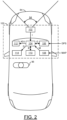
FIG. 2 , a diagram illustrating an implementation of anapparatus 100 is shown in accordance with an example embodiment of the present invention. Theapparatus 100 may be mounted totally within, or at least partially within thevehicle 84. The apparatus (or system) 100 generally comprises a block (or circuit) 102, a block (or circuit) 104, a block (or circuit) 106, a block (or circuit) 108, a block (or circuit) 110, a block (or circuit) 112 and a block (or circuit) 114. The circuits 102-114 may be implemented as hardware, software executing on hardware, one or more integrated circuits and/or simulated with software. - A signal (e.g., I) may be generated by the
circuit 102 and transferred to thecircuit 104. The signal I may convey surrounding road information (e.g., lane widths, marker types, lane marker crossing indications and video) about theroad 82 created by thecircuit 102. A bidirectional signal (e.g., G) may be transferred between thecircuit 106 and thecircuit 104. The signal G may carry GPS position data (e.g., latitude value, longitude value, adjustment information and confidence information). Thecircuit 108 may generate a signal (e.g., M) transferred to thecircuit 104. The signal M may transfer map data. A bidirectional signal (e.g., B) may be exchanged between thecircuit 104 and thecircuit 110. The signal B may contain information (e.g., road type and number of lanes) about theroad 82. A signal (e.g., D) may be generated by thecircuit 104 and transferred to thecircuit 114. The signal D may convey display information. A signal (e.g., ADJ) may be generated by thecircuit 104 and provided to thecircuit 112. The signal ADJ may contain automotive (or vehicle) related data. - The
circuit 102 may implement a sensor. In various embodiments, thesensor 102 may be an optical camera. Thecamera 102 is generally operational to provide the surrounding road information (or image data) in the signal I. The road information may include lane width data, marker type data, lane change indicators and video of theroad 82 ahead of thevehicle 84 within the field ofview 94. In various embodiments, thecamera 102 may be a color camera. The color may be useful for distinguishing between solid-yellow lane markers (e.g., leftmost lane markers) from solid-white lane markers (e.g., rightmost lane markers). In various embodiments, thecamera 102 may provide an estimated lane width for at least the current lane CL in the center of the field ofview 94. In some embodiments, thecamera 102 may provide estimated lane widths for the lane(s) neighboring the center lane CL. In other embodiments, thecamera 102 may provide estimated lane widths for all of thelanes 90a-90n within the field ofview 94. The lane widths may be determined using standard image recognition methods and standard analysis methods implemented in thecamera 102. Thecamera 102 may also identify alllane markers 92a-92n within the field ofview 94. When thecamera 102 crosses over alane marker 92a-92n, thecamera 102 may notify thecircuit 104 that a lane change is occurring. Identification of thelane markers 92a-92n and the lane changes may be determined using standard image recognition methods and standard analysis methods implemented in thecamera 102. Thecamera 102 may transfer the road information to thecircuit 104 in the signal I. - One or more other types of sensors may be used in conjunction with or in place of the
camera 102.Example sensors 102 may include, but are not limited to, radar sensors, light detection and ranging (LiDAR) sensors, inertial sensors, thermal imaging sensors, and/or acoustic sensors. Some of thesensors 102 may detect objects on the side of theroad 82 to provide estimations of a left boundary and a right boundary of theroad 82. From the left boundary and the right boundary, a width of theroad 82 may be calculated. From the calculated width, an estimation of how maylanes 90a-90n probably fit within the width may be made based on a standard lane width. Thereafter, thesensors 102 may estimate the current lane CL that thevehicle 84 occupies based on the relative distances of thesensors 102 on thevehicle 84 to the left boundary and the right boundary of theroad 82 and the estimated number oflanes 90a-90n. Lane crossovers may be determined by thesensors 102 based on the estimated numbers of lanes and changes in the relative distances to the left boundary and/or the right boundary. - The
circuit 104 may implement a control circuit (e.g., an electronic control unit). Thecontrol circuit 104 is generally operational to keep track of the current lane CL that thevehicle 84 occupies, correct the current position of thevehicle 84 to a center of the current lane CL, and provide feedback data to thecircuit 106. The tracking may be based on the satellite position data received in the signal GPS, the map data received in the signal B and the road information received in the signal I. The feedback data may include an adjustment value and a corresponding confidence value. Thecontrol circuit 104 may be further operational to generate displayable information in the signal D based on information in the signal I, the satellite position data in the signal GPS and the map data in the signal B. Thecontrol circuit 104 may also be operational to generate vehicle-type information in the signal ADS. Map data received from thecircuit 108 via the signal M may be transferred to thecircuit 110 in the signal B for storage and subsequent retrieval. - The
circuit 106 may implement a satellite-navigation device. In various embodiments, thecircuit 106 may be a Global Positioning System receiver. Other types of satellite-navigation devices may be implemented to meet the design criteria of a particular application. The satellite-navigation device (or navigation circuit for short) 106 is generally operational to provide the latitude data and the longitude data of thevehicle 84 based on the signals GPS received from thesatellites 88. Thenavigation circuit 106 may also be operational to adjust the latitude data and the longitude data based on the adjustment value and a corresponding confidence value received from thecontrol circuit 104 in the signal G. The confidence value may have a range from zero (e.g., unreliable) to one (e.g., reliable). If the confidence value is above a high threshold (e.g., >0.7), thenavigation circuit 106 may correct the latitude data and the longitude data per the adjustment value. If the confidence value is below a low threshold (e.g., <0.3), thenavigation circuit 106 may ignore the adjustment value. If the confidence value is between the high threshold and the low threshold, thenavigation circuit 106 may apply a correction to both the latitude data and the longitude data that is a linear weighting based on the degree of confidence. - The
circuit 108 may implement a radio-frequency receiver. The radio-frequency receive 108 may be operational to receive the map data in the signal MAP from theantenna 86. The map data may be converted to a digital form and presented to thecontrol circuit 104 in the signal M. - The
circuit 110 may implement a storage device. In various embodiments, thestorage device 110 may be a hard-disk drive and/or a solid-state drive. Thestorage device 110 is generally operational to store the map data received by thevehicle 84 through the radio-frequency receiver 108. Thestorage device 110 generally enables thecontrol circuit 104 to access the map data in real time via the signal B. - The
circuit 112 may implement automotive circuitry. Theautomotive circuitry 112 may include, but is not limited to autonomous driver circuitry, accident prevention circuitry, traffic control circuitry and vehicle-to-vehicle communication circuitry. Theautomotive circuitry 112 may use the position data and the lane data generate by thecontrol circuit 104 in the signal ADJ as input parameters. - The
circuit 114 may implement a display circuit. Thedisplay circuit 114 is generally operational to provide a two-dimensional visual display to thedriver 96. The visual display may be based on the information received from thecontrol circuit 104 in the signal D. In some modes, the visual display may be a birds-eye view of a vehicle icon in a simulated road showing the vehicle icon in the current lane CL. In other modes, the visual display may be theroad 82 as seen by thesensor 102. - Referring to
FIG. 3 , a diagram illustrating an implementation of thecontrol circuit 104 is shown in accordance with an example embodiment of the invention. Thecontrol circuit 104 generally comprises a block (or circuit) 120, a block (or circuit) 122 and a block (or circuit) 124. The circuits 120-124 may be implemented as hardware, software executing on hardware, one or more integrated circuits and/or simulated with software. - The signal GPS may be implement as multiple signals (e.g., LL and ADJ). The signal LL may carry the longitude data and the latitude data as determined by the
navigation circuit 106. The signal ADJ may carry the adjustment data generated by thecontrol circuit 104 to enable thenavigation circuit 106 to correct the latitude data and the longitude data to a finer degree of accuracy and to a center of a current lane. The signal ADJ may also carry a confidence value of the adjustment data. The signal I may be implemented as multiple signals (e.g., LW, LC, MT and V). The signal LW may carry lane width data. The signal LC may carry a Boolean flag that indicates whether a lane change is occurring or not. The signal MT may carry lane marker type data. The signal V may carry video data. The signal B may be implemented as multiple signals (e.g., RT, NL and W). The signal RT may convey road type data about thecurrent road 82. The signal NL may identify the number N of thelanes 90a-90n in theroad 82 at the current location of thevehicle 84. The signal W may carry the map data received from theantenna 86 via the signal M to be written in thestorage device 110. A signal (e.g., LSE) may be generated by thecircuit 120 and presented to thecircuits control circuit 104 to any other circuitry in thevehicle 84 that may utilize the lane state estimation information. - The
circuit 120 may implement a state machine circuit. In various embodiments, thecircuit 120 may be a lane location state machine. Thestate machine circuit 120 is generally operational to track the current lane CL among themany lanes 90a-90n of theroad 82 at the current location. The tracking may be based on the latitude data (e.g., the signal LL), the longitude data (e.g., the signal LL), the road type data (e.g., the signal RT), the number of lanes data (e.g., the signal NL), the lane width data (e.g., the signal LW), the lane marker type data (e.g., the signal MT) and the lane marker crossing indication (e.g., the signal LC). An estimated current lane number and a fine-accuracy location of thevehicle 84 in the current lane CL may be presented in the signal LSE. - The
circuit 122 may implement an adjustment circuit. Theadjustment circuit 122 may be operational to calculate the adjustment value and the corresponding confidence value in the signal ADJ based on the signal LSE. Theadjustment circuit 122 may implement standard statistical methods to calculate a confidence value in each confidence interval. The adjustment data may be used by thenavigation circuit 106 to update the longitude data and the latitude data to indicate that thevehicle 84 is at a center of the current lane CL. - The
circuit 124 may implement a display generation circuit. Thecircuit 124 is generally operational to generate display information in the signal D based on the lane estimation data in the signal LSE in and/or the video of theroad 82 taken by thesensor 102 in the signal V. The display information may include, but is not limited to, a birds-eve graphical representation of the surroundingroad 82 and the video in the signal V received from thesensor 102 of theroad 82 ahead of thevehicle 84. - Referring to
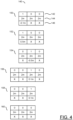
FIG. 4 , a diagram illustrating Karnaugh maps 140 used to define state transitions in thestate machine circuit 120 are shown in accordance with an example embodiment of the invention. Each of the Karnaugh maps 140 may include aparameter 142, aparameter 144 and aparameter 146 in consecutive rows along an axis. A perpendicular axis may contain a column for eachlane 90a-90n of theroad 82 at the current location. - The
parameter 142 may contain a Boolean value in each column. A true value (e.g., 1) may indicate the current lane CL that thevehicle 84 occupies. A false value (e.g., 0) may indicate that thevehicle 84 is not in thecorresponding lane 90a-90n. - The
parameter 144 may contain a width value of thelanes 90a-90n. A width of the current lane CL may be based on the lane marker data determined by thesensor 102. The width (WTH) of the current lane may be based onformula 1 as follows:
- The function ABS(Y) may return an absolute value for the variable Y. The variable YL may be a distance to the nearest
left lane marker 92a-92n (e.g., 92b inFIG. 1 ) as seen from the position of thesensor 102. The variable YR may be a distance to the nearestright lane marker 92a-92n (e.g., 92c inFIG. 1 ) as seen from the position of thesensor 102. The variables illustrated inrow 144 ofFIG. 4 are shown in units of meters (m). Other units may be implemented to meet the design criteria of a particular application. - The
parameter 146 may contain an offset value indicating an offset distance of thesensor 102 from the center of the current lane CL. Negative values may signify that thesensor 102 is left of the center of the lane. A zero (or null value) generally means that thesensor 102 is at the center of the current lane. Positive values may signify that thesensor 102 is right of the center of the current lane. An "X" in a column may be a don't care value as thevehicle 84 does not occupy thecorresponding lane 90a-90n. The offset values may also be expressed in units of meters. - When the map data indicates that the
vehicle 84 is traveling on an access ramp merging into a multi-digitized road 82 (e.g., a freeway), theBoolean data 142 in thestate machine circuit 120 is initialized to true in one of thecolumns 1 to N, where N is the number of available lanes on theroad 82 per the map data. The column initially marked as true depends on whether the merge is on the left side, right side or somewhere in the middle of theroad 82. - A
Karnaugh map 150 generally illustrates an example initial state of thestate machine circuit 102 for a three-lane road (or highway) 82 with thevehicle 84 having just entered theroad 82 from the left side. The Boolean 1 in the leftmost column signifies that thevehicle 84 is in the leftmost lane (e.g., lane number N=1 andlane 90a inFIG. 1 ) of the three lanes. The width of all three lanes may be measured by thesensor 102 as having the same width (e.g., 2 meters wide). The offsetparameter 146 may be -0.1 meters to indicate that thevehicle 84 is left of center in the leftmost lane. - Once the
state machine circuit 120 is initialized, a current state may update based on when thesensor 102 indicates a lane change and which direction the change is occurring. AKarnaugh map 152 may illustrate a beginning of rightward lane change by thevehicle 84. TheBoolean data 142 may still show thevehicle 84 in the leftmost lane. The offsetdata 146 may illustrate that thevehicle 84 has moved from the left side of the lane center in theKarnaugh map 150 to a right side of the lane center (e.g., +0.5m) in theKarnaugh map 152. Although themap 152 illustrates an example entry from the left side of theroad 82, similar entries onto theroad 82 may be captured from the right side or in any lane of the road 82 (e.g., entering in the inner lane of a two-lane-wide entrance ramp onto the road 82). - A
Karnaugh map 154 generally shows that the rightward lane change has been detected by thesensor 102. Thesensor 102 may observe thevehicle 84 crossing over nearest lane marker to the right of the vehicle 84 (that now becomes the nearest lane marker to the left of the vehicle 84). During the lane marker crossover, thesensor 102 may assert a Boolean true value in the signal LC to notify thestate machine circuit 120 that the lane change is in progress. At non-lane crossover times, thesensor 102 may assert a Boolean false value in the signal LC. In response to the lane change, thesensor 102 may update the offsetvalue 146 to show thevehicle 84 on the left side of the center lane (e.g., -0.5m) of the newly entered current lane CL. Thestate machine circuit 120 may respond to the lane change by updating theBoolean data 142 to remove thevehicle 84 from the left lane and place thevehicle 84 in the center lane (e.g., lane number N=2). - Merges and other related incidents that might appear to be lane changes to the
sensor 102, but may not actually indicate that thevehicle 84 has changed position, may be filtered out by examining thelane markers 92a-92n on either side of thevehicle 84 and checking for continuity in a validity test performed by thestate machine circuit 120. For example, if thevehicle 84 is in the leftmost lane and thesensor 102 reports a rightward lane change, thestate machine circuit 120 may check a character of thelane markers 92a-92n to the left of thevehicle 84 both before and after the apparent lane change. If the left lane marker was a solid line both before and after the reported lane change, thestate machine circuit 120 may ignore (or invalidate) the lane change notification and the state machine is not updated. However, if the left lane marker was solid before the alleged lane change, and became dashed afterwards, thestate machine circuit 120 may update the state machine accordingly to indicate (or validate) that thevehicle 84 has moved into a different lane. - A
Karnaugh map 156 may illustrate a situation where theroad 82 has added a new lane to the left of thevehicle 84. The additional lane (e.g., a new leftmost lane) may be indicated by both the map data and the road information. Thestate machine circuit 120 indicates that theBoolean data 142 for the newly added lane is false as thevehicle 84 remains in the same lane as in theKarnaugh map 154. - A
Karnaugh map 158 generally illustrates a situation where the rightmost lane (e.g., lane number N=4) in theroad 82 ends. The map data and the sensor road information may each notify thestate machine circuit 120 that the rightmost lane has ended. In response, thestate machine circuit 120 removes (or invalidates) the rightmost column. Thevehicle 84 may remain in the same lane as before in theKarnaugh map 156. - A
Karnaugh map 160 may illustrate thevehicle 84 exiting from theroad 82 from the right side. The satellite-navigation data and/or the sensor road information may inform thestate machine circuit 120 that thevehicle 84 has moved to the right of the rightmost lane and thus is no longer on theroad 82. In response to thevehicle 84 leaving theroad 82, thestate machine circuit 102 may update theBoolean data 142 to false in all columns to show that thevehicle 84 is not in anylane 90a-90n of theroad 82. Thestate machine circuit 120 may transition to a state where thevehicle 84 is considered to be in a null lane off theroad 82. - While the
vehicle 84 is on theroad 82, thecontrol circuit 104/adjustment circuit 122 may use the offsetdata 146 to generate the adjustment information in the signal ADJ. Where the number of lanes N is odd, an adjustment value (ϕ) may be determined by formula 2 as follows:
- Where

state machine circuit 120. Where the number of lanes N is even, the adjustment value ϕ may be determined by formula 3 as follows:
- While the
vehicle 84 is not on the road 82 (e.g., in the null lane), thecontrol circuit 104/adjustment circuit 122 may set the adjustment data in the signal ADJ to a null (e.g., zero adjustment value). - Referring to
FIG. 5 , a diagram illustrating an example scene presented on thedisplay device 114 is shown in accordance with an example embodiment of the invention. Thedisplay device 114 may show a graphic representation (or simulation) 170 of thevehicle 84 on theroad 82. In therepresentation 170, thevehicle 84 may be represented by a vehicle-shapedicon 172. At least eachneighboring lane 90a-90c (if any) of thetotal lanes 90a-90n may be separated bylines 174a-174n of the proper type as indicated in the signal MT. In other examples, the scene may be replaced by the actual video taken by thesensor 102 of theroad 82 ahead of thevehicle 84. Other information may be displayed on thedisplay device 114 in other modes to meet the design criteria of a particular application. - The functions and structures illustrated in the diagrams of
FIGS. 1-5 may be designed, modeled, emulated, and/or simulated using one or more of a conventional general purpose processor, digital computer, microprocessor, microcontroller, distributed computer resources and/or similar computational machines, programmed according to the teachings of the present specification, as will be apparent to those skilled in the relevant art(s). Appropriate software, firmware, coding, routines, instructions, opcodes, microcode, and/or program modules may readily be prepared by skilled programmers based on the teachings of the present disclosure, as will also be apparent to those skilled in the relevant art(s). The software is generally embodied in a medium or several media, for example non-transitory storage media, and may be executed by one or more of the processors sequentially or in parallel. - Embodiments of the present invention may also be implemented in one or more of ASICs (application specific integrated circuits), FPGAs (field programmable gate arrays), PLDs (programmable logic devices), CPLDs (complex programmable logic device), sea-of-gates, ASSPs (application specific standard products), SoCs (system-on-chips), MCM (multi-chip module), and integrated circuits. The circuitry may be implemented based on one or more hardware description languages. Embodiments of the present invention may be utilized in connection with flash memory, nonvolatile memory, random access memory, read-only memory, magnetic disks, floppy disks, optical disks such as DVDs and DVD RAM, magneto-optical disks and/or distributed storage systems.
- The terms "may" and "generally" when used herein in conjunction with "is(are)" and verbs are meant to communicate the intention that the description is exemplary and believed to be broad enough to encompass both the specific examples presented in the disclosure as well as alternative examples that could be derived based on the disclosure. The terms "may" and "generally" as used herein should not be construed to necessarily imply the desirability or possibility of omitting a corresponding element.
- While the invention has been particularly shown and described with reference to embodiments thereof, it will be understood by those skilled in the art that various changes in form and details may be made without departing from the scope of the invention.
Claims (12)
- An apparatus comprising:a sensor (102) configured to generate surrounding road information of a road, wherein said road has a plurality of available lanes;a navigation circuit (106) configured to determine a current position of said apparatus on said road; and a control circuit (104) comprising a state machine circuit (120) configured totrack said current lane among said available lanes andconfigured to (i) access map data that identifies a number of said available lanes in said road proximate said position, (ii) determine a current lane among said available lanes that said apparatus is within based on all of said position, said surrounding road information and said map data and (iii) generate feedback data based on both said position and said current lane, characterized in that the state machine circuit (120) is configured such that the Boolean data (142) in the state machine circuit (120) is initialized to true in one of a number of columns 1 to N where N is the number of available lanes indicated by the map data when the map data indicates that the vehicle is merging onto the road, the state machine is configured to set a value for the Boolean data (142) in one of the columns for a lane as false when the map data indicates that the lane is a newly added lane, and the state machine is arranged to remove a value for a column for a lane when the map data indicates that the lane has ended; andwherein said navigation circuit is further configured to adjust said current position to a center of said current lane in response to said feedback data.
- The apparatus according to claim 1, wherein said state machine is further configured to change said current lane to another lane among said available lanes in response to said surrounding road information indicating that said apparatus is crossing over a current lane marker in said road.
- The apparatus according to any of claims 1 or 2, wherein said state machine is further configured to determine a validity of said change of said current lane in said state machine based on a given lane marker on one side of said apparatus changing from before said change of said current lane to after said change of said current lane.
- The apparatus according to claim 1, wherein said state machine is further configured to change said current lane to a null lane outside of said available lanes in response to said surrounding road information indicating that said apparatus has departed from said road.
- The apparatus according to claim 1, wherein said state machine is further configured to receive a width of said road from said sensor.
- The apparatus according to claim 6, wherein said control circuit is further configured to generate said feedback data based on said width.
- The apparatus according to claim 1, wherein said feedback data comprises (i) an adjustment value that causes said navigation circuit to move said current position of said apparatus to said center of said current lane and (ii) a confidence value of said adjustment value.
- The apparatus according to claim 1, wherein (i) said navigation circuit comprises a Global Positioning System receiver and (ii) said map data comprises a forward looking digital horizon map data.
- The apparatus according to claim 1, wherein said sensor is one or more of a camera, a light detection and ranging sensor, a radar or any combination thereof.
- A method for lane level position determination for a vehicle, comprising the steps of:generating surrounding road information of a road, wherein said road has a plurality of available lanes;operating a state machine circuit (120) comprised in a control circuit, said state machine being configured to track a current lane among available lanes bydetermining a current position of said vehicle on said road using a navigation circuit;accessing map data that identifies a number of said available lanes in said road proximate said position using the control circuit;determining a current lane among said available lanes that said vehicle is within based on all of said position, said surrounding road information and said map data;generating feedback data based on both said position and said current lane;characterized in that the state machine is configured to track a current lane among available lanes byinitializing the Boolean data (142) in the state machine circuit (120) to true in one of a number of columns 1 to N where N is the number of available lanes indicated by the map data when the map data indicates that the vehicle is merging onto the road, setting a value for the Boolean data (142) in one of the columns for a lane as false when the map data indicates that the lane is a newly added lane, removing a value for a columnfor a lane when the map data indicates that the lane has ended; andadjusting said current position to a center of said current lane in response to said feedback data.
- The method according to claim 10, further comprising the step of:
changing said current lane in said state machine to another lane among said available lanes in response to said surrounding road information indicating that said vehicle is crossing over a current lane marker in said road. - The method according to claim 11, further comprising the step of:
determining a validity of said change of said current lane in said state machine based on a given lane marker on one side of said vehicle changing from before said change of said current lane to after said change of said current lane.
Applications Claiming Priority (2)
| Application Number | Priority Date | Filing Date | Title |
|---|---|---|---|
| US16/268,864 US10929692B2 (en) | 2019-02-06 | 2019-02-06 | Lane level position determination |
| PCT/US2020/014710 WO2020163091A1 (en) | 2019-02-06 | 2020-01-23 | Lane level position determination |
Publications (2)
| Publication Number | Publication Date |
|---|---|
| EP3921602A1 EP3921602A1 (en) | 2021-12-15 |
| EP3921602B1 true EP3921602B1 (en) | 2024-05-15 |
Family
ID=69726752
Family Applications (1)
| Application Number | Title | Priority Date | Filing Date |
|---|---|---|---|
| EP20708300.7A Active EP3921602B1 (en) | 2019-02-06 | 2020-01-23 | Lane level position determination |
Country Status (4)
| Country | Link |
|---|---|
| US (1) | US10929692B2 (en) |
| EP (1) | EP3921602B1 (en) |
| CN (1) | CN113396313B (en) |
| WO (1) | WO2020163091A1 (en) |
Families Citing this family (13)
| Publication number | Priority date | Publication date | Assignee | Title |
|---|---|---|---|---|
| US11403816B2 (en) * | 2017-11-30 | 2022-08-02 | Mitsubishi Electric Corporation | Three-dimensional map generation system, three-dimensional map generation method, and computer readable medium |
| EP3822584A4 (en) * | 2018-07-11 | 2021-07-07 | Nissan Motor Co., Ltd. | DISPLACEMENT ASSISTANCE PROCESS AND DEVICE |
| US11332136B2 (en) * | 2019-12-06 | 2022-05-17 | Continental Autonomous Mobility US, LLC | Automated vehicle lane positioning |
| CN113538923A (en) * | 2020-04-20 | 2021-10-22 | 深圳富泰宏精密工业有限公司 | Warning method for vehicle lane change and vehicle-mounted device |
| CN113873426B (en) * | 2020-06-30 | 2025-01-24 | 罗伯特·博世有限公司 | System, control unit and method for determining geo-fence events for a vehicle |
| US11380093B2 (en) * | 2020-07-30 | 2022-07-05 | GM Global Technology Operations LLC | Detecting road edges by fusing aerial image and telemetry evidences |
| CN112541437A (en) * | 2020-12-15 | 2021-03-23 | 北京百度网讯科技有限公司 | Vehicle positioning method and device, electronic equipment and storage medium |
| KR20220133007A (en) * | 2021-03-24 | 2022-10-04 | 현대자동차주식회사 | Apparatus for supporting driving of vehicle and method of the same |
| FR3125495B1 (en) * | 2021-07-20 | 2024-03-08 | Continental Automotive | Device and method for detecting a lane departure of a vehicle |
| US12358518B2 (en) * | 2021-09-24 | 2025-07-15 | Embark Trucks, Inc. | Autonomous vehicle automated scenario characterization |
| US20230115240A1 (en) * | 2021-10-13 | 2023-04-13 | Arriver Software Llc | Advanced driver-assistance systems feature activation control using digital map and on-board sensing to confirm safe vehicle operation |
| CN116499463A (en) * | 2023-03-24 | 2023-07-28 | 深圳元戎启行科技有限公司 | Lane-level positioning method, device, vehicle and storage medium based on perception results |
| US20250002044A1 (en) * | 2023-06-27 | 2025-01-02 | Torc Robotics, Inc. | Redundant lane detection for autonomous vehicles |
Family Cites Families (20)
| Publication number | Priority date | Publication date | Assignee | Title |
|---|---|---|---|---|
| JP3169483B2 (en) * | 1993-06-25 | 2001-05-28 | 富士通株式会社 | Road environment recognition device |
| US6819779B1 (en) * | 2000-11-22 | 2004-11-16 | Cognex Corporation | Lane detection system and apparatus |
| JP2005301603A (en) * | 2004-04-09 | 2005-10-27 | Denso Corp | Driving lane detector |
| CN1707224A (en) * | 2004-06-07 | 2005-12-14 | 日产自动车株式会社 | On-vehicle navigation apparatus and turnoff road guiding method and apparatus and method for determining driving lane |
| JP4437714B2 (en) * | 2004-07-15 | 2010-03-24 | 三菱電機株式会社 | Lane recognition image processing device |
| JP4822766B2 (en) * | 2005-08-18 | 2011-11-24 | 富士通株式会社 | Road marking recognition device and system |
| US8676492B2 (en) * | 2006-01-19 | 2014-03-18 | GM Global Technology Operations LLC | Map-aided vision-based lane sensing |
| US20100121518A1 (en) * | 2008-11-11 | 2010-05-13 | Timothy Arthur Tiernan | Map enhanced positioning sensor system |
| US8384532B2 (en) * | 2009-04-02 | 2013-02-26 | GM Global Technology Operations LLC | Lane of travel on windshield head-up display |
| DE102010050167B4 (en) * | 2010-10-30 | 2012-10-25 | Audi Ag | Method and device for determining a plausible lane for guiding a vehicle and motor vehicles |
| DE102011010377A1 (en) | 2011-02-04 | 2012-08-09 | GM Global Technology Operations LLC (n. d. Gesetzen des Staates Delaware) | Method for operating a motor vehicle and motor vehicle |
| US9711851B1 (en) * | 2016-02-04 | 2017-07-18 | Proxy Technologies, Inc. | Unmanned vehicle, system and method for transmitting signals |
| US10048688B2 (en) * | 2016-06-24 | 2018-08-14 | Qualcomm Incorporated | Dynamic lane definition |
| US10139244B2 (en) * | 2016-08-17 | 2018-11-27 | Veoneer Us Inc. | ADAS horizon and vision supplemental V2X |
| US10107631B2 (en) * | 2016-08-19 | 2018-10-23 | GM Global Technology Operations LLC | Methods and systems for vehicle positioning feedback |
| CN106441319B (en) * | 2016-09-23 | 2019-07-16 | 中国科学院合肥物质科学研究院 | A system and method for generating a lane-level navigation map of an unmanned vehicle |
| CN110431609B (en) | 2017-03-27 | 2022-01-11 | 三菱电机株式会社 | Vehicle position estimation device |
| WO2018179616A1 (en) * | 2017-03-27 | 2018-10-04 | 三菱電機株式会社 | Vehicle position deduction apparatus |
| US10254414B2 (en) * | 2017-04-11 | 2019-04-09 | Veoneer Us Inc. | Global navigation satellite system vehicle position augmentation utilizing map enhanced dead reckoning |
| US20180315314A1 (en) * | 2017-04-28 | 2018-11-01 | GM Global Technology Operations LLC | Automated vehicle route traversal |
-
2019
- 2019-02-06 US US16/268,864 patent/US10929692B2/en active Active
-
2020
- 2020-01-23 WO PCT/US2020/014710 patent/WO2020163091A1/en not_active Ceased
- 2020-01-23 EP EP20708300.7A patent/EP3921602B1/en active Active
- 2020-01-23 CN CN202080011995.5A patent/CN113396313B/en active Active
Also Published As
| Publication number | Publication date |
|---|---|
| US20200250438A1 (en) | 2020-08-06 |
| WO2020163091A1 (en) | 2020-08-13 |
| CN113396313B (en) | 2024-04-30 |
| CN113396313A (en) | 2021-09-14 |
| US10929692B2 (en) | 2021-02-23 |
| EP3921602A1 (en) | 2021-12-15 |
Similar Documents
| Publication | Publication Date | Title |
|---|---|---|
| EP3921602B1 (en) | Lane level position determination | |
| US10891854B2 (en) | Traffic management system | |
| CN106352867B (en) | Method and device for determining the position of a vehicle | |
| EP1991973B1 (en) | Image processing system and method | |
| CN109791565B (en) | ADAS field of view and vision supplement V2X | |
| CN112384962B (en) | Driving assistance method and driving assistance device | |
| CN104808220B (en) | Vehicle localization integrity monitoring method based on wireless information interaction | |
| EP3425609B1 (en) | Autonomous travel assistance device | |
| CN114216469B (en) | Method for updating high-precision map, intelligent base station and storage medium | |
| JP2021188914A (en) | Vehicle control device and method for estimating vehicle position | |
| US10109191B2 (en) | Method of quickly detecting road distress | |
| JP2022089122A (en) | Vehicle control based on reliability figures calculated from infrastructure information | |
| JP2020140602A (en) | Map data update system, travel probe information collection device, travel probe information providing device, and travel probe information collection method | |
| JP7068756B2 (en) | Map data generator, computer-readable recording medium and map data generator | |
| US20240135719A1 (en) | Identification of unknown traffic objects | |
| KR101544854B1 (en) | Method for providing real time traffic information around vehicle and traffic information system using the same | |
| CN116009046B (en) | Vehicle positioning method and device | |
| US20240135252A1 (en) | Lane-assignment for traffic objects on a road | |
| KR101446545B1 (en) | Display system of vehicle information based on location in cross-road | |
| JP7724139B2 (en) | Map information update system and its server device | |
| EP3835724A1 (en) | Self-location estimation method and self-location estimation device | |
| EP3859281B1 (en) | Apparatus and method for collecting data for map generation | |
| CN113280822B (en) | Vehicle positioning method and positioning device | |
| JP7701401B2 (en) | Map update device, map update method, and computer program for updating map | |
| EP4575582A1 (en) | Method and processing system for processing probe data for performance of at least one lane level traffic-based function |
Legal Events
| Date | Code | Title | Description |
|---|---|---|---|
| STAA | Information on the status of an ep patent application or granted ep patent |
Free format text: STATUS: UNKNOWN |
|
| STAA | Information on the status of an ep patent application or granted ep patent |
Free format text: STATUS: THE INTERNATIONAL PUBLICATION HAS BEEN MADE |
|
| PUAI | Public reference made under article 153(3) epc to a published international application that has entered the european phase |
Free format text: ORIGINAL CODE: 0009012 |
|
| STAA | Information on the status of an ep patent application or granted ep patent |
Free format text: STATUS: REQUEST FOR EXAMINATION WAS MADE |
|
| 17P | Request for examination filed |
Effective date: 20210706 |
|
| AK | Designated contracting states |
Kind code of ref document: A1 Designated state(s): AL AT BE BG CH CY CZ DE DK EE ES FI FR GB GR HR HU IE IS IT LI LT LU LV MC MK MT NL NO PL PT RO RS SE SI SK SM TR |
|
| DAV | Request for validation of the european patent (deleted) | ||
| DAX | Request for extension of the european patent (deleted) | ||
| RAP1 | Party data changed (applicant data changed or rights of an application transferred) |
Owner name: ARRIVER SOFTWARE LLC |
|
| GRAP | Despatch of communication of intention to grant a patent |
Free format text: ORIGINAL CODE: EPIDOSNIGR1 |
|
| RIC1 | Information provided on ipc code assigned before grant |
Ipc: G06V 20/56 20220101ALI20231108BHEP Ipc: G01S 13/931 20200101ALI20231108BHEP Ipc: G01S 13/89 20060101ALI20231108BHEP Ipc: G01S 7/00 20060101ALI20231108BHEP Ipc: B60W 50/00 20060101ALI20231108BHEP Ipc: B60W 30/12 20200101ALI20231108BHEP Ipc: G08G 1/16 20060101ALI20231108BHEP Ipc: G01C 21/36 20060101ALI20231108BHEP Ipc: G01C 21/30 20060101AFI20231108BHEP |
|
| STAA | Information on the status of an ep patent application or granted ep patent |
Free format text: STATUS: GRANT OF PATENT IS INTENDED |
|
| INTG | Intention to grant announced |
Effective date: 20231214 |
|
| GRAS | Grant fee paid |
Free format text: ORIGINAL CODE: EPIDOSNIGR3 |
|
| GRAA | (expected) grant |
Free format text: ORIGINAL CODE: 0009210 |
|
| STAA | Information on the status of an ep patent application or granted ep patent |
Free format text: STATUS: THE PATENT HAS BEEN GRANTED |
|
| AK | Designated contracting states |
Kind code of ref document: B1 Designated state(s): AL AT BE BG CH CY CZ DE DK EE ES FI FR GB GR HR HU IE IS IT LI LT LU LV MC MK MT NL NO PL PT RO RS SE SI SK SM TR |
|
| REG | Reference to a national code |
Ref country code: CH Ref legal event code: EP |
|
| REG | Reference to a national code |
Ref country code: DE Ref legal event code: R096 Ref document number: 602020030906 Country of ref document: DE |
|
| REG | Reference to a national code |
Ref country code: IE Ref legal event code: FG4D |
|
| REG | Reference to a national code |
Ref country code: LT Ref legal event code: MG9D |
|
| REG | Reference to a national code |
Ref country code: NL Ref legal event code: MP Effective date: 20240515 |
|
| PG25 | Lapsed in a contracting state [announced via postgrant information from national office to epo] |
Ref country code: IS Free format text: LAPSE BECAUSE OF FAILURE TO SUBMIT A TRANSLATION OF THE DESCRIPTION OR TO PAY THE FEE WITHIN THE PRESCRIBED TIME-LIMIT Effective date: 20240915 |
|
| PG25 | Lapsed in a contracting state [announced via postgrant information from national office to epo] |
Ref country code: BG Free format text: LAPSE BECAUSE OF FAILURE TO SUBMIT A TRANSLATION OF THE DESCRIPTION OR TO PAY THE FEE WITHIN THE PRESCRIBED TIME-LIMIT Effective date: 20240515 |
|
| PG25 | Lapsed in a contracting state [announced via postgrant information from national office to epo] |
Ref country code: HR Free format text: LAPSE BECAUSE OF FAILURE TO SUBMIT A TRANSLATION OF THE DESCRIPTION OR TO PAY THE FEE WITHIN THE PRESCRIBED TIME-LIMIT Effective date: 20240515 Ref country code: FI Free format text: LAPSE BECAUSE OF FAILURE TO SUBMIT A TRANSLATION OF THE DESCRIPTION OR TO PAY THE FEE WITHIN THE PRESCRIBED TIME-LIMIT Effective date: 20240515 |
|
| PG25 | Lapsed in a contracting state [announced via postgrant information from national office to epo] |
Ref country code: GR Free format text: LAPSE BECAUSE OF FAILURE TO SUBMIT A TRANSLATION OF THE DESCRIPTION OR TO PAY THE FEE WITHIN THE PRESCRIBED TIME-LIMIT Effective date: 20240816 |
|
| PG25 | Lapsed in a contracting state [announced via postgrant information from national office to epo] |
Ref country code: PT Free format text: LAPSE BECAUSE OF FAILURE TO SUBMIT A TRANSLATION OF THE DESCRIPTION OR TO PAY THE FEE WITHIN THE PRESCRIBED TIME-LIMIT Effective date: 20240916 |
|
| REG | Reference to a national code |
Ref country code: AT Ref legal event code: MK05 Ref document number: 1687247 Country of ref document: AT Kind code of ref document: T Effective date: 20240515 |
|
| PG25 | Lapsed in a contracting state [announced via postgrant information from national office to epo] |
Ref country code: NL Free format text: LAPSE BECAUSE OF FAILURE TO SUBMIT A TRANSLATION OF THE DESCRIPTION OR TO PAY THE FEE WITHIN THE PRESCRIBED TIME-LIMIT Effective date: 20240515 |
|
| PG25 | Lapsed in a contracting state [announced via postgrant information from national office to epo] |
Ref country code: ES Free format text: LAPSE BECAUSE OF FAILURE TO SUBMIT A TRANSLATION OF THE DESCRIPTION OR TO PAY THE FEE WITHIN THE PRESCRIBED TIME-LIMIT Effective date: 20240515 |
|
| PG25 | Lapsed in a contracting state [announced via postgrant information from national office to epo] |
Ref country code: AT Free format text: LAPSE BECAUSE OF FAILURE TO SUBMIT A TRANSLATION OF THE DESCRIPTION OR TO PAY THE FEE WITHIN THE PRESCRIBED TIME-LIMIT Effective date: 20240515 |
|
| PG25 | Lapsed in a contracting state [announced via postgrant information from national office to epo] |
Ref country code: PL Free format text: LAPSE BECAUSE OF FAILURE TO SUBMIT A TRANSLATION OF THE DESCRIPTION OR TO PAY THE FEE WITHIN THE PRESCRIBED TIME-LIMIT Effective date: 20240515 |
|
| PG25 | Lapsed in a contracting state [announced via postgrant information from national office to epo] |
Ref country code: LV Free format text: LAPSE BECAUSE OF FAILURE TO SUBMIT A TRANSLATION OF THE DESCRIPTION OR TO PAY THE FEE WITHIN THE PRESCRIBED TIME-LIMIT Effective date: 20240515 |
|
| PG25 | Lapsed in a contracting state [announced via postgrant information from national office to epo] |
Ref country code: PT Free format text: LAPSE BECAUSE OF FAILURE TO SUBMIT A TRANSLATION OF THE DESCRIPTION OR TO PAY THE FEE WITHIN THE PRESCRIBED TIME-LIMIT Effective date: 20240916 Ref country code: PL Free format text: LAPSE BECAUSE OF FAILURE TO SUBMIT A TRANSLATION OF THE DESCRIPTION OR TO PAY THE FEE WITHIN THE PRESCRIBED TIME-LIMIT Effective date: 20240515 Ref country code: NO Free format text: LAPSE BECAUSE OF FAILURE TO SUBMIT A TRANSLATION OF THE DESCRIPTION OR TO PAY THE FEE WITHIN THE PRESCRIBED TIME-LIMIT Effective date: 20240815 Ref country code: NL Free format text: LAPSE BECAUSE OF FAILURE TO SUBMIT A TRANSLATION OF THE DESCRIPTION OR TO PAY THE FEE WITHIN THE PRESCRIBED TIME-LIMIT Effective date: 20240515 Ref country code: LV Free format text: LAPSE BECAUSE OF FAILURE TO SUBMIT A TRANSLATION OF THE DESCRIPTION OR TO PAY THE FEE WITHIN THE PRESCRIBED TIME-LIMIT Effective date: 20240515 Ref country code: IS Free format text: LAPSE BECAUSE OF FAILURE TO SUBMIT A TRANSLATION OF THE DESCRIPTION OR TO PAY THE FEE WITHIN THE PRESCRIBED TIME-LIMIT Effective date: 20240915 Ref country code: HR Free format text: LAPSE BECAUSE OF FAILURE TO SUBMIT A TRANSLATION OF THE DESCRIPTION OR TO PAY THE FEE WITHIN THE PRESCRIBED TIME-LIMIT Effective date: 20240515 Ref country code: GR Free format text: LAPSE BECAUSE OF FAILURE TO SUBMIT A TRANSLATION OF THE DESCRIPTION OR TO PAY THE FEE WITHIN THE PRESCRIBED TIME-LIMIT Effective date: 20240816 Ref country code: FI Free format text: LAPSE BECAUSE OF FAILURE TO SUBMIT A TRANSLATION OF THE DESCRIPTION OR TO PAY THE FEE WITHIN THE PRESCRIBED TIME-LIMIT Effective date: 20240515 Ref country code: ES Free format text: LAPSE BECAUSE OF FAILURE TO SUBMIT A TRANSLATION OF THE DESCRIPTION OR TO PAY THE FEE WITHIN THE PRESCRIBED TIME-LIMIT Effective date: 20240515 Ref country code: BG Free format text: LAPSE BECAUSE OF FAILURE TO SUBMIT A TRANSLATION OF THE DESCRIPTION OR TO PAY THE FEE WITHIN THE PRESCRIBED TIME-LIMIT Effective date: 20240515 Ref country code: AT Free format text: LAPSE BECAUSE OF FAILURE TO SUBMIT A TRANSLATION OF THE DESCRIPTION OR TO PAY THE FEE WITHIN THE PRESCRIBED TIME-LIMIT Effective date: 20240515 Ref country code: RS Free format text: LAPSE BECAUSE OF FAILURE TO SUBMIT A TRANSLATION OF THE DESCRIPTION OR TO PAY THE FEE WITHIN THE PRESCRIBED TIME-LIMIT Effective date: 20240815 |
|
| PG25 | Lapsed in a contracting state [announced via postgrant information from national office to epo] |
Ref country code: DK Free format text: LAPSE BECAUSE OF FAILURE TO SUBMIT A TRANSLATION OF THE DESCRIPTION OR TO PAY THE FEE WITHIN THE PRESCRIBED TIME-LIMIT Effective date: 20240515 |
|
| PG25 | Lapsed in a contracting state [announced via postgrant information from national office to epo] |
Ref country code: EE Free format text: LAPSE BECAUSE OF FAILURE TO SUBMIT A TRANSLATION OF THE DESCRIPTION OR TO PAY THE FEE WITHIN THE PRESCRIBED TIME-LIMIT Effective date: 20240515 |
|
| PG25 | Lapsed in a contracting state [announced via postgrant information from national office to epo] |
Ref country code: CZ Free format text: LAPSE BECAUSE OF FAILURE TO SUBMIT A TRANSLATION OF THE DESCRIPTION OR TO PAY THE FEE WITHIN THE PRESCRIBED TIME-LIMIT Effective date: 20240515 |
|
| PG25 | Lapsed in a contracting state [announced via postgrant information from national office to epo] |
Ref country code: SK Free format text: LAPSE BECAUSE OF FAILURE TO SUBMIT A TRANSLATION OF THE DESCRIPTION OR TO PAY THE FEE WITHIN THE PRESCRIBED TIME-LIMIT Effective date: 20240515 Ref country code: RO Free format text: LAPSE BECAUSE OF FAILURE TO SUBMIT A TRANSLATION OF THE DESCRIPTION OR TO PAY THE FEE WITHIN THE PRESCRIBED TIME-LIMIT Effective date: 20240515 |
|
| PG25 | Lapsed in a contracting state [announced via postgrant information from national office to epo] |
Ref country code: SM Free format text: LAPSE BECAUSE OF FAILURE TO SUBMIT A TRANSLATION OF THE DESCRIPTION OR TO PAY THE FEE WITHIN THE PRESCRIBED TIME-LIMIT Effective date: 20240515 |
|
| PG25 | Lapsed in a contracting state [announced via postgrant information from national office to epo] |
Ref country code: SM Free format text: LAPSE BECAUSE OF FAILURE TO SUBMIT A TRANSLATION OF THE DESCRIPTION OR TO PAY THE FEE WITHIN THE PRESCRIBED TIME-LIMIT Effective date: 20240515 Ref country code: SK Free format text: LAPSE BECAUSE OF FAILURE TO SUBMIT A TRANSLATION OF THE DESCRIPTION OR TO PAY THE FEE WITHIN THE PRESCRIBED TIME-LIMIT Effective date: 20240515 Ref country code: RO Free format text: LAPSE BECAUSE OF FAILURE TO SUBMIT A TRANSLATION OF THE DESCRIPTION OR TO PAY THE FEE WITHIN THE PRESCRIBED TIME-LIMIT Effective date: 20240515 Ref country code: EE Free format text: LAPSE BECAUSE OF FAILURE TO SUBMIT A TRANSLATION OF THE DESCRIPTION OR TO PAY THE FEE WITHIN THE PRESCRIBED TIME-LIMIT Effective date: 20240515 Ref country code: DK Free format text: LAPSE BECAUSE OF FAILURE TO SUBMIT A TRANSLATION OF THE DESCRIPTION OR TO PAY THE FEE WITHIN THE PRESCRIBED TIME-LIMIT Effective date: 20240515 Ref country code: CZ Free format text: LAPSE BECAUSE OF FAILURE TO SUBMIT A TRANSLATION OF THE DESCRIPTION OR TO PAY THE FEE WITHIN THE PRESCRIBED TIME-LIMIT Effective date: 20240515 |
|
| PG25 | Lapsed in a contracting state [announced via postgrant information from national office to epo] |
Ref country code: IT Free format text: LAPSE BECAUSE OF FAILURE TO SUBMIT A TRANSLATION OF THE DESCRIPTION OR TO PAY THE FEE WITHIN THE PRESCRIBED TIME-LIMIT Effective date: 20240515 |
|
| REG | Reference to a national code |
Ref country code: DE Ref legal event code: R097 Ref document number: 602020030906 Country of ref document: DE |
|
| PLBE | No opposition filed within time limit |
Free format text: ORIGINAL CODE: 0009261 |
|
| STAA | Information on the status of an ep patent application or granted ep patent |
Free format text: STATUS: NO OPPOSITION FILED WITHIN TIME LIMIT |
|
| 26N | No opposition filed |
Effective date: 20250218 |
|
| PG25 | Lapsed in a contracting state [announced via postgrant information from national office to epo] |
Ref country code: SI Free format text: LAPSE BECAUSE OF FAILURE TO SUBMIT A TRANSLATION OF THE DESCRIPTION OR TO PAY THE FEE WITHIN THE PRESCRIBED TIME-LIMIT Effective date: 20240515 |
|
| REG | Reference to a national code |
Ref country code: CH Ref legal event code: PL |
|
| PG25 | Lapsed in a contracting state [announced via postgrant information from national office to epo] |
Ref country code: SE Free format text: LAPSE BECAUSE OF FAILURE TO SUBMIT A TRANSLATION OF THE DESCRIPTION OR TO PAY THE FEE WITHIN THE PRESCRIBED TIME-LIMIT Effective date: 20240515 |
|
| PG25 | Lapsed in a contracting state [announced via postgrant information from national office to epo] |
Ref country code: MC Free format text: LAPSE BECAUSE OF FAILURE TO SUBMIT A TRANSLATION OF THE DESCRIPTION OR TO PAY THE FEE WITHIN THE PRESCRIBED TIME-LIMIT Effective date: 20240515 Ref country code: LU Free format text: LAPSE BECAUSE OF NON-PAYMENT OF DUE FEES Effective date: 20250123 |
|
| GBPC | Gb: european patent ceased through non-payment of renewal fee |
Effective date: 20250123 |
|
| PG25 | Lapsed in a contracting state [announced via postgrant information from national office to epo] |
Ref country code: BE Free format text: LAPSE BECAUSE OF NON-PAYMENT OF DUE FEES Effective date: 20250131 Ref country code: GB Free format text: LAPSE BECAUSE OF NON-PAYMENT OF DUE FEES Effective date: 20250123 |
|
| PG25 | Lapsed in a contracting state [announced via postgrant information from national office to epo] |
Ref country code: FR Free format text: LAPSE BECAUSE OF NON-PAYMENT OF DUE FEES Effective date: 20250131 |
|
| PG25 | Lapsed in a contracting state [announced via postgrant information from national office to epo] |
Ref country code: CH Free format text: LAPSE BECAUSE OF NON-PAYMENT OF DUE FEES Effective date: 20250131 |
|
| REG | Reference to a national code |
Ref country code: BE Ref legal event code: MM Effective date: 20250131 |
|
| PG25 | Lapsed in a contracting state [announced via postgrant information from national office to epo] |
Ref country code: IE Free format text: LAPSE BECAUSE OF NON-PAYMENT OF DUE FEES Effective date: 20250123 |
|
| PGFP | Annual fee paid to national office [announced via postgrant information from national office to epo] |
Ref country code: DE Payment date: 20251222 Year of fee payment: 7 |