EP3920009A1 - Touchscreen-system mit zwei nebeneinander angeordneten touchscreens - Google Patents
Touchscreen-system mit zwei nebeneinander angeordneten touchscreens Download PDFInfo
- Publication number
- EP3920009A1 EP3920009A1 EP21176838.7A EP21176838A EP3920009A1 EP 3920009 A1 EP3920009 A1 EP 3920009A1 EP 21176838 A EP21176838 A EP 21176838A EP 3920009 A1 EP3920009 A1 EP 3920009A1
- Authority
- EP
- European Patent Office
- Prior art keywords
- master
- slave
- cards
- card
- contact
- Prior art date
- Legal status (The legal status is an assumption and is not a legal conclusion. Google has not performed a legal analysis and makes no representation as to the accuracy of the status listed.)
- Withdrawn
Links
Images





Classifications
-
- G—PHYSICS
- G06—COMPUTING OR CALCULATING; COUNTING
- G06F—ELECTRIC DIGITAL DATA PROCESSING
- G06F3/00—Input arrangements for transferring data to be processed into a form capable of being handled by the computer; Output arrangements for transferring data from processing unit to output unit, e.g. interface arrangements
- G06F3/01—Input arrangements or combined input and output arrangements for interaction between user and computer
- G06F3/03—Arrangements for converting the position or the displacement of a member into a coded form
- G06F3/041—Digitisers, e.g. for touch screens or touch pads, characterised by the transducing means
- G06F3/0416—Control or interface arrangements specially adapted for digitisers
- G06F3/0418—Control or interface arrangements specially adapted for digitisers for error correction or compensation, e.g. based on parallax, calibration or alignment
- G06F3/04182—Filtering of noise external to the device and not generated by digitiser components
-
- G—PHYSICS
- G06—COMPUTING OR CALCULATING; COUNTING
- G06F—ELECTRIC DIGITAL DATA PROCESSING
- G06F3/00—Input arrangements for transferring data to be processed into a form capable of being handled by the computer; Output arrangements for transferring data from processing unit to output unit, e.g. interface arrangements
- G06F3/01—Input arrangements or combined input and output arrangements for interaction between user and computer
- G06F3/03—Arrangements for converting the position or the displacement of a member into a coded form
- G06F3/041—Digitisers, e.g. for touch screens or touch pads, characterised by the transducing means
- G06F3/0416—Control or interface arrangements specially adapted for digitisers
-
- G—PHYSICS
- G06—COMPUTING OR CALCULATING; COUNTING
- G06F—ELECTRIC DIGITAL DATA PROCESSING
- G06F3/00—Input arrangements for transferring data to be processed into a form capable of being handled by the computer; Output arrangements for transferring data from processing unit to output unit, e.g. interface arrangements
- G06F3/01—Input arrangements or combined input and output arrangements for interaction between user and computer
- G06F3/03—Arrangements for converting the position or the displacement of a member into a coded form
- G06F3/041—Digitisers, e.g. for touch screens or touch pads, characterised by the transducing means
- G06F3/044—Digitisers, e.g. for touch screens or touch pads, characterised by the transducing means by capacitive means
-
- G—PHYSICS
- G06—COMPUTING OR CALCULATING; COUNTING
- G06F—ELECTRIC DIGITAL DATA PROCESSING
- G06F3/00—Input arrangements for transferring data to be processed into a form capable of being handled by the computer; Output arrangements for transferring data from processing unit to output unit, e.g. interface arrangements
- G06F3/01—Input arrangements or combined input and output arrangements for interaction between user and computer
- G06F3/048—Interaction techniques based on graphical user interfaces [GUI]
- G06F3/0487—Interaction techniques based on graphical user interfaces [GUI] using specific features provided by the input device, e.g. functions controlled by the rotation of a mouse with dual sensing arrangements, or of the nature of the input device, e.g. tap gestures based on pressure sensed by a digitiser
- G06F3/0488—Interaction techniques based on graphical user interfaces [GUI] using specific features provided by the input device, e.g. functions controlled by the rotation of a mouse with dual sensing arrangements, or of the nature of the input device, e.g. tap gestures based on pressure sensed by a digitiser using a touch-screen or digitiser, e.g. input of commands through traced gestures
- G06F3/04883—Interaction techniques based on graphical user interfaces [GUI] using specific features provided by the input device, e.g. functions controlled by the rotation of a mouse with dual sensing arrangements, or of the nature of the input device, e.g. tap gestures based on pressure sensed by a digitiser using a touch-screen or digitiser, e.g. input of commands through traced gestures for inputting data by handwriting, e.g. gesture or text
-
- G—PHYSICS
- G06—COMPUTING OR CALCULATING; COUNTING
- G06F—ELECTRIC DIGITAL DATA PROCESSING
- G06F3/00—Input arrangements for transferring data to be processed into a form capable of being handled by the computer; Output arrangements for transferring data from processing unit to output unit, e.g. interface arrangements
- G06F3/14—Digital output to display device ; Cooperation and interconnection of the display device with other functional units
- G06F3/1423—Digital output to display device ; Cooperation and interconnection of the display device with other functional units controlling a plurality of local displays, e.g. CRT and flat panel display
-
- G—PHYSICS
- G06—COMPUTING OR CALCULATING; COUNTING
- G06F—ELECTRIC DIGITAL DATA PROCESSING
- G06F2203/00—Indexing scheme relating to G06F3/00 - G06F3/048
- G06F2203/041—Indexing scheme relating to G06F3/041 - G06F3/045
- G06F2203/04104—Multi-touch detection in digitiser, i.e. details about the simultaneous detection of a plurality of touching locations, e.g. multiple fingers or pen and finger
Definitions
- a touch screen system includes two touch screens arranged side by side.
- the field of the invention relates to the operation of a large screen touch screen, or "large screen” in English, in an airplane cockpit.
- Current touch technology does not allow the production of touch screens larger than 15 inches in diagonal.
- two touch screens are placed side by side. Each panel is managed by an electronic card.
- the tactile interface must be unique: the computer using the tactile data sees only one and unique sensor; the passage of a finger from one panel to another must be transparent for the user.
- the cycle times depend on the processing operations carried out, in particular the number of fingers on the touchscreen interface, the cycle times of the two cards therefore being different.
- the goal is to address screens that are at least 15 'in size.
- the touchscreen technology used is usually ITO for Indium Tin Oxide. However, this technology is limited by the size of the electrodes and therefore their resistivities: 355 mm maximum for a diamond-type mesh. Classically this corresponds to screen sizes of 15 ".
- two touch panels or panels DT1, DT2, called “Active Area” are contiguous and have a border F corresponding to the junction of their sides put edge to edge.
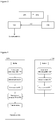
- two electronic management boards CG1, CG2 or "Touch Screen Board” in English are used, as illustrated on the diagram. figure 1 .
- a classic chain for detecting presses on a touch screen is illustrated on the figure 2 .
- This chain begins with the creation of an acquisition table TA of the variations in capacitance of the cells of the touch screen.
- Contact detection and contact tracking is then carried out, using conventional algorithms.
- the detection of contacts uses for example the algorithm described in the document " A comparison of algorithms for subpixel peak detection "by R. Fisher and DK Naidu, ImageTechnology, pp. 385-404, 1996 .
- Contact tracking uses, for example, the algorithm described in the document "A Comparative View on Exemplar Tracking-by-Detection Approaches” by Elie Moussy, Alhayat Ali Mekonnen, Guilhem Marion, and Frédéric Lerasle.
- post-processing is carried out on the contact tracking data, comprising for example the application of a smoothing filter. The positions of the estimated contacts are delivered at the output of the chain.
- the figure 3 schematically represents two rectangular matrix touch screens DT1, DT2, juxtaposed, comprising a border F between the two touch screens DT1, DT2, each touch screen being connected to a respective electronic management card CG1, CG2.
- the two touch screens DT1, DT2 and respectively the two electronic management cards CG1, CG2 are configured as master / slave, index 1 relating to the master elements and index 2 relating to the slave elements.
- An LC data communication link allows the transmission of data from the slave card CG2 to the master card CG1.
- the management cards CG1, CG2 carry out all the processing operations, as illustrated on the figure 4 .
- Each slave card CG1, CG2 respectively performs, for its associated touch screen DT1, DT2, an acquisition table TA1, TA2 of the variations in capacitances of the cells of its associated touch screen. Then, each slave card CG1, CG2 respectively performs, for its associated touch screen DT1, DT2, contact detection and contact tracking.
- the slave card CG2 sends its results to the master card CG1, which alone performs a merger and again a follow-up of the data produced by the two cards CG1, CG2, in order to assign a unique identifier to each contact detected.
- the master card CG1 performs, on its own, a post-processing on the merged and tracked data, comprising for example the application of a smoothing filter.
- the positions of the estimated contacts are then delivered at the output of the master card CG1.
- the master card CG1 manages a border or coastal zone, corresponding to a distance from the border, in number of cells, less than a threshold. Its dimension is a few centimeters wide on either side of the border F. In this area, the master card CG1 merges the detections of presses seen from both sides, i.e. on the two master touch panels DT1 and slave DT2.
- This embodiment uses merge and tracking processing to merge and monitor the detections of the two master cards CG1 and slave CG2.
- Two rectangular matrix touch screens DT1, DT2 are juxtaposed and include a border F between the two touch screens DT1, DT2.
- Each touch screen DT1, DT2 is connected to a respective electronic management card CG1, CG2.
- the two electronic management cards CG1, CG2 are each connected to a third management card CG3.
- the three management cards CG1, CG2, CG3 are configured as master / slave, the third card CG3 being master and the two cards CG1, CG2 being slaves.
- Two LC data communication links allow the transmission of data from the first and second slave cards CG1, CG2 to the third master card CG3.
- the three management cards CG1, CG2, CG3 carry out all the processing operations, as illustrated on the figure 6 .
- Each master card CG1 and slave CG2 respectively performs, for its associated touch screen DT1, DT2, an acquisition table TA1, TA2 of the variations in capacitances of the cells of its associated touch screen. Then, each master card CG1 and slave CG2 respectively performs, for its associated touch screen DT1, DT2, contact detection and contact monitoring.
- Each slave card CG1, CG2 sends its results to the master card CG3, which performs, on its own, a merger and again monitoring of the data produced by the two slave cards CG1, CG2, in order to assign a unique identifier to each contact detected.
- the master card CG3 performs, on its own, a post-processing on the merged and tracked data, comprising for example the application of a smoothing filter.
- the positions of the estimated contacts are then delivered at the output of the master card CG3.
- the master card CG3 manages a border or coastal zone, corresponding to a distance from the border, in number of cells, less than a threshold. Its dimension is a few centimeters wide on either side of the border F. In this area, the CG3 master card merges the pressure detections seen from both sides, i.e. on the two touch screens DT1, DT2.
- the estimation of the positions of the contacts is not very precise, because the contact position is extrapolated taking into account its adjacent cells.
- close to the border F cells adjacent to that of a contact can be situated on the touch screen other than that of the contact. The detection of the contact positions is thus distorted, as illustrated on the figure 7 .
- FIG. Seven represents a finger moving on the junction or border F of the two touch screens DT1, DT2.
- L1 and L2 represent the estimated positions of the contacts, carried out by the processing operations of each card CG1, CG2.
- the existing embodiments utilize a merge at the border area, and as illustrated in the figure 7 , the estimated detections are appreciably distant. This signature is identical to that of two close fingers.
- the fusion treatment cannot differentiate the case of the same finger visible on the two panels from the case of two close fingers. As a result, two nearby fingers end up fused together when they shouldn't have been.
- An aim of the invention is to overcome the problems mentioned above.
- Such a system makes it possible to significantly improve the precision of the estimated contacts, at reduced cost in terms of memory used and calculation time.
- the master and slave cards are configured to exchange their respective operating statuses.
- the master card can develop an overall status of the two touch screens.
- the master and slave cards are configured to perform, during their development of the respective acquisition table, a pre-detection of a contact in a zone of the touch screens comprising the border and at a distance from the border, in number of cells, less than a threshold, and configured to deactivate, in the event of no contact in this zone, the exchanges between master and slave cards of the respective acquisition tables. Only the exchange of acquisition tables TA1, TA2 is disabled because if there is no contact then no position transmitted (i.e. no exchange of contacts detected).
- the data transfer time is limited, in particular because the data exchanges are limited.
- a contact is a finger press or the presence of a drop of water.
- Such a status makes it possible to report to the user any anomaly determined on the two cards.
- the master and slave cards are configured to synchronize by state changes or by software or hardware events.
- the synchronization ensures the simultaneous production of the acquisition tables of the variations in capacitances on each of the two cards.
- this feature facilitates the merge and follow-up processing. In fact, this processing no longer needs to take account of the displacement of the contact between the two acquisitions in order to effect the fusion, which makes it possible to improve the fusion by limiting the risks of merging a contact of another finger.
- the master and slave cards are configured to synchronize by handshaking using semaphores.
- Synchronization by semaphore or "handshaking" in English avoids downtime, because no time margin is necessary. It does not require a fixed cycle time. Finally, it is robust, as both cards have to wait before continuing.
- a touch screen system comprising two juxtaposed rectangular matrix touch panels DT1, DT2, broken down into cells, and comprising a border F between the two touch panels.
- Each touch screen DT1 DT2 is connected to a respective electronic management card CG1, CG2, and a data communication link LC between the cards CG1, CG2 enables them to exchange data.
- the two cards CG1, CG2 and respectively the two touch panels DT1, DT2 are configured as master / slave.
- the figure 9 illustrates the operation of the system according to one aspect of the invention.
- the master CG1 and slave CG2 cards are configured to produce and exchange a respective acquisition table TA1, TA2 of the variations in capacitances of each cell of their respective touch screen DT1, DT2.
- the master CG1 and slave CG2 cards are respectively configured to estimate a respective position Det1, Det2 of the detection of a contact from the data of the central cell CC of the contact detected on a panel and of at least four cells C1, C2 , C3, C4 surrounding the central cell CC, of which at least one cell belongs to the other slab (DT2, DT1) when the central cell (CC) is arranged on the edge of the border (F), as illustrated on the figure 10 .
- the slave card (CG2) is configured to transmit the position (Det2) estimated from the detection of a contact to the master card (CG1).
- a contact can be a digital press or the presence of a drop of water.
- the master card CG1 is configured to merge and follow the positions of the detected contacts, and to apply filtering post-processing to the merged positions of the detected and followed contacts.
- the system according to one aspect of the invention can comprise one or two optional technical characteristics among the two which follow.
- the master and slave cards CG1, CG2 are configured to exchange their respective operating statuses SF1, SF2, and / or to synchronize by establishing a link using semaphores.
- the operating status of a management card CG1, CG2 of a touch screen DT1, DT2 corresponds to values, developed by the management card associated with the touch screen, of operating parameters of the touch screen.
- Capacitive detection consists in producing a detection matrix or acquisition table made up of conductive rows and columns arranged so as to detect the local variations in capacitance introduced by the proximity of the user's fingers or any other conductive designation object. . A change in capacitance is measured at the level of each cell. The position is then estimated by taking into account the central cell CC and at least four cells around C1, C2, C3, C4, as shown in figure 10 . However, at the junction F of the two slabs tactile, cells necessary for calculating the position of a central cell CC of a touch screen can be located on the other touch screen.
- each card CG1, CG2 can estimate with improved precision the detection of a contact in the border area, because it also has knowledge of the acquisition table of the other card, therefore of the cell capacitance variation data. surrounding the central cell and belonging to the touch screen connected to the other management card.
- the exchange or rather transfer from the slave card CG2 to the master card CG1 of the contacts Det2 detected by the slave card CG2 allows the master card CG1 to do only one follow-up, after having merged the contact detections estimated by the two cards, thanks to the exchange of acquisition cards TA1, TA2.
- the respective exchange between the master and slave CG1 cards CG2, of synchronization data makes it possible to synchronize the master and slave CG2 cards CG1 and CG2, by establishing a link using semaphores, which makes it possible to simultaneously develop acquisition tables.
- This has the advantage of simplifying the merger work on the border zone. Indeed, the displacement of the contact between the two acquisitions, at the level of the border zone, is not to be taken into account.
- the figure 11 illustrates the improvement in the precision of the contact detection of each card in the border zone, after the exchange of acquisition cards TA1, TA2, between the master and slave cards CG1 CG2, of the respective acquisition tables TA1, TA2 of the variations in capacitances of the respective touch panels DT1, DT2.
- the precision is significantly improved compared to that of the figure 7 , without this exchange.
- the master CG1 and slave CG2 cards can be configured to perform, during their creation of the respective acquisition table TA1, TA2, a pre-detection of a contact in a border zone, ie a zone of the touch screens comprising the border F and at a distance from the border, in number of cells, less than a threshold, and configured to, in the event of no contact in this zone, deactivate exchanges between master cards CG1 and slave CG2 of the acquisition tables respective TA1, TA2.
- this processing and exchange of data are avoided, which then limits the calculation time and the memory required.
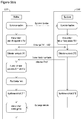
- the fourth exchange is detailed on the figure 12 which represents an example of synchronization by establishment of connection ("handshake" in English) using semaphores, which ensures a robustness of synchronization.
Landscapes
- Engineering & Computer Science (AREA)
- Theoretical Computer Science (AREA)
- General Engineering & Computer Science (AREA)
- Human Computer Interaction (AREA)
- Physics & Mathematics (AREA)
- General Physics & Mathematics (AREA)
- User Interface Of Digital Computer (AREA)
- Position Input By Displaying (AREA)
- Controls And Circuits For Display Device (AREA)
Applications Claiming Priority (1)
| Application Number | Priority Date | Filing Date | Title |
|---|---|---|---|
| FR2005847A FR3111208B1 (fr) | 2020-06-04 | 2020-06-04 | Système à écran tactile comprenant deux dalles tactiles disposées côte à côte |
Publications (1)
| Publication Number | Publication Date |
|---|---|
| EP3920009A1 true EP3920009A1 (de) | 2021-12-08 |
Family
ID=72266529
Family Applications (1)
| Application Number | Title | Priority Date | Filing Date |
|---|---|---|---|
| EP21176838.7A Withdrawn EP3920009A1 (de) | 2020-06-04 | 2021-05-31 | Touchscreen-system mit zwei nebeneinander angeordneten touchscreens |
Country Status (4)
| Country | Link |
|---|---|
| US (1) | US11500491B2 (de) |
| EP (1) | EP3920009A1 (de) |
| CN (1) | CN113760120A (de) |
| FR (1) | FR3111208B1 (de) |
Families Citing this family (1)
| Publication number | Priority date | Publication date | Assignee | Title |
|---|---|---|---|---|
| US20250335051A1 (en) * | 2024-04-30 | 2025-10-30 | Stmicroelectronics International N.V. | Touch ic communication |
Citations (5)
| Publication number | Priority date | Publication date | Assignee | Title |
|---|---|---|---|---|
| US20090250269A1 (en) * | 2008-04-02 | 2009-10-08 | Tse-Lun Hung | Capacitive touch system and data transmission method in a capacitive touch system |
| US20120056662A1 (en) * | 2010-09-07 | 2012-03-08 | Thomas James Wilson | Master/slave control of touch sensing |
| US8810543B1 (en) * | 2010-05-14 | 2014-08-19 | Cypress Semiconductor Corporation | All points addressable touch sensing surface |
| US20150185935A1 (en) | 2013-12-27 | 2015-07-02 | Lg Display Co., Ltd. | Touch system, touch panel, and display device |
| FR3072803A1 (fr) | 2017-10-19 | 2019-04-26 | Immersion | Systeme et procede pour la gestion simultanee d’une pluralite de peripheriques de designation |
Family Cites Families (1)
| Publication number | Priority date | Publication date | Assignee | Title |
|---|---|---|---|---|
| US20150077647A1 (en) * | 2013-09-18 | 2015-03-19 | JMT ouch Corp., Ltd. | Multiplier extended display |
-
2020
- 2020-06-04 FR FR2005847A patent/FR3111208B1/fr active Active
-
2021
- 2021-05-26 US US17/331,581 patent/US11500491B2/en active Active
- 2021-05-28 CN CN202110589688.1A patent/CN113760120A/zh active Pending
- 2021-05-31 EP EP21176838.7A patent/EP3920009A1/de not_active Withdrawn
Patent Citations (5)
| Publication number | Priority date | Publication date | Assignee | Title |
|---|---|---|---|---|
| US20090250269A1 (en) * | 2008-04-02 | 2009-10-08 | Tse-Lun Hung | Capacitive touch system and data transmission method in a capacitive touch system |
| US8810543B1 (en) * | 2010-05-14 | 2014-08-19 | Cypress Semiconductor Corporation | All points addressable touch sensing surface |
| US20120056662A1 (en) * | 2010-09-07 | 2012-03-08 | Thomas James Wilson | Master/slave control of touch sensing |
| US20150185935A1 (en) | 2013-12-27 | 2015-07-02 | Lg Display Co., Ltd. | Touch system, touch panel, and display device |
| FR3072803A1 (fr) | 2017-10-19 | 2019-04-26 | Immersion | Systeme et procede pour la gestion simultanee d’une pluralite de peripheriques de designation |
Non-Patent Citations (2)
| Title |
|---|
| ELIE MOUSSYALHAYAT ALI MEKONNENGUILHEM MARIONFRÉDÉRIC LERASLE, A COMPARATIVE VIEW ON EXEMPLAR TRACKING-BY-DETECTION APPROACHES |
| R. FISHERD. K. NAIDU: "A comparison of algorithms for subpixel peak detection", IMAGETECHNOLOGY, 1996, pages 385 - 404 |
Also Published As
| Publication number | Publication date |
|---|---|
| FR3111208B1 (fr) | 2022-11-25 |
| US20210382600A1 (en) | 2021-12-09 |
| US11500491B2 (en) | 2022-11-15 |
| CN113760120A (zh) | 2021-12-07 |
| FR3111208A1 (fr) | 2021-12-10 |
Similar Documents
| Publication | Publication Date | Title |
|---|---|---|
| US11295110B2 (en) | Under-screen biometric identification apparatus and electronic device | |
| US10157305B2 (en) | Cover-glass optical isolation for optical touch and fingerprint sensing | |
| US10146258B2 (en) | Optical image sensor for display integration | |
| US10339342B2 (en) | Data transfer based on input device identifying information | |
| CN109032420B (zh) | 显示装置及显示装置的操作方法 | |
| US10169637B2 (en) | On-screen optical fingerprint capture for user authentication | |
| US20150035776A1 (en) | Information terminal, method for controlling input acceptance, and program for controlling input acceptance | |
| WO2012103693A1 (en) | Multiple-input touch panel and method for gesture recognition | |
| CN105182676A (zh) | 投影幕布、触控屏投影显示方法及系统 | |
| CN110235144A (zh) | 用于指纹识别的方法和电子设备 | |
| WO2019178793A1 (zh) | 屏下生物特征识别装置和电子设备 | |
| EP3920009A1 (de) | Touchscreen-system mit zwei nebeneinander angeordneten touchscreens | |
| CN104035623B (zh) | 触控屏防误触的响应方法和装置 | |
| CN109582416A (zh) | 指纹采集方法、装置、存储介质及电子设备 | |
| FR3111209A1 (fr) | Système à écran tactile comprenant deux dalles tactiles disposées côte à côte | |
| CN108235814A (zh) | 用户接口交互的方法和终端设备 | |
| WO2020199159A1 (zh) | 引导用户注册指纹的方法和电子设备 | |
| CN103809817A (zh) | 光学触控系统及其物件位置的判断方法 | |
| EP3698236A1 (de) | System und verfahren zur gleichzeitigen verwaltung einer vielzahl von designationsperipheriegeräten | |
| WO2020061734A1 (zh) | 注册指纹的方法、指纹注册装置和电子设备 | |
| WO2020227938A1 (zh) | 引导用户注册指纹的方法和电子设备 | |
| CN102184054B (zh) | 多触摸点识别方法及装置 | |
| CN109726650A (zh) | 显示屏、电子设备及指纹处理方法 | |
| CN201796348U (zh) | 采用无线方式传输数据的触摸屏 | |
| CN110287861A (zh) | 指纹识别方法、装置、存储介质及电子设备 |
Legal Events
| Date | Code | Title | Description |
|---|---|---|---|
| PUAI | Public reference made under article 153(3) epc to a published international application that has entered the european phase |
Free format text: ORIGINAL CODE: 0009012 |
|
| STAA | Information on the status of an ep patent application or granted ep patent |
Free format text: STATUS: THE APPLICATION HAS BEEN PUBLISHED |
|
| AK | Designated contracting states |
Kind code of ref document: A1 Designated state(s): AL AT BE BG CH CY CZ DE DK EE ES FI FR GB GR HR HU IE IS IT LI LT LU LV MC MK MT NL NO PL PT RO RS SE SI SK SM TR |
|
| B565 | Issuance of search results under rule 164(2) epc |
Effective date: 20210712 |
|
| STAA | Information on the status of an ep patent application or granted ep patent |
Free format text: STATUS: REQUEST FOR EXAMINATION WAS MADE |
|
| 17P | Request for examination filed |
Effective date: 20220217 |
|
| RBV | Designated contracting states (corrected) |
Designated state(s): AL AT BE BG CH CY CZ DE DK EE ES FI FR GB GR HR HU IE IS IT LI LT LU LV MC MK MT NL NO PL PT RO RS SE SI SK SM TR |
|
| STAA | Information on the status of an ep patent application or granted ep patent |
Free format text: STATUS: EXAMINATION IS IN PROGRESS |
|
| 17Q | First examination report despatched |
Effective date: 20220607 |
|
| STAA | Information on the status of an ep patent application or granted ep patent |
Free format text: STATUS: THE APPLICATION IS DEEMED TO BE WITHDRAWN |
|
| 18D | Application deemed to be withdrawn |
Effective date: 20221018 |
|
| P01 | Opt-out of the competence of the unified patent court (upc) registered |
Effective date: 20230427 |