EP3915859B1 - Automotive frame part - Google Patents
Automotive frame part Download PDFInfo
- Publication number
- EP3915859B1 EP3915859B1 EP19911319.2A EP19911319A EP3915859B1 EP 3915859 B1 EP3915859 B1 EP 3915859B1 EP 19911319 A EP19911319 A EP 19911319A EP 3915859 B1 EP3915859 B1 EP 3915859B1
- Authority
- EP
- European Patent Office
- Prior art keywords
- resin
- outer part
- portions
- test specimen
- automotive
- Prior art date
- Legal status (The legal status is an assumption and is not a legal conclusion. Google has not performed a legal analysis and makes no representation as to the accuracy of the status listed.)
- Active
Links
Images





Classifications
-
- B—PERFORMING OPERATIONS; TRANSPORTING
- B62—LAND VEHICLES FOR TRAVELLING OTHERWISE THAN ON RAILS
- B62D—MOTOR VEHICLES; TRAILERS
- B62D29/00—Superstructures, understructures, or sub-units thereof, characterised by the material thereof
- B62D29/001—Superstructures, understructures, or sub-units thereof, characterised by the material thereof characterised by combining metal and synthetic material
- B62D29/005—Superstructures, understructures, or sub-units thereof, characterised by the material thereof characterised by combining metal and synthetic material preformed metal and synthetic material elements being joined together, e.g. by adhesives
-
- B—PERFORMING OPERATIONS; TRANSPORTING
- B62—LAND VEHICLES FOR TRAVELLING OTHERWISE THAN ON RAILS
- B62D—MOTOR VEHICLES; TRAILERS
- B62D25/00—Superstructure or monocoque structure sub-units; Parts or details thereof not otherwise provided for
-
- B—PERFORMING OPERATIONS; TRANSPORTING
- B62—LAND VEHICLES FOR TRAVELLING OTHERWISE THAN ON RAILS
- B62D—MOTOR VEHICLES; TRAILERS
- B62D25/00—Superstructure or monocoque structure sub-units; Parts or details thereof not otherwise provided for
- B62D25/06—Fixed roofs
-
- B—PERFORMING OPERATIONS; TRANSPORTING
- B62—LAND VEHICLES FOR TRAVELLING OTHERWISE THAN ON RAILS
- B62D—MOTOR VEHICLES; TRAILERS
- B62D29/00—Superstructures, understructures, or sub-units thereof, characterised by the material thereof
- B62D29/001—Superstructures, understructures, or sub-units thereof, characterised by the material thereof characterised by combining metal and synthetic material
- B62D29/002—Superstructures, understructures, or sub-units thereof, characterised by the material thereof characterised by combining metal and synthetic material a foamable synthetic material or metal being added in situ
-
- B—PERFORMING OPERATIONS; TRANSPORTING
- B60—VEHICLES IN GENERAL
- B60Y—INDEXING SCHEME RELATING TO ASPECTS CROSS-CUTTING VEHICLE TECHNOLOGY
- B60Y2306/00—Other features of vehicle sub-units
- B60Y2306/01—Reducing damages in case of crash, e.g. by improving battery protection
-
- B—PERFORMING OPERATIONS; TRANSPORTING
- B62—LAND VEHICLES FOR TRAVELLING OTHERWISE THAN ON RAILS
- B62D—MOTOR VEHICLES; TRAILERS
- B62D21/00—Understructures, i.e. chassis frame on which a vehicle body may be mounted
- B62D21/15—Understructures, i.e. chassis frame on which a vehicle body may be mounted having impact absorbing means, e.g. a frame designed to permanently or temporarily change shape or dimension upon impact with another body
-
- B—PERFORMING OPERATIONS; TRANSPORTING
- B62—LAND VEHICLES FOR TRAVELLING OTHERWISE THAN ON RAILS
- B62D—MOTOR VEHICLES; TRAILERS
- B62D21/00—Understructures, i.e. chassis frame on which a vehicle body may be mounted
- B62D21/15—Understructures, i.e. chassis frame on which a vehicle body may be mounted having impact absorbing means, e.g. a frame designed to permanently or temporarily change shape or dimension upon impact with another body
- B62D21/157—Understructures, i.e. chassis frame on which a vehicle body may be mounted having impact absorbing means, e.g. a frame designed to permanently or temporarily change shape or dimension upon impact with another body for side impacts
-
- B—PERFORMING OPERATIONS; TRANSPORTING
- B62—LAND VEHICLES FOR TRAVELLING OTHERWISE THAN ON RAILS
- B62D—MOTOR VEHICLES; TRAILERS
- B62D25/00—Superstructure or monocoque structure sub-units; Parts or details thereof not otherwise provided for
- B62D25/04—Door pillars ; windshield pillars
-
- B—PERFORMING OPERATIONS; TRANSPORTING
- B62—LAND VEHICLES FOR TRAVELLING OTHERWISE THAN ON RAILS
- B62D—MOTOR VEHICLES; TRAILERS
- B62D25/00—Superstructure or monocoque structure sub-units; Parts or details thereof not otherwise provided for
- B62D25/20—Floors or bottom sub-units
Definitions
- Patent Literature 1 discloses a technique for improving stiffness and collision safety of an automotive body by improving bending strength and torsional stiffness, while minimizing an increase in the weight, of an automotive structural part, such as a side sill, a floor member, or a pillar, having inside a closed space formed by placing a flange in a manner aligned with a top portion of a hat-shaped cross section part, by filling the internal space of the automotive structural part with a foamed foaming filler material.
- an automotive structural part such as a side sill, a floor member, or a pillar
- Patent Literature 2 discloses a technique, when the internal space of the closed cross section shape of a pillar or the like is filled with a highly stiff foamed body, the closed cross section shape being achieved by disposing parts with a hat-shaped cross section in a manner facing each other, with their flange portions in contact with each other, for fixing a highly stiff foamed body using a compressive counterforce generated in the process of foaming and filling the foamed body, to improve their strength, stiffness, and impact energy absorptiveness, while improving the vibration isolating performance for suppressing the communication of vibration sound.
- Patent Literature 3 relates to an automobile bodyshell frame structure that includes a generally elongated first panel member and a generally elongated second panel member having opposite side edge portions connected to the first panel member to define a hollow space between the first and second panel members.
- a filler is disposed within a portion of a cross-section of the hollow space between the first and second panel members.
- Patent Literature 4 is concerned with improving productivity while improving fuel consumption performance as well as safety against collision. against this backdrop, the document suggests a filler that is foamwise charged in between an outer panel and a reinforcement member.
- the average compression strength of the filler is set to be not less than 4 MPa, and the maximum bending strength is set to be not less than 10 MPa, while the average foaming air hole diameter is set to be not more than 5 mm.
- Patent Literature 5 discusses a center pillar that is provided with an outer panel located at the outside of a car body, an inside inner panel and a reinforcement. In the space between the outer panel and the reinforcement, a first filling material made of epoxy resin is foamed and filled. The average compressive strength of the filling material is 4 MPa or more and the maximum bending strength is 10 MPa or more. On both longitudinal end sides of the center pillar of the first filling material, second filling materials are filled so as to be abutted on both upper and lower end parts of the first filling material.
- the present invention is made to address such a drawback, and an object of the present invention is to provide an automotive frame part that is provided to a side portion of an automotive body, and is capable of increasing the crashworthiness energy absorbed by bending of the automotive frame part upon receiving a crashworthiness load from a side of the automotive body.
- An automotive frame part is provided to a side portion of an automotive body and absorbs crashworthiness energy by bending upon receiving a crashworthiness load from a side of the automotive body, the automotive frame part including: a member having a hat-shaped cross section or a U-shaped cross section, the member including a top portion, and a pair of side wall portions that are continuous from the top portion via punch shoulder R portions; and resin that is coated on or patched to an internal surface of the member having the hat-shaped cross section member or the U-shaped cross section and a release prevention member that is disposed, in order to prevent the resin from being released from the internal surface during the process in which the member bends by ensuring that the resin is nipped on the internal side of the punch shoulder R portions in the bending portions of the member, in a manner straddling over the top portion and covering a surface of the resin, and that has both ends joined to internal surfaces of the pair of side wall portions, wherein the coated or patched resin extends at least to a predetermined range toward
- a hat-shaped cross section member or a U-shaped cross section member that is configured to absorb a crashworthiness energy by bending upon receiving a crashworthiness load from a side of the automotive body, thereby improving the crashworthiness energy absorptive performance.
- FIGS. 1 to 9 Automotive frame parts according to a first embodiment and a second embodiment of the present invention will now be explained with reference to FIGS. 1 to 9 .
- the elements having substantially the same functions and configurations are assigned with the same reference signs, and explanations thereof will be omitted.
- the outer part 3 is a member made from a metal sheet and having a hat-shaped cross section, and has a top portion 3a, and a pair of side wall portions 3c that are continuous from the top portion 3a via punch shoulder R portions 3b, and flange portions 3d that are continuous from the respective side wall portions 3c.
- the inner part 5 is a flat plate-like member made from a metal sheet and having a flat plate-like shape.
- the side ends of the inner part 5 are joined to the flange portions 3d of the outer part 3, respectively, and a tubular member 9 is formed thereby.
- the automotive frame part 1 including the hat-shaped cross section member such as the outer part 3 is a part making up an automotive frame.
- the present invention is intended for an automotive frame part 1 making up the automotive frame, by being disposed at the left or the right part of the side portions of the automotive body.
- examples thereof include an A pillar and a B pillar disposed in a manner stretching in up-and-down directions of the automotive body, and a locker (side sill) and a roof rail that are disposed in a manner stretching in front-and-back directions of the automotive body.
- Examples of the types of the metal sheet used for the outer part 3 and the inner part 5 include a cold-rolled steel sheet, a hot-rolled steel sheet, a stainless steel sheet, a zinc-based coating steel sheet, a zinc alloy coating steel sheet, an aluminum alloy coating steel sheet, and an aluminum alloy sheet.
- the internal surfaces of the top portion 3a, the punch shoulder R portions 3b, and the side wall portions 3c of the outer part 3 are coated with the resin 7.
- the coating of the resin 7 has a thickness equal to or smaller than 8 mm after heating, and adheres to the internal surface of the outer part 3 at an adhesive strength of 10 MPa or higher at the room temperature.
- thermoplastic resin examples include vinyl resin (such as vinyl acetate and vinyl chloride), acrylic resin, polyamide resin, polystyrene resins, and cyanoacrylate resin.
- thermoset resin includes epoxy resin, urethane resin, ester resin, phenolic resin, melamine resin, and urea resin.
- elastomer resin includes nitro rubber resin, styrene butadiene rubber resin, modified silicone resin, butyl rubber resin, urethane rubber resin, and acrylic rubber resin.
- resins of any of these types those that do not fracture or collapse in the process of a bending deformation are preferable.
- the resin 7 By subjecting the resin 7 coated on the internal surface of the outer part 3 to a heat treatment, the resin 7 can be caused to adhere to the outer part 3 by the adhesive capacity of the resin 7 itself.
- an adhesive strength between the resin 7 and the outer part 3 can be maintained at 10 MPa or higher even after cooling down to the room temperature.
- the temperature and the time period used in the heat treatment may be adjusted as appropriate, depending on the type of the resin 7.
- the adhesive strength between the resin 7 and the outer part 3 may be set to a maximum sheared stress or an average sheared stress acting on the interface between the metal sheet and the resin.
- the maximum sheared stress or the average sheared stress may be acquired by, for example, executing a crashworthiness test to a double-layered square column including resin adhering to a metal sheet (e.g., a steel sheet), obtaining a boundary condition where the resin 7 peels off, and executing a crashworthiness analysis based on the boundary condition.
- the adhesive strength between the resin 7 and the outer part 3 may also be acquired by cutting out a part of the resin 7 and the outer part 3 after adhesion to each other, installing the cut resin 7 and outer part 3 in a tensile testing machine with the resin 7 pinched on one side and the outer part 3 pinched on the other side, and pulling the resin 7 and the outer part 3.
- the adhesive strength between the resin 7 and the outer part 3 it is also possible to use a measurement measured using a method of cutting a part of the resin 7 and the outer part 3 after adhesion to each other, installing the part in the tensile testing machine with the resin 7 pinched on one side and a handle portion (not illustrated) held on the other side, the handle portion being formed by bending the outer part 3 made of a metal sheet, and pulling the resin 7 and the handle portion. It is also possible to use a measurement measured using a method of joining a handle part to the outer part 3, and holding and pulling the handle part with a tensile testing machine.
- the adhesive strength between the resin 7 and the outer part 3 may also be measured by cutting out a part of the resin 7 and the tubular member 9, and installing the part in the tensile testing machine.
- the following explains the reason that the crashworthiness energy absorptive performance is improved by allowing the automotive frame part 1 according to the first embodiment to bend and to absorb a crashworthiness load applied to a side of the automotive body.
- a conventional automotive frame part including a hat-shaped cross section member made from a metal sheet such as a steel sheet absorbs the crashworthiness energy in a process in which a crashworthiness load is received in a direction intersecting with the longitudinal direction of the hat-shaped cross section member, in which the hat-shaped cross section member starts going through a bending deformation and exceeds its buckling strength (the crashworthiness load at which buckling takes place), in which the top portion is stretched in an intersecting direction and the longitudinal direction, in which the angles of the side wall portions change, and in which the side wall portions bend (bending crush process).
- FIG. 3 is a schematic of a cross-sectional shape of portions that bend in the process in which a crashworthiness load is applied to the top portion 3a of the outer part 3 that is the hat-shaped cross section member, and the automotive frame part 1 bends (see FIG. 17(b) to be referred in some examples which will be described later).
- the side wall portions 3c are crushed in such a manner that portions of the side wall portions 3c on the side of the top portion 3a are pushed outwards in directions toward the flange portions 3d, and therefore the bending radius of the punch shoulder R portions 3b connecting the top portion 3a and the side wall portions 3c becomes significantly smaller.
- the crashworthiness energy is most likely to be absorbed when the outer part 3 bends without fracturing.
- a deformation resistance against the bending is reduced, and the outer part 3 bends easily.
- absorption of the crashworthiness energy falls short, and the outer part 3 can no longer exhibit its original performance.
- the punch shoulder R portions 3b are the portions that are most likely to go through a plastic deformation, and that had gone through work hardening in the process of the press forming.
- the punch shoulder R portions 3b are more likely to fracture, compared with other portions such as the top portion 3a and the side wall portions 3c, because of the reduced ductility due to the work hardening having taken place at the time of the press forming.
- a high-strength steel sheet which is used in an automotive part in order to balance the crashworthiness property with a weight reduction of the automotive body, has lower ductility, compared with that of a steel sheet with a conventional strength.
- a relation between the level of a steel sheet strength and a fracture limit bending radius R/thickness t (see Cited Literature 1 below) of a steel sheet as indicated in Table 1 and FIG. 4 , an increase in the tensile strength TS of a steel sheet increases the likeliness of the steel sheet fracturing at the same thickness and a larger bending radius.
- the resin 7 is caused to adhere to the internal surface of at least the punch shoulder R portions 3b and portions extending on both sides thereof in the outer part 3, so that the resin is nipped between the metal sheets in the portions where the bending radius becomes smaller in the bending process.
- the resin 7 nipped it is possible to ensure that the bending radius of the punch shoulder R portions 3b remains larger than the fracture limit bending radius that is unique to the metal sheet, and to prevent fracturing in the bending portions in the outer part 3.
- the crashworthiness energy absorptive performance can be improved.
- the resin 7 coated on the internal surface of the outer part 3 peels off and is released during a process immediately after the outer part 3 starts going through a bending deformation by receiving a crashworthiness load, to the end of the bending.
- the resin 7 can no longer remain nipped between the metal sheets of the punch shoulder R portions 3b during this bending process, and fracturing occurs, and the deformation resistance deteriorates.
- improvements in the absorptive properties are obstructed.
- the inventors of the present invention conducted examinations by changing the adhesive strength of the resin 7 coated on the internal surface of the outer part 3, and found out that, if the resin 7 adheres at an adhesive strength of 10 MPa or higher at the room temperature, the resin 7 bends together with the outer part 3 without peeling off and becoming released from the internal surface of the outer part 3.
- the resin 7 By coating the resin 7 and ensuring an adhesive strength of 10 MPa or higher, the resin 7 is nipped between the metal sheets in the punch shoulder R portions 3b during the bending process. In this manner, it is possible to prevent the bending radius of the punch shoulder R portions 3b from becoming smaller than the fracture limit bending radius unique to the metal sheet, and to prevent fracturing of the metal sheets.
- the punch shoulder R portions 3b of the outer part 3 are portions having high crashworthiness energy absorptive performance. Therefore, by coating with the resin 7 the internal surface of the portions on both sides of the punch shoulder R portions 3b of the outer part 3, it is possible to improve the buckling strength exerted before the outer part 3 starts bending.
- the automotive frame part 1 can improve the crashworthiness energy absorptive performance by preventing deterioration of the deformation resistance against the bending, and improving the buckling strength, during the process from when the automotive frame part 1 starts going through a bending deformation upon receiving a crashworthiness load from a side and to when the automotive frame part 1 bends.
- the resin may be provided in a space formed on the internal surface side of the hat-shaped cross section member.
- a resin 13 In order to prevent fracturing in the process of bending, it is necessary for a resin 13 to be provided to the punch shoulder R portions 3b connecting the top portion 3a and the side wall portions 3c of the outer part 3, and to the portions extending on both sides of the punch shoulder R portions 3b toward the top portion 3a and the side wall portions 3c, as in an automotive frame part 11 illustrated in FIG. 5 .
- the range by which the resin 13 is extended toward the top portion 3a and the side wall portion 3c it is preferable for the range to be approximately 5 mm to 20 mm, and more preferably approximately 10 mm, from the R tangent end of the punch shoulder R portion 3b toward each of the top portion 3a and the side wall portion 3c.
- the effects of improving the buckling strength and preventing fractures of the outer part 3 can be achieved even with an automotive frame part 15 in which the entire perimeter of the peripheral wall of the space with the closed cross section in the tubular member 9 is formed by coating the entire internal surfaces of the outer part 3 and the inner part 5 with the resin 17, as illustrated in FIG. 6 .
- the resin is caused to adhere to the peripheral wall portions, instead of filling the entire space with the closed cross section with the resin.
- the internal surface of the outer part 3 is coated with the resin 7 in such a manner that the thickness of the resin 7 after adhesion thereto becomes equal to or smaller than 8 mm, but the present invention may also have a structure in which plate-like resin having a thickness equal to or smaller than 8 mm is patched to the internal surface of a tubular member using an adhesive agent. Furthermore, it is also possible to use a structure in which film-like resin having a thickness of approximately 100 um, the thickness being like that of the laminate of a laminated steel sheet, is patched to the internal surface of a tubular member. It is necessary for such plate-like resin or film-like resin to exhibit an adhesive strength of 10 MPa or higher at the room temperature, with respect to the internal surface of the tubular member.
- the automotive frame part 1 includes the tubular member 9 having a tubular shape achieved by joining the flange portions 3d of the outer part 3 to the side ends of the inner part 5, respectively.
- the automotive frame part according to the present invention is not limited to the tubular member 9 formed with the outer part 3 and the inner part 5, and may also be a part including only the outer part 3.
- the outer part 3 is explained to be a hat-shaped cross section member, the present invention may also be a U-shaped cross section member having a top portion, and a pair of side wall portions that are continuous from the top portion via the punch shoulder R portions.
- the automotive frame part 1 is designed to prevent the resin 7 from being released from the internal surface of the outer part 3 during the process in which the automotive frame part 1 bends upon receiving a crashworthiness load, by setting the adhesive strength between the internal surface of the outer part 3 that is the hat-shaped cross section member and the resin 7 to 10 MPa or higher at the room temperature, but, in addition to the adhesive strength, the inventors of the present invention examined an additional way to prevent the resin 7 from being released so that the crashworthiness energy absorptive performance is not deteriorated because of the resin 7 being released at the time of bending due to a collision.
- the release prevention member 23 is joined to the side wall portions 3c of the outer part 3.
- the adhesive strength between the resin 7, the outer part 3, and the release prevention member 23 may be calculated by performing a crashworthiness analysis of a double-layered square column including resin adhering to a metal sheet (e.g., a steel sheet), in the same manner as in the first embodiment described above, or by cutting out a part of the resin, tubular member, and release prevention member after adhesion to one another, and measuring the adhesive strength using a tensile testing machine at the room temperature.
- a metal sheet e.g., a steel sheet
- the automotive frame part 21 according to the second embodiment includes the resin 7 coated on the internal surface of the outer part 3, but the present invention may also have a structure in which plate-like resin is patched to the internal surface of the outer part using an adhesive agent. Furthermore, it is also possible to use a structure in which film-like resin having a thickness of approximately 100 um, the thickness being like that of the laminate of a laminated steel sheet, is patched to the internal surface of the outer part. The adhesive strength between the plate-like or the film-like resin and the internal surface of a tubular member may then be set to 10 MPa or higher at the room temperature.
- the resin 7 is coated on a portion including the punch shoulder R portions 3b of the outer part 3 in a manner straddling over the top portion 3a, but the present invention may include resin 27 coated on the punch shoulder R portions 3b of the outer part 3, in a manner extending toward the top portion 3a and the side wall portions 3c by a certain range, as an automotive frame part 25 illustrated in FIG. 9 .
- the automotive frame part 21 in which the internal surface of the outer part 3 is coated with the resin 7, even with an automotive frame part in which plate-like or film-like resin is patched to the internal surface of a hat-shaped cross section member at an adhesive strength of 10 MPa or higher, it is possible to achieve the same effects as that achieved by the automotive frame part 21 according to the second embodiment.
- the automotive frame part 21 according to the second embodiment includes the tubular member 9 having a tubular shape achieved by joining the flange portions 3d of the outer part 3 to the side ends of the inner part 5, an automotive frame part may include the outer part 3 alone.
- the outer part 3 is a hat-shaped cross section member having a hat-shape cross section
- the present invention may also be a U-shaped cross section member having a top portion, and a pair of side wall portions that are continuous from the top portion via the punch shoulder R portions.
- Measurements of a load-stroke curve indicating a relation between the load and the amount of bending deformation (stroke) that took place when the semi-cylindrical punch was pushed into the test specimen 31 by 120 mm were then collected, and an image of the condition of the bending deformation was captured using a high-speed camera. Furthermore, the energy absorbed for a stroke within the range between 0 mm and 80 mm was also acquired from the measured load-stroke curve.
- the test specimen 31 subjected to the experiment had a length of 900 mm in the axial direction, as illustrated in FIG. 10 , and the axial distance between the supports supporting the inner part 5 at the time of the application of the load was set to 720 mm.
- FIGS. 11 to 13 illustrate structures and shapes of test specimens used as examples.
- the automotive frame part 21 according to the second embodiment of the present invention ( FIGS. 7 and 8 ) explained above was used as the test specimen 31.
- the test specimen 31 includes the tubular member 9 achieved by joining the outer part 3 and the inner part 5 by spot-welding, and the resin 7 coated on or patched to the internal surface of the top portion 3a, the punch shoulder R portions 3b, and the side wall portions 3c of the outer part 3.
- the release prevention member 23 is then disposed in a manner straddling over the top portion 3a and covering the resin 7, and has both ends joined to the internal surface of the side wall portions 3c.
- the outer part 3 and the inner part 5 used in the test specimen 31, the test specimen 33, and the test specimen 35 illustrated in FIGS. 11 to 13 all have the same shape and the same size, and the axial length L 0 of these test specimens were set to 900 mm.
- the test specimen 31 the test specimen 33, and the test specimen 35, one or both of foamed epoxy resin and foamed urethane resin were used as the resin 7 or the resin 27.
- the thickness of the coated or patched resin 7 or resin 27 was set to equal to or smaller than 0.1 mm, 1 mm, 3 mm, and 8 mm.
- FIGS. 14(a) to (c) illustrate the test specimens 31 having thicknesses of the resin 7 set to 8 mm, 3 mm, and 1 mm, respectively.
- the adhesive strength between the internal surface of the outer part 3 and the resin 7 or the resin 27 was set within the range according to the present invention (10 MPa or higher).
- a boundary condition where the resin peels off was acquired by executing a collision experiment using a double-layered square column including the resin adhering to the metal sheet used for the outer part 3, and a crashworthiness analysis was carried out based on the boundary condition.
- comparative examples were used, and such comparative examples included: an example using a test specimen 41 ( FIG. 15 ) including an outer part and a release prevention member having the same shape and the same size as those of the outer part 3 and the release prevention member 23 according to the examples, but without the coat or the patch of the resin; and examples using the test specimen 31, the test specimen 33, or the test specimen 35 but with the adhesive strength of the resin 7 or the resin 27 lower than 10.0 MPa, being lower than those within the range according to the present invention. Furthermore, an example using a test specimen 51 ( FIG. 16 ) having the same structure as that of the automotive structural part disclosed in Patent Literature 1 was established as a conventional example 1, with foamed resin filled therein, and an experiment was carried out in the same manner as for the examples.
- a reinforce 58 is disposed between the outer part 3 and the inner part 5, and both ends of the reinforce 58 are joined with the reinforce 58 nipped between the flange portions 3d of the outer part 3 and the side ends of the inner part 5.
- Resin 55 that is a foamed epoxy filler material was caused to adhere to the outer part 3 and the reinforce 58 at a strength of 5 MPa
- resin 57 that is a foamed urethane filler material was filled between but not being caused to adhere to the reinforce 58 and the inner part 5.
- a test specimen without the use of the reinforce 58 was also prepared as a conventional example 2, using a 1180-MPa class strength steel sheet for the outer part 3.
- Table 2 indicates the conditions including the structures, the resin types, and the adhesive strengths of the test specimens used as the examples, the comparative examples, and the conventional examples.
- outer indicates the outer part 3
- punch shoulder R indicates the punch shoulder R portions 3b of the outer part 3.
- the examples 1 to 7 are those using the test specimen 31, the test specimen 33, or the test specimen 35 the structures and the adhesive strengths of which are within the range (10 MPa or higher) according to the present invention.
- the comparative examples 1 to 10 are those using the test specimen 41 (comparative examples 1 to 7) with no resin coating, and those using the test specimen 31 and the test specimen 33 (comparative examples 8 to 10) with resin adhesive strength outside the range according to the present invention (lower than 10 MPa).
- the thicknesses of resin coating in Table 2 indicate the gap between the outer part 3 and the release prevention member 23.
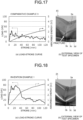
- FIGS. 17 and 18 indicate measurements results of the load-stroke curve and the conditions of deformations of the test specimens, when experiments were carried out using the test specimens according to the comparative example 3 and the example 1.
- the graph (a) on the left side indicates a load-stroke curve where the horizontal axis represents the stroke (mm) from when a collision of a semi-cylindrical punch was started in the direction perpendicularly intersecting with the longitudinal direction of the test specimen, and the vertical axis represents the load (kN) applied to the test specimen.
- the photograph (b) on the right side is an image captured at the time when the stroke of the deformation condition of the test specimen reached 80 mm.
- the absorbed energy plotted with the load-stroke curve indicates the transition of the amount of absorbed crashworthiness energy.
- the comparative example 3 illustrated in FIG. 17 is an example using the test specimen 41 without the resin coating on the internal surface of the outer part 3 ( FIG. 15 ).
- the load applied to the test specimen 41 marked the maximum value (approximately 43 kN) at the stroke of approximately 10 mm, and varied in the process in which the outer part 3 bends.
- a fracture was observed in the upper part of the test specimen 41.
- the absorbed energy with a stroke within the range between 0 mm and 80 mm was 1.8 kJ.
- the example 1 illustrated in FIG. 18 is an example using the test specimen 31 where the adhesive strength between the resin 7, and the outer part 3 and the release prevention member 23 was set to 11.9 MPa, which falls within the range according to the present invention (10.0 MPa or higher).
- the load-stroke curve indicated in FIG. 18(a) the load exhibited an extreme value at the stroke of approximately 10 mm, and then marked the maximum value (approximately 78 kN) at the stroke of approximately 30 mm, which was quite a lot of increase from that in a comparative example 4 using a high-strength steel sheet for the outer part 3.
- the load dropped after marking the maximum value, the load transited at a higher level than that in the comparative example 4.
- the absorbed energy with a stroke within the range between 0 mm and 80 mm was 3.6 kJ, which was a dramatic improvement.
- the results of the absorbed energy and the weights of the test specimens obtained by carrying out experiments while changing the structure, the resin type, and the adhesive strength of the test specimen using a stroke within the range between 0 mm and 80 mm are indicated in Table 2 above.
- the weight of a test specimen indicated in Table 2 represents the sum of the weights of the outer part 3, the inner part 5, the release prevention member 23, and the resin 7 or the resin 27 for the test specimen 31 and the test specimen 33 with the coating of the resin 7 or the resin 27, and represents the sum of the weights of the outer part 3, the inner part 5, and the release prevention member 23 for the test specimen 41 not filled with resin.
- the example 1 is an example using the test specimen 31 in which a steel sheet having a 590-MPa class steel sheet strength was used for the outer part 3; the thickness of the resin 7 was set to 8 mm; and the adhesive strength was set to 11.9 MPa, which falls within the range according to the present invention (10.0 MPa or higher) ( FIG. 18 ).
- the weight of the test specimen was 5.76 kg.
- the example 2 is an example using the test specimen 31 in which a steel sheet having a 590 MPa-class steel sheet strength was used for the outer part 3, and the thickness of the resin 7 was set to 1 mm.
- the example 3 is an example using a steel sheet having a 1180 MPa-class steel sheet strength for the outer part 3, in the test specimen 31 having the same shape as that of the example 2.
- the absorbed energy was 3.1 kJ, exhibiting a dramatic improvement compared with the comparative example 3.
- the example 4 is an example using the test specimen 33 in which a steel sheet having a 590-MPa class steel sheet strength was used for the outer part 3, and the resin 7 was coated at a thickness of 3 mm, in a manner extending by 10 mm toward the top portion 3a and the side wall portion 3c on both sides of the punch shoulder R portions 3b of the outer part 3.
- the example 5 is an example in which the thickness of the resin 7 was set to 3 mm, in the test specimen 31 having the same shape as that of the example 1.
- the example 6 is an example in which the resin 7 was patched to the test specimen 35 at a thickness of 1 mm, without the release prevention member provided.
- the example 7 is an example in which the resin 7 was patched to the test specimen 31 at thickness of 0.1 mm.
- the comparative examples 1 to 7 are examples using the test specimen 41 without the resin coating ( FIG. 17 ), and the absorbed energy was 1.6 kJ to 1.8 kJ.
- the weight efficiency was 0.335 kJ/kg to 0.377 kJ/kg, resulting in lower efficiency than any of those of the examples 1 to 7.
- the comparative example 6 is an example using the test specimen 41 without the resin coating, in the same manner as in the comparative example 1, but the thickness of the outer part 3 was changed from 1.2 mm to 1.4 mm.
- the absorbed energy was 1.8 kJ, exhibiting an increase from the comparative example 1, but was lower than any of those of the examples 1 to 7.
- the weight efficiency in the comparative example 6 was 0.342 kJ/kg, resulting in lower efficiency than any of those of the examples 1 to 7.
- the comparative example 7 is an example in which a 980-MPa class steel sheet was used for the outer part 3, in the test specimen 41 having the same shape as that of the comparative example 1.
- the absorbed energy was 1.8 kJ, exhibiting an increase from the comparative example 1, but was lower than any of those of the examples 1 to 7.
- the weight efficiency in the comparative example 7 was 0.377 kJ/kg, and resulted in lower efficiency than any of those of the examples 1 to 7.
- the comparative example 8, the comparative example 9, and the comparative example 10 are examples using the test specimen 31, the test specimen 33, and the test specimen 35, respectively, having the same shape as those of the example 3, the example 4, the example 5, and the example 6, but the adhesive strength of the resin 7 or the resin 27 was set outside the range according to the present invention (less than 10.0 MPa).
- the adhesive strength of the resin 7 or the resin 27 was set outside the range according to the present invention (less than 10.0 MPa).
- the weight of the test specimen was 5.88 kg, and this was the heaviest among the examples 1 to 7 and the comparative examples 1 to 10. Therefore, the weight efficiency was 0.357 kJ/kg, and did not compared to any of the results achieved by the examples 1 to 7.
- an automotive frame part that is provided to a side portion of an automotive body, and is capable of increasing the crashworthiness energy absorbed by bending of the automotive frame part, upon receiving a crashworthiness load from a side of the automotive body.
Landscapes
- Engineering & Computer Science (AREA)
- Chemical & Material Sciences (AREA)
- Combustion & Propulsion (AREA)
- Transportation (AREA)
- Mechanical Engineering (AREA)
- Architecture (AREA)
- Structural Engineering (AREA)
- Body Structure For Vehicles (AREA)
- Vibration Dampers (AREA)
Description
- The present invention relates to an automotive frame part for an automobile, and, particularly to an automotive frame part that absorbs crashworthiness energy by bending upon receiving a crashworthiness load from a side of the automotive body.
- As techniques for improving the absorptive properties of automobiles, there have been many techniques for optimizing the shape, the structure, the material, and the like of the automotive parts. Furthermore, recently there has been an increased number of disclosures related to techniques for filling the internal of an automotive part having a closed cross section shape, with resin or the like in a foamed condition (e.g., foamed resin), in order to ensure a balance between the absorptive properties of the automotive part and a weight reduction of the automotive body.
- For example,
Patent Literature 1 discloses a technique for improving stiffness and collision safety of an automotive body by improving bending strength and torsional stiffness, while minimizing an increase in the weight, of an automotive structural part, such as a side sill, a floor member, or a pillar, having inside a closed space formed by placing a flange in a manner aligned with a top portion of a hat-shaped cross section part, by filling the internal space of the automotive structural part with a foamed foaming filler material. - Moreover,
Patent Literature 2 discloses a technique, when the internal space of the closed cross section shape of a pillar or the like is filled with a highly stiff foamed body, the closed cross section shape being achieved by disposing parts with a hat-shaped cross section in a manner facing each other, with their flange portions in contact with each other, for fixing a highly stiff foamed body using a compressive counterforce generated in the process of foaming and filling the foamed body, to improve their strength, stiffness, and impact energy absorptiveness, while improving the vibration isolating performance for suppressing the communication of vibration sound.
Patent Literature 3 relates to an automobile bodyshell frame structure that includes a generally elongated first panel member and a generally elongated second panel member having opposite side edge portions connected to the first panel member to define a hollow space between the first and second panel members. A filler is disposed within a portion of a cross-section of the hollow space between the first and second panel members.
Patent Literature 4 is concerned with improving productivity while improving fuel consumption performance as well as safety against collision. Against this backdrop, the document suggests a filler that is foamwise charged in between an outer panel and a reinforcement member. The average compression strength of the filler is set to be not less than 4 MPa, and the maximum bending strength is set to be not less than 10 MPa, while the average foaming air hole diameter is set to be not more than 5 mm.
Patent Literature 5 discusses a center pillar that is provided with an outer panel located at the outside of a car body, an inside inner panel and a reinforcement. In the space between the outer panel and the reinforcement, a first filling material made of epoxy resin is foamed and filled. The average compressive strength of the filling material is 4 MPa or more and the maximum bending strength is 10 MPa or more. On both longitudinal end sides of the center pillar of the first filling material, second filling materials are filled so as to be abutted on both upper and lower end parts of the first filling material. -
- Patent Literature 1:
Japanese Patent Application Laid-open No. 2006-240134 - Patent Literature 2:
Japanese Patent Application Laid-open No. 2000-318075 - Patent Literature 3:
EP 1 074 457 A2 - Patent Literature 4:
JP 2001 088740 A - Patent Literature 5:
JP 2001 048052 A - With the techniques disclosed in
Patent Literature 1 andPatent Literature 2, by filling a foamed filler material or a foaming body inside the automotive part, it is possible to improve the strength against bending deformations and the impact energy absorptiveness of the automotive part, and, furthermore, to improve the stiffness against torsional deformations, so that the deformations of the automotive part can be suppressed. - However, for automotive frame parts such as a pillar (e.g., A pillar and B pillar), a locker (side sill), and a roof rail that absorb the crashworthiness energy by going through a buckling deformation when the part bends in a direction intersecting with its longitudinal direction upon receiving a crashworthiness load from a side of the automotive body, there has been a drawback that the crashworthiness energy absorptive performance cannot be improved as expected even with the use of the techniques in which foamed resin is filled inside of the automotive frame part, because a member making up the part fractures in the process of bending caused by a collision.
- The present invention is made to address such a drawback, and an object of the present invention is to provide an automotive frame part that is provided to a side portion of an automotive body, and is capable of increasing the crashworthiness energy absorbed by bending of the automotive frame part upon receiving a crashworthiness load from a side of the automotive body.
- An automotive frame part according to the present invention is provided to a side portion of an automotive body and absorbs crashworthiness energy by bending upon receiving a crashworthiness load from a side of the automotive body, the automotive frame part including: a member having a hat-shaped cross section or a U-shaped cross section, the member including a top portion, and a pair of side wall portions that are continuous from the top portion via punch shoulder R portions; and resin that is coated on or patched to an internal surface of the member having the hat-shaped cross section member or the U-shaped cross section and a release prevention member that is disposed, in order to prevent the resin from being released from the internal surface during the process in which the member bends by ensuring that the resin is nipped on the internal side of the punch shoulder R portions in the bending portions of the member, in a manner straddling over the top portion and covering a surface of the resin, and that has both ends joined to internal surfaces of the pair of side wall portions, wherein the coated or patched resin extends at least to a predetermined range toward the top portion and the side wall portions on both sides of the punch shoulder R portions, and the coated or patched resin is adhered, after heating, to the internal surface and the release prevention member at an adhesive strength of 10 MPa or higher at a room temperature, and the release prevention member is a less strong member than the hat-shaped cross section member or the U-shaped cross section.
- According to the present invention, it is possible to prevent fractures and improve buckling strength, during a bending process, of a hat-shaped cross section member or a U-shaped cross section member that is configured to absorb a crashworthiness energy by bending upon receiving a crashworthiness load from a side of the automotive body, thereby improving the crashworthiness energy absorptive performance.
-
-
FIG. 1 is a perspective view illustrating an automotive frame part according to a first example not forming part of the present invention. -
FIG. 2 is a cross-sectional view illustrating the automotive frame part according to the first example not forming part of the present invention. -
FIG. 3 is a schematic illustrating a cross-sectional shape of bending portions of the automotive frame part, when a crashworthiness load is applied to the automotive frame part from a side of the automotive body. -
FIG. 4 is a graph indicating a relation between the tensile strength level of a steel sheet, and a ratio of the fracture limit bending radius of the steel sheet with respect to the thickness of the steel sheet. -
FIG. 5 is a cross-sectional view illustrating first another mode of the automotive frame part according to the first example not forming part of the present invention. -
FIG. 6 is a cross-sectional view illustrating second another mode of the automotive frame part according to the first example not forming part of the present invention. -
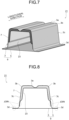
FIG. 7 is a perspective view illustrating an automotive frame part according to the present invention. -
FIG. 8 is a cross-sectional view illustrating the automotive frame part according to the present invention. -
FIG. 9 is a cross-sectional view illustrating another mode of the automotive frame part according to the present invention. -
FIG. 10 is a schematic for explaining a methodology for experiments according to examples. -
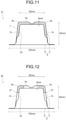
FIG. 11 is a schematic illustrating a structure of a test specimen used as a first example according to the examples. -
FIG. 12 is a schematic illustrating a structure of a test specimen used as a second example according to the examples. -
FIG. 13 is a schematic illustrating a structure of a test specimen used as a third example according to the examples. -
FIG. 14 is a schematic illustrating a structure of a test specimen used as a fourth example according to the examples. -
FIG. 15 is a schematic illustrating a structure of a test specimen used as a comparative example in the examples. -
FIG. 16 is a schematic illustrating a structure of a test specimen used as a conventional example in the examples. -
FIG. 17 is a schematic illustrating measurement results of a crashworthiness load and a stroke acquired when an experiment was carried out using the test specimen according to a comparative example in the examples, and the condition of the deformation of the test specimen. -
FIG. 18 is a schematic illustrating measurement results of a crashworthiness load and a stroke (the amount of a bending deformation) acquired when an experiment was carried out using the test specimen according to an example in the examples, and the condition of the deformation of the test specimen. - Automotive frame parts according to a first embodiment and a second embodiment of the present invention will now be explained with reference to
FIGS. 1 to 9 . In the description herein and drawings, the elements having substantially the same functions and configurations are assigned with the same reference signs, and explanations thereof will be omitted. - An
automotive frame part 1 according to the first embodiment of the present invention is provided to a side portion of an automotive body, is designed to absorb crashworthiness energy upon receiving a crashworthiness load from a side of the automotive body, by bending in a direction intersecting with the longitudinal direction, and includes anouter part 3, aninner part 5, andresin 7 that is coated on the internal surface of theouter part 3, as illustrated inFIGS. 1 and 2 . - The
outer part 3 is a member made from a metal sheet and having a hat-shaped cross section, and has atop portion 3a, and a pair ofside wall portions 3c that are continuous from thetop portion 3a via punchshoulder R portions 3b, andflange portions 3d that are continuous from the respectiveside wall portions 3c. - The
inner part 5 is a flat plate-like member made from a metal sheet and having a flat plate-like shape. The side ends of theinner part 5 are joined to theflange portions 3d of theouter part 3, respectively, and atubular member 9 is formed thereby. - The
automotive frame part 1 including the hat-shaped cross section member such as theouter part 3 is a part making up an automotive frame. The present invention is intended for anautomotive frame part 1 making up the automotive frame, by being disposed at the left or the right part of the side portions of the automotive body. Specifically, examples thereof include an A pillar and a B pillar disposed in a manner stretching in up-and-down directions of the automotive body, and a locker (side sill) and a roof rail that are disposed in a manner stretching in front-and-back directions of the automotive body. - Examples of the types of the metal sheet used for the
outer part 3 and theinner part 5 include a cold-rolled steel sheet, a hot-rolled steel sheet, a stainless steel sheet, a zinc-based coating steel sheet, a zinc alloy coating steel sheet, an aluminum alloy coating steel sheet, and an aluminum alloy sheet. - As illustrated in
FIGS. 1 and 2 , the internal surfaces of thetop portion 3a, the punchshoulder R portions 3b, and theside wall portions 3c of theouter part 3 are coated with theresin 7. The coating of theresin 7 has a thickness equal to or smaller than 8 mm after heating, and adheres to the internal surface of theouter part 3 at an adhesive strength of 10 MPa or higher at the room temperature. - Examples of the types of the
resin 7 include thermoplastic resin, thermoset resin, and elastomer resin. Examples of thermoplastic resin includes vinyl resin (such as vinyl acetate and vinyl chloride), acrylic resin, polyamide resin, polystyrene resins, and cyanoacrylate resin. Examples of thermoset resin includes epoxy resin, urethane resin, ester resin, phenolic resin, melamine resin, and urea resin. Examples of the elastomer resin includes nitro rubber resin, styrene butadiene rubber resin, modified silicone resin, butyl rubber resin, urethane rubber resin, and acrylic rubber resin. Among the resins of any of these types, those that do not fracture or collapse in the process of a bending deformation are preferable. - By subjecting the
resin 7 coated on the internal surface of theouter part 3 to a heat treatment, theresin 7 can be caused to adhere to theouter part 3 by the adhesive capacity of theresin 7 itself. In such a case, by subjecting theresin 7 and theouter part 3 to a heat treatment over a predetermined time period at a predetermined temperature, an adhesive strength between theresin 7 and theouter part 3 can be maintained at 10 MPa or higher even after cooling down to the room temperature. The temperature and the time period used in the heat treatment may be adjusted as appropriate, depending on the type of theresin 7. - The adhesive strength between the
resin 7 and theouter part 3 may be set to a maximum sheared stress or an average sheared stress acting on the interface between the metal sheet and the resin. The maximum sheared stress or the average sheared stress may be acquired by, for example, executing a crashworthiness test to a double-layered square column including resin adhering to a metal sheet (e.g., a steel sheet), obtaining a boundary condition where theresin 7 peels off, and executing a crashworthiness analysis based on the boundary condition. - The adhesive strength between the
resin 7 and theouter part 3 may also be acquired by cutting out a part of theresin 7 and theouter part 3 after adhesion to each other, installing thecut resin 7 andouter part 3 in a tensile testing machine with theresin 7 pinched on one side and theouter part 3 pinched on the other side, and pulling theresin 7 and theouter part 3. For the adhesive strength between theresin 7 and theouter part 3, it is also possible to use a measurement measured using a method of cutting a part of theresin 7 and theouter part 3 after adhesion to each other, installing the part in the tensile testing machine with theresin 7 pinched on one side and a handle portion (not illustrated) held on the other side, the handle portion being formed by bending theouter part 3 made of a metal sheet, and pulling theresin 7 and the handle portion. It is also possible to use a measurement measured using a method of joining a handle part to theouter part 3, and holding and pulling the handle part with a tensile testing machine. - For an automotive frame part including the
tubular member 9 formed by joining theouter part 3 and theinner part 5, such as theautomotive frame part 1 according to the first embodiment, the adhesive strength between theresin 7 and theouter part 3 may also be measured by cutting out a part of theresin 7 and thetubular member 9, and installing the part in the tensile testing machine. - The following explains the reason that the crashworthiness energy absorptive performance is improved by allowing the
automotive frame part 1 according to the first embodiment to bend and to absorb a crashworthiness load applied to a side of the automotive body. - A conventional automotive frame part including a hat-shaped cross section member made from a metal sheet such as a steel sheet absorbs the crashworthiness energy in a process in which a crashworthiness load is received in a direction intersecting with the longitudinal direction of the hat-shaped cross section member, in which the hat-shaped cross section member starts going through a bending deformation and exceeds its buckling strength (the crashworthiness load at which buckling takes place), in which the top portion is stretched in an intersecting direction and the longitudinal direction, in which the angles of the side wall portions change, and in which the side wall portions bend (bending crush process).
-
FIG. 3 is a schematic of a cross-sectional shape of portions that bend in the process in which a crashworthiness load is applied to thetop portion 3a of theouter part 3 that is the hat-shaped cross section member, and theautomotive frame part 1 bends (seeFIG. 17(b) to be referred in some examples which will be described later). As illustrated inFIG. 3 , when a crashworthiness load is applied to thetop portion 3a, theside wall portions 3c are crushed in such a manner that portions of theside wall portions 3c on the side of thetop portion 3a are pushed outwards in directions toward theflange portions 3d, and therefore the bending radius of the punchshoulder R portions 3b connecting thetop portion 3a and theside wall portions 3c becomes significantly smaller. - In this process, the crashworthiness energy is most likely to be absorbed when the
outer part 3 bends without fracturing. However, if theouter part 3 fractures in the process of bending, a deformation resistance against the bending is reduced, and theouter part 3 bends easily. As a result, absorption of the crashworthiness energy falls short, and theouter part 3 can no longer exhibit its original performance. - In the
outer part 3 that is the hat-shaped cross section member, the punchshoulder R portions 3b connecting thetop portion 3a and theside wall portions 3c are the portions having high crashworthiness energy absorptive performance in the process in which the hat-shaped cross section member bends. However, because the bending radius of the punchshoulder R portions 3b becomes smaller in the process in which theouter part 3 bends, as illustrated inFIG. 3 , the stress concentrates on the outer surface of the punchshoulder R portions 3b, and the punchshoulder R portions 3b becomes more likely to fracture. In particular, when theouter part 3 is a hat-shaped cross section member formed by press forming, the punchshoulder R portions 3b are the portions that are most likely to go through a plastic deformation, and that had gone through work hardening in the process of the press forming. As a result, the punchshoulder R portions 3b are more likely to fracture, compared with other portions such as thetop portion 3a and theside wall portions 3c, because of the reduced ductility due to the work hardening having taken place at the time of the press forming. - Furthermore, because a high-strength steel sheet, which is used in an automotive part in order to balance the crashworthiness property with a weight reduction of the automotive body, has lower ductility, compared with that of a steel sheet with a conventional strength. According to a relation between the level of a steel sheet strength and a fracture limit bending radius R/thickness t (see Cited
Literature 1 below) of a steel sheet, as indicated in Table 1 andFIG. 4 , an increase in the tensile strength TS of a steel sheet increases the likeliness of the steel sheet fracturing at the same thickness and a larger bending radius. - Therefore, when an automotive frame part including a hat-shaped cross section member using a high-strength steel sheet bends, the punch shoulder R portions of the hat-shaped cross section member become more likely to fracture, as the steel sheet strength is increased.
- (Cited Literature 1) HASEGAWA Kohei, KANEKO Shinjiro, SETO Kazuhiro, "Cold-rolled and Galvannealed (GA) High Strength Steel Sheets for Automotive Cabin Structure", JFE GIHO, No.30 (August 2012), p. 6-12.
Table 1 Steel Sheet Strength Level TS [MPa] R/t [-] 780-MPa Class 810 Less than 1.0 980-MPa Class 1020 1.0 1180-MPa Class 1210 1.5 1320-MPa Class 1330 2.0 1470-MPa Class 1510 2.5 - As a result, in the application of a high-strength steel sheet to an automotive frame part, fracturing has been a factor obstructing any further advancement in the improvement of a steel sheet strength. To address this issue, by focusing on the fact that the punch
shoulder R portions 3b of theouter part 3 that is the hat-shaped cross section member fracture because of the bending radius becoming equal to or smaller than a small fracture limit bending radius that is unique to the metal sheet, as described above, the inventors of the present invention have come up with an idea that fracturing can be avoided if the bending radius of the punchshoulder R portions 3b can be increased during the process in which theouter part 3 bends at the time of a collision. - In other words, by interposing an object between the metal sheets of the punch
shoulder R portions 3b, and allowing the object to be nipped and compressed therebetween in the process in which theouter part 3 bends, it is possible to prevent the bending radius of the punchshoulder R portions 3b from becoming equal to or smaller than the fracture limit bending radius. However, because the weight of the part is increased by adding an object interposed between the metal sheets, it is preferable for the interposed object to be light-weighted as much as possible. - Therefore, in the present invention, the
resin 7 is caused to adhere to the internal surface of at least the punchshoulder R portions 3b and portions extending on both sides thereof in theouter part 3, so that the resin is nipped between the metal sheets in the portions where the bending radius becomes smaller in the bending process. In this manner, with theresin 7 nipped, it is possible to ensure that the bending radius of the punchshoulder R portions 3b remains larger than the fracture limit bending radius that is unique to the metal sheet, and to prevent fracturing in the bending portions in theouter part 3. As a result, the crashworthiness energy absorptive performance can be improved. - However, if the adhesive strength between the
resin 7 and the internal surface of theouter part 3 is low, theresin 7 coated on the internal surface of theouter part 3 peels off and is released during a process immediately after theouter part 3 starts going through a bending deformation by receiving a crashworthiness load, to the end of the bending. As a result, theresin 7 can no longer remain nipped between the metal sheets of the punchshoulder R portions 3b during this bending process, and fracturing occurs, and the deformation resistance deteriorates. Hence, improvements in the absorptive properties are obstructed. - To address this issue, the inventors of the present invention conducted examinations by changing the adhesive strength of the
resin 7 coated on the internal surface of theouter part 3, and found out that, if theresin 7 adheres at an adhesive strength of 10 MPa or higher at the room temperature, theresin 7 bends together with theouter part 3 without peeling off and becoming released from the internal surface of theouter part 3. - By coating the
resin 7 and ensuring an adhesive strength of 10 MPa or higher, theresin 7 is nipped between the metal sheets in the punchshoulder R portions 3b during the bending process. In this manner, it is possible to prevent the bending radius of the punchshoulder R portions 3b from becoming smaller than the fracture limit bending radius unique to the metal sheet, and to prevent fracturing of the metal sheets. - Furthermore, the punch
shoulder R portions 3b of theouter part 3 are portions having high crashworthiness energy absorptive performance. Therefore, by coating with theresin 7 the internal surface of the portions on both sides of the punchshoulder R portions 3b of theouter part 3, it is possible to improve the buckling strength exerted before theouter part 3 starts bending. - As described above, the
automotive frame part 1 according to the first embodiment can improve the crashworthiness energy absorptive performance by preventing deterioration of the deformation resistance against the bending, and improving the buckling strength, during the process from when theautomotive frame part 1 starts going through a bending deformation upon receiving a crashworthiness load from a side and to when theautomotive frame part 1 bends. - In the present invention, if the entire space inside the closed cross section of the
tubular member 9 formed by joining theouter part 3 and theinner part 5 is filled with the resin, as having been practiced conventionally, the cross-sectional area and the volume in thetubular member 9 is reduced when collision occurs, and the resin is not compressed immediately in response to the reduction in the volume. As a result, the resin spurts out by destroying the joined part, degrading the crashworthiness energy absorptive performance. Therefore, for the reasons described above, the resin may be provided in a space formed on the internal surface side of the hat-shaped cross section member. In order to prevent fracturing in the process of bending, it is necessary for aresin 13 to be provided to the punchshoulder R portions 3b connecting thetop portion 3a and theside wall portions 3c of theouter part 3, and to the portions extending on both sides of the punchshoulder R portions 3b toward thetop portion 3a and theside wall portions 3c, as in anautomotive frame part 11 illustrated inFIG. 5 . At this time, as the range by which theresin 13 is extended toward thetop portion 3a and theside wall portion 3c, it is preferable for the range to be approximately 5 mm to 20 mm, and more preferably approximately 10 mm, from the R tangent end of the punchshoulder R portion 3b toward each of thetop portion 3a and theside wall portion 3c. - Of course, the effects of improving the buckling strength and preventing fractures of the
outer part 3 can be achieved even with anautomotive frame part 15 in which the entire perimeter of the peripheral wall of the space with the closed cross section in thetubular member 9 is formed by coating the entire internal surfaces of theouter part 3 and theinner part 5 with theresin 17, as illustrated inFIG. 6 . In such a configuration, too, the resin is caused to adhere to the peripheral wall portions, instead of filling the entire space with the closed cross section with the resin. - As described above, in the
automotive frame part 1 according to the first embodiment, the internal surface of theouter part 3 is coated with theresin 7 in such a manner that the thickness of theresin 7 after adhesion thereto becomes equal to or smaller than 8 mm, but the present invention may also have a structure in which plate-like resin having a thickness equal to or smaller than 8 mm is patched to the internal surface of a tubular member using an adhesive agent. Furthermore, it is also possible to use a structure in which film-like resin having a thickness of approximately 100 um, the thickness being like that of the laminate of a laminated steel sheet, is patched to the internal surface of a tubular member. It is necessary for such plate-like resin or film-like resin to exhibit an adhesive strength of 10 MPa or higher at the room temperature, with respect to the internal surface of the tubular member. - According to the explanation above, the
automotive frame part 1 according to the first embodiment includes thetubular member 9 having a tubular shape achieved by joining theflange portions 3d of theouter part 3 to the side ends of theinner part 5, respectively. It should be needless to say that the automotive frame part according to the present invention is not limited to thetubular member 9 formed with theouter part 3 and theinner part 5, and may also be a part including only theouter part 3. Furthermore, although, according to the explanation above, theouter part 3 is explained to be a hat-shaped cross section member, the present invention may also be a U-shaped cross section member having a top portion, and a pair of side wall portions that are continuous from the top portion via the punch shoulder R portions. - The
automotive frame part 1 according to the first embodiment is designed to prevent theresin 7 from being released from the internal surface of theouter part 3 during the process in which theautomotive frame part 1 bends upon receiving a crashworthiness load, by setting the adhesive strength between the internal surface of theouter part 3 that is the hat-shaped cross section member and theresin 7 to 10 MPa or higher at the room temperature, but, in addition to the adhesive strength, the inventors of the present invention examined an additional way to prevent theresin 7 from being released so that the crashworthiness energy absorptive performance is not deteriorated because of theresin 7 being released at the time of bending due to a collision. - To address this issue, an
automotive frame part 21 according to the second embodiment of the present invention includes, as illustrated inFIGS. 7 and 8 , arelease prevention member 23, in addition to theouter part 3 that is the hat-shaped cross section member, the flat plate-likeinner part 5, and theresin 7. Theouter part 3, theinner part 5, and theresin 7 are the same as those in theautomotive frame part 1 according to the first embodiment described above. - The
release prevention member 23 is made from a metal sheet (e.g., a steel sheet), and disposed between theouter part 3 and theinner part 5, in a manner straddling over thetop portion 3a and covering the surface of theresin 7, as illustrated inFIG. 8 , and has both ends joined (e.g., spot-welded) to the internal surfaces of the pair ofside wall portions 3c of theouter part 3. - Because the
resin 7 is needed at least in the portions connecting thetop portion 3a and theside wall portions 3c, and it is preferable to keep only the weight of the automotive frame part low as much as possible and to keep the height of the vertical walls of theresin 7 and the release prevention member 23 (the range of coating on theside wall portions 3c) short, therelease prevention member 23 is joined to theside wall portions 3c of theouter part 3. - Furthermore, the adhesive strength between the
resin 7, theouter part 3, and therelease prevention member 23 may be calculated by performing a crashworthiness analysis of a double-layered square column including resin adhering to a metal sheet (e.g., a steel sheet), in the same manner as in the first embodiment described above, or by cutting out a part of the resin, tubular member, and release prevention member after adhesion to one another, and measuring the adhesive strength using a tensile testing machine at the room temperature. - As described above, the
automotive frame part 21 according to the second embodiment includes theresin 7 coated on the internal surface of theouter part 3, but the present invention may also have a structure in which plate-like resin is patched to the internal surface of the outer part using an adhesive agent. Furthermore, it is also possible to use a structure in which film-like resin having a thickness of approximately 100 um, the thickness being like that of the laminate of a laminated steel sheet, is patched to the internal surface of the outer part. The adhesive strength between the plate-like or the film-like resin and the internal surface of a tubular member may then be set to 10 MPa or higher at the room temperature. - In the
automotive frame part 21 according to the second embodiment, theresin 7 is prevented from being released from the internal surface of theouter part 3 during the process in which theouter part 3 bends, in the same manner as in theautomotive frame part 1 according to the first embodiment. In this manner, by ensuring that theresin 7 is nipped on the internal side of the punchshoulder R portions 3b in the bending portions of theouter part 3, thereby effectively preventing the bending radius of the punchshoulder R portions 3b from reaching a size equal to or smaller than the fracture limit bending radius, theautomotive frame part 21 according to the second embodiment can prevent theouter part 3 from fracturing during the bending process, and improve the absorptive properties. Because therelease prevention member 23 is only intended to prevent the resins from being released, therelease prevention member 23 is not required to have such high material strength, and it is possible to use a less strong member than theouter part 3 or theinner part 5. - Furthermore, if a highly strong member is used as the
release prevention member 23, by providing therelease prevention member 23, in addition to the elements of theautomotive frame part 1 according to the first embodiment described above, it is possible to improve the stiffness against a bending deformation caused by a crashworthiness load applied from a side of theautomotive frame part 21. - In the
automotive frame part 21 illustrated inFIG. 8 , theresin 7 is coated on a portion including the punchshoulder R portions 3b of theouter part 3 in a manner straddling over thetop portion 3a, but the present invention may includeresin 27 coated on the punchshoulder R portions 3b of theouter part 3, in a manner extending toward thetop portion 3a and theside wall portions 3c by a certain range, as anautomotive frame part 25 illustrated inFIG. 9 . - Even with such an
automotive frame part 25 in which theouter part 3 is coated with theresin 27, and theresin 27 is caused to adhere to theouter part 3 and therelease prevention member 23 at an adhesive strength of 10 MPa or higher, it is possible to prevent the punchshoulder R portions 3b from bending at a radius equal to or smaller than the fracture limit bending radius due to theresin 27 released from theouter part 3 during the process of bending and being not able to remain between the metal sheets of the punchshoulder R portions 3b, and to improve the crashworthiness energy absorptive performance. - Furthermore, although explained above is the
automotive frame part 21 in which the internal surface of theouter part 3 is coated with theresin 7, even with an automotive frame part in which plate-like or film-like resin is patched to the internal surface of a hat-shaped cross section member at an adhesive strength of 10 MPa or higher, it is possible to achieve the same effects as that achieved by theautomotive frame part 21 according to the second embodiment. - Furthermore, although the
automotive frame part 21 according to the second embodiment includes thetubular member 9 having a tubular shape achieved by joining theflange portions 3d of theouter part 3 to the side ends of theinner part 5, an automotive frame part may include theouter part 3 alone. Furthermore, although, according to the explanation above, theouter part 3 is a hat-shaped cross section member having a hat-shape cross section, the present invention may also be a U-shaped cross section member having a top portion, and a pair of side wall portions that are continuous from the top portion via the punch shoulder R portions. - Experiments were carried out to confirm the effects of the automotive frame part according to the present invention, the results of which will now be explained.
- In these examples, experiments were carried out to evaluate the crashworthiness energy absorptive performance of the automotive frame part according to the present invention, during the process in which the automotive frame part bends by receiving a crashworthiness load from a side of the automotive body. In the experiment, a load was applied to a
test specimen 31 including theouter part 3 that is the hat-shaped cross section member and theinner part 5 that is the flat plate-like member, in a direction from theouter part 3 toward theinner part 5, as illustrated inFIG. 10 , at a speed of 17.8 m/s using a semi-cylindrical punch of R = 125 mm. Measurements of a load-stroke curve indicating a relation between the load and the amount of bending deformation (stroke) that took place when the semi-cylindrical punch was pushed into thetest specimen 31 by 120 mm were then collected, and an image of the condition of the bending deformation was captured using a high-speed camera. Furthermore, the energy absorbed for a stroke within the range between 0 mm and 80 mm was also acquired from the measured load-stroke curve. Thetest specimen 31 subjected to the experiment had a length of 900 mm in the axial direction, as illustrated inFIG. 10 , and the axial distance between the supports supporting theinner part 5 at the time of the application of the load was set to 720 mm. -
FIGS. 11 to 13 illustrate structures and shapes of test specimens used as examples. InFIG. 11 , theautomotive frame part 21 according to the second embodiment of the present invention (FIGS. 7 and 8 ) explained above was used as thetest specimen 31. Thetest specimen 31 includes thetubular member 9 achieved by joining theouter part 3 and theinner part 5 by spot-welding, and theresin 7 coated on or patched to the internal surface of thetop portion 3a, the punchshoulder R portions 3b, and theside wall portions 3c of theouter part 3. Therelease prevention member 23 is then disposed in a manner straddling over thetop portion 3a and covering theresin 7, and has both ends joined to the internal surface of theside wall portions 3c. - In
FIG. 12 , theautomotive frame part 25 according to another mode of the second embodiment of the present invention (FIG. 9 ) is used as atest specimen 33. Thetest specimen 33 includes thetubular member 9 achieved by joining theouter part 3 and theinner part 5 by spot-welding, in the same manner as thetest specimen 31, andresin 27 is coated or patched in a manner extending by 10 mm toward each of thetop portion 3a and both of theside wall portions 3c of theouter part 3, with the punchshoulder R portions 3b therebetween. Therelease prevention member 23 is disposed in a manner straddling over thetop portion 3a and covering the surface of theresin 27, and has both ends joined to the internal surface of theside wall portions 3c. - In
FIG. 13 , theautomotive frame part 1 according to the first embodiment of the present invention (FIGS. 1 and 2 ) is used as atest specimen 35. Thetest specimen 35 includes thetubular member 9 achieved by joining theouter part 3 and theinner part 5 by spot-welding, and theresin 7 is coated on or patched to the internal surface of thetop portion 3a, the punchshoulder R portions 3b, and theside wall portion 3c of theouter part 3. - The
outer part 3 and theinner part 5 used in thetest specimen 31, thetest specimen 33, and thetest specimen 35 illustrated inFIGS. 11 to 13 all have the same shape and the same size, and the axial length L0 of these test specimens were set to 900 mm. - In the
test specimen 31, thetest specimen 33, and thetest specimen 35, one or both of foamed epoxy resin and foamed urethane resin were used as theresin 7 or theresin 27. At this time, the thickness of the coated or patchedresin 7 orresin 27 was set to equal to or smaller than 0.1 mm, 1 mm, 3 mm, and 8 mm.FIGS. 14(a) to (c) illustrate thetest specimens 31 having thicknesses of theresin 7 set to 8 mm, 3 mm, and 1 mm, respectively. - Furthermore, in the
test specimen 31, thetest specimen 33, and thetest specimen 35, the adhesive strength between the internal surface of theouter part 3 and theresin 7 or theresin 27 was set within the range according to the present invention (10 MPa or higher). As to the adhesive strength in these examples, a boundary condition where the resin peels off was acquired by executing a collision experiment using a double-layered square column including the resin adhering to the metal sheet used for theouter part 3, and a crashworthiness analysis was carried out based on the boundary condition. The maximum sheared stress or the average sheared stress acting on the interface between the metal sheet and the resin, acquired from the crashworthiness analysis, was then used as the adhesive strength. - Furthermore, in these examples, comparative examples were used, and such comparative examples included: an example using a test specimen 41 (
FIG. 15 ) including an outer part and a release prevention member having the same shape and the same size as those of theouter part 3 and therelease prevention member 23 according to the examples, but without the coat or the patch of the resin; and examples using thetest specimen 31, thetest specimen 33, or thetest specimen 35 but with the adhesive strength of theresin 7 or theresin 27 lower than 10.0 MPa, being lower than those within the range according to the present invention. Furthermore, an example using a test specimen 51 (FIG. 16 ) having the same structure as that of the automotive structural part disclosed inPatent Literature 1 was established as a conventional example 1, with foamed resin filled therein, and an experiment was carried out in the same manner as for the examples. - In the
test specimen 51 according to the conventional example 1, a reinforce 58 is disposed between theouter part 3 and theinner part 5, and both ends of the reinforce 58 are joined with the reinforce 58 nipped between theflange portions 3d of theouter part 3 and the side ends of theinner part 5.Resin 55 that is a foamed epoxy filler material was caused to adhere to theouter part 3 and the reinforce 58 at a strength of 5 MPa, andresin 57 that is a foamed urethane filler material was filled between but not being caused to adhere to the reinforce 58 and theinner part 5. A test specimen without the use of the reinforce 58 was also prepared as a conventional example 2, using a 1180-MPa class strength steel sheet for theouter part 3. - Table 2 indicates the conditions including the structures, the resin types, and the adhesive strengths of the test specimens used as the examples, the comparative examples, and the conventional examples. For the range of the resin coating specified in Table 2, "outer" indicates the
outer part 3, and "punch shoulder R" indicates the punchshoulder R portions 3b of theouter part 3.
- The examples 1 to 7 are those using the
test specimen 31, thetest specimen 33, or thetest specimen 35 the structures and the adhesive strengths of which are within the range (10 MPa or higher) according to the present invention. Furthermore, the comparative examples 1 to 10 are those using the test specimen 41 (comparative examples 1 to 7) with no resin coating, and those using thetest specimen 31 and the test specimen 33 (comparative examples 8 to 10) with resin adhesive strength outside the range according to the present invention (lower than 10 MPa). For the comparative examples 1 to 7 with no resin coating or patch on the internal surface of theouter part 3, the thicknesses of resin coating in Table 2 indicate the gap between theouter part 3 and therelease prevention member 23. -
FIGS. 17 and 18 indicate measurements results of the load-stroke curve and the conditions of deformations of the test specimens, when experiments were carried out using the test specimens according to the comparative example 3 and the example 1. InFIGS. 17 and 18 , the graph (a) on the left side indicates a load-stroke curve where the horizontal axis represents the stroke (mm) from when a collision of a semi-cylindrical punch was started in the direction perpendicularly intersecting with the longitudinal direction of the test specimen, and the vertical axis represents the load (kN) applied to the test specimen. The photograph (b) on the right side is an image captured at the time when the stroke of the deformation condition of the test specimen reached 80 mm. Furthermore, the absorbed energy plotted with the load-stroke curve indicates the transition of the amount of absorbed crashworthiness energy. - The comparative example 3 illustrated in
FIG. 17 is an example using thetest specimen 41 without the resin coating on the internal surface of the outer part 3 (FIG. 15 ). The load applied to thetest specimen 41 marked the maximum value (approximately 43 kN) at the stroke of approximately 10 mm, and varied in the process in which theouter part 3 bends. As indicated inFIG. 17(b) , a fracture was observed in the upper part of thetest specimen 41. The absorbed energy with a stroke within the range between 0 mm and 80 mm was 1.8 kJ. - The example 1 illustrated in
FIG. 18 is an example using thetest specimen 31 where the adhesive strength between theresin 7, and theouter part 3 and therelease prevention member 23 was set to 11.9 MPa, which falls within the range according to the present invention (10.0 MPa or higher). In the load-stroke curve indicated inFIG. 18(a) , the load exhibited an extreme value at the stroke of approximately 10 mm, and then marked the maximum value (approximately 78 kN) at the stroke of approximately 30 mm, which was quite a lot of increase from that in a comparative example 4 using a high-strength steel sheet for theouter part 3. Furthermore, although the load dropped after marking the maximum value, the load transited at a higher level than that in the comparative example 4. The absorbed energy with a stroke within the range between 0 mm and 80 mm was 3.6 kJ, which was a dramatic improvement. Furthermore, as indicated inFIG. 18(b) , no fracture occurred in theouter part 3 in the bending process. - In the manner described above, in the example 1, it can be seen that, because the
resin 7 remained without peeling off and becoming released, fractures in the process of bending were prevented, and the load (buckling strength) before the bending took place was also improved, due to theresin 7 coated on the internal surface of theouter part 3, due to therelease prevention member 23 disposed in a manner covering the surface of theresin 7, and due to the adhesive strength set to 10 MPa or higher between theresin 7, and to theouter part 3 and therelease prevention member 23. Therefore, the crashworthiness energy absorptiveness was improved. - The results of the absorbed energy and the weights of the test specimens obtained by carrying out experiments while changing the structure, the resin type, and the adhesive strength of the test specimen using a stroke within the range between 0 mm and 80 mm are indicated in Table 2 above. The weight of a test specimen indicated in Table 2 represents the sum of the weights of the
outer part 3, theinner part 5, therelease prevention member 23, and theresin 7 or theresin 27 for thetest specimen 31 and thetest specimen 33 with the coating of theresin 7 or theresin 27, and represents the sum of the weights of theouter part 3, theinner part 5, and therelease prevention member 23 for thetest specimen 41 not filled with resin. - The example 1 is an example using the
test specimen 31 in which a steel sheet having a 590-MPa class steel sheet strength was used for theouter part 3; the thickness of theresin 7 was set to 8 mm; and the adhesive strength was set to 11.9 MPa, which falls within the range according to the present invention (10.0 MPa or higher) (FIG. 18 ). In the example 1, no fracture occurred in the bending process, and the absorbed energy was 3.6 kJ, exhibiting a dramatic improvement compared with that in the comparative example 1 (= 1.6 kJ). Furthermore, in the example 1, the weight of the test specimen was 5.76 kg. Although the weight increased compared with that of the test specimen in the comparative example 1 having the same shape and the same size but not filled with resin (= 4.77 kg), the weight efficiency representing the absorbed energy per unit weight, which is a unit of the absorbed energy divided by the weight of the test specimen, was 0.625 kJ/kg, and improved compared with that in the comparative example 1 (= 0.335 kJ/kg). - The example 2 is an example using the
test specimen 31 in which a steel sheet having a 590 MPa-class steel sheet strength was used for theouter part 3, and the thickness of theresin 7 was set to 1 mm. In the example 2, no fracture occurred in the bending process, and the absorbed energy was 2.4 kJ, exhibiting a dramatic improvement compared with the absorbed energy in the comparative example 2 (= 1.7 kJ). Furthermore, in the example 2, the weight of the test specimen was 5.04 kg, and was lighter than 5.76 kg that is the weight of the test specimen in the example 1. Therefore, the weight efficiency in the example 2 was 0.476 kJ/kg, and improved compared with that in comparative example 2 (= 0.351 kJ/kg). - The example 3 is an example using a steel sheet having a 1180 MPa-class steel sheet strength for the
outer part 3, in thetest specimen 31 having the same shape as that of the example 2. In the example 3, the absorbed energy was 3.1 kJ, exhibiting a dramatic improvement compared with the comparative example 3. Furthermore, in the example 3, the weight of the test specimen was 5.18 kg, which was lighter than that of the example 1. Therefore, the weight efficiency in the example 3 was 0.598 kJ/kg, and improved from the comparative example 3 (= 0.372 kJ/kg). In the same manner as in the example 3, in the comparative example 3 using a 1180 MPa-class steel sheet for theouter part 3, theouter part 3 fractured at the time of 80-mm bending, but in the example 3, theouter part 3 did not fracture. This is because the bending radius of the bending portions did not become equal to or smaller than the fracture limit bending radius, because of theresin 7 coated on and caused to adhere to theouter part 3. - The example 4 is an example using the
test specimen 33 in which a steel sheet having a 590-MPa class steel sheet strength was used for theouter part 3, and theresin 7 was coated at a thickness of 3 mm, in a manner extending by 10 mm toward thetop portion 3a and theside wall portion 3c on both sides of the punchshoulder R portions 3b of theouter part 3. In the example 4, no fracture occurred in the bending process, and the absorbed energy was 2.3 kJ, exhibiting a dramatic improvement compared with the absorbed energy 1.8 kJ in the comparative example 4. In the example 4, the weight of the test specimen was 5.04 kg, and was lighter than that in the example 1. Therefore, the weight efficiency in the example 4 was 0.456 kJ/kg, and improved compared with the comparative example 4 (= 0.373 kJ/kg). - The example 5 is an example in which the thickness of the
resin 7 was set to 3 mm, in thetest specimen 31 having the same shape as that of the example 1. In the example 5, no fracture occurred in the bending process, and the absorbed energy was 2.4 kJ, exhibiting a dramatic improvement compared with the comparative example 4. Furthermore, in the example 5, the weight of the test specimen was 5.36, and was lighter than that of the example 1. Therefore, the weight efficiency in the example 5 was 0.448 kJ/kg, and improved compared with the comparative example 4 (= 0.373 kJ/kg). - The example 6 is an example in which the
resin 7 was patched to thetest specimen 35 at a thickness of 1 mm, without the release prevention member provided. In the example 6, no fracture occurred in the bending process, and the absorbed energy was 2.8 kJ, exhibiting a dramatic improvement from the conventional example 2 (= 1.2 kJ). Furthermore, in the example 6, the weight of the test specimen was 4.33 kg, and was lighter than that of the example 1. Therefore, the weight efficiency in the example 6 was 0.647 kJ/kg, and improved from the conventional example 2 (= 0.285 kJ/kg). - The example 7 is an example in which the
resin 7 was patched to thetest specimen 31 at thickness of 0.1 mm. In the example 7, no fracture occurred in the bending process, and the absorbed energy was 2.9 kJ, exhibiting a dramatic improvement from the comparative example 5 (= 1.7 kJ). Furthermore, in the example 7, the weight of the test specimen was 4.86 kg, and was lighter than that of the example 1. Therefore, the weight efficiency in the example 7 was 0.597 kJ/kg, and improved from comparative example 5(= 0.351 kJ/kg). - In none of the examples 1 to 7, fractures occurred in the bending process.
- The comparative examples 1 to 7 are examples using the
test specimen 41 without the resin coating (FIG. 17 ), and the absorbed energy was 1.6 kJ to 1.8 kJ. The weight efficiency was 0.335 kJ/kg to 0.377 kJ/kg, resulting in lower efficiency than any of those of the examples 1 to 7. - The comparative example 6 is an example using the
test specimen 41 without the resin coating, in the same manner as in the comparative example 1, but the thickness of theouter part 3 was changed from 1.2 mm to 1.4 mm. In the comparative example 6, the absorbed energy was 1.8 kJ, exhibiting an increase from the comparative example 1, but was lower than any of those of the examples 1 to 7. The weight efficiency in the comparative example 6 was 0.342 kJ/kg, resulting in lower efficiency than any of those of the examples 1 to 7. - The comparative example 7 is an example in which a 980-MPa class steel sheet was used for the
outer part 3, in thetest specimen 41 having the same shape as that of the comparative example 1. In the comparative example 7, the absorbed energy was 1.8 kJ, exhibiting an increase from the comparative example 1, but was lower than any of those of the examples 1 to 7. Furthermore, the weight efficiency in the comparative example 7 was 0.377 kJ/kg, and resulted in lower efficiency than any of those of the examples 1 to 7. - The comparative example 8, the comparative example 9, and the comparative example 10 are examples using the
test specimen 31, thetest specimen 33, and thetest specimen 35, respectively, having the same shape as those of the example 3, the example 4, the example 5, and the example 6, but the adhesive strength of theresin 7 or theresin 27 was set outside the range according to the present invention (less than 10.0 MPa). In the comparative example 8, fractures occurred in the process of bending, and the absorbed energy and the weight efficiency both remained low. - The conventional example 1 is an example using the
test specimen 51 having the same structure as the automotive structural part disclosed inPatent Literature 1, and the absorbed energy was 2.1 kJ, exhibiting an increase from the comparative example 1 (= 1.6 kJ). However, the weight of the test specimen was 5.88 kg, and this was the heaviest among the examples 1 to 7 and the comparative examples 1 to 10. Therefore, the weight efficiency was 0.357 kJ/kg, and did not compared to any of the results achieved by the examples 1 to 7. - Based on the above, with the automotive frame part according to the present invention, it has been indicated that, when the crashworthiness energy is absorbed by bending upon receiving a crashworthiness load from a side, the crashworthiness energy absorptive performance can be improved efficiently, while suppressing an increase in weight.
- According to the present invention, it is possible to provide an automotive frame part that is provided to a side portion of an automotive body, and is capable of increasing the crashworthiness energy absorbed by bending of the automotive frame part, upon receiving a crashworthiness load from a side of the automotive body.
-
- 1
- automotive frame part
- 3
- outer part
- 3a
- top portion
- 3b
- punch shoulder R portion
- 3c
- side wall portion
- 3d
- flange portion
- 5
- inner part
- 7
- resin
- 9
- tubular member
- 11
- automotive frame part
- 13
- resin
- 15
- automotive frame part
- 17
- resin
- 21
- automotive frame part
- 23
- release prevention member
- 25
- automotive frame part
- 27
- resin
- 31
- test specimen (example)
- 33
- test specimen (example)
- 35
- test specimen (example)
- 41
- test specimen (comparative example)
- 51
- test specimen (conventional example)
- 55
- resin
- 57
- resin
- 58
- reinforce
Claims (1)
- An automotive frame part for being provided to a side portion of an automotive body and absorbing crashworthiness energy by bending upon receiving a crashworthiness load from a side of the automotive body, the automotive frame part comprising:a member (3) having a hat-shaped cross section or a U-shaped cross section, the member includinga top portion (3a), anda pair of side wall portions (3c) that are continuous from the top portion via punch shoulder R portions (3b);resin (7) that is coated on or patched to an internal surface of the member (3) having the hat-shaped cross section member or the U-shaped cross section, anda release prevention member (23) that is disposed, in order to prevent the resin (7) from being released from the internal surface during the process in which the member (3) bends by ensuring that the resin (7) is nipped on the internal side of the punch shoulder R portions (3b) in the bending portions of the member (3), in a manner straddling over the top portion and covering a surface of the resin (7), and that has both ends joined to internal surfaces of the pair of side wall portions (3c),whereinthe coated or patched resin (7) extends at least to a predetermined range toward the top portion and the side wall portions (3c) on both sides of the punch shoulder R portions (3b), the coated or patched resin (7) is adhered, after heating, to the internal surface and the release prevention member (3) at an adhesive strength of 10 MPa or higher at a room temperature, andthe release prevention member (3) is a less strong member than the hat-shaped cross section member or the U-shaped cross section.
Applications Claiming Priority (2)
| Application Number | Priority Date | Filing Date | Title |
|---|---|---|---|
| JP2019009075A JP6950871B2 (en) | 2019-01-23 | 2019-01-23 | Body skeleton parts |
| PCT/JP2019/035188 WO2020152904A1 (en) | 2019-01-23 | 2019-09-06 | Automotive frame component |
Publications (3)
| Publication Number | Publication Date |
|---|---|
| EP3915859A1 EP3915859A1 (en) | 2021-12-01 |
| EP3915859A4 EP3915859A4 (en) | 2022-03-16 |
| EP3915859B1 true EP3915859B1 (en) | 2024-07-03 |
Family
ID=71736169
Family Applications (1)
| Application Number | Title | Priority Date | Filing Date |
|---|---|---|---|
| EP19911319.2A Active EP3915859B1 (en) | 2019-01-23 | 2019-09-06 | Automotive frame part |
Country Status (7)
| Country | Link |
|---|---|
| US (1) | US11975764B2 (en) |
| EP (1) | EP3915859B1 (en) |
| JP (1) | JP6950871B2 (en) |
| KR (1) | KR102629672B1 (en) |
| CN (1) | CN113365905B (en) |
| MX (1) | MX2021008719A (en) |
| WO (1) | WO2020152904A1 (en) |
Families Citing this family (8)
| Publication number | Priority date | Publication date | Assignee | Title |
|---|---|---|---|---|
| WO2019198729A1 (en) * | 2018-04-09 | 2019-10-17 | 日本製鉄株式会社 | Automobile structural member |
| JP7181016B2 (en) * | 2018-06-29 | 2022-11-30 | 株式会社神戸製鋼所 | Bonded structure and manufacturing method thereof |
| JP6933203B2 (en) * | 2018-12-20 | 2021-09-08 | Jfeスチール株式会社 | Collision energy absorbing parts for automobiles, methods for manufacturing the collision energy absorbing parts for automobiles |
| EP3929037B1 (en) * | 2019-02-22 | 2025-10-15 | JFE Steel Corporation | Collision energy absorption component for automobiles |
| CN116323029A (en) * | 2020-10-12 | 2023-06-23 | 日本制铁株式会社 | Long structural members and blanks |
| JP7215557B1 (en) * | 2021-12-02 | 2023-01-31 | Jfeスチール株式会社 | Battery case and battery case cross member |
| JP7758010B2 (en) * | 2022-11-07 | 2025-10-22 | Jfeスチール株式会社 | Body frame part and method of manufacturing the same |
| JP7593524B1 (en) | 2023-08-08 | 2024-12-03 | Jfeスチール株式会社 | Manufacturing method for automobile parts |
Citations (1)
| Publication number | Priority date | Publication date | Assignee | Title |
|---|---|---|---|---|
| WO2003000535A1 (en) * | 2001-05-08 | 2003-01-03 | L & L Products, Inc. | Improved structural reinforcement |
Family Cites Families (29)
| Publication number | Priority date | Publication date | Assignee | Title |
|---|---|---|---|---|
| US6168226B1 (en) * | 1994-05-19 | 2001-01-02 | Henkel Corporation | Composite laminate automotive structures |
| US5992923A (en) * | 1998-05-27 | 1999-11-30 | Henkel Corporation | Reinforced beam assembly |
| JP3620340B2 (en) | 1999-05-12 | 2005-02-16 | 東海ゴム工業株式会社 | High rigidity foam filling structure |
| JP4356147B2 (en) * | 1999-08-05 | 2009-11-04 | マツダ株式会社 | Body frame structure and method for forming the same |
| JP3596365B2 (en) * | 1999-08-05 | 2004-12-02 | マツダ株式会社 | Body frame structure |
| KR20010049950A (en) | 1999-08-05 | 2001-06-15 | 제임스 이. 미러 | Frame structure of vehicle body |
| JP3596373B2 (en) * | 1999-09-20 | 2004-12-02 | マツダ株式会社 | Body frame structure |
| JP4040319B2 (en) * | 2002-02-05 | 2008-01-30 | 共和産業株式会社 | Reinforcing structure and reinforcing method for hollow structure |
| US7318873B2 (en) * | 2002-03-29 | 2008-01-15 | Zephyros, Inc. | Structurally reinforced members |
| JP2006240134A (en) | 2005-03-04 | 2006-09-14 | Nissan Motor Co Ltd | Structural member for automobile and manufacturing method thereof |
| EP1946995A1 (en) * | 2006-12-22 | 2008-07-23 | Sika Technology AG | Reinforcing system for reinforcing a cavity in a structural element |
| JP4729027B2 (en) * | 2007-09-05 | 2011-07-20 | 本田技研工業株式会社 | Body frame structure |
| CN102177013B (en) * | 2008-07-29 | 2014-07-23 | 陶氏环球技术有限责任公司 | Toughened expandable epoxy resins for reinforcement and energy dissipation in automotive cavities |
| DE102011054909A1 (en) | 2011-10-28 | 2013-05-02 | Benteler Automobiltechnik Gmbh | Method for producing a motor vehicle component and motor vehicle component produced by the method |
| US9045164B2 (en) | 2011-11-30 | 2015-06-02 | Toyota Jidosha Kabushiki Kaisha | Vehicle body structure |
| DE102011120519A1 (en) * | 2011-12-08 | 2013-06-13 | GM Global Technology Operations LLC (n. d. Gesetzen des Staates Delaware) | Reinforcement for a vehicle pillar, in particular the B-pillar of a vehicle |
| JP5768838B2 (en) | 2013-06-17 | 2015-08-26 | トヨタ自動車株式会社 | Vehicle skeleton structure |
| JP6306543B2 (en) | 2015-08-05 | 2018-04-04 | トヨタ自動車株式会社 | Vehicle side structure |
| JP6631560B2 (en) * | 2017-03-02 | 2020-01-15 | Jfeスチール株式会社 | Automotive collision energy absorbing parts |
| CN110603188A (en) * | 2017-04-21 | 2019-12-20 | Sika技术股份公司 | Reinforcing element |
| JP6898169B2 (en) * | 2017-08-02 | 2021-07-07 | トヨタ自動車株式会社 | Body skeletal structure |
| EP3486145B1 (en) * | 2017-11-15 | 2022-01-19 | Sika Technology Ag | System of a reinforced structural element |
| JP6981322B2 (en) * | 2018-03-19 | 2021-12-15 | トヨタ自動車株式会社 | Vehicle skeleton structure |
| JP6676092B2 (en) * | 2018-03-28 | 2020-04-08 | 株式会社豊田自動織機 | Body reinforcing structure and method of manufacturing body reinforcing structure |
| JP6933203B2 (en) * | 2018-12-20 | 2021-09-08 | Jfeスチール株式会社 | Collision energy absorbing parts for automobiles, methods for manufacturing the collision energy absorbing parts for automobiles |
| EP3929037B1 (en) * | 2019-02-22 | 2025-10-15 | JFE Steel Corporation | Collision energy absorption component for automobiles |
| JP7120175B2 (en) * | 2019-07-18 | 2022-08-17 | Jfeスチール株式会社 | Automobile collision energy absorbing part, method for manufacturing the automobile collision energy absorbing part |
| JP7212648B2 (en) * | 2020-06-17 | 2023-01-25 | Jfeスチール株式会社 | Collision energy absorption parts for automobiles |
| JP7238867B2 (en) * | 2020-08-18 | 2023-03-14 | Jfeスチール株式会社 | Automobile collision energy absorbing part, method for manufacturing the automobile collision energy absorbing part |
-
2019
- 2019-01-23 JP JP2019009075A patent/JP6950871B2/en active Active
- 2019-09-06 MX MX2021008719A patent/MX2021008719A/en unknown
- 2019-09-06 EP EP19911319.2A patent/EP3915859B1/en active Active
- 2019-09-06 US US17/419,365 patent/US11975764B2/en active Active
- 2019-09-06 CN CN201980089639.2A patent/CN113365905B/en active Active
- 2019-09-06 KR KR1020217020265A patent/KR102629672B1/en active Active
- 2019-09-06 WO PCT/JP2019/035188 patent/WO2020152904A1/en not_active Ceased
Patent Citations (2)
| Publication number | Priority date | Publication date | Assignee | Title |
|---|---|---|---|---|
| WO2003000535A1 (en) * | 2001-05-08 | 2003-01-03 | L & L Products, Inc. | Improved structural reinforcement |
| EP1387789B1 (en) * | 2001-05-08 | 2006-09-13 | L & L Products, Inc. | Improved structural reinforcement |
Also Published As
| Publication number | Publication date |
|---|---|
| WO2020152904A1 (en) | 2020-07-30 |
| KR20210095204A (en) | 2021-07-30 |
| JP6950871B2 (en) | 2021-10-13 |
| CN113365905A (en) | 2021-09-07 |
| US11975764B2 (en) | 2024-05-07 |
| EP3915859A4 (en) | 2022-03-16 |
| MX2021008719A (en) | 2021-08-24 |
| US20220081038A1 (en) | 2022-03-17 |
| EP3915859A1 (en) | 2021-12-01 |
| JP2020117039A (en) | 2020-08-06 |
| CN113365905B (en) | 2023-03-17 |
| KR102629672B1 (en) | 2024-01-25 |
Similar Documents
| Publication | Publication Date | Title |
|---|---|---|
| EP3915859B1 (en) | Automotive frame part | |
| EP3901007B1 (en) | Automotive crashworthiness energy absorption part and production method for same | |
| EP3978229B1 (en) | Collision energy absorption component for automobiles and production method therefor | |
| EP3929037B1 (en) | Collision energy absorption component for automobiles | |
| JP3596373B2 (en) | Body frame structure | |
| JP7026088B2 (en) | Collision energy absorbing parts for automobiles | |
| JP2019158028A (en) | Vehicle collision energy absorption component | |
| JP2021195069A (en) | Vehicle collision energy absorption part | |
| EP4275968A1 (en) | Collision energy absorption component for automobile, and method for manufacturing said collision energy absorption component for automobile | |
| JP7758010B2 (en) | Body frame part and method of manufacturing the same |
Legal Events
| Date | Code | Title | Description |
|---|---|---|---|
| STAA | Information on the status of an ep patent application or granted ep patent |
Free format text: STATUS: THE INTERNATIONAL PUBLICATION HAS BEEN MADE |
|
| PUAI | Public reference made under article 153(3) epc to a published international application that has entered the european phase |
Free format text: ORIGINAL CODE: 0009012 |
|
| STAA | Information on the status of an ep patent application or granted ep patent |
Free format text: STATUS: REQUEST FOR EXAMINATION WAS MADE |
|
| 17P | Request for examination filed |
Effective date: 20210715 |
|
| AK | Designated contracting states |
Kind code of ref document: A1 Designated state(s): AL AT BE BG CH CY CZ DE DK EE ES FI FR GB GR HR HU IE IS IT LI LT LU LV MC MK MT NL NO PL PT RO RS SE SI SK SM TR |
|
| REG | Reference to a national code |
Ref country code: DE Ref legal event code: R079 Free format text: PREVIOUS MAIN CLASS: B62D0025040000 Ipc: B62D0025000000 Ref country code: DE Ref legal event code: R079 Ref document number: 602019054813 Country of ref document: DE Free format text: PREVIOUS MAIN CLASS: B62D0025040000 Ipc: B62D0025000000 |
|
| A4 | Supplementary search report drawn up and despatched |
Effective date: 20220210 |
|
| RIC1 | Information provided on ipc code assigned before grant |
Ipc: B62D 29/00 20060101ALI20220204BHEP Ipc: B62D 25/20 20060101ALI20220204BHEP Ipc: B62D 21/15 20060101ALI20220204BHEP Ipc: B62D 25/00 20060101AFI20220204BHEP |
|
| DAV | Request for validation of the european patent (deleted) | ||
| DAX | Request for extension of the european patent (deleted) | ||
| GRAP | Despatch of communication of intention to grant a patent |
Free format text: ORIGINAL CODE: EPIDOSNIGR1 |
|
| STAA | Information on the status of an ep patent application or granted ep patent |
Free format text: STATUS: GRANT OF PATENT IS INTENDED |
|
| INTG | Intention to grant announced |
Effective date: 20240322 |
|
| GRAS | Grant fee paid |
Free format text: ORIGINAL CODE: EPIDOSNIGR3 |
|
| GRAA | (expected) grant |
Free format text: ORIGINAL CODE: 0009210 |
|
| STAA | Information on the status of an ep patent application or granted ep patent |
Free format text: STATUS: THE PATENT HAS BEEN GRANTED |
|
| AK | Designated contracting states |
Kind code of ref document: B1 Designated state(s): AL AT BE BG CH CY CZ DE DK EE ES FI FR GB GR HR HU IE IS IT LI LT LU LV MC MK MT NL NO PL PT RO RS SE SI SK SM TR |
|
| REG | Reference to a national code |
Ref country code: CH Ref legal event code: EP |
|
| REG | Reference to a national code |
Ref country code: DE Ref legal event code: R096 Ref document number: 602019054813 Country of ref document: DE |
|
| REG | Reference to a national code |
Ref country code: LT Ref legal event code: MG9D |
|
| REG | Reference to a national code |
Ref country code: NL Ref legal event code: MP Effective date: 20240703 |
|
| PG25 | Lapsed in a contracting state [announced via postgrant information from national office to epo] |
Ref country code: PT Free format text: LAPSE BECAUSE OF FAILURE TO SUBMIT A TRANSLATION OF THE DESCRIPTION OR TO PAY THE FEE WITHIN THE PRESCRIBED TIME-LIMIT Effective date: 20241104 |
|
| REG | Reference to a national code |
Ref country code: AT Ref legal event code: MK05 Ref document number: 1699545 Country of ref document: AT Kind code of ref document: T Effective date: 20240703 |
|
| PG25 | Lapsed in a contracting state [announced via postgrant information from national office to epo] |
Ref country code: NL Free format text: LAPSE BECAUSE OF FAILURE TO SUBMIT A TRANSLATION OF THE DESCRIPTION OR TO PAY THE FEE WITHIN THE PRESCRIBED TIME-LIMIT Effective date: 20240703 |
|
| PG25 | Lapsed in a contracting state [announced via postgrant information from national office to epo] |
Ref country code: PT Free format text: LAPSE BECAUSE OF FAILURE TO SUBMIT A TRANSLATION OF THE DESCRIPTION OR TO PAY THE FEE WITHIN THE PRESCRIBED TIME-LIMIT Effective date: 20241104 Ref country code: NL Free format text: LAPSE BECAUSE OF FAILURE TO SUBMIT A TRANSLATION OF THE DESCRIPTION OR TO PAY THE FEE WITHIN THE PRESCRIBED TIME-LIMIT Effective date: 20240703 |
|
| PG25 | Lapsed in a contracting state [announced via postgrant information from national office to epo] |
Ref country code: NO Free format text: LAPSE BECAUSE OF FAILURE TO SUBMIT A TRANSLATION OF THE DESCRIPTION OR TO PAY THE FEE WITHIN THE PRESCRIBED TIME-LIMIT Effective date: 20241003 |
|
| PG25 | Lapsed in a contracting state [announced via postgrant information from national office to epo] |
Ref country code: FI Free format text: LAPSE BECAUSE OF FAILURE TO SUBMIT A TRANSLATION OF THE DESCRIPTION OR TO PAY THE FEE WITHIN THE PRESCRIBED TIME-LIMIT Effective date: 20240703 Ref country code: GR Free format text: LAPSE BECAUSE OF FAILURE TO SUBMIT A TRANSLATION OF THE DESCRIPTION OR TO PAY THE FEE WITHIN THE PRESCRIBED TIME-LIMIT Effective date: 20241004 Ref country code: PL Free format text: LAPSE BECAUSE OF FAILURE TO SUBMIT A TRANSLATION OF THE DESCRIPTION OR TO PAY THE FEE WITHIN THE PRESCRIBED TIME-LIMIT Effective date: 20240703 |
|
| PG25 | Lapsed in a contracting state [announced via postgrant information from national office to epo] |
Ref country code: BG Free format text: LAPSE BECAUSE OF FAILURE TO SUBMIT A TRANSLATION OF THE DESCRIPTION OR TO PAY THE FEE WITHIN THE PRESCRIBED TIME-LIMIT Effective date: 20240703 |
|
| PG25 | Lapsed in a contracting state [announced via postgrant information from national office to epo] |
Ref country code: LV Free format text: LAPSE BECAUSE OF FAILURE TO SUBMIT A TRANSLATION OF THE DESCRIPTION OR TO PAY THE FEE WITHIN THE PRESCRIBED TIME-LIMIT Effective date: 20240703 |
|
| PG25 | Lapsed in a contracting state [announced via postgrant information from national office to epo] |
Ref country code: AT Free format text: LAPSE BECAUSE OF FAILURE TO SUBMIT A TRANSLATION OF THE DESCRIPTION OR TO PAY THE FEE WITHIN THE PRESCRIBED TIME-LIMIT Effective date: 20240703 Ref country code: IS Free format text: LAPSE BECAUSE OF FAILURE TO SUBMIT A TRANSLATION OF THE DESCRIPTION OR TO PAY THE FEE WITHIN THE PRESCRIBED TIME-LIMIT Effective date: 20241103 |
|
| PG25 | Lapsed in a contracting state [announced via postgrant information from national office to epo] |
Ref country code: HR Free format text: LAPSE BECAUSE OF FAILURE TO SUBMIT A TRANSLATION OF THE DESCRIPTION OR TO PAY THE FEE WITHIN THE PRESCRIBED TIME-LIMIT Effective date: 20240703 Ref country code: CZ Free format text: LAPSE BECAUSE OF FAILURE TO SUBMIT A TRANSLATION OF THE DESCRIPTION OR TO PAY THE FEE WITHIN THE PRESCRIBED TIME-LIMIT Effective date: 20240703 |
|
| PG25 | Lapsed in a contracting state [announced via postgrant information from national office to epo] |
Ref country code: ES Free format text: LAPSE BECAUSE OF FAILURE TO SUBMIT A TRANSLATION OF THE DESCRIPTION OR TO PAY THE FEE WITHIN THE PRESCRIBED TIME-LIMIT Effective date: 20240703 Ref country code: RS Free format text: LAPSE BECAUSE OF FAILURE TO SUBMIT A TRANSLATION OF THE DESCRIPTION OR TO PAY THE FEE WITHIN THE PRESCRIBED TIME-LIMIT Effective date: 20241003 |
|
| PG25 | Lapsed in a contracting state [announced via postgrant information from national office to epo] |
Ref country code: RS Free format text: LAPSE BECAUSE OF FAILURE TO SUBMIT A TRANSLATION OF THE DESCRIPTION OR TO PAY THE FEE WITHIN THE PRESCRIBED TIME-LIMIT Effective date: 20241003 Ref country code: PL Free format text: LAPSE BECAUSE OF FAILURE TO SUBMIT A TRANSLATION OF THE DESCRIPTION OR TO PAY THE FEE WITHIN THE PRESCRIBED TIME-LIMIT Effective date: 20240703 Ref country code: NO Free format text: LAPSE BECAUSE OF FAILURE TO SUBMIT A TRANSLATION OF THE DESCRIPTION OR TO PAY THE FEE WITHIN THE PRESCRIBED TIME-LIMIT Effective date: 20241003 Ref country code: LV Free format text: LAPSE BECAUSE OF FAILURE TO SUBMIT A TRANSLATION OF THE DESCRIPTION OR TO PAY THE FEE WITHIN THE PRESCRIBED TIME-LIMIT Effective date: 20240703 Ref country code: IS Free format text: LAPSE BECAUSE OF FAILURE TO SUBMIT A TRANSLATION OF THE DESCRIPTION OR TO PAY THE FEE WITHIN THE PRESCRIBED TIME-LIMIT Effective date: 20241103 Ref country code: HR Free format text: LAPSE BECAUSE OF FAILURE TO SUBMIT A TRANSLATION OF THE DESCRIPTION OR TO PAY THE FEE WITHIN THE PRESCRIBED TIME-LIMIT Effective date: 20240703 Ref country code: GR Free format text: LAPSE BECAUSE OF FAILURE TO SUBMIT A TRANSLATION OF THE DESCRIPTION OR TO PAY THE FEE WITHIN THE PRESCRIBED TIME-LIMIT Effective date: 20241004 Ref country code: FI Free format text: LAPSE BECAUSE OF FAILURE TO SUBMIT A TRANSLATION OF THE DESCRIPTION OR TO PAY THE FEE WITHIN THE PRESCRIBED TIME-LIMIT Effective date: 20240703 Ref country code: ES Free format text: LAPSE BECAUSE OF FAILURE TO SUBMIT A TRANSLATION OF THE DESCRIPTION OR TO PAY THE FEE WITHIN THE PRESCRIBED TIME-LIMIT Effective date: 20240703 Ref country code: CZ Free format text: LAPSE BECAUSE OF FAILURE TO SUBMIT A TRANSLATION OF THE DESCRIPTION OR TO PAY THE FEE WITHIN THE PRESCRIBED TIME-LIMIT Effective date: 20240703 Ref country code: BG Free format text: LAPSE BECAUSE OF FAILURE TO SUBMIT A TRANSLATION OF THE DESCRIPTION OR TO PAY THE FEE WITHIN THE PRESCRIBED TIME-LIMIT Effective date: 20240703 Ref country code: AT Free format text: LAPSE BECAUSE OF FAILURE TO SUBMIT A TRANSLATION OF THE DESCRIPTION OR TO PAY THE FEE WITHIN THE PRESCRIBED TIME-LIMIT Effective date: 20240703 |
|
| REG | Reference to a national code |
Ref country code: DE Ref legal event code: R097 Ref document number: 602019054813 Country of ref document: DE |
|
| PG25 | Lapsed in a contracting state [announced via postgrant information from national office to epo] |
Ref country code: RO Free format text: LAPSE BECAUSE OF FAILURE TO SUBMIT A TRANSLATION OF THE DESCRIPTION OR TO PAY THE FEE WITHIN THE PRESCRIBED TIME-LIMIT Effective date: 20240703 Ref country code: SM Free format text: LAPSE BECAUSE OF FAILURE TO SUBMIT A TRANSLATION OF THE DESCRIPTION OR TO PAY THE FEE WITHIN THE PRESCRIBED TIME-LIMIT Effective date: 20240703 Ref country code: DK Free format text: LAPSE BECAUSE OF FAILURE TO SUBMIT A TRANSLATION OF THE DESCRIPTION OR TO PAY THE FEE WITHIN THE PRESCRIBED TIME-LIMIT Effective date: 20240703 |
|
| PG25 | Lapsed in a contracting state [announced via postgrant information from national office to epo] |
Ref country code: MC Free format text: LAPSE BECAUSE OF FAILURE TO SUBMIT A TRANSLATION OF THE DESCRIPTION OR TO PAY THE FEE WITHIN THE PRESCRIBED TIME-LIMIT Effective date: 20240703 Ref country code: EE Free format text: LAPSE BECAUSE OF FAILURE TO SUBMIT A TRANSLATION OF THE DESCRIPTION OR TO PAY THE FEE WITHIN THE PRESCRIBED TIME-LIMIT Effective date: 20240703 |
|
| PG25 | Lapsed in a contracting state [announced via postgrant information from national office to epo] |
Ref country code: IT Free format text: LAPSE BECAUSE OF FAILURE TO SUBMIT A TRANSLATION OF THE DESCRIPTION OR TO PAY THE FEE WITHIN THE PRESCRIBED TIME-LIMIT Effective date: 20240703 Ref country code: SK Free format text: LAPSE BECAUSE OF FAILURE TO SUBMIT A TRANSLATION OF THE DESCRIPTION OR TO PAY THE FEE WITHIN THE PRESCRIBED TIME-LIMIT Effective date: 20240703 |
|
| REG | Reference to a national code |
Ref country code: CH Ref legal event code: PL |
|
| PLBE | No opposition filed within time limit |
Free format text: ORIGINAL CODE: 0009261 |
|
| STAA | Information on the status of an ep patent application or granted ep patent |
Free format text: STATUS: NO OPPOSITION FILED WITHIN TIME LIMIT |
|
| PG25 | Lapsed in a contracting state [announced via postgrant information from national office to epo] |
Ref country code: LU Free format text: LAPSE BECAUSE OF NON-PAYMENT OF DUE FEES Effective date: 20240906 |
|
| 26N | No opposition filed |
Effective date: 20250404 |
|
| GBPC | Gb: european patent ceased through non-payment of renewal fee |
Effective date: 20241003 |
|
| PG25 | Lapsed in a contracting state [announced via postgrant information from national office to epo] |
Ref country code: GB Free format text: LAPSE BECAUSE OF NON-PAYMENT OF DUE FEES Effective date: 20241003 |
|
| REG | Reference to a national code |
Ref country code: BE Ref legal event code: MM Effective date: 20240930 |
|
| PG25 | Lapsed in a contracting state [announced via postgrant information from national office to epo] |
Ref country code: BE Free format text: LAPSE BECAUSE OF NON-PAYMENT OF DUE FEES Effective date: 20240930 |
|
| PG25 | Lapsed in a contracting state [announced via postgrant information from national office to epo] |
Ref country code: CH Free format text: LAPSE BECAUSE OF NON-PAYMENT OF DUE FEES Effective date: 20240930 |
|
| PG25 | Lapsed in a contracting state [announced via postgrant information from national office to epo] |
Ref country code: IE Free format text: LAPSE BECAUSE OF NON-PAYMENT OF DUE FEES Effective date: 20240906 |
|
| PG25 | Lapsed in a contracting state [announced via postgrant information from national office to epo] |
Ref country code: SE Free format text: LAPSE BECAUSE OF FAILURE TO SUBMIT A TRANSLATION OF THE DESCRIPTION OR TO PAY THE FEE WITHIN THE PRESCRIBED TIME-LIMIT Effective date: 20240703 |
|
| PGFP | Annual fee paid to national office [announced via postgrant information from national office to epo] |
Ref country code: DE Payment date: 20250730 Year of fee payment: 7 |
|
| PGFP | Annual fee paid to national office [announced via postgrant information from national office to epo] |
Ref country code: FR Payment date: 20250808 Year of fee payment: 7 |
|
| PG25 | Lapsed in a contracting state [announced via postgrant information from national office to epo] |
Ref country code: CY Free format text: LAPSE BECAUSE OF FAILURE TO SUBMIT A TRANSLATION OF THE DESCRIPTION OR TO PAY THE FEE WITHIN THE PRESCRIBED TIME-LIMIT; INVALID AB INITIO Effective date: 20190906 |
|
| PG25 | Lapsed in a contracting state [announced via postgrant information from national office to epo] |
Ref country code: HU Free format text: LAPSE BECAUSE OF FAILURE TO SUBMIT A TRANSLATION OF THE DESCRIPTION OR TO PAY THE FEE WITHIN THE PRESCRIBED TIME-LIMIT; INVALID AB INITIO Effective date: 20190906 |