EP3913479B1 - Cloud driven application launcher for execution and control of applications in computing devices - Google Patents
Cloud driven application launcher for execution and control of applications in computing devices Download PDFInfo
- Publication number
- EP3913479B1 EP3913479B1 EP20198624.7A EP20198624A EP3913479B1 EP 3913479 B1 EP3913479 B1 EP 3913479B1 EP 20198624 A EP20198624 A EP 20198624A EP 3913479 B1 EP3913479 B1 EP 3913479B1
- Authority
- EP
- European Patent Office
- Prior art keywords
- cdal
- client device
- client
- applications
- version
- Prior art date
- Legal status (The legal status is an assumption and is not a legal conclusion. Google has not performed a legal analysis and makes no representation as to the accuracy of the status listed.)
- Active
Links
Images

Classifications
-
- G—PHYSICS
- G06—COMPUTING OR CALCULATING; COUNTING
- G06F—ELECTRIC DIGITAL DATA PROCESSING
- G06F9/00—Arrangements for program control, e.g. control units
- G06F9/06—Arrangements for program control, e.g. control units using stored programs, i.e. using an internal store of processing equipment to receive or retain programs
- G06F9/44—Arrangements for executing specific programs
- G06F9/445—Program loading or initiating
- G06F9/44505—Configuring for program initiating, e.g. using registry, configuration files
-
- G—PHYSICS
- G06—COMPUTING OR CALCULATING; COUNTING
- G06F—ELECTRIC DIGITAL DATA PROCESSING
- G06F8/00—Arrangements for software engineering
- G06F8/60—Software deployment
- G06F8/65—Updates
-
- G—PHYSICS
- G06—COMPUTING OR CALCULATING; COUNTING
- G06F—ELECTRIC DIGITAL DATA PROCESSING
- G06F8/00—Arrangements for software engineering
- G06F8/60—Software deployment
- G06F8/61—Installation
-
- G—PHYSICS
- G06—COMPUTING OR CALCULATING; COUNTING
- G06F—ELECTRIC DIGITAL DATA PROCESSING
- G06F9/00—Arrangements for program control, e.g. control units
- G06F9/06—Arrangements for program control, e.g. control units using stored programs, i.e. using an internal store of processing equipment to receive or retain programs
- G06F9/44—Arrangements for executing specific programs
- G06F9/4401—Bootstrapping
- G06F9/4418—Suspend and resume; Hibernate and awake
-
- G—PHYSICS
- G06—COMPUTING OR CALCULATING; COUNTING
- G06F—ELECTRIC DIGITAL DATA PROCESSING
- G06F9/00—Arrangements for program control, e.g. control units
- G06F9/06—Arrangements for program control, e.g. control units using stored programs, i.e. using an internal store of processing equipment to receive or retain programs
- G06F9/44—Arrangements for executing specific programs
- G06F9/445—Program loading or initiating
- G06F9/44594—Unloading
-
- H—ELECTRICITY
- H04—ELECTRIC COMMUNICATION TECHNIQUE
- H04L—TRANSMISSION OF DIGITAL INFORMATION, e.g. TELEGRAPHIC COMMUNICATION
- H04L41/00—Arrangements for maintenance, administration or management of data switching networks, e.g. of packet switching networks
- H04L41/08—Configuration management of networks or network elements
- H04L41/085—Retrieval of network configuration; Tracking network configuration history
- H04L41/0859—Retrieval of network configuration; Tracking network configuration history by keeping history of different configuration generations or by rolling back to previous configuration versions
-
- H—ELECTRICITY
- H04—ELECTRIC COMMUNICATION TECHNIQUE
- H04L—TRANSMISSION OF DIGITAL INFORMATION, e.g. TELEGRAPHIC COMMUNICATION
- H04L67/00—Network arrangements or protocols for supporting network services or applications
- H04L67/01—Protocols
- H04L67/10—Protocols in which an application is distributed across nodes in the network
- H04L67/1095—Replication or mirroring of data, e.g. scheduling or transport for data synchronisation between network nodes
-
- H—ELECTRICITY
- H04—ELECTRIC COMMUNICATION TECHNIQUE
- H04L—TRANSMISSION OF DIGITAL INFORMATION, e.g. TELEGRAPHIC COMMUNICATION
- H04L67/00—Network arrangements or protocols for supporting network services or applications
- H04L67/34—Network arrangements or protocols for supporting network services or applications involving the movement of software or configuration parameters
-
- G—PHYSICS
- G06—COMPUTING OR CALCULATING; COUNTING
- G06F—ELECTRIC DIGITAL DATA PROCESSING
- G06F9/00—Arrangements for program control, e.g. control units
- G06F9/06—Arrangements for program control, e.g. control units using stored programs, i.e. using an internal store of processing equipment to receive or retain programs
- G06F9/44—Arrangements for executing specific programs
- G06F9/451—Execution arrangements for user interfaces
Definitions
- the disclosure herein generally relates to application launchers, and, more particularly, to cloud driven application launchers for execution and control of applications in computing devices.
- An application launcher is an executable application program, typically, an integral part of any operating system, and primarily serves as a start menu option in operating systems configured in computing systems.
- AL has limited its functionality to provide shortcut ways for searching one or more pre-configured applications, wherein when an input is received on an icon of a specific application, the application is launched.
- launchers fail to provide a uniform user experience and usability across computing systems (e.g., computer systems, laptops, tablets, etc.) and applications installed therein. This may be due to versions of the operating systems configured in a computer system therein.
- managing the pre-configured applications is independent of the application launcher, which includes accessing content, updating of specific applications, uninstallation, and the like, which tend to be time consuming. More specifically, for any change in the applications, typically one must manually navigate to control panel settings either within the same application or from settings of the operating system and select appropriate options.
- the synchronized configuration information can relate to application installations and uninstallations as well as to user modifications to user interfaces for managing and invoking the applications. For example, layouts of application representations provided by respective application launchers on a user's respective devices are kept automatically synchronized when the user modifies any of the layouts. Installations and uninstallations are similarly synchronized between the user's devices. Installations and uninstallations that might stem from synchronization may be circumscribed in various ways, such as by allowing the user to specify whether specific applications are to be installed/uninstalled only on specific devices or globally, by filtering propagation of synchronization updates according to hardware or software features and incompatibilities, or others.
- Embodiments of the present disclosure present technological improvements as solutions to one or more of the above-mentioned technical problems recognized by the inventors in conventional systems.
- FIGS. 1 through 3 where similar reference characters denote corresponding features consistently throughout the figures, there are shown preferred embodiments and these embodiments are described in the context of the following exemplary system and/or method.
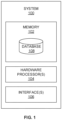
- FIG. 1 depicts a system 100 for execution and controlling applications in computing devices, in accordance with an embodiment of the present disclosure.
- the system 100 is referred as a ⁇ client device', or a ⁇ master device' and may be interchangeably used herein.
- the client device/ master device 100 includes one or more hardware processors 104, communication interface device(s) or input/output (I/O) interface(s) 106 (also referred as interface(s)), and one or more data storage devices or memory 102 operatively coupled to the one or more hardware processors 104.
- the one or more processors 104 may be one or more software processing components and/or hardware processors.
- the hardware processors can be implemented as one or more microprocessors, microcomputers, microcontrollers, digital signal processors, central processing units, state machines, logic circuitries, and/or any devices that manipulate signals based on operational instructions.
- the processor(s) is/are configured to fetch and execute computer-readable instructions stored in the memory.
- the system 100 can be implemented in a variety of computing systems, such as laptop computers, notebooks, hand-held devices (e.g., mobile communication device such as smart phones, tablet/tablet computer), workstations, mainframe computers, and the like.
- the I/O interface device(s) 106 can include a variety of software and hardware interfaces, for example, a web interface, a graphical user interface, and the like and can facilitate multiple communications within a wide variety of networks N/W and protocol types, including wired networks, for example, LAN, cable, etc., and wireless networks, such as WLAN, cellular, or satellite.
- the I/O interface device(s) can include one or more ports for connecting a number of devices to one another or to another server.
- the memory 102 may include any computer-readable medium known in the art including, for example, volatile memory, such as static random access memory (SRAM) and dynamic random access memory (DRAM), and/or non-volatile memory, such as read only memory (ROM), erasable programmable ROM, flash memories, hard disks, optical disks, and magnetic tapes.
- volatile memory such as static random access memory (SRAM) and dynamic random access memory (DRAM)
- non-volatile memory such as read only memory (ROM), erasable programmable ROM, flash memories, hard disks, optical disks, and magnetic tapes.
- a database 108 is comprised in the memory 102, wherein the database 108 comprises information pertaining to each application, its version, current state and other configurations and attributes pertaining to the applications and their management.
- the memory 102 further comprises (or may further comprise) information pertaining to input(s)/output(s) of each step performed by the systems and methods of the present disclosure. In other words, input(s) fed at each
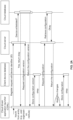
- FIG. 2A depicts a sequence diagram illustrating a method for configuring one or more applications by a cloud driven application launcher comprised in at least one client device, during a communication session being established between the at least one client device and a cloud server, in accordance with an embodiment of the present disclosure.
- FIG. 1B depicts a sequence diagram of a single client device interacting with the cloud server, it is to be understood by a person having ordinary skill in the art or person skilled in the art that there could be any number of client devices interacting with the cloud server at any given time instance. In other words, any of a plurality of client devices may establish a communication session with the cloud server at any given instance and can serve as the master device.
- client device X For example, at time period '1', say a client device X amongst other client devices has connected with the cloud server and obtained applications and is upgraded to date. After 't+m' time period, there could be another client device Y amongst the client devices which has connected with the cloud server and obtained applications and is upgraded to date, wherein the upgradation included an additional upgrade that is not present with client device X. Therefore, in such scenarios, client device Y can act/serve as a master device. In time periods, '1' and ⁇ t+m', '1' can refer to say April 20, 12:00 noon and 't+m' can refer to say April 20, 12:10 PM.
- client device X may have missed such updates. Since client device Y had connected at 't+m' time period, any updates between time interval '1' and 't+m' may not be present in the client device X but would be available with client device Y wherein the client device Y gets updated to the latest configurations/applications. In such scenarios, client device X can still serve as the master device and can provide all updates that it has, however may not be able to provide the additional upgrade (App 'abc' version 2.5) to other client devices.
- client device Y can serve as a master device and can provide not only updates that the client device X was capable of providing but also that additional upgrade (App 'abc' version 2.5) which was made available to it during the 't+m' time period.
- client devices X and Y can serve as the master device to provide updates/upgrades to other client devices via an ad hoc network created therein.
- a client device 'A' (e.g., the client device 100 and the expressions 'client device A, master device' and ⁇ client device' may be interchangeably used herein depending upon context) comprises the cloud driven application launcher (CDAL).
- the expression ⁇ cloud driven application launcher (CDAL)' refers to an executable application program launcher, wherein the CDAL forms an integral part of any operating system configured in computing systems (e.g., client devices).
- the cloud driven application launcher (CDAL) is configured from a central entity such as ⁇ cloud server' for control and execution of applications comprised in client devices and enables client device management from the cloud server as described in the present disclosure.
- the client device A in this case could be the client device X or client device Y, in one example embodiment.
- the CDAL of the client device A transmits a request to the cloud server.
- the request comprises registration of a unique device identifier of the client device A with the cloud server.
- the cloud server may register the client device A and flag the client device A as a whitelisted device.
- Such transmission request and registration are carried out when a launch instance of the CDAL is determined as a first time launch instance.
- the unique device identifier may include, but are not limited to, serial number, an International Mobile Equipment Identity (IMEI) as known in the art, and the like.
- the cloud server comprises a cloud database that stores details of client devices that are blacklisted or whitelisted.
- the cloud database stores information on version for a configuration of any client device, wherein a first change is tagged as version 1, any subsequent changes are tagged as version 2, and so on.
- Other information that is stored in the cloud database includes a unique device identifier associated with each of the plurality of client devices.
- the cloud server verifies the request based on the details stored in the cloud database. In other words, if the details of the client device A are recognized by the cloud server, then the cloud server engages the client device A in further communications. When the cloud server fails to recognize the client device A, the cloud server aborts communication with, and transmission of any information to, the client device A. Alternatively, failure to recognizing the client device A, the cloud server may flag the client device A as a blacklisted device.
- the CDAL of the client device A further transmits another request for obtaining a configuration record version from the cloud server.
- the CDAL then performs a comparison of the obtained configuration record version (from the cloud server) and a configuration record version comprised in the client device A. If the comparison results in a match, then the configuration record version comprised/configured in the client device A is identified as a latest/most recent configuration record version. If the CDAL determines that the configuration record version comprised in the client device A is an outdated version record, then the CDAL obtains updated configuration records along with one or more configuration elements and a version of configuration check from the cloud server.
- configuration record version below is an illustrative example of configuration record version:
- the configuration record version as depicted above is updated at the cloud server based on any changes to configuration data at the cloud server. Therefore, the configuration record version is always saved by all the client devices. Whenever the client devices want to check if there is any change in the configuration record, the configuration record version present in the client device is compared with the configuration record received from the cloud server, to determine whether the version in the client device is an updated/latest version or an outdated version.
- the CDAL then configures itself with the latest/most recent configuration record version as received from the cloud server along with one or more associated attributes. More specifically, the CDAL of the client device A parses the updated configuration records along with the one or more configuration elements and applies one or more associated changes to the CDAL of the client device A.
- the CDAL of the client device A Upon reconfiguring itself, the CDAL of the client device A creates one or more icons for one or more applications configured in the client device A. Further, the CDAL of the client device A obtains, from the cloud server, details comprising (i) a list of applications configured for the entity (e.g., say a company ABC or an education institute XYZ wherein the client device A is tagged to this entity), (ii) a version of each application in the list of applications, and (iii) a uniform resource locator of each application in the list of applications.
- entity e.g., say a company ABC or an education institute XYZ wherein the client device A is tagged to this entity
- a version of each application in the list of applications e.g., say a company ABC or an education institute XYZ wherein the client device A is tagged to this entity
- a uniform resource locator of each application in the list of applications e.g., say a company ABC or an education institute XY
- the CDAL of the client device A determines a state and a version of one or more specific applications comprised in the client device.
- the state may be a presence or an absence of the one or more specific applications.
- the specific applications are from the list of applications or applications comprised in the cloud server.
- the expression 'version' as known in the art refers to a specific form of something differing in certain respects from an earlier form or other forms of the same type of thing.
- the CDAL of the client device A performs at least one of (i) registering, in the database 108 of the client device 100, (a) the determined version of the one or more specific applications is an outdated version and (b) the one or more specific applications are required for an upgrade; (ii) registering, in the database 108 of the client device 100, the one or more specific applications are (a) not configured in the client device and (b) required for download and installation therein; and (iii) uninstalling the one or more specific applications from the client device and removing an associated entry from the database 108.
- the client device A has applications App 1, App 2, App 3, App 4 and so on, and their corresponding versions are 1.5, 2.3, 4.0, 5.4 and so on.
- details of the list of applications as received from the cloud server include information as follows: App 1 - current version 1.8, App 2 - current version 2.3, App 3 - not present in the cloud database, App 4 - current version 5.3, App 5 - current version 1.3.
- the CDAL automatically (i) registers, in the database 108 of the client device A, that (a) the App 1 and App 4 are outdated versions and (b) an entry is made in the database 108 that both the App 1 and App4 require an upgrade, wherein upgradation can happen as applicable, (ii) registers in the database that there is no change required for App 2, (iii) performs (a) uninstallation of the App 3 as the same is not present in the cloud server or sets in a queue for an uninstallation task to be performed and (iv) registers an entry for App 5 in the database 108 and initiates a request for installation of App 5.
- the above operations, installation/upgradation, uninstallation, and the like may either be performed in a sequential manner or may be performed in parallel.
- the CDAL installs specific applications in the client device 100 based on an availability and registers a status of each of the one or more specific applications in the database 108. For instance, the status is one of an installation successful or an installation unsuccessful for the applications that are either required to be installed or were required for an upgradation.
- the CDAL ensures that a uniform UI is provided and thereby a device management is enabled for controlling from the cloud server depending upon the current state and status of each application installed in the client device A.
- the above steps including querying the cloud server by the CDAL of the client device A, requesting details from the cloud server, performing installation, uninstallation, and/or upgradation are carried out automatically by the CDAL itself, in one example embodiment.
- the above steps may be carried out by the cloud server on the client device A, in another example embodiment.
- the above steps may be carried out on the client device A via one or more inputs (from a user/actor, entity such as organization, institute), in yet another example embodiment.
- the entire interaction of the client device with the cloud server/cloud database may be either automatically carried out by the client device itself (via the CDAL of the client device) or may be carried out via one or more inputs from entity (e.g., user, organization, institute to which it is tagged).
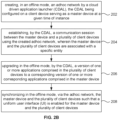
- FIG. 2B depicts an exemplary flow chart illustrating a method for upgrading and synchronizing applications in a plurality of client devices, by a master device in accordance with an embodiment of the present disclosure. More specifically, FIG.
- the client device A serving as the master device is configured to upgrade and synchronize remaining client devices B-N.
- the each of the remaining client devices comprises one or more data storage devices or the memory 102 operatively coupled to the one or more hardware processors and are configured to store instructions for execution of steps of the method by the one or more processors 104.
- the client devices B-N and the client device A are identical in nature, in one embodiment.
- the CDAL of the client device serving as the master device creates, in an offline mode, an ad hoc network at a given time of instance.
- the expression ⁇ ad hoc network' refers to a private secured network (e.g., a Wi-Fi network) that is created by the CDAL of the client device A by automatically exchanging encrypted credentials with other remaining client devices B-N (or with corresponding CDALs of the remaining client devices B-N).
- Each of the remaining client devices B-N also comprise a corresponding CDAL.
- Such ad hoc network creation can be performed by a network creation algorithm as known in the art.
- the CDAL establishes a communication session between the master device and the plurality of client devices B-N using the created ad hoc network. It is to be understood by a person having ordinary skill in the art or person skilled in the art that the master device A and the remaining client device B-N are tagged to the same entity (e.g., in this case say the company ABC).
- the CDAL of the master device A upgrades a version of one or more applications comprised in the plurality of client devices B-N to a corresponding version of one or more corresponding applications comprised in the master device.
- the CDAL of the master device may identify that such devices may not require any upgradation and/or synchronization once the communication session is established.
- client device A serving as the master device establishes communication session with other client devices B-N, during which the master device may learn that some of the client devices are up to date (e.g., say client device E and client device G) and the client device E and client device G are not required to be upgraded.
- Connecting to the ad hoc network of the master device by the client devices B-N may be performed with or without any user inputs. For instance, once the ad hoc network is detected by the client devices B-N, the client devices B-N may automatically connect to the ad hoc network.
- user input such as selection of the ad hoc network being detected can be carried out such that the client devices B-N process the user input and the client devices B-N connect to the ad hoc network accordingly.
- client device B may require App 1 and App 5 upgradation and may have the latest versions of App 2, App 3, App 4, etc.
- the CDAL of the master device may upgrade the client device B with only App 1 and App 5.
- client device C may require upgradation of all applications installed therein.
- the CDAL of the master device upgrades all applications of the client device C.
- client device F may have App 1, App 2, App 3, App 4 and App 5 wherein App 1, App 2, App 4, and App 5 are latest versions.
- App 3 is not present in the cloud server and was uninstalled from the master device A, the CDAL of the master device A in this case only initiates a process for uninstallation of App 3 from the client device F.
- the CDAL of the master device synchronizes the master device and the plurality of client devices such that the same uniform user interface (UI) of the master device is enabled for the plurality of client devices B-N.
- UI uniform user interface
- color settings, one or more actions associated with one or more icons and associated configurations thereof of the one or more applications comprised in client devices B-N are identical to corresponding color settings, corresponding one or more actions associated with one or more corresponding icons and configurations associated thereof of one or more corresponding applications comprised in the master device (e.g., the client device A).
- the steps 202 till 208 are carried out by the CDAL of the master device in an offline mode via the created ad hoc network.
- the steps 202 till 208 are automatically carried out by the CDAL itself, in one example embodiment.
- the steps 202 till 208 are carried out by the CDAL based on a trigger from the cloud server, in another example embodiment.
- the steps 202 till 208 may be carried out via one or more inputs (from a user), in yet another example embodiment.
- the steps 202 till 208 are depicted in FIG. 3. FIG. 3 , with reference to FIGS.
- FIG. 3 depicts a block diagram of an overall architecture for execution and controlling of applications installed therein, by the cloud server, in accordance with an embodiment of the present disclosure.
- FIG. 3 depicts a block diagram of an overall architecture for execution and controlling of applications installed in the plurality of client devices B-N, by the cloud server via the master device, in accordance with an embodiment of the present disclosure.
- the at least one client device A serving as the master device is referred as an invigilator device and the remaining client devices B-N are referred as candidate devices 1-n.
- each of the CDAL of the master device and the plurality of corresponding CDALs of the plurality of client devices comprises a UI based power element (also referred as a soft power element).
- the CDAL has a power button.
- the first state is an active ON state
- the second state is selected from the group of modes consisting of a sleep mode, a hibernation mode, and a shutdown mode.
- a task is being performed on at least one application (e.g., a word processing program/application) running on the master device and/or any client device.
- application e.g., a word processing program/application
- task herein may be text is being typed/processed in a Microsoft ® Word application.
- the CDAL of that device prevents the device from going into the sleep mode, the hibernation mode, or the shutdown mode from an active ON mode.
- the CDAL of the master device is further configured to dynamically (or programmatically) configure and assign a unique theme to each of the plurality of client devices depending upon a scenario.
- the CDAL of the master device determines content to be shared with one or more of the plurality of client devices and the unique theme is rendered on the one or more of the plurality of client devices according to the content shared.
- This content along with the theme information can be downloaded from the cloud server by the master device, and the master device when it connects to the other client devices transmits the content along with the associated theme information.
- the client devices B-N are deployed in an educational institute (e.g., the educational institute XYZ), wherein the plurality of client devices B-N can serve as candidate assessment devices for one or more candidates to assess online question papers.
- the online question papers can be facilitated by the respective CDALs via an application program comprised in each of the client devices.
- Question papers can either be for a subject that is identical in all the client devices, in one example embodiment.
- the question papers may refer to multiple subjects and accordingly shared across the client devices B-N. Assuming that the question paper is of an objective type and the assessment is say science and math subjects.
- the CDAL of the master device may assign a color to each of the plurality of client devices B-N.
- each of the plurality of client devices may be designed with a LED panel on any side (or all sides) of the devices.
- each of the plurality of client devices may be of square or rectangle shape and a LED panel may be placed on top of the upper surface of each of the plurality of client devices, wherein the LED panel may serve as a border, in one example embodiment.
- the LED panel is configured to glow with the unique theme (e.g., color) that is to be rendered on the client devices during an on-going assessment.
- the LED panel serving as a border for a client device B may glow with red color for science question paper as the subject to be assessed
- the LED panel serving as a border for a client device C may glow with green color for math question paper as the subject to be assessed.
- This coloring theme of the question paper enables an invigilator (who may be equipped with the master device/invigilator device) to quickly distinguish between candidates that no same subject candidates are sitting next to each other thus avoiding cheating by the candidates.
- client devices operating in one department may be configured to receive reports related to subject(s) (or episode between a patient and a medical professional) and a unique theme on such client devices can be rendered.
- client devices operating in radiology department may be configured to receive reports related to scanning body parts of the subjects done and a unique theme (e.g., say a low volume continuous beep sound) on such client devices can be rendered/triggered.
- the theme is a sound
- the client devices are configured with required audio settings for rendering based on the content received (e.g., ultrasound scanned reports).
- client devices operating in another department may be configured to receive reports related to viral infection (e.g., report may include blood, glucose, urine tests, and the like) and a unique theme (e.g., say a low volume beep sound at pre-defined time intervals via audio port such as a speaker) on such devices can be rendered.
- a unique theme e.g., say a low volume beep sound at pre-defined time intervals via audio port such as a speaker
- the client devices are configured with required audio settings for rendering based on the content received (e.g., test reports).
- the sound may be triggered at regular intervals (e.g., say every 5 seconds a beep sound until the medical professional is viewing the report).
- the sound or theme may be automatically stopped or aborted from beeping when the report is closed or when the medical professional completes viewing of the report.
- Theme rendering further ensures to check the content delivered is as per the requirement and is shared on a need to know basis.
- specific departments e.g., radiology, pathology, and the like
- each client device be associated with a corresponding medical professional in a department (e.g., orthopedic).
- a department e.g., orthopedic
- preliminary reports on prescription may go to consultant, advance reports such as episodes, scan report(s), surgical procedurals related information can be shared with only surgeons.
- the LED display panel/audio port(s) may not necessarily form a part of the client devices.
- Rendering theme information on each client device in such scenarios may be performed by other ways in any other form as deemed fit, based on the capability and configuration of each client device.
- Any client device that serves as the master device may be provided with various options on themes for selection, and such selection can be dynamic in nature. Further, such implementations ensure that data and services are customized and shared with relevant stakeholders on a need to know basis via a secured channel. Further, the content sharing is carried out in an encrypted form (e.g., using one or more encryption techniques as known in the art).
- the content shared by the master device to the client devices is then accessed by decrypting the content wherein the decryption is carried by using one or more decryption techniques as known in the art.
- upgradation and synchronization are carried out based on the list of applications shared by the master device to be upgraded via an encrypted communication channel wherein the applications are encrypted using the one or more encryption techniques as known in the art.
- the applications are then decrypted at each of the client devices by using the one or more decryption techniques as known in the art and are then configured in respective client devices.
- the encryption technique is described in FIG. 3 . Though FIG.
- the encryption techniques and the decryption techniques may be comprised in the master device/client devices and invoked/executed as applicable to perform the methodology described herein, in one example embodiment.
- the encryption techniques and the decryption techniques may be comprised in the cloud server and invoked/executed as applicable to perform the methodology described herein, in another example embodiment.
- the hardware device can be any kind of device which can be programmed including e.g. any kind of computer like a server or a personal computer, or the like, or any combination thereof.
- the device may also include means which could be e.g. hardware means like e.g. an applicationspecific integrated circuit (ASIC), a field-programmable gate array (FPGA), or a combination of hardware and software means, e.g.
- ASIC applicationspecific integrated circuit
- FPGA field-programmable gate array
- the means can include both hardware means and software means.
- the method embodiments described herein could be implemented in hardware and software.
- the device may also include software means.
- the embodiments may be implemented on different hardware devices, e.g. using a plurality of CPUs.
- the embodiments herein can comprise hardware and software elements.
- the embodiments that are implemented in software include but are not limited to, firmware, resident software, microcode, etc.
- the functions performed by various components described herein may be implemented in other components or combinations of other components.
- a computerusable or computer readable medium can be any apparatus that can comprise, store, communicate, propagate, or transport the program for use by or in connection with the instruction execution system, apparatus, or device.
- a computer-readable storage medium refers to any type of physical memory on which information or data readable by a processor may be stored.
- a computer-readable storage medium may store instructions for execution by one or more processors, including instructions for causing the processor(s) to perform steps or stages consistent with the embodiments described herein.
- the term "computer-readable medium” should be understood to include tangible items and exclude carrier waves and transient signals, i.e., be non-transitory. Examples include random access memory (RAM), read-only memory (ROM), volatile memory, nonvolatile memory, hard drives, CD ROMs, DVDs, flash drives, disks, and any other known physical storage media.
Landscapes
- Engineering & Computer Science (AREA)
- Software Systems (AREA)
- Theoretical Computer Science (AREA)
- General Engineering & Computer Science (AREA)
- Physics & Mathematics (AREA)
- General Physics & Mathematics (AREA)
- Computer Security & Cryptography (AREA)
- Computer Networks & Wireless Communication (AREA)
- Signal Processing (AREA)
- Information Transfer Between Computers (AREA)
- Stored Programmes (AREA)
Applications Claiming Priority (1)
| Application Number | Priority Date | Filing Date | Title |
|---|---|---|---|
| IN202021021472 | 2020-05-21 |
Publications (3)
| Publication Number | Publication Date |
|---|---|
| EP3913479A1 EP3913479A1 (en) | 2021-11-24 |
| EP3913479C0 EP3913479C0 (en) | 2023-06-28 |
| EP3913479B1 true EP3913479B1 (en) | 2023-06-28 |
Family
ID=72665077
Family Applications (1)
| Application Number | Title | Priority Date | Filing Date |
|---|---|---|---|
| EP20198624.7A Active EP3913479B1 (en) | 2020-05-21 | 2020-09-28 | Cloud driven application launcher for execution and control of applications in computing devices |
Country Status (4)
| Country | Link |
|---|---|
| US (1) | US11323547B2 (enExample) |
| EP (1) | EP3913479B1 (enExample) |
| JP (1) | JP7225180B2 (enExample) |
| CN (1) | CN113703861B (enExample) |
Families Citing this family (1)
| Publication number | Priority date | Publication date | Assignee | Title |
|---|---|---|---|---|
| US12132729B2 (en) * | 2020-09-29 | 2024-10-29 | Schneider Electric USA, Inc. | Management of setting change propagation in networked devices |
Family Cites Families (9)
| Publication number | Priority date | Publication date | Assignee | Title |
|---|---|---|---|---|
| US6765596B2 (en) | 2001-02-27 | 2004-07-20 | International Business Machines Corporation | Multi-functional application launcher with integrated status |
| WO2004068873A2 (en) * | 2003-01-27 | 2004-08-12 | Tailwind Solutions, Inc. | Distributed application infrastructure |
| GB0609843D0 (en) | 2006-05-18 | 2006-06-28 | Ibm | Launcher for software applications |
| US8769622B2 (en) * | 2011-06-30 | 2014-07-01 | International Business Machines Corporation | Authentication and authorization methods for cloud computing security |
| JP6052571B2 (ja) * | 2012-03-24 | 2016-12-27 | 日本電気株式会社 | 情報処理システム、情報処理方法、情報処理装置およびその制御方法と制御プログラム |
| US9229701B2 (en) * | 2013-03-15 | 2016-01-05 | Microsoft Technology Licensing, Llc | Local store data versioning |
| US9710248B2 (en) * | 2013-05-29 | 2017-07-18 | Microsoft Technology Licensing, Llc | Application install and layout syncing |
| US10362612B2 (en) * | 2017-03-06 | 2019-07-23 | Citrix Systems, Inc. | Virtual private networking based on peer-to-peer communication |
| JP6989736B2 (ja) | 2017-11-21 | 2022-01-12 | 沖電気工業株式会社 | 配信システムおよび配信方法 |
-
2020
- 2020-09-28 EP EP20198624.7A patent/EP3913479B1/en active Active
- 2020-09-29 US US17/036,276 patent/US11323547B2/en active Active
- 2020-10-15 JP JP2020173723A patent/JP7225180B2/ja active Active
-
2021
- 2021-05-19 CN CN202110548054.1A patent/CN113703861B/zh active Active
Also Published As
| Publication number | Publication date |
|---|---|
| EP3913479C0 (en) | 2023-06-28 |
| JP2021184235A (ja) | 2021-12-02 |
| JP7225180B2 (ja) | 2023-02-20 |
| EP3913479A1 (en) | 2021-11-24 |
| CN113703861A (zh) | 2021-11-26 |
| US20210368024A1 (en) | 2021-11-25 |
| CN113703861B (zh) | 2023-01-03 |
| US11323547B2 (en) | 2022-05-03 |
Similar Documents
| Publication | Publication Date | Title |
|---|---|---|
| US11301232B2 (en) | Update management service for enterprise computing environments | |
| US8458658B2 (en) | Methods and systems for dynamically building a software appliance | |
| US10949510B2 (en) | Managing grouped student devices with timed locks | |
| US9032506B2 (en) | Multiple application containerization in a single container | |
| US9549316B2 (en) | Host device coupled to a mobile phone and method of operating the same | |
| US20170257357A1 (en) | Data Communication Method, User Equipment, and Server | |
| US11336537B2 (en) | Management service migration for managed devices | |
| JP7469322B2 (ja) | グループ・ベースの携帯装置管理 | |
| JP2021533454A (ja) | コンフィギュレーション・シナリオ順守のためのモバイル・デバイスによるコンプライアンス設定の実装 | |
| EP2933724B1 (en) | Method and apparatus for account intercommunication among APPs | |
| US11516732B2 (en) | Provisioning an embedded universal integrated circuit card (eUICC) of a mobile communication device | |
| EP3582110A1 (en) | Bidirectional dynamic offloading of tasks between a host and a mobile device | |
| US20090300593A1 (en) | Methods and systems for managing a software appliance | |
| CN112269570B (zh) | 安全代码开发方法及设备、计算设备和介质 | |
| CN105518646A (zh) | 移动设备配置系统和方法 | |
| EP3913479B1 (en) | Cloud driven application launcher for execution and control of applications in computing devices | |
| TWI668634B (zh) | 基於軟體容器提供雲端服務之系統及方法 | |
| US20220345517A1 (en) | Unified application management for heterogeneous application delivery | |
| US11606457B2 (en) | Technology and method for selectively providing network function to application of device | |
| US10664342B2 (en) | Leak protection of executables with debug information | |
| US10405183B2 (en) | Purposed device system and method for smartphone | |
| US12369028B2 (en) | Personal identification number (PIN) unlock in automated wireless communication device testing | |
| KR20200062109A (ko) | 응용프로그램 버전 관리 방법 및 장치 | |
| US20250181373A1 (en) | Interface and abstraction system for edge bare metal service | |
| EP4250095A1 (en) | Software artifact management across environments |
Legal Events
| Date | Code | Title | Description |
|---|---|---|---|
| PUAI | Public reference made under article 153(3) epc to a published international application that has entered the european phase |
Free format text: ORIGINAL CODE: 0009012 |
|
| STAA | Information on the status of an ep patent application or granted ep patent |
Free format text: STATUS: THE APPLICATION HAS BEEN PUBLISHED |
|
| AK | Designated contracting states |
Kind code of ref document: A1 Designated state(s): AL AT BE BG CH CY CZ DE DK EE ES FI FR GB GR HR HU IE IS IT LI LT LU LV MC MK MT NL NO PL PT RO RS SE SI SK SM TR |
|
| B565 | Issuance of search results under rule 164(2) epc |
Effective date: 20210315 |
|
| STAA | Information on the status of an ep patent application or granted ep patent |
Free format text: STATUS: REQUEST FOR EXAMINATION WAS MADE |
|
| 17P | Request for examination filed |
Effective date: 20220523 |
|
| RBV | Designated contracting states (corrected) |
Designated state(s): AL AT BE BG CH CY CZ DE DK EE ES FI FR GB GR HR HU IE IS IT LI LT LU LV MC MK MT NL NO PL PT RO RS SE SI SK SM TR |
|
| GRAP | Despatch of communication of intention to grant a patent |
Free format text: ORIGINAL CODE: EPIDOSNIGR1 |
|
| STAA | Information on the status of an ep patent application or granted ep patent |
Free format text: STATUS: GRANT OF PATENT IS INTENDED |
|
| RIC1 | Information provided on ipc code assigned before grant |
Ipc: G06F 9/451 20180101ALN20230120BHEP Ipc: G06F 8/65 20180101AFI20230120BHEP |
|
| RIC1 | Information provided on ipc code assigned before grant |
Ipc: G06F 9/451 20180101ALN20230130BHEP Ipc: G06F 8/65 20180101AFI20230130BHEP |
|
| INTG | Intention to grant announced |
Effective date: 20230220 |
|
| GRAS | Grant fee paid |
Free format text: ORIGINAL CODE: EPIDOSNIGR3 |
|
| GRAA | (expected) grant |
Free format text: ORIGINAL CODE: 0009210 |
|
| STAA | Information on the status of an ep patent application or granted ep patent |
Free format text: STATUS: THE PATENT HAS BEEN GRANTED |
|
| AK | Designated contracting states |
Kind code of ref document: B1 Designated state(s): AL AT BE BG CH CY CZ DE DK EE ES FI FR GB GR HR HU IE IS IT LI LT LU LV MC MK MT NL NO PL PT RO RS SE SI SK SM TR |
|
| REG | Reference to a national code |
Ref country code: CH Ref legal event code: EP |
|
| REG | Reference to a national code |
Ref country code: AT Ref legal event code: REF Ref document number: 1583304 Country of ref document: AT Kind code of ref document: T Effective date: 20230715 |
|
| REG | Reference to a national code |
Ref country code: IE Ref legal event code: FG4D |
|
| REG | Reference to a national code |
Ref country code: DE Ref legal event code: R096 Ref document number: 602020012954 Country of ref document: DE |
|
| U01 | Request for unitary effect filed |
Effective date: 20230727 |
|
| U07 | Unitary effect registered |
Designated state(s): AT BE BG DE DK EE FI FR IT LT LU LV MT NL PT SE SI Effective date: 20230802 |
|
| REG | Reference to a national code |
Ref country code: LT Ref legal event code: MG9D |
|
| PG25 | Lapsed in a contracting state [announced via postgrant information from national office to epo] |
Ref country code: NO Free format text: LAPSE BECAUSE OF FAILURE TO SUBMIT A TRANSLATION OF THE DESCRIPTION OR TO PAY THE FEE WITHIN THE PRESCRIBED TIME-LIMIT Effective date: 20230928 |
|
| U20 | Renewal fee for the european patent with unitary effect paid |
Year of fee payment: 4 Effective date: 20230926 |
|
| PG25 | Lapsed in a contracting state [announced via postgrant information from national office to epo] |
Ref country code: RS Free format text: LAPSE BECAUSE OF FAILURE TO SUBMIT A TRANSLATION OF THE DESCRIPTION OR TO PAY THE FEE WITHIN THE PRESCRIBED TIME-LIMIT Effective date: 20230628 Ref country code: HR Free format text: LAPSE BECAUSE OF FAILURE TO SUBMIT A TRANSLATION OF THE DESCRIPTION OR TO PAY THE FEE WITHIN THE PRESCRIBED TIME-LIMIT Effective date: 20230628 Ref country code: GR Free format text: LAPSE BECAUSE OF FAILURE TO SUBMIT A TRANSLATION OF THE DESCRIPTION OR TO PAY THE FEE WITHIN THE PRESCRIBED TIME-LIMIT Effective date: 20230929 |
|
| PG25 | Lapsed in a contracting state [announced via postgrant information from national office to epo] |
Ref country code: SK Free format text: LAPSE BECAUSE OF FAILURE TO SUBMIT A TRANSLATION OF THE DESCRIPTION OR TO PAY THE FEE WITHIN THE PRESCRIBED TIME-LIMIT Effective date: 20230628 |
|
| PG25 | Lapsed in a contracting state [announced via postgrant information from national office to epo] |
Ref country code: ES Free format text: LAPSE BECAUSE OF FAILURE TO SUBMIT A TRANSLATION OF THE DESCRIPTION OR TO PAY THE FEE WITHIN THE PRESCRIBED TIME-LIMIT Effective date: 20230628 |
|
| PG25 | Lapsed in a contracting state [announced via postgrant information from national office to epo] |
Ref country code: IS Free format text: LAPSE BECAUSE OF FAILURE TO SUBMIT A TRANSLATION OF THE DESCRIPTION OR TO PAY THE FEE WITHIN THE PRESCRIBED TIME-LIMIT Effective date: 20231028 |
|
| PG25 | Lapsed in a contracting state [announced via postgrant information from national office to epo] |
Ref country code: SM Free format text: LAPSE BECAUSE OF FAILURE TO SUBMIT A TRANSLATION OF THE DESCRIPTION OR TO PAY THE FEE WITHIN THE PRESCRIBED TIME-LIMIT Effective date: 20230628 Ref country code: SK Free format text: LAPSE BECAUSE OF FAILURE TO SUBMIT A TRANSLATION OF THE DESCRIPTION OR TO PAY THE FEE WITHIN THE PRESCRIBED TIME-LIMIT Effective date: 20230628 Ref country code: RO Free format text: LAPSE BECAUSE OF FAILURE TO SUBMIT A TRANSLATION OF THE DESCRIPTION OR TO PAY THE FEE WITHIN THE PRESCRIBED TIME-LIMIT Effective date: 20230628 Ref country code: IS Free format text: LAPSE BECAUSE OF FAILURE TO SUBMIT A TRANSLATION OF THE DESCRIPTION OR TO PAY THE FEE WITHIN THE PRESCRIBED TIME-LIMIT Effective date: 20231028 Ref country code: ES Free format text: LAPSE BECAUSE OF FAILURE TO SUBMIT A TRANSLATION OF THE DESCRIPTION OR TO PAY THE FEE WITHIN THE PRESCRIBED TIME-LIMIT Effective date: 20230628 Ref country code: CZ Free format text: LAPSE BECAUSE OF FAILURE TO SUBMIT A TRANSLATION OF THE DESCRIPTION OR TO PAY THE FEE WITHIN THE PRESCRIBED TIME-LIMIT Effective date: 20230628 |
|
| PG25 | Lapsed in a contracting state [announced via postgrant information from national office to epo] |
Ref country code: PL Free format text: LAPSE BECAUSE OF FAILURE TO SUBMIT A TRANSLATION OF THE DESCRIPTION OR TO PAY THE FEE WITHIN THE PRESCRIBED TIME-LIMIT Effective date: 20230628 |
|
| REG | Reference to a national code |
Ref country code: DE Ref legal event code: R097 Ref document number: 602020012954 Country of ref document: DE |
|
| PLBE | No opposition filed within time limit |
Free format text: ORIGINAL CODE: 0009261 |
|
| STAA | Information on the status of an ep patent application or granted ep patent |
Free format text: STATUS: NO OPPOSITION FILED WITHIN TIME LIMIT |
|
| PG25 | Lapsed in a contracting state [announced via postgrant information from national office to epo] |
Ref country code: MC Free format text: LAPSE BECAUSE OF FAILURE TO SUBMIT A TRANSLATION OF THE DESCRIPTION OR TO PAY THE FEE WITHIN THE PRESCRIBED TIME-LIMIT Effective date: 20230628 |
|
| 26N | No opposition filed |
Effective date: 20240402 |
|
| REG | Reference to a national code |
Ref country code: IE Ref legal event code: MM4A |
|
| PG25 | Lapsed in a contracting state [announced via postgrant information from national office to epo] |
Ref country code: IE Free format text: LAPSE BECAUSE OF NON-PAYMENT OF DUE FEES Effective date: 20230928 |
|
| PG25 | Lapsed in a contracting state [announced via postgrant information from national office to epo] |
Ref country code: IE Free format text: LAPSE BECAUSE OF NON-PAYMENT OF DUE FEES Effective date: 20230928 |
|
| U20 | Renewal fee for the european patent with unitary effect paid |
Year of fee payment: 5 Effective date: 20240926 |
|
| PGFP | Annual fee paid to national office [announced via postgrant information from national office to epo] |
Ref country code: CH Payment date: 20241001 Year of fee payment: 5 |
|
| PG25 | Lapsed in a contracting state [announced via postgrant information from national office to epo] |
Ref country code: CY Free format text: LAPSE BECAUSE OF FAILURE TO SUBMIT A TRANSLATION OF THE DESCRIPTION OR TO PAY THE FEE WITHIN THE PRESCRIBED TIME-LIMIT; INVALID AB INITIO Effective date: 20200928 |
|
| PG25 | Lapsed in a contracting state [announced via postgrant information from national office to epo] |
Ref country code: HU Free format text: LAPSE BECAUSE OF FAILURE TO SUBMIT A TRANSLATION OF THE DESCRIPTION OR TO PAY THE FEE WITHIN THE PRESCRIBED TIME-LIMIT; INVALID AB INITIO Effective date: 20200928 |
|
| REG | Reference to a national code |
Ref country code: CH Ref legal event code: U11 Free format text: ST27 STATUS EVENT CODE: U-0-0-U10-U11 (AS PROVIDED BY THE NATIONAL OFFICE) Effective date: 20251001 |
|
| PGFP | Annual fee paid to national office [announced via postgrant information from national office to epo] |
Ref country code: GB Payment date: 20250923 Year of fee payment: 6 |
|
| U20 | Renewal fee for the european patent with unitary effect paid |
Year of fee payment: 6 Effective date: 20250925 |