EP3911752B1 - Multitestkit - Google Patents
Multitestkit Download PDFInfo
- Publication number
- EP3911752B1 EP3911752B1 EP19909635.5A EP19909635A EP3911752B1 EP 3911752 B1 EP3911752 B1 EP 3911752B1 EP 19909635 A EP19909635 A EP 19909635A EP 3911752 B1 EP3911752 B1 EP 3911752B1
- Authority
- EP
- European Patent Office
- Prior art keywords
- tests
- test
- reaction cells
- positive
- kit
- Prior art date
- Legal status (The legal status is an assumption and is not a legal conclusion. Google has not performed a legal analysis and makes no representation as to the accuracy of the status listed.)
- Active
Links
Images




Classifications
-
- C—CHEMISTRY; METALLURGY
- C12—BIOCHEMISTRY; BEER; SPIRITS; WINE; VINEGAR; MICROBIOLOGY; ENZYMOLOGY; MUTATION OR GENETIC ENGINEERING
- C12M—APPARATUS FOR ENZYMOLOGY OR MICROBIOLOGY; APPARATUS FOR CULTURING MICROORGANISMS FOR PRODUCING BIOMASS, FOR GROWING CELLS OR FOR OBTAINING FERMENTATION OR METABOLIC PRODUCTS, i.e. BIOREACTORS OR FERMENTERS
- C12M1/00—Apparatus for enzymology or microbiology
- C12M1/34—Measuring or testing with condition measuring or sensing means, e.g. colony counters
-
- B—PERFORMING OPERATIONS; TRANSPORTING
- B01—PHYSICAL OR CHEMICAL PROCESSES OR APPARATUS IN GENERAL
- B01J—CHEMICAL OR PHYSICAL PROCESSES, e.g. CATALYSIS OR COLLOID CHEMISTRY; THEIR RELEVANT APPARATUS
- B01J19/00—Chemical, physical or physico-chemical processes in general; Their relevant apparatus
- B01J19/0046—Sequential or parallel reactions, e.g. for the synthesis of polypeptides or polynucleotides; Apparatus and devices for combinatorial chemistry or for making molecular arrays
-
- C—CHEMISTRY; METALLURGY
- C12—BIOCHEMISTRY; BEER; SPIRITS; WINE; VINEGAR; MICROBIOLOGY; ENZYMOLOGY; MUTATION OR GENETIC ENGINEERING
- C12Q—MEASURING OR TESTING PROCESSES INVOLVING ENZYMES, NUCLEIC ACIDS OR MICROORGANISMS; COMPOSITIONS OR TEST PAPERS THEREFOR; PROCESSES OF PREPARING SUCH COMPOSITIONS; CONDITION-RESPONSIVE CONTROL IN MICROBIOLOGICAL OR ENZYMOLOGICAL PROCESSES
- C12Q1/00—Measuring or testing processes involving enzymes, nucleic acids or microorganisms; Compositions therefor; Processes of preparing such compositions
- C12Q1/02—Measuring or testing processes involving enzymes, nucleic acids or microorganisms; Compositions therefor; Processes of preparing such compositions involving viable microorganisms
-
- C—CHEMISTRY; METALLURGY
- C12—BIOCHEMISTRY; BEER; SPIRITS; WINE; VINEGAR; MICROBIOLOGY; ENZYMOLOGY; MUTATION OR GENETIC ENGINEERING
- C12Q—MEASURING OR TESTING PROCESSES INVOLVING ENZYMES, NUCLEIC ACIDS OR MICROORGANISMS; COMPOSITIONS OR TEST PAPERS THEREFOR; PROCESSES OF PREPARING SUCH COMPOSITIONS; CONDITION-RESPONSIVE CONTROL IN MICROBIOLOGICAL OR ENZYMOLOGICAL PROCESSES
- C12Q1/00—Measuring or testing processes involving enzymes, nucleic acids or microorganisms; Compositions therefor; Processes of preparing such compositions
- C12Q1/02—Measuring or testing processes involving enzymes, nucleic acids or microorganisms; Compositions therefor; Processes of preparing such compositions involving viable microorganisms
- C12Q1/04—Determining presence or kind of microorganism; Use of selective media for testing antibiotics or bacteriocides; Compositions containing a chemical indicator therefor
-
- C—CHEMISTRY; METALLURGY
- C12—BIOCHEMISTRY; BEER; SPIRITS; WINE; VINEGAR; MICROBIOLOGY; ENZYMOLOGY; MUTATION OR GENETIC ENGINEERING
- C12Q—MEASURING OR TESTING PROCESSES INVOLVING ENZYMES, NUCLEIC ACIDS OR MICROORGANISMS; COMPOSITIONS OR TEST PAPERS THEREFOR; PROCESSES OF PREPARING SUCH COMPOSITIONS; CONDITION-RESPONSIVE CONTROL IN MICROBIOLOGICAL OR ENZYMOLOGICAL PROCESSES
- C12Q1/00—Measuring or testing processes involving enzymes, nucleic acids or microorganisms; Compositions therefor; Processes of preparing such compositions
- C12Q1/68—Measuring or testing processes involving enzymes, nucleic acids or microorganisms; Compositions therefor; Processes of preparing such compositions involving nucleic acids
-
- C—CHEMISTRY; METALLURGY
- C12—BIOCHEMISTRY; BEER; SPIRITS; WINE; VINEGAR; MICROBIOLOGY; ENZYMOLOGY; MUTATION OR GENETIC ENGINEERING
- C12Q—MEASURING OR TESTING PROCESSES INVOLVING ENZYMES, NUCLEIC ACIDS OR MICROORGANISMS; COMPOSITIONS OR TEST PAPERS THEREFOR; PROCESSES OF PREPARING SUCH COMPOSITIONS; CONDITION-RESPONSIVE CONTROL IN MICROBIOLOGICAL OR ENZYMOLOGICAL PROCESSES
- C12Q1/00—Measuring or testing processes involving enzymes, nucleic acids or microorganisms; Compositions therefor; Processes of preparing such compositions
- C12Q1/70—Measuring or testing processes involving enzymes, nucleic acids or microorganisms; Compositions therefor; Processes of preparing such compositions involving virus or bacteriophage
-
- G—PHYSICS
- G01—MEASURING; TESTING
- G01N—INVESTIGATING OR ANALYSING MATERIALS BY DETERMINING THEIR CHEMICAL OR PHYSICAL PROPERTIES
- G01N21/00—Investigating or analysing materials by the use of optical means, i.e. using sub-millimetre waves, infrared, visible or ultraviolet light
- G01N21/01—Arrangements or apparatus for facilitating the optical investigation
- G01N21/03—Cuvette constructions
-
- G—PHYSICS
- G01—MEASURING; TESTING
- G01N—INVESTIGATING OR ANALYSING MATERIALS BY DETERMINING THEIR CHEMICAL OR PHYSICAL PROPERTIES
- G01N21/00—Investigating or analysing materials by the use of optical means, i.e. using sub-millimetre waves, infrared, visible or ultraviolet light
- G01N21/17—Systems in which incident light is modified in accordance with the properties of the material investigated
- G01N21/25—Colour; Spectral properties, i.e. comparison of effect of material on the light at two or more different wavelengths or wavelength bands
- G01N21/251—Colorimeters; Construction thereof
- G01N21/253—Colorimeters; Construction thereof for batch operation, i.e. multisample apparatus
-
- G—PHYSICS
- G01—MEASURING; TESTING
- G01N—INVESTIGATING OR ANALYSING MATERIALS BY DETERMINING THEIR CHEMICAL OR PHYSICAL PROPERTIES
- G01N21/00—Investigating or analysing materials by the use of optical means, i.e. using sub-millimetre waves, infrared, visible or ultraviolet light
- G01N21/75—Systems in which material is subjected to a chemical reaction, the progress or the result of the reaction being investigated
-
- G—PHYSICS
- G01—MEASURING; TESTING
- G01N—INVESTIGATING OR ANALYSING MATERIALS BY DETERMINING THEIR CHEMICAL OR PHYSICAL PROPERTIES
- G01N21/00—Investigating or analysing materials by the use of optical means, i.e. using sub-millimetre waves, infrared, visible or ultraviolet light
- G01N21/75—Systems in which material is subjected to a chemical reaction, the progress or the result of the reaction being investigated
- G01N21/77—Systems in which material is subjected to a chemical reaction, the progress or the result of the reaction being investigated by observing the effect on a chemical indicator
-
- G—PHYSICS
- G01—MEASURING; TESTING
- G01N—INVESTIGATING OR ANALYSING MATERIALS BY DETERMINING THEIR CHEMICAL OR PHYSICAL PROPERTIES
- G01N21/00—Investigating or analysing materials by the use of optical means, i.e. using sub-millimetre waves, infrared, visible or ultraviolet light
- G01N21/75—Systems in which material is subjected to a chemical reaction, the progress or the result of the reaction being investigated
- G01N21/77—Systems in which material is subjected to a chemical reaction, the progress or the result of the reaction being investigated by observing the effect on a chemical indicator
- G01N21/78—Systems in which material is subjected to a chemical reaction, the progress or the result of the reaction being investigated by observing the effect on a chemical indicator producing a change of colour
-
- G—PHYSICS
- G01—MEASURING; TESTING
- G01N—INVESTIGATING OR ANALYSING MATERIALS BY DETERMINING THEIR CHEMICAL OR PHYSICAL PROPERTIES
- G01N33/00—Investigating or analysing materials by specific methods not covered by groups G01N1/00 - G01N31/00
- G01N33/48—Biological material, e.g. blood, urine; Haemocytometers
- G01N33/50—Chemical analysis of biological material, e.g. blood, urine; Testing involving biospecific ligand binding methods; Immunological testing
-
- G—PHYSICS
- G01—MEASURING; TESTING
- G01N—INVESTIGATING OR ANALYSING MATERIALS BY DETERMINING THEIR CHEMICAL OR PHYSICAL PROPERTIES
- G01N33/00—Investigating or analysing materials by specific methods not covered by groups G01N1/00 - G01N31/00
- G01N33/48—Biological material, e.g. blood, urine; Haemocytometers
- G01N33/50—Chemical analysis of biological material, e.g. blood, urine; Testing involving biospecific ligand binding methods; Immunological testing
- G01N33/52—Use of compounds or compositions for colorimetric, spectrophotometric or fluorometric investigation, e.g. use of reagent paper and including single- and multilayer analytical elements
-
- G—PHYSICS
- G01—MEASURING; TESTING
- G01N—INVESTIGATING OR ANALYSING MATERIALS BY DETERMINING THEIR CHEMICAL OR PHYSICAL PROPERTIES
- G01N33/00—Investigating or analysing materials by specific methods not covered by groups G01N1/00 - G01N31/00
- G01N33/48—Biological material, e.g. blood, urine; Haemocytometers
- G01N33/50—Chemical analysis of biological material, e.g. blood, urine; Testing involving biospecific ligand binding methods; Immunological testing
- G01N33/53—Immunoassay; Biospecific binding assay; Materials therefor
-
- G—PHYSICS
- G16—INFORMATION AND COMMUNICATION TECHNOLOGY [ICT] SPECIALLY ADAPTED FOR SPECIFIC APPLICATION FIELDS
- G16H—HEALTHCARE INFORMATICS, i.e. INFORMATION AND COMMUNICATION TECHNOLOGY [ICT] SPECIALLY ADAPTED FOR THE HANDLING OR PROCESSING OF MEDICAL OR HEALTHCARE DATA
- G16H10/00—ICT specially adapted for the handling or processing of patient-related medical or healthcare data
- G16H10/40—ICT specially adapted for the handling or processing of patient-related medical or healthcare data for data related to laboratory analysis, e.g. patient specimen analysis
-
- B—PERFORMING OPERATIONS; TRANSPORTING
- B01—PHYSICAL OR CHEMICAL PROCESSES OR APPARATUS IN GENERAL
- B01J—CHEMICAL OR PHYSICAL PROCESSES, e.g. CATALYSIS OR COLLOID CHEMISTRY; THEIR RELEVANT APPARATUS
- B01J2219/00—Chemical, physical or physico-chemical processes in general; Their relevant apparatus
- B01J2219/00274—Sequential or parallel reactions; Apparatus and devices for combinatorial chemistry or for making arrays; Chemical library technology
- B01J2219/00277—Apparatus
- B01J2219/00279—Features relating to reactor vessels
- B01J2219/00306—Reactor vessels in a multiple arrangement
- B01J2219/00313—Reactor vessels in a multiple arrangement the reactor vessels being formed by arrays of wells in blocks
- B01J2219/00315—Microtiter plates
- B01J2219/00317—Microwell devices, i.e. having large numbers of wells
-
- B—PERFORMING OPERATIONS; TRANSPORTING
- B01—PHYSICAL OR CHEMICAL PROCESSES OR APPARATUS IN GENERAL
- B01J—CHEMICAL OR PHYSICAL PROCESSES, e.g. CATALYSIS OR COLLOID CHEMISTRY; THEIR RELEVANT APPARATUS
- B01J2219/00—Chemical, physical or physico-chemical processes in general; Their relevant apparatus
- B01J2219/00274—Sequential or parallel reactions; Apparatus and devices for combinatorial chemistry or for making arrays; Chemical library technology
- B01J2219/0068—Means for controlling the apparatus of the process
- B01J2219/00693—Means for quality control
-
- G—PHYSICS
- G01—MEASURING; TESTING
- G01N—INVESTIGATING OR ANALYSING MATERIALS BY DETERMINING THEIR CHEMICAL OR PHYSICAL PROPERTIES
- G01N21/00—Investigating or analysing materials by the use of optical means, i.e. using sub-millimetre waves, infrared, visible or ultraviolet light
- G01N21/01—Arrangements or apparatus for facilitating the optical investigation
- G01N21/03—Cuvette constructions
- G01N2021/0325—Cells for testing reactions, e.g. containing reagents
-
- G—PHYSICS
- G01—MEASURING; TESTING
- G01N—INVESTIGATING OR ANALYSING MATERIALS BY DETERMINING THEIR CHEMICAL OR PHYSICAL PROPERTIES
- G01N21/00—Investigating or analysing materials by the use of optical means, i.e. using sub-millimetre waves, infrared, visible or ultraviolet light
- G01N21/75—Systems in which material is subjected to a chemical reaction, the progress or the result of the reaction being investigated
- G01N21/77—Systems in which material is subjected to a chemical reaction, the progress or the result of the reaction being investigated by observing the effect on a chemical indicator
- G01N2021/7769—Measurement method of reaction-produced change in sensor
- G01N2021/7786—Fluorescence
Definitions
- the present invention is generally related to performing multiple tests on a single sample, and is more specifically, but not exclusively, related to a method and a prefabricated multi-test kit that allow a user to perform all tests of the kit in parallel, and for a method of manufacturing the multi-test kit.
- Such chemical tests may include, for example, tests for the presence of specific DNA Sequences, specific proteins, specific antibodies, toxin traces, explosives traces, etc.
- the tests may be determined to be positive based on physical measurements such as, for example, fluorescence intensities, phosphorescence intensities, electric conductivity, electric capacitance, optical opacity of a cell that a test takes place in, etc., as known in the art.
- chemical diagnostic tests play a central role in many aspects of patient care, including disease-diagnosis, monitoring progression of therapy, as well as screening for health and infection conditions. Chemical diagnostic tests are especially useful, as they may pinpoint the exact cause of a particular clinical manifestation and thus help a physician make a diagnosis and then, prescribe the right therapy for the patient.
- US2016/256870 discloses a multi-test kit for high-throughput analysis of samples.
- Implementation of the method and system of the present invention involves performing or completing certain selected tasks or steps manually, automatically, or a combination thereof.
- several selected steps could be implemented by hardware or by software on any operating system of any firmware or a combination thereof.
- selected steps of the invention could be implemented as a chip or a circuit.
- selected steps of the invention could be implemented as a plurality of software instructions being executed by a computer using any suitable operating system.
- selected steps of the method and system of the invention could be described as being performed by a data processor, such as a computing platform for executing a plurality of instructions.
- the present embodiments comprise a multi-test kit, a method of manufacturing a multi-test kit, and a method of carrying out a plurality of tests using a multi-test kit.
- each test indicates the presence (which makes the test positive) or absence (which makes the test negative) of a target element, such as a specific chemical compound, microorganism, antibody, DNA (Deoxyribonucleic acid) sequence, etc.
- a target element such as a specific chemical compound, microorganism, antibody, DNA (Deoxyribonucleic acid) sequence, etc.
- each test has to be carried out separately (i.e. either in a separate reaction cell or not concurrently with other one of the tests).
- a kit manufactured according to an exemplary method of the present invention may be used for subjecting a sample (say a blood or other fluid sample taken from a human patient's or a farm animal's body, a sample taken from a contaminated water resource or a crime scene, etc.) to multiple test in parallel (i.e. without having to expose the sample to each test's reagents, separately).
- a sample say a blood or other fluid sample taken from a human patient's or a farm animal's body, a sample taken from a contaminated water resource or a crime scene, etc.
- a sample may be subjected to a large number of tests in parallel, using a number of reaction cells that is significantly smaller than the number of tests.
- the multi-test kit may be used by professional workers (say a nurse or a laboratory technician), by a patient herself, etc., as known in the art.
- the kit's reaction cells may include, but are not limited to, for example, wells, vials, test tubes, etc., or any other element in which reagents of a mix used for a test may be deposited when manufacturing the multi-test kit, as described in further detail hereinbelow.
- a plurality of reaction cells be the cells wells, vials, test tubes, etc., or any combination thereof.
- Each one of the kit's reaction cells is uniquely identifiable, say by a respective position (say the reaction cell's line and column positioning in the kit when made of several wells that are arranged in an array), by a respective marking (say a cell-specific label printed on a reaction cell such as a vial, or beside a reaction cell such as a well), etc., or any combination thereof.
- the tests are distributed among the reaction cells, by adding each different one of the plurality of tests (i.e. by adding the test's reagents) to a respective different sub-combination of the reaction cells. That is to say that each one of the tests is to be performed using a different, though possibly partially overlapping, combination of reaction cells, as described in further detail hereinbelow.
- the manner of distributing the tests among the kit's reaction cells further allows any sub-combination of the provided reaction cells to be indicative of a sub-group of potentially positive tests.
- the sub-combination is indicative of the sub-group when each reaction cell of the sub-combination contains an at least one positive test and none of the remaining ones of the reaction cells contain a positive test, as described in further detail hereinbelow.
- the manner of distribution of the tests among the reaction cells 310 further allows the sub-combination of the reaction cells 310 to be indicative of all negative tests of the group, within at least one degree of certainty.
- the degree(s) of certainty may be predefined, calculated, or indicated, for example, by the manufacturer of the kit 3000, as described in further detail hereinabove.
- each kit 3000 is assigned a kit-specific key or rather a key that is specific to a group (say a batch) of kits that have a very same distribution of reagents, as described in further detail hereinabove.
- the kit 3000 further includes one or more sensors that are configured to measure the physical property's value over each specific one of the kit's 3000 reaction cells 310, say a thermometer, photometer, etc., as known in the art.
- the computer 330 is configured, say by programming, using an electric circuit, or both by programming and using an electric circuit, to read the physical property value measured by the sensors and to determine for each specific one of the cells 310, whether the cell holds at least one positive test, based on the physical property measured over the specific cell 310.
- the computer may indicate which cell(s) 310 are determined to hold an at least one positive test, to the user, say on the small LCD (Liquid Crystal Display) screen 335, on a screen of a computer in communication with a computer of the kit 3000, etc.
- small LCD Liquid Crystal Display
- the computer (whether the user's or the kit's) further uses the mapping data, to identify a subgroup comprising all positive tests of the tests of the group, based on the cell 310 determined to hold an at least one positive test, as described in further detail hereinabove.
- a user of the kit herself may determine the subgroup that comprises all positive tests of the tests of the group, based on the cells 310 determined to hold an at least one positive test, using the mapping data, as described in further detail hereinbelow.
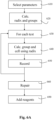
- FIG. 4 is a simplified flowchart illustrating a first exemplary method of distributing tests in a multi-test kit, according to an exemplary embodiment of the present invention.
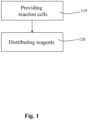
- a first exemplary method of distributing tests in a multi-test kit may form at least a part of the multi-test kit manufacturing method, as described in further detail hereinabove, and as illustrated using Fig. 1 .
- the first exemplary distribution method is based on random numbers.
- a user selects (i.e. inputs) 410 the maximum number of tests that can be reliably executed in a same reaction cell (which number is also referred to hereinbelow as the maximum density), say using the computer that performs the manufacturing method, as described in further detail hereinabove.
- the user also selects 410 the maximum number of concurrently positive tests, as described in further detail hereinbelow.
- the number of cells that each test is distributed between (by adding the test's reagents to each one of the cells that the test is distributed between) that is denoted hereinbelow as 'c' is equal to t/2d.
- each one of the tests i.e. the test's reagents
- each one of the tests is to be distributed between 24/(2 ⁇ 2) of the kit's reaction cells - i.e. between 6 reaction cells.
- the kit is thus manufactured by providing 110 twenty four reaction cells, and distributing 120 each one of the tests, by adding 120 the test's reagents to each one of respective, randomly selected six of the twenty four cells, as described in further detail hereinabove.
- the exemplary method of distribution iterates 430 c times, and in each iteration, the method randomly selects 440 another cell for the specific test's reagents to be added to. In each one of the c iterations 430, there is also verified 445 that the reaction cell selected 440 in the iteration, is still not selected for a number of tests that is greater than the maximum density.
- the exemplary method iterates 430 six times, and in each iteration, randomly selects 440 another cell for the specific test's reagents to be added to, while verifying 445 that the cell can be selected for the test without exceeding the maximum density, as described in further detail hereinabove. If the cell cannot be selected for the test without exceeding the maximum density, another cell is selected 440 randomly for the test.
- the selected 440 cell is then recorded 450 as a part of the mapping data that identifies all the kit's reaction cells that contain an at least one positive test when the test thus mapped to those cells is positive, say on a computer memory, as described in further detail hereinabove.
- the mapping data thus maps between the test and the selected 440 cells, as described in further detail hereinabove.
- a false positive i.e. a negative test included in the sub-group that includes all positive tests
- a false positive may still occur due to an overlap between a sub-combination of the reaction cells that the false positive is mapped to, and combined, sub-combinations of the reaction cells that two or more other tests are mapped to.
- the probability for such a false positive to occur when up to two tests can be concurrently positive is accordingly, predefined or calculated, say by a computer, to be: 2 ⁇ (-t/2d).
- the probability may be reported to a user, say as a degree of certainty printed on a manual or a label, as described in further detail hereinabove.
- each one of one or more degrees of certainty informs a user of the kit on the probability that any test indicated as positive (i.e. a test that belongs to the sub-group of tests that are potentially positive) is indeed positive, for a different number of concurrently positive tests.
- one degree of certainty informs a user on the probability that any test indicated as positive, is indeed positive, when up to two tests may be concurrently positive. Further in the example, a second degree of certainty informs the user on the probability that any test indicated as positive, is indeed positive, when up to three tests may be concurrently positive.
- the exemplary method of distribution further includes a step of repairing 460.
- the mapping data is analyzed by exhaustively iterating over all possible combinations of tests, so as to find any possible obscuring of a first test's result (whether positive or rather, negative) by the predefined number ('d') of concurrently positive other tests.
- exhaustive iteration there are found all cells mapped by the mapping data to one or more tests of a specific combination of d tests, which mapped cells overlap with the cells mapped by the mapping data to the first test.
- a new set of cells is selected for the first test, and the exhaustive iteration is performed again, so as to find any similar overlap (i.e. any obscuring left or introduced by the new set of cells).
- the repairing 460 continues, by selecting a new set of cells for any test found to be mapped to cells overlapped by a combination of cells of other tests, and then exhaustively iterating again over all possible combinations of tests, so as to find any possible obscuring left and selecting a new set of cells for the obscured test, and so on and so forth, until no such obscuring can be found.
- Test A is distributed to reaction cells that are numbered 16, 4, 24, 6, 3, 10, respectively, and Test B is distributed to reaction cells that are numbered 1, 10, 15, 2, 13, 11, respectively. Further in the first example, Test C is distributed to reaction cells that are numbered 23, 5, 10, 18, 17, 14, respectively, and Test D is distributed to reaction cells that are numbered 2, 18, 13, 14, 17, 11, respectively.
- the cells mapped to the combination of Tests A+B are found to include cells number 16, 4, 24, 6, 3, 10, 1, 15, 2, 13, 11.
- the cells mapped to the combination of Tests C+D are found to include cells number 23, 5, 10, 18, 17, 2, 13, 14, 11.
- each one of reaction cells number 1, 15, 2 , 13 , 11, 23, 5, 10, 18 , 17 , 14 is positive (i.e. contains one or more positive tests).
- the mapping data maps Test D too to cells number 2, 18, 13, 14, 17, 11, and as a result, Test D may be included in the sub-group of positive tests even when not positive, as described in further detail hereinabove.
- a new set of cells is selected (say randomly) for Test D, say a one that includes cells number 16, 13, 2, 14, 20, 24.
- mapping data is updated accordingly and analyzed by exhaustively iterating over all possible combinations of tests, so as to find any such ambiguity if left, and repair the left ambiguity in a similar way, and so on and so forth, until no such ambiguity is found in the mapping data, as described in further detail hereinabove.
- the test may remain assigned to the cells already mapped to the test, but also to an additional one of the kit's cells.
- the test that is identified as a potentially false positive is further assigned and the mapped to a specific one of the kit's cells, by updating the mapping data accordingly, as described in further detail hereinbelow.
- the reagents of each specific one of the tests are added 490 to each one of the kit's cells that the mapping data maps the specific test to, say by a robot, as described in further detail hereinbelow.
- test number that would correspond with each specific size-reminder combination.
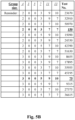
- Fig. 5B using a table, one can see that only test numbers 75 and 150 are within the 1-210 test number range of the 210 tests of the example. Thus, no other pair of concurrently positive tests is possible with those groups, and accordingly, no false positive resultant upon overlapping with a third test is possible.
- a third exemplary method of distributing tests in a multi-test kit may form at least a part of the multi-test kit manufacturing method, as described in further detail hereinabove, and as illustrated using Fig. 1 .
- the number of groups is accordingly determined 620 to be the number of digits in the number that is the result of rounding up that logarithm.
- each test's number is converted in that calculation 640 to the selected 620 radix, and the number that is the result of that conversion, defines which cells of which group the test is to be assigned and distributed to.
- the cells calculated 640 for each test are then recorded 650 as a part of the mapping data that identifies all the kit's reaction cells that contain an at least one positive test when the test thus mapped to those cells is positive, thus mapping between the kit's tests and cells, as described in further detail hereinabove.
- a false positive i.e. a negative test included in the sub-group that includes all positive tests
- a false positive may still occurs due to an overlap between a sub-combination of the reaction cells that the false positive is mapped to, and combined, sub-combinations of the reaction cells that two or more other tests are mapped to.
- control cells added equals to the number of unordered combinations of digit positions (i.e. of cell groups), as described in further detail hereinbelow.
- the first example's second test's number is 150 that when converted to base 3, is 12120. Accordingly the second test, that is denoted 'B' in Fig. 6B , is assigned and mapped (using the recorded 650 mapping data) to the first group's first cell, second group's second cell, third group's first cell, and fourth group second cell, as illustrated in Fig. 6B .
- the first example further includes a fourth test.
- the fourth test's number is 84 that when converted to base 3, is 10010. Accordingly the third test, that is denoted 'Z' in Fig. 6B , is assigned and mapped (using the recorded 650 mapping data) to the first group's first cell, and to the fourth group first cell, as illustrated in Fig. 6B .
- Test Z is also included in the sub-group of potentially positive tests, since the recorded 650 mapping data maps Test Z to the first group's first cell - that is positive when Test B is positive even if Test Z is negative, and to the fourth group first cell - that is positive when Test A is positive even if Test Z is negative. That is to say that when both Test A and Test B are positive, Test Z is a potentially false positive.
- FIG. 6C is a simplified diagram illustrating an exemplary scenario of repairing data mapping of the third exemplary distribution method, according to an exemplary embodiment of the present invention.
- each test is further assigned to the control cell that corresponds to combination of digit position(s) that the test's number, when converted to the selected 620 radix, has a same digit value (whether '0' or other) in.
- Test A has a same digit value ('0') in digit positions 1 and 5 of Test A's number when converted to base 3 (i.e. 02210). Accordingly, Test A is further assigned to the control cell that corresponds to cell groups that correspond to the 1 st and 5 th digit positions, i.e. to control cell number 4, as illustrated in Fig. 6C .
- Test A also has a same digit value ('2') in digit positions 2 and 3, and is accordingly, further assigned to the control cell that corresponds to cell groups that correspond to the 2 nd and 3 rd digit positions, i.e. to control cell number 5, as illustrated in Fig. 6C .
- Test B has a same digit value ('1') in digit positions 1 and 3 of Test B's number when converted to base 3 (i.e. 12120). Accordingly, Test B is further assigned to the control cell that corresponds to cell groups that correspond to the 1 st and 3 rd digit positions, i.e. to control cell number 2, as illustrated in Fig. 6C .
- Test B also has a same digit value ('2') in digit positions 2 and 4, and is accordingly, further assigned to the control cell that corresponds to cell groups that correspond to the 2 nd and 4 th digit positions, i.e. to control cell number 6, as illustrated in Fig. 6C .
- Test C has a same digit value ('0') in digit positions 1 and 2 and is accordingly, further assigned to the control cell that corresponds to cell groups that correspond to the 1 st and 2 nd digit positions, i.e. to control cell number 1, as illustrated in Fig. 6C .
- Test C has that same digit value ('0') in digit positions 1 and 5 too, and is accordingly, further assigned to the control cell that corresponds to cell groups that correspond to the 1 st and 5 th digit positions, i.e. to control cell number 4, as illustrated in Fig. 6C .
- Test C has that same digit value ('0') in digit positions 2 and 5 too, and is accordingly, further assigned to the control cell that corresponds to cell groups that correspond to the 2 nd and 5 th digit positions, i.e. to control cell number 7, as illustrated in Fig. 6C .
- Test Z that is numbered 10010 in base 3, is similarly assigned to the control cells that correspond to the 3 rd and 5 th digit positions, 2 nd and 5 th digit positions, 2 nd and 3 rd digit positions, and 1 st and 4 th digit positions, i.e. to control cells number 3, 5, 7 and 9.
- mapping data is then updated accordingly, so as to add each test that the test is assigned to, to the list of cells that the test is mapped to using the mapping data. As a result, no false negative is possible.
- the recorded 650 mapping data still maps Test C to the third group's second cell - that is positive when Test A is positive even if Test C is negative, and to the fourth group first cell - that is also positive when Test A is positive even if Test C is negative.
- Test C is no longer identified as positive when Test A is positive, since the mapping data now maps Test C control cell number 7 too, that does not include an at least one positive test unless Test C itself is positive, and is therefore not positive.
- control cell number 5 that Test A is mapped to by the mapping data is not positive unless Test A itself is positive.
- Test B is no longer identified as positive since for example, according to Test B's mapping by the recorded 650 mapping data, the first group's first cell needs to be positive, and none of Tests A and C is mapped or assigned to the first group's first cell.
- Test Z is no longer identified as positive since for example, control cell number 9 that Test Z is mapped to by the mapping data, is not positive unless Test Z itself is positive.
- test being predictable regarding the number of different positive detections that can still be accurately distinguishable, and with a predictable statistical specificity when the number of positives is exceeded. All in a single non-adaptive stage of a mass-produced kit. Non adaptive means that the stage composition depends only on the tests being conducted and performance requirements, and not on the internal quantities of the analytes in the specimen.
- test be a highly specific test for the presence of a chemical compound, using a chemical process and resulting in a physical measurement.
- Tests be a large group of such tests each measuring the presence of a different chemical compound of the same type, resulting in a common signal, nonspecific to any specific test being positive.
- Sample be a chemical specimen which we want to evaluate if positive or negative for each one of the tests.
- Kit be a set of material containers, each container having a unique but overlapping mixture of tests. Each mixture is to be used in its own reaction chamber, where the number of reaction chambers in use is significantly smaller (say magnitude smaller) than the number of Tests that we are conducting to Sample.
- a reaction chamber can have a limited number of different sensors, yielding an equal number of 'test channels' that can be used together in the same reaction chamber.
- each such sensor, channel or chamber we refer to each such sensor, channel or chamber, as a different reaction chamber.
- a mixing procedure is chosen that optimizes between:
- the parameters of the mixing procedure are further optimized to overcome technical limitations and match the design requirements.
- Such a choice can be made, for example, by using an exhaustive search for all combinations of parameters, linear programming, Newton-Gauss Minimization or any other technique fit for purpose, to choose a passable or ideal combination of design parameters.
- T is a function of D and N, and the chosen Mixing Procedure in use for construction of the Kit.
- a subsection of the T mixes can optionally be used for error correction purposes, for the ability to resolve result conflicts to achieve the requirement of D separable simultaneous positive answers.
- Example of assigning mixes to reaction chambers is given in the following table: Test 1 2 3 4 5 6 7 8 9 10 11 12 Mix D A,B C,B A B D A, C D B C Chamber A1 A2 A3 A4 B1 B2 B3 B4 C1 C2 C3 C4
- Example of a dictionary (also referred to as a look-up table or a reference table): MIX 1 2 3 4 5 6 7 8 9 10 11 12 Chamber A1 A2 A3 A4 B1 B2 B3 B4 C1 C2 C3 C4 Test A X X X Test B X X X Test C X X X Test D X X X ... Test Z X X X
- the asymptotic probability is for a false positive is 1/n, as known in the art.
- a relative quantity is measures with respect to either a standard quantity or any other quantity in question. For the same object we're measuring, we can have another 'absolute' measurement that is irrespective of other objects.
- the absolute unknown quantity is the concentration of target material in a given reaction chamber. While this cannot always be inferred, the ratio between the absolute quantities of target material in two different chambers, can be inferred by converting the measured signal to units having a linear relation to quantity. When this is done, the ratio between two such measurement of two chambers (in units linearly related to quantity), will be equal to the ratio between absolute quantities. This is based on the assumption that, within the same plate, the unknown factor between linear units and absolute quantity, is consistent across different chambers.
- Tests A,B,D,Z are positive; Tests A,B,D are positive - i.e. we are unsure if Z is an actual positive.
- the unknowns are the relative quantities of each test A to Z. (Column Test, Test). Each Row corresponds to a different MIX in a chamber. The unknowns in each row represent tests of the Mix represented in the Row. Relative quantity is the total physical readout of a in linear units of the Row's chamber.
- Separability How many simultaneous positives the kit can classify reliably.
- Maximum density The number of tests that can be reliably be executed simultaneously in a single mix. This can take into account reaction volume, the tests competing for reagents, etc.
- a total amount of total mixes, and an amount of different mixes amongst which each test will be distributed, are selected to satisfy a low probability for false positive readings for the expected number of simultaneous positives.
- the probability can be combinatorially calculated, given the amount of possible permutations, and the likelihood of a combination yielding a false positive occurring.
- m the maximum density of tests allowed in one tube (the most tests that can simultaneously function in one mix).
- the number of mixes t required is at least 2 ⁇ log n + 4 ⁇ d ⁇ log(e ⁇ n/d) rounded up to the next multiple of d.
- Each test will be randomly placed into t/2 ⁇ d different mixes.
- the placement map of each mix is stored in a lookup.
- Test D mixes 2, 18, 13, 14, 17, 11 (simulated to cause an obscuration).
- test group is assigned an incremental index.
- a group of natural powers of unique prime numbers is constructed.
- the group of primes is selected, so that their multiple at least the number of tests, raised by the power of the required Separability factor.
- the group is optimized so the sum of the prime powers, is as small as possible, to achieve results in as fewer tests, considering technical limitations. As a test would appear in all mix-groups (defined below), we may raise the power of the prime, or choose a larger prime, to avoid having too many tests in one mix, which may raise a technical limitation regarding the maximal test capacity of a mix.
- each group of mixes belonging to a whole power of prime place a test into a mix if the reminder of the division of the index of that test, by the power of prime of the mix group, equals to the index of the mix inside the mix group.
- Group #1 is of prime 2. Power 1 will set a group size below the limit. Power 2 will set a group size of 4, which is sufficient.
- Group #2 is of prime 3, which is large enough having power 1.
- Group #3 is of prime 5, which is large enough having power 1.
- Group #4 is of prime 7, which is large enough having power 1.
- Group #5 is of prime 11, which is large enough having power 1.
- Group #6 is of prime 13, which is large enough having power 1.
- So 75 maps to ⁇ 3 ⁇ , ⁇ 0 ⁇ , ⁇ 0 ⁇ , ⁇ 5 ⁇ , ⁇ 9 ⁇ , ⁇ 10 ⁇ and similarly, 150 maps to ⁇ 2 ⁇ , ⁇ 0 ⁇ , ⁇ 0 ⁇ , ⁇ 3 ⁇ , ⁇ 7 ⁇ , ⁇ 7 ⁇ .
- reaction chamber pattern (note: multiple indexes in same group are marked as a collection within): ⁇ 2, 3 ⁇ , ⁇ 0 ⁇ , ⁇ 0 ⁇ , ⁇ 3,5 ⁇ , ⁇ 7,9 ⁇ , ⁇ 7,10 ⁇
- a 'radix' value is selected, and a 'd' digit value is selected, so that the number of mixes is at least (r-1) ⁇ d and the number of tests is at most r raised in the power of d rd, considering technical limitations.
- a unique natural number is assigned to each test in test group, between 1 and r raised in the power of d.
- 210 in base 3 is 21210, which means that 5-digit groups are required, each having 2 mixes, which amounts to 10 mixes.
- C #21, which is in Base 3: 00210.
- Controls (Adds wells to correspond with an arbitrary structure property) table: Control Digit groups Tests where digit groups have same value Elaboration 1 1,2 C 00 210 in base 3 2 1,3 B 12120 in base 3 3 1,4 4 1,5 A, C 0 221 0 in base 3, 0 021 0 in base 3 5 2,3 A 0 22 10 in base 3 6 2,4 B 1 2 1 2 0 in base 3 7 2,5 C 0 0 21 0 in base 3 8 3,4 9 3,5 10 4,5
- B has the same value 1 for digit positions 1 and 3.
- B has the same value 2 for positions 2 and 4.
- A has the same value 0 for digit positions 1 and 5 and so on.
- Control Mix #7 is not positive, which means C is not present (as it lacks that reaction chamber showing a positive reaction for test C).
- Control Mix #5 that is part of pattern A, doesn't react in the reaction chamber, so the combination is only B+C
Landscapes
- Chemical & Material Sciences (AREA)
- Health & Medical Sciences (AREA)
- Life Sciences & Earth Sciences (AREA)
- Engineering & Computer Science (AREA)
- Physics & Mathematics (AREA)
- Immunology (AREA)
- General Health & Medical Sciences (AREA)
- Biochemistry (AREA)
- Analytical Chemistry (AREA)
- Organic Chemistry (AREA)
- General Physics & Mathematics (AREA)
- Pathology (AREA)
- Zoology (AREA)
- Wood Science & Technology (AREA)
- Molecular Biology (AREA)
- Biotechnology (AREA)
- Proteomics, Peptides & Aminoacids (AREA)
- Microbiology (AREA)
- Chemical Kinetics & Catalysis (AREA)
- Bioinformatics & Cheminformatics (AREA)
- Hematology (AREA)
- Biomedical Technology (AREA)
- Urology & Nephrology (AREA)
- Plasma & Fusion (AREA)
- Genetics & Genomics (AREA)
- General Engineering & Computer Science (AREA)
- Medicinal Chemistry (AREA)
- Biophysics (AREA)
- Spectroscopy & Molecular Physics (AREA)
- Food Science & Technology (AREA)
- Cell Biology (AREA)
- Primary Health Care (AREA)
- Medical Informatics (AREA)
- Epidemiology (AREA)
- Public Health (AREA)
- Sustainable Development (AREA)
- Toxicology (AREA)
- Virology (AREA)
- Apparatus Associated With Microorganisms And Enzymes (AREA)
- Measuring Or Testing Involving Enzymes Or Micro-Organisms (AREA)
Claims (15)
- Vorgefertigter Multitest-Kit, wobei der vorgefertigte Kit umfasst:
mehrere Reaktionszellen, wobei jede von mindestens zwei der Reaktionszellen Reagenzien eines entsprechenden unterschiedlichen Satzes von mindestens zwei Tests enthält, die aus einer Gruppe ausgewählt sind, die aus mehreren unterschiedlichen Tests besteht, wobei die Tests auf eine Weise unter den Reaktionszellen verteilt sind, die Reagenzien jedes unterschiedlichen Tests der Gruppe in einer entsprechenden unterschiedlichen Unterkombination der Reaktionszellen belässt und es ermöglicht, dass jede Unterkombination der Reaktionszellen auf eine Untergruppe hindeutet, die alle positiven Tests der Gruppe umfasst, wenn jede Reaktionszelle der Unterkombination, die auf die Untergruppe hindeutet, mindestens einen positiven Test enthält und keine der verbleibenden Reaktionszellen einen positiven Test enthält, wobei die Reaktionszellen weniger als die unter den Reaktionszellen verteilten Tests sind. - Vorgefertigter Kit nach Anspruch 1, wobei die Weise der Verteilung der Tests unter den Reaktionszellen es ferner ermöglicht, dass die Unterkombination der Reaktionszellen auf alle negativen Tests der Gruppe hindeutet.
- Vorgefertigter Kit nach Anspruch 1, wobei die Weise der Verteilung der Tests unter den Reaktionszellen es ferner ermöglicht, dass die Unterkombination der Reaktionszellen auf alle negativen Tests der Gruppe hindeutet, vorausgesetzt, dass die Anzahl der gleichzeitig positiven Tests unter einer vordefinierten Anzahl liegt.
- Vorgefertigter Kit nach Anspruch 1, wobei die Weise der Verteilung der Tests unter den Reaktionszellen es ferner ermöglicht, dass die Unterkombination der Reaktionszellen auf alle negativen Tests der Gruppe innerhalb eines vordefinierten Sicherheitgrads hindeutet.
- Vorgefertigter Kit nach Anspruch 1, ferner umfassend mehrere Sensoren, wobei jeder der Sensoren konfiguriert ist, einen Wert einer physikalischen Eigenschaft für eine entsprechende der Reaktionszellen zu messen.
- Vorgefertigter Kit nach Anspruch 5, ferner umfassend mindestens eines von: einem Computer in Kommunikation mit den Sensoren zum Lesen der von den Sensoren gemessenen physikalischen Eigenschaftswerte oder einer mindestens teilweise physischen Schnittstelle mit einem externen Computer zum Verwenden des externen Computers zum Lesen der von den Sensoren gemessenen physikalischen Eigenschaftswerte.
- Verfahren zur Herstellung eines Multitest-Kits, wobei das Verfahren umfasst:Bereitstellen mehrerer Reaktionszellen; undVerteilen einer aus mehreren Tests bestehenden Gruppe unter den Reaktionszellen durch Hinzufügen von Reagenzien jedes unterschiedlichen Tests zu einer entsprechend unterschiedlichen Unterkombination der Reaktionszellen und Belassen von Reagenzien eines unterschiedlichen Satzes von mindestens zwei der Tests der Gruppe in jeder entsprechenden von mindestens zwei der Reaktionszellen auf eine Weise, die es ermöglicht, dass jede Unterkombination der Reaktionszellen auf eine Untergruppe hindeutet, die alle positiven Tests der Gruppe umfasst, wenn jede Reaktionszelle der Unterkombination, die auf die Untergruppe hindeutet, mindestens einen positiven Test enthält und keine der übrigen Reaktionszellen einen positiven Test enthält, wobei die Reaktionszellen weniger als die unter den Reaktionszellen verteilten Tests sind.
- Verfahren nach Anspruch 7, wobei die Weise der Verteilung der Tests unter den bereitgestellten Reaktionszellen es ferner ermöglicht, dass die Unterkombination der Reaktionszellen auf alle negativen Tests der Gruppe hindeutet.
- Verfahren nach Anspruch 7, wobei die Weise der Verteilung der Tests unter den bereitgestellten Reaktionszellen es ferner ermöglicht, dass die Unterkombination der Reaktionszellen auf alle negativen Tests der Gruppe hindeutet, vorausgesetzt, dass die Anzahl der gleichzeitig positiven Tests unter einer vordefinierten Anzahl liegt.
- Verfahren nach Anspruch 7, wobei die Weise der Verteilung der Tests unter den bereitgestellten Reaktionszellen es ferner ermöglicht, dass die Unterkombination der Reaktionszellen auf alle negativen Tests der Gruppe innerhalb eines vordefinierten Sicherheitgrads hindeutet.
- Verfahren nach Anspruch 7, ferner umfassend das Bereitstellen einer Datenzuordnung zwischen jedem der verschiedenen Tests der Gruppe und einer entsprechenden Unterkombination der bereitgestellten Reaktionszellen, wobei die Zuordnung alle Reaktionszellen identifiziert, die mindestens einen positiven Test enthalten, wenn der der Unterkombination zugeordnete Test positiv ist.
- Verfahren zum Durchführen von mehreren Tests unter Verwendung eines vorgefertigten Multitest-Kits, wobei das Verfahren umfasst:Empfangen von Daten, die für jeden entsprechenden der mehreren Tests alle Reaktionszellen des Multitest-Kits identifizieren, die mindestens einen positiven Test enthalten, wenn der entsprechende der mehreren Tests positiv ist;Aufteilen einer Probe auf mehrere Reaktionszellen des Multitest-Kits, wobei jede von mindestens zwei der Reaktionszellen des Kits Reagenzien eines entsprechenden, unterschiedlichen Satzes von mindestens zwei Tests enthält, die aus den mehreren Tests ausgewählt sind, wobei die Tests unter den Reaktionszellen auf eine Weise verteilt sind, die Reagenzien jedes unterschiedlichen Tests der mehreren Tests in einer entsprechenden unterschiedlichen Unterkombination der Reaktionszellen belässt und es ermöglicht, dass jede Unterkombination der Reaktionszellen auf eine Untergruppe hindeutet, die alle positiven Tests der mehreren Tests umfasst, wenn jede Reaktionszelle der Unterkombination, die auf die Untergruppe hindeutet, mindestens einen positiven Test enthält und keine der verbleibenden Reaktionszellen einen positiven Test enthält, wobei die Reaktionszellen weniger als die unter den Reaktionszellen verteilten Tests sind;Messen einer physikalischen Eigenschaft für jede Zelle der Reaktionszellen des Kits, die Reagenzien von mindestens einem der Tests enthält;für jede der Reaktionszellen des Kits, der Reagenzien von mindestens einem der Tests enthält, Bestimmen basierend auf der Messung, ob die Reaktionszelle mindestens einen positiven Test enthält; undbasierend auf dem Bestimmen und Verwenden der empfangenen Daten, Identifizieren einer Untergruppe, die alle positiven Tests der mehreren Tests umfasst.
- Verfahren nach Anspruch 12, wobei die Weise der Verteilung der Tests unter den Reaktionszellen es ferner ermöglicht, dass die Unterkombination der Reaktionszellen auf alle negativen Tests der mehreren Tests hindeutet, wobei das Verfahren ferner das Identifizieren aller negativen Tests der mehreren Tests basierend auf dem Bestimmen und Verwenden der empfangenen Daten umfasst.
- Verfahren nach Anspruch 12, wobei die Weise der Verteilung der Tests unter den Reaktionszellen ferner ermöglicht, dass die Unterkombination der Reaktionszellen auf alle negativen Tests der mehreren Tests hindeutet, vorausgesetzt, dass die Anzahl der gleichzeitig positiven Tests unter einer vordefinierten Anzahl liegt, wobei das Verfahren ferner das Identifizieren aller negativen Tests der mehreren Tests basierend auf dem Bestimmen und Verwenden der empfangenen Daten umfasst, vorausgesetzt, die Anzahl der gleichzeitig positiven Tests liegt unter der vordefinierten Anzahl.
- Verfahren nach Anspruch 12, wobei die Weise der Verteilung der Tests unter den Reaktionszellen es ferner ermöglicht, dass die Unterkombination der Reaktionszellen auf alle negativen Tests der mehreren Tests innerhalb eines vordefinierten Sicherheitgrads hindeutet, wobei das Verfahren ferner das Identifizieren aller negativen Tests der mehreren Tests innerhalb des vordefinierten Sicherheitgrads basierend auf dem Bestimmen und Verwenden der empfangenen Daten umfasst.
Applications Claiming Priority (2)
| Application Number | Priority Date | Filing Date | Title |
|---|---|---|---|
| US201962791950P | 2019-01-14 | 2019-01-14 | |
| PCT/IB2019/061468 WO2020148593A1 (en) | 2019-01-14 | 2019-12-31 | Multi-test kit |
Publications (3)
| Publication Number | Publication Date |
|---|---|
| EP3911752A1 EP3911752A1 (de) | 2021-11-24 |
| EP3911752A4 EP3911752A4 (de) | 2022-11-02 |
| EP3911752B1 true EP3911752B1 (de) | 2025-01-29 |
Family
ID=71613713
Family Applications (1)
| Application Number | Title | Priority Date | Filing Date |
|---|---|---|---|
| EP19909635.5A Active EP3911752B1 (de) | 2019-01-14 | 2019-12-31 | Multitestkit |
Country Status (5)
| Country | Link |
|---|---|
| US (2) | US12320742B2 (de) |
| EP (1) | EP3911752B1 (de) |
| CA (1) | CA3126622A1 (de) |
| IL (1) | IL284830B2 (de) |
| WO (1) | WO2020148593A1 (de) |
Family Cites Families (11)
| Publication number | Priority date | Publication date | Assignee | Title |
|---|---|---|---|---|
| WO2006116616A2 (en) | 2005-04-26 | 2006-11-02 | Applera Corporation | Systems and methods for multiple analyte detection |
| US7815868B1 (en) | 2006-02-28 | 2010-10-19 | Fluidigm Corporation | Microfluidic reaction apparatus for high throughput screening |
| US20100203521A1 (en) | 2007-04-02 | 2010-08-12 | Boston Medical Center Corporation | Method for bacterial lysis |
| CA3170924A1 (en) | 2007-10-02 | 2009-04-09 | Labrador Diagnostics Llc | Modular point-of-care devices and uses thereof |
| US9415392B2 (en) | 2009-03-24 | 2016-08-16 | The University Of Chicago | Slip chip device and methods |
| WO2012122536A2 (en) * | 2011-03-09 | 2012-09-13 | Magarray, Inc. | Systems and methods for high-throughput detection of an analyte in a sample |
| CA2892490A1 (en) | 2012-11-26 | 2014-05-30 | Caris Science, Inc. | Biomarker compositions and methods |
| US10895563B2 (en) | 2014-02-26 | 2021-01-19 | Trace-Ability, Inc. | Palette-based systems for analyte characterization |
| US10991096B2 (en) * | 2014-05-12 | 2021-04-27 | Healthy.Io Ltd. | Utilizing personal communications devices for medical testing |
| US10444232B2 (en) | 2014-08-13 | 2019-10-15 | The Trustees Of Columbia University In The City Of New York | Diagnostic devices, systems, and methods |
| US11181481B2 (en) | 2017-03-08 | 2021-11-23 | Optofluidic Bioassay, Llc | Optofluidic diagnostics system |
-
2019
- 2019-12-31 EP EP19909635.5A patent/EP3911752B1/de active Active
- 2019-12-31 US US17/422,348 patent/US12320742B2/en active Active
- 2019-12-31 CA CA3126622A patent/CA3126622A1/en active Pending
- 2019-12-31 WO PCT/IB2019/061468 patent/WO2020148593A1/en not_active Ceased
- 2019-12-31 IL IL284830A patent/IL284830B2/en unknown
-
2025
- 2025-05-02 US US19/197,744 patent/US20250264402A1/en active Pending
Also Published As
| Publication number | Publication date |
|---|---|
| US20220120671A1 (en) | 2022-04-21 |
| EP3911752A4 (de) | 2022-11-02 |
| CA3126622A1 (en) | 2020-07-23 |
| US12320742B2 (en) | 2025-06-03 |
| IL284830B2 (en) | 2025-09-01 |
| WO2020148593A1 (en) | 2020-07-23 |
| IL284830A (en) | 2021-08-31 |
| EP3911752A1 (de) | 2021-11-24 |
| US20250264402A1 (en) | 2025-08-21 |
| IL284830B1 (en) | 2025-05-01 |
Similar Documents
| Publication | Publication Date | Title |
|---|---|---|
| Christensen et al. | Von Frey testing revisited: Provision of an online algorithm for improved accuracy of 50% thresholds | |
| US20250182855A1 (en) | Methods and systems for visualizing and evaluating data | |
| CN1525838A (zh) | 护理地点的诊断和/或分析系统 | |
| KR20040018161A (ko) | 시험편 교정 코드가 기억된 메모리를 갖는 진단 키트 및관련한 방법 | |
| WO2012006565A2 (en) | Systems and methods for assigning attributes to a plurality of samples | |
| US7398171B2 (en) | Automated quality control method and system for genetic analysis | |
| JP2004527825A (ja) | バイオチップ測定装置で得たデータを評価するためのネットワーク | |
| CN103548014B (zh) | 用于产生质量控制材料的统计上有效的检验均值和范围的系统和方法 | |
| CN109690318A (zh) | 分析仪的核心校准 | |
| EP3911752B1 (de) | Multitestkit | |
| Pfaffl et al. | Data analysis software | |
| WO2007058001A1 (ja) | 易動度の正規化装置、正規化方法、正規化プログラムおよび自己組織化マップ、並びに、物質の検出方法、検出プログラム、検出ルール生成方法およびデータ構造 | |
| CN111912974B (zh) | 一种免疫试剂定标方法 | |
| EP1345155A2 (de) | System und Verfahren für klinische Gleichwertigkeitsbestimmung von Testverfahren | |
| KR102599838B1 (ko) | 혼합 표준편차를 활용한 검사실 허용범위 설정 방법 | |
| Shanty et al. | Interpretation of urine dipstick results based on color similarity using linear interpolation curve fitting | |
| US20230168263A1 (en) | Information provision device, information provision system, information provision method, and program | |
| US20110046908A1 (en) | Method and apparatus for calibrating result from test device | |
| JP6280394B2 (ja) | 測定装置、測定方法および情報管理方法 | |
| Fuentes-Arderiu | Uncertainty of measurement in clinical microbiology | |
| Wang et al. | Assay Performance Evaluation | |
| Michaud | The role of standards in the development and implementation of clinical laboratory tests: a domestic and global perspective | |
| Mansfield et al. | Biomarkers for pharmacogenetic and pharmacogenomic studies: special issues in analytical performance | |
| CN118566523A (zh) | 加样设备性能评估方法、装置及电子设备 | |
| US20190341126A1 (en) | System for the quantification of system-wide dynamics in complex networks |
Legal Events
| Date | Code | Title | Description |
|---|---|---|---|
| STAA | Information on the status of an ep patent application or granted ep patent |
Free format text: STATUS: UNKNOWN |
|
| STAA | Information on the status of an ep patent application or granted ep patent |
Free format text: STATUS: THE INTERNATIONAL PUBLICATION HAS BEEN MADE |
|
| PUAI | Public reference made under article 153(3) epc to a published international application that has entered the european phase |
Free format text: ORIGINAL CODE: 0009012 |
|
| STAA | Information on the status of an ep patent application or granted ep patent |
Free format text: STATUS: REQUEST FOR EXAMINATION WAS MADE |
|
| 17P | Request for examination filed |
Effective date: 20210809 |
|
| AK | Designated contracting states |
Kind code of ref document: A1 Designated state(s): AL AT BE BG CH CY CZ DE DK EE ES FI FR GB GR HR HU IE IS IT LI LT LU LV MC MK MT NL NO PL PT RO RS SE SI SK SM TR |
|
| RAP1 | Party data changed (applicant data changed or rights of an application transferred) |
Owner name: INFINIPLEX LTD. |
|
| RIN1 | Information on inventor provided before grant (corrected) |
Inventor name: RUSSAK, ZE'EV |
|
| DAV | Request for validation of the european patent (deleted) | ||
| DAX | Request for extension of the european patent (deleted) | ||
| A4 | Supplementary search report drawn up and despatched |
Effective date: 20220929 |
|
| RIC1 | Information provided on ipc code assigned before grant |
Ipc: B01J 19/00 20060101ALI20220923BHEP Ipc: G01N 33/53 20060101ALI20220923BHEP Ipc: G01N 33/52 20060101ALI20220923BHEP Ipc: G01N 33/50 20060101ALI20220923BHEP Ipc: G01N 21/78 20060101ALI20220923BHEP Ipc: G01N 21/75 20060101ALI20220923BHEP Ipc: C12M 1/34 20060101ALI20220923BHEP Ipc: C12Q 1/70 20060101ALI20220923BHEP Ipc: C12Q 1/68 20180101ALI20220923BHEP Ipc: C12Q 1/04 20060101ALI20220923BHEP Ipc: C12Q 1/02 20060101AFI20220923BHEP |
|
| GRAP | Despatch of communication of intention to grant a patent |
Free format text: ORIGINAL CODE: EPIDOSNIGR1 |
|
| STAA | Information on the status of an ep patent application or granted ep patent |
Free format text: STATUS: GRANT OF PATENT IS INTENDED |
|
| INTG | Intention to grant announced |
Effective date: 20240912 |
|
| GRAS | Grant fee paid |
Free format text: ORIGINAL CODE: EPIDOSNIGR3 |
|
| GRAA | (expected) grant |
Free format text: ORIGINAL CODE: 0009210 |
|
| STAA | Information on the status of an ep patent application or granted ep patent |
Free format text: STATUS: THE PATENT HAS BEEN GRANTED |
|
| P01 | Opt-out of the competence of the unified patent court (upc) registered |
Free format text: CASE NUMBER: APP_66781/2024 Effective date: 20241217 |
|
| AK | Designated contracting states |
Kind code of ref document: B1 Designated state(s): AL AT BE BG CH CY CZ DE DK EE ES FI FR GB GR HR HU IE IS IT LI LT LU LV MC MK MT NL NO PL PT RO RS SE SI SK SM TR |
|
| REG | Reference to a national code |
Ref country code: GB Ref legal event code: FG4D |
|
| REG | Reference to a national code |
Ref country code: CH Ref legal event code: EP |
|
| REG | Reference to a national code |
Ref country code: DE Ref legal event code: R096 Ref document number: 602019065543 Country of ref document: DE |
|
| REG | Reference to a national code |
Ref country code: IE Ref legal event code: FG4D |
|
| REG | Reference to a national code |
Ref country code: NL Ref legal event code: MP Effective date: 20250129 |
|
| PG25 | Lapsed in a contracting state [announced via postgrant information from national office to epo] |
Ref country code: NL Free format text: LAPSE BECAUSE OF FAILURE TO SUBMIT A TRANSLATION OF THE DESCRIPTION OR TO PAY THE FEE WITHIN THE PRESCRIBED TIME-LIMIT Effective date: 20250129 |
|
| PG25 | Lapsed in a contracting state [announced via postgrant information from national office to epo] |
Ref country code: RS Free format text: LAPSE BECAUSE OF FAILURE TO SUBMIT A TRANSLATION OF THE DESCRIPTION OR TO PAY THE FEE WITHIN THE PRESCRIBED TIME-LIMIT Effective date: 20250429 |
|
| PG25 | Lapsed in a contracting state [announced via postgrant information from national office to epo] |
Ref country code: FI Free format text: LAPSE BECAUSE OF FAILURE TO SUBMIT A TRANSLATION OF THE DESCRIPTION OR TO PAY THE FEE WITHIN THE PRESCRIBED TIME-LIMIT Effective date: 20250129 |
|
| PG25 | Lapsed in a contracting state [announced via postgrant information from national office to epo] |
Ref country code: PL Free format text: LAPSE BECAUSE OF FAILURE TO SUBMIT A TRANSLATION OF THE DESCRIPTION OR TO PAY THE FEE WITHIN THE PRESCRIBED TIME-LIMIT Effective date: 20250129 |
|
| PG25 | Lapsed in a contracting state [announced via postgrant information from national office to epo] |
Ref country code: ES Free format text: LAPSE BECAUSE OF FAILURE TO SUBMIT A TRANSLATION OF THE DESCRIPTION OR TO PAY THE FEE WITHIN THE PRESCRIBED TIME-LIMIT Effective date: 20250129 |
|
| REG | Reference to a national code |
Ref country code: LT Ref legal event code: MG9D |
|
| PG25 | Lapsed in a contracting state [announced via postgrant information from national office to epo] |
Ref country code: IS Free format text: LAPSE BECAUSE OF FAILURE TO SUBMIT A TRANSLATION OF THE DESCRIPTION OR TO PAY THE FEE WITHIN THE PRESCRIBED TIME-LIMIT Effective date: 20250529 Ref country code: NO Free format text: LAPSE BECAUSE OF FAILURE TO SUBMIT A TRANSLATION OF THE DESCRIPTION OR TO PAY THE FEE WITHIN THE PRESCRIBED TIME-LIMIT Effective date: 20250429 |
|
| REG | Reference to a national code |
Ref country code: AT Ref legal event code: MK05 Ref document number: 1763473 Country of ref document: AT Kind code of ref document: T Effective date: 20250129 |
|
| PG25 | Lapsed in a contracting state [announced via postgrant information from national office to epo] |
Ref country code: HR Free format text: LAPSE BECAUSE OF FAILURE TO SUBMIT A TRANSLATION OF THE DESCRIPTION OR TO PAY THE FEE WITHIN THE PRESCRIBED TIME-LIMIT Effective date: 20250129 |
|
| PG25 | Lapsed in a contracting state [announced via postgrant information from national office to epo] |
Ref country code: PT Free format text: LAPSE BECAUSE OF FAILURE TO SUBMIT A TRANSLATION OF THE DESCRIPTION OR TO PAY THE FEE WITHIN THE PRESCRIBED TIME-LIMIT Effective date: 20250529 Ref country code: LV Free format text: LAPSE BECAUSE OF FAILURE TO SUBMIT A TRANSLATION OF THE DESCRIPTION OR TO PAY THE FEE WITHIN THE PRESCRIBED TIME-LIMIT Effective date: 20250129 |
|
| PG25 | Lapsed in a contracting state [announced via postgrant information from national office to epo] |
Ref country code: GR Free format text: LAPSE BECAUSE OF FAILURE TO SUBMIT A TRANSLATION OF THE DESCRIPTION OR TO PAY THE FEE WITHIN THE PRESCRIBED TIME-LIMIT Effective date: 20250430 Ref country code: BG Free format text: LAPSE BECAUSE OF FAILURE TO SUBMIT A TRANSLATION OF THE DESCRIPTION OR TO PAY THE FEE WITHIN THE PRESCRIBED TIME-LIMIT Effective date: 20250129 |
|
| PG25 | Lapsed in a contracting state [announced via postgrant information from national office to epo] |
Ref country code: AT Free format text: LAPSE BECAUSE OF FAILURE TO SUBMIT A TRANSLATION OF THE DESCRIPTION OR TO PAY THE FEE WITHIN THE PRESCRIBED TIME-LIMIT Effective date: 20250129 |
|
| PG25 | Lapsed in a contracting state [announced via postgrant information from national office to epo] |
Ref country code: SE Free format text: LAPSE BECAUSE OF FAILURE TO SUBMIT A TRANSLATION OF THE DESCRIPTION OR TO PAY THE FEE WITHIN THE PRESCRIBED TIME-LIMIT Effective date: 20250129 |
|
| PG25 | Lapsed in a contracting state [announced via postgrant information from national office to epo] |
Ref country code: SM Free format text: LAPSE BECAUSE OF FAILURE TO SUBMIT A TRANSLATION OF THE DESCRIPTION OR TO PAY THE FEE WITHIN THE PRESCRIBED TIME-LIMIT Effective date: 20250129 |
|
| PG25 | Lapsed in a contracting state [announced via postgrant information from national office to epo] |
Ref country code: DK Free format text: LAPSE BECAUSE OF FAILURE TO SUBMIT A TRANSLATION OF THE DESCRIPTION OR TO PAY THE FEE WITHIN THE PRESCRIBED TIME-LIMIT Effective date: 20250129 |
|
| PG25 | Lapsed in a contracting state [announced via postgrant information from national office to epo] |
Ref country code: IT Free format text: LAPSE BECAUSE OF FAILURE TO SUBMIT A TRANSLATION OF THE DESCRIPTION OR TO PAY THE FEE WITHIN THE PRESCRIBED TIME-LIMIT Effective date: 20250129 |
|
| PG25 | Lapsed in a contracting state [announced via postgrant information from national office to epo] |
Ref country code: EE Free format text: LAPSE BECAUSE OF FAILURE TO SUBMIT A TRANSLATION OF THE DESCRIPTION OR TO PAY THE FEE WITHIN THE PRESCRIBED TIME-LIMIT Effective date: 20250129 Ref country code: CZ Free format text: LAPSE BECAUSE OF FAILURE TO SUBMIT A TRANSLATION OF THE DESCRIPTION OR TO PAY THE FEE WITHIN THE PRESCRIBED TIME-LIMIT Effective date: 20250129 |
|
| PG25 | Lapsed in a contracting state [announced via postgrant information from national office to epo] |
Ref country code: RO Free format text: LAPSE BECAUSE OF FAILURE TO SUBMIT A TRANSLATION OF THE DESCRIPTION OR TO PAY THE FEE WITHIN THE PRESCRIBED TIME-LIMIT Effective date: 20250129 |
|
| PG25 | Lapsed in a contracting state [announced via postgrant information from national office to epo] |
Ref country code: SK Free format text: LAPSE BECAUSE OF FAILURE TO SUBMIT A TRANSLATION OF THE DESCRIPTION OR TO PAY THE FEE WITHIN THE PRESCRIBED TIME-LIMIT Effective date: 20250129 |
|
| REG | Reference to a national code |
Ref country code: DE Ref legal event code: R097 Ref document number: 602019065543 Country of ref document: DE |
|
| PLBE | No opposition filed within time limit |
Free format text: ORIGINAL CODE: 0009261 |
|
| STAA | Information on the status of an ep patent application or granted ep patent |
Free format text: STATUS: NO OPPOSITION FILED WITHIN TIME LIMIT |
|
| REG | Reference to a national code |
Ref country code: CH Ref legal event code: L10 Free format text: ST27 STATUS EVENT CODE: U-0-0-L10-L00 (AS PROVIDED BY THE NATIONAL OFFICE) Effective date: 20251210 |
|
| REG | Reference to a national code |
Ref country code: CH Ref legal event code: U11 Free format text: ST27 STATUS EVENT CODE: U-0-0-U10-U11 (AS PROVIDED BY THE NATIONAL OFFICE) Effective date: 20260101 |
|
| 26N | No opposition filed |
Effective date: 20251030 |
|
| PGFP | Annual fee paid to national office [announced via postgrant information from national office to epo] |
Ref country code: GB Payment date: 20251218 Year of fee payment: 7 |
|
| PGFP | Annual fee paid to national office [announced via postgrant information from national office to epo] |
Ref country code: FR Payment date: 20251217 Year of fee payment: 7 |
|
| PGFP | Annual fee paid to national office [announced via postgrant information from national office to epo] |
Ref country code: BE Payment date: 20251223 Year of fee payment: 7 |