EP3902093B1 - Power adapter for an electronic device - Google Patents
Power adapter for an electronic device Download PDFInfo
- Publication number
- EP3902093B1 EP3902093B1 EP21178734.6A EP21178734A EP3902093B1 EP 3902093 B1 EP3902093 B1 EP 3902093B1 EP 21178734 A EP21178734 A EP 21178734A EP 3902093 B1 EP3902093 B1 EP 3902093B1
- Authority
- EP
- European Patent Office
- Prior art keywords
- resistor
- output
- power adapter
- main control
- pin
- Prior art date
- Legal status (The legal status is an assumption and is not a legal conclusion. Google has not performed a legal analysis and makes no representation as to the accuracy of the status listed.)
- Active
Links
Images

Classifications
-
- H—ELECTRICITY
- H02—GENERATION; CONVERSION OR DISTRIBUTION OF ELECTRIC POWER
- H02J—ELECTRIC POWER NETWORKS; CIRCUIT ARRANGEMENTS OR SYSTEMS FOR SUPPLYING OR DISTRIBUTING ELECTRIC POWER; SYSTEMS FOR STORING ELECTRIC ENERGY
- H02J7/00—Circuit arrangements for charging or discharging batteries or for supplying loads from batteries
- H02J7/60—Circuit arrangements for charging or discharging batteries or for supplying loads from batteries including safety or protection arrangements
- H02J7/64—Circuit arrangements for charging or discharging batteries or for supplying loads from batteries including safety or protection arrangements against overvoltage
-
- H—ELECTRICITY
- H02—GENERATION; CONVERSION OR DISTRIBUTION OF ELECTRIC POWER
- H02H—EMERGENCY PROTECTIVE CIRCUIT ARRANGEMENTS
- H02H7/00—Emergency protective circuit arrangements specially adapted for specific types of electric machines or apparatus or for sectionalised protection of cable or line systems, and effecting automatic switching in the event of an undesired change from normal working conditions
- H02H7/18—Emergency protective circuit arrangements specially adapted for specific types of electric machines or apparatus or for sectionalised protection of cable or line systems, and effecting automatic switching in the event of an undesired change from normal working conditions for batteries; for accumulators
-
- H—ELECTRICITY
- H02—GENERATION; CONVERSION OR DISTRIBUTION OF ELECTRIC POWER
- H02J—ELECTRIC POWER NETWORKS; CIRCUIT ARRANGEMENTS OR SYSTEMS FOR SUPPLYING OR DISTRIBUTING ELECTRIC POWER; SYSTEMS FOR STORING ELECTRIC ENERGY
- H02J4/00—Circuit arrangements for mains or distribution networks not specified as AC or DC; Circuit arrangements for mains or distribution networks combining AC and DC sections or sub-networks
- H02J4/20—Networks integrating separated AC and DC power sections
- H02J4/25—Networks integrating separated AC and DC power sections for transfer of electric power between AC and DC networks, e.g. for supplying the DC section within a load from an AC mains system
-
- H—ELECTRICITY
- H02—GENERATION; CONVERSION OR DISTRIBUTION OF ELECTRIC POWER
- H02J—ELECTRIC POWER NETWORKS; CIRCUIT ARRANGEMENTS OR SYSTEMS FOR SUPPLYING OR DISTRIBUTING ELECTRIC POWER; SYSTEMS FOR STORING ELECTRIC ENERGY
- H02J7/00—Circuit arrangements for charging or discharging batteries or for supplying loads from batteries
- H02J7/02—Circuit arrangements for charging or discharging batteries or for supplying loads from batteries for charging batteries from AC mains by converters
-
- H—ELECTRICITY
- H02—GENERATION; CONVERSION OR DISTRIBUTION OF ELECTRIC POWER
- H02J—ELECTRIC POWER NETWORKS; CIRCUIT ARRANGEMENTS OR SYSTEMS FOR SUPPLYING OR DISTRIBUTING ELECTRIC POWER; SYSTEMS FOR STORING ELECTRIC ENERGY
- H02J7/00—Circuit arrangements for charging or discharging batteries or for supplying loads from batteries
- H02J7/40—Circuit arrangements for charging or discharging batteries or for supplying loads from batteries characterised by the exchange of charge or discharge related data
- H02J7/42—Circuit arrangements for charging or discharging batteries or for supplying loads from batteries characterised by the exchange of charge or discharge related data with electronic devices having internal batteries, e.g. mobile phones
-
- H—ELECTRICITY
- H02—GENERATION; CONVERSION OR DISTRIBUTION OF ELECTRIC POWER
- H02J—ELECTRIC POWER NETWORKS; CIRCUIT ARRANGEMENTS OR SYSTEMS FOR SUPPLYING OR DISTRIBUTING ELECTRIC POWER; SYSTEMS FOR STORING ELECTRIC ENERGY
- H02J7/00—Circuit arrangements for charging or discharging batteries or for supplying loads from batteries
- H02J7/40—Circuit arrangements for charging or discharging batteries or for supplying loads from batteries characterised by the exchange of charge or discharge related data
- H02J7/44—Circuit arrangements for charging or discharging batteries or for supplying loads from batteries characterised by the exchange of charge or discharge related data between battery management systems and power sources
-
- H—ELECTRICITY
- H02—GENERATION; CONVERSION OR DISTRIBUTION OF ELECTRIC POWER
- H02J—ELECTRIC POWER NETWORKS; CIRCUIT ARRANGEMENTS OR SYSTEMS FOR SUPPLYING OR DISTRIBUTING ELECTRIC POWER; SYSTEMS FOR STORING ELECTRIC ENERGY
- H02J7/00—Circuit arrangements for charging or discharging batteries or for supplying loads from batteries
- H02J7/485—Circuit arrangements for charging or discharging batteries or for supplying loads from batteries with provisions for charging different types of batteries
-
- H—ELECTRICITY
- H02—GENERATION; CONVERSION OR DISTRIBUTION OF ELECTRIC POWER
- H02J—ELECTRIC POWER NETWORKS; CIRCUIT ARRANGEMENTS OR SYSTEMS FOR SUPPLYING OR DISTRIBUTING ELECTRIC POWER; SYSTEMS FOR STORING ELECTRIC ENERGY
- H02J7/00—Circuit arrangements for charging or discharging batteries or for supplying loads from batteries
- H02J7/60—Circuit arrangements for charging or discharging batteries or for supplying loads from batteries including safety or protection arrangements
- H02J7/62—Circuit arrangements for charging or discharging batteries or for supplying loads from batteries including safety or protection arrangements against overcurrent
-
- H—ELECTRICITY
- H02—GENERATION; CONVERSION OR DISTRIBUTION OF ELECTRIC POWER
- H02J—ELECTRIC POWER NETWORKS; CIRCUIT ARRANGEMENTS OR SYSTEMS FOR SUPPLYING OR DISTRIBUTING ELECTRIC POWER; SYSTEMS FOR STORING ELECTRIC ENERGY
- H02J7/00—Circuit arrangements for charging or discharging batteries or for supplying loads from batteries
- H02J7/60—Circuit arrangements for charging or discharging batteries or for supplying loads from batteries including safety or protection arrangements
- H02J7/663—Circuit arrangements for charging or discharging batteries or for supplying loads from batteries including safety or protection arrangements using battery or load disconnect circuits
-
- H—ELECTRICITY
- H02—GENERATION; CONVERSION OR DISTRIBUTION OF ELECTRIC POWER
- H02J—ELECTRIC POWER NETWORKS; CIRCUIT ARRANGEMENTS OR SYSTEMS FOR SUPPLYING OR DISTRIBUTING ELECTRIC POWER; SYSTEMS FOR STORING ELECTRIC ENERGY
- H02J7/00—Circuit arrangements for charging or discharging batteries or for supplying loads from batteries
- H02J7/90—Regulation of charging or discharging current or voltage
-
- Y—GENERAL TAGGING OF NEW TECHNOLOGICAL DEVELOPMENTS; GENERAL TAGGING OF CROSS-SECTIONAL TECHNOLOGIES SPANNING OVER SEVERAL SECTIONS OF THE IPC; TECHNICAL SUBJECTS COVERED BY FORMER USPC CROSS-REFERENCE ART COLLECTIONS [XRACs] AND DIGESTS
- Y02—TECHNOLOGIES OR APPLICATIONS FOR MITIGATION OR ADAPTATION AGAINST CLIMATE CHANGE
- Y02E—REDUCTION OF GREENHOUSE GAS [GHG] EMISSIONS, RELATED TO ENERGY GENERATION, TRANSMISSION OR DISTRIBUTION
- Y02E60/00—Enabling technologies; Technologies with a potential or indirect contribution to GHG emissions mitigation
- Y02E60/10—Energy storage using batteries
Definitions
- the present disclosure generally relates to the charging technical field, and more particularly, to an electronic device and a power adapter.
- the charging current may be enhanced by the power adapter to realize an aim of performing a quick charging on the battery.
- the battery will be damaged due to overvoltage and/or overcurrent charging. Therefore, in the related art, an overcurrent protection and/or an overvoltage protection cannot be realized for the battery when the power adapter performs a conventional charging or quick charging on the battery in the electronic device.
- An embodiment of the present disclosure is to provide a power adapter, so as to solve a problem in the related art that an overcurrent protection and/or an overvoltage protection cannot be realized for a battery when the power adapter performs a conventional charging or quick charging on the battery in the electronic device.
- the power adapter including the power module, the main control module, the potential adjusting module, the current detection module, the voltage detection module and the output switch module is provided for the electronic device.
- the main control module determines whether the output current of the power adapter is greater than the current threshold, and determines whether the output voltage of the power adapter is greater than the voltage threshold. If the output current is greater than the current threshold and/or the output voltage is greater than the voltage threshold, the main control module controls the output switch module to turn off the direct current output of the power adapter.
- the main control module controls the output switch module to turn off the direct current output of the power adapter according to the charging stop instruction, such that the overcurrent and/or overvoltage protection is realized for the battery.
- Fig. 1 is a block diagram of a power adapter provided by an embodiment of the present disclosure. For illustration purposes, only parts related to embodiments of the present disclosure are shown, which will be described in detail in the following.
- the power adapter 100 provided by an embodiment of the present disclosure includes a communication interface 10, the power adapter 100 charges a battery 201 in an electronic device 200 and performs a data communication with the electronic device 200 through the communication interface 10.
- the power adapter 100 includes an EMI filtering circuit 101, a high-voltage rectifying and filtering circuit 102, an isolation transformer 103, an output filtering circuit 104 and a voltage tracking and controlling circuit 105.
- the high-voltage rectifying and filtering circuit 102 After an electromagnetic interference filtering is performed on the electric supply by the EMI filtering circuit 101, the high-voltage rectifying and filtering circuit 102 performs a rectifying and filtering process and outputs a high-voltage direct current, which is outputted to the output filtering circuit 104 after the electrical isolation in the isolation transformer 103, for being filtered and used to charge the battery 201.
- the voltage tracking and controlling circuit 105 adjusts an output voltage of the isolation transformer 103 according to an output voltage of the output filtering circuit 104.
- the power adapter 100 further includes: a power module 106, a main control module 107, a potential adjusting module 108, a current detection module 109, a voltage detection module 110 and an output switch module 111.
- an input end of the power module 106 is connected with a secondary end of the isolation transformer 103.
- a power end of the main control module 107, a power end of the potential adjusting module 108 and a power end of the current detection module 109 are collectively connected with an output end of the power module 106.
- Both a high-level end of the main control module 107 and a high-level end of the potential adjusting module 108 are connected with a positive output end of the output filtering circuit 104.
- the high-level end of the main control module 107 is connected with the positive output end of the output filtering circuit 104 via a second end of the twentieth resistor R20 (i.e., a direct current output end of the current detection module 109).
- a potential adjusting end of the potential adjusting module 108 is connected with the voltage tracking and controlling circuit 105.
- a direct current input end of the current detection module 109 is connected with the positive output end of the output filtering circuit 104.
- a current feedback end of the current detection module 109 is connected with a current detecting end of the main control module 107.
- a clock output end of the main control module 107 is connected with a clock input end of the potential adjusting module 108.
- a data output end of the main control module 107 is connected with a data input end of the potential adjusting module 108.
- a first detecting end and a second detecting end of the voltage detection module 110 are connected with the direct current output end of the current detection module 109 and a negative output end of the output filtering circuit 104 respectively.
- a first output end and a second output end of the voltage detection module 110 are connected with a first voltage detecting end and a second voltage detecting end of the main control module 107 respectively.
- An input end of the output switch module 111 is connected with the direct current output end of the current detection module 109; and an output end of the output switch module 111 is connected with a third detecting end of the voltage detection module 110.
- a ground end of the output switch module 111 is connected with the negative output end of the output filtering circuit 104.
- a controlled end of the output switch module 111 is connected with a switching control end of the main control module 107.
- a power end of the output switch module 111 is connected with the secondary end of the isolation transformer 103.
- Each of the negative output end of the output filtering circuit 104, the output end of the output switch module 111 and a first communication end and a second communication end of the main control module 107 is connected with the communication interface 10 of the power adapter 100.
- the power module 106 obtains power supply from the isolation transformer 103 and provides the power supply for the main control module 107, the potential adjusting module 108 and the current detection module 109; when a quick charging is performed on the battery 201 in the electronic device 200, the potential adjusting module 108 drives the voltage tracking and controlling circuit 105 to adjust an output voltage of the isolation transformer 103 according to a control signal sent by the main control module 107; the current detection module 109 detects an output current of the power adapter 100 and feeds back a current detecting signal to the main control module 107, and the voltage detection module 110 detects an output voltage of the power adapter 100 and feeds back a voltage detecting signal to the main control module 107; the output switch module 111 turns on or off a direct current output of the power adapter 100 according to a switching control signal sent by the main control module 107.
- the main control module 107 determines whether the output current of the power adapter 100 is greater than a current threshold according to the current detecting signal, and determines whether the output voltage of the power adapter 100 is greater than a voltage threshold according to the voltage detecting signal; if the output current of the power adapter 100 is greater than the current threshold and/or the output voltage of the power adapter 100 is greater than the voltage threshold, the main control module 107 controls the output switch module 111 to turn off the direct current output of the power adapter 100.
- the main control module 107 controls the output switch module 111 to turn off the direct current output of the power adapter 100 according to the charging stop instruction.
- the data communication between the main control module 107 and the electronic device 200 is performed during the charging.
- the main control module 107 would send the output current and output voltage of the power adapter 100 to the electronic device 200.
- the electronic device 200 determines according to the output current and output voltage of the power adapter 100 whether an overcurrent and/or overvoltage occur during the charging.
- the determine process is the same as the process in which the main control module 107 determines the output current and output voltage of the power adapter 100, such that the electronic device 200 may feedback a charging stop instruction for informing the main control module 107 of turning off the direct current output of the power adapter 100 when the electronic device 200 determines that an overcurrent and/or overvoltage occurs in the output of the power adapter 100.
- the electronic device 200 may close its communication interface actively when determining that an overcurrent and/or overvoltage occurs in the output of the power adapter 100, so as to disconnect from the power adapter 100, such that the overcurrent and/or overvoltage protection may be realized actively.
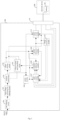
- Fig. 2 is a schematic circuit diagram of a power adapter provided by an embodiment of the present disclosure. For illustration purposes, only parts related to embodiments of the present disclosure are shown, which will be described in detail in the following.
- the power module 106 includes: a first capacitor C1, a voltage stabilizing chip U1, a second capacitor C2, a first inductor L1, a second inductor L2, a fist diode D1, a second diode D2, a third capacitor C3, a first resistor R1 and a second resistor R2.
- a collective node of a first end of the first capacitor C1, an input power pin Vin and an enable pin EN of the voltage stabilizing chip U1 is configured as the input end of the power module 106.
- a second end of the first capacitor C1 and a ground pin GND of the voltage stabilizing chip U1 are collectively grounded.
- a switch pin SW of the voltage stabilizing chip U1 and a first end of the second capacitor C2 are collectively connected with a first end of the first inductor L1.
- An inside switch pin BOOST of the voltage stabilizing chip U1 and a second end of the second capacitor C2 are collectively connected with a cathode of the first diode D 1.
- a feedback voltage pin FB of the voltage stabilizing chip U1 is connected with a first end of the first resistor R1 and a first end of the second resistor R2 respectively.
- a second end of the first inductor L1 and a cathode of the second diode D2 are collectively connected with a first end of the second inductor.
- a collective node formed by collectively connecting a second end of the second inductor L2, an anode of the first diode D1, a second end of the first resistor R1 and a first end of the third capacitor C3 is configured as the output end of the power module 106.
- An anode of the second diode D2, a second end of the second resistor R2 and a second end of the third capacitor C3 are collectively grounded.
- the power module 106 After using the voltage stabilizing chip U1 as a core to perform a voltage converting process on a voltage at the secondary end of the isolation transformer 103, the power module 106 outputs the voltage of +3.3V for providing power supply for the main control module 107, the potential adjusting module 108 and the current detection module 109.
- the voltage stabilizing chip U1 may be a buck DC/DC converter with a Model No. MCP16301.
- the main control module 107 includes: a main control chip U2, a third resistor R3, a reference voltage chip U3, a fourth resistor R4, a fifth resistor R5, a fourth capacitor C4, a sixth resistor R6, a seventh resistor R7, a first NMOS transistor Q1, an eighth resistor R8, a ninth resistor R9, a tenth resistor R10, an eleventh resistor R11, a twelfth resistor R12, a thirteenth resistor R13 and a fourteenth resistor R14.
- a power pin VDD of the main control chip U2 is configured as the power end of the main control module 107.
- a ground pin VSS of the main control chip U2 is grounded.
- a first input/output pin RA0 of the main control chip U2 is suspended.
- a first end of the third resistor R3 is connected with the power pin VDD of the main control chip U2.
- a second end of the third resistor R3 and a first end of the fourth resistor R4 are collectively connected with a cathode CATHODE of the reference voltage chip U3.
- An anode ANODE of the reference voltage chip U3 is grounded.
- a vacant pin NC of the reference voltage chip U3 is suspended.
- a second end of the fourth resistor R4 is connected with a second input/output pin RA1 of the main control chip U2.
- a third input/output pin RA2 of the main control chip U2 is configured as the current detecting end of the main control module 107.
- a fourth input/output pin RA3 of the main control chip U2 is connected with a first end of the fifth resistor R5.
- a second end of the fifth resistor R5 and a first end of the fourth capacitor C4 are collectively connected with the power pin VDD of the main control chip U2.
- a second end of the fourth capacitor C4 is grounded.
- a fifth input/output pin RA4 of the main control chip U2 is configured as the switching control end of the main control module 107.
- a sixth input/output pin RA5 of the main control chip U2 is connected with a first end of the sixth resistor R6.
- a second end of the sixth resistor R6 and a grid electrode of the first NMOS transistor Q1 are collectively connected with a first end of the seventh resistor R7.
- a second end of the seventh resistor R7 and a source electrode of the first NMOS transistor Q1 are collectively grounded.
- a drain electrode of the first NMOS transistor Q1 is connected with a first end of the eighth resistor R8.
- a second end of the eighth resistor R8 is configured as the high-level end of the main control module 107.
- a seventh input/output pin RC0 and an eighth input/output pin RC1 of the main control chip U2 are configured as the clock output end and the data output end of the main control module 107 respectively.
- a ninth input/output pin RC2 and a tenth input/output pin RC3 of the main control chip U2 are configured as the first voltage detecting end and the second voltage detecting end of the main control module 107 respectively.
- An eleventh input/output pin RC4 and a twelfth input/output pin RC5 of the main control chip U2 are connected with a first end of the ninth resistor R9 and a first end of the tenth resistor R10 respectively.
- a first end of the eleventh resistor R11 and a first end of the twelfth resistor R12 are connected with a second end of the ninth resistor R9 and a second end of the tenth resistor R10 respectively.
- a second end of the eleventh resistor R11 and a second end of the twelfth resistor R12 are collectively grounded.
- a first end of the thirteenth resistor R13 and a first end of the fourteenth resistor R14 are connected with the second end of the ninth resistor R9 and the second end of the tenth resistor R10 respectively.
- a second end of the thirteenth resistor R13 and a second end of the fourteenth resistor R14 are collectively connected with the power pin VDD of the main control chip U2.
- the second end of the ninth resistor R9 and the second end of the tenth resistor R10 are configured as the first communication end and the second communication end of the main control module 107 respectively.
- the main control chip U2 may be a single chip microcomputer with a Model No. PIC12LF1822, PIC12F1822, PIC16LF1823 or PIC16F1823
- the reference voltage chip U3 may be a voltage reference device with a Model No. LM4040.
- the potential adjusting module 108 includes: a fifteenth resistor R15, a sixteenth resistor R16, a digital potentiometer U4, a seventeenth resistor R17, an eighteenth resistor R18, a fifth capacitor C5, a sixth capacitor C6 and a nineteenth resistor R19.
- a collective node of a first end of the fifteenth resistor R15, a first end of the sixteenth resistor R16, a power pin VDD of the digital potentiometer U4 and a first end of the fifth capacitor C5 is configured as the power end of the potential adjusting module 108.
- a second end of the fifth capacitor C5, a first end of the sixth capacitor C6, a ground pin VSS of the digital potentiometer U4 and a first end of the seventeenth resistor R17 are collectively grounded.
- a second end of the sixth capacitor C6 is connected with the power pin VDD of the digital potentiometer U4.
- a collective node between a second end of the fifteenth resistor R15 and a serial data pin SDA of the digital potentiometer U4 is configured as the data input end of the potential adjusting module 108.
- a collective node between a second end of the sixteenth resistor R16 and a clock input pin SCL of the digital potentiometer U4 is configured as the clock input end of the potential adjusting module 108.
- An address zero pin A0 of the digital potentiometer U4 is grounded.
- a first potential wiring pin P0A of the digital potentiometer U4 and a first end of the eighteenth resistor R18 are collectively connected with a second end of the seventeenth resistor R17.
- a second end of the eighteenth resistor R18 and a second potential wiring pin P0B of the digital potentiometer U4 are collectively connected with a first end of the nineteenth resistor R19.
- a second end of the nineteenth resistor R19 is configured as the high-level end of potential adjusting module 108.
- a potential tap pin P0W of the digital potentiometer U4 is configured as the potential adjusting end of the potential adjusting module 108.
- the digital potentiometer U4 adjusts an internal sliding variable resistor according to the clock signal and the data signal outputted by the main control chip U2, such that the potential at the tap end of the internal sliding variable resistor (i.e., the potential tap pin P0W of the digital potentiometer U4) is changed, and then the voltage tracking and controlling circuit 105 adjusts the output voltage of the isolation transformer 103 by following the potential changes.
- the digital potentiometer U4 may be a digital potentiometer with a Model No. MCP45X1.
- the current detection module 109 includes : a twentieth resistor R20, a twenty-first resistor R21, a twenty-second resistor R22, a seventh capacitor C7, an eighth capacitor C8, a current detection chip U5, a twenty-third resistor R23, a ninth capacitor C9, a tenth capacitor C10 and a twenty-fourth resistor R24.
- a first end and a second end of the twentieth resistor R20 are configured as the direct current input end and the direct current output end of the current detection module 109 respectively.
- a first end of the twenty-first resistor R21 and a first end of the twenty-second resistor R22 are connected with a first end and a second end of the twentieth resistor R20 respectively.
- a second end of the twenty-first resistor R21 and a first end of the seventh capacitor C7 are collectively connected with a positive input pin IN+ of the current detection chip U5.
- a second end of the twenty-second resistor R22 and a first end of the eighth capacitor C8 are collectively connected with a negative input pin IN- of the current detection chip U5.
- a collective node between a power pin V+ of the current detection chip U5 and a first end of the ninth capacitor C9 is configured as the power end of the current detection module 109.
- a vacant pin NC of the current detection chip U5 is suspended.
- An output pin OUT of the current detection chip U5 is connected with a first end of the twenty-third resistor R23.
- a second end of the twenty-third resistor R23 is configured as the current feedback end of the current detection module 109.
- a first end of the tenth capacitor C10 and a first end of the twenty-fourth resistor R24 are collectively connected with the second end of the twenty-third resistor R23.
- a second end of the seventh capacitor C7, a second end of the eighth capacitor C8, a second end of the ninth capacitor C9, a second end of the tenth capacitor C10, a second end of the twenty-fourth resistor R24, a ground pin GND, a first reference voltage pin REF 1 and a second reference voltage pin REF2 of the current detection chip U5 are collectively grounded.
- the twentieth resistor 20 used as a current detecting resistor samples the output current of the output filtering circuit 104 (i.e., the output current of the power adapter 100), and then the current detecting signal is outputted to the main control chip U2 by the current detection chip U5 according to the voltage between two ends of the twentieth resistor 20.
- the current detection chip U5 may be a current shunt monitor with a Model No. INA286.
- the voltage detection module 110 includes: a twenty-fifth resistor R25, a twenty-sixth resistor R26, an eleventh capacitor C11, a twelfth capacitor C12, a twenty-seventh resistor R27 and a twenty-eighth resistor R28.
- a first end of the twenty-fifth resistor R25 is configured as the first detecting end of the voltage detection module 110.
- a collective node of a second end of the twenty-fifth resistor R25, a first end of the twenty-sixth resistor R26 and a first end of the eleventh capacitor C11 is configured as a second output end of the voltage detection module 110.
- a second end of the twenty-sixth resistor R26 is configured as a second detecting end of the voltage detection module 110.
- a second end of the eleventh capacitor C11, a first end of the twelfth capacitor C12 and a first end of the twenty-seventh resistor R27 are collectively connected with the second end of the twenty-sixth resistor R26.
- a collective node of a second end of the twelfth capacitor C12, a second end of the twenty-seventh resistor R27 and a first end of the twenty-eighth resistor R28 is configured as the first output end of the voltage detection module 110.
- the second end of the twenty-eighth resistor R28 is configured as the third detecting end of the voltage detection module 110.
- the output switch module 111 includes: a twenty-ninth resistor R29, a thirtieth resistor R30, a thirteen capacitor C13, a thirty-first resistor R31, a first NPN type transistor N1, a thirty-second resistor R32, a second NPN type transistor N2, a third diode D3, a voltage stabilizing diode ZD, a thirty-third resistor R33, a thirty-fourth resistor R34, a thirty-fifth resistor R35, a second NMOS transistor Q2 and a third NMOS transistor Q3.
- a first end of the twenty-ninth resistor R29 is configured as the controlled end of the output switch module 111.
- a second end of the twenty-ninth resistor R29 and a first end of the thirtieth resistor R30 are collectively connected with a base of the first NPN type transistor N1.
- a first end of the thirteenth capacitor C13, a first end of the thirty-first resistor R31 and a first end of the thirty-second resistor R32 are collectively connected with a cathode of the third diode D3.
- An anode of the third diode D3 is configured as the power supply end of the output switch module 111.
- a second end of the thirty-first resistor R31 and a base of the second NPN type transistor N2 are collectively connected with a collector of the first NPN type transistor N1.
- the second end of the thirty-second resistor R32, a cathode of the voltage stabilizing diode ZD and a first end of the thirty-third resistor R33 are collectively connected with a collector of the second NPN type transistor N2.
- a second end of the thirtieth resistor R30, a second end of the thirteenth capacitor C13, an emitter of the first NPN type transistor N1, an emitter of the second NPN type transistor N2 and an anode of the voltage stabilizing diode ZD are collectively grounded.
- a second end of the thirty-third resistor R33, a first end of the thirty-fourth resistor R34, a first end of the thirty-fifth resistor R35, a grid electrode of the second NMOS transistor Q2 and a grid electrode of the third NMOS transistor Q3 are collectively connected.
- a second end of the thirty-fourth resistor R34 is configured as the ground end of the output switch module 111.
- a drain electrode of the second NMOS transistor Q2 is configured as the input end of the output switch module 111.
- a source electrode of the second NMOS transistor Q2 and a second end of the thirty-fifth resistor R35 are collectively connected with a source electrode of the third NMOS transistor Q3.
- a drain electrode of the third NMOS transistor Q3 is configured as the output end of the output switch module 111.
- the second NMOS transistor Q2 and the third NMOS transistor Q3 are switched on or off simultaneously so as to turn on or off the direct current output of the power adapter 100.
- inventions of the present disclosure further provide an electronic device.
- the electronic device includes a battery 201 and is further provided with the above-mentioned power adapter 100.
- the power adapter 100 including the power module 106, the main control module 107, the potential adjusting module 108, the current detection module 109, the voltage detection module 110 and the output switch module 111 is provided for the electronic device 200.
- the main control module 107 determines whether the output current of the power adapter 100 is greater than the current threshold, and determines whether the output voltage of the power adapter 100 is greater than the voltage threshold. If the output current of the power adapter 100 is greater than the current threshold and/or the output voltage of the power adapter 100 is greater than the voltage threshold, the main control module 107 controls the output switch module 111 to turn off the direct current output of the power adapter 100.
- the main control module 107 controls the output switch module 111 to turn off the direct current output of the power adapter 100 according to the charging stop instruction, such that the overcurrent and/or overvoltage protection is realized for the battery 201.
- resistor R25, a first end of the twenty-sixth resistor R26 and a first end of the eleventh capacitor C11 is configured as a second output end of the voltage detection module 110.
- a second end of the twenty-sixth resistor R26 is configured as a second detecting end of the voltage detection module 110.
- a second end of the eleventh capacitor C11, a first end of the twelfth capacitor C12 and a first end of the twenty-seventh resistor R27 are collectively connected with the second end of the twenty-sixth resistor R26.
- a collective node of a second end of the twelfth capacitor C12, a second end of the twenty-seventh resistor R27 and a first end of the twenty-eighth resistor R28 is configured as the first output end of the voltage detection module 110.
- the second end of the twenty-eighth resistor R28 is configured as the third detecting end of the voltage detection module 110.
- the output switch module 111 includes: a twenty-ninth resistor R29, a thirtieth resistor R30, a thirteen capacitor C13, a thirty-first resistor R31, a first NPN type transistor N1, a thirty-second resistor R32, a second NPN type transistor N2, a third diode D3, a voltage stabilizing diode ZD, a thirty-third resistor R33, a thirty-fourth resistor R34, a thirty-fifth resistor R35, a second NMOS transistor Q2 and a third NMOS transistor Q3.
- a first end of the twenty-ninth resistor R29 is configured as the controlled end of the output switch module 111.
- a second end of the twenty-ninth resistor R29 and a first end of the thirtieth resistor R30 are collectively connected with a base of the first NPN type transistor N1.
- a first end of the thirteenth capacitor C13, a first end of the thirty-first resistor R31 and a first end of the thirty-second resistor R32 are collectively connected with a cathode of the third diode D3.
- An anode of the third diode D3 is configured as the power supply end of the output switch module 111.
- a second end of the thirty-first resistor R31 and a base of the second NPN type transistor N2 are collectively connected with a collector of the first NPN type transistor N1.
- the second end of the thirty-second resistor R32, a cathode of the voltage stabilizing diode ZD and a first end of the thirty-third resistor R33 are collectively connected with a collector of the second NPN type transistor N2.
- a second end of the thirtieth resistor R30, a second end of the thirteenth capacitor C13, an emitter of the first NPN type transistor N1, an emitter of the second NPN type transistor N2 and an anode of the voltage stabilizing diode ZD are collectively grounded.
- a second end of the thirty-third resistor R33, a first end of the thirty-fourth resistor R34, a first end of the thirty-fifth resistor R35, a grid electrode of the second NMOS transistor Q2 and a grid electrode of the third NMOS transistor Q3 are collectively connected.
- a second end of the thirty-fourth resistor R34 is configured as the ground end of the output switch module 111.
- a drain electrode of the second NMOS transistor Q2 is configured as the input end of the output switch module 111.
- a source electrode of the second NMOS transistor Q2 and a second end of the thirty-fifth resistor R35 are collectively connected with a source electrode of the third NMOS transistor Q3.
- a drain electrode of the third NMOS transistor Q3 is configured as the output end of the output switch module 111.
- the second NMOS transistor Q2 and the third NMOS transistor Q3 are switched on or off simultaneously so as to turn on or off the direct current output of the power adapter 100.
- inventions of the present disclosure further provide an electronic device.
- the electronic device includes a battery 201 and is further provided with the above-mentioned power adapter 100.
- the power adapter 100 including the power module 106, the main control module 107, the potential adjusting module 108, the current detection module 109, the voltage detection module 110 and the output switch module 111 is provided for the electronic device 200.
- the main control module 107 determines whether the output current of the power adapter 100 is greater than the current threshold, and determines whether the output voltage of the power adapter 100 is greater than the voltage threshold. If the output current of the power adapter 100 is greater than the current threshold and/or the output voltage of the power adapter 100 is greater than the voltage threshold, the main control module 107 controls the output switch module 111 to turn off the direct current output of the power adapter 100.
- the main control module 107 controls the output switch module 111 to turn off the direct current output of the power adapter 100 according to the charging stop instruction, such that the overcurrent and/or overvoltage protection is realized for the battery 201.
Landscapes
- Engineering & Computer Science (AREA)
- Power Engineering (AREA)
- Dc-Dc Converters (AREA)
- Charge And Discharge Circuits For Batteries Or The Like (AREA)
- Protection Of Static Devices (AREA)
- Secondary Cells (AREA)
Description
- The present disclosure generally relates to the charging technical field, and more particularly, to an electronic device and a power adapter.
- Currently, most electronic devices charge a battery by acquiring direct current from a power adapter through a communication interface thereof. However, in the related art, in order to reduce charging time during charging the battery, the charging current may be enhanced by the power adapter to realize an aim of performing a quick charging on the battery. However, when charging the battery either in a conventional constant voltage mode or with increased charging current, if a charging current and/or charging voltage of the battery is too high during the charging, the battery will be damaged due to overvoltage and/or overcurrent charging. Therefore, in the related art, an overcurrent protection and/or an overvoltage protection cannot be realized for the battery when the power adapter performs a conventional charging or quick charging on the battery in the electronic device.
- An embodiment of the present disclosure is to provide a power adapter, so as to solve a problem in the related art that an overcurrent protection and/or an overvoltage protection cannot be realized for a battery when the power adapter performs a conventional charging or quick charging on the battery in the electronic device.
- The invention is set out in the appended set of claims.
- In at least one embodiment of the present disclosure, the power adapter including the power module, the main control module, the potential adjusting module, the current detection module, the voltage detection module and the output switch module is provided for the electronic device. The main control module determines whether the output current of the power adapter is greater than the current threshold, and determines whether the output voltage of the power adapter is greater than the voltage threshold. If the output current is greater than the current threshold and/or the output voltage is greater than the voltage threshold, the main control module controls the output switch module to turn off the direct current output of the power adapter. In addition, if the electronic device determines that an overcurrent and/or overvoltage occurs in the output of the power adapter, and feeds back the charging stop instruction to the main control module, the main control module controls the output switch module to turn off the direct current output of the power adapter according to the charging stop instruction, such that the overcurrent and/or overvoltage protection is realized for the battery.
-
-
Fig. 1 is a block diagram of a power adapter provided by an embodiment of the present disclosure. -
Fig. 2 is a schematic circuit diagram of a power adapter provided by an embodiment of the present disclosure. - To make objectives, technical solutions, and advantages of embodiments of the present invention clearer, the technical solutions in embodiments of the present invention are hereinafter described clearly and completely with reference to the accompanying drawings in embodiments of the present invention. It should be understood that, the specific embodiments described herein are merely used for explanation, but not used to limit the present disclosure.
-
Fig. 1 is a block diagram of a power adapter provided by an embodiment of the present disclosure. For illustration purposes, only parts related to embodiments of the present disclosure are shown, which will be described in detail in the following. - The
power adapter 100 provided by an embodiment of the present disclosure includes acommunication interface 10, thepower adapter 100 charges abattery 201 in anelectronic device 200 and performs a data communication with theelectronic device 200 through thecommunication interface 10. - The
power adapter 100 includes anEMI filtering circuit 101, a high-voltage rectifying andfiltering circuit 102, anisolation transformer 103, anoutput filtering circuit 104 and a voltage tracking and controllingcircuit 105. After an electromagnetic interference filtering is performed on the electric supply by theEMI filtering circuit 101, the high-voltage rectifying and filteringcircuit 102 performs a rectifying and filtering process and outputs a high-voltage direct current, which is outputted to theoutput filtering circuit 104 after the electrical isolation in theisolation transformer 103, for being filtered and used to charge thebattery 201. The voltage tracking and controllingcircuit 105 adjusts an output voltage of theisolation transformer 103 according to an output voltage of theoutput filtering circuit 104. - The
power adapter 100 further includes: apower module 106, amain control module 107, apotential adjusting module 108, acurrent detection module 109, avoltage detection module 110 and anoutput switch module 111. - Please refer to
Fig. 1 andFig. 2 , an input end of thepower module 106 is connected with a secondary end of theisolation transformer 103. A power end of themain control module 107, a power end of thepotential adjusting module 108 and a power end of thecurrent detection module 109 are collectively connected with an output end of thepower module 106. Both a high-level end of themain control module 107 and a high-level end of thepotential adjusting module 108 are connected with a positive output end of theoutput filtering circuit 104. The high-level end of themain control module 107 is connected with the positive output end of theoutput filtering circuit 104 via a second end of the twentieth resistor R20 (i.e., a direct current output end of the current detection module 109). A potential adjusting end of thepotential adjusting module 108 is connected with the voltage tracking and controllingcircuit 105. A direct current input end of thecurrent detection module 109 is connected with the positive output end of theoutput filtering circuit 104. A current feedback end of thecurrent detection module 109 is connected with a current detecting end of themain control module 107. A clock output end of themain control module 107 is connected with a clock input end of thepotential adjusting module 108. A data output end of themain control module 107 is connected with a data input end of thepotential adjusting module 108. A first detecting end and a second detecting end of thevoltage detection module 110 are connected with the direct current output end of thecurrent detection module 109 and a negative output end of theoutput filtering circuit 104 respectively. A first output end and a second output end of thevoltage detection module 110 are connected with a first voltage detecting end and a second voltage detecting end of themain control module 107 respectively. An input end of theoutput switch module 111 is connected with the direct current output end of thecurrent detection module 109; and an output end of theoutput switch module 111 is connected with a third detecting end of thevoltage detection module 110. A ground end of theoutput switch module 111 is connected with the negative output end of theoutput filtering circuit 104. A controlled end of theoutput switch module 111 is connected with a switching control end of themain control module 107. A power end of theoutput switch module 111 is connected with the secondary end of theisolation transformer 103. Each of the negative output end of theoutput filtering circuit 104, the output end of theoutput switch module 111 and a first communication end and a second communication end of themain control module 107 is connected with thecommunication interface 10 of thepower adapter 100. - The
power module 106 obtains power supply from theisolation transformer 103 and provides the power supply for themain control module 107, thepotential adjusting module 108 and thecurrent detection module 109; when a quick charging is performed on thebattery 201 in theelectronic device 200, thepotential adjusting module 108 drives the voltage tracking and controllingcircuit 105 to adjust an output voltage of theisolation transformer 103 according to a control signal sent by themain control module 107; thecurrent detection module 109 detects an output current of thepower adapter 100 and feeds back a current detecting signal to themain control module 107, and thevoltage detection module 110 detects an output voltage of thepower adapter 100 and feeds back a voltage detecting signal to themain control module 107; theoutput switch module 111 turns on or off a direct current output of thepower adapter 100 according to a switching control signal sent by themain control module 107. - When a conventional charging or a quick charging is performed on the
battery 201 in theelectronic device 200, themain control module 107 determines whether the output current of thepower adapter 100 is greater than a current threshold according to the current detecting signal, and determines whether the output voltage of thepower adapter 100 is greater than a voltage threshold according to the voltage detecting signal; if the output current of thepower adapter 100 is greater than the current threshold and/or the output voltage of thepower adapter 100 is greater than the voltage threshold, themain control module 107 controls theoutput switch module 111 to turn off the direct current output of thepower adapter 100. - During the data communication between the
main control module 107 and theelectronic device 200, if theelectronic device 200 determines that the output current of thepower adapter 100 is greater than the current threshold and/or the output voltage of thepower adapter 100 is greater than the voltage threshold, and feeds back a charging stop instruction to themain control module 107, themain control module 107 controls theoutput switch module 111 to turn off the direct current output of thepower adapter 100 according to the charging stop instruction. - In at least one embodiment, the data communication between the
main control module 107 and theelectronic device 200 is performed during the charging. During this process, either in the conventional charging mode or in the quick charging mode, themain control module 107 would send the output current and output voltage of thepower adapter 100 to theelectronic device 200. Theelectronic device 200 determines according to the output current and output voltage of thepower adapter 100 whether an overcurrent and/or overvoltage occur during the charging. The determine process is the same as the process in which themain control module 107 determines the output current and output voltage of thepower adapter 100, such that theelectronic device 200 may feedback a charging stop instruction for informing themain control module 107 of turning off the direct current output of thepower adapter 100 when theelectronic device 200 determines that an overcurrent and/or overvoltage occurs in the output of thepower adapter 100. Moreover, theelectronic device 200 may close its communication interface actively when determining that an overcurrent and/or overvoltage occurs in the output of thepower adapter 100, so as to disconnect from thepower adapter 100, such that the overcurrent and/or overvoltage protection may be realized actively. -
Fig. 2 is a schematic circuit diagram of a power adapter provided by an embodiment of the present disclosure. For illustration purposes, only parts related to embodiments of the present disclosure are shown, which will be described in detail in the following. - The
power module 106 includes: a first capacitor C1, a voltage stabilizing chip U1, a second capacitor C2, a first inductor L1, a second inductor L2, a fist diode D1, a second diode D2, a third capacitor C3, a first resistor R1 and a second resistor R2. - A collective node of a first end of the first capacitor C1, an input power pin Vin and an enable pin EN of the voltage stabilizing chip U1 is configured as the input end of the
power module 106. A second end of the first capacitor C1 and a ground pin GND of the voltage stabilizing chip U1 are collectively grounded. A switch pin SW of the voltage stabilizing chip U1 and a first end of the second capacitor C2 are collectively connected with a first end of the first inductor L1. An inside switch pin BOOST of the voltage stabilizing chip U1 and a second end of the second capacitor C2 are collectively connected with a cathode of the first diode D 1. A feedback voltage pin FB of the voltage stabilizing chip U1 is connected with a first end of the first resistor R1 and a first end of the second resistor R2 respectively. A second end of the first inductor L1 and a cathode of the second diode D2 are collectively connected with a first end of the second inductor. A collective node formed by collectively connecting a second end of the second inductor L2, an anode of the first diode D1, a second end of the first resistor R1 and a first end of the third capacitor C3 is configured as the output end of thepower module 106. An anode of the second diode D2, a second end of the second resistor R2 and a second end of the third capacitor C3 are collectively grounded. After using the voltage stabilizing chip U1 as a core to perform a voltage converting process on a voltage at the secondary end of theisolation transformer 103, thepower module 106 outputs the voltage of +3.3V for providing power supply for themain control module 107, thepotential adjusting module 108 and thecurrent detection module 109. The voltage stabilizing chip U1 may be a buck DC/DC converter with a Model No. MCP16301. - The
main control module 107 includes: a main control chip U2, a third resistor R3, a reference voltage chip U3, a fourth resistor R4, a fifth resistor R5, a fourth capacitor C4, a sixth resistor R6, a seventh resistor R7, a first NMOS transistor Q1, an eighth resistor R8, a ninth resistor R9, a tenth resistor R10, an eleventh resistor R11, a twelfth resistor R12, a thirteenth resistor R13 and a fourteenth resistor R14. - A power pin VDD of the main control chip U2 is configured as the power end of the
main control module 107. A ground pin VSS of the main control chip U2 is grounded. A first input/output pin RA0 of the main control chip U2 is suspended. A first end of the third resistor R3 is connected with the power pin VDD of the main control chip U2. A second end of the third resistor R3 and a first end of the fourth resistor R4 are collectively connected with a cathode CATHODE of the reference voltage chip U3. An anode ANODE of the reference voltage chip U3 is grounded. A vacant pin NC of the reference voltage chip U3 is suspended. A second end of the fourth resistor R4 is connected with a second input/output pin RA1 of the main control chip U2. A third input/output pin RA2 of the main control chip U2 is configured as the current detecting end of themain control module 107. A fourth input/output pin RA3 of the main control chip U2 is connected with a first end of the fifth resistor R5. A second end of the fifth resistor R5 and a first end of the fourth capacitor C4 are collectively connected with the power pin VDD of the main control chip U2. A second end of the fourth capacitor C4 is grounded. A fifth input/output pin RA4 of the main control chip U2 is configured as the switching control end of themain control module 107. A sixth input/output pin RA5 of the main control chip U2 is connected with a first end of the sixth resistor R6. A second end of the sixth resistor R6 and a grid electrode of the first NMOS transistor Q1 are collectively connected with a first end of the seventh resistor R7. A second end of the seventh resistor R7 and a source electrode of the first NMOS transistor Q1 are collectively grounded. A drain electrode of the first NMOS transistor Q1 is connected with a first end of the eighth resistor R8. A second end of the eighth resistor R8 is configured as the high-level end of themain control module 107. A seventh input/output pin RC0 and an eighth input/output pin RC1 of the main control chip U2 are configured as the clock output end and the data output end of themain control module 107 respectively. A ninth input/output pin RC2 and a tenth input/output pin RC3 of the main control chip U2 are configured as the first voltage detecting end and the second voltage detecting end of themain control module 107 respectively. An eleventh input/output pin RC4 and a twelfth input/output pin RC5 of the main control chip U2 are connected with a first end of the ninth resistor R9 and a first end of the tenth resistor R10 respectively. A first end of the eleventh resistor R11 and a first end of the twelfth resistor R12 are connected with a second end of the ninth resistor R9 and a second end of the tenth resistor R10 respectively. A second end of the eleventh resistor R11 and a second end of the twelfth resistor R12 are collectively grounded. A first end of the thirteenth resistor R13 and a first end of the fourteenth resistor R14 are connected with the second end of the ninth resistor R9 and the second end of the tenth resistor R10 respectively. A second end of the thirteenth resistor R13 and a second end of the fourteenth resistor R14 are collectively connected with the power pin VDD of the main control chip U2. The second end of the ninth resistor R9 and the second end of the tenth resistor R10 are configured as the first communication end and the second communication end of themain control module 107 respectively. The main control chip U2 may be a single chip microcomputer with a Model No. PIC12LF1822, PIC12F1822, PIC16LF1823 or PIC16F1823, and the reference voltage chip U3 may be a voltage reference device with a Model No. LM4040. - The
potential adjusting module 108 includes: a fifteenth resistor R15, a sixteenth resistor R16, a digital potentiometer U4, a seventeenth resistor R17, an eighteenth resistor R18, a fifth capacitor C5, a sixth capacitor C6 and a nineteenth resistor R19. - A collective node of a first end of the fifteenth resistor R15, a first end of the sixteenth resistor R16, a power pin VDD of the digital potentiometer U4 and a first end of the fifth capacitor C5 is configured as the power end of the
potential adjusting module 108. A second end of the fifth capacitor C5, a first end of the sixth capacitor C6, a ground pin VSS of the digital potentiometer U4 and a first end of the seventeenth resistor R17 are collectively grounded. A second end of the sixth capacitor C6 is connected with the power pin VDD of the digital potentiometer U4. A collective node between a second end of the fifteenth resistor R15 and a serial data pin SDA of the digital potentiometer U4 is configured as the data input end of thepotential adjusting module 108. A collective node between a second end of the sixteenth resistor R16 and a clock input pin SCL of the digital potentiometer U4 is configured as the clock input end of thepotential adjusting module 108. An address zero pin A0 of the digital potentiometer U4 is grounded. A first potential wiring pin P0A of the digital potentiometer U4 and a first end of the eighteenth resistor R18 are collectively connected with a second end of the seventeenth resistor R17. A second end of the eighteenth resistor R18 and a second potential wiring pin P0B of the digital potentiometer U4 are collectively connected with a first end of the nineteenth resistor R19. A second end of the nineteenth resistor R19 is configured as the high-level end ofpotential adjusting module 108. A potential tap pin P0W of the digital potentiometer U4 is configured as the potential adjusting end of thepotential adjusting module 108. The digital potentiometer U4 adjusts an internal sliding variable resistor according to the clock signal and the data signal outputted by the main control chip U2, such that the potential at the tap end of the internal sliding variable resistor (i.e., the potential tap pin P0W of the digital potentiometer U4) is changed, and then the voltage tracking and controllingcircuit 105 adjusts the output voltage of theisolation transformer 103 by following the potential changes. The digital potentiometer U4 may be a digital potentiometer with a Model No. MCP45X1. - The
current detection module 109 includes : a twentieth resistor R20, a twenty-first resistor R21, a twenty-second resistor R22, a seventh capacitor C7, an eighth capacitor C8, a current detection chip U5, a twenty-third resistor R23, a ninth capacitor C9, a tenth capacitor C10 and a twenty-fourth resistor R24. - A first end and a second end of the twentieth resistor R20 are configured as the direct current input end and the direct current output end of the
current detection module 109 respectively. A first end of the twenty-first resistor R21 and a first end of the twenty-second resistor R22 are connected with a first end and a second end of the twentieth resistor R20 respectively. A second end of the twenty-first resistor R21 and a first end of the seventh capacitor C7 are collectively connected with a positive input pin IN+ of the current detection chip U5. A second end of the twenty-second resistor R22 and a first end of the eighth capacitor C8 are collectively connected with a negative input pin IN- of the current detection chip U5. A collective node between a power pin V+ of the current detection chip U5 and a first end of the ninth capacitor C9 is configured as the power end of thecurrent detection module 109. A vacant pin NC of the current detection chip U5 is suspended. An output pin OUT of the current detection chip U5 is connected with a first end of the twenty-third resistor R23. A second end of the twenty-third resistor R23 is configured as the current feedback end of thecurrent detection module 109. A first end of the tenth capacitor C10 and a first end of the twenty-fourth resistor R24 are collectively connected with the second end of the twenty-third resistor R23. A second end of the seventh capacitor C7, a second end of the eighth capacitor C8, a second end of the ninth capacitor C9, a second end of the tenth capacitor C10, a second end of the twenty-fourth resistor R24, a ground pin GND, a first reference voltage pin REF 1 and a second reference voltage pin REF2 of the current detection chip U5 are collectively grounded. Thetwentieth resistor 20 used as a current detecting resistor samples the output current of the output filtering circuit 104 (i.e., the output current of the power adapter 100), and then the current detecting signal is outputted to the main control chip U2 by the current detection chip U5 according to the voltage between two ends of thetwentieth resistor 20. The current detection chip U5 may be a current shunt monitor with a Model No. INA286. - The
voltage detection module 110 includes: a twenty-fifth resistor R25, a twenty-sixth resistor R26, an eleventh capacitor C11, a twelfth capacitor C12, a twenty-seventh resistor R27 and a twenty-eighth resistor R28. - A first end of the twenty-fifth resistor R25 is configured as the first detecting end of the
voltage detection module 110. A collective node of a second end of the twenty-fifth resistor R25, a first end of the twenty-sixth resistor R26 and a first end of the eleventh capacitor C11 is configured as a second output end of thevoltage detection module 110. A second end of the twenty-sixth resistor R26 is configured as a second detecting end of thevoltage detection module 110. A second end of the eleventh capacitor C11, a first end of the twelfth capacitor C12 and a first end of the twenty-seventh resistor R27 are collectively connected with the second end of the twenty-sixth resistor R26. A collective node of a second end of the twelfth capacitor C12, a second end of the twenty-seventh resistor R27 and a first end of the twenty-eighth resistor R28 is configured as the first output end of thevoltage detection module 110. The second end of the twenty-eighth resistor R28 is configured as the third detecting end of thevoltage detection module 110. - The
output switch module 111 includes: a twenty-ninth resistor R29, a thirtieth resistor R30, a thirteen capacitor C13, a thirty-first resistor R31, a first NPN type transistor N1, a thirty-second resistor R32, a second NPN type transistor N2, a third diode D3, a voltage stabilizing diode ZD, a thirty-third resistor R33, a thirty-fourth resistor R34, a thirty-fifth resistor R35, a second NMOS transistor Q2 and a third NMOS transistor Q3. - A first end of the twenty-ninth resistor R29 is configured as the controlled end of the
output switch module 111. A second end of the twenty-ninth resistor R29 and a first end of the thirtieth resistor R30 are collectively connected with a base of the first NPN type transistor N1. A first end of the thirteenth capacitor C13, a first end of the thirty-first resistor R31 and a first end of the thirty-second resistor R32 are collectively connected with a cathode of the third diode D3. An anode of the third diode D3 is configured as the power supply end of theoutput switch module 111. A second end of the thirty-first resistor R31 and a base of the second NPN type transistor N2 are collectively connected with a collector of the first NPN type transistor N1. The second end of the thirty-second resistor R32, a cathode of the voltage stabilizing diode ZD and a first end of the thirty-third resistor R33 are collectively connected with a collector of the second NPN type transistor N2. A second end of the thirtieth resistor R30, a second end of the thirteenth capacitor C13, an emitter of the first NPN type transistor N1, an emitter of the second NPN type transistor N2 and an anode of the voltage stabilizing diode ZD are collectively grounded. A second end of the thirty-third resistor R33, a first end of the thirty-fourth resistor R34, a first end of the thirty-fifth resistor R35, a grid electrode of the second NMOS transistor Q2 and a grid electrode of the third NMOS transistor Q3 are collectively connected. A second end of the thirty-fourth resistor R34 is configured as the ground end of theoutput switch module 111. A drain electrode of the second NMOS transistor Q2 is configured as the input end of theoutput switch module 111. A source electrode of the second NMOS transistor Q2 and a second end of the thirty-fifth resistor R35 are collectively connected with a source electrode of the third NMOS transistor Q3. A drain electrode of the third NMOS transistor Q3 is configured as the output end of theoutput switch module 111. The second NMOS transistor Q2 and the third NMOS transistor Q3 are switched on or off simultaneously so as to turn on or off the direct current output of thepower adapter 100. - Based on the above-mentioned
power adapter 100, embodiments of the present disclosure further provide an electronic device. The electronic device includes abattery 201 and is further provided with the above-mentionedpower adapter 100. - In the present disclosure, the
power adapter 100 including thepower module 106, themain control module 107, thepotential adjusting module 108, thecurrent detection module 109, thevoltage detection module 110 and theoutput switch module 111 is provided for theelectronic device 200. Themain control module 107 determines whether the output current of thepower adapter 100 is greater than the current threshold, and determines whether the output voltage of thepower adapter 100 is greater than the voltage threshold. If the output current of thepower adapter 100 is greater than the current threshold and/or the output voltage of thepower adapter 100 is greater than the voltage threshold, themain control module 107 controls theoutput switch module 111 to turn off the direct current output of thepower adapter 100. In addition, if theelectronic device 200 determines that an overcurrent and/or overvoltage occurs in the output of thepower adapter 100, and feeds back the charging stop instruction to themain control module 107, themain control module 107 controls theoutput switch module 111 to turn off the direct current output of thepower adapter 100 according to the charging stop instruction, such that the overcurrent and/or overvoltage protection is realized for thebattery 201. - The forgoing description is only directed to preferred embodiments of the present disclosure, but not used to limit the present disclosure.
resistor R25, a first end of the twenty-sixth resistor R26 and a first end of the eleventh capacitor C11 is configured as a second output end of thevoltage detection module 110. A second end of the twenty-sixth resistor R26 is configured as a second detecting end of thevoltage detection module 110. A second end of the eleventh capacitor C11, a first end of the twelfth capacitor C12 and a first end of the twenty-seventh resistor R27 are collectively connected with the second end of the twenty-sixth resistor R26. A collective node of a second end of the twelfth capacitor C12, a second end of the twenty-seventh resistor R27 and a first end of the twenty-eighth resistor R28 is configured as the first output end of thevoltage detection module 110. The second end of the twenty-eighth resistor R28 is configured as the third detecting end of thevoltage detection module 110. - The
output switch module 111 includes: a twenty-ninth resistor R29, a thirtieth resistor R30, a thirteen capacitor C13, a thirty-first resistor R31, a first NPN type transistor N1, a thirty-second resistor R32, a second NPN type transistor N2, a third diode D3, a voltage stabilizing diode ZD, a thirty-third resistor R33, a thirty-fourth resistor R34, a thirty-fifth resistor R35, a second NMOS transistor Q2 and a third NMOS transistor Q3. - A first end of the twenty-ninth resistor R29 is configured as the controlled end of the
output switch module 111. A second end of the twenty-ninth resistor R29 and a first end of the thirtieth resistor R30 are collectively connected with a base of the first NPN type transistor N1. A first end of the thirteenth capacitor C13, a first end of the thirty-first resistor R31 and a first end of the thirty-second resistor R32 are collectively connected with a cathode of the third diode D3. An anode of the third diode D3 is configured as the power supply end of theoutput switch module 111. A second end of the thirty-first resistor R31 and a base of the second NPN type transistor N2 are collectively connected with a collector of the first NPN type transistor N1. The second end of the thirty-second resistor R32, a cathode of the voltage stabilizing diode ZD and a first end of the thirty-third resistor R33 are collectively connected with a collector of the second NPN type transistor N2. A second end of the thirtieth resistor R30, a second end of the thirteenth capacitor C13, an emitter of the first NPN type transistor N1, an emitter of the second NPN type transistor N2 and an anode of the voltage stabilizing diode ZD are collectively grounded. A second end of the thirty-third resistor R33, a first end of the thirty-fourth resistor R34, a first end of the thirty-fifth resistor R35, a grid electrode of the second NMOS transistor Q2 and a grid electrode of the third NMOS transistor Q3 are collectively connected. A second end of the thirty-fourth resistor R34 is configured as the ground end of theoutput switch module 111. A drain electrode of the second NMOS transistor Q2 is configured as the input end of theoutput switch module 111. A source electrode of the second NMOS transistor Q2 and a second end of the thirty-fifth resistor R35 are collectively connected with a source electrode of the third NMOS transistor Q3. A drain electrode of the third NMOS transistor Q3 is configured as the output end of theoutput switch module 111. The second NMOS transistor Q2 and the third NMOS transistor Q3 are switched on or off simultaneously so as to turn on or off the direct current output of thepower adapter 100. - Based on the above-mentioned
power adapter 100, embodiments of the present disclosure further provide an electronic device. The electronic device includes abattery 201 and is further provided with the above-mentionedpower adapter 100. - In the present disclosure, the
power adapter 100 including thepower module 106, themain control module 107, thepotential adjusting module 108, thecurrent detection module 109, thevoltage detection module 110 and theoutput switch module 111 is provided for theelectronic device 200. Themain control module 107 determines whether the output current of thepower adapter 100 is greater than the current threshold, and determines whether the output voltage of thepower adapter 100 is greater than the voltage threshold. If the output current of thepower adapter 100 is greater than the current threshold and/or the output voltage of thepower adapter 100 is greater than the voltage threshold, themain control module 107 controls theoutput switch module 111 to turn off the direct current output of thepower adapter 100. In addition, if theelectronic device 200 determines that an overcurrent and/or overvoltage occurs in the output of thepower adapter 100, and feeds back the charging stop instruction to themain control module 107, themain control module 107 controls theoutput switch module 111 to turn off the direct current output of thepower adapter 100 according to the charging stop instruction, such that the overcurrent and/or overvoltage protection is realized for thebattery 201. - The forgoing description is only directed to preferred embodiments of the present disclosure, but not used to limit the present disclosure. All modifications, equivalents, variants and improvements made within the spirit and principle of the present disclosure shall fall within the protection scope of the present disclosure.
Claims (15)
- A power adapter (100), comprising a communication interface (10) through which the power adapter (100) charges a battery (201) in an electronic device (200) and performs a data communication with the electronic device (200), wherein, the power adapter (100) comprises a main control module (107) and an output switch module (111); wherein,
characterized in that,
the main control module (107) is configured to:when a conventional charging or a quick charging is performed on the battery (201) in the electronic device (200), determine whether an output current of the power adapter (100) is greater than a current threshold and determine whether an output voltage of the power adapter (100) is greater than a voltage threshold; andwhen the output current of the power adapter (100) is greater than the current threshold and/or the output voltage of the power adapter (100) is greater than the voltage threshold, control the output switch module (111) to turn off a direct current output of the power adapter (100). - The power adapter (100) according to claim 1, wherein, the main control module (107) is further configured to:
during the data communication between the power adapter (100) and the electronic device (200), send the output current and the output voltage of the power adapter (100) to the electronic device (200), receive a charging stop instruction fed back by the electronic device (200) when the electronic device (200) determines that the output current of the power adapter (100) is greater than the current threshold and/or the output voltage of the power adapter (100) is greater than the voltage threshold, and control the output switch module (111) to turn off the direct current output of the power adapter (100) according to the charging stop instruction. - The power adapter (100) according to claim 2, further comprising: an isolation transformer (103), a potential adjusting module (108), a current detection module (109), a voltage detection module (110);wherein the potential adjusting module (108) is configured to drive a voltage tracking and controlling circuit to adjust an output voltage of the isolation transformer (103) according to a control signal sent by the main control module (107);the current detection module (109) is configured to detect the output current of the power adapter (100) and feeds back a current detecting signal to the main control module (107);the voltage detection module (110) is configured to detect an output voltage of the power adapter (100) and feeds back a voltage detecting signal to the main control module (107);the output switch module (111) is configured to turn on or off a direct current output of the power adapter (100) according to a switching control signal sent by the main control module (107).
- The power adapter (100) according to claim 3, wherein,the main control module (107) comprises: a main control chip (U2), a third resistor (R3), a reference voltage chip (U3), a fourth resistor (R4), a fifth resistor (R5), a fourth capacitor (C4), a sixth resistor (R6), a seventh resistor (R7), a first NMOS transistor (Q1), an eighth resistor (R8), a ninth resistor (R9), a tenth resistor (R10), an eleventh resistor (R11), a twelfth resistor (R12), a thirteenth resistor (R13) and a fourteenth resistor (R14);a power pin (VDD) of the main control chip (U2) is configured as the power end of the main control module (107); a ground pin (VSS) of the main control chip (U2) is grounded; a first input/output pin (RA0) of the main control chip (U2) is suspended; a first end of the third resistor (R3) is connected with the power pin (VDD) of the main control chip (U2); a second end of the third resistor (R3) and a first end of the fourth resistor (R4) are collectively connected with a positive terminal (CATHODE) of the reference voltage chip (U3); a negative terminal (ANODE) of the reference voltage chip (U3) is grounded; a vacant pin (NC) of the reference voltage chip U3 is suspended; a second end of the fourth resistor (R4) is connected with a second input/output pin (RA1) of the main control chip (U2); a third input/output pin of (RA2) the main control chip (U2) is configured as the current detecting end of the main control module (107); a fourth input/output pin (RA3) of the main control chip (U2) is connected with a first end of the fifth resistor (R5); a second end of the fifth resistor (R5) and a first end of the fourth capacitor (C4) are collectively connected with the power pin (VDD) of the main control chip (U2); a second end of the fourth capacitor (C4) is grounded; a fifth input/output pin (RA4) of the main control chip (U2) is configured as the switching control end of the main control module (107); a sixth input/output pin (RA5) of the main control chip (U2) is connected with a first end of the sixth resistor (R6); a second end of the sixth resistor (R6) and a grid electrode of the first NMOS transistor (Q1) are collectively connected with a first end of the seventh resistor (R7); a second end of the seventh resistor (R7) and a source electrode of the first NMOS transistor (Q1) are collectively grounded; a drain electrode of the first NMOS transistor (Q1) is connected with a first end of the eighth resistor (R8); a second end of the eighth resistor (R8) is configured as the high-level end of the main control module (107); a seventh input/output pin (RC0) and an eighth input/output pin (RC1) of the main control chip (U2) are configured as the clock output end and the data output end of the main control module (107) respectively; a tenth input/output pin (RC3) and a ninth input/output pin (RC2) of the main control chip (U2) are configured as the first voltage detecting end and the second voltage detecting end of the main control module (107) respectively; an eleventh input/output pin (RC4) and a twelfth input/output pin (RC5) of the main control chip (U2) are connected with a first end of the ninth resistor (R9) and a first end of the tenth resistor (R10) respectively; a first end of the eleventh resistor (R11) and a first end of the twelfth resistor (R12) are connected with a second end of the ninth resistor (R9) and a second end of the tenth resistor (R10) respectively; a second end of the eleventh resistor (R11) and a second end of the twelfth resistor (R12) are collectively grounded; a first end of the thirteenth resistor (R13) and a first end of the fourteenth resistor (R14) are connected with the second end of the ninth resistor (R9) and the second end of the tenth resistor (R10) respectively; a second end of the thirteenth resistor (R13) and a second end of the fourteenth resistor (R14) are collectively connected with the power pin (VDD) of the main control chip (U2); the second end of the ninth resistor (R9) and the second end of the tenth resistor (R10) are configured as the first communication end and the second communication end of the main control module (107) respectively.
- The power adapter (100) according to any one of claims 3-4, wherein,the potential adjusting module (108) comprises: a fifteenth resistor (R15), a sixteenth resistor (R16), a digital potentiometer (U4), a seventeenth resistor (R17), an eighteenth resistor (R18), a fifth capacitor (C5), a sixth capacitor (C6) and a nineteenth resistor (R19);a collective node of a first end of the fifteenth resistor (R15), a first end of the sixteenth resistor (R16), a power pin (VDD) of the digital potentiometer (U4) and a first end of the fifth capacitor (C5) is configured as the power end of the potential adjusting module (108); a second end of the fifth capacitor (C5), a first end of the sixth capacitor (C6), a ground pin (VSS) of the digital potentiometer (U4) and a first end of the seventeenth resistor (R17) are collectively grounded; a second end of the sixth capacitor (C6) is connected with the power pin (VDD) of the digital potentiometer (U4); a collective node between a second end of the fifteenth resistor (R15) and a serial data pin (SDA) of the digital potentiometer (U4) is configured as the data input end of the potential adjusting module (108); a collective node between a second end of the sixteenth resistor (R16) and a clock input pin (SCL) of the digital potentiometer (U4) is configured as the clock input end of the potential adjusting module (108); an address zero pin (A0) of the digital potentiometer (U4) is grounded; a first potential wiring pin (P0A) of the digital potentiometer (U4) and a first end of the eighteenth resistor (R18) are collectively connected with a second end of the seventeenth resistor (R17); a second end of the eighteenth resistor (R18) and a second potential wiring pin (P0B) of the digital potentiometer (U4) are collectively connected with a first end of the nineteenth resistor (R19); a second end of the nineteenth resistor (R19) is configured as the high-level end of potential adjusting module (108); a potential tap pin (P0W) of the digital potentiometer (U4) is configured as the potential adjusting end of the potential adjusting module (108).
- The power adapter (100) according to any one of claims 3-5, wherein,the current detection module (109) comprises: a twentieth resistor (R20), a twenty-first resistor (R21), a twenty-second resistor (R22), a seventh capacitor (C7), an eighth capacitor (C8), a current detection chip (U5), a twenty-third resistor (R23), a ninth capacitor (C9), a tenth capacitor (C10) and a twenty-fourth resistor (R24);a first end and a second end of the twentieth resistor (R20) are configured as the direct current input end and the direct current output end of the current detection module (109) respectively; a first end of the twenty-first resistor (R21) and a first end of the twenty-second resistor (R22) are connected with a first end and a second end of the twentieth resistor (R20) respectively; a second end of the twenty-first resistor (R21) and a first end of the seventh capacitor (C7) are collectively connected with a positive input pin (IN+) of the current detection chip (U5); a second end of the twenty-second resistor (R22) and a first end of the eighth capacitor (C8) are collectively connected with a negative input pin (IN-) of the current detection chip (U5); a collective node between a power pin (V+) of the current detection chip (U5) and a first end of the ninth capacitor (C9) is configured as the power end of the current detection module (109); a vacant pin (NC) of the current detection chip (U5) is suspended; an output pin (OUT) of the current detection chip (U5) is connected with a first end of the twenty-third resistor (R23), a second end of the twenty-third resistor (R23) is configured as the current feedback end of the current detection module (109); a first end of the tenth capacitor (C10) and a first end of the twenty-fourth resistor (R24) are collectively connected with the second end of the twenty-third resistor (R23); a second end of the seventh capacitor (C7), a second end of the eighth capacitor (C8), a second end of the ninth capacitor (C9), a second end of the tenth capacitor (C10), a second end of the twenty-fourth resistor (R24), a ground pin (GND), a first reference voltage pin (REF1) and a second reference voltage pin (REF2) of the current detection chip (U5) are collectively grounded.
- The power adapter (100) according to any one of claims 3-6, wherein,the voltage detection module (110) comprises: a twenty-fifth resistor (R25), a twenty-sixth resistor (R26), an eleventh capacitor (C11), a twelfth capacitor (C12), a twenty-seventh resistor (R27) and a twenty-eighth resistor (R28);a first end of the twenty-fifth resistor (R25) is configured as the first detecting end of the voltage detection module (110); a collective node of a second end of the twenty-fifth resistor (R25), a first end of the twenty-sixth resistor (R26) and a first end of the eleventh capacitor (C1 1) is configured as the second output end of the voltage detection module (110); a second end of the twenty-sixth resistor (R26) is configured as the second detecting end of the voltage detection module (110); a second end of the eleventh capacitor (C11), a first end of the twelfth capacitor (C12) and a first end of the twenty-seventh resistor (R27) are collectively connected with the second end of the twenty-sixth resistor (R26); a collective node of a second end of the twelfth capacitor (C12), a second end of the twenty-seventh resistor (R27) and a first end of the twenty-eighth resistor (R28) is configured as the first output end of the voltage detection module (110); the second end of the twenty-eighth resistor (R28) is configured as the third detecting end of the voltage detection module (110).
- The power adapter (100) according to any one of claims 3-7, wherein,the output switch module (111) comprises: a twenty-ninth resistor (R29), a thirtieth resistor (R30), a thirteen capacitor (C13), a thirty-first resistor (R31), a first NPN type transistor (N1), a thirty-second resistor (R32), a second NPN type transistor (N2), a third diode (D3), a voltage stabilizing diode (ZD), a thirty-third resistor (R33), a thirty-fourth resistor (R34), a thirty-fifth resistor (R35), a second NMOS transistor (Q2) and a third NMOS transistor (Q3);a first end of the twenty-ninth resistor (R29) is configured as the controlled end of the output switch module (111); a second end of the twenty-ninth resistor (R29) and a first end of the thirtieth resistor (R30) are collectively connected with a base of the first NPN type transistor (N1); a first end of the thirteen capacitor (C13), a first end of the thirty-first resistor (R31) and a first end of the thirty-second resistor (R32) are collectively connected with a cathode of the third diode (D3); an anode of the third diode (D3) is configured as the power end of the output switch module (111); a second end of the thirty-first resistor (R31) and a base of the second NPN type transistor (N2) are collectively connected with a collector of the first NPN type transistor (N1); a second end of the thirty-second resistor (R32), a cathode of the voltage stabilizing diode (ZD) and a first end of the thirty-third resistor (R33) are collectively connected with a collector of the second NPN type transistor (N2); a second end of the thirtieth resistor (R30), a second end of the thirteenth capacitor (C13), an emitter of the first NPN type transistor (N1), an emitter of the second NPN type transistor (N2) and an anode of the voltage stabilizing diode (ZD) are collectively grounded; a second end of the thirty-third resistor (R33), a first end of the thirty-fourth resistor (R34), a first end of the thirty-fifth resistor (R35), a grid electrode of the second NMOS transistor (Q2) and a grid electrode of the third NMOS transistor (Q3) are collectively connected; a second end of the thirty-fourth resistor (R34) is configured as the ground end of the output switch module (111); a drain electrode of the second NMOS transistor (Q2) is configured as the input end of the output switch module (111); a source electrode of the second NMOS transistor (Q2) and a second end of the thirty-fifth resistor (R35) are collectively connected with a source electrode of the third NMOS transistor (Q3); a drain electrode of the third NMOS transistor (Q3) is configured as the output end of the output switch module (111).
- The power adapter (100) according to any one of claims 3-8, wherein,
the data communication between the main control module (107) and the electronic device (200) is performed during a charging; and the main control module (107) sends the output current of the power adapter (100) and the output voltage of the power adapter (100) to the electronic device (200) either in the conventional charging mode or in the quick charging mode. - The power adapter (100) according to claim 4, wherein,
the main control chip (U2) is a single chip microcomputer. - The power adapter (100) according to claim 5, wherein,
the digital potentiometer (U4) adjusts an internal sliding variable resistor according to a clock signal and a data signal outputted by the main control chip (U2), such that a potential at the potential tap pin (P0W) of the digital potentiometer (U4) is changed. - An electronic device (200), comprising a battery (201), and further being provided with the power adapter (100) according to any one of claims 1-11
- A charging method, wherein the charging method is applied by a power adapter for charging a battery in an electronic device, characterized in that,
the charging method comprises:when a conventional charging or a quick charging is performed on the battery, determining whether an output current of the power adapter is greater than a current threshold and determining whether an output voltage of the power adapter is greater than a voltage threshold; andwhen the output current of the power adapter is greater than the current threshold and/or the output voltage of the power adapter is greater than the voltage threshold, turning off a direct current output of the power adapter. - The charging method according to claim 13, further comprising:during a data communication between the power adapter and the electronic device, sending at least one of the output current and the output voltage of the power adapter to the electronic device;receiving a charging stop instruction fed back by the electronic device when the electronic device determines that the output current of the power adapter is greater than a current threshold and/or the output voltage of the power adapter is greater than a voltage threshold; andturning off the direct current output of the power adapter according to the charging stop instruction.
- The charging method according to claim 13, wherein sending at least one of an output current and an output voltage of the power adapter to the electronic device comprises:
sending the at least one of the output current of the power adapter and the output voltage of the power adapter to the electronic device either in a conventional charging mode or in a fast charging mode, wherein in the conventional charging mode, the conventional charging is performed, and in the fast charging mode, the fast charging is performed.
Applications Claiming Priority (3)
| Application Number | Priority Date | Filing Date | Title |
|---|---|---|---|
| CN201410043139.4A CN103795040B (en) | 2014-01-28 | 2014-01-28 | Electronic equipment and its power adapter |
| PCT/CN2014/077287 WO2015113342A1 (en) | 2014-01-28 | 2014-05-12 | Electronic device and power adapter therefor |
| EP14881229.0A EP3101767B1 (en) | 2014-01-28 | 2014-05-12 | Electronic device and power adapter therefor |
Related Parent Applications (1)
| Application Number | Title | Priority Date | Filing Date |
|---|---|---|---|
| EP14881229.0A Division EP3101767B1 (en) | 2014-01-28 | 2014-05-12 | Electronic device and power adapter therefor |
Publications (2)
| Publication Number | Publication Date |
|---|---|
| EP3902093A1 EP3902093A1 (en) | 2021-10-27 |
| EP3902093B1 true EP3902093B1 (en) | 2024-09-04 |
Family
ID=50670483
Family Applications (2)
| Application Number | Title | Priority Date | Filing Date |
|---|---|---|---|
| EP21178734.6A Active EP3902093B1 (en) | 2014-01-28 | 2014-05-12 | Power adapter for an electronic device |
| EP14881229.0A Active EP3101767B1 (en) | 2014-01-28 | 2014-05-12 | Electronic device and power adapter therefor |
Family Applications After (1)
| Application Number | Title | Priority Date | Filing Date |
|---|---|---|---|
| EP14881229.0A Active EP3101767B1 (en) | 2014-01-28 | 2014-05-12 | Electronic device and power adapter therefor |
Country Status (15)
| Country | Link |
|---|---|
| US (3) | US10218192B2 (en) |
| EP (2) | EP3902093B1 (en) |
| JP (2) | JP6294499B2 (en) |
| KR (2) | KR101861464B1 (en) |
| CN (2) | CN106329688B (en) |
| AU (1) | AU2014381132B2 (en) |
| BR (1) | BR112016016943B1 (en) |
| CA (1) | CA2936925C (en) |
| CL (2) | CL2016001915A1 (en) |
| MX (1) | MX377498B (en) |
| MY (1) | MY175090A (en) |
| PH (1) | PH12016501485B1 (en) |
| SG (1) | SG11201606223PA (en) |
| WO (1) | WO2015113342A1 (en) |
| ZA (1) | ZA201605460B (en) |
Families Citing this family (51)
| Publication number | Priority date | Publication date | Assignee | Title |
|---|---|---|---|---|
| PH12016501486B1 (en) * | 2014-01-28 | 2024-01-05 | Guangdong Oppo Mobile Telecommunications Corp Ltd | Terminal, power adapter and method for handling charging anomaly |
| CN103779907B (en) | 2014-01-28 | 2016-11-23 | 广东欧珀移动通信有限公司 | Terminal and battery charging control device and method thereof |
| CN103762691B (en) | 2014-01-28 | 2015-12-23 | 广东欧珀移动通信有限公司 | Battery charger and cell charge protection control method |
| CN106329688B (en) * | 2014-01-28 | 2019-09-27 | Oppo广东移动通信有限公司 | Electronic equipment and its power adapter |
| CN105334420B (en) * | 2014-06-27 | 2020-02-04 | 联想(北京)有限公司 | Information processing method and electronic equipment |
| CA2951176C (en) * | 2014-11-11 | 2018-09-25 | Guangdong Oppo Mobile Telecommunications Corp., Ltd. | Power adapter and terminal |
| CN104548354B (en) * | 2015-01-14 | 2017-07-21 | 深圳市科曼医疗设备有限公司 | The defibrillation charging overcurrent protective device and defibrillation monitor of defibrillation monitor |
| CN105991295B (en) * | 2015-02-12 | 2020-03-13 | 中兴通讯股份有限公司 | U interface remote supply feed circuit |
| CN104753367B (en) * | 2015-03-06 | 2016-10-19 | 广东欧珀移动通信有限公司 | Power adapter |
| HUE043256T2 (en) | 2015-05-13 | 2019-08-28 | Guangdong Oppo Mobile Telecommunications Corp Ltd | Quick charging method, power adapter and mobile terminal |
| CN104979881B (en) * | 2015-07-30 | 2017-03-01 | 安徽正民车业有限公司 | A kind of safety power supply circuit |
| WO2017088138A1 (en) * | 2015-11-26 | 2017-06-01 | 广东欧珀移动通信有限公司 | Charging device for mobile terminal |
| WO2017133400A2 (en) | 2016-02-05 | 2017-08-10 | 广东欧珀移动通信有限公司 | Adapter and charging control method |
| JP6615873B2 (en) * | 2016-02-05 | 2019-12-04 | オッポ広東移動通信有限公司 | Charging method, adapter and mobile terminal |
| CN106663957B (en) | 2016-03-01 | 2019-08-23 | Oppo广东移动通信有限公司 | Charging method, adapter, mobile terminal and charging system |
| CN105846401A (en) * | 2016-04-25 | 2016-08-10 | 浪潮集团有限公司 | Power management device and method, and electronic device |
| CN106253385A (en) * | 2016-08-12 | 2016-12-21 | 安徽中杰信息科技有限公司 | A kind of battery charger |
| WO2018053723A1 (en) * | 2016-09-21 | 2018-03-29 | 北京小米移动软件有限公司 | Power adapter, mobile terminal, and charging system |
| WO2018090174A1 (en) * | 2016-11-15 | 2018-05-24 | 华为技术有限公司 | Charging method and related device |
| CN106451706A (en) * | 2016-12-21 | 2017-02-22 | 江西佰仕通电子科技有限公司 | Lcd display charger circuit |
| CN106771503A (en) * | 2017-02-15 | 2017-05-31 | 广东小天才科技有限公司 | Voltage and current monitoring device and method |
| CN107065862B (en) * | 2017-03-08 | 2023-09-15 | 杭州电子科技大学 | Warehouse logistics robot crowd control system based on visual guidance and RFID navigation |
| EP3462564A4 (en) * | 2017-04-07 | 2019-05-08 | Guangdong Oppo Mobile Telecommunications Corp., Ltd. | SYSTEM, APPARATUS AND METHOD FOR WIRELESS LOADING, AND DEVICE FOR CHARGING |
| CN109417308B (en) | 2017-04-07 | 2023-06-20 | Oppo广东移动通信有限公司 | Wireless charging system, device and method and equipment to be charged |
| CN109286179A (en) * | 2017-07-20 | 2019-01-29 | 光宝科技股份有限公司 | Low phase surge protector |
| CN107508346A (en) * | 2017-08-28 | 2017-12-22 | 惠州Tcl移动通信有限公司 | Mobile terminal and charge control method and storage medium |
| CN107682033B (en) * | 2017-09-26 | 2023-10-13 | 上海新海信通信息技术有限公司 | Transceiver of railway rail break monitoring system |
| TWI644495B (en) * | 2017-11-24 | 2018-12-11 | 和碩聯合科技股份有限公司 | Input protection circuit |
| CN108123624B (en) * | 2017-12-10 | 2020-05-22 | 北京工业大学 | A High Precision Laser Remote Sensing Numerical Control Power Supply Circuit |
| CN108462228A (en) * | 2018-03-08 | 2018-08-28 | 华勤通讯技术有限公司 | A kind of protection circuit, guard method and terminal |
| CN108832211B (en) * | 2018-08-23 | 2023-12-19 | 合肥澎湃能源技术有限公司 | Active balancing circuit for battery packs |
| WO2020062296A1 (en) * | 2018-09-30 | 2020-04-02 | Oppo广东移动通信有限公司 | Method and system for testing output state, and computer storage medium |
| US11368032B2 (en) | 2018-09-30 | 2022-06-21 | Guangdong Oppo Mobile Telecommunications Corp., Ltd. | Test system and test method for charging device |
| WO2020062309A1 (en) * | 2018-09-30 | 2020-04-02 | Oppo广东移动通信有限公司 | Function detection method, apparatus and device for adapter, and storage medium |
| CN111129626B (en) * | 2018-10-30 | 2021-10-22 | 宏碁股份有限公司 | Low Voltage Threshold Adjustment Method |
| CN109428369B (en) * | 2018-11-07 | 2024-02-20 | 延锋伟世通电子科技(南京)有限公司 | Electric vehicle AC charging interface guidance circuit |
| CN109683007B (en) * | 2018-11-29 | 2022-04-19 | Oppo(重庆)智能科技有限公司 | Current testing mold, system and method |
| CN109586594A (en) * | 2018-12-06 | 2019-04-05 | 安徽凯川电力保护设备有限公司 | A kind of power-switching circuit of wireless temperature measuring device |
| CN109546847A (en) * | 2019-01-16 | 2019-03-29 | 合肥惠科金扬科技有限公司 | Synchronization breaking circuit, driving circuit and the synchronous cut-off method of Switching Power Supply |
| CN110392180A (en) * | 2019-06-05 | 2019-10-29 | 联想图像(天津)科技有限公司 | Signal circuit |
| CN110232874A (en) * | 2019-06-28 | 2019-09-13 | 福建师范大学福清分校 | A kind of SCM Based school LCD board |
| CN110474408B (en) * | 2019-08-29 | 2021-01-15 | 厦门理工学院 | Power supply circuit |
| CN111122681B (en) * | 2020-01-09 | 2024-11-22 | 广州齐力生物技术有限公司 | A trace element analyzer and its control circuit |
| CN113659643A (en) * | 2020-05-12 | 2021-11-16 | 深圳市特安电子有限公司 | Double-battery charging and discharging management device and gas detector |
| CN113692087B (en) * | 2020-05-19 | 2025-05-02 | 漳州立达信光电子科技有限公司 | A microwave warning drive circuit and lamp |
| CN112628131B (en) * | 2020-12-19 | 2021-11-16 | 嘉兴泛达思节能技术有限公司 | Booster pump variable frequency drive controller |
| CN113113948B (en) * | 2021-04-12 | 2025-01-03 | Oppo广东移动通信有限公司 | Power supply device, power supply method and power supply system |
| CN113291203B (en) * | 2021-06-29 | 2023-03-24 | 安徽江淮汽车集团股份有限公司 | Battery matrix current monitoring control system of electric automobile |
| CN114430596B (en) * | 2021-12-23 | 2024-07-05 | 深圳市崧盛电子股份有限公司 | Current sharing control system and method of LED power supply and multifunctional lamp rod |
| CN117559358B (en) * | 2023-11-14 | 2025-06-13 | 深圳市拓海通用电气有限公司 | A kind of automatic protection power adapter and control method thereof |
| CN117458417B (en) * | 2023-12-26 | 2024-04-09 | 杭州海康威视数字技术股份有限公司 | Gate control device |
Family Cites Families (34)
| Publication number | Priority date | Publication date | Assignee | Title |
|---|---|---|---|---|
| US5541489A (en) * | 1994-12-15 | 1996-07-30 | Intel Corporation | Smart battery power availability feature based on battery-specific characteristics |
| JPH11143591A (en) | 1997-11-11 | 1999-05-28 | Matsushita Electric Ind Co Ltd | Power supply |
| TW449185U (en) * | 1999-08-20 | 2001-08-01 | Chroma Ate Inc | Charge/discharge control circuit for battery |
| CN2456354Y (en) * | 2000-08-18 | 2001-10-24 | 伦飞电脑实业股份有限公司 | charger |
| US6784641B2 (en) * | 2000-09-20 | 2004-08-31 | Toshiba Battery Co., Ltd. | Uninterruptible power supply |
| JP2003033034A (en) * | 2001-07-09 | 2003-01-31 | Funai Electric Co Ltd | Ac adaptor and power supply system |
| JP3495731B1 (en) | 2002-06-14 | 2004-02-09 | サンワ株式会社 | Wire mesh unit for landslide prevention |
| JP2004274875A (en) * | 2003-03-07 | 2004-09-30 | Yamaha Motor Co Ltd | Battery charger for electric vehicles |
| US7271568B2 (en) * | 2004-02-11 | 2007-09-18 | Research In Motion Limited | Battery charger for portable devices and related methods |
| CN100401616C (en) * | 2004-03-17 | 2008-07-09 | 美国凹凸微系有限公司 | Plower supply managing circuit for battery power supply device |
| WO2005109583A2 (en) * | 2004-04-29 | 2005-11-17 | The Regents Of The University Of California | Universal power adapter |
| JP2007110853A (en) | 2005-10-14 | 2007-04-26 | Mitsumi Electric Co Ltd | AC adapter, electronic device and power supply system |
| JP4269236B2 (en) | 2006-06-30 | 2009-05-27 | Toto株式会社 | Dishwasher |
| JP2008035674A (en) | 2006-07-31 | 2008-02-14 | Mitsumi Electric Co Ltd | Power supply for charging |
| JP2008061343A (en) * | 2006-08-30 | 2008-03-13 | Mitsumi Electric Co Ltd | Charging system, electronic circuit device having secondary battery, and power supply device for charging |
| JP2008061381A (en) * | 2006-08-31 | 2008-03-13 | Toshiba Corp | Charging system and charging method |
| JP2008236878A (en) | 2007-03-19 | 2008-10-02 | Hitachi Koki Co Ltd | Charger |
| CN101640473A (en) * | 2008-08-01 | 2010-02-03 | 鸿富锦精密工业(深圳)有限公司 | Power adapter and corresponding electronic equipment |
| JP4735683B2 (en) * | 2008-08-22 | 2011-07-27 | ソニー株式会社 | Charging apparatus and charging method |
| CN201278420Y (en) * | 2008-09-17 | 2009-07-22 | 林锋 | Intelligent multifunctional electric power socket |
| JP5519138B2 (en) * | 2008-10-07 | 2014-06-11 | 株式会社マキタ | Charger |
| DE102008060274A1 (en) | 2008-12-03 | 2010-06-10 | Fujitsu Siemens Computers Gmbh | Device arrangement comprising an electronic device and a power supply and method for switching a power supply |
| CN102200826B (en) * | 2010-03-25 | 2014-09-03 | 联想(北京)有限公司 | Power adapter and portable computer |
| EP2661803A4 (en) | 2011-01-06 | 2016-12-28 | Acco Brands Corp | ADAPTER AND MOBILE DEVICE CHARGER |
| JP2012249410A (en) * | 2011-05-27 | 2012-12-13 | Sharp Corp | Electric vehicle charger and charging system |
| CN202218051U (en) | 2011-07-26 | 2012-05-09 | 四川省乐山宇强电机车制造有限公司 | Intelligent charger |
| CN103208659B (en) * | 2012-01-16 | 2016-12-14 | 联想(北京)有限公司 | Electronic equipment charging method and electronic equipment |
| JP5773920B2 (en) | 2012-03-19 | 2015-09-02 | ルネサスエレクトロニクス株式会社 | Charger |
| JP2014166024A (en) | 2013-02-25 | 2014-09-08 | Rohm Co Ltd | Power supply device and startup method for the same, ac adapter, electronic apparatus, and power supply system |
| CN103178595B (en) * | 2013-03-14 | 2015-06-24 | 广东欧珀移动通信有限公司 | Mobile phone adapter |
| CN203339786U (en) * | 2013-05-15 | 2013-12-11 | 北京中交通信科技有限公司 | Portable emergency power box |
| CN106329688B (en) | 2014-01-28 | 2019-09-27 | Oppo广东移动通信有限公司 | Electronic equipment and its power adapter |
| CN103762691B (en) | 2014-01-28 | 2015-12-23 | 广东欧珀移动通信有限公司 | Battery charger and cell charge protection control method |
| CN203747392U (en) * | 2014-01-28 | 2014-07-30 | 广东欧珀移动通信有限公司 | Electronic equipment and its power adapter |
-
2014
- 2014-01-28 CN CN201610973222.0A patent/CN106329688B/en active Active
- 2014-01-28 CN CN201410043139.4A patent/CN103795040B/en active Active
- 2014-05-12 SG SG11201606223PA patent/SG11201606223PA/en unknown
- 2014-05-12 KR KR1020167023621A patent/KR101861464B1/en not_active Expired - Fee Related
- 2014-05-12 EP EP21178734.6A patent/EP3902093B1/en active Active
- 2014-05-12 WO PCT/CN2014/077287 patent/WO2015113342A1/en not_active Ceased
- 2014-05-12 EP EP14881229.0A patent/EP3101767B1/en active Active
- 2014-05-12 MY MYPI2016702707A patent/MY175090A/en unknown
- 2014-05-12 MX MX2016009853A patent/MX377498B/en active IP Right Grant
- 2014-05-12 JP JP2016549501A patent/JP6294499B2/en not_active Expired - Fee Related
- 2014-05-12 BR BR112016016943-3A patent/BR112016016943B1/en not_active IP Right Cessation
- 2014-05-12 US US15/114,929 patent/US10218192B2/en active Active
- 2014-05-12 CA CA2936925A patent/CA2936925C/en active Active
- 2014-05-12 KR KR1020187013989A patent/KR20180054930A/en not_active Ceased
- 2014-05-12 AU AU2014381132A patent/AU2014381132B2/en not_active Ceased
-
2016
- 2016-07-28 PH PH12016501485A patent/PH12016501485B1/en unknown
- 2016-07-28 CL CL2016001915A patent/CL2016001915A1/en unknown
- 2016-08-05 ZA ZA2016/05460A patent/ZA201605460B/en unknown
-
2017
- 2017-04-20 CL CL2017000970A patent/CL2017000970A1/en unknown
- 2017-05-16 US US15/596,950 patent/US10008868B2/en active Active
-
2018
- 2018-02-14 JP JP2018024364A patent/JP6563049B6/en not_active Expired - Fee Related
- 2018-05-25 US US15/989,363 patent/US20180278068A1/en not_active Abandoned
Also Published As
Similar Documents
| Publication | Publication Date | Title |
|---|---|---|
| EP3902093B1 (en) | Power adapter for an electronic device | |
| EP3547492B1 (en) | Charging control apparatus and method for electronic device | |
| CN103762691B (en) | Battery charger and cell charge protection control method | |
| CA2938139C (en) | Power adaptor, electronic equipment, battery charging system and method | |
| EP3101766A1 (en) | Charging apparatus for electronic device and power adapter for electronic device | |
| CN203747451U (en) | battery charging device | |
| CN203747392U (en) | Electronic equipment and its power adapter |
Legal Events
| Date | Code | Title | Description |
|---|---|---|---|
| PUAI | Public reference made under article 153(3) epc to a published international application that has entered the european phase |
Free format text: ORIGINAL CODE: 0009012 |
|
| STAA | Information on the status of an ep patent application or granted ep patent |
Free format text: STATUS: THE APPLICATION HAS BEEN PUBLISHED |
|
| AC | Divisional application: reference to earlier application |
Ref document number: 3101767 Country of ref document: EP Kind code of ref document: P |
|
| AK | Designated contracting states |
Kind code of ref document: A1 Designated state(s): AL AT BE BG CH CY CZ DE DK EE ES FI FR GB GR HR HU IE IS IT LI LT LU LV MC MK MT NL NO PL PT RO RS SE SI SK SM TR |
|
| B565 | Issuance of search results under rule 164(2) epc |
Effective date: 20210923 |
|
| STAA | Information on the status of an ep patent application or granted ep patent |
Free format text: STATUS: REQUEST FOR EXAMINATION WAS MADE |
|
| 17P | Request for examination filed |
Effective date: 20220304 |
|
| RBV | Designated contracting states (corrected) |
Designated state(s): AL AT BE BG CH CY CZ DE DK EE ES FI FR GB GR HR HU IE IS IT LI LT LU LV MC MK MT NL NO PL PT RO RS SE SI SK SM TR |
|
| STAA | Information on the status of an ep patent application or granted ep patent |
Free format text: STATUS: EXAMINATION IS IN PROGRESS |
|
| 17Q | First examination report despatched |
Effective date: 20221118 |
|
| GRAP | Despatch of communication of intention to grant a patent |
Free format text: ORIGINAL CODE: EPIDOSNIGR1 |
|
| STAA | Information on the status of an ep patent application or granted ep patent |
Free format text: STATUS: GRANT OF PATENT IS INTENDED |
|
| INTG | Intention to grant announced |
Effective date: 20240412 |
|
| GRAS | Grant fee paid |
Free format text: ORIGINAL CODE: EPIDOSNIGR3 |
|
| GRAA | (expected) grant |
Free format text: ORIGINAL CODE: 0009210 |
|
| STAA | Information on the status of an ep patent application or granted ep patent |
Free format text: STATUS: THE PATENT HAS BEEN GRANTED |
|
| AC | Divisional application: reference to earlier application |
Ref document number: 3101767 Country of ref document: EP Kind code of ref document: P |
|
| AK | Designated contracting states |
Kind code of ref document: B1 Designated state(s): AL AT BE BG CH CY CZ DE DK EE ES FI FR GB GR HR HU IE IS IT LI LT LU LV MC MK MT NL NO PL PT RO RS SE SI SK SM TR |
|
| REG | Reference to a national code |
Ref country code: GB Ref legal event code: FG4D |
|
| REG | Reference to a national code |
Ref country code: CH Ref legal event code: EP |
|
| REG | Reference to a national code |
Ref country code: IE Ref legal event code: FG4D |
|
| REG | Reference to a national code |
Ref country code: DE Ref legal event code: R096 Ref document number: 602014090837 Country of ref document: DE |
|
| REG | Reference to a national code |
Ref country code: NL Ref legal event code: FP |
|
| P01 | Opt-out of the competence of the unified patent court (upc) registered |
Free format text: CASE NUMBER: APP_49534/2024 Effective date: 20240902 |
|
| REG | Reference to a national code |
Ref country code: LT Ref legal event code: MG9D |
|
| PG25 | Lapsed in a contracting state [announced via postgrant information from national office to epo] |
Ref country code: NO Free format text: LAPSE BECAUSE OF FAILURE TO SUBMIT A TRANSLATION OF THE DESCRIPTION OR TO PAY THE FEE WITHIN THE PRESCRIBED TIME-LIMIT Effective date: 20241204 |
|
| PG25 | Lapsed in a contracting state [announced via postgrant information from national office to epo] |
Ref country code: GR Free format text: LAPSE BECAUSE OF FAILURE TO SUBMIT A TRANSLATION OF THE DESCRIPTION OR TO PAY THE FEE WITHIN THE PRESCRIBED TIME-LIMIT Effective date: 20241205 Ref country code: PL Free format text: LAPSE BECAUSE OF FAILURE TO SUBMIT A TRANSLATION OF THE DESCRIPTION OR TO PAY THE FEE WITHIN THE PRESCRIBED TIME-LIMIT Effective date: 20240904 Ref country code: FI Free format text: LAPSE BECAUSE OF FAILURE TO SUBMIT A TRANSLATION OF THE DESCRIPTION OR TO PAY THE FEE WITHIN THE PRESCRIBED TIME-LIMIT Effective date: 20240904 |
|
| PG25 | Lapsed in a contracting state [announced via postgrant information from national office to epo] |
Ref country code: BG Free format text: LAPSE BECAUSE OF FAILURE TO SUBMIT A TRANSLATION OF THE DESCRIPTION OR TO PAY THE FEE WITHIN THE PRESCRIBED TIME-LIMIT Effective date: 20240904 |
|
| PG25 | Lapsed in a contracting state [announced via postgrant information from national office to epo] |
Ref country code: LV Free format text: LAPSE BECAUSE OF FAILURE TO SUBMIT A TRANSLATION OF THE DESCRIPTION OR TO PAY THE FEE WITHIN THE PRESCRIBED TIME-LIMIT Effective date: 20240904 |
|
| PG25 | Lapsed in a contracting state [announced via postgrant information from national office to epo] |
Ref country code: HR Free format text: LAPSE BECAUSE OF FAILURE TO SUBMIT A TRANSLATION OF THE DESCRIPTION OR TO PAY THE FEE WITHIN THE PRESCRIBED TIME-LIMIT Effective date: 20240904 |
|
| PG25 | Lapsed in a contracting state [announced via postgrant information from national office to epo] |
Ref country code: ES Free format text: LAPSE BECAUSE OF FAILURE TO SUBMIT A TRANSLATION OF THE DESCRIPTION OR TO PAY THE FEE WITHIN THE PRESCRIBED TIME-LIMIT Effective date: 20240904 Ref country code: RS Free format text: LAPSE BECAUSE OF FAILURE TO SUBMIT A TRANSLATION OF THE DESCRIPTION OR TO PAY THE FEE WITHIN THE PRESCRIBED TIME-LIMIT Effective date: 20241204 |
|
| PG25 | Lapsed in a contracting state [announced via postgrant information from national office to epo] |
Ref country code: RS Free format text: LAPSE BECAUSE OF FAILURE TO SUBMIT A TRANSLATION OF THE DESCRIPTION OR TO PAY THE FEE WITHIN THE PRESCRIBED TIME-LIMIT Effective date: 20241204 Ref country code: PL Free format text: LAPSE BECAUSE OF FAILURE TO SUBMIT A TRANSLATION OF THE DESCRIPTION OR TO PAY THE FEE WITHIN THE PRESCRIBED TIME-LIMIT Effective date: 20240904 Ref country code: NO Free format text: LAPSE BECAUSE OF FAILURE TO SUBMIT A TRANSLATION OF THE DESCRIPTION OR TO PAY THE FEE WITHIN THE PRESCRIBED TIME-LIMIT Effective date: 20241204 Ref country code: LV Free format text: LAPSE BECAUSE OF FAILURE TO SUBMIT A TRANSLATION OF THE DESCRIPTION OR TO PAY THE FEE WITHIN THE PRESCRIBED TIME-LIMIT Effective date: 20240904 Ref country code: HR Free format text: LAPSE BECAUSE OF FAILURE TO SUBMIT A TRANSLATION OF THE DESCRIPTION OR TO PAY THE FEE WITHIN THE PRESCRIBED TIME-LIMIT Effective date: 20240904 Ref country code: GR Free format text: LAPSE BECAUSE OF FAILURE TO SUBMIT A TRANSLATION OF THE DESCRIPTION OR TO PAY THE FEE WITHIN THE PRESCRIBED TIME-LIMIT Effective date: 20241205 Ref country code: FI Free format text: LAPSE BECAUSE OF FAILURE TO SUBMIT A TRANSLATION OF THE DESCRIPTION OR TO PAY THE FEE WITHIN THE PRESCRIBED TIME-LIMIT Effective date: 20240904 Ref country code: ES Free format text: LAPSE BECAUSE OF FAILURE TO SUBMIT A TRANSLATION OF THE DESCRIPTION OR TO PAY THE FEE WITHIN THE PRESCRIBED TIME-LIMIT Effective date: 20240904 Ref country code: BG Free format text: LAPSE BECAUSE OF FAILURE TO SUBMIT A TRANSLATION OF THE DESCRIPTION OR TO PAY THE FEE WITHIN THE PRESCRIBED TIME-LIMIT Effective date: 20240904 |
|
| REG | Reference to a national code |
Ref country code: AT Ref legal event code: MK05 Ref document number: 1721434 Country of ref document: AT Kind code of ref document: T Effective date: 20240904 |
|
| PG25 | Lapsed in a contracting state [announced via postgrant information from national office to epo] |
Ref country code: IS Free format text: LAPSE BECAUSE OF FAILURE TO SUBMIT A TRANSLATION OF THE DESCRIPTION OR TO PAY THE FEE WITHIN THE PRESCRIBED TIME-LIMIT Effective date: 20250104 Ref country code: PT Free format text: LAPSE BECAUSE OF FAILURE TO SUBMIT A TRANSLATION OF THE DESCRIPTION OR TO PAY THE FEE WITHIN THE PRESCRIBED TIME-LIMIT Effective date: 20250106 |
|
| PG25 | Lapsed in a contracting state [announced via postgrant information from national office to epo] |
Ref country code: RO Free format text: LAPSE BECAUSE OF FAILURE TO SUBMIT A TRANSLATION OF THE DESCRIPTION OR TO PAY THE FEE WITHIN THE PRESCRIBED TIME-LIMIT Effective date: 20240904 Ref country code: SM Free format text: LAPSE BECAUSE OF FAILURE TO SUBMIT A TRANSLATION OF THE DESCRIPTION OR TO PAY THE FEE WITHIN THE PRESCRIBED TIME-LIMIT Effective date: 20240904 |
|
| PG25 | Lapsed in a contracting state [announced via postgrant information from national office to epo] |
Ref country code: EE Free format text: LAPSE BECAUSE OF FAILURE TO SUBMIT A TRANSLATION OF THE DESCRIPTION OR TO PAY THE FEE WITHIN THE PRESCRIBED TIME-LIMIT Effective date: 20240904 Ref country code: AT Free format text: LAPSE BECAUSE OF FAILURE TO SUBMIT A TRANSLATION OF THE DESCRIPTION OR TO PAY THE FEE WITHIN THE PRESCRIBED TIME-LIMIT Effective date: 20240904 |
|
| PG25 | Lapsed in a contracting state [announced via postgrant information from national office to epo] |
Ref country code: CZ Free format text: LAPSE BECAUSE OF FAILURE TO SUBMIT A TRANSLATION OF THE DESCRIPTION OR TO PAY THE FEE WITHIN THE PRESCRIBED TIME-LIMIT Effective date: 20240904 |
|
| PG25 | Lapsed in a contracting state [announced via postgrant information from national office to epo] |
Ref country code: SK Free format text: LAPSE BECAUSE OF FAILURE TO SUBMIT A TRANSLATION OF THE DESCRIPTION OR TO PAY THE FEE WITHIN THE PRESCRIBED TIME-LIMIT Effective date: 20240904 Ref country code: IT Free format text: LAPSE BECAUSE OF FAILURE TO SUBMIT A TRANSLATION OF THE DESCRIPTION OR TO PAY THE FEE WITHIN THE PRESCRIBED TIME-LIMIT Effective date: 20240904 |
|
| REG | Reference to a national code |
Ref country code: DE Ref legal event code: R097 Ref document number: 602014090837 Country of ref document: DE |
|
| PGFP | Annual fee paid to national office [announced via postgrant information from national office to epo] |
Ref country code: NL Payment date: 20250522 Year of fee payment: 12 |
|
| PGFP | Annual fee paid to national office [announced via postgrant information from national office to epo] |
Ref country code: DE Payment date: 20250519 Year of fee payment: 12 |
|
| PG25 | Lapsed in a contracting state [announced via postgrant information from national office to epo] |
Ref country code: DK Free format text: LAPSE BECAUSE OF FAILURE TO SUBMIT A TRANSLATION OF THE DESCRIPTION OR TO PAY THE FEE WITHIN THE PRESCRIBED TIME-LIMIT Effective date: 20240904 |
|
| PLBE | No opposition filed within time limit |
Free format text: ORIGINAL CODE: 0009261 |
|
| STAA | Information on the status of an ep patent application or granted ep patent |
Free format text: STATUS: NO OPPOSITION FILED WITHIN TIME LIMIT |
|
| PGFP | Annual fee paid to national office [announced via postgrant information from national office to epo] |
Ref country code: FR Payment date: 20250516 Year of fee payment: 12 |
|
| 26N | No opposition filed |
Effective date: 20250605 |
|
| PG25 | Lapsed in a contracting state [announced via postgrant information from national office to epo] |
Ref country code: SE Free format text: LAPSE BECAUSE OF FAILURE TO SUBMIT A TRANSLATION OF THE DESCRIPTION OR TO PAY THE FEE WITHIN THE PRESCRIBED TIME-LIMIT Effective date: 20240904 |
|
| REG | Reference to a national code |
Ref country code: CH Ref legal event code: H13 Free format text: ST27 STATUS EVENT CODE: U-0-0-H10-H13 (AS PROVIDED BY THE NATIONAL OFFICE) Effective date: 20251223 |
|
| PG25 | Lapsed in a contracting state [announced via postgrant information from national office to epo] |
Ref country code: LU Free format text: LAPSE BECAUSE OF NON-PAYMENT OF DUE FEES Effective date: 20250512 |
|
| PG25 | Lapsed in a contracting state [announced via postgrant information from national office to epo] |
Ref country code: CH Free format text: LAPSE BECAUSE OF NON-PAYMENT OF DUE FEES Effective date: 20250531 |
|
| REG | Reference to a national code |
Ref country code: BE Ref legal event code: MM Effective date: 20250531 |
|
| PG25 | Lapsed in a contracting state [announced via postgrant information from national office to epo] |
Ref country code: MC Free format text: LAPSE BECAUSE OF FAILURE TO SUBMIT A TRANSLATION OF THE DESCRIPTION OR TO PAY THE FEE WITHIN THE PRESCRIBED TIME-LIMIT Effective date: 20240904 |
|
| PGFP | Annual fee paid to national office [announced via postgrant information from national office to epo] |
Ref country code: GB Payment date: 20260325 Year of fee payment: 13 |
|
| PG25 | Lapsed in a contracting state [announced via postgrant information from national office to epo] |
Ref country code: IE Free format text: LAPSE BECAUSE OF NON-PAYMENT OF DUE FEES Effective date: 20250512 |
|
| PG25 | Lapsed in a contracting state [announced via postgrant information from national office to epo] |
Ref country code: BE Free format text: LAPSE BECAUSE OF NON-PAYMENT OF DUE FEES Effective date: 20250531 |