EP3901437B1 - Hybrides druckluftenergiespeichersystem - Google Patents
Hybrides druckluftenergiespeichersystem Download PDFInfo
- Publication number
- EP3901437B1 EP3901437B1 EP21169998.8A EP21169998A EP3901437B1 EP 3901437 B1 EP3901437 B1 EP 3901437B1 EP 21169998 A EP21169998 A EP 21169998A EP 3901437 B1 EP3901437 B1 EP 3901437B1
- Authority
- EP
- European Patent Office
- Prior art keywords
- expander
- expanded
- air
- exhaust gas
- compressed air
- Prior art date
- Legal status (The legal status is an assumption and is not a legal conclusion. Google has not performed a legal analysis and makes no representation as to the accuracy of the status listed.)
- Active
Links
Images

Classifications
-
- F—MECHANICAL ENGINEERING; LIGHTING; HEATING; WEAPONS; BLASTING
- F02—COMBUSTION ENGINES; HOT-GAS OR COMBUSTION-PRODUCT ENGINE PLANTS
- F02C—GAS-TURBINE PLANTS; AIR INTAKES FOR JET-PROPULSION PLANTS; CONTROLLING FUEL SUPPLY IN AIR-BREATHING JET-PROPULSION PLANTS
- F02C6/00—Plural gas-turbine plants; Combinations of gas-turbine plants with other apparatus; Adaptations of gas-turbine plants for special use
- F02C6/18—Plural gas-turbine plants; Combinations of gas-turbine plants with other apparatus; Adaptations of gas-turbine plants for special use using the waste heat of gas-turbine plants outside the plants themselves, e.g. gas-turbine power heat plants
-
- F—MECHANICAL ENGINEERING; LIGHTING; HEATING; WEAPONS; BLASTING
- F02—COMBUSTION ENGINES; HOT-GAS OR COMBUSTION-PRODUCT ENGINE PLANTS
- F02C—GAS-TURBINE PLANTS; AIR INTAKES FOR JET-PROPULSION PLANTS; CONTROLLING FUEL SUPPLY IN AIR-BREATHING JET-PROPULSION PLANTS
- F02C1/00—Gas-turbine plants characterised by the use of hot gases or unheated pressurised gases, as the working fluid
- F02C1/04—Gas-turbine plants characterised by the use of hot gases or unheated pressurised gases, as the working fluid the working fluid being heated indirectly
- F02C1/05—Gas-turbine plants characterised by the use of hot gases or unheated pressurised gases, as the working fluid the working fluid being heated indirectly characterised by the type or source of heat, e.g. using nuclear or solar energy
-
- F—MECHANICAL ENGINEERING; LIGHTING; HEATING; WEAPONS; BLASTING
- F02—COMBUSTION ENGINES; HOT-GAS OR COMBUSTION-PRODUCT ENGINE PLANTS
- F02C—GAS-TURBINE PLANTS; AIR INTAKES FOR JET-PROPULSION PLANTS; CONTROLLING FUEL SUPPLY IN AIR-BREATHING JET-PROPULSION PLANTS
- F02C6/00—Plural gas-turbine plants; Combinations of gas-turbine plants with other apparatus; Adaptations of gas-turbine plants for special use
- F02C6/14—Gas-turbine plants having means for storing energy, e.g. for meeting peak loads
-
- F—MECHANICAL ENGINEERING; LIGHTING; HEATING; WEAPONS; BLASTING
- F02—COMBUSTION ENGINES; HOT-GAS OR COMBUSTION-PRODUCT ENGINE PLANTS
- F02C—GAS-TURBINE PLANTS; AIR INTAKES FOR JET-PROPULSION PLANTS; CONTROLLING FUEL SUPPLY IN AIR-BREATHING JET-PROPULSION PLANTS
- F02C6/00—Plural gas-turbine plants; Combinations of gas-turbine plants with other apparatus; Adaptations of gas-turbine plants for special use
- F02C6/14—Gas-turbine plants having means for storing energy, e.g. for meeting peak loads
- F02C6/16—Gas-turbine plants having means for storing energy, e.g. for meeting peak loads for storing compressed air
-
- F—MECHANICAL ENGINEERING; LIGHTING; HEATING; WEAPONS; BLASTING
- F02—COMBUSTION ENGINES; HOT-GAS OR COMBUSTION-PRODUCT ENGINE PLANTS
- F02C—GAS-TURBINE PLANTS; AIR INTAKES FOR JET-PROPULSION PLANTS; CONTROLLING FUEL SUPPLY IN AIR-BREATHING JET-PROPULSION PLANTS
- F02C7/00—Features, components parts, details or accessories, not provided for in, or of interest apart form groups F02C1/00 - F02C6/00; Air intakes for jet-propulsion plants
- F02C7/12—Cooling of plants
- F02C7/14—Cooling of plants of fluids in the plant, e.g. lubricant or fuel
- F02C7/141—Cooling of plants of fluids in the plant, e.g. lubricant or fuel of working fluid
-
- F—MECHANICAL ENGINEERING; LIGHTING; HEATING; WEAPONS; BLASTING
- F03—MACHINES OR ENGINES FOR LIQUIDS; WIND, SPRING, OR WEIGHT MOTORS; PRODUCING MECHANICAL POWER OR A REACTIVE PROPULSIVE THRUST, NOT OTHERWISE PROVIDED FOR
- F03D—WIND MOTORS
- F03D9/00—Adaptations of wind motors for special use; Combinations of wind motors with apparatus driven thereby; Wind motors specially adapted for installation in particular locations
- F03D9/10—Combinations of wind motors with apparatus storing energy
- F03D9/17—Combinations of wind motors with apparatus storing energy storing energy in pressurised fluids
-
- H—ELECTRICITY
- H02—GENERATION; CONVERSION OR DISTRIBUTION OF ELECTRIC POWER
- H02J—ELECTRIC POWER NETWORKS; CIRCUIT ARRANGEMENTS OR SYSTEMS FOR SUPPLYING OR DISTRIBUTING ELECTRIC POWER; SYSTEMS FOR STORING ELECTRIC ENERGY
- H02J15/00—Systems for storing electric energy specially adapted for power networks
- H02J15/20—Systems for storing electric energy specially adapted for power networks using storage of pneumatic energy, e.g. compressed air energy storage [CAES]
-
- F—MECHANICAL ENGINEERING; LIGHTING; HEATING; WEAPONS; BLASTING
- F01—MACHINES OR ENGINES IN GENERAL; ENGINE PLANTS IN GENERAL; STEAM ENGINES
- F01D—NON-POSITIVE DISPLACEMENT MACHINES OR ENGINES, e.g. STEAM TURBINES
- F01D15/00—Adaptations of machines or engines for special use; Combinations of engines with devices driven thereby
- F01D15/10—Adaptations for driving, or combinations with, electric generators
-
- F—MECHANICAL ENGINEERING; LIGHTING; HEATING; WEAPONS; BLASTING
- F05—INDEXING SCHEMES RELATING TO ENGINES OR PUMPS IN VARIOUS SUBCLASSES OF CLASSES F01-F04
- F05D—INDEXING SCHEME FOR ASPECTS RELATING TO NON-POSITIVE-DISPLACEMENT MACHINES OR ENGINES, GAS-TURBINES OR JET-PROPULSION PLANTS
- F05D2220/00—Application
- F05D2220/60—Application making use of surplus or waste energy
-
- F—MECHANICAL ENGINEERING; LIGHTING; HEATING; WEAPONS; BLASTING
- F05—INDEXING SCHEMES RELATING TO ENGINES OR PUMPS IN VARIOUS SUBCLASSES OF CLASSES F01-F04
- F05D—INDEXING SCHEME FOR ASPECTS RELATING TO NON-POSITIVE-DISPLACEMENT MACHINES OR ENGINES, GAS-TURBINES OR JET-PROPULSION PLANTS
- F05D2220/00—Application
- F05D2220/70—Application in combination with
- F05D2220/76—Application in combination with an electrical generator
-
- F—MECHANICAL ENGINEERING; LIGHTING; HEATING; WEAPONS; BLASTING
- F05—INDEXING SCHEMES RELATING TO ENGINES OR PUMPS IN VARIOUS SUBCLASSES OF CLASSES F01-F04
- F05D—INDEXING SCHEME FOR ASPECTS RELATING TO NON-POSITIVE-DISPLACEMENT MACHINES OR ENGINES, GAS-TURBINES OR JET-PROPULSION PLANTS
- F05D2260/00—Function
- F05D2260/20—Heat transfer, e.g. cooling
- F05D2260/213—Heat transfer, e.g. cooling by the provision of a heat exchanger within the cooling circuit
-
- F—MECHANICAL ENGINEERING; LIGHTING; HEATING; WEAPONS; BLASTING
- F05—INDEXING SCHEMES RELATING TO ENGINES OR PUMPS IN VARIOUS SUBCLASSES OF CLASSES F01-F04
- F05D—INDEXING SCHEME FOR ASPECTS RELATING TO NON-POSITIVE-DISPLACEMENT MACHINES OR ENGINES, GAS-TURBINES OR JET-PROPULSION PLANTS
- F05D2260/00—Function
- F05D2260/42—Storage of energy
-
- Y—GENERAL TAGGING OF NEW TECHNOLOGICAL DEVELOPMENTS; GENERAL TAGGING OF CROSS-SECTIONAL TECHNOLOGIES SPANNING OVER SEVERAL SECTIONS OF THE IPC; TECHNICAL SUBJECTS COVERED BY FORMER USPC CROSS-REFERENCE ART COLLECTIONS [XRACs] AND DIGESTS
- Y02—TECHNOLOGIES OR APPLICATIONS FOR MITIGATION OR ADAPTATION AGAINST CLIMATE CHANGE
- Y02E—REDUCTION OF GREENHOUSE GAS [GHG] EMISSIONS, RELATED TO ENERGY GENERATION, TRANSMISSION OR DISTRIBUTION
- Y02E10/00—Energy generation through renewable energy sources
- Y02E10/70—Wind energy
- Y02E10/72—Wind turbines with rotation axis in wind direction
-
- Y—GENERAL TAGGING OF NEW TECHNOLOGICAL DEVELOPMENTS; GENERAL TAGGING OF CROSS-SECTIONAL TECHNOLOGIES SPANNING OVER SEVERAL SECTIONS OF THE IPC; TECHNICAL SUBJECTS COVERED BY FORMER USPC CROSS-REFERENCE ART COLLECTIONS [XRACs] AND DIGESTS
- Y02—TECHNOLOGIES OR APPLICATIONS FOR MITIGATION OR ADAPTATION AGAINST CLIMATE CHANGE
- Y02E—REDUCTION OF GREENHOUSE GAS [GHG] EMISSIONS, RELATED TO ENERGY GENERATION, TRANSMISSION OR DISTRIBUTION
- Y02E60/00—Enabling technologies; Technologies with a potential or indirect contribution to GHG emissions mitigation
- Y02E60/16—Mechanical energy storage, e.g. flywheels or pressurised fluids
Definitions
- Disclosed embodiments are directed to a Compressed Air Energy Storage (CAES) system, and, more particularly, to a hybrid CAES system incorporating aspects of a diabatic CAES system and an adiabatic CAES system integrated with a carbon-neutral thermal energy source.
- CAES Compressed Air Energy Storage
- CAES Compressed air energy storage
- the CAES systems store excess power available in an electrical grid during off-peak load periods and in turn supply electricity to the electrical grid during peak load periods.
- the CAES systems produce stored energy by compressing and storing a gas during the off-peak load periods and generate electricity by expanding the stored compressed gas during the peak load periods.
- US 2017/350318 A1 discloses a hybrid compressed air energy storage system (CAES).
- the system comprises a compressor that is driven by a driver, namely an electrical motor, that is coupled to the electricity grid. Air compressed by the compressor is fed through a first heat exchanger that cools the compressed air prior to feeding the compressed air into an air storage unit in a charging mode of the CAES.
- the heat that is recovered by the first heat exchanger is stored to a thermal storage device by circulating a heat transfer medium through lines from the first heat exchanger to the thermal storage device and back.
- a power generation mode of the CAES compressed air is realeased from the air storage unit and fed through a second heat exchanger that uses stored heat from the thermal storage device to heat the compressed air prior to feeding it to a first expander that, by coupling to an electrical generator, produces electricity.
- a typical power plant using fossil fuels can produce tons of waste products, such as carbon dioxide (CO2); a gas which strongly absorbs the infrared radiation in sunlight, and is believed to be substantially responsible for global warming of the Earth's atmosphere --also referred to as the "greenhouse effect".
- CO2 carbon dioxide
- Disclosed embodiments propose an efficient hybrid CAES system blending a diabatic CAES system and an adiabatic CAES system integrated with a carbon-neutral thermal energy source according to claim 1 or, alternatively, to claim 14 to improve the overall efficiency of the hybrid CAES system (i.e., a system with a reduced-carbon footprint), thus conducive to attaining economic feasibility and sustainability.
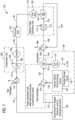
- FIG. 1 shows a schematic diagram of one non-limiting embodiment of a disclosed hybrid CAES system 100.
- the hybrid CAES system 100 may be a hybrid adiabatic-diabatic CAES system comprising synergistic aspects of a diabatic CAES system and an adiabatic CAES system integrated with a carbon-neutral thermal energy source.
- the hybrid CAES system 100 may include one or more adiabatic power generation units 138 integrated with one or more carbon-neutral thermal energy sources.
- thermal energy sources that are "carbon-neutral” during operation will be referred to as “carbon-neutral” thermal energy sources.
- carbon-neutral thermal energy sources may include solar thermal, geothermal, thermal energy sources based on waste-heat, thermal energy sources based on composting, etc. It will be appreciated that some carbon-neutral thermal energy sources, such as solar-based, may be intermittent.
- the hybrid CAES system 100 may include one or more compressor units 102.
- Each compressor unit 102 may include one or more drivers 106 and one or more compressors 110.
- the driver 106 may power or drive the compressor 110 and may be coupled to the compressor 110 by one or more driveshafts 108.
- the compressor unit 102 may receive and compress a process gas, such as air, via line 104 and may discharge a compressed process gas, such as compressed air, via line 112 during off-peak load periods.
- the compressor 110 may receive and compress ambient air via line 104 and may discharge compressed air via line 112.
- the driver 106 may be or include, but is not limited to, one or more electric motors, one or more turbines or expanders, or a combination thereof.
- the compressor 110 may be or include, but is not limited to, one or more of a supersonic compressor, a centrifugal compressor, an axial flow compressor, a reciprocating compressor, a rotary screw compressor, a rotary vane compressor, a scroll compressor, or a diaphragm compressor.
- any number of compressor units 102 containing one or more drivers 106 and one or more compressors 110 may be used in a compressor train, not shown, in the hybrid CAES system 100.
- the hybrid CAES system 100 may include, but is not limited to 2, 3, 4, 5, 6, 7, 8, or more compressor units 102 containing one or more drivers 106 and one or more compressors 110.
- the hybrid CAES system 100 may include a first driver that may drive a first compressor, a second driver that may drive a second compressor, a third driver that may drive a third compressor, and a fourth driver that may drive a fourth compressor.
- each pair of the driver 106 and the compressor 110 may be disposed together in a hermetically sealed casing (not shown).
- one or more compressors 110 may be one or more DATUM centrifugal compressor units. In another example, one or more compressors 110 may be one or more DATUM-S compressor units. In another example, one or more compressors 110 may be one or more STC-GV compressor units, each of the foregoing example compressor units being commercially available from Dresser-Rand, a Siemens business.
- One or more heat exchangers 114 may receive the compressed air via line 112 discharged by compressor 110.
- the heat exchanger 114 may extract thermal energy from the compressed air (e.g., discharged to the surrounding environment outside hybrid CAES system 100) and may discharge a cooled compressed air via line 116.
- One or more air storage reservoirs 120 may receive the cooled compressed air via line 116 from the heat exchanger 114.
- the cooled compressed air may be stored or otherwise maintained with the air storage reservoir 120 as a stored compressed air.
- the cooled compressed air via line 116 may be continuously flowed or otherwise transferred into the air storage reservoir 120 and maintained as the stored compressed air.
- the cooled compressed air via line 116 may be intermittently flowed or otherwise transferred at different times into the air storage reservoir 120. Therefore, the stored compressed air maintained within the air storage reservoir 120 may be or include air from one batch or multiple batches.
- one or more compressor units 102 may compress air and/or one or more other process gases, and the compressed air or process gas may be introduced to and stored in the air storage reservoir 120.
- the air storage reservoir 120 may be one or more caverns (e.g., underground caverns) or one or more vessels.
- the air storage reservoir 120 may be or include, but is not limited to, one or more of: a rock cavern, a salt cavern, an aquifer, an abandoned mine, a depleted gas or oil field, a well, a container, tank, or vessel stored underwater or the ground, a container, tank, or vessel stored on, within or above the ground.
- the stored compressed air from the air storage reservoir 120 may be drawn from the air storage reservoir 120 via line 122 to be heated by heat exchanger 124.
- Heat exchanger 124 is coupled, such as via line 134, to a carbon-neutral thermal energy source 130 to transfer thermal energy generated by thermal energy source 130 to cooled compressed air that, during the electric power generation mode is heated by heat exchanger 124 to produce the heated compressed air via line 126, used to power one or more expanders 140.
- the expander 140 may receive the heated compressed air discharged from heat exchanger 124. Expander 140 may be arranged to operate in a first pressure range.
- a thermal storage device 135 may be used to store thermal energy during periods of intermittent operation by the intermittent thermal energy source.
- thermal energy source 130 is solar
- thermal storage device 135 would be used to, for example, store thermal energy for use at night or during cloudy days.
- thermal energy source 130 In the event that there is insufficient heat available from thermal energy source 130 (and/or thermal storage device 135) to meet demand, there are two non-limiting alternative techniques that could be optionally utilized to meet the demand.
- an auxiliary thermal generator such may be obtained from a driver (e.g., electric motor) arranged to convert rotating energy to thermal energy; or may be obtained from (e.g., a duct burner) that would enable use of natural gas heating for the relatively short periods that heat from thermal energy source 130 may not be available.
- a driver e.g., electric motor
- a duct burner e.g., a duct burner
- This alternative optional technique would reduce the amount of power generated by hybrid CAES system 100 during such short periods, and carbon emissions would approximate those of a traditional diabatic CAES system on a lbm CO2 / MW-hr basis.
- the first pressure range for operation of expander 140 is selected to accommodate pressure levels of the cooled compressed air stored in the air storage reservoir 120.
- the pressure level of the cooled compressed air stored in the air storage reservoir 120 could be as high as approximately 172,37 - 186,16 bar (2500-2700 psi).
- the pressure level of the cooled compressed air stored in the air storage reservoir 120 may be relatively lower, such as in the order of approximately 51,71 - 103,42 bar (750-1500 psi).
- an expander train may be formed by three expanders to transition from the pressure levels that may be as high as 172,37 - 186,16 bar (2500-2700 psi) to pressure levels approximate to or equal to standard atmospheric pressure.
- expander 140 would be a relatively higher-pressure expander compared to the other two expanders in the expander train.
- the expander train may be formed by just two expanders to transition from pressure levels that may be in the order of approximately 51,71 - 103,42 bar (750-1500 psi) to pressure levels approximate to or equal to standard atmospheric pressure.
- the expander 140 may expand the heated compressed air and may discharge an expanded air via line 144.
- the thermal energy transferred from carbon-neutral thermal energy source 130 may be the only thermal energy used to heat or otherwise increase the temperature of the heated compressed air expanded by the expander 140.
- the expander 140 may generate or otherwise produce power due to the expansion of the heated compressed air.
- the expander 140 may produce electricity by powering one or more electrical generators 142 coupled thereto by one or more driveshafts 141.
- the electrical generator 142 may generate electricity and upload or otherwise transfer the generated electricity to an electrical grid 103 via line 143 during peak load periods.
- at least a portion of the generated electricity may be transferred from the electrical grid 103 via line 105 to one or more drivers 106, as shown, or may be transferred directly from the electrical generator 142 to one or more drivers 106 or other electrical devices, not shown.
- the expander 140 may be coupled to and power or otherwise drive one or more pumps, one or more compressors, and/or pieces of other process equipment.
- One or more recuperators 146 may receive the expanded air via line 144, heat the expanded air, and discharge a heated expanded air via line 148.
- the recuperator 146 may also receive an expanded exhaust gas via line 184, cool the expanded exhaust gas, and discharge a cooled exhaust gas via line 186.
- the cooled exhaust gas may be vented or otherwise released into the ambient atmosphere.
- the thermal energy in the expanded exhaust gas via line 184 may be transferred by the recuperator 146 to the expanded air via line 144 to produce the heated expanded air via line 148.
- the recuperator 146 may include a cooling portion and a heating portion.
- the recuperator 146 may transfer thermal energy from the cooling portion to the heating portion. More specifically, the recuperator 146 may transfer thermal energy from heated fluids or gases contained in the cooling portion to other fluids or gases contained in the heating portion.
- the recuperator 146 may be configured to transfer thermal energy from the expanded exhaust gas to the heated expanded air.
- the cooling portion of the recuperator 146 may receive the expanded exhaust gas via line 184 and discharge the cooled exhaust gas via line 186, and the heating portion of the recuperator 146 may receive the first expanded air via line 144 and may discharge the heated expanded air via line 148.
- the expander 140 may be fluidly coupled to and disposed between the heat exchanger 124 and the recuperator 146, such as, for example, downstream of the heat exchanger 124 and upstream of the recuperator 146.
- the expander 140 may be used to increase the amount of thermal energy (heat of compression) that is recovered as electricity by the electrical generator 142 and may be used to reduce the temperature of the expanded air discharged from expander 140.
- a technical advantage of disclosed embodiments may be conceptualized as follows: the less thermal energy contained in the expanded air introduced into the recuperator 146 via line 144, the more thermal energy may be transferred from the expanded exhaust gas in line 184 to the heated expanded air in line 148 by the recuperator 146. By increasing the thermal energy transfer from the expanded exhaust gas via line 184 by the recuperator 146, less thermal energy would be lost or otherwise discharged with the cooled exhaust gas via line 186 outside of the hybrid CAES system 100.
- the hybrid CAES system 100 may include one or more diabatic power generation units 170.
- the arrangement of expander 140 between heat exchanger 124 and recuperator 146 enables the adiabatic and diabatic portions of the system to be linked to one another while preserving the technical benefits of either portion, and avoiding concomitant detriments, effectively creating an efficient and environmentally friendly hybrid system.
- Each of the power generation units 170 may include one or more combustors 172, one or more expanders 180, and one or more electrical generators 182.
- expander 180 may be arranged to operate in a second pressure range, which is lower than the first pressure range of expander 140.
- the expander train may be formed by expanders 140 and 180 (i.e., just two expanders), which is effective to transition from pressure levels that may be in the order of approximately 51,71 - 103,42 bar (750 psi-1500 psi) (e.g., by expander 140) to a pressure level approximate to or equal to standard atmospheric pressure (e.g., by expander 180).
- the heated expanded air via line 148 may be transferred to the combustor 172.
- One or more fuels, water, steam, one or more oxygen sources, additives, or any mixture thereof may be added or otherwise transferred to the combustor 172 via line 174 and combined with the heated expanded air in the combustor 172 to produce the fuel mixture.
- the one or more fuels, water, steam, oxygen sources (e.g. , O 2 ), and/or additives may be combined and mixed with the heated expanded air within the line 148 to produce the fuel mixture upstream of the combustor 172 (not shown).
- the fuel mixture containing the heated expanded air may be combusted within the combustor 172 to produce an exhaust gas.
- Illustrative fuels may be or include, but are not limited to, one or more hydrocarbon fuels (e.g. , alkanes, alkenes, alkynes, or alcohols), hydrogen gas, syngas, or any combination thereof.
- hydrocarbon fuels e.g. , alkanes, alkenes, alkynes, or alcohols
- hydrogen gas syngas
- Illustrative hydrocarbon fuels may be or include, but are not limited to, methane, ethane, acetylene, propane, butane, gasoline, kerosene, diesel, fuel oil, biodiesel, methanol, ethanol, or any mixture thereof.
- the combustor 172 may discharge the exhaust gas via line 176 that is transferred to the expander 180.
- the expander 180 may receive and expand the exhaust gas via line 176 discharged by the combustor 172.
- the expander 180 may expand the exhaust gas to generate or otherwise produce power.
- the expander 180 may produce electricity by powering or driving one or more electrical generators 182 coupled thereto by one or more driveshafts 181.
- the electrical generator 182 may generate electricity and upload or otherwise transfer the generated electricity to the electrical grid 103 via line 101 during peak load periods.
- the expander 180 may be coupled to and power one or more pumps, one or more compressors, other rotary equipment, and/or other components that may be contained within the hybrid CAES system 100 or other systems (not shown).
- the expander 180 may discharge an expanded exhaust gas via line 184.
- the expanded exhaust gas may have a temperature in a range from about 316°C (600°F ) to about 649°C (1,200°F).
- the recuperator 146 may receive and cool the expanded exhaust gas via line 184 and may discharge the cooled exhaust gas via line 186.
- the cooled exhaust gas may be discharged into the ambient atmosphere or transferred to other components contained within the hybrid CAES system 100 or other systems (not shown).
- the cooled exhaust gas may have a temperature in a range from approximately 100°C (212°F) to approximately 288°C (550°F).
- the cooled exhaust gas may have a temperature in a range from approximately 149°C (300°F) to approximately 260°C (500°F).
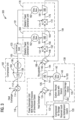
- FIG. 2 depicts a schematic diagram of an illustrative hybrid CAES system 200 that may include one or more diabatic power generation units 250 fluidly coupled to and disposed between the recuperator 146 and the diabatic power generation unit 170, such as, for example, downstream of the recuperator 146 and upstream of diabatic power generation unit 170.
- FIG. 3 depicts a schematic diagram of an illustrative hybrid CAES system 300 that may include one or more power generation units 350 disposed downstream of the recuperator 146 and upstream of the power generation unit 170.
- Each hybrid CAES system 200, 300 may be a hybrid adiabatic-diabatic CAES system that may have aspects of an adiabatic CAES system and a diabatic CAES system.
- the hybrid CAES systems 200, 300 or portions thereof depicted in FIGs. 2 and 3 , respectively, and the hybrid CAES system 100 or portions thereof depicted FIG. 1 share many common components. It should be noted that like numerals shown in the FIGs. and discussed herein represent like components throughout the multiple embodiments disclosed herein.
- Each of the diabatic power generation units 250, 350 may include one or more expanders 160 and one or more electrical generators 162, as depicted in FIGs. 2 and 3 .
- the expander 160 may be or include one or more high pressure (HP) expanders.
- the expander train may be formed by expanders 140, 160 and 180 (i.e., three expanders), which is effective to transition from pressure levels that may be as high as 172,37 - 186,16 bar (2500-2700 psi) (by expander 140) to an intermediate pressure level (by expander 160) to a pressure level approximate to or equal to standard atmospheric pressure (by expander 180).
- the diabatic power generation unit 350 may also include one or more combustors 152 fluidly coupled to and disposed between the recuperator 146 and the expander 160, such as, for example, downstream of the recuperator 146 and upstream of the expander 160.
- the combustors could be either directly-fired, as shown in the schematic, or indirectly-fired where external combustion produces heat which is then conducted into the working fluid (e.g., air). It is contemplated this feature to be an optional implementation in combustor 152 in FIG. 3 , but it does not rule out that, based on the needs of a given application, this could be optionally implemented in other combustors.
- the expander 160 may receive via line 148 one or more heated expanded process gases, such as heated expanded air, discharged by the recuperator 146.
- the expander 160 may expand the heated expanded process gas or air to generate or otherwise produce power and may discharge one or more expanded process gases, such as expanded air, via line 164.
- the expander 160 may produce electricity by powering or driving one or more electrical generators 162 coupled thereto by one or more driveshafts 161.
- the electrical generator 162 may generate electricity and upload or otherwise transfer the generated electricity to the electrical grid 103 via line 101 during peak load periods.
- the expander 160 may be coupled to and power one or more pumps, one or more compressors, other rotary equipment, and/or other components that may be contained within the hybrid CAES systems 200, 300 or other systems (not shown).
- the combustor 152 may receive one or more heated expanded process gases, such as heated expanded air, via line 148 discharged by the recuperator 146.
- the combustor 152 may discharge an exhaust gas that may be received by the expander 160 via line 156.
- the expander 160 may expand the exhaust gas or other expanded process gas to generate or otherwise produce power and may discharge one or more expanded exhaust gases via line 164.
- the heated expanded air may be transferred to the combustor 152 via line 148.
- One or more fuels, water, steam, one or more oxygen sources, additives, or any mixture thereof may be added or otherwise transferred to the combustor 152 via line 154 and combined with the heated expanded air in the combustor 152 to produce the fuel mixture.
- the one or more fuels, water, steam, oxygen sources (e.g. , O 2 ), and/or additives may be combined and mixed with the heated expanded air within the line 148 to produce the fuel mixture upstream of the combustor 152 (not shown).
- the fuel mixture containing the heated expanded air may be combusted within the combustor 152 to produce an exhaust gas.
- Illustrative fuels may be or include, but are not limited to, one or more hydrocarbon fuels (e.g. , alkanes, alkenes, alkynes, or alcohols), hydrogen gas, syngas, or any combination thereof.
- hydrocarbon fuels e.g. , alkanes, alkenes, alkynes, or alcohols
- hydrogen gas syngas
- Illustrative hydrocarbon fuels may be or include, but are not limited to, methane, ethane, acetylene, propane, butane, gasoline, kerosene, diesel, fuel oil, biodiesel, methanol, ethanol, or any mixture thereof.
- the combustor 152 may discharge the exhaust gas that is transferred to the expander 160 via line 156.
- the expanded process gas may be transferred to the one or more combustors 172 via line 164 and combusted as discussed and described above.
- the expanded process gas may be or include, but is not limited to, air, exhaust gas, working fluid, or any mixture thereof.
- the expanded process gas may be or include expanded air and may be discharged from the power generation unit 250 via line 164.
- the expanded process gas may be or include expanded exhaust gas and may be discharged from the power generation unit 350 via line 164.
- FIG. 1 expander 140 is illustrated as being coupled to drive electric generator 142 and expander 180 is illustrated as coupled to drive electric generator 182.
- One alternative implementation would be to couple expanders 140 and 180 to drive a common electric generator either via a single shaft arrangement, or a multi-shaft arrangement.
- expander 140 is illustrated as being coupled to drive electric generator 142
- expander 160 as being coupled to drive electric generator 162
- expander 180 is illustrated as being coupled to drive electric generator 182.
- One alternative implementation would be to couple expanders 140, 160 and 180 to drive a common electric generator either via a single shaft arrangement, or a multi-shaft arrangement.
- driver 106, electric generator 142, and electric generator 182 may be made up of one or more individual machines.
- driver 106, electric generator 142, and electric generator 182 may comprise a single electromotive machine integrating motoring and generating functionalities with clutches to appropriately engage or disengage associated machines.
- driver 106, electric generator 142, electric generator 162 and electric generator 182 may be made up of one or more individual machines.
- One example of a double-ended motor/generator arrangement connected to two compressors at the motoring side and two expanders at the generating side may be as follows:
Landscapes
- Engineering & Computer Science (AREA)
- Chemical & Material Sciences (AREA)
- Combustion & Propulsion (AREA)
- Mechanical Engineering (AREA)
- General Engineering & Computer Science (AREA)
- Life Sciences & Earth Sciences (AREA)
- Sustainable Development (AREA)
- Sustainable Energy (AREA)
- Physics & Mathematics (AREA)
- High Energy & Nuclear Physics (AREA)
- Power Engineering (AREA)
- Engine Equipment That Uses Special Cycles (AREA)
Claims (18)
- Hybrid-Druckluftenergiespeichersystem (100), umfassend:einen Verdichter (110), der auf einen Treiber (106) anspricht, um während eines Lademodus des hybriden Druckluftspeichersystems (100) eine Druckluft zu erzeugen;einen ersten Wärmetauscher (114), der dazu konfiguriert ist, die durch den Verdichter (110) erzeugte Druckluft zu empfangen, Wärmeenergie aus der durch den Verdichter (110) erzeugten Druckluft zu extrahieren und eine gekühlte Druckluft zu erzeugen, wobei die durch den ersten Wärmetauscher (114) gekühlte Druckluft zur Speicherung zu einem Luftspeicherbehälter (120) gefördert wird;eine kohlenstoffneutrale Wärmeenergiequelle (130);einen zweiten Wärmetauscher (124), der mit der kohlenstoffneutralen Wärmeenergiequelle (130) gekoppelt und dazu konfiguriert ist, von der kohlenstoffneutralen Wärmeenergiequelle (130) bereitgestellte Wärmeenergie auf die gekühlte Druckluft zu übertragen, die während eines Stromerzeugungsmodus des hybriden Druckluftspeichersystems (100) vom Luftspeicherbehälter (120) zum zweiten Wärmetauscher (124) gefördert wird, um eine erwärmte Druckluft zu erzeugen;einen ersten Expander (140), der ausschließlich auf die durch den zweiten Wärmetauscher (124) erwärmte Druckluft anspricht und dazu konfiguriert ist, Strom zu produzieren und eine expandierte Luft zu erzeugen;einen Rekuperator (146), der stromabwärts des ersten Expanders (140) angeordnet und dazu konfiguriert ist, die durch den ersten Expander (140) expandierte Luft zu empfangen und eine Wärmeübertragung zwischen der empfangenen expandierten Luft und einem durch den Rekuperator (146) empfangenen expandierten Abgas herzustellen, wobei die Wärmeübertragung durch den Rekuperator (146) wirksam ist, um Wärmeenergie vom empfangenen expandierten Abgas zu übertragen, um die durch den ersten Expander (140) expandierte Luft zu erwärmen und wiederum das empfangene expandierte Abgas zu kühlen, um ein gekühltes Abgas zu erzeugen;einen ersten Verbrenner (152, 172), der dazu angeordnet ist, die durch den Rekuperator (146) erwärmte expandierte Luft zu empfangen und ein Abgas zu erzeugen; undeinen zweiten Expander (160,180), der auf das Abgas des ersten Verbrenners (152, 172) anspricht, um weiteren Strom zu erzeugen, wobei der zweite Expander (160, 180) die Quelle des durch den Rekuperator (146) empfangenen expandierten Abgases ist,wobei der erste Expander (140), der allein auf die durch den zweiten Wärmetauscher (124) erwärmte Druckluft anspricht, so wirksam ist, dass eine Temperatur der durch den ersten Expander (140) expandierten Luft reduziert wird, wobei die Übertragung von Wärmeenergie vom empfangenen expandierten Abgas zum Erwärmen der expandierten Luft durch den ersten Expander (140) wirksam ist, um die Vergeudung von Wärmeenergie in dem durch den Rekuperator (146) gekühlten Abgas zu reduzieren.
- System nach Anspruch 1, wobei der erste Expander (140) dazu angeordnet ist, in einem ersten Druckbereich zu arbeiten, wobei der erste Expander (140) zum Antreiben eines ersten elektrischen Generators (142) gekoppelt ist.
- System nach Anspruch 2, wobei der zweite Expander (160, 180) dazu angeordnet ist, in einem zweiten Druckbereich zu arbeiten, der niedriger als der erste Druckbereich ist, wobei der zweite Expander (160, 180) zum Antreiben eines zweiten elektrischen Generators (162, 182) gekoppelt ist.
- System nach Anspruch 1, wobei der erste Expander (140) dazu angeordnet ist, in einem ersten Druckbereich zu arbeiten, und der zweite Expander (160, 180) dazu angeordnet ist, in einem zweiten Druckbereich zu arbeiten, der niedriger als der erste Druckbereich ist, wobei der erste Expander (140) und der zweite Expander (160, 180) jeweils zum Antreiben eines gemeinsamen elektrischen Generators gekoppelt sind.
- System nach Anspruch 4, wobei der erste Druckbereich Druckwerte der im Luftspeicherbehälter (120) gespeicherten gekühlten Druckluft einschließt und der zweite Druckbereich den Umgebungsatmosphärendruck einschließt.
- System nach einem der Ansprüche 1 - 5, wobei die Wärmeübertragung durch den Rekuperator (146) so wirksam ist, dass das durch den Rekuperator (146) gekühlte Abgas eine Temperatur in einem Bereich von etwa 100 °C (212 °F) bis etwa 288 °C (550 °F) umfasst.
- System nach einem der Ansprüche 1 - 6, wobei der erste Verbrenner (172) dazu angeordnet ist, ein Brennstoffgemisch zu verbrennen, das die durch den Rekuperator (146) erwärmte expandierte Luft und einen Kohlenwasserstoffbrennstoff umfasst.
- System nach einem der Ansprüche 1 - 7, ferner umfassend einen dritten Expander (160, 180), der fluidisch zwischen den Rekuperator (146) und den ersten Verbrenner (162, 172) gekoppelt ist, wobei der dritte Expander (160, 180) dazu konfiguriert ist, die durch den Rekuperator (146) erwärmte expandierte Luft zu empfangen und zu expandieren.
- System nach Anspruch 2, 3 und 8 oder Anspruch 4 und 8, wobei der dritte Expander (160, 180) dazu angeordnet ist, in einem dritten Druckbereich zu arbeiten, der zwischen dem ersten Druckbereich und dem zweiten Druckbereich liegt, wobei der dritte Expander (160, 180) zum Antreiben eines dritten elektrischen Generators (162, 182) gekoppelt ist.
- System nach einem der Ansprüche 1, 4 - 7, wobei der erste Expander (140) dazu angeordnet ist, in einem ersten Druckbereich zu arbeiten, und der zweite Expander (160, 180) dazu angeordnet ist, in einem zweiten Druckbereich zu arbeiten, der niedriger als der erste Druckbereich ist, ferner umfassend einen dritten Expander (160, 180), der dazu angeordnet ist, in einem dritten Druckbereich zu arbeiten, der zwischen dem ersten Druckbereich und dem zweiten Druckbereich liegt, wobei der erste Expander (140), der zweite Expander (160, 180) und der dritte Expander (160, 180) jeweils zum Antreiben eines gemeinsamen elektrischen Generators gekoppelt sind.
- System nach einem der Ansprüche 8 - 10, ferner umfassend einen zweiten Verbrenner (152, 172), der fluidisch zwischen den Rekuperator (146) und den dritten Expander (160, 180) gekoppelt ist.
- System nach einem der Ansprüche 1 - 11, wobei der Treiber (106) einen Elektromotor umfasst und/oder der Luftspeicherbehälter eine unterirdische Kaverne umfasst.
- System nach einem der Ansprüche 1 - 12, wobei der Rekuperator (146) einen Kühlabschnitt und einen Heizabschnitt umfasst und dazu angeordnet ist, Wärmeenergie zwischen dem Kühlabschnitt und dem Heizabschnitt zu übertragen, wobei der Kühlabschnitt dazu angeordnet ist, das durch den zweiten Expander (180) expandierte Abgas zu empfangen und das gekühlte Abgas zu erzeugen, und wobei der Heizabschnitt dazu konfiguriert, die durch den ersten Expander (140) expandierte Luft zu empfangen und die erwärmte expandierte Luft zu erzeugen.
- Hybrid-Druckluftenergiespeichersystem (300), umfassend:a. einen Verdichter (110), der auf einen Treiber (106) anspricht, um während eines Lademodus des hybriden Druckluftspeichersystems (300) eine Druckluft zu erzeugen;b. einen ersten Wärmetauscher (114), der dazu konfiguriert ist, die durch den Verdichter (110) erzeugte Druckluft zu empfangen, Wärmeenergie aus der durch den Verdichter (110) erzeugten Druckluft zu extrahieren und eine gekühlte Druckluft zu erzeugen, wobei die durch den ersten Wärmetauscher (114) gekühlte Druckluft zur Speicherung zu einem Luftspeicherbehälter (120) gefördert wird;c. eine kohlenstoffneutrale Wärmeenergiequelle (130);d. einen zweiten Wärmetauscher (124), der mit der kohlenstoffneutralen Wärmeenergiequelle (130) gekoppelt und dazu konfiguriert ist, von der kohlenstoffneutralen Wärmeenergiequelle (130) bereitgestellte Wärmeenergie auf die gekühlte Druckluft zu übertragen, die während eines Stromerzeugungsmodus des hybriden Druckluftspeichersystems (300) vom Luftspeicherbehälter (120) zum zweiten Wärmetauscher (124) gefördert wird, um eine erwärmte Druckluft zu erzeugen;e. einen ersten Expander (140), der ausschließlich auf die durch den zweiten Wärmetauscher (124) erwärmte Druckluft anspricht und dazu konfiguriert ist, Strom zu produzieren und eine expandierte Luft zu erzeugen;f. einen Rekuperator (146), der stromabwärts des ersten Expanders (140) angeordnet und dazu konfiguriert ist, die durch den ersten Expander (140) expandierte Luft zu empfangen und eine Wärmeübertragung zwischen der empfangenen expandierten Luft und einem durch den Rekuperator (146) empfangenen zweiten expandierten Abgas herzustellen, wobei die Wärmeübertragung durch den Rekuperator (146) wirksam ist, um Wärmeenergie vom empfangenen zweiten expandierten Abgas zu übertragen, um die durch den ersten Expander (140) expandierte Luft zu erwärmen und wiederum das empfangene zweite expandierte Abgas zu kühlen, um ein gekühltes Abgas zu erzeugen;g. einen ersten Verbrenner (152, 172), der dazu angeordnet ist, die durch den Rekuperator (146) erwärmte expandierte Luft zu empfangen, ein erstes Brennstoffgemisch, das die durch den Rekuperator (146) erwärmte expandierte Luft enthält, zu verbrennen und ein erstes Abgas zu erzeugen;h. einen zweiten Expander (160, 180), der auf ein erstes Abgas des ersten Verbrenners (152, 172) anspricht und dazu konfiguriert ist, weiteren Strom zu produzieren und ein erstes expandiertes Abgas zu erzeugen;i. einen zweiten Verbrenner (152, 172), der dazu angeordnet ist, das durch den zweiten Expander (160, 180) expandierte erste Abgas zu empfangen, das zweite Brennstoffgemisch, das das durch den zweiten Expander (160, 180) expandierte erste Abgas enthält, zu verbrennen und ein zweites Abgas zu erzeugen; undj. einen dritten Expander (160, 180), der auf das zweite Abgas des zweiten Verbrenners (152, 172) anspricht und dazu konfiguriert ist, noch weiteren Strom zu erzeugen, wobei der dritte Expander (160, 180) die Quelle des durch den Rekuperator (146) empfangenen zweiten expandierten Abgases ist,wobei der erste Expander (140), der allein auf die durch den zweiten Wärmetauscher (124) erwärmte Druckluft anspricht, so wirksam ist, dass eine Temperatur der durch den ersten Expander (140) expandierten Luft reduziert wird, wobei die Übertragung von Wärmeenergie vom empfangenen expandierten zweiten Abgas zum Erwärmen der expandierten Luft durch den ersten Expander (140) so wirksam ist, dass die Vergeudung von Wärmeenergie in dem durch den Rekuperator (146) gekühlten Abgas reduziert wird.
- System nach Anspruch 14, wobei der erste Expander (140) dazu angeordnet ist, in einem ersten Druckbereich zu arbeiten, der zweite Expander (160, 180) dazu angeordnet ist, in einem zweiten Druckbereich zu arbeiten, und der dritte Expander (160, 180) dazu angeordnet ist, in einem dritten Druckbereich zu arbeiten, wobei der erste Druckbereich höhere Druckwerte relativ zu Druckwerten im dritten Druckbereich umfasst und wobei der zweite Druckbereich Druckwerte zwischen den jeweiligen Druckwerten des ersten und dritten Druckbereichs umfasst.
- System nach Anspruch 14 oder 15, wobei der erste Druckbereich Druckpegel der im Luftspeicherbehälter (120) gespeicherten gekühlten Druckluft einschließt und der dritte Druckbereich den Umgebungsatmosphärendruck einschließt.
- System nach einem der Ansprüche 8 - 11 oder 14 - 16, wobei der erste, der zweite und der dritte Expander (140, 160, 180) jeweils zum Antreiben jeweiliger elektrischer Generatoren (142, 162, 182) gekoppelt sind oder wobei der erste, der zweite und der dritte Expander (140, 160, 180) jeweils zum Antreiben eines gemeinsamen elektrischen Generators gekoppelt sind.
- System nach einem der Ansprüche 1 - 17, wobei die kohlenstoffneutrale thermische Energiequelle (130)ausgewählt ist aus der Gruppe, bestehend aus einer solarthermischen Energiequelle, einer geothermischen Energiequelle, einer auf Abwärme basierenden thermischen Energiequelle und einer auf Kompostierung basierenden thermischen Energiequelle; oderwobei die kohlenstoffneutrale Wärmeenergiequelle eine intermittierende Wärmeenergiequelle ist, ferner umfassend eine Wärmespeichervorrichtung zum Speichern von Wärmeenergie während Phasen des intermittierenden Betriebs durch die Wärmeenergiequelle.
Applications Claiming Priority (1)
| Application Number | Priority Date | Filing Date | Title |
|---|---|---|---|
| US16/856,627 US11255262B2 (en) | 2020-04-23 | 2020-04-23 | Hybrid compressed air energy storage system |
Publications (2)
| Publication Number | Publication Date |
|---|---|
| EP3901437A1 EP3901437A1 (de) | 2021-10-27 |
| EP3901437B1 true EP3901437B1 (de) | 2024-12-25 |
Family
ID=75659818
Family Applications (1)
| Application Number | Title | Priority Date | Filing Date |
|---|---|---|---|
| EP21169998.8A Active EP3901437B1 (de) | 2020-04-23 | 2021-04-22 | Hybrides druckluftenergiespeichersystem |
Country Status (4)
| Country | Link |
|---|---|
| US (1) | US11255262B2 (de) |
| EP (1) | EP3901437B1 (de) |
| CA (1) | CA3116379C (de) |
| ES (1) | ES3015444T3 (de) |
Families Citing this family (11)
| Publication number | Priority date | Publication date | Assignee | Title |
|---|---|---|---|---|
| US11053847B2 (en) | 2016-12-28 | 2021-07-06 | Malta Inc. | Baffled thermoclines in thermodynamic cycle systems |
| US10458284B2 (en) * | 2016-12-28 | 2019-10-29 | Malta Inc. | Variable pressure inventory control of closed cycle system with a high pressure tank and an intermediate pressure tank |
| EP4296477A3 (de) | 2020-08-12 | 2024-02-28 | Malta Inc. | Gepumptes wärmeenergiespeichersystem mit modularer turbomaschine |
| US11486305B2 (en) | 2020-08-12 | 2022-11-01 | Malta Inc. | Pumped heat energy storage system with load following |
| US11454167B1 (en) | 2020-08-12 | 2022-09-27 | Malta Inc. | Pumped heat energy storage system with hot-side thermal integration |
| EP4430285A4 (de) | 2021-12-14 | 2025-11-26 | Malta Inc | Mit kohlegefeuerter energieerzeugungseinheit integriertes pumpwärmespeichersystem |
| AU2023256513A1 (en) * | 2022-04-19 | 2024-11-14 | Energy Vault, Inc. | System for generating electricity or hydrogen from natural gas |
| US12129790B1 (en) * | 2023-05-15 | 2024-10-29 | Calvin E. Phelps, Sr. | Power plant cycle for a new renewable energy or other heat source facilitated by a supersonic shock wave compressor apparatus |
| US20240418155A1 (en) * | 2023-05-15 | 2024-12-19 | Calvin E. Phelps, Sr. | Power plant cycle for a new renewable energy or other heat source facilitated by a supersonic shock wave compressor apparatus |
| CN116608092B (zh) * | 2023-05-22 | 2024-04-12 | 长江三峡集团实业发展(北京)有限公司 | 一种海上风力发电机组及储能系统 |
| CN119665124A (zh) * | 2024-12-13 | 2025-03-21 | 西南石油大学 | 一种全段补气式压缩空气储能系统及运行方式 |
Family Cites Families (18)
| Publication number | Priority date | Publication date | Assignee | Title |
|---|---|---|---|---|
| CH659855A5 (de) | 1981-11-16 | 1987-02-27 | Bbc Brown Boveri & Cie | Luftspeicher-kraftwerk. |
| US4765142A (en) | 1987-05-12 | 1988-08-23 | Gibbs & Hill, Inc. | Compressed air energy storage turbomachinery cycle with compression heat recovery, storage, steam generation and utilization during power generation |
| US7669423B2 (en) | 2007-01-25 | 2010-03-02 | Michael Nakhamkin | Operating method for CAES plant using humidified air in a bottoming cycle expander |
| US8261552B2 (en) | 2007-01-25 | 2012-09-11 | Dresser Rand Company | Advanced adiabatic compressed air energy storage system |
| US8341964B2 (en) | 2009-10-27 | 2013-01-01 | General Electric Company | System and method of using a compressed air storage system with a gas turbine |
| US20110094229A1 (en) | 2009-10-27 | 2011-04-28 | Freund Sebastian W | Adiabatic compressed air energy storage system with combustor |
| US8572972B2 (en) | 2009-11-13 | 2013-11-05 | General Electric Company | System and method for secondary energy production in a compressed air energy storage system |
| CN202073603U (zh) | 2011-06-12 | 2011-12-14 | 中国科学院工程热物理研究所 | 一种压缩空气储能系统 |
| KR101204908B1 (ko) * | 2011-06-30 | 2012-11-26 | 삼성테크윈 주식회사 | 압축 가스를 이용한 동력 생산 시스템 |
| GB2493726A (en) | 2011-08-16 | 2013-02-20 | Alstom Technology Ltd | Adiabatic compressed air energy storage system |
| EP2594746A1 (de) | 2011-11-17 | 2013-05-22 | Siemens Aktiengesellschaft | Gasturbinenkraftwerk mit einer Gasturbinenanlage und Verfahren zum Betreiben eines Gasturbinenkraftwerks |
| US9938895B2 (en) | 2012-11-20 | 2018-04-10 | Dresser-Rand Company | Dual reheat topping cycle for improved energy efficiency for compressed air energy storage plants with high air storage pressure |
| CN103225598B (zh) | 2013-04-27 | 2015-11-18 | 清华大学 | 一种压缩空气与储热介质同时储能的方法及系统 |
| WO2015015184A2 (en) | 2013-07-29 | 2015-02-05 | Storelectric Limited | Compressed air energy storage system or other system with cold storage |
| AU2014305651A1 (en) * | 2013-08-07 | 2016-02-25 | Raygen Resources Pty Ltd | Storage of solar energy |
| CN204457884U (zh) | 2015-03-04 | 2015-07-08 | 中国大唐集团新能源股份有限公司 | 一种压缩空气储能发电系统 |
| WO2017141186A1 (en) | 2016-02-18 | 2017-08-24 | 8 Rivers Capital, Llc | System and method for power production including methanation |
| US20170350318A1 (en) * | 2016-06-07 | 2017-12-07 | Dresser-Rand Company | Hybrid compressed air energy storage system and process |
-
2020
- 2020-04-23 US US16/856,627 patent/US11255262B2/en active Active
-
2021
- 2021-04-21 CA CA3116379A patent/CA3116379C/en active Active
- 2021-04-22 ES ES21169998T patent/ES3015444T3/es active Active
- 2021-04-22 EP EP21169998.8A patent/EP3901437B1/de active Active
Also Published As
| Publication number | Publication date |
|---|---|
| CA3116379C (en) | 2023-10-10 |
| EP3901437A1 (de) | 2021-10-27 |
| ES3015444T3 (en) | 2025-05-05 |
| CA3116379A1 (en) | 2021-10-23 |
| US20210332752A1 (en) | 2021-10-28 |
| US11255262B2 (en) | 2022-02-22 |
Similar Documents
| Publication | Publication Date | Title |
|---|---|---|
| EP3901437B1 (de) | Hybrides druckluftenergiespeichersystem | |
| EP3255266B1 (de) | Hybrid-druckluftenergiespeichersystem und verfahren | |
| CA1284587C (en) | Compressed air energy storage turbomachinery cycle with compression heat recovery, storage, steam generation and utilization during powergeneration | |
| EP2603684B1 (de) | Adiabatisches druckluft-energiespeicherungsverfahren | |
| KR102185002B1 (ko) | 순산소 초임계 이산화탄소 발전 시스템에 적용된 액화 질소 발전 시스템 | |
| US9551279B2 (en) | CAES plant using steam injection and bottoming cycle expander | |
| US11591957B2 (en) | Energy storage apparatus and method | |
| US7305832B2 (en) | Work extraction arrangement | |
| CN102518480A (zh) | 一种压缩空气蓄能与燃煤锅炉集成的发电系统 | |
| CN106837441B (zh) | 一种利用lng冷能的燃气轮机-氮气布雷顿循环联合发电系统 | |
| US20200182148A1 (en) | Hybrid compressed air energy storage system | |
| CN103758642B (zh) | 一种压缩页岩气储能发电系统 | |
| WO2023027762A1 (en) | H2 power plant with o2 integration | |
| WO2021257333A1 (en) | Air energy storage with internal combustion engines | |
| JP2000014052A (ja) | 圧縮空気貯蔵発電設備 | |
| CN117780461A (zh) | 一种基于压缩空气储能和热水储能的协同储能系统 | |
| CN209925092U (zh) | 一种lng燃气轮机耦合冷能发电系统 | |
| CN201786457U (zh) | 燃气透平机尾气发电装置 | |
| Milewski et al. | Prospects for the use of supercritical CO2 cycles | |
| Li et al. | Comparative Study on Different Compression-Expansion Stages of a Seawater Source Carbon Dioxide Energy Storage System | |
| Buecker et al. | Using Combustion Turbine Exhaust Heat for Turbine Inlet Air Chilling | |
| JP2016044569A (ja) | ガスタービンプラント | |
| CN105134319A (zh) | 利用液化空气做功驱动机械设备、液氮做功产生电能的方法 | |
| CN104343539A (zh) | 一种蓄热式燃气轮机发电装置 |
Legal Events
| Date | Code | Title | Description |
|---|---|---|---|
| PUAI | Public reference made under article 153(3) epc to a published international application that has entered the european phase |
Free format text: ORIGINAL CODE: 0009012 |
|
| STAA | Information on the status of an ep patent application or granted ep patent |
Free format text: STATUS: REQUEST FOR EXAMINATION WAS MADE |
|
| 17P | Request for examination filed |
Effective date: 20210422 |
|
| AK | Designated contracting states |
Kind code of ref document: A1 Designated state(s): AL AT BE BG CH CY CZ DE DK EE ES FI FR GB GR HR HU IE IS IT LI LT LU LV MC MK MT NL NO PL PT RO RS SE SI SK SM TR |
|
| B565 | Issuance of search results under rule 164(2) epc |
Effective date: 20210913 |
|
| RBV | Designated contracting states (corrected) |
Designated state(s): AL AT BE BG CH CY CZ DE DK EE ES FI FR GB GR HR HU IE IS IT LI LT LU LV MC MK MT NL NO PL PT RO RS SE SI SK SM TR |
|
| STAA | Information on the status of an ep patent application or granted ep patent |
Free format text: STATUS: EXAMINATION IS IN PROGRESS |
|
| 17Q | First examination report despatched |
Effective date: 20221021 |
|
| RAP1 | Party data changed (applicant data changed or rights of an application transferred) |
Owner name: SIEMENS ENERGY, INC. |
|
| GRAP | Despatch of communication of intention to grant a patent |
Free format text: ORIGINAL CODE: EPIDOSNIGR1 |
|
| STAA | Information on the status of an ep patent application or granted ep patent |
Free format text: STATUS: GRANT OF PATENT IS INTENDED |
|
| INTG | Intention to grant announced |
Effective date: 20240716 |
|
| GRAS | Grant fee paid |
Free format text: ORIGINAL CODE: EPIDOSNIGR3 |
|
| GRAA | (expected) grant |
Free format text: ORIGINAL CODE: 0009210 |
|
| STAA | Information on the status of an ep patent application or granted ep patent |
Free format text: STATUS: THE PATENT HAS BEEN GRANTED |
|
| AK | Designated contracting states |
Kind code of ref document: B1 Designated state(s): AL AT BE BG CH CY CZ DE DK EE ES FI FR GB GR HR HU IE IS IT LI LT LU LV MC MK MT NL NO PL PT RO RS SE SI SK SM TR |
|
| REG | Reference to a national code |
Ref country code: GB Ref legal event code: FG4D |
|
| REG | Reference to a national code |
Ref country code: CH Ref legal event code: EP |
|
| REG | Reference to a national code |
Ref country code: DE Ref legal event code: R096 Ref document number: 602021023766 Country of ref document: DE |
|
| REG | Reference to a national code |
Ref country code: IE Ref legal event code: FG4D |
|
| REG | Reference to a national code |
Ref country code: NL Ref legal event code: FP |
|
| REG | Reference to a national code |
Ref country code: LT Ref legal event code: MG9D |
|
| PG25 | Lapsed in a contracting state [announced via postgrant information from national office to epo] |
Ref country code: HR Free format text: LAPSE BECAUSE OF FAILURE TO SUBMIT A TRANSLATION OF THE DESCRIPTION OR TO PAY THE FEE WITHIN THE PRESCRIBED TIME-LIMIT Effective date: 20241225 |
|
| PG25 | Lapsed in a contracting state [announced via postgrant information from national office to epo] |
Ref country code: FI Free format text: LAPSE BECAUSE OF FAILURE TO SUBMIT A TRANSLATION OF THE DESCRIPTION OR TO PAY THE FEE WITHIN THE PRESCRIBED TIME-LIMIT Effective date: 20241225 |
|
| PG25 | Lapsed in a contracting state [announced via postgrant information from national office to epo] |
Ref country code: BG Free format text: LAPSE BECAUSE OF FAILURE TO SUBMIT A TRANSLATION OF THE DESCRIPTION OR TO PAY THE FEE WITHIN THE PRESCRIBED TIME-LIMIT Effective date: 20241225 |
|
| PG25 | Lapsed in a contracting state [announced via postgrant information from national office to epo] |
Ref country code: GR Free format text: LAPSE BECAUSE OF FAILURE TO SUBMIT A TRANSLATION OF THE DESCRIPTION OR TO PAY THE FEE WITHIN THE PRESCRIBED TIME-LIMIT Effective date: 20250326 Ref country code: LV Free format text: LAPSE BECAUSE OF FAILURE TO SUBMIT A TRANSLATION OF THE DESCRIPTION OR TO PAY THE FEE WITHIN THE PRESCRIBED TIME-LIMIT Effective date: 20241225 |
|
| PG25 | Lapsed in a contracting state [announced via postgrant information from national office to epo] |
Ref country code: RS Free format text: LAPSE BECAUSE OF FAILURE TO SUBMIT A TRANSLATION OF THE DESCRIPTION OR TO PAY THE FEE WITHIN THE PRESCRIBED TIME-LIMIT Effective date: 20250325 |
|
| PGFP | Annual fee paid to national office [announced via postgrant information from national office to epo] |
Ref country code: NL Payment date: 20250424 Year of fee payment: 5 |
|
| REG | Reference to a national code |
Ref country code: AT Ref legal event code: MK05 Ref document number: 1754331 Country of ref document: AT Kind code of ref document: T Effective date: 20241225 |
|
| PG25 | Lapsed in a contracting state [announced via postgrant information from national office to epo] |
Ref country code: SM Free format text: LAPSE BECAUSE OF FAILURE TO SUBMIT A TRANSLATION OF THE DESCRIPTION OR TO PAY THE FEE WITHIN THE PRESCRIBED TIME-LIMIT Effective date: 20241225 |
|
| PG25 | Lapsed in a contracting state [announced via postgrant information from national office to epo] |
Ref country code: PL Free format text: LAPSE BECAUSE OF FAILURE TO SUBMIT A TRANSLATION OF THE DESCRIPTION OR TO PAY THE FEE WITHIN THE PRESCRIBED TIME-LIMIT Effective date: 20241225 |
|
| PGFP | Annual fee paid to national office [announced via postgrant information from national office to epo] |
Ref country code: DE Payment date: 20250428 Year of fee payment: 5 |
|
| PGFP | Annual fee paid to national office [announced via postgrant information from national office to epo] |
Ref country code: ES Payment date: 20250513 Year of fee payment: 5 |
|
| PG25 | Lapsed in a contracting state [announced via postgrant information from national office to epo] |
Ref country code: IS Free format text: LAPSE BECAUSE OF FAILURE TO SUBMIT A TRANSLATION OF THE DESCRIPTION OR TO PAY THE FEE WITHIN THE PRESCRIBED TIME-LIMIT Effective date: 20250425 |
|
| PGFP | Annual fee paid to national office [announced via postgrant information from national office to epo] |
Ref country code: NO Payment date: 20250422 Year of fee payment: 5 |
|
| PGFP | Annual fee paid to national office [announced via postgrant information from national office to epo] |
Ref country code: IT Payment date: 20250422 Year of fee payment: 5 |
|
| PG25 | Lapsed in a contracting state [announced via postgrant information from national office to epo] |
Ref country code: PT Free format text: LAPSE BECAUSE OF FAILURE TO SUBMIT A TRANSLATION OF THE DESCRIPTION OR TO PAY THE FEE WITHIN THE PRESCRIBED TIME-LIMIT Effective date: 20250428 |
|
| PG25 | Lapsed in a contracting state [announced via postgrant information from national office to epo] |
Ref country code: EE Free format text: LAPSE BECAUSE OF FAILURE TO SUBMIT A TRANSLATION OF THE DESCRIPTION OR TO PAY THE FEE WITHIN THE PRESCRIBED TIME-LIMIT Effective date: 20241225 |
|
| PGFP | Annual fee paid to national office [announced via postgrant information from national office to epo] |
Ref country code: FR Payment date: 20250424 Year of fee payment: 5 |
|
| PGFP | Annual fee paid to national office [announced via postgrant information from national office to epo] |
Ref country code: CH Payment date: 20250501 Year of fee payment: 5 |
|
| PG25 | Lapsed in a contracting state [announced via postgrant information from national office to epo] |
Ref country code: AT Free format text: LAPSE BECAUSE OF FAILURE TO SUBMIT A TRANSLATION OF THE DESCRIPTION OR TO PAY THE FEE WITHIN THE PRESCRIBED TIME-LIMIT Effective date: 20241225 Ref country code: RO Free format text: LAPSE BECAUSE OF FAILURE TO SUBMIT A TRANSLATION OF THE DESCRIPTION OR TO PAY THE FEE WITHIN THE PRESCRIBED TIME-LIMIT Effective date: 20241225 |
|
| PG25 | Lapsed in a contracting state [announced via postgrant information from national office to epo] |
Ref country code: SK Free format text: LAPSE BECAUSE OF FAILURE TO SUBMIT A TRANSLATION OF THE DESCRIPTION OR TO PAY THE FEE WITHIN THE PRESCRIBED TIME-LIMIT Effective date: 20241225 |
|
| PG25 | Lapsed in a contracting state [announced via postgrant information from national office to epo] |
Ref country code: CZ Free format text: LAPSE BECAUSE OF FAILURE TO SUBMIT A TRANSLATION OF THE DESCRIPTION OR TO PAY THE FEE WITHIN THE PRESCRIBED TIME-LIMIT Effective date: 20241225 |
|
| PG25 | Lapsed in a contracting state [announced via postgrant information from national office to epo] |
Ref country code: SE Free format text: LAPSE BECAUSE OF FAILURE TO SUBMIT A TRANSLATION OF THE DESCRIPTION OR TO PAY THE FEE WITHIN THE PRESCRIBED TIME-LIMIT Effective date: 20241225 |
|
| REG | Reference to a national code |
Ref country code: DE Ref legal event code: R097 Ref document number: 602021023766 Country of ref document: DE |
|
| PG25 | Lapsed in a contracting state [announced via postgrant information from national office to epo] |
Ref country code: DK Free format text: LAPSE BECAUSE OF FAILURE TO SUBMIT A TRANSLATION OF THE DESCRIPTION OR TO PAY THE FEE WITHIN THE PRESCRIBED TIME-LIMIT Effective date: 20241225 |
|
| PLBE | No opposition filed within time limit |
Free format text: ORIGINAL CODE: 0009261 |
|
| STAA | Information on the status of an ep patent application or granted ep patent |
Free format text: STATUS: NO OPPOSITION FILED WITHIN TIME LIMIT |
|
| 26N | No opposition filed |
Effective date: 20250926 |
|
| PG25 | Lapsed in a contracting state [announced via postgrant information from national office to epo] |
Ref country code: LU Free format text: LAPSE BECAUSE OF NON-PAYMENT OF DUE FEES Effective date: 20250422 |
|
| PG25 | Lapsed in a contracting state [announced via postgrant information from national office to epo] |
Ref country code: MC Free format text: LAPSE BECAUSE OF FAILURE TO SUBMIT A TRANSLATION OF THE DESCRIPTION OR TO PAY THE FEE WITHIN THE PRESCRIBED TIME-LIMIT Effective date: 20241225 |
|
| REG | Reference to a national code |
Ref country code: BE Ref legal event code: MM Effective date: 20250430 |
|
| PG25 | Lapsed in a contracting state [announced via postgrant information from national office to epo] |
Ref country code: BE Free format text: LAPSE BECAUSE OF NON-PAYMENT OF DUE FEES Effective date: 20250430 |
|
| PGFP | Annual fee paid to national office [announced via postgrant information from national office to epo] |
Ref country code: GB Payment date: 20260323 Year of fee payment: 6 |
|
| PG25 | Lapsed in a contracting state [announced via postgrant information from national office to epo] |
Ref country code: IE Free format text: LAPSE BECAUSE OF NON-PAYMENT OF DUE FEES Effective date: 20250422 |