EP3899713B1 - Gewinn- und verlustberechnung für kryptowährungstransaktionen - Google Patents
Gewinn- und verlustberechnung für kryptowährungstransaktionen Download PDFInfo
- Publication number
- EP3899713B1 EP3899713B1 EP19899125.9A EP19899125A EP3899713B1 EP 3899713 B1 EP3899713 B1 EP 3899713B1 EP 19899125 A EP19899125 A EP 19899125A EP 3899713 B1 EP3899713 B1 EP 3899713B1
- Authority
- EP
- European Patent Office
- Prior art keywords
- transaction
- cryptocurrency
- transactions
- acquisition
- disposal
- Prior art date
- Legal status (The legal status is an assumption and is not a legal conclusion. Google has not performed a legal analysis and makes no representation as to the accuracy of the status listed.)
- Active
Links
Images





Classifications
-
- G—PHYSICS
- G06—COMPUTING OR CALCULATING; COUNTING
- G06F—ELECTRIC DIGITAL DATA PROCESSING
- G06F7/00—Methods or arrangements for processing data by operating upon the order or content of the data handled
- G06F7/02—Comparing digital values
-
- G—PHYSICS
- G06—COMPUTING OR CALCULATING; COUNTING
- G06F—ELECTRIC DIGITAL DATA PROCESSING
- G06F7/00—Methods or arrangements for processing data by operating upon the order or content of the data handled
- G06F7/06—Arrangements for sorting, selecting, merging, or comparing data on individual record carriers
- G06F7/08—Sorting, i.e. grouping record carriers in numerical or other ordered sequence according to the classification of at least some of the information they carry
-
- G—PHYSICS
- G06—COMPUTING OR CALCULATING; COUNTING
- G06Q—INFORMATION AND COMMUNICATION TECHNOLOGY [ICT] SPECIALLY ADAPTED FOR ADMINISTRATIVE, COMMERCIAL, FINANCIAL, MANAGERIAL OR SUPERVISORY PURPOSES; SYSTEMS OR METHODS SPECIALLY ADAPTED FOR ADMINISTRATIVE, COMMERCIAL, FINANCIAL, MANAGERIAL OR SUPERVISORY PURPOSES, NOT OTHERWISE PROVIDED FOR
- G06Q20/00—Payment architectures, schemes or protocols
- G06Q20/04—Payment circuits
- G06Q20/06—Private payment circuits, e.g. involving electronic currency used among participants of a common payment scheme
- G06Q20/065—Private payment circuits, e.g. involving electronic currency used among participants of a common payment scheme using e-cash
-
- G—PHYSICS
- G06—COMPUTING OR CALCULATING; COUNTING
- G06Q—INFORMATION AND COMMUNICATION TECHNOLOGY [ICT] SPECIALLY ADAPTED FOR ADMINISTRATIVE, COMMERCIAL, FINANCIAL, MANAGERIAL OR SUPERVISORY PURPOSES; SYSTEMS OR METHODS SPECIALLY ADAPTED FOR ADMINISTRATIVE, COMMERCIAL, FINANCIAL, MANAGERIAL OR SUPERVISORY PURPOSES, NOT OTHERWISE PROVIDED FOR
- G06Q20/00—Payment architectures, schemes or protocols
- G06Q20/30—Payment architectures, schemes or protocols characterised by the use of specific devices or networks
- G06Q20/36—Payment architectures, schemes or protocols characterised by the use of specific devices or networks using electronic wallets or electronic money safes
- G06Q20/367—Payment architectures, schemes or protocols characterised by the use of specific devices or networks using electronic wallets or electronic money safes involving electronic purses or money safes
-
- G—PHYSICS
- G06—COMPUTING OR CALCULATING; COUNTING
- G06Q—INFORMATION AND COMMUNICATION TECHNOLOGY [ICT] SPECIALLY ADAPTED FOR ADMINISTRATIVE, COMMERCIAL, FINANCIAL, MANAGERIAL OR SUPERVISORY PURPOSES; SYSTEMS OR METHODS SPECIALLY ADAPTED FOR ADMINISTRATIVE, COMMERCIAL, FINANCIAL, MANAGERIAL OR SUPERVISORY PURPOSES, NOT OTHERWISE PROVIDED FOR
- G06Q20/00—Payment architectures, schemes or protocols
- G06Q20/30—Payment architectures, schemes or protocols characterised by the use of specific devices or networks
- G06Q20/36—Payment architectures, schemes or protocols characterised by the use of specific devices or networks using electronic wallets or electronic money safes
- G06Q20/367—Payment architectures, schemes or protocols characterised by the use of specific devices or networks using electronic wallets or electronic money safes involving electronic purses or money safes
- G06Q20/3678—Payment architectures, schemes or protocols characterised by the use of specific devices or networks using electronic wallets or electronic money safes involving electronic purses or money safes e-cash details, e.g. blinded, divisible or detecting double spending
-
- G—PHYSICS
- G06—COMPUTING OR CALCULATING; COUNTING
- G06Q—INFORMATION AND COMMUNICATION TECHNOLOGY [ICT] SPECIALLY ADAPTED FOR ADMINISTRATIVE, COMMERCIAL, FINANCIAL, MANAGERIAL OR SUPERVISORY PURPOSES; SYSTEMS OR METHODS SPECIALLY ADAPTED FOR ADMINISTRATIVE, COMMERCIAL, FINANCIAL, MANAGERIAL OR SUPERVISORY PURPOSES, NOT OTHERWISE PROVIDED FOR
- G06Q40/00—Finance; Insurance; Tax strategies; Processing of corporate or income taxes
- G06Q40/04—Trading; Exchange, e.g. stocks, commodities, derivatives or currency exchange
-
- G—PHYSICS
- G06—COMPUTING OR CALCULATING; COUNTING
- G06Q—INFORMATION AND COMMUNICATION TECHNOLOGY [ICT] SPECIALLY ADAPTED FOR ADMINISTRATIVE, COMMERCIAL, FINANCIAL, MANAGERIAL OR SUPERVISORY PURPOSES; SYSTEMS OR METHODS SPECIALLY ADAPTED FOR ADMINISTRATIVE, COMMERCIAL, FINANCIAL, MANAGERIAL OR SUPERVISORY PURPOSES, NOT OTHERWISE PROVIDED FOR
- G06Q40/00—Finance; Insurance; Tax strategies; Processing of corporate or income taxes
- G06Q40/06—Asset management; Financial planning or analysis
-
- G—PHYSICS
- G06—COMPUTING OR CALCULATING; COUNTING
- G06Q—INFORMATION AND COMMUNICATION TECHNOLOGY [ICT] SPECIALLY ADAPTED FOR ADMINISTRATIVE, COMMERCIAL, FINANCIAL, MANAGERIAL OR SUPERVISORY PURPOSES; SYSTEMS OR METHODS SPECIALLY ADAPTED FOR ADMINISTRATIVE, COMMERCIAL, FINANCIAL, MANAGERIAL OR SUPERVISORY PURPOSES, NOT OTHERWISE PROVIDED FOR
- G06Q40/00—Finance; Insurance; Tax strategies; Processing of corporate or income taxes
- G06Q40/10—Tax strategies
Definitions
- the present disclosure is generally related to computing systems, and is specifically related to methods and systems for gain and loss computation for cryptocurrency transactions.
- “Cryptocurrency” herein shall refer to is a digital asset utilized as means of exchange; a typical cryptocurrency employs strong cryptography to control creation of new cryptocurrency units and validate exchange transactions. Certain transactions in cryptocurrency may represent taxable events, as defined by pertinent laws.
- US 2015/294425 A1 describes technology directed to tools for providing tax related services for virtual currency holdings, e.g. bitcoin holdings.
- WO 2006/063086 A2 describes a multi-participants financial transaction with no downside risks that results in a net profit for all participants when the transaction is accomplished according to certain required steps, including the steps of having simultaneously closing in escrow.
- US 2018/114126 A1 describes identifying process flows from log sources (e.g. log files), and generating visual representations (e.g.
- Kartik Hegadekatti ET AL "Munich Personal RePEc Archive Examining Taxation of Fiat Money and Bitcoins Vis-à-vis Regulated Cryptocurrencies" describes taxation aspects of fiat money and Bitcoin vis-à-vis regulated cryptocurrencies.
- Described herein are systems and methods for gain and loss computations for cryptocurrency transactions.
- Certain transactions in cryptocurrency may represent taxable events. While taxation rules are usually jurisdiction-dependent, an asset disposal transaction would usually entail realization of gain or loss, which generally represents a taxable event in various jurisdictions, including, e.g., the United States.
- the computing system implementing the systems and methods described herein may receive transaction records related to cryptocurrency trades and transfers performed by a single person (e.g., a natural person or a corporation) or a group of affiliated persons via one or more cryptocurrency accounts associated with one or more cryptocurrency trading platforms.
- the raw set of transaction records may be received from the cryptocurrency trading platforms and/or from one or more customer accounting platforms.
- the computing system may then parse the received raw transaction records. Based on the extracted transaction information, the computing system may determine the transaction types, amounts, currencies, timestamps, and other relevant information carried by the transaction records being analyzed.
- the transaction types include: acquisition transactions, disposal transactions, deposit transactions, withdrawal transaction, fee payment transactions, and/or various other types.
- the computing system may translate the received raw transaction records into a set of normalized atomic transaction records conforming to a predetermined format optimized for subsequent processing.
- each atomic transaction record would include the source account identifier, the destination account identifier, the asset identifier, the transaction amount (e.g., represented by a positive value of an acquisition transaction and a negative value for a disposal transaction), and a timestamp.
- the computing system may then assign each transaction record to one or more accounting perimeters (formed, e.g., by accounts, sub-accounts, and/or other transaction attributes), such that only perimeter-crossing transactions will be considered for the purposes of gain and loss computation.
- accounting perimeters formed, e.g., by accounts, sub-accounts, and/or other transaction attributes
- all customer's accounts may be considered as forming a single accounting perimeter, and thus any transaction transferring an asset between two customer's accounts will not be considered as a perimeter-crossing transaction, and will therefore be excluded from the gain and loss computation.
- the customer may define multiple accounting perimeters based on sub-accounts and/or other transaction attributes, such that the accounting perimeters may be at least partially intersecting and/or nested.
- the computing system may associate the transactions with corresponding transaction buckets of transaction bucket sequences which are formed based on predetermined accounting period durations, such that for a given accounting period duration (e.g., one month, one quarter, one year, etc.), the set of transactions related to a certain asset and associated with a certain accounting perimeter is split into a sequence of transaction buckets, in which each bucket stores a subset of transactions having the their respective timestamps falling between the bucket start time and the bucket end time. Accordingly, a separate sequence of buckets would be created for each combination of asset identifier, perimeter identifier, and accounting period duration.
- a given accounting period duration e.g., one month, one quarter, one year, etc.
- the transactions within each sequence of buckets may then be processed, bucket-by-bucket, such that one or more acquisition transactions would be matched to each disposal transaction; the matched acquisition transactions may include at least one partial transaction.
- the resulting gain or loss may be computed, as described in more detail herein below.
- the present disclosure provides efficient methods of gain and loss computations for cryptocurrency transactions, which are described in more detail herein below.
- the systems and methods described herein may be implemented by hardware (e.g., general purpose and/or specialized processing devices, and/or other devices and associated circuitry), software (e.g., instructions executable by a processing device), or a combination thereof.
- hardware e.g., general purpose and/or specialized processing devices, and/or other devices and associated circuitry
- software e.g., instructions executable by a processing device
- Various aspects of the above referenced methods and systems are described in detail herein below by way of examples, rather than by way of limitation.
- Fig. 1 schematically illustrates an example workflow 100 of computing gain or loss for cryptocurrency transactions.
- the computing system implementing the systems and methods described herein may receive a stream of raw transaction records 110 which are related to cryptocurrency trades and transfers performed by a single person or a group of affiliated persons via one or more cryptocurrency accounts associated with one or more cryptocurrency trading platforms.
- the raw transaction records 110 which may be received from the cryptocurrency trading platforms and/or from one or more customer accounting applications and may appear in various formats, are then processed by the transaction processing engine 120.
- the transaction processing engine 120 may be implemented by one or more software modules running in one or more dedicated virtual or physical execution environments (e.g., virtual or physical servers) or collocated with other servers or applications.
- the transaction processing engine 120 may implement a parser which may extract, from a given transaction record, the transaction source and destination accounts, the transaction amount(s), the transaction asset(s), the timestamp, and/or various other information. Based on the extracted information, the transaction processing engine 120 may determine the transaction type associated with the transaction record being analyzed. In various illustrative examples, the transaction types include: acquisition transactions, disposal transactions, deposit transactions, withdrawal transaction, fee payment transactions, and/or various other types.
- the transaction processing engine 120 may further perform pre-processing of the transaction records, which may involve converting the input raw transaction records into a set of normalized atomic transactions 130 conforming to a certain format optimized for further processing.
- Each normalized transaction may reflect a transfer of a specified amount of a specified asset from a source account to a destination account, which was recorded at the time identified by the transaction timestamp.
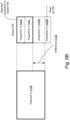
- each normalized transaction record 200 may include the source account identifier 210, the destination account identifier 220, the asset identifier 230, the transaction amount 240, and a timestamp 250.
- the transaction amount 240 may be represented by a positive value of an acquisition transaction or a negative value for a disposal transaction.
- the transaction record 200 may include various other fields 260, such as one or more sub-account identifiers and/or other transaction attributes.
- transaction pre-processing may further involve validating and normalizing asset identifiers (e.g., by comparing an asset identifier specified by a transaction record to a dictionary of asset identifiers).
- transaction pre-processing may further involve validating and/or modifying various other transaction record fields (e.g., comparing a sub-account identifier to a set of sub-accounts defined by a relevant chart of accounts or assigning a sub-account identifier by applying a rule processing one or more transaction attributes specified by certain transaction record fields).
- the normalized atomic transaction records 130 may be stored in one or more files residing in a volatile and/or non-volatile memory. The operations of receiving and processing the raw transaction records may be repeated periodically or may be triggered by certain events.
- the transaction processing engine 120 may further assign each normalized atomic transaction 130 to one or more accounting perimeters 140A-140N.
- An accounting perimeter may be defined by a set of rules, such that each rule compares the values of certain transaction record fields (e.g., account identifiers, sub-account identifiers, and/or other transaction attributes) to one or more predetermined values, and produces identifiers of one or more accounting perimeters to which the transaction should be assigned.
- the accounting perimeters may intersect and/or may be fully nested one into another. In the illustrative example of Fig.
- the outer accounting perimeter 300 corresponds to all cryptocurrency trading accounts held by a customer on one or more cryptocurrency trading platforms, and thus is formed by a union of accounting perimeters 310A-310F, each of which corresponds to a certain cryptocurrency trading account held by the customer.
- the accounting perimeter 320 corresponds to a certain subaccount of the cryptocurrency trading account forming the accounting perimeter 310B, and thus is fully nested into the accounting perimeter 310B.
- the accounting perimeter 330 corresponds to certain transactions performed by the cryptocurrency trading accounts forming the accounting perimeters 310D and 310E, and thus partially intersects with each of the accounting perimeters 310D and 310E.
- a single transaction may be assigned to each of those perimeters.
- the transaction 340A transfers assets from the cryptocurrency trading account forming the accounting perimeter 310A to an external account outside of the outer accounting perimeter 300, and thus will be assigned to the outer accounting perimeter 300 and the nested accounting perimeter 310A.
- the transaction 340B transfers assets from the cryptocurrency trading account forming the accounting perimeter 310B to the cryptocurrency trading account forming the accounting perimeter 310A, and thus will be assigned to the accounting perimeters 310A and 310B.
- the transaction 340C transfers assets from the cryptocurrency trading account forming the accounting perimeter 320 to the cryptocurrency trading account forming the accounting perimeter 310A, and thus will be assigned to the accounting perimeters 310A, 310B, and 320.
- the transaction 340D transfers assets from the cryptocurrency trading account forming the accounting perimeter 310E to the cryptocurrency trading account forming the accounting perimeter 310D, and thus will be assigned to the accounting perimeters 310D and 310E, but will not be assigned to the accounting perimeter 330, since the accounting perimeter 330 encompasses the source and destination of the transaction 340D.
- the transaction 340E transfers assets from the cryptocurrency trading account forming the accounting perimeter 310E to the cryptocurrency trading account forming the accounting perimeter 330, and thus will be assigned to the accounting perimeters 310E and 330.
- the transaction 340F transfers assets from the cryptocurrency trading account forming the accounting perimeter 330 to the cryptocurrency trading account forming the accounting perimeter 310D, and thus will be assigned to the accounting perimeters 310D and 330.
- the transaction 340G transfers assets from the cryptocurrency trading account forming the accounting perimeter 310E to the cryptocurrency trading account forming the accounting perimeter 330, and thus will be assigned to the accounting perimeters 310D, 310E, and 330.
- the transaction amount will be positive for the accounting perimeter(s) which are formed by accounts (subaccounts) being the destination of the transaction. Conversely, the transaction amount will be negative for the accounting perimeter(s) which are formed by accounts (subaccounts) being the source of the transaction.
- the transaction processing engine 120 may associate the transactions with two or more accounting periods of a predetermined duration.
- a given accounting period duration e.g., one month, one quarter, one year, etc.
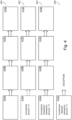
- the set of transactions related to a certain asset and associated with a certain accounting perimeter may be split into a sequence 400 of buckets 410A-410N, such that each bucket would held a subset of transactions that were in a corresponding accounting period.
- multiple sequences of buckets may be created, such that each sequence would include buckets corresponding to a certain accounting period duration. Accordingly, a separate sequence of buckets would be created for each combination of asset identifier, perimeter identifier, and accounting period duration.
- the transactions within each sequence of buckets may then be processed by a transaction matching engine 160, which would, for each bucket, match one or more acquisition transactions to each disposal transaction.
- the transaction matching engine 160 may be implemented by one or more software modules running in one or more dedicated virtual or physical execution environments (e.g., virtual or physical servers) or collocated with other servers or applications.
- disposal transactions may represent taxable events (i.e., gain or loss may be realized as the result of disposing of previously acquired cryptocurrency assets)
- a disposal transaction may only be matched with one or more acquisition transactions which occurred before the disposal transaction, unless the disposal transaction is a margin trade transaction or the underlying asset is a certain type of derivative asset (e.g., an option or futures contract).
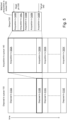
- the transaction matching engine 160 may traverse the disposal transaction queue 150 starting from the least recent transactions, and for each disposal transaction 510 (e.g., for disposal transaction 510B) may select a subset of acquisition transactions 550A-550N from the acquisition transaction queue 140, such that the timestamp of each identified acquisition transaction 550A-550N is less than the timestamp of the currently selected disposal transaction 510B.
- the transaction queues 140 and 150 may be implemented by a data structure implementing the priority queue abstract data type.
- a priority queue is a list of elements, each of which has a "priority" value associated with it, such that an element with a higher priority would be retrieved before an element with a lower priority.
- the priority queue abstract data type may be implemented by a heap, which is a tree-based data structure, in which the priority value of the parent node P is greater than or equal (or less than or equal, depending upon a particular implementation) than the priority value of the node C which is a child of the node P. Thus, the highest (or lowest) priority element is always stored at the root of the heap. Accordingly, the transaction queues 140 and 150 may be implemented by a heap, in which the priorities of elements are represented by their respective timestamps.
- the transaction matching engine 160 may traverse the acquisition queue 140 starting from the least recent transactions until an acquisition transaction 550X is identified, such that the timestamp of the acquisition transaction 550X exceeds or is equal to the timestamp of the currently selected disposal transaction 510B. Accordingly, all the acquisition transactions 550A-550N in the acquisition queue 140, starting from the least recent transaction 550A and including the transaction 550N which precedes the identified transaction 550X (whose timestamp exceeds or is equal to the timestamp of the currently selected disposal transaction 510B), may be considered as the candidate acquisition transactions for matching with the currently selected disposal transaction 510B.
- the transaction matching engine 160 may append the identified acquisition transactions 550A-550N to a double-ended queue (deque) 530 which may reside in the random access memory (RAM) of the computer system running the transaction matching engine 160, thus creating acquisition transactions 540K-540R in the deque 530.
- deque double-ended queue
- a doubly linked list also referred to as "double-linked list”
- a priority queue e.g., a heap
- each list element includes a reference (e.g., a pointer, an address offset or an index into the array implementing the list) to the next element of the list and a reference to the previous element of the list.
- the deque 530 may be represented by a queue, to/from which the elements may be added/removed from either the head or the tail of the queue.
- the deque 530 may preserve the sorting order of the acquisition queue 140, i.e., may store the acquisition transactions sorted in the ascending order of their timestamps.
- the transaction matching process may thus involve initializing with zero value the running total amount of matched acquisition transactions and traversing the deque 530 in order to identify one or more full or partial acquisitions transactions such that their total amount would be equal to the amount of the currently selected disposal transaction 510B.
- the relevant accounting rule may prescribe selecting the most recent acquisition transaction first for matching with a given disposal transaction (i.e., last in - first out (LIFO) matching rule). Accordingly, the transaction matching engine 160 may traverse the deque 530 starting from its tail 540.
- LIFO last in - first out
- the relevant accounting rule may prescribe selecting the least recent acquisition transaction first for matching with a given disposal transaction (i.e., first in - first out (FIFO) matching rule). Accordingly, the transaction matching engine 160 may traverse the deque 530 starting from its head 550.
- a given disposal transaction i.e., first in - first out (FIFO) matching rule
- Traversing the deque 530 may involve selecting, according to the traversal order, the next available acquisition transaction 540M and comparing the amount of the currently selected acquisition transaction 540M to the difference between the amount of the currently selected disposal transaction 510B and the running total amount of matched acquisition transactions 540K-540L.
- the transaction 540M is added to the subset 550 of matched acquisition transactions. Accordingly, the amount of the currently selected acquisition transaction 540M is added to the running total amount of matched acquisition transactions 540K-540L.
- the currently selected acquisition transaction 540M is removed from the deque 530, and the head pointer 550 is advanced to point to the transaction that follows the transaction 540M in the deque 530.
- the current acquisition transaction pointer in the deque 530 is advanced to point to the next acquisition transaction, and the next matching iteration is performed for the next acquisition transaction. Otherwise, should performing the matching operation set the running total amount of matched acquisition transactions 540K-540M equal to the amount of the currently selected disposal transaction 510B, the current transaction pointer in the disposal queue 150 is advanced to point to the next disposal transaction 510C, and the matching operations are performed for the next disposal transaction 510C.
- the amount of transaction 540M is reduced by is split into two parts, such that the amount of the first part is equal to the difference 310B between the amount of the currently selected disposal transaction 510B and the running total amount of matched acquisition transactions 540K-540L, while the amount of the second part is equal to the remainder of the initial amount of the transaction 540M.
- the amount of the first part of the transaction 540M is added to the running total amount of matched acquisition transactions 540K-540L, the amount of the currently selected acquisition transaction 540M is reduced by the difference between the amount of the currently selected disposal transaction 510B and the running total amount of matched acquisition transactions 540K-540L.
- the modified transaction 540M* is left in the deque 530, and the head pointer 550 is advanced to point to the modified transaction 540M*.
- the next acquisition transaction 520N is selected from the data structure storing the unmatched acquisition transactions, and the next matching iteration is performed for the next acquisition transaction.
- the matching operation should performing the matching operation set the running total amount of matched acquisition transactions 540K-540M equal to the amount of the currently selected disposal transaction 510B, the next disposal transaction is selected for matching, and the matching operations are performed for the newly selected disposal transaction, until all disposal transaction in the current bucket are processed.
- the outcome (a) is schematically illustrated by the sequence 402.
- the outcome (b) indicates that all disposal transactions from the current transaction bucket have been fully processed. The remaining acquisition transactions may be appended to the next transaction bucket to be processed by the transaction matching engine 160. Referring again to Fig. 4 , the outcome (a) is schematically illustrated by the sequence 404.
- the outcome (c) indicates that the current transaction bucket contains incorrect or incomplete transaction data, since all disposal transactions should be matched with one or more acquisition transactions which occurred before the disposal transaction, unless the disposal transaction is a margin trade transaction or the underlying asset is a certain type of derivative asset (e.g., an option or futures contract). Therefore, the presence of unmatched disposal transactions while all acquisition transactions of the transaction bucket have been matched indicates that the current transaction bucket contains incorrect (incorrect amounts of one or more transactions) or incomplete (e.g., missing acquisition transactions) transaction data.
- the outcome (a) is schematically illustrated by the sequence 406.
- the transaction processing engine may throw an exception, which may be processed in a variety of ways.
- an error message may be displayed via a graphical user interface (GUI) and/or logged, by which the user may be prompted to verify and adjust the transaction data in the current transaction bucket.
- GUI graphical user interface
- a message may be sent to the transaction processing engine 120 prompting it to repeat the raw data retrieval and processing for the current transaction bucket.
- the transaction matching engine 160 may repeat processing of the current transaction bucket.
- the transaction matching engine 160 may select the next transaction bucket from the sequence of transaction buckets that is currently being processed, and repeat the above-described transaction matching operations for the newly selected transaction bucket.
- the gain or loss may be computed by the gain/loss computation engine 170, which may be implemented by one or more software modules running in one or more dedicated virtual or physical execution environments (e.g., virtual or physical servers) or collocated with other components of the system.
- the gain/loss computation may involve determining, for each of the matched disposal and acquisition transactions, the transaction amount in a chosen fiat currency (e.g., U.S. dollars) based on the historic price of the cryptocurrency which has been acquired or disposed by the transaction.
- a chosen fiat currency e.g., U.S. dollars
- the gain/loss computation engine 170 may compute, for each disposal transaction and the matched acquisition transactions, the resulting gain or loss, by summing up the fiat currency amount of the disposal transaction and the fiat currency amounts of the matched acquisition transactions, such that a positive result would indicate a gain while a negative result would indicate a loss (assuming that the disposal transaction amount is positive, while acquisition transaction amounts are negative).
- the computed gains or losses for the matched transactions, as well as other relevant data, may be summarized in one or more reports of various fixed or user-defined formats.
- the reports may be visually rendered via a graphical user interface (GUI), saved to one or more files, and/or printed.
- GUI graphical user interface
- the reports may be formatted for rendering via a GUI of a portable computing device (such as a smartphone or a tablet).
- the computing system 100 may utilize the computed gain or losses, as well as other relevant data, for producing one or more electronic tax accounting forms, which may be reviewed and electronically signed by the user.
- the computing system 100 may upload the electronic tax accounting forms to a server of a government agency which is authorized to accept electronic tax form filings.
- Figs. 7A-7B depict a flow diagram of an example method 700 of gain and loss computation for cryptocurrency transactions, in accordance with one or more aspects of the present disclosure.
- Method 700 and/or each of its individual functions, routines, subroutines, or operations may be performed by one or more processors of a computing system (e.g., the example computing system 500 of Fig. 5 ) implementing the method.
- method 700 may be performed by a single processing thread.
- method 700 may be performed by two or more processing threads, each thread executing one or more individual functions, routines, subroutines, or operations of the method.
- the processing threads implementing method 700 may be synchronized (e.g., using semaphores, critical sections, and/or other thread synchronization mechanisms). Alternatively, the processing threads implementing method 700 may be executed asynchronously with respect to each other.
- the computing system implementing the method may receive a plurality of cryptocurrency transaction records related to cryptocurrency trades and transfers performed by a single person (e.g., a natural person or a corporation) via one or more cryptocurrency accounts associated with one or more cryptocurrency exchanges and/or other organizations that perform cryptocurrency transactions.
- the computing system may translate the received raw transaction records into a set of normalized atomic transaction records conforming to a predetermined format optimized for subsequent processing.
- each atomic transaction record would include the source account identifier, the destination account identifier, the asset identifier, the transaction amount (e.g., represented by a positive value of an acquisition transaction and a negative value for a disposal transaction), and a timestamp, as described in more detail herein above.
- the computing system may assign each normalized transaction to one or more accounting perimeters associated with one or more cryptocurrency trading accounts of a customer (e.g., represented a single person (e.g., a natural person or a corporation) or an affiliated group of persons).
- An accounting perimeter may be defined by a set of rules, such that each rule compares the values of certain transaction record fields (e.g., account identifiers, sub-account identifiers, and/or other transaction attributes) to one or more predetermined values, and produces identifiers of one or more accounting perimeters to which the transaction should be assigned, as described in more detail herein above.
- the computing system may assign each transaction of the currently selected transaction perimeter to a transaction bucket, such that the transaction timestamp would fall within the accounting period identified by the bucket start time and the bucket end time, as described in more detail herein above.
- the computing system may iterate over the sequence of transaction buckets of a given transaction perimeter.
- the computing system may select, from the currently selected transaction bucket, the next unprocessed cryptocurrency disposal transaction.
- the computing system may select, from the currently selected transaction bucket, one or more cryptocurrency acquisition transactions, such that the timestamp of each selected cryptocurrency acquisition transaction is less than the timestamp of the currently selected cryptocurrency disposal transaction, as described in more detail herein above.
- the computing system may match the currently selected cryptocurrency disposal transaction with at least a subset of the selected cryptocurrency acquisition transactions, as described in more detail herein below with references to Fig. 8 .
- the computing system may, at block 745, throw an exception, which may be processed in a variety of ways.
- an error message may be displayed via a GUI and/or logged, by which the user may be prompted to verify and adjust the transaction data in the current transaction bucket.
- a message may be sent to the transaction processing engine prompting it to repeat the raw data retrieval and processing for the current transaction bucket, as described in more detail herein above.
- the processing may continue at block 755; otherwise, the method may branch to block 760.
- the processing may continue at block 770 of Fig. 7B ; otherwise, the method may loop back to block 725.
- the computing system may determine, for each of the matched transactions, a corresponding fiat currency transaction amount, based on the historic price of the cryptocurrency which has been acquired or disposed by the respective transaction, as described in more detail herein above.
- the computing system may compute, based on the determined fiat currency transaction amounts, the gain or loss associated with the currently selected cryptocurrency disposal transaction.
- Fig. 8 depicts a flow diagram of an example method 800 of disposal and acquisition transaction matching, in accordance with one or more aspects of the present disclosure.
- Method 800 and/or each of its individual functions, routines, subroutines, or operations may be performed by one or more processors of a computing system (e.g., the example computing system 500 of Fig. 5 ) implementing the method.
- method 800 may be performed by a single processing thread.
- method 800 may be performed by two or more processing threads, each thread executing one or more individual functions, routines, subroutines, or operations of the method.
- the processing threads implementing method 800 may be synchronized (e.g., using semaphores, critical sections, and/or other thread synchronization mechanisms). Alternatively, the processing threads implementing method 800 may be executed asynchronously with respect to each other.
- the computing system implementing the method may select, from a disposal transaction queue or other suitable data structure, the next unprocessed disposal transaction.
- the computing system implementing the method may, for the currently selected disposal transaction, select a subset of acquisition transactions from the acquisition transaction queue, such that the timestamp of each identified acquisition transaction is less than the timestamp of the currently selected disposal transaction.
- the selected subset of cryptocurrency acquisition transactions may be stored in a queue, linked list, or other suitable memory data structure in the ascending order of the respective transaction timestamps.
- the computing system may initialize with zero value the running total amount of matched cryptocurrency acquisition transactions.
- the computing system may select the next available acquisition transaction, by traversing, in the direction defined by the applicable accounting rule (FIFO or LIFO), the data structure storing the selected subset of cryptocurrency acquisition transactions.
- FIFO applicable accounting rule
- the computing system may, at block 835, add the amount of the selected cryptocurrency acquisition transaction to the running total amount of matched cryptocurrency acquisition transactions; otherwise, the processing may continue at block 855.
- the computing system may remove the currently selected cryptocurrency acquisition transaction from the data structure storing the selected subset of cryptocurrency acquisition transactions.
- the computing system may, at block 850, advance the pointer referencing the next available cryptocurrency acquisition transaction in the data structure storing the selected subset of cryptocurrency acquisition transactions, and the method may loop back to 825.
- the computing system may, at block 855, reduce the amount of the selected cryptocurrency acquisition transaction by the difference between the amount of the selected cryptocurrency disposal transaction and the running total amount of matched cryptocurrency acquisition transactions.
- the computing system may advance the pointer referencing the next available cryptocurrency disposal transaction in the cryptocurrency disposal transaction queue, and the method may loop back to 810.
- Fig. 9 depicts a component diagram of an example computing system which may be employed for implementing the methods described herein.
- the computing system 900 may be connected to other computing system in a LAN, an intranet, an extranet, or the Internet.
- the computing system 900 may operate in the capacity of a server or a client computing system in client-server network environment, or as a peer computing system in a peer-to-peer (or distributed) network environment.
- the computing system 900 may be a provided by a personal computer (PC), a tablet PC, a set-top box (STB), a Personal Digital Assistant (PDA), a cellular telephone, or any computing system capable of executing a set of instructions (sequential or otherwise) that specify operations to be performed by that computing system.
- PC personal computer
- PDA Personal Digital Assistant
- STB set-top box
- a cellular telephone or any computing system capable of executing a set of instructions (sequential or otherwise) that specify operations to be performed by that computing system.
- Exemplary computing system 900 includes a processor 902, a main memory 904 (e.g., read-only memory (ROM) or dynamic random access memory (DRAM)), and a data storage device 918, which communicate with each other via a bus 930.
- main memory 904 e.g., read-only memory (ROM) or dynamic random access memory (DRAM)
- DRAM dynamic random access memory
- Processor 902 may be represented by one or more general-purpose processing devices such as a microprocessor, central processing unit, or the like. More particularly, processor 902 may be a complex instruction set computing (CISC) microprocessor, reduced instruction set computing (RISC) microprocessor, very long instruction word (VLIW) microprocessor, or a processor implementing other instruction sets or processors implementing a combination of instruction sets. Processor 902 may also be one or more special-purpose processing devices such as an application specific integrated circuit (ASIC), a field programmable gate array (FPGA), a digital signal processor (DSP), network processor, or the like. Processor 902 is configured to execute instructions 926 for performing the methods described herein.
- ASIC application specific integrated circuit
- FPGA field programmable gate array
- DSP digital signal processor
- Computing system 900 may further include a network interface device 922, a video display unit 910, a character input device 912 (e.g., a keyboard), and a touch screen input device 914.
- a network interface device 922 may further include a network interface device 922, a video display unit 910, a character input device 912 (e.g., a keyboard), and a touch screen input device 914.
- a character input device 912 e.g., a keyboard
- touch screen input device 914 e.g., a touch screen input device
- Data storage device 919 may include a computer-readable storage medium 924 on which is stored one or more sets of instructions 926 embodying any one or more of the methods or functions described herein. Instructions 926 may also reside, completely or at least partially, within main memory 904 and/or within processor 902 during execution thereof by computing system 900, main memory 904 and processor 902 also constituting computer-readable storage media. Instructions 926 may further be transmitted or received over network 916 via network interface device 922.
- instructions 926 may include instructions of methods 700, 800 of gain and loss computation for cryptocurrency transactions, implemented in accordance with one or more aspects of the present disclosure.
- computer-readable storage medium 924 is shown in the example of Fig. 9 to be a single medium, the term “computer-readable storage medium” should be taken to include a single medium or multiple media (e.g., a centralized or distributed database, and/or associated caches and servers) that store the one or more sets of instructions.
- the term “computer-readable storage medium” shall also be taken to include any medium that is capable of storing, encoding or carrying a set of instructions for execution by the machine and that cause the machine to perform any one or more of the methods of the present disclosure.
- the term “computer-readable storage medium” shall accordingly be taken to include, but not be limited to, solid-state memories, optical media, and magnetic media.
- the present disclosure also relates to an apparatus for performing the operations herein.
- This apparatus may be specially constructed for the required purposes, or it may comprise a general purpose computer selectively activated or reconfigured by a computer program stored in the computer.
- a computer program may be stored in a computer readable storage medium, such as, but not limited to, any type of disk including floppy disks, optical disks, CD-ROMs, and magnetic-optical disks, read-only memories (ROMs), random access memories (RAMs), EPROMs, EEPROMs, magnetic or optical cards, or any type of media suitable for storing electronic instructions.
Landscapes
- Business, Economics & Management (AREA)
- Engineering & Computer Science (AREA)
- Accounting & Taxation (AREA)
- Finance (AREA)
- Theoretical Computer Science (AREA)
- General Physics & Mathematics (AREA)
- Physics & Mathematics (AREA)
- General Business, Economics & Management (AREA)
- Strategic Management (AREA)
- Development Economics (AREA)
- Marketing (AREA)
- Economics (AREA)
- Technology Law (AREA)
- General Engineering & Computer Science (AREA)
- Computer Networks & Wireless Communication (AREA)
- Game Theory and Decision Science (AREA)
- Operations Research (AREA)
- Human Resources & Organizations (AREA)
- Entrepreneurship & Innovation (AREA)
- Computational Mathematics (AREA)
- Mathematical Analysis (AREA)
- Mathematical Optimization (AREA)
- Pure & Applied Mathematics (AREA)
- Financial Or Insurance-Related Operations Such As Payment And Settlement (AREA)
Claims (14)
- Verfahren, das Folgendes umfasst:Identifizieren einer Vielzahl von Kryptowährungshandelstransaktionen, die mit einem Buchführungsumfang von einer Vielzahl von Buchführungsumfängen verknüpft sind, die mit einem oder mehreren Kryptowährungshandelskonten verknüpft sind, wobei jede Kryptowährungshandelstransaktion von der Vielzahl von Kryptowährungshandelstransaktionen durch eines von Folgendem dargestellt wird: eine Kryptowährungserwerbstransaktion oder eine Kryptowährungsveräußerungstransaktion,für einen gegebenen Buchführungsumfang Zuweisen jeder Kryptowährungshandelstransaktion, die mit dem Buchführungsumfang verknüpft ist, zu einem Transaktionsbereich von einer Folge von Transaktionsbereichen, die mit dem Buchführungsumfang verknüpft sind, wobei jeder Transaktionsbereich durch einen Startzeitpunkt und einen Endzeitpunkt identifiziert wird und wobei ein Transaktionsbereich der Folge von Transaktionsbereichen zum Zuweisen einer Kryptowährungshandelstransaktion von der Vielzahl von Kryptowährungshandelstransaktionen zu dem Transaktionsbereich auf Grundlage eines Zeitstempels der Kryptowährungshandelstransaktion derart ausgewählt wird, dass der Zeitstempel zwischen den Startzeitpunkt und den Endzeitpunkt des Transaktionsbereichs fällt,für jeden Transaktionsbereich Abgleichen jeder Kryptowährungsveräußerungstransaktion, die mit einem gegebenen Transaktionsbereich verknüpft ist, mit mindestens einer Teilmenge einer Vielzahl von Kryptowährungserwerbstransaktionen, die mit dem gegebenen Transaktionsbereich verknüpft sind, wobei das Abgleichen Folgendes umfasst:Durchlaufen einer Erwerbstransaktionswarteschlange, beginnend von einer ältesten Kryptowährungserwerbstransaktion, die mit dem gegebenen Transaktionsbereich verknüpft ist, bis eine Kryptowährungserwerbstransaktion identifiziert wird, die einen Zeitstempel aufweist, der einen Zeitstempel einer gegenwärtig ausgewählten Kryptowährungsveräußerungstransaktion, die mit dem gegebenen Transaktionsbereich verknüpft ist, überschreitet oder demselben gleich ist,Auswählen, aus der Vielzahl von Kryptowährungserwerbstransaktionen, die mit dem gegebenen Transaktionsbereich verknüpft sind, einer oder mehrerer Kryptowährungserwerbstransaktionen, beginnend von der ältesten Kryptowährungserwerbstransaktion und einschließlich einer Kryptowährungserwerbstransaktion, die der identifizierten Kryptowährungserwerbstransaktion vorausgeht,Speichern, in einer doppelendigen Warteschlange, der ausgewählten einen oder mehreren Kryptowährungserwerbstransaktionen,Auswählen einer Kryptowährungserwerbstransaktion von der einen oder den mehreren Kryptowährungserwerbstransaktionen durch Durchlaufen der doppelendigen Warteschlange in einer Richtung, die durch eine anwendbare Buchführungsregel definiert wird,als Reaktion auf ein Feststellen, dass ein Betrag der ausgewählten Kryptowährungserwerbstransaktion geringer als oder so groß wie eine Differenz zwischen einem Betrag der gegenwärtig ausgewählten Kryptowährungsveräußerungstransaktion und einem laufenden Gesamtbetrag von abgeglichenen Kryptowährungserwerbstransaktionen ist, Addieren des Betrages der ausgewählten Kryptowährungserwerbstransaktion zu dem laufenden Gesamtbetrag von abgeglichenen Kryptowährungserwerbstransaktionen,Bestimmen, für jede der abgeglichenen Transaktionen, eines entsprechenden Fiatwährungstransaktionsbetrages undBerechnen, unter Verwendung der Fiatwährungstransaktionsbeträge, eines von Folgendem: eines Gewinns, der mit der Kryptowährungsveräußerungstransaktion verknüpft ist, oder eines Verlusts, der mit der Kryptowährungsveräußerungstransaktion verknüpft ist.
- Verfahren nach Anspruch 1, wobei das Identifizieren der Vielzahl von Kryptowährungshandelstransaktionen, die mit dem Buchführungsumfang verknüpft sind, ferner Folgendes umfasst:
Anwenden einer oder mehrerer Umfangsdefinitionsregeln auf einen normalisierten Transaktionssatz. - Verfahren nach Anspruch 2, wobei jede Umfangsdefinitionsregel durch Vergleichen von Werten eines oder mehrerer Felder des normalisierten Transaktionssatzes mit entsprechenden vorbestimmten Werten eine Buchführungsumfangskennung hervorbringt.
- Verfahren nach einem der vorhergehenden Ansprüche, das ferner Folgendes umfasst:
als Reaktion auf ein Feststellen, dass alle Kryptowährungserwerbstransaktionen des Transaktionsbereichs mit Kryptowährungsveräußerungstransaktionen abgeglichen worden sind und dass keine Kryptowährungsveräußerungstransaktionen in dem Transaktionsbereich übriggelassen worden sind, Auswählen eines nachfolgenden Transaktionsbereichs aus der Folge von Transaktionsbereichen. - Verfahren nach einem der vorhergehenden Ansprüche, das ferner Folgendes umfasst:
als Reaktion auf das Feststellen, dass mindestens eine Kryptowährungserwerbstransaktion des Transaktionsbereichs nicht vollständig mit Kryptowährungsveräußerungstransaktionen abgeglichen worden ist und dass keine Kryptowährungsveräußerungstransaktion in dem Transaktionsbereich übriggelassen worden sind, Hinzufügen eines nicht abgeglichenen Betrages der mindestens einen Kryptowährungserwerbstransaktion zu einem nachfolgenden Transaktionsbereich aus der Folge von Transaktionsbereichen. - Verfahren nach einem der vorhergehenden Ansprüche, das ferner Folgendes umfasst:
als Reaktion auf das Feststellen, dass mindestens eine Kryptowährungsveräußerungstransaktionen des Transaktionsbereichs nicht vollständig mit Kryptowährungserwerbstransaktionen abgeglichen worden ist, Auslösen einer Ausnahme. - Verfahren nach einem der vorhergehenden Ansprüche, das ferner Folgendes umfasst:
als Reaktion auf das Feststellen, dass der Betrag der Kryptowährungsveräußerungstransaktion den laufenden Gesamtbetrag von abgeglichenen Kryptowährungserwerbstransaktionen überschreitet, Auswählen einer nächsten Kryptowährungserwerbstransaktion von der Vielzahl von Kryptowährungserwerbstransaktionen. - Verfahren nach einem der vorhergehenden Ansprüche, das ferner Folgendes umfasst:
als Reaktion auf das Feststellen, dass ein Betrag der ausgewählten Kryptowährungserwerbstransaktion die Differenz zwischen dem Betrag der Kryptowährungsveräußerungstransaktion und dem laufenden Gesamtbetrag von abgeglichenen Kryptowährungserwerbstransaktionen überschreitet, Verringern des Betrages der ausgewählten Kryptowährungserwerbstransaktion um die Differenz zwischen dem Betrag der gegenwärtig ausgewählten Kryptowährungsveräußerungstransaktion und dem laufenden Gesamtbetrag von abgeglichenen Kryptowährungserwerbstransaktionen. - Verfahren nach einem der vorhergehenden Ansprüche, wobei der Fiatwährungstransaktionsbetrag auf einem Fiatwährungspreis einer durch die Transaktion identifizierten Kryptowährung beruht, wobei der Fiatwährungspreis zu einem durch einen Zeitstempel der Transaktion identifizierten Zeitpunkt gültig war.
- Verfahren nach einem der vorhergehenden Ansprüche, das ferner Folgendes umfasst:Erzeugen eines elektronischen Steuerbuchführungsformulars, das eines von Folgenden wiederspiegelt: den Gewinn, der mit der Kryptowährungsveräußerungstransaktion verknüpft ist, oder den Verlust, der mit der Kryptowährungsveräußerungstransaktion verknüpft ist,als Reaktion auf ein Empfangen, über eine graphische Benutzerschnittstelle, einer Bestätigung des elektronischen Steuerbuchführungsformulars digitales Unterzeichnen des elektronischen Steuerbuchführungsformulars undHochladen des elektronischen Steuerbuchführungsformulars auf einen Server, der berechtigt ist, elektronische Steuerformulareinreichungen anzunehmen.
- Verfahren nach einem der vorhergehenden Ansprüche, wobei das Verfahren durch zwei oder mehr Verarbeitungsstränge durchgeführt wird, wobei jeder Strang eine oder mehrere einzelne Operationen des Verfahrens ausführt.
- Datenverarbeitungssystem, das Mittel zum Durchführen des Verfahrens nach einem der vorhergehenden Ansprüche umfasst.
- Computerprogrammprodukt, das Anweisungen umfasst, die, wenn das Programm durch einen Rechner ausgeführt wird, veranlassen, dass der Rechner das Verfahren nach einem der Ansprüche 1 bis 11 durchführt.
- Rechnerlesbares Speichermedium, das Anweisungen umfasst, die, wenn sie durch einen Rechner ausgeführt werden, veranlassen, dass der Rechner das Verfahren nach einem der Ansprüche 1 bis 11 durchführt.
Applications Claiming Priority (4)
| Application Number | Priority Date | Filing Date | Title |
|---|---|---|---|
| US201862782605P | 2018-12-20 | 2018-12-20 | |
| US16/544,576 US12014360B2 (en) | 2018-12-20 | 2019-08-19 | Gain and loss computation for cryptocurrency transactions |
| US16/544,555 US20210056549A1 (en) | 2019-08-19 | 2019-08-19 | Gain and loss computation for cryptocurrency transactions |
| PCT/US2019/067616 WO2020132330A1 (en) | 2018-12-20 | 2019-12-19 | Gain and loss computation for cryptocurrency transactions |
Publications (4)
| Publication Number | Publication Date |
|---|---|
| EP3899713A1 EP3899713A1 (de) | 2021-10-27 |
| EP3899713A4 EP3899713A4 (de) | 2022-09-07 |
| EP3899713C0 EP3899713C0 (de) | 2025-03-12 |
| EP3899713B1 true EP3899713B1 (de) | 2025-03-12 |
Family
ID=71100929
Family Applications (1)
| Application Number | Title | Priority Date | Filing Date |
|---|---|---|---|
| EP19899125.9A Active EP3899713B1 (de) | 2018-12-20 | 2019-12-19 | Gewinn- und verlustberechnung für kryptowährungstransaktionen |
Country Status (8)
| Country | Link |
|---|---|
| EP (1) | EP3899713B1 (de) |
| JP (2) | JP7373142B2 (de) |
| KR (1) | KR102785127B1 (de) |
| AU (1) | AU2019404304B2 (de) |
| CA (1) | CA3124470A1 (de) |
| PL (1) | PL3899713T3 (de) |
| SG (1) | SG11202106427TA (de) |
| WO (1) | WO2020132330A1 (de) |
Families Citing this family (3)
| Publication number | Priority date | Publication date | Assignee | Title |
|---|---|---|---|---|
| US20200143354A1 (en) * | 2018-11-05 | 2020-05-07 | Arknet, Inc. | Exploitation of augmented reality and cryptotoken economics in an information-centric network of smartphone users and other imaging cyborgs |
| KR20240120621A (ko) * | 2023-01-31 | 2024-08-07 | 주식회사 모노플로우 | 미실현손해를 기초로 하는 가상자산 소득금액에 대한 세액 절세 방법, 장치 및 시스템 |
| JP7471501B1 (ja) | 2023-09-28 | 2024-04-19 | Kddi株式会社 | 情報処理装置及び情報処理方法 |
Family Cites Families (17)
| Publication number | Priority date | Publication date | Assignee | Title |
|---|---|---|---|---|
| US20140180883A1 (en) * | 2000-04-26 | 2014-06-26 | Accenture Llp | System, method and article of manufacture for providing tax services in a network-based tax architecture |
| JP2004213283A (ja) | 2002-12-27 | 2004-07-29 | Daiwa Securities Group Inc | 繰越処理装置、繰越処理方法及び繰越処理用プログラム |
| US20040167824A1 (en) * | 2003-02-25 | 2004-08-26 | Tullett Liberty Inc. | Match-and-swap marketplace |
| WO2006063086A2 (en) * | 2004-12-08 | 2006-06-15 | De La Motte Alain L | System & method for the creation of a global secure computerized electronic market-making exchange for currency yields arbitrage |
| JP4904394B2 (ja) | 2006-05-26 | 2012-03-28 | テルコーディア ライセンシング カンパニー, リミテッド ライアビリティ カンパニー | 通信ネットワークに対するリアルタイム課金システムで実装される柔軟な評価ルールおよびカレンダルール |
| CN101236621A (zh) * | 2007-02-02 | 2008-08-06 | 鸿富锦精密工业(深圳)有限公司 | 对帐系统及方法 |
| US8510263B2 (en) * | 2009-06-15 | 2013-08-13 | Verisign, Inc. | Method and system for auditing transaction data from database operations |
| US8359274B2 (en) * | 2010-06-04 | 2013-01-22 | Visa International Service Association | Systems and methods to provide messages in real-time with transaction processing |
| US20150006349A1 (en) * | 2013-06-28 | 2015-01-01 | D. E. Shaw & Co., L.P. | Electronic Trading Auction With Orders Interpreted Using Future Information |
| US11144993B2 (en) * | 2013-11-05 | 2021-10-12 | Refinitiv Us Organization Llc | Delay-free matching for deemphasizing effects of speed differentials among price-makers |
| WO2015142765A1 (en) * | 2014-03-17 | 2015-09-24 | Coinbase, Inc | Bitcoin host computer system |
| US11232521B2 (en) * | 2014-04-14 | 2022-01-25 | Lukka, Inc. | Methods, systems, and tools for providing tax related services for virtual currency holdings |
| US20170286994A1 (en) * | 2016-03-29 | 2017-10-05 | SETA International LLC | Power buy system |
| US12014283B2 (en) | 2016-10-24 | 2024-06-18 | Oracle International Corporation | Systems and methods for identifying process flows from log files and visualizing the flow |
| US20180350006A1 (en) * | 2017-06-02 | 2018-12-06 | Visa International Service Association | System, Method, and Apparatus for Self-Adaptive Scoring to Detect Misuse or Abuse of Commercial Cards |
| JP6409115B1 (ja) | 2017-12-26 | 2018-10-17 | アーバン・コーポレーション株式会社 | 自動仕訳サーバおよび自動仕訳プログラム |
| WO2021034852A1 (en) * | 2019-08-20 | 2021-02-25 | Lukka, Inc. | Cryptocurrency valuation by processing near real-time and historical data from multiple cryptocurrency exchanges |
-
2019
- 2019-12-19 KR KR1020217022366A patent/KR102785127B1/ko active Active
- 2019-12-19 PL PL19899125.9T patent/PL3899713T3/pl unknown
- 2019-12-19 CA CA3124470A patent/CA3124470A1/en active Pending
- 2019-12-19 JP JP2021536081A patent/JP7373142B2/ja active Active
- 2019-12-19 AU AU2019404304A patent/AU2019404304B2/en active Active
- 2019-12-19 SG SG11202106427TA patent/SG11202106427TA/en unknown
- 2019-12-19 WO PCT/US2019/067616 patent/WO2020132330A1/en not_active Ceased
- 2019-12-19 EP EP19899125.9A patent/EP3899713B1/de active Active
-
2023
- 2023-10-11 JP JP2023175964A patent/JP2024009924A/ja active Pending
Also Published As
| Publication number | Publication date |
|---|---|
| EP3899713C0 (de) | 2025-03-12 |
| CA3124470A1 (en) | 2020-06-25 |
| WO2020132330A1 (en) | 2020-06-25 |
| JP2024009924A (ja) | 2024-01-23 |
| KR102785127B1 (ko) | 2025-03-20 |
| SG11202106427TA (en) | 2021-07-29 |
| EP3899713A4 (de) | 2022-09-07 |
| KR20210103523A (ko) | 2021-08-23 |
| JP2022514768A (ja) | 2022-02-15 |
| AU2019404304A1 (en) | 2021-06-24 |
| AU2019404304B2 (en) | 2023-02-16 |
| PL3899713T3 (pl) | 2025-07-07 |
| EP3899713A1 (de) | 2021-10-27 |
| JP7373142B2 (ja) | 2023-11-02 |
Similar Documents
| Publication | Publication Date | Title |
|---|---|---|
| US20200279328A1 (en) | Multi-party Financial Services Agreements | |
| US20240330908A1 (en) | Gain and loss computation for cryptocurrency transactions | |
| US20210097609A1 (en) | Gain and loss computation for certain types of cryptocurrency transactions | |
| CN112258306B (zh) | 账务信息核对的方法、装置、电子设备和存储介质 | |
| EP3899713B1 (de) | Gewinn- und verlustberechnung für kryptowährungstransaktionen | |
| WO2002065365A1 (en) | Device for integrating transaction information on finantial transaction | |
| CN101777142A (zh) | 一种将企事业规章制度转换为计算机可识别程序的方法 | |
| US20090192810A1 (en) | Fraud detection system & method | |
| CN119343690A (zh) | 基于分布式分类账簿的支票验证的系统和方法 | |
| CN119338452A (zh) | 资金账户的打款审核方法、装置、设备及存储介质 | |
| Păuna | Arbitrage Trading Systems for Cryptocurrencies. Design Principles and Server Architecture. | |
| US20220318771A1 (en) | Double entry - multivariable accounting for reconciliation of bank trust accounts | |
| US20210056549A1 (en) | Gain and loss computation for cryptocurrency transactions | |
| CN110348983A (zh) | 交易信息管理方法及装置、电子设备和非暂态存储介质 | |
| WO2020132334A1 (en) | Gain and loss computation for certain types of cryptocurrency transactions | |
| CN118966156A (zh) | 账单解析方法、系统及相关产品 | |
| US20240037656A1 (en) | Market price tracking for crypto assets | |
| CN115082207A (zh) | 台账清分方法及其系统、计算机设备 | |
| CN114004412A (zh) | 基于rpa的财务数据优化方法 | |
| CN112085607A (zh) | 资源转移方法、装置和设备 | |
| CN120525650B (zh) | 一种资产账单核销管理方法、电子设备及介质 | |
| CN111125026A (zh) | 流水文件的分析处理方法、装置、设备和存储介质 | |
| US20250142004A1 (en) | Systems and methods for digital document exchange | |
| US20250252486A1 (en) | Systems and methods for eligibility-based cost models | |
| US20250005662A1 (en) | Blockchain analysis platform |
Legal Events
| Date | Code | Title | Description |
|---|---|---|---|
| STAA | Information on the status of an ep patent application or granted ep patent |
Free format text: STATUS: THE INTERNATIONAL PUBLICATION HAS BEEN MADE |
|
| PUAI | Public reference made under article 153(3) epc to a published international application that has entered the european phase |
Free format text: ORIGINAL CODE: 0009012 |
|
| STAA | Information on the status of an ep patent application or granted ep patent |
Free format text: STATUS: REQUEST FOR EXAMINATION WAS MADE |
|
| 17P | Request for examination filed |
Effective date: 20210705 |
|
| AK | Designated contracting states |
Kind code of ref document: A1 Designated state(s): AL AT BE BG CH CY CZ DE DK EE ES FI FR GB GR HR HU IE IS IT LI LT LU LV MC MK MT NL NO PL PT RO RS SE SI SK SM TR |
|
| DAV | Request for validation of the european patent (deleted) | ||
| DAX | Request for extension of the european patent (deleted) | ||
| RIN1 | Information on inventor provided before grant (corrected) |
Inventor name: ZAKHAROV, ALEXANDER Inventor name: SHTEYNBERG, VADIM |
|
| A4 | Supplementary search report drawn up and despatched |
Effective date: 20220804 |
|
| RIC1 | Information provided on ipc code assigned before grant |
Ipc: G06Q 40/00 20120101ALI20220729BHEP Ipc: G06Q 30/06 20120101ALI20220729BHEP Ipc: G06Q 30/02 20120101ALI20220729BHEP Ipc: G06Q 20/38 20120101ALI20220729BHEP Ipc: G06Q 20/06 20120101ALI20220729BHEP Ipc: G06Q 10/08 20120101ALI20220729BHEP Ipc: G06Q 10/06 20120101ALI20220729BHEP Ipc: G06F 7/08 20060101ALI20220729BHEP Ipc: G06F 7/02 20060101AFI20220729BHEP |
|
| REG | Reference to a national code |
Ref legal event code: R079 Free format text: PREVIOUS MAIN CLASS: G06F0007020000 Ref country code: DE Ref legal event code: R079 Ref document number: 602019067331 Country of ref document: DE Free format text: PREVIOUS MAIN CLASS: G06F0007020000 Ipc: G06Q0020060000 |
|
| RIC1 | Information provided on ipc code assigned before grant |
Ipc: G06F 7/08 20060101ALI20240828BHEP Ipc: G06F 7/02 20060101ALI20240828BHEP Ipc: G06Q 40/10 20230101ALI20240828BHEP Ipc: G06Q 40/06 20120101ALI20240828BHEP Ipc: G06Q 40/04 20120101ALI20240828BHEP Ipc: G06Q 20/36 20120101ALI20240828BHEP Ipc: G06Q 20/06 20120101AFI20240828BHEP |
|
| GRAP | Despatch of communication of intention to grant a patent |
Free format text: ORIGINAL CODE: EPIDOSNIGR1 |
|
| STAA | Information on the status of an ep patent application or granted ep patent |
Free format text: STATUS: GRANT OF PATENT IS INTENDED |
|
| INTG | Intention to grant announced |
Effective date: 20241004 |
|
| GRAS | Grant fee paid |
Free format text: ORIGINAL CODE: EPIDOSNIGR3 |
|
| GRAA | (expected) grant |
Free format text: ORIGINAL CODE: 0009210 |
|
| STAA | Information on the status of an ep patent application or granted ep patent |
Free format text: STATUS: THE PATENT HAS BEEN GRANTED |
|
| AK | Designated contracting states |
Kind code of ref document: B1 Designated state(s): AL AT BE BG CH CY CZ DE DK EE ES FI FR GB GR HR HU IE IS IT LI LT LU LV MC MK MT NL NO PL PT RO RS SE SI SK SM TR |
|
| REG | Reference to a national code |
Ref country code: GB Ref legal event code: FG4D |
|
| REG | Reference to a national code |
Ref country code: CH Ref legal event code: EP |
|
| REG | Reference to a national code |
Ref country code: DE Ref legal event code: R096 Ref document number: 602019067331 Country of ref document: DE |
|
| REG | Reference to a national code |
Ref country code: IE Ref legal event code: FG4D |
|
| U01 | Request for unitary effect filed |
Effective date: 20250411 |
|
| U07 | Unitary effect registered |
Designated state(s): AT BE BG DE DK EE FI FR IT LT LU LV MT NL PT RO SE SI Effective date: 20250422 |
|
| PG25 | Lapsed in a contracting state [announced via postgrant information from national office to epo] |
Ref country code: RS Free format text: LAPSE BECAUSE OF FAILURE TO SUBMIT A TRANSLATION OF THE DESCRIPTION OR TO PAY THE FEE WITHIN THE PRESCRIBED TIME-LIMIT Effective date: 20250612 |
|
| PG25 | Lapsed in a contracting state [announced via postgrant information from national office to epo] |
Ref country code: ES Free format text: LAPSE BECAUSE OF FAILURE TO SUBMIT A TRANSLATION OF THE DESCRIPTION OR TO PAY THE FEE WITHIN THE PRESCRIBED TIME-LIMIT Effective date: 20250312 |
|
| PG25 | Lapsed in a contracting state [announced via postgrant information from national office to epo] |
Ref country code: NO Free format text: LAPSE BECAUSE OF FAILURE TO SUBMIT A TRANSLATION OF THE DESCRIPTION OR TO PAY THE FEE WITHIN THE PRESCRIBED TIME-LIMIT Effective date: 20250612 |
|
| PG25 | Lapsed in a contracting state [announced via postgrant information from national office to epo] |
Ref country code: HR Free format text: LAPSE BECAUSE OF FAILURE TO SUBMIT A TRANSLATION OF THE DESCRIPTION OR TO PAY THE FEE WITHIN THE PRESCRIBED TIME-LIMIT Effective date: 20250312 |
|
| PG25 | Lapsed in a contracting state [announced via postgrant information from national office to epo] |
Ref country code: GR Free format text: LAPSE BECAUSE OF FAILURE TO SUBMIT A TRANSLATION OF THE DESCRIPTION OR TO PAY THE FEE WITHIN THE PRESCRIBED TIME-LIMIT Effective date: 20250613 |
|
| PG25 | Lapsed in a contracting state [announced via postgrant information from national office to epo] |
Ref country code: SM Free format text: LAPSE BECAUSE OF FAILURE TO SUBMIT A TRANSLATION OF THE DESCRIPTION OR TO PAY THE FEE WITHIN THE PRESCRIBED TIME-LIMIT Effective date: 20250312 |
|
| PG25 | Lapsed in a contracting state [announced via postgrant information from national office to epo] |
Ref country code: CZ Free format text: LAPSE BECAUSE OF FAILURE TO SUBMIT A TRANSLATION OF THE DESCRIPTION OR TO PAY THE FEE WITHIN THE PRESCRIBED TIME-LIMIT Effective date: 20250312 |
|
| PG25 | Lapsed in a contracting state [announced via postgrant information from national office to epo] |
Ref country code: SK Free format text: LAPSE BECAUSE OF FAILURE TO SUBMIT A TRANSLATION OF THE DESCRIPTION OR TO PAY THE FEE WITHIN THE PRESCRIBED TIME-LIMIT Effective date: 20250312 |
|
| PG25 | Lapsed in a contracting state [announced via postgrant information from national office to epo] |
Ref country code: IS Free format text: LAPSE BECAUSE OF FAILURE TO SUBMIT A TRANSLATION OF THE DESCRIPTION OR TO PAY THE FEE WITHIN THE PRESCRIBED TIME-LIMIT Effective date: 20250712 |
|
| U20 | Renewal fee for the european patent with unitary effect paid |
Year of fee payment: 7 Effective date: 20251118 |
|
| PGFP | Annual fee paid to national office [announced via postgrant information from national office to epo] |
Ref country code: GB Payment date: 20251114 Year of fee payment: 7 |
|
| PLBE | No opposition filed within time limit |
Free format text: ORIGINAL CODE: 0009261 |
|
| STAA | Information on the status of an ep patent application or granted ep patent |
Free format text: STATUS: NO OPPOSITION FILED WITHIN TIME LIMIT |
|
| REG | Reference to a national code |
Ref country code: CH Ref legal event code: L10 Free format text: ST27 STATUS EVENT CODE: U-0-0-L10-L00 (AS PROVIDED BY THE NATIONAL OFFICE) Effective date: 20260121 |
|
| PGFP | Annual fee paid to national office [announced via postgrant information from national office to epo] |
Ref country code: PL Payment date: 20251107 Year of fee payment: 7 |
|
| 26N | No opposition filed |
Effective date: 20251215 |